Environmental Indicator Framework Theme B (Water)
Updated 17 March 2026
Applies to England

© Crown copyright 2026
This publication is licensed under the terms of the Open Government Licence v3.0 except where otherwise stated. To view this licence, visit nationalarchives.gov.uk/doc/open-government-licence/version/3 or write to the Information Policy Team, The National Archives, Kew, London TW9 4DU, or email: psi@nationalarchives.gov.uk.
Where we have identified any third party copyright information you will need to obtain permission from the copyright holders concerned.
This publication is available at https://www.gov.uk/government/publications/environmental-indicator-framework-theme-b-water/environmental-indicator-framework-theme-b-water
B1: Pollution loads entering waters
Short Description
This indicator will track changes in selected contaminant loads entering rivers from water company sewage works and also in riverine loadings to tidal waters. The riverine loadings reflect inputs of nutrients and selected metals from point and diffuse sources across river catchments (where sources include agriculture, sewage treatment and abandoned metal mines). It will focus on selected contaminants that adversely affect the quality and uses of receiving waters. These also affect the wildlife and ecology of rivers, estuaries and coastal waters.
Readiness and Links to Data
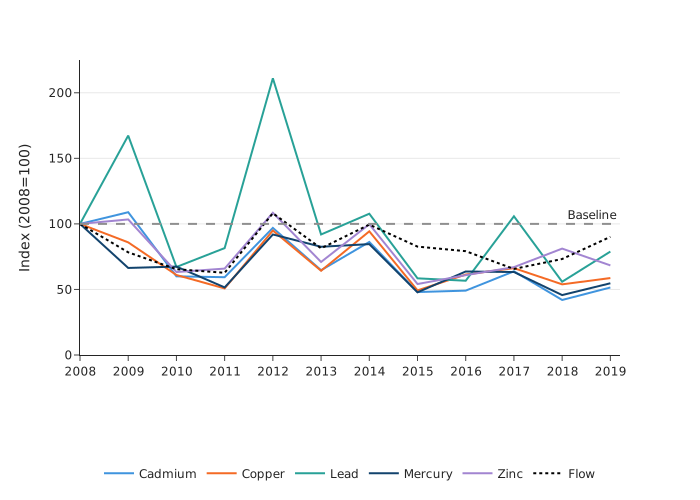
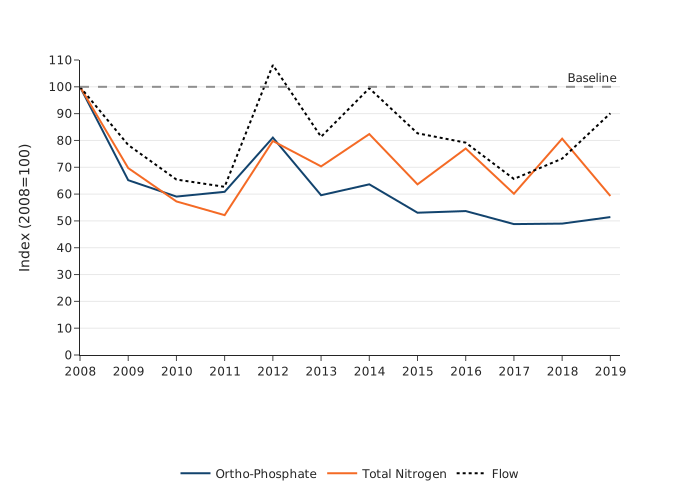
An interim indicator is presented here that shows (B1a and B1b) relative changes in measured riverine loads (inputs) of selected metals and nutrients into English tidal waters between 2008 and 2019, covering cadmium, copper, lead, mercury, zinc, nitrogen and ortho-phosphate and (B1c) loads of ammonia, biochemical oxygen demand and phosphorus (as ortho-phosphate) entering rivers from water company sewage treatment works. Some data for this interim indicator are published as part of the Convention for the Protection of the Marine Environment of the North-East Atlantic (OSPAR) assessments (Inputs of Mercury, Cadmium and Lead via Water and Air to the Greater North Sea) and via the Marine online assessment tool although for different time periods and so these data should be compared with caution. An additional data line has been added to the figure for B1a and B1b to include a representation of the variation of flow within rivers in England. This has been done to highlight the variation within the data that can be caused by higher and lower flows which can vary considerably year on year. This flow line is indicative of the total outflow of rivers in England, using data from the UK Centre for Ecology and Hydrology National River Flow Archive.
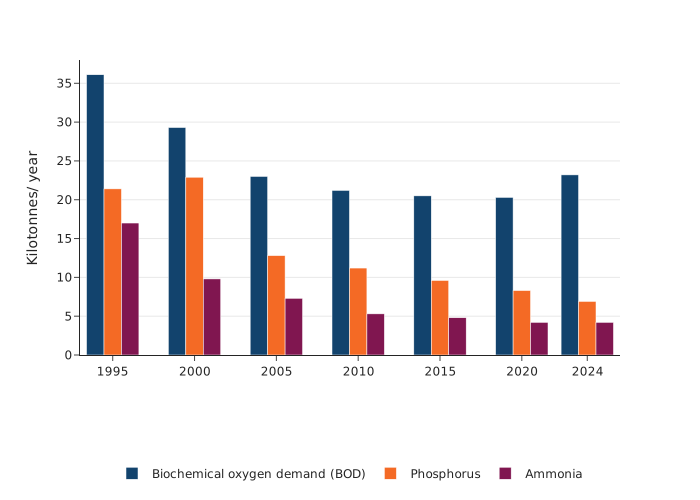
Figure B1c shows the loadings of selected pollutants entering rivers in England from water and sewerage company discharges of treated sewage effluent. The pollutants for which loads are assessed are ammonia, Biochemical Oxygen Demand (BOD, a measure of organic pollution) and phosphorus (as ortho-phosphate). Annual loadings are assessed every 5 years at the end of each water industry asset management period (though the most recent assessment was conducted in 2024). These data were reported within the Environment Agency Chief Regulator's report 2024-25.
Further development is required to present statistical trends for the selected contaminants in an indicator. The data for B1a and B1b are taken from the existing OSPAR database. The Environment Agency reports a subset of these data to Defra on an annual basis known as the Riverine and Industrial Discharges (RIDS) dataset. Contact the Environment Agency’s National Customer Contact Centre enquiries@environment-agency.gov.uk for the OSPAR database extract used for the interim indicator.
In March 2025, the Environment Agency published their report on the baseline length of rivers and estuaries polluted by harmful metals from abandoned metal mines. It should be noted that this baseline report uses a different metric to the B1 indicator, measuring metal concentrations and not metal loading. The concentrations of arsenic, cadmium, copper, lead, nickel, and zinc were repeatedly measured at sampling points along rivers expected to be polluted by abandoned metal mines to calculate an annual average concentration. For a particular river sampling point to be considered polluted, one or more of the target substances must exceed the relevant Environmental Quality Standard (EQS). The EQS are derived using ecotoxicology data to set a concentration that when exceeded is expected to have adverse and harmful environmental impacts on the aquatic ecosystem. Future measurements of river water quality will be compared with this baseline report to assess progress towards the statutory Environment Act target to halve the length of rivers polluted by abandoned metal mines by 2038.
Notes on Indicator
Data collection for B1a and B1b was heavily impacted by adherence to the government’s COVID-19 restrictions during the pandemic. This severely restricted sample collection and analysis during 2020 and 2021, so the available results were not considered representative of the riverine inputs to tidal waters and were not reported. Data has not been reported for 2022, 2023 and 2024 due to ongoing resource pressures resulting in the frequency of sampling and number of sites sampled being spatially and temporally skewed. It is not yet clear how this data will be integrated into the time series.
Load (input) calculations (kilograms per day) are the product of the monitored concentration of substance and flow rate. The annual total loads (kilograms per year) for selected metals (total fraction), total nitrogen and ortho-phosphate are calculated using chemical concentration data reported in the Water quality data archive and flow data reported in the Environment Agency’s core system of hydrometric and hydrological values (Water Information System by Kisters).
Figures B1a and B1b show each annual load relative to the 2008 monitored load (2008 is represented as a baseline index = 100). Observed fluctuations in the data could be influenced by a number of external factors affecting movement and loading within river systems. These factors include flow caused by high or low rainfall in a given year and local impacts of changing industry or land use over time. There appears to be a relationship between high flows and high loads, and it should also be noted that the baseline year of 2008 saw high flows, the variation in flows can now be identified via the flow line on B1a and B1b, also calculated relative to the 2008 baseline.
The pollutant loadings for B1c are primarily estimated from measured sewage effluent flow and concentration data for each pollutant at sewage treatment works with numeric permits for the pollutants in question. For smaller sewage treatment works that do not have numeric conditions, modelled loads are estimated using default concentrations and measured or default flow figures. The total load per pollutant is the measured and modelled wastewater load discharged in that year in tonnes per annum. The totals are presented in Figure B1c as kilotonnes (thousands of tonnes) per annum.
The data reported are for sewage treatment works that discharge to rivers in England operated by those water and sewerage companies wholly or mainly operating in England. This means that works operated in England (River Wye and River Dee catchments) by Dwr Cymru Welsh Water are not part of the estimates.
B1a: Riverine inputs of selected metals into English tidal waters, 2008 to 2019
Source: Environment Agency, UK Centre for Ecology and Hydrology
Download the data for this chart in .csv format
Trend Description
Riverine inputs of cadmium, copper, lead, mercury and zinc into English tidal waters have fluctuated considerably between 2008 and 2019 and using indexed data, overall, they have all fallen. Measured loads of cadmium, mercury, copper, zinc and lead were 49%, 45%, 41% 32% and 21% respectively less in 2019 than they were in 2008.
Assessment: B1a
No assessment of change was undertaken for this indicator as further development is required to present statistical trends for the selected contaminants in an indicator.
B1b: Riverine inputs of selected nutrients into English tidal waters, 2008 to 2019
Source: Environment Agency, UK Centre for Ecology and Hydrology
Download the data for this chart in .csv format
Trend Description
Riverine inputs of total nitrogen and ortho-phosphate have also fluctuated considerably between 2008 and 2019, but overall, both have fallen, and both have remained below their baseline value with measured loads in 2019 being 41% and 49% respectively less than those measured in 2008.
Assessment: B1b
No assessment of change was undertaken for this indicator as further development is required to present statistical trends for the selected contaminants in an indicator.
B1c: Loads discharged to rivers from water company sewage treatment works in England, 1995 to 2024
Source: Environment Agency
Download the data for this chart in .csv format
Trend Description
The loads of all 3 pollutants have decreased since recording began in 1995. From 1995 to 2024, ammonia decreased by 75% and phosphorus decreased by 68%. Whilst biochemical oxygen demand (BOD) decreased by 44% between 1995 and 2020, a slight increase in BOD (14%) was seen between 2020 and 2024. This increase is likely due to an increase in wastewater flow over this period, which led to an increase in overall load.
Assessment: B1c
A decrease (or improvement) was observed across all 3 of the loads of pollutants discharged to rivers from water company sewage treatment works in England across the long-term trend, this period covers all datapoints from 1995 to 2024. Across the medium-term trend covering 2015 to 2024 a decrease (improvement) was observed across Ammonia and Phosphorous, however the BOD levels showed an increase (or deterioration) over the same time period.
Further information on this assessment, along with details on the methodology, is provided in the Assessment guide. Summaries by Environmental Improvement Plan goal and information on indicator links are presented in the Assessment results.
| Component | Subcomponent | Period | Date range | Percent Change | Smoothing function | Assessment of change |
|---|---|---|---|---|---|---|
| B1c | Ammonia | Short term | N/A | N/A | N/A | Not assessed |
| B1c | Ammonia | Medium term | 2015 to 2024 | -12.50 | Unsmoothed | Improvement |
| B1c | Ammonia | Long term | 1995 to 2024 | -75.29 | Unsmoothed | Improvement |
| B1c | BOD | Short term | N/A | N/A | N/A | Not assessed |
| B1c | BOD | Medium term | 2015 to 2024 | 13.17 | Unsmoothed | Deterioration |
| B1c | BOD | Long term | 1995 to 2024 | -35.73 | Unsmoothed | Improvement |
| B1c | Phosphorus | Short term | N/A | N/A | N/A | Not assessed |
| B1c | Phosphorus | Medium term | 2015 to 2024 | -28.13 | Unsmoothed | Improvement |
| B1c | Phosphorus | Long term | 1995 to 2024 | -67.76 | Unsmoothed | Improvement |
The B1c component ‘Loads discharged to rivers from water company sewage treatment works in England’ reports one data point for each 5-year period included within the indicator, unlike the majority of other indicators that report annually. Therefore, it is only possible to assess medium- and long-term trends as there are insufficient data points to establish trends over shorter time periods. Percentage change in Table B1 refers to the difference seen from the first to last year in the specified date range.
Metadata
| Primary Goal | Water |
|---|---|
| Relevant Goals | Water, Restored nature |
| Relevant Targets | Reaching or exceeding objectives for rivers, lakes, coastal and ground waters that are specially protected, whether for biodiversity or drinking water as per our River Basin Management Plans, Restoring 75% of our one million hectares of terrestrial and freshwater protected sites to favourable condition, securing their wildlife value for the long term |
| Natural Capital | Pressure on natural capital assets |
| Related Commitments | UK Marine Strategy Regulations, Convention for the Protection of the Marine Environment of the North-East Atlantic (OSPAR), The Water Environment (Water Framework Directive) (England and Wales) Regulations 2017, Environment Agency reports on Regulating for People the Environment and Growth (RPEG), Environment Act 2021 targets: The Environmental Targets (Water) (England) Regulations 2023, UNEP Minamata Convention on Mercury |
| Geographical Scope | England |
| Development Status | Interim |
| First Reported | 2020 |
| Latest Data | 2024 |
| Last Updated | Mar 2026 |
Return to Environmental Indicator Framework Collection Page
B2: Serious pollution incidents to water
Short Description
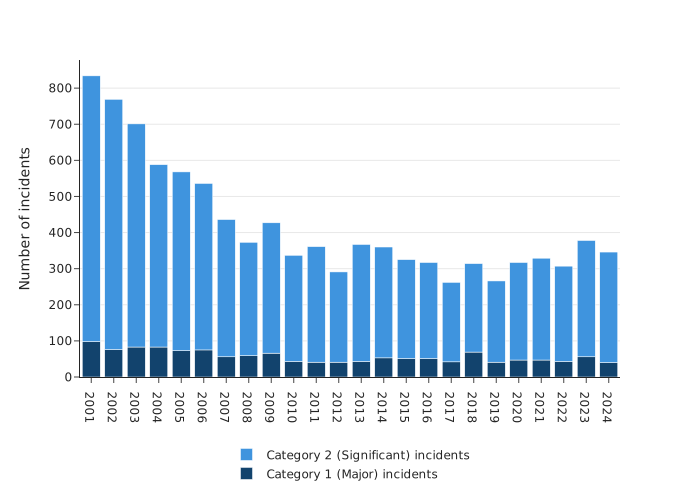
This indicator shows changes in the number of pollution incidents impacting on water health, including in rivers, lakes, reservoirs, canals, coasts, estuaries and groundwater. Serious pollution incidents are a pressure on the water environment. The Environment Agency uses 4 categories to determine the severity of pollution incidents. The indicator shows the number of events in each year that are in the 2 higher categories (category 1, major and category 2, significant), for example, causing death of fish, potential harm to bathers, or the temporary cessation of abstraction from a river by a drinking water provider.
Readiness and Links to Data
Data are already published annually by the Environment Agency, through the:
- Environmental Pollution Incidents (Category 1 and 2)
- Water and sewerage companies in England: environmental performance report 2024
Longer-term trends are available in the State of the environment: water quality report and the Environment Agency Chief Regulator’s report 2024-25.
Notes on Indicator
Some incidents may take an extended period of months, or exceptionally years, to be completed. The dataset only includes substantiated incidents and their environmental impact, that is where there is confirmation that the incident took place either by a visit from the Environment Agency or a partner organisation, or it is corroborated by other information. Results do not include incidents relating to:
-
fisheries incidents – incidents involving illegal fishing and illegal fish movements, fish disease, fishery management activities and fish kills from non-pollution causes, including low flows and low dissolved oxygen
-
water resources incidents – incidents involving the quantity of a water resource
-
waterways incidents – incidents on a waterway where the Environment Agency are the competent authority for navigation
-
flood and Coastal Risk Management incidents – for incidents which involve actual or potential flooding and land drainage works
B2: Serious pollution incidents to water in England, 2001 to 2024
Source: Environment Agency
Download the data for this chart in .csv format
Notes on Component
Only includes incidents where investigations and response have been completed by the Environment Agency.
Trend Description
The total number of serious pollution incidents to water in England fell by 58.5% between 2001 and 2024, with the majority of this decline occurring in the first 10 years (from 834 in 2001 to 337 in 2010). From 2010 to 2017, while there were annual fluctuations in the number of category 1 (major) and category 2 (significant) pollution incidents, the overall trend has largely plateaued. More recently, the number of serious pollution incidents decreased from 378 in 2023 to 346 (40 major and 306 significant) in 2024.
Assessment: B2
There has been a decrease in serious pollution incidents (i.e. an improvement) over the long term, and an increase (deterioration) in the medium term and short term. This assessment does not consider whether any improvements seen are on a sufficient scale for meeting desired outcomes.
Change since 2018 has also been assessed, showing an increase (deterioration) in serious pollution incidents over this period.
Further information on this assessment, along with details on the methodology, is provided in the Assessment guide. Summaries by Environmental Improvement Plan goal and information on indicator links are presented in the Assessment results.
| Component | Subcomponent | Period | Date range | Percentage change | Smoothing function | Assessment of change |
|---|---|---|---|---|---|---|
| B2 | Serious pollution incidents | Short term | 2019 to 2024 | 18.31 | Loess | Deterioration |
| B2 | Serious pollution incidents | Medium term | 2014 to 2024 | 11.80 | Loess | Deterioration |
| B2 | Serious pollution incidents | Long term | 2001 to 2024 | -57.29 | Loess | Improvement |
Note that assessment categories for the short, medium and long term were assigned based on smoothed data, so percentage change figures in Table B2 may differ from unsmoothed values quoted elsewhere. Percentage change refers to the difference seen from the first to last year in the specified date range.
Metadata
| Primary Goal | Water |
|---|---|
| Relevant Goals | Water, Restored nature |
| Relevant Targets | No specific target |
| Natural Capital | Pressure on natural capital assets |
| Related Commitments | Domestically under the Environment Act 1995, Relevant under the UN’s Sustainable Development Goal 6 |
| Geographical Scope | England |
| Development Status | Final |
| First Reported | 2019 |
| Latest Data | 2024 |
| Last Updated | Feb 2026 |
Return to Environmental Indicator Framework Collection Page
B3: State of the water environment
Short Description
This indicator takes a broad overview of the condition of the water environment; it relates to freshwater bodies, wetlands, groundwaters, estuaries and coastal waters. The indicator comprises several metrics including percentage of water tests meeting good (or better) status for biology and chemistry, percentage of water bodies achieving good ecological status, and compliance of waters specially protected for specific uses such as drinking water abstraction and nature conservation. ‘Status’ refers to quality as measured under the Water Environment (Water Framework Directive) (England and Wales) Regulations 2017 (the WFD Regulations). Some of these data relating to protected sites are also included in indicator ‘D2 Extent and condition of protected sites – land, water and sea’. All the water theme indicators are linked, but two indicators that are important to consider as part of the wider state of the water environment are ‘B4 Condition of bathing waters’ and ‘B6 Natural functions of water and wetland ecosystems’.
Readiness and Links to Data
An interim indicator is presented here that was first presented in 2021. It includes components from the WFD Regulations status tests for:
-
surface water bodies (rivers, lakes, estuaries and coastal waters)
-
groundwaters
-
waters protected for a specific reason such as drinking waters and nature sites
For each water type, we include a representative element that is tested to assess the condition of a water body, reflecting water quality and/or hydromorphology (the physical character and water content in water bodies). There are many more elements assessed, and tests undertaken; the data represent a snapshot of the complete WFD Regulations dataset. There are no new WFD regulations assessments included in the 2025 report.
Supporting detail for each of the water types and a more detailed dashboard of data are available on the updated B3 Evidence Pages. These pages include details on the Risk of Eutrophication for Estuaries and Coastal Waters, latest results for bathing and shellfish waters as well as results of an analysis in 2024 of trends in water quality at a set of long term river monitoring sites in England. These data have been published to facilitate user involvement in the development of this indicator. We would therefore welcome any feedback on these statistics, particularly on their usefulness and value, via environmentalindicators@defra.gov.uk.
Further work is required to develop the indicator to show change over time. We will continue to work with partners to develop our approach for future reporting. Data and evidence will begin to come from different sources as Environment Agency monitoring networks are updated as part of the Natural Capital Ecosystem Assessment development. Piloting and rollout of new networks has begun. Data will start to feed into indicator reporting as soon as it is ready. Existing source data are currently published (WFD element status , protected area data, State of the environment and the water quality report). Water body level status results are available on the Catchment Data Explorer.
B3a: Status of surface waters in England, 2019
Source: Environment Agency
Download the data for this chart in .csv format
Notes on Figure
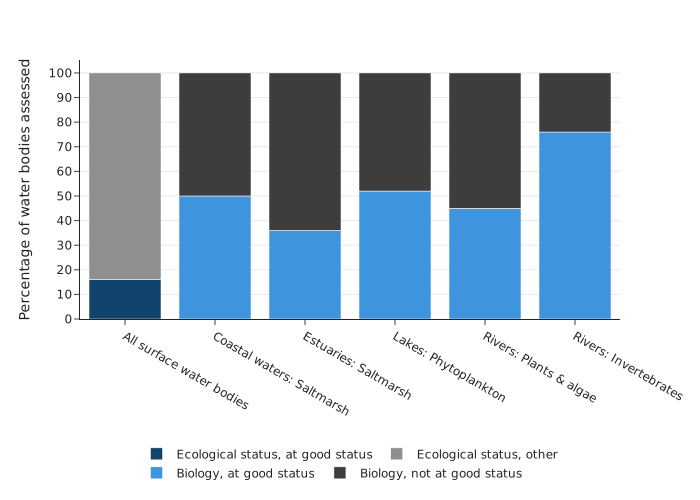
Results are based on the numbers of water bodies assessed and represent the achievement of good or better status (or potential for water bodies designated as artificial or heavily modified under the WFD Regulations). Ecological status (or potential) is assigned using various water, habitat and biological quality tests. Failure of any one individual test means that the whole water body fails to achieve good or better ecological status (or potential). This is known as the one-out-all-out principle. Further definitions of terms can be found at Glossary - Catchment Data Explorer
Trend Description
In total, 16% of surface water bodies met all the relevant criteria for good ecological status of the WFD Regulations in 2019. For rivers; invertebrates and the combined test for macrophytes and phytobenthos (plants and algae) are reported to indicate biological quality, where 76% and 45% of tests carried out passed for the water bodies assessed, respectively. For lakes, the representative biological element shown is phytoplankton with 52% of water bodies assessed passing. For estuaries and coastal waters, saltmarshes are used to reflect the extent and quality of habitat; results show 36% and 50% of water bodies monitored pass the test, respectively.
Assessment: B3a
No assessment of change was undertaken for this indicator as a suitable time series is not yet available in the Environmental Indicator Framework.
B3b: Status of groundwaters in England, 2019 or 2022
Source: Environment Agency
Download the data for this chart in .csv format
Notes on Figure
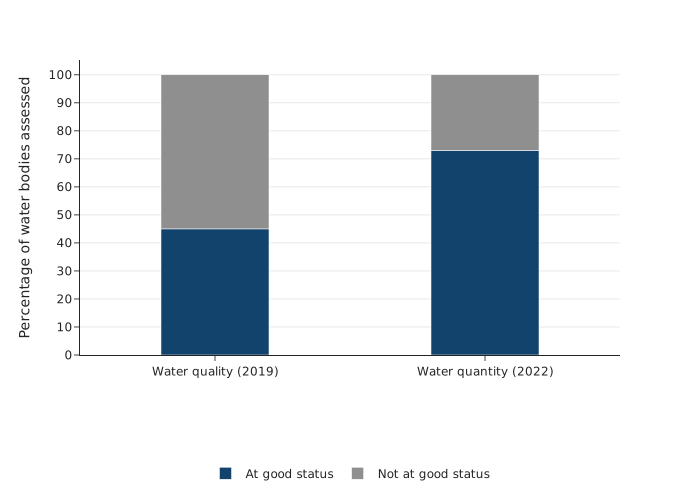
Results are based on the numbers of water bodies assessed and represent the achievement of good or better status.
Trend Description
In 2022, 73% of groundwaters passed water quantity tests. In 2019, 45% passed chemical (water quality) tests.
Assessment: B3b
No assessment of change was undertaken for this indicator as a suitable time series is not yet available in the Environmental Indicator Framework.
B3c: Status of waters specially protected for specific uses in England, 2019 or 2022
Source: Environment Agency
Download the data for this chart in .csv format
Notes on Figure
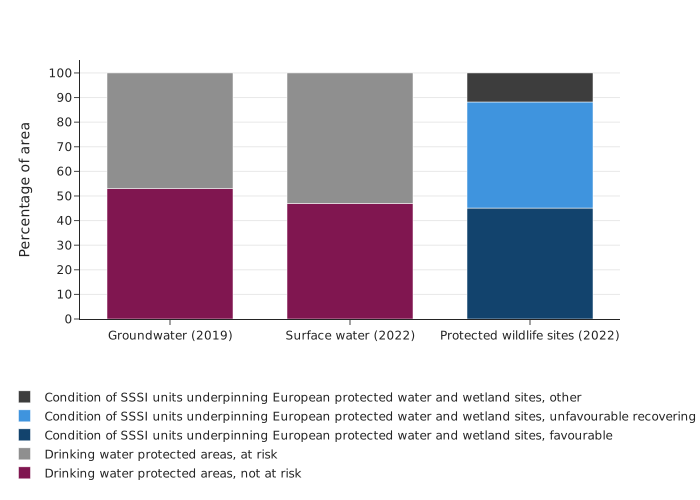
Results for the status of Drinking Water Protected Areas are based on the percentage of sites. The indicator for nature conservation includes all water-dependent (river, lake, small waterbody, coastal and wetland) SSSI units underpinning European sites, results are by area. Adverse condition reasons and threats unrelated to Water Framework Directive (water quality, water resources, physical modification) drivers are excluded from the analysis. The European sites series includes Special Areas of Conservation and Special Protection Areas (SPAs). SPAs are designated for bird features only, where favourable condition may not include assessment of water quality elements.
Trend Description
In 2019 (groundwater) and 2022 (surface water), 53% of groundwater and 47% of surface water areas (sites) protected for drinking water abstraction were assessed as not being at risk of deterioration. For protected nature sites, 45% were in favourable condition and 43% were in an unfavourable but recovering condition in 2022.
Assessment: B3c
No assessment of change was undertaken for this indicator as a suitable time series is not yet available in the Environmental Indicator Framework.
Metadata
| Headline | Water and water environment |
|---|---|
| Primary Goal | Water |
| Relevant Goals | Water, Restored nature |
| Relevant Targets | Reaching or exceeding objectives for rivers, lakes, coastal and ground waters that are specially protected, whether for biodiversity or drinking water as per our River Basin Management Plans, Restoring 75% of our one million hectares of terrestrial and freshwater protected sites to favourable condition, securing their wildlife value for the long term, Reversing the loss of marine biodiversity and, where practicable, restoring it |
| Natural Capital | Condition of assets - freshwater, Condition of assets - seas, Condition of assets - species and ecological communities |
| Related Commitments | Water Environment (Water Framework Directive) (England and Wales) Regulations 2017, Water Framework Directive (Standards and Classification) Directions (England and Wales) 2015, Reporting under the Conservation of Habitats and Species Regulations 2017 (as amended) for water dependent sites, Reporting under the Marine Strategy Regulations 2010 and the assessment of Good Environmental Status in Regional Seas, Reporting under the Convention for the Protection of the Marine Environment of the North-East Atlantic (OSPAR) convention 1992 and associated Annexes, May provide evidence in support of Climate Change Risk Assessment under the Climate Change Act (2008), Relevant to the Sustainable Development Goal 6.3.2 – Proportion of bodies of water with good ambient water quality |
| Geographical Scope | England |
| Development Status | Interim |
| First Reported | 2019 |
| Last updated | May 2025 |
| Latest Data | 2022 |
Return to Environmental Indicator Framework Collection Page
B4: Condition of bathing waters
Short Description
This indicator assesses the condition of bathing waters. It shows the percentage of designated bathing waters meeting conditions sufficient to minimise the risk of harm to bathers from faecal pollution. It is based on a set of microbiological tests (measuring E.coli and intestinal enterococci) performed on waters used for bathing. The bacteria can indicate the presence of pathogens that may cause severe stomach upsets and gastro-intestinal illness. Bathing waters are mainly coastal beaches but also include a number of inland freshwater lakes and 14 locations on a river.
Readiness and Links to Data
Data on Bathing water quality statistics are already published annually; longer-term trends are available in the State of the environment: water quality report.
Notes on Indicator
Over the last few years there has been a very significant increase in the number of new locations put forward for designation as bathing waters. In 2024, 27 new bathing waters were designated, including 12 new rivers. These sites have not previously been managed as bathing waters and many of these new designations do not currently meet bathing water standards. The learning from these sites is that despite classification standards for freshwaters being less stringent than those for coastal waters, achieving bathing water microbiological standards in a river is a challenge.
As such, if more locations (particularly rivers) have bathing waters designated that have not previously been managed to meet bathing water standards, there is the expectation that there may also be a corresponding increase in bathing waters that do not comply with the ‘sufficient’ standard under the Bathing Water Regulations. This change needs to be taken into account when reporting trends as the predicted drop in headline compliance does not necessarily mean existing (primarily) coastal sites have deteriorated.
Note that this indicator uses data from the latest Bathing Water Quality Statistics report, as such it does not include any sites designated after the publication of the latest iteration of the report.
B4: Condition of designated bathing waters in England, 1995 to 2025
Source: Department for Environment, Food & Rural Affairs
Download the data for this chart in .csv format
Notes on Component
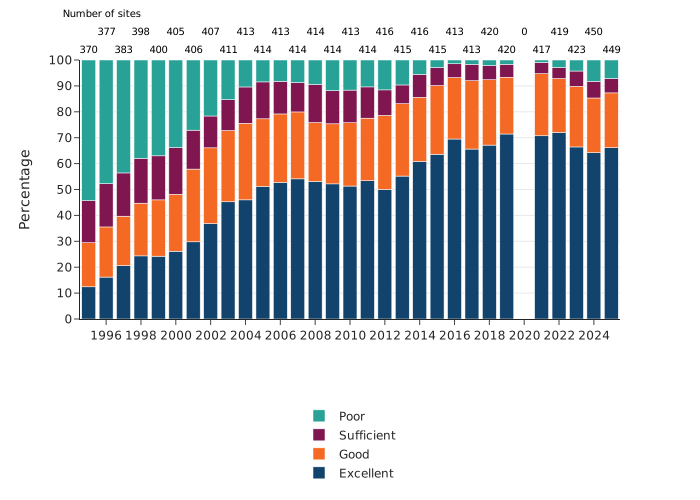
Since the 2025 update of this indicator, the total number of bathing waters classified in each year are labelled above each bar of the chart. This number is used to calculate the percentage of bathing waters which fall under each classification category.
Any classifications pre-2015 are projected classifications and were not formally reported. They have been back calculated using historic methods and data collected for the 1976 Bathing Water Directive (76/160/EEC) which was repealed in 2014.
Bathing waters in England were not classified in 2020 due to the constraints posed by COVID-19 lockdowns. Classifications between 2021 and 2023 therefore use the most recent 4 years with samples drawn from the previous 5 years. This reverted back to normal practice in 2024 with the most recent 4 years of data used for classification.
Trend Description
The number of designated bathing waters in England meeting at least the minimum standard (‘sufficient’, ‘good’ or ‘excellent’) has increased considerably from a back-calculated 45.7% in 1995 to 92.9% in 2025. The majority of this increase occurred in the period to 2015. Between 2015 and 2022, the number meeting at least the minimum standard remained relatively stable at between 97% and 99%. From 2022 to 2025, the number meeting at least the minimum standard fell by 4.2 percentage points from 97.1% to 92.9%.
However, this fall in percentage should be interpreted in the context of a growing number of designated bathing waters. The total number of sites has increased over this period, and in absolute terms the number meeting at least the minimum standard rose from 407 in 2022 to 417 in 2025.
The number of bathing waters achieving ‘excellent’ status increased considerably from 1995 to 2022, with 72.1% meeting this standard in 2022, though this figure declined by 6 percentage points between 2022 and 2025 to 66.1%. The number of bathing waters rated as ‘poor’ remained below 3% between 2015 and 2022, though this number increased to 8.2% in 2024 before falling slightly to 7.1% in 2025. The increase in 2024 is due to several factors, but the new designations at ‘poor’ status significantly contributed to this.
Assessment: B4
An assessment was undertaken using the B4 indicator to look at change in the percentage of designated bathing waters meeting minimum standards of at least sufficient condition. A deterioration in this metric was observed over the short term. As a new method was introduced in 2015, only data from 2015 onwards are included in the assessment. The new method is not directly comparable to the old method, therefore it is not appropriate to look at trends across both datasets. As a result of the methodology change, there is not a sufficiently long time series for a medium- or long-term assessment.
Change since 2018 has also been assessed. There has been a deterioration in the condition of bathing waters since 2018 with no reported data for 2020 due to the COVID-19 pandemic. It should also be noted that in 2018 nearly 98% of designated bathing waters were already in at least sufficient condition, meaning there is limited scope for further improvement in this indicator from this point.
Further information on this assessment, along with details on the methodology, is provided in the Assessment guide. Summaries by Environmental Improvement Plan goal and information on indicator links are presented in the Assessment results.
| Component | Subcomponent | Period | Date range | Percentage change | Smoothing function | Assessment of change |
|---|---|---|---|---|---|---|
| B4 | Meeting at least Sufficient | Short term | 2020 to 2025 | -6.89 | Loess | Deterioration |
| B4 | Meeting at least Sufficient | Medium term | N/A | N/A | N/A | Not assessed |
| B4 | Meeting at least Sufficient | Long term | N/A | N/A | N/A | Not assessed |
Note that assessment categories for the short term were assigned based on smoothed data, so percentage change figures in Table B4 may differ from unsmoothed values quoted elsewhere. Percentage change refers to the difference seen from the first to last year in the specified date range.
Metadata
| Primary Goal | Water |
|---|---|
| Relevant Goals | Water |
| Relevant Targets | Minimising by 2030 the harmful bacteria in our designated bathing waters and continuing to improve the cleanliness of our waters; we will make sure that potential bathers are warned of any short-term pollution risks |
| Natural Capital | Condition of assets - freshwater, Condition of assets - marine |
| Related Commitments | Statutory duty under the Bathing Water Regulations (2013) to report condition |
| Geographical Scope | England |
| Development Status | Final |
| First Reported | 2020 |
| Latest Data | 2025 |
| Last Updated | Feb 2026 |
Return to Environmental Indicator Framework Collection Page
B5: Water bodies achieving sustainable abstraction criteria
Short Description
This indicator shows changes in the percentage of surface waters (rivers, lakes, reservoirs and estuaries) and groundwater (including wetlands fed by groundwater) where sustainable abstraction criteria are met. River flows and groundwater levels are sustainable when they support ecology that is only slightly impacted by human activity. The indicator is affected by changes in water use, both in relation to leakage and personal consumption (see E8 Efficient use of water). This indicator is also sensitive to effects of future climate change on rainfall and consumption and shows the need for adaptation.
Readiness and Links to Data
Data on the Water Environment (Water Framework Directive) (England and Wales) Regulations 2017 (the WFD regulations) Cycle 2 site classifications are available for both surface and ground water bodies on the England Catchment Data Explorer. WFD Cycle 2 site classifications for surface water bodies and WFD Cycle 2 site classifications for ground water bodies are also published as part of the WFD Regulations and the Abstraction Reform Report 2019.
Notes on Indicator
There are no data to report for this indicator for the years 2020, 2021, 2023, or 2024 due to a shift from annual to triennial reporting in 2019. In future years there will be a change to the data provision for this indicator through new surveillance networks as part of the Natural Capital and Ecosystem Assessment programme, and results will continue to be reported every 3 years.
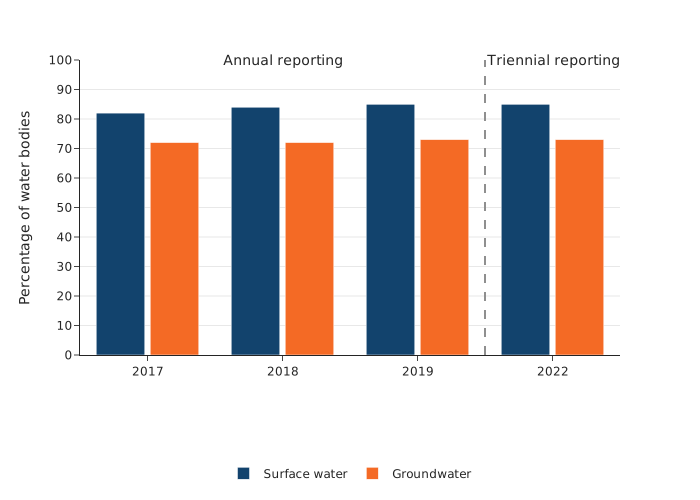
B5: Water bodies achieving sustainable abstraction criteria, 2017 to 2022
Source: Environment Agency
Download the data for this chart in .csv format
Trend Description
Latest data (2022) show 85% of surface water bodies supported required flow thresholds and 73% of groundwater bodies were sustainable. Both these results remain unchanged from the equivalent figures reported in 2019. In 2017, when the time series began, 82% of surface water bodies supported required flow thresholds and 72% of groundwater bodies were sustainable.
Assessment: B5
No assessment of change was undertaken for this indicator over the short, medium and long-term time periods as there are insufficient data points available. Change since 2018 has been assessed. There has been little or no overall change in the percentage of ground and surface water bodies achieving sustainable abstraction criteria since 2018. However, this is based on 3 data points so should be considered as indicative and not evidence of a clear trend.
Further information on this assessment, along with details on the methodology, is provided in the Assessment guide page. Summaries by Environmental Improvement Plan goal and information on indicator links are presented in the Assessment results pages.
Metadata
| Headline | Water and water environment |
|---|---|
| Primary Goal | Water |
| Relevant Goals | Water, Restored nature |
| Relevant Targets | Reducing the damaging abstraction of water from rivers and groundwater, ensuring that by 2021 the proportion of water bodies with enough water to support environmental standards increases from 82% to 90% for surface water bodies and from 72% to 77% for groundwater bodies, Restoring 75% of our one million hectares of terrestrial and freshwater protected sites to favourable condition, securing their wildlife value for the long term |
| Natural Capital | Condition of assets - freshwater |
| Related Commitments | Water Environment (Water Framework Directive) (England and Wales) Regulations 2017, Relevant to Sustainable Development Goal 6.4.2, May support Climate Change Risk Assessment and the Adaptation Sub-Committee’s assessment of the National Adaptation Programme, under the Climate Change Act (2008) |
| Geographical Scope | England |
| Development Status | Final |
| First Reported | 2020 |
| Last updated | May 2025 |
| Latest Data | 2022 |
Return to Environmental Indicator Framework Collection Page
B6: Natural functions of water and wetland ecosystems
Short Description
This indicator will track changes in the naturalness of ecosystem functioning across water and wetland ecosystems in England, based on a range of attributes indicating levels of artificial modification. Restoring natural functions to these ecosystems is essential for biodiversity recovery and resilience to climate change and contributes to enhancing ecosystem services such as the provision of clean water and flood regulation.
The indicator will cover rivers, headwater streams, lakes, ponds, wetlands, estuaries and coasts, characterising the naturalness of hydrological, physical, chemical, and biological functions. It uses data from a range of sources, aggregated together in a single hierarchical data framework that serves both high-level reporting needs and detailed biodiversity reporting on individual habitat types (such as chalk streams/rivers and oligotrophic lakes).
The data framework for this indicator enables strategic reporting of the condition or quality of water-related habitats, with respect to nature recovery generally and the favourable conservation status of detailed habitat types. It feeds into broader assessment of the extent, quality, and connectivity of habitats under Indicator D1.
Readiness and Links to Data
An interim indicator is presented here that presents data on a subset of the ecosystems that B6 will ultimately cover. A headline dashboard is provided, completed with data for freshwater ecosystems (rivers, streams, lakes, and ponds), as well as estuaries and coastal habitats that have been added in this year. This year, additional breakdowns of the naturalness components have been added, displaying the percentage of each habitat falling under each naturalness classification within the broad habitat types of Running Waters (i), Standing Waters (ii) and Estuaries and Coasts (iii). Further work is needed to develop naturalness measurements of the wetlands habitats.
Detail on the hierarchical assessment framework servicing this indicator is provided in the B6 information pack on the Discovering priority habitats in England website. This includes a more detailed dashboard of habitat types, further detail on the assessment of the different components reported for rivers, streams, estuaries, coasts, lakes and ponds, and example assessments of some of the detailed habitat types on which the framework will eventually enable reporting.
Work is ongoing to refine the datasets used for rivers, streams, lakes, ponds, estuaries and coasts and to add assessments of wetland habitats. Detailed B6 progress reports are provided on the Discovering priority habitats in England website. The B6 data framework is being packaged up so that it can monitor these habitats over time and provide trend data. The detailed information pack supporting this interim indicator includes information on data sources, attribute definition and data processing.
Notes on Indicator
Naturally functioning ecosystems are considered to not be influenced by artificial modifications and have an absence of pressures. This indicator considers the naturalness of hydrological, physical, chemical and biological functions. The extent to which natural function can be restored in any location will depend on a variety of factors including socio-economic constraints.
Data from a large number of individual attributes, from different sources, feed into the headline dashboard presented here. Each attribute has its own issues relating to data availability, spatial coverage and representativeness, and confidence. The B6 information pack on the Discovering priority habitats in England website provides further information on individual attributes. Detailed outputs within the information pack describe data caveats and limitations relating to individual habitat types.
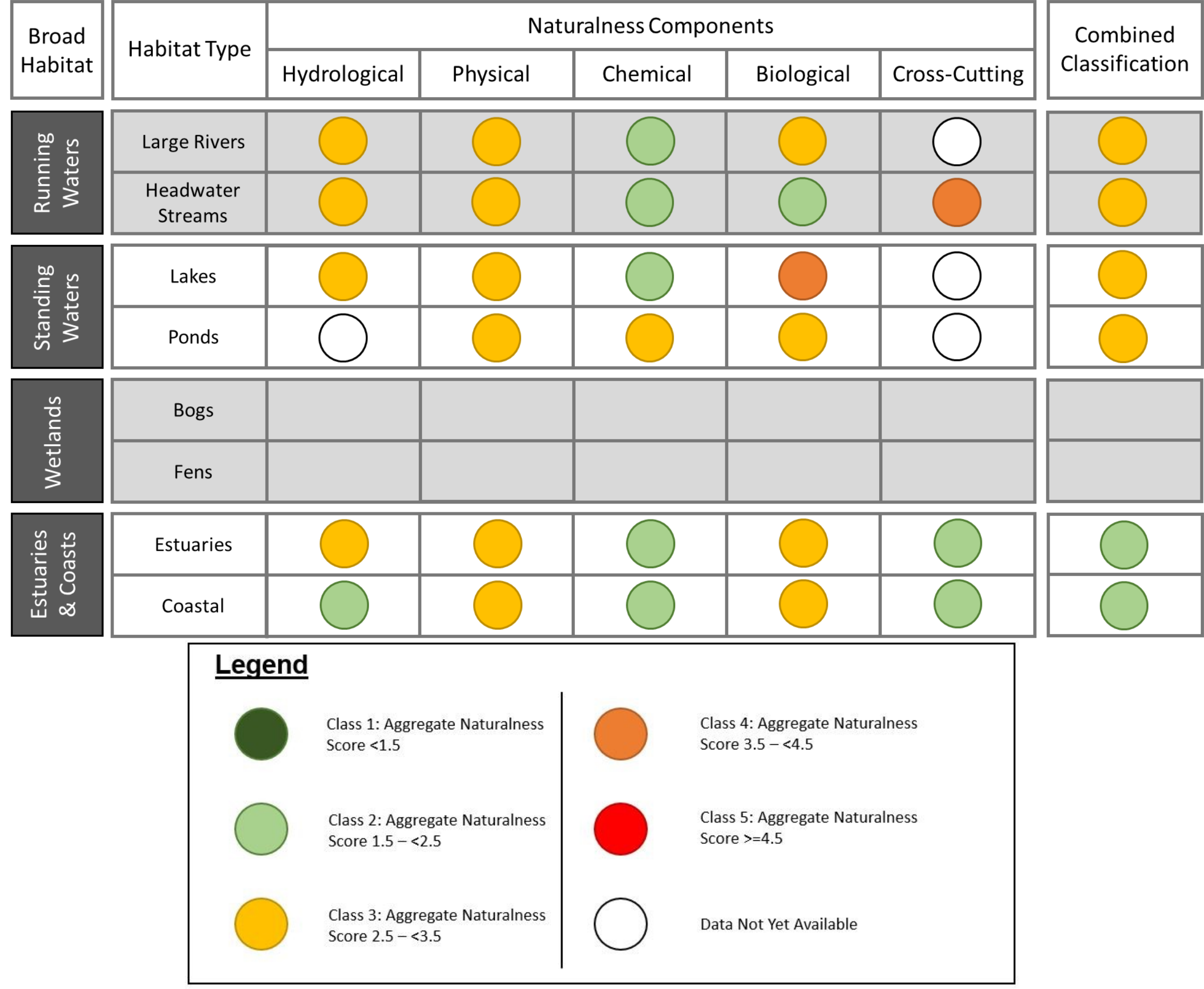
B6: Naturalness scores of water and wetland ecosystems in England, 2022
Source: Natural England
Download the data for this chart in .csv format
Notes on Figure
Naturalness classifications and scores are on a scale of 1 to 5, with 1 being as close to natural as possible and 5 being subject to the greatest degree of artificial modification, each classification is derived from the score attributed to it, a score less than 1.5 is Class 1, a score of 1.5 to 2.5 is Class 2, a score of 2.5 to 3.5 is Class 3, a score of 3.5 to 4.5 is Class 4 and any score greater than 4.5 is Class 5. Combined Classification is an average of the classifications for the various naturalness components. Cross-cutting components are classified as attributes that can reflect multiple naturalness components (hydrological, physical, chemical and biological).
Trend Description
The 6 currently assessed habitat types cover freshwater, and coastal and estuarine ecosystems. From the freshwater habitats; Large Rivers, Headwater Streams, Lakes, and Ponds each have a combined naturalness classification of 3. These classifications are derived from an average combined score of 2.5, 2.8, 2.99 and 3 for each habitat respectively, while Estuaries and Coastal habitats each have an overall classification of 2, which represents an average combined score of 2.4 and 2.2 respectively. The breakdown of these scores into the individual components highlights that each habitat has been subject to a range of artificial modification within each of the various Naturalness Components. While the majority of the habitats that have available data are shown to have a classification of 3 for their Hydrological and Physical components, the other components show greater variation between habitat types. The lowest score (worst in ecological terms) across the habitats is given to the Biological component of Lakes with a score of 4.36 (Class 4). In comparison, the highest score (best in ecological terms) was achieved by the Cross-cutting component of the Coastal habitats with a score of 1.67 (Class 1).
Assessment: B6
No assessment of change was undertaken for this indicator as a suitable time series is not yet available in the Environmental Indicator Framework.
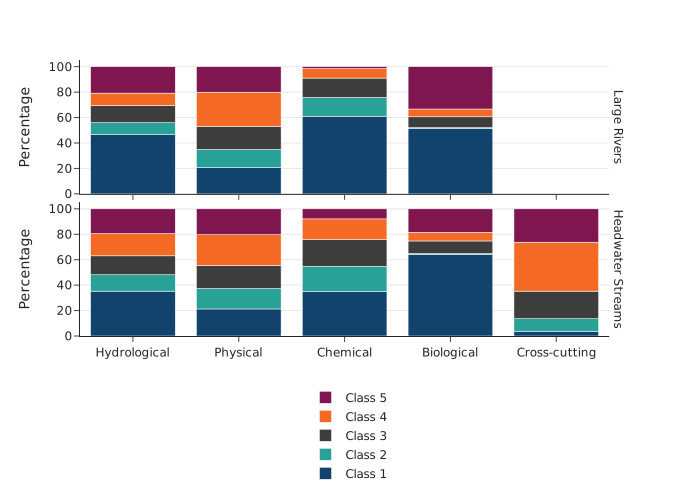
B6i: Naturalness scores of large river and headwater stream ecosystems in England, 2022
Source: Natural England
Download the data for this chart in .csv format
Notes on Figure
Naturalness classifications and scores are on a scale of 1 to 5, with 1 being as close to natural as possible and 5 being subject to the greatest degree of artificial modification, each classification is derived from the score attributed to it, a score less than 1.5 is Class 1, a score of 1.5 to 2.5 is Class 2, a score of 2.5 to 3.5 is Class 3, a score of 3.5 to 4.5 is Class 4 and any score greater than 4.5 is Class 5. Combined Classification is an average of the classifications for the various naturalness components. Cross-cutting components are classified as attributes that can reflect multiple naturalness components (hydrological, physical, chemical and biological).
Trend Description
In both of the running waters broad habitat types, the Biological and Chemical components were found to have the highest levels of naturalness (least level of modification). For the biological and chemical components respectively, 65% and 55% of headwater streams have achieved classifications of Class 1 or Class 2. While for the Biological and Chemical components of Large Rivers, 52% and 76% of this habitat type respectively have achieved a classification of Class 1 or Class 2. In contrast, the lowest scoring component (worst in terms of naturalness) of either habitat type was the Cross-cutting component of the Headwater streams habitat type, this recorded 86% of Large Rivers at a Class 3 or lower.
Assessment: B6i
No assessment of change was undertaken for this indicator as a suitable time series is not yet available in the Environmental Indicator Framework.
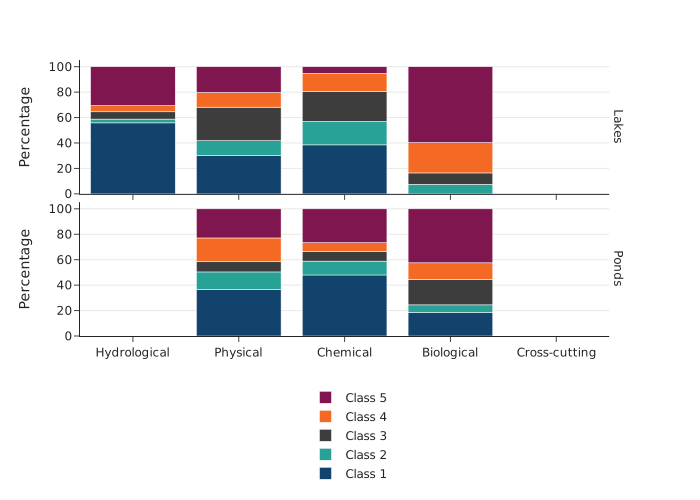
B6ii: Naturalness scores of lakes and pond ecosystems in England, 2022
Source: Natural England
Download the data for this chart in .csv format
Notes on Figure
Naturalness classifications and scores are on a scale of 1 to 5, with 1 being as close to natural as possible and 5 being subject to the greatest degree of artificial modification, each classification is derived from the score attributed to it, a score less than 1.5 is Class 1, a score of 1.5 to 2.5 is Class 2, a score of 2.5 to 3.5 is Class 3, a score of 3.5 to 4.5 is Class 4 and any score greater than 4.5 is Class 5. Combined Classification is an average of the classifications for the various naturalness components. Cross-cutting components are classified as attributes that can reflect multiple naturalness components (hydrological, physical, chemical and biological).
Trend Description
Across the standing water habitats when broken down, the Chemical and Hydrological components (where available) were found to have the highest levels of naturalness (lowest level of modification). For the Chemical components 57% and 59% of Ponds and Lakes respectively have achieved classifications of Class 1 or Class 2. Similarly, the Hydrological component of the Lakes habitat type has 59% of all lakes measured reaching a Class 1 or Class 2 score. In contrast, the lowest scoring component (worst in terms of naturalness) of either habitat type was the Biological component of the Lakes habitat type, this recorded 92% of lakes at a Class 3 or lower.
Assessment: B6ii
No assessment of change was undertaken for this indicator as a suitable time series is not yet available in the Environmental Indicator Framework.
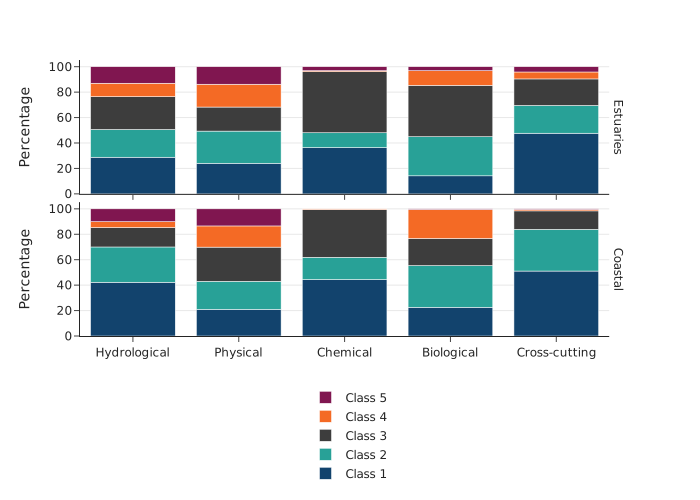
B6iii: Naturalness scores of coastal and estuarine ecosystems in England, 2022
Source: Natural England
Download the data for this chart in .csv format
Notes on Figure
Naturalness classifications and scores are on a scale of 1 to 5, with 1 being as close to natural as possible and 5 being subject to the greatest degree of artificial modification, each classification is derived from the score attributed to it, a score less than 1.5 is Class 1, a score of 1.5 to 2.5 is Class 2, a score of 2.5 to 3.5 is Class 3, a score of 3.5 to 4.5 is Class 4 and any score greater than 4.5 is Class 5. Combined Classification is an average of the classifications for the various naturalness components. Cross-cutting components are classified as attributes that can reflect multiple naturalness components (hydrological, physical, chemical and biological).
Trend Description
Across the Estuarine and Coastal habitats when disaggregated, the Cross-cutting components were found to have the highest levels of naturalness in both habitat types (least level of modification). For the Cross-cutting components 84% and 70% of Coastal and Estuarine habitats respectively have achieved classifications of Class 1 or Class 2. In contrast, the lowest scoring component (worst in terms of naturalness) of either habitat type was the Physical component of the Estuaries habitat type, this recorded 57% of coastal habitats at a Class 3 or lower.
Assessment: B6iii
No assessment of change was undertaken for this indicator as a suitable time series is not yet available in the Environmental Indicator Framework.
Metadata
| Headline | Not applicable |
|---|---|
| Primary Goal | Water |
| Relevant Goals | Water, Restored nature, Biosecurity |
| Relevant Targets | Creating or restoring 500,000 hectares of wildlife-rich habitat outside the protected site network, focusing on priority habitats as part of a wider set of land management changes providing extensive benefits, Reaching or exceeding objectives for rivers, lakes, coastal and ground waters that are specially protected, whether for biodiversity or drinking water as per our River Basin Management Plans, Restoring 75% of our one million hectares of terrestrial and freshwater protected sites to favourable condition, securing their wildlife value for the long term |
| Natural Capital | Condition of assets - freshwater, Condition of assets - species and ecological communities |
| Related Commitments | Conservation of Habitats and Species Regulations 2017 (as amended), The Water Environment (Water Framework Directive) (England and Wales) Regulations 2017, Domestic biodiversity targets relating to commitments under the Convention on Biological Diversity (including the Environment Act 2021 and the Defra 25 Year Environment Plan) |
| Geographical Scope | England |
| Development Status | Interim |
| First Reported | 2023 |
| Last updated | May 2025 |
| Latest Data | 2022 |
Return to Environmental Indicator Framework Collection Page
B7: Health of freshwaters assessed through fish populations
Short Description
This indicator tracks changes in populations of native freshwater fish in England. Fish are a good indicator of healthy freshwater environments, responding to changes in water quality (including temperature) and quantity, as well as the quality of river habitats, necessary to sustain healthy populations and enable migration throughout rivers to allow fish to complete their life cycles. Fish also provide an important recreational and economic benefit from freshwaters.
Readiness and Links to Data
An interim indicator is presented here that shows (a) the proportion of principal salmon rivers at risk in England and, additionally, (b) the classification of fish species within English rivers.
B7a presents annually published national salmon stock data. For this assessment, each river’s salmon stocks are placed into one of 4 categories: at risk; probably at risk; probably not at risk; and not at risk. These categories reflect the level of resilience of salmon stocks in each river in relation to biological reference points.
B7b reflects the ecological status of whole fish communities in rivers and is based on outputs from the Fish Classification System (FCS2). The results show whether the fish community in a particular river reflects high; good; moderate; poor or bad ecological conditions. These data also contribute to the assessment of ecological status in rivers (B3a). Further work may examine the geographical coverage of the indicator.
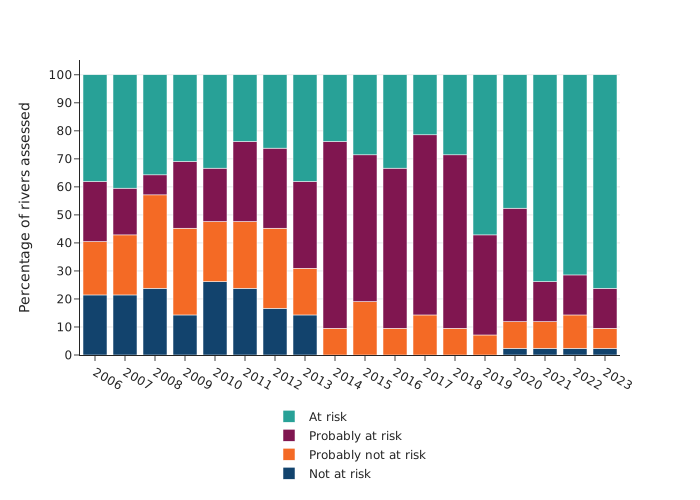
B7a: Salmon stock status – principal salmon rivers in England within each risk category, 2006 to 2023
Source: Environment Agency
Download the data for this chart in .csv format
Notes on Figure
Data for 2004 and 2005 are no longer included in the source publication.
Trend Description
Across the most recent 2 datapoints (2022 to 2023) there has been a deterioration, with a 5% increase in the percentage of rivers 'at risk' and a decrease in the percentage of rivers 'probably not at risk' from 12% to 7%. Overall status of salmon stocks across principal salmon rivers continues to show a decline over the total period of this assessment. This continues a trend observed before the start of the time series (2006). The percentage of principal salmon rivers at risk in England has fluctuated considerably from year to year; but has shown an increase over the past 5 years (19%), this includes a 26% increase between 2020 and 2021. The percentage of rivers in the ‘probably at risk’ category has decreased over the same 5 year time period by 21.4%, (from 36% in 2018 to 14% in 2022). In comparison, the percentage of rivers in the ‘not at risk’ category fell from 21% in 2006 to 0% in 2014 where it remained until there was a slight (2%) recovery in 2020 and maintained at this level through 2023. The percentage of rivers that are ‘probably not at risk’ has fallen by 12% over the 17 years covered by this indicator.
Assessment: B7a
An increase (or improvement) in the numbers of the principal salmon rivers classed as ‘Not at risk’ or ‘Probably not at risk’ was observed over the short term, while a decrease (or deterioration) was observed over the medium and long term. This indicator is derived from highly variable data as fish are susceptible to yearly weather patterns and have natural cycles in abundance. This reduces confidence that shorter-term assessment results reflect real trends rather than natural variation. A more marked deterioration is evident over the medium term, reflecting a steep drop after 2012.
Change since 2018 covers the same period as our short-term assessment, where an increase (or improvement) in the numbers of the principal salmon rivers classed as ‘Not at risk’ or ‘Probably not at risk’ was observed.
Further information on this assessment, along with details on the methodology, is provided in the Assessment guide page. Summaries by Environmental Improvement Plan goal and information on indicator links are presented in the Assessment results pages.
| Component | Subcomponent | Period | Date range | Percentage change | Smoothing function | Assessment of change |
|---|---|---|---|---|---|---|
| B7a | Not at risk or probably not at risk | Short term | 2018 to 2023 | 30.65 | Loess | Improvement |
| B7a | Not at risk or probably not at risk | Medium term | 2013 to 2023 | -57.94 | Loess | Deterioration |
| B7a | Not at risk or probably not at risk | Long term | 2006 to 2023 | -69.35 | Loess | Deterioration |
Note that assessment categories for the short, medium and long term were assigned based on smoothed data, so percent change figures in Tables B7a may differ from unsmoothed values quoted elsewhere. Percent change refers to the difference seen from the first to last year in the specified date range.
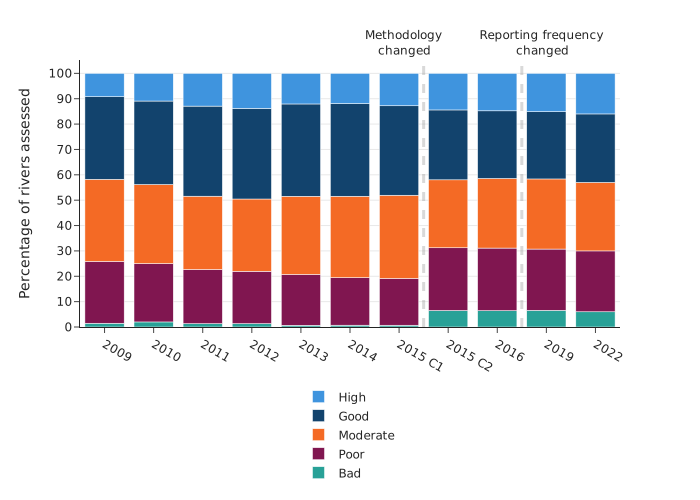
B7b: Classification of fish in English rivers, 2009 to 2022
Source: Environment Agency
Download the data for this chart in .csv format
Notes on Figure
There are 2 data points shown for 2015; these represent a change in assessment methods and a move from cycle 1 to cycle 2 of the Water Framework Directive reporting units. Reporting on fish classifications also moved from annual to triennial in 2016, so the next reporting point was 2019.
Trend Description
The data show a slight but consistent increase in the numbers of rivers classed as high and good ecological status for fish between 2009 and 2015 and a corresponding small decrease in numbers of rivers in the poor and bad categories. From 2015, a revised method for assessing status was introduced, indications are that there was little change in the proportions of rivers in the 5 different categories between 2016 and 2022, overall there has been a 1% increase in the percentage of rivers at 'good' or 'high' status. The new method is not directly comparable to the old method, so it is not appropriate to assess trend across both datasets at this time.
Assessment: B7b
An increase (or improvement) has been observed for the percent of English rivers classified as in high or good status based on fish, over the short term, covering the period of time between 2016 to 2022. From 2015, a new method was introduced for assessing status, the new method is not directly comparable to the old method, so it is not appropriate to look at trends across both datasets.
Further information on this assessment, along with details on the methodology, is provided in the Assessment guide page. Summaries by Environmental Improvement Plan goal and information on indicator links are presented in the Assessment results pages.
| Component | Subcomponent | Period | Date range | Percentage change | Smoothing function | Assessment of change |
|---|---|---|---|---|---|---|
| B7b | High or good | Short term | 2016 to 2022 | 3.78 | Unsmoothed | Improvement |
| B7b | High or good | Medium term | N/A | N/A | N/A | Not assessed |
| B7b | High or good | Long term | N/A | N/A | N/A | Not assessed |
Note that percentage change refers to the difference seen from the first to last year in the specified date range.
Metadata
| Headline | Not applicable |
|---|---|
| Primary Goal | Water |
| Relevant Goals | Water, Restored nature, Resources |
| Relevant Targets | Restoring 75% of our one million hectares of terrestrial and freshwater protected sites to favourable condition, securing their wildlife value for the long term, Taking action to recover threatened, iconic or economically important species of animals, plants and fungi, and where possible to prevent human induced extinction or loss of known threatened species in England and the Overseas Territories, Ensuring that all fish stocks are recovered to and maintained at levels that can produce their maximum sustainable yield |
| Natural Capital | Condition of assets - freshwater, Condition of assets - species and ecological communities |
| Related Commitments | Aligns with assessment of fish populations in rivers as undertaken and reported through our obligations to the Water Environment (Water Framework Directive) (England and Wales) Regulations 2017, Assessment of salmon stocks is reported separately to the International Council for the Exploration of the Seas and the North Atlantic Salmon Conservation Organisation |
| Geographical Scope | England |
| Development Status | Interim |
| First Reported | 2020 |
| Last updated | May 2025 |
| Latest Data | 2023 |