Country policy and information note: opposition to the state, China, January 2026 (accessible)
Updated 1 September 2026

© Crown copyright 2026
This publication is licensed under the terms of the Open Government Licence v3.0 except where otherwise stated. To view this licence, visit nationalarchives.gov.uk/doc/open-government-licence/version/3 or write to the Information Policy Team, The National Archives, Kew, London TW9 4DU, or email: psi@nationalarchives.gov.uk.
Where we have identified any third party copyright information you will need to obtain permission from the copyright holders concerned.
This publication is available at https://www.gov.uk/government/publications/china-country-policy-and-information-notes/country-policy-and-information-note-opposition-to-the-state-china-january-2026-accessible
Version 5.0, January 2026
Executive summary
China is a one-party state governed by the Chinese Communist Party (CCP), which controls the 3 arms of the government: the executive, legislature and judiciary. Several minor approved non-communist parties exist but their activities are limited and they are subordinate to the CCP.
Article 35 of the Chinese constitution guarantees citizens the right to enjoy freedom of speech, of the press, of assembly, of association, of procession and of demonstration. These rights are restricted in practice. The CCP does not tolerate open discussion on sensitive issues or protests which challenge party leadership or contravene the interests of the state.
There are no political opposition groups, and the creation of new political parties is forbidden. A person who is a member of an illegal opposition political group and can show that his/her political opposition has come to the attention of the authorities is likely to be at real risk of persecution and/or serious harm.
Persons who openly criticise the state, protest against the government, or are human rights defenders either acting within or outside of China, are likely to attract adverse attention from the authorities. Treatment will vary depending on a person’s level of involvement, the nature of the activities, the person’s role in those activities and their profile.
Low level protesters within China may be subjected to intimidation by police and may be arrested and subsequently released. In general, this is not sufficiently serious by its nature and/or repetition to amount to persecution and/or serious harm.
Journalists, bloggers and online activists, from within or outside of China, who have openly criticised, or are perceived critics of, the government are likely to attract adverse attention from the authorities. Treatment will vary depending on nature of criticism, the topics they have been critical about, and any previous adverse interest.
Online activity is closely monitored and those posting on sensitive topics or posting criticisms of the government are likely to have their posts removed, censored or their accounts monitored or shut down. However, such treatment alone is not sufficiently serious by its nature and/or repetition to amount to persecution or serious harm.
Where the person has a well-founded fear of persecution from the state they will not, in general, be able to obtain protection from the authorities or internally relocate.
Where a claim is refused, it is unlikely to be certifiable as ‘clearly unfounded’ under section 94 of the Nationality, Immigration and Asylum Act 2002.
All cases must be considered on their individual facts, with the onus on the person to demonstrate they face persecution or serious harm.
Assessment
Section updated: 27 January 2026
About the assessment
This section considers the evidence relevant to this note – that is the country information, refugee/human rights laws and policies, and applicable caselaw – and provides an assessment of whether, in general:
- a person faces a real risk of persecution/serious harm by the state because of their actual or perceived opposition to, or criticism, of the state
- the state (or quasi state bodies) can provide effective protection
- internal relocation is possible to avoid persecution/serious harm
- a claim, if refused, is likely or not to be certified as ‘clearly unfounded’ under section 94 of the Nationality, Immigration and Asylum Act 2002.
Decision makers must, however, consider all claims on an individual basis, taking into account each case’s specific facts.
1. Material facts, credibility and other checks/referrals
1.1 Credibility
1.1.1 For information on assessing credibility, see the instruction on Assessing Credibility and Refugee Status.
1.1.2 Decision makers must also check if there has been a previous application for a UK visa or another form of leave. Asylum applications matched to visas should be investigated prior to the asylum interview (see the Asylum Instruction on Visa Matches, Asylum Claims from UK Visa Applicants).
1.1.3 Decision makers must also consider making an international biometric data-sharing check, when one has not already been undertaken (see Biometric data-sharing process (Migration 5 biometric data-sharing process)).
1.1.4 In cases where there are doubts surrounding a person’s claimed place of origin, decision makers should also consider language analysis testing, where available (see the Asylum Instruction on Language Analysis).
Official – sensitive: Not for disclosure – Start of section
The information on this page has been removed as it is restricted for internal Home Office use.
Official – sensitive: Not for disclosure – End of section
1.2 Exclusion
1.2.1 Decision makers must consider whether there are serious reasons to apply one (or more) of the exclusion clauses. Each case must be considered on its individual facts.
1.2.2 If the person is excluded from the Refugee Convention, they will also be excluded from a grant of humanitarian protection (which has a wider range of exclusions than refugee status).
1.2.3 For guidance on exclusion and restricted leave, see the Asylum Instruction on Exclusion under Articles 1F and 33(2) of the Refugee Convention, Humanitarian Protection and the instruction on Restricted Leave.
Official – sensitive: Not for disclosure – Start of section
The information on this page has been removed as it is restricted for internal Home Office use.
Official – sensitive: Not for disclosure – End of section
2. Convention reason(s)
2.1.1 Actual or imputed political opinion.
2.1.2 Establishing a convention reason is not sufficient to be recognised as a refugee. The question is whether the person has a well-founded fear of persecution on account of an actual or imputed Refugee Convention reason.
2.1.3 For further guidance on the 5 Refugee Convention grounds, see the Asylum Instruction, Assessing Credibility and Refugee Status.
3. Risk
3.1 Political opponents
3.1.1 A person who seeks to establish a political opposition group or whose political opinion or activities come to the attention of the authorities is likely to be at real risk of persecution and/or serious harm.
3.1.2 China is an authoritarian state dominated by the Chinese Communist Party (CCP). It controls the 3 arms of government: the executive, the legislature and judiciary (see Political structure).
3.1.3 Article 35 of the Constitution guarantees citizens the right to enjoy freedom of speech, of the press, of assembly, of association, of procession and of demonstration. These rights are restricted in practice (see Constitution).
3.1.4 China does not hold free and competitive elections at the national level. Minor parties exist but are vetted by, and are subordinate to, the CCP and are required to pledge loyalty to the party. Political positions are directly elected only at the lowest levels such as in county, town or village congresses but in practice, independent candidates are prevented from competing and are subject to intimidation, harassment, fraud, and sometimes detention. Citizens who have sought to establish genuinely independent political parties or pro-democracy movements are nearly all in prison, under house arrest, or in exile (see Political parties).
3.1.5 China’s prosecution and law enforcement processes lack impartiality and judicial independence. Prosecutions rely heavily on confessions and harassment, pressure and threats to lawyers leaves many defendants in political cases without effective counsel. In 2024 over 99.96% of cases resulted in a guilty verdict (see Criminal justice system).
3.1.6 For further guidance on assessing risk, see the Asylum Instruction on Assessing Credibility and Refugee Status.
3.2 Critics, protestors and human rights defenders
3.2.1 A person who openly criticises the state, openly discusses sensitive topics and/or protests against the government is likely to attract adverse attention from the authorities. Whether this is likely to amount to persecution and/or serious harm will depend on factors such as the nature of the person’s criticism and/or activities, their role and profile in criticising or undertaking activities against the state, and any previous adverse state interest.
3.2.2 A person perceived to be a low-level protester may be subject to intimidation by police and may be arrested and subsequently released. This is not sufficiently serious by its nature and/or repetition to amount to persecution or serious harm. The onus is on the person to demonstrate otherwise.
3.2.3 Sensitive topics in China encompass a broad range of issues that are subject to strict censorship, including criticism of government policies, foreign affairs, and matters related to health, civil society, and public protest. Content about historical events like the Tiananmen Square massacre is systematically removed. The interpretation of sensitive topics evolves rapidly and can include some topics which were previously tolerated. There is little tolerance for private criticism of the CCP, even if only among friends and family. Citizens often refrain from discussing political matters due to fear of punishment, and authorities respond harshly to challenges against the CCP’s legitimacy or its leaders, pressuring independent groups to self-censor (see Sensitive topic areas).
3.2.4 Protests in China are constitutionally permitted but heavily restricted in practice and the law does not allow any that challenge party leadership or contravene the interests of the state. Non-political protests are more likely to be tolerated. Surveillance is extensive, with CCTV and phone checks used to identify participants. Statistical information about protests differs. The Armed Conflict Location and Event Data Project (ACLED) noted that between October 2023 and October 2025 there were 2,560 protests, with the vast majority, 2,439 described as peaceful. 108 resulted in intervention such as dispersal and 13 resulted in excessive force being used against protestors. ACLED records a broad snapshot of unrest and political demonstrations. The Freedom House ‘Dissent Monitor’, which captures protests and actions specifically targeted at challenging authority, recorded a total of 1,086 group demonstrations during the same 2-year period with one group demonstration being against central government and 249 group demonstrations against local government. Freedom House reported higher numbers of repression or intervention – out of the 1,086 group demonstrations, 449 resulted in some form of repression such as arrests, violence, monitoring or dispersal of protestors. Analysis of the data indicates the most commonly reported response (in 39% of demonstrations where repression occurred) was monitoring (see Protestors and human rights activists- State treatment and Protests).
3.2.5 Land disputes, local corruption, and labour disagreements are prevalent due to rapid development and internal migration. As a result, they are common protest themes. All urban land is state-owned, and rural land is collectively managed by villages. Compensation for expropriated land is legally required but vaguely defined, enabling local officials to evict residents with low compensation and transfer land rights to developers, which can fuel protests. Data from Freedom House records 112 group demonstrations related to land or forced relocation disputes between October 2023 and October 2025, mostly against local governments (see Land disputes).
3.2.6 Civil society organisations (CSOs) in China are tightly controlled by the government. Organisations must register, follow government rules and often face pressure to accept government money as a way for the government to exert control over their activities. New independent groups, especially those focused on human rights, are not allowed. International NGOs need local sponsors and must register, which is often difficult. Since 2022, it has become even harder for independent groups to exist, with most being shut down or replaced by government-run organisations. The few that remain are closely watched, and staff are harassed, and risk being detained, particularly if they do anything the government has not approved or if they work with foreign groups (see Civil society organisations).
3.2.7 Human rights defenders (HRD) in China face harassment, threats, detention, house arrest, enforced disappearance and residential surveillance in a police designated location (RSDL, a secret extra-legal detention facility), particularly those who are high profile or outspoken. There is limited information about the scale and extent of such treatment. Amnesty analysed over 100 official judicial documents from 68 cases involving 64 human rights defenders over the past decade (an average of around 1 case every 2 months). It noted in half (32) cases, HRD were convicted for crimes related to freedom of expression namely “inciting subversion” (20 cases) or “picking quarrels” (6 cases). Some human rights defenders in detention have also reportedly been deprived medical treatment, access to lawyers and in some cases, have experienced torture and other forms of coercion in order to extract confessions or to deter others from working on human rights issues (see Protesters and human rights defenders - State treatment and Detention).
3.2.8 For further guidance on assessing risk, see the Asylum Instruction on Assessing Credibility and Refugee Status.
3.3 Journalists and other media workers
3.3.1 Journalists and media workers who openly criticise, or are perceived critics of, the government are likely to attract adverse attention.
3.3.2 Being a journalist or media worker does not place a person at real risk of persecution or serious harm for that reason alone. Whether a person is likely to be at risk will depend on a number of factors such as the subject matter; the nature, language and tone of the critical material produced; the method of communication; the reach and frequency of the publication; and the publicity attracted, and any previous adverse state interest.
3.3.3 The Chinese media is heavily regulated and censored. The CCP controls news reporting and owns major Chinese news groups and papers such as Xinhua News Agency, China Central Television (CCTV), China Daily and the Global Times. Media is used by the government to promote policy priorities and influence public opinion (see Traditional media and journalists- Law and State regulation and censorship).
3.3.4 Only journalists who have official government approval can publish news in print or online. The Chinese Communist Party (CCP) closely watches all news content. Journalists and editors self-censor to stay within the lines dictated by the CCP and to avoid serious penalties. The government uses the “Great Firewall” to block foreign websites like Facebook, Instagram, and some Google services. Journalists and ‘citizen’ (non-professional) reporters often censor themselves to follow CCP rules. If they break these rules, they can face severe punishment. The rules are often unclear, can change at any time, and are sometimes enforced retroactively (see Traditional media and journalists- State regulation and censorship).
3.3.5 Journalists can face harassment, monitoring, intimidation, threats of demotion and dismissal, and physical attacks, particularly if they report on politically sensitive topics or from politically sensitive areas such as Xinjiang. Sources note numerous journalists and ‘citizen’ journalists remain detained or imprisoned for their reporting with sources recording between 50 and 101 media workers, including journalists and editors, in 2025. However, given the population of over 1.4 billion, the numbers are relatively low. Those arrested or imprisoned are often detained on charges such as ‘espionage’, ‘subversion’ or ‘picking quarrels and provoking trouble’ (see Traditional media and journalists- State treatment).
3.4 Internet and social media activists/bloggers
3.4.1 Bloggers/online activists who openly criticise, or are perceived critics of, the government are likely to attract adverse attention.
3.4.2 Whether a person is likely to be at risk of persecution and/or serious harm will depend on a number of factors such as: the subject matter, language and tone of the material produced, the method of communication, the reach and publicity attracted, and any past adverse interest by the authorities.
3.4.3 There are over 1.09 billion internet users in China (around 78% of the population), almost all using mobile devices. The internet is generally fast and affordable, but foreign sites load slowly due to government filtering. The state controls the management of the telecommunications infrastructure (see Access to the internet).
3.4.4 China runs one of the world’s most advanced internet censorship systems, called the Great Firewall. It blocks over 200,000 websites and limits access to many international platforms and news sources. This system keeps online content strictly aligned with CCP rules and government laws. The censorship process is secretive, inconsistent, and offers no way to appeal. Guidelines are vague and undisclosed. Authorities require local websites and tech companies to actively remove banned content, with harsh penalties for failure. Police also check phones for apps that bypass censorship and force users to install tracking apps under the pretext of “anti-fraud” measures. The government aggressively censors depictions of General Secretary Xi Jinping, blocking related social media content and comments (see Censorship and monitoring and State treatment of bloggers/online activists).
3.4.5 Chinese citizens use platforms like Weibo to discuss sensitive topics, but the government restricts these spaces through censorship, shutting down critical websites, and deploying fake social media profiles to promote pro-China narratives. Self-censorship is widespread due to risks of account closure, legal penalties, and harassment by pro-CCP volunteer internet commentators, paid employees and online users defending China’s reputation (see State treatment of bloggers/online activists).
3.4.6 Journalists and bloggers face imprisonment for online activities. Reporters without Borders reported there were 14 bloggers detained at the time of writing, including citizen journalist Zhang Zhan, held for “picking quarrels and provoking trouble” after reporting on COVID-19 in Wuhan. According to Freedom House’s China Dissent Monitor, there were 114 instances of online dissent recorded between October 2023 and October 2025, with 27 cases resulting in actions against dissenters, which included arrest, detention, intimidation and censorship. Given the population of over 1.4 billion, the majority of whom are internet users, the numbers in either scenario are extremely low (see State treatment of bloggers/online activists and Annex A: Table on cases of online dissent).
3.4.7 The use of social media evidence generally was addressed in the country guidance case XX (PJAK – sur place activities - Facebook) Iran CG [2022] UKUT 23 (IAC), heard 8 to 10 June 2021 and promulgated on 20 January 2022. Whilst XX relates to Iran the guidance provides some helpful principles when dealing with social media evidence. The Upper Tribunal (UT) held that:
- ‘Guidance on social media evidence generally
‘Social media evidence is often limited to production of printed photographs, without full disclosure in electronic format. Production of a small part of a Facebook or social media account, for example, photocopied photographs, may be of very limited evidential value in a protection claim, when such a wealth of wider information, including a person’s locations of access to Facebook and full timeline of social media activities, readily available on the “Download Your Information” function of Facebook in a matter of moments, has not been disclosed.
‘It is easy for an apparent printout or electronic excerpt of an internet page to be manipulated by changing the page source data. For the same reason, where a decision maker does not have access to an actual account, purported printouts from such an account may also have very limited evidential value.’ (paragraphs 127 to 128).
3.6 Sur place activities
3.6.1 A person outside of China who openly criticises the CCP or who protests against them is likely to attract adverse attention from the Chinese state. Whether a person is likely to be at risk of persecution and/or serious harm on return to China will depend on a number of factors such as a person’s level of involvement, the nature of criticism, previous adverse interest, the nature of their activities, the person’s role in those activities and their profile.
3.6.2 Online activity/views expressed abroad are closely monitored and the CCP restricts views it finds objectionable. Surveillance extends to cyberattacks, spyware campaigns particularly targeting Uyghurs, and infiltration of diaspora communities, including academic institutions and surveillance of international students. Secret police stations have been discovered abroad, including an illegal Chinese police station in New York in 2023 (see Monitoring of the diaspora).
3.6.3 The CCP imposes exit bans from China on known activists, and in some cases their families to maintain in country control. It harasses family members of those abroad to silence dissent, employing long-arm control over global diaspora groups. Methods include physical assault, surveillance, hacking, online smear campaigns, and misuse of international law enforcement tools for political reprisals. The CCP’s United Front Work Department mobilises official and informal groups worldwide to promote party loyalty and suppress opposition, including students and diaspora organisations (see Monitoring of the diaspora).
3.5.4 High profile activists outside of China who continue to comment on sensitive subjects are more likely to be monitored. Activists abroad have reported harassment of family members in China and Hong Kong, including interrogations, frozen bank accounts, and physical threats by state security agencies (see Monitoring of the diaspora).
4. Protection
4.1.1 Where the person has a well-founded fear of persecution or serious harm from the state, they are unlikely to be able to obtain protection.
4.1.2 For further guidance on assessing state protection, see the Asylum Instruction on Assessing Credibility and Refugee Status.
5. Internal relocation
5.1.1 Where the person has a well-founded fear of persecution or serious harm from the state, they are unlikely to be able to internally relocate to escape that risk.
5.1.2 For further guidance on internal relocation and factors to consider, see the Asylum Instruction on Assessing Credibility and Refugee Status
6. Certification
6.1.1 Where a claim is refused, it is unlikely to be certifiable as ‘clearly unfounded’ under section 94 of the Nationality, Immigration and Asylum Act 2002.
6.1.2 For further guidance on certification, see Certification of Protection and Human Rights claims under section 94 of the Nationality, Immigration and Asylum Act 2002 (clearly unfounded claims).
Country information
About the country information
This section contains publicly available or disclosable country of origin information (COI) which has been gathered, collated and analysed in line with the research methodology. It provides the evidence base for the assessment which, as stated in the About the assessment, is the guide to the current objective conditions.
The structure and content follow a terms of reference which sets out the general and specific topics relevant to the scope of this note.
This document is intended to be comprehensive but not exhaustive. If a particular event, person or organisation is not mentioned this does not mean that the event did or did not take place or that the person or organisation does or does not exist.
Some sources refer to Transnational Repression (TNR), with differing definitions and explanations of what this entails. The UK recognises TNR as a term to describe certain foreign state-directed crimes against individuals. This activity can take place both physically or online, with examples including intimidation, surveillance, harassment, forced/coerced return, abduction and even assassination at the most serious end of the scale.
The COI included was published or made publicly available on or before 5 January 2026. Any event taking place or report published after this date will not be included.
Decision makers must use relevant COI as the evidential basis for decisions.
7. Legal context
7.1 Constitution
7.1.1 Article 34 of the constitution states that: ‘All citizens of the People’s Republic of China who have reached the age of 18 have the right to vote and stand for election, regardless of ethnic status, race, sex, occupation, family background, religious belief, education, property status or length of residence, except persons deprived of political rights according to law.[footnote 1]
7.1.2 Article 35 of the constitution states that: ‘Citizens of the People’s Republic of China enjoy freedom of speech, of the press, of assembly, of association, of procession and of demonstration.[footnote 2]
7.1.3 Article 51 of the constitution states: ‘When exercising their freedoms and rights, citizens of the People’s Republic of China shall not undermine the interests of the state, society or collectives, or infringe upon the lawful freedoms and rights of other citizens.’[footnote 3]
7.1.4 The Australian Government’s Department for Foreign Affairs and Trade’s (DFAT) Country Report 2024, based on a range of public and non-public available sources including on-the-ground knowledge and discussions with a range of sources, noted that: ‘Article 35 of China’s Constitution states that citizens enjoy freedom of speech, the press, assembly, association, procession, and demonstration. In practice, a wide-ranging number of topics are considered sensitive and are censored, with those raising them liable to a range of formal punishments under China’s laws. In-country sources told DFAT in 2023 that censorship had increased significantly in recent years, especially since 2020.’[footnote 4]
7.2 Criminal law
7.2.1 Article 293 of the criminal code states that:
‘Whoever commits any of the following acts of creating disturbances, thus disrupting public order, shall be sentenced to fixed-term imprisonment of not more than five years, criminal detention or public surveillance:
(1) beating another person at will and to a flagrant extent;
(2) chasing, intercepting or hurling insults to another person to a flagrant extent;
(3) forcibly taking or demanding, willfully damaging, destroying or occupying public or private money or property to a serious extent; or
(4) creating disturbances in a public place, thus causing serious disorder in such place.’[footnote 5]
7.2.2 The China Media Project, ‘an independent research project specializing in the study of the Chinese media landscape both within the PRC and globally’[footnote 6], note in an article from November 2023 that:
‘Under the leadership of Chinese Communist Party General Secretary Xi Jinping, authorities broadly employ the picking quarrels charge for politically motivated prosecutions and other arbitrary law enforcement. The widespread and arbitrary use of the picking quarrels charge to suppress speech and expression and impose social control represents a shift from merely preventing direct challenges to authoritarian rule, such as organized protests, to actively deterring public discussion of a wide range of topics not previously considered politically sensitive, even when there is no real possibility that discussion could lead to civil unrest.
‘… In 2013, following directives from the Party, the Supreme People’s Court (SPC) and Supreme People’s Procuratorate (SPP) jointly issued Judicial Interpretation No. 21, introducing “online picking quarrels” as a new subcategory of the catch-all crime. This newly established rule allows officials to criminalize online speech they deem objectionable, ostensibly to combat misinformation.
‘… picking quarrels has been increasingly used to silence all kinds of objectionable speech and public discourse. This includes public discussions that might incite unrest, criticisms of social-economic government policies (such as policies toward urban real estate), disrespectful social media posts against individual traffic police, complaints about quarantine facility conditions, and even a work of fiction that possibly hinted at internal struggles in a stated-owned enterprise.’[footnote 7]
7.2.3 The Congressional Executive Commission on China (CECC), set up by the US Congress to monitor human rights and the development of the rule of law in China[footnote 8], noted that:
‘The Articles 102 through 112 of the Criminal Law specify what types of behavior constitute a threat to national security. Of these, Articles 105 and 111 are the ones most commonly employed to silence political dissent:
- Article 105 criminalizes organizing, plotting, or carrying out subversion of the national regime, or using rumor mongering or defamation or other means to incite subversion of the national regime or the overthrow of the socialist system.
- Article 111 prohibits stealing, secretly collecting, purchasing, or illegally providing state secrets or intelligence to an organization, institution, or personnel outside the country.’[footnote 9]
7.2.4 Amnesty International’s report ‘How could this verdict be “legal”? The role of China’s courts in targeting human rights defenders’, published in October 2025 noted:
‘The Criminal Law (CL) includes specific provisions and sentencing guidelines for certain offenses, including crimes in the category of “endangering national security”. Of these, charges such as “separatism” and “inciting separatism”; “subversion of state power” and “inciting subversion of state power”; “collusion with foreign forces”; “espionage”; and “illegally providing state secrets to a foreign body” have been consistently found to have been levied against HRDs, in Amnesty International’s own research and in the observations and conclusions of UN human rights experts. Sentencing guidance for these crimes ranges from between zero months to the death penalty depending on the crime and the role the individual played.’[footnote 10]
8. Political system
8.1 Political structure
8.1.1 BBC news, How China is ruled, provided a graphic of the political system.[footnote 11]
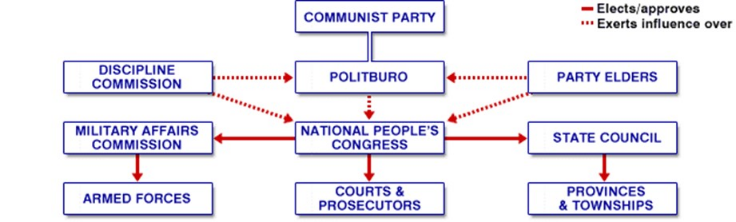
8.1.2 The 2024 DFAT report noted:
‘China is a one-party state governed by the CCP. … The CCP’s main groupings in order of size (largest to smallest) and amount of real political power (least to most) are: the Central Committee, the Politburo and the Politburo Standing Committee (PBSC).
‘From the 99 million members in Party cells, around 2300 delegates are elected to the National Party Congress, a conclave that meets every five years. The main function of the National Party Congress is to elect the Central Committee of around 380 members, which exercises the functions of the Congress outside of its five-yearly meeting. The decision-making body of the Central Committee is the Politburo, comprised of the 24 most senior members of the Party and exercising the functions and powers of the Central Committee out of session. Power is then further concentrated in the seven-member PBSC. Each member of the PBSC has a specific portfolio. The General Secretary (Xi Jinping) and the Premier (Li Qiang) are also members of the PBSC.
‘Subordinate to the national government are provincial governments and autonomous regional governments. The autonomous regions are areas with high proportions of ethnic minorities, including Guangxi, Inner Mongolia, Ningxia, Tibet, and Xinjiang, who were nominally provided with a higher degree of autonomous decision making under the Constitution. Subordinate to provincial governments and autonomous regions are prefectures, counties, autonomous counties, townships and villages. Beijing, Chongqing, Shanghai, and Tianjin are municipalities directly subordinate to the national government. The CCP is embedded in each level of government and reports upward from the village level right through to the national level in Beijing.
‘Governments at the provincial level and below are responsible for most public expenditure on health, education, unemployment insurance, social security, and welfare. For this reason, these services differ from place to place (often village to village or county-to-county), making it difficult to generalise quality of services. For example, low tax receipts in rural areas may reflect infrastructure of poorer quality.’[footnote 12]
8.2 Chinese Communist Party (CCP)
8.2.1 The 2024 DFAT report noted:
‘China’s political landscape is dominated by the CCP. While the Party, executive, legislature, and judiciary are ostensibly separate entities, China’s Constitution makes clear that all organs are subordinate to the CCP. Government agencies, judicial organs, and businesses have parallel Party structures and/or host Party “cells”, and senior officials in government, the judiciary, [state-owned enterprises] SOEs and the legislature also concurrently hold positions with the CCP.
‘The CCP is organised into ‘cells’, which might be known as ‘committees’ or ‘branches’. Any organisation with more than three CCP members (there is about 1 party member for every 15 citizens) must have a Party cell. There are about 5 million Party cells that exist in government, private and social enterprises and in neighbourhood associations. Cells report to committees above them, which might report to a government organisation above them and eventually a reporting line exists all the way to the Central Government in Beijing.
‘In the past, the Party had a higher proportion of farmers and workers, but today’s CCP members are predominantly young people and university degree holders. About two-thirds of CCP members are male. Party membership is selective – the process to join can involve several years of study, exams, and background checks. More than one attempt to join is common. The benefits to joining include prestige and connections, or guanxi, that would not otherwise be available. Guanxi is extremely important in Chinese culture and can significantly enhance career or financial success.’[footnote 13]
8.2.2 Freedom House noted in their Freedom in the World 2025 report that: ‘The CCP is not accountable to voters and denies the public any meaningful participation in political affairs. The party uses a broad array of coercive tools and methods to suppress independent political engagement.’[footnote 14]
8.3 Political parties
8.3.1 The 2024 DFAT report noted: ‘While minor parties formally exist, they are vetted by, and are subordinate to, the CCP. The CCP’s main groupings in order of size (largest to smallest) and amount of real political power (least to most) are: the Central Committee, the Politburo and the Politburo Standing Committee (PBSC).’[footnote 15]
8.3.2 Bertelsmann Stiftung (BTI), a German private foundation which ‘stimulates debate and provides impetus for social’[footnote 16], in its China Country Report 2024, compiled by country and regional experts from universities and think tanks[footnote 17], covering the period of 1 February 2021 to 31 January 2023, published in March 2024 noted that:
‘Political organizations competing with the CCP are prohibited.
‘… The CCP is the absolute center of power in China’s politics. Although there are eight political parties other than the CCP, the CCP requires them to accept its leadership. As of 2022, the CCP had more than 96 million members of whom over 70% are men. The number of female members, members with college degrees and members younger than 40 has grown in recent years. About 30% of CCP members are currently made up of agricultural and blue-collar workers. During China’s 20th Party Congress, not a single woman was promoted to the politburo, the executive policymaking body, which constitutes a break with a two-decade tradition. So far, a woman has never been elevated to the Standing Committee.
‘Competing factions inside the CCP have traditionally been allowed. After Xi Jinping’s rise to power in 2012, he centralized power and tried to diminish the influence of other factions. Analytically, Xi Jinping has developed his own faction and eliminated potential competitors.
‘Other so-called democratic parties are required to accept the primacy of the CCP in order to exist and pledge loyalty to the party.’[footnote 18]
8.3.3 Freedom House noted in their Freedom in the World 2025 report that:
‘The CCP effectively monopolizes all political activity and does not permit meaningful political competition. Eight small noncommunist parties are represented in the Chinese People’s Political Consultative Conference, an official advisory body, but their activities are tightly circumscribed. These parties must accept the CCP’s leadership as a condition for their existence.
‘Citizens who have sought to establish genuinely independent political parties or prodemocracy movements are nearly all in prison, under house arrest, or in exile. The authorities continue to hold prodemocracy activists and lawyers in various forms of detention and imprisonment.
‘China’s one-party system provides no institutional mechanism for organized political opposition.’[footnote 19]
8.4 Elections
8.4.1 The BTI China Country Report 2024 noted:
‘China does not hold free and competitive elections at the national level. Instead, senior leaders are selected by the Organization Department of the Chinese Communist Party, one of the key agencies of China’s Central Committee. While the president of the state and the state council are elected by the National People’s Congress (NPC), Local People’s Congresses (LPC) can elect their heads at the same level and deputies to People’s Congresses at the next level up. Township and county congresses are directly elected in popular elections, but pre-selected candidates in the LPC elections are often tied to the local CCP committees. In general, the competitive nature of elections is highly constrained.
‘Village and urban residents’ committees, as well as village leaders and party branch secretaries, are directly elected. For instance, according to a nationwide survey in 2017, more than 98% of villagers’ committees are directly elected by villagers. However, vote buying, clannism, manipulation and interference from higher-level government and party authorities in the electoral process are common.’[footnote 20]
8.4.2 Freedom House noted in their Freedom in the World 2025 report that:
‘Political positions are directly elected only at the lowest levels. Independent candidates who obtain the signatures of 10 supporters are by law allowed to run for seats in the county-level people’s congresses. Elections for village committees are also supposed to give residents the chance to choose their representatives. In practice, however, independent candidates for these posts are often kept off the ballot or out of office through intimidation, harassment, fraud, and sometimes detention.
‘Elections are not administered by an independent body. The indirect elections that populate people’s congresses at various levels are conducted by those congresses’ standing committees, while village-level elections are conducted by a village electoral committee that answers to the local party committee.’[footnote 21]
9. Political opinions
9.1 Criticism of the CCP
9.1.1 The 2024 DFAT report noted:
‘Authorities discourage the portrayal of the Government of China, CCP, armed forces, nationalists, or China’s economic situation in a ‘negative light’. In a highly publicised example from May 2023, a comedian who made jokes about a slogan used by President Xi regarding China’s military had his shows cancelled. The comedy club that hosted the show in Beijing was also fined about AUD 3 million [£1.49 million[footnote 22]].
‘Tolerance for private criticism of the Government of China or CCP, even if only among friends and family, has reduced significantly since 2019 because potential “red lines” had become less clear. The government intensified its national security drive and in June 2020 announced “material rewards” of up to and above RMB 100,000 (AUD 21,000) [£10,696[footnote 23]] for tip-offs about anyone “endangering national security”. The Ministry of State Security, which oversees intelligence and counterintelligence within China and overseas, in August 2023 encouraged citizens to actively participate in “counter-espionage work”. As part of President Xi’s push for more control by the CCP over society, all criticism has become viewed through a “national security lens”, which international academics told DFAT in 2023 was aimed at fostering a culture of self-censorship.
‘Those who express political views that challenge the authority or interests of the CCP can face severe penalties. Criminal punishment can include a period of deprivation of “political rights”, with denial of freedoms such as expression or assembly, and can be applied to dissidents broadly. These deprivations make it difficult to find employment, travel, or obtain a residence or accommodation. The families of, and those who associate closely with, political activists may find their rights similarly circumscribed.’[footnote 24]
9.2 Sensitive topic areas
9.2.1 Freedom House’s Freedom on the Net 2024, covering the period of 1 June 2023 to 31 May 2024, noted that:
‘Censored topics often involve news, commentary, or criticism related to government policies, the CCP, and foreign affairs, as well as content related to health, safety, civil society, and public protest. Content that violates long-standing taboos is consistently and systematically censored, including content related to the June 4, 1989, Tiananmen Square massacre; Taiwanese affairs; and the government’s repression of marginalized communities like ethnic minorities in Xinjiang and Tibet and Falun Gong and Christian religious practitioners. Uyghur- and Tibetan-language content specifically is often targeted for removal.’[footnote 25]
9.2.2 The 2024 DFAT report noted:
‘Sensitive issues include, but are not limited to: commentary on political issues and events (including the policy direction of the CCP and nation, as well as anniversaries like the 4 June Tiananmen Square massacre), economic issues, health (including COVID-19 origins and the handling of the outbreak); land and property rights, environmental issues, labour rights, religious or ethnic issues (including Chinggis Khan, the Dalai Lama and so-called separatist movements linked to ‘East Turkestan’), other human rights issues, and the legitimacy of central authorities and the CCP. The sensitive nature of a topic may change quickly, making it difficult to compile a more comprehensive list in 2024. The arts, literature, and music are also censored as part of ‘cultural management’ policies to bring them into line with approved government messaging.’[footnote 26]
9.2.3 Human Rights Watch noted in their World Report 2025 that:
‘Previously tolerated topics have become off-limits. With the Chinese economy faltering, the government has prohibited discussions of its economic policies and penalized those critical of them. In September, a top Chinese Academy of Social Sciences economist went missing after he disparaged President Xi’s economic policies in a private WeChat group. Also in September, Beijing police detained US-based artist Gao Zhen, acclaimed for his work critiquing the late Chinese leader Mao Zedong, for “slandering China’s heroes and martyrs” while he was visiting the country. Both topics– China’s economic policies and Mao’s disastrous legacy – were topics that could be openly discussed in China until recently.’[footnote 27]
9.2.4 The US State Department (USSD) noted in its 2024 Human Rights report on China, published on 12 August 2025 and covering events in 2024, that: ‘Citizens often avoided discussing political matters, leaders, or “sensitive” topics for fear of official punishment. Authorities routinely took harsh action against citizens who questioned the legitimacy of the CCP or criticized General Secretary Xi. Some independent think tanks, study groups, and seminars reported pressure to cancel sessions on sensitive topics.’[footnote 28]
10. Protestors and human rights defenders
10.1 Civil society organisations
10.1.1 The BTI China Country Report 2024 noted:
‘The government is likely to subject NGOs identified as threatening the party-state’s authority to outright repression. Affected by the COVID-19 pandemic, the number of social organization registrations dropped significantly. Concerns over state security have generally taken priority, and the purpose of a crackdown on NGOs has moved from punishment to pre-emptive control. Between 2011 and 2021, the number of grassroots party organizations rose from 4.01 million in 2011 to around 4.94 million in late 2021.
‘… NGOs dedicated to safeguarding and promoting rights have frequently been denied registration. Due to the Overseas NGO Law, it has become increasingly difficult for these organizations to receive overseas funding.
‘Mass organizations are typically funded by the state and operate under the leadership of the CCP. Such organizations include the All-China Federation of Trade Unions, the All-China Women’s Federation, the China Youth League, and the All-China Federation of Industry and Commerce.
‘China’s NGO community is composed of NGOs and government-organized non-governmental organizations (GONGOs). GONGOs are also funded by the state and are expected to receive expertise and funding that the government finds hard to access. The number of NGOs has increased dramatically over the past two decades. Most organizations work in areas such as education, poverty alleviation, community development, environment, and health care, and provide services such as legal aid and consumer protection support. Recently, some have also begun to look for opportunities overseas. Although there is more space for an autonomous NGO sector to develop, the government harbors anxieties about social instability. The government imposes severe restrictions on NGO activities and bans the formation of any autonomous organization in politically sensitive issue areas, such as human rights and the free movement of labor, which results in a strong limitation of represented interests.
‘A large number of non-registered associations operate in China in areas such as environmental protection, but they often lack organizational capacity and funding. The interests of well-off groups in society are represented by homeowners’ and business associations, among other groups.’[footnote 29]
10.1.2 The 2024 DFAT report noted:
‘Civil society in China is heavily restricted, and there is little tolerance from authorities shown to organisations that choose to operate outside of government control. All civil society organisations (CSOs) and their activities must be registered with local authorities as part of a process to ensure they function as quasi-government bodies. CSOs face pressure to accept government funding, which entails explicit obligations to align their activities closely with official policies. In 2023 there were very few CSOs in China that met the UN’s definition as “non-State, not-for-profit, voluntary entities formed by people in the social sphere that are separate from the state and the market”.
‘International NGOs (INGOs) are governed under the Law on Administration of Activities of Overseas Nongovernmental Organizations in Mainland China (2017). To legally operate in China, INGOs are required to set up a local representative office or file documentation (bei’an) to carry out “temporary activities”. The Ministry of Public Security and its provincial-level public security departments are the registration authorities for INGOs and a government sponsor is needed in order to carry out the registration (including INGOs based in Hong Kong, Macau or Taiwan). INGOs reported in 2023 that it was extremely difficult for them to register or re-register their activities in China. CSOs and individuals put themselves at risk of official discrimination if they cooperate or accept funding from unregistered INGOs.
‘In-country sources told DFAT that the already small space for civil society in China has shrunk further since 2022. Most influential CSOs had been closed down by authorities and replaced by state-run foundations by 2023. The few remaining independent CSOs were subject to high levels of physical and technical surveillance and harassment from authorities if they were perceived to work on politically sensitive issues. In country sources reported that CSOs placed themselves at risk when engaging with foreigners or accepting funding from them. … In-country sources told DFAT in 2023 that local police used electronic surveillance, including WeChat, to monitor the actions of unregistered CSOs, listen in on conversations and stop activists from engaging with foreigners, including through the use of pre-emptive detention.’[footnote 30]
10.1.3 Freedom House noted in their Freedom in the World 2025 report that:
‘Domestic and foreign NGOs lack meaningful autonomy. While hundreds of thousands of NGOs are formally registered, many effectively operate as government-sponsored entities and focus primarily on service delivery. Nearly all prominent NGOs that focused on policy advocacy, including in previously less politically sensitive areas, have been shuttered under government pressure in recent years. Engaging in unsanctioned work is risky, and many NGO workers have been detained and jailed.’[footnote 31]
10.2 Protests
10.2.1 The BTI China Country Report 2024 noted:
‘Although freedom of speech, assembly, procession and demonstration are guaranteed by China’s constitution, these rights are tightly proscribed. … Without a government permit, which is virtually impossible to obtain, demonstrations and other protest forms are illegal. Non-political protests are often tolerated by the authorities. Under Xi Jinping, the punishment of protesters has increased. In November 2022, tens of thousands of people took to the streets of major cities to demonstrate against China’s COVID-19 measures. The authorities have retaliated against people who took part in the protests.[footnote 32]
10.2.2 The 2024 DFAT report noted:
‘Public demonstrations require permits, which are rarely approved by authorities. Still, spontaneous protests occur, which have been met with police violence. In-country sources told DFAT in 2023 that all types of protests had become much less common, as the consequences for dissent had become harsher in the last decade. Freedom House’s China Dissent Monitor recorded a total of 383 protests from January to September 2024, the vast majority of which were non-political and related to workers’ pay and benefits, land or forced relocation disputes, and housing projects.
‘Local disputes with government decisions and officials can be raised at designated petitioning offices in China. Millions of disputes are raised at these offices every year. Local authorities participate in programs that incentivise dispute resolution at the local level, to avoid escalation to higher authorities. In practice, this means local authorities often have motivation to retaliate against petitioners, which might include laying charges for ‘picking quarrels and provoking trouble’. The US Department of State reported in 2023 that local governments had sent personnel to Beijing to force petitioners in the capital to return home. Although retaliation was common, it was not always the outcome, and in some cases the system was effective in resolving disputes…
‘DFAT was unable to verify that reports of those who took part in anti-COVID-19 protests had been targeted by authorities for arrest, but considers them plausible based on available information. Protesters released videos and written statements in 2023 that they had been detained and forced to sign warrants and confessions. In-country sources told DFAT that they were aware of arrests taking place in 2023, with some arrestees later released on bail or probation months later. Videos of the November 2022 protests were widely shared on traditional and social media and a large police presence was evident in videos. International media reported in 2023 that some protesters had their phones or ID were checked, including to find evidence of contact with other protesters. Technical surveillance, including CCTV cameras is omnipresent throughout China, and it is likely that both protesters and onlookers were identified by cameras.’[footnote 33]
10.2.3 Freedom House noted in their Freedom in the World 2025 report that:
‘The constitution protects the right of citizens to demonstrate, but in practice protesters seldom obtain approval and risk punishment for assembling without permission. Spontaneous demonstrations have provided some outlet for local grievances, though they are frequently met with police violence and criminal prosecution. Solitary protests—in which an individual holds a placard in public, for example—can be criminally punished. Armed police have been accused of opening fire during protests, particularly in the XUAR.
‘… Peaceful protesters are regularly beaten by police or hired aggressors.’[footnote 34]
10.2.4 The CECC 2025 annual report noted that: ‘During the past year, authorities in China continued to tightly control in-person assemblies that they viewed as potentially threatening to the Party through a combination of preventive measures, real-time suppression, detentions, and intimidation…’[footnote 35]
10.2.5 Freedom House have produced a ‘China Dissent Monitor’ (CDM) which gives details on ‘collective action in public spaces and cases of online dissent’.[footnote 36] Freedom House define dissent as: ‘Actors (or a single actor) within the People’s Republic of China voice grievances, assert rights, or advance their interests or the public interest in contention with the interests of political authorities, social authorities, or social structures.’ According to their website: ‘Sources for the CDM database include news reports, civil society organizations, and PRC-based social media, as well as the application of a machine-learning algorithm developed by the nongovernmental organization (NGO) Doublethink Lab.’[footnote 37] Whilst the data is taken from several different areas and sources it may not reflect all protests/online dissent that have occurred and Freedom House note that due to a backlog of cases the detailed database page does not contain all the details of cases collected.
10.2.6 The data on the Freedom House dissent monitor documents that between October 2023 to October 2025 there were 1,086 group demonstrations, 235 sign protests and 80 one person demonstrations. Of the 1,086 protests Freedom House noted that one group demonstration was against central government and 249 group demonstrations were against local government. The most common reasons for the group demonstrations were either land disputes (86 demonstrations) or delayed housing (51 demonstrations).[footnote 38] See also Land disputes.
10.2.7 The Armed Conflict Location and Event Data Project (ACLED), a non-profit organisation which collects information on political violence and protest events, have a dashboard which records protest events along with other information on political violence. ACLED include the following in their recording of protests events ‘individuals and groups who peacefully demonstrate against a political entity, government institution, policy, group, tradition, business, or other private institution.’ ACLED assesses 4 types of sources when compiling their database on protest events: traditional media, reports by international institutions and NGOs, local partner data and new media (for example, Twitter and WhatsApp).[footnote 39] Protests are defined by ACLED as: ‘…an in-person public demonstration of three or more participants in which the participants do not engage in violence, though violence may be used against them.’[footnote 40]
10.2.8 During the same period to that of the Freedom House Dissent Monitor (October 2023- October 2025) ACLED recorded 2560 protests.[footnote 41] In 13 of the protests excessive force was used against the protestors. ACLED define this situation as ‘when individuals are engaged in a peaceful protest and are targeted with lethal violence or violence resulting in serious injuries (e.g., requiring hospitalization).’[footnote 42] In 108 of the protests ACLED noted that intervention was used. ACLED define this as ‘when individuals are engaged in a peaceful protest during which there is a physical attempt to disperse or suppress the protest without serious/lethal injuries or the targeting of protesters with lethal weapons reported. This sub-event type also covers any instance where armed groups or rioters interact with peaceful protesters without resulting in serious/lethal injuries, as well as cases where protesters are arrested.’[footnote 43]
10.3 Land disputes
10.3.1 The 2024 DFAT report noted:
‘In-country sources told DFAT in 2023 that land disputes, local corruption, and labour disagreements were common protest themes. Rapid development and high levels of internal migration have led to an increase in contested development and displacement. While land policies and the process of compulsorily acquiring land varied from place to place, all land in urban areas continues to be owned by the state and rural areas were collectively managed by villages. Disputes often arose when local officials tried to sell land and evict existing tenants after paying low amounts of compensation. China’s Civil Code (2020), which came into force on 1 January 2021, requires fair and reasonable compensation to be paid for expropriated land, however, it did not define ‘fair and reasonable’, leaving room for interpretation. Specific documentation provided to those who have had land expropriated differs from province to province. Land sales remain an important source of revenue for local governments and corruption in land deals was commonly alleged. In February 2024, international NGOs reported several hundred Tibetans had been detained in Derge County, Sichuan for protesting the construction of the Kamtok (Gangtuo) dam that would displace local villagers and destroy Buddhist monasteries. International NGOs stated that video footage showed police beating protesters before making arrests, and detainees were held incommunicado and denied access to legal representation.’[footnote 44]
10.3.2 Freedom House noted in their Freedom in the World 2025 report that:
‘Property rights protection remains weak. Urban land is owned by the state, with only the buildings themselves in private hands. Rural land is collectively owned by villages. Farmers enjoy long-term lease rights to the land they work, but they have been restricted in their ability to transfer, sell, or develop it. Low compensation and weak legal protections have facilitated land seizures by local officials, who often evict residents and transfer the land rights to developers. Corruption is endemic in such projects, and local governments rely on land development as a crucial source of revenue.’[footnote 45]
10.3.3 The data on the Freedom House dissent monitor documents that between October 2023 to October 2025 there were 112 group demonstrations related to land or forced relocation disputes. The majority of these group demonstrations, 86, were against local government.[footnote 46]
See also Protests.
10.4 State treatment
10.4.1 The BTI China Country Report 2024 noted: ‘By law, the Chinese constitution guarantees civil liberties for its citizens, including freedom of speech, press, assembly, procession, association, demonstration and movement. In practice, the CCP often interferes with these rights. Regime critics are detained, tortured and harassed even after their release.’[footnote 47]
10.4.2 The 2024 DFAT report noted:
‘Activists and members of CSOs can be subject to surveillance, intimidation and harassment by authorities, including phone calls and invitations for ‘tea’ with authorities (understood to be a euphemism for a private warning in the form of a thinly veiled threat and/or coercion) or simply being asked invasive questions about their activities. In-country sources told DFAT in 2023 that the purpose of such interactions was to encourage activists and CSO members to resign from these organisations, or to promote a culture of selfcensorship. Families of activists reported they had been threatened with the loss of jobs if they spoke publicly about the treatment of their relatives. Those who spoke publicly against authorities faced further detention, limiting the number of available sources and information about the treatment of activists. For example, international media reported that Li Qiaochu was detained in 2021 and placed on trial in 2023 after posting to social media the details of torture allegations by her partner, jailed activist Xu Zhiyong, and human rights lawyer Ding Jiaxi. Li Qiaochu was sentenced in February 2024 to three years and eight months in prison for ‘inciting subversion of state power’ and deprived of political rights for two years. Profiles of activists and CSO members who may be targeted by authorities are difficult to predict accurately due to a lack of warning until an individual was singled out for an alleged violation.
‘… Human rights defenders and their lawyers have been targeted by authorities for challenging the state on issue of government transparency, corruption, and human rights abuses. Also, the Government of China often links criticism of its human rights record with foreign interference. Charges laid against human rights defenders and their lawyers often include ‘picking quarrels and provoking trouble’. Persistent targeting of human rights lawyers has occurred since a major crackdown (the ‘709 crackdown’) was launched in 2015. In-country sources told DFAT in 2024 that there had been a significant increase in cases of human rights defenders and lawyers being pressured to leave Beijing since 2019. Harassment by authorities had included pressuring landlords to evict human rights defenders and their lawyers from housing, having water and power turned off, and regularly summoning them to appear at police stations for questioning. Law firms had been pressured to dismiss lawyers working on human rights cases deemed sensitive by the government. Higher profile lawyers are more likely to attract attention, either because they are more likely to come to the notice of authorities in the first place or because of their higher potential to embarrass authorities.’[footnote 48]
10.4.3 Human Rights Watch noted in their World Report 2025 that:
‘Human rights defenders in China are frequently harassed, tortured, and imprisoned. The police also harass their families, including children. Some, such as lawyer Gao Zhisheng and Peng Lifa, known as “Bridge Man” for his public display of anti-government signs, remain forcibly disappeared.
‘In February, women’s rights activist Li Qiaochu was sentenced to nearly four years in prison for speaking out on detention conditions faced by her partner and fellow activist Xu Zhiyong. She was released in August after completing her sentence, having been detained since 2021. In October, Xu Zhiyong went on a hunger strike to protest his inhumane treatment in prison.
‘… In October, human rights lawyer Yu Wensheng and his wife, rights activist Xu Yan, were convicted of “inciting subversion of state power” Yu was sentenced to three years in prison and Xu to 21 months. They were taken into custody while on their way to meet the European Union delegation to China in April 2023.’[footnote 49]
10.4.4 The 2024 USSD report noted:
‘Those who made comments deemed politically sensitive in public speeches, performances, exhibitions, academic discussions, or remarks to media, or who posted sensitive comments online, were subject to punitive measures, as were members of their families.
‘…. Lawyers, human rights activists… and former political prisoners and their family members continued to be targeted for arbitrary detention or arrest.
‘… Authorities detained or arrested persons on poorly defined allegations of revealing state secrets, subversion, and other crimes to suppress political dissent and public advocacy. Any piece of information could be retroactively designated a state secret, such as information on criminal trials, commercial activity, and any government activity. Authorities also used vaguely worded charges of “picking quarrels and provoking trouble” and “incitement to subvert state power” broadly against many civil rights advocates.’[footnote 50]
10.4.5 In their report ‘China: How could this verdict be “legal”? The role of China’s courts in targeting human rights defenders’ Amnesty International analysed ‘more than 100 official judicial documents from 68 cases involving 64 human rights defenders over the past decade’.[footnote 51] The report noted:
‘For individuals sentenced to national security crimes, they may also receive a deprivation of political rights, a punishment defined in the [Criminal Law] CL that strips the individual of the right to vote and of freedoms of “speech, publication, assembly, association, procession and demonstration”, as well as other rights, most often upon completion of the custodial sentence. It is not equivalent to parole, suspended sentences, or temporary release, which are separately enshrined in the CL and [Criminal Procedure Law] CPL. The maximum deprivation of political rights sentence is five years unless the individual has been sentenced to death or an indefinite imprisonment, in which case they are deprived of political rights for life.
‘“Endangering public security” crimes include terrorism charges that have also been used against HRDs. Terrorism charges under the CL include non-violent offences, such as “advocating terrorism, extremism, or instigating the perpetration of terrorist crimes” by producing books or audio-visual materials; or “illegal possession of articles [and audio-visual materials] that promote terrorism and extremism”. Sentencing guidance for the various provisions range from controlled release to ten years, depending on the severity of the crime and the role the individual played.
‘“Disrupting public order” crimes include “illegal possession of state secrets”; “gathering a crowd to disrupt social order”; “gathering a crowd to disrupt order of a public place”; and “picking quarrels and provoking trouble”. Sentencing guidance ranges from controlled release to up to ten years, depending on the role the individual played, the severity of the circumstances and number of acts committed.
‘… For most of the 32 freedom of expression cases, the HRDs were convicted of either “inciting subversion” (20) or “picking quarrels” (6). For most of the “inciting subversion” cases, the procuratorate and courts took aim at the content of the individuals’ speech that criticized the political system of the country, human rights situation, or directly criticized the government or the CCP. A similar range of content was cited in the cases of HRDs convicted of “picking quarrels”; courts argued that they had criticized, commented on, or shared information about government leaders or policies. Notably, one WHRD convicted of “inciting subversion” had predominately written articles about, and promoted, women’s rights and land issues, according to the court verdicts.’[footnote 52]
10.4.6 CPIT has used data from the Freedom House dissent monitor to show whether any form of what it terms “repression” (e.g. arrests, violence, or monitoring), took place at the 1,086 demonstrations that occurred between the October 2023 and October 2025. At 637 of those 1,086 (58.6%), there was no “repression” documented on the dissent monitor. However, (i) it may have taken place and been unreported resulting in Freedom House being unable to confirm whether it took place, and (ii) “repression” involves a seemingly broad range of actions.[footnote 53] At 449 group demonstrations Freedom House recorded some type of repression occurring with 171 of those group demonstrations being against central/local government.
10.4.7 The below table gives the number of protests where the stated “repression” occurred. At most protests a combination of repression took place. CPIT has only counted the most serious acts of state repression that occurred during each protest (as listed in the order below) to produce the table. More detailed information, including all the incidents that took place at each protest, can be found in the dissent monitor.[footnote 54]
| Type of repression | Total number of group demonstrations where stated repression occurred | Number of demonstrations against central/local government where repression occurred |
|---|---|---|
| Arrests/detentions | 82 | 47 |
| State violence | 44 | 29 |
| Intimidation | 17 | 5 |
| State monitoring | 74 | 29 |
| Monitoring | 173 | 52 |
| Expulsion (dispersal of protest) | 3 | 2 |
| Obstruction | 10 | 5 |
| Censorship | 1 | 0 |
| Non-state violence | 31 | 1 |
| Non-state monitoring | 14 | 1 |
| Total | 449 | 171 |
See also Family members of perceived opponents.
11. Traditional media and journalists
11.1 Law
11.1.1 The 2024 DFAT report noted: ‘Article 36 of China’s Constitution states that citizens enjoy freedom of the press. However, Article 51 prohibits undermining the ‘interests of the state, society or collectives’, effectively limiting press freedom.’[footnote 55]
11.1.2 The US State Department (USSD) noted in its 2024 Human Rights report on China, published on 12 August 2025 and covering events in 2024, that: ‘The constitution stated citizens “enjoy freedom of speech, of the press, of assembly, of association, of procession and of demonstration.” Authorities, however, did not respect these rights, especially when their exercise conflicted with CCP interests.’[footnote 56]
11.2 State regulation and censorship
11.2.1 Reporters Without Borders noted in an undated profile on China that:
‘Major Chinese media groups, such as Xinhua News Agency, China Central Television (CCTV), China National Radio (CNR), and newspapers China Daily, People’s Daily and the Global Times, are state-owned and directly controlled by the authorities. The Propaganda Department of the Chinese Communist Party sends a detailed notice to all media every day that includes editorial guidelines and censored topics. The state-owned China Global Television Network (CGTN) and Radio China International (RCI) spread the regime’s propaganda all around the world.
‘In the eyes of the regime, the media’s function is to be the party’s mouthpiece and to impart state propaganda. … To receive and renew their press cards, journalists must download the Study Xi, Strengthen the Country propaganda application that can collect their personal data.’[footnote 57]
11.2.2 The BTI China Country Report 2024 noted: ‘China has one of the world’s most restrictive media environments, relying on censorship to control information in the news, online and on social media. China’s major media groups are state-owned and directly controlled by the authorities.’[footnote 58]
11.2.3 The 2024 DFAT report noted:
‘China’s media is heavily regulated and censored. All media is heavily censored and supervised by the government, and agencies provide directives to state media organisations on how to manage and present sensitive issues. Some media outlets are expected to operate on a more commercial basis and others have content funded by or produced by the CCP. Content producers are aware of the government’s ‘red lines’ and generally self-censor …International versions of Chinese media and those published within China are often very different, and foreign editions of news outlets like Xinhua, CCTV, or the Global Times (for example) are not a good indication of the local media available to ordinary people in China.’[footnote 59]
11.2.4 Human Rights Watch noted that: ‘The Chinese government controls all major channels of information, such as television, radio, and print publications.’[footnote 60]
11.2.5 Freedom House noted in their Freedom in the World 2025 report that: ‘China is home to one of the world’s most restrictive media environments and its most sophisticated system of censorship, particularly online. The CCP maintains control over news reporting via direct ownership, accreditation of journalists, harsh penalties for comments that are critical of party leaders or the CCP, and daily directives to media outlets and websites that guide coverage of breaking news stories.’[footnote 61]
11.2.6 The 2024 USSD Report noted:
‘Authorities maintained tight control of all print, broadcast, electronic, and social media and regularly used them to propagate government views and CCP ideology. Authorities censored and manipulated the press, social media, and the internet, particularly around sensitive anniversaries and topics such as public health…
‘The CCP and government maintained ultimate authority over all published, online, and broadcast material. Officially, only state-run media outlets had government approval to cover CCP leaders or other topics deemed “sensitive.” While it did not dictate all content to be published or broadcast, the CCP and the government had unchecked authority to mandate if, when, and how particular topics were reported or to order they not be reported at all.
‘The government’s propaganda department issued daily guidance on what topics should be promoted in all media outlets and how those topics should be covered. Directives warned against reporting on topics such as COVID-19 outbreaks and the official response to, or international inquiries concerning, them; the reputations of the CCP or officials; health and safety in general; and foreign affairs. There was no indication that orders issued following Russia’s 2022 invasion of Ukraine barring criticism of Russia or favorable comments on NATO were rescinded. Chinese reporters working for private media companies confirmed increased pressure to conform to government requirements on story selection and content.
‘Only journalists with official government accreditation were allowed to publish news in print or online. The CCP constantly monitored all forms of journalistic output, including printed news, television reporting, and online news, including livestreaming. Journalists and editors self-censored to stay within the lines dictated by the CCP. They faced serious penalties for crossing those lines, which were often vague, subject to change at the discretion of propaganda officials, and enforced retroactively.
‘Authorities continued to suppress information related to the origin of COVID-19 on social media and in the press.
‘Because the CCP did not consider internet news companies “official” media, they were subject to debilitating regulations and barred from reporting on potentially “sensitive” stories.’[footnote 62]
11.3 State treatment
11.3.1 The BTI China Country Report 2024 noted:
‘Although China’s constitution guarantees freedom of speech and press, the government infringes on these rights.
‘… China is the world’s largest captor of journalists, with more than 100 currently detained. Through the Great Firewall, the government censors the Chinese internet and deploys a diverse range of methods to induce journalists to censor themselves. The government blocks many foreign websites, including Facebook, Instagram and some Google services. China also requires foreign correspondents to obtain permission before reporting in the country. Under Xi Jinping, the ability of foreign journalists to access sources has shrunk. In 2022, China ranked 175th in the World Press Freedom Index out of 180 surveyed countries.’[footnote 63]
11.3.2 Human Rights Watch noted in their World Report 2025 that:
‘In June, feminist journalist Huang Xueqin and labor rights activist Wang Jianbing were sentenced, respectively, to five years and three years and six months in prison for “inciting subversion of state power” for their leading involvement in the #MeToo Movement.
‘… Chinese authorities released citizen journalist Zhang Zhan in May after she served a four-year prison sentence for reporting on the Covid-19 pandemic. They detained her again in late August and in November arrested her for “creating disturbances”.[footnote 64]
11.3.3 Freedom House noted in their Freedom in the World Report 2025 that:
‘Numerous citizen journalists and bloggers have been detained, disappeared, or criminally charged in recent years. Zhang Zhan, an activist and citizen reporter from Shanghai who was sentenced to prison in 2020 and released in May 2024, was reportedly detained again in September. Dong Yuyu, formerly an editor of the state-run Guangming Daily, was detained in 2022 after meeting with a Japanese diplomat. Dong received a seven-year prison sentence for espionage in November 2024.’[footnote 65]
11.3.4 The 2024 USSD Report noted:
‘In December media reported former Guangming Daily deputy editor and columnist Dong Yuyu was sentenced to seven years in prison on charges of “espionage.” Dong was taken into custody in 2022 while meeting a Japanese diplomat at a hotel in Beijing and was held incommunicado for six months before being formally arrested.
‘… Many journalists and citizens who criticized the CCP’s COVID-19 policies remained detained, including Guo Quan, a former Nanjing Normal University lecturer, sentenced in December 2022 to four years in jail on subversion charges after publicly criticizing the CCP’s COVID-19 policies. Arrested in 2020, his sentencing came after almost three years in pretrial detention.
‘The government frequently impeded the work of members of the press, including citizen journalists. Journalists reported being subjected to physical attack, harassment, monitoring, and intimidation when reporting on sensitive topics. Government officials used criminal prosecution, civil lawsuits, violence, detention, and other forms of harassment to intimidate authors and journalists and to prevent the dissemination of unsanctioned information on a wide range of topics.
‘… Journalists faced the threat of demotion or dismissal for publishing views that challenged the government. In many cases, potential sources refused to meet with journalists due to actual or feared government pressure. Journalists noted their contacts, even interlocutors not associated with the government or CCP, in informal settings often refused to discuss even nonsensitive topics.
‘… Reporting from “politically sensitive” areas resulted in significant interference and harassment; 85 percent of surveyed journalists who attempted to report from Xinjiang experienced problems. Reports of interference declined in the Inner Mongolian Autonomous Region and the border with Southeast Asian countries, but remained high, at 68 percent and 43 percent respectively.’[footnote 66]
11.3.5 Reporters Without Borders noted in their undated China profile that:
‘Independent journalists … who dare to report “sensitive” information are often placed under surveillance, harassed, detained, and, in some cases, tortured.
‘… To further silence journalists, it accuses them of “espionage”, “subversion”, or “picking quarrels and provoking trouble”, three “pocket crimes’’, a term used by Chinese law experts to describe offences that are so broadly defined that they can be applied to almost any activity. Independent journalists can also be legally placed in solitary confinement for six months under “Residential Surveillance at a Designated Location” (“RSDL”) in China’s “black prisons”, where they are deprived of legal representation and may be subjected to torture.
‘… The Chinese regime uses surveillance, coercion, intimidation and harassment to keep independent journalists from reporting on issues it deems “sensitive”. China is the world’s largest jailer of journalists, with more than 100 currently detained.’[footnote 67]
11.3.6 The 2025 CECC report noted: ‘PRC continued to re-detain or harass journalists after they completed their sentences…’[footnote 68]
11.3.7 At the time of writing Reporters Without Borders recorded 113 journalists as being currently detained.[footnote 69] Reporters Without Borders do not fully explain their definition of a journalist but the list includes columnists, presenters, editor-in-chiefs, admin personnel and other media actors.
11.3.8 At the time of writing the Committee to Protect Journalists (CPJ) stated that 51 journalists were imprisoned in China in connection to their work.[footnote 70]
12. Internet, social media and bloggers
12.1 Law
12.1.1 The Freedom House Freedom on the Net 2024 Report noted: ‘Laws prohibiting offenses including defamation, creating disturbances, illegal commercial activities, and extortion have implications for online speech. Defamation has been interpreted to include “online rumors,” content deemed false, or online expression that “seriously harms” public order or state interests. It carries a possible three-year prison sentence under “serious” circumstances, which apply when the content in question receives more than 5,000 views or is reposted more than 500 times.
… A 2015 amendment to the criminal code increased the maximum penalties for these crimes from 15 years to life imprisonment and introduced penalties of up to seven years in prison for disseminating misinformation on social media.’[footnote 71]
12.1.2 Human Rights Watch noted in their World Report 2025 that: ‘Authorities continued to update the country’s censorship and surveillance regime to tighten control. In February, the State Secrets Law was revised and implementing regulations were published in July, expanding the law’s already overly broad scope.’[footnote 72]
12.1.3 Freedom House noted in their Freedom in the World 2025 report that:
‘China’s Cybersecurity Law obliges companies to store Chinese users’ data domestically and submit to often intrusive security reviews.’[footnote 73]
‘…The Counterespionage Law was revised in 2023 to restrict the transmission of information related to national security, which is not clearly defined; it also allows authorities to inspect electronic equipment and data. After the revised law took effect, the Ministry of State Security called on ordinary citizens to engage in counterespionage activity.
‘Amendments to the Law on Guarding State Secrets were announced in February 2024 and took effect in May. Implementation guidelines were published by the State Council in July. The revised law restricts the dissemination of “work secrets” which are not classified. The law also obligates telecommunications companies to stop the transmission of offending material and report incidents to state security authorities.’[footnote 74]
12.2 Access to the internet
12.2.1 Freedom House’s Freedom on the Net 2024 noted that:
‘According to the government’s China Internet Network Information Center (CNNIC), there were 1.09 billion internet users in China—representing 77.5 percent of the population—as of December 2023. That figure represents an increase of 25 million since December 2022. Some 99.9 percent of users access the internet via mobile devices.
‘Chinese internet users can access high-speed services, though connection speeds are slowed by the country’s blocking and filtering apparatus), which filters all cross-border traffic and makes the loading of content from foreign-hosted websites sluggish.
‘… Internet access is relatively affordable for the average user, but other digital divides limit access for certain populations.
‘… The urban-rural digital divide narrowed during the coverage period, according to government figures. Internet penetration in cities was 83.3 percent as of December 2023, compared to 66.5 percent in rural areas. Some 317 million people did not have internet access as of that month, 51.8 percent of them in rural areas.
‘… The state controls the internet service provider market through legal and regulatory measures. State-owned China Mobile, China Telecom, and China Unicom dominate the mobile market, though the government has occasionally authorized new players to enter the market. China Mobile dominates the mobile and fixed-line broadband markets, with 991 million and 264 million subscribers, respectively, as of December 2023. China Telecom reported 408 million mobile subscribers and 190 million fixed-line broadband subscribers as of December 2023, while China Unicom reported 333 million mobile subscribers and 113 million fixed-line broadband subscribers.’[footnote 75]
12.3 Censorship and monitoring
12.3.1 The Freedom House Freedom on the Net 2024 Report noted:
‘The Great Firewall is the world’s most sophisticated internet censorship apparatus. Content that contains criticism of individuals, policies, or events that are considered integral to the one-party system is blocked. The breadth of censorship leaves Chinese users with a highly controlled, monitored, and manipulated version of the internet. The censorship monitoring platform GFWatch identified over 200,000 blocked domains as of the end of the coverage period. Long-standing blocks on international communications platforms have helped to enable the growth of local products, such as messaging service WeChat and microblogging platform Sina Weibo, which are legally required to comply with government’s strict censorship rules
‘According to GreatFire.org—an anticensorship group that tracks filtering in China—as of February 2024, over 100,000 websites were blocked in China. Many international news outlets and their Chinese-language websites are blocked, such as those of the New York Times, Reuters, the Wall Street Journal, the Australian Broadcasting Corporation (ABC), and the British Broadcasting Corporation (BBC). The websites of independent Chinese-language news services from Taiwan, Hong Kong, and the Chinese diaspora—such as the Liberty Times in Taiwan, Initium in Singapore, and the China Digital Times in the United States—remained blocked during the coverage period. The websites of human rights groups such as Amnesty International, Human Rights Watch (HRW), and Freedom House are also blocked.
‘Most international social media and messaging platforms are blocked, including Facebook, WhatsApp, Twitter, Instagram, Signal, Clubhouse, YouTube, Telegram, Snapchat, Line, and Pinterest.
‘…Blocks on global search engines severely limit the content available on the Chinese internet. Google’s search engine has been blocked since 2012, while the Yahoo search function was blocked in 2018.
‘People outside of China are increasingly restricted from accessing sites inside China. For a brief period in November 2022 and permanently since September 2023, non-Chinese IP addresses have been blocked from accessing the Supreme People’s Court website. Similar restrictions have been observed on other government websites.
‘… The government requires locally hosted websites, social media platforms, and other technology companies to proactively monitor and remove significant amounts of banned content and accounts. They can face severe punishment for failure to comply.
‘The scale of content removals, website closures, and social media account deletions continued to expand during the coverage period, reaching new types of platforms and extending to topics that were previously uncensored.
‘… Authorities pressure Chinese internet companies to tightly enforce censorship regulations or risk suspensions, fines, blacklisting, closure, or even criminal prosecution of relevant personnel. This has intensified under the cybersecurity law that took effect in 2017. The CCP’s Central Propaganda Department and its local subsidiaries issue regular instructions to news sites and social media platforms on what to restrict.
‘… Censorship decisions are arbitrary, opaque, and inconsistent because the nation’s rule of law is weak and because of the number of actors and processes involved. Regulations issued by government and CCP agencies establish censorship guidelines and cover vaguely defined restrictions which are left open to wide interpretation. The impact of content restrictions may vary depending on factors like timing, technology, and geographic region. [Internet Service Providers] ISPs reportedly install filtering devices differently, including in the internet backbone or even in provincial-level internal networks. Lists of prohibited websites and sweeping censorship directives are closely held secrets but are periodically leaked. There are no formal avenues for appeal, and directives cannot be challenged in the courts. Criticism of censorship is itself censored. There is no transparency surrounding private companies’ day-to-day censorship in China, and users similarly lack avenues for appeal.’[footnote 76]
12.3.2 Human Rights Watch noted in their World Report 2025 that:
‘Its [China’s] “Great Firewall” blocks people in China from accessing information commonly available on the internet.
‘… While most people in China habitually self-censor, some stories—those that do not challenge the Chinese Communist Party’s legitimacy—occasionally reach the broader public. A Chinese media outlet’s investigative report on cooking oil contamination in July and Chinese lawyer Yi Shenghua’s post in August exposing an illegal human remains trade attracted widespread public attention. They were followed swiftly by official censorship and punishments.
‘There were numerous instances of censorship throughout the year. In January, Shanghai police arrested filmmaker Chen Pinlin (“Plato”) for a documentary about the 2022 White Paper protests.
‘… In July, the government proposed a new national digital ID card system. The cards, which are ostensibly voluntary, would give state agencies even more ability to track people online and offline.’[footnote 77]
12.3.3. Freedom House noted in their Freedom in the World 2025 report that:
‘State management of the telecommunications infrastructure enables website blocks, removal of smartphone applications from the domestic market, and mass deletion of social media posts and user accounts that address banned topics. Thousands of websites have been blocked, many for years, including major news and social media hubs like The New York Times, the British Broadcasting Corporation (BBC), YouTube, X, and Facebook.
‘Rules and regulations governing the media and internet usage include measures that restrict news dissemination and contribute to the banning of mobile apps focused on minority languages, Bible content, and foreign-language learning, among other topics. Censors have also removed large numbers of social media groups, accounts, or posts that dealt with LGBT+ issues, financial advice, critical views of CCP history, and celebrities. The country’s network of pro-CCP volunteer internet commentators and paid employees aggressively monitors and censors online communications.
‘… The government’s vast ability to monitor citizens’ lives and communications inhibits online and offline conversations. Administrators of social media applications like WeChat closely monitor user discussions to ensure conformity with government content restrictions. Surveillance cameras, frequently augmented with facial-recognition software, cover many urban areas and public transportation, and these networks are expanding into rural regions. Devices used by police to quickly extract and scan data from smartphones, initially deployed in the XUAR, have spread nationwide.
‘Police have access to the personal details of broad categories of individuals. … Telecommunications companies must obtain facial scans of new internet or mobile phone users as part of the real-name registration process, which is combined with mass surveillance tools to closely monitor all residents. Electronic surveillance is supplemented with offline monitoring by neighborhood party committees and “public security volunteers” who are visible during large events.’[footnote 78]
12.3.4 The 2024 USSD report noted:
‘… a high level of electronic surveillance in public spaces, coupled with the shift of many citizens’ routine interactions to the heavily monitored digital space, meant the government monitored a significant portion of daily life. Conversations in groups or peer-to-peer on social media platforms and via messaging applications were subject to censorship, monitoring, and action from authorities. These developments further eroded freedom of speech.
‘… Citizen journalists faced a difficult climate, with authorities seeking to control content published through social media, including “self-media” or “we-media” accounts. These were typically blogs operated independently on social media without official backing from established outlets. Unaccredited reporters could face legal fallout or even criminal charges.’[footnote 79]
12.3.5 The 2025 CECC report stated:
‘This past year, authorities and social media platforms in China continued to censor online discussions and public expression related to topics that generated criticism or contradicted official policy or positions… The CAC launched what one expert characterized as its “annual, or semi-annual tradition” of censorship campaigns, including a three-month crackdown on online news content deemed false or contrary to the official line… and a two-month “Clear and Bright” operation, targeting content considered harmful to children, including videos glorifying school bullying, “extravagant lifestyles,” and other “vulgur” content.’[footnote 80]
12.3.6 A list of all the URL’s in the GreatFire database which are blocked can be accessed on the GreatFire website Censorship of Blocked in China, GreatFire Analyzer
12.4 State treatment of bloggers/online activists
12.4.1 The BTI China Country Report 2024 noted:
‘Chinese citizens make use of social media and other mass communication channels to voice their opinions. Microblogging sites such as Weibo have become primary spaces for netizens to discuss taboo subjects. To skirt restrictions and censors, internet users have developed an extensive series of slang, acronyms, memes and images. The government has tightened control over these technologies or shut down critical websites. A network of fake social media profiles created by China’s propaganda organs has also started to push pro-China narratives on social media and attempted to discredit opponents of the government…In December 2022, new regulations concerning social media and streaming sites went into effect. The update of the 2017 Regulations on the Administration of Internet Post Comment Services aims to better regulate posts and comments online, clarify the responsibilities of internet service providers, and maintain national security. For the first time, even “likes” of public posts are regulated.’[footnote 81]
12.4.2 The Freedom House Freedom on the Net 2024 Report noted:
‘Self-censorship among ordinary users and journalists is common and takes place amid an increasing risk of account closures and real-world reprisals including legal penalties for online commentary. Self-censorship is exacerbated by nationalistic netizens’ intimidation and online harassment of those who they perceive as harming the reputation of China.
‘… Numerous laws and regulations limit online activities, and prosecutors exploit vague provisions to imprison people for their online speech. Trials and hearings typically lack due process. It can take years for cases to move through the court system; the accused are routinely denied bail and frequently face lengthy pretrial detention.
‘…Online messages deemed to incite unrest or protests are subject to criminal penalties under provisions punishing citizens for “picking quarrels and provoking trouble”; the charge is often applied expansively to target expression perceived as critical of or threating to the government.
‘Crimes such as “subversion” and “separatism,” as well as the incitement of such actions, can draw sentences as severe as life in prison…
‘… Chinese citizens are regularly jailed for their online activities, and the risk of being detained or imprisoned has increased considerably in recent years. Ordinary users, journalists, human rights activists, bloggers, and religious and ethnic groups are targeted. Rapid advances in surveillance technology and growing police access to user data have helped facilitate the rise in prosecutions
‘… Journalists in China are frequently imprisoned for their work, online writing, or video posts. … Bloggers are also systematically targeted.’[footnote 82]
12.4.3 Freedom House noted in their Freedom in the World 2025 report that: ‘Though Chinese citizens are active on the internet and have been known to be quite vocal about public issues, citizens continue to be charged and imprisoned for critical or satirical social media posts on a variety of subjects, and criticism or perceived criticism of Xi or the CCP. Internet users also face account deletions, job dismissals, arbitrary detention, and police interrogation over such posts.’[footnote 83]
12.4.4 The 2024 USSD report noted:
‘Authorities arrested or detained countless citizens for “spreading fake news,” “illegal information dissemination,” or “spreading rumors online.” These claims ranged from sharing political views or promoting so-called religious extremism to sharing factual reports on public health concerns.
‘… Control of public depictions of General Secretary Xi was severe, with censors aggressively shutting down any depiction that varied from official media storylines. Censors continued to block images of the Winnie the Pooh cartoon character on social media because internet users used it to represent Xi. Social media sites did not allow comments related to Xi and other prominent CCP and government leaders.’
‘… As of November citizen journalist Zhang Zhan was held on charges of “picking quarrels and provoking trouble.” This followed her release in May after completing a four-year sentence for reporting on the initial COVID-19 outbreak in Wuhan.’[footnote 84]
12.4.5 At the time of writing Reporters Without Borders recorded 14 bloggers as being currently detained.[footnote 85]
12.4.6 Freedom House have produced a China Dissent Monitor which gives details on cases of dissent including online dissent.[footnote 86] Freedom House defines dissent as ‘Actors (or a single actor) within the People’s Republic of China voice grievances, assert rights, or advance their interests or the public interest in contention with the interests of political authorities, social authorities, or social structures.’[footnote 87] The dissent monitor does not include all of the cases collected due to a backlog but data at the time of writing shows that between October 2023 to October 2025 there were 114 recorded instances of online dissent. Of the 114 instances that Freedom House recorded there were 27 that resulted in some form of action.[footnote 88] See Annex A: Table on cases of online dissent for more details on these cases.
13. Family members of perceived opponents
13.1.1 The 2024 USSD Report noted: ‘Family members of journalists based overseas also faced harassment, and in some cases detention, in retaliation for reporting by their relatives. Dozens of Uyghur relatives of overseas-based journalists working for RFA’s Uyghur Service disappeared or were detained in Xinjiang.’[footnote 89]
13.1.2 Safeguard Defenders, a Spanish based NGO who work with local partners in Asia to promote and protect human rights[footnote 90], published a report in December 2023 titled ‘Families in Fear: Collective Punishment in 21st Century China’. Safeguard Defenders define collective punishment as ‘… state-sanctioned punishment or threat to punish an individual based entirely on the person’s relationship to a third party and not because they themselves are suspected of any crime. The third party is an individual who is either suspected of a crime, found guilty of a crime, or who is a political target of the CCP.’[footnote 91] The report goes on to note that:
‘In China, family members of convicted criminals are commonly disqualified from taking certain official jobs or positions, such as joining the CCP, working for the government, studying at some universities or joining the military. This is based purely on the family relationship.
‘… Because collective punishment is an informal system, the reasons why the CCP continues to employ it can only be inferred from the context. When a rights defender is detained or imprisoned, collective punishment or the threat of collective punishment is likely aimed at getting them to confess or discouraging advocacy by family members on their behalf. After their release, any collective punishment is most likely aimed at forcing them to give up their rights defence work. When a rights defender has moved abroad, collective punishment is likely aimed at either forcing them into returning to China or to silence them overseas. Guilt and fear about the safety and freedom of loved ones is a powerful coercive force, as the CCP well knows. This has been extensively documented with Uyghurs living in exile.
‘… Collective punishment is a threat that hangs over the heads of many Chinese people who live overseas. The knowledge that the CCP has the power to punish, and often does punish, family members, has forced many into publicly cutting ties or giving up their activism on Chinese human rights.
‘… In collecting data and testimonies for this report, multiple sources confirmed that under Xi Jinping the CCP has stepped up its use of collective punishment on human rights defenders and their families, not only in terms of frequency, but also by adopting more varied types of collective punishment. We identified six major types of collective punishment aimed at family members commonly practised in China today:
-
Loss of freedom: Prison, enforced disappearance, detention, involuntary psychiatric commitment, house arrest;
-
Loss of income: Loss of job, freezing of bank account, forced business closure, discontinued social welfare payments;
-
Loss of education: Children kicked out of school, new school applications denied;
-
Loss of shelter: Home eviction, even mothers with young children;
-
Exit ban: Blocked at the border, confiscation of passport, denial of passport application;
-
Physical violence: Beating, kicking, threats, even death.
‘These arbitrary and often cruel punishments impact people of all ages from toddlers being thrown out of kindergarten to elderly parents unable to claim welfare payments. Collective punishment in China can mean a mother with a young baby are kicked out of their family home, or a father is sent to prison where he dies under suspicious circumstances.’[footnote 92]
See also Monitoring of the diaspora
14. Monitoring of the diaspora
14.1 Overseas in general
14.1.1 Safeguard Defenders noted in December 2023 that:
‘Silencing activists overseas has become a priority of the CCP. Previously, it was not uncommon for Beijing to allow activists to leave, based on the belief that that they would be unable to “cause trouble” for China once they were overseas. Indeed, in the 1990s, China kept lists of exiled activists on whom it imposed entry bans. But under Xi Jinping, China is increasingly unwilling to allow political targets to leave the country, slapping them and their families withwith exit bans, and using transnational repression methods to control the ones who make it out.
‘Overseas activists who speak out or simply post comments critical of China report that police harass their family members in an effort to get them to stop. The stories made public are generally those few for whom the intimidation does not work. Countless others, frightened for their families, will stay silent. It is a very effective mechanism of long-arm control over diaspora groups worldwide.’[footnote 93]
14.1.2 A joint report by Hong Kong Democracy Council and Students for a free Tibet, published in July 2024 noted that:
‘The CCP puts enormous effort and resources into exerting influence and control over what it considers to be Chinese diaspora communities around the world, including not just Chinese immigrants and their families but also Hong Kongers, Taiwanese, Tibetans, and Uyghurs living abroad.
‘These efforts to control diaspora communities are closely tied to the CCP concept of the “united front” (統一戰線), the idea that the cultivation of support of and loyalty to the Party at home and abroad is central to maintaining the CCP’s power. To that end, the CCP employs both a set of directly-controlled party organs and a larger number of loosely linked overseas groups to carry out its united front strategy. In practice, the term “united front work” (統戰工作) is used rather elastically and can refer to activities carried out by both official agencies and informally associated overseas groups.’[footnote 94]
14.1.3 The Washington Post reported in September 2024 that:
‘Chinese diplomats and pro-China diaspora groups based in the United States organized demonstrations in San Francisco that harassed and silenced protesters opposed to Beijing’s policies, including through violence, during Chinese leader Xi Jinping’s visit to the city in November, a six-month investigation by The Washington Post shows.
‘The events in San Francisco illustrate how the Chinese Communist Party (CCP) is willing to extend its intolerance of any dissent into the United States and target people exercising their First Amendment rights in an American city. It is part of a broader global pattern of China attempting to reach beyond its borders and suppress parts of its diaspora advocating against the CCP and ongoing rights abuses in Tibet, Xinjiang, Hong Kong and mainland China, the U.S. government and human rights groups say.
‘… This investigation into Xi’s visit to San Francisco during the Asia-Pacific Economic Cooperation (APEC) summit is based on an analysis of more than 2,000 photos and videos from Students for a Free Tibet, the Hong Kong Democracy Council, the China Democracy Party, observers, social media and live streams; as well as interviews with more than 35 witnesses, U.S. officials and analysts; text messages from American security guards working with Chinese diplomats, messages shared in Chinese diaspora WeChat groups, medical reports and police reports obtained by The Post.
‘The Post also used facial recognition software to search more than 21 hours of footage to identify the actions of pro-CCP diaspora group leaders and Chinese officials. Several people were identified through leads from a separate facial recognition search engine, which were then independently verified by cross-referencing against news clips, interviews and publicly available information. Some of the most violent figures were wearing face masks, sunglasses and hats that obscured their faces and could not be identified.
‘The Post investigation found:
- While there was aggression from both sides, the most extreme violence was instigated by pro-CCP activists and carried out by coordinated groups of young men embedded among them, verified videos show. Anti-Xi protesters were attacked with extended flagpoles and chemical spray, punched, kicked and had fistfuls of sand thrown in their faces.
- The Chinese Consulate in Los Angeles paid for supporters’ hotels and meals as an incentive to participate, according to messages shared in WeChat groups reviewed by The Post. At least 35 pro-CCP Chinese diaspora groups showed up to the APEC summit protests — including groups from New York, Pennsylvania and Washington state.
- Videos show at least four Chinese diplomats from the consulates in Los Angeles and San Francisco among the crowd of pro-CCP protesters, sometimes directly interacting with aggressive actors over four days of protests from Nov. 14-17. Some Chinese diaspora group leaders with ties to the Chinese state participated in some of the violence, the videos show.
- Chinese diplomats hired at least 60 private security guards to “protect” Chinese diaspora groups gathered to welcome Xi, according to seven people involved in the arrangement.’[footnote 95]
14.1.4 Human Rights Watch noted in their annual report that: ‘The Chinese government’s strengthened information control has international implications, as it has targeted critics of China who have gone into exile and foreign nationals abroad. “Teacher Li,” who collects news and videos from around China and broadcasts them on X, revealed that he had been harassed in Italy, where he is based. Chinese police had also interrogated his followers in China.’[footnote 96]
14.1.5 The 2024 USSD Report stated:
‘The government and its agents engaged in acts to intimidate or exact reprisals against individuals outside the country, including against…dissidents, foreign journalists, and Chinese students and faculty members on campuses and in academic institutions overseas.
‘… The government, CCP, and their agents continued to use violence and threats of violence against individuals outside the country for political purposes, including to repress dissent.
‘…Media reported the China Student and Scholar Association functioned as an overseas monitoring mechanism and information network for authorities, suppressing independent academic activity in third countries. This institution allegedly tracked and reported on Chinese students abroad with prodemocracy views, leading to intimidation and bullying.
‘Media reported Chinese students studying abroad expressed heightened concerns regarding returning home due to the counterespionage law, which raised fears of potential surveillance and reprisals. The law required the country’s citizens, including students abroad, to assist with intelligence work if requested by the government. Some students worried that their academic activities or contacts abroad could be deemed suspicious, leading to potential legal troubles upon their return.
‘… There were credible reports authorities attempted to misuse international law enforcement and judicial cooperation tools for politically motivated purposes as a reprisal against specific individuals outside the country or to force wanted citizens overseas to return to China or to persecute human rights defenders and members of ethnic or religious minorities.’[footnote 97]
14.1.6 The Guardian reported in February 2025 that: ‘China has been accused of operating secret police stations around the world to monitor and repress opponents of the ruling Communist party. In 2023, US authorities discovered an illegal Chinese police station operating from an office in New York.’[footnote 98]
14.1.7 In April 2025 the International Consortium of Investigative Journalists (ICIJ), is a global network of reporters and media organisations that collaborates on in-depth investigative journalism projects to expose corruption, crime, and abuse of power across borders[footnote 99], reported that:
‘ICIJ and its media partners interviewed 105 people in 23 countries who… have been targeted by Chinese authorities in recent years for criticizing the government’s policies in public and in private.
‘These individuals include [amongst others] Chinese and Hong Kong political dissidents as …. They have been singled out for advocating for the rights of … topics considered taboo by the Chinese Communist Party, or CCP, including Taiwanese and Hong Kong independence…
‘… Half of the targets interviewed by ICIJ and its media partners said the harassment extended to family members back home, who suffered intimidation and were interrogated by police or state security officials one or more times. Several victims told ICIJ that their family members in China or Hong Kong were harassed by police shortly after they had participated in protests or public events overseas. Sixty said they believed they had been followed or were targets of surveillance or spying by Chinese officials or their proxies; 27 said they were victims of an online smear campaign, and 19 said they had received suspicious messages or experienced hacking attempts, including by state actors. Some said their bank accounts in China and Hong Kong had been frozen. Officers from both the Ministry of Public Security and the Ministry of State Security — two of the Chinese agencies with intelligence capacity — were responsible for intimidating some of the targets and their families, the testimonies show. Twenty-two people said they received physical threats or had been assaulted by civilian CCP supporters.
‘Most of those interviewed by ICIJ and its partners said they had not reported state-sponsored threats to the authorities in their adopted countries, explaining that they feared retaliation from China or didn’t have faith in authorities’ ability to help. Of those who had filed a report, several said police did not follow up on their case or told them that they couldn’t do anything because there was no evidence of a crime.
‘… Since Xi’s rise to power in 2012, advocates, journalists and academics have documented thousands of transnational repression cases at the hand of Chinese authorities, an ICIJ review of reports by human rights organizations, media outlets and other research shows.
‘Technology to “manage public opinion,” infiltrate dissidents’ computers and steal private information from users of the X social media platform has also enabled authorities to quickly target a larger number of people and to automate transnational repression.
‘The Chinese government’s repression campaign also relies on private security firms, professional hackers, staff of Chinese nongovernmental organizations with access to U.N. proceedings, retired or corrupt law enforcement officials in foreign countries and members of China’s diaspora with links to the CCP-linked United Front Work Department. Authorities have also turned victims into perpetrators, forcing or luring dissidents and members of ethnic minorities to spy on their peers overseas, court records show.’[footnote 100]
14.1.8 The European Parliament report Transnational repression of human rights defenders: The impacts on civic space and the responsibility of host states, published in June 2025 noted:
‘China “conducts the most sophisticated, global, and comprehensive campaign of transnational repression in the world”. The Chinese government goes after a variety of targets, including ethnic minorities, former members of the political elite, political dissidents and human rights defenders.
‘… Chinese authorities also use a range of digital techniques to threaten their targets across borders, including hacking attacks, surveillance of online communications, disinformation and defamation campaigns…. The Chinese government also uses its economic and political clout to exert leverage on host states harbouring targeted individuals and to shield itself against accountability demands or countermeasures. In addition, China’s transnational repression efforts are supported by a broader network of party and state agencies that reach beyond borders to promote the Chinese Communist Party’s agenda, also turning against non-diasporic targets such as foreign parliamentarians, journalists and NGOs who criticise the human rights record of the People’s Republic of China (PRC)’s government.
‘… In China, the United Front Work Department is officially tasked with shoring up support for the Chinese Communist Party among the diaspora. The Chinese government has mobilised overseas citizens and international students to participate in pro-government demonstrations and counter rallies of Hongkongers, Tibetans, Uyghurs and others who criticise the PRC government. Research has documented the intimidation of exiled opposition members and protesters in the form of harassment, surveillance, assaults and reporting to home country authorities in Australia, Canada, Germany, the UK, the USA and other countries. The Chinese government also relies on students at international universities to spy on and report any critical activity, fostering an atmosphere of fear and mistrust among Chinese students abroad.’[footnote 101]
14.1.9 Article 19, an international NGO who campaign to strengthen people’s right to free expression and access to information[footnote 102], noted in their report Going Global China’s transnational repression of protesters worldwide, published in June 2025 that:
‘Protesters targeted by [Trans-National Repression] TNR frequently live in fear of surveillance; targeting; abduction and forced repatriation, especially around embassies and consulates; and ‘collective punishment’ retaliation against relatives still in China, which also leads people to cut ties with their family. Such fears contribute to burnout, self-censorship, isolation, and other psychosocial harms.
‘… China’s TNR campaigns are among the most sophisticated and comprehensive globally, especially in targeting diaspora communities, including Uyghurs, Hong Kongers, Tibetans, and others perceived as threats to the CCP. These campaigns rely on a complex network of coordinated actors, including from the United Front Work Department, embassy and consulate officials, and online influencers (among others). TNR of protesters is most pronounced during state visits, outside of embassies and consulates, and during sensitive anniversary dates such as historical episodes of protest or repression. These TNR campaigns involve various tactics, such as physical assault and intimidation, coercion, misuse of international legal systems, digital surveillance and online harassment, and collective punishment targeting family members of protesters. These methods are used to silence dissent and control critics abroad.’[footnote 103]
14.2 UK
14.2.1 In October 2022 multiple news agencies reported that a Hong Kong pro-democracy protester had been pulled into Chinese consulate grounds in Manchester and beaten up. The protestor was one of several who were displaying banners mocking the CCP and President Xi Jinping. He had previously fled Hong Kong and was in the UK on a British national (overseas) visa.[footnote 104] [footnote 105] [footnote 106] Following the incident the UK requested that 6 Chinese officials waived their right to diplomatic immunity to allow police to interview them. However, in December 2022 China removed the 6 officials from the UK.[footnote 107] [footnote 108] [footnote 109]
14.2.2 On 11 July 2023 several news sites reported that Hong Kong campaigners had alleged that China sent a spy to infiltrate a UK House of Commons invitation-only briefing by Hong Kong dissidents Finn Lau and Christopher Mung. The Chinese man allegedly tried to gain access to the briefing, claiming to be a tourist on an official tour. He gave a name not on the list and refused to state who he was representing; reports state that he left after a brief stand off.[footnote 110] [footnote 111] [footnote 112] The 2 Hong Kong dissidents Finn Lau and Christopher Mung were wanted by the Beijing-controlled Hong Kong police who, on 5 July 2023 announced that £100,000 would be given for information leading their arrests, with Hong Kong’s leader John Lee saying that they would be pursued for life.[footnote 113] [footnote 114] In June 2024 the Hong Kong authorities, using locally legislated Article 23 security law cancelled the passports of Finn Lau and Christopher Mung.[footnote 115]
14.2.3 The Guardian reported in February 2025 that: ‘In 2022 a spyware campaign targeting Uyghurs by posing as Android apps, including messaging services, was discovered by cybersecurity experts. Chinese students living abroad, including in the UK, have also reported being watched and followed.’[footnote 116]
14.2.4 Freedom House noted in their special report ‘From Awareness to Action: Combating Transnational Repression in the United Kingdom’ published in 2025 that:
‘The response to acts of transnational repression carried out by Beijing has been more limited, likely due to foreign policy and economic considerations. Over the last few years, UK ministers and lawmakers have publicly condemned the Chinese government’s opening of unofficial police stations and the imposition of bounties on UK-based Hong Kong activists, and the FCDO has raised these issues with Chinese diplomats. However, there is a gap between rhetoric and actions. A 2023 Foreign Affairs Committee analysis of the 2021 integrated review criticized the government for not swiftly declaring Zheng Xiyuan persona non grata for his role in the Manchester incident. In January 2025, under a new Labour Party government, Foreign Secretary David Lammy and Home Secretary Yvette Cooper expressed provisional support for a Chinese “super embassy” on the grounds of the former Royal Mint despite concerns among UK-based dissidents from China—some of whom had been targeted with the bounties issued by Hong Kong authorities—that the embassy could serve as a hub for transnational repression.’[footnote 117]
15. Criminal justice system
15.1 Judiciary
15.1.1 The BTI China Country Report 2024 noted: ‘China’s prosecution and law enforcement processes lack impartiality and judicial independence. Critical reporting by the media and civil society on abuse of public office is suppressed and censored.’[footnote 118]
15.1.2 Freedom House noted in their annual report that:
‘The CCP dominates the judicial system, with courts at all levels supervised by party political-legal committees that have influence over the appointment of judges, court operations, and verdicts and sentences. CCP oversight is evident in politically sensitive cases, and most judges are CCP members. Judges are expected to conform to CCP ideology and uphold the principle of party supremacy over the judiciary. Many judges complain about local officials interfering in cases to protect powerful litigants, support important industries, or avoid their own potential liability.’[footnote 119]
15.2 Access to a fair trial
15.2.1 Freedom House noted in their annual report that:
‘Violations of due process are widespread in practice. Trials of human rights activists, religious dissidents, and other human rights defenders are routinely held in secret, with even family members being denied information or entry. While adjudication of routine civil and administrative disputes is considered more fair, cases that touch on politically sensitive issues or the interests of powerful groups are subject to decisive “guidance” from party political-legal committees.
‘Legal counselors are ultimately meant to serve the state, not the client. Clients do not benefit from an expectation of attorney-client privilege.
‘… A crackdown on human rights lawyers has left many defendants without effective or independent legal counsel.’[footnote 120]
15.3 Prosecutions
15.3.1 Freedom House noted in their annual report that: ‘Prosecutions rely heavily on confessions, many of which are obtained through torture despite laws prohibiting such practices. Forced confessions are often televised.’[footnote 121]
15.3.2 Safeguard Defenders noted in March 2025: ‘The number of trials (at the first instance) in 2024 remains consistent with the previous five years, with a dismal rate of not-guilty verdicts and a conviction rate exceeding 99.96%, reaching a record high of 99.7552% in 2022. In 2024, 598 people were deemed not guilty out of 1.6 million verdicts, marking the highest number since 2021. Over the past 12 years, only 6,681 people were found not guilty out of a total of 17 million verdicts.’[footnote 122]
15.4 Political prisoners
15.4.1 Freedom House noted in their annual report that:
‘Extrajudicial forms of detention remain widespread. The practice of “residential surveillance in a designated location” allows the police to hold individuals in secret detention for up to six months and has been deployed against human rights defenders and lawyers, and government critics. Several individuals are known to have died under residential surveillance in late 2023, businessman Xing Yanjun was seized in Beijing and placed under residential surveillance in a designated location in Inner Mongolia in December. Xing died in April 2024; police claimed he died by suicide but Xing’s relatives disputed that conclusion.’[footnote 123]
‘Conditions in places of detention are harsh, with reports of inadequate food, regular beatings, and deprivation of medical care. In addition to their use to extract confessions, torture and other forms of coercion are widely employed in efforts to force political and religious dissidents to recant their beliefs. Impunity is the norm for police brutality and suspicious deaths in custody. Citizens and lawyers who seek redress for such abuse are often met with reprisals or imprisonment.’[footnote 124]
14.4.2 The 2024 USSD report noted: ‘Former prisoners and detainees reported they were beaten, raped, subjected to electric shock, forced to sit on stools for hours on end, hung by the wrists, deprived of sleep, force-fed, forced to take medication against their will, and otherwise subjected to physical and psychological abuse. Although prison authorities abused ordinary prisoners, they reportedly singled out political and religious dissidents for particularly harsh treatment.’[footnote 125]
14.4.3 Dui Hua, a non-profit humanitarian organisation who focus on criminal justice and treatment of detainees[footnote 126], collated information on political prisoners in China using mainly open-source reporting. They reported that as of 31 March 2025 there were 49,589 political prisoners, although this number includes religious practitioners, ethnic minorities and petitioners seeking redress for grievances.[footnote 127]
14.4.4 The same source note that the top crimes for those detained were as follows.[footnote 128]
| Crime | Number detained |
|---|---|
| Organizing/using a cult to undermine implementation of the law | 2,538 |
| Picking quarrels and provoking troubles | 434 |
| Endangering State Security – Splittism; Inciting splittism | 413 |
| Endangering State Security – State Secrets; Espionage | 214 |
| Endangering State Security – Subversion; Inciting subversion | 93 |
See also Protestors and human rights defenders - [State treatment - Traditional media and journalists State treatment, State treatment of bloggers/online activists
Annex A: Table on cases of online dissent
The below table gives details of cases of online dissent taken from the Freedom House China Dissent Monitor. The cases are from October 2023 to October 2025 where Freedom House recorded repression following the online post.[footnote 129] Where a column is blank or does not contain information on the online interactions, this is because there was no data on the dissent monitor.
| Date | Mode of dissent and number of online interactions | Group + Issue | Target of posts | Repression type following online post |
|---|---|---|---|---|
| Oct 23 | Individual post on WeChat. 1-99 interactions |
Tibetans Abusing authority |
Local government | Arrest/ detention, state violence |
| Nov 23 | Individual post on Douyin 1-99 interactions |
Education workers Pay and benefits |
Public school | Censorship |
| Nov 23 | Art/ performance | Entertainment/ arts/ literature industry workers Freedom of speech |
Arrest/detention, lawsuit | |
| Dec 23 | Popular post on Weibo 10,000+ interaction |
Netizens Sexual assault |
Public school | Censorship |
| Dec 23 | Individual post on WeChat | Urban residents Political change |
Arrest/detention | |
| Jan 24 | Individual post on Weibo 1-99 interactions |
Netizens Sexual assault |
Technology manufacturer | Censorship |
| Jan 24 | Popular post on Douyin 1,000,000+ interactions |
Netizens Utility issues |
Utilities company | Censorship |
| Jan 24 | Art/ performance on Bilibili 100,000+ interactions |
Entertainment/ arts / literature industry workers Poverty |
Censorship | |
| Feb 24 | Popular post on Weibo 10,000+ interactions |
Netizens Pay and benefits |
Technology service company | Censorship |
| Mar 24 | Individual post | Christians Freedom of belief |
Central government | Censorship, intimidation |
| Mar 24 | Individual post, spreading religious belief on WeChat | Tibetans Freedom of belief |
Prison sentence | |
| Mar 24 | Popular post on Weibo 1,000+ interaction |
Netizens Sexual harassment |
Public school | Intimidation, censorship |
| Mar 24 | Individual post | Activists Petition rights |
Local government | Censorship |
| Mar 24 | Popular post on Douyin 100,000+ interactions | Netizens Pay and benefits, personal safety |
Construction company | Censorship |
| Apr 24 | Individual post on WeChat | Netizens Utility issues |
Utilities company | Censorship, intimidation |
| May 24 | Individual post | Urban residents State repression |
Intimidation | |
| May 24 | Individual post on Xiaohongshu 100+ interactions |
Students School health and safety, sexual harassment |
University | Censorship |
| June 24 | Popular post on NetEase 1,000+ interactions |
Students Sexual harassment |
University | Censorship |
| June 24 | Individual post | Activists State repression |
Arrest/detention | |
| June 24 | Individual post on WeChat | Christians State repression |
Arrest/ detention | |
| June 24 | Individual post 1-99 interactions | Rural residents Land or forced relocation disputes |
Local government | State violence, movement limitations |
| June 24 | Individual post on Douban 100+ interactions | Netizens Cultural and language rights |
Censorship | |
| Jul 24 | Popular post 1,000+ interactions | Legal professionals Food/drug safety |
Central government | Censorship |
| Aug 24 | Individual post on WeChat | Urban residents Political change |
Arrest/ detention | |
| Aug 24 | Individual post on Weibo | Education workers Freedom of speech |
Central government | Censorship |
| Aug 24 | Individual post on Weibo | Education workers Freedom of speech |
Central government | Censorship |
| Aug 24 | Individual post on Kuaishou | Tibetans Cultural and language rights |
Arrest/detention, state violence |
Research methodology
The country of origin information (COI) in this note has been carefully selected in accordance with the general principles of COI research as set out in the Common EU [European Union] Guidelines for Processing Country of Origin Information (COI), April 2008, and the Austrian Centre for Country of Origin and Asylum Research and Documentation’s (ACCORD), Researching Country Origin Information – Training Manual, 2024. Namely, taking into account the COI’s relevance, reliability, accuracy, balance, currency, transparency and traceability.
Sources and the information they provide are carefully considered before inclusion. Factors relevant to the assessment of the reliability of sources and information include:
- the motivation, purpose, knowledge and experience of the source
- how the information was obtained, including specific methodologies used
- the currency and detail of information
- whether the COI is consistent with and/or corroborated by other sources
Commentary may be provided on source(s) and information to help readers understand the meaning and limits of the COI.
Wherever possible, multiple sourcing is used and the COI compared to ensure that it is accurate and balanced, and provides a comprehensive and up-to-date picture of the issues relevant to this note at the time of publication.
The inclusion of a source is not, however, an endorsement of it or any view(s) expressed.
Each piece of information is referenced in a footnote.
Full details of all sources cited and consulted in compiling the note are listed alphabetically in the bibliography.
Terms of reference
The ‘Terms of Reference’ (ToR) provides a broad outline of the issues relevant to the scope of this note and forms the basis for the country information.
The following topics were identified prior to drafting as relevant and on which research was undertaken:
- Legal context
- Constitution
- Criminal code
- Political system
- Political structure
- CCP
- Political parties and political opinions
- Elections
- Protestors and human rights activists
- Sensitive topic areas
- Civil society organisations (CSO’s)
- Protest
- Land disputes
- State treatment
- Traditional media and journalists
- Law
- State regulation and censorship
- State treatment
- Internet social media and bloggers
- Cyber law
- Access to the internet
- Censorship and monitoring
- State treatment of bloggers/online activists
- Family members of perceived opponents
- Monitoring of the diaspora, incl. overseas (generally) and in the UK
- Criminal justice system
- Judiciary
- Access to a fair trial
- Prosecutions
- Detention
Bibliography
Sources cited
Amnesty International
- China: How could this verdict be ‘legal’? The role of China’s courts in targeting human rights defenders, 1 October 2025. Accessed: 19 November 2025
Armed Conflict Location and Event Data Project (ACLED)
-
ACLED Methodology, no date. Accessed: 11 November 2025
-
Data Export Tool, no date. Accessed: 11 November 2025
Article 19
-
About us, no date. Accessed: 18 November 2025
-
Going Global China’s transnational repression of protesters worldwide, June 2025. Accessed: 18 November 2025
Australian Department of Foreign Affairs and Trade (DFAT)
- China Country Information Report, 27 December 2024. Accessed: 21 October 2025
BBC News
-
How is China ruled, no date. Accessed: 21 October 2025
-
Hong Kong protester dragged into Manchester Chinese consulate grounds and beaten up, 17 October 2022. Accessed: 19 November 2025
-
China diplomats leave UK over Manchester protester attack, 14 December 2022. Accessed: 19 November 2025
Bertelsmann Stiftung, Transformation Index (BTI)
-
About us, no date. Accessed: 22 October 2025
-
China Country Report 2024, 19 March 2024. Accessed: 22 October 2025
-
Transformation Index (Who We Are), no date. Accessed: 22 October 2025
China Media Project
-
About, no date. Accessed: 17 November 2025
-
Picking Quarrels and Provoking Trouble, 9 November 2023. Accessed: 17 November 2025
Committee to Protect Journalists (CPJ)
- Database of attacks on the press, no date. Accessed: 10 November 2025
Congressional Executive Commission on China (CECC)
-
About, no date. Accessed: 10 November 2025
-
Silencing Critics by Exploiting National Security and State Secrets Laws, no date. Accessed: 17 November 2025
-
2025 Annual Report, 10 December 2025. Accessed: 5 January 2026
The Daily Mail
- China sends a ‘spy’ disguised as a tourist to infiltrate HoC briefing by Hong Kong dissidents, 11 July 2023. Accessed: 19 November 2025
Dui Hua
-
Who We Are, no date. Accessed: 17 November 2025
-
Political Prisoner Database, updated 31 March 2025. Accessed: 17 November 2025
European Parliament
- Transnational repression of human rights defenders: The impacts on civic space and the responsibility of host states, June 2025. Accessed: 18 November 2025
The Express
- China sends spy ‘disguised as tourist’ to infiltrate key meeting in heart of Commons, 12 July 2023. Accessed: 19 November 2025
Freedom House
-
About China dissent, no date. Accessed: 12 November 2025
-
China dissent, no date. Accessed: 12 November 2025
-
China: Freedom in the World 2025 Country Report, 26 February 2025. Accessed: 3 November 2025
-
China: Freedom on the Net 2024 Country Report, 16 October 2024. Accessed: 10 November 2025
-
From Awareness to Action: Combating Transnational Repression in the United Kingdom, 2025. Accessed: 18 November 2025
The Guardian
-
Protester condemns ‘barbaric’ attack in Manchester outside China consulate, 19 October 2022. Accessed: 19 November 2025
-
China tops list of countries trying to silence exiled dissidents over past decade, study shows, 12 February 2025. Accessed: 18 November 2025
Hong Kong Democracy Council and Students for a Free Tibet
- Exporting Repression: Attacks on Protesters During Xi Jinping’s Visit to San Francisco in November 2023, July 2024. Accessed: 17 November 2025
Hong Kong Free Press (HKFP)
-
HK cancels passports of 6 ‘wanted’ activists in UK, inc. Nathan Law, 12 June 2024. Accessed: 15 December 2025
-
Hong Kong victim slams ‘barbaric’ attack at China’s consulate in Manchester, 20 October 2022. Accessed: 19 November 2025
-
China removes 6 diplomats from UK after attack on Hong Kong protester at Manchester consulate, 14 December 2022. Accessed: 19 November 2025
Human Rights Watch
- World Report 2025, 16 January 2025. Accessed: 3 November 2025
iNews
- UK urged to ban judges from working in Hong Kong after dissidents hit with bounty for arrest, 6 July 2023. Accessed: 19 November 2025
The Independent
- Hong Kong activists with arrest warrants demand meeting with Cleverly, 6 July 2023. Accessed: 19 November 2025
International Consortium of Investigative Journalists (ICIJ)
-
About the ICIJ, no date. Accessed: 17 November 2025
-
Inside China’s machinery of repression — and how it crushes dissent around the world, 28 April 2025. Accessed: 17 November 2025
Metro News
- China sends ‘spy disguised as tourist’ to infiltrate Parliament, 12 July 2023. Accessed: 19 November 2025
People’s Republic of China
-
Constitution of the People’s Republic of China, 20 November 2019. Accessed: 21 October 2025
-
Criminal Law, 14 March 1997. Accessed: 17 November 2025
Reporters Without Borders
- China, no date. Accessed: 4 November 2025
Reuters
- China removes six officials after Manchester consulate incident, UK says, 14 December 2022. Accessed: 19 November 2025
Safeguard Defenders
-
about us, no date. Accessed: 17 November 2025
-
Families in Fear- Collective Punishment in 21st Century China, 9 December 2023. Accessed: 11 November 2025
-
China’s justice system 2024 grows more opaque, 25 March 2025. Accessed: 19 November 2025
US State Department (USSD)
- 2024 Country Reports on Human Rights Practices: China, 12 August 2025. Accessed: 4 November 2025
The Washington Post
- Pro-China activists harassed anti-Xi Jinping protesters in San Francisco, 3 September 2024. Accessed: 3 November 2025
Xe.com
-
3,000,000 AUD to GBP, 11 November 2025. Accessed: 11 November 2025
-
100,000 CNY to GBP, 11 November 2025. Accessed: 11 November 2025
Sources consulted but not cited
BBC News
-
China diplomats leave UK over Manchester protester attack, 14 December 2022. Accessed: 18 November 2025
-
How China really spies on the UK in 2025, 18 November 2025
The Diplomat
- Europe’s Blind Spot: China’s Transnational Repression, 1 November 2025. Accessed: 18 November 2025
Foreign Correspondents Club of China
- Media Freedoms Reports, 2024. Accessed: 17 November 2025
Freedom House,
- Understanding Transnational Repression- China Case Study, 2021. Accessed: 18 November 2025
The Guardian
- Hundreds protest against Chinese ‘mega-embassy’ in London, London, 8 February 2025. Accessed: 18 November 2025
International Consortium of Investigative Journalists (ICIJ)
-
China’s targeting of human rights activists grows: UN report, 15 October 2025. Accessed: 18 November 2025
-
Canada to announce new foreign interference watchdog to fight transnational repression, 21 August 2025. Accessed: 18 November 2025
-
China uses dissidents-turned-spies to infiltrate overseas activist groups, as authorities flounder, 23 June 2025. Accessed: 19 November 2025
-
Purported dissident who monitored Chinese activists in Germany convicted of espionage, 2 October 2025. Accessed: 19 November 2025
-
The data footprints of China’s transnational repression, 19 June 2025. Accessed: 19 November 2025
Office of the High Commissioner for Human Rights (OHCHR)
- Cooperation with the United Nations, its representatives and mechanisms in the field of human rights, 9 September 2025. Accessed: 17 November 2025
Safeguard Defenders
-
Chasing Fox Hunt,15 April 2024. Accessed: 18 November 2025
-
CCDI data shows crackdown expanding, 30 October 2025. Accessed: 17 November 2025
Version control and feedback
Clearance
Below is information on when this note was cleared:
- version 5.0
- valid from 27 January 2026
Official – sensitive: Not for disclosure – Start of section
The information on this page has been removed as it is restricted for internal Home Office use.
Official – sensitive: Not for disclosure – End of section
Changes from last version of this note
Update to the country information.
Feedback to the Home Office
Our goal is to provide accurate, reliable and up-to-date COI and clear guidance. We welcome feedback on how to improve our products. If you would like to comment on this note, please email the Country Policy and Information Team.
Independent Advisory Group on Country Information
The Independent Advisory Group on Country Information (IAGCI) was set up in March 2009 by the Independent Chief Inspector of Borders and Immigration to support them in reviewing the efficiency, effectiveness and consistency of approach of COI produced by the Home Office.
The IAGCI welcomes feedback on the Home Office’s COI material. It is not the function of the IAGCI to endorse any Home Office material, procedures or policy. The IAGCI may be contacted at:
Independent Advisory Group on Country Information
Independent Chief Inspector of Borders and Immigration
3rd Floor
28 Kirby Street
London
EC1N 8TE
Email: chiefinspector@icibi.gov.uk
Information about the IAGCI’s work and a list of the documents which have been reviewed by the IAGCI can be found on the Independent Chief Inspector’s pages of the GOV.UK website.
-
Constitution of the People’s Republic of China, 20 November 2019 ↩
-
Constitution of the People’s Republic of China, 20 November 2019 ↩
-
Constitution of the People’s Republic of China, 20 November 2019 ↩
-
DFAT, Country Information Report (paragraph 3.127), 27 December 2024 ↩
-
Peoples Republic of China, Criminal Law, 14 March 1997 ↩
-
China Media Project, Picking Quarrels and Provoking Trouble, 9 November 2023 ↩
-
CECC, Silencing Critics by Exploiting National Security and State Secrets Laws, no date ↩
-
Amnesty International, China: How could this verdict be ‘legal’? The role of …, 1 October 2025 ↩
-
BBC News, How is China ruled, no date ↩
-
DFAT, Country Information Report (paragraph 2.50- 2.53), 27 December 2024 ↩
-
DFAT, Country Information Report (paragraph 2.54- 2.56), 27 December 2024 ↩
-
Freedom House, China: Freedom in the World 2025 Country Report, 26 February 2025 ↩
-
DFAT, Country Information Report (paragraph 2.50), 27 December 2024 ↩
-
BTI, Transformation Index (Who We Are), no date ↩
-
BTI, 2024 China Country Report, 19 March 2024 ↩
-
Freedom House, China: Freedom in the World 2025 Country Report, 26 February 2025 ↩
-
BTI, 2024 China Country Report, 19 March 2024 ↩
-
Freedom House, China: Freedom in the World 2025 Country Report, 26 February 2025 ↩
-
Xe.com, 3,000,000 AUD to GBP, 11 November 2025 ↩
-
Xe.com, 100,000 CNY to GBP, 11 November 2025 ↩
-
DFAT, Country Information Report (paragraph 3.129- 3.131), 27 December 2024 ↩
-
Freedom House, China: Freedom on the Net 2024 Country Report, 16 October 2024 ↩
-
DFAT, Country Information Report (paragraph 3.128), 27 December 2024 ↩
-
Human Rights Watch, World Report 2025, 16 January 2025 ↩
-
USSD, 2024 Country Reports on Human Rights Practices: China, 12 August 2025 ↩
-
BTI, 2024 China Country Report, 19 March 2024 ↩
-
DFAT, Country Information Report (paragraph 3.135- 3.137), 27 December 2024 ↩
-
Freedom House, China: Freedom in the World 2025 Country Report, 26 February 2025 ↩
-
BTI, 2024 China Country Report, 19 March 2024 ↩
-
DFAT, Country Information Report (paragraph 3.147- 148, 3.150, 3.154-155), 27 December 2024 ↩
-
Freedom House, China: Freedom in the World 2025 Country Report, 26 February 2025 ↩
-
CECC, 2025 Annual Report, 10 December 2025 ↩
-
Freedom House, About China Dissent Monitor, no date ↩
-
Freedom House, About China Dissent Monitor, no date ↩
-
Freedom House, China dissent, no date ↩
-
ACLED, ACLED Methodology, no date ↩
-
ACLED, ACLED Methodology, no date ↩
-
ACLED, Data Export Tool, no date. ↩
-
ACLED, ACLED Methodology, no date ↩
-
ACLED, ACLED Methodology, no date ↩
-
DFAT, Country Information Report (paragraph 3.149), 27 December 2024 ↩
-
Freedom House, China: Freedom in the World 2025 Country Report, 26 February 2025 ↩
-
Freedom House, China dissent, no date ↩
-
BTI, 2024 China Country Report, 19 March 2024 ↩
-
DFAT, Country Information Report (paragraph 3.138 & 3.140), 27 December 2024 ↩
-
Human Rights Watch, World Report 2025, 16 January 2025 ↩
-
USSD, 2024 Country Reports on Human Rights Practices: China, 12 August 2025 ↩
-
Amnesty International, China: How could this verdict be ‘legal’? The role of …, 1 October 2025 ↩
-
Amnesty International, China: How could this verdict be ‘legal’? The role of …, 1 October 2025 ↩
-
Freedom House, China dissent, no date ↩
-
Freedom House, China dissent, no date ↩
-
DFAT, Country Information Report (paragraph 3.157), 27 December 2024 ↩
-
USSD, 2024 Country Reports on Human Rights Practices: China, 12 August 2025 ↩
-
BTI, 2024 China Country Report, 19 March 2024 ↩
-
DFAT, Country Information Report (paragraph 3.157), 27 December 2024 ↩
-
Human Rights Watch, World Report 2025, 16 January 2025 ↩
-
Freedom House, China: Freedom in the World 2025 Country Report, 26 February 2025 ↩
-
USSD, 2024 Country Reports on Human Rights Practices: China, 12 August 2025 ↩
-
BTI, 2024 China Country Report, 19 March 2024 ↩
-
Human Rights Watch, World Report 2025, 16 January 2025 ↩
-
Freedom House, China: Freedom in the World 2025 Country Report, 26 February 2025 ↩
-
USSD, 2024 Country Reports on Human Rights Practices: China, 12 August 2025 ↩
-
CECC, 2025 Annual Report, 10 December 2025 ↩
-
Reporters Without Borders, Barometer, no date ↩
-
CPJ, Database of attacks on the press, no date ↩
-
Freedom House, China: Freedom on the Net 2024 Country Report, 16 October 2024 ↩
-
Human Rights Watch, World Report 2025, 16 January 2025 ↩
-
Freedom House, China: Freedom in the World 2025 Country Report, 26 February 2025 ↩
-
Freedom House, China: Freedom in the World 2025 Country Report, 26 February 2025 ↩
-
Freedom House, China: Freedom on the Net 2024 Country Report, 16 October 2024 ↩
-
Freedom House, China: Freedom on the Net 2024 Country Report, 16 October 2024 ↩
-
Human Rights Watch, World Report 2025, 16 January 2025 ↩
-
Freedom House, China: Freedom in the World 2025 Country Report, 26 February 2025 ↩
-
USSD, 2024 Country Reports on Human Rights Practices: China, 12 August 2025 ↩
-
CECC, 2025 Annual Report, 10 December 2025 ↩
-
BTI, 2024 China Country Report, 19 March 2024 ↩
-
Freedom House, China: Freedom on the Net 2024 Country Report, 16 October 2024 ↩
-
Freedom House, China: Freedom in the World 2025 Country Report, 26 February 2025 ↩
-
USSD, 2024 Country Reports on Human Rights Practices: China, 12 August 2025 ↩
-
Reporters Without Borders, Barometer, no date ↩
-
Freedom House, China dissent, no date ↩
-
Freedom House, About China dissent, no date ↩
-
Freedom House, China dissent, no date ↩
-
USSD, 2024 Country Reports on Human Rights Practices: China, 12 August 2025 ↩
-
Safeguard Defenders, Publications, Safeguard Defenders ↩
-
Safeguard Defenders, Families in Fear- Collective Punishment in 21st …, 9 December 2023 ↩
-
Safeguard Defenders, Families in Fear- Collective Punishment in 21st …, 9 December 2023 ↩
-
Hong Kong Democracy Council et al, Exporting Repression: Attacks on Protesters…, July 2024 ↩
-
The Washington Post, Pro-China activists harassed anti-Xi Jinping protesters…, 3 September 2024 ↩
-
Human Rights Watch, World Report 2025, 16 January 2025 ↩
-
USSD, 2024 Country Reports on Human Rights Practices: China, 12 August 2025 ↩
-
The Guardian, China tops list of countries trying to silence exiled dissidents …, 12 February 2025 ↩
-
ICIJ, About the ICIJ, no date ↩
-
ICIJ, Inside China’s machinery of repression - and how it crushes dissent around … , 28 April 2025 ↩
-
European Parliament, Transnational repression of human rights defenders …, June 2025 ↩
-
Article 19, Going Global China’s transnational repression of protesters worldwide, June 2025 ↩
-
BBC News, ‘Hong Kong protester dragged into Manchester Chinese …’, 17 October 2022 ↩
-
The Guardian, ‘Protester condemns ‘barbaric’ attack in Manchester outside…’, 19 October 2022 ↩
-
HKFP, ‘Hong Kong victim slams ‘barbaric’ attack at China’s consulate in…’, 20 October 2022 ↩
-
HKFP, ‘China removes 6 diplomats from UK after attack on Hong Kong…’, 14 December 2022 ↩
-
BBC News, ‘China diplomats leave UK over Manchester protester attack’, 14 December 2022 ↩
-
Reuters, ‘China removes six officials after Manchester consulate incident …’, 14 December 2022 ↩
-
The Daily Mail, ‘China sends a ‘spy’ disguised as a tourist to infiltrate HoC briefing…’, 11 July 2023 ↩
-
Metro News, ‘China sends ‘spy disguised as tourist’ to infiltrate Parliament’, 12 July 2023 ↩
-
The Express, ‘China sends spy ‘disguised as tourist’ to infiltrate key meeting in…’, 12 July 2023 ↩
-
The Independent, ‘Hong Kong activists with arrest warrants demand meeting…’, 6 July 2023 ↩
-
iNews ‘UK urged to ban judges from working in Hong Kong after dissidents hit with…’, 6 July 2023 ↩
-
HKFP, HK cancels passports of 6 ‘wanted’ activists in UK, inc. Nathan Law, 12 June 2024 ↩
-
The Guardian, China tops list of countries trying to silence exiled dissidents …, 12 February 2025 ↩
-
Freedom House, From Awareness to Action: Combating Transnational Repression in …, 2025 ↩
-
BTI, 2024 China Country Report, 19 March 2024 ↩
-
Freedom House, China: Freedom in the World 2025 Country Report, 26 February 2025 ↩
-
Freedom House, China: Freedom in the World 2025 Country Report, 26 February 2025 ↩
-
Freedom House, China: Freedom in the World 2025 Country Report, 26 February 2025 ↩
-
Safeguard Defenders, China’s justice system 2024 grows more opaque, 25 March 2025 ↩
-
Freedom House, China: Freedom in the World 2025 Country Report, 26 February 2025 ↩
-
Freedom House, China: Freedom in the World 2025 Country Report, 26 February 2025 ↩
-
USSD, 2024 Country Reports on Human Rights Practices: China, 12 August 2025 ↩
-
Dui Hua, Who We Are, no date ↩
-
Dui Hua, Political Prisoner Database, updated 31 March 2025 ↩
-
Dui Hua, Political Prisoner Database, updated 31 March 2025 ↩
-
Freedom House, China dissent, no date ↩