Apply for PIP Digital Self-Serve: Evaluation Findings
Updated 22 April 2026
Applies to England and Wales

© Crown copyright 2026
This publication is licensed under the terms of the Open Government Licence v3.0 except where otherwise stated. To view this licence, visit nationalarchives.gov.uk/doc/open-government-licence/version/3 or write to the Information Policy Team, The National Archives, Kew, London TW9 4DU, or email: psi@nationalarchives.gov.uk.
Where we have identified any third party copyright information you will need to obtain permission from the copyright holders concerned.
This publication is available at https://www.gov.uk/government/publications/apply-for-pip-digital-self-serve-process-and-impact-evaluation-findings/apply-for-pip-digital-self-serve-evaluation-findings
DWP ad hoc research report no. 123
Crown copyright 2026.
You may re-use this information (not including logos) free of charge in any format or medium, under the terms of the Open Government Licence. To view this licence, visit www.nationalarchives.gov.uk or write to the Information Policy Team:
Information Policy Team
The National Archives
Kew
London
TW9 4DU
or email psi@nationalarchives.gov.uk.
This publication is also available on our website.
If you would like to know more about DWP research, email socialresearch@dwp.gov.uk.
First published March 2026.
ISBN 978-1-78659-968-1
Views expressed in this report are not necessarily those of the Department for Work and Pensions or any other government department.
Executive Summary
Background and evaluation approach
This evaluation was conducted as part of the Health Transformation Programme’s (HTP) Evaluation Strategy[footnote 1]. The HTP is developing a new Health Assessment Service and transforming the Personal Independence Payment (PIP) service over the long term.
The transformed PIP service under the HTP will provide an improved customer experience that is better tailored to customers’ needs. This has included the introduction of a PIP Digital Self-Serve (DSS) application route which has been available to a select number of postcodes since July 2023.
The evaluation was designed around key stages of the PIP customer journey and conducted from 2023 to 2025. The evaluation has included both an impact evaluation and a process evaluation, both of which are covered in this report. This report includes analysis of PIP administrative data and research with Department for Work and Pensions staff and customers. Further technical detail about the impact evaluation methodology and the full impact evaluation findings can be found in the accompanying report (see Apply for PIP Digital Self-Serve: Impact Evaluation Findings). This report includes the latest evidence based on data up to April 2025.
Demand and application experience
The evaluation found there was an increase in demand in the areas where DSS was available; the impact was higher in the initial months of rollout, before reducing and stabilising at a lower level. Referrals to Assessment Providers for the health assessment stage of the PIP application were 18% higher in the areas that DSS was available than they otherwise would have been.
Research with DSS customers found that the online application channel offered greater flexibility and convenience, and reduced the mental burden associated with applying for PIP via non-DSS routes.
Award volumes, disallowances and application experience
While registrations were estimated to be 19% higher in the treatment areas, the increase in award volumes was only 4%. This indicates that DSS applications were proportionately less likely to result in an award than applications made through non-DSS channels. Research with staff found that whilst they recognised the benefits of an online application route for both staff and customers, many felt that a non-digital route to PIP needed to still exist to allow some customers to continue to access the service.
Zero points claims
It was estimated that the number of DSS claims scoring zero points was 32% higher in the treatment areas. Observations and interviews with DWP staff comparing DSS and non-DSS zero points PIP claims found that they identified some, limited differences in the amount of specialist input and medical evidence included in digital zero points applications.
Mandatory reconsiderations and appeals
Post-assessment mandatory reconsiderations (MR) in the areas where DSS was available were estimated to be 14% higher than they would be if the DSS service had not been introduced. Registrations for DSS were 19% higher during the same period, indicating that DSS customers were less likely to register an MR. Disagreement with the initial decision was found to be a strong influence on customers registering an MR. Research with customers at the MR stage found that they felt positively about the potential introduction of a digital MR service in the future but often felt they would have made the same decision relating to registering an MR if this route was already available. Analysis of appeals data showed that the number of appeals lodged following an MR was 12% higher in the treatment areas.
Glossary
| Term | Meaning |
|---|---|
| Appeal | An appeal refers to the process where a PIP customer disagrees with their decision following the mandatory reconsideration and requests the claim to be reviewed by an independent tribunal. |
| Apply for PIP | The term used by the DWP to refer to any claim where the customer has applied fully online. This includes Digital Self-Serve customers and those invited to apply online. |
| Assessment provider | Contracted Healthcare Professionals who work on behalf of the DWP, who assess PIP applications and recommend awards to Case Managers using clinical knowledge. |
| Assessment provider report | A report written by a Healthcare Professional from a contracted Assessment Provider that summarises the assessment and recommends which descriptor applies for each PIP activity to inform the Case Manager’s decision. |
| Awarded | In the context of PIP, awarded refers to a customer who has scored enough points (at least eight in either the daily living or mobility component, or both) to qualify for the standard or enhanced rates of PIP. |
| Business-as-usual | The traditional route to applying for PIP, which consists of telephoning DWP to register an application. |
| Case Manager | A DWP staff member who makes decisions on PIP claims using the assessment report and any evidence provided. |
| Control area | Any area selected using the methodology outlined in this report, where the normal application channels are available, but not Digital-Self-Serve. |
| Daily living component | This element of PIP assesses customer needs relating to everyday tasks. It focuses on difficulties with activities such as preparing food, eating and drinking, managing medication, washing and engaging with others. |
| Digital Self-Serve | The fully digital route to applying for PIP where customers complete their application via GOV.UK. |
| Disallowance | Most disallowances occur following an assessment when a claim does not score enough points to be awarded PIP. Disallowed claims also include those that do not progress through the application process due to failing to return PIP2 within the timeframe or failure to attend a health assessment. |
| Enhanced award rate | The enhanced weekly rate for the daily living component of PIP is £114.60 and £80.00 for the mobility component (2026 to 2027 rates). This is the highest weekly rate available for this component. To qualify for the enhanced rate, a customer needs to score twelve points or more on the PIP assessment for daily living activities or mobility. An enhanced, enhanced outcome is one whereby a customer receives an enhanced award rate both for the daily living and mobility components, this is the maximum award amount for PIP. |
| Further medical evidence | Additional information from the customer or a medical professional that helps DWP understand how a health condition affects daily living or mobility. |
| Healthcare Professional | Staff with a medical professional background who work for or on behalf of the DWP on PIP claims. |
| Health Transformation Area | The HTA provides a test and learn environment that enables the Programme to safely test new ideas and is split across sites in London and Birmingham. |
| Health Transformation Programme | A DWP programme that is transforming the Personal Independence Payment service by introducing a simpler application process, including an option to apply online, improved evidence gathers, faster journey times and a more tailored journey for customers. |
| Mandatory reconsideration | Customers can request a mandatory reconsideration if they think that the DWP has made an error, missed important evidence or disagree with the decision and would like to have the decision looked at again. |
| Mobility component | This is an element of PIP that assesses difficulties with physical movement, such as walking or moving around, as well as difficulties with planning, working out or following a route. It also includes challenges with leaving the home. A person does not need a physical disability to qualify, as cognitive, sensory or mental health conditions, such as anxiety, may also impact mobility and be taken into account. |
| New PIP Service Office | The Programme has launched a fully online PIP claim service (Digital Self-Serve) in a limited number of postcodes. These cases are being processed by staff in the New PIP Service Office in Pontypridd. |
| Nil-nil award | A nil-nil case refers to a PIP claim that has scored fewer than eight points in both the daily living and mobility components, resulting in no award. |
| Non-Digital Self-Serve | Claims where the customer has initially applied using the telephone route, sometimes referred to as Business as Usual (BAU). |
| Personal Independence Payment | A welfare benefit offered by the DWP to help people with extra living costs if they have both a long-term physical or mental health condition or disability and have difficulty doing certain everyday tasks or getting around because of their condition. |
| PIP agent | An individual who works on behalf of the DWP and handles different aspects of a PIP, such as telephone queries. PIP agents may be employed internally by DWP or by one of the department’s contractors. |
| PIP activities | PIP activities are the everyday areas of activity included in the health questionnaire, PIP2, which customers are asked to explain how they are affected by their health condition or disability. The activities cover two areas: daily living and mobility. |
| PIP descriptors | PIP descriptors are used to assess and score eligibility for PIP; the descriptors are standard statements that describe levels of ability to perform specific daily living and mobility activities. |
| PIP1 | PIP1 is the first stage of a PIP application whereby customers are asked to provide basic personal information to register a claim. |
| PIP2 | The PIP2 is the health questionnaire in the second stage of the application process. The questionnaire asks customers to provide information about how their health condition(s) impact them. |
| Private beta | Private beta is a controlled release of a service with a limited number of people using it, to enable feedback and iteration. During private beta of Digital Self-Serve, a small number of eligible PIP customers were invited to complete their application using it when they called DWP to register their application. This was not mandatory, those invited could continue to apply via alternative routes if preferred. |
| Treatment area | An area selected using our methodology where DSS was available for PIP applications, as well as the non-DSS application channels. |
| Standard award rate | The standard weekly rate for the daily living component of PIP is £76.70, while the standard weekly rate for the mobility component is £30.30 (2026/27 rates). The standard rate is awarded for customers who scored between eight and eleven points on either the daily living or mobility components of PIP. |
| Zero points | Zero points (0,0) outcome refers to a customer who was not awarded any points against any descriptor across both the daily living and mobility components. |
List of Abbreviations
| Abbreviation | Meaning |
|---|---|
| AP | Assessment Provider |
| DiD | Difference-in-Differences |
| DSS | Digital Self-Serve |
| DWP | Department for Work and Pensions |
| GP | General Practitioner |
| HTA | Health Transformation Area |
| HTP | Health Transformation Programme |
| MR | Mandatory Reconsideration |
| Non-DSS | Non-Digital Self-Serve |
| PIP | Personal Independence Payment |
| PIP1 | PIP Initial Registration Form |
| PIP2 | PIP Health Questionnaire |
Introduction
Background
The Health Transformation Programme (HTP) is modernising benefit services to improve customer experience, build trust in DWP services and decisions, and create a more efficient service for taxpayers. The Programme is developing a new Health Assessment Service and transforming the Personal Independence Payment (PIP) service over the long term.
The Programme’s key strategic outcomes are:
- increased trust in services and decisions
- a more efficient service with reduced demand for health assessments
- increased take up of wider support and employment
- improved customer experience with shorter journey times
- transformed in-house data and IT infrastructure that is secure
The transformed PIP service will provide an improved customer experience that is better tailored to customers’ needs, including introducing applying online.
On 27 July 2023, following small-scale private beta[footnote 2] testing, HTP made a new fully online service on GOV.UK, henceforth referred to as Digital Self-Serve (DSS), available to customers in a limited number of postcodes to enable robust evaluation. At the time of reporting, the service is available to postcodes that account for approximately 8% of registration volume in England and Wales[footnote 3]. In the treatment areas, the availability of DSS is currently restricted to specific types of applications[footnote 4]. Other application channels are available as normal.
The areas of focus for the evaluation were:
- impacts on demand for PIP at application stage
- customer insight on application channel choice and experience (decision-making, application experience, pain points)
- staff experience and judgement of application quality, including qualitative staff insight on zero points claims
- impacts on award outcomes and benefit expenditure
- impacts on mandatory reconsideration (MRs) registration demand and customer research to understand expectations and experiences
- impacts on award outcomes post-MR, and appeal registrations
- impacts on customer journey times
The PIP application process
The PIP application consists of two application forms, firstly the ‘PIP1’, which gathers basic personal information about a customer. For DSS applications, this is completed online, whereas for non-DSS applications the PIP1 is completed over the telephone.
After claim registration, the health questionnaire (PIP2) is issued either digitally via an interactive form or paper form. The second form, ‘How your disability affects you’, requires customers to provide details on how their health condition affects daily living and specific activities, with the option to include supporting medical evidence.
Figure 1 demonstrates how DSS differs from the traditional PIP application route. Some customers who begin their journey by telephone are invited to complete their application online from the second part of their application using an interactive form; however, these customers are not the focus of this report. For reporting purposes, they are grouped under ‘Non-Digital Self-Serve’ (Non-DSS), along with customers who complete their application through paper or telephone channels.
Figure 1 - PIP application channels:
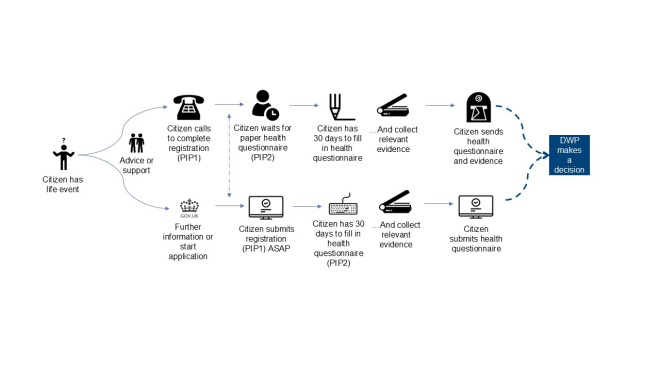
Description: A flowchart illustrating a citizen’s journey through PIP registration and the DWP decision-making process. It shows two main routes: one for telephone-based registration followed by a paper health questionnaire, and another that mirrors these stages but for the digital application process. Both routes are depicted using icons and directional arrows.
After a customer submits their application, a Healthcare Professional from an Assessment Provider (AP) on behalf of DWP reviews the application and any evidence provided. Claims are triaged to determine the appropriate type of health assessment, based on how the customer’s condition affects their daily living or mobility. Where necessary, Healthcare Professionals can request further medical evidence from the customer before progressing the application to assessment. Once the most appropriate type of assessment has been decided, a health assessment is conducted.
Following the health assessment, the Healthcare Professional produces an Assessment Provider report (AP report) recommending a score based on the PIP descriptors. Finally, the application, medical evidence and AP Report is sent to a Case Manager at DWP who makes an initial decision on the award outcome.
If a customer disagrees with the initial decision, they can request a review by DWP, known as a mandatory reconsideration (MR). At the MR stage, customers can submit further evidence and information to support their claim, DWP will review and either uphold, amend or overturn the initial decision. At the time of reporting, MRs were only available through telephone and paper channels, not online.
If a customer disagrees with the outcome of an MR, they may appeal the decision. Appeals are heard by His Majesty’s Courts and Tribunals Service, which is independent of DWP.
We used a mixed-methods evaluation to ensure DWP has robust evidence on the process and impact implications of DSS, and summary information up to initial decision was published in December 2024[footnote 5]. This publication provides the fuller process evaluation findings combined with a summary of the impact evaluation analysis. The HTP Evaluation Strategy provides further information about the approach to evaluating the HTP’s progress and performance across the whole scope and life of the programme.
Methodology
This section outlines the methodology used for the evaluation. Further technical detail about the impact evaluation can be found in the accompanying report. The impact evaluation analysis is based on all new claims registered from the beginning of January 2023 to the end of April 2025. The reporting includes data from when the outcomes have stabilised and reflect the average difference between treatment and control areas since DSS was rolled out.
Impact evaluation methodology
The impact of DSS was measured using a statistical method called Difference-in-Differences (DiD). DiD measures the difference in outcomes between treatment and control areas after DSS went live, adjusting for pre-existing differences to estimate the causal impact of the service. The methodology assumes that the pre-existing differences would have remained broadly constant in the absence of the service going live. Under this assumption, the DiD estimate is the difference between the expected outcome in the treatment area (had it continued in parallel) and the observed outcome is, as shown in Figure 2 below.
Compositional differences between cases should be considered when interpreting the impact of DSS treatment. DSS was available to certain types of customers[footnote 6] from selected postcode areas which may have accounted for differences.
Figure 2 - Example Difference-in-Differences:
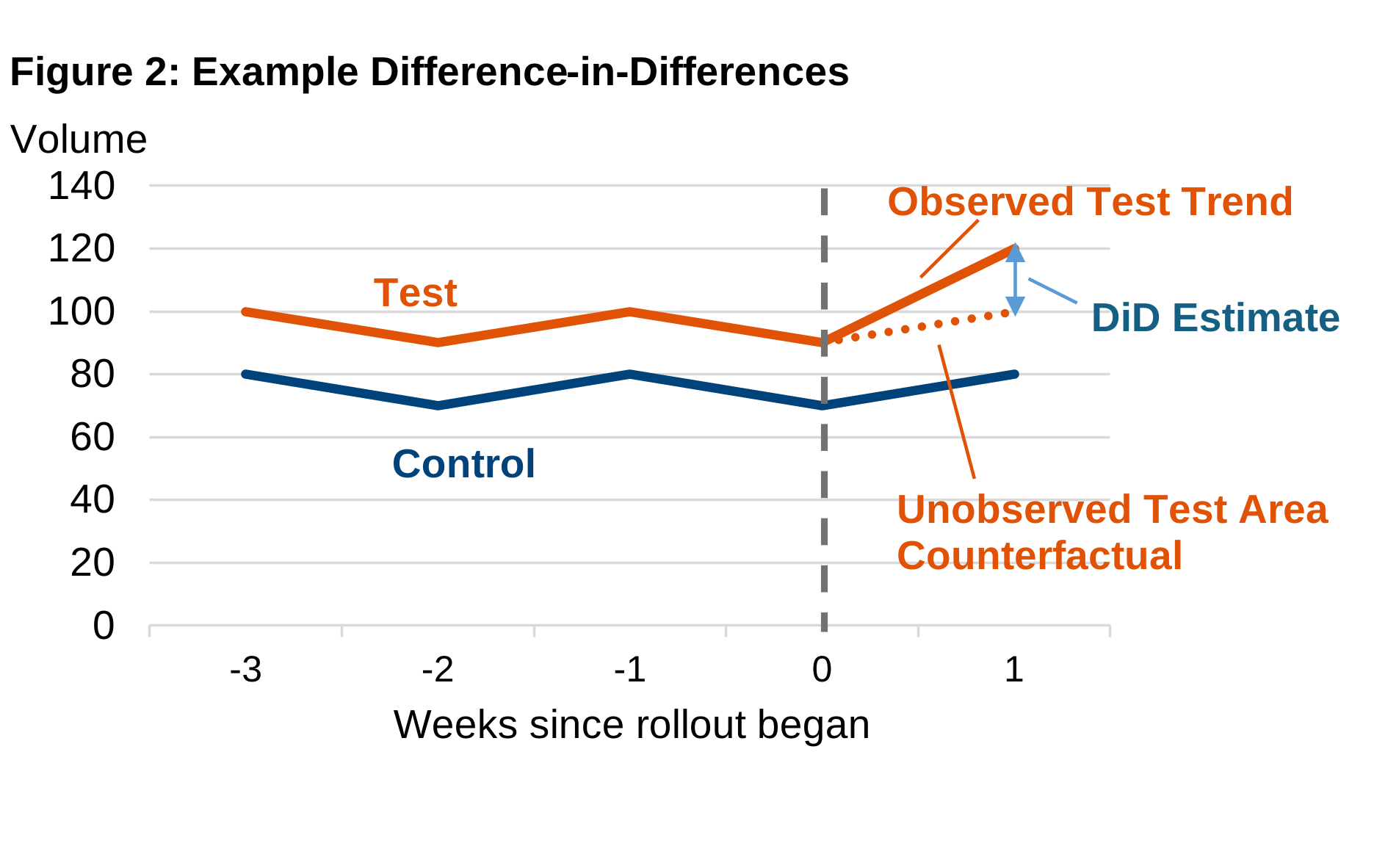
Description: A line graph demonstrating an example difference-in-differences, with two lines representing control and treatment. The trends are parallel before the implementation date, only diverging after that.
Process evaluation methodology
The process evaluation involved qualitative research with both customers and DWP staff. In total, there were four waves of research: two with customers and two with DWP staff.
Customer research
For the first wave of customer research, the sample of PIP customers was stratified and drawn based on application route, capturing those who had applied via the online service, and those who had applied via the non-DSS telephone route. During recruitment, factors such as time between registration and questionnaire return, health condition, gender and age were monitored to ensure the interviews captured a range of experiences.
This research sought to understand customer decision making, channel choice and experience. It aimed to determine whether the application route influenced customer experience.
The research completed 41 interviews across three application routes, outlined in Table 1.
Table 1 - Application route and number of interviews completed:
| Application route | Number of interviews |
|---|---|
| DSS customers | 20 |
| Non-DSS customers | 11 |
| Customers eligible for DSS, applied through non-DSS route | 10 |
The research questions were:
-
What does the customer and decision-making process look like when applying for PIP?
-
How are customers experiencing application processes?
-
What is unique to the online journey in comparison to general PIP experiences?
-
Are customers submitting the best application they can?
The second stage of customer research explored their experiences and expectations at the MR stage. The research conducted 37 qualitative interviews with DSS and non-DSS PIP customers who had reached the MR stage of the PIP application process. The sample included customers with a range of award rates (including zero points scores but excluding enhanced, enhanced scores) and was split by those who did and did not challenge the initial decision through a MR.
The research questions were:
-
What factors motivate customers to request a mandatory reconsideration, or not to?
-
How do customers perceive the process of requesting a mandatory reconsideration?
-
How do customers decide what further evidence to submit at the mandatory reconsideration stage?
Table 2 - Application route, award rate and number of interviews completed:
| Award rate | Registered an MR (Awarded) | Did not register an MR (Awarded) | Registered an MR (Nil award) | Did not register an MR (Nil award) |
|---|---|---|---|---|
| DSS | 4 | 3 | 4 (all zero points) | 6 (2 zero points) |
| BAU | 4 | 4 | 5 (3 zero points) | 7 (4 zero points) |
The award rate included customers who had received a score of zero points and excluded those who had received the enhanced rate. A score of enhanced, enhanced on PIP represents the maximum award so customers are not typically expected to challenge the decision. The nature of this research means that it will have captured wider considerations about the PIP claim journey that extend beyond
DSS itself and have regularly been identified in previous research and customer experience surveys.
Staff research
The first stage of staff research explored their experiences of DSS applications and their judgement of quality between DSS and non-DSS applications. This strand of qualitative research consisted of in-person observations and 18 interviews with Healthcare Professionals and Case Managers who worked in HTP test areas [footnote 7]. Each observation took place over two days, with staff looking at DSS and non-DSS active cases and historical cases, with order alternating to account for response and fatigue bias. The breakdown of cases observed is presented in Table 3.
Table 3 - Application route - Healthcare Professional or Case Manager review:
| Application route | Healthcare Professional review | Case Manager review |
|---|---|---|
| DSS | 44 | 63 |
| Non-DSS | 48 | 31 |
The research questions were:
-
How do Healthcare Professionals and Case Managers measure the quality of a PIP application?
-
Are staff able to distinguish between DSS and non-DSS claims?
-
Are staff seeing any differences in quality between Digital Self-Serve and BAU applications?
-
Do staff feel they can identify fraudulent or spurious claims? If so, when?
-
Do staff think the above questions are impacting the decisions they make?
This research focused on staff insights about zero points cases, following evidence from the impact evaluation that highlighted an increase in digital PIP claims scoring zero points. It focused on characteristics of typical zero points cases and whether staff could identify noticeable differences between DSS and non-DSS zero points cases. Case Managers were observed reviewing both DSS and non-DSS zero points cases, with a semi-structured interview at the end of the second day. They had a range of experience working in PIP in both non-DSS and DSS. The breakdown of cases reviewed by Case Managers is presented in Table 4 below. The cases reviewed were historical.
Table 4 - Application route - Number of zero points cases reviewed by Case Managers:
| Application route | Number of zero points cases reviewed by Case Managers |
|---|---|
| DSS | 23 |
| Non-DSS | 16 |
The research questions were:
-
What are the characteristics of zero points claims?
-
Are there any noticeable differences between zero points claims between non-DSS and DSS claims?
During the observations, the key areas of interest were:
- Do staff agree with the zero points score, if not why?
- Why has this claim scored zero points?
- Does this look like a typical zero points claim?
- What do typical zero points claims look like?
Findings
This section presents findings from both the impact and process evaluations across the PIP customer journey, from application to dispute.
Registering an application for PIP
The evaluation shows an increase in registration volumes in the areas where DSS is available, and this has been broadly sustained since its rollout began. The impact evaluation highlighted that the increases could be attributed to the availability of an out-of-hours channel, increased awareness of PIP and latent demand. By latent demand, we mean customers making applications sooner than they would have done in the absence of the service. In addition to this, it is likely that the introduction of DSS also enabled some individuals to apply who might not otherwise have engaged with the process at all, due to previous barriers or reluctance to use existing channels. Building on this, the process evaluation research with customers found that the digital route was preferred as it removed barriers to applying, such as reduced anxiety from not having to use the telephone.
Registration volume
The availability of the DSS route to apply for PIP resulted in a sustained increase in registration volumes in the treatment areas, with an average 19% increase in registrations across the whole period from July 2023 to April 2025. The estimated increase in registration volume was higher in the first few months, between 27 July 2023, when the service went live on GOV.UK, and the beginning of December 2023, the estimated increase was 25% on average. As shown in Figure 4, this initial uplift reflects a divergence between treatment and control areas once the service went live, before the effect reduced and stabilised at a lower level. Between January 2024 and April 2025, the estimated increase in demand was slightly lower, at 17%, and remained relatively stable over this period.
Out of hours registrations
The availability of a fully online application channel was likely to have contributed to the increase in PIP demand for multiple reasons. Since DSS launched, out of hours applications (outside 8am to 5pm Monday to Friday or over the weekend) accounted for 22% of all applications in treatment areas. 54% of DSS applications were submitted out of hours. The increase in out of hours applications may have been driven by two groups: those who would not have applied without the online service, and those who switched from other channels and submitted their application outside telephone hours. Non-DSS claims are registered by telephone. After this and once a health questionnaire has been issued, customers can complete an application outside of telephone opening hours.
Channel switching
Digital Self-Serve customers fall into two groups: those who would not have applied otherwise, and those who would have still applied using existing telephone-based channels. We refer to the former as additional demand and the latter as channel switchers.
It was estimated that the number of telephone application customers was 26% lower in the treatment areas than it otherwise would have been. From this, we infer that approximately a quarter of those who would have made an application in the absence of the online service switched channels.
The customer research looked to explore the possible reasons for changes to demand, by asking DSS and non-DSS customers about their motivations for applying for PIP, and any barriers they faced in applying. The initial telephone call required to register a claim via the non-DSS route was frequently cited by customers as a challenge, particularly by those with mental health conditions who described it as emotionally taxing and difficult. Customers attributed this to factors such as finding discussing their health condition over the phone challenging, concerns about scams and general anxiety around telephone conversations.
It was difficult to explain some things and quite emotional to speak to someone on the phone.
Telephone applicant, female 50 to 65 years old.
However, customers with lower digital confidence and ability frequently reported valuing the option to start their application by telephone.
Of DSS customers, we estimate that approximately 58% are channel switchers, with the remaining 42% being additional demand. However, it is possible that the launch of DSS increased telephone applications due to greater awareness of PIP, which may lead to underestimating channel switching.
Starting the application online was considered convenient, as customers could begin immediately upon visiting GOV.UK. This could be done at any time, on any day of the week. This flexibility was particularly important for customers with caring responsibilities or full-time jobs. They linked this to being able to complete the application once other responsibilities were managed.
A key theme among DSS customers was that the service made the application process more accessible. Discovering they could apply online reduced anxiety, as it removed the need for a phone call. The accessibility of the online route to PIP may help explain the increased demand observed in registration volumes.
Reasons for applying for PIP
The main motivation customers identified for applying for PIP was the need for support due to the impact of a health condition or disability. Many reported delaying their application until they felt they had no other option. Some described a ‘tipping point’ moment, such as receiving a new diagnosis or losing their job. For others it was a build-up of factors, for example, a worsening condition requiring more support, or encouragement from family and friends to consider how their condition was affecting their life and apply for help. Recommendations from family or friends were a frequent motivator.
I’m getting to a point where I’m struggling with some things, and my family members encouraged me to put in a claim.
Online applicant, female, 50 to 65 years old.
Customers linked this to the cost of living more broadly, reporting that a disability or health condition had made life more expensive overall. They also referred to specific services required due to their condition, such as taxis for limited mobility, which were costly.
My health was gradually declining, and I needed to look at mobility and transportation and stuff like that because I wasn’t able to get around on the bus.
Telephone applicant (eligible for online), female, 25 to 49 years old.
Another financial motivator was the impact of health conditions on customers’ ability to work and earn. Customers mentioned needing to reduce their hours, being on long term sick leave, or fearing for their job security due to their health condition.
The thing that changed for me was that I’ve tried to stay in work desperately. I’ve had to reduce my hours by half and have had lots of workplace adjustments like working from home. I still need to reduce hours further and am at risk of being dismissed from my job for ill health.
Online applicant, female, 25 to 49 years old.
Reasons for delaying an application for PIP
When discussing their decision to apply for PIP, customers reported experiencing barriers that led to delays in making a claim.
Many said they waited to apply until they felt they had no other option. In the context of this report, all customers had made an application, so barriers caused delays rather than prevented applications. The findings do not capture cases where barriers may have stopped individuals from applying for PIP. Barriers reported varied depending on personal circumstances.
Waiting for evidence
Waiting for evidence from medical professionals or needing to gather relevant information was a reason customers delayed applying. Both DSS and non-DSS customers reported waiting for specific documents from healthcare professionals to support their application. While supporting evidence was not required for a PIP application, many customers assumed that including it would make their application more likely to succeed. Customers often felt they could not apply, or were unlikely to be successful, without external evidence to show how their condition was affecting them.
So basically, I’ve been thinking about it for a while but because it was taking me so long to get a diagnosis, I waited ages for that to apply. You can’t apply until you know what it is. Until I went to the appointment and got the diagnosis, I didn’t feel I could put the appropriate information in.
Online applicant, male, 25 to 49 years old.
Awareness of online application route
A key theme in the research was that customers were unaware of the option to apply for PIP online until they searched for more information on GOV.UK. This was consistent across all application routes and aligns with the channel switchers finding highlighted in the impact evaluation.
When I was looking through the government website to check through everything and saw I could put in my postcode and see if I’m eligible to apply fully online.
Online applicant, female, 50 to 65 years old.
Customers who applied online discovered their eligibility while looking into how to make an application. There was no evidence that they were motivated to apply by prior knowledge of this. Some customers who were eligible to apply online began their application by calling DWP due to a lack of awareness or expectation that this was the only route available. In some cases, they had visited GOV.UK but remained unaware of their eligibility, these customers had expected to make their application via the telephone route.
Application preferences
Customer application preferences were linked to perceptions about convenience and ease, this depended on factors such as digital confidence, age, support available and health condition.
The research indicated that there was a stronger preference for an online application route than a telephone route. Customers linked this to avoiding the initial telephone call, alongside the ease of completing the form on a device and the flexibility of completing the questions online.
When you’re speaking to someone [on the phone] you feel more under pressure. That’s when I have trouble with my words and remembering. When I’m speaking to someone, I know I know them, but I can’t think of it.
Online applicant, female, 50 to 65 years old.
It was common for non-DSS customers who had started their application by calling DWP to feel their experience would have been changed by applying online instead of by telephone. These changes were often either convenience or comfort based.
Anxiety and stress related to the phone call traditionally required to start a PIP application were discussed as reasons for delaying a claim. This was particularly highlighted by non-DSS customers with mental health conditions or physical conditions that made speaking on the phone more difficult. These customers said they would have felt more comfortable applying online. For customers who worked full time or had caring responsibilities, finding time to call DWP during phone line hours of 9am to 5pm was a logistical barrier.
The phone call was stressful; it took me two weeks to make it. It would have been a quicker process if I had been able to go online and apply.
Telephone applicant, male, 25 to 49 years old.
Customers who preferred starting the application with a telephone call and completing the health questionnaire on a paper form acknowledged that their preference stemmed from a lack of digital confidence. With support, they felt they could likely apply online. For some, the lack of confidence was linked to a perception of time pressure when using the GOV.UK portal. They commented that the paper format allowed them to reflect on their application and take their time, which helped reduce anxiety.
I think, as I say, I like to do the paper version, so I don’t just have to read it and answer it. If I applied on the website I would have had to answer then and there, I couldn’t take time reading.
Telephone applicant (eligible for online), female, 50 to 65 years old.
Registering an application: Summary
There was evidence to suggest that the online channel reduced barriers to application and contributed to an increase in registrations. Several barriers were identified when deciding to apply for PIP, with customers delaying their application while they gathered evidence about their condition. Other barriers included anxiety and stress related to making the initial telephone call to start an application.
Awareness of the online application route to PIP was generally low. There was no evidence that customers were motivated to apply online; instead, they often discovered the digital application while seeking more information about PIP on GOV.UK. This supports the finding that around a quarter of DSS customers were channel switchers, although many lacked awareness that an online option was available.
It is not possible to say with confidence whether customers would have applied through a different channel or later. The sustained increase in registrations suggests that the availability of an online channel generated significant additional demand.
Applying for PIP
Findings showed that DSS customers experienced shorter journey times from registration to initial decision. Customer research found that customers chose application channels based on what was most convenient for them, depending on their health condition or personal circumstances. Some DSS customers felt they might have included more detail on a paper health questionnaire. However, overall, application type did not affect the amount of effort customers put into their application. This section covers the customer experience of applying for PIP.
Registration to initial decision journey times
It was estimated that registration to initial decision journey times were, on average, six calendar days faster than they otherwise would have been in the treatment areas. There was no evidence of a change in the time from submitting the health questionnaire to initial decision. Therefore, the overall reduction was explained by a shorter time between registration and submission of the health questionnaire.
The two main causes of the reduction in journey times were likely to be the removal of postal times for DSS applications, and these customers filling out and submitting the forms faster. It was estimated that the time between DSS customers registering for a claim and submitting their health questionnaire was on average seven calendar days[footnote 8] faster than non-DSS customers.
DSS applications made up approximately 35% of applications in the treatment areas, so assuming that the reduction was driven by only these applications customer journeys are on average 20 days faster than applications from alternative channels in the control area.
Health questionnaire
Both DSS and non-DSS customers reported finding completing the health questionnaire an emotionally charged experience.
It was hard, things like that are quite degrading and embarrassing.
Telephone applicant, male, 25 to 49 years old.
Customers who completed the paper health questionnaire reported that it felt more accessible than an online route might have been. This was often linked to their health condition, such as poor eyesight or their level of digital skill. However, some customers also found the length of the paper form daunting and the process of completing it time consuming. Customers described experiencing fatigue, which they linked to needing breaks and pauses while applying. The experience of fatigue and the need to take breaks was not unique to the paper form and was a result of the form’s length. However, the physical effort of handwriting was reported by some customers to worsen this.
DSS customers reported that completing the PIP form online was more convenient. They said that submitting the application instantly reduced feelings of anxiety and time pressure. The immediate receipt of the health questionnaire by email (rather than waiting for it to arrive by post) was likely to have contributed to the shorter journey times identified in the impact evaluation. Receiving an instant receipt notification meant customers had no uncertainty about whether DWP had received their application. DSS customers felt that being able to type and apply online sped up the process, which they linked to needing less support.
Sometimes you send a form, and it gets lost and you’re not sure if it’s received and then you need to call them. Doesn’t matter what you’re applying for, until you get some answer from them, you’re not sure if they received it. Online, it says it’s gone, it’s sent, you’re a little bit more relieved.
Online applicant, female, 25 to 49 years old.
Level of detail and application channel
Customers said the digital application mode made their experience easier or more straightforward, but when asked, they did not feel it affected the amount of effort they put into their application. They reported completing their application to the best of their ability and felt they would have done so regardless of the format.
Among customers who applied online, some reported feeling that they might have completed a more detailed application on paper. This perception was linked to the idea that they would have spent more time reflecting on what to write. However, others said that the physical effort of handwriting might have led them to write less or not complete the application at all.
Customers mentioned several factors that influenced the level of detail in their application. These included whether they felt the guidance was adequate, how relevant the activity questions were to their health condition, and how much support they had from friends, family or support workers.
I appreciate I have to provide information before DWP can make a decision; they need to have all the relevant information. I appreciate why all the questions were asked, even if it required lots of thinking.
Telephone (eligible for online), female, 50 to 65 years old.
Online resources, GOV.UK and eligibility checker
Customers commonly reported having consulted various sources of information before applying for PIP, to help submit their application to the best of their ability. Many had consulted GOV.UK before applying for PIP, although customers who had not visited GOV.UK were generally those who had been recommended PIP by someone with previous experience of the process, such as a friend or family member, who had provided the claims telephone number so the customer could begin the application from there. Customers who had used GOV.UK reported positive experiences and that they had found it useful and clear.
The government website was pretty straightforward and clear. I clicked through a lot of questions about how to apply and just read through it all which was helpful.
Telephone applicant, male, under 25 years old.
Customers reported that, before starting their application, they were mainly seeking guidance on how to begin the process. They also wanted information about the PIP eligibility criteria and whether their health condition was likely to qualify for an award.
Reading GOV.UK before application was helpful. Maybe more information about what conditions are actually covered would improve it, for example a list of health conditions typically covered to know if I was just wasting my time applying.
Online applicant, female, 25 to 49 years old.
At the time of the research, the eligibility checker[footnote 9] on GOV.UK allowed customers to assess whether they could apply online for PIP. Those who remembered using the tool reported that they found it helpful.
Some customers continued with their application even though the eligibility checker indicated they could not apply online. They were not discouraged and instead completed their application by telephone. The checker confirmed they were likely eligible for PIP and directed them to contact DWP to start the process.
I was looking through the government website to check through everything and saw I could put in my postcode and see if I was eligible to apply fully online.
Online applicant, female, 50 to 65 years old.
Yeah, I was aware of the option for eligible people to apply online because GOV.UK said you can put your postcode in, and I did that, but it said I couldn’t do it in my postcode.
Telephone applicant, male, 25 to 49 years old.
Support with completing an application
Customers reported seeking two main types of support with their PIP application: assistance from family or friends and help from external organisations or support workers. When supported by external organisations, they mentioned a range of sources, including support workers, healthcare professionals and Citizens Advice.
My daughter helped me to fill in the form. If she couldn’t have helped me to do the form, I would have needed to go to Citizens Advice to help me, otherwise I can’t apply.
Online applicant, female, 25 to 49 years old.
Customers described a wide range of support needs. Some had health conditions that made writing or typing difficult. Others required technical assistance or advice when completing their application. Emotional support was also highlighted, as many found writing about their experiences upsetting or challenging.
It was quite difficult when writing down on a form, it can feel impersonal. And seeing what you’ve written, it’s quite shocking. Talking to mental health professionals is different, because you’re just talking, but seeing it written down wasn’t very nice. My wife gave emotional support all the way through.
Telephone applicant, male, 25 to 49 years old.
Many customers were aware of DWP’s helpline and said they knew they could call for advice and support if needed. Those who had contacted DWP reported positive experiences. Among customers who were unaware of the helpline, some had not looked for the information as they did not need further support, whereas others would have welcomed the information and said they might have contacted DWP had they known.
I had to phone up to get an extension and get more evidence from the doctors. The person I spoke to was lovely.
Online applicant, female, 25 to 49 years old.
Staff reflections about DSS
Overall, Case Managers and Healthcare Professionals were supportive of introducing a digital route for PIP applications. Staff believed that a digital option could help reduce barriers for customers who find it difficult to make a phone call, for example due to mental health challenges. However, they also stressed the importance of retaining telephone and postal routes to ensure that people without digital confidence or internet access are not excluded.
Telephone registration can be difficult for some too, depending on condition. I think we do need to get more digital, but it should be accessible to all.
Healthcare professional.
The phone call is valuable; some people actually need it. You should still have the access; it personalises the process for some people.
Healthcare professional.
Perceived ease of applying online
Some Case Managers expressed concern that the perceived ease of the digital application process could lead to an increase in PIP caseloads and more zero points scores. Observations supported this view, showing that digital applications sometimes contained less detail in health questionnaires. Staff suggested that the process of requesting, waiting for and completing a paper questionnaire often encouraged applicants to provide more information about their restrictions. However, Case Managers were confident that any gaps in digital forms would be addressed through customer contact during the PIP claim journey.
With the digital claims it attracts people because it’s easier and accessible. People with less medical evidence. It’s usually customers with genuine conditions and they’re motivated to go out their way and ring up to get paper applications. The digital claims are less effort because it’s just a click of a button.
Case manager.
Applying for PIP: Summary
Overall, DSS customers experienced shorter journey times. Although many may not have noticed this or had previous experiences to compare, it could be an important factor in reducing overall journey times when combined with other improvements to the PIP process.
The reduction in time during the early stages suggests that DSS customers may spend less time completing and submitting their application. Research indicates that both DSS and non-DSS customers prefer having an application channel that suits their circumstances and generally felt the application route did not affect the quality of their application. For most, the chosen route made the process easier, and applications were completed to the best of their ability. Some DSS customers felt they might have included more detail in a paper application. This perception was linked to spending more time writing by hand, though this was also seen as requiring more physical effort, which could have resulted in less detail or even deterred them from applying.
Staff were generally positive about a digital route to PIP, recognising that it could reduce barriers for some customers while emphasising the need to maintain non‑DSS options. Some Case Managers noted that online applications could appear less detailed than paper forms, but they were confident that any gaps would be addressed through customer contact during the claim process.
A few staff also raised concerns that the perceived ease of the digital application process might increase caseloads and lead to more zero points awards. These concerns were linked to observations that some digital applications contained less information, although staff reiterated that the claim journey provides multiple opportunities to gather further detail.
Reviewing and deciding: Claim outcomes and factors for decision making
The impact evaluation findings found that DSS claims were more likely to be withdrawn, disallowed or receive a score of zero points. More detail about zero points cases is included in a later section of this report. There was an increase in award volumes for DSS claims, but this was not as high as registration volumes, therefore DSS claims were less likely to be awarded. Referrals to Assessment Providers were higher in the treatment areas, however this was also less than the PIP registration volumes due to DSS claims being more likely to be withdrawn or disallowed before AP referrals.
The process evaluation was conducted through observations and interviews with staff who reviewed and made decisions on PIP cases. Staff highlighted that key factors influencing decision-making included whether an application contained relevant and up-to-date supporting evidence.
Assessment provider referrals
An Assessment Provider (AP) referral[footnote 10] occurs when DWP sends a customer’s application to an AP for a PIP health assessment. From the impact evaluation we have estimated that the number of AP referrals was 18% higher than it otherwise would have been in the treatment areas.
The estimated increase in AP referrals was substantially less than the increase in registrations (at 19%). This tells us that DSS applications were less likely to be referred to APs than applications made by alternative channels. This is due to DSS applications being more likely to be withdrawn or disallowed before the AP referral stage.
Initial decision outcomes
An award occurs when a PIP application meets the minimum eligibility criteria on at least one of the two components of PIP, daily living and mobility. Conversely, a disallowance[footnote 11] occurs when a PIP application fails to meet the minimum eligibility criteria on both components. A withdrawal occurs when a customer decides to withdraw from the application process after registering and before DWP makes a decision.
Disallowance volumes
It was estimated that the number of disallowances at initial decision was 35% higher than it otherwise would have been in the treatment areas.
Withdrawn volumes
We estimate that the number of withdrawn applications was 153% higher than it otherwise would have been in the treatment areas. It is important to note that withdrawals represent a small proportion of applications, therefore despite there being a large percentage increase there was a relatively small increase in the volume.
Award volumes
The estimated increase in award volume was higher in the first few months. Between July 2023, when the service went live on GOV.UK, and the beginning of December 2023, the estimated increase was 7% on average.
We estimated that registrations were 19% higher than they would have been in the absence of the service. The estimated increase in award volume was proportionately far smaller, at 4%; therefore, we can conclude that DSS applications were less likely to be awarded than applications from alternative channels.
Factors for decision making: Evidence relevant to PIP eligibility
Eligibility for PIP is based on how health condition(s) affect daily functioning. Staff reported that some customers appeared to believe that having a diagnosis of a health condition made them eligible for PIP. This misunderstanding was particularly evident in applications that listed only one or two activities in the health questionnaire[footnote 12], or in extreme cases, none. Staff noted that some customers submitted applications based solely on their diagnosis, even when their health questionnaire indicated no significant functional difficulties. Case Managers suggested that clearer guidance at the start of the application process could reduce the costs of processing claims that are unlikely to score.
Staff also emphasised the importance of current, relevant supporting evidence when reviewing PIP applications. The most useful evidence was letters from GPs or specialists confirming the present state of the condition and whether treatments or medications had been effective. Evidence from the past few years was regarded as most reliable, with more recent documentation seen as particularly valuable because it best reflects how the condition affects the customer at the time of assessment.
The main thing is to have evidence that is relevant and recent too. If something is from five years ago, what am I supposed to do with this? The same if only one thing is submitted, this isn’t enough. This is so important to know.
Healthcare professional.
Staff discussed evidence that was not relevant to a claim, such as council tax bills or appointment letters, was not useful for reviewing a PIP as they didn’t tell staff anything about how a customer’s condition affected them.
Specific, relevant evidence. Not every hospital appointment they’ve ever had, but evidence of what they’re going through. From our perspective, the GP fact sheet gives us more information of what they’re going through now.
Healthcare professional.
Case Managers observed that cases containing large volumes of evidence were more common among non-DSS claims than DSS claims. According to staff, this may be because the DSS route is only available for people who have not claimed PIP before, whereas non-DSS claims could include historical evidence from previous applications. This difference might help explain why DSS cases are less likely to receive an award compared to applications submitted through other channels. Conversely, staff suggested that the ease of digitally uploading evidence for DSS claims could also contribute to higher volumes of supporting documents in some cases.
We have to look at every piece of evidence submitted, so if a customer uploads a document three times, we have to look at it three times. If we’re smart, we can see they’re identical but it still means you take longer to review. Digital claims don’t seem to have much evidence with them, but not a lot of documents, so not as bad. If they’re a customer sending lots of evidence and duplicating it, that creates more work.
Case manager.
Some staff noted that having more evidence with a PIP application increased their confidence in decision-making. Additional documentation helped them form a clearer understanding of how a customer’s health condition affects daily life, particularly when the evidence included letters from specialists or proof of aids being used.
The more evidence I get the better, speaking broadly. I think it’s just a case of this person is really struggling chances are they’ll have evidence to back it up, do they have specialist input? Or are they on the waiting list for specialist input? Does their employer support them? Do they have any aids in the house? What are their medications like? The more I can build a picture, the easier it is for me.
Healthcare professional.
Reviewing and deciding: Summary
DSS claims were less likely to be awarded or referred to an AP because they were more often withdrawn or disallowed. These cases were also more likely to receive a score of zero points. Research suggests this may partly reflect differences in application detail, and the quality and volume of supporting evidence between DSS and non-DSS claims. Case Managers emphasised that any gaps in applications were typically addressed through telephone conversations with customers.
According to staff, applications with large volumes of evidence were usually non-DSS, as DSS is only available for first-time PIP claims and therefore does not include historical evidence. However, staff also noted though that the DSS process may encourage more evidence uploads because it was easier for customers to photograph and submit documents digitally.
Staff perceptions of zero points cases
Zero points refers to cases that score no points for both the daily living and mobility components. This is distinct from nil, nil outcomes which are cases that score some points against the PIP criteria, but not enough to be awarded PIP.
It was estimated that the number of applications scoring zero points was 32% higher in the treatment areas than it otherwise would have been. At least some of this increase was likely to be driven by the DSS service itself and improved accessibility. As a result, it is possible that there has been a change in the composition of DSS claims resulting in more applications scoring zero points. There is no evidence to suggest that zero points claims are equivalent to a speculative claim[footnote 13].
Following impact evaluation findings that highlighted an increase in DSS cases scoring zero points, the process evaluation explored this issue through research with Case Managers who review and score PIP claims. The research found that while it was difficult to define a typical zero points case, some common features emerged.
Typical zero points cases
Case Managers reported that it was difficult to define a typical zero points claim, although certain factors were commonly present. These included limited or no medical evidence and indications that the customer was largely independent or coping well.
Research found that many customers scoring zero points demonstrated a level of independence that Case Managers interpreted as managing their condition with minimal support. Evidence of this independence was often provided in the health questionnaire, and where it was not, the health assessment report typically highlighted it through probing questions.
I think that’s a really common thing of zero points claims. In the assessments, they’re managing, it comes down to a lack of understanding. Some don’t understand that it’s not just having a condition, it’s how it affects them.
Case manager.
Another reportedly common feature of zero points claims was the absence of specialist input in the application. Case Managers explained that specialist evidence is often used to validate the restrictions customers report. When this evidence was missing, it typically suggested that the customer’s limitations were not severe enough to qualify for a PIP award.
One of the main things would be them having evidence of specialist input that would indicate some level of restrictions. They could be awarded for aids; I think a big thing would be looking at the evidence.
Case manager.
Similarly, the presence or absence of medical evidence was often a key factor in zero points scores. Customers who scored zero points typically submitted very little or no medical evidence to support their claim. Case Managers considered this lack of documentation inconsistent with the level of restrictions reported, making it unlikely that the customer would receive any points.
I do seem to have noticed a lack of medical evidence. They are the type of claims that say they have this restriction or that restriction, but they don’t have the medical evidence to support what they are saying.
Case manager.
Differences between DSS and Non-DSS zero points cases
Overall, many staff found that there were no noticeable differences between non-DSS claims and those that had gone through DSS. Staff expressed that if they weren’t consciously aware of a difference between the two application channels, they felt that they likely wouldn’t have noticed any difference in the claims. Furthermore, the staff felt that even if they had noticed small differences between the application channels, they believed it wouldn’t affect their decision-making. There was consensus across staff that PIP cases were so variable that removal of the registration telephone call would not be a driver of changes to decision making. However, staff did caveat that they hadn’t seen enough of each application type in the observations to make a fair comparison.
I don’t think so to be honest, nothing stood out, they have been typical in the sense that they don’t have the evidence to back it up or the conditions isn’t enough for an award, for both days now. Comparing one to the other I don’t think there’s much different between them.
Case manager.
Case Managers suggested that perceived differences between digital and paper applications may stem from the digital form containing fewer prompts for activities, which can lead customers to provide less information. Staff noted that any details missing due to the digital questionnaire format were typically obtained through follow-up telephone contact with DWP.
The digital forms sometimes had less relevant information on the PIP2 [health questionnaire] than paper forms. I think this is to do with the prompting on the paper form. I think there is such a misunderstanding about what the form is asking. The paper ones have more of a prompt and give the customer an understanding of what we are asking of them.
Case manager.
Staff perceptions of DSS and zero points cases: Summary
Although DSS cases were more likely to receive a score of zero points, staff reported limited differences between DSS and non-DSS zero points claims. Common characteristics included little or no medical evidence, lack of specialist input and indications that customers were independent or coping well. Evidence of coping well would likely be found in the health questionnaire or at the health assessment.
Case Managers reported some perceived differences between the digital and paper applications which could be a result of the digital form containing fewer activity prompts. However, they felt strongly that this information would be gathered through follow up contact with the department.
Challenging the decision: MR registrations and customer experience
This section examines MR registrations and outcomes in treatment areas following the introduction of DSS. An MR occurs when a customer disagrees with their initial PIP decision and asks DWP to review the application. When a customer receives a PIP decision, they are sent a letter from DWP confirming whether they have been awarded PIP. The letter includes which components they qualify for (daily living and/or mobility), their score for each activity, the award rate (standard or enhanced), and the duration of the entitlement.
At the time of writing, MRs could only be submitted via telephone or post. The GOV.UK route (DSS) for new claims did not extend to submitting an MR request online. Therefore, DSS customers who challenged their decision had to do so through existing routes. Irrespective of their initial claim application route, customers who requested an MR reported doing so due to perceived discrepancies between the assessment process and the points awarded. A detailed, accompanying report of findings from research with customers at the MR stage who applied for an original PIP claim via both DSS and non-DSS application routes can be found under PIP Mandatory Reconsiderations - Customer Research Findings.
MR registrations
It was estimated that the number of post-assessment MR registrations in treatment areas was 14% higher, on average, than it would otherwise have been. During the same period, the estimated increase in registration demand was 19%, therefore we can infer that DSS customers were proportionally less likely to register an MR following an assessment compared to non-DSS customers. Since DSS applications are more likely to be disallowed, and disallowed applications are typically more likely to register an MR in BAU, this might be partly explained by the MR process having no digital route currently available.
Post-MR award volume
It was estimated that the number of awards post-MR was 5% higher in the treatment areas than it otherwise would have been. This increase was marginally higher than the increase in awards at initial decision when looking at data from the same number of weeks since DSS launched, meaning that DSS claims were more likely to receive an award following an MR. However, the increase remains lower than the increase in DSS registration volume, meaning that we can infer that overall DSS claims were still less likely to be awarded than non-DSS claims taking into account those awarded at MR stage.
Evidence at the MR stage
Customers reflected on how they found the process of submitting further evidence at the MR stage, with mixed experiences discussed. Some customers felt that the process was straightforward. Several DSS customers recalled uploading evidence to the online portal, as they did at the application stage, and found this to be relatively easy. Other customers cited technical issues uploading evidence at the MR stage, which caused frustration.
Submitting evidence at the MR stage was relatively easy.
DSS, zero points, did register an MR.
Some DSS customers said they found it easy to submit additional evidence digitally at the MR stage, even though this was not the advised method at the time. Some explained they were unaware they could upload evidence during the application stage, so they added documents later once they better understood the PIP process. However, it is unclear whether this recollection relates to the MR stage, the initial application or another DWP benefit, as recall may have been affected by the time elapsed between application and interview.
Customers who did not submit further evidence at MR often felt they had already provided all relevant documents or believed additional evidence would not change the outcome. Others said they could not obtain further evidence within the MR deadline. Customers highlighted barriers such as needing access to a printer, sometimes relying on public spaces or workplaces. Those who did not register an MR suggested they might have submitted doctors or hospital letters if they had continued with the claim.
Customer reflections: Digital MR channel
Customers held expectations of the MR process before registering an MR, non-DSS customers often expected to register an MR via telephone, consistent with how they began their application. Some customers, across both application channels, expected the process to be online.
I expected it to be online. Because you can send documents and things much easier.
Non-DSS, awarded, registered an MR.
Many customers held positive attitudes regarding the possibility of the DWP providing a digital route to registering a dispute in the future. Customers who felt positively about a digital dispute service often felt this route would have been quicker than registering an MR by telephone. This perception was linked to being able to manage the MR around their personal schedules, as they would not be restricted by telephone opening times.
I guess it probably would have been helpful that you could have [raised MR online]. It’s a lot easier to do it online at different times of day, when you feel like doing it, rather than sitting on hold.
Non-DSS, no award, registered an MR.
Some customers also felt that registering a claim online would have required less effort. These customers discussed that an online route would have caused less emotional difficulty, due to an aversion to sharing personal information over the phone or a general dislike of phone calls, particularly if they lived with anxiety. Furthermore, some customers shared that the removal of the need to access a printer and post-box would have made disputing the claim easier and more accessible. Customers also highlighted other benefits of digitalising the service, such as the ability to record keep online and use a spell check function when filling out relevant forms.
It would be less stressful because it would take that worry away from talking, having to ring up, having to sit on hold for ages, to then having to try and explain everything of why you disagree. It’s so much easier if I can do that online.
Non-DSS, no award, did not register an MR.
Concerns were expressed about the possibility of introducing a digital MR in the future. Customers, across both application channels, sometimes expressed that they would still opt for a telephone route to registering an MR. This was often linked to a lack of understanding regarding justification for their decision or a desire for empathy following a negative emotional reaction. These customers expressed that they found it easier to verbalise their reasons for registering an MR and would have liked the opportunity to ask questions about the decision to gather a better understanding of the justification.
I prefer to do it on a phone call, I feel like I can better explain it doing it verbally.
DSS, zero points, did not register an MR.
Customers highlighted the benefits and limitations of introducing a digital MR service. There was little indication that the lack of availability of a digital disputes service currently limits demand for service. However, possible introduction of a digital route to registering an MR could remove pain points and increase the service’s accessibility, particularly for customers who live with mental health issues or neurodiversity. Emotional responses and accessibility were reported as influential factors regarding decision making, changes in these areas due to the introduction of a digital channel to register an MR may have an impact on demand in the future.
Ultimately, customers were favourable to the possibility of introducing a digital dispute service but stressed the importance of offering channel choice at this stage to accommodate for varying preferences and accessibility needs. This finding is consistent with customer insights at the application stage.
Probably from a business standpoint, you can have both options available right? You’re dealing with people applying for PIP who deal with anxiety, and they need to have the option between phone and online.
Non-DSS, no award, did not register an MR.
Challenging the decision: Summary
Some DSS customers submitted evidence at the MR stage because they were unaware of the option to upload documents during the application stage. Both DSS and non-DSS customers also submitted additional evidence at MR after receiving new documents or gaining a better understanding of what could support their claim.
Overall, customers were positive about the idea of a digital MR service but stressed the importance of maintaining channel choice to accommodate different preferences and accessibility needs. There was little indication that the absence of a digital route reduced demand but introducing one could remove pain points and improve accessibility, potentially influencing future demand levels.
Appeals
When a customer disagrees with a decision following an MR, they can appeal the decision. Appeals are heard by His Majesty’s Courts and Tribunals Service. The impact of DSS on appeal registration is estimated using the first 35 weekly registration cohorts after the service went live. Due to the amount of time it took for a sufficient volume of customers to go through the entire PIP claim journey, we were unable to report on appeal outcomes within the scope of this evaluation report. Similarly, we have not conducted any process evaluation research because of low numbers of DSS customers at the appeal stage.
It is estimated that the number of appeals lodged following an MR was 12% higher in the areas where DSS is available than it otherwise would have been.
Assessment to appeal lodged
Figures 3 and 4 illustrate the expected progression of 100 DSS applications and 100 non-DSS applications respectively, from assessment through to lodging an appeal.
The figures provide a visual representation of customer journeys following an initial decision across DSS and non-DSS routes. The charts support the narrative findings by illustrating how differences at the point of award or disallowance do not necessarily translate into substantially different patterns of MRs or appeals. The groups are not matched, and the differences are purely descriptive.
Figure 3 - Digital Self-Serve applications:
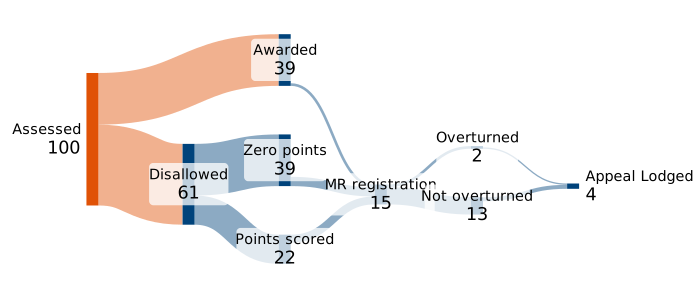
Description: Sankey diagram illustrating the flow of 100 DSS applications through outcome including awarded (39), disallowed (61), and further breakdown of disallowed into zero (39), points scored (22), and MR registration (15). MR registration splits into not overturned (13), overturned (2), and appeals lodged (4).
Note: includes all DSS applications registered in the first 62 weeks of treatment with an initial decision.
Figure 4 - Non-Digital Self-Serve applications:
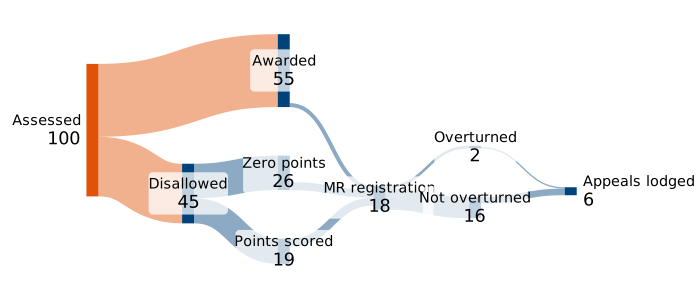
Description: Sankey diagram illustrating the flow of 100 DSS applications through outcome including awarded (55), disallowed (45), and further breakdown of disallowed into zero (26), points scored (19), and MR registration (18). MR registration splits into not overturned (16), overturned (2), and appeals lodged (6).
Note: includes all DSS applications registered in the first 62 weeks of treatment with an initial decision.
Conclusions
The introduction of a digital application route to PIP saw an increase in demand for the service in the areas where it was available. The estimated increase in registration volume was higher in the first few months, between 27 July 2023 and the beginning of December 2023, the estimated increase was 25% on average. Before settling at an average 19% over the first 92 weeks and then stabilising at 17%.
Research with customers at the application stage found that an online option to apply for PIP allowed for greater flexibility and convenience, which is demonstrated by the impact evaluation findings that found that 54% of DSS applications are made out of hours. It also found that the removal of the telephone call at the registration stage was particularly beneficial for customers who struggled to make telephone calls, such as those with neurodivergent conditions or mental health issues.
Customer journey times were on average 20 days faster than applications from alternative channels in the control area. There is evidence to show that the online option facilitated applications, customers reported that it made the application more accessible for them. Customers did not report that they had been motivated to apply for PIP by prior knowledge of the online option. Commonly customers discovered the online option while gathering information on GOV.UK and said they would have applied regardless of mode.
It was estimated that the number of referrals to APs was 18% higher in the areas where DSS was available. DSS applications were found to be less likely to be awarded than non-DSS applications; the increase in award volume was 4%, substantially less than the registration volume. Research with DWP staff who work on PIP claims found that they were generally positive about a digital route to PIP, recognising that it could reduce barriers for some customers. Some Case Managers noted that online applications could contain less detailed than paper forms, but they were confident that any gaps would be addressed through customer contact during the claim process.
The impact evaluation found that more DSS claims went on to score zero points at initial decision, an increase of 32% in the areas where DSS was available. Further research with DWP staff found that there were little differences between DSS and non-DSS claims that scored zero points. Common characteristics of zero points claims included little or no medical evidence, lack of specialist input and evidence of customers coping well.
Case Managers reported some perceived differences between the digital and paper applications which could be a result of the digital form containing fewer activity prompts. However, they felt strongly that this information would be gathered through follow up contact with the department.
Staff also found it challenging to define a typical zero points claim, there were some trends that included a lack of specialist input or evidence of coping well.
Where DSS was available, it was estimated that MR registrations were 14% higher, meaning that DSS customers were less likely to register an MR. Customers at the MR stage found that an online route to MR removed barriers to registering an MR, however the lack of an online channel was not reported to have deterred any customers from registering.
These findings suggest that although DSS led to an increase in registrations, at all other stages in the journey those in DSS areas were more likely to withdraw, less likely to be awarded and less likely to register an MR. As a result, we can surmise that under the current treatment, DSS has led to an increase in demand, but this increase has not translated into a proportionate increase in PIP awards.
Next steps
The evaluation of the Digital Self-Serve application route is complete, we will continue to monitor data including of appeal outcomes. The findings in this report have highlighted some evidence gaps which we plan to address through further research, analysis and testing as part of the wider evaluation of the transformed PIP service.
-
Available at: Health Transformation Programme Evaluation and Monitoring Strategy 2026 ↩
-
Private beta is a controlled release of a service with a limited number of people using it, to enable feedback and iteration. During private beta of Digital Self-Serve, a small number of eligible PIP customers were invited to complete their application on it when they called DWP to register their application. This was not mandatory, those invited could continue to apply via alternative routes if preferred. ↩
-
Scotland and Northern Ireland are not in scope of this evaluation. PIP was replaced by Adult Disability Payment in Scotland in 2022. In Northern Ireland, PIP is the responsibility of the department for Communities. ↩
-
At the time of publishing, groups excluded from applying via Digital Self-Serve are appointees, unofficial 3rd parties, customers with no mobile or email, those with an existing DLA or PIP claim, those applying under Special Rules for End of Life (SREL), those needing assisted digital, those with no National Insurance number, a GY or JY National Insurance number, a Welsh postcode, a Northern Irish postcode, or an interpreter is required. ↩
-
Available at: Apply for PIP Digital Self-Serve: Evaluation Summary ↩
-
At the time of publishing, groups excluded from applying via Digital Self-Serve are appointees, unofficial 3rd parties, customers with no mobile or email, those with an existing DLA or PIP claim, those applying under Special Rules for End of Life (SREL), those needing assisted digital, those with no National Insurance number, a GY or JY National Insurance number, a Welsh postcode, a Northern Irish postcode, or an interpreter is required. ↩
-
HTP operates several test areas and learning environments where it is developing, testing and improving its services. This research took place in the Health Transformation Area (HTA) which is split across London and Birmingham, and the New PIP Service Office, which is in Pontypridd, Wales. HTA postcodes are out of scope for the impact evaluation. ↩
-
Calendar days are used because eligible customers could use DSS on any day of the week and are not restricted to working days. ↩
-
Since 27th July 2023 applicants have had the option to use an eligibility checker on GOV.UK, to confirm their eligibility to apply for PIP online. It is based on several factors: whether the person lives in an eligible postcode area, whether they are applying on their own behalf (this can be with support), whether they are already claiming PIP or Disability Living Allowance (DLA) and whether they have an email address, mobile phone number and national insurance number. ↩
-
DWP contracts out delivery of health assessment for benefits to external organisations, which are referred to as ‘Assessment Providers’. ↩
-
Disallowed claims include those that do not progress through the application process due to failing to return PIP2 within the timeframe or failure to attend a health assessment. Some claims are auto disallowed this occurs if a customer does not return their PIP2 within the timeframes or is not eligible for PIP. ↩
-
The PIP health questionnaire (PIP2) asks customers to explain how their health condition or disability affects their ability to carry out everyday activities. The activities cover two areas: daily living and mobility. ↩
-
Experiences of PIP applicants who receive zero points at assessment (Basis Social, October 2024). ↩