Country policy and information note: fear of the Taliban, Afghanistan, February 2026 (accessible)
Updated 15 May 2026

© Crown copyright 2026
This publication is licensed under the terms of the Open Government Licence v3.0 except where otherwise stated. To view this licence, visit nationalarchives.gov.uk/doc/open-government-licence/version/3 or write to the Information Policy Team, The National Archives, Kew, London TW9 4DU, or email: psi@nationalarchives.gov.uk.
Where we have identified any third party copyright information you will need to obtain permission from the copyright holders concerned.
This publication is available at https://www.gov.uk/government/publications/afghanistan-country-policy-and-information-notes/country-policy-and-information-note-fear-of-the-taliban-afghanistan-february-2026-accessible
Version 6.0, February 2026
Executive summary
Since 15 August 2021 the Taliban are considered the controlling party of the state (for the purposes of Article 1(A)(2) of the Refugee Convention). As the de facto state authorities, they act as a single, hierarchical body that follows a central, core set of beliefs and instructions from its leadership.
The Taliban is an all‑male administration focused on implementing a system of governance based on its strict interpretation of Sharia law. The application of central authority varies, with some powerful leaders and local actors able to act independently. Reporting also notes differences between hardline elements in Kandahar, who favour stricter ideological governance, and more pragmatic figures in Kabul, who emphasise external engagement.
However, significant human rights violations continue to occur, particularly against women and girls. Many Convention-defined groups of people continue, in general, to face a real risk of persecution. Nonetheless, not all incidents committed by the Taliban should be considered a systematic campaign of targeting and may be due to personal disputes, feuds, or rivalries with individual Taliban members. Each case must be considered on its facts with the onus on the person to demonstrate that they would be at real risk on return.
Where the person has a well-founded fear of persecution from the Taliban (the de facto state) they are unlikely to be able to obtain protection.
Where a person has a well-founded fear of persecution from the Taliban, they are unlikely to be able to relocate to escape that risk. However, internal relocation may be possible where the person (except for single women) has a well-founded fear from an individual Taliban member based on personal dispute, feud, or rivalry.
Where a claim is refused, it is unlikely to be certifiable as ‘clearly unfounded’ under section 94 of the Nationality, Immigration and Asylum Act 2002.
Assessment
Section updated: 16 February 2026
About the assessment
This section considers the evidence relevant to this note – that is the country information, refugee/human rights laws and policies, and applicable caselaw – and provides an assessment of whether, in general:
-
a person faces a real risk of persecution/serious harm by the Taliban
-
the state (or quasi state bodies) can provide effective protection
-
internal relocation is possible to avoid persecution/serious harm
-
a claim, if refused, is likely or not to be certified as ‘clearly unfounded’ under section 94 of the Nationality, Immigration and Asylum Act 2002.
Decision makers must, however, consider all claims on an individual basis, taking into account each case’s specific facts.
Sources cited in the country information may refer interchangeably to the Taliban (Taleban), Islamic Emirate of Afghanistan (IEA), the Islamic Emirate, the interim government or the de facto authorities or government. Within this assessment, they are referred to as ‘the Taliban’ and, since 15 August 2021, are considered the controlling party of the state (for the purposes of Article 1(A)(2) of the Refugee Convention).
1. Material facts, credibility and other checks/referrals
1.1 Credibility
1.1.1 For information on assessing credibility, see the instruction on Assessing Credibility and Refugee Status, and the Asylum Instruction on Sexual identity issues in the asylum claim and Gender identity issues in the asylum claim.
1.1.2 Decision makers must also check if there has been a previous application for a UK visa or another form of leave. Asylum applications matched to visas should be investigated prior to the asylum interview (see the Asylum Instruction on Visa Matches, Asylum Claims from UK Visa Applicants).
1.1.3 Decision makers must also consider making an international biometric data-sharing check, when one has not already been undertaken (see Biometric data-sharing process (Migration 5 biometric data-sharing process)).
1.1.4 In cases where there are doubts surrounding a person’s claimed place of origin, decision makers should also consider language analysis testing, where available (see the Asylum Instruction on Language Analysis).
Official – sensitive: Not for disclosure – Start of section
The information on this page has been removed as it is restricted for internal Home Office use.
Official – sensitive: Not for disclosure – End of section
1.2 Exclusion
1.2.1 Members of the Taliban, and non-state armed groups including the Afghanistan Freedom Front (AFF), National Resistance Front (NRF), and Islamic State in the Khorasan Province (ISKP), have been responsible for serious human rights abuses.
1.2.2 Decision makers must consider whether there are serious reasons to apply one (or more) of the exclusion clauses. Each case must be considered on its individual facts.
1.2.3 If the person is excluded from the Refugee Convention, they will also be excluded from a grant of humanitarian protection (which has a wider range of exclusions than refugee status).
1.2.4 For guidance on exclusion and restricted leave, see the Asylum Instruction on Exclusion under Articles 1F and 33(2) of the Refugee Convention, Humanitarian Protection and the instruction on Restricted Leave.
Official – sensitive: Not for disclosure – Start of section
The information on this page has been removed as it is restricted for internal Home Office use.
Official – sensitive: Not for disclosure – End of section
2. Convention reason(s)
2.1.1 The following are likely to fall within the Convention under:
-
political opinion: people who have actual or perceived ideological differences to the Taliban, including former government officials, judges, lawyers and prosecutors, journalists critical of the Taliban, and human rights defenders
-
particular social group (PSG): women and LGBTI people
-
race and religion: ethnic and/or religious groups
2.1.2 Establishing a convention reason is not sufficient to be recognised as a refugee. The question is whether the person has a well-founded fear of persecution on account of an actual or imputed Refugee Convention reason.
2.1.3 The following are not likely to fall within the Convention:
-
people with a vague or no specific fear of the Taliban
-
people claiming to be, or perceived to be, ‘Westernised’. They will not form a PSG because they do not share an innate characteristic or a common background that cannot be changed or share a characteristic or belief that is so fundamental to identity or conscience that a person should not be forced to renounce it. Neither do they have a distinct identity in Afghanistan because the group is perceived as being different by the surrounding society. However, consideration should be given to the reported case, YMKA and Ors (‘westernisation’) Iraq [2022] UKUT 00016 (IAC), heard on 15 September 2021 and promulgated on 17 November 2021, in which the Upper Tribunal (UT) held that:
‘The Refugee Convention does not offer protection from social conservatism per se. There is no protected right to enjoy a socially liberal lifestyle.
‘The Convention may however be engaged where
‘(a) a “westernised” lifestyle reflects a protected characteristic such as political opinion or religious belief; or
‘(b) where there is a real risk that the individual concerned would be unable to mask his westernisation, and where actors of persecution would therefore impute such protected characteristics to him.’
2.1.4 In the absence of a link to one of the 5 Refugee Convention reasons necessary for the grant of asylum, the question is whether the person will face a real risk of serious harm to qualify for Humanitarian Protection (HP).
2.1.5 For further guidance on the 5 Refugee Convention grounds, see the Asylum Instruction, Assessing Credibility and Refugee Status.
3. Risk
3.1 Overview of groups who are likely to be at risk
3.1.1 People who are likely to face a real risk of persecution or serious harm from the Taliban include, but may not be restricted to:
-
former members of the Afghan National Defence and Security Forces (ANDSF), which includes the Afghan Air Force (AAF), Afghan National Army (ANA), Afghan National Police (ANP), the Afghan Special Security Forces (ASSF) and the National Directorate of Security (NDS)
-
former local employees of, or people affiliated with, international forces, including former interpreters
Official – sensitive: Not for disclosure – Start of section
The information on this page has been removed as it is restricted for internal Home Office use.
Official – sensitive: Not for disclosure – End of section
-
former judges and prosecutors involved in prosecuting and sentencing Taliban members during the Republic era
-
journalists and media workers openly critical of the Taliban
-
civil society activists and human rights defenders openly critical of the Taliban
-
Hazaras
-
religious minorities and non-Muslims
-
women and girls
-
LGBT+ people
-
affiliates of armed opposition groups (Exclusion may be relevant)
3.1.2 When assessing former ANDSF members and people associated with international forces, or being a family member of the above, decision makers should consider when the person last worked in that capacity, how long they were employed, and their role and level of responsibility or seniority involved, and for family members, the proximity to the person involved. Consideration should also be given on how long the person remained in Afghanistan after the Taliban takeover in August 2021 and the period they have lived abroad.
3.1.3 Not all incidents committed by the Taliban should be considered a systematic campaign of targeting. They may be due to personal disputes, feuds, or rivalries with individual Taliban members.
3.2 Overview of groups who are unlikely to be at risk
3.2.1 People who are unlikely to face a real risk of persecution or serious harm from the Taliban include, but may not be restricted to:
-
people with a vague or non-specific fear of the Taliban (such as those who say they fear the Taliban based on ‘reputation’)
-
current or former government officials in civilian roles (civil servants) or those otherwise formerly in official or advisory roles and their family members (where claims are based on this association alone)
-
people who have made an unsuccessful protection claim abroad
-
people claiming to be ‘Westernised’ based on time spent in the West
The onus is on the person to demonstrate otherwise.
3.3 Former government officials (civilian and security personnel), people linked to international forces, and their relatives
3.3.1 The Taliban announced a general amnesty for former government employees and security‑force personnel (Afghan National Defence and Security Forces – ANDSF) after taking power in August 2021. Senior Taliban officials continue to publicly reaffirm this position, stating that no one is permitted to violate individuals’ rights and attributing incidents of violence to rogue actors, armed resistance groups or personal disputes (see Implementation of the general amnesty and Personal disputes and revenge).
3.3.2 While reports note that no large‑scale purges occur, targeted reprisals persist and may be under‑reported due to restrictions on media. The UN Assistance Mission in Afghanistan (UNAMA), the UN Special Rapporteur, and Afghan human rights group, Rawadari, continued to document arbitrary arrests, detention, torture, enforced disappearances, and extrajudicial killings of former officials, particularly former ANDSF members, in 2024 and 2025 (see Implementation of the general amnesty and Media freedom).
3.3.3 However, sources describe unclear motives for killings amid a broader ‘revenge culture.’ Loyalty to the Taliban in the present is viewed as crucial, though personal disputes, retaliation, and accusations of weapon possession or affiliation to opposition groups also lead to former officials being targeted, with apparent impunity (see Personal disputes and revenge and People associated with international forces).
3.3.4 Available reporting rarely distinguishes clearly between former civilian personnel and former members of ANDSF, resulting in mixed and overlapping statistics. The number of former officials remaining in the country since August 2021 is not confirmed and ANDSF figures prior to the takeover were unreliable. Some sources report that many male civilian officials resumed duties under the Taliban administration, while others document dismissals of remaining former government staff (see Former government officials (civilian and security personnel)).
3.3.5 Multiple sources describe violations against former officials, including arbitrary arrests, detention, torture, ill‑treatment, enforced disappearances, and killings. Not all violations are attributed to the Taliban and a breakdown by victims’ profile or location is not always recorded. Other sources indicate harassment against some former employees currently working in Taliban‑controlled offices in some provinces (see Former government officials (civilian and security personnel)).
3.3.6 UNAMA recorded at least 800 violations against former government officials and ANDSF members between 15 August 2021 and 30 June 2023, including 218 killings, 14 enforced disappearances, 424 arrests or detentions, and 144 cases of torture or ill‑treatment, most of which occurred in the first 4 months of the takeover, and over 70% of the total were against the ANDSF. UNAMA’s quarterly figures covering July 2023 to September 2025, provide numerical data for 6 quarters. Where figures are given, the totals amount to 41 killings, 174 arrests or detentions, and 41 cases of torture or ill‑treatment of former government officials and ANDSF members. Other sources reporting on human rights violations cited slightly different data, likely due different methodology and varying time periods, but all indicated likely underreporting (see Former government officials (civilian and security personnel)).
3.3.7 Family members of former government officials report harassment, surveillance, interrogation, and threats due to familial connections, particularly with former ANDSF members. At least 4 relatives were reported killed in the first half of 2024, though no information on the perpetrators was given. According to a ‘well-informed analyst’ interviewed by the Norwegian COI Unit Landinfo, isolated incidents of targeting family members occurred in the immediate aftermath of the Taliban takeover, but they were not aware of such cases since autumn 2021. Similarly, in recent reports on the treatment of former officials, UNAMA and Rawadari did not outline cases where family members had been targeted although Afghan media in exile reported individual cases of arrests (see Family members of former civilian and security personnel).
3.3.8 Although the Taliban’s general amnesty also expanded to people affiliated with foreign forces, many fled after August 2021, while those remaining reported living in hiding. In January 2024, the UN Special Rapporteur stated they were among the most vulnerable. Reports from 2023 and 2024 describe former soldiers and commandos being hunted, disappeared, tortured or killed, including 24 cases verified in November 2023 (having occurred since August 2021) and a killing in March 2024. Former interpreters similarly reported hiding and receiving death threats although many have since left Afghanistan (see People associated with international forces).
3.3.9 An independent policy review was conducted on the impact of the Ministry of Defence’s (MoD) February 2022 data incident which affected 18,000 Afghans who had applied for relocation to the UK based on their claim to have worked with or for the UK Government prior to the Taliban takeover. The review concluded that although human rights abuses, including extrajudicial killings occur, there is limited evidence of consistent targeting of individuals linked to international forces, solely on the basis of appearing on the dataset, and that the Taliban focus more on those perceived as current threats than on past affiliations (see People associated with international forces).
3.3.10 The Telegraph reported more than 200 former soldiers and police had been killed since the MoD data incident, based on a dossier it had received, but also noted it had been unable to independently verify the names of those killed and the circumstances in which they died. Survey data submitted to the UK House of Commons Defence Committee Inquiry into the Afghan Data Breach and Resettlement Schemes from late 2025 records that, among 231 people notified that their data had been exposed, 200 reported threats, with 99 describing direct threats to life, and 49 reporting a colleague or family member killed. However, this was a relatively small sample size, around 1% of the 18,000 people whose details were subject to the data incident. Additionally, the survey relied on self-reporting, did not always include information on the perpetrators including whether they were Taliban or unknown, and there has been no independent verification that the breach alone, without other contributing factors, including any more recent opposition to the Taliban, caused each specific incident. The Taliban has publicly denied pursuing individuals, regardless of the data incident, although this should be treated with caution (see People associated with international forces).
3.3.11 For further guidance on assessing risk, see the Asylum Instruction on Assessing Credibility and Refugee Status.
3.4 Former judges, lawyers and prosecutors
3.4.1 All judges appointed under the former Republic were removed after the Taliban takeover, with reporting indicating no former judges were retained, although a few male judges may have been asked to return in rare and unconfirmed cases. Most female judges were forced into hiding or exile. Unlike male lawyers who served under the former government, female lawyers are not issued licences by the Taliban and are therefore unable to practise formally, though some continue to provide informal legal assistance (see Former judges, lawyers and prosecutors).
3.4.2 UNAMA documented that around 2% (16) of at least 800 violations recorded between August 2021 and June 2023 affected former judges and prosecutors, though the types of abuse were not disaggregated. Subsequent quarterly reports by UNAMA generally did not provide profession‑specific breakdowns. In June 2025, the UN Special Rapporteur stated that former female lawyers have faced threats and harassment. Other sources report arbitrary arrest, economic hardship, and, in some cases, killings of former legal professionals, including in retaliation by released convicts for past rulings (see Former judges, lawyers and prosecutors).
3.4.3 For further guidance on assessing risk, see the Asylum Instruction on Assessing Credibility and Refugee Status.
3.5 Journalists, media workers, opposition groups and critics of the Taliban
3.5.1 By November 2021, media outlets reduced from 543 to about 310 and employment fell from 10,790 to 4,360, including an 84% drop in female media workers. The 11‑Point Guidance of September 2021 prohibited content deemed contrary to Islam or Afghan culture, banned music and films showing women, and content required prior approval, prompting widespread self‑censorship. The Promotion of Virtue and Prevention of Vice (PVPV) law of August 2024 introduced further bans, including on women’s voices and images of living beings, and was enforced in at least 20 provinces. Reporters Sans Frontieres (RSF) ranked Afghanistan 175 out of 180 countries in 2025 (1 being the country with most press freedom and 180 being the country with least), noting severe constraints on independent journalism (see Treatment of journalists and media workers).
3.5.2 UNAMA recorded 256 arbitrary arrests and detentions, 130 cases of torture or ill‑treatment, and 75 threats or intimidation against journalists between August 2021 and September 2024. In 2025, the Afghanistan Journalists Center (AFJC) reported 205 media‑rights violations (a 13% increase compared to 2024) including 2 killings, 3 injuries, 166 threats, 34 detentions, and at least 5 journalists imprisoned. Human Rights Watch (HRW) reported journalists being compelled to produce pre‑approved content, with arbitrary detention and torture for non‑compliance, alongside surveillance by intelligence services and morality police (see Treatment of journalists and media workers).
3.5.3 Political parties are outlawed, and remaining opposition groups mostly operate abroad. Activists and critics are viewed as influenced by the West and dissent is suppressed. Criticising officials is deemed contrary to Islamic law, with bans on live political broadcasts and extensive surveillance on public speech. Individuals perceived as opponents, that is those who have publicly criticised the Taliban’s rule, edicts and laws, which may include academics, writers, religious scholars, human rights defenders, NGO workers and influential community leaders, face arrest, harassment, intimidation and restrictions, and protests are curtailed through detention and mistreatment (see Political opponents and critics).
3.5.4 The National Resistance Front (NRF) and the Afghanistan Freedom Front (AFF) comprise former ANDSF personnel and ex‑officials and operate mainly in the northeast of Afghanistan. UNAMA noted a pattern of arrests and detentions of former officials and security personnel on suspicion of links to resistance groups between 15 August 2021 to 30 June 2023 (see People affiliated with armed resistance groups).
3.5.5 Rawadari reports 282 arrests for alleged opposition ties in 2024 – twice the number in 2023 – and 46 civilians killed for suspected collaboration, compared with 21 in 2023. In the first half of 2025, Rawadari records 157 arrests and detentions and 18 civilian killings for alleged resistance links, mostly carried out by Taliban intelligence. Family members of suspected affiliates are targeted to obtain information and subjected to intimidation, or, in isolated cases, killings. Although armed resistance groups do not pose a significant territorial challenge, individuals perceived as connected to them face arrest or extrajudicial killing (see People affiliated with armed resistance groups).
3.5.6 For further guidance on assessing risk, see the Asylum Instruction on Assessing Credibility and Refugee Status.
3.6 Ethnic and religious minority groups
3.6.1 Afghanistan is a majority Sunni Muslim country. Pashtuns form the largest ethnic group and make up most Taliban members. Ethnic minorities remain underrepresented at all levels of the Taliban administration (see Ethnic and religious minorities – Overview).
3.6.2 Non‑practising Muslims face social and official pressure to observe prayers, including checks by police and PVPV inspectors. Non‑attendance can lead to intimidation, fines, business closures, beating or detention. During Ramadan, inspectors intensify monitoring, require businesses to close, and may arbitrarily detain or ill‑treat those who do not comply. Enforcement varies by province (see Non-practising Muslims).
3.6.3 Around 19% of the population are Shia Muslim and the teachings of Shia Islam were recognised under the former government. Most Hazaras are Shia. Under the Taliban, Shia Muslims, including Hazaras and Ismailis, face restrictions such as removal of Shia personal status laws, bans on Jafari (Shia Twelver) jurisprudence in schools, and limits on Muharram ceremonies in some provinces. Reports describe coerced conversion of Ismailis to Sunni Islam and compulsory Sunni‑based instruction in Badakhshan. Some Shia clerics and scholars have been arrested. In February 2025, the Taliban‑established High Commission of the Shias held a large conference in Kabul with thousands of attendees, in which some Shia and Hazara spoke. However, other Shia and Hazara observers stated it did not reflect genuine inclusion and described coercive pressure on residents to attend (see Overview and Shia Muslims, including Ismailis, and ethnic Hazaras).
3.6.4 A small population of Hindus and Sikhs remain in Afghanistan, with reports estimating numbers as low as 6 in 2023 and around 100 by 2025. Some returned to reclaim property after the Taliban announced restitution of seized lands. Community representatives described improved security and peaceful conditions, with festivals such as Vaisakhi celebrated with Taliban cooperation. Taliban officials met Hindu and Sikh councils to discuss land, religious sites, and projects, and publicly stated support for their return. A former Sikh MP also returned in 2024. A delegation of Afghan Hindus and Sikhs met with Taliban officials in Delhi in October 2025, calling for inclusion in the government, restoration of religious sites and the safeguarding of minority rights. During the Taliban visit, India announced the reopening of its Kabul embassy (see Hindus and Sikhs).
3.6.5 Estimates suggest there are a few thousand Christians, mostly converts from Islam, but the Taliban denies their presence in the country. Conversion from Islam to another religion is considered as apostasy and punishable by death, forcing Christians to hide their faith, although there was no formal policy of the Taliban seeking out converts (see Christians and Converts from Islam to another faith).
3.6.6 For further guidance on assessing risk, see the Asylum Instruction on Assessing Credibility and Refugee Status.
3.7 Women and girls
3.7.1 Wide‑ranging restrictions have been imposed on women and girls since the Taliban takeover. Measures include denial of education beyond grade 6, bans on tertiary education, requirements for a mahram (related male escort) for travel, exclusion from most public employment, and limitations on accessing public spaces such as parks, gyms, and public baths. The 2024 PVPV law codified mandatory full‑body and face coverings and prohibited unaccompanied use of transport. Although implementation of the PVPV law varies by province, there are reports of ongoing enforcement, including denial of services to unaccompanied women and arrests for hijab violations in 2025. Rights groups describe severe impacts on access to health care, work, justice, safety, and freedom of movement and expression (see Women and girls, Judiciary, justice and protection, Law on the Promotion of Virtue and Prevention of Vice (PVPV) and its enforcement, and Informal justice systems).
3.7.2 For further guidance on assessing risk, see the Asylum Instruction on Assessing Credibility and Refugee Status. See also the Asylum Instructions on Dependants and former dependants and Family asylum claims
3.8 LGBT+ people
3.8.1 The country guidance case of AJ (Risk to Homosexuals) Afghanistan CG [2009] UKAIT 00001 (5 January 2009), heard on the 28 October 2008, focussed on the situation for gay men. However, the findings in AJ pre-date the Taliban takeover and available COI indicates that there are very strong grounds supported by cogent evidence to depart from the UT’s findings.
3.8.2 Same‑sex relations remain criminalised under the Taliban, as they were under the former Republic, subject to flogging and potentially the death penalty. The 2024 PVPV law explicitly criminalises same‑sex conduct between women and between men and allows discretionary punishments. Reports document at least 50 public floggings for alleged same-sex relations between January and September 2024. Sexual violence, including gang rape, has been reported by trans women. The UN cites entrenched and systematic discrimination. LGBT+ persons face violence from both authorities and families or communities, leading many to hide or lose access to support networks. LGBT+ women experience compounded discrimination (see LGBT+ people).
3.8.3 For further guidance on assessing risk, see the Asylum Instructions on Assessing Credibility and Refugee Status, Sexual identity issues in the asylum claim and Gender identity issues in the asylum claim.
3.9 People claiming to be ‘Westernised’, and returnees
3.9.1 There is no precise or unified definition of being ‘Westernised’. Sources describe the concept as loosely referring to persons influenced by Western culture, including those with Western education, urban residents, civil society actors, or people whose behaviour, appearance, or views deviate from local traditions. Attitudes toward such people vary across Afghanistan, with differences between regions, communities, and Taliban factions (see Concept of being ‘Westernised’).
3.9.2 The term ‘urban resident’ is broad and encompasses a wide range of people, not all of whom may be viewed with equal suspicion. Similarly, what constitutes a deviation from local traditions is not clearly defined and likely varies across Afghanistan’s diverse cultural and ethnic landscape. The Taliban’s purported view of such people as influenced by the West assumes a level of coherence and uniformity within the Taliban that may not reflect the reality. Its members and factions differ significantly in ideology, enforcement practices, and attitudes toward Western influence (see Concept of being ‘Westernised’, Taliban reactions to people being ‘Westernised’ and Taliban (de facto) government)).
3.9.3 In AS (Safety of Kabul) Afghanistan CG [2018] UKUT 00118 (IAC), heard on 25 and 27 September; 24 October, 20 November and 11 December 2017, promulgated 28 March 2018, the UT stated that:
‘We do not find a person on return to Kabul, or more widely to Afghanistan, to be at risk on the basis of “Westernisation”. There is simply a lack of any cogent or consistent evidence of incidents of such harm on which it could be concluded that there was a real risk to a person who has spent time in the west being targeted for that reason, either because of appearance, perceived or actual attitudes of such a person. At most, there is some evidence of a possible adverse social impact or suspicion affecting social and family interactions, and evidence from a very small number of fear based on “Westernisation”, but we find that the evidence before us falls far short of establishing and objective fear of persecution on this basis for the purposes of the Refugee Convention’ (paragraph 187). This finding was not appealed and not departed from in AS (Safety of Kabul) Afghanistan (CG) [2020] UKUT 130 (IAC), heard on 19 and 20 November 2019 and 14 January 2020, promulgated 1 May 2020.
3.9.4 Whilst AS pre-dates the Taliban’s assumption of control over all of Afghanistan, they nevertheless exerted actual or de-facto control over large parts by the country. The country information in this note does not indicate that there are very strong grounds supported by cogent evidence to depart from these findings.
3.9.5 Based on this, other sources consulted (see bibliography), and a lack of evidence to the contrary, it is considered that in general, being ‘Westernised’ is not a homogenous concept applied by the Taliban to people throughout Afghanistan who may have spent time in the West. The onus is on the person to demonstrate otherwise.
3.9.6 Although the reported case YMKA and Ors (‘westernisation’) Iraq [2022], did not give a clear definition of what ‘Westernisation’ means, the UT considered whether being ‘Westernised’ was a protected right (paragraphs 24 to 33). The UT held that ‘It cannot be said that the contracting states agreed to offer a protected and unfettered right to enjoy one’s life in the way that one would like: there is no human right to listen to a particular kind of music, drink alcohol or to wear jeans. A claim based simply on such matters could not, under the Convention, succeed…’ (paragraph 30).
3.9.7 While a significant number of Afghans have returned (both forcibly and voluntarily) from Iran, Pakistan and Turkey, returns from the West are comparatively rare. The EUAA did note however, in January 2026 that ‘many’ Afghans residing abroad, including from the West, have travelled on short-term visits to Afghanistan. People arriving via Kabul International Airport generally face multi‑level checks conducted by border authorities and the General Directorate of Intelligence (GDI). Those arriving from Western countries may be asked additional questions, particularly if wearing Western‑style clothing, but there is no indication of systematic harassment. Isolated arrests can occur for profiles linked to former security services or suspected resistance or ISKP affiliation. Overall airport procedures are described as not significantly different from those applied to other travellers (see Returnees).
3.9.8 In general, returnees are accepted and allowed entry, and the Taliban usually permit Afghan nationals to return regardless of documentation status. Most returnees report no major security incidents, and Afghan communities are typically welcoming, although some social stigma may exist for those returned from Europe, who may be viewed as ‘corrupted’ or ‘failed’ (see Returnees).
3.9.9 For further guidance on assessing risk, see the Asylum Instruction on Assessing Credibility and Refugee Status.
4. Protection
4.1.1 Where the person has a well-founded fear of persecution or serious harm from the Taliban (the de facto state), they are unlikely to be able to obtain protection.
4.1.2 For further guidance on assessing state protection, see the Asylum Instruction on Assessing Credibility and Refugee Status.
5. Internal relocation
5.1.1 Where the person has a well-founded fear of persecution or serious harm from the Taliban (the de facto state), they are unlikely to be able to internally relocate to escape that risk.
5.1.2 However, internal relocation may be possible where the person (except for lone women) has a well-founded fear from an individual Taliban member based on a personal dispute, feud, or rivalry (see Personal disputes and revenge).
5.1.3 In regard to internal relocation to Kabul, in the country guidance case AS (Safety of Kabul) Afghanistan (CG) [2020], the UT held that:
‘Having regard to the security and humanitarian situation in Kabul as well as the difficulties faced by the population living there (primarily the urban poor but also IDPs and other returnees, which are not dissimilar to the conditions faced throughout many other parts of Afghanistan) it will not, in general, be unreasonable or unduly harsh for a single adult male in good health to relocate to Kabul even if he does not have any specific connections or support network in Kabul and even if he does not have a Tazkera.
‘However, the particular circumstances of an individual applicant must be taken into account in the context of conditions in the place of relocation, including a person’s age, nature and quality of support network/connections with Kabul/Afghanistan, their physical and mental health, and their language, education and vocational skills when determining whether a person falls within the general position set out above. Given the limited options for employment, capability to undertake manual work may be relevant.
‘A person with a support network or specific connections in Kabul is likely to be in a more advantageous position on return, which may counter a particular vulnerability of an individual on return. A person without a network may be able to develop one following return. A person’s familiarity with the cultural and societal norms of Afghanistan (which may be affected by the age at which he left the country and his length of absence) will be relevant to whether, and if so how quickly and successfully, he will be able to build a network’ (paragraphs 253(iii) to 253(v)).
5.1.4 In the country guidance case of AK (Article 15(c)) Afghanistan CG [2012] UKUT 00163(IAC), heard on 14 to 15 March 2012 and promulgated on 18 May 2012, the Upper Tribunal held that it would be unreasonable to expect lone women and female heads of household to relocate internally without the support of a male network (paragraph 249B (v)). This was confirmed in the country guidance case AS (Safety of Kabul) [2020].
5.1.5 Whilst both AK and AS pre-date the Taliban’s assumption of control over all of Afghanistan, the country information in this note does not indicate that there are very strong grounds supported by cogent evidence to depart from these findings. See also the Country Policy and Information Note on Afghanistan: Humanitarian situation.
5.1.6 For further guidance on internal relocation and factors to consider, see the Asylum Instruction on Assessing Credibility and Refugee Status, and the Asylum Instruction on Sexual identity issues in the asylum claim and Gender identity issues in the asylum claim.
6. Certification
6.1.1 Where a claim is refused, it is unlikely to be certifiable as ‘clearly unfounded’ under section 94 of the Nationality, Immigration and Asylum Act 2002.
6.1.2 For further guidance see Certification of Protection and Human Rights claims under section 94 of the Nationality, Immigration and Asylum Act 2002 (clearly unfounded claims).
Country information
About the country information
This section contains publicly available or disclosable country of origin information (COI) which has been gathered, collated and analysed in line with the research methodology. It provides the evidence base for the assessment which, as stated in the About the assessment, is the guide to the current objective conditions.
The structure and content follow a terms of reference which sets out the general and specific topics relevant to the scope of this note.
This document is intended to be comprehensive but not exhaustive. If a particular event, person or organisation is not mentioned this does not mean that the event did or did not take place or that the person or organisation does or does not exist.
The COI included was published or made publicly available on or before 15 January 2026. Any event taking place or report published after this date will not be included.
Decision makers must use relevant COI as the evidential basis for decisions.
7. Structure and governance
7.1 Taliban (de facto) government
7.1.1 A UK Parliament House of Commons Library Research Briefing on Afghanistan, dated 18 March 2025, noted that the ‘all-male caretaker government’, which was formed after the Taliban seized power in Afghanistan, ‘… remains in place and consolidation of its position and the implementation of a system in Afghanistan based on Sharia Law has been its priority. The Taliban authorities continue to seek international recognition and engagement.’[footnote 1]
7.1.2 A background note on the Taliban in Afghanistan, dated 14 August 2025, published by the Council on Foreign Relations (CFR), an independent, nonpartisan member organisation and think tank, noted regarding the Taliban’s leadership that:
‘The Taliban have been led for decades by a leadership council, called the Rahbari Shura. It is better known as the Quetta Shura, named for the city in Pakistan where Mullah Mohammed Omar, the Taliban’s first leader, and his top aides are believed to have taken refuge after the U.S. invasion. (Omar died in 2013 and was succeeded by Mullah Akhtar Mohammad Mansour, who was killed in a 2016 U.S. air strike in Pakistan.) Today, the Rahbari Shura is thought by analysts to oversee the Taliban government’s work, though its precise role is unclear. It is led by Haibatullah Akhundzada, who has made few public appearances.
‘The government is led by a thirty-three-member caretaker cabinet. All ministers are men and are former Taliban officials or individuals loyal to the group. A majority are ethnic Pashtuns, and some ministers are considered terrorists by the United States and are sanctioned by the United Nations.’[footnote 2]
7.1.3 When the Taliban took control of Afghanistan in August 2021, they established an Islamic Emirate. An open-access article, published in Asian Affairs in February 2025, authored by Waheedullah Hamoon, Bohdan Krawchenko, and Tamara Krawchenko, examined governance and public administration under the Taliban’s Islamic Emirate in Afghanistan. The report, based on a mixed-methods approach, including 25 interviews with current and former senior civil servants and analysis of government documents, noted that ‘While there is a Cabinet, it does not function as a collegial organ of policy and decision-making. The Office of the Prime Minister, with 1,800 staff, and the Economic Committee, headed by the First Deputy Prime Minister, are the coordinating organs. The Taliban government regularly makes decisions, often ad hoc and not published.’[footnote 3]
7.1.4 The 16th report (December 2025) of the UN Security Council’s Analytical Support and Sanctions Monitoring Team, covering the period 29 May 2024 to 11 November 2025, noted that ‘The Amir’s [Taliban leader, Hibatullah Akhundzada] writ is not applied uniformly across the country. At the local level, unpopular policies can be subverted or ignored. Powerful leaders, such as the members of the Haqqani Network, have scope to do as they wish – so long as it does not jeopardize regime unity.’[footnote 4]
See also Legal framework
7.1.5 A year-long investigation by BBC News, published 15 January 2026, reported on the 2 distinct groups at the very top of the Taliban, described by one insider as ‘the Kandahar house versus Kabul.’[footnote 5] The former were entirely loyal to Akhundzada, had a vision of a strict Islamic Emirate isolated from the modern world. The latter advocated for engagement with the outside world, wanted to build the economy, and to allow girls and women access to education beyond primary school[footnote 6]. However, the Kabul group, unofficially led by Taliban founding member, Abdul Ghani Baradar, were seen by insiders as ‘pragmatic’ rather than moderate[footnote 7]. The report added ‘Zabiullah Mujahid, the senior Taliban government spokesman, has categorically denied any split … However, he did also acknowledge that differences in “opinion” exist among Taliban members, but equated it to “a difference of opinion in a family”.’[footnote 8]
7.1.6 Describing the civil service structure, Hamoon and others noted, ‘The Taliban expanded the civil service (excluding the military) to over 860,000 (almost entirely male) employees by 2023, thus more than doubling its size from 2020. For the Taliban, this is a way of rewarding thousands of Taliban loyalists, few of whom have skills other than fighting.’[footnote 9]
7.1.7 The Taliban Leadership Tracker by the think-tank, Middle East Institute (MEI), provided a list, updated in September 2025, of the Taliban’s senior and mid-level ranks, including their position, ethnicity, province, district and tribal affiliation[footnote 10].
7.2 Taliban military strength
7.2.1 The Special Inspector General for Afghanistan Reconstruction (SIGAR) quarterly report to United States Congress, dated 30 July 2025, noted that ‘The Taliban ministry of defense claimed that 6,203 individuals joined the army this quarter, bringing their total reported, but unverified strength to 205,236. Additionally, the ministry of interior reported that 3,843 individuals completed police training across the country this quarter, bringing the total Taliban-reported police strength to 223,394.’[footnote 11] SIGAR noted that these figures could not be independently verified[footnote 12].
7.2.2 According to the UN Security Council’s Analytical Support and Sanctions Monitoring Team report, dated December 2025, ‘The Taliban security apparatus is reported to comprise between 380,000 and 450,000 personnel: 150,000 soldiers and 200,000 police officers, as well as intelligence personnel.’[footnote 13]
7.3 Territorial control
7.3.1 The UN Security Council’s Analytical Support and Sanctions Monitoring Team noted in their December 2025 report ‘The Taliban have consolidated their control across the country, particularly in urban areas. However, governance can be opaque and poorly communicated, as the Taliban do not recognize the need for popular support or consent for their policies.’[footnote 14]
7.3.2 According to the UN Secretary-General’s September 2025 Afghanistan report, ‘From 1 May to 31 July [2025], armed opposition groups posed no significant challenge to the Taliban’s control of the national territory. The Afghanistan Freedom Front, the National Resistance Front, the Afghanistan Liberation Movement, the People’s Sovereignty Front and the National Mobilization Front claimed responsibility for a total of 47 incidents, of which 19 were verified.’[footnote 15]
7.3.3 The assertion that armed opposition groups posed no significant threat to the Taliban was repeated in the UN Secretary General’s December 2025 report, covering the period from 1 August to 31 October 2025[footnote 16]. The same report noted that ‘Sporadic activities by armed opposition groups and Islamic State in Iraq and the Levant-Khorasan (ISIL-K) persisted but posed no significant challenge to the de facto authorities’ territorial control …’, adding ‘… ISIL-K attacks decreased in both frequency and scale, while de facto security forces continued operations against the group.’[footnote 17]
7.3.4 According to the 16th report of the UN Analytical Support and Sanctions Monitoring Team, December 2025
‘The de facto authorities continue to deny that any terrorist groups have a footprint in or operate from its territory. That claim is not credible. A wide range of Member States consistently report that ISIL-K, Tehrik-e Taliban Pakistan (TTP), Al-Qaida …, the Eastern Turkistan Islamic Movement …, also known as the Turkistan Islamic Party (ETIM/TIP), Jamaat Ansarullah …, Ittihad -ul-Mujahideen Pakistan …, and others are present in Afghanistan.’[footnote 18]
See also Opposition groups and critics of the Taliban
8. Rule of law and justice system
8.1 Legal framework
8.1.1 The Report of the Special Rapporteur on the situation of human rights in Afghanistan, which focussed primarily on access to justice and protection for women and girls, dated 16 June 2025, noted that, since seizing power, the Taliban had ‘… dismantled legal and institutional frameworks and abolished crucial protection mechanisms, while support networks have either collapsed or been forced underground. Infrastructure and institutional capacity that, albeit incomplete, once provided vital pathways for justice and protection has
been decimated.’[footnote 19] They had also ‘… suspended the 2004 Constitution, effectively removing key protections and safeguards, including the separation of the powers and independence of the judiciary. The Taliban further announced that all Islamic Republic-era laws would be assessed for their compliance with sharia …’[footnote 20]
8.1.2 Hamoon and others noted ‘As a theocratic state headed by a Supreme Ruler, the Emirate abolished the two-decade-old legal framework of the Republic and replaced it with religious principles. As the Deputy Minister of Justice Sheikh Abdul Kareem Haidar announced on 4 September 2022, “all laws are abolished and our law is generally the Holy Qur’an, the hadiths of the Prophet, peace and blessings be upon him, and Hanafi jurisprudence in particular.”’[footnote 21]
8.1.3 The same report noted:
‘Since the Emirate abolished the legislative branch, the Taliban rules by decrees. At the apex are those issued by the Supreme Leader, signed as “Amir al-Mu’minin. Authority in teaching Quran and Hadith, Mawlawi Hibatullah Akhundzada.” The decrees can be specific instructions, such as appointing senior officials or statements dealing with broader issues that are often vaguely formulated … Overall, by November 2023, since taking power, the government has issued over 140 decrees, two-thirds of which concern females. At the same time, decisions by the Supreme Leader are often communicated orally or in notes that are not published …’[footnote 22]
8.1.4 According to the Report of the Special Rapporteur:
‘To date, the de facto authorities have not officially declared the annulment of previous laws, nor have they completed their assessment. However, key laws relating to the administration of justice – such as the Penal Code, the Civil Code, the Criminal Procedure Code and the Civil Procedure Code – are now no longer in effect.
‘In their place, the Taliban has imposed a governance system consisting of a patchwork of so-called laws, decrees and edicts based on their ideology and extreme interpretation of sharia. So far 10 laws have been enacted, while decrees and edicts are often unpublished and issued verbally, including by officials at the provincial and local levels. The result is a Taliban-controlled legal system that lacks both consistency and legal certainty.’[footnote 23]
8.1.5 The UN Security Council’s Analytical Support and Sanctions Monitoring Team noted in their December 2025 report that laws were not uniformly applied across the country, and ‘… there is considerable regional variation in its application.’[footnote 24]
8.2 Judiciary, justice and protection
8.2.1 The Report of the Special Rapporteur dated 16 June 2025 stated that:
‘Since taking power, the Taliban has transformed the judicial system. While the group has retained some of the structures that existed under the Islamic Republic – namely a three-tiered court system comprising primary courts, appellate courts and the Supreme Court – these structures have been repurposed to serve the Taliban’s ideological model of governance and control. Taliban-controlled courts now mete out so-called justice according to the group’s extreme interpretation of sharia.’[footnote 25]
8.2.2 The Special Rapporteur noted that Taliban-affiliated male, mostly Pashtun, judges replaced all judges employed under the Republic Government[footnote 26]. According to Hamoon and others, ‘The Supreme Court apparatus has been expanded from 4,698 under the Republic to 13,927, staffing it with mullahs who adjudicate the application of Sharia law.’[footnote 27] The Special Rapporteur added ‘Judges are supported by muftis and muharers (court clerks), who are appointed primarily on the basis of their affiliation with the Taliban. Muftis – Islamic scholars whose role is to advise judges – have extremely broad and subjective powers to interpret sharia and issue religious rulings.’[footnote 28]
8.2.3 In August 2025, Amnesty International noted that:
‘Under the Taliban, court proceedings are generally conducted by a single judge (Qazi) accompanied by a religious legal expert (Mufti) who advises on the issuance of religious verdicts (Fatwas) based on their personal interpretation of religious texts.
‘Speaking with Amnesty International, a former judge in Afghanistan explained the wide discrepancies in judgements due to the use of different guidance of Islamic thought (fiqh) and jurisprudence: “In some districts, rulings are based on Bada’i al-Sana’i while in others, they refer to Fatawa-i Qazi Khan. The same crime might result in two completely different verdicts.” For a criminal charge such as theft, the penalties can range from public flogging to short-term detention based on individual interpretations.’ [footnote 29]
8.2.4 Amnesty International described the Taliban’s justice system as ‘riddled with inconsistency, pervasive impunity and unaccountability,’ with trials that were arbitrary, closed, and influenced by personal bias – resulting in ‘uncertain, unpredictable and arbitrary’ justice[footnote 30].
8.2.5 The Special Rapporteur stated that court procedures lacked uniformity, and the judicial system nationwide was widely described as ‘deeply dysfunctional’,[footnote 31]. He added that reports consistently indicated bias in cases involving individuals linked to the Taliban, while appellate courts often confirmed lower court rulings regardless of whether those decisions were well-founded[footnote 32].
8.2.6 The Report of the Special Rapporteur also stated that:
‘The Taliban defends its approach to justice by claiming that it is implementing sharia, which is central to its overall aim of establishing an Islamic emirate. However, Islamic scholars and other experts consistently raise concerns with the Special Rapporteur about the Taliban’s interpretation of sharia, unparalleled in other Muslim-majority States, asserting that it does not adhere to Islamic teachings in principle or in practice. They point to the group’s selective, distorted or decontextualized use of Hanafi sources and the failure of the Taliban’s justice system to adhere to key principles of mercy, due process and evidentiary rigour, which are foundational in sharia.’[footnote 33]
8.2.7 The Special Rapporteur noted that, while the Taliban claimed to protect the rights and dignity of women and girls, ‘… their version of protection serves as a mechanism for subjugation rather than safety, one that asserts male dominance and effectively erases women and girls from public life. As such, justice and protection under the Taliban have become instruments of domination, designed to entrench power, silence opposition and control the lives of Afghans through fear and repression.’[footnote 34]
8.2.8 The same report noted there were no women judges or prosecutors, and very few female police officials (who were mostly employed to search women at checkpoints or guard female prisoners). That, alongside the requirement to be accompanied by a mahram (male guardian) to access services, resulted in widespread under-reporting of gender-based violence and discrimination[footnote 35].
8.2.9 The Taliban reestablished corporal punishment including public flogging and executions, which the Special Rapporteur stated ‘… amount to torture and ill-treatment and violations of the right to life.’[footnote 36] According to his report:
‘These punishments are imposed not only for crimes such as murder and theft, but also for so-called moral offences, including adultery and same-sex relations. While men make up the majority of those flogged, women and girls are disproportionately affected by the criminalization of adultery as they are much more likely to be accused of zina (sex outside of marriage), often based on little or no evidence. Situations in which women flee forced marriage or domestic violence and crimes of rape are frequently mischaracterized as adultery or prostitution. Such allegations have also been misused to damage individual and family reputations, bringing severe consequences for women and girls.’[footnote 37]
See also Law on the Promotion of Virtue and Prevention of Vice (PVPV) and its enforcement, Former judges, lawyers and prosecutors, and Women and girls.
8.2.10 For information on double jeopardy, and whether convicted criminals returning from abroad would face further convictions in Taliban courts, see section 5.2.5 of the February 2025 report on returns to Afghanistan, by the State Secretariat for Migration (SEM), Switzerland, based on a range of sources including research trips to Pakistan and Afghanistan in 2024, which was translated into English by the Office of the Commissioner General for Refugees and Stateless Persons (CGRS, Belgium)[footnote 38].
8.3 Law on the Promotion of Virtue and Prevention of Vice (PVPV) and its enforcement
8.3.1 The report of the UN Secretary-General on the situation in Afghanistan, dated 9 September 2024, noted:
‘On 21 August [2024], the de facto authorities published in the Official Gazette a law on the promotion of virtue and prevention of vice. In its 35 articles, the law codifies a number of current restrictions that had been promulgated by decree and introduces additional restrictions on both men and women. Under the law, women are required to wear clothes that completely cover their bodies, including their faces, are banned from using public transport unless they are accompanied by a male relative and are prohibited from speaking loudly in public. The law assigns the de facto Ministry for the Promotion of Virtue and Prevention of Vice as the executive authority for enforcing the law. It sets out the requirements and qualifications of the “inspectors” who are to enforce the law and outlines the discretionary punishments that can be administered.’[footnote 39]
8.3.2 A complete unofficial translation, by Islamic scholar John Butt, of the Propagation of Virtue and Prevention of Vice (PVPV) Law was published by the Afghanistan Analysts Network (AAN) in April 2025[footnote 40].
8.3.3 The term ‘Propagation of Virtue’ and ‘Promotion of Virtue’ may be used interchangeably. AAN noted in their thematic report on citizens and enforcers experiences of the PVPV law a year after it was decreed, published December 2025, that:
‘The full name of the ministry is the Ministry of Promotion of Virtue, Prevention of Vice and Hearing Complaints (wazarat-e amr bil-maruf wa nahi an il-munkar wa sam-e shekayat) … How to translate the key part of that name, amr bil-maruf wa nahi an il-munkar, is debatable. In line with the ministry’s website, AAN has used “propagation of virtue” in the past, and in this text, “promotion”, as the ministry now largely appears to be translating “amr” for this word. Older translations of this Quranic phrase often speak of “enjoining” virtue and “forbidding” vice. The Arabic does carry the sense of an order or command.’[footnote 41]
8.3.4 The United Nations Assistance Mission in Afghanistan (UNAMA) report on the implementation of the PVPV law 2025 (UNAMA PVPV report), covering the period since its pronouncement on 21 August 2024 up to 31 March 2025, noted that the law collated many existing directives, while widening some and adding new ones, including:
‘… a requirement for women to wear a hijab (with face covering) outside of the home; for men to have a physical appearance considered Islamic and to attend congregational prayers; prohibition of certain celebrations, items and activities deemed un-Islamic; prohibition of unrelated men and women from looking at each other requiring the separation of men and women; drivers prohibited from transporting women unaccompanied by a mahram (male guardian) with women banned from using public transport without a mahram; and ensuring publications and media content do not contradict Sharia, insult Muslims or contain images of living beings.’[footnote 42]
8.3.5 The UNAMA PVPV report stated that the Taliban deployed some 3,300 PVPV male inspectors, across 28 provinces, with broad discretionary powers, ‘… including detention power of up to three days, the power to destroy property belonging to the perpetrator of vice, and the power to implement discretionary punishments. If the behaviour in question is not rectified after the incremental steps of punishments, an inspector may also refer a case to a de facto authority court.’[footnote 43]
8.3.6 According to the December 2025 AAN report on the PVPV law:
‘Officially, an enforcer should go through seven stages “once he sets sight on both the sin and the perpetrator,” escalating from exhortation, reminding them of the anger of God, threats and strong words, fines, detention – for 24 hours, and then up to three days for subsequent violations – and finally, “Any punishment that an enforcer considers appropriate, and which is not the exclusive prerogative of a court of law.” (article 24) The law thereby permits arbitrary punishment. There are no safeguards against torture or other ill-treatment, and the ‘accused’ is given no right to legal recourse or due process. That includes providing no means of appeal.’[footnote 44]
8.3.7 The UNAMA PVPV report noted that there were:
‘… an average of 118 inspectors per province. This number changes according to the size of the province, its population, and number of districts (e.g. in Paktya and Paktika provinces there are 14 male inspectors respectively and in Kabul province approximately 540 inspectors).
‘UNAMA’s observations indicate that female inspectors are operational only in Baghlan province in the provincial capital. In other provinces, either no women were appointed as inspectors, or UNAMA was unable to gather the relevant information. In some areas, local interlocutors confirmed an intention to hire female inspectors and that female volunteers, mostly students and teachers from local madrassas, or female police staff, were reported to be supporting local efforts to enforce the PVPV law. In a few provinces, the de facto DPVPV was reported to unofficially pay women to monitor and report on compliance with the PVPV law.’[footnote 45]
8.3.8 According to the UNHCR’s September 2025 Guidance Note on Afghanistan – Update II, based on a range of sources:
‘Agents of the de facto Ministry for the Propagation of Virtue and the Prevention of Vice (“MPVPV”) carry out punishments and use force against persons whom they perceive to have violated their restrictions, including through “the use of threats, arbitrary arrests and detentions [and] excessive use of force”. In August 2024, the de facto authorities announced that the MPVPV had detained 13,000 persons since August 2023 for “violating their morality rules.” There are reports that MPVPV enforcers interpret the law broadly, implementing stricter requirements than contained in the PVPV law.’[footnote 46]
8.3.9 An August 2025 report by Hasht e-Subh (8am Media) reported that, according to sources, the Taliban in Kabul had employed ‘a network of spies’ disguised as ‘street vendors or beggars’ to gather information and report to the Taliban’s ‘Morality Police’. It was also reported that 90,000 CCTV cameras had been installed across Kabul with ‘facial recognition’ capabilities[footnote 47] [footnote 48].
8.3.10 The AAN report on the PVPV law noted that male enforcers of the law have ‘… the power to look at and deal with unrelated women, even though this is illegal for all other men. In doing so, it provides a clear opportunity for enforcers to abuse their power, including in what should be women-only spaces or in public spaces where women could expect to be respected.’[footnote 49]
8.3.11 Failure to comply with the PVPV law sometimes led to severe punishments, according to the December 2025 Report of the UN Secretary-General, who noted ‘For example, on 12 September [2025], at a public trial at the Khas Kunar District Court in Kunar Province, two barbershop owners were sentenced to three to five months imprisonment each for trimming beards and giving “Western-style” haircuts.’[footnote 50] According to the AAN report on the PVPV law, a barber in Qalat, capital of Zabul province, was arrested 5 times for trimming beards, and held for between 3 and 15 days in jail. He was released following guarantees from tribal elders and family friends but warned any future breach would result in a fine and a 6-month prison sentence[footnote 51].
8.3.12 An investigation by Hasht-e Subh on the Taliban’s use of flogging, published 17 August 2024, based on data from its own daily reporting and the Taliban’s Supreme Court, found the crimes of those publicly flogged – a total of 715 people, including 136 women, in 31 provinces between 15 August 2021 and August 2024 – included some violations of so-called moral crimes, such as adultery and gambling, as well as ‘… failure to adhere to the Taliban’s dress code, fleeing from home, drinking alcohol, making phone calls to non-mahram [for women – anyone who is not a close male relative] individuals, sodomy [anal sex], traveling without a mahram …’[footnote 52] Other offences for which people were flogged included ordinary crimes such as theft, murder, assault, forgery and deceit, and drug dealing[footnote 53].
8.3.13 The Hasht-e Subh report recorded the number of punishments (flogging) for offences aligned with the PVPV law[footnote 54], tabulated by CPIT by year (2022 up to 17 August 2024). To note, over 4 months of 2024 are missing from the data, making it difficult to draw direct comparisons between 2024 and the other years or identify trends:
| Offence | 2022 | 2023 | 2024 |
|---|---|---|---|
| Extramarital sexual relations, including adultery | 90 | 33 | 48 |
| Same-sex relations (anal sex) | 20 | 10 | 55 |
| Running away from home (women) | 23 | 10 | 7 |
| Alcohol (selling or consumption) | 31 | 0 | 13 |
| Non-mahram phone contact | 13 | 0 | 0 |
| Gambling | 29 | 0 | 0 |
| Mandatory hijab violations | 7 | 0 | 0 |
| Travelling without a mahram | 1 | 0 | 0 |
| Celebrating Valentine’s Day | 0 | 10 | 0 |
| Recording videos of punishments* | 0 | 6 | 0 |
| Total | 214 | 69 | 123 |
*Article 22 of the PVPV law states it is an offence to record animate objects[footnote 55]
8.3.14 Between 21 August 2024 and 31 January 2025, Afghan Witness, a project under the Centre for Information Resilience (CIR) ‘…that uses open source intelligence (OSINT) to independently collect, preserve and verify information on the human rights, security and political situation in Afghanistan’[footnote 56], recorded ‘… 130 alleged reports of human rights violations by MPVPV officials or other Taliban in the context of the Law’s implementation through public sources.’ While the reports could not be verified, Afghan Witness considered the actual number of violations were likely to be higher[footnote 57].
8.3.15 The UN Special Rapporteur report on the PVPV law, dated 12 March 2025, noted enforcement varied between regions and officials:
‘Since retaking power, there have been consistent reports of internal power struggles, often characterized as a contest between ideological hardliners in Kandahar and more pragmatic de facto officials in Kabul who view some restrictions as counterproductive to gaining international recognition and the easing of international sanctions. Some senior Taliban officials have also spoken out against some of the group’s restrictions, in particular on girls’ access to education, suggesting a lack of consensus. Meanwhile, de facto ministries controlled by more hardline leaders, especially the de facto ministries responsible for the promotion of virtue and the prevention of vice, justice, education, and higher Education, are reportedly enforcing the law more strictly.’[footnote 58]
8.3.16 The AAN report on the PVPV law found from in-depth interviews with 6 women and 3 men in a variety of urban locations: Bamyan, Herat city, Mazar-e Sharif, Ghazni, Herat, Qalat, Loya Paktia and Kabul, as well as 3 male enforcers in Kabul[footnote 59], that enforcement of the law was uneven and regional variation existed as well as acts of defiance[footnote 60]. The report noted there were ‘… clear differences in how Amr bil-Maruf [shorthand used by Afghans for the PVPV law, ministry or police[footnote 61]] behaved – and how people responded – in different locations.’[footnote 62]
8.3.17 The AAN reported that a school principal, Zarghuna, said her school in Loya Paktia, described as a ‘traditional’ province, had never been visited by enforcers. She and her teachers walked to work without mahrams, and she had not seen any women stopped in the market. Families continued to visit recreational areas together. Women in the province wore full hijab, but not all were accompanied by men, though Zarghuna had observed increased limitations in this respect, such as women requiring a mahram when going to the hospital or shops[footnote 63]. When travelling from Loya Paktia to Kabul and back, Zarghuna said Amr bil-Maruf had never stopped her car, and she had seen women travelling without a mahram. She added that a woman alone was not allowed to board a bus or a shared taxi to a distant place, but groups of 3 or 4 women could travel together[footnote 64].
8.3.18 In Bamyan, an interviewee described regular visits by enforcers to educational centres, where, every Thursday, they inspected girls’ hijab and instructed teachers to advise students to wear long abayas [robes], black scarves, black shoes, black socks, and, if possible, black gloves[footnote 65].
8.3.19 In Herat, a woman said she rarely left her house because she feared the Taliban. When she did go out, she wore full hijab and was accompanied by a mahram[footnote 66].
8.3.20 In Mazar-e Sharif, a businesswoman reported being stopped 3 times by enforcers. On one occasion, she and other women, all wearing full hijab, were told they should wear burqas and not walk on the street dressed as they were. On another occasion, she was questioned with her husband to verify their relationship[footnote 67].
8.3.21 According to the AAN report, ‘Visiting Kabul in October and November [2025], the author was struck by just how few women were adhering to the Taliban dress code.’[footnote 68] The report noted that many women did not wear burqas or chapan siah (Gulf Arab or Iranian-style ground-length black coats) with a face veil, and instead wore long coats and colourful headscarves, with or without a medical facemask. Women might or might not have been accompanied by a man[footnote 69]. Some interviewees from more conservative areas were amazed by the relative freedom in Kabul, seeing women going out without mahrams, to shops, restaurants and hospitals, and barbers shaving men’s beards without question[footnote 70]. Enforcers interviewed for the report said they found Kabul challenging because of the number of women without hijab and the difficulty of contacting their families, through which they would usually convey their message of enforcement. They stated that women in Kabul ‘argue’ and ‘behave very rudely’ when asked to comply[footnote 71].
See also Women and girls, Clothing and appearance, Taliban reactions to people being ‘Westernised’.
8.4 Informal justice systems
8.4.1 The Report of the Special Rapporteur, June 2025, noted that:
‘Amid the dismantling of the previous justice system and widespread mistrust of Taliban-controlled courts, communities in Afghanistan are increasingly turning to traditional and informal justice mechanisms to resolve disputes. These mechanisms – long a feature of Afghan society – include structured forums such as jirgas and shuras, and more alternative processes such as mediation through religious leaders, family or community elders, or influential local officials.’[footnote 72]
8.4.2 A policy note, dated June 2025, by the Hamrah Initiative, a cohort of civil society organisations working in exile but with programmes and activities in Afghanistan[footnote 73], emphasised that traditional community-based dispute mechanisms, like jirgas and shuras, were increasingly becoming the option for many women, though such mechanisms were generally unsuitable for addressing gender-based violence[footnote 74].
8.4.3 The Hamrah Initiative added that ‘Informal justice systems are heavily influenced by Taliban ideology, and they often reinforce patriarchal decisions that deprive women of rights to property, divorce, or protection from violence, rather than serving as neutral dispute resolution channels. Moreover, access to community-based protection mechanisms is dependent on social and kinship connections.’[footnote 75] The Special Rapporteur echoed these findings, noting that alternative justice mechanisms were ‘… typically male-dominated, with little or no participation by women. Decisions often reflect patriarchal norms and favour male interests, reinforcing discriminatory attitudes and practices.’[footnote 76]
8.4.4 Despite being male-dominated and ‘deeply biased against women’, around a third of 6,550 women surveyed through the Bishnaw project reported using local dispute resolution bodies to address legal issues[footnote 77]. According to the Special Rapporteur, ‘These mechanisms are especially used to resolve issues relating to domestic and intimate partner violence, and, for some survivors, may be the only avenue to mitigate abuse.’[footnote 78] Taliban courts themselves often refer such cases to alternative mechanisms for mediation, which are also the most accessible option for those lacking documentation, including undocumented returnees[footnote 79].
8.4.5 According to the Special Rapporteur, due to mistrust, fear of discrimination or bias, imposition of sharia and lack of diversity in the Taliban court system, ethnic and religious minorities progressively turn to informal justice systems. Such systems were perceived by these groups as fairer and more inclusive, reflecting cultural or religious values[footnote 80].
8.4.6 According to the Special Rapporteur ‘Civil society-supported family mediation has persuaded men to allow their female relatives access to education and has engaged religious leaders on women’s rights using sharia-based arguments and reasoning. Community elders and religious leaders have also intervened in cases of forced and child marriage.’[footnote 81] However, the Special Rapporteur’s report of October 2025 noted that ‘While [alternative dispute resolution] may offer faster outcomes and the perception of greater cultural legitimacy, they also pose serious risks to the rights of women and girls because most are dominated by men. Decisions often reflect patriarchal norms and favour male interests. Furthermore, they often lack transparency, procedural fairness and independent oversight.’[footnote 82]
See also Women and girls
9. Media freedom
9.1 Limits on reporting
9.1.1 UNHCR’s September 2025 Guidance Note on noted:
‘… human rights and humanitarian monitoring face numerous challenges which prevent actors from gaining a full perspective of the situation in Afghanistan. Restrictions on civic space and media freedom, combined with self-censorship due to fear, exacerbate this shortage of information. People who speak to the media or human rights organizations to express criticism of the de facto authorities reportedly face threats and retaliation from the de facto authorities. Programmes that aim to assist women and girls, such as monitoring of gender-based violence or the provision of assistance to survivors, have faced severe constraints and are often unable to collect sensitive data. In some cases, the de facto authorities have demanded access to sensitive information. According to the Protection Cluster, “[d]ata collection and case management have proven to be challenging for humanitarian protection services due to ongoing interference and restrictions from the [de facto authorities] […] the data gathered may not offer a definitive assessment of the extent of the […] risks.” Where monitoring can take place, informants and beneficiaries may also self-censor out of fear.
‘Given the obstacles to information gathering and reporting in Afghanistan, it will frequently be the case that human rights violations and abuses remain undocumented and unreported. UNHCR calls on decision-makers to give due weight to the uncertainty and unpredictability inherent in the modalities adopted by the de facto authorities for issuing decrees, coupled with the ongoing uncertainties regarding the applicability of Afghanistan’s previous legal framework and a lack of complete country of origin information. Decision-makers must not draw adverse inferences from a lack of information, given constraints on the ability of human rights and humanitarian organizations and the media in Afghanistan to perform their functions unimpeded.’[footnote 83]
9.1.2 The UK-based Afghan human rights group, Rawadari, which ‘… monitors human rights violations’ and ‘… works with individuals and collectives inside and outside Afghanistan’[footnote 84], noted in their report on the human rights situation in 2024 that:
‘… the Taliban have strictly prohibited journalists and media outlets from covering targeted and extrajudicial killings, and in some cases, they have threatened media with punishment or imprisonment. Hospitals and healthcare centres are also not allowed to publish information about the identity of victims (i.e. the injured from these attacks) or provide such information to media outlets and journalists. While the Taliban often attribute some of these cases to personal enmities and problems, the families of victims’ claim that the Taliban themselves are responsible.’[footnote 85]
9.1.3 Rawadari observed difficulties in accessing information, in their mid-year report, January to June 2025:
‘The General Directorate of Intelligence (GDI) actively monitors the activities of media, civil activists, human rights defenders, and even social media users. Anyone who publishes information about human rights violations faces potential identification, interrogation, and torture. This is part of a deliberate, nationwide policy to conceal human rights abuses, which not only prevents victims and their families from accessing justice but also severely limits Rawadari’s ability to fully and impartially document these events.
‘The de facto authorities have repeatedly ordered all their departments to share no information with media or anyone else without explicit permission from a higher authority. They have strictly banned employees from using smartphones with cameras, particularly in the southwest region (Farah, Helmand, Kandahar, Nimruz and Zabul). They have also systematically dismissed remaining employees from the previous government to control the flow of information.’[footnote 86]
9.1.4 An unannounced telecommunications shutdown, ordered by the Taliban leader, occurred in some provinces from mid-September 2025, and nationwide for 48 hours from 29 September to 1 October 2025[footnote 87] [footnote 88]. UNAMA noted that it ‘… affected, to varying degrees, access to fibre optic internet and phone services across Afghanistan.’[footnote 89] According to a BBC News investigation, which described 2 distinct groups at the top of the Taliban – one in Kandahar and one in Kabul – the country was back online after 3 days without explanation but, according to insiders, ‘The Kabul group had acted against Akhundzada’s [the Taliban leader based in Kandahar] order and switched the internet back on.’[footnote 90]
9.2 Treatment of journalists and media workers
9.2.1 Following the Taliban’s takeover on 15 August 2021, UNAMA documented a rapid contraction of media outlets and employment in the sector. According to the UNAMA report ‘Media Freedom in Afghanistan’, dated November 2024, which examined the state of media freedom for the period from 15 August 2021 to 30 September 2024, the number of functioning media outlets declined from 543 to about 310 by November 2021 – approximately a 43% decrease – and employment fell from 10,790 to 4,360, with an estimated 84% drop in female media workers[footnote 91].
9.2.2 On 19 September 2021, the de facto authorities published an ‘11‑Point Guidance’ directing media not to publish content deemed contrary to Islam, Afghan culture, or national interest. It also prohibited broadcasting music or films considered against Sharia, including those showing women. Media were required to seek prior approval for content, leading to self-censorship[footnote 92]
9.2.3 Between 15 August 2021 and 30 September 2024, UNAMA recorded 256 instances of arbitrary arrest and detention, 130 of torture or ill‑treatment, and 75 cases of threats or intimidation targeting journalists and media workers. The report provided some examples of journalists arrested, reporting that most were later released without charge[footnote 93]. The Taliban denied making arbitrary arrests, claiming they were within the remit of the law, and that the 256 instances of arrest was ‘an exaggeration.’[footnote 94]
9.2.4 In August 2025, Reporters Without Borders (Reporters Sans Frontieres – RSF) reported on the continued arbitrary arrests of media professionals, noting at least 4 had been arrested in Kabul during July 2025[footnote 95]. In their 2025 annual report, the Afghanistan Journalists Center (AFJC) documented a 13% increase in media rights violations compared to 2024, noting ‘… at least 205 incidents of rights violations against journalists and media outlets in 2025. These include two killings, three injuries (in attacks attributed to Pakistani military forces), and 166 threats. A significant number – 34 journalists – were detained, with at least five journalists still imprisoned in Pul-e-Charkhi and Bagram prisons at year’s end.’[footnote 96]
9.2.5 In August 2024, the PVPV law further restricted media content. As reported by Voice of America (VOA), a female journalist was muted and her image censored during a live broadcast in compliance with the law, which bans women from singing, reciting poetry, or appearing publicly without being fully covered[footnote 97]. Journalists cited the erosion of freedoms, with one describing the bans on images of living creatures and women’s voices as potentially the ‘death of free speech’ in Afghanistan[footnote 98].
9.2.6 By September 2024, the Taliban had banned live political broadcasts and criticism of their policies, and mandated prior approval of guests and topics on political programmes[footnote 99] [footnote 100].
9.2.7 In early 2025, RSF reported a continued tightening of media control, including outright bans on women’s voices in certain provinces and further prohibitions on images of living beings[footnote 101]. The Report of the Special Rapporteur on the human rights situation during the period January to August 2025, dated October 2025, noted that ‘The ban has been actively enforced in at least 20 provinces; television stations in affected areas have responded by switching to audio-only broadcasts or broadcasting static images.’[footnote 102] The ban on publishing images of living beings was ‘officially enforced in 23 out of Afghanistan’s 34 provinces’ by the end of 2025, according to the AFJC[footnote 103].
9.2.8 In their 2025 World Press Freedom Index, RSF ranked Afghanistan 175 out of 180 countries giving a score of 17.88 out of 100[footnote 104], with 100 being the best possible score – the highest possible level of press freedom – and 0 the worst[footnote 105]. The country scores highlighted that legal, security, and economic conditions remained among the worst globally, and that independent journalism, especially involving women, had been severely restricted[footnote 106].
9.2.9 In October 2025, Human Rights Watch (HRW) detailed further erosion of media freedom. Their report stated that ‘Taliban officials increasingly compel Afghan journalists to produce “safe,” pre‑approved stories, and they punish those who step out of line with arbitrary detention and torture.’[footnote 107] The report identified surveillance by intelligence services and morality police, discriminatory restrictions against women, and threats to journalists in exile[footnote 108].
See also Opposition groups and critics of the Taliban and Law on the Promotion of Virtue and Prevention of Vice (PVPV) and its enforcement
10. People associated with the former government, security forces and allies
10.1 Implementation of the general amnesty
10.1.1 The European Union Agency for Asylum (EUAA)’s Afghanistan Country Focus, covering the period 1 October 2024 to 30 November 2025, based on a range of sources (2025 EUAA Country Focus), repeating similar information from its 2024 report[footnote 109] noted:
‘Since….[the takeover], senior de facto officials have reiterated the de facto government’s commitment to the amnesty, calling for it to be upheld. The amnesty’s text has not been available beyond general references to its existence, and according to UNAMA this has caused uncertainties around its temporal scope and consequences for breaching it. The challenging information environment complicates research on the issue, with the de facto authorities reportedly preventing reports on killings, by deterring media, victims and family members.’[footnote 110] See also Media freedom
10.1.2 The 2025 EUAA Country Focus, repeating similar information contained in its 2024 report[footnote 111] added that:
‘Despite the amnesty, extrajudicial killings of former civil and security personnel, as well as arbitrary arrests and torture, have been documented. There have not been any ‘large-scale purges’ or massacres, as amid previous power-shifts in Afghan history. Sources have indicated that the killings that have occurred have not been part of a ‘nationwide policy’ or an orchestrated campaign, as this would have caused significantly more deaths.’[footnote 112]
10.1.3 UNAMA noted in their update on the human rights situation in Afghanistan covering the period from January to March 2024, published May 2024, that, despite the general amnesty, ‘Threats to former government officials and former ANDSF members, including arbitrary arrest and detention, torture and ill-treatment and extrajudicial killings, continue to be reported to UNAMA Human Rights …’[footnote 113]
10.1.4 The UN Special Rapporteur stated in his report on the human rights situation between January and August 2024, dated 30 August 2024, that ‘The de facto authorities continue to carry out extrajudicial killings. Despite the Taliban’s announcement of a general amnesty in August 2021, former government officials and members of the security forces continued to be targeted during the reporting period.’[footnote 114]
See also Returnees
10.1.5 In their update on the human rights situation in Afghanistan from April to June 2025, UNAMA stated that ‘During a visit to Kapisa province on 26 June, the de facto Minister of Interior, Sirajuddin Haqqani, reaffirmed the de facto authorities’ commitment to the general amnesty for individuals affiliated with the former government and security forces, stating that no one has permission to “raise a hand against anyone’s rights”.’[footnote 115]
10.1.6 A July 2025 article in Tolonews – a privately-run Kabul-based news channel, described as ‘one of the most popular news sites in Afghanistan[footnote 116] – noted that according to the Taliban’s ‘Commission for Contact with Personalities’, which aimed to facilitate the safe return of former government officials[footnote 117] ‘So far, 1,223 people have returned through the Contact Commission. Among them are individuals who worked under the previous government but did not leave the country. They, too, have received security guarantee cards.’[footnote 118] The 2025 EUAA country focus noted these numbers could not be corroborated[footnote 119].
10.1.7 However, the Special Rapporteur’s report covering the period January to August 2025, dated October 2025, noted that:
‘Former members of the Islamic Republic’s security forces and many former
civilian government officials, including former judicial officers and prosecutors, remain among the at-risk populations in Afghanistan and continue to be subject to reprisals. The persistent and prevalent killing, enforced disappearance, torture and arbitrary detention of former officials, in particular former security personnel, further confirms that the so-called general amnesty announced in August 2021 is frequently disrespected.’[footnote 120]
10.1.8 The UN Security Council’s Analytical Support and Sanctions Monitoring Team noted in their December 2025 report
‘Despite general observance over the past four years of the amnesty decree, reports of arrests and killings of security personnel of the former Islamic Republic of Afghanistan persist. There continue to be credible reports that, since returning to power, the Taliban have detained, tortured and in some cases killed journalists, former members of the Afghan National Defence and Security Forces and former regime officials. Direct evidence of de facto authorities’ involvement, however, remains difficult to obtain or confirm.’[footnote 121]
10.2 Personal disputes and revenge
10.2.1 According to the Special Rapporteur’s report covering January to August 2025, dated 8 October 2025:
‘The de facto authorities continue to refer to the general amnesty and have tended to blame the ongoing violence on renegade actors, members of armed resistance groups or the settling of personal disputes. The Special Rapporteur is doubtful of these assertions and points out that, even if this were the case, it would not absolve the de facto authorities of their international obligations to protect all persons in Afghanistan against extrajudicial and summary killings, enforced disappearances and torture. In addition, the de facto authorities have yet to take meaningful action to combat the apparent impunity under which these acts are carried out.’[footnote 122]
See also Judiciary, justice and protection
10.2.2 The 2025 EUAA Country Focus noted, regarding revenge and other motives for extrajudicial killings, that:
‘The exact motives behind recorded killings of former government personnel have been difficult to discern, including due to the pervasive ‘revenge culture’ in Afghanistan which brings in personal feuds, tribal allegiances, and past conflicts into the issue.
‘The Human Rights Research League (HRRL) identified revenge motives in almost all their recorded killings of former military and security personnel in the first two years after the Taliban takeover. The de facto authorities have dismissed violations of the amnesty as the result of personal animosities. In response to a report by UNAMA from 2025, the de facto authorities have also dismissed revenge motives as being behind any breaches of the amnesty, and claimed any such incidents have occurred ‘in the course of professional police duties’.[footnote 123]
10.2.3 When noting the challenges in documenting targeted killings, Rawadari noted in its 2025 mid-year report that ‘In some cases, in the southwest region, the Taliban have even pressured families to give false testimonies, forcing them to describe the killings as personal feuds or criminal acts. These restrictions have prevented Rawadari from fully documenting the identities of many victims over the past six months.’[footnote 124]
See also Media freedom – Limits on reporting and General situation for returnees
10.3 Former government officials (civilian and security personnel)
10.3.1 Actual numbers of former civilian government employees and security force members remaining in Afghanistan since August 2021 could not be found or confirmed amongst sources consulted (see Bibliography). Reports tended to focus on those targeted, but they often did not differentiate between former civilian personnel and former members of Afghan National Defence and Security Force (ANDSF).
10.3.2 ANDSF included the Afghan Air Force (AAF), Afghan National Army (ANA), Afghan National Police (ANP), and the Afghan Special Security Forces (ASSF)[footnote 125]. SIGAR reported that, as of 29 April 2021, there were a reported 300,699 ANDSF members (182,071 military personnel and 118,628 police officers). In addition, there were 7,066 civilian personnel (3,015 in the Ministry of Defence and 4,051 under the Ministry of Interior)[footnote 126] [footnote 127]. However, SIGAR had repeatedly reported that these figures were unreliable due to ‘… the fabrication of nonexistent “ghost” personnel on Afghan army and police payrolls …’[footnote 128] Former Finance Minister, Khalid Payenda, claimed in an interview with the AAN, published September 2021, that the actual number of available ANDSF troops was likely between 40,000 to 50,000[footnote 129].
10.3.3 The global affairs magazine, Foreign Policy, dated 9 February 2022, noted that, according to the Taliban, 98% of the total 455,000 civil servants (from the former government) remained in Afghanistan[footnote 130]. Though no headcount was given, according to the EUAA’s May 2024 Country Guidance on Afghanistan, based on the EUAA’s earlier COI reports, ‘Most civilian former public officials, except female civil servants, have been able to resume their duties within the new de facto administration in Kabul. However cases are reported in which threats or pressure were used in this regard.’[footnote 131] The EUAA also indicated that former government officials were used to train incoming Taliban appointees[footnote 132]. In their 2025 mid-year report, Rawadari stated that the Taliban had ‘… systematically dismissed remaining employees from the previous government …’[footnote 133]
10.3.4 The 2025 EUAA country focus noted:
‘There has moreover been a gradual exchange of personnel, where those who used to work for the former government have been replaced by individuals loyal to the Taliban…Although most former security personnel have been dismissed in favour of Taliban members, some have been retained or invited back to work due to their specialist skills. Sources reported on the de facto authorities making use of biometrics to identify former government personnel, and dismiss them from the de facto security forces. In research for Peace and Conflict Resolution Evidence Platform (PeaceRep) from November 2024, former ANDSF members stated that they were ‘prevented from leading a normal life’, not being allowed to serve in the de facto security forces, constantly fearing arrests, and facing ‘hurdles in simple tasks such as registering a vehicle’ – sometimes the de facto police refused registration as they could identify the person as having served in the ANDSF as the process involves biometric registration.’[footnote 134]
10.3.5 In their August 2023 report, UNAMA recorded ‘… at least 800 human rights violations against former government officials and ANDSF members between the Taliban takeover on 15 August 2021 and 30 June 2023’, including ‘credible reports’ of 218 extrajudicial killings, 14 enforced disappearances, 424 arbitrary arrests and detentions, and 144 cases of torture and ill-treatment, committed by the Taliban[footnote 135]. Over 70% of the total human rights violations were reported to be against the ANDSF, including military, National Directorate of Security (NDS) and police officials[footnote 136]. Most violations against former government officials and ANDSF members occurred in the first few months following the Taliban takeover, between 15 August and 31 December 2021[footnote 137].
10.3.6 Counts in the following table (compiled by CPIT) are the minimum documented by UNAMA in each quarter from July 2023 to September 2025. Some quarters (Jul to Sep 2023, Oct to Dec 2023 and Oct to Dec 2024) did not present consolidated numbers for violations against former officials and ANDSF but instead provided some narrative case documentation. Some violations were recorded as committed by the Taliban, whilst others indicated the perpetrators were unknown. UNAMA did not provide any breakdown of the data based on victims’ profiles.
| Violations against former officials and ANDSF (UNAMA Quarterly Reports) | |||
|---|---|---|---|
| Quarter | Killings | Arrests/detentions | Torture/ill-treatment |
| Jul–Sep 2023[footnote 138] | Not given | Not given | Not given |
| Oct–Dec 2023[footnote 139] | Not given | Not given | Not given |
| Jan–Mar 2024[footnote 140] | 4 | 38 | 10 |
| Apr–Jun 2024[footnote 141] | 5 | 60 | 10 |
| Jul–Sep 2024[footnote 142] | 5 | 24 | 10 |
| Oct–Dec 2024[footnote 143] | Not given | Not given | Not given |
| Jan–Mar 2025[footnote 144] | 6 | 23 | 5 |
| Apr–Jun 2025[footnote 145] | 7 | 8 | 3 |
| Jul-Sept 2025[footnote 146] | 14 | 21 | 3 |
10.3.7 Documenting at least 23 arrests during the period between 1 January and 31 March 2025, UNAMA noted that ‘A number of these arrests took place in Panjshir and Kabul and pertained to individuals affiliated with the former government of Afghanistan being arrested on allegations of affiliation with the National Resistance Front.’[footnote 147]
See also People affiliated with armed resistance groups
10.3.8 Human rights group, Rawadari noted in their report covering the human rights situation in 2023 that ‘… 68 military personnel and 14 individuals from the civilian sector of the former government’ were extrajudicially killed during that year[footnote 148].
10.3.9 While highlighting the limited access to information due to Taliban restrictions on reporting[footnote 149], Rawadari noted in their human rights situation report for 2024, published March 2025, that:
‘In 2024, at least 91 former government employees and their family members were killed or injured in targeted, mysterious, and extrajudicial attacks. In 2023, 83 former government employees were killed or injured as a result of targeted attacks.
‘A comparison of the two figures shows a 9.63% increase in the number of targeted killings of former government employees and their family members during this reporting period.’[footnote 150]
10.3.10 Rawadari did not distinguish between former civilian and ANDSF personnel in their report covering 2024 events, although it did provide some narrative on reported violations against former soldiers, police and military employees but not all perpetrators were formally identified as Taliban[footnote 151].
10.3.11 Rawadari reported on the arbitrary arrest and detention of 142 former government officials in 2024, both civilian and security personnel, an increase of 20.3% compared to 2023, when there were 118 cases. Most arrests and detentions in 2024 took place in the provinces of Ghor (50) and Takhar (22). Rawadari provided narrative on some of the unlawful arrests, but did not record the victims’ profile for all cases[footnote 152].
10.3.12 According to the Rawadari report on 2024 events, ‘… there have been cases of harassment against lower-ranking employees of the previous government who are currently working in Taliban-controlled state offices. For instance, in Kandahar, Nimruz, Herat, Ghazni, and Ghor provinces, the Taliban have harassed several former government employees under various pretexts, forcing them to leave their jobs.’[footnote 153]
10.3.13 The US Department of State (USSD) noted in their 2024 human rights report, published August 2025, that:
‘There were credible reports Taliban security personnel arbitrarily killed civilians in Panjshir, Kunduz, Kabul, Nimruz, Ghazni, Khost, Jawzijan, Faryab, Takhar, Sar-e-Pol, and Herat Provinces, allegedly as collective punishment against communities where the National Resistance Front (NRF) armed opposition group was active or in retaliation against Republic-era soldiers and government officials in violation of the Taliban’s general amnesty decree.’[footnote 154]
See also People affiliated with armed resistance groups
10.3.14 An investigation conducted by investigative journalism organisation, Lighthouse Reports, dated 15 October 2025, in partnership with the newspapers Etilaatroz (operating in English as KabulNow[footnote 155]), Hasht-e Subh (8am Media), The Independent and Military Times, documented the killing of at least 110 members of ANDSF members between 2023 and mid-2025[footnote 156]. According to The Independent, ‘Some killings were attributed to “unknown” gunmen or bodies found after mysterious disappearances. But other cases indicate former ANDSF have died during or following torture while in detention.’[footnote 157]
10.3.15 Etilaatroz noted ‘According to the findings of the investigation, only 18 such murders were recorded during the first seven months of this year [2025]. The actual death toll of security and defense forces may be higher. The investigation includes only cases of these killings that were reported by local sources and then confirmed by military sources.’[footnote 158]
10.3.16 In their 2025 mid-year report, Rawadari reported ‘In the first six months of 2025, at least 20 former government employees were killed or injured in targeted, mysterious, and extrajudicial attacks.’[footnote 159] Whilst not recording the victims’ profile, the report added that this represented a 60% decrease in targeted attacks compared to the first 6 months of 2024, and a 63% decrease compared to the same period of 2023[footnote 160]. Rawadari noted that the decrease ‘… may not necessarily mean the situation has improved. It may largely be due to the severe restrictions on documenting these events.’[footnote 161]
See also Media freedom
10.3.17 According to the UNHCR’s September 2025 Guidance Note on Afghanistan, ‘Former government officials and former members of the ANDSF have continued to be targeted, killed, arrested and detained and tortured in 2024 and into 2025. These include individuals associated with the former government or security forces who had returned voluntarily or who had been forcibly returned to Afghanistan. Reportedly, some former officials or members of the ANDSF continue to live in hiding.’[footnote 162]
10.3.18 According to the UN Secretary-General’s September 2025 Afghanistan report, ‘Local populations held protests, most related to economic hardship, but some also in reaction to perceived unfair treatment of certain population segments. For example, retired government employees held seven protests in Kabul because pensions had not been disbursed for nearly four years.’[footnote 163]
10.4 Family members of former civilian and security personnel
10.4.1 The 2024 EUAA Country Focus reported that:
‘According to a human rights expert interviewed by the Norwegian COI Unit Landinfo, family members of former government officials may face various reactions from the Taliban, including harassment, arrests, and, in some instances also killings. A well-informed analyst told Landinfo that there were some isolated incidents of family members being targeted right after the Taliban takeover, but the source was not aware of any such cases after late autumn 2021.’[footnote 164]
10.4.2 According to Rawadari’s 2024 human rights situation report, family members of former government employees have been subjected to ‘… arbitrary detentions, torture, killings, enforced disappearances, and other acts of retaliation.’[footnote 165] In the first 6 months of 2024, Rawadari gave 4 examples of relatives being killed but did not provide details of the perpetrators and some were described as ‘unknown.’[footnote 166]
10.4.3 According to a Hasht e-Subh (8am Media) article, dated 11 June 2025, members of the Taliban have visited homes of former Afghan military personnel to seek information on their whereabouts. The report noted that:
‘Several families of former Afghan government military personnel report that, despite the Taliban’s announcement of a general amnesty, they face surveillance, interrogation, and threats from the group due to their familial ties to former security forces. They state that Taliban members have repeatedly visited their homes, demanding information about the whereabouts of their military relatives and, in cases of non-cooperation, have subjected them to detention and mistreatment. According to these families, they have been forced to relocate multiple times to protect their lives, a challenge exacerbated by the current economic hardships.’[footnote 167]
10.4.4 A July 2025 report by independent US-based channel, Amu TV, noted that, according to several families and witnesses interviewed by Amu, the Taliban warned relatives of detained women in Kabul with ‘severe consequences’ if they went public, shared the detention details, or spoke to media outlets. The report said that ‘The warnings, delivered verbally during or after the release process, reportedly accompany the release of detainees on condition of financial payment or signed guarantees. Families said they were told that “any public mention or media engagement regarding the arrests would result in severe consequences.”’[footnote 168]
10.4.5 A June 2025 Rawadari report on torture in Taliban-run prisons highlighted that several detainees reported threats against their families, including murder, beheading, arrest, or harassment as a direct method to coerce confessions[footnote 169].
10.4.6 The 2025 EUAA country focus noted in relation to reporting in 2023 and the situation since:
‘Reports published by Rawadari and HRRL in … [2023] outlined that family members of individuals who had left Afghanistan were being targeted, including wives, children and brothers of former security officials, and brothers to former civil government employees. These organisations also recorded cases in which family members had been detained and killed together with former military officials. In more recent reports on targeted killings and arrests of former officials, UNAMA and Rawadari did not outline cases in which family members had been targeted, while Afghan media in exile has been reporting on individuals cases in which family members of former civil and security officials have been arrested.’[footnote 170]
10.4.7 The same report noted:
‘Kerr Chiovenda [owner and lead researcher of Ereuna Research and Consulting (LLC) and affiliated faculty of anthropology at George Mason University, Fairfax, Virginia] and Sharan [Director of Afghanistan Policy Lab] noted that family members have been targeted to put pressure on former security officials, including to force targets to come out of hiding. Sharan stated that some girls related to former government officials have been forced to marry de facto officials. Sara de Jong, Professor in Politics and International relations with the University of York, also noted how targeting sometimes shifted to other family members, and gave as an example families in which several brothers had served in foreign forces or security forces in different capacities. If the prime target would leave the country, the target sometimes moved to another family member that had a less significant background. Professor de Jong further noted that mostly male family members had been targeted in killings, although female family members might have been exposed to other forms of violence that go undocumented.’[footnote 171]
10.5 People associated with international forces
10.5.1 The 2025 EUAA Country Focus, repeating similar information from its 2024 report[footnote 172] noted, regarding people formerly affiliated with foreign forces, that ‘The general amnesty extends to individuals affiliated with foreign forces. Many of these individuals were evacuated from Afghanistan soon after the Taliban takeover in 2021, and those who remain have reportedly been living in hiding, including interpreters.’ [footnote 173]
10.5.2 Citing a range of sources, the EUAA 2024 Country Focus observed that:
‘The UN Special Rapporteur on the situation of human rights in Afghanistan told Radio Sweden [in January 2024] that people who used to serve foreign forces belong to one of the most vulnerable groups to human rights violations, being considered as having been “working for the enemy”. In September 2024, National Public Radio (NPR) also reported on former Afghan soldiers still being “hunted down” by the Taliban three years after the takeover, with former soldiers disappearing, living “on the run” or in hiding, while Taliban members bribed or pressured their surrounding community to give up their location.
‘A joint investigation by The Independent, Lighthouse Reports and Sky News, published in November 2023, verified 24 cases of former commandos working close to British forces being beaten, tortured or killed by the Taliban since August 2021. These cases included at least six killings, and among the victims were a former member of Commando Force 333 (CF333) who had surrendered his weapons to the Taliban and had received a letter ensuring his safety. In another case a former CF333 sniper was detained for three days in July 2023, and he was subjected to electric shocks and forced to sit in cold water. In a third case, a former member of the special unit Afghan Territorial Force 444 was arrested when visiting his family in 2022. The Taliban reportedly beat everyone in his family amid the arrest, including children, and took the former soldier to an unknown location where he was kept for two months. He was subjected to electric shocks and water torture. In a fourth case, a former group commander was arrested, put in a container in direct sun without windows nor AC. He was also beaten with electric cables and given electric shocks. Rawadari reported on a former member of “the Special Unit of the Joint American and Afghan Forces” being “mysteriously killed” by unknow[n] perpetrators on 10 March 2024 in the province of Khost. According to a reportage of Radio Sweden, 50 persons who worked for the Swedish Armed Forces in Mazar-e Sharif were “left behind” amid the evacuations. Former interpreters and a former female guard described how they lived in hiding and under death threats. Their family members were also reportedly in a precarious situation, receiving threats from the Taliban.’[footnote 174]
10.5.3 The 2025 EUAA Country Focus in their October 2025 interview with Professor de Jong stated ‘…Professor de Jong noted that the de facto authorities perceive those who served foreign forces as ‘traitors’, with interpreters being prime targets. The same source emphasised that the amnesty was not being felt among this group, nor among those serving the former security forces.’[footnote 175]
10.5.4 EUAA further noted:
‘Professor de Jong cautioned against relying on the number of recorded killings to assess the situation of Afghans who served foreign forces. She noted that many of them, especially interpreters, have been evacuated – meaning that the potential targets are no longer present in Afghanistan. Moreover, those remaining in the country have adopted survival strategies, such as living in hiding apart from their families, but they are unable to lead a normal life.
‘Although Professor de Jong noted that anyone who had a role associated with Western forces could be a potential target, she also mentioned that individual circumstances may impact a person’s exposure – including the sensitivity of the mission that they were involved in (e.g. security, intelligence, combat versus less sensitive development projects). Some staff were moreover recruited from outside the area of operation, which in some cases could potentially lower their exposure to be targeted if they were to return to their area or origin. Professor de Jong noted that those recruited locally were often people carrying out ‘unskilled’ labour such as cleaners, drivers, and guards. While these people might not be ‘prime targets’, they may at the same time be ‘known targets’ as they were part of the local communities in which the operations took place.’[footnote 176]
10.5.5 In early 2025, the Government commissioned an independent review by retired civil servant and ex-Deputy Chief of Defence Intelligence, Paul Rimmer, to consider the policy context regarding the Ministry of Defence’s (MoD) unauthorised disclosure of data, in February 2022, of over 18,000 Afghans who applied for relocation to the UK[footnote 177] [footnote 178]. The review drew on a range of open and internal sources focusing on ‘those most able to provide a high level of insight into the current situation as of Spring 2025’, and relied primarily on in-person interviews, the full contents of which were not disclosed[footnote 179].
10.5.6 CPIT reviewed the open sources considered by Rimmer, including Rawadari’s 2024 human rights report[footnote 180], UNAMA’s human rights report covering January to March 2024[footnote 181], and the UN Special Rapporteur’s report of 30 August 2024[footnote 182], all of which have been cited in this CPIN.
10.5.7 In relation to the information from Rawadari, Rimmer noted ‘Some [of the arrests and killings] appear to be a result of accusations of collaboration with opposition groups, others reflect local grievances, and some acts of retaliation. Even so, available evidence suggests that absolute numbers of detentions and killings are much lower than in the immediate aftermath of the Taleban takeover in 2021.’[footnote 183]
10.5.8 Rimmer noted that the May 2024 UNAMA report ‘…does not provide a breakdown of the data based on victims’ profiles.’[footnote 184]
10.5.9 In his key conclusions of the policy review, Rimmer stated:
‘a. Appalling human rights abuses occur – including extra-judicial killings – against former officials. But there is also limited evidence to suggest that [certain individuals] have been targeted with any degree of consistency.
‘b. Given the nearly four years since the Taleban takeover, posing a current threat or resistance to Taleban rule is likely to be a far more persuasive factor in the threat faced by individuals in Afghanistan, rather than former affiliations …’[footnote 185]
10.5.10 The reference to ‘certain individuals’ indicates redacted information. It is not clear the exact profile of the individuals referred to, but the disclosed dataset included people applying for relocation to the UK based on their claim to have worked with or for the UK Government prior to the Taliban takeover in 2021 under the Afghan Relocations and Assistance Policy (ARAP).
10.5.11 Rimmer further concluded that ‘The Taleban already have access to significant volumes of data which enables them to identify personnel associated with the former government. The family and community based nature of Afghan society means former roles and associations are often already well known. The dataset is unlikely to significantly shift Taleban understanding of individuals who may be of interest to them. As a result, it is unlikely to profoundly change the existing risk profile of individuals named on the dataset.’[footnote 186]
10.5.12 A survey, undertaken between 23 September and 5 October 2025, conducted by Refugee Legal Support with Lancaster University and the University of York, was submitted to the UK House of Commons Defence Committee (HCDC) Inquiry into the Afghan Data Breach and Resettlement Schemes. At the time of writing, the Inquiry remained ongoing. The survey was open to anyone over the age of 18 and affected by the Afghan data incident and it collected responses from 350 Afghan individuals. Of these, 231 respondents (referred to as Affected Afghans) confirmed they had been formally notified by the Ministry of Defence (MoD) that their data had been compromised .Of the total number of respondents, 155 respondents were at the time based in the UK, 152 in Afghanistan and 33 in third countries outside Europe; 10 were in European countries or ticked ‘prefer not to say[footnote 187].
10.5.13 The survey included the respondents’ professions and locations in the following graph. To note, the graph includes those who responded but had not received direct communication from the MoD that their details were on the dataset (119 respondents). Professions are not disaggregated based on whether the respondent was on the dataset or not. Some respondents reported more than one relevant profession. The graph indicates that of those who remained in Afghanistan, the majority were 333/444 Triple-Special Forces (over 80 respondents noted this as their profession), followed by the ANA (over 20) and ANSF (over 15). Over 30 respondents based in Afghanistan answered that they would prefer not to say:

Respondent's professions and locations (by number)
10.5.14 Of the 231 Affected Afghans, 200 (approximately 87%) reported threats or risks to themselves or their families. The written evidence contained firsthand accounts describing incidents that had occurred since the data incident, including physical assaults, house searches and threats, though it was not always stated by whom the threats were from. Nearly 43% (99) of Affected Afghans reported direct threats to life, and 52% (121) stated their family or friends had been directly threatened[footnote 189].
10.5.15 There were 49 Affected Afghans who reported that a colleague or family member had been killed, which they attributed to exposure resulting from the data incident[footnote 190]. The survey did not include information on the perpetrators, whether they were Taliban, other or unknown.
10.5.16 While the survey data indicates an association between the dataset and subsequent incidents described by so-called Affected Afghans, it does not provide independent verification that the data incident alone – without other contributing factors – caused each specific incident.
10.5.17 A report in The Telegraph, dated 16 July 2025, cited by Asylos in their report on the situation of individuals who worked for the former government, judiciary, or international forces, noted that over 200 Afghan soldiers and police had been murdered by the Taliban since the MoD data incident, according to records compiled by an independent caseworker who initially raised the alarm over the data incident. The dossier was passed to The Telegraph, who stated ‘The identities of those killed were gleaned from posts in local Afghan press and on social media as well as through contacts on the ground. The Telegraph has been unable to verify independently the names contained in the dossier of those killed and the circumstances in which they died.’[footnote 191]
10.5.18 Asylos cited another report by The Telegraph, dated 15 July 2025. According to that report, Taliban officials had informed The Telegraph they were in possession of the data contained in the data incident since it was first published and were using it to search for individuals on the list, by monitoring their and their relatives’ homes[footnote 192].
10.5.19 In contrast to the information given to The Telegraph, a post on X by the Taliban (although this should be treated with caution), dated 17 July 2025, regarding the data incident, stated [translated using generative AI]:
‘A general amnesty has been announced; this decree has granted safety to everyone. No one has been arrested or killed for past actions, nor is anyone being monitored because of them.
‘After the disclosure of a list of names of some individuals, the reports circulating about their surveillance and pursuit are incorrect and false. The intelligence services have no need to monitor such people who have already been granted amnesty. All documents and information related to them are already available here; all their information exists in the Ministry of Defence, the Ministry of Interior, and the intelligence services. We have no need to use documents disclosed by the British.
‘Furthermore, with the existence of the general amnesty decree, no one is being surveilled or pursued. The rumours and gossip being spread are only meant to intimidate those individuals and to instil fear and anxiety in their families; we reject these claims.
‘The Islamic Emirate does not engage in retaliatory actions against anyone. No one has the right or permission to pursue, monitor, or harm anyone.’[footnote 193]
See also Implementation of the general amnesty.
10.5.20 The Rimmer review noted:
‘Despite … continuing clear violations and human rights abuses, nearly four years on from the Taleban takeover the overwhelming consensus is that there is no longer a widespread campaign targeting [certain individuals] as many Afghan watchers had feared … This review agrees that were the Taleban to seek to target [certain individuals] they would be likely to prioritise high profile individuals; such as the Triples [Afghan special forces soldiers who fought alongside the British military[footnote 194]].
‘This review concludes that there is little evidence of targeting of such individuals in Spring 2025, and in particular, deliberate targeting is unlikely to be solely on the basis of an individual appearing on the dataset. Additionally, this review assesses that the threat to [certain individuals] has probably lowered since the first few months of the Taleban takeover, as the de facto regime is predominantly focused on targeting those perceived to threaten their rule now …’[footnote 195]
10.5.21 Rimmer added, ‘Evidence from multiple interlocutors indicates it is increasingly likely that those who the Taleban are now focused on persecuting – nearly four years into their de facto rule of Afghanistan – are those who have the capability or skills to effectively resist or undermine Taleban rule. The active targeting of individuals by the Taleban authorities appears more likely to be driven by assessments on who poses a threat to them now.’[footnote 196] The assessment did not include consideration of marginalised groups (for example, based on ethnicity or sexuality) or women and girls.
10.6 Former judges, lawyers and prosecutors
10.6.1 The 2025 EUAA Country Focus, repeating similar information from the 2024 report[footnote 197] noted that:
‘The general amnesty reportedly extends to former judges and lawyers. All judges that served under the former government were ousted after the Taliban takeover and replaced with male Taliban-affiliated judges – most being ethnic Pashtuns, as reported by the UN Special Rapporteur on human rights in Afghanistan[[footnote 198]]. However, some former male judges with administrative experience and considered ‘professional’ were asked to return, according to AAN interlocutors. International Legal Assistance Consortium (ILAC) noted that this only concerned a ‘handful’ cases of people being called back for limited or temporary roles.’[footnote 199]
10.6.2 Among the 800 human rights violations – defined as extrajudicial killings, arbitrary arrests and detentions, enforced disappearances, torture and ill-treatment and threats – documented by UNAMA in the period 15 August 2021 to 30 June 2023, 2% were against former judges and prosecutors, though the type of abuse was not recorded[footnote 200]. Later UNAMA reports, including its quarterly updates on the human rights situation, between July 2023 up to June 2025, did not generally disaggregate violations by specific profession. Where relevant, they mentioned ‘former government officials’ (which may include justice-sector personnel), or ‘administration of justice’, which focussed on system-wide developments rather than listing profession‑specific incident counts[footnote 201] [footnote 202] [footnote 203] [footnote 204] [footnote 205] [footnote 206] [footnote 207] [footnote 208]. For general data on violations against former government officials see Former government officials (civilian and security personnel).
10.6.3 Amnesty International noted in August 2025 that most women judges were ‘… forced into hiding or exile after being dismissed from their positions following the Taliban’s take-over.’[footnote 209] The 2024 EUAA Country Focus noted that over 250 women judges served in the former government, adding, ‘According to Marzia Babakarkhail, a woman judge in exile who engages in evacuation efforts of Afghan women judges, more than 40 women judges remained in Afghanistan as of April 2024. Justice Mona Lynch, who also engages in and coordinates evacuation efforts of Afghan women judges, assessed that, as of September 2024, 36 were still in Afghanistan.’[footnote 210]
10.6.4 The 2024 EUAA Country Focus noted regarding lawyers that, ‘Male lawyers that served during the previous government, have been able to renew their licenses, and practice law, according to Rahimi [Haroun Rahimi, assistant Professor of Law at the American University of Afghanistan[footnote 211]]. The Taliban have however not issued licenses to female lawyers, effectively barring women from practicing law within the de facto justice system … On 20 April 2024, the de facto Ministry of Justice stated that 2 000 defence lawyers’ offices had been registered across Afghanistan.’[footnote 212] The 2025 EUAA Country Focus, citing Kerr Chiovenda noted ‘…that prosecutors have no real role in the current justice system.’[footnote 213]
10.6.5 The Special Rapporteur stated in June 2025 that there were no officially registered female lawyers[footnote 214]. The report added:
‘Women legal professionals who formerly practised have faced threats and harassment. Some have sought exile, and those who remain in Afghanistan suffer severe economic hardship, especially those who were the primary earners for their household. Nevertheless, women lawyers continue to provide informal legal support, preparing cases and providing legal advice outside of judicial settings. In some instances, they have also accompanied clients to court, although never as officially registered lawyers.’[footnote 215]
10.6.6 Speaking to Manara Magazine in April 2025, Marzia Babakarkhail said that:
‘Legal professionals, particularly women, face systemic persecution, including death threats, attacks, arbitrary arrests, and enforced disappearances. Some have been executed, while others have been forced into hiding or exile. Female legal professionals are also at risk of domestic violence, forced marriages, and economic hardship …
‘Since the Taliban’s return to power, female judges in Afghanistan have faced significant challenges. Many of these judges played an essential role in upholding the rule of law and protecting human rights under the previous government. The Taliban’s sweeping reforms have negatively affected their safety, professional standing, and overall well-being.
‘Female judges have faced threats as a result of their past rulings, particularly those related to criminal law, human rights, and gender-based violence. Retaliation from individuals they had once sentenced is a risk they now have to contend with.’[footnote 216]
10.6.7 Citing reports dated 2023 and 2024, UNHCR stated ‘Former judges and prosecutors have also been targeted, threatened, harassed and killed.’[footnote 217]
See also Women and girls
11. Opposition groups and critics of the Taliban
11.1 Political opponents and critics
11.1.1 The 2024 EUAA Country Focus noted that, ‘Inside Afghanistan there is no space for political opposition, and political parties have been outlawed by the de facto authorities. Entities that do oppose Taliban rule have been fragmented and are mainly situated abroad.’[footnote 218]
11.1.2 The same report added:
‘Sources noted that activists and individuals seen as aligned against the Taliban have been considered as instruments and “puppets” of western influence, and the Taliban believe they have the right to suppress such dissent. Afghanistan expert Obaidullah Baheer, who was interviewed by the EUAA for this report, explained that the Taliban believe in a one-party system, which is “very totalitarian” and has been erasing any other political movement; individuals in this system are not allowed to hold their own politics. Similarly, assistant law professor Haroun Rahimi stated, in an interview with the EUAA, that “anyone who chooses to resist the Taliban may face consequence”’, while journalist Ali Latifi described the de facto authorities as having no patience for dissent of any kind.’[footnote 219]
11.1.3 The 2025 EUAA Country Focus update, citing various sources, noted that
‘Further restrictions have been implemented within the reference period of this report [1 October 2024 to 30 November 2025] … the de facto authorities have become increasingly intolerant to criticism, and the space for voicing concern has decreased further within the reference period of this report. Sources have reported on even moderate differences of opinion not being tolerated….
‘Nevertheless, some individuals have continued to voice critical concerns, including on girls’ access to higher education and governance issues. Such criticism has however become much less frequent, … on the other hand, Gulbuddin Hekmatyar, leader of the political party Hezbe Islami, has been publicly questioning the de facto government’s legitimacy and its capability to ensure security in Afghanistan’[footnote 220]
11.1.4 The AFJC reported that ‘baseless accusations and criticizing’ Taliban officials was declared contrary to Islamic law in 2022, and individuals who disobeyed would ‘face punishment.’[footnote 221] As reported in September 2024, the Taliban banned live political broadcasts and criticism of their policies, and mandated prior approval of guests and topics on political programmes[footnote 222] [footnote 223].
11.1.5 According to the USSD 2024 human rights report:
‘Public criticism of the Taliban – whether by individuals or groups – was largely muted. Public speech was subject to extensive surveillance by Taliban members, both online and offline. Taliban members often confiscated mobile phones and electronics to search for criticism of the group, third-country affiliations, or perceived violations of their edicts. There were reports Taliban also held male family members responsible for the actions of their female relatives, including for criticism of the group.’[footnote 224]
11.1.6 The 2024 EUAA Country Focus reported:
‘In a joint statement issued in August 2024, on the three-year anniversary since the Taliban takeover, a coalition of civil society organisations called Alliance for Human Rights in Afghanistan, described how Afghans speaking out against abuses committed by the Taliban “face arbitrary arrest, physical and sexual violence, arbitrary and indefinite detention’, as well as ‘torture and other ill-treatment”. Activists, especially women rights defenders, have faced arbitrary arrest and detention. Four women activists, Munizha Sediqi, Parisa Azadi, Neda Parwani, and Zholia Parsi were all arrested in the period September–November 2023, and were detained for months until their release in May 2024. Parsi later described how she was abducted by de facto officials placing a hood over her head and forcing her in to a military vehicle. While in detention, she was “routinely interrogated” and forced to sit upside down with her hands tied to the arms of the chair. She was moreover punched and kicked by de facto prison guards and placed close to the “men’s torture chambers”, so that she could hear their screams for days. After her release, Parsi felt confined to her home, as Taliban fighters kept her under watch. There have also been reports of sexual violence, and other forms of ill-treatment of detained women activists. According to the Afghan analyst, the de facto GDI is active in supressing non-violent opponents to the de facto regime, and described the de facto institution as “ruthless”, having “secret black sites” with little accountability on what is taking place there. According to the same source there are credible reports of the de facto GDI subjecting opponents to torture, beatings, rape and sexual violence – including of pregnant women. Some women have faced stigmatisation after being released from detention, and some have attempted to or committed suicide.’[footnote 225]
11.1.7 The UNHCR’s September 2025 Guidance Note stated that:
‘The de facto authorities have targeted persons who they perceive as having opposed or criticizing their rule, their edicts, decrees or laws, including, inter alia, academics, religious scholars, writers, artists, political activists, lawyers, human and women rights defenders, NGO workers, influential religious or tribal leaders, persons accused of collaborating with anti-Taliban groups or civil society members. Women’s rights defenders and women leaders and members of civil society, as well as NGOs focused on women’s rights, have faced intimidation and harassment from the de facto authorities …
‘While women and men protested the de facto authorities’ policies at the start, in particular those affecting women, these protestors were often arrested, detained, tortured or otherwise targeted, resulting in an almost complete closure of civic space. The de facto authorities reportedly monitor social media activity and have “routinely” searched through individuals’ mobile phones for critical comments.’[footnote 226]
11.1.8 Rawadari noted that during the first 6 months of 2025:
‘… the Taliban arbitrarily arrested at least 32 civil society activists and human rights defenders, including five women. Their charges included holding training courses for women, campaigning against the Taliban, and criticizing Taliban policies.
‘Rawadari recorded 20 cases of arbitrary detention of civil activists and journalists in the same period in 2024. This shows a 60% increase in arbitrary arrests in 2025, but a 31% decrease compared to the 47 cases in 2023.
‘Most of these arrests were carried out by Taliban intelligence. They primarily arrest these individuals for protesting and criticizing Taliban policies, especially restrictions on women’s rights.
‘The Taliban use these arbitrary arrests to suppress dissent. Their intelligence directorate continuously monitors journalists, activists, and social media users. In the first half of this year, Rawadari documented numerous cases where individuals were arrested simply for publishing critical posts on social media.’[footnote 227]
11.1.9 Rawadari provided some narrative on incidents of arrest and detention of journalists and civil activists during the first half of 2025 for criticising the Taliban. At least 2 people were sentenced to between 3 and 6 months in prison in Ghazni and Daikundi, respectively. One man was sentenced to death by a local court in Paktika province for insulting Islam[footnote 228].
See also Treatment of journalists and media workers, Former judges, lawyers and prosecutors, and Women and girls
11.2 People affiliated with armed resistance groups
11.2.1 The Austrian Centre for Country of Origin and Asylum Research and Documentation (ACCORD) Country Briefing on Afghanistan, dated 22 October 2024, noted:
‘The National Resistance Front (NRF) and the Afghanistan Freedom Front (AFF) are armed groups that were formed after the Taliban captured Kabul and are led by former officers of the Afghan National Security Forces (ANSF) and former Afghan government officials. The NRF operates mainly in the Tajik-dominated north-east, while the AFF also operates in the north-east and south of the country. Both groups aim to overthrow the Taliban and establish an Afghan republic. According to Ahmad Massoud, leader of the National Resistance Front (NRF), the NRF, the largest resistance group operating mainly in north-eastern Afghanistan, had over 4,000 fighters as of September 2023, who mainly engage in guerrilla warfare.’[footnote 229]
See also Tajiks, Uzbeks and Turkmen
11.2.2 In their report covering the period 15 August 2021 to 30 June 2023, UNAMA noted that they had recorded cases of former government officials and ANDSF members being arrested or detained due to their alleged affiliation with the NRF. UNAMA noted that although claims of such links could not be verified, there was ‘… a notable trend of former government officials and former ANDSF members being arrested on the basis of alleged affiliation with the self-identified “National Resistance Front”.’[footnote 230]
11.2.3 UNAMA’s quarterly reports between July 2023 and December 2024[footnote 231] [footnote 232] [footnote 233] [footnote 234] [footnote 235] [footnote 236], and April to September 2025[footnote 237] [footnote 238], did not make specific mention of human rights violations against affiliates or perceived affiliates of resistance groups, though there were reports in some quarters of resistance activity resulting in civilian casualties[footnote 239] [footnote 240] [footnote 241]. However, the Report on the UN Secretary-General, covering the period between 13 June and 9 September 2024, stated that UNAMA recorded one killing and 7 arbitrary arrests and detention of people accused of ties to the NRF[footnote 242]. UNAMA’s quarterly report covering January to March 2025, noted an unspecified number of arrests of former government affiliates that occurred in Panjshir and Kabul due to alleged NRF affiliation[footnote 243].
11.2.4 Reporting on 2024 events, Rawadari noted the arrest and detention of ‘… at least 282 individuals on the charges of collaborating or having ties with military and political opposition groups. This figure has doubled, increased by 158 cases compared to 2023.’[footnote 244] Rawadari did not always give details of what it deemed ‘opposition groups’, though noted some people were detained for collaborating with groups deemed ‘… “Khawarij” or Baghi, i.e. rebels to a Muslim ruler or on charges of affiliation with the IS [Islamic State].’[footnote 245]
11.2.5 Rawadari provided some narrative on NRF affiliation, detailing the arrests of at least 7 individuals, including former military officers and civilians, after being accused of links with the NRF[footnote 246]. The same report cited the arrest of a former local police commander in Laghman, charged with having ties with the Freedom Front (ALF) and participating in attacks against the Taliban[footnote 247].
11.2.6 Rawadari reported at least 46 civilians were killed by the Taliban in 2024 for alleged collaboration with opposition groups, compared to 21 in 2023[footnote 248]. At least 3 former military personnel were killed by the Taliban for reported ties with the NRF[footnote 249].
11.2.7 Rawadari continued to cite arbitrary detentions and extrajudicial killings of civilians accused of links to the Taliban’s armed and political opponents in their mid-year report covering January to June 2025[footnote 250]. According to the report, 157 people, all men, were arrested and detained in the first 6 months of 2025, accused of ‘… membership or collaboration with the National Resistance Front, the Freedom Front, and Hizb ut-Tahrir [proscribed as a terrorist organisation by the UK Government in January 2024[footnote 251]]. Most arrests were made by intelligence officials.’[footnote 252] Rawadari noted that at least one arrest occurred in Kabul, and some others in the provinces of Badghis, Faryab, Ghor and Herat, for alleged ties with the NRF[footnote 253].
11.2.8 The same reported noted that 18 civilians were killed by the Taliban, accused of links to opposition groups. Some incidents occurred in the provinces of Herat and Parwan[footnote 254].
11.2.9 The 2024 EUAA Country Focus noted:
‘Family members of individuals perceived to be tied to resistance groups have reportedly been targeted by the de facto authorities as a way to obtain information, to scare and to intimidate them. According to an anonymous human rights expert interviewed by Norwegian Landinfo in 2023, a whole family was reportedly killed due to suspicions of having links to NRF. It is however unclear whether each of them had such links, or if they were killed because of one single relative linked to NRF.’[footnote 255] The 2025 EUAA Country Focus noted previous information on family members in 2023 however ‘More recent information on the treatment of family members could not be found within the time constraints of drafting this report.’ [footnote 256]
11.2.10 The USSD 2024 human rights report stated that ‘Political and civil society activists claimed the Taliban frequently exacted revenge against ANDSF soldiers and Republic-era government employees by alleging an affiliation with ISIS-K.’[footnote 257]
11.2.11 Afghan Witness reported in February 2025: ‘The Taliban carried out 138 politically motivated arrests of people from Panjshir (all men) between 1 January 2024 and 30 January 2025, according to AW’s monitoring of public sources. The highest number of arrests took place in October 2024, when 23 individuals were reportedly detained, mainly in Dara district where the National Resistance Front (NRF) claimed an attack on 4 October 2024.’[footnote 258]
See also Former government officials (civilian and security personnel)
11.2.12 For more information on people targeted by the Taliban due to their perceived links to the ISKP (Islamic State Khorasan Province), including members of Salafist communities, see section 4.3.2 of the 2024 EUAA Country Focus.
12. Ethnic and religious minorities
12.1 Overview
NOTE: The maps in this section are not intended to reflect the UK Government’s views of any boundaries.
12.1.1 Reliable statistics on ethnic and religious groups were not available as no full national census had been completed since 1979[footnote 259].
12.1.2 The Encyclopaedia Britannica provided estimates on ethnic composition for 2004:
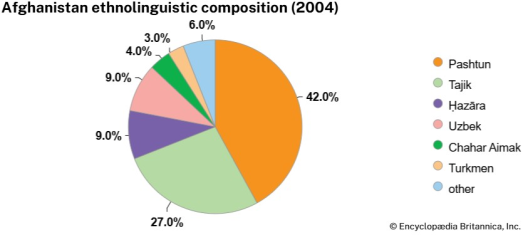
Afghanistan ethnolinguistic composition (2004)
Source: Britannica[footnote 260]
12.1.3 An illustrative map of the approximate demographic distribution of ethnic groups by region was published by the Congressional Research Service (CRS) in December 2017 and attributed to a 2003 publication by the National Geographic Society:
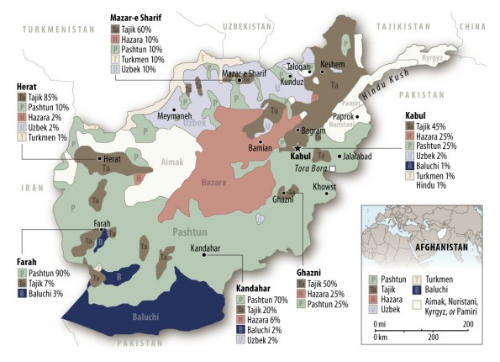
Illustrative map of the approximate demographic distribution of ethnic groups by region
Source: National Geographic Society, 2003, published by CRS[footnote 261]
12.1.4 According to UNHCR’s September 2025 Guidance Note:
‘Ethnic minorities, which include Hazaras, Tajiks, Turkmen, Balochs and Uzbeks, remain underrepresented at all levels of government and allege that the de facto authorities discriminate against them by restricting or unfairly distributing aid and public services. The de facto authorities have reportedly sided with Pashtun groups in land disputes, including by forcibly evicting ethnic minority residents including Hazaras, and targeted minority neighbourhoods in Kabul for demolition.’[footnote 262]
12.1.5 Encyclopaedia Britannica provided estimates on religious affiliation for 2009:
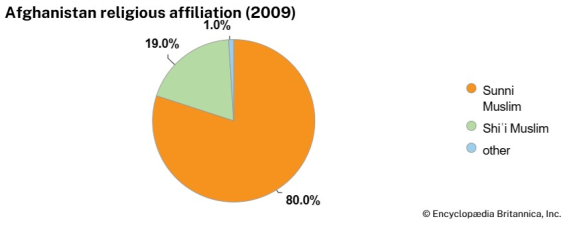
Afghanistan religious affiliation (2009)
Source: Britannica[footnote 263]
12.1.6 UNHCR’s September 2025 Guidance Note noted that:
‘Religious minorities in Afghanistan, including notably non-Sunni Muslims, Ahmadis, Christians, Hindus and Sikhs, as well as agnostics and atheists, are increasingly marginalized, with the courts, the government and the education system all aligned with a specific interpretation of Islam and with the de facto authorities imposing severe limitations on other religious practices. Many persons from religious minorities reportedly live in hiding or in fear. Individuals have been beaten and harassed for nonconforming religious practices, primarily Muslims who are from other sects, such as Salafis, Shias, Ismailis and Sufis. Shias have reportedly faced restrictions, physical violence, harassment, arbitrary arrest and detention for publicly displaying religious symbols and for celebrating a yearly festival. Reportedly, the de facto authorities have forced Ismailis to convert to Sunni Islam in Badakhshan province.’[footnote 264]
12.2 Non-practising Muslims
12.2.1 The Netherlands Ministry of Foreign Affairs (MoFA) noted in their June 2023 report on Afghanistan, covering the period from April 2022 to May 2023, based on a range of sources, that:
‘In the Islamic Emirate there were tight social controls over the practice of religion. The police and the MPVPV checked whether people prayed. For example, during prayer times they checked on the street and in shops whether people were praying. People who did not pray were intimidated. People also checked up on each other with regard to attending prayers. Non-practising Muslims often chose to pretend to practise their faith. They did this to prevent problems.’[footnote 265]
12.2.2 A July 2024 by UNAMA on the Taliban’s moral oversight, covering the period from 15 August 2021 to 31 March 2024, noted that ‘Men have been instructed to observe congregational prayers at mosques. Failure to do so has at times led to serious punishment, including fines, suspension of businesses and corporal punishment.’[footnote 266] The report provided examples from 2022 and 2023 of individuals who were beaten or detained by provincial de facto DPVPV officials for not observing prayers at mosque[footnote 267].
12.2.3 The Report of the UN Secretary-General on developments in Afghanistan since 21 February 2025 noted that ‘In some provinces during Ramadan, individuals who failed to attend prayers in mosques or who kept their businesses open were arbitrarily detained or ill-treated. On 20 April, in Kabul, the de facto Minister for the Propagation of Virtue and Prevention of Vice, Mohammad Khalil Hanafi, told a gathering of inspectors to work on people’s mindsets without the use of force.’[footnote 268]
12.2.4 UNAMA noted in their April 2025 report on the PVPV law that:
‘Between 1-29 March 2025, PVPV inspectors were observed to be implementing specific measures relating to the month of Ramadan. The level of monitoring and enforcement varied among provinces. Inspectors were regularly reminding the public, either on an individual basis or with the use of a loudspeaker in public places, to attend mandated congregational prayers, particularly night prayers for Ramadan (Tarawih). Local religious leaders were instructed by inspectors to identify individuals who failed to attend prayers. Businesses were instructed to close during prayer times and eateries not to cook or serve food during fasting period. In some cases, individuals who failed to attend mandated prayers in the mosques and those who continued to operate their businesses during prayer times were arbitrarily detained by inspectors, with some ill-treated.’[footnote 269]
12.2.5 In May 2025 it was reported by Amu TV that men in Herat were monitored on mosque attendance and fined if they missed daily prayers[footnote 270].
12.3 Converts from Islam to another faith
12.3.1 As noted in the 2024 EUAA Country Focus:
‘Conversion from Islam to another religion is considered as apostasy and is punishable by death, according to the Taliban’s interpretation of sharia. As noted by the international analyst, people born into another faith and who have not converted from Islam are allowed not to be Muslims. The same source noted that there was no formal policy on “hunting down” converts, due to a general expectation that converts will be killed by their own families, rather than by the de facto authorities.’[footnote 271]
12.3.2 HRW noted in March 2025 in a testimony to the US Commission on International Religious Freedom that ‘Reports from Afghanistan indicate that Christians and other religious minorities who are suspected of converting from Islam face threats of violence, forced conversion, and imprisonment. These religious minorities often operate in secret, living in constant fear of being outed and subjected to brutal punishments. They are denied the freedom to gather, worship, or express their beliefs openly.’[footnote 272]
12.3.3 The 2025 EUAA Country Focus noted:
‘Most Afghan Christians are reportedly converts from Islam, which makes it impossible for them to openly practice their faith, as turning away from Islam is punishable by death. According to the human rights campaign organisation Humanists International, ‘very few incidents are recorded’ in relation to non-believers and apostates in Afghanistan, which the organisation believes is because converts and dissenters from Islam do not speak out. Criticising, abandoning or denouncing Islam is a ‘taboo’, even among many ‘who adhere to broadly democratic values’.’[footnote 273]
See also Christians
12.4 Shia Muslims, including Ismailis and ethnic Hazaras
12.4.1 KabulNow (affiliated with Etilaatroz) noted in January 2025 that ‘Shia Islam, which has millions of followers in Afghanistan, was recognized and taught under the previous republic government. During that period, Jafari [also known as the Twelver Shia school of thought[footnote 274]] jurisprudence was included in the curricula of schools and universities attended by Shia students.’[footnote 275]
12.4.2 As noted in the 2025 EUAA Country Focus ‘The majority of Hazaras in Afghanistan are Shia Muslims (Twelver branch). A significant number follow the Ismaili Shia school of thought, while others are Sunni Muslims.1738 Most Hazaras are Dari speakers.’ [footnote 276]
12.4.3 In a December 2025 report on the human rights situation of Ismaili Shias, based on 25 online interviews with victims and survivors, their families, civil society activists and human rights defenders, conducted between October and November 2025, Rawadari wrote:
‘While precise official data regarding the Ismaili population and their ethnic composition in Afghanistan is unavailable, unofficial estimates and research suggest that Ismailis represent approximately 2–3% of the total Shia population in the country. Followers of the Ismaili faith are primarily located in the provinces of Bamiyan, Badakhshan, Kabul, Baghlan, Takhar, Uruzgan, Ghor, the Sheikh Ali district of Parwan, the Behsud district of Maidan Wardak, Tashqurghan in Samangan, Kunduz, and Mazar-e-Sharif in Balkh.
‘In Badakhshan province, Ismaili Shias mainly reside in the areas of Shughnan, Wakhan, Zebak, Yamgan, Jurm, Roshan, Karan wa Manjan, and Darwaz. Outside of Badakhshan, roughly 90% of the Ismaili population is ethnically Hazara, living mostly in the central regions of Afghanistan, whereas the Ismailis of Badakhshan are ethnically Tajik. Some of these figures are disputed due to lack of an official census in Afghanistan in recent decades.’[footnote 277]
See also Tajiks, Uzbeks and Turkmen
12.4.4 The Asian Forum for Human Rights and Development (Forum-Asia), a regional network of human rights organisations in Asia, noted in August 2023 that:
‘Taliban sanctions on the Shias and Hazaras include:
-
removal of the Shia Personal Status Law as ratified by President Hamid Karzai in 2009
-
ban on the teaching of the Shia Jafari doctrine curriculum in higher education
-
removal of Shia national holiday (Ashura) from the country’s calendar
-
restrictions on Muharram ceremonies.’[footnote 278]
12.4.5 On 14 December 2023, the Taliban Ministry of Higher Education instructed universities and private higher-education institutions to remove books deemed against the laws of Hanafi jurisprudence, including those relating to Shia belief, from their libraries[footnote 279].
12.4.6 Rawadari noted in their report on 2024 events that the Taliban ‘… banned the teaching of Jafari (Shia) jurisprudence in universities and schools, replacing it with Hanafi jurisprudence for students belonging to this religious group. In the provinces of Bamiyan, Daikundi, Ghazni, and Ghor, the Taliban have removed all books related to Jafari jurisprudence from libraries, universities, and schools.’[footnote 280]
12.4.7 The 2024 EUAA Country Focus stated that ‘According to sources consulted by the Swedish Migration Agency’ COI unit [in 2023], Shia Muslims may still practice their religion in Shia Mosques.’[footnote 281] The 2025 EUAA Country focus also noted practice in private spaces[footnote 282].
12.4.8 The 2024 EUAA Country Focus stated that, according to the international analyst (consulted in 2023):
‘… while the Taliban leadership does not perceive Hazaras and Shias as a threat, and their position in this regard is very clear, local commanders do exhibit intolerance against these communities. The same source noted that the Taliban do not usually attack Hazara and Shia communities and had not, as of October 2023, documented any confrontations in provinces where Hazara leaders had been appointed, such as in the provinces of Bamyan and Daykundi. However, armed Taliban fighters have constantly been out controlling these areas, “so, some will always think there is a possibility that the status quo may change for the worse.”
‘Hazaras/Shias have moreover faced discrimination. As pointed out by the Afghan analyst [in 2023], Hazaras have historically faced societal discrimination from other ethnic groups such as Pashtuns, Tajiks, Uzbeks and others, and such discrimination has persisted. Under the current de facto administration however, the analyst pointed out that Hazaras have not been facing systematic discrimination, although the local Taliban would “view Hazaras negatively and treat them with contempt (in line with historical norms)”. The same source added that “there is a view” that Hazaras “benefitted too much” under the previous rule, which must be “corrected” now. As a result, Hazaras have been “systematically treated differently” by the local Taliban. Some sources reported on many individuals from the Hazara communities being dismissed or replaced in de facto government jobs. The Afghan analyst stated that since Hazaras have been disproportionately underrepresented within the de facto government, they tend to have fewer connections in positions of power. As a result, their access to government services has been negatively impacted. For example, Hazaras faced more barriers in obtaining passports to go abroad.’[footnote 283] The 2025 EUAA Country Focus also included information from 2023. For more recent information on discrimination and other treatment affecting Hazaras see the full report.
See also Tajiks, Uzbeks and Turkmen
12.4.9 In 2024, at least 100 Ismailis in Badakhshan province were coerced into converting to Sunni Islam, according to information obtained by Rawadari[footnote 284]. Between 17 January and 3 February 2025, Taliban authorities in Badakhshan reportedly forced at least 50 Ismaili men to convert to Sunni Islam. UNAMA stated that men were taken from homes at night, questioned on religious topics, and those refusing to convert faced physical assaults, coercion, and death threats. Taliban officials also established madrassas in Ismaili-populated areas and imposed compulsory Sunni-based instruction for Ismaili children[footnote 285].
12.4.10 Rawadari’s mid-year report covering January to June 2025 noted that ‘… the Taliban continued to suppress religious freedoms and imposed extensive restrictions on the religious rituals of minorities. For example, they restricted the holding of Shiite ceremonies during Muharram in Kabul, Herat, Ghazni, Parwan, Nimruz, Ghor, and Bamiyan provinces. They removed flags and other mourning symbols and destroyed food distribution areas.’[footnote 286]
12.4.11 In the districts of Darvaz, Shungan, Zebak and Ishkashim, the Taliban announced that marriages between Ismailis and Sunnis were not allowed, according to the Rawadari report[footnote 287].
12.4.12 Afghan Witness reported that, on 27 February 2025, the High Commission of the Shias of Afghanistan – established by the Taliban’s intelligence agency (GDI) in November 2021 – held a conference in the Loya Jirga (grand council) tent in Kabul. The Commission reported that over 8,000 Shia attendees participated, including politicians, scholars, lecturers, business figures, and representatives and chief of various Police Districts of Kabul. Several Shia and Hazara leaders spoke at the conference, including former MPs, as well as high ranking Taliban officials, who emphasised national diversity and unity. However, some Shia and Hazara observers criticised the event. Former MP Arif Rahmani argued that the Taliban had failed to promote genuine social justice or minority rights during their rule. Bismillah Taban, a former crime director, claimed that the Taliban had coerced Western Kabul residents into attendance through money and threats[footnote 288].
12.4.13 Afghan Witness remarked that the conference appeared to be ‘… a PR effort by the Taliban to demonstrate support from Shia and Hazara communities … In practice, however, the Taliban continue to largely sideline Shia and Hazaras under their de facto administration. There is not a single Hazara or Shia member in the Taliban cabinet, and representation is also very low in other positions within the Taliban administration.’[footnote 289]
12.4.14 The AAN similarly noted in April 2025 that ‘The Islamic Emirate’s rhetoric has been full of assurances about inclusion, but in practice, the IEA has continued to exclude Hazaras and Shias from the cabinet and also to appoint Pashtuns to senior positions at the local level in Hazara-dominated provinces.’[footnote 290]
12.4.15 The 2025 EUAA Country Focus, based on various sources noted:
‘In November 2024, the de facto authorities arrested two Shia clerics in Jebrael Herat Province. Although the reason for their arrest was not clarified, local sources told exile Afghan media that the clerics had previously protested against the restrictions on the Ashura commemoration. In March 2025, the de facto authorities in Ghazni Province instructed members of the Shiite council of scholars to begin Ramadan and hold the Eid prayer according to Hanafi jurisprudence, forcing Shiites to perform Eid prayers one day earlier than their religious practice foresaw, and arresting three Shiite religious scholars for not complying. In June 2025, similar arrests were reported in Daykundi province. Furthermore, a local ban on intermarriages between Shias, including Ismailis, and Sunnis was reported in Paktia, Nimruz, and Badakhshan provinces.’ [footnote 291]
For more detail on Hazaras and other Shia groups see the 2025 EUAA Country Focus report.
12.5 Christians
12.5.1 Christian charity, Open Doors, estimated there were ‘thousands’ of Christians in Afghanistan[footnote 292] [footnote 293]. Their World Watch List (WWL) 2026, covering the period 1 October 2024 to 30 September 2025[footnote 294], ‘compiled by Open Doors’ research using real-world data from experts on the ground in 100 countries’, ranked Afghanistan 11 out of the 50 countries it considered where ‘Christians face the most extreme persecution.’[footnote 295]
12.5.2 Although the score for oppression in Afghanistan remained ‘extremely high’, Open Doors noted in their earlier WWL 2025, that:
‘This does not mean that each and every Christian in the country is being forced to flee (although each and every Christian will hide his or her faith even more carefully with the Taliban in power); it does not mean that church life is not possible at all or that house-churches cannot meet at all. It also does not suggest that the persecution situation cannot get worse again. However, as one country expert put it: “There is no way to speculate on the growth of the church. The usual indices are missing. … [T]he underground church is maintaining silence.”’[footnote 296]
12.5.3 HRW noted in March 2025 in a testimony to the US Commission on International Religious Freedom, that Christians (and other non-Muslim faiths) ‘… practice their faith secretly or have gone into hiding.’[footnote 297]
12.5.4 Open Doors’ WWL 2026 key findings were that:
‘Christians in Afghanistan have gone underground since the Taliban regained power in August 2021, as the Taliban do not acknowledge the possibility that any Afghan could be a Christian. Almost all Christians are converts from Islam, which is considered a shameful apostasy, punishable by death under Islamic law. Families, clans, and tribes feel obligated to preserve their honor by dealing harshly with known converts. Given the risk of meeting with other Christians, the church exists only in increasingly fragmented, secretive gatherings, making an accurate assessment of their situation difficult. Christians who fled the country, or became Christians while living as refugees, have slightly more freedom, but also serious challenges, particularly in Pakistan. In the last year, an increasing number of Afghans who fled to neighboring countries have returned. Those returning as Christians face intense challenges in holding onto their faith. The situation for women has further deteriorated, with Christian women facing double persecution – both for their gender and their faith.’[footnote 298]
12.5.5 Referring to church life, the same report added:
‘No visible church exists in Afghanistan. All Christian gatherings occur under extreme secrecy, typically disguised as family meals or social events. Groups remain very small – usually 3-5 people – and frequently change meeting locations. No Christian literature can be openly possessed, imported, or distributed. Bible access occurs primarily through memorization or carefully hidden digital files. That said, there are a number of Christian media ministries that reach Afghans both inside and outside the country, providing some access to Christian teaching and potentially some fellowship.’[footnote 299]
See also Converts from Islam to another faith
12.6 Hindus and Sikhs
12.6.1 The USSD International Religious Freedom Report for 2023 noted that sources estimated just 6 individuals from Sikh and Hindu communities remained in Afghanistan[footnote 300] – down from around 150 in late 2021[footnote 301]. In August 2025, a representative of the community said that around 100 Hindus and Sikhs lived in Afghanistan[footnote 302]. The EUAA, based on sources in 2025, noted less than 50 Sikhs residing in Afghanistan, with Hindu and Sikh communities mainly concentrated in urban areas including Kabul, Jalalabad and Ghazni [footnote 303].
12.6.2 For more information on Hindus and Sikhs leaving Afghanistan in the immediate period after the Taliban takeover in August 2021 see the archived Country Policy and Information Note Afghanistan: Fear of the Taliban and for information on communities within India and Citizenship rights see India: Religious minorities and Scheduled Castes and Tribes and Country Information Note: India (copy available on request)
12.6.3 In April 2024 it was reported that the Taliban were working towards returning private land to Hindu and Sikh minorities that had previously been seized by warlords[footnote 304] [footnote 305]. At the same time, it was noted that former MP Narendra Singh Khalsa, a representative of Hindus and Sikhs in the former government, had returned to Afghanistan from Canada[footnote 306] [footnote 307]. No further information on the status of Narendra Singh Khalsa since his April 2024 return could be found amongst the sources consulted (see Bibliography).
12.6.4 According to Tawazon, an online media outlet run by Afghan diaspora journalists and human rights activists living in exile[footnote 308], and state-run Radio Television of Afghanistan (RTA), Dr. Mullah Abdul Wasi, the Chief of Staff of Afghanistan’s Prime Minister’s Office, met with members of the Hindu and Sikh Council of Afghanistan in early March 2025. Council members raised their concerns, including the legal restitution of lands and religious sites and the completion of unfinished projects. Manjeet Singh Lamba, representing Hindus and Sikhs in Afghanistan, advocated for a commercial market in Jalalabad’s District One. Dr Wasi assured consideration of their petition[footnote 309] [footnote 310].
12.6.5 On 24 August 2025, independent news agency, Pajhwok Afghan News, reported that, according to Hindu and Sikh representative, Manjeet Singh Lamba, although most of the community had left Afghanistan by the end of 2021:
‘… after the re-establishment of the Islamic Emirate of Afghanistan and the announcement by the Ministry of Justice regarding the restitution of seized properties, a number of Hindus have returned to reclaim their properties and invest in the country.
‘Lamba, who himself is among those who returned from India, says that currently around 100 Hindus and Sikhs live in Afghanistan, and if India resolves their visa issues, more families will return to the country, since security problems are now resolved.’[footnote 311]
12.6.6 The Pajhwok article noted that Lamba said:
‘“Our living conditions are now much better and safer than before, and we live in Afghanistan in a peaceful environment without ethnic discrimination.” According to him, Hindus living in Afghanistan this year [2025] celebrated their Vaisakhi festival in Kabul, Nangarhar and several other provinces in a secure environment. He added ‘“On the day of Vaisakhi, the forces of the Islamic Emirate cooperated with us to ensure the security of the ceremony, and we are grateful for the support of the Islamic Emirate.”’[footnote 312]
12.6.7 Taliban spokesman, Zabihullah Mujahid, told Pajhwok that Hindus and Sikhs would be supported in resolving the return of lost land and property, and that they were welcome to return to Afghanistan and ‘live peacefully.’[footnote 313]
12.6.8 In October 2025, India announced the reopening of its embassy in Kabul. The announcement came during the Taliban Foreign Minister’s 6-day visit to India, the first such trip since the Taliban takeover in August 2021[footnote 314] [footnote 315]. Reporting on the Foreign Minister’s visit to New Delhi, KabulNow noted that a delegation of Afghan Hindus and Sikhs urged the Taliban to appoint minority representatives to senior positions as a way of promoting inclusion and strengthening ties with India – and that the Taliban foreign minister listened and expressed willingness to convey these requests[footnote 316].
12.6.9 Speaking at a meeting in New Delhi in November 2025, the Taliban Minister of Industry and Commerce called on Aghan Hindus and Sikhs who left for India to return ‘… saying Afghanistan “urgently needs” their presence and skills.’[footnote 317]
12.6.10 The 2025 EUAA Country Focus noted:
‘No attacks targeting Hindus or Sikhs were found within the reference period [1 October 2024 to 30 November 2025] of this report, but in a report from February 2025, the UN Special Rapporteur on the situation of human rights in Afghanistan noted that attacks had been targeting, inter alia, Sikhs and Hindus, without specifying particular incidents. According to Rafiey [former director and founder of the Afghanistan Migrants Advice & Support Organization (AMASO], due to ‘their small numbers and low visibility’ in the country, there have been few reports of mistreatment against Hindus and Sikhs.’ [footnote 318]
12.7 Tajiks, Uzbeks and Turkmen
12.7.1 According to the Middle East Institute (MEI), as of September 2025, ‘Among the 1,185 individuals mapped, ethnic Pashtuns dominate the Taliban’s senior and mid-level ranks (90%), followed by Tajiks (5.4%) and Uzbeks (~3%).’[footnote 319]
12.7.2 An earlier article by Hasht-e Subh daily news, dated June 2024, referred to the Taliban’s ethnic make-up and reported that:
‘Abdul Zahir Salangi, a former representative of Parwan province in the previous parliament, told the Hasht-e Subh Daily: “Some Tajik brothers might be part of the Taliban regime, but this does not mean they represent the literary, cultural, ethical, and historical diversity of the Tajik ethnicity. Naturally, every regime and group needs soldiers; these figures are soldiers of the Taliban group.” …
‘Similarly, Abdullah Qarluq, deputy leader of the National Islamic Movement of Afghanistan and former governor of Takhar province, said: “There are a few symbolic Uzbek individuals in the ranks of the Taliban who joined them at the beginning and share the Taliban’s ideology and policies. No educated and specialized Uzbek person is in the ranks of the Taliban.”’[footnote 320]
12.7.3 The 2024 EUAA Country Focus reported that Tajiks:
‘… were among the communities more prone to violations in the aftermath of the takeover [due to suspected affiliation with the NRF]. Since armed opposition groups had “almost disappeared” in both the province of Panjsher and the district of Andarab (Baghlan Province) the situation had calmed. According to the same source, the de facto authorities’ treatment of civilians in these areas had “improved significantly”, although individuals suspected of being affiliated with armed groups still faced significant challenges – such as arbitrarily detentions, inhuman treatment and “allegedly even torture”.’[footnote 321]
12.7.4 The 2025 EUAA Country Focus noted ‘…by the end of 2023, nearly all Tajik and Uzbek Taliban in Badakhshan [predominately inhabited by Tajiks] had been removed from any position of authority in their home areas, after being dismissed or assigned to minor positions in other provinces….In 2025, de facto authorities have continued to appoint external Pashtun de facto officials to Badakhshan and other mainly Tajik-populated provinces.’[footnote 322]
12.7.5 In their mid-year report, January to June 2025, Rawadari cited discrimination in employment against Tajiks, specifically noting the dismissal of 15 Tajik employees in de facto government departments in Ghazni province[footnote 323]. The report also noted that Tajik-majority areas in Ghazni benefitted less from development projects, and that Tajik families (and other ethnic and religious minorities) were omitted from the distribution of aid packages by Ghazni’s Rural Rehabilitation and Development Directorate in February 2025[footnote 324].
12.7.6 Across 9 quarterly reports covering the period from July 2023 to September 2025, UNAMA did not explicitly identify Tajiks or Turkmen as a targeted ethnic group[footnote 325] [footnote 326] [footnote 327] [footnote 328] [footnote 329] [footnote 330] [footnote 331] [footnote 332] [footnote 333].
12.7.7 The only explicit reference to Uzbeks across the 9 quarterlies was in Q2 2025 (April–June), where UNAMA documented mass arrests of ethnic Uzbeks in Faryab province. In June 2025, clashes between local Pashtuns and Uzbeks resulted in a number of arrests of both groups. At least 165 Uzbeks were detained (including some children) across several incidents, though they were later released[footnote 334]. Also reporting on the incident, Rawadari noted that those arrested were released following the intervention of local elders[footnote 335].
12.7.8 Reports by HRW and Amnesty International covering 2024 events did not mention human rights violations against Tajiks, Uzbeks or Turkmen[footnote 336] [footnote 337].
12.7.9 For more information on Uzbeks see ACCORD’s October 2025 query response on Uzbeks in Afghanistan.
12.7.10 While there was less specific recent data on ethnic Turkmen, earlier Radio Free Europe Radio Liberty (RFERL) reporting from December 2021 documented that the Taliban assisted Pashtun nomads in forcibly evicting over 1,000 ethnic Uzbeks and Turkmen in Jowzjan province[footnote 338].
12.7.11 In December 2025, there was a reported shooting by unknown gunmen of a Turkmen community elder in Balkh Province, according to Hasht-e Subh[footnote 339] However, Zarin TV Network noted that, according to local sources, the Taliban were the perpetrators[footnote 340].
12.7.12 The 2025 EUAA Country Focus noted ‘In June 2025, dozens of protesters were arrested by the de facto authorities in Faryab Province after demonstrating against the de facto local police command in Daulatabad District. The protests were triggered by the arrest of several young Uzbeks accused of harassing girls, and protesters chanted slogans praising the Uzbek former warlord Abdul Rashid Dostum.’[footnote 341]
12.7.13 Tajikistan, Turkmenistan and Uzbekistan all had diplomatic missions in Afghanistan, and the Taliban had reciprocal representation in those countries[footnote 342] [footnote 343]. In June 2025, Sheikh Samiullah Farahmand, a Turkmen cleric, was appointed by the de facto authorities as their ambassador to Turkey[footnote 344].
13. Women and girls
13.1 Situation overview
13.1.1 In their July 2025 report on involuntary returnees to Afghanistan, UNAMA provided an overview of the situation for women and girls since the Taliban takeover:
‘The Taliban takeover of Afghanistan had an immediate, severe impact on the rights and daily lives of women and girls. The de facto authorities have progressively introduced edicts and pronouncements which impact the rights of women and girls to participate in public life, their freedom of movement and their access to health, work and education. These measures include: denying girls access to education beyond the sixth grade; requiring women to be accompanied by a mahram for travel of distances over 78km; ordering women civil servants to remain at home; denying women access to tertiary education; rendering the observance of the hijab mandatory for women in public places; prohibiting women from using parks, gyms and public baths; issuing an order prohibiting Afghan female staff from working for domestic and international non-governmental organizations (NGOs); ordering all women’s beauty salons to close; and “levelling down” the salaries of women civil servants. The Law on Promotion of Virtue and Prevention of Vice, published as a decree of the Taliban leader in the Official Gazette on 21 August 2024, codified and broadened several pre-existing restrictions on the human rights of women and girls. The Law requires women to “conceal” their voices, faces and bodies in public and states that transport operators and drivers are obliged to refrain from offering to drive women unaccompanied by a mahram.’[footnote 345]
13.1.2 The UN Committee on the Elimination of Discrimination against Women (CEDAW) noted in their Concluding observations on the 4th periodic report of Afghanistan, 10 July 2025:
‘The Committee expresses its profound concern at the institutionalization of
torture and cruel, inhuman or degrading treatment or punishment of women by groups associated with the de facto authorities. It is particularly concerned about the announcement made by the Supreme Leader of the Taliban in March 2024 validating public flogging and stoning to death of women for offences, in particular adultery, on the basis of the Taliban’s extremist interpretation of Islamic law. The Committee is alarmed that, between November 2022 and May 2023, 58 women were publicly
flogged for crimes ranging from adultery and failing to abide by dress codes to running away from home and shopping without a male guardian, and that more than 37 stoning sentences have been imposed on women in the last three years. Those developments demonstrate the systematic nature of State-sanctioned gender-based violence against women. The Committee is deeply concerned by credible reports of arbitrary arrest and detention, beating, flogging and the use of electroshocks and chemical sprays as punishment for women’s engagement in human rights advocacy or for so-called “moral crimes”.’[footnote 346]
13.1.3 In December 2025, Afghan Witness published a timeline of Taliban restrictions on women’s rights between August 2021 and November 2025, affecting, amongst other things, their access to education and employment, freedom of movement, freedom of expression, and access to health services[footnote 347]:
| Year | Month | Restriction |
|---|---|---|
| 2021 | August | Girls not allowed to attend school beyond 6th grade Women’s shelters closed |
| 2021 | September | Ministry of Women’s Affairs replaced by MPVPV Female state employees told to stay home until further notice Announcement made that universities would reopen with strict segregation and dress rules Secondary education for girls suspended until further notice Women banned from sports participation Ban on unapproved protests |
| 2021 | November | Female TV reporters told to cover hair TV stations banned from airing entertainment shows with women |
| 2021 | December | Women banned from travelling beyond 72 km (45 miles) without a mahram |
| 2022 | January | Announcement that high schools for girls would reopen in March |
| 2022 | February | Some public universities reopen with strict segregation and hijab rules |
| 2022 | March | Women banned from travelling abroad without mahram Reopening of girls’ schools backtracked – indefinite suspension Courts invalidate previous legal cases that did not comply with sharia, including thousands of divorce rulings Women banned from health centres without mahram |
| 2022 | May | Women ordered to cover faces in public, including TV presenters Issuing of driver’s licenses to women stopped |
| 2022 | July | Female employees at Ministry of Finance asked to suggest male relatives to replace them |
| 2022 | November | Women banned from gyms and parks |
| 2022 | December | Women banned from working in international and national NGOs Education beyond 6th grade banned completely Women banned from universities nationwide until further notice |
| 2023 | April | Afghan women banned from working for UN entities |
| 2023 | June | Ban on foreign NGOs providing education, affecting 300,000 female students and 5,000 teachers |
| 2023 | July | Nationwide ban on beauty salons, causing unemployment for over 60,000 women |
| 2024 | February | Taliban allows women in public medical institutes in 11 provinces |
| 2024 | July | PVPV law ratified: women must cover entire bodies and faces in public |
| 2024 | December | Ban on women’s medical education Ban on windows overlooking women NGO work ban reaffirmed |
| 2025 | August | Women’s photos on IDs made optional |
| 2025 | September | Ban on books authored by women from university curricula |
| 2025 | November | New restriction on UN female staff: UN suspends operations at Islam Qala border with Iran |
13.1.4 In their human rights update covering October to December 2023, UNAMA reported continued enforcement of restrictions on women’s work, education and movement, including inspections at transport hubs and instructions to drivers not to permit boarding without a mahram. Instances included female health workers detained when travelling without a mahram and denial of access to health facilities. Arbitrary arrests linked to alleged non-compliance with hijab were also noted[footnote 348].
13.1.5 In February 2024, the UN Secretary-General also noted further curtailment of women’s rights in all spheres of public life, since the previous report dated 1 December 2023, including enforcement of the hijab decree through arrest and detention of women for non-compliance[footnote 349]. Enforcement of the hijab decree lessened after January 2024, according to UNAMA’s report covering events between January to March 2024[footnote 350].
13.1.6 Rawadari’s report on the human rights situation in 2024 noted that throughout that year ‘… the Taliban continued to enforce their discriminatory policies against women and girls in the country, particularly through the implementation of the PVPV law which imposed further restrictions and challenges on women’s access to their rights and freedoms. This law has effectively overshadowed all aspects of women’s and girls’ lives in the country, leading to intensified discrimination and persecution of women and girls.’[footnote 351]
13.1.7 UNAMA noted in their report for January to March 2025 that 20 March marked the 4th year since education for girls was banned for girls beyond grade 6[footnote 352]. Freedom of movement for women continued to be curtailed as UNAMA received reports that PVPV enforcers instructed ‘… health clinics, shops, markets, government offices and taxi drivers to deny services to women not accompanied by a mahram as well as preventing women from accessing other public spaces.’ UNAMA provided examples of such restrictions in the provinces of Badakhshan, Farah, Ghazni, Herat, and Kandahar[footnote 353]. In July 2025, dozens of women were detained in Kabul for not following proper hijab[footnote 354].
13.1.8 According to an article by UN News, UN Women announced in a press release in early August 2025 that the Taliban were ‘closer than ever to realizing their vision of a society that completely excludes women from public life.’ As a result, over 78% of Afghan women were without education, employment and training[footnote 355].
13.1.9 The UN Security Council (UNSC) stated, in their December 2025 Monthly Forecast for Afghanistan, that, ‘The human rights situation in Afghanistan has … continued to deteriorate, particularly for women and girls. The Taliban has reportedly introduced several new restrictions on women and girls in recent months, including a prohibition on women entering hospitals in Herat if they are not wearing a burqa and a ban on books written by women in Afghan universities.’[footnote 356]
See also Law on the Promotion of Virtue and Prevention of Vice (PVPV) and its enforcement
13.1.10 A December 2025 report by International Crisis Group (ICG) on women-led business noted that:
‘On assuming power, the Taliban ordered many women civil servants to stay home, but the proportion of public-sector jobs filled by women has remained fairly stable, even if their share of senior positions has declined. By December 2022, women were also banned from working with NGOs. In response, many aid agencies filed for exemptions, often at the local level, so that women field staff could keep on working in specific sectors such as health care. After the ban was extended to the UN the next year, UN agencies also negotiated the return of women staff to their offices or set up working-from-home arrangements. Yet the constant barrage of strictures, along with the shrinking footprint of humanitarian relief organisations, has left Afghan women with little choice but to seek opportunities elsewhere.’[footnote 357]
13.1.11 The ICG found that ‘Despite draconian gender-based restrictions imposed by Taliban authorities, some Afghan women have found an unexpected refuge in the private sector, which remains largely unregulated. Besides traditional jobs such as menial farm work, some are setting up their own businesses to gain financial independence and a meaningful role in society.’[footnote 358] The report concluded ‘Tens of thousands of women-led businesses, most of them unlicensed, are now operating across the country. Taliban authorities are not unanimous in their approval of women’s right to work, but so far, they have largely allowed women entrepreneurs to continue working, albeit in segregated spaces.’[footnote 359]
13.1.12 UNHCR’s September 2025 Guidance Note cited the restrictions faced by women which, amongst other things affected ‘…their right to work, their right to attain an adequate standard of living, their right to freedom of movement, their right to the highest attainable standard of physical and mental health, their right to participate in cultural life, their freedom of expression and, for all Afghan women but particularly for minorities, their freedom of thought, conscience and religion.’[footnote 360]
13.1.13 The Report of the Special Rapporteur dated 16 June 2025 noted ‘As the Special Rapporteur has reported on extensively, the Taliban has intentionally and severely deprived women and girls of their fundamental rights, which amounts to the crime against humanity of persecution on grounds of gender. A growing international movement, led mostly by Afghan women and supported by the Special Rapporteur, characterizes the situation as gender apartheid.’[footnote 361]
13.1.14 The February 2025 SEM report noted:
‘The situation has generally deteriorated for women since the Taliban took power, not specifically for returnees. If women and girls return to Afghanistan, it means that they lose rights they had outside the country. This applies, for example, to women who worked abroad or girls who attended schools. Many Afghan families do not want to return to Afghanistan because they do not want to deprive female family members of these opportunities. Two-thirds of female returnees interviewed by UNHCR said they were concerned about the restrictions placed on women there.’[footnote 362]
13.1.15 In January 2026 the EUAA updated its Afghanistan Country Focus, many of the sources used in this CPIN are also cited in that report. For additional sources it considered on the situation for women see section 4.4 Women and girls in the full report.
See also General situation for returnees
14. LGBT+ people
14.1.1 The Human Dignity Trust, a UK-based registered charity that focuses on strategic litigation challenging the criminalisation of homosexuality around the world reported, in October 2025, on the criminalisation of same-sex sexual activity in Afghanistan, both under the former republic and the Taliban, noting that:
‘Sentences include a maximum penalty of death under Sharia law. There is evidence of the law being enforced in recent years, and LGBT people are regularly subjected to discrimination and violence …
‘The situation has significantly worsened following the Taliban takeover in 2021, with many reports of violent hate crime and murder being committed against LGBT people.’[footnote 363]
14.1.2 The Human Dignity Trust report cited the PVPV law, ‘… which includes provisions that explicitly criminalise same-sex sexual conduct. Article 22(3) criminalises same-sex relationships between women (‘sahaq’), and Article 22(4) criminalises same-sex relationships between men (‘lawatat.’). Article 24(7) gives enforcers the power to impose any punishment that they consider appropriate, in addition to a fine and detention in a public prison.’[footnote 364]
14.1.3 Zan Times, an exiled media group led by Afghan women, reported in June 2025 the findings of ‘… a 10-month investigation that started in 2024 into the Taliban’s treatment of LGBTQ+ individuals The findings reveal a disturbing and widespread pattern of sexual violence, including gang rape, being used against LGBTQ+ people in Afghanistan.’ The report cited some firsthand accounts from trans women, obtained during the investigation[footnote 365].
14.1.4 Public flogging occurred for charges of ‘sodomy’ and other so-called moral crimes across provinces in 2024[footnote 366] [footnote 367]. According to Artemis Akbary, who created the Afghanistan LGBT Organization (ALO) in exile, ‘Under the Emirate, there has been a sharp increase in enforcement … with over 50 incidents of public flogging of people on charges of homosexuality between January and September 2024, as well as same-sex relationships, including between women, being further criminalised in the August 2024 law propagating virtue and preventing vice …’[footnote 368]
See also Law on the Promotion of Virtue and Prevention of Vice (PVPV) and its enforcement.
14.1.5 In their October 2025 report covering January to August 2025, the UN Special Rapporteur stated:
‘LGBTQ+ Afghans continue to endure entrenched and systematic discrimination under Taliban rule. Same-sex conduct remains criminalized, and accusations related to same-sex relations can result in severe punishments, including corporal punishments such as public flogging, especially since the enactment of the so-called law on the promotion of virtue and the prevention of vice. The law not only affirms the criminalization of same-sex relations, but also prohibits facilitating or enabling such relationships. On 29 July 2025, two men in Kabul were reportedly flogged for
“sodomy”, each receiving 39 lashes.
‘Beyond Taliban persecution, LGBTQ+ Afghans frequently experience violence and marginalization within their families and communities, forcing many into concealment and being cut off from social support systems and essential services. The situation is especially challenging for LGBTQ+ women, who face intersecting and compounded forms of discrimination.’[footnote 369]
14.1.6 In January 2026 the EUAA updated its Afghanistan Country Focus, many of the sources used in this CPIN are also cited in that report. For additional sources it considered on the situation for LGBT+ people see section 4.5 of the full report.
15. People perceived as ‘Westernised’
15.1 Concept of being ‘Westernised’
15.1.1 The EUAA’s May 2024 Country Guidance on Afghanistan considered that persons who were perceived as ‘Westernised’ was due, for example, ‘… to their activities, behaviour, appearance and expressed opinions, which may be seen as non-Afghan or non-Muslim. It may also include those who return to Afghanistan after having spent time in Western countries.’[footnote 370] And that ‘This profile may largely overlap with … Individuals perceived to have transgressed religious, moral and/or societal norms, for example in relation to norms associated with dress code.’[footnote 371]
15.1.2 Citing numerous sources, the EUAA 2023 Country Focus, covering the period 1 July 2022 to 30 September 2023, stated regarding Western influence that ‘The Taliban have reportedly had the aim to “purify” Afghan society and eject foreign influence from Afghanistan. The de facto state has invested vast resources on building mosques and madrassas across the country … an international analyst stated that the Taliban’s “assault” on Western education is part of the supreme leader’s project to “purify” Afghan society.’[footnote 372]
15.1.3 Landinfo reported in September 2022 that:
‘There is no precise definition or unified understanding of “westernised” as a concept. Rather, there is a loose, vague conception of what the concept entails. It often refers to people who have lived in Europe or other parts of the Western world and have been influenced by Western culture and lifestyle. The influence may involve physical characteristics such as clothing, hairstyle, beard length and coverings. It could also be attitudes and views on, for example, women’s participation in the workforce and freedom of movement, as well as attitudes towards the consumption of alcohol and pork.’[footnote 373]
15.1.4 EUAA’s May 2024 Country Guidance noted:
‘The Taliban’s views on persons leaving Afghanistan for Western countries remain ambiguous. On the one hand, the Taliban have said that people flee due to poverty and that it has nothing to do with any fear of them, adding that they were attracted by the economically better life in the West. Another narrative about persons leaving Afghanistan has been about the elites that left. They were not seen as “Afghans”, but as corrupt “puppets” of the “occupation”, who lacked “roots” in Afghanistan. This narrative could also include, for example, activists, media workers and intellectuals, in addition to former government officials.’[footnote 374]
15.1.5 Landinfo’s reasoned conclusion, based on the sources consulted, and their own expertise, was that:
‘Afghanistan is a diverse and complex country, and this is reflected in the Taliban’s rule. There is a considerable range in attitudes and local variations. There is reason to believe that this also applies to the view of people influenced by the West. Any reactions will there depend on the profile, network and where in the country the person resides. There is also reason to believe that Afghans who come from abroad have to deal with the Taliban’s various decrees and regulations the same way as Afghans in Afghanistan do.’[footnote 375]
15.1.6 A report by ACCORD, dated February 2025, on the Taliban’s restrictive policies, particularly against women and girls, based ‘almost exclusively’ on interviews with international and national humanitarian workers and academic scholars, conducted online between 26 July and 7 November 2024[footnote 376], noted regarding ‘Westernisation’ that:
‘Thomas Ruttig [co-founder of the Afghanistan Analysts Network (AAN)] suggested that one group primarily targeted by the Taliban are individuals they perceive as “infected by the West”. This group mainly includes urban residents, individuals active in civil society, those who have received a “Western” education, or have adopted a lifestyle or experiences that deviate from local traditions and customs. The Taliban view these individuals with suspicion, believing they have internalized “false” values that could potentially spread within Afghan society. The Taliban see themselves as a kind of educational leadership, emphasizing “morality” and “virtue”. They aim to re-establish a value system in Afghanistan, initially through admonition, but also through punishment if people do not comply (Ruttig, 23 October 2024).’[footnote 377]
15.1.7 In considering the ACCORD research, CPIT noted Ruttig’s observation that the Taliban often target individuals they perceive as having been influenced by Western values. This perceived influence is not uniformly defined but according to Ruttig tends to include people living in urban areas, particularly those involved in civil society, those who have received education from Western institutions, or those whose lifestyles diverge from what the Taliban consider traditional Afghan norms.
15.2 Clothing and appearance
15.2.1 The Netherlands MFA report, drawing on other sources, including the 2023 EUAA Country Guidance stated:
‘In Afghanistan it is generally customary to wear traditional clothing. Only a few people wear Western clothes. According to a source, it is possible to wear a suit and tie to the office. Not having a beard is reportedly a bigger problem. In government institutions, almost everyone wears traditional clothing, in some cases with a turban. More Western clothing is only said to be seen at the Ministry of Foreign Affairs. A Taliban member aiming for a high position should avoid wearing a suit, according to a source. On the street in the villages, intolerance with regard to clothing is said to be greater. More important than clothing, however, is a person’s behaviour and adaptation to socio-cultural norms… Those who were seen as “Westernised” might be threatened by the Taliban, relatives or neighbours…’[footnote 378]
15.2.2 The same Netherlands MFA report stated regarding tattoos:
‘According to one source, having a tattoo is considered un-Islamic. Individuals with a tattoo were not allowed to participate in religious ceremonies and could not be buried as a Muslim. The only exception is a tattooed dot that Pashtun women sometimes have on their foreheads.
‘According to a source, in practice people with a tattoo often make sure that it is not visible when they are in Afghanistan in order to avoid problems.’[footnote 379]
15.2.3 The EUAA 2024 Country Focus noted regarding dress codes and appearance that:
‘Soon after the Taliban takeover in 2021, there were sporadic reports of people being abused for wearing “western” style clothing, such as a suite [sic] or jeans, and in some areas men were advised not to wear “western” style clothes. The de facto MPVPV has issued a dress code for male state employees, instructing them to “dress like the prophet” (meaning, in principle, to wear shalwar kameez – a loose-fitting knee-length tunic over baggy pants, a traditional headgear and growing one’s beard). Male students and teachers were also called upon not to wear ties on 15 April 2022, and in April 2023 the de facto Ministry of Education announced the shalwar kameez as the new school uniform for boys. The ‘Morality law’ of 31 July 2024, further states:
-
men should cover their bodies from the waist down to the knees, knees included;
-
when “pursuing pastimes and exercise, men are obliged to wear clothes that conceal the required parts of the body, and that are not very tight or make certain parts of the body apparent;
-
befriending non-Muslims and assisting them, imitating them in one’s appearance or character, are wrongful acts;
-
wearing and popularising crucifixes, neckties and other such un-Islamic symbols”, are “wrongful acts”.’[footnote 380]
15.2.4 The EUAA 2024 Country Focus added that:
‘An Afghan researcher, who was interviewed for this report and who preferred to remain anonymous due to security concerns, stated that the instructions for de facto public officials had in general been implemented at the de facto ministries. In order to access some de facto government buildings, men needed to wear a traditional cap to enter (which could be bought by the entrance). Men in general have also increasingly started to wear traditional clothing, although the use of untraditional clothing has continued. According to the [anonymous] Afghan analyst, the increase in men wearing traditional clothing and growing a beard in Kabul City does not necessarily have to do with the restrictions, as the look of the ruling class is in fashion. One source interviewed by the Swedish Migration Agency explained that he had started to dress traditionally to avoid criticism and verbal harassment from the de facto MPVPV, while the Afghan analyst added that resembling those in power may indicate a certain status and bring social benefits. For example, one may avoid being questioned if looking like an important person. While the Swedish Migration Agency’s COI unit reported that men and boys still dressed in jeans and suits in April 2024, the Afghan analyst, interviewed on 1 October 2024, stated that pants [trousers] had become more rare, although still being worn by some individuals within the younger generation. The Afghan researcher confirmed that there were still great variations between different regions as regards how people dress, and even between different districts within Kabul City, which also applies to other aspects as well, such as music, bodybuilding, tattoos, and short sleeve T-shirts which may be seen in some areas of Kabul, but which is basically impossible to see in provinces such as Kandahar. As of 30 September 2024, TOLOnews news anchor still wore suits and neckties.’[footnote 381]
15.2.5 News anchors and presenters on TOLOnews continued to wear suits and neckties as of 17 December 2025[footnote 382] [footnote 383].
15.2.6 The 2024 EUAA Country Focus stated that:
‘The de facto MPVPV has also issued advisory instructions for barbers not to cut men’s beard or do “western style” haircuts. Although being advisory in their nature, there have been some reports of men and barbers being abused, arrested and detained for not abiding to these instructions. The “Morality law” law of August 2024 also identified the “wrongful acts” of “shaving one’s beard or reducing it to less than the width of a fist”, and “styling one’s hair in an un-Islamic manner”. Some men have continued to cut their beards and to wear “western style haircuts” in Kabul City. According to the Afghan analyst, having a “western style” or “modern” haircut in general does not make any de facto officials react, but a more extreme haircut such as the “mohawk” would probably not be accepted and make them stop a person and inform him that such a hairstyle is not allowed, due to religious hadiths forbidding hairstyles where half the head is shaved. The same source noted that also businessmen and youth in Kabul City move away from being clean shaved and growing a beard, although proportionally more older men dress traditionally and have beards. One could however still see a lot of younger individuals having modern hairstyles, and some young men still being clean shaved in Kabul City as of September 2024.’[footnote 384]
15.2.7 The 2025 EUAA Country Focus repeating some of the information contained in its 2024 report, noted that ‘Some men have reportedly continued to cut their beards, clean shave and wear ‘western style haircuts’ in Kabul City, but there have been a general trend among men to dress more conservatively and to grow a beard. Some Afghan athletes were clean-shaved or had trimmed beards and wore ‘western-style’ haircuts in 2025, for example members of the Afghan Futsal team, and the Afghan U19 cricket team.’ [footnote 385]
15.2.8 In their July 2024 report on moral oversight by the Taliban, UNAMA noted regarding men’s appearance that:
‘De facto MPVPV has issued a number of instructions regarding the appropriate appearance of men. The de facto MPVPV instructed barbers not to trim the beards of men nor to cut their hair in “Western style” haircuts. In a recent instance, on 24 January 2024, in Herat province, the Head of the de facto DPVPV stated in a video clip that barbershops should not shave and trim the beard of clients shorter than the length of a fist and should not provide “Western hairstyle” to clients …’[footnote 386]
15.2.9 The ACCORD report of February 2025 cited Thomas Ruttig, who noted some provisions of the PVPV law which affected Afghan men, ‘“… such as the ban on wearing crosses or even ties, as these are apparently shaped like a cross in the eyes of the Taliban and are therefore considered a Christian symbol. However, we already knew this from the Taliban’s first rule (1996-2001).” (Ruttig, 23 October 2024 [original in English]).’[footnote 387]
See also Christians
15.2.10 The ACCORD report cited an anonymous interviewee, who stated that ‘“Men are also affected by the [PVPV] restrictions. They are instructed to grow beards. Barbers are strictly instructed not to shave beards and not to change men’s hairstyles.” (I9, 2 September 2024).’[footnote 388]
15.2.11 A report by news agency, Agence France Press (AFP), cited by France 24 on 12 August 2024, indicated that Western-style clothing was still on sale in Kabul. Reporting on the ban on depicting human faces, AFP noted that shopkeepers in Kabul had been ordered by the Taliban’s morality police to cover mannequins’ faces and remove images of models. Despite regular policing to ensure this order was upheld, male mannequins remained dressed in Western-style clothing, such as jeans or suits, despite such attire being discouraged by the authorities. Female mannequins wore sequined evening dresses with exposed shoulders or plunging necklines, outfits typically worn by women only in private settings like gender-segregated weddings[footnote 389].
15.2.12 The UN Special Rapporteur reported on the PVPV law in March 2025 and noted, regarding dress code, that ‘… when women and girls leave their homes, they must wear the “sharia hijab”, which requires their faces to be covered entirely, except for their eyes … women (and girls) must cover their entire bodies and stipulating that their clothing should not be “thin”, “short” or “tight”.’[footnote 390] For men, the report noted ‘The law also imposes restrictions on men’s and boys’ appearance, stating, in article 14 (1), that the parts of the male body from the waist down to and including the knees are awrah and must be covered. Clothing should not be tight or reveal the shape of the body, especially during exercise (art. 14 (3)). In article 22 (18), men are prohibited from shaving or trimming their beards to shorter than the length of a fist.’[footnote 391]
15.2.13 France 24 reported in March 2025 that young, urban, women were opting to wear ‘a flowing abaya robe, worn with a hijab headscarf and often a face covering as well – sometimes a medical mask, or a Saudi-style cloth niqab veil that exposes only the eyes’, as opposed to the blue burqa[footnote 392].
15.2.14 Ariana Television Network’s (ATN) YouTube channel, a private television and radio network based in Kabul, uploaded a video on 30 May 2025 as part of their series ‘Kabul Nights’. The video was filmed in a late-night food market, showing men dressed in t-shirts and casual trousers. The presenter wore similar attire[footnote 393]. Another video in the same series, uploaded by ATN on 11 July 2025, showed the same presenter interviewing some young men dressed in t-shirts and sports clothing, with styled hair and trimmed beards, outside an ice cream parlour[footnote 394]. Other scenes in the nearly 33-minute video showed men wearing traditional Afghan dress[footnote 395].
Screenshot of ATN video, 11 July 2025[footnote 396]
15.2.15 A video uploaded by ATN on 12 July 2025 showed the presenter, dressed in a T-shirt and jeans, interviewing men in similar clothing in an area of Kabul known as Sarai Ghazni[footnote 397]
Screenshot of ATN video, 12 July 2025[footnote 398]
15.2.16 In August 2025, The US Commission on International Religious Freedom (USCIRF) update on Afghanistan noted:
‘De facto authorities have also detained individuals for failing to comply with the dress code mandate outlined in the morality law. In December 2024, the MPVPV arrested two journalists, one male and one female, for trimming his beard and not covering her head. In July, enforcers from the MPVPV detained at least 50 men in southern Kandahar for reportedly shaving their beards. While some were immediately released, others spent days in custody’[footnote 399]
15.2.17 Kabul Now, noted the directive issued on 7 August 2025 by the Taliban’s Supreme Leader to men to grow beards and wear turbans. It noted ‘Barbers across the country have been ordered not to offer beard grooming services. Several have been arrested, and their businesses temporarily closed, for allegedly violating the directive…’[footnote 400]
15.3 Taliban reactions to people being ‘Westernised’
15.3.1 Landinfo reported that:
‘In February 2022, Landinfo met with a representative of an international organisation (digital meeting, February 2022) who claimed that at that time, things had not changed significantly on the streets of Kabul. In the cities, there were still Afghans who wore western clothes, and there were women both with and without burqas. Another one of Landinfo’s sources has lived in Kabul since the takeover and continues to do so. He has a very western appearance – he has short hair, is clean-shaven and wears western clothing. When asked directly (conversation in Islamabad, March 2022) he stated that he did not have problems with the Taliban for that reason.’[footnote 401]
15.3.2 Landinfo added that (as of September 2022) ‘There is little relevant knowledge of what the situation is today. There have been no forced returns from Western countries after the takeover, and it is presumed that relatively few people have returned voluntarily. Landinfo is unaware of reports that Afghans have been subjected to reactions because they appear “westernised” or have stayed in a Western country.’[footnote 402]
15.3.3 Citing other sources, the Netherlands MFA report noted:
‘It is not clear whether a stay in a Western country is a factor in whether or not people encounter problems on returning. Not many people have returned from Europe or a Western country. Where this has been the case, they have usually come via a third country. According to one source, people coming from a Western country may have to answer more questions on entering Afghanistan. This is especially true if they are wearing Western clothing. According to Freedom House, with regard to human rights defenders the Taliban consider factors such as a Western education, having worked for a Western organisation, dressing in Western style, and speaking English as indicators of ties with the ‘enemy’.’[footnote 403]
See also Returnees
15.3.4 In its 2024 World Report (covering 2023 events), Freedom House stated, ‘Men, especially civil servants, were ordered to grow full beards and avoid Westernized hairstyles or dress. Enforcement is arbitrary and inconsistent, varying over time and between provinces.’[footnote 404] Due to budget constraints, the 2025 World Report (covering 2024) was abridged and did not fully consider individuals’ control over appearance[footnote 405].
15.3.5 The July 2024 UNAMA report noted, regarding the Taliban’s guidance on men’s appearance, that:
‘While the de facto MPVPV has stated that this guidance is advisory in nature, [an unstated number of] incidents of forceful enforcement have been recorded including arrests, detentions and ill-treatment of barbers who shaved their clients’ beards, as well as of men who have allegedly failed to comply with instructions on appearance.
‘Some examples include:
-
On 27 July 2023, in Badakhshan province, the de facto DPVPV detained several individuals for a few hours on allegations of having shaved their beards.
-
On 7 December 2023, in Nangarhar province, de facto DPVPV closed 20 barbershops for one night and detained two barbers for two nights on allegations of providing clean shave, trimmed beard, and “Western” style haircuts. They were released after providing a guarantee of not providing these services again.
‘According to the response provided by the de facto authorities: in Badakhshan province, barbers were not detained but were called in to be given advice; in Nangarhar province, no barber was detained but the barbershops were closed. Although UNAMA did not include an example of arrests in Herat province, the de facto authorities responded that barbers there were not arrested but were called in to be given advice.’[footnote 406]
15.3.6 Journalist and book author, Emran Feroz, reviewed and contributed to the ACCORD report[footnote 407]. According to his review on the enforcement of the PVPV law regarding the appearance of men, ‘… these measures are not being enforced uniformly across the country, particularly when it comes to hairstyles. He further noted that “this is something that isn’t really controlled on the street but has more significance if you visit university or work as a government clerk etc.” (Feroz, 16 January 2025).’[footnote 408]
15.3.7 Reporting on 2024 events, Rawadari stated:
‘… in certain provinces and districts, barbers and public bathhouse workers who cut men’s beards or hair in a manner deemed inappropriate by the MPVPV, face imprisonment. A resident of Kandahar told Rawadari that he was detained for 24 hours by the MPVPV for trimming his beard.
‘In Tarinkot, Uruzgan province, the Taliban use three shipping containers as temporary detention place for individuals whose clothing and appearance do not conform to the PVPV law.
‘Three men from Kandahar stated that they were repeatedly humiliated, insulted and arrested by officials from the MPVPV due to their clothing style and beard length. They were warned that they must either grow their beards to the required length and wear turbans or leave the province. Eventually, these individuals were forced to leave their home province.
‘In November 2024, the MPVPV in Kandahar detained 14 employees of the provincial Education Department for trimming their beards and warned them that if they repeated this action, they would be dismissed from their jobs.
‘On 30 December 2024, the MPVPV imprisoned two journalists from a state-run media outlet in Ghazni province inside a shipping container for 24 hours for trimming their beards and not covering their heads …’[footnote 409]
15.3.8 Landinfo noted in its January 2025 report on Afghan men (translated from Norwegian to English using generative AI in consultation with Landinfo who confirmed accuracy) that ‘According to an international analyst (2024), individuals returning from Europe and the West are not subjected to harassment, but those returning to their home villages must adapt to local customs and dress codes.’[footnote 410] All sources used by Landinfo are contained within the original Landinfo report.
See also Returnees
15.3.9 UNAMA noted in their April 2025 report on the PVPV law that ‘UNAMA observed that in the first six months of implementation of the PVPV law, over half of the PVPV law-related arbitrary detentions concerned men’s appearance – either men not having the compliant beard length or hairstyle, or barbers providing non-compliant beard trimming or haircuts.’[footnote 411] The same report noted that PVPV inspectors undertook ‘… undertake monitoring at checkpoints at entrances of cities, along highways or main roads, and during foot patrols on the street, where inspectors examine individuals’ appearance, whether they play music inside their vehicles, if their phones have “immoral” contents and other contraventions of the PVPV law.’[footnote 412]
15.3.10 A July 2025 report by Hasht-e Subh stated that:
‘Several residents of Kabul have expressed concern over increasing restrictions and the closure of barbershops in the capital. They criticize the Taliban’s actions, stating that without a long beard, their complaints and requests are not taken seriously in government institutions and offices. Residents of the capital also emphasize that they face verbal and gender-based violence due to shaving their beards or not having one. They report that Taliban fighters, under the pretext of beard-shaving, touch their hair and faces. According to Kabul residents, the continuation of this situation has negatively impacted not only their businesses but also the mental health of individuals.
‘Some residents of the capital express concern that when visiting government institutions, if their beard is not long or they do not wear traditional attire like shalwar kameez, their requests and complaints are ignored. They say that sometimes Taliban fighters or other officials of the group focus solely on their appearance instead of addressing the actual issue.’[footnote 413]
15.3.11 The December 2025 AAN report on the PVPV law noted that:
‘In Kabul, under the Emirate as under the Republic, most Afghan men have beards, but many (most?) do not grow them to the length required by law – at least a fistful-long. One man, in conversation, said he grew his beard if he knew he would be needing something from a government office, and also wore pirhan tomban [also known as shalwar kameez – a long tunic and light, loose, pleated trousers[footnote 414]] on the day. Men working in government also had to follow the authorities’ dress code or risk being sacked, the only exceptions being certain men deemed technically valuable, whom it would be a loss to sack for shaving or wearing trousers. For other men, he stressed, it was important to resist the edicts.’[footnote 415]
15.3.12 A BBC News investigation, published January 2026, found there were some minor oppositions to the Taliban leader’s edicts, such as ‘… not enforcing regulations like the ban on shaving beards in regions controlled by Kabul group-aligned officials.’[footnote 416]
15.3.13 The February 2025 SEM report cited a 2023 report, noting that ‘According to one source, people may have problems if the Taliban considers them “instruments of Western influence.” They would not be killed, but rather intimidated.’[footnote 417]
15.3.14 Though not specifically citing the Taliban, the SEM report stated that, ‘Returnees from Europe are often stigmatised in Afghan society because people who have remained in Afghanistan consider them to have “failed” or “given up”. They are sometimes considered to be “corrupted” by Western influences as well, which leads to distrust.’[footnote 418]
See also Law on the Promotion of Virtue and Prevention of Vice (PVPV) and its enforcement and General situation for returnees
16. Returnees
16.1 Number and profile of returnees
16.1.1 The February 2025 SEM report stated that ‘The vast majority of returnees to Afghanistan since the Taliban took power are people who returned independently or forcibly from neighbouring Pakistan and Iran, as well as from Turkey. Voluntary returnees and repatriations from Europe have been comparatively rare to date.’[footnote 419]
16.1.2 In 2025, approximately 2.86 million Afghans returned to Afghanistan from abroad (including deportations, voluntary repatriation, and other return categories), with Iran accounting for 1.86 million and Pakistan for 963,300, while smaller numbers arrived from other countries[footnote 420]. At least 1.42 million Afghans were deported (forcibly returned), including 1.24 million from Iran, 138,600 from Pakistan, 42,200 from Turkey, and 1,800 from Tajikistan[footnote 421]. Around 60% of returnees were women and children[footnote 422] [footnote 423].
16.1.3 UNHCR cited ‘massive return movements’ from Pakistan and Iran in 2025, and noted in their post-return monitoring survey, based on interviews with 1,658 returnee households from Pakistan and Iran, published in December 2025, that:
‘In Pakistan, the Government announced the resumption of the Illegal Foreigners’ Repatriation Plan (IFRP) on 7 March 2025, initially targeting Afghan Citizenship Card (ACC) holders, who were instructed to leave voluntarily by 31 March or face deportation from 1 April. On 31 July, the policy was expanded to include Afghan refugees holding Proof of Registration (PoR) cards, with a one‑month grace period ending on 31 August. Between April and August 2025, more than 314,500 Afghans returned from Pakistan.
‘In Iran, returns intensified in mid‑2025 due to tighter border enforcement, the conflict with Israel, increased deportations, worsening conditions for Afghans in Iran, and the expiry of temporary stay permits held by hundreds of thousands of Afghans. Daily returns sometimes exceeded 40,000 in July. Combined returns from Iran and Pakistan reached unprecedented levels, stretching already strained border and transit facilities.’[footnote 424]
16.1.4 For more detailed profiling of returnees from Iran, Pakistan, Turkey, and other countries, see section 3 of the SEM report.
16.1.5 UNHCR noted that 67% of returnees settled in 10 provinces, namely Baghlan, Balkh, Farah, Herat, Helmand, Kabul, Kandahar, Kunduz, Nangarhar, and Takhar[footnote 425]. The report found that ‘Consistent with findings from the July – September 2024 survey, Kabul district hosts the highest proportion of returnees at 10%.’[footnote 426]
16.1.6 The 2025 EUAA Country Focus noted ‘There have …been cases of voluntary returns from EU states, and many Afghans residing abroad, including in Western countries, have been going on short-term visits to Afghanistan.’[footnote 427]
16.2 Treatment on entry at Kabul International Airport
16.2.1 The February SEM report described procedures at Kabul Airport:
‘In the summer of 2023, a source told EUAA that the Taliban now controlled or managed the entire [Kabul] airport grounds. The Immigration Department, which reports to the Ministry of the Interior, is responsible for border checks at the airport and other border checkpoints.
‘At the airports, a multi-level screening of incoming returnees is performed by the border check authorities and the Taliban interim government’s secret service GDI. According to one source, people entering from a Western country must answer more questions on entry than other travellers, especially if they are wearing Western clothing. Another source, on the other hand, mentioned that it occurred frequently, on a daily basis, that people entered from Western countries and that it did not lead to any problems with entry checks. In the course of its mission to Kabul in November 2024, the Country Analysis SEM found that border checks at Kabul Airport do not differ significantly from those at other airports. Systematic interviews by GDI personnel do not occur. A CEDOCA source reports that, while Taliban authorities do try to determine who is entering the country, there are not many GDI employees at the airport, and the atmosphere does not feel threatening.
‘The Taliban or its secret service GDI has lists and biometric data of the former government’s employees in security forces (police, army, intelligence service). They are thus generally able to identify such people during checks. Isolated arrests are made in the course of the entry process at the airport. Arrests are not systematic, however. Nevertheless, according to one source, if a connection to active resistance groups such as the National Resistance Front (NRF) or the Afghanistan Freedom Front (AFF) is suspected, this is possible. Former secret service employees are also thought to be particularly at risk. Among people with foreign passports, special attention is paid to possible spies and people connected to the organisation “Islamic State in the Khorasan Province” (ISKP).’[footnote 428]
16.2.2 The same report noted ‘The findings in this report have primarily been made on how Taliban authorities deal with people repatriated from Turkey, since only a few repatriations have occurred by air from other countries to date.’[footnote 429] For context, the SEM report profile of returnees from Turkey stated that 97% were men aged between 18 and 54, some having left Afghanistan due to the security situation, lack of economic prospects and natural disasters. Almost all of the returnees told IOM that they had travelled to Turkey to find work[footnote 430].
16.2.3 The SEM report stated that:
‘IOM is responsible for receiving returnees from Turkey and systematically interviews them. According to a source cited by the Belgian country analysis CEDOCA, returnees from Turkey were initially (in 2022) questioned and searched in an aggressive way. This is no longer the case now, as those repatriated from Turkey are regarded as “poor guys”. A media report on a scheduled flight to Kabul in May 2022 does not mention any complications for migrants returning from Turkey when entering Afghanistan. However, they were overwhelmed with the processes at the airport. Since Turkey shares passenger lists with Afghan authorities, the names of people entering are already known to them. In 2024, only 2% of returnees from Turkey had a passport; 97.5% travelled with temporary travel documents issued specifically for their return. These are documents with passport photos that resemble a Tazkira.
‘Only sparse information is available on the Taliban’s treatment of people repatriated from Western countries, as the charter flight from Germany in August 2024 is the only one to clearly fall into this category. According to media reports, the repatriated offenders were initially detained in a building near Kabul Airport to be interrogated by the authorities for identity verification and were subsequently released. Their families had to sign a declaration that the men would not commit any more crimes. It is not clearly documented whether all of these men were released. According to Spiegel, some of them remained on a type of house arrest for the time being. Several of them later commented in Afghan media on detention in Germany, the conditions of repatriation, European migration policy, and the lack of economic prospects in Afghanistan. Their treatment at the airport was not discussed in the interviews.’[footnote 431]
16.3 General situation for returnees
16.3.1 The February 2025 SEM report found that:
‘Returnees from neighbouring countries almost exclusively enter the country by land, as do those who are forcibly repatriated. The border controls of the Taliban interim authorities are generally superficial. Afghan nationals are always allowed to enter, regardless of whether they have valid travel documents or not. With few exceptions, there are no documented cases of arrests or other abuses of returnees at the official border crossings. Similarly, there are hardly any reported problems at airports when entering the country.
‘Numerous passengers enter the country every day at airports, including from Western countries. Most of them are business travellers and visitors from the Afghan diaspora. At the beginning, people deported from Turkey were questioned more thoroughly than others, but now they can enter the country without any disturbances. Most of those deported from Germany were initially detained and questioned for some time, but have since also been released.’[footnote 432]
16.3.2 The UNHCR post-return survey, December 2025, summarised the general position of returnees from Iran and Pakistan, noting that:
‘Returnees from Iran generally reported higher levels of education, slightly improved food security, and greater access to durable housing, but were less likely to have income‑generating employment, and more often reported barriers to girls’ education. Returnees from Pakistan faced deeper economic strain, relied more on daily wage labour, and carried higher debt. Timing also mattered: those returning from Pakistan after April [2025] found more casual income opportunities but struggled to afford rent and maintain sufficient food.
‘Across all groups, returnees continue to settle in areas with fragile conditions marked by deepening poverty and limited access to essential services. Many cannot return to their areas of origin due to lack of shelter, land, or livelihoods. Over half of households surveyed reported missing essential civil documentation, restricting access to education, healthcare, and housing. Education remains sharply constrained for all women and girls in Afghanistan: returnees from Iran most often cited policies and laws as the key barrier, while returnees from Pakistan pointed to economic obstacles. Access to healthcare is limited by cost, distance, and medicine shortages, with women disproportionately affected due to movement restrictions.’[footnote 433]
16.3.3 UNHCR’s monitoring of returnees noted, regarding physical safety, that:
‘The findings of this survey are in line with the December 2024 survey, with 94 per cent of returnees reporting no physical security incidents in their communities over the past six months, and no significant differences observed between returnee groups or by gender …
‘However, … These figures may mask underreporting and broader risks persist even if not directly experienced by returnees. Only six per cent of returnees reported safety concerns, primarily linked to verbal threats from community members or the de facto authorities. Other less frequently cited issues included discrimination, restrictions on movement, theft, and physical violence.’[footnote 434]
16.3.4 As noted in the February 2025 SEM report ‘The Country Analysis SEM has not found any evidence of systematic persecution or harassment of returnees in the course of this research. It assumes that the sources consulted for this report would have otherwise reported this. Instead, most sources agree that the Taliban generally treat returnees well, and that there is no specific persecution against them solely because they are returnees.’[footnote 435]
16.3.5 The SEM report provided some narrative on incidents of attacks that ‘… occur occasionally or that returnees are afraid of …’, and added:
‘These cases tend to be individual acts of revenge and individual attacks by Taliban interim authorities that mainly, if not exclusively, concern risk profiles [former senior officials and politicians, former security forces, human rights activists[footnote 436]]. A connection to a state function before the Taliban took power is not always clear. According to Country Analysis SEM interlocutors, former security staff, high-ranking officials or politicians, journalists and human rights activists are particularly afraid. It is important for people with these profiles to act unobtrusively. Some hide and/or try to leave the country quickly. However, there is no evidence of systematic prosecution of such profiles by Taliban interim authorities.’[footnote 437]
16.3.6 According to the SEM report, ‘Taliban interim authorities generally have little background information about people returning. They are unable to track and monitor all returnees. Village elders in villages, on the other hand, always know who has returned. However, according to one source, such information is unlikely to reach Taliban interim government authorities in Kabul.’[footnote 438]
16.3.7 UNAMA’s July 2025 report on involuntary returnees to Afghanistan set out the findings from 49 involuntary returnees, interviewed by UNAMA’s Human Rights Service between May and December 2024. It also referred to violations documented as part of UNAMA’s broader human rights monitoring[footnote 439]. The report focussed on specific groups it considered ‘at particular risk of human rights violations’, including women and girls, former government officials and ANDSF members, civil society activists and human rights defenders, and journalists[footnote 440]. UNAMA noted:
‘Many interviewees stated that they have been forced to live in hiding since their return to Afghanistan due to threats – both actual and feared – from the de facto authorities. This impacts all areas of life; preventing persons who fear persecution due to their profiles from returning to their areas of origin, from working, and in some instances, from leaving the house. Some interviewees also stated they had to change their location regularly to avoid detection …’[footnote 441]
16.3.8 The UNAMA report provided some firsthand accounts from individuals who described some of the risks they faced or feared since returning to Afghanistan, including threats, arrest and ill-treatment by the Taliban[footnote 442].
16.3.9 The Mixed Migration Centre (MMC) Research Report, dated August 2025, on Afghan returns from Iran, Pakistan, Turkey and ‘other countries’, based on a survey of 747 people in Balkh, Herat, Kabul, Kandahar, and Nangarhar[footnote 443], stated in their concluding observations, ‘Overall, the responses suggested that local communities had been relatively welcoming and supportive [of returnees], despite potential tensions around sharing limited resources and the cultural differences evident between some returnees and residents.’[footnote 444]
Research methodology
The country of origin information (COI) in this note has been carefully selected in accordance with the general principles of COI research as set out in the Common EU [European Union] Guidelines for Processing Country of Origin Information (COI), April 2008, and the Austrian Centre for Country of Origin and Asylum Research and Documentation’s (ACCORD), Researching Country Origin Information – Training Manual, 2024. Namely, taking into account the COI’s relevance, reliability, accuracy, balance, currency, transparency and traceability.
Sources and the information they provide are carefully considered before inclusion. Factors relevant to the assessment of the reliability of sources and information include:
-
the motivation, purpose, knowledge and experience of the source
-
how the information was obtained, including specific methodologies used
-
the currency and detail of information
-
whether the COI is consistent with and/or corroborated by other sources
Commentary may be provided on source(s) and information to help readers understand the meaning and limits of the COI.
Wherever possible, multiple sourcing is used and the COI compared to ensure that it is accurate and balanced, and provides a comprehensive and up-to-date picture of the issues relevant to this note at the time of publication.
The inclusion of a source is not, however, an endorsement of it or any view(s) expressed.
Each piece of information is referenced in a footnote.
Full details of all sources cited and consulted in compiling the note are listed alphabetically in the bibliography.
Terms of Reference
The ‘Terms of Reference’ (ToR) provides a broad outline of the issues relevant to the scope of this note and forms the basis for the country information.
The following topics were identified prior to drafting as relevant and on which research was undertaken:
-
Life under the Taliban
-
Governance
-
Territorial control
-
General law & order and administration of justice
-
PVPV law
-
-
Access to information and reporting on the Taliban
-
Treatment of different groups, including
-
Former government officials, inc. civil servants, ANDSF, judges and prosecutors, and family members
-
People associated with foreign forces/international community
-
People affiliated with (armed) opposition groups
-
Women and girls
-
Minority religious and ethnic groups
-
LGBTI people
-
Journalists
-
-
‘Westernisation’, perception and treatment, appearance
-
Situation for returnees
-
Profile and numbers
-
Treatment at Kabul airport
-
General situation for returnees
-
Bibliography
Sources cited
ACCORD - Austrian Centre for Country of Origin and Asylum Research and Documentation,
Afghanistan – Country Briefing, 22 October 2024. Accessed: 29 December 2025
Report on the impact of the Taliban’s information practices and legal policies, particularly on women and girls, February 2025. Accessed: 17 December 2025
Afghan Witness (Centre for Information Resilience),
About Afghan Witness - Centre for Information Resilience, no date. Accessed: 5 January 2026
Policing Morality in Afghanistan, The impact of the Taliban’s Law on the Propagation of Virtue and Prevention of Vice, 2 May 2025, Accessed: 12 January 2026
Restrictions on Women’s Rights in Afghanistan: Reported Measures and Timeline (2021–2025), 2 December 2025. Accessed: 12 January 2026
Taliban-backed Shia conference draws thousands in Kabul, 14 March 2025. Accessed: 5 January 2026
Taliban detains Panjshiris amid crackdown on resistance, 14 February 2025. Accessed: 5 January 2026
Afghanistan Analysts Network (AAN),
AAN’s complete unofficial translation of the Law on the Propagation of Virtue and Prevention of Vice, 13 April 2025. Accessed: 17 December 2025
The Khalid Payenda Interview (1): An insider’s view of politicking, graft and the fall of the Republic, 27 September 2021. Accessed: 24 December 2025
Law, Control, Fear – and some Defiance: Citizens and enforcers talk about the ‘promotion of virtue and prevention of vice’, 21 December 2025. Accessed: 22 December 2025
Manoeuvring Through the Cracks: The Afghan human rights movement under the Islamic Emirate, 15 June 2025. Accessed: 14 January 2026
The Politics of Survival in the Face of Exclusion (2): The Emirate’s accommodation and suppression of local Hazara commanders, 8 April 2025. Accessed: 5 January 2026
Afghanistan International, Taliban Commerce Minister Urges Afghan Sikh & Hindu Communities To Return, 21 November 2025. Accessed: 21 January 2026
Afghanistan Journalists Center (AFJC), 2025 Annual Report on Media Freedom in Afghanistan, 26 December 2025. Accessed: 30 December 2025
Agence France Press (AFP), Faceless mannequins show off clothes in Afghanistan, 12 August 2024. Accessed: 14 July 2025
Amnesty International,
Afghanistan: Authorities must reinstate formal legal frameworks, rule of law and end four years of injustice and impunity, 15 August 2025. Accessed: 12 December 2025
Afghanistan: Forced returns to Taliban rule must end as latest figures reveal millions unlawfully deported in 2025, 16 December 2025. Accessed: 16 January 2026
Afghanistan: State of the Worlds Human Rights 2024, April 2025. Accessed: 15 January 2026
Amu TV,
Taliban diplomat assumes office in Uzbekistan, 10 October 2024. Accessed: 19 January 2026
Taliban impose fines in Herat for men who miss congregational prayers: Sources, 30 May 2025. Accessed: 31 December 2025
Taliban threaten families of detained women with retaliation for sharing information: Sources, 23 July 2025. Accessed: 31 December 2025
Ariana Television Network (ATN),
Shabhaye Kabul: The market that stays open until midnight, 30 May 2025. Accessed: 16 July 2025
Shabhaye Kabul: hidden secrets of Kabul’s Nights, 11 July 2025. Accessed: 16 July 2025
Sarai Ghazni and Recent Changes in Hafiz Amiri Special Report, 12 July 2025. Accessed: 16 July 2025
Asian Forum for Human Rights and Development (Forum-Asia), [^Statement] Afghanistan: Protect the persecuted Shia Hazaras in Afghanistan](https://forum-asia.org/statement-afghanistan-protect-the-persecuted-shia-hazaras-in-afghanistan/), 4 August 2023. Accessed: 5 January 2026
BBC News,
Hundreds of Afghan soldiers to be allowed to relocate to UK after U-turn, 14 October 2024. Accessed: 21 July 2025
Inside the Taliban’s surveillance network monitoring millions, 27 February 2025. Accessed: 2 January 2026
The Taliban rift at the top of the leadership in Afghanistan, 15 January 2026. Accessed: 19 January 2026
Congressional Research Service (CRS), Afghanistan: Post-Taliban Governance, Security, and U.S. Policy, 13 December 2017. Accessed: 14 January 2026
Council on Foreign Relations (CFR), The Taliban in Afghanistan, 14 August 2025. Accessed: 10 December 2025
Deutsche Welle (DW), Afghanistan: Taliban impose new restrictions on media, 27 September 2024. Accessed: 11 December 2025
Etilaatroz, A general amnesty that smells of blood. The Taliban’s revenge against former soldiers, 15 October 2025. Accessed: 19 December 2025
Encyclopaedia Britannica, Afghanistan, no date. Accessed: 14 January 2026
European Union Agency for Asylum (EUAA)
Country Guidance: Afghanistan, May 2024. Accessed: 17 December 2025
Country of Origin Information: Afghanistan – Country Focus, December 2023. Accessed: 17 December 2025
Country of Origin Information: Afghanistan – Country Focus, November 2024. Accessed: 15 December 2025
Country of Origin Information: Afghanistan Country Focus, January 2026. Accessed: 11 February 2026
Financial Express, Taliban to restore properties of displaced Hindus and Sikhs in Afghanistan, 11 April 2024. Accessed: 6 January 2026
Foreign Policy, I Wanted to Stay for My People, 9 February 2022. Accessed: 24 December 2025
France 24, New generation of Afghan women shift from burqa, 19 March 2025. Accessed: 14 January 2026
Freedom House,
Freedom in the World 2024, 29 February 2024. Accessed: 17 December 2025
Freedom in the World 2025, 2025. Accessed: 17 December 2025
GOV.UK, Hizb ut-Tahrir proscribed as terrorist organisation, 19 January 2024. Accessed: 30 December 2025
Hamoon, W., Krawchenko, B., & Krawchenko, T., Governance and Public Administration under the Taliban, 12 February 2025, Asian Affairs, Volume 56 Issue 1. Accessed: 10 December 2025
Hamrah Initiative, Policy Note: Access to Justice and Protection for Women and Girls in Afghanistan, June 2025. Accessed: 12 December 2025
Hasht-e Subh,
Endless Retribution: Taliban Interrogates Families and Children of Former Afghanistan Military Personnel, 11 June 2025. Accessed: 31 December 2025
Kabul Under Watch: Taliban Spies Blend as Beggars and Vendors, 4 August 2025. Accessed: 31 December 2025
Minimal Representation of Ethnic Groups in the Taliban Regime: ‘Pro-Taliban Figures Do Not Represent Tajiks, Uzbeks, and Hazaras’, 27 June 2024. Accessed: 9 January 2026
Taliban Mandates Beards and Kandahari Caps, Putting Kabul’s Barbershops in Peril, 17 July 2025. Accessed:
The Taliban’s Vigilante Justice: 715 Public Floggings in Under Three Years, 17 August 2024. Accessed: 23 December 2025
UN: Refugee Returns and Women’s Restrictions Have Intensified Afghanistan’s Humanitarian Crisis, 14 December 2025. Accessed: 16 January 2026
Unknown Gunmen Kill Turkmen Community Elder in Mazar-e-Sharif, 9 December 2025. Accessed: 14 January 2026
House of Commons Defence Committee (HCDC), Written evidence submitted by Refugee Legal Support, ADBRS0010, 24 October 2025. Accessed 10 December 2025
Human Dignity Trust, Afghanistan, updated 31 October 2025. Accessed: 14 January 2026
Human Rights Watch (HRW),
Afghanistan: Taliban Trample Media Freedom, 23 October 2025. Accessed: 11 December 2025
Religious Freedom in Afghanistan: Three Years After the Taliban Takeover, 19 March 2025. Accessed: 23 January 2026
World Report 2025 – Afghanistan, 16 January 2025. Accessed: 14 January 2026
The Independent, They fought with Britain and US in Afghanistan – now Taliban are taking their revenge, 15 October 2025. Accessed: 19 December 2025
India Today, Taliban working to return land to Afghan Sikhs and Hindus, 11 April 2024. Accessed: 6 January 2026
International Crisis Group (ICG), A Precarious Lifeline? Women-led Business in Afghanistan, 17 December 2025. Accessed: 13 January 2026
Islamic Insights, Jafari School of Thought, no date. Accessed: 6 January 2026
KabulNow,
About us, no date. Accessed: 4 February 2025
Afghan Hindus and Sikhs Urge Taliban to Restore Temples, Ensure Minority Rights, 13 October 2025. Accessed: 26 January 2026
Taliban Bans Jafari Jurisprudence in Schools in Shia-Majority Bamyan Province, 4 January 2025. Accessed: 5 January 2026
Taliban Leader Orders Clerics to Promote Beards and Turbans as Islamic Obligations, 7 August 2025. Accessed: 4 February 2026
Taliban Publicly Flogs Over 20, Including a Woman, in Four Provinces, 16 September 2025. Accessed: 14 January 2026
Taliban Publicly Flogs 11 People, Including Three Women, in Four Provinces, 8 October 2025. Accessed: 14 January 2026
Landinfo,
Afghanistan Situasjonen for afghanske men, 20 January 2025. Accessed: 17 December 2025
Departures and returns after Taliban’s takeover of power, 29 September 2022. Accessed: 17 December 2025
Lighthouse Reports, Hunted by the Taliban, 15 October 2025. Accessed: 19 December 2025
Manara Magazine, The Struggles of Afghan Female Judges and Prosecutors Under Taliban Rule, 3 April 2025. Accessed: 29 December 2025
Middle East Institute (MEI), Taliban Leadership Tracker, updated September 2025. Accessed: 9 January 2026
Ministry of Defence (MoD), Afghanistan Response Route, 22 July 2025. Accessed: 10 December 2025
Mixed Migration Centre (MMC), Afghan returns: experiences, challenges and prospects for reintegration, August 2025. Accessed: 31 December 2025
Netherlands Ministry of Foreign Affairs (MFA), General Country of Origin Report Afghanistan, June 2023. Accessed: 17 December 2025
Open Doors,
The 2026 World Watch List, no date. Accessed: 23 January 2026
Afghanistan – Persecution Dynamics WWL 2025, December 2024. Accessed: 26 January 2026
How does Open Doors produce the World Watch List?, no date. Accessed: 23 January 2026
World Watch List – Afghanistan, no date. Accessed: 23 January 2026
World Watch List 2026 – Afghanistan Profile of Religious Freedom for Christians, no date. Accessed: 23 January 2026
Pajhwok Afghan News, Afghan Hindus happy with security, seek lands’ restitution, 24 August 2025. Accessed: 6 January 2026
Radio Free Europe Radio Liberty (RFERL), Taliban Accused Of Forcibly Evicting Ethnic Uzbeks, Turkmen In Northern Afghanistan, 9 December 2021. Accessed: 14 January 2026
Radio Television of Afghanistan (RTA), Chief of Staff of Prime Minister’s Office Meets with Hindu and Sikh Council Members, 3 March 2025. Accessed: 6 January 2026
Rawadari,
About Us, no date. Accessed: 17 December 2025
Afghanistan Human Rights Situation Report 2023, March 2024. Accessed: 18 December 2025
Afghanistan Human Rights Situation Report 2024, March 2025. Accessed: 17 December 2025
Afghanistan Mid-Year Human Rights Situation Report January to June 30 2024, August 2024. Accessed: 19 December 2025
Afghanistan Mid-Year Human Rights Situation Report: January to June 30, 2025, August 2025. Accessed: 18 December 2025
The Human Rights Situation of Ismaili Shias in Afghanistan, December 2025. Accessed: 5 January 2026
Torture and Ill-Treatment: The state of prisons in Taliban-controlled Afghanistan, June 2025. Accessed: 31 December 2025
Reporters Sans Frontieres (RSF – Reporters Without Borders),
Afghanistan: anti-journalist crackdown in Kabul, RSF condemns the latest assault on the press by the Taliban, 8 August 2025. Accessed: 11 December 2025
Afghanistan: the disturbing, escalating censorship suffocating the free press, 27 February 2025. Accessed: 11 December 2025
Methodology used for compiling the World Press Freedom Index 2025, no date. Accessed: 11 December 2025
World Press Freedom Index 2025 Afghanistan, 2025. Accessed: 11 December 2025
Reuters, India upgrades ties with Afghanistan’s Taliban, says it will reopen Kabul embassy, 10 October 2025. Accessed: 19 January 2026
Rukhshana Media, Taliban arrest dozens of young Afghan women over hijab rules, 20 July 2025. Accessed: 13 January 2026
Shia Waves, Taliban Bans Live Political Broadcasts in Afghanistan, 23 September 2024. Accessed: 11 December 2025
Special Inspector General for Afghanistan Reconstruction (SIGAR),
Final Report: Seventeen years of reconstruction oversight, December 2025. Accessed: 24 December 2025
Quarterly Report to the United States Congress, 30 July 2021. Accessed: 24 December 2025
Quarterly Report to the United States Congress, 30 October 2021. Accessed: 24 December 2025
Quarterly Report to the United States Congress, 30 July 2025. Accessed: 10 December 2025
Tawazon,
Tawazon, no date. Accessed: 6 January 2026
Taliban Official Meets with Hindu and Sikh Council Members, 3 March 2025. Accessed: 6 January 2026
The Telegraph,
Faces of the Afghans murdered by Taliban since ‘kill list’ leak, 16 July 2025. Accessed (via Asylos report dated October 2025): 10 December 2025
Taliban: We had the ‘kill list’ all along – and are hunting them down, 15 July 2025. Accessed (via Asylos report dated October 2025): 10 December 2025
The Times of Central Asia, Recognition of the Islamic Emirate of Afghanistan: Between Law, Diplomacy, and Pragmatism, 20 May 2025. Accessed: 19 January 2026
TOLOnews,
6pm News - 17 Dec 2025, 17 December 2025. Accessed: 17 December 2025
952 Ex-Officials Return to Afghanistan Via Contact Commission, 20 August 2024. Accessed: 15 January 2026
About Us, no date. Accessed: 16 July 2025
TV Program, various dates. Accessed: 16 July 2025
Contact Commission Issues Security Cards to Returning Former Officials, 27 July 2025. Accessed: 3 February 2026
UK Parliament,
House of Commons Library, Research Briefing: Recent developments in Afghanistan, 18 March 2025. Accessed: 10 December 2025
The Independent Policy Review – Paul Rimmer, June 2025
UN Assistance Mission in Afghanistan (UNAMA),
A barrier to securing peace: Human rights violations against former government officials and former armed force members in Afghanistan: 15 August 2021 – 30 June 2023, August 2023. Accessed: 15 December 2025
De Facto Authorities’ Moral Oversight in Afghanistan: Impacts on Human Rights, July 2024. Accessed: 14 July 2025
Human Rights Situation in Afghanistan July to September 2023, 23 October 2023. Accessed: 22 December 2025
Human Rights Situation in Afghanistan October to December 2023, 22 January 2024. Accessed: 22 December 2025
Human rights situation in Afghanistan January to March 2024, 2 May 2024. Accessed: 22 December 2025
Human rights situation in Afghanistan April to June 2024, 30 July 2024. Accessed: 22 December 2025
Human rights situation in Afghanistan July to September 2024, 31 October 2024. Accessed: 22 December 2025
Human rights situation in Afghanistan October to December 2024, 27 January 2025. Accessed: 22 December 2025
Human rights situation in Afghanistan January to March 2025, 1 May 2025. Accessed: 22 December 2025
Human rights situation in Afghanistan April to June 2025, 10 August 2025. Accessed: 22 December 2025
Human rights situation in Afghanistan July to September 2025, 27 October 2025. Accessed: 22 December 2025
Media Freedom in Afghanistan, November 2024. Accessed: 11 December 2025
Out of Reach: The Impact of Telecommunications Shutdowns on the Afghan People, October 2025. Accessed: 19 December 2025
No safe haven: Human rights risks faced by persons involuntarily returned to Afghanistan, July 2025. Accessed: 29 December 2025
Report on the Implementation, Enforcement and Impact of the Law on the Propagation of Virtue and Prevention of vice in Afghanistan, April 2025. Accessed: 12 December 2025
UN Committee on the Elimination of Discrimination against Women (CEDAW), Concluding observations on the 4th periodic report of Afghanistan CEDAW/C/AFG/CO/4, 10 July 2025. Accessed: 12 January 2026
UN General Assembly (UNGA),
The situation in Afghanistan and its implications for international peace and security: report of the Secretary-General A/78/789, 28 February 2024. Accessed: 13 January 2026
The situation in Afghanistan and its implications for international peace and security: report of the Secretary-General A/79/341, 9 September 2024. Accessed: 11 December 2025
The situation in Afghanistan and its implications for international peace and security: report of the Secretary-General A/79/947, 11 June 2025. Accessed: 19 December 2025
The situation in Afghanistan and its implications for international peace and security: Report of the Secretary-General A/80/366, 5 September 2025. Accessed: 10 December 2025
The situation in Afghanistan and its implications for international peace and security: Report of the Secretary-General A/80/556, 3 December 2025. Accessed: 15 December 2025
UN High Commissioner for Refugees (UNHCR),
Afghanistan situation (Total Returns to Afghanistan in 2025), updated 20 December 2025. Accessed: 15 January 2026
Guidance Note on Afghanistan – Update II, September 2025. Accessed: 15 December 2025
Afghanistan post-return monitoring survey report, 30 December 2025. Accessed: 15 January 2026
UN Human Rights Council (UNHRC),
Access to justice and protection for women and girls and the impact of multiple and intersecting forms of discrimination: report of the Special Rapporteur on the Situation of Human Rights in Afghanistan, Richard Bennett A/HRC/59/25, 16 June 2025. Accessed: 11 December 2025
Report of the Special Rapporteur on the situation of human rights in Afghanistan, Richard Bennett A/79/330, 30 August 2024. Accessed: 16 December 2025
Report of the Special Rapporteur on the situation of human rights in Afghanistan, Richard Bennett A/80/432, 8 October 2025. Accessed: 15 December 2025
Study on the so-called law on the promotion of virtue and the prevention of vice; Report of the Special Rapporteur on the situation of human rights in Afghanistan, Richard Bennett A/HRC/58/74, 12 March 2025. Accessed: 17 December 2025
UN News, Four years on, here’s what total exclusion of women in Afghanistan looks like, 11 August 2025. Accessed: 13 January 2026
UN Security Council (UNSC),
Sixteenth report of the Analytical Support and Sanctions Monitoring Team concerning the Taliban and associated individuals and entities S/2025/796, 8 December 2025. Accessed: 7 January 2026
December 2025 Monthly Forecast Afghanistan, 30 November 2025. Accessed: 10 December 2025
US Commission on International Religious Freedom, (USCIRF), Assessing the Law on the Propagation of Virtue and Prevention of Vice in Afghanistan, August 2025. Accessed: 4 February 2026
US Department of State (USSD), 2024 Country Reports on Human Rights Practices: Afghanistan, 12 August 2025. Accessed: 19 December 2025
Voice of America (VOA), Female journalist silenced on air apparently in compliance with Taliban morality law, 27 August 2024. Accessed: 11 December 2025
The Wire, Three Years After India Evacuation, Afghan Sikh Politician Returns to Afghanistan, 10 April 2024. Accessed: 6 January 2026
X, Hamdullah Fitrat @FitratHamd, Post on X dated 17 July 2025 @09:41 UK Time. Accessed: 21 July 2025
Zan Times, Under Taliban rule, LGBTQ+ Afghans say sexual violence and rape is routine, 18 June 2025. Accessed: 14 January 2026
Zarin TV, Taliban Kill Prominent Turkmen Leader in Balkh Province, 8 December 2025. Accessed: 14 January 2026
Sources consulted but not cited
Afghanistan Analysts Network (AAN), Deepening Discrimination: A dossier of reports about Afghan women, 8 March 2025. Accessed: 15 January 2026
Afghanistan Independent Bar Association in Exile, Statement of the Afghanistan Independent Bar Association in Exile, 13 August 2025. Accessed: 29 December 2025
Asylos, Afghanistan: Treatment of men showing signs of non-conformity to Propagation of Virtue and the Prevention of Vice (PVPV) regulations, December 2025. Accessed: 4 February 2026
Centre for Strategic and Contemporary Research (CSCR), Afghanistan’s Ethnic Faultlines Under Taliban Rule, 16 July 2024. Accessed: 15 January 2026
The Counterterrorism Group, PSA: Afghan Refugees in Pakistan and Iran Under Threat of Forcible Repatriation; Coordinated International Humanitarian Response Needed, 19 April 2025. Accessed: 14 January 2026
Day of the Endangered Lawyer, 13th edition Afghanistan, 24 January 2023. Accessed: 29 December 2025
The Express Tribune, Corruption, ghost soldiers and unravelling of ANDSF, 11 May 2023. Accessed: 24 December 2025
Global Protection Cluster, Afghanistan Protection Analysis Update, October 2025. Accessed: 20 January 2026
The Guardian, Afghan girls detained and lashed by Taliban for violating hijab rules, Global development, 10 January 2024. Accessed: 14 January 2026
Minority Rights Group International, Afghanistan, December 2021. Accessed: 5 January 2026
The National Interest, Afghanistan Under the Taliban: What We Know and Don’t Know, 14 May 2024. Accessed: 19 January 2026
New Lines Institute, The Hazara Genocide: An Examination of Breaches of the Genocide Convention in Afghanistan since August 2021, 1 September 2025. Accessed: 7 January 2026
PassBlue, Four Years After the Taliban’s Return, Afghan Women Judges Go Deeper Underground, Opinion by Marzia Babakarkhail, 7 August 2025. Accessed: 29 December 2025
Radio Free Europe Radio Liberty, Peaky Blinders Lookalikes Arrested By Afghan Taliban, 11 December 2025. Accessed: 13 January 2026
UN High Commissioner for Refugees (UNHCR), Protection landscape for Women and Girls – Afghanistan, 11 September 2025. Accessed: 16 January 2026
UN Security Council, Afghanistan , June 2025 Monthly Forecast, 1 June 2025. Accessed: 24 December 2025
Version control and feedback
Clearance
Below is information on when this note was cleared:
-
version 6.0
-
valid from 24 February 2026
Official – sensitive: Not for disclosure – Start of section
The information on this page has been removed as it is restricted for internal Home Office use.
Official – sensitive: Not for disclosure – End of section
Changes from last version of this note
Updated COI and Assessment.
Feedback to the Home Office
Our goal is to provide accurate, reliable and up-to-date COI and clear guidance. We welcome feedback on how to improve our products. If you would like to comment on this note, please email the cipu@homeoffice.gov.uk.
Independent Advisory Group on Country Information
The Independent Advisory Group on Country Information (IAGCI) was set up in March 2009 by the Independent Chief Inspector of Borders and Immigration to support them in reviewing the efficiency, effectiveness and consistency of approach of COI produced by the Home Office.
The IAGCI welcomes feedback on the Home Office’s COI material. It is not the function of the IAGCI to endorse any Home Office material, procedures or policy. The IAGCI may be contacted at:
Independent Advisory Group on Country Information
Independent Chief Inspector of Borders and Immigration
3rd Floor
28 Kirby Street
London
EC1N 8TE
Email: chiefinspector@icibi.gov.uk
Information about the IAGCI’s work and a list of the documents which have been reviewed by the IAGCI can be found on the Independent Chief Inspector’s pages of the gov.uk website.
-
UK House of Commons, Research Briefing: Recent developments in Afghanistan, 18 March 2025 ↩
-
CFR, The Taliban in Afghanistan (Who leads the Taliban), 14 August 2025 ↩
-
Hamoon, W and others, Governance and Public Administration under the …, 12 February 2025 ↩
-
UNSC, 16th report of the Analytical Support and Sanctions Monitoring … (para 5), 8 December 2025 ↩
-
BBC News, The Taliban rift at the top of the leadership in Afghanistan, 15 January 2026 ↩
-
BBC News, The Taliban rift at the top of the leadership in Afghanistan, 15 January 2026 ↩
-
BBC News, The Taliban rift at the top of the leadership in Afghanistan, 15 January 2026 ↩
-
BBC News, The Taliban rift at the top of the leadership in Afghanistan, 15 January 2026 ↩
-
Hamoon, W and others, Governance and Public Administration under the …, 12 February 2025 ↩
-
MEI, Taliban Leadership Tracker, updated September 2025 ↩
-
SIGAR, Quarterly Report to the United States Congress (page 27), 30 July 2025 ↩
-
SIGAR, Quarterly Report to the United States Congress (page 27), 30 July 2025 ↩
-
UNSC, 16th report of the Analytical Support and Sanctions … (para 40), 8 December 2025 ↩
-
UNSC, 16th report of the Analytical Support and Sanctions … (para 26), 8 December 2025 ↩
-
UNGA, The situation in Afghanistan and its implications … (paragraph 17), 5 September 2025 ↩
-
UNGA, The situation in Afghanistan and its implications … (paragraph 17), 3 December 2025 ↩
-
UNGA, The situation in Afghanistan and its implications … (paragraphs 3, 18), 3 December 2025 ↩
-
UNSC, 16th report of the Analytical Support and Sanctions … (para 7), 8 December 2025 ↩
-
UNHRC, Access to justice and protection for women and girls … (para 2), 16 June 2025 ↩
-
UNHRC, Access to justice and protection for women and girls … (para 24), 16 June 2025 ↩
-
Hamoon, W and others, Governance and Public Administration under the …, 12 February 2025 ↩
-
Hamoon, W and others, Governance and Public Administration under the …, 12 February 2025 ↩
-
UNHRC, Access to justice and protection for women and girls … (paras 24 to 25), 16 June 2025 ↩
-
UNSC, 16th report of the Analytical Support and Sanctions … (para 17), 8 December 2025 ↩
-
UNHRC, Access to justice and protection for women and girls … (paragraph 30), 16 June 2025 ↩
-
UNHRC, Access to justice and protection for women and girls … (paragraph 31), 16 June 2025 ↩
-
Hamoon, W and others, Governance and Public Administration under the …, 12 February 2025 ↩
-
UNHRC, Access to justice and protection for women and girls … (paragraph 31), 16 June 2025 ↩
-
Amnesty International, Afghanistan: Authorities must reinstate formal legal …, 15 August 2025 ↩
-
Amnesty International, Afghanistan: Authorities must reinstate formal legal …, 15 August 2025 ↩
-
UNHRC, Access to justice and protection for women and girls … (paragraph 32), 16 June 2025 ↩
-
UNHRC, Access to justice and protection for women and girls … (paragraph 32), 16 June 2025 ↩
-
UNHRC, Access to justice and protection for women and girls … (paragraph 20), 16 June 2025 ↩
-
UNHRC, Access to justice and protection for women and girls … (paragraph 21), 16 June 2025 ↩
-
UNHRC, Access to justice and protection for women and … (paras 33, 39, 45, 46), 16 June 2025 ↩
-
UNHRC, Access to justice and protection for women and girls … (paragraph 29), 16 June 2025 ↩
-
UNHRC, Access to justice and protection for women and girls … (paragraph 29), 16 June 2025 ↩
-
SEM, Focus Afghanistan, Return from abroad (pages 1, 5), 14 February 2025 ↩
-
UN Secretary General, The situation in Afghanistan and its … (paragraph 34), 9 September 2024 ↩
-
AAN, AAN’s complete unofficial translation of the Law on the Propagation of …, 13 April 2025 ↩
-
AAN, Law, Control, Fear – and some Defiance …’ (page 4), 21 December 2025 ↩
-
UNAMA, Report on the Implementation, Enforcement and Impact … (page 2), April 2025 ↩
-
UNAMA, Report on the Implementation, Enforcement and Impact … (pages 3, 6 and 8), April 2025 ↩
-
AAN, Law, Control, Fear – and some Defiance …’ (page 10), 21 December 2025 ↩
-
UNAMA, Report on the Implementation, Enforcement and Impact … (page 8), April 2025 ↩
-
UNHCR, Guidance Note on Afghanistan – Update II (pages 8 to 9), September 2025 ↩
-
Hasht e-Subh, Kabul Under Watch: Taliban Spies Blend as Beggars and Vendors, 4 August 2025 ↩
-
BBC News, Inside the Taliban’s surveillance network monitoring millions, 27 February 2025 ↩
-
AAN, Law, Control, Fear – and some Defiance …’ (page 52), 21 December 2025 ↩
-
UNGA, The situation in Afghanistan and its implications … (paragraph 40), 3 December 2025 ↩
-
AAN, Law, Control, Fear – and some Defiance …’ (page 30), 21 December 2025 ↩
-
Hasht-e Subh, The Taliban’s Vigilante Justice: 715 Public Floggings in Under …, 17 August 2024 ↩
-
Hasht-e Subh, The Taliban’s Vigilante Justice: 715 Public Floggings in Under …, 17 August 2024 ↩
-
Hasht-e Subh, The Taliban’s Vigilante Justice: 715 Public Floggings in Under …, 17 August 2024 ↩
-
AAN, AAN’s complete unofficial translation of the Law on the … (page 44), 13 April 2025 ↩
-
Afghan Witness, About Afghan Witness - Centre for Information Resilience, no date ↩
-
Afghan Witness, The impact of the Taliban’s Law on the Propagation of Virtue and …, 2 May 2025 ↩
-
UNHRC, Study on the so-called law on the promotion of virtue … (paragraph 22), 12 March 2025 ↩
-
AAN, Law, Control, Fear – and some Defiance …’ (page 13), 21 December 2025 ↩
-
AAN, Law, Control, Fear – and some Defiance …’, 21 December 2025 ↩
-
AAN, Law, Control, Fear – and some Defiance …’ (page 7), 21 December 2025 ↩
-
AAN, Law, Control, Fear – and some Defiance …’ (page 34), 21 December 2025 ↩
-
AAN, Law, Control, Fear – and some Defiance …’ (pages 20, 21 34), 21 December 2025 ↩
-
AAN, Law, Control, Fear – and some Defiance …’ (page 34), 21 December 2025 ↩
-
AAN, Law, Control, Fear – and some Defiance …’ (page 24), 21 December 2025 ↩
-
AAN, Law, Control, Fear – and some Defiance …’ (page 17), 21 December 2025 ↩
-
AAN, Law, Control, Fear – and some Defiance …’ (pages 17, 18), 21 December 2025 ↩
-
AAN, Law, Control, Fear – and some Defiance …’ (page 18), 21 December 2025 ↩
-
AAN, Law, Control, Fear – and some Defiance …’ (page 18), 21 December 2025 ↩
-
AAN, Law, Control, Fear – and some Defiance …’ (page 35), 21 December 2025 ↩
-
AAN, Law, Control, Fear – and some Defiance …’ (page 40), 21 December 2025 ↩
-
UNHRC, Access to justice and protection for women and girls … (paragraph 76), 16 June 2025 ↩
-
Hamrah, Policy Note: Access to Justice and Protection for Women and … (page 1), June 2025 ↩
-
Hamrah, Policy Note: Access to Justice and Protection for Women and … (page 5), June 2025 ↩
-
Hamrah, Policy Note: Access to Justice and Protection for Women and … (page 5), June 2025 ↩
-
UNHRC, Access to justice and protection for women and girls … (paragraph 77), 16 June 2025 ↩
-
Bishnaw, Women’s Access to Justice under Taliban Governance, 30 April 2025 ↩
-
UNHRC, Access to justice and protection for women and girls … (paragraph 78), 16 June 2025 ↩
-
UNHRC, Access to justice and protection for women and girls … (paragraph 78), 16 June 2025 ↩
-
UNHRC, Access to justice and protection for women and girls … (paragraph 79), 16 June 2025 ↩
-
UNHRC, Access to justice and protection for women and girls … (paragraph 80), 16 June 2025 ↩
-
UNHRC, Report of the Special Rapporteur on the situation of … (paragraph 20), 8 October 2025 ↩
-
UNHCR, Guidance Note on Afghanistan – Update II (page 7), September 2025 ↩
-
Rawadari, Afghanistan Human Rights Situation Report 2024 (page 11), March 2025 ↩
-
Rawadari, Afghanistan Mid-Year Human Rights Situation Report … (page 8), August 2025 ↩
-
UNAMA, Out of Reach: The Impact of Telecommunications Shutdowns … (page 2), October 2025 ↩
-
BBC News, The Taliban rift at the top of the leadership in Afghanistan, 15 January 2026 ↩
-
UNAMA, Out of Reach: The Impact of Telecommunications Shutdowns … (page 8), October 2025 ↩
-
BBC News, The Taliban rift at the top of the leadership in Afghanistan, 15 January 2026 ↩
-
UNAMA, Media Freedom in Afghanistan (page 6), November 2024 ↩
-
UNAMA, Media Freedom in Afghanistan (pages 3 to 4 and 12 to 13), November 2024 ↩
-
UNAMA, Media Freedom in Afghanistan (pages 3 and 14), November 2024 ↩
-
UNAMA, Media Freedom in Afghanistan (pages 24 to 25), November 2024 ↩
-
RSF, Afghanistan: anti-journalist crackdown in Kabul, RSF condemns the latest …, 8 August 2025 ↩
-
AFJC, 2025 Annual Report on Media Freedom in Afghanistan (pages 5, 6), 26 December 2025 ↩
-
VOA, Female journalist silenced on air apparently in compliance with Taliban …, 27 August 2024 ↩
-
DW, Afghanistan: Taliban impose new restrictions on media, 27 September 2024 ↩
-
Shia Waves, Taliban Bans Live Political Broadcasts in Afghanistan, 23 September 2024 ↩
-
DW, Afghanistan: Taliban impose new restrictions on media, 27 September 2024 ↩
-
RSF, Afghanistan: the disturbing, escalating censorship suffocating the free …, 27 February 2025, ↩
-
UNHRC, Report of the Special Rapporteur on the situation of … (paragraph 45), 8 October 2025 ↩
-
AFJC, 2025 Annual Report on Media Freedom in Afghanistan (page 21), 26 December 2025 ↩
-
RSF, World Press Freedom Index 2025 Afghanistan, 2025 ↩
-
RSF, Methodology used for compiling the World Press Freedom Index 2025, no date ↩
-
RSF, World Press Freedom Index 2025 Afghanistan, 2025 ↩
-
HRW, Afghanistan: Taliban Trample Media Freedom, 23 October 2025 ↩
-
HRW, Afghanistan: Taliban Trample Media Freedom, 23 October 2025 ↩
-
EUAA, Afghanistan Country Focus (page 84), November 2024 ↩
-
EUAA, Afghanistan Country Focus (page 95), January 2026 ↩
-
EUAA, Afghanistan Country Focus (page 84), November 2024 ↩
-
EUAA, Afghanistan Country Focus (page 95), January 2026 ↩
-
UNAMA, Human rights situation in Afghanistan January to March 2024 (page 4), 2 May 2024 ↩
-
UNHRC, Report of the Special Rapporteur on the situation of … (paragraph 67), 30 August 2024 ↩
-
UNAMA, Human rights situation in Afghanistan April to June 2025 (page 5), 10 August 2025 ↩
-
TOLOnews, 952 Ex-Officials Return to Afghanistan Via Contact Commission, 20 August 2024 ↩
-
Tolonews, Contact Commission Issues Security Cards to Returning Former Officials, 27 July 2025 ↩
-
EUAA, Afghanistan Country Focus (page 98), January 2026 ↩
-
UNHRC, Report of the Special Rapporteur on the situation of … (paragraph 75), 8 October 2025 ↩
-
UNSC, 16th report of the Analytical Support and Sanctions … (para 47), 8 December 2025 ↩
-
UNHRC, Report of the Special Rapporteur on the situation of … (paragraph 77), 8 October 2025 ↩
-
EUAA, Afghanistan Country Focus (page 99), January 2026 ↩
-
Rawadari, Afghanistan Mid-Year Human Rights Situation Report … (page 16), August 2025 ↩
-
SIGAR, Final Report: Seventeen years of reconstruction oversight (page 8), December 2025 ↩
-
SIGAR, Quarterly Report to the United States Congress (page 63), 30 July 2021 ↩
-
SIGAR, Quarterly Report to the United States Congress (page 82), 30 October 2021 ↩
-
SIGAR, Quarterly Report to the United States Congress (page 58), 30 July 2025 ↩
-
AAN, The Khalid Payenda Interview (1): An insider’s view of politicking…, 27 September 2021 ↩
-
Foreign Policy, I Wanted to Stay for My People, 9 February 2022 ↩
-
EUAA, Country Guidance: Afghanistan (page 31), May 2024 ↩
-
EUAA, Country Guidance: Afghanistan (page 31), May 2024 ↩
-
Rawadari, Afghanistan Mid-Year Human Rights Situation Report … (page 8), August 2025 ↩
-
EUAA, Afghanistan Country Focus (page 97 to 98), January 2026 ↩
-
UNAMA, A barrier to securing peace… (pages 5, 6 to 9), August 2023 ↩
-
UNAMA, A barrier to securing peace… (page 5, pie chart), August 2023 ↩
-
UNAMA, A barrier to securing peace… (page 6), August 2023 ↩
-
UNAMA, Human Rights Situation in Afghanistan July to Sept 2023 (pages 3, 4), 23 October 2023 ↩
-
UNAMA, Human Rights Situation in Afghanistan October to Dec 2023 (page 5), 22 January 2024 ↩
-
UNAMA, Human rights situation in Afghanistan January to March 2024 (page 4), 2 May 2024 ↩
-
UNAMA, Human rights situation in Afghanistan April to June 2024 (page 5), 30 July 2024 ↩
-
UNAMA, Human rights situation in Afghanistan July to September 2024 (page 5), 31 October 2024 ↩
-
UNAMA, Human rights situation in Afghanistan October to December 2024, 27 January 2025 ↩
-
UNAMA, Human rights situation in Afghanistan January to March 2025 (page 6), 1 May 2025 ↩
-
UNAMA, Human rights situation in Afghanistan April to June 2025 (page 5), 10 August 2025 ↩
-
UNAMA, Human rights situation in Afghanistan July to September 2025 (page 6), 27 October 2025 ↩
-
UNAMA, Human rights situation in Afghanistan January to March 2025 (page 6), 1 May 2025 ↩
-
Rawadari, Afghanistan Human Rights Situation Report 2023 (page 12), March 2024 ↩
-
Rawadari, Afghanistan Human Rights Situation Report 2024 (page 6), March 2025 ↩
-
Rawadari, Afghanistan Human Rights Situation Report 2024 (page 11), March 2025 ↩
-
Rawadari, Afghanistan Human Rights Situation Report 2024 (pages 12, 13), March 2025 ↩
-
Rawadari, Afghanistan Human Rights Situation Report 2024 (page 18), March 2025 ↩
-
Rawadari, Afghanistan Human Rights Situation Report 2024 (page 19), March 2025 ↩
-
USSD, 2024 Country Reports on Human Rights Practices: Afghanistan (1a), 12 August 2025 ↩
-
Lighthouse Reports, Hunted by the Taliban, 15 October 2025 ↩
-
The Independent, They fought with Britain and US in Afghanistan …, 15 October 2025 ↩
-
Etilaatroz, A general amnesty that smells of blood …, 15 October 2025 ↩
-
Rawadari, Afghanistan Mid-Year Human Rights Situation Report … (page 17), August 2025 ↩
-
Rawadari, Afghanistan Mid-Year Human Rights Situation Report … (page 17), August 2025 ↩
-
Rawadari, Afghanistan Mid-Year Human Rights Situation Report … (page 17), August 2025 ↩
-
UNHCR, Guidance Note on Afghanistan – Update II (pages 11, 12), September 2025 ↩
-
UNGA, The situation in Afghanistan and its implications … (paragraph 9), 5 September 2025 ↩
-
EUAA, Afghanistan Country Focus (page 90), November 2024 ↩
-
Rawadari, Afghanistan Human Rights Situation Report 2024 (page 5), March 2025 ↩
-
Rawadari, Afghanistan Mid-Year Human Rights Situation Report … (pages 11, 12), August 2024 ↩
-
Hasht e-Subh, Endless Retribution: Taliban Interrogates Families and Children …, 11 June 2025 ↩
-
Amu TV, Taliban threaten families of detained women with retaliation for sharing …, 23 July 2025 ↩
-
Rawadari, Torture and Ill-Treatment: The state of prisons in Taliban- … (page 45), June 2025 ↩
-
EUAA, Afghanistan Country Focus (page 102), January 2026 ↩
-
EUAA, Afghanistan Country Focus (page 102), January 2026 ↩
-
EUAA, Afghanistan Country Focus (page 94), November 2024 ↩
-
EUAA, Afghanistan Country Focus (page 104), January 2026 ↩
-
EUAA, Afghanistan Country Focus (pages 94 to 95), November 2024 ↩
-
EUAA, Afghanistan Country Focus (page 105), January 2026 ↩
-
EUAA, Afghanistan Country Focus (page 106), January 2026 ↩
-
MoD, Afghanistan Response Route, 22 July 2025 ↩
-
UK Parliament, The Independent Policy Review – Paul Rimmer (paragraph 1), June 2025 ↩
-
UK Parliament, The Independent Policy Review – Paul Rimmer (paragraphs 5 and 6), June 2025 ↩
-
Rawadari, Afghanistan Human Rights Situation Report 2024, March 2025 ↩
-
UNAMA, Human rights situation in Afghanistan January to March 2024, 2 May 2024 ↩
-
UNHRC, Report of the Special Rapporteur on the situation of human rights in …, 30 August 2024 ↩
-
UK Parliament, The Independent Policy Review – Paul Rimmer (paragraph 30), June 2025 ↩
-
UK Parliament, The Independent Policy Review – Paul Rimmer (paragraph 28), June 2025 ↩
-
UK Parliament, The Independent Policy Review – Paul Rimmer (Key conclusions a, b), June 2025 ↩
-
UK Parliament, The Independent Policy Review – Paul Rimmer (Key conclusions e), June 2025 ↩
-
HCDC, Written evidence submitted by Refugee Legal Support, ADBRS0010, 24 October 2025 ↩
-
HCDC, Written evidence submitted by Refugee Legal Support, ADBRS0010, 24 October 2025 ↩
-
HCDC, Written evidence submitted by Refugee Legal Support, ADBRS0010, 24 October 2025 ↩
-
HCDC, Written evidence submitted by Refugee Legal Support, ADBRS0010, 24 October 2025 ↩
-
The Telegraph, Faces of the Afghans murdered by Taliban since ‘kill list’ leak, 16 July 2025 ↩
-
The Telegraph, Taliban: We had the ‘kill list’ all along – and are hunting them down, 15 July 2025 ↩
-
Hamdullah Fitrat @FitratHamd, Post on X dated 17 July 2025 @09:41 UK Time ↩
-
BBC, Hundreds of Afghan soldiers to be allowed to relocate to UK after U-turn, 14 October 2024 ↩
-
UK Parliament, The Independent Policy Review – Paul Rimmer (paras 31 and 32), June 2025 ↩
-
UK Parliament, The Independent Policy Review – Paul Rimmer (paragraph 37), June 2025 ↩
-
EUAA, Afghanistan Country Focus (page 91), November 2024 ↩
-
UNHRC, Access to justice and protection for women and girls … (paragraph 31), 16 June 2025 ↩
-
EUAA, Afghanistan Country Focus (page 103), January 2026 ↩
-
UNAMA, A barrier to securing peace… (page 5), August 2023 ↩
-
UNAMA, Human Rights Situation in Afghanistan July to Sept 2023, 23 October 2023 ↩
-
UNAMA, Human Rights Situation in Afghanistan October to Dec 2023, 22 January 2024 ↩
-
UNAMA, Human rights situation in Afghanistan January to March 2024, 2 May 2024 ↩
-
UNAMA, Human rights situation in Afghanistan April to June 2024, 30 July 2024 ↩
-
UNAMA, Human rights situation in Afghanistan July to September 2024, 31 October 2024 ↩
-
UNAMA, Human rights situation in Afghanistan October to December 2024, 27 January 2025 ↩
-
UNAMA, Human rights situation in Afghanistan January to March 2025, 1 May 2025 ↩
-
UNAMA, Human rights situation in Afghanistan April to June 2025, 10 August 2025 ↩
-
Amnesty International, Afghanistan: Authorities must reinstate formal legal …, 15 August 2025 ↩
-
EUAA, Afghanistan Country Focus (page 92), November 2024 ↩
-
EUAA, Afghanistan Country Focus (page 141), November 2024 ↩
-
EUAA, Afghanistan Country Focus (page 93), November 2024 ↩
-
EUAA, Afghanistan Country Focus (page 103), January 2026 ↩
-
UNHRC, Access to justice and protection for women and girls … (paragraph 39), 16 June 2025 ↩
-
UNHRC, Access to justice and protection for women and girls … (paragraph 40), 16 June 2025 ↩
-
Manara Magazine, The Struggles of Afghan Female Judges and Prosecutors …, 3 April 2025 ↩
-
UNHCR, Guidance Note on Afghanistan – Update II (page 12), September 2025 ↩
-
EUAA, Afghanistan Country Focus (page 22), November 2024 ↩
-
EUAA, Afghanistan Country Focus (page 24), November 2024 ↩
-
EUAA, Afghanistan Country Focus (page 20 to 21), January 2026 ↩
-
AFJC, 2025 Annual Report on Media Freedom in Afghanistan (page 15), 26 December 2025 ↩
-
Shia Waves, Taliban Bans Live Political Broadcasts in Afghanistan, 23 September 2024 ↩
-
DW, Afghanistan: Taliban impose new restrictions on media, 27 September 2024 ↩
-
USSD, 2024 Country Reports on Human Rights Practices: Afghanistan (2a), 12 August 2025 ↩
-
EUAA, Afghanistan Country Focus (page 133), November 2024 ↩
-
UNHCR, Guidance Note on Afghanistan – Update II (page 14), September 2025 ↩
-
Rawadari, Afghanistan Mid-Year Human Rights Situation Report … (page 26), August 2025 ↩
-
Rawadari, Afghanistan Mid-Year Human Rights Situation Report … (page 27), August 2025 ↩
-
ACCORD, Afghanistan – Country Briefing (section 8e), 22 October 2024 ↩
-
UNAMA, A barrier to securing peace… (page 9), August 2023 ↩
-
UNAMA, Human Rights Situation in Afghanistan July to Sept 2023, 23 October 2023 ↩
-
UNAMA, Human Rights Situation in Afghanistan October to Dec 2023, 22 January 2024 ↩
-
UNAMA, Human rights situation in Afghanistan January to March 2024, 2 May 2024 ↩
-
UNAMA, Human rights situation in Afghanistan April to June 2024, 30 July 2024 ↩
-
UNAMA, Human rights situation in Afghanistan July to September 2024, 31 October 2024 ↩
-
UNAMA, Human rights situation in Afghanistan October to December 2024, 27 January 2025 ↩
-
UNAMA, Human rights situation in Afghanistan April to June 2025, 10 August 2025 ↩
-
UNAMA, Human rights situation in Afghanistan July to September 2025, 27 October 2025 ↩
-
UNAMA, Human rights situation in Afghanistan October to Dec 2024 (page 4), 27 January 2025 ↩
-
UNAMA, Human rights situation in Afghanistan January to March 2025 (page 4), 1 May 2025 ↩
-
UNAMA, Human rights situation in Afghanistan April to June 2025 (page 5), 10 August 2025 ↩
-
UN Secretary General, The situation in Afghanistan and its … (paragraph 30), 9 September 2024 ↩
-
UNAMA, Human rights situation in Afghanistan January to March 2025 (page 6), 1 May 2025 ↩
-
Rawadari, Afghanistan Human Rights Situation Report 2024 (page 20), March 2025 ↩
-
Rawadari, Afghanistan Human Rights Situation Report 2024 (page 13), March 2025 ↩
-
Rawadari, Afghanistan Human Rights Situation Report 2024 (pages 18 to 20), March 2025 ↩
-
Rawadari, Afghanistan Human Rights Situation Report 2024 (page 20), March 2025 ↩
-
Rawadari, Afghanistan Human Rights Situation Report 2024 (page 13), March 2025 ↩
-
Rawadari, Afghanistan Human Rights Situation Report 2024 (pages 13, 14), March 2025 ↩
-
Rawadari, Afghanistan Mid-Year Human Rights Situation Report … (pages 19, 23), August 2025 ↩
-
GOV.UK, Hizb ut-Tahrir proscribed as terrorist organisation, 19 January 2024 ↩
-
Rawadari, Afghanistan Mid-Year Human Rights Situation Report … (page 28), August 2025 ↩
-
Rawadari, Afghanistan Mid-Year Human Rights Situation Report … (page 28), August 2025 ↩
-
Rawadari, Afghanistan Mid-Year Human Rights Situation Report … (pages 19, 20), August 2025 ↩
-
EUAA, Afghanistan Country Focus (page 97), November 2024 ↩
-
EUAA, Afghanistan Country Focus (page 107), January 2026 ↩
-
USSD, 2024 Country Reports on Human Rights Practices: Afghanistan (1a), 12 August 2025 ↩
-
Afghan Witness, Taliban detains Panjshiris amid crackdown on resistance, 14 February 2025 ↩
-
Encyclopaedia Britannica, Afghanistan (People - Ethnic Groups), no date ↩
-
Encyclopaedia Britannica, Afghanistan (People - Ethnic Groups), no date ↩
-
CRS, Afghanistan: Post-Taliban Governance, Security, and U.S. Policy, 13 December 2017 ↩
-
UNHCR, Guidance Note on Afghanistan – Update II (page 16), September 2025 ↩
-
Encyclopaedia Britannica, Afghanistan (People - Religion), no date ↩
-
UNHCR, Guidance Note on Afghanistan – Update II (page 16), September 2025 ↩
-
Netherlands MoFA, General country of origin information report Afghanistan (page 86), June 2023 ↩
-
UNAMA, De Facto Authorities’ Moral Oversight in Afghanistan … (page 12), July 2024 ↩
-
UNAMA, De Facto Authorities’ Moral Oversight in Afghanistan … (pages 12 to 13), July 2024 ↩
-
UNGA, The situation in Afghanistan and its implications … (paragraph 39), 11 June 2025 ↩
-
UNAMA, Report on the Implementation, Enforcement and Impact of the … (page 9), 10 April 2025 ↩
-
Amu TV, Taliban impose fines in Herat for men who miss congregational prayers …, 30 May 2025 ↩
-
EUAA, Afghanistan Country Focus (page 122), November 2024 ↩
-
HRW, Religious Freedom in Afghanistan: Three Years After the Taliban Takeover, 19 March 2025 ↩
-
EUAA, Afghanistan Country Focus (page 25), January 2026 ↩
-
Islamic Insights, Jafari School of Thought, no date ↩
-
KabulNow, Taliban Bans Jafari Jurisprudence in Schools in Shia-Majority …, 4 January 2025 ↩
-
EUAA, Afghanistan Country Focus (page 147), January 2026 ↩
-
Rawadari, The Human Rights Situation of Ismaili Shias in Afghanistan (page 12), December 2025 ↩
-
Forum-Asia, Afghanistan: Protect the persecuted Shia Hazaras in Afghanistan, 4 August 2023 ↩
-
UNAMA, Human Rights Situation in Afghanistan October to Dec 2023 (page 6), 22 January 2024 ↩
-
Rawadari, Afghanistan Human Rights Situation Report 2024 (page 44), March 2025 ↩
-
EUAA, Afghanistan Country Focus (page 121), November 2024 ↩
-
EUAA, Afghanistan Country Focus (page 148), January 2026 ↩
-
EUAA, Afghanistan Country Focus (page 123), November 2024 ↩
-
Rawadari, Afghanistan Human Rights Situation Report 2024 (page 45), March 2025 ↩
-
UNAMA, Human rights situation in Afghanistan January to March 2025 (page 6), 1 May 2025 ↩
-
Rawadari, Afghanistan Mid-Year Human Rights Situation Report … (page 50), August 2025 ↩
-
Rawadari, Afghanistan Mid-Year Human Rights Situation Report … (page 51), August 2025 ↩
-
Afghan Witness, Taliban-backed Shia conference draws thousands in Kabul, 14 March 2025 ↩
-
Afghan Witness, Taliban-backed Shia conference draws thousands in Kabul, 14 March 2025 ↩
-
AAN, The Politics of Survival in the Face of Exclusion (2): The Emirate’s …, 8 April 2025 ↩
-
EUAA, Afghanistan Country Focus (page 149), January 2026 ↩
-
Open Doors, World Watch List – Afghanistan, no date ↩
-
Open Doors, World Watch List 2026 – Afghanistan Profile of Religious … (page 2), no date ↩
-
Open Doors, How does Open Doors produce the World Watch List?, no date ↩
-
Open Doors, The 2026 World Watch List, no date ↩
-
Open Doors, Afghanistan – Persecution Dynamics WWL 2025 (page 9), December 2024 ↩
-
HRW, Religious Freedom in Afghanistan: Three Years After the Taliban Takeover, 19 March 2025 ↩
-
Open Doors, World Watch List 2026 – Afghanistan Profile of Religious … (page 1), no date ↩
-
Open Doors, World Watch List 2026 – Afghanistan Profile of Religious … (page 5), no date ↩
-
USSD, 2023 Report on International Religious Freedom: Afghanistan (section I), 26 June 2024 ↩
-
EUAA, Country Guidance: Afghanistan (page 66), May 2024 ↩
-
Pajhwok Afghan News, Afghan Hindus happy with security, seek lands’ restitution, 24 August 2025 ↩
-
EUAA, Afghanistan Country Focus (page 157 to 158), January 2026 ↩
-
Financial Express, Taliban to restore properties of displaced Hindus and Sikhs …, 11 April 2024 ↩
-
India Today, Taliban working to return land to Afghan Sikhs and Hindus, 11 April 2024 ↩
-
The Wire, Three Years After India Evacuation, Afghan Sikh Politician Returns …, 10 April 2024 ↩
-
India Today, Taliban working to return land to Afghan Sikhs and Hindus, 11 April 2024 ↩
-
Tawazon, Taliban Official Meets with Hindu and Sikh Council Members, 3 March 2025 ↩
-
RTA, Chief of Staff of Prime Minister’s Office Meets with Hindu and Sikh Council …, 3 March 2025 ↩
-
Pajhwok Afghan News, Afghan Hindus happy with security, seek lands’ restitution, 24 August 2025 ↩
-
Pajhwok Afghan News, Afghan Hindus happy with security, seek lands’ restitution, 24 August 2025 ↩
-
Pajhwok Afghan News, Afghan Hindus happy with security, seek lands’ restitution, 24 August 2025 ↩
-
Reuters, India upgrades ties with Afghanistan’s Taliban, says it will reopen …, 10 October 2025 ↩
-
KabulNow, Afghan Hindus and Sikhs Urge Taliban to Restore Temples …, 13 October 2025 ↩
-
KabulNow, Afghan Hindus and Sikhs Urge Taliban to Restore Temples …, 13 October 2025 ↩
-
Afghanistan International, Taliban Commerce Minister Urges Afghan Sikh …,21 November 2025 ↩
-
EUAA, Afghanistan Country Focus (page 158), January 2026 ↩
-
MEI, Taliban Leadership Tracker, updated September 2025 ↩
-
Hasht-e Subh, Minimal Representation of Ethnic Groups in the Taliban Regime … , 27 June 2024 ↩
-
EUAA, Afghanistan Country Focus (page 96), November 2024 ↩
-
EUAA, Afghanistan Country Focus (page 154), January 2026 ↩
-
Rawadari, Afghanistan Mid-Year Human Rights Situation Report … (page 60), August 2025 ↩
-
Rawadari, Afghanistan Mid-Year Human Rights Situation Report … (page 49), August 2025 ↩
-
UNAMA, Human Rights Situation in Afghanistan July to Sept 2023, 23 October 2023 ↩
-
UNAMA, Human Rights Situation in Afghanistan October to Dec 2023, 22 January 2024 ↩
-
UNAMA, Human rights situation in Afghanistan January to March 2024, 2 May 2024 ↩
-
UNAMA, Human rights situation in Afghanistan April to June 2024, 30 July 2024 ↩
-
UNAMA, Human rights situation in Afghanistan July to September 2024, 31 October 2024 ↩
-
UNAMA, Human rights situation in Afghanistan October to December 2024, 27 January 2025 ↩
-
UNAMA, Human rights situation in Afghanistan January to March 2025, 1 May 2025 ↩
-
UNAMA, Human rights situation in Afghanistan April to June 2025, 10 August 2025 ↩
-
UNAMA, Human rights situation in Afghanistan July to September 2025, 27 October 2025 ↩
-
UNAMA, Human rights situation in Afghanistan April to June 2025 (page 6), 10 August 2025 ↩
-
Rawadari, Afghanistan Mid-Year Human Rights Situation Report … (page 37), August 2025 ↩
-
HRW, World Report 2025 Afghanistan, 16 January 2025 ↩
-
Amnesty International, Afghanistan 2024, April 2025 ↩
-
RFERL, Taliban Accused Of Forcibly Evicting Ethnic Uzbeks, Turkmen In …, 9 December 2021 ↩
-
Hasht-e Subh, Unknown Gunmen Kill Turkmen Community Elder in Mazar …, 9 December 2025 ↩
-
Zarin TV, Taliban Kill Prominent Turkmen Leader in Balkh Province, 8 December 2025 ↩
-
EUAA, Afghanistan Country Focus (page 156) January 2026 ↩
-
The Times of Central Asia, Recognition of the Islamic Emirate of Afghanistan …, 20 May 2025 ↩
-
Amu TV, Taliban diplomat assumes office in Uzbekistan, 10 October 2024 ↩
-
EUAA, Afghanistan Country Focus (page 157) January 2026 ↩
-
UNAMA, No safe haven: Human rights risks faced by persons involuntarily … (page 8), July 2025 ↩
-
CEDAW, Concluding observations on the 4th periodic report of … (paragraph 11), 10 July 2025 ↩
-
Afghan Witness, Restrictions on Women’s Rights in Afghanistan: Reported …, 2 December 2025 ↩
-
UNAMA, Human Rights Situation in Afghanistan October to Dec 2023, (page 2,3) 22 January 2024 ↩
-
UNGA, The situation in Afghanistan and its implications for … (paragraph 3), 28 February 2024 ↩
-
UNAMA, Human rights situation in Afghanistan January to March 2024 (page 2), 2 May 2024 ↩
-
Rawadari, Afghanistan Human Rights Situation Report 2024 (page 30), March 2025 ↩
-
UNAMA, Human rights situation in Afghanistan January to March 2025 (page 2), 1 May 2025 ↩
-
UNAMA, Human rights situation in Afghanistan January to March 2025 (page 2), 1 May 2025 ↩
-
Rukhshana, Taliban arrest dozens of young Afghan women over hijab rules, 20 July 2025 ↩
-
UN News, Four years on, here’s what total exclusion of women in Afghanistan …, 11 August 2025 ↩
-
UNSC, December 2025 Monthly Forecast Afghanistan, 30 November 2025 ↩
-
ICG, A Precarious Lifeline? Women-led Business in Afghanistan, 17 December 2025 ↩
-
ICG, A Precarious Lifeline? Women-led Business in Afghanistan, 17 December 2025 ↩
-
ICG, A Precarious Lifeline? Women-led Business in Afghanistan, 17 December 2025 ↩
-
UNHCR, Guidance Note on Afghanistan – Update II (page 11), September 2025 ↩
-
UNHRC, Access to justice and protection for women and girls … (paragraph 19), 16 June 2025 ↩
-
SEM, Focus Afghanistan, Return from abroad (page 37), 14 February 2025 ↩
-
Human Dignity Trust, Afghanistan, updated 31 October 2025 ↩
-
Human Dignity Trust, Afghanistan, updated 31 October 2025 ↩
-
Zan Times, Under Taliban rule, LGBTQ+ Afghans say sexual violence and rape …, 18 June 2025 ↩
-
KabulNow, Taliban Publicly Flogs Over 20, Including a Woman, in Four …, 16 September 2025 ↩
-
KabulNow, Taliban Publicly Flogs 11 People, Including Three Women, in Four …, 8 October 2025 ↩
-
AAN, Manoeuvring Through the Cracks: The Afghan human rights … (page 70), 15 June 2025 ↩
-
UNHRC, Report of the Special Rapporteur on the situation of … (paras 69, 70), 8 October 2025 ↩
-
EUAA, Country Guidance: Afghanistan (page 57), May 2024 ↩
-
EUAA, Country Guidance: Afghanistan (page 58), May 2024 ↩
-
EUAA, Afghanistan – Country Focus (page 101), December 2023 ↩
-
Landinfo, Departures and returns after Taliban’s takeover of power (page 6), 29 September 2022 ↩
-
EUAA, Country Guidance: Afghanistan (page 58), May 2024 ↩
-
Landinfo, Departures and returns after Taliban’s takeover of power (page 7), 29 September 2022 ↩
-
ACCORD, Report on the impact of the Taliban’s information practices … (page 6), February 2025 ↩
-
ACCORD, Report on the impact of the Taliban’s information practices … (page 82), February 2025 ↩
-
Netherlands MFA, General Country of Origin Report Afghanistan (page 80), June 2023 ↩
-
Netherlands MFA, General Country of Origin Report Afghanistan (page 94), June 2023 ↩
-
EUAA, Afghanistan – Country Focus (page 36), November 2024 ↩
-
EUAA, Afghanistan – Country Focus (pages 36 to 37), November 2024 ↩
-
TOLOnews, 6pm News - 17 Dec 2025, 17 December 2025 ↩
-
TOLOnews, TV Program, various dates ↩
-
EUAA, Afghanistan – Country Focus (pages 37 to 38), November 2024 ↩
-
EUAA, Afghanistan Country Focus (page 39), January 2026 ↩
-
UNAMA, De Facto Authorities’ Moral Oversight in Afghanistan … (page 11), July 2024 ↩
-
ACCORD, Report on the impact of the Taliban’s information practices … (page 13), February 2025 ↩
-
ACCORD, Report on the impact of the Taliban’s information practices … (page 13), February 2025 ↩
-
AFP, Faceless mannequins show off clothes in Afghanistan, 12 August 2024 ↩
-
UNHRC, Study on the so-called law on the promotion of … (paragraphs 41, 42), 12 March 2025 ↩
-
UNHRC, Study on the so-called law on the promotion of virtue … (paragraph 44), 12 March 2025 ↩
-
France 24, New generation of Afghan women shift from burqa, 19 March 2025 ↩
-
ATN, Shabhaye Kabul: The market that stays open until … (from 25.20 minutes), 30 May 2025 ↩
-
ATN, Shabhaye Kabul: hidden secrets of Kabul’s Nights (from 29.26 minutes), 11 July 2025 ↩
-
ATN, Shabhaye Kabul: hidden secrets of Kabul’s Nights, 11 July 2025 ↩
-
ATN, Shabhaye Kabul: hidden secrets of Kabul’s Nights (at 30.55 minutes) 11 July 2025 ↩
-
ATN, Sarai Ghazni and Recent Changes in Hafiz Amiri … (from 4.35 minutes), 12 July 2025 ↩
-
ATN, Sarai Ghazni and Recent Changes in Hafiz Amiri … (at 5.42 minutes), 12 July 2025 ↩
-
USCIRF, Assessing the Law on the PVPV in Afghanistan (page 4), August 2025 ↩
-
KabulNow, Taliban Leader Orders Clerics…, 7 August 2025 ↩
-
Landinfo, Departures and returns after Taliban’s takeover of power (page 6), 29 September 2022 ↩
-
Landinfo, Departures and returns after Taliban’s takeover of power (page 6), 29 September 2022 ↩
-
Netherlands MFA, General Country of Origin Report Afghanistan (page 80), June 2023 ↩
-
Freedom House, Freedom in the World 2024 (G3), 29 February 2024 ↩
-
Freedom House, Freedom in the World 2025, 2025 ↩
-
UNAMA, De Facto Authorities’ Moral Oversight in Afghanistan … (pages 11 to 12), July 2024 ↩
-
ACCORD, Report on the impact of the Taliban’s information practices … (page 5), February 2025 ↩
-
ACCORD, Report on the impact of the Taliban’s information practices … (page 30), February 2025 ↩
-
Rawadari, Afghanistan Human Rights Situation Report 2024 (pages 21 to 23), March 2025 ↩
-
Landinfo, Afghanistan Situasjonen for afghanske men (section 4.2.3, page 18), 20 January 2025 ↩
-
UNAMA, Report on the Implementation, Enforcement and Impact of the … (page 3), 10 April 2025 ↩
-
UNAMA, Report on the Implementation, Enforcement and Impact of the … (page 9), 10 April 2025 ↩
-
Hasht-e Subh, Taliban Mandates Beards and Kandahari Caps, Putting Kabul’s …, 17 July 2025 ↩
-
AAN, Law, Control, Fear – and some Defiance …’ (page 18), 21 December 2025 ↩
-
AAN, Law, Control, Fear – and some Defiance …’ (page 28), 21 December 2025 ↩
-
BBC News, The Taliban rift at the top of the leadership in Afghanistan, 15 January 2026 ↩
-
SEM, Focus Afghanistan, Return from abroad (page 36), 14 February 2025 ↩
-
SEM, Focus Afghanistan, Return from abroad (page 34), 14 February 2025 ↩
-
SEM, Focus Afghanistan, Return from abroad (page 7), 14 February 2025 ↩
-
UNHCR, Afghanistan situation (Total Returns to Afghanistan in 2025), updated 20 December 2025 ↩
-
UNHCR, Afghanistan situation (Deportations to Afghanistan in 2025), updated 20 December 2025 ↩
-
Hasht-e Subh, UN: Refugee Returns and Women’s Restrictions Have …, 14 December 2025 ↩
-
Amnesty International, Afghanistan: Forced returns to Taliban rule must …, 16 December 2025 ↩
-
UNHCR, Afghanistan post-return monitoring survey report (page 6), 30 December 2025 ↩
-
UNHCR, Afghanistan post-return monitoring survey report (page 9), 30 December 2025 ↩
-
UNHCR, Afghanistan post-return monitoring survey report (page 24), 30 December 2025 ↩
-
EUAA, Afghanistan Country Focus (page 50), January 2026 ↩
-
SEM, Focus Afghanistan, Return from abroad (pages 16, 17), 14 February 2025 ↩
-
SEM, Focus Afghanistan, Return from abroad (page 17), 14 February 2025 ↩
-
SEM, Focus Afghanistan, Return from abroad (page 12), 14 February 2025 ↩
-
SEM, Focus Afghanistan, Return from abroad (pages 17, 18), 14 February 2025 ↩
-
SEM, Focus Afghanistan, Return from abroad (page 4), 14 February 2025 ↩
-
UNHCR, Afghanistan post-return monitoring survey report (page 7), 30 December 2025 ↩
-
UNHCR, Afghanistan post-return monitoring survey report (page 7), 30 December 2025 ↩
-
SEM, Focus Afghanistan, Return from abroad (page 35), 14 February 2025 ↩
-
SEM, Focus Afghanistan, Return from abroad (page 4), 14 February 2025 ↩
-
SEM, Focus Afghanistan, Return from abroad (pages 36, 37), 14 February 2025 ↩
-
SEM, Focus Afghanistan, Return from abroad (page 37), 14 February 2025 ↩
-
UNAMA, No safe haven: Human rights risks faced by persons involuntarily … (page 5), July 2025 ↩
-
UNAMA, No safe haven: Human rights risks faced by persons involuntarily … (page 3), July 2025 ↩
-
UNAMA, No safe haven: Human rights risks faced by persons involuntarily … (page 15), July 2025 ↩
-
UNAMA, No safe haven: Human rights risks faced by persons … (pages 16 to 18), July 2025 ↩
-
MMC, Afghan returns: experiences, challenges and prospects for … (page 41), August 2025 ↩
-
MMC, Afghan returns: experiences, challenges and prospects for … (pages 68, 69), August 2025 ↩