Emerging Shamonda virus detected in Jersey
APHA has detected Shamonda virus in cattle in Jersey and continues to work with UK and international partners to improve understanding of the spread and impact.
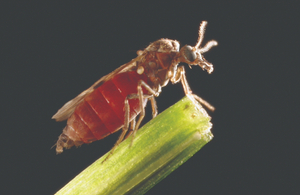
Credit: The Pirbright Institute
An emerging virus, known as Shamonda virus (SHAV), which is thought to be primarily spread by Culicoides biting midges, has been identified in several European countries during 2026.
In August 2026, APHA detected Shamonda virus (SHAV) in cattle in Jersey that showed clinical signs consistent with those seen elsewhere in Europe.
This confirms the virus is present in the British Isles and in close proximity to Great Britain, highlighting the potential for further spread across north-west Europe.
SHAV belongs to the same group of viruses as Schmallenberg virus (SBV) and mainly affects cattle, causing fever, diarrhoea, lethargy and reduced milk production. Abortions have also been documented in infected cattle. There are also concerns that infection during pregnancy could result in congenital abnormalities, similar to those seen with SBV and other related viruses. These signs are not specific to SHAV and may overlap with those associated with a range of other endemic and exotic livestock diseases, highlighting the importance of appropriate veterinary investigation and diagnosis.
Although the disease has been observed primarily in cattle, the virus has also been detected in sheep, goats, alpacas and horses in several European countries.
Notably, SHAV has been detected in horses with neurological disease, including cases identified in Germany and Switzerland. This is of particular significance because some of the neurological signs described may resemble those seen in notifiable equine diseases, including West Nile fever, potentially complicating the investigation of horses presenting with neurological disease.
In GB, suspected cases of notifiable equine disease must be reported to APHA. Investigations are ongoing to better understand the association between SHAV infection and equine neurological disease, and the significance of these findings.
Neurological disease has not been recognised as a feature of SBV infection, highlighting a potentially important difference between SHAV and its close relative SBV.
Although SHAV is not a notifiable disease in the UK, APHA encourages investigation of livestock and equine cases showing clinical signs compatible with SHAV infection. Diagnostic testing has been developed and is available through APHA to support such investigations. Livestock and equine owners concerned about disease in their animals should contact their private veterinarian. Veterinarians investigating livestock cases can contact their local APHA Veterinary Investigation Centre (VIC) as appropriate, while equine cases should be discussed with Equine Infectious Disease Surveillance (EIDS).
If you suspect a notifiable disease in your animals, you must report it immediately to APHA by calling 03000 200 301. In Wales, call 0300 303 8268. In Scotland, contact your local Field Services Office. Failure to do so is an offence.
Further Information: