Almost every GP now offers online access for patients
GP online access has been rolled out at nearly all GP practices, benefiting patients across England.
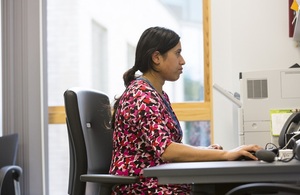
Patients at nearly all GP practices (98.7%) in England can now access their surgery online, thanks to government changes allowing patients to submit online consultation requests open during work hours (8am to 6.30pm).
A record 8 million online requests were submitted by patients in October after the requirement was introduced. This was an increase of one-fifth on the previous month and an increase of two-thirds on last year.
For the first time the Office for National Statistics Health Insight Survey shows that, of those who completed this survey, more contacted their GP practice online than by phone.
Improving access to general practice is vital in easing pressures on other parts of the health system, especially ahead of winter. Currently around 4 million patients attend A&E every year with non-urgent issues because they can’t access their local GP, heaping unnecessary demand on already overcrowded hospitals.
Online requests will be a critical tool for these patients and the health service this winter, providing flexibility and convenience.
Health Secretary Wes Streeting said:
In the 21st century, patients expect to be able to manage healthcare at their fingertips, and so they should. We organise so much of our lives online, there’s no reason the NHS should be any different.
I want to thank GPs and their teams for rolling this out. Eight million patients used online access in October alone, taking advantage of the flexibility and convenience. These numbers show there was huge appetite from patients and a can-do attitude from GPs. We promised to end the 8am scramble, and this is a massive step towards that ambition.
After more than a decade of decline, we are bringing our analogue NHS into the digital age.
Online access will free up GP phone lines across the country, helping to end the 8am scramble and making it easier than ever for people to get in contact with their practice and get the care they need.
98.7% of GP practices confirmed that their online consultation tool is switched on for the duration of core hours as per the contract regulations for non-urgent requests. 5,981 of 6,207 (96.4%) GP practices responded.
Integrated care boards review compliance routinely, and the NHS continues to provide support for the minority of practices yet to fully implement online consultation.
The NHS’s extensive support to GP practices for online access requirements includes webinars and bringing in GPs and practice staff who are experts in service redesign and improvement in general practice.
GPs are at the heart of the government’s landmark 10 Year Health Plan, with a pivotal role in neighbourhood health and the shift from hospital to community.
Over the past 16 months, the government has:
- invested an extra £1.1 billion into primary care
- recruited an extra 2,500 GPs
- halved the number of targets GPs are held to so they spend less time box ticking and more time caring for patients
As a result, patient satisfaction with general practice has improved after a decade of decline.
Waiting lists have also fallen by over 230,000 since July 2024, the largest fall in over a decade, and the NHS has delivered an extra 5.2 million appointments in England. Alongside this, 312,000 fewer patients are waiting more than 18 weeks for treatment.
This progress is possible thanks to the decisions this government has taken to protect vital public services and secure record investment in the NHS, including at the Budget which made the fair and necessary choices required to build a stronger country and renew public services.
The Chancellor also announced 250 new neighbourhood health centres, expanding more services back into communities so people can get better, faster care locally.
The Secretary of State wrote to GPs on 27 November 2025 thanking primary care teams for their hard work, delivering millions of vaccinations and improving general practice access ahead of winter.
Dr Amanda Doyle, NHS England National Director for Primary Care and Community Services, said:
We are making it easier than ever for people to get the care they need from their GP team. More than 8 million patients used online consultation services last month alone, a clear sign that this is what many people want and it helps keep phone lines free for those who prefer to call.
I want to thank our hard-working GPs and practice teams who are doing everything they can to support patients to get the care they need, especially as we head into the winter months.
Flu arrived earlier than expected this year, so we’re urging people to come forward for their flu jab - it’s not too late. Getting protected before the festive period is one of the most important steps we can all take to help keep ourselves well and support the health service through the colder months.
Rachel Power, Chief Executive, Patients Association, said:
Patients have consistently said that timely access to their GP can make or break their care, and many have asked for reliable online services to make managing their health fit around the realities of daily life. It’s encouraging to see more consistent digital access opening up genuine opportunities for flexible, essential contact - important steps towards breaking down the barriers that keep people from accessing care.
Online access is crucial to expanding access, giving patients more choice over how they contact their GP. Online access will free up phone lines for those who still wish to call or who may not be able to access the internet. Patients with urgent needs should still call their GP practice or attend in person, and GPs can direct patients to other services based on need, so patients get the right level of care.
The government and NHS have taken a different approach to winter this year - planning earlier than ever before and stress testing services.
Some 14.4 million flu vaccines have also been delivered so far this autumn, helping avoid unnecessary GP appointments and A&E admissions.
Pharmacy First, where community pharmacists can prescribe medicines for common health conditions without the need to visit a GP, is also crucially freeing up GPs’ time this winter for more complex cases, expanding capacity to 4 million referrals this year.
All local health systems have winter plans in place with real-time demand tracking shared between GPs, hospitals, ambulances and social care, plus over 600 practices getting extra support to work more efficiently.
Jacob Lant, Chief Executive of National Voices, said:
One of the first steps on the shift to a truly digital NHS had to be getting online booking right in primary care, so it’s really encouraging to see almost every GP practice now offering this service and so many patients successfully using it. The impressive growth in usage shows what is possible when practices keep digital routes open throughout the day and when this service is offered consistently across the whole country.
The NHS now needs to keep a close eye on those who are making use of these new online routes, and who isn’t, to ensure we continue to deliver care in ways that work for everyone. This is about harnessing the best of digital to create an efficient, flexible and responsive NHS, but not forgetting that it is fundamentally a human-first service.