A greener and more prosperous future with new Environmental Improvement Plan
New plan sets course for cleaner rivers and air, as well as more nature and wildlife in England
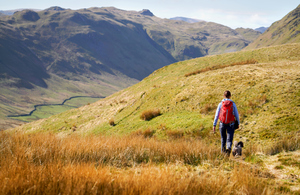
- Targeted and measured delivery plans to set out progress towards environmental targets while supporting economic growth
- £500 million to supercharge landscape-scale nature recovery across England
People across England will benefit from cleaner air and water under a strengthened plan to restore the natural environment, backed by hundreds of millions of pounds to revive iconic landscapes.
The revised Environmental Improvement Plan (EIP), published today (Monday 1 December), sets out an ambitious five-year roadmap to tackle the nature and climate crisis, improve public health, and support sustainable growth.
Communities will see improved air quality thanks to action on fine particulate pollution (PM2.5) – a harmful pollutant linked to asthma, lung disease, and heart conditions. Under a new interim target, population exposure to PM2.5 will be cut by 30% by 2030, compared to 2018 levels – supporting better quality of life and reducing pressure on the NHS.
Nature will be boosted with a quarter of a million hectares of wildlife-rich habitats created or restored by 2030 – an area larger than Greater London. This is 110,000 hectares of habitat more than had been previously committed, supporting our aims for a healthier environment, which is essential to growth.
A new target to reduce the rate of establishment of invasive non-native species compared to 25 years ago will protect native wildlife and farmers’ livelihoods. This will help prevent new invasive species from becoming established and manage existing invaders like the American Signal Crayfish and Japanese Knotweed.
Environment Secretary Emma Reynolds said:
Our environment faces real challenges, with pollution in our waterways, air quality that’s too low in many areas, and treasured species in decline.
This plan marks a step change in restoring nature. Our ambitious targets are backed by real action to cut harmful air pollutants, revive habitats and protect the environment for generations to come.
The plan is being supported with new headline commitments and funding announced today. This includes:
-
£500 million for Landscape Recovery projects, bringing together farmers and land managers to restore nature at scale, creating wildlife-rich environments, reducing flood risk and improving water quality while unlocking economic opportunities through green jobs and nature-based solutions that support rural prosperity
-
£85 million to improve and restore peatlands, reducing flooding in communities, improving water quality and supporting public health through cleaner air and enhanced access to green spaces for physical and mental wellbeing. This comes alongside £3 million to improve access to nature in Public Forest Estates through facilities including accessible bike trails and all-terrain mobility equipment.
-
First-ever plan to reduce risks from ‘forever chemicals’ (PFAS) to health and the environment, with a review of sewage sludge spreading rules to ensure sustainable practices
-
New Trees Action Plan and measures to reduce damaging methane emissions, particularly from agriculture, alongside exploring new domestic combustion measures to drive climate progress
-
Environment Act target delivery plans published for the first time, providing clear progress tracking and fixing the lack of rigour in the previous plan
The publication follows wider government action on nature and biodiversity, including the reintroduction of beavers to the wild, a commitment to end bee-killing pesticides, and the launch of two National Forests.
Government will now work with individuals, communities, farmers, businesses and local authorities to deliver the plan, driving economic growth through green jobs and innovation while ensuring future generations benefit from a greener and more prosperous country.
Landscape Recovery is one of the government nature-friendly farming schemes, alongside Countryside Stewardship and the Sustainable Farming Incentive (SFI), which also deliver positive outcomes for nature and sustainable food production. Over half of farmland is already in one of these schemes, with an improved SFI offer opening next year.
ENDS
Notes to editors:
- The revised Environmental Improvement Plan can be found here: Environmental Improvement Plan 2025 - GOV.UK.
New interim target detail
-
To restore or create a total of 250,000 hectares of a range of wildlife-rich habitats outside of protected sites by December 2030. This compares with the previous target to restore or create 140,000 hectares of a range of wildlife-rich habitats outside protected sites by 31 January 2028.
-
By December 2030, double the number of farms providing sufficient year-round resources for farm wildlife, compared with 2025.
-
Reduce the rate of establishment of invasive non-native species by at least 50% by December 2030, compared to 2000 levels.
-
By December 2030, the highest annual mean concentration of fine particulate matter (PM2.5) in the most recent full calendar year must not exceed 10 micrograms per cubic metre (µg/m3). The previous interim target set an annual mean concentration target of 12 micrograms per cubic metre (µg/m³) to be achieved by 2028.
-
A population exposure reduction target to PM2.5 of 30% compared to 2018 to be achieved by December 2030. This compares to the previous target of a 22% reduction to be achieved by 2028.
The legally binding Environment Act targets require us to:
-
Halt the decline in species abundance by 2030
-
Increase species abundance so that by 2042 it is greater than in 2022 and at least 10% greater than in 2030
-
Improve the Red List Index for England for species extinction by 2042 compared to 2022 levels
-
Restore or create more than 500,000 hectares of a range of wildlife-rich habitats outside protected sites by 2042
-
Increase tree canopy and woodland cover to at least 16.5% of total land area by 2050
-
Ensure that at least 70% of protected features in Marine Protected Areas are in favourable condition by the end of 2042, with the remainder in recovering condition
-
Achieve at least a 35% reduction in population exposure to PM2.5 by 31 December 2040 compared to 2018 levels
-
By 31 December 2040, the maximum annual mean level of PM2.5 in ambient air must be equal to or less than 10 micrograms per cubic metre
-
Halve the length of rivers polluted by harmful metals from abandoned metal mines by 2038, against a baseline of 1,491 km
-
Reduce total nitrogen, total phosphorus and sediment pollution from agriculture into the water environment by at least 40% by 2038, compared to a 2018 baseline
-
Reduce phosphorus loadings from treated wastewater by 80% by 2038 against a 2020 baseline
-
Reduce the use of public water supply in England per head of population by 20% by 2038 from a 2019 to 2020 baseline
-
By 31 December 2042, the total mass of residual waste excluding major mineral waste for the calendar year 2042 does not exceed 287kg per capita. This is roughly the same as a 50% reduction from 2019 levels.
Landscape Recovery funding
-
£500m for Landscape Recovery projects will be invested over at least a 20-year period.
-
Where there is land use change as part of a project, which takes land out of food production, it is typically on lower-grade agricultural land. As a result, we anticipate minimal impact on overall food production levels.
-
The majority of Landscape Recovery projects propose to continue farming in the project area and are demonstrating how food production and environmental delivery can go hand-in-hand. Landscape Recovery will play a critical role in supporting environmentally sustainable domestic food production.
-
Several projects have already entered development phases with further allocations of funding to be made in due course.
-
More information: https://defrafarming.blog.gov.uk/2025/08/29/landscape-recovery-first-projects-move-into-delivery-phase/
Quotes pack:
Environment Agency Chief Executive Philip Duffy said:
The Environment Agency welcomes the revised Environmental Improvement Plan. We’ve worked closely with Defra to make this Plan more streamlined and delivery-focused, with greater emphasis on Environment Act targets.
We are responsible for 50 of the over 300 actions, many focused on water quality. We’re ensuring water companies comply with permits and reduce storm overflow pollution, whilst supporting farmers through more inspections to give them better advice. We’ll also help restore England’s rare chalk streams and continue our work to tackle PFAS pollution.
The plan complements our EA2030 strategy which prioritises delivery for the public and our environment.”
////
Natural England chief executive Marian Spain said:
Nature is essential to our economy, our health and our security. The ambitious targets and focus on delivery in the Environmental Improvement Plan brings a welcome clarity to what everybody needs to do for nature recovery.
For example, expanding wildlife-rich habitats will sustain our most precious places and species and mean more people can enjoy nature, and more funding for Landscape Recovery will enable farmers to work together to make farms more resilient to climate change as well as helping clean up water and air.
Natural England is already making progress against the targets with, for example, 12 new National Nature Reserves declared or extended since 2023 through the King’s Series. But long-term success will need action and funding from across business, society and government to create a thriving natural environment for future generations.”
////
Forestry Commission Chief Executive Richard Stanford said:
Trees, woods and forests deliver multiple benefits for the economy, climate, nature and people; it is very good to see these benefits recognised in the Environmental Improvement Plan. This plan reinforces the government’s commitment and provides a clear delivery pathway for growing millions of new trees as part of woodland expansion as well as trees in urban areas, in hedgerows, on farms and parkland.
The target to restore 250,000 hectares of wildlife-rich habitats across England presents a significant opportunity for woodland creation and the tree cover targets will help improve our water quality, support our timber security and sequester more carbon to fight climate change.
The Forestry Commission is also keen to work with farmers, land managers and communities to help manage existing woodlands to make them more resilient to threats such as wildfire, pests and diseases.