Carbon capture, usage, and storage (CCUS): consultation on non-pipeline transport (NPT) (accessible webpage)
Updated 23 February 2026

© Crown copyright 2026
This publication is licensed under the terms of the Open Government Licence v3.0 except where otherwise stated. To view this licence, visit nationalarchives.gov.uk/doc/open-government-licence/version/3 or write to the Information Policy Team, The National Archives, Kew, London TW9 4DU, or email: psi@nationalarchives.gov.uk.
Where we have identified any third party copyright information you will need to obtain permission from the copyright holders concerned.
This publication is available at https://www.gov.uk/government/consultations/carbon-capture-usage-and-storage-ccus-non-pipeline-transport/carbon-capture-usage-and-storage-ccus-consultation-on-non-pipeline-transport-npt-accessible-webpage
General information
Why we are consulting
Carbon capture, usage, and storage (CCUS) will be essential to meeting the UK’s 2050 net zero target, playing a vital role in growing the economy, supporting the low-carbon economic transformation of our industrial regions, and creating new high value jobs. The Climate Change Committee (CCC) has stated that they ‘cannot see a route to net zero that does not include CCUS’ [footnote 1].
In the Summary of Responses to the Call for Evidence (CfE) on non-pipeline transport (NPT) and cross-border CO2 networks [footnote 2], government set out its intention to publish a consultation on NPT in the second half of 2025.
NPT can have an important role to play in the development of CCUS, in particular in instances where CCUS is the only decarbonisation option and a pipeline is technically and/or economically unviable. A number of sectors including waste management, bioenergy and power may need NPT CCUS to decarbonise. It may be important to deploy NPT solutions in the near term to reduce future costs as the CCUS sector transitions toward becoming self-sustaining and, to support the UK’s ambition to be a world leader in the CCUS market. Deployment of NPT solutions may support the UK’s global positioning on the provision of CO2 shipping and storage services.
Through this consultation, we are looking to provide sufficient policy certainty to allow projects to mature. We are seeking views on proposed policy positions in the following areas:
- Delivery mechanism for support
- Support for NPT costs
- NPT fee options and cross-chain risk allocation
- Regulatory environment for the NPT solution
- Standardisation and operational considerations
Following the consultation closing on 1 May 2026, government will look to assess the responses received and use the information gathered to inform policy development, to support the deployment of NPT in the UK.
Consultation details
Issued: 5 February 2026
Respond by: 1 May 2026
Enquiries to:
Non-Pipeline Transport Policy team
CCUS Strategy and Policy Directorate
Department for Energy Security and Net Zero
3-8 Whitehall Place
London
SW1A 2AW
Email: NPTandCrossBorderCO2@energysecurity.gov.uk
Consultation reference: Carbon capture, usage and storage (CCUS): non-pipeline transport (NPT)
Audiences:
The government welcomes responses from anyone with an interest in the CCUS policy area. We envisage that this consultation will be of particular interest to:
- Those developing and intending to use CO2 non-pipeline transport routes within the UK e.g. dispersed sites in sectors such as greenhouse gas removals, energy from waste, power plants, biomethane.
- UK CO2 transport and storage network developers and infrastructure providers.
- Supply chain companies, trade bodies, academics, and prospective investors.
Territorial extent:
Territorial extent is onshore in the United Kingdom and offshore including above or below the territorial sea adjacent to the United Kingdom and waters in a gas importation and storage zone (within the meaning given by Section 1 of the Energy Act 2008).
How to respond
Your response will be most useful if it is framed in direct response to the questions posed, and with supporting evidence wherever possible. Further comments and wider evidence are also welcome. When responding, please state whether you are responding as an individual or representing the views of an organisation. It is not necessary to answer every question.
Please submit your response via the e-consultation platform and provide supporting information via email. When sending this supporting information over email, please be clear that this is part of the same response to this consultation and to indicate which questions the supporting evidence is linked to. Responses in writing or via email will also be accepted.
Respond online at: CCUS non-pipeline transport
or
Email to: NPTandCrossBorderCO2@energysecurity.gov.uk
Confidentiality and data protection
Information you provide in response to this consultation, including personal information, may be disclosed in accordance with UK legislation (the Freedom of Information Act 2000, the Data Protection Act 2018 and the Environmental Information Regulations 2004).
We may also, to aid CCUS policy development, share within government and with our technical advisors data provided in response to this consultation.
If you want the information that you provide to be treated as confidential, please tell us, but be aware that we cannot guarantee confidentiality in all circumstances. An automatic confidentiality disclaimer generated by your IT system will not be regarded by us as a confidentiality request.
We will process your personal data in accordance with all applicable data protection laws. See our privacy policy. We will summarise all responses and publish this summary on GOV.UK.
The NPT team may also reach out to clarify responses.
Quality assurance
This consultation has been carried out in accordance with the government’s consultation principles.
If you have any complaints about the way this consultation has been conducted, please email: bru@energysecurity.gov.uk.
Introduction
Carbon capture, usage, and storage (CCUS) is vital to this government’s commitment to delivering growth and creating good jobs in Britain’s industrial heartlands, ensuring a just transition for the industries based in the North Sea. CCUS is key to meeting our Clean Energy Superpower mission and delivering our Plan for Change. The Clean Energy Superpower mission is based on the twin objectives of delivering clean power by 2030 and accelerating towards net zero, to boost energy independence, protect consumers, and support jobs across the country. CCUS is also important in the decarbonisation of industry (e.g. cement, chemicals, and refining) where, in many cases, process emissions mean that CCUS is the only viable route to decarbonise. CCUS is critical to the delivery of net zero by 2050, with the Climate Change Committee stating that they ‘cannot see a route to net zero that does not include CCUS’ [footnote 3].
The Clean Energy Industries Sector Plan highlights CCUS as an area for domestic growth potential, in line with the vision to be a global leader in clean energy industries [footnote 4]. Maximising the economic growth and supply chain opportunities from CCUS deployment in the UK is a priority for the government and is critical to ensure that the UK’s industry and communities experience the benefits of investment in CCUS and the broader net zero transition. Projects supported by government CCUS contracts will be expected to build robust plans to support this ambition to unlock supply chain growth and job creation, including reporting and delivering on their plans throughout the life of the contract. The Clean Energy Industries Sector Plan welcomed the industry-led voluntary ambition of 50% UK content for CCUS across the value chain from 2030. Building on this, the government is actively exploring options to strengthen the domestic economic and supply chain benefits of project deployment for future versions of the government contracts and CCUS cluster allocation processes, to fully realise the potential of these technologies to boost the government’s Growth Mission, while remaining in compliance with the UK’s international obligations.
As government works alongside industry partners to scope out the potential of further expansion of carbon dioxide (CO2) transport networks, we will explore non-pipeline solutions alongside further pipelines. Non-pipeline transportation of CO2 via truck, rail, ship, or barge facilitates decarbonisation as it allows for the deployment of CCUS in areas where a pipeline is technically and/or economically unviable. Non-pipeline transport (NPT) solutions are expected to be important across multiple regions and sectors of the economy, particularly for dispersed sites located outside of the main CCUS clusters. Although initial UK CCUS policy has focussed on pipelines, NPT solutions can deliver a range of benefits to the CCUS sector including making stores without local demand viable; improving system resilience through greater interconnectivity; and improving network utilisation rates through the use of temporary storage and agile injection onto transport and storage networks, whilst acting as a catalyst for integrated cross border CO2 networks.
Commercialisation of NPT solutions can contribute to the UK’s Growth Mission, through direct investment into projects in dispersed regions and across the NPT value chain. This could create immediate demand for skilled trades, and stimulate growth in supporting industries such as manufacturing, transport, and services. Indirect impacts through economic stimulation may extend to specialised skills programmes, such as in the maritime and technology sectors.
NPT can help secure a net zero future for existing sectors (e.g. industry, waste management, and power generation) and also provide economic growth opportunities to new sectors (e.g. greenhouse gas removals, and low carbon fuels, including hydrogen, biomethane and sustainable aviation fuels). Successful deployment of NPT could provide regional economic opportunities across the whole NPT value chain and the underlying facility. CO2 shipping is expected to play a significant role in unlocking the economic opportunities that arise from the UK offering CO2 transport and storage services for international volumes. The shipping of CO2 can also unlock investment at ports, stimulating industrial regeneration and create job opportunities by attracting investment in other green industries. Government would like to see development of UK skills, workforce development, and small and medium sized enterprises participation across the value chain, to maximise the economic and industrial impact of NPT deployment. This approach is aligned with the UK’s Modern Industrial Strategy [footnote 5] focus on building industrial capacity in strategic sectors such as CCUS, hydrogen, and clean transport.
Following on from the May 2024 Call for Evidence (CfE) on NPT and cross-border networks [footnote 6] and the Summary of Responses to the CfE published in November 2024 [footnote 7], this consultation sets out policy proposals to support the deployment of NPT projects. Through the CfE, we identified the key challenges to deployment of NPT value chains. This consultation will set out the rationale for intervention and the proposed mechanisms to support the deployment of domestic NPT projects. This consultation aims to provide UK NPT value chains with information on key commercial areas and sufficient policy certainty to allow projects to mature. This consultation is seeking views on proposed policy positions and evidence for intervention in the following areas:
- Delivery mechanism for support
- Support for NPT costs
- NPT fee options and cross-chain risk allocation
- Regulatory environment for the NPT solution
- Standardisation and operational considerations
Whilst it is understood that the development of domestic NPT policy and deployment of NPT infrastructure can also unlock an international market for CO2 storage services, this consultation will not focus on cross-border policy. Chapter 5 on standardisation and operational considerations may be relevant to cross-border projects, and we would welcome responses from such respondents.
Following the consultation closing on 1 May 2026, government will look to assess the responses received and use the information gathered to inform policy development, to support the deployment of NPT in the UK.
Rationale for intervention
Several market failures have been identified which without government intervention would inhibit the deployment of CCUS in the UK. Firstly, in the majority of cases the costs of full chain CCUS are currently greater than the financial incentive to install CCUS technologies. This includes the lack of revenue certainty to monetise CCUS equipment and being able to pass through any higher producer costs to consumers willing to pay more, if necessary, for a product which produces less carbon emissions [footnote 8]. In addition, there are insufficient revenues from mature carbon markets, and the cost of CCUS per tonne is greater than the market carbon price.
Secondly, investment coordination failure prevents the development of a fully functioning CCUS network. Lack of investment coordination could be exacerbated with the potential for a greater number of actors in an NPT value chain. Thirdly, there is a first mover disadvantage due to high start-up costs with deploying CCUS. Finally, it is unlikely that organisations factor in positive societal spill-over effects from CCUS into their decision-making framework.
In addition to these market failures, there are other commercial barriers and regulatory risks which will also prevent a CCUS sector from developing without government support. As such, government has intervened to support CCUS, thus far through pipeline transport, and this consultation explores how government could intervene for non-pipeline transport.
While government recognises that it has a role to play in addressing certain market failures, some commercial or operational barriers may be more effectively addressed by industry. Government is keen to see industry take the lead where appropriate, particularly in areas that support the transition to a market-led CCUS sector.
The published capture business model contracts and the Transport and Storage Regulatory Investment Model (TRI) model [footnote 9] have been designed to incentivise the deployment of carbon capture technology and provide financial support for the costs associated with deploying and operating this technology. The business models look to address market failures, where without government support, value chains capturing, transporting and storing carbon would be unlikely to deploy. However, the support provided by the current capture business models has initially been designed for pipeline transport.
27 out of 36 responses to the NPT CfE [footnote 10] stated that costs associated with the full NPT value chain were a barrier to investment. Respondents highlighted the need for government support to offset the high capital and operational costs associated with building carbon capture equipment and NPT infrastructure.
We believe that some NPT projects [footnote 11] may merit government support for capital and operational costs across the NPT value chain. We recognise that support for costs associated with the NPT solution would need to be alongside the government support that is already provided for capture costs and T&S charges in the capture business models. We also recognise that not all NPT projects require government financial support to deploy, as discussed in the unsupported and semi-supported NPT projects section below.
As we move to a self-sustaining market, government’s involvement within the CCUS market is expected to reduce. The rationale for supporting early NPT projects is to help at a time when costs are high and investments are considered riskier. Through targeted early intervention, government can help mitigate these initial challenges, and as the costs decrease through wider deployment and the risks become better understood, the need for government support with NPT and wider CCUS costs is expected to diminish, and the CCUS industry can become more market led and self-sustaining.
Respondent data
We are collecting information on the respondent to better understand any trends that may exist from different stakeholder groups. The team may also reach out to clarify responses.
1. Who are you responding on behalf of, and what is your interest in this consultation?
2. If you consent to members of the team reaching out for clarifications on responses provided, please provide contact details.
Unsupported and semi-supported NPT projects deploying in the UK
The government is increasingly seeking to minimise the impact on consumers and taxpayers of enabling CCUS. As such, value for money and affordability will continue to be key considerations in any project selection process DESNZ commences, and we are keen to engage with projects that could deploy with less or no subsidy.
The CfE identified a subsection of CCUS projects which stated they could deploy via NPT without the need for the full government financial support through established capture business models, including any transport and storage fee. The government welcomes the development of such projects, as they help government to achieve its decarbonisation and growth objectives while minimising the impact on consumers and taxpayers.
For those projects that require no taxpayer support, we have defined these projects as ‘unsupported.’ A number of these unsupported capture projects were in the biomethane sector and would instead be funded from revenues generated from the voluntary carbon markets (VCM).
Those projects that do not require the Contract for Difference (CfD) style payment mechanics of the established capture business models but may require some other type of support to deploy, are defined as ‘semi-supported.’ For example, they may only require some level of cross-chain risk protection to make their project investable.
Whilst some of the content of this consultation is focused on potential financial support for NPT project deployment, chapters 4 and 5, covering regulation, operational considerations and standardisation are expected to be of greater relevance to unsupported and semi-supported NPT projects. Despite this, the government welcomes responses to any chapters of the consultation that representatives of unsupported and semi-supported NPT projects wish to contribute to.
Deploying CCUS projects on an unsupported or semi-supported basis is an emerging strength of the UK CCUS market. The government is separately considering how best to facilitate the deployment of unsupported or semi-supported CCUS projects (piped and NPT) as part of wider considerations for CCUS deployment in the UK. This includes, for example, examining how such projects can access geological storage, what changes may be required to the CCUS Network Code, and reviewing third party access arrangements to CCUS infrastructure. The government would therefore be grateful for any information that can be provided on both unsupported and semi-supported NPT projects intending to deploy in the UK.
3. Using the data template, please could you provide any information on any prospective full chain unsupported or semi-supported NPT projects you may be involved in?
Value for Money and affordability will continue to be key focuses of any future selection process used by government to best allocate constrained CCUS capacity between high demand from piped and non-piped projects. Therefore representatives of NPT projects which do require taxpayer support to deploy (either on a fully supported or semi-supported basis) should carefully consider what is the true minimum support that they require for their projects and have this in mind when responding to the questions in this consultation.
Policy development: design principles
The policy proposals in this consultation have been assessed against the following design principles:
- Investable for industry: Policies are attractive to investors by providing sufficient revenue certainty, appropriate risk allocation, market accessibility, and regulatory predictability.
- Deliverable: Policies can be implemented at pace in line with our CCUS deployment ambitions and avoid unnecessary complexity and administrative burden.
- Government affordability: Policy should deliver its objectives which minimises cost to government (including contingent liabilities) and, if the proposal includes the provision of subsidies, does so in a way which adheres to subsidy control rules, preventing over-subsidisation with other support schemes.
- Supports transition to a self-sustaining market: Policies should allow a diverse range of NPT solutions (road, rail, barge, ship). Policies should strike the right balance in ownership of risks (and control) between government and industry, and consider wider system benefits that NPT could unlock.
The proposals
Chapters 1-3 look at the interventions required by government to support UK capture projects deploying CCUS via NPT that require subsidy to deploy. Neither unsupported/semi-supported NPT projects nor international NPT projects are considered in this section. Chapter 4 covers the regulatory environment for the NPT solution and chapter 5 covers standardisation and operational considerations.
Chapter 1: Delivery mechanism for NPT support
Given the need to drive value for money for taxpayers and the need to address market failures, the government has assessed mechanisms to support for NPT solution costs, using the design principles mentioned above.
Primary support mechanism
Where support is merited for NPT costs, government has considered a wide range of mechanisms to facilitate the delivery of NPT value chains. Five leading options have been identified and are set out below.
These delivery mechanism options are for the NPT solution only. It is assumed that where required, the capture project is supported through the capture business model and piped T&S costs are supported through the model that is prevalent at the time. Under options A, B, C and E, support for NPT costs would be provided for the duration of the relevant capture contract.
Figure 1 shows simplified delivery archetypes for store led, capture led, and intermediary led models and the policy options which enable delivery of the relevant archetypes. Variations of archetypes can also occur.
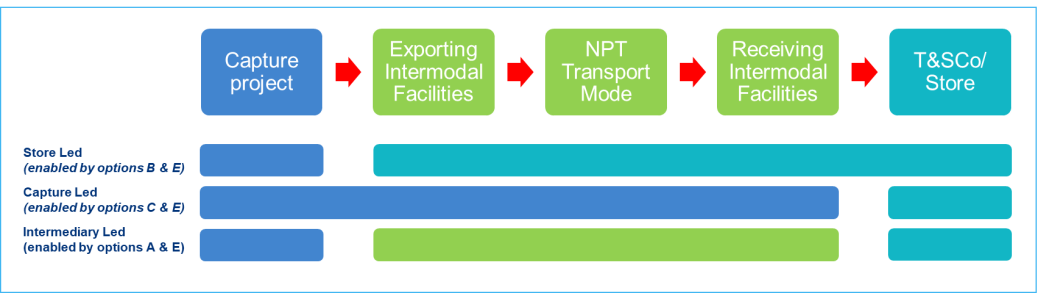
Option A: Direct contract(s) between government and the NPT service provider(s). (Intermediary archetype, as seen in figure 1)
Under this option either one or multiple entities operate part of the NPT solution and have a direct contract with government. The direct payment from a government backed contract counterparty to NPT service providers would likely make both options investable to industry due to government’s credit worthiness. It would also give government greater visibility of NPT costs, making value for money assessments of NPT solutions easier.
Conversely, new direct contracts would require the creation of a new delivery mechanism that is untested and would likely take considerable time to develop the contracts, potentially delaying the development of the NPT sector.
There is potential for inefficiencies as government would be coordinating different elements and interfaces within the NPT value chain (e.g. capture projects, NPT service providers, and T&S networks) before a commercial relationship has been established between the entities. This would place accountability for monitoring the performance of each entity onto government, therefore increasing government’s responsibility. There may also be less contractual coordination between parties which may lead to some technical and commercial difficulties at the interface points between those operators. Direct relationships between government and NPT service providers would mean government may become increasingly involved in coordinating the NPT solution. Consequently, this approach would hinder progress towards establishing a self-sustaining market, which is a key design principle.
Option B: NPT services are operated by regulated transport and storage companies (T&SCos) (store-led archetype). NPT costs are paid through the capture business models, with payment flowing from the capture project to the T&SCo.
Under this option, NPT services are delivered by regulated T&SCos. NPT costs would be recovered by T&SCos through capture business models, with payment flowing from the capture project to the T&SCo.
This approach builds on the contractual framework established by the T&S Regulatory Investment (TRI) model for ECC and HyNet, which could accelerate the deployment of NPT support. However, this option assumes a store-led delivery archetype as the T&SCo collects the CO2 and would require approval from the economic regulator for T&SCos (Ofgem) to provide NPT services, as per conditions of the T&S economic licence. In addition, there are likely to several consequences to consider under both the T&SCo economic licence, and the CCS Network Code should T&SCo elect to undertake NPT services.
In the scenario where NPT services are allowed to be operated by regulated T&SCos, this may create an affordability challenge as government takes on more liabilities. Allowing regulated T&SCos to operate NPT infrastructure may also impact investability for actors who are not economically regulated, as existing T&SCos may be able to fund NPT infrastructure via the economic regulatory regime, if allowed under the licence as ‘allowed revenue’ by the regulator. This may result in a market imbalance.
Additionally, relying solely on T&SCos to deliver NPT services could limit value for money if other entities are better placed to deliver those services. It may also restrict the evolution of commercial models and tie NPT solutions to specific stores, reducing future flexibility and competition.
Option C: NPT services are an extension of, and operated by, the capture project. NPT costs are included within the capture contracts and considered as part of the overall business model support package (capture led archetype).
Like the previous option, option C could be considered favourably as it builds on existing frameworks; in this case, the capture business models. This could speed up the deployment of NPT support.
However, it only allows a capture-led delivery archetype, encouraging capture projects to operate NPT services which they may not have expertise in and therefore lead to inefficient risk management. This could discourage the take up of NPT solutions and consequently may prevent capture projects from decarbonising, limit NPT market participation to those capture projects that also have NPT expertise or result in high costs.
Under option C, NPT solutions are built to target a specific capture project, creating siloed NPT value chains with no economies of scale benefits when it comes to transport or running intermodal facilities. Also, the existence of a significant number of capture-led NPT value chains may disincentivise the development of specialist NPT service providers. As a result, this approach would contradict the government’s intention to move towards a self-sustaining market.
Option D: Government supports NPT service providers by providing one-off grant funding and/or offering an agreement on capital co-investment (e.g. loans, guarantees, equity shares).
Option D aligns closest with the principle of government affordability, as it will likely reduce the level of government support, focusing only on capital funding. Upfront capital investment for infrastructure could help unlock a number of NPT projects where initial capex costs are high. This option would align with the transition to a self-sustaining CCUS market, given the low level of government intervention. However, this option may present challenges for investability. The private sector would need to be comfortable in taking on the revenue certainty risk to meet ongoing operational costs. Additionally, a new delivery mechanism would likely need to be set up, which could impact deliverability.
Option E (Preferred option): Allows store-led, capture-led and intermediary led archetypes (where the NPT service provider is allowed to be a consignor of CO2 over the NPT value chain). NPT costs are paid through the capture business models.
Option E is government’s preferred option because it best meets our four key design principles. Option E allows industry to choose the commercial structure they wish to use (capture led, intermediary led, and store led), allowing risks to be managed more effectively, thereby making this approach investable for all types of NPT value chains. With the appropriate entity managing operational risks this should result in a lower cost of capital and may improve value for money and the affordability for government. However, allowing NPT solutions to choose commercial structures may add some complexity through policy design and there may also be challenges that may arise from NPT service providers not being directly contracted by government. Whilst noting this as an area for further detailed consideration, government has assessed that the long-term benefits of allowing industry to choose commercial structures will better facilitate a transition to a self-sustaining market, allowing industry to evolve their commercial structures to best suit the needs of industry as the CCUS sector evolves as CCUS deployment accelerates.
This option looks to build on existing capture business models and the resource required to deliver this option would be less than setting up a new mechanism; helping speed up the roll-out of NPT support. Capture business models are a suitable mechanism to support the transition to a self-sustaining market. A direct commercial relationship with NPT service providers, from the beginning, allows capture projects to learn from experience and negotiate relationships on their own terms as government support falls away in the future. This approach would allow for evolution of commercial structures to best suit the needs of industry as the NPT sector and CCUS sector evolve.
4. Do you agree or disagree with the proposed mechanism to deliver NPT support through the capture business models, and enable delivery of the three archetypes (option E: store-led, capture-led and intermediary led)? In your view, is this approach preferable to the other options considered in the consultation? Please explain your reasoning.
The role of co-investment
The ‘UK Infrastructure: A Ten-Year Strategy’ [footnote 12] sets out the entrepreneurial state the government is fostering, which will support business investment and catalyse growth. A key element of this support is through the use of ‘financial transactions’ which allow government to invest alongside the private sector, including equity investments, loans, and guarantees, through Public Financial Institutions such as the National Wealth Fund (NWF) and Great British Energy (GBE). Institutions such as the NWF and GBE are expected to play a significant role in financing infrastructure in the coming years and create strong end-to-end clean energy development and financing opportunities, including the potential for co-investment in future CCUS projects, where appropriate.
In option D above, we considered using capital co-investment (e.g. loans, guarantees, equity shares) as a mechanism to facilitate the delivery of NPT value chains. While option D is not government’s preferred position, we recognise that co-investment can play a role in de-risking the first NPT projects. Therefore, we are interested to understand where co-investment could add the most value in enabling the deployment of the first NPT projects, alongside the other proposed government support for NPT discussed below.
5. Where could co-investment add the most value in enabling the deployment of the first NPT projects?
Chapter 2: Support for NPT costs
This chapter sets out proposals on the scope of the proposed mechanism (the ‘NPT fee’) to deliver support for NPT costs.
Delivery of funds to address NPT cost barrier
As discussed in chapter 1, we intend to provide the minimum level of support for NPT costs required to deploy NPT projects through the capture contracts. We have considered how support for NPT costs will interact with existing support provided by the capture contracts. The options we considered were to either include support for NPT costs within the capture costs payment or to create a separate payment element to cover NPT costs.
We propose that the separate payment element providing support for NPT costs should be delivered via a new mechanism called the ‘NPT fee.’
We believe that the support for NPT costs should be kept as a separate payment element and not integrated into the capture costs [footnote 13]. The rationale for this position is that a separate payment element can be applied consistently across the different capture business models and allows an easier comparison of NPT costs between different projects.
It is also assumed that charges relating to piped transport and storage (‘T&S charges’), currently paid through the capture business models, will continue to be treated as a recoverable cost under capture contracts. These charges are expected to be a separate payment element from the NPT costs, with the capture project able to claim them from the contract counterparty [footnote 14]. In practice, this means the counterparty reimburses the capture project for the T&S charges, and the capture project then pays the T&SCo. It is also assumed that the T&S payment element will continue to cover costs associated with the regulated piped T&S infrastructure, though this is subject to future review.
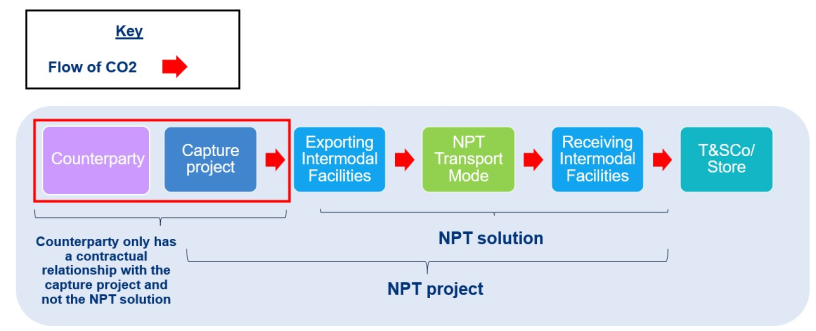
During the selection process and once value for money has been demonstrated, we envisage government agreeing the NPT fee directly with the capture projects deploying via NPT. As a result of this, government and the contract counterparty will not have a direct contractual relationship with the capture project’s chosen NPT service providers, as illustrated in Figure 2. Capture projects will be responsible for the payment structures and wider commercial arrangements they have in place with the NPT service providers. NPT service providers will not be co-signatories to the capture contract.
Figure 2 shows a simple NPT value chain and the proposed contractual relationship between the counterparty and the capture project.
6. Do you agree or disagree with the proposed approach to provide support for NPT costs via a separate payment element referred to as the ‘NPT fee’? Please explain your reasoning.
7. Please provide views on the challenges that could arise for your organisation if the government agrees the NPT fee with capture projects, with NPT service providers not being directly involved in negotiations.
NPT delivery mechanism within capture contracts
As discussed above, we envisage government agreeing the composition of the NPT fee directly with the capture projects deploying via NPT. To enable this, we propose making adaptations to the capture business models.
There are a number of capture contracts that were developed to support the first piped clusters. These contracts have primarily been developed for piped projects and so are fundamentally structured to deliver that.
We intend to integrate NPT elements within existing contracts by creating an NPT annex and/or a series of specific amendments to the capture contracts for capture projects that use an NPT solution.
We believe this would be beneficial for investors who have spent time familiarising themselves with existing capture contracts.
To note, alongside adaptations to the capture business models, changes to the CCS Network Code and the Economic Licence may be required.
NPT fee objectives
We have created the following objectives which we believe any NPT fee structure should comply with.
NPT fee objectives:
- The NPT fee should enable investment into NPT solutions by providing support for their NPT costs.
- The calculation and subsequent payment of the NPT fee should incentivise efficient transport of CO2 from capture projects to the T&S delivery point, providing value for money for government.
Additionally, any support provided through the NPT fee will need to comply with subsidy control principles, which includes limiting the subsidy provided to what is necessary to achieve its specific policy objectives (i.e. incentivising the deployment of carbon capture facilities which rely on NPT, and, thereby, investment in NPT itself). The fee should also adjust to reflect cost efficiencies over the lifetime of a capture contract.
Scope of NPT fee
Our intention is that the NPT fee should support NPT costs which are both 1) necessary for processing and transporting CO2 from the capture facility to either the entry point of the piped T&S network or to the injection facility, and 2) which are not already covered by another funding mechanism, such as capture costs, T&S charges or through alternative funding.
Further refinement on cost eligibility will be set out at later date.
We recognise that processing, such as liquefaction, and other NPT-related activities may occur within the capture site boundary. We believe that costs related to NPT specific infrastructure or activities should be covered under the NPT fee. The definition of the capture boundary varies between different capture business models and if NPT specific costs were included within the capture business models this would introduce inconsistencies, as the different capture business models have different methodologies for calculating payment of capture costs. There could also be differences in the cross-chain risk protections provided, if some NPT projects have NPT costs included within capture costs. Therefore, we are proposing that NPT specific costs will not be considered as capture costs.
8. Do you agree or disagree with the proposed scope of NPT costs covered by the NPT fee? Are there any costs that you believe should be included or excluded? Please explain your reasoning.
Oversizing is one of the ways through which the government expects that cost efficiencies could be achieved over the lifetime of a contract, and further consideration of this is given later in this consultation document.
Economies of scale
Government invites the NPT sector to develop NPT solutions that deliver economies of scale. If individual NPT projects are too small to achieve this, economies of scale may be achieved via NPT value chain collaboration or by choosing strategic deployment locations that will facilitate economies of scale in the future as the CCUS sector and NPT sector expands. Realising economies of scale will result in lowering overall unit costs and support moving towards a more self-sustaining CCUS sector.
The NPT fee is likely to include support to build NPT infrastructure. We recognise that some NPT infrastructure may be used by multiple NPT projects or have the potential to be used by multiple NPT projects in the future. If multiple capture projects were initially selected and some infrastructure within the NPT solution was being used by more than one capture project, we would expect the shared infrastructure to be sized to efficiently process and transport the CO2 throughput from the selected capture projects, and manage the operational risks associated with that throughput. However, if only one capture project was initially selected, we recognise that some NPT service providers may want to oversize initial infrastructure in anticipation of increased future throughput from other capture projects.
To ensure government affordability, government will only look to provide support for the cost of building and operating infrastructure which is required to manage the operational risks associated with the efficient processing and transport of the CO2 throughput from the selected capture project(s). Government may consider support for oversizing of infrastructure where value and economic growth benefits can be demonstrated, with this being subject to a final decision from government in negotiations. This could be through expansion of eligible NPT costs or through co-investment. Where support for oversizing is provided, we expect to have a mechanism to ensure unit cost efficiencies are captured and reflected in the NPT fee payment as more users join.
9. Do you have any comments on the proposal for oversizing of NPT infrastructure? What criteria should be used to assess appropriate sizing to deliver contractual throughput? Please explain your reasoning.
Chapter 3: NPT fee options and cross-chain risk
This chapter begins by outlining our proposed position on managing cross-chain risks within the NPT value chain. It then presents three potential structures for NPT fee support, including government’s indicative position.
We will then outline our proposal for managing stranded asset risk, followed by a discussion of our proposals for how CO2 quality and timing mismatch risk could be managed.
Cross-chain risks discussion
Cross-chain risks are defined as risks that arise in one part of the NPT value chain and impact another part of the NPT value chain.
As outlined in chapter 2, we propose to provide support for NPT costs through a new mechanism within the capture business models, referred to as the NPT fee.
The responses to the NPT CfE highlighted industry’s wish for government to support NPT projects, both with their NPT costs and with cross-chain risk protections, due to the nascency of the UK NPT and CCUS sector.
The following section will discuss four key cross-chain risks for NPT projects that have been identified through CfE responses. These cross-chain risks are defined in Table 1.
Table 1: Definitions of cross-chain risks
| Risk | Definitions |
|---|---|
| Revenue uncertainty in low throughput scenarios | Risk that entities may face revenue uncertainty when CO2 throughput falls below expected levels due to factors outside their control, such as upstream underperformance or downstream constraints, despite being available to perform contracted service. |
| Stranded asset | Risk that there is a permanent loss of i) demand for the NPT solution; or ii) supply of storage at the T&SCo, resulting in elements of the NPT value chain becoming redundant and economically unviable. |
| CO2 quality | CO2 which does not meet the compositional, temperature or pressure conditions required for it to be provided to the next entity in the chain which could lead to equipment damages, loss of business and potential ETS liabilities. |
| Timing mismatch | An event or circumstance that prevents or delays the construction and/or commissioning of NPT infrastructure, which prevents or delays others exporting CO2 through the infrastructure. |
Understanding cross-chain risks in the NPT context
In the development of the NPT fee policy and cross-chain risk allocations, several competing priorities have arisen between our design principles. This section outlines these tensions and the trade-offs that will likely need to be made to deploy NPT projects in a fiscally sustainable way.
One of our design principles is to make the policy investable for the industry whilst being affordable for government. Stakeholders have emphasised the importance of revenue certainty to secure project financing for NPT projects. However, this revenue certainty is likely to conflict with our design principle of government affordability. The method by which government has supported deployment of HyNet and ECC pipeline clusters has placed a significant share of risk onto government, which affects the way the government assesses affordability. For NPT, we aim to ensure risks are taken on by the entities best placed to manage risk, and that the government avoids over protections against risk. In practice, this means that a minimum revenue guarantee cannot be provided without contractual provisions linked to the desired policy outcomes (e.g. demonstrating availability or performance).
Disaggregating the NPT value chain may result in specific technical expertise delivering distinct components of NPT solution which could lower delivery and operational risk. However, this creates additional cross-chain risks that need to be managed. If government manages these risks through provisions in the capture contracts, government would take on liability across the NPT value chain, including for the capture contracts and T&S should an issue arise. For government to take on the contingent liability, there is an approval framework [footnote 15], which would require: clear demonstration that it was affordable; addressing a specific market failure; as well as value for money against other options (e.g. managing the risk technically via deployment of greater redundancy). Some of the fee options and cross-chain risk allocations in this chapter aim to empower industry to manage these risks as a chain, as would be expected in a self-sustaining CCUS sector. Government is aware that this may limit the number of projects coming forward, particularly project-financed disaggregated NPT value chains.
Additionally, to support the transition to a self-sustaining CCUS market, the government is looking to step away from organising or getting further involved in CCUS value chains. This is reflected in our preferred position on delivery mechanisms in Chapter 1, with the government not having a direct relationship with the NPT service provider(s).
We recognise that cross-chain risk management may be difficult for first-of-a-kind projects. However as considered in the 2023 CCUS vision [footnote 16], NPT projects could first deploy in the market transition phase, potentially alongside cross-border CO2 networks, further operational stores and greater deployment of domestic unsupported and semi-supported projects, which would provide greater demand for CCUS and potential redeployment options.
Furthermore, international NPT agreements have been signed in Norway [footnote 17], Denmark [footnote 18], Sweden [footnote 19], and the Netherlands [footnote 20], demonstrating a growing confidence in the technical feasibility of NPT technologies and provide some precedents on how risks can be managed.
Through relevant consultation questions, we welcome comment and evidence of where support is essential to the deployment of NPT projects which demonstrate good value for money.
NPT fee features
We considered different variations of the NPT fee which would consist of a base component and/or a throughput component. We are seeking views on three NPT fee options; these are set out in detail in Table 2 below. Option 1 is an entirely throughput-based fee, and options 2 and 3 include base and throughput fee components. We believe that it is important that a portion of the NPT fee is paid only once CO2 reaches the T&S delivery point, as this is aligned with the NPT fee objective of promoting efficient transport and delivery of the CO2 to the T&S delivery point.
A throughput-only NPT fee would be calculated based on the achieved NPT solution CO2 throughput. Under this option, upside and downside risks are expected to be managed commercially. NPT value chains have been deployed in other countries, such as Denmark, where an entirely throughput-based fee is used to cover both capture costs and those costs associated with transport and storage (including NPT).
Where considered, the base component could be calculated based on capacity, such as forecasted average throughput, although an exact mechanism is still to be determined. The payment of the base component would be adjusted based on performance to ensure that payment of the NPT fee is aligned with successful management of performance risk by the NPT value chain, rather than government taking on the role of managing this risk.
Under all three fee options presented, payments would be made on a monthly basis, consistent with the billing periods currently applied in capture contracts. Where performance and availability are noted, these are expected to be assessed over a billing period.
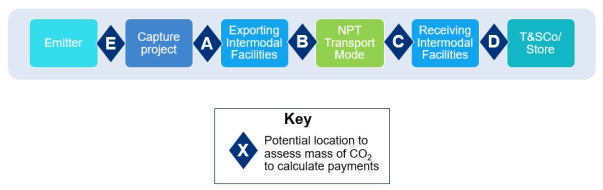
The points of calculation for capture costs mentioned in the table below are in reference to the DPA [footnote 21], ICC and Waste ICC projects. These are also illustrated in Figure 3.
Figure 3: Potential volume assessment locations within the NPT value chain.
The basis for payment for capture costs [footnote 22] for the hydrogen production, power BECCS and GGR business models will remain as currently stated in contracts. For low carbon hydrogen projects, capture costs are paid per unit of qualifying hydrogen produced and sold. For power BECCS and GGR projects, capture costs are paid on the quantity of qualifying GGR credits that have been generated and sold.
Cross-chain risk allocation for the NPT fee options.
The revenue certainty and level of cross-chain risk protection offered will vary across the NPT fee options in Table 2 below. As outlined in the proposals in chapter 2, the preferred delivery mechanism (option E) would mean government (via the counterparty) will only have a contractual relationship with the capture project. We expect that commercial contracts will be used to define and manage all other relationships within an NPT project. The fee options below relate to the subsidy made available to the capture projects via capture contracts and is not prescribing particular fee structures for their commercial agreements with NPT service providers.
The policy options presented below are specifically for the NPT solution entities only (i.e. not the capture project or T&SCo). Further work will consider the impacts on capture projects and T&SCos if an NPT solution is at fault and whether cross-chain risk support might be merited.
In the event of a capacity constraint at the store, we are looking to ensure that the capture contract and relevant amendments made for NPT incentivise delivery of CO2 to an alternative store and that prohibitive barriers to this are overcome. Q25 seeks further views on potential incentive mechanisms to enable this, between base and throughput costs to ensure an affordable balance of risks.
Table 2: Summary of NPT fee options
| Option [footnote 23] | Description of Option |
|---|---|
| 1 - Capture costs and NPT fee based on volumes stored (Indicative position) |
In this option the amount of NPT fee subsidy paid to the capture project is entirely based on the volumes of CO2 reaching point D. - The entirety of the NPT fee is paid based on the tonnes that reach the T&S delivery point (point D) and is paid on a £/tonne basis. Thus, the NPT fee that is paid is directly proportional to the CO2 delivered to point D. - Capture costs, where applicable, would be calculated based on tonnes reaching point D, meaning that the capture project is exposed to the performance of their associated NPT solution. |
| 2 - NPT fee is dependent on NPT solution performance | In this option the amount of NPT fee subsidy paid to the capture project is linked to the overall performance of the whole NPT solution. - There are two parts to this fee option: 1) base component which is dependent on the performance of the NPT solution and 2) throughput component which is based on the CO2 throughput at point D. - Full payment of the base component is dependent on two measures of performance: 1) availability, and 2) successful delivery of 100% of CO2 that enters the NPT solution at point A being delivered to point D. - If there is unavailability [footnote 24] of the NPT solution or losses between point A and point D, the base component payment rate will be scaled down proportionally, until the base component rate is zero. Unavailability and losses will be assessed on a whole NPT solution basis. - If the capture project fails to deliver CO2 to the NPT solution at point A, government is anticipated to continue to pay the base fee subject to NPT solution availability and scaled based on historic successful delivery of CO2 from point A to point D. - Capture project costs, where applicable, are paid based on flows at point A, meaning that the capture project would be protected from the performance of the associated NPT solution. |
| 3 – NPT fee is dependent on individual NPT service provider performance | In this option the amount of NPT fee subsidy paid to the capture project is linked to individual NPT service provider performance. - There are two parts to this fee option: 1) base component which is based on the performance of the NPT service provider and 2) throughput component which is based on the CO2 throughput at point D. - The base fee component will be disaggregated for each NPT service provider and set out in the capture contracts [footnote 25]. - Full payment of each disaggregated base component is dependent on two measures of performance: 1) availability, and 2) successful CO2 transfer through the chain [footnote 26]. - If there is partial unavailability [footnote 27] of the NPT solution or losses between point A and point D, the disaggregated base component payment rates will be scaled down proportionally in line with that NPT service provider’s availability and successful transfer of CO2 through the chain. Appropriate proxy data may be required (e.g. historic performance), where another NPT service provider’s performance means that there is no data available to perform scaling in a given billing period. - The disaggregated base component would be scaled to zero, if the NPT service provider was completely unavailable, or does not deliver the CO2 it receives successfully through its part of the chain. - If the capture project fails to deliver CO2 to the NPT solution at point A, government is anticipated to continue to pay the base fee subject to NPT service provider availability and scaled based on historic successful delivery of CO2 transfer through the chain. - Capture project costs, where applicable, are paid based on flows at point A, meaning that the capture project would be protected from the performance of the associated NPT solution [footnote 28]. |
NPT fee discussion
Option 1 is government’s indicative position as it is simple, performance-based, aligns incentives across the value chain, and ensures government support is tightly linked to actual decarbonisation outcomes. This approach supports the transition to a self-sustaining CCUS market, as risks are managed in the chain by the entity best placed to manage them. We believe that it encourages NPT service providers and capture projects to manage their operations efficiently and to collaborate effectively.
Option 1 incentivises efficient transport and delivery of CO2 to the T&S delivery point, which is a core objective of the NPT fee. Payment is only made for successful delivery, encouraging performance and minimising government exposure to underperformance or non-delivery. However, we do acknowledge that this option may be harder to receive project financing for the NPT and capture project and will require greater risk management by industry.
As noted above, all the fee options discussed relate to the subsidy made available to the capture projects via capture contracts and is not prescribing particular fee structures for their commercial agreements with NPT service providers. In the rest of the NPT project, we believe that alternative payment structures may be beneficial to transfer risk between private entities.
Options 2 and 3 are likely to allow greater disaggregation and the creation of specialist NPT service providers, which could encourage greater competition in the NPT market. Furthermore, under options 2 and 3, government provides greater cross-chain risk protection than option 1, potentially leading to lower cost of finance by reducing project on project risk, and encouraging greater project financing. Clear evidence is required from industry to demonstrate that option 2 and 3 would provide a better value for money outcomes for government, than industry managing the risks commercially and technically.
Options 2 and 3 are not favoured primarily because they may transfer risks that are best managed by the NPT project back to government. This undermines the principle that risks should be borne by the party best placed to manage them and could expose government to greater contingent liabilities, reducing affordability. There is an increased risk of market distortion with options 2 and 3, as the payment of the base fee could distort commercial arrangements between capture projects and NPT service providers, potentially discouraging efficient, market-led solutions
Options 2 and 3 also require additional mechanisms for performance measurement, and availability reporting. Capture projects are likely to also have an additional role to play in terms of collecting data on the NPT value chain, on performance, availability, and/or CO2 quality monitoring, and passing this data to the contract counterparty. This increases administrative complexity for both government and industry, potentially delaying deployment and adding unnecessary costs.
Option 3 may also be challenging to implement across the full range of potential NPT solutions and the range of different owner/operator models that could exist in the future. If bespoke drafting is required for different NPT value chains, this would significantly hinder the pace of future deployment.
10. Using the data template, please provide technical data and potential costs associated with your NPT solution based on fee option 1. Please provide comments on how costs may change and how risks could be managed commercially, based on other NPT fee options presented.
11. Do you agree or disagree with the payment of the NPT fee, and where applicable capture costs, on throughput at point D (indicative fee option 1)? If you believe that another fee option presented may better support policy constraints and fiscal constraints noted on page 23, please provide evidence to support this.
12. Do you believe any of the three subsidy options are more suitable for specific capture project sectors, transport modes, organisational structures, or financing strategies? Please explain your reasoning.
13. Do you have any views on the administrative role which capture projects may have under fee options 2 and 3? For responses by capture projects, it would be helpful to understand the potential cost implications of this administrative role.
14. Do you have any concerns in relation to payments for comingled CO2 under any of the three NPT fee options? Please explain your reasoning and provide alternative suggestions.
Cost efficiencies over the lifetime of a capture contract
As noted earlier, it is important that subsidy is at a minimum level at the start of a contract and remains at a minimum level as the contract progresses. There are several ways cost reductions could be achieved over the lifetime of a capture contract. Firstly, improving operational practices - such as operating at more optimal pressures or adjusting transport speeds - can deliver ongoing savings by enhancing process efficiency. Secondly, as more users join the NPT infrastructure, economies of scale may be realised, further lowering the overall cost per unit of CO2 captured and transported.
Finally, as the CCUS sector evolves, access to cheaper and/or closer storage solutions, or the emergence of cheaper NPT service providers, could enable reductions in transport and storage costs. Although consideration will need to be given to the contingent liabilities that HMG holds relative to an NPT project redirecting its CO2 to a different store, we are considering an “optimisation” mechanism that would allow NPT projects to optimise their solution over-time.
15. Do you have any views on potential payment or other policy mechanisms to realise cost efficiencies, as more users join or greater operational efficiencies are achieved over the lifetime of a capture contract?
16. Do you have any views on a proposed optimisation mechanism? What are the benefits and challenges in the creation of an optimisation mechanism?
Stranded asset risk
It is intended that stranded asset risk will refer to circumstances where there is a permanent loss of: i) demand for the NPT solution, or ii) supply of storage capacity at the T&SCo; resulting in all or elements of the NPT value chain becoming redundant and economically unviable. The modularity and mobility of some NPT infrastructure may offer redeployment opportunities, helping mitigate the risk of stranding. For example, ships and trucks may be redeployable. Receiving intermodal facilities connected to storage facilities may also retain future revenue potential through servicing other NPT projects or international throughput. Other components like exporting intermodal facilities are typically less flexible and more location-specific, increasing their exposure to becoming stranded. Where feasible, designing equipment for cross-sector redeployment and strategic placement of key fixed infrastructure to maximise use potential may help reduce exposure to stranded asset risk and support future expansion.
Asset stranding is expected to occur following a significant period during which its potential for stranding becomes apparent. Before an NPT project is deemed a stranded asset, it is assumed that all reasonable alternative solutions to rectify the issue (e.g. transport to another store, redeployment, alternative delivery partner, etc) would have been explored and evidenced.
Proposed position
While stranded asset risk can arise from various circumstances, the nature and scope of support for stranded asset risk for the NPT solution, including the potential for a termination fee, will aim to align with the approach taken in the relevant capture contracts in force at the time of the event occurring. This approach is intended to ensure that NPT policy remains consistent with, and responsive to, developments in the wider CCUS policy framework it interacts with. At present, capture contracts provide a termination fee in the event of T&S prolonged unavailability and compensation for Qualifying Changes in Law (QCiL).
The method for calculating any termination fee for the NPT solution remains under consideration and would be informed by feedback to this consultation. Any support would be carefully scoped and intended to reflect the residual value of assets, with the aim of ensuring any payment is proportionate and targeted.
As the CCUS sector develops, it is expected that some T&SCos may operate on an unsupported basis without direct government support (Government Support Package (GSP)/ Revenue Support Agreement (RSA)). In such cases, it is anticipated that stranded asset risks relating to the unsupported stores or where there is reduced direct government support, are likely to need to be addressed through commercial arrangements between the relevant parties.
Government does not intend to provide compensation for stranded asset risk resulting from negligence, mismanagement, or failure to deliver by NPT project partners. These risks are expected to be addressed through robust commercial arrangements and risk-sharing mechanisms between trusted partners.
17. What are your views of the proposed position on stranded asset risk for the NPT solution? Please provide detail to your response in reference to areas such as investability and bankability, and where required, additional scenarios where you believe stranded asset protection may be required.
Termination Fee
We are considering a termination fee which would be made as a payment to the capture project in the event of eligible stranded asset events as described above. Further information is required to determine the basis of a termination fee payment.
18. Please can you provide suggestions for how the termination fee for the NPT solution is calculated. We welcome views on what cost components should be considered in the structure and how the residual value of the assets is calculated.
CO2 quality risk
This risk could occur if CO2 failed to comply with the necessary quality requirements such that it cannot be passed to the next entity in the chain. This could include chemical composition, pressure, or temperature. If off-specification CO2 were to be passed to the next entity, it could lead to equipment damage, loss of business, and potential ETS liabilities. On pipeline networks, there is a challenge to fully characterise CO2 quality prior to delivery onto the network, since delivery is continuous; even with the fastest analytical equipment, CO2 delivery may occur before measurement results are available for some impurities (depending on the facility design and distance to the network delivery point).
The CCS Network Code currently sets out the procedure for handling off-specification CO2 for piped projects, as discussed in chapter 5. For injection of NPT volumes into the T&S network, we expect CO2 quality risk to similarly be governed by the CCS Network Code.
In an NPT value chain, CO2 may pass through various NPT service providers before reaching the T&S network. Each of these points introduces a theoretical CO2 quality risk for the receiving entity. We expect that the normal operating specifications for CO2 to be higher for NPT than that for the pipeline. Due to the batch nature of the CO2 in NPT value chains, it may be expected that greater characterisation of the CO2, relative to pipeline value chains, will be feasible ahead of delivery, which should limit the risks associated with equipment damages and losses due to being denied access to the next entity within the NPT solution. Additionally, with NPT there is potential for CO2 blending to bring off-specification CO2 back into specification.
As previously mentioned, we intend to allow capture projects to select their own delivery partners. This approach will allow entities to select reliable partners and manage CO2 quality risk between themselves, leveraging their existing expertise and operational capabilities. By allowing entities to choose their own value chains, we anticipate implementation of robust quality control measures to ensure the integrity of CO2 throughout the transport process.
Proposed position
NPT project to address any CO2 quality risk through commercial arrangements.
Under NPT fee option 1, if CO2 does not make it to permanent storage, the capture project will receive no payment for capture costs.
It is expected that the entity at fault will need to resolve any CO2 quality issues before this is passed onto the next entity in the chain. Although unlikely, if off-specification CO2 is passed on unknowingly, any costs associated with damages and ETS liabilities are expected to be resolved commercially between entities, as would be expected in a self-sustaining CCUS market.
We assume that the NPT service provider specification will be at least as stringent as the T&S Network CO2 specification requirements and will likely build in some buffer.
19. Do you agree or disagree that CO2 quality risk within the NPT project can be effectively managed by industry? Please explain your reasoning.
Timing mismatch risk
This risk refers to an event or circumstance that prevents or delays the construction and/or commissioning of NPT infrastructure which prevents or delays others exporting CO2 through the infrastructure.
In the ECC and Hynet clusters, T&SCos are protected where the initial capture project is delayed in joining the relevant T&S network or where capture projects drop off the network meaning that the T&SCo does not collect the revenue that it was forecast to receive (i.e. its Allowed Revenue). This support is provided by the contract counterparty through the RSA.
For capture projects affected by a T&S timing mismatch event [footnote 29], government similarly takes the risk of maintaining subsidy support to the capture project at the level it would have been but for the absence of the T&S Network, through the different capture contracts.
ECC and HyNet projects are also incentivised to manage construction delays and completion risks to their own project effectively through the capture business models and TRI model. The capture project will assume any construction delay and completion risk beyond the target commissioning window (TCW). Capture payments will only begin once the operational condition precedents (OCPs) are met. Failure to meet these conditions by a predetermined longstop date could result in termination without compensation. A T&SCos ability to recover its allowed revenue (AR) is conditional on achieving commercial operations date (COD). This serves as a sufficient incentive for managing construction delay risks.
In contrast to ECC and HyNet, where the government selected the T&SCos and capture projects that would interact, NPT value chains will be allowed to self-organise. As a result, government believes responsibility for managing timing mismatch risk should rest with the NPT project. These entities should ensure that the elements of the NPT project are developed in lockstep, as they are likely better positioned to coordinate and align their operations to mitigate such risks. We believe the autonomy to select delivery partners should encourage entities to establish reliable and efficient value chains and is how this risk would be managed in a self-sustaining CCUS market.
Proposed position
The NPT project is responsible for managing construction schedules commercially between entities.
We intend to create an NPT project readiness operational condition precedent (OCP) within the capture contracts which will assess the NPT project as a single entity, making it the NPT project’s responsibility to manage schedules between its constituent entities. Alongside an OCP, we expect there to be additional Initial Conditions Precedents (ICP) for the NPT solution that must be satisfied ahead of commercial deployment. ICPs typically relate to upfront requirements that must be fulfilled before certain contractual obligations can proceed. ICPs and OCPs currently exist in capture contracts, though these may differ in form for NPT entities.
How this would work in practice
Table 3 is a stylised example of a timing mismatch around commissioning. T&SCo/store arrangements would be subject to the applicable regulatory framework (e.g. those within the Licence or Network Code).
Table 3: Fault mapping for timing mismatch risk surrounding commissioning.
| NPT Project | T&SCo/Store | ||
|---|---|---|---|
| Capture Project | NPT solution | ||
| Cause | Ready to commission | Not ready to commission. | |
| Result | Failure to meet NPT project readiness OCP. There will be no capture and no NPT fee payments. | Not receiving projected volumes due to delay of another entity. T&SCo / store arrangements would depend on the applicable regulatory framework (e.g. those within the Licence or CCS Network Code). | |
| Cause | Not ready to commission. | Not ready to commission. | |
| Result | Failure to meet NPT project readiness OCP. There will be no capture and no NPT fee payments. | Not receiving projected volumes due to delay of another entity. T&SCo / store arrangements would depend on the applicable regulatory framework (e.g. those within the Licence or CCS Network Code). | |
| Cause | Not ready to commission. | Ready to commission. | |
| Result | Failure to meet NPT project readiness OCP. There will be no capture and no NPT fee payments. | Not receiving projected volumes due to delay of another entity. T&SCo / store arrangements would depend on the applicable regulatory framework (e.g. those within the Licence or CCS Network Code). | |
| Cause | Ready to commission but is delayed because T&S is unavailable. | Ready to commission but is delayed because T&S is unavailable. | |
| Result | The NPT project has passed all OCPs. Existing protections currently provided in capture contracts concerning a ‘T&S commissioning delay event’ may apply to the NPT project (depending on the approach taken in the relevant capture contracts in force at the time). | T&SCo is facing an unavailability event. T&SCo / store arrangements would depend on the applicable regulatory framework (e.g. those within the Licence or CCS Network Code). An alternative store could be explored in the interim. |
20. Do you agree or disagree that the NPT project is best placed to manage the timing mismatch risk? Please explain your reasoning.
21. Do you agree or disagree with the creation of an NPT solution readiness OCPs and ICPs? Please explain your reasoning.
Overarching questions on cross-chain risk allocation
This section seeks views on how cross-chain risk support could further be reduced.
CO2 Usage
CO2 may be captured and used rather than stored in geological formations. This process is referred to as carbon capture and usage (CCU).
The CCUS business models have been designed to support commercial-scale projects that lead to the permanent abatement of CO2, thereby contributing directly to net zero and carbon budgets targets. However, we recognise that there may be users of CO2 infrastructure who want to capture CO2 for both permanent storage and usage markets. To provide for flexibility, the Industrial Carbon Capture (ICC) and Waste ICC business models allow for the possibility of ‘hybrid’ CCU/CCS projects, which split their captured CO2 output between CO2 usage and CO2 storage.
While such hybrid projects would be eligible for a business model contract; subsidy will only be provided for CO2 which is captured and directed to the CO2 transport and storage network for permanent storage. Delivery of the NPT fee through capture business models means that the NPT fee is not designed to cover the costs associated with any NPT solution utilised in the delivery of CO2 to the CCU market (as set out in the Energy Act 2023).
While subsidy will not be provided in respect of NPT used to transport CO2 for CCU, it may be possible for an NPT solution to be used to deliver CO2 to the CCU market, without subsidy. DESNZ is still considering whether this should be allowed, and if so, how it could be implemented. There may be complex interactions, for example associated with the NPT fee structure, and compliance with the UK ETS.
We believe that access to CCU markets could help provide alternative revenue streams to capture projects and/or NPT service providers, including in the event of a prolonged outage in the chain. This could allow the chain to redeploy, avoiding a stranded asset scenario. In a timing mismatch event or in a temporary outage, the NPT project could look to access CCU markets to reduce revenue uncertainty.
We welcome views on potential project plans to serve CCU markets alongside capturing CO2 for permanent storage.
22. To what extent is being able to access CCU markets significant for the commercial viability of your project (during operations and in cross-chain risk events) and to Government’s missions (e.g. kickstarting economic growth and accelerating the transition to net zero)?
We seek further evidence on the types of cross-chain risk scenarios in NPT value chains and how these can be remedied or mitigated technically and commercially.
In addition, NPT solutions could reduce the possibility of temporary outage and NPT solution capacity constraints as the CO2 could be transported to a different network. We would like to gather views on potential mechanisms required to ensure NPT derived volumes can reach permanent storage even if the selected T&S network is down.
We are also looking to understand the environment in which cross-chain risk support is unlikely to be required for NPT.
23. Beyond mechanical failures, do you have any views on what scenarios could result in an unplanned disruption within the NPT value chain that could result in system availability losses? Please use the data template to share scenarios, potential likelihood, impact and mitigations.
24. What are the cost implications of using technical and commercial strategies (e.g. extra vessels/interim storage/permanent storage capacity; cross-sector redeployable design rather than fixed assets) to mitigate cross-chain risks?
25. Do you have any views on potential mechanisms needed to enable CO2 to be transported to another store in the event of a T&S outage?
26. If you have suggested that you need government support to manage any cross-chain risks, please explain what market conditions would be required in order for your NPT project to operate unsupported?
Chapter 4: Regulatory environment for the NPT solution
This chapter will discuss the regulatory environment for the NPT solution, including interactions with and applications of existing CCUS regulations and other sectoral regulations.
Economic regulation and the NPT solution
Background on economic regulation and CCUS to date
T&SCos are currently required to have an economic licence to operate T&S infrastructure. Piped T&S networks exhibit some natural monopoly characteristics, such as significant upfront capital investment, long asset lifespans, physical connection of customers to the T&S network, and economic inefficiency of duplicating infrastructure. These features are common with other regulated networks and help justify the need for ex-ante economic regulation.
For capture projects that are connecting via pipeline to a T&S network, the lack of competition for T&S services without regulation could lead to anti-competitive behaviour, resulting in high user costs, low-quality services, and restricted access.
Following a consultation in 2019, the Regulated Asset Base (RAB) model was selected as the preferred approach for pipeline T&S, as it offers a mechanism for financing large infrastructure projects by providing investors with confidence to achieve a regulated return. Economic regulation also seeks to ensure that only economic and efficient costs are passed onto network users.
Under the Economic Regulatory Regime (ERR), established under the Energy Act 2023, a T&SCo is granted an economic licence which entitles it to recover its allowed revenue by charging regulated prices to users in exchange for delivering and operating the T&S network. The economic licence is regulated by Ofgem, the economic regulator for T&S networks. Ofgem periodically sets allowances, to ensure costs are economic and efficient. As part of this framework, Ofgem via the Energy Act 2023, has been given powers to exercise functions of the Competition and Markets Authority (CMA) under the Competition Act 1998.
Economic regulation can support private sector investment in UK infrastructure projects by offering long-term revenue certainty and protections. This remains important even when there is no direct government support, particularly where assets exhibit some monopoly characteristics. In such cases, regulation helps in ensuring fair access, efficient pricing, and value for money as markets evolve. However, to remain effective and responsive, regulatory oversight must be proportionate and flexible.
Government position on economic regulation for the NPT solution
Government does not currently intend to introduce economic regulation or licensing for the NPT solution ahead of market formation, relying on existing competition and regulatory safeguards. This means that we do not currently intend to introduce regulations that would make NPT activities licensable under the Energy Act 2023.
This position reflects the view published in the government response to the consultation on economic regulation (2022) [footnote 30], where it was stated that ‘NPT does not share the same monopolistic characteristics of pipeline transportation’. This was for reasons such as the potentially lower cost of entry for NPT and the ability for multiple assets to run in parallel, suggesting that, over time, competitive regional markets should emerge [footnote 31].
From our summary of responses to the CfE, 26 out of 53 respondents agreed that there is no rationale for economic licensing as sufficient competition is anticipated. However, 11 respondents noted that economic licensing might be necessary in the early market stages or for specific infrastructure due to the limited number of initial service providers. Another 11 respondents mentioned that some areas within the NPT value chain such as intermodal facilities may require economic regulation.
Some respondents noted that, based on well-established sectors like the transportation of LNG, and their similarity to the way a CO2 transportation market is expected to operate, sufficient competition, and established regulatory landscapes for some NPT infrastructure will exist.
Following assessment of such feedback, government believes that the introduction of new economic regulation or licencing measures for the NPT solution ahead of market formation could cause disruption, be burdensome, and stifle investment whilst the NPT market is at an early stage.
Government considers the existing competition regulatory framework sufficient to address and mitigate concerns related to competition and the NPT solution, should they arise. This framework, provided by the Competition Act 1998 [footnote 32] and the Enterprise Act 2002 [footnote 33], establishes a system to address anti-competitive practices and maintain fair competition. The CMA is empowered to investigate and address anti-competitive conduct, such as price fixing, market sharing, or abuse of a dominant position, seeking to act as a deterrent or to enforce against such conduct. The CMA exercises discretion in initiating investigations and is guided by publicly available prioritisation principles [footnote 34].
We believe that the conduct of market participants can only be fully assessed once the NPT market has formed. Therefore, we intend to keep our proposed position under review and may consider future interventions based on the behaviour of market participants if required.
27. What are your views on the effectiveness of the current regulatory framework provided by the Competition Act 1998 and the Enterprise Act 2002 in addressing potential anti-competitive behaviours related to the NPT sector? If you believe economic regulation is required, please provide detailed explanations and economic arguments to support your view.
Existing sector specific regulation
In addition to the existing Competition Act 1998 and the Enterprise Act 2002, certain sectors relevant to the NPT value chain, such as road and rail transport, are subject to specific sector regulations. These include, for example, the Goods Vehicles (Licensing of Operators) Act 1995, the Railways Act 1993, and the Railways (Access, Management and Licensing of Railway Undertakings) Regulations 2016. These frameworks are designed to ensure fair access, safety, and efficiency in the operation of transport infrastructure.
Additionally, sectoral regulators such as the Office of Rail and Road (ORR) possess concurrent competition powers with the CMA to share enforcement of certain aspects of UK competition law [footnote 35]. This means that the ORR can investigate undertakings believed to be involved in anti-competitive activities within the rail sector under the Competition Act 1998, in addition to applying its own sector-specific regulatory tools. For the future NPT market, the ORR’s powers will only apply to areas that involve rail and roads, as its authority is limited to those sectors.
While the ports and shipping sectors do not currently have a designated economic regulator or sector-specific access regulations, it is important to emphasise that they are still subject to the UK’s competition regime. This includes the provisions of the Competition Act 1998 and the Enterprise Act 2002. The CMA retains the power to investigate and take enforcement action in these sectors should it deem necessary. The absence of sector-specific economic regulation reflects the competitive nature of these sectors, where multiple operators typically exist and compete without the need for additional economic oversight.
Regulated T&SCos and NPT solution services
Whilst our position is that NPT solutions are not likely to need economic regulation or licensing in the same way as pipeline infrastructure, economically licenced T&SCos may still wish to provide NPT solution services, for example, at intermodal receiving facilities.
To achieve this, T&SCos would need to obtain approval from the economic regulator (Ofgem), because such activities would fall outside the scope of the licensed activity of operating a T&S network. Ofgem has the discretion to decide how any revenues obtained from the provision of NPT solution services will be treated. Under the support package for HyNet and ECC, where the introduction of NPT infrastructure would require an extension of the Approved T&S Network that meets certain thresholds, this may trigger the variation process under the Liaison Agreement in the Government Support Package (GSP) of the TRI Model, requiring the T&SCo to seek Secretary of State consent.
Depending on the approach taken by Ofgem, if and when such facilities are provided by a T&SCo, this may see some NPT solution infrastructure becoming economically regulated.
28. Do you have views regarding competition if NPT infrastructure was operated by economically licensed T&SCos? Please explain your reasoning.
Carbon Dioxide Transport and Storage licence exemptions
As previously discussed, NPT is not currently a licensable activity under the UK CCUS economic licensing framework because, although the Energy Act 2023 provides enabling powers for the Secretary of State to bring NPT within scope via secondary legislation, no such regulations have yet been made.
We recognise that NPT solutions may require pipelines to connect facilities, for example from a capture plant to a processing or loading facility, and the operation of such pipelines could require an economic licence or an exemption from the requirement to hold a licence granted by the Secretary of State. A call for evidence on ‘Exemptions from the requirement to hold a Carbon Dioxide Transport and Storage Licence’ [footnote 36] launched in August 2023 and closed in October 2023. This CfE sought views on circumstances in which it may be appropriate for there to be exemptions from the requirement to hold an economic licence for pipeline transport and storage activities as required under section 2 of the Energy Act 2023. Government has analysed these responses and is currently developing proposals for an exemptions regime, which will be consulted on in due course.
Interactions with existing CCUS regulation
Intermediate storage of carbon dioxide
Some NPT infrastructure may interact with existing carbon storage licensing requirements. To ensure flexibility and resilience of CO2 transport systems (both pipeline and NPT systems), the availability of facilities that temporarily hold captured CO2 on its journey to permanent storage will help manage demand-side fluctuations in the production of CO2 and supply-side availability constraints in the pipeline T&S chain. In addition to the economic licence required under the Energy Act 2023, regulated by Ofgem, the operator of a carbon storage site requires a carbon storage licence and permit under the Energy Act 2008, regulated by the NSTA or relevant devolved authority.
The purpose of the storage licensing requirements established in the Energy Act 2008 is to ensure that the risk of leakage of CO2 from a store is minimised to avoid potential harm to the environment and human health or undermining of government’s decarbonisation efforts.
The prohibition in chapter 3, Energy Act 2008 [footnote 37] on the carrying out of carbon storage activities without a licence applies to the storage of CO2 both onshore and offshore and includes the storage of CO2 as an interim measure prior to its permanent storage. As a result, intermediate storage of CO2 where the CO2 is being held temporarily at an intermodal facility as part of its journey to permanent geological storage would require a storage licence granted by the relevant licensing authority [footnote 38] under the Energy Act 2008, regardless of whether the intermediate storage is geological or non-geological.
Secondary legislation establishes a licensing framework that covers all phases of the development and operation of a geological carbon storage site, from exploration and appraisal activities to determine the suitability of a carbon storage site, throughout injection of CO2, and imposing post-closure obligations.
We are interested in views on the impact of these licensing requirements for intermediate CO2 storage facilities. A carbon storage licence and permit set out conditions which the storage site operator must comply with, including monitoring and reporting requirements. For intermediate storage of CO2, certain of these obligations may pose an undue burden. For example, for non-geological forms of intermediate CO2 storage the requirements in the current regulations regarding appraisal activities and post-closure monitoring may not be necessary or relevant, given the different nature of the storage infrastructure. However, these requirements may remain appropriate for the intermediate storage of CO2 in geological formations.
Intermediate storage of CO2, particularly onshore intermediate storage facilities, may also be subject to regulation by other bodies under other consenting and permitting regimes, which could result in duplicative or overlapping regimes applying in parallel and potential for inefficiencies. Existing UK ETS legislation already regulates emissions from intermediate storage facilities at capture plants and in the transport network, and in November 2024, government consulted on options to regulate intermediate storage of CO2 during non-pipeline transport journeys [footnote 39]. Intermediate storage of CO2 may also be covered by environmental regulations if it forms part of a regulated facility under the environmental permitting regulations, such as a carbon capture plant. Where an intermediate storage facility forms part of an economically licensed T&S network under the requirements of section 2 of the Energy Act 2023, metering, measurement and monitoring requirements under the economic licence and CCS Network Code would be expected to apply (but noting that currently the licence conditions and CCS Network Code do not contemplate intermediate storage).
We would welcome views on the impact of the existing carbon storage licensing regime on the intermediate storage of CO2 on its journey to permanent geological storage. In particular, whether this regime remains appropriate for all types of intermediate storage, or if the requirement should be adapted only for certain types of intermediate storage, which could include taking into account the location, size, or type of intermediate storage facility.
29. Do you have views on the carbon storage licensing requirements for the intermediate storage of CO2? Do your views differ for different types of intermediate storage? Please gives reasons for your answer(s).
30. Do you have views on the interactions between storage licensing requirements for intermediate storage of CO2 and the ETS or other regulatory frameworks?
Third Party Access for NPT infrastructure
In addition to carbon storage licensing requirements, we are exploring whether access rights and obligations should apply to facilities used for the intermediate storage of CO2, particularly where these facilities form part of the NPT value chain. Such access rights and obligations could help support fair and efficient use of infrastructure.
We are particularly interested in views on onshore interim storage facilities at intermodal facilities. These types of facilities may not currently be subject to third party access obligations under the Storage of Carbon Dioxide (Access to Infrastructure) Regulations 2011 or the Storage of Carbon Dioxide (Access to Infrastructure) Regulations (Northern Ireland) (AIRs). By contrast, offshore interim storage may fall within the scope of the AIRs, depending on the nature and location of the infrastructure.
We welcome views on whether onshore interim storage solutions associated with NPT value chains should be subject to third party access rights and obligations.
31. Do you have views on whether access obligations should apply to facilities used for the onshore intermediate storage of CO2 as part of NPT value chains?
Chapter 5: Standardisation and operational considerations
This chapter will discuss the proposal for industry-led development of NPT standards. The chapter also seeks views on the following operational areas: CO2 specification and monitoring, network capacity and enabling NPT in the Network Code.
Standardisation
NPT solutions offer a flexible link within a full CCUS value chain, with the potential of connecting different CO2 sources with various CO2 storage sites (see Figure 4). Interoperability is crucial as it ensures compatibility between different entities, enabling the full benefits of NPT solutions to be realised. Without interoperability, some benefits of NPT may not be realised.
Figure 4: Comparison of piped T&S solution vs NPT solution
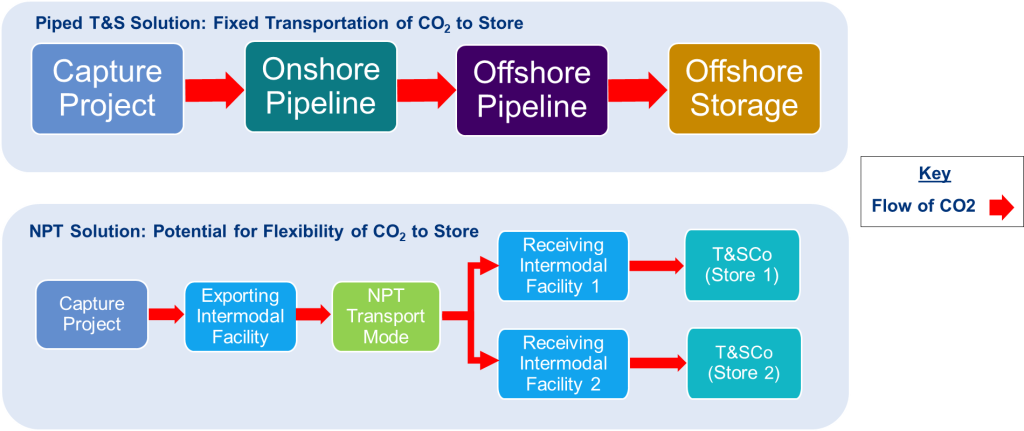
Standardisation within NPT is a broad topic that aims to address technical risk factors through adherence to established standards and enable interoperability. Though likely not relevant for NPT service providers in early government-supported clusters, feedback from our call for evidence [footnote 40] highlighted several of the following considerations where standards might be required.
To enable interoperable T&S networks, stakeholders emphasised the need for a unified set of standards for CO2 quality, pressure, and temperature to ensure compatibility across different regions and systems. This included establishing common specifications for impurity limits, operating conditions, and materials used in equipment. Such standardisation was deemed to facilitate smoother transport and storage of CO2, reduce risks, and simplify international safety regulations.
Stakeholders also advocated for collaboration between national and international entities to harmonise CCUS schemes and develop flexible regulatory and commercial frameworks. The development of flexible infrastructure and standardised measurement and monitoring technologies was seen as important to enable the cross-border flow of CO2 and ensure that CO2 becomes both a physically and fiscally fungible material. The alignment of technical specifications was also cited as a key consideration.
Industry or government-led
Several NPT CfE respondents shared suggestions on the role government should play in developing CO2 standards, ranging from providing initial support and ongoing guidance, maintaining oversight in developing common standards and appointing an independent expert body to oversee standards.
We have considered our core design principles with regards to standardisation and are keen to ensure that policies are deliverable and can be implemented at pace, avoiding unnecessary complexity and administration costs for both government and project developers. We are also clear that policies should support a diverse range of NPT solutions (road, rail, barge, ship) as we move towards a self-sustaining market.
We believe that existing standardisation bodies like the British Standards Institution (BSI), International Organization for Standardization (ISO) and the European Committee for Standardisation (CEN) are well-placed to work with industry, along with government steers, to develop relevant CCUS standards that might be applicable to NPT. This is due to their access to the existing international, European, and national standards, work on similar infrastructure, and on account of their past knowledge, for example in developing fuel quality and GGR standards. Indeed, there are already established fora which are looking at key aspects of CCUS networks including CEN Technical Committee 474 on CO2 CCUS and carbon accounting. The UK is represented on this European technical committee for CCUS through BSI which also leads its own national technical committee for carbon capture, transportation and storage, PSE/ 265 committee, which mirrors both ISO and CEN standards development in this space. Given the UK’s interests in establishing cross-border CO2 T&S networks and leadership in this nascent sector, the feedback from the CfE suggested the UK should collaborate with CEN to develop pan-European CCUS standards (with BSI contributing to the development), aligning with international norms rather than creating a UK-only standard.
Standardisation principles
Government has already established the following broad principles that must be achieved by any CO2 specification, as set out in Section F of the CCS Network Code:
- Protection of health and safety
- Corrosion management and avoidance
- Environmental protection
- Operational control assured by maintaining predictable flow conditions
- Management of reservoir impacts.
- How these principles should be reflected in any CO2 specification in practice is further elaborated in Annexure A of the CCS Network Code.
This was to ensure the safety, protection, and operability of any T&S network and to prevent anti-competitive behaviour such as setting too stringent specifications. The principles set out in the CCS Network Code are a guide that T&SCos must use when developing the CO2 specification that applied to their respective T&S networks. The CO2 specification developed by each T&SCo for its T&S network is also codified in Annexure B of the CCS Network Code, in the case of HyNet and ECC. These principles set out in Section F and Annexure A of the CCS Network Code do not replace the existing health, safety, and environmental consents which must be obtained by T&SCos from key regulatory bodies such as the Offshore Petroleum Regulator for Environment and Decommissioning (OPRED) and the Health and Safety Executive (HSE).
As NPT service providers will be delivering CO2 into the piped CO2 network, they will be bound by the requirements of the CCS Network Code relating to the relevant T&S network at the point of entry/delivery. This will ultimately ensure the appropriate health, safety, and environmental protections are met along with the standards for operational controls and reservoir impact management at delivery to the piped network.
In addition, along a nascent NPT chain (prior to delivery), it is assumed that there will be less of a need for additional broader NPT standardisation principles, beyond those already set out in the Code for piped networks. This is due, in part, to NPT service providers not being expected to hold dominant market positions in the way that early piped networks operators are. However, NPT service providers may require aspects of CO2 standards that are more stringent than piped networks due to different requirements for corrosion avoidance and management. It is also expected that initial NPT projects would benefit from the flexibility of deploying without an initial NPT standard, instead having the ability to develop their own specific standards to account for the diversity of their CO2 sources, transport modes, and infrastructure configurations, contributing to a broad NPT standard at a later date. A market-led approach would avoid the creation of unnecessarily stringent standards and the associated costs to developers and network users in having to meet them. This approach would also align with our design principles ‘deliverable’ and ‘support the transition to a self-sustaining market’.
Given the imperative for industry to deliver interoperability and manage cross-chain risks (as outlined here and in Chapter 3) and their expertise in operational and technical requirements across NPT modes, we believe that allowing industry to set specific NPT requirements without additional NPT broad principles is appropriate, though we reserve the right to change this position if deemed necessary.
Existing and future fora
Government understands that industry best practices and standards for CO2 NPT will develop both domestically and internationally through industry-led bodies and fora over time. Pan-European CO2 T&S networks are likely to play an important role in regional decarbonisation, delivering growth opportunities for the UK, and government believes the CEN Technical Committee 474 is well placed to discuss interoperable standards on NPT. To understand how interoperability of NPT networks between the UK and the rest of Europe is being considered, government will periodically review the development of these standards to ensure that our aims of enabling cross-border CO2 transport and storage networks are not hindered by incompatible standards.
Owing to the wide range of potential technical solutions and operational requirements across NPT transport modes, we believe industry and industry-led bodies with technical expertise are best placed to efficiently and effectively direct on this standardisation.
At this stage, we do not intend to convene our own government-led technical forum on standardisation as this does not align with our NPT design principles. Our view is that industry is best placed to shape content in technical fora, discuss emerging evidence and data, and to inform government where collective concerns are raised.
Our proposal
We propose that the government should not establish NPT standardisation principles but reserves the right to do so. Instead, we believe industry, particularly NPT service providers and capture projects deploying via NPT, along with relevant regulators and bodies, are best placed to set specification and measurement requirements, and in the first instance agree these standards commercially. It is in the interest of NPT market participants to ensure interoperability to help manage and limit exposure to some cross-chain risks and we would encourage project developers to actively engage in European standards development. The government will continue to monitor developments closely, ensuring that standards remain adaptable and relevant as the market evolves, and is prepared to act accordingly if issues arise.
32. Do you agree or disagree with our proposal for an industry and regulator-led approach to NPT standardisation? Please explain your reasoning.
33. Are there any potential issues with how NPT standardisation is currently developing both in the UK and Europe? Please explain your reasoning.
34. Which existing international standards do you consider most relevant for review and potential adoption by the UK NPT sector?
Operational Considerations
CO2 specification and monitoring
The CO2 specification for the T&S network defines compositional limits of various components in the CO2 stream. There is no universally agreed specification for CO2 transport by pipeline and associated risks need to be managed by the T&SCo responsible for the infrastructure. The CO2 specification’s primary aim is to set the acceptable composition of CO2 and help maintain the integrity of T&S network by minimising the effects of phenomena like corrosion of pipelines and controlling the phase of CO2. Given the potential detrimental effect of impurities on the T&S network, the T&SCo in charge of the relevant infrastructure has the right to determine the specification within the limits currently set out within the CCS Network Code (Annexure A) [footnote 41]. This should be done by impact assessment of various impurities on the infrastructure and regulatory requirements to ensure operational safety and the integrity of the T&S Network.
Entities who wish to use the T&S network must comply with the measurement requirements set by the T&SCo to demonstrate compliance against the CO2 specification to ensure safety, integrity, and operability of the T&S network. The CCS Network Code (within Section F and relevant annexures) includes the network-specific CO2 specification, measurement requirements (including monitoring frequencies), procedures for handling off-specification CO2 and describes liabilities associated with CO2 that do not comply with the T&SCos requirements.
It is envisaged that NPT could enable better characterisation of the CO2 quality before it enters the T&S network, but operational issues around this interface need to be considered. One such area of interest is the potential role that NPT infrastructure can play in managing variability in impurity levels across batches/shipments. This may include remediating off-specification CO2 by batch mixing, to dilute impurities before it enters the T&S network.
With this in mind, we are seeking views on how CO2 quality may vary within and along an NPT value chain, how this might affect specification setting, and the approach to compositional characterisation to facilitate NPT. At this stage, we are hoping to understand the role of the NPT solution both as a whole and its individual parts in characterising CO2 quality.
35. As an NPT service provider, how confident are you in the ability of the value chain to reliably and promptly characterise whether a CO2 stream (from a single source or mixed) is compliant with the CO2 specification as it enters the T&S network?
36. At the point of delivery into the T&S network, do you consider that technical operating processes inherent to the NPT value chain could affect how CO2 quality should be assessed, as compared to on a piped network? Please outline any differences and explain the potential impacts.
37. How will testing requirements at the point of entry to the T&S network be impacted by the batch transfer nature of NPT-derived CO2 flows (as opposed to the continuous flow associated with pipeline-based networks)? Additionally, what could be the role of NPT’s batch-wise delivery in remediating any non-compliant CO2 before it enters the T&S network?
Network capacity
For the licenced T&S network, the capacity of the network refers to the amount of CO2 that can be transported and stored. Available/spare capacity of the network is limited by number/type of users on the network, capacity of the transport network, and the overall capacity of the store. Section E of the CCS Network Code [footnote 42] provides that a User’s Registered Capacity creates the right for continuous delivery into the network at a set peak maximum instantaneous rate, for a set duration. This single type of firm capacity product implicitly limits the maximum amount a User can flow into the store (by assuming the User continuously flows at that peak rate).
The charging philosophy is built around the concept that Registered Capacity provides a right but not obligation to flow, with Users continuously delivering CO2 at the same rate they output it from their primary process. However, NPT facilities offer the prospect of delivery rates from interim storage onto the network being varied in a controlled way, which could optimise the utilisation of available T&S capacity. For delivery flow rate to be varied for this reason, it may be necessary to create distinct capacity products and consequently necessitate a different approach to charging. Alternatively, bilateral compensation arrangements may be possible, to incentivise network balancing activities.
NPT also raises questions around capacity allocation and the entity responsible for holding Registered Capacity and forecasting/nominating flow needs. In the pipeline-based model and as currently defined in the CCS Network Code, the capture project is the User and holds the Registered Capacity. Sections C and E of the CCS Network Code outline how currently T&SCos can only connect and assign capacity to Users who are selected by government through a selection process. We recognise that this provision may need to be amended to support the introduction of new Users as the CCUS sector evolves towards a market-led model. Consequently, we seek to understand the impacts of amending the CCS Network Code to enable flexibility regarding who holds Registered Capacity and makes forecasts/nominations regarding CO2 to be delivered into the system and how agile flow can be accommodated by the T&S Network, including to help balance the network during periods where demand for capacity may exceed the available instantaneous capacity of the network.
With this in mind, we seek your input on these two facets of network capacity.
Figure 5: An NPT value chain

38. Do you have a preference for which entity within the NPT value chain (in Figure 5) should hold Registered Capacity in the T&S network? Please explain your reasoning.
39. Would NPT service providers require a constant rate of flow, or can they vary their flow rate into the T&S network? If varying flow is an option, what is required (from a technical, commercial, and operational perspective) to enable this and how quickly can the CO2 flow be stopped and started, from both the NPT service provider and a receiving T&S network’s perspective?
40. Do you have any suggestions for new/different capacity products that can effectively accommodate NPT flows and their inherent flexibility? Please explain your reasoning.
Enabling NPT in the Network Code
As set out in Chapter 1, Government’s preferred position on delivery mechanisms is to allow flexibility on commercial arrangements, through enabling all three NPT archetypes. However, modification of the CCS Network Code to accommodate the proposed archetype optionality could be complex. Whilst the business model support arrangements for NPT would enable optionality from the outset, enabling all three archetypes in the Code at the same time could lead to a delay. A phased implementation into the Code may provide for faster implementation for some supported archetypes.
41. Should modification of CCS Network Code seek to simultaneously enable all three archetypes supported by the government’s preferred option E (as set out in Chapter 1)? Or should modification be phased? Please explain your reasoning, and if phased, please indicate respective priorities for the archetypes.
Further comments
In the above sections, questions have been asked to help answer some of the key areas where we are looking to improve our understanding. This section is for respondents to flag areas that have not been covered in the above sections.
42. Do you have any additional comments or views not covered by the questions above? We welcome any further input you consider relevant to the consultation.
Next steps
This consultation will remain open to written responses for 12 weeks from 5 February 2026, closing on 1 May 2026. The government will analyse all responses to inform further policy development. The government aims to respond in 2027, outlining the proposals the government intends to implement. These proposals will be informed by the range of responses the government receives, by further stakeholder engagement and by additional analysis.
Consultation questions
-
Who are you responding on behalf of, and what is your interest in this consultation?
-
If you consent to members of the team reaching out for clarifications on responses provided, please provide contact details.
-
Using the data template, please could you provide any information on any prospective full chain unsupported or semi-supported NPT projects you may be involved in?
-
Do you agree or disagree with the proposed mechanism to deliver NPT support through the capture business models, and enable delivery of the three archetypes (option E: store-led, capture-led and intermediary led)? In your view, is this approach preferable to the other options considered in the consultation? Please explain your reasoning.
-
Where could co-investment add the most value in enabling the deployment of the first NPT projects?
-
Do you agree or disagree with the proposed approach to provide support for NPT projects via a separate payment element referred to as the ‘NPT fee’? Please explain your reasoning.
-
Please provide views on the challenges that could arise for your organisation if the government agrees the NPT fee with capture projects, with NPT service providers not being directly involved in negotiations.
-
Do you agree or disagree with the proposed scope of NPT costs covered by the NPT fee? Are there any costs that you believe should be included or excluded? Please explain your reasoning.
-
Do you have any comments on the proposal for oversizing of NPT infrastructure? What criteria should be used to assess appropriate sizing to deliver contractual throughput? Please explain your reasoning.
-
Using the data template, please provide technical data and potential costs associated with your NPT solution based on fee option 1. Please provide comments on how costs may change and how risks could be managed commercially, based on other NPT fee options presented.
-
Do you agree or disagree with the payment of the NPT fee, and where applicable capture costs, on throughput at point D (indicative fee option 1)? If you believe that another fee option presented may better support policy constraints and fiscal constraints noted on page 23, please provide evidence to support this.
-
Do you believe any of the three subsidy options are more suitable for specific capture project sectors, transport modes, organisational structures, or financing strategies? Please explain your reasoning.
-
Do you have any views on the administrative role which capture projects may have under fee options 2 and 3? For responses by capture projects, it would be helpful to understand the potential cost implications of this administrative role.
-
Do you have any concerns in relation to payment of comingled CO2 under any of the three NPT fee options? Please explain your reasoning and provide alternative suggestions.
-
Do you have any views on potential payment or other policy mechanisms to realise cost efficiencies, as more users join or greater operational efficiencies are achieved over the lifetime of a capture contract?
-
Do you have any views on a proposed optimisation mechanism? What are the benefits and challenges in the creation of an optimisation mechanism?
-
What are your views of the proposed position on stranded asset risk for the NPT solution? Please provide detail to your response in reference to areas such as investability and bankability, and where required, additional scenarios where you believe stranded asset protection may be required.
-
Please can you provide suggestions for how the termination fee for the NPT solution is calculated. We welcome views on what cost components should be considered in the structure and how the residual value of the assets is calculated.
-
Do you agree or disagree that CO2 quality risk within the NPT project can be effectively managed by industry? Please explain your reasoning.
-
Do you agree or disagree that the NPT project is best placed to manage the timing mismatch risk? Please explain your reasoning.
-
Do you agree or disagree with the creation of an NPT solution readiness OCPs and ICPs? Please explain your reasoning.
-
To what extent is being able to access CCU markets significant for the commercial viability of your project (during operations and in cross-chain risk events) and to Government’s missions (e.g. kickstarting economic growth and accelerating the transition to net zero)?
-
Beyond mechanical failures, do you have any views on what scenarios could result in an unplanned disruption within the NPT value chain that could result in system availability losses? Please use the data template to share scenarios, potential likelihood, impact and mitigations.
-
What are the cost implications of using technical and commercial strategies (e.g. extra vessels/interim storage/permanent storage capacity or redeployable rather than fixed assets) to mitigate cross-chain risks?
-
Do you have any views on potential mechanisms required to enable CO2 is transported to another store in the event of a T&S outage?
-
If you have suggested that you need government support to manage any cross-chain risks, please explain what market conditions would be required in order for your NPT project to operate unsupported.
-
What are your views on the effectiveness of the current regulatory framework provided by the Competition Act 1998 and the Enterprise Act 2002 in addressing potential anti-competitive behaviours related to the NPT sector? If you believe economic regulation is required, please provide detailed explanations and economic arguments to support your view.
-
Do you have views regarding competition if NPT infrastructure was operated by economically licenced T&SCos? Please explain your reasoning.
-
Do you have views on the carbon storage licensing requirements for the intermediate storage of CO2? Do your views differ for different types of intermediate storage? Please gives reasons for your answer(s).
-
Do you have views on the interactions between storage licensing requirements for intermediate storage of CO2 and the ETS or other regulatory frameworks?
-
Do you have views on whether access obligations should apply to facilities used for the onshore intermediate storage of CO2 as part of NPT value chains?
-
Do you agree or disagree with our proposal for an industry and regulator-led approach to NPT standardisation? Please explain your reasoning.
-
Are there any potential issues with how NPT standardisation is currently developing both in the UK and Europe? Please explain your reasoning.
-
Which existing international standards do you consider most relevant for review and potential adoption by the UK NPT sector?
-
As an NPT service provider, how confident are you in the ability of the value chain to reliably and promptly characterise whether a CO2 stream (from a single source or mixed) is compliant with the CO2 specification as it enters the T&S network?
-
At the point of delivery into the T&S network, do you consider that technical operating processes inherent to the NPT value chain could affect how CO2 quality should be assessed, as compared to on a piped network? Please outline any differences and explain the potential impacts.
-
How will testing requirements at the point of entry to the T&S network be impacted by the batch transfer nature of NPT-derived CO2 flows (as opposed to the continuous flow associated with pipeline-based networks)? Additionally, what could be the role of NPT’s batch-wise delivery in remediating any non-compliant CO2 before it enters the T&S network?
-
Do you have a preference for which entity within the NPT value chain (in Figure 5) should hold Registered Capacity in the T&S network? Please explain your reasoning.
-
Would NPT service providers require a constant rate of flow, or can they vary their flow rate into the T&S network? If varying flow is an option, what is required (from a technical, commercial, and operational perspective) to enable this and how quickly can the CO2 flow be stopped and started, from both the NPT service provider and a receiving T&S network’s perspective?
-
Do you have any suggestions for new/different capacity products that can effectively accommodate NPT flows and their inherent flexibility? Please explain your reasoning.
-
Should modification of CCS Network Code seek to simultaneously enable all three archetypes supported by the government’s preferred option E (as set out in Chapter 1)? Or should modification be phased? Please explain your reasoning, and if phased, please indicate respective priorities for the archetypes.
-
Do you have any additional comments or views not covered by the questions above? We welcome any further input you consider relevant to the consultation.
Glossary
| Term | Definition |
|---|---|
| Archetype | The high-level description of how the companies within an NPT value chain organise to deliver their NPT solution. See definitions for capture-led, store-led and intermediary led archetype below. |
| Capture business model (BM) | Any one of the six subsidy contracts (Dispatchable Power Agreement (DPA), Industrial Carbon Capture (ICC), Waste ICC, CCUS-enabled Hydrogen Production, GGR and Power-Bioenergy Carbon Capture (BECCS)) that have been designed by DESNZ to overcome the market failures associated with the deployment of CCUS across different sectors. |
| Capital co-investment | Investment (e.g. debt, equity, or guarantee) into a project alongside any revenue or business model support. Any significant government investments should be made via a Public Finance Institute. |
| Capture costs | Costs associated with the capture and processing of CO2 upstream of the NPT solution, and which are covered through the subsidy payment rate by the relevant capture contracts. This is separate from costs associated with NPT processes. |
| Capture Contract | The contract associated with a capture business model. |
| Capture project | A facility with carbon capture installed for future utilisation or storage |
| Capture-led archetype | An NPT solution organised by the capture project deploying via NPT. This archetype can be considered the ‘delivery’ model where the capture project has responsibility for organising the CO2 to the T&S network and potentially operating or subcontracting some or all of the NPT solution. |
| Carbon dioxide (CO2) | A stream consisting overwhelmingly of carbon dioxide (CO2) molecules, and other components and as such, references to carbon dioxide being delivered by a User to the T&S Network assume that the total mass being delivered is carbon dioxide. |
| CCS Network Code | The Carbon Capture and Storage Network Code sets out the commercial, operational, and technical arrangements between T&SCos and Users, together with governance arrangements. |
| CCUS value chain | Defined as the full range of activities, from start (e.g. capture) to finish (e.g. geological storage) which are required to provide the CCUS service. |
| Consignor | An entity that is contractually recognised as the party responsible for the CO2 during its transport across the NPT value chain. |
| Cross-border CO2 T&S network | A network which facilitates the transport and storage of CO2, and which traverses the territory of the UK and a third-party nation. Cross-border transport could be via NPT modes or pipeline. |
| ECC | One of two industrial clusters selected to deploy CCUS in the UK. East Coast Cluster (ECC) is a consortium of projects located in northeast England. |
| Economic licence | A licence required by CCUS projects for the purpose of transportation and storage of CO2 in the UK. Licences are granted by the Secretary of State for Energy Security and Net Zero, regulated by Ofgem, and governed by the Energy Act 2023. A licence is granted to a T&SCo under section 7 of the Energy Act. |
| Economic regulation | A framework of rules designed to encourage the development of a monopoly sector (such as CCUS) in a fair and efficient way. |
| HyNet | One of two industrial clusters selected to deploy CCUS in the UK. HyNet is a consortium of projects located in the northwest England and North Wales. |
| Initial Conditions Precedents (ICP) | ICPs typically relate to upfront requirements that must be fulfilled before certain contractual obligations can proceed. |
| Intermediary-led archetype | The NPT solution is delivered by third party (i.e. an entity that does not have Capture Contracts or are supported via the TRI-model). This third party could operate (i.e. is an NPT Service Provider) or subcontract some or all of the NPT solution. |
| Intermodal facilities | There are two types of intermodal facilities, exporting and receiving. An exporting intermodal facility would most likely be at a portside and may offer liquefaction and temporary storage services, for the onward travel of CO2 by ship. A receiving facility would provide a connection to the piped T&S network and would be located after the final NPT mode. The facility may also offer temporary storage and regasification services. This can be located onshore with a connection to the onshore pipeline or at portside, with a connection to the offshore pipeline. Facilities at a port may also be described as an ‘exporting terminal’ or a ‘receiving terminal.’ |
| Liquefaction | A process that turns gaseous CO2 into a liquid. This involves steps such as compression, impurity removal, and cooling. |
| Network capacity | The capacity in the T&S Network for a particular quantity of carbon dioxide to be delivered at one (1) or more Delivery Points. It is expressed in tCO2/hour. |
| NPT costs | The costs required to transport and process CO2 within the NPT solution. |
| NPT fees | The separate payment within the capture contracts for eligible NPT costs. |
| NPT project | This includes the capture project deploying via NPT, and the NPT solution. |
| NPT service provider | An entity delivering services that are required specifically to deliver an NPT solution and involves the transfer and processing of CO2. This could include intermediate storage services, liquefaction, or regasification services. |
| NPT solution | Formation of all NPT service providers between the stages of the CO2 being captured and transported to a piped T&S network. |
| NPT value chain | The full chain from CO2 capture, via NPT service provider, to the geological store. |
| Operational condition precedent (OCP) | A requirement relating to the operational aspects of a project which must be met before certain obligations from another entity come into force. |
| Regulated Asset Base (RAB) | A RAB model is a type of economic regulation typically used in the UK for monopoly infrastructure assets such as water, gas, and electricity networks. The company receives a licence from an economic regulator, which grants it the right to charge a regulated price to users in exchange for provision of the infrastructure in question. |
| Revenue Support Agreement (RSA) | The Revenue Support Agreement (RSA) is the mechanism designed to incentivise private sector investment and mitigate demand related revenue risks to Transport and Storage companies (T&SCo). |
| Store | A defined volume area within a geological formation used for the geological storage of CO2. |
| Store-led archetype | An NPT solution organised by the T&SCo. This archetype can be considered the ‘collection’ model where the T&SCo has responsibility for the collection the CO2. The T&SCo could operate or subcontract some or all of the NPT solution. |
| T&S delivery point | The point of connection between a User Facility and the T&S Network at which point a User will deliver carbon dioxide into the T&S Network. |
| T&S network | A transport and storage network means infrastructure and facilities for: (a) the disposal of carbon dioxide by way of geological storage (or injection for the purposes of geological storage) at a relevant site, or (b) the transportation of carbon dioxide to a relevant site for the purpose of such disposal.” (As defined in the Energy Act 2023 - section 1(9)) |
| Transport and Storage Company (T&SCo) | A company with an Economic Licence granted by SoS under section 7 of the Energy Act 2023, and regulated by Ofgem, to provide transportation and storage services for CO2. |
| Temporary storage | The process of holding CO2 in a pressurised vessel ahead of transportation or permanent storage. |
| Transport modes | This includes and is not limited to, road, rail, barge, and shipping. |
| Transport and Storage Regulatory Investment Model (TRI-model) | The TRI-Model is based on a regulated asset base (RAB) funding model where T&SCos are granted an Economic Licence by SoS under section 7 of the Energy Act 2023, and are regulated by Ofgem, to provide transportation and storage services for CO2. This entitles T&SCos to charge their customers a regulated revenue (’Allowed Revenue’) which includes a reasonable return on their capital investment. The government has designed the TRI-Model to enable and stimulate market-based solutions to the risks associated with the deployment of the T&S network. |
| UK Emissions Trading Scheme (UK ETS) | The UK Emissions Trading Scheme (UK ETS) is the UK’s cap-and-trade carbon pricing scheme. The UK ETS sets a cap on the total volume of greenhouse gases that sectors covered by the scheme (currently energy intensive industry, power generation, and aviation), can emit. Participating emitters purchase or receive emissions allowances at a price determined by the UK carbon market. The cap steadily decreases in line with the UK’s net zero trajectory, providing a long-term signal to decarbonise |
| User | An entity other than a T&SCo who is for the time being bound by the Code. At present, this is the capture project. |
-
The Climate Change Committee. ‘The Seventh Carbon Budget - Climate Change Committee’ 2025. ↩
-
Department for Energy Security and Net Zero. Carbon capture, usage, and storage (CCUS): Call for evidence on non-pipeline transport and cross-border CO2 networks: Summary of responses. 2024 ↩
-
The Climate Change Committee. ‘The Seventh Carbon Budget - Climate Change Committee’. February 2025. ↩
-
Department for Business and Trade. The UK’s Modern Industrial Strategy - Clean Energy Industries - Sector Plan. June 2025. ↩
-
Department for Energy Security and Net Zero. The UK’s Modern Industrial Strategy November 2025 ↩
-
Department for Energy Security and Net Zero. ‘Carbon capture, usage and storage (CCUS): non-pipeline transport and cross-border CO2 networks - call for evidence’ May 2024. ↩
-
Department for Energy Security and Net Zero. Carbon capture, usage, and storage (CCUS): non-pipeline transport and cross-border CO2 networks: summary of responses. November 2024. ↩
-
Department for Energy Security and Net Zero. Growing the market for low carbon industrial products: policy framework - GOV.UK. June 2025. Policies that seek to grow the market for low carbon industrial products and so help producers pass through any higher production costs, were recently consulted on with an initial focus on steel, cement, and concrete products. These policies include improving product-level carbon accounting (through an embodied emissions reporting framework, defining what constitutes a low carbon product (through the use of product classification models), green procurement policies, and ecolabelling. ↩
-
Carbon capture, usage, and storage (CCUS): business models - GOV.UK ↩
-
Department for Energy Security and Net Zero. Carbon capture, usage, and storage (CCUS): non-pipeline transport and cross-border CO2 networks: summary of responses. November 2024. ↩
-
NPT project is defined as the capture project deploying via NPT, and the NPT solution. ↩
-
HM Treasury and National Infrastructure and Service Transformation Authority. UK Infrastructure: A 10 Year Strategy. June 2025. ↩
-
The extent to which the capture costs, T&S charges and NPT costs are separate payment elements will depend on the specific capture business model. For example, in the Dispatchable Power Agreement, the T&S network and capacity charges form part of the availability payment, while the T&S flow charge forms part of the variable payment. In the Industrial Carbon Capture (ICC) business model, T&S charges are one payment element. ↩
-
This payment structure may be slightly different for semi-supported projects. ↩
-
HM Treasury. Contingent Liability Approval Framework. April 2023. ↩
-
Department for Energy Security and Net Zero. Carbon capture, usage, and storage: a vision to establish a competitive market - GOV.UK. December 2023. ↩
-
Norwegian Government. Longship goes into operation. June 2025. ↩
-
Danish Government. The first tender of the CCUS subsidy scheme has been finalized: the Danish Energy Agency awards the contract to Ørsted’s full scale CCS project. May 2023.
Three new CCS projects have been pledged support to capture and store biogenic CO2. April 2024. ↩ -
Stockholm Exergi. About Beccs Stockholm - Stockholm Exergi.About BECCS Stockholm - Stockholm Exergi ↩
-
Northern Lights. Northern Lights and Yara sign binding agreement on CO2 transport and storage. November 2023. ↩
-
Department for Business, Energy, and Industrial Strategy. Dispatchable Power Agreement Business Model Summary. November 2022. – As noted on page 22, ‘Achieved CO2 capture rate’ is calculated based on metering of CO2 on entry to the T&S Network for piped DPA projects, and forms a part of the calculation of the Availability Payment. To note, fee option 1 will use volumes flowing through point D to calculate the achieved CO2 capture rate, whilst options 2 and 3 will use point A to calculate achieved CO2 capture rate. ↩
-
Capture costs do not include the CO2 T&S Charges which are paid as a pass through under the BM contracts. ↩
-
As with all payments under the capture contracts, the payment of the NPT fee may be subject to suspension in certain circumstances, as detailed in the relevant capture contract. ↩
-
Unavailability is defined as, but is not limited to, circumstances where the NPT solution unavailability results in the capture project needing to vent. ↩
-
To note, Government may need to consider limiting the level of disaggregation to minimise project-on-project risk. ↩
-
For option 3 to work, the following mechanisms but not limited to, may need to be considered: An availability reporting framework, a data collation service, and an independent verifier for the fault attribution process. ↩
-
Unavailability is defined as, but is not limited to, circumstances where the NPT solution unavailability results in the capture project needing to vent. ↩
-
Further work is required to consider the incentives where the NPT service provider is in the same organisational group as the capture project. Organisational group is defined as any party, representatives, contractors, agents, consultants, advisors, subsidiaries, associates, holding company of the Party and all other subsidiaries of that holding company. ↩
-
This is defined as an event or circumstance prevents or delays the construction and/or commissioning of the T&S network, which prevents or delays the capture plant exporting CO₂ to the T&S network. As a result, the emitter is unable to commission the capture plant on time. ↩
-
Department for Energy Security and Net Zero (formerly BEIS). Duties and Functions of the Economic Regulator for Carbon Dioxide Transport & Storage Networks: government response. January 2022. ↩
-
Department for Business, Energy, and Industrial Strategy. Duties and Functions of the Economic Regulator for Carbon Dioxide Transport & Storage Networks: government response. January 2022. ↩
-
Competition and Markets Authority. CMA Prioritisation Principles. October 2023. ↩
-
Office for Road and Rail. Competition Act 1998 Guidance. March 2016. ↩
-
Department for Energy Security and Net Zero. Exemptions from the requirement to hold a carbon dioxide transport and storage licence. August 2023. ↩
-
The NSTA for offshore storage on the UKCS, in the territorial waters of England, Wales or Northern Ireland, or onshore in England. Scottish ministers for offshore storage in the territorial waters of Scotland or onshore in Scotland. Welsh ministers for onshore storage in Wales. The Department for the Economy in Northern Ireland for onshore storage in Northern Ireland. ↩
-
Department for Energy Security and Net Zero. UK ETS scope expansion - CCS: non-pipeline transport of carbon dioxide. November 2024. ↩
-
Department for Energy Security and Net Zero. Carbon capture, usage, and storage (CCUS): non-pipeline transport and cross-border CO2 networks: summary of responses. November 2024. Page 29, question 35 and 36. ↩
-
Department for Energy Security and Net Zero. Carbon capture and storage (CCS) Network Code. Annexure A. January 2025. ↩
-
Department for Energy Security and Net Zero. Carbon capture and storage (CCS) Network Code. Section E. January 2025. ↩