Cuba
Subscriptions
Warnings and insurance
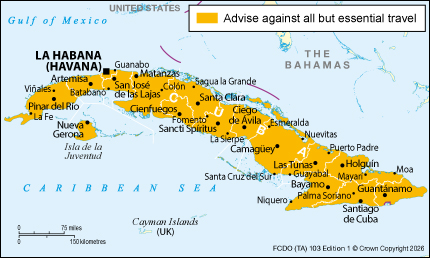
FCDO advises against all but essential travel to Cuba
Protests in Cuba
Cuba is experiencing a worsening economic situation with shortages of fuel, electricity, water and basic necessities. This is affecting tourism services and disrupting travel within the country.
The situation has led to frequent protests. To date most of these have remained peaceful but be aware that protests can escalate. You should stay away from large gatherings, monitor the media for updates and follow the advice of the local authorities.
The situation is also leading to an increase in opportunistic crime, but levels remain lower than in the UK. See ‘Crime’ on the Safety and security page.
Power outages and fuel and water shortages
The Cuban National Electric grid has collapsed a number of times over the last few months. Given current circumstances, further grid collapses are likely. Low fuel reserves are leading to severe and sustained disruption to essential infrastructure and basic services, including transport, medical care, communications, water supply and street lighting. Authorities have introduced fuel rationing, scaled back public services, and made changes to healthcare, education, transport and tourism operations to conserve severely limited energy supplies. Access to safe drinking water and wastewater management can be problematic.
Take precautions by conserving fuel, water, food and mobile phone charge, and be prepared for significant disruption.
Travel disruption
Cuban authorities have announced that all of its international airports are without aviation fuel. Only Terminal 3 at José Martí International Airport is currently in operation. Some airlines, including all Canadian airlines, Air France, Iberia, World2Fly and LATAM, have suspended flights to and from Cuba. Other airlines are keeping their routes under review. Options for leaving the country could reduce further if the situation worsens.
If you are currently in Cuba, carefully consider if your presence is essential. The situation has the potential to deteriorate quickly and without warning. Make sure you are ready to change your plans quickly if needed. If you are considering leaving Cuba, check for messaging from your airline or tour operator for up-to-date information. Ensure your travel documents remain valid and confirm you have any required visas for onward travel.
Continue to monitor local media and follow the instructions of local authorities. Subscribe to FCDO email alerts and read our guidance on how to deal with a crisis overseas.
International card transactions
The Cuban Central Bank has announced that international cards such as Visa and Mastercard are no longer accepted in Cuba. Available payment methods include cash and Cuban prepaid cards. You will not be able to withdraw cash through ATMs with an international card.
If you need to visit Cuba, you should bring enough cash to cover your expenses for the entire length of your stay and in case of an emergency (such as medical treatment or delayed departure). US dollars and euros are widely accepted and can be exchanged in Cuba. See ‘Money’ on the Safety and security page.
Before you travel
No travel can be guaranteed safe. Read all the advice in this guide. You may also find it helpful to:
- see general advice for women travellers
- read our guide on disability and travel abroad
- see general advice for LGBT+ travellers
- read about safety for solo and independent travel
- see advice on volunteering and adventure travel abroad
Travel insurance
If you choose to travel, research your destinations and get appropriate travel insurance. Insurance should cover your itinerary, planned activities and expenses in an emergency. Make sure your travel insurance covers Cuba.
About FCDO travel advice
The Foreign, Commonwealth & Development Office (FCDO) provides advice about risks of travel to help you make informed decisions. Find out more about FCDO travel advice.
Get travel advice updates
Sign up to get email notifications when this travel advice is updated.
Follow FCDO: