Cameroon
Subscriptions
Warnings and insurance
Your travel insurance could be invalidated if you travel against advice from the Foreign, Commonwealth & Development Office (FCDO).
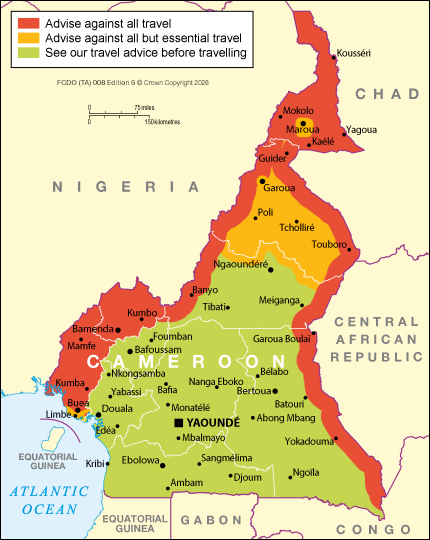
Areas where FCDO advises against travel
Bakassi Peninsula
FCDO advises against all travel to Bakassi Peninsula.
Cameroon-Central African Republic border
FCDO advises against all travel to within 40km of the border with Central African Republic.
Cameroon-Chad border
FCDO advises against all travel to within 40km of the border with Chad.
Cameroon-Nigeria border
FCDO advises against all travel to within 40km of the border with Nigeria, except for Garoua in the North Region.
Far-North Region
FCDO advises against all travel to the Far-North Region, except for:
- a 20km radius to the north, east and west of Maroua
- 30km south of Maroua
North-West Region
FCDO advises against all travel to the North-West Region.
South-West Region
FCDO advises against all travel to the South-West Region, including the towns of Buea, Muyuka and Tiko in Fako Division. Except for:
- Limbé
- the 35km stretch of the N3 road connecting Limbé to the Littoral Region in Fako Division
Limbé
FCDO advises against all but essential travel to Limbé and the 35km stretch of the N3 road connecting Limbé to the Littoral Region in Fako Division, South-West Region.
North Region, Adamawa Region and Maroua
FCDO advises against all but essential travel to the North Region, including Garoua,, and a 20km radius to the north, east and west of Maroua, and 30km south of Maroua, in Far-North Region.
Adamawa Region
FCDO advises against all but essential travel to within 20km of the border with the North region of Cameroon. FCDO advises against all travel to within 40km of the Central African Republic (CAR) and Nigeria borders.
Find out more about why FCDO advises against travel.
Support from the UK government
The British High Commission can only offer limited support for British nationals in areas where we advise against travel.
Before you travel
No travel can be guaranteed safe. Read all the advice in this guide. You may also find it helpful to:
- see general advice for women travellers
- read our guide on disability and travel abroad
- see general advice for LGBT+ travellers
- read about safety for solo and independent travel
- see advice on volunteering and adventure travel abroad
Travel insurance
If you choose to travel, research your destinations and get appropriate travel insurance. Insurance should cover your itinerary, planned activities and expenses in an emergency.
About FCDO travel advice
FCDO provides advice about risks of travel to help you make informed decisions. Find out more about FCDO travel advice.
Get travel advice updates
Sign up to get email notifications when this travel advice is updated.
Follow FCDO: