National contingency plan for West Nile Virus in England
A new national contingency plan for West Nile Virus in England, as of 2026.
Executive summary
This plan supersedes the West Nile virus (WNV) contingency plan published by the Department of Health in 2004. This plan focuses on WNV and provides a framework which can be used for other vector borne infection risks which affect both humans and animals. The guidance does not apply to invasive mosquitoes which is covered by the national contingency plan for invasive mosquitoes. However wider public awareness generated at various levels of this plan may be beneficial in the approach to these other mosquito related risks.The 2004 plan set out measures to prepare for and respond to the detection of WNV in mosquitoes, animals and humans in England. Since 2004, the geographic range of WNV has expanded and it is now endemic in parts of mainland Europe.
At the time of publication there have been no human cases of WNV acquired in the UK, but there have been detections of WNV in mosquitoes in the UK. The risk to the UK population is still considered to be very low, although increasing with climate change, particularly given the presence of WNV in neighbouring countries.
The strategic aim of this plan is to minimise the risk and impact of West Nile virus (WNV) disease in both animals and humans in England. UKHSA will work in partnership with Public Health Wales (PHW), Public Health Scotland (PHS) and Public Health Agency Northern Ireland (PHA NI) to monitor for and prepare to respond to WNV. As the remit of the Animal and Plant Health Agency (APHA) extends across England, Scotland and Wales, animal surveillance will take a GB approach.
It sets out proposed actions if WNV is detected in mosquitoes, animals, or humans. The plan aims to support partners in identifying and fulfilling their roles across prevention, preparedness, surveillance, mosquito control. In doing so, it encourages existing efforts to manage WNV risk and advises the development of operational response plans for future detections.
The plan describes levels of risk from 0 to 4 for geographical areas, and a phased response setting out the environmental and public health interventions required at each level.
- Level 0: Ecologically unsuitable area where conditions are not suitable for WNV transmission
- Level 1: Predisposed area
- Level 2: WNV detected at some point during either of the past two transmission seasons, but not currently present
- Level 3: Current mosquito–bird transmission within the area
- Level 4: Locally acquired human or equine cases
Background
West Nile virus (WNV) belongs to a family of viruses called Flaviviridae, along with other viruses such as dengue, yellow fever and Japanese encephalitis. WNV is a zoonotic arbovirus, meaning a virus that can be transmitted between animals and humans by arthropods.
Figure 1. ‘Dead-end’ hosts
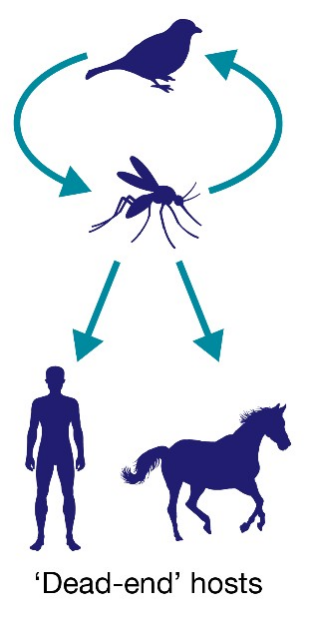
Figure 1 is a diagram showing a disease cycle: birds and mosquitoes infect each other, and mosquitoes can infect humans and horses, which are labelled ‘dead‑end hosts’ because they do not pass it on.
Many species of birds have been shown to carry the virus, which is maintained and amplified by continuous cycling between birds and mosquitoes. Although the reservoir of WNV is birds, the virus can also be transmitted to humans and equines [note 1] via mosquitoes, mainly Culex species. Humans and equines are dead-end hosts, meaning they cannot transmit the virus back to mosquitoes, and therefore imported human or equine cases do not lead to local transmission.
Note 1. Equines means wild or domesticated soliped mammals of all species within the genus Equus of the family Equidae, and their crosses. This includes horses, ponies, asses, mules, donkeys and zebras.
WNV was first detected in the West Nile district of Uganda in 1937. The first large outbreak in Europe occurred in Romania in 1996, and WNV is now endemic in parts of Europe. In 2002, WNV was declared endemic in the United States of America, and it has since spread into Canada and the Caribbean. Generally, there are 2 lineages (1 and 2) circulating in different regions, but in endemic areas in Europe, both lineages can be found. In 2024, 19 European countries reported human cases of WNV. Transmission in Europe peaks during summer and early autumn, when mosquito activity is high.
The increasing risk of WNV in the UK was highlighted in UKHSA’s Health Effects of Climate Change report (2023). Migratory birds arrive in the UK every spring from areas affected by WNV. Local mosquitoes could acquire the virus from feeding on infected birds. Fragments of WNV genetic material were detected in UK mosquitoes in samples from 2023.
Human health risks
Humans can become infected with WNV following a bite from an infected mosquito. Other routes of transmission include from mother to unborn child, through breast milk, and through blood transfusions and organ transplants from infected donors. However, these are a small proportion of global infections.
Acute infection with WNV may cause illness characterised by fever, headache, muscle aches and a rash. Although a large proportion of infections with WNV are asymptomatic, or have mild symptoms that resolve within a week, about 1 in 150 cases develop disease in the brain and nervous system. This typically presents as meningitis, encephalitis or acute flaccid paralysis (sudden severe weakness). See West Nile virus: epidemiology, diagnosis and prevention for further information.
Acute encephalitis, acute flaccid paralysis and acute meningitis are notifiable diseases in humans which means suspected cases with these clinical syndromes must be reported to UKHSA by medical practitioners. West Nile virus is a notifiable organism, and all laboratories must report a confirmed causative agent to UKHSA under the Health Protection (Notification) Regulations 2010.
No human vaccine or disease-specific treatment is available, and management is supportive only. The best way to prevent infection is to prevent and avoid mosquito bites, and to ensure appropriate blood and transplant safety measures are in place.
At the time of publication, the probability of infection with WNV in the general UK population is considered, at most, very low. For higher risk groups including individuals living, working or visiting areas with active human-biting mosquito vectors co-located with infected birds, the probability of infection is considered low. The main risk of WNV for UK residents continues to be travel to endemic areas overseas. For more information, see qualitative assessments of the risk WNV presents to the UK population.
People and settings with the highest risk
There are several population groups and settings observed to be at a higher risk of exposure to, and poor outcomes from, infections transmitted by mosquitoes.
People who spend prolonged periods of time outdoors where mosquito vectors are active, such as in rural wetland sites and in urban areas associated with nuisance biting by key mosquito species, may be at increased risk.
International evidence from endemic countries suggests that factors indicative of lower socioeconomic position increases the risk of acquiring mosquito-borne infections, including WNV, but this may not be applicable to the UK.
Those aged over 50 years old, or with underlying medical conditions (such as cancer, diabetes, hypertension and kidney disease) are at greatest risk of severe disease. The case fatality rate is highest in patients aged over 70.
Animal health risks
West Nile virus is notifiable in equines captive and wild birds. Anyone who suspects infection should notify through the appropriate reporting system for England, Wales and Scotland.
Birds
Birds are the main reservoir and amplifying host of WNV. Not all species show signs of infection; when signs of infection are shown they include neurological symptoms such as loss of coordination, head tilt, tremors, and weakness. Corvids [note 2] and birds of prey appear most susceptible to demonstrating signs of infection.
Note 2. Corvids are members of the crow family, and include carrion crows, rooks, jackdaws and magpies.
Equines
Equines are infected by the same mosquito species which bite birds and humans, but they are dead-end hosts meaning they cannot transmit the virus back to mosquitoes. Clinical signs in equines can include lack of energy, loss of coordination, and weakness in limbs leading to stumbling and paralysis. 30% to 45% of those showing clinical signs die. Some infected equines will not show any signs at all. There is no specific treatment, only supportive care, however vaccines have been developed for use in horses.
If a keeper reports suspicion of WNV in an equine, APHA vets will investigate. If the disease is confirmed it will be controlled in line with the contingency plan for exotic notifiable diseases. The main legislation relating to control of WNV is the Infectious Diseases of Equines Order 1987.
Vectors of West Nile virus
In continental Europe, WNV is circulated between birds by the bites of bird-biting mosquitoes. These include the common house mosquito, Culex pipiens, which occurs across the UK. The dominant form of Culex pipiens in the UK do not tend to bite humans, however the molestus form can be a nuisance species.
For WNV to be transmitted to humans or horses, they need to be bitten by a mosquito species which:
- is a competent vector of WNV
- bites both birds and mammals
Mosquitoes that fulfil both of these conditions are known as bridge vectors. The principal bridge vector in Europe is Culex modestus, which has been implicated in outbreaks in humans and equines in Europe. Culex modestus is associated with wetland habitats and commonly found in drainage ditches. It was detected in the UK in 2010 for the first time since 1944. Culex modestus species distribution maps are published by UKHSA. Culex modestus is now established on the land adjoining either side of the Thames estuary, as far north as Suffolk, in the Cambridgeshire Fens and along the south coast in Sussex/Hampshire. Its distribution is expanding, likely in response to changing climate.
Other mosquitoes that could potentially act as bridge vectors include Culex molestus, Aedes vexans and Coquillettidia richiardii. Culex molestus causes a biting risk in some urban areas. Culex molestus is generally an urban mosquito (regularly reported in London) and can cause nuisance biting where underground habitats (for example, basements) become flooded. Aedes vexans is a severe biting nuisance where it occurs in high densities, but so far this has only been found at a small number of locations in England. The incidence of nuisance biting by Coquillettidia richiardii is less common.
Mosquito biting activity is influenced by seasonality and local meteorological conditions. In the UK, mosquito biting usually occurs from May to September. In countries where WNV is circulating, the risk of WNV transmission may be increased by weeks with higher mean temperatures, late summer heatwaves, and heavy rainfalls and flooding may increase the risk a number of weeks later.
Risk mitigation
Early detection and control of WNV is needed to protect human and animal health. This contingency plan aims to minimise the risk to human and animal health in England. It outlines the One Health approach for surveillance and response at a range of levels of risk.
The strategies described in this plan may be applied to other new or re-emerging pathogens spread by native mosquito species, provided that they are customised and adapted to the particular context.
Aims and objectives
The strategic aim of this plan is to minimise the risk to human and animal health from WNV disease in England.
This will be achieved by the following activities:
- Monitoring ecological conditions and vector distribution, and conducting surveillance of WNV in vectors
- Conducting surveillance of wild birds to detect WNV introductions and enable early identification of geographic spread
- Maintaining robust diagnostic and surveillance systems for early detection of WNV cases in equines and humans
- Strengthening multi-agency partnerships to ensure shared situational awareness, coordinated preparedness activities, and a One Health response to WNV detections
- Ensuring capabilities are in place to support rapid and effective incident response
- Reduce the risk of transmission of WNV transmission via infected blood and tissue products, minimising exposure to infected mosquitoes, and providing advice to the equine sector regarding vaccination of horses.
Roles and responsibilities
A one-health partnership working approach between human and animal health authorities at national, regional and local levels is essential for WNV. UKHSA, Defra and APHA have jointly written and published this plan, and agreed on surveillance, risk assessment and response to WNV.
At a national level, the management of WNV incidents is shared between Defra and UKHSA as the 2 departments or agencies responsible for the relevant risks on the national risk register. For WNV, risk assessments and surveillance coordination are led by a One Health Surveillance Group, jointly chaired by UKHSA and Defra, which meets regularly. In the event of an outbreak requiring national coordination, an Incident Management Team (IMT) will be convened jointly by Defra and UKHSA, and the lead department will be determined based on the operational context and the most appropriate response at the time.
Department of Health and Social Care (DHSC)
DHSC is responsible for the risk of an outbreak of an emerging infectious disease in humans as set out in the National Security Risk Register, this includes outbreaks of mosquito borne disease.
UK Health Security Agency (UKHSA)
UKHSA is responsible for protecting the nation’s health from infectious diseases and is responsible for preparedness for Emerging Infectious Diseases, as an Agency of DHSC, including those spread by mosquitoes. UKHSA provides diagnostic testing and clinical advice for WNV cases in the UK, provides technical support and advice to support vector surveillance and control, assesses the risk to public health and communicates the risk to the public and other government departments.
The National Health Service (NHS) in England
NHS England participates in multi-agency responses to VBD incidents. Registered medical practitioners have a statutory duty to notify the ‘proper officer’ at their local council or local health protection team (HPT) of suspected cases of infectious diseases if it may present a significant risk to human health under the requirements of The Health Protection (Notification) Regulations 2010.
NHS England is responsible for commissioning and coordination of services to ensure rapid response and minimise disruption to patient care. At a local level, Integrated Care Boards (ICBs) are responsible for commissioning services for the assessment, investigation, diagnosis, and management of people who are infected with vector borne diseases. NHS England has published Commissioning Guidance for ICBs to support planning and commissioning services to manage emerging infectious disease outbreaks. Local NHS organisations should ensure that existing Emergency Preparedness and Resilience Response (EPRR) and Infectious Diseases plans and procedures consider VBDs. NHS Blood and Transport (NHSBT) have a role in reducing the risk of transmission of infection via blood and tissue products. Following the implementation of NHS reforms and organisational changes to integrate NHS England into the Department of Health and Social Care (DHSC), roles and responsibilities will need to be updated.
Department for Environment, Food and Rural Affairs (Defra)
Defra is responsible for protecting and improving the environment, while also supporting the UK’s food and farming industries and rural economies and dealing with animal disease outbreaks. Defra is responsible for developing and operationalising the policy for zoonotic diseases in animals in England.
Animal and Plant Health Agency (APHA)
APHA is an executive agency of Defra and is the operational agency for surveillance and control of disease outbreaks in kept terrestrial animals and captive birds across England, Scotland and Wales. The Zoological Society of London is contracted by APHA to conduct pathogen surveillance of wild birds (other than Avian Influenza) in peridomestic settings.
The Human Animal Infections and Risk Surveillance (HAIRS) Group
The Human Animal Infections and Risk Surveillance (HAIRS) group is a multi-agency cross-government horizon scanning and risk assessment group. It aims to identify, and risk assess emerging and potentially zoonotic infections which may pose a threat to UK public health, including vector-borne diseases.
National Travel Health Network and Centre (NaTHNAC)
NaTHNaC aims to protect the health of British travellers by improving the quality of travel health advice given by GP practices, travel clinics, pharmacies and other healthcare providers, and provide up to date and reliable information for the international traveler, travel industry and national government.
Cabinet Office (CO)
The Cabinet Office Briefing Rooms (COBR) unit monitors the response to emergencies including from severe outbreaks of vector borne disease. The lead government department responsible for responding to a WNV detection or outbreak would sight COBR on the escalating risk and work together if escalation of the government response was required.
MHCLG
At higher levels of this plan, where wider geographic responses may be required, the Ministry for Housing Communities and Local Government (MHCLG) is responsible for providing the liaison function between central government and local responders, facilitating the two-way exchange of information between the local tier and central government and mobilising national support as needed.
Local authorities
Local authorities (LAs) have broad responsibilities for disease control under the Public Health (Control of Disease) Act 1984 and associated regulations. As set out in the Environmental Protection Act 1990 (‘EPA 1990’), local authorities are responsible for vector control as part of the statutory nuisance regime of the EPA 1990. Section 80 of the EPA 1990 grants local authorities the power to issue abatement notices thus supporting the implementation of vector control. Vector control activity might require consultation and licensing from relevant statutory nature conservation body.
Local resilience forums
Local resilience forums (LRFs) are multi-agency partnerships that plan for emergencies and ensure that response agencies work together effectively. A Strategic Coordinating Group (SCG) is a high-level, multi-agency group that can be activated to provide strategic direction and coordination during an emergency response. LRFs should consider preparedness based on the potential risk of WNV circulation occurring in their area at all levels of this plan.
Levels of risk for WNV
Levels of risk of WNV to human health are set by geographical areas and classified from level 0 to 4 as defined below:
Level 0: Ecologically unsuitable where conditions are not suitable for WNV transmission
Level 1: Predisposed area
Level 2: WNV detected at some point during either of the past two transmission seasons, but not currently present
Level 3: Current mosquito–bird transmission within the area
Level 4: Locally acquired human or equine cases
The plan outlines proposed surveillance and response actions for each level of risk.
Table 1. Seasonal risk levels of WNV transmission to humans with the corresponding risk area and the indicators used to define the level
| Level | Description | Ecological conditions suitable | Vectors or birds | Horses or humans |
|---|---|---|---|---|
| 0 | Ecologically unsuitable | No | No detections of WNV | No locally acquired cases of WNV |
| 1 | Predisposed area | Yes | No detections of WNV in either of the previous two transmission seasons | No locally acquired cases of WNV in either of the previous two transmission seasons |
| 2 | Area with WNV detections in past 2 summers | Yes | WNV detected at some point during the past two transmission seasons prior, but not currently | WNV detected at some point during the past two transmission seasons prior, but not currently |
| 3 | Area with current mosquito-bird transmission | Yes | WNV detected in birds or mosquitoes in current transmission season | No locally acquired case of WNV in human or equine in current transmission season |
| 4 | Areas with current human or equine transmission | Yes | N/A | Locally acquired equine or human cases of WNV |
Areas can be defined either at an establishment level, a local authority level, or at a local resilience forum level depending on species concerned, the local geography and local actions being implemented.
The detection in a vector or a bird may reflect several different scenarios, ranging from a short-lived introduction from an endemic area to evidence of local bird-mosquito circulation. Some of these actions described in this document will apply only to the affected establishment, the affected area, or to neighbouring areas, for example, temporary movement controls on an infected animal, targeted mosquito enhanced surveillance and vector control in the vicinity of the detection. Other actions will apply to a wider geographical area, for example, public communications and human surveillance activities may extend to a larger regional or national area.
UKHSA, Defra and APHA are responsible for assessing and determining the level an area is in at the ‘One Health VBD surveillance group’. The assessment is dynamic and may change in response to an evolving epidemiological and entomological situation. A list of areas that are at level 1 or above is published on Local authorities in England by levels of the plan.
Level 0: Ecologically unsuitable
Level 0 is defined as ecologically unsuitable. This means that existing ecological conditions are not suitable to support WNV transmission to humans, and there have been no detections of WNV in that area. Unsuitable ecological conditions include:
- no principal bridge vectors present, or if principal bridge vectors are present, there is no nuisance biting associated with those species
- other ecological and climatic factors not favourable for transmission to humans (that is, average temperature too low for mosquito biting and virus replication, large diurnal variation in temperatures, very dry conditions)
- lack of proximity to areas where WNV infection is present
The probability of a locally acquired human case at level 0 is negligible. The aim at level 0 is to monitor ecological conditions to identify predisposed areas.
Level 1: predisposed area
Level 1 is defined as a predisposed area. This means that within that area: (1) existing ecological conditions might facilitate the transmission of WNV to humans, and (2) there have been no detections of WNV within previous two transmission seasons.
See Local authorities in England by levels of the plan for a list of areas at level 1.
Suitable ecological conditions include:
- presence of principal bridge vectors with nuisance biting associated with those species and
- other ecological and climatic factors favourable for transmission to humans (that is, average temperature warm enough for mosquito biting and virus replication, late summer heatwave, minimal diurnal variation in temperatures during the transmission season, heavy rainfall and flooding events in prior 6 to 9 weeks)
- proximity to areas where WNV infection is present, or landfall sites where there is a frequent influx of birds from regions where WNV has been detected
The probability of a human case at level 1 is likely to be very low. The aim at level 1 is to have the capacity to detect WNV circulation early, and to respond rapidly.
Level 2: Area with evidence of WNV detections at some point within either of the 2 previous transmission seasons
Level 2 is defined as an area where WNV has been detected in vectors, or locally acquired cases have been identified in animals or humans, at some point during either of the previous two transmission seasons, but where there have been no detections during the current transmission season.
See Local authorities in England by levels of the plan. for a list of areas at level 1 or above.
The aim at level 2 is to have the capacity to detect WNV circulation early and have capacities in place for emergency response.
The probability of a human case at level 2 in the area of concern is considered to be very low.
Detection in a vector or a bird may reflect several different scenarios, ranging from:
- evidence of local WNV circulation at that point in time
to
- sporadic detection, reflecting a short-lived introduction from an endemic area
There are multiple factors that will influence the level of risk for threat to human health within levels 2, 3 and 4. These are summarised in Table 2, and should be taken into consideration by a cross-governmental human and animal health forum in determining which actions are proportionate to implement, and to what degree they should be delivered.
For example, the level of risk will be greater during warmer months of the year with active biting of key bridge vectors, necessitating a more intense response as compared to a detection during cooler months.
Level 3: Area with current mosquito-bird transmission
Level 3 is defined as an area where current surveillance findings (that is, mosquito or bird testing) indicate current WNV mosquito-bird activity during the transmission season, from start of May to end October.
The aim at level 3 is to monitor, assess and reduce risk of transmission to equines, captive birds, and humans.
The probability of a human case at level 3 is broadly considered to be low however, as above there are multiple factors which will influence the level of risk for threat to human health and therefore intensity of response within level 3 as summarised in Table 2 below
Level 4: Area with current WNV transmission to humans or equines
Level 4 is defined as an area where surveillance findings indicate current WNV transmission to humans or equines, with at least one locally acquired human or equine case detected (that is, probable or confirmed case according to case definition).
The aim at level 4 is to monitor, assess and minimise the numbers of equine, captive birds, and human cases.
Example assessment of levels of risk
Example 1. Infected mosquitoes are detected in area X in samples from last summer. There is no evidence of ongoing mosquito-bird transmission, moving that area to level 2. No further WNV is detected in the following two transmission seasons, area X is reassessed and moves to level 1.
Example 2. A locally acquired case of WNV in a human or an equine is diagnosed in area Y within the transmission season, although no surveillance to date had detected virus in mosquitoes or birds. A cross-government incident management team is convened, and the area moves to level 4. No additional locally acquired cases are detected by the end of the transmission season. Area Y is re-assessed and moves from level 4 to level 2.
Table 2. Risk assessment considerations and rationale to inform IMT decision making
| Indicator | Risk factor | Risk factor | Risk factor |
|---|---|---|---|
| - | Lower | Moderate | Higher |
| Month of detection | October to April | - | May to September |
| Mosquito based indicators | No bridge vectors, or no nuisance biting | Detection in a hypothetical bridge vector. Low abundance of bridge vectors. Low numbers of positive mosquito pools at a given point in time. Low proportion of positive mosquito pools. Isolated positive mosquito result over time. |
Detections are in a principal bridge vector. High abundance of bridge vectors. High numbers of positive mosquito pools at a given period of time. High proportion of positive pools. Sequential positive results over time. |
| Extrinsic Incubation Period (EIP) | Longer than mosquito lifespan | At outer limits of mosquito lifespan | Within mosquito lifespan |
| Birds | Detection of imported WNV (that is, WNV detected in a bird that has recently arrived from an endemic area, prior to mosquitoes active in UK) (for example, wild bird spring migrant) | - | Detection of WNV in a bird that is assumed to have been acquired in the UK (for example, in a local wild bird, a captive bird, or a migratory bird which has not recently arrived in UK) |
| Geographical locations of concern and flight range of mosquito | Locations of concern are outside of the maximum flight range of the mosquito species involved (1.5km for Culex modestus) That is, human population centres, areas with large visitor numbers, and vulnerable settings such as care homes. |
- | Locations of concern are within the maximum flight range of the mosquito species involved (1.5km for Culex modestus) that is, human population centres, areas with large visitor numbers, and vulnerable settings such as care homes. |
| Neighbouring areas | No detections | - | Detections of WNV |
| Weather conditions | Temperatures are too low to sustain transmission cycles. | Current weather conditions unfavourable for principal bridge vectors (that is, temperature, rainfall) | Current weather conditions favourable for principal bridge vectors. Temperatures are high enough to sustain transmission cycles. |
Local authorities in England by levels of the plan
See Local authorities in England by levels of the plan.
Actions by risk level
Proposed human, animal and entomological surveillance, environmental, clinical and public health response measures for levels 0 to 4 are listed below. The responsible authority is indicated in italics after the action.
Level 0: Ecologically unsuitable
Description:
An ecologically unsuitable area is defined as one where existing ecological conditions are not considered suitable to support transmission of WNV to humans, and where there have been no detections of WNV in the previous two transmission seasons in the area.
Preparedness and prevention activities at level 0
At national level:
- Horizon scanning and review signals from changes in epidemiology, entomology or other factors which may affect the risk from WNV to the UK – UKHSA, Defra, HAIRS
- Monitoring ecological conditions and modelling to identify predisposed areas – UKHSA, Defra
- Development of laboratory diagnostic capabilities for example, serological tests capable of distinguishing WNV and Usutu virus – UKHSA
At LRF level:
- LRF should consider the risk in their area and how to support LAs planning for vector risk and control – LRFs
- Each local authority should maintain and exercise a plan for how to manage mosquitoes – LA
Most LAs will already have a pest control plan. LAs should review this plan to ensure it includes how they would control mosquitoes, including in natural habitats. Useful resources include the urban pests book, which includes current practice and options for controlling mosquitoes in the UK relevant to WNV.
Mosquito surveillance at level 0
- Maintain nationwide mosquito surveillance to develop baseline knowledge of key potential vectors (that is, determine distribution of key Culex bridge vectors) – UKHSA
- Maintain citizen science reporting of nuisance biting mosquitoes, including following up LA reports – UKHSA
- Syndromic surveillance of insect bite related encounters – UKHSA
Animal surveillance at level 0
- Monitor trends in morbidity and mortality for target species of birds – Defra/APHA
- Passive surveillance for equine WNV infection – Defra/APHA
- Passive surveillance of dead wild birds with particular focus on relevant target species (that is, Corvids and raptors) from start of May to end of November. Thresholds for submission and testing are regularly reviewed according to the risk level – Defra/APHA
- Risk-based active surveillance of spring migrant wild birds, combining virus screening and serosurveillance, to inform potential incursion pathways – Defra/APHA
Human surveillance at level 0
- Routine surveillance of imported WNV cases to confirm they are travel-associated – UKHSA
- Testing of travellers who have returned from outside of the UK from areas affected by WNV with compatible clinical syndromes – UKHSA and NHS
- Testing for WNV in undiagnosed encephalitis cases, to include returning travellers and those with no overseas travel history – UKHSA and NHS
- Ensure national encephalitis testing guidelines specify testing in compatible clinical cases without travel – UKHSA and NHS
- NHSBT WNV screening programme of donors based on travel history – NHSBT
Public health actions at level 0
- Education of clinicians about risk of imported WNV infection so it will be included in the differential diagnosis of returning travellers – UKHSA
- Travel health advice for people visiting areas with WNV transmission, including country-specific advice and mosquito bite avoidance – NaTHNaC
- Equine vaccination for equines travelling to areas with WNV transmission is recommended – Defra
- Up-to-date guidelines regarding blood donation and overseas travel. Standard measures to prevent transmission through infected blood and tissue products. Currently WNV mitigations relate to donor selection and donations testing. Donors are asked about recent travel and WNV testing applied to donations when donors who have travelled to WNV endemic areas between May and November – NHSBT
Level 1. Predisposed area
Definition: Existing ecological conditions might facilitate the transmission of WNV to humans, but there have been no detections of WNV within previous two transmission seasons.
See UKHSA list of predisposed areas at Local authorities in England by levels of the plan.
Preparedness and prevention activities at level 1
As per level 0, and:
At the national level:
- governmental agencies to work closely together to monitor the risk, plan and deliver surveillance, share information and coordinate regarding response planning – UKHSA, Defra, MHCLG, APHA
- development of one-health surveillance systems by putting in place data sharing agreements and appropriate surveillance in human and animal health – UKHSA/Defra/APHA
- standard measures to prevent transmission through infected blood and tissue products – NHSBT
- capacity building for mosquito surveillance and control with LAs – UKHSA with LAs
- update HAIRS risk assessment – HAIRS
At LRF level
- consider risk and plan and prepare to manage this risk
- predisposed areas (that is areas with key potential vector or nuisance mosquito species) should ensure that vector borne diseases are included in operational response plans – LRFs
- capacity building for mosquito surveillance and control with LAs – UKHSA with LAs
Mosquito surveillance at level 1
As per level 0, and
- test competent vectors for WNV. This is to inform understanding of circulation in birds and risk of human transmission. That is, routine arbovirus screening of enzootic (for example, Cx. pipiens) and known or potential bridge vectors (for example, Cx. modestus, Cx. molestus, Ae. vexans) – UKHSA and APHA
- conduct ecological surveys of key vector seasonality and habitat requirements to inform the development of strategies for management – UKHSA
- local authorities to take up UKHSA led training in mosquito surveillance, incident response, and principles of mosquito control – LA
- each local authority should maintain and exercise a plan for how to manage mosquitoes – LA
Animal surveillance at level 1
As per level 0, and:
- monthly review of mortality rates of corvids and other target species – Defra/APHA
- targeted active surveillance of live wild birds to inform understanding of introductions to the UK, and to detect active mosquito-bird circulation – Defra/APHA
- active surveillance of a subset of passerine birds at key landfall sites between March and June
- continued active surveillance throughout the mosquito biting season in areas deemed at high risk of viral circulation based on presence of viable vectors, adequate climatic conditions and relevant bird species
- engage with targeted wildlife rehabilitation centres in high risk areas of incursion to raise awareness of submitting samples from corvids and raptors with compatible clinical signs – Defra/APHA
Human surveillance at level 1
As per level 0, and
- syndromic surveillance of encephalitis – UKHSA
- increase proportion of those with undiagnosed encephalitis referred for WNV testing by awareness raising in clinicians and updated clinical guidance – UKHSA
- serosurveillance studies in predisposed areas, for example, of blood donors – UKHSA and NHSBT
Public health actions at level 1
As per level 0, and
- implement mosquito control of potential bridge vectors of WNV in areas where they are causing a nuisance biting issue or disease risk – LA with support from UKHSA
- public communications to raise awareness of mosquitoes, how to report them, and how to reduce potential habitats around their homes – UKHSA
- public communications about personal protective strategies to avoid mosquito bites – UKHSA
- risk assess, plan and prepare for WNV based on potential local risk – LRF
Level 2: Area with WNV detections during either of the previous two transmission seasons
Definition: An area where WNV has been detected in vectors, animals or humans within either of the previous two transmission seasons, but no current detections.
Preparedness and prevention activities at level 2
As per level 1, and:
- ensure capacities are in place to respond to WNV detections (that is, vector control, comms plan) – All partners, CO
- conduct public information campaigns during the mosquito season to strengthen use of personal protection measures against mosquito bites – UKHSA
Mosquito surveillance activities at level 2
As per level 1, and:
- enhanced mosquito surveillance looking for evidence of overwintering, and for evidence of WNV in vectors in current season – UKHSA and APHA
- continue to monitor in other key sites for evidence of WNV – UKHSA and APHA
- promote citizen science submissions of mosquitoes via UKHSA website – UKHSA
Animal surveillance activities at level 2
As per level 1, and:
- raising awareness of equine ‘testing to exclude’ scheme and any guidance for protecting horses, with the equine industry – Defra and APHA
- enhance wild bird surveillance:
- focus active wild bird surveillance on the affected area and other high risk areas until the end of the active mosquito season, and
- review thresholds for collection of dead wild birds in the affected area and other high risk areas (as defined in level one) through a National Expert Group, such as the Ornithology Expert Panel – Defra and APHA
- engage with wildlife rehabilitation centres in the affected area to increase submissions from corvids and other target species of interest for WNV testing, and raise awareness with captive bird keepers, such as zoos, collections and private keepers for a testing to exclude scheme – Defra and APHA
Human surveillance activities at level 2
As per level 1, and:
- increase awareness among health care professionals through regular surveillance updates, briefing notes where relevant, training for key professional groups and updating clinical guidance – UKHSA and NHS
- targeted local engagement of clinicians for testing of cases of central nervous system presentation – UKHSA and NHS
- consider targeted serosurveillance of risk groups in predisposed areas guided by modelling and statistics, for example, of occupational and/or recreational risk groups likely to come into contact with key bridge vectors – UKHSA
- prepare protocols and develop capabilities for fever studies (use of self-collection devices and laboratory or rapid antigen detection or serology tests) in local population guided by modelling and statistical plan for detection – UKHSA
Response at level 2
- implement integrated vector control, combining a variation of strategies to minimize larval abundance in the event of there having been WNV circulation in the previous year – LAs with technical support from UKHSA
- update HAIRS risk assessment – HAIRS
Level 3: Mosquito-bird transmission
Definition: An area where current surveillance findings (that is, mosquito or bird testing) indicate potential for WNV mosquito-bird activity in the area during the transmission season from May to end October. Cases have not been detected in humans or equines.
Preparedness and prevention activities at level 3
As per level 2, and:
- implement public awareness campaign focused on:
- potential risk of WNV
- personal protection to minimize mosquito biting
- residential source reduction – UKHSA
- bespoke information and advice to high risk groups set out in the plan on WNV risk and bite prevention – UKHSA
- consider community engagement activity on vector control, for example, source reduction – UKHSA
- recommend equine vaccination and mosquito protection (including exercising outside between dusk and dawn) – Defra
Surveillance activities at level 3
Mosquito surveillance
As per level 2, and:
- Enhanced mosquito surveillance activities, particular focus on bridge vectors – LA with UKHSA
- Map the extent of the area where WNV is circulating – LA/UKHSA/APHA
- Monitor response to vector control activities as described in the ‘response’ section below (for example, source reduction, larviciding, landscape manipulation) – LA with UKHSA
Animal surveillance
As per level 2, and consider:
- raising awareness of passive equine surveillance scheme – Defra and APHA
- if an animal keeper or veterinarian suspects WNV, it is required by law to report that suspicion to the Animal and Plant Health Agency (APHA) via the Defra rural services helpline on 03000 200 301, in England, via your local APHA office for Scotland and phoning 0300 303 8268 in Wales.
- enhance communications regarding submission of target species of dead wild birds to increase testing – Defra and APHA
- enhance dead wild bird surveillance, and consider expanding the area over which wild bird surveillance is undertaken – Defra and APHA
- work closely with disease modellers to consider the extent of the outbreak – Defra and APHA
Human surveillance
As per level 2, and consider:
- enhanced surveillance in the area with confirmed virus circulation, and in adjacent areas if relevant. This includes active case finding through communication with local GPs and pharmacies to enhance to identify potential cases – UKHSA
- fever studies (that is, dried blood spots, antigen detection or serosurveillance) in local population guided by modelling and statistical plan for detection – UKHSA
- enhanced targeted diagnostics for encephalitis in local and regional referral hospitals where it has been detected – UKHSA with NHS
- prepare protocols for epidemiological investigation of suspected locally acquired cases, and/or FFX study – UKHSA
- syndromic indicators for WNV for example, for mosquito bites and fever – UKHSA
Response at level 3
As per level 2, and:
- establish incident management arrangements (local and national), including alerting cross-government partners to the rise in risk and ongoing response activity – Defra, UKHSA and LRFs
- implement vector control (for example, larviciding, environmental manipulation) for principal bridge vectors – LAs with technical support from UKHSA
- if virus circulation is increasing, intensify vector control measures in areas at high risk for humans, or in hot spot sites (for example, where the species is breeding) – LAs with technical support from UKHSA
- inform NHSBT and Standing Advisory Committee on Transfusion Transmitted Infection (SACTTI) – UKHSA
- standard measures to prevent transmission through infected blood and tissue products and implement any additional measures as advised by SACTTI – NHSBT
- communicate with international and domestic stakeholders – Defra and UKHSA
Level 4. Affected area
Definition: Surveillance findings indicate current transmission to humans or horses, with at least one locally acquired human or equine case detected (that is, probable or confirmed equine or human case according to case definition).
Mosquito surveillance at level 4
As per level 3, and:
- enhanced vector surveillance in the vicinity of where the equine or human case might have been exposed to determine what vectors are present, and send samples on cold chain for virus testing – LA with UKHSA and APHA
- identify areas of nuisance biting to target mosquito surveillance – LAs
Animal surveillance at level 4
As per level 3, and:
- epidemiological investigation of equine cases – Defra and APHA
- consider a risk-based, targeted surveillance programme coupled with disease modelling to determine the extent of the infected area and the duration of the outbreak – Defra and APHA
Human surveillance at level 4
As per level 3, and:
- epidemiological investigation of suspected locally acquired cases – UKHSA
- consider first few cases (FFX) study for cases and co-exposed contacts – UKHSA
- screening of blood and tissue products by NHSBT and possibly wider UK blood services as directed by SACTTI/SABTO and aligned with regulatory frameworks – NHSBT
Response at level 4
As per level 3, and:
- establish joint incident management arrangements, likely to be local and national IMT, and technical group convened (UKHSA) or a Local Disease Control Centre and National Expert Group (Defra). Defra lead if equine case(s) only, UKHSA lead if human case(s)
- intensify public communication, particularly to those most at risk – UKHSA, Defra and APHA
- intensify mosquito control strategies for principal bridge vectors in areas at high risk for humans, or in hot spot sites, and monitor efficacy of mosquito control – LAs with technical support from UKHSA
- inform NHSBT and SACTTI – UKHSA
- consider suspension of donations of blood and other tissues as directed by SACTTI/SABTO and aligned with regulatory frameworks – NHSBT
- inform international and domestic stakeholders – UKHSA, Defra and APHA
- increase awareness among health professionals, that is, Briefing note to NHS and HPTs, webinar, HPT to raise awareness amongst local clinicians, including in primary care and pharmacies – UKHSA and NHSE
Appendix
Annex 1. Case definitions for human surveillance
Confirmed case
A compatible clinical syndrome with molecular evidence of WNV RNA detected by PCR
Probable case
A compatible clinical syndrome with serological evidence (seroconversion to WNV IgG over time or strongly positive IgM and IgG in late acute setting), taken in context of other flavivirus serology results and without another clear explanation for seropositivity.
WNV identified from a clinical sample using a sequencing method
Possible case
Isolated IgM positive in a single sample with a compatible clinical and exposure history and without recent vaccine or previous WNV history
Annex 2. Case definitions for equine surveillance and avian surveillance
Equine: Serology testing- IgM or IgG positive ELISA. Follow up with vet to confirm vaccination and travel history. Confirmatory testing using Plaque Reduction Neutralisation Test against WNV L1 and L2.
Avian: WNV specific PCR positive (ct <35) of brain and kidney tissue combined, confirmed by sanger sequencing.
See published advice about clinical signs and how to report cases.
Annex 3: authors and acknowledgements
Authors
This plan was developed by the UK Health Security Agency (UKHSA), the Department for Environment, Food and Rural Affairs (Defra), and the Animal and Plant Health Agency (APHA), with contributions from NHS Blood and Transplant, NHS England, and the Ministry of Housing, Communities Local Government and The Institute of Zoology.
Acknowledgements
Thanks to the British Trust for Ornithology (BTO), the European Centre for Disease Prevention and Control (ECDC) and Santé Publique France, Istituto Superiore di Sanità and Florida CDC for sharing their expertise.
Tribute to Helen Roberts, Defra
Helen Roberts co-chaired the working group that developed this joint One Health plan on West Nile virus. Helen was a pillar of One Health, a leading expert on zoonoses and vector‑borne diseases and risk assessments. She played a pivotal role in cross‑government collaboration, championed preparedness for emerging threats, and was instrumental in advancing research, surveillance, contingency planning, and risk assessment methodology, including through her dedication to HAIRS and related groups. Her leadership, pragmatism, and ability to connect the right people and ideas has ensured enduring progress that will continue to shape work in this field for years to come. Helen is remembered not only for her extraordinary professional contributions but for the humanity she brought to her work. Her loss is deeply felt, and she will be remembered with immense respect and gratitude by all who had the privilege of working with her.
Useful resources
Health Effects of Climate Change report
West Nile virus: epidemiology, diagnosis and prevention
Mosquito bite avoidance: advice for travellers
Contingency plan for exotic notifiable diseases
Infectious Diseases of Equines Order 1987
Guidance: Surveillance for Culex modestus