Universal Credit Work Capability Assessment statistics, April 2019 to September 2025
Published 11 December 2025
Applies to England, Scotland and Wales

© Crown copyright 2025
This publication is licensed under the terms of the Open Government Licence v3.0 except where otherwise stated. To view this licence, visit nationalarchives.gov.uk/doc/open-government-licence/version/3 or write to the Information Policy Team, The National Archives, Kew, London TW9 4DU, or email: psi@nationalarchives.gov.uk.
Where we have identified any third party copyright information you will need to obtain permission from the copyright holders concerned.
This publication is available at https://www.gov.uk/government/statistics/universal-credit-work-capability-assessment-statistics-april-2019-to-september-2025/universal-credit-work-capability-assessment-statistics-april-2019-to-september-2025
This is a quarterly release of Official Statistics on the number of people on Universal Credit (UC) with a health condition or disability restricting their ability to work, the number of Work Capability Assessment (WCA) decisions made for UC, and the outcomes of these WCAs.
The next release will be on 12 March 2026.
This release covers:
- the number of people on UC health from April 2019 to September 2025 – by stage of process and personal characteristics such as age and gender
- more granular information by region and local authority
- proportions of UC claimants on UC health
- monthly WCA decisions and outcomes from April 2019 to August 2025
- medical conditions for claimants undertaking a WCA
- claimants transitioning from Employment Support Allowance
UC has replaced income-related Employment and Support Allowance (ESA) for new claimants. The legacy ESA scheme closed to new claimants in January 2021. New Style ESA is a contributory benefit open to eligible claimants.
In some circumstances, UC can be claimed alongside New Style ESA. When both benefits are claimed together, WCAs are led through the UC claim and outcomes then applied to both benefits.
The Move to Universal Credit statistics process is now impacting UC health statistics more significantly as legacy claimants are sent migration notices inviting them to claim UC. The impacts are evident in the caseload and monthly decisions statistics shown below.
Within this report, an ESA transition is defined as a claimant who had an open ESA spell or an ESA spell that had closed within 90 days of the UC WCA decision date or, for the caseload, the recorded UC health start date. This will include Move to UC cases and natural migration through change in circumstances and dual claims.
1. Main stories
The statistics show, across Great Britain at September 2025:
Caseload (number of people on Universal Credit health)
- 3.2 million people were on UC health, up 933 thousand (41%) in the year. 69% of the increase is from ESA transitions
- of these, 294 thousand (9%) had acceptable medical evidence of a restricted ability to work pre-WCA; 430 thousand (13%) were assessed as limited capability for work (LCW), and 2.5 million (77%) were assessed as limited capability for work and work-related activity (LCWRA)
- 34% were claimants who had an open ESA spell or an ESA spell that had closed within 90 days of UC health start.
- 53% of claimants were female
- of all claimants on UC health, 42% were aged 50 plus and 8% aged under 25
Proportions of Universal Credit claimants
- in September 2025, 39% of people on UC were on UC Health – up 7 percentage points from September 2024
- within England, the region with the highest proportion of UC health cases relative to overall UC claimants is the North-East (44%), followed by South-West (42%) and North-West (42%) – and the lowest is London (32%)
UC WCA Decisions (in the period April 2019 to August 2025)
- 4.1 million UC WCA decisions have been made in the period from April 2019 to August 2025. Of these, 12% of decisions found claimants had no limited capability for work and hence no longer on UC health, 17% limited capability for work (LCW), and 71% limited capability for work and work-related activity (LCWRA)
- within England, the region with the highest proportion of LCWRA decisions was the North-West (73%) and the lowest the North-East (66%)
- in the latest quarter, 66% of decisions were from claimants who had an open ESA spell or an ESA spell that had closed within 90 days of UC WCA decision date
- of all WCA decisions in the period January 2022 to August 2025, at least 61% of WCA decisions are recorded as having mental and behavioural disorders, albeit this may not be their primary medical condition
2. What you need to know
The number of people on UC health refers to those on UC with a health condition or disability restricting their ability to work.
The sources of the statistics are:
- DWP’s UC full service administration datasets
- Healthcare provider assessment data
The number of people on UC health includes those who have had a LCW or LCWRA decision since they made a claim for UC, as well as those who had an equivalent LCW or LCWRA decision on ESA who have subsequently migrated to UC.
Statistics are published three to four months in arrears to allow sufficient time for retrospective data to be captured in the published statistics. Further information on the sources of the statistics and on their derivation is available in Definitions and Methodology.
Statistics include dual claimants of both UC and New Style ESA as well as both new and repeat UC WCA decisions.
All figures in this release have been rounded according to DWP rounding policy and are subject to retrospection and revision.
3. UC health caseload by stage of process
Most individuals claiming UC with a health condition or disability that restricts their ability to work, will have a WCA. The WCA determines whether a person has limited capability for work and, if they do, whether they also have limited capability for work-related activity.
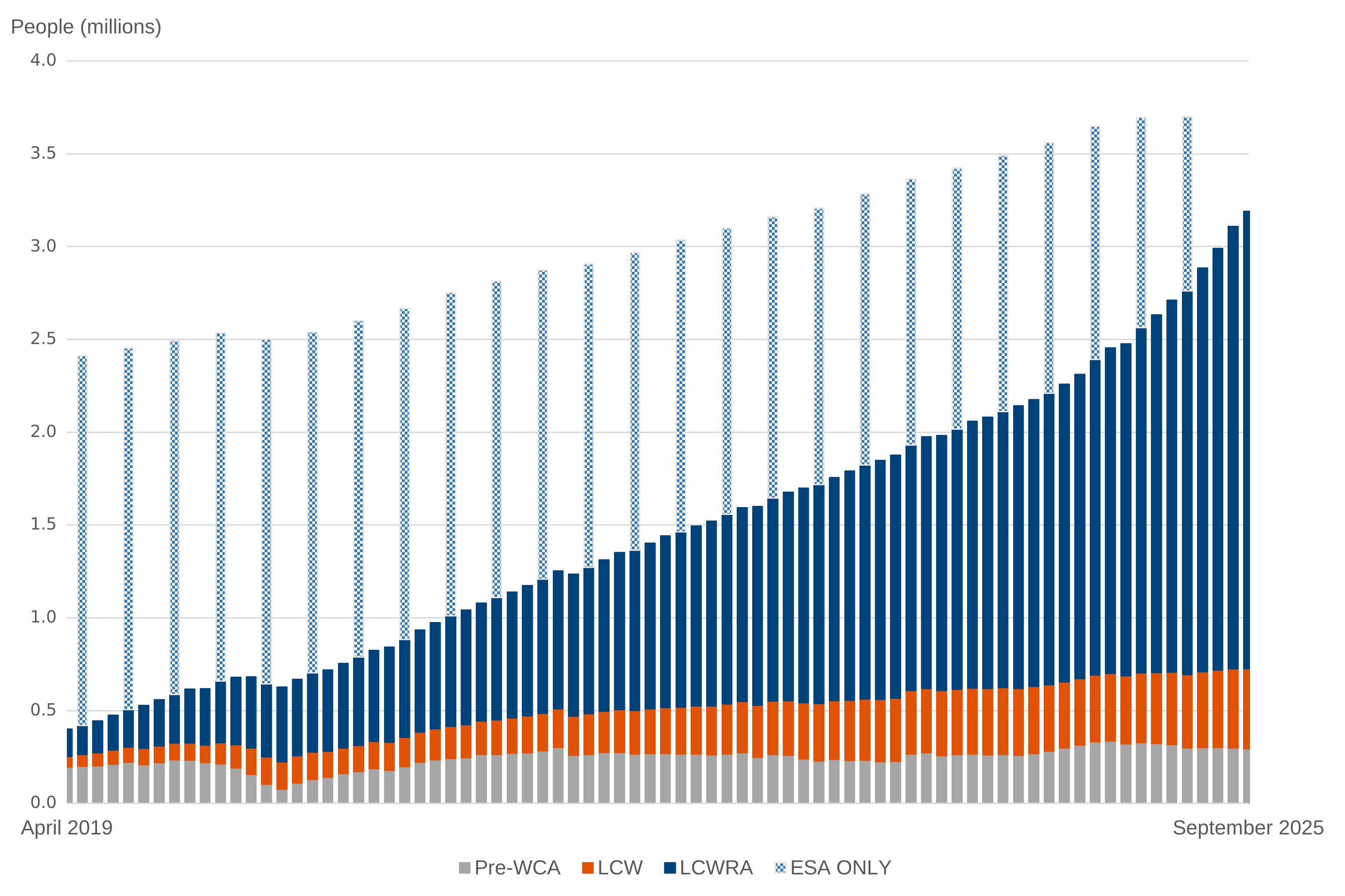
Figure 1: Monthly Universal Credit health and Employment and Support Allowance caseload, Great Britain, April 2019 to September 2025
At September 2025, 77% of people (2.5 million) on UC health have limited capability for work and work-related activity
Source: DWP Stat-Xplore, UC Work Capability Assessments
At September 2025, 3.2 million people were on UC health – up 41% from September 2024, and by 11% from the month of June 2025.
At May 2025 (latest data for which ESA caseload statistics are available), 3.7 million people were on UC health or ESA - 6% more than a year ago.
Of those on the caseload at September 2025, 294 thousand (9%) had acceptable medical evidence of a restricted ability to work and were awaiting a decision, 430 thousand (13%) were assessed as limited capability for work (LCW), and 2.5 million (77%) were assessed as limited capability for work and work-related activity (LCWRA).
The composition of the UC health caseload has changed over time as people migrated from ESA to UC, and due to the suspension of face-to-face assessments in March 2020 in response to the COVID-19 pandemic which adversely impacted DWP’s ability to complete assessments and for claimants to provide medical evidence.
Latest published statistics on Benefit Combinations shows the number of people on either LCWRA or the ESA Support Group has increased by 54% in the period February 2020 to May 2025.
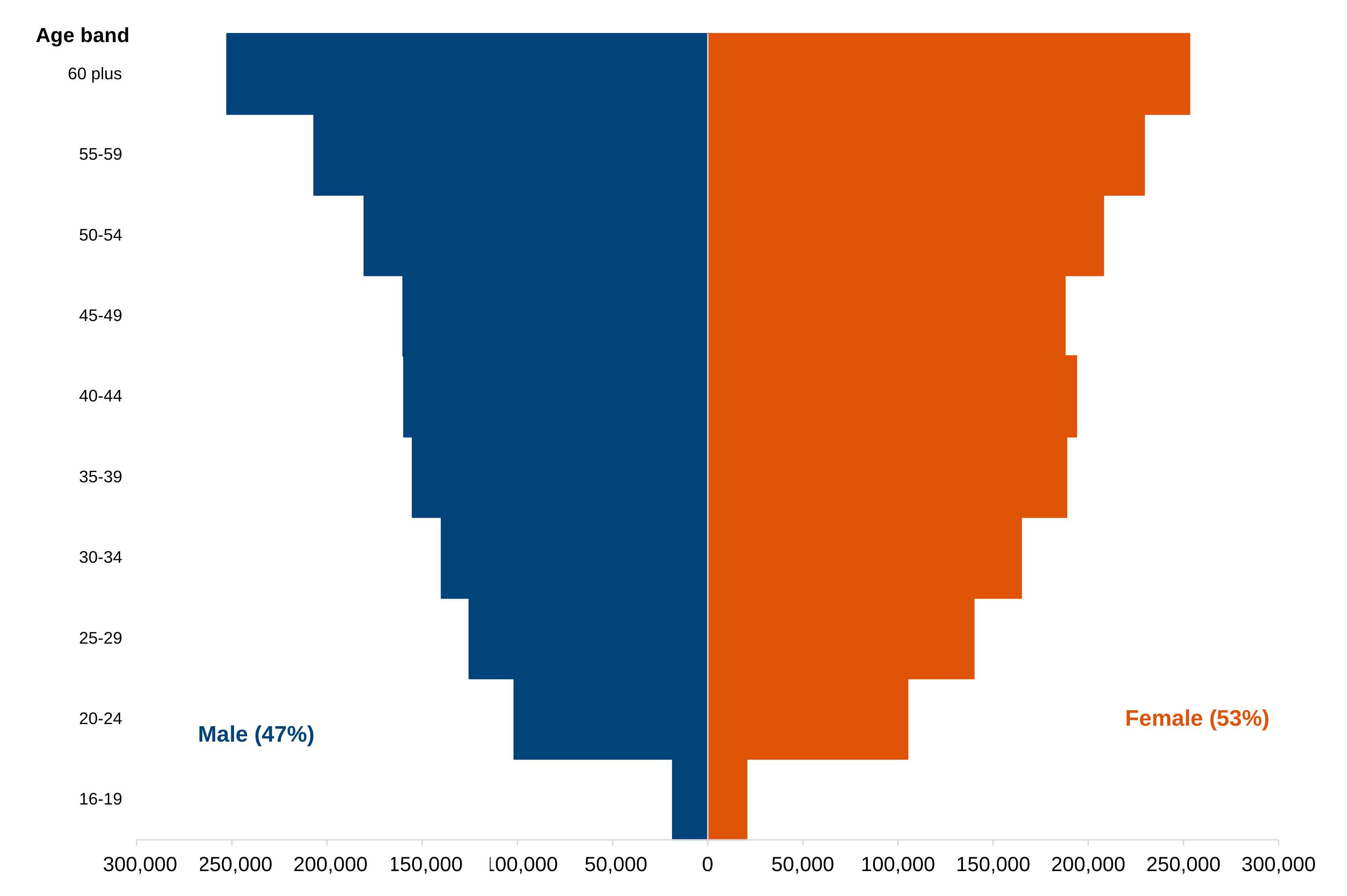
Figure 2: Number of people on the Universal Credit health caseload by gender and age band, Great Britain, September 2025
There are more women on UC health than men, at every age band.
Source: DWP Stat-Xplore, UC Work Capability Assessments
At September 2025, 53% of those on UC health were female. Of all claimants, 42% were aged 50 plus and 8% aged under 25.
4. UC Health caseload by region, local area and proportion of overall Universal Credit claimants
Figure 3: Proportion of Universal Credit claimants on UC health by region, Great Britain, September 2024 and September 2025
Across Great Britain (GB), Scotland has the highest proportion of UC claimants on UC health in September 2025 at 48%. Within England, the North-East (44%) has the highest proportion of UC claimants on UC health and London (32%) the lowest.
| Region | September 2024 Rate | September 2025 Rate |
|---|---|---|
| North East | 37% | 44% |
| North West | 34% | 42% |
| Yorkshire and The Humber | 32% | 40% |
| East Midlands | 31% | 39% |
| West Midlands | 30% | 36% |
| East of England | 30% | 38% |
| London | 26% | 32% |
| South East | 29% | 36% |
| South West | 34% | 42% |
| Wales | 38% | 47% |
| Scotland | 40% | 48% |
Source: DWP Stat-Xplore, UC Work Capability Assessments
Across Great Britain, the number of people on UC health represents 39% of the overall number of people claiming UC in September 2025 – up 7 percentage points from September 2024.
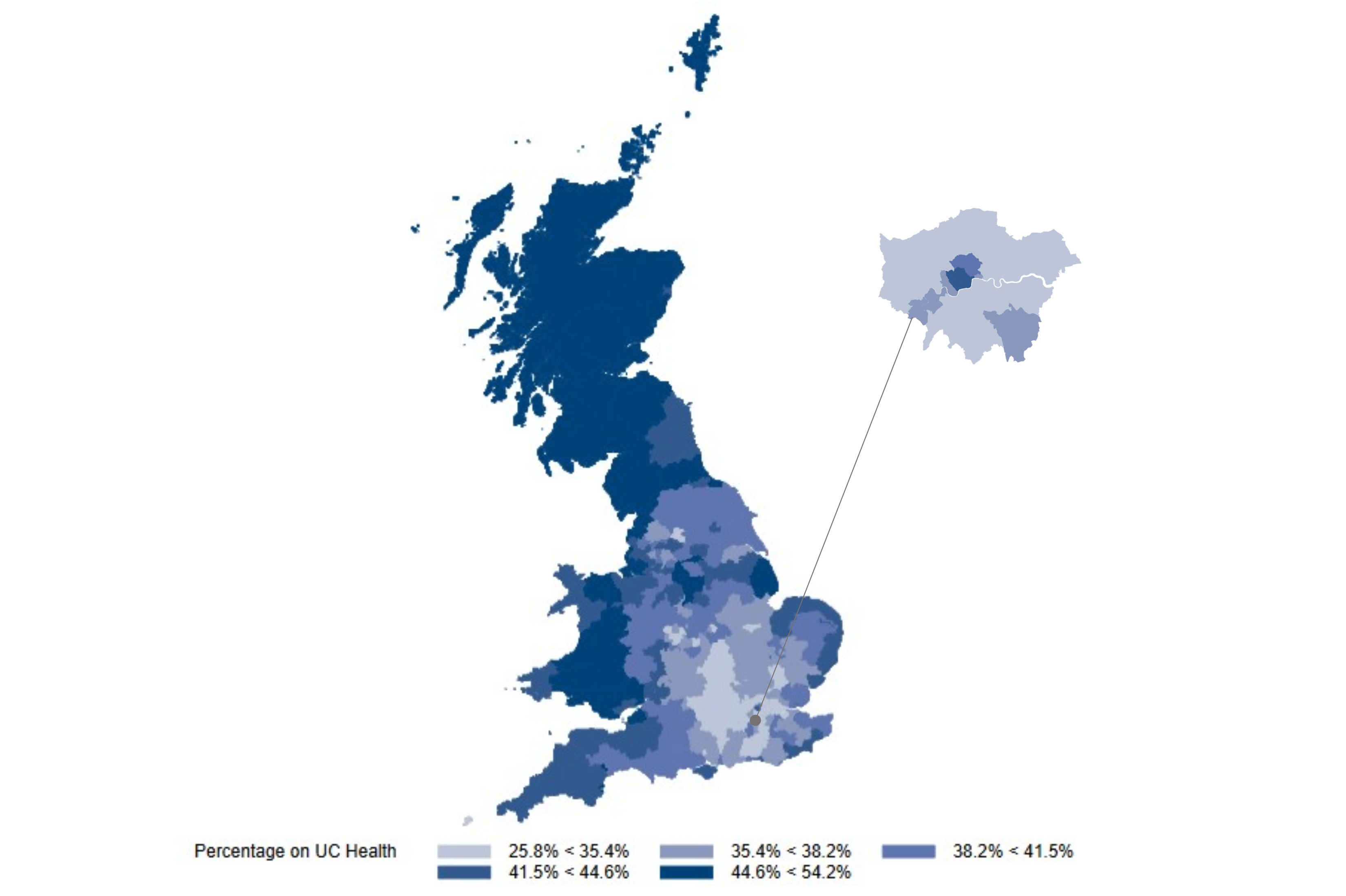
Proportion of Universal Credit claimants on UC health by local authority, Great Britain, September 2025
Of all local authorities, 96% have over 30% of UC claimants on UC health.
Source: DWP Stat-Xplore, UC Work Capability Assessments
Group ranges are calculated to split local authorities evenly into 5 bands, so approximately 20% of local authorities fit into each group.
At local authority level, Inverclyde (54%) has the highest proportion of UC claimants on UC health in September 2025, followed by Neath Port Talbot (53%). Excluding very small local authorities where rates can be spurious, Newham (26%) has the lowest proportion of UC claimants on UC health.
5. UC Work Capability Assessment decisions and outcomes
DWP decisions are based on the WCA outcome report from the Assessment Provider (AP) together with any related evidence. Decisions cover:
- LCW and required to participate in work related activity to help them move towards the labour market
- LCWRA and therefore not required to undertake any interviews or work related activity
- no limited capability for work and therefore no longer on UC health
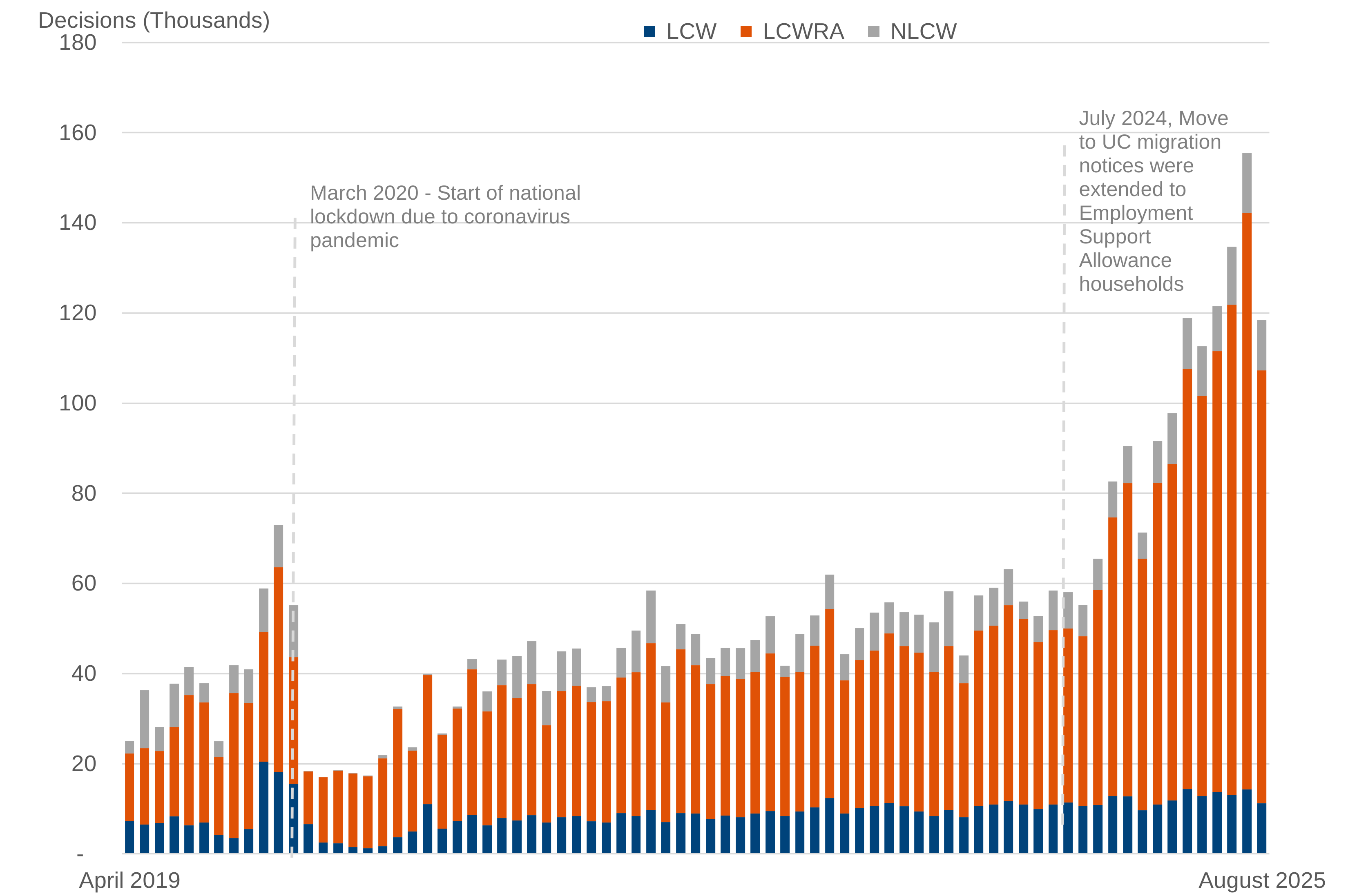
Figure 5: Monthly Universal Credit WCA decisions, Great Britain, April 2019 to August 2025
In the quarter to August 2025, 81% of UC WCA decisions were for LCWRA, up from 67% in the quarter to August 2024.
Source: DWP Stat-Xplore, UC Work Capability Assessments
In the quarter to August 2025, 58% of UC WCA decisions were for claimants aged 50 plus and 5% for claimants aged under 25. 48% of decisions were for female claimants.
In the quarter to August 2025, 6% of UC WCA decisions were Repeat decisions, wherein an earlier UC WCA decision had been made for the same claimant and 94% were Initial UC WCA decisions.
Of these Repeat decisions, 71% were LCWRA and 15% were LCW, in contrast to Initial decisions in the quarter to August 2025 wherein 82% were LCWRA and 9% LCW.
Cumulative Universal Credit WCA decisions, Great Britain, April 2019 to August 2025
Since April 2019, DWP have made 4.1 million decisions. Of these decisions, 12% of people were found to have no limited capability for work and hence no longer on UC health, 17% LCW, and 71% LCWRA.
The region with the highest proportion of LCWRA decisions was Wales (74%) and the lowest the North-East (66%).
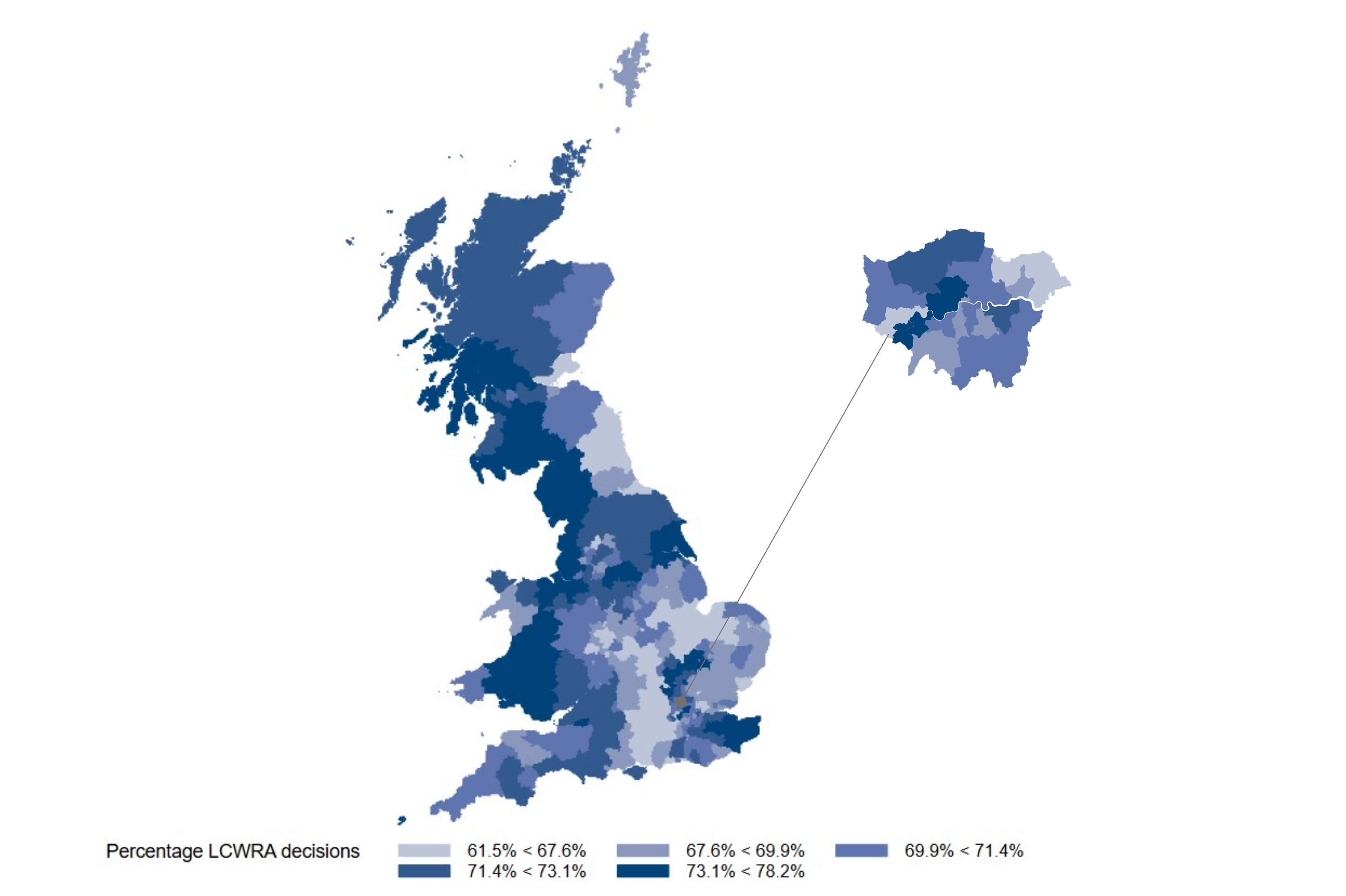
Figure 6: Proportion of LCWRA decisions by local authority, Great Britain, April 2019 to August 2025
All local authorities have more than 50% of decisions recorded as LCWRA.
Source: DWP Stat-Xplore, UC Work Capability Assessments
Group ranges are calculated to split local authorities evenly into 5 bands, so approximately 20% of local authorities fit into each group.
At local authority level, excluding very small local authorities where rates can be spurious, Westminster (78%) and Wirral (77%) have the highest proportion of LCWRA decisions since April 2019. Slough (61%) has the lowest proportion. Of all local authorities, 201 (57%) have 7 in 10 decisions recorded as LCWRA.
6. Transitions from Employment and Support Allowance
Claimants transitioning from ESA to UC health, either through natural migration (change of circumstances) or the Move to Universal Credit statistics process are now impacting the UC health statistics.
Within this report, an ESA migrated (transitioned) case is defined as a claimant who had an open ESA spell or an ESA spell that had closed within 90 days of the UC WCA decision date or for the caseload, their recorded UC health start date. This includes both Move to UC cases and natural migration.
UC Health caseload and ESA transitions
At September 2025:
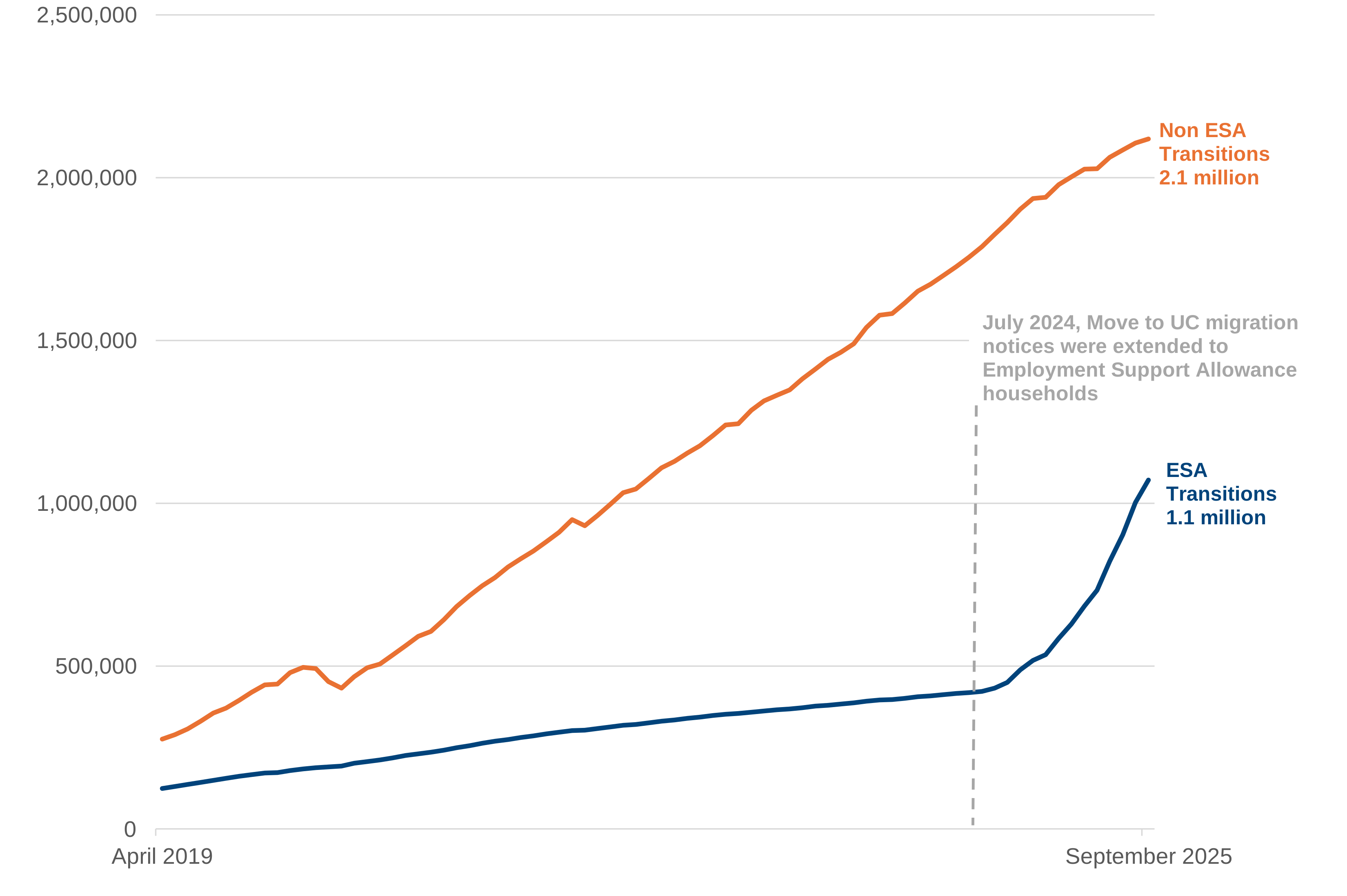
- 1.1million (34%) of those on UC health transitioned from ESA. This is an increase of 14 percentage points from 430 thousand (19%) at September 2024
- UC Health caseload has increased by 933 thousand (41%) in the year to September 2025, 69% of the increase is from ESA transitions
- of those with LCWRA, 960 thousand (39%) were ESA transitions. This is an increase of 16 percentage points from 370 thousand (23%) from September 2024
- of all ESA transitions, 90% were for LCWRA
Figure 7: UC health caseload from ESA transitions, April 2019 to September 2025
Within the UC health caseload, there has been a notable increase in the number of ESA transitions over the last year.
Source: UC WCA ODS Tables
UC WCA decisions and ESA transitions
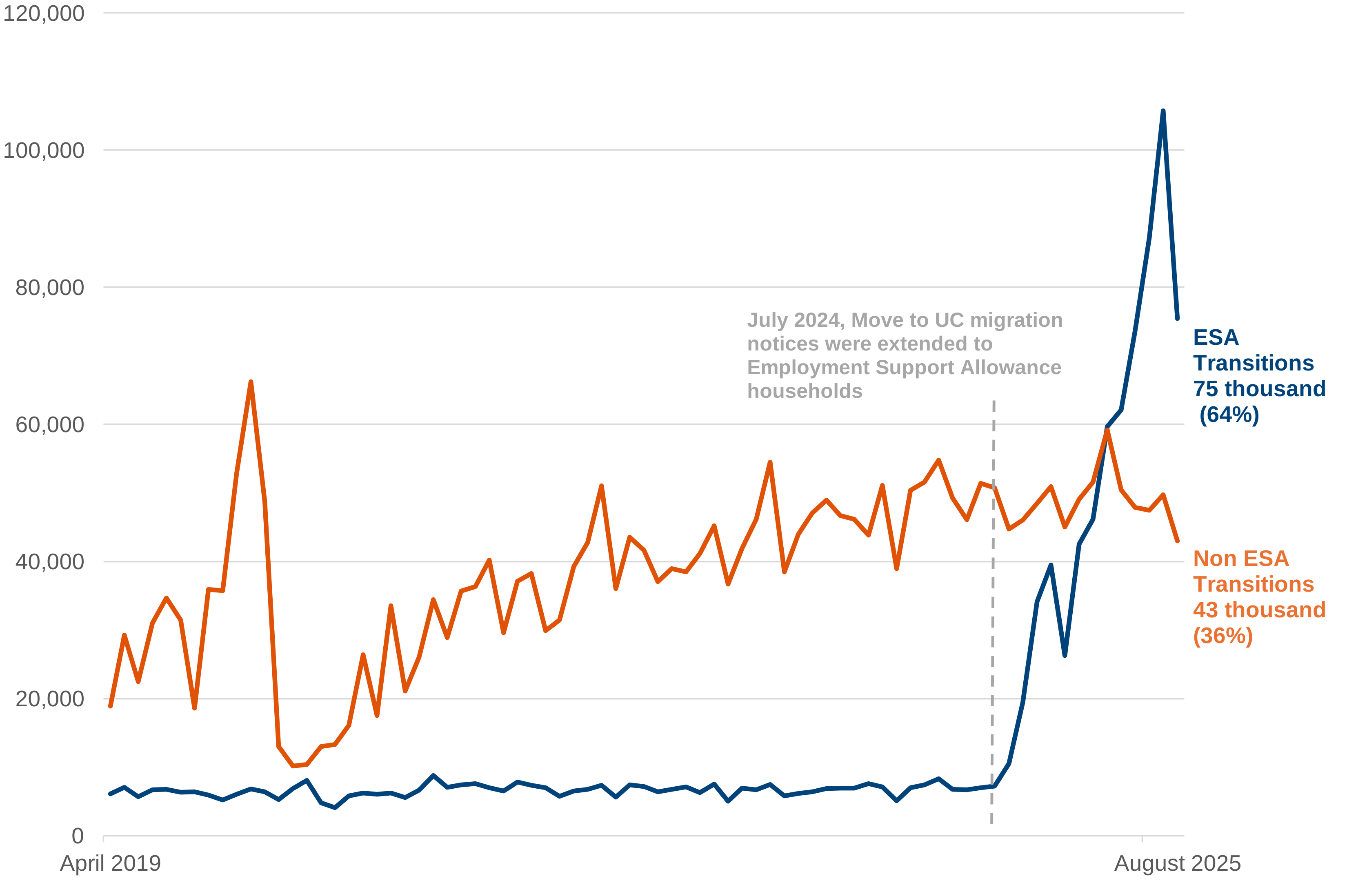
Between April 2019 and August 2025, 27% (1.1 million) of all UC WCA decisions were ESA transitioned cases. Of all LCWRA decisions, 33% were ESA transitioned cases. Of all UC WCA decisions in the latest quarter, June to August 2025:
- 268 thousand (66%) were ESA transitioned claimants. This is an increase of 11 percentage points on the previous quarter (March to May 2025) and an increase of 51 percentage points on the same quarter the previous year
- for those with a LCWRA decision, 248 thousand (75%) were ESA transitions. This is an increase of 12 percentage points on the previous quarter and an increase of 56 percentage points on the same quarter the previous year
- of all decisions from ESA transitional cases (in the latest quarter), 93% had an outcome of LCWRA
Figure 8: UC WCA decisions with a previous ESA spell, April 2019 to August 2025
In the latest month, 64% of decisions were ESA transitional cases
Source: UC WCA ODS Tables
7. UC Work Capability Assessment medical conditions
Claimants often have complex health issues and can thus be recorded with multiple conditions across International Classification of Disease (ICD10) Codes. Unlike ESA medical statistics, a primary medical condition is not recorded. As such, UC WCA medical conditions convey all recorded medical conditions, but do not relate to a primary medical condition.
Medical condition is based on evidence recorded at the WCA, this in itself does not confer entitlement to UC. The Background and Methodology provides further information on the source of these statistics and how they are recorded, and on their coding and derivation.
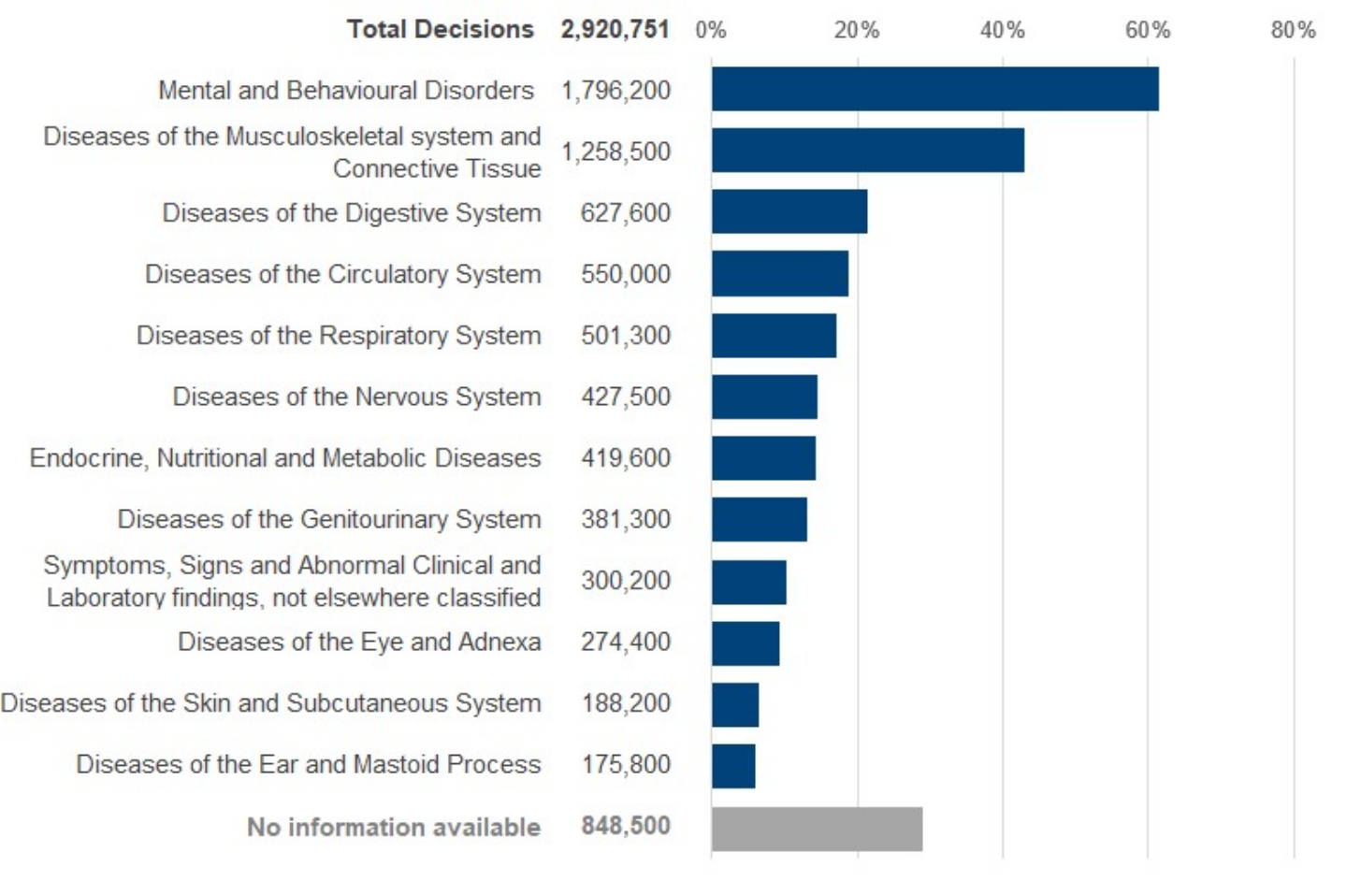
Coverage is not complete for data on medical conditions for UC WCA. Of all WCA decisions in the period January 2022 to August 2025 (2.9 million), 71% have a medical condition recorded on the Medical Services Referral System (MSRS). The rate has been falling over the last 12 months given the Move to Universal Credit statistics. We will continue to monitor completeness of these statistics but will suspend them if the rate falls below 70%.
Those without a medical condition primarily comprise claimants for whom a decision is made without the need for an interview based WCA. These filework cases can relate to claimants who are severely or terminally ill, or have other complex conditions and thus may not be representative of the cohort of known medical conditions
Of all WCA decisions in the period January 2022 to August 2025:
- at least 61% are recorded as having mental and behavioural disorders albeit this may not be their primary medical condition. The proportion recorded as having mental and behavioural disorders is lower (51%) for claimants found capable for work, and higher for claimants found to have limited capability for work (83%)
- 46% are recorded with diseases of the musculoskeletal system and connective tissue. This proportion is higher (57%) for claimants found capable for work
Figure 9: Universal Credit WCA decisions, Great Britain, January 2022 to August 2025 by medical condition (ICD summary group)
Claimants can be recorded across multiple ICD10 Classifications, but are only shown once within a Classification. Primary conditions are not recorded.
Source: DWP, UC Work Capability Assessments
8. About these statistics
The statistics in this bulletin are classified as Official Statistics. The Statistics and Registration Service Act 2007 defines ‘Official Statistics’ as all those statistical outputs produced by the UK Statistics Authority’s executive office (the Office for National Statistics), by central Government departments and agencies, by the devolved administrations in Northern Ireland, Scotland, and Wales, and by other Crown bodies (over 200 bodies in total). The statistics in this bulletin are compliant with the Code of Practice for Official Statistics. The Code encourages and supports producers of statistics to maintain their independence and to ensure adequate resourcing for statistical production. It helps producers and users of statistics by setting out the necessary principles and practices to produce statistics that are trustworthy, high quality and of public value.
Plans and proposals for further developments to the statistics are shown in the Release Strategy and summarised in the DWP Statistical Work Programme. This includes plans for ethnicity breakdowns. The ethnicity data has not yet met the minimum threshold for meaningful interpretation without significant risk of bias leading to misleading results, but if the 70% coverage threshold is met, ethnicity statistics will begin to be published. Benefit combination statistics are included as part of the quarterly DWP benefits statistics collection, and allow users to view the combinations of benefits that people claim at a point in time for almost all benefits administered by DWP, including PIP. The latest statistics include PIP, DLA and Attendance Allowance (AA) award levels and is updated every six months in February and August. The underlying data is updated every quarter (February, May, August and November) and can be found on Stat-Xplore.
Key uses of the statistics include:
- providing the evidence base for assessing the potential effect of changes, monitoring and evaluation of DWP policy
- answering Parliamentary Questions and Freedom of Information requests and forecasting benefit expenditure (in conjunction with expenditure statistics)
- policy development and evaluation by local authorities and other welfare to work stakeholders and providers
Where to find out more
This statistical bulletin gives an overview of the important points and trends. More detailed breakdowns can be found via the supporting data tables and DWP’s online tabulation tool Stat-Xplore.
Read more about UC statistics and ESA-WCA statistics.
See Pathways to Work: Reforming Benefits and Support to Get Britain Working Green Paper - GOV.UK for information on proposed changes to support for those with health and disability needs.
Contact information and feedback
DWP would like to hear your views on these statistics. We would be interested in hearing what you use them for and how well they meet your requirements.
Feedback and queries about the statistics can be sent to stats.consultation-2018@dwp.gov.uk.
Press enquiries should be directed to the DWP Press Office. E-mail: newsdesk@dwp.gov.uk.
Lead Statisticians: David Leighton and Russ Bentley
ISBN: 978-1-78659-900-1