Rail Trends 2025
Published 9 December 2025
Applies to England, Scotland and Wales

© Crown copyright 2025
This publication is licensed under the terms of the Open Government Licence v3.0 except where otherwise stated. To view this licence, visit nationalarchives.gov.uk/doc/open-government-licence/version/3 or write to the Information Policy Team, The National Archives, Kew, London TW9 4DU, or email: psi@nationalarchives.gov.uk.
Where we have identified any third party copyright information you will need to obtain permission from the copyright holders concerned.
This publication is available at https://www.gov.uk/government/statistics/rail-trends-2025/rail-trends-2025
About this release
This factsheet provides an overview of key statistics on rail in Great Britain. Statistics are for surface rail only, and do not include underground, light rail, and tram systems. Coverage is for the financial year (FY) 2024-25 and includes comparisons with the previous FY 2023-24 and 2019-20. It should be noted that more recent datasets for some topics may be available. This publication includes both accredited official statistics and official statistics.
For more information, see the ‘About these statistics’ section.
Rail statistics overview
Figure 1: Rail in Great Britain, FY 2024-25
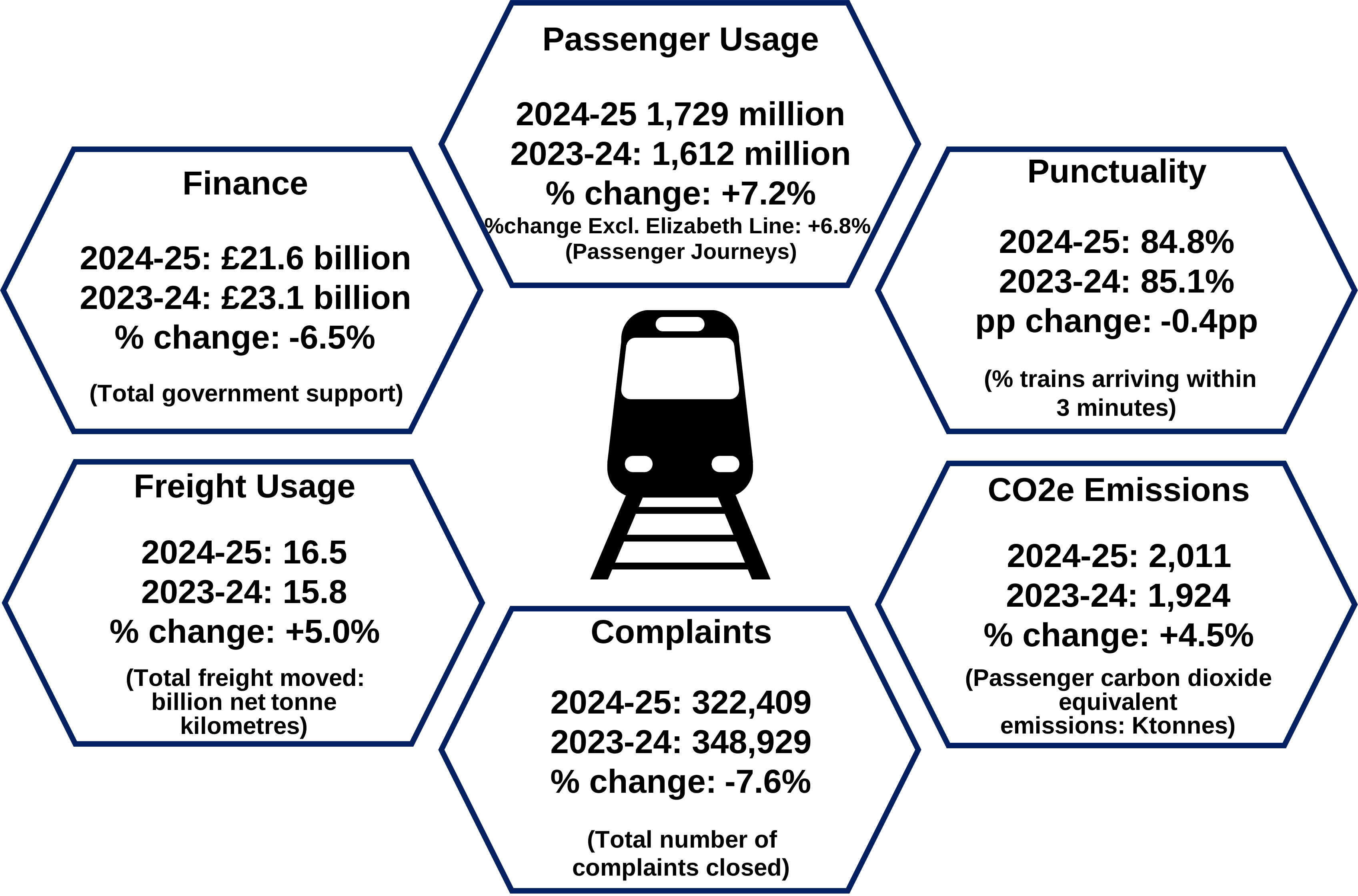
Figure 1 shows that in 2024-25:
- There were 1,729 million passenger rail journeys (1,486 million excluding the Elizabeth Line), an increase of 7.2% on the previous year and a decrease of 0.6% on the 2019-20
Note: The central section of the Elizabeth Line opened in May 2022, bringing an increase in journeys classed as National Rail that would previously have been made on London Underground or Docklands Light Railway (ORR Passenger Rail Usage table 1220). For the purpose of consistency, comparisons to years preceding the opening of the Elizabeth Line should be made excluding Elizabeth Line journeys. The volume of passenger journeys excluding the Elizabeth Line in 2024-25 was 12.0% lower than in 2019-20.
-
Government support to the railways totalled £21.6 billion (bn) in 2024-25, a 6.5% decrease from the previous year and an increase of 55.8% on the 2019-20 (ORR Rail Industry Finance table 7270)
-
84.8% of trains arrived at within three minutes (early or less than three minutes after the scheduled time) of their scheduled arrival time, a decrease of 0.4pp on the previous year and an increase of 0.8pp on the 2019-20 (ORR Passenger Rail Performance table 3133)
-
16.5bn net tonne kilometres (10.3bn net tonne miles) of rail freight were transported, an increase of 5.0% on the previous year and a decrease of 0.3% on the 2019-20 (ORR Freight Rail Usage and Performance table 1310)
-
322,409 complaints were closed, a decrease of 7.6% on the previous year and a decrease of 39.7% on the 2019-20 (ORR Passenger Rail Service Complaints table 4100)
-
2,011 kilotonnes of carbon dioxide equivalent emissions were emitted by passenger services on the railways, a increase of 4.5% on the previous year and a decrease of 16.2% on the 2019-20 (ORR Rail Environment table 6105)
Note: The latest year is compared to the previous year of available data and the year 2019-20 (before the pandemic).
Railway in Great Britain
Figure 2: The mainline railway as of 2024-25 is comprised of:
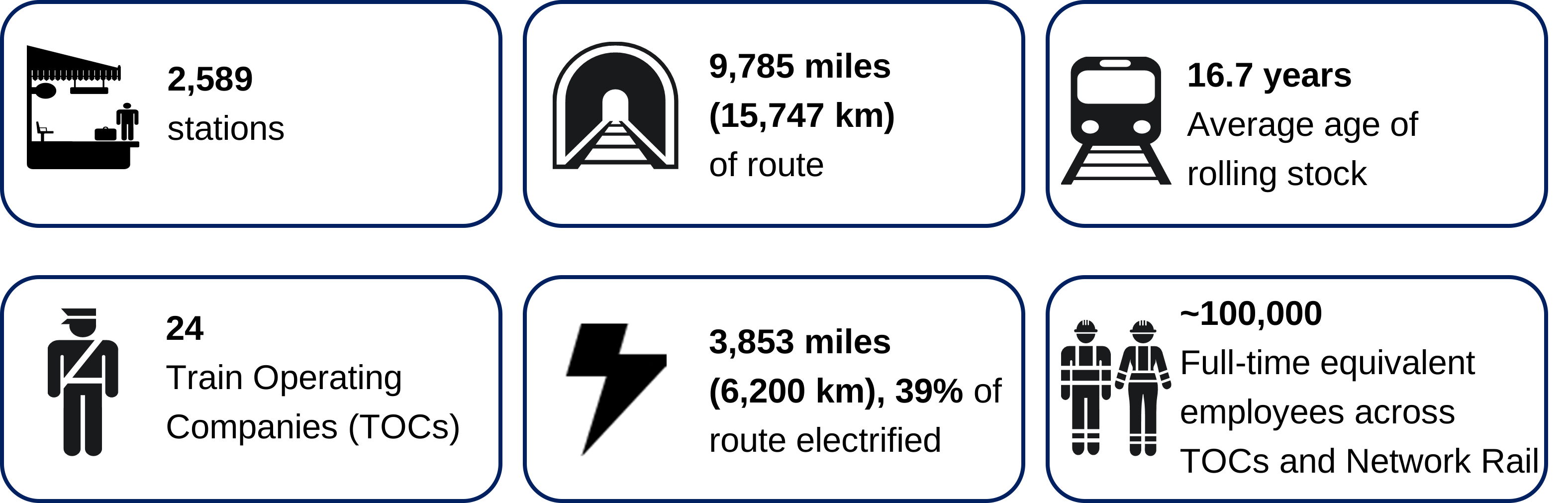
Figure 2 is a summary of Train Operating Company (TOC) key statistics in 2024-25:
-
2,589 stations (ORR TOC Key Statistics)
-
9,785 miles (15,747 km) of route (ORR Rail Infrastructure and Assets table 6320)
-
an average age of rolling stock of 16.7 years (ORR Rail Infrastructure and Assets table 6313)
-
24 Train Operating Companies (TOCs) (ORR TOC Key Statistics)
-
3,853 miles (6,200 km) of electrified route (39% of total route) (ORR Rail Infrastructure and Assets table 6320)
-
approximately 100,000 people employed in the rail sector, with 66,000 full-time equivalent employees across TOCs and 41,000 in Network Rail (ORR TOC Key Statistics table and Network Rail Annual Report and Accounts 2025)
Note: For further information, please see Office of Rail and Road TOC Key Statistics (Table 2200) and Rail Infrastructure and Assets (Tables 6313 and 6320).
Rail travel in the context of other transport modes in 2024
Rail is used for a small share of transport journeys compared to other modes of transport.
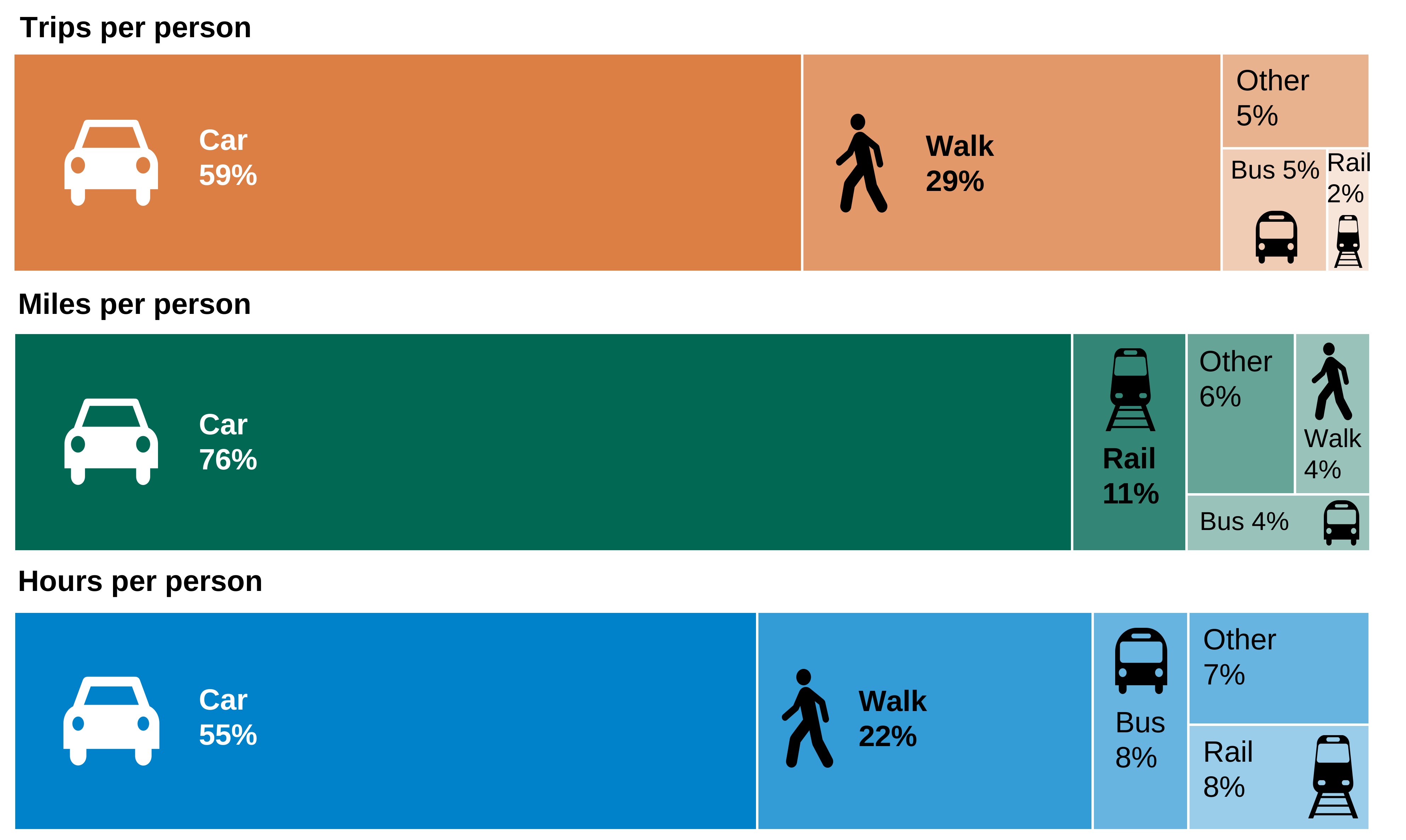
Figure 3: Share of rail travel compared with other modes of transport
Note: Due to rounding, percentages may not always add up to 100%.
Figure 3 presents a series of three treemap charts depicting mode share for trips, miles, and hours travelled per person in England in 2024. Car travel represents the biggest share for each case, whereas on average, rail accounted for 2% of trips per person, 11% of miles per person, and 8% of hours travelled per person.
In England, the average distance travelled by rail per person increased by 27% in 2024 compared with the previous year, while the average time spent travelling by rail per person increased by 17%.
Note: This data covers England only and calendar year 2024. For more information please see Department for Transport Mode of travel - GOV.UK.
Rail usage and users
Passenger journeys have almost returned to pre-pandemic levels
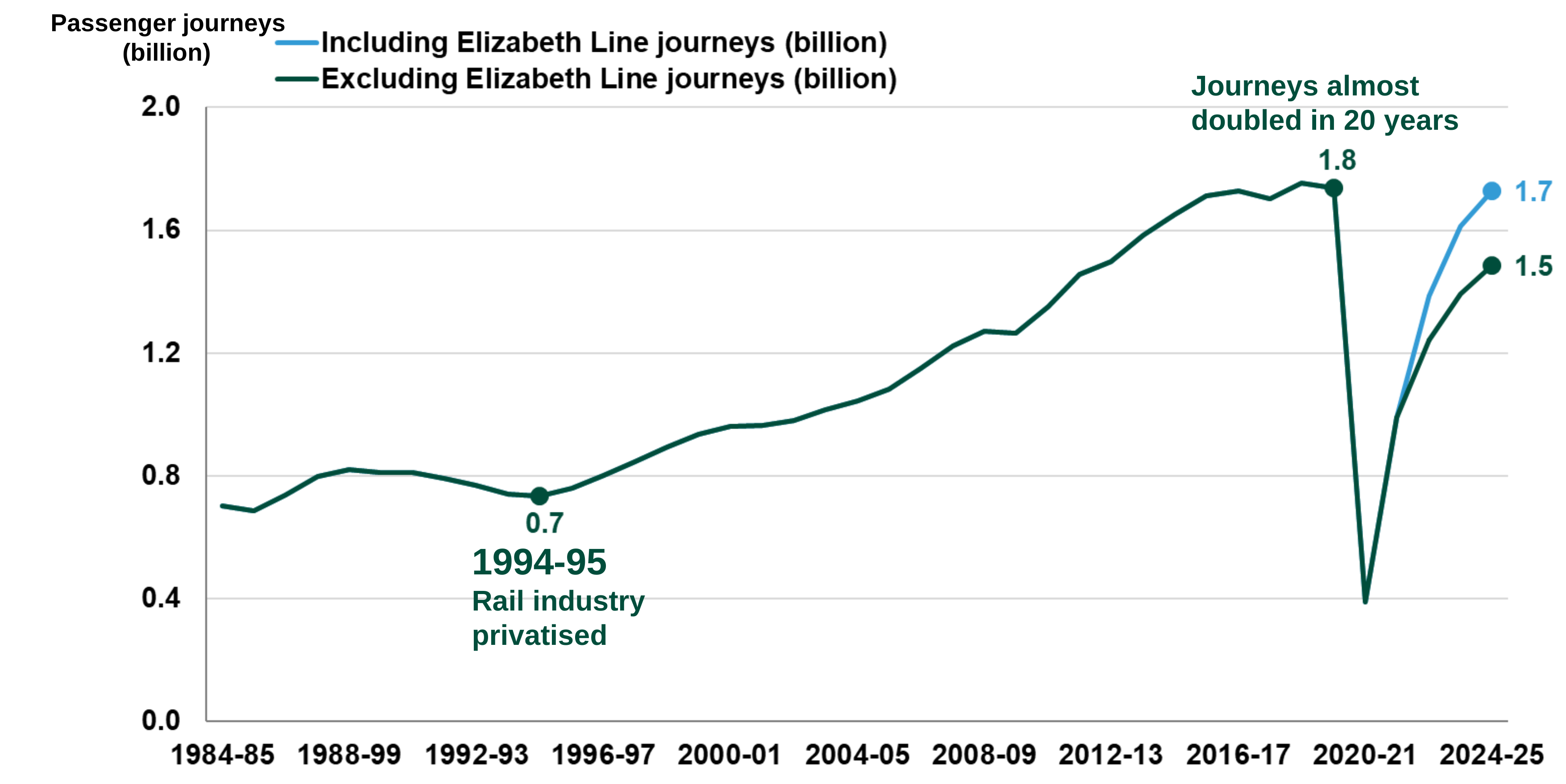
Figure 4: Passenger journeys (billion), Great Britain, annual data, April 1984 to March 2025, showing both including and excluding the Elizabeth Line
Note: Elizabeth Line became fully operational in May 2022.
Figure 4 presents a line chart depicting rail passenger journeys in Great Britain from April 1984 to March 2025, and the contribution of the Elizabeth line from May 2022.
-
There were 1.7bn passenger journeys in Great Britain in 2024-25. This is a 7.2% increase compared to the previous year. Passenger usage continues to grow but remains 14.5% below pre-Covid levels (2019-20) when excluding the Elizabeth line
-
Passenger rail journeys almost doubled (95.9% increase) in the 20 years leading up to the pandemic, reaching a record high of 1.8bn journeys in 2018-19. By 2024-25, journeys including the Elizabeth Line were just 1.4% below this peak. However, excluding the Elizabeth Line, passenger journeys remained 15.2% below this peak
Passenger kilometres increased compared with the previous FY across all three franchised sectors: long-distance, London and South East, and regional operators.
-
There were 64.6 bn passenger kilometres travelled in 2024-25, an increase of 7.3% compared with the previous FY. Excluding the Elizabeth Line, there were 62.2 bn passenger kilometres travelled in 2024-25, a decrease of 5.9% compared to 2019-20
-
In 2024-25, 523.5 million passenger train kilometres were operated, an increase of 5.6% compared with the previous FY
-
Excluding the Elizabeth Line, 511.6 million passenger train kilometres were operated in 2024-25, which is 7.6% lower than in 2019-20 (6.2% lower when including the Elizabeth Line)
Note: Statistical releases, data tables, an interactive dashboard, methodology and quality information is available on the ORR data portal Passenger rail usage page.
Commuting was the most common journey purpose for rail passengers.
Figure 5: Rail trips by journey purpose, England 2024
In England in 2024, 37.3% of rail journeys were for commuting and 36.0% for leisure, consistent with the previous year.
| Purpose of journey | % of all trips |
|---|---|
| Commuting | 37.3% |
| Leisure | 36.0% |
| Business | 8.1% |
| Education or education escort | 6.7% |
| Shopping | 6.1% |
| Personal business | 4.7% |
| Other escort | 1.2% |
| Other including just walk | 0% |
Overall, males undertook 30.3% more rail trips on average (23 trips per person per year) than females (18 trips per person per year). Figure 6 shows that on average, individuals aged 21 to 29 made more rail journeys than any other age group.
Figure 6: Average number of rail trips per person per year by age and sex, England 2024
| Age | Males | Females |
|---|---|---|
| 0 to 16 | 9 | 7 |
| 17 to 20 | 23 | 36 |
| 21 to 29 | 40 | 38 |
| 30 to 39 | 38 | 27 |
| 40 to 49 | 31 | 22 |
| 50 to 59 | 28 | 17 |
| 60 to 69 | 18 | 12 |
| 70 and over | 8 | 6 |
Note: This data covers England only and calendar year 2024. For more information please see Department for Transport National Travel Survey 2024 (NTS0409 and NTS0601).
Recovery from the coronavirus (COVID-19) pandemic
Passenger rail journeys in Great Britain have shown recovery towards pre-pandemic levels
Figure 7: Domestic transport usage by mode as a proportion of pre-pandemic levels in Great Britain, March 2020 to March 2025
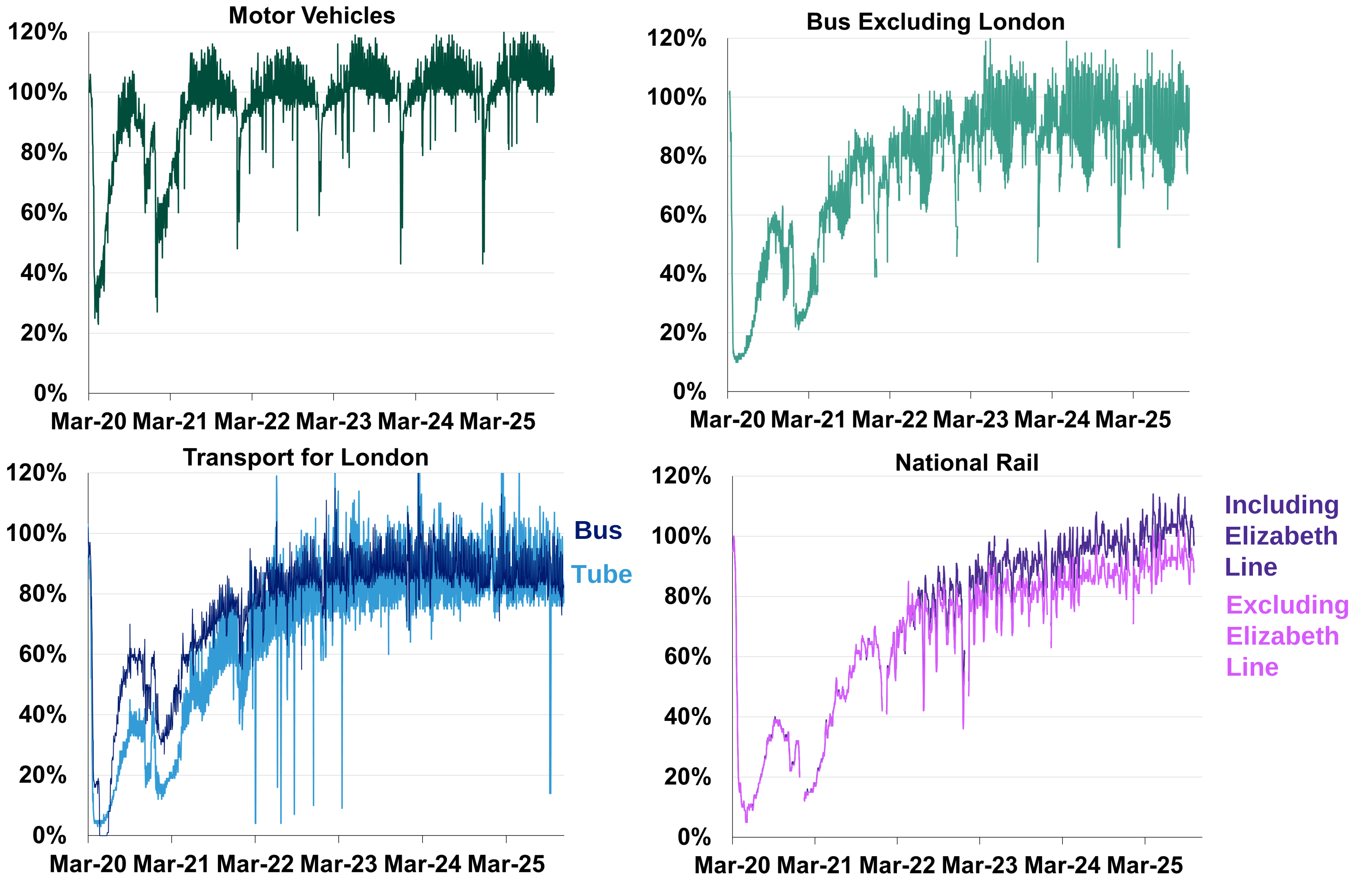
Figure 7 presents 4 line charts, showing usage compared to an equivalent day pre-COVID-19 between March 2020 and March 2025, across different modes of transport: motor vehicles, bus (excluding London), London bus and tube, and National Rail. For rail, usage is shown as a 7-day rolling average ending on the indicated date. For all other modes, daily usage for weekdays (excluding bank holidays) is shown. All public transport modes show a increase since 2020. The recovery is lower when Elizabeth Line, is excluded from National Rail.
Note: For further information, please see Domestic Transport Usage by Mode - GOV.UK.
Note: Usage figures have been impacted by Industrial Action.
Note: Following the opening of the central section of the Elizabeth Line May 2022 and the subsequent increase in journeys, a second time series excluding Elizabeth Line is also presented, showing a lower recovery than the time series which includes the effect of Elizabeth line services. For more information, please see Department for Transport COVID-19 domestic transport data: methodology note and Office of Rail and Road Passenger rail usage.
Regional rail usage
Passenger rail usage in 2024-25 was higher than the previous year (2023-24) for journeys made both ‘within’ and ‘between’ regions in England, Scotland and Wales.
Figure 8: Number of passenger journeys within and between regions, Great Britain, annual data, April 1996 to March 2025
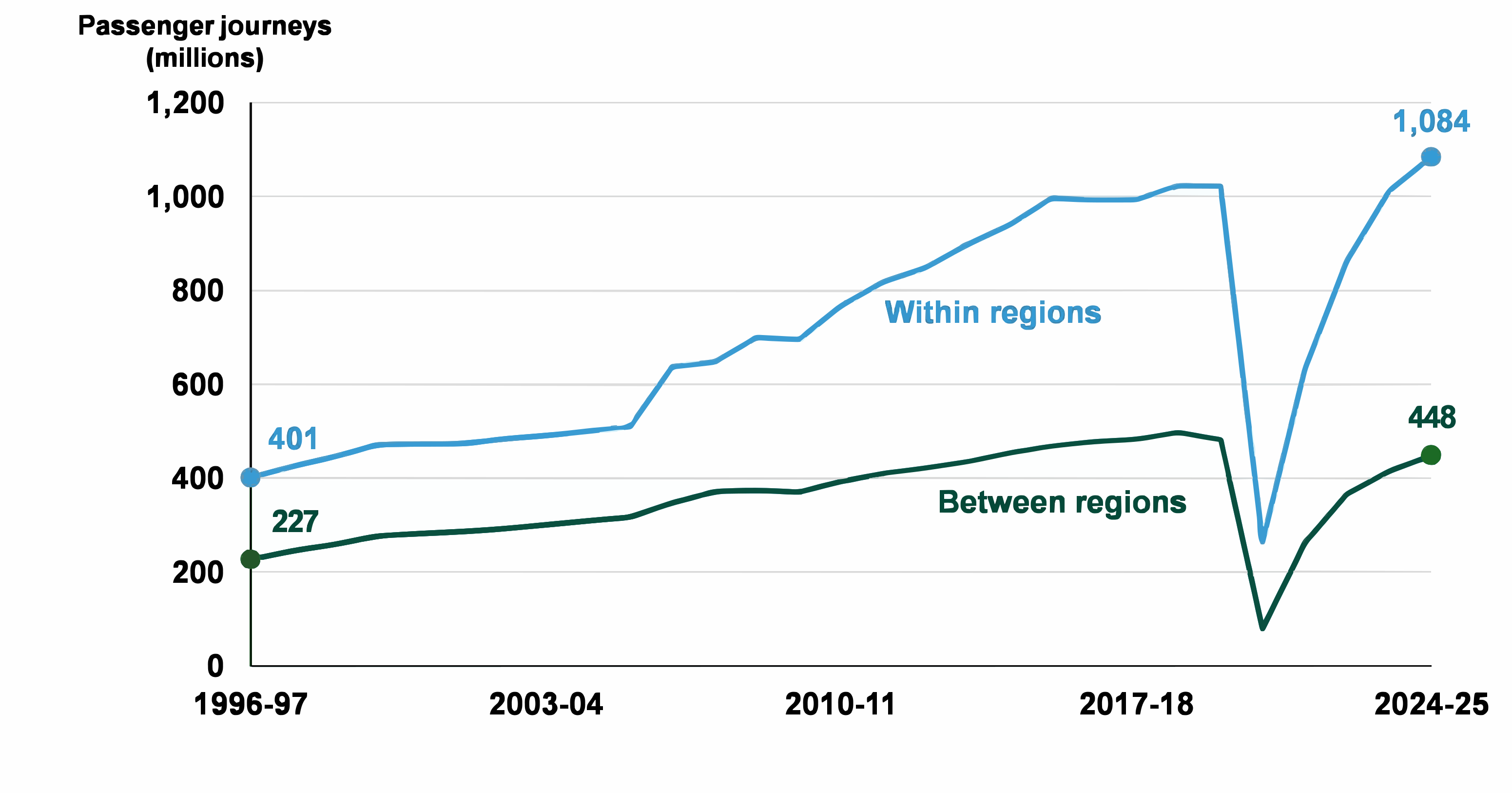
Figure 8 presents a line chart showing trends in passenger rail journeys in Great Britain from 1996-97 to 2024-25. In FYE March 1997, there were 401 million journeys occurring within regions and fewer journeys (227 million) occuring between regions. Over time, rail usage grew steadily, peaking before a sharp decline during the pandemic, followed by a strong recovery. In FYE March 2025, there were 1,084 million passenger journeys made within regions on Great Britain’s mainline, a 7% increase compared with the previous year. Meanwhile, 448 million journeys were made between regions, an 8% increase on the previous year.
-
A total of 11.3 million journeys were made between England and Scotland, an increase of 11% compared with the previous year
-
A total of 10.5 million journeys were made between England and Wales, an increase of 6% compared with the previous year
-
A total of 0.06 million journeys were made between Scotland and Wales, an increase of 15% compared with the previous year
London had the most journeys to, from or within the region in FYE March 2025.
Rail travel is concentrated in London and its surrounding regions, with higher inter-regional flows in the South East and East of England. Other regions rely more on local journeys, with limited cross-region travel.
Figure 9: Journeys Within and Between Regions (millions), Great Britain, FYE March 2024
| Region | Within Region | To or from other Regions |
|---|---|---|
| North East | 8 | 11 |
| North West | 92 | 40 |
| Yorkshire and the Humber | 41 | 31 |
| East Midlands | 10 | 26 |
| West Midlands | 53 | 32 |
| East of England | 35 | 138 |
| London | 638 | 370 |
| South East | 82 | 198 |
| South West | 28 | 28 |
| Wales | 19 | 11 |
| Scotland | 78 | 11 |
Note: Regional passenger journeys are based on the origin and destination named on a ticket and do not take into account any changes of train. It therefore produces slightly lower estimates than the total journeys published in the Passenger rail usage statistical release, which counts each leg of a trip separately. For example, a journey from Leicester to Manchester would be classed as one journey in regional rail usage despite the need to change trains. However, in Passenger rail usage, it is treated as two journeys reflecting the change of trains. Statistical releases, data tables, an interactive dashboard, methodology and quality information is available on the ORR data portal Regional rail usage page.
Estimates of station usage
London Liverpool Street was the most used station while Elton and Orston in Nottinghamshire was the least used.
Station usage estimates are the number of entries and exits recorded at a station.
The top 10 stations are all in London. This concentration of crowding in London suggests a reliance on its transport network for both local and national connectivity. In the latest year (FYE March 2025), the most used station was London Liverpool Street, with an estimated 98.0 million entries and exits.
Figure 10: Top 10 stations in Great Britain, annual data, FYE March 2025
| Top 10 stations in Great Britain | Total entries and exits |
|---|---|
| London Liverpool Street | 98.0 million |
| London Waterloo | 70.4 million |
| London Paddington | 69.9 million |
| Tottenham Court Road | 68.1 million |
| London Bridge | 54.7 million |
| London Victoria | 53.8 million |
| Stratford (London) | 51.5 million |
| Farringdon | 50.2 million |
| Bond Street | 42.8 million |
| London Euston | 40.2 million |
Figure 11: Top 10 stations outside London, annual data, FYE March 2025
| Top 10 stations outside London | Total entries and exits |
|---|---|
| Birmingham New Street | 36.6 million |
| Manchester Piccadilly | 27.4 million |
| Leeds | 27.3 million |
| Glasgow Central | 25.3 million |
| Edinburgh | 22.8 million |
| Gatwick Airport | 21.2 million |
| Brighton | 15.3 million |
| Glasgow Queen Street | 15.0 million |
| Liverpool Central | 14.8 million |
| Liverpool Lime Street | 14.4 million |
Outside of London, Birmingham New Street was the most used station with 36.6 million entries and exits in the latest year. This was followed by Manchester Piccadilly and Leeds. Glasgow Central was the most used station in Scotland with 25.3 million entries and exits. The most used station in Wales was Cardiff Central with 12.5 million entries and exits. These figures highlight the importance of regional hubs and airport links in the national rail network, though usage remains lower than London stations.
Figure 12: Least used stations in Great Britain, annual data, FYE March 2025
| Least used stations | Total entries and exits |
|---|---|
| Elton and Orston, Nottinghamshire | 68 |
| Shippea Hill, Cambridgeshire | 76 |
| Ince and Elton, Cheshire | 98 |
| Denton, Greater Manchester | 100 |
| Reddish South, Greater Manchester | 102 |
Elton and Orston was the least used station with 68 entries and exits followed by Shippea Hill with 76 entries and exits in the latest year. These low figures highlight the uneven distribution of rail crowding across the network
Note: Statistical releases, data tables, an interactive dashboard, animated charts, methodology and quality information can be found on the ORR data portal Estimates of station usage page.
Passenger crowding
This section presents data on the daily number of passengers travelling by rail into and out of major city centres in England and Wales on a typical midweek, autumn day. The statistics are based on passenger counts conducted between 16 September and 13 December 2024, collected from eighteen train operators at selected major cities.
London averaged 1,207,600 daily passenger arrivals on a typical autumn day in 2024, up 6% from autumn 2023. This was more than ten times higher than Birmingham, the second busiest city, confirming London’s position as the UK’s rail hub.
Passenger arrivals into major cities in England and Wales (excluding London) increased by 3% in autumn 2024 compared to autumn 2023, reaching 657,379 arrivals on a typical day. During the AM peak, arrivals rose by 5%, while PM peak departures grew by 0.6%.
Note: London is excluded from Figure 13, which compares major cities, because its passenger volumes are higher than others; including it would compress the scale and obscure detail for the remaining cities.
Figure 13: Passenger AM Peak Arrivals and PM Peak Departures in England and Wales by City (outside London) on a typical autumn day in 2024
| City | AM Peak Arrivals (07:00 to 09:59) | PM Peak Departures (16:00 to 18:59) | All Day Arrivals |
|---|---|---|---|
| Birmingham | 38,830 | 38,264 | 117,697 |
| Brighton | 5,994 | 7,477 | 27,829 |
| Bristol | 8,951 | 11,513 | 34,077 |
| Cambridge | 8,479 | 9,164 | 29,179 |
| Cardiff | 10,107 | 11,858 | 36,017 |
| Leeds | 22,096 | 22,992 | 65,854 |
| Leicester | 5,034 | 5,964 | 25,697 |
| Liverpool | 14,854 | 17,046 | 48,471 |
| Manchester | 28,467 | 31,571 | 95,283 |
| Newcastle | 4,575 | 6,121 | 26,850 |
| Nottingham | 3,863 | 5,086 | 15,843 |
| Reading | 22,215 | 25,651 | 102,912 |
| Sheffield | 6,647 | 8,810 | 31,670 |
Figure 13 shows that Birmingham had the highest passenger volumes outside London in autumn 2024, with 117,697 all-day arrivals, followed by Reading (102,912) and Manchester (95,283).
Given the higher station usage in London, crowding is concentrated in the capital, particularly during peak periods.
Among London stations, Liverpool Street had the most all-day arrivals at 273,617. Paddington saw the largest percentage growth, rising 10% year-on-year from 122,300 daily arrivals in autumn 2023 to 134,200 in autumn 2024.
Figure 14: Passenger AM Peak Arrivals and PM Peak Departures by Station (London) on a typical autumn day in 2024
| London station | AM Peak Arrivals (07:00 to 09:59) | PM Peak Departures (16:00 to 18:59) | All Day Arrivals |
|---|---|---|---|
| Elephant and Castle | 16,759 | 13,414 | 30,161 |
| Euston | 23,659 | 22,619 | 69,541 |
| Fenchurch Street | 17,237 | 13,884 | 26,902 |
| Kings Cross | 11,230 | 11,890 | 36,021 |
| Liverpool Street | 116,985 | 112,329 | 273,617 |
| London Bridge | 123,761 | 100,442 | 235,535 |
| Marylebone | 10,732 | 10,415 | 21,451 |
| Old Street (for Moorgate) | 10,048 | 8,163 | 15,872 |
| Paddington | 48,438 | 49,724 | 134,167 |
| St Pancras International | 43,522 | 38,997 | 94,273 |
| Vauxhall (for Waterloo) | 83,628 | 74,987 | 172,298 |
| Victoria | 44,208 | 39,347 | 97,738 |
Figure 14 shows that London Bridge and Liverpool Street were the busiest stations on a typical autumn day in 2024, with over 235,500 and 273,600 all-day arrivals respectively. Both saw the highest number of passengers arrivals in the AM and highest number of passenger departures in the PM peak.
Note: This data represents arrivals and departures for a typical autumn weekday in 2024 and does not reflect a typical weekday across the entire calendar year. For more information please see Department for Transport Rail passenger numbers and crowding on weekdays in major cities in England and Wales: 2024.
Though crowding during the morning peak is higher in autumn 2024 than in autumn 2023, crowding remains below levels observed before COVID-19.
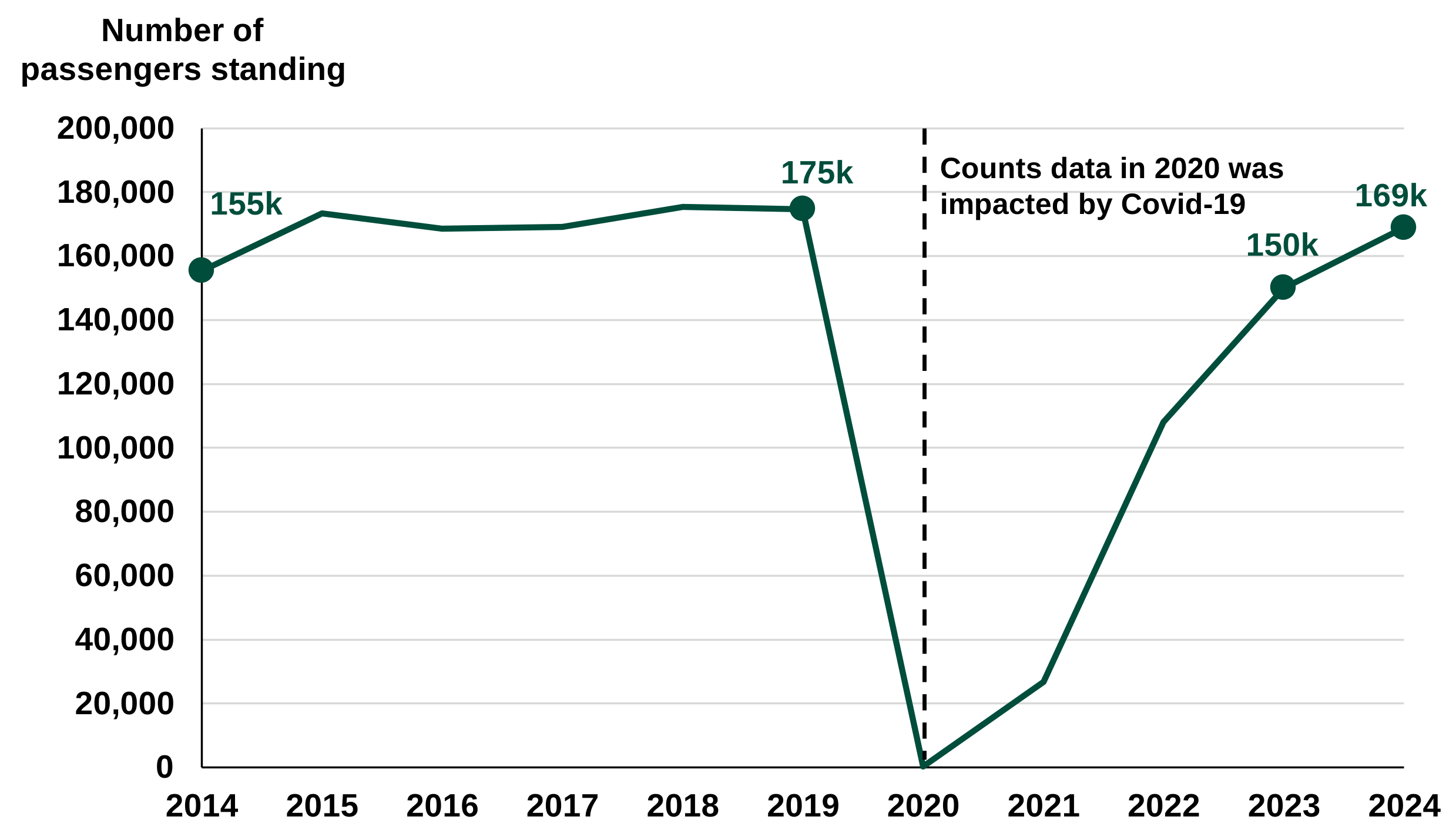
Figure 15: Rail passengers standing during the morning peak on a typical autumn day at major cities in England and Wales (2014 to 2024)
Note: Brighton, Cambridge, and Reading were added to the time series in 2017. This represents a break in the series; therefore, figures before and after 2017 are not directly comparable.
Figure 15 shows the number of passengers standing during the morning peak on a typical autumn day in 2024. During the morning peak (7 am to 10 am), 22% of passengers at major cities in England and Wales were standing, an average of 168,900 passengers (Figure 15). This was higher than autumn 2023 but remained below the level recorded in autumn 2019.
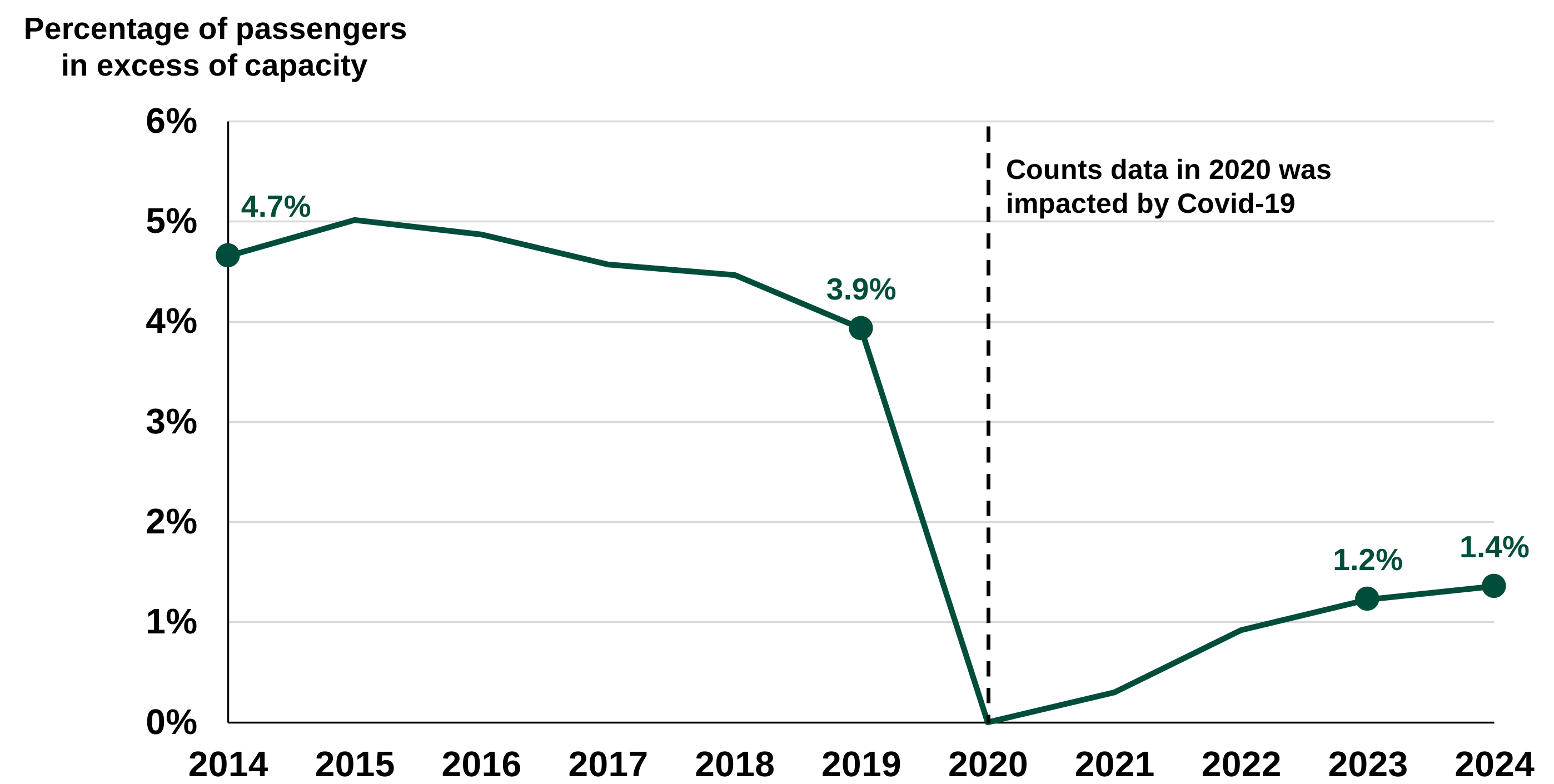
Figure 16: Proportion of passengers in excess of capacity during the morning peak on a typical autumn day in England and Wales (2014 to 2024)
Note: Brighton, Cambridge, and Reading were added to the time series in 2017. This represents a break in the series; therefore, figures before and after 2017 are not directly comparable.
Figure 16 is a line chart showing the percentage of rail passengers in excess of capacity in Great Britain during the morning peak from 2014 to 2024. It shows that the proportion fell from 4.7% in 2014 to 3.9% in 2019, this figure dropped to 0.0% in 2020 due to COVID-19. Since then, levels have gradually increased, reaching 1.4% in autumn 2024, up from 1.2% in 2023, but remains below pre-COVID-19 levels.
Though passenger arrivals have recovered to levels observed in 2019, passengers in excess of capacity remains lower. This is likely due to greater standing capacity on trains in autumn 2024 driven by Elizabeth Line services operating into London city centre, where crowding has historically been highest.
Note: Rail passenger crowding is measured using passengers in excess of capacity (PiXC). The passengers in excess of capacity measure is the number of standard class passengers on a service that are in excess of the standard class capacity, which may include a ‘standing allowance’, at the critical load point. The total number of PiXC are aggregated for all services at each city and are expressed as a percentage of the total standard class load.
Figure 17: The distribution (percentage) of rail passenger arrivals into major cities in England and Wales by hour on a typical day in autumn 2024 and autumn 2019
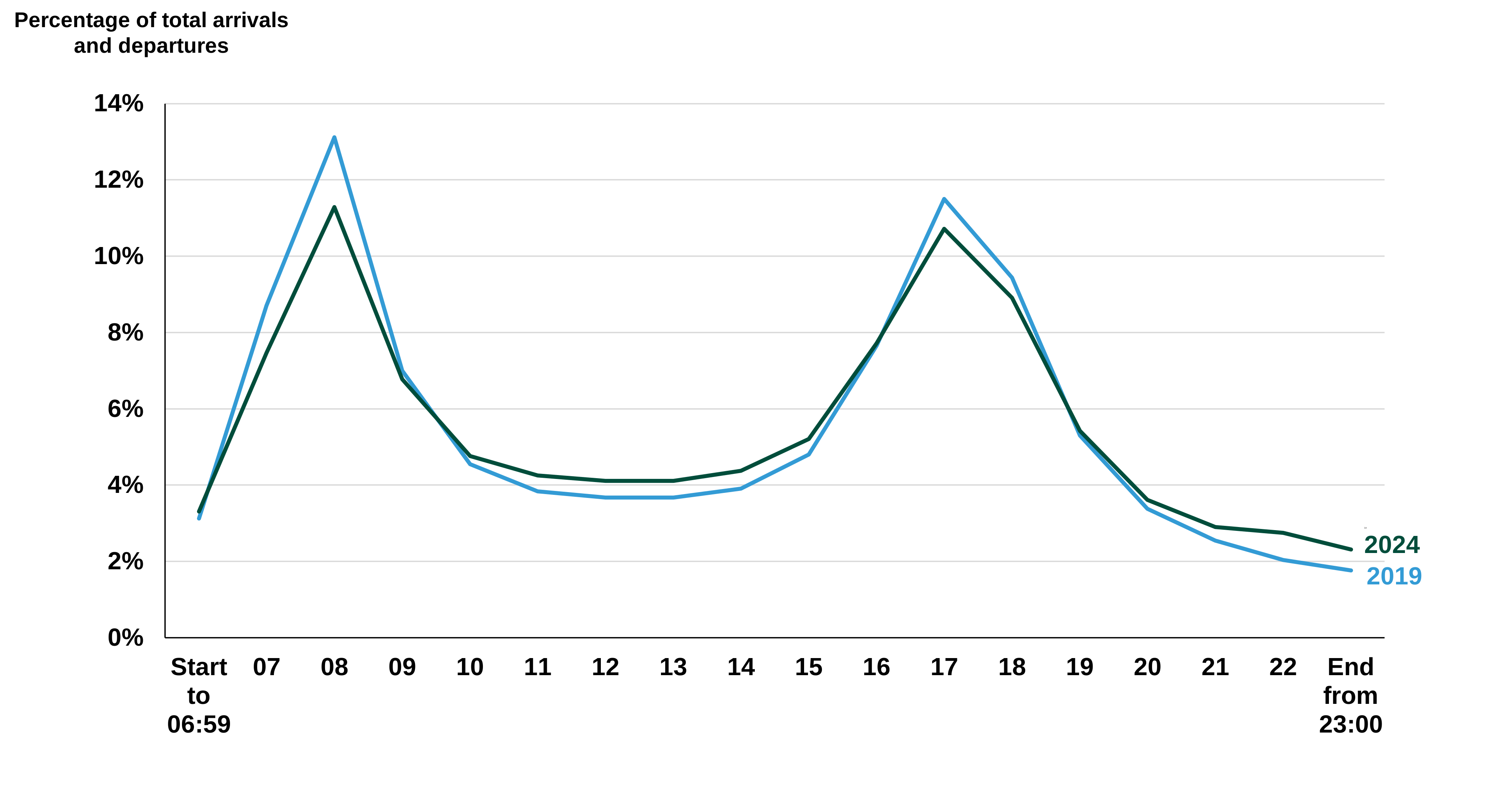
Figure 17 shows that rail travel patterns shifted later in the day in autumn 2024 compared with autumn 2019. In 2019, 11.8% of passengers travelled before 8 am and 9.7% after 8 pm. On a typical day in autumn 2024, a higher proportion of journeys took place after 8 pm (11.6%) than before 8 am (9.7%).
Peak periods at 8 am and 5 pm remain, but both are less pronounced in 2024. The morning peak in particular has reduced compared with 2019. Across the middle of the day, from late morning to mid-afternoon, arrivals in 2024 were more evenly spread, indicating that passengers are travelling at a broader range of times rather than concentrating heavily in the morning rush hour.
This pattern reflects continuing shifts in travel behaviour following the pandemic, with journey times becoming less focused around the traditional commute.
Note: This data represents arrivals and departures for a typical autumn weekday in 2024 and does not reflect a typical weekday across the entire calendar year. For more information please see Department for Transport Rail passenger numbers and crowding on weekdays in major cities in England and Wales: 2024.
Freight usage
Rail freight levels declined after the 2013-14 peak following a decrease in coal traffic.
Freight moved peaked at 22.7bn net tonne kilometres in 2013-14 before decreasing after the 2015 policy decision to phase out coal use in power stations, which reduced coal traffic, a major component of rail freight at the time. This decline continued for several years, but coal now represents a negligible share of freight.
Figure 18: Freight moved (billion net tonne kilometres), Great Britain, annual data, April 1984 to March 2025
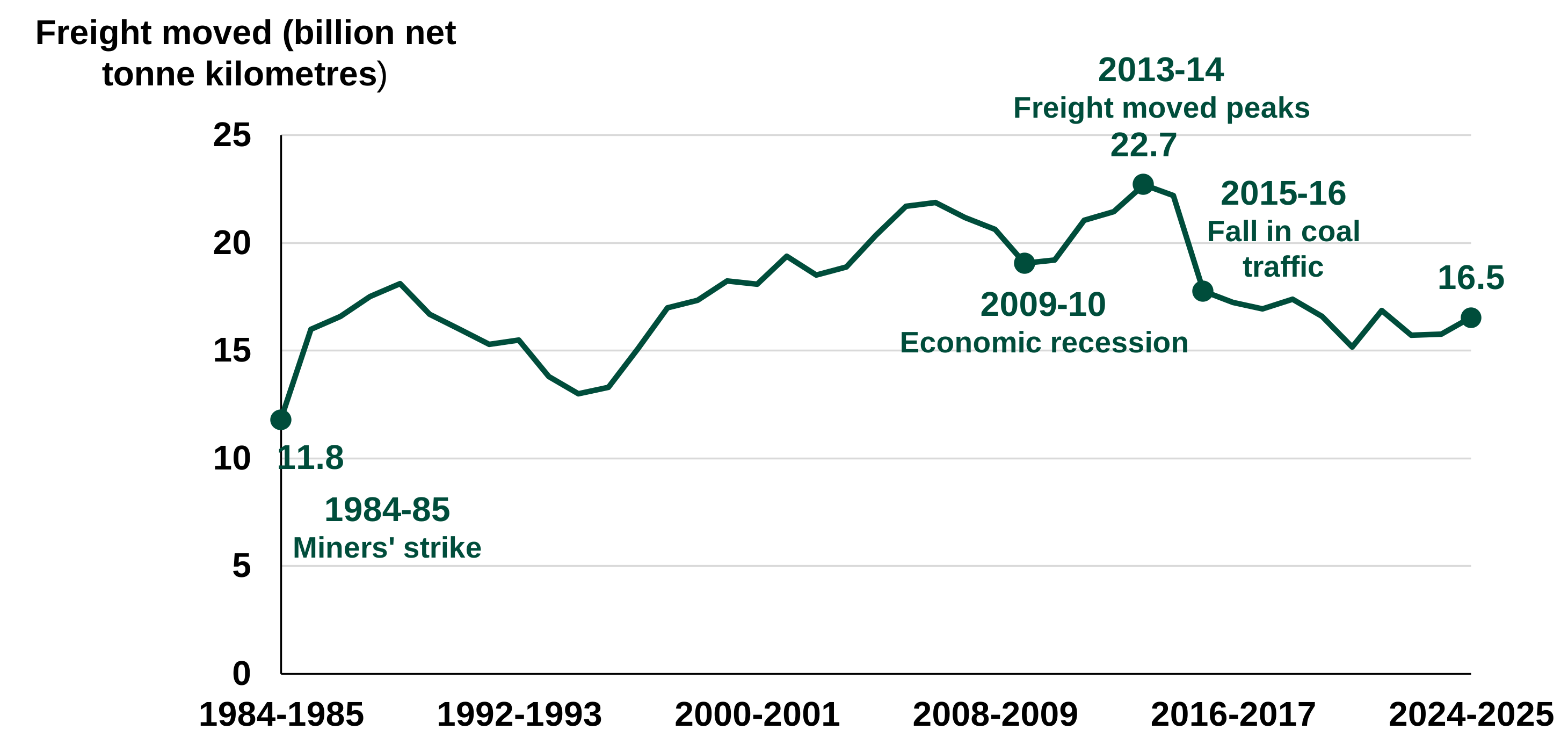
Figure 18 is a line chart showing rail freight moved in Great Britain from 1984-85 to 2024-25, measured in bn net tonne kilometres. Freight starts at 11.8bn in 1984-85, peaks at 22.7bn in 2013-14, then declines after 2015-16 due to a fall in coal traffic, reaching 16.5bn in 2024-25. Key events marked include the miners’ strike (1984-85), economic recession (2009-10), and freight peak (2013-14).
Overall, freight moved has generally declined over the past decade, though it has increased in each of the last two years, reaching 16.5bn net tonne kilometres in 2024-25. Recent growth has been driven mainly by intermodal maritime and construction traffic.
Intermodal maritime (38%) and construction (33%) accounted for the largest shares of freight moved in Great Britain between April 2024 and March 2025. These two commodities had the greatest impact on overall freight movement.
Coal had the largest share of all freight moved until March 2015, and in the latest year it had the smallest share at 0.3%. The large decrease can be accounted for by the end of coal imports.
Figure 19: Market share of freight moved commodities, Great Britain, annual data, 2024-25
| Commodity | Market share of freight moved commodity (%) |
|---|---|
| Coal | 0% |
| Other | 1% |
| International | 1% |
| Industrial minerals | 2% |
| Domestic waste | 2% |
| Intermodal non-maritime | 5% |
| Oil and petroleum | 5% |
| Metals | 6% |
| Biomass | 7% |
| Construction | 33% |
| Intermodal maritime | 38% |
Note: Statistical releases, data tables, an interactive dashboard, methodology and quality information are available on the ORR data portal Freight rail usage and performance page.
Rail performance
Passenger rail performance
Punctuality was stable at around 84-85% before the pandemic, then improved in FYE March 2021 when 92.9% of trains arrived within three minutes of schedule. This temporary improvement was driven by reduced services and passenger numbers during COVID-19. Since then, punctuality has declined towards pre-pandemic levels, reaching 84.8% in 2024-25.
Figure 20: Proportion of trains arriving at recorded stations stops within three minutes, Great Britain, annual data, FYE March 2015 to 2024-25
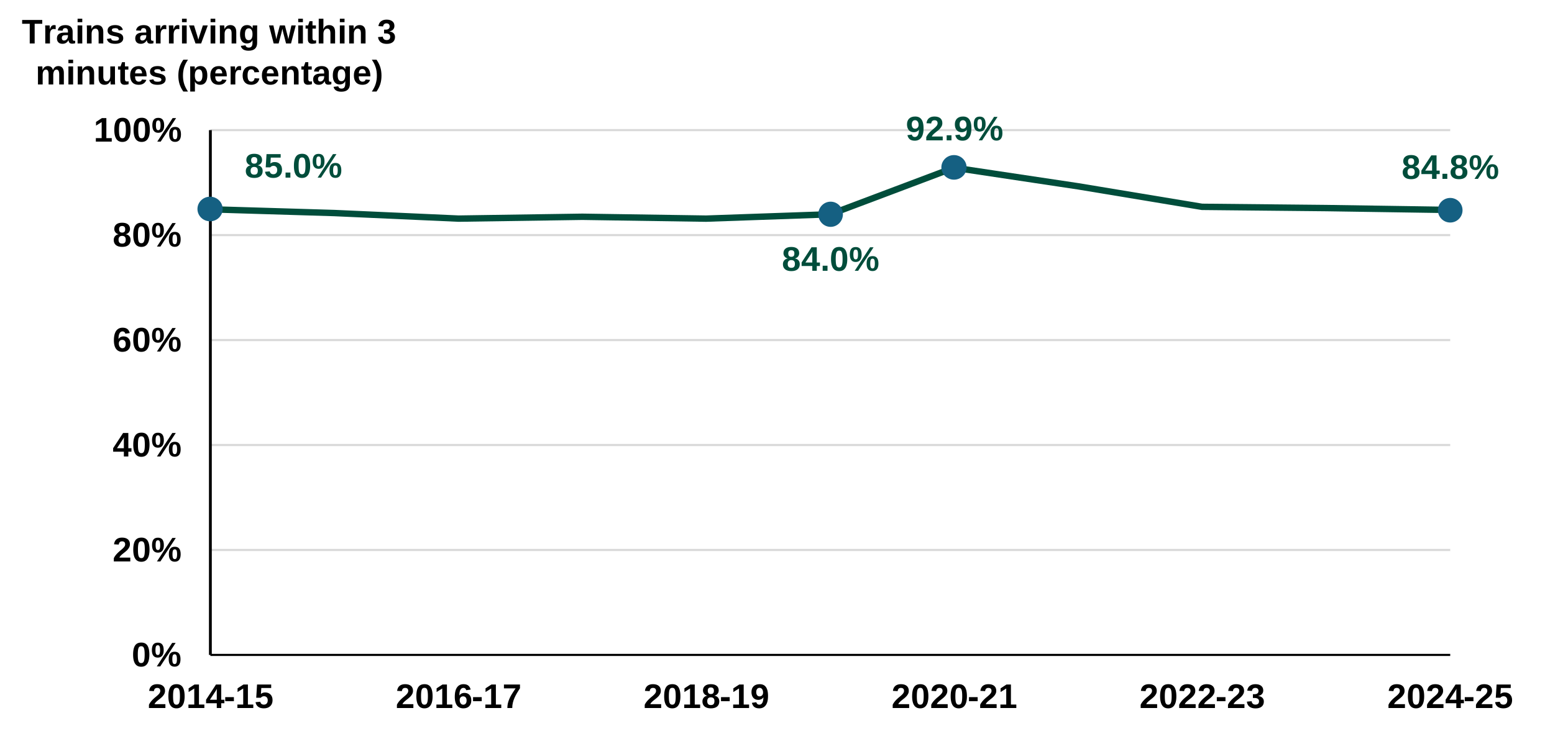
Figure 20 presents a line chart showing the percentage of trains in Great Britain arriving within 3 minutes of schedule from FYE March 2015 to 2024-25.
The cancellations score in Great Britain in 2024-25 was 4.1%, a 0.3pp increase compared with the previous year.
The cancellations measure is a weighted score which counts full cancellations as one and part cancellations as half. This industry measure is an indicator of disruption on the day. It only includes trains cancelled after 22:00 the previous evening and trains removed from the days’ timetable before then may not be included.
Figure 21: Cancellations score, Great Britain, annual data, April 2014 to March 2025
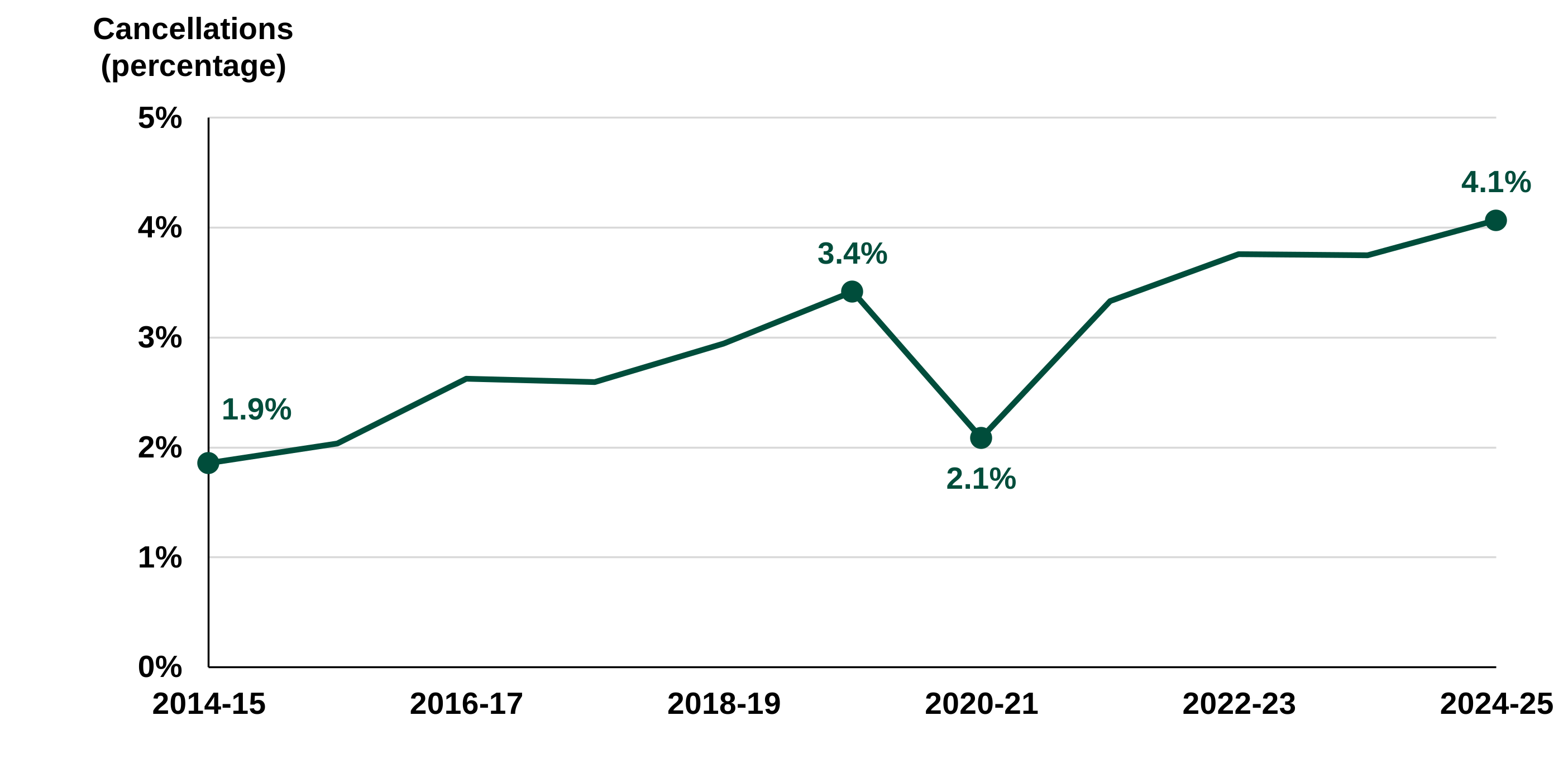
Figure 21 is a line chart showing the cancellations score for trains in Great Britain from FY 2014-15 to 2024-25, measured as a percentage. The score starts at 1.9% in 2014-15, rises gradually to around 3.4% by 2019-20, dips to 2.1% in 2020-21, then increases steadily to 4.1% in 2024-25.
Cancellations fell to their lowest level since 2014-15, reaching 2.1% in 2020-21 due to the COVID-19 pandemic, when fewer services were scheduled. As the number of trains planned continue to increase as rail travel recovers from the pandemic, cancellations have also increased steadily to a record high in the latest year.
Note: Statistical releases, data tables, an interactive dashboard, methodology and quality information is available on the ORR data portal Passenger rail performance page. From January 2023, the ORR also publishes periodic p-coded cancellations data, which captures resource availability shortage cancellations that may not appear in operators’ cancellations scores. These can be found on their p-coded cancellations page.
Freight cancellations have returned to levels similar to those seen in 2019-20.
Figure 22: Freight cancellations, Great Britain, annual data, March 2020 to March 2025
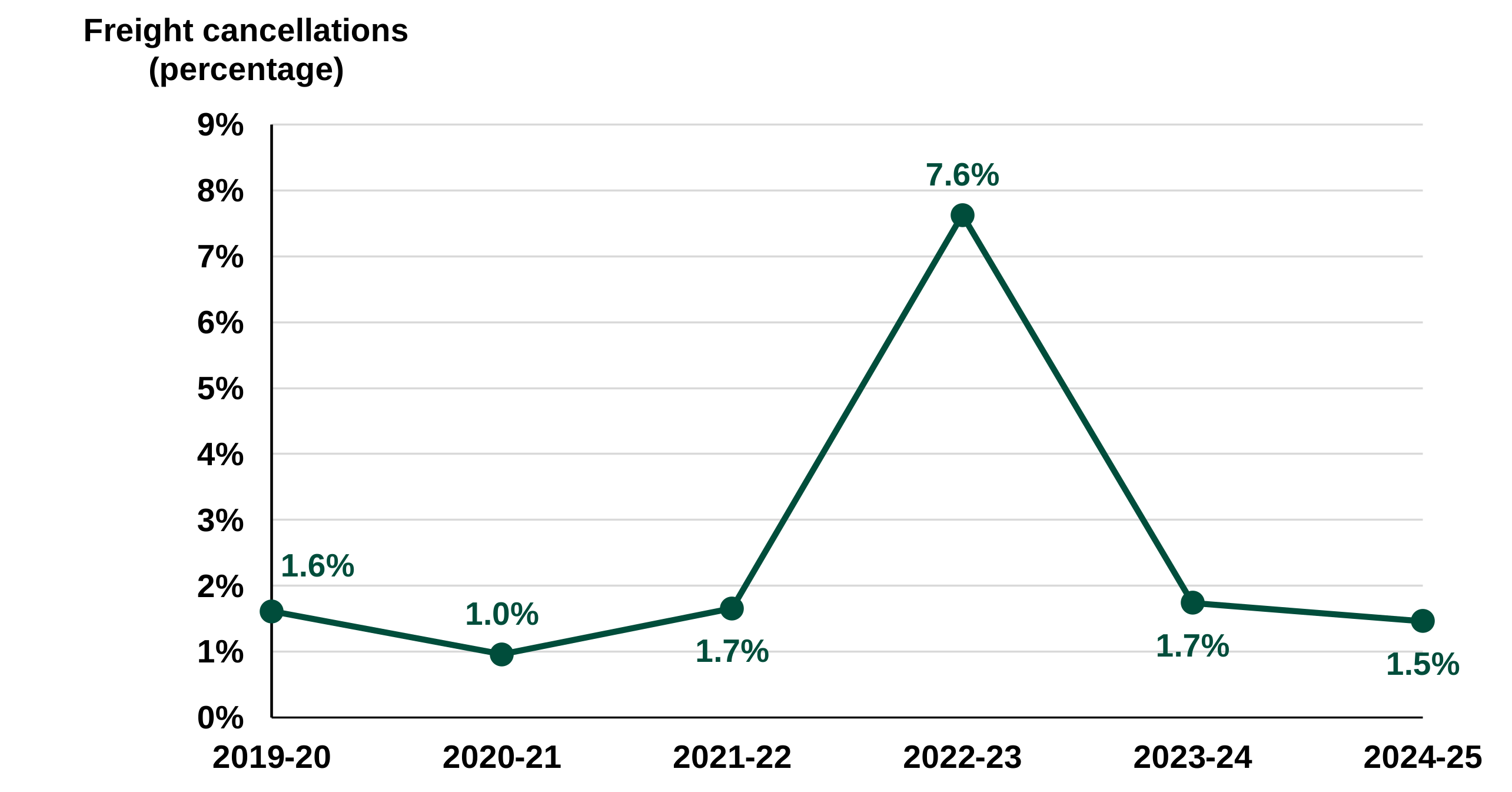
Figure 22 shows the trend in freight cancellations in Great Britain from 2019-20. In 2019-20, freight cancellations were at 1.6%, and after a slight dip to 1.0% in 2020-21, it rose to 1.7% in 2021-22. The most notable change occurred in FYE March 2023, when cancellations spiked to 7.6%, this coincided with operational disruptions due to industrial action. Since then, performance has stabilised, with scores of 1.7% in FYE March 2024 and 1.5% in FYE March 2025, closely aligning with pre-pandemic levels.
Note: Freight cancellations measures the percentage of commercial freight services that are cancelled by the infrastructure manager or another operator that is not a commercial freight operator.
Note: Statistical releases, data tables, an interactive dashboard, methodology and quality information are available on the ORR data portal Freight rail usage and performance page.
Rail Passenger experience
Passenger rail service complaints
There were 322,409 complaints closed in FYE 2025, a decrease of 7.6% compared to the previous year. This gives a rate of 19 complaints closed per 100,000 journeys, which is 13.6% lower than the previous year (21 complaints per 100,000 journeys).
Figure 23: Number of complaints closed per 100,000 journeys, Great Britain, annual data, April 2015 to March 2025
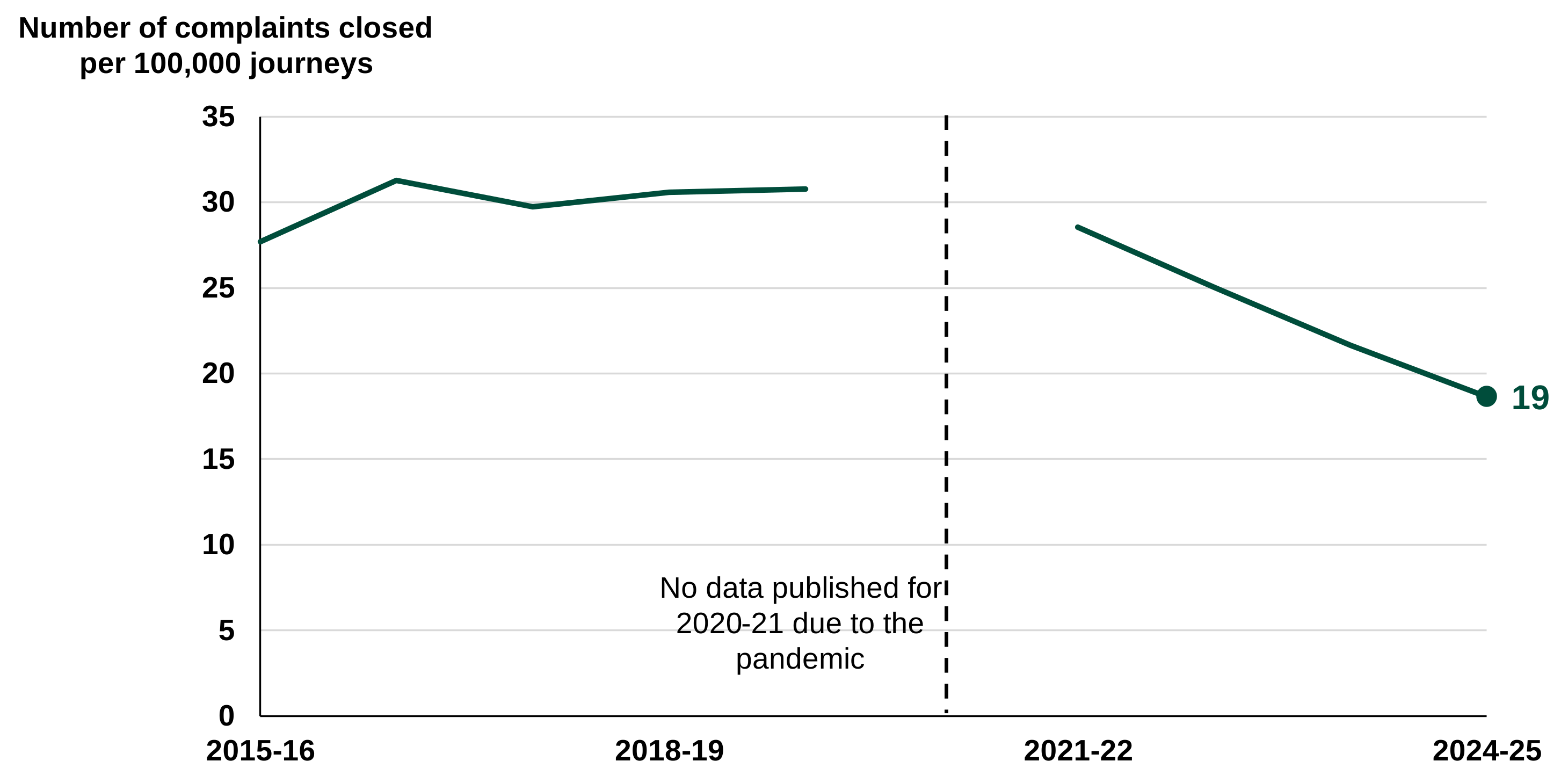
Figure 23 is a line chart showing the rate of complaints closed per 100,000 rail journeys in Great Britain from April 2015 to March 2025. The rate starts at 28 in FYE March 2016 and then rises to average of 31 between FYE March 2017 and 2019-20 . There is no published data for FYE March 2021 due to the pandemic. The rate of complaints per 100,000 journeys decreases to 29 in FYE March 2022 as rail usage begins to recover following the pandemic. In 2024-25, there were 19 complaints closed per 100,000 journeys.
Note: Complaints rates were not published during April 2020 to March 2021. This was due to the impact of the pandemic on passenger rail usage which meant that passenger journeys were not a suitable normaliser to calculate a reliable complaints rate for each operator. An alternative measure of complaints closed (volume) was provided and continues to be published on ORR Passenger rail service complaints table 4100.
Figure 24: Top five complaint categories by percentage, Great Britain, annual data, 2024-25
| Top 5 complaint categories | % of all complaints |
|---|---|
| Punctuality and reliability | 19.3% |
| Sufficient room for all passengers to sit and stand | 12.2% |
| Facilities on board | 7.6% |
| Ticketing and refunds policy | 6.3% |
| Compensation claims process | 4.5% |
-
Punctuality and reliability was the most common cause of complaints to train operators in the latest year, accounting for 19.3% of all complaints. This was 0.3pp lower than the previous year
-
Complaints about sufficient room for all passengers to sit or stand was the second most common cause of complaint, accounting for 12.2% of all complaints. This was 0.5pp lower than the previous year
Overall, 97.1% of complaints closed were responded to within 20 working days in FYE 2025
The proportion of complaints responded to has shown a clear upward trend over time, indicating improved responsiveness.
Figure 25: Percentage of complaints responded to within 20 working days, Great Britain, annual data, April 2015 to March 2025
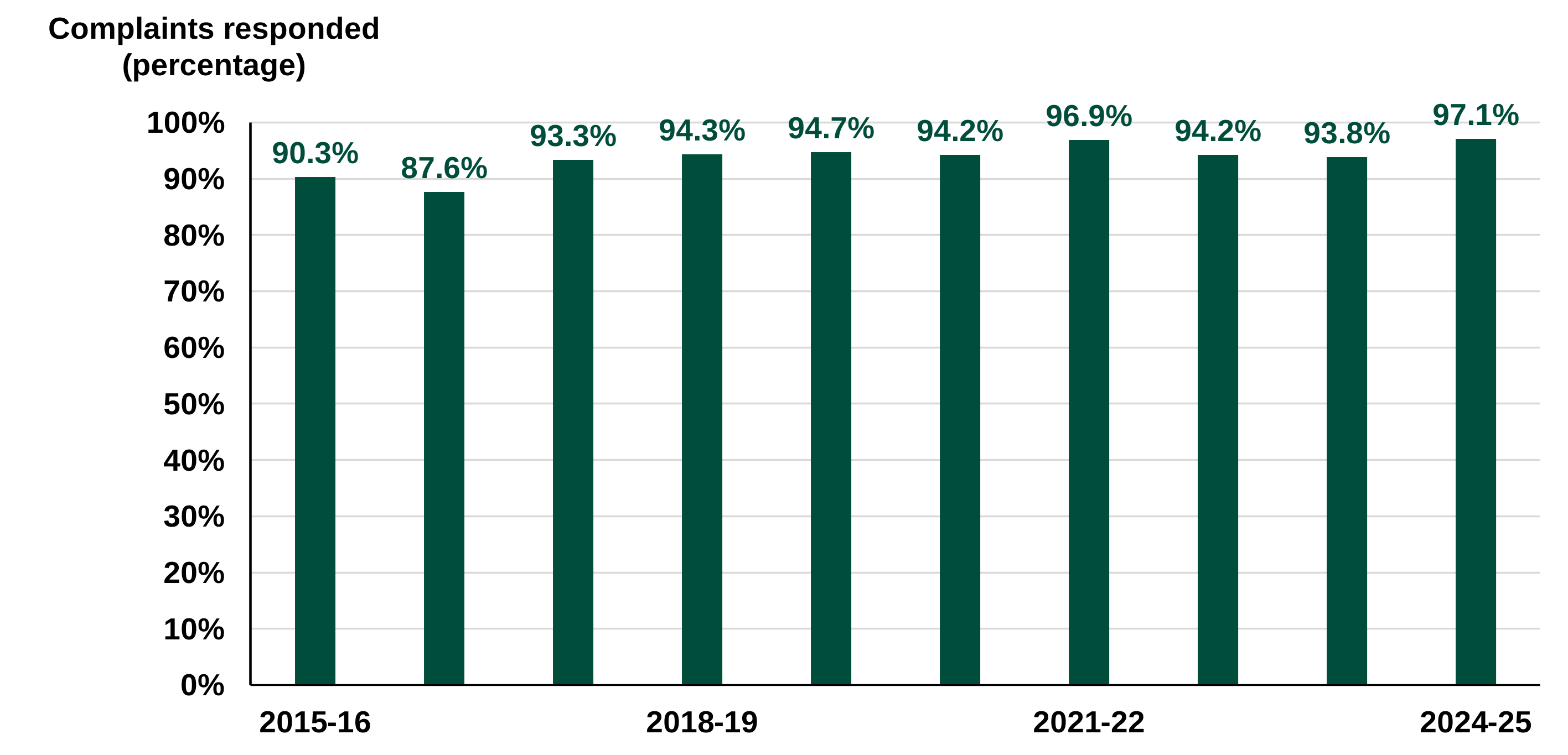
Figure 25 is a bar chart showing the percentage of complaints responded to by year from 2015-16 to 2024-25. In FYE 2025, 97.1% of complaints were responded to within 20 working days, up from 93.8% in FYE 2024, reflecting sustained progress in complaint handling, with percentages consistently above 93% from 2018–19 onwards.
Of the 24 train operators, 22 met the industry requirement of responding to at least 95% of complaints within the timeframe.
Note: Statistical releases, data tables, an interactive dashboard, methodology and quality information is available on the ORR data portal Passenger rail service complaints page.
Delay compensation claims
There were 8.3 million delay compensation claims closed in 2024-25, a 9% increase compared to the previous year.
Figure 26: Number of delay compensation claims closed, Great Britain, annual data, March 2019 to March 2025
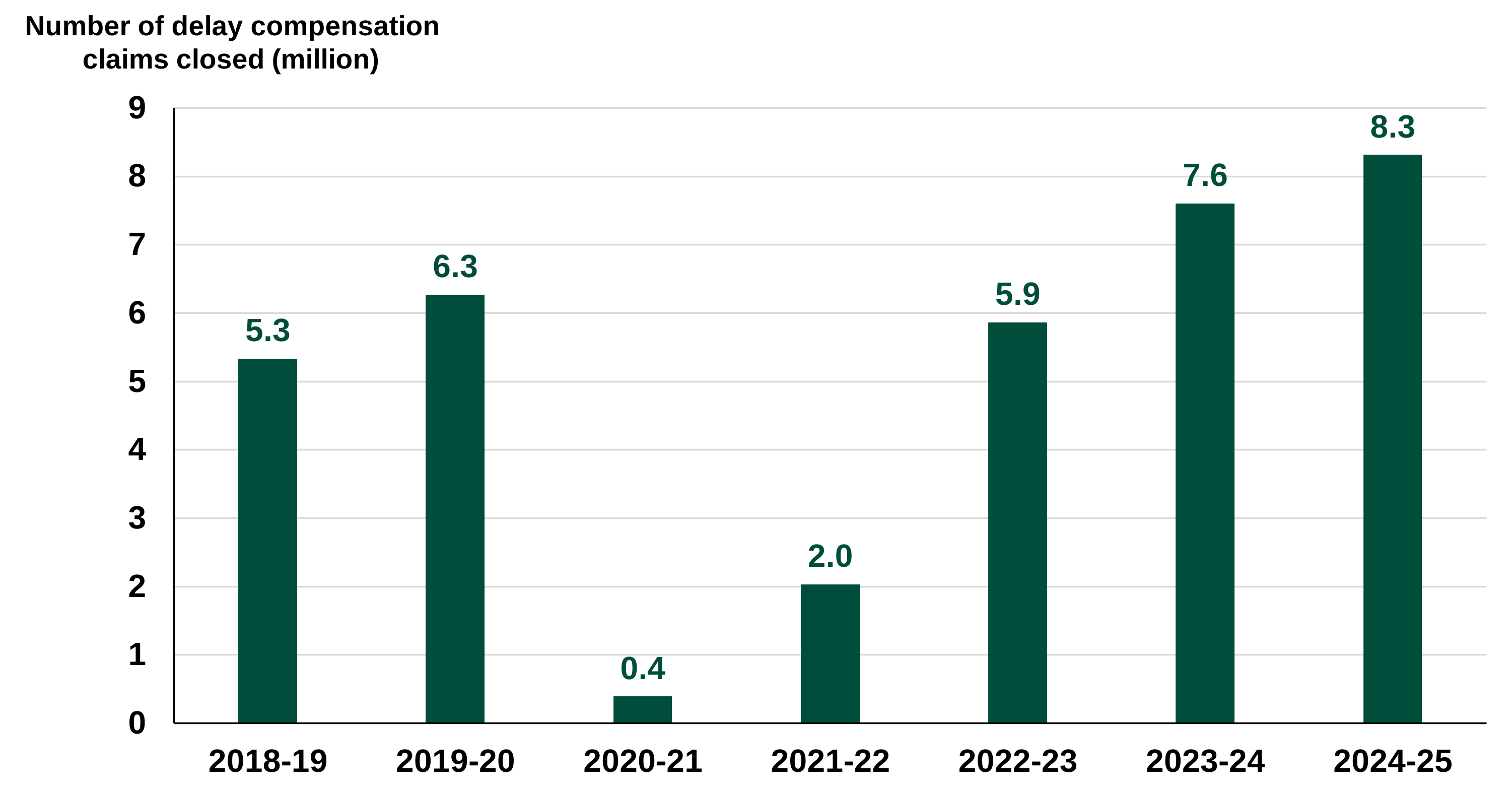
Figure 26 shows the number of delay compensation claims closed from FYE 2019 to FYE 2025. in FYE 2019 there were 5.3 million claims closed, this increased to 6.3 million in FYE 2020. There was a sharp drop to 0.4 million in FYE 2021. Since then, the delay compensation claims closed has risen annually, reaching 8.3 million in FYE 2025, the highest in the series and up from 7.6 million the previous year.
The number of delay compensation claims closed in the latest two years (April 2023 to March 2025) is higher than the number of delay compensation claims closed pre-pandemic.
Note: Factsheets, data tables, interactive dashboards, methodology and quality information are available on the ORR data portal Delay compensation claims page.
Passenger satisfaction (complaints handling)
Satisfaction with complaint handling and complaint outcome improved.
Figure 27: Satisfaction with complaint handling and complaint outcome, Great Britain, annual data, FYE 2025
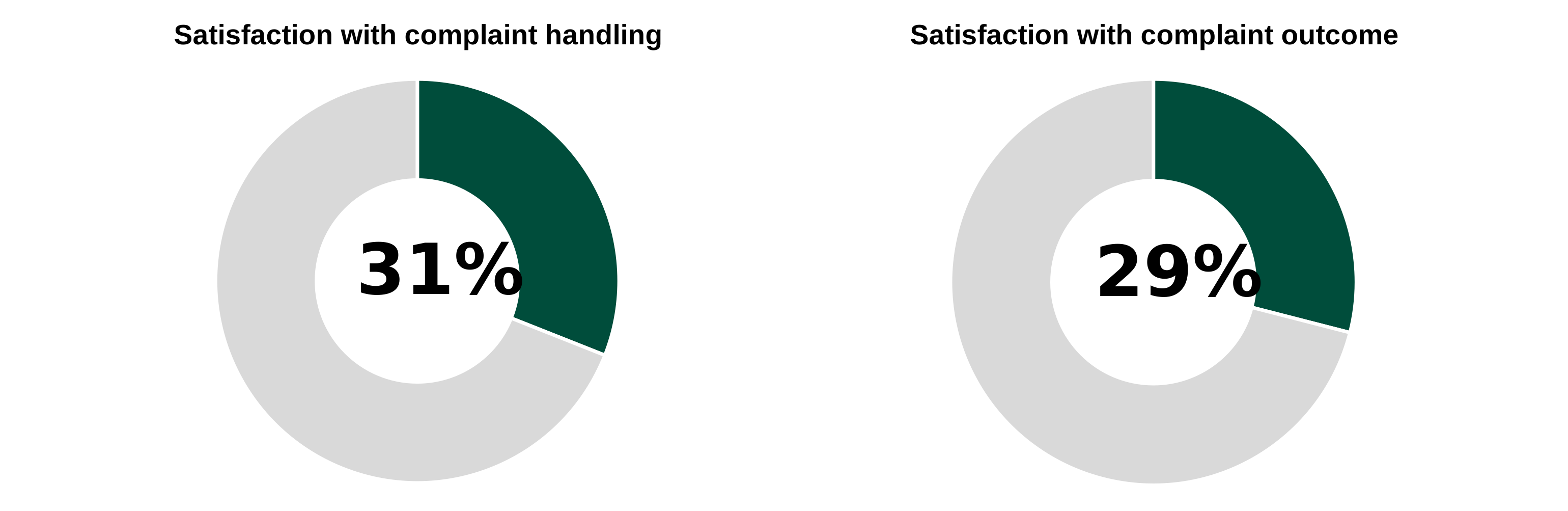
Figure 27 shows that satisfaction with complaint handling was 31%, and satisfaction with complaint outcome was 29%, both slightly higher than last year. These figures are based on survey data, so changes should be interpreted as indicative of a general upward trend rather than precise shifts, given potential margins of error.
Note: Factsheets, data tables, interactive dashboards, methodology and quality information are available on the ORR data portal Passenger satisfaction page.
Rail passenger accessibility
Passenger assistance
Booked passenger assists continue an increasing trend.
In April 2022, requirements were introduced to allow passengers to book assistance up to two hours prior to travel. There were 1.62 million passenger assists requested in 2024-25, a 18% increase compared with the previous year.
Figure 28: Booked passenger assists, Great Britain, annual data, April 2022 to March 2025
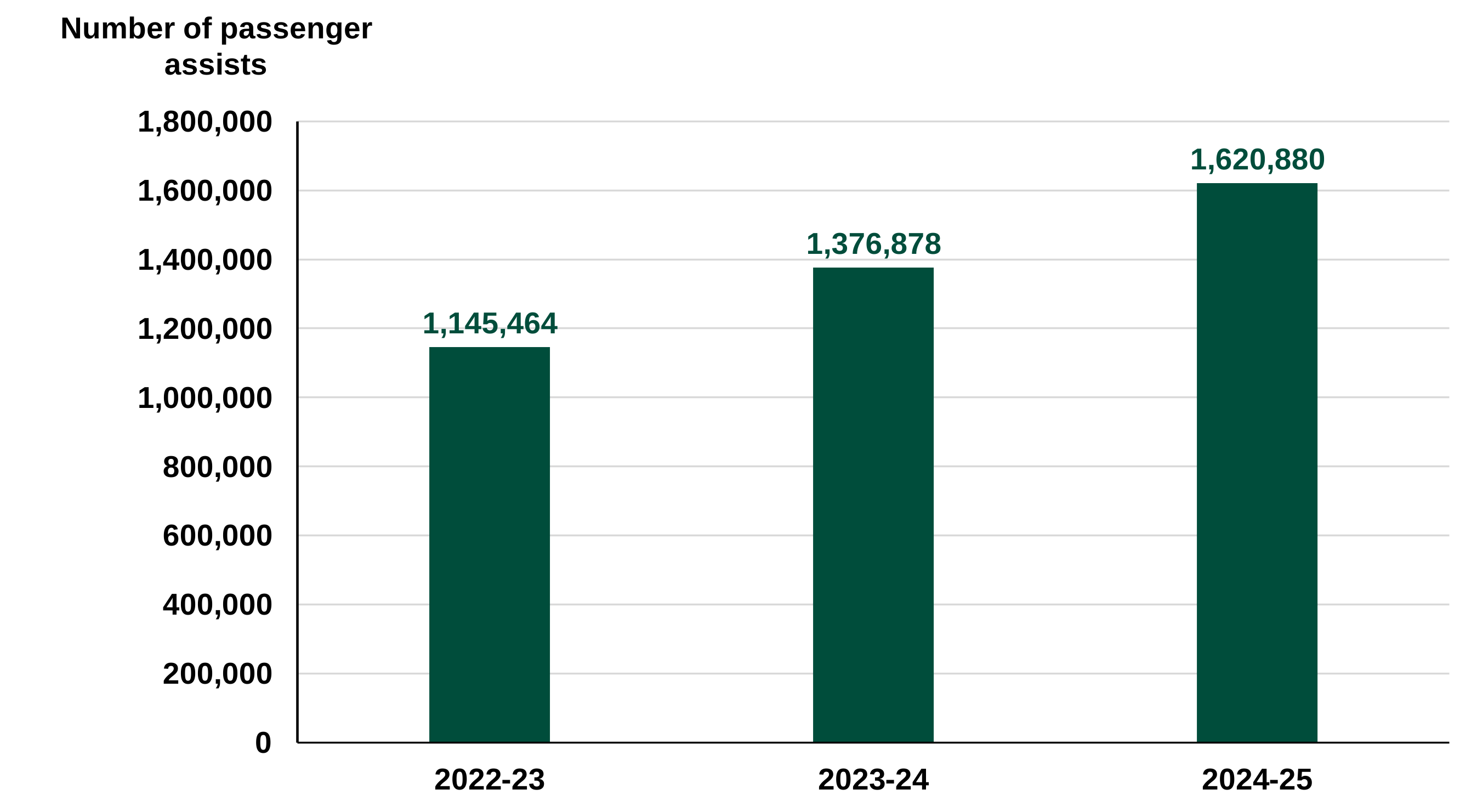
Figure 28 is a bar chart showing the number of passenger assists in Great Britain for FYE 2023 to FYE 2025. The number of passenger assists has risen annually from 1.2 million to 1.4 million and then to 1.6 million.
Booked passenger assists continue to rise. This increase may reflect the growth in passenger journeys, which are approaching pre-pandemic levels. However, it is difficult to determine the extent to which greater awareness of, and ease of use of, the passenger assist booking system has contributed to this increase.
Note: Factsheets, data tables, interactive dashboards, methodology and quality information are available on the ORR data portal Passenger assistance page.
Disabled Persons Railcards (DPRCs)
Disabled Persons Railcards in circulation continue to follow an increasing trend.
As of 31 March 2025, there were 348,444 Disabled Persons Railcards (DPRCs) in circulation, an 18% increase compared to the previous year. This includes both one year and three year DPRCs issued in the latest year.
Figure 29: Disabled Persons Railcards in circulation at financial year end, Great Britain, annual data, 31 March 2013 to 31 March 2025
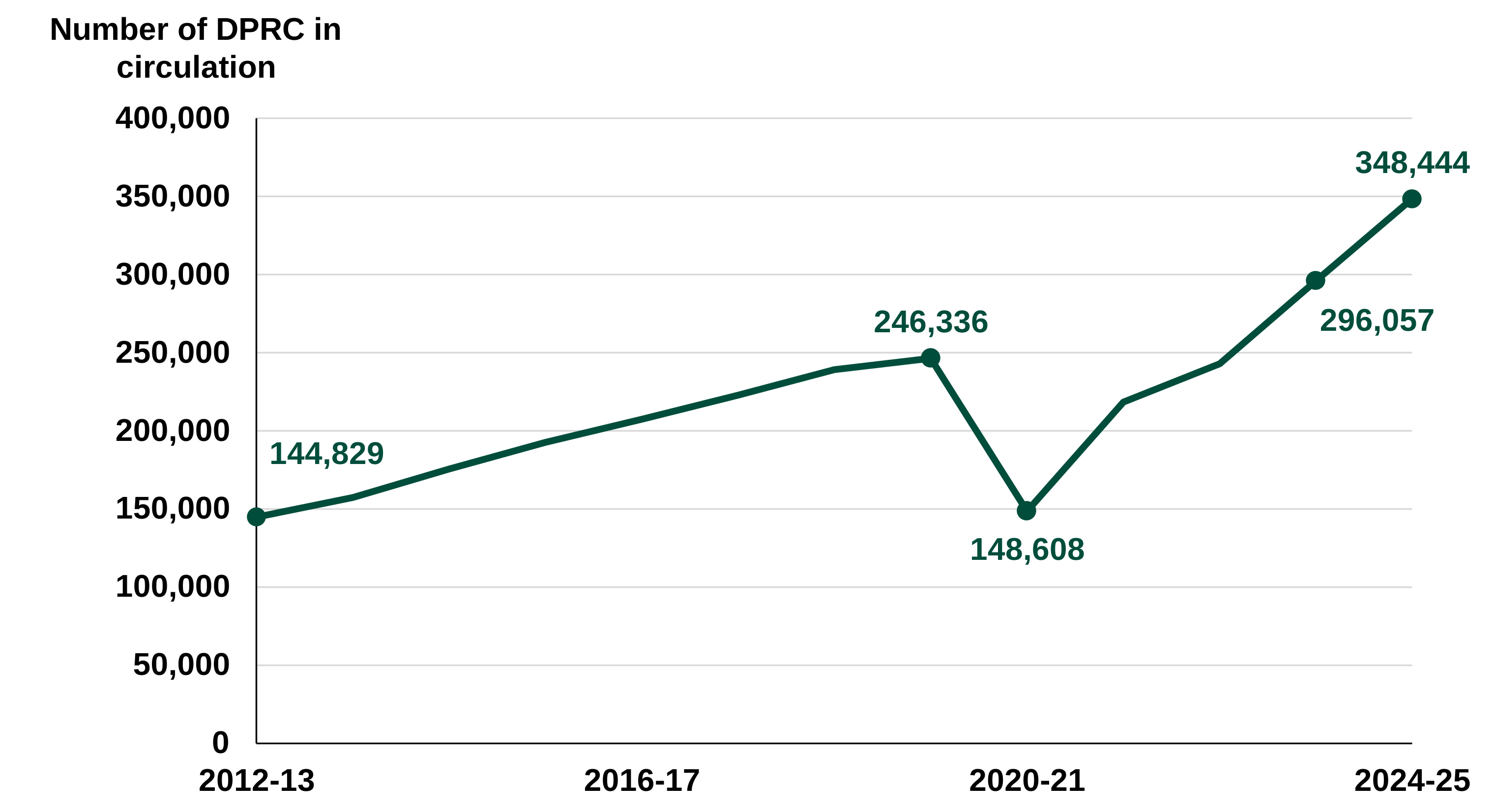
Figure 29 is a line chart showing the number of Disabled Persons’ Railcards (DPRC) in circulation in Great Britain from April 2012 to March 2025. Numbers rise from 144,829 in FYE 2013 to 246,336 in FYE 2020, then drops to 148,608 in FYE 2021, then increased annually reaching 348,444 in FYE 2025. Despite the sharp decline during the pandemic, volumes recovered and have continued to grow, surpassing pre-pandemic levels. This long-term increase highlights sustained growth in railcard uptake.
Travel remains lower for people with mobility difficulties.
The National Travel Survey reports that on average in 2024, persons with mobility difficulties made 6 rail trips per year compared with 26 rail trips per year for those without mobility difficulties. This represents 77.6% fewer rail trips for people with mobility difficulties. Those with mobility difficulties also made 36.7% fewer car trips and 23.2% fewer bus trips in 2024 than those without mobility difficulties.
Note: For more information please see Office of Rail and Road Disabled Persons Railcards (Table 4310) and the Department for Transport’s 2024 edition of the National Travel Survey’s Accessibility - GOV.UK section (NTS0709).
Passenger lifts at stations
In FYE 2025, lifts at Network Rail-managed stations experienced an average of 7.1 faults per lift.
Figure 30: Faults per lift, Great Britain, April 2022 to March 2025
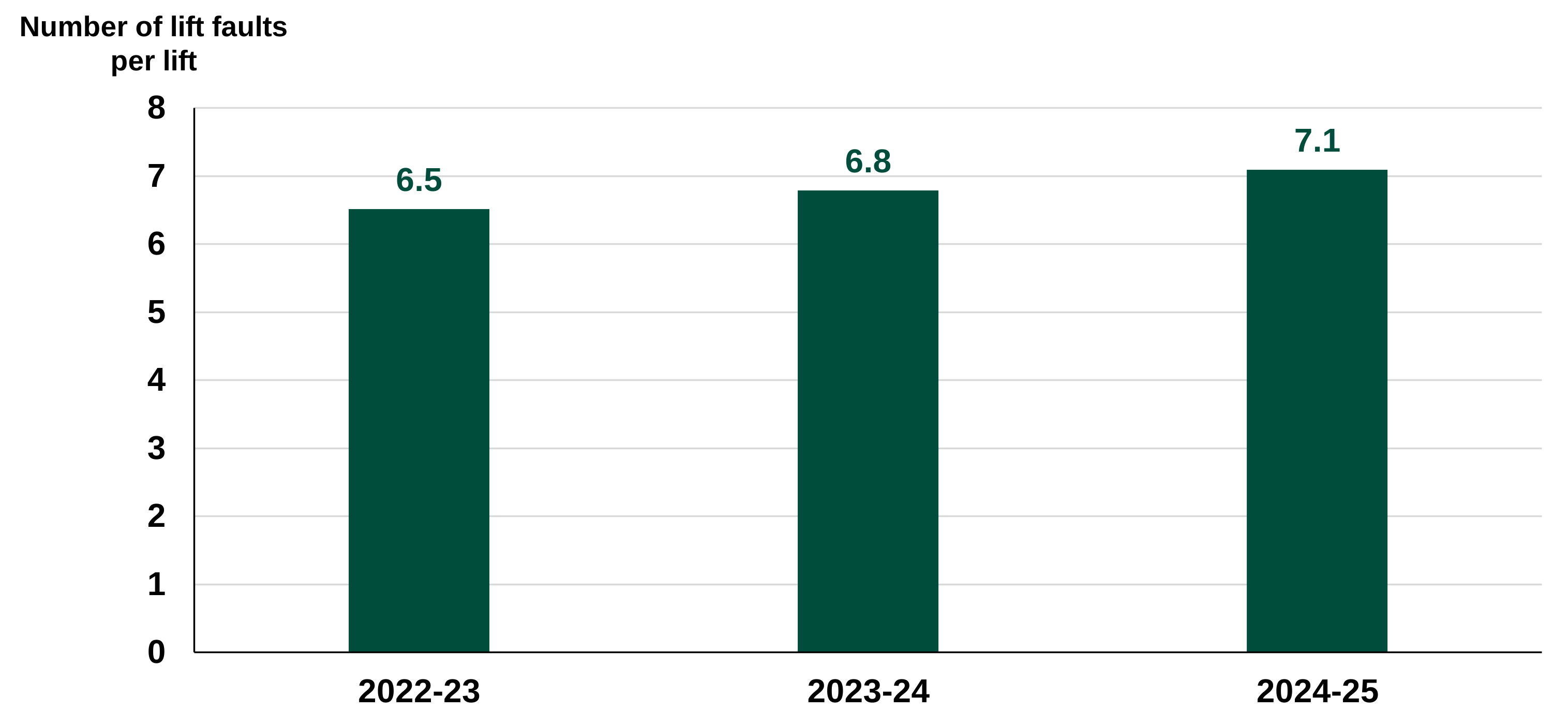
Figure 30 is a bar chart showing the average number of lift faults per lift from April 2022 to March 2025. The values increase annually from 6.5 faults in FYE 2023, to 6.8 in FYE 2024, and 7.2 in FYE 2025.
There were 9,587 lift faults in the latest year (FYE 2025), a 9.3% increase compared with the previous year. Nearly two-thirds (63.1%) of these faults were attributed to wear and tear, which rose by 9.1% since last year. Faults due to misuse and vandalism increased by 9.9%.
The 7.2% increase in passenger journeys in the FYE March 2025 is likely to have increased station lift usage, which in turn, may have contributed to an increase in lift faults recorded in the latest year.
Note: Statistical releases, data tables, methodology and quality information is available on the ORR data portal Passenger lifts at stations page.
Rail finance and Government support
Passenger Revenue
Annual passenger revenue in FYE 2025 was £11.5bn, an increase of £0.9bn compared with the previous year.
Figure 31: Passenger revenue by sector (£bn), Great Britain, annual data, FYE 2025
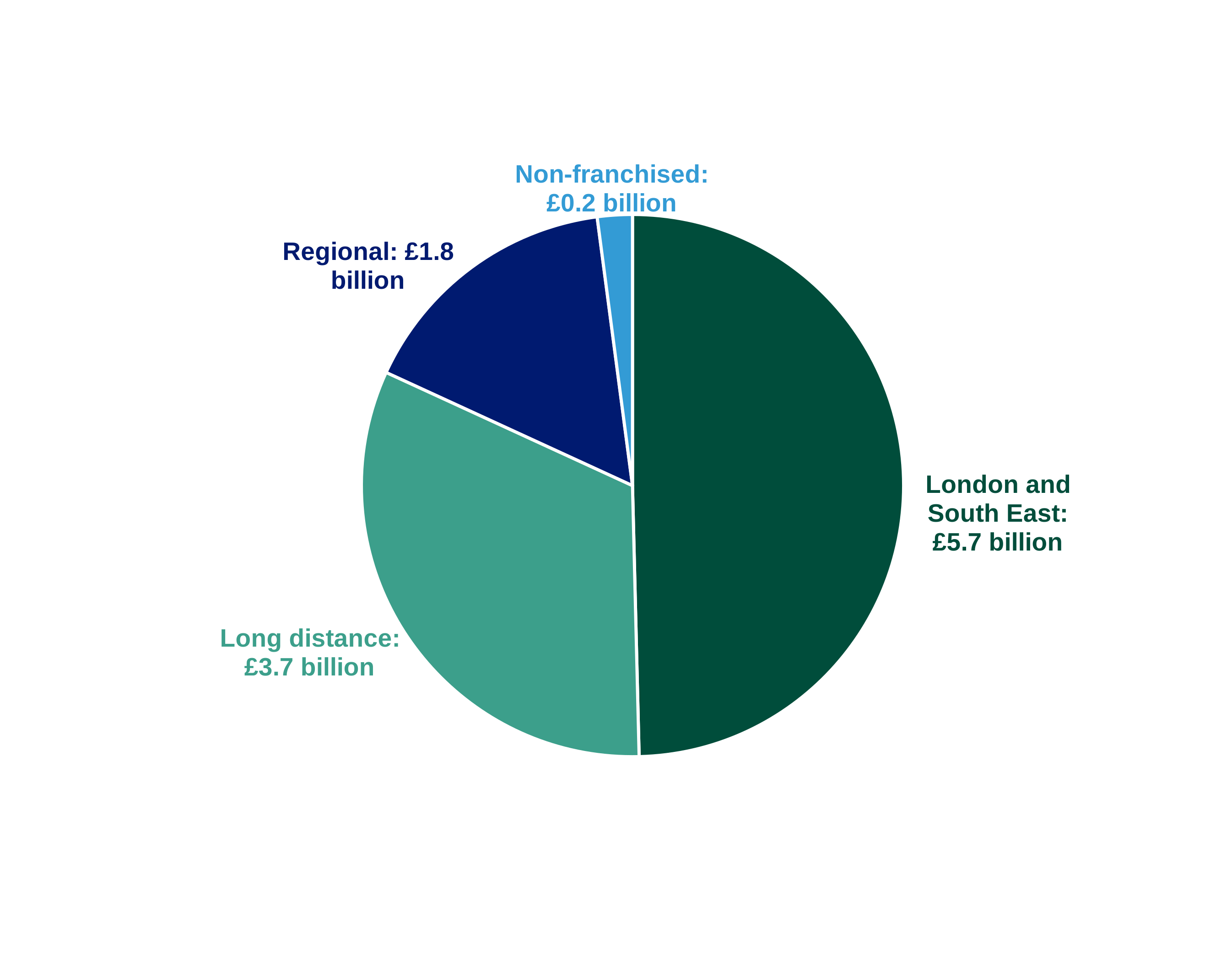
Figure 31 shows that the London and South East sector generated the largest share of revenue (£5.7bn) compared with the Long distance, Regional and Non-franchised sectors.
Rail fares index
Rail fares in Great Britain rose by 5.1% in March 2025 compared with March 2024, outpacing inflation as measured by the Retail Price Index (3.2%). Long-distance fares recorded the largest increase, up 5.4% year-on-year.
Figure 32: Annual increase in rail fares and year on year increase in ‘all items’ Retail Prices Index (RPI), Great Britain, annual data, 2016 to 2025
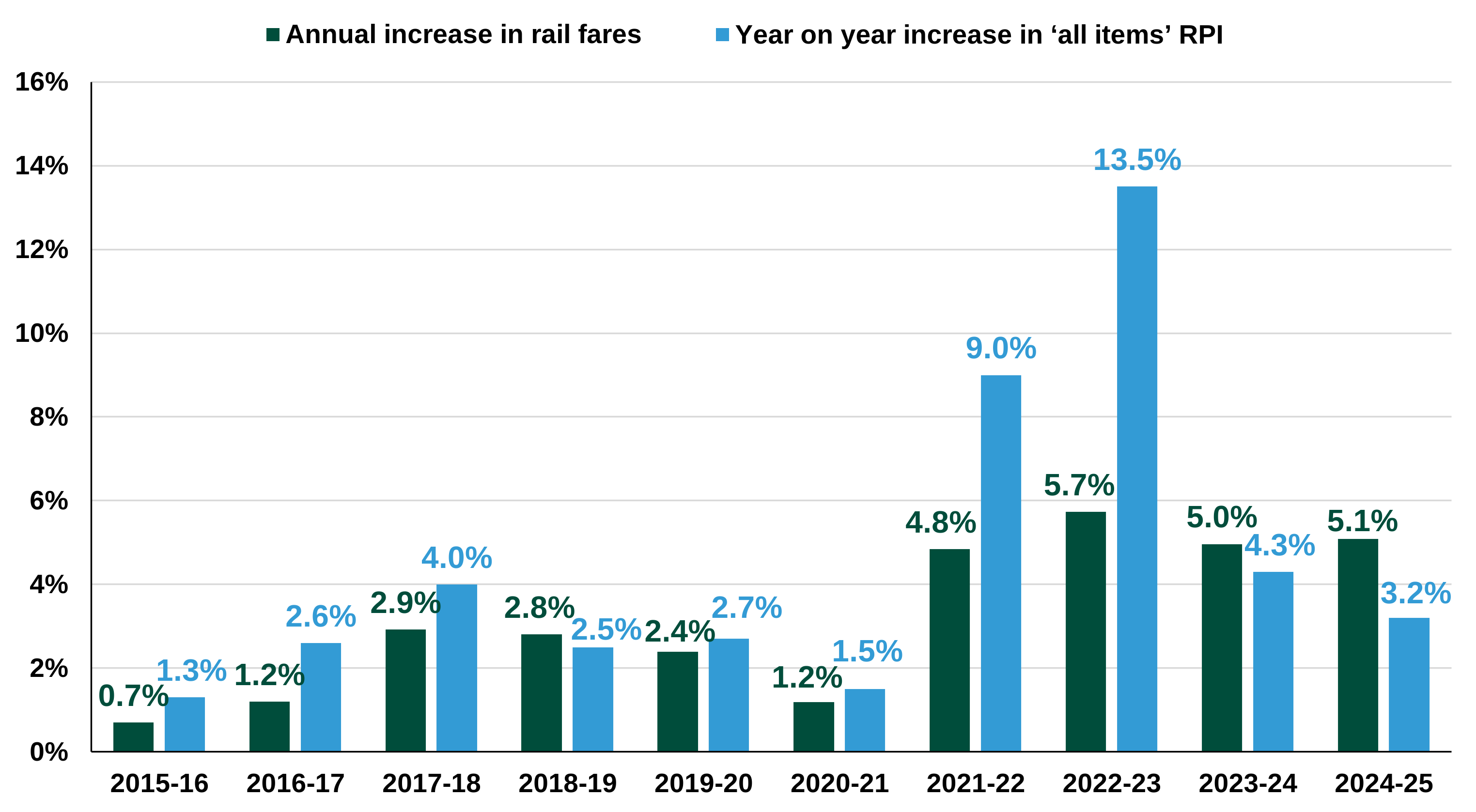
Figure 32 is a bar and line chart comparing annual rail fare increases with year-on-year RPI (‘all items’) from 2016 to 2025. Rail fare increases (green bars) range from 0.7% in 2016 to 5.1% in 2025, with notable rises in 2022 (4.8%), 2023 (5.7%), and 2024 (5.0%). RPI increases (blue squares) vary from 1.3% in 2016 to a peak of 13.5% in 2023, then fall to 3.2% in 2025.
Off-Peak tickets accounted for the largest share of revenue in 2024-25
In 2024-25, Off-Peak tickets accounted for the largest share of revenue at 32%, followed by Anytime tickets at 28%. Advance tickets made up 23% of revenue, while Season tickets and Super Off-Peak tickets each represented 8%. This distribution highlights the continued popularity of Anytime and Off-peak tickets, which together accounted for around 60% of all ticket revenue.
Figure 33: Revenue share by ticket type, Great Britain, annual data, March 2024 to February 2025
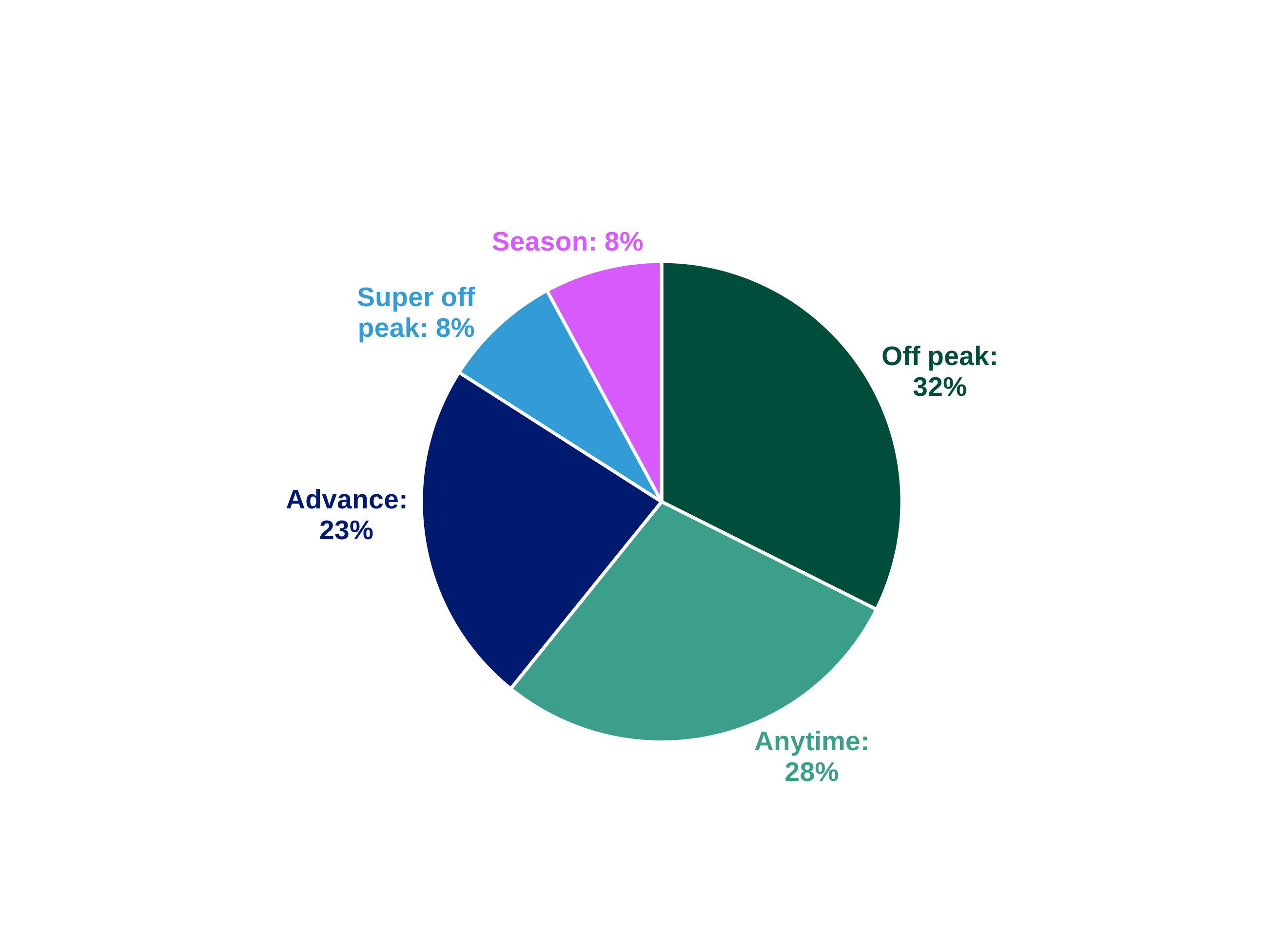
Figure 33 is a pie chart showing the distribution of rail ticket types in Great Britain. Off-peak tickets account for 32%, Anytime tickets 28%, Advance tickets 23%, Season tickets 8%, and Super Off-peak tickets 8%.
Note: Market share data above may differ from passenger revenue data by ticket type in the ORR Passenger rail usage release. This is because revenue data for fares are based on revenue in the twelve months (March 2024 to February 2025) preceding the implementation of new fares (March 2025).
Note: Statistical releases, data tables, methodology and quality information are available on the ORR data portal Rail fares page.
Rail industry finance (UK)
To account for inflation, historic data has been adjusted to prices for the year 2024-25 using the Consumer Price Index (CPI). Income to the rail industry in the UK totalled 25.9bn in FYE 2025. This is a decrease of 0.6% compared with the previous year when adjusted for inflation. Total industry expenditure was £26.0bn in FYE 2025, an increase of 1.0% compared to the previous year when adjusted for inflation.
Figure 34: Income and government funding for the operational rail industry, UK, annual data, April 2017 to March 2025 (in 2024-25 prices)
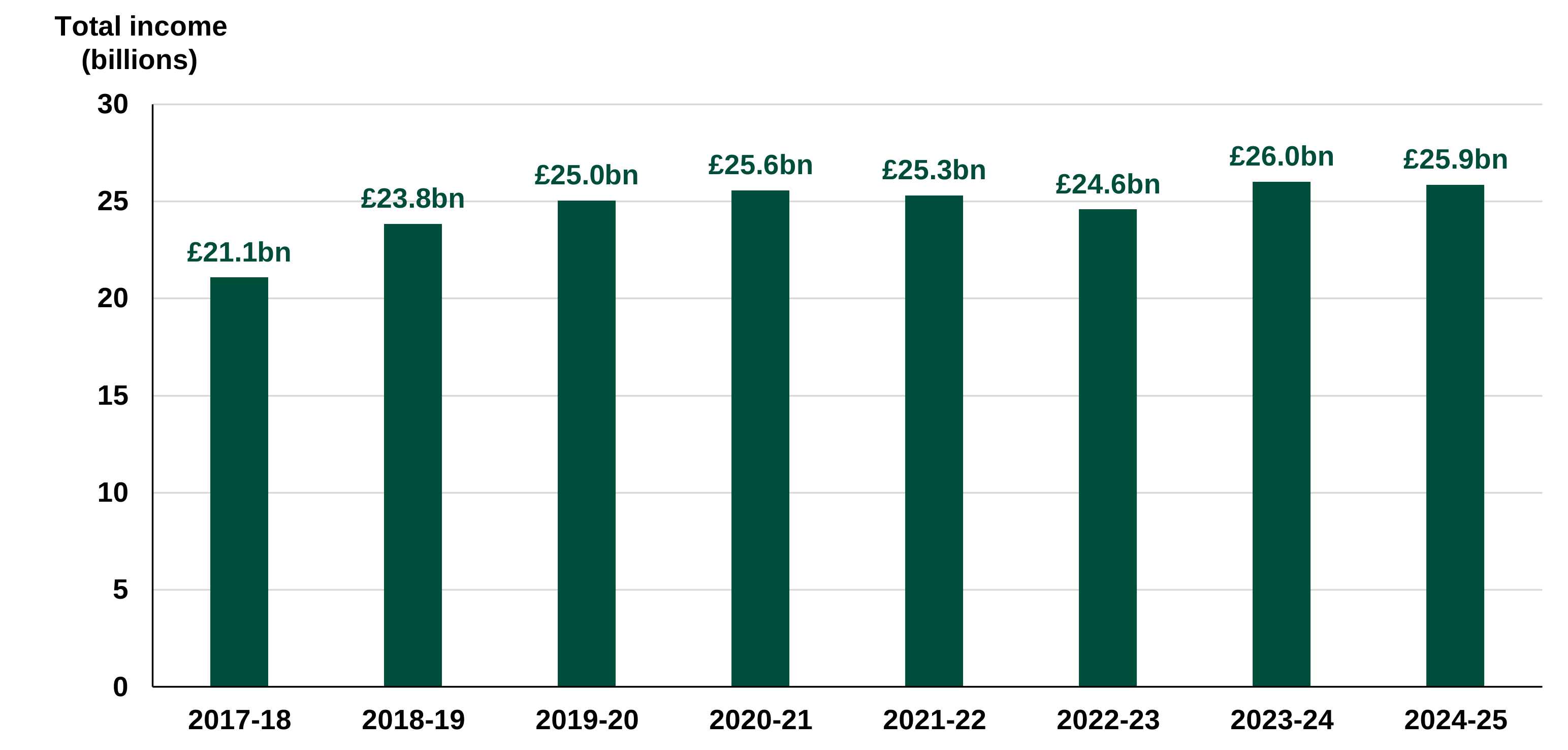
Figure 34 is a bar chart showing total rail income in Great Britain from FYE2018 to FYE 2025. Income rises from £21.1bn in 2017-18 to £25.6bn in the FYE March 2021. It then falls through 2022-23 to £24.6bn before increasing again to a peak of £26.0bn in 2023-24, followed by a slight decrease (-0.6%) to £25.9bn in 2024-25.
Note: Statistical releases, data tables, an interactive dashboard, methodology and quality information is available on the ORR data portal Rail industry finance (UK) page.
The impact of the pandemic resulted in the highest level of subsidies since privatisation. Whilst it has fallen in the years following the pandemic, it still exceeded pre-pandemic levels in 2024-25.
Figure 35: Net government subsidy, Great Britain, FYE March 1989 to 2024-25, £billions, real terms based on 2025 prices
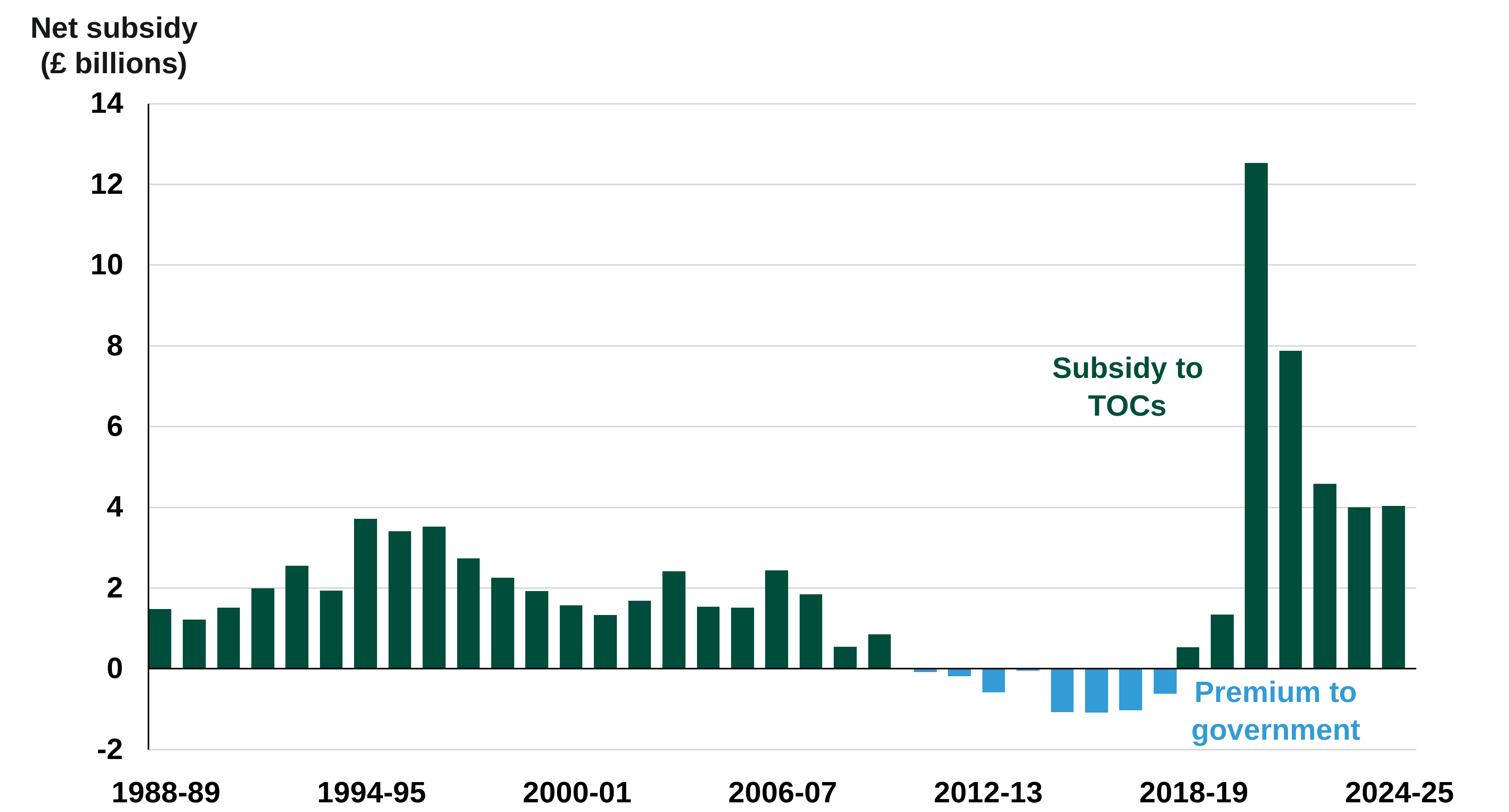
Figure 35 shows the net subsidy to Train Operating Companies (TOCs) from the Government in Great Britain between 1988-89 and 2024-25. Between 2010-11 and 2017-18, TOCs paid a net premium to the Government. The net Government subsidy reached its highest level in 2020-21, declined steadily until 2023-24, and has remained broadly unchanged in the last year.
In 2024-25, TOCs received an overall subsidy of £4.2bn from Government, a 1% increase on the previous year in real terms. Government funding for operational costs were £11.9bn, 7% lower than the previous year. Government funding was largely directed at Network Rail (£7.6bn) and net passenger operator support (£4.2bn). Network Rail and HS2 also received a total of £9.2 bn in enhancements funding, a 6% decrease from the previous year.
Despite the decrease in net subsidy to TOCs in Great Britain since 2020-21, these numbers remain higher when compared with pre-pandemic years.
Rail accounted for 56% of public transport expenditure in Great Britain in 2024-25.
Note: Government funding covers payments made from or to Department for Transport, Transport Scotland, and Welsh Government.
Table 1: Income by source, Great Britain, real terms based on 2024-25 prices, compared with the previous year and pre-pandemic/Covid-19
| Financial Year | Government Support | Passenger revenue | Private Investment |
|---|---|---|---|
| 2019-20 | £13.9bn | £12.9bn | £1.2bn |
| 2023-24 | £23.1bn | £10.6bn | £0.6bn |
| 2024-25 | £21.6bn | £11.5bn | £0.8bn |
| % Change since 2023 to 2024 | -6% | +8% | +27% |
| % Change since 2019 to 2020 | +56% | -11% | -37% |
Note: Government support includes total operational funding as well as total enhancements funding and miscellaneous funding. Operational funding includes payments to or from franchised train operators, passenger transport executive grants, payments to infrastructure managers and freight grants. Government support for the operational railway was £11.9bn in 2024-25 – equivalent to around £400 per household.
Note: For more information please see: Office of Rail and Road: Rail industry finance (Table 7270).
Table 2: Annual railway public expenditure by UK Super Region
| Super Region | 2019 to 2020 | 2020 to 2021 | 2021 to 2022 | 2022 to 2023 | 2023 to 2024 | 2024 to 2025 | Change from 2023 to 2024 (Percentage Points) | Change from 2019 to 2020 (Percentage Points) |
|---|---|---|---|---|---|---|---|---|
| North | 17% | 16% | 18% | 18% | 19% | 19% | 0pp | +2pp |
| Midlands | 20% | 22% | 22% | 21% | 22% | 22% | 0pp | +2pp |
| South | 51% | 49% | 48% | 49% | 48% | 48% | 0pp | -3pp |
| Scotland | 9% | 9% | 9% | 8% | 6% | 7% | +1pp | -2pp |
| Wales | 4% | 3% | 3% | 3% | 3% | 3% | 0pp | -1pp |
| Northern Ireland | 1% | 1% | 1% | 1% | 1% | 1% | 0pp | 0pp |
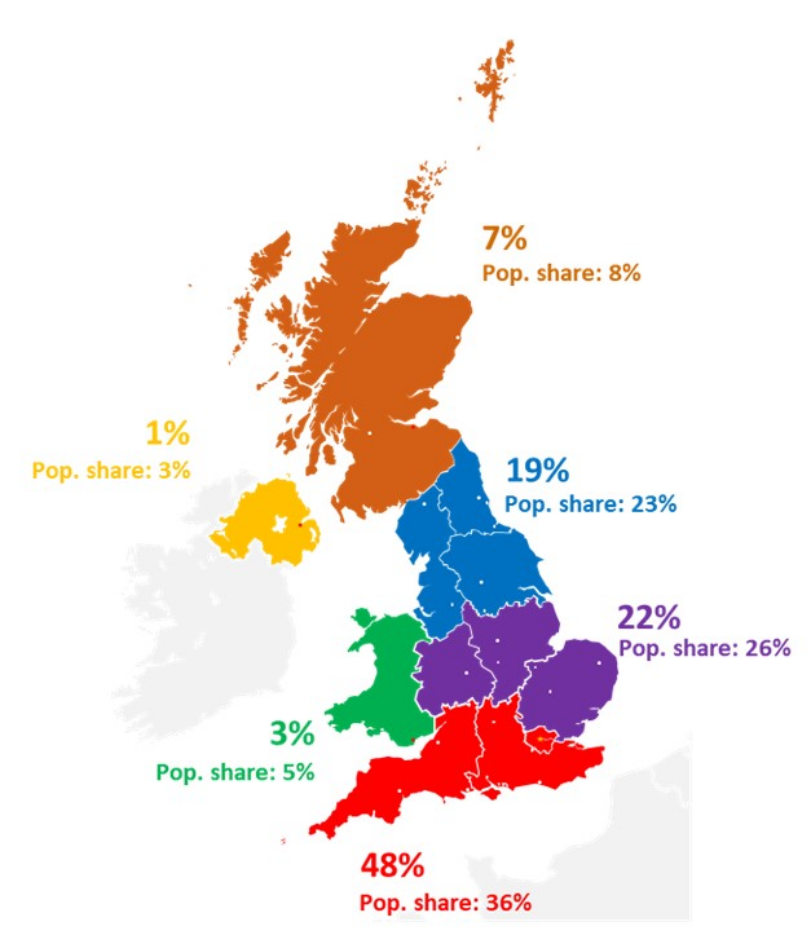
Table 2 shows that annual public expenditure on the railway has been stable since the FYE March 2021. Figure 36 is a color-coded map of the United Kingdom showing regional shares of rail expenditure compared to population share. Nearly half of all public spending on the railway (48%) benefitted the South of England, including London (which itself benefited from 32% of all public sector railway spend). London sees the most benefit from rail spending. This is aligned to higher levels of rail usage in London.
Figure 36: Railway Public Expenditure by UK Super Region Compared to Population Share, 2024-25
Note: Estimates of the population for England and Wales - Office for National Statistics. Estimates of the population for Scotland - National Records of Scotland. Estimates of the population for Northern Ireland - Northern Ireland Statistics and Research Agency.
Note: HM Treasury Country and Regional Analysis (CRA) covers all public expenditure (capital and current) on rail, including DfT, local authorities, public corporations, other government departments and devolved administrations. The CRA analysis is for UK and includes all country filters apart from Northern Ireland. Note that ‘outside UK’ and ‘without region’ has been excluded. For more information please see HM Treasury Country and regional analysis: 2025.
Rail health and safety
Rail safety
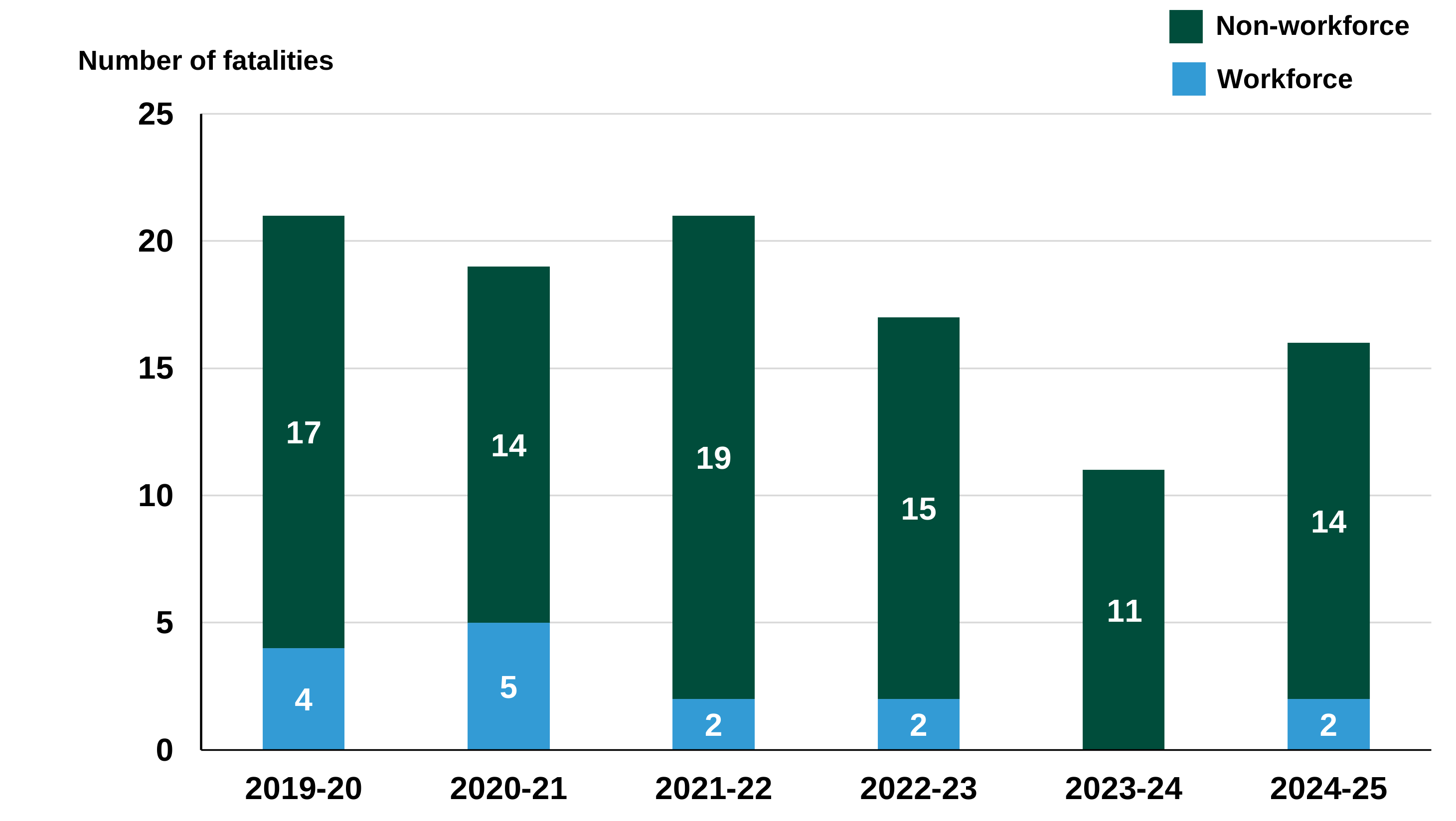
Figure 37 is a stacked bar chart showing rail fatalities in Great Britain from 2019-20 to 2024-25, split by workforce and non-workforce. There were two workforce fatalities across all Great Britain’s railway networks in 2024-25. One was on the mainline following a fatal assault at a Station. The second fatality was on the non-mainline network due to a fall. There were 14 non-workforce (passenger or public) fatalities across all networks in 2024-25, an increase of 3 compared to the previous year.
Figure 37: Workforce and non-workforce (passengers or public) fatalities on all rail networks, Great Britain, annual data, April 2019 to March 2025
Great Britain has the lowest number of fatalities and weighted serious injuries across all risk categories for society as a whole. It also ranks favourably with other European countries in terms of employee safety, level crossing user safety, and trespasser safety.
Figure 38: Tresspass fatalities on the mainline, Great Britain, annual data, April 2003 to March 2025
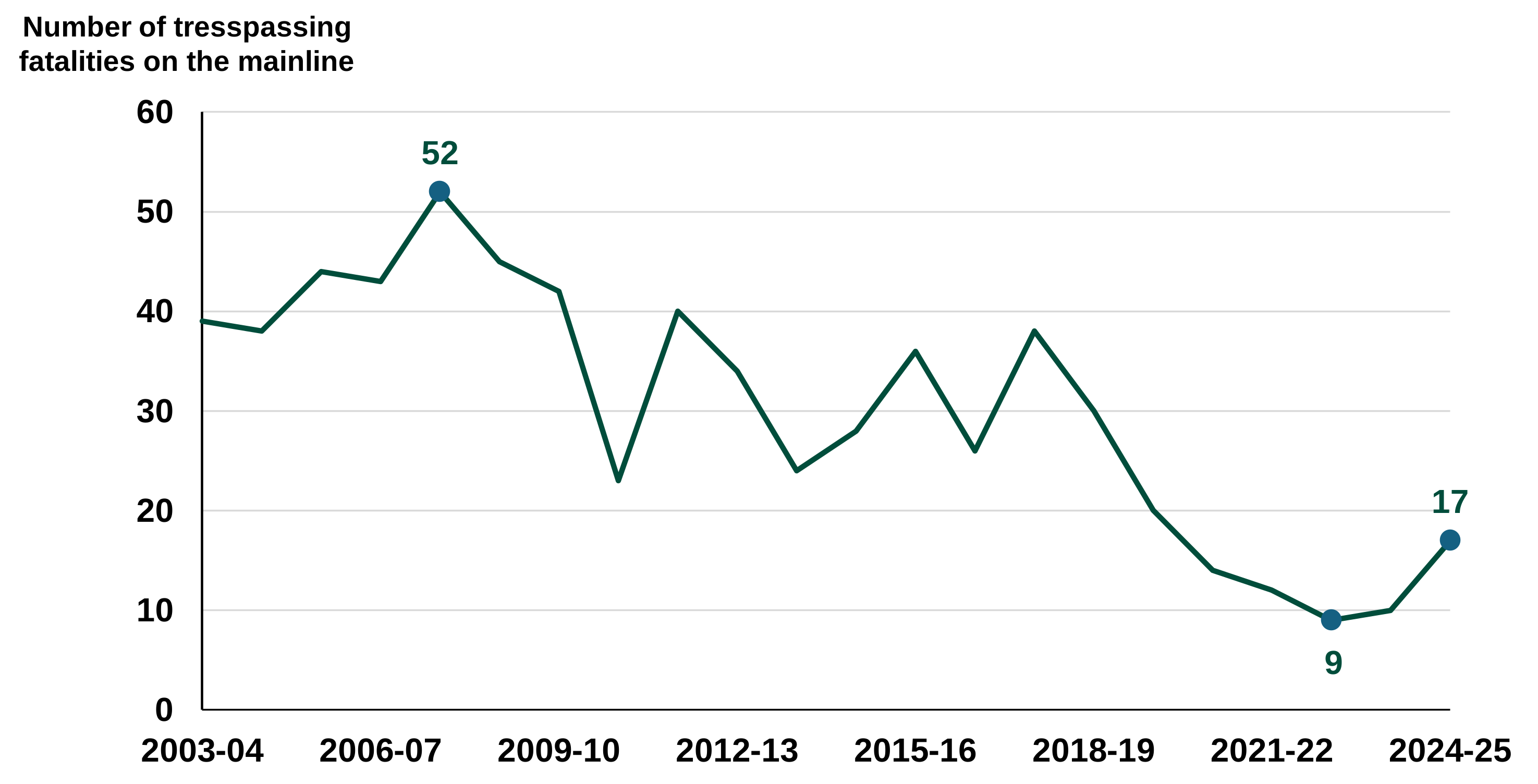
Figure 38 is a line chart showing the number of trespassing fatalities on the mainline in Great Britain from FYE March 2004 to 2024-25.Fatalities peaked at 52 in FYE March 2008, then fluctuated before declining steadily after FYE March 2019. The lowest point is 9 fatalities in FYE March 2023, followed by a rise to 17 in FYE March 2025.
Twenty-two people in total died in accidents while trespassing across the whole rail network in the latest year. Of these, 17 people died while trespassing on the mainline network, up from 10 in the previous year.
There were 85 severe injuries to trespassers in the latest year, up by 30 compared with the previous year and the highest number recorded since the start of the time series.
Most train accidents continue to occur on mainline routes.
- In 2024-25, there were 625 train accidents recorded across all rail networks in Great Britain. The majority occurred on the mainline network (432 accidents), followed by non-mainline networks with 184 accidents. Only 9 accidents were reported on the London Underground
Note: The mainline network refers to the conventional national rail network primarily owned and managed by Network Rail, covered under ROGS (Railways and Other Guided Transport Systems Regulations) for mainline rail safety certification. The non-mainline network comprises rail systems that are excluded from the mainline requirements under ROGS. These include, trams, metros, other light rail, minor and heritage railways, which operate separately from the national rail network.
Note: Statistical releases, data tables, an interactive dashboard, methodology and quality information is available on the ORR data portal Rail safety page.
Signals passed at danger (SPADs)
There were 305 SPADs on the mainline in 2024-25, a 6% increase compared with the previous year.
Figure 39: Signals passed at danger (SPADs) on the mainline, Great Britain, annual data, April 1999 to March 2025
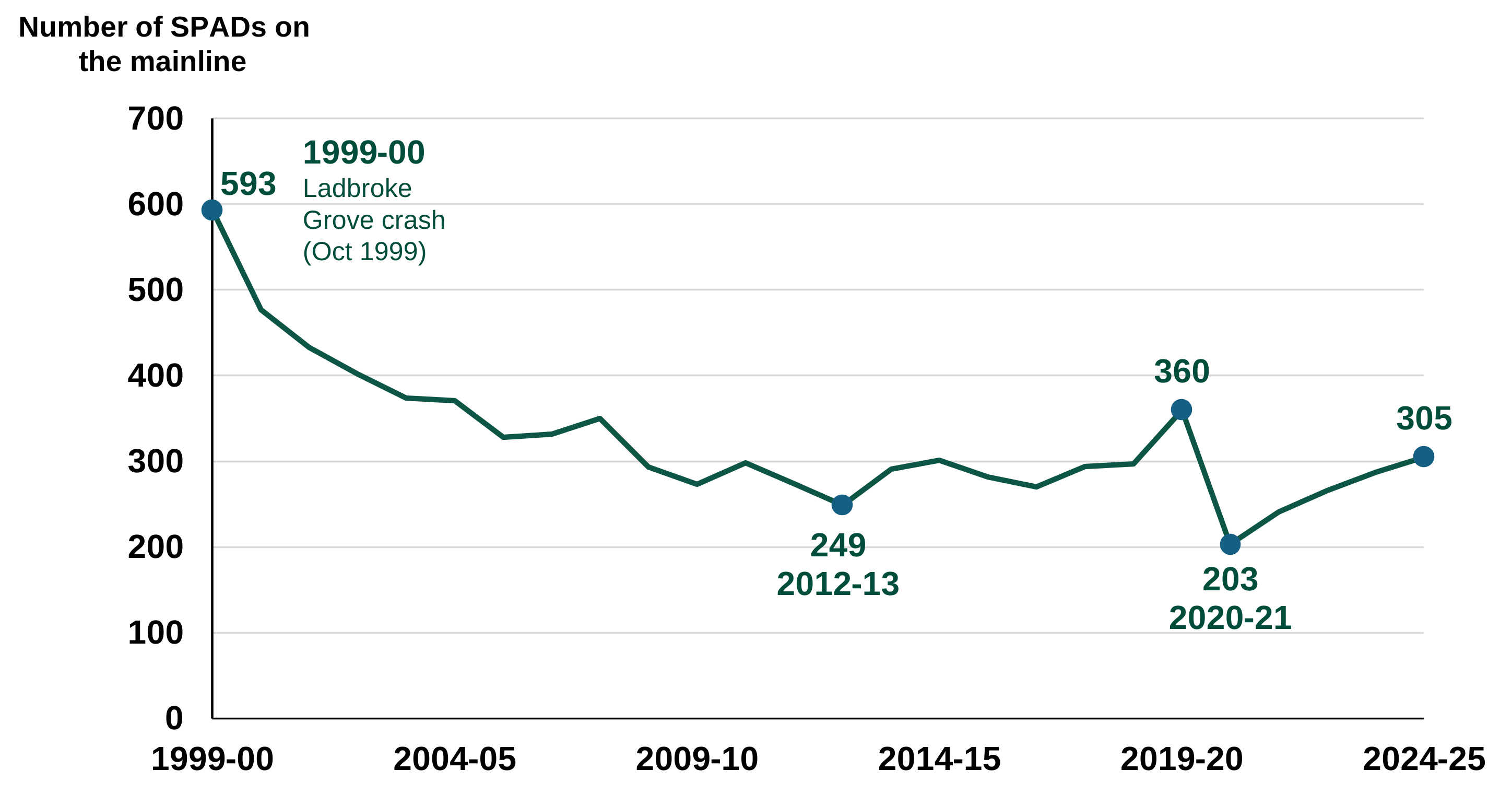
Figure 39 is a line chart showing the number of SPADs (Signals Passed at Danger) on the mainline in Great Britain from 1999-00 to 2024-25. SPADs start at 593 in 1999-00, decline steadily to 249 in 2012-13, then fluctuate between 200 and 360. The lowest point is 203 in 2020-21, rising to 305 in 2024-25. The chart notes the Ladbroke Grove crash in 1999.
Following the Ladbroke Grove crash in October 1999, the rail industry introduced a series of safety improvements, including enhanced driver training and the rollout of new signalling and train-protection measures. These changes led to a steady reduction in SPADs over the following decade, reaching to 249 in 2012-13.
Note: For more information please see: Office of Rail and Road: Signals passed at danger (SPADs) on the mainline (Table 5255).
Occupational health
Since 2010-11, the number of occupational health (OH) diagnoses has fluctuated. This ranged between a low of 25 in 2024-25 to highs of 113 in FYE March 2019. More recently, figures have been on a downwards trend. Hand Arm Vibration Syndrome (HAVs) has consistently accounted for the majority of OH cases, though reported HAVs cases have steadily declined. In 2024-25, there was a 22% reduction in reported cases of HAVs and a 71% reduction cases for Carpal Tunnel Syndrome.
Figure 40: Occupational health disease cases, Great Britain, annual data, April 2010 to March 2025
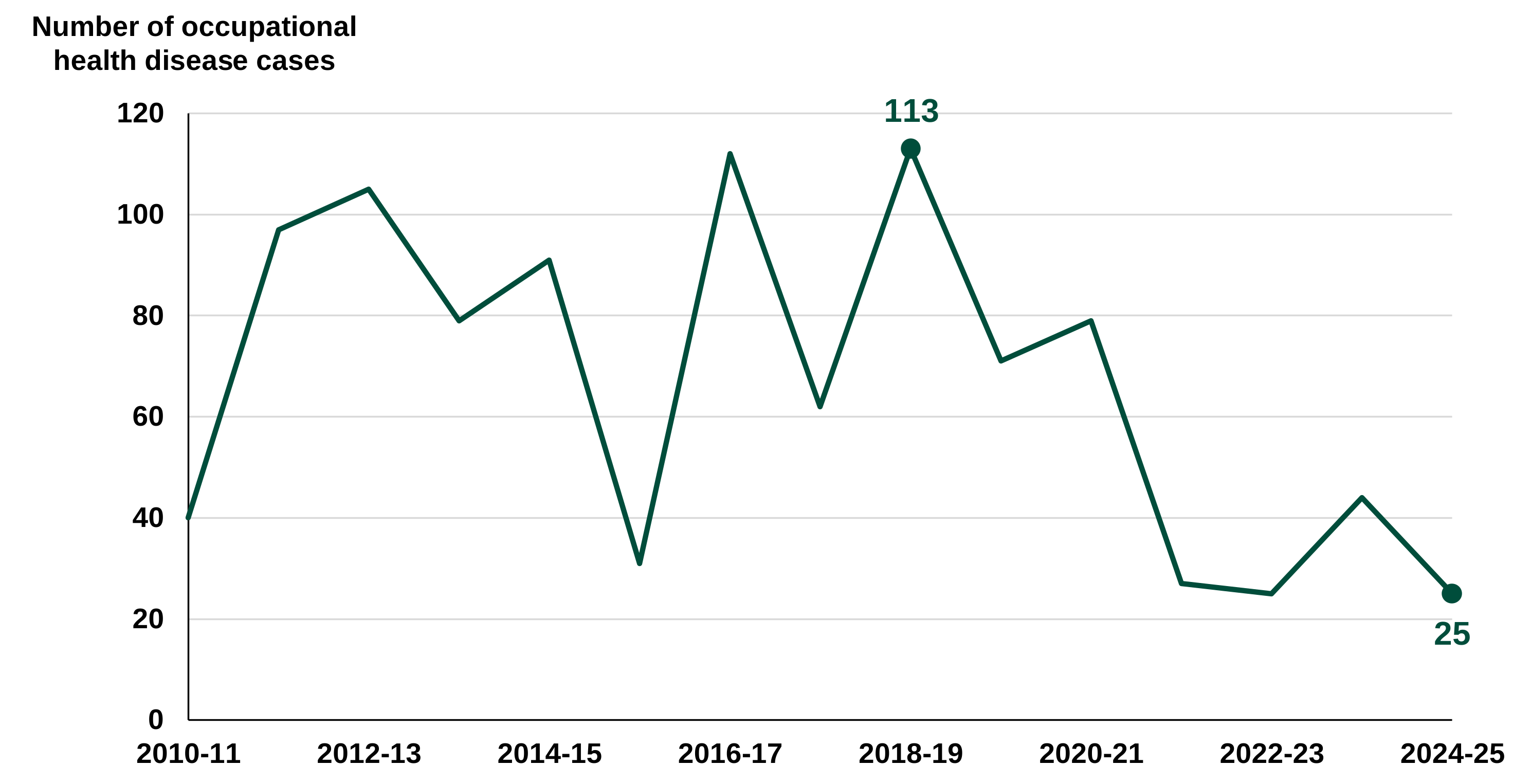
Figure 40 is a line chart showing the number of occupational health disease cases from 2010-11 to 2024-25. The trend fluctuates: starting around 40 cases in 2010-11, rising above 100 by 2012-13, dropping to about 30 in 2015-16, peaking at 113 in 2018-19, then declining steadily to 25 cases in 2024-25.
Long-term trends show a clear improvement in manual handling and shock or trauma cases.
Figure 41: Shock or trauma and manual handling incidents resulting in lost time, Great Britain, annual data, April 2012 to March 2025
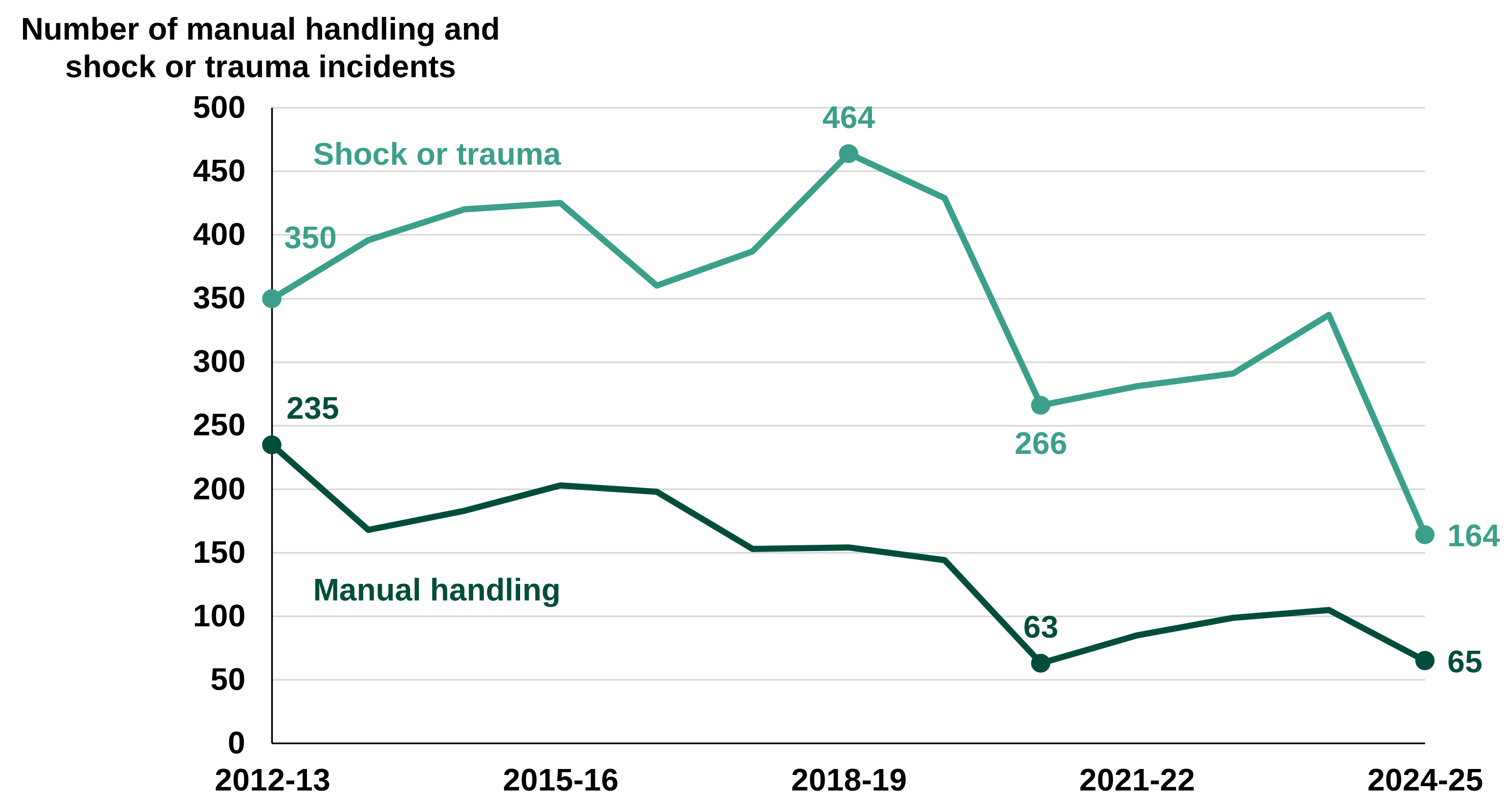
Figure 41 is a line chart showing that manual handling cases have decreased steadily from 235 in 2012-13 to 65 in 2024-25, down by more than two-thirds. Shock or trauma incidents were more volatile, peaking at 464 in 2018-19, but have since declined to 164 in 2024-25. Overall, both types of incidents are now at their lowest levels in the series which began in 2012-13, indicating a sustained reduction in these risks over time.
Note: Factsheets, data tables, interactive dashboards, methodology and quality information are available on the ORR data portal Rail safety and Occupational health pages.
Rail infrastructure and environment
Rail infrastructure and assets
As of 31 March 2025, the average age of rolling stock for all passenger train operators increased by 0.1 years compared with 31 March 2024.
The total route length in Great Britain is 15,747 km (9,785 miles), of which 39% (6,200 km or 3,853 miles) is electrified and 61% (9,547 km or 5,932 miles) is non-electrified. These proportions remain unchanged from the previous year.
In the latest year (2024-25), 120 kilometres (75 miles) of electrified track were added to the network in England and Wales; with none added in Scotland. Of this:
-
34 km (21 miles) were due to the continued electrification of the Core Valley lines in South Wales
-
68 km (42 miles) were due to the Midland Main Line Electrification Programme, from Kettering to Wigston
-
19 km (12 miles) were from the the Wigan to Bolton electrification project, with the existing route between Lostock Junction and Wigan North Western station newly electrified
Following a break in the time series from April 2017 (due to Network Rail switching to a new database for track assets) delivery of electrification fell to almost zero after COVID-19, at just 2km in 2021-22. Since then, the length of electrified route open for traffic has increased by 158 km (98 miles).
As of 31 March 2025, there were 15,348 railway vehicles registered in operation for all passenger train operators.
Figure 42: Proportion of passenger rolling stock by traction type, Great Britain, as of 31 March 2025
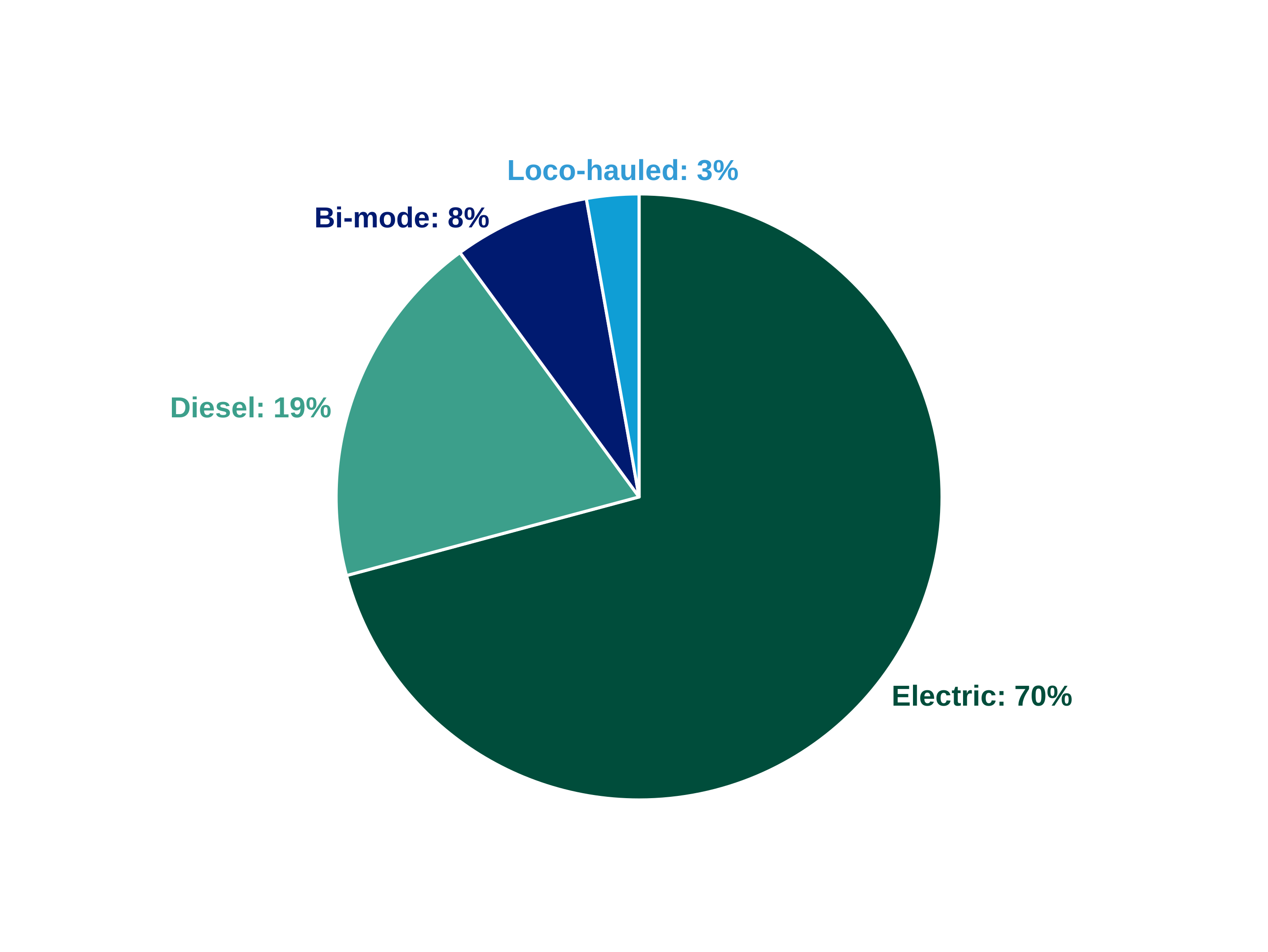
Figure 42 shows a pie chart of railway vehicles in operation as of 31 March 2025:
-
10,802 electric vehicles (70%)
-
2,868 diesel vehicles (19%)
-
1,278 bi-mode vehicles (8%)
-
400 locomotive hauled vehicles (3%)
Compared to the previous year, the volume of electric traction vehicles increased by 1% in FYE March 2025, whilst the volume of diesel traction vehicles fell by 1%. The volume of bi-mode vehicles increased by 16% to 1,278, whilst locomotive hauled vehicles fell by 5%.
Note: Statistical releases, data tables, interactive dashboards, methodology and quality information are available on the ORR data portal Rail infrastructure and assets page.
Rail environment
Whilst the total volume of traction energy and emissions rose in 2024-2025 for both passenger and freight rail services, this was driven by increased vehicle km and higher traction energy use:
-
In FYE March 2025, total traction electricity consumption (rail and freight combined) was 4,098 million kilowatt hours: 4% higher compared with the previous year. Similarly, total traction diesel consumption was 582 million litres: 4% higher when compared with the previous year
-
Estimated total carbon dioxide equivalent (CO2e) emissions increased by 4% to 2,460 kilotonnes in the latest year
-
However, passenger kilometres increased 7% compared with the previous year, and freight net tonne kilometres were 5% higher than in the previous year
When normalised, emissions in 2024-25 were slightly lower than in the previous year:
-
Passenger train emissions per passenger kilometre was 31 grams of CO2e, down 2% on the previous year
-
Freight train emissions per net tonne kilometre was 26 grams of CO2e, down 2% on the previous year
Figure 43: Estimates of normalised passenger carbon dioxide equivalent emissions from traction energy consumption by fuel: Great Britain, from 2012-13 to 2024-25: kilotonnes
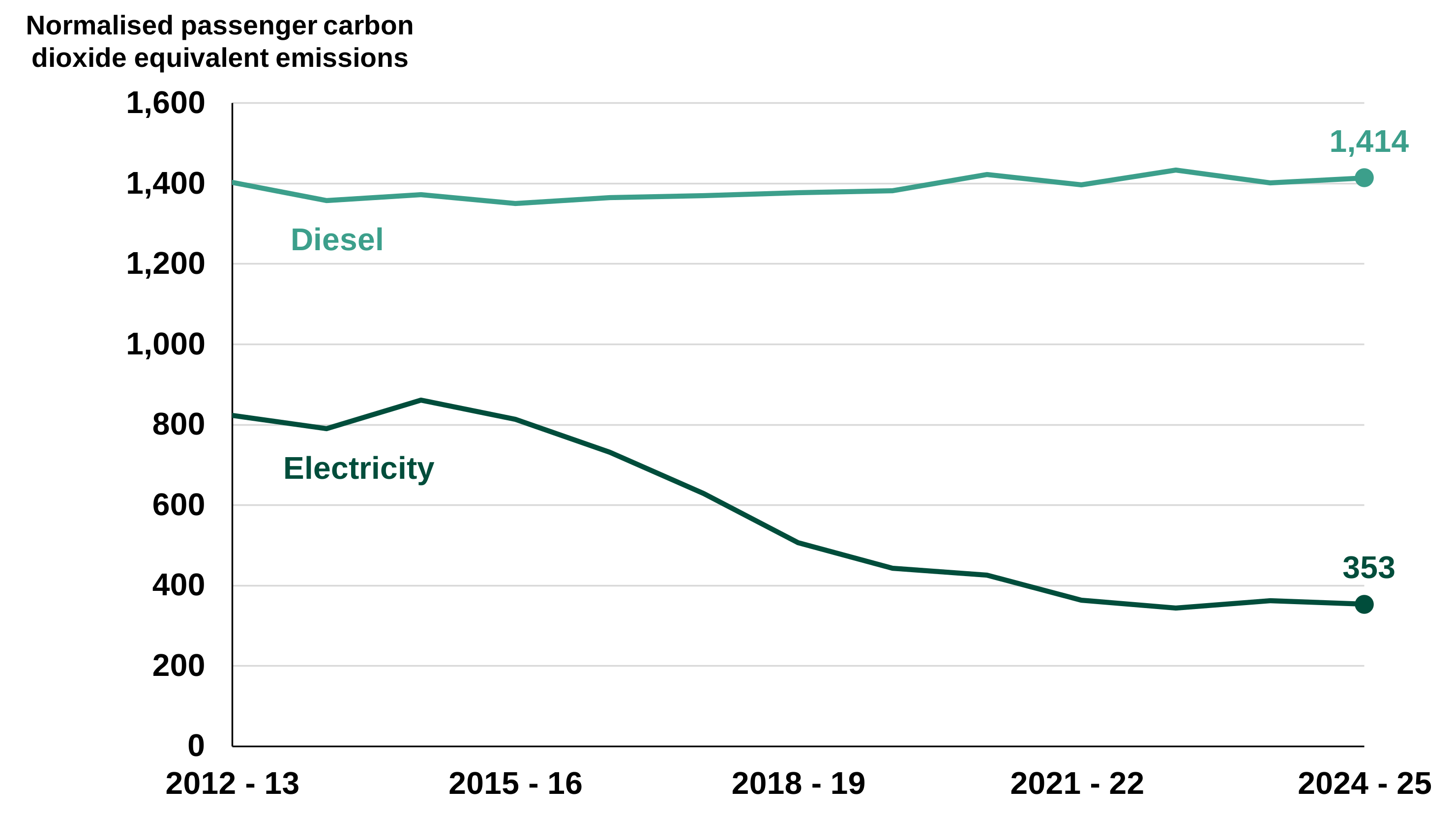
Figure 43 shows passenger carbon dioxide equivalent (CO2e) emissions for diesel and electricity between 2012-13 and 2024-25.
Electricity emissions decreased from 824 kilotonnes in 2012-13 to 353 kilotonnes in 2024-25, while diesel emissions remained stable at 1,414 kilotonnes.
In 2024-25:
-
Average emissions per vehicle kilometre decreased by 1% to 625 g CO2e
-
Electric train emissions per kilometre decreased by 2% due to a 6% increase in electric kilometres
-
Diesel emissions per kilometre increased slightly by 0.9%, reflecting the larger rise in diesel emissions (up 5.5%) than diesel vehicle kilometres (up 4.7%)
Overall emissions increased because of more train kilometres, not reduced efficiency.
Note: Statistical releases, data tables, an interactive dashboard, methodology and quality information is available on the ORR data portal Rail environment page.
About these statistics
This publication is a compendium of both accredited official statistics and official statistics. The type of statistics presented is detailed in the table below:
| Name of category of statistics | Label | Description |
|---|---|---|
| Passenger rail usage (GB: Journeys, Kilometres, Revenue, Train kilometres, Vehicle kilometres) | Accredited Official Statistics | These official statistics were independently reviewed by the Office for Statistics Regulation in November 2019. They comply with the standards of trustworthiness, quality and value in the Code of Practice for Statistics and should be labelled ‘accredited official statistics’. |
| Rail Industry Finance (UK) | Accredited Official Statistics | These official statistics were independently reviewed by the Office for Statistics Regulation in November 2019. They comply with the standards of trustworthiness, quality and value in the Code of Practice for Statistics and should be labelled ‘accredited official statistics’. |
| Passenger Rail Performance (punctuality ‘On Time’ and reliability ‘Cancellations’) | Accredited Official Statistics | These official statistics were independently reviewed by the Office for Statistics Regulation in November 2019. They comply with the standards of trustworthiness, quality and value in the Code of Practice for Statistics and should be labelled ‘accredited official statistics’. |
| Freight rail usage and performance | Accredited Official Statistics | These official statistics were independently reviewed by the Office for Statistics Regulation in November 2019. They comply with the standards of trustworthiness, quality and value in the Code of Practice for Statistics and should be labelled ‘accredited official statistics’. |
| Passenger rail service complaints | Accredited Official Statistics | These official statistics were independently reviewed by the Office for Statistics Regulation in November 2019. They comply with the standards of trustworthiness, quality and value in the Code of Practice for Statistics and should be labelled ‘accredited official statistics’. |
| Rail environment | Accredited Official Statistics | These official statistics were independently reviewed by the Office for Statistics Regulation in November 2019. They comply with the standards of trustworthiness, quality and value in the Code of Practice for Statistics and should be labelled ‘accredited official statistics’. |
| Domestic Transport Usage by Mode | Official Statistics | These statistics are official statistics. They comply with the standards of trustworthiness, quality, and value in the Code of Practice for Statistics. |
| TOC key statistics | Official Statistics | These statistics are official statistics. They comply with the standards of trustworthiness, quality, and value in the Code of Practice for Statistics. |
| Rail infrastructure and assets | Accredited Official Statistics | These official statistics were independently reviewed by the Office for Statistics Regulation in November 2019. They comply with the standards of trustworthiness, quality and value in the Code of Practice for Statistics and should be labelled ‘accredited official statistics’. |
| National Travel Survey | Accredited Official Statistics | These official statistics were independently reviewed by the Office for Statistics Regulation in September 2018. They comply with the standards of trustworthiness, quality and value in the Code of Practice for Statistics and should be labelled ‘accredited official statistics’. |
| Estimates of Station Usage | Accredited Official Statistics | These official statistics were independently reviewed by the Office for Statistics Regulation in November 2020. They comply with the standards of trustworthiness, quality and value in the Code of Practice for Statistics and should be labelled ‘accredited official statistics’. |
| Rail passenger numbers and crowding on weekdays in major cities in England and Wales | Accredited Official Statistics | These official statistics were independently reviewed by the Office for Statistics Regulation in October 2017. They comply with the standards of trustworthiness, quality and value in the Code of Practice for Statistics and should be labelled ‘accredited official statistics’. |
| Disabled Persons Railcards | Official Statistics | These statistics are official statistics. They comply with the standards of trustworthiness, quality, and value in the Code of Practice for Statistics. |
| P-coded cancellations | Operational Information | These statistics are official statistics. They comply with the standards of trustworthiness, quality, and value in the Code of Practice for Statistics. |
| Rail Safety | Accredited Official Statistics | These official statistics were independently reviewed by the Office for Statistics Regulation in November 2019. They comply with the standards of trustworthiness, quality and value in the Code of Practice for Statistics and should be labelled ‘accredited official statistics’. |
| Country and regional analysis | Accredited Official Statistics | These official statistics were independently reviewed by the Office for Statistics Regulation in May 2019. They comply with the standards of trustworthiness, quality and value in the Code of Practice for Statistics and should be labelled ‘accredited official statistics’. |
Instructions for printing and saving
Depending on which browser you use and the type of device you use (such as a mobile or laptop) these instructions may vary.
You will find your print and save options in your browser’s menu. You may also have other options available on your device. Tablets and mobile device instructions will be specific to the make and model of the device.
How to search
Select Ctrl and F on a Windows laptop or Command and F on a Mac.
This will open a search box in the top right-hand corner of the page. Type the word you are looking for in the search bar and press enter.
Your browser will highlight the word, usually in yellow, wherever it appears on the page. Press enter to move to the next place it appears.
Contact details
For questions relating to Rail Passenger Crowding, the National Travel Survey (NTS), or Country and Regional Analysis (CRA), please email Rail Statistics Team at Department for Transport. For all other queries, please contact the Office of Rail and Road (ORR).
Rail statistics enquiries
Email rail.stats@dft.gov.uk
Media enquiries 0300 7777 878
Office of Rail and Road rail statistics
Email rail.stats@orr.gov.uk
Media enquiries 07856 279808
To hear more about DfT statistical publications as they are released, follow us on X at DfTstats.