YCS Annex: 2025-26
Published 30 July 2026
Applies to England and Wales

© Crown copyright 2026
This publication is licensed under the terms of the Open Government Licence v3.0 except where otherwise stated. To view this licence, visit nationalarchives.gov.uk/doc/open-government-licence/version/3 or write to the Information Policy Team, The National Archives, Kew, London TW9 4DU, or email: psi@nationalarchives.gov.uk.
Where we have identified any third party copyright information you will need to obtain permission from the copyright holders concerned.
This publication is available at https://www.gov.uk/government/statistics/prison-performance-ratings-2025-to-2026/ycs-annex-2025-26
This publication sets out statistics from the YCS Performance Tool (YPT) for the performance year 2025/26 (1 April 2025 to 31 March 2026). This is the third publication of the YPT. The following sites are included; Young Offender Institutions (YOI) – Feltham A, Werrington, Wetherby and Parc Young Person’s Unit and Secure Training Centre (STC) – Oakhill.
Indicators are assessed through 3 phases to reach an outcome that is either ‘Met Expectations’ or ‘Concern’
- Phase 1 is a data driven assessment whilst considering assurance and audit activity.
- Phase 2 is the application of context, whereby context is applied to data outcomes following data analysis, audits, assurance activity and external inspection outcomes.
- Phase 3 is the end of year moderation process; whereby provisional indicator outcomes are reviewed before final outcomes are agreed.
1. Main Points
Across the identified ‘priority areas’ there are a suite of indicators. The section below shows the outcomes across these indicators. Comparisons by priority area have been made to last year.
| Safety |
Sites met expectations across 36% of indicator outcomes (10 of 28 outcomes). A decrease from 2024/25 where sites met expectations across 63% of indicator outcomes (19 of 30 outcomes). The decrease is largely driven by Oakhill STC, who met all six 2024/25 safety indicator outcomes compared to three in 2025/26. In both 2023/24 and 2024/25 all sites met expectations for the escape indicator compared to only 3 sites in 2025/26. |
| Staff |
Sites met expectations across 40% of indicator outcomes (4 of 10 outcomes). A decrease from 2024/25 where sites met expectations across 60% of indicator outcomes (6 of 10 outcomes). Staff resignations are largely accountable for the change in outcomes between years. 2025/26 saw only 3 sites meeting expectations in this indicator, compared to all sites in 2024/25. |
| Education |
Sites met expectations across 30% of indicator outcomes (3 of 10 outcomes). This represents an increase from 2024/25 when sites met expectations across 20% of indicator outcomes (2 of 10 outcomes). In line with both 2023/24 and 2024/25, no public YOI met expectations across either of the education indicators in 2025/26, whilst Parc YOI met expectations across them both. |
| Resettlement |
As with 2024/25, sites met expectations across 50% of indicator outcomes in 2025/26 (10 of 20 outcomes). In 2025/26, met expectations outcomes related primarily to suitable accommodation being organised for eligible planned community release and successful release on temporary licence which is in line with both 2024/25 and 2023/24. |
| Voice of the Child |
Sites met expectations across 70% of indicator outcomes (7 of 10 outcomes). This is an increase from 2024/25 which saw 60% met expectations. 2024/25 was the first year these indicators were introduced. |
2. Statistician’s Comment
In this third iteration of the YPT, 44% of all indicators ‘met expectations’ compared to 54% in the previous year.
2025/26 safety indicators have seen a decline in outcomes being met (36%) compared to 2024/25 (63%). This is largely driven by Oakhill STC’s outcomes for assaults, staff assaults and self-harm dropping from ‘met expectations’ to ‘concern’. Assault and self-harm outcomes that met expectations across the public YOIs are low, with only 2 of a possible 9 indicators (22%) receiving ‘met expectation’ outcomes in 2025/26. However, this is an improvement on the 2024/25 year where only 1 of the 9 outcomes was met.
Consistently the best performing YPT indicators have been those on Release on Temporary Licence (ROTL) and Accommodation Suitability Prior to Release where all sites have ‘met expectations’ across all 3 years of the YPT.
In contrast to the previous performance year when all sites ‘met expectations’ for Staff Resignations (100%), in the 2025/26 performance year only 3 sites met expectations (60%).
2025/26 was consistent with 2024/25 in terms of concerns across; education (with only 30% of indicators receiving ‘met expectation’ outcomes), staff sickness (only 20% of sites ‘met expectations’), and with all sites receiving a ‘concern’ outcome for accommodation being organised prior to release, and Education, Training and Employment opportunities being arranged prior to release.
3. Operational Context
3.1 Cohort Impact
Over the 2025/26 performance year there have been contributing factors that have impacted on sites’ performance. While the average number of children and young people has decreased across the estate, operational pressure persists due to the concentration of high need individuals and volatility this can introduce into small populations. The removal of Cookham Wood from the YOI estate continues to impact and the temporary closure of the Secure School added further pressure due to placing children further from a location best suited to them and by removing a placement option that is newly designed to provide an environment most closely aligned with what works for successfully managing and caring for children in custody.
The number of children and young people at YCS sites differs with the average population across the YOIs and STC typically ranging from 20 to 125 throughout the 2025/26 performance year. Across sites and sectors, there are specific cohort differences with sites holding specific groups (e.g. children assessed as being in the most need of Enhanced Support Services). Feltham has an Enhance Support Unit (ESU – specialist unit to provide a more structured and supportive environment for children who struggle to cope on a mainstream residential unit). The decision to cease placing and holding girls within Wetherby YOI (from November 2024) has resulted in acute challenges which, from a YPT perspective, have been most keenly felt at Oakhill STC.
A small number of individuals can have a large impact on performance outcomes. For example, the number of girls across the whole Children and Young People Secure Estate (CYPSE), including the Secure Children’s Homes, typically represented around 3% of the overall average population in 2025/26 performance year, though accounted for a considerably higher proportion of self-harm, at around 30%. Please see the Safety in the Children and Young People Secure Estate publication for more information[footnote 1].
3.2 Staffing Impact
In the public YOI sector, staffing pressures have remained a critical constraint throughout the year with high operational staff vacancies and high proportions of staff unable to work (due to things like sickness and restricted duties). Staff re-deployment between sites has been utilised across the performance year to assist sites for short periods with critical need.
Operationally, these pressures have translated into challenges in delivering consistent and predicable daily life and activities for children and young people and in embedding the YCS’ Framework of Integrated Care (SECURE STAIRS[footnote 2]) approach, both of which are critical to improving safety and wider outcomes tracked through the YPT.
With staffing levels being such a clear driver of performance success, significant emphasis has been placed on strengthening workforce capability and resilience. This includes actions to improve recruitment, staff training and leadership. However, the interaction between workforce instability and cohort complexity continues to constrain the pace and consistency of improvement across the estate.
3.3 Roadmaps to Effective Practice
The 2025/26 performance year saw the implementation of the public YOIs’ Roadmaps to Effective Practice. These locally led, site-specific plans set out how each establishment will improve performance and outcomes for children over a three-year period. Built around the principles of the SECURE STAIRS framework, each Roadmap is tailored to the unique needs and operating context of the site whilst supporting a shared ambition to deliver consistently effective practice across the youth secure estate.
The Roadmaps provide establishments with a structured approach to improvement, enabling leaders to identify local priorities, monitor progress, and drive sustainable change. They bring together operational, educational, wellbeing and behavioural objectives into a single improvement framework, helping establishments to focus their efforts on the factors most likely to improve outcomes for children.
The first year of implementation established the foundations for long-term improvement and provided a clear framework through which establishments can continue to strengthen outcomes for children over the coming years.
3.4 External Scrutiny
The YCS estate is subject to significant external scrutiny. Inspections across the YOI and STC estate are undertaken between His Majesty’s Inspectorate of Prisons (HMIP), Ofsted and Estyn.
During 2025/26, inspection activity across the estate continued to highlight both areas of good practice and areas requiring improvement. Over 2025/26 there were 4 full HMIP inspections in the YOIs. Ofsted inspected Oakhill in July 2025 in partnership with HMIP and CQC which triggered an Urgent Notification, with Ofsted also conducting 2 follow-up visits at Oakhill.
4. 2025-26 Overall Indicator Outcomes
The tool does not assign an overall score to sites and instead gives each of the indicators one of two ratings:
-
Met Expectations
-
Concern
5. Performance Areas
The performance indicators used in the YPT are driven by YCS principles and priorities.
Safety
- There are six indicators under safety on: assaults, assaults on staff, self-harm incidents, escapes and disparity in the use of force and separation incidents:
- Four sites met expectations against the escape indicator which is a decrease from the previous performance year whereby all sites ‘met expectations’. Feltham were rated as a concern.
- For assaults, staff assaults and self-harm, 27% (4 out of 15) of indicator outcomes ‘met expectations’, a decrease on the previous year where 40% (6 out of 15) ‘met expectations’.
- Only 1 of the 5 sites (Werrington) had met expectation as the outcome for their self-harm indicator.
- Feltham were rated as a concern across all safety indicators.
- Only one site met expectations on both disparity indicators (Oakhill STC), compared to three sites in the previous performance year. This is in part due to a change in methodology, comparing all Ethnic background groups individually, as opposed to the previous methodology which compared White backgrounds to Ethnic Minority Backgrounds[footnote 3].
- Parc had no outcome in the disparity measures in 2025/26 due to the sample size at Parc being too small.
Staff
- There are two indicators under staff, staff resignations and staff sickness:
- 40% of indicator outcomes were met expectations, a decrease on the previous performance year’s 60%.
- In 2025/26, 80% of staff sickness indicators were a concern, which was the same for the previous performance year.
- Three sites (60%) met expectations in the staff resignation rate indicator in 2025/26, compared to previous performance year whereby all sites met expectations.
- Parc YOI was only site to meet expectations for both indicators.
Education
- There are two indicators under education: inspection outcome and enabling education delivery:
- 70% (7 out of 10) education outcomes were a concern, a decrease from the previous performance year (80%).
- The three public YOI sites were a concern over both education areas in 2025/26 and the previous performance year.
- Only one site, Parc YOI, met expectations for both indicators in 2025/26 an improvement from no sites in the previous performance year.
Resettlement
- There are four indicators under resettlement: ‘accommodation organised 28 days prior to release’ and ‘suitable accommodation organised on release’, ‘education, training and employment’ (ETE) and successful ‘release on temporary licence’ (ROTL):
- ROTL expectations were met across all sites. The sites also met this indicator expectation in 2023/24 and 2024/25.
- 50% of accommodation indicators were met in 2025/26. This is in line with outcomes in 2024/25. No site met expectation for ‘accommodation organised 28 days prior to release’ in 2025/26. However, all sites met expectations for ‘arranging suitable accommodation’.
- No site met expectations for ‘education, training and employment (ETE) organised prior to release’ in 2025/26. This indicator has never been met by any site.
Voice of the Child
- There are two indicators under Voice of the Child: youth council meetings; ‘arranged’ and ‘attended.’
- Feltham, Oakhill and Parc met expectations for both indicators.
6. Annual Performance Ratings
As part of the annual YPT process, a moderation panel met in July 2026 to determine final ratings, using data outcomes and contextual information for each site. The panel adjusted 4 outcomes, all of which were at Parc.
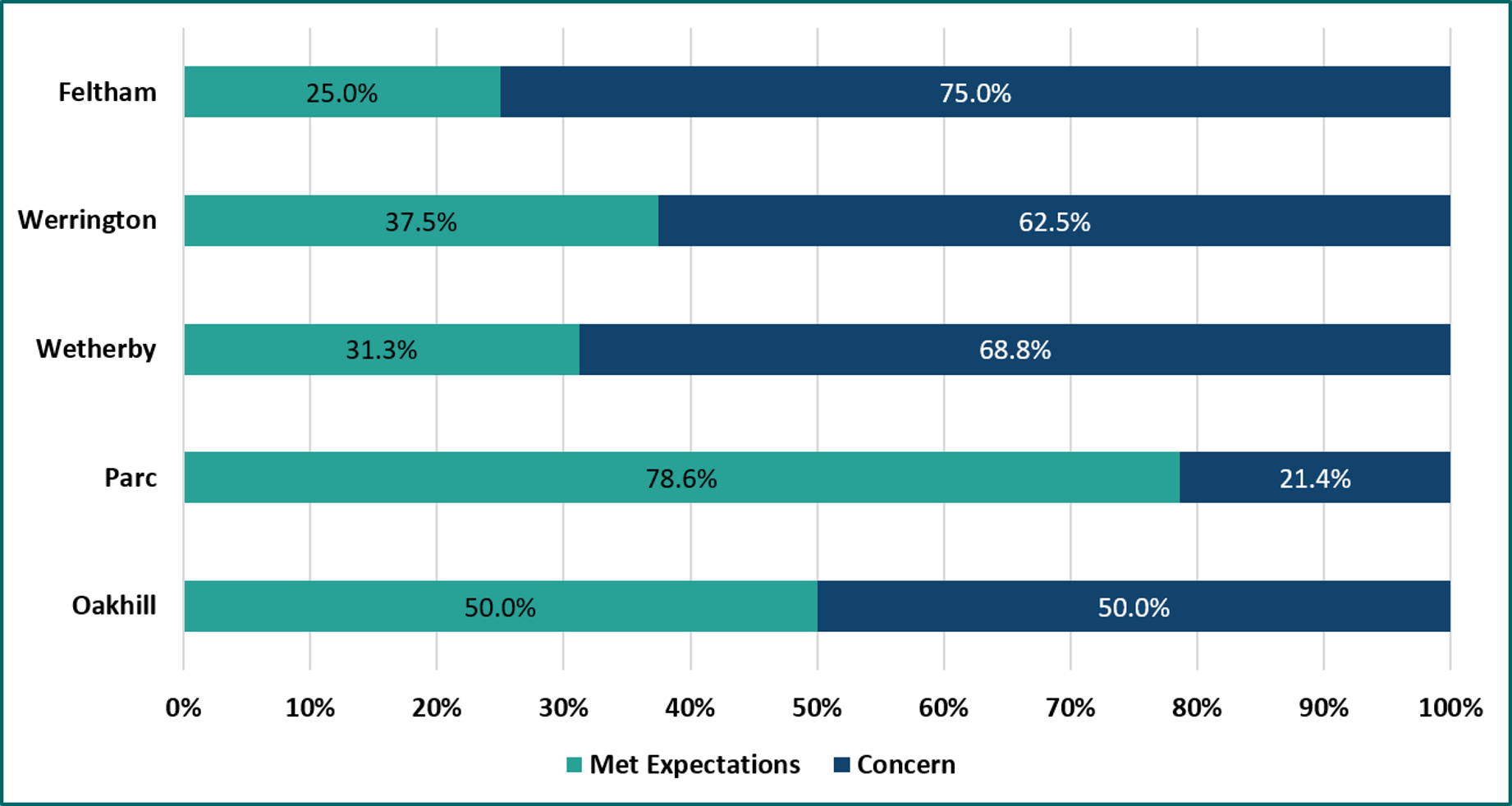
Across all indicators for all sites, 44% of outcomes met expectations. For a third year, Parc YOI had the highest percentage of outcomes that met expectations at 79%.
Figure 1: Annual Performance Ratings by Priority Area, 1 April 2025 to 31 March 2026
(Source: YCS Annex Table: 2025/26; Table 1)
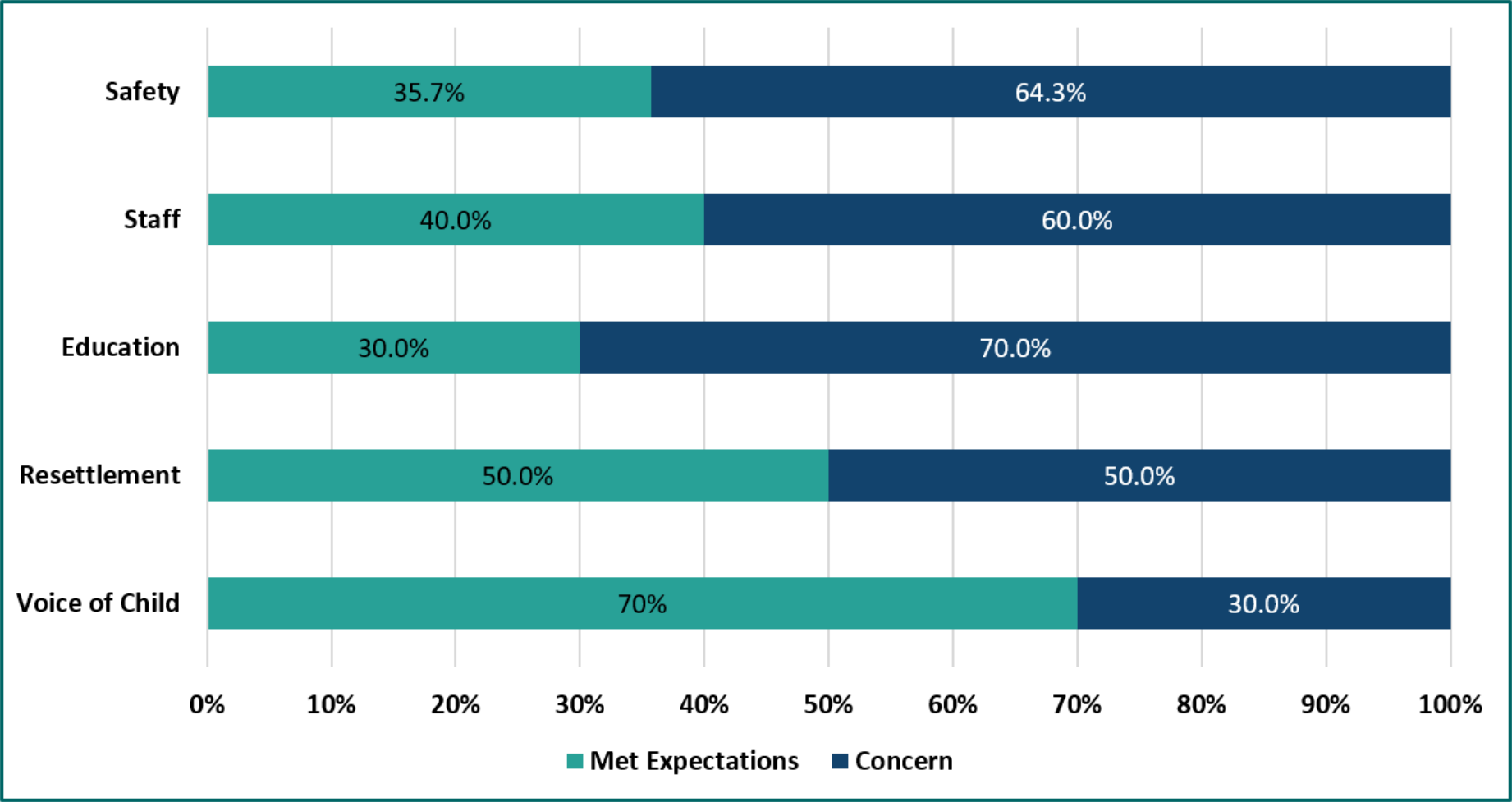
Figure 2: Annual Performance Ratings by Establishment, 1 April 2025 to 31 March 2026
(Source: YCS Annex Table: 2025/26; Table 1)
7. Statistical Code of Practice
Our statistical practice is regulated by the Office for Statistics Regulation (OSR). OSR sets the standards of trustworthiness, quality, and value in the Code of Practice for Statistics that all producers of official statistics should adhere to. The Code of Practice for statistics can be found at:
You are welcome to contact us directly with any comments about how we meet these standards. Alternatively, you can contact OSR by emailing regulation@statistics.gov.uk or via the OSR website.
The statistics in this bulletin are classified as official statistics. The Statistics and Registration Service Act 2007 defines ‘official statistics’ as all those statistical outputs produced by the UK Statistics Authority’s executive office (the Office for National Statistics), by central Government departments and agencies, by the devolved administrations in Northern Ireland, Scotland and Wales, and by other Crown bodies (over 200 bodies in total).
This publication has been produced to the high professional standards as set out in the Code of Practice for Statistics. However, the analysis is only as good as the data upon which it is based, and there is inherent uncertainty when the data is derived from diverse administrative data systems.
For further details on the methodology used to compile the report, please refer to the guide.
General information about the official statistics system of the UK is available from: https://uksa.statisticsauthority.gov.uk/about-the-authority/uk-statistical-system/
Ministry of Justice publishes data relating to offender management in England and Wales. Equivalent statistics for Scotland and Northern Ireland can be found at:
https://www.gov.scot/publications/?cat=filter&publicationTypes=statistics
https://www.justice-ni.gov.uk/topics/statistics-and-research/statistics-and-research-publications
8. Further Information
As well as this bulletin, the following products are published as part of this release:
- YCS Annex Table: 2025-26
- YCS Annex Guide: 2025-26
8.1 Further Publications
The following publications contain related statistics and supporting information:
- Safety in the Children and Young People Secure Estate: Update to March 2026: Youth Justice Statistics (www.gov.uk)
- Youth Custody Report: Monthly population statistics: Youth Justice Statistics (www.gov.uk)
- Overview of YCS: https://www.gov.uk/government/organisations/youth-custody-service
- Health and Justice Partnership: https://www.england.nhs.uk/commissioning/health-just/children-and-young-people/
9. Contact
Press enquiries should be directed to the Ministry of Justice press office: https://www.gov.uk/government/organisations/ministry-of-justice/about/media-enquiries
Tel: 020 3334 3536
Other enquiries about these statistics should be directed to:
Katherine Tatlock
Youth Custody Service
HM Prison and Probation Service
1 Ruskin Square
Ruskin Road
Croydon
CR0 2WF
Email: YCSInformationAndPerformance@justice.gov.uk
Next update: 29th July 2027
© Crown copyright
Produced by the Ministry of Justice.
Alternative formats are available on request from YCSInformationAndPerformance@justice.gov.uk
-
Safety in the Children and Young People Secure Estate: Update to March 2026 Youth justice statistics - GOV.UK (Youth Justice Statistics - GOV.UK) ↩
-
SECURE STAIRS is the Framework for Integrated Care used across the children and young people’s secure estate (YOIs, STCs and Secure Children’s Homes). It was developed by NHS England, HMPPS and partners to improve outcomes for children in custody through a trauma-informed, psychologically informed and relational approach to care. ↩
-
Using relative likelihoods to compare ethnic disparities - GOV.UK - (https://www.gov.uk/government/publications/using-relative-likelihoods-to-compare-ethnic-disparities/using-relative-likelihoods-to-compare-ethnic-disparities#calculating-and-interpreting-relative-likelihoods) ↩