Port Freight Quarterly Statistics: July to September 2025
Published 11 December 2025

© Crown copyright 2025
This publication is licensed under the terms of the Open Government Licence v3.0 except where otherwise stated. To view this licence, visit nationalarchives.gov.uk/doc/open-government-licence/version/3 or write to the Information Policy Team, The National Archives, Kew, London TW9 4DU, or email: psi@nationalarchives.gov.uk.
Where we have identified any third party copyright information you will need to obtain permission from the copyright holders concerned.
This publication is available at https://www.gov.uk/government/statistics/port-freight-quarterly-statistics-july-to-september-2025/port-freight-quarterly-statistics-july-to-september-2025
Overview of Quarterly Port Freight Statistics
When comparing July to September 2025 with July to September 2024 through UK major ports:
-
total freight tonnage increased by 1% to 104.1 million tonnes
-
inward tonnage increased by 3% to 70.2 million tonnes
-
outward tonnage decreased by 2% to 33.9 million tonnes
-
total volume of unitised traffic showed little change, decreasing by just under 1%, to 6.1 million units
-
inward units showed little change, increasing by just under 1%, to 3.3 million units
-
outward units decreased by 2% to 2.8 million units
When comparing the rolling year to September 2025 with September 2024 through UK major ports:
-
total tonnage increased by 2% to 426.1 million tonnes
-
total volume of unitised traffic increased by 2% to 21.4 million units
Published PORT0502 and PORT0503 tables includes Q3 (July to September) provisional 2025 statistics, as well as back-dated Q2 (April to June) statistics. The Q2 publication was postponed to allow critical digital and data infrastructure transition to take place in DfT.
Detailed final annual statistics for 2025 will be published in summer 2026.
Chart 1: Quarterly port freight tonnage and units from 2019 (PORT0502)
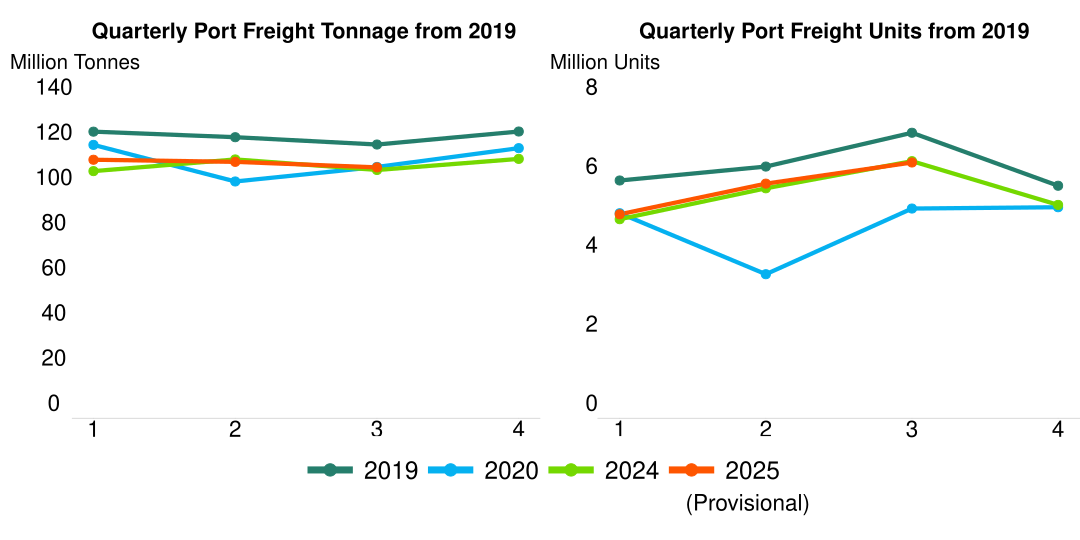
Chart 1 shows UK quarterly major port freight tonnage and units from 2019 to 2025.
Note, the 2021, 2022 and 2023 series have been removed from these charts for greater clarity as the trends are very similar to those seen in 2024.
Chart 1 shows that in Q3 2025 (July to September), tonnage levels increased by 1% compared to Q3 2024. The gap between 2019 and 2025 has remained consistent across the first three quarters, averaging around 9-10% lower in 2025.
There is some evidence that tonnage is not likely to reach 2019 levels, following the United Kingdoms (UK) exit from the European Union (EU), with the OBR Brexit analysis assuming that UK-EU trade will be around 15% lower in the long run than if the UK had remained in the EU.
Additionally, energy market dynamics have always impacted UK port tonnage. While Brexit created lasting changes in freight routes, energy composition is reshaping the nature and volume of freight traffic in fundamental ways. For example, several UK plants in sectors such as steel and oil refining have either shut down or are transitioning to greener energy production. In September 2024, operations of both blast furnaces at Port Talbot ceased as they hope to invest in electric blast furnaces. Similarly, in September 2024, the Ratcliffe-on-Soar power station in Nottinghamshire, the UK’s last coal-fired power plant, ceased operations, in line with Government policy to move away from coal-fired power. As domestic production falls, so does the demand for raw imports and bulk exports - reducing tonnage throughput at UK ports. Offshore wind energy, however, has become a key contributor to the UK’s electricity generation, as highlighted in the Energy Trends report, driving increased demand for imported wind farm components. This shift reduces the need for imported fossil fuels, which historically contributed heavily to tonnage at UK ports.
Chart 1 also shows that unitised port freight traffic, including passenger vehicles, has followed the seasonal pattern in 2024, and increased by 10% since Q2 (April to June), to its regular summer peak in Q3.
Unitised traffic in Q3 2025 remained broadly stable compared to Q3 2024, with a decline of less than 1%. However, volumes in 2025 continue to trail 2019 levels, with the gap widening from 7% in Q2 to 11% in Q3.
Port Freight trends by cargo type estimates
Method and coverage
The following commentary is based on statistics in PORT0503, these estimates are based on total tonnage and units provided by the port which are validated to a high standard and published as provisional national statistics in PORT0502. These totals are then split by cargo groups based on data provided by shipping agents. If no shipping agent data is received for a port, then no estimates can be created. Since Q3 (July to September) 2022, where large amounts of data from a shipping agent are missing in the current quarter, a value has been imputed from the equivalent quarter in the previous year to allow for more accurate national trend analysis. This method is still under development and any feedback from users is welcome at Maritime.Stats@dft.gov.uk.
The agents and ports data might not always match due to missing agent data, or differences in how ports and agents categorise certain shipments. During the annual validations process the department carries out extensive matching between these two data sources and queries the data providers to finalise the annual dataset. During quarterly validations, only high-level matching is conducted. Therefore, PORT0502 should always be used for accurate trend analysis.
As with all the quarterly figures, these estimates are provisional until finalised with the annual publication in the following calendar year, for example 2025 estimates will be finalised in July 2026.
Chart 2: UK major port freight tonnage traffic by cargo group since 2019 (PORT0503)
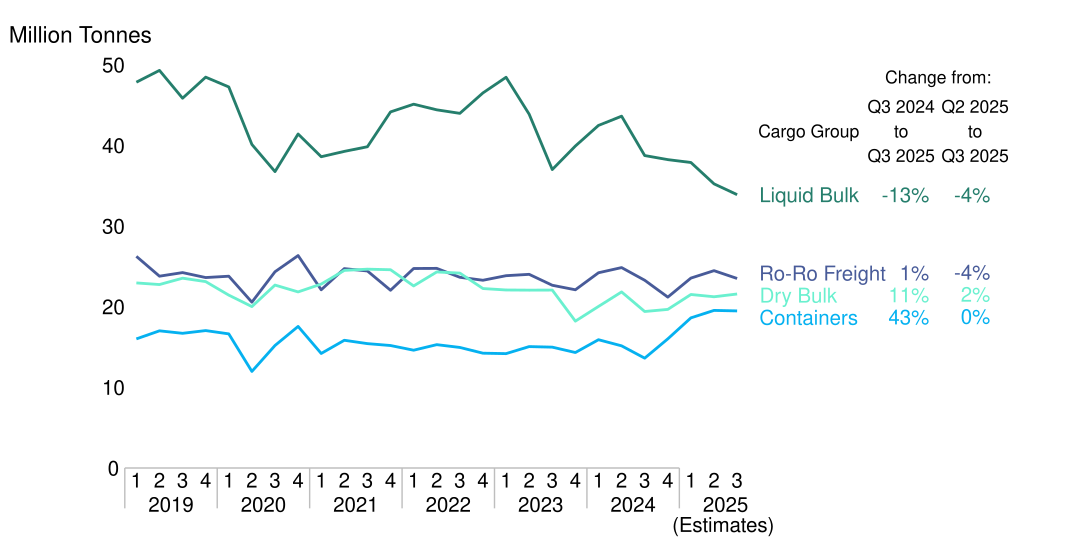
The figures in this chart are timelier estimates, for high quality trend analysis of cargo groups, please use our 2025 port freight annual statistics when published in July 2026.
Chart 2 shows UK quarterly major port tonnage from 2019 to 2025 with different lines for the different cargo group estimates. Liquid bulk remains the largest category, accounting for 33% of all major port tonnage in Q3 2025. However, liquid bulk has steadily declined since the beginning of 2024, and decreased by 13% from Q3 2024 to Q3 2025. By contrast, container traffic has seen a notable rise since Q3 2024 (up 43% to Q3 2025) and is the largest contributor to the UK’s overall increase in tonnage traffic this quarter compared to Q3 the previous year.
Roll-on/Roll-off (Ro-Ro) freight remains the second-largest category after liquid bulk, with dry bulk close behind. However, container traffic is rapidly gaining ground following its largest increase since Q2 2021. The trends of each cargo type are discussed in more detail below.
Chart 3 shows how different cargo estimates have changed for the 3 UK major ports with the largest overall increases in tonnage handled from Q3 2024 to Q3 2025, and Chart 4 shows this for the 3 UK major ports with the largest overall decreases in tonnage handled.
Chart 3: The top 3 UK major ports with the largest overall increases in tonnage handled from Q3 2024 to Q3 2025, segmented by cargo group (PORT0503)
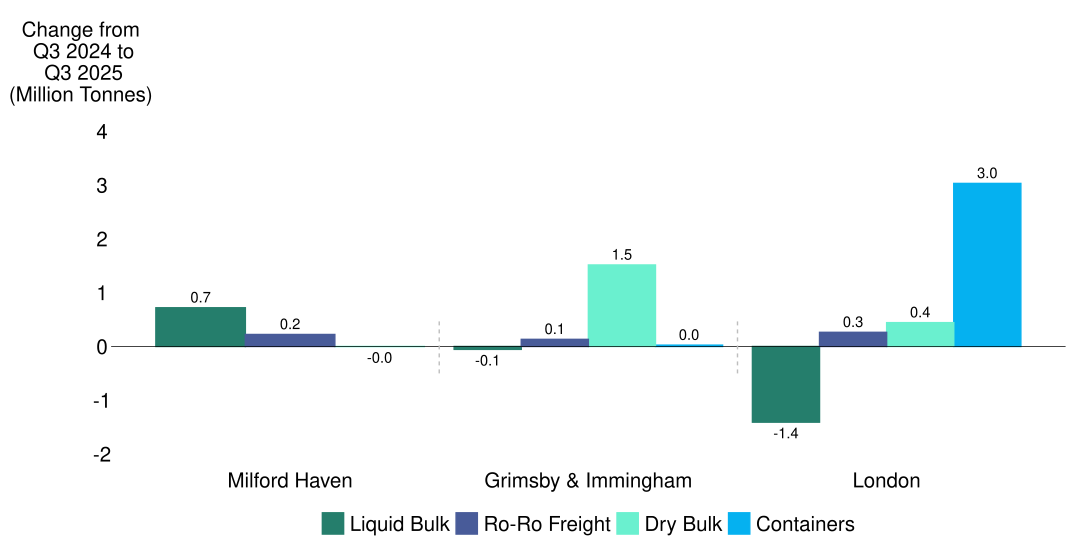
Chart 4: The top 3 UK major ports with the largest overall decreases in tonnage handled from Q3 2024 to Q3 2025, segmented by cargo group (PORT0503)
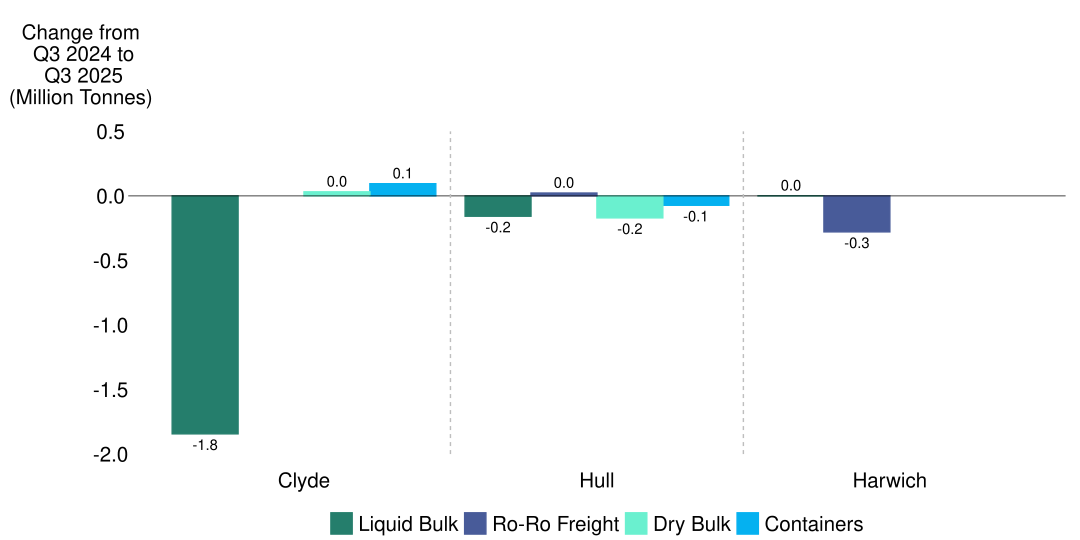
Note: some ports do not handle all of the cargo groups in the key. Cargo groups that are not handled at the port will not appear on these charts.
Liquid Bulk
Liquid bulk tonnage through UK major ports has decreased by 13% to 33.9 million tonnes when comparing Q3 2025 with Q3 2024.
Chart 4 shows that the decline in liquid bulk tonnage from Q3 2024 to Q3 2025 was largely driven by Clyde, which saw a 1.8 million tonnes decrease (a 94% drop), the largest among UK major ports. The port reported that Finnart Oil Terminal has now closed completely, with all future volumes to be brought in through Grangemouth.
London also saw a 1.4 million tonnes decrease (down 43%) over the same period (see Chart 3). However, an increase in container traffic at London meant that overall London saw a total increase in tonnage handled.
Dry Bulk
Dry bulk tonnage rose by 11% in Q3 2025 compared to Q3 2024, reaching 21.6 million tonnes. As shown in Chart 3, this growth was primarily attributed to a 1.5 million tonnes increase at Grimsby and Immingham - a 91% rise - the largest among UK major ports during this period, returning Grimsby and Immingham to tonnage levels seen in 2023.
Containers
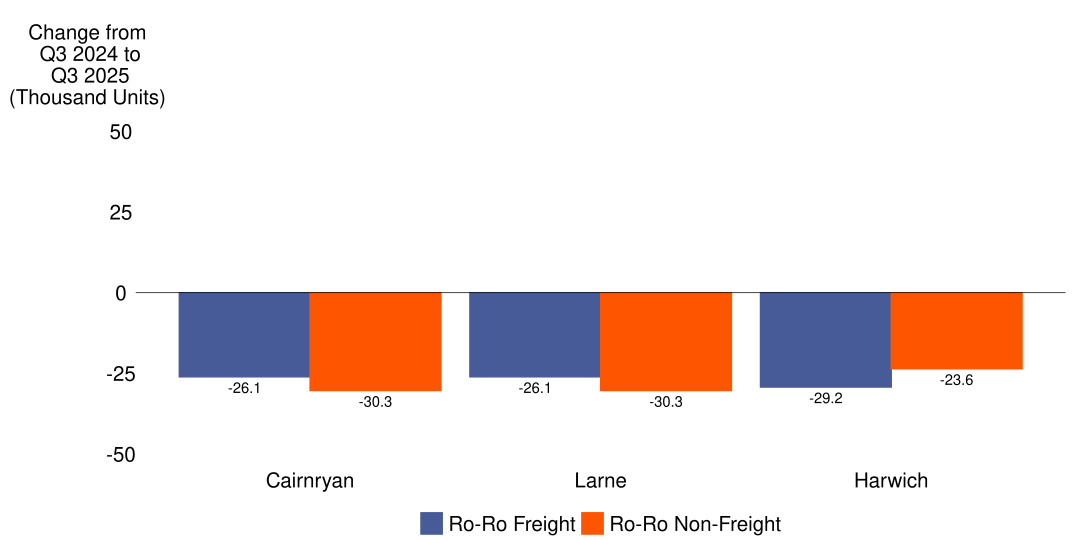
Chart 5 shows how different cargo estimates have changed for the 3 UK major ports with the largest overall increases in units handled from Q3 2024 to Q3 2025, and Chart 6 shows this for the 3 UK major ports with the largest overall decreases in units handled.
Chart 5: The top 3 UK ports with the largest overall increases in units handled from Q3 2024 to Q3 2025, segmented by cargo group (PORT0503)
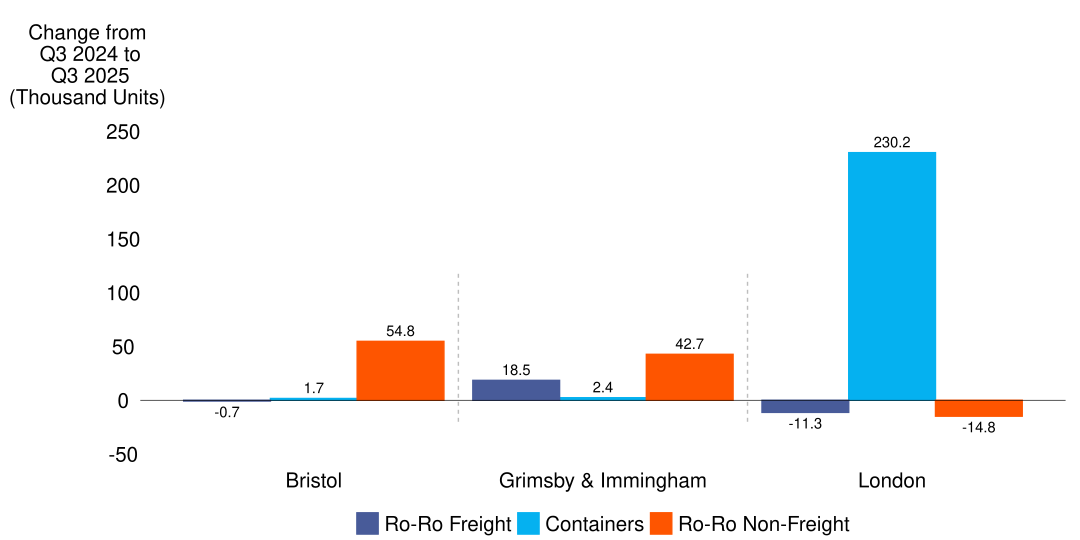
Chart 6: The top 3 UK major ports with the largest overall decreases in units handled from Q3 2024 to Q3 2025, segmented by cargo group (PORT0503)
Container tonnage increased by 43% to 19.5 million tonnes in Q3 2025 compared to Q3 2024. As highlighted in Chart 3, this surge was largely driven by London, which recorded a 3 million tonnes increase (an 88% rise) during this period, the largest among UK major ports. This quarter has seen London’s largest ever container tonnage, bringing its total to 6.5 million tonnes - this comes after the port launched its fourth berth at London Gateway at the end of 2024.
When measured in units, total UK container traffic grew by 34% in Q3 2025 compared to Q3 2024. Chart 5 shows that this rise was largely driven by London, which recorded a 230,200-unit increase (a 93% rise) during this period.
Ro-Ro Freight and Ro-Ro Non-Freight
Ro-Ro freight tonnage rose by 1% to 23.5 million tonnes in Q3 2025 compared to Q3 2024. This increase was mostly attributed to Liverpool rising by 0.4 million tonnes (up 24%) and London rising by 0.3 million tonnes (up 13%).
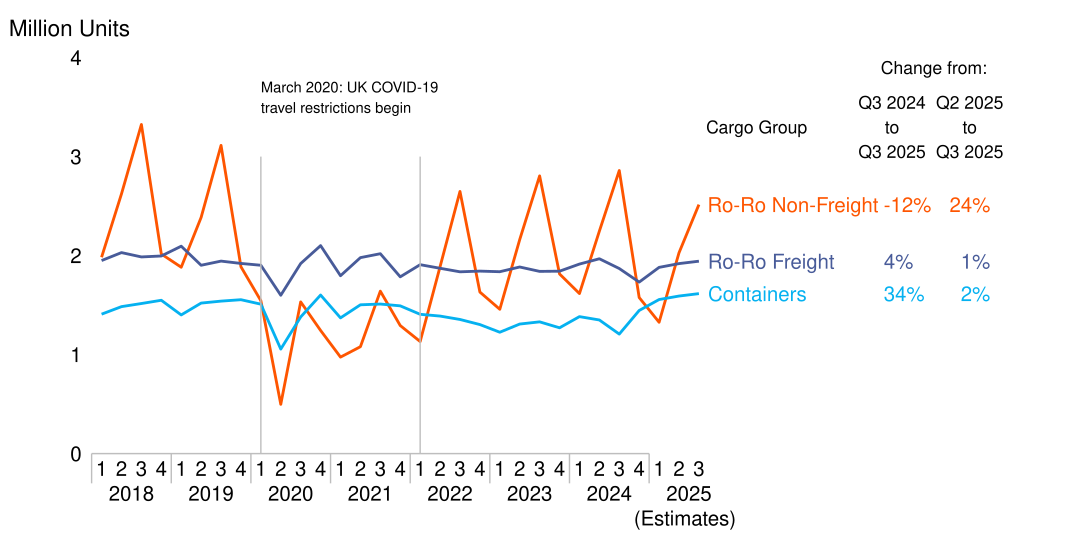
Total UK Ro-Ro freight unitised traffic saw a 4% increase to 1.9 million units in Q3 2025 when compared with Q3 2024.
By contrast, Ro-Ro non-freight units declined by 12% to 2.5 million units in the same period. These changes were primarily due to Dover port, which saw a 170,000 unit rise in Ro-Ro freight (up 32%), but a 203,000 unit decrease (-25%) in Ro-Ro non-freight from Q3 2024 to Q3 2025 - this meant that overall units traffic at Dover remained relatively stable. Chart 6 highlights less substantial decreases in Ro-Ro at Larne, Cairnryan and Harwich.
From Q2 2025 to Q3 2025, Ro-Ro non-freight unitised traffic increased by 24%, which can be attributed to seasonal variation as shown in Chart 7.
Chart 7: UK major port freight unitised traffic by cargo group since 2019 (PORT0503)
Definitions
Unitised goods: Goods which are lifted on or off the vessel in large (20 foot or longer) shipping containers or rolled on or off in 1 of a variety of self-propelled or towed units are said to be unitised cargoes. For these cargo types, the number of units as well as the weight of goods is recorded. The exception is passenger cars, which don’t carry cargo and therefore we collect only the number of units.
Tonnage: Gross weight in tonnes, including crates and other packaging. The tare weights of containers, road goods vehicles, trailers and other items of transport equipment (the unloaded weight of the vehicle or equipment itself) are excluded.
Liquid bulk: Consists of any liquid or liquid gas that is transported in a tank.
Liquified natural gas (LNG): Natural gas which has been cooled to approximately -160°C, changing its state from gas to liquid. This enables transportation of gas by ship, as the volume is significantly reduced compared to the gaseous state.
Dry bulk: Carried in the main cargo hold of bulk carrier vessels, for example coal, ores and scrap metal.
Lift-on/Lift-of (Lo-Lo): Consists of container traffic. Container (Lo-Lo) traffic is measured in both tonnes and units, where 1 unit is 1 container, and tonnage measures the weight of the cargo being carried, excluding the weight of the container itself, so an empty container has a weight of 0.
Roll-on/Roll-off (Ro-Ro): Cargo that can be moved on to, or off, a vessel either by their own propulsion (such as a passenger car) or with assistance (such as an unaccompanied trailer). Detailed information is available in this category flowchart.
Ro-Ro freight traffic: All Ro-Ro units that carry cargo, both accompanied and unaccompanied, it is measured in both tonnes and units, where 1 unit is 1 vehicle or trailer, and tonnage measures the weight of the cargo being carried, excluding the weight of the vehicle itself, so an empty unit has a weight of 0.
Ro-Ro non-freight traffic: All other Roll-on/Roll-off traffic that does not carry cargo, such as passenger vehicles, import/export vehicles and unaccompanied caravans. Passenger vehicles are counted in units but do not have a tonnage as they are carrying no cargo, therefore Ro-Ro non-freight tonnage is mostly import/export vehicles.
Accompanied: Road goods vehicles carrying freight accompanied by the driver on the sea crossing.
Unaccompanied: Road goods vehicles without the accompanied cab, rolled on and off the vessel by port operations and collected by a new driver at the destination port.
Background information
The tables give further detail of the key results presented in this statistical release. They are available from port and domestic waterborne freight statistics.
These notes provide further information such as definitions and a list of UK ports is available in the accompanying port list.
The background quality report provides further information on how the data is collected, quality assured and comparisons with relevant data sources.
Details of Ministers and officials who receive pre-release access to these statistics up to 24 hours before release can be found on the pre-release access list.
About these statistics
These statistics are labelled as official statistics in development. Official statistics in development (previously Experimental Statistics) are official statistics that are undergoing a development; they may be new or existing statistics, and will be tested with users, in line with the standards of trustworthiness, quality, and value in the Code of Practice for Statistics.
Instructions for printing and saving
Depending on which browser you use and the type of device you use (such as a mobile or laptop) these instructions may vary.
You will find your print and save options in your browser’s menu. You may also have other options available on your device. Tablets and mobile device instructions will be specific to the make and model of the device.
How to search
Select Ctrl and F on a Windows laptop or Command and F on a Mac.
This will open a search box in the top right-hand corner of the page. Type the word you are looking for in the search bar and press enter.
Your browser will highlight the word, usually in yellow, wherever it appears on the page. Press enter to move to the next place it appears.
Contact us
Maritime and shipping statistics
Email maritime.stats@dft.gov.uk
Media enquiries 0300 7777 878
To hear more about DfT statistical publications as they are released, follow us on X at DfTstats.