Domestic Waterborne Freight Statistics: 2024
Updated 17 December 2025

© Crown copyright 2025
This publication is licensed under the terms of the Open Government Licence v3.0 except where otherwise stated. To view this licence, visit nationalarchives.gov.uk/doc/open-government-licence/version/3 or write to the Information Policy Team, The National Archives, Kew, London TW9 4DU, or email: psi@nationalarchives.gov.uk.
Where we have identified any third party copyright information you will need to obtain permission from the copyright holders concerned.
This publication is available at https://www.gov.uk/government/statistics/port-freight-annual-statistics-2024/domestic-waterborne-freight-statistics-2024
You can use our maritime interactive dashboard to explore port freight trends.
These are accredited official statistics and were independently reviewed by the Office for Statistics Regulation in December 2018. For more information, see the About these statistics section.
Domestic Routes
Definitions
Coastwise: traffic carried around the coast from one UK port to another, including domestic ferry services. Figures are double-counted in the port freight data for this type of traffic. For example, data of a shipment from Liverpool to Belfast is collected from both Liverpool’s and Belfast’s perspectives (one being an inward, the other record being an outward voyage).
One-Port: traffic to and from offshore locations such as oil rigs and sea dredging.
Main freight units: a subset of unitised goods are main freight units – this group consists of all containers and those roll-on, roll-off (Ro-Ro) units which are designed to carry freight (categories 51, 61 and 63 in the cargo categorisation flowchart). The purpose of the main freight unit classification is that it excludes those Ro-Ro units which are not freight carrying – such as passenger vehicles, trade vehicles, and other specialised vehicles and trailers.
Trends in tonnage traffic
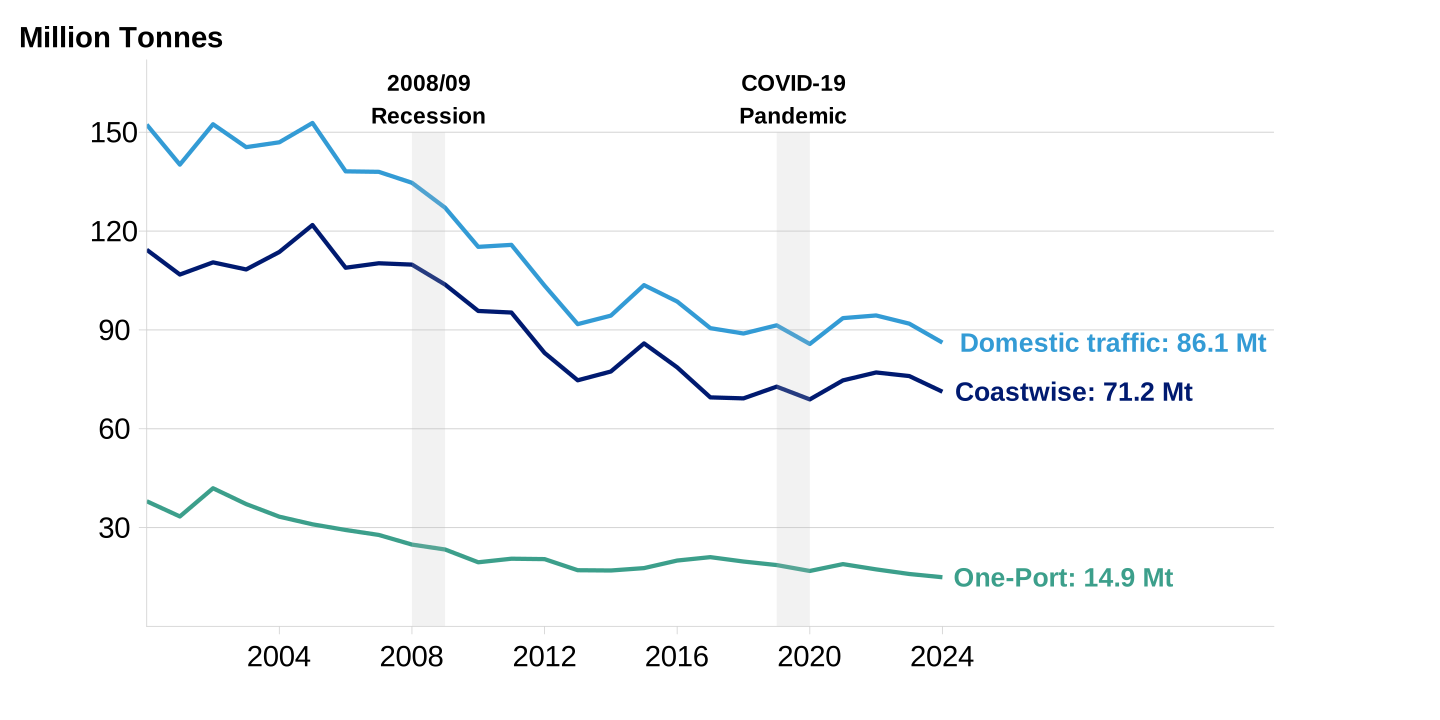
Tonnage carried on domestic routes continues to account for 20% of all traffic handled by UK major ports, totalling 86.1 million tonnes in 2024. This proportion has been similar since 2012. Overall, domestic tonnage in 2024 declined by 6% compared to 2023. Coastwise traffic made up the majority (83%) of domestic tonnage in 2024 compared to one-port traffic. Chart 16 is a line chart showing the trend in domestic traffic by coastwise and one-port over time. From 2005 to 2017, coastwise traffic broadly declined, mainly because of a fall in liquid bulk traffic, but from 2017 to 2024, the trend has remained relatively level (PORT0706). One-port traffic levels are lower and have broadly declined over time.
Chart 16: Domestic traffic by type from 2000 to 2024 (PORT0706)
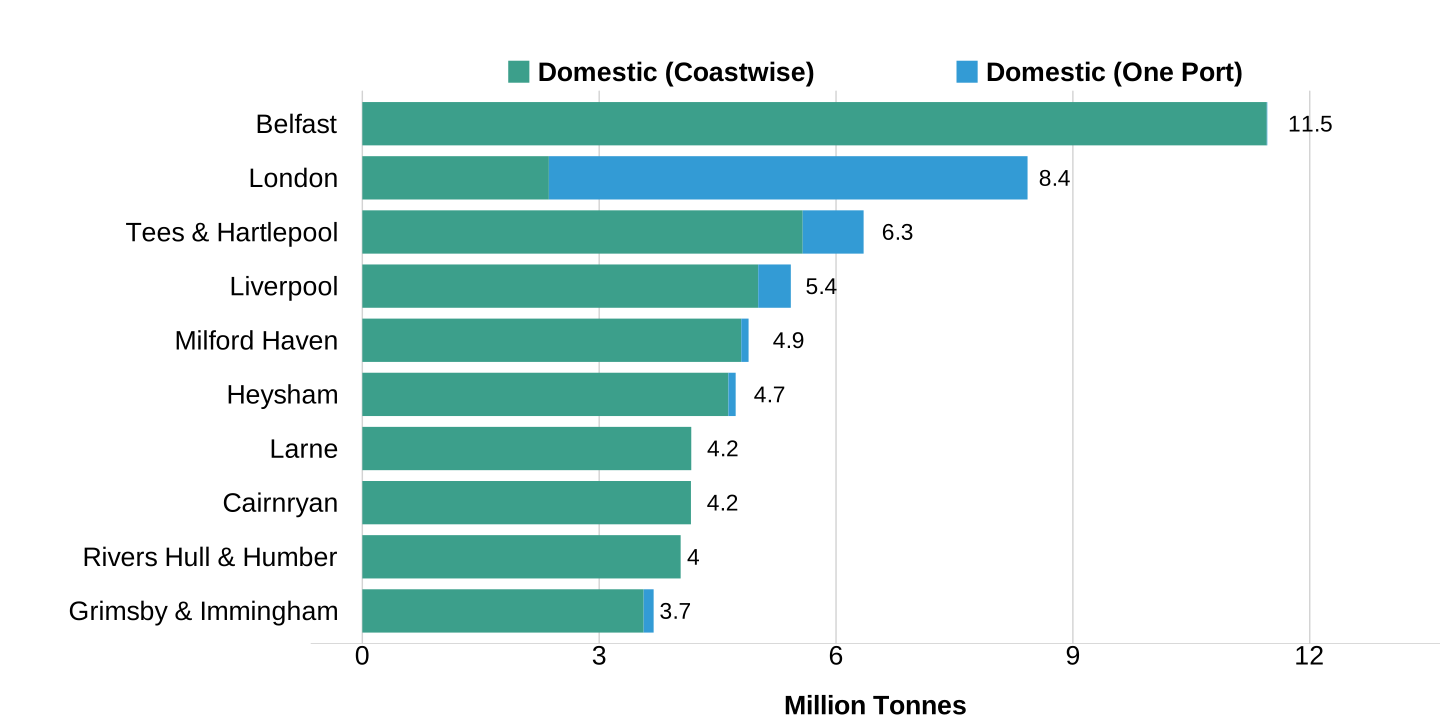
In 2024, Belfast remained the UK port that handles the largest share (13%) of all UK domestic traffic, handling a total of 11.5 million tonnes (all of which was coastwise traffic). This is shown in Chart 17, a stacked bar chart of the 10 ports handling the most domestic traffic split by one-port and coastwise. London was the second largest domestic port and handled the most one-port traffic, the majority of which was dry bulk. London one-port traffic alone accounts for 41% of all domestic one port traffic.
Chart 17: Top 10 UK major ports by domestic tonnage in 2024 (PORT0499)
Trends in tonnage traffic by cargo type
While the overall decline in domestic traffic was driven by a decline in bulk cargo, roll-on/roll-off (Ro-Ro) traffic and other general cargo increased. Chart 18 is a line chart showing the trends in domestic traffic by cargo groups over time.
Chart 18: Domestic traffic by cargo group from 2014 to 2024 (PORT0706)
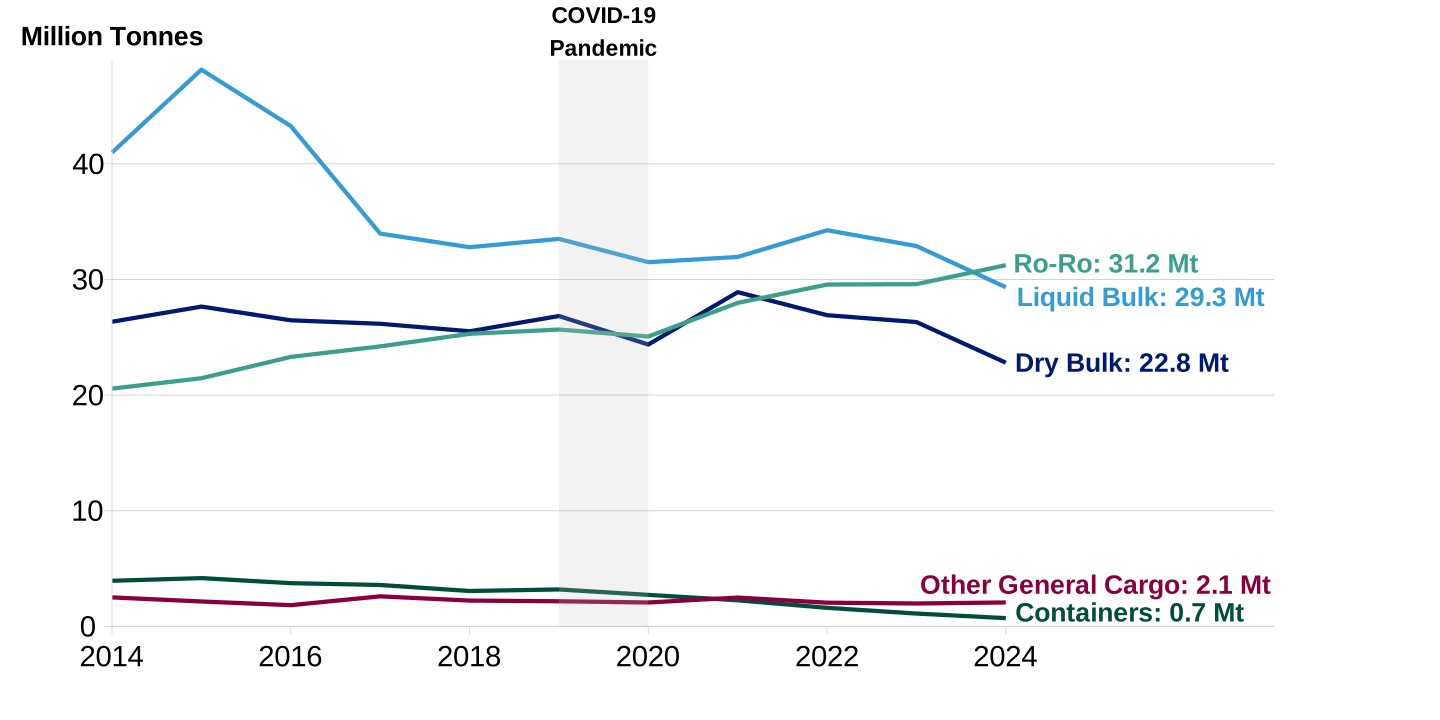
Liquid bulk had the largest absolute decline of all domestic traffic, down 3.5 million tonnes in 2024 from 2023 (-11%). Liquid bulk alone accounted for just under half of the total decline in domestic traffic in 2024. The decline in domestic liquid bulk was driven primarily by crude oil, which fell by 20%, followed by oil products (down 4%). International traffic similarly saw the largest declines in liquid bulk, which was driven by declining liquified natural gas (LNG) and crude oil movement.
Dry bulk contributed almost as much as liquid bulk to the overall fall in domestic traffic in 2024, making up a little under half of the total decrease. Dry bulk traffic fell by 13% between 2023 and 2024, largely driven by reductions in agricultural products (–53%) and coal (–50%). Coal transported on international routes also experienced the largest decline of any dry bulk category.
Ro-Ro tonnage showed the largest absolute increase of all domestic traffic, rising 1.6 million tonnes in 2024 from 2023 (6%). This increase occurred despite an overall decline in total domestic traffic and led to Ro-Ro overtaking liquid bulk as biggest cargo group by volume in 2024 (accounting for 36% of total domestic tonnage). The growth in Ro-Ro was driven by both accompanied vehicles (up 8%) and unaccompanied road goods vehicles (up 4%). Further trends in unitised Ro-Ro traffic are discussed in the Trends in unitised traffic section below.
Domestic container traffic saw a decrease of 36% between 2023 and 2024, continuing a long-term trend which has seen it fall 83% since the peak in 2015. This contrasts sharply with the international trend, where container volumes saw an increase. Other general cargo, which includes iron and steel products, increased by 4% from 2023 to 2024.
For more detail on trends by cargo type internationally, go to the cargo information page.
Coastwise
In 2024, 71.2 million tonnes of domestic traffic was coastwise, a decrease of 6% compared with 2023. The overall coastwise decrease of 4.8 million tonnes in 2024 was largely driven by a 3.0 million tonne decline in liquid bulk and a 2.9 million tonnes decline in dry bulk.
Coastwise Ro-Ro traffic increased to 31.2 million tonnes in 2024, up 6% from 2023. Unaccompanied road goods vehicles increased by 0.8 million tonnes (4%) while accompanied road goods vehicles increased by 0.9 million tonnes (9%). Liverpool recorded the largest absolute increase in Ro-Ro traffic, rising by 0.8 million tonnes, driven primarily by growth in accompanied road goods vehicles.
In line with previous years, Belfast handled the most coastwise tonnage of all UK ports in 2024 at 11.5 million tonnes, the majority of which was Ro-Ro (8.2 million tonnes). Tees and Hartlepool handled the second most coastwise domestic traffic in 2024 at 5.6 million tonnes.
One-Port
One-port tonnage decreased 6% in 2024 to 14.9 million tonnes. One-port tonnage consists of traffic to and from offshore locations, including sea dredging and oil rigs. Crude oil one-port tonnage has declined considerably since 2000 – the reduction in North Sea oil and gas production is likely to have been a contributory factor. The decline in one-port tonnage in 2024 was driven by declines in liquid bulk (-23%) and dry bulk (-5%). The largest decrease in liquid bulk was recorded at Clyde, where it fell by 0.4 million tonnes.
Trends in unitised traffic
Domestic unitised traffic increased by 1% in 2024 compared with 2023, driven largely by a 2% rise in unitised Ro-Ro traffic. Despite this overall growth, several key categories recorded declines in 2024 from 2023: passenger cars and motorcycles fell by 1%; motor vehicles for import or export decreased by 23%; and container units decreased by 28%, reaching their lowest level since 2000 and reflecting the decline in container tonnage.
Main freight unitised traffic, which consists of all containers and Ro-Ro units capable of carrying freight, increased by 3% in 2024 compared with 2023. This growth was led by a 6% overall rise in Ro-Ro freight carrying vehicles (such as road goods vehicles with trailers).
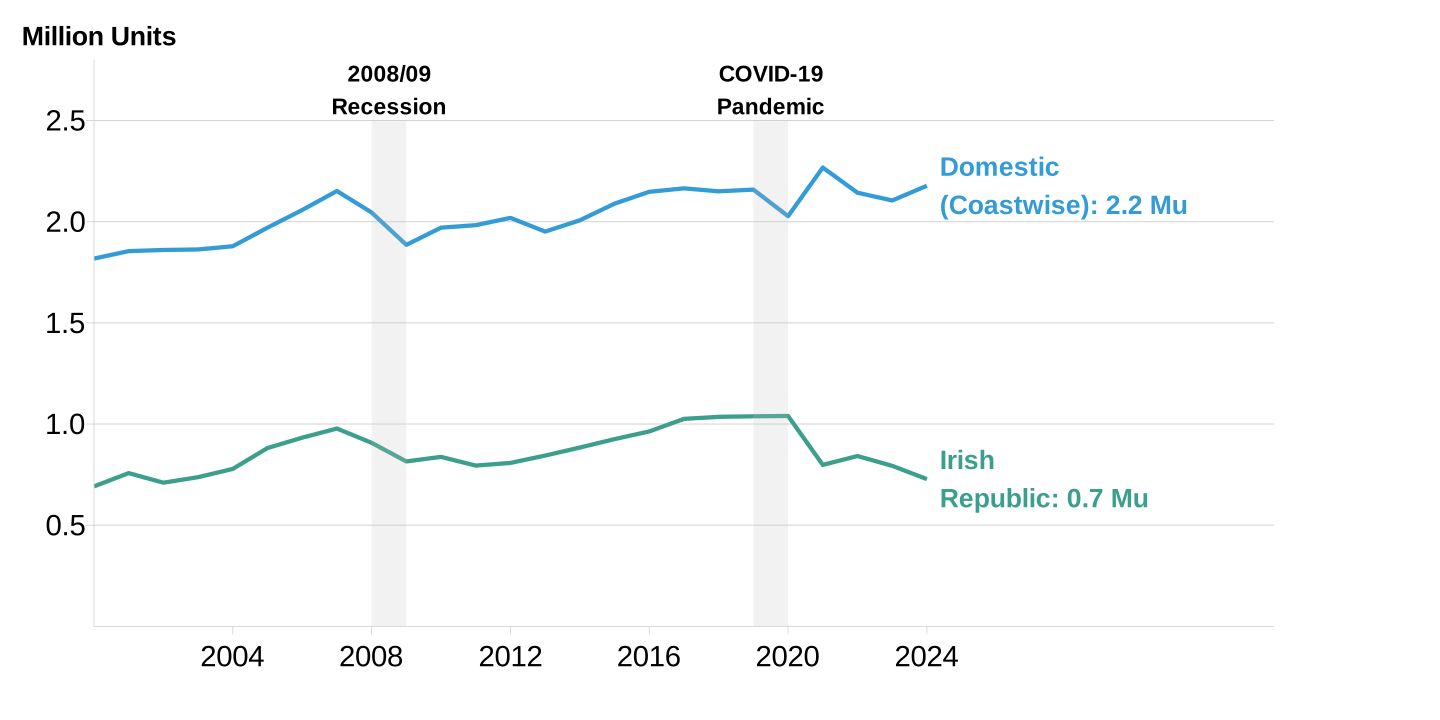
In the same year, main freight traffic to the Republic of Ireland decreased by 66,000 units (-8%), following a downward trend in the last 2 years. According to the Irish Maritime Development Office, one factor behind the decline between Great Britain and the Republic of Ireland was the ending of the P&O service between Dublin and Liverpool, announced in August 2023. This trend of main freight units on domestic coastwise routes and routes with the Republic of Ireland is displayed in Chart 19.
Chart 19: Main freight units handled on Irish republic and domestic coastwise routes, 2000 to 2024 (PORT0499)
Domestic Waterborne Freight
About domestic waterborne freight
Domestic waterborne freight covers freight moved by water in the UK and includes traffic on inland waterways in addition to coastwise and one-port traffic. These are based on analysis of the port freight statistics and inland waterway movements collected from barge operators and minor ports. In contrast to the domestic figures above, coastwise traffic between 2 ports is only counted in 1 direction, and international traffic which travels on inland waters is included. Figures in this section are not directly comparable to the rest of port freight statistics.
For further information regarding the figures in this section, see the domestic waterborne freight technical note. Data tables for domestic waterborne freight can be found in the PORT07 section.
Definitions
Inland waterways traffic is movement of freight on a ship or barge along one of British inland waterways, such as rivers or canals. Where coastwise or one-port traffic is handled by a port classified as being on inland waters (for example, on a river), this is also included in the inland waters within this section.
Goods moved is a metric used for freight traffic. It is the tonnage of goods lifted multiplied by the distance travelled, expressed as tonne-kilometres. For foreign traffic, distance is counted to the smooth water boundary only.
Water transport accounts for a relatively small share of domestic goods moved across all modes (where road dominates), around 10% of goods moved and 5% of goods lifted, based on data for 2024 published in Transport Statistics Great Britain.
The total volume of goods lifted by water within the UK decreased by 1% to 89.7 million tonnes in 2024 from 2023. Goods moved (measured in billion tonne-kilometres, btk) decreased by 12%, to 20.9 btk. This reduction was driven primarily by lower domestic liquid bulk movement (down 16%) and dry bulk movement (down 15%). A similar pattern was seen in international freight, where liquid bulk and dry bulk tonnage also declined over the same period.
These trends are shown in Chart 20 and Chart 21 – line charts showing the trends in domestic waterborne freight goods lifted, and goods moved, over time.
Chart 20: Domestic waterborne freight goods lifted from 2001 to 2024 (PORT0701)

Chart 21: Domestic waterborne freight goods moved from 2001 to 2024 (PORT0701)
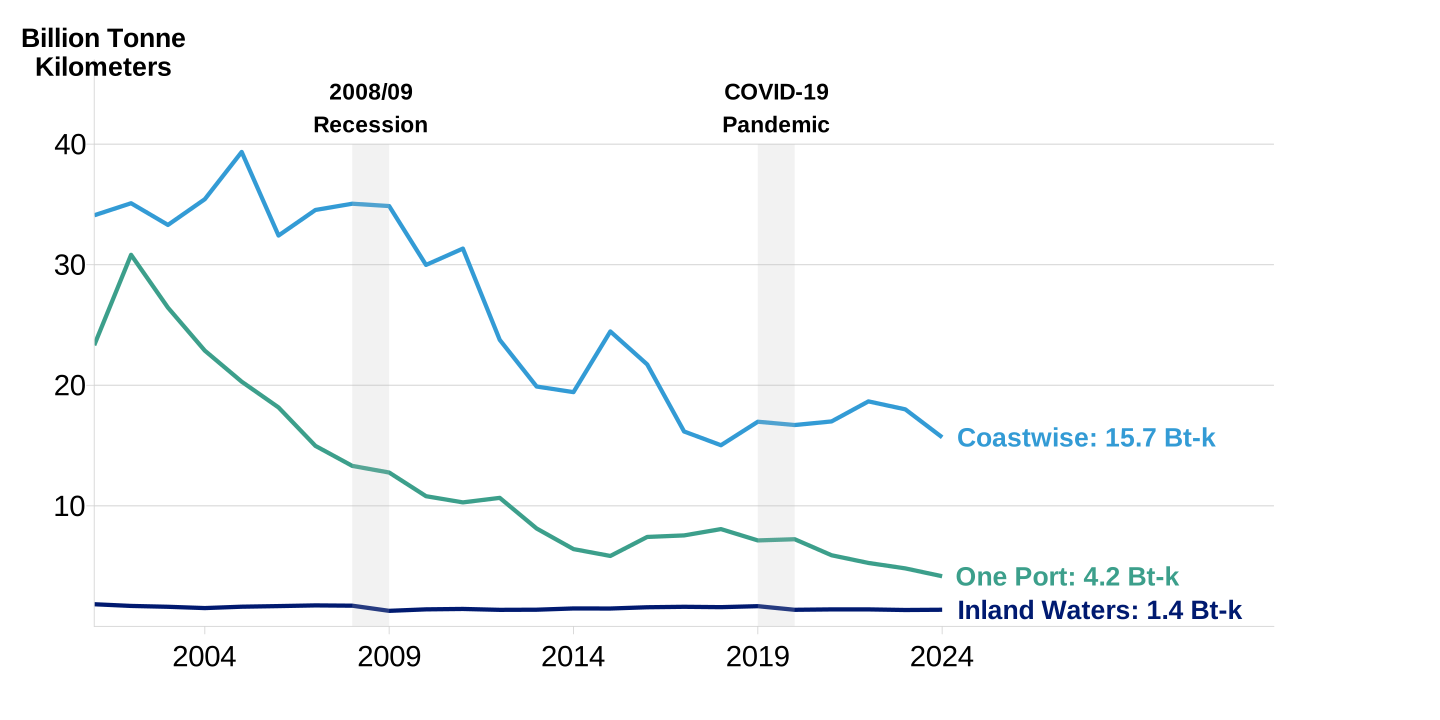
Chart Note: Coastwise and one-port traffic which travels on inland waterways is counted twice in the Charts 20 and 21 above (so total goods lifted is less than the sum of the 3 individual categories).
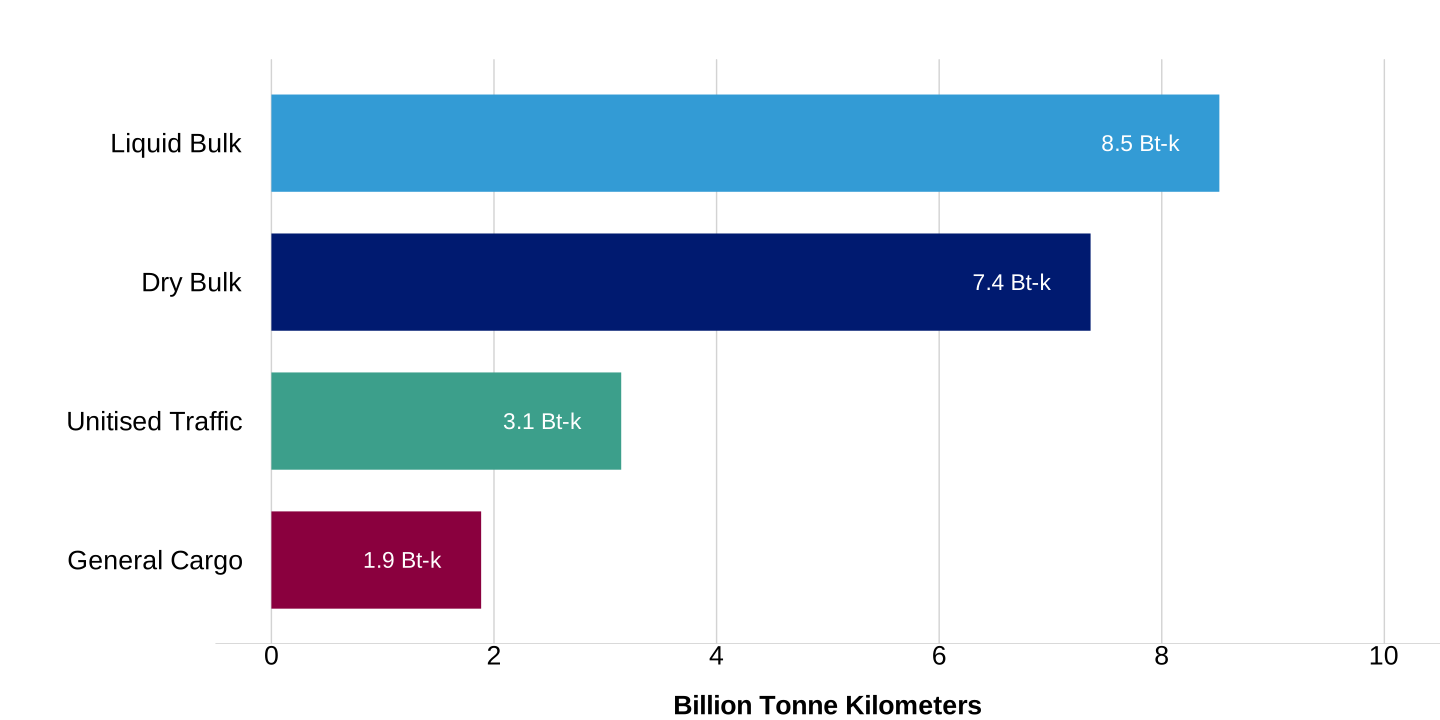
Chart 22 is a bar chart of goods moved in 2024 by cargo type. In terms of goods moved, liquid bulk traffic remains the most transported cargo type along domestic waterborne routes (41%) in 2024, followed by dry bulk (36%), consistent with the previous year trends. Despite the declining trend in liquid bulk overall since 2000 (associated with the decline in North Sea oil), the majority of the liquid bulk cargo movements continues to involve crude oil and oil products. In 2024, unitised traffic (Ro-Ro and container) accounted for 15% of all tonne-kilometres, accounting for the same proportion of domestic goods moved as last year.
Chart 22: Domestic waterborne freight goods moved by cargo type, 2024 (PORT0702)
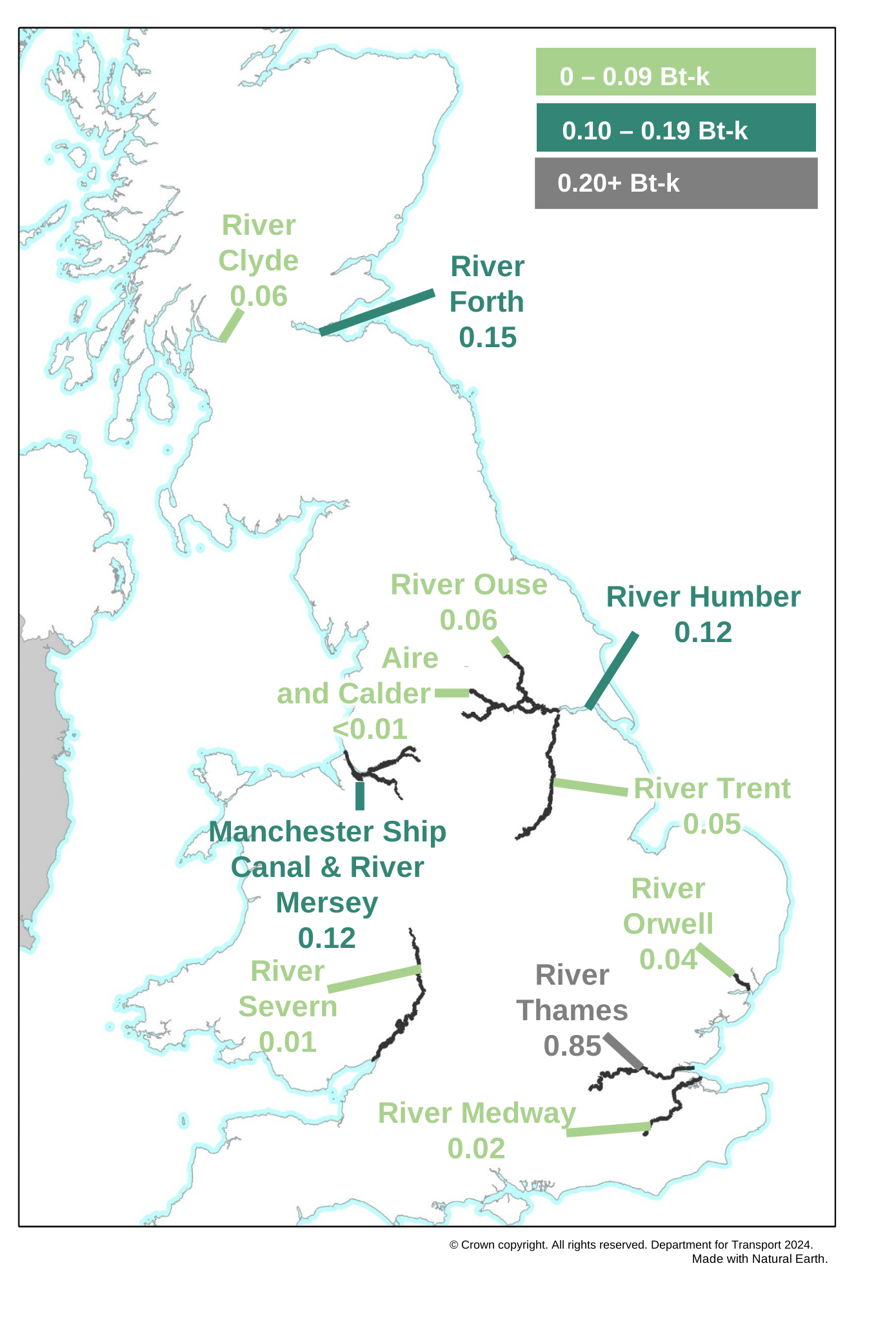
Inland waters traffic is that carried by barges or seagoing vessels on UK inland waterways. In 2024, total goods moved by all UK waterways increased by 2% to 1.38 billion tonnes-kilometres.
Chart 23 is a map of the navigable waterways alongside the associated tonnage moved. The Thames handled the most domestic traffic in the UK, accounting for over half (61%) of all goods moved by inland waterway in 2024, followed by River Forth (11%). In terms of goods lifted, the Thames handled 25.1 million tonnes of freight, representing 55% of all traffic on UK inland waterways and an increase of 6% compared with 2023.
Chart 23: Map of domestic waterborne freight goods moved by waterway, 2024 (PORT0705)
Background information
The tables give further detail of the key results presented in this statistical release. They are available from port and domestic waterborne freight statistics.
These notes provide further information such as definitions and a list of UK ports is available in the accompanying table index.
The background quality report provides further information on how the data is collected, quality assured and comparisons with relevant data sources.
Details of Ministers and officials who receive pre-release access to these statistics up to 24 hours before release can be found on the pre-release access list.
Related data sources
His Majesty’s Revenue and Customs (HMRC) publishes data on tonnage and value to a much more granular commodity level for goods traded internationally. Comparisons between port freight and this source, specifically for certain cargo categories, are explored further in our notes and definitions.
The Department for Energy Security and Net Zero (formerly Department for Business, Energy and Industrial Strategy) publish the Digest of UK Energy Statistics (DUKES) which covers the production and consumption of fuels and energy in the UK.
Information on freight moved by different modes, including a breakdown of domestic freight is available in Transport Statistics Great Britain.
Eurostat publish comparative port freight data for European Union countries, which can be used to compare UK ports to those in EU countries.
About these statistics
These official statistics were independently reviewed by the Office for Statistics Regulation in December 2018. They comply with the standards of trustworthiness, quality and value in the Code of Practice for Statistics and should be labelled ‘accredited official statistics’.
Instructions for printing and saving
Depending on which browser you use and the type of device you use (such as a mobile or laptop) these instructions may vary.
You will find your print and save options in your browser’s menu. You may also have other options available on your device. Tablets and mobile device instructions will be specific to the make and model of the device.
How to search
Select Ctrl and F on a Windows laptop or Command and F on a Mac
This will open a search box in the top right-hand corner of the page. Type the word you are looking for in the search bar and press enter.
Your browser will highlight the word, usually in yellow, wherever it appears on the page. Press enter to move to the next place it appears.
Contact us
Maritime and shipping statistics
Email maritime.stats@dft.gov.uk
Media enquiries 0300 7777 878
To hear more about DfT statistical publications as they are released, follow us on X at DfTstats.