Police custody and pre-charge bail, year ending March 2025
Published 9 April 2026
Applies to England and Wales

© Crown copyright 2026
This publication is licensed under the terms of the Open Government Licence v3.0 except where otherwise stated. To view this licence, visit nationalarchives.gov.uk/doc/open-government-licence/version/3 or write to the Information Policy Team, The National Archives, Kew, London TW9 4DU, or email: psi@nationalarchives.gov.uk.
Where we have identified any third party copyright information you will need to obtain permission from the copyright holders concerned.
This publication is available at https://www.gov.uk/government/statistics/police-custody-and-pre-charge-bail-year-ending-march-2025/police-custody-and-pre-charge-bail-year-ending-march-2025
The ‘Police powers and procedures: Other PACE powers’ statistical bulletin has now been split into 3 separate releases:
- this publication, covering data collections on detentions in police custody, pre-charge bail and individuals released under investigation, is now referred to as ‘Police custody and pre-charge bail’
- the motoring offences and breath tests data collections were published in March 2026 in the ‘Police powers and procedures: Roads policing’ bulletin
- the stop and search, arrests and mental health detention collections were published in November 2025 in the ‘Stop and search, arrests and mental health detentions’ bulletin
Additionally, a separate report on police protest powers is now also part of the ‘Police powers and procedures’ collection. The latest report, containing data up 31 March 2025, was published in February 2026.
This release contains statistics in England and Wales for the year ending 31 March 2025 on:
Section 1: Detentions in police custody
Data is provided by a subset of the 43 police forces in England and Wales on a financial-year basis. These are Official Statistics in Development on:
- the number of detentions in police custody
- the age-group, sex, and ethnicity of persons detained and all offences linked to the custody record
- whether a detained adult was identified as vulnerable
- whether an appropriate adult was called for children and vulnerable adults, and the time taken for the appropriate adult to arrive
- overnight detentions of children, and whether this was pre-charge or post-charge
- number of strip searches carried out
- the age, sex, and ethnicity of persons strip searched
- the number of persons detained by police in England and Wales under part IV of Police and Criminal Evidence (PACE) Act for more than 24 hours and subsequently released without charge
- the number of intimate searches made under section 55 of PACE
For the year ending March 2025 publication, new data has been published for the first time on:
- use of anti-rip suits
- whether an appropriate adult attended for vulnerable adults and children
- how the offence for which an individual was brought into custody for impacts whether a strip search was carried out, as well as whether differences in strip search rates by demographic can be accounted for by offence
Section 2: Pre-charge bail and released under investigation
Data on pre-charge bails and those released under investigation, concluding in the year ending March 2025, is provided by a subset of the 43 police forces in England and Wales on a financial-year basis. These are Official Statistics in Development on the:
- number of persons released on pre-charge bail, released under investigation, who voluntary attended interview, and number of persons who breached pre-charge bail conditions
- age, sex, and ethnicity of persons released on pre-charge bail, released under investigation, voluntarily attended interview, or breached pre-charge bail conditions
- duration of release under pre-charge bail or release under investigation
- duration between first voluntary attendance to interview and outcome of the investigation
- all offences linked to pre-charge bail, release under investigation, voluntarily attendance to interview or breach of pre-charge bail records
- outcome of pre-charge bail, release under investigation, and voluntary attendance to interview
1. Police custody
Police custody statistics in this chapter are designated as Official Statistics in Development.
In the year ending March 2025 (based on subsets of forces and excluding unknowns, see individual chapters for more detail):
- there was a total of 938,050 detentions in custody, of which 58,568 (6%) were of children (aged 17 and under)
- around a third (33%) of offences for which people were in custody were ‘violence against the person’ offences, the same proportion as previous years
- over three-quarters (77%) of people in custody were of a White ethnic background, excluding data from the Metropolitan Police Service, this was 81%
- people aged 21 to 30 and 31 to 40 made up the largest proportions of people in custody (25% and 31% respectively)
- an ‘appropriate adult’ was called for 96% of children in custody, and 87% of vulnerable adults
- an appropriate adult had either arrived with the detainee or had arrived within one hour of being called for 64% of children and 76% of vulnerable adults
- 43% of children taken into custody were detained overnight, the majority (91%) of which were detained pre-charge
- for forces who use anti-rip suits, one was used in 0.8% of detentions
- the majority (79%) of individuals were detained one time in the year and 21% of individuals were detained on at least 2 occasions; on average, there were 1.3 detentions per person
- there were 64,130 strip searches in custody, the equivalent of 8% of all detentions
- there were 22 intimate searches carried out by police, an increase of 10 compared with the year ending March 2024
- based on information from 33 forces who were able to provide complete data for both the year ending March 2024 and the year ending March 2025, there was an increase of 12% in the number of persons detained by police in England and Wales under part IV of Police and Criminal Evidence Act for more than 24 hours and subsequently released without charge (from 3,638 to 4,088)
1.1 Data collection and scope
It is important that both the government and the public can fully understand the profile of those in police custody and the way that police powers are used. The custody data collection was introduced in the year ending March 2022.
The collection was developed alongside police forces in England and Wales, stakeholders such as the Independent Custody Visiting Association, and views from national documents including:
- Dame Elish Angiolini’s report into deaths and serious incidents in police custody
- His Majesty’s Inspectorate of Constabulary and Fire and Rescue Service custody expectations document
- ‘Good Police Custody’ research produced by Dr. Layla Skinns and Dr. Angela Sorsby
The police custody collection was initially introduced as a voluntary collection and became mandatory in March 2023. This year, the publication includes data from 42 out of 43 police forces on detentions in police custody (excluding Humberside due to transitioning to a new data system), and from 37 forces on strip searches (see section 1.2 below for further information on forces where data has not been included).
Individuals may be detained in custody on multiple occasions through the year. In this data collection, a unique ID is collected for both the detention and for the individual. This allows for analysis of both number of detentions and number of unique individuals. This chapter primarily focuses on number of detentions (sections 1.3 to 1.7). Analysis of number of unique individuals is presented in section 1.8. Similarly, number of strip searches and number of unique individuals strip searched is presented in section 1.9 and section 1.10.
1.2 Data quality – detentions and strip searches in custody
Although forces already record information on who has entered custody, recording processes are not consistent across police forces and the data does not always easily match the format requested through the Home Office Annual Data Requirement (ADR). As this data collection is still relatively new, many forces reported data quality issues whilst they embed new processes, or have not been able to provide data on all aspects of the ADR. For example, some information is held in free text logs, and it is difficult to extract in a way that can be easily used for ADR reporting.
The detentions and strip searches data has therefore been labelled as ‘Official Statistics in Development’ to indicate that there are data quality issues and should be treated with caution. The Home Office continues to work with forces and the National Policing Chiefs’ Council (NPCC) to improve the quality and consistency of the data in this collection.
Humberside Police force were able to provide data on strip searches and detentions over 24 hours, but were not able to provide data on all detentions due to a recent upgrade to their records management system.
Six police forces (Avon and Somerset, Devon and Cornwall, Greater Manchester, South Yorkshire, Surrey, and Warwickshire) were unable to provide data on strip searches due to being unable to extract data in line with the Home Office ADR requirements, but were able to provide data on the other aspects of the data collection.
The intimate searches and detentions over 24 hours data collections are long-standing collections which are designated as Accredited Official Statistics.
Data is collected for all offences linked to an individual’s custody record, including both notifiable and non-notifiable offences. Comparisons to the Police powers and procedures arrests data collection should be made with caution as that data series collects arrests for notifiable offences only.
The strip searches data in this chapter relates to those carried out in police custody only. Data on strip searches carried out following a stop and search can be found in the ‘Stop and search, arrests and mental health detentions’ statistical release.
The user guide provides further details relating to definitions, legislation and procedures, and data quality.
Ethnicity data quality
When an individual is arrested, they are asked to define their ethnicity (using the 2021 Census 19+1 categories). For the purpose of this analysis, these are grouped into the following Census 5+1 categories:
- White
- Black (or Black British)
- Asian (or Asian British)
- Mixed
- Other ethnic group
- Not stated
In November 2022, the Metropolitan Police Service (MPS) changed to the CONNECT data management system. On this system, the field for the detainee’s self-defined ethnicity is not mandatory for the detention officer to complete and, since the introduction of the new system, completion rates for self-defined ethnicity have fallen. In the year ending March 2025, the MPS reported self-defined ethnicity as unknown for 62% of detention records and 66% of strip search records. In comparison, 9% of detention records and 10% of strip search records for the rest of England and Wales (that is, excluding MPS) were missing self-defined ethnicity data in the year ending March 2025.
Due to the gaps in the self-defined ethnicity data, in the year ending March 2024 the MPS provided additional officer-observed ethnicity data (ethnicity as perceived by the custody officer). Then, in the year ending March 2025, officer-observed ethnicity was introduced as a voluntary requirement for all police forces, and data was received by 36 police forces (including the MPS).
Officer-observed ethnicity is recorded by police using the following ONS Census 4+1 categories:
- White
- Black
- Asian
- Other
- Unknown
For the MPS, officer-observed ethnicity has a higher completion rate, with information complete in 90% of detentions records and 93% of strip search records.
Due to the limitations of the MPS’s self-defined ethnicity data, in this chapter whenever we refer to ethnicity, we use a combined ethnicity measure (unless otherwise specified). This is when the officer-observed ethnicity is used for records where the self-defined ethnicity is not available. Using this combined method, ethnicity data is complete for 97% of detentions and 95% of strip searches records in England and Wales.
Data on self-defined ethnicity can be found in table D_03a and SS_03a of the accompanying ‘Police custody data tables, year ending 31 March 2025’.
A disadvantage of officer-observed ethnicity data is that it does not include a ‘Mixed’ ethnicity group. People of Mixed ethnicity are reported under different ethnicity groups, such as White, Black, Asian or Other. Therefore, the proportion of people reported as Mixed ethnicity may be under-reported using this combined method.
The Home Office is working with the MPS and all police forces to improve the recording of self-defined ethnicity data.
1.3 Analysis of detentions in police custody
The following analysis presents the number of detentions in custody. Where an individual has been detained multiple times within the year, each occasion is counted separately.
As forces were not always able to provide all data requested, analysis in this chapter excludes records where information was unknown.
Excluding Humberside Police, who could not provide data, in the year ending March 2025 there were 938,050 detentions in custody, for 1.86 million offences (including non-notifiable offences). This was a 4% increase from the year ending March 2024 (up from 901,758 detentions, also excluding Humberside).
Over half (56%) of all detentions in custody were of people aged between 21 and 40. Those aged 17 and under made up 6% of all detainees and those aged 61 and over accounted for 3% of all detainees.
Table 1.1: Number of people detained in police custody, by age group and selected police forces, year ending March 2025
| Age group | Number | Percentage of total | 2021 Census |
|---|---|---|---|
| 10 to 12 years | 1,590 | 0.2% | 4% |
| 13 to 15 years | 23,253 | 2% | 4% |
| 16 to 17 years | 33,725 | 4% | 3% |
| 18 to 20 years | 63,082 | 7% | 4% |
| 21 to 30 years | 235,128 | 25% | 15% |
| 31 to 40 years | 286,983 | 31% | 15% |
| 41 to 50 years | 180,781 | 19% | 14% |
| 51 to 60 years | 82,756 | 9% | 15% |
| 61 and over | 29,931 | 3% | 26% |
| Unknown | 821 | [z] | [z] |
| Total | 938,050 | 100% | 100% |
Source: Police custody data tables, year ending 31 March 2025; table D_04, Home Office and ONS 2021 Census
Notes:
- Detentions and Census data excludes Humberside police force.
- Census population data excludes children aged 9 or under. The age of criminal responsibility in England and Wales is 10 years old. This means that children aged 9 or under cannot be arrested or charged with a crime.
- Due to rounding, percentages may not add up to 100%.
- [z] = not applicable.
The majority of detainees were male (84%), whilst 16% were female. A very small number (less than 0.1%) of detainees were reported as ‘other sex’. Similar proportions for male, female and other were seen for adults and children.
Using a combined ethnicity measure[footnote 1], over three-quarters (77%) of people detained in custody were White, 10% were Black or Black British, 9% belonged to the Asian group, 3% were of a Mixed ethnic background and 2% defined as belonging to any Other ethnic background.
Children detained in custody had higher proportions of individuals belonging to Black and Mixed ethnic backgrounds, as shown in table 1.2 below. Overall, 15% of children in custody were from a Black ethnic background, compared to 9% of adults, and 6% of children were of Mixed ethnicity, compared to 3% of adults.
The differences between adults and children for the Mixed ethnic group may reflect differences seen in the general population, (with Census 2021 data showing 2% of adults and 7% of children in England and Wales (excluding Humberside) identify as belonging to the Mixed ethnic group). However, there is less of a difference between adults and children in the general population for Black ethnic group (4% in adults versus 6% in children according to the Census 2021 population).
A smaller proportion of children in custody belonged to the Asian ethnic group than adults (6% in children versus 9% in adults). This does not reflect the general population, where a higher proportion of children are Asian (12%) than adults (9%).
Direct comparisons of the combined ethnicity measure against the census data should be made with caution because (as described in section 1.2) officer-observed ethnicity does not include a ‘mixed’ ethnic group therefore people of mixed ethnicity may be recorded under different ethnic groups such as Black or Asian.
Table 1.2: Ethnicity of people detained in custody, England and Wales (excluding Humberside), year ending March 2025
| Ethnicity | All (adults and children) | Adults | Children |
|---|---|---|---|
| Asian | 9% | 9% | 6% |
| Black | 10% | 9% | 15% |
| Mixed | 3% | 3% | 6% |
| White | 77% | 77% | 70% |
| Other | 2% | 2% | 2% |
Source: Police custody data tables, year ending 31 March 2025; table D_01b, Home Office
Notes:
- This table presents a combined ethnicity measure, using officer observed ethnicity for records where self-defined ethnicity was not recorded.
- Excludes records where both self-defined ethnicity and officer-observed ethnicity were unknown (3% of total).
- Data excludes Humberside Police.
- Due to rounding, percentages may not add up to 100%.
Due to the more ethnically diverse population of the Metropolitan Police Service (MPS) compared with other police forces, the proportion of those detained in custody from ethnic minority backgrounds is lower in the remaining 41 police forces, as shown in table 1.3.
Table 1.3: Ethnicity of people detained in custody, England and Wales (not including Humberside and MPS), year ending March 2025
| Ethnicity | All (adults and children) | Adults | Children |
|---|---|---|---|
| Asian | 8% | 8% | 6% |
| Black | 6% | 6% | 9% |
| Mixed | 3% | 3% | 6% |
| White | 81% | 81% | 77% |
| Other | 2% | 2% | 2% |
Source: Police custody data tables, year ending 31 March 2025; table D_01b, Home Office
Notes:
- This table presents a combined ethnicity measure, using officer observed ethnicity for records where self-defined ethnicity was not recorded.
- Excludes records where ethnicity was unknown (2% of total).
- Data excludes Humberside and Metropolitan police forces.
- Due to rounding, percentages may not add up to 100%.
1.4 Reason for being in custody
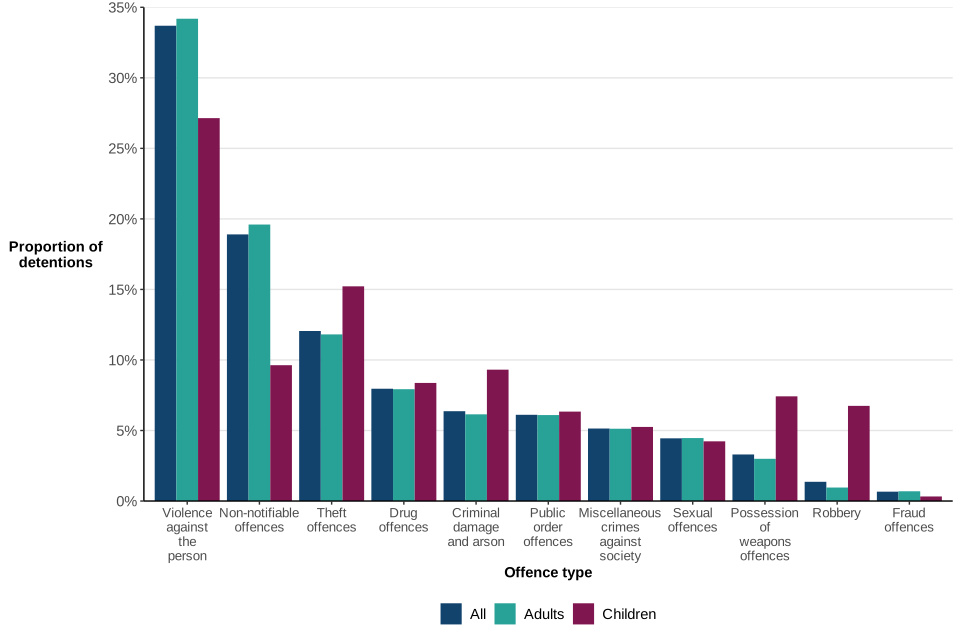
Of the 1.86 million offences for which people were detained in custody in the year ending March 2025, the offence type was known for 94% of records. Excluding ‘unknowns’, the most common offence was violence against the person (33% of all offences – the same proportions as each of the last 2 years). Non-notifiable offences accounted for just under a fifth (19%) of all offences. Theft and drug offences accounted for 12% and 8% respectively (similar proportions to the previous year).
One notable difference between adults and children is that children were more likely to be detained in custody for robbery, possession of weapons offences, theft and criminal damage and arson, whilst they were less likely to be in custody for non-notifiable offences, suggesting that children were detained in custody for more serious offences, as shown in figure 1.1.
Figure 1.1: Detentions in custody by offence group, England and Wales (not including Humberside), year ending March 2025
Source: Police custody data tables, year ending 31 March 2025; table D_05, Home Office
Notes:
- Excludes Humberside Police.
- Due to rounding, percentages may not add up to 100%.
1.5 Vulnerable people in custody and appropriate adults
This section presents data on vulnerability, whether an appropriate adult (AA) was called and whether one attended, and time taken for an appropriate adult to arrive.
The accuracy of this data is reliant on completion of a field on the data management system by custody officers. This information may be recorded in the detention log instead, however information cannot be easily extracted from the detention log for analysis. Therefore, there may be some underreporting.
For the purposes of this data collection, if a detainee was not recorded as being vulnerable (in a way that could be extracted for analysis) but an AA was called or attended, then they have been reported as vulnerable. Similarly, if an appropriate adult was not recorded as having been called but an AA attended, they have been reported as called.
Additionally, not all forces could provide complete data. Please see footnotes for details of forces excluded from the analysis.
Due to the caveats above, data in section 1.5 should be interpreted with caution.
A person may be considered vulnerable if they:
- have difficulty understanding the full implications or significance or things they are told or questions they are asked
- have difficulty communicating effectively about anything to do with their detention
- are particularly prone to confusion or suggestibility
This may be due to a mental health condition or disorder, but this is not a requirement.
An individual is automatically considered to be vulnerable if they are aged 17 or under.
Since the year ending March 2023 publication, the Home Office has worked with police forces to make the methodologies used for reporting vulnerability more consistent between forces, and to better align reporting with the definition described in PACE Code C. Therefore, data is not comparable with previous years.
Around 10% of adult detainees were reported as vulnerable[footnote 2]. Vulnerability by age ranged from 8% in both the 31 to 40 and 41 to 50 age groups, to 14% in the 18 to 20 age groups. A slightly higher proportion of females (12%) were deemed vulnerable compared with males (9%), and this was true across all age groups.
Appropriate adults (AAs) protect the welfare, rights and effective participation of children and vulnerable people who are detained or interviewed as suspects. The appropriate adult is expected to:
- support, advise and assist the detained person when, in accordance with the PACE Codes of Practice, they are given or asked to provide information or participate in any procedure
- observe whether the police are acting properly and fairly to respect their rights and entitlements, and inform an officer of the rank of inspector or above if they consider that they are not
- assist them to communicate with the police whilst respecting their right to say nothing unless they want to as set out in the terms of the caution
- help them to understand their rights and ensure that those rights are protected and respected
Further information is available on the National Appropriate Adult Network website.
It is a legal requirement for children (detainees aged 17 and under) to have an AA present when they are detained in custody.
Since the year ending March 2024 publication, the Home Office has worked with forces to improve the reporting of appropriate adult data. In previous years, some forces who were unable to report on ‘whether an AA was called’ used alternative methodologies, such as reporting whether an AA was required or whether an AA attended. Therefore, appropriate adult data is not comparable to previous years. The Home Office will continue to work with forces to improve the reporting of this data.
An AA was called for 87% of vulnerable adults[footnote 3] and for 96% of children[footnote 4].
In cases where an AA was not called, forces noted this may be because the detention was not authorised[footnote 5], or the person was taken to a hospital or mental health suite and did not return to custody.
For the first time in the year ending March 2025, data was collected on a voluntary basis on whether an appropriate adult attended.
An appropriate adult attended for 81% of vulnerable adults[footnote 6] and 87% of children[footnote 7]. (Different subsets of forces are used for AA called data and AA attended. This is because some forces could provide data on AA called but not AA attendance, and vice versa. Therefore, these figures are not directly comparable.)
If an AA attended for a child or vulnerable adult, police forces were also requested to report on the time taken for the AA to arrive, measured from the time they were called. The following analysis is based on a small number of forces and therefore should be interpreted with caution.
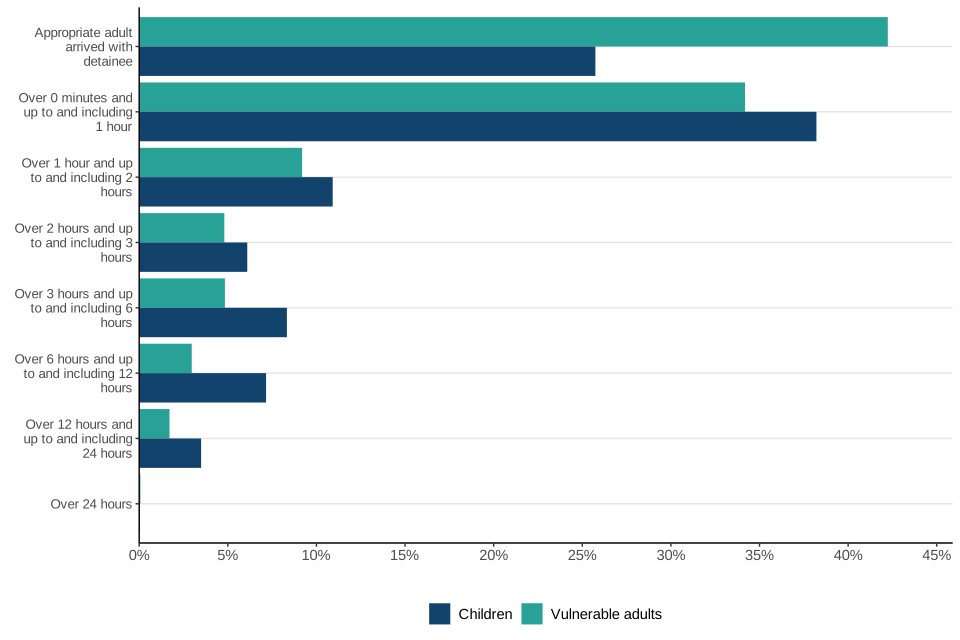
Over half (64%) of children either had an AA arrive to custody at the same time as them or had an AA arrive within one hour (26% and 38% respectively). In total, 89% of children had an AA arrive within the first 6 hours[footnote 8].
The time taken for an AA to arrive for vulnerable adults followed a similar pattern to that of children, with 76% of adults having an AA arrive to custody at the same time or within one hour, and 95% of adults having an AA arrive within the first 6 hours. The main difference was that a higher proportion of vulnerable adults had an AA arrive with them (42% of vulnerable adults versus 26% of children).
Figure 1.2: Proportions of children and vulnerable adults by time taken for appropriate adult to arrive, selected police forces, year ending March 2025
Source: Police custody data tables, year ending 31 March 2025; table D_06c and D_08b, Home Office
Notes:
- Excludes unknowns.
- Based on subsets of 13 forces for both children vulnerable adults.
- An appropriate adult took over 24 hours to arrive for 4 (<0.1%) children and 8 (<0.1%) adults (of the subset of 13 forces).
The proportion of vulnerable detainees who had an appropriate adult arrive with them to custody varied widely between forces (from 4% to 71% for vulnerable adults, and from 0% to 45% for children). This could partly be recording issues, and partly due to varying provision of agency-based appropriate adults at custody suites. For example, some forces stated that during peak times they have agency-based appropriate adults stationed in custody.
1.6 Children detained overnight
The National Police Chiefs’ Council (NPCC) have stated that custody should only be used as a final option for children. Specialist conditions should be given to children in custody to meet their additional needs, as per the requirements of the Concordat on Children in Custody. See the chapter 11 of the user guide for more details.
Forces were asked to report whether any children kept in custody were detained overnight. For the purposes of this data collection, the definition of overnight means they must have spent a minimum of 4 hours in custody and that at least part of this period in custody must be between 12:00am and 08:00am. The definition in this ADR collection has been agreed with the NPCC.
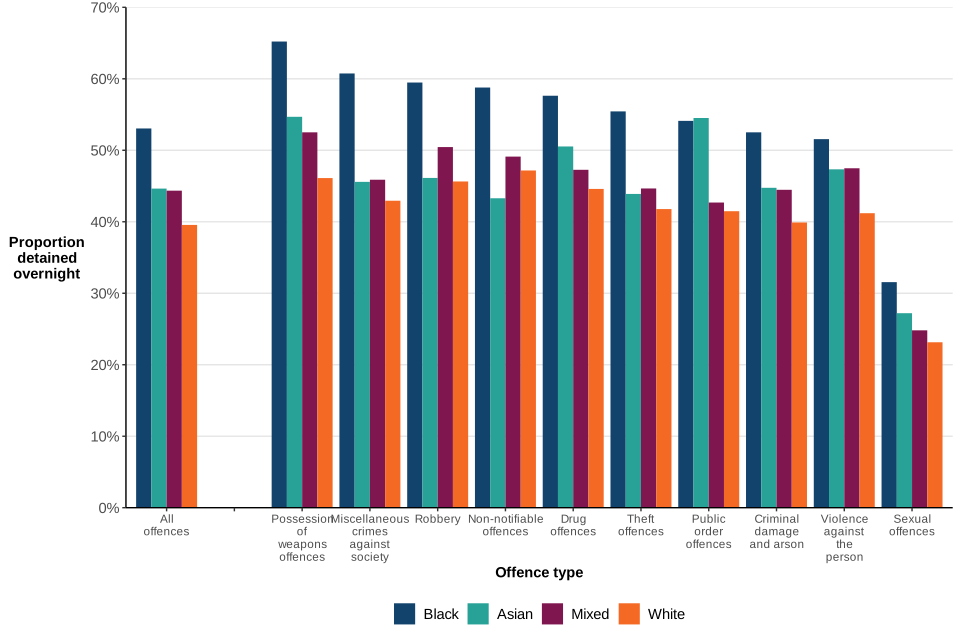
The following analysis is based on a subset of 37 forces[footnote 9]. Based on these 37 forces, whether the child was detained overnight was known in over 99% of records. Excluding unknowns, under half (43%) of all children detained in custody were held overnight. This proportion was the same for both male and female children detained; however, the proportion of children detained overnight varied by ethnic group, with 53% of Black children detained overnight, in contrast to 40% of White children.
Broken down by offence group, Black children had the highest rates of overnight detention across all offence groups, except for public order offence, where Black and Asian had similar rates. White children had the lowest overnight detention rate across all offence groups, except non-notifiable offences where Asian had the lower rates (Analysis excludes the Other ethnic group and fraud offence group due to low numbers) (See figure 1.3 below).
Figure 1.3: Proportion of children detained overnight, by offence group and ethnic group, selected forces, year ending March 2025
Source: Police custody data tables, year ending 31 March 2025; Table D_11b, Home Office
Notes:
- Based on a subset of 37 forces.
- If a child was detained for more than one offence, the detention has been counted under both offences.
- Officer-observed ethnicity is used for records where self-defined ethnicity is unavailable. Excludes records where both officer-observed ethnicity and self-defined ethnicity were unknown. Excludes the Other ethnic group due to low numbers.
- Excludes Fraud offences due to low numbers.
Overnight detention rates vary widely by police force (from 20% to 56%). The Metropolitan Police had the highest rate of overnight detention in England and Wales, as well as the highest proportion of children in custody belonging to ethnic minority groups (excluding White minorities) (69%).
Excluding the Metropolitan Police from the analysis, the Black ethnic group still has the highest overnight detentions rate for all offence groups except public order offences, where the Asian group has the highest rate, and Violence against the person, where the Mixed ethnic group has the highest rate. The White group had the lowest or joint lowest rate (along with Asian) for all but 2 offence groups (miscellaneous crimes against society and non-notifiable offences). The rate for the White group remains lower than the rate for the Black group for all offence groups.
Comparing the children who were detained overnight to the general custody child population, the proportion of children detained overnight from the Black ethnic group was higher than the proportion of all children in custody who were Black (19% compared to 15%), whereas the proportion of children detained overnight from the White ethnic group was slightly lower than all children in custody (65% compared to 70%).
Table 1.4: Ethnicity of children detained overnight in custody compared with all children detained in custody, selected police forces, year ending March 2025
| Proportions | Children detained overnight | All child detainees |
|---|---|---|
| Asian | 7% | 6% |
| Black | 19% | 15% |
| Mixed | 7% | 6% |
| White | 65% | 70% |
| Other | 3% | 2% |
| All ethnicities | 100% | 100% |
Source: Police custody data tables, year ending 31 March 2025; tables D_10 and SS_03b
Notes:
- Uses officer-observed ethnicity where self-defined ethnicity was unknown. Excludes records where neither officer-observed ethnicity or self-defined ethnicity were known (5% for children detained overnight and 4% for total child detainees).
- Data based on a subset of 37 forces, therefore the analysis should be interpreted with caution.
If a child was detained overnight, police forces were also asked to provide data on whether the overnight detention was pre-charge, post-charge, or both (for example, the child was detained over 2 nights and was charged during the daytime in between).
Based on a subset of 28 forces who were able to provide data, the majority (91%) of children detained overnight were detained pre-charge, 5% were detained post-charge, and 3% were detained both pre and post charge. For more information on the legislation of keeping children in custody, please see chapter 11 of the user guide.
1.7 Anti-rip suits
For the first time in the year ending March 2025, data has been collected on a voluntary basis on whether an anti-rip suit (ARS) was used in custody.
An ARS is a piece of specialist clothing made from tear-resistant material designed to prevent the creation of ligatures. If a detainee is identified to be of risk of using their clothing to harm themselves or others, the detainee can have their clothing taken from them, by force if necessary, and have replacement anti-rip clothing provided to them.
Officers should make the decision to remove such items after conducting a risk assessment, and the use of anti-rip clothing should be documented on the custody record with clear rationale.
The custody officer must also balance any risk with the need to treat detainees with dignity. If a detainee is believed to be at risk of suicide or self-harm, seizing and exchanging clothing may not remove the risk but may increase the distress caused to the detainee and, therefore, increase the risk of them self-harming. Leaving a detainee in their own clothing can help to normalise their situation. Constant observation or observation within close proximity may be appropriate in these circumstances[footnote 10].
Data on use of ARS was received from 19 forces. Of these, 10 forces[footnote 11] stated that they do not use ARS. These included some of the larger police forces such as the MPS, Greater Manchester, West Midlands and West Yorkshire, and together accounted for 45% of total detentions. These forces may instead provide standard custody clothing, or, use alternative safeguarding methods such as placing the individual under constant or close proximity observation.
The remaining 23 forces (excluding Humberside) were unable to provide data, but stated that they do use ARS in custody.
For the 9 forces who were able to provide data[footnote 12] and had used ARS in the year ending March 2025, and excluding Cambridgeshire who were only able to provide data on ‘Anti-rip suit used’ or ‘Unknown’, an ARS was used in 0.8% of detentions (864 out of 115,077 detentions). There were only 6 instances of an ARS being used on a child (equivalent to 0.1% of detentions of children).
Overall, for the 19 forces which provided data, an ARS was used in 0.2% of detentions.
1.8 Detentions analysis by person ID
The following analysis presents the number of unique individuals in custody. In this section, where an individual has been detained multiple times by a single police force within the year, they are counted once. Since the person IDs supplied in this data collection are unique to each police force, if one individual has been detained on multiples occasions by different forces, each time will still be counted separately. Only detentions that occurred between 1 April 2024 and 31 March 2025 have been counted.
Of the 938,050 detentions in custody, a person ID was provided for 763,257 detentions (81%). Where person ID was known, there were 532,077 unique individuals detained on one or more occasions, of which 30,773 were children. The majority (79%) of individuals were detained once in the year and 21% of individuals were detained on 2 or more occasions. On average, people were detained 1.4 times (1.5 for children, 1.4 for adults).
Table 1.5: Proportion of individuals detained, by how many times they were detained, selected forces, year ending March 2025
| Number of detentions | in year ending March 2025 | Number of individuals | Percentage of individuals |
|---|---|---|---|
| 1 | 419,613 | 79% | |
| 2 | 64,998 | 12% | |
| 3 | 21,947 | 4% | |
| 4 | 10,373 | 2% | |
| 5 or more | 15,146 | 3% |
Source: Unique individuals in custody, year ending March 2025: pivot tables; Pivot_2, Home Office
Notes:
- Excludes Humberside Police who did not provide detentions data, and Cumbria, Derbyshire, Metropolitan and Staffordshire police forces, who were unable to provide person ID data.
- Excludes detention records where person ID was not provided.
The proportion of individuals who were detained on at least 2 occasions was lower for all ethnic minority groups (excluding White minorities) compared to the White ethnic group (White 22%, Mixed 21%, Black 19%, Asian 15%, Other 15%).
It was also lower for females (18%) than for males (22%). For adults and children the proportion was similar (21% compared to 22%).
1.9 Strip searches in custody
Section 54 of the Police and Criminal Evidence Act 1984 (PACE) allows a person to be searched, if the custody officer considers it necessary, to allow them to find everything that the arrested person has with them. A strip search in police custody is a search involving the removal of more than outer clothing (including shoes and socks). Conduct of these searches is covered by Code C of PACE.
Clothes and personal effects may be seized if the custody officer believes that the person from whom they are seized may use them to cause physical injury to themselves or any other person; to damage property; to interfere with evidence; or to assist them to escape. If a detainee is believed to be at risk of self-harm or of causing harm to others, clothing can be seized where necessary in order to manage risk, and replaced with anti-rip clothing.
In July 2023, the College of Policing updated its Authorised Professional Practice guidance to clarify that removal of the detainee’s clothing for their own safety (that is, a ‘clothes swap’) should be recorded as a strip search. In the last few years, many forces have updated their recording and reporting practices to align with this.
For the year ending March 2025, 21 forces aligned reporting of strip searches with APP definition and Home Office guidance. Two forces were only able to report on searches for weapons, drugs and stolen property (definition too narrow). Six forces[footnote 13] were unable to exclude changes of clothing for comfort, therefore these forces have not been included in the dataset. The remaining 15 forces either did not provide information or were unsure what was counted within their strip search dataset (see user guide for more information).
The Home Office is working with police forces to align reporting of strip searches with College of Policing guidance.
Due to the differences in definitions used between years and between police forces, we have not made any year-on-year comparisons in this section and advise that data from different forces may not be comparable with each other.
The following analysis presents numbers of strip searches in custody. Where an individual has been strip searched multiple times within the year, each occasion is counted separately.
In the year ending March 2025, there were 64,130 strip searches in police custody. This was 8% of all detentions in custody (based on the 36 forces[footnote 14] who could provide both custody and strip search data) - 8% of adults and 6% of children in custody.
Of all strip searches in custody, 61% were carried out on those aged between 21 and 40. A quarter (25%) were aged over 40 and a small proportion were aged 17 and under (5%). As a proportion of all people in custody within the same age group, those aged 18 to 20 had the highest proportion of people strip searched (10%) in custody, whereas only 2% of people aged 61 and over in custody were strip searched, as shown in table 1.6.
Table 1.6: Numbers of strip searches, by age group and selected police forces, year ending March 2025
| Age group | Number | Percentage of total strip searches | Percentage of age group strip searched in custody |
|---|---|---|---|
| 10 to 12 years | 38 | <0.1% | 2% |
| 13 to 15 years | 1,064 | 2% | 5% |
| 16 to 17 years | 2,274 | 4% | 8% |
| 18 to 20 years | 5,559 | 9% | 10% |
| 21 to 30 years | 18,479 | 29% | 9% |
| 31 to 40 years | 20,303 | 32% | 8% |
| 41 to 50 years | 12,182 | 19% | 8% |
| 51 to 60 years | 35,52 | 6% | 5% |
| 61 and over | 577 | 1% | 2% |
| Unknown | 102 | [z] | [z] |
| Total | 64,130 | 100% | 8% |
Source: Police custody data tables, year ending 31 March 2025; tables SS_04 and D_04, Home Office
Notes:
- Proportions of age group in custody are based on the 36 forces who could provide both detentions and strip search data.
- Due to rounding, percentages may not add up to 100%.
The majority of those strip searched were male (85%), with females accounting for 15%. Male representation was slightly higher among children (90%) compared with adults. - [z] = not applicable
Ethnicity
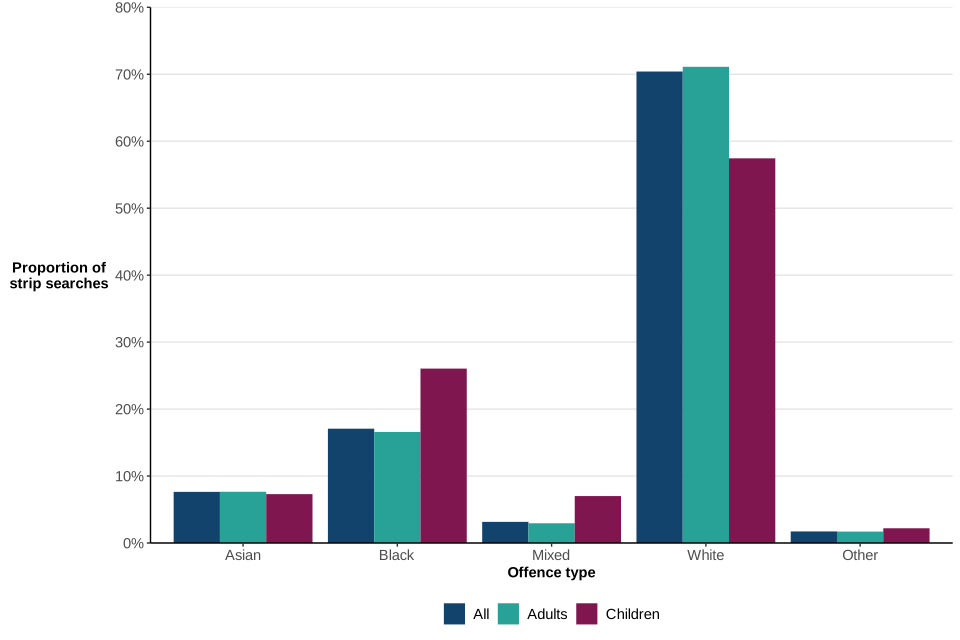
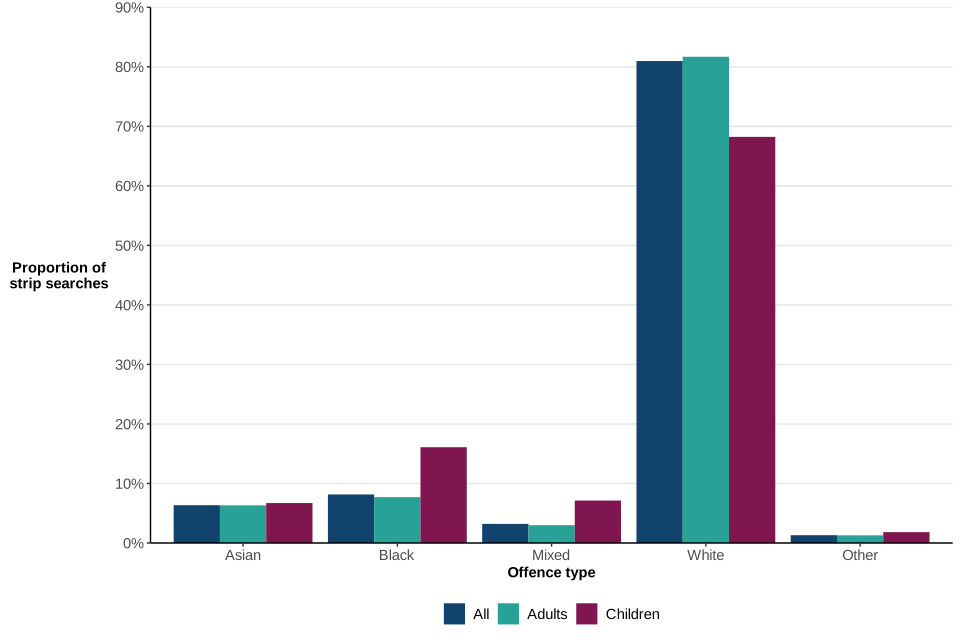
In total, 70% of people strip searched in custody were of a White ethnic background (compared with 76% of all people in custody excluding forces that didn’t provide strip search data)[footnote 15], 17% were from a Black ethnic background (compared with 10% in custody), 8% were of an Asian ethnic background (9% in custody), 3% were of a Mixed ethnic background and 2% were from any other ethnic background (both the same as for custody).
The most notable differences between adults and children strip searched were that higher proportions of children strip searched were from a Black ethnic backgrounds compared with adults (26% compared with 16%); and 57% of all children strip searched were of a White ethnic background, compared with 71% of adults strip searched (see figure 1.4 below).
Figure 1.4: Ethnicity of people strip searched in custody, year ending March 2025
Source: Police custody data tables, year ending 31 March 2025; table SS_03b, Home Office
Notes:
- Uses officer-observed ethnicity where self-defined ethnicity was unknown.
- Excludes records where neither self-defined ethnicity or officer-observed ethnicity were known (5%).
- Due to rounding, percentages may not add up to 100%.
If the MPS is excluded from the analysis, the proportion for the White ethnic group increases (to 81%), although the proportion for children remains lower than adults (68% compared with 82% respectively). Proportions for Black and Mixed ethnic groups also remain higher in children compared with adults, see figure 1.5 below.
Figure 1.5: Ethnicity of people strip searched, selected police forces (excluding MPS), year ending March 2025
Source: Police custody data tables, year ending 31 March 2025; table SS_03b, Home Office
Notes:
- Excludes Metropolitan Police Service.
- Uses officer-observed ethnicity where self-defined ethnicity was unknown.
- Excludes records where the ethnicity was not known (3%).
- Due to rounding, percentages may not add up to 100%.
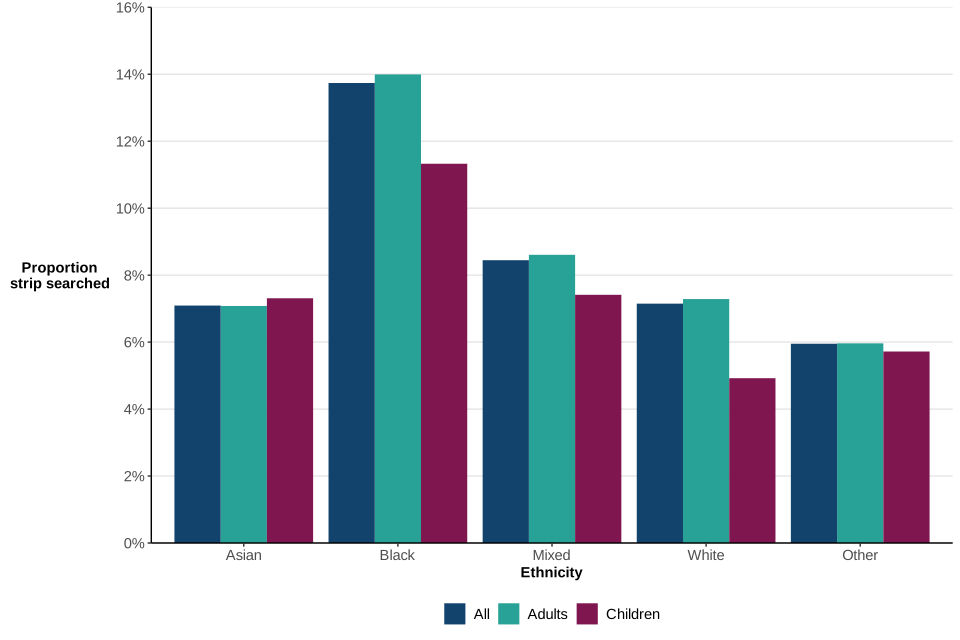
As a proportion of all detentions in custody, the ethnic group most likely to be strip searched were those from a Black or Black British background (14%). Smaller proportions were reported for all other ethnic groups: 8% of detentions involving someone from a Mixed ethnic background reported a strip search, 7% of detentions for both the Asian group and those from a White ethnic background, and 6% of detentions for people from any other ethnic background.
A smaller proportion of children in custody were strip searched compared with adults for the White, Black and Mixed ethnic groups, however for the Asian and Other ethnic groups, strip search rates were similar between adults and children (figure 1.6).
Figure 1.6: Proportion of all people in custody strip searched, by ethnicity, England and Wales, selected police forces, year ending March 2025
Source: Police custody data tables, year ending 31 March 2025; tables SS_03b and D_03b, Home Office
Notes:
- Excludes Humberside Police who couldn’t provide detentions data and Avon and Somerset, Devon and Cornwall, Greater Manchester, South Yorkshire, Surrey, and Warwickshire Police forces who couldn’t provide strip search data that met ADR requirements.
- Uses officer-observed ethnicity where self-defined ethnicity was unknown.
- Excludes records where the ethnicity was not known (5% of strip searches and 4% of detentions).
- Due to rounding, percentages may not add up to 100%.
Strip search rates vary from 2% to 14% across police forces, in part due to the different definitions of strip search used for reporting. The ethnicity of people detained in custody also varies between police forces. The Metropolitan Police have both the highest proportion of people in custody belonging to Black, Asian, Mixed and Other ethnic backgrounds (54%), and the highest strip search rate (14%). They account for 16% of detentions in England and Wales, but 30% of strip searches (for forces who provided both detentions and strip search data).
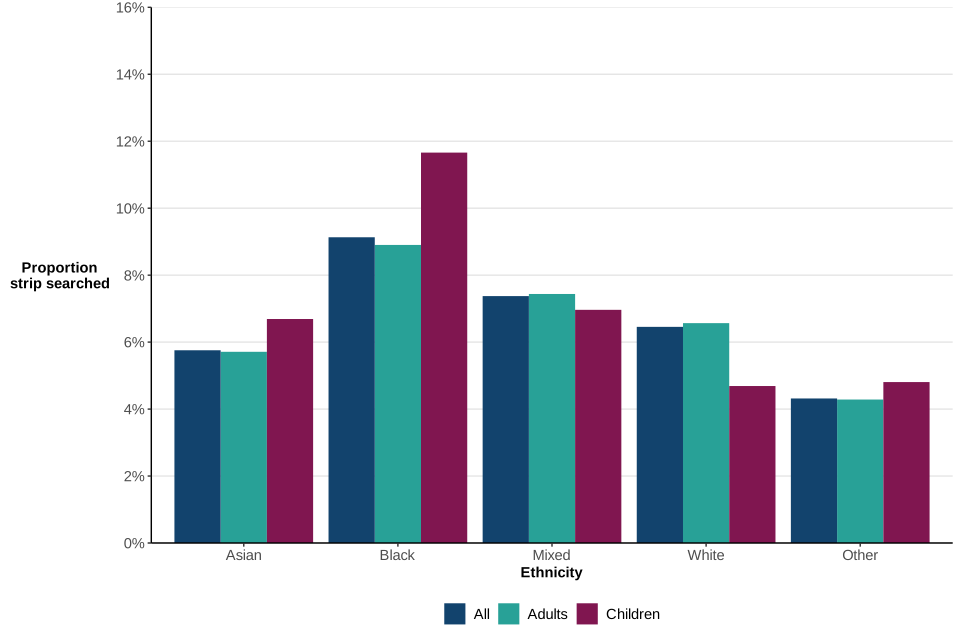
Excluding the MPS, overall strip search rates are highest in the Black ethnic group (9%), which is higher than the Mixed (7%), White (6%), Asian (6%) and Other ethnic group (4%).
The proportion of strip searches in children are higher than adults in the Black, Asian and Other ethnic groups (12%, 7% and 5%, respectively), similar in the Mixed ethnic group (7%) and lower in the White (5%) ethnic group (see figure 1.7).
Figure 1.7: Proportion of all people in custody strip searched, by ethnicity, England and Wales, selected police forces, year ending March 2025
Source: Police custody data tables, year ending 31 March 2025; table D_03b and SS_03b, Home Office
Notes:
- Excludes the Metropolitan Police. Also excludes Humberside Police who couldn’t provide detentions data, and Avon and Somerset, Devon and Cornwall, Greater Manchester, South Yorkshire, Surrey, and Warwickshire Police forces who couldn’t provide strip search data that met ADR requirements.
- Uses officer-observed ethnicity where self-defined ethnicity was unknown.
- Excludes records where the ethnicity was not known (3% of strip searches and 2% of detentions).
- Due to rounding, percentages may not add up to 100%.
People from a black ethnic background were strip searched at a higher rate than those from a white ethnic back in 28 out of 36 police forces, therefore differences in strip search definition between police forces do not fully account for ethnic disparities at a national level.
Strip searches by offence
For the first time in the year ending March 2025, we have conducted analysis linking strip search records to detention records. This has allowed us to explore how the offence for which the individual was brought into custody for impacts whether a strip search was carried out, as well as whether differences in strip search rates by demographic can be accounted for by offence.
The following analysis is based on a subset of 30 forces where strip search data could be linked (accounts for 69% of detentions).
If an individual was detained for multiple offences which belong to different offence groups, the detention has been counted under both groups.
Additionally, the offence for which the individual was detained may not necessarily be the grounds under which a strip search was carried out. For example, a strip search could be carried out to remove an item of clothing which may harm self or others, or because the clothing itself is used as evidence of a crime. Data on the grounds for strip search is not available.
The data shows that detentions for drug offences were most likely to involve a strip search (25%), followed by detentions for possession of weapon offences (16%).
Table 1.7: Proportion of detentions which resulted in strip search, by offence for which they were detained, subset of forces in England and Wales, year ending March 2025
| Offence group | Proportion of detentions which resulted in strip search | Proportion of strip searches it accounts for |
|---|---|---|
| Drug offences | 25% | 34% |
| Possession of weapons offences | 16% | 10% |
| Miscellaneous crimes against society | 12% | 13% |
| Theft offences | 12% | 23% |
| Robbery | 12% | 3% |
| Public order offences | 9% | 10% |
| Criminal damage and arson | 7% | 9% |
| Non-notifiable offences | 7% | 22% |
| Fraud offences | 7% | 1% |
| Violence against the person | 5% | 28% |
| Sexual offences | 5% | 4% |
Source: Police custody data tables, year ending 31 March 2025; tables D_13, Home Office
Notes:
- Based on a subset of 30 police forces where detentions and strip searches datasets could be linked.
- Where an individual was detained for multiple offences falling in more than one offence group, the detention has been counted under both groups.
Offence and ethnicity
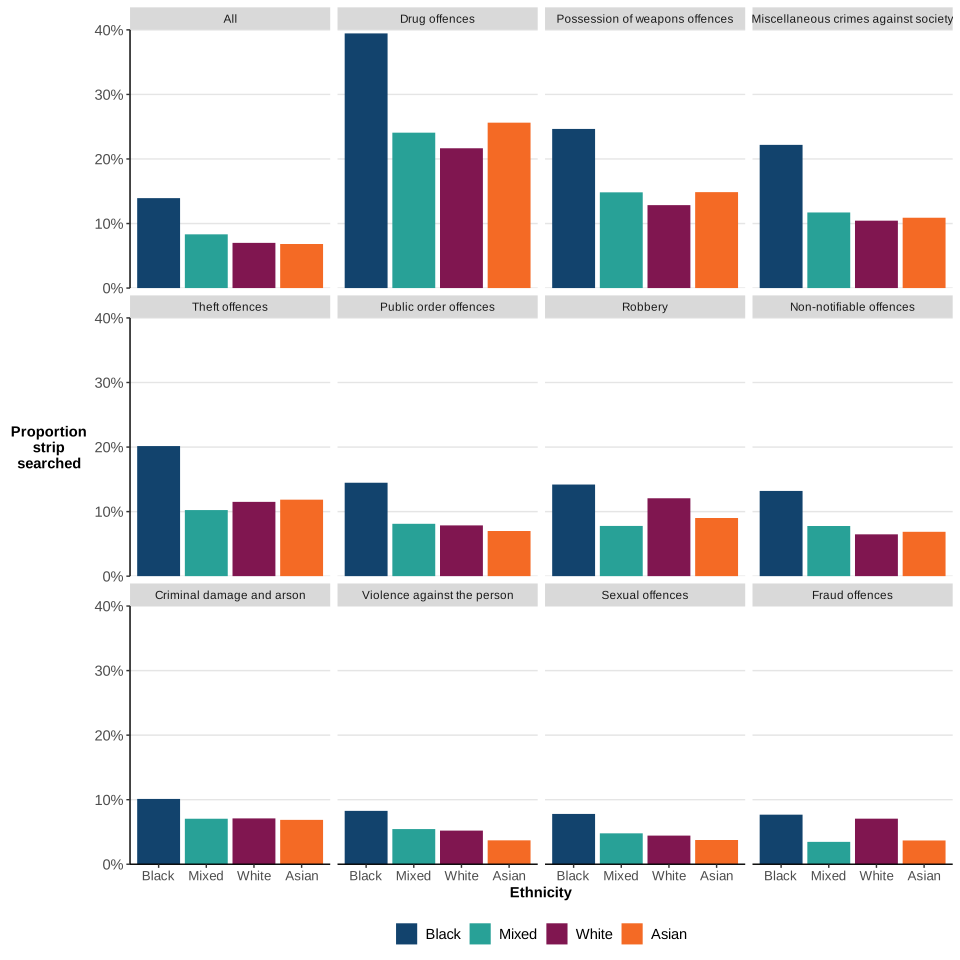
The offences which people are in custody for vary by ethnic group. For example, a higher proportion of Black people in custody were being detained for drug offences or possession of weapons offences than White people (12% versus 7% for drugs, and 6% versus 3% for weapons).
However, these differences do not account for the variations in strip search rates between ethnic groups. Individuals from the black ethnic group were more likely to be strip searched regardless of the offence for which they were detained. For example, for drug offences, 39% of black people were strip searched, compared to 22% to 26% of people from each of the other ethnic groups. For weapon offences, 26% of black people were strip searched, compared to 13% to 16% of people from the other ethnic groups. See Figure 1.8 for a breakdown by all Home Office Crime Recording (HOCR) groups.
Figure 1.8: Strip search rate, by offence person was detained for and ethnicity, selected police forces, year ending March 2025
Source: Police custody data tables, year ending 31 March 2025; tables D_13, Home Office
Notes:
- Based on a subset of 30 police forces where detentions and strip searches datasets could be linked.
- Where an individual was detained for multiple offences falling in more than one offence group, the detention has been counted under both groups.
- Uses officer-observed ethnicity where self-defined ethnicity was not available. Excludes records where neither self-defined ethnicity or officer-observed ethnicity were known. Also excludes Other ethnicity.
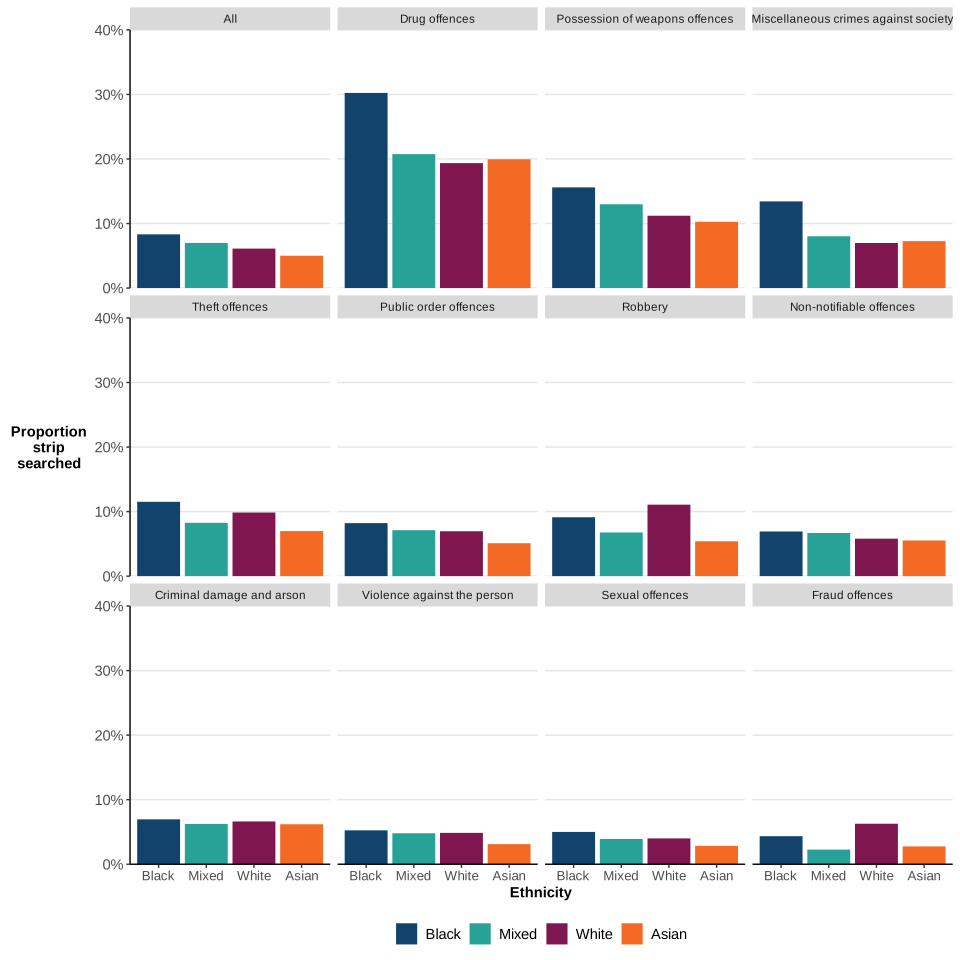
Excluding the Metropolitan Police reduces the difference in strip search rates between the Black ethnic group and the White, Asian and Mixed ethnic groups for most offences.
Without the MPS, the Black ethnic group had the highest strip search rate for drug offences, miscellaneous crimes against society, possession of weapons offences, public order offences, and theft offences. For robbery, the White ethnic group had the highest rate.
Figure 1.9: Strip search rate, by offence person was detained for and ethnicity, selected police forces and excluding MPS, year ending March 2025
Source: Police custody data tables, year ending 31 March 2025; tables D_13, Home Office
Notes:
- Excludes the Metropolitan Police.
- Based on a subset of 29 police forces where detentions and strip searches datasets could be linked.
- Where an individual was detained for multiple offences falling in more than one offence group, the detention has been counted under both groups.
- Uses officer-observed ethnicity where self-defined ethnicity was not available. Excludes records where neither self-defined ethnicity or officer-observed ethnicity were known. Also excludes Other ethnicity.
Sex, age group and offence
Overall, a similar proportion of males and females in custody were strip searched (8%). However, this hides differences when broken down by other demographics.
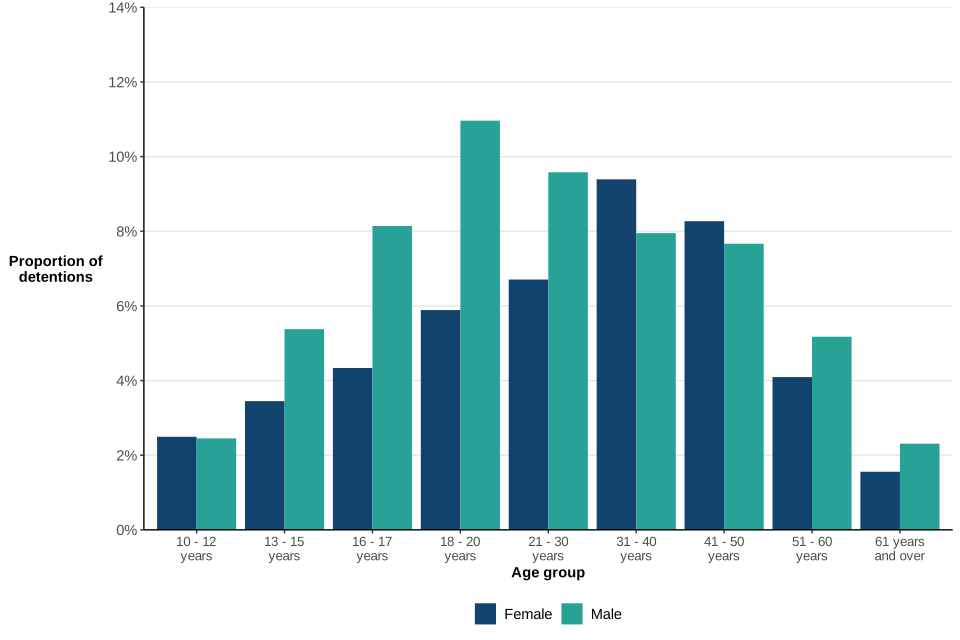
Overall, the 18 to 20 age group had the highest strip search rate. However this is mainly influenced by strip searches of males, who account for the majority (85%) of strip searches. For males, the strip search rate was highest in the 18 to 20 age group (11%), whilst for females, the strip search rate was highest in the 31 to 40 age group (9%).
The age groups which have the greatest difference in strip search rates between males and females are the 16 to 17 and 18 to 20 age groups, where males are strip searched at almost twice the rate of females (8% versus 4% in the 16 to 17 age group and 11% versus 6% in the 18 to 20 age group). The 31 to 40 and 41 to 50 age groups are the only age groups where females were searched at a higher rate than males.
Figure 1.10: Proportion of detentions which resulted in strip search, by age group and sex, selected police forces, year ending March 2025
Source: Police custody data tables, year ending 31 March 2025; tables D_01b and SS_01b, Home Office
Notes:
- Excludes Humberside Police who couldn’t provide detentions data and Avon and Somerset, Devon and Cornwall, Greater Manchester, South Yorkshire, Surrey, and Warwickshire Police forces who couldn’t provide strip search data that met ADR requirements.
- Excludes detentions where sex was Other or unknown, or where age was unknown.
The differences between males and females by age group can partially be explained by the offence for which the individual was arrested.
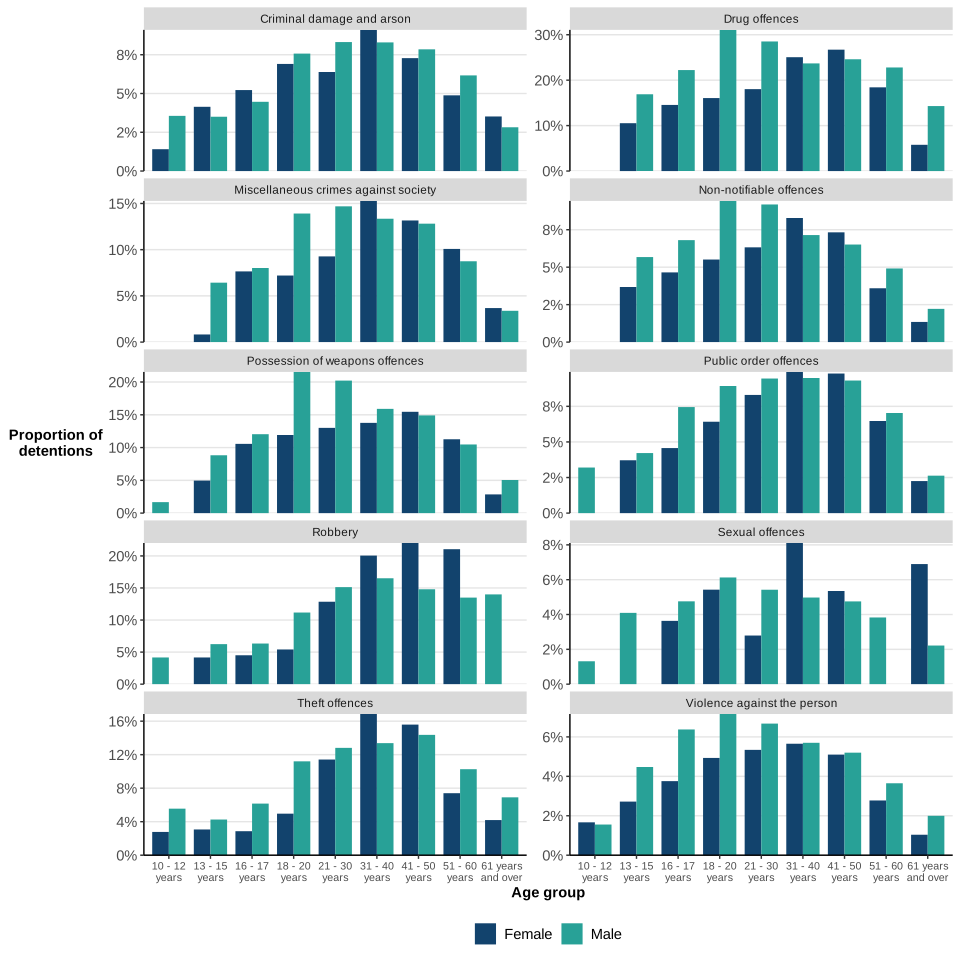
A higher proportion of males than females aged 16 to 20 are in custody for drug offences (accounting for 18% of detentions for males and 9% of detentions for females) as well as for possession of weapon offences (11% versus 4% of detentions) - the 2 offence groups with the highest strip search rates. In the 31 to 40 and 41 to 50 age groups, the proportion of arrests accounted for by drug and weapons offences in males and females are more similar.
However, the differences between males and females still existed even after accounting for offence group. Males aged 16 to 20 were strip searched at a higher rate than females for all offence groups apart from criminal damage and arson, where the strip search rates were similar (excludes fraud where numbers of strip searches were too low to include in the analysis). The differences between males and females in this age range were greatest for drug offences and possession of weapons offences. For example, 28% of males aged 16 to 20 detained for drug offences were strip searched, compared to 16% of females.
Figure 1.11: Proportion of detentions which resulted in strip search, by age group, sex, and offence group, selected police forces, year ending March 2025
Source: Police custody data tables, year ending 31 March 2025; tables D_13, Home Office
Notes:
- Different scales have been used for charts.
- Missing bars are where no strip search occurred.
- Based on a subset of 30 forces where detentions and strip searches data could be linked.
- Excludes detentions where sex was Other or unknown, where age was unknown, or where offence was unknown. Also excludes Fraud offences due to low numbers.
Sex and ethnicity
There are also variations between males and females when broken down by ethnicity.
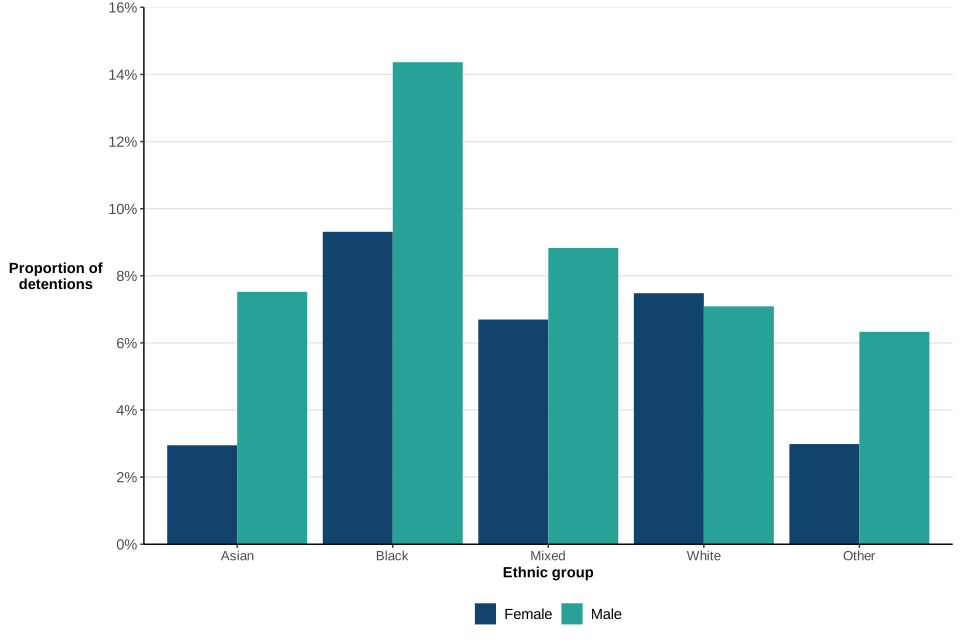
Whilst the strip search rates for White males and females is very similar (7%), for the Asian, Black, Mixed and Other ethnic groups, males were strip searched at a higher rate than females. For example, in the Black ethnic group 14% of males were strip searched compared to 9% of females, and in the Asian ethnic group 8% of males were strip searched compared to 3% of females.
Overall, black males had the highest strip search rate and females from the Asian and Other ethnic groups had the lowest strip search rates. The black ethnic group had the highest strip search rate for both males and females. Black males were strip searched at twice the rate of white males (14% versus 7%). The difference in strip search rates between black females and white females was smaller (9% versus 7%).
Figure 1.12: Proportion of all people in custody strip searched, by sex and ethnicity of person detained, selected police forces, year ending March 2025
Source: Police custody data tables, year ending 31 March 2025; tables D_01b and SS_01b, Home Office
Notes:
- Excludes Humberside Police who couldn’t provide detentions data and Avon and Somerset, Devon and Cornwall, Greater Manchester, South Yorkshire, Surrey, and Warwickshire Police forces who couldn’t provide strip search data that met ADR requirements.
- Uses officer-defined ethnicity where self-defined ethnicity was unknown.
- Excludes records where neither self-defined ethnicity or officer-observed ethnicity were known, or where sex was unknown.
As discussed in the previous sections, people from Black, Asian, Mixed and Other ethnic backgrounds have a younger age profile, and younger males have a higher strip search rate than females. When analysing detentions of people aged 30 and under, males have a higher strip search rate than females across all ethnic groups, although the differences are still bigger in the ethnic minority groups than the white ethnic group.
1.10 Analysis of strip searches by person ID
The following analysis presents numbers of unique individuals strip searched in custody. Where an individual has been strip searched multiple times by a single police force within the year, they are counted once. Since the person IDs supplied in this data collection are unique to each police force, if one individual has been strip searched on multiples occasions by different forces, each time will still be counted separately. Only strip searches that occurred between 1 April 2024 and 31 March 2025 (and by the same force on each occasion) have been counted.
Of the 64,130 strip searches in custody, a person ID was provided for 42,977 searches (67%). Where person ID was provided, there were 42,977 individuals strip searched on at least one occasion in the year ending March 2025, of which 2,012 were children. The majority (84%) of individuals were strip searched one time during the year. 16% of individuals were searched on at least 2 occasions. On average, people who were strip searched were strip searched 1.3 times in the year.
Table 1.8: Proportion of individuals strip searched, by how many times they were strip searched, selected police forces, year ending March 2025
| Number of strip searches in year ending March 2025 | Number of individuals | Percentage of individuals |
|---|---|---|
| 1 | 28,536 | 84% |
| 2 | 3,432 | 10% |
| 3 | 975 | 3% |
| 4 | 414 | 1% |
| 5 or more | 470 | 1% |
Source: Unique individuals in custody, year ending March 2025: pivot tables, Pivot_4, Home Office
Notes:
- Excludes Avon and Somerset, Devon and Cornwall, Greater Manchester, South Yorkshire, Surrey, and Warwickshire Police forces who couldn’t provide strip search data that met ADR requirements. Also excludes Cumbria, Derbyshire, Metropolitan and Staffordshire police forces, who were unable to provide person ID data.
2.Excludes cases where a person ID was not provided (33% of records).
Similar to the detentions data, the proportion of individuals who were strip searched on at least 2 occasions was lower for all ethnic minority groups (excluding White minorities) compared to the White ethnic group (White – 16%, Mixed – 14%, Black – 12%, Asian – 11%, Other – 8%).
It was also lower for males (15%) than for females (21%), and children (14%) compared to adults (16%). This is opposite pattern to the detentions dataset where a higher proportion of repeat detentions were seen in the male and children groups.
1.11 Intimate searches
If an arrested person is believed to be hiding Class A drugs, or anything that could be used to cause physical injury, a suitably qualified person may carry out an intimate search under section 55 of PACE. This section includes data on the number of intimate searches carried out by police in England and Wales, as well as details of who conducted the search and why, on a financial-year basis. Further details can be found in the chapter 11 of the user guide.
Based on the 39 forces who provided data, there were 22 intimate searches carried out by police in the year ending March 2025, an increase of 10 compared with the year ending March 2024, in which 12 intimate searches were carried out. 17 of the intimate searches in the latest year were carried out by a medical practitioner or other suitably qualified person. For the remaining 5 (all carried out by Dyfed-Powys Police) the force was not able to identify between searches carried out by the medical practitioner and those in the presence of a medical practitioner.
Sixteen of the intimate searches were made in an attempt to find Class A drugs, one was to find harmful articles, and in 5 cases the reason for search was unknown (all Dyfed-Powys Police). Of the 16 searches made for drugs, Class A drugs were found in 4 cases. In the search for harmful articles, no harmful articles were found.
Seventeen intimate searches were undertaken on males and 5 on females. Two of the males searched were aged 17 or under.
Fourteen of the intimate searches were undertaken on people who self-defined their ethnicity as White, 6 were Black and the in the remaining 2 cases their ethnicity was not stated.
Of the 39 police forces in England and Wales who supplied data to the Home Office, 9 had carried out intimate searches in the year ending March 2025. Dyfed-Powys and Lincolnshire each carried out 5, West Mercia and City of London carried out 3, the Metropolitan Police carried out 2, and the remaining forces carried out one each.
1.12 Detentions in custody over 24 hours
Under section 42 of PACE, police may detain a suspect before charge, usually for a maximum of 24 hours, or for up to 36 hours when an alleged offence is an indictable one. From 20 January 2004, powers were introduced which allowed an officer of the rank of superintendent or above to authorise continued detention for up to 36 hours following an arrest. Additionally, police may apply to the Magistrates’ Court to authorise warrants of further detention, extending the detention period to a maximum of 96 hours without charge. Further details can be found in the user guide.
This section provides information on the number of persons detained for more than 24 hours who were then released without charge. It also provides details on the number of warrants for further detention that were applied for and that led to charges.
1.13 Data quality – detentions over 24 hours
Data is requested by the Home Office from the 43 territorial police forces in England and Wales on a financial-year basis, though 9 forces (Cheshire, Cumbria, City of London, Derbyshire, Gloucestershire, Greater Manchester, Humberside, Northumbria and Thames Valley) were unable to provide data due to technical issues (for example, retrieval from record management systems) and data quality concerns.
These forces, along with any additional forces who could not provide complete data for the year ending March 2024, have been excluded from any year-on-year comparisons, as outlined in the footnotes accompanying the ‘Other PACE powers data tables, police powers and procedures, year ending 31 March 2024’.
The user guide provides further details relating to definitions, legislation and procedures, and data quality.
1.14 Key findings- detentions over 24 hours
In the year ending March 2025, based on the 34 forces who were able to provide data, there were a total of 4,130 persons detained by police, in England and Wales under part IV of PACE, for more than 24 hours and then released without charge (note this is likely to be a small undercount since an additional force could not provide data on detentions over 36h without a warrant in their total).
Of those detained and then released without charge, 96% (3,946) were held for between 24 and 36 hours. A further 80 persons were held for more than 36 hours before being released without charge and 104 were detained under warrant for further detention (before being released without charge).
In the year ending March 2025, police in England and Wales (based on the 34 forces who provided data) applied to magistrates for 379 warrants of further detention. Of these applications 2 were refused, meaning warrants were granted in 99% of cases, a similar proportion to previous years. The majority of extensions (66%) were granted for an additional 24 to 36 hours (248 out of 377 warrants granted).
When a warrant of further detention was granted, this led to a charge in 63% of cases (236 out of 340 cases).
Based on the 33 forces who could provide complete data for both the year ending March 2024 and March 2025, the total number of detentions increased by 12% in the latest year (from 3,638 to 4,088).
2. Pre-charge bail, released under investigation and voluntary attendance
Statistics included in this chapter are designated as Official Statistics in Development (previously Experimental Statistics).
Pre-charge bail
In the year ending 31 March 2025:
- there were 304,709 individuals whose pre-charge bail (based on 39 forces who provided data) had concluded within the financial year
- compared with the year ending March 2024, there was a 22% increase in individuals whose pre-charge bail concluded, based on the 39 forces that were able to provide data for both years (up from 249,724 to 304,709)
- the increase in pre-charge bails concluded is likely in part due to reforms to the pre-charge bail system through the Police, Crime, Sentencing and Courts Act 2022, which encourages greater use of pre-charge bail in every case where it is necessary and proportionate
- where bail concluded in the financial year, 53% of individuals (where the bail duration was known) were under pre-charge bail conditions for less than 3 months
- there were 527,781 offences linked to individuals on pre-charge bail, with just under half (46%) for violence against the person, and 11% for theft offences
- over a quarter (28%) of individuals whose pre-charge bail concluded were aged between 31 and 40 years old and 25% were aged between 21 and 30, while those aged 20 and under accounted for 18% of individuals
Released under investigation
In the year ending 31 March 2025:
- there were 110,077 individuals (based on 36 forces) who had been released under investigation (RUI) and whose RUI had concluded within the financial year
- a 5% increase in individuals RUI was seen compared with the year ending March 2024, based on the 36 forces that were able to provide data for both years (up from 104,873 to 110,077)
- just over two-thirds (68%) of individuals were RUI for 3 months or more (where duration is known)
- there were 181,786, offences linked to individuals RUI, of these 31% were violence against the person offences, and 19% related to drug offences (when unknown offences were excluded)
- those aged 21 to 30 accounted for 27% of individuals RUI, while almost a quarter (23%) of individuals released under investigation were aged 20 and under
2.1 About pre-charge bail
Pre-charge bail, also known as police bail, is granted by the police under the Police and Criminal Evidence Act 1984 (PACE) to individuals that have been arrested on suspicion of a criminal offence, but where there are no grounds to keep them in detention while the investigation continues. The main purposes of pre-charge bail are:
- the protection of victims and witnesses primarily linked to conditions applied to pre-charge bail, such as no contact with the alleged victim
- investigative management, allowing investigations to progress to obtain evidence
- suspect management, including reducing the risk of offending
Applying pre-charge bail conditions means that the police can manage a suspect effectively within the community while further investigations progress. Pre-charge bail can be made subject to conditions under the Bail Act 1976. Conditions may be necessary in order to make sure that the suspect:
- surrenders to custody at the end of the pre-charge bail period
- does not commit an offence while on pre-charge bail
- does not interfere with witnesses
- does not otherwise obstruct the course of justice
Conditions may typically include:
- a ban on leaving the country, including a requirement to surrender a passport
- not being allowed to enter a certain area, such as the home of the alleged victim
- not being allowed to communicate with certain people, for example, victims, witnesses or known associates
If an individual breaches their conditions of pre-charge bail, they can be arrested and taken to a police station. Under PACE, the police have power of arrest where an officer has reasonable grounds for believing that conditions imposed on pre-charge bail have been breached. A breach of pre-charge bail conditions is not a criminal offence and carries no criminal penalty, although the behaviour which led to the breach may amount to a separate offence. If there is sufficient evidence at the time of the breach, officers may charge the individual for the original offence for which they are under investigation, or any later offence, and either detain them before their appearance at a magistrates’ court or release them on post-charge bail.
Following an arrest for a notifiable offence, an alternative route to pre-charge bail is to release the suspect from police custody under investigation whilst the investigation continues. Unlike pre-charge bail, suspects ‘released under investigation’ (RUI) are not subject to any conditions, nor is there a time limit on when they must return to the police station. A police force may also ask a person of interest to voluntarily attend a police station or other location to assist police with the investigation of an offence. They will be interviewed voluntarily under caution, as opposed to being arrested and then interviewed. The purpose of these interviews is to question the individual for evidence about their suspected involvement in an offence. If an individual voluntarily attends interview, they are allowed to leave unless arrested on suspicion of committing the offence.
Recent changes to the pre-charge bail system
The pre-charge bail system was reformed through the Policing and Crime Act 2017 to address concerns that individuals were being kept on pre-charge bail for long periods. This act introduced the presumption that suspects should be released under investigation, unless pre-charge bail is deemed both necessary and proportionate. Stricter controls on bail periods were also introduced, including the introduction of a limit on pre-charge bail to an initial period of 28 days as well as raised authority levels to extend this pre-charge bail period.
The pre-charge bail system has since been further reformed through the Police, Crime, Sentencing and Courts Act 2022, implemented on 28 October 2022. This Act seeks to rebalance the use of pre-charge bail and release under investigation in order to encourage greater use of pre-charge bail in every case where it is necessary and proportionate. As individuals RUI are not subject to any conditions, nor is there a time limit on when they must return to the police station, these changes have been introduced to provide greater protection for both victims and suspects of crime.
The Act also made changes to the timescales and authorisation levels for periods of bail, including extending the initial applicable bail period (see glossary in the user guide accompanying these statistics) from 28 days to 3 months. Further information on these changes and applicable bail periods is included in the pre-charge bail statutory guidance.
Comparisons between pre-charge bails that concluded within and since the year ending March 2023 will therefore include cases handled under both the old and new pre-charge bail processes.
2.2 Data collected and scope
Data on the number of pre-charge bails by pre-charge bail length was collected on a voluntary basis for the first time in the year ending March 2018. This data collection was introduced to understand to what extent forces were using pre-charge bail following the reforms to conditions of the power as anecdotal evidence suggested that their use had declined.
In response to requests for more detailed data from users, and in line with ‘V4:Innovation and Improvement’ of the Code of Practice (CoP) for Statistics, for the year ending March 2021, the Home Office increased the pre-charge bail collection from aggregate-level data to incident-level data. This means that as well as pre-charge bail duration, the Home Office now receives information on the age, sex, ethnicity, offence type and outcome for each instance of pre-charge bail. The collection was also increased to include information on released under investigation, breaches of pre-charge bail conditions and voluntary attendance to an interview.
This is the fifth year that this data has been collected. Initially collected on a voluntary basis to allow forces sufficient time to make necessary changes to data recording systems, pre-charge bail data became a mandatory collection from the year ending March 2023. Data on RUI, voluntary attendance to an interview and bail breaches was also made mandatory for the year ending March 2024 onwards; however, several police forces were not able to provide certain datasets or elements of a dataset.
The analysis in this chapter is based on data received from 39 of the 43 territorial police forces in England and Wales. However, whilst 39 forces provided data on pre-charge bail, a subset of 36 police forces provided data on RUI. 31 police forces provided data on voluntary attendance to interview, and 28 police forces provided data on breaches of pre-charge bail conditions. Some of these forces identified quality concerns with their data, including partial returns.
The data collected on numbers of pre-charge bails, RUI, and voluntary attendance is intended to capture those which have concluded within the financial year and are therefore not an indication of cases which are still live or ongoing. This publication does not currently include data on post-charge or court bail[footnote 16]. The Home Office will start collecting data on post-charge bail and remand for the year ending March 2026, on a voluntary basis.
2.2.1 Data quality and interpreting figures
The figures presented are correct at the time of publication and each year include revisions submitted by forces for any previous years.
Several forces have not been able to provide complete data on pre-charge bail, RUI, voluntary attendance to interview, or breaches of pre-charge bail conditions.
Derbyshire Constabulary, Durham Constabulary, Humberside Police, Thames Valley Police and were unable to provide any data on pre-charge bail and released under investigation for the year ending March 2025. To make sure data is consistent and comparable, data from these forces is not included in yearly comparisons in the data tables and commentary.
When compiling the return for the year ending March 2025, several forces expressed difficulty with extracting the data, and as such were not able to provide certain aspects of the return, such as the duration or outcomes of released under investigation records.
Consequently, the analysis presented in this chapter and in the accompanying data tables is based on partial data from forces. Therefore, data in this chapter gives an indicative picture only, and should be treated with caution.
Due to the provisional and incomplete nature of this dataset, these statistics have been designated as ‘Official Statistics in Development’, to acknowledge that further development is ongoing to improve data quality. The Home Office continues to work with forces to understand the issues they face with this data collection and will consider whether any changes to the data return are needed.
Further details of specific data quality issues can be found in chapter 12 of the user guide accompanying these statistics.
2.3 Analysis of pre-charge bail statistics
2.3.1 Number of individuals whose pre-charge bail concluded
In the year ending March 2025, based on a subset of 39 police forces in England and Wales, 304,709 individuals’ pre-charge bail was concluded. This is 46% of the 669,529 arrests[footnote 17] made during the same period by the same 39 forces. Comparisons should be made with caution; however, between these 2 datasets, given that an individual included in the pre-charge bail dataset may have been arrested prior to this financial year.
Based on 39 forces[footnote 18] who could provide data in both years, this is an increase of 22% (or 54,985 instances of bail), up from 249,724 in the year ending March 2024 to 304,709 in the year ending March 2025. The increase in pre-charge bails concluded is likely in part due to reforms to the pre-charge bail system through the Police, Crime, Sentencing and Courts Act 2022, which encourages greater use of pre-charge bail in every case where it is necessary and proportionate.
The majority of forces reported an increase in the number of individuals whose pre-charge bail had concluded. Only 7 forces reported a decrease compared with the year ending 31 March 2024.
The Metropolitan Police Service accounted for the largest proportion of individuals whose pre-charge bails had concluded (17%) and, similarly, are the force with the highest number of arrests (16% of all arrests made by the 39 forces who provided pre-charge bail data).
West Midlands Police accounted for the next largest proportion of pre-charge bails concluded (7%), the same as the proportion of arrests made by the force (7%).
2.3.2 Pre-charge bail by duration
An individual can be released on pre-charge bail for multiple offences at one time (for example, if an individual was arrested for possession of weapons and drug offences, they may be released on pre-charge bail for both offences). In this data collection, this would be recorded as one individual with 2 linked offences (2 rows of data with the same custody reference number). Although it is possible for each offence to have a different duration, most forces have recorded the same duration for all linked offences (likely based on the most serious offence). These have therefore been treated as the same instance of pre-charge bail and in the few instances where different pre-charge bail lengths were recorded for the same individual, the longest duration has been used for the following analysis. There may be inconsistencies between how forces record duration, particularly where individuals move between pre-charge bail and released under investigation. Further information about the quality of this data can be found in chapter 12 of the user guide accompanying these statistics.
Not including records where the duration was unknown (7) and based on a subset of 39 police forces[footnote 19] who provided data on pre-charge bail, in the year ending March 2025, there were 304,702 instances of concluded pre-charge bail, of which:
- 53% of individuals were released under pre-charge bail conditions for 3 months or less
- 28% of individuals were released under pre-charge bail conditions for between 3 months and 6 months
- 19% of individuals were released under pre-charge bail conditions for more than 6 months, including 6% for more than 12 months
A more detailed breakdown of pre-charge bail durations in the year ending March 2025 is shown in Table 2.1.
Table 2.1: Pre-charge bail durations, selected police forces, year ending March 2025
| Pre-charge bail duration | Number of pre-charge bails concluded | Proportion (%) |
|---|---|---|
| 0 days to 7 days | 7,458 | 2% |
| 8 days to 14 days | 7,892 | 3% |
| 15 days to 21 days | 8,081 | 3% |
| 22 days to 28 days | 9,135 | 3% |
| 29 days to 3 months | 129,138 | 42% |
| 3 months up to 6 months | 86,139 | 28% |
| 6 months to 9 months | 27,115 | 9% |
| 9 months to 12 months | 12,855 | 4% |
| 12 months to 15 months | 7,006 | 2% |
| 15 months to 18 months | 4,805 | 2% |
| More than 18 months | 5,078 | 2% |
| Unknown | 7 | [z] |
| Total | 304,709 | [z] |
Source: Pre-charge bail, year ending March 2025: data tables; table PCB_01, Home Office
Notes:
- Due to the provisional and incomplete nature of this dataset, these statistics have been designated as Official Statistics in Development.
- [z] = not applicable.
Following the introduction of the Police, Crime, Sentencing and Courts Act 2022, the initial applicable bail period (see glossary in the user guide accompanying these statistics) has been changed[footnote 20].
Until 28 October 2022, custody officers were able to authorise an initial bail period of up to 28 days. One extension of up to 3 months could be authorised by a senior police officer at superintendent level or above. In circumstances where the police need to keep an individual on bail for longer, they would have to apply to a magistrate for further bail extensions.
From 28 October 2022, an initial bail period of up to 3 months can be authorised by a custody officer. If the necessary conditions are met, a first extension may be authorised for a further 3 months by an officer ranked inspector or above. A further, second extension of an additional 3 months (bringing the total bail period to 9 months) may be granted by an officer ranked superintendent or above. Additional extensions require the police force to apply to a Magistrates’ court for an extension. Figures for the year ending 31 March 2025, therefore include more cases handled under new pre-charge bail processes. Due to this change, comparisons of duration with previous years should be made with caution.
Further information, including necessary conditions that must be met to extend pre-charge bail is published in the pre-charge bail statutory guidance.
Table 2.2 shows how the proportion of bails ending after certain durations has changed from the year ending March 2023 to the year ending March 2025.
Table 2.2: Pre-charge bail durations by proportion, selected police forces, year ending March 2023 to year ending March 2025
| Pre-charge bail duration | Year ending March 2023 | Year ending March 2024 | Year ending March 2025 |
|---|---|---|---|
| 0 days to 7 days | 4% | 4% | 2% |
| 8 days to 14 days | 5% | 3% | 3% |
| 15 days to 21 days | 9% | 3% | 3% |
| 22 days to 28 days | 21% | 4% | 3% |
| 29 days to 3 months | 34% | 43% | 42% |
| 3 months up to 6 months | 17% | 28% | 28% |
| 6 months to 9 months | 5% | 8% | 9% |
| 9 months to 12 months | 2% | 4% | 4% |
| 12 months to 15 months | 1% | 1% | 2% |
| 15 months to 18 months | 1% | 0% | 2% |
| More than 18 months | 1% | 1% | 2% |
| Unknown | [z] | [z] | [z] |
| Total | 100% | 100% | 100% |
Source: Pre-charge bail, year ending March 2025: data tables; table PCB_01, Home Office
Notes:
- Due to the provisional and incomplete nature of this dataset, these statistics have been designated as Official Statistics in Development.
- Duration categories are reported in line with pre-charge bail statutory guidance. More detailed breakdowns are shown before 3 months, to reflect the higher proportion of bails that are closed within that period.
- [z] = not applicable.
Between the year ending March 2023 and year ending March 2025 there has been a growing proportion of pre-charge bails concluding after longer durations. The proportion of bails with a duration of longer than 3 months has increased from 26% to 47% over that period. Conversely, the proportion of bails that concluded within 28 days has decreased from 40% to 11%. This year-on-year change is likely partly impacted by the legislative changes to the pre-charge bail process; however, caution must also be taken in comparing between these years.
2.3.3 Pre-charge bail by offence type
Analysis in this section is based on all linked offences to an individual’s pre-charge bail. Due to the way in which forces record offence data and pre-charge bail data, not all forces were able to provide offence type detail for all occurrences of pre-charge bail. Of the 39 forces who provided pre-charge bail data, 4 forces were only able to provide offence type of the principal offence linked to the bail record. Therefore, figures presented in this section are an undercount of the true number of offences relating to pre-charge bail. Further information can be found in chapter 12 of the user guide accompanying these statistics.
In the year ending 31 March 2025, 527,781 offences were linked to instances of pre-charge bail. The most common offence for which an individual was on pre-charge bail for was violence against the person (46%), followed by theft offences (11%) and sexual offences (9%).
Figure 2.1 shows the proportion of individuals on pre-charge bail by offence type.
Figure 2.1: Proportion of concluded pre-charge bails by offence type, selected police forces, year ending March 2025
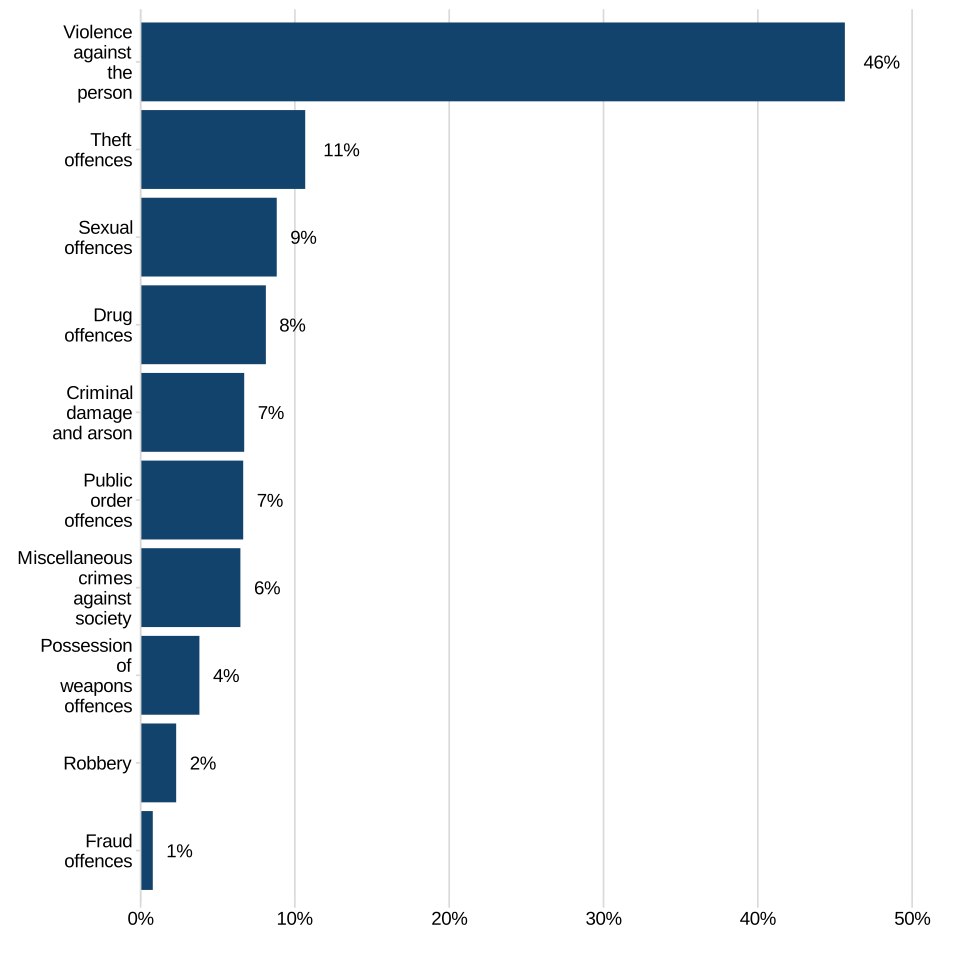
Source: Pre-charge bail, year ending March 2025: data tables; table PCB_05, Home Office
Notes:
- Due to rounding percentages may not total 100%.
- Due to the provisional and incomplete nature of this dataset, these statistics have been designated as Official Statistics in Development.
- Based on data from 39 police forces.
- An individual can be released on pre-charge bail for multiple offences under one instance of pre-charge bail. These are counted separately in this section.
The breakdown by offence type for pre-charge bail is closely aligned to arrests data. However, theft offences account for a slightly higher proportion of arrests (15%) compared with pre-charge bails (11%). In contrast, sexual offences account for 7% of arrests but 9% of pre-charge bails. Table 2.3 shows the proportion of pre-charge bails and arrests by offence type.
Table 2.3: Proportion of concluded pre-charge bails and arrests by offence type, selected police forces year ending March 2025
| Offence type | Pre-charge bails | Arrests |
|---|---|---|
| Violence against the person | 46% | 46% |
| Theft offences | 11% | 15% |
| Sexual offences | 9% | 7% |
| Drug offences | 8% | 8% |
| Criminal damage and arson | 7% | 6% |
| Public order offences | 7% | 6% |
| Miscellaneous crimes against society | 6% | 5% |
| Possession of weapons offences | 4% | 3% |
| Robbery | 2% | 2% |
| Fraud offences | 1% | 1% |
Source: Pre-charge bail, year ending March 2025: data tables; table PCB_05, Home Office and Arrests summary data tables: police powers and procedures, year ending 31 March 2025; table A_07, Home Office
Notes:
- Due to rounding, percentages may not total 100%.
- Due to the provisional and incomplete nature of this dataset, these statistics have been designated as Official Statistics in Development.
- Based on data from 39 police forces who provided pre-charge bail data for the year ending 31 March 2025.
- An individual can be released on pre-charge bail for multiple offences under one record of pre-charge bail, therefore, an individual instance of pre-charge bail may appear multiple times within the table.
Direct comparisons between the 2 series should be made with caution since pre-charge bails can relate to multiple offences, whilst arrests relate to the principal offence. For example, an offender may be arrested on suspicion of committing 2 or more crimes (such as shoplifting and possession of drugs) but only one arrest and offence will be recorded. Within the pre-charge bail dataset, in this example both offences would be recorded and linked to the individual on pre-charge bail. Furthermore, if someone was arrested in the year ending March 2024 and put under pre-charge bail conditions which came to an end in the year ending March 2025, the individual would be recorded in different financial years within the arrests and pre-charge bail datasets.
Pre-charge bail by duration and offence
There were some notable differences in the duration of pre-charge bail depending on the offence for which people were bailed (Figure 2.2). For example, although 52% of bail for all notifiable offences were closed within 3 months, this was only 39% for sexual offences, reflecting that these offences generally take longer to investigate. Conversely, a greater proportion of bails for theft offences and criminal damage and arson offences were closed within 3 months (57% and 56% respectively). Additionally, 11% of bails for sexual offences lasted longer than a year, compared with 6% of all offences.
Figure 2.2: Proportion of concluded pre-charge bails by offence type and duration, selected police forces, year ending March 2025
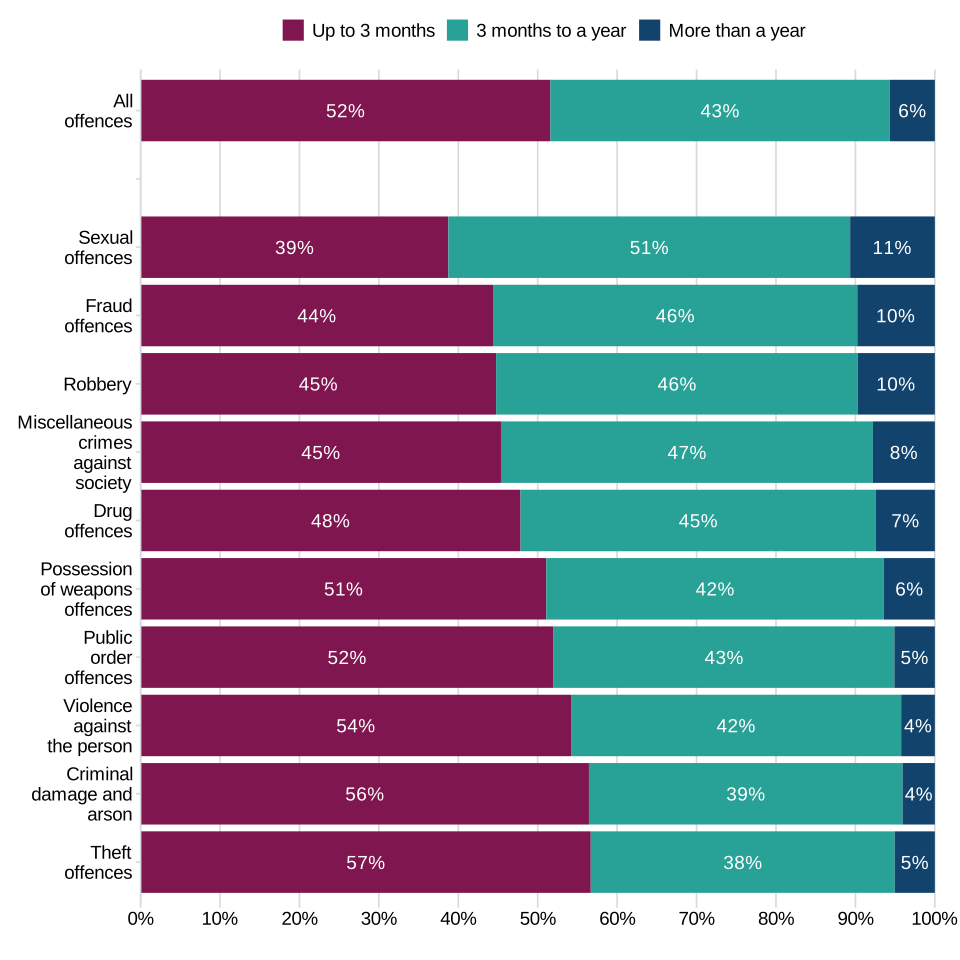
Source: Pre-charge bail, year ending March 2025: data tables; table PCB_09, Home Office
Notes:
- Due to rounding percentages may not total 100%.
- Due to the provisional and incomplete nature of this dataset, these statistics have been designated as Official Statistics in Development.
- Based on data from 39 police forces.
2.3.4 Pre-charge bail by sex
Excluding the 853 records that did not include information on sex, the majority of individuals (85%) whose pre-charge bail concluded in the year ending March 2025 were male. This is in line with the proportion of males arrested (84% of arrests)[footnote 21]. For both males and females, the most common offence groups associated with pre-charge bail was violence against the person (44% and 54% respectively). Theft offences were the second most common offence group (11% for both males and females). However, for males, sexual offences are the third most common offence group (10%), whereas sexual offences only account for 2% of pre-charge bails for females.
Males make up the majority of individuals on pre-charge bail for all offence types. However, the proportions vary. Pre-charge bail for fraud offences had the highest proportion of females (24%), and sexual offences the lowest (3%).
2.3.5 Pre-charge bail by age
Forces are asked to provide the age of the individual at the point at which they were arrested for the offence that they are on bail for. However, there may be some inconsistencies in how forces record the age of individuals released on pre-charge bail due to differences in which point of time their age is recorded. For a small number of records (116) the individual’s age was not known and these records have therefore been excluded from the analysis below. Further information can be found in chapter 12 of the user guide accompanying these statistics.
Table 2.4 shows the number of individuals whose pre-charge bail concluded in the year ending March 2025 by age group. The majority of individuals released on pre-charge bail were aged 21 and above. Over a quarter (28%) of individuals released on pre-charge bail were aged between 31 and 40, and another 25% were aged between 21 and 30. A smaller proportion (18%) were aged 20 and under. These proportions are similar to the year ending 31 March 2024.
Table 2.4: Proportion of concluded pre-charge bails by age, selected police forces year ending March 2025
| Age group | Individuals released on pre-charge bail | Proportion |
|---|---|---|
| 10 to 17 | 30,554 | 10% |
| 18 to 20 | 23,758 | 8% |
| 21 to 30 | 76,338 | 25% |
| 31 to 40 | 86,259 | 28% |
| 41 to 50 | 52,323 | 17% |
| 51 to 60 | 25,462 | 8% |
| 61 and over | 9,899 | 3% |
| Age unknown | 116 | [z] |
| Total | 304,709 | 100% |
Source: Pre-charge bail, year ending March 2025: data tables; table PCB_08, Home Office
Notes:
- Due to rounding, percentages may not total 100%.
- Due to the provisional and incomplete nature of this dataset, these statistics have been designated as Official Statistics in Development.
- Based on data from 39 police forces who provided pre-charge bail data for the year ending 31 March 2025.
- [z] = not applicable.
The proportions varied by offence group, for example, despite making up just 18% of all individuals whose pre-charge bail concluded, those aged 20 and under made up 58% of all linked offences related to robbery (46% of which were aged 17 and under), 33% of possession of weapons offences and 24% of all linked drug offences. Furthermore, individuals aged 51 and over made up 12% of all individuals whose pre-charge bail concluded but made up 17% of those bailed for sexual offences.
2.3.6 Pre-charge bail by ethnicity
When an individual is arrested and released on pre-charge bail, they are asked to define their ethnicity. For the purpose of this analysis, these are grouped into the following 6 categories:
- White (including White minorities)
- Black (or Black British)
- Asian (or Asian British)
- Mixed ethnicity
- Other ethnic group
- not stated
Table 2.5 shows the number of individuals whose pre-charge bail concluded in the year ending March 2025 by ethnicity. Not including records where the ethnicity was not known (17% of all individuals whose bail concluded), 78% of individuals were White (including White minorities), 9% were Asian (or Asian British) and 8% were Black (or Black British). The remaining individuals considered themselves either of Mixed ethnicity (4%) or any Other ethnic group (2%). The proportion of individuals in each ethnic group whose pre-charge bail concluded was similar to (within one percentage point for each group) the arrests[footnote 22] collection.
Table 2.5: Proportion of concluded pre-charge bails by self-defined ethnicity, selected police forces year ending March 2025
| Self-defined ethnicity | Pre-charge bails concluded | Proportion of pre-charge bails concluded | Proportion of population (Census 2021) |
|---|---|---|---|
| White | 195,567 | 78% | 82% |
| Black (or Black British) | 19,431 | 8% | 4% |
| Asian (or Asian British) | 22,589 | 9% | 9% |
| Other ethnic group | 4,736 | 2% | 2% |
| Mixed | 9,571 | 4% | 3% |
| Not stated / unknown | 52,815 | [z] | [z] |
| Total | 259,319 | 100% | 100% |
Source: Pre-charge bail, year ending March 2025: data tables, table PCB_04, Home Office
Notes:
- Due to rounding, percentages may not total 100%.
- Due to the provisional and incomplete nature of this dataset, these statistics have been designated as Official Statistics in Development.
- Based on data from 39 police forces who provided pre-charge bail data. Humberside Police were not able to provide pre-charge bail data for the year ending 31 March 2024.
- Population data from the 2021 Census, England and Wales, excluding Humberside.
- [z] = not applicable.
The ethnic breakdown of individuals whose pre-charge bail concluded varied across offence groups. For all offence groups White individuals (including White minorities) made up the majority of pre-charge bails. However, Black (or Black British) individuals accounted for noticeably larger proportions of pre-charge bails for robbery (20%), drug offences (13%), and possession of weapons offences (12%), despite accounting for only 8% of all individuals whose bail had concluded. This is similar to the proportion of Black (or Black British) individuals arrested for the same offence types (18%, 13% and 12% respectively). A similar discrepancy was seen for Mixed ethnicity individuals who made up 8% of all persons on pre-charge bail for robbery offences and 6% of drug offences, despite accounting for only 4% of individuals whose bail concluded. These figures by offence group are slightly higher than the proportion of Mixed ethnicity individuals arrested for robbery offences (7%) and drug offences (5%).
2.3.7 Pre-charge bail by outcome
When an individual is released on pre-charge bail there can be multiple offences related to their pre-charge bail record which can each have a different outcome assigned to it. For example, if an individual is released on pre-charge bail for possession of weapons and drug offences they may be charged for the possession of weapons offence and receive no further action for the drug offence. Although it is possible for each offence linked to an individual to have a different outcome, the following analysis is based on the principal outcome assigned to an individual.
Some forces have expressed difficulty in providing outcomes data and there are likely inconsistencies in recording between forces. For example, many forces expressed difficulty with identifying when an instance of pre-charge bail is transferred to RUI and vice versa. Further information about these difficulties can be found in chapter 12 of the user guide accompanying these statistics.
The following analysis is based on 37 forces[footnote 23], and excludes 16,494 records (or 5% of pre-charge bails) where an outcome was not recorded.
The most common principal outcome for an individual whose pre-charge bail concluded in the year ending March 2025, was no further action (60% or 173,812 individuals who received this outcome), followed by transferred to released under investigation (20% or 56,765 individuals) and then a charge (15% or 43,000 individuals).
Compared with the year ending 31 March 2024, the proportion of individuals released on pre-charge bail with an outcome of no further action has remained relatively stable (59% in the year ending March 2024 and 60% in the latest year) and the charge rate has decreased slightly from 17% to 15%. The proportion transferred to released under investigation has increased (from 18% to 20%). Figure 2.3 shows the proportion of pre-charge bails by outcome.
Figure 2.3: Proportion of pre-charge bails concluded, by principal outcome, year ending March 2025
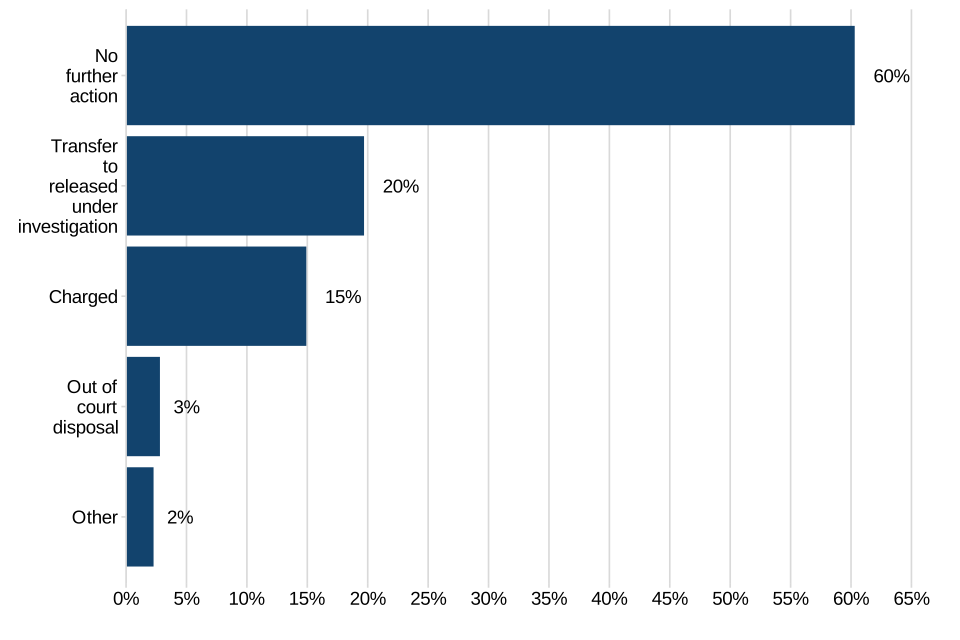
Source: Pre-charge bail, year ending March 2025: data tables; table PCB_06, Home Office
Notes:
- Due to rounding percentages may not total 100%.
- Due to the provisional and incomplete nature of this dataset, these statistics have been designated as Official Statistics in Development.
- Based on data from 39 police forces.
- Excludes 16,494 unknown outcomes. Derbyshire, Durham Humberside and Thames Valley were not able to provide any pre-charge bail data for the year ending 31 March 2025. Essex and South Yorkshire were not able to provide details on the outcome of their pre-charge bail records due to issues with their data recording system.
- ‘Other’ includes transfer to other police force (737) and transfer to other law enforcement agency (67).
2.3.8 Breaches of pre-charge bail conditions
Data on breaches of pre-charge bail conditions is based on a subset of 28 police forces who were able to provide data.
Breach of pre-charge bail conditions is not a notifiable offence[footnote 24]. As such, several forces expressed concerns with the data quality, reporting that they do not formally record breaches in a retrievable format, or that it is held on a separate system. This means data on breaches of pre-charge bail conditions is likely to be an undercount and for several forces the data only reflects instances where an individual is arrested for breach of pre-charge bail conditions. Consequently, the data is largely incomplete, so should be treated with caution.
Based on the limited data available, in the year ending March 2025, a total of 2,083 individuals breached their pre-charge bail conditions, less than 1% of individuals released on pre-charge bail.
2.4 Analysis of released under investigation statistics
2.4.1 Number of individuals released under investigation
The Home Office has collected data from police forces on individuals released under investigation since the year ending March 2021. Data in this section is based on a subset of police forces in England and Wales and should therefore be treated with caution. The following analysis is based on individuals who had been released under investigation that then came to a conclusion in the year ending March 2025.
Based on 36 forces[footnote 25] who provided information, in the year ending March 2025, there were 110,077 individuals whose RUI concluded. This equated to 17% of the 651,071 arrests made during the same period by the same 36 forces.
Comparing the 36 forces who were able to provide data for both the year ending 31 March 2024 and the year ending 31 March 2025, there has been a 5% increase in released under investigations that concluded (from 104,873 to 110,077). These 36 forces also had a 5% increase in arrests over this same period (from 621,738 to 651,071).
During this same period use of pre-charge bail by the same 36 forces increased by 22% (from 243,731 to 297,066). However, due to the incomplete nature of this data set these trends should not be used to draw conclusions about national year-on-year trends.
2.4.2 Released under investigation by duration
An individual can be RUI for multiple offences at one time, and each offence can have a different duration of release before an outcome is assigned. For example, if an individual was RUI for shoplifting and a drug offence, in this data collection this would be recorded as one individual RUI with 2 linked offences (2 rows of data with the same custody reference number). Although it is possible for each offence to have a different length of time, most forces have recorded the same amount of time for all linked offences (likely based on the most serious offence). These have therefore been treated as the same instance of bail and in the few instances where different bail lengths were recorded for the same individual, the longest amount of time has been used for the following analysis. There may be inconsistencies between how forces record duration, particularly where individuals move between pre-charge bail and released under investigation. Further information about the quality of this data can be found in chapter 12 of the user guide accompanying these statistics.
Not including the 26,206 individuals where RUI length was not known and based on a subset of 31[footnote 26] police forces in England and Wales in the year ending March 2025:
- 32% of individuals were released under investigation for 3 months or less
- 21% of individuals were released under investigation for between 3 months and 6 months
- 47% of individuals were released under investigation for more than 6 months, including 25% for more than 12 months
Table 2.6: Concluded released under investigation durations, selected police forces, year ending March 2025
| Released under investigation duration | Number of RUIs concluded | Proportion (%) |
|---|---|---|
| 0 days to 7 days | 4,053 | 5% |
| 8 days to 14 days | 2,522 | 3% |
| 15 days to 21 days | 2,210 | 3% |
| 22 days to 28 days | 2,060 | 2% |
| 29 days to 3 months | 15,797 | 19% |
| 3 months up to 6 months | 17,494 | 21% |
| 6 months to 9 months | 10,978 | 13% |
| 9 months to 12 months | 7,447 | 9% |
| 12 months to 15 months | 4,793 | 6% |
| 15 months to 18 months | 3,196 | 4% |
| More than 18 months | 13,321 | 16% |
| Unknown | 26,206 | [z] |
| Total | 110,077 | 100% |
Source: Released under investigation year ending March 2025: data tables; table RUI_01, Home Office
Notes:
- Due to the provisional and incomplete nature of this dataset, these statistics have been designated as Official Statistics in Development.
- Includes data from a subset of 31 police forces for known duration values. City of London, Cumbria, Derbyshire, Durham, Gwent, Humberside, Thames Valley were unable to provide data on RUI and Gloucestershire, Kent, Lincolnshire, Metropolitan Police and Warwickshire were unable to provide data on the duration of RUI, but are included within the unknown category.
2.4.3 Released under investigation by offence type
Analysis in this section is based on all offences linked to an individual’s record for release under investigation.
Of the 36 forces who provided offence data for RUI records, 4 forces were only able to provide offence type of the principal offence linked to the RUI record. Therefore, figures presented in this section are an undercount of the true number of offences relating to RUI. Further information can be found in chapter 12 of the user guide accompanying these statistics.
In the year ending March 2025 there were 181,786 offences linked to individuals RUI; almost a third (31%) of these were related to violence against the person, 19% for drug offences, and 12% for theft offences, excluding unknown offences (0.1% of all offences related to RUI). Figure 2.4 shows the proportion of individuals released under investigation by offence type.
Figure 2.4: Proportion of concluded released under investigation by offence type, year ending March 2025
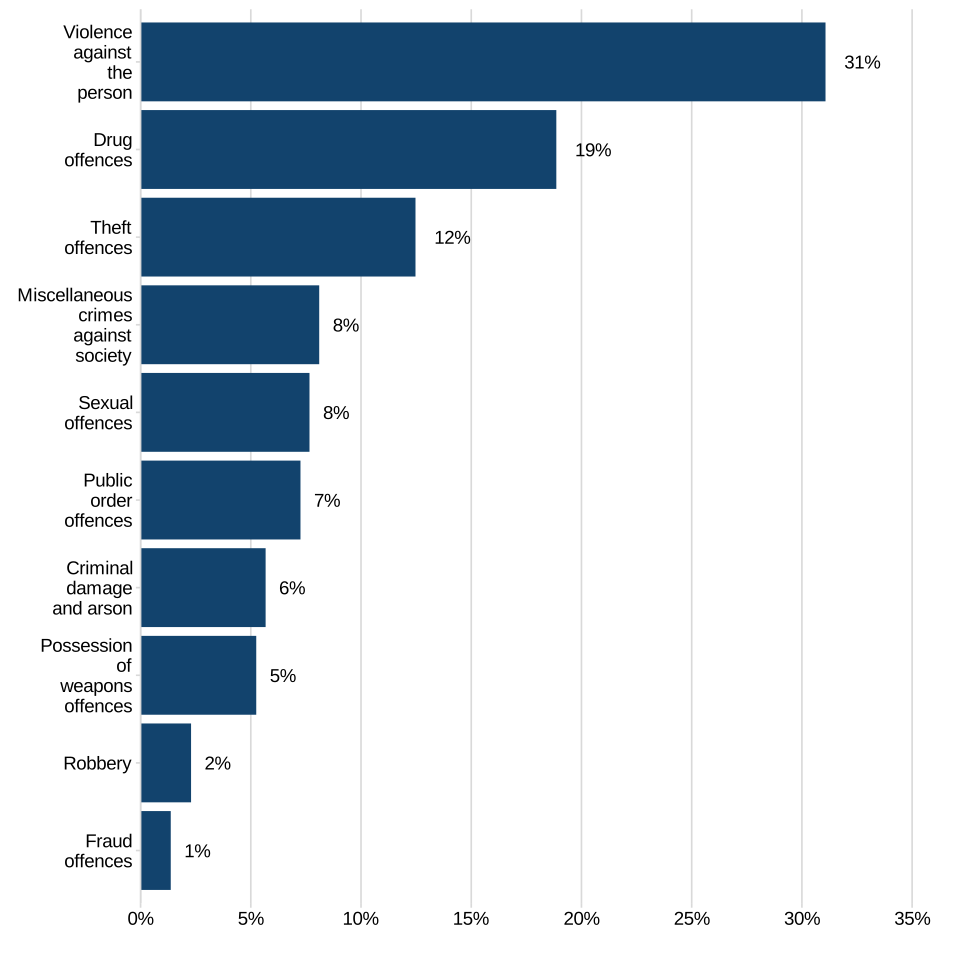
Source: Released under investigation year ending March 2025: data tables; table RUI_05, Home Office
Notes:
- Due to rounding percentages may not total 100%.
- Due to the provisional and incomplete nature of this dataset, these statistics have been designated as experimental statistics.
- Based on data from 36 police forces. City of London, Cumbria, Derbyshire, Durham, Gwent, Humberside, Thames Valley were unable to provide data on RUI in the year ending March 2025.
- Excludes 100 records with an unknown offence type.
- An individual can be released under investigation for multiple offences under one instance of pre-charge bail. These are counted separately in this section.
The proportions across offence groups were similar to the year ending March 2025 arrests data, with the exception of violence against the person and drug offences when comparing the 36 police forces[footnote 27] that provided data on offence type. Whilst violence against the person offences made up near half of all arrests (46%), just 31% of RUIs were for violence against the person offences. This may reflect the fact that RUI does not have any conditions attached to an individual’s release, and police forces may find it more appropriate to use pre-charge bail for violence against the person offences. Table 2.7 shows the proportion of pre-charge bails and arrests by offence type.
Table 2.7: Proportion of concluded RUIs and arrests by offence type, selected police forces year ending March 2025
| Offence type | Released under investigation | Arrests |
|---|---|---|
| Violence against the person | 31% | 46% |
| Drug offences | 19% | 8% |
| Theft offences | 12% | 15% |
| Miscellaneous crimes against society | 8% | 5% |
| Sexual offences | 8% | 7% |
| Public order offences | 7% | 6% |
| Criminal damage and arson | 6% | 6% |
| Possession of weapons offences | 5% | 3% |
| Robbery | 2% | 2% |
| Fraud offences | 1% | 1% |
Source: Pre-charge bail, year ending March 2025: data tables; table RUI_05, Home Office and Arrests summary data tables: police powers and procedures, year ending 31 March 2025; table A_07, Home Office
Notes:
- Due to rounding, percentages may not total 100%.
- Due to the provisional and incomplete nature of this dataset, these statistics have been designated as Official Statistics in Development.
- Based on data from 36 police forces who provided released under investigation data for the year ending 31 March 2025.
- An individual can be released under investigation for multiple offences under one record of pre-charge bail, therefore, an individual instance of RUI may appear multiple times within the table.
Direct comparisons between the 2 series should be made with caution since RUI can relate to multiple offences, whilst arrests data submitted to the Home Office relates to the principal offence. For example, an offender may be arrested for committing 2 or more crimes (such as shoplifting and possession of drugs) but only one arrest and offence will be recorded in the data collection. Conversely, one RUI will be recorded but there can still be 2 offences associated with the RUI record. Furthermore, if someone was arrested for example in the year ending March 2024 and was released under investigation which came to an end in the following financial year, the individual would be recorded in a different financial year within the RUI dataset.
The proportion of RUI and pre-charge bails differ across several offence groups when comparing the same 36 police forces. Violence against the person accounts for a lower proportion of RUI (31%) in comparison to pre-charge bail (46%), more consistent with the arrests collection (46%). However, theft (12%) and drug offences (19%) related to a higher proportion of RUI than pre-charge bail (11% and 8% respectively).
2.4.4 Released under investigation by sex
Not including records where an individual’s sex was unknown (0.4% of RUI), 85% of individuals on RUI were male, similar to both the arrests and pre-charge bail data (84% and 85% of males respectively, when comparing across the 36 forces that were able to supply RUI data in the year ending March 2025). The most common offence related to RUI for both males (29% or 45,296 offences) and females (42% or 10,919 offences) was violence against the person.
Males consistently accounted for the majority of RUI across all offence types. However, despite accounting for 15% of all RUI concluded in the year ending March 2025, females accounted for close to a quarter (24%) of fraud offences and 19% of violence against the person offences. However, they only accounted for 3% of RUI for sexual offences, consistent with the pre-charge bail collection.
2.4.5 Released under investigation by age
The Home Office asks forces to provide the age of an individual at the time of arrest; however, inconsistences in how forces calculate the age of individuals released under investigation may still exist where some forces are only able to calculate based on other points in time. Further information can be found in chapter 12 of the user guide accompanying these statistics.
Excluding the 77 records where the age was unknown (or missing), almost a quarter (23%) of individuals RUI were aged 20 and under, and a further 27% were aged between 21 and 30. Those aged 51 and above made up the smallest proportion (10%). Despite accounting for 13% of all RUI, individuals aged 17 and under accounted for 50% of robbery, 22% of possession of weapons offences and 21% of criminal damage and arson offences.
2.4.6 Released under investigation by ethnicity
Excluding records where the ethnicity was not stated (18%), the majority of individuals whose RUI concluded defined their ethnicity as White (77%, including White minorities). 9% of individuals defined their ethnicity as Asian (or Asian British) and 8% as Black (or Black British). The remaining 6% defined their ethnicity as Mixed (4%) or as any Other ethnicity (2%).
The proportions of individuals released under investigation, released on pre-charge bail and arrested by ethnicity were similar when comparing the same subset of 36 police forces. For example, the White group made up 77% of RUI compared and pre-charge bail, and 78% of arrests. Likewise, Black individuals made up 8% of RUI, pre-charge bails and arrests.
White individuals (including White minorities) accounted for the majority of all individuals across all offence groups. For example, they accounted for 85% of all individuals RUI (where ethnicity is known) for theft offences and 84% of criminal damage and arson.
Despite representing 8% of all RUI, Black (or Black British) individuals accounted for 21% of RUI related to robbery and 11% of RUI related to possession of weapons offences and fraud offences. These proportions are similar to the arrests collection (18% for robbery, 12% for possession of weapons and 11% for fraud offences).
Moreover, Asian (or Asian British) individuals made up 15% of fraud RUI offences, and 11% of sexual offences, higher than the proportion of all Asian (or Asian British) individuals RUI (9%). These proportions are also similar to the arrests collection (15% for fraud offences and 11% for sexual offences).
2.4.7 Released under investigation by outcome
When an individual is released under investigation there can be multiple offences related to their RUI record which can each have a different assigned outcome. For example, if an individual is released on RUI for robbery and drug offences, they may be charged for the drug offence and receive no further action for the robbery offence. Although it is possible for each offence linked to an individual to have a different outcome, the following analysis is based on the principal outcome assigned to an individual.
Some forces have expressed difficulty in providing outcomes data and there are likely inconsistencies in recording between forces. For example, many forces expressed difficulty with identifying when an instance of pre-charge bail is transferred to RUI and vice versa. Further information about these difficulties can be found in chapter 12 of the user guide accompanying these statistics.
Excluding records where the individual’s outcome for RUI was not known (27,578 or 25% of RUIs that concluded in the year ending March 2025) and based on a subset of 31 forces[footnote 28], the majority (68%) of individuals whose RUI concluded were assigned a principal outcome of no further action, followed by charged (22%). A small proportion of individuals received an out-of-court disposal (5%). The remaining 5% resulted in other outcomes, such as a transfer to pre-charge bail or transfer to other police force or law enforcement agency. Figure 2.5 shows the proportions of RUI by outcome.
Figure 2.5: Proportion of concluded released under investigation by outcome, selected police forces, year ending March 2025
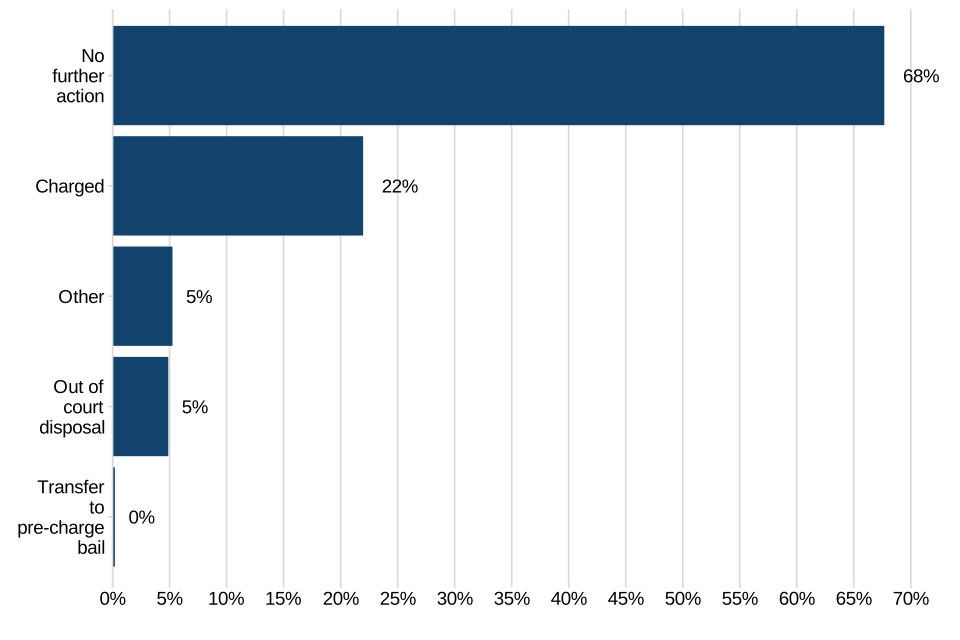
Source: Released under investigation year ending March 2025: data tables table RUI_06, Home Office
Notes:
- Due to rounding percentages may not total 100%.
- Due to the provisional and incomplete nature of this dataset, these statistics have been designated as Official Statistics in Development.
- Based on data from 31 police forces.
- Excludes 27,578 records with an unknown outcome.
- ‘Other’ includes transfer to other law enforcement agency (76), and transfer to other police force (453), and ‘other’ (3,807).
2.5 Analysis of voluntary attendance statistics
2.5.1 Number of voluntary attendance interviews
In the year ending March 2025, based on data from a subset of 31 police forces[footnote 29] in England and Wales, 73,390 interviews were conducted following voluntary attendance. Excluding records where the interview location was not known (34%), the majority (91%) of these interviews occurred at a police station. The remaining 9% occurred at another location such as a prison or home.
It should be noted that many forces stated that there is no system in place to record voluntary interviews that do not occur within a police station (such as a home). As such, the total number of voluntary interviews is likely to be inaccurate and the breakdown of location of voluntary interviews should be treated with caution as it may not reflect the locations of all interviews that occur.
Additionally, some forces expressed difficulty in identifying whether there are duplicates in their data as they did not have enough detail on records to determine if an individual was interviewed again or whether the record is duplicated in their system. Furthermore, several forces reported that they may interview multiple separate individuals several times in connection with a single offence under one custody record.
2.5.2 Voluntary attendance by offence type
In the year ending March 2025, based on the 29 forces[footnote 30] that provided data on offence type, more than two-fifths (43%) of voluntary interviews were related to violence against the person. The second most common offence group was theft offences (13%) followed by sexual offences (11%) and public order offences (9%). Figure 2.6 shows the proportion of voluntary attendance of interview by offence type.
Figure 2.6: Proportion of voluntary attendance of interview by offence type, year ending March 2025
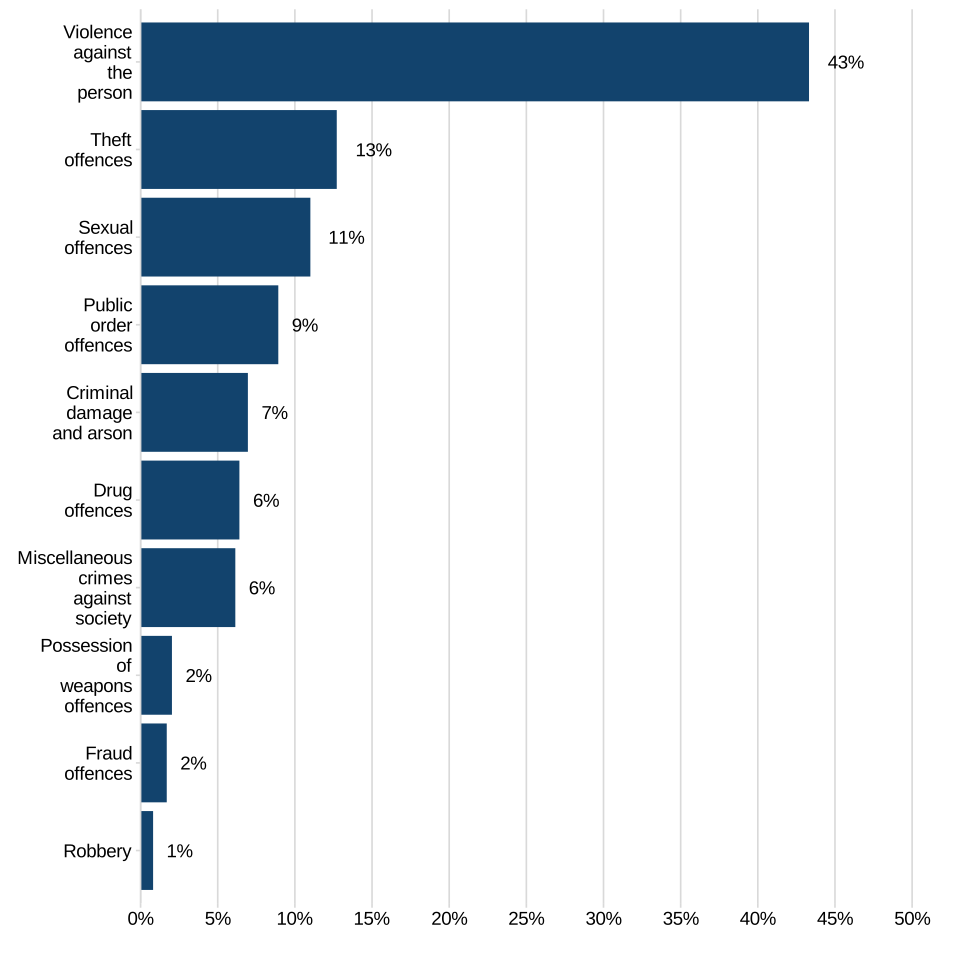
Source: Voluntary attendance to interview year ending March 2025: data tables; table VA_05, Home Office
Notes:
- Due to rounding percentages may not total 100%.
- Due to the provisional and incomplete nature of this dataset, these statistics have been designated as Official statistics in development.
- Based on data from 29 police forces.
- Excludes 11,998 records where the offence type was unknown.
- An individual can voluntarily attend interview for multiple offences under one record of voluntary interview; therefore, in this example each offence would be counted as a separate occurrence in the data.
2.5.3 Voluntary attendance by sex
Excluding records where the sex was unknown (11% of interviews), the majority (73%) of individuals who voluntarily attended interview were male and this pattern was seen across all offence types.
Although females accounted for 27% of all voluntary interviews, they accounted for 38% of voluntary interviews for fraud offences and around a third (35%) of persons attending interview for violence against the person. In contrast, only 6% of individuals who attended voluntary interview for sexual offences were female, and 14% for robbery and possession of weapons offences.
2.5.4 Voluntary attendance by age
The Home Office asks forces to provide the age of an individual at the time of their first attendance of voluntary interview; however, inconsistences in how forces calculate the age of individuals who voluntarily attended interview may still exist where some forces are only able to calculate based on other points in time. Further information can be found in chapter 12 of the user guide accompanying these statistics.
A quarter (25%) of individuals who voluntarily attended interview were aged 20 and under, and a further 19% were aged 21 to 30 years old, (not including records with an unknown age, 1% of interviews).
However, these proportions differed across each offence type. For example, although those aged 17 and under accounted for 19% of all offences linked to voluntary interviews, they accounted for 59% of interviews for robbery, and 38% of interviews for possession of weapons offences. Moreover, those aged 18 to 20 years old accounted for just 6% of all offences linked to voluntary interviews but made up 13% of interviews for drug offences.
3. Future reporting
The Home Office continues to collect data on police custody and pre-charge bail as part of the Annual Data Requirement. Analysts will continue to proactively engage with users and stakeholders to ensure these statistics provide transparency and value on the use of these powers.
-
See section 1.2 for further information ↩
-
Based on a subset of 30 forces. Excludes 13 forces who either could not provide vulnerability data or provided data as either ‘Vulnerable’ or ‘Unknown’ (Cambridgeshire, Devon and Cornwall, Durham, Gloucestershire, Greater Manchester, Hampshire, Humberside, Leicestershire, Kent, Merseyside, North Wales, Sussex and West Mercia). ↩
-
Based on a subset of 27 forces. Excludes 8 forces (Cambridgeshire, Gloucestershire, Greater Manchester, Hampshire, Kent, Leicestershire, North Wales, Sussex) who could not provide vulnerability data, therefore vulnerability has been inferred as ‘Vulnerable’ or ‘Unknown’ from whether an AA was called. Excludes 6 forces (Cumbria, Derbyshire, Devon and Cornwall, Metropolitan Police, South Yorkshire, West Mercia) where AA data is reported as ‘AA called’ or ‘Unknown’ (for some forces this was because the force could not report on whether an AA was called so this information was inferred from whether an AA attended). Excludes 2 forces (Durham, Humberside) who were unable to report on any vulnerability or AA data. ↩
-
Based on a subset of 34 forces. Excludes 7 forces (Avon and Somerset, Cambridgeshire, Cumbria, Kent, Metropolitan Police, South Yorkshire, West Mercia) where AA data is reported as ‘AA called’ or ‘Unknown’ (for some forces this was because the force could not report on whether an AA was called so this information was inferred from whether an AA attended). Excludes 2 forces (Durham, Humberside) who were unable to report on any AA data. ↩
-
A custody record must be opened for all detainees who arrive at the police station. If the custody officer believes that there are insufficient grounds for detention, they must record the reasons and release the detainee. Further information can be found on the College of Policing website. ↩
-
Based on a subset of 28 forces. Excludes 11 forces where the data has been reported as ‘AA attended’ or ‘unknown’ (Cambridgeshire, Cumbria, Devon and Cornwall, Dyfed-Powys, Leicestershire, Nottinghamshire, Northamptonshire, South Yorkshire, Sussex, Warwickshire, West Mercia ). For some forces this is because the force could only report on whether the AA was in attendance at specific points of the custody process, for example if the AA was in attendance when the detainee had their rights read. Also excludes 14 forces who could not report on whether an AA attended (at any point). (Bedfordshire, Cheshire, Durham, Gloucestershire, Greater Manchester, Gwent, Hertfordshire, Lincolnshire, Norfolk, North Yorkshire, Suffolk, Surrey, West Midlands, West Yorkshire) ↩
-
Based on a subset of 29 forces. Excludes 10 forces (Avon and Somerset, Cambridgeshire, Cumbria, Devon and Cornwall, Leicestershire, Nottinghamshire, South Yorkshire, Sussex, Warwickshire, West Mercia) where the data has been reported as ‘AA attended’ or ‘unknown’. For some of these forces this is because the force could only report on whether the AA was in attendance at specific points of the custody process, for example if the AA was in attendance when the detainee had their rights read. Also excludes 14 forces (Bedfordshire, Cheshire, Durham, Gloucestershire, Greater Manchester, Gwent, Hertfordshire, Lincolnshire, Norfolk, North Yorkshire, Suffolk, Surrey, West Midlands, West Yorkshire) who could not report on whether an AA attended (at any point). ↩
-
Based on subsets of 13 forces for both children and vulnerable adults. Excludes Dorset, Lancashire and South Wales ↩
-
Derbyshire, Durham, Greater Manchester, Norfolk and Suffolk police forces were unable to provide data on overnight detentions. ↩
-
College of Policing Authorised Professional Practice guidance: Detainee care -College of Policing ↩
-
Gloucestershire, Greater Manchester, Gwent, Kent, Leicestershire, Metropolitan, Northumbria, South Yorkshire, West Midlands, and West Yorkshire ↩
-
Cambridgeshire, City of London, Derbyshire, Dyfed-Powys, Lancashire, Merseyside, Northamptonshire, Warwickshire, and West Mercia ↩
-
Avon and Somerset, Devon and Cornwall, Greater Manchester, South Yorkshire, Surrey, Warwickshire ↩
-
Excludes Humberside Police who couldn’t provide detentions data and Avon and Somerset, Devon and Cornwall, Greater Manchester, South Yorkshire, Surrey, and Warwickshire Police forces who couldn’t provide strip search data that met ADR requirements ↩
-
Strip searches data includes Humberside whereas detentions data does not ↩
-
Post-charge or court bail is given when an individual is released from custody awaiting a court hearing or trial. ↩
-
Information on the number of arrests by Police Force Area for the year ending March 2025 is published in Stop and search, arrests and mental health detentions, March 2025 - GOV.UK. ↩
-
Excludes Durham, Humberside and Thames Valley Police, who did not provide data in the year ending March 2024 and the year ending March 2025, and Derbyshire, who could not provide data in the year ending March 2025. ↩
-
Excludes Derbyshire, Durham, Humberside and Thames Valley Police, who were unable to provide accurate pre-charge bail data for the year ending March 2025. ↩
-
The applicable bail period is the period of time for which a suspect can be subject to pre-charge bail. ↩
-
Information on the number of arrests by sex, age, ethnicity, principle offence (reason for arrest) and Police Force Area for the year ending March 2025 is published in the Arrests open data tables accompanying Police powers and procedures statistics: Stop and search and arrests, year ending March 2025. ↩
-
Information on the number of arrests by sex, age, ethnicity, principle offence (reason for arrest) and Police Force Area for the year ending March 2025 is published in the Arrests open data tables accompanying Police powers and procedures statistics: Stop and search and arrests, year ending March 2025. ↩
-
Derbyshire, Durham. Humberside and Thames Valley were not able to provide any pre-charge bail data for the latest year, while Essex and South Yorkshire were not able to provide outcomes data. ↩
-
A notifiable offence is a crime which is recorded by the police that they are required to report to the Home Office. Also known as recorded crime. ↩
-
City of London, Cumbria, Derbyshire, Durham, Gwent, Humberside and Thames Valley were not able to provide released under investigation data for the year ending March 2025. ↩
-
Excludes 7 police forces that could not provide data on released under investigation (City of London, Cumbria, Derbyshire, Durham, Gwent, Humberside, Thames Valley), and 5 additional forces (Gloucestershire, Kent, Lincolnshire, Metropolitan Police and Warwickshire) who could not provide duration data and are included within unknown values. ↩
-
Excludes 7 forces that did not provide data on released under investigation in the year ending March 2025. ↩
-
Excludes 7 forces that did not provide data on released under investigation. Additionally, excludes 5 forces that were not able to supply data on RUI outcomes (Essex, Kent, Leicestershire, Metropolitan Police, South Yorkshire). ↩
-
Bedfordshire, Cambridgeshire, City of London, Derbyshire, Gloucestershire, Greater Manchester, Gwent, Humberside, Metropolitan Police, Warwickshire and West Midlands could not provide data on voluntary attendance to interview. ↩
-
11 forces could not provide data on voluntary attendance to interview. Additionally, Kent and West Yorkshire were not able to provide data on offence type. ↩