Pathways between probation and addiction treatment in England: a follow-up study
Published 19 March 2026
Applies to England

© Crown copyright 2026
This publication is licensed under the terms of the Open Government Licence v3.0 except where otherwise stated. To view this licence, visit nationalarchives.gov.uk/doc/open-government-licence/version/3 or write to the Information Policy Team, The National Archives, Kew, London TW9 4DU, or email: psi@nationalarchives.gov.uk.
Where we have identified any third party copyright information you will need to obtain permission from the copyright holders concerned.
This publication is available at https://www.gov.uk/government/statistics/pathways-between-probation-and-addiction-a-follow-up-study/pathways-between-probation-and-addiction-treatment-in-england-a-follow-up-study
Official Statistics
Pathways between probation and addiction treatment in England: a follow-up study
Published March 2026
Executive Summary
This report presents follow-up analysis building on Pathways between probation and addiction treatment in England: report - GOV.UK focusing on people sentenced to community orders (COs) and suspended sentence orders (SSOs) with an Alcohol Treatment Requirement (ATR) or Drug Rehabilitation Requirement (DRR). It examines engagement with alcohol and drug treatment, how engagement relates to reconvictions outcomes, and their characteristics. The analysis covers all ATRs and DRRs issued between August 2018 and March 2023.
The study linked probation case management records with the National Drug Treatment Monitoring System (NDTMS) using probabilistic data linkage. This was supplemented by Natural Language Processing (NLP) analysis of probation contact notes. This approach aimed to assess whether the absence of ATRs and DRRs in structured treatment data reflected a true lack of treatment or gaps in data linkage.
A total of 45,943 ATR and DRR requirements were issued during the period. Of these, 22,636 were linked to structured treatment through data linkage. The NLP approach derived an engagement rate from the unlinked sample. This was then applied to all unlinked records, resulting in an estimated 18,712 requirements with evidence of treatment engagement.
Key Findings
1. Up to 90%[footnote 1] of ATRs and DRRs were estimated to involve some form of treatment engagement. This is based on 49% linked to structured treatment through probabilistic data linking and an additional 41% of unlinked records showing treatment engagement in probation contact notes. Engagement was estimated to be higher for ATRs (93%) than for DRRs (88%).
2. Reconviction was less common following ATRs and DRRs linked to structured treatment. Within 12 months of sentencing, 36% of those linked to structured treatment were reconvicted, compared with 44% of those not linked to structured treatment.
3. Characteristics associated with being more likely to be linked to structured treatment included being:
- aged over 50
- female
- in settled accommodation, (least likely when associated with rough sleeping)
- engaged by treatment services within:
- 3 weeks of an ATR,
- 3–6 weeks of a DRR
4. Reconviction outcomes varied by treatment outcome:
- Reconvictions associated with ATRs and DRRs were lowest when they remained in structured treatment at the end of the observation period (13% for ATR; 26% for DRR).
- Reconvictions associated with ATRs and DRRs were highest when they dropped out of structured treatment (41% for ATR; 60% for DRR).
- Reconvictions associated with ATRs and DRRs that were not identified in structured treatment were higher than completed or remained in structured treatment but lower than those that dropped out of structured treatment (37% for ATR; 51% for DRR).
Conclusion
The analysis shows clear associations between treatment engagement and both individual characteristics and justice system factors. Individuals with ATRs and DRRs who completed or remained in structured treatment had better reconviction outcomes than those who dropped out of or had no identified structured treatment. This highlights the value of sustained engagement. The report also demonstrates the value of AI based NLP methods to strengthen insight by identifying treatment activity not captured through data linkage alone.
1. Introduction
This report is a joint Official Statistics publication by the Ministry of Justice (MoJ) and the Office for Health Improvement and Disparities (OHID), which is part of the Department of Health and Social Care (DHSC).
These statistics are the output of a data-sharing agreement that was secured as part of the Better Outcomes through Linked Data (BOLD) programme, a cross-government programme led by the MoJ. It was created to show how people with complex needs can be better supported by linking and improving the government data held on them in a safe and secure way.
This report is the follow-up study to a previous report published in 2023, pathways between probation and addiction treatment in England, and builds on the previous findings by:
-
using probation contact note analysis to enhance understanding of how people engaged with treatment services,
-
identifying people who were in prison or engaged in unstructured treatment delivered by Criminal Justice Intervention Teams (CJIT)[footnote 2], and
-
investigating reconvictions of those with Alcohol Treatment Requirements (ATRs) and Drug Rehabilitation Requirements (DRRs) alongside their treatment engagement status.[footnote 3]
The statistics in this report are Official Statistics.
1.1 Community sentence treatment requirements
The Criminal Justice Act 2003 introduced community sentence treatment requirements (CSTRs), including:
-
Alcohol Treatment Requirements (ATRs),
-
Drug Rehabilitation Requirements (DRRs), and
-
Mental Health Treatment Requirements (MHTRs).
Under the legislation, the court can impose either a community order (CO) or a suspended sentence order (SSO) with CSTRs. The court can impose other requirements (such as unpaid work) and supervision from the probation service, which can be longer than the treatment requirement.
The purpose of CSTRs is to address drug, alcohol and mental health needs linked to offending behaviour, with the aim of reducing reoffending.
This report focused on ATRs and DRRs only; MHTRs were not in scope for this analysis. Combined orders that include a MHTR can be issued; however, cases involving MHTRs were not included in this analysis.
To be eligible for an ATR, the court must be satisfied that the offender:
-
is dependent on alcohol,
-
requires treatment for their alcohol dependence and that it is likely to be effective,
-
can access and attend alcohol treatment, and
-
is willing to comply with the requirement.
To be eligible for a DRR, the court must be satisfied that the offender:
-
is dependent on drugs,
-
requires and would benefit from treatment,
-
can access and attend drug treatment, and
-
is willing to comply with the requirement.
1.2 Aims
This report focuses on people sentenced to a CO or SSO in England with an attached ATR or DRR, and develops the evidence base on pathways between probation and treatment including:
- What the treatment outcomes were for those with ATRs and DRRs.
- If the absence of ATRs and DRRs within structured treatment data reflects true lack of treatment or data linkage gaps.
- What characteristics were common among those linked to structured treatment after receiving a CO or SSO with an attached ATR or DRR.
- What the reconviction outcomes were for those with ATRs and DRRs.
- What characteristics were common among those reconvicted within 12 months of being given a CO or SSO with an attached ATR or DRR.
1.3 Methodology
This report identifies people in drug or alcohol treatment using two analytical approaches:
- Data linking between MoJ sentencing data and DHSC substance misuse treatment data, and
- Natural Language Processing of MoJ probation contact notes.
It also uses statistical techniques to explore characteristics common in those identified in structured treatment or who have been reconvicted.
1.3.1 Data linking between MoJ sentencing data and DHSC substance misuse treatment data
Sentencing data are held by the MoJ while treatment engagement data are held by DHSC. This report initially utilised linked sentencing and treatment data to achieve the stated aims.
DHSC received 54,244 ATR and DRR records from MoJ’s probation case management system, nDelius, attached to COs and SSOs between August 2018 and March 2023. The aim was to link these records with DHSC substance misuse treatment data from the National Drug Treatment Monitoring System (NDTMS). NDTMS consists of five datasets: Adult Community treatment, Young Persons Community treatment, Adult Secure Setting treatment, Young Persons Secure Setting treatment and CJIT. The primary aim of the analysis was to identify structured treatment associated with ATRs or DRRs using the NDTMS community treatment datasets. If a record was not found in those community treatment datasets, unstructured treatment delivered by CJITs was explored to examine any linked treatment.
Further data related to the cohort with an ATR or DRR were drawn from other MoJ datasets including prison (p-NOMIS) and courts data (Xhibit, Libra, and Common Platform) to better understand the characteristics and reconviction outcomes of the cohort. For further information about the data used, please see section 2.1 of the methodology document.
In the absence of a unique identifier between MoJ and DHSC datasets, records were linked using a probabilistic linkage method to optimise matching between nDelius and NDTMS. Further information about these data linking methods can be found in sections 2.3, 2.4 and 2.5 of the methodology document.
1.3.2 Natural Language Processing of MoJ probation contact notes
Following initial data linking, 500 Case Reference Numbers (CRNs) where an ATR or DRR had been attached to a CO or SSO with no linked structured treatment was found in NDTMS were returned to the MoJ. A manual review of probation (nDelius) contact notes (written by an offender’s probation practitioners) for 324 of these CRNs took place. This showed that 65% had engaged in some form of treatment, not limited to structured treatment. This indicated that treatment information is often recorded in probation contact notes where identification in structured treatment through data linking is not possible.
Given a full manual review of all contact notes would be impractical, an experimental methodology was explored, using Natural Language Processing (NLP) to analyse probation contact notes of people who had an ATR or a DRR attached to a CO or SSO. A similar methodology had been successfully used for estimating the number of prisoners who have children.
The objective of the analysis was to understand whether NLP could be used to infer whether an individual was accessing treatment from their probation contact notes, extending the definition of ‘treatment’ beyond structured treatments only. When a contact note is processed, the NLP model could interpret context - for example, distinguishing between someone expressing interest in attending a support group and a record indicating that they attended. In contrast, linked data only included individuals who have been formally triaged and confirmed in structured treatment. Using contact note analysis captured a broader group, increasing the proportion of individuals identified as accessing treatment.
Overall, this methodology remains experimental, but the results highlight the potential of NLP for supporting policy development and evaluation. To perform this analysis an open-source tool was developed.
1.3.3 Multilevel logistic regression
For ATRs and DRRs linked to structured treatment through probabilistic data linking, multilevel logistic regression models were developed. These models were used to examine which personal or social characteristics were associated with linkage to structured treatment and with reconviction within 12 months of sentencing. These models informed the level of detail provided in this report, and further information is available in the accompanying tables.
1.3.4 Additional data included in the accompanying data tables
The accompanying data tables include additional variables and breakdowns that were not explored in the narrative section of this report. These cover, for example, treatment outcomes by drug group, comparisons between NDTMS and nDelius discharge records, and further analyses of time to access treatment and requirement lengths. These tables are provided to support users who may require more granular information.
1.4 Summary data linking details
During the observation period, 45,943 ATR and DRR requirements were attached to COs and SSOs; 22,636 (49%) of these requirements were linked to NDTMS structured treatment data.
The figures show the data linkage and filtering process for people with ATRs or DRRs recorded in the nDelius probation system and, where linked, their corresponding treatment records in NDTMS.
As individuals may receive multiple ATRs or DRRs, the analysis reports outcomes for each CO or SSO with an ATR or DRR attached, rather than reporting outcomes per individual.
The full data linkage process is shown in sections 2.3, 2.4 and 2.5 of the methodology document.
1.5 Natural Language Processing dataset
The probation contact notes of a random sample of 5,271 requirements which had not been linked to structured treatment using probabilistic linkage, were analysed using NLP.
For each offender, the contact notes recorded between their ATR or DRR start date and end date (or March 2023 if the end date occurred after the end of the analysis period), were analysed.
Contact notes containing keywords or phrases associated with drug and alcohol treatment were extracted, all others were excluded. The NLP model then classified these selected notes according to whether they indicated engagement with treatment services. The full list of keywords and phrases is provided in table 1 of section 2.7.1 of the methodology document.
Filtering the contact notes using these key terms produced 96,942 contact notes, covering 5,159 requirements. The 112 requirements that did not have case notes containing these key terms are assumed not to have engaged in treatment during their requirement. The remaining contact notes were analysed using NLP.
2. Main findings: Identification in any treatment
2.1 Estimated percentage of ATRs and DRRs engaging in any treatment
This section presents the overall proportion of ATRs and DRRs identified in any form of treatment. It uses estimates derived from probabilistic data linkage, supplemented by findings from probation contact note analysis.
Figure 1: Identification in treatment
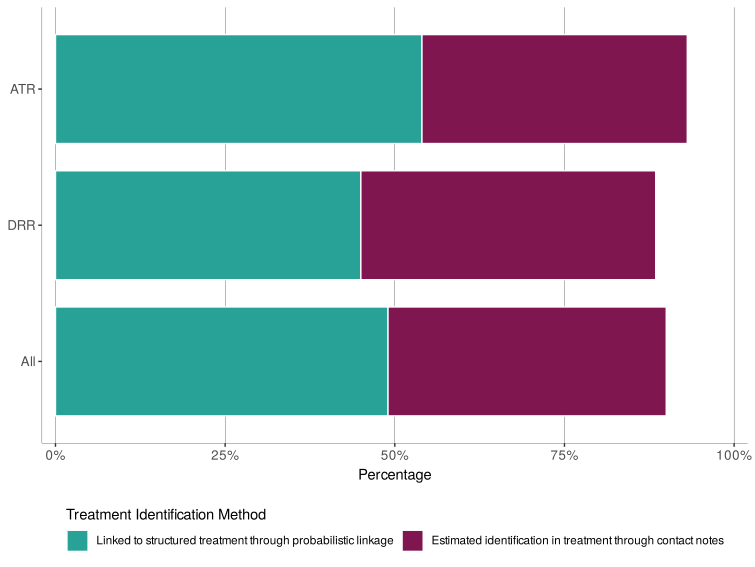
A bar chart showing that up to 90% of ATRs and DRRs were identified as engaging in treatment, combining 49% linked through probabilistic data matching and an estimated 41% identified via contact‑note analysis.
Figure 1 shows that overall, up to 90% of records were engaged in substance misuse treatment, through probabilistic linkage and contact note analysis. This consisted of:
-
49% of all ATRs and DRRs were linked to structured treatment through probabilistic data linking.
-
81% of a sample of those not linked through probabilistic methods showed engagement with treatment services in contact note analysis. From this, it is estimated that a further 41%[footnote 4] of ATRs and DRRs not linked to structured treatment did engage in some form of treatment.
For ATRs, up to 93% of all ATRs engaged with treatment when combining probabilistic linking with contact note analysis. This consisted of:
-
54% of all ATRs were linked to structured treatment through probabilistic data linking.
-
85% of a sample of those not linked through probabilistic methods showed engagement with treatment services in contact note analysis. From this, it is estimated that a further 39%[footnote 5] of ATRs not linked to structured treatment engaged in some form of treatment.
For DRRs, up to 88% of all DRRs engaged with treatment when combining probabilistic linking with contact note analysis. This consisted of:
-
45% of all DRRs were linked to structured treatment through probabilistic data linking.
-
79% of a sample of DRRs not linked through probabilistic methods showed engagement with treatment services in contact note analysis. From this, it is estimated that a further 43%[footnote 6] of DRRs not linked to structured treatment did engage in some form of treatment.
When probabilistic linkage and contact note analysis are considered together, ATRs were estimated to have higher overall treatment engagement than DRRs.
Raw data can be found in the accompanying data tables (Table 1).
2.2 Probabilistic linkage to structured treatment of ATRs and DRRs
This section outlines the treatment engagement status of ATRs and DRRs based solely on probabilistic linkage to structured treatment and CJIT data.
Probabilistic linkage was used because the datasets do not share a unique identifier, and personal details can be recorded inconsistently across systems. This approach provides a more flexible and accurate way to match records than exact linkage when information such as initials, dates of birth or addresses may differ.
MoJ data showed that, after exclusions, 45,943 COs and SSOs with ATRs or DRRs were issued between August 2018 and March 2023. This consisted of 21,090 (46%) ATRs and 24,853 (54%) DRRs. No COs or SSOs included in this analysis had both an ATR and a DRR.
Overall, the treatment engagement status for all ATRs and DRRs fit into three categories:
-
linked to structured treatment (49%, 22,636),
-
linked to CJIT but not structured treatment (3%, 1,333),
-
not linked to structured treatment or CJIT (48%, 21,974)[footnote 7]
Linkage to structured treatment was more common for ATRs (54%) than DRRs (45%). Among those linked to structured treatment, completion was also higher for ATRs (48%) than for DRRs (17%). In contrast, prison spells were more commonly identified in the 12 months following a DRR (34%, compared with 20% for ATRs).
Individuals may have had multiple ATRs or DRRs within the analysis period, and the outcomes of these requirements can vary. For this reason, the analysis is reported at requirement level rather than individual level.
2.3 Probabilistic linkage to structured treatment and treatment outcomes for ATRs
In this section, treatment engagement outcomes for ATRs identified through probabilistic linkage are presented. It outlines how linked and unlinked ATRs were distributed across completion, dropout, remaining in treatment, prison contact, and records not linked to treatment.
Figure 2: Treatment engagement outcomes for ATRs between sentencing and 31 March 2023
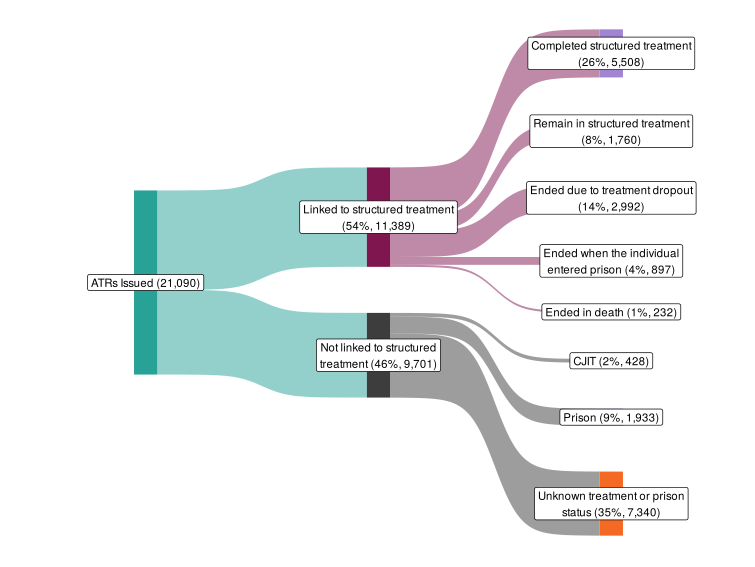
A Sankey diagram illustrating ATR flows into completion, dropout, remaining in treatment, prison contact and death, highlighting that 54% of ATRs were linked to structured treatment.
Figure 2 shows that 54% (11,389) of ATRs were linked to structured treatment at any time during the observation period.
For the linked structured treatment spells, more detailed reporting of treatment outcomes was possible. This showed:
-
26% of all ATRs (5,508, 48% of the linked ATRs) completed structured treatment.
-
8% of all ATRs (1,760, 15% of the linked ATRs) remained in structured treatment at end of the observation period.
-
14% of all ATRs (2,992, 26% of the linked ATRs) ended due to treatment dropout.
-
4% of all ATRs (897, 8% of the linked ATRs) ended when the individual entered prison.
-
1% of all ATRs (232, 2% of the linked ATRs) ended in death.
A total of 46% (9,701) of ATRs were not linked[footnote 8] to structured treatment. The outcomes for these were:
-
2% of all ATRs (428, 4% of the unlinked ATRs) in contact with CJIT.
-
9% of all ATRs (1,933, 20% of the unlinked ATRs) entered prison within 12 months of being sentenced to a CO or SSO with an ATR; these individuals may have accessed treatment services in prison.
-
35% of all ATRs (7,340, 76% of the unlinked ATRs) were not linked to prison or CJIT contact.
For 44%[footnote 9] (9,273) of all ATRs, there was a lack of identification in any NDTMS treatment setting. This may reflect either limitations of the probabilistic data‑linkage process or a genuine absence of engagement with treatment.
Raw data can be found in the accompanying data tables (Table 2).
2.4 Probabilistic linkage to structured treatment and treatment outcomes for DRRs
In this section, treatment engagement outcomes for DRRs identified through probabilistic linkage are described. It shows how linked and unlinked DRRs were associated with completion, dropout, remaining in treatment, prison contact, and records not linked to treatment.
Figure 3: Treatment engagement outcomes for DRRs between sentencing and 31 March 2023
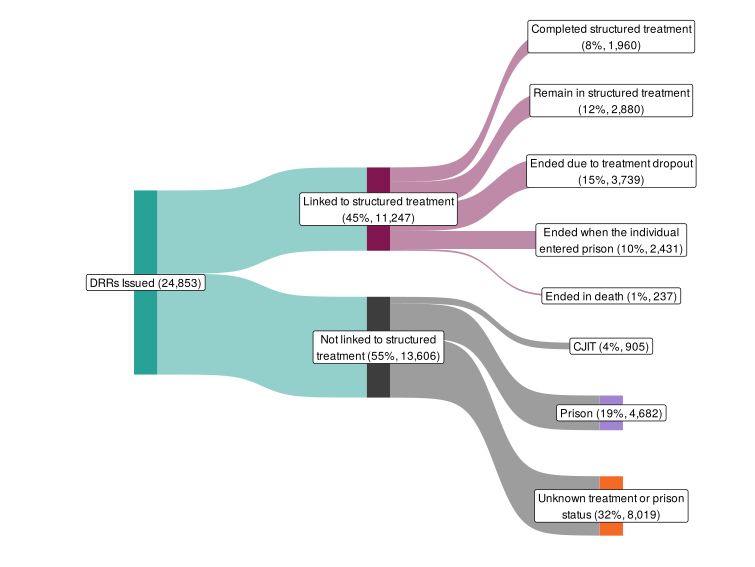
A Sankey diagram illustrating DRR flows into completion, dropout, remaining in treatment, prison contact and death, highlighting that 45% of DRs were linked to structured treatment.
Figure 3 shows that 45% (11,247) of DRRs were linked to structured treatment at any time in the observation period.
More detailed reporting of outcomes was possible for the linked structured treatment spells. This showed:
-
8% of all DRRs (1,960, 17% of the linked DRRs) completed structured treatment.
-
12% of all DRRs (2,880, 26% of the linked DRRs) remained in structured treatment at end of the observation period.
-
15% of all DRRs (3,739, 33% of the linked DRRs) ended due to treatment dropout.
-
10% of all DRRs (2,431, 22% of the linked DRRs) ended when the individual entered prison.
-
1% of all DRRs (237, 2% of the linked DRRs) ended in death.
Of the 55% (13,606) of DRRs[footnote 10] not linked to structured treatment, the outcomes were:
-
4% of all DRRs (905, 7% of the unlinked DRRs) in contact with CJIT.
-
19% of all DRRs (4,682, 34% of the unlinked DRRs) entered prison within 12 months of being sentenced to a CO or SSO with a DRR; these individuals may have accessed treatment services in prison.
-
32% of all DRRs (8,019, 59% of the unlinked DRRs) were not linked to prison or CJIT contact.
For 51%[footnote 11] (12,701) of all DRRs, there was a lack of identification in any NDTMS treatment setting. This may reflect either limitations of the probabilistic data‑linkage process or a genuine absence of engagement with treatment.
Raw data can be found in the accompanying data tables (Table 2).
2.5 Probation contact note analysis
In this section, evidence of treatment engagement identified through analysis of probation contact notes is described. It offers additional insight into cases not linked to structured treatment through probabilistic methods.
Probation contact notes for 5,271 ATRs or DRRs that were not linked to structured treatment were analysed using NLP. This was to identify whether they had reported to a probation practitioner that they had engaged with treatment. In contrast to the data linking, this includes all treatment, not only structured treatment.
Figure 4: Records without linked structured treatment where probation case notes contain evidence of engagement
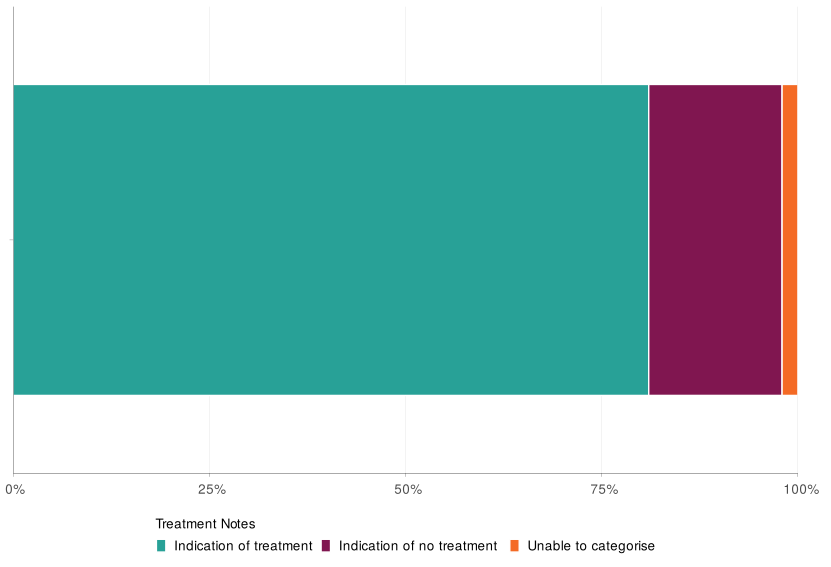
A bar chart showing that 81% of unlinked ATR/DRR records in the NLP sample had contact‑note evidence of engagement, while 17% showed no engagement and 2% had no relevant notes.
As seen in figure 4, of the analysed sample of ATRs and DRRs not linked to structured treatment:[footnote 12]
-
81% (4,282) had at least one contact note that indicated that they accessed drug or alcohol treatment at some point during their sentence.
-
17% (877) had no contact notes indicating engagement. These notes either explicitly stated non-engagement or lacked evidence of engagement, even when keywords related to treatment were present.
-
2% (112) had no contact notes which matched the keywords or phrases used to identify engagement, or lack of engagement, in treatment (see section 2.7.1 of methodology document).
This suggests that the match rate determined using probabilistic linkage underestimates the number of people who access treatment as part of their sentence.
Raw data can be found in the accompanying data tables (Table 3).
2.6 Probation contact note engagement analysis
This analysis examined the relationship between recorded treatment engagement and the termination reason for ATRs and DRRs.
For each requirement, all probation contact notes from the twelve‑week period before the termination date were analysed.
Table 1 shows the number of requirements per nDelius requirement termination reason.
Table 1: Requirements per nDelius requirement termination reason[footnote 13]
| Requirement termination reason | Number of requirements | Percentage of total |
|---|---|---|
| Completed | 2,085 | 46% |
| Revoked | 1,252 | 27% |
| Suspended Sentence Activated | 553 | 12% |
The analysis found that of 4,568 requirements, almost half (46%) of requirements were completed. Just over a quarter (27%) were revoked and 12% ended due to the activation of a suspended sentence.
Engagement levels were analysed for each requirement in nDelius with all termination reasons. Figure 5 displays findings for those that ended due to completion, revocation, or activation of a suspended sentence.
As engagement[footnote 14] rates for ATRs and DRRs were similar – typically differing by no more than ±0.1% – the results are presented in aggregate rather than separated by requirement type.
Figure 5: Percentage of contact notes indicating engagement with treatment services, by nDelius requirement termination reason[footnote 15]
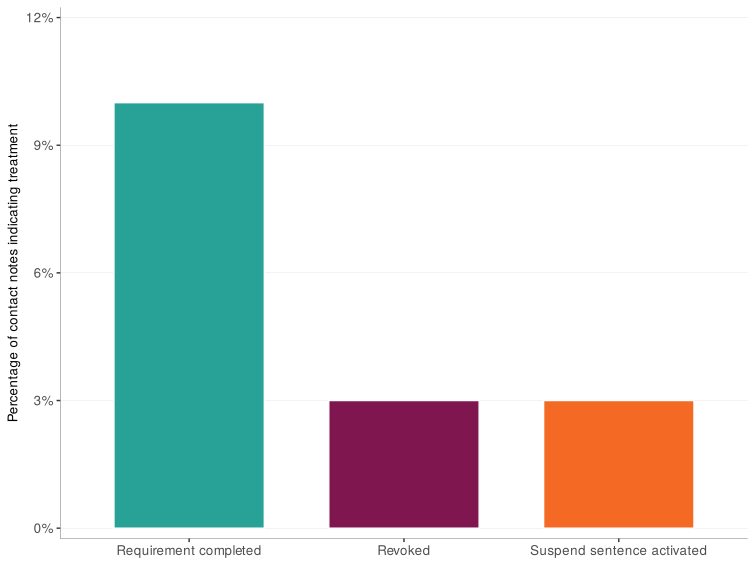
A column chart showing the percentages of contact notes that indicated engagement with treatment is higher for requirements ending in completion than those ending by being revoked having suspended sentence activated.
Figure 5 shows that successfully completed requirements had a higher mean engagement rate (10%) in the twelve weeks leading up to termination. In contrast, requirements that were revoked (3%) or ended due to an activation of a suspended sentence (3%) showed lower levels of recorded engagement during the same period.
This pattern aligns with established expectations: individuals who engage more consistently with treatment are more likely to comply with their requirements and make progress, which increases the likelihood of successful completion. Lower engagement rates, on the other hand, often indicate wider challenges such as instability, non-compliance, or difficulty maintaining participation in treatment. These factors are commonly linked to poorer outcomes.
These findings should be interpreted considering the NLP‑based method used to identify treatment engagement. Contact note data may be affected by differences in how practitioners record information, as well as the performance of the NLP model. However, the association between engagement and outcomes supports the validity of the engagement measure.
Lower levels of recorded engagement should not always be interpreted as an individual choosing not to engage. Operational and contextual factors, such as delays in referrals, capacity constraints in local treatment services, or difficulties accessing suitable provision, can all contribute to lower recorded engagement in probation contact notes. These factors should be considered when interpreting differences in engagement between requirements that were completed, revoked, or ended due to suspended sentence activation. A broader discussion of factors influencing access to treatment is provided in Section 3.7.
Raw data can be found in the accompanying data tables (Table 4).
3. Detailed analysis of ATRs and DRRs linked to structured treatment
The findings in sections 3 and 4 are based on probabilistically linked probation (nDelius) and treatment (NDTMS) data. To note, all findings in this section are descriptive associations and should not be interpreted as evidence of causal relationships.
Based on the contact note analysis, the data linked using probabilistic methods likely underestimated the true figures. The values presented in Section 3 should therefore be regarded as a lower bound as the actual numbers are likely higher.
Although the reported values may have fallen below the true percentages due to data limitations, it would be reasonable to assume that any underestimation is applied consistently across all groups. Consequently, while the absolute figures may be understated, the differences observed between groups are likely to represent genuine patterns.
3.1 Factors and characteristics associated with linkage to structured treatment
This section outlines the factors and characteristics associated with records being linked to structured treatment. These are based on a multilevel logistic regression model used to identify statistically significant associations.
A multilevel logistic regression model was developed to identify factors and characteristics associated with records linked to structured treatment following an ATR or DRR. Multilevel logistic regressions are used to assess statistically significant associations between different factors and the outcome they influence. Detailed findings including adjusted odds ratios and confidence intervals associated with factors can be found in the accompanying data tables: Tables 16 (ATR) and 17 (DRR). The findings are specific to this analysis and should not be interpreted as causal or generalisable. Further details of the multilevel logistic regression process can be found in the section 2.8 of the methodology document.
The results indicated that several variables were associated with being linked to structured treatment following an ATR or DRR:
-
being female
-
being over 50
-
having a low risk of serious recidivism[footnote 16]
-
being based in London
-
not being convicted of theft offences
-
being of Asian or Mixed ethnic background
-
being in settled accommodation
-
having a longer ATR or DRR requirement length
-
having an ATR (rather than DRR)
-
being convicted in a Crown Court (rather than Magistrates Court)
3.2 Linkage to structured treatment by region
This section presents regional variation in the linkage of ATRs and DRRs to structured treatment. It shows how linkage rates differed across probation regions in England.
The 11 probation regions in England were used for regional level analysis: South West; South Central; Kent, Surrey and Sussex; Greater London; East of England; West Midlands; East Midlands; Greater Manchester; Yorkshire and the Humber; North West; and North East.
For further information about probation regions see the probation delivery unit map.
Linkage to structured treatment was higher for ATRs than DRRs across all regions except South Central, where DRRs had a slightly higher linkage rate (45%) than ATRs (43%).
Figure 6: ATRs linked to structured treatment, by probation region
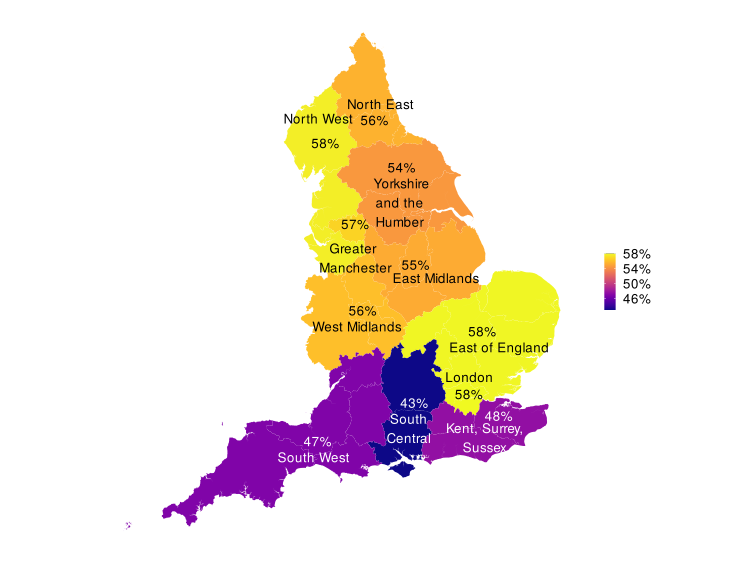
A map showing ATR linkage to structured treatment by region, highest in London, North West, and East of England, and lowest in southern regions such as South Central and South West.
As shown in figure 6, ATRs in the North West, East of England, and London (58%) were most commonly linked to treatment. In contrast, ATRs in southern regions were linked to structured treatment less often, with fewer than half linked in South Central (43%), the South West (47%), and Kent, Surrey and Sussex (48%).
Raw data can be found in the accompanying data tables (Table 5).
Figure 7: DRRs linked to structured treatment, by probation region
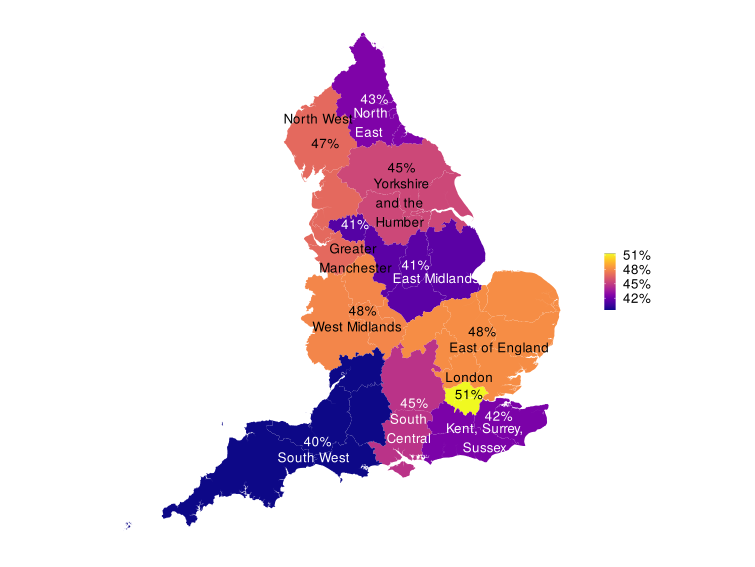
A map showing DRR linkage by region, with London having the highest linkage and the South West the lowest.
As shown in figure 7, London was the only region where around half of DRRs were linked to structured treatment (51%). In contrast, DRRs in the South West were least often linked to structured treatment (40%).
Raw data can be found in the accompanying data tables (Table 5).
3.3 Accommodation status for ATRs and DRRs linked to structured treatment
This section describes the relationship between accommodation status at sentencing, as recorded in the probation case management system, nDelius, and the likelihood of being linked to structured treatment. It highlights the differences between settled and unsettled living situations.
Figure 8: ATRs and DRRs linked to structured treatment, by accommodation status [footnote 17]
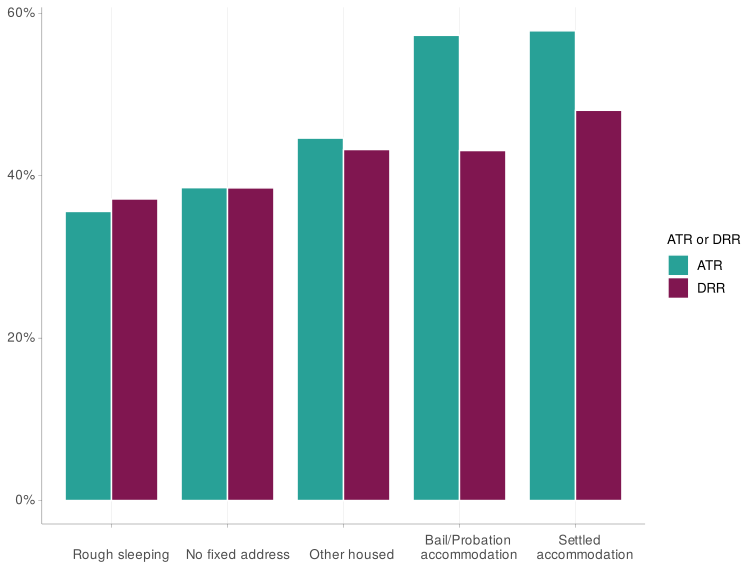
A column chart showing that people in settled accommodation have higher linkage to structured treatment than those rough sleeping or of no fixed address
As shown in figure 8, ATRs and DRRs in settled accommodation were most commonly linked to structured treatment (58% of ATRs and 48% of DRRs). Those linked to homelessness were least often linked to structured treatment. The findings show:
-
36% of ATRs and 37% of DRRs reported as rough sleeping were linked to structured treatment.
-
Similar percentages of ATRs and DRRs (38%) reported as no fixed address were linked to structured treatment.
Raw data can be found in the accompanying data tables (Table 6).
3.4 ATRs and DRRs linked to structured treatment, by requirement length
This section examines linkage to structured treatment by the length of ATR or DRR requirements. It illustrates how linkage patterns can vary across different requirement durations.
Figure 9: ATRs and DRRs linked to structured treatment, by requirement length
Figure 9 shows the percentage of ATRs and DRRs linked to structured treatment and their requirement length bands.
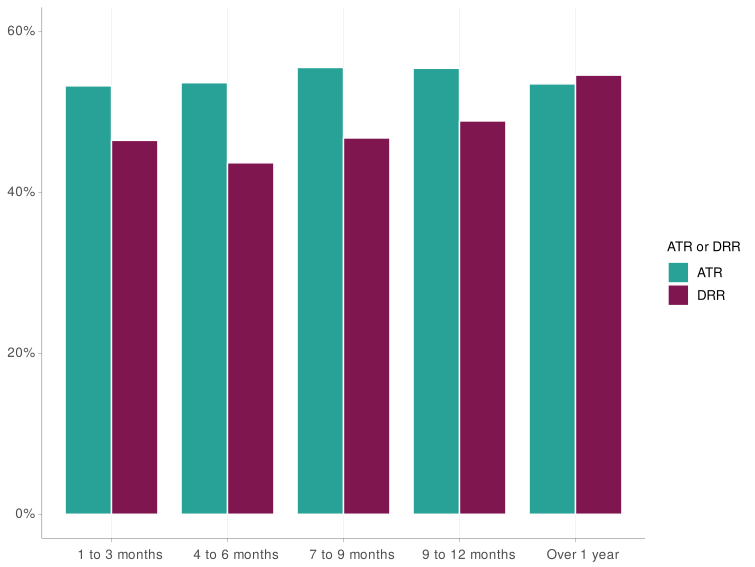
A column chart showing that ATR linkage is stable across requirement lengths, while DRR linkage is lowest at 4–6 months and highest over 12 months.
For ATRs, the proportion linked to structured treatment was similar across all requirement lengths, ranging from 53% to 56%. This suggests that the duration of the requirement did not have a strong influence on whether people with an ATR accessed structured treatment.
For DRRs, linkage to structured treatment varied more by requirement length:
-
requirements lasting over 12 months had the highest linkage rate (55%, 179).
-
requirements lasting 4 to 6 months had the lowest linkage rate (44%, 6,507). As most DRRs fall within the 4- to 6-month band, this lower rate has a meaningful effect on the overall DRR pattern.
Estimates for requirements over 12 months should be interpreted with caution due to small sample sizes.
Raw data can be found in the accompanying data tables (Table 7).
3.5 Time to access structured treatment after sentencing
This section presents the time taken to access structured treatment after sentencing. It shows how quickly individuals began treatment and how engagement accumulated over key time periods.
Figure 10: Cumulative time to access structured treatment after sentencing, for ATRs and DRRs linked to structured treatment
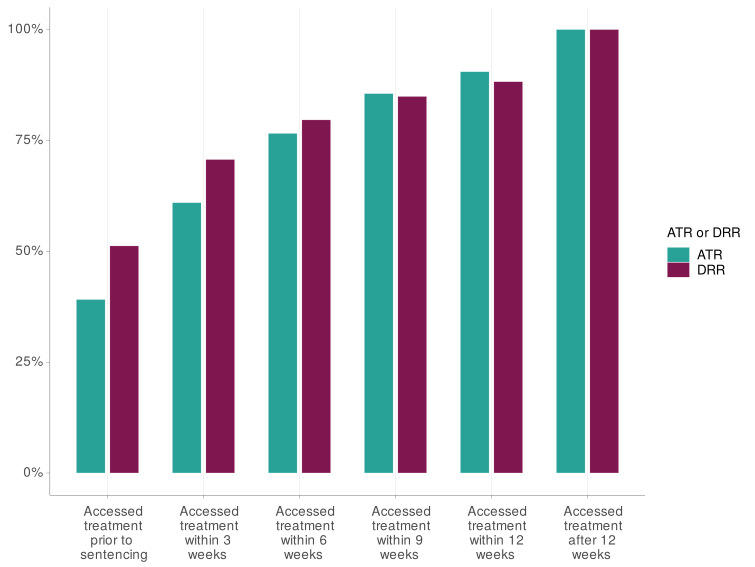
A cumulative column chart showing time to access structured treatment where DRRs are more likely already in treatment at sentencing. Both ATRs and DRRs show around 90% having accessed treatment within 12 weeks of sentencing.
Data in figure 10 shows cumulative percentages for each period including those who accessed treatment in shorter timeframes. For example, “Accessed treatment within 6 weeks” includes those in treatment before sentencing (“Already in treatment”) and those accessing treatment within 3 weeks.
Of the 11,389 ATRs linked to structured treatment:
-
39% (4,456) had already commenced prior to the sentencing date.
-
61% (6,942) had commenced within 3 weeks of sentencing.
-
76% (8,722) commenced within 6 weeks of sentencing.
-
90% (10,306) had commenced within 12 weeks of sentencing.
For ATRs not already linked to structured treatment on the sentence date, the average (mean) time to first engagement was 48 days.
Of the 11,247 DRRs linked to structured treatment:
-
51% (5,759) had already commenced prior to the sentencing date.
-
71% (7,951) had commenced within 3 weeks of sentencing.
-
80% (8,955) commenced within 6 weeks of sentencing.
-
88% (9,924) had commenced within 12 weeks of sentencing.
For DRRs not already linked to structured treatment on the sentence date, the average (mean) time to first engagement was 60 days.
Raw data can be found in the accompanying data tables (Table 8).
3.6 Treatment engagement status at the end of the observation period
This section focuses on ATRs and DRRs probabilistically linked to structured treatment, presenting three classifications of treatment engagement as of 31 March 2023:
-
completed structured treatment
-
dropped out of structured treatment
-
remain in structured treatment at the end of the observation period
A higher percentage of DRR records did not result in treatment completion, compared with ATR records.
As substance misuse treatment and recovery is complex, remaining in structured treatment can be considered a positive step in a person’s recovery.
3.6.1 Structured treatment engagement status at end of observation period, by age band
This section summarises differences in treatment engagement outcomes by age band.
Figure 11: Structured treatment engagement status on 31 March 2023 for ATRs, by age band
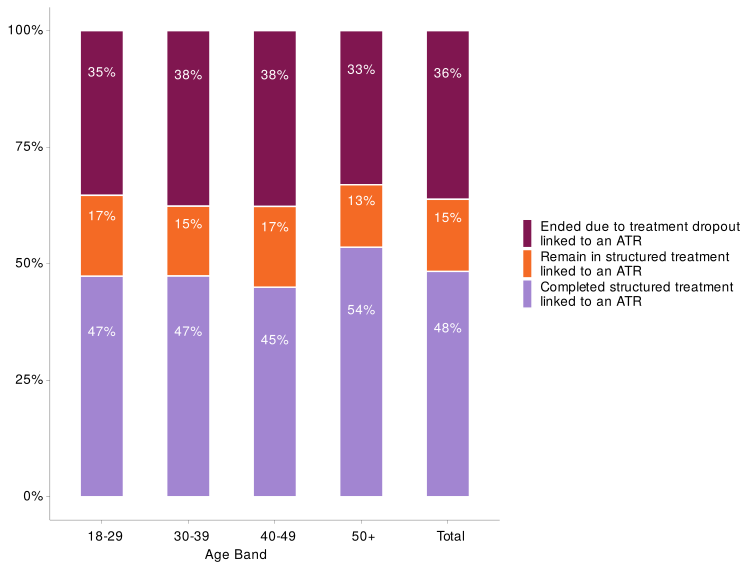
A column chart showing ATR recipients aged 50+ have the highest completion and lowest dropout, with younger groups showing lower completion and higher dropout rates.
Figure 11 shows the treatment status on 31 March 2023 for ATRs that were linked to structured treatment by age band. It shows:
-
54% of treatments linked to an ATR with recipients aged 50+ were completed. This was higher than in any other age groups, which were all less than 50%.
-
38% of treatment linked to an ATR with recipients aged 30 to 49 ended in treatment dropout. The lowest treatment dropout rate was among those aged 50+ (33%).
-
treatment linked to an ATR for those aged 50+ were least likely to remain in structured treatment (13%); those linked to recipients in other age groups were between 15% and 17%.
Raw data can be found in the accompanying data tables (Table 9).
Figure 12: Structured treatment engagement status on 31 March 2023 for DRRs, by age band
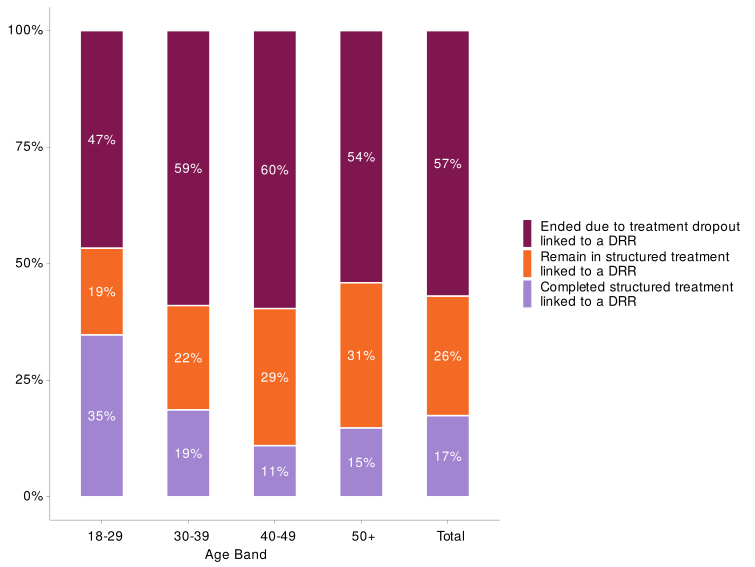
A column chart showing DRR completion highest among 18–29‑year‑olds, and all age bands above age 30 have few completions and more dropouts
Figure 12 shows the treatment status on 31 March 2023 for DRRs that were linked to structured treatment. It shows:
-
35% of treatment linked to a DRR with recipients aged 18 to 29 were completed. This was higher than in any other age groups, which ranged from 11% to 19%.
-
more than half of treatment linked to a DRR with recipients aged 30+ ended in treatment dropout. The highest percentage was among those aged 40 to 49, with 60% dropping out; the lowest treatment dropout rate was among those aged 18 to 29 (47%).
-
treatment linked to a DRR for recipients aged 18 to 29 were least likely to remain in structured treatment (19%); those linked to recipients aged 50+ were most likely to remain (31%).
Raw data can be found in the accompanying data tables (Table 9).
3.6.2 Structured treatment engagement status at end of observation period, by sex
This section summarises treatment engagement outcomes by sex.
Almost 80% of ATRs and DRRs between August 2018 and March 2023 were given to males. ATRs and DRRs given to females were more likely than those given to males to be linked to structured treatment following sentencing.
The following results only include records with a sex recorded.
Figure 13: Structured treatment engagement status on 31 March 2023 for ATRs, by sex
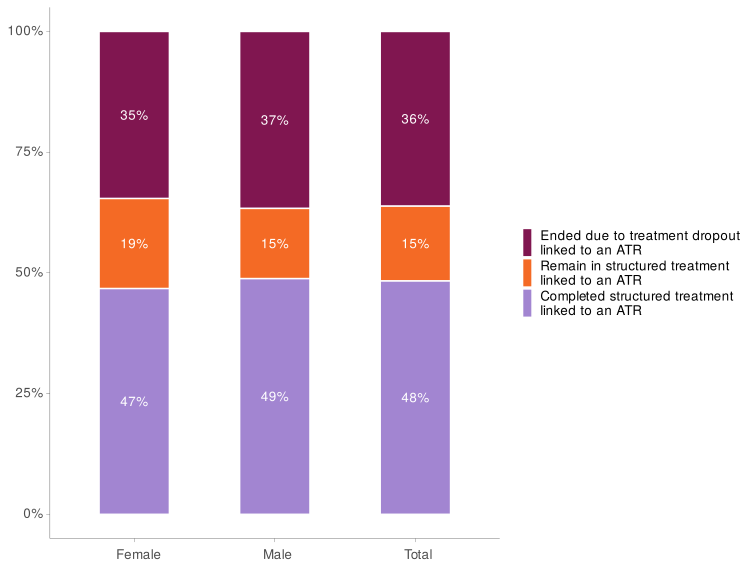
A column chart showing males are slightly more likely to complete ATR treatment but also slightly more likely to drop out, while females remain in treatment more often.
Figure 13 shows the treatment status on 31 March 2023 for ATRs that were linked to structured treatment. It shows:
-
structured treatment linked to an ATR for males was more likely to be completed (49%) than females (47%).
-
dropping out of structured treatment linked to an ATR for males was more likely (37%) than females (35%).
-
remaining in structured treatment linked to an ATR for males was less likely (15%) than females (19%).
Raw data can be found in the accompanying data tables (Table 10).
Figure 14: Structured treatment engagement status on 31 March 2023 for DRRs, by sex
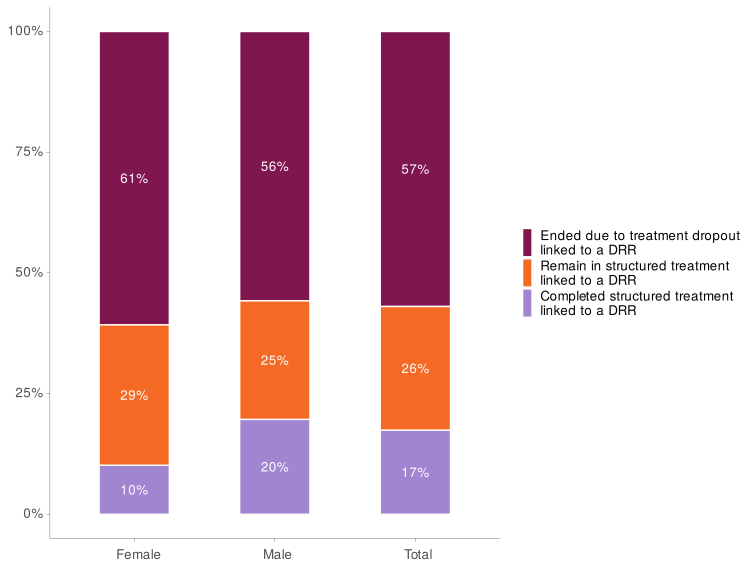
A column chart showing males more likely to complete DRR treatment, while females more often remain in treatment; dropout rates are over 55% for both sexes.
Figure 14 shows the treatment status on 31 March 2023 for DRRs that were linked to structured treatment. It shows:
-
structured treatment linked to an DRR for males was more likely to be completed (20%) than females (10%).
-
dropping out of structured treatment linked to an DRR for males was less likely (56%) than females (61%).
-
remaining in structured treatment linked to an DRR for males was less likely (25%) than females (29%).
Raw data can be found in the accompanying data tables (Table 10).
3.7 Treatment outcomes for ATRs and DRRs linked to structured treatment based on time to engage with treatment
This section explores treatment status at the end of the observation period, by time taken to engage with treatment after sentencing.
The time it takes to access treatment services is made up from many factors, not just the motivation of the offender but, for example, availability of suitable treatment services.
Figure 15: ATR treatment engagement status on 31 March 2023, by time to engage with structured treatment at or after sentencing
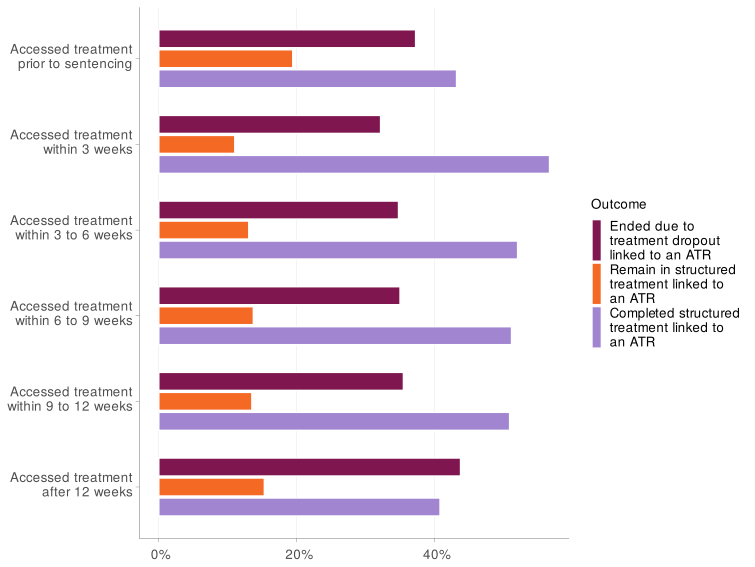
A bar chart showing ATR completion highest for those engaging within 3 weeks of sentencing and dropout increasing with later engagement.
Figure 15 shows the time to engage in treatment at or after sentencing and engagement outcomes on 31 March 2023 for treatment spells linked to ATRs. It shows:
-
treatment spells that began within 3 weeks of sentencing had the highest treatment completion rate (57%).
-
across all engagement time bands, between 11% and 15% of structured treatment spells linked to ATRs remained in structured at the end of the observation period; this rose to 19% for spells that were already linked to treatment at sentencing.
-
the percentage of linked structured treatment spells ending in dropout increased with time taken to engage, rising from 32% where treatment started within 3 weeks to 44% where treatment started more than 12 weeks.
Raw data can be found in the accompanying data tables (Table 11).
Figure 16: DRR treatment engagement status on 31 March 2023, by time to engage with structured treatment at or after sentencing
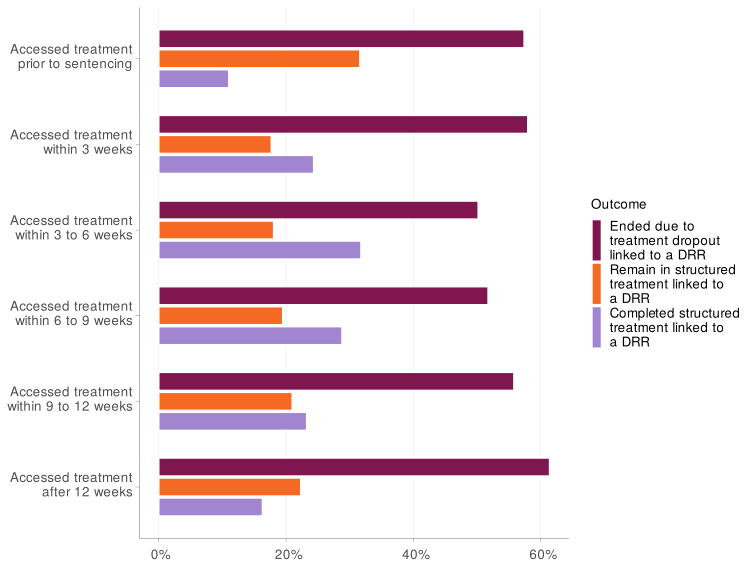
A bar chart showing DRR completion highest for those engaging 3–6 weeks after sentencing, while early‑linked cases most often remain in treatment.
Figure 16 shows the time to engage in treatment at or after sentencing and engagement outcomes on 31 March 2023 for treatment spells linked to DRRs. It shows:
-
treatment spells that began within 3 to 6 weeks of sentencing had the highest completion rate (32%).
-
treatment spells that began prior to sentencing were most likely to remain in structured treatment at the end of the observation period (32%).
-
for treatment spells that began after sentencing, the percentage remaining in treatment fell to between 18% and 22%, regardless of time to engage.
-
the percentage of treatment linked to a DRR that ended in treatment dropout was lowest for those accessing treatment within 3 to 6 weeks after sentencing (50%). This percentage increased with longer times to engagement, reaching 61% for spells that began more than 12 weeks after sentencing.
Raw data can be found in the accompanying data tables (Table 11).
4. Main findings: Reconvictions
This section considers the patterns between structured treatment outcomes and reconvictions. To note, all findings in this section are descriptive associations and should not be interpreted as evidence of causal relationships.
Reconvictions were identified using court data for subsequent court appearances within 12 months of sentencing, with an outcome other than “not guilty”. Further details of outcomes included can be found in section 2.9 of the methodology document. The reconviction analysis was based exclusively on the linked dataset, using NLP to determine reconvictions was beyond the scope of this report.
Reconviction findings in this report are limited by the process of linking court records to other datasets and the availability of data. Sentencing for certain offences, especially those heard at the Crown Court, can take longer than the available follow up period. This means reconvictions may not be fully captured, and the reported proportions represent a minimum estimate. It would be reasonable to assume that any underestimation applies consistently across all groups. Therefore, although the absolute figures may be understated, the observed differences between groups are likely genuine.
Reconviction data was linked to a particular ATR or DRR record in the dataset. It was not possible to determine if the reconviction was for the same type of offence that led to the ATR or DRR, or a different type of offence. For example, the original offence may have been classed as theft, but it was not possible to determine if any reconvictions were also for theft offences.
4.1 Identified reconvictions for ATRs and DRRs
This section presents reconviction outcomes for ATRs and DRRs. These are based on court records linked to the dataset, showing how reconvictions differed depending on whether individuals were identified in structured treatment.
Figure 17: Identified reconvictions on 31 March 2023 for ATRs
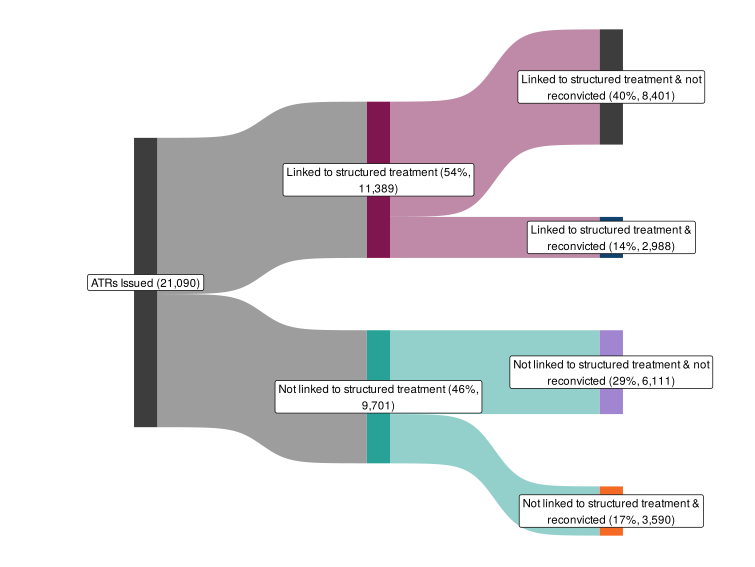
A Sankey diagram showing ATR reconviction flows; linked‑treatment cases mostly avoid reconviction, while unlinked cases show higher reconviction likelihood.
Figure 17 shows reconviction outcomes for the 21,090 ATR records, grouped by structured treatment linkage.
Overall, 31% of ATRs had a reconviction within 12 months, and 69% did not.
For ATRs that were linked to structured treatment:
-
40% of all ATRs (8,401, 74% of all linked ATRs) were not associated with a reconviction within 12 months of sentencing.
-
14% of all ATRs (2,988, 26% of all linked ATRs) were associated with a reconviction within 12 months of sentencing.
For ATRs that were not linked to structured treatment:
-
29% of all ATRs (6,111, 63% of all unlinked ATRs) were associated with a reconviction within 12 months of sentencing.
-
17% of all ATRs (3,590, 37% of all unlinked ATRs) were not associated with a reconviction within 12 months of sentencing.
Raw data can be found in the accompanying data tables (Table 12).
Figure 18: Identified reconvictions on 31 March 2023 for DRRs
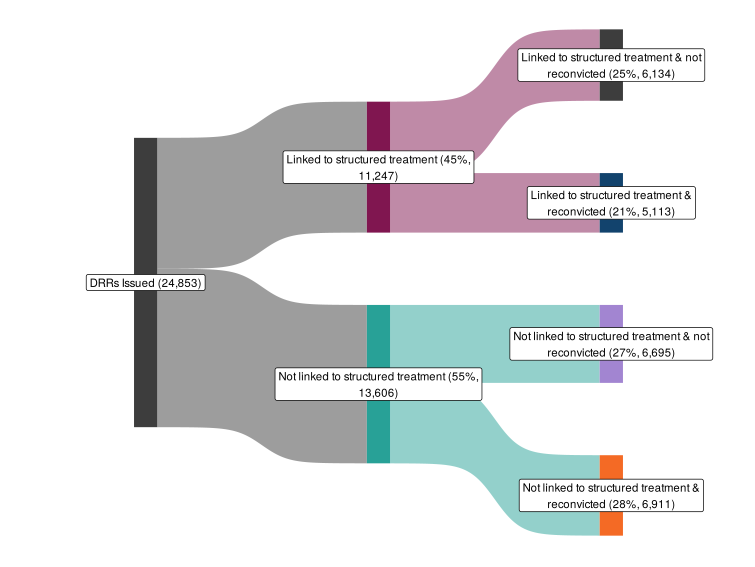
A Sankey diagram showing DRR reconviction flows; linked DRRs split more evenly, while unlinked DRRs show high reconviction, highlighting higher baseline DRR risk.
Figure 18 shows reconviction outcomes for the 24,853 DRR records, grouped by structured treatment linkage.
Overall, 48% of DRRs were reconvicted within 12 months, and 52% were not reconvicted.[footnote 18]
For DRR records that were linked to structured treatment:
-
25% of all DRRs (6,134, 55% of all linked DRRs) were not associated with a reconviction within 12 months of sentencing.
-
21% of all DRRs (5,113, 45% of all linked DRRs) were associated with a reconviction within 12 months of sentencing.
For DRR records that were not linked to structured treatment:
-
28% of all DRRs (6,911, 51% of all unlinked DRRs) were not associated with a reconviction within 12 months of sentencing.
-
27% of all DRRs (6,695, 49% of all unlinked DRRs) were associated with a reconviction within 12 months of sentencing.
Raw data can be found in the accompanying data tables (Table 12).
4.2 Factors and characteristics associated with being reconvicted after an ATR or DRR
This section outlines the factors and characteristics associated with reconvictions following an ATR or DRR. It draws on a multilevel logistic regression model to identify variables linked to increased likelihood of reconviction.
A multilevel logistic regression model was developed to identify factors and characteristics associated with records of reconvictions following an ATR or DRR. Detailed findings including adjusted odds ratios and confidence intervals associated with factors identified can be found in the accompanying data tables: Tables 18 (ATR) and 19 (DRR). The findings are specific to this analysis and should not be interpreted as causal or generalisable. For further details of the multilevel logistic regression, please refer to the section 2.8 of the methodology document.
The results indicate that several variables were associated with increased reconvictions after an ATR or DRR:
-
not being linked to structured treatment or dropping out of structured treatment
-
being male
-
having a high or medium Risk of Serious Recidivism[footnote 19]
-
being convicted of theft offences (in initial sentence including ATR or DRR)
-
having a longer ATR or DRR length
-
being based in London (DRR only)
-
not being in settled accommodation
-
being Black (ATR only)
-
having a DRR (rather than an ATR)
4.3 Identified reconvictions for ATRs and DRRs, by region
This section describes regional variation in reconvictions. It highlights how the proportion of ATRs and DRRs associated with a reconviction within 12 months differed across probation regions.
The 11 probation regions in England were used for regional level analysis: South West; South Central; Kent, Surrey and Sussex; Greater London; East of England; West Midlands; East Midlands; Greater Manchester; Yorkshire and the Humber; North West; and North East.
For further information about probation regions see the probation delivery unit map.
Figure 19: Identified reconvictions on 31 March 2023 for ATRs, by region
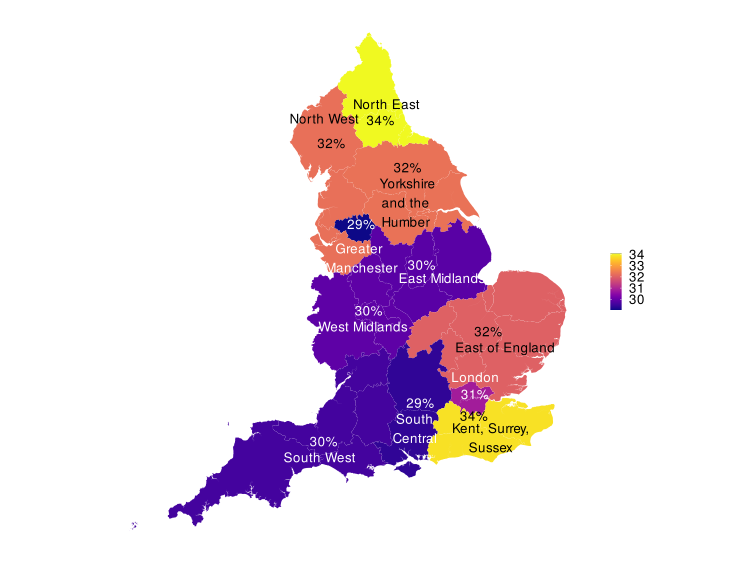
A map showing ATR reconviction rates vary slightly by region, from 29% to 34%, with South Central and Greater Manchester lowest and North East highest.
Figure 19 shows a 5 percentage point variation in the percentage of ATRs that were associated with a reconviction within 12 months across regions. This ranged from 29% in South Central and Greater Manchester to 34% in Kent, Surrey, and Sussex and the North East.
Raw data can be found in the accompanying data tables (Table 13).
Figure 20: Identified reconvictions on 31 March 2023 for DRRs, by region
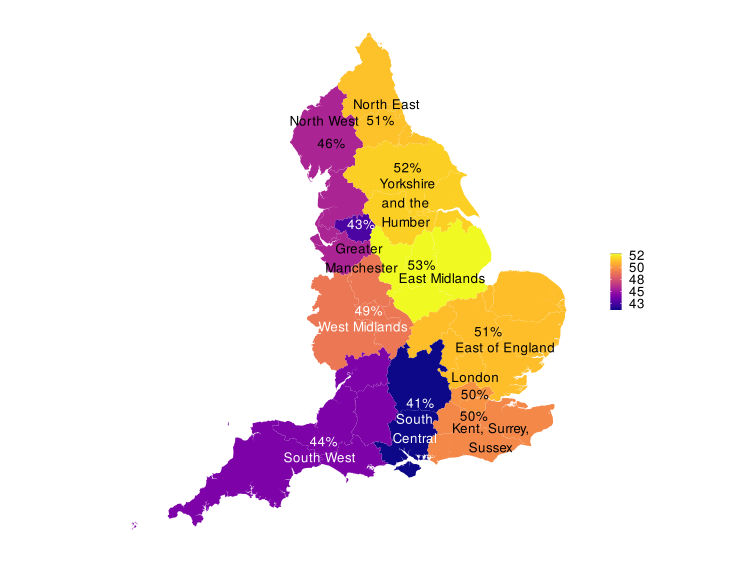
A map showing DRR reconviction rates differ by region, with western regions below 50% and eastern regions above, highest in the East Midlands and lowest in South Central.
Figure 20 shows that DRR records in regions in the West[footnote 20] were less commonly linked to reconvictions within 12 months (less than 50%) than regions in the East[footnote 21] (more than 50%). In the East Midlands, 53% of DRR records were associated with a reconviction within 12 months, compared with 41% in South Central.
Raw data can be found in the accompanying data tables (Table 13).
4.4 Identified reconvictions, by requirement length
In this section, reconvictions are examined by requirement length. It shows how the duration of ATRs and DRRs was associated with differences in the likelihood of reconviction within 12 months.
Figure 21: Identified reconvictions, by requirement length
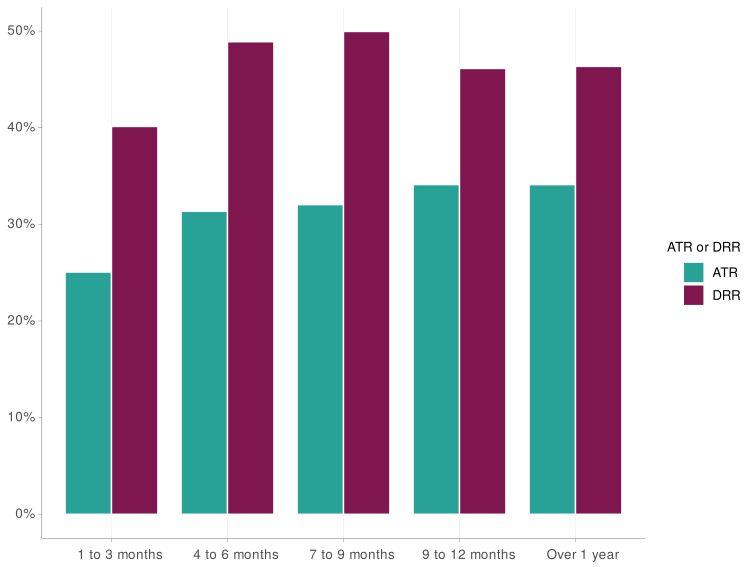
A column chart showing ATR reconvictions rise with requirement length, while DRRs remain consistently high across lengths, peaking at 7–9 months.
Figure 21 shows reconvictions for ATRs and DRRs by requirement length.
For ATRs, the percentage of records associated with a reconviction within 12 months increased as the requirement length increased. It rose from 25% for requirements between 1 and 3 months to 34% for those over a year.
For DRRs:
-
among those with requirement lengths between 1 and 3 months, 40% were associated with a reconviction within 12 months.
-
for requirement lengths over 4 months, the percentage of records associated with a reconviction within 12 months was broadly similar, reaching 50% for DRRs lasting 7 to 9 months.
Estimates for requirements over 12 months should be interpreted with caution due to small sample sizes.
Raw data can be found in the accompanying data tables (Table 14).
4.5 Identified reconvictions, by structured treatment engagement status
This section compares reconvictions across different structured treatment engagement statuses. It illustrates how outcomes varied between individuals who completed treatment, remained in treatment, dropped out, or were not identified in treatment.
Figure 22: Identified reconvictions, by structured treatment engagement status on 31 March 2023

A column chart showing reconvictions lowest for individuals who completed or remained in structured treatment, higher for those with no treatment identified, and highest for those who dropped out.
Figure 22 shows reconvictions for ATRs and DRRs by level of engagement in structured treatment.
Overall, reconvictions were notably lower for ATRs and DRRs that were linked to structured treatment and either remained in structured treatment at the end of the observation period or completed structured treatment.
For ATRs:
-
among those that remained in structured treatment at the end of the period, 13% were associated with a reconviction within 12 months.
-
among those that completed structured treatment, 19% were associated with a reconviction within 12 months.
-
among those not linked to structured treatment, 37% were associated with a reconviction within 12 months.
-
among those that ended in treatment dropout, 41% were associated with a reconviction within 12 months.
For DRRs:
-
among those that remained in structured treatment at the end of the period, 26% were associated with a reconviction within 12 months.
-
among those that completed structured treatment, 28% were associated with a reconviction within 12 months.
-
among those not linked to structured treatment, 51% were associated with a reconviction within 12 months.
-
among those that ended in treatment dropout, 60% were associated with a reconviction within 12 months.
Raw data can be found in the accompanying data tables (Table 15).
5. Conclusion
This report shows that up to 90% of people accessed some form of treatment after being sentenced to a CO or SSO with an ATR or DRR. Data linkage identified 49% of ATR or DRR records as linked to structured treatment, while analysis of probation contact notes using NLP suggested a further 41% of unlinked records showed evidence of some engagement with treatment services.
Contact note analysis showed that higher levels of recorded engagement with treatment services in the weeks before a requirement ended were associated with requirement completion than a revocation or suspended sentence activation.
The findings show clear associations between engagement with structured treatment and a range of individual characteristics and justice system factors. Reconviction outcomes were more favourable for ATR and DRR records that completed or remained in structured treatment at the end of the observation period, compared with cases where no treatment was identified or where treatment ended in dropout. Overall, this highlights the importance of sustained engagement.
A key strength of this report is its comprehensive coverage of all ATRs and DRRs recorded on the probation case management system (nDelius) in England between August 2018 and March 2023. The use of AI based NLP methods enhanced the conventional data linkage approach by identifying additional treatment engagement, strengthening the overall evidence base.
6. Suggested improvements
This section outlines areas for improvement identified during the project.
6.1 Completeness of Data
The completeness of the data used in this analysis is limited by the timing and availability of updates across the contributing administrative systems. Not all treatment starts or discharges will have been fully recorded within the period covered by this report meaning some outcomes, particularly late recorded treatment episodes, may not yet appear in the dataset.
The reconviction data is also likely to be incomplete due to delays in court processes, differences in how quickly offences are entered into court management systems, and the fact that only proven convictions (rather than cautions or warnings) are captured within the available follow-up period. These factors may lead to some reconvictions falling outside the observable window, especially for offences that take longer to progress through the courts.
Because these issues may affect some offence types or geographic areas more than others, users should interpret the findings with caution. Further detail on data quality considerations is provided in the section 2.2 of the methodology document.
6.2 Common identifier
Taking a longer-term view, health and justice systems could consider using a common unique identifier for individuals across databases, such as an individual’s NHS number. This would enable records to be more accurately linked in the future. This aligns with recommendations made in recent cross ‑government reviews, including the Chief Medical Officer (CMO) Review,[footnote 22] which highlight the importance of consistent identifiers such as NHS number.
6.3 Use of AI
The NLP model could be improved to look further into types and duration of treatment from the contact notes. A separate NLP model could be developed to look at reconvictions data.
7. Linked publications
This report presents treatment and reconviction outcomes for individuals sentenced to COs and SSOs with ATRs and DRRs. These findings are of interest across government, and the following recent reports provide further context and information.
7.1 The impact of being sentenced with a community sentence treatment requirement (CSTR) on proven reoffending
The report of the impact of being sentenced with a CSTR on proven reoffending (2024) concluded that among those who reoffended, those who received an ATR took longer to reoffend when compared to those who received a short custodial sentence (12.07 more days on average compared with those released from short custodial sentences). It also found that they were less likely to reoffend and receive a subsequent short custodial sentence (34%, compared with short custodial sentences (34% compared with 39%).
DRR recipients were also less likely than those released from short custodial sentences to reoffend and receive a custodial sentence (47%, compared with 53%). They were also convicted of fewer offences resulting in a custodial sentence (3.20 compared with 3.78).
7.2 Independent Sentencing Review
Section 2.3 of the independent sentencing review recommended increasing accessibility to CSTRs for people with substance misuse needs. Three priority areas were identified, including the need to identify the right people to refer to treatment at the earliest opportunity, increasing investing in treatment providers, and improving the accessibility and availability of treatment. The review further suggested that developing women’s specific pathways to address women’s needs will improve outcomes for women.
This report provides insight into how the probation and treatment systems respond to people issued with an ATR or DRR in line with section 177 of the Criminal Justice Act 2003. It focuses on the pathways into treatment in England.
7.3 Long-term outcomes of people treated for substance misuse in Wales
Partners in Public Health Wales and SAIL Databank have published pathways into treatment in Wales.
7.4 Policy Lab - Lived Experience Report
Research by Policy Lab, aiming to understand the lived experiences of people subject to ATRs and DRRs was commissioned in December 2022 by the MoJ and DHSC as part of the BOLD programme. It sought to explain why engagement rates with these requirements are low and to identify opportunities for improving outcomes. The data gathering involved interviews with 8 individuals currently under a treatment requirement and 17 practitioners.
The findings show significant geographic disparities in the delivery and quality of ATRs and DRRs, often described as a ‘postcode lottery’. Inconsistent national standards, resource constraints, and lack of collaboration between agencies were highlighted as key barriers. Many practitioners and people on probation called for more flexible, individualised approaches to ATRs and DRRs where success was measured by an individual’s progress to recovery rather than the course completion percentage. The study noted that awareness of ATRs and DRRs is low among both practitioners and those sentenced, and that improved communication could lead to major improvements in the system.
The research was undertaken on a small, selective sample with limited regional scope and a focus on individuals currently engaged with ATRs and DRRs. As such caution must be taken when interpreting the findings as representing the views of all. Overall, the report illustrated areas for improvement but highlighted widespread support for the expansion of ATRs and DRRs.
8. Glossary
ATR – Alcohol Treatment Requirement – a requirement attached to a Community Order or Suspended Sentence Order for people who are dependent on alcohol, need and can access treatment, and are willing to comply with it.
CJIT – Criminal Justice Intervention Teams – providers for unstructured drug and alcohol treatment. This is a subset of the main NDTMS dataset and is not structured treatment.
CO – Community Order – a type of sentence to be served in the community rather than in prison.
Common platform – MoJ management information system for holding courts data.
CSTR – Community Sentence Treatment Requirement – court‑ordered treatment requirements that allow people on community sentences to receive targeted support for mental health, drug, or alcohol issues. ATRs and DRRs are both types of CSTR.
Department of Health and Social Care (DHSC) – the government department that oversees health and care services.
DRR – Drug Rehabilitation Requirement – a requirement attached to a Community Order or Suspended Sentence Order for people who are dependent on drugs, need and can access treatment, and are willing to comply with it.
Dropped out of treatment – started structured treatment but treatment ended before completion.
End of observation period – either the discharge date from NDTMS or 31 March 2023, whichever is soonest.
Libra – legacy management information system for holding courts data.
Ministry of Justice (MoJ) – the government department that oversees the justice system.
nDelius – the probation service management information system.
NDTMS – National Drug Treatment Monitoring System – the national system used by DHSC/OHID to record structured drug and alcohol treatment in England. It contains multiple datasets (including community and secure setting treatment and CJIT data) and has been used in this report to identify when people were in structured treatment.
NLP – Natural Language Processing – a type of artificial intelligence (AI) that analyses written text so a computer can interpret meaning, context, and themes. In this report, NLP has been used to identify references to treatment.
OHID – Office for Health Improvement and Disparities (OHID) – unit within DHSC that aims to prevent ill health, reduce health disparities, and manages NDTMS.
p-NOMIS – Prison National Offender Management Information System - the prison service management information system.
Reconviction – being convicted of a further crime within 12 months of sentencing of a crime, identified using courts data as any subsequent court appearance with an outcome other than “not guilty”. This formed part of the outcomes data used in this report.
Remaining in treatment – still in medical treatment after the end of the observation period.
Requirement completed – once the minimum treatment period set by the court has been met.
Sentence – a punishment for a crime ordered by a trial court after conviction in a criminal procedure.
Structured treatment – structured treatment requires a comprehensive assessment of need and is delivered according to a recovery care plan. The plan sets out clear goals including change to substance use. All interventions must be delivered by competent staff, within appropriate supervision and clinical governance structures.
SSO – Suspended Sentence Order – a type of sentence to be served in the community rather than in prison.
Treatment completion – when a client no longer needs structured drug or alcohol treatment, and a clinician agrees that they have stopped using heroin, other opioids, crack cocaine, or alcohol. While there may be some use of other illegal drugs, it is not causing problems or requiring structured treatment.
Unstructured treatment – informal, flexible support for people with drug or alcohol issues, focusing on harm reduction, engagement, and practical help rather than planned therapeutic programmes. In this report, it refers specifically to support delivered by CJIT, which is only available to people involved in the Criminal Justice System.
Xhibit – legacy management information system for holding courts data.
9. Further information
Official Statistics
Statistical practice for these publications is regulated by the Office for Statistics Regulation (OSR). OSR sets the standards of trustworthiness, quality and value in the Code of Practice for Statistics that all producers of official statistics are expected to meet. Comments or queries about how these standards are met can be directed to the Ministry of Justice.
Alternatively, the Office for Statistics Regulation can be contacted by emailing regulation@statistics.gov.uk or through the OSR website.
10. Enquiries or feedback
These statistics could be useful to people who want to ensure that pathways between probation and treatment services are operating as intended.
If you have any enquiries or feedback about these statistics, email MoJ at bold@justice.gov.uk
-
Under contact note analysis, it is not possible to determine for how long or to what extent a person has engaged with treatment ↩
-
This refers to informal flexible support provided by CJIT, for people with drug or alcohol issues, focused on harm reduction, engagement, and practical help rather than planned therapeutic programmes. A fuller definition is provided in the glossary (Section 8). ↩
-
The MoJ typically measures reconvictions by tracking proven reoffending during a defined follow‑up period, using court convictions recorded in national criminal justice databases. This approach is different from the definition applied in this report. For this report, a reconviction was deemed to have occurred when an ATR or DRR record had a reoffence date recorded in the courts data within 12 months of the original sentence. ↩
-
81% of 51% not linked to structured treatment. ↩
-
85% of 46% not linked to structured treatment. ↩
-
79% of 55% not linked to structured treatment. ↩
-
As the NLP analysis shows, some of the unlinked records may have accessed treatment but not identified in the probabilistic linkage or may have not engaged with treatment at all. ↩
-
As the NLP analysis shows, some unlinked records may have accessed treatment but not have been identified in the probabilistic linkage or may have not engaged with treatment at all. ↩
-
This consists of 35% unknown treatment status but not identified in prison plus the 9% identified in prison. ↩
-
As the NLP analysis shows, some of the unlinked records may have accessed treatment but not identified in the probabilistic linkage or may have not engaged with treatment at all. ↩
-
The 32% unknown treatment status but not identified in prison plus the 19% identified in prison. ↩
-
These figures do not sum to 100% due to rounding. ↩
-
Requirement termination reasons of Expired (13%), Died (1%) and Other (1%) have not been shown in the table. ↩
-
Engagement rate refers to the proportion of contact notes recorded in the 12-week period before the requirement termination date that indicated an individual was engaging in treatment. Further detail is provided in section 2.7 of the methodology document. ↩
-
Requirement termination reasons of Expired (6%), Died (4%) and Other (3%) have not been shown in the graph. ↩
-
Recidivism (or proven re‑offending) in England refers to any confirmed offence that is committed within a one‑year follow‑up period after the initial offence and is proven in court. ↩
-
Accommodation status recorded as “Unknown” has been removed from this chart. 9% of ATRs and 10% of DRRs have an unknown accommodation status. ↩
-
Does not sum to 100% due to rounding ↩
-
Recidivism (or proven re‑offending) in England refers to any confirmed offence that is committed within a one‑year follow‑up period after the initial offence and is proven in court. ↩
-
The Western regions for this finding were: North West, Greater Manchester, West Midlands and South West. ↩
-
The Eastern regions for this finding were: North East, Yorkshire and the Humber, East Midlands, East of England and Kent, Surrey, and Sussex. ↩