Modern slavery: National Referral Mechanism and Duty to Notify statistics UK, year to June 2026
Published 24 September 2026

© Crown copyright 2026
This publication is licensed under the terms of the Open Government Licence v3.0 except where otherwise stated. To view this licence, visit nationalarchives.gov.uk/doc/open-government-licence/version/3 or write to the Information Policy Team, The National Archives, Kew, London TW9 4DU, or email: psi@nationalarchives.gov.uk.
Where we have identified any third party copyright information you will need to obtain permission from the copyright holders concerned.
This publication is available at https://www.gov.uk/government/statistics/modern-slavery-nrm-and-dtn-statistics-year-to-june-2026/modern-slavery-national-referral-mechanism-and-duty-to-notify-statistics-uk-year-to-june-2026
This statistical bulletin provides a summary and breakdown of the number of potential victims of modern slavery referred into the National Referral Mechanism (NRM) or via the Duty to Notify (DtN) system in the year ending (YE) June 2026.
Please refer to the data tables published alongside this bulletin for additional data. Raw data related to referrals from 2014 onwards is available from the UK Data Service. Future release dates for these statistics are published in the Government statistics release calendar.
Frequency of release: Quarterly.
Please note the release of these statistics has been delayed due to issues affecting the extraction of a robust and complete dataset. Please see the ‘Quality information’ section for more details.
Home Office Responsible Statistician: Stuart Prince
1. Key results
- a total of 25,373 potential victims of modern slavery were referred to the Home Office (HO) in the YE June 2026, representing a 5% increase compared with the YE March 2026 (24,108)
- this is the highest number of referrals received in a year since the NRM began
- 77% (19,622) of referrals were sent to the Single Competent Authority (SCA) and 23% (5,751) to the Immigration Enforcement Competent Authority (IECA)
- the most common nationalities referred were UK (22%; 5,548), Eritrean (13%; 3,220) and Somali (11%; 2,741)
- the YE June 2026 saw the highest total number of referrals reporting exploitation exclusively overseas since the NRM began (54%; 13,591)
- 23,573 reasonable grounds and 21,564 conclusive grounds decisions were issued; of these, 64% of reasonable grounds and 71% of conclusive grounds decisions were positive
- as of the end of June 2026, there were 5,656 cases which have been issued a positive reasonable grounds decision and are awaiting a conclusive grounds decision; this represents a 23% increase compared to the end of March 2026 (4,604 cases) and an 82% decrease compared to the end of December 2022 (31,022 cases)
- the average (median) age of cases awaiting a conclusive grounds decision following a positive reasonable grounds decision was 84 days at the end of June 2026, compared to 50 days at the end of March 2026 and 772 days at the peak at the end of June 2024
- the HO received 7,070 reports of adult potential victims via the DtN system in the YE June 2026
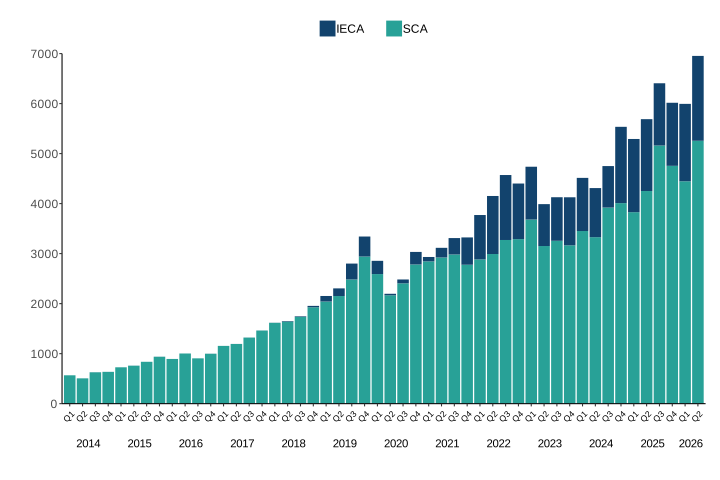
Figure 1: Number of quarterly NRM referrals by competent authority, 2014 to 2026
Source: SCA, IECA
Notes:
- Excludes data pre-2014 due to data reliability. The IECA took on new referrals from November 2021 onward.
2. Introduction
2.1 Modern slavery and the NRM
Modern slavery is a term that includes any form of human trafficking, slavery, servitude or forced labour, as set out in the Modern Slavery Act 2015. Potential victims of modern slavery in the UK who come to the attention of authorised first responder organisations are referred to the National Referral Mechanism (NRM).
Authorised first responder organisations include local authorities, specified non-governmental organisations (NGOs), police forces and specified government agencies. Adults (aged 18 or above) must consent to being referred to the NRM, whilst children aged 17 and under need not consent to being referred. Adults who were exploited as children can also be referred. As specified in section 52 of the Modern Slavery Act 2015, public authorities in England and Wales have a statutory duty to notify the Home Office (HO) when they encounter potential victims of modern slavery. This duty is discharged by either referring a child or consenting adult potential victim into the NRM, or by notifying the HO via the DtN process if an adult victim does not consent to enter the NRM.
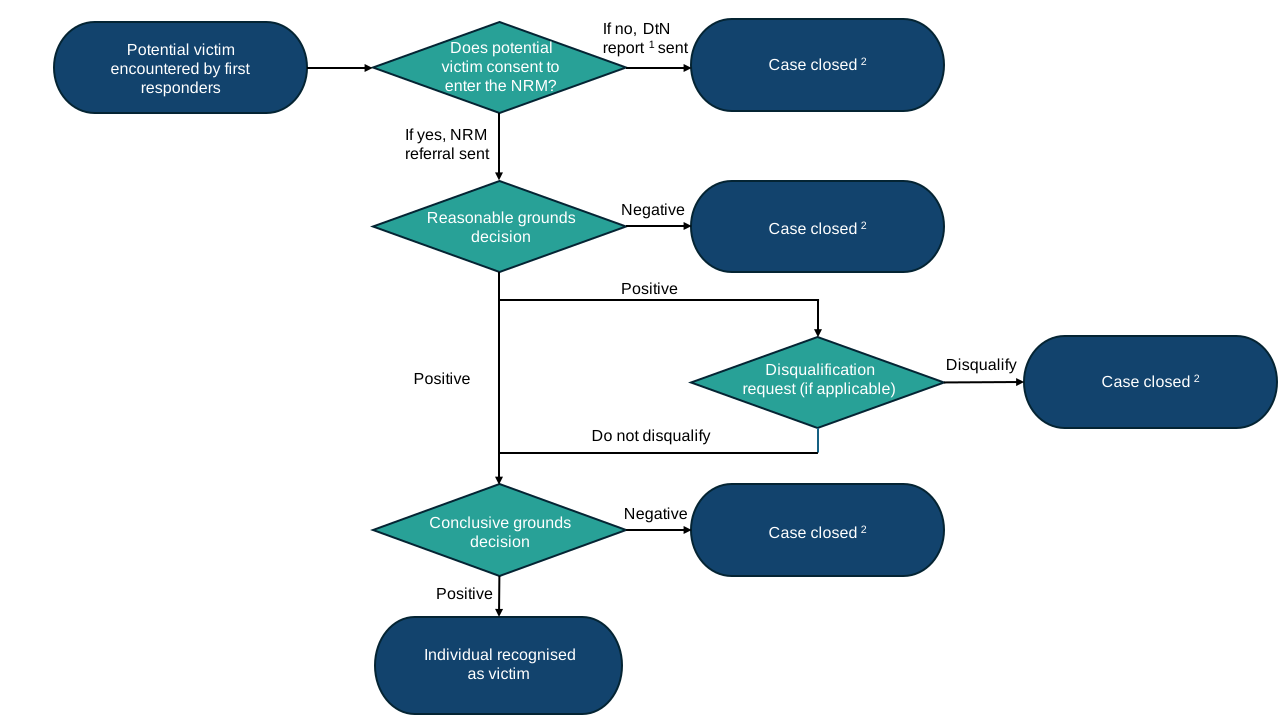
Individuals referred to the NRM may receive decisions from the HO on 2 grounds: reasonable grounds, and conclusive grounds (figure 2). Following a positive reasonable grounds decision, a conclusive grounds decision may be made. A positive conclusive grounds decision indicates that, on the balance of probabilities, there is sufficient information to consider the individual is a victim of modern slavery.
2.2 Changes to the reasonable grounds test
Before 30 January 2023, the reasonable grounds test asked whether the decision maker suspects but cannot prove that the individual is a victim of modern slavery. From 30 January 2023, that test was amended so the decision maker must agree there are reasonable grounds to believe, based on objective factors, that a person is a victim of modern slavery. From 10 July 2023 the test was further amended, the decision maker must now agree with the statement that there are “reasonable grounds to believe that a person is a victim of modern slavery”. This takes the victim’s account into consideration and any other relevant information, and considers whether, in the circumstances of the case, it is reasonable to expect supporting information to be available.
2.3 Introduction of disqualifications
From 30 January 2023, disqualification requests may be made for individuals if they are deemed to have met criteria for disqualification from the NRM. These criteria may be based on either grounds of public order or bad faith. Individuals may only be disqualified after they have received a positive reasonable grounds decision, and may be disqualified from the NRM system at any point thereafter. Public order disqualification decisions were paused from 31 July 2023 to 8 January 2024 while this policy was updated. Note that as of 23 December 2025, the HO has again paused decision making on public order disqualifications within the NRM until further notice. For more information, see the published guidance for modern slavery.
Figure 2: Victim identification flowchart (simplified)
Source: Home Office
Notes:
- The DtN is only open to adults in England and Wales (as opposed to the NRM which covers the UK). Consent is not needed for children to enter the NRM.
- Decisions may be reconsidered, which may mean some cases are reopened after being closed. See further information on the reasons for accepting reconsideration requests.
- Some cases may not follow this flowchart. For instance, some may be suspended, and others may be devolved pilot cases which can receive combined reasonable and conclusive grounds decisions. This pilot is explained further below.
2.4 Support for victims of modern slavery
Currently, adults with a positive reasonable grounds decision who are supported by the Modern Slavery Victim Care Contract (MSVCC) in England and Wales are entitled to accommodation where necessary, financial support and access to a support worker. Victims in MSVCC support with a positive conclusive grounds decision are entitled to a minimum of a further 45 days of support, whilst those with a negative decision receive 9 days of ‘move on’ support as they exit the service. Child victims referred into the NRM are supported through a range of support systems. This includes statutory local authority support and the Government-funded Independent Child Trafficking Guardian (ICTG) service, currently available in two-thirds of local authorities in England and Wales. See further information regarding the NRM process.
Trained specialists in the HO decide who is recognised as a victim of modern slavery. The Single Competent Authority (SCA) was launched in April 2019 and the Immigration Enforcement Competent Authority (IECA) was created in November 2021. Both competent authorities recognise victims of modern slavery for cases referred to the NRM across the UK. See further information regarding both competent authorities.
In June 2021, the HO launched a pilot programme across 10 local authority sites, to test alternative models of decision-making for child victims of modern slavery and human trafficking. To enable further testing, 10 additional pilot sites were launched in early 2023. A further 7 sites joined in 2025, and one established site was expanded to incorporate neighbouring local authorities. These latest sites went live in autumn 2025 and began making decisions from November 2025. The HO is working closely with local authorities and stakeholders to monitor the pilot and continues to assess next steps. Decisions made by pilot areas, which are issued by the SCA, are included in the data used for this bulletin. An annex published in November 2025 details the devolved decision-making pilot for children for the year October 2024 to September 2025. See further information regarding the pilots.
3. National Referral Mechanism (referrals)
3.1 Overall
In the year ending June 2026, the NRM received 25,373 referrals of potential victims of modern slavery. This represents a 5% increase in the number of referrals compared with the YE March 2026 (24,108) and is the highest number of referrals received in a year since the NRM began (data table 1).
Of these referrals, 77% (19,622) were sent to the Single Competent Authority (SCA) and 23% (5,751) to the Immigration Enforcement Competent Authority (IECA) (Figure 1).
There have been a number of changes which have collectively raised the profile of modern slavery since 2014. These are likely to have increased awareness of modern slavery and the NRM and, alongside potential increases in exploitation, may have driven the increase in overall referrals. However, it is not possible to point to a main driver due to the hidden nature of modern slavery.
3.2 Age group
The HO records demographic data about individuals referred into the NRM, as well as information about the exploitation they have potentially suffered. This includes the age at referral, as well as the age range within which their exploitation is reported as having occurred. Statistics on age at exploitation can be found in pivot data tables 1 and 2.
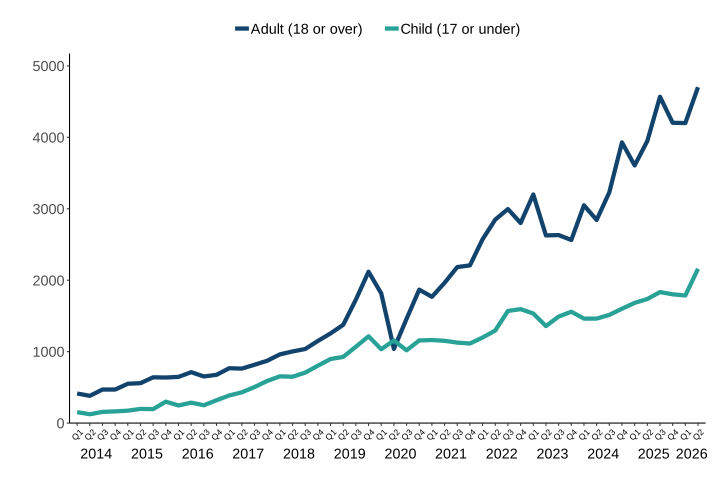
In the YE June 2026, adults accounted for 70% (17,674) of referrals, equal to the proportion of adults in the YE March 2026; children accounted for 30% (7,583), equal to the proportion in the YE March 2026 also. The age at referral was unknown in 116 cases (data table 5; Figure 3).
For adults, this represents a 4% increase in the number of referrals relative to the YE March 2026 (from 16,921 to 17,674). For children, this represents a 6% increase in the number of referrals (from 7,160 to 7,583).
Figure 3: Number of NRM referrals by age group of referral, 2014 to 2026
Source: SCA, IECA
Notes:
- Excludes data pre-2014 due to data reliability.
- Excludes referrals where the age at referral is unknown.
3.3 Location of exploitation
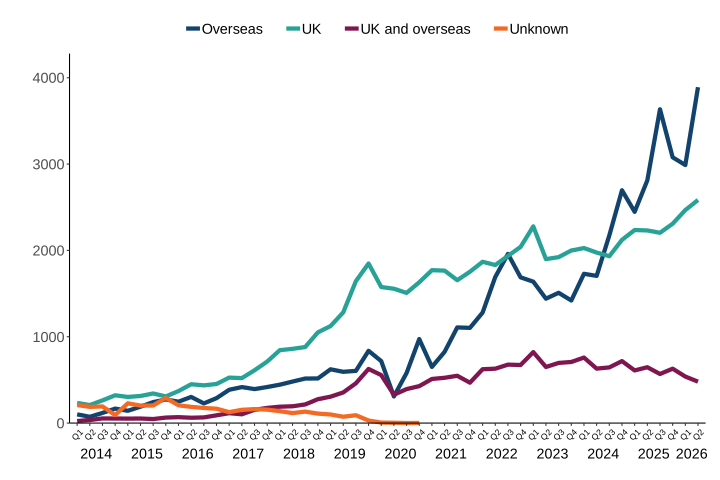
Potential victims may report that their exploitation has occurred in the UK, overseas, or a combination of both. Overall, 38% (9,564) of potential victims claimed that they were exploited exclusively in the UK in the YE June 2026, unchanged from the 38% (9,211) in the YE March 2026; and 54% (13,591) claimed they were exploited exclusively overseas, compared with 52% (12,512) previously (data table 2; Figure 4). Additionally, 9% (2,218) reported exploitation in both the UK and overseas, compared with 10% (2,385) in the YE March 2026.
Figure 4: Number of quarterly NRM referrals by location of exploitation, 2014 to 2026
Source: SCA, IECA
Notes:
- Excludes data pre-2014 due to data reliability.
- There is no ‘unknown’ category post 2020 due to improvements in data collection.
For those reporting their exploitation occurred in the UK, referrals may specify towns and cities. These are grouped into counties at the HO. Here, ‘counties’ refer to lieutenancy areas, which are the boundaries used because of the scale at which the data is collected, as well as for the purpose of mapping. Further information can be found in the ‘Quality information’ section.
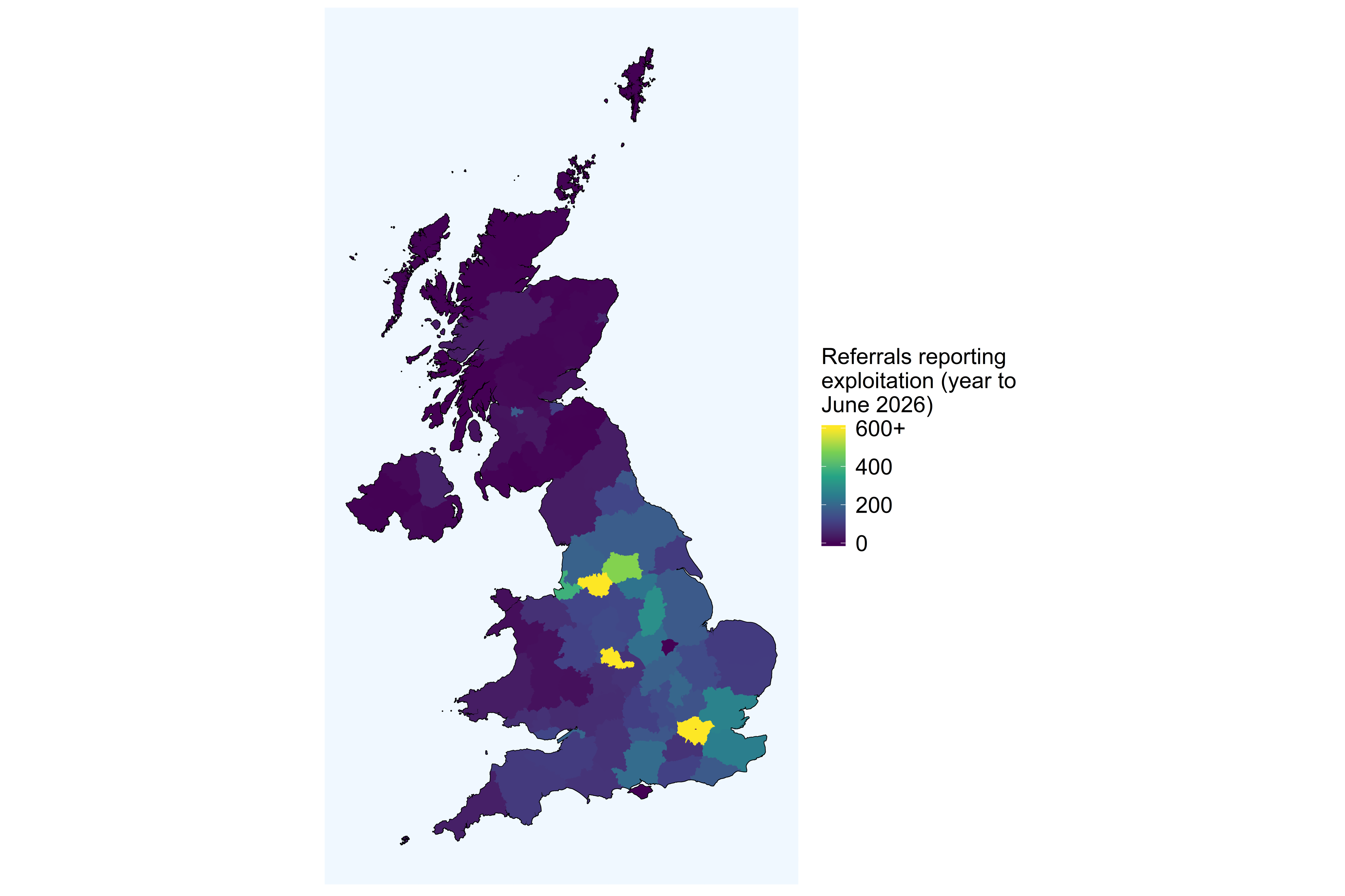
In the YE June 2026, the UK county where exploitation was most commonly reported was Greater London (3,020). This was followed by the West Midlands (907) and Greater Manchester (612) (data table 3; Figure 5). Referrals may report multiple places of exploitation, so it is not advised to combine statistics for multiple counties.
Figure 5: Number of NRM referrals reporting exploitation in UK counties, YE June 2026
Source: SCA, IECA
Notes:
- Includes referrals which have reported exploitation in the UK, or a combination of the UK and overseas.
- It is not advised to combine statistics for multiple counties as each referral may report multiple places of exploitation.
- May not capture all places of exploitation if they are not recorded on referral forms.
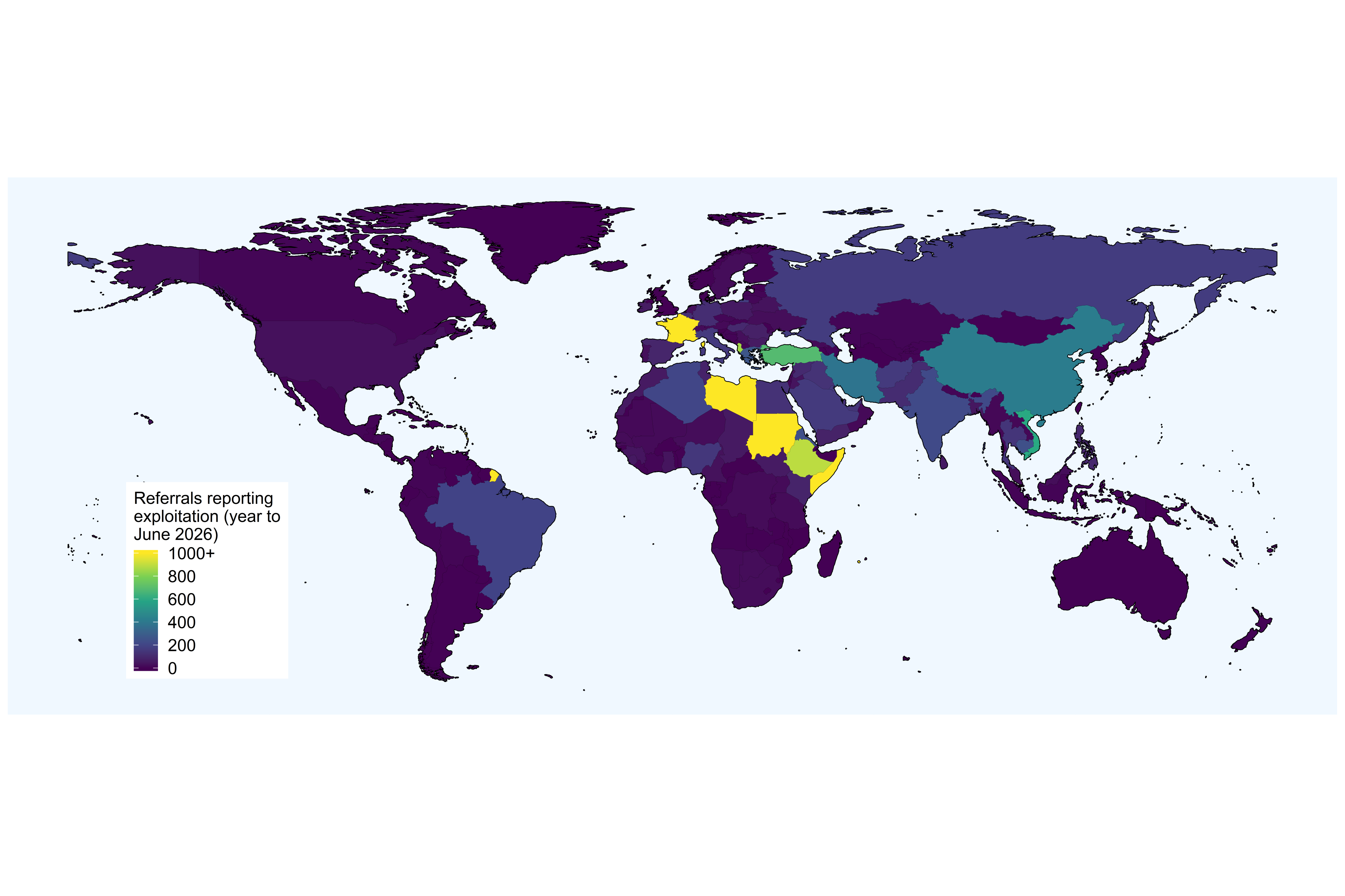
For those reporting their exploitation has occurred overseas, referrals may also name countries and regions where this is reported to have taken place. In the YE June 2026, the overseas country where exploitation was most commonly reported was Libya (7,351). This was followed by Sudan (1,647) and Somalia (1,307) (data table 4, Figure 6). Referrals may report multiple places of exploitation, so it is not advised to combine statistics for multiple countries.
Figure 6: Number of NRM referrals reporting exploitation in overseas countries, YE June 2026
Source: SCA, IECA
Notes:
- Country borders do not necessarily reflect the UK Government’s official position.
- Includes referrals which have reported exploitation overseas, or a combination of the UK and overseas.
- It is not advised to combine statistics for multiple countries as referrals may report multiple places of exploitation.
- May not capture all places of exploitation if they are not recorded on referral forms.
3.4 Gender
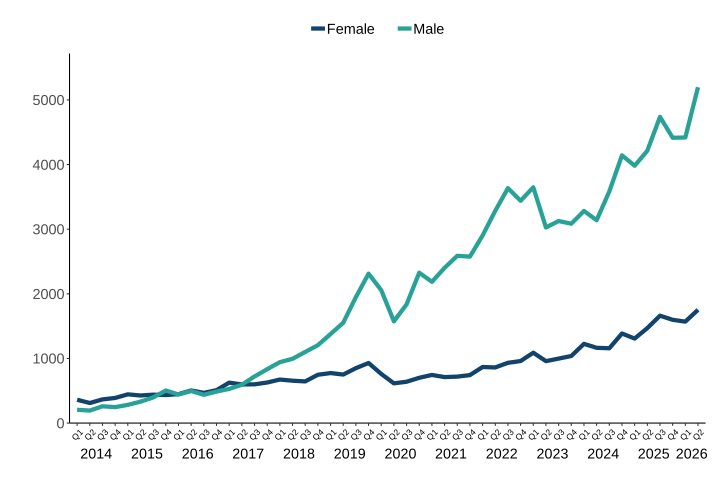
Overall, of the 25,373 potential victims referred in the YE June 2026, 74% (18,769) were male and 26% (6,583) were female. In 21 cases gender was recorded as other. The proportion of male referrals received in each year has increased most years since the NRM began.
For adults (at age of referral), 71% (12,558) were male and 29% (5,105) were female; whilst for children, 81% (6,121) were male and 19% (1,452) were female (data table 5).
Figure 7: Number of NRM referrals by gender, 2014 to 2026
Source: SCA, IECA
Notes:
- Excludes data pre-2014 due to data reliability.
3.5 Exploitation type
There are a variety of ways potential victims can be exploited as set out in the modern slavery statutory guidance. From October 2019 the recording categories were changed to include more types and combinations of exploitation. Statistics prior to this should therefore not be compared, and more information can be found in the ‘revisions’ section.
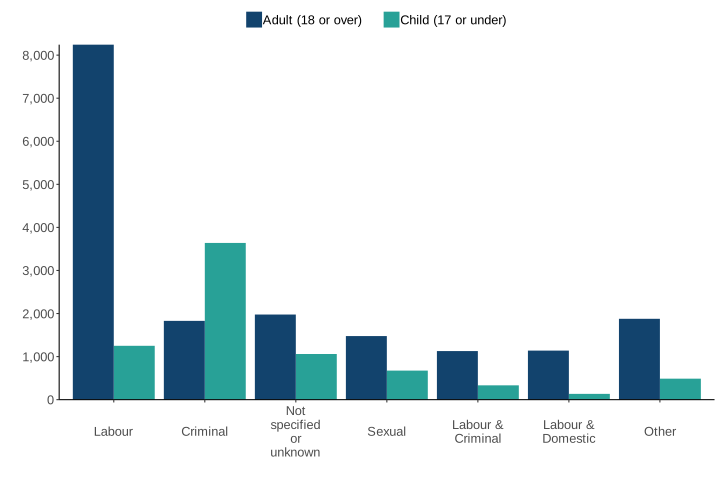
Overall, in the year ending June 2026, potential victims were most commonly referred for labour exploitation, which accounted for 38% (9,546) of all referrals. This overall figure was driven by adults (at age of referral), almost half of whom reported labour exploitation (47%; 8,242), whereas children most often reported criminal exploitation (48%; 3,639) (data table 6; Figure 8). See a typology of modern slavery offences in the UK.
Figure 8: Number of NRM referrals, by exploitation type and age at referral, YE June 2026
Source: SCA, IECA
Notes:
- First responders can enter data for unclassified exploitation in a free-text field; for statistical reporting, this field is grouped as ‘Not specified or unknown’.
- Less commonly reported exploitation types are grouped as ‘Other’, and a full breakdown is provided in data tables 6 and 7.
Exploitation types typically have gendered patterns. In the YE June 2026, males most often reported labour exploitation (45%; 8,378), compared with 43% in the YE March 2026. Females most often reported sexual exploitation (27%; 1,802), compared with 28% previously (data table 7).
Referrals may be flagged as county lines cases by decision makers, which is most commonly a subset of criminal exploitation. County lines is a term used to describe drug gangs in large cities expanding their reach to small towns. Often, the gangs exploit vulnerable individuals to transport substances, and mobile phone ‘lines’ are used to communicate drug orders. See more information about county lines.
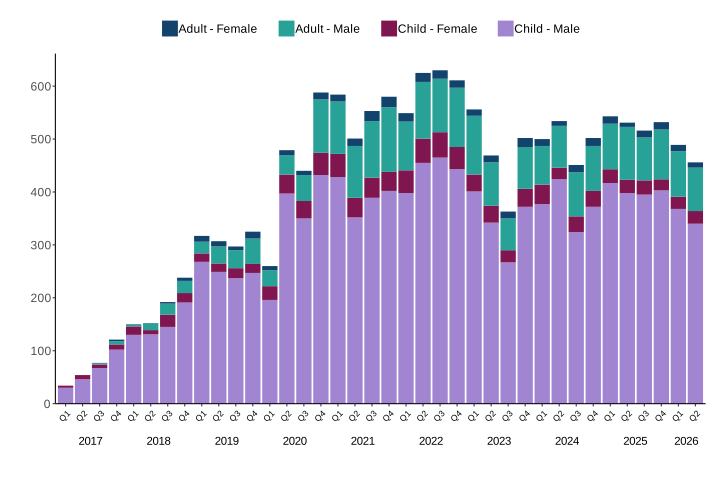
In the YE June 2026, 1,994 county lines referrals were flagged. They accounted for 8% of all referrals in this period. This represents a one percentage point fall from the 9% of referrals they accounted for in the YE March 2026. The majority (76%; 1,506) were for male children (at age of referral) (data table 8; Figure 9).
Figure 9: Number of NRM referrals flagged as county lines, by age at referral and gender, 2017 to 2026
Source: SCA, IECA
Notes:
- County lines referrals were classified as a sub-type of labour exploitation prior to October 2019. Since January 2020, a ‘flag’ within the NRM digital casework system identifies county lines referrals.
3.6 Nationality
The UK works closely with international partners to prevent and reduce modern slavery to the UK. These efforts are supported by the Modern Slavery Fund, which seeks to raise global standards to reduce the impact of modern slavery on the UK. It funds programmes, including in Albania and Vietnam, that aim to strengthen government and civil society responses as well as reduce individual and community vulnerability to modern slavery.
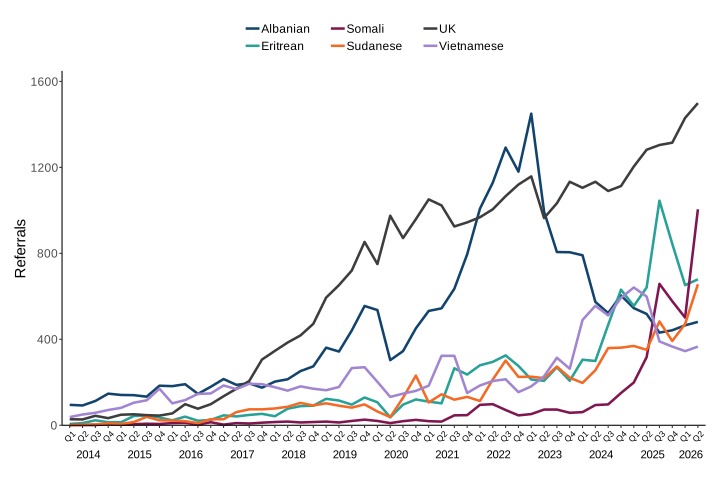
There were 406 nationalities represented by referrals to the NRM in the YE June 2026, which includes dual nationals as separate categories. The most common nationality referred was UK: UK nationals accounted for 22% (5,548) of all potential victims. The second most commonly referred nationality was Eritrean (13%; 3,220), and the third was Somali (11%; 2,741) (data table 9; Figure 10).
The majority of those UK nationals were children (74%; 4,095). The majority of Eritrean nationals were adults (89%; 2,876). The majority of Somali nationals were also adults (82%; 2,237) (data table 9).
Please note, a change to data recording from October 2019 means that NRM data reflects the dual nationality of potential victims in separate categories. To see total counts of a particular nationality, please refer to the data tables. A potential victim’s nationality is based on information provided by the first responder upon referral; however, case workers may update this as further information is gathered.
Figure 10: Number of NRM referrals for the most common nationalities of potential victims, 2014 to 2026
Source: SCA, IECA
Notes:
- There are separate categories for dual nationals.
3.7 Location of crime investigation across the UK
Upon receiving an NRM referral, the SCA determines the initial responsible geographic police force for investigation based on information provided on the referral form and transfers the referral. Further transfer between police forces can take place as they receive additional information, which is reflected in the statistics. Previously, British Transport Police referrals were classed under England, but are now separate in the data tables.
As in previous periods, most (89%; 22,521) of the NRM referrals in the YE June 2026 were sent to police forces in England, 4% (1,139) were sent to Police Scotland, 2% (608) to Welsh police forces, and 3% (739) to the Police Service of Northern Ireland (data table 10).
3.8 First responders
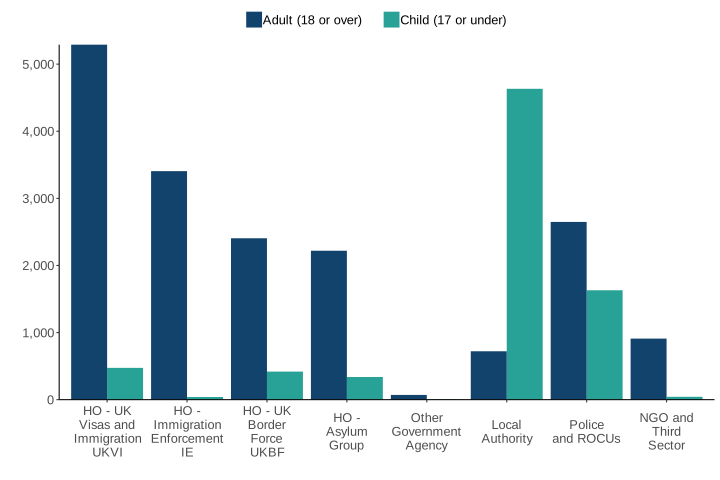
In the YE June 2026, 58% (14,764) of referrals to the NRM were from government agencies. Of these, most came from HO UK Visas and Immigration (39%; 5,767), followed by HO Immigration Enforcement (24%; 3,493), HO UK Border Force (19%; 2,832) and HO Asylum Group (18%; 2,596) (data table 12; Figure 11). The way in which HO first responders are recorded has changed, more information can be found in the ‘revisions’ section.
Local authorities accounted for 21% (5,368) of referrals, mostly for children (at age of referral). Police forces and Regional Organised Crime Units (ROCUs) accounted for 17% (4,287) of NRM referrals in the YE June 2026. NGO and third-sector organisations accounted for 4% (954) of referrals (data table 11; Figure 11).
Figure 11: Number of NRM referrals by first responder types, YE June 2026
Source: SCA, IECA
Notes:
- Excludes potential victims whose age was unknown at referral.
- HO Asylum Group has been added as a first responder in April 2026; it was previously counted under HO UK Visas and Immigration. More information can be found in the ‘revisions’ section.
- Other Government Agency includes the Fair Work Agency, Gangmasters and Labour Abuse Authority and the National Crime Agency.
4. National Referral Mechanism (decisions)
4.1 Reasonable grounds decisions
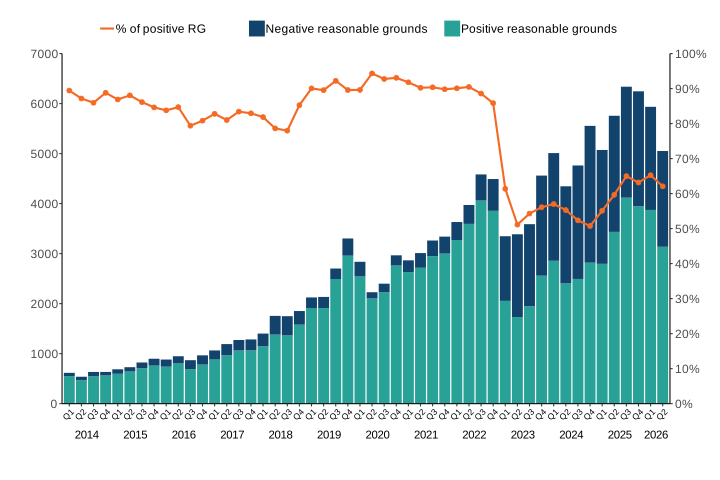
In the YE June 2026, 23,573 reasonable grounds decisions were issued, 64% (15,076) of which were positive (Figure 12). The proportion of positive decisions was 55% for adults (at age of referral) and 86% for children (data table 14).
Of the decisions issued in this period, the SCA issued 18,159 and the IECA issued 5,414; 73% (13,211) of SCA decisions were positive and 34% (1,865) of IECA decisions were positive (data table 13).
Due to a change in the way the reason for a negative reasonable grounds decision is recorded, these statistics are not available in this bulletin. Please see the ‘revisions’ section for more information.
The proportion of positive decisions remained relatively stable before 2023, with around 9 out of every 10 referrals receiving a positive decision. However, from 30 January 2023, the threshold for a positive reasonable grounds decision was revised, which led to a reduction in the proportion of positive decisions issued. On 10 July 2023, the threshold was revised once more. For further information see the published guidance.
Figure 12: Number of NRM positive and negative reasonable grounds decisions, 2014 to 2026
Source: SCA, IECA
Notes:
- Based on the quarter in which the competent authority issued their decision.
In the YE June 2026, the average (median) time from referral to reasonable grounds decision across the competent authorities was 6 days, equalling the average during the YE March 2026 (data table 26). Both the SCA and IECA took an average of 6 days to issue a decision (data table 16).
Decision-making times presented here are for cases which received a reasonable grounds decision in this period and do not reflect the waiting time of all cases within the system. Decision-making times are taken as the difference between the date of the referral receipt and decision date, and do not exclude any periods of time during which referrals may be suspended, withdrawn or previously closed. Hence, actual average wait times will be shorter.
In addition, cases where decision-making is devolved to local authorities as part of the pilot for children are included as SCA cases for these statistics. The IECA does not handle child cases therefore is not involved with the pilot. Decisions made as part of this pilot operate according to different timescales, with guidance outlining that reasonable grounds decisions should be made no later than 45 days from the date the pilot area receives the referral. More information can be found in the published guidance.
4.2 Disqualifications
Introduced as part of the Nationality and Borders Act 2022 and implemented on 30 January 2023, certain cases may be disqualified from the protections and support of the NRM on grounds of bad faith or public order. The framework for making decisions on disqualification is set out in the Statutory Guidance. Individuals may only be disqualified after they have received a positive reasonable grounds decision, and could be disqualified from the NRM system at any point thereafter where the criteria is met.
Public order disqualification decisions were paused from 31 July 2023 to 8 January 2024 while this policy was updated. As of 23 December 2025, the HO has again paused decision making on public order disqualifications until further notice. For more information, see the published guidance for modern slavery.
In the YE June 2026, 144 disqualification requests were made. Of these, 95% (137) were on grounds of public order and 5% (7) were on grounds of bad faith (data table 17).
Over the same period, there were 119 confirmed disqualifications. Of these, 98% (116) were on grounds of public order and 2% (3) were on grounds of bad faith (data table 18).
4.3 Cases awaiting conclusive grounds decisions
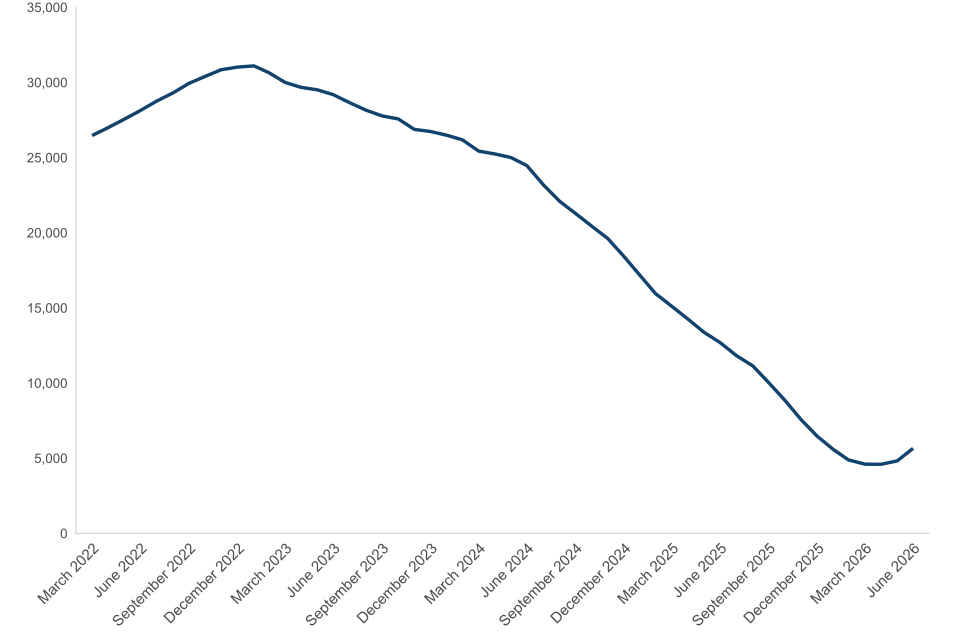
The government has pledged to eradicate the backlog of cases awaiting a conclusive grounds decision by December 2026. As of the end of June 2026, there were 5,656 cases which had been issued a positive reasonable grounds decision and were awaiting a conclusive grounds decision. This represents a 23% increase compared to the end of March 2026 (4,604 cases) and an 82% decrease from the peak at the end of December 2022 (31,022 cases).
Of these 5,656 cases, 5,053 were SCA cases and 603 were IECA cases. The number of cases awaiting conclusive grounds decisions decreased in every quarter from December 2022 to April 2026 but has since increased (data table 19; Figure 13).
The method used to calculate the number of cases awaiting a conclusive grounds decision has been revised and now provides a more accurate and complete figure. Consequently, these figures are not comparable with those published in previous bulletins. Please see the ‘revisions’ section for more details.
Figure 13: Number of cases awaiting a conclusive grounds decision from 2022 to 2026
Source: SCA, IECA
The most meaningful measure of timeliness of decisions for victims of modern slavery (excluding reconsideration requests, see the ‘revisions’ section for more details) is the average (median) time cases have been awaiting a conclusive grounds decision once a reasonable grounds decision has been issued. The median is used due to large outliers in the time some cases await a decision. Data on timeliness including reconsideration requests and the mean average is included in the data tables.
At the end of June 2026, this was 84 days, compared to 50 days at the end of the March 2026 and 772 days at the peak at the end of June 2024. For SCA cases, the average time taken was 89 days and for IECA cases it was 76 days (data table 25).
The backlog of cases awaiting a conclusive grounds decision is close to being eradicated. This means the number of cases awaiting a conclusive grounds decision will soon represent the working caseload in any given month and as such will vary over time depending on system intake and throughput.
4.4 Conclusive grounds decisions
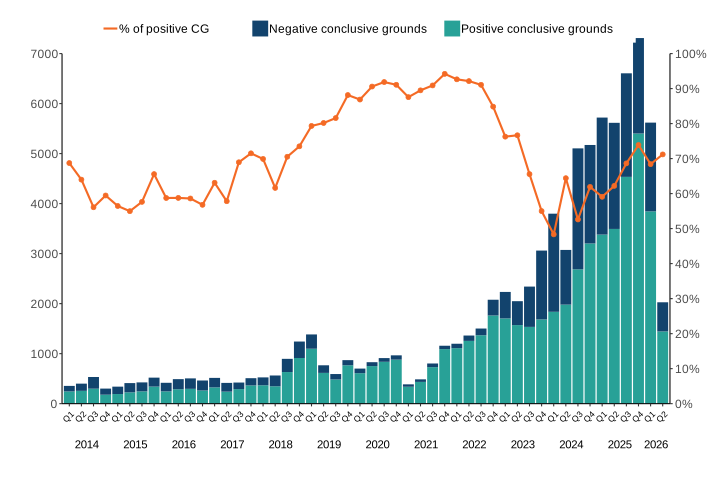
In the YE June 2026, 21,564 conclusive grounds decisions were issued, 71% of which were positive (Figure 14). The proportion of positive decisions for adults was 66% (at age of referral) and 81% for children (data table 21).
Of the decisions issued in this period, the SCA issued 19,843 and the IECA issued 1,721; 72% (14,382) of SCA decisions were positive and 49% (844) of IECA decisions were positive (data table 20).
The decrease in the number of conclusive grounds decisions made between April and June 2026 (see Figure 14) was driven by the reallocation of caseworking staff to address a backlog of cases at the reasonable grounds decision stage. This arose following delays associated with the changes to the IT system used by caseworking staff and a surge in the number of NRM referrals.
Due to a change in the way the reason for a negative conclusive grounds decision is recorded, these statistics are not available in this publication. Please see the ‘revisions’ section for more information.
Figure 14: Number of NRM positive and negative conclusive grounds decisions, 2014 to 2026
Source: SCA, IECA
Notes:
- Based on the quarter in which the competent authority issued their decision.
Decision-making times are taken as the difference between the date of the reasonable grounds and the date of conclusive grounds decisions. It excludes cases which have been reconsidered; however, it does not exclude any periods of time during which referrals may be suspended, withdrawn or previously closed. Hence, actual average wait times will be shorter. See the ‘revisions’ section for more details on changes to the timeliness measure.
4.5 Reconsiderations
Both reasonable and conclusive grounds decisions may be reconsidered after being issued by the competent authorities. This could be because additional evidence becomes available which, taken with all available evidence already considered, would be material to the outcome of a case. Alternatively, it might be due to specific concerns that a decision has not been made in line with published guidance. For more information, see the published guidance.
Reconsideration requests resulting in a positive outcome do not necessarily mean that the original decision was incorrect. In most cases, additional information is provided to the HO which was not made available at the time of the original decision.
In the YE June 2026, there were 1,597 reconsideration requests made to the competent authorities. Of these, 1,094 were made to the SCA and 503 were made to the IECA. There were 905 reconsideration requests made for reasonable grounds decisions and 692 were for conclusive grounds decisions (data table 26).
Within the same period, 81% of reconsidered reasonable grounds decisions were positive. For conclusive grounds decisions, 83% were positive. These outcomes may be from reconsideration requests made in previous quarters.
Both reconsideration requests and outcomes refer to the most recent instance where the competent authority has agreed to reconsider at each decision stage for an individual. Hence, an individual will only be shown to have a maximum of one reasonable grounds request and outcome, and one conclusive grounds or disqualification request and outcome.
Reconsideration requests may also be made for positive or ‘hybrid’ decisions, which are included in these statistics. A hybrid decision is where the potential victim has reported multiple incidents of exploitation, where at least one incident is accepted and one or more are not accepted. In a small number of cases, reconsideration data contains inaccurately recorded fields, so apply caution when using. For more information, see the ‘quality information’ section.
5. Duty to Notify
Since 1 November 2015, specific public authorities in England and Wales must notify the HO via the DtN process of suspected adult victims of modern slavery who do not consent to enter the NRM. During this process, first responders do not collect the potential victim’s personal details.
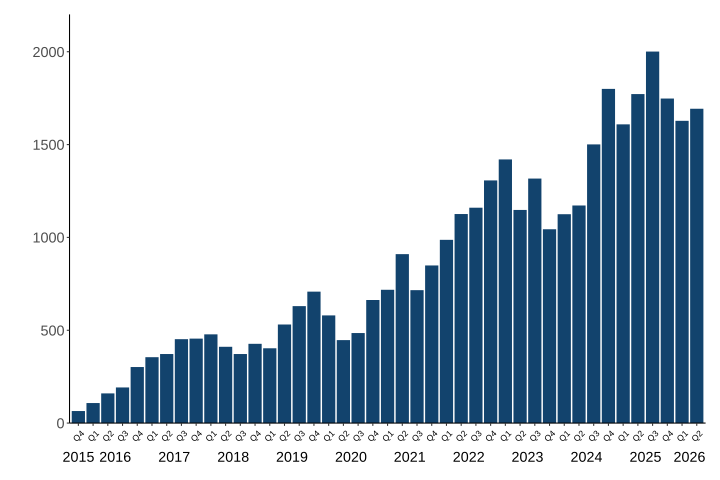
In the YE June 2026, the Home Office received 7,070 reports of adult potential victims via the DtN process (Figure 15), compared with 7,149 in YE March 2026. Of these:
- the most referred nationalities were Eritrean (23%; 1,659), Sudanese (9%; 656) and UK (7%; 485) (data table 28)
- the most referred exploitation types were labour (46%; 3,262), not recorded or unknown (22%; 1,553) and sexual (12%; 829) (data table 29)
- government agencies made the highest number of DtN reports (77%; 5,442), followed by the Police (19%; 1,331) (data table 30)
- of reports made by Government Agencies, most were submitted by HO UK Visas and Immigration (2,585; 48%), HO UK Border Force (1,218; 22%), HO Asylum Group (1,036; 19%) and HO Immigration Enforcement (586; 11%) (data table 31).
Figure 15: Number of DtN referrals, 2015 to 2026
Source: SCA
Notes:
- Potential victims may be reported via DtN and subsequently also referred to the NRM at a later point in time, so these figures should not be combined due to potential double counting.
6. Quality information
These statistics are produced in accordance with quality requirements of the Code of Practice for Statistics. It uses guidance published on the Government Analysis Function, which considers 5 aspects of quality:
- relevance
- accuracy and reliability
- timeliness and punctuality
- accessibility and clarity
- coherence and comparability
This section also discusses data sources, production and quality assurance of statistics.
Relevance
NRM and DtN statistics are used to build a picture of the possible number of potential victims of modern slavery in the UK. As the data relates to potential victims identified by first responders and referred into the NRM and DtN, it does not capture all victims of modern slavery in the UK. There is likely to be a large number of unidentified potential victims given the hidden nature of modern slavery.
The statistics contribute to an understanding of the profile of potential victims referred to the HO. They are used by the Government, NGOs and other organisations to monitor the impact of policy and operational decisions and challenge government on modern slavery policy.
The content of this publication is reviewed to ensure it continues to meet the needs of users; data are added accordingly where available. Further information can be found in the ‘revisions’ section.
Accuracy and reliability
Data is based on an extract from a live caseworking database held by the SCA, taken between 8 and 20 August 2026. NRM referral statistics and DtN report statistics are based on information provided on forms by first responders. First responders receive guidance on identifying and referring potential victims of modern slavery. In line with guidance, the competent authorities can seek additional information from stakeholders, where required, to ensure consistency of consideration and recording of outcomes.
The statistics set out in this bulletin which relate to previous reporting periods may differ from those reported for the same periods in previous bulletins. This is because data is extracted from a live case management system which is continually updated as new information comes to light. This reporting quarter involved the transition to a new digital caseworking system with data extracted from the system at different times in August. This means figures may change in future releases.
The UK location of exploitation data is based on those towns and cities in which potential victims report their exploitation took place. Here, ‘counties’ refer to lieutenancy areas, which are the boundaries used because of the scale at which the data is collected.
The data boundaries used for overseas country of exploitation does not necessarily reflect the UK Government’s official position. Not all places of exploitation may be included if these are not provided on referral forms. If a referral has reported the same place multiple times, it is only counted once in the statistics. Because referrals may report multiple places, it is not advised to add the numbers for multiple UK counties and multiple overseas countries.
County lines cases are manually ‘flagged’ and added to cases by decision makers. The referral form does not explicitly require a first responder to highlight whether county lines is a feature of a potential victim’s exploitation. If the first responder does not provide the information to enable decision makers to identify county lines potential victims, they are not flagged on the system. Therefore, the data may not identify all county lines potential victims referred to the NRM. Moreover, more information may come to light that a potential victim has been exploited through county lines, meaning a case could be flagged at a later stage in the decision-making process. If these cases are subsequently identified, data will be updated to reflect this.
The data for reconsiderations has some fields in which data has been recorded inconsistently. The latest decision date has been found to be missing or inaccurate in a small number of cases. While cases with an inaccurate latest decision date are included, those with missing dates have been excluded, in addition to reconsiderations from duplicate referrals, to ensure the data does not double count reconsiderations. As such, reconsideration data should be used with caution and may be subject to revision.
Overall referral breakdowns are reliable for data prior 2014, but more granular data was not quality assured at the time the data was collected. Most data is therefore presented from 2014 onwards.
All percentages in the bulletin are rounded to the nearest whole percentage point.
Timeliness and punctuality
NRM and DtN statistics are typically published less than 2 months after each quarter finishes. This reporting quarter has involved challenges with the extraction of a complete and robust dataset due to a planned IT system change; therefore, this publication was delayed to allow these issues to be solved . The statistics collection contains previous release dates and the Government statistics release calendar publishes upcoming dates.
From the annual publication for 2022, the bulletin has been published to reflect accessibility criteria outlined in guidance published by the Government Analysis Function. This includes editing bulletin text, formatting of data tables and converting graphs to more accessible formats. More information on accessibility changes can be found in the ‘revisions’ section.
Coherence and comparability
The NRM was set-up in 2009, though detailed breakdowns of statistics prior to 2014 are not made available for the reasons outlined in the ‘accuracy and reliability’ section. Broadly consistent data recording practices (with exception of nationality and exploitation type statistics outlined in the ‘revisions’ section) allow for meaningful comparisons over time. The DtN began in 2015, and the data recording practices used have remained broadly consistent since then, enabling comparisons across the full period covered by the dataset.
The NRM and DtN datasets are the most extensive datasets on potential victims of modern slavery in the UK. Both contain data collected through a range of first responders. NRM referrals are sent from across the UK, while DtN reports are sent from England and Wales. However, there could be overlaps between the 2 datasets. For example, a first responder could encounter a potential victim that is notified to the HO through a DtN and, subsequently, another first responder could encounter the same victim who then decides they want to be referred into the NRM. As the DtN data is anonymised it is not possible to understand the scale of any overlap with the NRM.
Other sources of data may not necessarily reflect trends shown in NRM and DtN statistics due to differing recording practices, scope and definitions of modern slavery.
Data source
NRM and DtN statistics are taken from an administrative HO case management system. It stores information from NRM referrals and DtN reports which are submitted from online forms sent by a variety of first responders.
Referral forms contain varying amounts of information, which depends on what the first responder captures and how much detail the potential victim provides. If necessary, additional information can be sought by decision makers from the SCA and IECA, who make manual edits to data on the case management system.
Decision makers also add details, such as decision outcomes and decision dates, as well as make amendments to existing information such as the responsible police force, location of exploitation and biographic information. Cases are also flagged if they meet certain criteria, such as those involving county lines.
Decision makers may also merge cases together if they are identified as being for the same individual. They may also reopen cases which were closed, such as if a decision is being reconsidered.
As information can be manually updated on the live case management system from which statistics for this bulletin are drawn, a small number of fields may be inaccurately recorded. These are corrected when identified.
Statistical production
This statistical bulletin has been produced to the highest professional standards and is free from political interference. It has been produced by statisticians working in the HO Analysis & Insight Directorate under the HO’s Statement of compliance with the Code of Practice for Official Statistics, which covers HO policy on revisions and other matters.
Data is extracted by HO Analysis & Insight from the case management system and is cleaned using reproducible and tested code. The code reformats data for statistical production, such as by grouping the data into categories (for example, first responder type and age groups) and standardises spelling. Further columns are also added, such as time to decision. Following this, the statistics are collated and outputted as a bulletin with accompanying graphs.
The Chief Statistician, as Head of Profession, reports to the National Statistician regarding all professional statistical matters and oversees all Home Office National Statistics products regarding the Code, being responsible for their timing, content and methodology.
Quality assurance
Data cleaning and grouping has been agreed and checked by the SCA. This is done using reproducible code, which is split into sections to first provide a cleaned dataset, and then produce the bulletin and graphs. The latter 2 are manually cross-checked with the dataset. Reproducible code also allows analytical colleagues to test and validate the production.
Data tables are manually produced using the cleaned dataset and are cross-checked with the bulletin and dataset. Data tables are then checked by the SCA for accuracy.
7. Revisions
Overall
The National Crime Agency (NCA) previously published NRM statistics prior to transferring NRM decision-making responsibilities to the SCA in April 2019 as part of the NRM Reform Programme. Publications prior to July 2019 can be accessed via the NCA website. With this transfer of responsibility, these data are now designated as Official Statistics and produced in line with the Code of Practice for Statistics.
Exploitation type statistics
Prior to October 2019, potential victims were recorded as having a single primary exploitation type, grouped into distinct categories:
- labour
- sexual
- domestic servitude
- organ harvesting
- unknown exploitation
Following changes to recording after October 2019, these categories changed to give a better picture of the exploitation experienced by potential victims. These changes split criminal exploitation from labour exploitation and mean multiple exploitation types can now be distinguished.
Furthermore, ‘Unknown exploitation’ is no longer a category; instead, first responders can provide information for unclassified exploitation in a free-text box field. This field is grouped as ‘Not specified or unknown’. Apply caution when comparing statistics for exploitation type from October 2019 onwards with previous quarters.
Nationality statistics
A potential victim’s nationality is based on information provided by the first responder upon referral; however, case workers may update this as further details are gathered.
Before October 2019, potential victims were recorded as having a single nationality. Following this, dual nationalities were recorded as separate categories, which has resulted in a greater number of categories which provide a more accurate representation. In the YE June 2026, there were 406 nationalities represented by referrals. Caution should therefore be applied when comparing statistics for nationality from October 2019 onwards to previous quarters.
Police force identification
Police force data provided in data tables is based on the location of the police force which received the NRM referral. Each referral is screened against the criteria below to identify the responsible geographic police force. Once identified, the referral is transferred for action to the relevant Force Intelligence Bureau or stipulated point of receipt within the force.
Sometimes, further information is received and processed regarding a referral, which means it will be sent to a different police force. The updated statistics will reflect this. Criteria applied to identify the relevant police force are:
- the force has acted as first responder, or the referral indicates that the force is already involved in the recording/investigation of the potential modern slavery human trafficking offences
- the potential victim has been exploited within the force area
- the potential victim has been exploited abroad, or at an unknown location and the victim’s address at time of referral is within the force area
- the potential victim has been exploited abroad or at an unknown location and they have presented to another first responder within the force area
Government Agency first responders
The way Government Agency first responders are recorded changed in April 2026. HO – Asylum Group, and the Fair Work Agency have been added to the list of first responders. The Fair Work Agency was established on 7 April 2026, more information on this organisation can be found here. HO – Asylum Group was previously recorded as a part of HO – UK Visas and Immigration but is now recorded separately. Non-HO Government Agency first responders are summarised in this bulletin, and a more detailed breakdown can be found in the data tables.
Reason for negative reasonable/conclusive grounds decisions
The way the reason for a negative reasonable/conclusive grounds decision is recorded has changed from April 2026. The new method now records a negative reason for each ‘incident’ in a potential victims’ case, as opposed to the previous method which recorded a reason for the entire case. This method change means the statistics from before and after April 2026 are no longer comparable, therefore they have been omitted from this publication due to the change occurring mid-quarter. They will be included in future publications but presented on a quarterly basis until a full year of data is available.
Cases awaiting conclusive grounds decisions
The method used to calculate the number of cases awaiting a conclusive grounds (CG) decision has changed. Previously, case status was derived from the current decision status recorded on the system; however, data quality issues meant this did not always accurately reflect a case’s true status. The revised method counts cases with a positive reasonable grounds (RG) decision that had not received a CG decision by the end of the quarter. Suspended, withdrawn and reconsidered CG cases are excluded from the count. This method provides a more accurate figure of the number of cases awaiting a CG decision, but this method change means the figures in this bulletin are not comparable with those from previous bulletins.
Bulletin specific
January to March 2022: data was first split out for referrals received and decisions made by the SCA and IECA, as this was the first full quarter since the IECA was set-up. Figure 1 was changed to reflect this.
October to December 2022: key findings were rationalised to show the most important points illustrated by the data.
Annual 2022: an annex was added to highlight key drivers of referrals in the year and provide more detailed statistics.
April to June 2023: the ‘Reasonable grounds decisions’ section was updated to include data on average time to issue reasonable grounds decisions, to match the ‘Conclusive grounds decisions’ section. A new section on ‘Disqualifications’ was added, since it was the first full quarter where disqualifications for the NRM were considered.
July to September 2023: a new section on ‘Reconsiderations’ was added with data on the number of reconsidered decisions. The ‘Nationality’ section was updated to outline the number of nationalities represented in the NRM.
October to December 2023: more context and background was added to better explain the data. A flowchart was added as figure 1, to show the NRM and DtN processes. Additionally, the ‘Further information’ section was split out into 3 new sections: ‘Quality information’, ‘Revisions’ and ‘Related publications’. These added more detailed information on quality, provided a better overview of changes to the publication and signposted to related published work.
January to March 2024: within the ‘Location of exploitation’ section, data on UK county of exploitation and overseas country of exploitation was added. This provides a more granular breakdown of exploitation reported in the UK and overseas.
April to June 2024: within the ‘Conclusive grounds decisions’ section, data on the conclusive grounds decision backlog was added. This provides information on cases that have been issued a positive reasonable grounds decision and are awaiting a conclusive grounds decision.
July to September 2024: within the ‘Reasonable grounds decisions’ section, data on the reasons behind a negative reasonable grounds decision were added. Additionally, within the ‘Conclusive grounds decisions’, data on the reasons behind a negative conclusive grounds decisions was added. These provide information on the reason why a negative decision has been issued by the decision maker.
Year ending June 2026: the time periods of reporting in the bulletin changed from a quarterly basis to a year to quarter basis, bringing this publication in line with other HO statistical publications. More information can be found here.
Data tables
July to September 2021: tables were reformatted. Table 7 (referrals by UK country and age group) in previous updates was removed as this information is available in table 3. Tables 16 to 26 in previous updates (referrals received by police forces by nationality, exploitation type, first responder and age at exploitation) were removed. This information is now available in tables 4 to 9.
January to March 2022: tables were split out. Tables 15 and 16 (reasonable/conclusive grounds decisions by age group at exploitation) in previous releases were split into tables for SCA and IECA decisions. Reasonable grounds decision breakdowns are therefore provided in tables 20 to 22, whilst conclusive grounds breakdowns are provided in tables 35 to 37.
April to June 2022: tables were split out. Table 21 (average number of days taken to make conclusive grounds decisions) in past releases was split for SCA and IECA times. Timeliness breakdowns are therefore provided in tables 39 to 41.
October to December 2022: tables were split out and reformatted for accessibility. Table 1 (referrals by age group and location of exploitation) in past releases was split into tables 1 and 2 to more clearly show referrals split by competent authority. Several changes to formatting were made for accessibility, including adding consistent worksheet titles, adding a notes worksheet and reducing the use of merged cells.
April to June 2023: tables were added. Additional tables were added to show average time to reasonable grounds decision (table 26), as well as split by the SCA and IECA (tables 27 and 28 respectively). Moreover, tables 29 to 31 were added for disqualification requests, and tables 32 to 34 were added for confirmed disqualifications.
July to September 2023: tables were added. Additional tables were provided to show reconsideration requests (tables 43 to 45) and outcomes (tables 46 to 48).
January to March 2024: tables were added. Additional tables were provided to show age at referral (tables 3 to 4), referrals by UK county (table 12) and referrals by overseas country (table 13). Age at exploitation information was replaced with age at referral, though is still included in tables 5 to 6. Tables 23 to 24 were added to monitor the Sustainable Development Goals that relate to modern slavery.
April to June 2024: an additional table was provided to show the backlog for cases awaiting conclusive grounds decisions having been issued positive reasonable grounds decisions (table 42).
July to September 2024: additional tables were provided to show the reasons behind a negative reasonable grounds decision (table 25) and the reasons behind a negative conclusive grounds decision (table 38).
Year ending June 2026: there has been a change in the way data tables are published alongside the bulletin. Data tables will now be a mix of summary data tables which cover the headline figures in the bulletin, and pivot tables, which allow users to more readily access specific breakdowns of the data if required. There will be fewer static data tables compared to previous bulletins, but the pivot tables will allow users to access and utilise data in ways to better suit their needs. More information can be found here.
8. Related publications
Latest and previous NRM and DtN statistical releases can be found in the National Referral Mechanism statistics collection.
Raw NRM data used for statistical releases is published on UK Data Service.
For statistics on the number of small boat arrivals with NRM referrals, see the Irregular migration to the UK statistics collection.
Research on modern slavery referrals for people detained for return after arriving in the UK on small boats was published in March 2023.
Ad-hoc analysis on modern slavery referrals from asylum, small boats and detention cohorts was published in May 2023.
Statistics and analysis of the devolved decision-making pilot for child victims of modern slavery was published in November 2024.
Statistics on children referred to the Independent child trafficking guardianship service were published in May 2026.
Offences and charges data for modern slavery is published in the police recorded crime statistics collection.
Prosecutions statistics for modern slavery-flagged crimes in England and Wales are published by the Crown Prosecution Service in their data summaries.
Sentencing data for modern slavery offences in England and Wales is published by the Ministry of Justice in their Criminal Justice System statistics.
The Office for National Statistics publish a summary of data sources for child victims of modern slavery in the UK.
Feedback and enquiries
We are always looking to improve the accessibility of our documents. If you find any problems, or have any feedback, relating to accessibility, or general questions regarding this publication, please email us NRMStatistics@homeoffice.gov.uk
For press enquires: pressoffice@homeoffice.gov.uk; 0207 035 3535