Income Dynamics: Income movements and the persistence of low income, 2010 to 2024
Published 26 March 2026

© Crown copyright 2026
This publication is licensed under the terms of the Open Government Licence v3.0 except where otherwise stated. To view this licence, visit nationalarchives.gov.uk/doc/open-government-licence/version/3 or write to the Information Policy Team, The National Archives, Kew, London TW9 4DU, or email: psi@nationalarchives.gov.uk.
Where we have identified any third party copyright information you will need to obtain permission from the copyright holders concerned.
This publication is available at https://www.gov.uk/government/statistics/income-dynamics-2010-to-2024/income-dynamics-income-movements-and-the-persistence-of-low-income-2010-to-2024
1. Main stories
In the most recent 4-wave period (from 2020 and 2021 to 2023 and 2024):
-
9% of all individuals were in persistent low income before housing costs (BHC). This figure was unchanged on the previous 4-wave period
-
11% of individuals were in persistent low income after housing costs (AHC). This rate has decreased from 12% in the previous 4-wave period
-
before housing costs, pensioners (11%) were more likely to be in persistent low income than children (9%) and working-age adults (8%)
-
after housing costs, children had higher rates of persistent low income (15%) than working-age adults (10%) and pensioners (9%)
Over the most recent 2-wave period (from 2022 and 2023 to 2023 and 2024):
-
similar numbers of individuals moved into and out of low income. Children were more likely to enter low income than working-age adults and pensioners, both before and after housing costs
-
changes in earnings and benefit income, and in the amount of paid work in a household, were closely linked to low income entries and exits
Individuals at the top of the income distribution in 2015 and 2016 were those most likely to be in the same position in the distribution in 2023 and 2024.
2. What you need to know
This is the tenth annual Income Dynamics (ID) publication. It provides information on rates of persistent low income for children, working-age adults, and pensioners in the UK. Individuals are in persistent low income if they are in relative low income for at least 3 out of 4 consecutive annual interviews. ID meets DWP’s statutory obligation to publish a measure of persistent low income for children, as set out under Section 4 of the Welfare Reform and Work Act 2016.
ID also includes analysis of movements across the income distribution, including low income entry and exit rates, and statistics on how various socio-economic factors are linked to low income entries and exits.
The data source
ID estimates are based on Understanding Society, a longitudinal survey run by the University of Essex, which follows sampled individuals over time. Members of the survey are invited to participate once during each survey wave. Each survey wave spans 2 calendar years. The most recent wave is Wave 15, covering the calendar years 2023 and 2024. For most of the longitudinal analysis included in ID, the starting point is Wave 2 (2010 and 2011) because of issues with the Wave 1 data.
The Wave 15 longitudinal sample included over 39,000 individuals. For the purpose of the longitudinal analysis presented here, individuals are classified according to characteristics reported at the first wave of any analytical period. For example, where analysis covers the period from 2020 and 2021 to 2023 and 2024, working-age adults are adults who were below State Pension age and over 16, not in further education and not classed as a dependent child, when they participated in the 2020 and 2021 wave. Similarly, other breakdowns such as employment status or tenure also reflect individual status at the start of any longitudinal period.
Use of survey data means that the statistics in this report are estimates, and as such are subject to a degree of uncertainty. Care should therefore be taken in interpreting apparent change over time or differences between sub-groups, which may reflect sampling variation rather than real differences. This holds particularly true over the short term, for groups with smaller sample sizes, and where percentage point differences are small.
Percentages are rounded to the nearest percentage point independently. Where categories are summed for descriptive purposes, rounding is implemented after summing.
Income measures
ID is based on a measure of disposable household income. This income measure is adjusted for household size and composition to calculate a proxy – or ‘equivalised’ – measure of income available to each individual in the sample. These statistical adjustments are in line with international best practice and allow us to compare incomes over time and across different household compositions. However, these adjustments do mean that the income figures reported may not always be directly relatable to the amounts that individuals recognise on a day-to-day basis.
An individual is said to be in relative low income if their household equivalised income is below 60% of median income. ID statistics are routinely reported both before and after housing costs.
Changes for ID 2010 to 2024
This ID publication contains longitudinal statistics covering the period from 2010 to 2024 (data from Waves 2 to 15 of Understanding Society).
Longitudinal panel surveys are prone to attrition over time, as individuals and/or households stop participating. This results in smaller sample sizes. Maintaining representativeness is also challenging in these types of survey. Even if a panel survey is representative of the population at the point of sampling, its design means it cannot, over time, reflect the effect of immigration on that population. These factors mean that confidence in survey estimates tends to reduce with successive waves. Understanding Society introduced a General Population Sample (GPS2) boost in Wave 14 (2022 and 2023), in order to address the effects of attrition and migration, and to improve the coverage of other minority samples. This boost resulted in an additional 5,761 household interviews in Wave 14.
Members of the GPS2 boost have been included in ID’s cross-sectional analysis from 2022 and 2023. We use cross-sectional analysis to produce median incomes for each wave which are, in turn, used to measure who is in relative low income in that wave. This measurement forms the basis of our longitudinal low income analysis of persistent low income, as well as our analysis of low income entries and exits, and the events associated with them. Cross-sectional analysis is also used to produce income quintiles, which are used in our analysis of income mobility.
Now that members of the GPS2 boost have had the opportunity to participate in 2 survey waves (Waves 14 and 15), they have, for this publication, been included in ID’s longitudinal analysis of low income entries and exits, and the events associated with these movements, over the period 2022 and 2023 to 2023 and 2024.
Members of the boost cannot yet be included in the longitudinal sample used to measure rates of persistent low income or in our analysis of longer-term income mobility, because they have not been present in the survey for enough time.
The table below sets out how the sample boost has been used in this ID publication. It summarises observed changes in our statistics since the boost has been introduced, and offers commentary on how these changes might be linked to inclusion of the boost. Because the GPS2 boost was introduced to ensure that the Understanding Society survey sample reflected recent immigration to the UK, and to address the effects of attrition, we wanted to consider how addressing these factors might affect our statistics.
Some analysis (such as that published by the IPPR and the JRF) has found higher rates of relative poverty among foreign-born people living in the UK, linked to differences in the amount of work within migrant families (which may in turn be linked to barriers accessing employment) as well as housing tenure, with migrant families being more likely to live in private rented housing. This may mean that the inclusion of recent immigrants in the boost is linked to lower income estimates, both before and after housing costs.
With regards to attrition in Understanding Society, research has found that it is more likely to affect ethnic minorities and those at the lower end of the income distribution (see Understanding Society working papers 2023-03, 2026-02 and 2026-04). While weights can and have been used to redress this, better quality estimates can be achieved by increasing the sample size of these groups via survey boosts such as the GPS2. It is therefore plausible that inclusion of the GPS2 boost might result in lower income estimates.
Table 1. Inclusion of the GPS2 boost in ID analysis
| Type of analysis | Use of GPS2 boost | Observed changes and possible links to inclusion of the GPS2 boost |
|---|---|---|
| Single wave analysis | Included in cross-sectional income measures for the most recent 2 waves (2022 to 2023 and 2023 to 2024) | Our analysis produced lower mean and median income values in these waves, combined with increases in several single wave rates of low income (Methodology tables M8 and M9). These changes could be expected given the purpose of the sample boost was to increase numbers of under-represented groups who may have lower incomes. |
| Two-wave analysis: Low income entries and exits, and events associated with low income movements | Included in cross-sectional income measures in the most recent 2 waves (2022 to 2023 and 2023 to 2024) | Across the 2-wave period 2021 to 2022 to 2022 to 2023, there was a decrease in low income entries and an increase in low income exits for all 3 main population groups, i.e. children, working-age adults, and pensioners, both before and after housing costs. With lower median incomes in 2022 to 2023 but an otherwise unchanged longitudinal sample, these changes might be expected. |
| Two-wave analysis: Low income entries and exits, and events associated with low income movements | Included in longitudinal sample across the most recent 2 waves (2022 to 2023 and 2023 to 2024) | Across the most recent 2-wave period (2022 to 2023 to 2023 to 2024), there was an increase in entry rates for the 3 main population groups, both BHC and AHC. At the same time, there was a decrease in exit rates both BHC and AHC for these groups, apart from pensioners BHC. With the inclusion of sample boost members in the longitudinal sample, this adjustment might be expected. |
| Four-wave analysis: Persistent low income | Included in cross-sectional low income measures for 2022 to 2023 and 2023 to 2024 (therefore used in the 2 most recent 4-wave periods, but not in the longitudinal sample) | Persistent low income measures for the 3 main population groups have changed little over time. We have, however, seen some decreases in rates of persistent low income - both BHC and AHC - over the past 2 4-wave periods, particularly among children. Because persistent low income is measured over a 4-wave period, we would expect it to be less responsive to changes in measurements in 2 out of 4 waves, but with lower medians in 2022 to 2023 and 2023 to 2024 and an otherwise unchanged longitudinal sample, we might anticipate decreases in persistent low income estimates. |
| Income mobility analysis: Quintile movements | Included in cross-sectional income measures in the most recent 2 waves (2022 to 2023 and 2023 to 2024), but not in the longitudinal sample | This analysis can only be compared to equivalent analysis in previous ID publications, based on earlier data releases which will have been subject to revisions. It is therefore difficult to gauge the possible impact of bringing in data from the sample boost for these cross-sectional measures. |
Although ID statistics are affected by factors other than the introduction of the GPS2 boost, the observed changes noted above broadly make sense given our understanding of how the sample might be affected by it.
The introduction of the GPS2 boost means that statistics involving survey data from 2022 and 2023 onwards are not fully comparable to those preceding them. With this in mind, we have, in our data tables, marked how and where the sample boost has been used, and the commentary in this report has been drafted accordingly.
It is also worth noting here that an adjustment made to the longitudinal weight by the data providers following the introduction of the GPS2 boost also enabled more individuals from existing samples to be included in longitudinal analysis.
For further information about this development, please refer to the Background information and methodology note. For further information on the Understanding Society GPS2 boost, please refer to the Wave 14 boost technical report.
Revisions to the data
This ID publication contains longitudinal statistics covering the period from 2010 to 2024 (data from Waves 2 to 15 of Understanding Society). Each annual Understanding Society release provides data for all previous waves of the survey, and some of this data will have been revised since it was first published.
Revisions are made to make the data more accurate, based on updated information about individuals and households in the sample. For this reason, statistics derived for a certain time period in this ID publication may differ from those derived for the same time period in a previous publication. It is therefore always best to refer to the most recent ID publication for all our analysis. Please see the Understanding Society user guide, as well as information on revisions.
As part of routine quality assurance of the Wave 15 (2023 and 2024) data, we noted that some Wave 14 (2022 and 2023) values had seen an unusual amount of revision. We understand that these were linked to weighting revisions implemented by the survey owners, the University of Essex. We also understand that there will be further adjustments made to these weights when the next wave of data is released.
We therefore expect that at least some of our statistics will be revised in our next publication.
The coronavirus (COVID-19) pandemic
Given the longitudinal nature of ID analysis, the coronavirus pandemic and associated policies continue to be relevant. Three of the 4 most recent survey waves, upon which persistent low income statistics are based, were affected by policies associated with the pandemic in some way. An assessment of the implications for ID statistics can be found in Section 11.
Data tables
Data tables have been published alongside this release. Relevant table references are provided within the text. Please also refer to the ID Tables Guide for details of the statistics included in the various ID tables files.
Further information
For further information on the way in which ID statistics are produced, please refer to Section 12 below, the ID Quick Guide, and the Background information and methodology report which are published alongside this report.
3. An overview of persistent low income
From 2020 and 2021 to 2023 and 2024, the rate of persistent low income for all individuals was 9% before housing costs (BHC) and 11% after housing costs (AHC). The BHC rate of persistent low income for all individuals has been 9% in almost all periods since 2010 and 2011 to 2013 and 2014. Over this timeframe, the AHC rate has varied between 12% and 13%, so the 11% rate in the current period is the lowest it has been. As noted in Section 2, the inclusion of GPS2 boost data in cross-sectional income measurements in 2 of the most recent 4 waves may be associated with lower rates of persistent low income, although other factors may be relevant.
Persistent low income is considered separately for 3 main population groups: children, working-age adults, and pensioners. Over time, the rate for children (AHC) has been consistently higher than all other rates. The rate for working-age adults (BHC) has been consistently lower than all other rates.
Persistent low income for the 3 main population groups, comparing the most recent 4-wave period to the previous 4-wave period
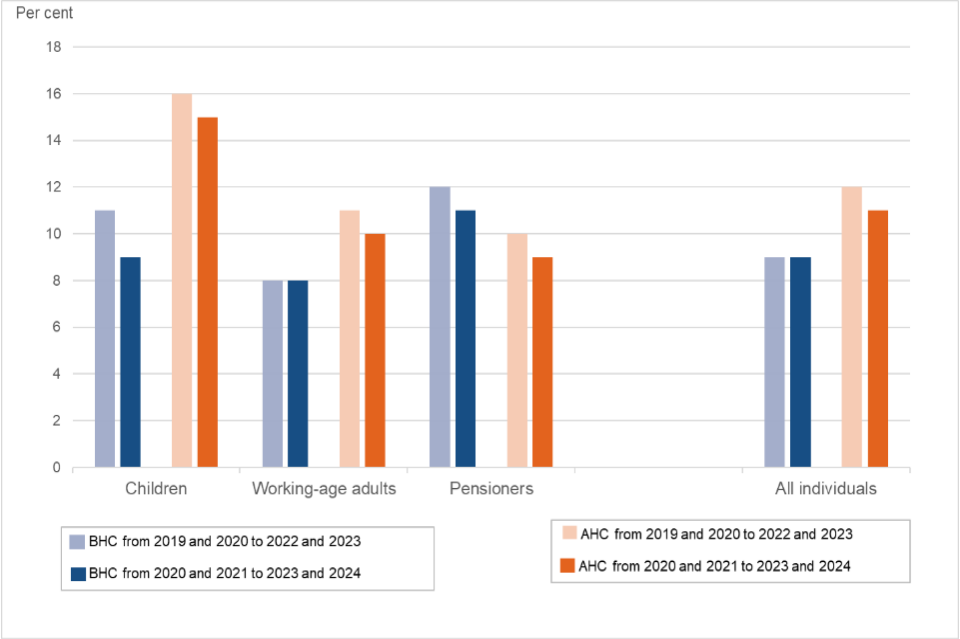
Figure 1. Persistent low income for children, working-age adults, and pensioners, 2020 and 2021 to 2023 and 2024 compared to the previous 4-wave period
Source: Table 1, Persistent low income trends.
Over the most recent 4-wave period, the lowest rate of persistent low income was for working-age adults BHC, at 8%. This rate was unchanged on the previous 4-wave period, and has consistently been the lowest rate over time. The rate of persistent low income BHC among children fell to 9%, from 11% in the previous 4-wave period. This is the lowest BHC rate for children since 2010 and 2011. Pensioners had the highest BHC rate at 11%, although this also represents a fall from 12% in the previous 4-wave period.
The highest rate of persistent low income AHC was among children (15%), although this represents the lowest rate observed for children over time. The persistent low income rate for children AHC has consistently been higher than the AHC rate for working-age adults and pensioners. The AHC rate among working-age adults was 10%, and the rate among pensioners was 9%. Both represent a one percentage point fall on the previous 4-wave period.
As noted above, we may be seeing lower rates of persistent low income linked to the use of data from the GPS2 boost in cross-sectional income measurements.
Rates of persistent low income varied across the countries and regions of the UK
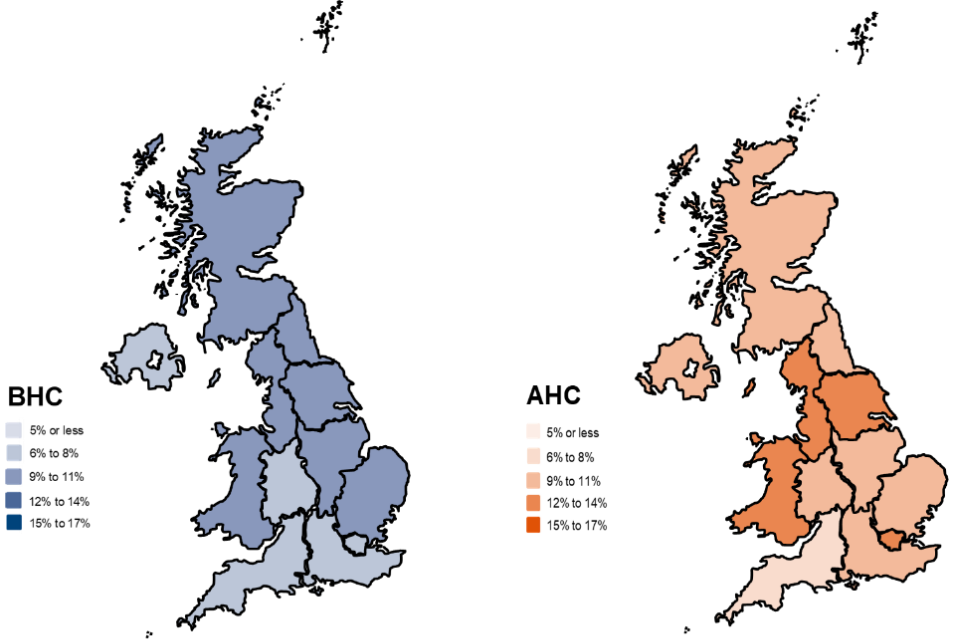
Figure 2. Persistent low income across the UK (BHC and AHC)
Source: Tables 2.2p and 2.8p, Individuals in persistent low income
There was a small amount of variation in BHC rates of persistent low income across the countries of the UK, with the highest rate in Wales at 11%, followed by England and Scotland at 9% and Northern Ireland at 8% (Table 2.2p). AHC rates mirrored this pattern, and were highest in Wales at 14%, followed by England and Scotland at 11% and Northern Ireland at 9% (Table 2.8p).
Across the English regions, the North West and East Midlands had the highest rates of persistent low income BHC (both 11%), followed by the North East and Yorkshire and the Humber (both 10%). London, the South East and the South West had the lowest rates (all 7%).
The highest rates of persistent low income AHC were in the North West, Yorkshire and the Humber and London (all 12%), despite London jointly having the lowest BHC rate. This reflects the cost of housing in the capital. The South West had the lowest AHC rate (8%), while AHC rates in all other regions varied between 10% and 11%.
Families headed by couples had lower rates of persistent low income than those headed by single adults
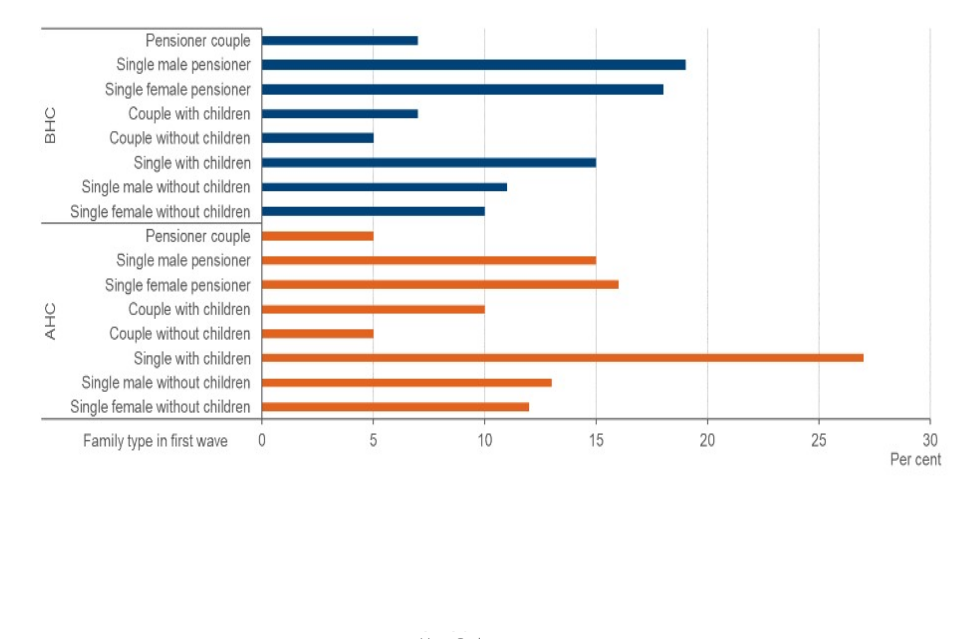
Families headed by couples had lower rates of persistent low income, both BHC and AHC, than families headed by single adults. Before housing costs, single pensioners had the highest rates of persistent low income. After housing costs single adults with children were much more likely than all other groups to be in persistent low income.
Figure 3. Persistent low income by family type (BHC and AHC)
Source: Tables 2.1p and 2.7p, Individuals in persistent low income
Couples without children were least likely to be in persistent low income BHC (5%), while pensioner couples and couples with children had slightly higher rates (both 7%). Single male pensioners and single female pensioners were those most likely to be in persistent low income BHC (19% and 18% respectively), followed by single adults with children (15%). Single males without children and single females without children had similar BHC rates of persistent low income of 11% and 10% respectively.
After housing costs were considered, the risk of persistent low income was lower for all pensioner family types, although single female pensioners and single male pensioners still had relatively high rates of persistent low income AHC, at 16% and 15% respectively. Pensioner couples were least likely to be in persistent low income AHC, alongside couples without children (both 5%).
Conversely, adults with children experienced higher levels of persistent low income AHC compared to equivalent BHC rates. Single adults with children are particularly affected by housing costs, and were the family type most likely to be in persistent low income AHC (27%), while the rate of persistent low income for couples with children was 10%.
The risk of being in persistent low income AHC compared to BHC increased slightly for single males without children (13%) and single females without children (12%).
Persistent low income varied by ethnicity: individuals with an Asian or Asian British head of household were most likely to be in persistent low income, both BHC and AHC
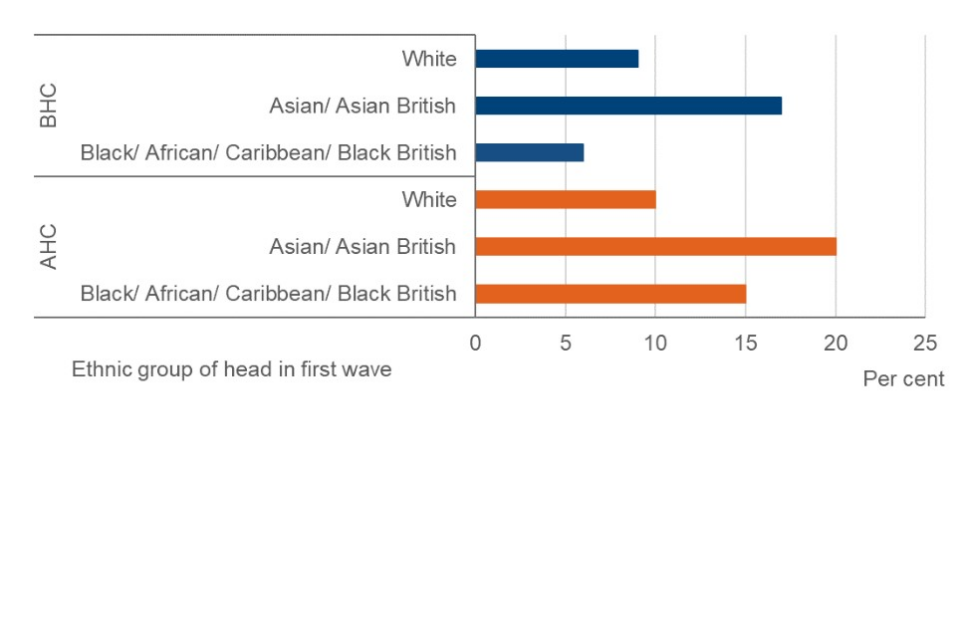
Individuals with an Asian or Asian British head of household were most likely to be in persistent low income both BHC and AHC.
Figure 4. Persistent low income by ethnicity of head of household (BHC and AHC)
Source: Tables 2.1p and 2.7p, Individuals in persistent low income
Please note: the 4-wave sample sizes of individuals with a head of household of Mixed ethnicity or from an Other ethnic group are small. As such, statistics for these groups are associated with a level of uncertainty which means we cannot reliably compare them to statistics for other ethnic groups or make meaningful comparisons over time. Statistics on these groups are included in supporting tables where sample sizes are at least 100, but they are not discussed here.
Individuals with an Asian or Asian British head of household were more likely to be in persistent low income BHC (17%) than those with a White head of household (9%) or with a Black, African, Caribbean or Black British head of household (6%).
When looking at AHC rates of persistent low income, those with an Asian or Asian British head of household again had the highest rate at 20%. Individuals with a Black, African, Caribbean or Black British head of household had a persistent low income rate of 15% (AHC), while those with a White head of household were least likely to be in persistent low income (10% AHC).
Since the 4-wave period commencing in 2018 and 2019, there have been noticeable decreases in rates of persistent low income for individuals with a Black, African, Caribbean or Black British head of household: from 15% to 6% BHC, and from 27% to 15% AHC. It is unclear why they have fallen to this extent. Our analysis of low income entries and exits indicates that individuals from this group have relatively high rates of entry into and exit from low income (see Section 9). In addition, large percentage point changes often accompany decreasing sample sizes, and it is possible that estimates for this group are being affected in the same way as those for individuals with Mixed or multiple ethnic group heads of household and heads of household from an Other ethnic group.
See Tables 2.1p and 2.7p, Individuals in persistent low income, for more information.
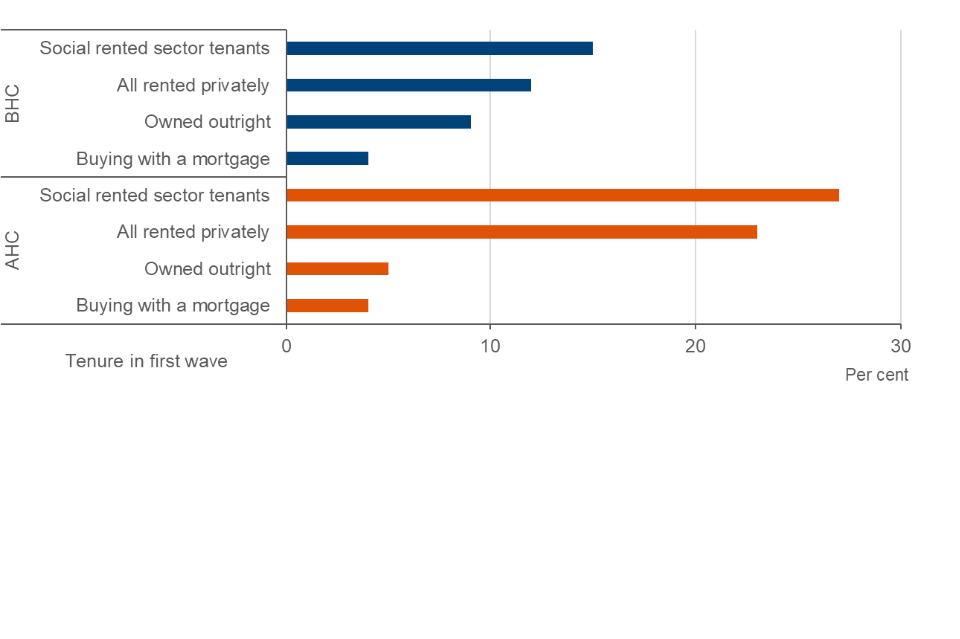
Individuals living in the social rented sector were most likely to be in persistent low income, both BHC and AHC
Rates of persistent low income were highest for those living in the social rented sector and lowest for those in homes which were being bought with a mortgage. This was true both before and after housing costs.
Figure 5. Persistent low income by tenure (BHC and AHC)
Source: Tables 2.2p and 2.8p, Individuals in persistent low income
Among tenure types, the highest rate of persistent low income BHC was among individuals living in the social rented sector (15%). This was followed by those living in the private rented sector (12%), and then by individuals who owned their home outright (9%). Those living in households which were buying their homes with a mortgage were least likely to be in persistent low income (4%).
After housing costs were considered, individuals who were renting were much more likely to be in persistent low income than those who were living in a home that was owned outright or being bought with a mortgage: 27% of individuals living in the social rented sector and 23% of those living in privately rented homes were in persistent low income AHC. These high rates meant that renters (in either the social rented or private rented sector) were over-represented among those in persistent low income AHC: while they were 30% of the sample population, they accounted for 69% of those in persistent low income AHC.
Individuals in homes that were being bought with a mortgage were just as likely to be in persistent low income AHC than they were BHC (4%). Those living in homes which were owned outright were the only group who were less likely to be in persistent low income after housing costs were considered (5% AHC compared to 9% BHC), reflecting the absence of housing costs associated with this tenure. Please see the Background, information and methodology report for more information.
4. Children in persistent low income
Over the period 2020 and 2021 to 2023 and 2024, 9% of children were in persistent low income BHC, compared to 15% of children AHC. Both the BHC and AHC rates are the lowest observed since the 4-wave period commencing 2010 and 2011. The BHC rate fell by 2 percentage points on the previous 4-wave period, and the AHC rate fell by 1 percentage point. As noted in Section 2, reductions in rates of persistent low income may be associated with the use of data from the GPS2 boost in the cross-sectional income measurements of the most recent 2 waves.
Persistent low income among children varied across the countries of the UK
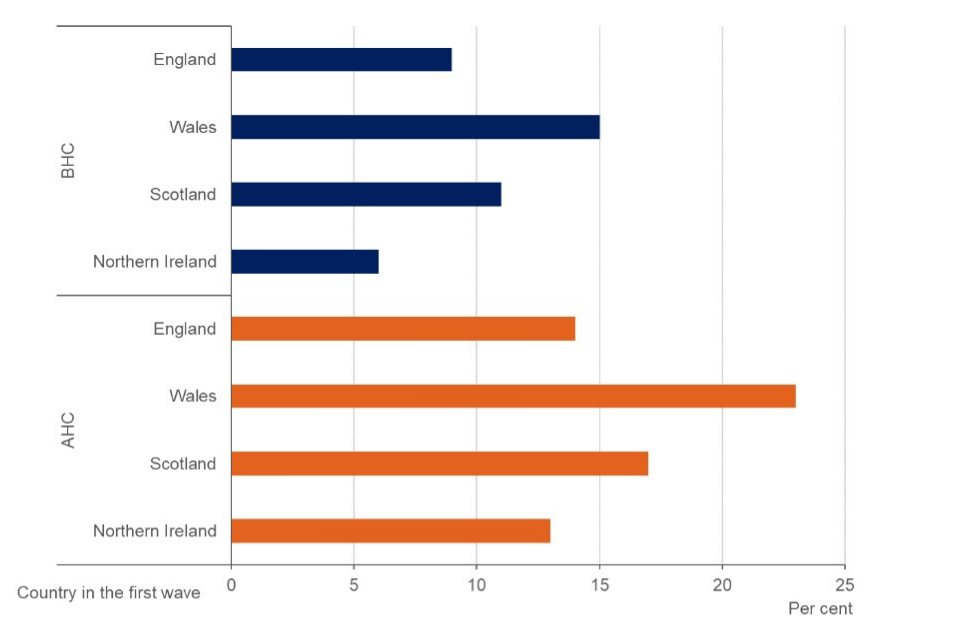
Rates of persistent low income among children differed across the countries of the UK, both BHC and AHC. The effect of housing costs meant that for all countries, AHC rates of persistent low income among children were greater than BHC rates.
Figure 6. Persistent low income among children, by country (BHC and AHC)
Source: Tables 3.2p and 3.8p, Children in persistent low income
Across the countries of the UK, children in Wales and Scotland had a greater risk of being in persistent low income BHC (15% and 11% respectively), followed by children in England (9%) and Northern Ireland (6%). Housing costs have a notable effect on rates of persistent low income for children, and for all 4 countries, AHC rates were higher than BHC rates. Wales had the highest rate of AHC persistent low income at 23%, followed by Scotland (17%), England (14%), and Northern Ireland (13%).
We have observed some recent fluctuations in rates of persistent low income for children in Northern Ireland, Scotland and Wales, both BHC and AHC. While persistent low income levels are affected by factors which may vary from area to area, such as rates of entry into and exit from low income, small sample sizes are likely to be contributing to this variation.
Context may be provided by considering rates of persistent low income measured using 70% of the median alongside those based on the 60% median threshold. For example, for children in Wales, the AHC rate of persistent low income measured at 60% of median income was notably higher than it was in the previous 4-wave period, and higher than the rate in other countries of the UK. When measured at 70% of median income however, the trend in the rate of persistent low income is more stable (see Table 3.11p). One possible interpretation of this is that there has recently been a relatively large share of children in Wales with incomes close to 60% of the median. This would mean that relatively small movements in the low income threshold may result in relatively large changes in the percentage who are below it.
Rates of persistent low income among children across the regions of England are not discussed here. Small sample sizes in some regions mean that the level of uncertainty associated with these statistics restricts our ability to make meaningful comparisons across regions and over time. These statistics are still included in ID tables.
Children in workless families were most likely to be in persistent low income
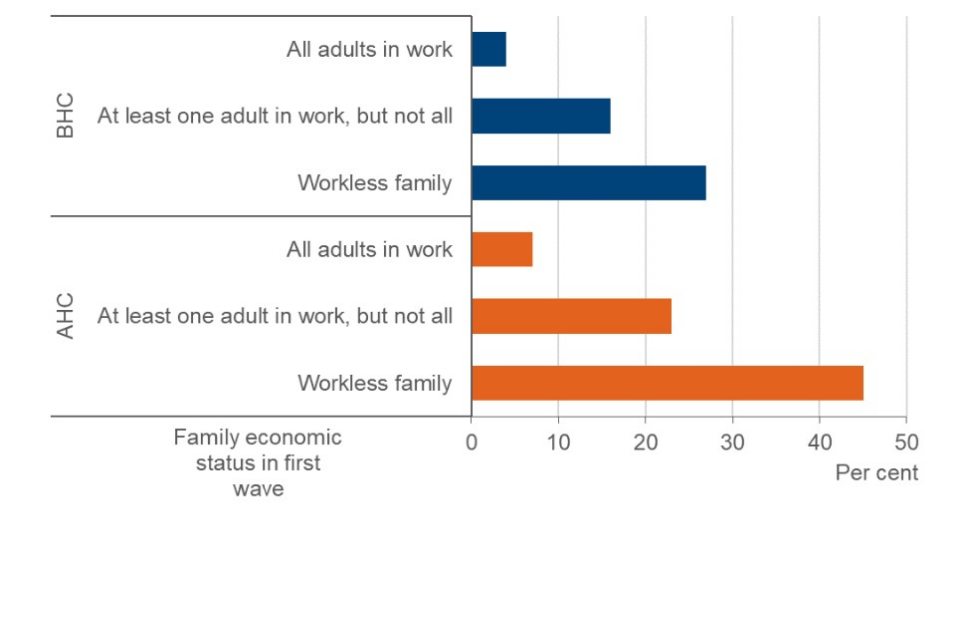
Rates of persistent low income among children were strongly linked to family work status, with those in workless families experiencing the highest risk. Children in families with at least one adult in work fared better than children in workless families, but worse than those in families where all adults were in work.
Figure 7. Persistent low income among children, by family work status (BHC and AHC)
Source: Tables 3.1p and 3.7p, Children in persistent low income
Children who lived in workless families were much more likely to be in persistent low income both BHC (27%) and AHC (45%) than those in families where all adults were in work (4% BHC and 7% AHC). Children who lived in families where at least one adult was in work but not all, were less likely to be in persistent low income than those in workless families, but more likely than those where all adults were in work, with rates of 16% BHC and 23% AHC.
Children living in social rented accommodation were more likely to be in persistent low income than those in other tenures
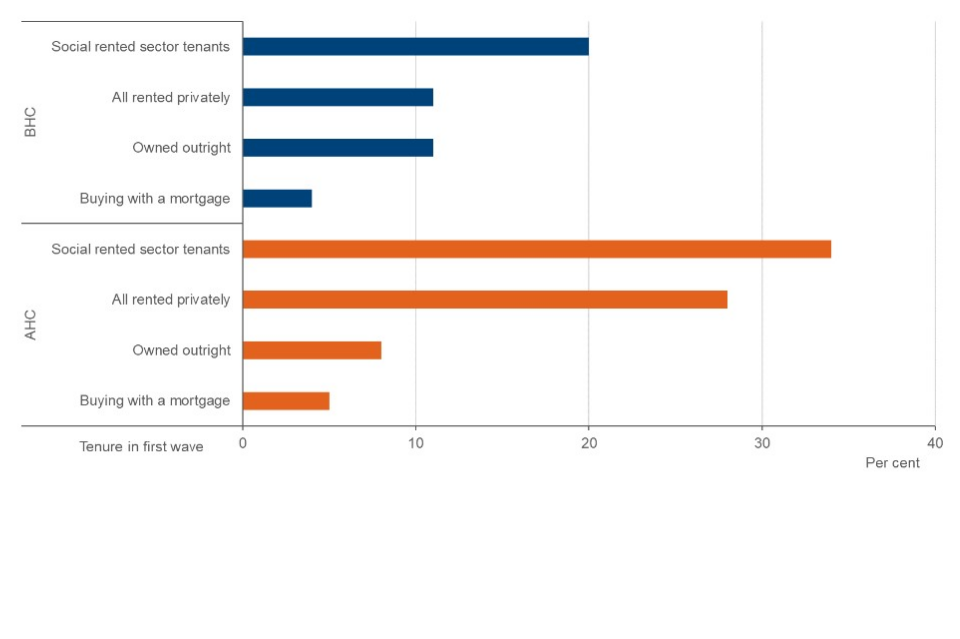
Compared to other tenures, children living in social rented accommodation were most likely to be in persistent low income both before and after housing costs.
Figure 8. Persistent low income among children, by tenure (BHC and AHC)
Source: Tables 3.2p and 3.8p, Children in persistent low income
Children living in social rented homes were more likely to be in persistent low income BHC than children in other tenures: 20% of children living in the social rented sector were in persistent low income, compared to 11% of children living in privately rented homes or homes which were owned outright. Children living in homes being bought with a mortgage were least likely to be in persistent low income BHC (4%).
After housing costs were considered, many more children living in the social rented sector were in persistent low income (34%). The same was true for children in privately rented homes, where the percentage of children in persistent low income AHC was 28%. In contrast, housing costs made little difference to rates of persistent low income among children in homes being bought with a mortgage (5% AHC). Children living in homes which were owned outright were less likely to be in persistent low income AHC than BHC, (8% compared to 11%).
The pattern in rates of persistent low income by tenure is likely to reflect both the income levels and housing costs of households in different tenure types.
Children in lone parent families were more likely to be in persistent low income than children in families headed by a couple, both BHC and AHC
Figure 9. Persistent low income among children, by family status (BHC and AHC)
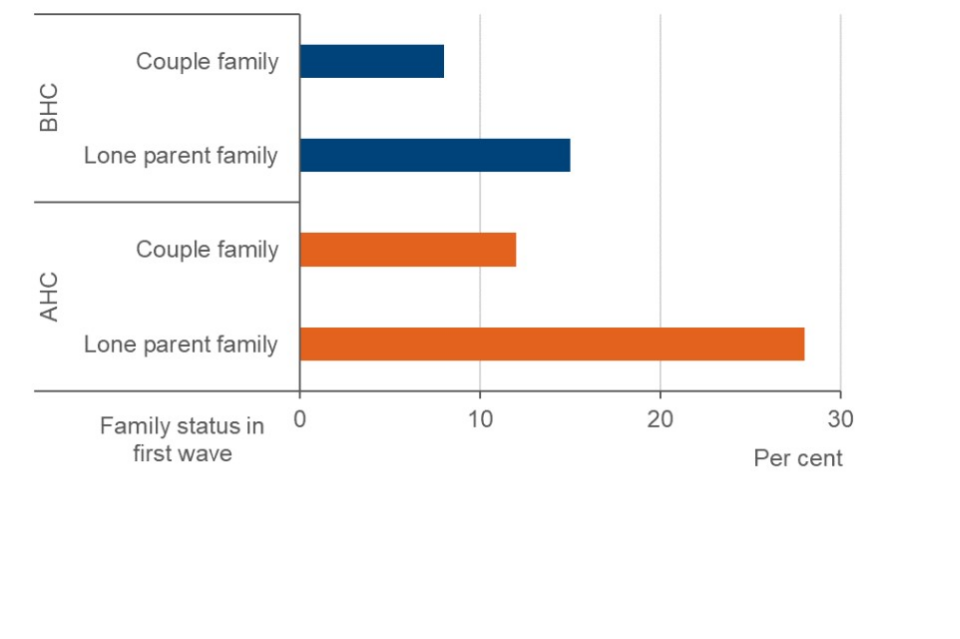
Source: Tables 3.1p and 3.7p, Children in persistent low income
Children in lone parent families were more likely to be in persistent low income than those living in families headed by a couple. This was true both BHC and AHC. Before housing costs, 15% of children in lone parent families were in persistent low income compared to 8% of children living in a couple family. After housing costs, 28% of children in lone parent families were in persistent low income compared to 12% of children living in a couple family.
Children in families with 3 or more children were more likely to be in persistent low income than those in families with fewer children
Children living in families with 3 or more children were much more likely to be in persistent low income than those in families with fewer children, both before and after housing costs.
Figure 10. Persistent low income among children, by family size (BHC and AHC)
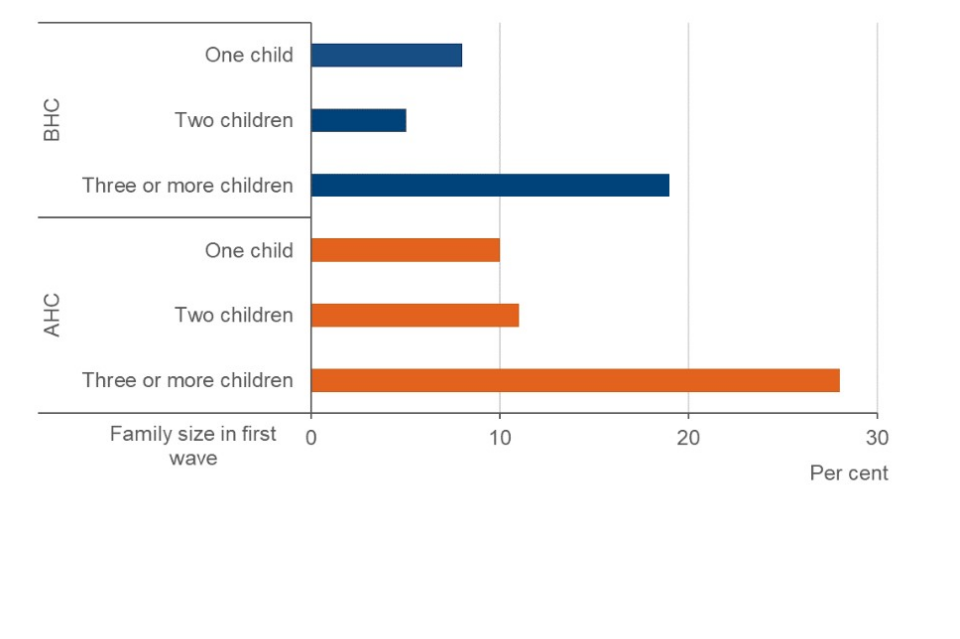
Source: Tables 3.1p and 3.7p, Children in persistent low income
Children in families with 3 or more children were much more likely to be living in persistent low income than those living in families with fewer children, both before (19%) and after housing costs (28%). In contrast, children in families with one or 2 children had lower levels of persistent low income: 8% and 5% BHC, and 10% and 11% AHC respectively.
5. Working-age adults in persistent low income
Over the period 2020 and 2021 to 2023 and 2024, the rate of persistent low income for working-age adults was 8% BHC and 10% AHC. These rates have varied little over time, and the BHC rate was unchanged on the previous 4-wave period. The AHC rate of persistent low income fell by 1 percentage point. As noted in Section 2, reductions in rates of persistent low income may be associated with the use of data from the GPS2 boost in producing cross-sectional income measurements.
Persistent low income among working-age adults across countries and regions of the UK
Rates of persistent low income for working-age adults BHC were similar across the 4 countries of the United Kingdom. After housing costs, the rate in Wales was slightly higher than it was in other countries. Within England, the North East and North West had the highest rates of persistent low income amongst working-age adults BHC. Working-age adults in the East, South East and South West were least likely to be in persistent low income, both before and after housing costs.
Figure 11. Persistent low income among working-age adults, by country and region (BHC and AHC)
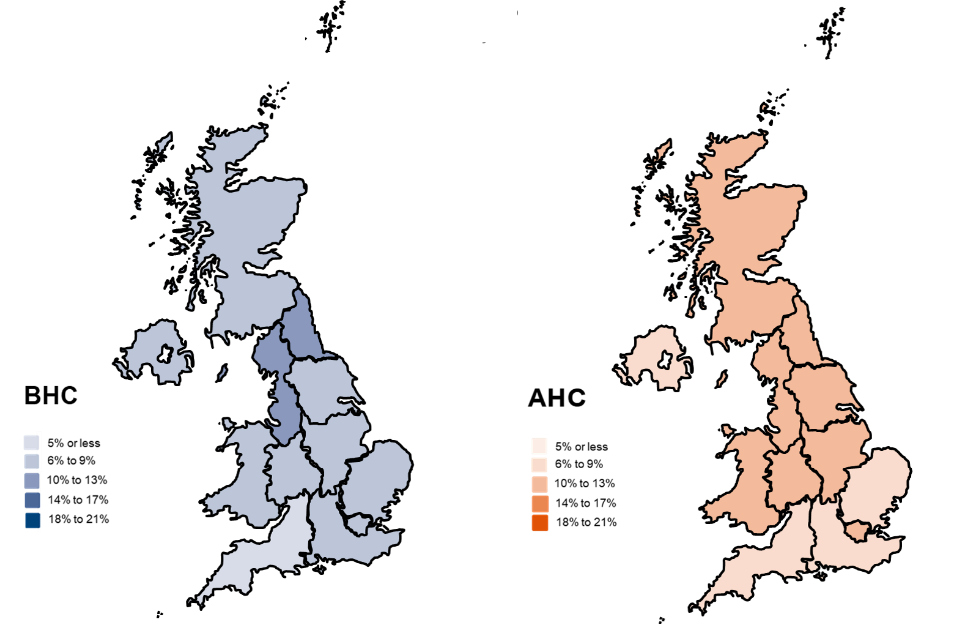
Source: Tables 4.2p and 4.8p, Working-age adults in persistent low income
Across the countries of the UK, there was only a small amount of variation in the BHC rate of persistent low income amongst working-age adults: Wales had the highest rate at 9%, followed by England and Scotland (both 8%) and Northern Ireland (7%). After housing costs had been accounted for, Wales again had the highest rate at 12% AHC, followed by England and Scotland (both 10%) and Northern Ireland (9%).
Within the English regions, working-age adults in the North East and North West were most likely to be in persistent low income BHC (11% and 10% respectively). The lowest rates were seen in the South West (5%), the East and the South East (both 6% BHC).
Across the regions, working-age adults were generally more likely to be in persistent low income AHC than BHC. Those in the South West were least likely to be in persistent low income AHC (7%), followed by those in the East and the South East (8% and 9% respectively). The AHC rate of persistent low income among working-age adults in all other regions was between 10% and 11%.
Working-age adults in workless families were more likely to be in persistent low income than those in families where someone was in work
Levels of persistent low income among working-age adults reflected family employment status, with those living in families where all adults were in work facing the lowest risk, and those in workless families facing the highest risk.
Figure 12. Persistent low income among working-age adults, by employment status of family (BHC and AHC)
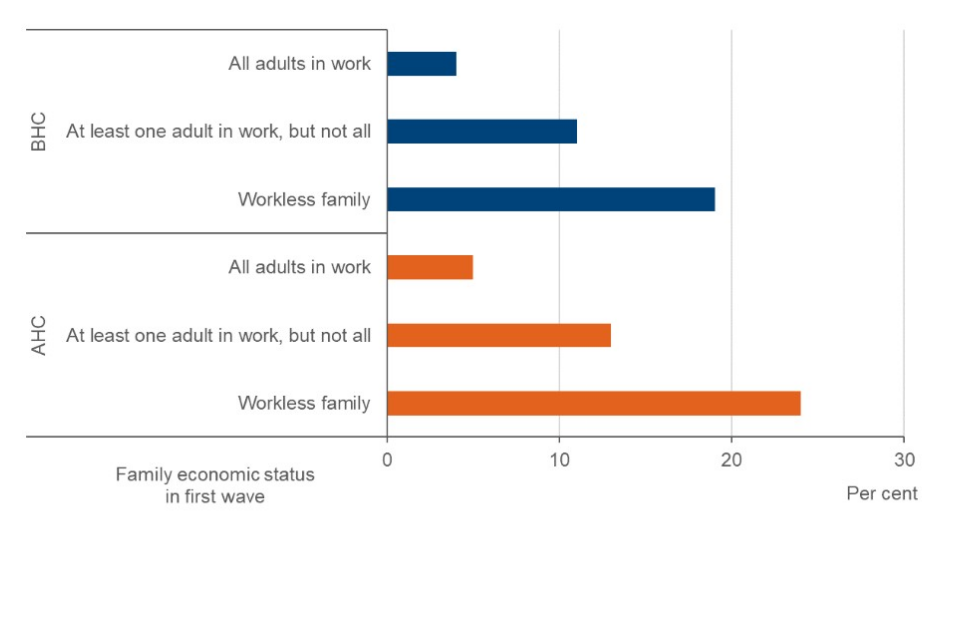
Source: Tables 4.1p and 4.7p, Working-age adults in persistent low income
The majority (66%) of working-age adults in the sample were living in families where all adults were in work (Table 4.13c). Rates of persistent low income for these adults were low, at 4% BHC and 5% AHC. In contrast, working-age adults in workless families had much higher rates of persistent low income: 19% BHC and 24% AHC. Persistent low income rates for working-age adults in families where at least one but not all adults were in work, were between these 2 groups, at 11% BHC and 13% AHC.
Working-age adults who rented their homes had higher rates of persistent low income, both BHC and AHC
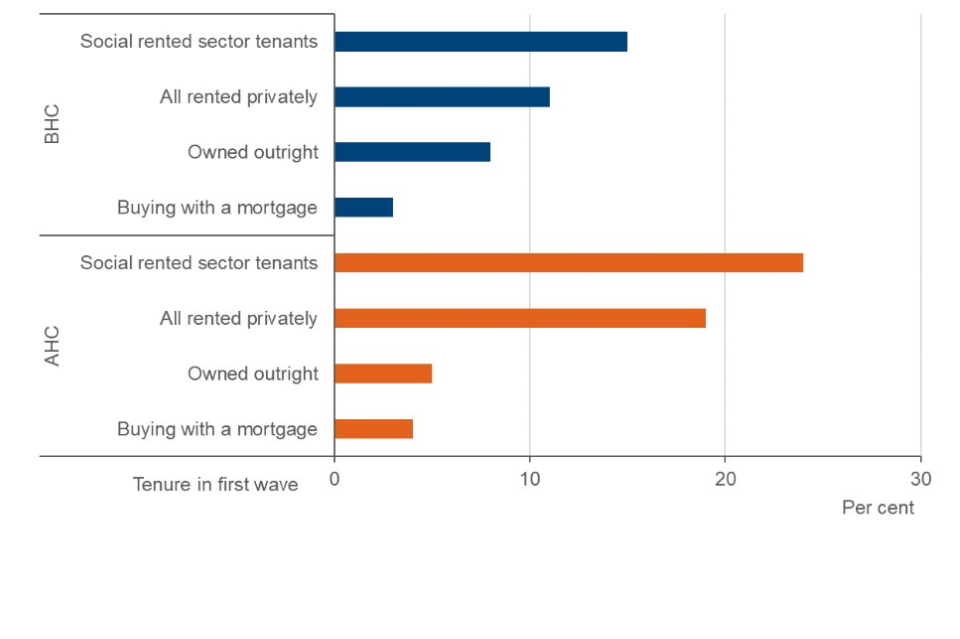
Working-age adults living in the social rented sector faced the highest persistent low income rates, while those buying their homes with a mortgage had the lowest rates. Taking housing costs into account resulted in a large increase in persistent low income among private and social renters.
Figure 13. Persistent low income among working-age adults, by tenure (BHC and AHC)
Source: Tables 4.2p and 4.8p, Working-age adults in persistent low income
Working-age adults living in the social rented sector had the highest rate of persistent low income BHC (15%), followed by those living in privately rented homes (11%). The BHC rate for working-age adults who owned their homes outright was lower, at 8%, and it was lowest for those who were buying their homes with a mortgage, at 3% BHC.
Working-age adults who were renting their homes were much more likely to be in persistent low income after housing costs were taken into account: 24% of working-age adults in the social rented sector and 19% of those who were privately renting were in persistent low income AHC. In contrast, the rate of persistent low income for working-age adults who owned their homes outright was 5%, slightly lower than the BHC rate for this group, while for working-age adults who were buying their homes with a mortgage, the rate was similar, at 4%.
Although 32% of working-age adults in our sample population lived in the private or social rented sector, they were over-represented among working-age adults in persistent low income, accounting for 54% of this group BHC, and 70% AHC (Tables 4.2c, 4.8c and 4.14c).
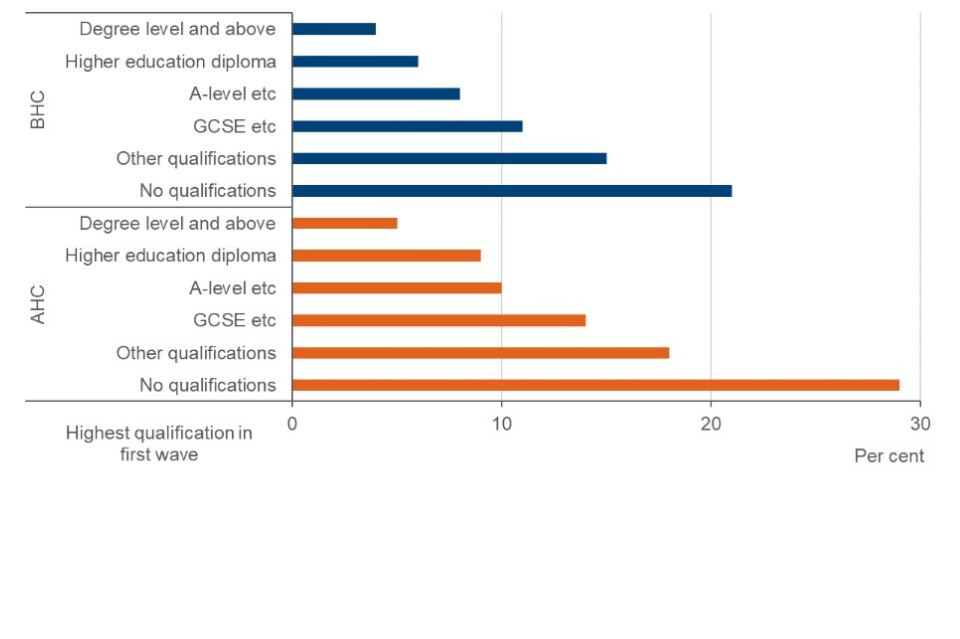
Working-age adults with lower levels of educational qualifications were more likely to be in persistent low income, both BHC and AHC
Rates of persistent low income were highest for working-age adults with no qualifications and lowest for those with a degree or above.
Figure 14. Persistent low income among working-age adults, by education (BHC and AHC)
Source: Tables 4.2p and 4.8p, Working-age adults in persistent low income
Among working-age adults, the likelihood of being in persistent low income increased as level of educational qualification decreased. Working-age adults with no qualifications had the highest rates: 21% BHC and 29% AHC, although it is worth noting that those with no qualifications only accounted for 4% of working-age adults in our sample population (Table 4.14c). Working-age adults with at least a degree-level qualification were least likely to be in persistent low income: 4% BHC and 5% AHC. This group accounted for 34% of working-age adults in the sample population (Table 4.14c).
6. Pensioners in persistent low income
Across the period 2020 and 2021 to 2023 and 2024, the rate of persistent low income for pensioners was 11% BHC and 9% AHC. These rates have been broadly stable over time, although the AHC rate has fallen from 10% for the first time since 2014 and 2015. As noted in Section 2, reductions in rates of persistent low income may be associated with the use of data from the GPS2 boost in producing cross-sectional income measurements.
Rates of persistent low income for pensioners across countries and regions of the UK
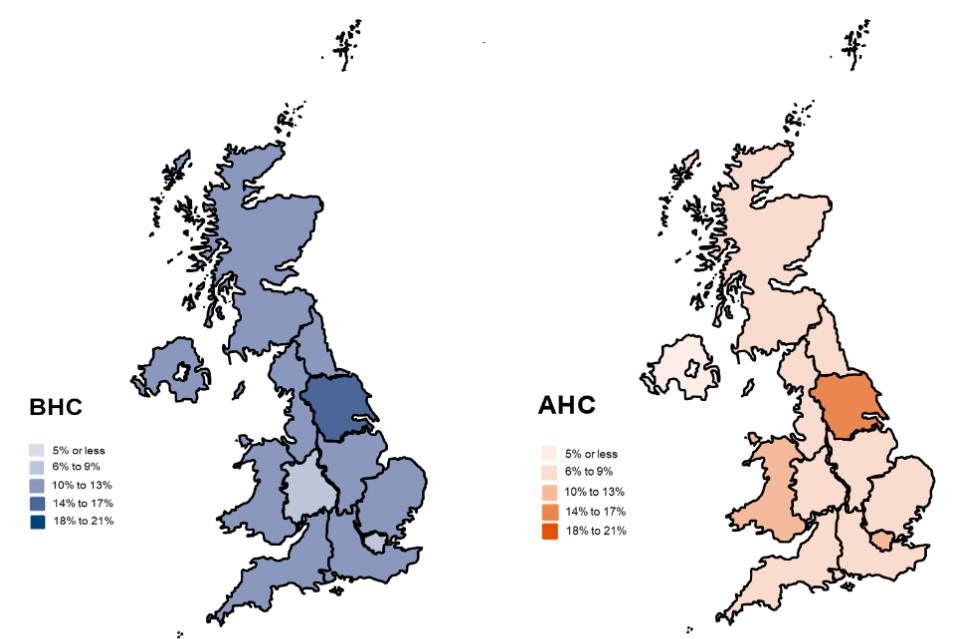
Across the 4 countries of the UK, BHC rates of persistent low income among pensioners were similar, but there was some variation after housing costs were considered. Within England, pensioners in Yorkshire and the Humber were more likely to be in persistent low income both than pensioners in other regions, both before and after housing costs.
Figure 15. Rates of persistent low income among pensioners, by country and region (BHC and AHC)
Source: Table 5.2p, 5.8p, Pensioners in persistent low income
Rates of persistent low income BHC for pensioners were similar across the countries of the United Kingdom, at 11% in England, Northern Ireland and Scotland, and 12% in Wales. Accounting for housing costs resulted in greater variation amongst countries. The AHC rate for Wales was 13%, while rates in England and Scotland were both 9%, and Northern Ireland had the lowest rate at 5%.
Within England, pensioners in Yorkshire and the Humber were most likely to be in persistent low income BHC (17%), followed by those in the East Midlands, East and South West (all at 13%). Rates of persistent low income BHC were lowest amongst pensioners in London, at 6%. Over time, pensioners in Yorkshire and the Humber have consistently been those most likely to be in persistent low income BHC, while those in London have been least likely.
Pensioners were less likely to be in persistent low income AHC in all regions except London. This reflects high levels of owner occupancy among pensioners. Mirroring the BHC pattern, the highest regional rate of persistent low income AHC among pensioners was in Yorkshire and the Humber, at 15%. Unlike the BHC pattern however, London had the second highest regional rate of AHC persistent low income among pensioners, at 10%. The lowest rates of persistent low income AHC were observed amongst pensioners in the North West (6%) and South West (7%).
Rates of persistent low income among pensioners varied more by tenure AHC than BHC
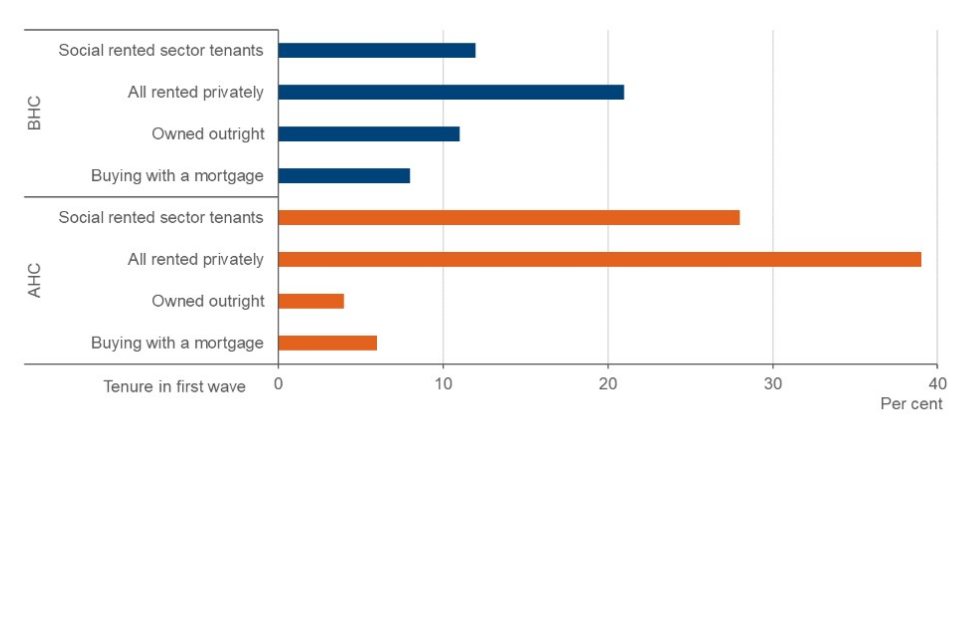
Pensioners living in privately rented homes faced the highest persistent low income rate BHC, while those buying their homes with a mortgage had the lowest rate. Taking housing costs into account resulted in much higher levels of persistent low income for pensioners who were private and social renters.
Figure 16. Rates of persistent low income among pensioners by tenure
Source: Table 5.2p, 5.8p, Pensioners in persistent low income
Pensioners buying their homes with a mortgage had the lowest risk of being in persistent low income BHC (8%). Those who owned their homes outright and those living in the social rented sector had similar likelihoods of being in persistent low income (11% and 12% respectively). For pensioners who were privately renting their homes, BHC rates were considerably higher at 21%.
After housing costs were accounted for, pensioners who were renting their homes were much more likely to be in persistent low income. Pensioners in privately rented homes remained most likely to be in persistent low income AHC, at 39%, followed by those in the social rented sector at 28%. While 18% of pensioners in our sample population lived in a rented home, these high rates of AHC persistent low income meant that they accounted for 59% of all pensioners who were in persistent low income AHC (Tables 5.8c and 5.14c). Conversely, pensioners in owner-occupied homes, both owned outright and being bought with a mortgage, had low rates of persistent low income AHC (4% and 6% respectively).
7. Long-standing illness or disability and persistent low income
The way in which information on long-standing illness or disability was gathered by the Understanding Society survey changed between Waves 7 and 9. This is explained in the Background information and methodology report. The most important point to note is that, from Wave 8, while the presence (or not) of a limiting health problem or disability is only reported on for those individuals who said they had a long-standing illness or disability, any such limiting health problem or disability was not necessarily linked to that long-standing condition.
Over half of pensioners (52%) in our sample had a long-standing illness or disability, compared to a third (32%) of working-age adults. Pensioners who reported a long-standing illness or disability were also more likely to report having a limiting health problem or disability: 36% compared to 20% of working-age adults. Please see Tables 5.13c and 4.13c for more information.
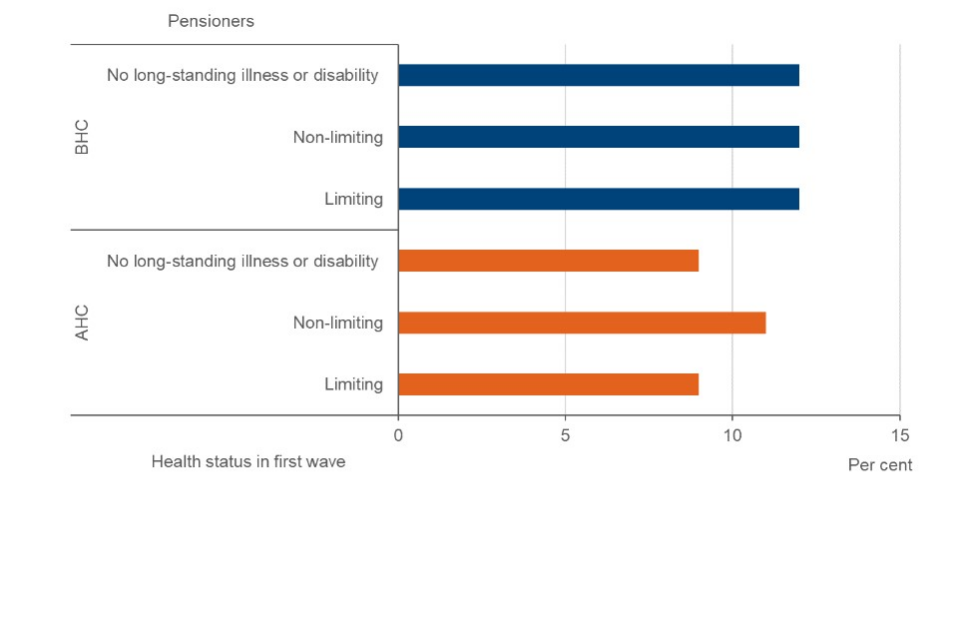
Rates of persistent low income for pensioners varied little according to reported health and disability
Pensioners had similar rates of persistent low income, regardless of whether they reported a long-standing illness or disability. This was true both before and after housing costs.
Figure 17: Persistent low income among pensioners, by health and disability (BHC and AHC)
Source: Tables 5.1p and 5.7p, Pensioners in persistent low income
Pensioners without a long‑standing illness or disability were as likely to be in persistent low income BHC as those with a long‑standing illness or disability (both 12%). Among pensioners reporting a long‑standing illness or disability, the BHC rate of persistent low income was 12% for both those reporting non‑limiting health problems or disabilities and those reporting limiting health problems or disabilities.
Rates of persistent low income AHC were also similar for pensioners regardless of whether they had a long‑standing illness or disability (10% for those who did, and 9% for those who did not). Among those reporting a long‑standing illness or disability, AHC rates were slightly higher for those with non‑limiting health problems or disabilities compared to those with limiting health problems or disabilities (11% compared to 9% respectively).
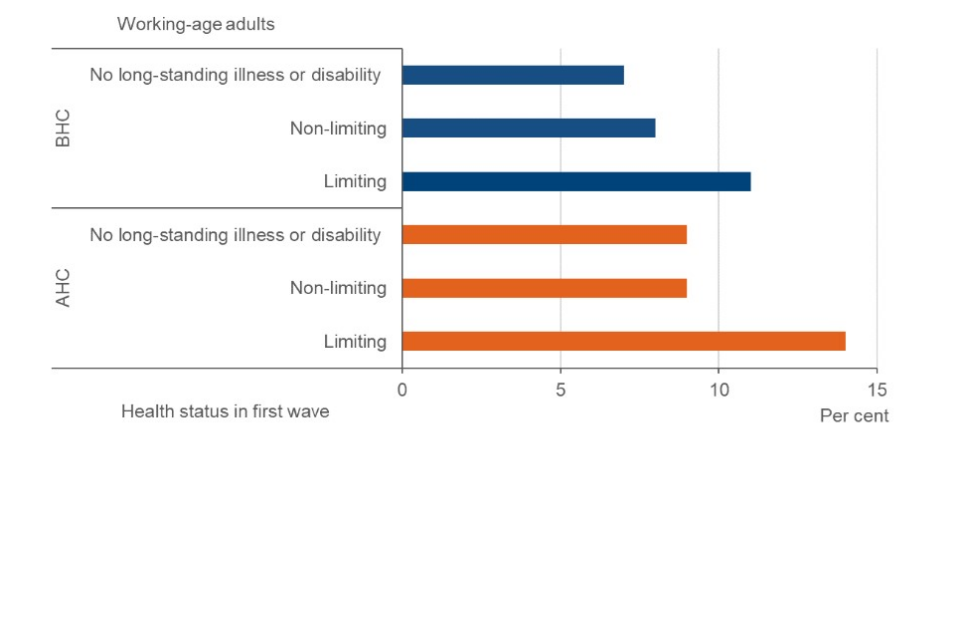
Rates of persistent low income among working-age adults varied according to reported health and disability
Working-age adults who reported a long-standing illness or disability were more likely to be in persistent low income than those who did not, both before and after housing costs. Working-age adults who reported a limiting health problem or disability in addition to a long-standing illness or disability had the highest rates of persistent low income, both before and after housing costs.
Figure 18: Persistent low income among working-age adults, by health and disability (BHC and AHC)
Source: Tables 4.1p and 4.7p, Working-age adults in persistent low income
Working-age adults who reported a long-standing illness or disability were more likely to be in persistent low income than those who did not (10% BHC and 12% AHC compared to 7% BHC and 9% AHC respectively). Those who reported a limiting health problem or disability in addition to a long‑standing illness or disability had the highest rates of persistent low income, both BHC (11%) and AHC (14%). The rate of persistent low income for working‑age adults who reported a non‑limiting health problem or disability in addition to a long‑standing illness or disability was lower, at 8% BHC and 9% AHC.
In contrast to pensioners, working‑age adults regardless of health status were more likely to be in persistent low income after housing costs compared to before housing costs.
See Tables 4.1p, 4.7p, and 4.13c in the Working-age adults in persistent low income file and 5.1p, 5.7p and 5.13c in the Pensioners in persistent low income file for more information.
8. Movement between income quintiles
The data used in ID is longitudinal, meaning that it follows individuals over time. This enables us to analyse income mobility. To do this, we use income quintiles. Income quintiles divide the population, when ranked by household income, into 5 equally sized groups. Quintile 1 (Q1) represents the fifth of the population with the lowest household incomes. Quintile 5 (Q5) represents the fifth of the population with the highest household incomes.
The starting point for this analysis is 2015 and 2016. This allows individuals from Understanding Society’s Immigrant and Ethnic Minority Boost (IEMB) sample to be included. For further information on the IEMB, please refer to the Background information and methodology report accompanying this publication.
While members of the GPS2 boost are not yet included in this longitudinal analysis, income quintiles in the most recent 2 waves are based on cross-sectional data which includes the boost. As noted in Section 2, it is difficult to assess the possible impact of this change, since this analysis can only be compared to previous ID publications, based on earlier data releases.
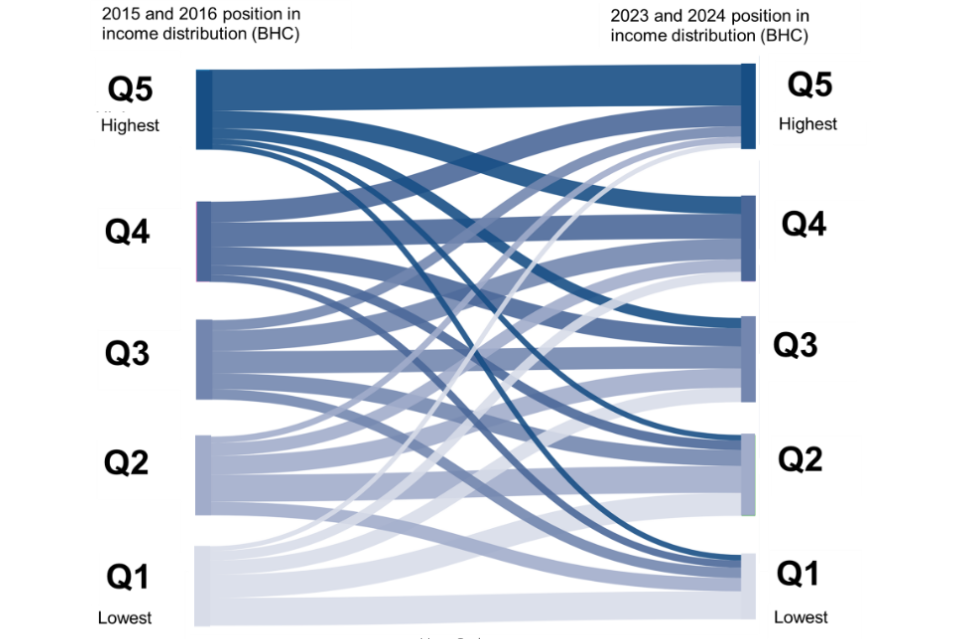
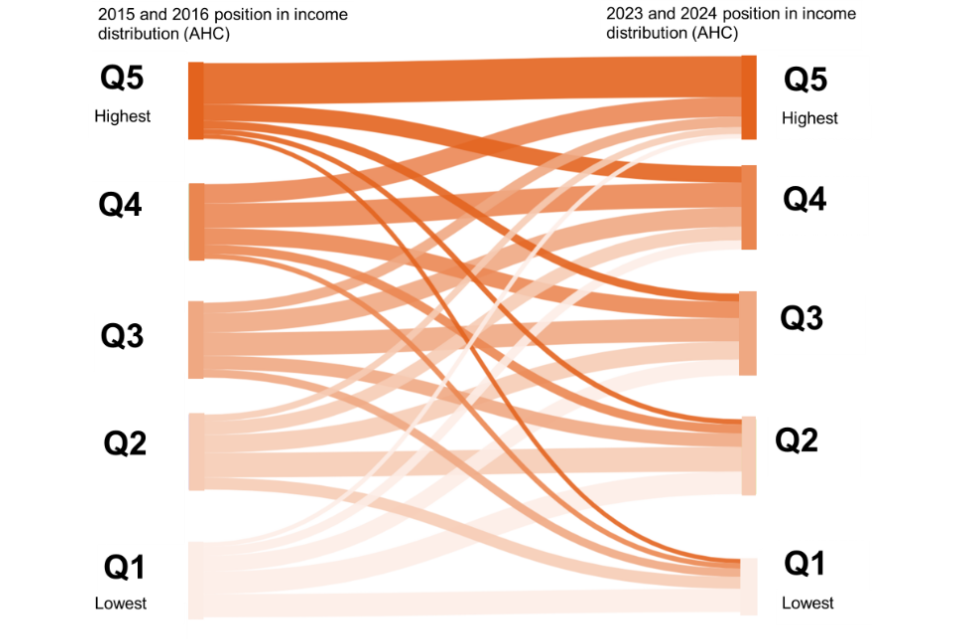
Firstly, we compare where individuals were in the income distribution in 2023 and 2024 (the latest wave), to where they were in the income distribution in 2015 and 2016 (the first wave included here), both before and after housing costs. Note that this does not look at where individuals were in the income distribution in the intervening years.
Individuals in the highest income quintile in 2015 and 2016 were those most likely to be in the same quintile in 2023 and 2024, both BHC and AHC
Figure 19. Quintile movements from 2015 and 2016 to 2023 and 2024 (BHC)
Source: Table 6.3bhc, Movement between quintiles
Figure 20. Quintile movements from 2015 and 2016 to 2023 and 2024 (AHC)
Source: Table 6.3ahc, Movement between quintiles
Individuals in the highest income quintile (quintile 5) in the first wave (2015 and 2016) were those most likely to be in the same income quintile in the latest wave (2023 and 2024): just over half of them (52% BHC and 55% AHC) were also in the highest income quintile in the latest wave.
Similar proportions of individuals in all other quintiles (those in quintiles 1 to 4) were in the same quintile in the first and latest wave: ranging from 28% to 35% BHC and 31% to 33% AHC.
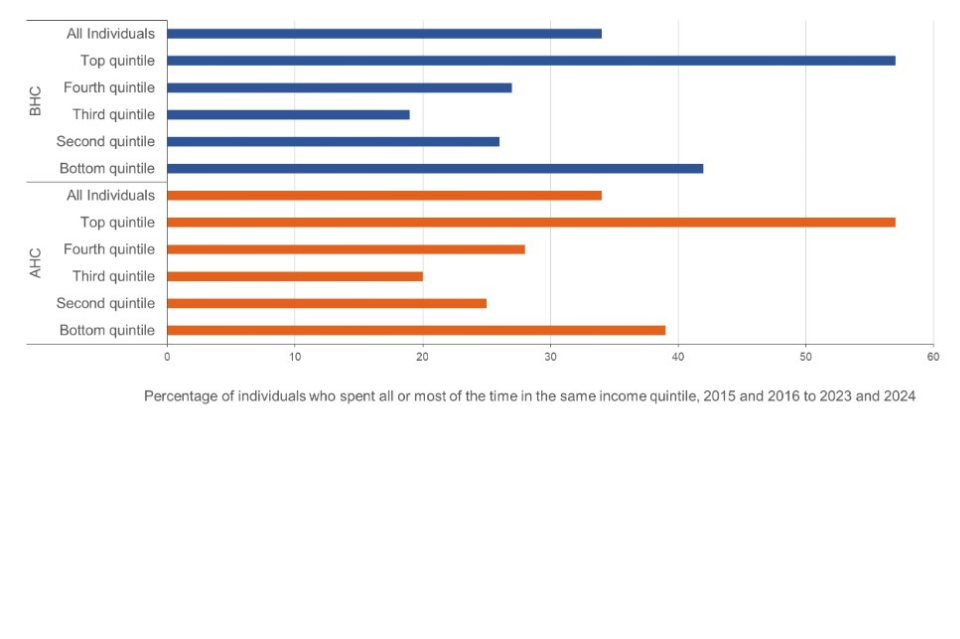
Individuals in the highest income quintile in 2015 and 2016 were more likely than those in other income quintiles to spend time in the same quintile
Individuals who were in the highest income quintile (quintile 5) in 2015 and 2016 were most likely to spend all or most of their time in the same quintile in the following waves, followed by those in the lowest income quintile (quintile 1).
Figure 21. Percentage of individuals who spent all or most of the time in the same income quintile, all waves from 2015 and 2016 to 2023 and 2024 (BHC and AHC)
Source: Tables 7.1 and 7.2, Quintile movements over time
Many individuals moved across the income distribution over the period 2015 and 2016 to 2023 and 2024. Those in the top quintile in 2015 and 2016 were, however, most likely to spend all or most intervening years in the same quintile (57% both BHC and AHC), followed by those in the bottom quintile (42% BHC and 39% AHC). Conversely, individuals in the third quintile in 2015 and 2016 were least likely to stay in the same quintile for all or most intervening years (19% BHC and 20% AHC). Individuals in quintiles 2 and 4 in 2015 and 2016 were somewhat more likely than those in the third quintile to stay in the same quintile for all or most years (between 25% and 28% did so, both BHC and AHC), but were less likely to do so than those in the top and bottom quintiles.
For more information on income mobility, please see tables on Movements between Quintiles and Quintile movements over time.
9. Low income entries and exits
This section presents analysis on rates of entry into and exit from low income across consecutive waves. The first part of the section looks at rates of low income entry and exit for all individuals, children, working-age adults and pensioners, measured across the most recent 2 waves. It then discusses low income entry and exit rates by various characteristics. As with analysis of persistent low income, individuals are categorised according to their characteristics in the first wave of each longitudinal analytical period.
As noted in Section 2, analysis of low income entries and exits over the most recent 2-wave period (2022 and 2023 to 2023 and 2024) now includes members of the GPS2 boost.
Analysis of entries and exits only includes ‘clear’ transitions. For an entry or exit to count, household incomes must cross the 60% of median income threshold and be at least 10% higher or lower than the equivalent threshold in the following wave. As individuals live in households and we assume that all members of the household benefit equally from the household’s income, they will be affected by changes at the household level.
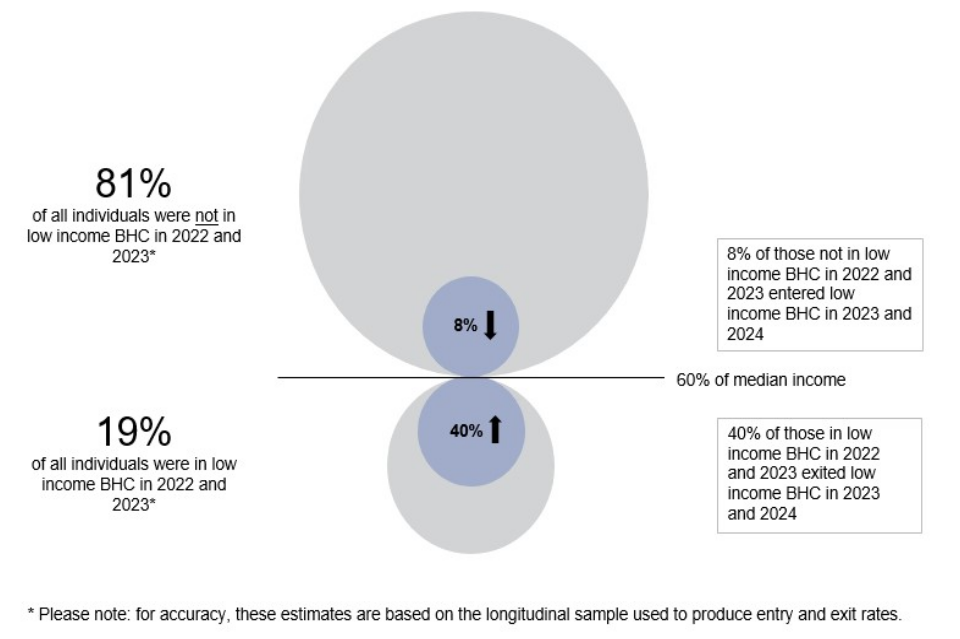
The number of individuals who entered into and exited from low income across the period 2022 and 2023 to 2023 and 2024 were similar, both BHC and AHC. Rates of low income entry are lower than rates of low income exit, because they are based upon different sized populations. Because there were many more people not in low income in 2022 and 2023 than there were in low income, there was a much larger group of individuals who were eligible for low income entry. In contrast, rates of exit from low income are based on the much smaller number of individuals who were in low income in 2022 and 2023, and therefore eligible for a low income exit.
For example, the BHC rate of entry over the 2 most recent waves was 8% and the BHC rate of exit was 40%. Figure 22 uses this data to illustrate how the much larger population eligible for a low income entry results in an entry rate that is much lower than the exit rate, despite similar sized populations entering and exiting low income.
Figure 22. Rates of low income entry and exit explained
Source: Tables 8.1 and 8.9, Low income entry and exit rates (BHC)
Rates of low income entry, by population group
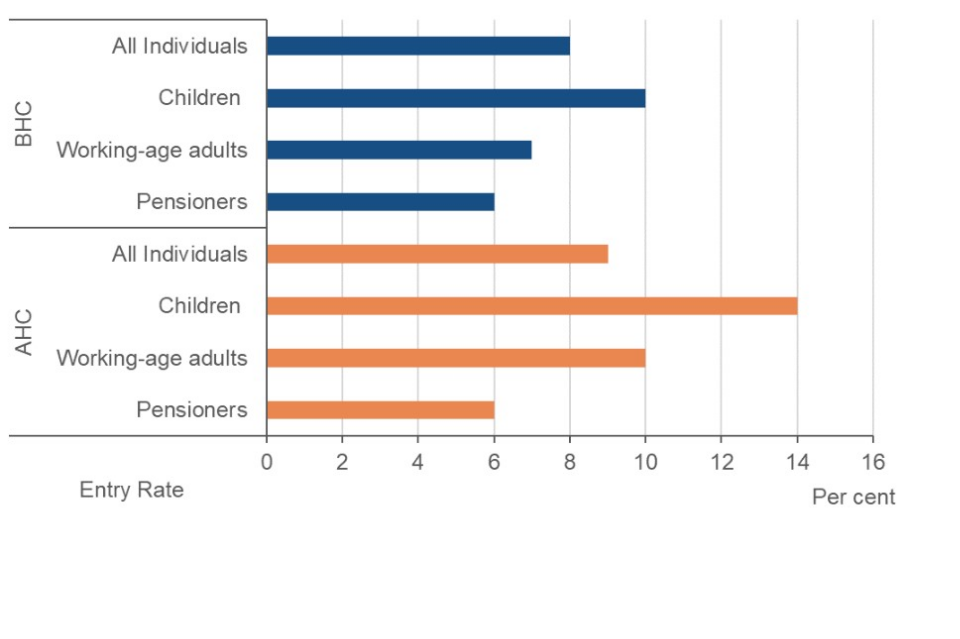
Over the period from 2022 and 2023 to 2023 and 2024, the rate of entry into low income for all individuals was 8% BHC and 9% AHC. Children were more likely to enter low income than working-age adults or pensioners, both before and after housing costs.
Figure 23. Rates of entry into low income from 2022 and 2023 to 2023 and 2024 (BHC and AHC)
Source: Tables 8.1 and 8.9, Low income entry and exit rates
Children were most likely to enter low income over the period 2022 and 2023 to 2023 and 2024: 10% did so BHC and 14% AHC. Working-age adults had lower rates of entry, at 7% BHC and 10% AHC, while pensioners had the lowest rates (6% both BHC and AHC).
Rates of entry into low income have changed little over time, both BHC and AHC. However, all groups experienced an increase in their rate of entry into low income over the most recent 2-wave period. This may be linked to the inclusion of members of the GPS2 boost in the most recent 2 waves (please refer to Section 2 for more information).
Rates of low income exit, by population group
As explained above, low income exit rates are higher than entry rates even though roughly equivalent numbers of individuals moved into and out of low income across the most recent 2-wave period.
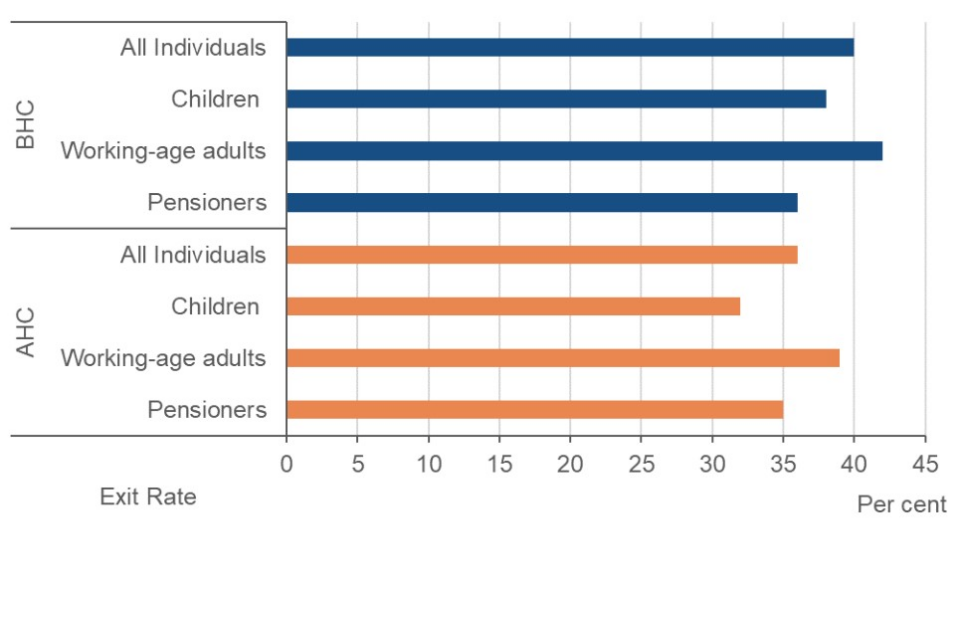
Over the most recent 2 waves, 40% of all individuals who were in low income BHC in the first wave, exited from it, as did 36% of all individuals who were in low income AHC in the first wave. Working-age adults were more likely to exit from low income than children and pensioners, both before and after housing costs.
Figure 24. Rates of exit from low income from 2022 and 2023 to 2023 and 2024 (BHC and AHC)
Source: Tables 8.1 and 8.9, Low income entry and exit rates
Before housing costs, working-age adults were most likely to exit from low income (42%), followed by children (38%) and pensioners (36%). Working-age adults were also most likely to exit from low income AHC (39%), followed by pensioners (35%) and children (32%).
Compared to the previous 2-wave period (2021 and 2022 to 2022 and 2023), all groups saw a decrease in their rate of exit from low income over the most recent 2-wave period, apart from pensioners BHC. This may be linked to the inclusion of members of the GPS2 boost in the most recent 2 waves (please refer to Section 2 for more information).
See Tables 8.1 and 8.9 in the Low income entry and exit rates file for headline rates of low income entry and exit.
Rates of low income entry and exit associated with other characteristics
ID also produces entry and exit statistics for other sub-groups using rates averaged over the 3 most recent 2-wave periods (i.e. 2020 and 2021 to 2021 and 2022; 2021 and 2022 to 2022 and 2023; 2022 and 2023 to 2023 and 2024). This is because sample sizes for sub-group analysis are small, and averaging 3 waves addresses this. The findings discussed below therefore span the period from 2020 through to 2024. As is the case elsewhere, individuals are classified according to their status in the first of each of the 2-wave periods.
Ethnicity
Entry into low income, by ethnicity
Individuals in households with an Asian, Asian British or Black, African, Caribbean or Black British head of household were most likely to enter low income (13% and 15% respectively BHC, and 16% and 21% AHC). Rates of entry into low income were lower for individuals with a head of household of Mixed or multiple ethnicity (8% BHC and 10% AHC) or from the Other ethnic group (9% BHC and 11% AHC). Individuals with a White head of household were least likely to enter low income over the most recent period, both BHC (6%) and AHC (7%).
Exits from low income, by ethnicity
Sample sizes are small when considering low income exits for individuals with a head of household of Mixed or multiple ethnicity or from the Other ethnic group, even when averaging the 3 most recent 2-wave periods. While exit rates for these groups are included in ID tables, the uncertainty associated with them means we cannot make reliable comparisons to other ethnic groups or over time, and they are not discussed here.
Individuals with a Black, African, Caribbean or Black British head of household were most likely to exit from low income both BHC and AHC (50% and 42% respectively). Individuals in households with a White head of household were less likely to exit low income (41% BHC and 39% AHC), and those in households with an Asian or Asian British head were least likely (36% BHC and 33% AHC).
See Tables 8.5 and 8.13 in the Low income entry and exit rates file for rates of entry and exit for working-age adults by ethnicity.
Tenure
Entry into low income, by tenure
While 12% of individuals living in the social rented sector entered low income, and 10% of individuals living in the private rented sector did so, the rate of low income entry for individuals who were buying their home with a mortgage or who owned their home outright was lower, at 5%. After housing costs were accounted for, the rate of entry into low income was relatively unchanged for those who owned their homes outright and those who were buying their home with a mortgage (5% and 6% respectively). AHC rates were higher for those in the social rented sector and private renters (both 16%).
Similar differences in rates of low income entry between tenants and homeowners have persisted over time.
Exits from low income, by tenure
Individuals buying their homes with a mortgage were most likely to exit from low income BHC (51%), followed by those privately renting their homes (42%). Those in the social rented sector and those who owned their homes outright were least likely to exit from low income BHC (37% and 38% respectively).
The picture was different when looking at exits from low income AHC, with social and private sector renters being less likely to exit from low income (31% and 34% respectively), than those buying with a mortgage (52%) and owner-occupiers (47%).
See Tables 8.3 and 8.11 in the Low income entry and exit rates file for rates of entry and exit for working-age adults by tenure.
Qualifications (working-age adults only)
Entry and exit rates by educational qualification are considered for working-age adults only.
Individuals with no qualifications were most at risk of entering low income
There was a clear pattern across low income entry rates, both BHC and AHC: those with fewest qualifications were at greatest risk of entering low income, and this risk decreased as educational level increased. Over the most recent period, low income entry rates BHC ranged from 5% for those with at least a degree, to 13% for those with no qualifications. AHC rates ranged from 6% for those with a degree or above, to 14% for individuals who had no educational qualifications. This pattern has been consistent over time.
Individuals with higher qualifications were most likely to exit from low income
The likelihood of exiting from low income increased with the level of educational qualification. Over the most recent period, BHC exit rates ranged from 50% among those with degree level and above to 33% among those with no qualifications. Similarly, AHC low income exit rates ranged between 49% for those with a degree or above, and 32% for those with no qualifications. Again, this pattern has been consistent over time.
See Tables 8.6 and 8.14 in the Low income entry and exit rates file for rates of entry and exit for working-age adults with other levels of qualification.
Family type
Low income entry, by family type
Pensioner couples and couples without children were least likely to enter low income, both BHC (4% and 5% respectively), and AHC (4% and 6% respectively). Single adults with children were most likely to enter low income, both BHC (15%) and AHC (21%). This trend has been consistent over time.
Single adults without children, single pensioners and couples with children had similar low income entry rates. These rates all ranged between 7% and 9% both before and after housing costs, with the exception of the AHC rate of entry for single females without children, which was slightly higher, at 11%.
Low income exit, by family type
Before housing costs, couples without children were most likely to exit from low income (53%). Single male and female pensioners were least likely to exit low income BHC (28% and 30% respectively), followed by single adults with children (35% BHC). Low exit rates among single pensioners are likely to reflect the relatively stable income levels of this group. Single adults without children, couples with children, and pensioner couples had BHC exits rates ranging somewhere in between this, from 39% and 44%.
When looking at rates of low income exit AHC, couples without children again had the highest exit rate (53%), followed by single women and men without children, couples with children, and pensioner couples, who all had exit rates between 39% and 43%. Single adults with children were least likely to exit from low income AHC (29%), followed by single pensioners (31% for single male pensioners, and 32% for single female pensioners).
These broad differences in low income exit rates across family type have persisted since the start of ID analysis.
See Tables 8.2 and 8.10 in the Low income entry and exit rates file for rates of entry and exit for working-age adults by family type.
These are just some of the sub-groups covered in the entry and exit tables. For more breakdowns see Tables 8.1 to 8.16 in the Low income entry and exit rates file.
10. Events associated with low income entries and exits
The associations between certain household events and movements into and out of low income are discussed in this section. We focus on the role of changes in income components and household employment, but also include certain demographic events. To manage the length of this section, only selected AHC findings over the most recent 2 waves are presented here. BHC tables and data from previous waves are also available, as are tables providing evidence on the role of other household changes: see the Events associated with low income entries and exits tables file.
For each event, we present 3 statistics. These are explained using the following example:
| Prevalence (per cent) | Entry rate (per cent) | Share of entries (per cent) | |
|---|---|---|---|
| Fall in earnings | 13 | 28 | 38 |
Source: Table 9.1n, Events associated with low income entries and exits
Prevalence - this tells us how common an event is among the population at risk of either entering or exiting low income. When considering the relationship between a fall in earnings and low income entry, the prevalence statistic tells us that 13% of those who were not in low income in 2022 and 2023 experienced a fall in earnings between then and 2023 and 2024.
Entry or exit rate (if experienced event) - in the above example, 28% of those who were not in low income in 2022 and 2023 and who experienced a decrease in earnings, entered low income in 2023 and 2024.
Share of entries or exits - this tells us what percentage of all those who entered or exited low income experienced each event. In the above example, 38% of all those who entered low income across the 2 most recent waves, experienced a fall in earnings.
In defining the events in this analysis, attempts have been made to limit the effects of other important factors which might have a bearing on the event. For example, when looking at a change in earnings, there must be no change in the number of workers in the household. Please see the Background information and methodology note for further information on how the various events are defined.
As with analysis of low income entries and exits, analysis of the events associated with these movements over the most recent 2-wave period (2022 and 2023 to 2023 and 2024) now includes members of the GPS2 boost.
Events associated with entering low income: from 2022 and 2023 to 2023 and 2024, AHC: selected findings [footnote 1]
| Prevalence (per cent) | Entry rate (per cent) | Share of entries (per cent)[footnote 2] | |
|---|---|---|---|
| Fall in earnings [footnote 3] | 13 | 28 | 38 |
| Fall in benefit income [footnote 3] | 18 | 18 | 35 |
| Fall in the number of workers in household – same household size | 11 | 12 | 14 |
| Fall in the number of full-time workers in household – same household size | 12 | 22 | 27 |
| Change from full-time to part-time work for at least one household member – same household size | 5 | 32 | 17 |
| Change from working to workless household – same household size | 4 | 20 | 8 |
| Increase in number of children | 3 | 18 | 6 |
A fall in earnings was closely linked to low income entry AHC. While it was experienced by 13% of individuals not in low income in the first wave (2022 and 2023), 28% of them entered low income in the second wave (2023 and 2024). When considering all individuals who had entered low income across this period, a considerable number of them (38%) had experienced a fall in earnings. Individuals who have experienced a fall in household earnings have, over time, represented an increasing percentage of all of those who enter low income, rising from 29% in 2010 and 2011 (Table 9.1n).
While a fall in benefit income was experienced by a higher percentage (18%) of those not in low income in the first wave, the risk of entering low income AHC was lower (18%) than for those who had had a fall in earnings. Of all those who entered low income over this period, 35% had experienced a fall in benefit income (Table 9.2n).
Findings linked to different work-related events indicate that a move away from full-time work is more closely linked to low income entry than loss of work itself. While 12% of individuals lived in households that experienced a fall in the number of full-time workers (household size remained the same), 22% of them entered low income AHC, and 27% of all low income entries experienced this event. Where at least one household member moved from full-time to part-time work, the risk of entering low income was 32%, although this event was less common and experienced by just 5% of all those not in low income in the first wave. 17% of those who entered low income in 2023 and 2024 had experienced this event (Tables 9.7n and 9.8n).
Despite some recent fluctuations, which are likely in part to be linked to the introduction of the GPS2 boost in 2022 and 2023, the general trend suggests that a fall in the number of full-time workers and a move from full-time to part-time work is associated with a greater risk of entering low income and a greater share of all low income entries since 2010 and 2011 (Table 9.7n and Table 9.8n).
Becoming a workless household was uncommon (4%) among those who were not in low income in 2022 and 2023. It was associated with a 20% risk of entering low income, and was experienced by 8% of all those who entered low income AHC in 2023 and 2024 (Table 9.9n). A decrease in the number of any workers in the household was more prevalent (11%) and was experienced by 14% of all those who entered low income. Of those whose household experienced this event, 12% entered low income in 2023 and 2024 (Table 9.6n).
Changing demographics of the household can also be associated with entering low income. An increase in the number of children in a household, for example, while experienced by just 3% of those not in low income in 2022 and 2023, was associated with an 18% chance of entering low income in 2023 and 2024. Six per cent of those who entered low income experienced this event (Table 9.16n).
Events associated with exiting low income from 2022 and 2023 to 2023 and 2024, AHC: selected findings [footnote 4]
| Prevalence (per cent) | Exit rate (per cent)[footnote 5] | Share of exits (per cent)[footnote 6] | |
|---|---|---|---|
| Rise in household earnings [footnote 7] | 24 | 62 | 42 |
| Rise in benefit income [footnote 7] | 32 | 47 | 43 |
| Increase in number of workers in household - same household size | 12 | 40 | 13 |
| Increase in number of full-time workers in household - same household size | 13 | 59 | 21 |
| Change from part-time to full-time work for at least one household member - same household size | 8 | 61 | 14 |
| Change from workless to working household - same household size | 6 | 42 | 7 |
An increase in household earnings was closely associated with exiting from low income AHC: it was experienced by just under a quarter (24%) of individuals who were in low income in the first wave of the most recent 2-wave period, 62% of whom then exited from low income. Of all individuals who exited from low income over this period, 42% were living in households that experienced an increase in earnings. The percentage of individuals who exited low income and experienced a rise in household earnings is greater now than it was in 2010 and 2011 (Table 9.1x).
An increase in benefit income was also closely associated with exiting from low income AHC, with this event affecting 32% of those in low income at the start of the most recent 2-wave period. Of those individuals, 47% exited from low income, and the event was experienced by 43% of all low income exits over the 2-wave period (Table 9.2x).
The 2 events which considered an increase in the amount of full-time work within a household were the work-related events most closely linked to the likelihood of exiting low income: 61% of individuals living in a household where there was a change from part-time to full-time work, exited from low income, as did 59% where there was an increase in the number of full-time workers (household size remained the same). Only 8% of individuals in low income lived in a household which experienced a change from part-time to full-time work, so although they had a high likelihood of exiting from low income, this event was experienced by just 14% of all individuals who exited from low income. Thirteen per cent of individuals in low income in the first of the 2 waves lived in a household which experienced an increase in the number of full-time workers, and 21% of those who exited from low income experienced this event (Table 9.7x and 9.8x).
Just 6% of individuals who were in low income AHC in the first wave of the most recent 2-wave period, lived in a household that changed from a workless one to one in which someone was in work, and this was associated with a 42% likelihood of exiting low income. This type of change was experienced by 7% of all those who exited from low income across the most recent 2-wave period (Table 9.9x). An increase in the number of workers in the household was more prevalent (12%) and was associated with 13% of all low income exits. 40% of individuals who were living in households which saw an increase in the number of workers (household size remained the same) exited from low income (Table 9.6x).
11. Policy context
The coronavirus (COVID-19) pandemic
The most recent wave included in this publication is Wave 15. The coronavirus (COVID-19) pandemic and the policies implemented in response to it affected fieldwork and incomes during Waves 11 (2019 and 2020), 12 (2020 and 2021) and 13 (2021 and 2022), and the first part of Wave 14 (2022 and 2023). Given the longitudinal nature of ID analysis, the coronavirus pandemic and associated policies are relevant to the statistics presented in this report.
Government restrictions on social mixing in response to the pandemic were in place until the beginning of Wave 14. This resulted in some disruption to planned face-to-face interviewing, both for existing sample members as well as those surveyed as part of the GPS2 boost. Further details can be found in Understanding Society Main Study changes due to the COVID-19 pandemic (Wave 14 release) - access the document by scrolling to the end of the page.
Government policies in response to the coronavirus pandemic also affected household incomes, as follows:
- The Coronavirus Job Retention Scheme (CJRS): provided income support for employees
- The Self-Employment Income Support Scheme (SEISS): provided income support for self-employed individuals
- Universal Credit and Working Tax Credit uplifts: additional allowances as well as one-off payments for recipients of these benefits
Help with the cost of living
Waves 13 (2021 and 2022), 14 (2022 and 2023) and 15 (2023 to 2024) also saw Cost of Living Payments being made to households on certain income-based benefits:
- Cost of Living Payments for households on qualifying low-income benefits or tax credits
- Disability Cost of Living Payments for households on a qualifying disability benefit
- Pensioner Cost of Living Payments for households entitled to a Winter Fuel Payment
In addition, the Household Support Fund was set up to help vulnerable households meet the cost of daily needs such as food, clothing, and utilities.
Implications for ID measures
Three out of 4 waves included in the most recent persistent low income estimates were affected in some way by the pandemic, either directly, or indirectly via policy measures affecting employment, income and fieldwork. Persistent low income is based on a relative measure of low income, and as such is affected by changes in the income distribution. It is also affected by the amount of movement into and out of relative low income from year to year. Higher rates of movement into and out of low income will exert a downward influence on the rate of persistent low income.
In terms of the measurement of low income entries and exits, and analysis of the events associated with them, ID sets out minimum requirements that must be met before an income or income component change is counted. The purpose of these thresholds is to stabilise the statistics by ensuring they only reflect meaningful changes. These requirements mean that low income entry and exit analysis will not fully reflect people’s lived experiences of income changes.
For example, when lump sum payments (such as Cost of Living payments) are reported via Understanding Society, these are adjusted so that monthly income calculations reflect the period that lump sums are intended to cover. As such, these payments may not meet the threshold required for them to be captured in events analysis where, for example, a household’s monthly benefit income must increase or decrease by at least 20%. Please refer to the Background information and methodology note as well as Understanding Society documentation for further information.
Official Statistics
Income Dynamics statistics are Official Statistics.
Our statistical practice is regulated by the Office for Statistics Regulation (OSR).
OSR sets the standards of trustworthiness, quality, and value in the Code of Practice for Statistics that all producers of official statistics should adhere to.
You are welcome to email: teamincome.dynamics@dwp.gov.uk directly with any comments about how we meet these standards. Alternatively, you can contact OSR by emailing regulation@statistics.gov.uk or via the OSR website.
12. More information
ID uses data from Understanding Society to derive a measure of disposable household income. A household income measure assumes that all members of the household benefit equally from the combined income of the household, and so all members of a household will appear at the same position in the income distribution. Adjustments are made to account for the size and composition of households to make figures comparable – see section on equivalisation below.
Key information on the definitions and measures used in ID is provided here. Please also refer to the Background information and methodology note for more detail.
Definitions
Understanding Society
Understanding Society, led by the University of Essex, is a longitudinal survey of individuals in the United Kingdom which has been running since 2009. The Wave 15 sample (2023 and 2024) included over 39,000 individuals available for longitudinal analysis. Those not in private households at the point at which they were recruited (either in 2009 at the start of the survey or as part of subsequent sample boosts) were not included.
Income
This includes income from several sources:
- Labour income – usual pay and self-employment earnings. Includes income from second jobs. For Waves 11, 12 and 13, this included any income received from the government Coronavirus Job Retention Scheme. Self-employment income is reported for either the previous financial year or, if not, for the most recent 12 months.
- Miscellaneous income – educational grants, payments from family members and any other regular payments.
- Private benefit income – includes trade union and/or friendly society payments, maintenance or alimony and sickness or accident insurance. Since Wave 12, this category has included income from Student Loans or Tuition Fee Loans.
- Investment income – private pensions and/or annuities, rents received, income from savings and investments.
- Pension income – occupational pensions income.
- State support – tax credits and all state benefits including State Pension and Universal Credit. This also includes any lump sum payments adjusted for the time period they covered.
Before Housing Costs (BHC) Income
Income which is net of income tax payments, National Insurance contributions, and council tax.
After Housing Costs (AHC) Income
Income which is derived by subtracting housing costs (mortgage interest and rent payments) from BHC income.
Equivalisation
An adjustment is made to household income to make the amount available to each individual comparable according to the size and composition of the household they belong to. For example, the process of equivalisation adjusts the income of a single person upwards, so their income can be compared directly to that of a couple. Equivalisation is explained below this section.
Relative Low Income
This is defined for this publication as an individual in a household with an equivalised household income of less than 60% of median income. An individual is in persistent low income if they are in low income for at least 3 of the last 4 survey periods.
Households and families
ID presents information on an individual’s household income by various household and family characteristics. There are important differences between households and families. Please see below this section.
Inflation
This concerns how goods and services increase in price (generally) over time. ID uses an adjustment based on the Consumer Prices Index (CPI), also used in the Households Below Average Incomes (HBAI) publication (see Related information and statistics, below), to compensate for the effects of inflation over time.
Sampling Error
Results from surveys are estimates and not precise figures – in general terms the smaller the sample size, the larger the uncertainty. We are unable to provide sampling uncertainties for these statistics, but please note that small changes are unlikely to be statistically significant.
Non-sampling Error
Survey data represents the best data from respondents to the survey. If people give inaccurate responses or certain groups of people are less likely to respond, this can introduce bias and error. This non-sampling error can be minimised through effective and accurate sample and questionnaire design and extensive quality assurance of the data. However, it is not possible to eliminate it completely, nor can it be quantified.
Equivalisation explained
Equivalisation allows comparisons of income levels to be made between individuals of different ages from different sized households.
Figure 25. How household income is equivalised (BHC)
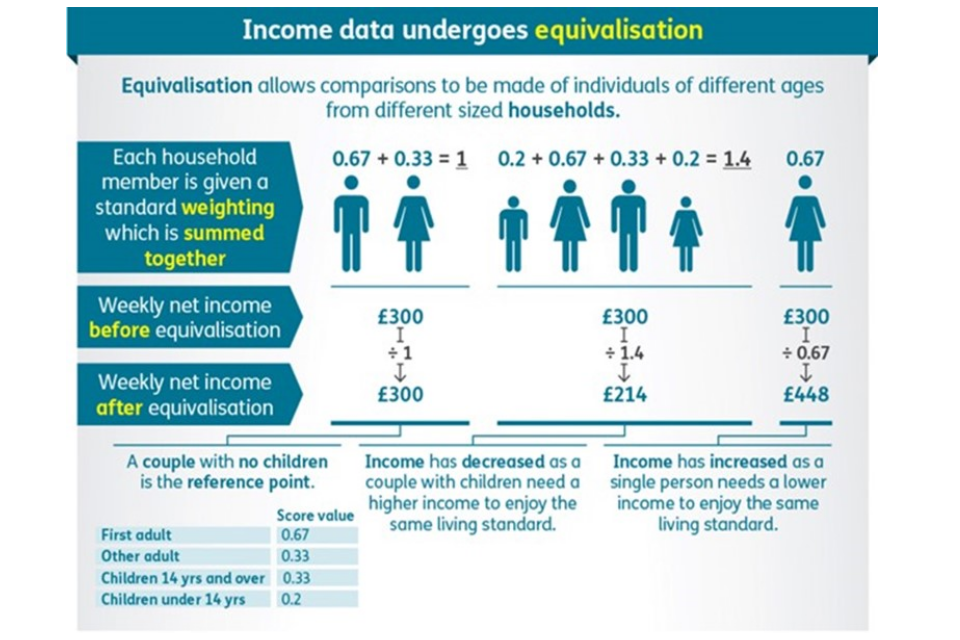
Each household member is given a weighting which is summed together to provide a household weighting factor. Household weekly net income is divided by that factor to give equivalised income.
Weights used in BHC analysis are: first adult 0.67; other adult or child 14 years and over 0.33; child under 14 years 0.2. Given 3 different households with the same household income:
-
A household of 2 adults with no children is the reference point, with an equivalisation factor of 1.
-
A household comprising 2 adults and 2 children has an equivalisation factor of 1.4. When household income is divided by the equivalisation factor, it is reduced.
-
A single adult household has an equivalisation factor of 0.67. When household income is divided by the equivalisation factor, it is increased.
Different weighting factors are used in AHC analysis. For more information, please refer to the Background information and methodology note.
Household and families
Figure 26. Definitions of households and families
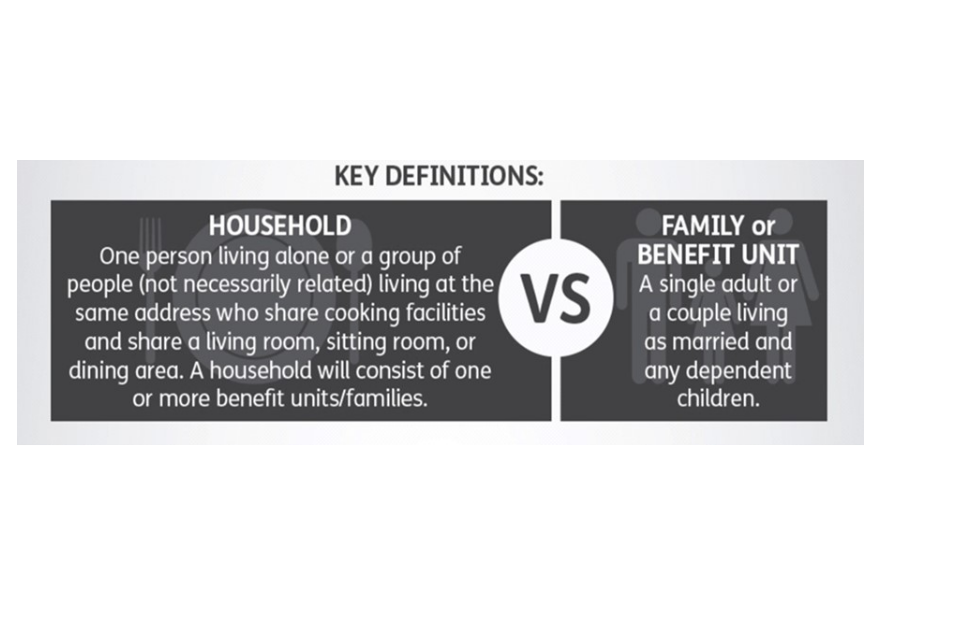
A household is one person living alone or a group of people (not necessarily related) who either share living accommodation or who share one meal a day and who have the same address as their only or main residence. A household can comprise one or more families. A family is either a single adult or a married or cohabiting couple, together with any dependent children.
Related information and statistics
Reference tables and the ID Background information and methodology report, which provides further detail on how we estimate ID measures, are available for our most recent release, together with the ID Quick Guide and ID Tables Guide.
Analysis of Income Dynamics data from previous years can be found on our collections page.
Estimates of numbers and rates of low income in a single year are available from the annual Households Below Average Income (HBAI) publication. Rates of persistent low income are generally lower than single year rates published by HBAI because fewer people remain in low income for 3 years out of 4 than experience low income in any single year. ID does provide estimates of relative low income for each Understanding Society survey wave, although these are not directly comparable to HBAI single year estimates due to measurement differences, including the recent integration of administrative data on state benefit receipt in the HBAI data source. See Table M.9 in the Income Dynamics methodology tables file and the Background information and methodology note for more detail for more detail.
The following Office for National Statistics (ONS) publications provide information about alternative sources of data on earnings and income:
Please refer to the ID Background information and methodology note for more information on related statistics.
Contact information and feedback
DWP would like to hear your views on our statistical publications. If you use any of our statistics publications, we would be interested in hearing what you use them for and how well they meet your requirements.
Press enquiries should be directed to the DWP Press Office at newsdesk@dwp.gov.uk.
Enquiries about these statistics should be directed by email to the teamincome.dynamics@dwp.gov.uk.
Lead Analyst: Helen Smith
ISBN: 978-1-78659-955-1
-
Not all events are included here. Please refer to Tables 9.1n to 9.18n in Events associated with low income entries and exits for further information on events associated with low income entry. ↩
-
The share of entries column does not sum to 100% because individuals can experience more than one event. ↩
-
For a change in monthly income or housing costs to be considered an event, it must have risen or fallen by at least 20% and a minimum of £10. Certain demographic changes are controlled for when examining income events: changes in household earnings are only included if the number of workers stays the same. For all other income events, the number of people in the household must not change. ↩ ↩2
-
Not all events are included here. Please refer to Tables 9.1x to 9.18x in Events associated with low income entries and exits tables for findings on events associated with low income exit. ↩
-
Because those in low income are a smaller group than those who are not, and are generally closer to the low income threshold, they have a greater chance of exiting low income if they experience an income-boosting event than those not in low income have of entering low income if they experience a loss of income event. This explains why exit rates tend to be higher than entry rates. ↩
-
The share of exits column does not sum to 100% because individuals can experience more than one event. ↩
-
For a change in monthly income or housing costs to be considered an event, it must have risen or fallen by at least 20% and a minimum of £10. Certain demographic changes are controlled for when examining income events: changes in household earnings are only included if the number of workers stays the same. For all other income events, the number of people in the household must not change. ↩ ↩2