How many people claim asylum in the UK?
Published 27 August 2026

© Crown copyright 2026
This publication is licensed under the terms of the Open Government Licence v3.0 except where otherwise stated. To view this licence, visit nationalarchives.gov.uk/doc/open-government-licence/version/3 or write to the Information Policy Team, The National Archives, Kew, London TW9 4DU, or email: psi@nationalarchives.gov.uk.
Where we have identified any third party copyright information you will need to obtain permission from the copyright holders concerned.
This publication is available at https://www.gov.uk/government/statistics/immigration-system-statistics-year-ending-june-2026/how-many-people-claim-asylum-in-the-uk
Back to ‘Immigration system statistics, year ending June 2026’ contents page
This release goes up to the year ending (YE) June 2026. The “year ending” period includes the 12 months up to and including the YE month. For example, YE June 2026 includes the 12 months between 1 July 2025 and 30 June 2026.
An asylum claim marks an individual’s entry into the UK asylum system. Following a claim, people may spend time in the system awaiting an initial decision and, where eligible, may receive accommodation or financial support. Outcomes on a claim may include a grant of protection or other leave, a refusal, or other outcomes such as a withdrawal or an administrative outcome, with some claimants able to appeal following a decision.
An asylum claim may relate to more than one person, if the main applicant has family members (dependants) who are included in the same claim.
These statistics focus on the number of people (main applicants and dependants) claiming asylum. The number of main applicants (excluding dependants) represents the total number of asylum cases that require consideration by the Home Office.
Statistics on other parts of the asylum system are available in other chapters of this report - ‘How many people are granted asylum in the UK?’ and ‘How many people are in the UK asylum system?’.
1. How many people claim asylum in the UK?
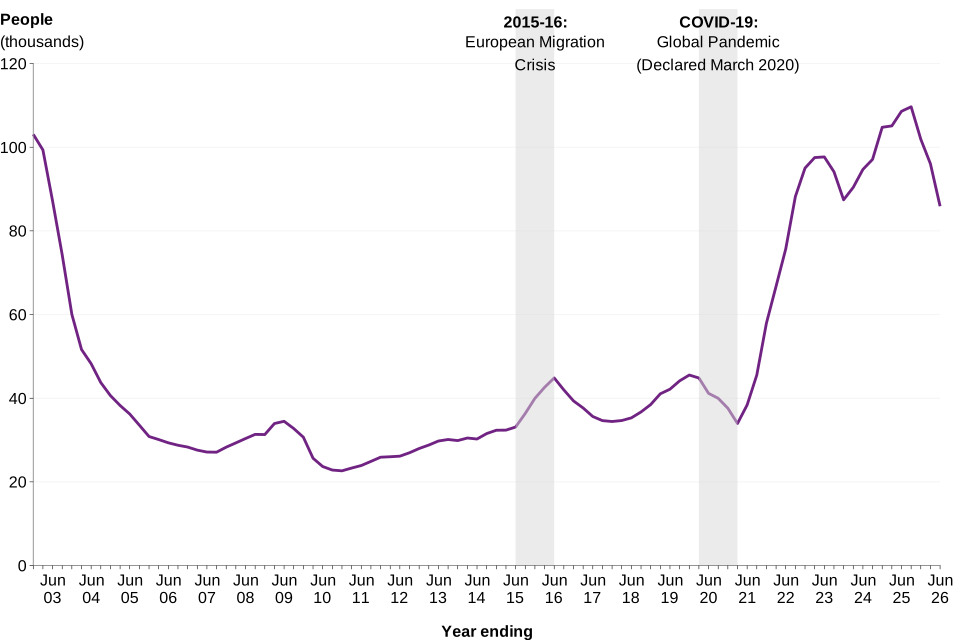
The number of people claiming asylum in the UK decreased over the latest year but remained above levels typically seen before 2021.
In the YE June 2026, 85,891 people claimed asylum in the UK, 21% fewer than in the previous year.
Figure 1: Number of people claiming asylum in the UK, YE December 2002 to YE June 20261
Source: Asylum claims and initial decisions - Asy_D01
Notes:
- Includes main applicants and dependants.
Figure 1 shows an initial peak in the number of people claiming asylum in the UK of around 103,000 in the YE December 2002. After falling from its peak, the number of people claiming asylum generally ranged between 22,000 and 46,000 per year until 2021. After this, claims increased rapidly, surpassing the 2002 peak and reaching a high of 109,662 in the YE September 2025. Although claims have fallen since then, they remain above levels seen between 2003 and 2022.
1.1 How do asylum seekers travel to the UK?
To apply for asylum in the UK, a person must be in the country. When entering, people who claim asylum may use an illegal entry route or other entry routes, such as a visa. Some claim asylum immediately on arrival, while others claim after spending time in the UK. This section presents data on the most recent migration route recorded before a person claimed asylum. For example, someone who arrived on a student visa and later switched to a work visa before claiming asylum would be shown in the ‘Work visa’ category.
The figures are based on the date of asylum claim, thereby differing from the data presented in the ‘Illegal entry routes data tables’, which are based on the date of arrival. As a result, the totals presented between these datasets for asylum claims from small boat arrivals may differ.
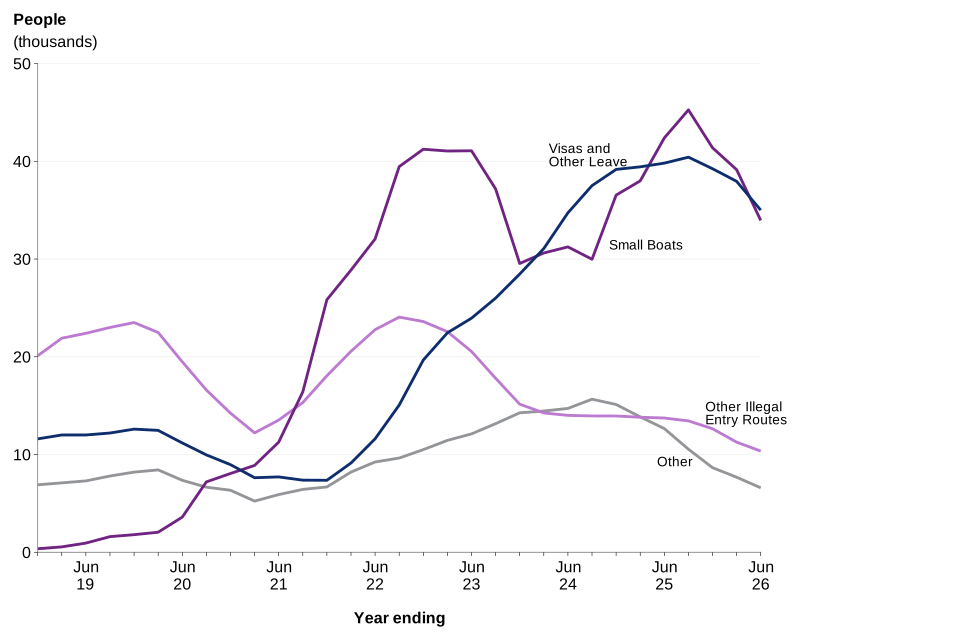
In the latest year, the number of asylum claims from people who held visas or other leave was similar to the number of claims from small boat arrivals.
However, illegal entry routes (the majority of which are small boat arrivals) remain the most common route for people claiming asylum in the UK, accounting for just over half (52%) of asylum seekers.
In the YE June 2026:
- 41% (34,999) of asylum seekers held a visa or other leave prior to claiming, including those who held an Electronic Travel Authorization (ETA)
- 40% (33,949) of asylum seekers arrived on small boats
- 12% (10,348) of asylum seekers had either been detected attempting to enter the UK clandestinely or had self-declared or been identified as having entered without valid permission, including some who entered via the Common Travel Area without valid permission to enter
- 8% (6,595) entered through other routes, were non-visa nationals visiting the UK before the introduction of ETA requirements, or could not be matched to a route of entry, including some likely to have entered clandestinely without declaring it and some who travelled through the Common Travel Area
Figure 2 shows that asylum seekers from small boat arrivals rose rapidly during 2021 and 2022, peaking at around 45,000 people in the YE September 2025 before falling over the latest year. This reflects the wider trend seen in small boat arrivals, as almost all small boat arrivals claim asylum.
Claims from people who held a visa or other leave prior to claiming asylum also increased substantially over this period and, in the latest year, slightly exceeded claims from small boat arrivals. The increase in claims from people who had previously held a visa or other leave coincides with a rise in visa grants up until 2023. However, there may be a delay between a person being granted a visa and subsequently claiming asylum, as some claim shortly after arrival while others claim later during their period of leave or after their leave has expired.
Figure 2: Number of people claiming asylum in the UK, by route prior to claim, YE December 2018 to YE June 20261,2
Source: Asylum claims and initial decisions - Asy_D01a
Notes:
- Claims from those who held a visa or other leave prior to claiming include those who held an ETA.
- ‘Other’ includes those that were UK-born children of asylum seekers or refugees, were non-visa nationals visiting the UK before the introduction of ETA requirements, or could not be matched to a route of entry, including some likely to have entered clandestinely without declaring it (including through the Common Travel Area).
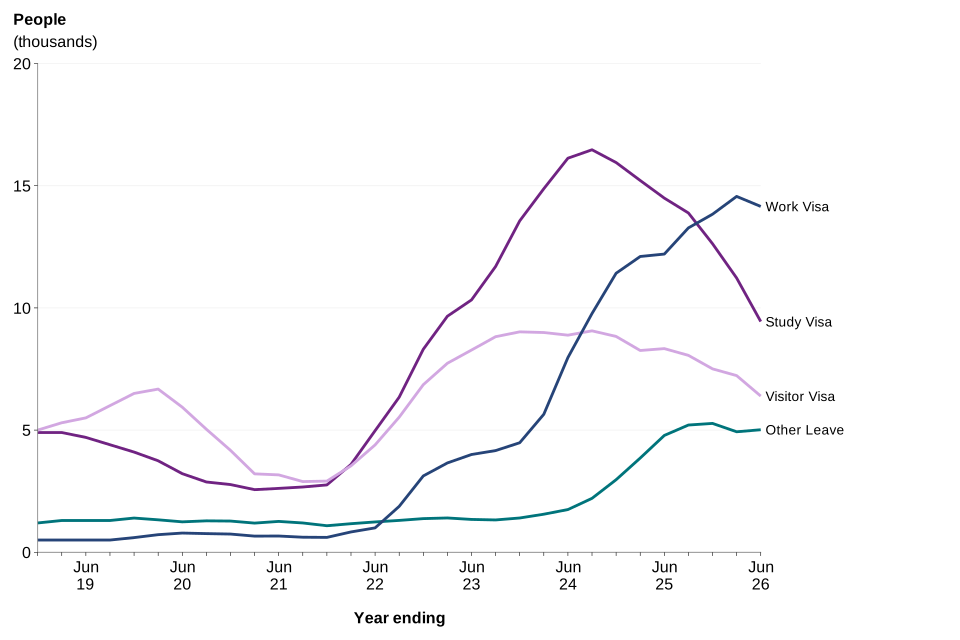
Figure 3 shows trends for people who held a visa or other leave prior to claiming. The number of people who held a study visa prior to claiming asylum has decreased by over a third (35%) in the latest year. This decline mirrors the fall in the number of study visas issued after restrictions on dependants came into effect on 1 January 2024. In contrast, the number of people who held a work visa prior to claiming asylum increased by 16%, making work visas the most common type of visa held prior to claiming. Most of this increase was driven by claims from Graduate visas, which more than doubled to 5,130 while claims from all other work visas fell 9% to 9,021. New breakdowns for the number of claims by work visa type have been introduced this quarter in detailed table Asy_D01a.
Figure 3: Number of people claiming asylum in the UK who held a visa or other leave, by most recent leave held prior to claim, YE December 2018 to YE June 20261, 2
Source: Asylum claims and initial decisions - Asy_D01a
Notes:
- Figures reflect the most recent leave held prior to claiming asylum, including those who may have switched visa types after arrival or whose visa has expired.
- ‘Other leave’ includes those who held an ETA, family-related visas and permits, or other discretionary reasons.
2. Who claims asylum in the UK?
Claims from most nationalities have fallen over the latest year.
Most nationalities claiming asylum saw falls between YE June 2025 and YE June 2026, reflecting the broader decrease in asylum claims. However, some nationalities experienced particularly large decreases, which may reflect a range of international and domestic factors.
Syrian nationals saw the largest decrease in the number of asylum claims of any nationality over the latest year, with claims falling by almost three quarters (73%) to 1,398. This followed the fall of the Assad regime in December 2024. Claims from Vietnamese nationals also more than halved (57%) to 1,598, alongside stronger UK–Vietnam returns and deterrence measures announced in October 2025. Similar declines were seen in claims from Colombian and Jordanian nationals, which fell by 87% and 88% respectively, to 161 and 142 people, following the removal of visa-free entry arrangements in 2024.
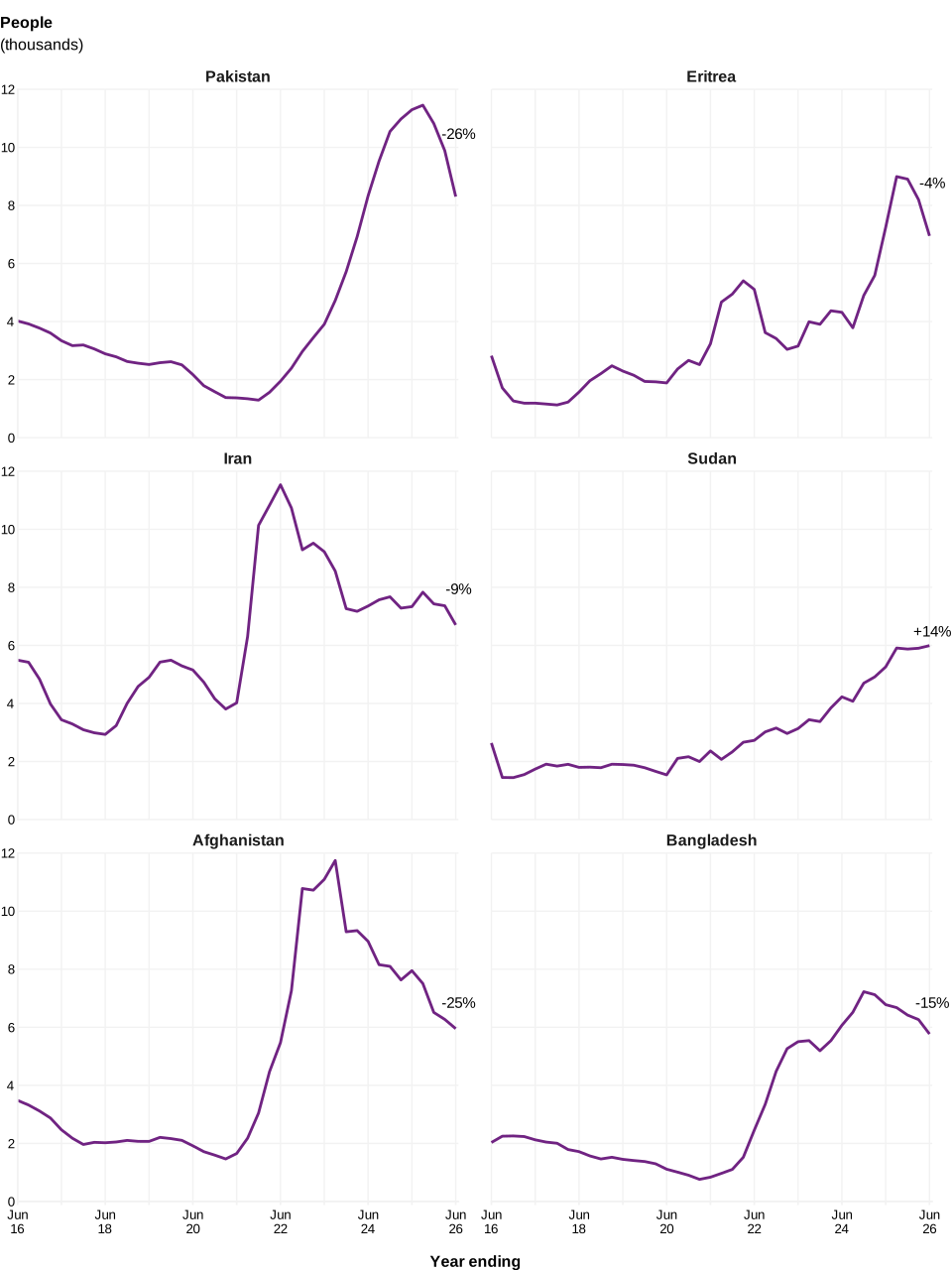
Claims from Afghan nationals fell by a quarter (25%) to 5,952, continuing the decline in claims over the past 3 years, after claims peaked following the Taliban takeover in August 2021. Despite this fall, Afghanistan has remained one of the largest nationalities claiming asylum in the UK. Since October 2021, 38,373 Afghans have claimed asylum in the UK, with the majority of these claimants having arrived via small boats, while a further 37,973 Afghans have also been resettled through the Afghan Resettlement Programme, which began in March 2021.
Figure 4 shows the different trends of the nationalities with the largest numbers of asylum claimants in the latest year. These nationalities (Pakistan, Eritrea, Iran, Sudan, Afghanistan and Bangladesh) together represented almost half (46%) of claimants in the YE June 2026.
Figure 4: Top 6 nationalities claiming asylum in the UK, YE June 2016 to YE June 20261, 2
Source: Asylum claims and initial decisions – Asy_D01
Notes:
- Figure 4 shows the top 6 nationalities (Pakistan, Eritrea, Iran, Sudan, Afghanistan and Bangladesh) claiming asylum in the YE June 2026.
- The percentage change shown for each nationality represents the change in the number of people claiming asylum in the YE June 2026 compared to the YE June 2025.
Three-fifths (60%) of people claiming asylum in the YE June 2026 were adult males.
Table 1: Number of people claiming asylum in the UK, in the YE June 2026, by age and sex1
| Male | Female | |
|---|---|---|
| Aged 17 and under | 9,730 (11%) |
5,801 (7%) |
| Aged 18 and over | 51,153 (60%) |
19,196 (22%) |
Source: Asylum claims and initial decisions – Asy_D01
Notes:
- Table 1 excludes figures where age or sex information is unknown.
The proportion of men, women and children varies across nationalities and may be influenced by the routes taken when travelling to the UK. For example, more dangerous routes (such as crossing the Channel in a small boat) see fewer women and children than other routes (such as travelling to the UK on a visa prior to claiming asylum).
In the YE June 2026, 5% of claims (4,275) were from unaccompanied asylum-seeking children (UASC). These are children who arrive in the UK without a parent or legal guardian to care for them and are entitled to specific safeguarding and support arrangements under UK law. Over four-fifths (83%) of these children were aged 16 or 17.
3. How does the UK compare with the EU+?
The term ‘EU+’ refers to the 27 EU member states, together with Norway, Iceland, and Liechtenstein (which are members of the European Economic Area), as well as Switzerland. The most recent comparative data for the EU+ is available for the YE March 2026.
In the YE March 2026, there were 795,335 people claiming asylum in the EU+, 19% fewer than in the previous year. This contrasts with a 9% decrease in the UK over the same period.
The UK received 11% of all asylum seekers across the UK and EU+ combined in the YE March 2026.
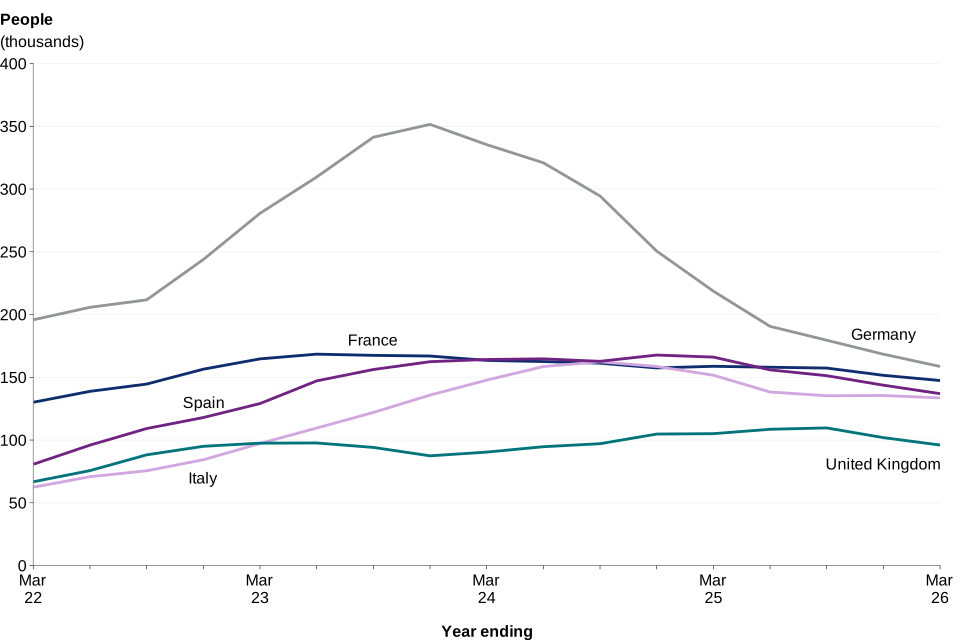
Compared with other European countries, the UK received the fifth largest number of asylum seekers in the YE March 2026 (96,027), and the sixteenth largest intake when measured ‘per head of population’.
Table 2: The number of people claiming asylum in the UK and the top 4 countries in the EU+, YE March 2026
| Country of claim | Total number of people claiming (proportion of total claims in the EU+ and UK) | Top nationality claiming asylum (percentage of total for that country) |
|---|---|---|
| Germany | 158,620 (18%) |
Afghanistan (44%) |
| France | 147,425 (17%) |
Haiti (10%) |
| Spain | 136,940 (15%) |
Venezuela (60%) |
| Italy | 133,580 (15%) |
Bangladesh (21%) |
| United Kingdom | 96,027 (11%) |
Pakistan (10%) |
Source: Eurostat Asylum statistics and Asylum claims and initial decisions – Asy_D01
The number and demographic profile of people claiming asylum varies across Europe with some nationalities claiming more in certain countries. This may be linked to factors including language, existing diasporas in these countries, the routes taken to reach them, and the likelihood of being granted refugee permission.
Figure 5: The number of people claiming asylum in the UK and the top 4 countries in the EU+, YE March 2022 to YE March 20261, 2
Source: Eurostat Asylum statistics and Asylum claims and initial decisions – Asy_D01
Notes:
- Top 4 countries in the EU+ receiving asylum claimants in the YE March 2026.
- Includes main applicants and dependants.
4. Data tables and further links
Data referred to here can be found in the following tables:
- Asylum summary tables
- Detailed asylum datasets
- Detailed illegal entry routes datasets
- Detailed resettlement datasets
- Eurostat asylum statistics
We welcome your feedback
If you have any comments or suggestions for the development of this report, please provide feedback by emailing MigrationStatsEnquiries@homeoffice.gov.uk. Please include the words ‘PUBLICATION FEEDBACK’ in the subject of your email.
We’re always looking to improve the accessibility of our documents. If you find any problems or have any feedback relating to accessibility, please email us.
See Section 6 of the ‘About this release’ section for more details.