Hydrocarbon Oils Bulletin commentary (January to June 2026)
Updated 31 July 2026

© Crown copyright 2026
This publication is licensed under the terms of the Open Government Licence v3.0 except where otherwise stated. To view this licence, visit nationalarchives.gov.uk/doc/open-government-licence/version/3 or write to the Information Policy Team, The National Archives, Kew, London TW9 4DU, or email: psi@nationalarchives.gov.uk.
Where we have identified any third party copyright information you will need to obtain permission from the copyright holders concerned.
This publication is available at https://www.gov.uk/government/statistics/hydrocarbon-oils-bulletin/hydrocarbon-oils-bulletin-commentary-july-to-december-2025
1. Hydrocarbon Oils statistics notes
This Hydrocarbon Oils Bulletin has been updated with provisional data from January to June 2026.
From 23 March 2022, a 5p reduction was introduced to fuel duties. This 5p fuel duty cut has since been extended until 31 December 2026. The 5p cut impacts receipts and clearances from April 2022 onwards. It is not possible to disaggregate impacts from this policy and other factors potentially impacting hydrocarbon oils.
This Bulletin is now published every 6 months, in line with changes to HMRC statistics publications.
2. Headlines
The latest hydrocarbon oils headline statistics are:
-
provisional hydrocarbon oils receipts for April to June 2026 are £6,366 million, £362 million (6.0%) higher than the same period in 2025
-
provisional petrol receipts for April to June 2026 are £2,580 million, £179 million (7.4%) higher than the same period in 2025
-
provisional diesel receipts for April to June 2026 are £3,721 million, £185 million (5.2%) higher than the same period in 2025
-
diesel receipts have trended downwards in recent years, as consumers shift from diesel cars to alternative fuel vehicles
3. About this release
This HM Revenue and Customs (HMRC) publication provides biannual provisional Accredited Official Statistics of receipts and quantities released for consumption for excise duty charged on fuels and oils.
Accredited Official Statistics were previously known as National Statistics.
Duty is charged when motor and heating fuels and oils are produced, imported or used in the UK. These statistics include data for hydrocarbon (mineral) oils, biofuels, fuel substitutes and fuel additives.
These statistics report trends for tax liabilities and payments (receipts) by hydrocarbon oil traders. This is done by reporting levels of goods made available for consumption after passing through a duty point, as this is the point at which duty is payable to HMRC.
The statistics in this release are based on data from recent and historic trader returns up to and including June 2026. Detailed statistics on clearances and receipts are provided in the accompanying tables.
4. Monthly hydrocarbon oils receipts
Total excise duty receipts are calculated by summing together excise duty receipts from all types of diesel, petrol, and other oils duties.
Figure 1: Total hydrocarbon oils receipts by month during the current and previous 2 financial years, in £ million.
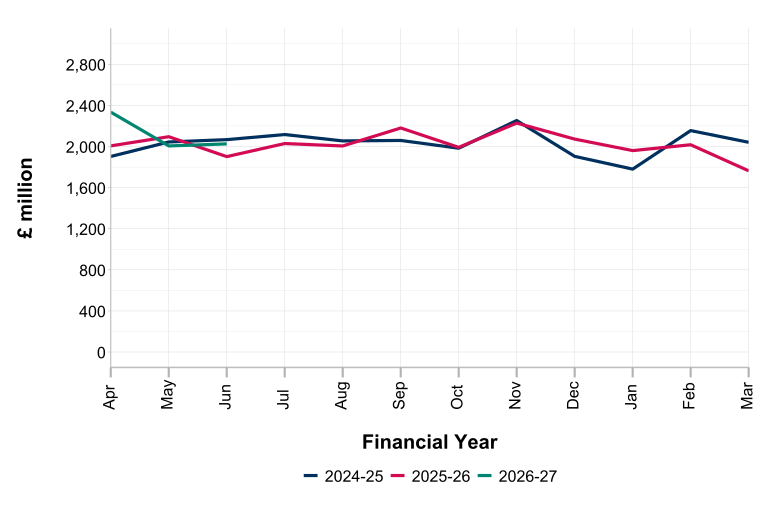
Figure 1 demonstrates several trends for total hydrocarbon oils receipts:
-
provisional hydrocarbon oils receipts for the 2025 to 2026 financial year are £24,250 million, £110 million (0.5%) lower than the receipts from the 2024 to 2025 financial year. This is primarily due to a £372 million (2.5%) decrease in diesel receipts, which is partially offset by a £283 million (3.0%) increase in petrol receipts
-
provisional hydrocarbon oils receipts for April to June 2026 are £6,366 million, £362 million (6.0%) higher than the same period in 2025
-
lower provisional receipts in March 2026 (£1,763 million) are due to a timing issue, offset by the higher provisional receipts observed in April 2026 (£2,335 million)
For the full dataset underlying Figure 1 and these statistical headlines go to Hydrocarbon Oils Bulletin tables (January 2026 to June 2026).
5. Petrol and diesel excise duty receipts
5.1 Petrol excise duty
Total petrol excise duty receipts are calculated by summing together excise duty receipts from several different motor spirits, over 90% of which is unleaded petrol.
Figure 2: Petrol excise duty receipts by month during the current and previous 2 financial years, in £ million.
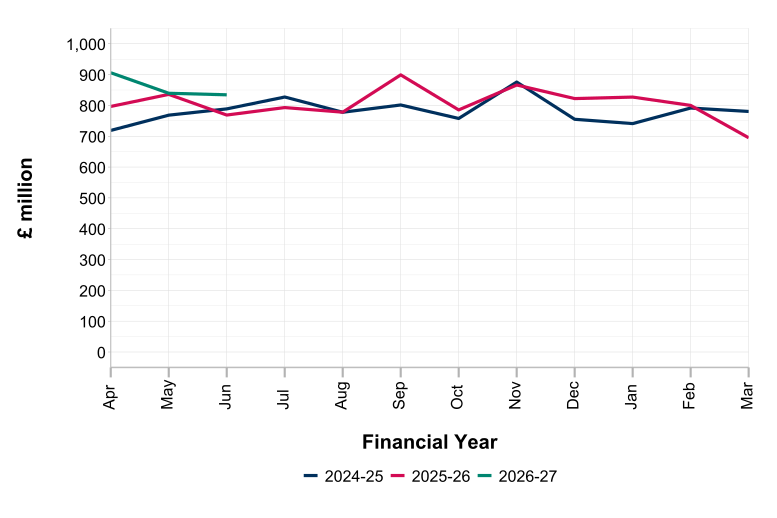
Figure 2 demonstrates several trends for petrol receipts:
-
provisional petrol receipts for the 2025 to 2026 financial year are £9,667 million, £283 million (3.0%) higher than the receipts from the 2024 to 2025 financial year
-
provisional petrol receipts from April 2026 to June 2026 are £2,580 million, which is £179 million (7.4%) higher than the same period during the previous financial year
-
lower provisional petrol receipts in March 2026 (£695 million) are due to a timing issue, offset by the higher provisional receipts observed in April 2026 (£906 million)
For the full dataset underlying Figure 2 and these statistical headlines go to Hydrocarbon Oils Bulletin tables (January 2026 to June 2026).
5.2 Diesel excise duty
Total diesel excise duty receipts are calculated by summing together excise duty receipts from several different types of diesel.
Figure 3: Diesel excise duty receipts by month during the current and previous 2 financial years, in £ million.
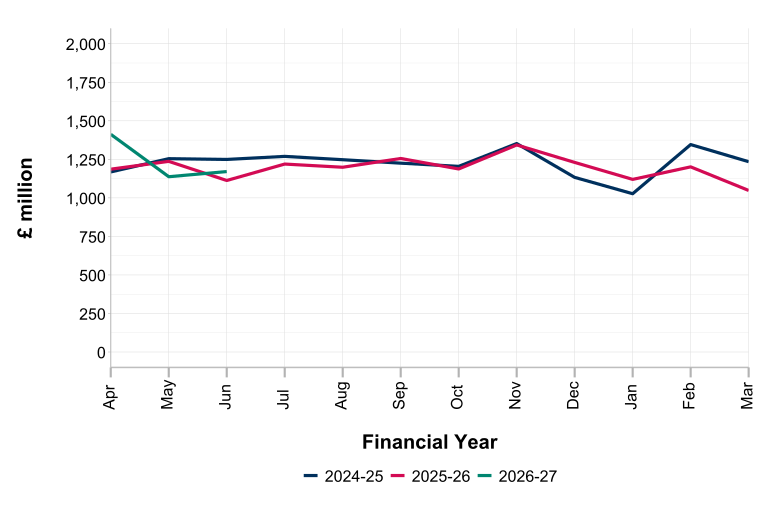
Figure 3 demonstrates several trends for diesel receipts:
-
provisional diesel receipts for the 2025 to 2026 financial year are £14,341 million, £372 million (2.5%) lower than the receipts from the 2024 to 2025 financial year
-
provisional diesel receipts from April 2026 to June 2026 are £3,721 million, which is £185 million (5.2%) higher than the same period during the previous financial year
-
lower provisional diesel receipts in March 2026 (£1,048 million) are due to a timing issue, offset by the higher provisional receipts observed in April 2026 (£1,412 million)
For the full dataset underlying Figure 3 and these statistical headlines go to Hydrocarbon Oils Bulletin tables (January 2026 to June 2026).
5.3 Petrol and diesel excise duty comparison
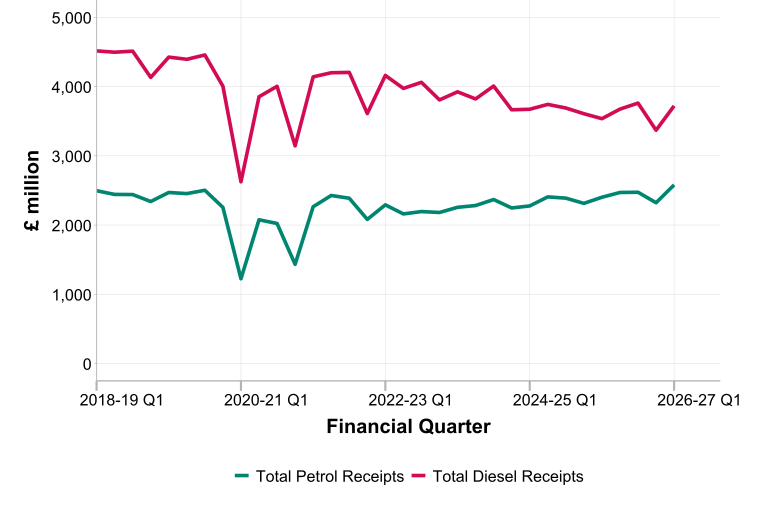
Figure 4: Petrol and diesel excise duty receipts by month during the current and previous eight financial years, in £ million.
For the full dataset that accompanies Figure 4 go to Hydrocarbon Oils Bulletin tables (January 2026 to June 2026).
Figure 4 demonstrates the following trends for quarterly diesel and petrol receipts during the current and previous 8 financial years:
-
following volatility in the 2020 to 2021 financial year likely caused by economic impacts related to COVID-19, diesel and petrol receipts increased at the start of the 2021 to 2022 financial year and have remained at relatively stable levels since
-
the downward trend in diesel receipts over this period can be explained in part by a growing number of consumers moving away from diesel cars and towards alternative fueled vehicles (AFV) including electric and hybrid vehicles, despite some recent increases that go against this longer-term trend
5.4 Contacts
The Hydrocarbon Oils Bulletin is produced by the Indirect Tax Receipts Monitoring team as part of the Excise duties, VAT, and other indirect tax statistics collection.
Contact revenuemonitoring@hmrc.gov.uk for statistical enquiries.
Contact HMRC press office for media enquiries.