Households Below Average Income: An analysis of the UK income distribution: FYE 1995 to FYE 2025
Published 26 March 2026

© Crown copyright 2026
This publication is licensed under the terms of the Open Government Licence v3.0 except where otherwise stated. To view this licence, visit nationalarchives.gov.uk/doc/open-government-licence/version/3 or write to the Information Policy Team, The National Archives, Kew, London TW9 4DU, or email: psi@nationalarchives.gov.uk.
Where we have identified any third party copyright information you will need to obtain permission from the copyright holders concerned.
This publication is available at https://www.gov.uk/government/statistics/households-below-average-income-for-financial-years-ending-1995-to-2025/households-below-average-income-an-analysis-of-the-uk-income-distribution-fye-1995-to-fye-2025
The Households Below Average Income (HBAI) report presents information on UK living standards based on household income measures for financial year ending (FYE) 2025. Estimates are provided for average incomes, income inequality, and for the number and percentage of people living in low-income households. The statistics are the UK’s primary source of poverty estimates and, with a larger sample size, are also the main source on household incomes.
The HBAI statistics are commonly referred to as ‘poverty statistics’ which show the number or percentage of people living in poverty. This publication uses terms such as ‘income statistics’ and ‘people living in low-income households’ to describe more precisely what the data reflects. Although low income is a significant aspect of poverty, there are other aspects of poverty too. This publication also includes measures of ‘material deprivation’ (including ‘deep material poverty’) which provide an indication of peoples’ ability to access or afford a range of everyday goods and services. Supporting statistics are also provided on household food security levels and prevalence of food bank usage for all individuals in the UK, including those in low-income households.
The FYE 2025 HBAI publication features an improved approach to using administrative data in place of FRS survey responses both for FYE 2025 and some back-series years. Information on the major state benefits and tax credits is now based on administrative data rather than survey responses. The improved approach is sometimes referred to as administrative-linked (or admin-linked) data; with data which has not had the change applied being referred to as unlinked data. Further information on this development is provided in the latest FRS technical report.
This improvement means key HBAI low-income measures, including the number/proportion of people identified as being in relative and absolute low income for all groups and in all years from FYE 2022 (in March 2026) and from FYE 2019 (in summer 2026) have changed. It also means there will be a break in the HBAI series at these points. Please see section 2 of this report and the HBAI Background, Information and Methodology (BIM) report for more information on the break.
Comparison of changes in our headline low-income statistics between years are made by rounding to the nearest percentage point for each year. This means that changes reported in the narrative do not always match visual differences between the levels displayed in the charts. Where changes are identified in the commentary, users should refer to our accompanying data tables for details of whether these are not statistically significant [ns] or are statistically significant [s].
As with all household survey data, results are subject to uncertainty, especially in the short term. As well as maximising the sample size, in order to improve the representativeness of the sample, we apply weights to align results to published data for totals such as population, geography and tenure.
Alongside this report, 95% confidence intervals are provided to show whether reported changes are statistically significant; that is, they have a very low chance of being due to sampling variation. Most annual changes set out in this report are not statistically significant. See Section 13 (Strengths and Limitations) for more information.
Family Resources Survey (FRS) fieldwork during FYE 2025
During FYE 2025, survey fieldwork operations continued with face-to-face interviewing as the predominant way of completing the survey, as was the case for FRS FYE 2024. Telephone interviewing was retained as an alternative based on household preference and interviewer availability.
Across the UK achieved sample overall, 89% of FRS households were interviewed face-to-face during FYE 2025 which was a slight increase compared to FYE 2024.
In FYE 2025, the FRS covered an achieved sample of 16,299 households in the United Kingdom. This was a slightly smaller achieved sample than in FYE 2024 (16,758), with the issued sample being 59,044 (the same as in FYE 2024). Surveys gather information from a sample rather than from the whole population.
We continue to advise users that changes in estimates over recent years should be interpreted being mindful of the differences in data collection approaches across the period and the effect this had on sample composition. In this year’s report we continue to make assessments of observed changes in the data compared with both FYE 2024 and preceding years.
As with previous years, we have completed extensive quality assurance of all published estimates, including comparing changes with external data sources, and analysing subgroups in detail.
1. Main stories
The statistics presented in this release show that:
-
median household income increased in real terms between FYE 2024 and FYE 2025, rising by 5% before housing costs (BHC) and 5% after housing costs (AHC) to £719 and £623 per week respectively. The increases for both these measures were statistically significant
-
household incomes increased across almost the entire BHC distribution, with the largest increases in the central deciles. Smaller increases were recorded at the top and bottom ends of the distribution. For AHC, increases were also seen across most percentiles, except at the very lowest end, which experienced a slight fall
-
for the more central deciles, income increases were statistically significant, though changes at the extremes of the distribution are more uncertain due to wider confidence intervals
-
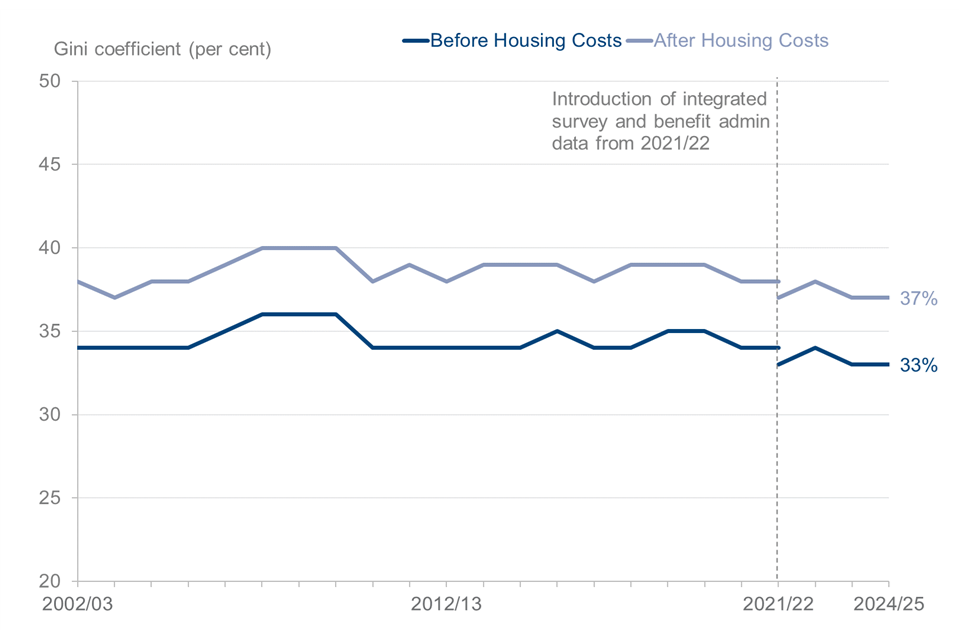
income inequality remained stable, with the Gini coefficients unchanged from FYE 2024 at 33% BHC and 37% AHC
-
relative low‑income rates increased slightly, rising from 15% to 16% (BHC) and 19% to 20% (AHC). These changes were less than 1 percentage point (the AHC change was less than 0.5 percentage points) and not statistically significant
-
absolute low‑income rates fell, decreasing by 1 percentage point for both BHC and AHC. These changes were also not statistically significant
The following non-statistically significant changes were also seen:
-
children continued to face higher rates of low income than other groups. Relative low-income rates for children were 21% BHC and 27% AHC. Absolute low-income rates fell by 2 percentage points BHC and 3 percentage points AHC
-
working‑age adult low‑income rates remained broadly flat, with relative low income increasing slightly to 14% BHC and 19% AHC, and the absolute measures falling slightly
-
pensioner low‑income trends were mixed: relative poverty increased both BHC and AHC, while absolute poverty fell for both measures. None of the changes were statistically significant
-
material deprivation among children fell from 28% to 24%, while the proportion in combined relative low income and material deprivation remained unchanged at 14% (BHC). The AHC combined measure fell from 18% to 16%
-
1.9 million children were found to be in deep material poverty. This equates to 13% of children in the UK, compared to 14% in FYE 2024. This was a decrease of 0.1 million children
-
material deprivation among working-age adults fell from 23% to 21%, while combined relative low income and material deprivation remained at 9% BHC and 11% AHC
-
material deprivation among pensioners increased slightly, from 11% to 12%
-
food insecurity fell for individuals in the UK, with 9% of individuals living in food insecure households (down 2 percentage points). Reductions were also seen for those in low-income households, with a 2 percentage point reduction BHC and a larger fall of 4 percentage points AHC
-
food bank usage decreased across both time periods measured:
- 12‑month measure: 3.8% of all individuals (down from 4.2%)
- 30‑day measure: 1.3% (down from 1.6%)
-
Individuals in low‑income households continue to be more likely to have used a food bank
-
children are more likely to be living in food insecure households than other groups, although both indicators declined for this group compared to last year
Median Household Income – Increase to £719 (BHC) and £623 (AHC) in FYE 2025
Figure 1: Median Weekly Household Income, FYE 2003 to FYE 2025
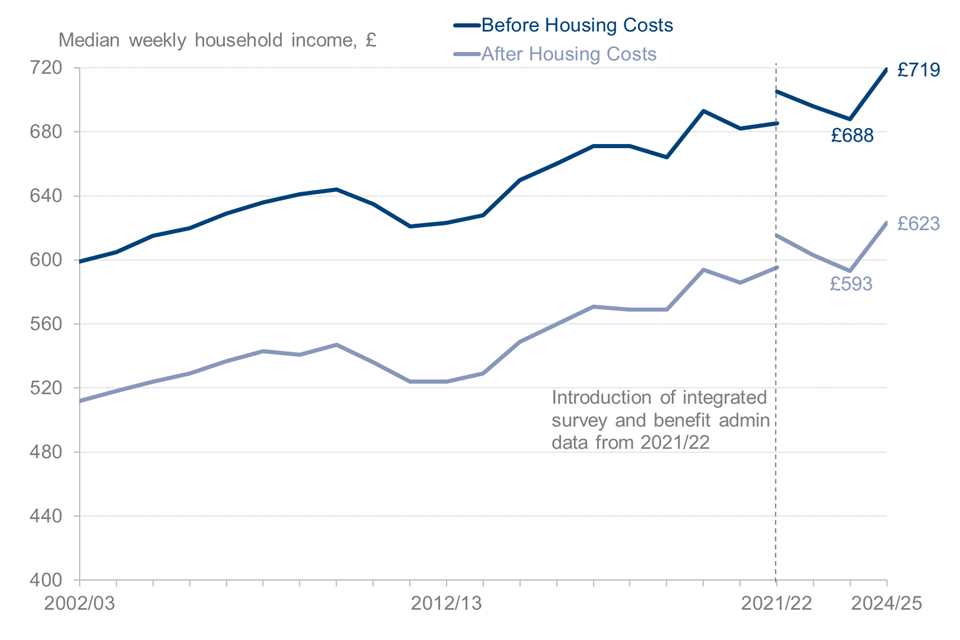
Between FYE 2024 and FYE 2025, average (median) household net equivalised disposable income increased by 5 per cent in real terms (i.e. taking account of inflation). The increase was similar for incomes before and after housing costs. Weekly FYE 2025 median household incomes are estimated at £719 (BHC) and £623 (AHC) respectively.
Both these increases were statistically significant.
Income Inequality – Gini coefficient remained stable for BHC and AHC.
Figure 2: Income Inequality, FYE 2003 to FYE 2025
The Gini coefficient is a standard international indicator used to summarise inequality in individual income. The Gini coefficient ranges between 0% and 100%, where 0% indicates that income is shared equally among all individuals and 100% indicates the extreme situation where one individual has all a country’s income. Therefore, the lower the value of the Gini coefficient, the more equally income is distributed across all individuals.
Figure 2 shows that in FYE 2025, the Gini coefficient remained at FYE 2024 levels for both BHC and AHC income, at 33% (BHC) and 37% (AHC) respectively.
Low-income measures – relative BHC and AHC increased slightly; the absolute BHC measure increased and absolute AHC remained stable
Figure 3: Percentage of all individuals in relative low income, FYE 2003 to FYE 2025
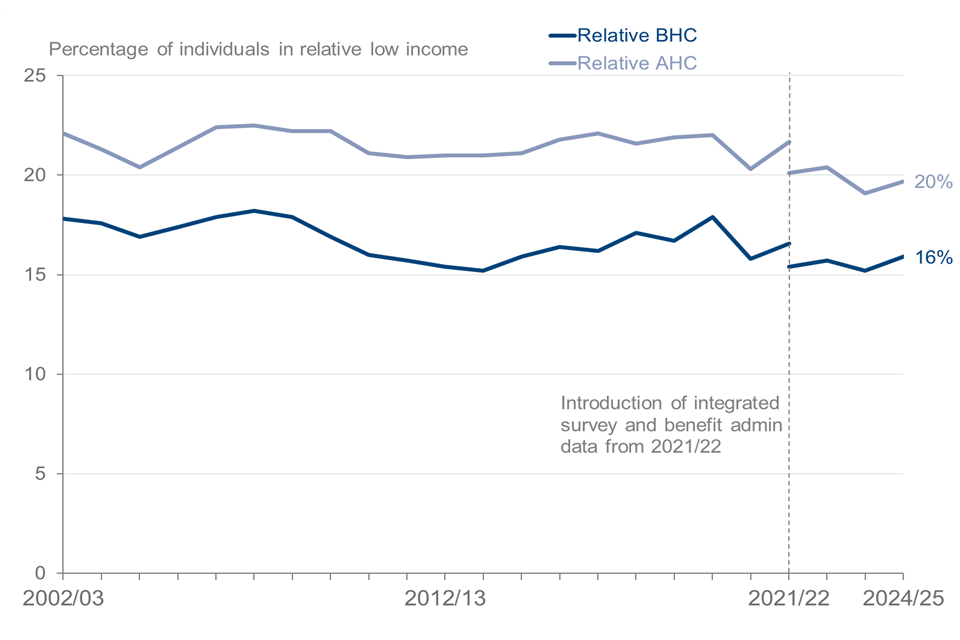
The percentage of individuals in relative low income has slightly increased this year with a BHC measure of 16% from 15%, while the low income AHC rose slightly from 19% to 20%. Both these increases were less than 1 percentage point before rounding with the AHC change less than 0.5 percentage points from unrounded data.
Figure 4: Percentage of all individuals in absolute low income, FYE 2003 to FYE 2025
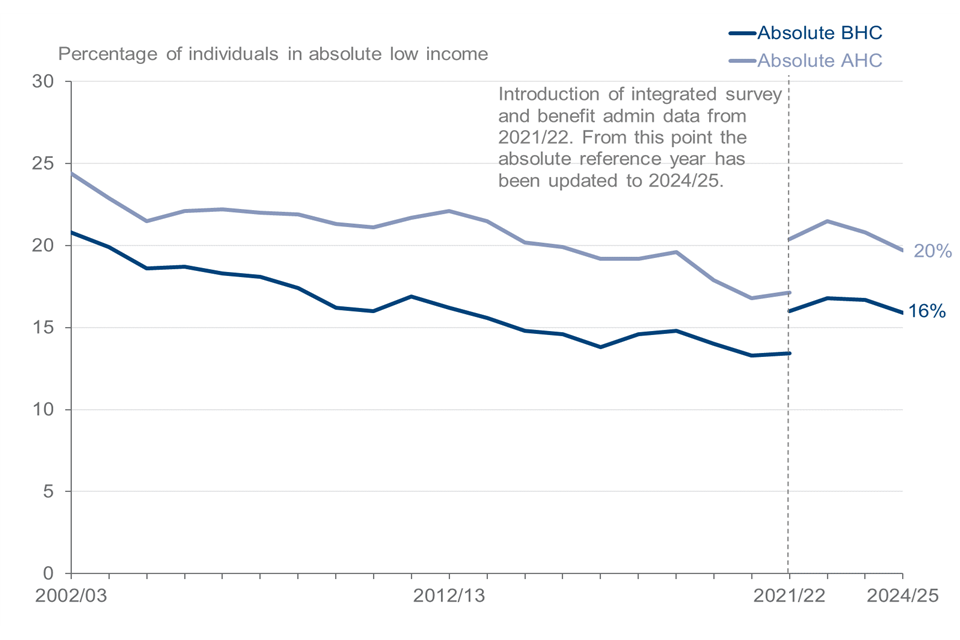
Figure 4 shows that absolute low income decreased by 1 percentage point in FYE 2025 compared to FYE 2024 for both measures.
Note that relative and absolute low income rates are the same for FYE 2025 because the absolute low income reference year has been updated from FYE 2011 to FYE 2025 (see Section 2 for more details). Relative and absolute rates will be different for other years.
None of the recorded changes in the relative and absolute low-income measures were statistically significant.
2. What you need to know
The Households Below Average Income (HBAI) statistics are the UK’s primary source of poverty estimates and are the main source on household incomes. Users include central Government, the devolved governments, local authorities, academics, think tanks, journalists, and the voluntary sector. The statistics meet DWP’s statutory obligation to publish a measure of relative and absolute low income, and combined low income and material deprivation for children under section 4 of the Welfare Reform and Work Act 2016. HBAI statistics will also be used to track progress towards Our Children, Our Future: Tackling Child Poverty, by providing two headline metrics: relative low income after housing costs and a new deep material poverty measure. Further detail is provided in the ‘New for this publication’ below and in Section 7 of this report.
Income measures
HBAI estimates incorporate widely used international standard measures of low income and inequality. The primary measure used in HBAI is disposable household income adjusted for household composition (a process called equivalisation), estimated on both a before and after housing costs basis (BHC and AHC). Our main measure includes income such as earnings, state support, pensions, and investments, and is net of tax. See section 14 of this report for a full list.
HBAI uses this net equivalised disposable household income as a proxy for living standards.
A household is said to be in relative low income if their net equivalised disposable household income is below a threshold set at 60% of median income that year, while they are in absolute low income if their net equivalised disposable household income is below 60% of the median income of a specific reference year, adjusted for inflation. For FYE 2025, the absolute reference year has changed to FYE 2025 for the years where administrative data linking has been applied. It will remain at FYE 2011 for prior years. Further detail can be found in the Households Below Average Income: Background Information and Methodology (BIM) report available at Households below average income: for financial years ending 1995 to 2025.
We also publish measures using thresholds at 50% and 70% of the median.
In line with international best practice, the income measures used in HBAI are subject to several statistical adjustments and, as such, are not always directly relatable to income amounts as they might be understood by people on a day-to-day basis. These adjustments, however, allow us to compare measures over time and across households of different sizes and compositions on a consistent basis.
HBAI uses variants of Consumer Prices Index (CPI) inflation when estimating how incomes are changing in real terms over time. For further information, see the HBAI BIM.
Survey data
Estimates are based on the Family Resources Survey (FRS). The data in this report is from interviews conducted between April 2024 and March 2025. The achieved sample size for the FRS was 16,299 households. This was a slightly smaller achieved sample than in FYE 2024 (16,758), with the issued sample being 59,044 (the same as in FYE 2024).
The mode of interview for the FRS during FYE 2025 was face-to-face by default, with telephone used as an alternative by 11% of households. More information on the FRS fieldwork this year can be found in the Family Resources Survey: background information and methodology (FRS BIM) report at Family Resources Survey: financial year 2024 to 2025.
Use of survey data means results in this report are subject to uncertainty which can affect how changes should be interpreted, especially in the short term.
There is also uncertainty around the reporting of benefit caseloads in the FRS and HBAI compared with administrative data. FRS Methodology table M6a shows the difference between benefit caseloads in the FRS and HBAI compared with administrative data. (See the FRS BIM for further detail). Where the size of the undercount varies compared with the previous year, this is likely to affect incomes, particularly regarding income-related benefits (IRBs). However, users should note that the reason for the undercount is also relevant. For example, an undercount due to under-reporting (survey respondent fails to mention an IRB they were receiving) would reduce incomes. On the other hand, an undercount due to an under-representation of IRB claimants in the achieved sample could increase incomes because, in effect, an IRB claimant would be replaced by someone not receiving IRBs.
Due to the expansion in use of administrative data on state benefits and tax credits in FYE 2025 (and applied to some back-series years), the figures in the FRS Methodology table M6a tables are materially different in the FYE 2025 publication, versus previous years as the level of underreporting of benefits has reduced. Note the underreporting of benefits has not been eliminated, although research continues for how to achieve this with further developments in the future.
Although the grossing regime ensures alignment with 2011 Census-based estimates for individuals by age, sex, and region, and for household tenure volumes, it does not control for the combinations of population and housing tenure. Consequently, the number of children in the private rented sector, for example, could fluctuate from one year to the next, despite separate controls for the number of children and private rented households.
Statistical significance is a technical concept that indicates whether a reported change is likely to have arisen only by chance due to variations in the sampling. We calculate 95% confidence intervals around estimates in HBAI which sets a standard that, where any change is reported as statistically significant, there is less than a 1 in 20 chance that the reported difference is due to sampling variation and there is no real underlying change. Changes are marked as not statistically significant [ns] and statistically significant [s] in our accompanying tables or explicitly noted in this commentary.
Below are the 95% confidence intervals for the headline poverty estimates. The figures show that for all individuals, the confidence intervals are close to +/- 2 percentage points. This means that there is conversely, a 1 in 20 chance that the true estimates are outside the range shown.
Confidence intervals for the percentage of individuals in low income (BHC), United Kingdom, FYE 2025
| Relative Low Income | Percentage point change | Absolute Low Income | Percentage point change | |
|---|---|---|---|---|
| Percentage of individuals | 16 | 1 | 16 | -1 |
| 95% confidence interval | (14 , 18) | (-1 , 3) | (14 , 18) | (-3 , 2) |
| Percentage of children | 21 | 0 | 21 | -2 |
| 95% confidence interval | (17 , 24) | (-4 , 5) | (17 , 24) | (-6 , 4) |
| Percentage of working-age adults | 14 | 1 | 14 | -1 |
| 95% confidence interval | (13 , 16) | (-1 , 3) | (13 , 16) | (-2 , 2) |
| Percentage of pensioners | 16 | 1 | 16 | -2 |
| 95% confidence interval | (14 , 18) | (-2 , 4) | (14 ,18) | (-4 , 1) |
Confidence intervals for the percentage of individuals in low income (AHC), United Kingdom, FYE 2025
| Relative Low Income | Percentage point change | Absolute Low Income | Percentage point change | |
|---|---|---|---|---|
| Percentage of individuals | 20 | 0 | 20 | -1 |
| 95% confidence interval | (18 , 21) | (-2 , 3) | (18 , 21) | (-3 , 1) |
| Percentage of children | 27 | 0 | 27 | -3 |
| 95% confidence interval | (23 , 31) | (-5 , 5) | (23 , 31) | (-8 , 2) |
| Percentage of working-age adults | 19 | 0 | 19 | -1 |
| 95% confidence interval | (17 , 20) | (-2 , 3) | (17 , 20) | (-3 , 2) |
| Percentage of pensioners | 14 | 2 | 14 | -1 |
| 95% confidence interval | (12 , 16) | (-1 , 5) | (12 , 16) | (-3 , 2) |
Note that the reported change between two years in the supporting tables and charts may not equal the difference between the rounded numbers for those years. This is because we round at the final point in any calculation.
The FRS uses a clustered sample design to produce robust regional estimates. Therefore, the FRS is not suitable for analysis below regional level.
Additional tables and data
A wide range of ODS supported tables are available alongside this release, breaking down the results presented in this report for different demographic characteristics. This includes breakdowns of the statistics by region, ethnic group, family type, and economic status.
All tables can be downloaded from Households below average income: for financial years ending 1995 to 2025. The HBAI directory of tables provides details of the full set of publication tables referenced in the following pages. Results are available for most series back to FYE 1995.
HBAI data is also available between FYE 1995 and FYE 2025 on the Stat-Xplore online tool. You can use Stat-Xplore to recreate measures in our static tables and create bespoke HBAI analysis.
Researchers and analysts outside of government can also access the HBAI datasets via The UK Data Service, and on application access the Secure Access File version of the datasets and later in 2026 the ONS Secure Research Service.
New for this publication
The key changes for this publication are outlined briefly below and more details on all changes for this publication can be found in section 2 of the HBAI BIM.
Integration of survey and administrative-linked data
From the March 2026 publication, administrative data has been integrated into the FRS to replace survey responses for the major DWP and HMRC benefits. This has reduced the under‑reporting of benefits that was previously seen in the FRS (and therefore HBAI) and improved data quality in both datasets. Further information on this development is provided in the latest FRS technical report.
The update applies from FYE 2019 and is implemented in two stages: publication of administrative-linked, improved datasets and estimates for FYE 2022 to FYE 2024 in March 2026, and for FYE 2019 to FYE 2021 in summer 2026. By summer 2026, an administrative-linked, improved HBAI time series will be available from FYE 2019 to FYE 2025 inclusive.
This improvement means there will be a break in the HBAI series at FYE 2022 in March 2026 and FYE 2019 in summer 2026. We advise users that data before and after the break are not directly comparable and if comparisons across the break point are required users should follow the advice set out in section 3.2 of the HBAI BIM. Dotted lines and notes have been added to all tables and charts which cover the break point to signal the change to administrative-linked data and other smaller updates to historical data. Some measures of poverty, such as material deprivation statistics, are unaffected by the improvement of using administrative-linked data.
Administrative data has also been used as part of the normal verification of FRS survey responses on rent for those on benefits, improving HBAI housing costs and tenure data; and has removed the need for HBAI to model estimates for Housing Benefit (HB) and Winter Fuel Payment (WFP).
Statistics published by Scotland, Wales and Northern Ireland have been classified as Official Statistics in Development to signal that the changes introduce uncertainty that is acute for estimates below UK level which needs to be reflected in their Official Statistics reporting. Please see the HBAI BIM for more information.
Update to the absolute low-income reference year
Given the structural break, the absolute reference year has changed to FYE 2025 for years where administrative data linking has been applied and remains at FYE 2011 for prior years. Not making this change would mean the calculation of the absolute low‑income measure would not be analytically robust as the base year would be on a different methodological basis to the comparison year.
This change will impact the number of people identified as living in absolute low income. It is a reclassification to a more up‑to‑date absolute low‑income date, rather than a correction of an error in previous estimates. Changes will happen in two stages: from FYE 2022 in March 2026 and from FYE 2019 in summer 2026.
The annual HBAI publication fulfils the legal obligation in the Welfare Reform and Work Act 2016. References to FYE 2011 should be read as references to FYE 2025 for years where the HBAI data has been updated for administrative data linking.
Publication of the new Deep Material Poverty measure for Children
As outlined in Our Children, Our Future: Tackling Child Poverty, the Strategy will track progress against two headline metrics. The first is relative low income after housing costs (AHC), which is already included in the annual HBAI publication tables.
To complement this, a new measure of deep material poverty has been developed to capture children experiencing a deeper level of poverty. This is defined as lacking at least 4 out of 13 essential material deprivation items. An ad‑hoc statistical release was published in December 2025, and from the FYE 2025 HBAI publication six new tables are included presenting estimates using the latest data. Further detail can be found in the HBAI BIM.
Changes to publication tables, charts, or HBAI variables
Changes have been made to ensure supplementary time series HBAI publication tables are unaffected by the changing of State Pension Age over time. Tables 5.5tr, 5.6tr, 6.5tr and 6.6tr now present data for those aged 65 and under (5.5tr and 5.6tr) and those aged 66+ (6.5tr and 6.6tr).
The title and labelling of tables 1.6c and 6.7tr have been changed to clarify the change in the eligible pensioner population. Two new AHC publication charts have been added and will be routinely produced.
Scottish Adult and Child Disability Payments are included in HBAI variables DSCORANDBEN and BENBU_DISBEN from FYE 2023 to FYE 2025.
Economic indicators in Table 1.2a have been updated with the latest data.
Titles, labels and notes have been reviewed to be shorter, consistent and compliant with accessibility guidance.
A single complete list of publication table notes now appears in each workbook, and specific notes relevant to individual tables are highlighted at the top of each table.
Further detail is provided in the HBAI BIM.
Other updates to HBAI historical data
As part of updating back‑series years, additional changes detailed in the HBAI BIM include:
- inclusion of latest available data for constants and deflators
- corrected data for EDATTAIN for FYE 2023 and FYE 2022
- retrospective methodological change to Scottish Council Tax Charges and the Water and Sewerage reduction scheme
- change to when income from directors’ dividends is included (only where directors are classed as employees for FYE 2022, consistent with FYE 2023 onwards)
- minimal changes to grossing factors for FYE 2022 to FYE 2024
- Scottish Adult and Child Disability Payments are included in HBAI variables DSCORANDBEN and BENBU_DISBEN from FYE 2023
- removal of combined low‑income and pensioner material deprivation variables, as they are not used in publication tables
3. The Overall Income Distribution
Average household incomes increased in FYE 2025
Figure 5: Income distribution (BHC) for the total population, FYE 2025
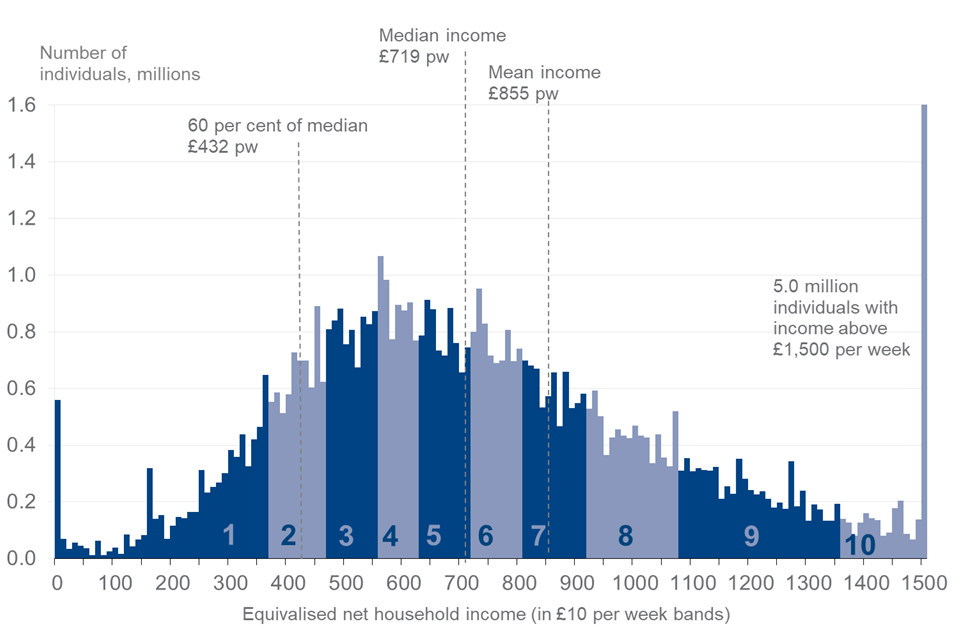
The distribution of UK household income is skewed with a long right-hand tail of higher incomes.
Figure 5 shows that in FYE 2025, the average (median) household income before housing costs (BHC) was £719 per week (around £37,500 per year). This represented an increase of 5% in real terms, or £31 per week, compared with FYE 2024. Average income after housing costs (AHC) also increased to £623 per week (around £32,500 per year). This also represented a real-terms increase of 5%, or £30 per week.
See Table 2.1 BHC for full data. AHC data is available in Table 2.1 AHC.
Interpretation
Deciles divide the population, when ranked by equivalised household income, into ten equal sized groups, while quintiles divide the population into five groups. The shape of the overall income distribution evolves slowly over time, with small year-on-year changes.
The presence of large numbers of individuals with high incomes results in a skewed or non-symmetric distribution. As a result, the median income is the standard measure of average income as changes in the mean can be driven by extreme values. The median represents the income of the individual in the middle of the distribution.
There are many individuals with household incomes around the 60% of median income mark. Those falling below this line are considered to have relative low income. As a result of the clustering around this income level, small movements in the overall distribution can sometimes lead to sizeable movements in this low-income measure.
See Table 2.1ts Decile for full data.
See Table 2.1tr for full data on FYE 2025 economic indicators.
Main Findings
There were a variety of factors that had an upward impact on (real terms) incomes in FYE 2025 compared with the previous year. The main upward factors were:
- uprating of most state benefits by 6.7% when inflation averaged approximately 2.5% across FYE 2025
- uprating of the State Pension by 8.5% via the “triple lock”
- above-inflation growth in both the National Living Wage and average earnings
- reduction in Employee Class A National Insurance Contribution rates (from 12% April to December 2023, to 10% January to March 2024, to 8% for the whole of FYE 2025)
Conversely, other factors had a downward effect on incomes in FYE 2025 compared with the previous year. The main downward factors were:
- removal of Cost of Living Payments i.e. payments worth £900 (income-related benefit recipients), £150 (disability benefit recipients) and £300 (pensioner households)
- restriction of Winter Fuel Payments entitlement from almost all pensioners to only those in receipt of income-related benefits (principally, Pension Credit)
- freezing of income tax thresholds, so a greater proportion of income becomes liable for tax or higher rates of tax. This is known as “fiscal drag”
And lastly, there are factors affecting incomes in HBAI in any given year which may work to affect incomes in either direction. These include:
- misreporting of income components that are not corrected by linking to administrative data
- factors not controlled for by the HBAI grossing regime
- sampling variation
See Section 2 (Survey data) for more details.
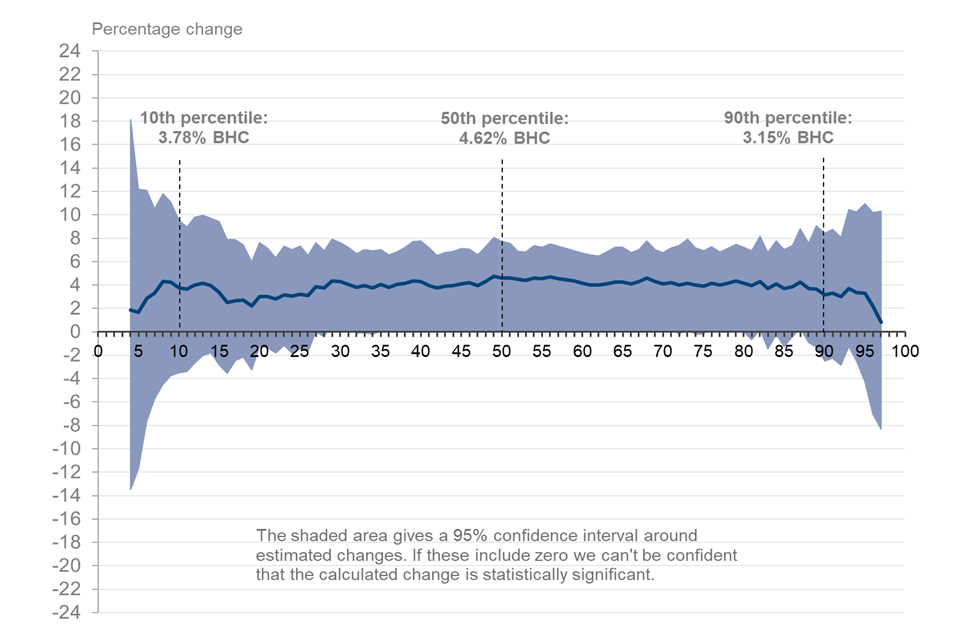
Figure 6: Change in real terms income BHC by percentile, FYE 2024 to FYE 2025
Interpretation
Looking at changes to incomes by percentile since FYE 2024 allows for an assessment of how each section of the income distribution changed in FYE 2025. The line in Figure 6 shows the percentage change and the shaded area shows the confidence intervals around these estimates.
For the more central deciles, the measured changes to real median incomes were statistically significant.
Main Findings
Figure 6 shows that for FYE 2025, the incomes for those in all percentiles of the BHC distribution rose, with largest increases seen in the central deciles of the income distribution.
The degree of income change was fairly evenly spread, apart from at the extreme ends of the income distribution, where the changes were smaller. The distribution of the change in incomes AHC was similar to BHC, with income rising for almost all percentiles except for at the very lowest end of the distribution where estimates are subject to a greater degree of uncertainty. Full details are in the publication charts file.
4. Income Inequality
Income inequality measured by the 90:10 ratio and Gini coefficient remained flat in FYE 2025.
Figure 7: The 90:10 ratio measure of inequality, FYE 2003 to FYE 2025
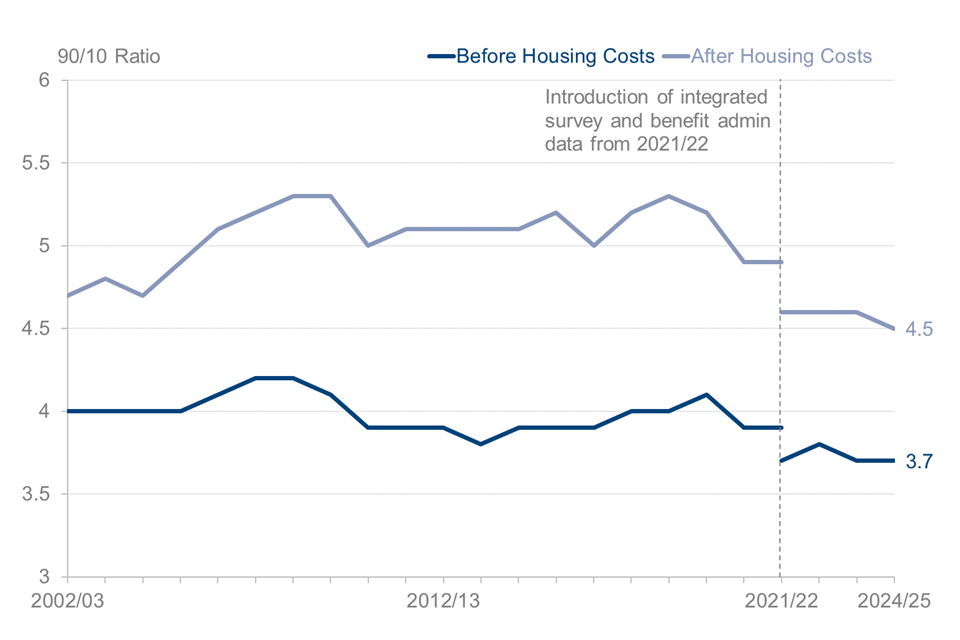
Figure 2 in the Main Stories section shows that the BHC and AHC Gini coefficients remained at the same levels in FYE 2025, at 33% BHC and 37% AHC, respectively. Figure 7 also indicates that inequality has remained stable under the 90:10 measure.
Interpretation
Percentiles divide the population, when ranked by household income, into 100 equal sized groups. The 90:10 ratio is the income at the 90th percentile divided by the income at the 10th percentile. It is equivalent to the average (median) income of the top 20% (quintile 5) divided by the average income of the bottom 20% (quintile 1). The higher the number, the greater the gap between those with high incomes and those with low incomes.
Main Findings
The 90:10 ratios both remained stable in FYE 2025 at 3.7 BHC and 4.5 AHC, respectively.
See Table 2.1ts and 2.2ts for full data.
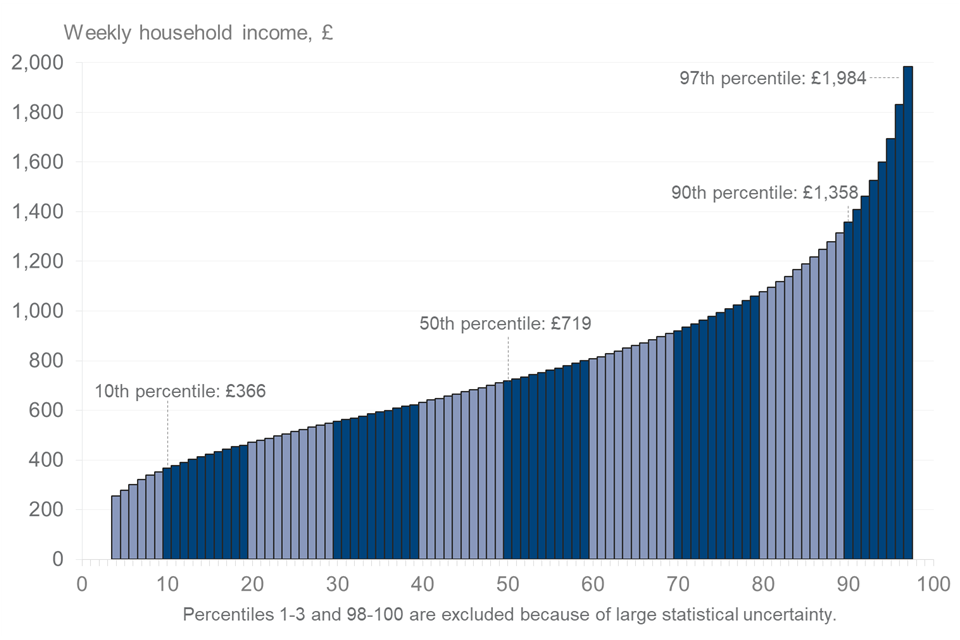
Figure 8: Weekly net equivalised disposable household income BHC by percentile, FYE 2025
Interpretation
Percentiles divide the population, when ranked by household income, into 100 equal sized groups. The chart indicates the amount of weekly net equivalised disposable household income an individual requires to sit at each percentile of the UK income distribution.
Main Findings
Income BHC at the 10th percentile is just under half of the median income, implying that around 10% of the population have less than half of the median household income BHC.
Figure 8 shows that incomes increase sharply past the 90th percentile BHC. In FYE 2025, income at the 90th percentile was almost double that of the median, whilst the top 3% of the population (97th percentile and above) have nearly three times the income of the median individual.
Full details are in the publication charts file.
Annual net equivalent disposable household income BHC by household type, FYE 2025
| Percentile | Single individual | Couple with no children | Couple with two children under 14 |
|---|---|---|---|
| 10th | £12,800 | £19,100 | £26,700 |
| 50th | £25,100 | £37,500 | £52,500 |
| 90th | £47,400 | £70,800 | £99,100 |
| 97th | £69,300 | £103,400 | £144,800 |
Interpretation
To analyse incomes by percentile, the population is ordered according to their net equivalised disposable household income. The annual income required to be at a given point in the distribution is different for different household types. See section 11 for more information on equivalisation in HBAI.
Main Findings
Larger families require a higher level of household income to achieve similar living standards (based on a household income measure) to smaller families.
To lie in the top half of the income distribution in FYE 2025, a single individual needed an annual household income over £25,100, compared to a couple with two children under 14 who required a combined annual household income over £52,500.
A single individual with an annual household income of over £47,400 would sit above the 90th percentile in the distribution in FYE 2025, implying their income exceeded that of 90% of the UK population. A couple with two children under 14 receiving the same level of combined annual household income would lie just below the middle of the income distribution and be considered to have slightly less than average (median) household income.
5. Sources of income
The majority of household income in the UK comes from either earnings or state support.
Figure 9: Income sources as a percentage of gross income by decile, FYE 2025
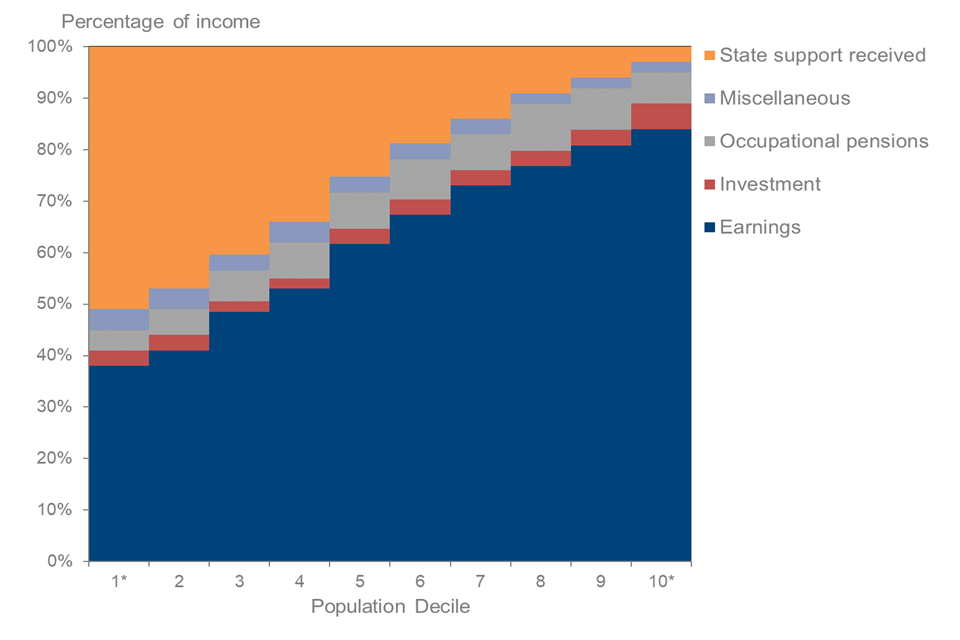
Percentiles 1-3 and 98-100 are excluded because of large statistical uncertainty. This means deciles 1 and 10 are not true deciles (covering percentiles 4-10 and 91-97 respectively). Percentages may not always sum to 100% due to rounding.
Interpretation
The charts show the different sources of gross income by decile, ranking the population by income and dividing into 10 equal-sized groups (deciles). Income components are all considered before tax (gross). This is a different definition of income from that used elsewhere in the HBAI report, which uses weekly net equivalised household income.
Main Findings
Higher income households receive a larger proportion of their income from earnings, a trend which builds moving up the income distribution. Lower income households receive more of their income from state support. Figure 9 shows that in FYE 2025:
• earnings accounted for 38% of gross income for individuals in the 1st decile compared to around 84% for individuals in the 10th decile
• around 80% of the UK population (those in the third income decile and above) received a higher proportion of their household income from earnings than from state support.
Figure 10: Sources of income for households containing only working-age adults, FYE 2025
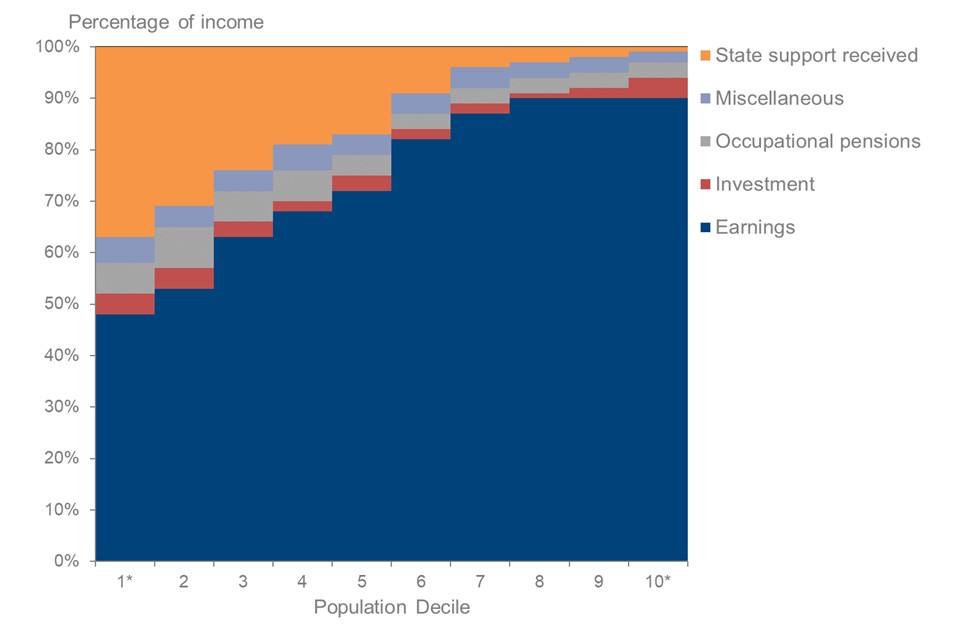
Across all deciles, earnings are the main source of gross income for households containing only working-age adults, with no children. In the lowest decile, 48% of income is from earnings, compared to around 37% from state support. For the highest decile, 90% of income is from earnings.
Figure 11: Sources of income for households containing children, FYE 2025
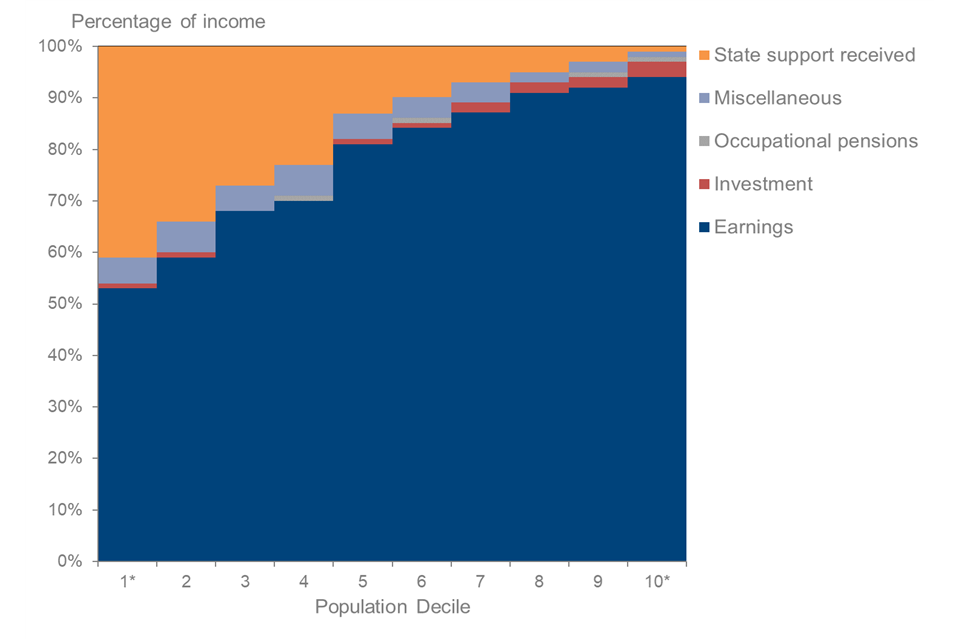
For households containing children, receipt of state support generally makes up a larger proportion of income compared to households containing only working-age adults due to greater eligibility for state support (including Universal Credit and child benefit).
These households typically contain younger working-age adults, so receipt of occupational pensions does not feature as a main income source.
Figure 12: Sources of income for households containing pensioners and no children, FYE 2025
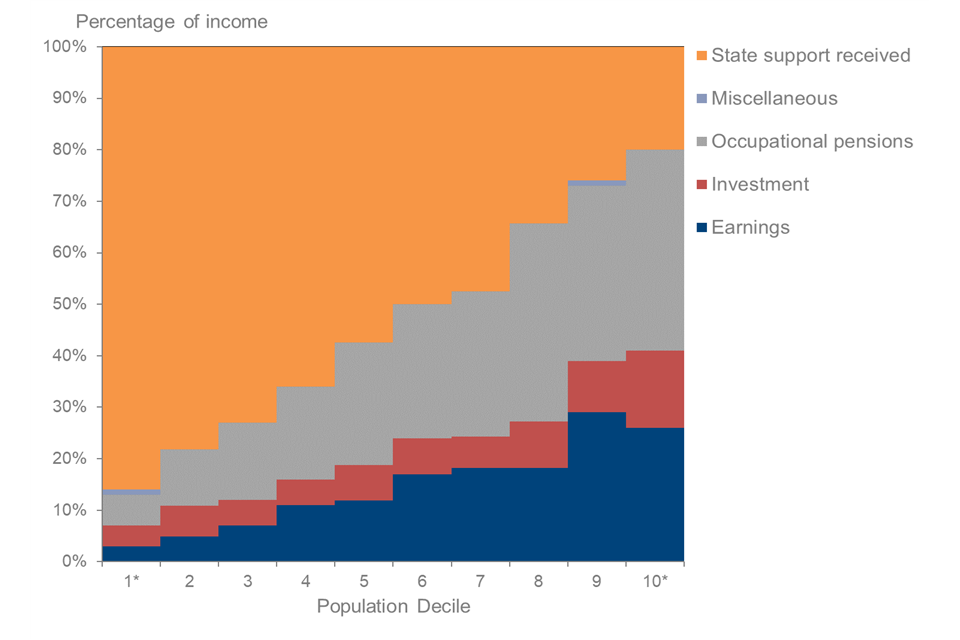
In the bottom half of the income distribution (deciles 5 and below), households containing pensioners and no children receive most of their income from state support (particularly the State Pension). The share of income received from occupational pensions steadily increases until decile 8, and then decreases slightly.
The share of income received from different sources does not always follow a step change across the income distribution. For example, the proportion of income from earnings and investments fluctuates across deciles. For deciles 9 and 10, almost 30% of income is from earnings.
6. Low-income indicators
The percentage of individuals in relative low income BHC and AHC increased by less than 1 percentage point. Both absolute measures of low income decreased by one percentage point in FYE 2025.
These changes were not statistically significant.
Relative low income
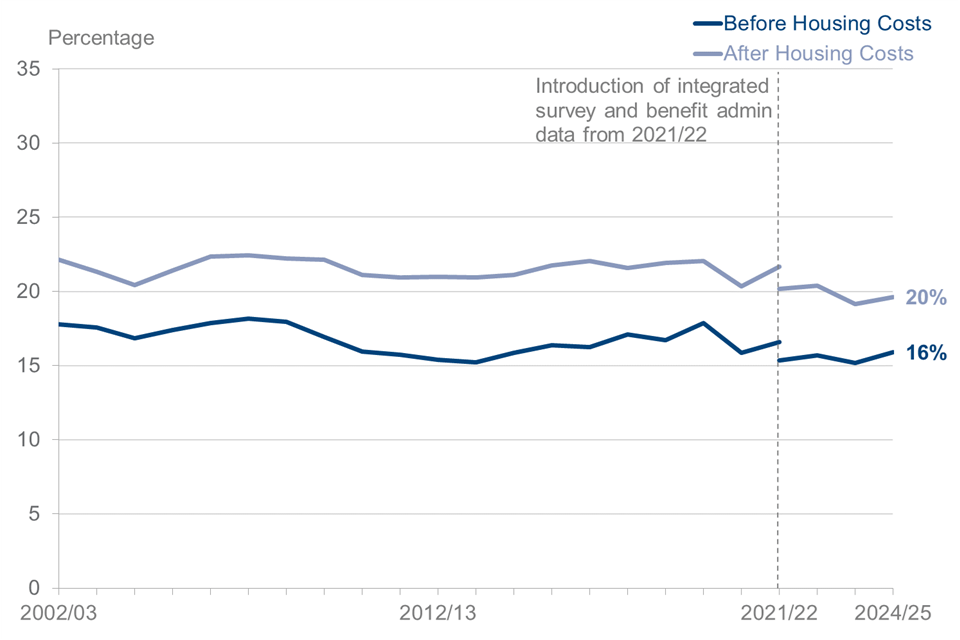
Figure 13: Percentage of individuals in relative low income, FYE 2003 to FYE 2025
Interpretation
The relative low-income threshold is set as a proportion (60%) of the UK average (median) net equivalised household income and moves each year as average income changes. It is used to measure the number and proportion of individuals who have income below this threshold. Estimates are also available for below 50% and 70% of the median.
The percentage of individuals in relative low income depends on changes in median incomes, and how changes in the income of those below the low-income threshold compare to changes in the median.
Main Findings
For FYE 2025, the percentage of the population in relative low income, before housing costs, has remained broadly flat (increasing by less than one percentage point) because incomes for those around the low-income threshold rose only a little less than those around the median.
On average, changes in housing costs for those near the low-income threshold have changed in line with those near the median, in relative terms, resulting in no significantly measured change to the relative low income, after housing costs measure.
Figure 13 shows the percentage of individuals in relative low income BHC is 16%, compared to 15% in FYE 2024, and 20% for AHC, compared to 19% in FYE 2024 (changes are rounded to the nearest percentage point). The AHC change calculated on unrounded data is less than 0.5 percentage points.
Absolute low income
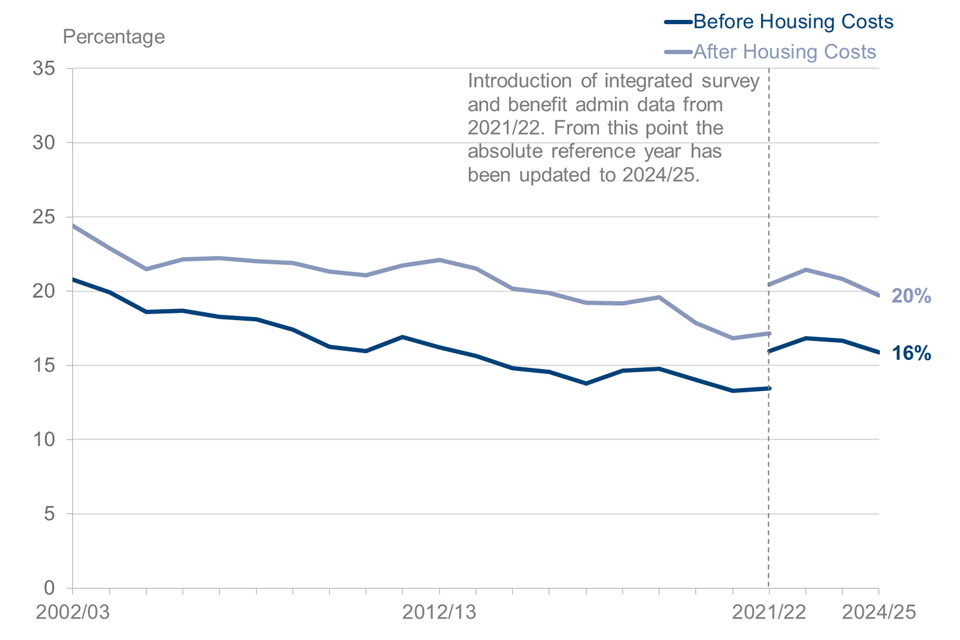
Figure 14: Percentage of individuals in absolute low income, FYE 2003 to FYE 2025
Interpretation
Absolute low income takes the 60% of median income threshold from a reference year and then fixes this in real terms (i.e. the line moves with inflation). This is designed to assess the extent to which low incomes are keeping pace with inflation. It measures the number and proportion of individuals who have incomes below this threshold. We also publish measures using thresholds at 50% or 70% of the reference year median.
The percentage of individuals in absolute low income will decrease if individuals with lower incomes see their incomes rise by more than inflation.
Main Findings
Given the structural break, the absolute reference year has changed to FYE 2025 for years where administrative data linking has been applied and remains at FYE 2011 for prior years. See Section 2 for more information.
This year our central estimate for the absolute measures BHC and AHC have decreased by 1 percentage point since FYE 2024.
Figure 14 shows the percentage of individuals in absolute low income BHC was 16% in FYE 2025 while the percentage AHC was 20%.
See Tables 3.1tr (relative) and 3.2tr (absolute) for full data.
Household Food Security
This publication includes statistics on household food security for all UK individuals and those living in low-income households. Information on household food security at a household level can be found in the Family Resources Survey: financial year 2024 to 2025 publication.
Interpretation
To measure household food security, questions are asked of the person in the household who knows the most about buying and preparing food. In common with the rest of the FRS, the focus is on the period of 30 days leading up to interview. The questions are comparable to those used by other public bodies in the UK, and internationally. From the questions, a ten-point household score is generated, and the household is given a food security status:
- High food security (score = 0): The household has no problem, or anxiety about, consistently accessing adequate food
- Marginal food security (score = 1 or 2): The household had problems at times, or anxiety about, accessing adequate food, but the quality, variety, and quantity of their food intake were not substantially reduced
- Low food security (score = 3 to 5): The household reduced the quality, variety, and desirability of their diets, but the quantity of food intake and normal eating patterns were not substantially disrupted
- Very low food security (score = 6 to 10): At times during the last 30 days, eating patterns of one or more household members were disrupted and food intake reduced because the household lacked money and other resources for food
- Food secure households: Households with high or marginal food security. Food secure households are considered to have sufficient, varied food to facilitate an active and healthy lifestyle
- Food insecure households: Households with low or very low food security. Food insecure households have a risk of, or lack of access to, sufficient, varied food
More details are available in the FRS BIM.
Main Findings
Nine per cent of individuals in the UK population lived in a food insecure household in FYE 2025, which was a decrease of 2 percentage points from the previous year.
The percentage of individuals living in food insecure households decreased in FYE 2025 for those on low incomes.
Household food insecurity decreased for those in low income. 19% of individuals in relative low income BHC and 19% in relative low income AHC lived in a food insecure household. This was a decrease of 2 percentage points BHC and 4 percentage points AHC. A similar degree of change was seen amongst individuals in absolute low income.
See tables 9.1ts, 9.2ts and 9.3ts for full details.
Food Bank Usage
This publication also includes statistics on food bank usage for all UK individuals and those who are living in low-income households. Information on food bank usage at a household level can be found in the FRS BIM.
Figures for food bank usage amongst the UK population are rounded to the nearest 0.1%. This ensures any movements in the numbers using food banks in a large population are accurately reflected in the reported percentages. For lower-level breakdowns of the population, figures are still reported to the nearest percentage point.
Interpretation
Food bank usage questions are asked of the person in the household who knows the most about food purchasing and preparation. This means that the questions do not directly ask about the food bank usage needs of children, and it cannot be determined which individual or individuals the food parcels are for. Food bank usage in the FRS refers only to visits to a food bank when emergency food supplies (food parcels) were obtained. This excludes visits to the food bank made only for other support (e.g. financial advice or mental health support).
The FRS asks food bank usage questions relating to two time periods: 12 months prior to interview, and in the 30 days prior to interview. This means that caution may be needed when making direct comparisons between the FRS results and other research on this subject.
Main Findings
Of all UK individuals, 3.8% lived in a household that had accessed a food bank within the 12 months prior to their FRS interview. This has decreased from 4.2% in FYE 2024.
Those in low-income households were more likely to have used a food bank over the same period. Nine per cent of individuals in relative low income BHC, lived in a household where a food bank had been used within the 12 months prior to their FRS interview. Similar levels were recorded for the AHC measure and for individuals in absolute low income.
The percentage of individuals in households that had accessed a food bank within 30 days of their FRS interview decreased compared to FYE 2024. Of all UK individuals, 1.3% lived in a household that had accessed a food bank within 30 days prior to their FRS interview, compared to FYE 2024 where it was 1.6%.
For both relative and absolute measures, the proportion of individuals in low-income households using a food bank in the previous 30 days remained stable at 4%.
See tables 9.1ts, 9.2ts (relative) and 9.3ts (absolute) for full data.
7. Children in low-income households
Three of the four low-income measures for children included in section 4 of the Welfare Reform and Work Act 2016 form part of the HBAI publication. These are: a 60% threshold relative low-income measure, a 60% threshold absolute low-income measure, and a combined 70% threshold low income and material deprivation measure. As with individuals, we report four measures of the percentage of children in low income – based on relative and absolute income, and before and after housing costs (BHC and AHC).
Compared to the overall population, children are more likely to live in low-income households. This is firstly because parents/guardians, in general, tend to earn less when their children are young compared with adults in households without children. Secondly, larger households have their incomes reduced to a greater degree during the income equivalisation process to take account of the fact that the household income must go further than for a smaller household. And thirdly, regarding AHC income, larger households also tend to have higher housing costs on average. See Tables 4.1tr, 4.2tr and 4.5tr for full data.
The percentage of children in relative and absolute low income remained stable in FYE 2025.
Relative low income
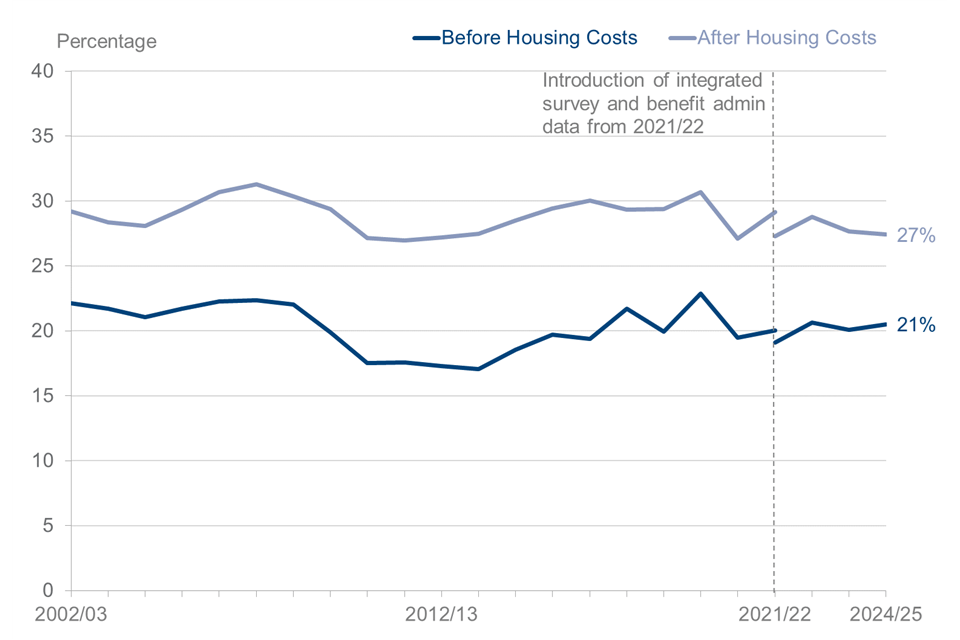
Figure 15: Percentage of children in relative low income, FYE 2003 to FYE 2025
Main Findings
Figure 15 shows that between FYE 2024 and FYE 2025, relative low income BHC for children increased very slightly to 21%. The relative AHC measure decreased very slightly to 27%, indicating the measures remained stable.
With rates of low income displayed to the nearest per cent, relative low income BHC was 21% and AHC 27% in FYE 2025, compared with 20% and 28% the previous year. However, when calculated from unrounded data, both changes are less than 0.5 percentage points, so the change on the previous year is shown in the publication tables as 0 (unchanged).
Neither change in the measures was statistically significant.
Absolute low income
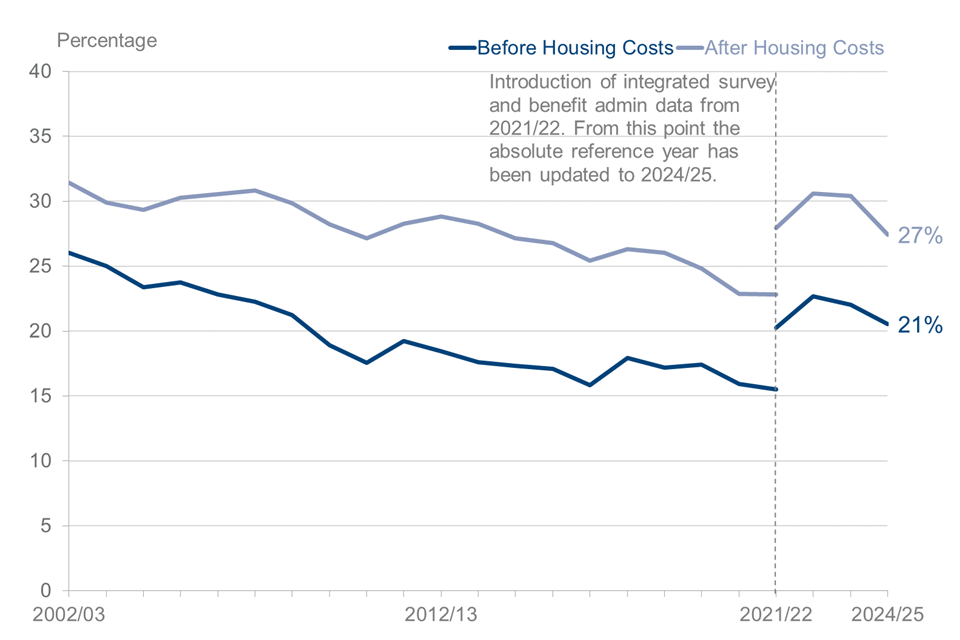
Figure 16: Percentage of children in absolute low income, FYE 2003 to FYE 2025
Main Findings
Figure 16 shows that both measures of the percentage of children in absolute low income have decreased since FYE 2024. The decrease BHC was 2 percentage points to 21%, and AHC decreased by 3 percentage points to 27% compared to FYE 2024.
Child material deprivation and combined low income and child material deprivation
For FYE 2024, an updated suite of questions on material deprivation was introduced. We advise users not to make a direct comparison of changes in material deprivation estimates between years prior to FYE 2024 and years from FYE 2024. Users should refer to the Material Deprivation Technical Report for more information.
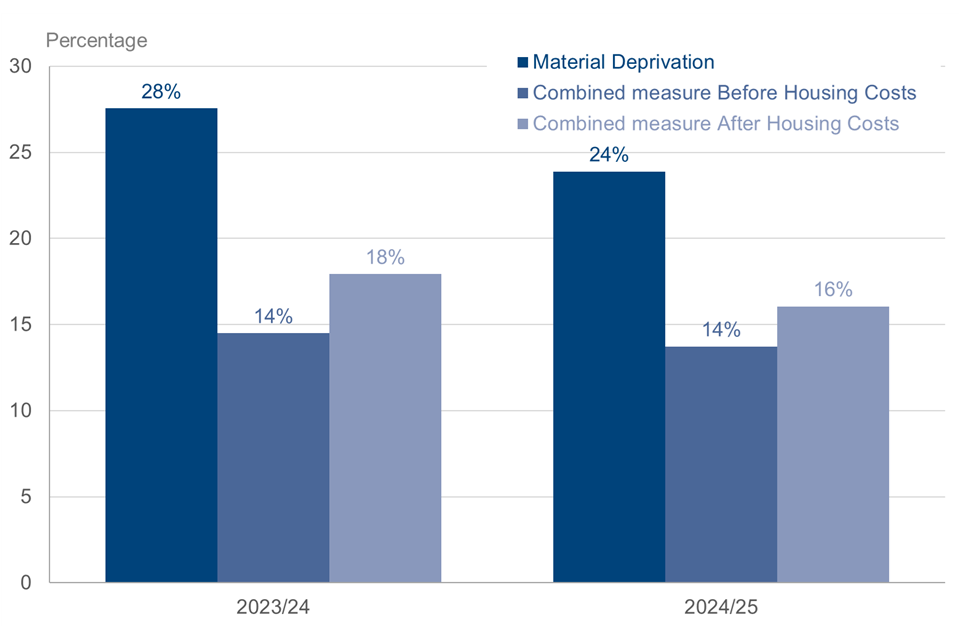
The proportion of children in material deprivation decreased in FYE 2025 from 28% to 24%; and the proportion of children in combined relative low income BHC and child material deprivation remained the same at 14%, whereas there was a decrease from 18% to 16% for the combined AHC measure.
Figure 17: Percentage of children in combined relative low income and child material deprivation, FYE 2024 and FYE 2025
Interpretation
For this updated measure of child material deprivation, respondents are asked whether they have access to a list of 22 goods and services. A child is classified as being in combined low income and child material deprivation if they live in a family that is lacking 4 or more items and has a household income BHC below 70% of the median.
From FYE 2024 we have published additional estimates of an overall child material deprivation measure and a measure of combined low income and material deprivation AHC.
See table 4.9tr for details of the overall measure and tables 4.7tr and 4.8tr for the combined AHC measure.
Measures using other thresholds of low income are available in our supplementary tables.
More details are available in the Material Deprivation Technical Report.
Main Findings
In FYE 2025 there were 3.5 million children in material deprivation in the UK, which was 24% of all children, compared to 4 million children in FYE 2024.
Figure 17 shows that the proportion of children in combined relative low income BHC and child material deprivation was 14%, which remained unchanged from FYE 2024. The proportion of children in combined relative measure AHC fell from 18% to 16% in FYE 2025.
The proportion of children in combined absolute low income and material deprivation fell by 2 percentage points to 14% BHC and 3 percentage points to 16% AHC in FYE 2025.
Due to the change in methodology, these estimates should not be compared directly with years prior to FYE 2024.
None of the changes seen were statistically significant.
Deep Material Poverty for Children
The number of children living in deep material poverty decreased in FYE 2025.
As outlined in Our Children, Our Future: Tackling Child Poverty, the Child Poverty Strategy will track progress against two headline metrics. The first is relative low income after housing costs (AHC), which is already included in the annual HBAI publication tables.
To complement this, a second measure has been developed to capture children experiencing a deeper level of poverty. Deep material poverty is based on material deprivation, specifically whether families can afford certain essential items.
An ad-hoc statistical release Deep material poverty: Financial year ending 2024 - GOV.UK was published in December 2025 and this presented estimates for the number and percentage of children in deep material poverty for the first time. This new deep material poverty measure is defined as lacking at least 4 out of 13 essential material deprivation items.
In this publication, six new data tables are included (1.4h, 4.9db, 4.10db, 4.11db, 4.12db and 4.10tr) which present estimates for the number and percentage of children in deep material poverty by various breakdowns.
Main Findings
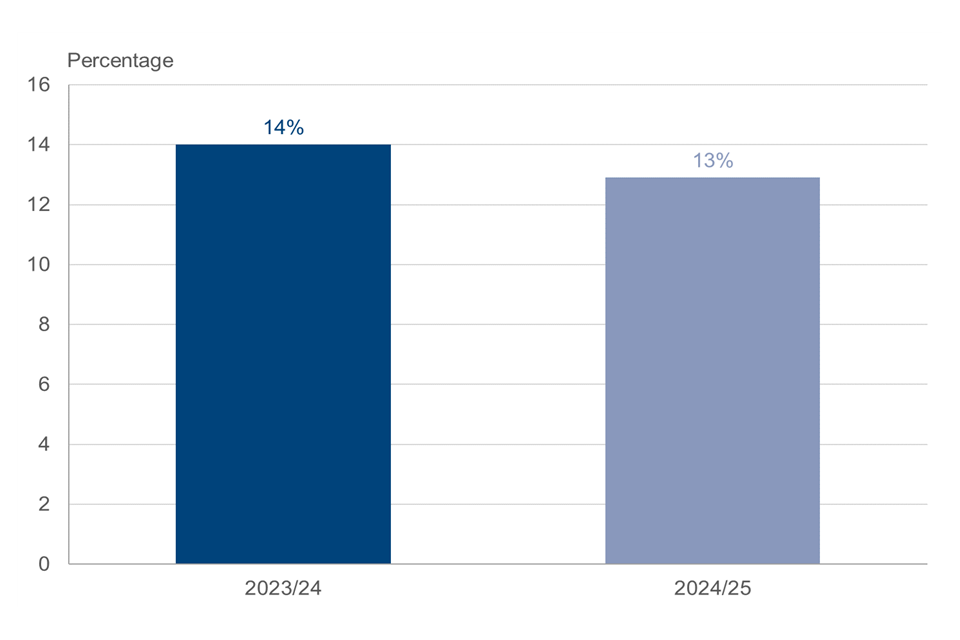
In FYE 2025, 1.9 million children were found to be in deep material poverty. This equates to 13% of children in the UK, compared to 14% in FYE 2024. This was a decrease of 0.1 million children.
Figure 18: Percentage of children in deep material poverty, FYE 2024 and FYE 2025
Household Food Security
The percentage of children living in food insecure households has fallen.
Fourteen per cent of children in the UK population lived in a food insecure household in FYE 2025, compared to 18% the previous year. However, children are more likely to be living in a food insecure household compared with working-age adults and pensioners.
Household food insecurity was greater for those in low income but also decreased in FYE 2025. Twenty-six per cent of children in relative low income BHC, and 24% AHC lived in a food insecure household. This was a decrease of 3 percentage points for the BHC low-income measure and 6 percentage points for the AHC measure since last year. Changes were similar for children in absolute low income.
Food Bank Usage
The percentage of children in households that have accessed a food bank within 30 days of their FRS interview and over a 12-month period has decreased, although children are more likely to be living in a household where a food bank has been accessed compared with working-age adults and pensioners.
Of all UK children, 6.6% lived in a household that had accessed a food bank within the 12 months prior to their FRS interview. This is a 1.1 percentage point decrease compared to FYE 2024.
Those in low-income households were more likely to have used a food bank over the 12 months prior to interview. Thirteen per cent of children in relative low income BHC lived in a household where a food bank had been used within the 12 months prior to their FRS interview, which was the same percentage as for relative low income AHC. Similar levels were recorded for individuals in absolute low income.
Of all UK children, 2.3% lived in a household that had accessed a food bank within 30 days prior to their FRS interview. This is a decrease compared to FYE 2024, where it was 2.7%.
The proportion of children in low-income households using a food bank in the previous 30 days has remained stable across all measures at 6% for FYE 2025.
See Tables 9.4ts, 9.5ts (relative) and 9.6ts (absolute) for full data.
8. Working-age adults in low-income households and changes in low income by work status
Working-age adults make up around 60% of the UK population. As such, changes in income for this group drive overall results more than changes amongst children and pensioners (with these groups making up 22% and 18% of the population respectively). Working-age adults also receive a greater proportion of their income from earnings and so changes in their incomes are more sensitive to changes in the labour market.
See Tables 5.1tr, 5.2tr, 5.2ts, 5.7tr, 5.8tr, 5.11ts, and 4.14ts (for children in low income by work status) and Charts 2.2 BHC and AHC for full data.
The percentage of working-age adults in relative low income remained quite stable, with increases of less than 1 percentage point for the relative measures and decreases of up to 1 percentage point for the absolute measures.
Figure 19: Percentage of working-age adults in relative low income, FYE 2003 to FYE 2025
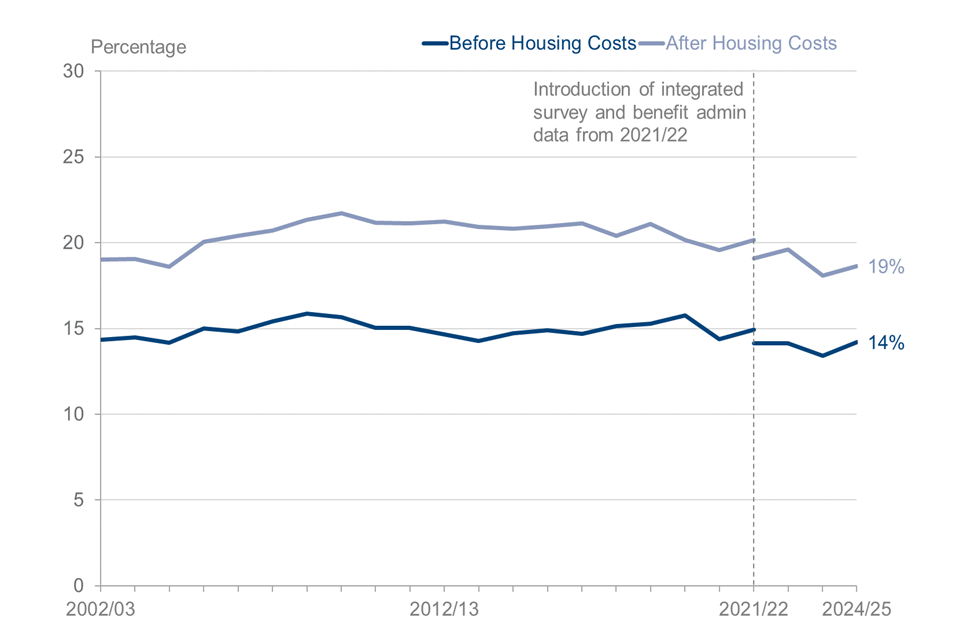
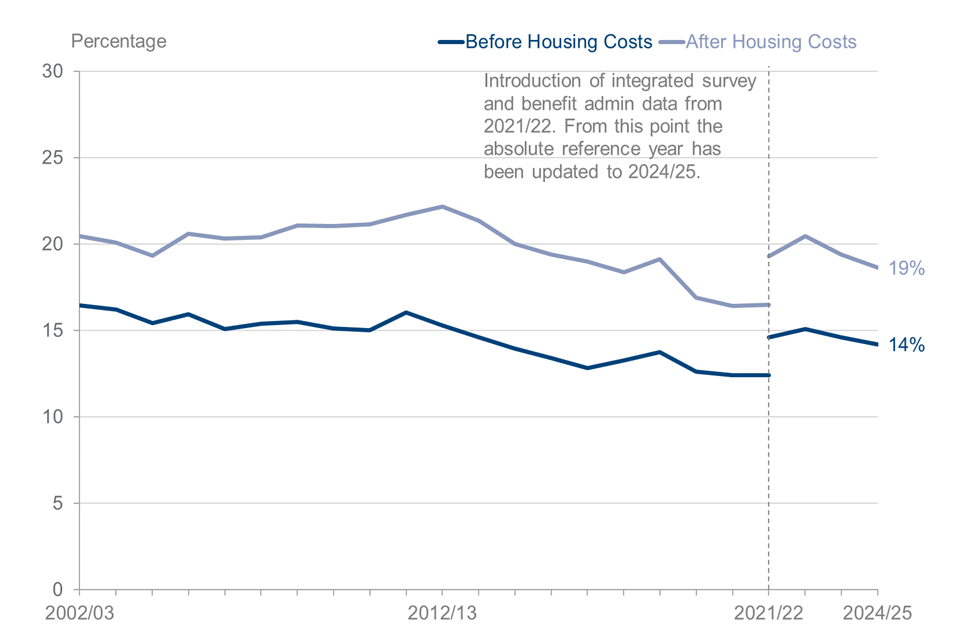
Figure 20: Percentage of working-age adults in absolute low income, FYE 2003 to FYE 2025
Main Findings
The percentage of working-age adults in relative low income BHC increased slightly by less than 1 percentage point to 14% in FYE 2025. The proportion in relative low income AHC increased by less than 1 percentage point to 19%.
Absolute low income BHC decreased by less than 1 percentage point to 14%, and AHC decreased by 1 percentage point to 19%. There has been a slight downward trend since FYE 2023.
None of the changes in the measures were statistically significant.
Percentage and composition of children and working-age adults in low income by work status
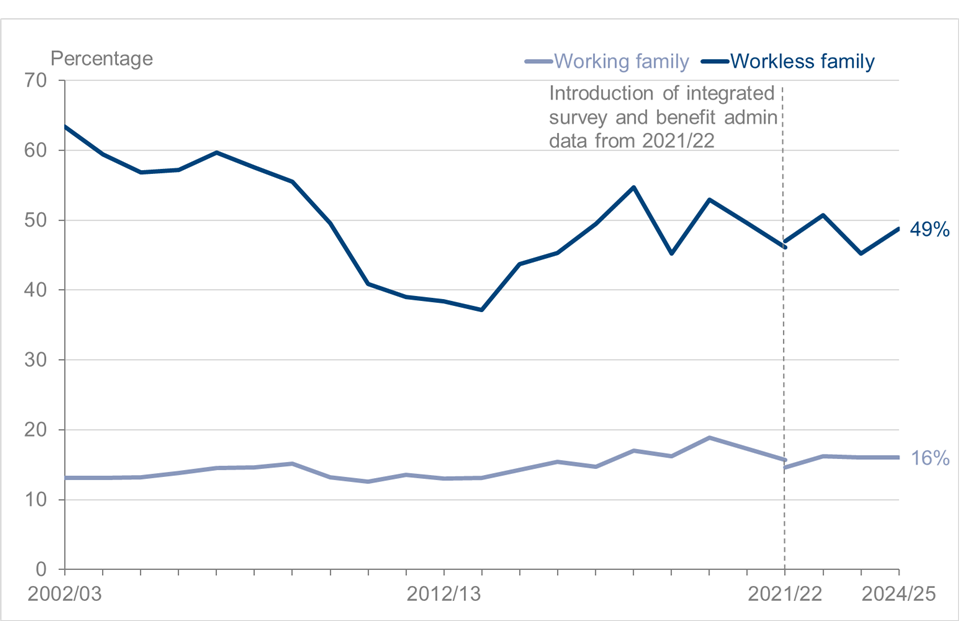
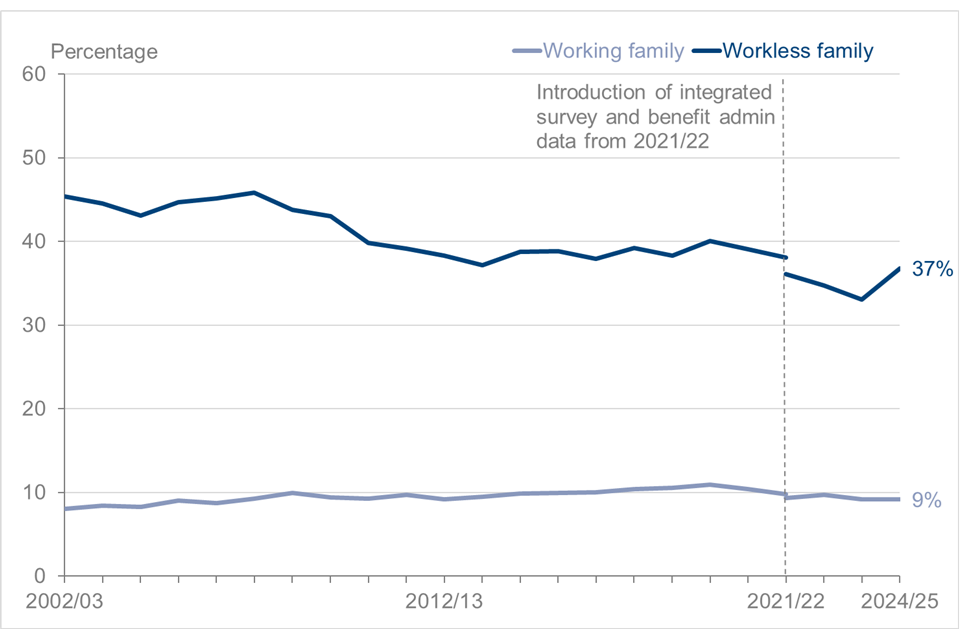
Estimates of low income by family work status are not available for FYE 2021 due to coronavirus (COVID-19) pandemic data quality issues. Figures 21 and 22 link the FYE 2020 and FYE 2022 data points.
Figure 21: Percentage of children in relative low income BHC by family work status, FYE 2003 to FYE 2025
Main Findings
In FYE 2025, 49% of children in workless families were in relative low income BHC.
This figure has increased since FYE 2024 when it was 45%; although it is slightly lower than for FYE 2023.
In comparison, 16% of children in working families were in low income. This estimate has remained at the same level since FYE 2023.
The smaller size of the workless group (18% of working age adults) compared to the working group (82%), means that there is more variability in the low-income estimates for this group between years.
Figure 22: Percentage of working-age adults in relative low income BHC by family work status, FYE 2003 to FYE 2025
Main Findings
Working-age adults in workless families are less likely to be in relative low income BHC than children in workless families. In FYE 2025, 37% of working-age adults in workless families were in relative low income BHC compared to 33% in FYE 2024.
In comparison, 9% of working-age adults in working families were in low income in FYE 2024. The trend in this measure has been stable over the timeseries.
Working-age material deprivation and combined low income and working-age material deprivation
As explained in section 2, in FYE 2024, an updated suite of questions on material deprivation was introduced. We advise users not to make a direct comparison of changes in material deprivation estimates between years prior to FYE 2024 and years from FYE 2024. Users should refer to the Material Deprivation Technical Report for more information.
The proportion of working-age adults in material deprivation was 21% in FYE 2025 compared to 23% the previous year, whereas the proportion of working-age adults in combined relative low income and material deprivation remained unchanged at 11%.
Figure 23: Percentage of working-age adults in combined relative low income and working-age material deprivation, FYE 2024 and FYE 202
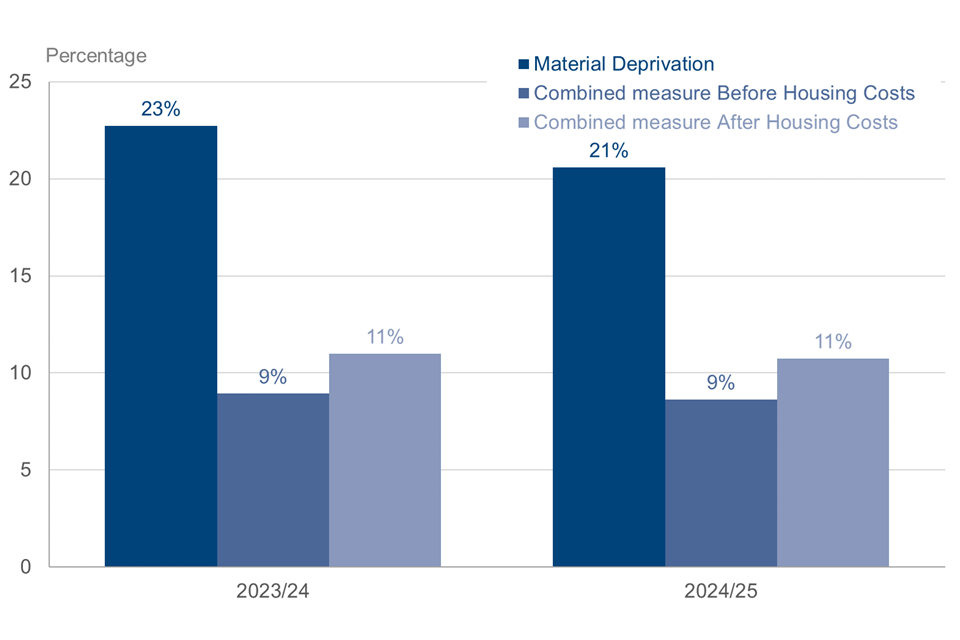
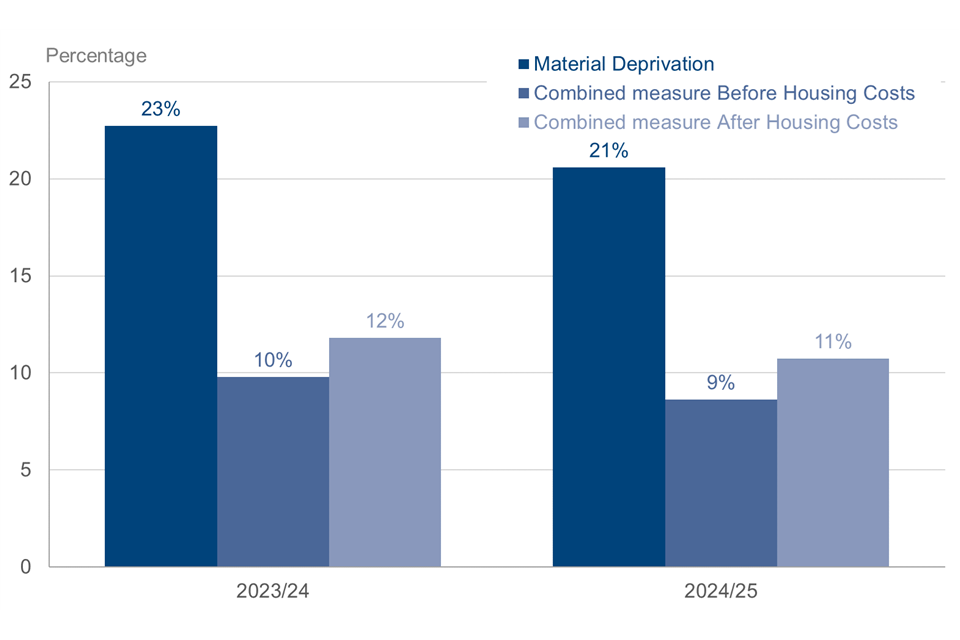
Figure 24: Percentage of working-age adults in combined absolute low income and working-age material deprivation, FYE 2024 and FYE 2025
Interpretation
The methodology for measuring combined low income and material deprivation for working-age adults is the same as for children, except measurement is based on a list of 21 goods and services and a working-age adult is defined as being in material deprivation if they are lacking 5 or more items. A working-age adult is classified as being in combined low income and material deprivation if they lack 5 or more items and have a household income BHC below 70% of the median. Measures using other thresholds of low income are available in the supplementary tables.
From FYE 2024 we have published additional estimates of an overall working-age material deprivation measure and a measure of combined low income and material deprivation after housing costs.
See table 5.11tr for details of the overall measure and tables 5.9tr and 5.10tr for the combined after housing costs measure.
Main Findings
In FYE 2025 there were 8.5 million working-age adults in material deprivation in the UK, which was 21% of all working-age adults. This was 0.8 million lower than for FYE 2024, where 23% of working-age adults were in material deprivation.
The proportion in combined relative low income BHC and working-age material deprivation was 9%, unchanged from the previous year.
The proportion of working-age adults in combined absolute low income BHC and material deprivation fell by 1 percentage point to 9% in FYE 2025.
Due to the change in methodology, these estimates should not be compared directly with years prior to FYE 2024.
Measures using other thresholds of low income are available in our supplementary tables.
More details are available in the Material Deprivation Technical Report.
Household Food Security
The percentage of working-age adults living in food insecure households has fallen since FYE 2024.
Nine per cent of working-age adults in the UK population lived in a food insecure household in FYE 2025, which is lower than the previous two years.
Nineteen per cent of working-age adults in relative low income BHC lived in a food insecure household. The proportion was slightly higher at 20% for those in relative low income AHC. This was a decrease of 3 percentage points for BHC since last year, and 4 percentage points for AHC compared to last year.
Food Bank Usage
The percentage of working-age adults in households that have accessed a food bank within 30 days of their FRS interview has slightly decreased. Over a 12-month period, there is a similar decrease in use.
Of all UK working-age adults, 3.6% lived in a household that had accessed a food bank within the 12 months prior to their FRS interview. This is a 0.3 percentage point decrease compared to last year.
In FYE 2025, the percentage of working-age adults in low-income households that used a food bank slightly decreased compared to FYE 2024. Nine per cent of working-age adults in relative low income BHC lived in a household where a food bank had been used within the 12 months prior to their FRS interview, compared to 10% last year. The proportion for the relative AHC measure was also 9%, which also represented a decrease of less than 1 percentage point. Similar levels of usage were seen in the absolute low-income measures.
Of all UK working-age adults, 1.3% lived in a household that had accessed a food bank within 30 days prior to their FRS interview. This is a decrease compared to FYE 2024, where it was 1.6%.
In FYE 2025, 4% of working-age adults in relative low income BHC and AHC lived in a household where a food bank had been used in the last 30 days. This was unchanged from FYE 2024 when rounded. The proportion was also 4% for both absolute measures, remaining at the same levels as FYE 2024, when rounded.
See Tables 9.7ts, 9.8ts (relative) and 9.9ts (absolute) for full data.
9. Pensioners in low-income households
Over three-quarters of pensioners live in homes that are owned outright (compared to a quarter of working-age adults) and so face minimal housing costs. This means the percentage of pensioners in low-income households tends to be lower AHC than BHC, unlike for children and working-age adults.
As only a small proportion of pensioners have income from employment, trends in low income for this group are influenced more by how the value of state or personal and occupational pensions change relative to inflation and relative to growth in earnings for the population below State Pension Age.
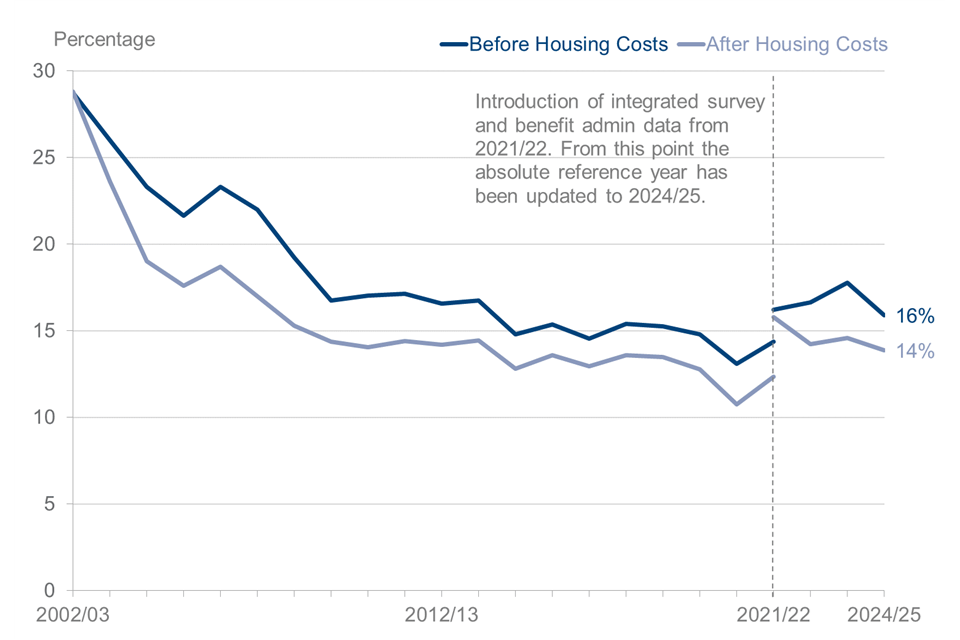
The percentage of pensioners in relative low income has increased both BHC and AHC. The percentage of pensioners in absolute low income has decreased both BHC and AHC.
See Tables 4.1tr and 4.2tr (for children in low-income households), 5.1tr and 5.2tr (for working-age adults in low-income households), 5.5db (for working-age adult tenure), 6.2ts, 6.2tr, 6.7tr and Charts 2.2 BHC and AHC for full data.
Figure 25: Percentage of pensioners in relative low income, FYE 2003 to FYE 2025
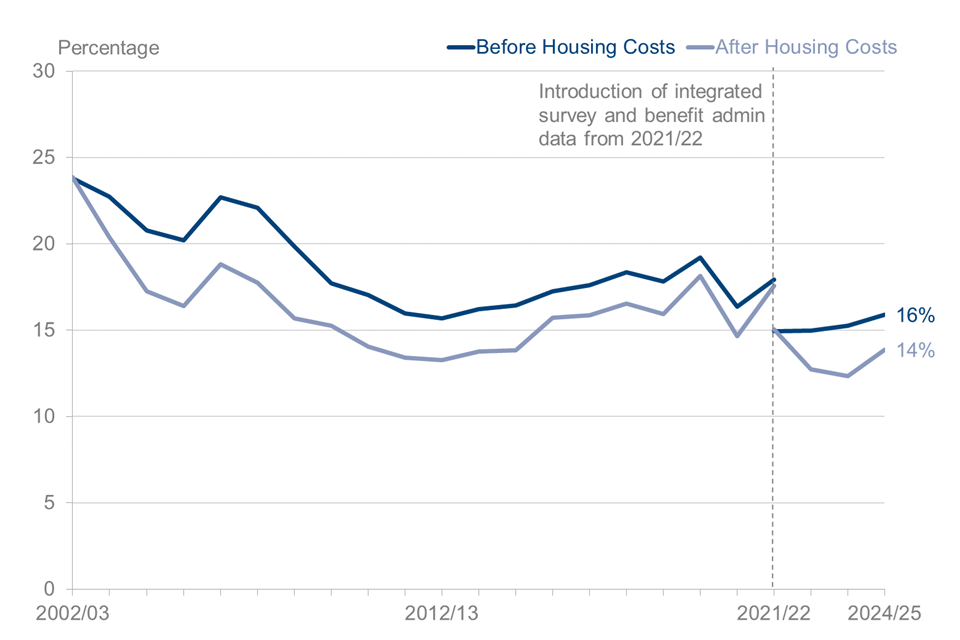
Figure 26: Percentage of pensioners in absolute low income, FYE 2003 to FYE 2025
Main Findings
Figure 25 shows the percentage of pensioners in relative low income BHC increased slightly (a less than 1 percentage point increase to 16%) and increased by almost 2 percentage points to 14% AHC in FYE 2025.
Absolute low income BHC for pensioners has decreased in FYE 2025, by 2 percentage points to 16%. Absolute low income AHC decreased by 1 percentage point to 14%.
None of the changes to these four measures were statistically significant.
Pensioner incomes increased slightly overall in FYE 2025 due to increases in the State Pension, despite removal of Cost of Living payments and restriction of Winter Fuel Payment entitlement (as stated in Section 3). However, this overall picture masks variation across the income distribution. Pensioners in the bottom third of the income distribution saw their incomes grow more slowly than incomes at the median. This was due to the increase in National Living Wage and reduction in rate of some classes of National Insurance Contributions for the employed and self-employed, which pensioners did not benefit from, whereas the working-age population did.
Both absolute low income BHC and AHC measures have decreased, reflecting the increase in overall pensioner incomes. However, increases have been seen in relative income BHC and AHC measures highlighting the increase in the overall median income relative to pensioner incomes.
Pensioner Material Deprivation
As explained in section 2, in FYE 2024, an updated suite of questions on material deprivation was introduced. Due to the change in methodology, these estimates should not be compared directly with years prior to FYE 2024.
Users should refer to the Material Deprivation Technical Report for more information.
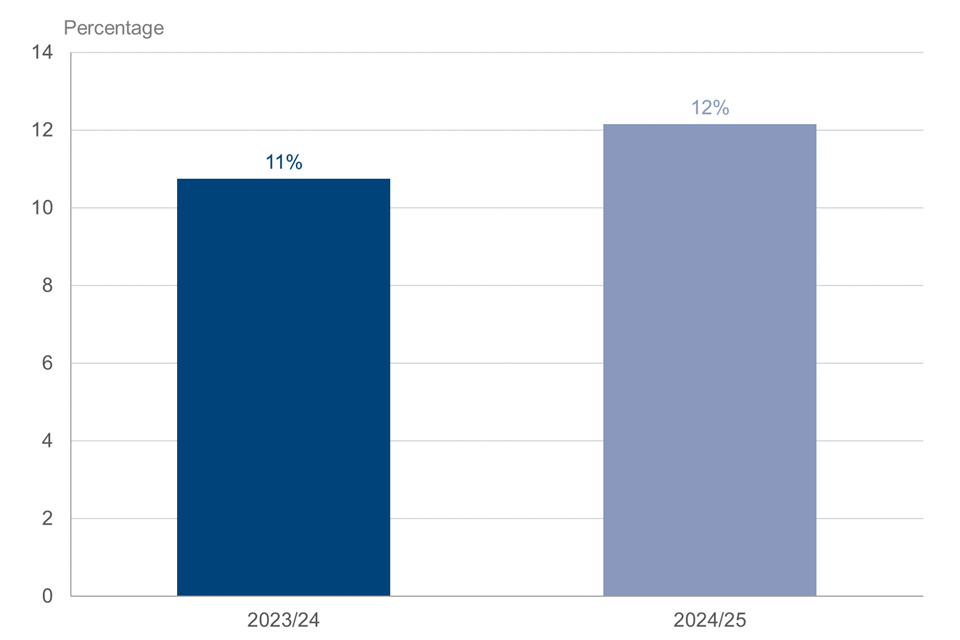
The proportion of pensioners in material deprivation was 12% in FYE 2025 compared to 11% in FYE 2024
Figure 27: Percentage of pensioners in material deprivation, FYE 2024 to FYE 2025
Interpretation
The methodology for measuring material deprivation for pensioners is broadly the same as for children and working-age adults, except measurement is based on a list of 19 goods and services and a pensioner is defined as being in material deprivation if they are lacking 4 or more items. Users should refer to the Material Deprivation Technical Report for more information.
Main Findings
In FYE 2025, there were 1.5 million pensioners in material deprivation in the UK, which was 12% of all pensioners. This was an increase of 0.2 million pensioners compared to FYE 2024.
Due to the change in methodology, these estimates should not be compared directly with years prior to FYE 2024.
Household Food Security
The percentage of pensioners living in food insecure households remained unchanged compared to FYE 2023 and FYE 2024.
Pensioners in relative low income BHC are much less likely to live in a food insecure household compared with working-age adults and children in low income BHC.
Three per cent of pensioners in the UK lived in a food insecure household in FYE 2025, which was the same proportion as the last two years.
The percentage is similar for pensioners in low-income households. In FYE 2025, 4% of pensioners in relative low income BHC or absolute low income BHC lived in a food insecure household. These figures are unchanged since FYE 2023.
For relative and absolute low income AHC, there was again no change in the proportion of low-income pensioners in food insecure households since FYE 2023, which remained at 6%.
Food Bank Usage
Pensioners remain very unlikely to have accessed a food bank.
Of all UK pensioners, 0.9% lived in a household that had accessed a food bank within the 12 months prior to their FRS interview. This was a very slight increase compared to 0.8% in FYE 2024.
In FYE 2025, 1% of pensioners in relative or absolute low income BHC lived in a household where a food bank had been used within the 12 months prior to their FRS interview. For relative and absolute low income AHC, this figure was 2%. These percentages are stable compared to last year and broadly the same as the overall figures for pensioners.
Sample sizes for those using a food bank within the last 30 days prior to FRS interview are too small to provide estimates.
See Tables 9.10ts, 9.11ts (relative) and 9.12ts (absolute) for full data.
Further DWP statistics on Pensioners’ Incomes are published annually alongside HBAI.
10. People in low-income households, by disability in the family
26.3 million individuals (or 39%) lived in a family where someone was disabled in FYE 2025. This consisted of 5.7 million children, 13.8 million working-age adults and 6.9 million pensioners.
The percentage of individuals in a disabled family and in relative low income increased slightly BHC (by just under 0.5 percentage points) by 1 percentage point AHC.
None of the changes reported in this section were statistically significant.
See tables 7.1tr, 7.3tr, 7.5tr and 7.7tr for full data.
Definitions
Disabled people are identified as those who report any physical or mental health condition(s) or illness(es) that last or are expected to last 12 months or more, and which limit their ability to carry out day-to-day activities a little, or a lot. This is in line with the Equality Act definition.
The means of identifying people with a disability has changed over time, with different criteria applied for FYE 2003 to FYE 2004; FYE 2005 to FYE 2012; and FYE 2013 to date.
Changes to disability questions may affect groups differently, as individuals interpret health conditions or wording in varied ways. Therefore, comparisons between estimates from FYE 2013 onwards with earlier years should be made with caution.
Estimates of low income by family disability status are not available for FYE 2021. All charts in this section link the FYE 2020 and FYE 2022 data points.
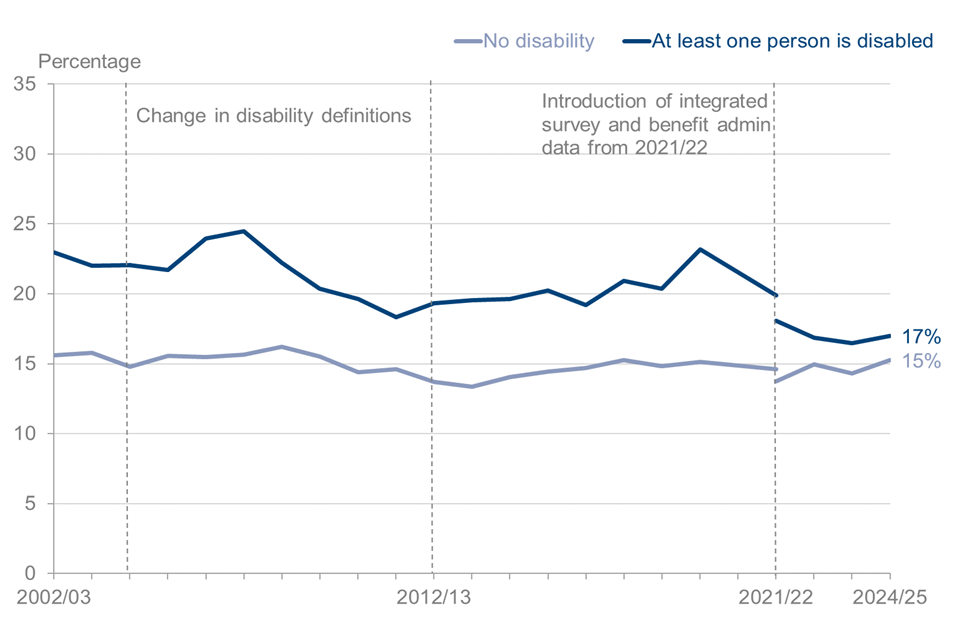
Figure 28: Percentage of individuals in relative low income BHC, by family disability, FYE 2003 to FYE 2025
Main Findings
Those living in a family with a disabled member are more likely to be in low income than non-disabled families. The percentage of individuals in families where someone is disabled in relative low income BHC is 2 percentage points higher than families where no-one is disabled.
Figure 28 shows that in FYE 2025, the percentage of individuals in families where someone is disabled and in relative low income BHC increased slightly to 17%. Low-income rates for those individuals in families without a disabled member also slightly increased.
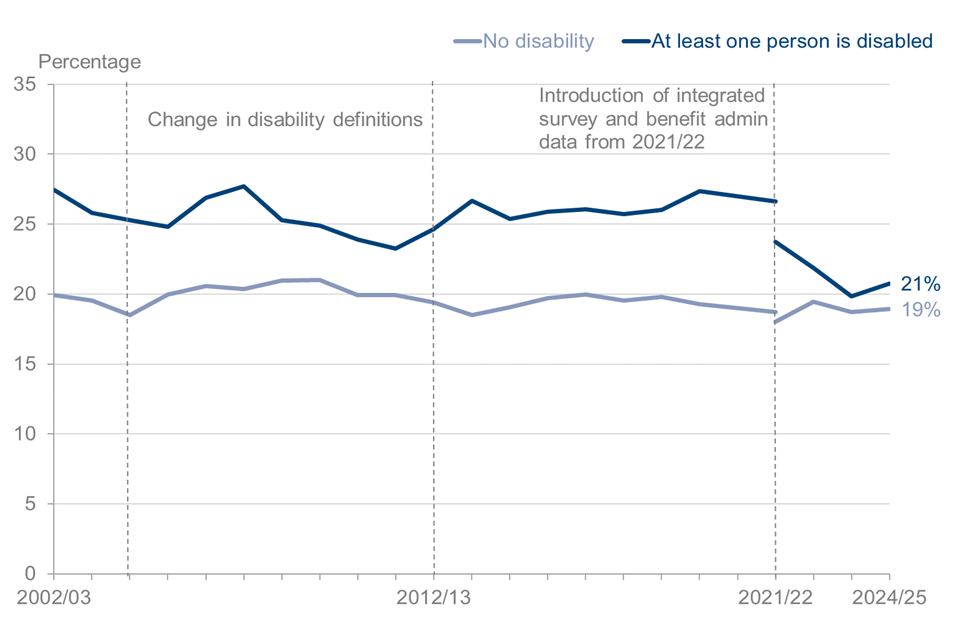
Figure 29: Percentage of individuals in relative low income AHC, by family disability, FYE 2003 to FYE 2025
Main Findings
The rate of relative low income AHC for those in families where someone is disabled was 21%, an increase of 1 percentage point on FYE 2024. For families with no disability, the proportion remained stable at 19%.
Figure 30: Percentage of individuals in absolute low income BHC, by family disability, FYE 2003 to FYE 2025
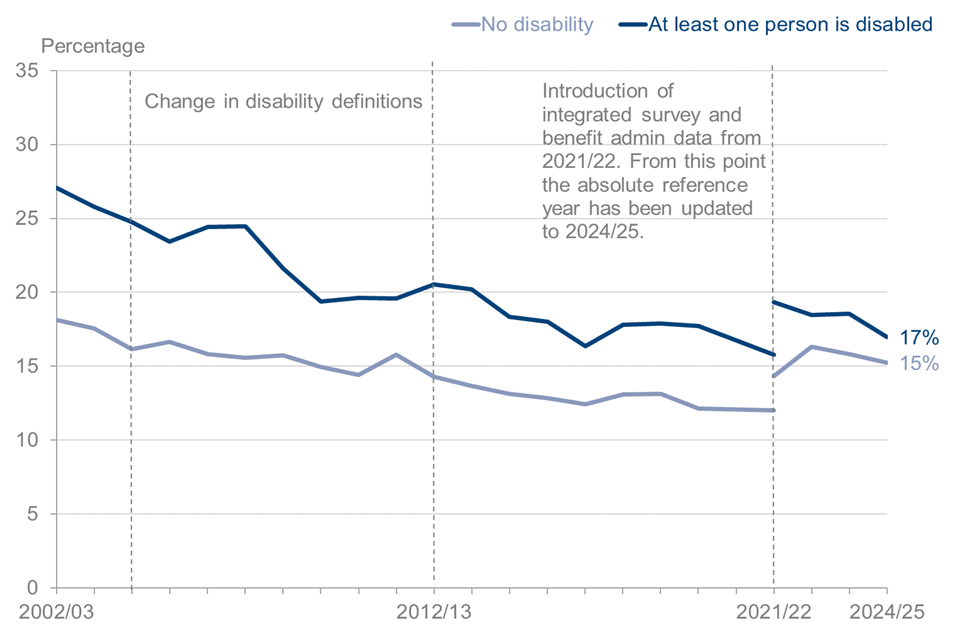
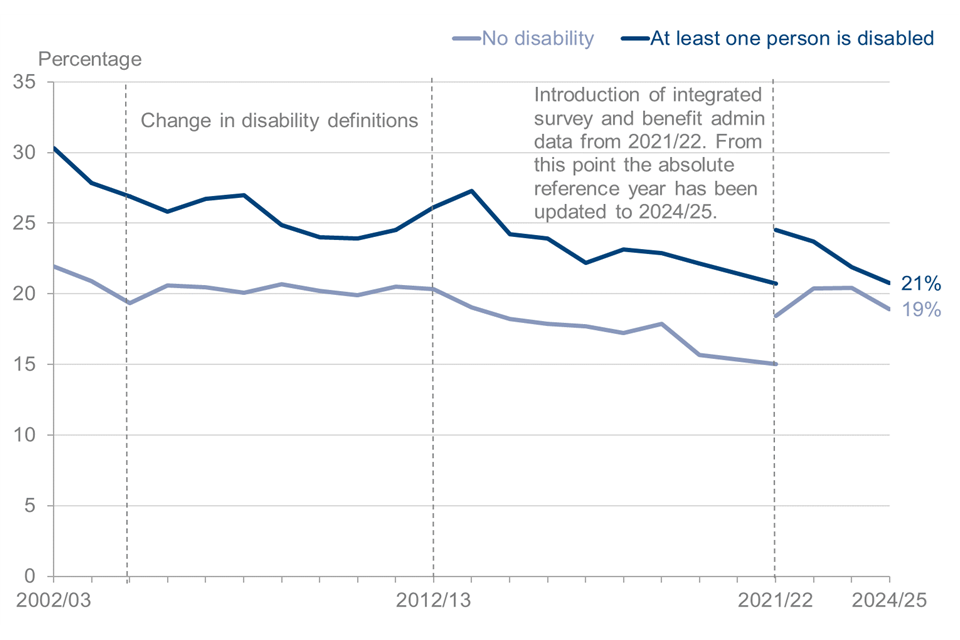
Figure 31: Percentage of individuals in absolute low income AHC, by family disability, FYE 2003 to FYE 2025
Main Findings
In FYE 2025, the rate of absolute low income BHC decreased by 2 percentage points to 17% for individuals in families where someone is disabled. The AHC measure decreased by 1 percentage point to 21%. For individuals in families without a disabled member, there was a similar decrease in the proportion in low income for both BHC and AHC measures.
For both relative and absolute measures, there is no direct relationship between the trends for those with and without disabled family members. Several factors could affect the average household income where someone in a family is disabled. We know, for example, that working-age adults with disabilities are less likely to be in employment, and that disability is more prevalent amongst pensioners. Changes in low-income rates will also depend not only on changes in the composition of the group but also differences in the growth of income components (such as income from employment) compared to non-disabled households.
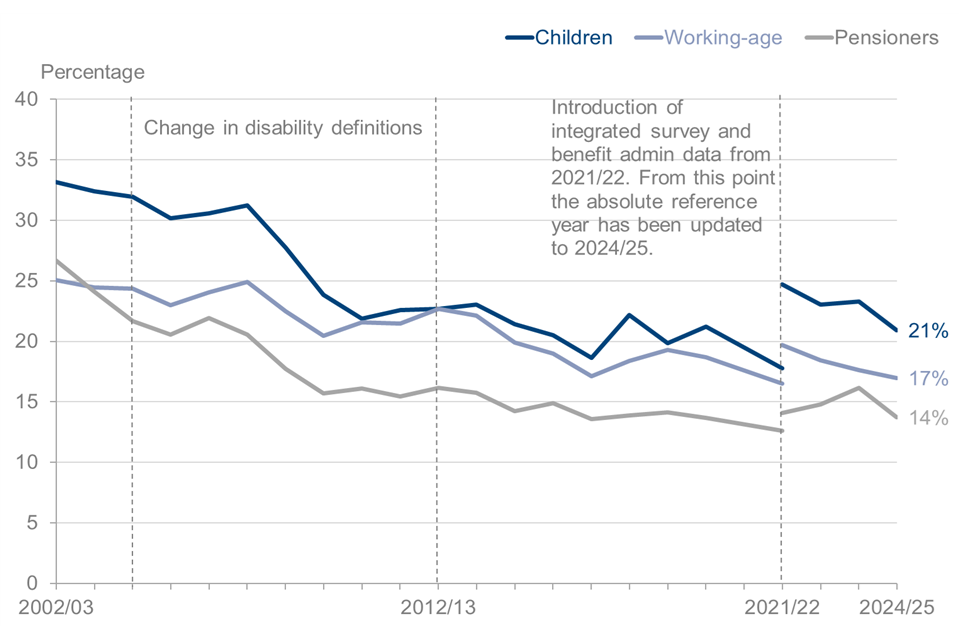
Figure 32: Percentage of children, working-age adults, and pensioners in relative low income BHC where someone in the family is disabled, FYE 2003 to FYE 2025
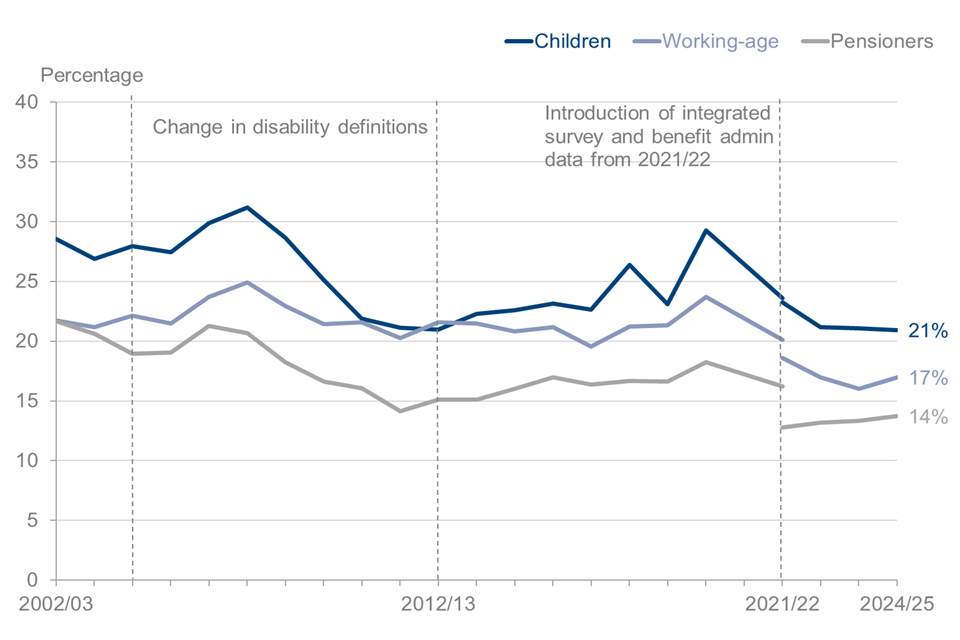
Figure 33: Percentage of children, working-age adults, and pensioners in absolute low income BHC where someone in the family is disabled, FYE 2003 to FYE 2025
Main Findings
Figure 32 shows that the relative low-income rate BHC for children in disabled families was 21% and had remained at the same rate since FYE 2023. For working-age adults and pensioners, relative low-income rates BHC increased slightly in FYE 2025.
Figure 33 shows that individuals in disabled families across all age groups showed a decline in their absolute low-income rates BHC since FYE 2024.
11. Measuring income in HBAI
HBAI uses data from the Family Resources Survey (FRS) to derive a measure of disposable household income. Adjustments are made to take account of the size and composition of households to make figures comparable.
In FYE 2025, the FRS covered an achieved sample of 16,299 households in the United Kingdom. This was a slightly smaller achieved sample than in FYE 2024 (16,758), with the issued sample being 59,044 (the same as in FYE 2024). Surveys gather information from a sample rather than from the whole population.
We continue to advise users that changes in estimates over recent years should be interpreted being mindful of the differences in data collection approaches across the period and the effect this had on sample composition. In this year’s report we continue to make assessments of observed changes in the data compared with both FYE 2024 and preceding years.
Key Definitions
| Definition | |
|---|---|
| Sampling Error | Results from surveys are estimates and not precise figures – in general terms the smaller the sample size, the larger the uncertainty. Confidence intervals help to interpret the uncertainty of these estimates, by showing the range of values around the estimate that the true result is likely to be within. |
| Non-sampling Error | These results are based on data from respondents to the survey. If people give inaccurate responses or certain groups of people are less likely to respond this can introduce biases and errors. This non-sampling error can be minimised through effective and accurate sample and questionnaire design and extensive quality assurance of the data. However, it is not possible to eliminate it completely, nor can it be quantified. |
| Income | This is measured as total weekly household income from all sources (including child income) after tax, national insurance, and other deductions. Income measures are presented before and after housing costs (rent, mortgage interest payments, buildings insurance etc.). A household income measure implicitly assumes that all members of the household benefit equally from the household’s income and so appear at the same position in the income distribution. |
| SPI adjustment | Estimates of mean income and some inequality measures are very sensitive to fluctuations in incomes at the top of the distribution. An adjustment to correct for this is made to ‘very rich’ households in FRS-based results using data from HMRC’s Survey of Personal Incomes. |
| Household | One person living alone or a group of people (not necessarily related) living at the same address who share cooking facilities and share a living room, sitting room or dining area. A household will consist of one or more benefit units or families. |
| Family or Benefit Unit | A single adult or a couple living as married and any dependent children. |
| Equivalisation | An adjustment is made to income to make it comparable across households of different size and composition. For example, the process of equivalisation would adjust the income of a single person upwards, so their income can be compared directly to the standard of living for a couple. Different equivalisation scales are applied before and after housing costs, with the BHC example below. AHC scales can be found in our HBAI BIM. |
Equivalisation scales used in HBAI (Before Housing Costs)
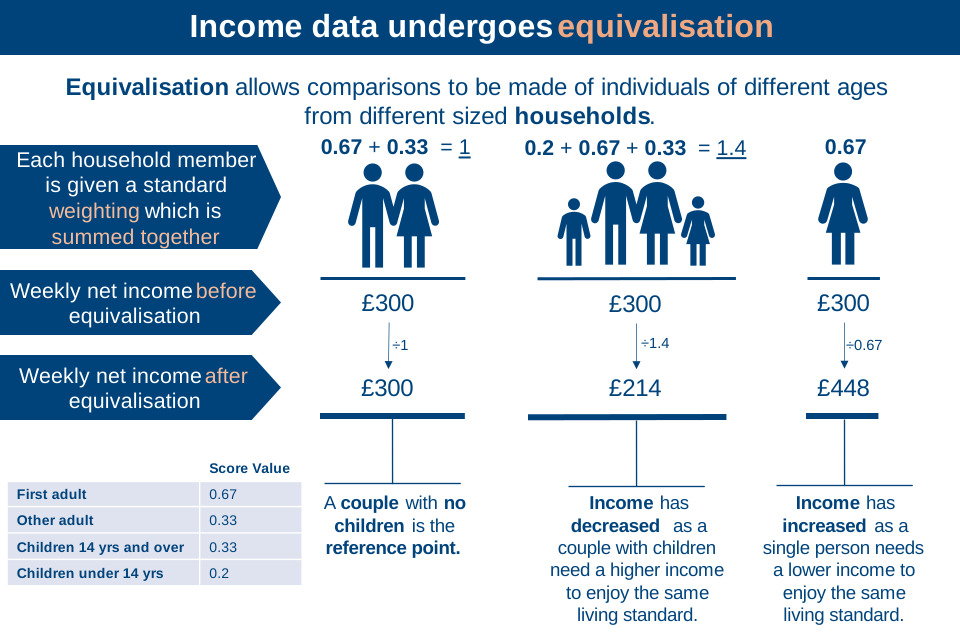
Equivalisation allows comparisons to be made of individuals of different ages and different sized households. The figure above shows the process of how income undergoes the process of equivalisation for three different example household types – all of which have a weekly net income before equivalisation of £300, but after equivalisation have different weekly net incomes.
Example 1
Couple without children – have individual equivalisation weights of 0.67 (first adult) and 0.33 (second adult) which sum to 1. For this household their weekly net income before equivalisation is £300 and their weekly net income after equivalisation is £300 divided by 1, so also £300. A couple with no children is the reference point.
Example 2
Couple with 2 children under 14 years have equivalisation weights of 0.67 (first adult), 0.33 (second adult), 0.2 (first child under 14 years) and 0.2 (second child under 14 years) – these sum to 1.4. For this household their weekly net income before equivalisation is £300, and their net weekly income after equivalisation is £300 divided by 1.4, so £214. Compared to the reference point, income has decreased as a couple with children need a higher income to enjoy the same living standard.
Example 3
Single adult household has equivalisation weight of 0.67. For this household their weekly net income before equivalisation is £300 and their weekly net income after equivalisation is £300 divided by 0.67, so £448. Compared to the reference point, income has increased as a single person needs a lower income to enjoy the same living standard.
Inflation
Inflation is the speed at which the prices of goods and services rise or fall. The use of different inflation measures influences trends in average household income and absolute low-income measures in HBAI.
CPI
HBAI uses variants of CPI to adjust for inflation to look at how incomes are changing over time in real terms i.e. if, for example, average incomes rise by 3% in cash terms, but inflation is higher at 5%, then we will record a fall in average incomes as the real average purchasing power of incomes has fallen.
12. Long-term trends (data prior to FYE 1995 are not Accredited Official Statistics)
Work undertaken by IFS to extend HBAI trends back to 1961 shows large increases in inequality over the 1980s.
Figure 34: Long term trend in the Gini Coefficient
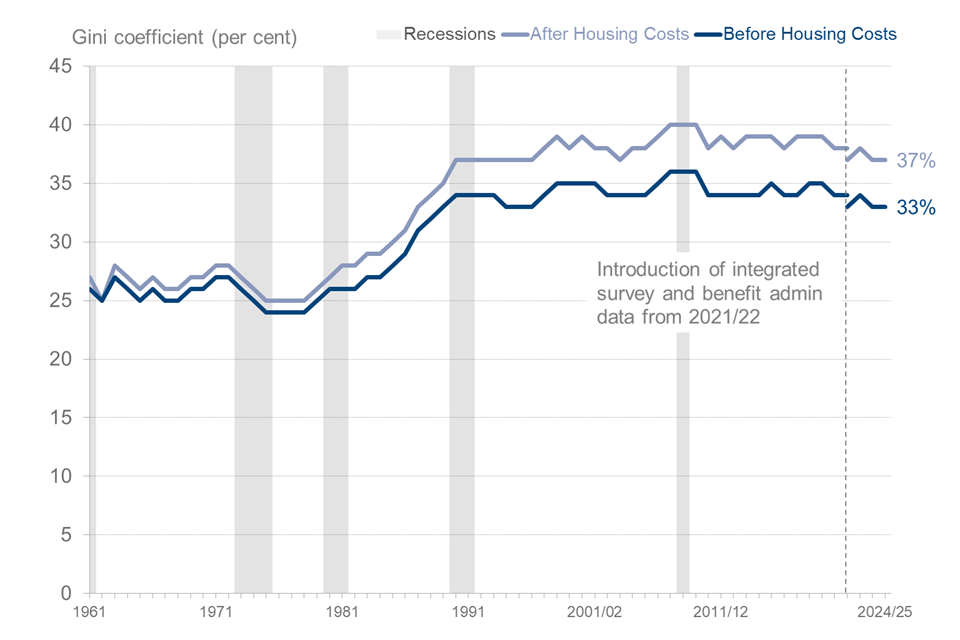
Figure 35: Long term trend in Relative Low Income
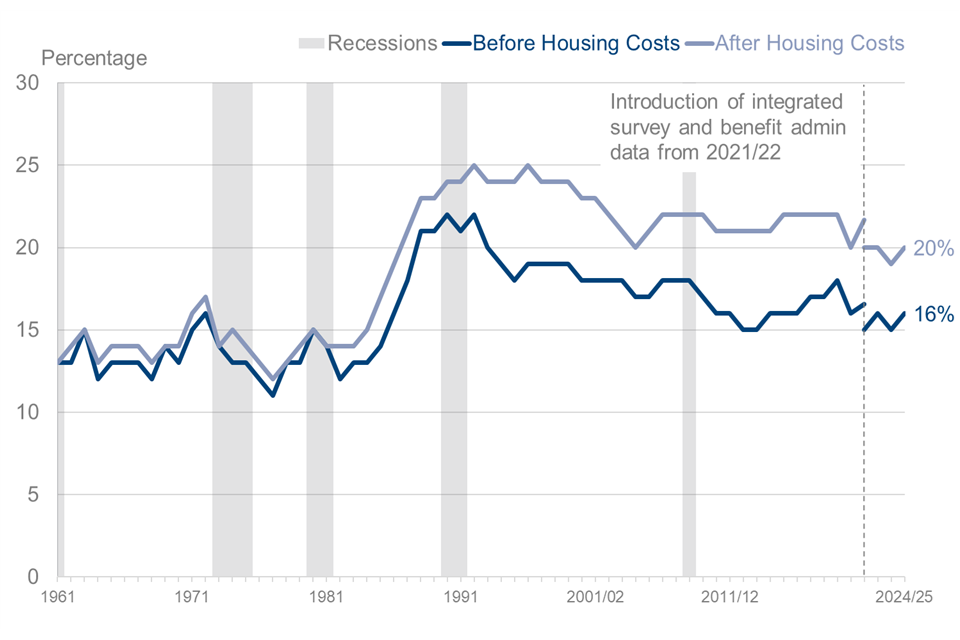
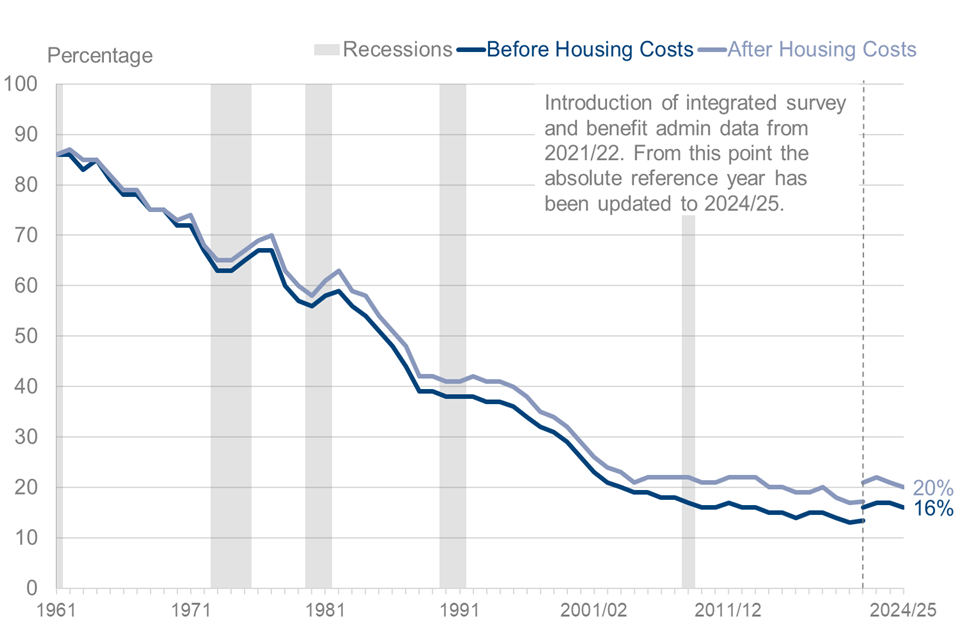
Figure 36: Long term trend in Absolute Low Income
Main Findings
Looking at trends over the past 60 years, incomes across the population have increased dramatically in real terms over time, driving falls in absolute low income. This pattern has held consistently over time, with rises in absolute low income being relatively rare, although the rate of decline in the measures has slowed over the last decade.
During the 1980s, incomes for those further up the income distribution grew more quickly than for those at the bottom, driving large increases in income inequality (Gini) and in relative low income measures. Since the early 1990s, income inequality measures in the UK have remained relatively stable, although analysis by Atkinson, A. B. et al, held at the World Inequality Database suggests that increasing inequality has continued with incomes for those within the top 1% continuing to grow faster than for the rest of the distribution. Changes this far up the distribution will not be captured well in the HBAI data.
Interpretation
The increase in income inequality (and in relative low income) over the past 40 years or so has been driven in part by a significant increase in individual earnings inequality over the same period.
Partial explanations for wider trends are:
- from the late-1970s there was a large rise in unemployment following the recession, accompanied by increasing inequality in earnings – driven in part by factors like increases in part-time working
- from the mid-1980s increasing income inequality was further driven by incomes of those in employment pulling away from those who are economically inactive (including pensioners) as growth in employment income rose faster than for other sources such as benefits
- in the late-1980s the widening of the income distribution was driven further by increases in earnings inequality, with increasing differences between wages for different occupations
- by the early 1990s the picture began to stabilise with incomes of those economically inactive starting to catch up to those in employment
- in the early 2000s falls in low-income measures were driven by increasing relative incomes for families with children and pensioners – driven in part by the introduction of tax credits and increases in the Basic State Pension. From 2002 onwards, the Government was committed to uprating the BSP by the higher of 2.5% and inflation. The “triple lock” was introduced in 2010
See the IFS publication for full data and Accounting for changes in inequality for detailed decomposition analysis of trends.
13. Strengths and limitations
Main strengths of HBAI
Since FYE 1995, HBAI has provided the UK’s main household income. It reports on income levels, trends, and the income distribution, serving as the primary source for poverty estimates. With a larger sample than ONS’s Household Finances Survey, HBAI statistics are the main source on household incomes.
Alongside statistics on low income, HBAI also measures and publishes data on other aspects of poverty. It includes statistics on levels of material deprivation, household food security, and food bank usage, including in combination with low income.
The data are subject to extensive quality control and cleaning:
- firstly, through the FRS data collection and editing processes operated by the FRS contractors and DWP (see Family Resources Survey: quality assessment report for further details)
- secondly through the HBAI production process operated by DWP and with additional quality assurance provided by the Institute for Fiscal Studies (IFS)
HBAI follows national and international best practice regarding the measurement of household incomes (e.g. regarding income from self-employment and housing costs) and the equivalisation of household incomes (see previous section) across differing household sizes and compositions.
HBAI provides headline estimates with an extensive suite of supplementary tables at Households below average income: for financial years ending 1995 to 2025, as well as user-defined breakdown tables through Stat-Xplore and in-depth analysis of case-level datasets through the UK Data Service.
Given its coverage of the whole UK private household population and wide range of demographic and socio-economic data, FRS/HBAI data can be used for many purposes beyond income/poverty analysis, such as for a wide range of policy impact analyses.
Main limitations of HBAI
Results presented in this report are derived from a cross-sectional survey that aims to achieve a broad and representative sample size covering all groups across the UK. However, users should be aware of the inherent uncertainty in the estimates, which is common with any survey.
We put significant effort into maintaining high-quality responses. Data are weighted (grossed) to align with published population totals by region, age, housing tenure, and other factors. Despite addressing many dimensions through weighting, it is not possible to account for every potential interaction. For example, while the number of households in each housing tenure is controlled for, the number of individuals within each tenure can vary significantly. For more information, users should refer to the section on Grossing in the HBAI BIM.
As with any survey, the data are subject to non-response bias and reporting error, despite the best efforts of survey sample design, data quality control, and cleaning. To address benefit under-reporting and improve the quality of our income estimates, from the March 2026 FRS publication, administrative data has been integrated into the FRS to replace survey responses for the major DWP and HMRC benefits. This will reduce the under-reporting of benefits that is currently seen in the FRS (and therefore HBAI) and improve data quality in both datasets. Note the underreporting of benefits has not been eliminated, although research continues for how to achieve this with further developments in the future. Further information on this development is provided in the latest FRS technical report.
Although the source FRS survey is relatively large, estimates for smaller sub-groups and geographical areas require combining multiple survey years together and/or are subject to wide confidence intervals. Also, while the equivalisation process allows household incomes to be compared across differing household sizes and compositions, the factors used are somewhat simplistic, adjusting income similarly for all people aged 14 and over in a household, regardless of whether the person is a child, working-age adult, pensioner, or disabled.
The statistics treat all household members equally in terms of overall household income. This means that if the household income is below 60% of the median, all household members are considered to be in low income (‘poverty’), and vice versa. This assumption is more reasonable for related household members than for unrelated individuals living together, such as a group of young adults.
Due to the extensive data processing and quality assurance required, the statistics are published around 12 months after the reporting year. More details on this process are available in the Family Resources Survey: quality assessment report. Because the survey sampling frame covers private households only, it does not include individuals living outside private households, such as those in residential care and nursing homes, university halls of residence, prisons/detention centres, or those who are rough sleepers. Further detail on the uncertainty around estimates can be found in the HBAI BIM.
14. About these statistics
The income measure used in HBAI is weekly net (disposable) equivalised household income. This comprises total income from all sources of all household members including dependants.
Income is adjusted for household size and composition by means of equivalence scales, which reflect the extent to which households of different size and composition require a different level of income to achieve the same standard of living. This adjusted income is referred to as equivalised income.
In detail, income includes:
- usual net earnings from employment
- profit or loss from self-employment (losses are treated as a negative income)
- income received from dividends (from FYE 2022)
- state support – all benefits and tax credits
- income from occupational and private pensions
- investment income
- maintenance payments
- income from educational grants and scholarships (including, for students, student loans and parental contributions)
- the cash value of certain forms of income in kind (free school meals, free school breakfast, free school milk, free school fruit and vegetables, Healthy Start vouchers and free TV licences for those aged 75 and over who receive Pension Credit)
Income is net of the following items:
- income tax payments
- National Insurance contributions
- domestic rates/council tax
- contributions to occupational pension schemes (including all additional voluntary contributions (AVCs) to occupational pension schemes, and any contributions to stakeholder and personal pensions)
- all maintenance and child support payments, which are deducted from the income of the person making the payment
- parental contributions to students living away from home
- student loan repayments
Income After Housing Costs (AHC) is derived by deducting a measure of housing costs from the above income measure.
Housing costs include the following:
- rent (gross of housing benefit)
- water rates, community water charges and council water charges
- mortgage interest payments
- structural insurance premiums (for owner occupiers)
- ground rent and service charges
Negative incomes BHC are reset to zero, but negative AHC incomes calculated from the adjusted BHC incomes are possible. Where incomes have been adjusted to zero BHC, income AHC is derived from the adjusted BHC income.
Children are defined as individuals aged under 16; or aged 16 to 19 in full-time non-advanced education.
Pensioners are defined as individuals over State Pension Age at the time they are interviewed.
These Accredited Official Statistics were first independently reviewed by the Office for Statistics Regulation (OSR) in November 2012. They comply with the standards of trustworthiness, quality and value in the Code of Practice for Statistics and should be labelled ‘accredited official statistics’. Accredited Official Statistics are called National Statistics in the Statistics and Registration Service Act 2007.
Since the OSR assessment, we have continued to comply with the Code of Practice for Statistics, and have made several improvements including:
- our publication, including charts and images, is now available in HTML format to aid accessibility, and tables have been revised to meet accessibility guidelines
- the timeliness of the publication has been improved so that reports are released within 12 months of the completion of the Family Resources Survey, made possible by improvements to the background, publication and checking codes that are used to conduct analysis
- by making our data available on Stat-Xplore and UK Data Service, our statistics are more accessible and support new analysis for users not included in the publications themselves
- the quality of statistics have improved as variants of the Consumer Prices Index (CPI) have replaced the use of Retail Prices Index (RPI) when adjusting for inflation, in line with guidance from the UK Statistics Authority and National Statistician
- improved methodology for measuring and reporting uncertainty around key HBAI estimates
- the content of the HBAI publication has evolved in response to user needs, and to reflect increased interest in areas such as material deprivation, household food security, and food bank usage, when combined with low income. In the FYE 2021 and FYE 2022 publications we extended our combined low-income and material deprivation measures, so they are now available for both children and working-age adults, on a relative and absolute income basis, and below three different thresholds of low income (50/60/70% of the appropriate median)
- in FYE 2024 we updated our material deprivation suite of questions and measures so that they are more relevant
- the quality of our estimates has further improved through the integration of administrative data into the FRS to replace survey responses for the major DWP and HMRC benefits for the first time in FYE 2025
- in FYE 2025 we also introduced the new Deep Material Poverty measure for children
Where to find out more
Further outputs and reference tables from HBAI analysis, alongside our HBAI BIM, giving further detail on how we estimate the measures reported here are available at Households below average income: for financial years ending 1995 to 2025
15. Signposting to related statistics
The OSR review published in May 2021 recommended that income-based poverty statistics should improve the way they reference other data sources through signposting. This section has been expanded with additional links to sources to provide clearer and more detailed signposting to other income-based poverty statistics. This information will be reviewed and updated annually.
Other DWP Accredited Official and Official Statistics
Details of other Accredited Official and Official Statistics produced by the Department for Work and Pensions can be found on the DWP website with a schedule of statistical releases over the next 12 months and a list of the most recent releases.
In accordance with the Code of Practice for Statistics, all DWP Accredited Official Statistics are also announced on the Government Statistics website, and in the DWP statistics release calendar.
Two other DWP publications which may be of particular interest to users with an interest in income-based poverty are:
- Income Dynamics (ID) which looks at changes in household income including a measure of persistent low income, based on Understanding Society data
- Children in Low Income Families provides data on the number and proportion of children living in low-income families, Before Housing Costs (BHC) and After Housing Costs (AHC), across the United Kingdom by local area
HBAI is a key data source for monitoring the progress of the Child Poverty Strategy outlines that the two headline measures are relative poverty after housing costs and deep material poverty for children.
Below Average Resources: a new poverty measure in development
DWP are developing a new additional poverty measure named ‘Below Average Resources’ (BAR) based on the approach proposed by the Social Metrics Commission (SMC) and using FRS data. The BAR approach provides a more expansive view of available resources (both savings and inescapable costs) than the income measurement adopted under HBAI, and includes some methodological changes proposed by the SMC.
DWP sought user feedback on developing the new measure through an analytical consultation running from 18 January to 11 April 2024. The consultation response was published in January 2025, alongside the latest Official Statistics in Development publication in the BAR series. The publication included data for the financial year ending 2023 but did not include any substantial changes to the methodology for the measure compared to the initial publication.
We will review the impact of the changes to the Family Resources Survey and Households Below Average Income statistics outlined above before producing further updates to the Below Average Resources Official Statistics in Development. This means we will not be publishing a standalone update to BAR to include data for the Financial Year Ending 2024. We will first wait to review the impact of the full revised HBAI back series post the Summer 2026 update.
Other official income statistics
The UK has two main, official data sources of household income statistics: the Family Resources Survey (FRS) run by the Department for Work and Pensions (DWP) and the Household Finances Survey (HFS) run by the Office for National Statistics (ONS).
The FRS estimates underpin DWP’s Households Below Average Income (HBAI) series, which is the UK’s primary source of poverty estimates. With a larger sample size, it is also the main source on household incomes. HFS data are used to produce ONS’s Average household income, UK – Office for National Statistics series (which includes Household Disposable Income Inequality (HDII) and Effects of Taxes and Benefits (ETB) and are the main source for considering the overall financial well-being of households.
The two sources of data are complimentary but there are some important methodological differences between them, which means that their income estimates can be different. For example, the FRS focuses on respondents’ weekly incomes at the time of interview, whereas HFS focuses more on annual income. The treatment of pension contributions also differs, with ONS’s estimate of Gross Household Income being calculated before pension contributions. Further details are available in the income and earnings statistics guide.
What do you think?
We are constantly aiming to improve this report and its associated commentary. We would welcome any feedback you might have and would also be particularly interested in knowing how you make use of these data to inform your work. Please contact us via email: team.hbai@dwp.gov.uk