Deep material poverty: Financial year ending 2024
Published 5 December 2025

© Crown copyright 2025
This publication is licensed under the terms of the Open Government Licence v3.0 except where otherwise stated. To view this licence, visit nationalarchives.gov.uk/doc/open-government-licence/version/3 or write to the Information Policy Team, The National Archives, Kew, London TW9 4DU, or email: psi@nationalarchives.gov.uk.
Where we have identified any third party copyright information you will need to obtain permission from the copyright holders concerned.
This publication is available at https://www.gov.uk/government/statistics/deep-material-poverty-financial-year-ending-2024/deep-material-poverty-financial-year-ending-2024
Main stories
This publication presents estimates for the number and percentage of children in deep material poverty. This is defined as lacking at least 4 out of 13 essential material deprivation items for the financial year ending (FYE) 2024.
As outlined in the Child Poverty Strategy, Our Children, Our Future: Tackling Child Poverty, the Strategy will track progress against two headline metrics. The first is relative low income after housing costs (AHC), which identifies children in households with income below 60% of median income after housing costs are deducted.
To complement this, a second measure has been developed to capture children experiencing a deeper level of poverty. Deep material poverty is based on material deprivation, specifically whether families can afford certain essential items. It therefore reflects a broader range of financial pressures, such as high costs and debt burdens that income-based statistics alone do not fully capture. It will be impacted by a wide range of policy interventions across the Child Poverty Strategy, where these help families to better access or afford essentials.
In FYE 2024, 2.0 million or 14% of all children in the UK were found to be in deep material poverty. Children in deep material poverty are disproportionately likely to live in households with no working adults, lone parents, rented accommodation, larger families, or where someone is disabled when compared to all children in the UK.
What you need to know
On 17 July 2024, the Prime Minister announced the creation of a Ministerial Child Poverty Taskforce, to oversee the development of a Child Poverty Strategy. The Taskforce was comprised of Ministers from across government with responsibility for the full range of policies required to deliver change, recognising that poverty is multi-dimensional and impacts children and families from across the United Kingdom.
The Child Poverty Strategy will track progress against two headline metrics. The first is relative low income AHC, defined as households with income below 60% of the equivalised median income after housing costs are deducted. This statistic is widely recognised both nationally and internationally as a key indicator of poverty. This statistic has been published as part of the annual Households Below Average Income (HBAI) series since 1994/95, with the latest FYE 2024 estimates available at Households Below Average Income: an analysis of the UK income distribution: FYE 1995 to FYE 2024 - GOV.UK.
Second, to ensure the Strategy also reflects the experience of children in deep poverty there is a new statistic for deep material poverty based on material deprivation, which is introduced in this publication.
Statistics Development
In March 2025, an updated child material deprivation statistic was published in the annual HBAI statistics, which uses 22 items to assess whether a child is materially deprived. Under this definition, a child is considered to be in material deprivation if their family lacks 4 or more of these items due to affordability or other financial constraints. This threshold of 4 was selected to indicate a level of deprivation that reflects significant difficulty in affording essential goods and services. The updated methodology followed a comprehensive review of the items used to define material deprivation to ensure they continue to reflect public perceptions of necessities. This report is available at Review of the UK Material Deprivation Measures - GOV.UK. Further detail on the latest analysis using the updated material deprivation measure is available in the accompanying technical report: Technical report: update to measures using material deprivation for households below average income FYE 2024 - GOV.UK
To develop this new deep material poverty statistic, analysts explored a range of options using different subsets of items and thresholds to assess which combinations best captured deep material poverty. The goal was to identify a method that would reflect deep material deprivation. An approach based on material deprivation has the benefit of picking up a broader spectrum of poverty beyond what income-based statistics alone can show.
The selected approach defines a child as being in deep material poverty if the child lacks at least 4 out of 13 essential items. A lack is defined as being due to financial constraints rather than personal choice.
The 13 essential items were selected from the full list of 22 child material deprivation indicators, based on their perceived necessity. Each of the selected items was identified as a necessity by at least 85% of respondents, according to findings from public consultation and research conducted as part of the 2023 to 2024 material deprivation review by the London School of Economics. This selection process aimed to ensure the items reflect current public views on what constitutes basic needs.
The 13 Essential Items
Individuals were asked 22 child material deprivation questions in the Family Resources Survey (FRS) which collects the data used to estimate the poverty statistics. Out of these, 11 questions were related to the household and 11 were related specifically to children. The tables below indicate which items from each group were used for the deep material poverty statistic.
| Household-level questions | Used in deep material poverty statistic |
|---|---|
| Without cutting back on essentials, are you able to pay regular bills like rent, mortgage, electricity or Council tax (if GB) or Rates (if Northern Ireland)? | Yes |
| Are you able to put money aside to cover unexpected expenses? | Yes |
| Could you cover the cost of replacing or repairing appliances such as a washing machine, fridge or cooker if they broke? | Yes |
| Is your home kept in a good state of decoration and repair? | Yes |
| In cold weather, is your home kept adequately warm? | Yes |
| Is your home damp free? | Yes |
| Does everyone in your household have access to transport that is reliable, timely, safe and affordable? | Yes |
| Are the heating, electrics, plumbing and drains in good working order? | Yes |
| Do you have reliable access to the internet at home? | No |
| Does everyone in your household have use of a computer or tablet for work, education or accessing services? | No |
| Do you have home contents insurance? | No |
| Individual-level questions (child specific) | Used in deep material poverty statistic |
|---|---|
| Do [Name(s) of children in Benefit Unit who attend school] have a suitable place at home to do homework? | Yes |
| [Does your child/do your children] eat three meals a day? | Yes |
| [Does your child/do your children] eat fresh fruit and/or vegetables every day? | Yes |
| [Does your child/do your children] have enough clothes that they feel comfortable to wear? | Yes |
| [Does your child/do your children] have enough toys, games and outdoor equipment suitable for their age? | Yes |
| Do you (your partner and your dependent children) have a break away from home at least once a year? | No |
| [Does/Do Name(s) of children in Benefit Unit who attend school] go on school trips? (asked if children at school) | No |
| [Does your child/do your children] attend at least one regular organized activity a week outside school, such as sport or a youth group? | No |
| [Does your child/do your children] have friends round to play, have a snack or hang out once a month? | No |
| Are there enough bedrooms for every child of 10 or over of a different sex to have their own bedroom? (asked if 2 or more children in BU aged 10+ of a different sex) | No |
| [Does/Do [Name(s) of children in Benefit Unit under 6 and do not attend primary or private school] go to toddler group / nursery / playgroup at least once a week? | No |
Results
Comparison to relative low income AHC
Figure 1: Number and percentage of children in poverty, by poverty statistic
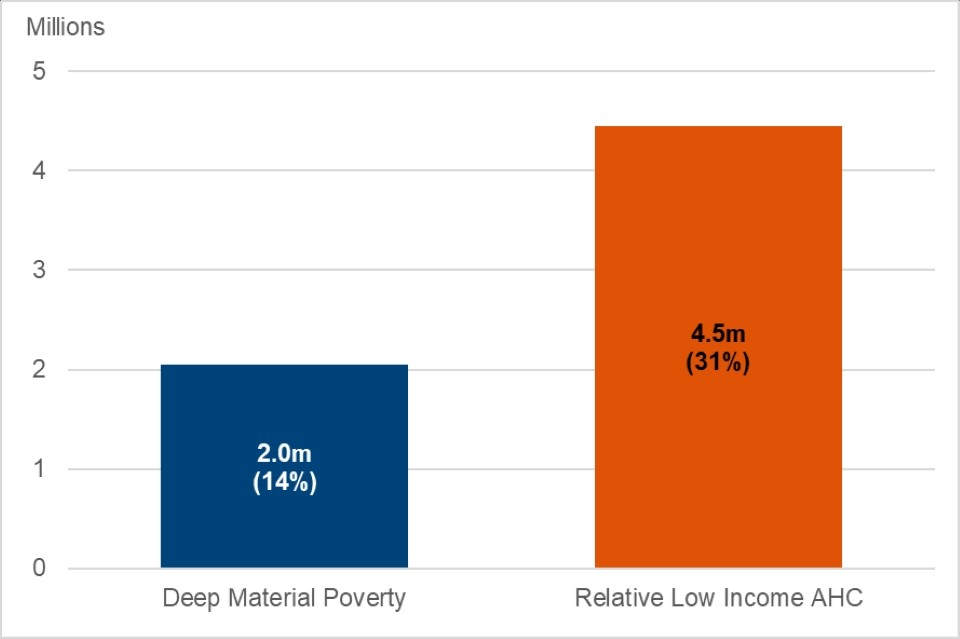
Figure 1 shows the number and percentage of children in poverty for the two headline metrics of the Child Poverty Strategy, using data from FYE 2024.
In FYE 2024, 2.0 million children were found to be in deep material poverty. This equates to 14% or about 1 in 7 children in the UK.
This figure is roughly half the number of children in relative low income AHC (4.5 million, or 31%) over the same period.
Figure 2: Overlap between deep material poverty and relative low income AHC
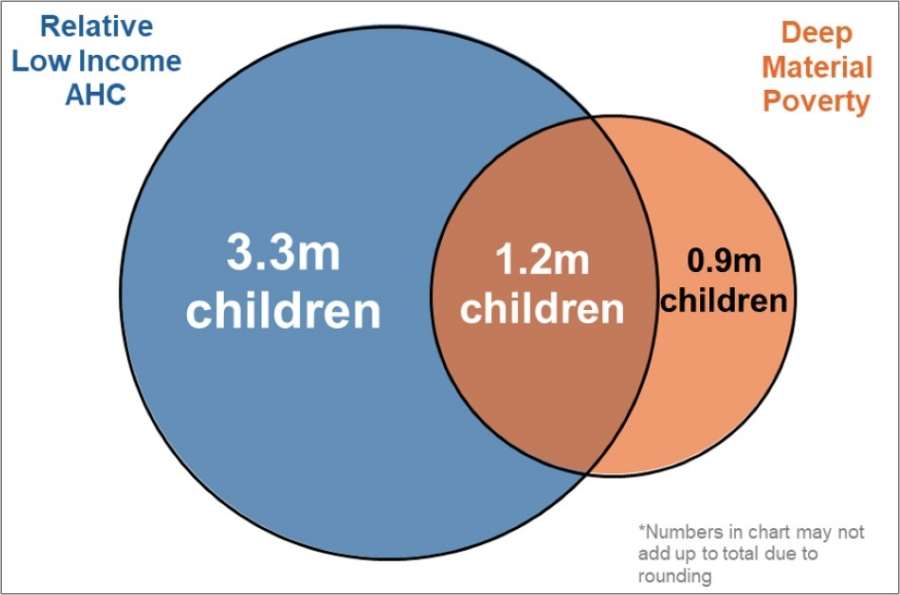
Figure 2 displays a Venn diagram illustrating the overlap between deep material poverty and relative low income AHC in FYE 2024.
Of the 5.3 million children identified as being in either deep material poverty or relative low income AHC, 1.2 million were captured by both statistics. However, a notable 0.9 million children were identified as being in deep material poverty only, while 3.3 million were captured solely by the relative low income AHC statistic.
This reflects that income and material deprivation statistics do not always include the same children, as they measure different dimensions of hardship. Relative low income AHC is calculated based on household income and housing costs, identifying families whose equivalised net income falls below 60% of the median after housing costs. While this remains one of the key indicators of poverty, it does not directly measure the actual living conditions or material hardships some families may face.
Deep material poverty, however, is based on whether families report that they can afford a core set of 13 essential items such as adequate clothing, heating, nutritious food, and a safe, well-maintained home. Many families may have incomes just above the low-income threshold but still struggle with high living costs, debt, additional costs of disability, or other financial pressures that prevent them from meeting basic needs. These families are not classified as being in relative low income but are captured by the deep material poverty statistic, offering a more nuanced understanding of deep deprivation.
The deep material poverty statistic does have limitations. It is based on a defined list of 13 items, which, while carefully selected, cannot capture the full range of material hardship that families may experience. Some important aspects of deprivation may fall outside the scope of these items, particularly where needs vary across households or change over time.
There is also an element of subjectivity in how respondents assess whether they lack an item. Responses depend not only on financial circumstances but also on individual perceptions of affordability, necessity, and social norms. This introduces potential variation in how consistently the measure is applied across different households.
The two headline statistics for the Child Poverty Strategy are complementary in capturing different dimensions of poverty and reflecting a wide range of policy interventions which can impact upon them.
Children in deep material poverty by family disability status
Figure 3: Deep material poverty rates, by family disability Status
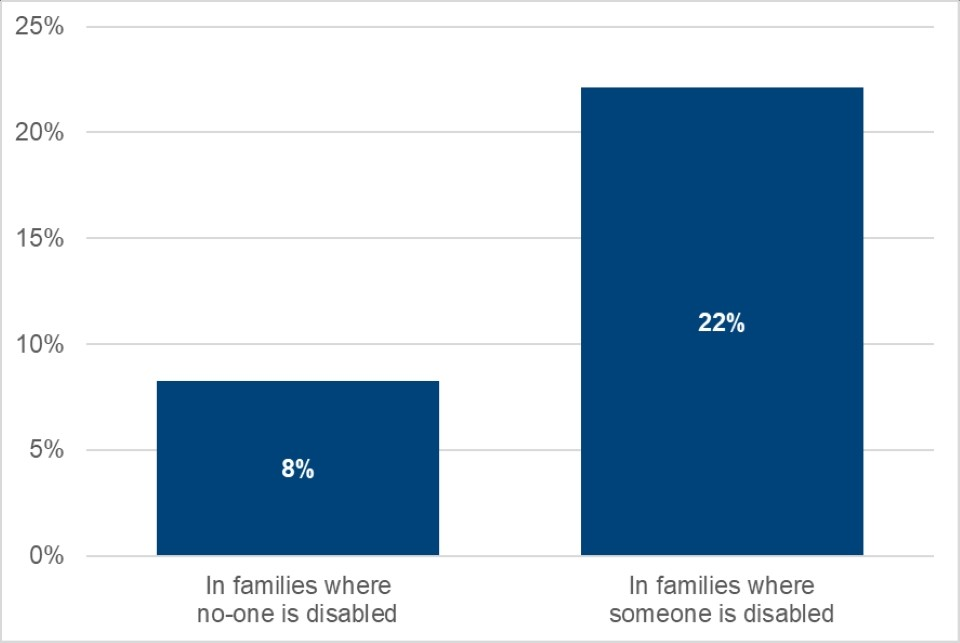
Figure 3 presents a bar chart showing the percentage of children in deep material poverty, broken down by whether their family includes a disabled person.
Children in families with a disabled member face a higher risk of deep material poverty. In FYE 2024, 22% of children living in families with a disabled member were in deep material poverty, compared to 8% of children in families with no disabled family members.
Figure 4: Composition of family disability status, for children in deep material poverty, relative low income AHC, and all children
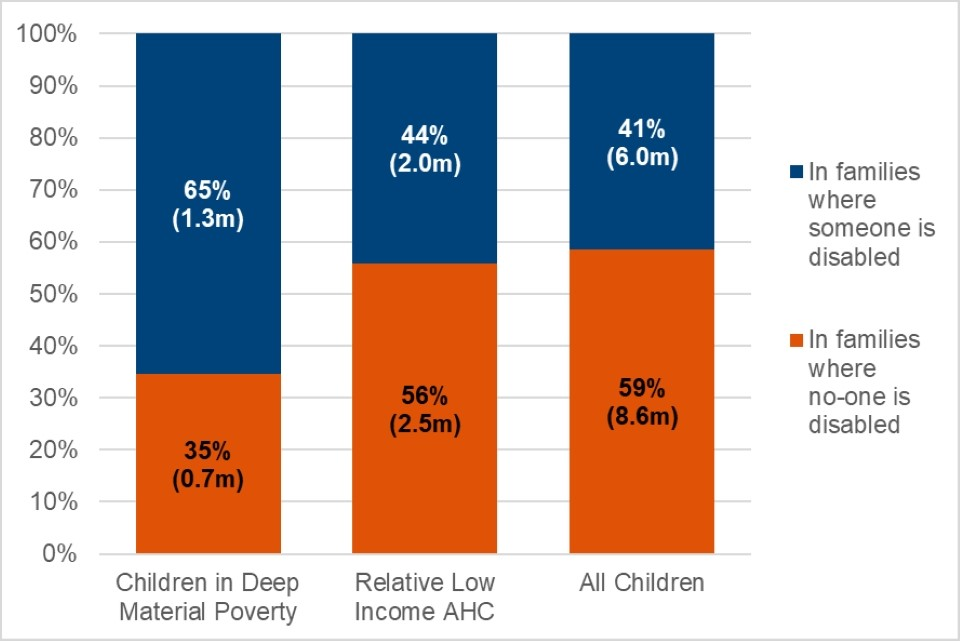
Figure 4 presents a bar chart comparing the composition of children in deep material poverty, relative low income AHC, and all children in the UK, based on whether their family includes a disabled person.
Children in deep material poverty are more likely to live in families where someone is disabled. In FYE 2024, 65% (1.3 million) of children in deep material poverty lived in families with a disabled member, compared to 44% (2.0 million) of children in relative low income AHC and 41% (6.0 million) of all children.
Children in deep material poverty by ethnic group of the head of household
Figure 5: Deep material poverty rates, by ethnic group of the head of household
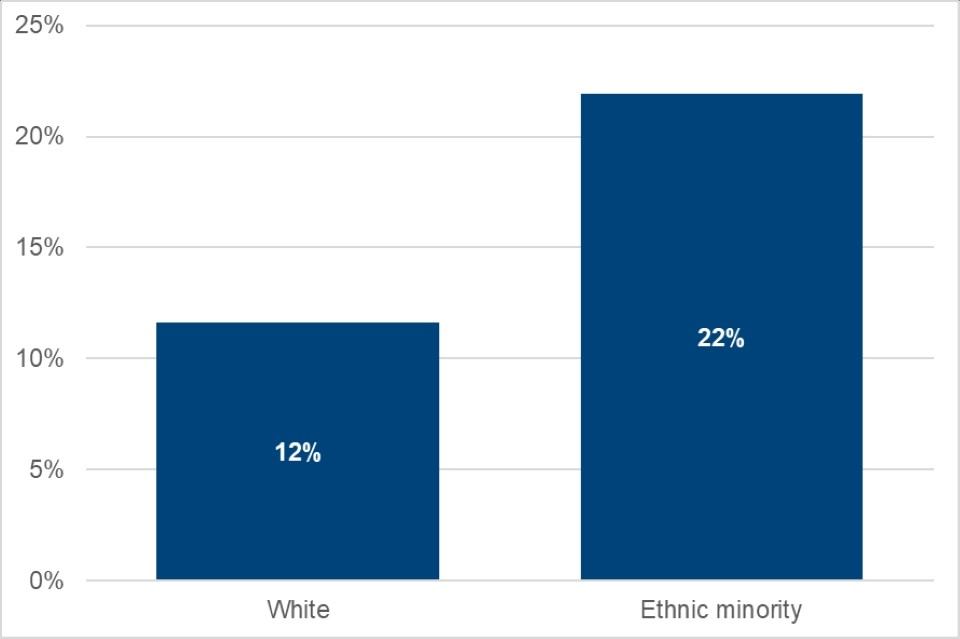
Figure 5 presents a bar chart showing the percentage of children in deep material poverty, by ethnic group of the head of household.
Children from ethnic minority backgrounds face a higher rate of deep material poverty. In FYE 2024, 22% of children living in households headed by someone from an ethnic minority background were in deep material poverty, compared with 12% of children in households headed by someone from a White ethnic background.
Note: The Households Below Average Income (HBAI) series typically presents ethnicity data as a 3-year average. Data for the deep material poverty statistic is unavailable prior to FYE 2024, so the above chart is based on 1 year of data only. Due to limited sample sizes for ethnic minority groups, it is not currently possible to conduct robust analysis for individual groups. As additional years of data become available, more detailed and reliable analysis for these groups will be feasible.
Figure 6: Composition of ethnic Group of head of household, for children in deep material poverty, relative low income AHC, and all children
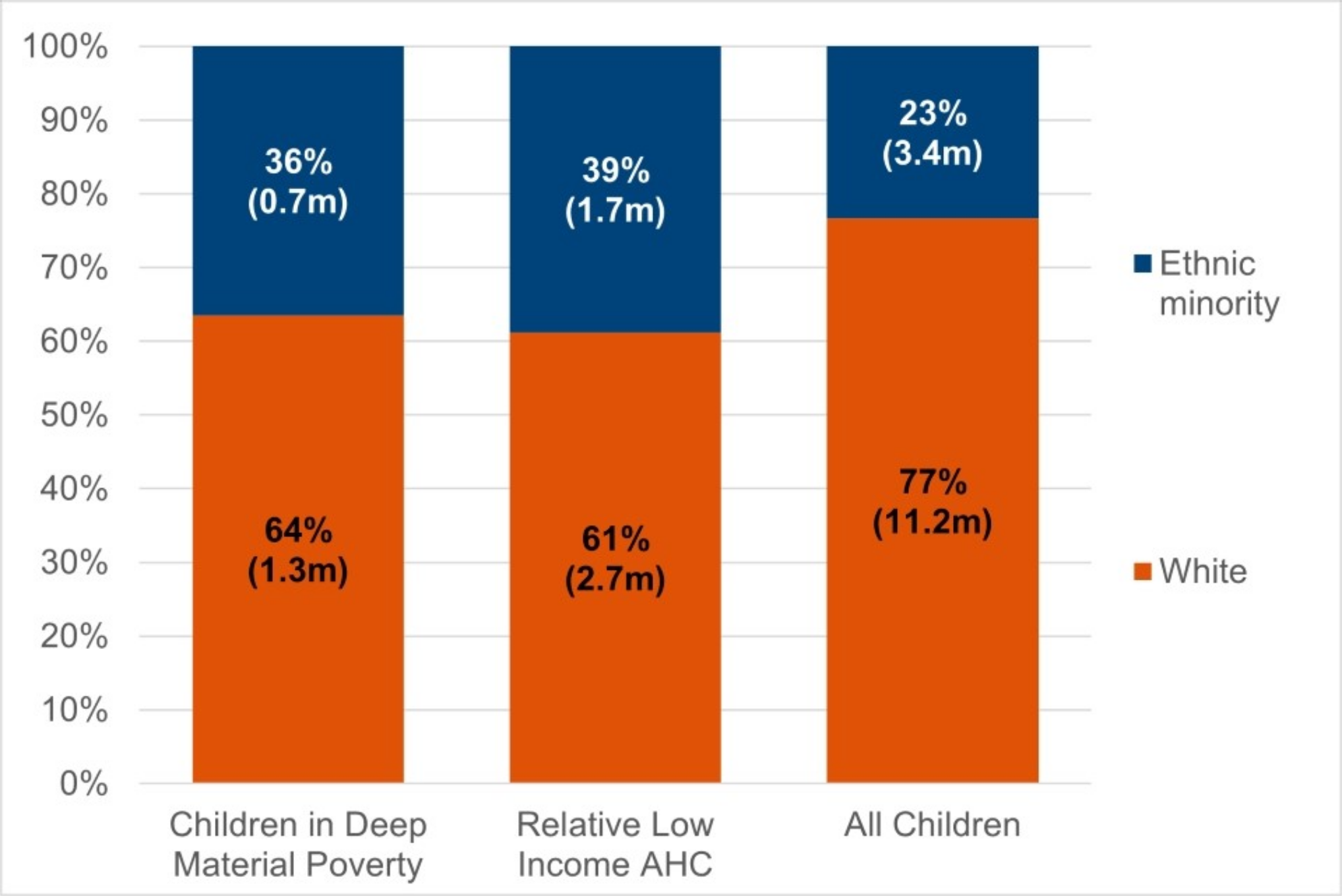
Figure 6 presents a bar chart comparing the composition of children in deep material poverty, relative low income AHC, and all children in the UK, broken down by ethnicity of the head of household.
Children in deep material poverty are more likely to live in households headed by someone from a minority ethnic background compared to all children. Around 36% (0.7 million) of children in deep material poverty lived in minority ethnic households, slightly lower than observed for children in relative low income AHC (39%, or 1.7 million). This compares with 23% (3.4 million) of all children.
Conversely, 64% (1.3 million) of children in deep material poverty lived in households headed by someone from a White ethnic background, which is lower than the proportion for all children (77%, or 11.2 million), but higher than the proportion of children in relative low income AHC (61%, or 2.7 million).
Note: The Households Below Average Income (HBAI) series typically presents ethnicity data as a 3-year average. Data for the deep material poverty statistic is unavailable prior to FYE 2024, so the above chart is based on 1 year of data only. Due to limited sample sizes for ethnic minority groups, it is not currently possible to conduct robust analysis for individual groups. As additional years of data become available, more detailed and reliable analysis for these groups will be feasible. Analysis for relative low income AHC and All children is performed using typical 3-year averages.
Children in deep material poverty by number of children in the family
Figure 7: Deep material poverty rates, by number of children in the family
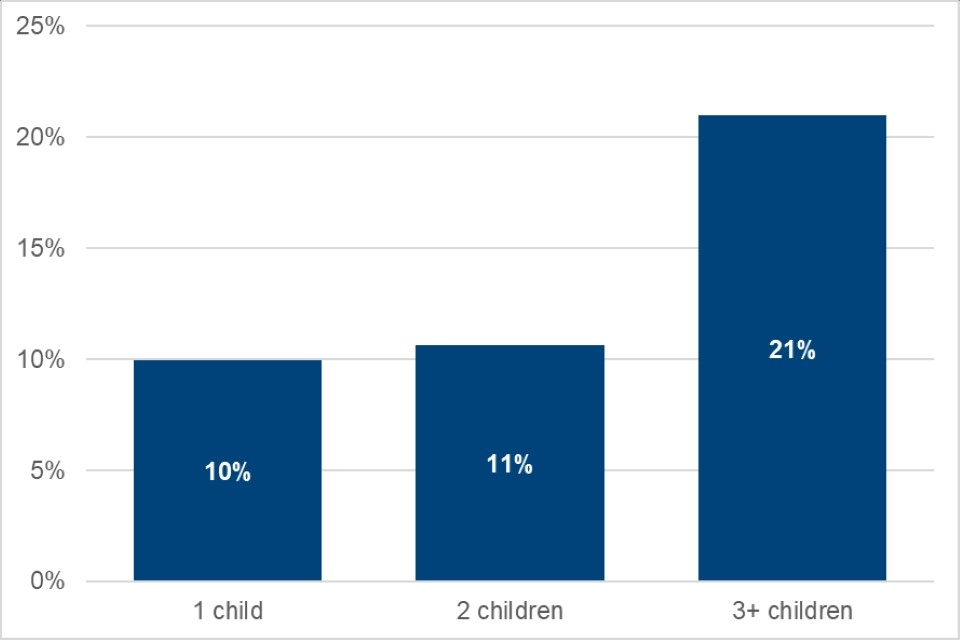
Figure 7 presents a bar chart showing the percentage of children in deep material poverty by number of children in the family.
Children in families with three or more children face higher rates of deep material poverty. In FYE 2024, 21% of children in families with three or more children were in deep material poverty, compared with 10% of children in families with one child and 11% of children in families with two children.
Figure 8: Composition of number of children, for Children in deep material poverty, relative low income AHC, and all children
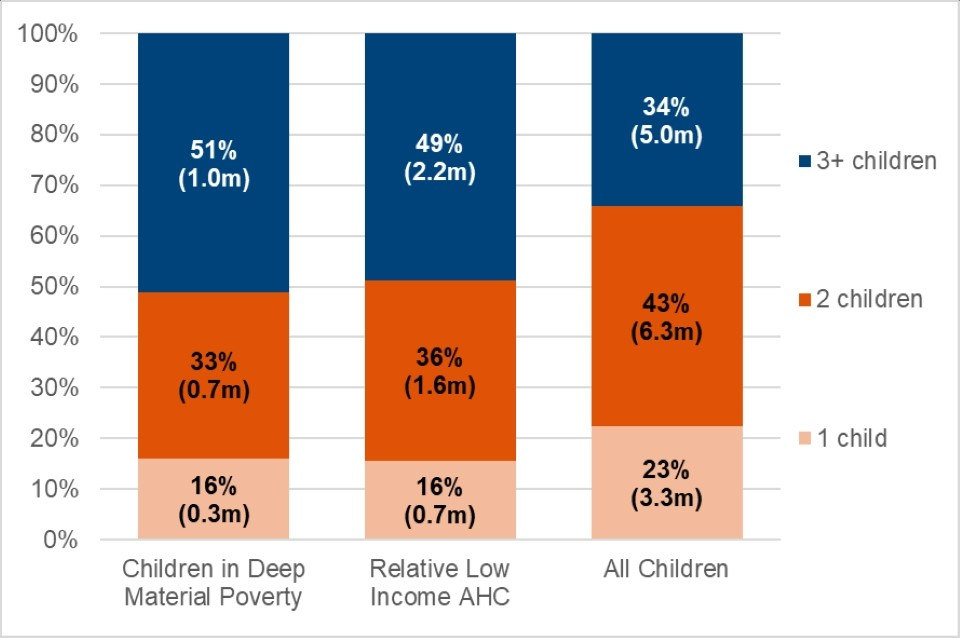
Figure 8 presents a bar chart comparing the composition of children in deep material poverty, relative low income AHC, and all children in the UK, broken down by number of children.
Children in deep material poverty are more likely to live in larger families compared to all children. In FYE 2024, just over half (51%, or 1.0 million) of children in deep material poverty lived in families with three or more children. This compares to 49% (2.2 million) of children in relative low income AHC and 34% (5.0 million) of all children.
Children in deep material poverty by age of youngest child
Figure 9: Deep material poverty rates, by age of youngest child
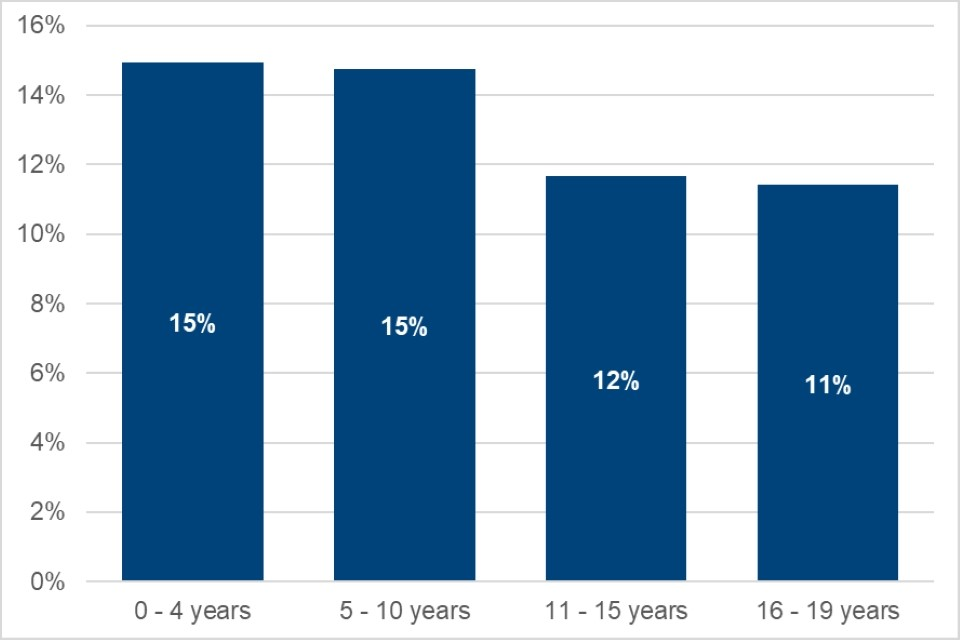
Figure 9 presents a bar chart showing the percentage of children in deep material poverty by the age of the youngest child in the family.
Children in families with the youngest child aged 10 years or younger face the highest rates of deep material poverty.
In FYE 2024, 15% of children in families with the youngest child aged between 0 and 10 years were in deep material poverty, compared to 12% for children in families with the youngest child aged between 11 and 15 years. For children in families with the youngest child aged between 16 and 19 years, the deep material poverty rate was 11%.
Figure 10: Composition of age of youngest child, for children in deep material poverty, relative low income AHC, and all children
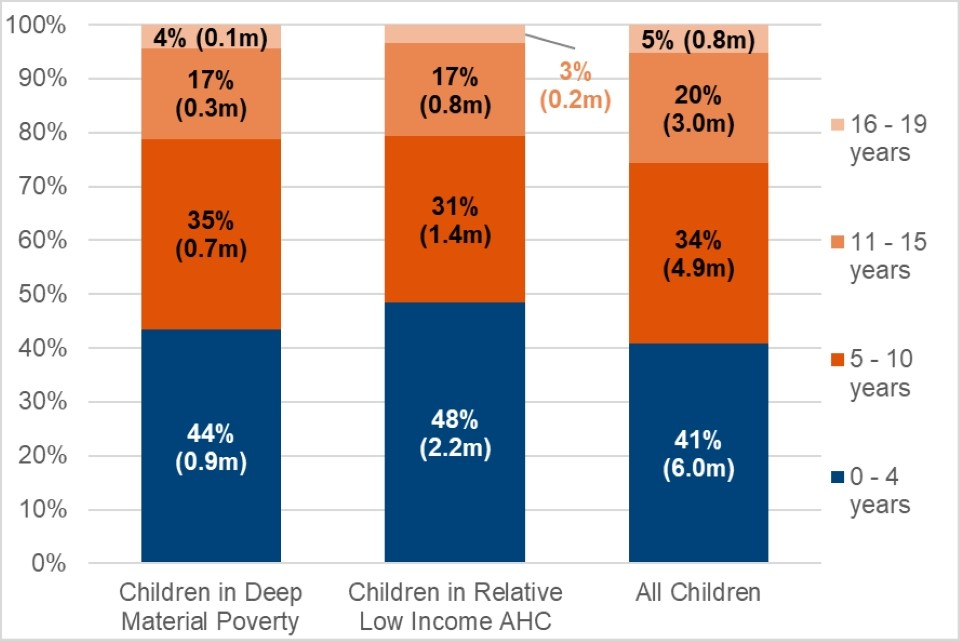
Figure 10 presents a bar chart comparing the composition of children in deep material poverty, relative low income AHC, and all children in the UK, broken down by the age of the youngest child in the family.
Children in deep material poverty are more likely to live in families where the youngest child is aged 0 – 4 than all children, however they are less likely than children in relative low income. In FYE 2024, 44% (0.9 million) of children in deep material poverty lived in families where the youngest child is aged 0-4, compared with 48% (2.2 million) of children in relative low income AHC and 41% (6.0 million) of all children.
Of children in deep material poverty, 35% (0.7 million) lived in families where the youngest child was between the ages of 5 and 10, compared with 31% (1.4 million) of children in relative low income AHC and 34% (4.9 million) of all children.
Children in deep material poverty by economic status and family type
Figure 11: Deep material poverty rates, by economic status and family type
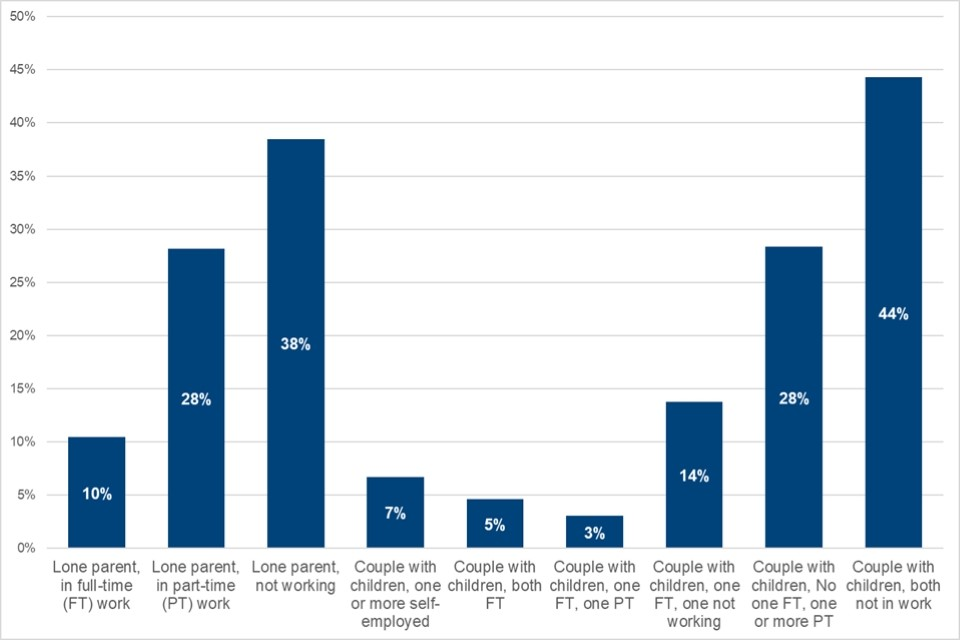
Figure 11 presents a bar chart showing the percentage of children in deep material poverty by family economic status and family type.
The highest rates are observed among children in families where no adults are in work, with 44% of children in couple-parent families and 38% of children in lone parent families with no adults working in deep material poverty.
Among working families, the highest rates for both lone parent families and couple-parent families are seen in families where one or both adults work part-time (with no full-time workers), where 28% of children are in deep material poverty.
Children in lone parent families where the adult is working full-time face similar deep material poverty rates (10%) to couple-parent families where one adult is working full-time and one is not working (14%). The lowest rates are observed in couple-parent families where both adults work full-time or where one works full-time and the other part-time, with 5% and 3% of children respectively in deep material poverty.
Figure 12: Composition of economic status and family type, for children in deep material poverty, relative low income AHC, and all children
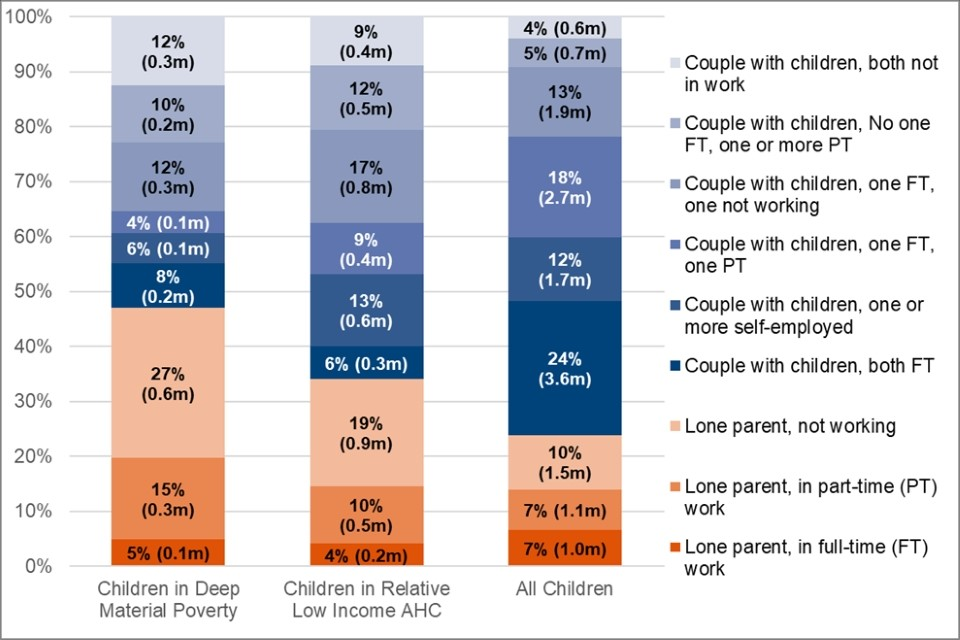
Figure 12 presents a bar chart comparing the composition of children in deep material poverty with those in relative low income AHC, and all children in the UK, broken down by economic status and family type.
Compared to children in relative low income AHC and all children, children in deep material poverty are more likely to live in a lone parent family. 47% (1.0 million) of children in deep material poverty are in lone parent families. This compares to 34% (1.6 million) of children in relative low income AHC and 24% (3.5 million) of all children in lone parent families.
Children in deep material poverty are also much more likely to live in families with no adults in work. 40% (0.8 million) of children in deep material poverty (27% in lone parent, 12% in couple parent families) were in families with no one working. This compares to 28% (1.3 million) of children in relative low income and 14% (2.0 million) of all children in families with no one in work.
Children in deep material poverty by tenure type
Figure 13: Deep material poverty rates, by household tenure type
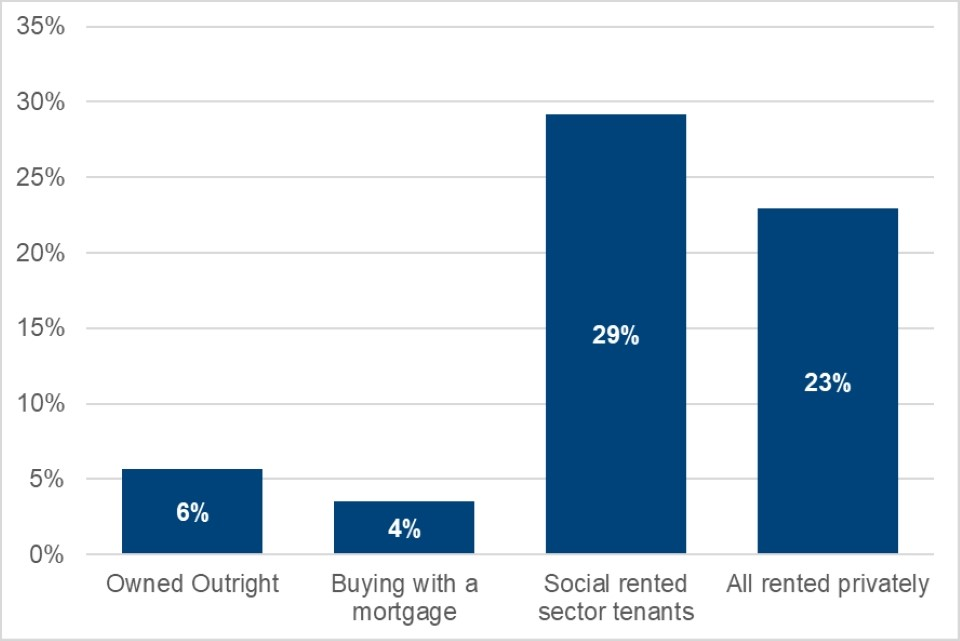
Figure 13 presents a bar chart showing the percentage of children in deep material poverty by household tenure type.
Children in the Social Rented Sector and Private Rented Sector are most at risk of deep material poverty.
3 in 10 (29%) children in the Social Rented Sector and 2 in 10 (23%) children in the Private Rented Sector are in deep material poverty. This compares to fewer than 1 in 10 children in families that own their home outright or are buying with a mortgage.
Figure 14: Composition of household tenure type, for Children in deep material poverty, relative low income AHC, and all children
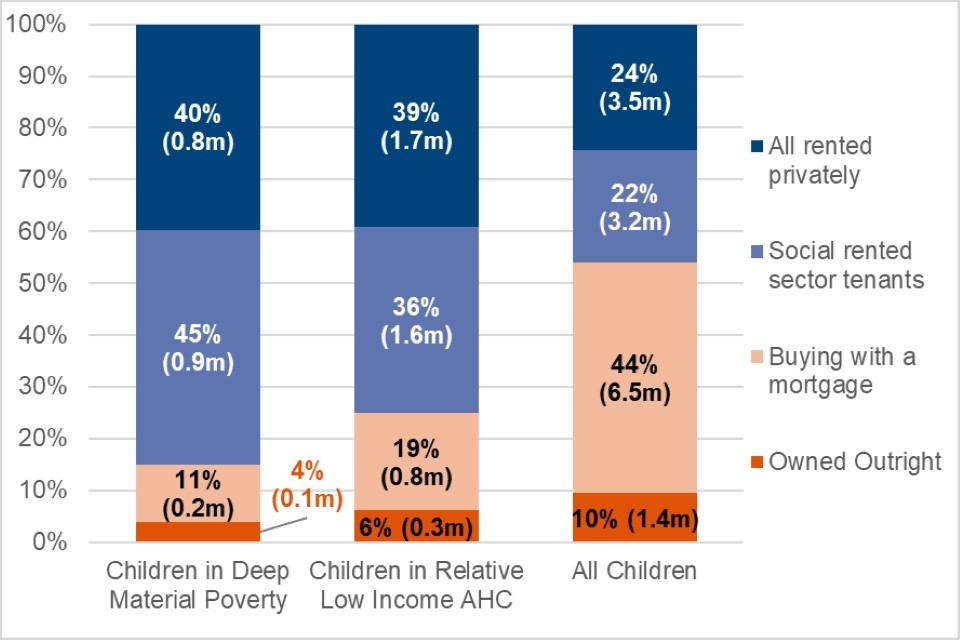
Figure 14 presents a bar chart comparing the composition of children in deep material poverty, relative low income AHC, and all children in the UK, broken down by household tenure type.
Children in deep material poverty are more likely to live in rented accommodation than children overall. In FYE 2024, 85% (1.7 million) of children in deep material poverty lived in either the Social Rented Sector or the Private Rented Sector, compared to 46% (6.7 million) of all children.
The proportion of children living in the Private Rented Sector was similar for those in deep material poverty and those in relative low income AHC. However, 45% (0.9 million) of children in deep material poverty lived in the Social Rented Sector compared to 36% (1.6 million) of children in relative low income AHC.
Children in deep material poverty were less likely to live in owner-occupied homes. In FYE 2024, 15% (0.3 million) of children in deep material poverty lived in owner-occupied accommodation, compared to 25% (1.1 million) of children in relative low income AHC and 54% (7.9 million) of all children.
Children in deep material poverty by gross hourly earnings of the family
Figure 15: Deep material poverty rates, by gross hourly earnings of the family
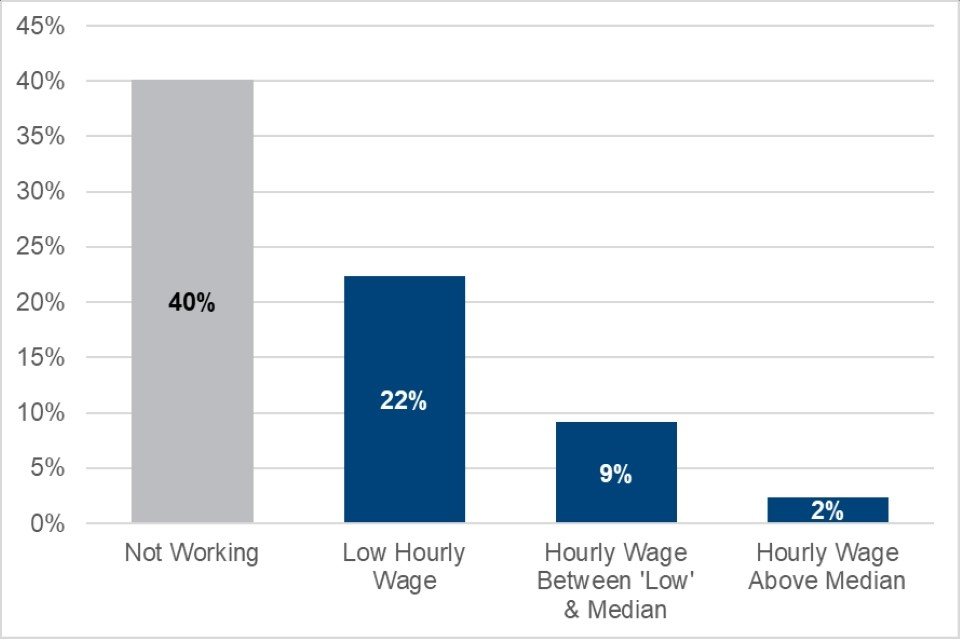
Figure 15 presents a bar chart showing the percentage of children in deep material poverty by the average hourly earnings of their family. Earnings are calculated by summing the total income for the family from employment, self-employment, and dividends, all before housing costs. This is then converted to an hourly figure using total hours worked for the family. The measure of ‘Low Hourly Wage’ follows the OECD definition of low pay, which refers to earnings below two-thirds of the median hourly wage. For FYE 2024, this threshold was £11.39 per hour.
Of children in working families, those with low earnings face the highest rates of deep material poverty.
In FYE 2024, 22% of children in families with a low hourly wage were in deep material poverty. This contrasts with 9% of children in families whose hourly earnings fell between the low pay threshold and the median, and just 2% of children in families earning above the median hourly wage.
Figure 16: Composition of gross hourly earnings of the family, for children in deep material poverty, relative low income AHC, and all children
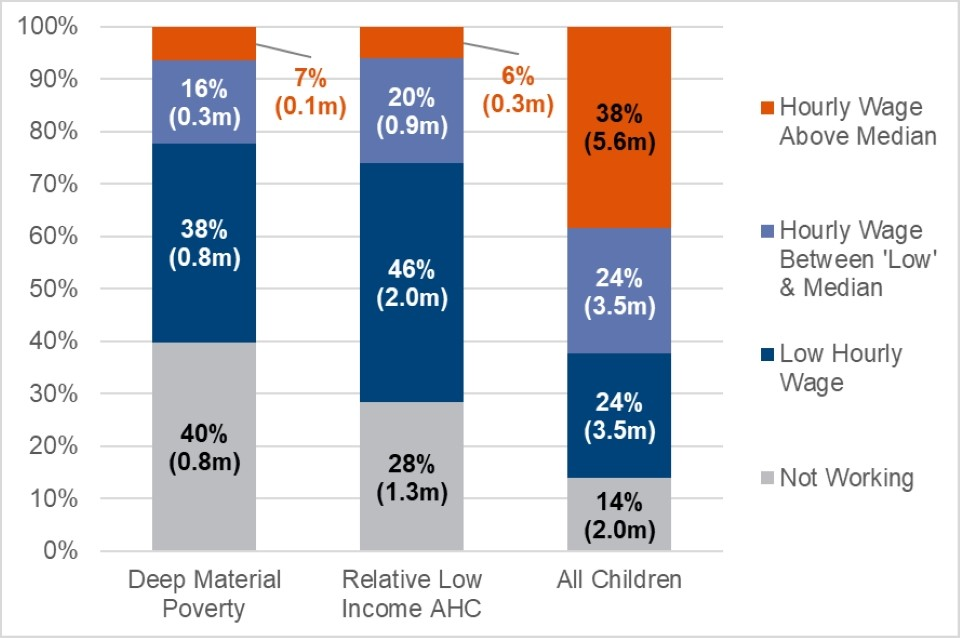
Figure 16 presents a bar chart comparing the composition of children in deep material poverty, relative low income AHC, and all children in the UK, broken down by gross hourly earnings of the family.
Children in deep material poverty are more likely to be in families earning a low hourly wage or not working. In FYE 2024, 78% (1.6 million) of children in deep material poverty lived in families with low or no earnings, compared with 74% (3.3 million) of children in relative low income AHC and 38% (5.5 million) of all children.
Children in deep material poverty by value of family savings and investments
Figure 17: Deep material poverty rates, by value of family savings and investments
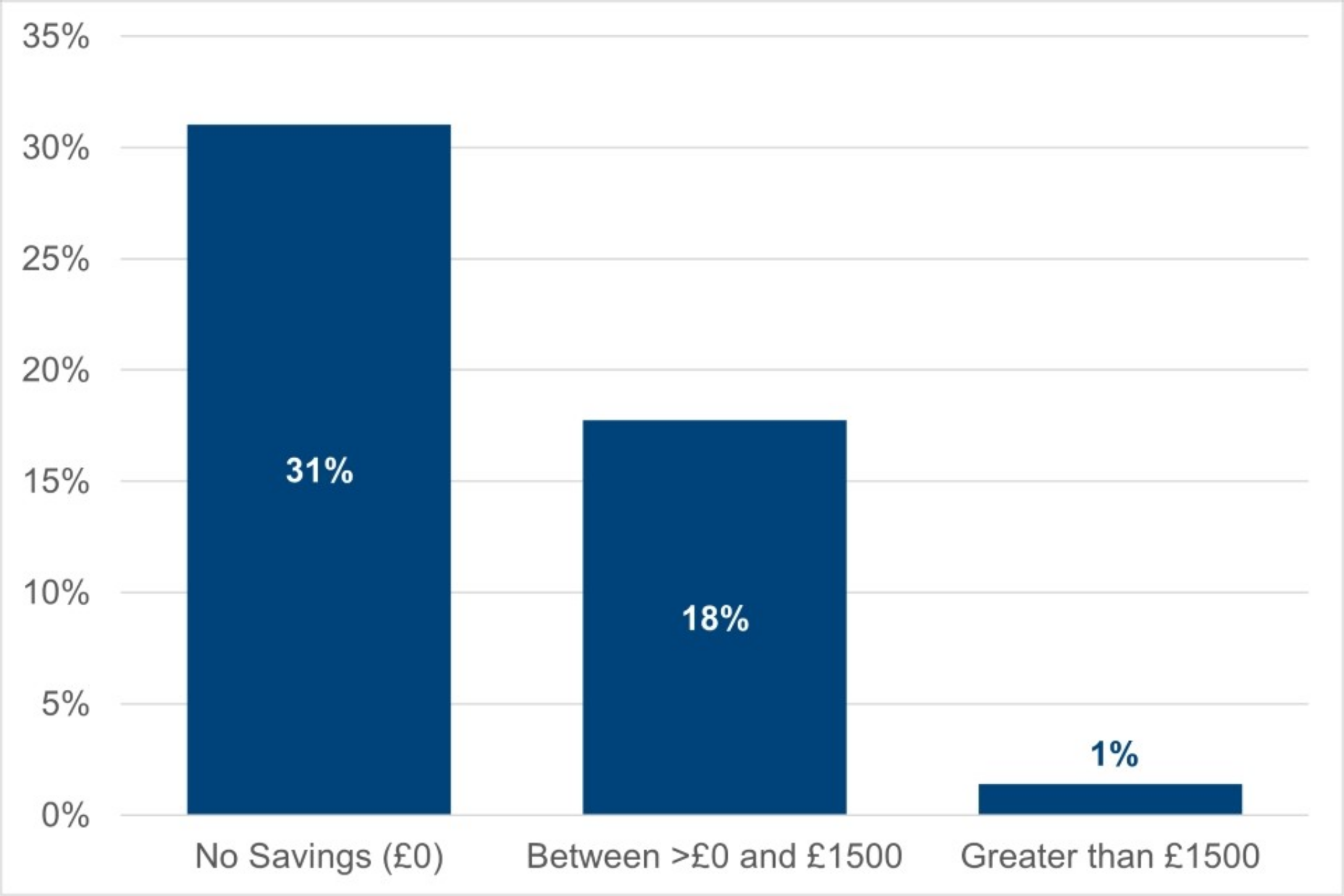
Figure 17 presents a bar chart showing the percentage of children in deep material poverty by the total value of savings and investments in their family.
There is a strong association between family savings and the likelihood of experiencing deep material poverty. In FYE 2024, 31% of children in families with no savings were in deep material poverty, compared to 18% for children in families with savings greater than £0 and less than £1,500. For families with savings over £1,500, the proportion of children in deep material poverty was 1%.
Figure 18: Composition of family savings and investments, for children in deep material poverty, relative low income AHC, and all children
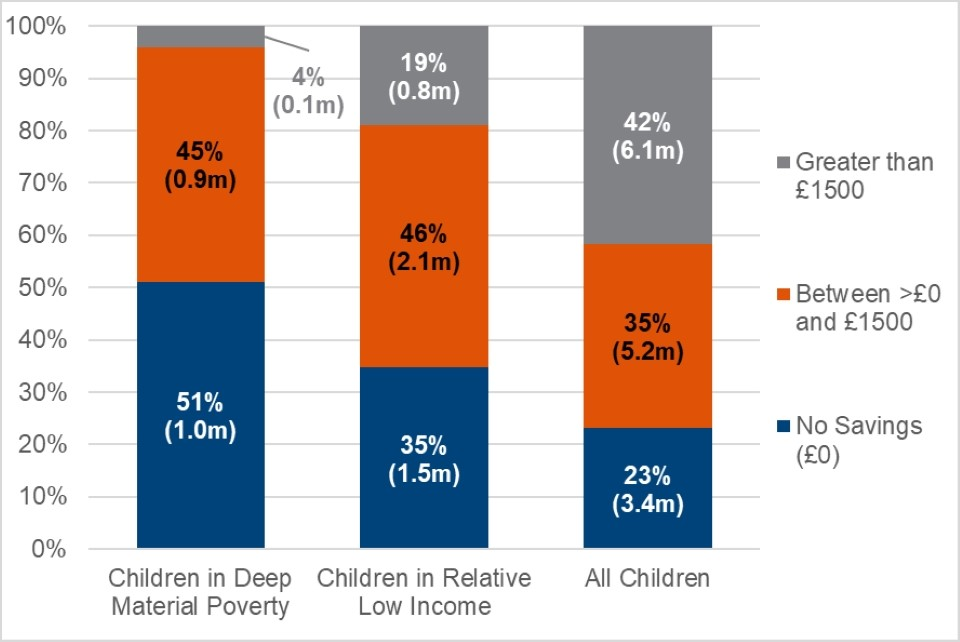
Figure 18 presents a bar chart comparing the composition of children in deep material poverty, relative low income AHC, and all children in the UK, broken down by the total value of savings and investments in their family.
Children in deep material poverty are more likely to live in families with little to no savings. In FYE 2024, only 4% (0.1 million) of children in deep material poverty lived in families with savings over £1,500, compared with 19% (0.8 million) of children in relative low income AHC and 42% (6.1 million) of all children.
51% (1.0 million) of children in deep material poverty lived in families with no savings, compared with 35% (1.5 million) of children in relative low income AHC and 23% (3.4 million) of all children.
About these statistics
The Households Below Average Income (HBAI) series typically presents geographical analysis as a 3-year average due to the volatility of single year estimates based on smaller sample sizes. We follow that precedent in this publication, reporting estimates only where the sample sizes are sufficient. It is not possible to provide estimates for deep material poverty at a regional level for FYE 2024. These estimates will be possible to provide in future iterations of the report, once more years of data become available.
Statement of application of the Code of Practice for Statistics
The Code of Practice for Statistics (the Code) is built around 3 main concepts, or pillars:
- Trustworthiness – is about having confidence in the people and organisations that publish statistics
- Quality – is about using data and methods that produce statistics
- Value – is about publishing statistics that support society’s needs
The following explains how we have applied the pillars of the Code in a proportionate way.
Trustworthiness
These statistics have been produced by analysts within the Department for Work and Pensions (DWP), adhering to the Civil Service values of integrity, honesty, objectivity, and impartiality. The development of the deep material poverty statistic was informed by expert input from the Child Poverty Strategy Analytical Expert Reference Group. Access to the data and analysis prior to publication was strictly limited to those who required it for quality assurance and review purposes, ensuring the confidentiality and security of the information. The release follows the same rigorous standards applied to other official ad hoc statistical publications.
Quality
The deep material poverty statistic is based on data from the Households Below Average Income (HBAI) dataset and updated material deprivation indicators. The methodology was developed through extensive testing of different item combinations and thresholds, and was further tested through engagement with the Child Poverty Strategy Analytical Expert Reference Group, which provided critical scrutiny to ensure the quality of our methods, approach, and conclusions. The 13 essential items were selected based on analysis conducted by research by the London School for Economics to determine which items were most viewed as necessities. All data have undergone thorough quality assurance processes to ensure accuracy and reliability.
Value
The final approach was endorsed by the Child Poverty Taskforce. This new statistic complements existing income-based poverty statistics by capturing a broader and more nuanced picture of child poverty, particularly for those experiencing deep forms of deprivation. It provides valuable insights into the experiences of children in poverty and highlights disparities across family types, employment status, housing tenure, disability, and ethnicity. The statistics are presented in a clear and accessible format, with visualisations designed to support understanding and inform policy development.
Related publications
The deep material poverty Statistics are based on data from Households Below Average Income (HBAI) and the statistics will form a part of the regular series of publications from 2026 onwards. The latest HBAI Official Accredited Statistics can be found here: Households below average income: for financial years ending 1995 to 2024 - GOV.UK.
Further details and findings from the updated material deprivation measures are available in the HBAI technical report: Technical report: update to measures using material deprivation for households below average income FYE 2024 - GOV.UK
Further background on the selection of items used in this measure is available in the 2023/24 review of material deprivation indicators: Review of the UK Material Deprivation Measures - GOV.UK.
Further information on the broader policy context can be found in the Child Poverty Strategy, Our Children, Our Future: Tackling Child Poverty.