Home Office workforce diversity statistics: 2024 to 2025
Published 31 March 2026

© Crown copyright 2026
This publication is licensed under the terms of the Open Government Licence v3.0 except where otherwise stated. To view this licence, visit nationalarchives.gov.uk/doc/open-government-licence/version/3 or write to the Information Policy Team, The National Archives, Kew, London TW9 4DU, or email: psi@nationalarchives.gov.uk.
Where we have identified any third party copyright information you will need to obtain permission from the copyright holders concerned.
This publication is available at https://www.gov.uk/government/statistics/home-office-workforce-diversity-statistics-2024-to-2025/home-office-workforce-diversity-statistics-2024-to-2025
This publication forms part of the Home Office’s response to Recommendation 28 of the Windrush Lessons Learned Review, which states
“The department should publish comprehensive annual workforce data, so it can monitor progress.”
The statistics included in this release examine representation by grade where possible, and by different areas within the Home Office. This is important to make sure that the Home Office workforce reflects the communities it serves.
The statistics show that, while increased compared with 2018 (the first year in which data was assessed against the targets set that year), ethnic minority staff were underrepresented compared with ONS 2021 Census data for England and Wales (see Table 4) in both the Senior Civil Service (SCS) and in the pipeline to SCS (Grade 6 and Grade 7) in the year ending March 2025. Representation of ethnic minority staff in the SCS increased by 0.2 percentage points this year (from 9.4% to 9.6%). The data shows that the proportion of disabled staff at all grades has increased by 0.6 percentage points in the last year (from 14.4% to 15.0%), exceeding all-staff representation targets set in 2018 for the second year in a row.
A main focus of the department’s approach to diversity and inclusion is to make sure the Home Office workforce is representative of the communities it serves, while also focusing on accountability and inclusion to support this aim.
Please see the accompanying Methodology information for Home Office workforce diversity statistics: 2024 to 2025 for information on data collection, methodology, and definitions.
1. Introduction
At the end of March 2025, the Home Office employed over 50,650 people in a wide range of roles, across the UK and overseas, a decrease of over 350 from the end of March 2024.
For the purposes of this analysis, staff have been grouped according to the area of the Home Office they work in:
- Corporate and Support – includes staff that support other functions through a variety of means, including analysis, private offices, HR and IT
- Homeland Security – staff in this area work to counter threats from terrorism
- Migration and Borders Operations – staff in this area include those working in Border Force, Immigration Enforcement Directorate, Asylum Support, Resettlement and Accommodation (ASRA) and His Majesty’s Passport Office
- Migration and Borders Policy – includes staff who work on migration and borders policy
- Public Safety – includes staff who support work on policing and fire and rescue services
On 1 April 2025, ministerial responsibility for all fire functions transferred from the Home Office to the Ministry of Housing, Communities and Local Government.
As shown in Figure 1, most staff (79%) are employed in roles related to Migration and Borders Operations. This includes operational staff such as Border Force officers, Immigration Enforcement, Passport officers and asylum caseworkers. Staff working in the following areas account for much smaller proportions of the total workforce: Corporate and Support (12%), Public Safety (4%), Homeland Security (2%) and Migration and Borders Policy (2%). As a result of the high proportion of Migration and Borders Operations staff in the data, their representation heavily influences the department-level statistics. To allow a clearer picture of the diversity of the Home Office workforce, the representation rates have been calculated at both the departmental and business area levels where possible.
The following sections report on the representation of Home Office staff by ethnicity, disability, sex and sexual orientation.
Figure 1: Distribution of staff in the Home Office, by business area
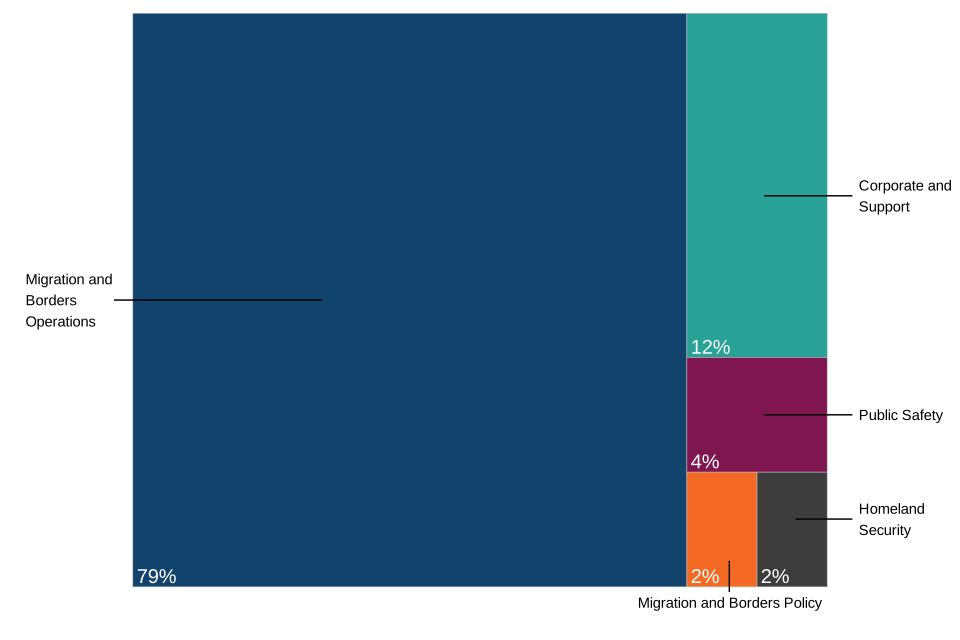
Table 1: Distribution of staff in the Home Office, by business area
| Business area | Percentage |
|---|---|
| Migration and Borders Operations | 79% |
| Corporate and Support | 12% |
| Public Safety | 4% |
| Homeland Security | 2% |
| Migration and Borders Policy | 2% |
Source: Home Office Workforce Diversity Statistics 2024 to 2025, Table_1
Notes:
- This table does not follow the rounding rules set out in the methodology section. This table rounds to the nearest whole number, please see the separate tables for numbers rounded to one decimal place.
- Unspecified business areas are grouped into Corporate and Support.
Grades
Home Office grades, from least to most senior:
- Administrative Assistant or Administrative Officer (AA or AO)
- Executive Officer (EO)
- Higher Executive Officer or Senior Executive Officer (HEO or SEO)
- Grade 7 (G7)
- Grade 6 (G6)
- Senior Civil Servant (SCS), includes SCS pay bands 1 to 4
Figure 2 shows the proportion of grades in each business area of the Home Office. Migration and Borders Operations is the largest part of the department and has a higher proportion of junior grades compared with the other business areas. This is due to the different type of work undertaken in Migration and Borders Operations (mostly operational staff) compared with the other areas of the Home Office (policy and support roles). EO was the most common grade for Migration and Borders Operations (49.0%, over 19,500 staff) followed by AA/AO (23.9%, over 9,500 staff), and EO was also the most common grade for Public Safety (34.5%, over 700 staff) followed by 33.5% (over 600 staff) for HEO/SEO. For all other areas of the Home Office, the most common grades were HEO/SEO.
Figure 2: Proportion of grades in each business area of the Home Office
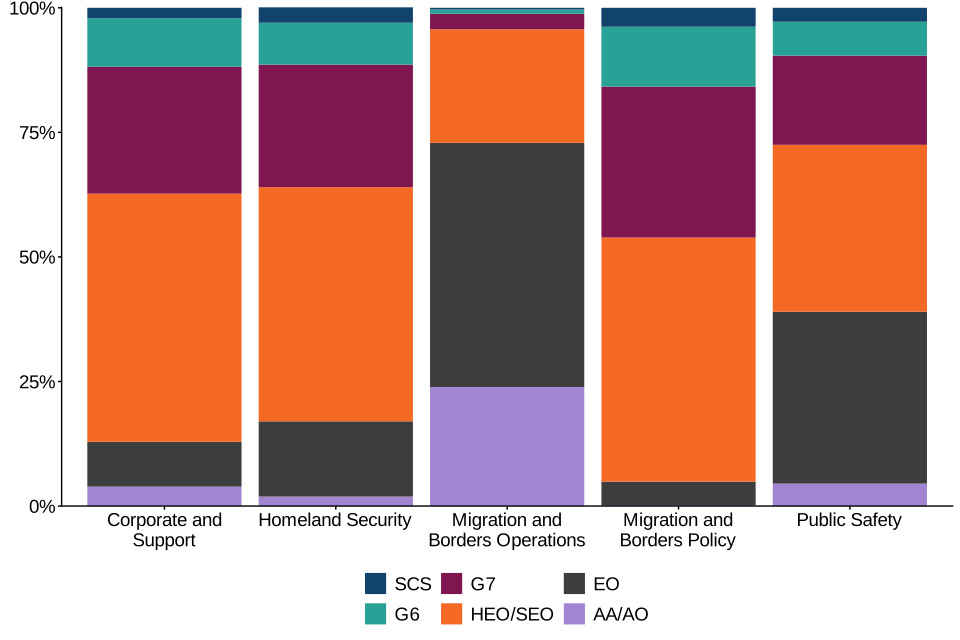
Table 2: Proportion of grades in each business area of the Home Office
| Business area | AA/AO | EO | HEO/SEO | G7 | G6 | SCS |
|---|---|---|---|---|---|---|
| Corporate and Support | 3.9% | 9.0% | 49.8% | 25.5% | 9.7% | 2.1% |
| Homeland Security | 1.9% | 15.1% | 47.0% | 24.6% | 8.4% | 3.1% |
| Migration and Borders Operations | 23.9% | 49.0% | 22.8% | 3.1% | 0.9% | 0.3% |
| Migration and Borders Policy | 0.2% | 4.7% | 49.0% | 30.3% | 12.0% | 3.8% |
| Public Safety | 4.5% | 34.5% | 33.5% | 17.9% | 6.8% | 2.8% |
Source: Home Office Workforce Diversity Statistics 2024 to 2025, Table_2
2. Comparison with targets and population estimates
In 2018 the Home Office set out a series of representation targets for the department to achieve by 2025. These overall targets were set with reference to either the UK economically active population or current Home Office representation, whichever was higher at the time of them being set. Some of these targets were subsequently updated in the February 2024 Home Office Annual reports and accounts (page 172) to reflect the Census 2021 economically active population in England and Wales. These are set out in Table 3, compared with 2018, along with the 5 most recent years (2021 to 2025). Since the original targets were produced, the current working age population representation rates for some groups have changed, see Table 5.
The data provides a snapshot as of 31 March 2025. The data include overseas and non-paid staff, and most data have been self-reported by staff. Self-reporting of some personal characteristic data is voluntary, and therefore does not provide a complete picture of Home Office workforce diversity.
When considering the representation rates listed for 2018 to 2025, particularly for SCS, the total population size in some groups may be relatively low. An increase or decrease of just a few individuals can have a noticeable effect on the percentages reported. It is expected that there will be some variation in the representation rates from year to year, with the overall trend being the important indicator of success.
The 2025 targets for all staff were met for all characteristics. For SCS the targets for disabled people and LGB were met however the targets for ethnic minorities were missed by 5 percentage points and for women by 2 percentage points.
The Home Office collects data on socio-economic background, with the aim of providing richer data on representation within the workforce. This data is currently not of sufficient quality to include in this publication, but this information is planned to be included in future publications. The declaration rate for socio-economic background data as at 31 March 2025 was 38.0%.
Table 3: Progress against diversity targets
| Characteristic | Grade | Target to achieve by 2025 | 2018 | 2021 | 2022 | 2023 | 2024 | 2025 |
|---|---|---|---|---|---|---|---|---|
| Ethnic minority1 | ||||||||
| All Staff | 24% | 24% | 24% | 24% | 24% | 24% | 25% | |
| SCS | 15% | 6% | 7% | 8% | 10% | 9% | 10% | |
| Disability | ||||||||
| All Staff | 12% | 9% | 9% | 11% | 12% | 14% | 15% | |
| SCS | 12% | 3% | 7% | 9% | 13% | 13% | 13% | |
| Women | ||||||||
| All Staff | 52% | 52% | 52% | 52% | 52% | 52% | 53% | |
| SCS | 48% | 39% | 45% | 45% | 48% | 47% | 46% | |
| LGB+2 | ||||||||
| All Staff | 6% | 3% | 4% | 4% | 5% | 5% | 6% | |
| SCS | 6% | 5% | 5% | 5% | 6% | 6% | 7% |
Notes:
- When the targets were set, this characteristic was referred to as ‘Black, Asian and minority ethnic’. This wording in the release has been updated in line with the GOV.UK Style guide.
- For data collected to 31 March 2022, Metis only allowed staff to record themselves as either ‘heterosexual/straight’ or ‘LGB’. For the year to 31 March 2023, 2024 and 2025, a wider range of options were offered, grouped as ‘heterosexual/straight’, ‘LGB’ and ‘LGB+’. Please see Definitions for further detail.
- This table does not follow the rounding rules and is rounded to the nearest whole number to align with the Annual reports and accounts 2024 to 2025.
The representation rate presented in Table 3 is the proportion of staff who reported having a specific characteristic (for example, ethnicity), as a proportion of all staff who answered the question for that characteristic, (for example, total of all staff reporting their ethnicity). Table 4 displays the proportion of staff by characteristic who didn’t report or selected ‘prefer not to say’.
Table 4: Proportion of staff that didn’t report the characteristic in 2024 and 2025
| Characteristic | Grade | 2024 | 2025 |
|---|---|---|---|
| Ethnicity | |||
| All Staff | 32% | 23% | |
| SCS | 10% | 10% | |
| Disability | |||
| All Staff | 44% | 33% | |
| SCS | 18% | 15% | |
| Sexual orientation | |||
| All Staff | 37% | 28% | |
| SCS | 14% | 14% | |
| Religion | |||
| All Staff | 29% | 21% | |
| Socio-economic background | |||
| All Staff | 75% | 62% | |
| Geography | |||
| All Staff | >1% | >1% | |
| Staff grades | |||
| All Staff | >1% | >1% |
Table 5 provides some context to the representation rates with the latest estimates of the demographics for subgroups within the population:
Table 5: 2021 Census England and Wales Population diversity estimates
| Characteristic | Sub-division | Percent |
|---|---|---|
| Ethnicity | ||
| Asian | 10.1% | |
| Black | 4.4% | |
| Mixed | 2.5% | |
| White | 80.7% | |
| Other | 2.3% | |
| Disability | ||
| Disabilities defined under Equality Act 2010 | 9.7% | |
| Women | ||
| All women aged 16 to 64 | 50.8% | |
| Sexual Orientation | ||
| Lesbian, gay, bisexual or other (LGB+) | 3.9% |
Source: Census 2021
Notes:
- The percentage for disability is for those that are economically active aged 16 to 64. All other characteristics are those aged 16 to 64.
2. Disability
The proportion of disabled staff at SCS level has decreased by 0.7 percentage points from last year, from 13.4% to 12.7%.
Figure 3: Proportion of disabled staff in the SCS, 2020 to 2025
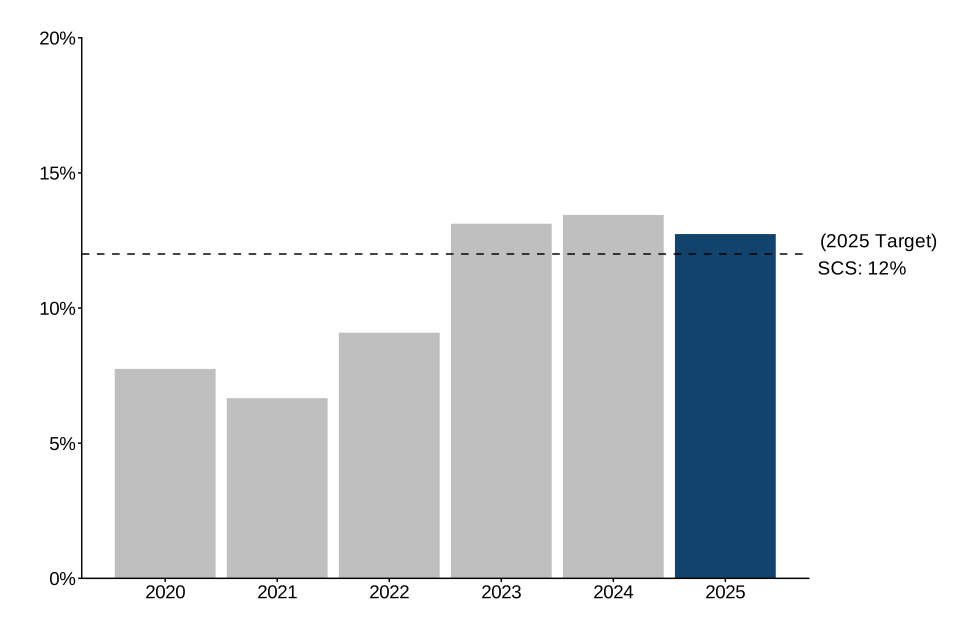
Table 6: Proportion of disabled staff in the SCS, 2020 to 2025
| Year | Percentage of disabled SCS staff |
|---|---|
| 2020 | 7.7% |
| 2021 | 6.7% |
| 2022 | 9.1% |
| 2023 | 13.1% |
| 2024 | 13.4% |
| 2025 | 12.7% |
| 2025 Target | 12% |
The proportion of disabled staff amongst all staff has increased from 14.4% in 2024 to 15.1% in 2025, an increase of 0.6 percentage points. This figure has increased every year since this publication began in 2020. This is the second year in a row that the figure has exceeded the all-staff target of 12%.
Figure 4: Proportion of disabled staff, all staff, 2020 to 2025
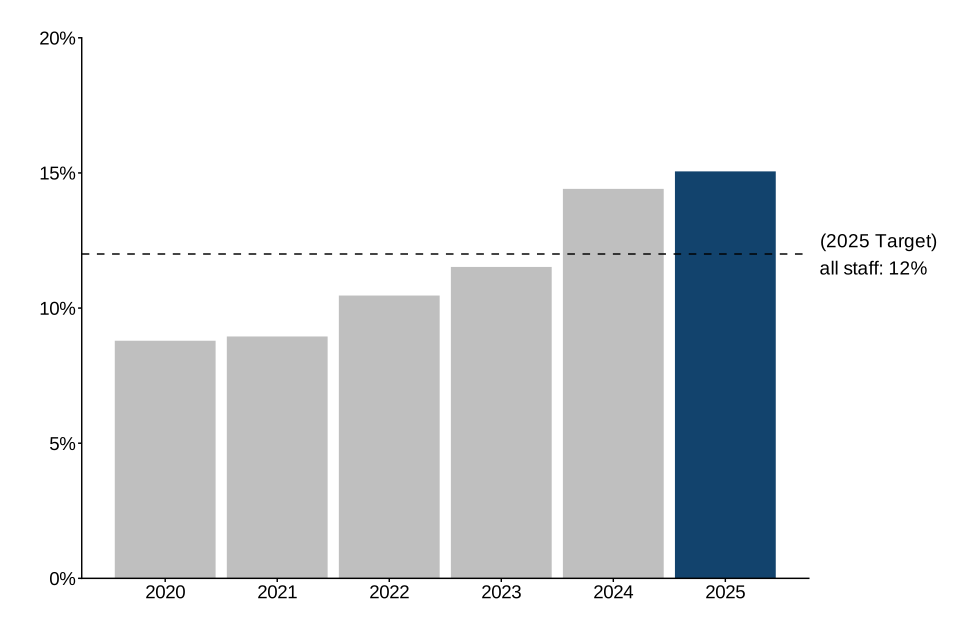
Table 7: Proportion of disabled staff, all staff, 2020 to 2025
| Year | Percentage of disabled staff |
|---|---|
| 2020 | 8.8% |
| 2021 | 8.9% |
| 2022 | 10.5% |
| 2023 | 11.5% |
| 2024 | 14.4% |
| 2025 | 15.1% |
| 2025 Target | 12% |
3. Ethnicity
In the SCS, representation of staff from ethnic minority backgrounds increased by 0.2 percentage points in the past year, from 9.4% to 9.6%.
Figure 5: Proportion of staff from ethnic minority backgrounds in the SCS, 2020 to 2025
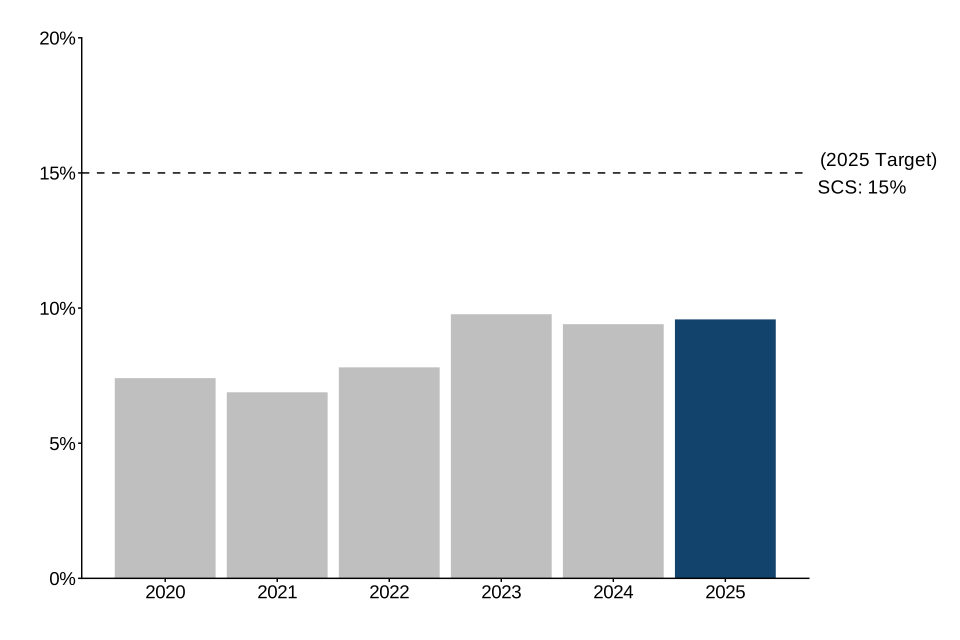
Table 8: Proportion of staff from ethnic minority backgrounds in the SCS, 2020 to 2025
| Year | Percentage of SCS from ethnic minority backgrounds |
|---|---|
| 2020 | 7.4% |
| 2021 | 6.9% |
| 2022 | 7.8% |
| 2023 | 9.8% |
| 2024 | 9.4% |
| 2025 | 9.6% |
| 2025 Target | 15% |
The proportion of staff from ethnic minority backgrounds has increased from 24.1% to 24.7% in the past year. This figure meets the all-staff target of 24% for the second year in a row.
Figure 6: Proportion of staff from ethnic minority backgrounds, all staff, 2020 to 2025
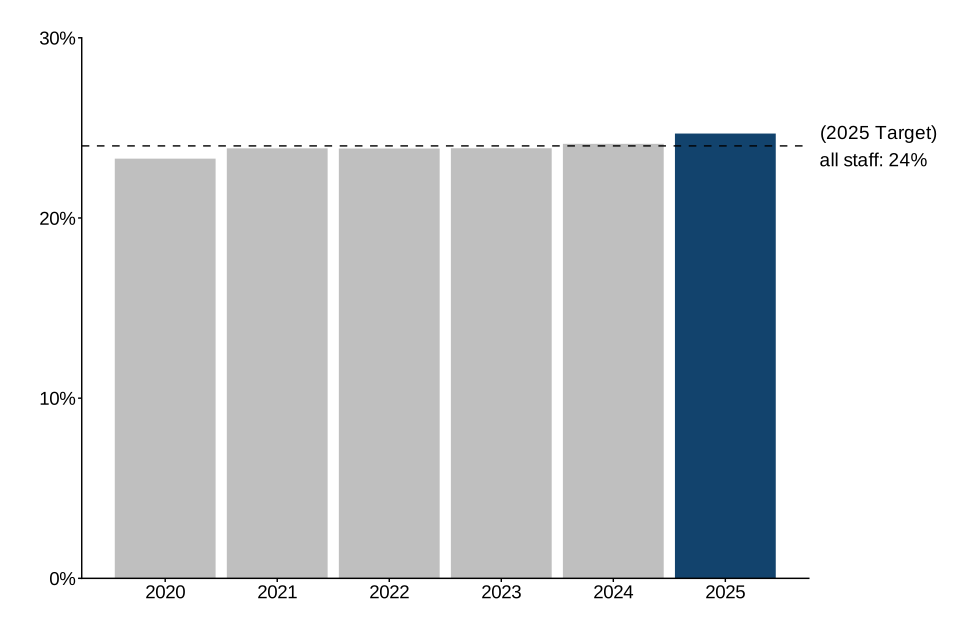
Table 9: Proportion of staff from ethnic minority backgrounds, all staff, 2020 to 2025
| Year | Percentage of staff from ethnic minority backgrounds |
|---|---|
| 2020 | 23.3% |
| 2021 | 23.9% |
| 2022 | 23.9% |
| 2023 | 23.9% |
| 2024 | 24.1% |
| 2025 | 24.7% |
| 2025 Target | 24% |
4. Sexual orientation
Representation of LGB staff in the SCS has increased by 0.7 percentage points in the past year, from 5.9% to 6.6%. This is the first year the figure has exceeded the SCS target of 6%.
Figure 7: Proportion of lesbian, gay or bisexual staff in the SCS, 2020 to 2025
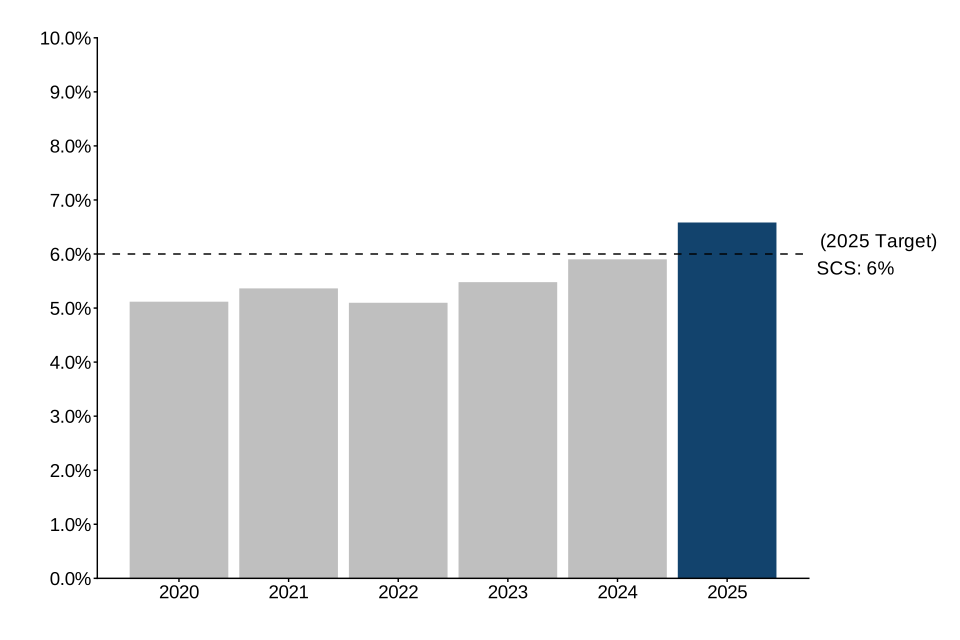
Table 10: Proportion of lesbian, gay or bisexual staff in the SCS, 2020 to 2025
| Year | Percentage of LGB SCS | Percentage of LGB+ SCS |
|---|---|---|
| 2020 | 5.1% | ~ |
| 2021 | 5.4% | ~ |
| 2022 | 5.1% | ~ |
| 2023 | 5.5% | 5.5% |
| 2024 | 5.9% | 5.9% |
| 2025 | 6.6% | 6.6% |
| 2025 Target | 6% | 6% |
Notes:
- For data collected to 31 March 2022, Metis only allowed staff to record themselves as either ‘heterosexual/straight’ or ‘LGB’. For the year to 31 March 2023 and 2024, a wider range of options were offered, grouped as ‘heterosexual/straight’, ‘LGB’ and ‘LGB+’. Please see Definitions for further detail.
Representation of LGB staff across all grades has increased by 0.3 percentage points in the past year, from 5.0% to 5.3%. This has increased every year since reporting began in 2020.
Representation of LGB+ staff across all grades has increased by 0.4 percentage points in the past year, from 5.5% to 5.9%.
Figure 8: Proportion of lesbian, gay or bisexual staff, all staff, 2020 to 2025
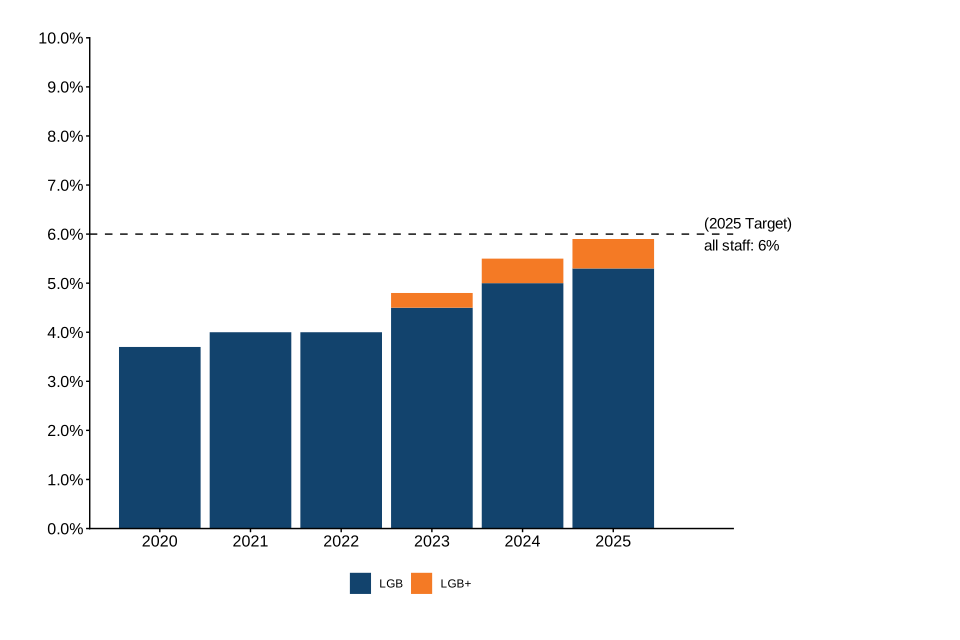
Table 11: Proportion of lesbian, gay or bisexual staff, all staff, 2020 to 2025
| Year | Percentage of LGB staff | Percentage of LGB+ staff |
|---|---|---|
| 2020 | 3.7% | ~ |
| 2021 | 4.0% | ~ |
| 2022 | 4.2% | ~ |
| 2023 | 4.5% | 4.8% |
| 2024 | 5.0% | 5.5% |
| 2025 | 5.3% | 5.9% |
| 2025 Target | 6% | 6% |
Notes:
- For data collected to 31 March 2022, Metis only allowed staff to record themselves as either ‘heterosexual/straight’ or ‘LGB’. For the year to 31 March 2023 and 2024, a wider range of options were offered, grouped as ‘heterosexual/straight’, ‘LGB’ and ‘LGB+’. Please see Definitions for further detail. The chart here therefore only includes staff reporting themselves as LGB (not ‘asexual’, ‘pansexual’ or ‘other’) in 2023 and 2024, to provide a comparable time series.
5. Sex
The Home Office Metis system allows staff to identify as either female or male and therefore this terminology is used when referring to the data however when referring to targets, we use the term women.
The proportion of female staff in the SCS has decreased from 46.7% in 2024 to 46.1% in 2025, below the target of 48% representation of women in the SCS.
Figure 9: Proportion of female staff in the SCS, 2020 to 2025
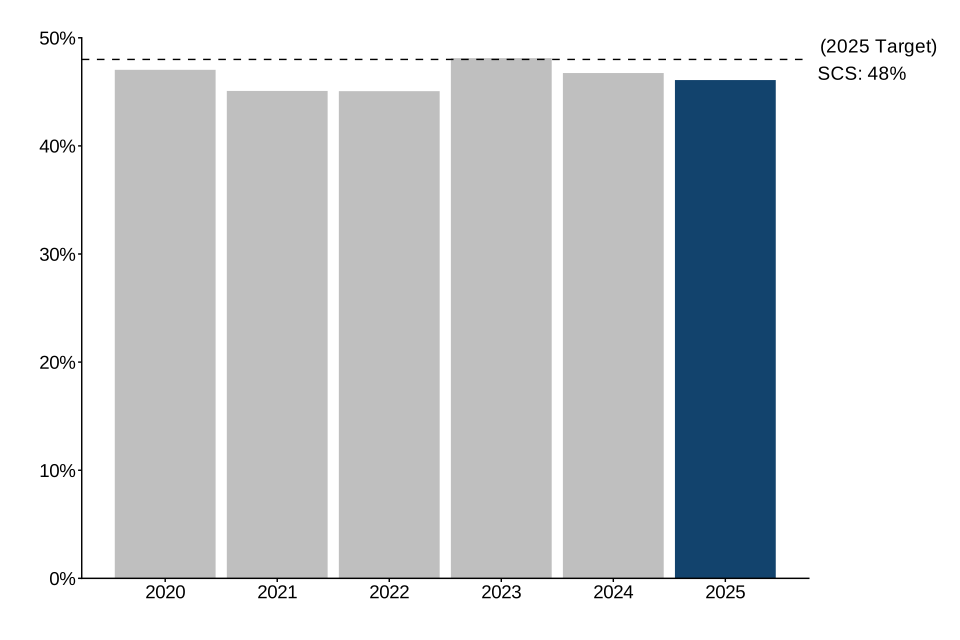
Table 12: Proportion of female staff in the SCS, 2020 to 2025
| Year | Percentage of female SCS staff |
|---|---|
| 2020 | 47.0% |
| 2021 | 45.1% |
| 2022 | 45.1% |
| 2023 | 48.1% |
| 2024 | 46.7% |
| 2025 | 46.1% |
| 2025 Target | 48% |
The proportion of female staff employed by the Home Office has remained around 52% every year. The all-staff target is 52%.
Figure 10: Proportion of female staff, all grades, 2020 to 2025
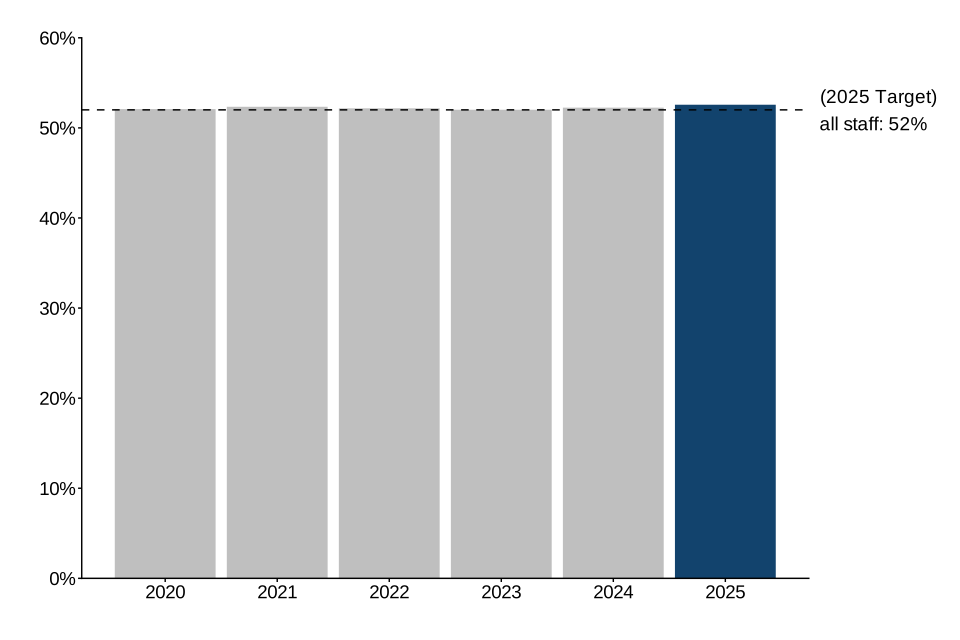
Table 13: Proportion of female staff, all grades, 2020 to 2025
| Year | Percentage of female staff |
|---|---|
| 2020 | 52.1% |
| 2021 | 52.3% |
| 2022 | 52.2% |
| 2023 | 52.0% |
| 2024 | 52.2% |
| 2025 | 52.6% |
| 2025 Target | 52% |
6. Further analysis of protected characteristics
This section analyses representation of protected characteristics in more detail, including analysis by grade and business area where possible.
6.1 Disability
The proportion of disabled staff in the SCS decreased from 13.4% in March 2024, to 12.7% in March 2025. In March 2025, 14.0% of staff at SCS level in the Corporate and Support area reported having a disability, compared with 17.0% in March 2024. For the Migration and Borders Operations area, 12.1% of SCS staff reported having a disability in March 2025, compared with 11.1% in March 2024. The numbers of individuals with a disability at SCS level in the Homeland Security, Migration and Borders Policy, and Public Safety areas were too small to be reported individually, for March 2025.
Representation of disabled staff was highest at AA/AO grades, with 18.0% across business areas for March 2025, a decrease of 0.4 percentage points since March 2024 (18.4%).
Representation of disabled staff was highest in the Public Safety area, with 19.1% of all Public Safety staff reporting as having a disability in March 2025, an increase of 2.2 percentage points since March 2024 (16.9%).
Public Safety staff at AA/AO grade had particularly high representation of disabled staff, at 30.4% for March 2025.
Figure 11: Proportion of disabled staff, by grade and business area
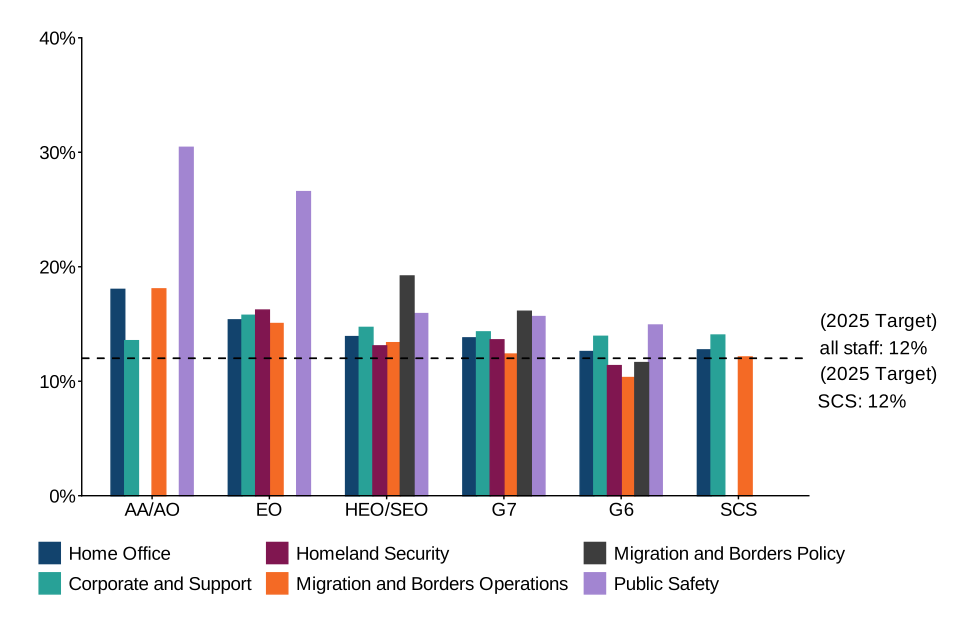
Table 14: Proportion of disabled staff, by grade and business area
| Business area | AA/AO | EO | HEO/SEO | G7 | G6 | SCS |
|---|---|---|---|---|---|---|
| Home Office | 18.0% | 15.4% | 13.9% | 13.8% | 12.6% | 12.7% |
| Corporate and Support | 13.5% | 15.8% | 14.7% | 14.3% | 13.9% | 14.0% |
| Homeland Security | c | 16.2% | 13.1% | 13.6% | 11.4% | c |
| Migration and Borders Operations | 18.1% | 15.0% | 13.4% | 12.4% | 10.3% | 12.1% |
| Migration and Borders Policy | c | c | 19.2% | 16.1% | 11.6% | c |
| Public Safety | 30.4% | 26.6% | 15.9% | 15.6% | 14.9% | c |
Source: Home Office Workforce Diversity Statistics 2024 to 2025, Table 4.1
Notes:
- Categories with fewer than 10 individuals or where publishing the figures would risk disclosure, have been removed from both Figure 11 and Table 14 and are noted by a ‘c’ for confidential.
6.2 Ethnicity
At the end of March 2025, 24.7% of Home Office staff were from ethnic minority backgrounds, an increase of 0.6 percentage points from March 2024 (24.1%). According to the 2021 Census, people from Black, Asian, mixed and other ethnic groups made up 19.3% of the working age population in England and Wales.
Representation of staff from ethnic minority backgrounds tended to be lower at higher grades. In March 2025, 9.6% of SCS staff were from an ethnic minority background compared with 28.7% for AA/AO (March 2024: SCS, 9.4%; AA/AO, 27.8%).
At the end of March 2025, almost a third (31.2%) of staff working in Corporate and Support roles in the Home Office were from ethnic minority backgrounds. The next highest representation was in the Public Safety function, with 28.2% of staff from ethnic minority backgrounds.
Figure 12: Proportion of staff from ethnic minority backgrounds, by grade and business area
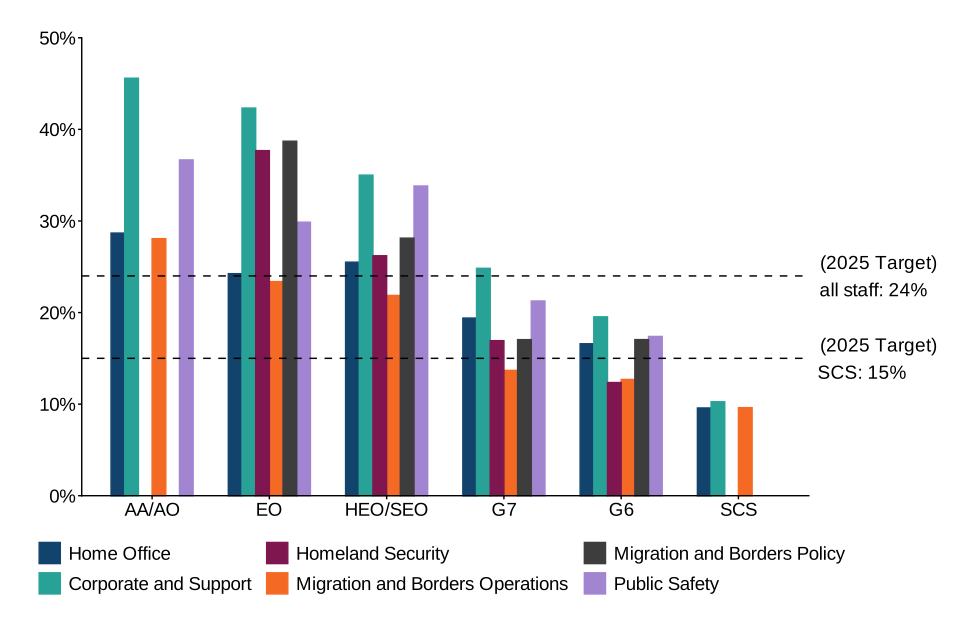
Table 15: Proportion of staff from ethnic minority backgrounds, by grade and business area
| Business area | AA/AO | EO | HEO/SEO | G7 | G6 | SCS |
|---|---|---|---|---|---|---|
| Home Office | 28.7% | 24.2% | 25.5% | 19.4% | 16.6% | 9.6% |
| Corporate and Support | 45.6% | 42.3% | 35.0% | 24.8% | 19.5% | 10.3% |
| Homeland Security | c | 37.7% | 26.2% | 16.9% | 12.4% | c |
| Migration and Borders Operations | 28.1% | 23.4% | 21.9% | 13.7% | 12.7% | 9.6% |
| Migration and Borders Policy | c | 38.7% | 28.1% | 17.0% | 17.0% | c |
| Public Safety | 36.7% | 29.9% | 33.8% | 21.3% | 17.4% | c |
Source: Home Office Workforce Diversity Statistics 2024 to 2025, Table 5.1
Notes:
- Categories with fewer than 10 individuals or where publishing the figures would risk disclosure, have been removed from both Figure 12 and Table 15 and are noted by a ‘c’ for confidential.
Staff from a White background made up the largest group by ethnicity (75.3%), followed by staff from an Asian or Asian British background (14.9%).
Staff working in Public Safety roles had the largest proportion of Asian or Asian British staff, with 17.5% across all grades in March 2025 (March 2024: 17.6%).
Staff working in Corporate and Support had the highest proportion of Black or Black British staff at 9.1%, followed by Migration and Borders Policy at 7.0%.
Figure 13: Breakdown of Home Office staff by ethnic group
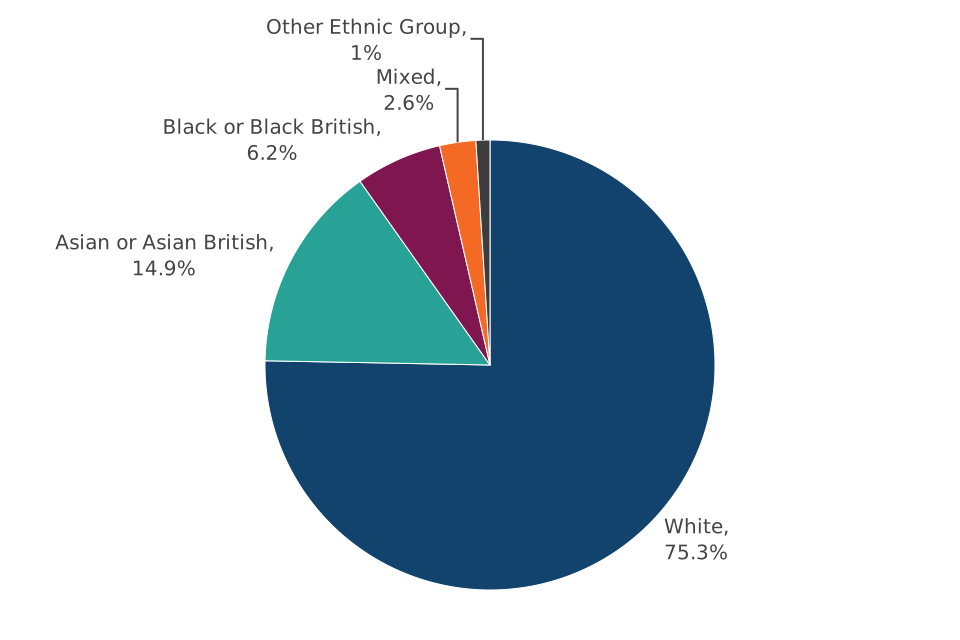
Table 16: Breakdown of Home Office staff by ethnic group
| Ethnicity | Percentage |
|---|---|
| Asian or Asian British | 14.9% |
| Black or Black British | 6.2% |
| Mixed | 2.6% |
| Other Ethnic Group | 1.0% |
| White | 75.3% |
Source: Home Office Workforce Diversity Statistics 2024 to 2025, Table 6.1
6.3 Religion and belief
Christian (40.5%) or ‘No religion’ (37.7%) were the most common religious groups across all staff in the Home Office. The next most popular responses were Muslim (8.2%) and then ‘Other religion or belief’ (7.5%).
The proportion of staff reporting ‘No religion’ increased with the seniority of the grade. In March 2025, this ranged from 34.6% at AA/AO, through to 48.0% at SCS level. The most reported religion or belief at Grade 7, Grade 6 and SCS was ‘No religion’ in 2025, which is consistent with the previous year.
For AA/AO, EO, and HEO/SEO grade staff, the most frequently reported religion or belief was Christian, with AA/AO having the highest proportion of staff reporting their religion or belief as Christian at 43.0%.
Figure 14: Breakdown of Home Office staff by religion and belief
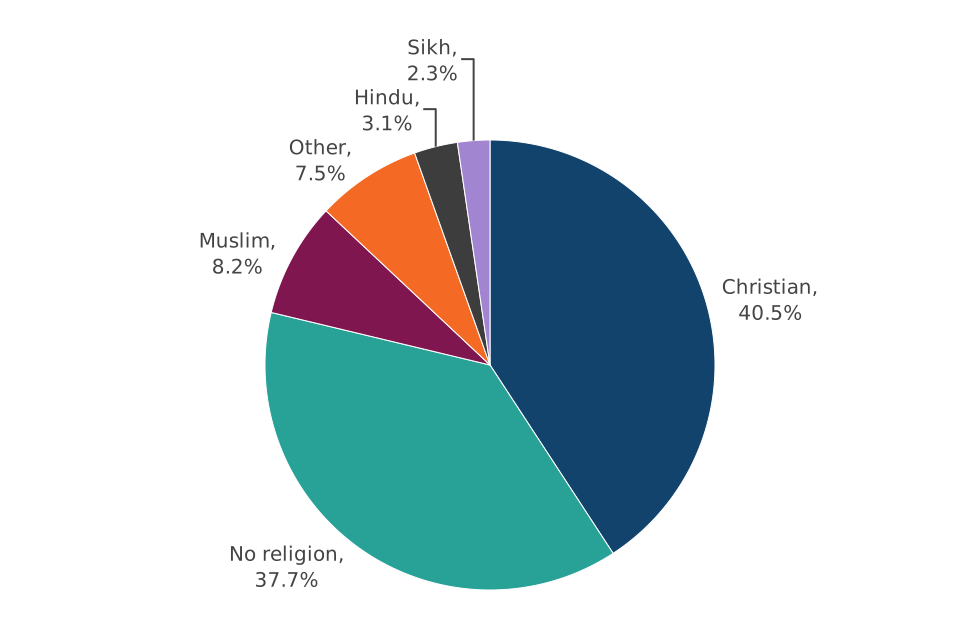
Table 17: Breakdown of Home Office staff by religion and belief
| Religion | Percentage |
|---|---|
| Buddhist | 0.4% |
| Christian | 40.5% |
| Hindu | 3.1% |
| Jewish | 0.3% |
| Muslim | 8.2% |
| Sikh | 2.3% |
| No religion | 37.7% |
| Other | 7.5% |
Source: Home Office Workforce Diversity Statistics 2024 to 2025, Table 8.1
Notes:
- In March 2025, Buddhist and Jewish staff accounted for 0.4% and 0.3% of all staff, respectively, which cannot be seen on the chart.
6.4 Sexual orientation
Homeland Security had the highest level of LGB staff at 8.1%.
In March 2025, 6.6% of SCS staff identified as LGB, a 0.7 percentage point increase from March 2024 (5.9%). Corporate and Support was the only area with sufficient SCS staff to report individually, with LGB representation of 8.8%.
Representation of LGB staff tended to be lower among the most junior grades. In March 2025, 4.1% of AA/AO staff identified as LGB (March 2024: AA/AO, 3.9%), compared with 5.6% to 6.6% for G7, G6 and SCS staff.
Across all staff, 5.3% identified as LGB in March 2025, a 0.3 percentage point increase from March 2024 (5.0%). 5.9% of staff identified as LGB+ in March 2025, a 0.4 percentage point increase from March 2024 (5.5%). LGB+ representation by business area is available in the Home Office Workforce Diversity Statistics 2024 to 2025, Table 9.2. Data on LGB+ staff has only been available since 2023. Please see Definitions for further detail.
Figure 15: Proportion of lesbian, gay and bisexual (LGB) staff, by grade and business area
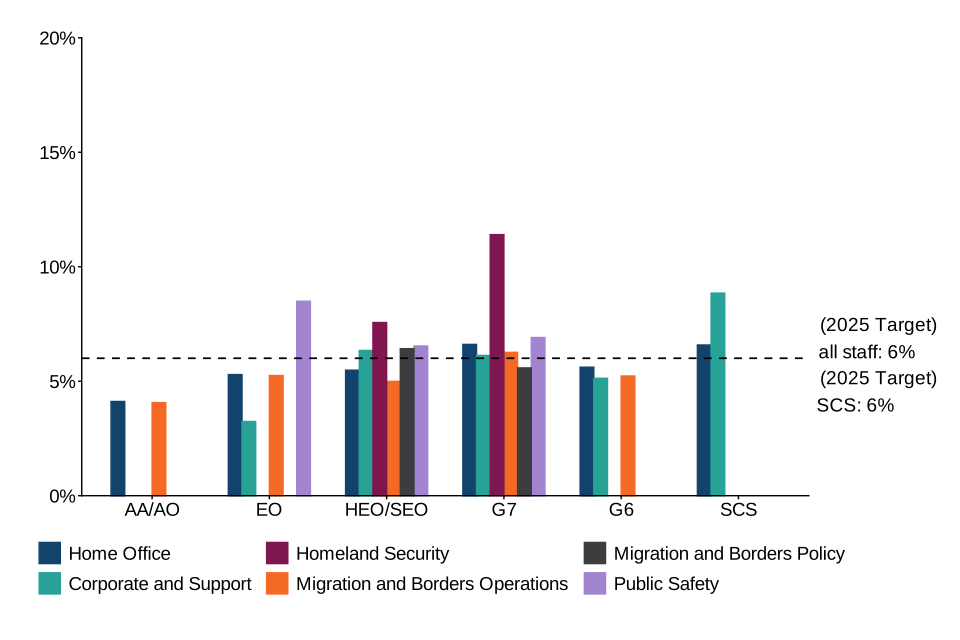
Table 18: Proportion of lesbian, gay and bisexual (LGB) staff, by grade and business area
| Business area | AA/AO | EO | HEO/SEO | G7 | G6 | SCS |
|---|---|---|---|---|---|---|
| Home Office | 4.1% | 5.3% | 5.5% | 6.6% | 5.6% | 6.6% |
| Corporate and Support | c | 3.2% | 6.3% | 6.1% | 5.1% | 8.8% |
| Homeland Security | c | c | 7.6% | 11.4% | c | c |
| Migration and Borders Operations | 4.1% | 5.2% | 5.0% | 6.3% | 5.2% | c |
| Migration and Borders Policy | c | c | 6.4% | 5.6% | c | c |
| Public Safety | c | 8.5% | 6.5% | 6.9% | c | c |
Source: Home Office Workforce Diversity Statistics 2024 to 2025, Table 9.1
Notes:
- Categories with fewer than 10 individuals or where publishing the figures would risk disclosure, have been removed from both Figure 15 and Table 18 and are noted by a ‘c’ for confidential.
- For data collected to 31 March 2022, Metis only allowed staff to record themselves as either ‘heterosexual/straight’ or ‘LGB’. For the year to 31 March 2023 and 2024, a wider range of options were offered, grouped as ‘heterosexual/straight’, ‘LGB’ and ‘LGB+’. Please see Definitions for further detail.
6.5 Sex
Over half (52.6%) of Home Office staff were female, in March 2025, similar to 52.3% in March 2024.
In March 2025, 46.1% of SCS staff were female, a 0.6 percentage point decrease from March 2024 (46.7%). The proportion of female staff employed at SCS grade ranged from 41.1% in Migration and Borders Operations to 57.6% in Migration and Borders Policy.
There was a higher proportion of female staff employed at the most junior grades, with 59.3% of AA/AO staff being female in March 2025.
Figure 16: Proportion of female staff, by grade and business area
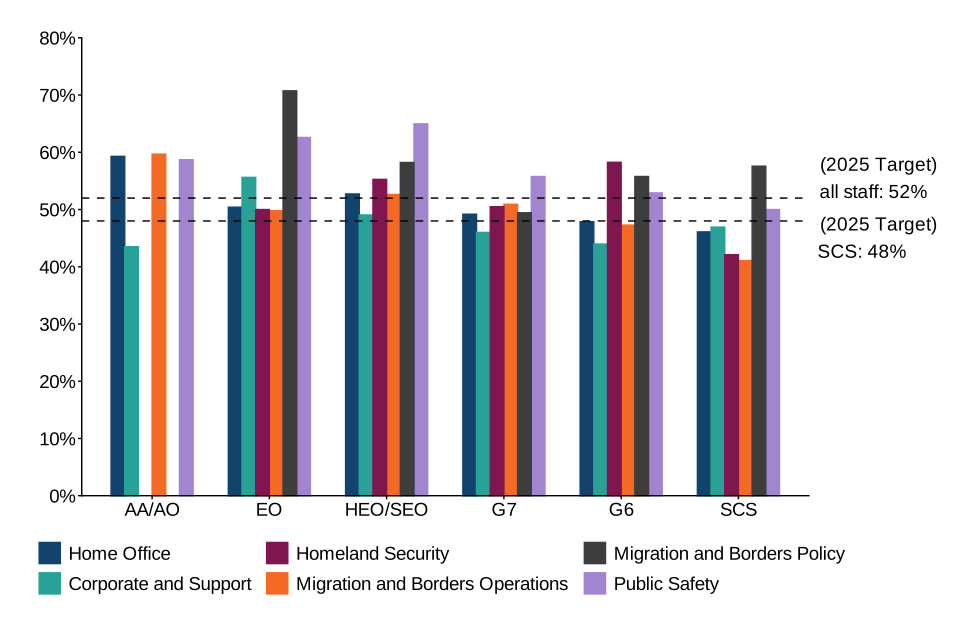
Table 19: Proportion of female staff, by grade and business area
| Business area | AA/AO | EO | HEO/SEO | G7 | G6 | SCS |
|---|---|---|---|---|---|---|
| Home Office | 59.3% | 50.4% | 52.7% | 49.2% | 47.9% | 46.1% |
| Corporate and Support | 43.5% | 55.6% | 49.0% | 46.0% | 44.0% | 46.9% |
| Homeland Security | c | 50.0% | 55.3% | 50.5% | 58.3% | 42.1% |
| Migration and Borders Operations | 59.7% | 49.8% | 52.6% | 50.9% | 47.3% | 41.1% |
| Migration and Borders Policy | c | 70.7% | 58.2% | 49.4% | 55.8% | 57.6% |
| Public Safety | 58.7% | 62.6% | 65.0% | 55.8% | 52.9% | 50.0% |
Source: Home Office Workforce Diversity Statistics 2024 to 2025, Table 7.1
7. Age
In March 2025, the proportion of 16 to 29 year-olds was highest at AA and AO grades (26.7%) and lowest among G7 staff (6.9%, excluding G6 and SCS which are removed for confidentiality).
The most represented age group at SCS is 40 to 49 year-olds, with 43.9% of staff in this age group in March 2025.
Figure 17: Proportion of staff at each grade, by age
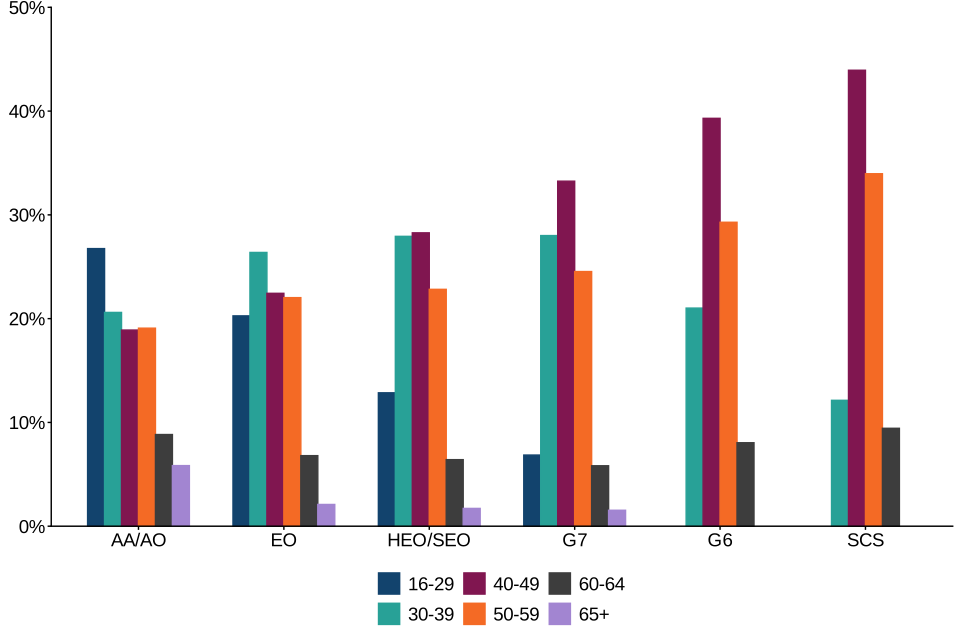
Table 20: Proportion of staff at each grade, by age
| Age | AA/AO | EO | HEO/SEO | G7 | G6 | SCS |
|---|---|---|---|---|---|---|
| 16-29 | 26.7% | 20.3% | 12.9% | 6.9% | c | c |
| 30-39 | 20.6% | 26.4% | 27.9% | 28.0% | 21.0% | 12.1% |
| 40-49 | 18.9% | 22.4% | 28.3% | 33.2% | 39.3% | 43.9% |
| 50-59 | 19.1% | 22.0% | 22.8% | 24.5% | 29.3% | 34.0% |
| 60-64 | 8.8% | 6.8% | 6.4% | 5.8% | 8.0% | 9.4% |
| 65+ | 5.8% | 2.1% | 1.7% | 1.5% | c | c |
Source: Home Office Workforce Diversity Statistics 2024 to 2025, Table 3.1
Notes:
- Categories with fewer than 10 individuals or where publishing the figures would risk disclosure, have been removed from both Figure 17 and Table 20 and are noted by a ‘c’ for confidential.
In March 2025, in the Homeland Security and Public Safety business areas, the most represented age group were 30 to 39 year-olds (38.6% and 34.9% respectively). For the Migration and Borders Operations business area, the most represented age groups were 30 to 39 year-olds and 40 to 49 year-olds (24.6% and 24.5% respectively). For the Corporate and Support area, the most represented age group were the 40 to 49-year-olds (26.5%), closely followed by 30 to 39 year-olds (25.4%). The most represented age groups across Migration and Borders Policy were 40 to 49-year-olds (32.6%) and 30 to 39-year-olds (28.7%).
Figure 18: Proportion of staff by age and business area
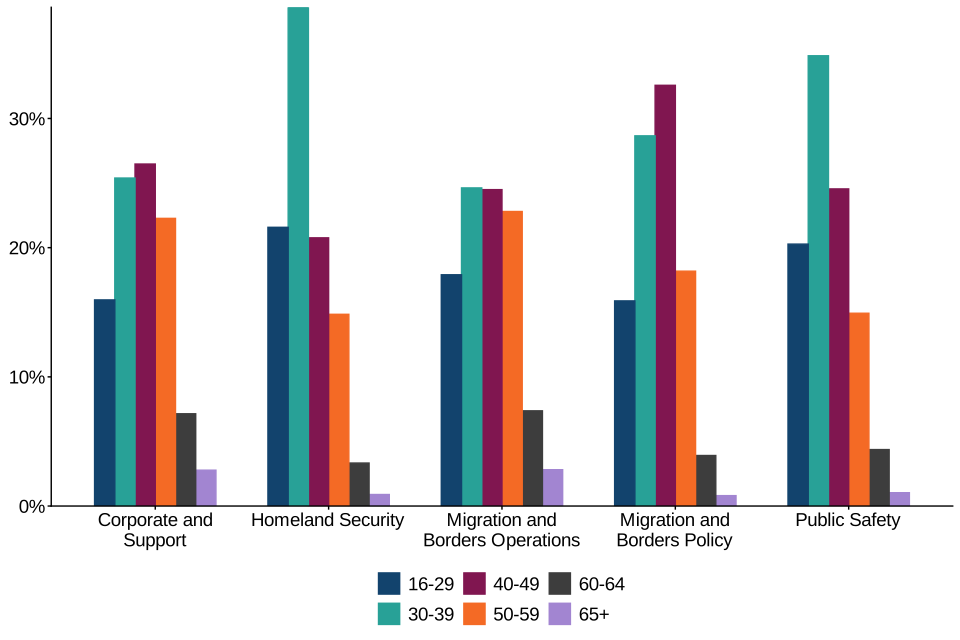
Table 21: Proportion of staff by age and business area
| Business area | 16-29 | 30-39 | 40-49 | 50-59 | 60-64 | 65+ |
|---|---|---|---|---|---|---|
| Corporate and Support | 16.0% | 25.4% | 26.5% | 22.3% | 7.1% | 2.8% |
| Homeland Security | 21.6% | 38.6% | 20.8% | 14.8% | 3.3% | 0.9% |
| Migration and Borders Operations | 17.9% | 24.6% | 24.5% | 22.8% | 7.4% | 2.8% |
| Migration and Borders Policy | 15.9% | 28.7% | 32.6% | 18.2% | 3.9% | 0.8% |
| Public Safety | 20.3% | 34.9% | 24.5% | 14.9% | 4.4% | 1.0% |
8. Working location of staff
This section analyses the geography of the Home Office workforce using the building location of employment within each geographic region of the UK.
In March 2025, almost a third (30.4%) of Home Office staff were registered to a building in London. This was followed by the North West of England (22.7%), Yorkshire and The Humber (12.0%) and the South East of England (10.8%). Outside of England, staff working in Scotland made up 3.5% of the Home Office workforce, followed by Wales (2.3%), Northern Ireland (2.0%) and Overseas (0.6%).
The biggest decrease in geographic representation was in London with 30.4% of staff registered to a building in the region in March 2025, a decrease of 1.5 percentage points from March 2024 (31.9%). All other regions (except Scotland) increased by 0.1 to 0.2 percentage points while Scotland decreased by 0.1 percentage points.
Figure 19: Proportion of staff in different regions of the UK, March 2025
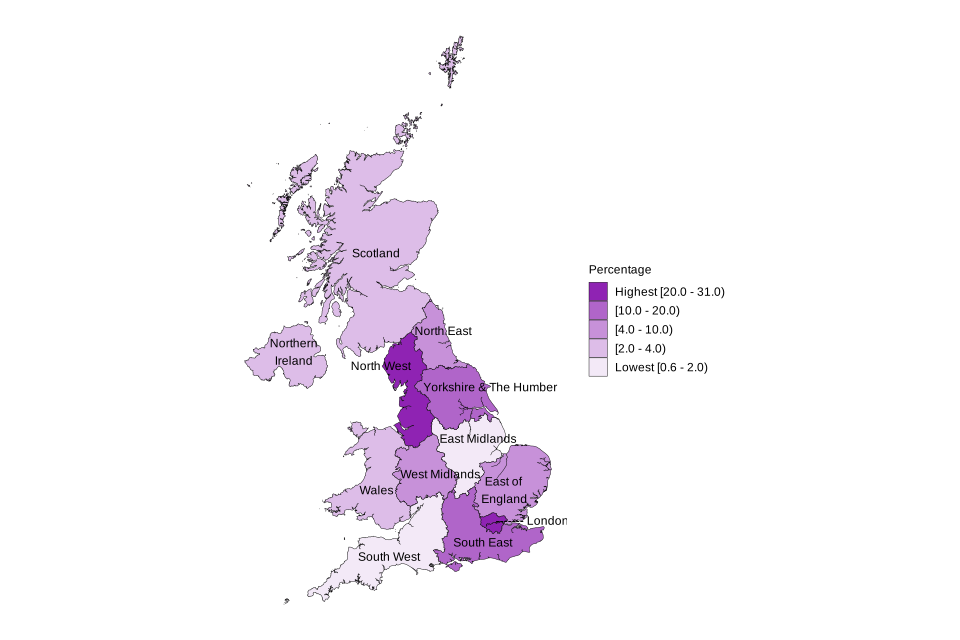
Table 22: Proportion of staff in different regions of the UK, March 2025
| Region | Percentage |
|---|---|
| North East (England) | 4.2% |
| North West (England) | 22.7% |
| Yorkshire and The Humber (England) | 12.0% |
| East Midlands (England) | 0.8% |
| West Midlands (England) | 5.0% |
| East of England (England) | 4.5% |
| London (England) | 30.4% |
| South East (England) | 10.8% |
| South West (England) | 1.3% |
| Wales | 2.3% |
| Scotland | 3.5% |
| Northern Ireland | 2.0% |
| Overseas | 0.6% |
Source: Home Office Workforce Diversity Statistics 2024 to 2025, Table 10
Notes:
- In 2025, 0.1% of staff recorded an unspecified workplace location (March 2024: 0.4%).
9. Further information
9.1 Forthcoming statistical releases
Forthcoming publications are pre-announced on the statistics release calendar on the GOV.UK website.
9.2 Feedback and enquiries
Home Office responsible statistician: M McMahon
Press enquiries: pressoffice@homeoffice.gov.uk
Telephone: 0300 123 3535
The department is always looking to improve the accessibility of our documents. If you have any issues accessing the information you require or you think accessibility requirements are not being met, please contact the Home Office Statistical Transformation Team mailbox.