Get Britain Working: Labour Market Insights October 2025
Updated 30 April 2026
Applies to England, Scotland and Wales

© Crown copyright 2026
This publication is licensed under the terms of the Open Government Licence v3.0 except where otherwise stated. To view this licence, visit nationalarchives.gov.uk/doc/open-government-licence/version/3 or write to the Information Policy Team, The National Archives, Kew, London TW9 4DU, or email: psi@nationalarchives.gov.uk.
Where we have identified any third party copyright information you will need to obtain permission from the copyright holders concerned.
This publication is available at https://www.gov.uk/government/statistics/get-britain-working-labour-market-insights-october-2025/get-britain-working-labour-market-insights-october-2025
This publication is the first in a new quarterly statistical publication series of labour market insights. This publication series builds on the Get Britain Working White Paper Analytical Annex, which included new analysis of the UK labour market.
The publication contains some core statistics which will be updated with each release, while other statistics will be published on a one-off basis or updated less frequently. Each edition will include a contextual chapter offering deeper analysis on a specific topic, helping readers build understanding on a different subject with each release. In this publication the focus is on Universal Credit (UC) ‘Searching for work’ conditionality regime into-work rates (IWRs).
Please note that because these statistics are new, they are ‘Official Statistics in Development’. They will be tested with users in line with the standards of trustworthiness, quality, and value in the Code of Practice for Statistics.
Correction statement
During further work with the data in section 3 of the ‘Get Britain Working: Labour Market Insights October 2025’ publication, DWP analysts identified an issue with the earnings variable used to derive the statistics in data tables 2 to 8 of the accompanying data tables document. Analysts identified a more suitable earnings variable and updated the data tables to reflect this. There have been no changes made to the main publication.
1. Main stories
Here are the main headlines from the publication:
- Human health and social work activities is the largest sector of employment for people on UC (17.2%).
- People with a health condition in the ‘No work requirements’ conditionality regime are more likely to stay there continuously for longer compared to those in ‘Searching for work’.
- In June 2025, the overall into-work rate for customers in the ‘Searching for work’ conditionality regime in Great Britain was 7.4%.
- Into-work rates are affected by seasonality, the local labour market, the wider economic context, customers’ duration on UC, customers’ age, and customers’ family type.
- Most local labour market types have seen a rise in economic inactivity and a fall in employment since the COVID-19 pandemic.
- In our local labour market types, low population density is associated with higher into-work rates, and connectivity to urban centres with higher percentage increases in payrolled employment.
2. What you need to know
Universal Credit
UC is a single, usually monthly payment, administered by the Department for Work and Pensions (DWP). It is the primary working-age benefit.
UC customers are required to do certain work-related activities to receive UC. These activities depend on which of the 6 conditionality regimes the customer is placed in.[footnote 1] Each person will be assigned one of 6 conditionality regimes, based on their assessed capability and circumstances. These 6 conditionality regimes are:
1. Searching for work
2. Working – with requirements
3. No work requirements
4. Working – no requirements
5. Planning for work
6. Preparing for work
For more information on the definition of UC and the conditionality regimes please see the glossary section of the accompanying Background Information and Methodology paper.
Statistics about the people on UC, including their conditionality regime are also published on Stat Xplore monthly.
Most of the analysis focuses on the ‘Searching for work’ conditionality regime. This conditionality regime is for customers who are not working or working with low earnings. In this regime a customer is required to take action to secure work – or more or better paid work if they already have a job.
This publication also provides information about UC customers on the ‘UC Health Journey’. Customers can report a health condition that restricts their ability to work either when they first claim UC or later as a change of circumstances.
A customer can self-certify for up to 7 days, after which medical evidence is required in most circumstances. Once medical evidence, usually a fit note, is accepted by DWP, the customer joins the UC Health Journey and is referred for a Work Capability Assessment (WCA) if the health condition continues for more than 4 weeks. There are some exceptions to this.
Prior to a WCA outcome, the customer remains in the ‘Searching for work’ regime but with tailored conditionality. Following a WCA, if not capable to work, a customer is found to have either limited capability for work (LCW) (and placed in ‘Preparing for work’) or limited capability for work and work-related activity (LCWRA) (and placed in ‘No work requirements’).
Flows between conditionality regimes and remaining in a conditionality regime
Alongside this publication, a series of data tables has been included showing movements to and from different UC conditionality regimes each month between January 2019 and May 2025. This includes movements of people joining and leaving UC, as well as an employment breakdown for each conditionality regime, based on earnings recorded in UC data. A further breakdown of the ‘No work requirements’ regime has also been included, identifying those with a declared health condition. A breakdown by age group has also been included.
The flows presented in the data tables are based on a person’s conditionality status at the end of each monthly assessment period. This means that if an individual moves multiple times within a month only the net monthly change is measured.
Into-work rates
The into-work rate is defined as the proportion of ‘Searching for work’ regime customers who have earnings in one assessment period who did not have earnings in the preceding assessment period.
Given this definition, the rate could miss some movements out of, and back into, work which happens within the time of 2 assessment periods if earnings are present in both. Higher into-work rates do not always correspond with a higher number of people moving into work. For example, if the same number of people start work in 2 different months, the into-work rate will be lower in the month with more people looking for work.
The amount of UC someone is eligible for is calculated based on their circumstances each month. These are called ‘assessment periods’. A customer’s UC payment is based on their circumstances in the previous assessment period, and their first assessment period starts on the day they make a claim. Assessment periods are monthly and begin on the same day each month.
Local labour market types
Analysis of sub-national labour markets often focuses on the differences between regions of the UK. However, regional analysis masks considerable differences in labour market outcomes at the local level. Focus on regions can also obscure the fact that there are similarities between different local labour markets that are not geographically close to each other.
To obtain a better understanding of sub-national labour markets, we have conducted ‘cluster analysis’ to categorise local authorities into ‘labour market types’, based on key labour market variables, rather than geographic location.
Our local labour market types were first published as part of the Get Britain Working White Paper Analytical Annex. In this publication we build on this analysis and provide some updated breakdowns of key labour market variables, and how they have changed since the pandemic across the different labour market types.
Our cluster analysis was based on 6 local labour market variables that are listed below. Please refer to the accompanying Background Information and Methodology paper for more information on the data sources for these variables.
A. Number of UC ‘Searching for work’ and Jobseekers’ Allowance customers in the local authority (LA)
B. LA employment rate
C. LA working-age work-limiting disability rate
D. Proportion of LA working-age population with at least level 4 qualifications[footnote 2]
E. LA musculoskeletal condition rate
F. Proportion of LA population with a mental health condition
This cluster method creates groups of local authorities such that the difference between each cluster group member within each cluster is minimised in terms of the 6 variables, yet the difference between cluster groups of local authorities is maximised. This is intended to create coherent groups of local authorities that are distinct from each other. Applying this method to our data resulted in 14 groups of local authorities (which we call ‘local labour market types’). We reviewed the groups created and drew out common features within each of the 14 groups to generate pen portraits of the different local labour market types.
3a. People on Universal Credit in employment
UC is not just a benefit for those who are out of work. It is also for those who are working, but whose earnings are low enough to qualify.
Human health and social work activities is the largest industrial sector of employment for people on UC (17.2%)
Figure 1: Sector breakdown for people on UC in employment, Great Britain, March 2025
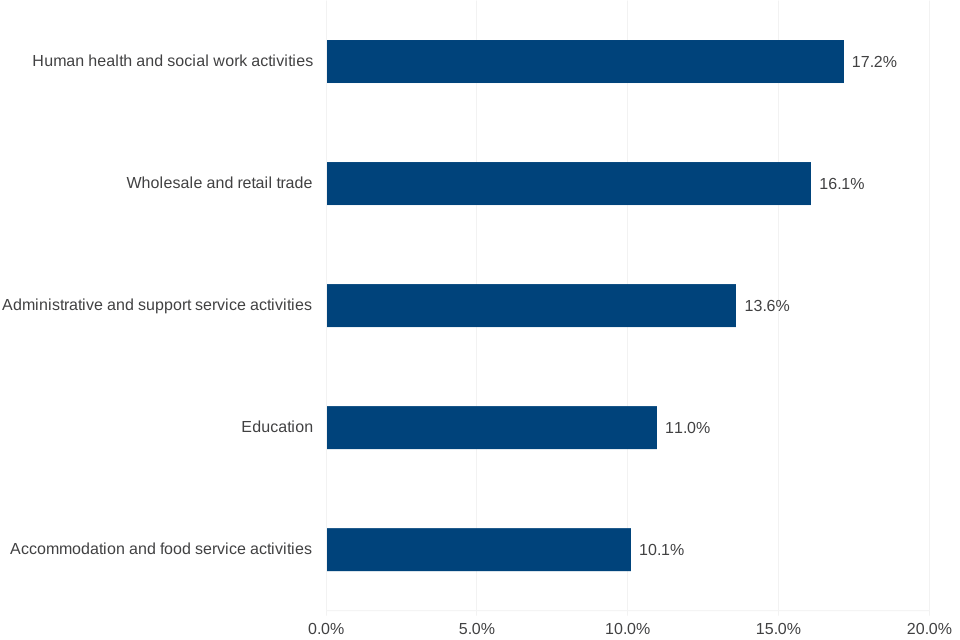
Figure 1 shows the largest 5 industrial sectors as a proportion of total employment for people on UC.
In March 2025, around two-thirds (68.0%) of people in work and on UC were employed in 5 industrial sectors. These are human health and social work activities (17.2%); wholesale and retail trade (16.1%); administrative and support services (13.6%); education (11.0%); and accommodation and food services, i.e. ‘hospitality’ (10.1%).
Four of the top 5 sectors in which UC customers are employed – human health and social work, wholesale and retail trade, education, and administrative and support services – are also among the top 5 employing sectors of workers overall in the wider economy, based on RTI payroll employee statistics for March 2025.[footnote 3]
A breakdown of how people on UC in employment are spread across all industrial sectors of the economy is available in Table 1 of the accompanying data tables.
3b. Flows between Universal Credit conditionality regimes
As a UC customer’s circumstances change, customers will transition between different levels of conditionality, leading to a ‘flow’ of customers between these conditionality regimes.
Alongside this publication a series of data tables has been included showing movements between different UC conditionality regimes each month from January 2019 to May 2025, including a breakdown by employment status. This section outlines examples of analysis using these tables to show how the data can be used.
Following a spike in onflows in early 2020, flows on and off UC have remained largely stable
Figure 2: Number of people flowing on and off UC each month, Great Britain, January 2019 to May 2025
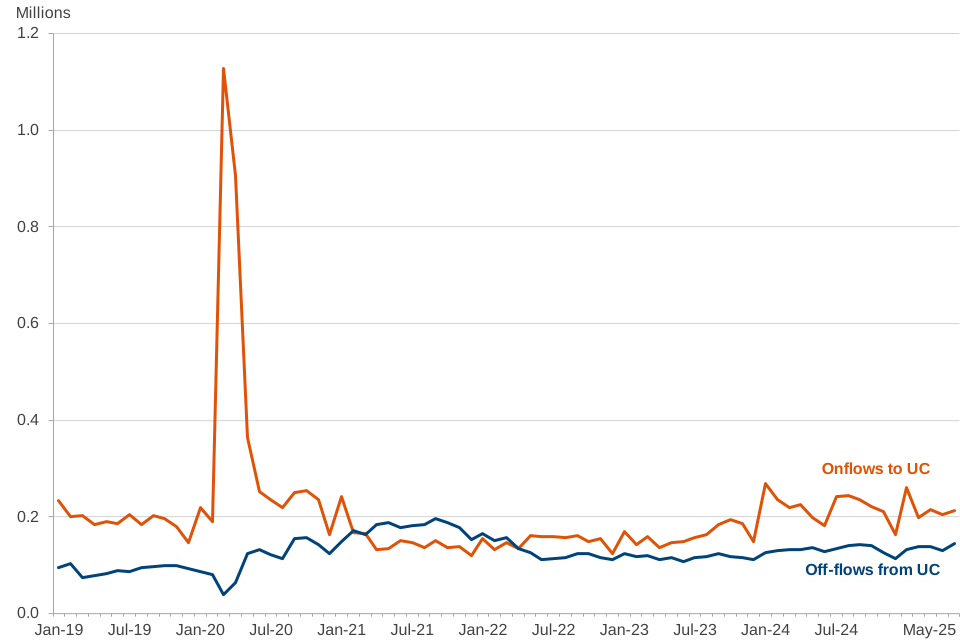
Figure 2 shows the number of people flowing on (onflows) and off (off-flows) UC each month between January 2019 and May 2025. It shows a spike in onflows in early 2020 associated with the COVID-19 pandemic, which resulted in a large, but temporary, increase in applications to UC.
Flows off UC increased slowly over 2020 and 2021 before falling back. However, they still have not reached the levels seen in 2021. For most of this time, the number of flows onto UC has outpaced flows off UC, resulting in a gradual increase in the number of people on UC. Since mid-2022 the Move to UC programme, which invites customers on legacy benefits to make a claim to UC to continue to receive financial support, has added to the numbers flowing onto UC. DWP aims to complete the notification of all customers claiming legacy benefits in scope for Move to UC managed migration by Autumn 2025.
Flows onto UC into the ‘No work requirements’ regime have increased in recent months because of the Move to UC programme
Figure 3: Proportion of destinations of people flowing onto UC by conditionality regime over time, Great Britain, January 2019 to May 2025
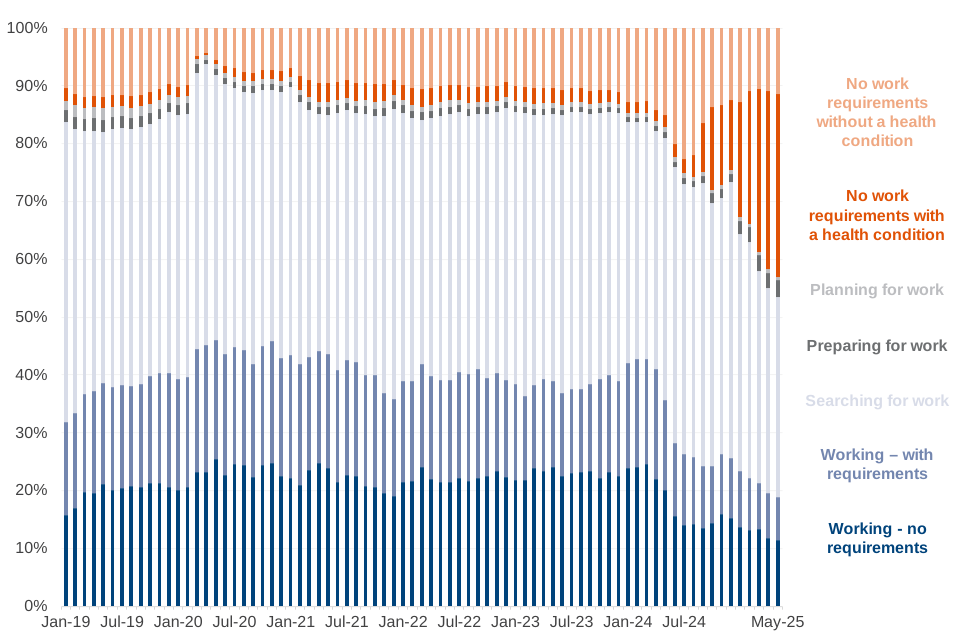
Figure 3 takes the onflows shown in Figure 2 and breaks them down by the conditionality regime an individual was in at the end of their first month after they joined UC.
Until Spring 2024, around 45% of all onflows to UC are into the ‘Searching for work’ regime. This has remained steady over time, including during the COVID-19 pandemic. This is the typical conditionality regime someone would enter if they started claiming UC due to unemployment and makes up a large portion of onflows.
From Spring 2024, there has been a sharp increase in the number of flows onto UC directly into the ‘No work requirements’ regime, particularly those with a health condition. This is likely to be largely affected by the managed migration process through the Move to UC programme.
Customers moving from Employment and Support Allowance (ESA) do not need to provide medical evidence such as fit notes or have a WCA if they move from ESA to UC without a break, they had already completed a WCA, and they were in the ‘support group’ or ‘work-related activity’ group in ESA when they made their claim to UC. They will be placed in the ‘No work requirements’ regime.
DWP statistic relating to the Move to UC programme are published quarterly. They show that, up to the end of June 2025, 653,000 ESA customers had been sent a migration notice, and 495,000 of these have, so far, made a claim to UC.
Flows into ‘Working – with requirements’ and ‘Working – no requirements’ also dropped in Spring 2024. This is in part due to a change in the Administrative Earnings Threshold (AET), which is the monthly amount of earnings that determines if a UC customer is placed in the ‘Searching for work’ or ‘Working – with requirements’ conditionality regime. In May 2024 the AET increased from the monthly equivalent of working 15 hours per week at National Living Wage to 18 hours per week for an individual (and from the equivalent of 24 hours per week to 29 hours per week for a couple). This change led to greater numbers flowing into the ‘Searching for work’ regime and fewer flowing into the ‘Working – with requirements’ conditionality regime.
Patterns of flows off UC have remained largely stable over time
Figure 4: Proportion of origins of people flowing off UC by conditionality regime over time, Great Britain, January 2019 to May 2025
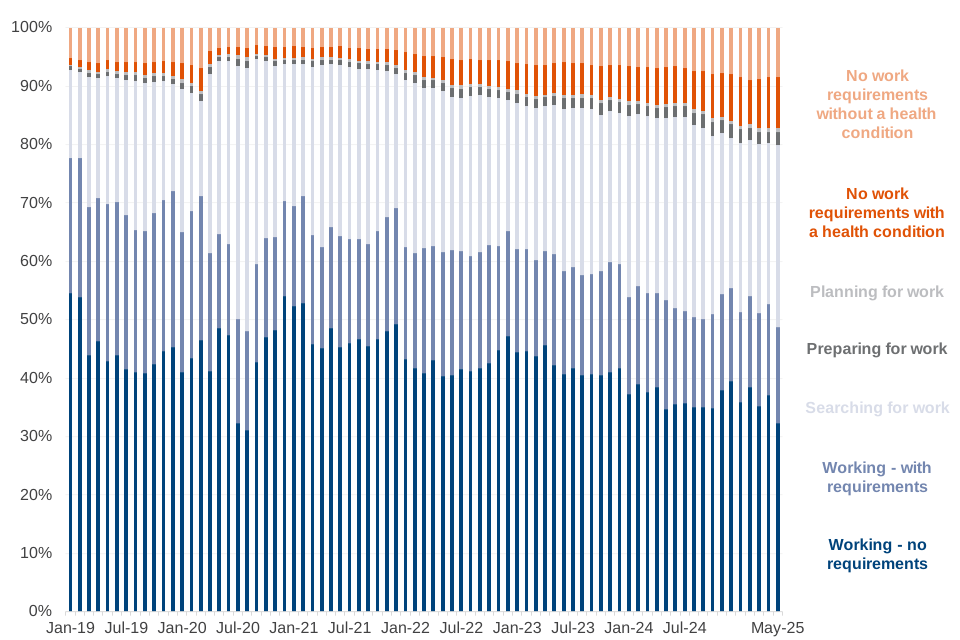
Figure 4 takes the off-flows shown in Figure 2 and breaks them down by the conditionality regime an individual was in at the start of their last month before they left.
Flows off UC are more likely to come from the ‘Working – with requirements’ and ‘Working – no requirements’ regimes, shown in Figure 4. In May 2025 approximately half of all flows off UC were from these 2 regimes, with a further 30% coming from ‘Searching for work’.
The number of people flowing off UC from ‘No work requirements’ makes up a small but growing percentage of movements off UC and accounted for around 20% of all off-flows in May 2025. There are various reasons why somebody may flow off UC from this regime, including movements into work, reaching State Pension age, moving abroad or students leaving education.
Flows around the UC system are largely dominated by a few specific conditionality regimes
Table 1: Top 5 largest monthly flows between different conditionality regimes, Great Britain, January 2024 to December 2024
| Conditionality before flow | Conditionality after flow | Number of flows |
|---|---|---|
| Working – with requirements | Working – no requirements | 106,250 |
| Working – no requirements | Working – with requirements | 104,190 |
| Working – with requirements | Searching for work | 98,640 |
| Not on UC | Searching for work | 98,560 |
| Searching for work | Working – with requirements | 96,940 |
The accompanying data tables also provide information on the movements between conditionality regimes. Whilst the majority (89%) of UC customers stay in the same conditionality regime from one month to the next, Table 1 shows the largest flows between different conditionality regimes based on average monthly flows in 2024.
The largest flows are between the ‘Searching for work’, ‘Working – with requirements’ and ‘Working – no requirements’ conditionality regimes. Roughly 100,000 people flow from ‘Working – no requirements’ to ‘Working – with requirements’ and there are a similar amount flowing the other way. This is also true for those flowing between ‘Working – with requirements’ and ‘Searching for work’.
Another significant group are those flowing onto UC into ‘Searching for work’. This is the typical regime somebody would flow into when starting a UC claim, particularly if they are not in work. Roughly 100,000 people flow into this regime each month.
3c. Remaining in a conditionality regime
Most people do not stay continuously in ‘Searching for work’ for a long period of time
Figure 5: Proportion of individuals remaining in ‘Searching for work’ conditionality for 3, 6, 12 and 24 months by onflow month, Great Britain, January 2019 to May 2025
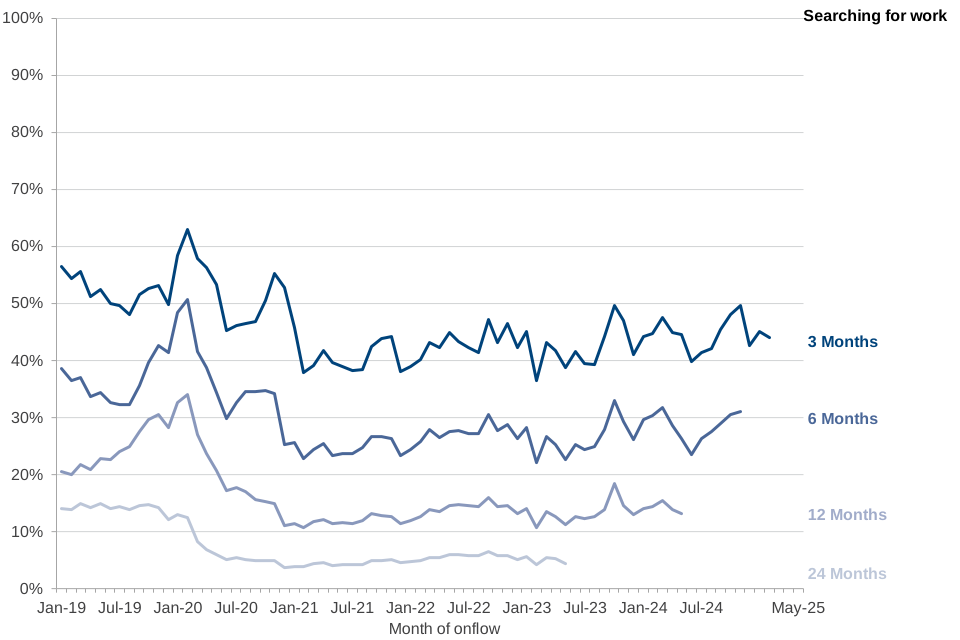
To note, for longer time periods, fewer monthly cohorts have matured to that point to be calculated, resulting in a short time series.
Figure 5 looks at the percentage of people who remain in ‘Searching for work’ consecutively for the first 3, 6, 12 and 24 months following an inflow into the ‘Searching for work’ regime. This includes movements from different conditionality regimes or moving on to UC. The information in this chart is separate to and cannot be derived from the flows data discussed above.
The percentages have remained relatively steady over recent years, meaning that groups of people who flow into ‘Searching for work’ at different times are likely to stay there consecutively for similar amounts of time. Most people flow out of this regime in the first few months, with 45% of individuals reaching 3 months consecutively and 25% reaching 6 months. Only 5% of individuals reach 24 months consecutively in ‘Searching for work’.
People with a health condition in the ‘No work requirements’ conditionality regime are more likely to stay there continuously for longer compared to those in ‘Searching for work’
Figure 6: Proportion of individuals with a health condition remaining in ‘No work requirements’ for 3, 6, 12 and 24 months by onflow month, Great Britain, January 2019 to May 2025
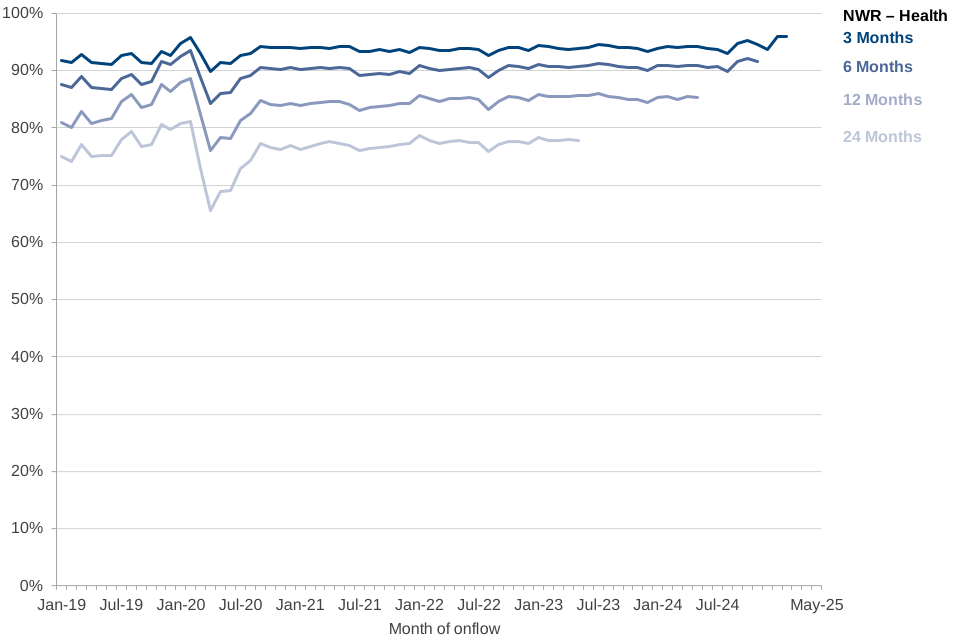
To note, for longer time periods, fewer monthly cohorts have matured to that point to be calculated, resulting in a shorter time series.
Figure 6 shows the percentage of people with a health condition who remain in ‘No work requirements’ consecutively for the first 3, 6, 12 and 24 months following an inflow into the regime. People tend to spend longer in this regime compared to ‘Searching for work’. Approximately 75% of people who enter this regime stay there continuously for 24 months. This trend has been very steady over time, with only a short-term decrease during 2020. This has adjusted back to pre-COVID-19 pandemic levels since early 2021.
This regime consists primarily of customers found to have LCWRA following a WCA. The Pathways to Work: Reforming Benefits and Support to Get Britain Working Green Paper and accompanying evidence packs look in more detail at this regime, including analysis of customers’ benefit history and origins, their durations on the UC Health Journey and destinations.
Results are similar for different age groups, but young people are slightly more likely to stay in the same conditionality regime for longer
Figure 7: Proportion of individuals staying in conditionality by age group and conditionality regime, Great Britain, December 2022 to May 2023
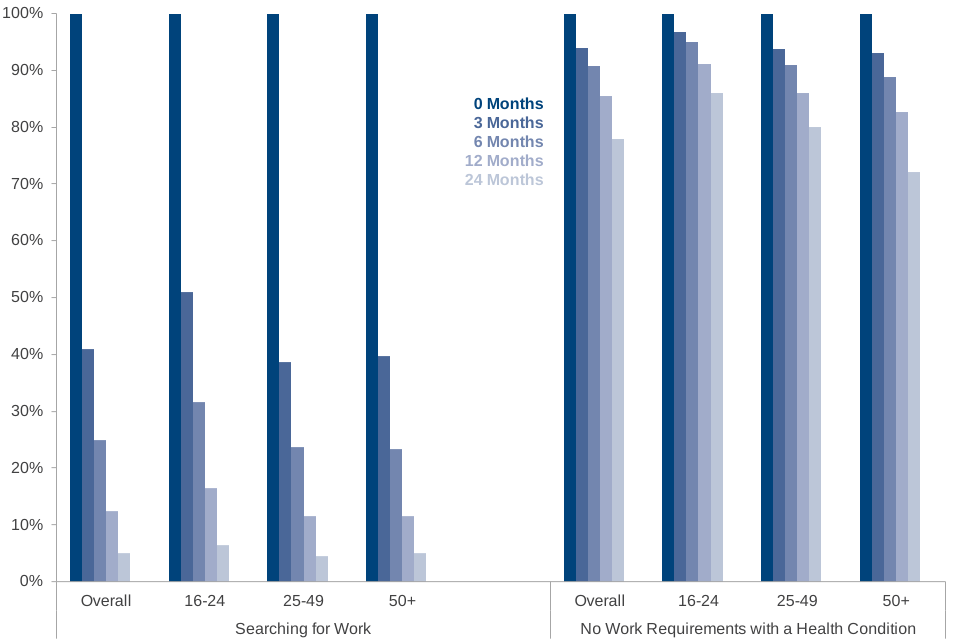
Figure 7 looks at the same metrics as Figures 5 and 6 but this time 6 months of onflows from December 2022 to May 2023 have been grouped together and then split by age group.
Overall, the picture is similar across all regimes. Young people are more likely to stay in their initial conditionality regime. This is true for both ‘Searching for work’ and people with a health condition in ‘No work requirements’, with 32% staying in ‘Searching for work’ for 6 months, compared to 25% overall, and 95% staying in ‘No work requirements’ for 6 months, compared to 91% overall.
For those aged 50 and above, only 72% spend 24 months consecutively in ‘No work requirements’, compared to 78% overall, but as discussed above this may be due to other factors affecting this age group, such as reaching State Pension age.
4a. The into-work rate
The following statistics focus on customers in the ‘Searching for work’ conditionality regime. For customers in this regime who are out-of-work, we monitor proportions of customers who move into work. This is referred to as the ‘into-work rate’.
In June 2025, the overall into-work rate for customers in the ‘Searching for work’ conditionality regime in Great Britain was 7.4%
4b. Seasonality of into-work rates
There is seasonality of into-work rates with lowest rates often seen at the start of the year, and highest rates in April and October
Figure 8: Monthly into-work rates, Great Britain, January 2019 to June 2025 Great Britain
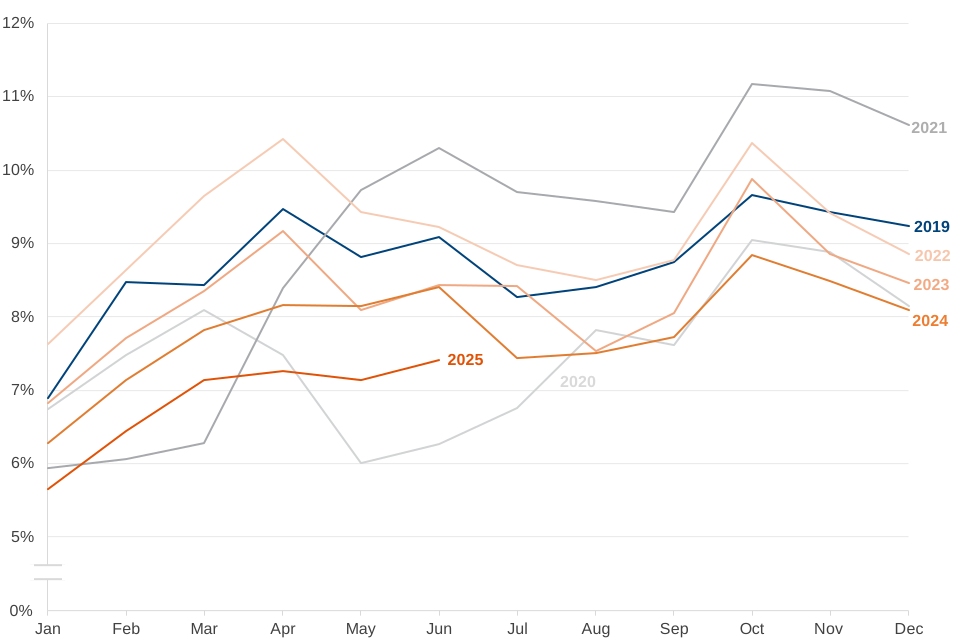
The into-work rate is influenced by the time of year. When comparing into-work rates, it is important to compare the same month across years due to this seasonality. Rates are generally lower in January and February, and the highest rates are seen in April and October, with a fall in rates over the summer. These seasonal trends are highlighted in Figure 8.
Figure 8 also shows the fall in the proportion of customers moving into work in more recent years. Given into-work rates in 2020 and 2021 were heavily influenced by the COVID-19 pandemic, the into-work rates for these years are represented in grey in Figure 8.
4c. Into-work rate by local authority and Jobcentre Plus district
Into-work rates are influenced by the local labour market, and some variation between local authorities and Jobcentre Plus districts is to be expected.
Note that the data tables published alongside this publication include a longer time series of into-work rates by local authority and Jobcentre Plus district (from 2019).
There is variation in into-work rates across Great Britain with higher rates often found in more rural local authorities
Figure 9: Monthly average into-work rate by local authority, Great Britain, July 2024 to June 2025

From July 2024 to June 2025, a third of local authorities had an average monthly into-work rate of 9.0% or higher, as shown in Figure 9. The local authorities with the highest average monthly into-work rate were Boston (12.7%), Rutland (12.2%), East Lindsey (12.1%) and Mid Suffolk (12.0%). In contrast, Birmingham and Bradford had the lowest average into-work rate over this period (5.1%).
There is variation in into-work rates between Jobcentre Plus districts with higher rates often found in districts predominately made up of rural areas
Figure 10: Monthly average into-work rate by Jobcentre Plus district, Great Britain, July 2024 to June 2025

Figure 10 shows that 24 of the 35 Jobcentre Plus districts had an average monthly into-work rate in the range 7.1% to 9.0%, over the 12-months from July 2024 to June 2025. The districts with the highest average monthly into-work rate were Norfolk and Suffolk (9.8%), North Yorkshire, Humber and Lincolnshire (9.7%) and Devon and Cornwall (9.6%). In contrast, Birmingham and Solihull had the lowest average into-work rate over this period (5.2%).
4d. Economic context of into-work rates
The UK economy has experienced a number of economic shocks over recent years, including the COVID-19 pandemic and resulting supply chain disruptions and the significant rise in energy costs following Russia’s invasion of Ukraine.
This has led to a changing labour market:
- vacancies in the UK have been declining for the past 3 years, falling from their peak of 1.3 million to below their pre-COVID-19 pandemic level[footnote 4]
- survey evidence on employers’ recruitment intentions remain subdued, as firms have reduced hiring or plans for further hiring in future[footnote 5] [footnote 6]
- payroll employment has declined somewhat across the UK, but the rate of decline has recently eased[footnote 7]
- while the UK’s employment rate has recovered in recent months, and the inactivity rate is showing a downward trend, unemployment rate has risen to its highest since 2021 and is above its pre-COVID-19 rate[footnote 8], according to data from the Office for National Statistics’ Labour Force Survey.
A combination of these factors could be affecting the into-work rate.
The into-work rate rolling 12-month average follows the trend of PAYE employment[footnote 9] inflows rolling 12-month average
Figure 11: Into-work rate rolling 12-month average, Great Britain, June 2019 to June 2025, against PAYE inflows rolling 12-month average, UK, June 2019 to June 2025
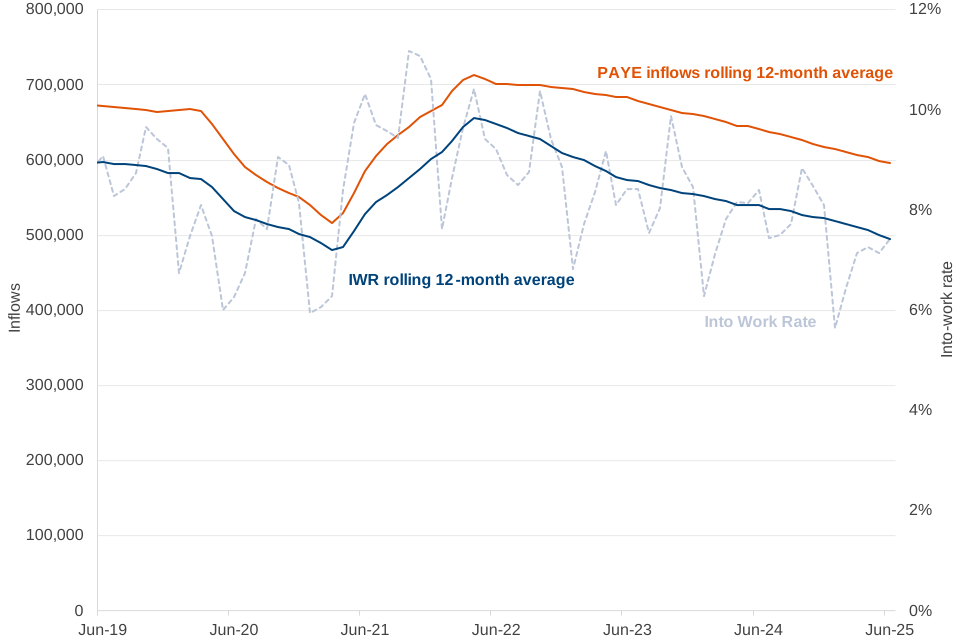
Figure 11 shows a consistent relationship between the into-work rate 12-month rolling average and the PAYE inflows rolling 12-month average. PAYE captures the number of payrolled employees. Both metrics follow a broadly similar trend over time, with a comparable pattern of decline. This suggests that an easing in hiring by employers across the economy is related to lower into-work rates for people in the ‘Searching for work’ conditionality regime.
To note, although the into-work rate is calculated for Great Britain and PAYE for the UK, this inconsistency is unlikely to significantly affect the observed relationship, and the comparison remains meaningful given the similar trends.
4e. Into-work rates by duration on Universal Credit
Understanding the relationship between characteristics and into-work rates can be helpful in contextualising changes to the overall into-work rate, particularly where the composition of characteristic groups has changed. If characteristics associated with lower into-work rates become more prevalent, then this could help explain why the overall into-work rate has decreased over time.
Into-work rates are higher for customers that have been in the ‘Searching for work’ regime for up to 3 months
Figure 12: Monthly into-work rates by duration in the ‘Searching for work’ regime, UK, June 2019 to June 2025
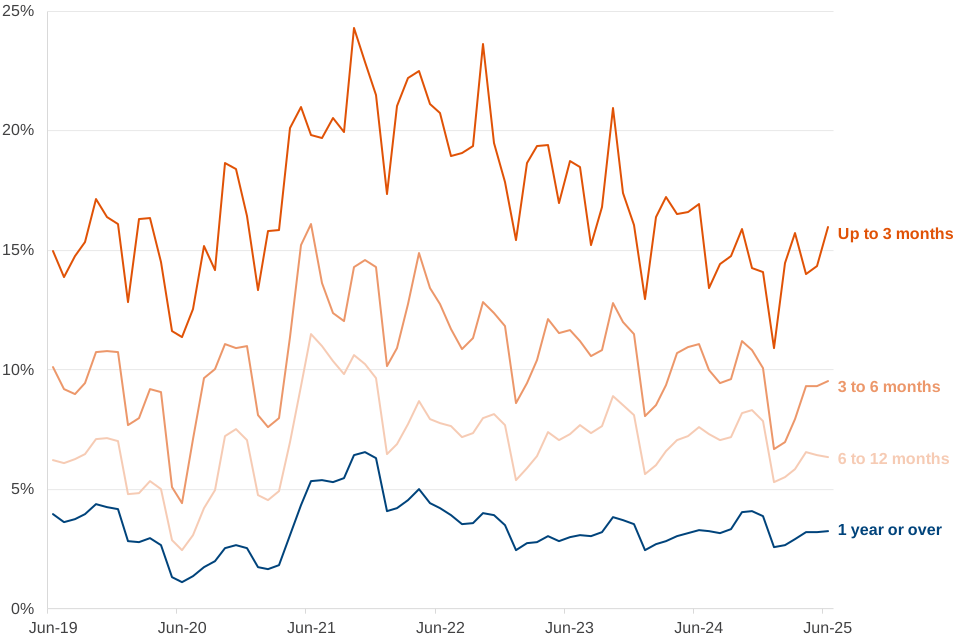
Figure 12 shows how into-work rates are higher for customers who have newly joined the ‘Searching for work’ conditionality regime compared to those who have been in this regime for longer. While these customers are new to the ‘Searching for work’ regime, they may not be new customers of UC. They may have moved from other UC conditionality regimes following a change in their circumstances.
The effect of the COVID-19 pandemic is also reflected in this graph. There’s a significant reduction in into-work rates in mid-2020 followed by sizeable increases in the summer of 2021, across all durations in ‘Searching for work’. These elevated into-work rates persisted through late 2021 and into 2022 but are now more aligned with pre-COVID pandemic trends. Into-work rates are lowest for those in the ‘one year or over’ group.
Proportions of customers who have spent one year or more in the ‘Searching for work’ conditionality regime are significantly higher than prior to the COVID-19 pandemic
Figure 13: ‘Searching for work’ caseload restricted to those out of work, split by duration in the ‘Searching for work’ conditionality regime proportions, Great Britain, June 2019 to June 2025
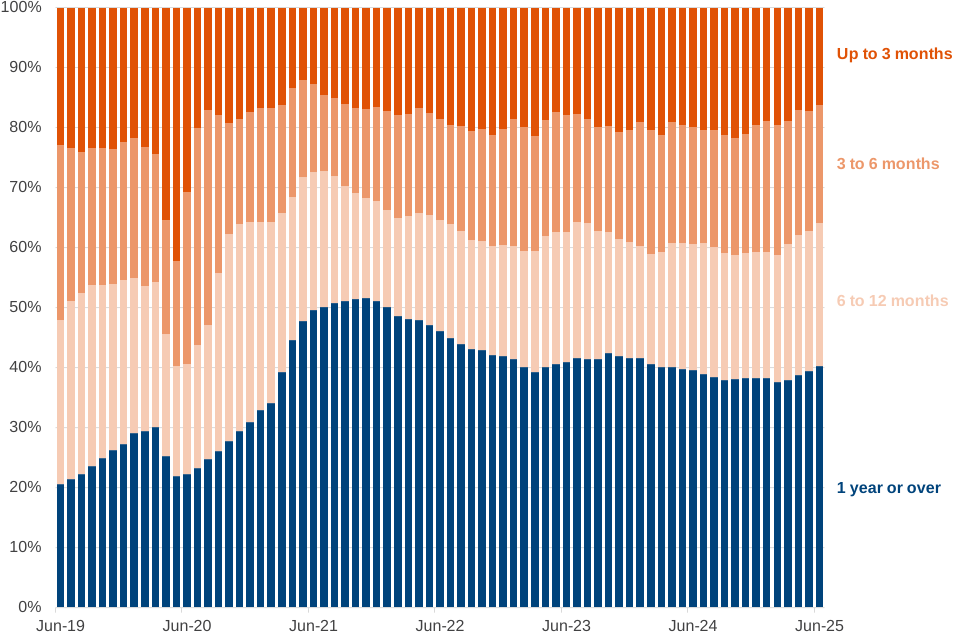
In June 2025, 40% of those out of work in ‘Searching for work’ had been in this conditionality regime for one year or more, with 16% having spent fewer than 3 months in this regime. Since 2019, there has been a considerable change in the time customers spend in the ‘Searching for work’ regime.
Figure 13 highlights the proportions of groupings of customers based on their duration in ‘Searching for work’, restricted to those out of work at each specific month. This shows a considerable shift in the composition of the group because of the first COVID-19 lockdown. There is a spike in customers with a duration of less than 3 months between April and June 2020 (the impact of the first national lockdown). This increase led to staggered increases in the ‘3 up to 6 months’, ‘6 up to 12 months’, and ‘one year or over’ groups’ proportions of the caseload in subsequent months.
The share of the caseload with a duration of ‘one year or over’ has particularly grown from April 2021 onwards. While there have been some decreases to the one year or over group, the proportion of customers in this group remains significantly higher than it was before the COVID-19 pandemic.
More recently, the number of customers in the ‘Up to 3 months’ group has decreased. This, in addition to the fact that the number of customers in the other duration groups have increased, has led to a reduction in the proportion of customers in the ‘Up to 3 months’ duration group. As the ‘Up to 3 months’ group has consistently had higher into-work rates than other duration groups, the reduction in the proportion of customers in this group could lead to a comparative reduction in the overall into-work rate, all else equal.
4f. Into-work rates by age of customer
Into-work rates are lowest for customers aged 50 and over, and higher for younger customers
Figure 14: Monthly into-work rates by age group of customers in the ‘Searching for work’ regime, Great Britain, June 2019 to June 2025
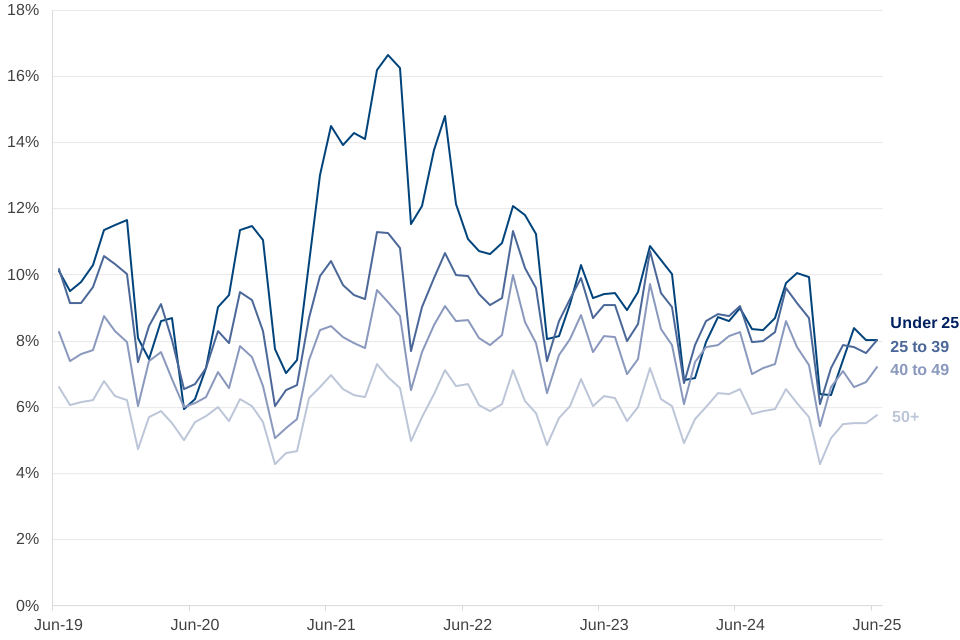
Figure 14 shows how into-work rates are highest for younger customers, particularly those aged under 25, and lowest for people aged 50 and over. Figure 14 also shows how into-work rates were particularly high for young people following the COVID-19 pandemic, especially between July 2021 and July 2022. Rates have reduced considerably since then and are lower now than they were before the COVID-19 pandemic both for those aged under 25 and those aged 25 to 39. People aged over 50 saw less variation in into-work rates over the post-pandemic period. Into-work rates for this group remain low.
Those aged 25 to 39 make up the largest proportion of the ‘Searching for work’ conditionality regime
Figure 15: ‘Searching for work’ caseload restricted to those out of work, split by age group proportions, Great Britain, June 2019 to June 2025
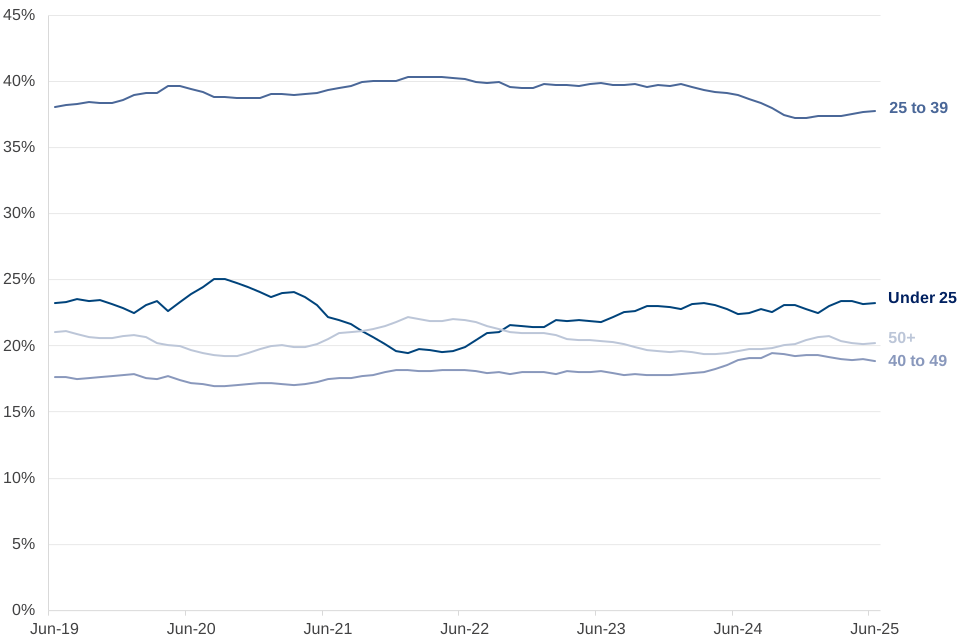
In June 2025, 38% of the customers in the ‘Searching for work’ regime were aged 25 to 39, the largest age group proportion in the group. Age group proportions have been relatively stable in the conditionality regime. However, the summer of 2020 saw an increase in the proportion of customers aged under 25. This was because of the first COVID-19 lockdown which reduced hiring by employers, which disproportionately affects young people. This proportion decreased over 2021 but has been gradually increasing since late 2022. In June 2025, 23% of ‘Searching for work’ customers were under 25, the same proportion as for the majority of 2019.
More recently the proportion in the 35 to 39 group has decreased, with much of this decrease occurring in the second half of 2024. This decrease is not due to changes in the size of this group but rather increases across all other age groups over this period. As the two age groups for those aged over 40 have the lowest into-work rates, changes in the proportions of these groups will influence the overall into-work rate.
4g. Into-work rates by family type of customer
Customers in family types which include dependent children generally have higher into-work rates than family types without, with lone parents having the highest into-work rates
Figure 16: Monthly into-work rates by family type group of customers in ‘Searching for work’, Great Britain, June 2019 to June 2025
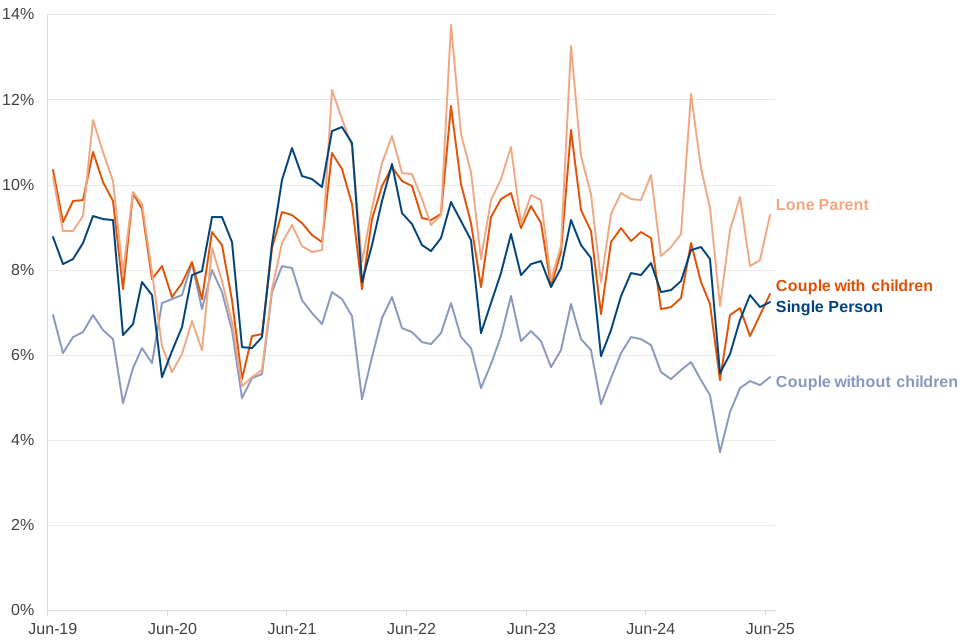
Figure 16 presents into-work rates for 4 different family types of customers in the ‘Searching for work’ regime. It highlights that higher into-work rates are associated with family types which include dependent children. Recently, this has been particularly true for lone parents. In contrast, since 2020, customers in a couple without children have had comparatively lower into-work rates. In June 2025, 9.3% of lone parents in ‘Searching for work’ moved into work that month, compared to 5.5% for customers in a couple without children.
There has been a steady decline in the proportion of lone parents in the ‘Searching for work’ caseload when looking at those out of work since 2022
Figure 17: ‘Searching for work’ caseload restricted to those out of work, split by family type proportions, Great Britain, June 2019 to June 2025
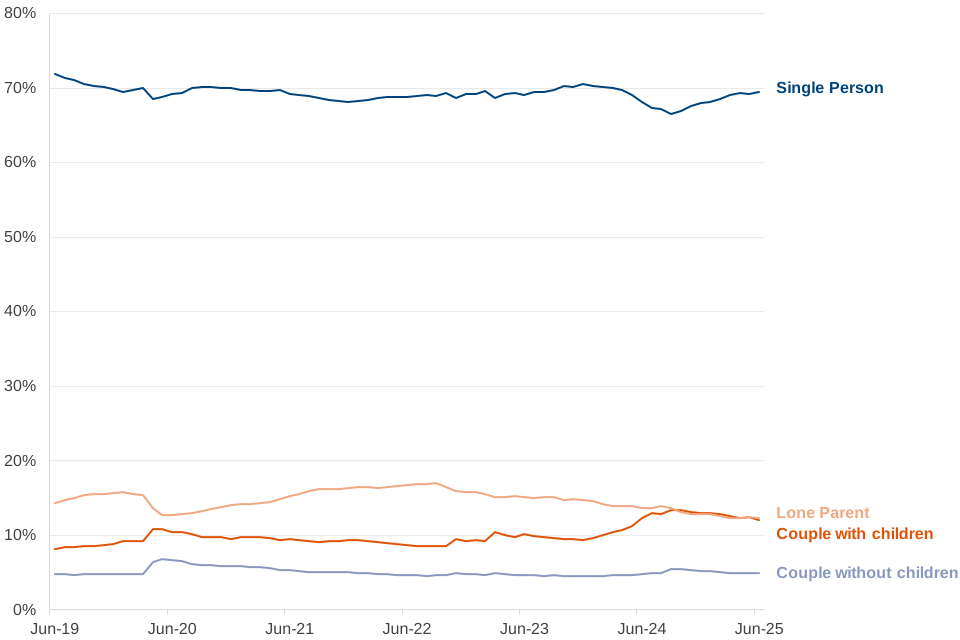
Figure 17 looks at the proportion of customers within each family type in the ‘Searching for work’ regime. It highlights that most customers are single without dependent children. This has been relatively stable at around 70%, however it did fall to 67% in August 2024 before increasing to 69% in June 2025.
This fall in proportion was not due to a decrease in the number of single customers, but instead an increase in the number of customers in a couple with dependent children. Since then, the number of singles has increased whereas the number of couples with children has remained relatively consistent.
From 2023, there has been a gradual decrease in customers who are lone parents. This follows a gradual increase in the proportion of this group in the caseload between 2021 to 2022. As lone parents have higher into-work rates than other family groups, this decline will likely have a suppressing effect on the overall into-work rate.
4h. Into-work rates for customers on UC Health Journey
Customers on the UC Health Journey have lower into-work rates than other groups based on whether they have declared a health condition
Figure 18: Monthly into-work rate split by health condition declaration and UC Health Journey status of customers in ‘Searching for work’, Great Britain, June 2019 to June 2025
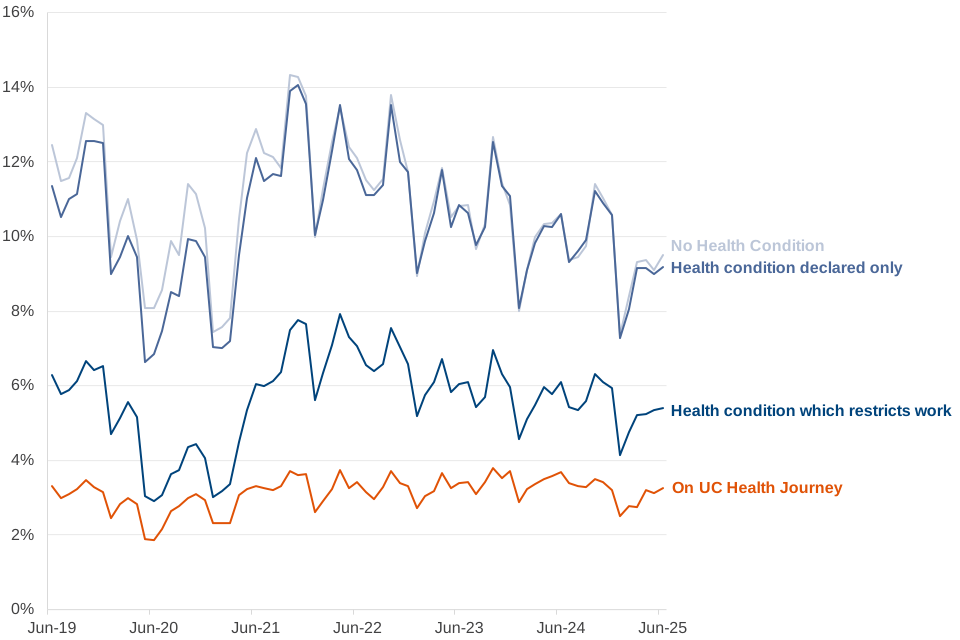
Into-work rates for those with a health condition declared or on the UC Health Journey are presented in Figure 18. Groupings are based on a certain precedence due to overlaps in conditions, for example for the grouping ‘Health condition which restricts work’ is when a customer has declared a health condition or disability which restricts their capability for work, however has not presented a fit note, even though this customer will have also declared a health condition generally they’re placed in this grouping, as the work restricting declaration has higher precedence.
Figure 18 illustrates that customers on the UC Health Journey and in ‘Searching for work’ have the lowest into-work rates. It also highlights how from 2021, into-work rates for those who have declared a health condition only and those who have no health condition are broadly similar.
Since 2020 proportions of customers on the UC Health Journey and in the ‘Searching for work’ group have increased, however it is just below its pre-COVID proportion
Figure 19: ‘Searching for work’ caseload restricted to those out of work, split by health condition declaration and UC health journey status proportions, Great Britain, June 2019 to June 2025
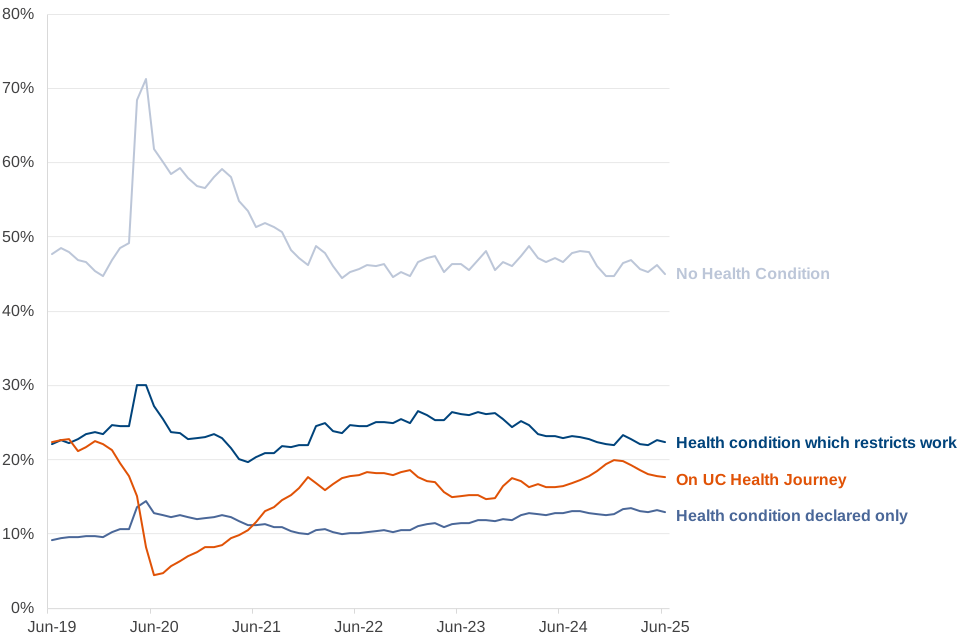
The COVID-19 pandemic and lockdown led to an influx of new customers in the ‘Searching for work’ regime. The majority of those did not declare a health condition, as shown in Figure 19, where the proportion of customers with ‘No Health Condition’ increases to over 70% of the group in May 2020, with a corresponding decrease in customers on the UC Health Journey.
Following 2020, proportions with ‘No Health Condition’ declined to around the same level as pre-COVID-19, with 45% of the caseload having this status in June 2025. Proportions on the UC Health Journey also increased over 2020 and 2021. They appear to follow a slight seasonal trend of peaks in the winter and troughs in the summer. These proportions reached their highest post-COVID level at 20% in December 2024, however, this is lower than proportions in the second half of 2019.
Since 2023, there has also been a slight decline in the proportion of those with a ‘health condition which restricts work’. This contrasts with a slight increase in proportions declaring a health condition but not declaring that this restricts their work.
5a. Employment and inactivity by local labour market type and age
Analysis of sub-national labour markets typically focuses on the differences between regions of the UK. However, regional analysis masks considerable differences in labour market outcomes at the local labour market level. Focus on regions can also obscure the fact that that there are similarities in local labour markets that are not geographically close to each other.
Most local labour market types have seen a rise in economic inactivity and a fall in employment since the COVID-19 pandemic
Figure 20: Change in Employment and Inactivity Rates since the COVID-19 pandemic by Local Labour Market Type, Great Britain, 2019 to 2025
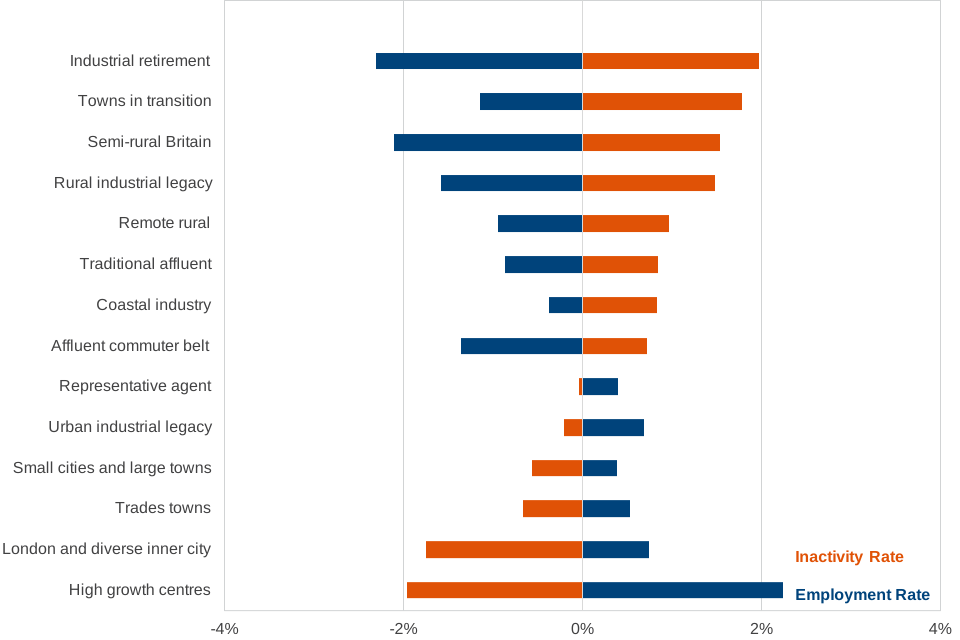
Figure 20 shows that most local labour market types have seen a rise in their inactivity rate and a fall in their employment rate since COVID-19. Post-COVID-19, inactivity has increased for 8 labour market types and decreased for the other 6. The ‘Industrial Retirement and ‘Towns in Transition’ labour market types had large rises in their inactivity rate: 2.0 percentage points and 1.8 percentage points respectively.
Additionally, ‘Industrial Retirement’ also has had the largest decrease in employment rate of 2.3 percentage points. This is driven by a combination of student inactivity, caring responsibilities and long-term sickness, and has coincided with a fall in the employment rate in these labour market types.
Conversely, the inactivity rate in the ‘High growth centres’ local labour market type fell by 2.0 percentage points, with a corresponding increase in employment over the same period of 2.2 percentage points. It is also the only labour market type that has not experienced a post-COVID-19 rise in inactivity due to long-term sickness as shown in Table 24 of the data tables.
Inactivity for the 16 to 24 age group has risen since the COVID-19 pandemic due to a rise in student inactivity and caring responsibilities
Figure 21: Change in economic inactivity rate and employment rate by local labour market type since the COVID-19 pandemic for the 16 to 24 age group, Great Britain, 2019 to 2025
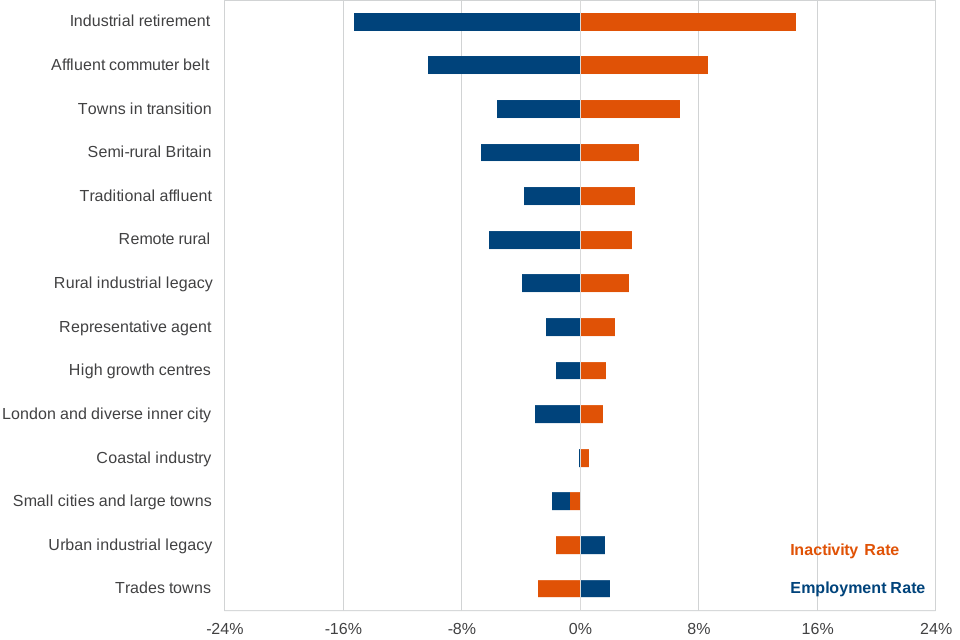
Figure 21 shows that the 16 to 24 inactivity rate has increased in most local labour market types. The largest increase in overall inactivity was in the ‘Industrial retirement’ local labour market type (14.0 percentage points) and this has been due to a rise in student inactivity (6.5 percentage points), caring reasons (3.7 percentage points), sickness (2.7 percentage points) and ‘other reasons’ (1.6 percentage points).
Such a pattern is not restricted to those local authorities in the most deprived areas; the ‘Affluent Commuter Belt’ labour market type has experienced a large increase in inactivity for this age group due largely to increased students (7.2 percentage points) and increase in sickness (2.3 percentage points) as shown in Table 25 of the data tables. These 2 local labour market types have also had the largest decrease in employment of 15.3 and 10.3 percentage points respectively.
Small overall changes may mask larger changes for specific reasons, for example, there has been a large increase in sickness for this age group (3.1 percentage points) in the ‘Coastal Industry’ type however this has been offset by reductions in students (-2.9 percentage points) as shown in Table 25 of the data tables.
Inactivity for this age group has not risen in all types, for example, ‘Trades Towns’ have experienced a reduction in inactivity. This is largely driven by a reduction in caring reasons (2.0 percentage points) and sickness (-1.1 percentage points) as shown in Table 25 of the data tables.
The majority of local labour market types have seen a decrease in inactivity for the 25 to 49 age group since the COVID-19 pandemic
Figure 22: Change in economic inactivity rate and employment rate by local labour market type since the COVID-19 pandemic for the 25 to 49 age group, Great Britain, 2019 to 2025
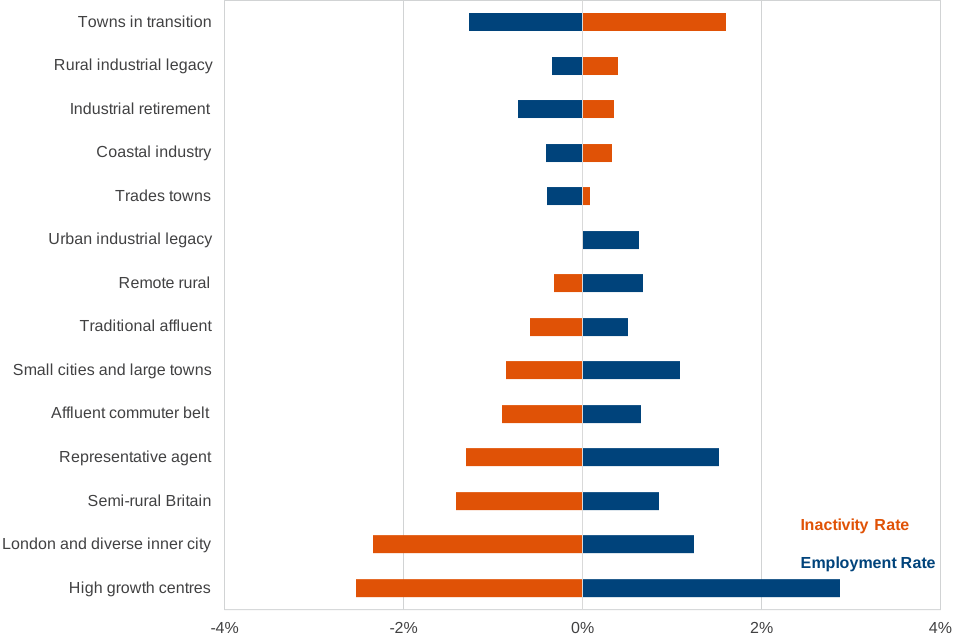
As shown in Figure 22, the overall picture for the 25 to 49 age group is different; most labour market types have experienced increases in their 25 to 49 employment rate, driven by falling inactivity. This is most apparent in ‘High growth centres’ and ‘London and diverse inner city’ types where inactivity has fallen by 2.5 percentage points and 2.3 percentage points, respectively. This is largely due to the falls in caring reasons.
Falling 25 to 49 inactivity is not consistently found across all types though: 4 types have rises in inactivity as shown in Table 26 of the data tables. In these cases the increase in inactivity due to sickness outweighs the fall in inactivity due to other reasons. ‘Towns in transition’ has had the largest decrease in employment rates of 1.3 percentage points, whereas ‘High growth centres’ has had the largest increase of 2.9 percentage points.
The majority of local labour market types have seen a decrease in inactivity for the 50 to 64 age group since the COVID-19 pandemic
Figure 23: Change in economic inactivity rate and employment rate by local labour market type since the COVID-19 pandemic for the 50 to 64 age group, Great Britain, 2019 to 2025
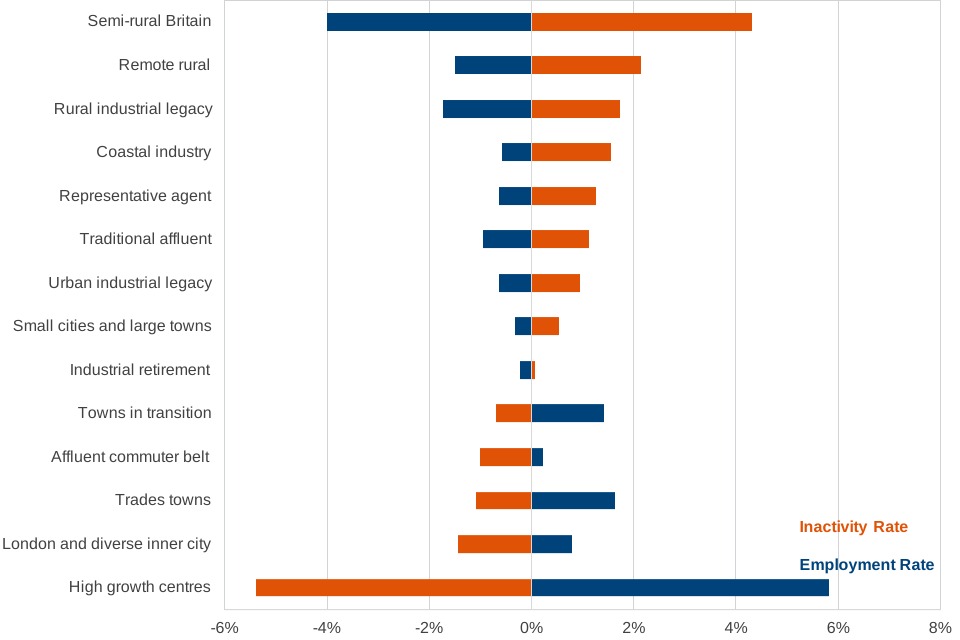
As shown in Figure 23, for the 50 to 64 age group the picture is even more mixed. Changes in inactivity and reductions in employment for this group appear to be driven by a mix of changes in rates of sickness and early retirement, with the dominant reason and the direction of these changes varying by type as shown in Table 27 of the data tables.
For example, the increase in inactivity in ‘Semi-Rural Britain’ is mainly due to a 2.1 percentage point increase in retirement, whereas the favourable change in ‘High growth centres’ is due to a 2.3 percentage point decrease in this reason for activity as shown in Table 27 of the data tables. ‘Semi-rural BritaIn’ has also had the highest fall in employment rates of 4.0 percentage points, whereas ‘High growth centres’ has had the largest increase of 5.8 percentage points.
5b. Into-work rate by local labour market type
Local labour market types with lower population density have the highest into-work rates
Figure 24: Average into-work rate by local labour market type, Great Britain, July 2024 to June 2025
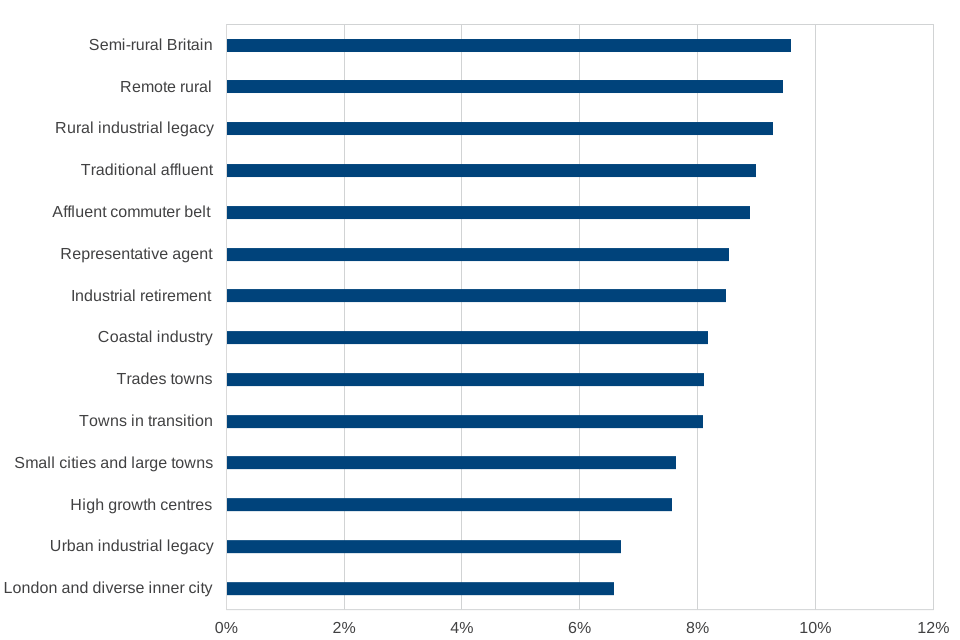
Into-work rates (IWRs) appear to have a negative correlation with population density, given that the highest IWRs are in those labour market types predominately made up of rural local authorities. ‘Semi-rural Britain’ has the highest into-work rate of 9.6%, whereas ‘London and diverse inner city’ has the lowest at 6.6%.
For other measures of the labour market (for example employment rates), we typically find that labour market types with the most adverse characteristics have the poorest labour market outcomes (and vice versa). However, this is not the case with IWRs. For example, the ‘Industrial Retirement’ type is categorised as having the worst labour market indicators but is a mid-performer in terms of IWRs.
5c. Payrolled employment by local labour market type
Local labour market types with connectivity to urban centres have seen the highest percentage increase in payrolled employees since the COVID-19 pandemic
Figure 25: Change in percentage of employees payrolled by local labour market type since the COVID-19 pandemic, Great Britain, 2020 to 2025
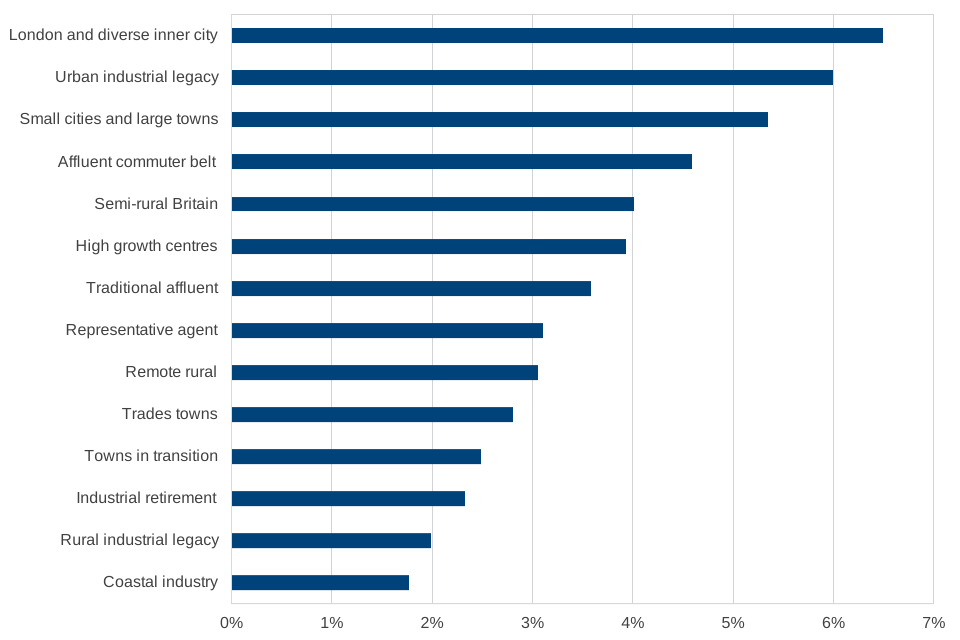
Figure 25 illustrates that the national post-COVID-19 increase in payrolled employees has generally been higher in areas with better connectivity to urban centres. Notably, the ‘London and Diverse Inner-City’ and ‘Urban Industrial Legacy’ clusters have experienced significant rises in the percentage of employees payrolled - by 6.5 and 6.0 percentage points respectively. This corresponds with the patterns of inactivity as shown in Figure 20.
6. About these statistics
An accompanying Background Information and Methodology paper and set of data tables complementing the results presented are available alongside the publication. This document, the statistics release and data tables can be found in the [Get Britain Working: Labour Market Insights collection] [https://www.gov.uk/government/collections/get-britain-working-labour-market-insights].
These statistics are official statistics in development. Our statistical practice is regulated by the Office for Statistics Regulation (OSR). OSR sets the standards of trustworthiness, quality, and value in the Code of Practice for Statistics that all producers of official statistics should adhere to.
Contact information
Contact the DWP publication team by email: labour.marketstatistics@dwp.gov.uk
For media enquiries contact the DWP Press Office.
Feedback is welcome.
ISBN: 978-1-78659-890-5
October 2025
The next edition will be in released on 29 January 2026.
-
Users should note that UC statistics uses the term ‘conditionality regime’ in place of conditionality groups and labour market regime. Available at: Universal Credit statistics: background information and methodology - GOV.UK. ↩
-
ONS and HMRC, released 20 March 2025, ONS website, statistical bulletin, Earnings and employment from PAYE Real Time Information, UK: March 2025 Earnings and employment from Pay As You Earn Real Time Information, UK - Office for National Statistics. ↩
-
Office for National Statistics (ONS), released 12 August 2025, ONS website, statistical bulletin, Vacancies and jobs in the UK - Office for National Statistics. ↩
-
Labour Market Outlook – Summer 2025. London: Chartered Institute of Personnel and Development. ↩
-
KPMG & REC. (2025). Report on Jobs: Weaker increase in starting salaries amid further sharp rise in candidate availability. ↩
-
ONS and HMRC released 12 August 2025 Earnings and employment from Pay As You Earn Real Time Information. ↩
-
ONS, released 12 August 2025 Employment in the UK - Office for National Statistics. ↩
-
ONS and HMRC, released 16 September 2025 Earnings and employment from Pay As You Earn Real Time Information, seasonally adjusted - Office for National Statistics ↩