Food statistics in your pocket
Updated 29 July 2026

© Crown copyright 2026
This publication is licensed under the terms of the Open Government Licence v3.0 except where otherwise stated. To view this licence, visit nationalarchives.gov.uk/doc/open-government-licence/version/3 or write to the Information Policy Team, The National Archives, Kew, London TW9 4DU, or email: psi@nationalarchives.gov.uk.
Where we have identified any third party copyright information you will need to obtain permission from the copyright holders concerned.
This publication is available at https://www.gov.uk/government/statistics/food-statistics-pocketbook/food-statistics-in-your-pocket
1. Food Chain
Food chain in numbers
- The agri-food sector contribution to national Gross Value Added in 2024 was £162.3bn.
- There were 4.1m people employed in the agri-food sector in 2025, 11.7% of GB employment.
- Food and non-alcoholic beverage prices rose by 2.2% in the 12 months to May 2026 (CPIH inflation).
- Total consumer expenditure on food and alcoholic drinks in 2025 was £303.3bn.
- The value of food and drink exports in 2025 was £25.7bn.
Gross Value Added
GVA of the UK Agri-food chain, 2024
| Sector | Gross Value Added | Share of total |
|---|---|---|
| Agriculture (excluding fishing) | £14.5bn | 8.9% |
| Food and Drink Manufacturing | £39.3bn | 24.2% |
| Food and Drink Wholesale | £18.3bn | 11.3% |
| Food and Drink Retail | £44.1bn | 27.1% |
| Non-Residential Catering | £46.1bn | 28.4% |
Source: Annual Business Survey (ONS), Chapter 4: Accounts - GOV.UK (www.gov.uk)
The agri-food chain contributed £162.3bn or 6.2% to national Gross Value Added in 2024. This is equal to £62 for every £1,000 of value added in the UK economy.
The GVA of the food chain (excluding agriculture and fishing) was £147.8bn in 2024, increasing by 6.0% since 2023. GVA for all food and drink sectors increased in this period with catering increasing by 2.1%, manufacturing by 5.9%, retail by 9.5% and wholesale by 8.2%.
Total Factor Productivity
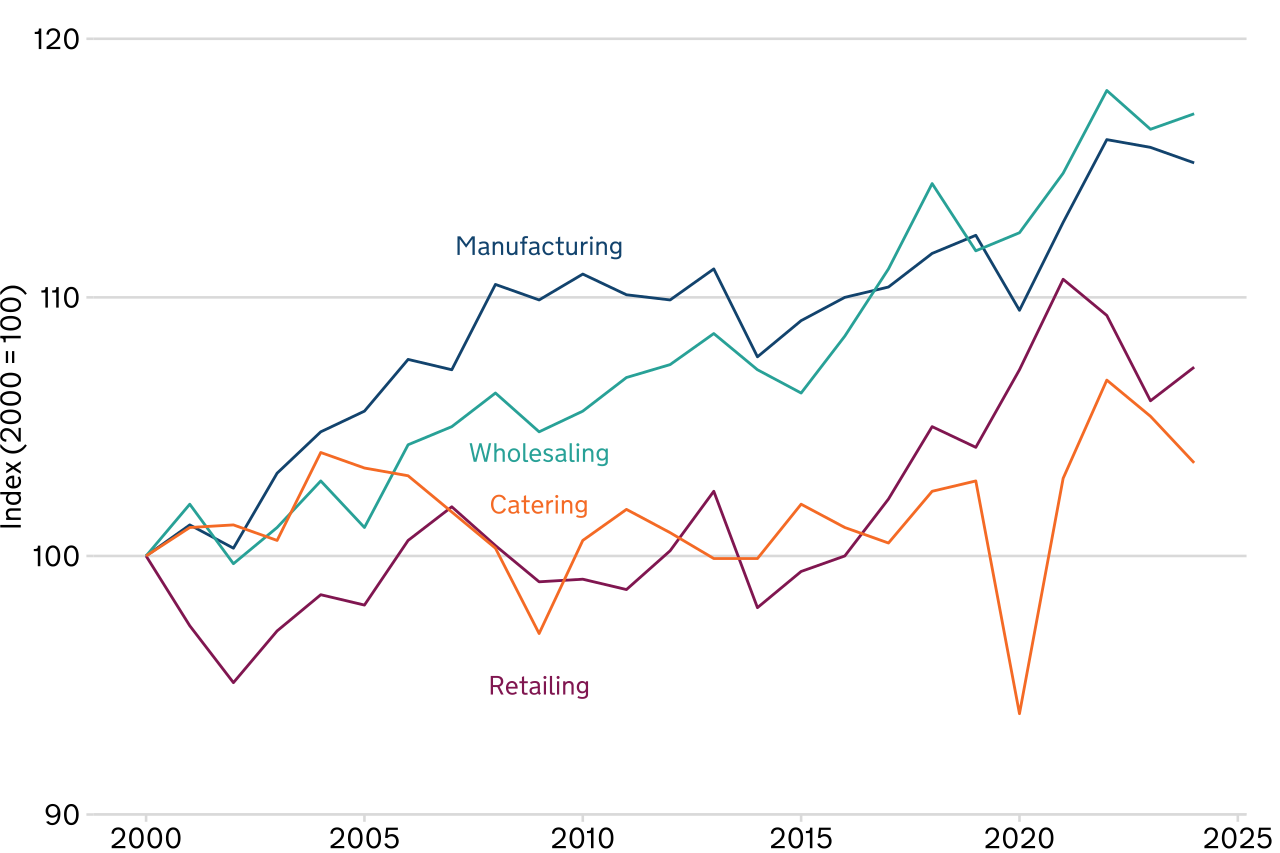
Trends in the Total Factor Productivity of the UK Food Chain, 2000 to 2024
Download the data for this chart in .csv format: 8.0 KB
Source: Total Factor Productivity of the United Kingdom Food Chain, Defra
Total factor productivity of the UK food chain beyond the farmgate showed no significant change in 2024 compared to 2023, while the productivity of the wider economy increased by 0.4%.
The TFP of the UK food chain is an indicator of the efficiency and competitiveness of the food industry within the UK. In 2024 out of the four food sectors, two showed a significant change compared with 2023. Manufacturing decreased by 0.5 per cent, wholesale increased by 0.4 per cent, retail increased by 1.2 per cent and catering decreased by 1.7 per cent.
The calculation is based on reliable data on business sales and costs, employment by industry and on price indices all collected by the Office for National Statistics.
Employees in the agri-food sector
Agri-Food sector employees (GB), 2025
| Sector | Employees (millions) |
|---|---|
| Agriculture (excluding fishing) | 0.4 |
| Food and Drink Manufacturing | 0.4 |
| Food and Drink Wholesale | 0.2 |
| Food and Drink Retail | 1.1 |
| Food and Drink Non-Residential Catering | 2.0 |
| Total Food | 3.7 |
| Total Agri-Food | 4.1 |
Source: Labour Market Statistics- Employee jobs by industry (ONS) & June Survey structure statistics (Defra).
Notes:
-
‘Food’ includes non-alcoholic drinks. ‘Drink’ is alcoholic drinks.
-
Refer to the glossary for the Economic definition of Food and Agri-Food sector for the relevant SIC codes.
-
GB figures have more specific, divisional level data (3-digit SIC codes) to be able to specify employment within the food chain. Not available for Northern Ireland as it is not recorded in their equivalent survey: the Northern Ireland Quarterly Employment Survey (NISRA).
The food and drink sector in Great Britain (GB) employed 3.7 million people in 2025 (4.1 million if agriculture is included along with self-employed farmers), a -1 % [change] on a year earlier. The sector accounted for 11.8% of GB employment in 2025 (13% if agriculture is included along with self-employed farmers). Employment across the whole GB economy [change] by 0.2% between 2024 and 2025 (based on the total industries estimate from the same JOBS03 spreadsheet that covers SIC 2007 section A-T).
Manufacturing businesses
Number of UK food and drink manufacturers by business size, 2025
| Business size | Manufacture of food products | Manufacture of beverages | Total |
|---|---|---|---|
| With no employees (unregistered) | 10660 | 2375 | 13035 |
| With no employees (registered) | 2685 | 1080 | 3765 |
| Small (1-49) | 5830 | 1490 | 7320 |
| Medium (50-249) | 665 | 95 | 760 |
| Large (500+) | 255 | 35 | 290 |
Source: Business Population Estimates (BPE), DBT
Notes:
1. The number of businesses were rounded in the data to avoid disclosure.
2. Businesses with no employees can either be ‘registered’ for either VAT or PAYE or are ‘unregistered’. A business may be VAT and/or PAYE registered and therefore appear on the government business register (the IDBR), or it may exist without being registered. Unregistered businesses are those businesses run by self-employed people that are not large enough to be VAT or PAYE registered and therefore will not appear on the IDBR.
There were approximately 24,880 small and medium enterprises (including no employees, small and medium) in the food and drink manufacturing sector. SMEs accounted for 98.8% of businesses in food and drink manufacturing.
Grocery market shares
UK grocery market shares, 12 weeks ending on 17 May 2026
| Retailer | % of market share |
|---|---|
| Tesco | 28.2 |
| Sainsbury’s | 15.2 |
| Asda | 11.5 |
| Aldi | 10.8 |
| Morrisons | 8.3 |
| Lidl | 8.6 |
| Co-op | 5.1 |
| Waitrose | 4.5 |
| Iceland | 2.2 |
| Ocado | 2.1 |
| Other Outlets | 1.9 |
| Symbols & Independent | 1.4 |
Source: Kantar Worldpanel.
Notes:
- A comparable market share value is not provided for Marks and Spencer (M&S) as it does not fall under the definition of ‘grocers’ using the Till Roll methodology on which the Kantar Grocery Market Share release is based, due to there being a higher proportion of clothing and general merchandise in its sales mix.
The combined grocery market share of the largest four food and drink retailers was 65.7% in May 2026. Tesco continued to have the largest market share at 28.2%. The three largest discounters (Aldi, Lidl and Iceland) had a combined market share of 21.6%.
Data was previously from Defra’s Family Food Report (a module of ONS’s Living Costs and Food Survey, however the data above is from Worldpanel by Numerator. Analysis of grocery market share over time using the same source can be found in Defra’s Food Security Report 2024.
The market share estimates from Numerator are updated more regularly although not restricted to foods and not as representative.
Numerator is a market research company, providing up to date statistics on sales by the grocery sector. Market shares also include sales of non-food.
Consumer expenditure on food and drink
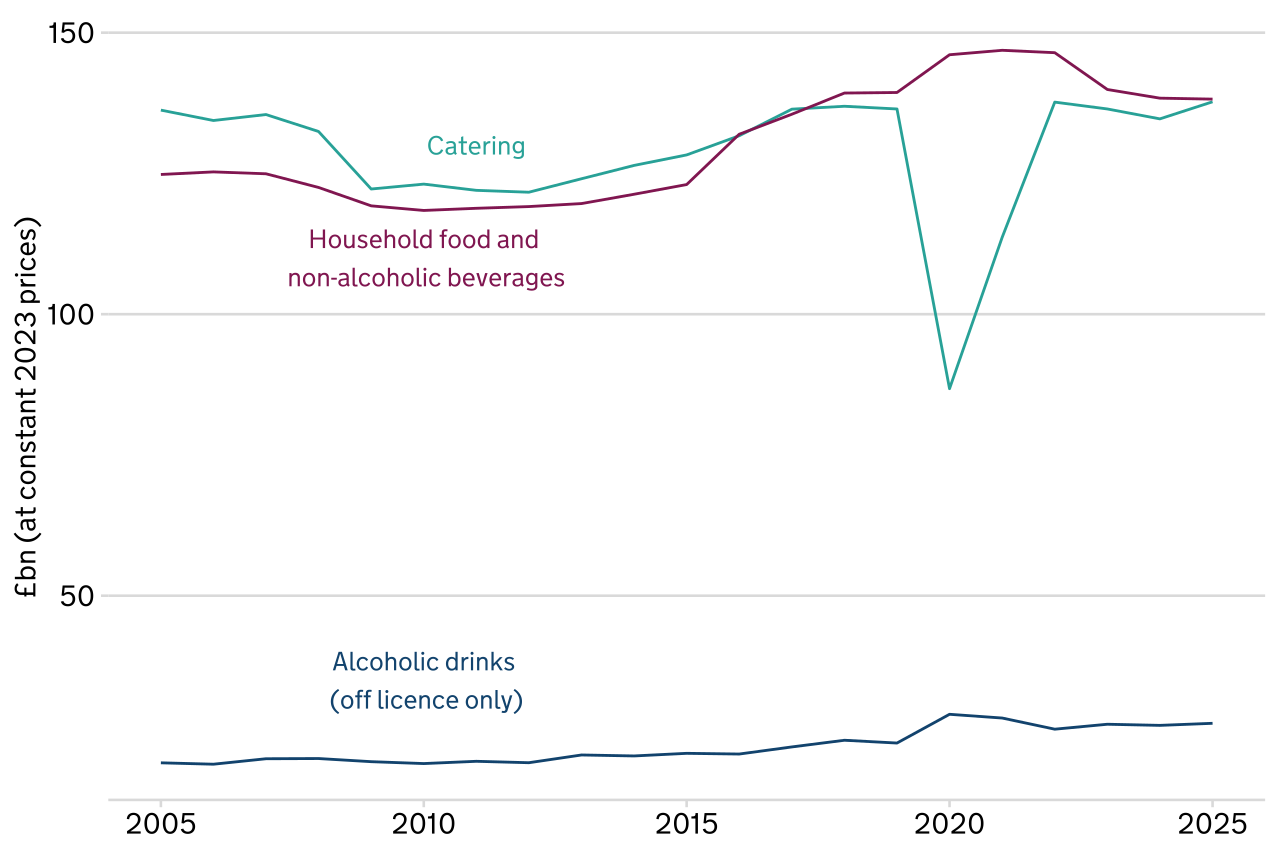
UK Consumer expenditure on food, drink and catering at constant 2023 prices, 2003 to 2025
Download the data for this chart in .csv format: 33.00 KB
Source: Consumer trends, ONS
Notes:
1. ‘Food’ includes non-alcoholic drinks’, ‘Drink’ is all alcoholic drinks.
In real terms, (removing the effect of price changes), consumer expenditure on food and alcoholic drinks was £303.3bn in 2025, an increase of 1.1% from £300bn in 2024.
Expenditure on food and drink eaten out increased by 2.3% from £134.7bn in 2024 to £137.7bn in 2025 and expenditure on household food fell by -0.1% from £138.4bn to £138.2bn. Expenditure on alcoholic drinks (off-licence only) increased by 1.4% from £26.98bn to £27.34bn.
2. Prices and Expenditure
Inflation for food and drink
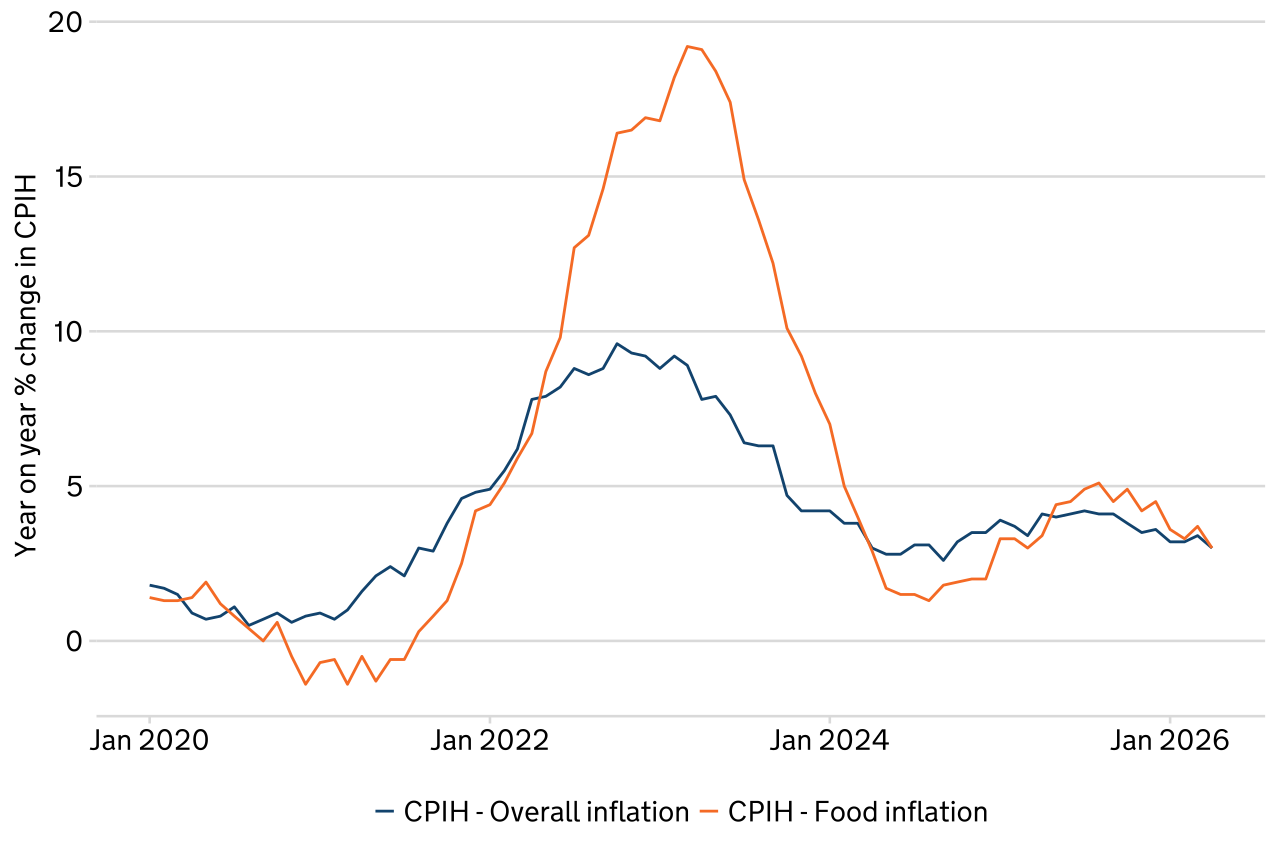
UK food and non-alcoholic beverage prices measured by CPIH since 2020
Download the data for this chart in .csv format: 1.0 KB
Source: Consumer Price Indices, (ONS)
Modelling commissioned by Defra shows that the five main drivers of food prices are farmgate prices, import prices, exchange rates, labour costs in food manufacturing and non-labour costs in food manufacturing.
Between April 2022 and April 2024 food price CPIH inflation was higher than overall inflation, peaking in March 2023 at 19.2% while overall CPIH inflation peaked in October 2022 at 9.6%. The sharp increase in food price inflation time period was due to a combination of those factors - some of which were also exacerbated further by the conflict in Ukraine. Over the course of 2025 food inflation started at a lower rate than overall CPIH but overtook it in May 2025, ending the year at 4.5% compared to 3.6% for all items.
The Consumer Prices Index including owner occupiers’ housing costs (CPIH) is the most comprehensive measure of inflation. It extends the Consumer Prices Index (CPI) to include a measure of the costs associated with owning, maintaining and living in one’s own home, known as owner occupiers’ housing costs (OOH), along with Council Tax. Both are significant expenses for many households that are excluded from the CPI.
Share of household spend on food and drink
Average share of spend on food and non-alcoholic drinks, by equivalised disposable income quintile group, in the UK, FYE 2005 to 2025

View the data for this chart: 3.0 KB
Download the data for this chart in .csv format: 3.0 KB
Source: ONS Family Spending in the UK
Notes:
- In 2015, the ONS shifted its measurements from annual to financial years (FYE 2016 value covers from April 2015 until March of 2016).
In FYE 2025, an average household in the UK spent 10.9% of their expenditure on household food and non-alcoholic drink. The lowest 20% of households by disposable equivalised income spent 15.2%, compared to 7.9% for the richest 20% of households. Between FYE 2024 and FYE 2025, there was a decrease in the share of spend on food and non-alcoholic beverages drink from for the highest quintile of 0.3 percentage points whilst the middle quintile was unchanged; however, the lowest quintile (poorest 20% of households) saw an increase of 0.5 percentage points. The peak in FYE 2021 was due in part to COVID-19 pandemic restrictions, with hospitality and leisure businesses temporarily closing, and travel restrictions imposed. This meant that with the proportion of peoples’ expenditure on these items reducing dramatically during lockdowns, the proportion spent on other categories, including household food, increased.
The relative affordability of food can be measured by the share of the household budget that is spent on it. Low income households tend to spend a higher than average proportion of their expenditure on essential categories such as food, housing and energy and a lower proportion of their expenditure on non-essential items. Although the percentage of spend on food had been relatively constant, the actual amount spent, and the products purchased will change in response to relative prices.
Price changes by food group
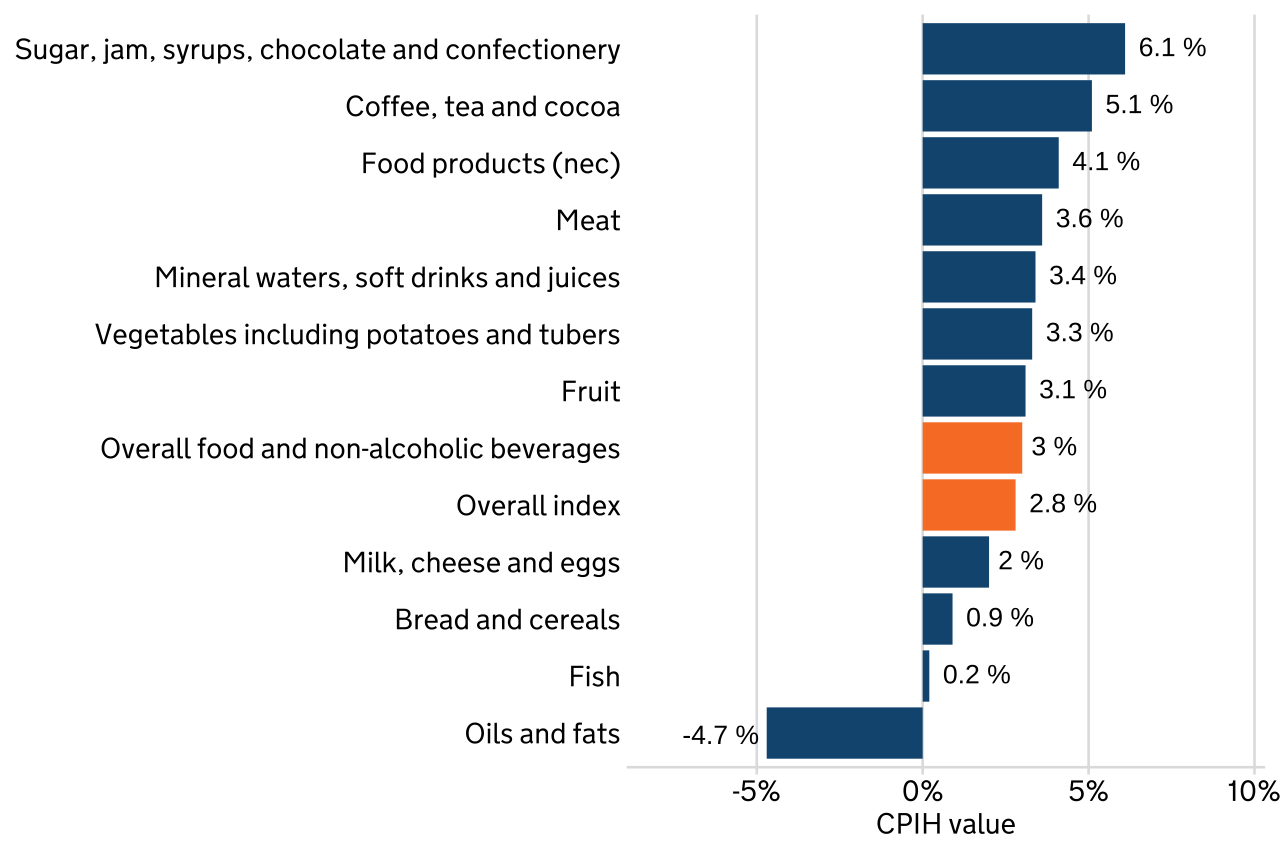
UK consumer price changes by food group, April 2025 to April 2026
Download the data for this chart in .csv format: 1.0 KB
Source: Consumer Price Index including owner occupiers’ housing costs (CPIH) (ONS)
The chart above shows that food price CPIH inflation for all food and non-alcoholic beverage groups have risen in price in the year to April 2026 with rises ranging from 1.8% to 10.2%. Sugar, jam, honey, syrups, chocolate and confectionery; coffee, tea and cocoa; mineral waters, soft drinks and juices; meat, food products (not elsewhere classified) constituted the five out of the eleven food and non-alcoholic beverage classes to provide significant upward contributions to the annual rate in the year to April 2026.
Sales of organic food and drink
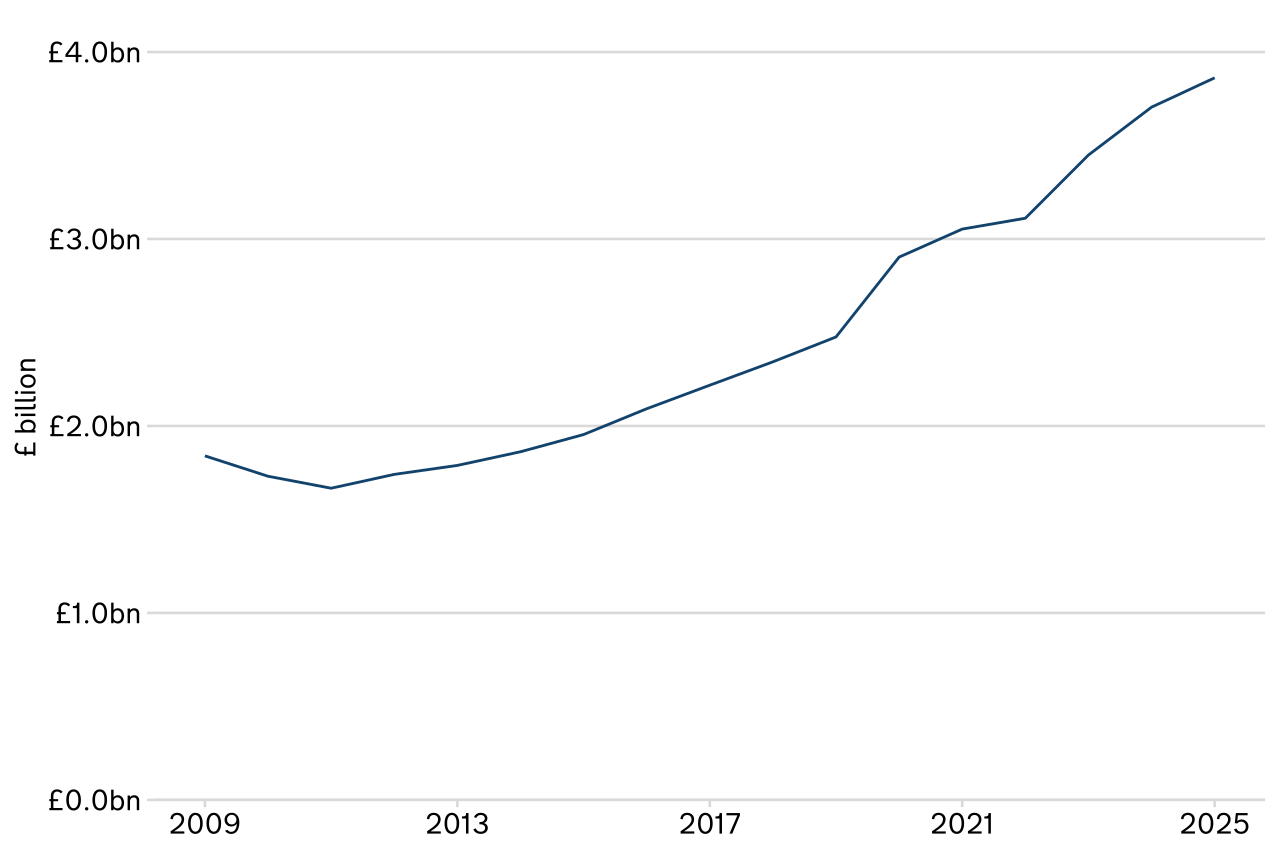
Value sales of organic food and drink, 2006 to 2025
Download the data for this chart in .csv format: 1.0 KB
Source: Soil Association Certification Organic Market Report 2025 The organic food and drink sector generated around £3.9bn in UK value sales in 2025, which was an increase of 4.2% from 2024. UK supermarket sales reached £2.6bn, an increase of 7%. In 2025, 55% of all organic sales by value came from eggs, milk, yogurt, fresh fruit, fresh veg, salad and baby food .
The largest year on year increase in value sales was seen in 2020. The Soil Association Certification referenced in their 2022 report that the onset of the pandemic had potentially brought about a greater appreciation for food which coincided with the growth in organics sales. As people were at home more, this led to a greater number that began cooking from scratch, baking and growing their own food.
Despite 2025 being the 14th consecutive year of sector growth, organic farmland remained at just 3% of total UK farmland, so there remains a strong reliance on organic imports.
3. Global and UK supply
Distinction between origins of consumption and food production to supply ratio
These two closely related measures are often quoted as indicators relevant to the state of domestic production or competitiveness. The diagram below illustrates the differences between them. Both are calculated using the farmgate value of raw food production.
- The food production to supply ratio compares total UK production including exports with total UK supply. A small adjustment is made to take account important inputs into agriculture (feed and seeds).
- For origins of domestic consumption, UK consumption is considered to equate to supply. Only domestic supply, i.e. that amount of UK production which is not exported, is considered as UK consumption, alongside imported food.
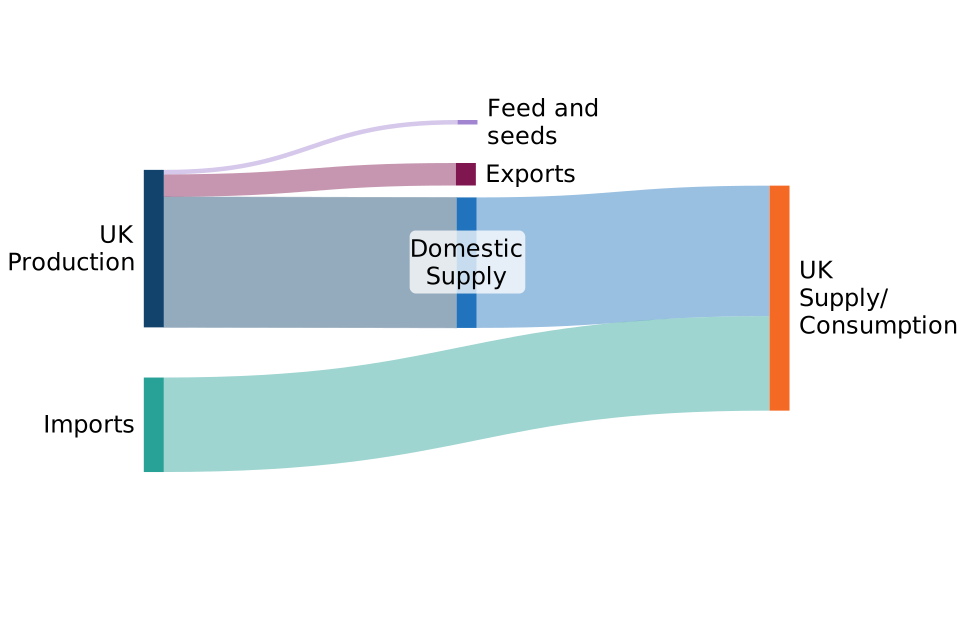
The production to supply ratio is often referred to as ‘self-sufficiency’ in a food security context. It is important to note that 100% self-sufficiency does not equate to food security. A combination of strong domestic production and a diverse set of trading partners is more desirable. A high food production to supply ratio fails to insulate a country against many possible disruptions to its supply chain. Defra produces two outputs that cover food security in much more detail: the triennial UK Food Security Report and the annual UK Food Security Digest.
Origins of food consumption
Origins of food consumed in the UK, 2025
| Origin of destination | 2025 |
|---|---|
| UK | 58% |
| EU | 23% |
| Rest of Europe | 3% |
| Africa | 5% |
| Asia | 4% |
| Australasia | 1% |
| North America | 2% |
| South America | 4% |
Source: Chapter 14, Agriculture in the United Kingdom, Defra
Notes:
- Based on the farm-gate value of raw food.
- Consumption of UK origin consists of UK domestic production minus UK exports.
- UK exports are given as a percentage of total UK consumption. Supply includes domestic production plus imports and excludes exports of home production. Food security is enhanced by strong and consistent domestic production of food, combined with a diversity of supply sources, thereby avoiding overreliance on any one sourcea.
In 2025, 58% of domestic consumption came from UK production (based on unprocessed value at farmgate), 23% from the EU and the remaining 19% from the rest of the world. 35 countries accounted for 90% of imported supply, and 22 for 80%. Some countries or regions are uniquely important to supply of particular products such as bananas from the Caribbean and Central America, reducing the security of this supply.
a UK Food Security Report, 2024 (Defra).
Food production to supply ratio
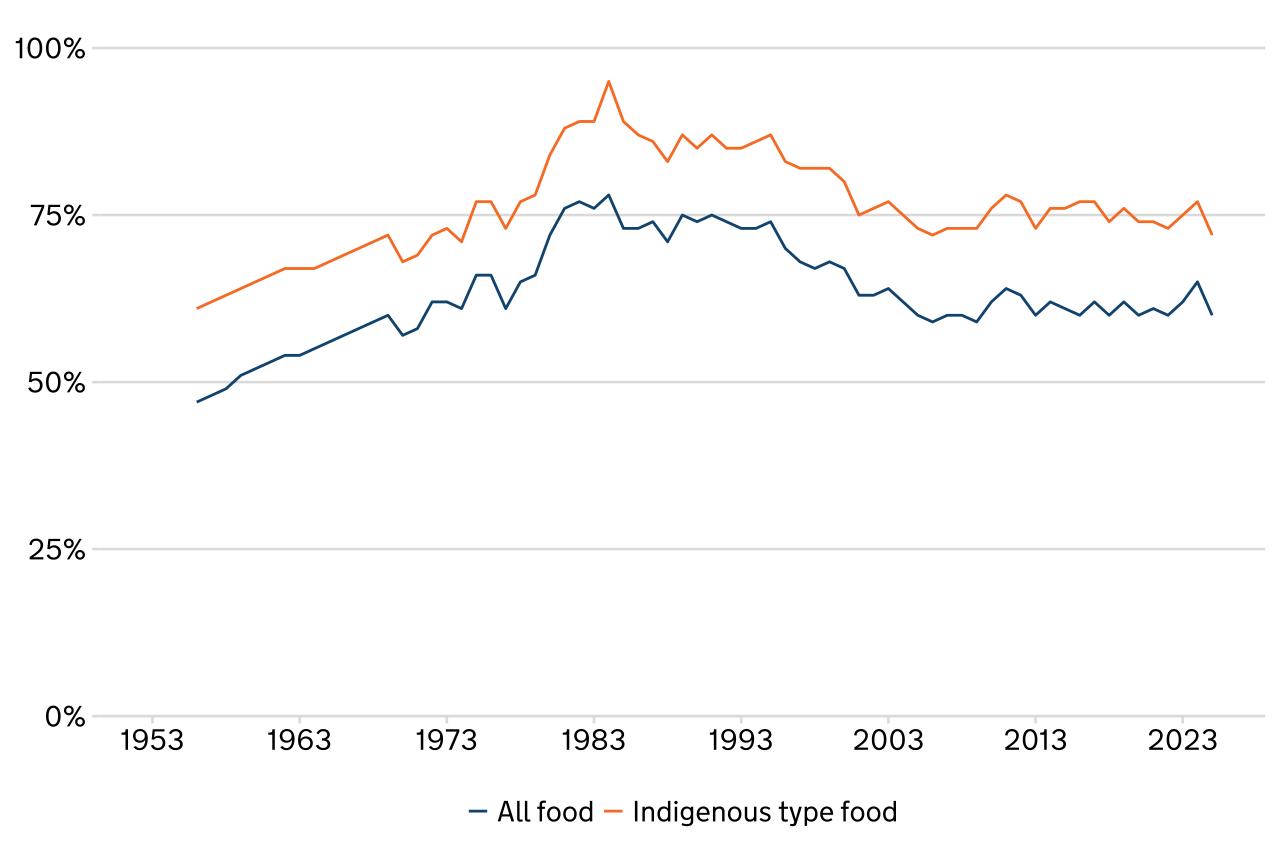
UK Food production to supply ratio, 1956-2025
Download the data for this chart in .csv format: 1.0 KB
Source: Chapter 14, Agriculture in the United Kingdom, Defra The Food production to supply ratio (sometimes referred to as the “self sufficiency ratio”), is calculated as the farmgate value of raw food production divided by the value of raw food for human consumption and is estimated to be 60% for all food in 2025 and 72% of indigenous type food. In 2024, this was 65% and 72% respectively.
UK food production by category
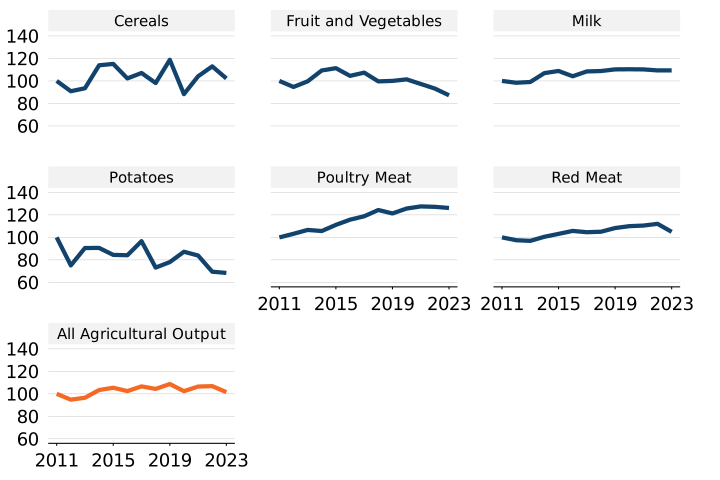
Trends in UK food production and for all agricultural output, 2011 to 2023
View the data for this chart
Download the data for this chart in .csv format 2.05 KB
Accredited Official Statistic
Source: Chapter 7, Agriculture in the United Kingdom (AUK), Defra & Chapter 8, Agriculture in the United Kingdom (AUK), Defra
Notes:
1. 2023 figures are provisional.
Final outputb of UK agriculture is a proxy for UK food production. The volume of all outputs in 2023 fell by 5.0% to 102, compared to 107 in 2022.
Total UK cereal production has fluctuated, with significant dips linked to adverse weather conditions in those years. However, the most recent dip in 2020 reflected the effects of the SARS-CoV-2 pandemic. 2023 cereal output fell by 9.5% due to lower yields compared to 2022.
Since 2011, production levels of poultry meat have been on a largely upward trend although this trend appears to have stabilised with recent years showing little variation in output. 2023 saw a fall of 0.8% compared to 2022.
Red meat (includes Beef, Lamb and Pig meat) saw a fall in the volume index of production of 6.4%. Most of the reduction was attributed to the pig sector which fell by 11%. Adverse weather conditions affecting the outdoor herd and lower carcase weights contributed to the fall in output.
b Figure came from the total volume estimates from underlying dataset of the Agricultural TFP.
UK trade by food groups
UK trade in different food groups, 2025 (£m)
| Type (SITC Division) | Exports | Imports |
|---|---|---|
| Meat & meat preps (01) | 2,362 | 9,314 |
| Dairy & eggs (02) | 2,505 | 4,576 |
| Fish & fish preps (03) | 1,988 | 3,739 |
| Cereals & cereal preps (04) | 2,516 | 7,046 |
| Fruit and veg & preps (05) | 967 | 15,049 |
| Sugar & sugar preps (06) | 424 | 1,795 |
| Coffee, tea, etc. (07) | 2,068 | 7,552 |
| Animal feed (08) | 1,278 | 3,502 |
| Misc. edible preps (09) | 2,592 | 4,675 |
| Beverages (11) | 8,183 | 7,470 |
| Oils/fats & oilseeds (22 +S4) | 821 | 3,049 |
| Total | 25,705 | 67,769 |
Source: HMRC
Notes:
1. 2025 figures are provisional.
In 2025, the value of imports was greater than the value of exports in each of the broad categories of food, feed and drink except beverages which had a trade surplus of £713 million, largely due to exports of Scotch Whisky. Beverages are the largest export category by far with an export value of £8.2 bn in 2025. Fruit and vegetables have the largest trade deficit. In 2024 imports were £15.0 bn while exports were worth £1.0 bn, giving a trade gap of £14.1 bn. The second largest groups in terms of imports in 2025 were meat and beverages with imports of £8.3 and £7.5 bn respectively.
Global One Health Index
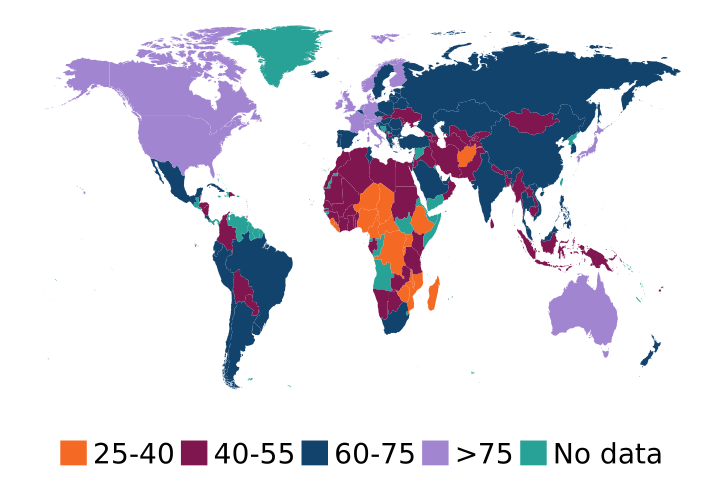
Global One Health Index – Food Security, 2023
View the data for this chart
Download the data for this chart in .csv format: 7.22 KB
Source: Global One Health Index - Food Security (Gu et al, 2023)
Notes:
1. GOHI-FS is currently a one-off piece of analysis so does not consider any long-term trends.
2. Most of the data used was from international authoritative agencies but the missing data rate was 19.4%, which may pose a challenge to precisely evaluating the performance of food security in those countries or territories.
The Global One Health Index-Food Security (GOHI-FS) examined the close links and inter-dependence of the health of humans, animals and the environment, particularly in the context of the sustainability of food systems. It gave a global overview of food systems from a One Health perspective based on 5 categories; food demand and supply, food safety, nutrition, natural and social circumstances, and government support and resources.
GOHI-FS enabled comparison to be made across countries. Lower scores indicate that food systems are weaker in these countries.
North America showed on average better performance than other regions across all five dimensions of the GOHI-FS, while sub-Saharan Africa had a low overall performance across these dimensions. Europe and North America performed better in food supply and demand than other regions. Sub-Saharan Africa and South Asia had low scores on food safety with a high burden of foodborne illness, whereas Europe, Central Asia, East Asia and the Pacific had higher scores, which could be related to more effective surveillance systems in these regions. However, all regions performed poorly on government support and regulations relative to the other categories and only 29 out of 147 countries in the index score higher than 40 across all 5 categories.
Most common prompted food-related concerns
Most common prompted food-related concerns (Food and You 2, Wave 9), April 2024 to July 2024
| Type of concern | Percentage of respondents % |
|---|---|
| Food prices | 69 |
| Food waste | 58 |
| The quality of food | 57 |
| The amount of sugar in food | 57 |
| The amount of food packaging | 55 |
| Being able to eat healthily | 52 |
| Animal welfare | 52 |
| Food hygiene when eating out | 50 |
| Food hygiene when ordering takeaways | 49 |
| Food poisoning | 48 |
Source: Food and You 2: Wave 9, FSA
Most respondents in England, Wales, and Northern Ireland (79%) had no concerns about the food they eat. However, in a separate question, respondents were asked to indicate if they had concerns about several food-related issues from a list of given options. The most common concerns amongst consumers in England, Wales, and Northern Ireland were food prices (69%), food waste (58%) and the quality of food (57%).
Food prices did not feature in the list of concerns in Wave 3 of this survey (April 2021 to June 2021). However, it has since risen to the top in the face of higher food inflation rates (see Figure 2.2). Food packaging did not feature in the top ten list of concerns in Wave 5 of the report but now features at fifth.
4. Food Security
The widely used 1996 World Food Summit definition defines food security in broad terms as:
“when all people, at all times, have physical and economic access to sufficient safe and nutritious food that meets their dietary needs and food preferences for an active and healthy life.”
Food security encompasses complex and interacting factors. At the global level, issues such as climate, weather events, conflict and shocks to international trade are relevant. National resilience will focus more on factors such as domestic production, sources of imports and supply chain resilience. For individuals, however, food security is about the accessibility and affordability of food, being able to provide a nutritious and sufficient diet for your household and having confidence that the food you buy is safe
The United Kingdom Food Security Report sets out an analysis of statistical data relating to food security, fulfilling the duty in the Agriculture Act 2020 to present a report on food security to Parliament at least once every three years. The UKFSR examines past, current, and predicted trends relevant to food security to present the best available understanding of food security at the time of publication.
In the years between the triennial UKFSR, UK Food Security Digest provides a more concise summary of data on aspects of food security.
Both the UKFSR and UKFSD are compendia that include data produced by a wide range of UK government departments and international organisations.
Glossary
Economic definition of food and agri-food sector
The UK food sector is defined as food manufacturing, food wholesaling, food retailing and non- residential catering. In terms of the Standard Industrial Classification (SIC 2007) it is defined as:
| Category | SIC codes |
|---|---|
| Food Manufacturing: | 10 + 11 |
| Food Wholesaling: | 46.3 (excluding 46.35) + 46.17 |
| Food Retailing: | 47.2 (excluding 47.26) + 47.11 + 47.81 |
| Non-residential Catering: | 56 |
- In SIC2007 the food manufacturing sector comprises of nine main categories including processing and preserving meat, dairy, fruit and vegetables, oils, bread, biscuits and cakes, and confectionery. Animal feed manufacturing is included, covering both farm animal feed and pet food, and representing 7.5% of total turnover in food and drink manufacturing in 2020. The drink manufacturing sector includes alcoholic beverages and soft drinks and mineral waters.
- Food and drink wholesale consists of the buying, storage and reselling of food either manufactured or freshly produced. Wholesale of tobacco products (46.35) is not included, but SIC code 46.17 “Agents involved in the sale of food, beverages and tobacco” is included. This group includes wholesalers that trade on behalf of others on a fee or contract basis and their turnover was 5% of that of 46.3 “wholesale of food, beverages and tobacco” in 2020.
- Food and drink retail is defined as the sale of food within both non-specialised stores (e.g. supermarkets), 47.11, and specialised stores such as butchers and bakers, 47.11 and 47.81. The sale of tobacco products value is subtracted from the specialised stores value using 47.26 and then subsequently subtracted from the non-specialised stores value using a ratio for food and drink.
- Non-residential catering (NRC) consists of restaurants and bars involved in preparation and serving of food, alongside canteens and catering services. Hotels are not included.
The deductions are to remove non-food items as far as possible.
The agri-food sector is the food sector plus agriculture. Agriculture is shown in several charts for comparison.
Sectoral breakdown of Food Manufacturing
| Sector | SIC Codes |
|---|---|
| Meat and meat products | 10.1 |
| Fish and crustaceans | 10.2 |
| Fruit and vegetables | 10.3 |
| Oils and fats | 10.4 |
| Dairy products | 10.5 |
| Grain and starch products | 10.6 |
| Bakery | 10.7 |
| Other food products | 10.8 |
| Prepared animal feeds | 10.9 |
| Beverages | 11 |
Gross Value Added (GVA)
GVA is the difference between output and intermediate consumption for any given sector / industry. This is the difference between the value of goods and services produced and the cost of raw materials and other inputs which are used up in production.
Total Factor Productivity (TFP)
Productivity measures the efficiency at which inputs are converted into outputs. Total Factor Productivity provides a comprehensive picture of growth.
Equivalised income
The income a household needs to attain a given standard of living will depend on its size and composition. Equivalisation is a means of adjusting a household’s income for size and composition so that the incomes of all households are on a comparable basis.
Small and Medium Enterprises (SMEs)
Outside of these statistics, the definition of a SME can depend upon several factors, including turnover. For these statistics, a ‘small’ business is a private sector business with fewer than 50 employees. A ‘medium’ business is a private sector business with between 50 and 249 employees. Businesses with no employees are also included separately and come under SMEs.
Standard Industry Classification codes (SIC codes)
These are numerical codes that categorise the industries that companies belong to based on their business activities.