Fly-tipping statistics for England, 2024 to 2025
Updated 25 February 2026
Applies to England

© Crown copyright 2026
This publication is licensed under the terms of the Open Government Licence v3.0 except where otherwise stated. To view this licence, visit nationalarchives.gov.uk/doc/open-government-licence/version/3 or write to the Information Policy Team, The National Archives, Kew, London TW9 4DU, or email: psi@nationalarchives.gov.uk.
Where we have identified any third party copyright information you will need to obtain permission from the copyright holders concerned.
This publication is available at https://www.gov.uk/government/statistics/fly-tipping-statistics-for-england/fly-tipping-statistics-for-england-2024-to-2025
This statistical notice provides statistics on fly-tipping incidents recorded by local authorities in England, for April 2024 to March 2025. It covers trends in the number of fly-tipping incidents, with a breakdown by land type, waste type and size. It also covers enforcement and prosecution actions undertaken for fly-tipping incidents. It excludes the large-scale incidents dealt with by the Environment Agency and the majority of private-land incidents.
1. Key points
- For the 2024/25 year, local authorities in England dealt with 1.26 million incidents, an increase of 9% from the 1.15 million reported in 2023/24.
- In 2024/25, 62% of fly-tips involved household waste. Total incidents involving household waste were 777,000 in 2024/25, an increase of 13% from 688,000 incidents in 2023/24.
- The most common place for fly-tipping to occur was on highways (pavements and roads), which accounted for 37% of total incidents in 2024/25. In 2024/25, the number of highway incidents was 463,000, which was an increase of 9% from 427,000 in 2023/24.
- The most common size category for fly-tipping incidents in 2024/25 was equivalent to a ‘small van load’ (31% of total incidents), followed by the equivalent of a ‘car boot or less’ (27%).
- In 2024/25, 52,000 or around 4% of total incidents were of ‘tipper lorry load’ size or larger, which is an increase of 11% from 47,000 in 2023/24. For these large fly-tipping incidents, the cost of clearance to local authorities in England in 2024/25 was £19.3 million.
- Local authorities carried out 572,000 enforcement actions in 2024/25, an increase of 8% from the 530,000 in 2023/24.
- The number of fixed penalty notices issued was 69,000 in 2024/25, an increase of 9% from 63,000 in 2023/24. This is the second most common action after investigations and accounted for 12% of all actions in 2024/25.
- The total number of court fines decreased by 9% from 1,378 in 2023/24 to 1,250 in 2024/25, with the combined value of these fines decreasing by 8% from £730,000 to £673,000. However, the average fine has increased from £530 in 2023/24 to £539 in 2024/25.
2. Background on data reporting and data caveats
These data are based on incidents and actions reported by local authorities through WasteDataFlow. The intention is to capture all fly-tipping incidents, whether reported by staff or customers, and all enforcement actions taken by local authorities in response to fly-tipping incidents.
Local authorities gather their data from a number of different sources, and data can often be collected and reported by separate teams. There is a level of discretion in applying the reporting guidance. This can lead to some differences in how local authorities record incidents and enforcement actions. The nature of fly-tipping means that there can be relatively high variation between years and between local authorities. Changes in data collection and reporting over time mean that trends should be interpreted with caution.
We were aware that a small number of local authorities provided incident data based on either customer reported fly-tips only, or just those incidents reported by staff, rather than the combined total or ‘all incidents’. Incident data from 2018/19 and earlier included estimates for ‘all incidents’ for these local authorities. However, to improve transparency in the reported data, we undertook an exercise with all local authorities for the 2019/20 data, and discovered 90% of local authorities were reporting ‘all incidents’. From 2019/20, for those local authorities that are not reporting ‘all incidents’, no estimates have been made for ‘all incidents’. The figures presented in this statistical notice are all based on the new, unadjusted methodology. The reporting basis for each local authority is available in the published local authority level dataset. For more detail, see the reporting basis section.
2.1 Revisions
In this publication, revisions have been made to the 2022/23 and 2023/24 data for nine local authorities.
These revisions have been made due to new or revised data being received from the local authorities after publication in February 2025.
These data revisions affect the total number of incidents and the breakdowns for incidents, as well as the total number of enforcement actions and the breakdowns for actions.
For more detail, please see the revisions section.
2.2 Assessing the figures
Comparisons between local authorities should be made with care. In assessing the figures, local authorities should not be classified as ‘good’ or ‘poor’ performers based purely on numbers of fly-tips. The situation is complex and can be influenced by population density, housing stock, demographics and commuter routes. Those reporting higher incident numbers are often those being more pro-active and rigorous in identifying incidents by encouraging the public to report incidents, training of street crews, and increased use of more sophisticated methods for capturing and reporting incidents.
Defra is aware that the definitions used to describe fly-tips and enforcement actions in the guidance are interpreted broadly by local authorities, and that changes in staffing, data collection methods, and cyber-crime have led to reporting errors in the past.
Trends over time for a particular local authority may be a fairer comparison but many local authorities have changed the way they capture and report fly-tips over the past few years, so the changes over time should still be interpreted with some care. A time series of total incidents for each local authority is available in the local authority level dataset. This dataset makes clear the reporting basis for each local authority.
Cost data is only published for clearance costs for ‘tipper lorry load’ and ‘significant/multi load’ incident categories and enforcement costs for ‘prosecutions’ and ‘injunctions’ action categories, which are reported directly by local authorities.
Please note that due to high numbers of incidents being reported as ‘other unidentified’ for land type and waste type in 2024/25, some caution is needed in the interpretation of year-on-year changes.
Percentage changes presented in this statistical notice are based on unrounded figures.
Further information about the data is available at the end of this release.
3. Total number of fly-tipping incidents in England
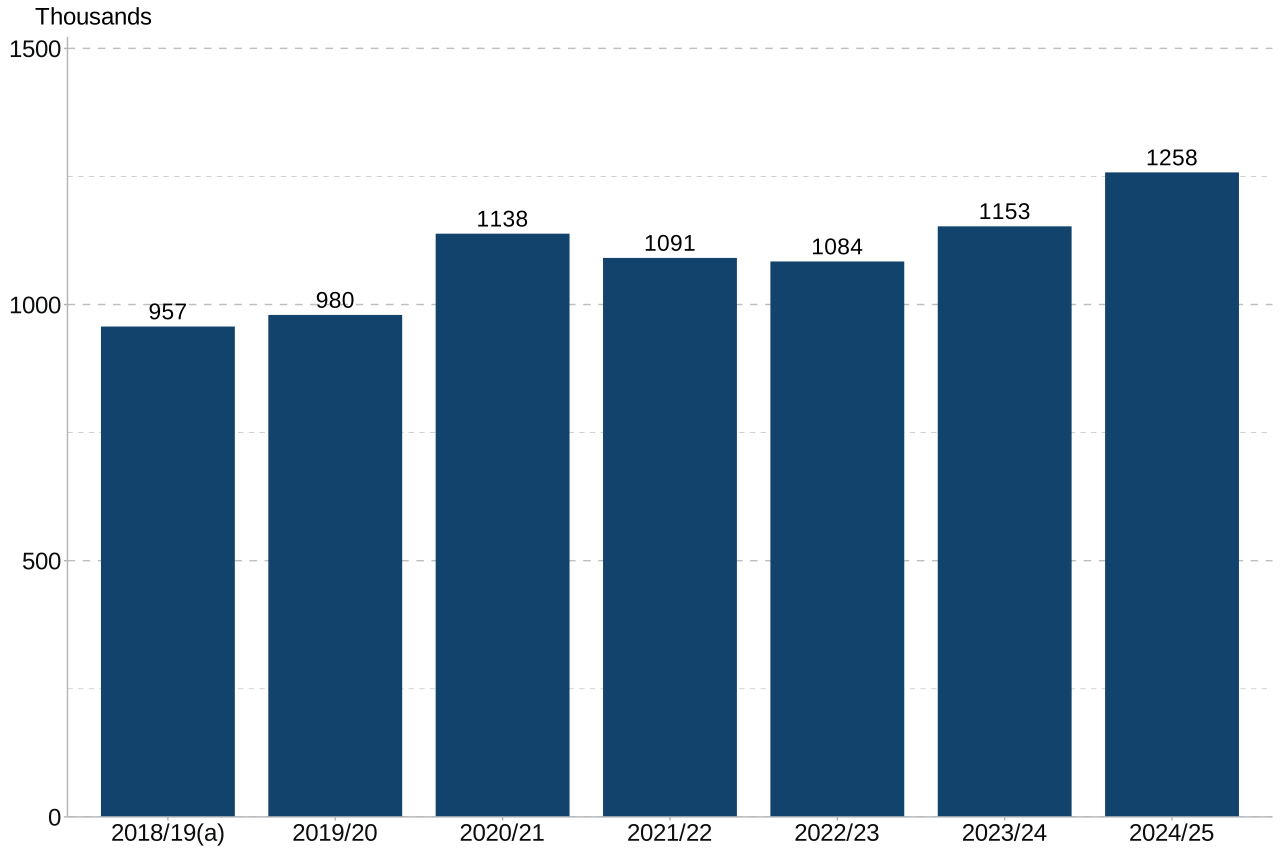
Figure 1: Total number of fly-tipping incidents in England, 2018/19 to 2024/25
Source: WasteDataFlow, Defra
Notes on Figure 1:
- Figures for 2007/08 to 2018/19, based on the old methodology can be seen in the accompanying national level dataset
- (a) Due to methodological changes, data for 2019/20 onwards is not comparable to earlier years. However, these methodological changes have been applied to the 2018/19 data presented here. For detailed information on these changes please see the reporting basis section
Download the data for Figure 1
In 2024/25 there were 1.26 million fly-tipping incidents reported, an increase of 9% from the 1.15 million reported in 2023/24 (Figure 1).
Incidents involving the Environment Agency or those cleared by private landowners are not included in this notice. In 2024/25 the Environment Agency dealt with 98 incidents of large-scale, illegal dumping.
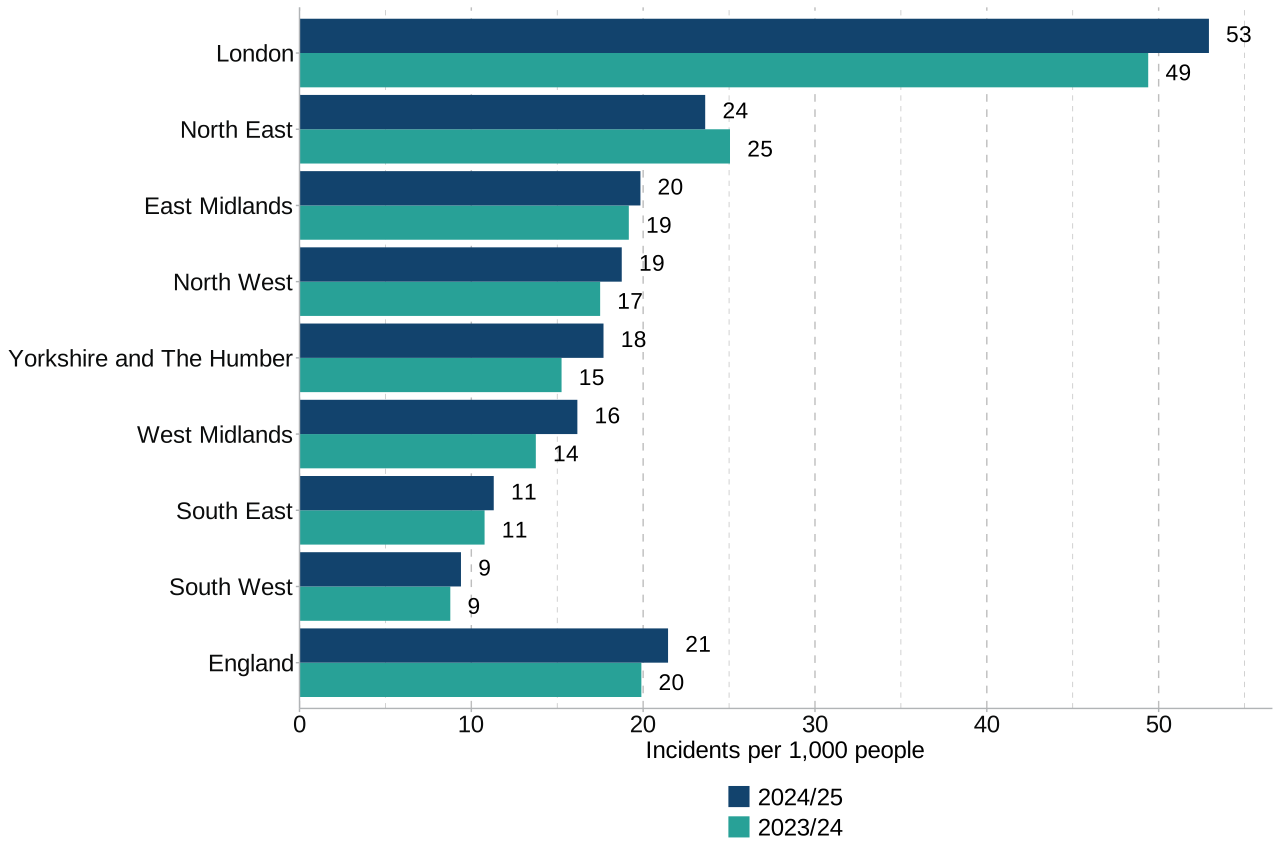
Figure 2: Fly-tipping incidents per 1,000 people in England and by region, 2024/25, compared to 2023/24
Source: WasteDataFlow, Defra
Download the data for Figure 2
Figure 2 shows that in 2024/25 there were on average 21 fly-tipping incidents per 1,000 people in England. London had the highest average number of incidents per 1,000 people at 53 while the South West had the lowest at 9 incidents per 1,000 people.
4. Fly-tipping incidents in England by land type
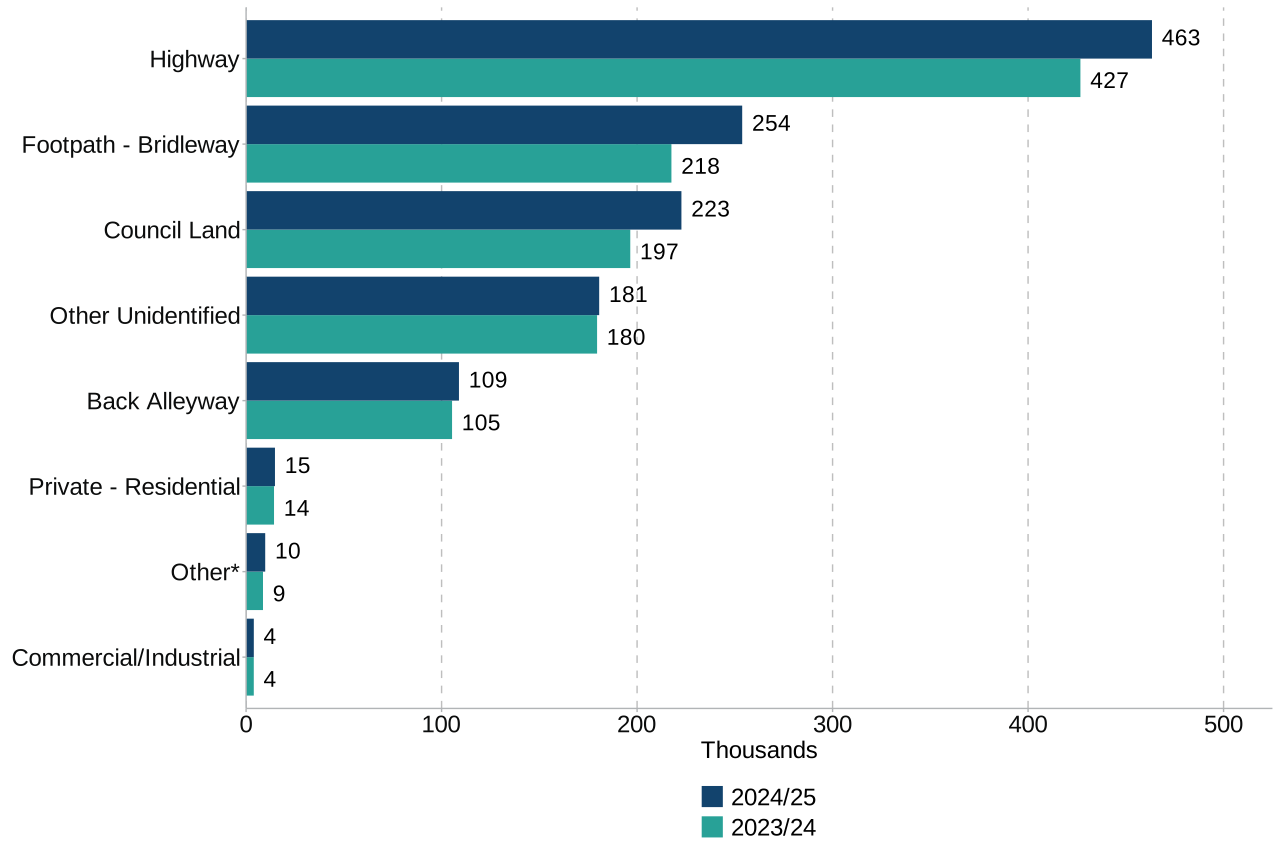
Figure 3: Fly-tipping incidents by land type in England, 2024/25, compared to 2023/24
Source: WasteDataFlow, Defra
Notes on Figure 3:
The ‘Other’ category includes agricultural, watercourse and railway
Download the data for Figure 3
Figure 3 shows the number of fly-tipping incidents by land type for 2023/24 and 2024/25. Highways (pavements and roads) have consistently been the most common land type for fly-tipping incidents over time, accounting for 37% of all incidents in 2024/25. In 2024/25 there were 463,000 incidents, an increase of 9% from 2023/24 (427,000).
Fly-tipping on footpaths and bridleways was the next most common land type for fly-tipping incidents, accounting for 20% of all incidents, with council land next (18%). Footpath and bridleway incidents increased by 17% to 254,000 from 218,000 incidents in 2023/24. Incidents on council land such as housing estates, car parks, parks and offices increased by 13% to 223,000 incidents in 2024/25, from 197,000 in 2023/24.
Fly-tipping incidents in back alleyways amounted to a further 9% of all incidents (109,000) in 2024/25, an increase of 3% from 105,000 in the previous year.
Note that due to high numbers of incidents being reported as ‘other unidentified’ for land type in 2024/25, some caution is needed in the interpretation of year-on-year changes. In 2024/25, 181,000 incidents were reported as ‘other unidentified’; this type of waste accounted for 14% of total incidents.
5. Fly-tipping incidents in England by waste type
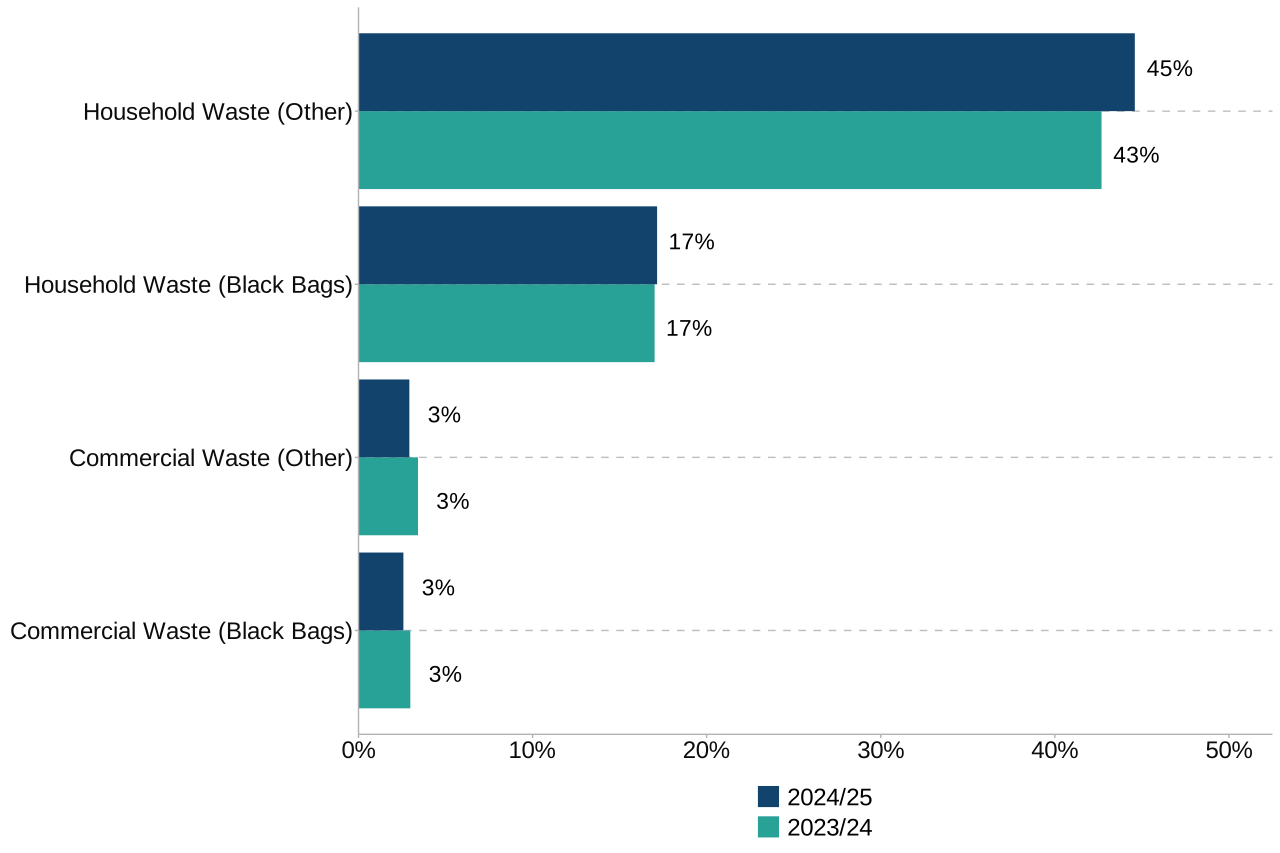
The majority of fly-tipping incidents are household waste (the sum of ‘black bags’ and ‘other’), which in 2024/25 accounted for 62% of all incidents (Figure 4). The majority of this was ‘household waste (other)’.
Figure 4: Household and commercial waste fly-tipping incidents in England, 2024/25, compared to 2023/24 (percentage of total incidents)
Source: WasteDataFlow, Defra
Notes on Figure 4:
- The ‘Household waste (other)’ category could include material from house or shed clearances, old furniture, carpets and the waste from small scale DIY works
- The ‘Commercial waste (other)’ category could include pallets, cardboard boxes, plastics, foam and any other waste not contained in bags or containers and not due to be collected
Download the data for Figure 4
Figure 4 shows the number of fly-tipping incidents for household and commercial waste, for 2023/24 and 2024/25. Total household waste increased by 13% from 688,000 incidents in 2023/24 to 777,000 incidents in 2024/25. The household waste sub-categories, ‘black bags’ and ‘other’ increased by 20,000 incidents (10%) and 69,000 incidents (14%), respectively.
There were 69,000 incidents involving commercial waste in 2024/25, accounting for 6% of total incidents (Figure 4). This was a decrease of 6% from the 74,000 incidents reported in 2023/24. There were 32,000 incidents of commercial waste in black bags and 37,000 incidents of other commercial waste in 2024/25.
Types of fly-tipping, other than household and commercial waste amount to 33% of all fly-tipping incidents.
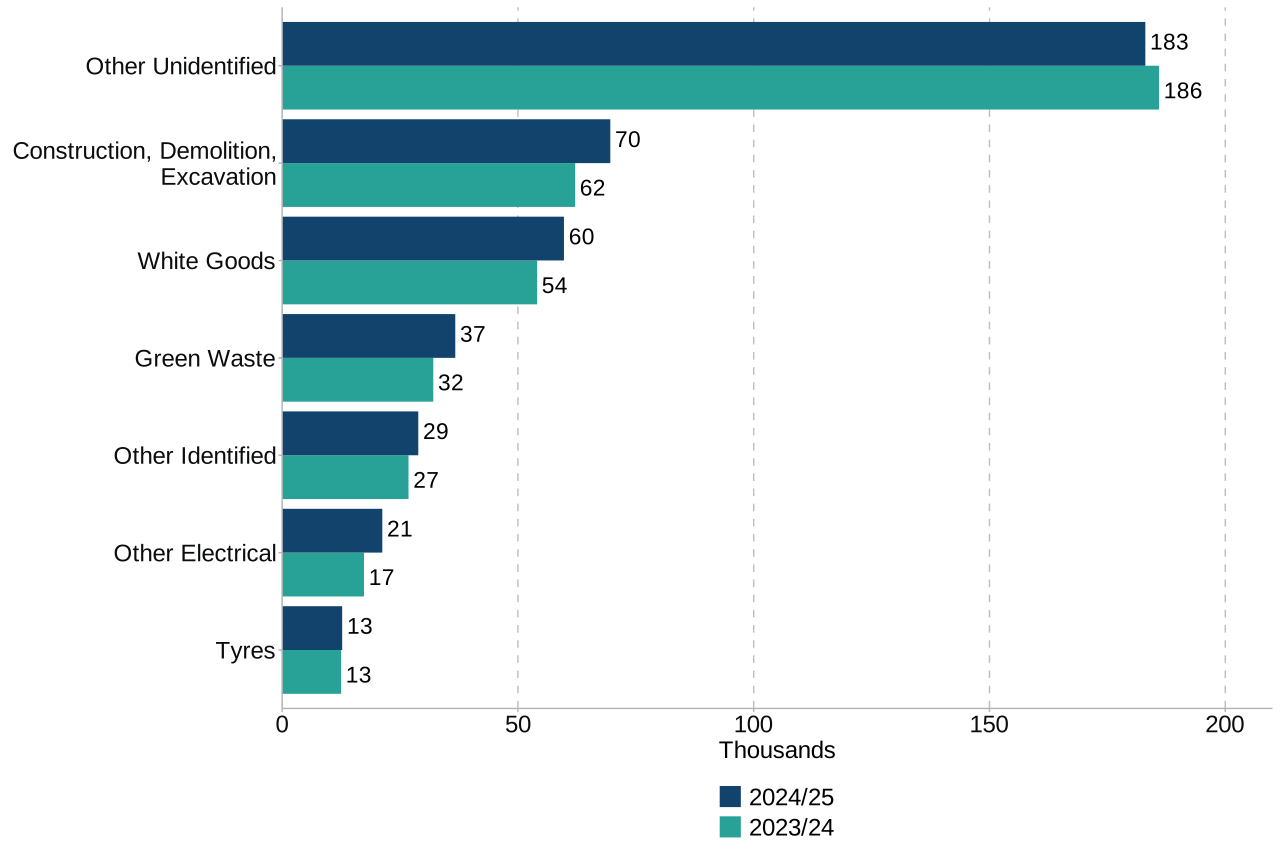
Figure 5: Types of other fly-tipping in England, 2024/25, compared to 2023/24
Source: WasteDataFlow, Defra
Notes on Figure 5:
The ‘Other Identified’ category includes vehicle parts, animal carcasses, clinical waste, asbestos, and ‘chemical drums, oil and fuel’
Download the data for Figure 5
Figure 5 shows the number of fly-tipping incidents by type, other than those for household and commercial waste, for 2023/24 and 2024/25. Note that due to high numbers of incidents being reported as ‘other unidentified’ for waste type in 2024/25, some caution is needed in the interpretation of year-on-year changes. In 2024/25, 183,000 incidents were reported as ‘other unidentified’; this type of waste accounted for 15% of total incidents.
For some waste types, such as green waste (which includes vegetation/pruning, clean soil, tree trunks and branches) or electrical goods, it is not always possible to tell whether they originated from households or businesses.
The number of white goods incidents in 2024/25 was 60,000, an increase of 11% from the 54,000 reported in 2023/24. White good incidents accounted for 5% of total incidents in 2024/25. Green waste accounted for 3% of total incidents in 2024/25. Tyre incidents accounted for around 1% of total incidents in 2024/25.
Incidents with construction/demolition/excavation material increased by 12% from 2023/24 to 70,000 incidents in 2024/25.
Vehicle parts, animal carcasses, clinical waste, asbestos, and ‘chemical drums, oil and fuel’ incidents each account for less than 1% of total incidents.
6. Fly-tipping incidents in England by size
Incidents recorded by size category relate to those investigated and cleared by the local authority. For a number of reasons, but primarily due to incidents on private land, which an authority may not clear, total incidents by size category may not match total incidents recorded by land type or waste type.
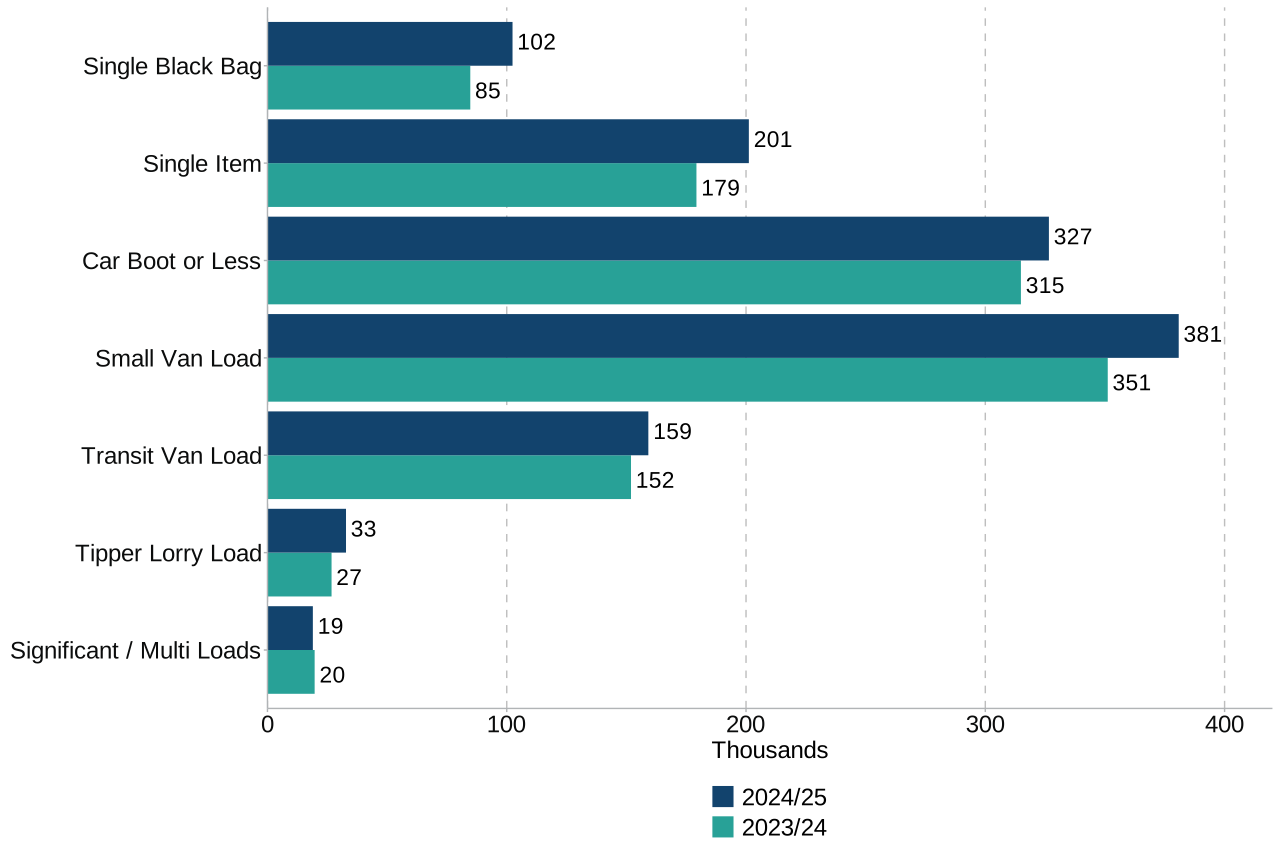
Figure 6: Fly-tipping incidents by size in England 2024/25, compared to 2023/24
Source: WasteDataFlow, Defra
Download the data for Figure 6
Figure 6 shows the number of fly-tipping incidents by size for 2023/24 and 2024/25. As in 2023/24, ‘small van load’ was the largest size category in 2024/25, with 31% of incidents (381,000) reported being this size, this is an increase of 8% from 351,000 incidents in 2023/24.
The second-largest size category is equivalent to a ‘car boot or less’. Fly-tipping incidents of this size increased by 4% from 315,000 incidents in 2023/24 to 327,000 incidents in 2024/25 and made up 27% of all incidents.
‘Single items’, such as furniture and mattresses, accounted for 16% of total incidents and have increased by 12% from 179,000 incidents in 2023/24 to 201,000 in 2024/25.
In 2024/25 ‘Single black bag’ size incidents accounted for 8% of total incidents and have increased by 21%, from 85,000 incidents in 2023/24 to 102,000 incidents in 2024/25.
In 2024/25 ‘Transit van Load’ incidents accounted for 13% of total incidents and have increased by 5%, from 152,000 incidents in 2023/24 to 159,000 incidents in 2024/25.
In 2024/25, 52,000 or 4% of total incidents were of ‘tipper lorry load’ size or larger, which is an increase of 11% from 47,000 in 2023/24. For these large fly-tipping incidents, the cost of clearance to local authorities in England increased to £19.3 million in 2024/25.
As noted above, we no longer produce estimates of clearance costs for other size categories. Please see the methodology section for further details.
7. Fly-tipping enforcement and prosecution
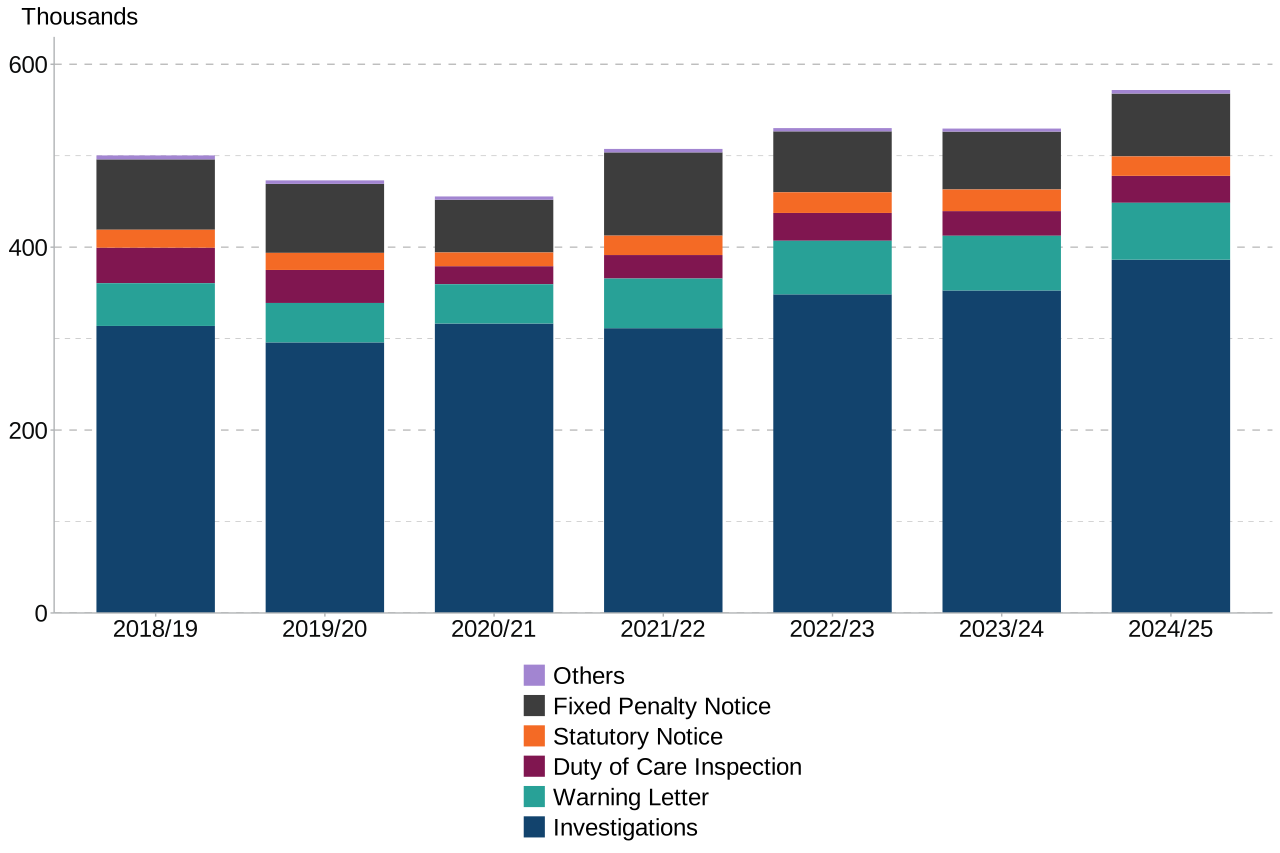
Figure 7: Fly-tipping enforcement actions in England, 2018/19 to 2024/25
Source: WasteDataFlow, Defra
Notes on Figure 7:
- The ‘Others’ category is the sum of stop and search, vehicles seized, formal caution, prosecution and injunction
- Equivalent figures for 2007/08 to 2017/18 can be seen in the accompanying national level dataset
Download the data for Figure 7
Figure 7 shows the number of fly-tipping enforcement actions broken down by type. There were 572,000 enforcement actions carried out in England in 2024/25, an increase of 8% from the 530,000 in 2023/24. It should be noted that multiple actions can sometimes be carried out on one particular incident.
Total enforcement costs have not been estimated for 2024/25 as accurate costs are not available for the majority of enforcement categories.
Investigations have consistently been the most common action taken against fly-tipping incidents over time, accounting for 68% of all actions in 2024/25, with 386,000 investigations in total. This is an increase of 10% from 2023/24, where 353,000 were carried out.
There were 62,000 warning letters issued in 2024/25, and they accounted for 11% of total enforcement actions in 2024/25.
The number of duty of care inspections increased by 9% in 2024/25, from 27,000 inspections to 29,000 inspections. This accounted for 5% of total enforcement actions in 2024/25.
A total of 21,000 statutory notices were issued in 2024/25, accounting for 4% of total enforcement actions. This was a decrease of 10% from the 24,000 statutory notices issued in 2023/24.
The number of vehicles seized in 2024/25 was 139, similar to 2023/24.
Local authorities issued 69,000 fixed penalty notices (FPN) in total during 2024/25 and these were the second most common enforcement action, accounting for 12% of total actions. The total number of FPNs has increased by 9% from 63,000 in 2023/24.
In May 2016, local authorities in England were given the power to issue FPNs for fly-tipping. Prior to this date, local authorities issued fly-tippers with a range of FPNs, including in relation to littering or anti-social behaviour. Further enforcement powers were given to local authorities and the Environment Agency in January 2019, who can now issue FPNs for breaches of the household waste duty of care, where householders pass their waste to an unlicensed waste carrier. Local authorities are therefore asked to report against a variety of FPNs in connection with fly-tipping.
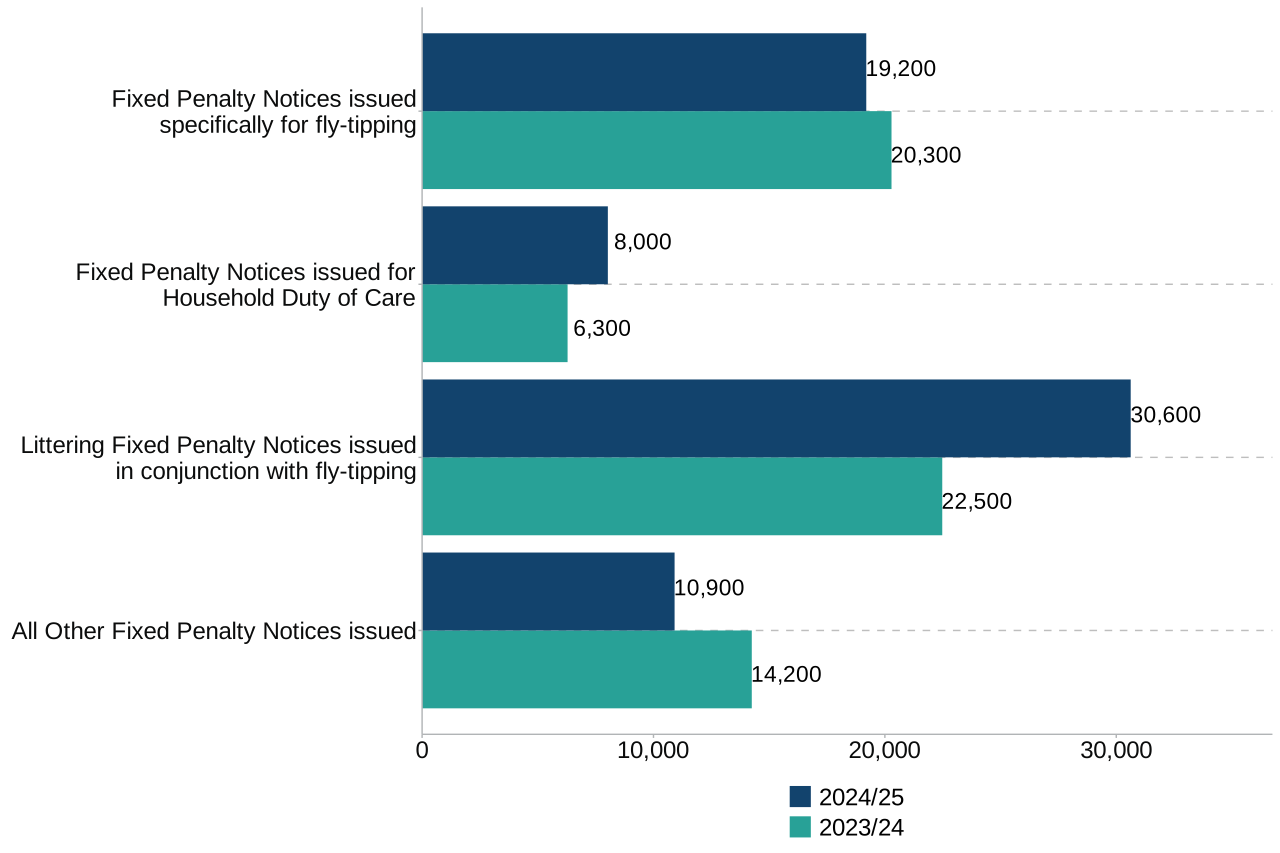
Figure 8: Number of Fixed Penalty Notices issued for fly-tipping, by type, in England, 2024/25 compared to 2023/24
Source: WasteDataFlow, Defra
Notes on Figure 8:
The ‘All Other Fixed Penalty Notices issued’ category includes FPNs which have been served in relation to fly-tipping and other waste offences that are not captured by the other three categories
Download the data for Figure 8
Figure 8 shows the number of FPNs issued for fly-tipping, by type. For 2024/25, 19,200 (28%) of FPNs were issued specifically for fly-tipping, 30,600 (45%) for fly-tipping in relation to littering, 8,000 (12%) for fly-tipping in relation to household duty of care and 10,900 (16%) for fly-tipping in relation to other waste offences.
From the 2023/24 reporting year onwards, additional questions have been added to WasteDataFlow to capture information on the level at which local authorities set their fly-tipping FPNs and if they offer a discount for early payment. These questions were voluntary, 148 (50%) local authorities provided responses to the questions. The average value, for those responding, at which the fly-tipping FPNs have been set is £626; 111 of the local authorities responding offer a discount for early payment. The average value of the early repayment fly-tipping FPN after the discount is £381.
Table 1: Value of Fly-tipping FPNs in England, 2024/25
| Fly-tipping FPN amount | Number of local authorities |
|---|---|
| Under £400 | 17 |
| £400 | 56 |
| £401 to £999 | 23 |
| £1,000 and over | 52 |
Source: WasteDataFlow, Defra
Notes on Table 1:
- Based on data from 148 local authorities who voluntarily responded to the new FPN level questions
- Local authorities may have different levels of fines. So the data reported to us may reflect the maximum fine or the most common fine level.
Table 1 shows the different values of fly-tipping FPNs set by those local authorities who responded. In 2024/25, 56 local authorities had set the value of their fly-tipping FPN at £400.
The number of prosecution actions has decreased by 14% from 1,598 in 2023/24 to 1,377 in 2024/25 (Table 2). Costs of prosecution actions in 2024/25 were £646,000, a decrease from £849,000 recorded in 2023/24.
Table 2: Fly-tipping prosecution outcomes in England, 2018/19 to 2024/25
| Year | Fines Issued | Absolute or Conditional Discharge | Other (successful outcomes) | Community Service | Custodial Sentence | Cases Lost | Total Prosecutions | Successful Prosecutions |
|---|---|---|---|---|---|---|---|---|
| 2018/19 | 1,659 | 80 | 109 | 40 | 26 | 101 | 2,005 | 95.0% |
| 2019/20 | 1,657 | 58 | 95 | 44 | 41 | 50 | 1,930 | 97.4% |
| 2020/21 | 621 | 33 | 36 | 15 | 5 | 25 | 721 | 96.5% |
| 2021/22 | 1,798 | 56 | 63 | 30 | 20 | 37 | 1,960 | 98.1% |
| 2022/23 | 1,491 | 55 | 58 | 34 | 21 | 46 | 1,681 | 97.3% |
| 2023/24 | 1,378 | 56 | 78 | 22 | 28 | 47 | 1,598 | 97.1% |
| 2024/25 | 1,250 | 31 | 37 | 37 | 13 | 13 | 1,377 | 99.1% |
Source: WasteDataFlow, Defra
Notes on Table 2:
- Other successful: Any other positive results awarded by the court this period
- Successful prosecutions: This is calculated as (Total prosecutions - cases lost)/Total prosecutions
- It should be noted that multiple outcomes can sometimes be awarded to a particular prosecution
- Equivalent figures for 2007/08 to 2017/18 can be seen in the accompanying national level dataset
Table 2 shows that the success rates for prosecution actions against fly-tipping are consistently very high over time. In 2024/25, 99.1% of prosecutions resulted in a conviction, up from 97.1% in 2023/24.
The majority of prosecution outcomes are fines, which were issued for 91% of the prosecutions taken against fly-tipping incidents in 2024/25. The number of court fines decreased by 9% from 1,378 in 2023/24 to 1,250 in 2024/25, with the value of total fines decreasing by 8% from £730,000 in 2023/24 to £673,000 in 2024/25. The average court fine has increased from £530 to £539, in 2024/25.
The number of community service outcomes increased by 68% from 22 in 2023/24 to 37 in 2024/25.
8. What you need to know about this release
8.1 Contact details
Responsible statisticians: Katherine Merrett and Adele Storr
Email: WasteStatistics@defra.gov.uk
Media enquiries: 0330 041 6560 (Defra Press Office)
8.2 Official Statistics
This is an Official Statistics publication. Our statistical practice is regulated by the Office for Statistics Regulation (OSR). OSR sets the standards of trustworthiness, quality and value in the Code of Practice for Statistics that all producers of official statistics should adhere to. You can read about how Official Statistics in Defra comply with these standards on the Defra Statistics website.
You are welcome to contact us directly with any comments about how we meet these standards using the contact details above. Alternatively, you can contact OSR by emailing regulation@statistics.gov.uk or via the OSR website.
9. About these statistics
Fly-tipping is the illegal deposit of waste on land, contrary to Section 33(1)(a) of the Environmental Protection Act 1990. Local authorities and the Environment Agency both have a responsibility in respect of illegally deposited waste. This includes local authorities and the Environment Agency collecting and reporting data on fly-tipping. This statistical notice covers data reported by local authorities in England.
9.1 User Statement
Data on fly-tipping are collected to inform policy making and to help local authorities understand what is happening in their area. It records the number of fly-tipping incidents, the type of material tipped, location and size, together with enforcement action taken. The data are used by local and central government, researchers and the public.
9.2 Context
Fly-tipping is a crime, a significant blight on local communities and a source of environmental harm. It also undermines legitimate waste businesses where unscrupulous operators undercut those operating within the law.
Local authorities and the Environment Agency both have a responsibility in respect of illegally deposited waste with certain obligations set out in the Environmental Protection Act 1990. Local authorities have a duty to clear fly-tipped material from relevant land in their areas and consequently they deal with the vast majority of fly-tipping on public land. They can investigate fly-tipping incidents, including incidents on private land, and carry out a range of enforcement actions. The Environment Agency is responsible for dealing with large-scale, serious and organised illegal dumping incidents or those which pose an immediate threat to human health or the environment. Responsibility for clearing fly-tipping material from private land rests with private landowners and is not subject to mandatory data reporting.
Incidents involving the Environment Agency or those cleared by private landowners are not included in this notice. In 2024/25, the Environment Agency dealt with 98 incidents of large-scale, illegal dumping.
9.3 Impact of coronavirus (COVID-19) on fly-tipping
The 2020/21 reporting period covered the first year of the COVID-19 pandemic. The first national lockdown introduced in March 2020 led to some local authorities being unable to maintain collections of dry recyclates, with some suspending garden and bulky waste collections. There was also a widespread closure of household waste recycling centres (HWRCs). These factors and other factors such as changes in household consumption, travel and leisure patterns may have contributed to the increases seen in the number of fly-tipping incidents reported for 2020/21.
Staff shortages, staff being furloughed, and staff being redeployed may also have impacted on the number of enforcement actions which were carried out during 2020/21. Courts were also closed at certain points of the reporting period which several local authorities reported had an impact on the number of prosecution actions undertaken.
This may affect comparability with figures from other years.
9.4 Methodology
These statistics are based on the returns made to the Fly-tipping Module in the WasteDataFlow database by local authorities in England from April 2024 to March 2025. The Fly-tipping Module is the national system used since 2015 to record the incidents and cost of clearing and enforcing against illegally deposited waste by local authorities. Detailed guidance on the use of WasteDataFlow is available. Private landowners are not required to report fly-tips on their land, although some choose to do so voluntarily.
It should be noted that the private land data included in this notice do not reflect the full scale of fly-tipping on private land, as most cases go unreported.
Local authorities gather their data from a number of sources and departments. Incidents are reported by the public through call centres or online, operatives on the ground collecting and recording, enforcement officers, contractors and management companies. Many authorities await verification from investigations before recording public reports as fly-tips.
Data are requested in respect of incidents cleared or investigated by local authorities and, separately, the enforcement actions taken against fly-tippers. These can often be collected and reported by separate teams. Therefore, data can be entered onto the system by one or more people within an authority. This may lead to some discrepancies and a level of uncertainty. Data verification and quality assurance is carried out by WasteDataFlow personnel and Defra. This is done by a quarterly check of specific aspects of the data to identify significant anomalies which would be queried with authorities.
As part of 2024/25 annual quality assurance, we reminded local authorities that FPNs issued solely for littering should not be reported through WasteDataFlow. We also reminded local authorities that vehicles seized should only include vehicles that have been seized due to being involved in fly-tipping. We are currently seeking advice on when abandoned vehicles should be considered fly-tipping.
Until 2017/18, estimate costs for the majority of clearance and enforcement categories were calculated based on typical unit costs for dealing with the different types of incidents/actions. Costs were provided by a small selection of local authorities between 2003 and 2006 when the Flycapture database was being set up. These were used to generate standard unit costs for the clearance and enforcement categories, which were then multiplied by the numbers of incidents and enforcement actions respectively, in order to generate total cost estimates. The standard unit costs used are detailed in the accompanying notes to the published datasets.
In August 2015, Defra undertook an exercise to update the cost basis by surveying 100 local authorities that had previously indicated a willingness to participate. Unfortunately, both the quantity and quality of response data was insufficient to provide robust factors as replacements. During 2017, Defra carried out some preliminary investigations to source updated costs, but concluded that more targeted and detailed work is required to properly understand the complexities surrounding costs to local authorities. As the standard unit costs are now more than 10 years out of date, the decision has been taken to cease using these from the 2017/18 publication onwards. For the time being, only costs for clearance categories ‘tipper lorry load’ and ‘significant/multi loads’, and enforcement categories ‘prosecutions’ and ‘injunctions’ (which are reported directly by local authorities) will continue to be published.
9.5 Detailed breakdowns
A breakdown of data for each local authority is available in the local authority level dataset. In assessing the figures local authorities should not be classified as ‘good’ or ‘poor’ performers based purely on numbers of fly-tips. Comparisons between local authorities should be made with care. The situation is complex and can be influenced by population density, housing stock, demographics and commuter routes. Those reporting higher incident numbers are often those being more pro-active and rigorous in identifying incidents by encouraging the public to report incidents, training of street crews, and increased use of more sophisticated methods for capturing and reporting incidents. Defra is also aware that the definitions used to describe fly-tips and enforcement actions in the guidance are interpreted broadly by local authorities, and that changes in staffing, data collection methods, and cyber-crime have led to reporting errors in the past.
Trends over time for a particular local authority may be a fairer comparison but many local authorities have changed the way they capture and report fly-tips over the past few years, so the changes over time should still be interpreted with some care. A time series of total incidents for each local authority is available for download. There can be relatively high variation between years and between local authorities.
From 2019/20, incidents per 1,000 people for each local authority have been included in the published local authority level dataset.
9.6 Reporting basis
Under Section 71(4) of the Environmental Protection Act 1990 local authorities are required to report information on fly-tipping incidents and actions taken through WasteDataFlow. Details of all fly-tipping incidents, reports, and actions should be reported via WasteDataFlow, including customer reported and those reported by, and pro-actively cleared by staff and contractors.
We had been aware of a few local authorities who were not reporting all incidents or who had changed their basis of reporting.
For the 2019/20 reporting year, Defra undertook a check with all local authorities around the basis of reporting in order to improve transparency in the reported data. An additional question was added to WasteDataFlow to capture the reporting basis for each local authority. The question included was as follows:
The data entries in the Fly-tipping module are a record of fly-tipping offences under section 33 of the Environmental Protection Act 1990. We want you to record information for all relevant incidents and actions covering both public reported and those pro-actively cleared by your own and contractors’ crews. Please select the description that best describes the coverage of your reporting of Fly-tipping incidents and actions:
- All incidents i.e. customer/public reported and those reported by, and pro-actively cleared by, your own and contractor crews.
- Customer/public reported only.
- Staff/contractor and pro-actively cleared only.
This confirmed that the majority (286; 90%) of all local authorities, in 2019/20, were reporting all incidents; 29 (9%) were providing figures based on customer reported fly-tips only, one was providing figures based just on those incidents reported by staff and one local authority had changed their basis of reporting during 2019/20.
In previous years, estimates were made for ‘all incidents’ for a small number of local authorities where it was known that the local authorities reported figures were not based on ‘all incidents’. These estimated figures were included in the national incident totals but not in the local authority level dataset.
For 2019/20 onwards, for those local authorities that are not reporting ‘all incidents’, no estimates have been made for ‘all incidents’. This was due to the number of local authorities concerned and lack of data to make reliable estimates for ‘all incidents’. This means that the national totals for 2019/20 onwards are not comparable to national totals from earlier years. In order to have comparable data for 2019/20 and 2018/19 we have removed the previous adjustments made to the 2018/19 national figures. These adjustments were made to those few local authorities that were known not to be reporting all incidents, but where the data was available to make the adjustments.
For the revised 2018/19 and the 2019/20 national totals onwards, these only include estimates for non-response and missing data.
The questions on reporting basis have been retained in WasteDataFlow to enable Defra to continue to monitor the basis of reporting. In 2024/25, 270 (91%) of local authorities were reporting all incidents; 25 (8%) were providing figures based on customer reported fly-tips only and one local authority had changed their basis of reporting during 2024/25.
We will continue to encourage local authorities to make all reasonable efforts to report all incidents in future years.
Data on enforcement and prosecution actions is not affected by the methodological change and the time series is presented in this notice.
9.7 Non-response and estimation
In 2024/25, 295 local authorities provided data on fly-tipping incidents and actions. Fylde were not able to submit data for quarter four of 2024/25, so an estimate was made by Defra for this quarter. Estimates were made based on the proportions of their data from the first three-quarters of 2024/25.
For 2024/25, three local authorities did not submit data on clearance costs for ‘tipper lorry load’ and/or ‘significant/multi load’ incidents for some or all quarters. These were estimated by Defra based on previous quarters’ data where the figures were consistent or using average 2024/25 unit costs from the known returns or otherwise using an average of previous years’ data for these local authorities. These three local authorities were Bristol, North Somerset and Tamworth.
Three local authorities did not submit data on enforcement cost for ‘prosecutions’ for some or all quarters. These were estimated based on average 2024/25 unit costs from the known returns. These three local authorities were Brent, Canterbury and Tunbridge Wells.
Estimates for clearance, enforcement costs and non-response are included in the national totals but are not shown in the local authority level dataset.
Birmingham submitted complete enforcement action data for 2024/25 but due to quality concerns the last two quarters of data have been excluded from the statistics. Therefore enforcement data shown in the local authority level dataset for Birmingham only represents two quarters.
9.8 Feedback
We welcome feedback on the data from all users including how and why the data is used. This helps us to understand the value of the statistics to external users. Please see our contact details section.
9.9 Revisions Policy
Defra will provide information about any revisions made to published information in this statistics release and the associated datasets. Revisions could occur for various reasons, including when data from third parties is unavailable or revised data has been input to the Fly-tipping Module of WasteDataFlow.
In this publication, revisions have been made to the 2022/23 and 2023/24 data for the following local authorities:
- Burnley – the number of paid fixed penalty notices has been updated for 2023/24
- East Suffolk - the number of investigations has been updated for 2022/23 and 2023/24
- Eastbourne – the number of investigations has been updated for 2023/24
- Eastleigh – the number of vehicles seized has been updated for 2023/24
- Hackney – the number of duty of care inspections has been updated for 2023/24
- Isle of Wight - missing data provided for both fly-tipping incidents and enforcement actions for 2023/24
- Kingston upon Thames – the number of vehicles seized has been updated for 2023/24
- Wandsworth – the number of duty of care inspections has been updated for 2023/24
- West Northamptonshire – various updates to the incident size breakdown and the number of vehicles seized has been updated for 2023/24
A detailed summary of the changes for each local authority can be found on the ‘Revisions’ tabs on both the national and local authority level datasets.
These data revisions affect the total number of incidents and the breakdowns for incidents, as well as the total number of enforcement actions and the breakdowns for actions
Tables 3 and 4 show the impact the revisions have on some of the national totals for some key categories.
Table 3: Impact on some national totals for 2022/23
| Category | England Totals -February 2025 publication | England Totals -February 2026 publication |
|---|---|---|
| Total Enforcement Actions | 529,715 | 530,205 |
| Investigation Actions | 347,917 | 348,407 |
Source: WasteDataFlow, Defra
Notes on Table 3:
Regional totals, for the East, for total enforcement actions and investigations have also been impacted by the changes.
Table 4: Impact on some national totals for 2023/24
| Category | England Totals -February 2025 publication | England Totals -February 2026 publication |
|---|---|---|
| Total Incidents | 1,152,617 | 1,152,632 |
| Total Enforcement Actions | 528,364 | 529,708 |
| Investigation Actions | 351,309 | 352,653 |
| Duty of Care Inspection Actions | 26,727 | 26,971 |
| Vehicles seized | 377 | 130 |
Source: WasteDataFlow, Defra
Notes on Table 4:
- National and regional totals for most of the incident and enforcement action categories have been impacted by the changes
- The table above shows changes for some key categories
10. Glossary
10.1 Land type definitions
Highway: A public highway or roads the public would assume to be public highway even if not formally adopted, for example, ungated council estate roads. Highway covers both carriageway and pavement.
Footpath/bridleway: A public right of way or a footpath over which the public has been given access both rural and urban; it includes permissive paths, tracks, and footbridges over railways where these are managed and or swept by the local authority.
Back alleyway: Back access passages to groups of houses and/or gardens, whether gated or ungated. These may or may not be council owned land.
Railway: Railway land whether managed by the train operating company (usually the station area) or Network Rail (track, sidings, embankment, bridges).
Council land: Local authority (county, district, town, parish or unitary) owned property including housing estates (managed by council or by others, for example, Registered Social Landlords), offices, car parks, depots, parks and open spaces, unless the property has been leased/transferred to an external body. Do not include back alleyways.
Agricultural: Farmland including farm buildings. It includes forests and open land.
Private – residential: Any private land used for residential purposes including grounds, gardens, and private roads, and car parks.
Commercial/industrial: Any land used for commercial or industrial purposes including storage and derelict land last used for this purpose.
Watercourse/bank: Actually in the watercourse or on the bank (of the river, canal or stream).
Other (unidentified): Any other land type not identified in the other categories including harbour mouths and seafronts.
10.2 Waste type definitions
Animal carcasses: Any animals or parts of animals.
Green: Any vegetation/pruning’s and clean soil including tree trunks and branches.
Vehicle parts: Any mechanical parts, components and panels of vehicles except tyres and batteries.
White goods: Fridges, freezers, washing machines and other kitchen appliances.
Other electrical: Such as TVs, computer equipment, vacuum cleaners, radios, fluorescent tubes, circuit boards and car batteries.
Tyres: Vehicle tyres regardless of whether they are on the wheel rim or off the rim.
Asbestos: All forms of asbestos including cement- or other bonded asbestos.
Clinical: Hospital or healthcare waste, such as blood, tissue, needles, soiled dressings and drugs that is infectious or could cause harm in some way. It may be produced from hospitals, medical, nursing, dental, veterinary, pharmaceutical or similar practices or from home treatment, for example, home-based dialysis machines.
Construction/demolition/excavation: Waste from the construction, repair, maintenance and demolition of buildings and structures including roads. It means brick concrete, hardcore, soil, timber, plastics and occasionally hazardous waste. It also includes cement, sand, and other surplus building materials from builders or tradesmen. Include large-scale DIY waste, for example, complete kitchen units or household fittings.
Black bags – commercial: Waste from businesses particularly shops or traders which are not to be picked up by a trade waste collector.
Black bags – household: Waste from householders bagged and dumped on the street. Does not include bags where waste has been put out for collection by the refuse service.
Chemical drums, oil, fuel: Containers each with a capacity of 205 litres (45 gallons) or greater that appear to contain chemicals including oils and fuels.
Other household waste: Any household waste not covered by the other categories and could include the results of house or shed clearances, old furniture, carpets and the waste from small scale DIY works.
Other commercial waste: Any commercial or industrial waste not covered by the other categories and could include pallets, cardboard boxes, plastics, foam, and any other waste not contained in bags or containers and not due to be collected.
Other (unidentified): None of the other categories apply.
10.3 Waste size definitions
Single black bag: A single bin bag containing waste.
Other single item: One piece of furniture or equipment. There may also be a few small items that would not on their own constitute a fly-tip.
Car boot load or less: The rubbish could be broken down and squeezed into a large boot of a car. About 1 cubic metre maximum. Up to 5 large bin bags.
Small van load: Bigger than the car boot load but that the rubbish could be broken down and squeezed into an Astra size van. About 4 cubic metres. Between 6 and 15 bin bags.
Transit van load: Bigger than the small van but that the rubbish could be broken down and squeezed into a transit size van. About 10 cubic metres. A large 3-piece suite of furniture would fall into this category. Between 16 and 30 bin bags.
Tipper lorry load: A single load from an 8-wheeled tipper truck.
Significant/multiple loads: A multiplicity of the tipper lorry load.
10.4 Enforcement action definitions
Investigation: An investigation means the enforcement team has recorded the incident, attempted to identify the evidence available and has decided the action to be taken, or is considering this, or has decided to take no actions. Investigations could cover fly-tipping incidents on any land.
Warning letter: A warning letter has been sent or handed to the perpetrators or the land occupiers/owners.
Statutory notice: A statutory notice related to fly-tipping has been served on the perpetrators or land occupiers/owners. This would include section 59 and section 71 of the Environment Protection Act. It may also include community protection notices where the intention is also to control fly-tipping.
Fixed penalty notices issued specifically for fly-tipping (section 33ZA of the Environmental Protection Act 1990): A fixed penalty notice has been served on the perpetrator(s) in connection with a fly-tipping-related waste offence under section 33ZA of the Environmental Protection Act.
Littering fixed penalty notices issued in conjunction with fly-tipping (section 88 of the Environmental Protection Act 1990): A fixed penalty notice has been served on the perpetrators in connection with a fly-tipping-related waste offence under section 88 of the Environmental Protection Act. Although section 88 principally relates to littering offences, some authorities use section 88 to issue fixed penalty notices in relation to small fly-tipping incidents.
Fixed penalty notices issued specifically for breaches of the household waste Duty of Care (section 34ZA of the Environmental Protection Act 1990): A fixed penalty has been served on the perpetrator(s) in connection to an offence under the Duty of Care set out in section 34(2A) of the Environmental Protection Act to take all available measures reasonable in the circumstances to ensure they only transfer household waste produced on the property to an authorised person or for authorised transport purposes.
All other fixed penalty notices issued relating to fly-tipping and other waste-related offences: A fixed penalty notice has been served on the perpetrators in connection with a fly-tipping related waste offence under legislation other than that listed in the other fixed penalty notice categories. This principally refers to use of section 47ZA of the Environmental Protection Act (offences relating to waste receptacles), and section 5B and section 5C of the Control of Pollution (Amendment) Act 1989 (failure to produce authority).
Duty of Care inspection: A business has been asked to provide waste transfer notes, or a household is investigated for possible breaches of their duty.
Stop and search: A stop operation has been held in conjunction with the Police and waste carriers asked to produce evidence that they are registered waste carriers. It may also include other agencies/other checks
Vehicles seized: Where a vehicle has been seized as it is believed to have been involved in fly-tipping.
Formal caution: A formal caution has been issued.
Prosecution: Each prosecution case taken to court regardless of the outcome.
Injunction: A magistrate’s court has issued an injunction to an individual or business who has failed to take the action required by a statutory notice.