Farm business management practices in England 2024/25 - statistics notice
Updated 30 April 2026
Applies to England

© Crown copyright 2026
This publication is licensed under the terms of the Open Government Licence v3.0 except where otherwise stated. To view this licence, visit nationalarchives.gov.uk/doc/open-government-licence/version/3 or write to the Information Policy Team, The National Archives, Kew, London TW9 4DU, or email: psi@nationalarchives.gov.uk.
Where we have identified any third party copyright information you will need to obtain permission from the copyright holders concerned.
This publication is available at https://www.gov.uk/government/statistics/farm-business-management-practices-in-england/farm-business-management-practices-in-england-202425-statistics-notice
This release provides data on business management practices adopted on farms in England between 2007/08 and 2024/25. The results are sourced from the Farm Business Survey and relate to March to February years, with the most recent year covering 1 March 2024 to 28 February 2025.
Four areas are examined:
-
Business planning, benchmarking and management accounting practices
-
Risk management practices
-
Accessing advice
-
Succession planning
We would value user feedback on these statistics. Please send any feedback to fbs.queries@defra.gov.uk.
Key results
-
The vast majority of farms (84%) undertook at least one business management practice in 2024/25. The most common practice was producing an informal business management plan, which was done by 57% of farms.
-
20% of farms had no risk management strategy in 2024/25. The most common risk management practice was taking up Sustainable Farming Incentive (SFI) agreements, done by 40% of farms.
-
36% of farms felt that they were already doing all of the business management practices that they needed and 42% felt that they were already doing all of the risk management practices that they needed.
-
Most farms accessed advice in 2024/25, with 92% accessing business management advice and 85% accessing technical advice. The most common business management advice source was free advice, used by 56% of farms, while talking to other farmers was the most common source of technical advice, used by 54% of farms.
-
In 2024/25, the most common succession planning activity for farm businesses was reviewing their current succession plan, which covered 37% of farms. A further 22% had a new succession plan in place, while the fewest farm businesses, 10%, were creating a new succession plan.
Points which apply throughout
-
The Farm Business Survey is the source for all data presented in tables and charts unless otherwise stated.
-
All figures relate to England, unless otherwise stated, and cover a March to February fiscal year, with the most recent year shown ending in February 2024. Fiscal years are shown in YYYY/YY format, for example, the period of 1 March 2024 to 28 February 2025 is shown as 2024/25. To ensure consistency in harvest/crop year and commonality of subsidies within any one Farm Business Survey year, only farms which have accounting years ending between 31 December and 30 April are included in the survey. Aggregate results are presented in terms of an accounting year ending on the last day of February, which is the approximate average of all farms in the Farm Business Survey.
-
Except for questions on succession planning, farms were able to choose more than one response option to the questions they were asked. Therefore, percentages may sum to more than 100%.
-
All figures have been rounded to the nearest 1%. Differences have been calculated using unrounded values and then rounded to the nearest whole number. Therefore, they may not match the difference between the rounded figures.
-
The acronym ‘LFA’ refers to Less Favoured Area. These areas were established in 1975 to provide support to mountainous and hill farming areas. They are areas where the natural characteristics (geology, altitude, climate, short growing season, low soil fertility, or remoteness) make it difficult for farmers to compete.
-
Where dataset tables are referred to in the text, this refers to the ‘Farm business management practices in England 2024/25 - dataset’ file, which can be found on the publication landing page.
1 Business planning, benchmarking and management accounting
1.1 Business management practices
The survey included the following options for which business management practices were currently being carried out on farm businesses:
- No business management practices.
- Attends discussion groups on business management issues at least three times a year.
- Has an informal plan (e.g. the team meet once a year to discuss future directions).
- Has produced a formal plan and reviews it at least once a year.
- Regularly produces financial accounts, i.e. budgets, gross margins, cash flows or in depth analysis of profit and loss.
- Uses Farm Business Survey benchmarking and feedback.
- Uses benchmarking from other sources, including enterprise level, balance sheet or international benchmarking.
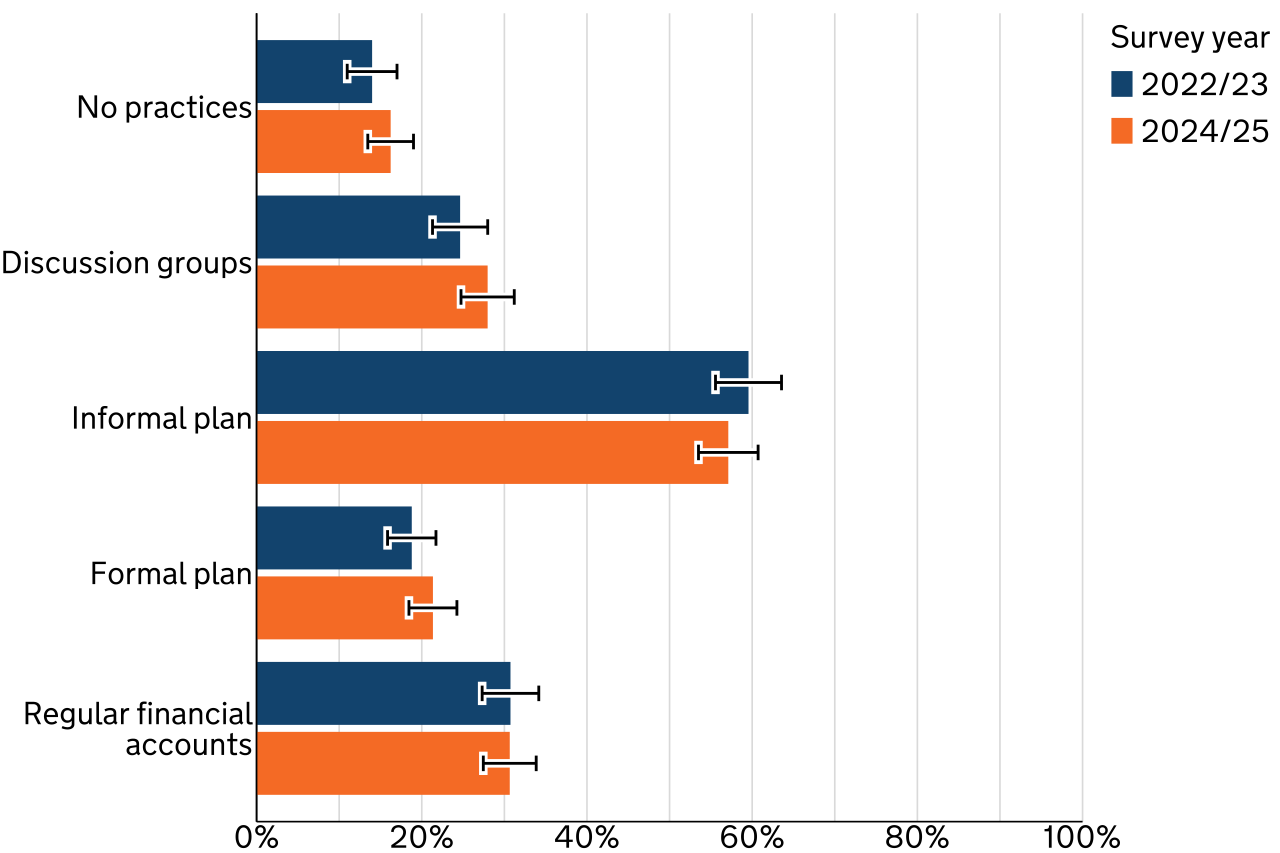
Figure 1.1: Planning and accounting practices in farm businesses in England, 2022/23 and 2024/25
Source: Dataset table 1.1
Figure notes:
-
The legend is presented in the same order as the bars.
-
95% Confidence Intervals have been presented to show the range where the true value is likely to lie and provides an indication of the degree of uncertainty of the estimate; see section 6.2 for more detail.
-
‘Regular financial accounts’ means that the farm business was regularly producing analysis such as budgets, gross margins, cash flows or in-depth analysis of profit and loss.
Figure 1.1 shows that 84% of farm businesses were doing some kind of business management practice in 2024/25, which represented a fall of 2 percentage points compared to 2022/23.
Among the planning and accounting options, the most common action was producing an informal plan, which was practised by 57% of farms. The least common was producing a formal plan, done by 21% of farms. In comparison with 2022/23, the percentage of farms doing each of the surveyed planning and accounting practices changed by less than 5 percentage points.
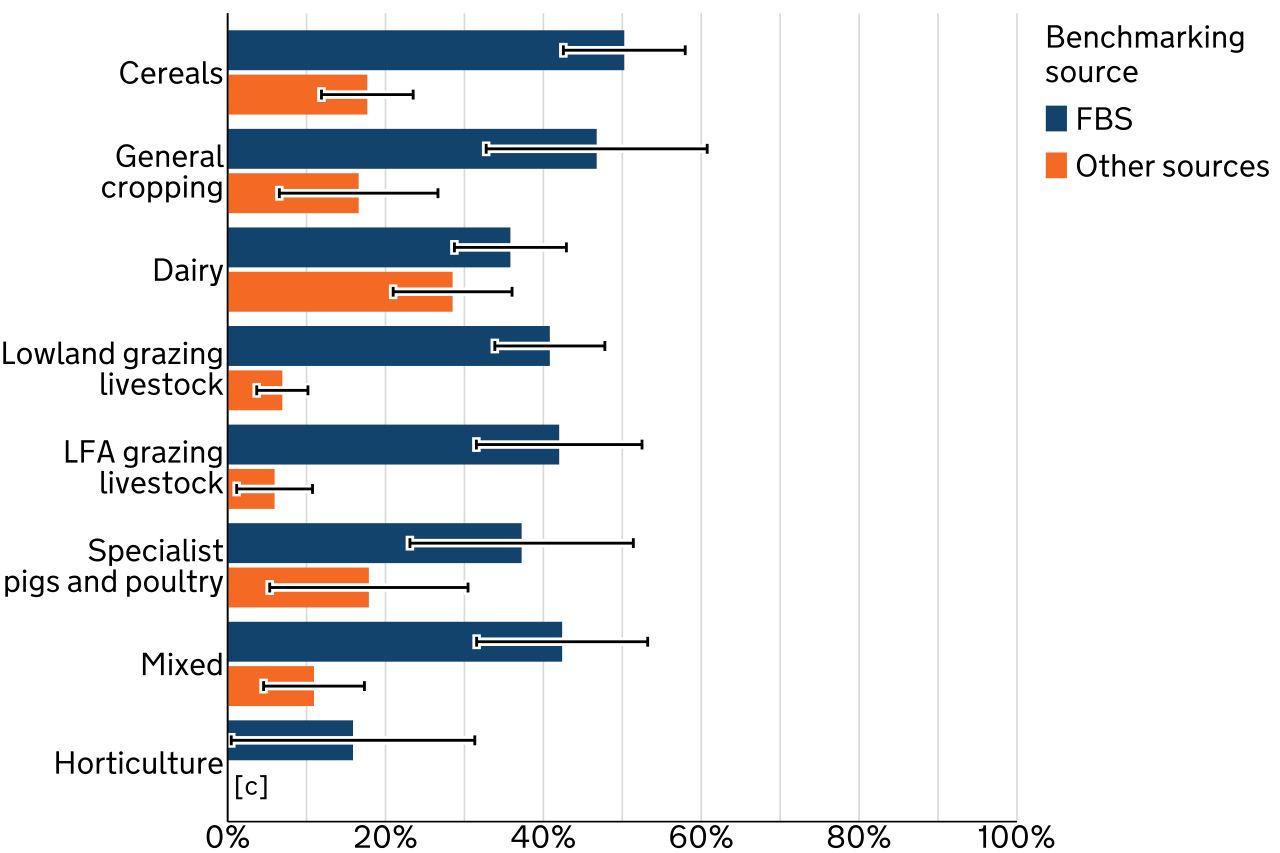
Figure 1.2: Benchmarking practices by farm businesses in England by farm type, 2024/25
Source: Dataset table 1.2
Figure notes:
-
The legend is presented in the same order as the bars.
-
95% Confidence Intervals have been presented to show the range where the true value is likely to lie and provides an indication of the degree of uncertainty of the estimate; see section 6.2 for more detail.
Figure 1.2 shows the type of benchmarking tools used by different farm types. There may be a degree of over-reporting, given that farm businesses in the Farm Business Survey are provided with benchmarking feedback in return for their participation. This introduces substantial selection bias for these results and is the reason why FBS benchmarking is reported separately. An estimated 42% of farms used FBS benchmarking, while 13% used other benchmarking tools. However, given FBS farms have access to FBS benchmarking, this may reduce their use of other benchmarking tools in comparison with the rest of the farm population. It is likely that the true average rate of benchmarking use by all farms in England lies somewhere between these figures.
Taking these limitations into account, the use of benchmarking tools other than FBS benchmarking was most common in dairy farms in 2024/25, while it was least common on LFA grazing livestock farms.
Figure 1.3: Planning and accounting practices in farm businesses in England by farm business size (based on SLR), 2024/25

Source: Dataset table 1.3
Figure notes:
-
The legend is presented in the same order as the bars.
-
95% Confidence Intervals have been presented to show the range where the true value is likely to lie and provides an indication of the degree of uncertainty of the estimate; see section 6.2 for more detail.
-
‘Regular financial accounts’ means that the farm business was regularly producing analysis such as budgets, gross margins, cash flows or in-depth analysis of profit and loss.
Farm business sizes are based on the estimated Standard Labour Requirement (SLR) for the business, rather than its land area. See section 6.4 for more detail.
As shown in figure 1.3, the proportion of farms doing any business management practice in 2024/25 increases as farm business size (based on SLR) increases. A similar pattern occurred within each of the practices. For example, 52% of very large farms produced regular financial accounts (in-depth financial analysis such as budgeting, gross margins and cash flows), while this was only done by 24% of small farms. Likewise, 37% of very large farms produced a formal plan, while just 17% of part-time did.
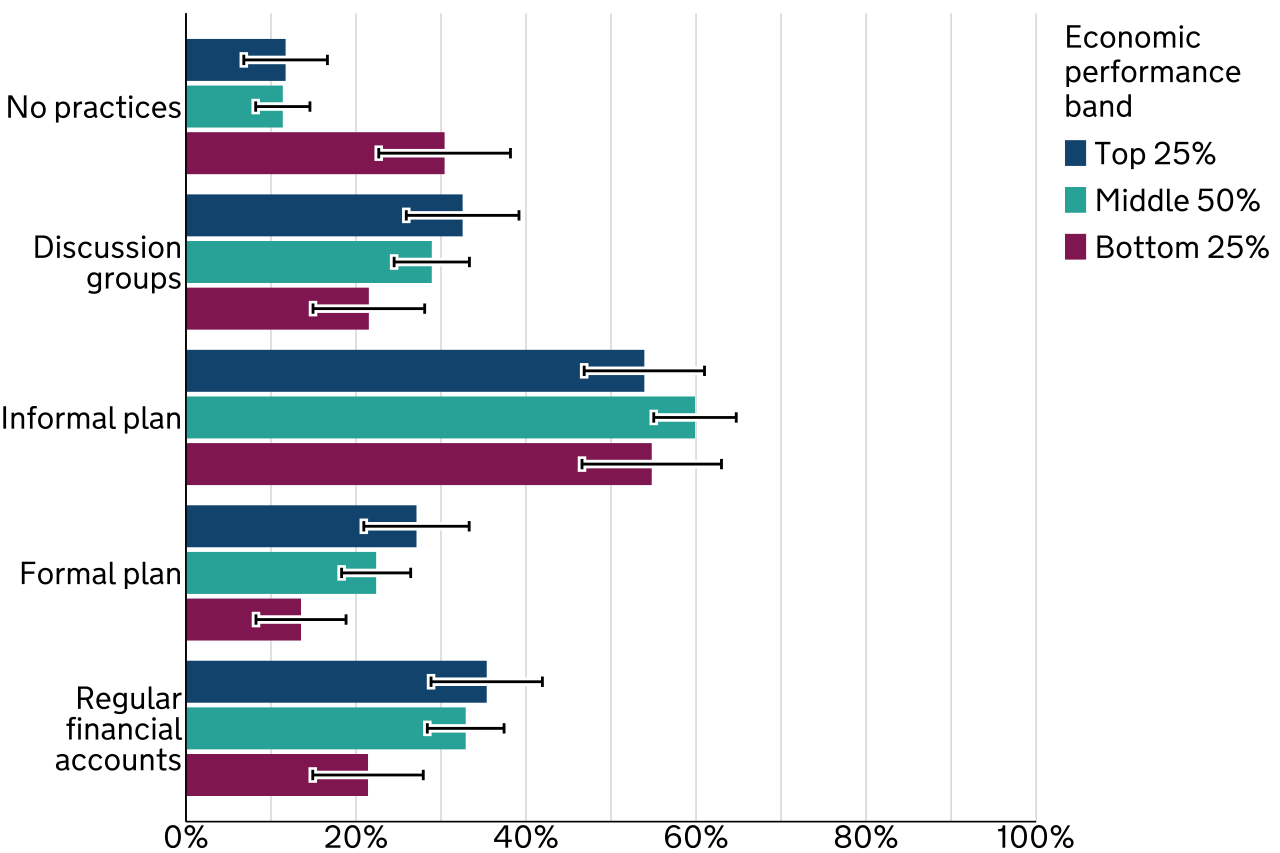
Figure 1.4: Planning and accounting practices in farm businesses in England by farm economic performance band, 2024/25
Source: Dataset table 1.4
Figure notes:
-
The legend is presented in the same order as the bars.
-
95% Confidence Intervals have been presented to show the range where the true value is likely to lie and provides an indication of the degree of uncertainty of the estimate; see section 6.2 for more detail.
-
‘Regular financial accounts’ means that the farm business was regularly producing analysis such as budgets, gross margins, cash flows or in-depth analysis of profit and loss.
Figure 1.4 shows that 30% of the bottom 25% economic performing farms did not undertake any business management practices in 2024/25, compared with just over 10% of the farms in each of the higher performance bands. For all performance bands, the most common practice was producing an informal plan, with just over half of farms in each performance band doing this.
1.2 Reasons for not carrying out any or more business practices
The following were available as options to describe why farms did not do additional, or any, business management practices:
- All needed business management practices are already being carried out.
- Does not have time to research, learn about or implement practices.
- No information available to consider options for business management practices.
- Not interested.
- The benefits of business management practices are not clear.
- Does not have the appropriate skills or knowledge (would need training).
- Too expensive (e.g. training courses, software).
- Interested, but it is taking longer than anticipated to adopt.
Figure 1.5: Obstacles to uptake of business management practices for farm businesses in England, 2022/23 and 2024/25

Source: Dataset table 2.1
Figure notes:
-
The legend is presented in the same order as the bars.
-
95% Confidence Intervals have been presented to show the range where the true value is likely to lie and provides an indication of the degree of uncertainty of the estimate; see section 6.2 for more detail.
Figure 1.5 shows that the most common reason that farms were not doing more (or any) business management practices in 2024/25 was that they felt they were already doing all of the practices that they needed. This was the case in 36% of farms, which was a fall of 4 percentage points compared to 2022/23. The second most common reason, affecting 31% of farms, was that they had no time to carry out more, or any, of the practices.
Dataset table 2.2 shows that the same two reasons were also the most common across each of the different farm types. The same was true across each of the farm business sizes (shown in dataset table 2.3) and performance bands (dataset table 2.4).
2 Risk management
2.1 Risk management practices
The following options were available in the survey for practices which farms were undertaking to minimise risk:
- No risk management strategy.
- Sells some commodities on contract basis with agreed price.
- Uses selling groups and pools to market some or all of commodities.
- Purchases some inputs on contract basis with agreed price.
- Makes use of ‘options’ (contractual agreements that grant the holder the right, but not the obligation, to buy or sell a financial asset at a predetermined price within a specified period of time).
- Has animal health insurance.
- Has crop damage insurance.
- Uses buying groups and pools to purchase some or all of input.
- Undertakes flood risk management.
- Takes up Sustainable Farming Incentive (SFI) agreements.
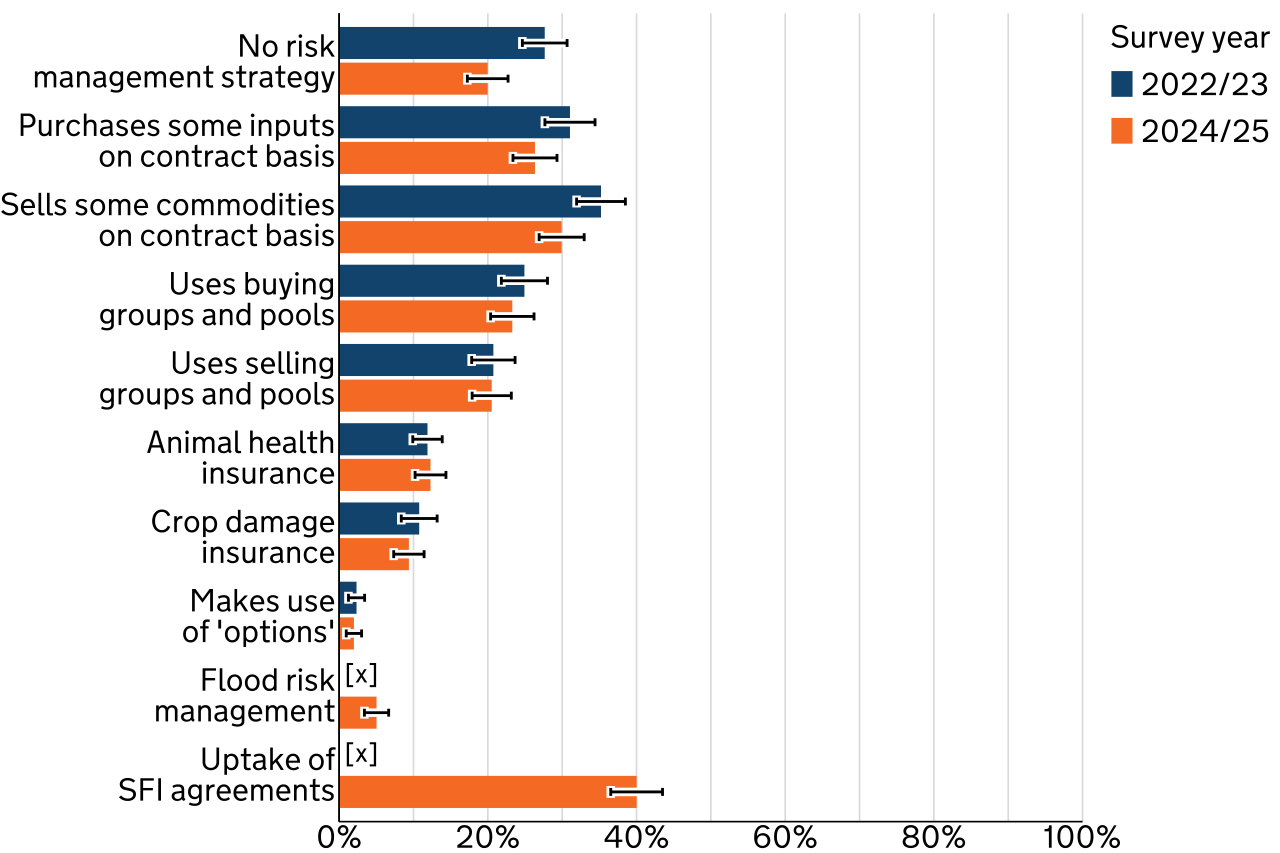
Figure 2.1: Risk management practices in farm businesses in England, 2022/23 and 2024/25
Source: Dataset table 4.1
Figure notes:
-
The legend is presented in the same order as the bars.
-
95% Confidence Intervals have been presented to show the range where the true value is likely to lie and provides an indication of the degree of uncertainty of the estimate; see section 6.2 for more detail.
-
Within “Make uses of ‘options’”, ‘options’ refers to contractual agreements that grant the holder the right, but not the obligation, to buy or sell a financial asset (usually grain) at a predetermined price within a specified period of time.
-
The symbol [x] denotes that an option was not available in the 2022/23 survey year; see the section 6.3 for more details.
Figure 2.1 shows that, in 2024/25, 20% of farms had no risk management strategy, which was a fall of 8 percentage points compared to 2022/23. The most common risk management practice was taking up SFI agreements, which was a new option and done by 40% of farms. Using contracts was the next most common practice, followed by using groups and pools for buying or selling.
Flood risk management was another new option in the survey in 2024/25; 5% of farms were managing their flood risk.
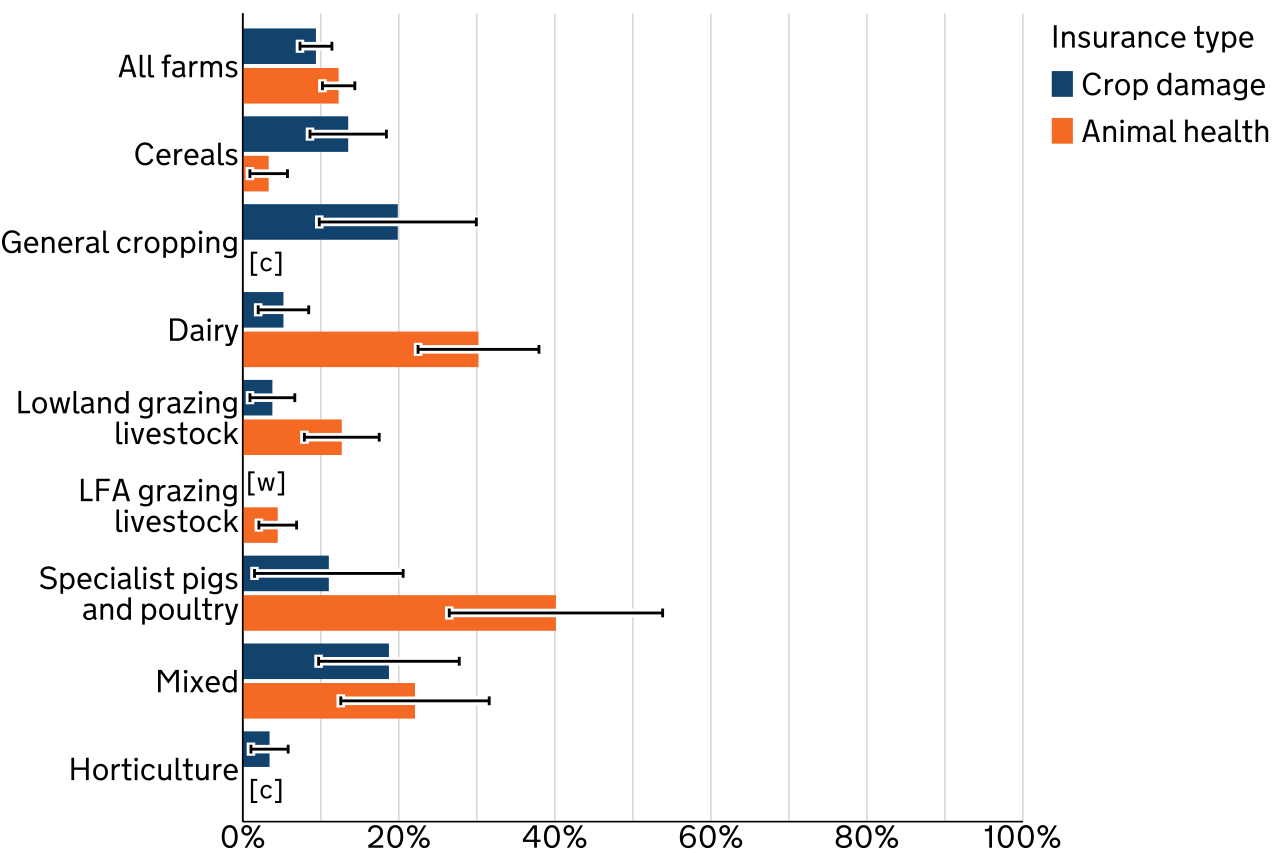
Figure 2.2: Animal and crop insurance uptake in farm businesses by farm type in England, 2024/25
Source: Dataset table 4.2
Figure notes:
-
The legend is presented in the same order as the bars.
-
95% Confidence Intervals have been presented to show the range where the true value is likely to lie and provides an indication of the degree of uncertainty of the estimate; see section 6.2 for more detail.
Figure 2.2 shows the uptake of crop damage and animal health insurance across different farm types in 2024/25.
Crop damage insurance was taken out by 20% of general cropping farms and 14% of cereal farms, while just 3% of horticulture farms had this insurance.
Animal health insurance was taken out by 40% of specialist pig and poultry farms and 30% of dairy farms. Grazing livestock farms were less likely to have this insurance, with rates of 13% in lowland grazing livestock farms and just 4% in LFA grazing livestock farms.
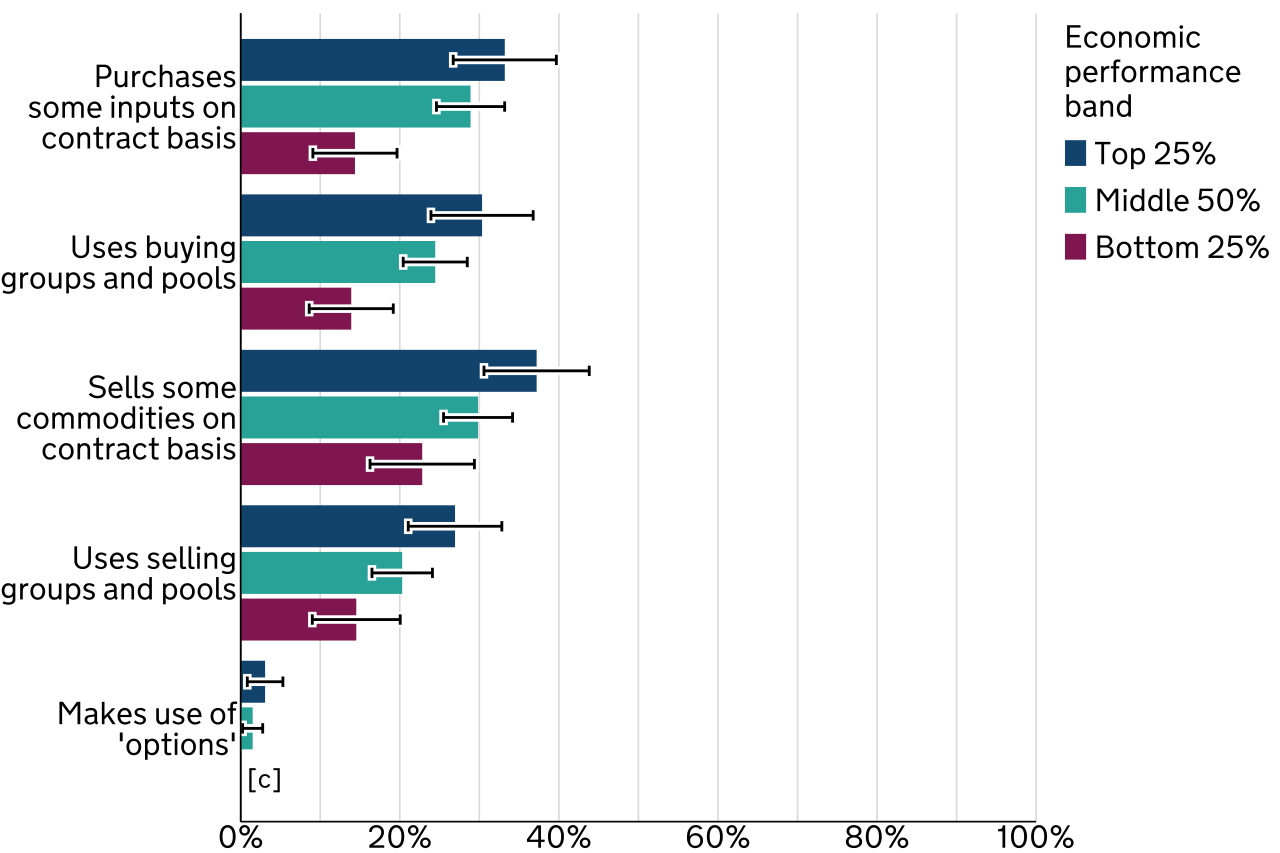
Figure 2.3: Risk management practices for buying and selling used by farm businesses in England by farm economic performance band, 2024/25
Source: Dataset table 4.4
Figure notes:
-
The legend is presented in the same order as the bars.
-
95% Confidence Intervals have been presented to show the range where the true value is likely to lie and provides an indication of the degree of uncertainty of the estimate; see section 6.2 for more detail.
-
Within “Make uses of ‘options’”, ‘options’ are a form of price insurance, referring to contractual agreements that grant the holder the right, but not the obligation, to buy or sell a financial asset (usually grain) at a predetermined price within a specified period of time.
Figure 2.3 shows how farm businesses in different economic performance bands managed the risk of buying and selling in 2024/25. This included using buying and selling contracts, groups and pools for buying and selling, and using ‘options’. Uptake of each of these risk management practices increased as farm economic performance increased.
2.2 Reasons for not carrying out any or more risk management practices
The following were available as options to describe why farms did not undertake additional, or any, risk management practices:
- All needed risk management practices are already being carried out.
- The benefits of risk management practices are not clear.
- Does not have time to research, learn about or implement practices.
- Too expensive (e.g. training courses, software).
- No information available to consider options for risk management practices.
- Interested, but it is taking longer than anticipated to adopt.
- Does not have the appropriate skills or knowledge (would need training).
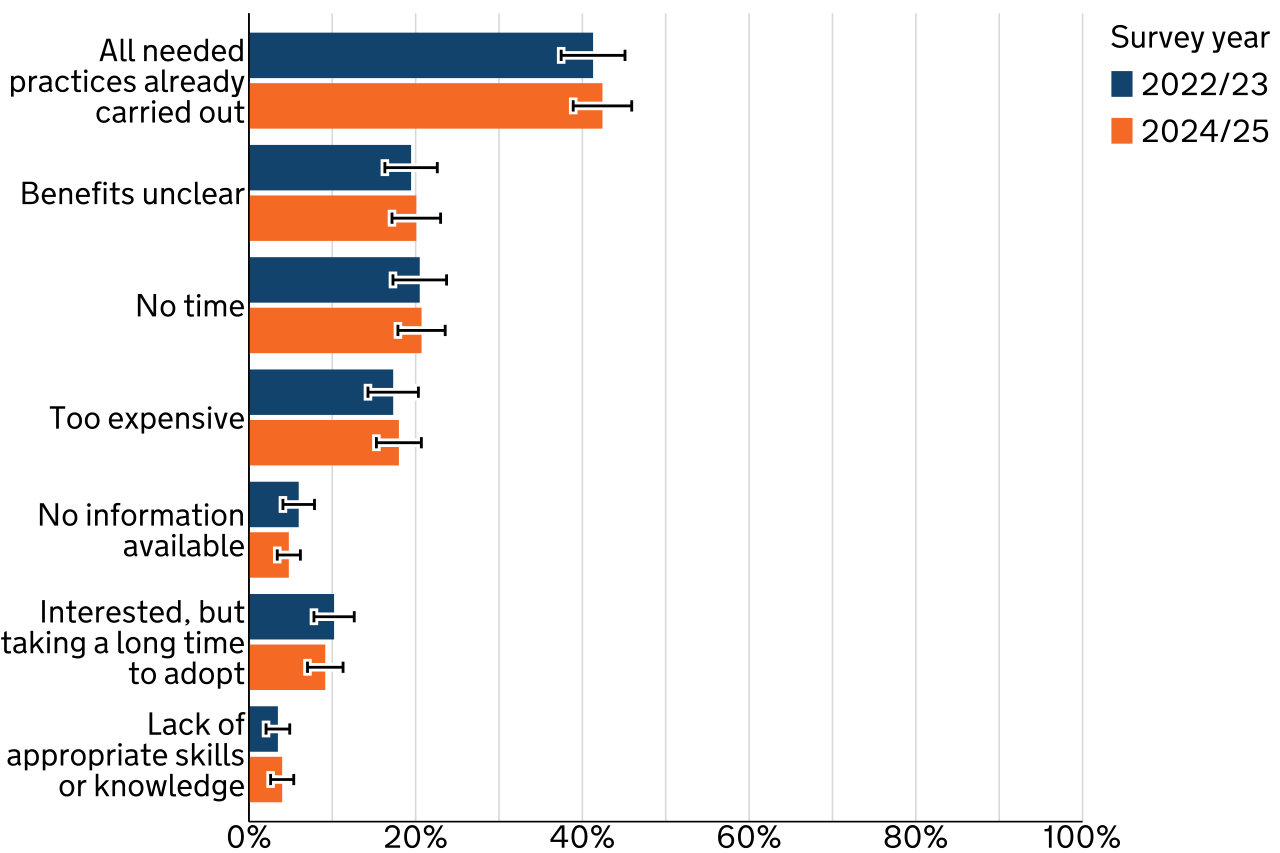
Figure 2.4: Obstacles to uptake of risk management practices for farm businesses in England, 2022/23 and 2024/25
Source: Dataset table 5.1
Figure notes:
-
The legend is presented in the same order as the bars.
-
95% Confidence Intervals have been presented to show the range where the true value is likely to lie and provides an indication of the degree of uncertainty of the estimate; see section 6.2 for more detail.
Figure 2.4 shows that, in 2024/25, the top two reasons why farms were not doing more, or any, risk management practices were the same as the top business management practice reasons: 42% were already doing all of the practices that they needed, and 21% had no time to carry out more, or any, of the practices. Other reasons were that the benefits of some, or all, of the practices were unclear (affecting 20% of farms) and some, or all, of the practices were too expensive (18%).
Dataset table 5.2 shows that the most common reason across each of the different farm types was also that they were already doing all of the practices that they needed. The same was true across each of the farm business sizes (shown in dataset table 5.3) and performance bands (dataset table 5.4).
3 Accessing advice
Within the survey, the following options were available for the sources through which farmers access business management advice when they need it:
- No advice needed.
- Talking to other farmers.
- The farming media.
- Events and demonstrations.
- Discussion groups or farm walks.
- Advice supplied with no direct charge or subsidised specific advice.
- Specific business advice supplied for a charge.
- Growth Hubs.
- Government provided advice.
Additionally, the following options were available for the sources through which farmers access technical advice when they need it:
- No advice needed.
- Talking to other farmers.
- The farming media.
- Events and demonstrations.
- Discussion groups or farm walks.
- Advice supplied with no direct charge or subsidised specific advice.
- Specific business advice supplied for a charge.
- Using performance indicators.
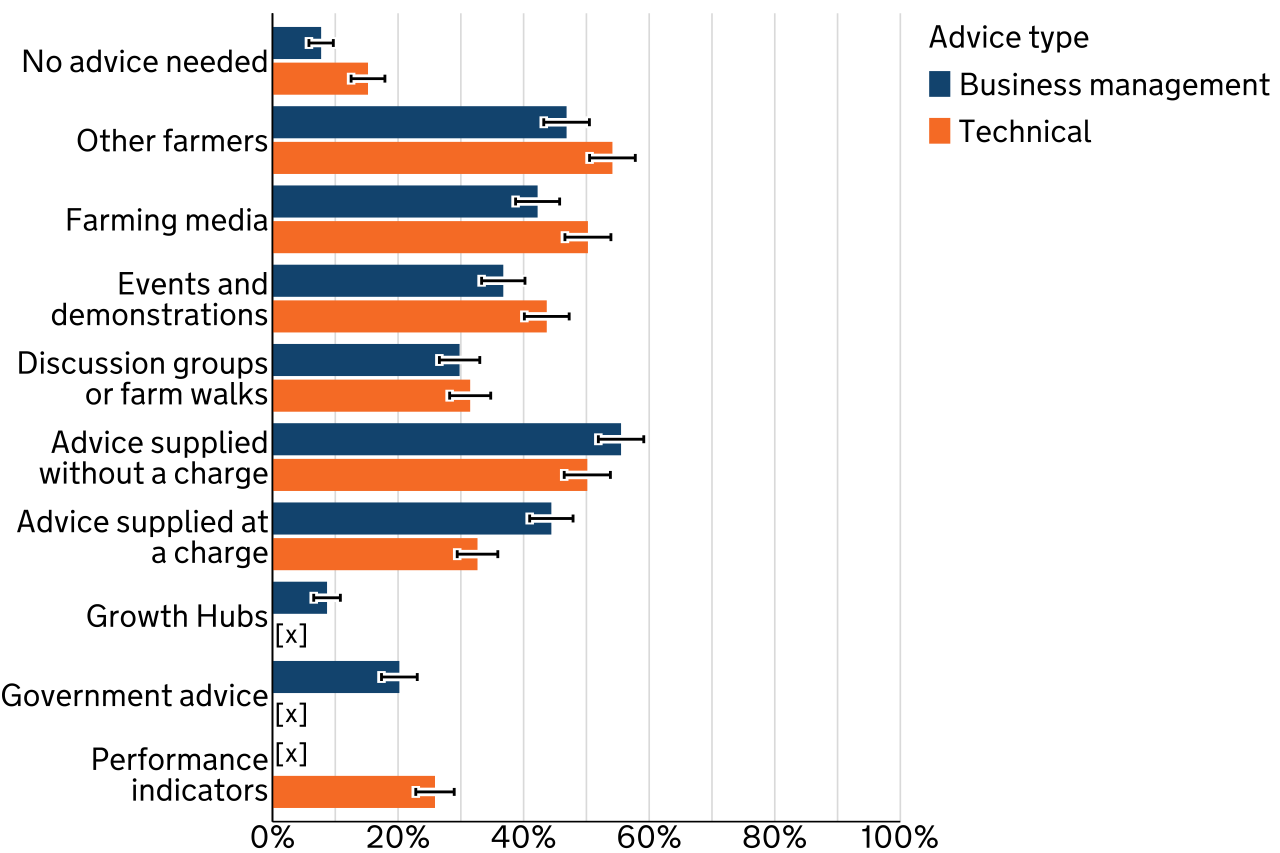
Figure 3.1: Sources of business management and technical advice for farm businesses in England, 2024/25
Source: Dataset tables 3.1 and 6.1
Figure notes:
-
The legend is presented in the same order as the bars.
-
95% Confidence Intervals have been presented to show the range where the true value is likely to lie and provides an indication of the degree of uncertainty of the estimate; see section 6.2 for more detail.
-
The questions on each type of advice had some different options for answers; the symbol [x] denotes that the option was not available as an answer to the given question.
Figure 3.1 shows that 8% of farm businesses in 2024/25 felt they did not need any business management advice, while 15% of farms felt they needed no technical advice. In comparison with 2022/23, this represented a negligible change in farms not seeking business management advice and a 13 percentage points rise of not seeking technical advice.
Farms used most of the advice sources at similar rates for both types of advice. For example, 47% of farms got business management advice from talking to other farmers, while 54% used this for technical advice. This was the most commonly used source of technical advice. Likewise, advice supplied without a charge was the most common source of business management advice, with 56% using it, while 50% of farms used this as a source of technical advice.
In the survey, Growth Hubs and government advice were classified as a source of business management advice only. Growth Hubs are regional organisations supported by local and national authorities that provide tailored advice, support and resources to help businesses grow, innovate and thrive. In 2024/25, 9% of farms got business management advice through Growth Hubs, which was a rise of 6 percentage points compared with 2022/23. Furthermore, 20% of farms sought business management advice from government sources in 2024/25. This includes advice from the Farming Resilience Fund and Catchment Sensitive Farming, as well as other similar sources. Advice from the government-funded Farming Advice Service is included within ‘advice supplied without a charge’.
Performance indicators were only classified as a source of technical advice, as they cover the use of Estimated Breeding Values (EBVs), Profitable Lifetime Indices (PLIs), and crop recommendation lists. These were used as a source of technical advice by 26% of farms in 2024/25, representing a fall of 10 percentage points compared with 2022/23.
3.1 Business management advice
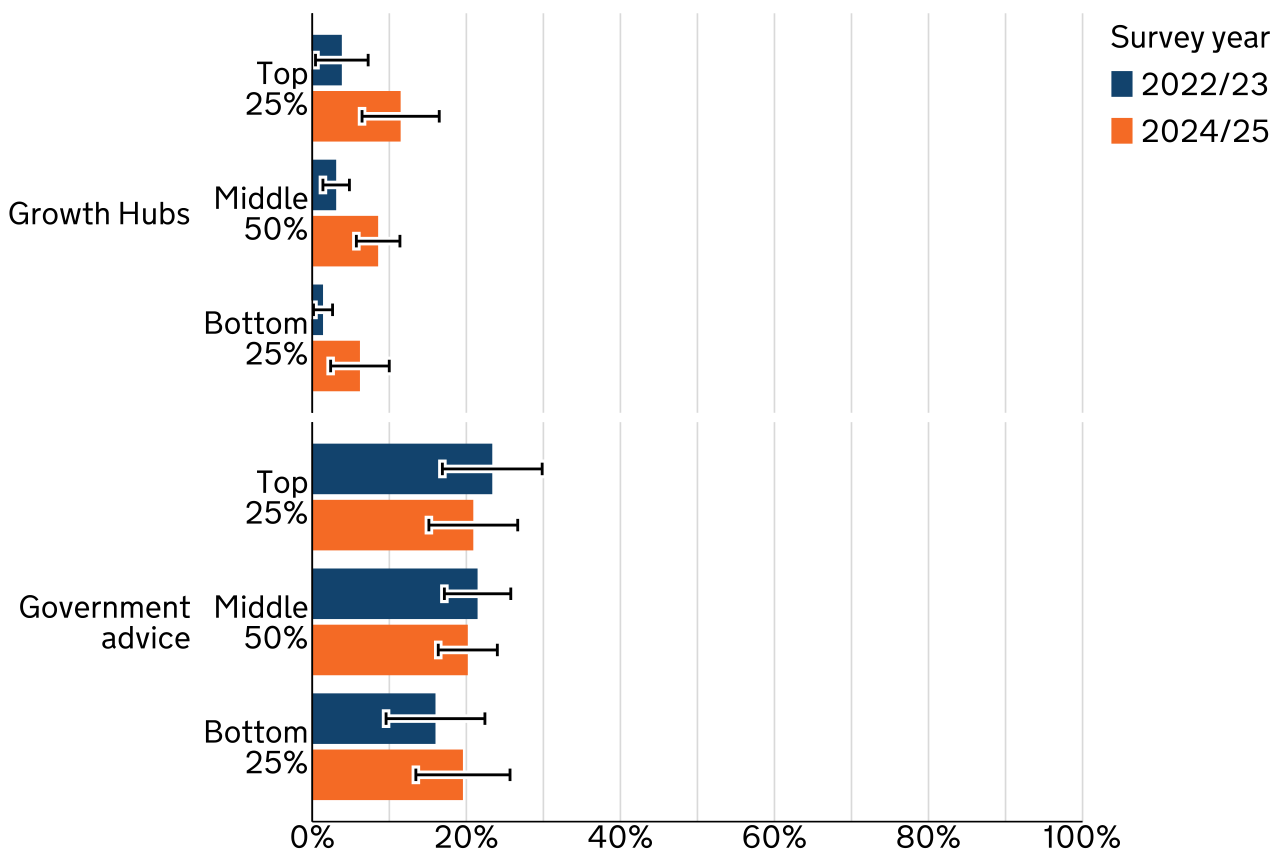
Figure 3.2: Farms businesses seeking business management advice directly from public bodies in England by farm economic performance band, 2022/23 and 2024/25
Source: Dataset table 3.4
Figure notes:
-
The legend is presented in the same order as the bars.
-
95% Confidence Intervals have been presented to show the range where the true value is likely to lie and provides an indication of the degree of uncertainty of the estimate; see section 6.2 for more detail.
Figure 3.2 shows how farms used public bodies to get business management advice in 2024/25. This does not include advice from the Farming Advice Service, which is paid for by Defra but provided by independent advisers. There was an increase in the use of Growth Hubs within all of the performance bands, for example, the percentage of bottom 25% economic performers using Growth Hubs increased by 5 percentage points to 6%. However, the top 25% economic performers remained the most frequent users, increasing by 8 percentage points to 11%.
Only the bottom 25% performers increased their use of government advice in 2024/25, while the frequency of use in the middle 50% and top 25% performing farms decreased. This meant they all used government advice at a rate of around 20%.
3.2 Technical advice
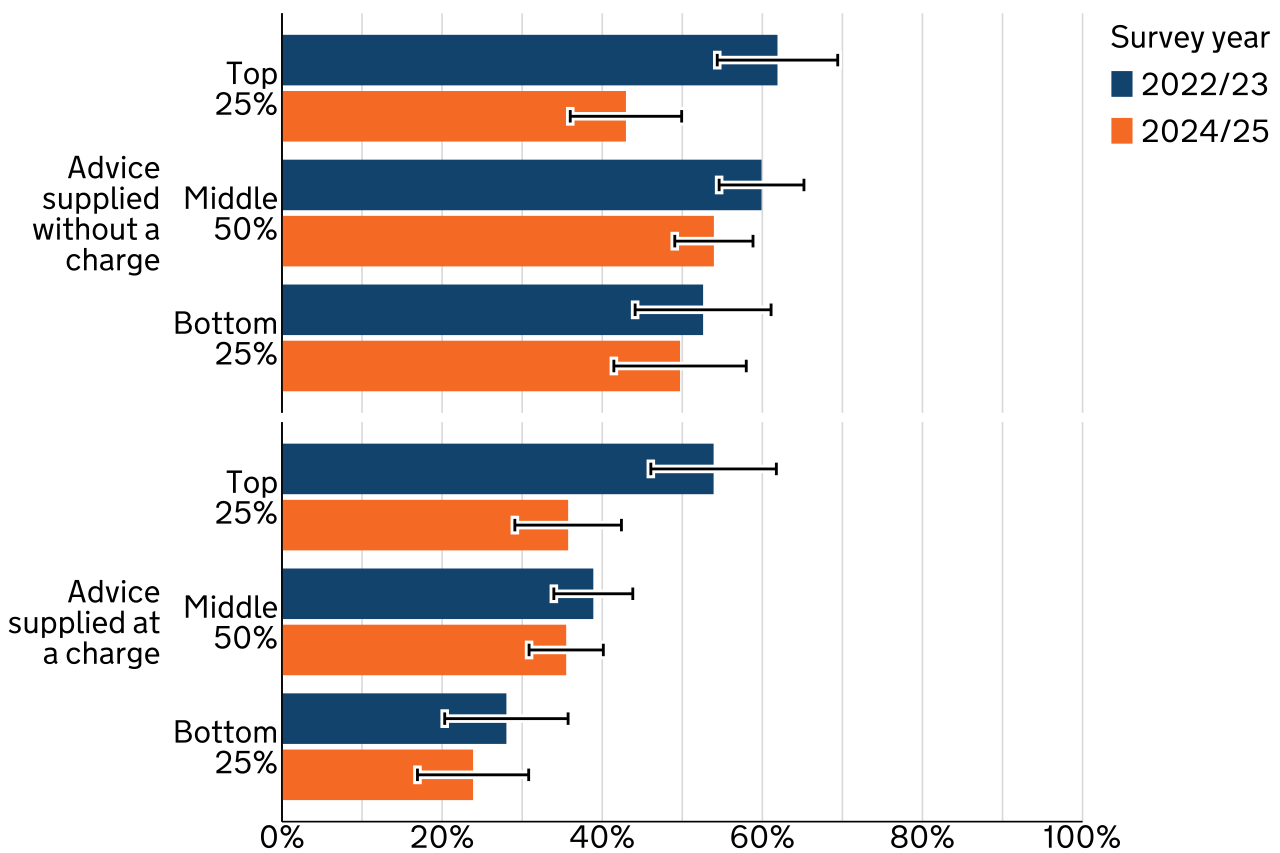
Figure 3.3: Farm businesses seeking technical advice with and without a charge in England by farm economic performance band, 2024/25
Source: Dataset table 6.4
Figure notes:
-
The legend is presented in the same order as the bars.
-
95% Confidence Intervals have been presented to show the range where the true value is likely to lie and provides an indication of the degree of uncertainty of the estimate; see section 6.2 for more detail.
Advice supplied without a charge includes government-subsidised advice from the Farming Advice Service. This is provided by qualified, independent advisers under contract to Defra. Other advice without a charge may come from input suppliers, and other similar sources. It does not include sources which are covered under more specific options, such as discussion groups or farm walks.
Advice supplied with a charge covers any advice the farm has paid for, including from consultants, except where another option is more specific, for example, trade magazines (covered under farming media) or paid-for events (covered under events and demonstrations).
All performance bands decreased their use of both types of advice in 2024/25. The biggest drops for both advice types were in the top 25% economic performing farms, where each rate fell around 20 percentage points.
All performance bands used free advice at a higher rate than paid-for advice, but the difference was largest in the bottom 25% performers, at 26 percentage points.
4 Succession planning
New to the survey in 2024/25 was a question asking farms about their succession planning. The survey included the following optional responses:
- Reviewing current succession plan.
- Creating a new succession plan.
- Have a new succession plan but not reviewing it.
- Succession plan not considered.
- Response declined.
- Out of scope (i.e. not relevant to structure).
Unlike all of the other questions covered in this publication, farms could only choose one response.
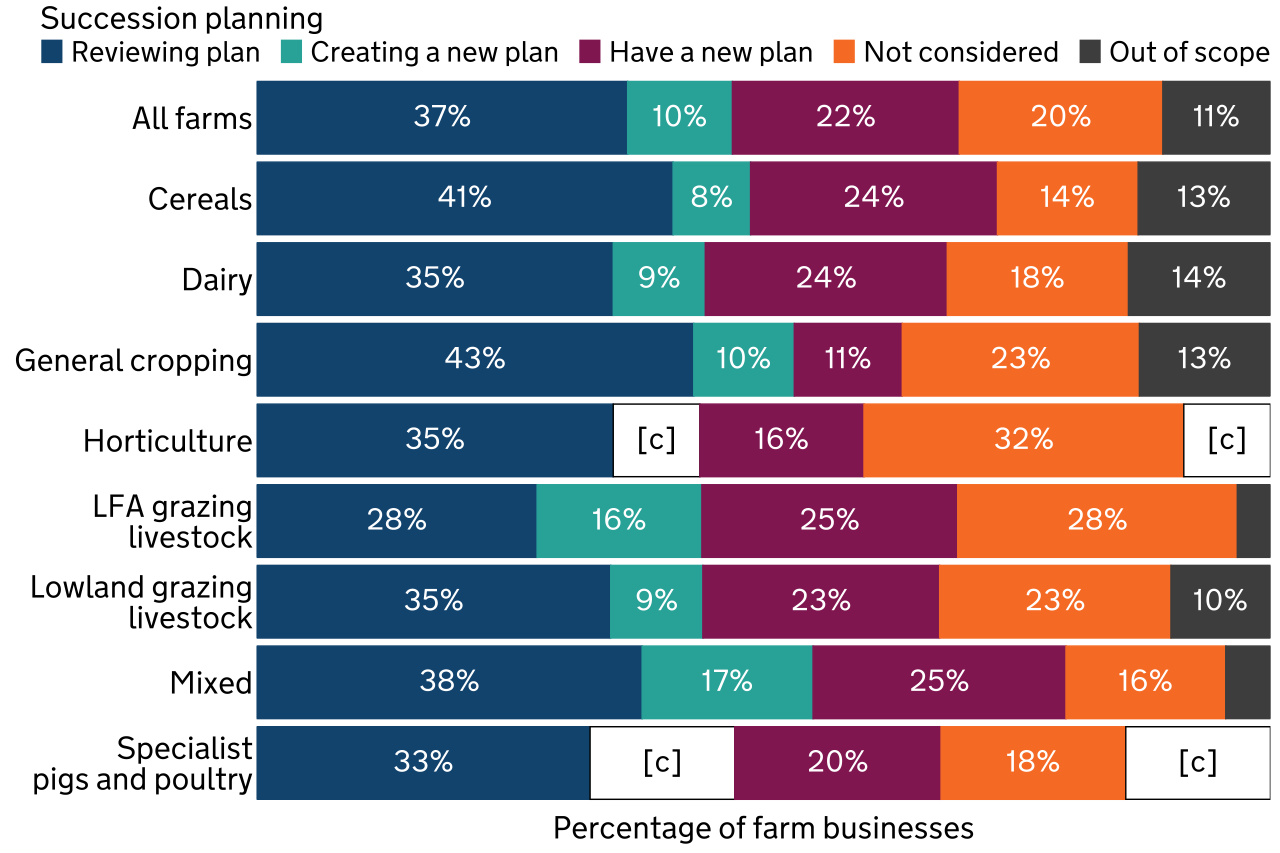
Figure 4.1: Succession planning in farm businesses in England, 2024/25
Source: Dataset tables 7.1 and 7.2
Figure notes:
- The legend is presented in the same order as the bars.
- Text is not displayed where proportions are below 5%.
- White bars with black outlines and the symbol [c] indicate that results have been suppressed due to a small sample size. The size of the bar does not indicate the suppressed value. Suppressed values are included in the ‘All farms’ averages.
- ‘Out of scope’ means that the farm had a business structure where succession planning was not relevant.
Figure 4.1 shows that, in 2024/25, 37% of farm businesses were reviewing their current succession plan. A further 22% had a new succession plan in place, and 20% had not considered a succession plan. Around one in ten farm businesses were creating a new succession plan.
This pattern continued across all farm types, where it was most common that farm businesses were reviewing their current succession plan. It was also least common across all farm types that farms either had a business structure where succession planning was not relevant, or they were creating a new succession plan.
5 What you need to know about this release
5.1 Contact details
Responsible statistician: Cat Hand
Public enquiries: fbs.queries@defra.gov.uk
For media queries between 9am and 6pm on weekdays:
Telephone: 0330 041 6560
Email: newsdesk@defra.gov.uk
5.2 User engagement
In line with Defra’s User Engagement for Statistics Policy Statement and the Code of Practice for Official Statistics, we are committed to ensuring that our statistics are of value and meet user needs, and we welcome any feedback or suggestions regarding this publication. To provide feedback, you can email us at: fbs.queries@defra.gov.uk. You can also register as a user of the FBS statistics publications. Registering as a user means we will be able to contact you regarding any user engagement activities that we may run, such as seeking feedback on proposed changes.
5.3 Survey content, methodology and data uses
The Farm Business Survey is an annual survey providing information on the financial position, physical characteristics, and economic performance of farm businesses in England. The sample of farm businesses covers all regions of England and all types of farming.
Data for the Farm Business Survey are collected through face-to-face interviews with farmers, conducted by highly trained research officers.
The data are widely used by the industry for benchmarking and inform wider research into the economic performance of the agricultural industry, as well as for evaluating and monitoring current policies. The data will also help to monitor farm businesses throughout the Agricultural Transition period.
5.4 Availability of results
All Defra statistical notices can be viewed on the Statistics at Defra page.
More publications and results from the Farm Business Survey are available on the Farm Business Survey Collection page.
6 Technical note
6.1 Survey coverage and weighting
The Farm Business Survey only includes farm businesses with a Standard Output of at least £21 thousand, based on activity recorded in the previous June Survey of Agriculture and Horticulture. In 2024/25, the sample of 1,426 farms represented approximately 49,300 farm businesses in England.
Initial weights are applied to the Farm Business Survey records based on the inverse sampling fraction for each design stratum (farm type and farm size). Dataset table 16 from the Farm Accounts in England publication shows the distribution of the sample compared with the distribution of businesses from the 2024 June Survey of Agriculture. These initial weights are then adjusted, using calibration weighting, so that they can produce unbiased estimates of a number of different target variables. These variables have been updated due to the BPS data no longer being available in 2024/25. The detailed technical note on the weighting methodology has been updated to reflect the changes in the calibration model. More detailed information about the Farm Business Survey can be found on the technical notes and guidance page. This includes information on the data collected, information on calibration weighting and definitions used within the Farm Business Survey.
Questions on farm business management practices are optional; the data used for this analysis is from the farms which answered the questions. In 2024/25 this subsample consisted of 1,046 farms (73.4% of the full sample). This subsample has been reweighted using a method that preserves marginal totals for populations according to farm type and farm size groups. As such, values shown in this publication may not exactly match results calculated using the main FBS weights.
6.2 Accuracy and reliability of the results
As it is impractical to survey the entire population of farms, estimates derived from the Farm Business Survey data are inherently subject to sampling error. This is a core principle in statistical survey methodology, which aims to infer population parameters by obtaining a representative sample through carefully designed sampling techniques. To quantify sampling error and provide a measure of uncertainty, this publication presents 95% confidence intervals for estimated means. These intervals, shown as error bars in bar plots, indicate the range within which we expect the true population mean to lie for 95% of similarly constructed samples. Narrower confidence intervals typically indicate larger sample sizes or less variability within the sample, thereby offering more precise estimates of the population mean. Conversely, wider confidence intervals often result from smaller sample sizes or greater sample standard deviations, signalling less precision. These wider intervals should be interpreted with greater caution. Statistically, a confidence interval provides a plausible range for the true population mean based on the sample data. Specifically, a 95% confidence interval reflects a process that, under repeated sampling, would contain the true population mean in 95% of such intervals, rather than indicating a 95% probability for any single interval to include the population mean.
6.3 Question changes in 2024/25
Significant changes were made to this section of the survey in 2022/23. These changes are detailed in the previous publication.
In 2024/25, two new options were added as available responses to the question which asked farmers which risk management practices they were carrying out to minimise risk. These were ‘Undertake flood risk management’ and ‘Uptake of SFI agreements specifically for financial risk management’.
Additionally, a question was added which asked farms if they had a succession plan. The available answers were ‘Reviewing current succession plan’, ‘Creating a new succession plan’, ‘Have a new succession plan’, ‘Succession plan not considered’, ‘Response declined’, and ‘Out of scope’.
Previous publications analysed an ‘Other’ option for various questions. Because this option encompassed different activities in each year, and was therefore not comparable, this data and analysis has been removed from the 2024/25 publication.
6.4 Definitions
Farm type
This refers to the ‘robust type’, which is a standardised farm classification system.
Farm business size
Farm business size is classified using the Standard Labour Requirement (SLR), rather than by Standard Output grouping or land area. The SLR of a farm represents the normal labour requirement for all the farm’s cropping and livestock activities under typical conditions. This is measured in Full Time Equivalents (FTE), which is the number of full-time workers required. The SLR is calculated from standard coefficients applied to each enterprise on the farm. The standard coefficients represent the input of labour required per head of livestock or per hectare of crops for enterprises of average size and performance.
The most recent update to SLR coefficients was in 2024, which was based on data from the 2019/20 to 2022/23 surveys. Before this, the previous update was in 2009, which was based on data from the 2004/05 to 2007/08 surveys.
| Farm business size | SLR |
|---|---|
| Part-time | Less than 1 FTE |
| Small | 1 to less than 2 FTE |
| Medium | 2 to less than 3 FTE |
| Large | 3 to less than 5 FTE |
| Very Large | 5 or more FTE |
Performance band
Economic performance for each farm is measured as the ratio between economic output (mainly sales revenue) and inputs (costs). The inputs for this calculation include an adjustment for unpaid manual labour. The higher the ratio, the higher the economic efficiency and performance. The farms are then ranked and allocated to performance bands based on economic performance percentiles:
-
Bottom 25% of economic performers.
-
Middle 50% of economic performers.
-
Top 25% of economic performers.
Less Favoured Areas
The Less Favoured Areas (LFA) classification was established in 1975 as a means to provide support to farms where natural characteristics (geology, altitude, climate, short growing season, low soil fertility, or remoteness) make it difficult for farmers to compete. Within the LFA are the Severely Disadvantaged Areas (SDA) and the Disadvantaged Areas (DA). The SDA are more environmentally challenging areas and largely upland in character. The distinction between LFA and non-LFA farms is generally applied to grazing livestock farms.
An interactive map of LFA boundaries in England is available at this link: Interactive LFA map (select Map Layers and search for ‘Less Favoured Areas (England)’), and a static map is at this link: Static LFA map.