Evaluation of those invited to move to Universal Credit from tax credits
Published 26 February 2026
Applies to England, Scotland and Wales

© Crown copyright 2026
This publication is licensed under the terms of the Open Government Licence v3.0 except where otherwise stated. To view this licence, visit nationalarchives.gov.uk/doc/open-government-licence/version/3 or write to the Information Policy Team, The National Archives, Kew, London TW9 4DU, or email: psi@nationalarchives.gov.uk.
Where we have identified any third party copyright information you will need to obtain permission from the copyright holders concerned.
This publication is available at https://www.gov.uk/government/statistics/evaluation-of-those-invited-to-move-to-universal-credit-from-tax-credits/evaluation-of-those-invited-to-move-to-universal-credit-from-tax-credits
Crown copyright 2026.
You may re-use this information (not including logos) free of charge in any format or medium, under the terms of the Open Government Licence. To view this licence, visit Open Government Licence for public sector information or write to the Information Policy Team, The National Archives, Kew, London TW9 4DU, or email psi@nationalarchives.gov.uk.
This document/publication is also available on our website at 2026 - ad hoc statistical analyses.
First published February 2026.
ISBN 978-1-78659-948-3
Executive Summary
This report summarises the characteristics, behaviours and outcomes of households in Great Britain who were receiving tax credits only (Working Tax Credit, Child Tax Credit or both) and were invited to move to Universal Credit through the managed migration process. It covers households up to the closure of the tax credit system in April 2025. The evaluation draws on administrative data analysis and externally commissioned customer research. Findings are structured around five core questions.
Who were the tax credit only cohort?
The 651,000 households in scope typically:
-
received both Working Tax Credit and Child Tax Credit
-
lived in urban areas (nearly 90%)
-
were couples (over half)
-
had children (90%)
-
had earnings from employment (nearly three quarters)
The median annual tax credit payment was £6,150, and median household earnings from employment were £18,570. A quarter of households included a disabled adult, and 16% contained a disabled child.
What was the Universal Credit claim rate for this group?
Overall, 70% of households made a Universal Credit claim through managed migration, while 30% did not.
Higher claim rates were seen among households:
-
receiving both Child Tax Credit and Working Tax Credit
-
living in northern regions and countries
-
headed by single females
-
with children
-
without earnings from self-employment
What determined whether a household did or did not claim Universal Credit?
The annual tax credit award amount had the strongest effect. Households receiving £6,000 or more were significantly more likely to claim Universal Credit.
Other factors increasing the likelihood of claiming included:
-
being a single adult household
-
having a disabled adult (or disabled adult and child)
-
receiving Carer’s Allowance
-
having an eldest household member aged 60 to 65
Factors associated with not claiming included:
-
having earnings from self-employment
-
receiving Working Tax Credit only
-
living in London or the South East
-
(once other factors were controlled for) having children
A survey of non-claimants showed that reasons for not claiming Universal Credit included:
-
confusion about eligibility requirements
-
perceptions that they were earning too much or had too much in savings
-
work circumstances had changed or were about to change
-
feeling the claim process was too much effort
-
frustration over needing to move to Universal Credit
-
not wanting to go into the Jobcentre Plus
Qualitative follow-up interviews with non-claimants indicated that there was a complex interplay of reasons for not claiming Universal Credit.
Financial dependency on tax credits and limited savings were strong motivators for claiming among those who did migrate.
What happened to households that did not make a Universal Credit claim?
Of the 195,000 households that did not claim within their migration window:
- 10% had claimed Universal Credit by June 2025
- 3% within 2 months (“reactive claimers”)
- 6% 3 or more months later (“subsequent claimers”).
A survey of non-claimants found that most respondents (91%) had taken at least one financial action since their tax credits had stopped.
In the qualitative follow-up interviews with non-claimants, participants shared that the impacts of not claiming Universal Credit were sometimes wider than financial, with some reporting issues with stress, spending less time with their children, and cutting down on leisure time.
Most of the survey respondents (70%) reported they were unlikely to claim Universal Credit in the future.
What happened to households who moved to Universal Credit?
By June 2025, former tax credit only households represented 6.7% of the Universal Credit caseload. They were spread more evenly across conditionality groups than the wider caseload, with many placed in in-work conditionality[footnote 1].
Key outcomes:
One-third were initially allocated to “working – no requirements”.
After 6 months:
-
two-thirds remained in the same group
-
20% moved group
-
13% had left Universal Credit
The median first Universal Credit award was £690.
Most households received the child element (86%) and transitional protection (two-thirds).
Some households received the housing element (one-third) and the carer or disabled child element (one-fifth).
Awards tended to be higher for couples, single female households, and Child Tax Credit recipients.
What can we conclude?
Of those invited to move from tax credits, the majority did go on to claim Universal Credit. Those invited were more likely to claim if single, with a disability and, most importantly, receiving higher amounts of tax credit. This leads us to conclude the transition provided continuation of financial support for most of these households.
There were some that did not claim, for a variety of reasons relating to personal circumstances, like a lack of dependency on benefits and misconceptions about eligibility, as well as reasons related to the claim process.
For some households, the move also helped identify additional support needs and facilitated access to further help. The findings highlight the importance of financial reliance, perceived eligibility, and household circumstances in shaping claim behaviour and outcomes.
1. Introduction
1.1 Universal Credit
Universal Credit is a means-tested benefit that was introduced to replace six legacy benefits: income-related Employment and Support Allowance, income-based Jobseeker’s Allowance, Housing Benefit, Income Support, Working Tax Credit, and Child Tax Credit.
1.2 Move to Universal Credit
Since December 2018, Universal Credit has been available across the UK. Since then, people have been moving to Universal Credit, when their circumstances change (natural migration), or if they chose to do so (voluntary migration). Customers who do not have a change of circumstances that triggers a natural migration have been moved to Universal Credit through ‘managed migration’, also known as ‘Move to UC’.
Having paused Move to UC during the pandemic, the Department for Work and Pensions (DWP) restarted Move to UC in May 2022. ‘Move to UC’ legacy benefit customers were sent a migration notice giving them 3 months to make a Universal Credit claim. The notice also explained how to access support during this process. In 2023 to 2024, DWP focussed on households receiving tax credits only, introducing Move to other legacy benefit combinations from April 2024. In April 2025, HMRC closed tax credits.
1.3 Summary of existing statistics, insight and research
DWP’s strategy for moving households to Universal Credit consists of three types of migration: natural, voluntary and managed. This approach was set out in Completing the Move to Universal Credit, published in April 2022.
Official statistics on moves to Universal Credit have been published quarterly since August 2023, covering activity from July 2022. Earlier information on households sent migration notices before this period is available in Completing the Move to Universal Credit: Learning from the Discovery Phase.
In January 2023, DWP published Learning from the Discovery Phase, which described the approach to managed migration and findings from the first 499 migration notices issued (the “Earliest Testable Service”). In August 2023, the department published Learning from Initial Tax Credit Migrations.
Further insight on tax credit migrations and early activity for wider benefit cohorts was published in February 2024. This research explored reasons why some tax credit claimants did not move to Universal Credit and provided early evidence on enhanced support needs among 523 households receiving other combinations of legacy benefits invited to claim in September 2023.
In October 2024, DWP published Self-Employed Tax Credit Claimants Research. In December 2024, three further research pieces were released:
-
Findings from surveys and interviews with tax credit customers who did not claim Universal Credit
-
Qualitative research with customers who claimed after their migration deadline
The same month also included insight into Income Support, Housing Benefit and initial Employment and Support Allowance cohorts.
In July 2025, DWP published qualitative research exploring the customer journey for legacy benefit households and the factors influencing decisions to claim Universal Credit.
Insights on Completing the Move for Households Previously on Employment and Support Allowance followed in November 2025.
1.4 Scope of evaluation
This evaluation focuses on customers who previously received tax credits only (Working Tax Credit, Child Tax Credit, or both) and who were sent a migration notice before tax credits closed on 5 April 2025 to understand and describe the characteristics and outcomes for customers previously in receipt of tax credits only.
The analysis is restricted to tax credit only households because most had completed the move to Universal Credit by late 2024. This allows enough time to observe outcomes for households that went on to make a Universal Credit claim.
This group is particularly important because they were not receiving DWP out‑of‑work benefits or Housing Benefit at the time they received their migration notice. Households receiving tax credits alongside other legacy benefits are outside the scope of this report and will be analysed in future work.
This report addresses the following questions:
Section 2: Who were the tax credit only cohort?
Section 3: What was the Universal Credit claim rate for this group?
Section 4: What determined whether a household did or did not claim Universal Credit?
Section 5: What happened to households that did not make a Universal Credit claim?
Section 6: What happened to households who moved to Universal Credit?
Although most analysis is at the household level, some exceptions use individual level data. This is because Universal Credit awards apply to households, but conditionality rules apply to individuals.
The report also draws on publicly available commissioned research with customers who moved to Universal Credit (outlined in Section 1.3), which is used to complement the analysis. Data sources are provided under figures, with full descriptions in the technical annex. Links to the research reports are included where relevant.
2. Who were the tax credit only cohort?
2.1 Total number of migration notices sent
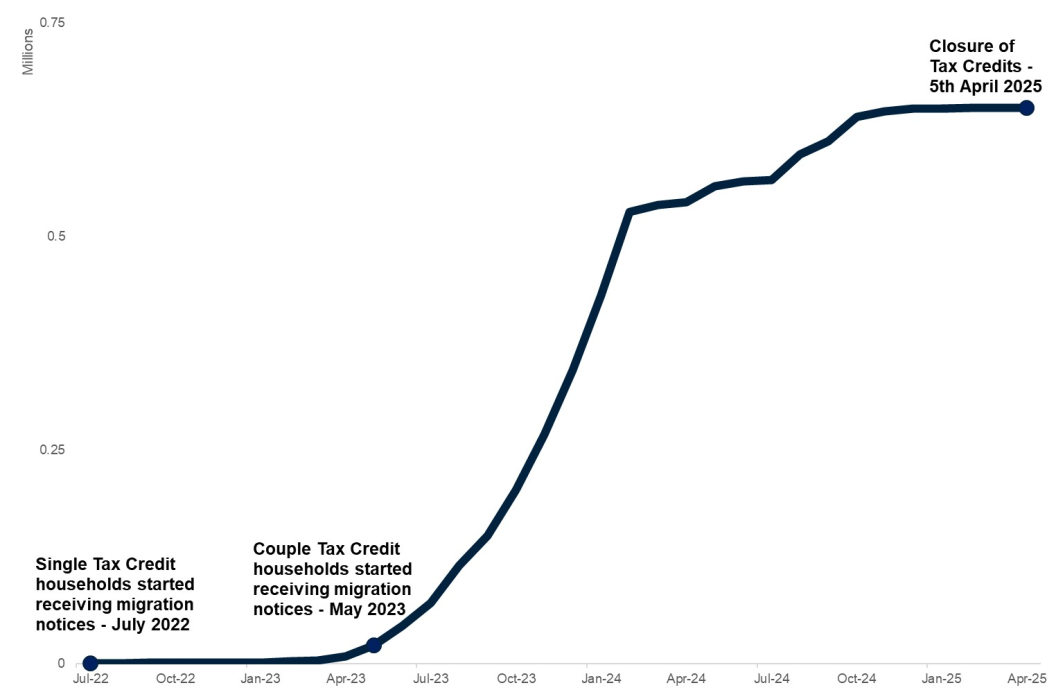
The first migration notices sent to tax credit only recipients were in July 2022. From March 2023 onwards, the number of notices sent increased substantially.
By the time tax credits closed on 5 April 2025, a total of 1.01 million individuals, in 651,000 households, had been sent a migration notice.
Throughout this section, the analysis refers to households.
Figure 2.1: Cumulative migration notices sent to tax credit only households
Source: Move to Universal Credit administrative data, rounded to 10
2.2 Summary of the characteristics of the tax credit only cohort
-
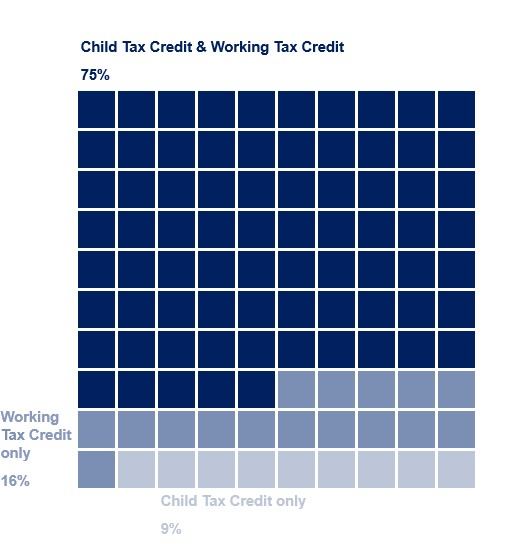
Three-quarters of households received both Working Tax Credit and Child Tax Credit.
-
Almost 9 in 10 lived in an urban area.
-
Over 2 in 5 households were aged 40 to 49 (based on eldest adult in the household).
-
More than half of households were couples.
-
9 in 10 households had children.
-
Nearly three-quarters had earnings from employment; 1 in 5 had earnings self-employment.
-
Over half had at least one member who had previously received an out-of-work benefit.
-
A quarter of households included at least one disabled member; 1 in 6 had a disabled child; three-quarters of households with a disabled adult were receiving Personal Independence Payment or Disability Living Allowance.
-
1 in 20 households were receiving Carer’s Allowance.
-
The median annual household tax credit award at the point of invitation was £6,150.
-
Median annual household earnings from employment were £18,570.
2.3 Detailed analysis of the characteristics
This section provides detailed breakdowns of the characteristics of tax credit only households sent a migration notice during the move to Universal Credit.
Characteristics have been drawn from the tax credit claim or from linked analytical data held by DWP.
2.3.1 Type of tax credit
Most households invited to move to Universal Credit were receiving both Working Tax Credit and Child Tax Credit.
Figure 2.3.1: Type of tax credit
Source: Move to Universal Credit administrative data
Note: Child Tax Credit only has been rounded up from 8.4% for this visualisation (Child Tax Credit & Working Tax Credit = 75.4% and Working Tax Credit only = 16.3%)
2.3.2 Geography
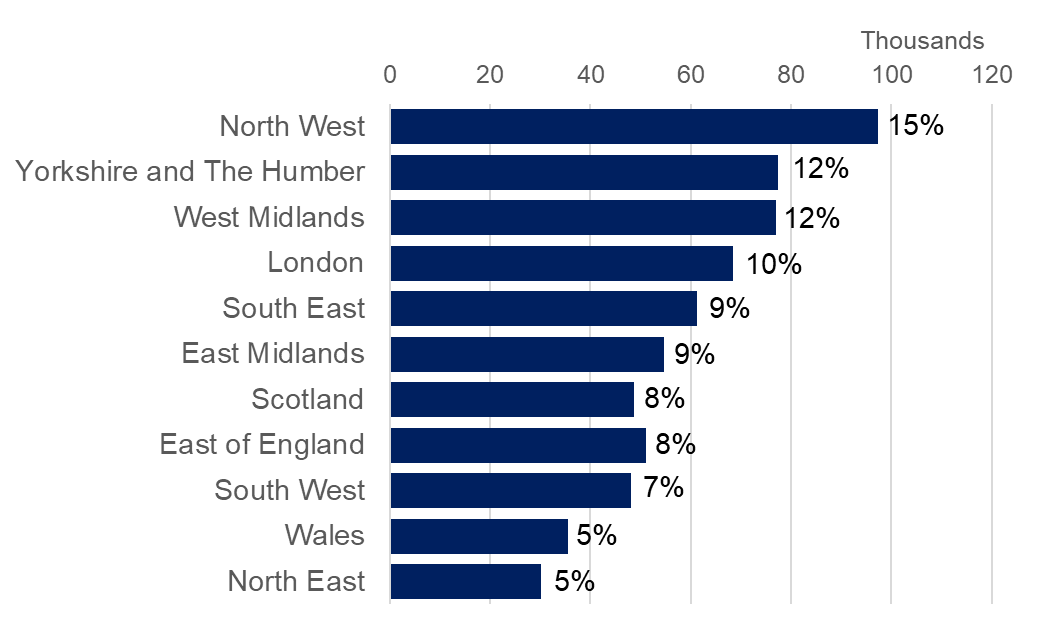
Households from all regions and countries were represented in the tax credit only cohort. The North West accounted for the highest share (15%), while the North East and Wales each made up 5%.
Almost 9 in 10 households lived in urban areas, with just over 1 in 10 in rural areas.
Figure 2.3.2: Distribution of region / country
Source: Move to Universal Credit administrative data, rounded to 10
Note: Percentages are labelled to the nearest percentage
2.3.3 Age distribution
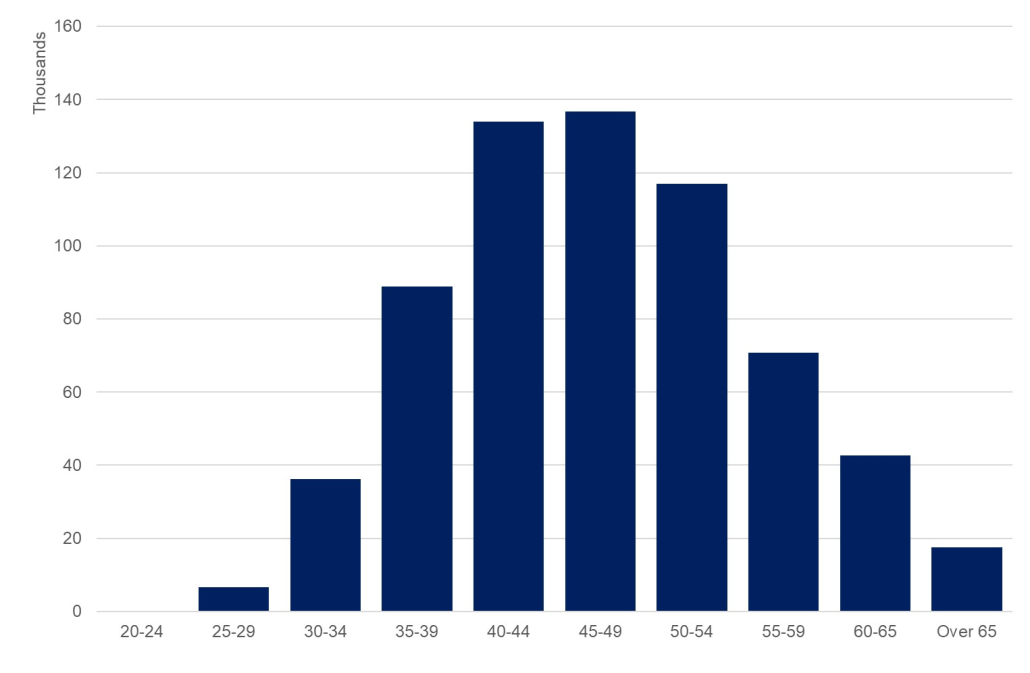
Figure 2.3.3 shows the age distribution of the cohort. Over 2 in 5 households had an eldest member aged 40 to 49. Nearly 2 in 5 had an eldest member aged 50 or above. 1 in 5 households had an eldest adult under 40.
Figure 2.3.3: Distribution of eldest household member
Source: Move to Universal Credit administrative data, rounded to 10
2.3.4 Type of household
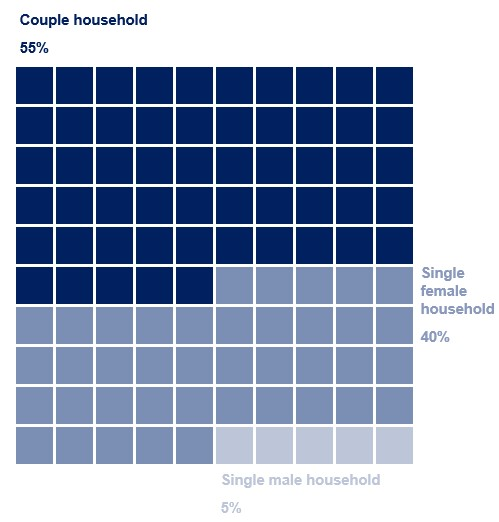
There was a fairly even split between single and couple households. Among single households, the majority were female. Over half of all households were couples. Two in 5 were single female households and 1 in 20 were single male households.
Figure 2.3.4: Household type
Source: Move to Universal Credit administrative data
2.3.5 Children in the household
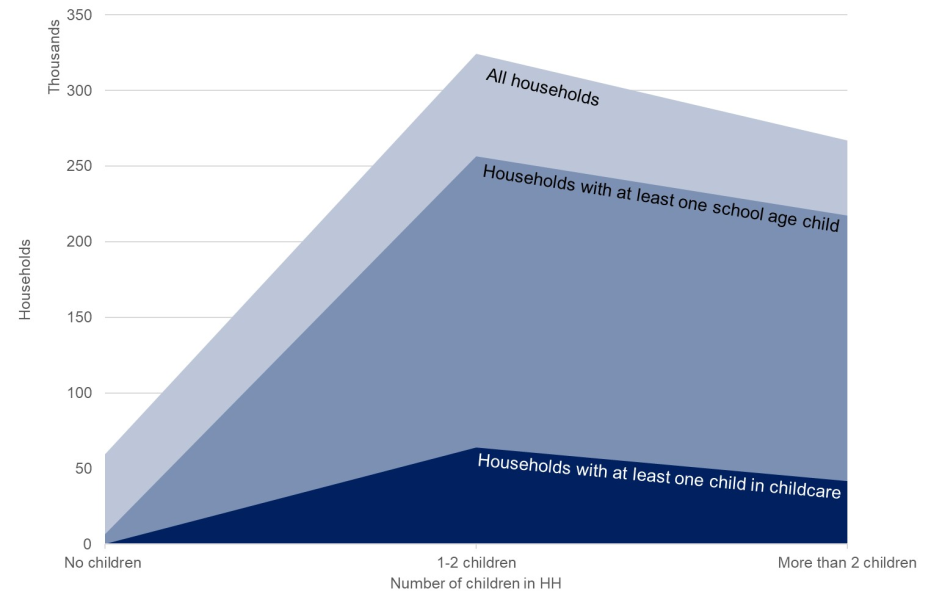
Nine in 10 households had children. Half had one or 2 children. Three-quarters had at least one child of school age (4 to 17). 16% had at least one child in childcare.
Figure 2.3.5.1: Households by number of children
Source: Move to Universal Credit administrative data matched with legacy to Universal Credit data, rounded to 10
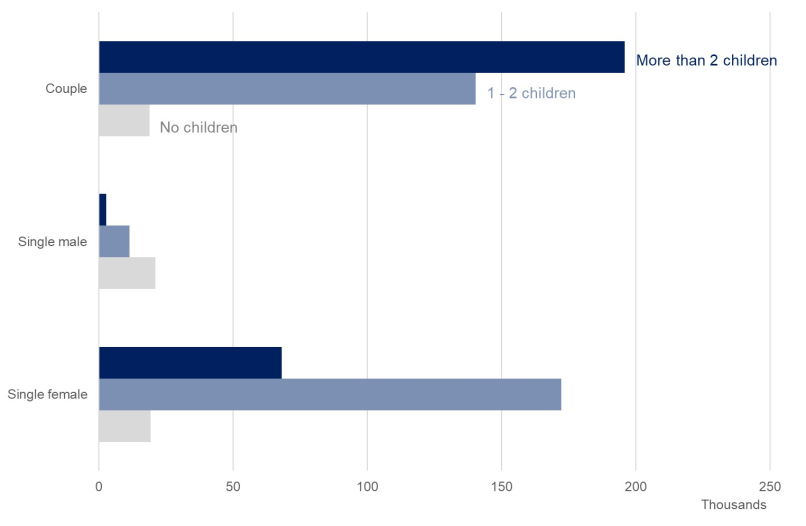
Couple households (95%) and single female households (93%) were much more likely to have children than single male households (42%).
Figure 2.3.5.2: Number of children by household type
Source: Move to Universal Credit administrative data matched with legacy to Universal Credit data, rounded to 10
2.3.6 Employment status
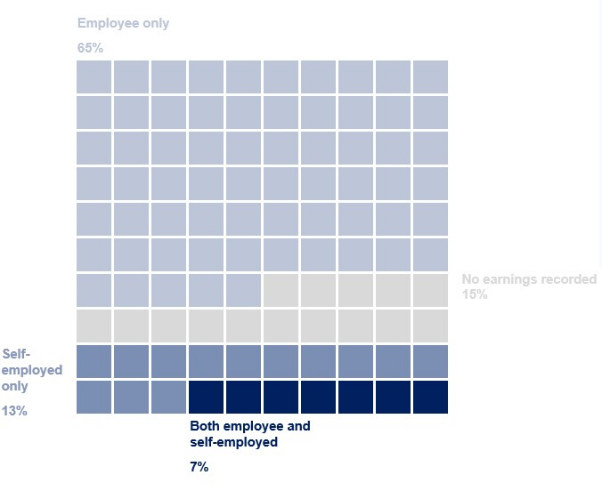
One in 5 households had earnings from self-employment. Nearly three-quarters had earnings from employment. Nearly 1 in 6 had no recent recorded earnings.
Figure 2.3.6: Household employment status
Source: Move to Universal Credit administrative data combined with Legacy to Universal Credit data
Although these households were not receiving DWP out-of-work benefits at the time of their notice, half had at least one member who had received an out-of-work benefit at some point since 1999.
2.3.7 Disability
A quarter of households had at least one disabled member. 16% had a disabled child.
Figure 2.3.7: Households with disability or disabled child element of tax credit
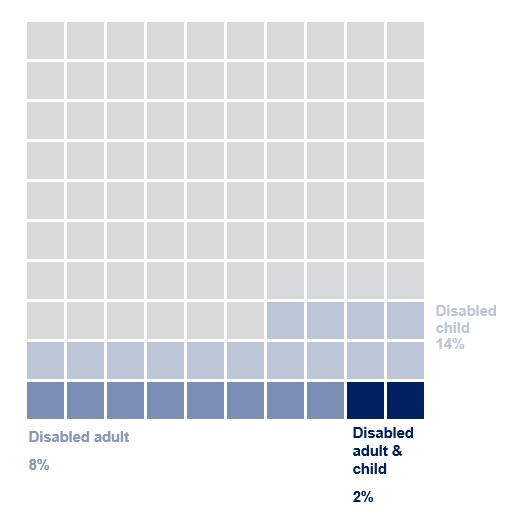
Source: Move to Universal Credit administrative data matched with legacy to Universal Credit data, Personal Independence Payment and Disability Living Allowance data
Among households with disabled adults but no disabled children, three-quarters were receiving Personal Independence Payment or Disability Living Allowance at the time of the migration notice. For households with both disabled adults and children, the figure was 77%.
Over 1 in 20 households received Carer’s Allowance. Where both a disabled adult and disabled child were present, almost one-third (29%) received Carer’s Allowance. Among households with a disabled child only, 22% received Carer’s Allowance. Where only a disabled adult was present, 5% received Carer’s Allowance.
2.3.8 Tax credit award amount
Amongst tax credit only households the average (median) annual amount of household tax credit in payment was £6,150.[footnote 2]
Single female households had a median award over £3,000 higher than single male households, likely due to their higher likelihood of having children.
Table 2.3.8: Households receiving migration notices and median annual tax credit amount
| Household type | Migration notices sent to households | Median annual tax credit amount |
|---|---|---|
| Single female | 259,880 | £6,170 |
| Single male | 35,420 | £3,230 |
| Couple | 355,350 | £6,530 |
Source: Move to Universal Credit administrative data matched with Legacy to Universal Credit data, rounded to 10
Figure 2.3.8: Box and whisker plot of distribution of Tax credit award amount
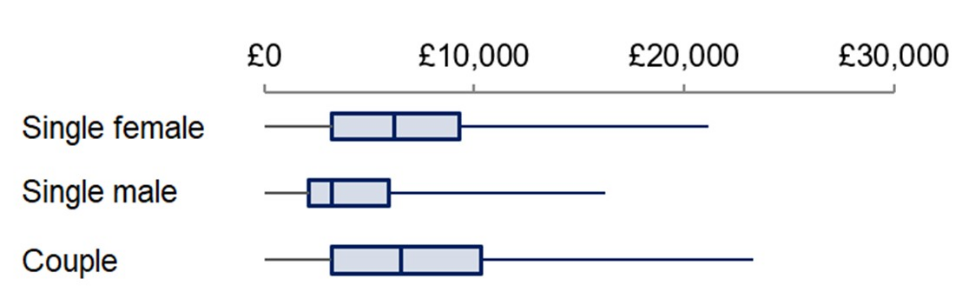
Source: Move to Universal Credit administrative data matched with Legacy to Universal Credit data
Note: The box represents the lower quartile, median and upper quartile where 50% of the data sits, and ‘whisker’ lines represent the minimum and maximum values.
2.3.9 Earnings
551,500 tax credit only households who were receiving earnings from employment or self-employment.
As noted in section 2.3.6, almost three-quarters of households (467,280) were receiving earnings from employment. The average (median) annual household earnings from employment was £18,570.
The average (median) annual household earnings from self-employment was £10,120.[footnote 3]
Table 2.3.9 shows average (median) annual earnings from employment by household type.
Table 2.3.9: Households with earnings from employment and median annual earnings
| Household type | Households with earnings information available | Median annual earnings amount |
|---|---|---|
| Single female | 206,700 | £16,950 |
| Single male | 15,380 | £15,510 |
| Couple | 245,200 | £20,740 |
Source: Move to Universal Credit administrative data matched with Legacy to Universal Credit data, rounded to 10
Figure 2.3.9: Box and whisker plot of distribution of earnings from employment
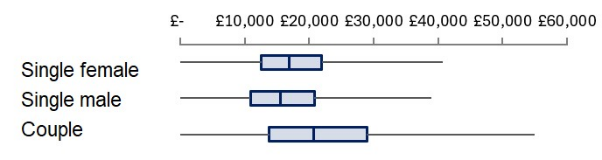
Source: Move to Universal Credit administrative data matched with Legacy to Universal Credit data
Note: The box represents the lower quartile, median and upper quartile where 50% of the data sits, and ‘whisker’ lines represent the minimum and maximum values.
3. What was the Universal Credit claim rate for this group?
3.1 Total number of Universal Credit claims and overall claim rate
This section refers to households. A Universal Credit claim is defined as a claim application submitted after a household receives a migration notice and within one month of the migration deadline (including any extensions). This definition is aligned with the Move to Universal Credit Official Statistics.
Of the 651,000 households sent a migration notice:
-
455,000 households (around 70%) made a claim to Universal Credit
-
195,000 households (around 30%) did not make a Universal Credit claim, and their tax credit claim was subsequently closed
Table 3.1: Migration notices sent to households and Universal Credit claims made, to 5th Apr 2025
| Migration notices sent to households | Claims to Universal Credit | Claim rate | |
|---|---|---|---|
| Tax Credit only total | 650,570 | 455,200 | 70% |
Source: Move to Universal Credit administrative data, rounded to 10
Figure 3.1: Migration notices sent to households and Universal Credit claims made over time
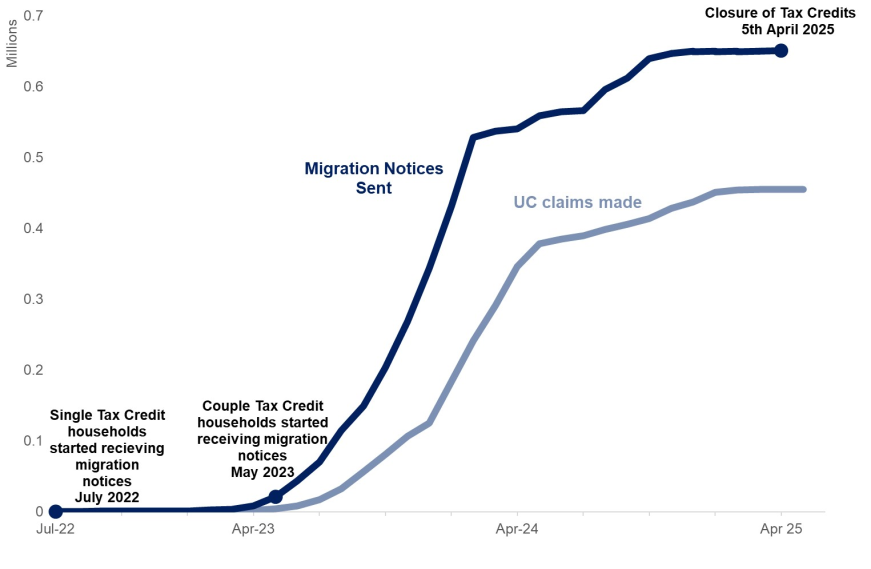
Source: Move to Universal Credit administrative data, rounded to 10
3.2 Summary of Universal Credit claim rates[footnote 4]
The following groups had higher Universal Credit claim rates compared with their respective counterparts:
-
Households receiving both Working Tax Credit and Child Tax Credit
-
Households in northern regions/countries
-
Households where the eldest member is aged 25 to 34
-
Single female households
-
Households with children
-
Households with no earnings from self-employment
-
Households including disabled individual(s)
3.2.1 Tax credit type
Households receiving both Working Tax Credit and Child Tax Credit formed the largest group receiving a migration notice and had the highest Universal Credit claim rate, with nearly three-quarters going on to make a Universal Credit claim.
In comparison, just over half of the 106,000 households receiving Working Tax Credit only made a Universal Credit claim.
Table 3.2.1: Migration notices and Universal Credit claims by tax credit type, to 5 April 2025
| Household type | Migration notices sent to households | Claims to Universal Credit | Claim rate |
|---|---|---|---|
| Child Tax Credit only | 54,450 | 36,760 | 68% |
| Working Tax Credit only | 105,790 | 54,100 | 51% |
| Child Tax Credit and Working Tax Credit | 490,330 | 364,340 | 74% |
Source: Move to Universal Credit administrative data, rounded to 10
3.2.2 Geographical breakdown
Regions in the north of England and Scotland generally had higher Universal Credit claim rates. The gap between London and the North East was up to 9 percentage points.
Table 3.2.2.1: Migration notices and Universal Credit claims by region/country, to 5 April 2025
| Region/country | Migration notices sent to households | Claims to Universal Credit | Claim rate |
|---|---|---|---|
| North East | 30,230 | 22,230 | 74% |
| Scotland | 48,620 | 35,170 | 72% |
| North West | 97,220 | 69,960 | 72% |
| Yorkshire and Humber | 77,460 | 55,510 | 72% |
| East Midlands | 54,750 | 39,100 | 71% |
| Wales | 35,440 | 24,980 | 71% |
| West Midlands | 76,900 | 54,200 | 70% |
| East of England | 51,120 | 35,150 | 69% |
| South West | 48,170 | 32,960 | 68% |
| South East | 61,270 | 41,160 | 67% |
| London | 68,330 | 44,470 | 65% |
| Unknown | 1,060 | 300 | - |
Source: Move to Universal Credit administrative data, rounded to 10
At local authority level, variation was wider: the difference between the highest and lowest claim rates was 18 percentage points.
Table 3.2.2.2: Migration notices and Universal Credit claim rate by local authority, to 5 April 2025
| Local authority (Bottom 5) | Migration notices sent to households | Claims to Universal Credit | Claim rate |
|---|---|---|---|
| Richmond upon Thames | 570 | 330 | 58% |
| Merton | 1,430 | 840 | 59% |
| Barnet | 2,590 | 1,520 | 59% |
| Sutton | 1,140 | 680 | 60% |
| Harrow | 1,960 | 1,170 | 60% |
| Local authority (Top 5) | Migration notices sent to households | Claims to Universal Credit | Claim rate |
|---|---|---|---|
| Inverclyde | 680 | 510 | 76% |
| Burnley | 4,000 | 3,040 | 76% |
| Kingston upon Hull | 1,730 | 1,310 | 76% |
| Swansea / Abertawe | 2,520 | 1,910 | 76% |
| West Dunbartonshire | 1,080 | 830 | 76% |
Source: Move to Universal Credit administrative data, rounded to 10
3.2.3 Age group (eldest in household)
For tax credit only households, Universal Credit claim rates showed a clear age gradient: claim rates decreased as the age of the eldest household member increased.
Table 3.2.3: Migration notices and Universal Credit claims by age band, to 5 April 2025
| Age | Migration notices sent to households | Claims to Universal Credit | Claim rate |
|---|---|---|---|
| 20 to 24 | 230 | 180 | 80% |
| 25 to 29 | 6,630 | 5,130 | 77% |
| 30 to 34 | 36,210 | 27,990 | 77% |
| 35 to 39 | 88,830 | 67,180 | 76% |
| 40 to 44 | 133,920 | 98,550 | 74% |
| 45 to 49 | 136,810 | 97,470 | 71% |
| 50 to 54 | 117,040 | 79,860 | 68% |
| 55 to 59 | 70,670 | 44,690 | 63% |
| 60 to 65 | 42,710 | 26,020 | 61% |
| Over 65 | 17,530 | 8,130 | 46% |
Source: Move to Universal Credit administrative data, rounded to 10
3.2.4 Household type
Single male and couple households had similar Universal Credit claim rates. Single female households had substantially higher claim rates — up to 12 percentage points higher.
Table 3.2.4: Migration notices and Universal Credit claims by household type, to 5 April 2025
| Household type | Migration notices sent to households | Claims to Universal Credit | Claim rate |
|---|---|---|---|
| Single female household | 259,850 | 197,690 | 76% |
| Single male household | 35,420 | 22,560 | 64% |
| Couple household | 355,300 | 234,940 | 66% |
Source: Move to Universal Credit administrative data, rounded to 10
3.2.5 Children in household
Households with children had higher Universal Credit claim rates, with a 13 percentage point gap in rates depending on whether a household had children or not.
Table 3.2.5: Migration notices and Universal Credit claims by presence of children
| Children | Migration notices sent to households | Claims to Universal Credit | Claim rate |
|---|---|---|---|
| No children | 59,340 | 33,540 | 57% |
| 1 to 2 children | 324,180 | 227,920 | 70% |
| More than 2 children | 267,050 | 193,740 | 73% |
| No children in childcare | 544,630 | 375,160 | 69% |
| At least one child in childcare | 105,930 | 80,040 | 76% |
| No school aged children | 169,810 | 100,570 | 59% |
| At least one school aged child | 480,760 | 354,630 | 74% |
Source: Move to Universal Credit administrative data matched with Legacy to Universal Credit data, rounded to 10
3.2.6 Employment status
Households without earnings from self-employment had higher claim rates - there was up to 22 percentage points between claim rates depending on whether any household received earnings from self-employment.
Table 3.2.6: Migration notices and Universal Credit claims by employment status
| Employment status | Migration notices sent to households | Claims to Universal Credit | Claim rate |
|---|---|---|---|
| Self-employed only | 84,170 | 46,940 | 56% |
| Employee only | 421,690 | 315,110 | 75% |
| Self-employed and employee | 45,590 | 24,260 | 53% |
| No earnings recorded | 99,110 | 68,880 | 69% |
Source: Move to Universal Credit administrative data matched with Legacy to Universal Credit data, rounded to 10
3.2.7 Disability
Households with at least one disabled member had Universal Credit claim rates up to 18 percentage points higher than households without a disabled member.
Table 3.2.7: Migration notices and Universal Credit claims by disability status
| Household disability status | Migration notices sent to households | Claims to Universal Credit | Claim rate |
|---|---|---|---|
| Disabled adult only | 50,490 | 38,580 | 76% |
| Disabled child only | 93,940 | 75,950 | 81% |
| Disabled adult and disabled child | 11,100 | 9,390 | 85% |
| No disability | 495,040 | 331,270 | 67% |
Source: Move to Universal Credit administrative data matched with Legacy to Universal Credit, Personal Independence Payment and Disability Living Allowance data, rounded to 10.
4. What determined whether a household did or did not claim Universal Credit?
4.1 Summary of factors influencing whether tax credit only households claimed Universal Credit
The strongest predictor of whether households receiving tax credits went on to claim Universal Credit was annual tax credit payment amount.
When holding all other factors constant, comparing to households receiving up to £2,000 per year:
-
households receiving £6,000 or more per year were more likely to claim Universal Credit, with likelihood increasing gradually as award size increased
-
households receiving £14,000 or more per year were more than twice as likely to claim Universal Credit
Other factors associated with being more likely to claim (all else equal):
-
being a single-person household
-
having a disabled adult or a disabled adult and disabled child in the household
-
receiving Carer’s Allowance
-
having an eldest household member aged 60 to 65
Factors associated with being more likely not to claim (all else equal):
-
having a earnings from self-employment
-
receiving Working Tax Credit only
-
living in London or the South East
-
having children
Findings from a quantitative survey with tax credit customers who decided not to claim Universal Credit highlighted reasons for not claiming, including:
-
confusion about eligibility requirements, including perceptions that they were earning too much or had too much in savings
-
work circumstances had changed or were about to change
-
feeling the claim process was too much effort or too complex
-
frustration over needing to move to Universal Credit
-
not wanting to go into the Jobcentre Plus
4.2 Regression analysis
The descriptive analysis in earlier sections showed simple correlations — for example, that single female households were more likely than couple households to claim Universal Credit. However, such descriptive comparisons can overestimate or underestimate true effects. For instance, single female households may receive lower tax credit awards than couples, which could influence incentives to claim.
To account for these overlapping influences, a multiple regression model was used. A probit model is used because the outcome is binary (i.e. a household either did or did not claim Universal Credit), with results reported in terms of marginal effects.
4.2.2 Results
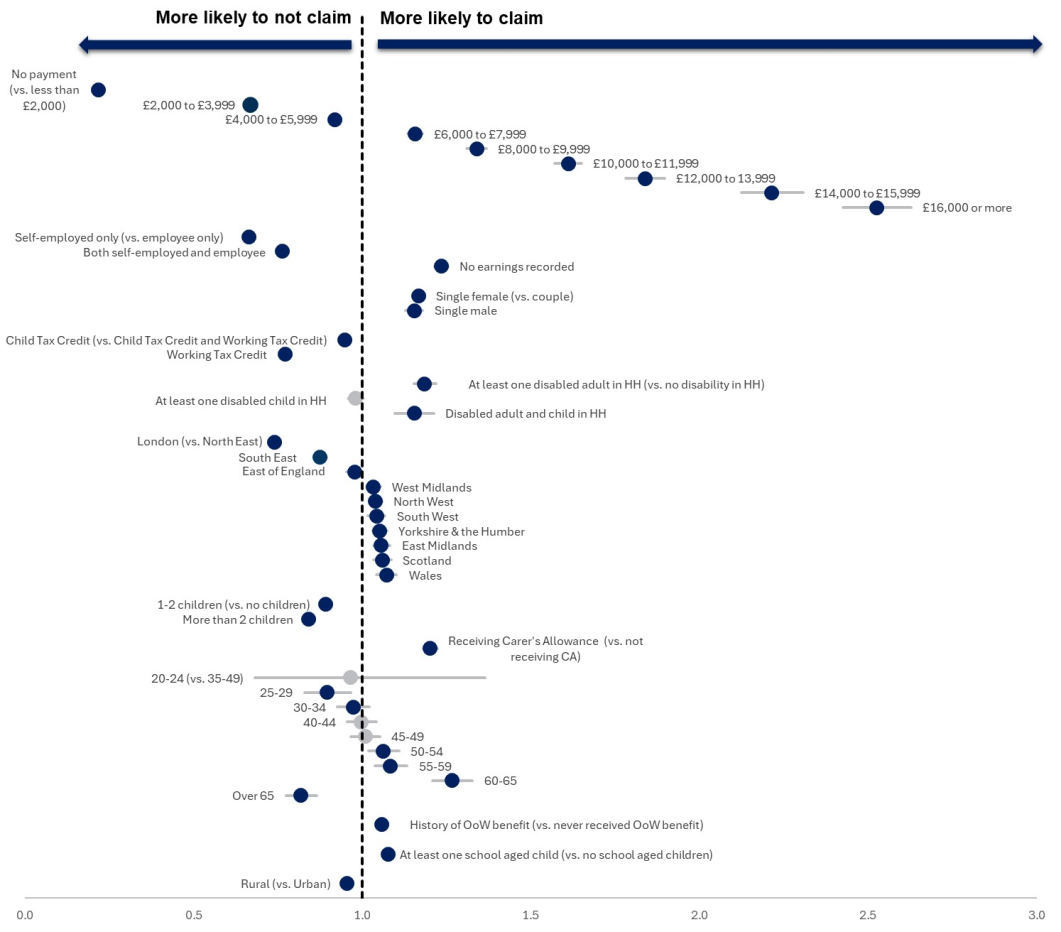
The figure below presents odds ratios showing the likelihood of claiming or not claiming Universal Credit for each factor. A full summary of statistical significance is available in the technical annex.
Figure 4.2.2: Summary of odds ratios from the logistic regression model
Source: Move to Universal Credit administrative data matched with Legacy to Universal Credit, Personal Independence Payment, Disability Living Allowance, Carer’s Allowance data, national benefits database and ONS geography data, rounded to 10
Note: Factors are presented in the order in which they are entered into and the magnitude in which they contribute to the model, with largest contributors at the top
The regression results confirm that, controlling for other characteristics:
-
higher annual tax credit payments (£6,000+) significantly increase the likelihood of claiming Universal Credit — households receiving £14,000+ per year were more than twice as likely to claim Universal Credit.
-
Additional factors increasing likelihood of claiming include:
-
being a single-person household
-
having a disabled adult (or disabled adult and child)
-
receiving Carer’s Allowance
-
eldest household member aged 60 to 65
-
-
Factors decreasing the likelihood of claiming include:
-
having earnings from self-employment
-
receiving Working Tax Credit only
-
living in London or the South East
-
having children
-
Overall, the regression largely mirrors the patterns found in Section 3. However, there are notable differences once other factors are controlled for:
-
households with children appear to have higher claim rates descriptively, but the regression shows they are less likely to claim once other factors (like award size and employment status) are accounted for
-
households with an eldest member aged 60 to 65 have the lowest unadjusted claim rate, yet the regression shows they are actually more likely to claim when other characteristics are controlled for
4.3 Quantitative and qualitative insight into former tax credit customers’ decisions on claiming Universal Credit
4.3.1 Reasons for making a Universal Credit claim
The results from the regression analysis (section 4.2) found that the biggest factor in determining whether former tax credit only customers would make a claim to Universal Credit was annual payment amount. DWP commissioned a survey to understand the reasons for not making a Universal Credit claim amongst tax credit customers. One-hundred and six customers who had made a claim for Universal Credit after their migration deadline were included in the survey. The survey found one of the most common motivations for making a claiming for Universal Credit among this group was needing money, reported by over 2 in 5 (44%), supporting the results from the regression analysis. More information on this survey can be found in sections 4.3.2, 5.2.2 and 5.3.
Findings from small-scale qualitative research[footnote 5] exploring the reasons why former tax credit couples decide to make a claim for Universal Credit also supports the findings from the regression analysis and the survey. The research found that couples’ decision to claim tended to depend on how financially reliant they were on tax credits and whether they had savings. Participant couples who relied heavily on their tax credit payments and did not have any savings, or had savings below the capital limit, reported that claiming Universal Credit was a necessity for them as they needed the financial support.
4.3.2 Reasons for not making a Universal Credit claim
As stated in section 3.1, the non-claim rate for former tax credit only customers is 30 per cent. As stated in section 4.3.1, DWP commissioned research[footnote 6] to understand the reasons for not making a Universal Credit claim amongst these customers. A survey and follow-up qualitative interviews were conducted with former tax credit customers who had received a migration notice but had not made a Universal Credit claim.
4.3.2.1 Reasons related to personal circumstances and eligibility
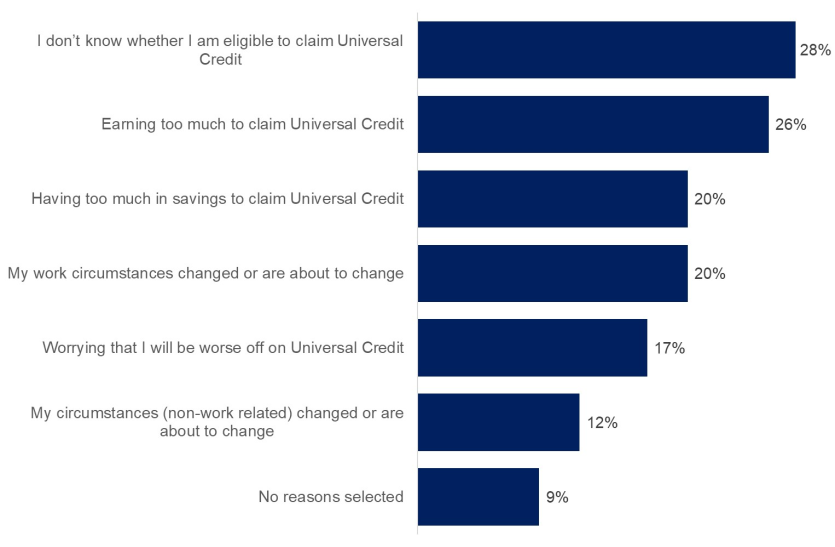
Survey respondents were asked whether any reasons related to their personal circumstances and perceived eligibility stopped them from making a claim for Universal Credit. Figure 4.3.2.1 shows reasons selected by 10% or more respondents. Over 3 in 4 (76%) survey respondents selected at least one reason for not claiming Universal Credit related to their personal circumstances. Nearly 3 in 10 (28%) respondents selected not knowing whether they would be eligible to claim Universal Credit as a reason for not making a claim. Over a quarter (26%) reported earning too much, supporting earlier findings in section 4.2 which found that customers who have higher earnings were less likely to make a Universal Credit claim.
Other reasons related to personal circumstances included not knowing if they have too much in savings and/or their work circumstances being about to change (20%), worrying they would be worse off on Universal Credit (17%) or their circumstances outside of work had changed or were about to change (12%). Households in self-employment had particularly complex appraisals of their eligibility with respect to their earnings and savings. Self-employed survey respondents were more likely to report having too much in savings as a reason for not claiming Universal Credit (25%) compared to those who were employed (19%). In the qualitative interviews, self-employed interview participants with savings described needing to save money to prepare for potential periods of unemployment due to the nature of self-employed work or for upcoming business expenses. Both self-employed and unemployed respondents were more likely to not feel confident that they had the information they needed to make the best decision for them (20% and 24% respectively compared to 13% of employed respondents). Furthermore, self-employed interview participants discussed the personal circumstance of being self-employed as a key factor in why they had not made a claim for Universal Credit. These participants were particularly worried that their self-employment would lead to an uncertain financial situation on Universal Credit and this was one of the reasons that they did not make a claim.
There was also a gap in the knowledge of Universal Credit and childcare costs in households with children. Interview participants with younger children suggested that knowing more about the support with childcare costs or having more information on this may have influenced their decision to claim Universal Credit. This was further demonstrated in survey results where around half of respondents with children at pre-school age (47%) and primary school age (46%), and 6 in 10 respondents with children at secondary age (61%) did not know it was true that you can claim 85% of childcare costs back through Universal Credit. They were also asked how much they agreed with the statement ‘I can continue to receive other forms of income support (e.g. free school meals) on Universal Credit’. Over half (52%) of respondents who had children that were at primary age agreed compared to those with children at secondary age (43%) and those with no children (37%).
Figure 4.3.2.1: Reasons for not claiming Universal Credit related to personal circumstances
Source: Survey data from Move to Universal Credit non-claimants (formerly tax credits customers) research with Tax Credit non-claimers
4.3.2.2 Migration and claim processes
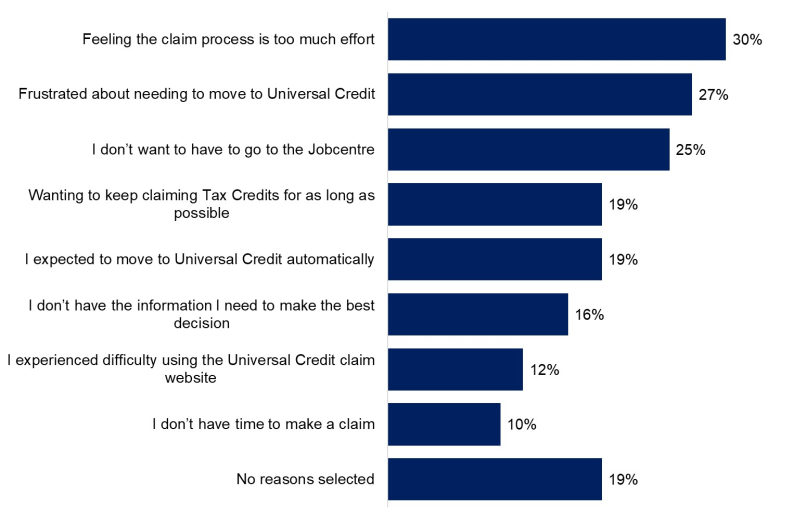
Survey respondents were also asked if reasons related to Universal Credit migration and claims processes stopped them from making a claim for Universal Credit. Figure 4.3.2.3 shows reasons selected by more than 10% of respondents. Almost 6 in 10 (57%) respondents selected at least one reason for not claiming Universal Credit relating to Universal Credit migration and the claims process. These included the perception that the claim process is too much effort (30%), frustration over needing to move to Universal Credit (27%), and not wanting to visit the Jobcentre Plus (25%). Other reasons included wanting to keep claiming tax credits for as long as possible (19%), expecting to be moved automatically (19%), not having the information to make the best decision (16%), difficulties with the Universal Credit website (12%) and not having the time to make a claim (10%).
Figure 4.3.2.2: Reasons related to Universal Credit migration and claims process
Source: Survey data from Move to Universal Credit non-claimants (formerly tax credits customers) research with Tax Credit non-claimers
Some interview participants had attempted to make a claim for Universal Credit but faced challenges completing the claim described the application process as overwhelming and complex. They described how considerable effort was required to engage with the online application form and gather the necessary documentation to make a claim. Furthermore, some participants had previous negative experiences of the Jobcentre Plus, including bad experiences with staff. They described a feeling of stigma surrounding the Jobcentre Plus and felt reluctant to go as part of the Universal Credit claims process.
Reasons for not claiming relating to Universal Credit migration and claim processes varied by different circumstances (detailed in the published report). Survey respondents who were unemployed or self-employed were more likely to give reasons for not claiming Universal Credit related to the Universal Credit migration and claim processes than respondents who were employed. They were more likely to report that claiming Universal Credit was too much effort (38% and 36% respectively) compared to those who were employed (26%). Self-employed respondents were also more likely to report that they were frustrated about needing to move to Universal Credit (39%) compared to employed respondents (22%) and unemployed respondents (28%). Self-employed and unemployed respondents were also more likely to report that one of their reasons for not claiming included not wanting to go into the Jobcentre Plus (36% and 32% respectively) compared to employed respondents (20%). Self-employed respondents were also more likely to report wanting to stay on tax credits for as long as possible (27% compared to 17% of employed respondents).
In the qualitative interviews, self-employed interview participants reported that they perceived the claims process to be burdensome, and they anticipated difficulties in providing the necessary information and evidence due to their variable earnings and complex financial arrangements. Some of the Universal Credit requirements, such as submitting bank statements and disclosing savings, felt invasive and led to feelings of being mistrusted by the DWP. They reported being deterred from going to the Jobcentre Plus due to negative past experiences, lack of time, or feeling that they should not have to attend as they are already working and not job seeking.
4.3.2.3 Multifactor reasons
The qualitative interviews underline that there was a complex interplay of reasons for not claiming Universal Credit. While some participants did not think they would be eligible for Universal Credit and/or had negative feelings and perceptions about Universal Credit and the benefits system more generally, some did not claim Universal Credit even though they reported struggling financially. Reasons included believing that they would receive a small amount of Universal Credit that did not make it worthwhile applying, mistrust of the system due to prior negative experiences on benefits, and for self-employed workers, a fear of financial insecurity due to fluctuating monthly payment amounts.
5. What happened to households that did not make a Universal Credit claim?
This section explores the outcomes for tax credit only households who did not claim Universal Credit during their four month managed migration window and subsequently had their tax credits closed by HM Revenue and Customs.
A total of 195,000 households did not make a Universal Credit claim during the Move to Universal Credit process.
5.1 Summary of outcomes for households who did not claim Universal Credit through Move to Universal Credit
-
1 in 10 of these households (17,000) later joined the Universal Credit caseload:
-
3% claimed within 2 months of their migration deadline (“reactive claims”)
-
6% claimed 3 or more months after their deadline (“subsequent claims”)
-
-
Compared with the overall tax credit only cohort, reactive and subsequent claimers included a higher proportion of households:
-
living in London and in urban areas
-
with more than two children (reactive claimers only)
-
who received earnings from self-employment only (subsequent claimers only)
-
with a history of receiving a DWP out-of-work benefit
-
with no disabled members
-
-
Compared with the overall cohort, reactive and subsequent claimers included a lower proportion of households:
-
with no children (reactive claimers only)
-
with a disabled child only
-
-
The median annual tax credit award for reactive and subsequent claimers was £6,050.
-
The median annual household earnings from employment for this group was £19,250.
-
Small-scale qualitative research with tax credits customers who claimed Universal Credit after their migration deadline found that there were participants who intentionally delayed their claim, as well as those who made a late claim due to a change in circumstances or without realising they had missed their deadline.
-
Findings from a survey with non-claimants found that among those who did not claim Universal Credit at all, many reported experiencing a financial impact, with cutting down on spending the most common response.
5.2 Households that did not claim through Move to Universal Credit but claimed later
This section looks at households sent a migration notice up to December 2024 who did not claim Universal Credit within the managed migration window and had their tax credits closed. This analysis follows up with this group after 6 months in June 2025 and identifies households who joined the Universal Credit caseload outside of Move to UC.
Definitions used:
-
reactive claim: A household joining the Universal Credit caseload within two months after their original claim window
-
subsequent claim: A household joining Universal Credit more than two months after their claim window
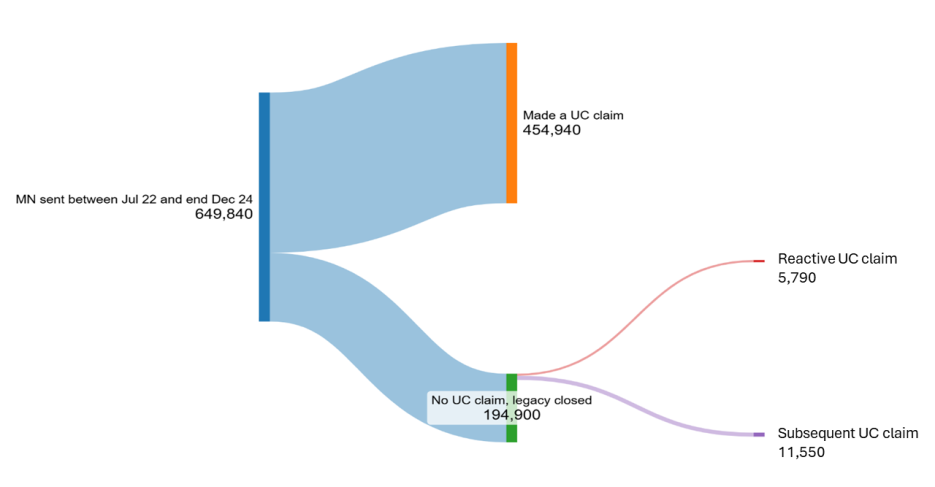
By the end of 2024:
-
195,000 tax credit only households had not claimed Universal Credit
-
17,000 (around 10%) later joined Universal Credit
-
3% as reactive claimants
-
6% as subsequent claimants
Figure 5.2: Flow of households invited to Move to Universal Credit through to reactive or subsequent claims
Source: Move to Universal Credit administrative data matched to Universal Credit caseload dataset, rounded to 10
5.2.1 Characteristics of reactive and subsequent claimers
The characteristics of late-claiming households were broadly similar to the overall tax credit only population in terms of:
-
tax credit type
-
age of eldest household member
-
household type
-
presence of school-aged children
-
childcare status
-
median annual tax credit amount (for late claimers this was £6,050, £100 less than the overall median)
-
median annual earnings (for late claimers this was £19,250, £680 more than the overall median)
However, several differences stood out:
Geography
A slightly higher proportion were based in London (15% versus 11% overall). Consequently, a slightly higher proportion lived in urban areas (88% versus 85%).
Children
Overall distributions remained similar, but patterns differed between reactive and subsequent claimers:
-
only 1 in 20 reactive claimers had no children
-
1 in 10 subsequent claimers had no children (similar to the overall cohort)
-
half of reactive claimers had more than 2 children
-
half of subsequent claimers had one or 2 children
Employment and benefit history
-
Self-employed earnings only: higher among subsequent claimers (17% versus 13% overall)
-
Past out-of-work benefit receipt: higher among reactive and subsequent claimers (59% versus 54%)
Disability
-
Higher share of households with no disabled members (83% versus 76%)
-
Lower share of households with a disabled child only (10% versus 14%)
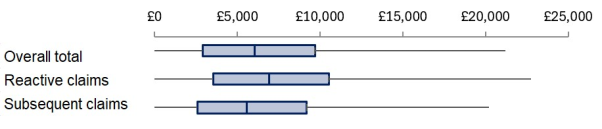
Table 5.2.1.1: Median annual tax credit award
| Households with tax credit award | Median annual tax credit amount | |
|---|---|---|
| Overall total | 17,340 | £6,050 |
| Reactive claims | 5,790 | £6,940 |
| Subsequent claims | 11,550 | £5,570 |
Source: Move to Universal Credit administrative data linked with Legacy to Universal Credit data, rounded to 10
Figure 5.2.1.1: Box and whisker plot of distribution of tax credit award
Source: Move to Universal Credit administrative data linked with Legacy to Universal Credit data
Note: The box represents the lower quartile, median and upper quartile where 50% of the data sits, and ‘whisker’ lines represent the minimum and maximum values.
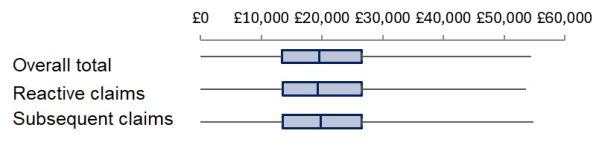
Table 5.2.1.2: Median annual earnings from employment
| Households with earnings information | Median annual earnings amount | |
|---|---|---|
| Overall total | 12,090 | £19,250 |
| Reactive claims | 4,070 | £18,950 |
| Subsequent claims | 8,020 | £19,370 |
Source: Move to Universal Credit administrative data linked with Legacy to Universal Credit data, rounded to 10
Figure 5.2.1.2: Box and whisker plot of distribution of earnings from employment
Source: Move to Universal Credit administrative data linked with Legacy to Universal Credit data
Note: The box represents the lower quartile, median and upper quartile where 50% of the data sits, and ‘whisker’ lines represent the minimum and maximum values.
5.2.2 Reasons for claiming Universal Credit after the migration deadline
Section 4 showed that households with lower tax credit awards, self-employment, or children were more likely not to claim Universal Credit. However, Section 5.2.1 showed that households with more children may be more likely to make a reactive claim, and that the proportion of self-employed households is slightly higher for subsequent claims.
Small-scale qualitative research was conducted to provide qualitative insight into the reasons why former tax credit customers made a claim to Universal Credit after their migration deadline. In total, 35 former tax credit customers were interviewed. Participants had either claimed up to a one month after their migration deadline or had claimed one to 4 months after their deadline. In this research, participants were not identified as reactive or subsequent claimants. However, the research does provide some insight into why participants may have been prompted to claim by their tax credit payments stopping and why some participants claimed later.
This research identified 4 customer groups that explain the reasons why participants made their Universal Credit claim after the migration deadline. One group of participants were unaware that they had claimed after the migration deadline. These participants were often unclear about their migration deadline date or were confused about the process. These participants were often prompted to claim after not receiving a tax credit payment suggesting that these customers could have been reactive claimants.
There were also 2 groups of customers who had intentionally delayed their claim. There were participants who felt they needed to prioritise other commitments such as caring or work responsibilities over making a Universal Credit claim so delayed making their claim. Other participants had negative preconceptions about Universal Credit and/or eligibility concerns so wanted to stay on tax credits for as long as possible.
The final group of participants never intended to make a Universal Credit claim but felt they needed to claim after the migration deadline due to a change of circumstances which meant that it was no longer feasible for them not to claim. These changes included redundancy, loss of work hours and changes in health conditions which resulted in decreased ability to work.
As mentioned in section 4.3.1, the research with former tax credit customers who had not made a claim to Universal Credit despite receiving their migration notice, surveyed 106 customers who had made a claim after their migration deadline. Whilst the primary intention of the research was not to capture information from late claimants, survey questions were included for participants who had made a claim after March 2024[footnote 7]. These respondents were asked about the reasons they had delayed making their claim and their motivations for making a claim.
Nearly half of these respondents who went on to make a claim (46%) were motivated to do so because their tax credits had stopped. These respondents were likely reactive claimants. The second most common motivation for claiming Universal Credit among this group was needing money, reported by over 2 in 5 (44%). Other motivations for claiming Universal Credit included a change in circumstances (23%), the desire to receive a monthly benefit payment (22%), and the ability to manage their Universal Credit claim online (19%).
5.3 What happens to households that never claim Universal Credit?
This section focuses on the financial and wider impacts experienced by households that never make a Universal Credit claim.
5.3.1 Impact of not making a Universal Credit claim
The research with former tax credit customers who received a migration notice and did not make a claim for Universal Credit also measured the impacts of not claiming Universal Credit on these customers. This included the financial impacts on customers but also the wider impacts.
5.3.1.1 Financial Impacts
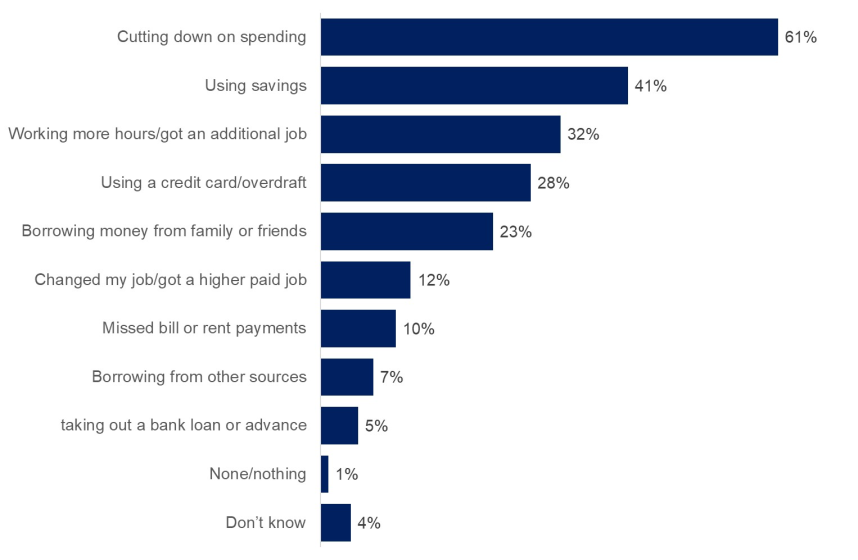
Around 9 in 10 (91%) survey respondents reported that their tax credits payments had come to an end. As a result of no longer receiving their tax credit payments, 9 in 10 (91%) said they had done at least one thing to make up the difference in their income.
As shown in figure 5.3.1.1, over 3 in 5 survey respondents said that they had cut down on spending (61%), 2 in 5 used savings (41%) and almost a third said they had worked additional hours (32%). Almost 3 in 10 respondents said that they used a credit card or overdraft (28%) and nearly 1 in 4 borrowed money from friends or family (23%) to fill the gap left behind by tax credits stopping. Around 1 in 10 respondents said that they had changed their job or got a higher paid job (12%), and a similar proportion said they had missed bills or rent payments (10%). Respondents were least likely to say that they had borrowed money from other sources which did not include friends or family (7%) or taken out a bank loan or advance (5%).
Figure 5.3.1.1: Actions taken to make up income shortfalls
Source: Source: Survey data from Move to Universal Credit non-claimants (formerly tax credits customers) research with Tax Credit non-claimers
There were respondents who reported losing their passported benefits including help with their energy costs (20%), free NHS prescriptions (25%), and support with health costs (13%). Interview participants who had experienced a change in their entitlement to passported benefits mentioned taking action to make up the gap in financial support.
5.3.1.2 Wider impacts
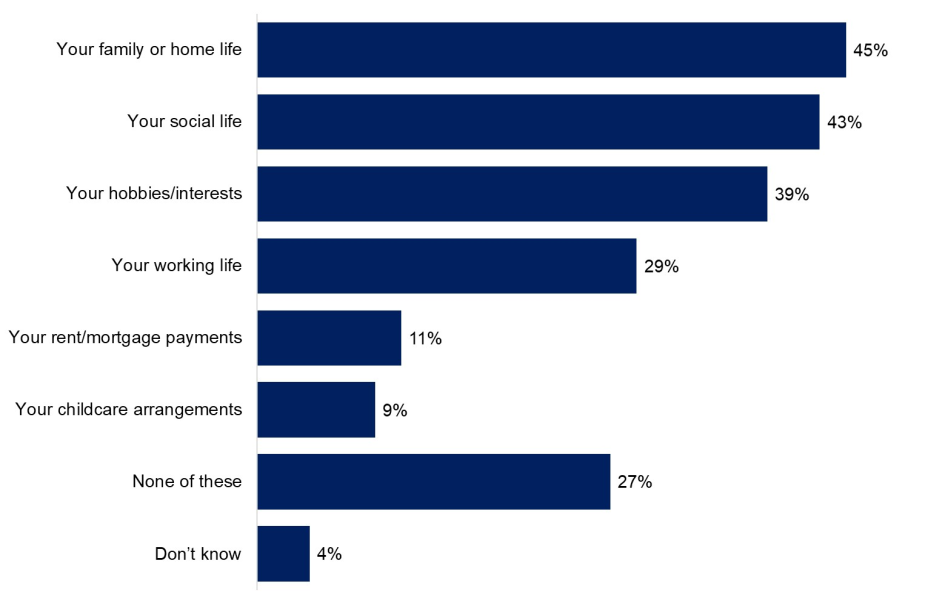
Survey respondents were asked which areas of their lives had been impacted by a gap in benefit payments after tax credits had stopped. As shown in figure 5.3.1.2, 6 in 10 (62%) selected at least one area of their lives that had been impacted. Around 2 in 5 said that their family or home life (45%), social life (43%), and hobbies or interests (39%) were impacted by the loss of tax credits income and around 3 in 10 (29%) said that their working life has been impacted. Over 1 in 4 (27%) respondents said that none of the listed areas had been affected.
Figure 5.3.1.2: Areas impacted by the gap in benefits payments
Source: Survey data from Move to Universal Credit non-claimants (formerly tax credit customers) research with tax credit non-claimers
Interview participants who reported struggling financially without tax credits felt the financial implications were impacting other areas of their lives. They reported changes in the quality of theirs and their children’s lives due to a reduction in spending on leisure activities such as days out and/or holidays. Others mentioned worrying about worsening relationships with their families because of having to rely on them for money and/or childcare. Furthermore, respondents noted that taking on extra work to meet their financial needs meant that they had less time with their children.
5.3.2 Likelihood and motivations to make a future Universal Credit claim
In this research, survey respondents were also asked about their likelihood to claim Universal Credit in the future. Seven in 10 (70%) survey respondents were unlikely to make a claim for Universal Credit in the future, with 15% reporting that they were either likely or certain to claim Universal Credit. A further 15% did not know whether they would claim in the future. Whilst just over a third (36%) of respondents did not select any reasons that might motivate them to make a claim in the next 3 to 5 months, just over one half (53%) respondents selected at least one reason that might motivate them to make a claim: a change in work circumstances, needing the money, and a change in non-work-related circumstances were the most prevalent motivations (26%, 25% and 16% respectively).
Analysis in section 5.2 indicated that, compared with the overall tax credit only cohort, there is a higher proportion of reactive claimer households with more than 2 children. In the survey, just over 1 in 4 (26%) respondents with children at preschool age and 1 in 5 (20%) respondents with children at primary age reported that they were likely to make a claim in the future compared to 1 in 10 without children (10%). Likelihood to make a claim was also significantly higher for respondents with children at preschool age (26%) compared to those with secondary school age children (14%). Whilst these survey findings do not indicate whether respondents with more children are more likely to make a reactive claim, they do suggest that non-claimant households with children may be more likely to make a claim for Universal Credit in the future.
5.3.3 Typologies based on likelihood to claim
The qualitative interviews identified 4 non-claimant typologies which describe the interplay between reasons for not claiming Universal Credit, likelihood to make a claim in the future and impacts of not claiming. There were 2 groups of participants who had no intention to claim and felt financially secure. These participants either described themselves as being financially secure and perceived that they would not be eligible for Universal Credit or they anticipated a forthcoming change in their financial circumstances, such as entering retirement or starting a new job, which they believed would render support from Universal Credit unnecessary.
However, there were 2 groups of participants who felt that they were struggling financially. One of these groups intended to claim but reported challenges during the application process, such as technical difficulties or issues with supporting documentation. They cut down on spending and relied on friends and family to borrow money or offer means of support such as with childcare which they did not consider long term options.
The other group of participants, who reported struggling financially, chose not to claim Universal Credit due to a belief that they were ineligible combined with negative perceptions of the Universal Credit system and a lack of trust in Universal Credit and the benefits system, often stemming from past experiences. Participants in this group used savings, where possible, but did not consider this as a long-term option as their savings were required for other expenses. They also cut down on spending, borrowed, and relied on friends and family.
6. What happened to households who moved to Universal Credit?
This section focuses on households who received a migration notice, made a Universal Credit claim, and successfully joined the Universal Credit caseload. It draws on Universal Credit caseload data to understand outcomes for tax credit only households who moved to Universal Credit. This analysis was conducted using data covering claims made up to the end of June 2025. Some Universal Credit outcomes (for example, conditionality groups) are measured at the individual level (also referred to as customers), while others (for example, Universal Credit award amount) are measured at the household level. Both perspectives are used where appropriate.
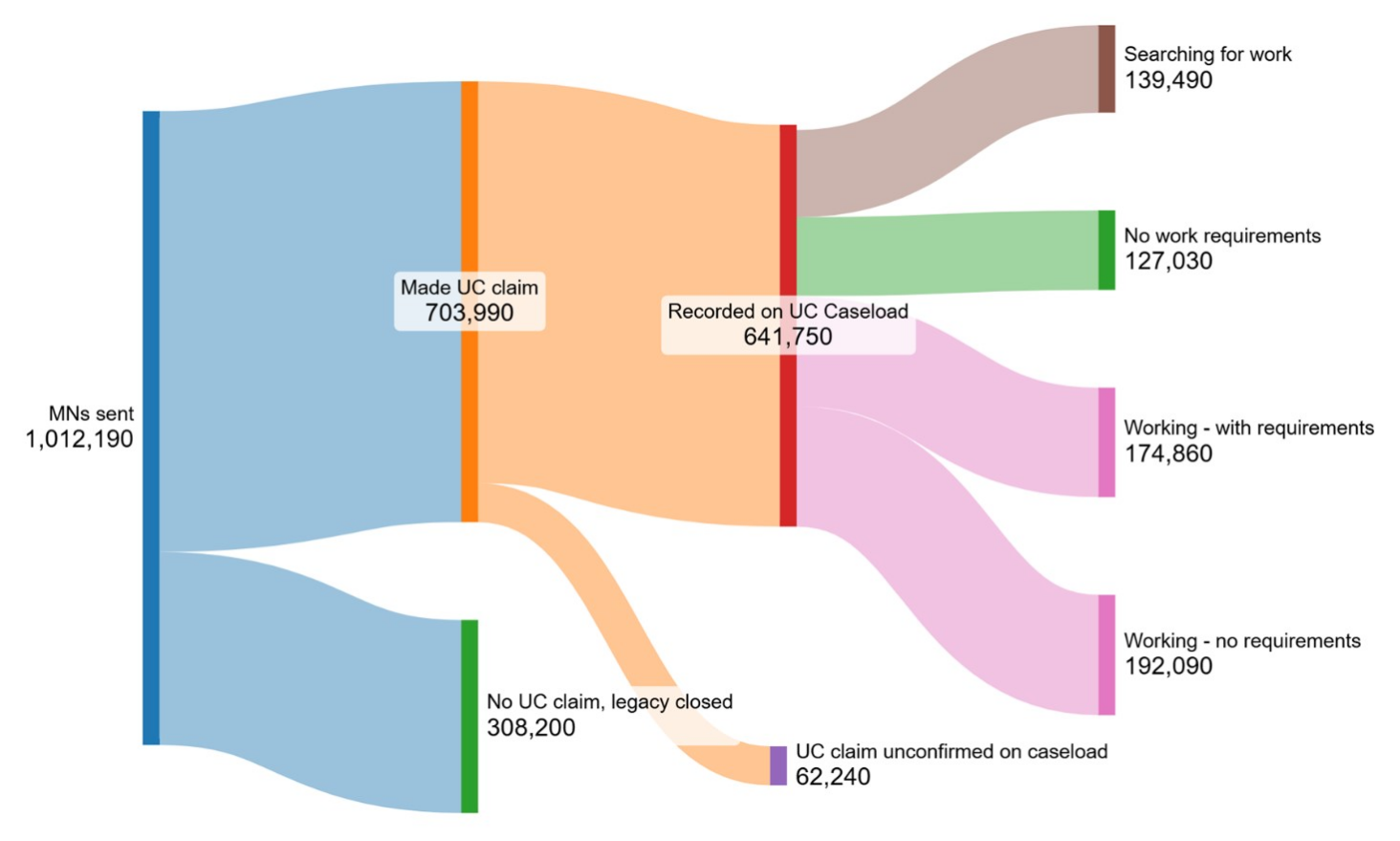
Table 6: Summary of cumulative totals
| Individuals | Households | |
|---|---|---|
| Migration notices sent, of which: | 1,012,190 | 650,570 |
| not claimed & legacy benefits closed | 308,200 | 195,370 |
| Number claimed UC, of which: | 703,990 | 455,200 |
| number confirmed on caseload | 641,750 | 434,340 |
Source: Move to Universal Credit administrative data, rounded to 10
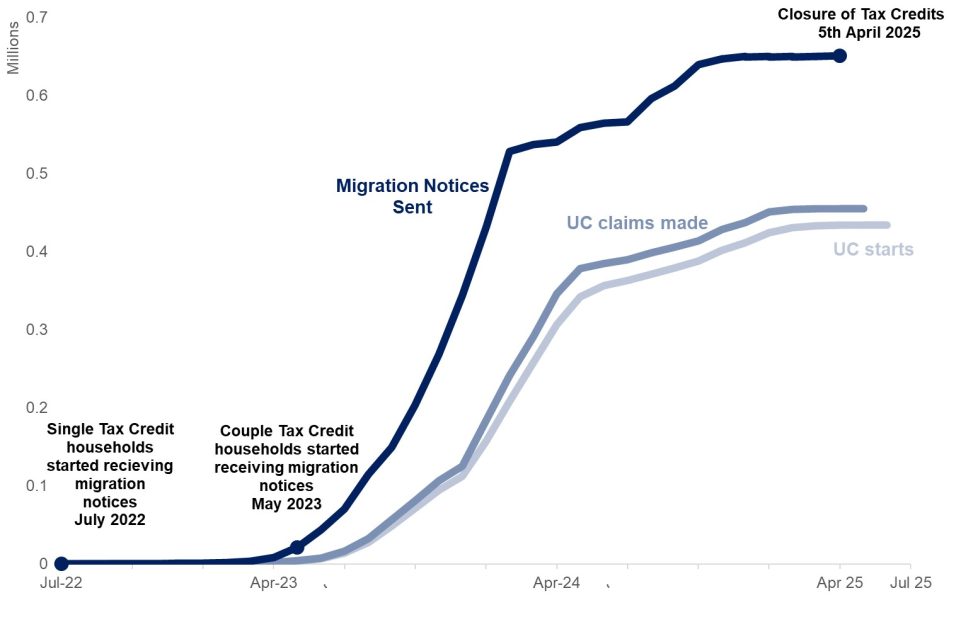
Figure 6.1: Cumulative time series of migration notices, Universal Credit claims, and Universal Credit starts (tax credit only households)
Source: Move to Universal Credit administrative data matched to Universal Credit caseload dataset, rounded to 10
Up to the end of June 2025:
-
70% of tax credit only customers had made a Universal Credit claim
-
63% had joined the Universal Credit caseload
-
In total, 642,000 customers had joined Universal Credit
Figure 6.2: Flow of individuals invited to Move to Universal Credit through to their initial Universal Credit conditionality group
Source: Move to Universal Credit administrative data matched with Universal Credit caseload data, rounded to 10
6.1 Summary of outcomes on Universal Credit
-
Former tax credit only customers made up 6.6% of the Universal Credit caseload in June 2025.
-
Single females and Child Tax Credit and Working Tax Credit households were the most likely to be in working conditionality groups and the least likely to be in “No work requirements” and “Searching for work”.
-
Geographical patterns:
-
tax credit only customers in rural areas were more likely to be in “Working – no requirements” or “No work requirements.”
-
those in urban areas were more likely to be in “Working – with requirements” or “Searching for work.”
-
-
1 in 3 tax credit only customers joining Universal Credit were initially placed in “Working – no requirements.”
-
After 6 months on Universal Credit:
-
2 in 3 remained in the same conditionality group
-
1 in 5 had moved group
-
13% had left Universal Credit
-
-
The median Universal Credit award in the first assessment period was £690.
Among households receiving a Universal Credit award:
-
86% received the Child element
-
two in 3 received Transitional Protection
-
1 in 3 received the Housing element — Median Housing element: £490
-
1 in 5 received the Carer element
-
nearly 1 in 5 received the Disabled Child element
6.2 How did the tax credit only cohort affect the Universal Credit caseload?
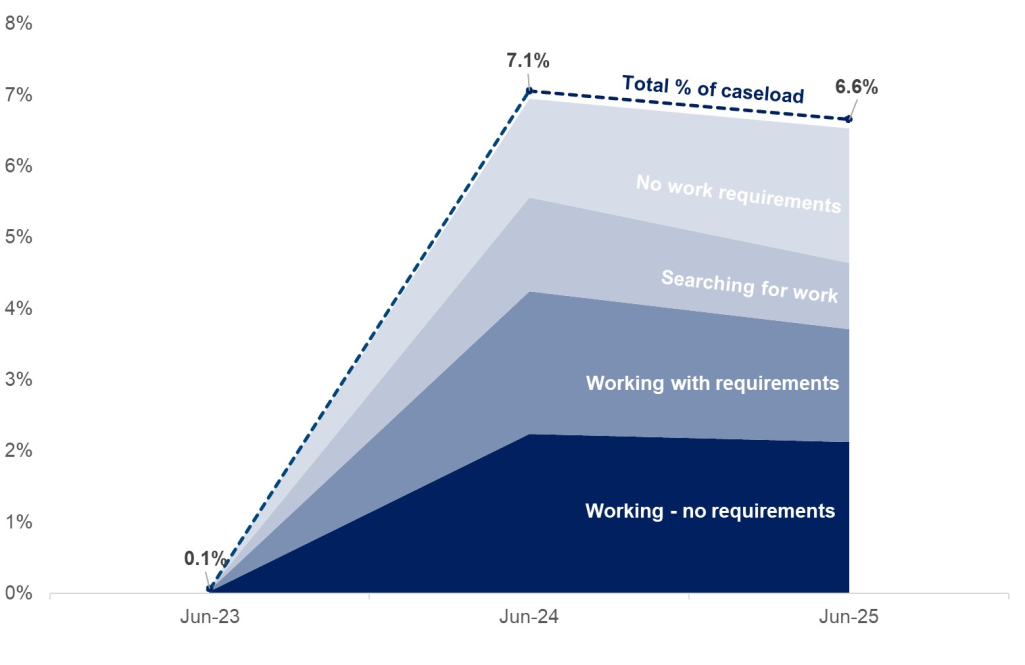
In June 2025:
-
former tax credit only customers made up 6.6% of the Universal Credit caseload (519,000 individuals) — a slight decrease proportionally from June 2024 due to wider caseload growth
-
tax credit only customers in “Working – no requirements” accounted for 2.1% of the total Universal Credit caseload —“No work requirements” accounted for 1.9%.
Figure 6.2.1: Proportion of Universal Credit caseload made up by former tax credit only customers, by conditionality group
Source: Move to Universal Credit administrative data matched with Universal Credit caseload data
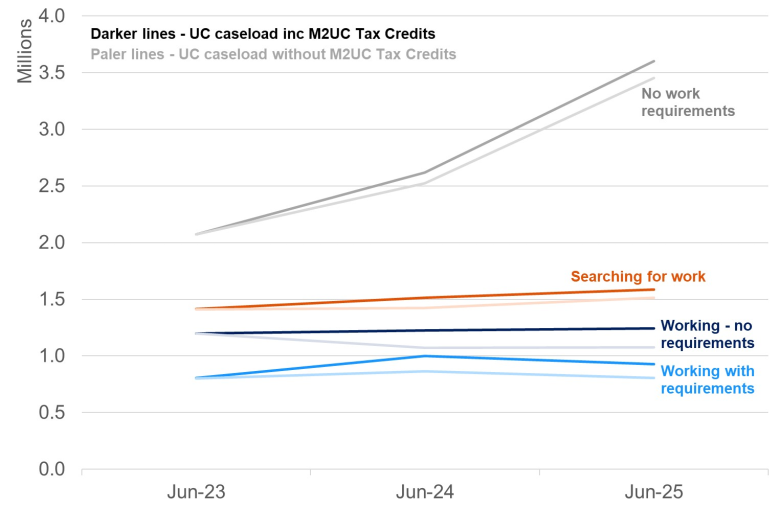
Across the whole Universal Credit caseload “No work requirements” is the largest group (46% of claimants).
Among tax credit only customers, the distribution is more balanced:
-
28% in No work requirements
-
24% in Working – with requirements
-
32% in Working – no requirements
This means that without the tax credit only cohort in June 2025:
-
“No work requirements” and “Searching for work” groups would each be 1 percentage point higher
-
working conditionality groups would be 1 percentage point lower
Figure 6.2.2: Universal Credit caseload by conditionality group, with and without tax credit only movers, individuals
Source: Move to Universal Credit administrative data matched with Universal Credit caseload data
6.3 Initial Universal Credit conditionality groups for the tax credit only cohort — and how they changed over time
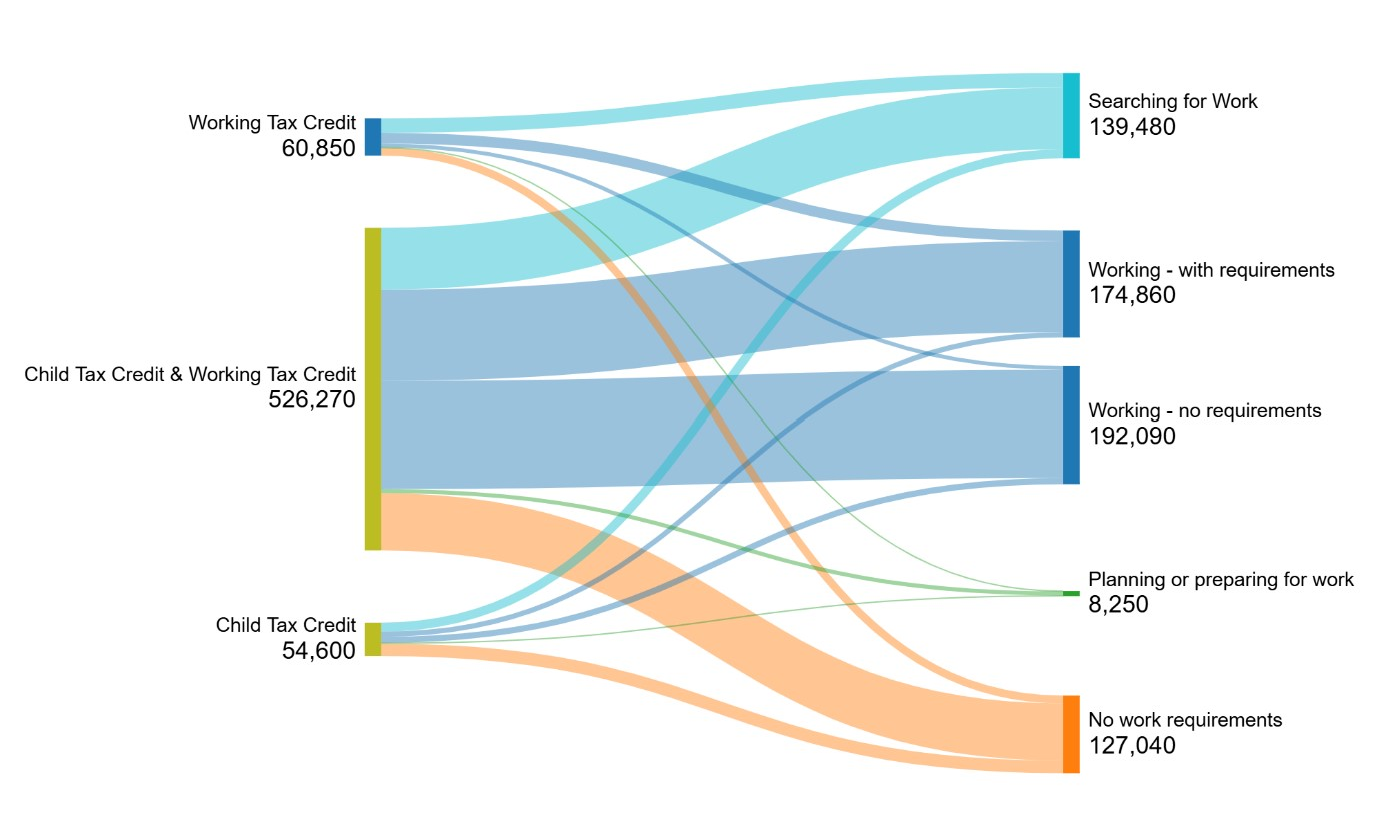
Nearly 1 in 3 tax credit only customers joining Universal Credit were initially placed in “Working – no requirements.” This is driven mainly by individuals receiving both Child Tax Credit and Working Tax Credit.
Initial allocation by tax credit type:
-
Child Tax Credit only customers: over 1 in 3 assigned to “No work requirements”
-
Working Tax Credit only customers: 2 in 5 assigned to “Searching for work”
Figure 6.3.1: Initial conditionality group by tax credit type, individuals
Source: Move to Universal Credit administrative data matched with Universal Credit caseload data, rounded to 10
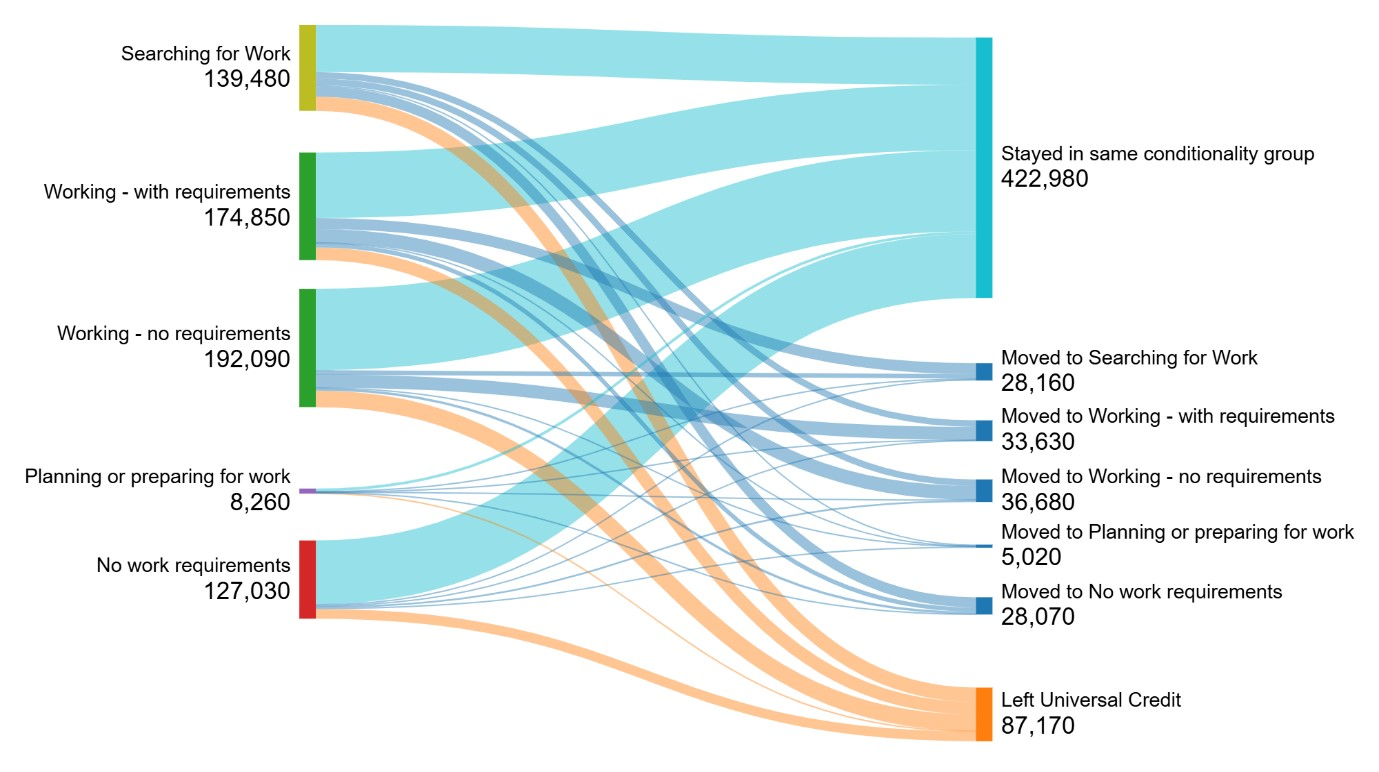
Six-month outcomes:
-
two in 3 remained in the same conditionality group
-
1 in 5 moved to a different group
-
14% left Universal Credit
Figure 6.3.2: Six-month outcomes for former tax credit only customers on Universal Credit
Source: Move to Universal Credit administrative data matched with Universal Credit caseload data, rounded to 10
6.4 Universal Credit award outcomes for the tax credit only cohort
Up to June 2025:
-
401,000 households from the tax credit only cohort had received their first Universal Credit statement
-
around 1% could not be matched in the data used for this analysis
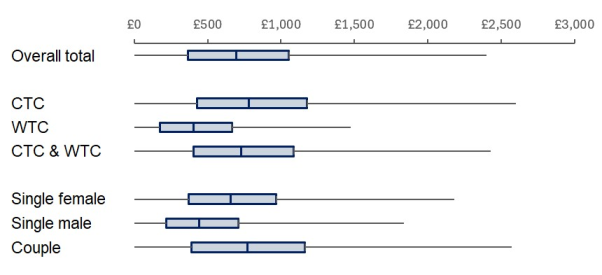
The overall average (median) Universal Credit award amount paid to former tax credit only households in their first assessment period was £690. As with former tax credit amount, couple households, single female households and households receiving Child Tax Credit had a higher average (median) award. This is likely because as noted in section 2.3.4, these households are more likely to have children.
Table 6.4: Number of households with a Universal Credit award and median award by tax credit type and household type
| Households with Universal Credit award | Median first Universal Credit award amount | |
|---|---|---|
| Overall total | 397,000 | £690 |
| Child Tax Credit only | 31,410 | £780 |
| Working Tax Credit only | 41,590 | £400 |
| Child Tax Credit and Working Tax Credit | 324,000 | £730 |
| Single female household | 182,290 | £660 |
| Single male household | 18,220 | £440 |
| Couple household | 196,480 | £770 |
Source: Move to Universal Credit administrative data matched with Universal Credit product statement dataset, rounded to 10
Figure 6.4.1: Box and whisker plot of distribution of Universal Credit award by tax credit type and household type
Source: Move to Universal Credit administrative data matched with Universal Credit product statement dataset, rounded to 10
Note: The box represents the lower quartile, median and upper quartile where 50% of the data sits, and ‘whisker’ lines represent the minimum and maximum values. CTC is Child Tax Credit and WTC is Working Tax Credit.
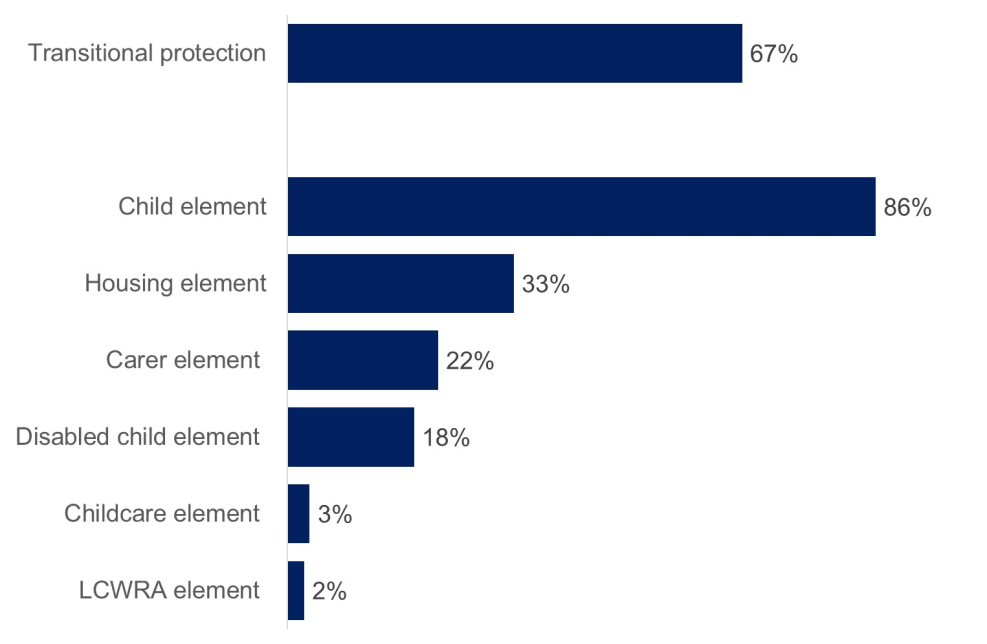
Of the 397,000 households with a Universal Credit award, two-thirds (265,000) had transitional protection in place in their first assessment period.
In line with the characteristic breakdowns reported earlier, nearly 9 in 10 (86% or 341,000) were receiving child element, and one-fifth were receiving the disabled child element. These are slightly higher than the proportion of the whole tax credit only cohort noted in section 2.3.7, which noted that 1 in 20 were receiving Carer’s Allowance and 16% of tax credit only households had a disabled child. However, this is in line with findings from the logistic regression in section 4.2.2 which shows that households receiving Carer’s Allowance or households with both a disabled adult and disabled child were more likely to claim Universal Credit.
Despite not being in receipt of Housing Benefit when the migration notice was sent, one-third (131,000) of the tax credit only cohort who made a claim to Universal Credit and had a statement issued in relation to their first assessment period were receiving the housing element. The average (median) housing element for this group was £490.
Figure 6.4: Proportion of Universal Credit award elements received
Source: Move to Universal Credit administrative data matched with Universal Credit product statement dataset
7. Conclusions
This report sets out the characteristics, behaviours, and outcomes of households transitioning from tax credits to Universal Credit, addressing 5 key questions.
Who were the tax credit only cohort?
The majority of the households in the cohort analysed were transitioning from claiming a combination of Child Tax Credits and Working Tax Credits; had an eldest member aged 40 or over; lived in an urban area; and had children. Over half of households were couple households, also over half had at least one member who previously claimed an out of work benefit from the Department for Work and Pensions. Households with earnings from employment made up nearly three-quarters of this cohort.
What was the Universal Credit claim rate for this group?
70% of the cohort made a claim to Universal Credit. Households claiming both Child Tax Credit and Working Tax Credit had a higher claim rate than their counterparts, as did households based in northern regions / countries; younger households; single female households; households with children; households with a disabled member; and households without earnings from self-employment.
What determined whether a tax credit household did or did not make a Universal Credit claim?
When all other things are equal, the strongest effect on whether a household made a Universal Credit claim was their tax credit award amount. However, a change in circumstance and earnings may contribute to the decision to not claim for some households.
Factors influencing a Universal Credit claim included being a single household, presence of a disabled adult in the household, receipt of Carer’s Allowance, and eldest member of the household aged 60 to 65. Self-employment was found to contribute to a non-claim. Other factors influencing a no claim outcome included receiving Working tax credit only, and residing in London or the South East. Non-claimant survey respondents reported reasons for not claiming related to personal circumstances and eligibility as well as the Universal Credit migration and claims process, including confusion about eligibility, negative feelings and perceptions about Universal Credit and the claims process.
What happened to households that did not make a Universal Credit claim?
Some of those who did not claim through move to Universal Credit did later claim Universal Credit. A distinction is made between households that claimed Universal Credit ‘reactively’ within 2 months of the end of their window to claim through move to Universal Credit, and those who claimed ‘subsequently’. Among non-claimant survey respondents, most reported experiencing financial impacts, while follow-up qualitative research highlighted broader impacts of not claiming, including on social life and wellbeing.
What happened to households who moved to Universal Credit?
Former tax credit only customers made up 6.7% of the whole Universal Credit caseload in June 2025. Whilst most of the cohort were initially allocated to an in-work conditionality group, some were allocated to ‘searching for work’ and ‘no work requirements’. The circumstances on Universal Credit appeared stable for most of the cohort, but some of the group had moved conditionality or left Universal Credit within 6 months.
Of the households with a Universal Credit award, a majority had transitional protection in place during their first assessment period. Most were receiving the child element, and one-fifth were receiving the disabled child element in their Universal Credit award. Furthermore, despite not being in receipt of Housing Benefit at the time their migration notice was sent, an unexpected proportion of the tax credit only cohort who went on to receive Universal Credit were awarded the housing element.
Overall conclusion
This analysis highlights the diverse characteristics and experiences of households transitioning from tax credits to Universal Credit. It demonstrates:
-
the significant role of financial reliance and award size in claim behaviour
-
the importance of perceived eligibility, knowledge gaps, and household circumstances
-
the varied experiences of both claimants and non-claimants
-
the generally smooth continuation of support for most households following migration
For some, the transition to Universal Credit also enabled the identification of additional needs and facilitated access to further support. Overall, the findings provide a detailed understanding of the factors shaping claim decisions and the outcomes for households navigating the move from tax credits to Universal Credit.
8. Technical Annex
8.1 Definitions and data sources
8.1.1 Tax credit type
Type of tax credit is defined by whether the household was claiming Working Tax Credit, Child Tax Credit, or both at the time they were invited to move to Universal Credit.
8.1.2 Geography
Geography in this analysis is defined by the postcode individuals within households are associated with in the confidential administrative data held by the department.
8.1.3 Age group (eldest in household)
Age is calculated using individuals date of birth and the date they were sent a migration notice. This analysis describes the oldest member of the household.
8.1.4 Household type
Type of household is defined by whether the household comprises a couple or single adult, and for single households whether they are male or female.
8.1.5 Children in household
Analysis uses data from the Legacy to Universal Credit analytical dataset combining tax credit payment information with other data sources including Child Benefit data. Children in the household are defined as present in child benefit data, where a household can receive support if they are responsible for a child under 16 or under 20 and in education or training.
8.1.6 Employment status
Employees are in receipt of earnings from an employer using real time earnings information within the Legacy to Universal Credit dataset. Self-employed have earnings from self-employment recorded in RAPID information within the Legacy to Universal Credit dataset. No earnings recorded is have no earnings data associated with the household in the Legacy to Universal Credit dataset.
Employment status is derived from earnings information at the point a month before the date their migration notice was sent or where the latest information is available. It should also be noted that earnings within the year 2024 to 2025 were not available for self-employed households due to a time lag in data that is self-reported at the end of the financial year before being processed. If a household began receiving earnings from self-employment for the first time in the financial year 2024 to 2025 they would not be identified in our definition. Where data at the point of the migration notice was sent is not available, the latest available data is used as a proxy. This applies to 2% of households identified with earnings from self-employment, and 1% of households with earnings from employment.
8.1.7 History of receipt of out of work benefit
History of receipt of out of work benefit is derived by whether an individual can be matched to the National Benefits Database, which holds anonymised records of individuals in receipt of legacy benefits administered by the Department for Work and Pensions since 1999. A household contains at least one member with a history of receipt of an out of work benefit where a historical record of a claim to Jobseekers Allowance, Incapacity Benefit, Income Support, or Severe Disablement Allowance is matched.
8.1.8 Disability
Disability is defined as either in receipt of disability or severe disability element in the household tax credit payment, PIP or DLA. Disabled child is defined as at least one disabled child recorded in tax credit payment data in the Legacy to Universal Credit analytical dataset. It was not possible to retrieve DLA information relating to disabled children because children would not receive a migration notice and are therefore not identifiable in this cohort.
8.1.9 Tax Credit award amount
Tax credit award amount is the annual amount paid to households through their tax credit claim. If they are claiming both Working Tax Credit and Child Tax Credit this amount will reflect the combined amount. The data for this is sourced from the Legacy to Universal Credit analytical dataset.
8.1.10 Earnings
Earnings in this analysis are earnings from employment, and earnings from self-employment are held in a combined Legacy to Universal Credit analytical dataset of real time earnings information and annual declaration of earnings from self-employment.
8.1.11 Legacy to Universal Credit analytical dataset
Legacy to Universal Credit analytical dataset combines different information held on different administrative systems. This dataset is used for identifying tax credit amounts, number of children in households, whether households have children in childcare, whether households have school aged children, disabled children, earnings from employment, and earnings from self-employment. This dataset holds data up to February 2025, therefore households who are invited to claim Universal Credit from February 2025 onwards will have the latest available data matched to their records. This means that approaching 500 tax credit only households may have different tax credit amounts, earnings or children to what we have used in this analysis immediately before their migration notice was issued.
8.1.12 Universal Credit caseload data
Universal Credit caseload data is the basis for the Official Statistics on Universal Credit caseload figures. The data holds monthly snapshots of individuals on the Universal Credit caseload on the count date (the second Thursday of each month). This data is used in chapter 5 to identify households that had their tax credit claim closed and did not Move to UC, but later claimed Universal Credit. This dataset is also used in chapter 6 to identify the conditionality group individuals are allocated to when they join Universal Credit through Move to UC.
8.1.13 Universal Credit product statement dataset
Within Universal Credit payments are awarded and a statement is issued at the end of an assessment period (usually 4 weeks). Universal Credit product statement dataset contains information with respect to the statement issued relating to a Universal Credit Assessment Period. This dataset details the amount awarded in the assessment period and the Universal Credit elements that constituted the payment awarded. In chapter 6 we used this dataset to identify the first assessment period and payments awarded to former tax credit households that claimed Universal Credit through managed migration.
8.2 Logistic regression
8.2.1 Assumptions and model fitness
Thirteen input variables were tested for multicollinearity where a threshold for exclusion was pre-determined as r=0.8. The strongest correlation found was 0.5, between the type of tax credit and whether there were school aged children in the household. Banded earnings from employment was not entered into the model because employment status is derived from this variable in combination with self-employment earnings.
The reduce influence of outliers and skewed distributions following variables were identified and recoded as binary or banded data for inclusion:
-
age of eldest in household (10 bands spanning approximately 5 years)
-
annual tax credit payment amounts (9 bands with increments of £2,000)
-
number of children (0 = no children, 1 = 1 to 2 children, 3 = more than 2 children)
Other banded or binary variables were coded numerically:
-
region / country
-
urban or rural (1 = urban, 2 = rural)
-
household type (1 = single female, 2 = single male, 3 = couple)
-
tax credit type (1 = Child Tax Credit, 2 = Working Tax Credit, 3 = Child Tax Credit and Working Tax Credit)
-
employment status (1 = self-employed only, 2 = employee only, 3 = both self-employed and employee, 4 = out of work)
-
child(ren) in childcare (1 = yes, 0 = no)
-
child(ren) school aged (1 = yes, 0 = no)
-
disability status (0 = no disability, 1 = disabled adult only, 2 = disabled child only, 3 = disabled adult and child)
-
Carer’s Allowance receipt (1 = yes, 0 = no)
-
history of claiming an out-of-work benefit (1 = yes, 0 = no)
In order to test the model fit, the data was split and a 70% sample was drawn to build the model.
A Receiver Operating Characteristics (ROC) curve was used to assess the model fit and describe the contribution of the independent variables listed above to the overall model.
A step-wise regression model added variables sequentially, each time evaluating whether the data added anything significant to the model. The figure below shows this process, whereby the red line represents random chance where the model accurately predicts whether or not tax credit only households claimed Universal Credit 50% of the time.
The biggest contributor to the model was step 1 – annual tax credit payment amount. The stepwise regression kept 12 effects in the model, child(ren) in childcare and was not entered as the effect was not deemed statistically significant. The final area under the curve statistic was 0.7330 – suggesting an acceptable model fit (successfully differentiates outcomes 73% of the time).
Figure 8.2.1: ROC Curve of model fit
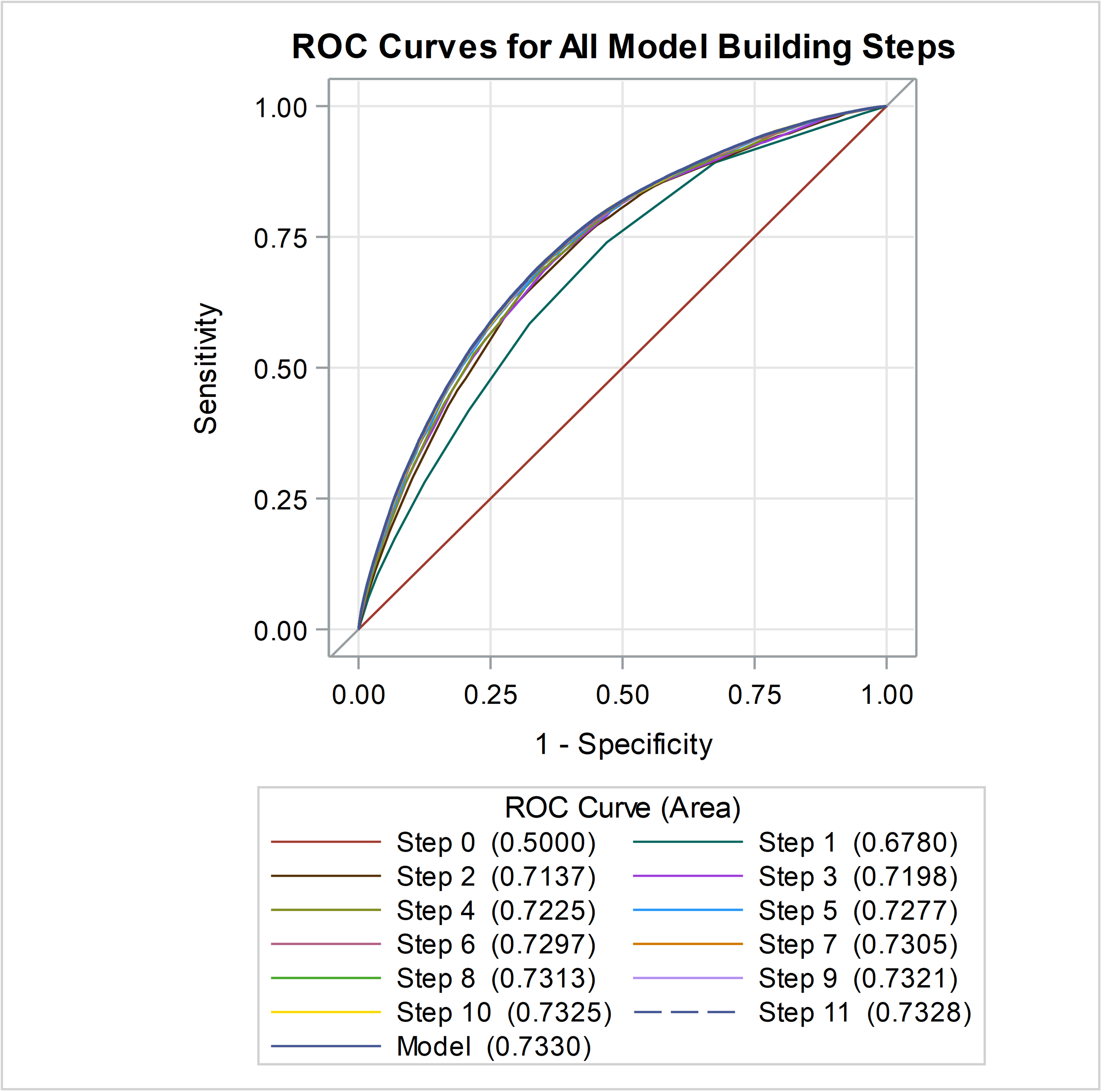
Table 8.2.1: Summary of effects and model building steps
| Step | Effect Entered | Score Chi-Square | Pr > ChiSq | Cumulative ROC | ROC |
|---|---|---|---|---|---|
| 1 | Annual Tax Credit payment amount | 41,805.72 | <.0001 | 0.678 | 0.178 |
| 2 | Employment status | 16,025.30 | <.0001 | 0.7137 | 0.0357 |
| 3 | Household type | 3,268.76 | <.0001 | 0.7198 | 0.0061 |
| 4 | Tax Credit type | 1,679.09 | <.0001 | 0.7225 | 0.0027 |
| 5 | Disability status | 2,378.87 | <.0001 | 0.7277 | 0.0052 |
| 6 | Region | 1,061.25 | <.0001 | 0.7297 | 0.002 |
| 7 | Number of children | 583.47 | <.0001 | 0.7305 | 0.0008 |
| 8 | Carers Allowance receipt | 451.40 | <.0001 | 0.7313 | 0.0008 |
| 9 | Age of eldest in household | 453.52 | <.0001 | 0.7321 | 0.0008 |
| 10 | History of claiming an out of work benefit | 258.59 | <.0001 | 0.7325 | 0.0004 |
| 11 | Child(ren) school aged | 163.29 | <.0001 | 0.7328 | 0.0003 |
| 12 | Urban or rural | 78.28 | <.0001 | 0.733 | 0.0002 |
To further test the model, we used the 30% sample to attempt to evaluate the models predictive power. This results in a sample of data with actual outcomes (claimed versus not claimed) as well as probabilities of not claiming.
The ROC curve generates trade-offs between sensitivity (correctly identifying claims) versus specificity (correctly identifying non-claim). Depending on whether sensitivity or specificity is most appropriate for the context, the ROC can be used to choose a threshold for probability that will determine whether the predicted outcome is coded as ‘claimed’.
-
False positive = claim predicted when no claim was made
-
False negative = no claim predicted when a claim was made
The consequences of a false positive would be less desirable than a false negative. Theoretically if the model were to predict Universal Credit claims, a false positive could lead to premature closure of tax credits for individuals. Therefore, a higher threshold (0.75) for sensitivity was used for determining the probability threshold (0.65) from the ROC generated from the 70% sample. Based on the probability threshold used, we see the model successfully predicts 71% of outcomes in the test sample.
8.2.2 Summary of regression coefficients and level of statistical significance
Table 8.2.2: Summary of regression coefficients and level of statistical significance
| Dummy variable definition (Reference category: less than £2,000 annual tax credit amount) | Coefficient | Significance |
|---|---|---|
| No payment | -1.5300 | Significant at the 1% level |
| £2,000 to £3,999 | -0.4032 | Significant at the 1% level |
| £4,000 to £5,999 | -0.0840 | Significant at the 1% level |
| £6,000 to £7,999 | 0.1456 | Significant at the 1% level |
| £8,000 to £9,999 | 0.2919 | Significant at the 1% level |
| £10,000 to £11,999 | 0.4768 | Significant at the 1% level |
| £12,000 to 13,999 | 0.6088 | Significant at the 1% level |
| £14,000 to £15,999 | 0.7950 | Significant at the 1% level |
| £16,000 or more | 0.9263 | Significant at the 1% level |
| Dummy variable definition (Reference category: employee only) | Coefficient | Significance |
|---|---|---|
| Self-employed only | -0.4099 | Significant at the 1% level |
| Both self-employed and employee | -0.2689 | Significant at the 1% level |
| Dummy variable definition (Reference category: couple household) | Coefficient | Significance |
|---|---|---|
| Single female household | 0.1553 | Significant at the 1% level |
| Single male household | 0.1429 | Significant at the 1% level |
| Dummy variable definition (Reference category: no disability) | Coefficient | Significance |
|---|---|---|
| At least one disabled adult in household | 0.1700 | Significant at the 1% level |
| At least one disabled child in household | -0.0188 | Not significant at the 10% level |
| Disabled adult and child in household | 0.1430 | Significant at the 1% level |
| Dummy variable definition (Reference category: Child Tax Credit and Working Tax Credit) | Coefficient | Significance |
|---|---|---|
| Child Tax Credit only | -0.0532 | Significant at the 1% level |
| Working Tax Credit only | -0.2591 | Significant at the 1% level |
| Dummy variable definition (Reference category: North East) | Coefficient | Significance |
|---|---|---|
| North West | 0.0385 | Significant at the 1% level |
| Yorkshire & the Humber | 0.0509 | Significant at the 1% level |
| East Midlands | 0.0555 | Significant at the 1% level |
| West Midlands | 0.0329 | Significant at the 1% level |
| East of England | -0.0235 | Significant at the 5% level |
| London | -0.3020 | Significant at the 1% level |
| South East | -0.1330 | Significant at the 1% level |
| South West | 0.0418 | Significant at the 1% level |
| Wales | 0.0691 | Significant at the 1% level |
| Scotland | 0.0579 | Significant at the 1% level |
| Dummy variable definition (Reference category: no children) | Coefficient | Significance |
|---|---|---|
| 1 to 2 children | -0.1148 | Significant at the 1% level |
| More than 2 children | -0.1722 | Significant at the 1% level |
| Dummy variable definition (Reference category: not receiving Carer’s Allowance) | Coefficient | Significance |
|---|---|---|
| Receiving Carer’s Allowance | 0.1843 | Significant at the 1% level |
| Dummy variable definition (Reference category: no history of receiving an out of work benefit) | Coefficient | Significance |
|---|---|---|
| History of receiving an out of work benefit | 0.0570 | Significant at the 1% level |
| Dummy variable definition (Reference category: 35-39) | Coefficient | Significance |
|---|---|---|
| 20 to 24 | -0.03570 | Not significant at the 10% level |
| 25 to 29 | -0.11120 | Significant at the 5% level |
| 30 to 34 | -0.02680 | Not significant at the 10% level |
| 40 to 44 | -0.00174 | Not significant at the 10% level |
| 45 to 49 | 0.00886 | Not significant at the 10% level |
| 50 to 54 | 0.06100 | Significant at the 1% level |
| 55 to 59 | 0.08100 | Significant at the 1% level |
| 60 to 65 | 0.23630 | Significant at the 1% level |
| Over 65 | -0.19940 | Significant at the 1% level |
| Dummy variable definition (Reference category: no school aged children) | Coefficient | Significance |
|---|---|---|
| At least one school aged child | 0.0736 | Significant at the 1% level |
| Dummy variable definition (Reference category: urban) | Coefficient | Significance |
|---|---|---|
| Rural | -0.0455 | Significant at the 1% level |
Reference categories should be used in interpreting the direction of the effects. For example, households with no Tax Credit payment or annual payment between £2,000 and £5,999 are less likely to claim Universal Credit than households with less than £2,000 annual Tax Credit amount, and households with annual payment of £6,000 or more are more likely to claim Universal Credit than those with an annual payment of less than £2,000.
9. Contact information and feedback
DWP would like to hear your views on this analysis. We would be interested in hearing what you use them for and how well they meet your requirements.
Feedback and queries about the analysis can be sent to ucad.briefinganalysis@dwp.gov.uk.
Press enquiries should be directed to the DWP Press Office: 0115 965 8828. Email: newsdesk@dwp.gov.uk.
Lead Statisticians: Bryony Maw and Mike Payne
-
‘working – no requirements’ and ‘working – with requirements’ ↩
-
The average tax credit payment amount is calculated from households where this information was available. Note that tax credit information could not be retrieved for 2.4% of households and were not included in the analysis. A further 1.6% of households were recorded as receiving £0 in tax credits at the point they received a migration notice. ↩
-
Although 1 in 5 households (127, 000) had earnings from self-employment, 2% (2,000) of self-employed households made a loss in the financial year. Where identified, households making a loss were excluded from average earnings calculations. ↩
-
The claim rate is calculated as the number of claims to Universal Credit made divided by the number of migration notices sent. ↩
-
This small-scale qualitative research was published in December 2024 and included 72 interviews with 30 participant couples. Of those interviewed, only 9 interviewees were non-claimant couples; the remainder were Universal Credit claimant couples. ↩
-
This research was published in December 2024 and included a survey with 1,029 respondents (923 who had not made a claim and 106 who had made a claim to Universal Credit since the DWP sample was drawn). Qualitative interviews were conducted with 30 survey respondents who had provided permission to be recontacted. ↩
-
These participants will have received a migration notice between May 2022 and January 2024, and the survey was conducted in April to June 2024. As we did not record in the survey when they made their Universal Credit claim, we cannot determine whether they are reactive or subsequent claimants. ↩