Completing the move to Universal Credit: Completing the move for households previously on Employment and Support Allowance
Updated 18 November 2025

© Crown copyright 2025
This publication is licensed under the terms of the Open Government Licence v3.0 except where otherwise stated. To view this licence, visit nationalarchives.gov.uk/doc/open-government-licence/version/3 or write to the Information Policy Team, The National Archives, Kew, London TW9 4DU, or email: psi@nationalarchives.gov.uk.
Where we have identified any third party copyright information you will need to obtain permission from the copyright holders concerned.
This publication is available at https://www.gov.uk/government/publications/completing-the-move-to-universal-credit-completing-the-move-for-households-previously-on-employment-and-support-allowance/completing-the-move-to-universal-credit-completing-the-move-for-households-previously-on-employment-and-support-allowance
Introduction
Universal Credit has streamlined and simplified the benefits system by combining six ‘legacy benefits’ into one single monthly payment, to better support people to find a job and to then progress in work. DWP has now moved over 1.8 million people from legacy benefits to Universal Credit. The department is now in the final phase of moving households to Universal Credit with a focus on Employment and Support Allowance. A timeline of how Move to UC has been delivered is below:
Figure 1: Move to Universal Credit migration timeline
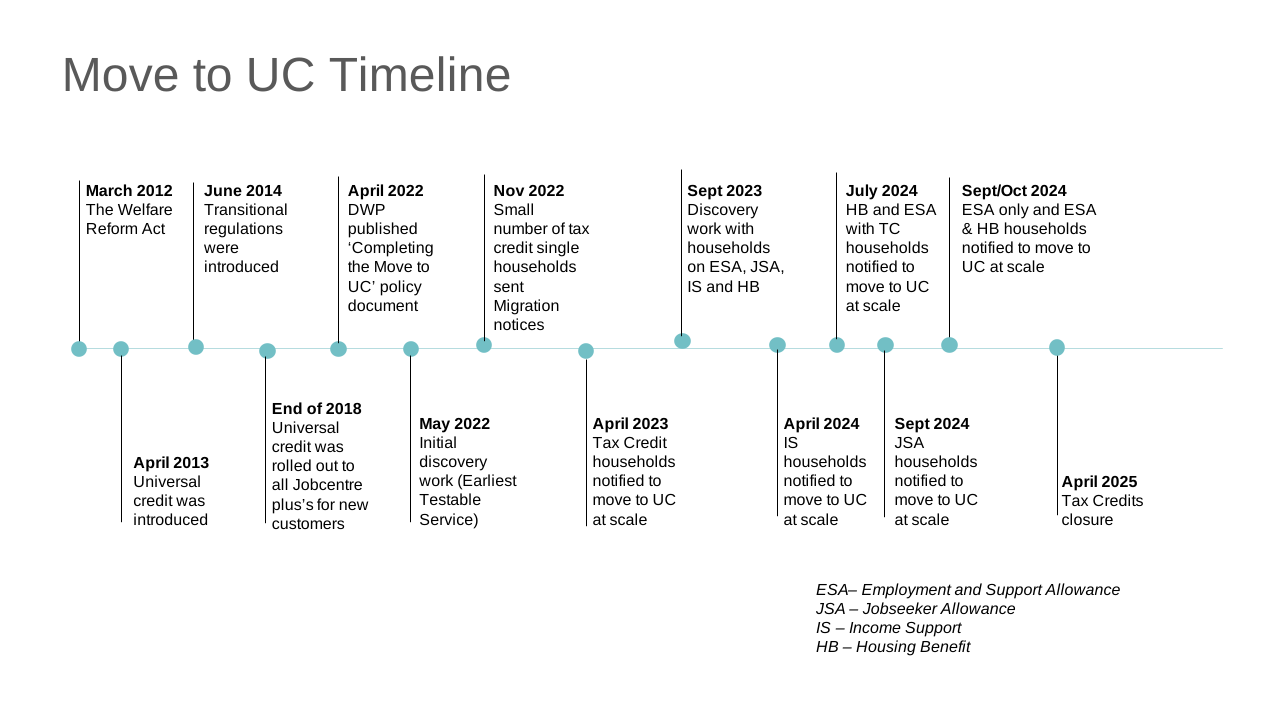
Figure 1: Move to Universal Credit migration timeline text description
March 2012
The Welfare Reform Act.
April 2013
Universal Credit was introduced.
June 2014
Transitional Regulations were introduced.
End of 2018
Universal Credit was rolled out to Jobcentre Plus for new customers.
April 2022
DWP published ‘Completing the Move to UC’ policy document.
May 2022
Initial discovery work (Earliest Testable Service).
Nov 2022
Small number of Tax Credit single households sent Migration Notices.
April 2023
Tax Credit households notified to move to Universal Credit at scale.
Sept 2023
Discovery work with households on Employment Support Allowance, Job Seekers Allowance, Income Support and Housing Benefit.
April 2024
Income Support households notified to move to Universal Credit at scale.
July 2024
Housing Benefit and Employment Support Allowance with Tax Credit households notified to move to UC at scale.
Sept 2024
Job Seekers Allowance households notified to move to Universal Credit at scale.
Sept to Oct 2024
Employment and Support Allowance only and Employment and Support Allowance & Housing Benefit households notified to move to Universal Credit at scale.
April 2025
Tax Credits closure.
Four insight documents have been published setting out our learning to date:
-
January 2023: ‘Learning from the Discovery Phase’, sharing our learning and outcomes from the first 499 Migration Notices that were issued
-
August 2023: ‘Learning from Initial Tax Credit Migrations’ which set out insights from migrating tax credit only customers as well as the improvements we made to the process, based on the learnings
-
February 2024: ‘Insight on Tax Credit migrations and initial Discovery activity for wider benefit cohorts’, setting out further research to understand why tax credit customers don’t move to UX and the initial insights on discovery work done on the wider benefit cohorts.
-
December 2024: ‘Insight on Income Support and Housing Benefit and initial ESA cohort activity.’
This insight document will look at the journey of households previously on ESA and the role of the Enhanced Support Journey in helping them to move
Overview
Diagram showing the customer journey for households previously on ESA.
Figure 2: Move to Universal Credit customer journey
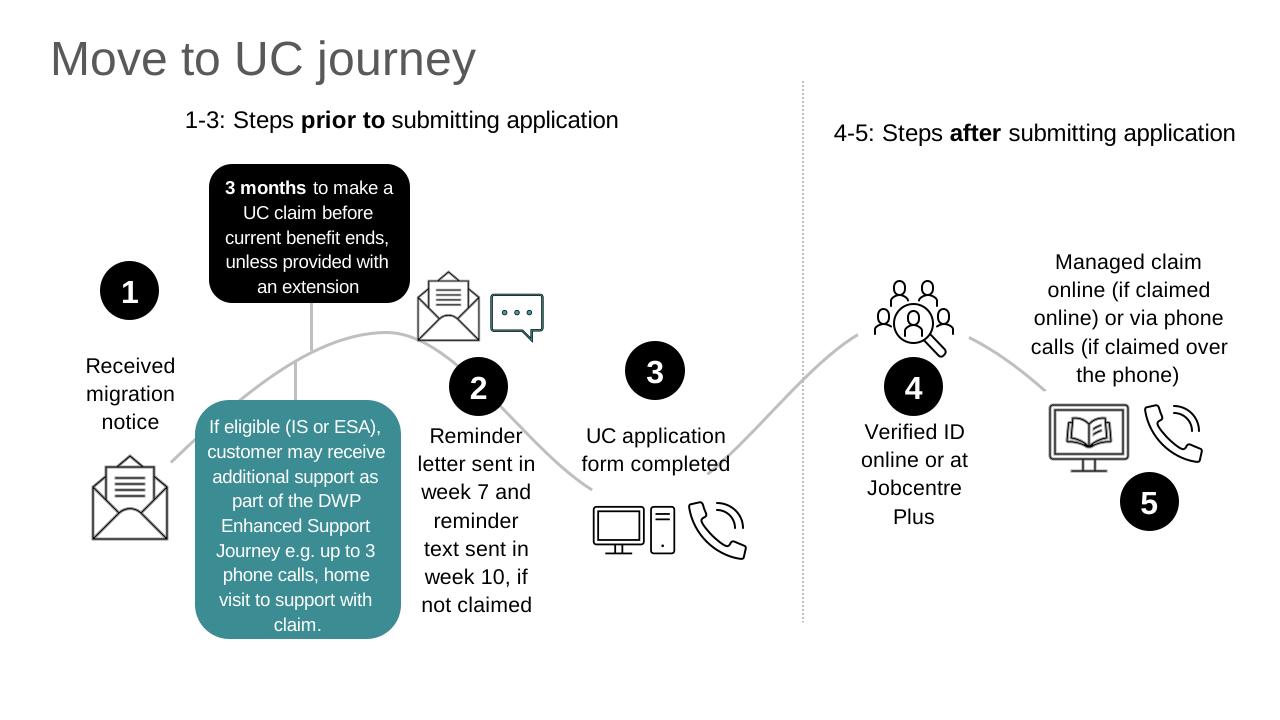
Figure 2: Move to Universal Credit customer journey text description
Steps 1 to 3 prior to submitting application:
1. Received migration notice
Three months to make a UC claim before current benefit ends, unless provided with an extension.
If eligible (Income Support or Employment Support Allowance), customer may receive additional support as part of the DWP Enhanced Support Journey e.g. up to three phone calls, home visit to support with claim.
2. Reminder letter sent in week seven and reminder text sent in week 10, if not claimed.
3. UC application form completed.
Steps 4 to 5 after submitting application:
4. Verified ID online or at Jobcentre Plus
5. Managed claim online (if claimed online) or via phone calls (if claimed over the phone).
This document outlines the insight we have gathered through our work migrating Employment and Support Allowance customers so far, covering four key areas of the customer journey:
-
The Migration Notice and reminders
-
Support and contact for customers
-
The Enhanced Support Journey
-
The claim process
This insight document will cover all four stages of the customer journey.
1. Migration Notices and reminders
We have been migrating at scale customers with ESA and tax credits since July 2024 and customers on ESA only or ESA and Housing Benefit since September and October 2024. By September 2025 we had successfully sent migration notices to most individuals with ESA.
Table 1: Volume of migration notices sent to Employment and Support Allowance customers, July 2024 to end September 2025
| Number of migration notices | All Employment and Support Allowance | Employment and Support Allowance only | Employment and Support Allowance and Housing Benefit | Employment and Support Allowance and tax credits | Employment and Support Allowance, Housing Benefit and tax credits |
|---|---|---|---|---|---|
| Jul 24 | 30,016 | Nil or negligible | 14 | 3,254 | 26,748 |
| Aug 24 | 36,497 | Nil or negligible | 15 | 4,344 | 32,143 |
| Sep 24 | 11,973 | 1,394 | 4,432 | 789 | 5,355 |
| Oct 24 | 35,925 | 7,016 | 20,447 | 2,003 | 6,465 |
| Nov 24 | 32,188 | 9,699 | 18,771 | 872 | 2,842 |
| Dec 24 | 49,425 | 18,539 | 29,757 | 239 | 898 |
| Jan 25 | 56,906 | 22,605 | 34,277 | 5 | 17 |
| Feb 25 | 68,073 | 19,430 | 48,621 | 6 | 16 |
| Mar 25 | 86,577 | 32,291 | 54,278 | Nil or negligible | 5 |
| Apr 25 | 89,267 | 26,669 | 62,594 | Nil or negligible | Nil or negligible |
| May 25 | 70,530 | 30,581 | 39,952 | Nil or negligible | Nil or negligible |
| Jun 25 | 82,005 | 47,376 | 34,626 | Nil or negligible | Nil or negligible |
| Jul 25 | 96,464 | 42,381 | 54,083 | Nil or negligible | Nil or negligible |
| Aug 25 | 94,904 | 64,551 | 30,352 | Nil or negligible | Nil or negligible |
| Sep 25 | 36,637 | 11,716 | 24,913 | Nil or negligible | Nil or negligible |
| Total | 878,588 | 334,656 | 457,581 | 11,550 | 74,798 |
Source: DWP Stat-Xplore
Note: Statistical disclosure control has been applied
Throughout the process of moving customers to Universal Credit, the importance of the migration notice to customers is evident and this remains the same for customers on ESA. Findings from small-scale qualitative research with a sample of these customers published in July 2025 suggested that participants found the content of the migration notice easy to understand and felt that the notice clearly communicated the action they had to take and when. Participants also had strong recall of key information in the migration notice, such as the migration deadline date. As expected, amongst participants with prior negative perceptions of UC as well as those with physical and mental health issues, the migration notice triggered a negative emotional response. There were also participants who were surprised to receive a migration notice as they did not think that moving to UC applied to them. This was more likely to be mentioned within our research amongst individuals with a mental health condition who were aware of UC but did not think that they would be invited to move [footnote 1].
Throughout Move to UC, we have noticed that households have often left claiming to later in the migration period. A reminder is sent to a legacy benefit customer if a claim has not been registered to help prompt customers who have not yet started to take the first steps in making a claim to UC. The first reminder is a letter sent in week seven. If a UC claim is not made after this first reminder, then a second reminder is sent in week 10 in the form of a SMS text message. This process has been in place for all legacy benefit customers and remained the same for customers on ESA.
Table 2: Proportion of reminder notices sent to all and to Employment and Support Allowance customers who were sent a migration notice, July 2022 to end May 2025
| Number of reminders | All Move to Universal Credit | Employment and Support Allowance Total | Employment and Support Allowance only | Employment and Support Allowance and Child Tax Credit | Employment and Support Allowance and Housing Benefit | Employment and Support Allowance, Housing Benefit, and Child Tax Credit |
|---|---|---|---|---|---|---|
| One reminder sent | 15% | 19% | 19% | 18% | 19% | 19% |
| More than one reminder sent | 65% | 51% | 48% | 57% | 50% | 58% |
Source: DWP Stat-Xplore.
The proportion sent reminders in the ESA cohort is similar to all Move to UC customers but is slightly lower for ESA only and ESA & Housing Benefit (HB). Both phases of our small-scale qualitative research[footnote 2] found that the reminder letter prompted participants who had not yet acted to take the next steps in their UC application. Participants who received a reminder letter appreciated it because they had either forgotten to claim UC, did not make time to act originally, or had put off moving to UC because they were worried about the process. However, there were examples of participants with mental health conditions or caring responsibilities who found the urgency of the reminders distressing[footnote 3].
Staff members were aware that reminders may upset some customers but due to the importance of encouraging households to make a claim and the potential problems that could occur if they didn’t make a claim, we have continued to use reminders as a core part of the journey for ESA customers.
2. Support and contact for customers
As part of the process, there were several sources of support signposted on the migration notice where customers could go to get support during the migration period.
-
a dedicated Move to UC telephone helpline
-
Universal Credit website
-
comprehensive guidance on GOV.UK
-
a GOV.UK website dedicated to supporting households moving to UC
-
face to face support in local Jobcentres
-
independent support through Help to Claim, delivered by Citizens Advice, in partnership with Citizens Advice Scotland
Requiring help
Customers previously on ESA excluding tax credits were more likely to require help with their claim, than the average Move to UC customer. The main reason for the additional help for ESA only and ESA and HB customers was due to the higher proportion requiring help with a health condition, than other groups.
Table 3: Assisted digital survey respondents who stated they required help when making their claim among those sent a migration notice between July 2024 and end of May 2025
| All Move to Universal Credit | Employment and Support Allowance Total | Employment and Support Allowance only | Employment and Support Allowance and Child Tax Credit | Employment and Support Allowance and Housing Benefit | Employment and Support Allowance, Housing Benefit, and Child Tax Credit | |
|---|---|---|---|---|---|---|
| Number of respondents | 345,426 | 279,627 | 94,338 | 8,509 | 187,195 | 58,723 |
| Number who had help to claim | 263,971 | 210,836 | 81,094 | 5,305 | 158,942 | 34,284 |
| Percentage who had help to claim | 76% | 75% | 86% | 62% | 85% | 58% |
Source: Move to UC administrative data.
Note: Statistical disclosure control has been applied to counts, and percentages calculated from these counts.
Sources of help
Family or friends were the main source of help for customers when getting support with their claim to UC. A slightly higher proportion of ESA only customers did go to specific support workers for help but remains low in comparison to other areas for help.
Table 4: Sources of help for making a digital claim among those sent a migration notice between July 2024 and end of May 2025
| All Move to Universal Credit | Employment and Support Allowance Total | Employment and Support Allowance only | Employment and Support Allowance and Child Tax Credit | Employment and Support Allowance and Housing Benefit | Employment and Support Allowance, Housing Benefit and Child Tax Credit | |
|---|---|---|---|---|---|---|
| Number who had help to claim, from: | 263,971 | 210,836 | 81,094 | 5,305 | 158,942 | 34,284 |
| Charity | 5% | 5% | 3% | 5% | 4% | 5% |
| Citizens’ Advice | 7% | 7% | 5% | 8% | 6% | 7% |
| Council | 4% | 5% | 4% | 5% | 3% | 4% |
| Family or friend | 58% | 57% | 59% | 53% | 71% | 58% |
| Jobcentre | 1% | 1% | 1% | 2% | 1% | 1% |
| Support Worker | 4% | 5% | 10% | 3% | 1% | 4% |
| UC Helpline | 23% | 24% | 21% | 26% | 17% | 23% |
Source: Move to UC administrative data.
Notes:
-
Statistical disclosure control has been applied to counts, and percentages calculated from these counts.
-
Percentages are of the number of respondents who had help to claim from a particular source out of those who had help to claim.
-
Respondents can report having received help from multiple sources, so percentages will generally not sum to 100%.
Customers who used support organisations (for example Citizens Advice), or specific support workers tended to approach them for advice and guidance about UC. Key themes are as follows:
-
support in understanding what was happening and what they needed to do
-
what impact the migration might have on their money
-
to understand what practical support was available to help them make a UC claim
More insight on how customers looked for support when moving to UC can be found in the ‘Move to Universal Credit DWP Legacy Benefit Customer Qualitative Research.’
3. The Enhanced Support Journey
The enhanced support journey is a non-linear UC claim support process for Employment and Support Allowance customers who have not made a clam to UC 11 weeks after receiving the migration notice. The enhanced support journey starts in week 12 and it involves different interventions ranging from outbound calls, system checks, home visits and contact with support organisations in the local community.
An outline of the enhanced support journey is below.
Figure 3: Enhanced Support Journey
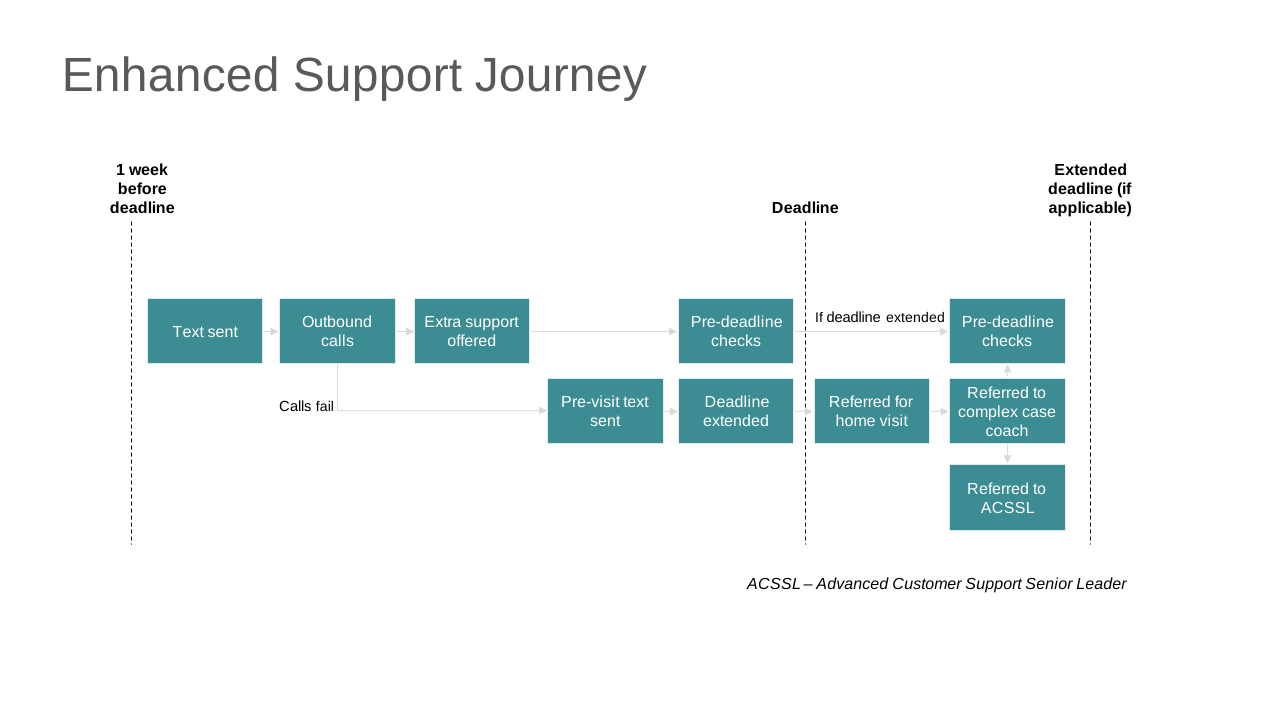
Figure 3: Enhanced Support Journey text description
Journey without referral to Advanced Customer Support Senior Leader:
-
one week before deadline
-
text sent
-
outbound calls
-
extra Support offered
-
pre-deadline checks
-
deadline
-
if deadline extended
-
pre-deadline checks
-
extended deadline (if applicable)
Journey with referral to Advanced Customer Support Senior Leader:
-
one week before deadline
-
text sent
-
outbound calls
-
extra Support offered
-
calls fail
-
pre-visit text sent
-
deadline extended
-
deadline
-
referred for home visit
-
referred to complex case coach
-
referred to Advanced Customer Support Senior Leader
-
extended deadline (if applicable)
For migration notices sent between July 2024 and May 2025, 39% are identified as being part of the enhanced support journey. Amongst these, 59% received a successful SMS message advising them that DWP would be calling them. Of those remaining in the ESJ, 34% didn’t require a ‘no contact’ home visit as they were successfully contacted through outbound telephony support. A key finding from these outbound calls was that most customers acknowledged that they had received the migration notice and, where support needs contact was made, only just over 1% of customers stated that they did not intend to claim UC.
Findings from qualitative research indicated that participants who received a call from DWP found the support they were offered helpful. It was an opportunity to ask questions about the process, ask advisors for clarifications about their benefits and any change in payments that could occur because of claiming UC[footnote 4]. This is also supported by operational feedback we have received.
There were cases in our research where participants requested an extension to their migration deadline on these calls. Participants reported that they appreciated the flexibility offered. The extensions were particularly important for participants who needed additional time to claim UC due to personal circumstances such as caring responsibilities or health issues. There were also cases where participants who received phone calls used the opportunity to tell the advisor that they were planning to claim UC and they did not require further support. These participants did not receive any additional contact because they felt they did not need it but acknowledged that they appreciated being offered the opportunity for support.
Following the outbound calls, the next step in the enhanced support journey is the home visits, and a pre-visit text is sent. 14% of people who were part of the enhanced support journey and who were sent a migration notice between July 2024 and May 2025 were referred to a home visit. Not all home visits that are referred are conducted as households still have time to make a claim before the deadline and they may still claim before the visit takes place. Of these customers referred for a home visit, in 49% of cases, the visit was no longer required. Feedback from visiting officers is that the common areas that they discuss with customers in the visit is around the following themes:
-
explaining the migration notice
-
initial payment date and amount
-
alternative Payment Arrangements and Advances
-
transitional Protection
-
budgeting
-
dispelling misconceptions, for example being forced to work
Most visiting officers believe that these face-to-face conversations are helping to allay fears and understand vulnerabilities.
After the home visit is conducted, or the telephone call is successful pre deadline checks are conducted before a decision is made to terminate. If households haven’t made a claim, most of these cases are referred to the complex case coach for further investigation. Of the 223,424 customers who were identified as being part of the enhanced support journey, 46,539 (21%) were referred to the complex case coach team.
Overall, the feedback from staff is that they do feel that the enhanced support journey is effective in supporting customers. However, there continues to be awareness that some individuals with complex or multiple barriers may still not be able to engage with the process.
The claim process
For migration notices sent to ESA customers since July 2024 (up to end of May 2025), the claim rate remains high at over 95%. In comparison, the overall claim rate amongst all Move to UC customers sent a migration notice up to end of May 2025 was 83%. These figures are encouraging and support our earlier findings that individuals who were previously on a DWP legacy benefits have a higher likelihood to claim, compared to those claiming tax credits only. In line with previous findings, we continue to see a higher proportion claiming nearer to the deadline date, suggesting that people leave it later in the migration period to make a claim. Outlined below are the claim rates for ESA customers.
Table 5: Claim rates among ESA customers sent a migration notice July 2024 to end May 2025
| Employment and Support Allowance Total | Employment and Support Allowance only | Employment and Support Allowance and Housing Benefit | Employment and Support Allowance and Tax Credits | Employment and Support Allowance, Housing Benefit and Tax Credits | |
|---|---|---|---|---|---|
| % claimed | 97% | 94% | 98% | 97% | 99% |
Source: DWP Stat-Xplore.
The enhanced support journey (outlined above) has been effective at getting households to make a claim. Please note, that the ESA only cohort is lower and is aligned with what we see in other benefit combinations. The higher the number of benefits the household/individual has the more likely they are to claim.
Telephone claims have also been a key area of support when getting these households to make a claim. The proportion of telephone claims has been much higher in comparison to the wider Universal Credit service as outlined below.
Table 6: Telephone claims made among those sent a migration notice between July 2024 and end May 2025
| Claims | All move to Universal Credit | Employment and Support Allowance total | Employment and Support Allowance only | Employment and Support Allowance and Housing Benefit | Employment and Support Allowance and Tax Credits | Employment and Support Allowance, Housing Benefit and Tax Credits |
|---|---|---|---|---|---|---|
| All claims | 796,755 | 549,758 | 158,572 | 306,101 | 11,218 | 73,872 |
| Telephone claims | 159,733 | 134,142 | 35,310 | 88,565 | 1,451 | 8,816 |
| Percentage of telephone claims | 20% | 24% | 22% | 29% | 13% | 12% |
Source: Move to UC administrative data.
Note: Statistical disclosure control has been applied to counts, and percentages calculated from these counts.
The higher use of telephone claims here is not surprising and is similar to what we saw in the Earliest Testable Service from 2022 and Discovery 2023 which contained a wider mix of legacy benefit customers.
Research with former DWP legacy benefit customers who chose to make a UC phone claim found that participants who were not digitally confident felt that the DWP telephony helplines were helpful in providing information and support to claim. Participants found it useful that completing the claim on the phone meant they could ask questions about the information they needed to claim to ensure this was correct. There were cases where participants faced challenges making a phone claim due to the DWP telephony lines being busy. Further work is being done in Universal Credit to understand how best to manage the higher volume of households receiving the benefit offline, rather than through the digital service.
Next steps
The managed migration of legacy benefit customers to Universal Credit is scheduled to conclude by the end of March 2026, with the closure of legacy benefits (Working Tax Credit, Child Tax Credit, Income-based Job Seekers Allowance, Income-related Employment and Support Allowance, Income Support and Housing Benefit for working-age households). It is anticipated there will be further Move to UC Insight publications available following the end of the move to Universal Credit for legacy benefit customers.
-
Move to Universal Credit DWP Legacy Benefit Customer Qualitative Research - GOV.UK ↩
-
Move to Universal Credit DWP Legacy Benefit Customer Qualitative Research - GOV.UK ↩
-
Move to Universal Credit DWP Legacy Benefit Customer Qualitative Research - GOV.UK ↩
-
Move to Universal Credit DWP Legacy Benefit Customer Qualitative Research - GOV.UK ↩