DESNZ Public Attitudes Tracker: Energy bills and tariffs, Spring 2026, UK
Published 2 July 2026

© Crown copyright 2026
This publication is licensed under the terms of the Open Government Licence v3.0 except where otherwise stated. To view this licence, visit nationalarchives.gov.uk/doc/open-government-licence/version/3 or write to the Information Policy Team, The National Archives, Kew, London TW9 4DU, or email: psi@nationalarchives.gov.uk.
Where we have identified any third party copyright information you will need to obtain permission from the copyright holders concerned.
This publication is available at https://www.gov.uk/government/statistics/desnz-public-attitudes-tracker-spring-2026/desnz-public-attitudes-tracker-energy-bills-and-tariffs-spring-2026-uk
The DESNZ Public Attitudes Tracker is a nationally representative annual survey of adults (aged 16+) in the UK that tracks public awareness, attitudes and behaviours relating to the policies of the Department for Energy Security and Net Zero (DESNZ), such as energy and climate change.
This report provides a summary of the headline findings relating to energy bills and tariffs from the Spring 2026 wave of the Tracker, which ran from 16 March to 21 April 2026.
Notes for interpretation of findings
Differences between groups are only reported where they are statistically significant at the 95% confidence interval level.
The annual personal income referred to in the report is a self-reported measure.
Line charts included in this report, based on a longer time series, use abbreviated season names in the x-axis (e.g. Spring 2026 = Spr 2026).
The age-related findings are reported using six age groups (16-24, 25-34, 35-44, 45-54, 55-64, 65 and over). In some cases, findings across age groups have been combined to describe a general trend, for example ‘between 78% and 88% of people aged 45 and above’ refers to the range of percentages for the three age groups 45-54, 55-64 and 65+.
Please note that some of the geographical findings have fluctuated over time. These variations may, in part, be due to the base sizes in specific areas and the wide geographic area covered by regions. This also applies to other subgroup findings that have low base sizes.
Two summary self-reported measures are used in this report:
- ‘Awareness’ encompasses all respondents who said they had heard of a particular concept or technology, including those who said they know ‘hardly anything but I’ve heard of this’, ‘a little’, ‘a fair amount’ or ‘a lot’.
- ‘Knowledge’ encompasses those who said that they know ‘a fair amount’ or ‘a lot’ about a topic.
The findings within this report cover the period between Spring 2022 and Spring 2026. The findings should be viewed in light of the changing energy prices over this period[footnote 1]. There was a decrease in the energy price cap in April 2026, during the fieldwork period. In addition, fieldwork began after the onset of the conflict in the Middle East which may also have influenced responses, through concerns about energy prices.
Energy saving and wasting behaviours
Figure 5.1 displays both the longer-term trends in the amount of thought given to saving energy in the home (line chart) and the detailed data on this for the two most recent waves alongside the baseline (bar chart).
Between Summer 2025 and Spring 2026, overall attention paid to energy saving remained stable: 82% said they paid a lot or a fair amount of attention, and 18% said they paid not very much or no attention. The proportion who reported giving it a lot of thought rose back up to 29% from 26% in Summer 2025.
Fluctuations wave on wave are likely, in part, to reflect the volatility of energy prices, but also seasonal differences in household energy use between Spring and Summer waves. This is clearest in the proportion who reported giving a lot of thought to their energy use. This has consistently been lower in Summer waves than in the preceding Spring waves. Over the longer term, there has been no sustained change since the Spring 2022 baseline.
Figure 5.1: Amount of thought given to saving energy in the home (% based on all people), Spring 2022, Spring and Summer 2023 to 2025, Spring 2026[footnote 2]
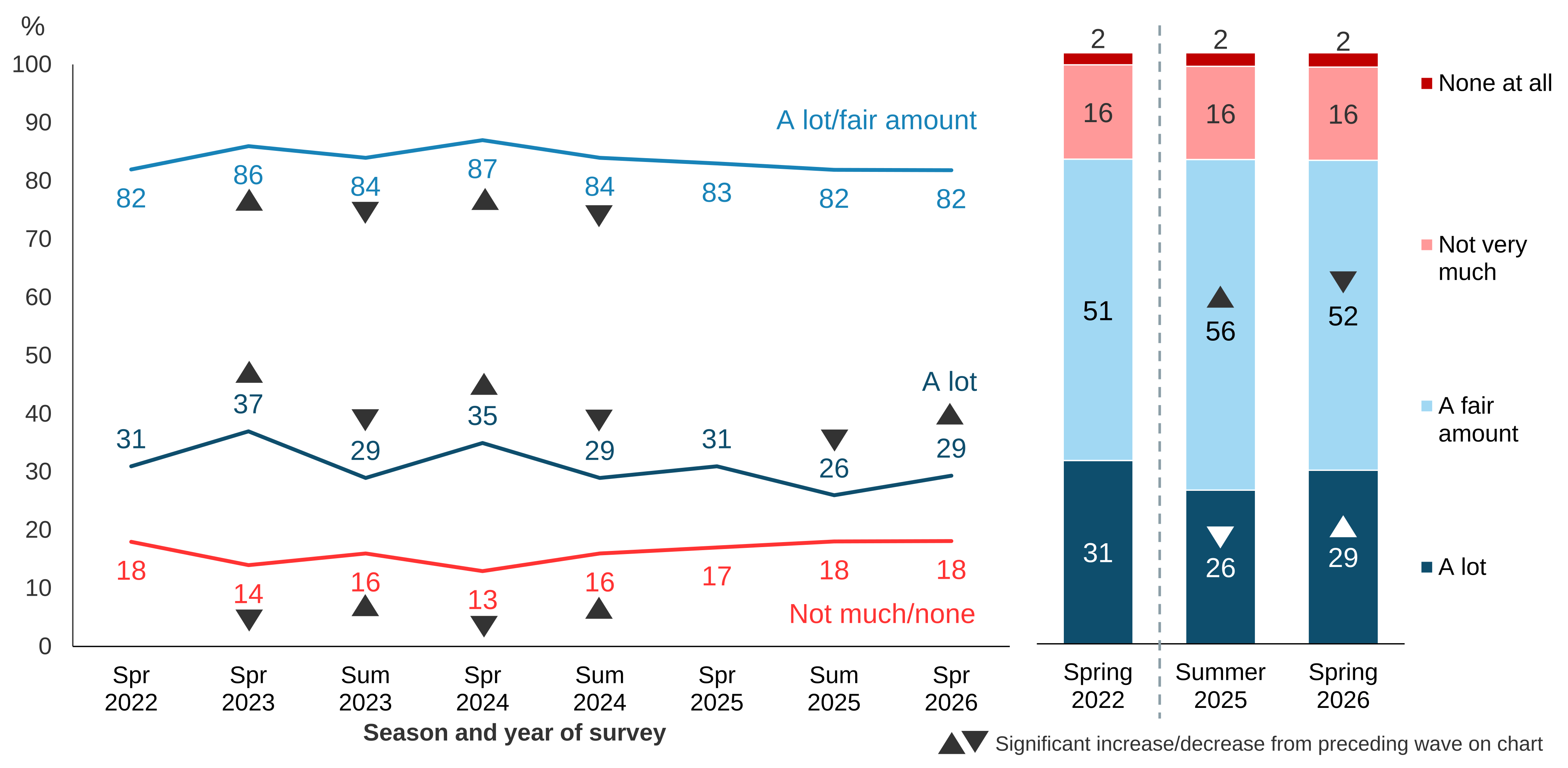
ENERGSAVE. How much thought, if any, would you say you give to saving energy in your home?
Base: All wave respondents – Spring 2022 (4,367), Spring 2023 (4,399), Summer 2023 (3,993), Spring 2024 (4,082), Summer 2024 (3,641), Spring 2025 (3,406), Summer 2025* (3481), Spring 2026 (3,386).
*’Don’t know’ option included in Summer 2025; chart data excludes respondents giving a ‘Don’t know’ response.
Note: On the line chart arrows denote a significant difference between one wave and the next. For the bar chart, significant differences are noted between Spring 2022 and Summer 2025, and between Summer 2025 and Spring 2026.
Analysis by subgroups
The proportion paying a lot or a fair amount of attention to energy saving in the home was higher among the following subgroups:
- People in age groups 45 and over: between 88% and 90% paid a lot of attention, falling to 63% of those aged 16 to 24.
- People in owner occupied households: 86% vs 78% in rented households.
- People in annual income groups of £15,000 or more: between 84% and 87% vs 78% of those with an income below £15,000.
People were also asked about specific energy saving and wasting behaviours in the home. In Spring 2026, the proportion who said that they at least occasionally did each of the energy-related behaviours remained largely consistent with Spring 2025. In the longer term, compared with the Spring 2022 baseline, people were more likely to report energy saving behaviours (Figure 5.2) and less likely to report energy wastage behaviours (Figure 5.3).
In Spring 2026, over eight in ten people reported that they at least occasionally washed clothes at 30 degrees or lower (83%) and tried to keep unused rooms at a cooler temperature (81%). While around a quarter said they always did each of these, there were declines since Spring 2025: 23% down from 27% for always washing clothes at low temperature, 26% down from 29% for always keeping unused rooms cooler.
Figure 5.2: Frequency of energy saving behaviours (% based on all people), baseline wave (Spring 2022), and two most recent waves (Spring 2025 & Spring 2026)
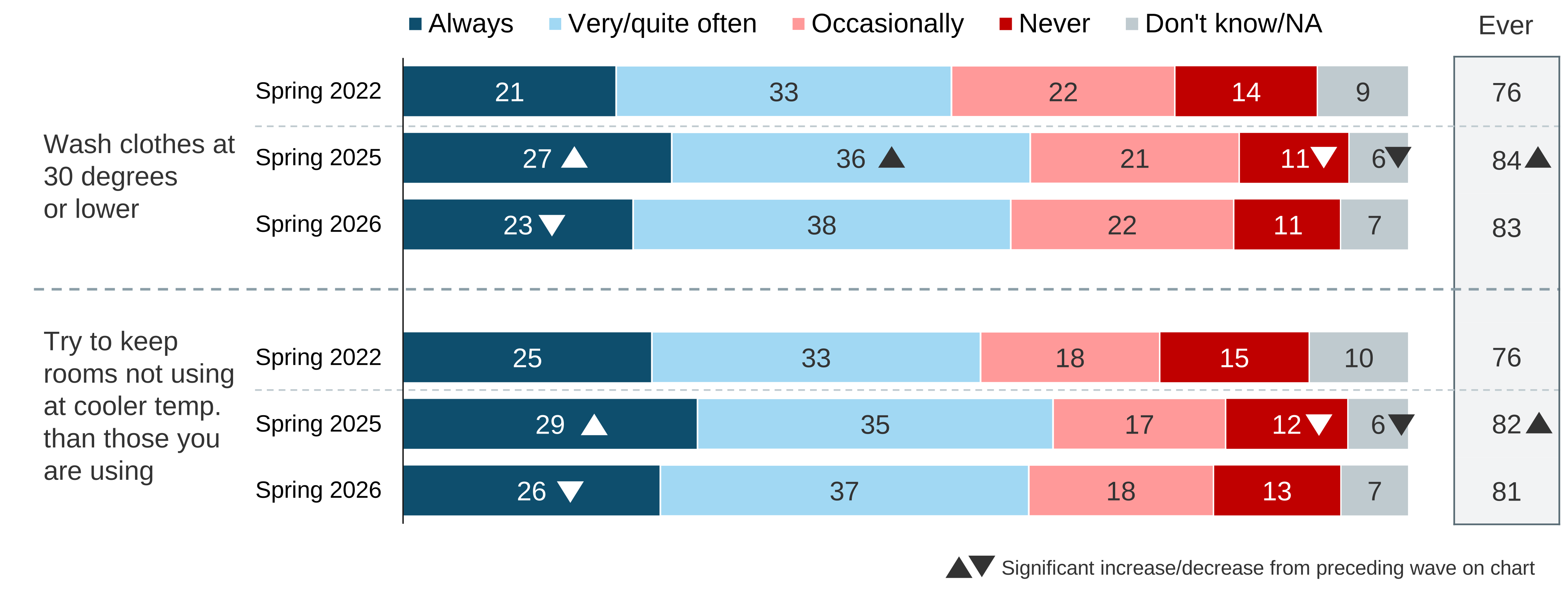
ENSAVFREQ. How often, if at all, do you personally do any of the following?
Base: All wave respondents – Spring 2022 / Spring 2025 / Spring 2026: Wash clothes at 30 degrees or lower (4,349/3,406/3,374); Try to keep rooms that you are not using at a cooler temperature than those you are using (4,360/3,407/3,385).
In Spring 2026, the proportion of people who at least occasionally engaged in energy wasting behaviours remained lower than at the Spring 2022 baseline, with little change since Spring 2025 (Figure 5.3).
In Spring 2026, 68% said that they at least occasionally boiled a kettle with more water than needed and 59% said that they left lights on in rooms not being used. Around half said that they left heating on when out of the home for a few hours (51%, back up from 48% in Spring 2024). Between 2% and 6% said they always did each of these energy wasting behaviours, while a further 12% to 21% said that they did each of them very or quite often.
Figure 5.3: Frequency of energy wasting behaviours (% based on all people), baseline wave (Spring 2022), and two most recent waves (Spring 2025 & Spring 2026)
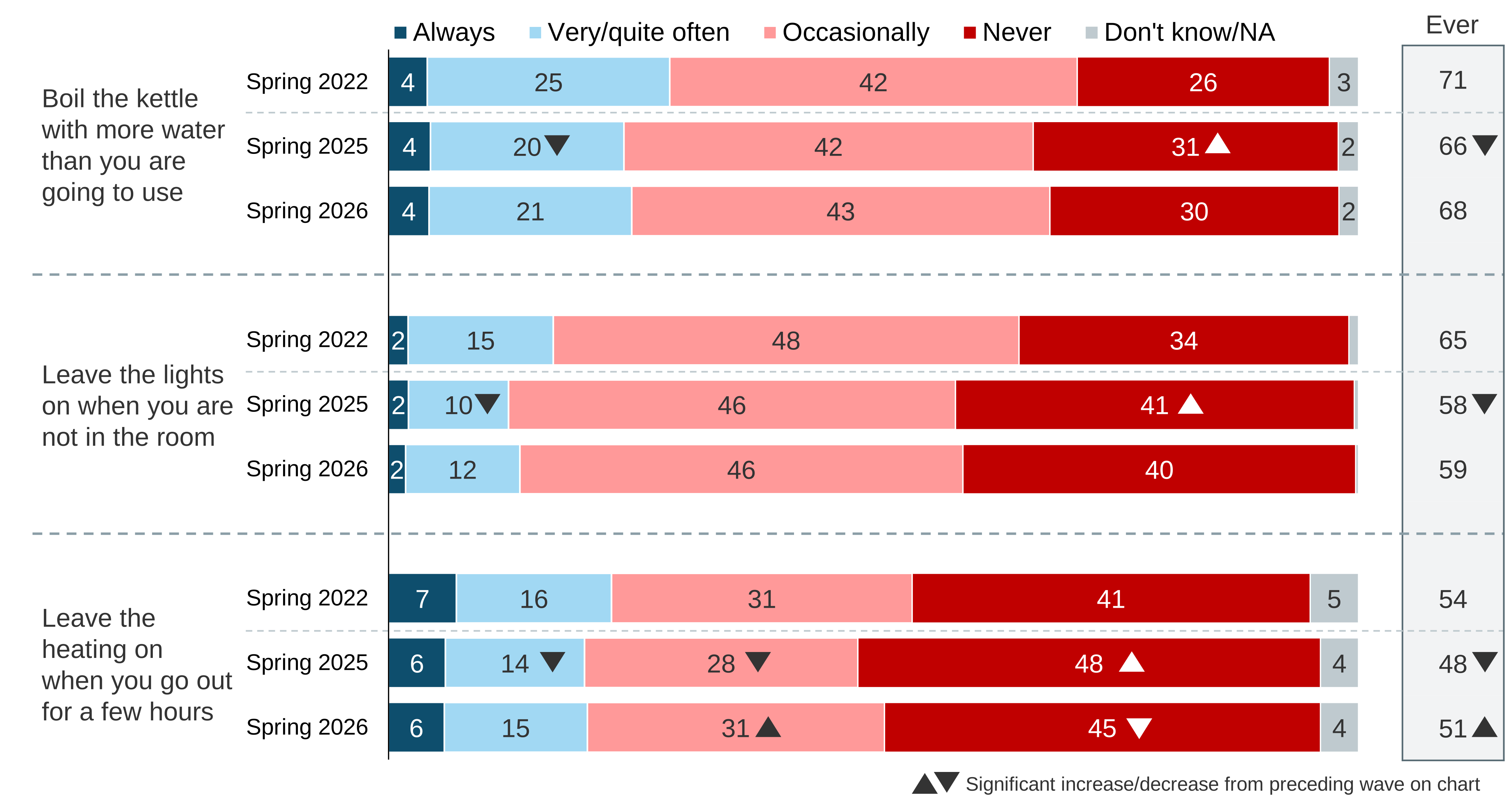
ENSAVFREQ. How often, if at all, do you personally do any of the following?
Base: All wave respondents – Spring 2022 / Spring 2025 / Spring 2026: Boil the kettle with more water than you are going to use (4,359/3,407/3,380); Leave the lights on when you are not in the room (4,362/3,408/3,385); Leave the heating on when you go out for a few hours (4,357/3,405/3,384).
Concerns about the cost of energy bills
As with energy saving behaviours, attitudes towards the cost of paying energy bills over time should be viewed in the context of volatile energy prices over the period of tracking, and seasonal differences in energy needs. This includes the decrease to the price cap in April 2026 and concerns about energy prices as a result of the conflict in the Middle East from March 2026 onwards, before the latest wave of fieldwork began.
In Spring 2026, worry about the cost of energy bills (being very or fairly worried) rose back up to 55% from 47% in Summer 2025. There was also an increase in the proportion saying they were very worried (20%, back up from 17%).
Over the longer term, overall worry about the cost of energy bills has declined from 64% in Spring 2022 (when energy prices increased following the invasion of Ukraine in 2022[footnote 3]) to 55% in Spring 2026. The proportion who reported being very worried has fallen from 29% to 20% over the period of tracking. There has been seasonal fluctuation over more recent waves, with lower levels of worry in Summer waves, when household energy needs are lowest (Figure 5.4).
Figure 5.4: Level of worry about paying for energy bills (% based on all people), Spring 2022, Spring and Summer 2023 to 2025, Spring 2026
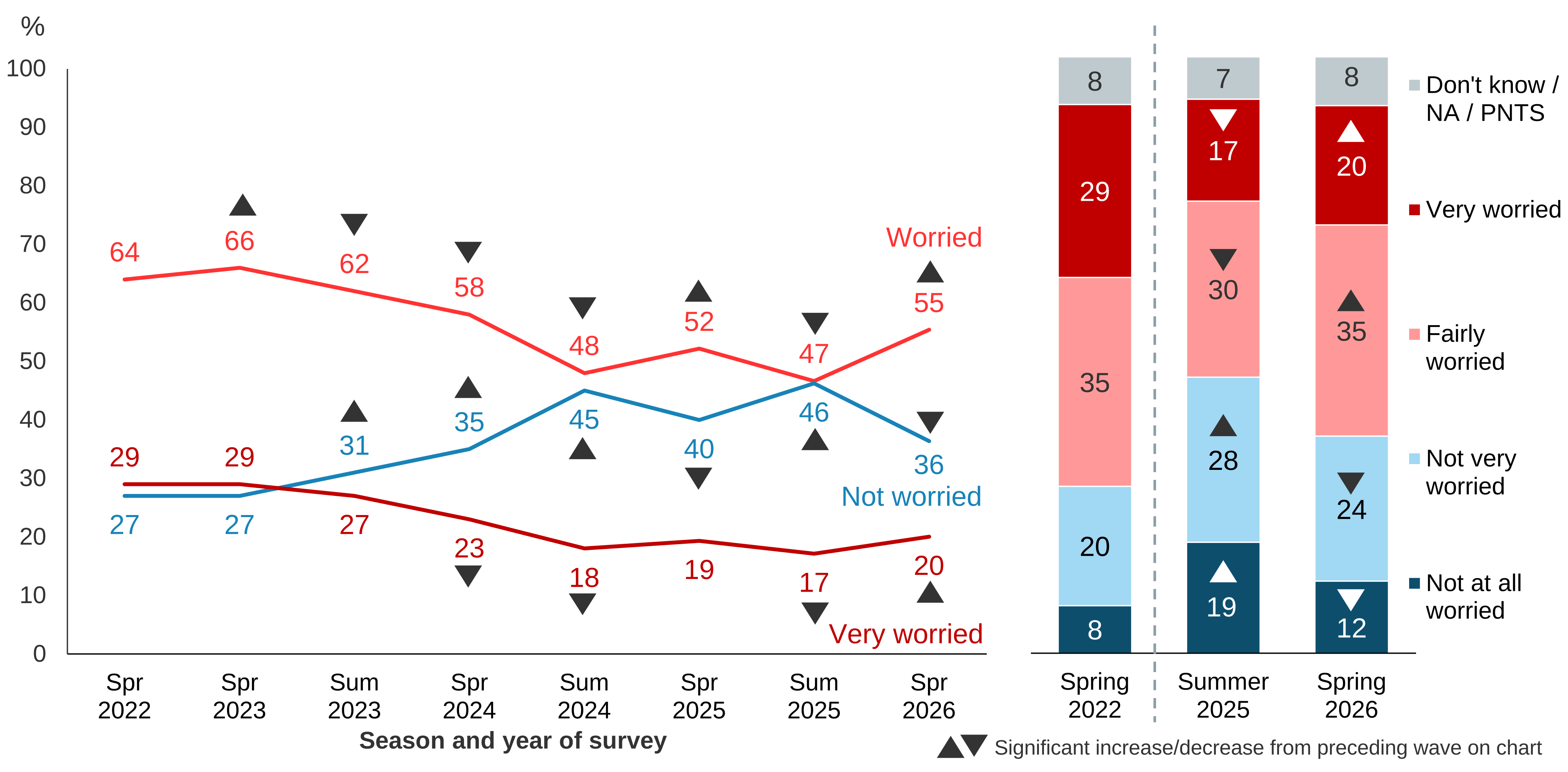
PAYBILLEN. Over the last three months, how worried, if at all, have you been about paying for energy bills (gas/electricity)?
Base: All wave respondents – Spring 2022 (4,369), Spring 2023 (4,408), Summer 2023 (4,003), Spring 2024 (4,081), Summer 2024 (3,640), Spring 2025 (3,412), Summer 2025 (3,522), Spring 2026 (3,388).
Note: On the line chart, arrows denote a significant difference between one wave and the next. For the bar chart, significant differences are noted between Spring 2022 and Summer 2025, and between Summer 2025 and Spring 2026. On the stacked bar chart, the abbreviation PNTS refers to respondents who selected prefer not to say.
Analysis by subgroups
The proportion who felt very worried about paying energy bills was higher among the following subgroups:
- People in age bands 25 to 64: between 19% and 31% compared with 11% of those aged 16 to 24 and 14% of those aged 65 and over. This was highest for those aged 35 to 44 (31%).
- People living in rented accommodation: 29% compared with 17% of those in owner-occupied housing.
- People finding it difficult to get by financially: 56% compared with 6% of those living comfortably.
Energy bills in the context of other bills
In Spring 2026, when asked to choose which of a range of household outgoings respondents were most worried about, energy bills were ranked highest, as in all previous survey waves, although this proportion declined to 36% from 42% in Spring 2025. The proportion of people with worries about any household bills remained stable at 86% (Figure 5.5).
Although energy bills are the expense people worry about most, in the longer term, the proportion of people who were most worried about energy bills has declined (from 58% in Spring 2022 to 36% in Spring 2026). Over the same period, there were increases in the proportion who were most worried about food and other household essentials (from 8% to 20%) and being equally worried about all expenses (from 11% to 17%). Worry about transport costs had fallen in recent waves, but rose again in Spring 2026 to 14%, slightly higher than in Spring 2022 (12%)[footnote 4].
Figure 5.5: Worry about energy bills compared with other household bills (% based on all people), Spring 2022 to 2026
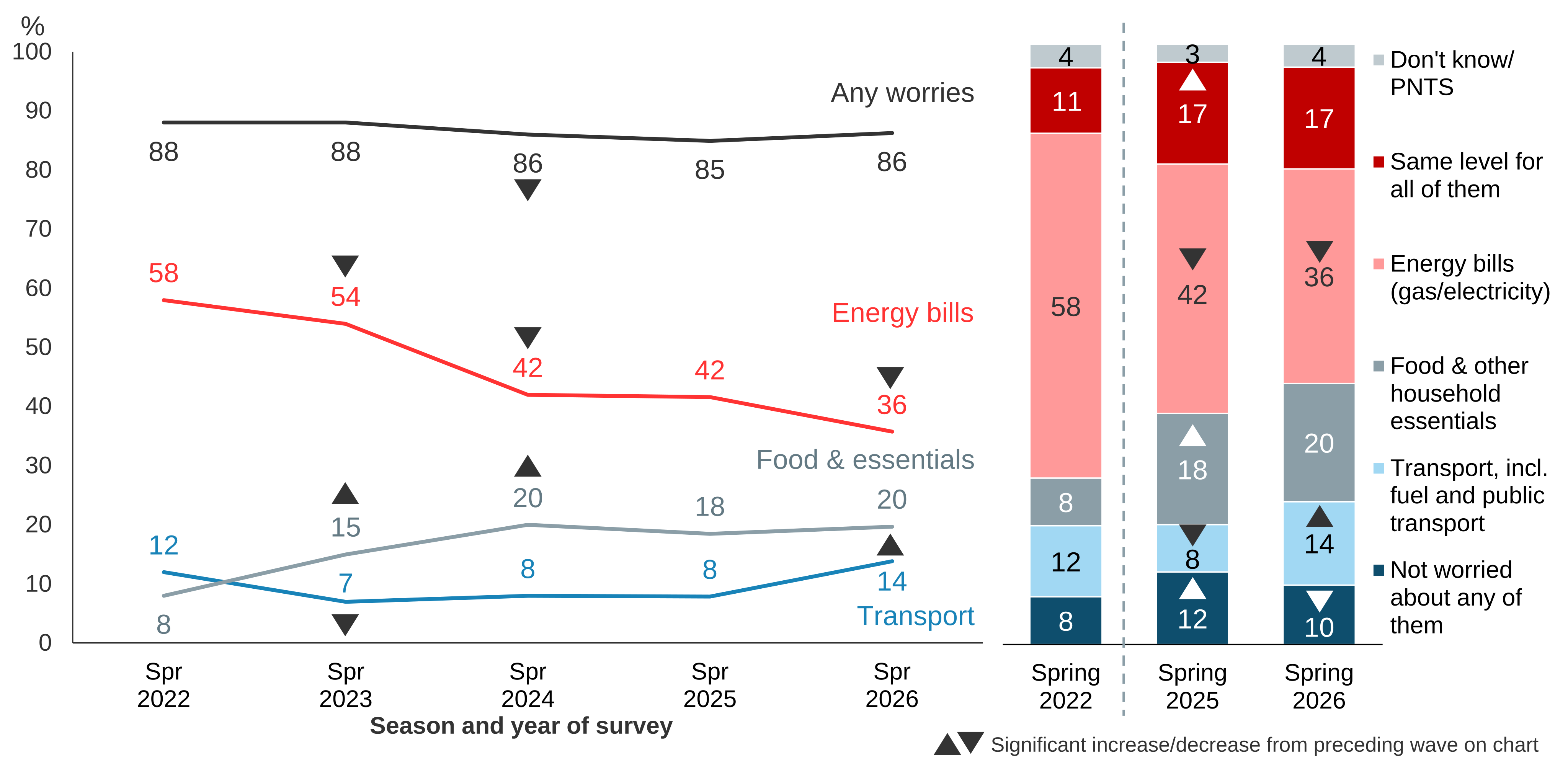
MOSTWORRY. Which ONE of the following bills or expenses are you most worried about?
Base: All wave respondents – Spring 2022 (4,315), Spring 2023 (4,355), Spring 2024 (4,064), Spring 2025 (3,398), Spring 2026 (3,359).
Note: On the line chart, arrows denote a significant difference between one wave and the next. For the bar chart, significant differences are noted between Spring 2022 and Spring 2025, and between Spring 2025 and Spring 2026. On the stacked bar chart, the abbreviation PNTS refers to respondents who selected prefer not to say.
Analysis by subgroups
The proportion who were more worried about energy bills than other types of bills was higher among the following subgroups:
- People in age groups 25 and over: between 37% and 42% vs 10% aged 16 to 24. This is likely due to the higher proportion of people who are not the household decision maker in the 16 to 24 age group.
- People living in rented accommodation (42% vs 35% living in an owner-occupied household).
- People finding it difficult to manage financially (45%) or just getting by (46%) compared to those living comfortably (28%).
- People with sole responsibility for household decisions (42% vs 27% of those who were not responsible for decisions).
There were some age group differences in being most worried about other types of expenses:
- Food and other household essentials were more likely to be the main concern for those in age groups 25 to 44 (between 23% and 24%) compared with those aged under 25 (19%) and those in age groups 55 and over (16%).
- Transport was a particular worry for those aged under 25 (27%) compared with those in age groups 25 and over (between 9% and 13%).
People who worried more about energy bills than other household bills were asked to select the reasons for their worry from a list. As in previous spring waves, the most selected reason was concern that prices will go up compared with what they had paid in the past year[footnote 5] (64%) although this remained lower than at the Spring 2022 baseline (78%). Around half thought energy bills are or will be more expensive than other bills (49% back up from 44% in Spring 2025, but still below 53% in Spring 2022).
Slightly fewer were concerned that energy bills had increased more than other bills (45%, down again from 51% in Spring 2025 and 60% in Spring 2022) and 44% were concerned about having less control over energy bills than other bills (remaining below 51% in Spring 2022). The same proportion (44%) were worried about energy not being something they can go without.
Actions taken due to cost of energy bills
Respondents were asked to choose from a list of actions which, if any, they had taken in recent months because of the cost of energy bills (Figure 5.6). In Spring 2026, the question wording was changed from ‘because of the increased cost of your energy bills’ to ‘because of the cost of your energy bills’, allowing for bills to have either increased or decreased. This may impact on the comparability of Spring 2026 results with those from previous waves.
Overall, in Spring 2026, 67% of people said they had taken at least one of these cost-saving actions. This continued a decreasing trend from 70% in Spring 2025 and 82% in Spring 2023. This corresponds to the decrease in energy bills being seen as the most concerning outgoing (see Figure 5.5 above).
People were most likely to report reducing energy use, but not to an uncomfortable level (38%, remaining below 49% in Spring 2023) and reducing energy use to an uncomfortable level (22%, remaining below 27% in Spring 2023).
Other actions, including skipping meals, borrowing money, missing important journeys and taking out loans, were each reported by around one in ten people. There was an increase since Spring 2025 in reports of missing important journeys to save money on fuel or fares (10%, back up from 8%).
Figure 5.6: Actions taken in recent months because of the cost of energy bills* (% based on all people), baseline wave (Spring 2023) and two most recent waves (Spring 2025 & Spring 2026)
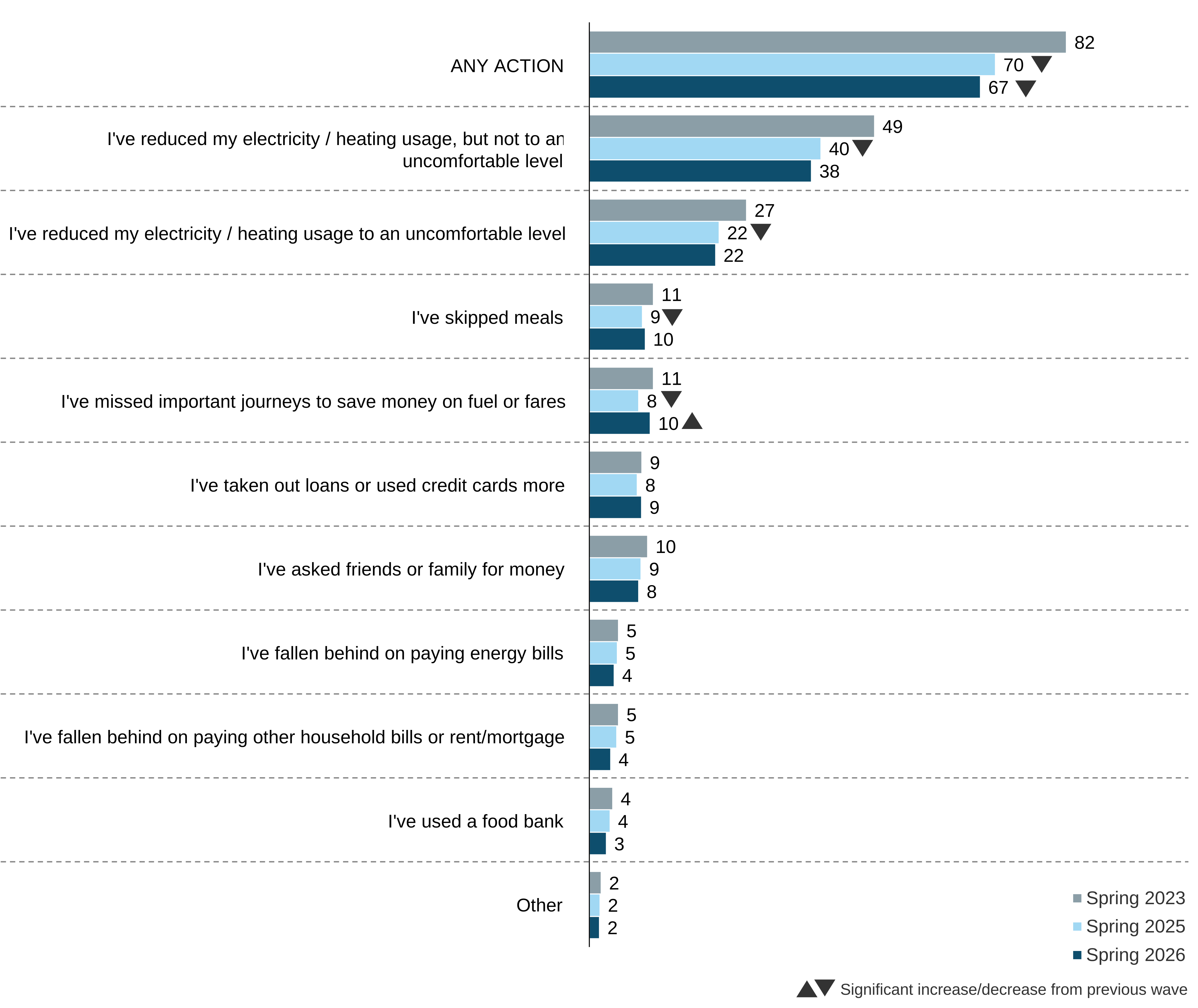
COSTACTIONS. Which, if any, of the following actions have you taken in recent months because of [the increase in*] the cost of your energy bills? Please select all that apply. * words ‘the increase in’ removed in Spring 2026
Base: All wave respondents – Spring 2023 (4,395), Spring 2025 (3,409), Spring 2026 (3,380).
Analysis by subgroups
By age
- People aged under 25 (44%) were less likely to report taking any cost saving actions compared with those in age groups 25 and over (between 65% and 76%).
- People aged 65 and over were less likely than those in age groups 35 to 54 to report almost all actions. For example, 20% had reduced electricity use to an uncomfortable level vs 27% of those in age groups 35 to 54.
By tenure
- People living in rented accommodation were more likely to report taking any cost-saving actions (78%) compared with those in owner-occupier households (65%).
- This difference was reflected across most categories. For example, 30% of renters reported reducing electricity usage to an uncomfortable level vs 19% of owner-occupiers. However, those in owner-occupier households were more likely than renters to say they have reduced energy but not to an uncomfortable level (41% vs 35%).
By financial hardship
- Those finding it difficult to get by financially were considerably more likely to report taking any cost-saving actions (91%) compared with those living comfortably (53%).
- This large difference was reflected across all categories other than reducing energy but not to an uncomfortable level where the reverse was seen: 39% of those living comfortably vs 25% of those finding it difficult to get by.
Attitudes towards cost of renewable energy
In Spring 2026, people remained most likely to expect an increase in energy bills in the short term (next one to two years) with the UK’s move to renewable energy sources (49%, down from 57% in Spring 2025). They remained most likely to expect a decrease in prices in the longer term of 10 years or more (47% back up from 41%).
Between Spring 2022 and Spring 2023, people became more positive that energy bills would decrease with a move to renewable energy sources, and less likely to think that energy bills would increase, both in the short term (Figure 5.7) and long term (Figure 5.8). From Spring 2024 to Spring 2025, there was an increase in those expecting energy bills to go up, however this trend reversed in Spring 2026.
Considering the short-term impacts of moving to renewables, the peak expectation of price increases was reached in Spring 2025 (57%), with a partial recovery to 49% in Spring 2026, but this remained above the lowest level that was recorded in Spring 2023 (42%).
There was a similar pattern in relation to the long-term impacts of moving to renewables, with expectations of a price increase rising from a low of 21% in Spring 2023 to 33% in Spring 2025, before dropping back to 27% in Spring 2026.
Figure 5.7: Perceived impact of move to renewable energy sources on energy bills in the short term (% based on all people), Spring 2022 to 2026
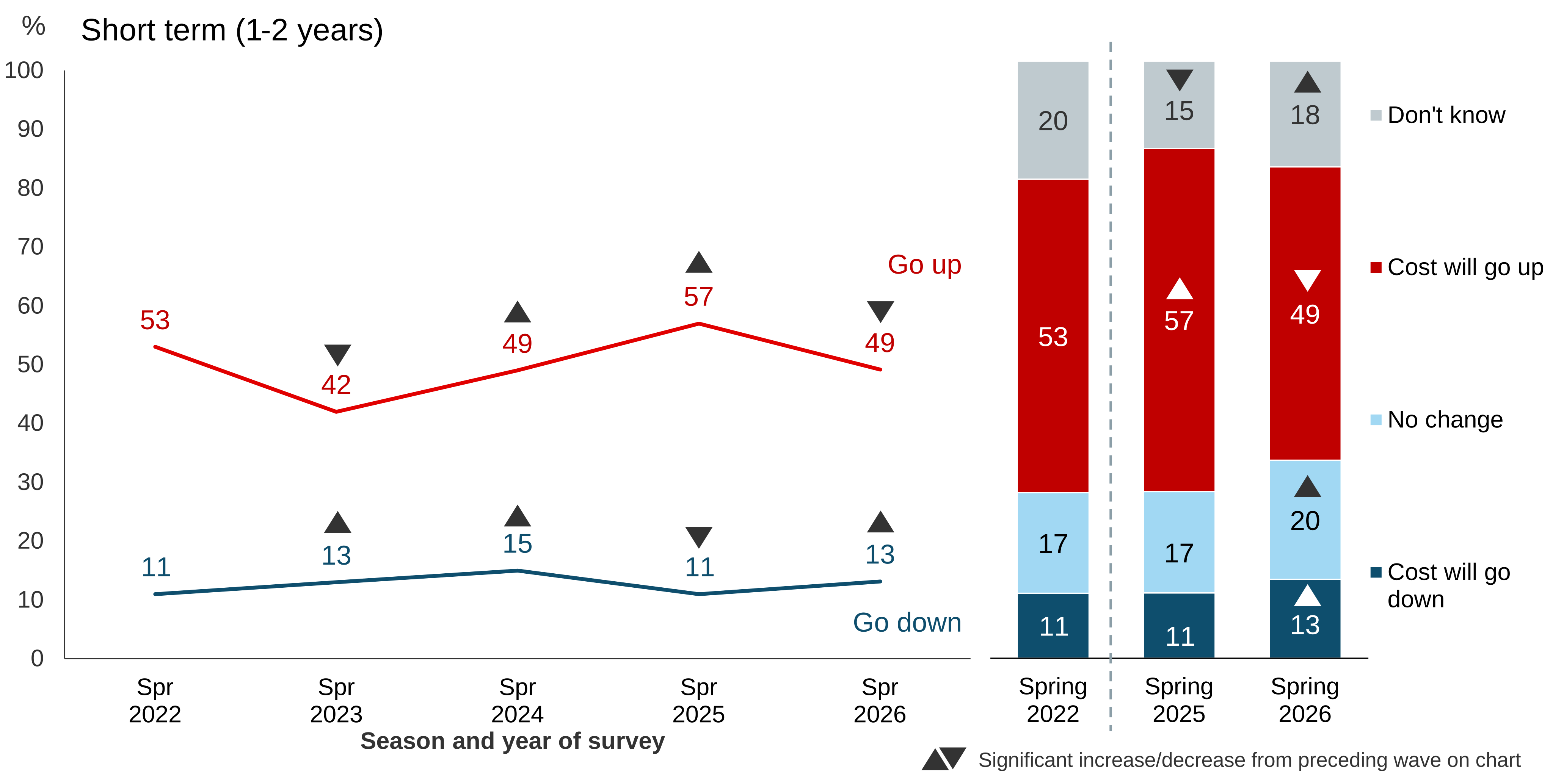
IMPACTBILL. What impact do you think that the UK’s move to renewable energy sources might have on people’s energy bills in the UK…?
Base: All wave respondents – Spring 2022 / Spring 2023 / Spring 2024 / Spring 2025 / Spring 2026:
In the short term (1-2 years) (4,336/4,377/4,079/3,397/3,374).
Figure 5.8: Perceived impact of move to renewable energy sources on energy bills in the long term (% based on all people), Spring 2022 to 2026
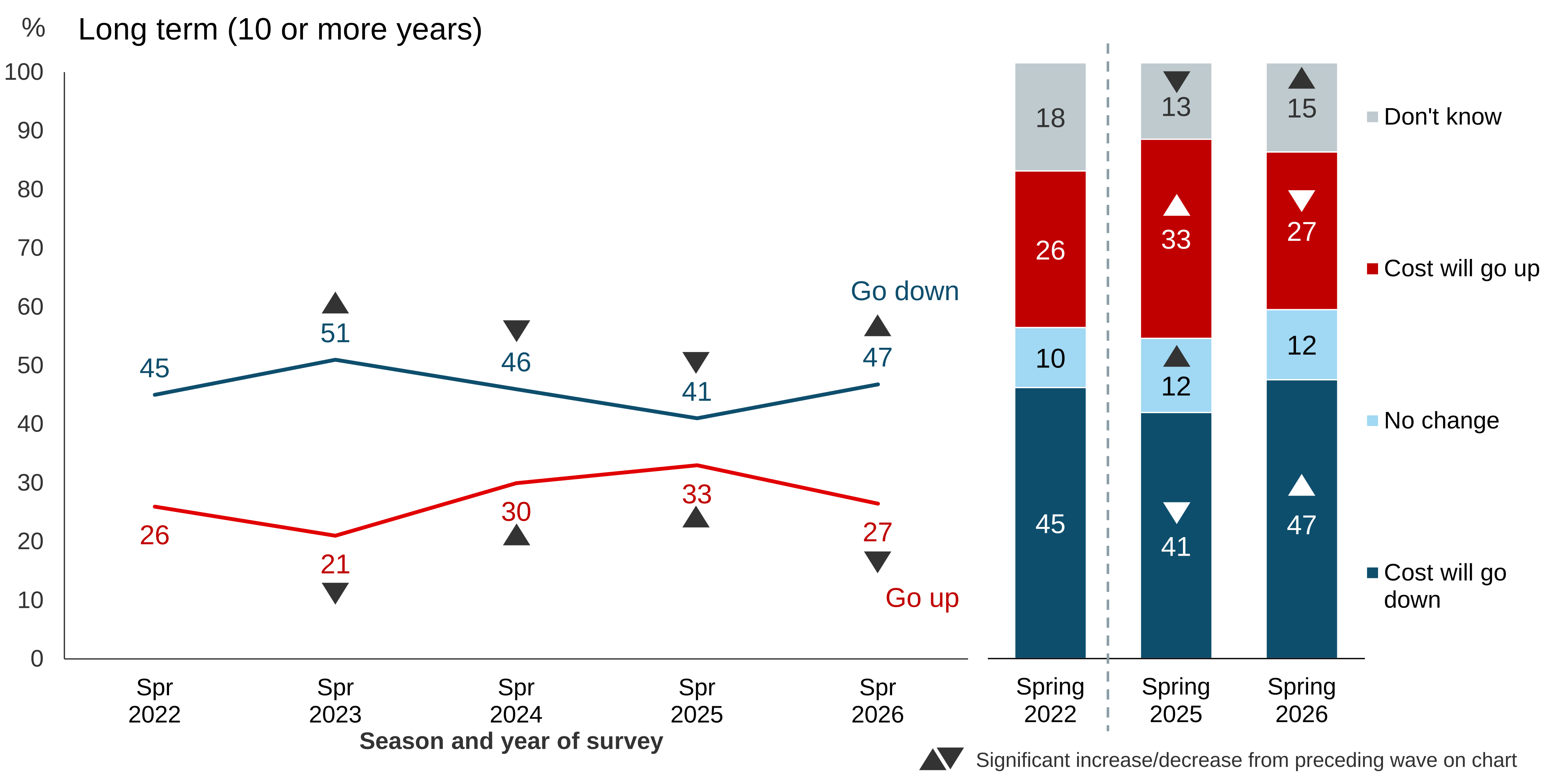
IMPACTBILL. What impact do you think that the UK’s move to renewable energy sources might have on people’s energy bills in the UK…?
Base: All wave respondents – Spring 2022 / Spring 2023 / Spring 2024 / Spring 2025 / Spring 2026:
In the long term (10 or more years) (4,301/4,372/4,061/3,384/3,354).
Note: On the line charts (Figures 5.7 and 5.8), arrows denote a significant difference between one wave and the next. For the bar charts, significant differences are noted between Spring 2022 and Spring 2025, and between Spring 2025 and Spring 2026.
Analysis by subgroups
By age:
- Older people aged 65 and over were more likely to expect energy bills to go up in both the short and long term: 56% of those aged 65 and over expected an increase in the short term compared with between 45% to 50% of those in age groups 16 to 64; in the long term, 33% of those aged 65 and over expected an increase vs between 20% to 27% of those in age groups below 65.
By education:
- There were no differences by education in short-term expectations of energy bill prices. However, in the long term, people with a degree were more likely than those with no qualifications to expect prices to go down (57% vs 32%) and less likely to expect them to go up (22% vs 34%).
Flexible energy schemes
Two new annual questions were added in Spring 2025 to assess awareness of and the likelihood of using flexible energy reward schemes. The following introduction was presented to respondents: ‘Some energy suppliers offer customers an opportunity to change their electricity use to certain times to receive rewards, such as money off their energy bills, free electricity or vouchers. These are referred to as flexible energy reward schemes. Suppliers use different names for these schemes, including Saving Sessions, PeakSave and Demand Flexibility Service’.
As shown in Figure 5.9, 73% of people said they were aware of flexible energy schemes, up from 70% in Spring 2025. However, just 26% said they knew a lot or a fair amount about them, with no increase in the past year.
People were broadly positive about these types of scheme: there was an increase in the proportion saying they were likely to use them (51% up from 47% in Spring 2025) and this remains higher than the proportion not likely to do so (28%). There was also an increase in the proportion saying they were very likely to do so (18% up from 16% in Spring 2025).
Combining those who said they were very or fairly likely to sign up with the 6% who said they were already using such a scheme, more than half (57%) of people were open to such schemes.
Figure 5.9: Awareness of and likelihood of using flexible energy reward schemes (% based on all people), Spring 2025 to 2026
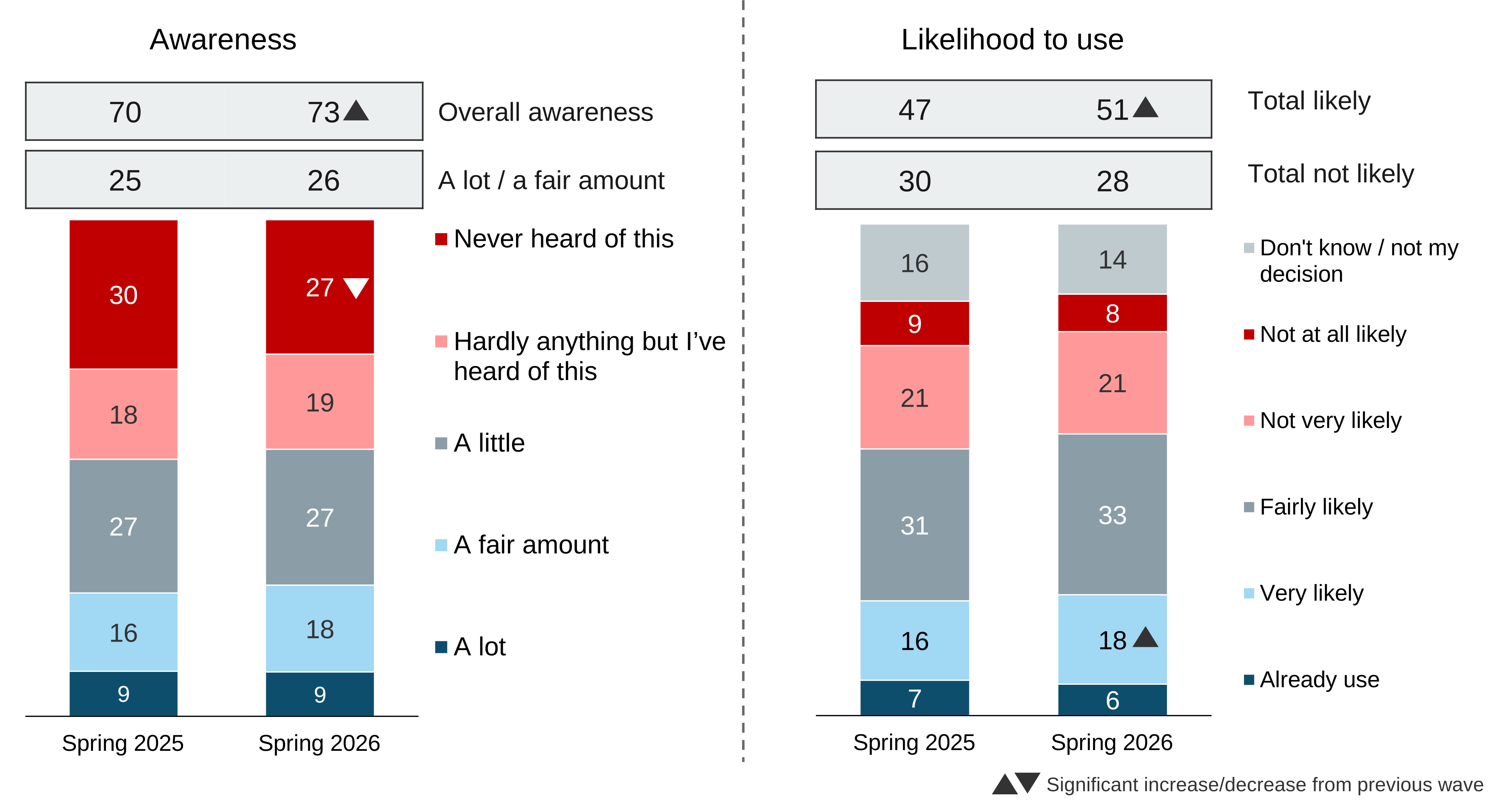
FLEXENERGYAWARE. Before today, how much, if anything, did you know about flexible energy reward schemes? FLEXENERGYUSE. How likely are you to use a flexible energy reward scheme?
Base: All wave respondents – Spring 2025 / Spring 2026: awareness (3,405/3,389), Likelihood of using (3,403/3,384).
Analysis by subgroups
By age:
- Knowledge (a lot or a fair amount) about flexible energy reward schemes was higher among those aged 55 to 64 (34%) compared with both those in age groups 16 to 35 (between 21% and 27%) and those aged 65 and over (24%), with a similar pattern for awareness.
- People in age groups 25 to 44 were more likely to say they would use such schemes (between 58% and 60%) compared with those aged 65 and over (43%). Likelihood was also lower for people aged 16 to 24 (45%), but this age group was far more likely than average to say this was not their decision to make (41% vs 14% of all people).
By housing tenure:
- Knowledge (a lot or a fair amount) about flexible energy reward schemes was higher for people living in owner-occupied households than those in rented accommodation (30% vs 21%), with a similar pattern for awareness.
- However, likelihood of using such a scheme was higher for renters (57% compared with 50% in owner-occupied households) and particularly for private renters (59% vs 50% of social renters).
By financial hardship:
- Knowledge (a lot or a fair amount) about flexible energy reward schemes was higher for people living comfortably (30%) compared with those finding it difficult (21%), with a similar pattern for awareness.
- People finding it difficult to get by financially (58%), and those just getting by (56%), were more likely to say they would use such a scheme than those living comfortably (48%).
Further findings on energy bills and tariffs
In previous waves, questions were included on other topics relating to energy bills and tariffs. The latest findings relating to these topics can be found as follows:
- Attention paid to energy use in the home and ways in which this is monitored, see Winter 2025 report energy bills and tariffs - section on ‘Monitoring energy use’
- Awareness of and likelihood of switching to ‘time of use’ electricity tariffs, see Winter 2025 report energy bills and tariffs - section on ‘Time of use electricity tariffs’
- Electric vehicle ownership and awareness of smart charging, see Winter 2024 report energy bills and tariffs - section on ‘Smart electric vehicle charging’
- Awareness of the most effective ways to reduce energy use in the home, and level of interest in finding out more, see Summer 2025 report on energy bills and tariffs - section on ‘Knowledge about reducing energy use’
- How energy bills are paid, see Summer 2025 report on energy bills and tariffs - section on ‘Cost of energy bills’
- Awareness of and attitudes towards smart appliances, see Summer 2025 report on energy bills and tariffs - section on ‘Smart appliances’
- Changes made in last two years to reduce energy use, see Summer 2024 report on energy bills and tariffs - section on ‘Changes in energy use made in the last two years’
- Attitudes towards government financial support to households to help with energy bills, see Summer 2024 report on energy bills and tariffs - section on ‘Attitudes towards Government financial support with energy costs’
- Satisfaction with service delivery from energy suppliers, see Spring 2024 report on energy bills and tariffs – section on ‘Energy suppliers’
-
An overview of domestic energy price changes can be found here: Gas and electricity prices during the ‘energy crisis’ and beyond - House of Commons Library ↩
-
The ‘don’t know’ answer code was erroneously added in Summer 2025. To ensure comparability with previous waves, results were rebased on results excluding the 2% of people who answered ‘don’t know’ in Summer 2025. ↩
-
For more information on energy prices during the ‘energy crisis’ and beyond, please see: https://commonslibrary.parliament.uk/research-briefings/cbp-9714/ ↩
-
This may, in part, reflect changes in road fuel prices following the onset of the Middle East conflict. For more information on road fuel prices see: Weekly road fuel prices - GOV.UK. ↩
-
In Spring 2026 this response option was changed from ‘in the past’ to ‘in the past 12 months’ to provide an unambiguous time period in the question wording. ↩