DESNZ Public Attitudes Tracker: Energy bills and tariffs, Winter 2025, UK
Published 12 March 2026

© Crown copyright 2026
This publication is licensed under the terms of the Open Government Licence v3.0 except where otherwise stated. To view this licence, visit nationalarchives.gov.uk/doc/open-government-licence/version/3 or write to the Information Policy Team, The National Archives, Kew, London TW9 4DU, or email: psi@nationalarchives.gov.uk.
Where we have identified any third party copyright information you will need to obtain permission from the copyright holders concerned.
This publication is available at https://www.gov.uk/government/statistics/desnz-public-attitudes-tracker-winter-2025/desnz-public-attitudes-tracker-energy-bills-and-tariffs-winter-2025-uk
The DESNZ Public Attitudes Tracker is a nationally representative annual survey of adults (aged 16+) in the UK that tracks public awareness, attitudes and behaviours relating to the policies of the Department for Energy Security and Net Zero (DESNZ), such as energy and climate change.
This report provides a summary of the headline findings relating to energy bills and tariffs from the Winter 2025 wave of the Tracker, which ran from 4 November to 9 December 2025.
Notes for interpretation of findings
Differences between groups are only reported where they are statistically significant at the 95% confidence interval level.
The annual personal income referred to in the report is a self-reported measure.
Line charts included in this report, based on a longer time series, use abbreviated season names in the x-axis (e.g. Winter 2025 = Win 2025).
The age-related findings are reported using six age groups (16-24, 25-34, 35-44, 45-54, 55-64, 65 and over). In some cases, findings across age groups have been combined to describe a general trend, for example ‘between 78% and 88% of people aged 45 and above’ refers to the range of percentages for the three age groups 45-54, 55-64 and 65+.
Please note that some of the geographical findings have fluctuated over time. These variations may, in part, be due to the base sizes in specific areas and the wide geographic area covered by regions.
Two summary self-reported measures are used in this report:
- ‘Awareness’ encompasses all respondents who said they had heard of a particular concept or technology, including those who said they know ‘hardly anything but I’ve heard of this’, ‘a little’, ‘a fair amount’ or ‘a lot’.
- ‘Knowledge’ encompasses those who said that they know ‘a fair amount’ or ‘a lot’ about a topic.
The findings within this report cover the period between Spring 2022 and Winter 2025. The findings should be viewed in light of the changing energy prices over this period[footnote 1].
Monitoring energy use
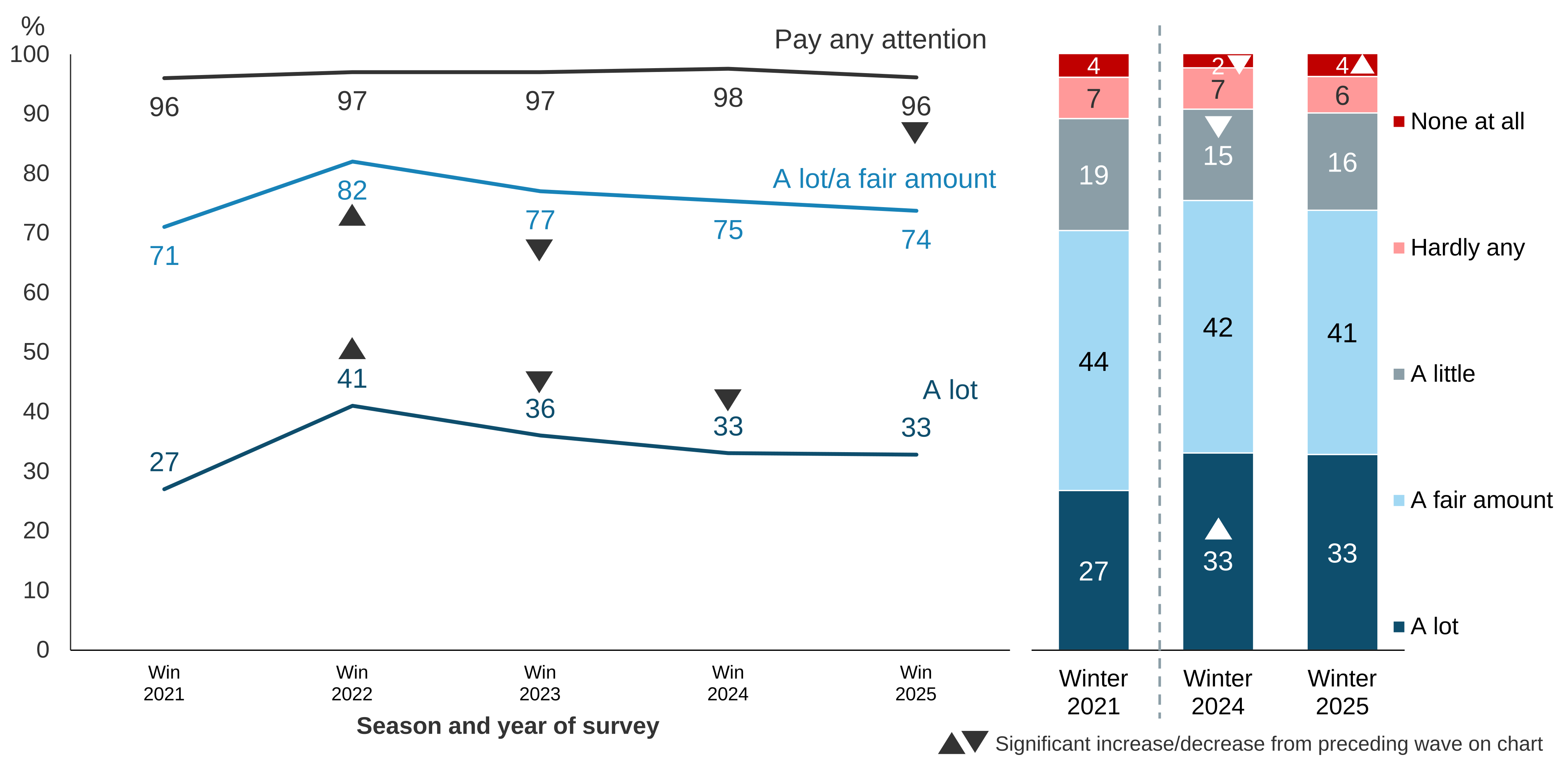
Questions are asked annually, in the Winter wave, about people’s attitudes towards heating in the home. Figure 5.1 displays both the longer-term trends in attention paid to the amount of heat used (line chart) and the detailed data for the most recent two waves alongside the baseline (bar chart).
In Winter 2025, almost all people said they paid at least some attention to the amount of heat they used (96%) although this was slightly lower than in Winter 2024 (98%). Around three quarters said they paid a lot or a fair amount of attention to this (74%).
Over the longer term, the proportion saying they paid a lot or a fair amount of attention to the amount of heat they use has fallen from 82% in Winter 2022. There has been a similar trend for paying a lot of attention, falling from 41% in Winter 2022 to 33% in Winter 2025. The peak in Winter 2022 likely reflects the height of the energy price crisis.
Figure 5.1: How much attention paid to amount of heat used in home (% based on all people), Winter 2021 to 2025
HEATUSE. How much attention do you pay to the amount of heat you use in your home?
Base: All wave respondents – Winter 2021 (3,701), Winter 2022 (3,571), Winter 2023 (3,741), Winter 2024 (3,209), Winter 2025 (3,277).
Note: On the line chart, arrows denote a significant difference between one wave and the next. For the bar chart, significant differences are noted between Winter 2021 and Winter 2024, and between Winter 2024 and Winter 2025.
Analysis by subgroups
The proportion saying they paid a lot or a fair amount of attention was higher among the following subgroups:
- People in age bands 35 and over: between 78% and 80%, compared with 52% of those aged 16 to 24.
- People living in Scotland (80%); in contrast the lowest level was reported in the West Midlands (67%).
The proportion saying they paid a lot of attention was higher among the following subgroups:
- People who reported finding it difficult to manage financially: 43% compared with 29% of those who were managing comfortably.
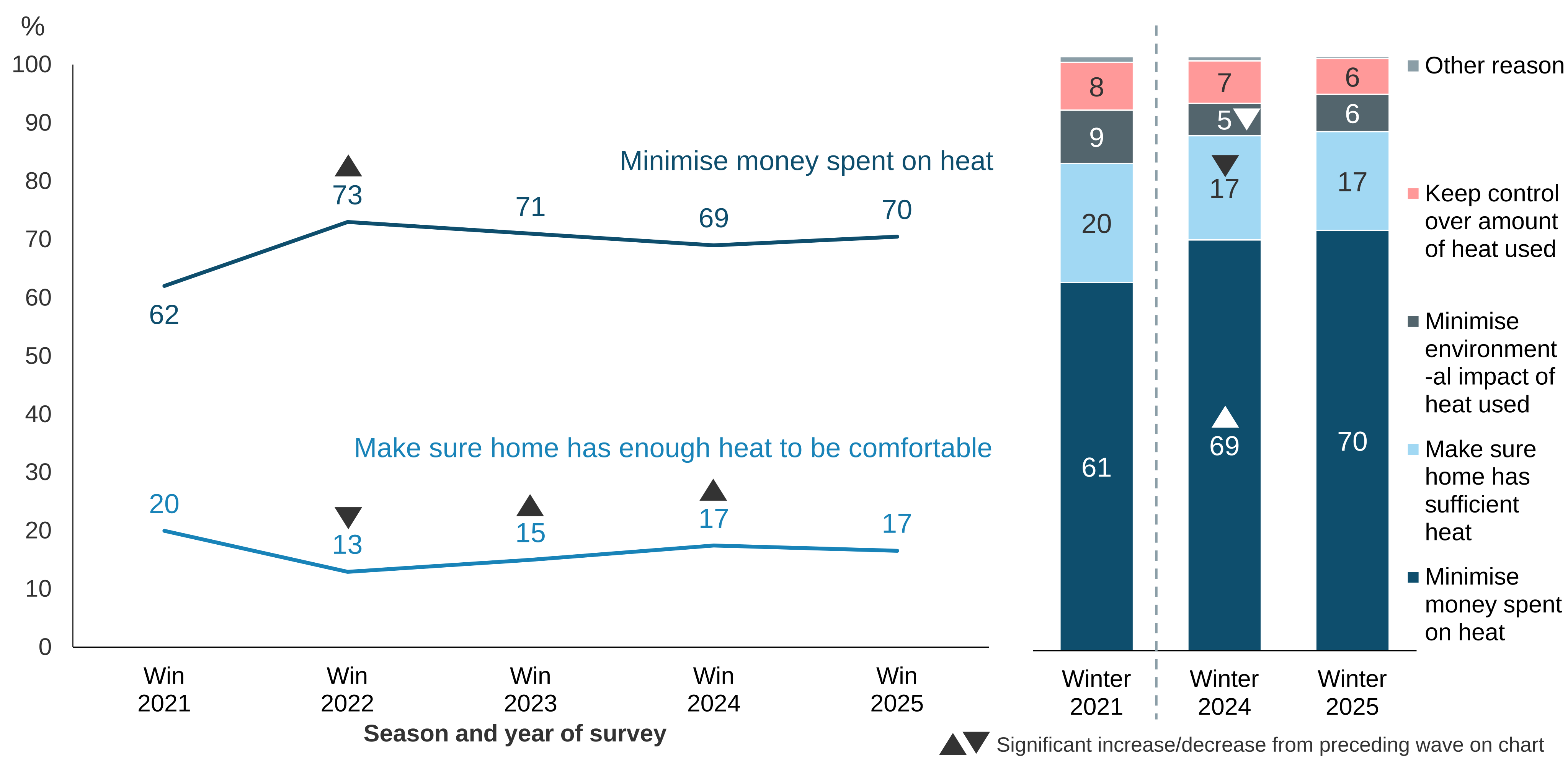
People who reported paying a lot or a fair amount of attention to heat used in their home (74%) were asked their reasons for doing this. (Figure 5.2).
In Winter 2025, as in previous years, the main reason given was to minimise the money spent on heat (70%). Another reason is to ensure their home had sufficient heat to be comfortable (17%).
Figure 5.2: Reasons for paying attention to the amount of heat used (% based on those who pay at least a fair amount of attention), Winter 2021 to 2025
HEATATTWHY. You said that you pay [a lot / a fair amount] of attention to the amount of heat you use in your home. What is the main reason for this?
Base: All wave respondents who pay at least a fair amount of attention – Winter 2021 (2,769), Winter 2022 (3,036), Winter 2023 (3,010), Winter 2024 (2,565), Winter 2025 (2,536).
Note: On the line chart, arrows denote a significant difference between one wave and the next. For the bar chart, significant differences are noted between Winter 2021 and Winter 2024, and between Winter 2024 and Winter 2025.
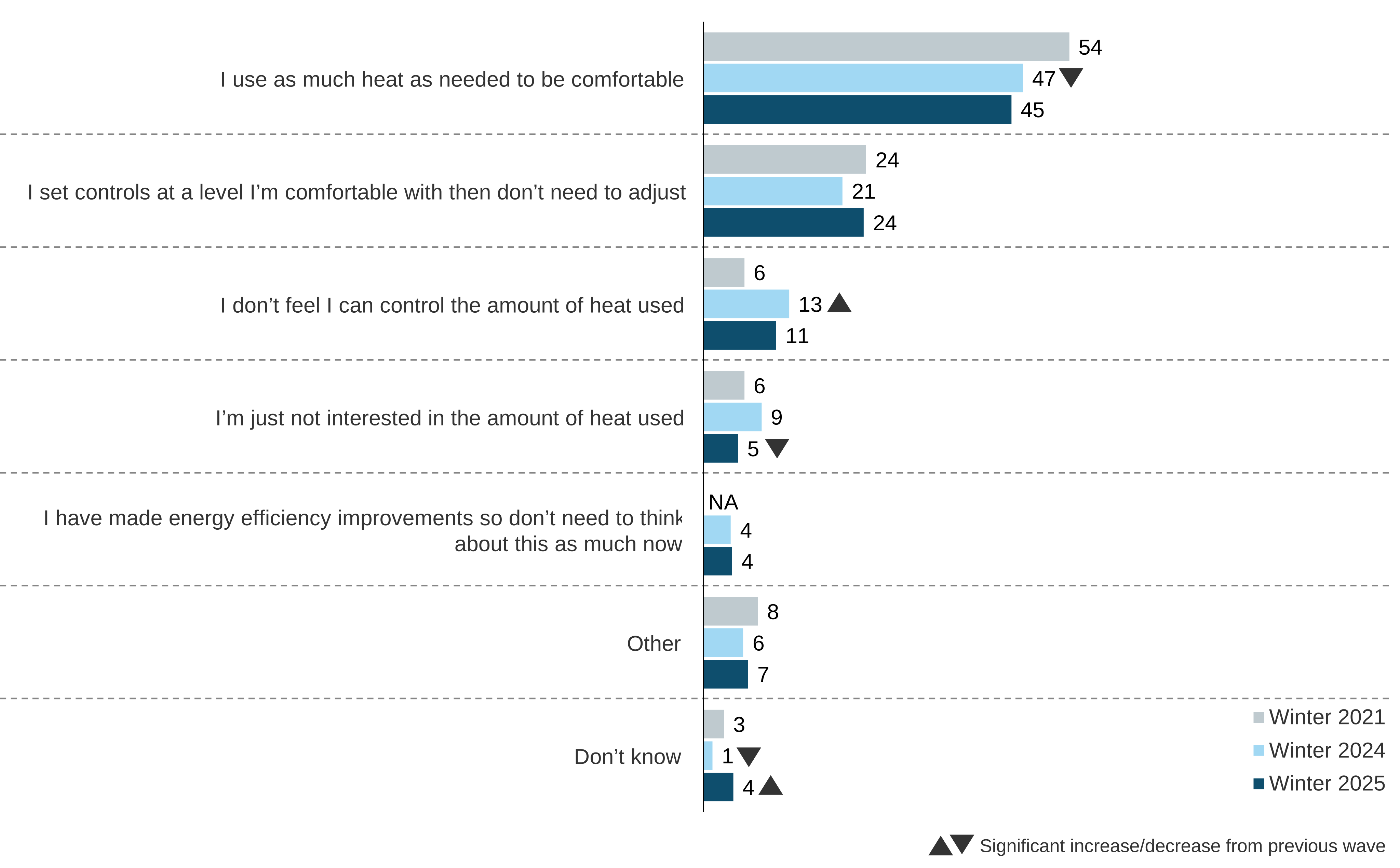
People who reported paying a little, hardly any or no attention at all to the amount of heat used (22% in Winter 2025) were asked their reasons for this. Figure 5.3 shows the results for the Winter 2021 baseline and the two most recent waves only.
Similar to previous years, the reason selected most often was using as much heat as needed to be comfortable (45%). Other reasons included setting controls at a comfortable level without the need for further adjustment (24%) and not feeling they can control the amount of heat used (11%).
Figure 5.3: Reasons for not paying attention to the amount of heat used (% based on those who pay at most a little amount of attention), baseline wave (Winter 2021) and two most recent waves (Winter 2024 & Winter 2025)
HEATNOATTWHY. You said that you pay [only a little/hardly any/no] attention to the amount of heat you use in your home. What is the main reason for this?
Base: All wave respondents who pay at most a little attention – Winter 2021 (925), Winter 2024 (629), Winter 2025 (732).
Note: A bar chart has been used for HEATNOATTWHY, unlike HEATATTWHY, as this question has too many codes to display on a line chart.
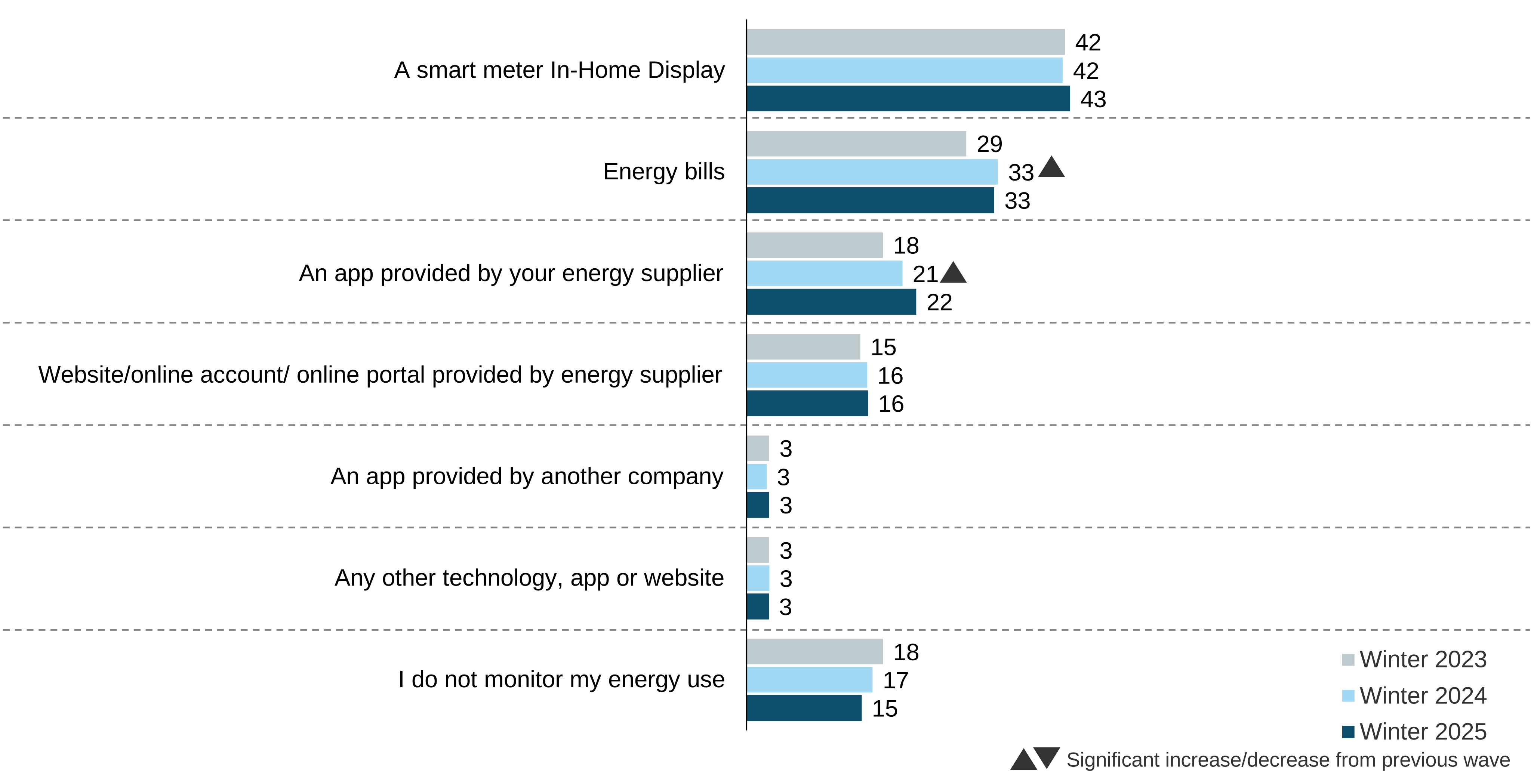
In Winter waves since 2023 respondents have also been asked how, if at all, they monitored their energy use (Figure 5.4). In Winter 2025, a smart-meter in-home display was the most common method used (43%)[footnote 2]. Other methods included energy bills (33%, up from 29% in Winter 2023), an energy supplier app (22%, up from 18% in Winter 2023), and an energy supplier website or online portal (16%).
Figure 5.4: Methods used to monitor energy use (% based on all people), Winter 2023 to 2025
SMARTMETD. Which, if any, of the following do you personally use to monitor your energy use? Please select all that apply.
Base: All wave respondents – Winter 2023 (3,732), Winter 2024 (3,206), Winter 2025 (3,278).
‘Time of use’ electricity tariffs
Awareness of ‘time of use’ electricity tariffs
Questions on ‘time of use’ electricity tariffs have been asked in winter waves since 2023. Respondents are first provided with the following explanation about ‘time of use’ electricity tariffs before being asked about their level of awareness of this.
Some suppliers offer energy tariffs that charge consumers cheaper ‘off-peak’ rates for their energy at times of night or day when demand is at its lowest, and higher ‘peak’ rates at more popular times. Depending on how their energy is used, this can reduce people’s electricity bills if they are able to change the times they use their electricity to cheaper ‘off peak’ times.
In Winter 2025, 91% of people said they had heard of ‘time of use’ electricity tariffs, this figure remaining broadly stable over time (Figure 5.5). Knowledge (knowing a lot/a fair amount) increased between Winter 2023 (34%) and Winter 2024 (39%) and has remained stable since then (41%).
Figure 5.5: Awareness of electricity tariffs depending on time of use (% based on all people), Winter 2023 to 2025
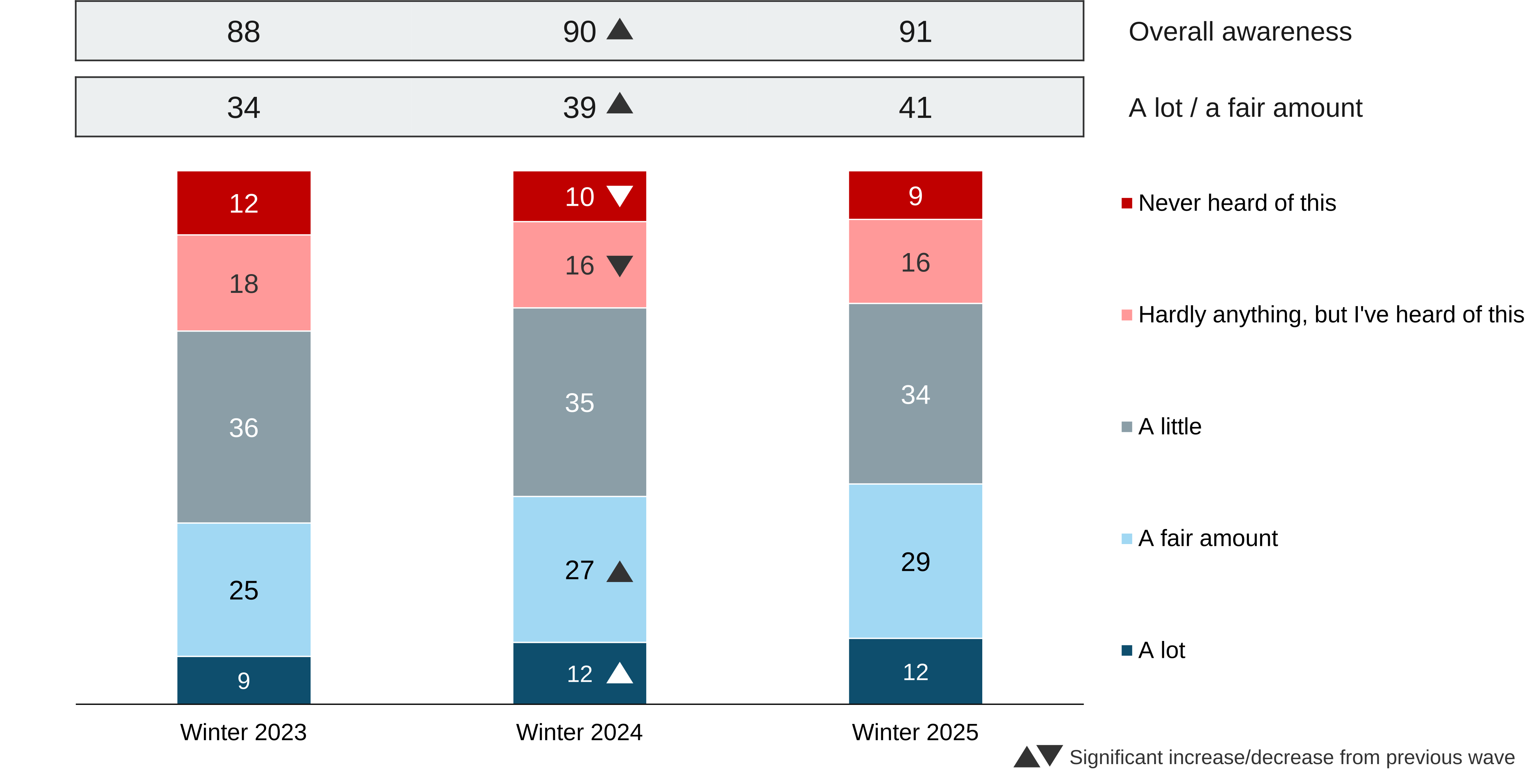
TOUTAWARENEW. Before today, how much, if anything, did you know about these electricity tariffs with different rates depending on time of use?
Base: All wave respondents – Winter 2023 (3,733), Winter 2024 (3,213), Winter 2025 (3,280).
Analysis by subgroups
Overall awareness was higher among the following subgroups:
- People in age groups 35 and over: between 94% and 95% compared with 74% of those aged 16 to 24.
- People living in the East of England (96%) and in the South West and Scotland (both 94%); in contrast the levels were lowest in the West Midlands and Northern Ireland (both 84%).
- People with any responsibility for household decisions, solely or jointly: 94% and 95%, compared with 81% of those with no responsibility.
Knowledge subgroup findings were similar to overall awareness.
Likelihood of switching to a ‘time of use’ electricity tariff
In winter waves since 2023, respondents were asked about their likelihood of switching to a tariff ‘where pricing varies at different times (for example daytime, night-time and peak rates)’.
In Winter 2025, 51% said that they were very or fairly likely to switch, this figure remaining broadly stable over time (Figure 5.6). This included 18% who said they were very likely to do so. A further 11% said they were already on such a tariff, a slight increase from 9% in Winter 2024.
Overall, 24% said they were not very or not at all likely to switch, down from 28% in Winter 2024.
Figure 5.6: Likelihood of switching to ‘time of use’ electricity tariff (% based on all people), Winter 2023 to 2025
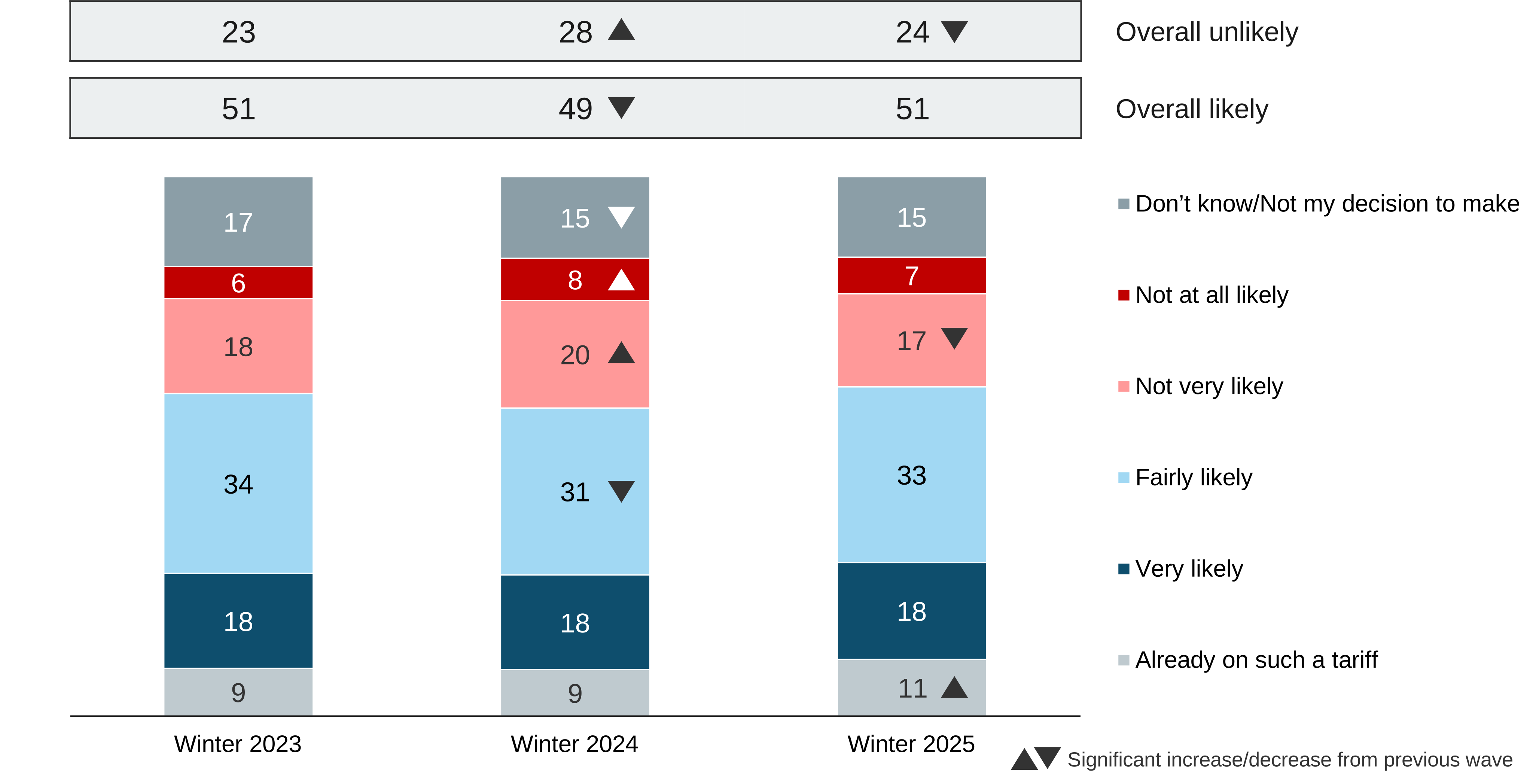
TOUTLIKELY. Think about a tariff where pricing varies at different times (for example daytime, night-time and peak rates). If this was available to you, how likely is it that your household would switch to it?
Base: All wave respondents – Winter 2023 (3,726), Winter 2024 (3,208), Winter 2025 (3,280).
Analysis by subgroups
- Around half of all people aged 16 to 24 said that this was not their decision to make (48%).
- Focussing on all other age groups, the proportion who considered that they were very or fairly likely to switch to this type of tariff was higher among people in age groups 45 and over: between 55% and 61%, compared with between 47% and 51% of those in age groups 25 to 44.
- People who were very concerned about climate change were also more likely to consider a switch: 57% compared with 41% of those who were not at all concerned.
- People living in owner-occupied households were more likely to say they were not very or not at all likely to switch: 27% compared with 19% of those in rented households. Renters were also more likely to say it was not their decision to make (23% vs 9% of owner occupiers).
Reasons for not wanting to switch to a time of use tariff
People who said they were unlikely to switch to a time of use tariff (24% in Winter 2025) were asked about their reasons for this.
In Winter 2025, there were three main barriers to switching (Figure 5.7). These were: not wanting to think about when to use electricity (37%), feeling that using electricity off-peak would not be suitable for them (36%, a new response option in Winter 2025), and being happy with their current tariff or provider (35%).
Other reasons included not saving enough money (26%, down from 35%), absence of a smart meter (14%), lack of trust in energy companies (14%, down from 18%), lack of knowledge (14%), and too much effort (13%).
Figure 5.7: Reasons unlikely to switch to a ‘time of use’ electricity tariff (% based on those unlikely to switch), Winter 2023 to 2025[footnote 3]
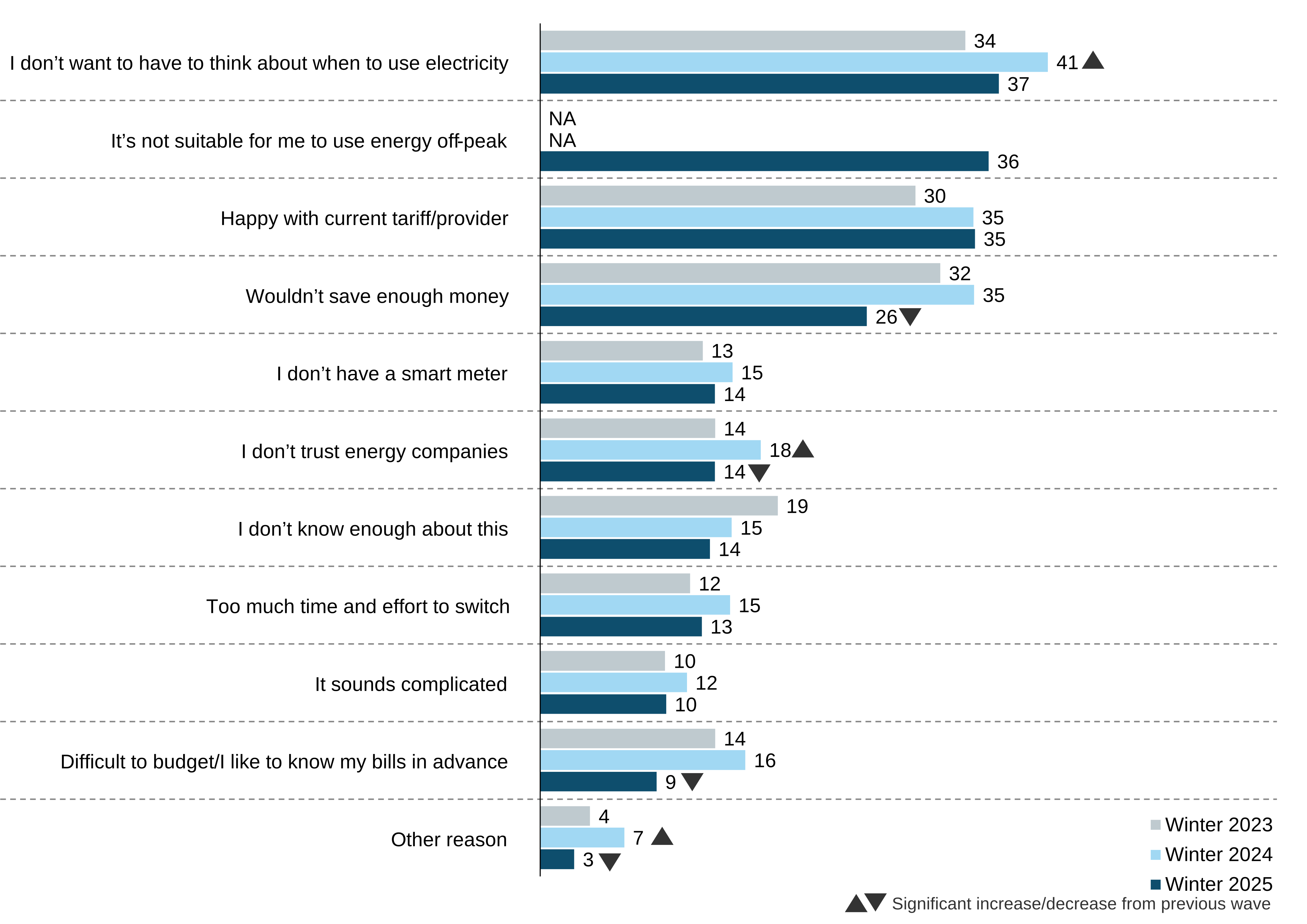
WHYNOSMART. You said you would be unlikely to switch to a tariff with multiple rates for different time periods. Why is this? Please select all that apply.
Base: All wave respondents not currently on such a tariff and unlikely to switch – Winter 2023 (933), Winter 2024 (927), Winter 2025 (884).
Smart electric vehicle charging
Vehicle ownership
In Winter 2025, 72% of people said they owned or had regular use of a car or van, no change from Winter 2024[footnote 4].
The most common vehicles used were petrol (38%), followed by diesel (21%) and hybrids (7%: 6% non-plug-in and 1% plug-in). Only 5% used an electric vehicle (EV) (Figure 5.8)[footnote 5]). These figures have remained broadly stable since Winter 2023.
Figure 5.8: Type of vehicle used most often (% based on all people), Summer 2022 and Winter 2023 to 2025
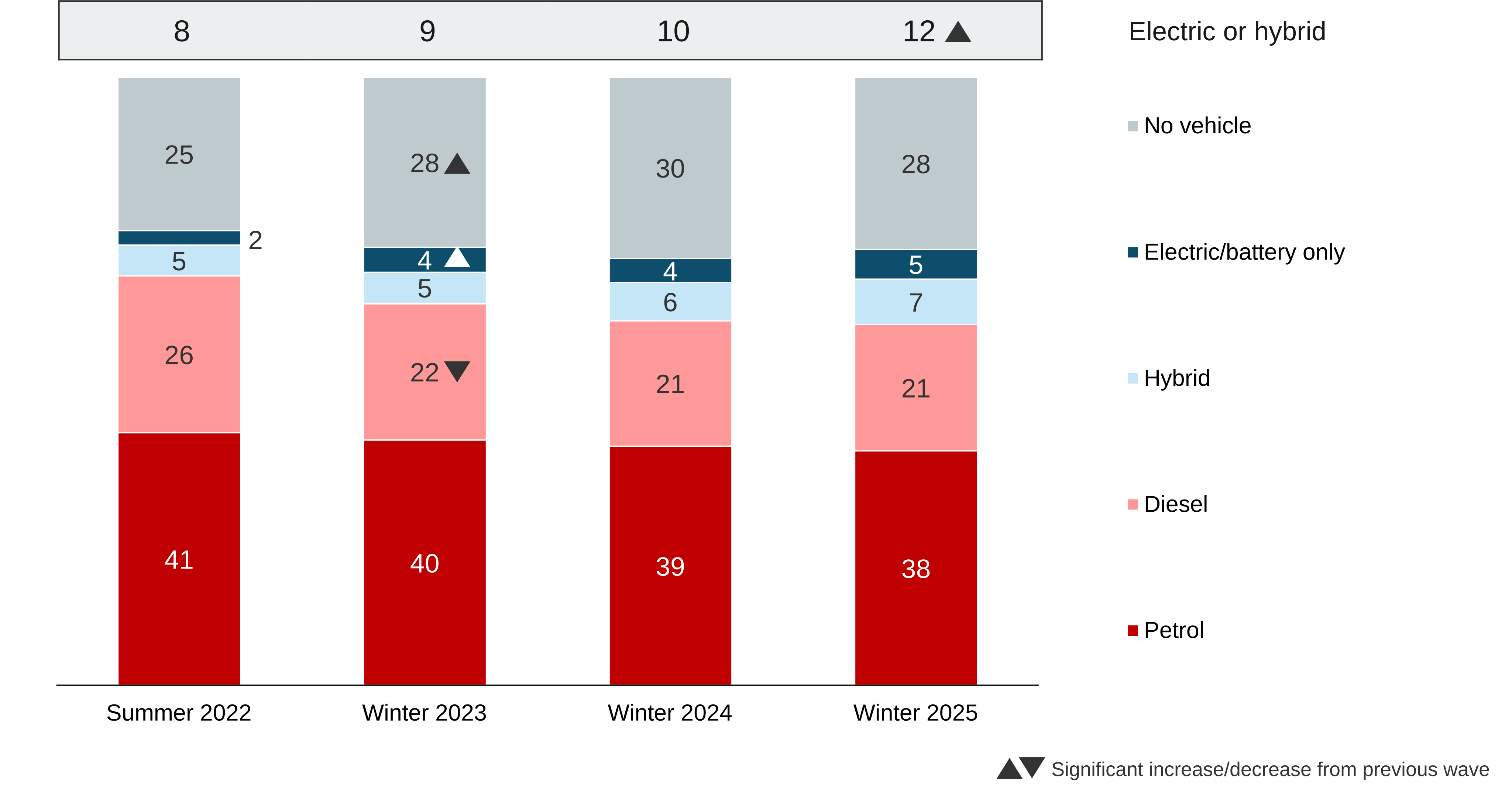
VEHICOWN. Do you personally own or have regular use of a car or van? Please include any company cars that are also driven for private use. VEHICTYPE. [Thinking about the car or van which you use most often] What type of car or van is this?
Base: All wave respondents – VEHICOWN/VEHICTYPE: Summer 2022 (4,483/3,600), Winter 2023 (3,733/2,899), Winter 2024 (3,211/2,559), Winter 2025 (3,277/2,551).
Awareness of electric vehicle (EV) smart charging
Respondents were provided with the following explanation about EV smart charging before asking for their awareness of this concept:
Smart electric vehicle charging is a way of charging an electric vehicle (EV) at times when demand for electricity is lower, for example at night. Charging during these off-peak times can help reduce costs for EV drivers by using cheaper energy rates. It can also help reduce periods of high demand for electricity from the national grid (the system which distributes electricity throughout the country).
In Winter 2025, 91% of people said they were aware of EV smart charging (Figure 5.9). This was unchanged since Winter 2024 but remained higher than at the Summer 2022 baseline (85%). Focussing on knowledge, 42% reported that they knew a lot or a fair amount about this, up slightly from Winter 2024 (40%).
Figure 5.9: Awareness of EV smart charging (% based on all people), Summer 2022 and Winter 2023 to 2025
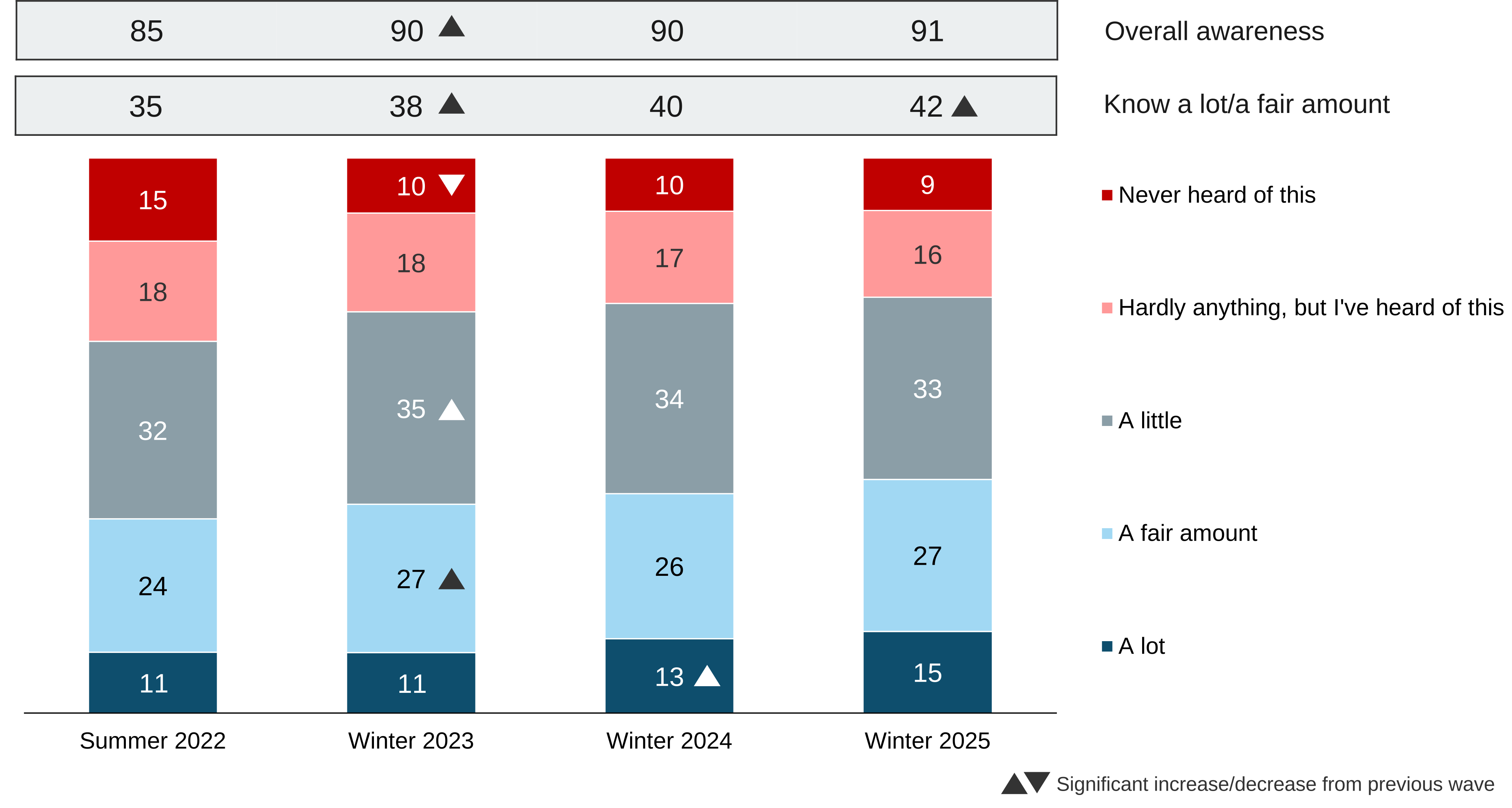
EVSMARTKNOW. Before today, how much, if anything, did you know about the concept of smart electric vehicle charging?
Base: All wave respondents – Summer 2022 (4,466), Winter 2023 (3,718), Winter 2024 (3,203), Winter 2025 (3,271).
Analysis by subgroups
The proportion who said they knew a lot or a fair amount was higher among the following subgroups:
- People in age groups from 25 to 64 (between 43% and 48%) compared with those aged 65 and over (34%).
- People who owned a vehicle: between 56% and 43%, compared with those who do not own a vehicle (29%).
Further findings on energy bills and tariffs
In previous waves, questions were included on other topics relating to energy bills and tariffs. The latest findings relating to these topics can be found as follows:
- Amount of thought given to saving energy in the home, see Summer 2025 report on energy bills and tariffs - section on ‘Energy saving behaviours’
- Frequency of energy saving and energy wasting behaviours in the home, see Spring 2025 report energy bills and tariffs - section on ‘Energy saving and wasting behaviours’
- Awareness of the most effective ways to reduce energy use in the home, and level of interest in finding out more, see Summer 2025 report on energy bills and tariffs - section on ‘Knowledge about reducing energy use’
- How energy bills are paid and level of concern about paying them, see Summer 2025 report on energy bills and tariffs - section on ‘Cost of energy bills’
- Concern about energy bills in the context of other bills, and the impact of increased costs of energy bills, see Spring 2025 report energy bills and tariffs - section on ‘Concern about the costs of energy bills’
- Awareness of and attitudes towards smart appliances, see Summer 2025 report on energy bills and tariffs - section on ‘Smart appliances’
- Perceived impact of move to renewable energy sources on energy bills, see Spring 2025 report energy bills and tariffs - section on ‘Attitudes towards the cost of renewable energy’
- Awareness of and the likelihood to use flexible energy reward schemes, see Spring 2025 report energy bills and tariffs - section on ‘Flexible energy schemes’)
- Changes made in last two years to reduce energy use, see Summer 2024 report on energy bills and tariffs - section on ‘Changes in energy use made in the last two years’
- Attitudes towards government financial support to households to help with energy bills, see Summer 2024 report on energy bills and tariffs - section on ‘Attitudes towards Government financial support with energy costs’
- Satisfaction with service delivery from energy suppliers, see Spring 2024 report on energy bills and tariffs – section on ‘Energy suppliers’
-
An overview of domestic energy price changes can be found here: Gas and electricity prices during the ‘energy crisis’ and beyond - House of Commons Library. ↩
-
Self-reported smart meter ownership data from the Public Attitudes Tracker can be found in the published time series and crosstabulation files. Official Statistics for smart meters can be found here: Smart meter statistics - GOV.UK. ↩
-
New response of ‘It’s not suitable for me to use energy off-peak’ added in Winter 2025, based on answers given spontaneously by 7% of respondents in Winter 2024. ↩
-
Official Statistics on personal travel, including vehicle availability can be found here: National Travel Survey - GOV.UK. ↩
-
Official Statistics on licensed vehicles in the United Kingdom can be found here: Vehicle licensing statistics data tables. The DfT Transport and Transport and Technology Tracker also includes self-reported vehicle ownership data and future purchasing intentions data: Transport and transport technology: public attitudes tracker. ↩