
Appeals for GCSE, AS, A level and Project qualifications: 2024 to 2025 academic year
Published 2 April 2026
Applies to England

© Crown copyright 2026
This publication is licensed under the terms of the Open Government Licence v3.0 except where otherwise stated. To view this licence, visit nationalarchives.gov.uk/doc/open-government-licence/version/3 or write to the Information Policy Team, The National Archives, Kew, London TW9 4DU, or email: psi@nationalarchives.gov.uk.
Where we have identified any third party copyright information you will need to obtain permission from the copyright holders concerned.
This publication is available at https://www.gov.uk/government/statistics/appeals-for-gcse-as-a-level-and-project-qualifications-2024-to-2025-academic-year/appeals-for-gcse-as-a-level-and-project-qualifications-2024-to-2025-academic-year
This report presents figures for the number of appeals made during the 2024 to 2025 academic year in England for GCSE, AS, A level, and Project qualifications. It also gives information on the number of qualification grades challenged and changed due to those appeals. The report covers all the opportunities to enter for the qualifications during the academic year, including:
- November 2024 and June 2025 for GCSE qualifications
- June 2025 for AS and A level qualifications
- November 2024, January 2025 and June 2025 for Project qualifications
For all GCSE, AS, A level, and Project qualifications appeals could be submitted if a school or college was dissatisfied with the result of a review of marking, review of moderation, a malpractice decision, or the outcome of a reasonable adjustment or special consideration request. Appeals are made at the component level and, if related to the same issue, can cover more than one student. The Joint Council for Qualifications (JCQ) guide to the awarding organisations’ appeals process describes 2 steps for appeals:
- Preliminary appeal (‘stage 1’ appeal): a review by a senior awarding organisation member who has not previously been involved with the particular case.
- Appeal hearing (‘stage 2’ appeal): applicants and awarding organisation present their respective cases to the panel of 3 or more members, one of whom must be independent of the awarding organisation.
An appeal about a student’s grade could be made on multiple grounds. Appeals that were made on multiple grounds for the same component are counted as one appeal received.
This report presents comparisons with data from 2021 to 2022, 2022 to 2023, 2023 to 2024 and 2024 to 2025 academic years. Please note that while the same appeals process was in place between these years, comparisons with the 2021 to 2022 academic year should be treated with caution due to the differences in the grading standard applied in summer 2022 as well as the additional autumn 2021 exam series.
Changes in overall number of results may affect the overall number of appeals and grades challenged in each academic year. In the 2024 to 2025 academic year, there was a decrease of 0.1% in the total number of results issued for GCSE, AS, A level and there was an increase of 4.0% in the number of certificates issued for Project qualifications compared with the previous year.
Note that throughout this release ‘results issued’, ‘grades challenged’ and ‘grades changed’ refers to passing grades, Unclassified (U) as well as outcomes representing the absence of a result (Q, X) as these may still have had appealed components, this differs from the figures reported in some other statistical releases. The number of certificates issued for Project qualifications only includes students who were awarded a certificating grade, and does not include unclassified or not awarded results as this data is not available. More information on the respective measures of results issued, and how this differs from other statistical releases can be found in the background notes accompanying this report.
To ensure confidentiality, the data in this report has been rounded in line with Ofqual’s rounding policy for statistical publications. Further information on this release is available in the background notes and the data tables accompanying this report.
Key headlines
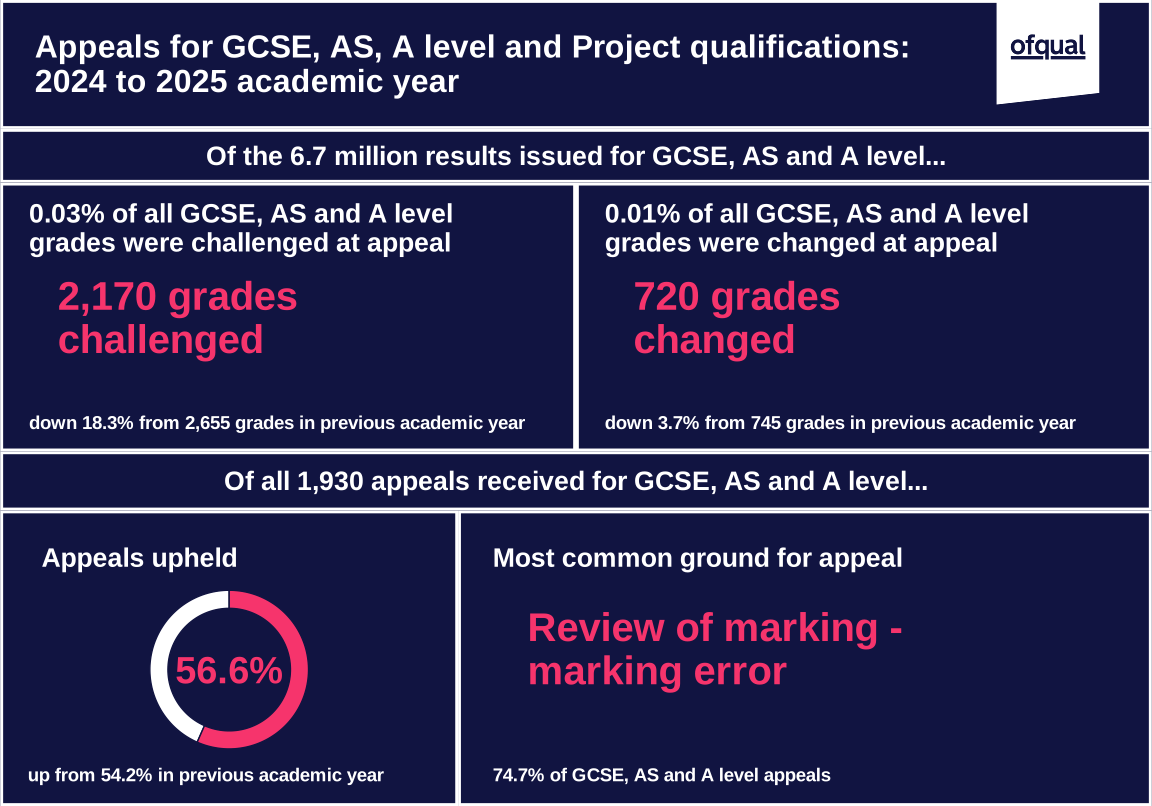
The key headlines regarding appeals made for GCSE, AS, A level, and Project qualifications for the 2024 to 2025 academic year in England were:
- 2,170 (0.03%) of the 6.7 million results issued for GCSE, AS and A level were challenged at appeal, a decrease of 18.3% compared with the 2023 to 2024 academic year when there were 2,655 grades challenged.
- 720 (0.01%) of the 6.7 million results issued for GCSE, AS and A level were changed as part of an upheld appeal, a decrease of 3.7% compared with the 2023 to 2024 academic year when there were 745 grades changed.
-
Of the 1.2 million students who received results for GCSEs in 2024 to 2025, less than 0.1% had one or more of their grades challenged and 0.04% had one or more grades changed. This is the same as in the 2023 to 2024 academic year.
-
Of the 337,820 students who received results for AS and A levels in 2024 to 2025, 0.3% had one or more of their grades challenged and 0.07% had one or more grades changed. This is the same as in the 2023 to 2024 academic year.
- The number of appeals received for GCSE, AS and A levels in the 2024 to 2025 academic year was 1,930. Of these appeals 1,095 (56.6%) were upheld. As explained earlier, one appeal may cover more than one grade.
- The most common ground for which appeals were received in the 2024 to 2025 academic year for GCSE, AS and A levels was ‘review of marking - marking error’.
- For Project qualifications, 15 appeals were received in the 2024 to 2025 academic year, 5 of which were upheld. Out of the 280 grades challenged for Projects, 45 were changed. As explained earlier, one appeal may cover more than one grade.
- For GCSE, AS, A level and Project qualifications, 70.2% of upheld appeals were associated with a qualification grade change in the 2024 to 2025 academic year.
Provide your feedback
We welcome your feedback on our publications. If you have any comments on this statistical release, or how to improve it to meet your needs, please complete our short survey or data.analytics@ofqual.gov.uk.
The number of appeals received by exam series
This section looks at the number of appeals received for each exam series across the academic year. Different qualification types have different assessment opportunities. GCSE has November and June series, AS and A level has June only and Project qualifications have November, January and June.
The majority of appeals in the 2024 to 2025 academic year were received for the summer exam series
Figure 1: Number of appeals received in the 2024 to 2025 academic year by exam series for GCSE, AS and A level and Project qualifications
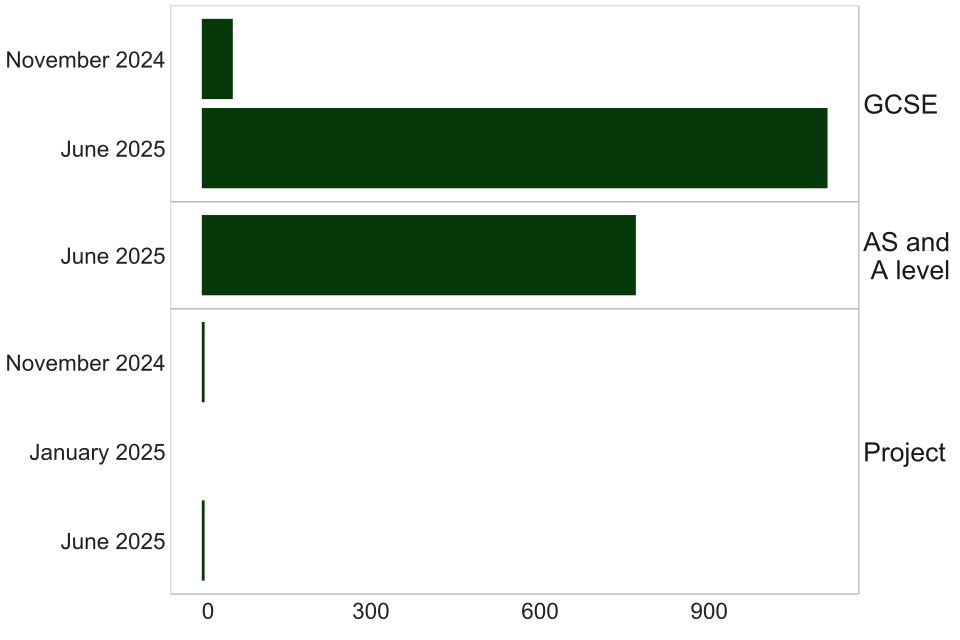
Table 1: Number of appeals received in the 2024 to 2025 academic year by exam series for GCSE, AS and A level and Project qualifications
| Qualification | November 2024 | January 2025 | June 2025 |
|---|---|---|---|
| GCSE | 55 | No assessments | 1,110 |
| AS and A level | No assessments | No assessments | 770 |
| Project | 5 | 0 | 5 |
Note: Due to the small number of appeals, details of Project qualification appeals are reported in a separate section from GCSE, AS, and A levels below.
Total number of appeals received, upheld and associated with at least one grade change
This section covers the total number of appeals received, how many were upheld, and how many upheld appeals were associated with at least one grade change, for GCSE and AS and A level.
An appeal may be submitted by a school or college, or private candidate, if they:
- are dissatisfied with the result of a review of marking or moderation
- wish to contest the outcome of a reasonable adjustment or special consideration request
- wish to contest a malpractice decision
The appeal may be upheld at either the preliminary appeal or appeal hearing stage, and this may lead to a change in one or more of the qualification grades challenged. Note that an increase or decrease in appeals received may not be reflected in the number of grades challenged or changed. See the ‘Grades challenged and changed’ section for more detail.
The data tables and charts in this report contain combined figures on all grounds of appeals received by all awarding organisations. Further breakdowns are given in the data tables accompanying this report.
GCSE
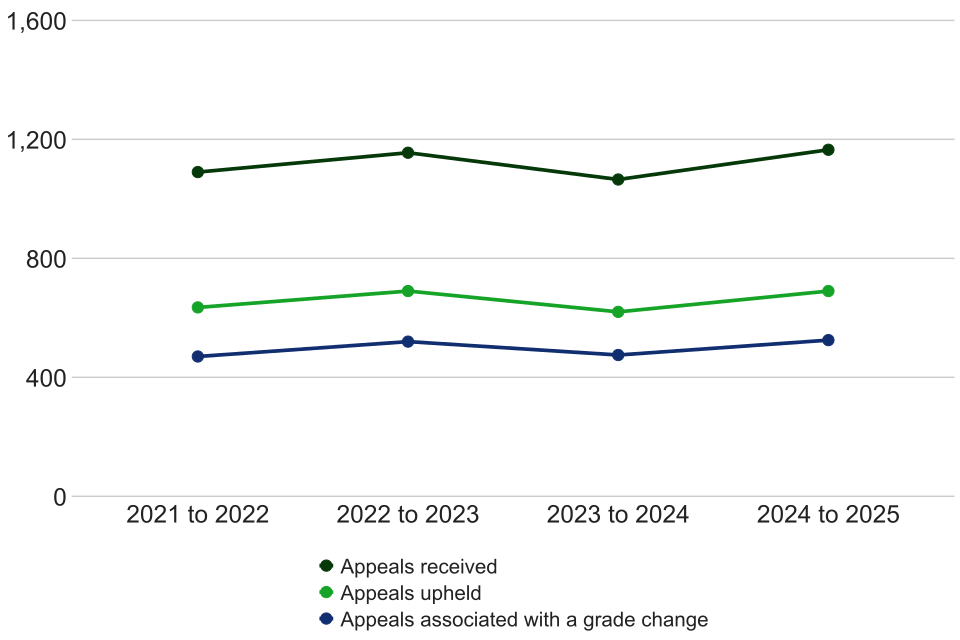
The number of GCSE appeals received increased from 1,065 in the 2023 to 2024 academic year to 1,165 in the 2024 to 2025 academic year. The number of appeals upheld increased from 620 in 2023 to 2024, to 690 in 2024 to 2025, and the number of upheld appeals associated with at least one grade change increased from 475 in 2023 to 2024, to 525 in 2024 to 2025. Despite these changes, overall, the number of appeals received, appeals upheld and appeals associated with at least one grade change for GCSE in the 2024 to 2025 academic year has remained broadly in line with previous years.
Slightly more GCSE appeals were received this academic year compared with the previous academic year
Figure 2: The number of appeals received, appeals upheld and appeals associated with at least one grade change for GCSE from the 2021 to 2022 academic year to the 2024 to 2025 academic year
In the 2024 to 2025 academic year, the percentage of GCSE appeals that were upheld, as a proportion of GCSE appeals submitted (59.2%), has remained broadly in line with levels reported in 2023 to 2024 (58.0%).
The percentage of GCSE appeals that were upheld remained broadly in line with the previous academic year
Figure 3: Percentage of GCSE appeals upheld from the 2021 to 2022 academic year to the 2024 to 2025 academic year
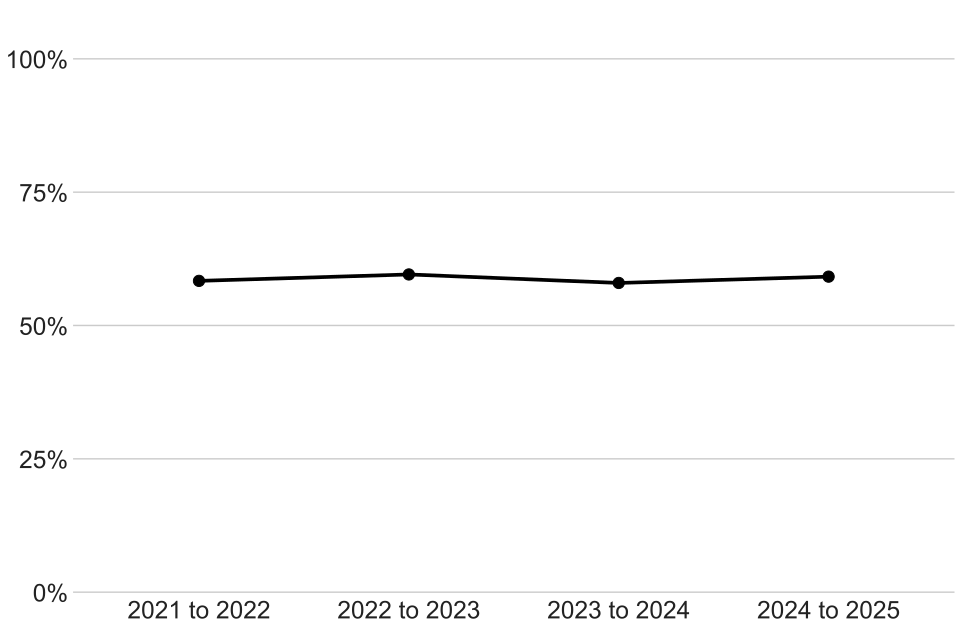
Table 2: The number of appeals received, appeals upheld, and appeals associated with at least one grade change for GCSE from the 2021 to 2022 academic year to the 2024 to 2025 academic year
| Value | 2021 to 2022 | 2022 to 2023 | 2023 to 2024 | 2024 to 2025 |
|---|---|---|---|---|
| Appeals received | 1,090 | 1,155 | 1,065 | 1,165 |
| Appeals upheld | 635 | 690 | 620 | 690 |
| Percentage of appeals upheld | 58.4% | 59.6% | 58.0% | 59.2% |
| Appeals associated with at least one grade change | 470 | 520 | 475 | 525 |
| Percentage of upheld appeals associated with at least one grade change | 74.2% | 75.3% | 77.2% | 76.2% |
AS and A level
The number of AS and A level appeals received increased from 725 in the 2023 to 2024 academic year to 770 in the 2024 to 2025 academic year. The number of appeals upheld increased from 355 in the 2023 to 2024 academic year, to 405 in the 2024 to 2025 academic year, and the number of upheld appeals associated with at least one grade change increased from 230 in the 2023 to 2024 academic year, to 245 in the 2024 to 2025 academic year.
Slightly more AS and A level appeals were received this academic year compared with the previous academic year
Figure 4: The number of appeals received, appeals upheld and appeals associated with at least one grade change for AS and A level from the 2021 to 2022 academic year to the 2024 to 2025 academic year
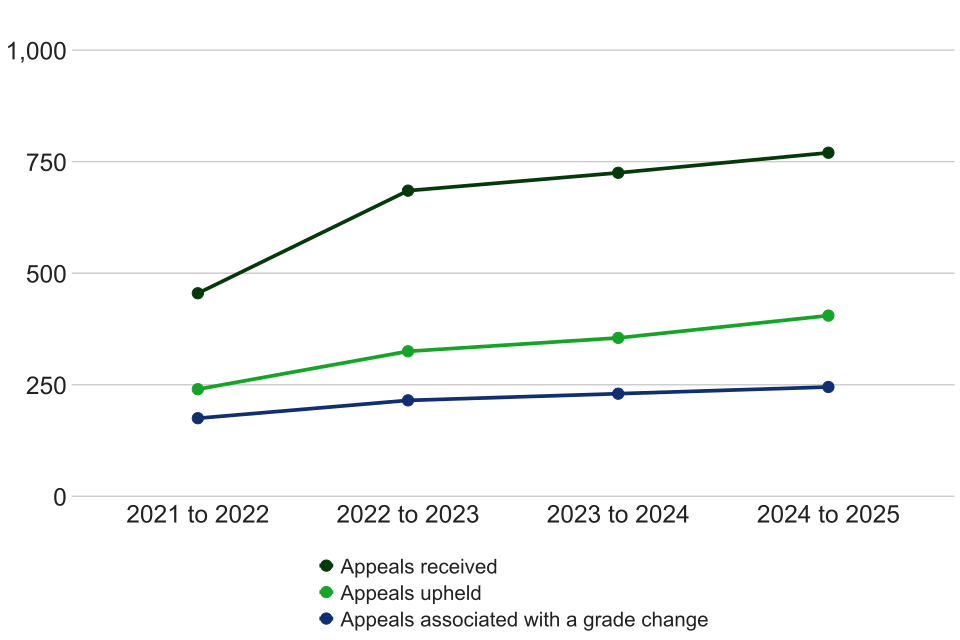
In the 2024 to 2025 academic year, the percentage of AS and A level appeals that were upheld, as a proportion of AS and A level appeals submitted (52.8%), has increased compared with levels reported in 2023 to 2024 (48.6%).
The percentage of AS and A level appeals that were upheld slightly increased compared with the previous academic year
Figure 5: Percentage of AS and A level appeals upheld from the 2021 to 2022 academic year to the 2024 to 2025 academic year
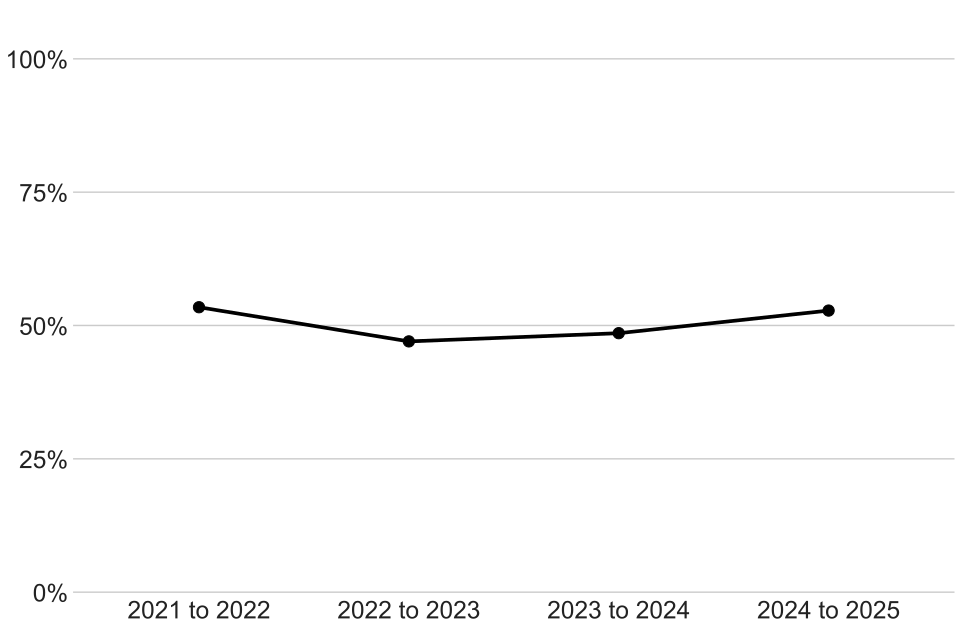
Table 3: The number of appeals received, appeals upheld, and appeals associated with at least one grade change for AS and A level from the 2021 to 2022 academic year to the 2024 to 2025 academic year
| Value | 2021 to 2022 | 2022 to 2023 | 2023 to 2024 | 2024 to 2025 |
|---|---|---|---|---|
| Appeals received | 455 | 685 | 725 | 770 |
| Appeals upheld | 240 | 325 | 355 | 405 |
| Percentage of appeals upheld | 53.4% | 47.0% | 48.6% | 52.8% |
| Appeals associated with at least one grade change | 175 | 215 | 230 | 245 |
| Percentage of upheld appeals associated with at least one grade change | 71.5% | 65.9% | 65.7% | 59.9% |
Preliminary appeals and appeal hearings
The appeals process, as set out in JCQ regulations, consists of 2 stages:
- Preliminary appeals (‘stage 1’ appeal): a review by a senior awarding organisation member who has not been previously involved in the individual case. As a result of a preliminary appeal, the case is either upheld or not upheld
- Appeal hearings (‘stage 2’ appeal): when the applicant and awarding organisation present their cases to the panel. An applicant may decide to progress to an appeal hearing if they are dissatisfied with the result of the preliminary appeal. As a result of an appeal hearing, the case is either upheld or not upheld.
An appeal panel consists of 3 or more members, at least one of which is independent from the awarding organisation (meaning they have not been an employee, examiner, committee or board member of the awarding organisation in the previous 5 years).
If a school or college, or private candidate, is still dissatisfied with the outcome following an appeal, they can apply to Ofqual’s Examination Procedures Review Service (EPRS) within 21 days of receiving the appeal outcome from the awarding organisation.
This section looks at how appeals were distributed across the two stages of the appeals process, preliminary appeals and appeal hearings, and how many at each stage were associated with at least one grade change.
GCSE
In the 2024 to 2025 academic year, for GCSE, 520 preliminary appeals were associated with at least one grade change (45.0% of all preliminary appeals, compared with 45.0% in the 2023 to 2024 academic year). There were fewer than 5 appeal hearings that were associated with at least one grade change (compared with no appeal hearings in the 2023 to 2024 academic year).
For GCSE, 520 preliminary appeals and fewer than 5 appeal hearings led to grade changes
Figure 6: Total number of appeals and number of appeals associated with at least one grade change by appeal stage and academic year
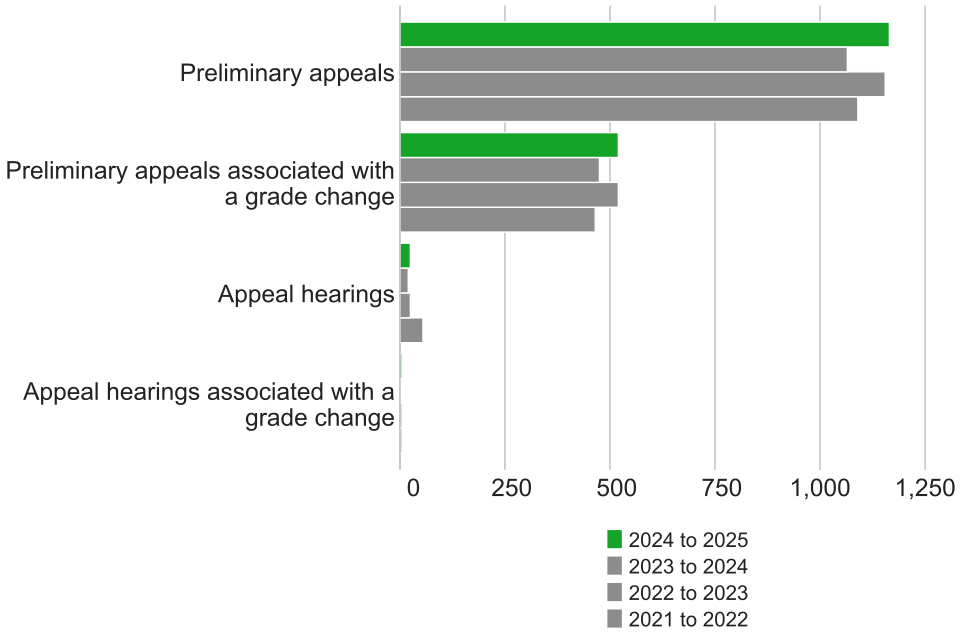
Note: For all figures like this in the report the highlighted bar shows the current year; other bars show previous years for context, presented in the same order as the legend.
Table 4: Total number of appeals and number of appeals associated with at least one grade change by appeal stage and academic year
| Value | 2021 to 2022 | 2022 to 2023 | 2023 to 2024 | 2024 to 2025 |
|---|---|---|---|---|
| Number of preliminary appeals | 1,090 | 1,155 | 1,065 | 1,165 |
| Number of appeal hearings | 55 | 25 | 20 | 25 |
| Percentage of preliminary appeals leading to appeal hearings | 5.1% | 2.2% | 2.0% | 2.1% |
| Preliminary appeals associated with at least one grade change | 465 | 520 | 475 | 520 |
| Appeal hearings associated with at least one grade change | 5 | Fewer than 5 | 0 | Fewer than 5 |
Note: At the time when data was reported to Ofqual, there were no GCSE appeals where the outcome of the appeal was still pending the outcome from the Examinations Procedure Review Service (EPRS).
AS and A level
In the 2024 to 2025 academic year, for AS and A levels, 240 preliminary appeals were associated with at least one grade change (31.3% of all preliminary appeals, compared with 31.8% in the 2023 to 2024 academic year) and fewer than 5 appeal hearings were associated with at least one grade change (the same as in the 2023 to 2024 academic year).
For AS and A level, 240 preliminary appeals and fewer than 5 appeal hearings led to grade changes
Figure 7: Total number of appeals and number of appeals associated with at least one grade change by appeal stage and academic year
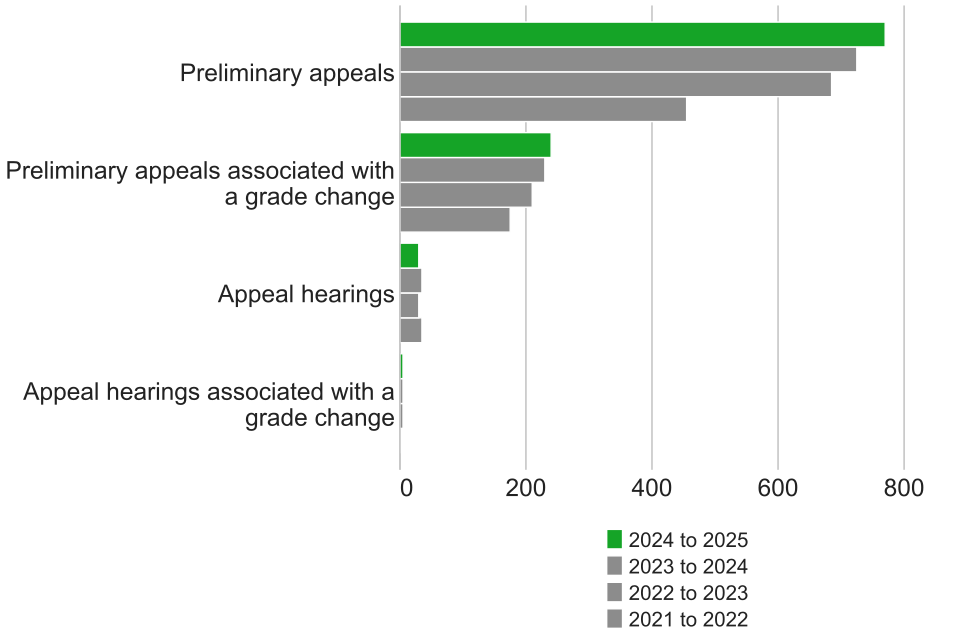
Table 5: Total number of appeals and number of appeals associated with at least one grade change by appeal stage and academic year
| Value | 2021 to 2022 | 2022 to 2023 | 2023 to 2024 | 2024 to 2025 |
|---|---|---|---|---|
| Number of preliminary appeals | 455 | 685 | 725 | 770 |
| Number of appeal hearings | 35 | 30 | 35 | 30 |
| Percentage of preliminary appeals leading to appeal hearings | 7.3% | 4.1% | 4.7% | 4.0% |
| Preliminary appeals associated with at least one grade change | 175 | 210 | 230 | 240 |
| Appeal hearings associated with at least one grade change | 0 | Fewer than 5 | Fewer than 5 | Fewer than 5 |
At the time when data was reported to Ofqual, there were fewer than 5 AS and A level appeals where the outcome of the appeal was still pending the outcome from the Examinations Procedure Review Service (EPRS).
Grounds for appeals
Appeals can be made to contest the result of a review of marking or moderation, or to contest a malpractice decision or a decision on reasonable adjustments or special consideration. This section breaks down appeals by the ground on which they were submitted.
An appeal about a student’s grade can be made on multiple grounds. In this section each ground for appeal is counted separately. This means the total number of appeals in this section will not match the total number of appeals reported elsewhere in this release.
GCSE
In the 2024 to 2025 academic year, ‘review of marking - marking error’ was the most common ground for GCSE appeals with 845 appeals received. This was an increase compared with the 2023 to 2024 academic year when there were 820 appeals received on that ground.
The most common ground for GCSE appeals was ‘review of marking - marking error’
Figure 8: Number of GCSE appeals received by ground for appeal and academic year
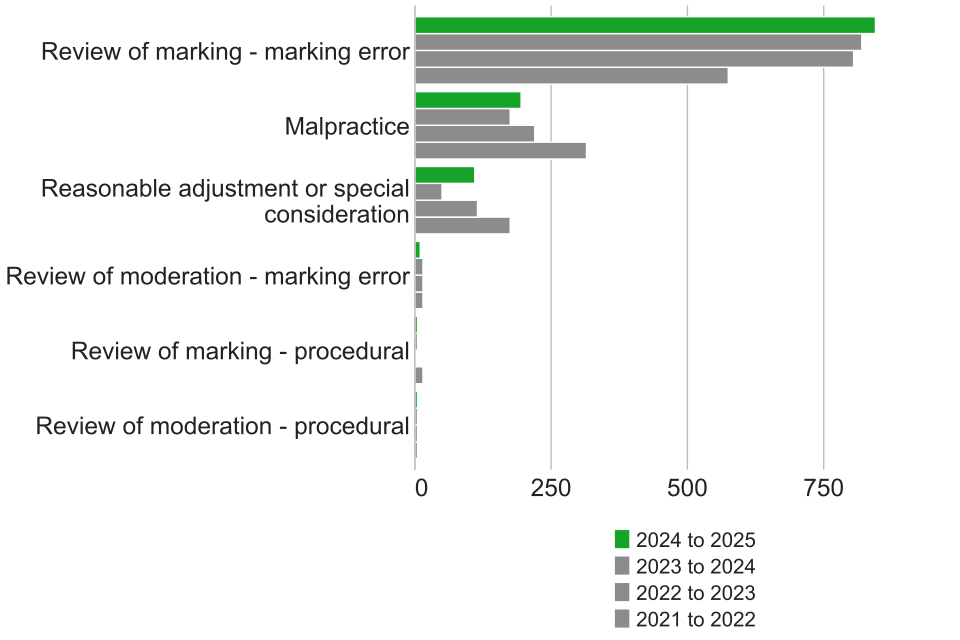
Table 6: Number of GCSE appeals received by ground for appeal and academic year
| Ground for appeal | 2021 to 2022 | 2022 to 2023 | 2023 to 2024 | 2024 to 2025 |
|---|---|---|---|---|
| Review of marking - marking error | 575 | 805 | 820 | 845 |
| Malpractice | 315 | 220 | 175 | 195 |
| Reasonable adjustment or special consideration | 175 | 115 | 50 | 110 |
| Review of moderation - marking error | 15 | 15 | 15 | 10 |
| Review of marking - procedural | 15 | 0 | Fewer than 5 | Fewer than 5 |
| Review of moderation - procedural | 5 | Fewer than 5 | Fewer than 5 | Fewer than 5 |
AS and A level
In the 2024 to 2025 academic year, ‘review of marking - marking error’ was the most common ground for AS and A level appeals with 600 appeals received. This was an increase compared with the 2023 to 2024 academic year when there were 560 appeals received on that ground.
The most common ground for AS and A level appeals was ‘review of marking - marking error’
Figure 9: Number of AS and A level appeals received by ground for appeal and academic year
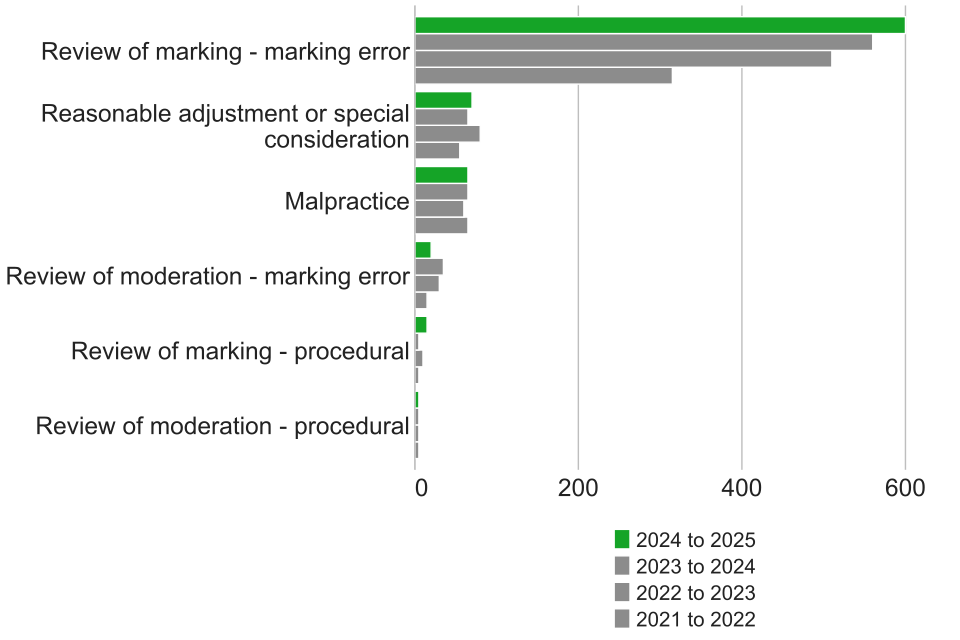
Table 7: Number of AS and A level appeals received by ground for appeal and academic year
| Ground for appeal | 2021 to 2022 | 2022 to 2023 | 2023 to 2024 | 2024 to 2025 |
|---|---|---|---|---|
| Review of marking - marking error | 315 | 510 | 560 | 600 |
| Reasonable adjustment or special consideration | 55 | 80 | 65 | 70 |
| Malpractice | 65 | 60 | 65 | 65 |
| Review of moderation - marking error | 15 | 30 | 35 | 20 |
| Review of marking - procedural | Fewer than 5 | 10 | 5 | 15 |
| Review of moderation - procedural | Fewer than 5 | 5 | Fewer than 5 | Fewer than 5 |
Raw mark changes for upheld appeals
An upheld appeal may result in a change to the raw marks issued to a student for that component. This section looks at the distribution of raw marks changes for upheld appeals, for GCSE and AS and A level separately.
Note that only changes where both the pre- and post-appeal mark known are included in this section. In other cases, the marks may not be known for completed appeals, for example, if the appeal resulted in a script being re-marked and the result of this re-mark is not yet known.
Also, all mark increases of 10 marks or more have been combined into a single category (‘10 or more’) and all mark decreases have been combined into the category ‘less than or equal to -1’. A change of 10 marks or more may reflect an overturned malpractice decision where the student was originally given 0 marks due to alleged malpractice.
GCSE
Overall, in the 2024 to 2025 academic year, 91.1% of upheld appeals (where both the pre- and post-appeal raw marks were known) resulted in additional marks given, compared with 96.6% in the 2023 to 2024 academic year. The rest resulted in either no change or a reduction in marks.
In the 2024 to 2025 academic year, the most common outcome for an upheld appeal (where both the pre- and post-appeal raw marks were known) was a mark change of 1 (20.8%), followed by a mark change of 10 or more (17.8%). There were 10 appeals that led to a decrease in marks. Mark changes of 10 or more marks were predominantly from appeals on the grounds of malpractice, for example, where a malpractice decision was overturned, and penalties were reduced or removed.
For GCSE, the most common outcome at appeal was a mark change of 1 mark
Figure 10: Number of upheld appeals by raw mark change made at appeal for GCSE
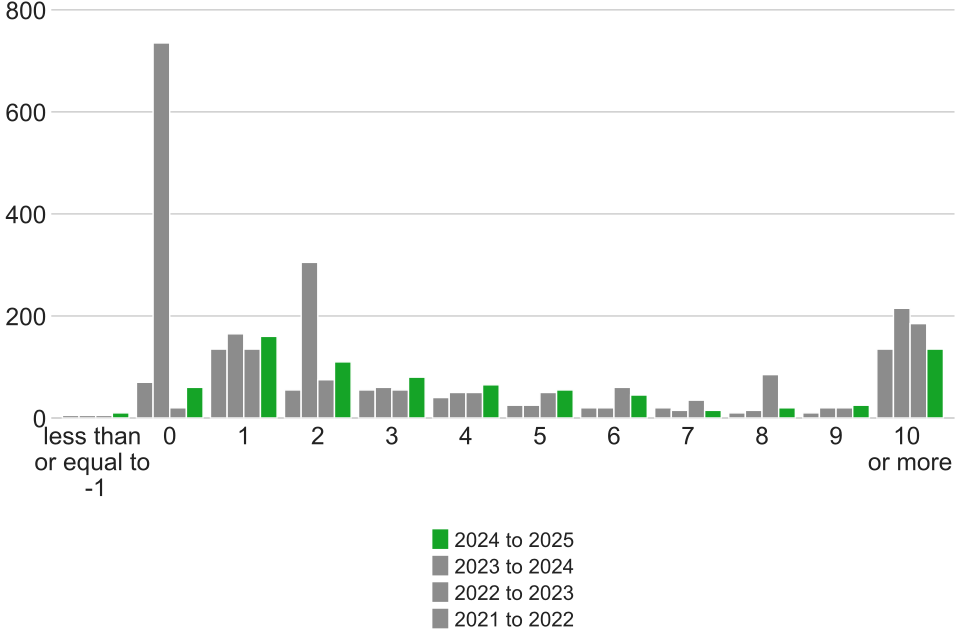
Table 8: Number of upheld appeals by raw mark change made at appeal for GCSE
| Mark change | 2021 to 2022 | 2022 to 2023 | 2023 to 2024 | 2024 to 2025 |
|---|---|---|---|---|
| less than or equal to -1 | 5 | Fewer than 5 | 5 | 10 |
| 0 | 70 | 735 | 20 | 60 |
| 1 | 135 | 165 | 135 | 160 |
| 2 | 55 | 305 | 75 | 110 |
| 3 | 55 | 60 | 55 | 80 |
| 4 | 40 | 50 | 50 | 65 |
| 5 | 25 | 25 | 50 | 55 |
| 6 | 20 | 20 | 60 | 45 |
| 7 | 20 | 15 | 35 | 15 |
| 8 | 10 | 15 | 85 | 20 |
| 9 | 10 | 20 | 20 | 25 |
| 10 or more | 135 | 215 | 185 | 135 |
There were fewer than 5 GCSE raw mark changes for upheld appeals in the 2024 to 2025 academic year excluded from this section, due to either the pre- or post-appeal raw mark being unknown. For the same reason, fewer than 5 GCSE raw mark changes for upheld appeals in the 2023 to 2024 academic year were excluded.
AS and A level
Overall, in the 2024 to 2025 academic year, 87.0% of upheld appeals (where both the pre- and post-appeal raw marks were known) resulted in additional marks given, compared with 85.1% in the 2023 to 2024. The rest resulted in either no change or a reduction in marks.
In the 2024 to 2025 academic year, the most common outcome for an upheld appeal (where both the pre- and post-appeal raw marks were known) was a mark change of 1 (19.4%), followed by a mark change of 10 or more (19.2%) and a mark change of 2 (14.3%). There were 20 (4.6%) appeals that led to a decrease in marks. Mark changes of 10 or more marks were predominantly from appeals on the grounds of ‘review of marking - marking error’.
For AS and A level, the most common outcome at appeal was a mark change of 1 mark
Figure 11: Number of upheld appeals by raw mark change made at appeal for AS and A level
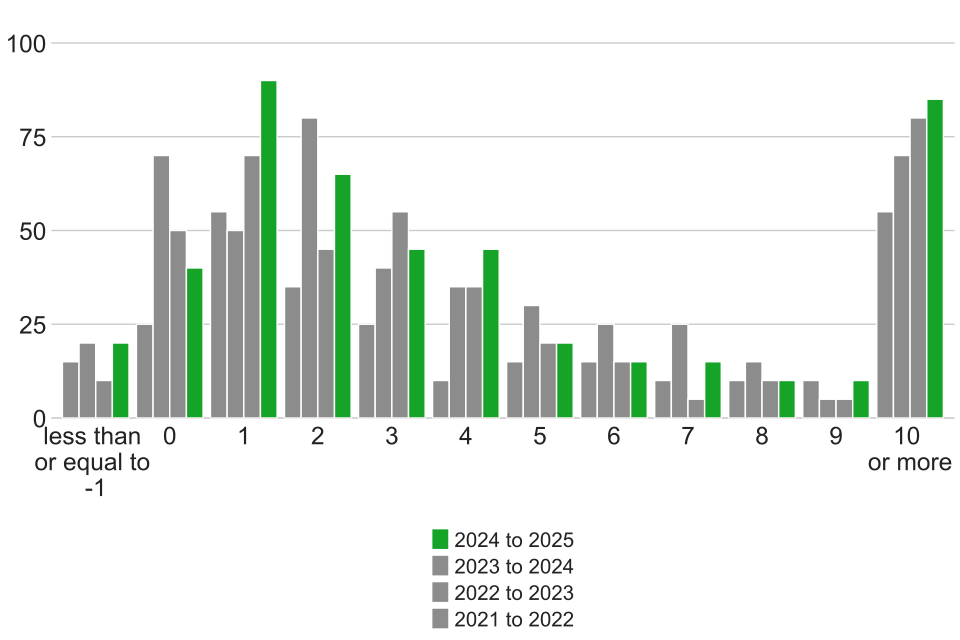
Table 9: Number of upheld appeals by raw mark change made at appeal for AS and A level
| Mark change | 2021 to 2022 | 2022 to 2023 | 2023 to 2024 | 2024 to 2025 |
|---|---|---|---|---|
| less than or equal to -1 | 15 | 20 | 10 | 20 |
| 0 | 25 | 70 | 50 | 40 |
| 1 | 55 | 50 | 70 | 90 |
| 2 | 35 | 80 | 45 | 65 |
| 3 | 25 | 40 | 55 | 45 |
| 4 | 10 | 35 | 35 | 45 |
| 5 | 15 | 30 | 20 | 20 |
| 6 | 15 | 25 | 15 | 15 |
| 7 | 10 | 25 | 5 | 15 |
| 8 | 10 | 15 | 10 | 10 |
| 9 | 10 | 5 | Fewer than 5 | 10 |
| 10 or more | 55 | 70 | 80 | 85 |
There were fewer than 5 AS and A level raw mark changes for upheld appeals in the 2024 to 2025 academic year excluded from this section, due to either the pre- or post-appeal raw mark being unknown. For the same reason, fewer than 5 AS and A level raw mark changes for upheld appeals in the 2023 to 2024 academic year were excluded.
Grades challenged and changed
This section looks at the number of qualification grades challenged and changed at appeal, for GCSE and AS and A level.
The number of appeals and the number of grades are two different measures and there is not a one-to-one relationship between grades and appeals. A single appeal may represent one or more qualification grades which are being challenged, for example, when a school or college appeals against its results for a qualification taken by a number of its students. On the other hand, appeals are at component level so one qualification-level grade might be challenged by multiple appeals. For example, if a student appealed 3 components in the same qualification 3 distinct appeals would be counted for one grade challenged. An upheld appeal may result in a change to all, some, or none of the associated qualification grades. Therefore, an increase or decrease in appeals received may not be reflected in the number of grades challenged or changed.
Note that throughout this section, the number of combined science grades challenged and changed are double-counted, because the qualification is the size of 2 single GCSEs.
720 (0.01%) of the 6.7 million results issued, GCSE, AS and A level were changed as part of an upheld appeal, a decrease of 3.7% compared with the 2023 to 2024 academic year when there were 745 grades changed.
GCSE
In 2024 to 2025, there were 1,255 grades challenged and 500 grades changed for GCSEs. This was a decrease of 12.6% in the number of grades challenged and a decrease of 5.8% in the number of grades changed compared with the 2023 to 2024 academic year, where 1,440 and 535 grades were challenged and changed, respectively.
For GCSE, 1,255 grades were challenged and 500 grades were changed
Figure 12: Number of grades challenged and changed at appeal for GCSE
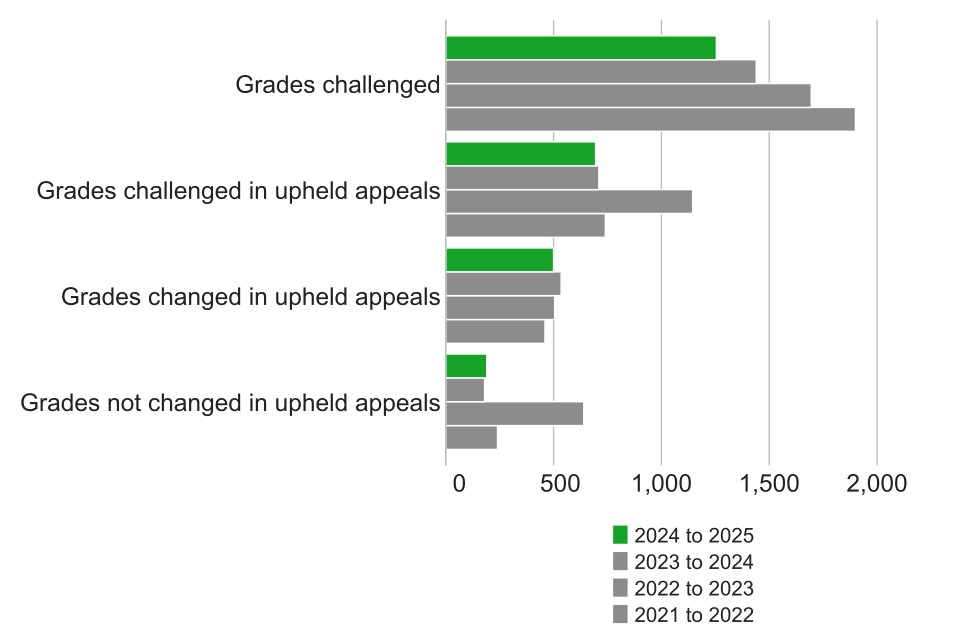
Table 10: Number of grades challenged and changed at appeal for GCSE
| Value | 2021 to 2022 | 2022 to 2023 | 2023 to 2024 | 2024 to 2025 |
|---|---|---|---|---|
| Grades challenged | 1,900 | 1,695 | 1,440 | 1,255 |
| Grades challenged in upheld appeals | 740 | 1,145 | 710 | 695 |
| Grades changed in upheld appeals | 460 | 505 | 535 | 500 |
| Grades not changed in upheld appeals | 240 | 640 | 180 | 190 |
Note: The number of grades changed or unchanged refers only to grades included as part of an upheld appeal. It also does not include cases where either the pre- or post-appeal qualification grade is unknown or yet to be determined (for example, in cases where a preliminary appeal was upheld, the appeal progressed to an appeal hearing and the final qualification grade is awaiting the result of the appeal hearing). In the 2024 to 2025 academic year, at the time when data was reported to Ofqual, there were fewer than 5 GCSE grades from upheld appeals where either the pre- or post-appeal qualification grade was unknown or yet to be determined.
AS and A level
In the 2024 to 2025 academic year, there were 910 grades challenged and 215 grades changed for AS and A level. This was a decrease of 25.1% in grades challenged and an increase of 1.4% in grades changed compared with the 2023 to 2024 academic year.
For AS and A level, 910 grades were challenged and 215 grades were changed
Figure 13: Number of grades challenged and changed at appeal for AS and A level
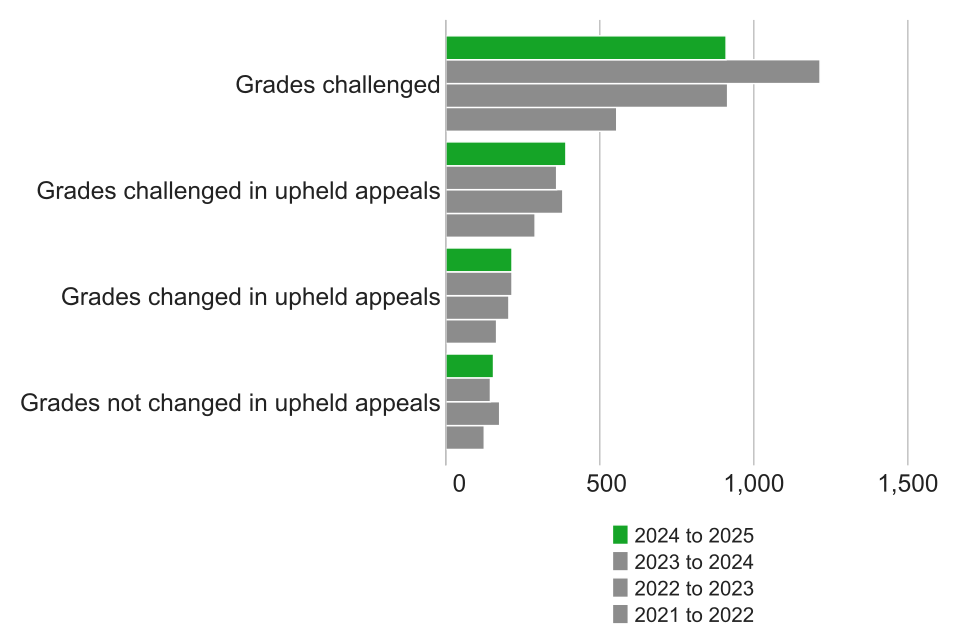
Table 11: Number of grades challenged and changed at appeal for AS and A level
| Value | 2021 to 2022 | 2022 to 2023 | 2023 to 2024 | 2024 to 2025 |
|---|---|---|---|---|
| Grades challenged | 555 | 915 | 1,215 | 910 |
| Grades challenged in upheld appeals | 290 | 380 | 360 | 390 |
| Grades changed in upheld appeals | 165 | 205 | 215 | 215 |
| Grades not changed in upheld appeals | 125 | 175 | 145 | 155 |
Note: The number of grades changed or unchanged refers only to grades included as part of an upheld appeal. It also does not include cases where either the pre- or post-appeal qualification grade is unknown or yet to be determined (for example, in cases where a preliminary appeal was upheld, the appeal progressed to an appeal hearing and the final qualification grade is awaiting the result of the appeal hearing). In the 2024 to 2025 academic year, at the time when data was reported to Ofqual, there were 20 AS and A level grades from upheld appeals where either the pre- or post-appeal qualification grade was unknown or yet to be determined.
Pre-appeal grades challenged
This section looks at which specific grades were most commonly challenged at appeal, for GCSE and AS and A level. For GCSE, figures are reported separately for single grades (9 to U) and combined science double grades (9-9 to U); combined science grades are not double-counted in this section.
GCSE
In the 2024 to 2025 academic year, grade 3 was the most commonly challenged grade for GCSE, with 270 grades challenged.
For each GCSE combined science grade between 9-9 and U, 5 or fewer grades were challenged in the 2024 to 2025 academic year (a full breakdown can be found in Table 7 of the data tables accompanying this report).
For GCSE, the most commonly challenged grade was grade 3
Figure 14: Number of grades challenged for GCSE 9 to 1 grades by academic year
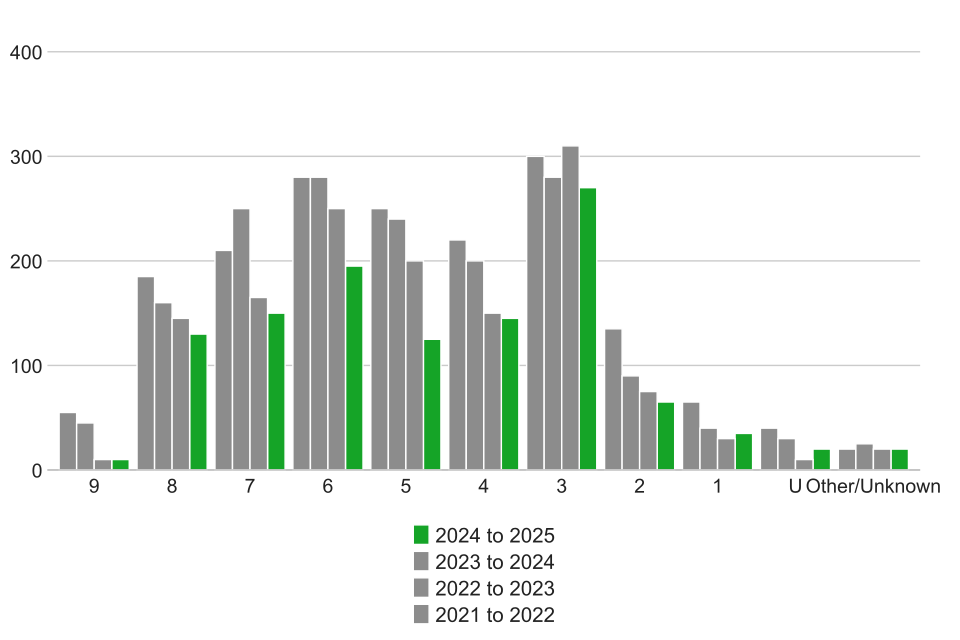
Source: Table 7 of the data tables accompanying this report.
AS and A level
In the 2024 to 2025 academic year, grade B was the most commonly challenged grade for AS and A level, with 360 grades challenged.
For AS and A level, the most commonly challenged grade was grade B
Figure 15: Number of grades challenged for AS and A level grades by academic year
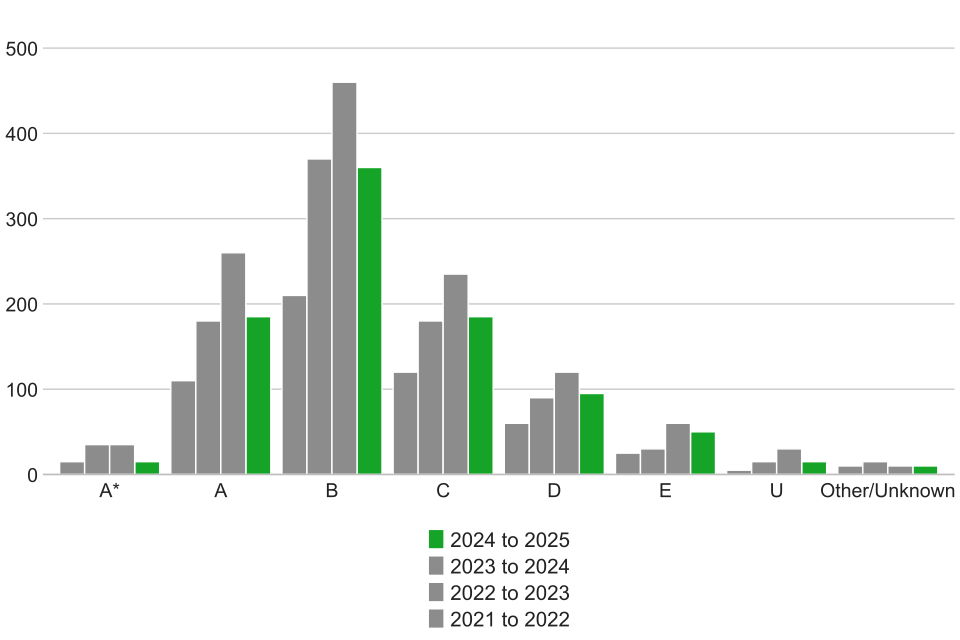
Source: Table 7 of the data tables accompanying this report.
Grade changes for upheld appeals
An upheld appeal may result in a change to all, some, or none of the associated qualification grades. In this section, the grade changes following an upheld appeal in the 2024 to 2025 academic year are reported. Instances where upheld appeals were for students who were not originally given a grade, or where a student’s grade had not yet been determined after an appeal was upheld are not included in this section.
Note that throughout this section, the number of combined science grades changed are double-counted, because the qualification is the size of 2 single GCSEs.
GCSE
In the 2024 to 2025 academic year, when an appeal was upheld and both the pre- and post-appeal grades were known, 190 (28.2%) GCSE grades challenged did not change. This was an increase compared with the 2023 to 2024 academic year when 175 (25.6%) GCSE grades challenged in upheld appeals did not change.
In the 2024 to 2025 academic year, the majority of GCSE grades challenged in upheld appeals were increased by 1 grade (61.5%) at appeal (the same as in 2023 to 2024). Overall, 69.1% of GCSE grades challenged in upheld appeals were increased after appeal (compared with 71.5% in 2023 to 2024) and 2.6% of GCSE grades challenged were decreased (compared with 2.9% in 2023 to 2024).
For upheld appeals for GCSE, the majority of challenged grades were increased by 1 grade
Figure 16: Grade changes from upheld appeals at GCSE
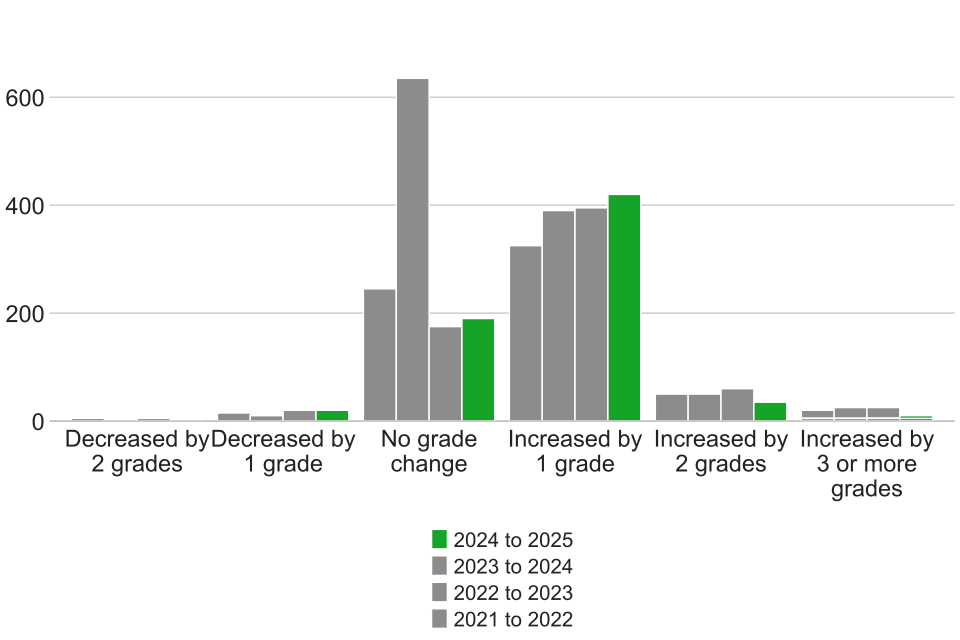
Table 12a: Number of grade changes for upheld appeals at GCSE
| Grade change for upheld appeals | Number of grades 2021 to 2022 | Number of grades 2022 to 2023 | Number of grades 2023 to 2024 | Number of grades 2024 to 2025 |
|---|---|---|---|---|
| Decreased by 2 grades | Fewer than 5 | 0 | Fewer than 5 | 0 |
| Decreased by 1 grade | 15 | 10 | 20 | 20 |
| No grade change | 245 | 635 | 175 | 190 |
| Increased by 1 grade | 325 | 390 | 395 | 420 |
| Increased by 2 grades | 50 | 50 | 60 | 35 |
| Increased by 3 or more grades | 30 | 35 | 40 | 20 |
Table 12b: Percentage of grade changes for upheld appeals at GCSE
| Grade change for upheld appeals | Percentage of grades 2021 to 2022 | Percentage of grades 2022 to 2023 | Percentage of grades 2023 to 2024 | Percentage of grades 2024 to 2025 |
|---|---|---|---|---|
| Decreased by 2 grades | 0.4% | 0.0% | 0.1% | 0.0% |
| Decreased by 1 grade | 2.1% | 0.8% | 2.7% | 2.6% |
| No grade change | 36.4% | 56.7% | 25.6% | 28.2% |
| Increased by 1 grade | 48.7% | 34.9% | 57.2% | 61.5% |
| Increased by 2 grades | 7.6% | 4.5% | 8.8% | 5.0% |
| Increased by 3 or more grades | 4.6% | 3.1% | 5.5% | 2.6% |
Note 1: At the time when data was reported to Ofqual, there were 15 GCSE grades challenged for upheld appeals in the 2024 to 2025 academic year where grades were either unknown, not awarded (for example, if the student was absent) or yet to be determined. These grades are not reported in this section.
Note 2: Table 12b shows the percentage of GCSE grades challenged in upheld appeals that were changed by the specified size of change. For the overall number of grades challenged in upheld appeals see table 10 and for the number of grades challenged in upheld appeals that were changed by the specified size of change, see table 12a. Percentages have been calculated using unrounded figures.
AS and A level
In the 2024 to 2025 academic year, when an appeal was upheld and both the pre- and post-appeal grades were known, 155 (42.4%) AS and A level grades challenged did not change. This was an increase compared with the 2023 to 2024 academic year when 145 (41.2%) AS and A level grades challenged in upheld appeals did not change.
In the 2024 to 2025 academic year, the majority of AS and A level grades challenged in upheld appeals were increased by 1 grade (53.0%) at appeal (the same as in 2023 to 2024). Overall, 57.3% of AS and A level grades challenged in upheld appeals were increased after appeal (compared with 58.5% in the 2023 to 2024 academic year) and 0.3% of AS and A level grades challenged were decreased (compared with 0.3% in the 2023 to 2024 academic).
For upheld appeals for AS and A level, the majority of challenged grades were increased by 1 grade
Figure 17: Grade changes from upheld appeals at AS and A level
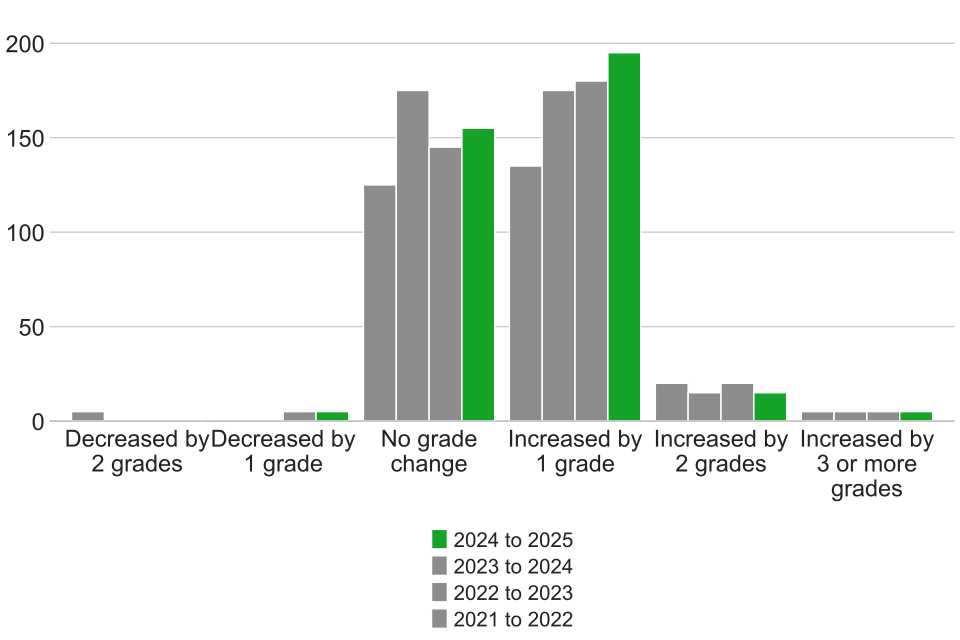
Table 13a: Grade changes for upheld appeals at AS and A level
| Grade change for upheld appeals | Number of grades 2021 to 2022 | Number of grades 2022 to 2023 | Number of grades 2023 to 2024 | Number of grades 2024 to 2025 |
|---|---|---|---|---|
| Decreased by 2 grades | Fewer than 5 | 0 | 0 | 0 |
| Decreased by 1 grade | 0 | 0 | Fewer than 5 | Fewer than 5 |
| No grade change | 125 | 175 | 145 | 155 |
| Increased by 1 grade | 135 | 175 | 180 | 195 |
| Increased by 2 grades | 20 | 15 | 20 | 15 |
| Increased by 3 or more grades | Fewer than 5 | Fewer than 5 | 5 | Fewer than 5 |
Table 13b: Percentage of grade changes for upheld appeals at AS and A level
| Grade change for upheld appeals | Percentage of grades 2021 to 2022 | Percentage of grades 2022 to 2023 | Percentage of grades 2023 to 2024 | Percentage of grades 2024 to 2025 |
|---|---|---|---|---|
| Decreased by 2 grades | 0.4% | 0.0% | 0.0% | 0.0% |
| Decreased by 1 grade | 0.0% | 0.0% | 0.3% | 0.3% |
| No grade change | 44.1% | 47.8% | 41.2% | 42.4% |
| Increased by 1 grade | 47.7% | 47.8% | 51.4% | 53.0% |
| Increased by 2 grades | 7.1% | 3.6% | 5.1% | 3.5% |
| Increased by 3 or more grades | 0.7% | 0.8% | 2.0% | 0.8% |
Note 1: At the time when data was reported to Ofqual, there were 25 AS and A level grades challenged for upheld appeals where grades were either unknown, not awarded (for example, if the student was absent) or yet to be determined. These grades are not reported in this section.
Note 2: Table 13b shows the percentage of AS and A level grades challenged in upheld appeals that were changed by the specified size of change. For the overall number of grades challenged in upheld appeals see table 11 and for the number of grades challenged in upheld appeals that were changed by the specified size of change, see table 13a. Percentages have been calculated using unrounded figures.
Students with grades challenged and grades changed
Students taking GCSEs, AS and A levels typically take multiple subjects and receive multiple grades. This section shows the number of students who had one or more of their grades challenged due to an appeal being requested for at least one component associated with each grade. A student is counted once regardless of how many grades they had challenged or changed.
These figures are similar to those published in Ofqual’s Reviews of marking and moderation (ROMM) statistics, but there are some important differences to note. For detail on why the number of students receiving results differs from the reviews of marking and moderation statistics see the data sources section of the background information document.
GCSE
Of the 1,215,075 students who received results for GCSEs in the 2024 to 2025 academic year, less than 0.1% had one or more of their grades challenged and 0.04% had one or more grades changed (compared with 0.1% with grades challenged and 0.05% with grades changed in the 2023 to 2024 academic year).
Table 14: Number of students with grades challenged and changed at appeal for GCSE
| Year | Total number of students receiving results | Number of students with one or more grades challenged | Percentage of all students with one or more grades challenged | Number of students with one or more grades changed | Percentage of all students with one or more grades changed |
|---|---|---|---|---|---|
| 2023 to 2024 | 1,164,065 | 1,370 | 0.1% | 570 | 0.05% |
| 2024 to 2025 | 1,215,075 | 1,185 | less than 0.1% | 535 | 0.04% |
AS and A level
Of the 337,820 students who received results for AS and A levels in the 2024 to 2025 academic year, 0.3% had one or more of their grades challenged and 0.07% had one or more grades changed. This is the same as in the 2023 to 2024 academic year.
Table 15: Number of students with grades challenged and changed at appeal for AS and A level
| Year | Total number of students receiving results | Number of students with one or more grades challenged | Percentage of all students with one or more grades challenged | Number of students with one or more grades changed | Percentage of all students with one or more grades changed |
|---|---|---|---|---|---|
| 2023 to 2024 | 340,770 | 1,180 | 0.3% | 235 | 0.07% |
| 2024 to 2025 | 337,820 | 890 | 0.3% | 245 | 0.07% |
Appeals completion within target timescales
This section looks at whether appeals were completed within the target timescales set by awarding organisations, for both preliminary appeals and appeal hearings.
The target timescales that awarding organisations chose to set in the 2024 to 2025 academic year allowed 6 weeks (42 calendar days) to complete a preliminary appeal from the receipt of the application. To complete an appeal hearing from the receipt of a request for an appeal hearing, they allowed 10 weeks (70 calendar days, in addition to time already spent at the preliminary appeal stage).
The figures for the percentage of appeals completed in the target time in this section are for completed appeals only, and do not include appeals which were still in progress at the time the data was collected. At the point at which Ofqual collected the data, in the 2024 to 2025 academic year, there were 5 GCSE and 5 AS and A level appeals which were still in progress and may or may not be completed within the target timescale.
GCSE
In the 2024 to 2025 academic year, 97.6% of completed GCSE preliminary appeals (compared with 98.5% in the 2023 to 2024 academic year) and 85.0% of completed GCSE appeal hearings (compared with 55.6% in the 2023 to 2024 academic year) were completed within the target timescale. This volatility for appeal hearings is largely due to there being a small number of these.
The median number of days to complete a GCSE preliminary appeal in the 2024 to 2025 academic year was 22 days (compared with 19 days in the 2023 to 2024 academic year). The median number of days to complete a GCSE appeals hearing in the 2024 to 2025 academic year was 51 days (compared with 67 days in the 2023 to 2024 academic year).
For GCSE, 97.6% of preliminary appeals and 85.0% of appeal hearings were completed within target time
Figure 18: Percentage of GCSE preliminary appeals and appeal hearings completed within exam boards’ target timescales by appeal stage
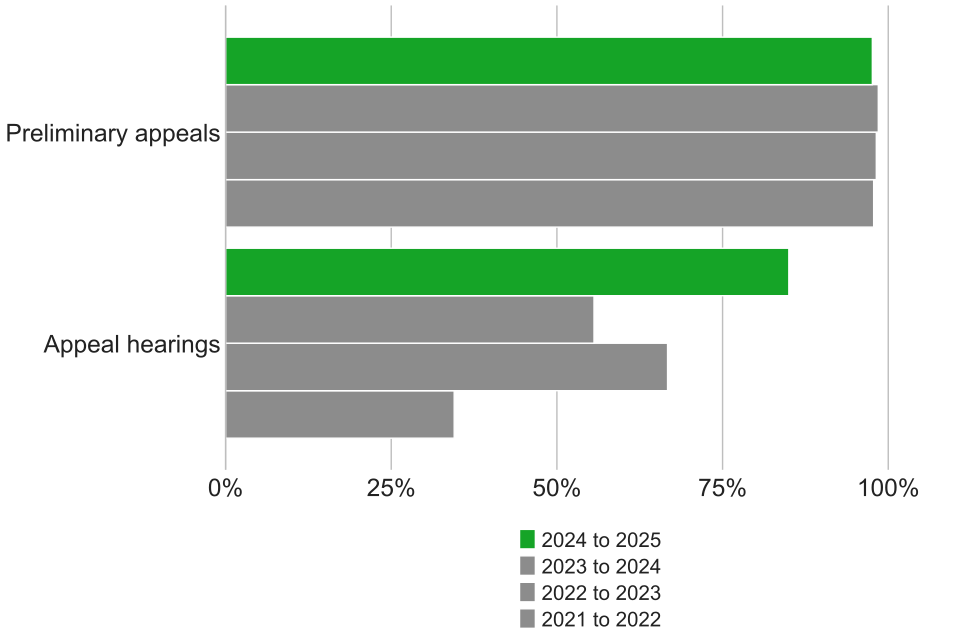
Table 16: Percentage of GCSE preliminary appeals and appeal hearings completed within exam boards’ target timescales by appeal stage
| Value | 2021 to 2022 | 2022 to 2023 | 2023 to 2024 | 2024 to 2025 |
|---|---|---|---|---|
| Preliminary appeals completed in target time | 1,060 | 1,130 | 1,045 | 1,135 |
| Percentage of completed preliminary appeals completed in target time | 97.8% | 98.2% | 98.5% | 97.6% |
| Appeal hearings completed in target time | 20 | 10 | 10 | 15 |
| Percentage of completed appeal hearings completed in target time | 34.5% | 66.7% | 55.6% | 85.0% |
AS and A level
In the 2024 to 2025 academic year, 97.9% of completed AS and A level preliminary appeals (compared with 97.4% in the 2023 to 2024 academic year) and 75.0% of completed AS and A level appeal hearings (compared with 85.7% in the 2023 to 2024 academic year) were completed within the target timescale.
The median number of days to complete an AS and A level preliminary appeal in the 2024 to 2025 academic year was 21 days (compared with 19 days in the 2023 to 2024 academic year). The median number of days to complete a AS and A level appeals hearing in the 2024 to 2025 academic year was 60 days (compared with 49 days in the 2023 to 2024 academic year).
For AS and A level, 97.9% of preliminary appeals and 75.0% of appeal hearings were completed within target time
Figure 19: Percentage of AS and A level preliminary appeals and appeal hearings completed within exam boards’ target timescales by appeal stage
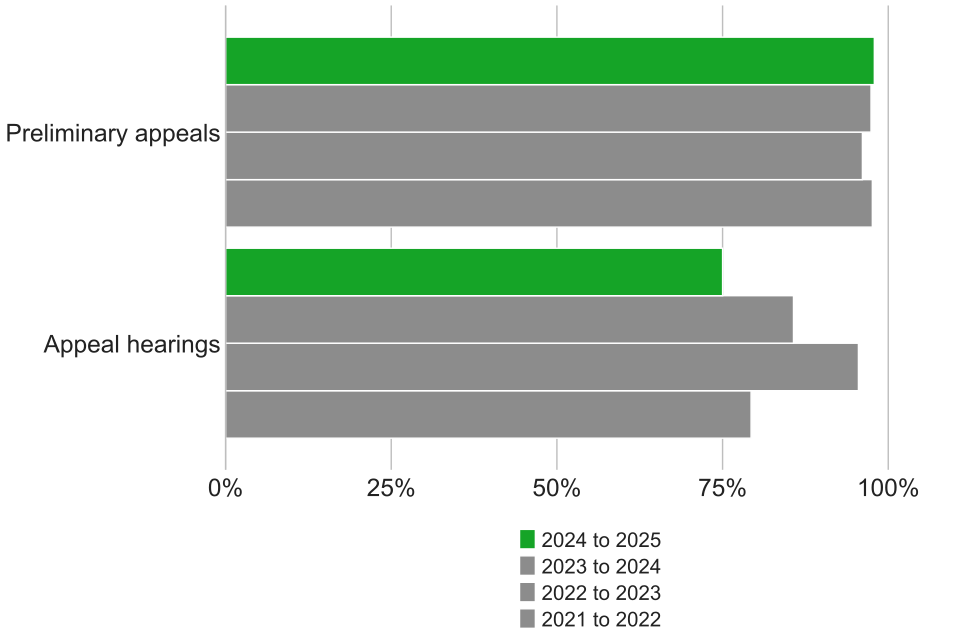
Table 17: Percentage of AS and A level preliminary appeals and appeal hearings completed within exam boards’ target timescales by appeal stage
| Value | 2021 to 2022 | 2022 to 2023 | 2023 to 2024 | 2024 to 2025 |
|---|---|---|---|---|
| Preliminary appeals completed in target time | 440 | 660 | 705 | 755 |
| Percentage of completed preliminary appeals completed in target time | 97.6% | 96.1% | 97.4% | 97.9% |
| Appeal hearings completed in target time | 25 | 20 | 25 | 20 |
| Percentage of completed appeal hearings completed in target time | 79.3% | 95.5% | 85.7% | 75.0% |
Project qualifications
In the 2024 to 2025 academic year, there were 15 appeals received for Project qualifications, 5 (38.5%) of which were upheld and fewer than 5 of which were associated with at least one grade change.
In the 2024 to 2025 academic year, there were 280 students for Project qualifications whose grades were involved in at least 1 appeal. Overall, 45 grades were changed as a result of an appeal (for context, a total of 53,970 certificates were issued for Project qualifications in the 2024 to 2025 academic year).
Table 18: Appeals received, appeals upheld, grades challenged and grades changed for Project qualifications
| Appeals received, appeals upheld, grades challenged, and grades changed | 2021 to 2022 | 2022 to 2023 | 2023 to 2024 | 2024 to 2025 |
|---|---|---|---|---|
| Appeals received | 10 | 15 | 5 | 15 |
| Appeals upheld | Fewer than 5 | 5 | 5 | 5 |
| Grades challenged | 290 | 395 | 200 | 280 |
| Grades changed | 15 | 40 | 45 | 45 |
Contextual information
The coronavirus (COVID-19) pandemic led to the cancellation of exams in summer 2020 and summer 2021. Exams, assessments and standard post-results services resumed in summer 2022, with some adaptions to the usual assessments. The approach to grading led to overall results in 2022 being midway between results in 2021 and 2019. In the 2022 to 2023 academic year, assessment arrangements largely returned to pre-pandemic arrangements. Results in summer 2023 were broadly similar to summer 2019, reflecting a return to pre-pandemic grading. Due to the different appeals process in place in the academic year 2020 to 2021, this year is not included in this release.