Adult social care client level data, England: quarterly update to December 2025
Updated 9 June 2026
Applies to England

© Crown copyright 2026
This publication is licensed under the terms of the Open Government Licence v3.0 except where otherwise stated. To view this licence, visit nationalarchives.gov.uk/doc/open-government-licence/version/3 or write to the Information Policy Team, The National Archives, Kew, London TW9 4DU, or email: psi@nationalarchives.gov.uk.
Where we have identified any third party copyright information you will need to obtain permission from the copyright holders concerned.
This publication is available at https://www.gov.uk/government/statistics/adult-social-care-client-level-data-england-quarterly-update-to-december-2025/adult-social-care-client-level-data-england-quarterly-update-to-december-2025
Introduction
This report contains statistics aggregated from client level data (CLD) to provide information about adult social care long-term support and assessments in local authorities in England for January 2025 to December 2025.
These statistics are published quarterly as official statistics in development. Quarterly CLD statistics were published in the Monthly statistics for adult social care collection until October 2025.
Updates on future reports
The next publication will be released on 2 July 2026. Dates for future publications will be announced on the GOV.UK publication release calendar.
Main points
The main points outlined in this bulletin are that:
- on 31 December 2025, there were 683,000 people receiving long-term local authority arranged or provided adult social care in England
- from January 2025 to December 2025, 613,000 people received a local authority adult social care assessment in England, having not received local authority long-term support in the previous 12 months
The statistics in this report are taken from the accompanying data tables on the Adult social care client level data, England, quarterly update to December 2025 page.
The chapters below contain detailed analysis on the published statistics. Throughout this report, numbers over 10,000 are rounded to the nearest 1,000 and numbers below 10,000 are rounded to the nearest 10. Rates per 100,000 population are rounded to the nearest 10.
1. Long-term support
On 31 December 2025, there were 683,000 people receiving long-term local authority arranged or provided adult social care. As a population rate, this represents 1,470 people per 100,000 adults in England.
The data in this chapter can be found in the long-term support data tables on the Adult social care client level data, England, quarterly update to December 2025 page. Refer to the ‘Notes’ tab in these tables for data quality of local authority submissions.
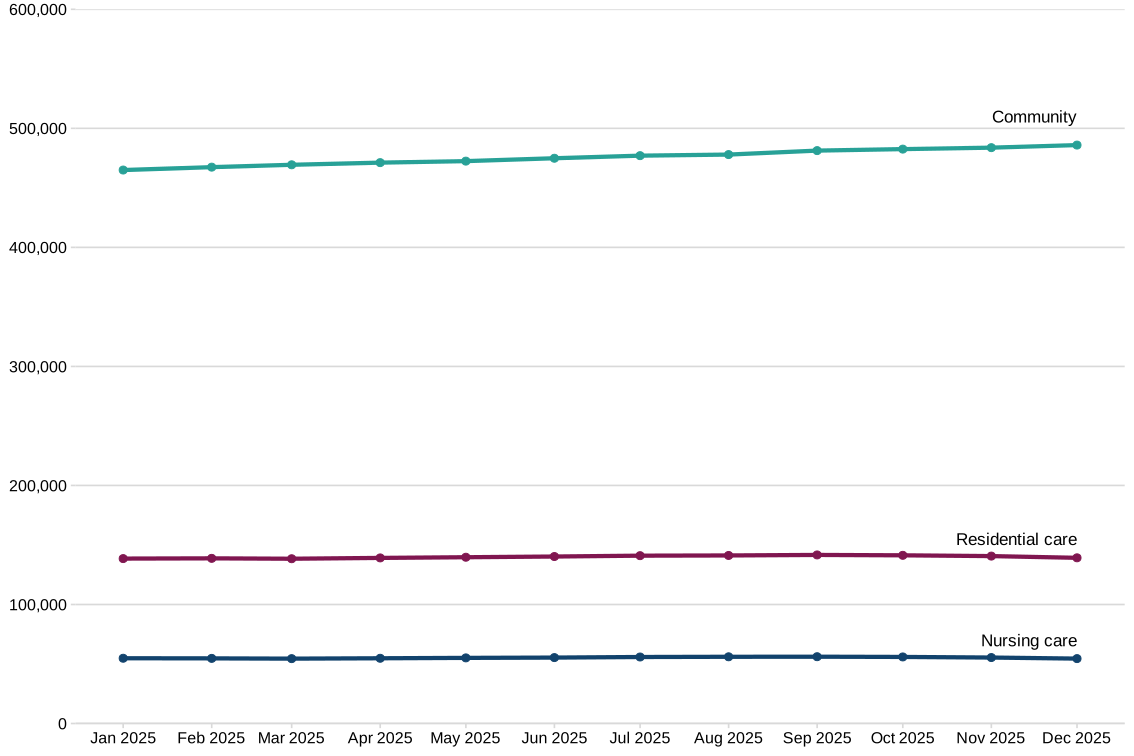
Figure 1: number of people receiving local authority arranged or provided long-term adult social care support at the end of the month, England, by support setting from 31 January 2025 to 31 December 2025
Source: table 1 of the accompanying long-term support data tables.
The total number of people receiving long-term support in England showed an increase from 662,000 on 31 January 2025 to 683,000 on 31 December 2025.
This trend is driven by the increase in long-term support delivered in community settings, which covers home care and support in the form of direct payments from the local authority that people can then use to buy their own care and support. The number of people receiving long-term support in the community increased from 465,000 on 31 January 2025 to 486,000 on 31 December 2025. This number increased in all age groups.
On 31 December 2025:
- 486,000 people were receiving support in the community
- 139,000 people were receiving support in residential care homes
- 55,000 people were receiving support in nursing homes
- 250 people were receiving support in prison
Note that people may be receiving long-term support in multiple settings but are counted in only one category per month for these statistics. Further information about how these categories are determined can be found in the accompanying client level data background quality and methodology document.
Support setting information has not been published for Warrington due to a data quality issue in their most recent submission. The figures given by support setting will therefore not add up to the total. See the ‘Notes’ tab in the long-term support data tables for more information.
Ethnicity of people receiving long-term support
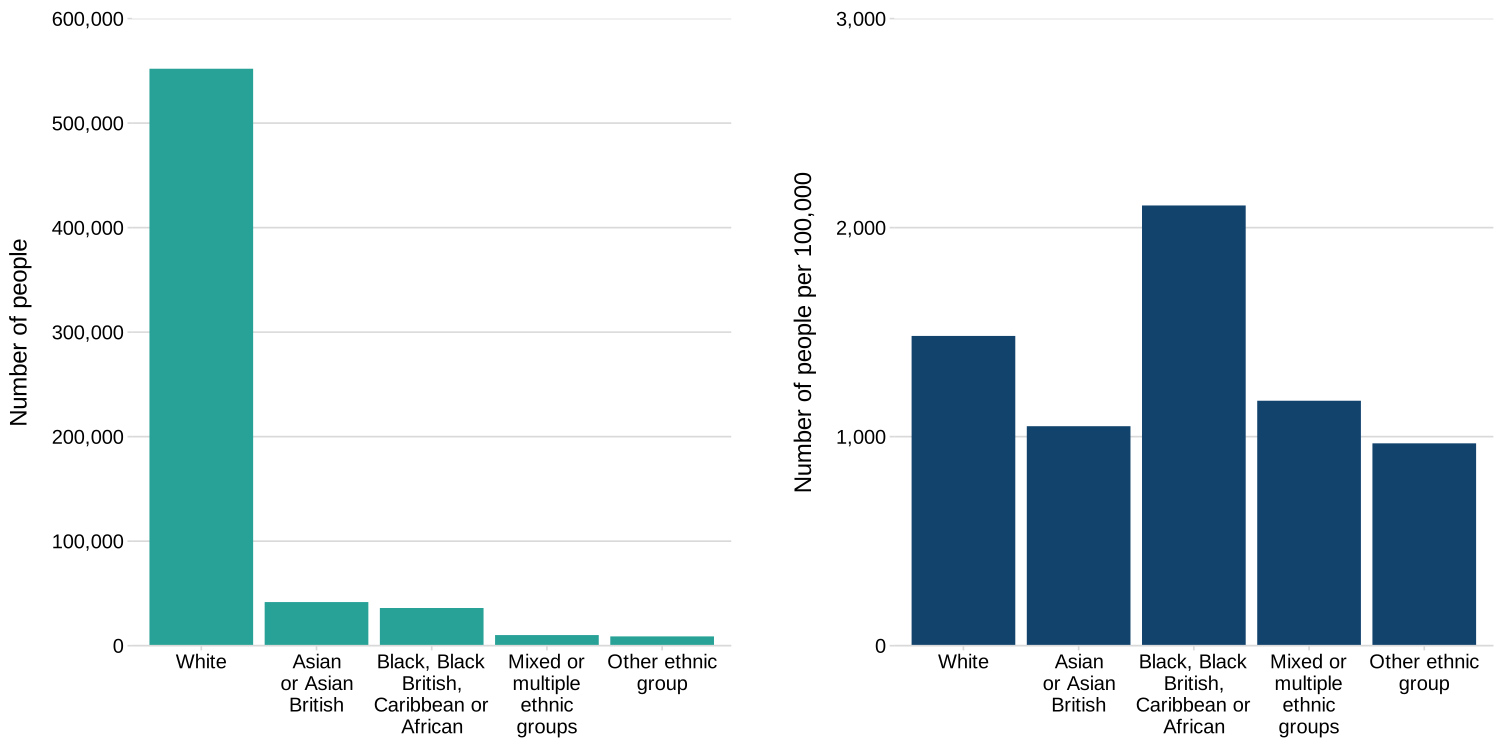
Figure 2: number of people and number of people per 100,000 in England receiving local authority arranged or provided long-term adult social care support, by ethnicity, 31 December 2025
Source: table 6 of the accompanying long-term support data tables.
On 31 December 2025 the number of people receiving long-term support in each broad ethnic group was:
- Asian or Asian British: 42,000 representing 1,050 per 100,000 people of this ethnicity in England
- Black, Black British, Caribbean or African: 36,000 representing 2,110 per 100,000 people of this ethnicity in England
- Mixed or multiple ethnic groups: 10,000 representing 1,170 per 100,000 people of this ethnicity in England
- White: 552,000 people representing 1,480 per 100,000 people of this ethnicity in England
- other ethnic group: 8,870 people
- no data: 34,000 people
Gender of people receiving long-term support
The majority of people receiving long-term support on 31 December 2025 were recorded as female (56% of those with recorded gender).
Of those receiving long-term support on 31 December 2025:
- 383,000 people were recorded as female, representing 1,600 per 100,000 female adults in England
- 299,000 people were recorded as male, representing 1,330 per 100,000 male adults in England
- 400 people had gender recorded as ‘other’
- gender data was not submitted for 590 people
CLD is national administrative data drawn from local authority systems. CLD includes a gender field with the definition ‘the gender the individual considers themselves to be’, but recording can vary between authorities.
The populations used to calculate proportions of people receiving long-term support by gender are taken from the Office for National Statistics mid-year estimates of the population for England and Wales. These populations are broken down into categories by sex whereas CLD breaks down by gender. Proportions are presented for illustrative purposes only and therefore caution should be applied when interpreting them.
Age group of people receiving long-term support
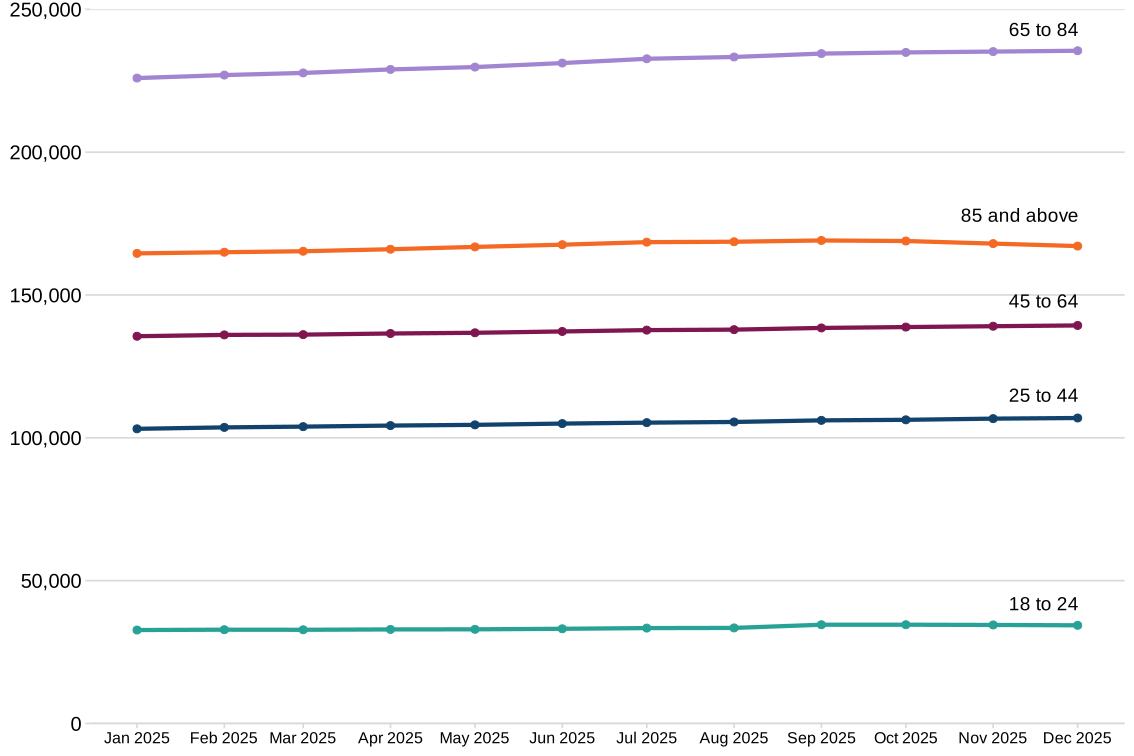
Figure 3: number of people receiving local authority arranged or provided long-term adult social care support at the end of the month, England, by age group, from 31 January 2025 to 31 December 2025
Source: table 1 of the accompanying long-term support data tables.
Of those receiving long-term support on 31 December 2025:
- 403,000 were aged 65 or above, representing 3,670 people per 100,000 adults aged 65 and above in England
- 281,000 were aged 18 to 64, representing 790 per 100,000 adults under 65 in England
Broadly, older age groups had higher rates of people receiving long-term support. Of people aged 85 and above, 11,260 per 100,000 people were receiving long-term support on 31 December 2025. This compares with 3,660 per 100,000 people aged 75 to 84 and 1,630 per 100,000 people aged 65 to 74.
Regional analysis of long-term support
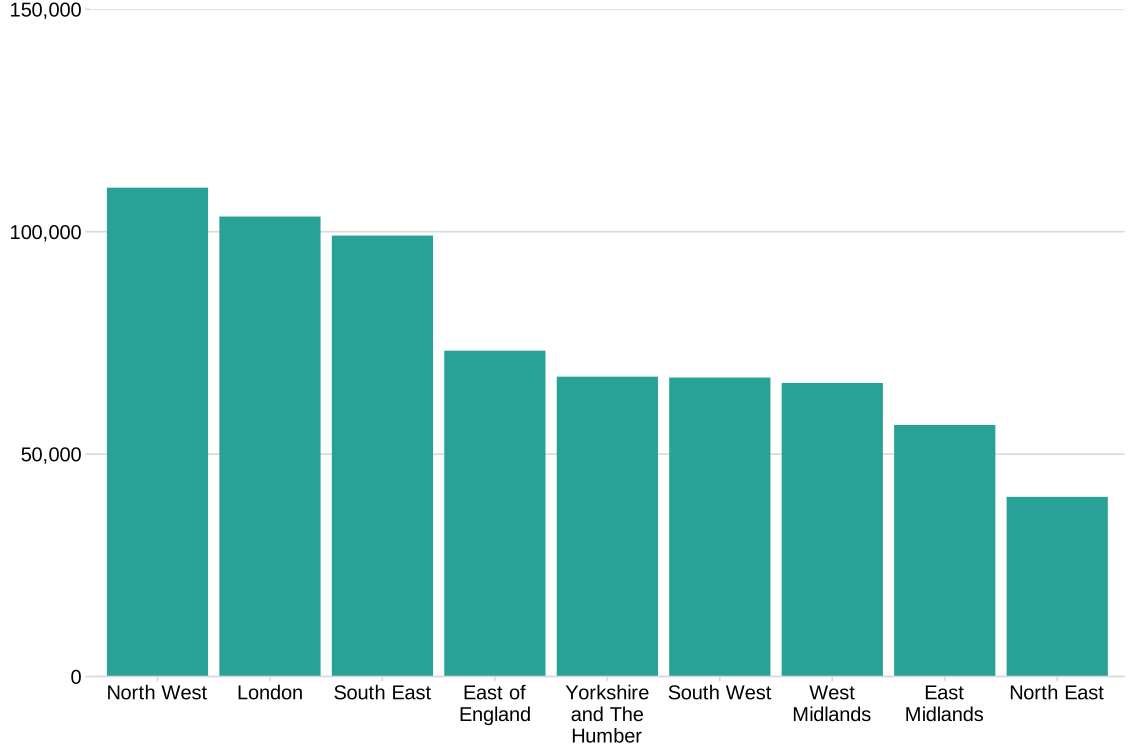
Figure 4: number of people in England receiving local authority arranged or provided long-term adult social care support, by region, 31 December 2025
Source: table 1 of the accompanying long-term support data tables.
On 31 December 2025 the number of people receiving long-term support varied from 110,000 in the North West to 40,000 in the North East. All regions had a small reported increase in the number of people receiving long-term support from 31 January 2025 to 31 December 2025.
The largest proportions of people receiving long-term support on 31 December 2025 were:
- the North East: 1,820 per 100,000 people living in this region
- the North West: 1,800 per 100,000 people living in this region
The remaining regions had rates varying between 1,300 and 1,500 per 100,000 people.
At local authority level, figures and any apparent trends should be interpreted with caution, since we are aware that some local authorities do not have complete coverage and have known data quality issues that they have improved over time and are working to resolve for future submissions. Further information about data quality can be found in the accompanying client level data background quality and methodology document.
2. Assessments
From January 2025 to December 2025, 613,000 people received a local authority adult social care assessment in England, having not received local authority long-term support in the previous 12 months. As a population rate, this represents 1,320 people per 100,000 adults in England.
The data in this chapter can be found in the assessments data tables on the Adult social care client level data, England, quarterly update to December 2025 page. Refer to the ‘Notes’ tab in these tables for data quality of local authority submissions.
Figure 5: number of people receiving adult social care assessments, who have not received local authority long-term support in the previous 12 months, England, from January 2025 to December 2025
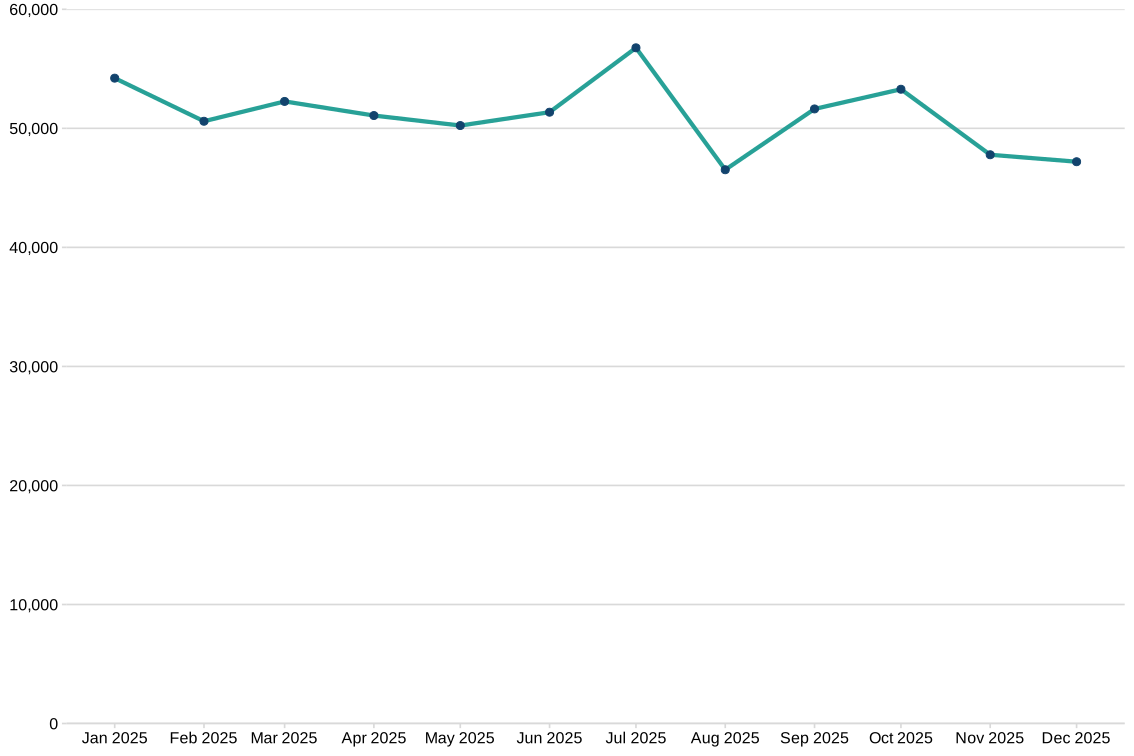
In July 2025, there were 57,000 people assessed, the largest monthly number during the period. The month with the lowest reported number of people assessed was August 2025, in which 47,000 people received an assessment. Fluctuations in the number of assessments during these months may be linked to temporary workforce changes occurring over the summer school holidays.
The 3 latest data points in the time series are affected by delays in recording of completed assessments on local case management systems, from which CLD is drawn. The monthly time series will be updated in future publications.
Ethnicity of people receiving assessments
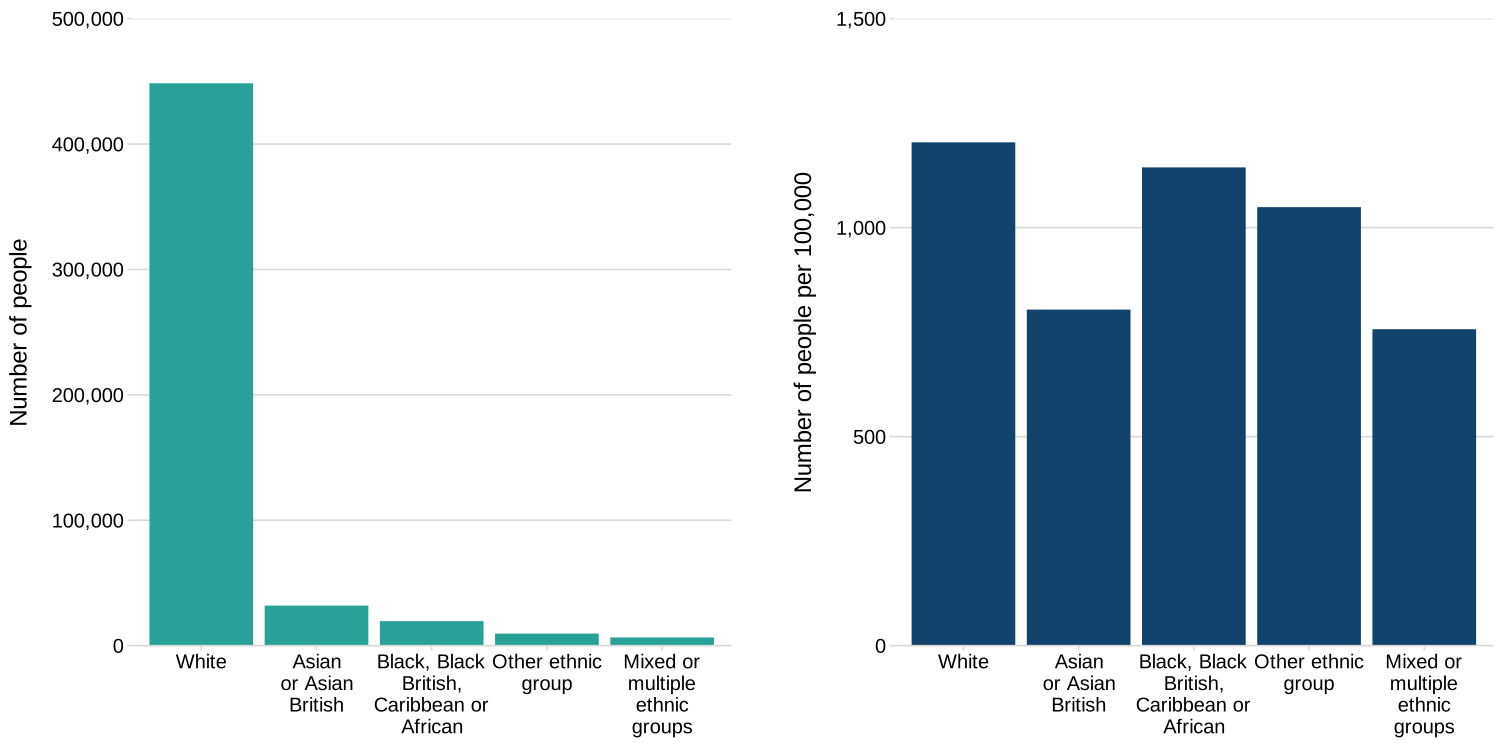
Figure 6: number of people and number of people per 100,000 in England receiving adult social care assessments between January 2025 and December 2025, who have not received local authority long-term support in the last 12 months, by ethnicity
Source: table 6 of the accompanying assessments data tables.
Between January 2025 and December 2025, the total number of people assessed in each broad ethnic group is:
- Asian or Asian British: 32,000 representing 800 per 100,000 people of this ethnicity in England
- Black, Black British, Caribbean or African: 20,000 representing 1,140 per 100,000 people of this ethnicity in England
- Mixed or multiple ethnic groups: 6,570 representing 760 per 100,000 people of this ethnicity in England
- White: 448,000 representing 1,200 per 100,000 people of this ethnicity in England
- other ethnic group: 9,610 people
- no data: 97,000 people
Gender of people receiving assessments
The majority of people assessed between January 2025 and December 2025 were recorded as female (58% of those with recorded gender).
Of those assessed in this period:
- 350,000 people were recorded as female, representing 1,460 per 100,000 female adults in England
- 258,000 people were recorded as male, representing 1,150 per 100,000 male adults in England
- 500 people had gender recorded as ‘other’
- gender data was not submitted for 4,560 people
CLD is national administrative data drawn from local authority systems. CLD includes a gender field with the definition ‘the gender the individual considers themselves to be’, but recording can vary between authorities.
The populations used to calculate proportions of people receiving assessments by gender are taken from the Office for National Statistics mid-year estimates of the population for England and Wales. These populations are broken down into categories by sex whereas CLD breaks down by gender. Proportions are presented for illustrative purposes only and therefore caution should be applied when interpreting them.
Age group of people receiving assessments
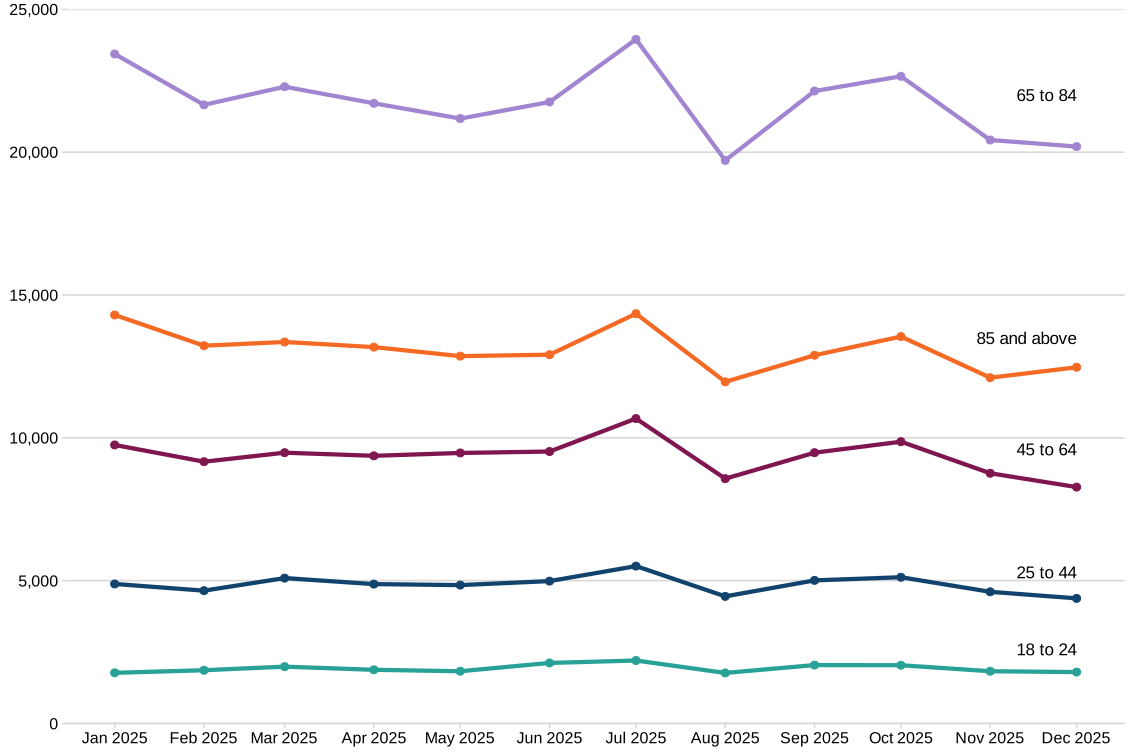
Figure 7: number of people receiving adult social care assessments, who have not received local authority long-term support in the previous 12 months by age group, England, from January 2025 to December 2025
Source: table 1 of the accompanying assessments data tables.
In December 2025 the number of people being assessed varied from 1,800 among those aged 18 to 24 to 20,000 among those aged 65 to 84. The number of people being assessed in each age group remained broadly consistent between January 2025 and December 2025, with some fluctuations.
Between January 2025 and December 2025, there were 418,000 people assessed in England who were aged 65 and above, representing 3,810 per 100,000 people aged 65 and above in England. In the same period, 194,000 people were assessed who were aged 18 to 64, representing 550 per 100,000 adults aged under 65 in England. There were also 730 people with unrecorded age assessed.
Within the older age groups, the number of people assessed in this period was:
- 170,000 people aged 75 to 84
- 141,000 people aged 85 to 94
- 17,000 people aged 95 and above
The relatively small number of people being assessed aged 95 and above can likely be explained by a smaller overall population and a higher proportion of people already receiving long-term support by that age.
Regional analysis of assessments
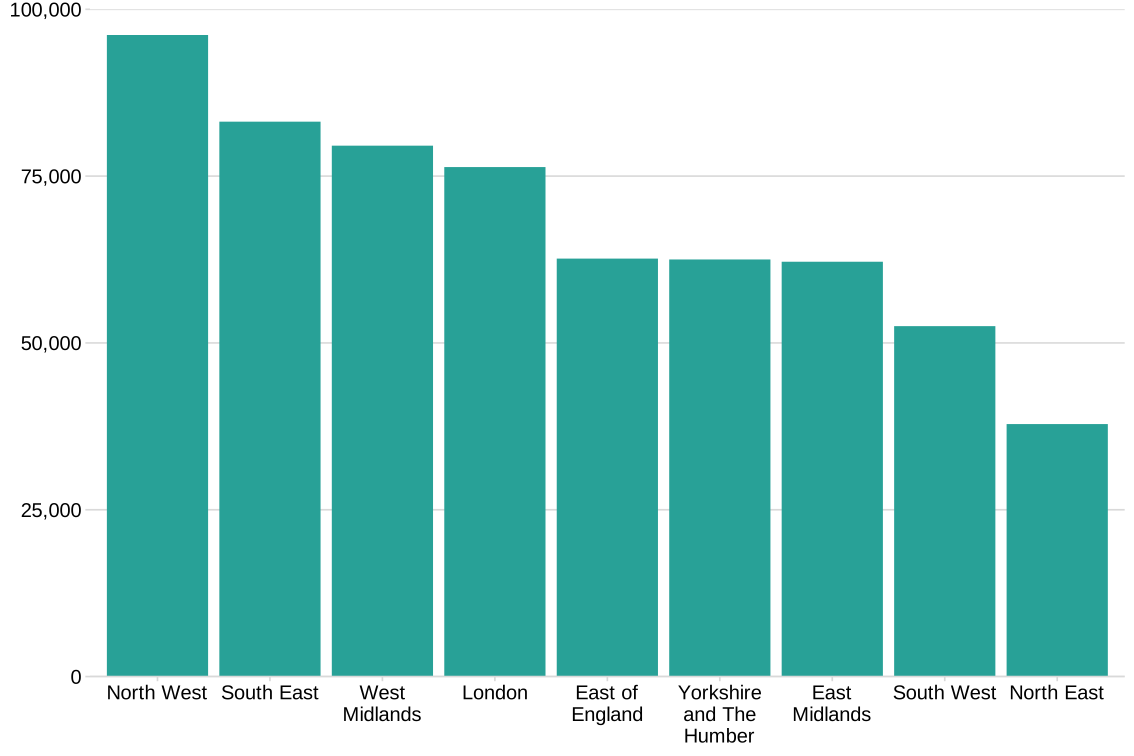
Figure 8: number of people in England receiving adult social care assessments, who have not received local authority long-term support in the previous 12 months, by region, from January 2025 to December 2025
Source: table 4 of the accompanying assessments data tables.
Between January 2025 and December 2025, the number of people that received assessments varied from 96,000 in the North West to 38,000 in the North East. The region with the largest proportion of people receiving assessments was the North East with 1,710 per 100,000 people. The smallest proportion was 1,060 per 100,000 people in London.
At local authority level, figures and any apparent trends should be interpreted with caution, since we are aware that some local authorities do not have complete coverage and have known data quality issues that they have improved over time and are working to resolve for future submissions. Further information about data quality can be found in the accompanying client level data background quality and methodology document.
Terminology
Adult social care long-term support
Care provided or arranged by local authorities for individuals whose needs are expected to be ongoing, without a set end point. This includes support delivered in the community, residential care, nursing care and in prisons.
Adult social care assessments
Activity carried out by local authorities to examine individuals’ needs for care and support.
About these statistics
This is a quarterly publication by DHSC of official statistics in development on CLD.
These statistics are being published as a part of a wider portfolio of statistics on adult social care. The Government Statistical Service compiles a UK adult social care database of official statistics on adult social care across the 4 nations of the UK.
These statistics are assessed regularly and any improvements in quality are incorporated accordingly at the next available opportunity. The scope of the data included in this publication is also assessed to ensure the value of these statistics is maintained. Data collection may change in response to shifts in priorities, leading to corresponding adjustments in this bulletin’s reporting.
The UK Statistics Authority conducted a review of adult social care statistics in England, which called for:
- better leadership and collaboration across different organisations publishing official statistics. This publication has been produced in collaboration with other statistics providers of COVID-19 adult social care data and DHSC will endeavour to work with various stakeholders as more data is published through this publication
- addressing of gaps in available data, particularly in privately funded care. This bulletin aims to plug some of that gap by including data on residents privately funding their care in addition to those funded by local authorities
- improving existing official statistics - more data will be added iteratively based on user needs
Methodology, data source and data quality
The long-term support and assessment statistics in this quarterly publication are created using client level data. The client level data collection is the first national collection of social care records, covering requests for support, assessments, reviews and services arranged or provided by local authorities as part of their duties under the Care Act 2014.
More detailed information about data sources, coverage and statistical quality can be found in the client level data background quality and methodology for these statistics.
For coverage and quality of local authority CLD submissions relevant to this quarterly publication, see the ‘Notes’ tab in the accompanying data tables.
Contact
We’d like feedback from our users about how you use our products, how well these products meet your needs and how they could be improved.
For feedback and any further questions, contact asc.statistics@dhsc.gov.uk.