Minister McGovern speech on mental health, ADHD and autism
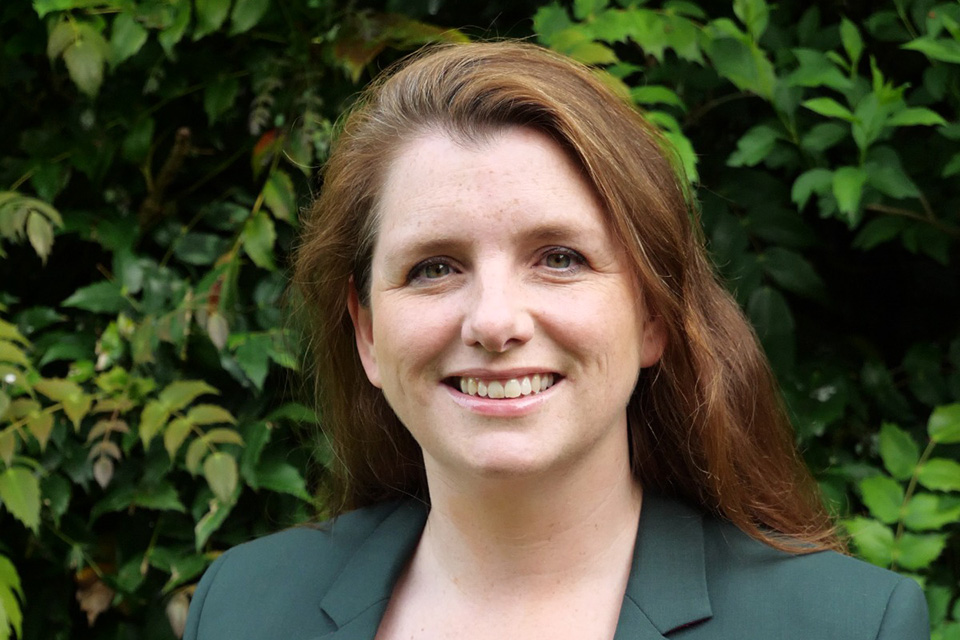
Minister for Social Care and Mental Health, Alison McGovern, delivered a speech at the Fonagy Review launch event hosted by Rethink Mental Illness
Thank you all for being here on this significant day, for the publication of this landmark review.
I want to begin by thanking Rethink for hosting us here today, and to thank especially Mark Winstanley on his upcoming retirement after more than 40 years at this incredible charity. Thank you Mark for all you have done to improve the quality of life for people severely affected by mental illness.
And I’d like to thank Professors Peter Fonagy, Sir Simon Wessely and Gillian Baird, and the many researchers, practitioners, experienced people and organisations who contributed to this important review.
Tomorrow is World Mental Health Day, and so publication of this review is a good way to mark the occasion.
It provides an important foundation for all the work we need to do to improve mental health and wellbeing across the whole country.
And we are determined to build on it.
I’d like to start with a reflection on a big problem that the professors’ review gives us.
The 90s is having a revival just now. Not just have Pulp got a new album out, but the Tate is showing a retrospective of the art of the day. I was a teenager at the height of the decade, and whatever my happy recollections of it all, I never for a moment thought that young people of the 2020s wouldn’t have it better.
More opportunities, a more progressive, inclusive culture, and a more equal chance at life was what I imagined.
It is a hard truth that I was wrong.
This review finds conclusively that there is more mental distress, especially for the young, and especially for young women.
And that is made worse in part because, as Peter Fonagy says, the cacophony of voices now available to a young person – most of them digital, many of them confident, few of them accountable – has made the ordinary developmental process of understanding oneself far harder than it was for previous generations.
But this generation is not weaker or less resilient than those that have gone before.
What has changed are the pressures they face.
[Redacted political content] Just when growing up got harder in the social media age, their support was stripped away.
In other words, it’s not their fault. It’s ours.
The review identifies greater uncertainty and insecurity, including poverty, financial pressures, housing challenges and concerns about their employment prospects.
It points to growing loneliness, reduced opportunities for belonging, and fewer opportunities for rest, recovery, physical activity and connection.
Of course, we in politics think about the effect of the cost of living on families, but we perhaps miss the impact of food price inflation on young people’s ability to socialise. I don’t want eating out to be an older person’s game.
In the labour market, nearly one million young people aged 16 to 24 in the UK are not in education, employment or training. And with more and more young people facing social challenges, lacking qualifications and work experience, we risk a ghost generation of young people stuck in their bedrooms, participating in a narrow online world, missing their chance to get a start in life, stuck instead in the mental health uphill struggle that Peter Fonagy and his colleagues have uncovered.
However, this review is not without hope.
Our professors find that the mental distress of the young can be helped. They say that talking is good, participating is good, having friends is good. Getting an education is good, getting a job is good, making the most of your talents is good.
Autistic people and people with ADHD have just the same right to work and to be included in society as everyone else, and it is a fundamental good when we make that happen.
We know all of these things, and yet, we needed to be told.
We needed to be told because too often we make the mistake that whatever the future brings, it’s a good thing. Rather, the truth is that it’s only when we shape the future that we realise the benefits that come with new technologies, new innovations and the promise we make to the generation that comes after us.
Reading this review brought me back to some of the big decisions we’ve taken since 2024.
The review cites analysis that shows out of 100 popular ADHD TikTok videos, 55% of the characteristics presented did not align with established criteria. It found strong evidence for the negative impacts of social media on sleep, cyberbullying and harmful content. So banning social media for the under 16s has to be a first step on the road for all of us having a different relationship with this technology.
The review also highlights the important role that participation in work can play in supporting recovery and wellbeing.
[Redacted political content]
What’s more, we have invested:
- £2.5 billion to tackle youth unemployment through the Jobs Guarantee and Youth Jobs Grant, to help young people reach that start in life they have every right to;
- £39 billion of investment in council, social and affordable housing gives families the stability they crave;
- and our new National Youth Strategy is spending more than £500 million on expanding community support.
And specifically on young people’s health needs:
- we want help much earlier so that fewer children and young people need to access clinical services in the first place. We will expand Healthy Babies services across England, giving every family access to trusted, practical help throughout the critical 1,001 days from pregnancy to age two;
- we are expanding Mental Health Support Teams to every school and college by 2029, to provide more effective support for young people with complex needs, including trauma, neurodevelopmental conditions and disordered eating;
- and we are investing in Early Support Hubs, providing earlier help in communities and supporting at least 10,000 additional mental health and wellbeing interventions for young people this year alone.
Of course, none of this means that the NHS does not have a crucial role to play.
The review says that specialist services remain essential, particularly for those with severe, complex and enduring needs.
And we need to ensure that people can access those services quickly, starting with reducing the longest waits for mental health support.
It’s a simple truth that if people with a mental health condition are not supported and given the care they need to improve their situation, they will end up in crisis. I’ve been banging this drum for years, and if our mental health strategy does nothing else, it needs to bring these conditions out into the open, because stigma stops people from getting treatment, it makes getting help harder, and it keeps people out of work.
It’s why we have:
- expanded NHS Talking Therapies, so more people with anxiety and depression can access effective treatment and support, while improving recovery and employment outcomes;
- recruited thousands of mental health workers, helping more young people get faster access to support and ensuring people receive the best possible care;
- and we are making record investment in mental health services, with NHS mental health spending forecast to reach £16.1 billion this year, helping to expand access, reduce waiting times and improve support for patients.
ADHD & Autism
But that support must begin with getting the basics right, because nobody should be left with questions about whether they have been assessed in the right way, and whether they can have confidence in their diagnosis and in the care that follows.
Unlike mental ill health, autism and ADHD are part of the natural diversity of human life – neurodevelopmental conditions that occur from birth or during childhood. They can have a significant impact on people’s wellbeing, but with the right support, we could do so much to help people with those conditions achieve fulfilling lives.
The review raises serious concerns about the lack of regulation for ADHD and autism assessments. It calls for the CQC to regulate all assessments and an end to direct advertising of NHS-funded assessments.
The government welcomes the report and its findings and will respond fully to the recommendations in a new, cross-government Mental Health Strategy in the coming months.
But we are also taking immediate action to respond to some of the findings, here and now:
- all ADHD and autism assessments will come under CQC regulation;
- all NHS funded services will provide high-quality assessments and support;
- and integrated care boards will be held to improved standards of oversight.
We are also going to work with the Advertising Standards Authority to tackle misleading advertising related to autism and ADHD services, so that people receive accurate information and are not exploited by rogue companies who are pushing them to seek assessments they don’t need.
Long term reform
But most of all the review challenges us to think differently.
Its central recommendation is that we move from a diagnosis-led system to a needs-led system.
A system where people can receive support based on what is happening in their lives, rather than waiting for a label before help becomes available.
We are already making progress on that journey.
The government’s SEND reforms shift focus to a needs-led approach across education, health and care, improving early identification of needs and early support.
Experts at Hand will give advice and offer early intervention in mainstream schools, nurseries and colleges, complementing the work of Mental Health Support Teams.
Next, the Mental Health Strategy will explore how we can go further to provide children with the right specialist mental health support in schools, to avoid them wasting years on a long waiting list for NHS services.
The Mental Health strategy will be for all ages and look beyond the NHS and consider the role of schools, communities, workplaces, local government, the voluntary sector and wider health strategy.
And it will be a strategy that is built on a simple belief. That we should stop asking young people to simply cope with growing pressures and instead, we should create the conditions that allow them to live their lives with the satisfaction of money they earnt in their pocket and something joyful on their day off.
If the publication of the Fonagy review has made you worried for our young people, or angry at what has been denied them, you are not alone.
The only question is what we should do about it. And for all of us, that’s what comes next.
Thank you.