Behind the grades: how can you trust your outcomes?
A speech by Sir Ian Bauckham, Chief Regulator at Ofqual, delivered to the Schools and Academies Show 2026.
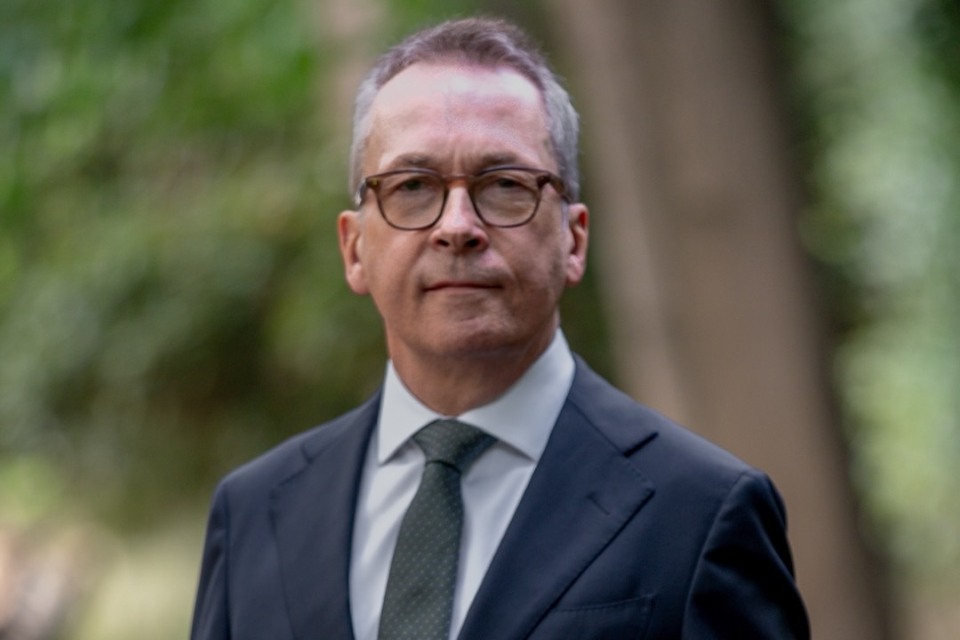
Good afternoon everybody and thank you very much for being here.
It’s a privilege to be able to talk to you this afternoon as Chief Regulator of Qualifications for England. So my job is to safeguard the national asset that is our qualifications system.
Everybody will be aware, of course, of England’s strong performance in the 2025 PISA tests.
England’s performance rose up the rankings in the 2025 test – coming in the top 10 out of 91 participating countries.
And a robust assessment and qualifications system has played an important part in this achievement.
As everyone will remember, as part of the country’s recovery from the COVID-19 pandemic, we prioritised a speedy return to standardised assessment.
That wasn’t always easy at the time, but our emphasis on establishing clear standards and robust evaluation of education against those standards has absolutely had a direct impact on our performance and on our international standing.
This long-term achievement at national level is really important.
But just as important is that individual schools can rely on their own results.
Qualifications bear a very significant weight of accountability in our system.
They must be strong and reliable enough to carry this pressure without bending.
And in this context, reliability really matters.
Qualifications also shape the pathways that individual students take.
So it’s crucial that we protect the value of the currency of qualifications on students’ behalf, because their qualifications in so many ways determine their futures.
So trust in qualifications, and trust in results, is central.
My job – as set out in statute by Parliament – is to conserve over time the standard that is represented by a given grade.
In other words, the level of achievement associated, for example, with a grade 7 or a grade 4 at GCSE or a grade A at A Level, and so on.
Qualification grades show when a student achieves the standard. They do that without fear or favour.
Let me be clear about this: if every student in the country produced work worthy of a grade 6, for example, in GCSE maths, then every one of those students would receive a grade 6.
There is no rule preventing that.
Of course, while that is a theoretical possibility, I think we can all agree it is unlikely to happen in practice. What we see typically year on year, is not identical patterns of achievement but similar patterns of achievement.
And that’s because, in a large cohort, there is generally a stable level of performance.
So the mythologies about grade rationing, or bell curves being used to fix grades, and so on, they are just that. They are mythologies, that isn’t how you work.
The grade you get reflects your performance against a standard which remains constant over time. And if you’re a student, that is your guarantee against inflation.
I said that change in attainment at cohort level is generally slow and incremental. But that does not mean it doesn’t happen.
In this connection, look at standards in GCSE maths this year, 2026.
Since 2017, the National Reference Test has been taken in English and maths by students in a representative sample of schools across the country each year.
The evidence from that test continued to show this year a sustained improvement in maths performance, beyond the normal variations that we might see in the subject year on year.
As a result of that, I instructed the exam boards we regulate to make sure that this rising attainment was reflected in grades.
We saw a rise in grades 5 and above in GCSE maths this year, which represents an accurate reflection of genuinely stronger underlying attainment. Rising standards, in other words.
This is qualifications objectively telling the truth about attainment.
Now, another dimension of telling the truth is to do with authenticity.
Authenticity of student work.
So what about AI and technology in qualifications? Can qualifications continue to tell the truth in the age of artificial intelligence?
We are all grappling with the artificial intelligence question and it does pose big questions for many aspects of education.
It can be genuinely helpful for teachers and schools. And used intentionally, can reduce workload and absolutely improve the effectiveness of teaching.
But research is now strengthening about the impact on the developing human mind of offloading the effortful process of learning on to AI.
Many of us might remember Daniel Willingham’s famous strapline: “Memory is the residue of thought.”
If you never do any hard thinking, because you get AI to do it for you, it is hard to see how that won’t impact on your ability to use your mind to tackle difficult problems and add value in the workplace.
The evidence on this, as I say, is accumulating in strength.
But my specific focus is qualifications.
To repeat, colleagues: qualifications need to tell the truth. And to do that, the work assessed for awarding qualifications has to be authentic.
We have a strong assurance of authenticity when we assess performance in person in supervised conditions, such as exams or supervised practicals or supervised coursework.
But when coursework is unsupervised, and especially when the task is in the form of extended writing, then we have to face into growing risks.
I am increasingly hearing concern about this in schools and colleges I visit up and down the country, including earlier this month when I sat down with a group of sixth form college teachers and principals from across a whole region to talk about this issue.
And if we allow uncontrolled student use of AI in assessment, then it will rapidly become the norm in teaching as well.
Because qualifications strongly influence what happens in classrooms.
And then before we know it, we will have a generation of young people who are incapable of thinking for themselves.
Because the concept of doing hard thinking will have disappeared.
And because handing over human cognitive autonomy to the black box of mass predictor algorithms will have been normalised.
We cannot let this happen.
So that’s why Ofqual is today launching an important communications campaign to schools and colleges, teachers and students right across England.
To remind everyone that using AI to try to cut corners in coursework or gain higher marks that are not really deserved will not be tolerated.
And let me give a clear but firm message to any students who hear this: using AI to cheat in coursework is a very serious matter.
Coursework is moderated by exam boards as well as checked by teachers.
Your qualifications shape your life, and the penalties for serious cheating can include losing the qualifications that you have worked so hard for.
That is life altering: so don’t take the risk.
My responsibility, though, is also to look ahead, making sure that in the changing world our qualifications are still secure and trusted in 5 or 10 years’ time.
We cannot be naive about the risks hurtling down the track towards us.
One of the great benefits of secure assessment is that it puts everyone on a level playing field.
Regardless of background, your performance is assessed against the same task, in the same way, as everyone else’s.
But the most powerful forms of AI come with subscriptions, and access to quality devices is uneven. All part of the digital divide.
At the point of taking an assessment the level playing field really matters.
We cannot allow a digital divide to skew it. That would be, frankly, unfair.
And to those who believe that you can detect and challenge AI malpractice: before long I fear you will be dangerously out of date.
Undoubtedly there are ways that we can try to detect AI use, and teachers know their students and can use their knowledge of their students to help them do that. But it is getting harder.
And the more we explain what to look for, the easier we make it to evade detection.
And that risks putting teachers on the front line in an invidious position when asked to sign off coursework as being authentic.
Authenticity of work, digital inequity, trust in results, a corrosive impact on teaching: these are all threats we need to take seriously.
We will soon be at the limits of what AI detection can achieve and the question will move from how we can detect AI use, to how we can secure assessment integrity through assessment design.
At Ofqual, we are aware of the need to consider what forms of assessment are appropriate for an AI world, and aware of the pace of change and the pressure this places the system and teachers under.
Our recent polling of secondary teachers by Teacher Tapp suggests teachers agree. In that polling:
- 70% do not think that unsupervised written coursework should count towards final grades
- and 83% think it should now be carried out with greater supervision or other controls
So we will therefore soon bring forward proposals for design changes to how the most vulnerable qualifications are assessed.
I told the Education Select Committee earlier this year that I had a particular concern about English and history A Levels in terms of unsupervised coursework. But these are not the only subjects.
When we bring our proposals forward they will create the least possible disruption to students on, or about to start, courses, or teachers teaching them.
But we do need to act to secure future public confidence in these qualifications. And we must support teachers who have to manage this on the ground.
Now I said earlier that the best way we have to be confident that the work a student produces is their own is to assess in person in supervised conditions, such as exams.
But actually, colleagues, even that is now at risk.
I spoke earlier this year about the advent of ‘wearable’ technology and micro-devices which are being openly marketed for the purposes of exam cheating.
Let me say now, it is absolutely unacceptable for any retailer, online or otherwise, to market items explicitly for the purposes of exam cheating. We have to challenge that, it’s not acceptable.
The thousands of invigilators who work in schools and colleges every year are themselves on the front line in ensuring fairness in the exam hall.
They are the unsung heroes of the system.
Running an exam hall these days is not just a passive task.
It requires proactive intervention, supporting students who are struggling, insisting on silence and appropriate behaviour, and looking out for signs of cheating.
This is what fairness in exams means in practice. And that’s why it is hard work and the people who do that need our support.
So I expect invigilators who are responsible for supervising exams in thousands of schools up and down the country to be given consistent training in the detection of wearable technology that could be used to subvert the fairness of our public examinations.
I have written to exam boards to make it clear that I expect them to enable this to happen in a properly co-ordinated way.
We cannot, clearly, in the interests of fairness, have multiple standards of training or expect every school to have to create its own training resources.
I expect to see this in place, right across the country, in time for the 2027 summer series.
So to conclude, let me return to where I started. Our qualifications in this country do have a global reputation and have made a major contribution to the achievements of education in this country over the decades.
But standing still is not an option. As the environment and context changes, we must face into new challenges and ensure that in 5 years’ time or in 10 years’ time our qualifications are still a global by-word for consistency, reliability and trust.
Thank you very much for your attention.