Epidemiology of varicella (chickenpox) in England, 2025
Published 30 October 2026
Applies to England

© Crown copyright 2026
This publication is licensed under the terms of the Open Government Licence v3.0 except where otherwise stated. To view this licence, visit nationalarchives.gov.uk/doc/open-government-licence/version/3 or write to the Information Policy Team, The National Archives, Kew, London TW9 4DU, or email: psi@nationalarchives.gov.uk.
Where we have identified any third party copyright information you will need to obtain permission from the copyright holders concerned.
This publication is available at https://www.gov.uk/government/publications/varicella-epidemiological-reports/epidemiology-of-varicella-chickenpox-in-england-2025
Background
Varicella vaccination was introduced into the routine childhood immunisation schedule from 1 January 2026 as part of the combined measles, mumps, rubella, and varicella (MMRV) vaccine. Children are offered a two-dose schedule as part of the routine programme: the first dose at 12 months and the second dose at 18 months. Further information on eligibility and timing of vaccination is available online.
This report therefore describes the epidemiology (characteristics of and trends) of varicella (also known as chickenpox) in children, those aged under 18 years old, in England in 2025 before the introduction of varicella vaccination into the national childhood vaccination programme.
The report brings together information from 4 different surveillance systems that monitor varicella activity in the community and give an indication of the burden of disease in primary and secondary care services:
- GP consultations in a sentinel network of practices
- Clinical reports of varicella cases to UK Health Security Agency (UKHSA) health protection teams
- Absences from sentinel educational settings due to varicella
- Hospital admissions captured in the NHS England Secondary Uses Service
Data in this report relates to those aged under 18 years (and under 12 years for the sentinel educational settings), reflecting that this age group forms the majority of cases for this infection.
The first report on MMRV vaccine coverage was published on 25 June 2026 and its surveillance plan is available online.
Main points
The main points of the report are:
- seasonal increases are observed in GP consultation rates, absences from educational settings due to varicella and hospital admissions
- most of the clinical varicella reports for those aged under 18 years (71.3%, 4,248) were in children aged 5 years and under
- in a sentinel network of educational settings, 4,117 absences related to varicella were recorded in 2025 (annual rate: 6,353 per 100,000)
- in 2025 there were 3,037 hospitalisations for varicella among people aged under 18 (annual rate: 24.9 per 100,000)
- observed rates of varicella within these surveillance systems are consistent with historical means
GP consultations
The GP consultation data is provided by the Oxford-Royal College of General Practitioners (RCGP) Research and Surveillance Centre (RSC) in collaboration with UKHSA. The RSC is a national sentinel surveillance system of around 2,000 GP practices covering over 19 million registered patients of all ages across England. More information on RCGP RSC is available online.
Figure 1. Weekly varicella GP consultation rates among people aged under 18 years in 2025, compared with the 5-year mean
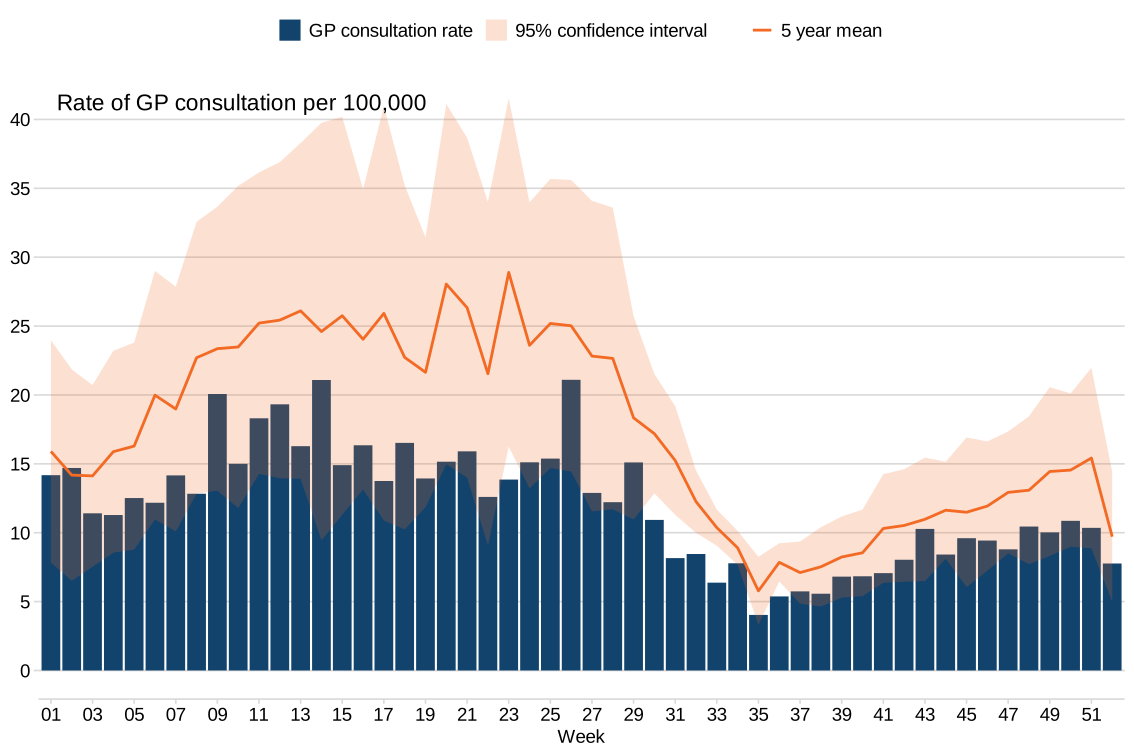
Note: shaded area represents 95% confidence intervals of the 5-year mean, which includes 2018, 2019, 2022, 2023, and 2024 data (2020 and 2021 excluded due to the COVID-19 pandemic).
The 5-year mean shows historic seasonal increases in consultation rates into spring and summer, and a decline towards the end of summer into autumn, potentially coinciding with school holidays.
In 2025, there were 15,099 varicella GP consultations among people aged under 18 years (annual rate: 626.0 per 100,000). The weekly consultation rate peaked at 21.2 per 100,000 in week 26 (23 June to 30 June). In comparison, the highest 5-year average rate was 28.9 per 100,000 in week 23. The lowest rate in 2025 was 4.0 per 100,000 in week 35 (25 August to 31 August).
Figure 2. Weekly GP consultation rates among people aged under 18 years by age group in 2025, compared with the 5-year mean
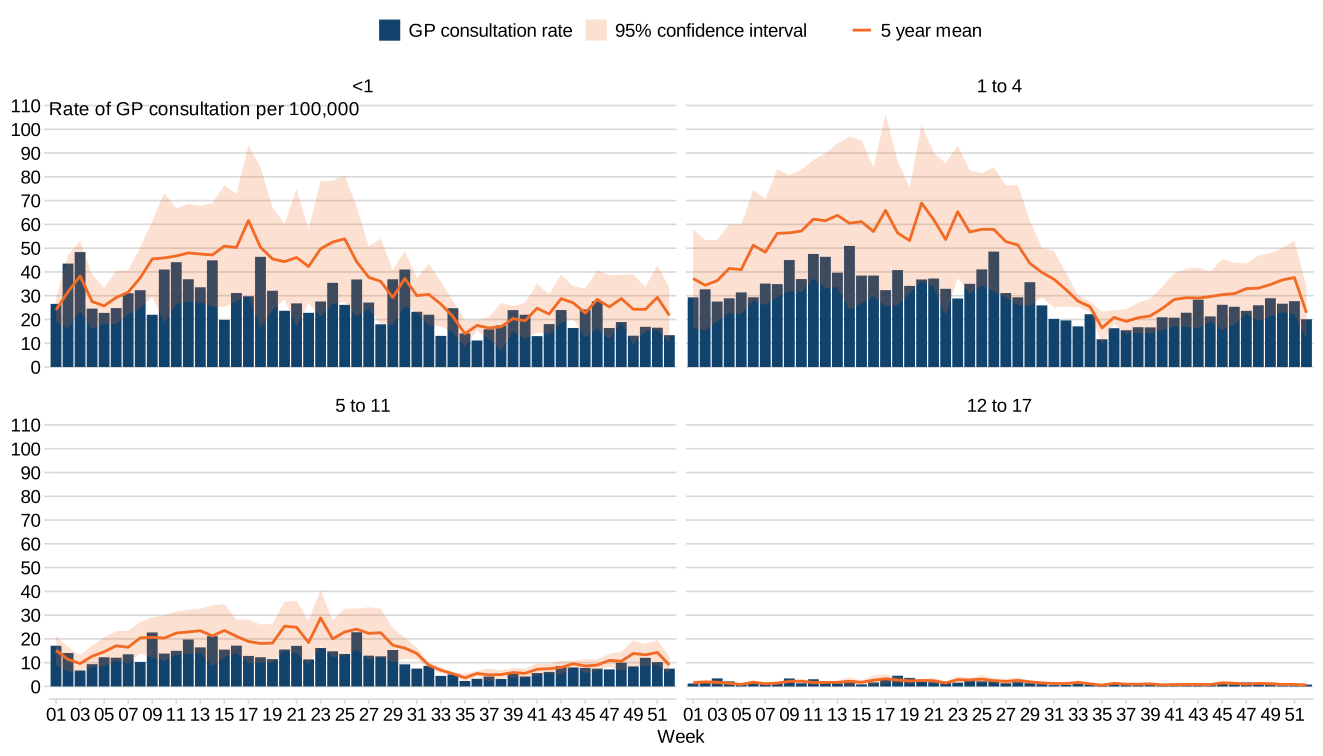
Note: shaded area represents 95% confidence intervals of the 5-year average, which includes 2018, 2019, 2022, 2023, and 2024 data (2020 and 2021 excluded due to the COVID-19 pandemic).
All age groups shared similar seasonality as seen in Figure 1, though the rates between age groups vary. Consultation rates were highest in 1 to 4 year olds, reaching 51.0 consultations per 100,000 in week 14 (31 March to 6 April). Those younger than 1 year old peaked at 48.7 per 100,000 in week 26 (23 June to 30 June). Older age groups had lower rates, with 5 to 11 year olds reaching peak rates of 22.9 per 100,000 in week 26 (23 June to 30 June). 12 to 17 year olds had the lowest consultation rates, with a highest rate of 4.5 per 100,000 in week 18 (28 April to 4 May).
Clinical varicella reports from registered medical practitioners to UKHSA health protection teams
Health professionals report clinically suspected varicella cases to UKHSA health protection teams (HPTs), which are captured in the online case information management system (CIMS). We describe these clinical varicella reports received by UKHSA from 6 April 2025 when varicella became a notifiable disease.
From 6 April to 31 December 2025, there were 5,954 clinical varicella reports for children and young people under the age of 18 years in England.
Figure 3. Monthly clinical varicella reports in people aged under 18 years, 6 April to 31 December 2025
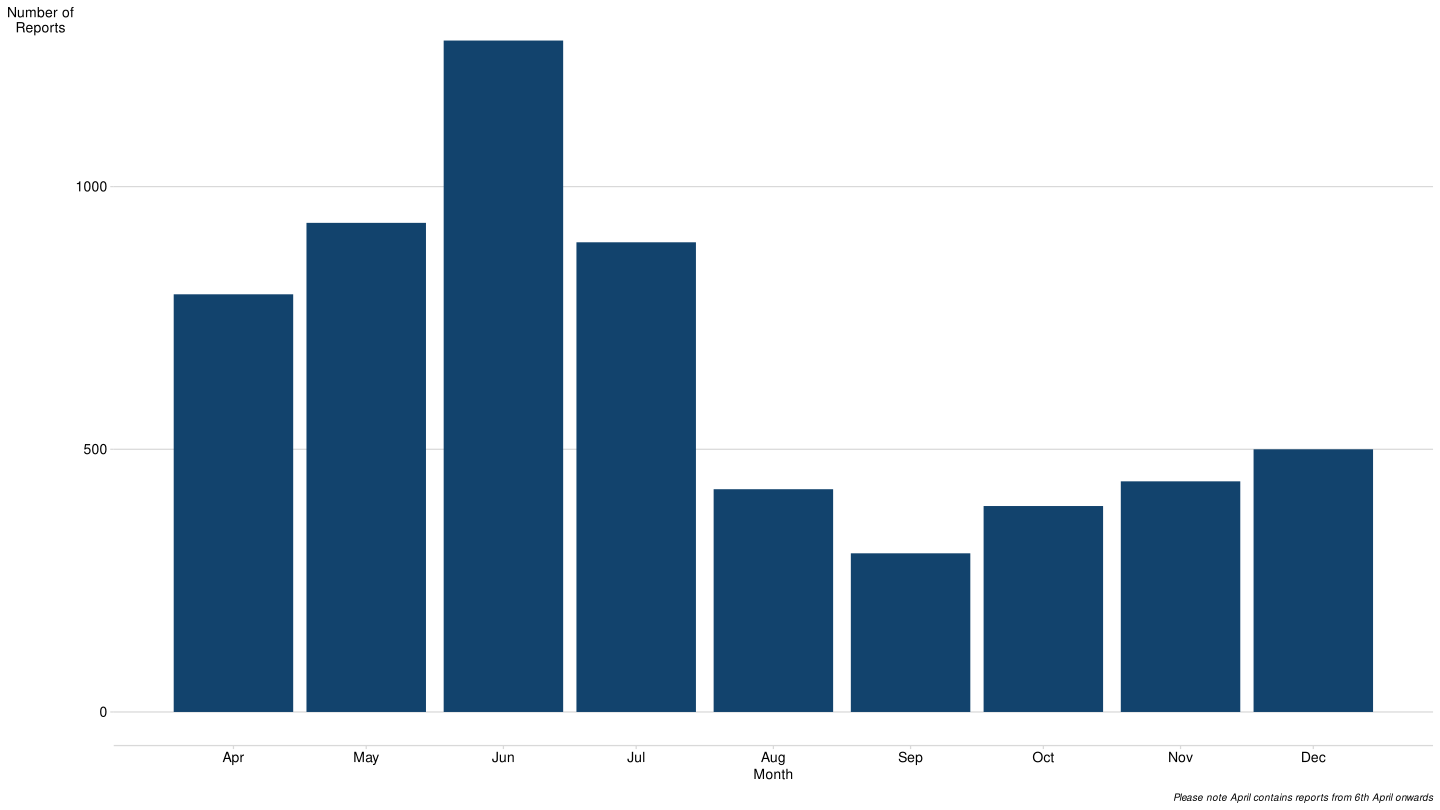
Clinical varicella reports follow the same seasonal pattern observed in the RCGP GP consultation data with a peak in June of 1,278 clinical varicella reports to HPTs. September had the fewest reports of 302.
Figure 4. Age distribution of clinical varicella reports in people aged under 18 years, 6 April to 31 December 2025
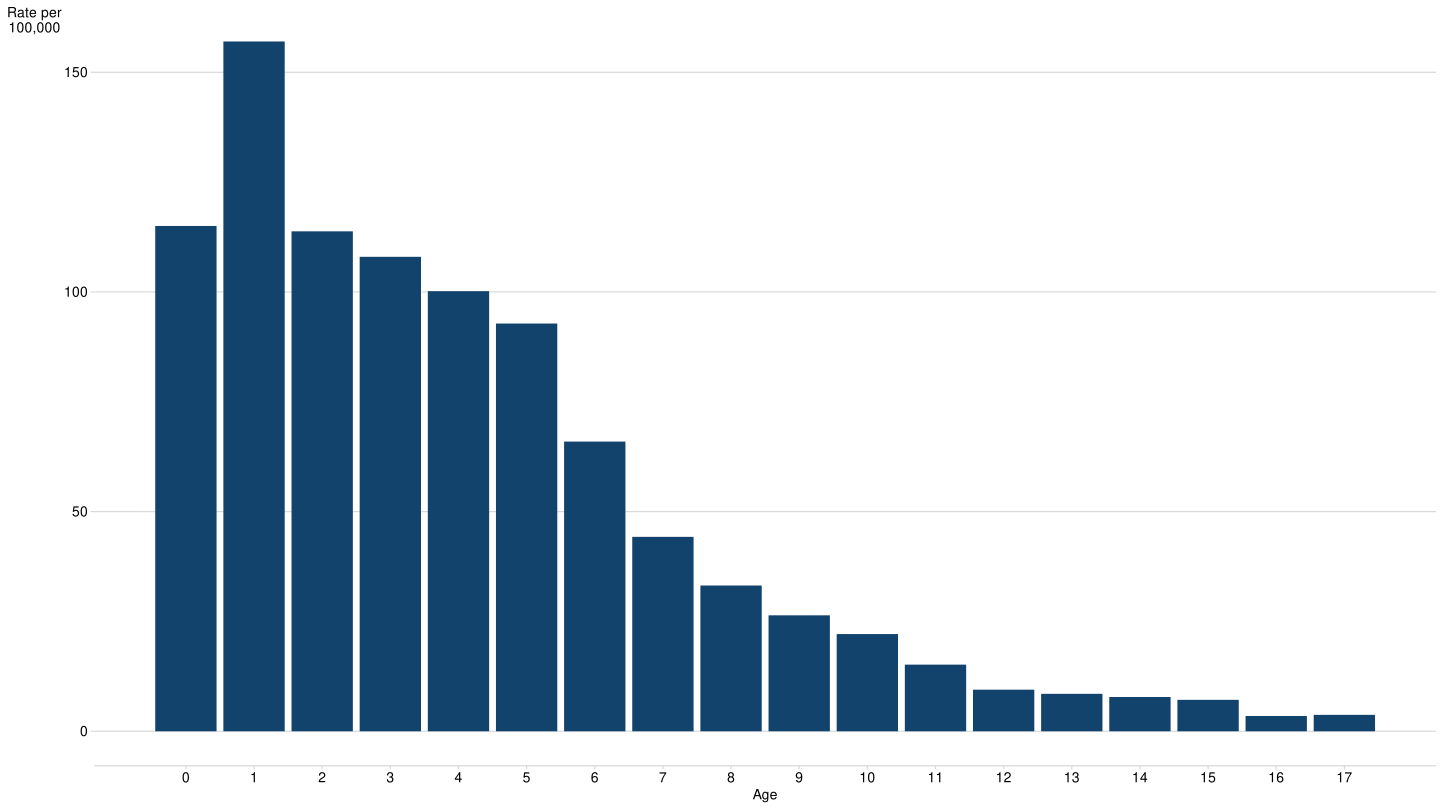
Most of the clinical reports (71.3%, 4,248) were in children aged 5 and under, compared to 9.3% (551) in older children aged between 10 and 17. Children aged 1 year accounted for the highest number of reports (15.7%, 932).
The highest rate of clinical reports was observed in 1 year olds with a rate of 157 per 100,000. 16 and 17 year olds had the lowest rates of 3.5 and 3.7 per 100,000 respectively.
Figure 5. Regional distribution of clinical varicella reports in people aged under 18 years, 6 April to 31 December 2025
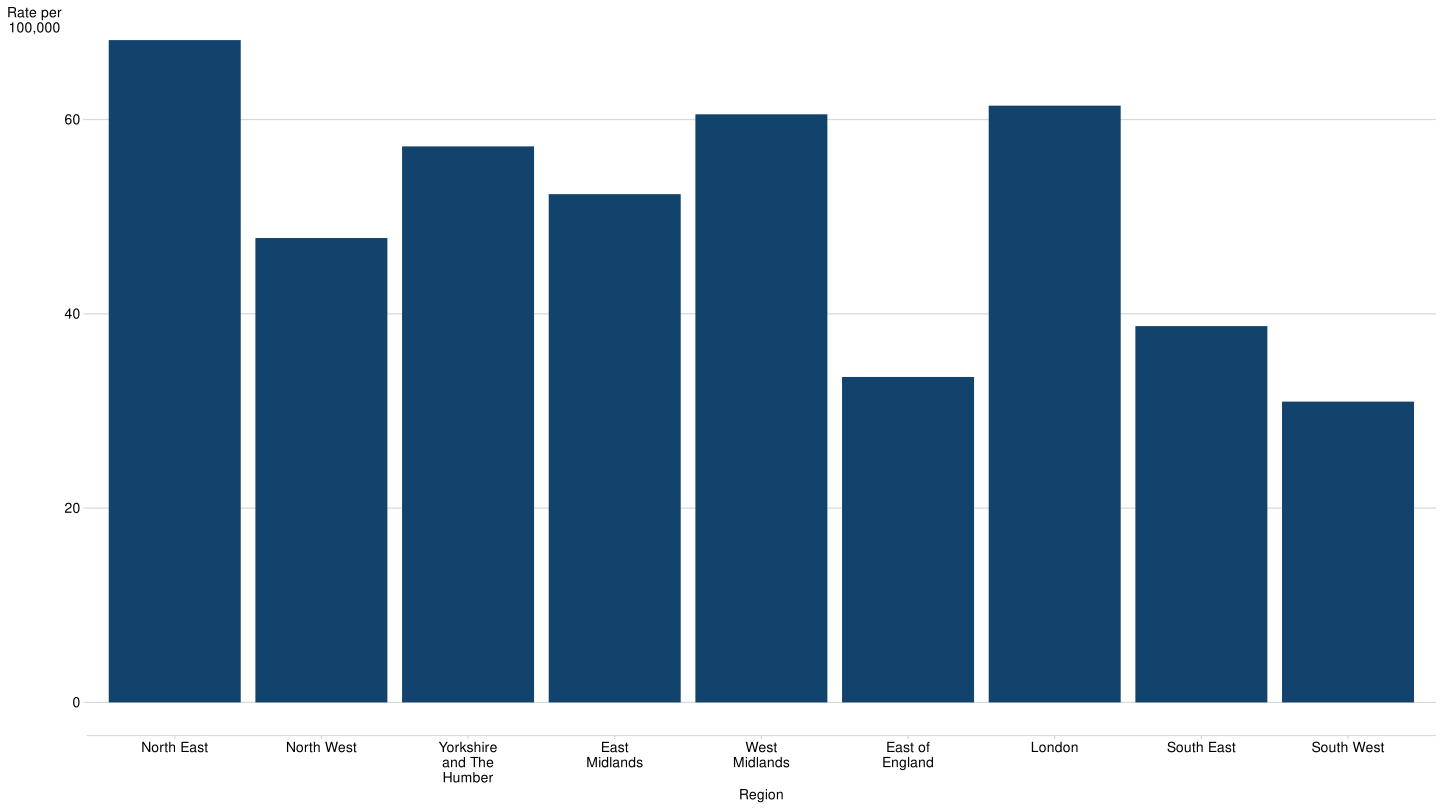
The North East had the highest rate of clinical reports with 68.2 per 100,000, followed by London with 61.4 reports per 100,000. The East of England and the South West had the lowest rates of 33.5 and 31.1 per 100,000 respectively.
The largest proportion of clinical varicella reports was in London (19.8%, 1,177). This was followed by the West Midlands (13.7%, 818), South East (13.2%, 784) and North West (13.1%, 778). The South West had the fewest clinical varicella reports with 5.8% (346) reports since notifications began.
Absences from sentinel educational settings related to varicella
Rates of initial absence reports related to varicella reported by parents or guardians are presented for a network of nurseries and primary schools. This is an anonymised dataset of absences from a sentinel network of 439 educational settings in England.
Figure 6. Weekly varicella absence rates from educational settings among people aged under 12 years in 2025, compared with 3-year mean
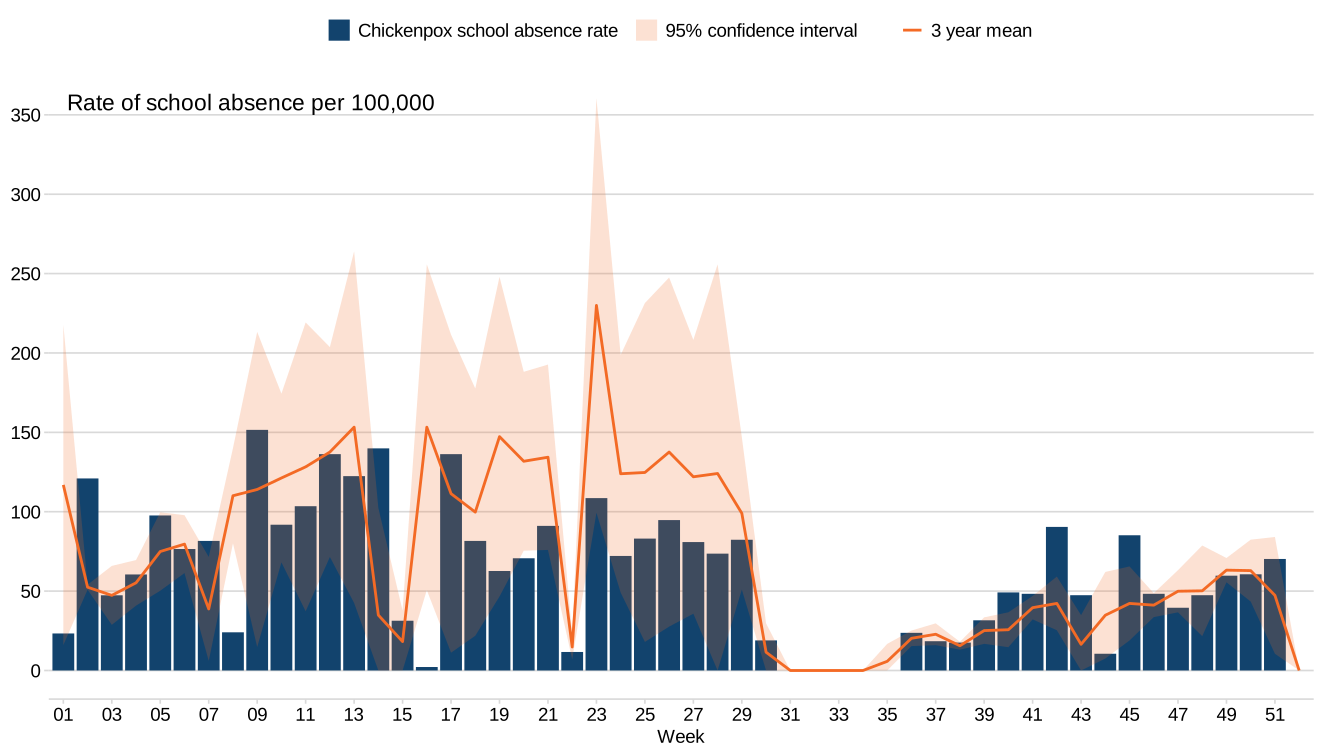
Note: shaded area represents 95% confidence intervals of the 3-year average, which includes 2022, 2023, and 2024
School absence rates follow a seasonal trend similar to that exhibited by GP consultation rates, with higher absences during spring and early summer compared to autumn and winter. In 2025, 4,117 absences related to varicella were recorded in the sentinel school network (annual rate: 6,353 per 100,000). The highest weekly rate of absence of 152 per 100,000 was observed in week 9 (24 February to 2 March).
Figure 7. Weekly varicella absence rates from educational settings among people aged under 12 years by age group in 2025, compared with 3-year mean
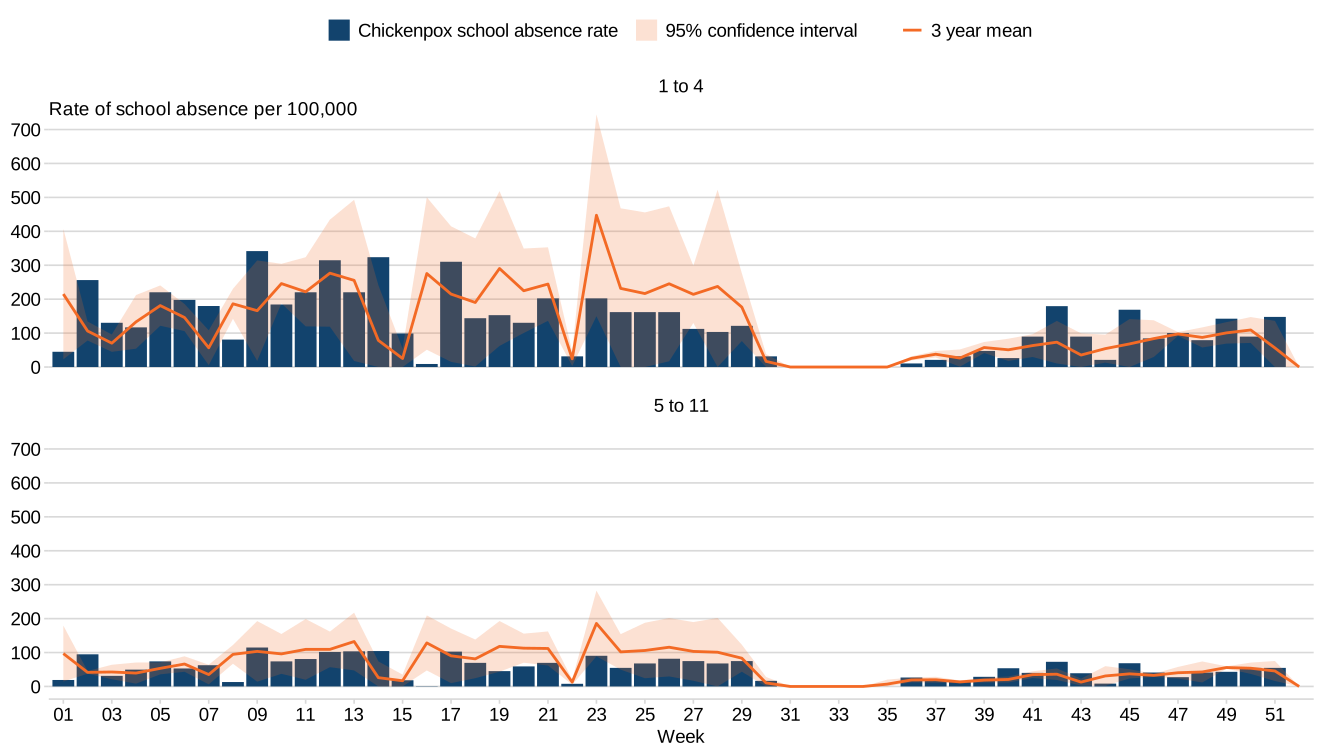
Note: shaded area represents 95% confidence intervals of the 3-year average, which includes 2022, 2023, and 2024
Age-specific break-down showed 1 to 4 year olds had higher absence rates than 5 to 11 year olds. Absence rates for children aged 1 to 4 years old reached a peak in week 9 (342 per 100,000), coinciding with the peak in the older age group (115 per 100,000) in the same week.
Hospital admissions due to varicella
Hospital admissions in England recorded in Secondary Uses Service (SUS) with varicella ICD-10 codes (B01.X) are reported here. Those with concurrent B01.X and B02.X (shingles) codes have been removed. This is an existing data set produced by NHS England which includes hospital admissions to NHS trusts in England, with associated diagnoses. More information about this data set can be found on the NHS England website.
Figure 8. Weekly hospitalisations of children and young people aged under 18 years in 2025, compared with a 3-year mean
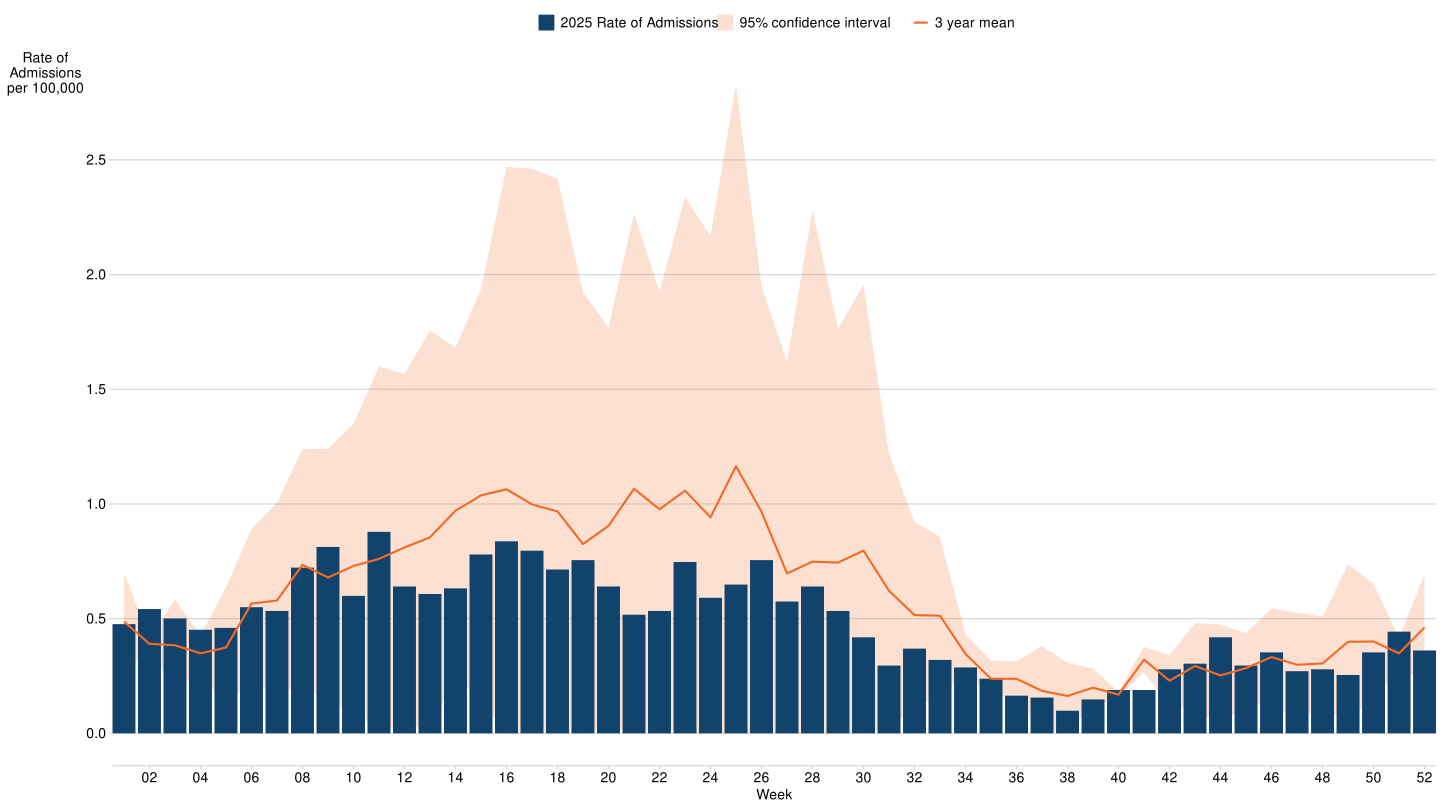
Note: shaded area represents 95% confidence intervals of the 3-year mean.
Hospitalisations follow the same seasonal pattern observed throughout this report, with the highest rates observed over spring to summer, peaking in week 11 (10 March to 17 March) with a rate of 0.9 per 100,000.
In 2025 there were 3,037 hospitalisations for varicella among people aged under 18 (annual rate: 24.9 per 100,000).
Figure 9. Weekly hospitalisation rate by age group, 2025 compared to 3-year mean
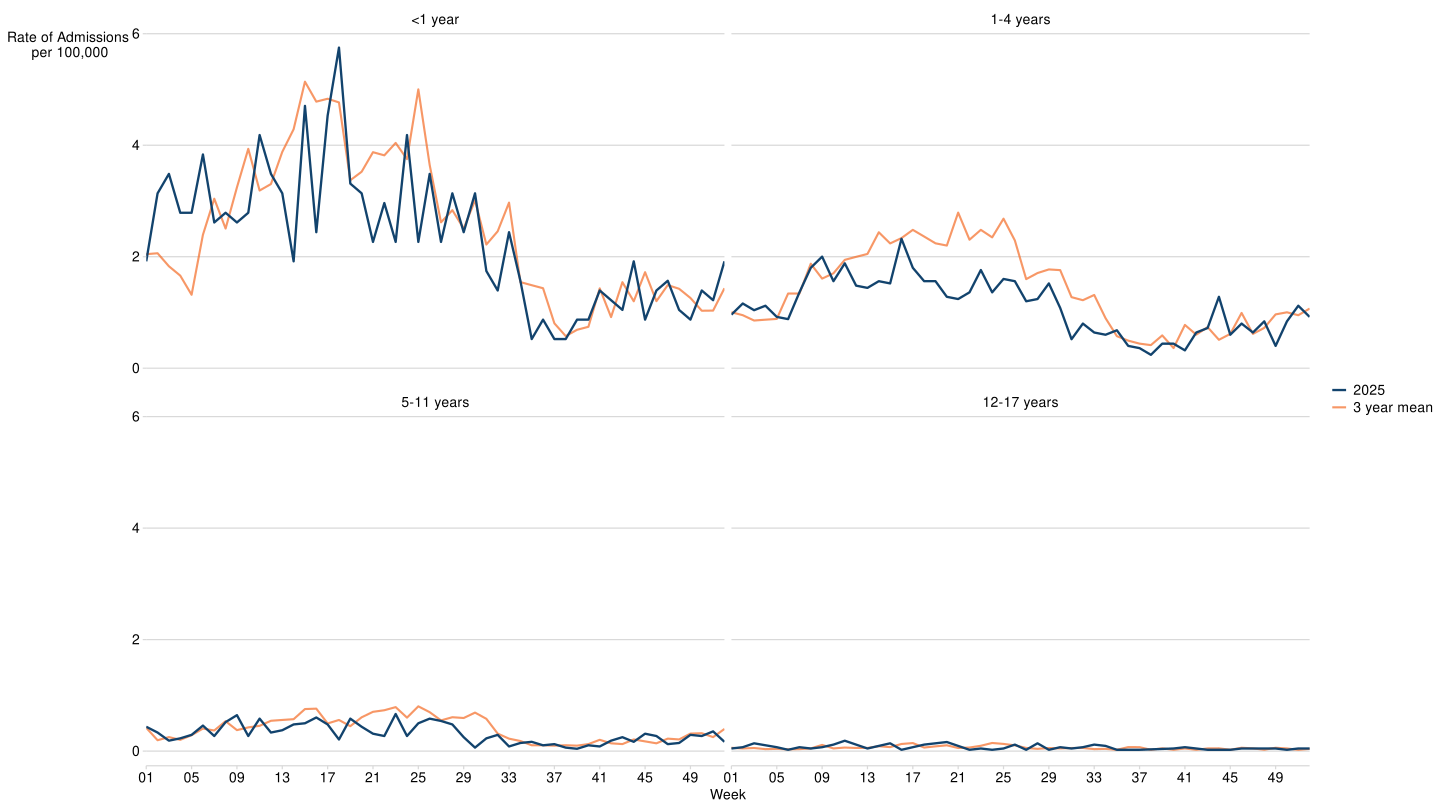
The weekly hospitalisation rates were highest for the youngest children, with children under 1 year peaking at 5.8 hospitalisations per 100,000 in week 18 (28 April to 4 May). 1 to 4 year olds had a peak of 2.3 per 100,000 in week 16 (14 April to 20 April). 5 to 11 year olds and 12 to 17 year olds had few hospitalisations, peaking at 0.7 and 0.2 hospitalisations in weeks 23 (2 June to 8 June) and 11 (10 March to 16 March) respectively.
Definitions
GP consultations
Where the GP assigned either a Read or SNOMED-CT (Systematised Nomenclature of Medicine Clinical Terms) code (the classification systems currently used in UK general practice) consistent with varicella based on the presenting symptoms and history as part of the routine clinical management of the patient.
Clinical varicella reports
Clinically suspected varicella cases reported to the HPT by a named health professional, as recorded in UKHSA’s case incident management system. Cases are de-duplicated and exclude any reports where information has been received to discard these cases. This clinical varicella report information is published as an interim measure while the UKHSA notification of infectious diseases (NOIDs) publication is paused.
Absences from educational settings
Varicella absences were reported by parents or guardians to educational settings as sickness compatible with varicella. There is no further verification of the diagnosis. Only the first varicella absence reported for each child was counted.
Hospital admissions
Varicella hospital admissions were defined as any hospital admission with any varicella related ICD-10 code (B01.X) in the top 3 diagnoses fields. Those with concurrent B01.X and B02.X (shingles) codes have been removed.
Denominator
For the ‘GP consultation’ section, the denominator is the registered population of RSC practices for which anonymised data is extracted for this purpose.
For the ‘Absences of educational settings’ section, the denominator is the number of students registered with settings included in the dataset. This is based on data published by the Department for Education on registered student numbers for schools.
For the ‘Clinical varicella reports from registered medical practitioners to UKHSA health protection teams’ and ‘Hospitalisations due to varicella’ sections, the England 2024 mid-year population estimate is published by the Office for National Statistics.