UK fusion investment prospectus: directory (HTML)
Published 14 September 2026

© Crown copyright 2026
This publication is licensed under the terms of the Open Government Licence v3.0 except where otherwise stated. To view this licence, visit nationalarchives.gov.uk/doc/open-government-licence/version/3 or write to the Information Policy Team, The National Archives, Kew, London TW9 4DU, or email: psi@nationalarchives.gov.uk.
Where we have identified any third party copyright information you will need to obtain permission from the copyright holders concerned.
This publication is available at https://www.gov.uk/government/publications/uk-fusion-investment-prospectus/uk-fusion-investment-prospectus-directory-html
1. The UK Fusion: Opportunities for Investors and Industry
A Diverse Sector for you to Collaborate with
The UK is a world-leading destination for fusion.
Building on over 70 years of experience, the UKAEA in Oxfordshire brings together the R&D to solve and commercialise the remaining fusion challenges, working with industrial, international, and academic partners.
UKFE Ltd is leading design and build of STEP - a fully integrated fusion power plant at West Burton that will demonstrate commercial viability and catalyse the ecosystem for companies to be part of.
Fusion also draws on expertise from a wide range of sectors including engineering, energy, construction, advanced manufacturing and professional services.
The UK’s combination of supply chain companies, industrial networks, regional ecosystems, and world-leading academia, offer investors and industry a unique set of pathways to develop, test, scale and commercialise fusion technologies - from SMEs to multinational corporations.
Figure 7: UK Fusion Ecosystem – Academia, Supply chain, and UKAEA Group Facilities
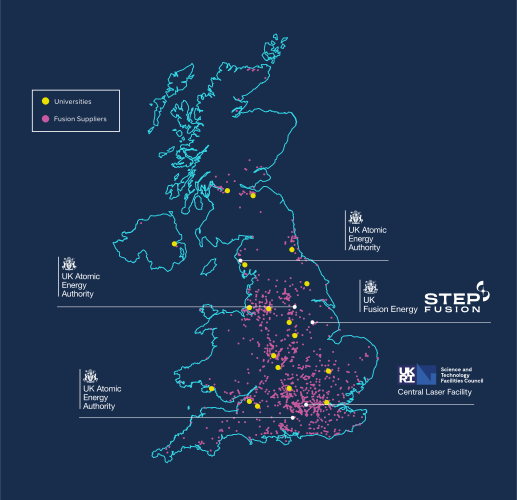
Description of Figure 7: Infographic showing the geographic spread throughout the country of specific elements of the UK fusion ecosystem. Universities and Fusion Suppliers are spread throughout the UK; the UKAEA Group have facilities throughout the country.
How you can engage with the UK Fusion Ecosystem
Below is an introductory selection of government, public and private procurement pathways, and industry bodies, to help you get started in the UK fusion sector.
- Fusion.Prospectus@energysecurity.gov.uk
- Register for UKAEA’s Procurement Portal – gateway for procurement for UKAEA
- Register for UKFE (STEP Fusion) Procurement Portal – gate for procurement for UKFE
- Apply to become a Tokamak Energy supplier – capability review, NDA, assessment and onboarding to their preferred supplier list, for fusion energy and high temperature superconducting magnets.
- Explore partnership opportunities with First Light Fusion – across their FLARE approach (Fusion via Low-power Assembly and Rapid Excitation), target design, diagnostics, simulation tools, and Europe’s largest pulsed power driver and the UK’s largest two-stage gas gun.
- Join The Fusion Cluster – main industry forum linking 500+ organisations; access networking, capability mapping, and supply-chain insights.
- Join the Fusion Industry Taskforce (FIT) – A UK-focused industry group that provides a consistent, independent and insightful voice of the UK’s fusion sector to the UK government through regular meetings and policy white papers.
- Join the Fusion Industry Association (FIA) – Global industry group with a strong UK presence, representing the interests of private companies working towards economically-viable commercial fusion energy.
- Register on the Fusion Energy Industry Directory – gateway for procurement and partnership opportunities.
- Join UKAEA’s LinkedIn Suppliers’ Network Group – stay updated on tenders, collaborations, and technical calls.
- Attend UKAEA Supplier Events – regular SME showcases and annual supplier days.
How you can partner with UK National Labs
UKAEA
UKAEA has world-leading facilities, comprehensively addressing the remaining challenges of fusion, with multiple near-term applications to adjacent sectors. These include:
Figure 8: UKAEA Group facilities
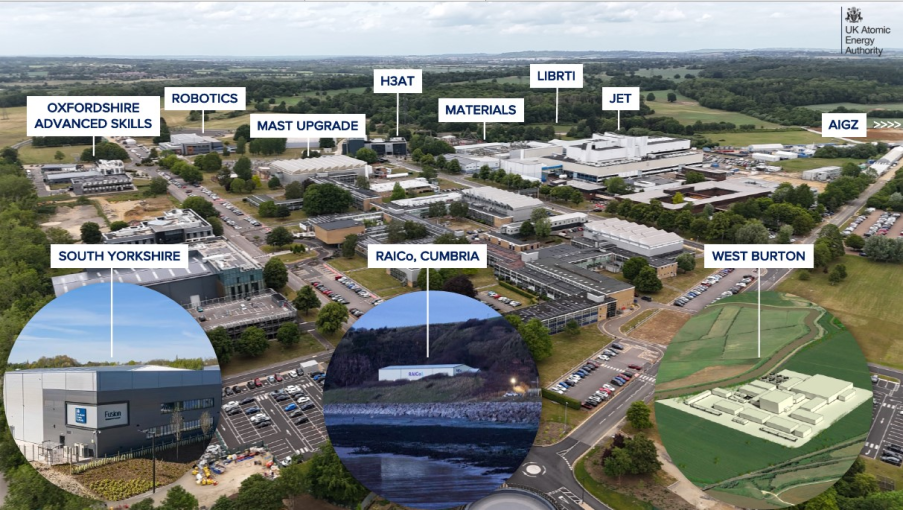
Description of Figure 8: Image showing the research facilities in the UKAEA Group’s Culham Campus, as well as those throughout the country in South Yorkshire, Cumbria, and West Burton. The names of each and their descriptions are below.
Many of these offer investment and partnership opportunities. Further information can be found at https://www.ukaea.org/work/ and you can explore their facilities at https://www.ukaea.org/services/facilities-equipment/
UKAEA also acts as a bridge between world-leading public research capabilities and private sector innovation. It provides companies with access to specialist facilities, testing infrastructure, scientific expertise, engineering knowledge and regulatory experience, helping to reduce technical risks and accelerate technology development.
By de-risking innovation, developing skills and supply chains, and connecting industry with government and research partners, UKAEA helps create the conditions for fusion businesses to scale and commercialise technologies in the UK.
H3AT: Tritium fuel-cycle facility
LIBRTI: Testbed for tritium breeding technologies
MRF: Materials Research Facility
RACE: Robotics and Remote Handling
RAICo: Robotics and AI
JDR: JET Decommissioning and Research
MAST-U: Spherical Tokamak for advancing plasma physics
AI Growth Zone & Sunrise: Advanced computing, AI and data science
OAS: Oxfordshire Advanced Skills training facility
FTF: Fusion Technology Facility, South Yorkshire
Case study - Eni
Eni was among the first energy companies to support the development of fusion energy with a comprehensive technology development approach that spans numerous initiatives. Eni has been present in the UK since the 1960s and sees the country as a key destination for its global investments, including fusion energy, building on the Collaboration Agreement signed with the UK Atomic Energy Authority (UKAEA) in November 2023, which aims to scale up innovation and translate scientific excellence into real-world solutions.
This includes the UKAEA-Eni Hydrogen-3 Advanced Technology (H3AT) Facility project. H3AT will be the world’s largest and most advanced tritium fuel cycle facility, a vital fuel for future fusion power stations. The “UKAEA-Eni H3AT Tritium Loop Facility” is designed to serve as a world-class facility providing industry and academia the opportunity to study how to process, store and recycle tritium.
In March 2026, the Canadian company, Kinectrics was selected by the UKAEA and Eni to be the design and fabrication partner for the H3AT facility, bringing decades of experience with tritium. Kinectrics will utilise its specialised facilities and experts at their Toronto headquarters to support UKAEA and Eni with developing and integrating critical tritium-handling technologies.
Established in July 2026, RH3OVA is a startup joint venture between UKAEA and the global energy company, Eni. By combining their technical and industrial expertise, the company delivers end-to-end services across the fuel lifecycle. From early-stage feasibility studies to facility construction and operational support, RH3OVA helps the global fusion industry tackle critical fusion fuel cycle challenges to accelerate the commercial realisation of fusion energy.
Eni recognises a strategic alignment with the UK government on fusion energy and values the proactive role that UK authorities are playing in supporting its commercialisation. This includes both the advancement of key technologies and the development of an enabling regulatory framework.
The UK Fusion Strategy rightly highlights the unique capabilities developed by the country, which place the UK at the forefront of the global fusion landscape. The scientific and technical excellence built over the years, including through UKAEA, provides an important reference point for industry and can play a significant role in accelerating the path towards commercial fusion.
Case study - TAE
TAE Beam UK was established in December 2025 as a joint venture between TAE Technologies, a leading US private fusion energy company, and UKAEA, to commercialise TAE’s proprietary particle accelerator technology for the global market, drawing upon the UKAEA’s neutral beam capabilities established during its operation of JET.
The venture aims to design, develop, and ultimately manufacture and service neutral beams for a wide range of fusion approaches. In addition, TAE’s accelerator technology can be adapted for state-of-the-art cancer therapeutics and applications and non-destructive testing capabilities, particularly relevant to use cases in food safety and homeland security.
STFC
The UK Research and Innovation’s Science and Technology Facilities Council (STFC) –has expertise in laser inertial-confinement fusion, with the Central Laser Facility (CLF) at Harwell hosting some of the world’s highest-power laser systems. The CLF leads UPLiFT, the UK Programme of Laser Inertial-Fusion Technology for energy, with academic partners at the Universities of Oxford, York, Warwick, Strathclyde, Queens, and Imperial College, London. UPLiFT is developing the component-technologies required for a laser inertial fusion power plant: high-energy laser systems, fusion fuel target manufacturing, physics simulations and diagnostics, and power plant technologies. More broadly, STFC is also providing opportunities for spin-outs, addressing many of the technological challenges facing the fusion industry, including large-scale magnet design, high-radiation environments, thermal modelling, high-precision manufacturing, and extreme-scale computing.
TAE Beam UK will operate out of UKAEA’s Culham Campus, in Oxfordshire, UK, establishing the UK as a global hub for this vital fusion technology while boosting the economy with high-skilled job creation.
How you can be involved with UK Fusion Energy (UKFE) and STEP Fusion
UK Fusion Energy (UKFE) and STEP Fusion
STEP is being delivered by UK Fusion Energy (UKFE). UKFE is uniquely positioned to be a world-leading fusion systems integrator and plant operator, bringing together the full set of capabilities, information, and whole plant understanding needed to reach an integrated fusion power plant design. This will optimise net power, fuel self-sufficiency and a route to commercial levels of plant availability simultaneously – based on leading R&D and industrial integration, the backing of UKAEA’s scientific expertise and the ability to call upon the coordinating power of government.
As a pioneering, major UK company, UKFE is set up to partner with private sector construction and engineering companies and be able to raise external investment in future.
Figure 9: UKFE Partnering Model for delivering STEP Fusion
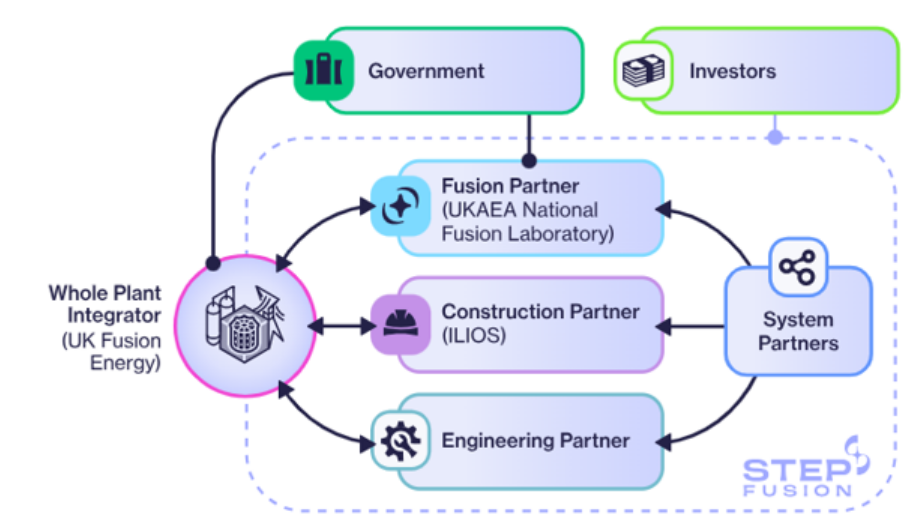
Description of Figure 9: UK Fusion Energy is the STEP Whole Plant Integrator. There are 3 distinct System Partners: UKAEA National Fusion Laboratory is the Fusion Partner, the ILIOS Consortium is the Constriction Partner, and an Engineering Partner has not yet been identified. This model allows government to continuing working with UKAEA National Laboratory, and UKFE, while creating future access to the project for investors.
Fusion Partner
UKAEA, as UKFE’s Fusion Partner, provides unparalleled support through its world-leading fusion expertise and capability. UKAEA will also commercialise some aspects of its fusion expertise through a pipeline of spin outs, IP licenses, and joint ventures with industry partners. The companies created and enhanced in this way will play a key part in the STEP Fusion supply chain.
Construction Partner
UKFE have appointed the Construction Partner for STEP Fusion, ILIOS, a Joint Venture between Kier, Nuvia, joined by AECOM, AL_A Architects, and Turner & Townsend as strategic partners.
This collaboration brings strong construction expertise, programme delivery capability and industry leadership into STEP Fusion. The contract, valued at £200m, is a major milestone in transforming the West Burton site into the UK’s world-leading prototype fusion energy plant
Engineering Partner
UKFE will need world-leading capability in major engineering, from concept through to manufactured product and they intend to approach the market with this opportunity. In the near-term, engineering works will be delivered by a range of system partners.
System Partners
UKFE is now identifying key partners at the system level, those companies that specialise in specific critical technologies needed for STEP Fusion and beyond. These will be organised around several ‘champion’ areas:
- Magnets
- Systems Engineering
- Product Development
- Whole Plant Integration
- Control Systems
- Test Operations
- Digital
- Remote Maintenance
In April 2026 Tokamak Energy was announced as the first Systems Partner for STEP Fusion, on Magnets, being awarded a £70 million contract by UKFE.
UKFE Procurement Pathways
- Register for UKFE (STEP Fusion) Procurement Portal – gate for procurement for UKFE.
- Apply to become a Tokamak Energy supplier – capability review, NDA, assessment and onboarding to their preferred supplier list. fusion energy and high temperature superconducting magnets - Tokamak Energy
- Join The Fusion Cluster – main industry forum linking 500+ organisations; access networking, capability mapping, and supply-chain insights.
- Register on the Fusion Energy Industry Directory – gateway for procurement and partnership opportunities.
Sub-System Demand and Manufacturing
STEP Fusion will create demand for the UK supply chain to grow from component level sub-systems to full fusion product delivery.
Anchored by the demand from STEP Fusion, overseas manufacturers are actively seeking investment to expand or establish production facilities in the UK for these fusion-driven technologies.
This includes high temperature superconducting (HTS) magnets and Gyrotrons, among other capabilities that are ready for commercialisation including:
- neutral beam systems;
- remote maintenance and robotics;
- diagnostics and sensors;
- fusion fuel‑cycle systems;
- fusion hardened components and materials;
- key materials supply;
- lasers and optics
This market demand, from fusion and adjacent sectors, is projected to reach billions of dollars in the coming years, offering significant potential for early investors to secure strong returns in this rapidly growing sector.
UKFE itself will develop the capability to bring together fusion systems into an integrated power plant design, a capability that can be commercially exploited by UKFE.
Industry Opportunities
Fusion energy is a tough problem, but solving tough problems develops new capabilities, products and services that can grow new revenue streams and new businesses. That is already happening. A key part of UK Fusion Energy’s (UKFE) role as a whole plant integrator is to bring together the right industrial team to deliver fusion, and to support its growth and sustainability. As well as acting as “first customer” for many companies in fusion, UKFE will help open doors to other programmes and, through licensing IP, will help UKFE partners grow.
UKFE’s industrial partners are and will be highly diverse, from large to small, from well-established names to new startups, from those with a laser focus on fusion to those reaching into a range of sectors. UKFE’s approach to integrated delivery draws on global success stories from industries such as aerospace, automotive, energy and defence. The announcement of Tokamak Energy as our Magnets Partner is one such success story.
UKFE will publish a growing pipeline of commercial opportunities and would like to hear from companies now that have capabilities and innovations that could make a difference.
Figure 10: Fusion SME Location, Numbers, and Spend in the UK
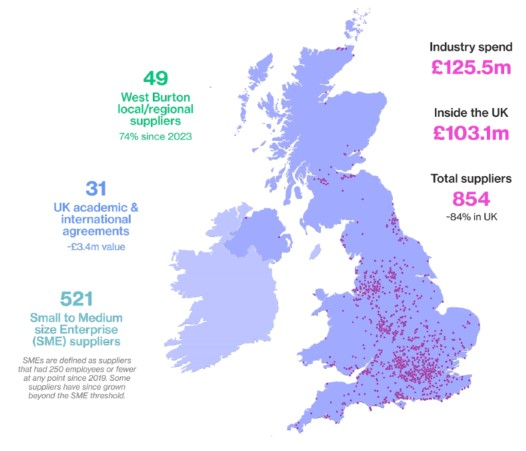
Description of Figure 10: Infographic showing the geographic spread throughout the country of SMEs. 49 local/regional suppliers in West Burton, 74% since 2023; 31 UK academic & international agreements, ~£3.4m value; 521 small to medium size enterprises (SME) suppliers, SMEs are defined as suppliers that had 250 employees or fewer at any point since 2019; 854 total suppliers, ~84% in the UK; £125m total industry spend; £103.1m inside the UK.
Investor opportunities
As UKFE develops and delivers STEP Fusion with partners, significant opportunities open from now for a range of investors including:
- Industrial Majors
- Finance Partners
- Partner Nations
Destinations for investment includes:
- Supply Chain – Opportunities through investing in the supply chain that will learn and develop through working with UKFE on STEP Fusion, developing capabilities, products and services applicable to other fusion programmes worldwide, and also developing adjacent technologies such as new materials, new digital capabilities and robotics. These opportunities exist now and will continue to grow.
- UKFE Ltd – Will itself look to raise investment, with its world-leading technical and integration capabilities and ability to be the whole plant integrator of commercial plants beyond the prototype.
- STEP Fusion and East Midlands – There are also important opportunities at the site of STEP Fusion in the Midlands. UKFE aim to help develop a vibrant business park around the STEP Fusion plant and are now looking to attract companies to locate on the site, or nearby in the region. They are working closely with key stakeholders such as EMCCA (East Midlands Combined County Authority) to support that inward investment.
UKFE’s design team are mapping out the complexities of realising the STEP Fusion plant, understanding how all the systems interact and optimising their prototype to deliver the essential features required for commercial fusion power plants:
Figure 11: STEP Fusion System of Systems infographic
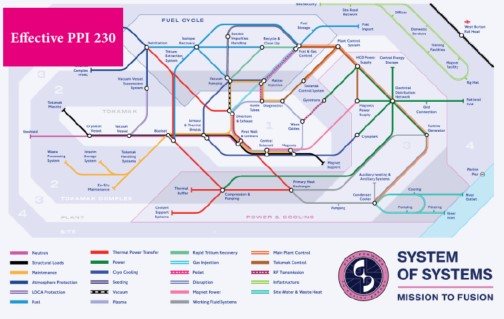
Description of Figure 11: System of Systems diagram for the STEP Fusion power plant. The diagram shows major systems and infrastructure grouped across five areas labelled Tokamak, Tokamak Complex, Plant, Site, Fuel Cycle, and Power & Cooling. The Tokamak systems shown are Bioshield, Cryostat Vessel, Vacuum Vessel, Blanket, Armour & Thermal Shields, First Wall & Limiters, Divertors & Exhaust, Central Solenoid, Magnets, Guide Tubes, Diagnostics, Matter Injection and Wave Guides. Fuel Cycle systems shown are Detritiation, Isotope Recovery, Tritium Extraction System, Vacuum Vessel Suppression System, Vacuum Pumping, Seeded Impurities Handling, Recycle & Clean Up, Fuel Storage and Fuel Import. Control systems shown are Fuel & Gas Control, Plant Control System and Tokamak Control System. Power and cooling systems shown are Thermal Buffer, Compression & Pumping, Primary Heat Exchanger, Coolant Support Systems, Pumping, Condenser Cooler, Cryoplant, Auxiliary Heating & Ancillary Systems, Turbine Generator, Cooling, Filtering, River Inlet and River Outlet. Electrical systems shown are HCD Power Supply, Central Energy Storage, Electrical Distribution Network, Grid Connection, Magnet Power Supply and National Grid. Site infrastructure shown is Site Security, Site Road Network, Offices, Domestic Services, Training Facilities, Magnet Facility, West Burton Rail Head, Rig Hall and Marine Pier. Additional Tokamak Complex systems shown are Tokamak Mounts, Tokamak Complex HVAC, Waste Processing System, Interim Storage System, Tokamak Handling Systems and Ex-Situ Maintenance. The legend identifies system connections as Neutron, Structural Loads, Maintenance, Atmosphere Protection, LOCA Protection, Fuel, Thermal Power Transfer, Power, Cryo Cooling, Seeding, Vacuum, Plasma, Rapid Tritium Recovery, Gas Injection, Pellet, Disruption, Magnet Power, Working Fluid Systems, Main Plant Control, Tokamak Control, RF Transmission, Infrastructure and Site Water & Waste Heat.
Demand Case Study: High Temperature Superconductors
Background: High Temperature Superconducting (HTS) magnets are among the highest-value subsystems in a fusion power plant and central to the UK’s STEP Fusion project delivered by UK Fusion Energy at West Burton.
Demand: HTS fusion magnet systems allow significantly stronger magnetic fields, enabling smaller, high-performing fusion systems that significantly lower cost, making it a critical component in fusion power plant designs. STEP Fusion alone could require 30,000km of HTS tape, signalling the exponential demand required for global commercial deployment.
This technology offers further opportunities to commercialise in adjacent sectors, including power distribution and transmission, renewables, transportation, life sciences, and defence, increasing demand for this breakthrough technology
Support: STEP Fusion will anchor the formation of a HTS cluster in the UK, supported by further opportunities in adjacent sectors, and the work of TE Magnetics to commercialise this technology in the UK. The Superconducting Machines & Systems Catalyst has been established by the UKAEA, creating a federated industrial spine capable of translating the UK’s relevant laboratory excellence into deployable manufacturing capability aligned with STEP Fusion’s timelines, and to support the significant near-term industrial opportunities from HTS. Demand
Demand Case Study: Gyrotrons
Background: Gyrotrons are a critical technology for heating plasma in fusion power plants, including STEP Fusion. They deliver power to heat and stabilise the plasma to temperatures exceeding 100 million °C.
Demand: STEP Fusion alone will require approximately 250 gyrotrons to be manufactured, delivered, installed and commissioned in the period 2032 -2040, and companies are already supplying gyrotrons into the sector, such as Kyoto Fusioneering who have supplied them for UKAEA’s MAST-U, and Tokamak Energy’s ST40. In addition, gyrotrons offer opportunities for commercialisation in the nearer term, including, geothermal drilling, plastics recycling, defence, and telecoms. Meeting this demand will require a significant uplift in manufacturing capacity.
Support: STEP Fusion will drive demand for manufacturing gyrotrons in the UK, and their commercialisation in adjacent sectors, by funding and deploying a gyrotron testing facility in Nottinghamshire. This will enable their efficient development and manufacture in close proximity to STEP Fusion, ultimately anchoring the creation of a gyrotron cluster in the region, generating industrial growth in the emerging fusion supply chain.
Fusion Technologies
Powering Solutions Beyond Fusion Energy
World-leading fusion innovation is creating opportunities across industries, just some of these opportunities being pursued in the UK are explored below:
1. Fusion Fuels - Producing and supplying tritium fuel for the fusion economy - Enabling on-site breeding and scalable external supply solutions 2. Advanced Materials - Developing and testing next-generation materials for extreme environments - Neutron irradiation, materials qualification, and advanced solutions for fusion and beyond 3. Robotics & Remote Handling - Robotics and remote systems for inspection, maintenance and operations in hazardous environments - Applications across fusion, nuclear, infrastructure, defence, and manufacturing 4. Defence, Aerospace & Space - Fusion-enabled technologies for testing, simulation and advanced systems 5. Life Sciences – Health & Medicine - Advancing cancer treatment with neutron technologies and BNCT - Producing medical isotopes and enabling next-generation therapies and diagnostics 6. AI, Machine Learning & Related Technology - AI and data-driven solutions for simulation, optimisation and decision making - Power smarter models, safer operations and industrial innovation 7. Clean Energy Industries – Non-Fusion Power Generation - Improving energy storage, power delivery and efficiency across the energy sector - Application in wind, grids, power transmission, EVs, fast-charging and geothermal 8. Transport - Enabling high-performance transport solutions including, maglev trains, advanced shipping propulsion, and aviation and aerospace systems 9. Advanced Manufacturing - Applying precision, control and automation to transform manufacturing - Improving efficiency, quality and scalability across sectors 10. Industrial Imaging - Using fusion-produced neutrons and muons for non-destructive imaging and inspection - Revealing what’s inside – from components to concrete structure
Shape the future through the UK fusion sector
Collaborate – Partner with innovators and access world-class fusion expertise
Innovate – Co-develop solutions that address global challenges
Invest – Back high-potential technologies with broad market applications
Grow Together - Build the ecosystem that will power a better, more sustainable future
Powering a New Era: The Global Supply Chain Behind Fusion Energy
Fusion power plants rely on thousands of critical materials, advanced technologies, and precision-manufactured components. Below is an example of the breadth of materials and manufacture components required for a fusion power plant.
Materials – Metals and Alloys
- Aluminium
- Beryllium
- Boron and Tellurium
- Coated Steel
- Cold Rolled Coil
- Copper
- Copper Alloy
- Depleted Uranium
- Electrical Steel
- Engineering Steel
- Iron
- Other Steel Alloys
- Ores of Zirconium, Niobium and Vanadium
- Oxide of Vanadium, Germanium and Zirconium
- Palladium
- Silver
- Special Profiles of Steel
- Stainless Steel
- Steel Plate
- Steel Tubes
- Wire Rods
Advanced Materials
- Cynate Ester
- Diamonds
- Enriched Lithium
- Erbium Oxide
- GlidCop ODS Copper
- HTS Superconducting Tape
- Nitrile Rubber
- Thermoplastic
- Tungsten
- Tungsten Carbide
- Tungsten Penta-boride
Magnets & Superconductors
- HTS Magnets
- HTS Superconducting Tape
- Permanent Magnets
Energy Systems & Power Equipment
- Capacitors
- Electrical Steel
- High Voltage Transformers
- Switchgears
Thermal & Fluid Systems
- Cryo Systems
- Gas Turbines
- Heat Exchangers
- Helium
- Industrial and High Volume Air Conditioning
- Industrial Boiler and Kilns
- Refrigerants
- Valves
- Vacuum pumps
Electronics, Computing & Control
- Computers
- CPUs and GPUs
- Semiconductor Devices
- Lenses and Optical Components
Facilities & Heavy Equipment
- Cranes
- Industrial Boilers and Kilns
- Nuclear reactor parts
- Robotics
- Rails
- Steel Towers
Speciality Chemicals & Gases
- Helium
- Nitrile Rubber
- Refrigerant
- Tritium
- Cynate Ester
- Potassium, Strontium, Lithium, Barium, Caesium and Rubidium
Minerals & Elements
- Aluminium
- Beryllium
- Boron and Tellurium
- Depleted Uranium
- Enriched Lithium
- Iron
- Paladium
- Silver
- Tin
- Tungsten
Batteries & Energy Storage
- Primary batteries (of lithium)
Construction Materials
- Rebar
- Steel Plate
- Steel Tube
- Special Profiles of Steel
- Steel Towers
- Tinplate
- Wire Rods
Contact us to see how you can engage with the UK Fusion Ecosystem at: Fusion.Prospectus@energysecurity.gov.uk.
Global Attraction
Several leading international fusion companies have already established significant relationships with the UK fusion sector.
Type One Energy, together with Tokamak Energy and AECOM, formed the UK Infinity Fusion Consortium in May 2026 to develop what is intended to be the first of many privately financed fusion power plants in the UK. The Consortium combines Type One Energy’s 400 MWe Infinity Two stellarator design, AECOM’s engineering capabilities and Tokamak Energy’s UK-based HTS magnet technology and manufacturing expertise. Barclays is supporting the Consortium in shaping the project’s bankability and financing pathway. The Consortium accelerates the private sector’s role in establishing fusion as a source of abundant clean power for UK re-industrialisation, building a globally competitive, export-oriented UK fusion supply chain capable of supporting future Infinity Two deployments around the world. It builds on and aligns with the UK’s fusion strategy and decades of government investment in fusion. The programme will also draw directly on Type One Energy’s first-of-a-kind 400 MWe Infinity Two commercial fusion project at TVA’s Bull Run Tennessee site in the United States, targeted for commercial operation in 2034.
The Consortium partners are all members of the Sustainable Markets Initiative (SMI), a global CEO-led network founded by His Majesty King Charles III with the mandate to lead the private sector in accelerating the transition to a sustainable economy.
TAE Technologies is the longest-standing global fusion company, and a world leader. They have commercialised their proprietary tech originally developed for fusion into alternate sectors with two revenue generating arms – TAE Life Sciences and TAE Power Solutions. In December 2025, TAE and UKAEA created a joint-venture, TAE Beam UK, to harness the scientific leadership of both parties to commercialise TAE’s neutral beams technologies for industries from cancer treatment to fusion itself. UKAEA are open to agreements of all forms where there is value to be created in the UK and scientific progress to be made.
Life Sciences – Cancer: TAE Life Sciences and TAE Beam UK are advancing treatments for notoriously difficult to treat head and neck cancers through Boron Neutron Capture Therapy (BNCT), a targeted, non-invasive radiotherapy. This advanced treatment combines targeted boron drugs with low-energy neutrons generated by TAE Life Sciences’ accelerator-based neutron beam source to selectively and precisely eradicate cancer cells while sparing healthy surrounding tissue. TAE’s compact fusion-inspired technology could be installed directly in hospitals.
Adjacent Clean Energy Industries: TAE Power Solutions, a subsidiary of TAE, commercialises fusion-derived power management technologies that are expected to improve efficiency, reliability and cost-effectiveness of energy storage and power delivery systems, EV powertrains, fast-charging and more.
Michl Binderbauer, CEO, TAE Technologies:
The UK has long been at the forefront of fusion innovation. The country’s world-class scientific talent and unwavering commitment to commercializing fusion energy make it an ideal home for TAE Beam UK, our joint venture with the UK Atomic Energy Authority to build critical infrastructure for the fusion supply chain.
Commonwealth Fusion Systems is a magnetic fusion company, and the best funded private fusion company in the world, having raised $4 billion in capital. CFS has a long-standing collaboration agreement with UKAEA, and has expressed a desire to deepen their UK ties and engagement in market. CFS reviewed UK sites for it’s very first ARC power plant, and considers the UK one of the most attractive markets for an early ARC power plant. CFS’s work in the UK demonstrates the value the UK can offer to the highest level, best-resourced fusion companies.
In July 2026, it was announced that Commonwealth Fusion Systems (CFS) would be the first international company to participate in UKAEA’s flagship Lithium Breeding Tritium Innovation programme (LIBRTI), a £220 million UK government initiative that aims to demonstrate net tritium production – a vital capability for commercialising fusion energy that means fusion power plants can produce enough of this fuel component to cover their own use. The collaborative work on tritium breeding between the two organizations, which began in 2024, builds on a long history of joint projects spanning topics across fusion science, engineering and operations.
Kyoto Fusioneering is the leading global fusion engineering company, designing and supplying core fusion power plant components, notably gyrotrons, tritium breeding blanket systems, heat extraction and fuel cycle technologies. In the UK, Kyoto Fusioneering is focused on practical breeding blanket engineering work aligned with the STEP and wider UK fusion programme, with plans underway to scale up its in-country R&D capabilities.
Kyoto Fusioneering UK (KFUK) was established in 2021 as the company’s first and largest subsidiary, now representing the highest-revenue base outside Japan. Since then, KFUK has rapidly grown to a core team of fifteen employees based at Culham Science Centre. The UK entity recently received approval for an up to £3M long-term UK investment plan to further build capabilities in blanket design, working closely with the local supply chain.
Proxima Fusion is a magnetic fusion company developing stellarator designs as opposed to tokamaks - their presence at the Culham campus demonstrates the UK’s desire to build a tech-agnostic fusion ecosystem. Proxima’s Culham office allows them to take advantage of the skills and capabilities offered by the UKAEA campus and the UK as a whole in service of their Alpha project, which is set to be their first stellarator to achieve net gain.
General Fusion is a magnetised target fusion company, working with the UKAEA offer of technical expertise, including plasma diagnostics, neutronic simulations, and fuel cycle and tritium management.
Novatron Fusion Group’s collaboration with UKAEA demonstrates the UK’s role as a global partner for emerging fusion technologies. Established through a 2024 Memorandum of Understanding under the UK–Sweden Strategic Partnership, the collaboration has delivered practical technical engagement, including the application of UKAEA’s advanced diagnostic expertise to support Novatron’s Tau-E Breakthrough project (TauEB) the collaborative project Tau-E Breakthrough project (TauEB), which aims to advance Novatron’s proprietary axial confinement solution.
Stellarex Energy are working with UKAEA, supporting the development of Stellarex’s simplified stellarator fusion machine, provide a framework for research and engineering. The collaboration focuses on areas including physics and confinement, high temperature superconductor technology, operational systems, diagnostics and fuel cycle development.
Home Grown Talent
UK fusion companies are among the most innovate companies in the global industry at the forefront of fusion research and commercialisation.
Tokamak Energy is developing magnetic fusion energy with its proprietary HTS magnet technology. This expertise has led to the formation of a new arm of the company, TE Magnetics, focused on commercialising its HTS tech into new sectors including power distribution for data centres.
In April 2026, Tokamak Energy was announced as the Magnet Systems Partner for the STEP programme. UK Fusion Energy (UKFE) awarded the £70 million which will be delivered through TE Magnetics, Tokamak Energy’s high temperature superconducting (HTS) technologies division, which brings dedicated design, manufacturing and test capability for advanced HTS magnet systems.
In September 2025, Tokamak Energy acquired the specialist engineering company Ridgway Machines to accelerate the growth of their superconducting business. This is enabling TE Magnetics to scale up its UK manufacturing facilities to produce commercial products for multiple industries.
In addition to the formation of the UK Fusion Infinity Consortium with Type One Energy, AECOM, and Barclays, Tokamak Energy have continued to advance their collaborations with Furukawa Electric Co., Ltd. to support the development of HTS tape capability and supply chains.
Investment by the British Business Bank – In November 2024, the British Business Bank announced an £8m investment into Tokamak Energy, as part of its $125m financing round. The funding was to help accelerate ambitious plans to commercialise high temperature superconducting technology and for TE Magnetics to expand into new industries such as science, mobility, and data centre power distribution.
Adjacent Clean Energy Industries
Non-Fusion Power Supply: Tokamak Energy’s business divison, TE Magnetics, is already changing how we manage, store, and distribute energy across the entire power sector. TE Magnetics has shown how replacing copper with high temperature superconductors (HTS) in data centre power distribution could cut power losses by up to 90% at busway level, enabling up to 9% additional IT capacity while significantly reducing operating costs. HTS technology also offers major environmental benefits, including up to 90% lower CO₂ emissions, driven by lower power losses and less demand for atmospheric cooling, and millions of litres of water saved, as cooling requirements fall.
Transport: Tokamak Energy, and its business division TE Magnetics is deploying its cutting-edge HTS know-how into magnets that are smaller, lighter, and super-efficient, able to carry massive electrical currents with barely any energy loss, opening up new possibilities. This includes Maglev trains – stronger magnetic fields mean smoother, faster rides. And because HTS magnets run at higher temperatures than older tech, the cooling systems are simpler and cheaper, making these futuristic rail systems a lot more practical.
First Light Fusion is pursuing inertial fusion through their disruptive FLARE concept which leverages First Light Fusion’s proprietary amplification technology. This method both reduces costs and allows for high energy gains, both crucial steps towards achieving commercial fusion power. In April 2026, First Light Fusion announced the first close of their most recent funding round at £25m.
Defence, Aerospace, and Space: First Light Fusion’s shockwave tech is now being explored for testing armour under battlefield-like conditions, and simulating what happens when space debris smashes into satellites.
AI, Machine Learning & Related Technology: First Light Fusion owns multiple unique tool sets, including simulation codes, data science and machine learning capabilities. These are applicable across different IFE approaches – creating an advantage for the partners who work with them.
Mark Thomas, Chief Executive Officer, First Light Fusion:
The UK’s fusion sector is a unique national strength. The combination of pioneering research, a thriving private-sector ecosystem, supportive government engagement and world-leading institutions creates an environment where innovation can move rapidly from concept to commercial reality. At First Light Fusion, we have benefited from the expertise, collaboration and ambition that exists across the UK fusion community, and we believe the UK is exceptionally well positioned to lead the global development of fusion energy.
Astral Systems’ work on Lattice Confinement Fusion (LCF) has led to the development of compact fusion reactors that operate as high-flux neutron sources, with applications including medical isotope generation, materials testing, industrial imaging, and tritium breeding experiments.
Astral’s technology has progressed from laboratory research to commercial manufacturing, with validated systems, contracted customers, and growing revenue. In February 2025, Astral closed its £4.5 million seed funding round, followed by a £23 million Series A in June 2026, supporting the company’s continued commercial and technological development.
Fusion Fuels: Astral Systems’ work with the UK Atomic Energy Authority (UKAEA) in support of its LIBRTI programme allowed Astral to become the first private fusion company to use its own fusion reactors to produce tritium, a vital fusion fuel that future fusion power plants will need to breed on-site.
Astral has subsequently demonstrated more than 60 hours of continuous deuterium-tritium (DT) fusion across two reactor modules operating simultaneously, demonstrating sustained DT operations on its privately developed fusion platform.
Advanced Materials: Astral Systems’ fusion-enabled irradiation capability supports a broader commercial market for neutron services, including materials testing, electronics qualification, aerospace components, and fusion-relevant materials development.
Astral’s compact fusion reactors provide high-flux, on-demand neutron environments, enabling organisations to test and validate materials, components, and technologies without relying solely on access to large national facilities.
Life Sciences – Medical Isotopes: Astral Systems is demonstrating the practical application of fusion technology for radionuclide production. Its compact fusion reactors are already operating as industrial neutron generators and have recently been used to produce medically relevant isotopes.
Astral has partnered with McMaster University to develop production processes for Copper-64 and Copper-67, with first deliveries planned for 2027. The partnership also aims to develop production of Actinium-225 and Lead-212, with deliveries planned for 2028.
Industrial Imaging: Astral Systems’ compact fusion reactors provide high-flux neutron sources that can support next-generation industrial imaging, allowing manufacturers and infrastructure operators to inspect complex components non-destructively.
By enabling neutron radiography and tomography, Astral’s technology can reveal internal features that are often difficult to detect using conventional X-ray systems, while also supporting materials testing, qualification, and advanced industrial diagnostics.
Pulsar Fusion is developing Sunbird, an in-space fusion propulsion system designed to deliver useful thrust from a fusion plasma. Achieving this would enable spacecraft to travel significantly faster than is possible with conventional propulsion technologies. In April 2026, Pulsar’s Sunbird programme achieved ‘first plasma’, demonstrated live at Amazon’s MARS conference, hosted by Jeff Bezos, marking a significant early technical milestone in the development of the system.
Oxford Sigma is an advanced materials and fusion engineering company offering proprietary technologies essential to the future operation of fusion power plants. These include breeder blanket materials, advanced shielding solutions, armour systems, specialist testing capabilities, radiation shielding solutions, liquid metal expertise, and irradiation services.
Advanced Materials: Oxford Sigma develops advanced materials technologies for fusion power plants, including breeder blanket materials, radiation shielding, armour systems and liquid metal solutions. Its expertise in materials engineering, testing and qualification helps fusion developers validate critical components, reduce technical risk and accelerate the commercialisation of next-generation fusion energy systems.
StandardX is a London-based deep tech company building the world’s first isotope refinery as a platform for the scalable supply of critical rare materials. Its deployable, high-yield accelerator addresses both today’s medical isotope supply gap and the demands of next-generation cancer therapies. The same platform opens a pathway for scaled external tritium supply as the catalyst for the coming fusion age.
Fusion Fuels: StandardX’s novel high-power accelerator platform unlocks a pathway for scalable isotope production to provide a secure external tritium supply - as the catalyst for the coming fusion age.
Life Sciences – Medical Isotopes: StandardX is building a commercial isotope refinery: a deployable accelerator platform for industrial scale supply of the full portfolio of medical isotopes, addressing both today’s supply gap and the demands of the next generation of cancer therapies.
Further examples of the growing ecosystem of UK fusion companies, including spin-outs and fusion start-ups, are covered below.
Spin-outs and fusion start-ups
UKAEA
The UK’s fusion ecosystem is generating a growing pipeline of spin-outs and start-ups built on decades of world-leading fusion research and engineering, from UKAEA, universities and companies.
Robotics and Remote Handling: Through RACE and RAICo, UKAEA is already helping create UK-based companies with applications across fusion, nuclear, infrastructure, defence and advanced manufacturing. UKAEA is continuing to commercialise its globally recognised robotics and remote handling expertise through a growing innovation pipeline of spinouts, partnerships and technology licensing. These capabilities will support inspection, maintenance and operations in hazardous environments.
MuWave was founded in 2023 by a team of UKAEA engineers with expertise in microwave and industrial applications. MuWave is developing and delivering UK manufactured high-powered microwave products globally. Their high-power microwave technology is essential for commercial fusion energy and applicable to adjacent industries such as geothermal, counter drone defence, and mining. In October 2025, MuWave secured £450,000 from the UK Innovation and Science Seed Fund (UKI2S) to offer commercial high-power microwave technology enabled by expertise developed within UKAEA.
Adjacent Clean Energy Industries: MuWave is developing and delivering UK manufactured high-powered microwave products globally. Their microwave technology uses electromagnetic waves to heat fusion plasma to temperatures many times hotter than the sun. This same technology also enables super-hot geothermal energy deployable globally at any desired location.
Singular Machines was established in October 2025 as a spinout from the UKAEA. Singular Machines won Innovate UK’s inaugural Agentic AI Prize in Advanced Manufacturing and closed a pre-seed round in 2026 with investment from UKI2S, Oxford Science Enterprises, Mirai Sozo Investments and Ove Arup and Partners. Its proprietary platform, coEngen®, automates the repetitive, rule-based tasks that consume the majority of engineering resources, enabling faster, higher quality and more cost-effective project delivery. Initially focused on the nuclear sector, including fusion, fission and big science, the company’s approach is applicable across defence, energy, infrastructure and manufacturing. Early revenue from commercial contracts is fuelling initial growth.
AI, Machine Learning & Related Technology: Singular Machines, deliver complex advanced engineering enhanced through AI productivity gains. They combine over 70 years of collective engineering experience with AI and advanced automation to transform how complex engineering is delivered. Its proprietary platform, coEngen®, automates the repetitive, rule-based tasks that consume the majority of engineering resources, enabling faster, higher quality and more cost-effective project delivery.
Luffy AI is a team spinout of UKAEA. Their mission is to help their customers improve productivity, safety and sustainability through intelligent control systems. Their adaptive AI controllers enable operators to extract the maximum potential from their equipment, without the need for expert human input. Their novel AI controllers are trained in a digital twin environment (no large data based training), specifically to target key commercial drivers, and through adaption at the edge, will self-optimise once deployed. Their AI technology has value across the fusion supply chain, from core plasma control to the production of specialist fusion materials.
AI, Machine Learning & Related Technology: Luffy AI’s adaptive AI controllers enable operators to extract the maximum potential from their equipment, without the need for expert human input, using their novel AI controllers to enable significant enhancements to processes.
Advanced Manufacturing: Luffy.AI, started off in fusion before spotting an opportunity in operational AI — smart algorithms that constantly monitor and tweak a process to keep it running at peak performance. In fusion, it’s used to maintain the delicate conditions needed to keep the science coming. This has been repurposed for advanced manufacturing where their AI controllers can be deployed into industrial motors, pumps and furnaces. The system has been deployed in an aluminium recycling plant in Brazil, helping regulate a furnace in real time; cutting waste, saving energy, and boosting efficiency, and is now also being deployed into logistics facilities such as warehouses and airport conveyors.
STFC
DiPOLE Systems Ltd are a spin-out from the UK’s Central Laser Facility, STFC, which has pioneered the DiPOLE laser architecture. They specialise in the design and delivery of high-energy, high pulse rate diode-pumped laser systems. Their cutting-edge technology supports advanced manufacturing, defence, security and energy applications worldwide.
Advanced Manufacturing: DiPOLE Systems Ltd is commercialising advanced laser technologies that can support next-generation manufacturing, materials processing and industrial inspection. Its high-energy, high pulse rate laser systems offer opportunities to improve the speed, precision and scalability of processes such as advanced coatings, pulsed laser deposition and specialist materials production, helping manufacturers accelerate innovation across fusion, semiconductor, energy and defence markets.
Scitech Precision Ltd is a spin-out from the Science and Technology Facilities Council combining expertise in micro-assembly and micro-engineering with extensive insight into the physics behind high power laser science delivering complex micro-targets to the fusion community. Building on STFC’s IFE developments in capsule production using microfluidics and ultra-high resolution 2-photon polymerisation printing alongside advanced characterisation techniques it directly supports IFE research in the UK and internationally.
Scitech Precision develops and manufactures microtargets by integrating a range of technologies including wafer-based manufacturing, laser micromachining using excimer, femtosecond, and nanosecond lasers, thin film coating, precision machining using single point diamond turning and high precision CNC milling verified by an extensive range of characterisation capabilities.
Academic
digiLab, a university spinout, is a pioneering AI company based in the South West of England, with offices in London, developing trustworthy sovereign AI for highly regulated or safety critical industries. Since digiLab was founded in 2022, fusion has been part of the company’s growth story. A landmark collaboration in 2022 with the UK Atomic Energy Authority Computing Division sparked some of the earliest projects of the company, and allowed the development of critical enabling technologies.
Now digiLab generates revenue from many other sectors which are critical for the UK industrial strategy, including nuclear fission, renewables, environmental conservation, and magnet technology. Investment from government funded fusion research has also enabled rapid growth in digiLab as a whole. From 2024 to 2026, digiLab have tripled in size and continues to raise significant private capital from the UK, US, and Europe.
AI, Machine Learning & Related Technology: digiLab is developing trustworthy sovereign AI for highly regulated or safety critical industries. Beyond fusion, it generates revenue from many other sectors including, nuclear fission, renewables, environmental conservation, and cyber security. Investment, revenue, and growth in employees are all expected to continue at a similar rapid pace into 2026 and beyond.
As one of the UK’s leading sovereign AI companies, there is no better place we could have started our journey than in the Fusion sector. Fusion is challenging, and in the face of this challenge, the government and the UK Atomic Energy Authority have welcomed and invested in transformative innovation. In such a pro-innovation sector, we have been able to build capabilities and grow at a pace needed to stay competitive. Fusion has a broad supply chain adjacent to many other critical UK industries, which has enabled us to expand our AI innovations and impacts in sectors such as nuclear fission, materials & manufacturing, security, and renewable energy.
Mach42 was spun out from the Department of Physics at Oxford University, their Discovery Platform simplifies the management of complex collaborative projects across large teams and millions of simulations, allowing creation of high-accuracy Neural Network emulators with minimal simulation data using the platform’s intelligent data sampling system, and optimise processes automatically.
Catapult Network
The UK’s Catapult Network comprises nine world-leading innovation centres that bridge the gap between research and commercialisation. Backed by Innovate UK, Catapults provide businesses with access to specialist facilities, technical expertise, testbeds and collaborative R&D programmes, helping companies develop, scale and deploy new technologies faster. Operating across more than 65 locations nationwide, the network supports strategic sectors including advanced manufacturing, clean energy, digital technologies, transport, healthcare, semiconductors and space.
UK Universities: Powering the Future of Fusion
World-class Research. Strong Partnerships. Global Impact
UK universities help fusion businesses, industrial partners and investors by providing direct access to world-class research, specialist facilities, technical expertise and skilled talent, that can de-risk technologies, solve engineering challenges, accelerate routes to market and strengthen long-term workforce capability.
They offer consultancy, contract research, joint R&D, testing and validation, advanced modelling, prototype development, and routes into commercialisation through spinouts, collaborative programmes and investor engagement.
Key areas of University Research & Expertise include:
Superconductivity - Developing and characterising advanced superconducting materials critical for next-generation fusion magnets and systems
Magnetism - Innovating in magnet design, modelling and materials to enhance plasma confinement and system performance
Pulsed Vapour Deposition - Developing advanced coating and surface engineering technologies for fusion environments
Metallic Thin Films for Device Applications - Engineering high-performance thin films for plasma-facing components, coatings and diagnostics
Advanced Manufacturing - Pioneering additive manufacturing, joining and fabrication techniques for complex fusion components
Applied Magnet Testing - Providing world-class facilities and methods to test magnets and materials under extreme conditions
Digital Twinning - Creating digital twins and advanced simulation tools to model, optimise and de-risk fusion power plants
REBCO-Based Superconductors - Advancing high temperature superconductors (REBCO) for compact, efficient and high-field fusion applications
A Global Opportunity
The UK’s university innovation power is open for collaboration and investment
Contact us: Fusion.Prospectus@energysecurity.gov.uk
Research and Partnerships
University of Bath provides fusion-relevant expertise across superconducting technologies, advanced engineering, materials science, electrical systems and manufacturing. Bath’s strengths in engineering, modelling, materials and industrial collaboration enable businesses to access research expertise, specialist facilities and collaborative R&D programmes that support the development and commercial deployment of fusion-enabling technologies.
The University of Birmingham supports fusion innovation through strong research capability, specialist facilities, and industry collaboration. It works with more than 30 fusion and fusion-adjacent businesses worldwide, with strengths spanning advanced materials, manufacturing, irradiation, plasma-facing components, tritium fuel cycle, fusion safety, and HTS magnet engineering. Its capabilities include irradiation and cyclotron facilities, advanced casting and manufacturing equipment, high-temperature testing, hydrogen and tritium-related labs, and extensive microscopy and materials characterisation. The university also partners with industry on commercial fusion challenges, including shielding solutions for spherical tokamaks.
The University of Bristol combines broad nuclear and fusion expertise with particular strengths in materials, robotics, engineering simulation, and tritium breeding. It offers an end-to-end capability in breeder blanket materials, irradiation, tritium extraction and measurement, alongside access to national user facilities for high temperature testing, materials analysis, and large-scale proof-of-concept development.
University of Cambridge brings world-leading strengths in fusion-enabling technologies, advanced computing, superconductivity, materials science and artificial intelligence. Through long-standing collaboration with UKAEA, Cambridge supports fusion development via high-performance computing, digital-twin technologies and advanced simulations for future fusion power plants. The university provides access to internationally recognised expertise in superconducting materials, magnet technologies and commercialisation, alongside one of the world’s most successful innovation ecosystems, helping businesses translate research into products, attract investment and accelerate routes to market.
Durham University is a leading UK centre for fusion-enabling technologies, with internationally recognised expertise in superconducting magnets, fusion plasma diagnostics, advanced instrumentation, and high-field materials characterisation. Durham supports the fusion sector through research spanning superconducting materials, magnet systems, plasma measurement and control, real-time diagnostics, and computational modelling. The university contributes to major international programmes including ITER and collaborates closely with UKAEA and industry partners. Through its role in the Fusion CDT and the proposed High Temperature Superconductivity Centre of Excellence, Durham is helping develop both the technologies and talent needed to accelerate commercial fusion energy deployment.
The University of Edinburgh brings complementary fusion strengths across plasma theory, fusion chemistry, engineering, and high-performance computing. Its offer includes collaboration on plasma modelling and control, digital-twin workflows, breeding blanket chemistry, and tritium management, supported by assets such as the Centre for Plasma Theory, the Bayes Centre, and the UK-unique Pyrochemical Research Laboratory.
Imperial College London offers world-leading fusion research capabilities across both magnetic and inertial confinement, combining strengths in plasma turbulence, transport barriers, exhaust physics, predictive modelling, and high-energy-density physics. It is supported by an excellent international network with access to major tokamak and stellarator research laboratories, alongside specialist plasma physics capabilities and facilities such as the Mega-Ampere Facility, MAGPIE. Working closely with UKRI and industry, Imperial is a valuable partner for cutting-edge research, technology development and validation.
Lancaster University is a leading UK centre for high-energy-density physics and laser-driven fusion research, with internationally recognised expertise in laser-plasma interactions, particle acceleration, diagnostics, and computational modelling. Through its participation in the UK Inertial Fusion Consortium, Lancaster supports the development of fusion technologies, advanced simulation capabilities, and the specialist workforce required for commercial fusion. Its close links to national laser facilities and collaborative research programmes make it a valuable partner for technology development and validation.
The University of Liverpool offers fusion-relevant strengths in digital design and validation, materials design and testing, advanced characterisation, neutronic modelling, plasma control, radiation monitoring, and supply chain operations. It provides collaboration opportunities through direct partnerships, doctoral training networks, and spinouts such as Liverse Technologies.
The University of Manchester brings broad fusion capability across advanced materials, manufacturing, digital engineering, robotics, tritium science, lithium, policy and regulation. Its offer is underpinned by major facilities including irradiation, plasma, tritium barrier testing, microscopy, tomography, additive manufacturing, and advanced welding, supported by strong routes for industry collaboration.
The University of Nottingham supports fusion innovation through research, consultancy, collaborative projects, and access to major engineering and manufacturing infrastructure. Its strengths span mechanical systems, materials, robotics, magnetics, power systems, and advanced manufacturing, with facilities that help move technologies from concept to higher readiness levels and support the emerging East Midlands fusion ecosystem around STEP.
The University of Oxford is a long-standing leader in inertial fusion and high-power laser research, with deep experience translating fundamental science into industrial applications. Its work spans fusion-enabling laser technologies and commercial spinout activity, demonstrating clear potential for joint ventures, technology transfer, and investor engagement.
Queen’s University Belfast contributes to the UK fusion ecosystem through expertise in high-energy-density science, computational physics, advanced engineering and collaborative fusion research. As a member of the UK Inertial Fusion Consortium, Queen’s helps strengthen the UK’s inertial fusion capability, supporting research, talent development and cross-sector technology innovation. The university provides opportunities for collaborative R&D and knowledge transfer that can help accelerate the commercial deployment of fusion-enabling technologies.
University of Sheffield is a leading UK centre for fusion technology, materials and advanced manufacturing, supporting the commercialisation of fusion through world-class expertise in fusion materials, component qualification, thermal hydraulics, metals processing and manufacturing innovation. Through its partnership with UKAEA, Sheffield is helping establish South Yorkshire as a fusion R&D hub, building on capabilities at the AMRC, the Fusion Technology Facility and the Henry Royce Institute. The university works closely with industry to develop, test and validate fusion technologies, strengthen supply chains and accelerate the deployment of future fusion power plants.
University of Strathclyde is a leading UK centre for fusion-enabling superconducting technologies, power systems and advanced manufacturing. Through the Superconducting Machines & Systems Catalyst (SMSC) and the Advanced Net Zero Innovation Centre (ANZIC), Strathclyde is helping industrialise high temperature superconducting (HTS) technologies critical to future fusion power plants. The university provides businesses and investors with access to specialist capabilities in superconducting materials, cryogenic testing, electrical machines, pulsed power systems, manufacturing innovation and collaborative R&D. Working with UKAEA, industry and leading universities, Strathclyde is helping translate research excellence into deployable fusion and energy technologies.
Swansea University is developing a nationally significant fusion engineering capability, combining advanced materials research, digital engineering and specialist skills development to support the UK fusion sector. The university has internationally recognised expertise in materials engineering, alloy development, testing, imaging and computational modelling, including machine learning and physics-informed neural networks. Swansea University aims to support the wider fusion supply chain, creating long-term impact for this sector and beyond, and welcomes the development of partnerships that will deliver advancements within the fusion sector.
The University of Warwick supports fusion innovation through strengths in high-energy-density physics, laser-plasma science, advanced modelling, manufacturing, and materials research. As a member of the UK Inertial Fusion Consortium, Warwick contributes to research, skills development, and collaborative R&D that underpin future inertial fusion technologies. Warwick also leads the development of several computational tools as part of UPLiFT, the UK Programme of Laser inertial Fusion Technology for energy sponsored by DESNZ. The university also offers strong routes for industry engagement through its internationally recognised engineering, manufacturing and commercialisation ecosystem, helping businesses translate research into deployable technologies.
The University of York, through the York Plasma Institute, provides consultancy, contract research, and joint R&D to help businesses validate technologies and accelerate commercialisation. Its strengths span both magnetic and inertial confinement fusion, including plasma instabilities, divertor physics, microwave heating and current drive, laser-plasma interactions, ignition, high-energy-density physics, plasma diagnostics, supercomputer simulations and data acquisition.
Advisory Services and Insights
Fusion Energy Insights is an independent intelligence and analysis platform for the fusion energy sector, distilling what matters across science, policy, investment and industry. Produced by the team at Fusion Advisory Services Ltd., through the Quarterly briefing and ongoing analysis, Fusion Energy Insights gives decision-makers the structured perspective they need to engage with confidence, not just follow the headlines. They maintain a dedicated online community platform, FEI Premium, with online events connecting fusion professionals, suppliers, and organisations to share knowledge and discuss sector developments. Their remit is to act as a gateway into fusion for anyone who sees fusion as an opportunity for them/ or their business. A good starting point is signing up for the free “news insights” weekly newsletter: https://fusionenergyinsights.com/fusion-energy-insider
Fusion Advisory Services (FAS) is an independent consultancy focused on the fusion sector, providing in-depth analysis and strategic support to investors, governments and industry leaders navigating the fusion landscape. It offers deep technical understanding of fusion concepts, timelines and risks, translating complex technology into clear insights and actionable strategy. FAS produces Fusion Energy Insights, making the fusion sector legible to a wide audience of serious participants, and then goes deeper for advisory clients. FAS’s work includes market entry strategy, technology and company benchmarking, investment due diligence, supply chain analysis, and policy and ecosystem advisory, as well as helping clients gain strategic insight into the development of the fusion industry through a regularly-updated fusion landscape report. https://fas.energy
Fusion Energy Partners was formed in 2024 as an independent spinout from the UK Atomic Energy Authority (UKAEA), bringing together a team of experts with more than 250 years of combined experience in fusion energy. It provides both high-level strategic perspectives and detailed technical analysis across nearly all aspects of a fusion programme or project lifecycle—from initial concept development and detailed design through to commissioning, operations, and decommissioning.
While the founders of FEP have previously provided strategic technical guidance to private sector fusion organisations as independent consultants, the rapid evolution of commercial fusion—toward larger, more integrated, and more complex systems—now demands a broader and more coordinated range of expertise than any single individual can offer.
Fusion Energy Partners addresses this need by offering a comprehensive technical resource for organisations seeking strategic advice on fusion technologies. This includes support for investors, fusion companies, and other stakeholders navigating fusion related challenges. Each FEP consultant brings deep subject matter expertise as well as senior level experience in fusion R&D decision making. Collectively, the team offers a nuanced understanding of the interdependencies among fusion relevant technologies and the associated integration challenges.
2. UK Fusion Sector: Support for Investors and Industry
Supportive UK Policy and Regulatory Environment
Department for Energy Security and Net-Zero (DESNZ)
Fusion is a core pillar of the UK Industrial Strategy, recognised as a strategic clean energy industry that strengthens energy security, supports net zero and drives economic growth. The UK is building a world-leading fusion ecosystem including public-private partnerships, working with national labs, universities and innovative companies from SMEs to multinationals, and developing a strong skills pipeline.
Contact the UK Fusion Team at Fusion.Prospectus@energysecurity.gov.uk.
DESNZ will continue to:
Provide a forward-leaning policy environment for the fusion sector to thrive, including further development of a pro-innovation regulatory regime, streamlined planning, skills development and developing the world’s first market framework for fusion energy.
This includes:
- Regulatory Certainty - The UK was the first country to confirm its regulatory approach for fusion energy, a proportionate, robust, pro-innovation approach separate to nuclear fission. It also has set out a Regulatory Roadmap outlining the engagement process;
- Simplified Planning Regime – the UK is implementing a National Policy Statement for Fusion (EN-8) to streamline planning permission and provide certainty for developers.
- Finance – Investment incentives, R&D tax credits and developed Public Finance landscape support to enable businesses of all types and sizes to raise finance.
- Grid Connections - launching a new Connections Accelerator Service (CAS). Committed to using the Planning and Infrastructure Act to improve the connections process. -Insurance - engaging the energy insurance market on fusion risks to encourage an appropriate and proportionate approach outside of nuclear exclusion clauses
- Skills – investment in skills at all level, working with the Office for Clean Energy Jobs to expand Energy Skills Passport to fusion, and support via the UK’s strong visa routes
- Market Framework for Fusion Deployment - developing options to offer an energy pricing mechanism for fusion that will enable deployment while protecting billpayers.
Office for Investment (OfI)
For companies who are ready to invest and deploy in the UK, DESNZ offers additional support through the OfI, which brings in commercial capability at the level of best-in-class global IPAs, combining agility and entrepreneurialism with the agency and influence of the centre of government, through joint No10, HMT, and BIST sponsorship.
The OfI’s concierge service offers comprehensive and bespoke support helping firms looking to establish and expand their presence in the UK to overcome barriers to growth. This includes: product development; lead generation; business intelligence; marketing and client relationship development. Together DESNZ and OfI can assist in identifying sites for developers with a clear list of requirements. This offer includes:
- Flexible, expert project delivery support, with deep expertise across sectors, asset classes and global markets, to drive projects forward.
- Triage services to resolve key delivery barriers such as planning, grids/utility, finance, migration/Visas and skills.
- Advisory support to identify key sites and navigate UK regulation and policy landscape.
Department for Business, Innovation, Science and Trade (BIST)
BIST has established the Supply Chain Centre (SCC) to ensure that, in an increasingly challenging and uncertain global environment, the UK has a secure supply of the inputs it needs, and that businesses are equipped for sustained growth now and in the future.
It will take action, in partnership with UK businesses, to strengthen domestic supply of the inputs the UK needs most vitally. It will equip UK businesses with the guidance and information to make choices that support resilience, as well as ensuring government policymaking is informed by industry expertise.
Health and Safety Executive (HSE) & Environment Agency (EA)
The UK was the first country to clarify its approach to fusion regulation by legislating to separate fusion and fission regulations and confirm a proportionate, innovation-friendly framework. This regulatory framework is consistent with other non-fission major industrial and energy infrastructure.
For a fusion facility to be developed and operated, it must go through permitting and consenting processes governed by the relevant regulators including the Environment Agency (EA) and the Health and Safety Executive (HSE). The government has published its Regulation Landscape document to illustrate the regulations and processes developers will need to go through to deploy fusion power plants.
EA and HSE have also published an early engagement process, providing a formal framework for discussions between developers and regulators ahead of entering regulatory processes to derisk projects and provide confidence to industry.
The UK’s experience shows that a proportionate approach can encourage innovation while maintaining safety.
Venture Capital Schemes
The UK’s Venture Capital Schemes can help eligible early-stage and growing companies raise investment by offering tax reliefs to individual investors.
There are 3 schemes designed to help small or medium sized companies grow by attracting investment. They offer tax reliefs to individuals who buy and hold new shares, bonds or assets for a specific period. To be eligible to apply, your company must:
- have a permanent establishment in the UK
- carry out a trade that qualifies
- plan to spend the investment on a qualifying trade
- not be listed on a recognised stock exchange at the time of investment
- not be controlled by another company
Seed Enterprise Investment Scheme (SEIS)
SEIS encourages direct investment in certain early-stage small companies and complements the EIS and VCT scheme. Your company may qualify if it is less than 3 years old, and at the time of investment has:
- No more than £350,000 in gross assets
- Less than 25 employees
- Not previously carried out a different trade
You will not qualify if you have already had investment through EIS or a VCT.
Venture capital trust (VCT)
VCT encourages indirect investment by individuals, through a VCT. A VCT is a company that has been approved by HMRC and invests in, or lends money to, unlisted companies. A VCT may invest in your company if it has:
- No more than £30 million in gross assets
- Less than 250 employees
- Not been more than 7 years since its first commercial sale
Enterprise Investment Scheme (EIS)
EIS encourages direct investment by individuals. Your company (or group of companies if you’re a parent company) may qualify if at the time of investment, it has:
- No more than £30 million in gross assets
- Less than 250 employees
- Been no more than 7 years since its first commercial sale
There may be higher limits if your company carries out research, development or innovation and meets certain conditions.
R&D Tax Credits
R&D tax reliefs support UK companies undertaking qualifying innovative projects in science and technology. Companies that spend money developing new products, processes or services; or enhancing existing ones, may be eligible for a cash payment and/or corporation tax reduction. Research and Development Tax Relief Schemes
Merged Scheme — Research and Development Expenditure Credit (RDEC)
Any company, regardless of its size, is granted an R&D ‘above the line’ tax credit of 20% of their qualifying expenditure.
The credit is subject to taxation at the standard Corporation Tax rate (19% to 25% based on taxable profits). Indicative effective benefit, depending on Corporation Tax position, of RDEC is as follows:
- 15% for companies subject to Corporation Tax at the main rate of 25%
- 16.2% for companies subject to Corporation Tax at 19% or in a loss-making position
- 14.7% for companies paying tax within the marginal rate band (26.5%)
Enhanced R&D Intensive Support (ERIS)
This scheme only applies to loss-making SMEs if their qualifying R&D expenditure is 30% or more of their total expenditure.
ERIS allows loss-making R&D intensive SMEs to:
- deduct an extra 86% of their qualifying costs from their yearly profit, as well as the normal 100% deduction, to make a total 186% deduction
- claim a payable tax credit, which is not liable to tax, and which is worth up to 14.5% of the surrenderable loss
Even if you are eligible for ERIS you can choose to claim under the merged RDEC scheme, but you cannot claim under both schemes for the same expenditure.
Specific provisions are in place for certain loss-making Northern Ireland based SMEs engaged in R&D-intensive activities. Find out more at Research and Development Tax Relief: Northern Ireland
Patent Box
-
The Patent Box encourages companies to keep and commercialise intellectual property in the UK.
-
Companies can apply a reduced rate of corporation tax of just 10% on profits earned from patented inventions and certain other intellectual property.
British Industrial Competitiveness Scheme
British Industrial Competitiveness Scheme: Guidance for Applicants
Through the British Industrial Competitiveness Scheme (BICS), the UK is improving the competitiveness of energy-intensive manufacturing, helping make the UK an attractive location for fusion supply chain investment and industrial scale-up.
From 2027, BICS will reduce electricity costs by up to £40 per megawatt hour for manufacturing frontier industries within the Industrial Strategy’s growth sectors (the ‘IS-8’) and foundational manufacturing industries, which provide important inputs to the frontier industries, who meet the relevant electricity intensity threshold.
A Leading Talent for you to Draw upon
The UK has one of the deepest, broadest and most densely located pools of fusion skills anywhere in the world, ensuring developers can access all the capabilities they need to advance projects.
This is built upon a long heritage in fusion research and its ability to repurpose technologies from adjacent high-tech sectors, including:
- Designing fusion machines and prototypes
- Advanced R&D and experimental systems
- Materials science and novel manufacturing
- Robotics and remote maintenance
- Cryogenics and superconducting magnet systems
- Diagnostics and sensor technologies
- Tritium and fuel-cycle technologies
The UK fusion workforce is already approximately 8000 people, including UKAEA, private fusion developers, industrial supply chain, and academia. This is expected to reach over 10,000 jobs by 2030
Skills – Support for Training
FOSTER Programme
The UK government is investing in the national fusion skills programme, FOSTER (Fusion Opportunities in Skills, Training, Education, and Research), which is increasing the level and availability of skills from schools through to universities and industry professionals.
National Fusion Skills Platform
- Fusion Power Centre for Doctoral Training: Fusion CDT is a collaboration between six of the UK’s top universities - Durham, Liverpool, Manchester, Oxford, Sheffield and York, and is supported by UKAEA.
- Fusion Engineering Doctoral Training Partnership: Collaboration between UKAEA and a university consortium led by University of Manchester, and including University of Sheffield, Birmingham, and Liverpool.
- Industry upskilling: For supply chain and wider industry, through Fusion Industry School, Fusion Engineering Academy, Tritium Training Course, and other developing initiatives
- Graduate training: Master’s courses offered at York, Bristol, Birmingham, and Imperial across fusion science and engineering. More courses to be developed and brought online over coming years to expand graduate entry into fusion and the fusion supply chain.
Manufacturing Technology Centre
The MTC is focused on ensuring the UK has the skills needed for manufacturing development and operates the Oxfordshire Advanced Skills training centre located at the Culham Campus. This is a partnership between the UKAEA and the STFC, managed by the MTC.
Apprentices are trained in science and engineering, enabling students to develop the skills needed for delivering the technologies of the future in the manufacturing sector. The MTC also provides advanced manufacturing solutions for customers across a diverse range of industrial sectors, and is already supporting and remains committed to the development of manufacturing technology in fusion. With over 500 specialist engineers, the MTC is enabling the UK to manufacture the cutting-edge technologies it creates – taking a great academic idea and making it cost effective for industry to manufacture.
Skills – Support for Attracting Globally Mobile Talent
A streamlined visa process to meet all talent needs and support your business to grow, these include:
-
Standard Visitor Visa
- To attend meetings and trade fairs, negotiate and sign deals, and carry out site visits and inspections.
-
Senior or Specialist Worker Visa
- For multinational companies to bring existing employees to the UK.
-
Skilled Worker Visa
- To recruit skilled workers from overseas
-
Innovator Founder Visa
- To set-up and run an innovative business in the UK
-
UK Expansion Worker Visa
- To establish a branch of an overseas business that has not yet started trading in the UK
- Potential support through the Office for Investment’s fast track referral route
-
Scale-up Worker Visa
- To work for fast-growing UK businesses
Visa Fees Reimbursement Scheme - enabling international hiring by covering visa fees for specialist international hires, cutting recruitment costs and unlocking the talent scale-ups need to grow faster. Eligible businesses can receive:
- Up to £25,000 per year
- Up to £5,000 per hire
Further details and other Visa pathways can be found at www.gov.uk/browse/visas-immigration/work-visas
Industrial Strategy Zones
Investment Zones and Freeports in particular are perfectly placed to be a key element of this government’s Industrial Strategy. As part of the UK’s Industrial Strategy, the UK government launched an Industrial Zone Action Plan with up to £500m in funding to bring together Industrial Zones, Enterprise Zones and Freeports. Industrial Strategy Zones aim to deliver this sector growth through three stages of development:
- Creating investible sites and places: bringing sites, facilities and infrastructure forward, ready for investors.
- Landing investment and supporting local businesses to invest: promoting Industrial Strategy Zones, working with businesses to secure investment and support their growth.
- Growing clusters and supporting local economic growth: capitalising on early investment to attract a wider supply chain and foster a cluster, while reinvesting in the local economy and communities.
Designated sites also benefit from Long-term government backing, through a 25-year settlement to retain and reinvest business rates generated by investment.
Figure 12: Investment Zone and Freeport Map of UK
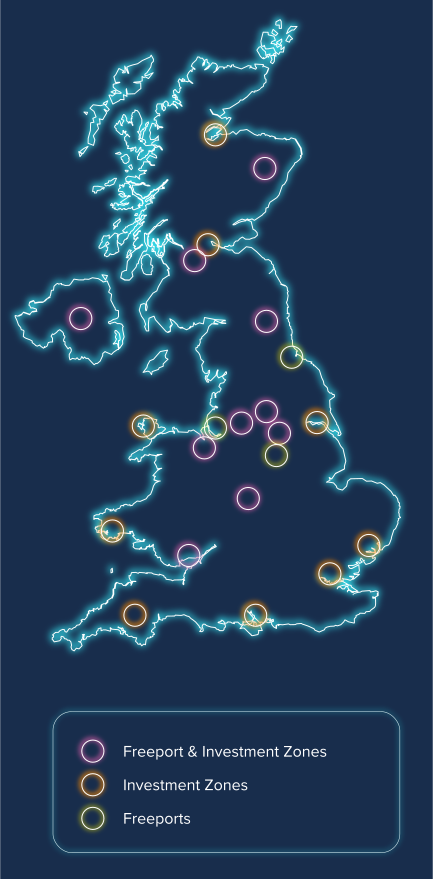
Description of Figure 12: Investment Zones and Freeports are located throughout the UK and multiple locations include both.
Investment Zones
Investment Zones (IZs) are hubs for investment and innovation across the UK that offer a favourable environment and exciting opportunities for your business to invest and grow.
All Investment Zones focus on at least one of the UK’s priority sectors:
- Digital and Tech
- Life Sciences
- Creative Industries
- Advanced Manufacturing
- Green Industries
Investment Zones in Great Britain receive up to £160 million over 10 years which can be split between tax reliefs and flexible spend. To recognise Northern Ireland’s unique economic landscape, bespoke arrangements are being developed for the Enhanced Investment Zone in Northern Ireland, which makes available an envelope of £150 million.
- HMRC Investment Zones Information Pack
- Investment Zones in England - GOV.UK
- Maps of Investment Zones and Tax Sites - GOV.UK
Tax Reliefs
The following Tax Reliefs are available within Tax Sites designated within an Industrial Strategy Zones:
- Stamp Duty Land Tax relief (SDLT) - Full SDLT relief on property used for qualifying commercial purposes, until 30 September 2031 in England and 2034 in Scotland and Wales.
- Enhanced structures and buildings allowances - Accelerated relief to allow businesses to reduce their taxable profits by 10% of the cost of qualifying non-residential investment per year, relieving 100% of their cost of structures and buildings over 10 years.
- Enhanced capital allowances - 100% first year allowance for companies’ qualifying expenditure on plant and machinery assets for use in tax sites.
- Zero rate of secondary National Insurance contributions for Investment Zone employees - 0% Employer NICs paid on salary up to £25,000 p/a, for 3 years per eligible employee. Eligible employees are new hires that spend more than 60% of their working time in the Investment Zone and are hired between April 6 2022, and September 2031 for England, or between April 6 2022, and September 2034 for Scotland and Wales.
- 100% Business rates relief - Full relief from business rates on qualifying new properties and partial relief for expanded properties in IZ tax sites above an agreed baseline. This is guaranteed for 25 years.
Freeports
Each Freeport receives an initial £25 million in capital funding and provides generous tax incentives to unlock business investment into sites that have not historically been viable.
Freeports benefit from streamlined customs procedures, simplified declarations and duty suspension to save businesses time and money on import/export processes.
18 customs sites have been designated across the English Freeports and in Inverness and Cromarty Firth and Forth Green Freeports, operating in sectors including logistics and manufacturing.
Customs Sites
While Freeports offer tax relief sites, with the same benefits as those offered in Investment Zones, Freeports also offer customs sites. Inside a customs site, port operators and other companies are able to defer tax duty and import VAT on goods. If a product comes from outside of the UK into the customs site, such as a raw material or a component part, no tax is paid on that coming into the port unless it then leaves the port area and enters the UK. If a manufacturer or a producer is located inside the customs site, it can handle those goods and use them to create their finished product. They would only pay tax on their product if it then enters the UK. They can export to an international market without paying tax.
All 24 tax sites in the English Freeports are now designated and active. 10 tax sites have been designated across the Inverness and Cromarty Firth and Forth Green Freeports, and the Celtic and Anglesey Freeports (6 in Scotland, 4 in Wales).
The investment English Freeports have attracted to date is expected to generate more than £880 million in retained rates over 25 years. This figure will rise as more investment is secured.
Find out about Land and Buildings Transaction Tax in Green Freeport tax sites in Scotland: LBTT3049 - Green Freeports.
East Midlands Combined County Authority (EMCCA) and the Trent Supercluster
Creating A Fusion Ready Ecosystem: The Trent Supercluster spans three major power‑station sites on the Nottinghamshire–Lincolnshire border. Anchored by the STEP Fusion prototype fusion plant at West Burton, the Supercluster brings together a uniquely powerful combination of industrial land, skilled people, research capability, infrastructure strength, and investor‑ready partnerships. The Supercluster is anchored in the legacy of the “Megawatt Valley”, a corridor which at its peak generated around 25% of the electricity used in England and Wales.
This is a region that actively bid to host STEP Fusion, demonstrating strong political will, community support, and a long‑term commitment to fusion. Today, multiple local authorities, universities, businesses, and national partners are working together through a single unified programme to create one of the UK’s most investable clean‑energy ecosystems. The Supercluster seeks to deliver a world-class environment for commercial fusion deployment, adjacent opportunities, and co‑located industrial growth.
A Fusion‑Ready Location: The Trent Valley Supercluster offers a single front door for industry and simplifies engagement with public partners, regulators, and delivery bodies. They are developing a coordinated industrial base and fusion ready business cluster, giving companies clear routes into fusion and adjacent markets – ensuring the region can deliver major fusion projects at scale, including:
- Siting for Fusion Power Plants
- Siting for co-locating industry
- Support for Exports
- R&D Support
- Skills base for fusion
The Supercluster is actively mapping and building the long‑term workforce for fusion through aligned technical training, apprenticeships, and specialist skills programmes so investors can access the talent they need.
Get in touch: invest@eastmidlands-cca.gov.uk
UK Public Finance
The UK has a rich Public Finance landscape providing support to companies at different stages. Whichever one you reach out to, they will make sure you are directed to the right place, and will work together where appropriate to get projects delivered.
Get in touch: Fusion.Prospectus@energysecurity.gov.uk
Figure 13: UK Public Finance landscape graphic
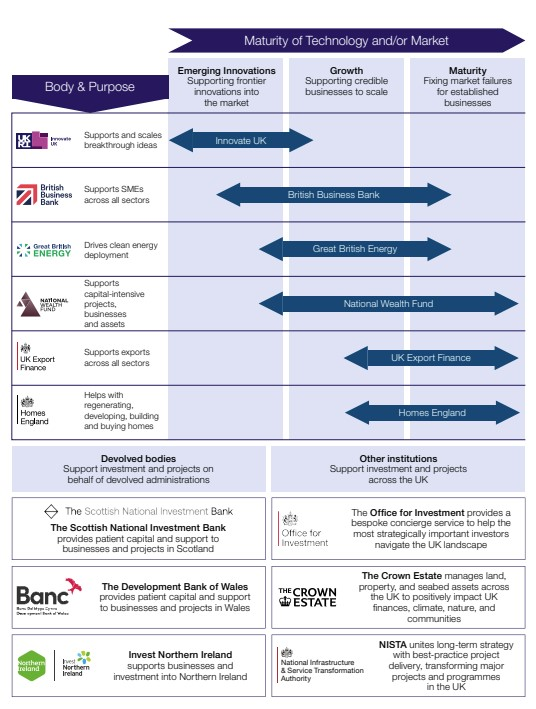
Description of Figure 13: Innovate UK supports and scales breakthrough ideas by providing funding for Emerging Innovations – supporting frontier innovations into the markets, set these for the Growth stage – supporting credible businesses to scale; the British Business Bank supports SMEs across all sectors from Emerging Innovations and Growth stages through to Maturity stage – fixing market failures for established businesses; Great British Energy drives clean energy deployment across all three stages of Emerging Innovations, Growth, and Maturity; National Wealth Fund supports capital-intensive projects, businesses and assets across all three stages of Emerging Innovations, Growth, and Maturity; UK Export Finance supports exports across all sectors across Growth and Maturity stages; Homes England helps with regenerating, developing, building, and buying homes across Growth and Maturity stages. Devolved bodies support investment and projects on behalf of devolved administrations: The Scottish Investment Bank provides patient capital and support to businesses and projects in Scotland; The Development Bank of Wales provides patient capital and support to businesses and projects in Wales; Invest Northern Ireland supports businesses and investment into Northern Ireland. Other institutions support investment and projects across the UK: the Office for Investment provides a bespoke concierge service to help the most strategically important investors navigate the UK landscape; The Crown Estate manages land, property, and seabed assets across the UK to positively impact UK finances, climate, nature, and communities; National Infrastructure & Service Transformation Authority unites long-term strategy with best-practice project delivery, transforming major projects and programmes in the UK.
Innovate UK
- Innovate UK is the UK’s innovation agency and part of UK Research and Innovation (UKRI).
- Innovate UK accelerates innovation for national benefit. It provides early stage to scale-up support: enabling breakthrough research to become viable, growing businesses.
- Innovate UK is committed to supporting clean energy innovation, including spin outs from fusion research.
Through a blend of financial and non-financial interventions, Innovate UK’s support aims to reduce commercial risk and attract investment. This enables breakthrough ideas to be scaled for industry.
Banking and investment
- Grants
- Innovation loans
- Investor partnerships (Seed to Series A)
- Contracts for Innovation
Advisory
- Access to business networks
- Design support
- Regulator engagement
- Technology due diligence support
Get in touch: support@iuk.ukri.org
Learn more: https://www.ukri.org/councils/innovate-uk/
British Business Bank (BBB)
The British Business Bank is the UK government’s national economic development bank, with a mission to drive economic growth by helping smaller businesses access the finance they need to start, scale, and stay in the UK.
With a permanent financial capacity of £25.6 billion, the Bank works in close partnership with private markets to increase significantly the flow of capital and lending to new and growing companies.
The Bank also works with Innovate UK, the National Wealth Fund and UK Export Finance, to provide a strong and coherent continuum of support for businesses at all stages of growth.
Further information on the Bank’s strategy can be found in its Five-year Strategic Plan
Fusion Offer – The Bank supports smaller businesses across the UK through investment, lending and financial ecosystem development. In the context of fusion, the Bank’s role is to help venture capital capabilities, increasing both the scale of available capital and the depth of specialist sector expertise. It does this by:
- Making significant investments of up to £150 million into UK-focused venture and growth-stage deeptech funds
- Supporting the launch of new UK funds, including those that specialise in the Clean Energy Sector
- Making targeted direct investments into high-potential UK based science and deeptech companies
The Bank’s approach to direct investing is as follows:
- Stage: VC-backed UK scale-ups, typically Series A onwards.
- Initial investment: typically £10 million to £40 million.
- Follow-on investment: up to £75 million cumulative investment.
- Technology maturity: flexible across technology readiness levels.
- Investment structure: primarily equity, with convertible loan capability.
- UK presence: significant UK operations required.
Get in touch: https://www.british-business-bank.co.uk/contact-us
Learn more: https://www.british-business-bank.co.uk/
National Wealth Fund (NWF)
The National Wealth Fund is the UK government’s principal investor and policy bank, bringing together the strengths of both the public and private sectors to unlock the UK’s future. They have £27.8 billion of core capitalisation to deploy in pursuit of their triple bottom line:
- supporting the government’s growth and clean energy missions,
- crowding in significant private capital over time, and
- generating a return for the taxpayer.
NWF Strategy – In January 2026 they published their five-year strategy plan. This strategy sets three strategic ambitions:
- Unlocking growth opportunities on the pathway to clean energy.
- Accelerating place-based investment across all four nations of the UK.
- Strengthening sovereign and strategic capabilities.
As part of its long-term growth and clean energy strategy, the UK has identified 25 strategically important sectors and value chains. Ten of these have been selected as priority sectors, with nuclear forming a key area of focus. Although the emphasis is expected to be on fission, they will also consider opportunities across the fusion supply chain and related technologies that can enhance the UK’s sovereign and strategic capabilities.
NWF Relationship to other PuFIns – They operate on a ‘no wrong door’ basis, ensuring customers get help from the right institution and understand where that is not possible.
They collaborate closely with the British Business Bank, Great British Energy, Great British Energy-Nuclear and UK Export Finance, as well as other public bodies supporting investment across the UK
NWF Fusion Offer – NWF will engage with and consider investments opportunities into fusion supply chain and spin-off technology opportunities that support the UK’s sovereign and strategic capabilities.
Key enablers: They will work closely with DESNZ, UK Atomic Energy Authority, UK Fusion Energy and the Office for Nuclear Regulation to identify opportunities.
Get in touch: https://www.nationalwealthfund.org.uk/contact-us
Learn more: https://www.nationalwealthfund.org.uk/
UK Export Finance
UK Export Finance (UKEF) is the UK’s export credit agency. We have up to £80 billion to help exporters offer attractive finance to overseas buyers, access working capital and manage the risk of not getting paid. We help UK companies:
- Win export contracts by guaranteeing finance to buyers so they can source from the UK
- Take on more business by unlocking working capital to invest and grow
- Get paid for products and services with insurance against buyer default
UKEF Fusion Offer – UKEF supports UK exporters of all sizes across all sectors, including fusion, to export from the UK and international businesses sourcing goods and services from the UK:
UK Exporters
- Guarantees to fulfil export orders
- Insurance to manage risks in challenging markets
- Invest-to-export loan guarantees to support inward investment
Overseas
- Buyers: Financing overseas projects that buy from the UK supply chain
- Buyers: Connecting UK businesses with international buyers
- Suppliers: providing loan guarantees to business or projects who supply UK exporters with critical mineral goods
Get in touch: https://www.ukexportfinance.gov.uk/contact-us
Learn more: https://www.ukexportfinance.gov.uk/who-we-can-help/
Development Bank of Wales
The Development Bank of Wales provides equity financing, business and property loans to businesses in Wales. We support businesses and projects of all sizes across all sectors that are based in Wales or relocating to Wales. We offer:
Finance
- Equity funding from £50,000 to £10 million
- Loans from £1,000 to £10 million over terms of up to 15 years
- Property development loans from £150,000 to £10 million
Other
- Introductions to the broader business support ecosystem
- Access to networks of investors, non-executive directors, and specialist consultancies
Get in touch: https://developmentbank.wales/contact-us
Learn more: https://developmentbank.wales/
Scottish National Investment Bank
The Scottish National Investment Bank provides debt and equity to projects and businesses based, or looking to relocate to, Scotland.
We typically invest between £1 million and £50 million in businesses that have growing income profiles to enable them to achieve scale, where aligned to their strategic missions:
- Net Zero: Address the climate crisis, through growing a fair and sustainable economy.
- Place: Transform communities, making them places where everyone thrives.
- Innovative: Scale up innovation and technology, for a more competitive and productive economy
Get in touch: https://www.thebank.scot/contact
Learn more: https://www.thebank.scot/
Invest NI
Invest Northern Ireland helps new and existing businesses to compete internationally, through a combination of financial support and tailored guidance. We also provide support sectors that offer high returns for the Northern Ireland economy by helping to build the connections and infrastructure that will promote excellence in specific areas.
We also help international companies establish and grow successful operations in Northern Ireland. With teams of investment professionals all over the world, we provide expert support and guidance wherever you’re located, including:
- Tailored discovery visits
- Property and talent sourcing
- Business, academia and sector network introductions
- Bespoke financial support packages
Public-Private Finance
The UK government has shown increased appetite to use new and innovative funding mechanisms such as Financial Transactions (FT) to crowd-in investment and accelerate growth. The government has invested in Starmaker One – a British-based investment fund which is expected to leverage significant capital into the market, and the first early-stage fusion energy venture capital fund outside the US.
The government’s cornerstone investment of £20m to kickstart the fund, demonstrates its confidence in the UK fusion sector’s potential for growth. The fund has already begun to deploy investments that will help UK fusion businesses and start-ups in the sector grow and commercialise at scale. Starmaker One invests in UK and global fusion systems and supply chain companies.
East X Ventures is the venture capital arm of East X, a London based quantitative systematic research and investment firm.
Get in touch: info@eastxventures.com
UK Innovation & Science Seed Fund (UKI2S)
The UK Innovation and Science Seed Fund (UKI2S) is a £150m venture fund managed by Future Planet Capital, investing at pre-seed and seed stage. The fund is backed by government but privately managed, combining public capital with private-sector investment discipline. UKI2S has close ties to the UK’s major public research bodies, including UKAEA, a founding partner since 2002. It has a portfolio of over 80 companies across deep tech, from gene therapy to fusion energy: backing high-potential UK science and technology companies and turning breakthrough research into ventures that benefit the UK economy and society.
Fusion investment thesis: Fusion is a key component of the investment thesis for UKI2S. The fund is typically the first investor in high-potential founders and breakthrough companies emerging from the UK’s leading-edge science and deep tech research, and is seeking opportunities in SMEs with a substantial interest in fusion- whether spin-outs from UKAEA, established private fusion companies, suppliers of technology into the fusion supply chain, or developers of fusion-derived technology for applications beyond fusion itself. Through early-stage capital and hands-on support, UKI2S aims to bridge the gap between innovation and market, delivering returns for the UK economy alongside benefit to society.ukinnovationscienceseedfund.co.uk
Industry Organisations
The Fusion Cluster was established in October 2021 to bring together the right minds, skills and experience to get to fusion faster. Now more than 500 organisations are involved, from fusion energy developers and companies supplying goods and services to them to universities, government organisations and investors.
The Fusion Cluster’s offering is based on five pillars.
- Access to talent
- Access to national facilities
- Support for start-ups – linking companies to investors and business advisors, and offering flexible office and lab space.
- Showcasing fusion – raising awareness and enabling engagement with the media, academia, government, including delivery of the All Party Parliamentary Group for Fusion Energy.
- Knowledge sharing – through its monthly newsletter providing intel and highlighting opportunities to its members, its annual directory listing members’ capabilities and helps them find their future clients and collaborators, and running events and workshops across the fusion ecosystem.
The Fusion Cluster is free to join. There are no contracts, NDAs or memorandums of understanding to sign, and how organisations do business with each other is their choice.
A single point of contact, Valerie Jamieson, The Fusion Cluster manager, helps to navigate and connect.
- Web: Welcome to The Fusion Cluster
- Email: thefusioncluster@ukaea.uk
- LinkedIn: The Fusion Cluster - LinkedIn
The Fusion Industry Association (FIA) is a global trade association, representing fusion primes (full members), alongside suppliers, customers and operators (affiliate members) of fusion plant, as well as Academia and national labs (partners). With centres of operation in the US, UK, and Brussels as well as collaborative activity in Japan, the FIA offers a single gateway to the fusion market for any company, of any size, seeking work in any part of the fusion industry.
Get in touch: tristram@fusionindustryassociation.org.
The Fusion Industry Taskforce (FIT) is a consistent, independent, and insightful voice of the UK’s fusion sector to government, bringing together over 20 organisations including engineering consultancies, supply chain companies, universities and professional organisations interested in promoting fusion energy. FIT aims to present key UK government departments including the Department for Energy Security and Net Zero (DESNZ), the Department for Business, Innovation, Science and Trade (BIST) and HM Treasury (HMT) with recommendations about what the fusion sector needs to succeed. It focuses on areas such as infrastructure, investment, regulation, innovation, security, and international collaboration. FIT works to tackle key industry challenges, such as the risk profile, costs and economic viability of reactors, technological developments, and overcoming supply chain constraints.
Get in touch: FIT@impactandinfluence.global
The UK Inertial Fusion Consortium represents all UK-based stakeholders in inertial fusion research and development. Its purpose is to strengthen the UK’s inertial fusion capability by coordinating national research, building world-class expertise, and enabling UK organisations to become key suppliers to the global inertial fusion industry, while maximising the wider economic and technological impact of fusion science. It aims to:
- Maintain a coordinated, world-class UK capability in inertial fusion science and technology
- Establish the UK as a leading supplier nation to the global IFE industry
- Maximise dual-use and cross-sector impact of inertial fusion R&D
- Provide a unified voice for UK inertial fusion in policy and investment
- Strengthen the UK talent pipeline
Members: University of Oxford, Uplift Project, Queen’s University Belfast, University of Strathclyde Glasgow, UKRI STFC Central Laser Facility, Scitech Precision, First Light Fusion, University of Warwick, AMPLIFI, University of York, Imperial College London, Lancaster University.