UK CertifID Trust Mark: Usage Guidelines for digital verification service (DVS) providers
Published 7 September 2026

© Crown copyright 2026
This publication is licensed under the terms of the Open Government Licence v3.0 except where otherwise stated. To view this licence, visit nationalarchives.gov.uk/doc/open-government-licence/version/3 or write to the Information Policy Team, The National Archives, Kew, London TW9 4DU, or email: psi@nationalarchives.gov.uk.
Where we have identified any third party copyright information you will need to obtain permission from the copyright holders concerned.
This publication is available at https://www.gov.uk/government/publications/uk-certifid-trust-mark-usage-guidelines-for-digital-verification-service-providers/uk-certifid-trust-mark-usage-guidelines-for-digital-verification-service-dvs-providers
1. Introduction
The UK CertifID trust mark (the trust mark) is owned by the Secretary of State for Department of Science Innovation and Technology (DSIT), and its use is managed by the Office for Digital Identities and Attributes (OfDIA) (part of DSIT). It helps consumers and organisations to identify which digital identity and verification services (DVS) comply with UK government standards.
1.1 Who can use the trust mark
DVS providers can display the trust mark licensed to a qualifying service, as long as that service continues to be:
- certified against the UK digital verification services trust framework (v1.0) (the trust framework); and,
- published on the register of digital verification services (the register)
The eligibility criteria for using the trust mark are outlined in section 14 of the trust framework v1.0
DVS providers can only use the trust mark with our authorisation. We will take action against organisations who use the trust mark without our authorisation.
Email correspondence@dsit.gov.uk if you have any questions about eligibility to use the trust mark.
1.2 Guidelines on the rules for using the trust mark
This guidance supplements the rules in section 14 of the trust framework (v1.0) by providing:
- guidelines on how to comply with the rules on technical application of the trust mark; and
- practical illustrations of acceptable and unacceptable usage.
We may update these guidelines periodically and make major revisions in line with updates of the trust framework.
2. Technical application of the trust mark
The proper application of the trust mark consists of displaying:
- the UK CertifID trust mark; and
- the trust mark identifier , which is a unique identifying number exclusively issued for the relevant registered service that links to the relevant entry on the register of digital verification services.
2.1 Displaying the trust mark and the trust mark identifier
Always display the trust mark together with the trust mark identifier for the relevant service.
Only display the trust mark identifier in relation to the relevant service.

An example of the UK CertifID trust mark and the trust mark identifier
2.2 Exclusion zone
When displaying the trust mark, use an exclusion zone that is at least equal to the width of the word ‘UK’. No other object or text should enter that exclusion zone.
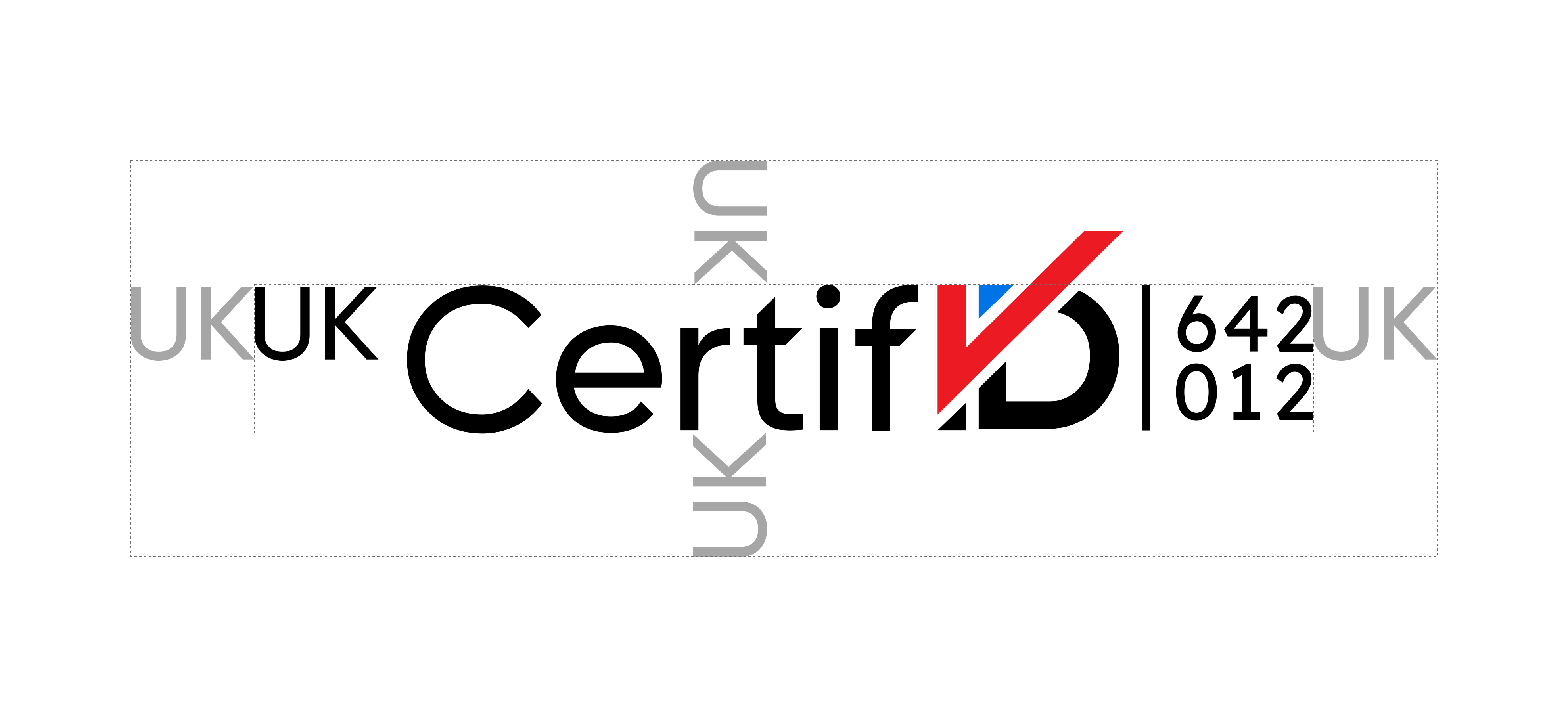
The UK CertifID trust mark with the exclusion zone, which is equal to the word ‘UK’ in the UK CertifID logo
2.3 Minimum font size
The ‘UK’ in the trust mark must be no smaller than 12 point s (16 pixels), with other elements scaled accordingly. This allows for good readability.
2.4 Aspect ratio
When using the trust mark image at different sizes, you must retain the original aspect ratio.
2.5 Image linking and description
Provide users with context about what the UK CertifID trust mark signifies, wherever possible. This can be achieved by :
- linking to the UK CertifID information
- providing explanatory text on your own website or product.
2.6 Explanatory text
As a DVS provider, you must represent the certified or registered status of your services accurately. These requirements are set out in the trust framework (v1.0) and throughout the certification process. This rule also applies to how you talk about the trust mark, and what it signifies.
Examples of statements you could use
Example statements you could use when describing the trust mark:
- This service is compliant with UK government standards for digital identity
- Our service is independently certified and registered against the UK digital verification services trust framework
- Independently certified and registered against the government rules for digital verification services
- Trust framework certified and registered
- Our service is on the GOV.UK register of certified digital verification services
- We are registered with government as a certified digital verification service provider
Examples of statements you must not use
You must not use phrases such as:
- ‘Government certified’. This is because certification of digital verification services is independent from government. OfDIA sets the rules, and independent conformity assessment bodies decide whether your service meets them.
- ‘Government approved’. This is because being on the register does not mean government has approved or endorsed a service: it means you meet the rules and criteria for being on the register.
2.7 Image variations
The UK CertifID trust mark is issued in four variations.
Default image
You should use the full colour ‘main trust mark’ by default.
An example of the UK CertifID trust mark and the trust mark identifier
You may use the other variations for secondary use. The above guidance on technical application will also apply to variations used.
Mono white
The mono white version can be used on dark backgrounds only.
The mono white variation of the UK CertifID trust mark used on a dark background
Mono black
The mono black version can be used on can be used on light backgrounds only.
The mono black variation of the UK CertifID trust mark used on a light background
Mono black and grey
The mono black and grey version can be used on can be used on light backgrounds only.
The mono black and grey variation of the UK CertifID trust mark used on a light background
Accessibility
- You must ensure any use of the trust mark is compliant with relevant accessibility standards, such as WCAG 2.2 AA.
Colour palette
You can use the colour palette from the trust mark to create complementary colours for your marketing and communications materials.
Table title: Colour palette for the trust mark
| Screen | Hex colour code | ||
| Trust mark black | C: 0, M: 0, Y: 0, K: 100 | R: 0, G: 0, B: 0 | #00 00 00 |
|---|---|---|---|
| Trust mark red | C: 0, M: 95, Y: 86, K: 0 | R: 236, G: 27, B: 35 | #EC 1B 23 |
| Trust mark white | C: 0, M: 0, Y: 0, K: 100 | R: 255, G: 255, B: 255 | #FF FF FF |
| Trust mark blue | C: 83, M: 54, Y: 0, K: 100 | R: 0, G: 115, B: 230 | #00 72 E6 |
| Trust mark light grey | C: 37, M: 30, Y: 31, K: 0 | R: 166, G: 166, B: 166 | #A6 A6 A6 |
| Trust mark dark grey | C: 57, M: 49, Y: 48, K: 16 | R: 110, G: 110, B: 110 | #6E 6E 6E |
3. Illustrations: use of the trust mark to denote a registered service
This guidance assumes that your service meets the eligibility criteria and we have given you authorisation to use the trust mark.
The trust framework (v1.0) section 14.2.1.b. states that the trust mark must only be used in respect of the specific service on the register.
You must only use the trust mark to indicate a specific service meets UK digital identity trust standards. You must not use it to imply endorsement of your organisation as a whole
3.1 Information about your organisation
You must not use the UK CertifID trust mark in a way that suggests it applies to:
- your organisation as a whole; or
- services that do not qualify for a trust mark
Correct application – organisational information
In this example, the trust mark is clearly applied in relation to the qualifying service:

Correct application of the UK CertifID trust mark, illustrating which specific service qualifies to use the trust mark
Incorrect application – organisational information
In this example, placement of the trust mark, in the footer, implies that it applies to the organisation as a whole:

Incorrect application of the UK CertifID trust mark implying that a whole organisation qualifies to use the trust mark
3.2 Your corporate credentials
If you apply the trust mark to materials about your corporate credentials, you must make it clear which qualifying services it is in relation to.
Correct application– corporate credentials
In these examples, application of the UK CertifID trust mark makes it clear that the trust mark applies to a specific service:
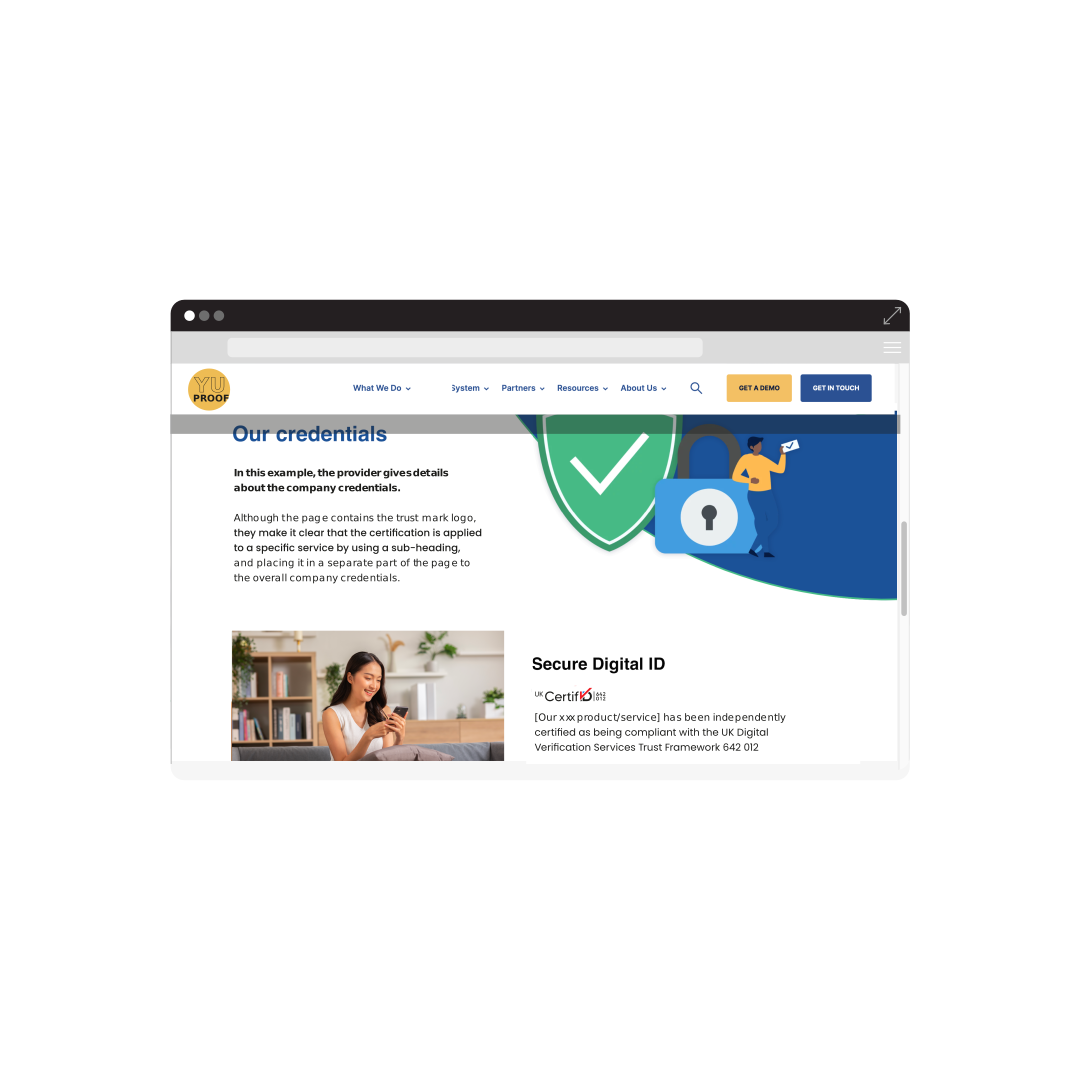

Correct use of the trust mark on corporate credentials content, aligned to the qualifying service
3.3 Landing pages
You might use digital landing pages that allow users to navigate to one of several services you offer.
You must use the trust mark in a way that makes it clear which specific services on that landing page it relates to.
Correct application – landing pages
In this example, the trust mark is applied in a way that makes it clear that it relates to a specific service:
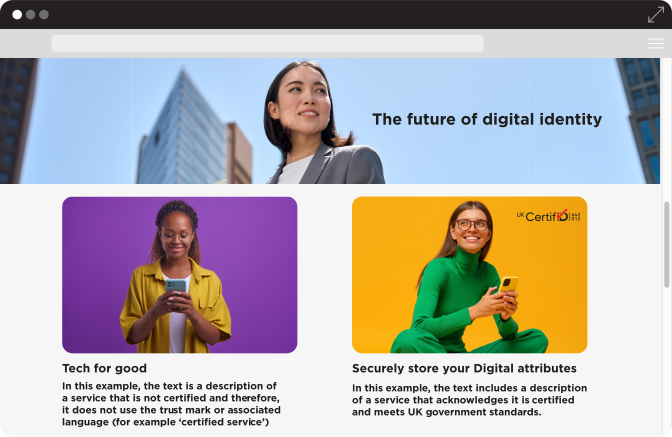
Correct application of the trust mark on a landing page, clearly illustrating which qualifying service it relates to
3.4 Service information
You might produce information containing detail about a specific service.
Correct application –service information
You must use the trust mark in a way that clearly identifies the qualifying service and makes it clear which specific service qualifies to use the trust mark:
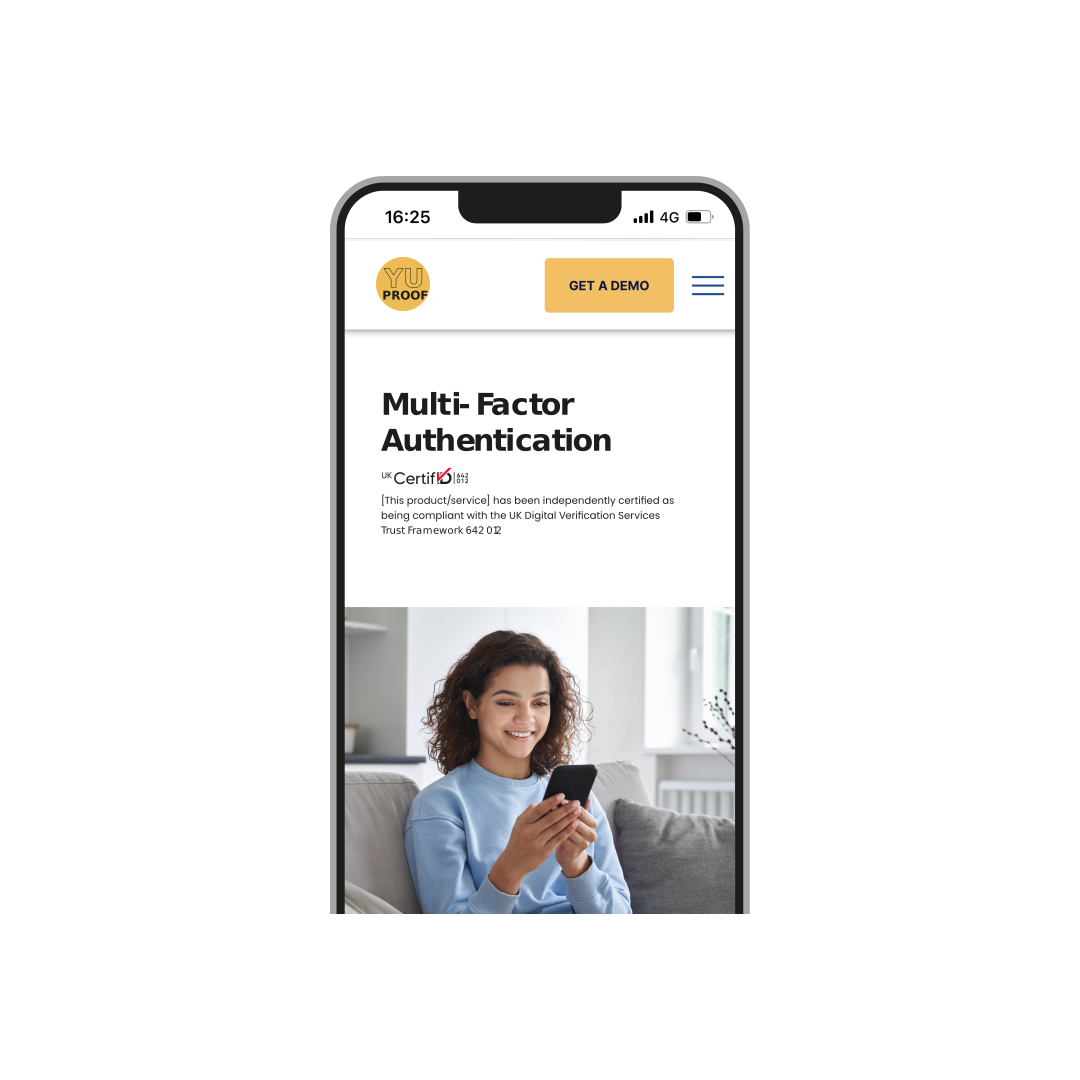

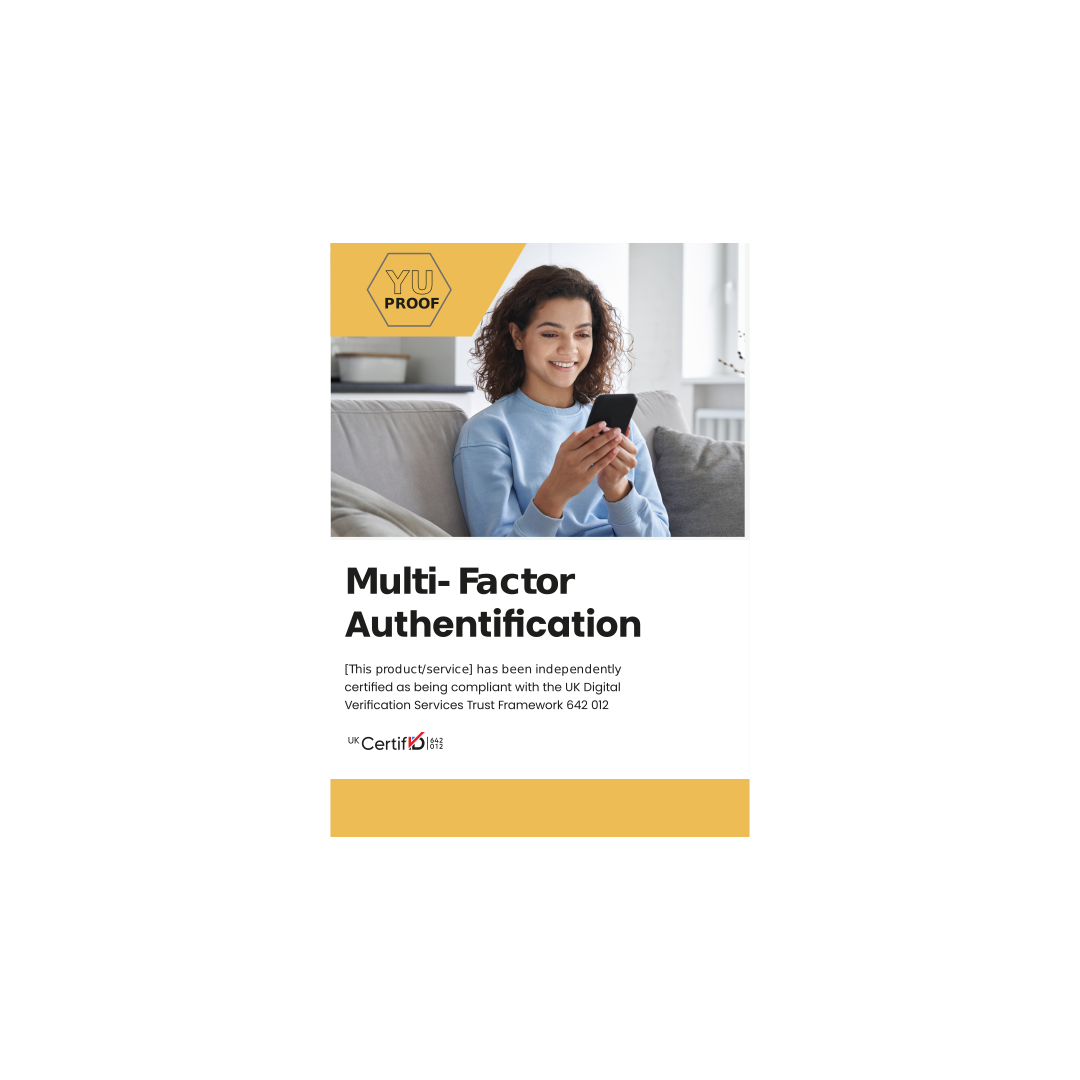
Correct use of the UK CertifID trust mark illustrating that a specific service qualifies to use the trust mark

Correct use of the UK CertifID trust mark illustrating that a product on an app store contains a specific service that is qualified to use the trust mark
Incorrect application – product or service information
In this example, placement of the UK CertifID trust mark does not make it clear which service is qualified to use the trust mark:

Incorrect application of the UK CertifID trust mark at the bottom of content that features more than one service