UK carbon management innovation challenge (accessible webpage)
Updated 14 September 2026

© Crown copyright 2026
This publication is licensed under the terms of the Open Government Licence v3.0 except where otherwise stated. To view this licence, visit nationalarchives.gov.uk/doc/open-government-licence/version/3 or write to the Information Policy Team, The National Archives, Kew, London TW9 4DU, or email: psi@nationalarchives.gov.uk.
Where we have identified any third party copyright information you will need to obtain permission from the copyright holders concerned.
This publication is available at https://www.gov.uk/government/publications/uk-carbon-management-innovation-challenge/uk-carbon-management-innovation-challenge-accessible-webpage
Introduction
The UK Cleantech Innovation Challenges programme was launched in 2026 to accelerate innovation in mission-critical areas to unlock the benefits of the UK’s clean energy economy. It aims to support the most pressing innovation needs for Carbon Budget 6 and beyond and grow clean energy industries where the UK has a competitive advantage. Further information about the programme is available here.
This document sets out the first challenge to be launched through the programme, focused on carbon management. Further challenges exploring other innovation opportunities are expected to be launched in due course.
Establishing the UK Carbon Management Innovation Challenge
Context and market opportunity
Carbon capture, utilisation and storage (CCUS) and greenhouse gas removals (GGRs), collectively referred to as ‘carbon management’, will be key to delivering the UK’s carbon budgets and net zero target. They support the decarbonisation of power generation and industrial emissions, enable the production of low-carbon fuels and products (including hydrogen and fertiliser) and deliver negative emissions to balance out residual emissions from hard-to-abate sectors.
The Energy Innovation Needs Assessment suggests that carbon management technologies are integral to fully decarbonising the UK.[footnote 1] Innovation can help reduce the cost of these technologies, supporting a whole-systems approach to the energy transition, helping to reduce emissions while making the energy system more affordable. For example, the study found that high levels of innovation in direct air carbon capture and storage (DACCS), could save £31-62 billion cumulatively between 2025 and 2050, compared to a low innovation scenario; high levels of innovation in bioenergy with carbon capture and storage (BECCS), could save £55-76 billion cumulatively between 2025 and 2050, compared to a low innovation scenario. The Independent review of GGRs recognised that innovation will be crucial as some technologies are still in early stages of development, recommending that government continue to support innovation and share findings.
The carbon management sector also presents significant economic growth opportunities. CCUS and GGRs are identified within the UK’s Industrial Strategy as key areas of opportunity and R&D expertise, building on the UK’s substantial CO₂ storage potential, transferable skills from the oil and gas industry, and a developing regulatory and project support framework. By 2050, it is expected CCUS and CCS-engineered GGRs could support 50,000 jobs in the UK.[footnote 2]
Figure 1. Mission Zero’s direct air capture facility in Norfolk, UK. Project DRIVE led by Mission Zero alongside other partners was funded through DESNZ’s Direct Air Capture and Greenhouse Gas Removal Innovation Programme from 2022 to 2025.
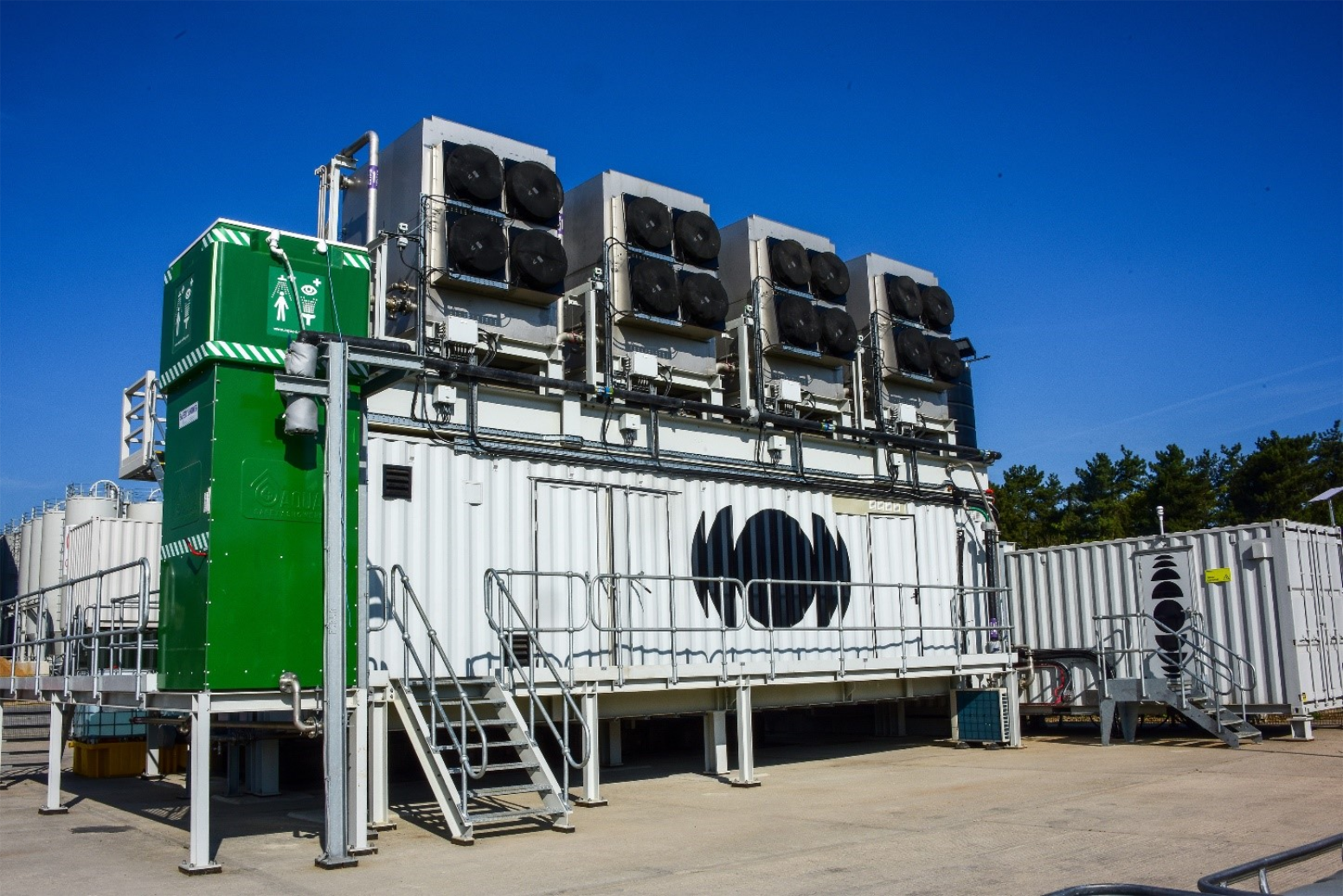
Image credit: Mission Zero Technologies
Deployment barriers
Continued progress will depend on scaling deployment and addressing a range of technical, market and commercial factors. For example, carbon capture technologies can be energy- and capital-intensive and are still being optimised for a range of industrial applications, particularly where CO₂ streams are dilute or contain impurities. Transport and storage infrastructure also requires significant investment and coordination, with access to shared networks continuing to evolve as the market develops.
While pilot and demonstration projects are advancing, increasing commercial-scale deployment and operational experience will be important to support investor confidence and accelerate cost reduction. As the sector matures, ongoing work to address technology risk, strengthen revenue certainty, and enable access to infrastructure will help unlock private investment and support wider deployment.
In parallel, GGR technologies, including engineered approaches such as DACCS and BECCS, are progressing, but will benefit from further innovation to reduce costs and scale sustainably. Emerging non-CCS reliant engineered GGR approaches may offer additional routes to deployment, though continued development of robust monitoring, reporting and verification (MRV) will be important to support confidence in the permanence and scalability of removals.
As such, accelerating innovation across CCUS and GGRs will be key to driving down costs and enabling deployment at pace, ensuring these technologies can contribute to meeting the UK’s carbon budgets and net zero by 2050.
Innovation opportunities
Innovation opportunities exist across the carbon management landscape, as assessed by the Energy Innovation Needs Assessment report on carbon management.[footnote 3] These span the full value chain, from improved capture technologies, manufacturing capabilities, feedstocks and process integration to modular systems, geological storage, and monitoring techniques. Innovation has the potential to reduce energy consumption, improve reliability, and lower capital and operating costs, while enabling technologies to be demonstrated at sufficient scale to reduce investor risk.
For CCUS, there are strong innovation opportunities in point-source carbon capture. Improvement to amine-based solutions can support deployment in hard-to-abate sectors and higher CO2-concentration flue gases. Next-generation technologies promise the potential for step changes in cost, energy efficiency and performance, particularly for lower concentration emissions where costs are highest.
For GGRs, there are strong innovation opportunities in direct air capture (DAC) and non-CCS reliant approaches. Advances in modularisation, improved solvents, system integration, as well as emerging technologies, could drive substantial reductions in system costs and improve commercial viability.
Together, these innovation opportunities support the growth of a UK carbon management sector with the potential to generate significant economic value, including the development of domestic supply chains, the attraction of private investment, and the creation of high-quality jobs. These innovations can also support wider energy system benefits, including flexible low-carbon power, low-carbon fuels, and better use of variable renewable energy.
Challenge statement
UK Carbon Management Innovation Challenge statement
Accelerate the development, demonstration and commercialisation of innovative solutions for carbon capture and greenhouse gas removal in the UK. This challenge will be delivered through three pathways, with intermediate milestones, to reach the following ambitions(i) for 2040:
- Innovation to halve the cost of point-source carbon capture(ii) across key UK applications compared to 2025 benchmark costs.
- Innovation to halve the cost of direct air capture(iii) compared to 2025 benchmark costs.
- A healthy UK ecosystem of 10 or more commercial-scale non-CCS reliant engineered GGR projects of at least 20ktpa capacity, across a diverse portfolio of technologies, and with robust monitoring, reporting and verification.(iv)
This challenge statement is designed to set ambitious goals to accelerate the development and deployment of CCUS and GGR solutions. It will act as a tool for engagement across the public and private sector, a guide towards priority innovation needs, and a benchmark for measuring progress. The ambitions are not legally binding targets and will be kept under review.
The Department for Energy Security and Net Zero (DESNZ) has reviewed relevant evidence and engaged with stakeholders across government and industry to develop this challenge statement. While engagement has suggested that these ambitions stretch beyond current trajectories and there is inherent uncertainty about what is achievable within the timescales, in general stakeholders consider the ambitions achievable under the right conditions and see the value in setting a common goal for government and industry to work towards.
Monitoring progress
DESNZ is establishing a framework to monitor progress against the ambitions for cost reduction in point-source carbon capture and direct air capture. The framework will estimate the levelised cost of carbon capture (LCC) for different applications. These estimates will be derived from techno-economic models that account for key cost drivers, including capital expenditure, operating expenditure, energy requirements and other relevant parameters. Input data will be sourced from the best available evidence and informed through engagement with industry and other stakeholders.
For the purposes of the modelling, factors outside the control of innovators that can significantly influence costs (such as energy prices and financing assumptions) will be held constant over the monitoring period, helping to isolate improvements in technology and deployment experience from wider market conditions.
To enable like-for-like comparison across projects, proposals and technologies of different sizes, benchmark models will be based on standardised reference plant configurations. For example, the DAC benchmark will be based on a standardised model of a 1 MtCO₂/year capture plant. Similar reference scales will be applied to other CCS applications, with the selected scale reflecting the characteristics of each application. Project data can then be normalised to these reference assumptions, allowing meaningful comparison across technologies and over time.
Figure 2. Point source carbon capture testing rig at the Energy Innovation Centre, University of Sheffield. The Energy Innovation Centre has hosted real‑world demonstration of innovative solutions, including through the FOCUSS project with SSE Thermal and AECOM, funded through DESNZ’s CCUS Innovation 2.0 programme.
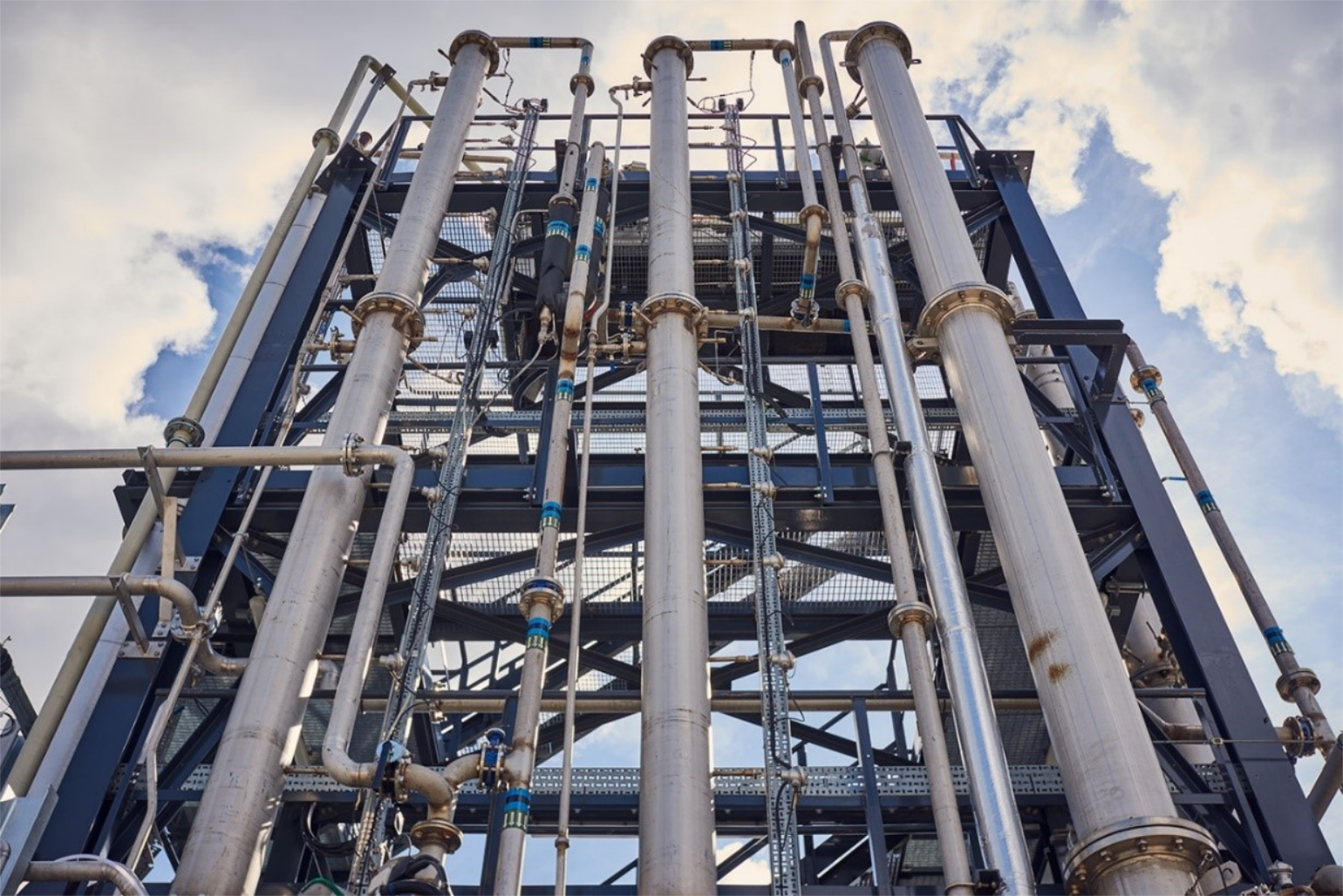
Image credit: Energy Innovation Centre, University of Sheffield
As the challenge progresses, LCC for key projects will be estimated and compared against the benchmark. This will provide a consistent basis for monitoring innovation progress against the challenge ambitions.
The benchmark methodology and underlying models will be shared, reviewed and agreed by the Carbon Management Innovation Challenge Coalition (see below). This will help ensure that the resulting benchmarks and associated levels of ambition are credible and supported by stakeholders.
Delivering the UK Carbon Management Innovation Challenge
Stakeholder engagement has demonstrated the value in a range of targeted support measures and policy activities designed to tackle barriers and deliver the challenge goals. This feedback has informed the approach to delivering the challenge.
Engaging industry: Carbon Management Innovation Challenge Coalition
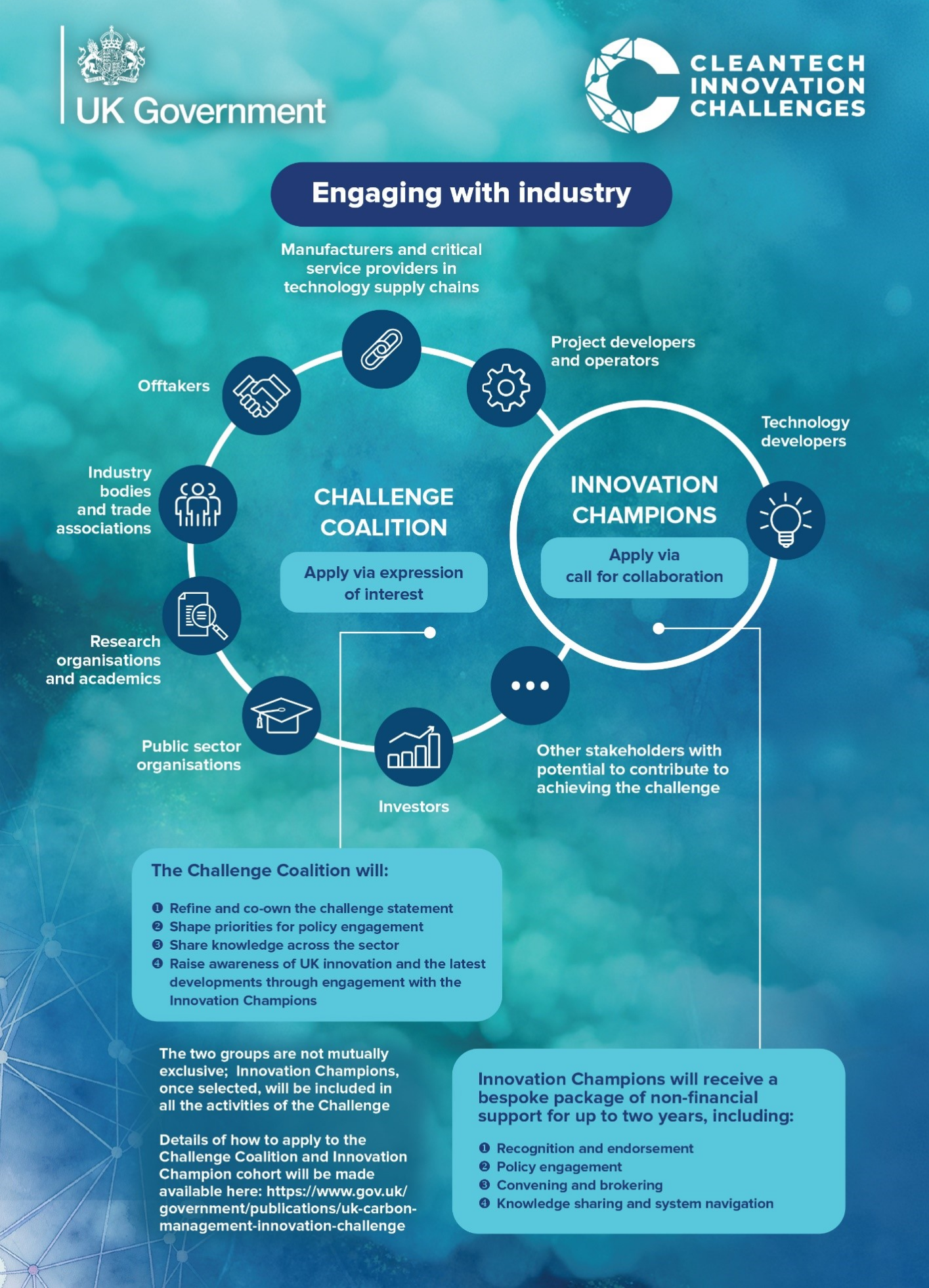
DESNZ will establish a Carbon Management Innovation Challenge Coalition, bringing together selected technology developers, industry partners, investors, academics, public sector organisations and other stakeholders. The coalition will play a central role in further developing and adapting the challenge, shaping the activity of the challenge, driving delivery across industry and government, monitoring progress and supporting collaboration and knowledge sharing.
Activities, including meetings, events and knowledge sharing sessions, will take place over an anticipated period of up to two years. DESNZ intends to appoint an independent Coalition Chair to lead the group, supported by a DESNZ secretariat.
Expression of interest: join the Challenge Coalition
Stakeholders are encouraged to apply to be part of the Challenge Coalition through an expression of interest form. This expression of interest will be open to UK organisations with an interest in supporting the UK Carbon Management Innovation Challenge.
Who should apply?
- Technology developers
- Project developers and operators
- Manufacturers and critical service providers in technology supply chains
- Offtakers
- Industry bodies and trade associations
- Research organisations
- Academics and experts
- Investors
- Other stakeholders with a strong interest in innovation in carbon management technologies and the potential to contribute to achieving the challenge.
Please refer to the guidance here to complete the expression of interest form.
Supporting companies with innovative solutions: Innovation Champions
DESNZ will provide targeted support to a select cohort of technology developers with clear potential to support the challenge ambitions. The cohort, known as Innovation Champions, will receive a bespoke package of non-financial support for up to two years, to support their contribution to the challenge. UK organisations with capabilities to develop, demonstrate and deploy innovative solutions to address the challenge’s ambitions will be able to apply to join the cohort via a competitive selection process, details of which will be released later in 2026. The support offer will be delivered by DESNZ, working with partners such as Innovate UK Business Connect.
The Innovation Champions will be expected to participate in the Challenge Coalition activities. A call for applications to become an Innovation Champion is expected later in 2026. In the meantime, prospective Innovation Champions are encouraged to express their interest in joining the Challenge Coalition.
Recognition and endorsement
DESNZ will work with Innovation Champions to amplify progress and celebrate key milestones towards the challenge ambitions. A challenge report in 2028 will recognise the achievements of the carbon management Innovation Champions and their contributions.
Policy engagement
In support of the policy workstreams set out in the next section, a series of workshops will bring together Innovation Champions and other relevant stakeholders to identify barriers to innovation and deployment and potential solutions.
Convening and brokering
Over the next two years, DESNZ will facilitate relationships between carbon management Innovation Champions and key partners, such as customers, collaborators, suppliers and investors, tailored to the specific needs of the Innovation Champions.
To help the Innovation Champions attract investment, DESNZ will raise awareness of their innovative solutions with public finance institutions and investors. This will include pitch days to test their value proposition and deliver investor-ready pitches.
Knowledge sharing and system navigation
A quarterly ‘signposting’ newsletter over the next two years will help Innovation Champions navigate available support, funding opportunities and key developments across the landscape.
DESNZ will also facilitate international engagement opportunities, leveraging government’s global networks, such as Mission Innovation’s Carbon Dioxide Removal Mission, International Energy Agency (IEA) Technology Collaboration Partnership on Greenhouse Gas emissions (IEAGHG), Horizon Europe programmes and the European Energy Research Alliance Joint Programme on Carbon Capture and Storage. These opportunities will aim to help Innovation Champions showcase solutions and connect with partners and markets overseas.
Throughout the programme, Innovation Champions will attend events with the Challenge Coalition to share insights, build networks, and promote collaboration across the carbon management ecosystem (figure 3).
Creating an enabling policy environment
Government will draw on a suite of policy-based levers to support industry to deliver the challenge ambitions. As part of the programme, and in consultation with the Innovation Champions and Challenge Coalition, policy sprints will aim to identify and investigate key barriers to innovation and deployment and explore opportunities to create market demand. Initial policy workstreams will focus on the following areas.
Mobilising and aligning public funding for innovation and scale-up
Stakeholder engagement has highlighted the value of financial support for innovative solutions. This challenge aims to develop and scrutinise the evidence supporting the case for intervention and align public sector funders around the areas of greatest need.
UK Research and Innovation (UKRI)
DESNZ is working closely with UKRI through its Priority Programme in Clean Energy. In carbon management, UKRI intends to support scale-up of high-impact research in carbon management and provide opportunities for breakthrough innovation to develop and scale, including those innovations contributing to GGR and CCUS outcomes. The specific areas of focus will be determined in 2026-27, based on effectiveness, cost and UK economic benefit.
Figure 3. Relationship between Challenge Coalition and Innovation Champions
The Carbon Management Innovation Challenge can provide insights on innovation opportunities to inform UKRI’s approach in this sector.
Public finance institutions
DESNZ will continue to engage public finance institutions to support the scale-up of companies and projects seeking to deploy new technologies.
Blended finance
DESNZ will explore the case for intervention in financing for carbon management technologies, including those not reliant on CO2 transport and storage infrastructure.
Policy design and market demand
Through this challenge, DESNZ will explore opportunities and mechanisms to support the development of markets for carbon removals, building on existing policy development to support the growth of high-integrity voluntary carbon and nature markets and integration of GGRs into the Emissions Trading Scheme.
DESNZ is also engaging with the Green Finance Institute’s Carbon Dioxide Removal (CDR) Catalyst, which provides hands-on commercial and financial expertise to help unlock financing for early-stage projects. Working with growth-stage developers, the Catalyst will initially help to de-risk early commercial projects, and alongside this market support, the Catalyst will generate evidence on real-world delivery barriers and feed insights back to UK government to improve the enabling environment for high-integrity CDR.
Regulation, permitting and standards
The challenge will explore and test barriers to scaling CCUS and GGR demonstrator projects, including barriers to accessing CO₂ transport and storage.
Engagement with the Innovation Champions will also help to identify other potential barriers and policy opportunities to support the deployment of innovative solutions in the sector. This will build on the evidence base and policy development to date, including research and identification of key regulatory barriers through DESNZ’s DAC and GGR Innovation Programme, the independent GGR Review, and CO2RE’s research and demonstration projects.
International policy engagement
Informed by engagement with the Challenge Coalition and Innovation Champions, DESNZ will assess opportunities to support UK innovation on carbon management through international policy engagement. The challenge will help shape government’s extensive international activity on research and innovation, including through Mission Innovation and the IEA. For example, the UK is a supporting member of Mission Innovation’s Carbon Dioxide Removal Mission, which presents an opportunity to share expertise, shape standards and MRV approaches.
Figure 4. Utilising Black Bull Biochar’s biochar as a soil additive on a farm trial. The Biochar Platform project with Black Bull Biochar was funded through DESNZ’s Direct Air Capture and Greenhouse Gas Removal Innovation Programme from 2022 to 2025.

Image credit: Black Bull Biochar
Knowledge sharing
Challenge briefings
Challenge briefings will be produced to drive and enhance knowledge sharing across a range of topics related to the challenge, drawing on innovation project and research findings and engagement with the Challenge Coalition and Innovation Champions.
DESNZ research on carbon management
This challenge will disseminate relevant DESNZ research to industry, providing evidence to support the development and deployment of new technologies and promote a better understanding of these technologies, and the opportunities and barriers to their adoption.
This research is expected to include work to better understand costs, performance and deployment potential across various CCUS and GGR technologies (such as flexible DACCS and energy from waste with CCS), as well as future CO₂ transport, storage and infrastructure needs, CO₂ utilisation opportunities, and approaches to emissions accounting and MRV. Together, these studies will help inform decisions on how to scale carbon management solutions, reduce costs, and identify the conditions needed for successful UK deployment.
Next steps
The next steps are to:
- Form the Challenge Coalition through an expression of interest. Members will be selected and notified in due course, with a kick-off meeting to follow in autumn 2026. Apply here.
- Develop a monitoring framework for the challenge, working closely with the Challenge Coalition to agree metrics and approach.
- Begin to deliver the package of policy workstreams – as described above – in a phased approach.
- Launch a call for collaboration for Innovation Champions in autumn 2026.
Over a two-year period, the Challenge Coalition will drive action across government and industry to deliver innovation and monitor progress against the challenge ambitions, and DESNZ will support the Innovation Champions as set out above. This will culminate in a progress report on the UK Carbon Management Innovation Challenge by summer 2028, and in a review of next steps at that point.
Acronyms and abbreviations
- BECCS - bioenergy with carbon capture and storage
- CCS - carbon capture and storage
- CCUS - carbon capture, utilisation and storage
- CDR - carbon dioxide removal
- CO₂ - carbon dioxide
- CO2RE - the UK’s national hub on greenhouse gas removal, part of the UKRI-funded Greenhouse Gas Removal Demonstrators programme
- DAC - direct air capture
- DACCS - direct air carbon capture and storage
- DESNZ - Department for Energy Security and Net Zero
- GGR - greenhouse gas removal(s)
- IEA - International Energy Agency
- IEAGHG - IEA Technology Collaboration Programme on Greenhouse Gas Emissions
- ktpa – kilotonnes per annum
- LCC - levelised cost of carbon capture
- MRV - monitoring, reporting and verification
- MtCO₂ - megatonnes of carbon dioxide
- R&D - research and development
- UKRI - UK Research and Innovation
(i): These ambitions are aspirational, non-binding targets to drive engagement between government and industry
(ii): Measured through the levelised cost of capture for a given application, adjusted for changes in exogenous factors such as energy costs, cost of capital and materials; this includes point-source carbon capture across a range of applications, including, for example, industrial CCS, power-CCS, BECCS and others
(iii): Measured through the levelised cost of capture, adjusted for changes in exogenous factors such as energy costs, cost of capital and materials; benchmarked for a 1 MtCO2pa capacity plant
(iv): At least three different types of technologies that generate accurate and independently verifiable estimates of carbon removal, aligned with recognised standards and frameworks where available or grounded in scientifically rigorous methods
-
Department for Energy Security and Net Zero (2025) Energy Innovation Needs Assessments 2025 ↩
-
Department for Energy Security and Net Zero (2025) Carbon Budget and Growth Delivery Plan ↩
-
Department for Energy Security and Net Zero (2025) Energy Innovation Needs Assessment: Carbon Management ↩