Turn It Up: Our plan for music
Published 13 July 2026

© Crown copyright 2026
This publication is licensed under the terms of the Open Government Licence v3.0 except where otherwise stated. To view this licence, visit nationalarchives.gov.uk/doc/open-government-licence/version/3 or write to the Information Policy Team, The National Archives, Kew, London TW9 4DU, or email: psi@nationalarchives.gov.uk.
Where we have identified any third party copyright information you will need to obtain permission from the copyright holders concerned.
This publication is available at https://www.gov.uk/government/publications/turn-it-up-our-plan-for-music/turn-it-up-our-plan-for-music
Ministerial foreword

Music is the shared language that connects us. It crosses boundaries, bridges divides and helps us understand one another. In a time when it feels too many of us have lost the ability to understand one another, music matters more than ever.
It is woven into the fabric of our national life. In the UK, a live gig or concert takes place every 137 seconds. It accompanies our celebrations and our sorrows, marks our milestones and brings people together.
We are rightly proud that the UK is one of the world’s three largest exporters of music, producing artists who light up the world. Music is not simply one of our greatest success stories, it matters deeply to who we are as a nation.
But music’s value cannot be measured only by chart success or export figures. It is a civic space - as important as any high street or town hall - where communities come together, where young people discover confidence and creativity, and where new ideas flourish. When someone is excluded from a life animated by music, we all lose. Our culture is poorer, our communities are weaker, and we miss the talent that might otherwise have enriched so many lives.
That is why this plan is rooted in one simple principle: music belongs to everyone. It is broad and inclusive. It should never be the preserve of those whose parents can afford lessons or instruments. Every child deserves the chance to experience the richer, larger life that music can bring.
Nowhere is that more important than for children in care. We are their corporate parents and we should be as ambitious for them as every parent is for their child. Like sport, art, dance and drama, music can be the lifeline that sustains them at the most difficult moments of their lives. We owe it to them to ensure those opportunities are not the exception but the expectation.
We celebrate the artists who represent Britain on the world stage. Ed Sheeran, Adele, Harry Styles, Stormzy, Dua Lipa and so many others. But great artists do not emerge by accident. No man - or woman - is an island. The success of every great artist rests on the support of someone who believed in them - a teacher, a parent, another artist or a friend - great venues, communities who back them, audiences who care.
Every headline act started somewhere, often in the grassroots music venues where they learned their craft. Yet those foundations have come under increasing pressure. In the last decade, creativity has too often been pushed out of classrooms and communities. The number of young people taking arts subjects at GCSE has fallen dramatically. Grassroots venues have struggled to survive, leaving too many towns and cities without the places where musicians develop their skills and audiences discover something new.
As Paul Simon once sang, “Every generation throws a hero up the pop charts.” But pop is getting posher, and that must change. We are not short of talent. But while talent is everywhere, opportunity is not. So after a decade when culture and creativity was erased from the classroom and the community, we have wasted no time putting music back at the heart of the curriculum, investing in creative careers and rebuilding opportunities for young people in every part of the country.
Through this government’s new programme, Every Child Can, we will stop at nothing to ensure that every child can find their spark, through new initiatives such as turning our incredible network of libraries into music lending libraries and a creative mentoring programme for children in care. We are strengthening the ecosystem that supports talent from schools to grassroots venues and from rehearsal rooms to recording studios because success depends on every part of that journey.
Thriving music depends on thriving places. These places and spaces are for us, an integral part of our civic inheritance that should be protected, nurtured and defended. In my town, Wigan, that gave us brass bands, Northern Soul and The Verve, almost all the venues that bands cut their teeth in have disappeared. This cannot be right. We were the first government to back a voluntary grassroots levy to support our venues, but we will do more, whether it’s defending our venues against noise complaints or reforming the system so more money flows to the grassroots.
To everyone who makes music happen - this government is on your side. And to the fans who make the UK music scene the best in the world, this plan is for you. We will stamp out ticket touts who are causing misery in the industry and we will always have your back.
Because when everyone has the chance to make, perform and enjoy music, we do more than create great artists. We build stronger communities, broaden opportunity, strengthen our national story and ensure that Britain’s music continues to light up the world for generations to come.
Lisa Nandy
Secretary of State for Culture, Media and Sport
Introduction
Why music matters
Music is one of the UK’s defining strengths: a global powerhouse for creativity, a driver of economic growth, and a source of national - and local - pride. It remains one of our greatest soft power assets, increasing our international standing through the showcasing of our diverse people and places on the global stage. From breakthrough artists to world-leading producers, and from grassroots venues to concert halls, opera houses and arenas, UK music tells our stories - it is the sound of who we are and how we are heard around the world.
Music is a fundamental part of the human experience. It helps people express emotions, spark ideas, and connect with one another across age, place and background. For creators and audiences alike, music can support mental health and wellbeing and bring confidence. It can also bring energy, innovation and pride to communities, creating shared experiences and understanding of identity in ways that few other mediums can.
The UK’s music industry combines this cultural value with economic strength. Domestically, in 2024 the sector supported 220,000 jobs and contributed £8bn in economic value, acting as a pivotal part of our wider £145bn creative industries, which have grown four times faster than the rest of the economy since 2010. We punch above our weight as the world’s second-largest music exporter, with UK acts accounting for an estimated 8-9% of global streams. In acknowledgement of that, this government has placed music and the creative industries at the centre of our economic agenda, as a priority growth sector in our Industrial Strategy.
Ecosystem/make up of the sector
The success of UK music is built on its ecosystem. This all starts with music creators - the songwriters and composers who write the tunes we all know and love, and the artists and musicians who perform them. The modern musician is often an entrepreneur in their own right. But just like The Beatles, David Bowie and Adele before them; Dua Lipa, Fred Again and Olivia Dean didn’t become global stars on their own. Creators can only flourish when supported by the right infrastructure: schools and educators, venues and clubs of all sizes, independent and major labels, distributors, managers, agents, recording studios, publishers, promoters, production crew and many more.
And that ecosystem stretches wider still: across recorded music to live and electronic performances; activities at local, regional and national levels; and from those performing to those listening - over 9 in 10 of us (93%) listen to some form of audio content each week, be it the radio, a streaming service or beloved record collection. Each group operates differently, often with different concerns, but they are tightly linked: the success of one depends on the health of all. Together, they form a dynamic industry and vibrant UK musical culture, at the heart of our creative industries.
The sector’s opportunities and challenges
With global music revenues forecast to nearly double between 2024 and 2035 (from $105bn to $200bn), there is enormous opportunity for our music sector. But to seize this, we must also recognise the challenges, as musicians and the music industry navigate a time of rapid change.
Advances in artificial intelligence are opening up extraordinary potential for innovation and growth but that cannot be at the expense of our world leading creative industries. The music industry is adopting cutting-edge AI capabilities but we also know it is highly vulnerable. UK music is a national asset not just for now, but for the future. We want to see it continue to flourish and lead the world.
Rising operational costs and changing audience behaviour continue to place pressure on performing ensembles, venues, festivals and touring, even as overall demand for live music continues to increase. Consumer spending on live music in the UK reached £6.7 billion in 2024, up 9.5% year-on-year; driven by major arena and stadium tours, the UK hosted 1 gig every 137 seconds with artists such as Harry Styles generating billions of pounds in consumer spending. Yet UK concert goers are attending slightly fewer gigs on average, industrial-scale ticket touting has made it harder for fans to afford gigs, and grassroots venues are operating on average profit margins of just 2.5%.
And we recognise that for those working in the sector, barriers to participation and success are not experienced equally, particularly for those with protected characteristics and financially precarious backgrounds. Uncertain working conditions, a lack of employment rights, and the difficulties in building careers can impact individuals’ mental health and their ability to stay in the sector. Diversity is a driver of growth, for domestic and international audiences, and it is essential that government and industry work together to understand and address these issues.
Misogyny, racism, ableism and other forms of discrimination have no place in music, yet they continue to shut people out from enjoying, creating and succeeding in it. This government recognises these challenges and is committed to confronting them directly, so that everyone has the opportunity to thrive in our world-leading music sector.
Meanwhile, global recorded music revenues saw the 11th consecutive year of growth. The UK is still the third biggest recorded music market, behind the US and Japan, but less established markets are hot on our heels, with Latin America growing by 17% in 2025. Digital streaming platforms have made it easier than ever to share music, creating opportunities for talent and audiences, while increasing competition in an already crowded worldwide marketplace. Despite the continued success of new UK acts such as Ezra Collective, Lola Young and Central Cee, these challenges collectively can make it harder to break emerging artists both domestically and internationally. Success requires sustained investment, long-term development, and time for artists to build audiences and careers.
The Music Plan’s objectives
Our Creative Industries Sector Plan, published last year, set out our vision to make the UK the best place to create and invest in music. We set a 2035 target for private investment in the creative industries to almost double and announced a raft of policy measures to match our ambition.
Achieving this vision requires targeted action. We are starting from a position of strength, but parts of the sector need help to stabilise, and the music sector, like the creative industries as a whole, is changing rapidly. Against the backdrop of technological change and growing competition, we must be the best at capitalising on the opportunities presented and tackling the barriers to success.
In achieving this, we must also ensure we have a music sector that is rewarding and accessible for creators from all backgrounds, and fans across the country. And the UK must remain a world leader in creativity, originality, innovation and diversity, with a commitment to risk taking - all of these components are essential to driving growth and continuing to produce distinctive voices, not just follow global trends.
Building on the Sector Plan, this Music Plan sets out government and industry action across 10 areas that, taken together, will create the best conditions for our musical talent, entrepreneurs and businesses to succeed. We are more than doubling government investment in grassroots music, transforming the curriculum by recognising music as an essential - not a nice to have - and tackling touting head-on so more hard-working fans experience the joy of seeing their favourite artist live on stage. With government and industry support throughout the music ecosystem, we will crowd in investment and launch the next generation of British talent onto the global stage.
Writing the Music Plan: This plan has been developed in collaboration with industry, and we are grateful to all those who contributed. This particularly includes the many trade organisations and representative groups who brought together songwriters, performers, major and independent labels and publishers, managers, rehearsal spaces and recording studios, music educators and education providers and the live sector - including live and electronic venue operators, festivals and promoters - to share their views with us directly and ensure the plan reflects the breadth of the sector’s interests.
Working with devolved governments
Many areas for supporting music are devolved to the Scottish, Welsh and Northern Ireland governments, who, along with their arts councils, set the strategies and deliver support for areas such as skills, education and sector development. Policy areas such as intellectual property, trade and investment are reserved powers. While this Plan outlines the UK government’s vision for these reserved areas, it will work in collaboration with the devolved governments to ensure successful delivery for musicians and music businesses across all parts of the UK. The Creative Places Group, which is used by all governments of the UK, will be an important forum for future discussion of this document. We also welcome the regular engagement of Arts Council England with its counterparts in the nations to ensure a strategic approach to funding for music across England, Scotland, Wales and Northern Ireland. Arts Council England stands ready to support the government to deliver this Music Plan, working closely with industry and its counterparts in the other nations of the UK to drive good growth.
On next steps
Beyond the steps set out in this plan, we are committed to a real, ongoing partnership with the people who make the music happen. We understand the importance of a place-based approach and will work together with industry, regional and devolved partners, and creators to tackle new challenges as they come, and make sure the UK music scene continues to resonate with audiences worldwide.
We are delighted to appoint Michael Dugher as our new Music Champion who will strengthen connections between government and the music industry right across the country. Over the next year, he will work with the government to engage directly with creators, music businesses and industry groups to monitor how the plan is working on the ground. We will use this feedback to evaluate our progress against the plan’s ambitions, examine how the first rounds of funding have helped, and set out the next steps needed to support music makers and businesses to secure a thriving future for the next generation of British talent.
1. Investment: Supporting the sector’s foundations, and seizing its growth opportunities
A strong and successful music ecosystem requires targeted support from the grassroots up. Our music infrastructure plays a unique role in incubating the talent of the future, both in front of and behind the microphone. However, while venues, nightclubs, festivals and recording studios are recognised as the beating heart of local communities and support a rich cultural heritage, they often operate with tight profit margins and are vulnerable to external shocks. And despite greater demand than ever for live music - with 23.5 million tickets sold for UK gigs in 2024, up 23% on 2023’s total of 19.2 million - the cost of touring is impacting artists’ ability to reach new audiences across the country and beyond.
We recognise these financial challenges and understand our pivotal role in attracting and unlocking investment for the future of UK music. Moving forward, we want every part of the sector to be valued, protected, and backed by a cohesive support system that delivers sustainable profitability and success.
The Music Growth Package
This government is directly supporting the UK music ecosystem. We already support grassroots music funding with £4 million a year, however our Music Growth Package (MGP) marks a major new commitment to the music industry for 2026-29. Originally announced in 2025 as a £30 million fund, the package has grown. Thanks to a further £15 million in funding from Arts Council England, the total investment now stands at £45 million. The MGP will fund over 2,000 projects over the next 3 years, supporting over 40,000 artists and professionals.
This initiative builds on Arts Council England’s Supporting Grassroots Music Fund. While that fund backed venues, festivals, recording and rehearsal spaces and promoters, our new package goes further. For the first time, government support will target up and coming and mid-career artists, bands and music makers as well as managers, labels, and publishers to drive industry growth. The package also funds international activity, helping UK creators and businesses to take their very first steps into global markets.
The government and industry are partnering closely to deliver this programme. Arts Council England will manage the overall rollout, while the British Phonographic Industry (BPI) will deliver the £4.8 million Music Exports Growth Scheme (MEGS). To ensure the MGP meets commercial needs, an Advisory Group of industry experts have informed its design.
The package will complement existing industry efforts. A dedicated strand will offer grants of up to £100,000 to established organisations and trade bodies to scale up proven, high-impact funding schemes. Across the Music Growth Package, we are committed to accessible, straightforward application processes that minimise barriers to a wide range of applicants. The MGP funds will open in summer 2026 - find out more on the MGP landing page.
The MGP offers 3 integrated investment strands. All options are clearly signposted on the Arts Council England website.
Strand 1: Developing infrastructure
Aim: Strengthening our grassroots music spaces and diversifying programming
Who? Music venues (including those focused on electronic music like nightclubs), festivals, promoters, rehearsal spaces, recording studios
How many? Support for approx 500 projects
Strand 2: Supporting domestic showcasing and touring
Aim: Boosting domestic showcasing, touring and promotion
Who? Mid-career solo artists, groups, managers, labels, publishers and promoters
How many? Support for approx 500 projects, and approx 300 Early Career Promoter Fund awards
Strand 3: International market expansion
Aim: Raising awareness of UK artists on the global stage
Who? Independent artists, music creators and professionals
How many? Support for approx 700 applicants
Arts Council England
As well as delivering the Music Growth Package on behalf of DCMS, Arts Council England serves as the national development agency for arts and culture, investing public money from the government and National Lottery - including approximately £200 million each year in music and music education. This includes regular investment in 50 classical music and opera organisations (circa £55.2 million per annum) as well as support for 62 new music focused organisations (more than £12 million per annum) including jazz and folk, as well as Black, Latin and South Asian diaspora music genres. By directing this vital public investment across a broad range of activity, Arts Council England empowers grassroots creativity and supports our music infrastructure, enabling the development of artists and organisations to the global stage.
Creative Foundations Fund
DCMS has funded the Creative Foundations Fund (delivered by Arts Council England), investing over five years to support arts and cultural organisations across England to resolve urgent issues with their estates. Music venues across the country are benefiting from this investment. The first funding round in 2026 awarded more than £26.4 million to 16 venues and organisations, ranging from Music Venue Properties, which protects grassroots venues, to London’s Southbank Centre. With further rounds to follow, this investment will ensure that these vital assets are safeguarded and secured for the musicians and practitioners of tomorrow, whilst ensuring they can continue serving their audiences for many generations to come.
Orchestra Tax Relief
We recognise that The UK’s Creative and Cultural Tax Reliefs are a core part of supporting our sectors to grow and thrive. Orchestra Tax Relief (OTR) ensures our world-class orchestras can share their productions with more people across the country. Since OTR was introduced in April 2016, companies have made claims for 4,475 productions and £164 million has been paid out, with a generous 45 per cent rate of relief in place since April 2025.
Public Financial Institutions
The government is determined to create a stronger investment environment and will enable more businesses in the music sector to start, scale and succeed. The British Business Bank (BBB), the UK’s economic development bank, plays a key role in supporting business growth. As part of the Creative Industries Sector Plan, it will significantly expand its support for UK creative businesses, increasing access to debt and equity finance delivered primarily through lenders and investors in the market. Working with DCMS and the creative industries Council, the Bank is exploring how its capabilities can help to address access to finance challenges across creative sub-sectors, including music. For those businesses already scaling and in need of further capital, the Department for Business and Trade and the Office for Investment are working together to attract strategically important international investment into the UK. To ensure that businesses are able to navigate their investment options with confidence, Creative UK are leading work with industry to launch a ‘single front door’ for music and other creative businesses, that will provide a clear and accessible pathway to accessing the finance they need to grow. This includes finance and funding from a wide range of sources, including through UK Research and Innovation programmes and devolved funding for the creative sector.
The BBC
Championing artists at every stage of their journey, the BBC plays a central role in sustaining and growing the UK music sector through investment, talent development, education and innovation. As the UK’s biggest commissioner of new music across every genre, the BBC produces thousands of hours of programming and pays over £100 million annually in royalties. To future-proof the industry, BBC Research & Development is exploring how new technology can better support creators through projects such as PHARE, which focuses on simplifying and strengthening the pathway into the creative economy for emerging creators. This work aims to help creators have more transparent and equitable access to the industry, helping them to understand, manage and benefit from their work more effectively from the outset. This support begins at the grassroots with vital music education via BBC Bitesize - helping children learn basic rhythms or prepare for exams - and extends through the BBC Introducing uploader, which has hosted over 1 million original tracks and expanded via a landmark 2025 partnership to discover North East talent. The BBC Young Musician and BBC Young Composer competitions have also boosted careers for exceptional artists including Nicola Benedetti and Sheku Kanneh-Mason.
Industry-led £1 voluntary ticket contribution
With stadium and arena gigs more popular than ever before, the government has called for widespread adoption of the live music sector’s £1 voluntary ticket contribution for shows over 5,000 capacity, with money reinvested into the grassroots sector. It is essential that the industry backs live music from the ground up, reinvesting into the infrastructure that forged the success of our global artists. The LIVE Trust has shown outstanding leadership, and has already distributed £1.5 million to vital initiatives like the Featured Artists Coalition’s UK Artists Touring Fund, Music Venue Trust’s Developing the Future of Grassroots Music Venues Programme, and the Association of Independent Festivals’ Micro & Very Small Festivals Development Programme. We welcome the commitment already made by many, from major artists like Harry Styles to landmark venues such as the Royal Albert Hall. However, there is more to do, and we continue to call on those industry leaders who can make a real difference to step up and drive further uptake. If needed, we are clear that we are prepared to explore legislative options to support this industry initiative and ensure the sustainability of our world-leading live music industry.
Case study: Supporting Grassroots Music Fund recipient - Sonic Boom Festival

Credit: Phil Drury for Sonic Boom Music CIC.
Sonic Boom Festival is an independent festival supported using funding from the Supporting Grassroots Music Fund. This one-day, free and inclusive music festival was initiated in 2024, supported by significant investment from East Staffordshire Borough Council and co-designed with the Burton Music Collective. In 2025 Sonic Boom reported £2.34 in total financial value for every pound spent, with a total income in their final project budget of over £130,000.
The festival’s ‘take over’ of 10 spaces across Burton town centre has attracted more than 10,000 music fans, showcased over 80 local and national bands and has seen headliners The K’s (2024) and Everything Everything (2025) visit the historic market town, driving Burton’s music ecology, catalysing cultural regeneration, and growing local artist opportunities.
Alongside the festival, a youth training programme, TURBO, has supported more than 50 young people to get hands-on experience and access behind the scenes at a major festival and is now working in partnership with Burton College, and Sonic Boom CIC (who produce the festival) are laying the foundations for a permanent grassroots venue in the town as a year-round base for local emerging talent and a destination for national touring artists.
2. Education and skills: Nurturing young people’s creativity and the workforce of the future
Securing the UK’s future as a global leader in creativity means nurturing the next generation of talent today. A good-quality music education, driven by the expertise and dedication of music teachers, is a powerful tool for connection and expression. However, there are clear concerns about equitable access to music in every school. Music GCSE has the highest disadvantage attainment gap of any subject while the EBacc measures unnecessarily constrained students’ choices in this and other subjects. This government believes music education should be accessible for all, and has committed to changes to the curriculum, qualifications, accountability and enrichment in schools. Music should be creative and challenging and equip pupils with the knowledge and tools to appreciate, understand and make music. In doing so, it can bring school communities together, and provide children and young people with the skills and confidence needed in life and their future careers, whether in music or beyond.
As well as ensuring that we enable future generations of fresh voices and technical innovators, a world-class music sector depends on employers being able to find the skilled workforce they need. In the years ahead, the music sector needs talent that can juggle creative artistry and the technical demands of an increasingly digital economy. Recent research from the Creative Industries Policy and Evidence Centre (Creative PEC) shows that many employers in the sector are expecting to expand their workforce, but that the sector faces skills shortages, particularly in technical skills, such as live events production and AV technicians. We need pathways from the education and skills system, through to the employers and entrepreneurs of the future. This is not just about filling roles; it is about securing the UK’s competitive edge and ensuring our talent pipeline remains as innovative as the music it produces.
A new National Curriculum entitlement
Equitable access starts with a clear, effective curriculum that delivers a rigorous foundation for all, and, for music, the current programme of study is not achieving that. The government’s response to the 2025 Curriculum and Assessment Review marks a renewed commitment to music education, recognising it as an essential entitlement for all pupils. A reformed National Curriculum, to be taught from September 2028 in all state-funded schools, will provide every child with a strong foundation in musical understanding, while supporting the study and exploration of more diverse genres and performance styles. As part of this, we also committed to removing the EBacc measures for schools from this academic year 2025/26, as they were unnecessarily constraining qualification choices, including in music. We consulted on proposals to improve the Progress 8 model to improve breadth and choice, including music qualifications, while maintaining a strong academic core. We intend to publish our consultation response soon. We will also review Key Stage 4 music qualifications to ensure they effectively support understanding and progression, clearly distinguishing between GCSEs and technical awards in music. Revised GCSEs will be phased in starting September 2029.
National Centre for Arts and Music Education
We recognise concerns around access to music and that some schools require support to deliver music education effectively, including support from specialist teachers. Backed by up to £13 million over 3 years, the National Centre for Arts and Music Education will lead the way in ensuring schools can deliver high-quality art and music provision. The Centre is due to launch in September 2026, and will play an important role in supporting schools to deliver the revised curriculum and strengthening in-school enrichment opportunities. Specifically, the Centre will provide leadership in mobilising partners and directing investment to support equitable access to arts and music education, create a new online Continuing Professional Development (CPD) offer for teachers, promote arts education and promote opportunities for progression into creative careers. The Centre will also oversee the Music Hub network from August 2027, working with the Hub partnerships to meet the aims of the Centre - to ensure all pupils regardless of background have access to a rich and equitable music education.
The Music Hubs network
The Music Hubs network is vital to ensuring every child, regardless of their background, has the opportunity to discover and enjoy music. Delivered through 43 partnerships across England, working closely with schools and backed by £76 million annually to academic year 2026/27, the network is built on dynamic partnerships between schools, community groups, and professional musicians to inspire the next generation. Through Hubs, schools are supported in the teaching of the music curriculum and extra-curricular enrichment. This means pupils can access a diverse range of opportunities, from whole-class instrumental teaching and focused small-group tuition, to the collaborative experience of joining choirs, orchestras, bands and other ensembles. We continue to invest in instrument stocks through the music hubs with an additional £25 million investment providing over 130,000 instruments, equipment and other music technology by the end of academic year 2026/27. Their work with schools extends beyond the classroom, with vibrant extra-curricular clubs and performances allowing pupils to immerse themselves in music and build lifelong passions.
Music Opportunities Pilot
Targeted support is crucial for equipping children and young people, including those with special educational needs and disabilities (SEND), with the confidence and skills they need to fulfil their musical potential. The government has committed £2 million (matched by £3.85 million from Arts Council England and Youth Music, and in-kind contributions from other partners) in funding for a four-year pilot designed to dismantle barriers to music education for disadvantaged pupils and those with SEND. The pilot provides free music lessons and targeted support for up to 1,000 pupils, enabling them to unlock their musical potential by learning an instrument, or how to sing to a high standard, and includes taking music exams. Expanding on the 15-year success of the Young Sounds Connect programme, the pilot is delivered in 12 areas across England.
Specialist creative education
Specialist creative education providers make a significant contribution to developing the next generation of music performers, producers and industry professionals. Schools like East London Arts and Music (ELAM) produce highly employable, industry-ready graduates - in 2024, 92% of ELAM Alumni were either working in the creative industries or undertaking further relevant study. Furthering our commitment in the Creative Industries Sector Plan to support increased access to specialist education and strengthen the supply of highly trained creative students, the BPI, in collaboration with the DfE, is opening BRIT North in Bradford, a new specialist creative college for 16-19 year olds. It will develop music and production specialisms, helping to provide a highly-skilled, industry-ready talent pipeline for the region.
The Music and Dance Scheme also supports over 2,000 high achieving students through means-tested bursaries to attend specialist independent schools, such as Wells Cathedral School and Chetham’s School of Music, and Centres for Advanced Training, such as Sheffield Music Academy. At higher education level, the government provides a share of the c.£48million in Strategic Priority Grant funding to 12 world-leading specialist providers whose provision is solely focused on creative and performing arts subjects, including Guildhall School of Music and Drama and the Royal Northern College of Music, to maintain their specialist teaching and promote opportunities for students.
This commitment to specialist education is underpinned by our ambitious reforms to post-16 technical and vocational pathways. The government has committed to the introduction of new V Levels and the expansion of T Levels, and are exploring new creative qualifications that provide high-quality training and strong progression opportunities for young people. In particular, DfE is conducting further testing for potentially introducing T Level offerings in arts, music and performing arts.
Skills offer
To ensure our creative sectors remain world leaders, we must deliver a long-term skills pipeline and a clear, sustainable roadmap for talent development. To drive this forward, we are working in partnership with industry, including leaders from the music sector, to develop a creative industries Jobs Plan. This will set out how government and industry together will train up the next generation and support our existing workforce to find new opportunities, tackling the skills gaps and shortages that persist in the sector.
Aiding progression and addressing skills gaps is one of the four key pillars of the plan. In line with this, the government is transforming the apprenticeships levy into a new growth and skills levy in England, giving employers greater flexibility and creating more opportunities for young people. We are expanding opportunities through the introduction of a £2,000 hiring payment for non-levy paying employers (typically small and medium sized enterprises) that recruit 16-24-year-old apprentices, and fully funding their apprenticeship training costs. New shorter apprenticeships are supporting people to train as Screen and Audio Production Assistants, and 3 new AI Leadership short courses (apprenticeship units) were introduced in April, which can help music industry leaders to upskill and keep pace with technological changes.
Case study: The BRIT School - Croydon

Credit: @niamhgracephoto.
The BRIT School is the UK’s oldest and largest free specialist school for the creative industries. Funded by government, industry and philanthropy, it provides world class creative education (judged Outstanding by Ofsted in 2024) and facilities to over 1,400 young people (14 to 19 year olds) from a diverse range of backgrounds each year, including students with special educational needs and disabilities. Since opening its doors in 1991 in Selhurst, one of the most deprived wards in London, over 14,000 young artists from across London and beyond have been trained at the school. Alumni - including King Krule, FKA Twigs, Amy Winehouse, Loyle Carner and RAYE - have made huge contributions to the UK’s music sector and have collectively sold over 250 million albums and generated over 69 billion streams. Former BRIT School students can be found working as music artists, producers, technicians and more in every corner of the UK and internationally, with a huge 60% of all of the school’s alumni still working in the creative industries today.
3. Enrichment and access: Broadening access to careers, musical opportunities, and engagement for all young people
Beyond timetabled lessons, every child should have the opportunity to connect and engage with music. Enrichment opportunities both in and out of school give young people vital space for personal growth and creative discovery. By providing access to music through schools, libraries, youth clubs and the wider community, we can ensure young people get that early spark of inspiration.
We want every child to see opportunity for themselves in the music industry, recognising that success doesn’t only come through traditional grades or formal routes. There are many ways to build a career in music. Household income is by far the most important factor driving gaps in participation in extra-curricular activities. Children from the poorest households are much less likely to take part, especially in music classes and sport. To change that, we will ensure that a rich cultural life is not a luxury for the few, but an everyday reality for the majority. We are investing in a tailored enrichment offer that prioritises access and meets young people where they are, ensuring that that joy of music reaches the heart of every childhood.
Enrichment in schools and colleges
A robust enrichment offer is vital to ensuring that personal growth and creative opportunity are not left to chance, but are instead woven into the fabric of every young person’s childhood. In June, the government published a new Enrichment Framework setting out benchmarks for a core enrichment offer that every school and college should provide for young people, which includes Arts and Culture. DCMS, in partnership with DfE, is investing £22.5 million across 3 years to support up to 400 schools to provide a youth-voice led, tailored offer across all areas of enrichment, including music. This programme will be delivered in the most deprived areas of England to give pupils, particularly those who are disadvantaged, access to rewarding activities, supporting their wellbeing, personal development, and essential life skills.
Every Child Can
Through The National Youth Strategy the government has committed to ensuring that every young person, no matter their background, has access to fun, enriching activities inside and outside of school and to providing 500,000 more young people with access to trusted adults outside their home over the next 10 years. Designed in partnership with the National Lottery Community Fund (TNLCF), ‘Every Child Can’ is an investment of £132.5 million of dormant assets funding to increase disadvantaged young people’s access to enrichment opportunities. In music, this will include:
- Music in Libraries: At least £12.5 million will deliver opportunities for young people to make and enjoy music in their local area, from workshops and instrument taster sessions to live performances and gigs. Every library authority in England, with partners such as Music Hubs, will be eligible for specific investment for cutting edge musical equipment and to run programmes and activities.
- Creative Mentoring for Care Experienced Young People: At least £10 million will enable thousands of care experienced young people to form trusted relationships with creative practitioners through bespoke 1:1 support. Care experienced young people can have complex needs and the government has a responsibility in supporting them to fulfill their ambitions. This funding will also cover the costs of tickets, tuition, transport and equipment to help them pursue their passion. For example, an interest in music production could lead to mentorship with an experienced music producer to enable access to local facilities and network-building opportunities, or enrollment on a short music-production course at a local college.
Discover Creative Careers
By bridging the gap between classroom inspiration and professional careers, we want to ensure the music industry remains accessible to the next generation of world-class talent. The government is investing £9 million over the next 3 years to refresh Discover Creative Careers, which is forecast to pull in a further £27 million worth of in-kind investment from across the creative industries. Discover will provide young people across the country with clear, coherent, and inclusive pathways into the creative industries, including music. The programme will deliver early inspiration activities and resources for state secondary pupils and college students, and we will look specifically at enhancements to materials on routes young people can take into careers in the music industry. For those aged 16 and above, there will also be employability and networking support, and for 18-24 year-olds, paid traineeships and other direct employment. Delivered by new partners the Creative Careers Collective, led by Futures For All, alongside Creative UK and Creative Access, the programme will also have sector expertise at its core; the contribution of music sector partners, including UK Music and BPI, will ensure young people gain the direct industry knowledge needed to build successful careers in music.
Arts Council England funded music activity
91% of Arts Council England’s National Portfolio Organisations (NPOs) that are music organisations deliver learning sessions, workshops, or events for children and young people. A cornerstone of this support are the National Youth Music Organisations (NYMOs), which, for 2026-27, received funding of over £4.3 million to provide specialised, high-level training across diverse genres. Current NYMOs include Open Up Music, which creates accessible instruments and helps young disabled people access inclusive music programmes, the National Youth Orchestra, which supports young people from all backgrounds to develop confidence and skills through orchestral music, and ‘UD’, which educates, empowers and creates life opportunities for young people inspired by the sounds, words and rhythms of Black music culture, supporting Black and culturally diverse talent into the industry.
Beyond the NYMOs, an array of NPOs and National Lottery Project Grant-funded organisations provide entry level and progression opportunities for children and young people at all levels of musical ability. For example, Brighter Sound in Manchester supports emerging music creators in carving unique paths into the music industry, while Royal Ballet and Opera offers immersive practical experiences across music, dance and technical design. Meanwhile, organisations like Sound Connections and Youth Music deliver youth-led education and professional training opportunities for the next generation of industry leaders.
Case study: Music Industry Sector-based Work Academy Programme (SWAP) - Leeds
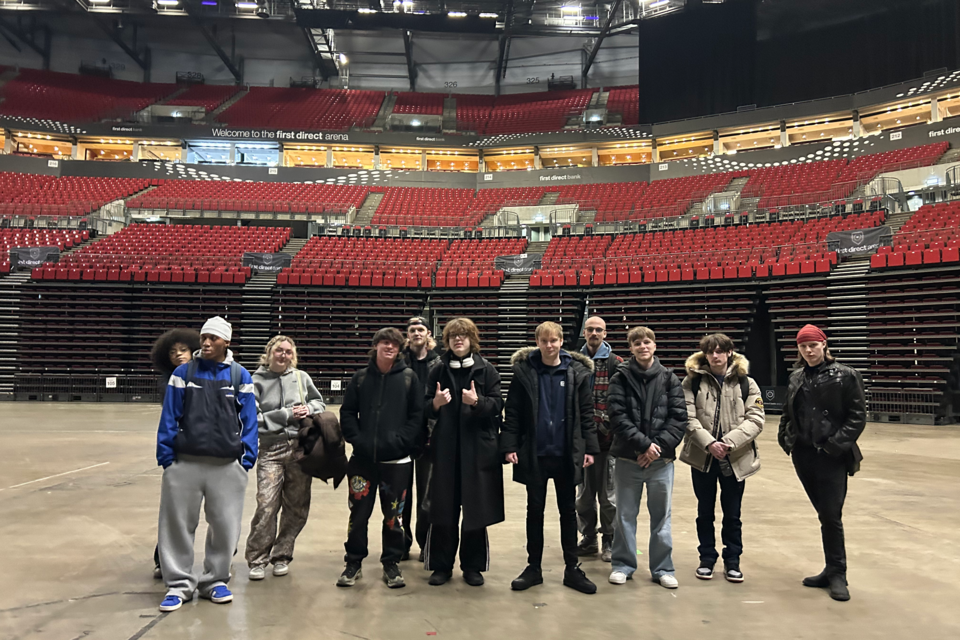
Credit: Ed Heaton.
In early 2026, Launchpad (through Music Local) delivered a high-impact Sector-Based Work Academy Programme (SWAP) in Leeds, designed to bridge the gap between aspiring talent and the regional music economy. Led by industry expert, Ed Heaton, the residency included classroom teaching, technical lectures, workshops and 1:1 mentoring, as well as behind-the-scenes tours of First Direct Arena, The Wardrobe, and O2 Academy.
Several participants in the programme have gone directly into industry roles in live sound engineering, venue operations, and festival work, with others remaining engaged with the wider Launchpad support network.
By combining classroom theory with direct venue access and expert panels, the SWAP model has proven to be a vital pipeline for regional recruitment. It provides participants with the practical skills and professional confidence necessary to navigate the music ecosystem as successful freelancers and employees.
4. Creative workforce: Empowering creators and securing futures
The UK’s music industry thrives on the brilliance of its people, many of whom often navigate complex portfolio careers, balancing their craft with the logistical demands of running their own music businesses. Music can provide important, fulfilling and meaningful careers, and a fair and safe working environment is essential for all. Our commitment to individuals in the sector is simple: the music industry will be a place where your talent matters more than your background, and everyone is entitled to a workplace where that talent can thrive.
In a workforce where freelancing is commonplace, it is vital for creators to have modern protections, as well as space to create. Through robust government action and active leadership from industry, we want to see a sector where everyone is paid fairly for their work, where an individual’s talent is recognised regardless of where they come from, and where everybody has the security and respect they need to thrive.
Music streaming
Music streaming has revolutionised how we discover and enjoy music, and the government is determined to ensure this translates into a fair and sustainable system that truly rewards the UK creators who contribute to it. Following the government-convened Creator Remuneration Working Group, the BPI, representing UK record labels, developed a set of Principles designed to put more money into the pockets of creators, including legacy artists, songwriters and session musicians. The UK divisions of the world’s largest 3 labels, Universal Music Group, Sony Music Entertainment and Warner Music Group, have rolled out bespoke programmes they estimate will deliver tens of millions of pounds to UK creators by 2030. For those labels already demonstrating best practice, particularly many independent labels, such as Beggars Group, these Principles will augment their existing practices, and complement the commitments within the Fair Digital Deals Declaration.
Working with industry, the government has now agreed arrangements to monitor the implementation of these Principles, to ensure this translates into real-world impact. We will review progress in 2027, to determine whether further intervention is needed to deliver on our objective to bring about real change. These measures sit alongside wider industry commitments on music streaming metadata and transparency - critical pillars for ensuring creators are paid accurately and kept fully informed when it comes to their work - with the Intellectual Property Office continuing to convene stakeholders to drive progress across the music ecosystem. To support these aims, creators can also access the Get Paid Guide, a product that emerged from the government’s metadata working group. The guide was produced by PRS for Music, The Ivors Academy, the Music Publishers Association and the Intellectual Property Office, and is designed to help artists navigate music data and secure their royalties.
Creative Freelance Champion
Freelancing is a defining feature of the UK music workforce, with 65% of workers in music and the wider performing arts operating on a freelance or self-employed basis. While it offers flexibility, there are unique challenges associated with freelancing that are difficult to solve with traditional policy approaches. The government will shortly announce the appointment of the Creative Freelance Champion role, designed to build a better understanding of this crucial part of the workforce, and represent them in policy discussions. Key freelancer representatives from the music sector, including the Musicians’ Union and the Independent Society of Musicians, have supported the development of this role, and the continued contribution of the sector will be crucial to its success.
Making Tax Digital
We want the tax system to work for those in the music sector, including freelancers and sole traders. Making Tax Digital for Income Tax (MTD) is an HM Revenue & Customs (HMRC) programme that is changing how people manage and report their income tax. It introduces digital record keeping and quarterly updates to help reduce errors and make it easier for individuals and sole traders to keep on top of their tax. We recognise that moving to these new ways of working can take time, and so HMRC is working closely with the music sector, including organisations such as PRS, the Independent Society of Musicians and the Association of British Orchestras, to make sure the new arrangements are well understood and work for people working in music.
Creative Industries Independent Standards Authority
A safe, respectful, and dignified working environment is not just an ideal, but a fundamental right for everyone across the music sector. The government supports the Creative Industries Independent Standards Authority (CIISA), which is seeking to tackle these complex challenges to uphold and improve standards of behaviour across the creative industries. As a latest step towards its roll out, the government has added CIISA to the Prescribed Person Order, which means people in the music industry will be able to whistleblow to them, including on issues of sexual harassment, and not suffer detriment or dismissal by an employer. For this complex and diffuse sector, this represents a huge step towards ensuring everyone is able to thrive in their working life.
Banning Non-Disclosure Agreements (NDAs)
The government is banning the use of NDAs in cases of harassment and discrimination, a practice that has been far too common in the music sector. We have launched a consultation on the details of the measure in the Employment Rights Act 2025, to seek views on whether it should, in the future, apply to a broader set of employment circumstances, including freelancers in the music sector. By ensuring that workers can no longer be silenced into complicity, we are fostering a culture of accountability and safety in the workplace. For the many talented individuals in the sector especially, disrupting cultures of silence will allow them to focus on building a prosperous and successful career.
Unpaid internships
Internships in the music industry can provide a vital early stepping-stone for individuals, especially young people, into careers in the sector. However, our recent Call for Evidence on the issue found that too many people are still expected to work for free. The government believes in equality of opportunity and is committed to removing barriers that prevent people from accessing work based on their financial circumstances. To address this issue we are taking 3 actions. Firstly, we are reviewing and expanding our guidance to ensure everyone is clear on how the law on minimum wage applies to them. Secondly, we will continue to crack down on unscrupulous employers via the new Fair Work Agency. Finally, we will bolster our communications to help young people understand their rights and what action they can take if they are not paid properly. Ensuring these key pathways into the sector are appropriately remunerated will support our mission to equalise access to the music industry.
Diversifying the workforce
The music industry should truly reflect the diverse talent within it, and industry leadership is vital. For example, we champion the data-driven work of Black Lives in Music (BLiM), a government-backed National Portfolio Organisation in receipt of multi-year funding from Arts Council England, who are leaders in this space. BLiM are tackling the systemic inequalities that have historically limited the careers of Black and ethnically diverse professionals in the UK music industry. Following their ‘Being Black in the UK Music Industry’ report, BLiM is working with stakeholders to implement the Anti-Racism Code of Conduct. This code provides a roadmap for organisations to move toward measurable action on pay equity, recruitment transparency, and board-level representation.
Earlier this year, UK Music, in collaboration with industry partners, published their landmark Black Music Means Business report, measuring the unique commercial, cultural, and community impact of Black music across 30 years of recorded music. The report shines a vital light on the immense contribution of Black music to the UK economy, revealing that genres rooted in Black musical traditions generated £24.5 billion - accounting for 80% of the UK recorded music market - while recommending eight actionable steps to address the systemic challenges the sector faces. Evidence-based insights such as this are incredibly important for bridging the ‘opportunity gap’ and arming advocates with the hard data needed to drive equitable investment and hold the wider industry accountable.
Case study: Sony Music - music streaming principles in action

Credit: Sony Music
Launched in 2021 as part of the Artist Forward initiative, Sony Music’s Legacy Unrecouped Balance Programme has distributed millions of pounds globally to thousands of their long-standing creators. One notable example involved a UK band from the 1990s with over £700,000 in unrecouped advances. Sony disregarded this balance and unlocked the band’s earning potential, resulting in a royalty payment to the band of around £50,000 in 2025 alone, with further annual payments expected to follow.
5. Innovation: Unleashing the power of the UK’s cutting-edge creativity
Musicians are born innovators. And the music sector more broadly has a unique ability to adopt and deploy new technologies at pace, unlocking new products, services, markets and ideas. As we look ahead, the growth of creative technologies and rapid evolution of artificial intelligence presents an opportunity to revolutionise music production, distribution and fan engagement, positioning the UK at the forefront of global digital transformation. But we also know that 66% of music creators believe AI poses a direct threat to their professional careers, while 90% are concerned about the lack of protections for their voice, image, and copyrighted work.
The responsible and ethical use of AI can boost our world-leading creative sectors, and this must be properly informed by the experiences of musicians and creators. This means protecting the UK’s position as a creative powerhouse while unlocking the potential of AI-driven innovation to be the go-to country for safe, responsible AI - the kind that lifts our economy and brings opportunity to millions. This, backed by strategic investment, will support a sustainable ecosystem, with the UK as a leading destination for creative R&D, and will catalyse a new generation of world-leading musicians and music businesses.
AI and music copyright
The government is committed to ensuring the music industry can harness advances in AI and digital technology while protecting intellectual property and creative rights. This means supporting rightsholders to license their work in the digital age, enabling responsible AI development through access to high-quality UK content, and ensuring copyright law continues to protect the UK’s position as a creative powerhouse. This government believes that people should be paid fairly for the work they do and that they should be able to assert their rights.
We have already launched a pilot Creative Content Exchange, a secure trusted online marketplace for licensing cultural and creative content. This ground-breaking initiative has the potential to open up new revenue streams by allowing content owners to commercialise and monetise their assets while providing data users with ease of access to drive innovation. The pilot is working with cultural institutions and AI developers to explore user needs, content supply and demand, and will test how it can roll out to businesses and individuals. .
There is more work that can be done to move us forward, as we have set out in our Report and Impact Assessment on Copyright and Artificial Intelligence, published in March. We will launch a consultation on ‘digital replicas’ in the summer, seeking views on how to address harms caused by the unauthorised replication of a person’s likeness while protecting legitimate innovation. We will also establish a dedicated taskforce on AI labelling, to put forward proposals for government on best practice for labelling AI-generated content, with an interim report to be published in autumn. Labelling content, so it is clear whether it has been made using AI, can help people make informed choices on the content they consume. Alongside this, the government will publish a review of the tools available for creators to control the use of their works online, including standards, technical solutions and best practice on input transparency. This will inform where there are gaps and whether there is an appropriate role for the government in addressing them. Finally, the government will launch a working group focused on independent and smaller creative organisations, including representatives from the music sector, exploring whether further support is needed to help them license their content effectively.
The role of industry: Responsible Licensing and Partnership
The music industry has a vital responsibility to ensure that AI serves as a catalyst for sustainable growth, and not a threat for creators. Record labels and streaming services are at the forefront of striking new licensing deals in the digital age. All 3 of the major labels have struck a number of AI licensing agreements, while 77% of the BPI’s independent record company members view licensing music for use in AI as key to future growth. It is essential that these companies work hand-in-hand with the composers, songwriters and performers they represent. By building partnerships based on transparency and fairness, the industry can ensure that technology supports the sector without ever replacing the human heart and soul of British music.
AI adoption
The government supports responsible and ethical AI adoption across our world leading creative industries, enabling organisations and freelancers to enhance their productivity, engage new global audiences, and pioneer innovative products and services. DCMS is working with the music industry and others to consider how best to support AI adoption. We aim to help creative businesses, especially SMEs and the self-employed, build the skills and confidence to use AI safely and effectively, so the economic and creative benefits of AI are widely shared.
The government has appointed Sally Davies, the Managing Director of Abbey Road Studios, as the AI Champion for the creative industries. Sally has been engaging closely with the sector to inform her AI Adoption Plan for the Creative Industries, which was published in June. Along with a summary of the state of AI adoption in the sector, the plan sets out Sally’s independent recommendations for what industry and government can do to remove barriers and empower more creatives to adopt AI responsibly. This means not promoting AI adoption for its own sake, or replacing human creativity, but only implementing it where it strengthens their work, improves productivity, supports growth and creates new opportunities.
Sally’s recommendations are not formally part of government policy, however we will carefully consider next steps in order to allow our creative industries to best seize the opportunities for innovation and growth presented by AI. In the first instance, the government joins the AI Champion in supporting an augmentation-first approach to AI Adoption in the creative industries. AI should support human creativity, not displace it. We are committed to working with Sally and the sector to increase accessibility to industry-backed knowledge, infrastructure and support, so as to empower creatives to make an informed decision on whether they’ll use AI or not.
Additionally, the government has ringfenced a £200m funding package to back AI adoption, which £20m will be used to form an Early Careers Jobs Alliance, supporting young people entering the job market.
Innovation funding
Music businesses and artists push new creative frontiers on a regular basis but they face barriers to innovation including high development costs and a lack of capacity to engage with cutting-edge research. To tackle this, last year’s Creative Industries Sector Plan committed to increase public and private levels of Research and Development (R&D) investment in the sector, and we are delivering on that. UK Research and Innovation (UKRI) published its R&D Strategy for the Creative and Cultural Economy in January, backed by a record £500 million funding package. UKRI will focus on music and other ‘frontier sub-sectors’, grow the ambitious national infrastructure for innovation established through the Arts and Humanities Research Council’s (AHRC) CoSTAR network with increasing funding to support access to its R&D labs including the CoSTAR Live Lab for performance. UKRI will sustain place-based investment such as AHRC’s Liverpool’s Music Futures Cluster, and support breakthrough ideas from early stage R&D to private investment including through Innovate UK’s Next Wave, a new £10 million fund for seed and early-stage innovation, including in music technology. Businesses can access the wide range of R&D and innovation funding through UKRI’s Funding Finder.
Combatting content and streaming fraud
Generative fraud involves bad actors usurping legitimate distribution accounts and channels to defraud the royalty system. Put simply, AI ‘slop’ poses a significant threat to the integrity of the sector. It is bad for creators trying to make a living in the sector, and for audiences seeking out human creativity. To protect this digital frontier, the government welcomes industry-led initiatives such as the BPI Content Protection Unit, funded by Phonographic Performance Limited (PPL), as well as initiatives from Digital Service Providers (DSPs) and music distributors, such as Spotify and Deezer. The Digital Entertainment Retailers Association (ERA) is working with UK Music to bring the sector together to look at this issue, and we strongly encourage the industry to take a collaborative and proactive approach, to ensure the digital ecosystem is transparent and rewarding for creators and audiences alike.
Case study: MusicFutures

Liverpool is the UK’s UNESCO City of Music and one of the world’s great music cities. It is home to 1,500+ music related businesses who produce £400 million in annual direct Gross Value Added (GVA) for the local economy.
The £7.2 million AHRC Creative Cluster, MusicFutures, builds on this strong foundation. Backed by 27 regional and national partners, MusicFutures is positioning Liverpool City Region as one of the UK’s leading music innovation clusters. Led by the University of Liverpool with Liverpool John Moores University, it brings together regional and national industry bodies to address its biggest modern challenges, from handling AI and protecting artists’ rights to securing funding and creating new types of live music experiences.
In its first year, MusicFutures has supported 21 placements into industry, provided training for 170 individuals, delivered 8 collaborative R&D projects and welcomed 914 attendees to events and workshops. Key highlights include a collaboration with the CoSTAR National Lab supporting grassroots venues, a music-focused Work Academy programme and a grant scheme for entrepreneurs and music innovators.
6. Place: Strengthening music infrastructure and opportunity nationwide
Music is a powerful source of pride that shapes the soul of our towns, cities and villages, anchoring our national identity. To maintain our status as a global musical powerhouse, we must ensure that the industry’s success is not a centralised tale of a single city or region, but a nationwide symphony. Wherever people are in the UK, they should have localised access to live music of all genres and all types of venues, from pubs to arenas, as well as the record shops that serve as vital community hubs for discovery. This must translate into opportunities too. Our music scene can only keep growing if there are pathways in every corner of the country for people with talent to progress; someone growing up in a small town in Yorkshire should have the same structural opportunities to start and build a career in music as someone in London.
However, we know this vision is not yet realised. There has not been enough investment in small venues across the country and these cultural hubs remain vulnerable. Meanwhile, the average tour has shrunk from 22 dates in 1994 to 11 today, creating cold spots across the country where people’s access to gigs and tours is reduced. Centralised decision-makers have often been too disconnected from local communities to recognise their individual needs and potential. Music and culture should be appreciated for their ability to transform places - as a stimulator of local high streets, businesses and tourism, and as a source of civic joy and passion for those living nearby.
Creative Places Growth Fund
The £150 million Creative Places Growth Fund (CPGF) is a new approach to supporting creative industries by devolving funding to six high-growth potential Mayoral Strategic Authorities (MSAs). The funding empowers Mayors to design interventions to support creative professionals, businesses and young people in their region and we are delighted that music sits at the centre of their plans. To unlock the full potential of this investment, MSAs should work together where useful to do so, ensuring coordination and maximising their impact. We will continue to explore other ways to support MSAs and creative industries corridors in their drive to deliver growth in the music and wider creative industries.
| Region | Activity |
|---|---|
| Greater Manchester | The Greater Manchester Music Plan will be published later this year as an ambitious, delivery‑focused strategy, confirming music’s position at the heart of Greater Manchester’s economic and social ambitions. Developed through extensive engagement with local and national partners, the Plan will set out a clear programme of coordinated action to strengthen the music ecosystem, support artists and industry, and expand access to vital infrastructure and opportunities across all 10 boroughs. Backed by dedicated investment, including CPGF support, the Plan will be delivered at local, national and international level and improve access to funding, raise standards in education and talent development, and unlock growth across export, intellectual property and emerging technologies. |
| Liverpool City Region | Music sits at the forefront of Liverpool City Region’s identity with an economic impact projected to exceed £1 billion by 2035. Building on the pioneering work of the city region’s independent industry Music Board, which led directly to creation of the £6.75 million MusicFutures cluster, the combined authority is leveraging CPGF, finding innovative and inclusive ways to support talent and skills development. Liverpool City Region continues to show leadership in the music sector, hosting the Event Research Programme during the pandemic and more recently as a UN-recognised Accelerator City for climate action. |
| North East | Music is identified as a key sub-sector in the North East Local Growth Plan. A Small Venues Fund (up to £2.5 million) will open later this year to invest in grassroots spaces and a £4 million Creative Talent skills programme is giving local people the support needed for creative careers, including in music. Major investments are being made in performance space at Gateshead Quays Area and Newcastle Quayside Studios, and the North East has joined forces with other Strategic Authorities to back the Northern Music Export Office, led by Generator (see case study below). Place-based initiatives - including Sunderland Music City - are supporting community engagement and strengthening the region’s music ecosystem. |
| West of England | The West of England Combined Authority is positioning the region as a leading UK hub for music and live events, connecting world-class venues with grassroots talent. The CPGF programme will offer business support and talent development opportunities to boost the night-time and visitor economies, grow the talent pipeline, support low carbon live events, increase music exports, and support a stronger, more resilient regional music ecosystem. |
| West Midlands | The West Midlands music sector comprises a diverse array of artistic talent, venues, record labels, media, academics and grassroots organisations and is a significant part of the regional creative economy, with the music tourism sector alone generating £550 million in 2024, driven by 1.4 million music tourists. To support further growth, the West Midlands Combined Authority will convene partners to establish a Regional Music Office function, expanding the music economy across our towns and cities and establishing the region as a major global music hub. |
| West Yorkshire | West Yorkshire Combined Authority’s investment in music will encompass sector development, business growth and profile‑raising activity. It includes supporting Northern artists to tour internationally through the co‑funding of the Northern Music Export Office; strengthening the £200,000 West Yorkshire Music Network through a refreshed, grassroots‑led offer with equality, diversity and inclusion at its core; convening a new Music Board to shape policy and position West Yorkshire as a home of live music (anchored by premier live industry hubs like Production Park); and supporting music and music‑tech SMEs through a targeted accelerator, investment and export support (with £400,000 funding for year 1) alongside other priority creative subsectors. |
Devolution and community empowerment
In April, the government made culture an ‘area of competence’ for MSAs via the English Devolution and Community Empowerment Act 2026. This will enable mayors, if they choose, to appoint a commissioner for culture; as well as to convene local partners and collaborate with neighbouring mayors on culture matters. This is a clear signal of this government’s commitment to the cultural life of our nation. It demonstrates the important role all MSAs have in thinking strategically about the cultural and creative offer across their regions and bringing together regional actors such as local authorities, Arts Council England, music education providers, local creators and those working day-to-day in venues, studios and nightclubs.
Arts Council England reform
Arts Council England plays a crucial role in anchoring our arts and culture in our people and places and its important work in England’s music sector extends across support for performing ensembles such as orchestras, music venues, festivals, tours and education. The government’s independent review by Baroness Margaret Hodge of the Arts Council England highlighted opportunities for the nation’s cultural sector, including music, to be better embedded in communities around the country. This includes work with Arts Council England to reform the National Portfolio Investment Programme which supports cultural organisations across the country, including music, and the Arts Council’s new Citizens Voices for Culture programme, which will ensure decisions around funding are guided by local priorities.
Pride in Place Funding
Music plays a unique role in telling our stories. Communities’ support for local music venues and performance will be enabled by the government’s new £5.8 billion Pride in Place Programme, supporting 284 communities with up to £20 million funding each and support for each place over a 10-year period. As well as long-term funding, these communities will receive real power to breathe new life into the places they call home, where local people can decide how investment is used in their area. Neighbourhood Boards will develop plans to deliver local priorities, which could include support for local music venues and performances.
High Street Strategy
Music venues play a vital role as high street anchors, supporting creative jobs and providing accessible forms of entertainment and culture. According to the National Arena Association, every 10,000 attendees at a live music event generate £1 million of local spend on restaurants, bars, transport and hotels. The government is developing a High Street Strategy to reinvigorate UK high streets by supporting business and restoring pride amongst communities. As part of this, we will recognise the role of music in driving footfall and supporting high streets. Working alongside businesses and industry representatives, this cross-government strategy will be published later this year and will set out what the government will do to reverse decline and restore pride in our high streets. This strategy is backed by £301 million, £61 million of which will support the Pride in Place Community Right to Buy Fund, empowering communities to take control of valued local assets, and £10 million will fund High Street Rental Auctions to bring vacant properties back into use. This funding will also establish new High Street Innovation Partnerships, supporting some of the most challenged high streets to transition to more resilient, mixed-use models. To further help communities take control of local heritage and bring buildings back into active community use or ownership, the Heritage Revival Fund, administered by the Architectural Heritage Fund, will provide £42 million over the next four years to support the repair and regeneration of derelict, redundant, or underused historic buildings.
Visitor economy growth strategy
Music plays an important role both in creating vibrant places, but also in drawing people to experience them. This has tangible economic benefits - music tourism attracted 24.7 million tourists and generated £11.2 billion in 2025, more than triple its value 10 years ago. From headline stadium gigs to intimate performances and historic venues, the UK is world-famous for its music scene and we want to capitalise on its potential to attract even more visitors, both international and domestic. Later this year, the government will publish a Visitor Economy Growth Strategy to provide a long-term framework to increase visitor numbers and deliver sustainable growth across the UK.
Case study: Generator - building international pathways
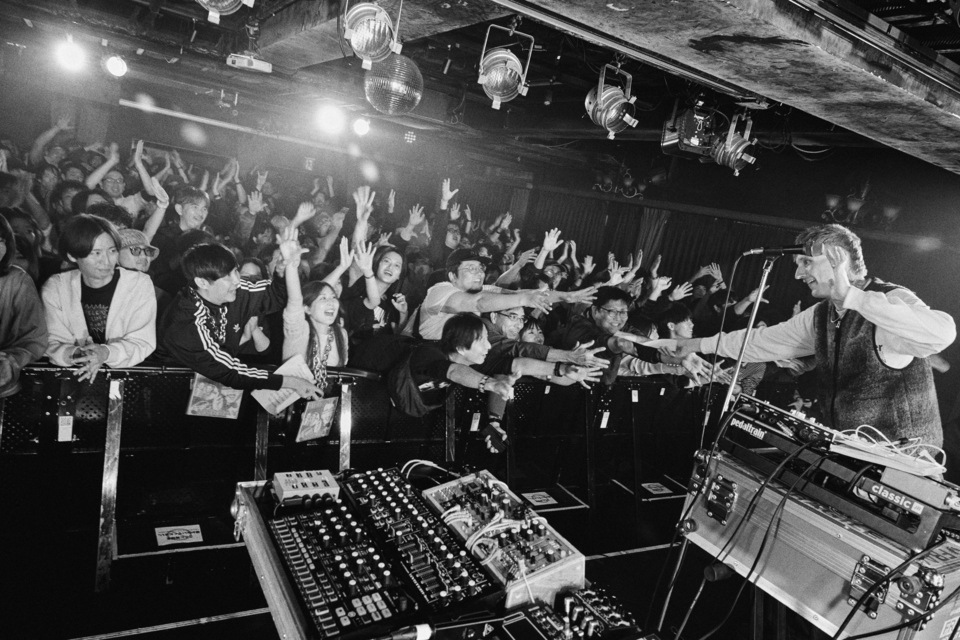
Credit: Adult DVD performing in Osaka April 2026, Photo by Christopher Owens.
Generator, the north’s leading music development agency, has launched a landmark partnership with Japan, the world’s second largest music market, to establish long term creative and commercial links. Their February 2026 trade mission was the first for the Northern Music Export Office, and backed by West Yorkshire CA, Liverpool City Region, Tees Valley CA and the North East CA.
Building on the successes of the February trade mission, Leeds-based band Adult DVD received export support to travel to Japan in April 2026. The activity included 3 sold-out live shows in Tokyo and Osaka, alongside two in store DJ sets and signings, a radio interview with Osaka’s FM802, and an interview with Rolling Stone Japan. The trip resulted in multiple festival offers and label interest, whilst Japan also became the band’s top territory for both Spotify and Apple Music listeners.
7. Backing Business: Lowering barriers, simplifying processes and supporting music businesses of all sizes
A thriving music industry requires more than just talent; it needs a stable and supportive business environment where innovation and commercial growth can flourish. We recognise the challenges facing businesses across the music ecosystem. This includes a historic under appreciation of the value of live and electronic music venues in local licensing and planning decisions, while the recorded sector faces pressures from a fast-changing competitive landscape.
The government is committed to a stable, pro-growth regulatory framework right across the economy. For the music industry, this is taking action to protect our cultural spaces, from recording studios to grassroots venues and nightclubs, and tackling operational frustrations and barriers to investment - allowing music businesses to get on with what they do best.
Protecting music venues from the impacts of nearby development
We want music venues to continue to co-exist alongside new developments; a degree of noise and activity is an inherent feature of dynamic, thriving places. The Agent of Change principle is vital for a healthy music ecosystem, protecting venues from noise complaints while also safeguarding new residents, by ensuring developments take account of existing cultural spaces. The principle is embedded in the National Planning Policy Framework (NPPF) which is the starting point for the preparation of development plans and a material consideration in planning decisions. However, we know that the principle has not always been applied consistently. To address this and ensure shared expectations between venues, developers, and Local Authorities across England, we have recently consulted on strengthening the wording of the NPPF and will update guidance following the publication of the new version. The Ministry for Housing, Communities and Local Government (MHCLG) will update guidance and write to all local planning authorities to highlight the importance of this policy, and to raise awareness of changes made to strengthen implementation of the principle.
We also encourage local authorities to embed the Agent of Change principle in local licensing policies - as set out in the National Licensing Policy Framework (NLPF) published last year - and will assess whether updates to the statutory nuisance regime may be needed to ensure that noise complaints are addressed more consistently and proportionately across the UK. We are committed to working with the music industry to ensure these improved frameworks deliver real benefits for grassroots music venues; DCMS and MHCLG will engage with the Music Venue Trust, live music industry voices and Local Authorities to monitor progress and verify that the changes are working on the ground.
The National Planning Policy Framework supports the provision of community infrastructure, including music facilities. Local authorities can use developer contributions in the form of section 106 planning obligations and the Community Infrastructure Levy to help fund and deliver social infrastructure which supports new development. That is why DCMS and MHCLG are meeting to explore how developer contributions can be used to support and strengthen cultural provision by opening access and better embedding them within communities. MHCLG and DCMS will explore specific recommendations on how developer contributions could be used to boost social and cultural infrastructure using the Community Infrastructure Levy (CIL) and S106 including greater oversight.
Licensing system improvements
The government is championing the hospitality and events sector by rebalancing the licensing system to promote growth. We will create consistency in local licensing for festivals and venues with new, business-friendly guidance and by legislating to increase the allowed number of temporary event notices (TENs). TENs are a light-touch process for events below 500 capacity to extend operating hours, and allow unlicensed premises to host licensable activities on a temporary basis. We will permanently increase the maximum number of TENs for licensed venues from 15 to 20 per year, and the total event days from 21 to 26, providing greater flexibility, including for live music venues and emerging artists.
We will also update the National Licensing Policy Framework (NLPF, non-statutory guidance) to clarify licence length, with an intention for Local Authorities (LAs) to grant established events minimum five-year licences (or 10-year/lifetime where appropriate), recognising their economic and cultural contribution. To provide certainty and aid growth, new events should have a presumption of minimum 3-year licences, while one-off or test events may receive 1-year licences as appropriate.
We will work with Local Authorities and the music sector to develop the guidance, with the aim of a proportionate approach and avoiding blanket or unnecessary conditions upon review or renewal of licenses. To support a pro-business regime, we will encourage LAs to welcome requests to remove outdated conditions via the minor variations process. Building on best practice, we intend for LAs to conduct lighter-touch, simplified reviews for events with a proven safety record or smaller, new events. The revised NLPF will also encourage event organisers to plan robustly, engage the community early and seek post-event feedback in order to build local confidence, mitigate concerns (like noise), and ensure licensing decisions are informed by evidence.
Business rates relief for live music venues
It is vital that we maintain the right conditions for music infrastructure across the country to thrive and showcase our talent. We recognise that grassroots venues often operate with tight profit margins and sharp cost increases can threaten their financial sustainability. That is why the government has introduced a package of additional support in response to recent changes to business rates valuations. Live music venues will get a 15% cut to new bills for the 2026/27 financial year, followed by a two-year real-terms freeze to bills through to 2028/29. Venues can see more detail and check availability.
Small business strategy
According to the Independent Music Companies Association (IMPALA), 99% of UK music businesses are micro, small, or medium sized enterprises[footnote 1], from independent artists and labels to local venues and recording studios - all playing a crucial role in powering our sector. The government is investing in a stronger, more supportive environment where businesses can start, scale and thrive. The Small Business Plan, launched in July 2025, sets out over 200 targeted actions, backing firms to grow with confidence, build resilience and seize new opportunities. As well as the music specific measures mentioned elsewhere in this document, the Small Business Plan is making it easier for businesses to access the support they need through the Business Growth Service, local Growth Hubs and the Business Academy, which includes support for music SMEs (see case study below). The government is also bringing in the most significant legislation to tackle late payments in over 25 years, giving UK music businesses the strongest protections in the G7 and helping small businesses benefit from stronger cash flow and greater certainty.
Better data and analysis of music’s economic impact
Data plays an essential role in helping us understand the music sector - to support its long-term growth and resilience, we need the evidence base to identify its composition and economic contribution. The Office for National Statistics’ UK Standard Industrial Classification framework is an important tool for that analysis and its 2026 updates have embedded 3 sector recommendations, making a material difference to our future ability to track the impact of different music businesses by providing a more detailed understanding of concert halls and venues, recording studios, publishers, and the distinction between music and podcasts.
We also recognise the specific data challenges for recording studios in fully illustrating their significant contribution to the UK economy. To fully capture this - and better inform our approach to supporting the sector - we will commission new research to assess the market size and value of UK recording studios. This review will analyse key metrics (including GVA, employment, and regional distribution) while evaluating the sector’s broader benefits, current pressures, and resilience to economic shocks.
Case study: Small businesses strategy - Help to Grow management course
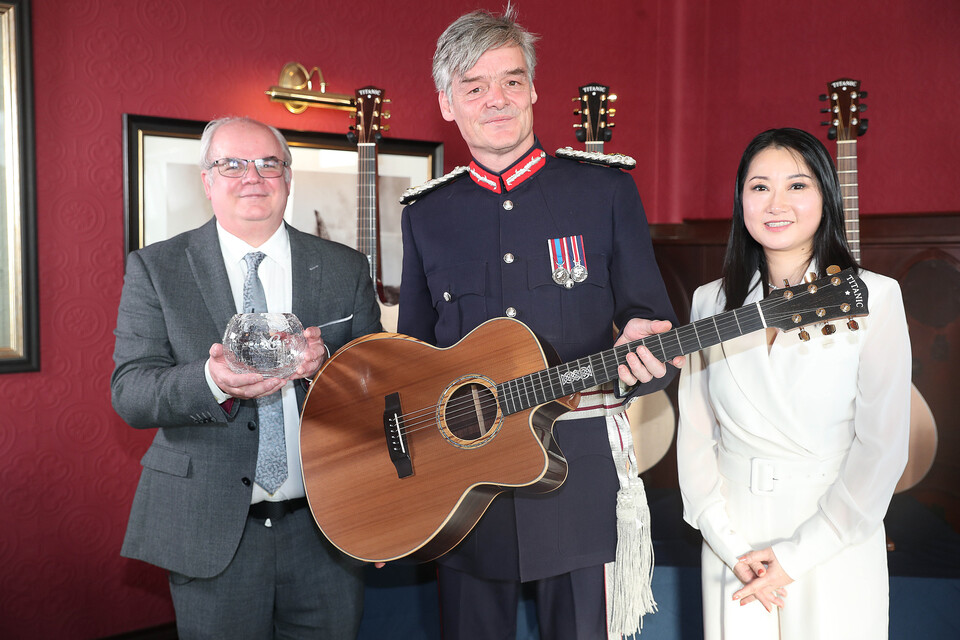
Credit: Bill Smyth.
Founder of IBC Music, Iain Wilson, has been sourcing global musical instruments for over 30 years. He joined the 90% government-funded Help to Grow: Management Course at Queen’s University Belfast to strengthen his leadership during a period of rapid growth. The course helped him to transition from working “in” the business to working “on” it strategically. By creating a new management structure and delegating responsibilities, Iain has built a more resilient and innovative organisation, better equipped to navigate global challenges such as tariffs and rising shipping costs.
The 12-week course also enhanced his approach to trade and exports and provided a peer network that has strengthened his decision-making and leadership. Iain now has the capacity to pursue new product innovation, including a project to produce environmentally sustainable guitars.
8. Trade and exports: Strengthening partnerships, reach, and impact
British music is one of the UK’s strongest cultural exports, reaching audiences around the world and generating substantial returns for artists, businesses and the wider economy. In 2024, this global demand translated into a record-breaking £4.8 billion in export revenues. This impact is shown in Spotify’s Loud & Clear report, which states that the platform paid over £860 million in royalties to UK artists in 2025, more than double the 2018 figure, with over 75% generated by listeners outside the UK. Digital distribution and international audiences for live events provide a huge opportunity for the UK, but ever increasing global competition means we cannot be complacent in relying on our historic strength.
Our vision is to secure British music’s status as a permanent global powerhouse by creating a pipeline that supports our world-class talent to capitalise on the growing international demand. To ensure this, the government is supporting targeted interventions to strengthen export capability, unlock new markets and support artists and businesses to operate internationally, such as the Programme of Cultural Cooperation with India signed by the Culture Secretary last year. This end-to-end approach, bridging the gap between local grassroots potential and the global arena, can help ensure British music maintains its status as a global powerhouse, and complements industry-led initiatives including BLACMEX and the Northern Music Export Office.
The Music Growth Package - international strand
The Music Growth Package (MGP) marks a significant increase in government export support, to help independent artists, songwriters, and their supporting businesses break into global markets. By extending successful existing programmes such as the Music Export Growth Scheme and scaling up the International Showcase Fund, this package will support established acts to tour and stream to new markets, while introducing new vital funding for grassroots international activity. This investment will help emerging talent overcome the high costs of touring and marketing, strengthening the industry’s pipeline and driving long-term export growth.
Tackling EU Touring Barriers
Since leaving the EU performers and crews have faced increased costs and more complex, time-consuming processes. The government is proud to champion our world-class musicians, and our goal is to ensure that talent, not paperwork, remains at the heart of every tour. Many of the frictions affecting touring are shaped by international rules and systems, but the government is committed to working with international partners to reduce unnecessary bureaucracy wherever possible. HMRC’s leading role in the digitalisation of ATA carnets is a key milestone in this effort to simplify processes, with the UK going live with the first phase of the global eATA Carnet rollout in June 2026, alongside the EU, Norway, and Switzerland. And we are working to improve and update GOV.UK guidance to help artists, crews and businesses navigate existing requirements more easily.
Building on the positive momentum of the UK-EU Summit in May 2025, the first UK-European Commission High Level Meeting on Culture in March 2026 marked an important step in these efforts, and we will continue to seek progress on these issues with the EU and Member States in the months ahead. Government and industry are working together in this effort, including through the Cultural Exchange Coalition (CEC).
Alongside the Music Plan, the government will soon publish its first comprehensive research report into the economic and cultural value of UK touring in the EU, demonstrating the significant mutual economic value generated by UK musicians and performers.
Trade missions
Targeted trade missions are central to expanding the UK’s global music footprint. The government recognises this potential, and this year we are increasing investment in our music trade mission programme by nearly 50%. Delivered in partnership with the BPI and targeting priority markets identified in the Creative Industries Sector Plan, these trade missions will adopt a more inclusive approach with the music sector, ensuring new growth opportunities are accessible to independent creators and businesses from every nation and region of the UK. This includes: a music sync mission to Los Angeles (also partnered with Music Publishers Association) to connect UK businesses with US music supervisors and secure lucrative licensing deals across film, television, and advertising; missions to Japan and China - the world’s second and fourth-largest recorded music markets; and a new mission to the Bigsound Festival in Brisbane, Australia to forge connections with the Australian music industry and showcase UK artists.
These missions sit alongside a strengthened presence at major platforms like South By Southwest (SXSW) in Texas, and now SXSW London. Central to this is the British Music Embassy (BME), a globally recognised creative showcase which has hosted over 500 emerging acts including Dave, Little Simz, and Wet Leg. The Department for Business and Trade (DBT) is more than doubling its funding to BME to £100,000 a year which will enable the BME to continue to provide the best production standards, attract further international investment and provide a vital springboard for UK talent from Cornwall to Dundee to reach new global audiences.
Sync opportunities
The use of music in film, TV, video games and advertising can create commercial opportunities as well as powerful cultural moments. Kate Bush surged back to number one thanks to Stranger Things, while Bridget Jones: Mad About the Boy showcased an up-and-coming Olivia Dean to a global audience. We recognise the potential of these sync opportunities for both legacy artists and emerging stars to find new audiences - and we want to create more places for British music to take centre stage. That is why the government is convening the BPI with the British Film Commission and Games London to create and strengthen connections between the British music industry and international studio leadership. We want to increase the volume and value of sync deals with UK artists and labels by capitalising on our existing work to bring screen investment into the UK.
Case study: Music Export Growth Scheme recipient

Credit: JMEnternational.
Ezra Collective are one of the UK’s most celebrated contemporary jazz acts, blending jazz with afrobeat, hip hop and reggae influences, reaching global audiences beyond the traditional jazz scene. Support from the Music Export Growth Scheme (MEGS) in both 2018 and 2019 helped the group accelerate their international growth and establish a lasting presence in the US market.
MEGS funding supported their first US headline tour, directly leading to worldwide live agent representation with Creative Artists Agency and invitations to perform at SXSW Austin and for NPR Tiny Desk. The group also signed their first US label deal with Partisan Records after the label president attended a MEGS-supported show in the US. Since then, Ezra Collective have won the 2023 Mercury Prize and Group of the Year at the 2025 BRIT Awards, and were nominated for a MOBO Award in 2026.
9. Fans: helping everyone access and enjoy our world-leading music sector
Without fans, we have no music industry. Whether fans are heading to a small local club or a massive festival, or listening to the radio or their favourite record, their passion and demand is what drives artists and the industry as a whole. But audiences have faced challenges around access and safety, with venues needing support to address these issues, while ticket touts have long been allowed to rip off and exploit hard-working fans. This cannot continue. We are putting fans first by working together with the industry to ensure that live music environments are safe, inclusive and accessible to all. We are also leveraging initiatives like the Great British Summer Savings to reduce financial barriers during peak touring months, making live music more affordable for families. We also recognise the importance of connecting British talent with new fan bases, both at home and abroad and will continue to explore showcasing opportunities to launch our next generation of artists.
Secondary ticketing
Fans buying resale tickets are currently at risk of being overcharged by touts buying large volumes of tickets online and reselling them for vastly inflated prices. We are determined to protect consumers and improve fans’ access to live events, while ensuring that people have a safe and secure means to resell tickets. In November last year we announced a package of proposals to tilt the balance back in favour of genuine fans, including a ban on re-selling tickets on platforms for more than the original price paid, a cap on the level of service fees charged by resale platforms, obligations on platforms to comply with the cap and robust enforcement penalties. We’ve also asked industry, led by trade body STAR (The Society of Ticket Agents and Retailers), to join us in tackling touting and work to improve transparency in pricing practices. We have heard clearly from industry the need to get this right. A draft bill to implement our secondary ticketing reforms is part of our legislative agenda for this session of parliament. It will undergo pre-legislative scrutiny conducted by the Culture, Media and Sport Committee and with the support of the Business and Trade Committee to ensure the end result is effective, enforceable, and future-proof. For more information, see the government response to the consultation on the resale of live events tickets.
Safety
Every fan has the right to enjoy live music in a safe environment. To ensure better safety standards, the government is introducing the Terrorism (Protection of Premises) Act 2025, also known as Martyn’s Law, which will improve protective security and organisational preparedness across the UK. To support the music sector through this transition, DCMS and the Home Office have worked with industry experts to develop statutory guidance on how the measures should be navigated, to ensure implementation is manageable and effective for venues and fans alike.
While live events should be places of connection, creativity and shared cultural experience, there has been concern that Jewish artists, staff, and audiences experience events as unsafe or exclusionary spaces. We encourage and welcome the efforts of industry, including from the LIVE Group, to develop guidance to support venues in addressing these issues. We must ensure that our world class events are defined by their safety and their standard of care for every participant. We are launching a series of targeted, sector-specific roundtables in partnership with the Board of Deputies of British Jews to bring together Jewish representatives, government, and our Arm’s Length Bodies to drive solid, actionable commitments. This will include a dedicated session on live music, theatre and stage.
All In
The government is backing the UK and Ireland Arts Councils ‘All In’, a UK and Ireland-wide access scheme for the creative and cultural sector that has established universal industry accessibility standards combined with digital booking tools to remove barriers for disabled, deaf, and neurodivergent people across music venues, festivals, theatres, museums, and galleries. It urges the sector to prioritise improved access for disabled audiences and visitors to increase inclusion and welcome more disabled people to engage with culture.
All In Essentials launched in February for England-based organisations, and will roll out across the UK and Ireland later in 2026/2027. Organisations can now subscribe to All In to benefit from full access to the Accessibility Standards ahead of the release of All In Plus this summer, which will make it easier for disabled people to book tickets and share their access requirements with subscribing venues and festivals.
Lord Brennan’s Fan-led review of live and electronic music
The government welcomes Lord Brennan of Canton’s report on the independent Fan-led review of live and electronic music, published by the Culture, Media and Sport Select Committee in April 2026. We would also like to thank the thousands of fans who contributed their time and insights to ensure their voices were heard. We share Lord Brennan’s ambition to ensure that live and electronic music and its fans thrive in the UK, and our plan sets out how we are taking action in many of the areas the review identifies. We have carefully considered the report’s findings and have provided a response to the Committee on each recommendation for the UK Government. The response has bee published on the CMS Committee’s website.
Case study: Attitude is Everything’s Live Events Access Charter
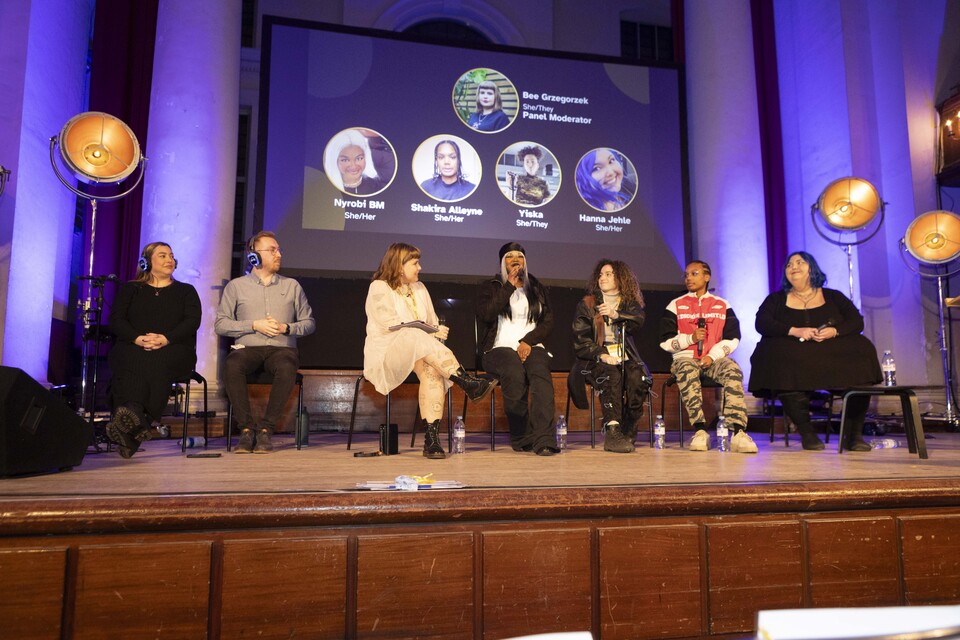
Credit: 2025 Live Events Access Charter Relaunch. Photographer Kimi Gill.
The government recognises the important role of industry leadership in enhancing accessibility in the music and live events industry. This includes Attitude is Everything, as a disability-led charity, where their work with audiences, artists and professionals has been instrumental in reducing the barriers that disabled people face. Their Live Events Access Charter provides a framework that moves the sector beyond basic compliance and is now an industry standard adopted by over 200 venues and festivals.
Attitude is Everything was commissioned by the UK Arts Councils to develop the accessibility standards for the recently launched All In scheme, which works to empower organisers to embed disability and equality into every aspect of their operations to welcome disabled visitors. Attitude is Everything has also introduced the Grassroots and Community Accessibility Framework, a streamlined self-assessment tool and guide designed to help local venues with limited capacity transparently identify and remove barriers for Deaf, disabled, and neurodivergent people.
10. Social and environmental impact: Harnessing the power of music as a force for good
Music is one of the UK’s most powerful social assets, playing a crucial role in supporting health and wellbeing, helping to reduce loneliness, improve mental and physical health, and bring people together through shared experiences. Music also has a vital part to play in shaping a more sustainable future. As both a cultural force and a major industry, it can influence behaviours, inspire audiences, and continue to innovate in ways that reduce its environmental impact.
Maximising these positive benefits requires data, recognition and leadership. This section sets out the actions taken by government and industry to tackle gaps in these areas, and drive the wider benefits of music across our communities, society and planet.
Social impact:
Culture and Heritage Capital Programme research
We need to build the evidence base of the social, cultural and environmental value of music, to strengthen the case for further public and private investment into the sector. The Culture and Heritage Capital (CHC) Programme is led by DCMS in partnership with our Arms Length Bodies and aims to broaden economic analysis across the creative, culture and heritage sectors. The programme has already found that general engagement with culture and heritage, including going to the opera, a classical music concert or concert of a different music genre, positively impacts physical health, mental health, and productivity, valued for adults at £18.6bn per year. We will commission further research under the CHC Programme into the social impact of music assets, and together this will continue to make the case for the importance of UK music.
Arts Council England funding to social impact
Arts Council England has a long history of investment in creative health, and recognises that music is a fundamental part of living well. Since 2022, Arts Council England have invested £9.35 million through National Lottery Project Grants into music projects that have a creative health element, while over a third of Music National Portfolio Organisations (NPOs) are delivering creative health as part of their core funding - amounting to further investment of £38 million a year. This includes both specialist organisations, such as Opus Music CIC who bring live music to hospitals, through to orchestras such as Manchester Camerata and Royal Liverpool Philharmonic whose world class musicians are as likely to perform in care homes and community centres as they are in a concert hall.
Supporting health, wellbeing, and the workforce
The music industry’s Power of Music Consortium (POM) plays an important role in championing the benefits of music to health, bringing together national organisations to turn the proven impact of music into meaningful action across health, education, care and community support. Through programmes such as the Power of Music Fund, it is investing in local projects that use music to improve health and wellbeing. Beyond direct support, it is driving systemic change by evidencing music’s impact on health and wellbeing, highlighting its potential to relieve pressure in the NHS and across public services, and advocating for the investment needed to embed music in personalised care.
Just as music supports the health of wider communities, protecting the mental wellbeing of the workforce itself is paramount. We champion vital sector-led initiatives such as Help Musicians’ Music Minds Matter. This service provides 24/7 mental health support, resources, and clinical guidance tailored specifically for the music workforce - whether on stage, behind the scenes, or in the office - ensuring that creators and professionals have the psychological infrastructure they need to sustain healthy, thriving careers.
Environmental impact:
The UK as a clean energy superpower
The music sector is central to the government’s climate mission, driving economic growth while utilising its unique cultural influence to act as a trusted global messenger on the urgency of climate and nature action. This government aims to make the UK a ‘Clean Energy Superpower,’ delivering clean power by 2030 and accelerating the economy to net zero. Live music events and festivals in particular are key to our mission to transition to a circular economy where resources are kept in use for longer and waste is designed out, and we welcome the steps that industry is taking to support this. Together we can ensure that our world-leading creative industries thrive within a sustainable, closed-loop system.
Industry climate-action and new industry standards
Live events and festival organisers are demonstrating significant leadership in the move towards Net Zero, serving as testing grounds for climate-positive technologies and sustainable behaviour change. To accelerate this momentum and drive nationwide consistency, the government recognises the Green Events Code of Practice as the leading industry standard. Industry’s latest Show Must Go On report outlines a route map to halve emissions by 2030. While operators can achieve a 37% reduction through onsite changes like renewable energy and waste reduction, a 13% gap remains. Closing this gap will require government and industry collaboration on issues such as grid connectivity and sustainable transport.
Music Climate Pact
The BPI and the Association of Independent Music’s Music Climate Pact brings the music industry together behind a clear, collective drive for climate action, uniting independents, major labels and wider partners. Launched in response to COP26, the pact gives the sector a common framework to tackle its biggest environmental impacts and cut greenhouse gas emissions through collective action. It highlights the strength of collaboration across music, turning ambition into a stronger shared voice and helping the industry move towards a more sustainable future.
UK Music and Julie’s Bicycle, along with other creative industry members of the Creative Industries Council, have also endorsed the world’s-first Creative Climate Charter designed to galvanise action on the climate and biodiversity crisis.
Case study: The Creative Power Pilot at Love Saves the Day Festival
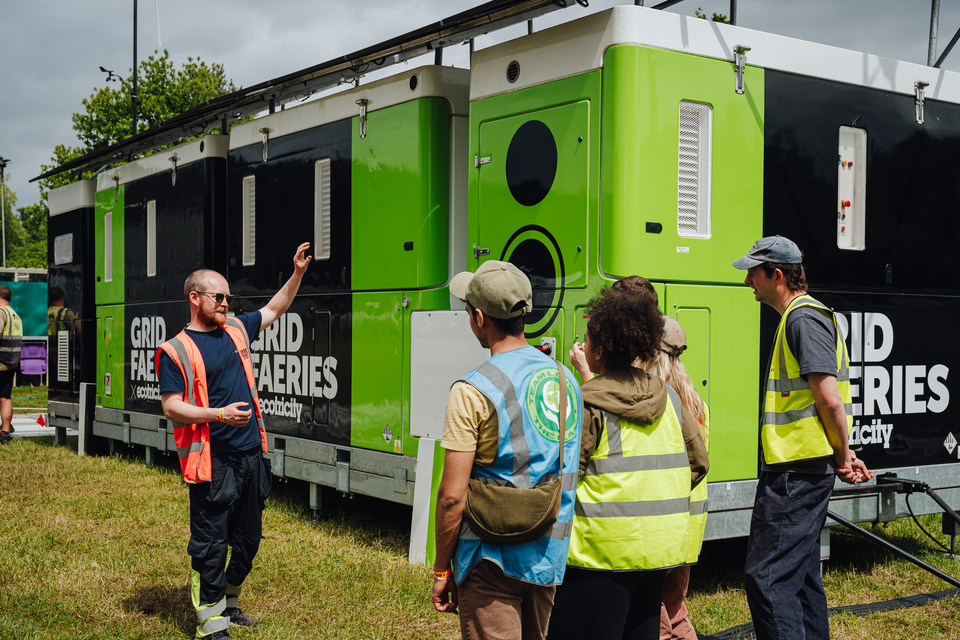
Credit: Giulia Spadafora.
The Creative Power Pilot is a public-private partnership involving the West of England Combined Authority, Bristol City Council, and the UN-affiliated ACT 1.5 project. It is activated to build a permanent legacy from the record-breaking low-carbon ACT 1.5 music festival. It focuses on four principles: ensuring clean air for communities, meeting Paris Agreement emissions targets, connecting productions meaningfully to host communities, and emphasising nature rewilding, building on the success of the record-breaking low-carbon ACT 1.5 music festival in 2025.
The first phase introduces a dedicated clean power hub at the Bottle Yard Film Studios and provides renewable mobile power to 19 major festivals and various film shoots, including Love Saves the Day in May 2026. Unlike previous trials that used partial battery power, this model features local authorities guaranteeing renewable energy for an entire season of cultural production. Starting in February 2027, the second phase will expand to 2 additional Mayoral Strategic Authorities to develop long-term viability models and present policy proposals to the central government to facilitate a rapid transition away from diesel and HVO fuels
-
IMPALA (2024). European Music in Numbers ↩