North East of England: tuberculosis in 2024
Published 23 March 2026

© Crown copyright 2026
This publication is licensed under the terms of the Open Government Licence v3.0 except where otherwise stated. To view this licence, visit nationalarchives.gov.uk/doc/open-government-licence/version/3 or write to the Information Policy Team, The National Archives, Kew, London TW9 4DU, or email: psi@nationalarchives.gov.uk.
Where we have identified any third party copyright information you will need to obtain permission from the copyright holders concerned.
This publication is available at https://www.gov.uk/government/publications/tuberculosis-tb-regional-reports-2024/north-east-of-england-tuberculosis-in-2024
Incidence, treatment and prevention of tuberculosis (TB) in the North East using data up until the end of 2024.
Executive summary
National and regional
The North East remains a low area of tuberculosis (TB) incidence with consistently lower rates of TB than England overall. In 2024, 123 people resident in the North East were notified with TB to the UK Health Security Agency (UKHSA) National Tuberculosis Surveillance (NTBS) system. This equates to a notification rate of 4.5 per 100,000 compared with 9.4 per 100,000 population in England as shown in the Tuberculosis in England, 2025 report.
In the North East, TB notifications followed an overall downward trend from 196 in 2007 to 77 in 2019, then remained relatively stable before increasing from 74 in 2022 to 123 in 2024, representing an increase in rate from 2.8 per 100,000 to 4.5 per 100,0000 population during this period. This increase is consistent with national trends. In England, the rate of TB notifications increased from 7.7 per 100,000 population in 2022 to 9.4 per 100,000 population in 2024, following a general downward trend since 2011.
Local
In 2024, half of North East local authorities saw an increase in TB notifications. The largest increases in notifications were in County Durham (8 compared with 1 in 2023), Newcastle upon Tyne (39 compared with 34 in 2023), and Middlesbrough (18 compared with 13 in 2023). There is a variation in the TB incidence by Local Authority, with highest rates of TB observed in Middlesbrough (11.2 per 100,000 population) and Newcastle upon Tyne (12.2 per 100,000 population). The TB notifications rates were below the England average in all remaining North East local authorities.
Age and sex
In 2024 the highest rate of TB notifications was in the male 20 to 29 years old age group (24 notifications, 13.7 per 100,000 population) and lowest rate of notification was among the female 50 to 59 years old age group (0.7 per 100,000 population Using broader demographic age groups, the number of notifications of TB has increased in both 0 to 14 years and 15 to 44 years age groups. Compared to 2023, the largest increase was in people in the 0 to 14 age group (2 in 2023 versus 12 in 2024).
Ethnic groups and country of birth
In 2024, 76% (93 out of 123) of notifications for TB were in people born outside of the UK with a rate of 43.1 per 100,000 compared to 1.7 per 100,000 in those born in the UK, a rate of TB significantly higher than the rate among UK born individuals. The number of people with TB born outside the UK has been increasing since 2021 following a decline to 2020. This largely reflects the higher incidence of TB in the cases’ respective countries of birth. In the North East, the rate of TB among UK born individuals increased slightly in 2024 following a downward trend since 2015.
India continues to be the most common country of birth outside of the UK for people with TB (29%, of non-UK born cases, 27 out of 93), followed by Nigeria, Pakistan, Eritrea, and Sudan.
Collectively, patients with a south-Asian ethnicity made up over a third (37%, 45 out of 123) of all North East cases, of whom the majority were of Indian ethnicity (62%, 28 out of 45).
People of Black ethnicity made up 32% (39 out of 123) of cases, of whom all were Black-African. People of White ethnicity made up 20% of cases (25 out of 123), most of whom (88%, 22 out of 25) were UK born. Almost half (43%; 34 out of 80 ) of TB notifications in people born outside the UK entered the UK less than 2 years prior to their diagnosis.
Clinical characteristics
Around half (53%; 65 out of 123) of the notifications in 2024 were for pulmonary TB compared to 54% in England overall. Of these, 83% were confirmed by culture (54 out of 65), which is above the national standard of 80%.
In 2024 the median treatment delay from onset to start of treatment was 69 days among those with pulmonary TB commencing on TB treatment a decrease from 72.5 days in 2023. Over half (56%; 28 out of 50) of the people with pulmonary TB in the North East who commenced treatment experienced a delay of over 2 months from start of symptoms to starting treatment.
Treatment outcomes
Treatment was completed within 12 months by 86% (78 out of 91) of people with fully sensitive TB (non-multidrug-resistant or non-rifampicin-resistant TB ) whose expected treatment duration was less than 12 months, which is lower than the completion rate in the previous year. However, treatment outcome information was unknown for 4% of those notified in 2023 with fully sensitive TB (non-MDR or non-RR TB).
Drug resistance
A decrease in the proportion of culture-confirmed TB notifications with resistance to a first line drug at diagnosis has been observed since 2022. TB antibiotic sensitivity information was available for 99% (89 out of 90) of people notified with culture-confirmed TB, of those 7% (6 out of 90) had resistance to a first line drug.
Underserved populations
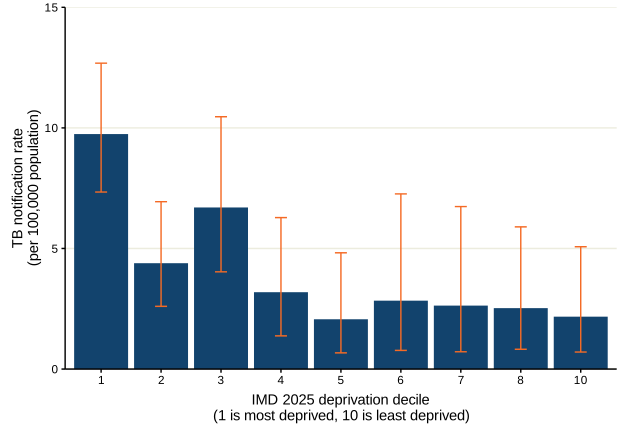
Among cases notified in 2024, 15% of people reported at least one social risk factor, and 9% reported more than one. The most common social risk factors reported were homelessness (8.6%), being an asylum seeker (7.4%), and prison history (5.8%). Three quarters (75%) of people notified with TB in the North East in 2024 were resident in the 3 most deprived deciles, and the TB notification rate was highest in the most deprived decile (9.7 per 100,000 population). Of people notified with TB in 2024, 24% received enhanced case management, which involves extra resources or support being put in place due to clinical or social complexities.
HIV
Information on HIV testing was available for 90% (112 out of 123) of the notifications. Of these, 96% (108 out of 112) were offered an HIV test. Overall, in the North East, 93% of all those who were offered an HIV test were tested.
Conclusion
The North East remains a low incidence region for TB notifications. However, the number of TB notifications increased in 2024 continuing the regional trend observed in 2023. This is consistent with national trends. To achieve the World Health Organization (WHO) End TB 2035 goal of a 90% reduction in new notifications by 2035, TB needs to remain a health priority across the health and social care system, with work to understand and address the reasons for the increase in incidence.
Although the incidence of TB in the North East is low, the higher frequency of social risk factors presents challenges. Issues remain with above average delays from symptom onset to treatment. Continued focus is needed by TB services and the wider health and care system to diagnose and support people successfully through treatment.
TB incidence and epidemiology
The data used in the figures in this report can be found in the accompanying supplementary tables.
In 2024, 123 people living in the North East were notified with TB, a rate of 4.5 per 100,000 population (Figure 1 and Figure 2). This represents an 11% increase in TB notifications compared with 2023 (111 notifications; rate of 4.1 per 100,000 population). The rate of TB notification in the North East remains lower than the England average which was 9.4 per 100,000 population in England in 2024. Overall, the rate of TB notifications in the North East decreased between 2007 and 2019, with fluctuations in some years. The North East rate of TB notifications remained relatively stable between 2019 and 2020 with a decrease observed in 2021 and 2022 which may be due to factors arising from the COVID-19 pandemic, such as restrictions to travel and changes to accessing healthcare.
Figure 1. Number of TB notifications per year, North East, 2001 to 2024
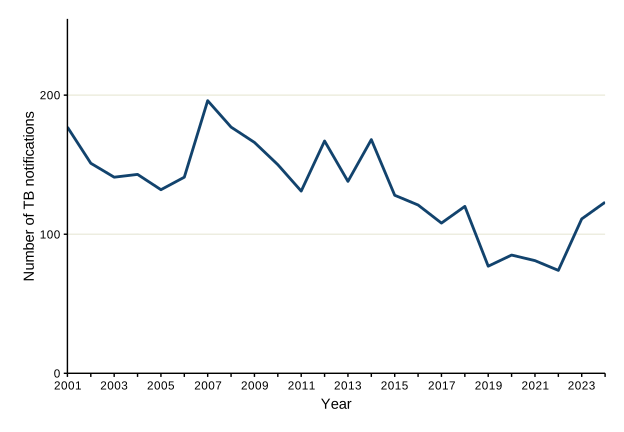
The general trend in TB notifications is consistent with national patterns. The national number and rate of TB notifications declined from 2011, with most of the reduction occurring between 2011 and 2018 before increasing in 2023 and 2024. The rate of TB notifications in England increased from 8.3 per 100,000 population in 2023 to 9.4 per 100,000 population in 2024 and a similar pattern was seen in the North East where the rate increased from 4.1 per 100,000 population in 2023 to 4.5 per 100,000 population in 2024. (Figure 2).
The 13.6% increase in national notification numbers between 2023 and 2024 is the largest increase since surveillance began. (Tuberculosis incidence and epidemiology, England, 2024).
Figure 2. TB notification rates per 100,000 population per year, North East and England, 2001 to 2024 [note 1]
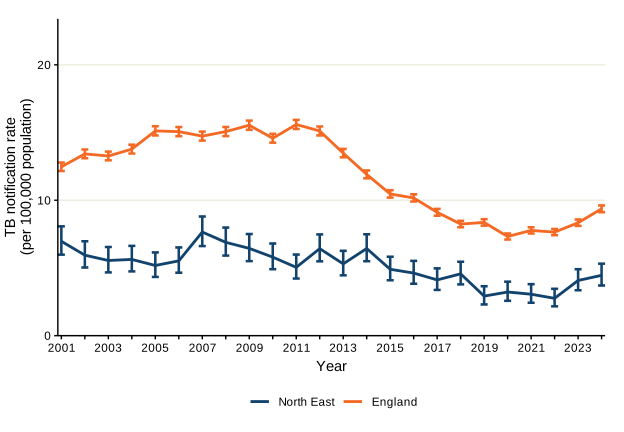
Note 1: error bars represent upper and lower 95% confidence intervals.
Figure 3 shows the observed North East TB notification rates compared with the rates required to achieve the WHO End TB goal. The rate observed in the North East has been lower than the required rate in all years between 2015 to 2022 except for 2018. Following an increase in cases in 2023 and 2024 the gap has widened between the observed rate and the required rate.
Figure 3. Observed TB notification rate compared with required TB notification rates to meet the WHO End TB 2035 goal of 90% reduction in incidence by 2035, North East, 2015 to 2024 [note 2] [note 3]
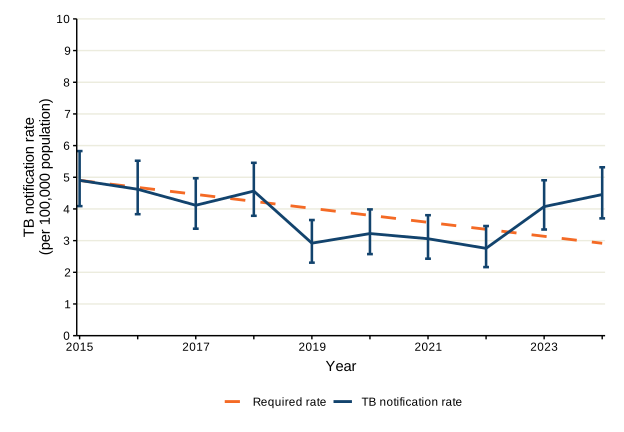
Note 2: error bars represent upper and lower 95% confidence intervals.
Note 3: dashed line represents required TB notification rates to meet the WHO End TB 2035 goal of 90% reduction in incidence by 2035.
The incidence of TB notifications is not evenly distributed among North East local authorities. In the North East, the highest rates of TB notifications in 2024 were observed in Newcastle upon Tyne (12.2 per 100,000 population) and Middlesbrough (11.5 per 100,000 population), and the lowest in County Durham and Northumberland (Figure 4 and Figure 5). This trend has been consistent since 2001, although there is variation in some local authorities due to small numbers. The rate of TB notifications was below the national average in all North East local authorities except Newcastle upon Tyne and Middlesbrough.
In 2024, the number and rate of TB notifications increased in 6 out of 12 North East local authorities, with the largest increase in numbers reported in Newcastle upon Tyne (39 versus 34 in 2023), Middlesbrough (18 versus 13 in 2023), and County Durham (8 versus 1 in 2023).
Figure 4. TB notification rate per 100,000 population by upper tier local authority of residence, North East, 2001 to 2024 [note 4]
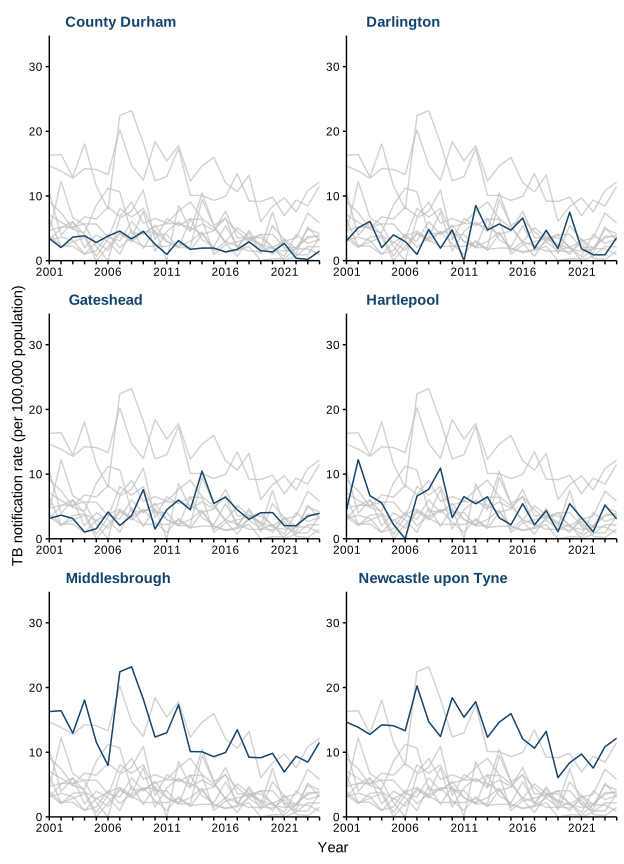
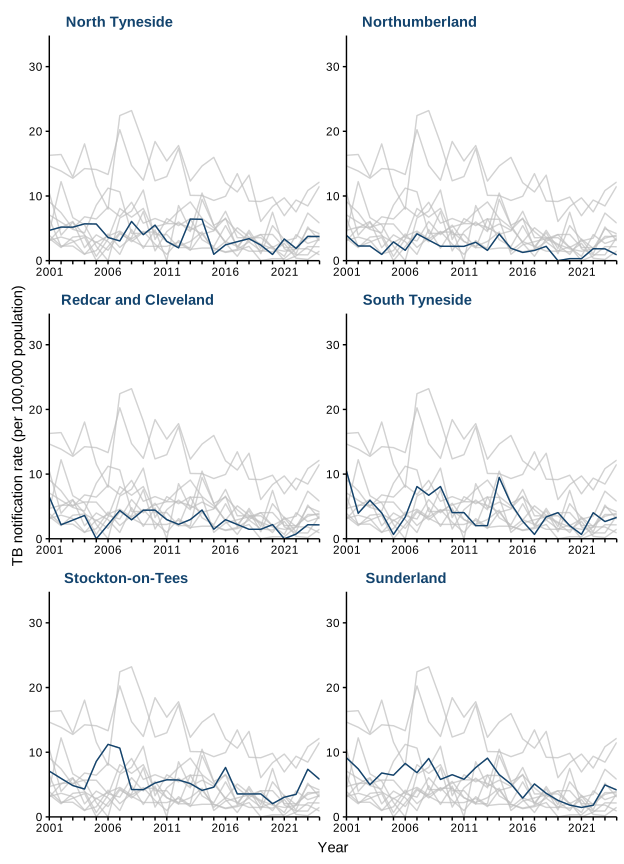
Note 4: grey lines represent the other upper tier local authorities in the region.
Figure 5. TB notification rate per 100,000 population by upper tier local authority of residence, North East, 2024
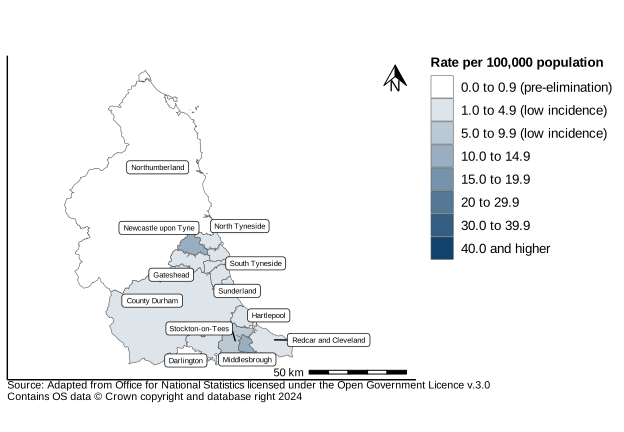
Table 1. Number of TB notifications and rate per 100,000 population by upper tier local authority of residence, North East, 2024
| Upper tier local authority | Number of TB notifications | TB notification rate per 100,000 population | Lower 95% CI | Upper 95% CI |
|---|---|---|---|---|
| Newcastle upon Tyne | 39 | 12.2 | 8.6 | 16.6 |
| Middlesbrough | 18 | 11.5 | 6.8 | 18.2 |
| Stockton-on-Tees | 12 | 5.8 | 3.0 | 10.1 |
| Sunderland | 12 | 4.2 | 2.1 | 7.3 |
| Gateshead | 8 | 3.9 | 1.7 | 7.8 |
| North Tyneside | 8 | 3.7 | 1.6 | 7.3 |
| Darlington | 4 | 3.6 | 1.0 | 9.1 |
| South Tyneside | 5 | 3.3 | 1.1 | 7.7 |
| Hartlepool | 3 | 3.1 | 0.6 | 8.9 |
| Redcar and Cleveland | 3 | 2.2 | 0.4 | 6.3 |
| County Durham | 8 | 1.5 | 0.6 | 2.9 |
| Northumberland | 3 | 0.9 | 0.2 | 2.6 |
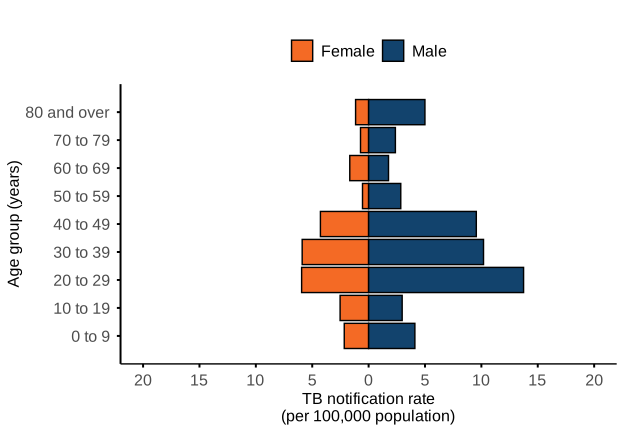
In 2024, 67% of people notified with TB in the North East were male (82 out of 123). The largest number and highest rate of TB notifications was in the male 20 to 29 years old age group (24 notifications, 13.7 per 100,000 population). Among females the largest number of notifications and highest rate was in the 30 to 39 years age group (11 notifications, 5.9 per 100,000). A comparable rate was also observed among females in the 20 to 29 years old age group (5.9 per 100,000, 10 notifications). The lowest rate of notification was among the 50 to 59 years old age group (females 0.7 per 100,000 population; compared to 2.9 per 100,000 among males 50 to 59 years old) (Figures 6 and 7).
Figure 6. Number of TB notifications by age and sex, North East, 2024
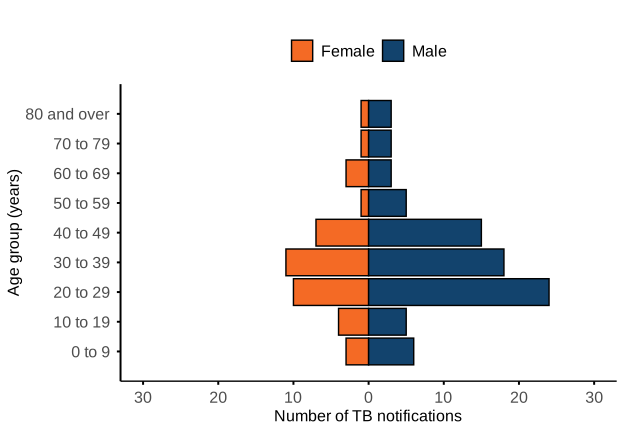
Figure 7. TB notification rate by age and sex, North East, 2024
Country of birth and time since entry
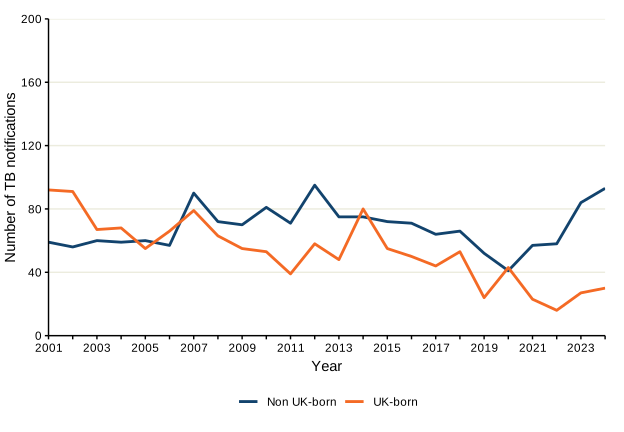
In the North East, people born outside of the UK accounted for 76% of notifications in 2024, (93 out of 123) (Figure 8), which was slightly lower than the proportion nationally (82%). The North East rate of TB notifications in people born outside the UK was 43.1 per 100,000 compared with 1.2 per 100,000 in the UK born population. (Supplementary table 12 Tuberculosis incidence and epidemiology, England, 2024).
There has been a year-on-year increase in the number of TB notifications in people born outside the UK since 2021. This follows a decrease between 2013 and 2020.
In 2024, the North East TB notification rate in people born in the UK 1.2 per 100,000) was similar to the rate in observed in 2023 (1.1 per 100,000 in 2023) (Supplementary table 12 Tuberculosis incidence and epidemiology, England, 2024).
Figure 8. Number of TB notifications in non-UK born and UK born people by place of birth, North East, 2001 to 2024
The age distribution of people notified with TB in 2024 is shown in Figure 9 (all places of birth (UK and non-UK born), non-UK born, and UK born). In 2024, among all places of birth the number of notifications of TB increased in the 0 to 14 and 15 to 44 age groups, with the largest increase noted in the 15 to 44 age group.
The age distribution of TB notifications varied between people born in the UK and those born outside the UK (non-UK born). People notified with TB in the non-UK born population tended to be younger compared with the UK-born where the number of people notified are distributed broadly across all age groups.
In 2024, the highest number of notifications in people born outside the UK was in those aged 15 to 44 years, accounting for 76% of the non-UK born notifications, which is similar to previous years (Figure 9 Non-UK born). The number of notifications in people born outside the UK in this age group increased by 13% from 63 notifications in 2023 to 71 notifications in 2024. The number of notifications in people born outside the UK aged 0 to 14 increased from 1 notification in 2023 to 5 notifications in 2024. Of the people notified who were born in the UK, the highest number of notifications was in those aged 15 to 44 years. The largest increase was noted in the 0 to 14 age group. The number of people notified in this age group increased from 1 in 2023 to 7 in 2024. The number of notifications in people born in the UK in the 45 to 64 years and 65 years and older decreased compared to 2023 (Figure 9 UK born).
Figure 9. Number of TB notifications in non-UK born and UK born people by place of birth and age group, North East, 2001 to 2024
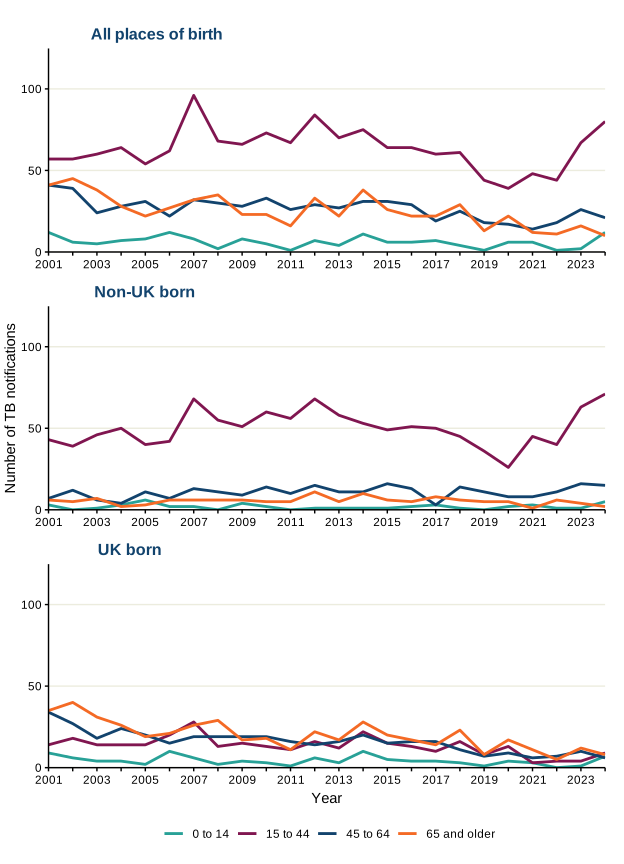
Figure 10 shows the proportion of individuals born outside the UK notified with TB, by time since entry to the UK, between 2001 to 2024.
In 2024, information about year of entry to the UK was available for 86% (80 out of 93) of those born abroad. Most (76%) of notifications for those born outside the UK were in people who entered the UK within the preceding 5 years; 43% entered the UK within the previous 2 years and 34% between 2 and 5 years prior to notification. Of the remainder, 11% of those born abroad were notified 6 to 10 years after entry and 13% were notified 11 years or more after entry, decreasing from 25% in 2023.
Figure 10. Proportion of TB notifications by time since entry for people born outside the UK, North East, 2001 to 2024
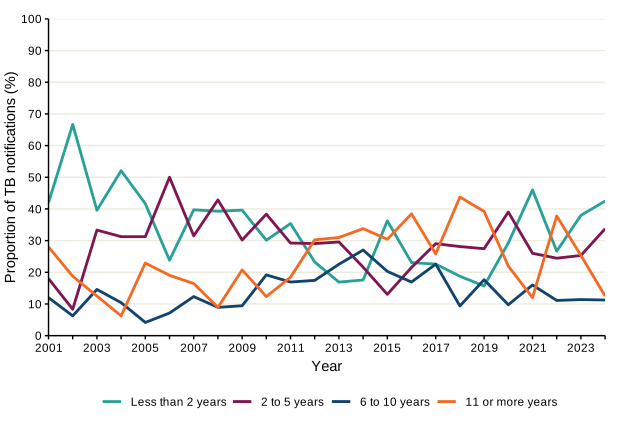
Table 2 shows the most common countries of birth for people notified with TB and median time between entry to the UK and TB notification. Information on country of birth was available for all the non-UK born notifications. In 2024, the most common countries of birth for people born outside the UK were India (22%), and Nigeria (8.9%) followed by Eritrea, Pakistan and Sudan. Those born in Nigeria had the shortest median time between entry to the UK and TB notification (0 years, interquartile range (IQR) 0 to 2 years). The country with the longest median time between entry to the UK and notification was Sudan (4.5 years, IQR 3.2 to 5 years).
Table 2. Most common countries of birth for people with TB and time between entry to the UK and TB notification, North East, 2024 [note 5] [note 6] [note 7] [note 8] [note 9]
| Country of birth | Number of people notified with TB | Proportion of people notified with TB (%) | Median time since entry to UK in years | IQR of time since entry to UK in years |
|---|---|---|---|---|
| United Kingdom | 30 | 24.4 | Not applicable | Not applicable |
| India | 27 | 22.0 | 1.5 | 0.0 to 4.8 |
| Nigeria | 11 | 8.9 | 0.0 | 0.0 to 2.0 |
| Eritrea | 9 | 7.3 | 2.0 | 0.5 to 4.0 |
| Pakistan | 9 | 7.3 | 2.0 | 1.0 to 6.0 |
| Sudan | 7 | 5.7 | 4.5 | 3.2 to 5.0 |
| Other | 30 | 24.4 | 3.0 | 1.0 to 11.0 |
| Total | 123 | 100.0 | Not applicable | Not applicable |
Note 5: other includes all countries with less than 7 people notified.
Note 6: place of birth (UK or non-UK) or country of birth is missing for 0 notifications in 2024.
Note 7: lower quartile is the 25th percentile and upper quartile is the 75th percentile, representing the interquartile range (IQR).
Note 8: time between entry to the UK and TB notification is calculated as whole years (only year of entry is reported to the National TB Surveillance (NTBS)).
Note 9: time since entry to the UK was not known for 13 people in 2024.
A decreasing trend in the number of TB notifications among people born in India was observed between 2014 and 2022 (from 25 notifications in 2014 to 11 in 2022), a large increase was observed between 2022 and 2023 (from 11 notifications in 2022 to 25 in 2023) however this did not continue in 2024 (26 notifications in 2023 to 27 in 2024) (Figure 11). Similarly, there was an increase in the number of notifications between 2023 and 2024 among people with a country of birth of:
- Eritrea (from 5 in 2023 to 9 in 2024)
- Pakistan (from 5 in 2023 to 9 in 2024)
- Nigeria (from 8 in 2023 to 11 in 2024)
Figure 11. Numbers of TB notifications for the most common countries of birth for people with TB born outside the UK, North East, 2014 to 2024 [note 10]
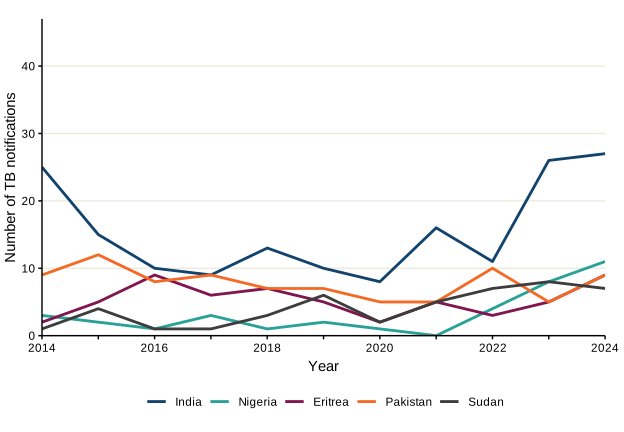
Note 10: figure shows the top 5 countries in 2024.
People with TB born in Eritrea and Pakistan were least likely to have entered the UK within 2 years before diagnosis (42.9%).
Those born in Sudan had the lowest mean age of 28.9 years and the highest proportion of males (85.7%). Those born in Sudan and Eritrea had the highest proportion of pulmonary TB (85.7 and 66.7%). Nigeria had the highest proportion of recent entrants in the last 2 years (63.6%). Of those born in Eritrea and diagnosed with TB within 2 years since entry, all had pulmonary TB. (Table 3)
Table 3. Characteristics of people with TB from the most common (non-UK) countries of birth, North East, 2024
| Country of birth | Number of people notified with TB | Mean age (years) | Proportion male (%) | Proportion pulmonary (includes laryngeal and miliary) (%) | Proportion with UK entry less than 2 years (%) | Proportion pulmonary of those in the UK less than 2 years (%) |
|---|---|---|---|---|---|---|
| India | 27 | 33.1 | 66.7 | 33.3 | 50.0 | 16.7 |
| Nigeria | 11 | 35.0 | 81.8 | 27.3 | 63.6 | 28.6 |
| Eritrea | 9 | 29.6 | 77.8 | 66.7 | 42.9 | 100.0 |
| Pakistan | 9 | 32.4 | 55.6 | 44.4 | 42.9 | 0.0 |
| Sudan | 7 | 28.9 | 85.7 | 85.7 | 0.0 | n/a |
In 2024, ethnicity was known for all the people notified with TB. The most common ethnic groups among all people notified with TB in the North East were Black African (30%, 37 out of 123) followed by Indian (22%, 27 out of 123) and White (20%, 25 out of 123) ethnic groups (data not shown).
Of the UK born cases notified in 2024, the white ethnic group comprised the greatest proportion (73%, 22 out of 30). Among the non-UK born 44% (41 out of 93) were in the South Asian ethnic group (Figure 12).
From 2023 to 2024 the number of notifications in all places of birth increased among Black and South Asian ethnic groups. A decrease was noted among the people notified in the Mixed/other ethnic group. The number of people notified in the White ethnic group remained similar to those reported in 2023. Among the people notified in those born abroad, the number of reports increased in the South Asian and Black and Mixed ethnic groups. Among the UK born the number of notifications among the White ethnic group similar to the number of notifications in 2023 following an increase in 2022.
Figure 12. Number of TB notifications in ethnic groups by place of birth (UK and non-UK born), North East, 2001 to 2024 [note 11] [note 12]
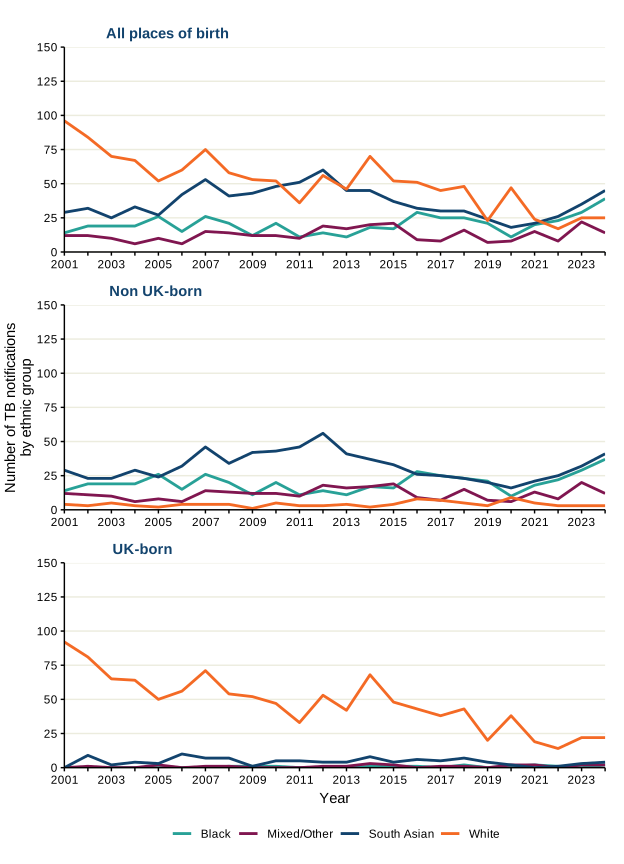
Note 11: the South Asian ethnicity group comprises people of Indian, Pakistani and Bangladeshi ethnicities.
Note 12: the Mixed/Other ethnic group comprises people of Mixed/Other, Chinese and Asian-Other ethnicities.
Clinical characteristics
Site of disease
In 2024, 52.8% (65 out of 123) of people notified with TB had pulmonary disease (with or without extra-pulmonary sites) and 36.8% had pulmonary only (Table 4), which was similar to 2023 (54.1%; 60 out of 111). (Figure 13). A total of 63.4% of people notified had extra-pulmonary disease (with or without pulmonary disease). Among the people notified with extra pulmonary TB the most common site of disease was ‘other extra pulmonary’, present in 30.9% (38 out of 123) of cases (Table 5).
Table 4. Number of pulmonary TB notifications by site of disease, North East, 2024 [note 13] [note 14]
| Site of disease | Number of people notified with TB | Proportion of people notified with TB (%) |
|---|---|---|
| All pulmonary | 65 | 52.8 |
| Pulmonary only | 45 | 36.6 |
| Laryngeal only | 1 | 0.8 |
| Miliary only | 1 | 0.8 |
Note 13: percentages may not add up to 100 as people with TB may have more than one site of disease.
Note 14: ‘pulmonary only’ includes people notified with only pulmonary TB and therefore have not also been notified with miliary, laryngeal or extra-pulmonary TB.
Table 5. Number of extra-pulmonary TB notifications by site of disease, North East, 2024 [note 15]
| Site of disease | Number of people notified with TB | Proportion of people notified with TB (%) |
|---|---|---|
| All extra-pulmonary | 78 | 63.4 |
| Other extra-pulmonary | 38 | 30.9 |
| Extra-thoracic lymph nodes | 34 | 27.6 |
| Intra-thoracic lymph nodes | 12 | 9.8 |
| Gastrointestinal | 7 | 5.7 |
| Bone - spine | 6 | 4.9 |
| Pleural | 5 | 4.1 |
| Cryptic disseminated | 4 | 3.3 |
| Bone - not spine | 3 | 2.4 |
| Central nervous system – meningitis and other | 2 | 1.6 |
| Genitourinary | 1 | 0.8 |
Note 15: percentages may not add up to 100 as people with TB may have more than one site of disease.
Figure 13. Proportion of people notified with pulmonary TB, North East, 2014 to 2024 [note 16]
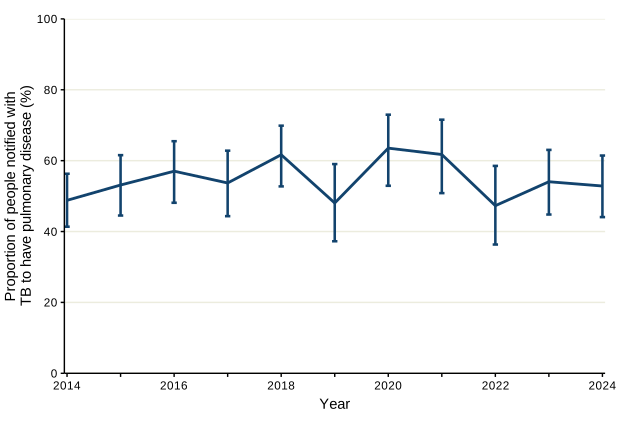
Note 16: error bars represent upper and lower 95% confidence intervals.
Comorbidities with other infections or non-communicable diseases such as diabetes or chronic renal disease may affect TB susceptibility, treatment strategies and outcomes. In 2024, 14.6% (18 out of 123) of all people notified with TB were known to have at least one co-morbidity, compared to 20.7% (23 out of 111) in 2023. Diabetes was the most frequently reported co-morbidity at 6.7%, followed by immunosuppression 3.4% (Table 6). This was mirrored nationally.
Table 6. Number and proportion of people with TB with comorbidities, North East, 2024 [note 17]
| Comorbidity | Total with data reported | Number of people notified with TB with comorbidities | Proportion of people notified with TB with comorbidities (%) | Number of people notified with TB missing comorbidity data | Proportion of people notified with TB missing comorbidity data (%) |
|---|---|---|---|---|---|
| At least one of the named comorbidities | 123 | 18 | 14.6 | Not applicable | Not applicable |
| Chronic liver disease | 118 | 0 | 0.0 | 5 | 4.1 |
| Chronic renal disease | 119 | 2 | 1.7 | 4 | 3.3 |
| Diabetes | 119 | 8 | 6.7 | 4 | 3.3 |
| Hepatitis B | 106 | 3 | 2.8 | 17 | 13.8 |
| Hepatitis C | 105 | 1 | 1.0 | 18 | 14.6 |
| Immunosuppression | 116 | 4 | 3.4 | 7 | 5.7 |
Note 17: people with TB are reported as having at least one of the named comorbidities if any of the 6 comorbidities (chronic liver disease, chronic renal disease, diabetes, hepatitis B, hepatitis C or immunosuppression) had ‘yes’ recorded. As a result, the denominator is all notifications. This assumes that people for whom no data was recorded for individual comorbidities were a ‘no’ and may result in under-estimation.
Untreated HIV infection increases the risk of developing active TB disease and universal HIV testing is offered within TB management programmes. The proportion of people being offered HIV testing is recorded in NTBS.
Information on HIV testing was available for 90% (112 out of 123). Of these, 96.4% (108 out of 112) were offered an HIV test. The proportion of TB cases being offered an HIV test has decreased compared to 2023 where 98.1% of people notified were offered an HIV test. (Figure 14)
Of the people who were offered a test: 93% (100 out of 108) received a test; 3% were offered but did not receive a test (3 out of 108) and for the remaining 5% (5 out of 108) HIV status was already known.
Figure 14. Proportion of people with TB offered an HIV test by year, North East, 2019 to 2024 [note 18] [note 19]
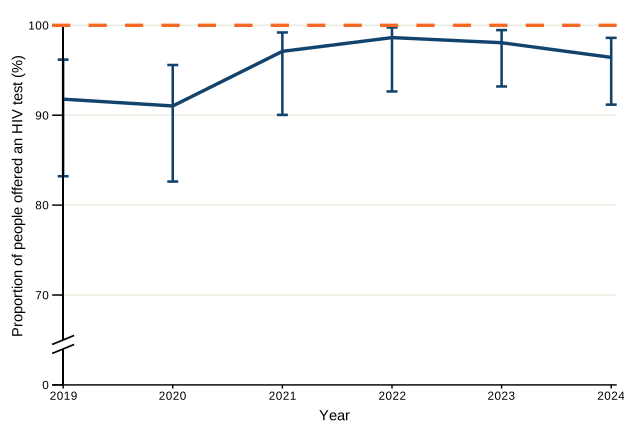
Note 18: dashed line indicates target of 100% of people offered HIV test.
Note 19: error bars represent upper and lower 95% confidence intervals.
There is a close association between TB, socio-economic disadvantage and other social risk factors including drug and alcohol misuse, homelessness, and a history of being in prison. Data for important social risk factors (alcohol misuse, asylum seeker, drug misuse, homelessness, mental health needs and prison) is routinely collected as part of TB surveillance. The following analyses include people notified aged 15 years and older.
Of the people notified with TB aged 15 years and older 15.3% (17 out of 111 cases over 15 years of age) had one or more social risk factors recorded. (Table 7). The prevalence of at least one social risk factor among people notified with TB decreased in 2024 (15.3%) compared with 2023 (20.2%). (Figure 15 and Table 8). The number of people with a social risk factor recorded was comparable to the national average of 15% of notifications with social risk factors recorded (815 out of 5335).
Table 7. Number and proportion of people with TB aged 15 years or over with individual social risk factors, North East, 2024 [note 20] [note 21]
| Social risk factor | Total with data reported | Number of people notified with TB with social risk factors | Proportion of people notified with TB with social risk factors (%) | Number of people notified with TB and missing social risk factor data | Proportion of people notified with TB and missing social risk factor data (%) |
|---|---|---|---|---|---|
| At least one named social risk factor | 111 | 17 | 15.3 | Not applicable | Not applicable |
| More than one social risk factor | 107 | 10 | 9.3 | 4 | 3.6 |
| Alcohol misuse (current) | 103 | 2 | 1.9 | 8 | 7.2 |
| Asylum seeker (current) | 108 | 8 | 7.4 | 3 | 2.7 |
| Drug misuse (current or previous) | 105 | 4 | 3.8 | 6 | 5.4 |
| Homelessness (current or previous) | 105 | 9 | 8.6 | 6 | 5.4 |
| Mental health needs (current) | 105 | 3 | 2.9 | 6 | 5.4 |
| Prison (current or previous) | 104 | 6 | 5.8 | 7 | 6.3 |
Note 20: people with TB are reported as having ‘at least one named social risk factor’ if any of the 6 social risk factors (current alcohol misuse, current or a history of homelessness, drug misuse, imprisonment, current asylum seeker status and current mental health needs) had ‘yes’ recorded. As a result, the denominator for this metric is all TB notifications. This assumes that people for whom no data was recorded for individual social risk factors were a ‘no’ and may result in under-estimation.
Note 21: the denominator for people with TB reported as having ‘more than one social risk factor’ is the number of people with TB for whom data is recorded for at least 2 out of the 6 social risk factors collected. This differs to the ‘at least one named social risk factor’ metric described above.
Figure 15. Proportion of people with TB aged 15 years or over with at least one social risk factor (SRF), North East, 2019 to 2024 [note 22] [note 23]
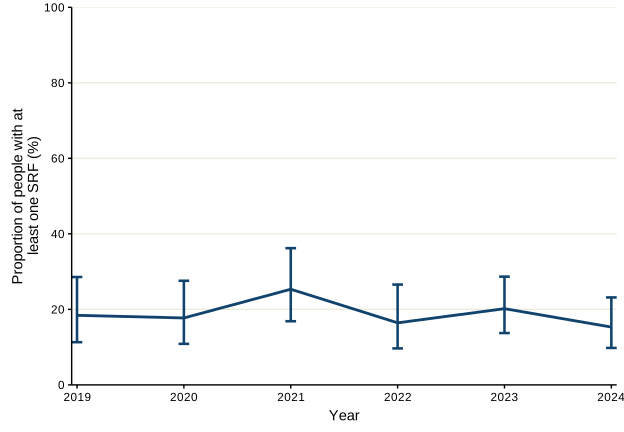
Note 22: error bars represent upper and lower 95% confidence intervals.
Note 23: not all social risk factors were captured before 2021.
Table 8. Number and proportion of people with TB aged 15 years or over reporting at least one social risk factor, North East, 2014 to 2024 [note 24]
| Year | Number of people notified with TB with any social risk factor | Proportion of people notified with TB with any social risk factor (%) | Total notifications |
|---|---|---|---|
| 2014 | 14 | 8.9 | 157 |
| 2015 | 18 | 14.8 | 122 |
| 2016 | 22 | 19.1 | 115 |
| 2017 | 21 | 20.8 | 101 |
| 2018 | 20 | 17.2 | 116 |
| 2019 | 14 | 18.4 | 76 |
| 2020 | 14 | 17.7 | 79 |
| 2021 | 19 | 25.3 | 75 |
| 2022 | 12 | 16.4 | 73 |
| 2023 | 22 | 20.2 | 109 |
| 2024 | 17 | 15.3 | 111 |
Note 24: not all social risk factors were captured before 2021 and that this table includes people with no information recorded in the denominator.
Most cases with at least one SRF were male (19%) (compared to 8% in females), and most (14%) were in the 15 to 44 years age group. 15% of people not born in the UK had at least one SRF (Table 9). In 2024 the most common risk factor reported in the North East was homelessness current or previous. This is comparable to England.
Presence of social risk factors also varies by age group. A social risk factor was more likely to be reported by those aged over 65 years compared to those aged 15 to 44 and 45 to 64 years. Those born outside the UK with TB were less likely to report having a social risk factor. For people notified with TB born outside the UK, seeking asylum (9.1%) and experience of homelessness (6.8%) were the most commonly reported social risk factors. This differed to UK born where homelessness (13.1%), experience of drug misuse (8.7%) and prison history (8.7%) were most commonly reported (data not shown).
Table 9. Number and proportion of people with TB aged 15 years or over with a social risk factor (SRF) by demographic characteristics, North East, 2024 [note 24]
| Demographic characteristics | Number of people with demographic characteristic who have any social risk factor | Total number of people with demographic characteristic | Proportion of people with demographic characteristic who have any social risk factor |
|---|---|---|---|
| Female | 3 | 37 | 8.1 |
| Male | 14 | 74 | 18.9 |
| Aged 15 to 44 | 11 | 80 | 13.8 |
| Aged 45 to 64 | 4 | 21 | 19.0 |
| Aged 65 or older | 2 | 10 | 20.0 |
| Non-UK-born | 13 | 88 | 14.8 |
| UK-born | 4 | 23 | 17.4 |
Using the Index of Multiple Deprivation (IMD 2025) rank assigned to different areas of England in 2024, the incidence of TB was 9.7 per 100,000 in the 10% of the population living in the most deprived areas of the North East, compared to 2.2 per 100,000 in the 10% of the population living in the least deprived areas (Figure 16). 45% (55 out of 123) of people notified were living in the most socio-economically deprived decile compared with 4% (5 out of 123) of people notified living in the least socio-economically deprived decile.
Figure 16. TB notification rate by deprivation decile, North East, 2024 [note 25] [note 26]
Note 25: error bars represent upper and lower 95% confidence intervals.
Note 26: the Index of Multiple Deprivation (IMD) ranks small areas in England by deprivation using 7 key domains including, but not limited to, income, housing, employment, crime and environment. Each area is scored and ranked nationally from most to least deprived.
TB diagnosis, microbiology and drug resistance
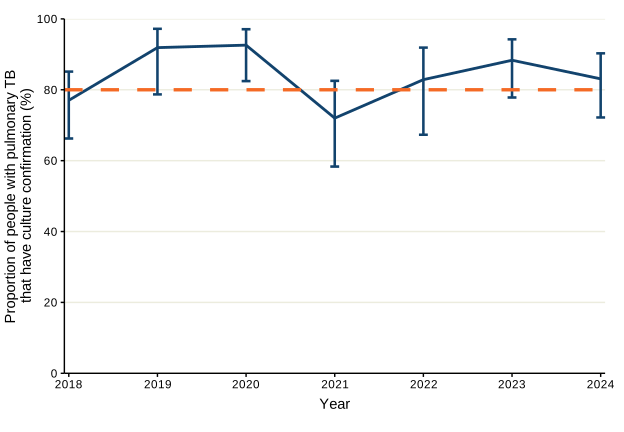
In 2024, 83.1% (54 out of 65) of notifications for pulmonary TB were microbiologically confirmed by culture, compared with 88.3% (53 out of 60) in 2023 (Figure 17). The proportion of people notified with pulmonary disease confirmed by culture remains above the TB Action Plan for England target of 80%. The proportion of notifications confirmed by culture also varied by region; in 2023 the highest proportion of culture confirmation nationally was seen in the North East. (Tuberculosis diagnosis and microbiology, England, 2024 - GOV.UK Supplementary table 7)
Figure 17. Proportion of people notified with pulmonary TB who were culture confirmed, North East, 2018 to 2024 [note 27] [note 28]
Note 27: dashed line indicates target of 80% culture confirmation.
Note 28: error bars represent upper and lower 95% confidence.
Drug resistance
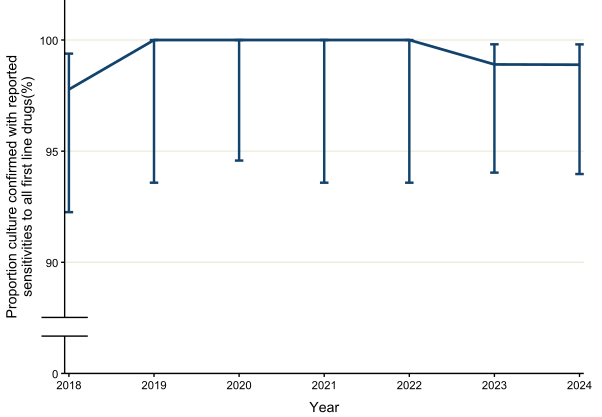
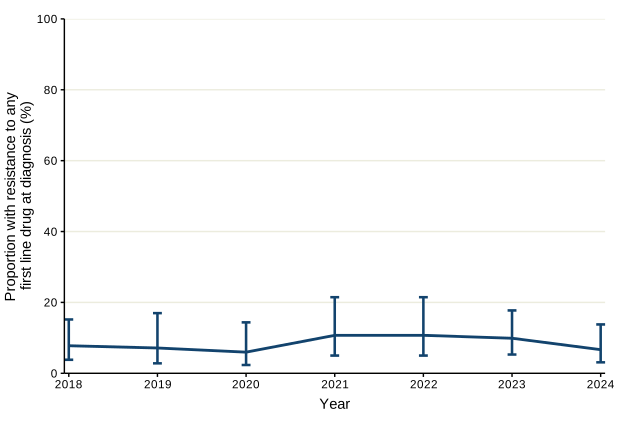
Among culture-confirmed TB cases, between 2018 and 2024, there was consistently between 97.8% and 100% of records where first line TB drug-sensitivity results were recorded, this decreased from 100% in 2022 to 98.9% in 2023 and 2024. (Figure 18). In 2024, there was a decrease in the percentage of culture-confirmed TB with resistance to first line anti-TB antibiotics (6.7%, compared to 9.9% in 2023 and 10.7 in 2022) (Figure 19).
Between 2018 and 2024, 4.3% of North East cases (22 out of 502) were resistant to isoniazid without multidrug-resistant (MDR) TB and 1.6% (8 out of 502) had multidrug-resistant or rifampicin-resistant TB (rifampicin-resistant MDR). Cases of extensively drug-resistant TB (XDR-TB) are rare in England and the North East. There were no cases of extensively drug-resistant TB (XDR-TB) notified between 2018 to 2024 in the North East (data not shown) (Tuberculosis diagnosis and microbiology, England, 2024 Supplementary table 18).
Figure 18. Proportion of people culture-confirmed with TB with first line drug results, North East, 2018 to 2024 [note 29] [note 30]
Note 29: error bars represent upper and lower 95% confidence intervals.
Note 30: We are not reporting on the proportion with resistance to pyrazinamide (and therefore the category of any first-line agent only includes rifampicin, isoniazid, and ethambutol) in 2023 and 2024 because the laboratory testing was adversely impacted by a problem with quality control in the supply chain for the media used for pDST for this drug. The manufacturer issued a Field Safety Notice in July 2024 stating that there may have been false detection of resistance from June 2023.
Figure 19. Proportion of people notified with culture-confirmed TB with initial resistance to any first line drug, North East, 2018 to 2024 [note 31] [note 32]
Note 31: error bars represent upper and lower 95% confidence intervals.
Note 32: due to quality control issues, resistance to any first-line drug excludes pyrazinamide for 2023 and 2024.
Whole genome sequencing (WGS) is undertaken at UKHSA Mycobacterium Reference Service laboratories and provides information about mycobacterium species, drug resistance and the genetic similarity between different TB isolates. This information about relatedness of isolates can help to understand potential links between cases. In England, individuals with a positive TB culture are grouped into genomic clusters if they have at least one other individual within 12 single nucleotide polymorphisms (SNPs). This information is used to support contact tracing and public health action. More information is found in the WGS handbook. UKHSA North East HPT and the Field Service systematically collect and review TB relatedness information to better understand TB transmission in the North East and identify where public health action may be applied to interrupt this.
In 2024, 32.2% of people notified with TB in 2024 with a positive TB culture were part of a WGS TB cluster, an increase from 27.5% in 2023 (Table 10)
Table 10. Number of people notified, proportion with culture confirmation and proportion of notifications identified in a WGS cluster, North East, 2021 to 2024 [note 33] [note 34]
| Year | Total TB notifications | Number of notifications cultured | Proportion of notifications cultured | Number of culture-confirmed notifications identified in a cluster with more than one person | Proportion of culture-confirmed notifications identified in a cluster with more than one person (%) | 95% confidence interval |
|---|---|---|---|---|---|---|
| 2021 | 81 | 56 | 69.1 | 16 | 28.6 | 18.4 to 41.5 |
| 2022 | 74 | 56 | 75.7 | 17 | 30.4 | 19.9 to 43.3 |
| 2023 | 111 | 91 | 82.0 | 25 | 27.5 | 19.4 to 37.4 |
| 2024 | 123 | 90 | 73.2 | 29 | 32.2 | 23.5 to 42.4 |
| Total | 389 | 293 | 75.3 | 87 | 29.7 | 24.8 to 35.2 |
Note 33: a WGS cluster is defined as 2 or more individuals that have isolates with a less than 12 SNP difference.
Note 34: WGS cluster reporting has changed over time. These changes are likely to have affected the most recent year’s data.
TB in children aged 0 to 17: incidence, epidemiology and microbiology
Figure 20. Number of TB notifications in children aged under 18 years, North East, 2001 to 2024
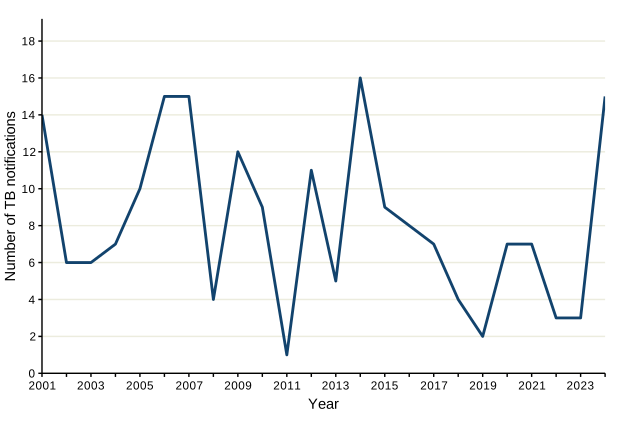
In 2024, there were 15 notifications of TB in children under the age of 18 years old, resident in the North East (Figure 20) compared with 3 notifications in 2023. The number and rate of TB notifications in children in the North East (2.8 per 100,000 of the population, Figure 21) is comparable with England rate 2.4 per 100,000.
Figure 21. TB notification rate in children aged under 18 years, North East, 2001 to 2024 [note 35]
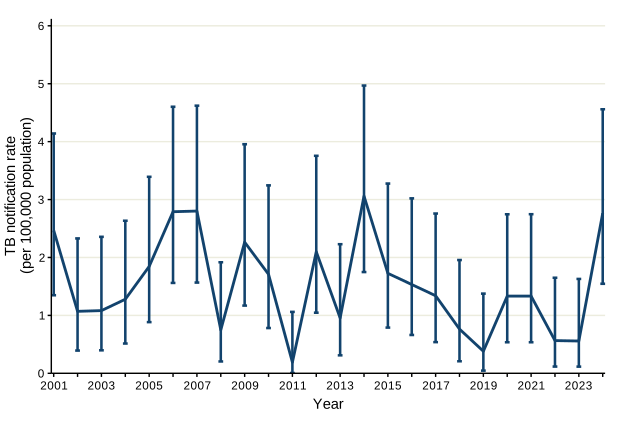
Note 35: error bars represent upper and lower 95% confidence intervals.
In 2024, data on country of birth was available for all TB notifications in children aged under 18 years in the North East. For these individuals, 53% (8 out of 15) were UK-born and 47% (7 out of 15) were non-UK-born individuals (data not shown). Amongst children aged under 18 years who were born in the UK, the annual number of TB notifications since 2001 has ranged from 0 to 16 notifications, and no significant trends in notification can be observed. Similarly, for children aged under 18 years who were not born in the UK, there were no significant trends in notification observed, with a range of 0 to 11 annual notifications.
From 2021 to 2024, the United Kingdom was the most frequently recorded country of birth among children aged under 18 years notified with TB in the North East (16 individuals, 80%).
No other country of birth had 5 or more individual notifications among children aged under 15 years across the 2021 to 2024 time-period (data not shown).
In 2024, 60% (9 out of 15) of children aged under 18 years notified with TB in the North East had pulmonary disease (with or without extra-pulmonary sites). (Table 11)
Table 11. Proportion of TB notifications by site and severity of disease in children aged under 18 years, North East, 2024 [note 36] [note 37]
| Clinical characteristic | Total as a proportion (%) |
|---|---|
| All disease sites | 100.0 |
| Pulmonary | 60.0 |
| Extra-pulmonary | 66.7 |
| Severe TB | 13.3 |
| Lymph nodes only | 13.3 |
| Other | 13.3 |
Note 36: pulmonary also includes children with or without extra-pulmonary sites. Severe TB is defined as CNS, spinal, miliary or cryptic disseminated disease among adults, and TB meningitis, miliary or cryptic disseminated among children aged 0 to 14 years. Lymph nodes only includes intra- and extra-thoracic lymph nodes and no other site of disease including pulmonary or extra-pulmonary TB. Other includes gastrointestinal, genitourinary, or other extra-pulmonary.
Note 37: children with pulmonary disease may have disease in other sites as well and therefore numbers may add up to more than the number of total children.
TB treatment
Enhanced case management
There are recommendations for enhanced case management (ECM) in individuals receiving anti-TB treatment with clinical or social complexities, for example:
- ECM level 1: people with clinical or social issues which may impact on treatment, for example, children with TB, or those taking antiretrovirals
- ECM level 2: people with complex clinical or social issues which are likely to impact on treatment, for example, complex side effects or single drug-resistance, which may necessitate weekly visits
- ECM level 3: people with very complex clinical or social issues which highly impact on treatment, for example, social risk factors or multi-drug resistance (MDR) or rifampicin-resistant (RR) TB which necessitates directly observed therapy (DOT) or video observed therapy (VOT)
Table 12 shows levels of ECM by year. In 2024, 29 people notified with TB (23.6%, 29 out of 123) were assessed as needing some level of ECM compared to 43.3% of people notified nationally. The proportion of people notified with TB in the North East who needed some level of ECM decreased from 2023 (24.3%, 27 out of 111).
Table 12. Number of people with TB receiving enhanced case management, North East, 2022 to 2024 [note 38]
| Year | Total TB notifications | Any ECM (number) | Any ECM (proportion) | Level 1 (number) | Level 1 (proportion) | Level 2 (number) | Level 2 (proportion) | Level 3 (number) | Level 3 (proportion) | Unknown level (number) | Unknown level (proportion) |
|---|---|---|---|---|---|---|---|---|---|---|---|
| 2021 | 81 | 15 | 18.5 | 2 | 2.5 | 1 | 1.2 | 11 | 13.6 | 1 | 1.2 |
| 2022 | 74 | 15 | 20.3 | 9 | 12.2 | 2 | 2.7 | 4 | 5.4 | 0 | 0.0 |
| 2023 | 111 | 27 | 24.3 | 8 | 7.2 | 7 | 6.3 | 12 | 10.8 | 0 | 0.0 |
| 2024 | 123 | 29 | 23.6 | 15 | 12.2 | 4 | 3.3 | 9 | 7.3 | 1 | 0.8 |
Note 38: total TB notifications includes all people notified with TB regardless of whether they are receiving ECM or not, or if this information is missing.
Treatment delay
Treatment delay is defined as the period from the start of symptoms (as reported by the patient) and the start of TB treatment.
Information on treatment delay was available for 77% (50 out of 65) of all people with pulmonary TB. The remaining people were either asymptomatic at diagnosis, did not have a date of onset recorded, did not have a start of treatment recorded or were diagnosed post-mortem.
Figure 22 presents data on the proportion of people notified with pulmonary TB with delay from symptom onset to treatment start over 2 months. In 2024, 56% (28 out of 50) of people notified had a treatment delay over 2 months. Following an increasing trend from 2021 to 2023 the proportion of people notified with pulmonary TB with a delay of over 2 months decreased in 2024, compared to 2023 where 65.2% of people notified with pulmonary TB had a treatment delay of over 2 months. The average proportion of people with pulmonary TB with a treatment delay of more than 4 months is available by upper tier local authority in supplementary tables of the Tuberculosis in England 2025 report.
Figure 22. Proportion of people notified with pulmonary TB with a treatment delay over 2 months, North East, 2019 to 2024 [note 39] [note 40] [note 41]
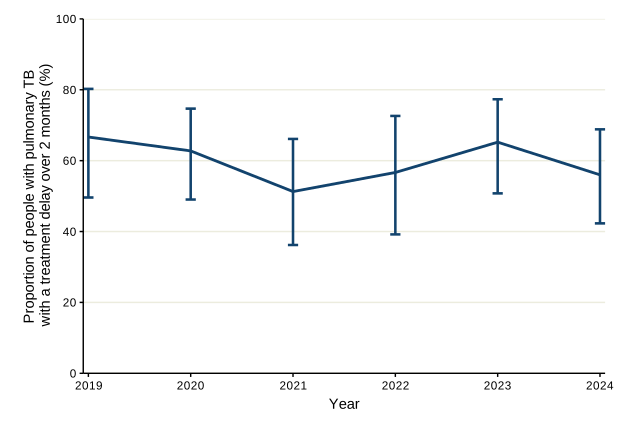
Note 39: error bars represent upper and lower 95% confidence intervals.
Note 40: delay to treatment is defined by when treatment was started from symptom onset.
Note 41: all cases where delay to treatment is greater than 730 days have been removed from this analysis.
Figure 23 presents data on the proportion of people notified with extra-pulmonary TB with delay from symptom onset to treatment start over 2 months. In 2024, 57.4% (27 out of 47) of people notified had a treatment delay over 2 months, a decrease from 2023 where 57.4% of people notified with extra-pulmonary TB had a treatment delay of over 2 months.
Figure 23. Proportion of people notified with extra-pulmonary TB with a treatment delay over 2 months, North East, 2019 to 2024 [note 42] [note 43] [note 44]
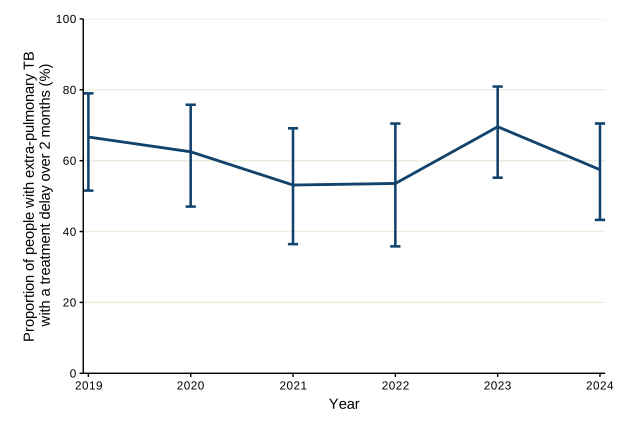
Note 42: error bars represent upper and lower 95% confidence intervals.
Note 43: delay to treatment is defined by when treatment was started from symptom onset.
Note 44: all cases where delay to treatment is greater than 730 days have been removed from this analysis.
Table 13 shows the number and proportion of people with pulmonary TB with a treatment delay. In 2024 30% (15 out of 50) had a delay of between 2 and 4 months from symptom onset and the remaining 26% (13 out of 50) had a delay from symptom onset to treatment start of more than 4 months.
Table 13. Number and proportion of people notified with pulmonary TB with a treatment delay, time between symptom onset and treatment start, North East, 2019 to 2024 [note 45]
| Year | 2 to 4 months delay (number) | 2 to 4 months delay (proportion) | Over 4 months delay (number) | Over 4 months delay (proportion) | Total |
|---|---|---|---|---|---|
| 2019 | 8 | 24.2 | 14 | 42.4 | 33 |
| 2020 | 20 | 39.2 | 12 | 23.5 | 51 |
| 2021 | 12 | 30.8 | 8 | 20.5 | 39 |
| 2022 | 11 | 36.7 | 6 | 20.0 | 30 |
| 2023 | 14 | 30.4 | 16 | 34.8 | 46 |
| 2024 | 15 | 30.0 | 13 | 26.0 | 50 |
Note 45: all people included in this table are people with pulmonary TB who did not have a postmortem diagnosis, and it was known that they had started treatment. People included within the ‘Total’ includes these individuals and where the time from symptom onset to treatment start was also known. ‘Total eligible’ includes people in ‘Total’ plus those people where the time from symptom onset to treatment start was unknown/missing. Percentages for ‘2 to 4 month delay’ and ‘over 4 months’ delay were calculated using the ‘Total’ figure. ‘2 to 4 month delay’ includes people with a delay of 61 to 121 days inclusive. An ‘over 4 month delay’ includes people with a delay between 122 and 730 days inclusive.
In 2024 the median period between symptom onset and starting treatment was 69 days (IQR 32.8 to 125.5). Treatment delay among people notified with pulmonary TB has declined between 2022 and 2024 as shown in Figure 24. This indicates an improvement in the time from symptom onset to treatment start, but the majority of people were not treated within the TB Action Plan for England target time of 56 days. (Figure 24 and Table 15).
Figure 24. Median treatment delays among people notified with pulmonary TB, North East, 2019 to 2024 [note 46] [note 47] [note 48] [note 49]
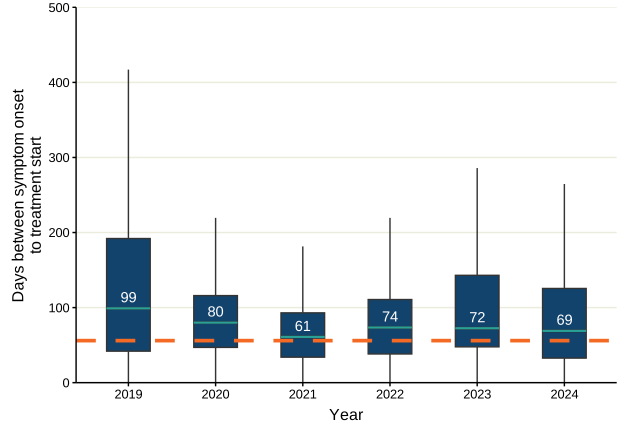
Note 46: dashed line represents the target treatment delay of 56 days by 2027.
Note 47: ends of the whiskers represent the theoretical lower and upper limits for detecting outliers (lower/upper quartile negative/positive 1.5 times the interquartile range). Outliers falling outside of these limits have been removed.
Note 48: delay to treatment is defined by when treatment was started from symptom onset.
Note 49: all people included in this figure are people with pulmonary TB who did not have a postmortem diagnosis, and it was known that they had started treatment. It excludes individuals with a delay over 730 days.
Nearly two-thirds (61.7%) of people with pulmonary TB were notified within 3 days of diagnosis in 2024, which is an increase on previous years (between 45.5% and 54% between 2019 and 2023) (Table 14).
Table 14. Proportion of people notified with pulmonary TB within 3 days of diagnosis by year, North East, 2019 to 2024 [note 50]
| Year | Number of people notified | Proportion of people notified (%) | Total |
|---|---|---|---|
| 2019 | 14 | 50.0 | 28 |
| 2020 | 27 | 51.9 | 52 |
| 2021 | 20 | 45.5 | 44 |
| 2022 | 11 | 45.8 | 24 |
| 2023 | 27 | 54.0 | 50 |
| 2024 | 37 | 61.7 | 60 |
Note 50: includes people with pulmonary TB who were not diagnosed at postmortem, and where report delay was known and between 0 and 90 days (inclusive).
Table 15. Time between symptom onset and treatment start in people with pulmonary TB, North East, 2016 to 2024 [note 51]
| Year | 0 to 2 months (number) | 0 to 2 months (proportion) | 2 to 4 months (number) | 2 to 4 months (proportion) | More than 4 months (number) | More than 4 months (proportion) | Total | Median time in days | IQR of time in days |
|---|---|---|---|---|---|---|---|---|---|
| 2016 | 24 | 40.7 | 21 | 35.6 | 14 | 23.7 | 59 | 73.0 | 35.5 to 119.5 |
| 2017 | 23 | 44.2 | 17 | 32.7 | 12 | 23.1 | 52 | 63.0 | 40.5 to 107.8 |
| 2018 | 26 | 39.4 | 23 | 34.8 | 17 | 25.8 | 66 | 76.5 | 39.5 to 121.0 |
| 2019 | 11 | 33.3 | 8 | 24.2 | 14 | 42.4 | 33 | 99.0 | 42.0 to 192.0 |
| 2020 | 19 | 37.3 | 20 | 39.2 | 12 | 23.5 | 51 | 80.0 | 47.0 to 116.0 |
| 2021 | 19 | 48.7 | 12 | 30.8 | 8 | 20.5 | 39 | 61.0 | 34.0 to 93.0 |
| 2022 | 13 | 43.3 | 11 | 36.7 | 6 | 20.0 | 30 | 73.5 | 38.2 to 110.8 |
| 2023 | 16 | 34.8 | 14 | 30.4 | 16 | 34.8 | 46 | 72.5 | 47.8 to 143.0 |
| 2024 | 22 | 44.0 | 15 | 30.0 | 13 | 26.0 | 50 | 69.0 | 32.8 to 125.5 |
Note 51: this table includes people with pulmonary TB where they did not have a postmortem diagnosis, they had started treatment and the start of treatment date was known. Total includes all these people including where the time between symptom onset and treatment start was missing or not known. It excludes individuals with a delay over 730 days.
TB treatment outcomes
Outcomes are presented for people who would usually receive standard treatment regimens for TB: those with multidrug-resistant (MDR) and rifampicin-resistant (RR) TB, and those with severe disease (defined as CNS, spinal, miliary or cryptic disseminated disease among adults, and TB meningitis, miliary or cryptic disseminated among children aged 0 to 14 years), where expected treatment durations are longer are excluded. This definition of severe disease may not capture all clinically severe or extensive disease involving other sites of disease.
85.7% of people (78 out of 91) diagnosed in 2023 with rifampicin sensitive TB and an expected treatment duration of less than 12 months completed treatment within 12 months). (Table 16). This was below the regional target of 90%. (Figure 26).
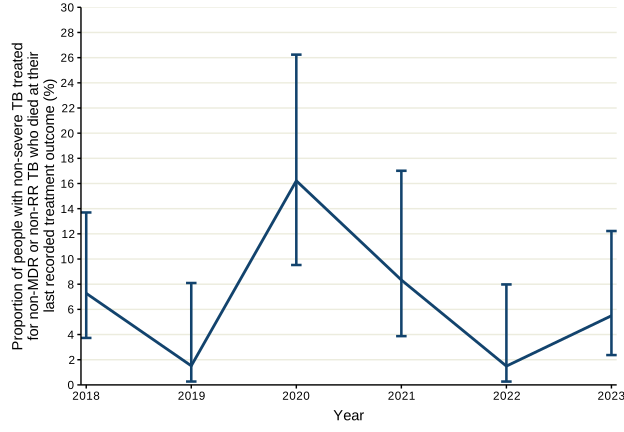
Of the people who had not completed treatment at 12 months, 4.4% (4 out of 91) of people with TB died, 2.2% (2 out of 91) were lost to follow up, 1.1% (1 out of 91) were still on treatment and 2.2% (2 out of 91) had treatment stopped. (Table 17). Overall treatment completion increased to 89% (81 out of 91) for last recorded treatment outcome.
Among people with one or more social risk factors and an expected treatment duration of less than 12 months, 76.5% (13 out of 17 notifications) had completed treatment within 12 months, which was a decrease compared to 2022 (83.3%) (Figure 25). A further 3 people completed treatment by the time their last treatment outcome was recorded.
Treatment outcomes of people who did not complete treatment within 2019 to 2023 are shown in Figure 27. The proportion of those who died within 12 months (measured from start of treatment, diagnosis or notification) was 4.4%, which was lower than the previous high of 16.2% in those notified in 2020. The proportion of persons lost to follow-up increased from 2023 (2.2% in 2023 compared to 1.5% in 2022). 1 further death was recorded in the last recorded outcome. (Figure 28)
Table 16. Treatment outcome at 12 months and last recorded outcome for people notified with non-severe TB treated for non-MDR or non-RR TB, North East, 2023 [note 52] [note 53]
| Outcome | TB treatment outcome at 12 months (number) | TB treatment outcome at 12 months (proportion) | Last recorded treatment outcome (number) | Last recorded treatment outcome (proportion) |
|---|---|---|---|---|
| Treatment completed | 78 | 85.7 | 81 | 89.0 |
| Died | 4 | 4.4 | 5 | 5.5 |
| Lost to follow up | 2 | 2.2 | 2 | 2.2 |
| Still on treatment | 1 | 1.1 | 1 | 1.1 |
| Treatment stopped | 2 | 2.2 | 2 | 2.2 |
| Not evaluated | 4 | 4.4 | 0 | 0.0 |
| Total | 91 | 100.0 | 91 | 100.0 |
Note 52: not evaluated indicates that the treatment outcome was not evaluated, not recorded or is unknown and the final outcome is not still on treatment nor died.
Note 53: non-severe TB is defined as those cases without central nervous system (CNS), spinal, cryptic or miliary disseminated disease among adults, and TB meningitis, miliary or cryptic disseminated among children aged 0 to 14 years.
Figure 25. Proportion of people with non-severe TB treated for non-MDR or non-RR TB and with one or more social risk factors who completed treatment within 12 months, North East, 2019 to 2023 [note 54] [note 55] [note 56]
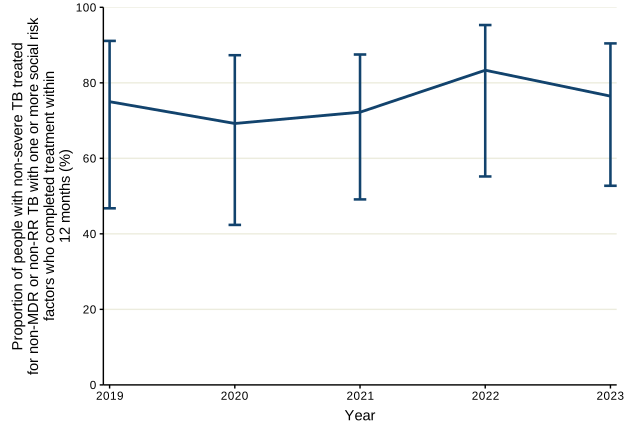
Note 54: error bars represent upper and lower 95% confidence intervals.
Note 55: non-severe TB is defined as those cases without central nervous system (CNS), spinal, cryptic or miliary disease.
Note 56: Not all social risk factors were captured prior to 2021.
Figure 26. Proportion of people with non-severe TB treated for non-MDR or non-RR TB who completed treatment within 12 months compared with the target of 90%, North East, 2019 to 2023 [note 57] [note 58] [note 59]
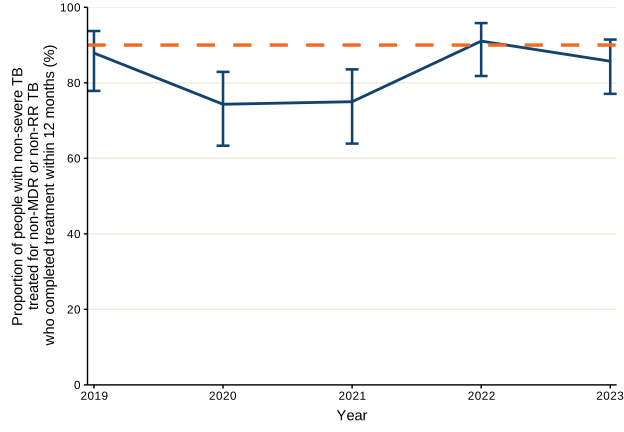
Note 57: dashed line indicates treatment target of 90%.
Note 58: error bars represent upper and lower 95% confidence intervals.
Note 59: non-severe TB is defined as those cases without central nervous system (CNS), spinal, cryptic oor miliary disseminated disease among adults, and TB meningitis, miliary or cryptic disseminated among children aged 0 to 14 years.
Figure 27. Outcomes of people evaluated who did not complete treatment by 12 months for people with non-severe TB treated for non-MDR or non-RR TB, North East, 2014 to 2023 [note 60]
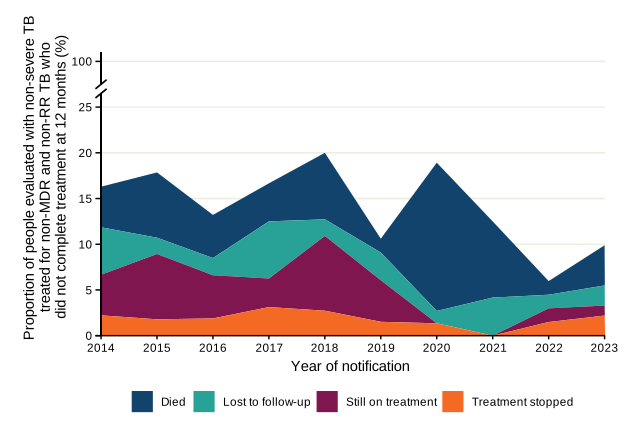
Note 60: non-severe TB is defined as those cases without central nervous system (CNS), spinal, cryptic or miliary disseminated disease among adults, and TB meningitis, miliary or cryptic disseminated among children aged 0 to 14 years.
Figure 28. Proportion of people with non-severe TB treated for non-MDR or non-RR TB who died at their last recorded treatment outcome, North East, 2018 to 2023 [note 61] [note 62] [note 63]
Note 61: death could be due to TB or any other cause.
Note 62: non-severe TB is defined as those cases without central nervous system (CNS), spinal, cryptic or miliary disseminated disease among adults, and TB meningitis, miliary or cryptic disseminated among children aged 0 to 14 years.
Note 63: error bars represent upper and lower 95% confidence intervals.
Table 17. TB outcome at 12 months for people with non-severe TB treated for non-MDR or non-RR TB, North East, 2014 to 2023 [note 64]
| Year | Treatment completed (number) | Treatment completed with any social risk factor (number) | Died (number) | Lost to follow up (number) | Still on treatment (number) | Treatment stopped (number) | Not evaluated (number) | Total (number) | |
|---|---|---|---|---|---|---|---|---|---|
| 2014 | 112 | 7 | 6 | 7 | 6 | 3 | 1 | 135 | |
| 2015 | 92 | 13 | 8 | 2 | 8 | 2 | 0 | 112 | |
| 2016 | 91 | 16 | 5 | 2 | 5 | 2 | 1 | 106 | |
| 2017 | 78 | 13 | 4 | 6 | 3 | 3 | 2 | 96 | |
| 2018 | 86 | 10 | 8 | 2 | 9 | 3 | 2 | 110 | |
| 2019 | 58 | 9 | 1 | 2 | 3 | 1 | 1 | 66 | |
| 2020 | 55 | 9 | 12 | 1 | 0 | 1 | 5 | 74 | |
| 2021 | 54 | 13 | 6 | 3 | 0 | 0 | 9 | 72 | |
| 2022 | 61 | 10 | 1 | 1 | 1 | 1 | 2 | 67 | |
| 2023 | 78 | 13 | 4 | 2 | 1 | 2 | 4 | 91 |
Note 64: not evaluated indicates that the treatment outcome was not evaluated, not recorded or is unknown and the final outcome is not ‘still on treatment’ or ‘died’ within the timeframe of 12 months. Non-severe TB is defined as those cases without central nervous system (CNS), spinal, cryptic or miliary disseminated disease among adults, and TB meningitis, miliary or cryptic disseminated among children aged 0 to 14 years.
Table 18. Proportions of TB outcomes at 12 months for people with non-severe TB treated for non-MDR or non-RR TB, North East, 2014 to 2023 [note 65]
| Year | Treatment completed (proportion) | Treatment completed with any social risk factor (proportion) | Died (proportion) | Lost to follow up (proportion) | Still on treatment (proportion) | Treatment stopped (proportion) | Not evaluated (proportion) |
|---|---|---|---|---|---|---|---|
| 2014 | 83.0 | 5.2 | 4.4 | 5.2 | 4.4 | 2.2 | 0.7 |
| 2015 | 82.1 | 11.6 | 7.1 | 1.8 | 7.1 | 1.8 | 0.0 |
| 2016 | 85.8 | 15.1 | 4.7 | 1.9 | 4.7 | 1.9 | 0.9 |
| 2017 | 81.2 | 13.5 | 4.2 | 6.2 | 3.1 | 3.1 | 2.1 |
| 2018 | 78.2 | 9.1 | 7.3 | 1.8 | 8.2 | 2.7 | 1.8 |
| 2019 | 87.9 | 13.6 | 1.5 | 3.0 | 4.5 | 1.5 | 1.5 |
| 2020 | 74.3 | 12.2 | 16.2 | 1.4 | 0.0 | 1.4 | 6.8 |
| 2021 | 75.0 | 18.1 | 8.3 | 4.2 | 0.0 | 0.0 | 12.5 |
| 2022 | 91.0 | 14.9 | 1.5 | 1.5 | 1.5 | 1.5 | 3.0 |
| 2023 | 85.7 | 14.3 | 4.4 | 2.2 | 1.1 | 2.2 | 4.4 |
Note 65: not evaluated indicates that the treatment outcome was not evaluated, not recorded or is unknown and the final outcome is not ‘still on treatment’ or ‘died’ within the timeframe of 12 months. Non-severe TB is defined as those cases without central nervous system (CNS), spinal, cryptic or miliary disseminated disease among adults, and TB meningitis, miliary or cryptic disseminated among children aged 0 to 14 years.
TB prevention
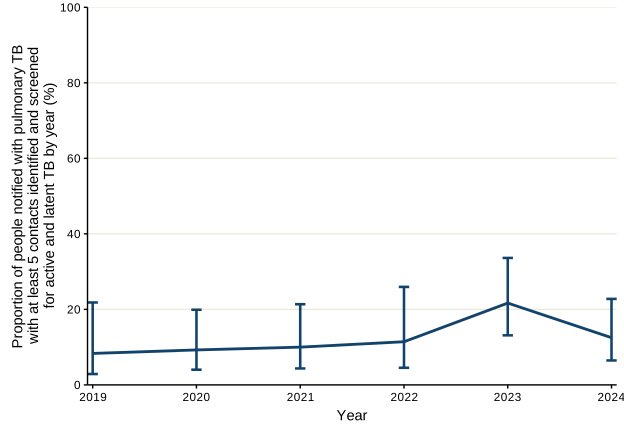
In 2024, 64 of the 123 people notified had pulmonary disease and therefore required contact tracing according to NICE guidance.
Figure 29 shows the proportion of those notified in 2024 with 5 or more contacts identified and screened has decreased from 21.7% (13 out of 60) in 2023 to 12.5% in 2024 (8 out of 64).
Figure 29. Proportion of people notified with pulmonary TB with at least 5 contacts identified and screened for active and latent TB by year, North East, 2019 to 2024 [note 66] [note 67]
Note 66: error bars represent upper and lower 95% confidence intervals.
Note 67: individuals with more than 65 contacts were excluded as indicative of a large outbreak investigation and therefore not representative of the routine contact tracing.
Table 20 shows the numbers and proportion of adult and child contacts of people notified with pulmonary TB in 2024 who were identified, screened, tested positive for LTBI, then started and completed treatment.
In 2024, a total of 192 contacts were identified from 64 people notified with pulmonary TB who had contact information recorded. Of those contacts, 58.9% were screened for active and latent TB; 17.7% tested positive for latent TB. A further 7.1% were reported to have active TB disease.
In 2024, children (aged 14 years or under) made up 21.3% of all contacts identified. The proportion of contacts screened among children was higher than in adults (79.2% versus 52.1%). Children were more likely to have active (13.2% of child contacts, 4% of adults) and adults had higher proportion of latent TB disease (21.3% versus 10.5%). 65% of contacts with a positive LTBI test started treatment for latent TB and 15% were recorded as having completed treatment.
Table 20. Number of contacts identified, screened, screening results and treatment for contacts of people notified with pulmonary TB (index individuals), North East, 2024 [note 68] [note 69] [note 70] [note 71]
| Treatment and screening categories | All adult contacts (number) | All adult contacts (proportion) | All child contacts (number) | All child contacts (proportion) | Total contacts (number) | Total contacts (proportion) |
|---|---|---|---|---|---|---|
| Number of contacts identified | 144 | Not applicable | 48 | Not applicable | 192 | Not applicable |
| Number of contacts screened for active TB and latent TB | 75 | 52.1 | 38 | 79.2 | 113 | 58.9 |
| Number of contacts with active TB | 3 | 4 | 5 | 13.2 | 8 | 7.1 |
| Number of contacts with latent TB | 16 | 21.3 | 4 | 10.5 | 20 | 17.7 |
| Number of contacts who started treatment for latent TB | 11 | 68.8 | 2 | 50 | 13 | 65 |
| Number of contacts who completed treatment for latent tuberculosis | 2 | 12.5 | 1 | 25 | 3 | 15 |
Note 68: the denominator for the proportion of contacts screened for active TB and latent TB infection (LTBI) is number of contacts identified.
Note 69: the denominator for the proportion of contacts positive for active TB and LTBI is the number of contacts screened.
Note 70: the denominator for the proportion of contacts who started and completed treatment is the number of contacts positive for LTBI.
Note 71: individuals with more than 65 contacts were excluded as indicative of a large outbreak investigation and therefore not representative of the routine contact tracing.
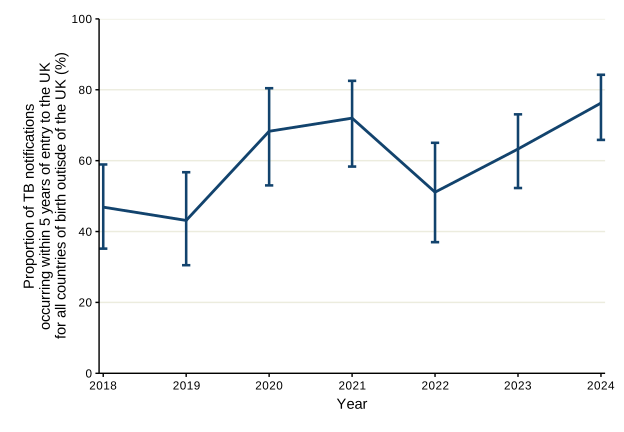
A key objective of the national TB Action Plan (2021 to 2026) is to reduce the proportion of TB notifications in people born outside the UK within 5 years of their arrival by 5.0% each year using the 2017 to 2019 average as a baseline.
In 2024 an increase in the percentage of TB notifications occurring among non-UK-born people within 5 years of entry to the UK was observed compared to 2023 (76.2% versus 63.3) (Figure 30). This trend has been increasing following a decrease in 2022.
Figure 30. Proportion of TB notifications occurring within 5 years of entry to the UK for all countries of birth outside of the UK, North East, 2018 to 2024 [note 72] [note 73]
Note 72: error bars represent upper and lower 95% confidence intervals.
Note 73: within 5 years refers to a time since entry of less than 1 year to 5 years inclusive.
BCG vaccination
BCG immunisation is recommended for people at higher risk of exposure to TB, particularly to protect against serious forms of disease in infants. Those eligible are:
- all infants (up to 12 months) with a parent or grandparent born in a country where incidence of TB is over 40 cases per 100,000 population per year
- all infants living in an area of the UK with an incidence above 40 per 100,000 population
The timing of the neonatal BCG immunisation was changed to a changed to a 28-day immunisation programme in September 2021. This change was prompted by the addition of screening for severe combined immunodeficiency (SCID) to the routine newborn screening test at 5 days of age.
Among the 123 people notified with TB in the North East in 2024, BCG vaccination coverage was 62% (Table 21).
Table 21. BCG vaccination coverage among people with TB, North East, 2024
| Place of birth | Number of vaccinated people with TB (all ages) | Total number of people with TB (all ages) | Proportion of vaccinated people with TB (all ages) |
|---|---|---|---|
| All cases | 76 | 123 | 62 |
Discussion
The North East remains the region with the lowest incidence of TB in England. In 2024 following a steep increase seen in 2023 the upward trend continued, with an increase of 11% (53% in 2023).
The 11% increase in TB incidence in the North East from 2023 to 2024 reflects national trends (13.6% increase from 2023 to 2024) and is concerning. It means that the North East has not met the year-on-year decrease required to remain on track to meet the WHO End TB 2035 goal of a 90% reduction in incidence.
TB is not distributed evenly across the North East and a small number of local authorities bear a substantial burden of disease, with rates above the national average. Being a low incidence region, North East TB nursing services which undertake contact tracing and case management are small teams. Consequently, whilst increases in incidence across the North East may be small in absolute numbers, this nevertheless has a substantial impact for TB nursing teams.
The rate of TB notifications remains highest among men, young adults aged 15 to 44, and those born outside the UK. Since 2020, there has been a marked increase in the number of notifications in people aged 15 to 44 who were born outside the UK, after a sustained decline in this group from 2012 to 2020. Meanwhile, numbers have remained stable among those aged under 15 or over 44 years who were born abroad. TB notifications in people who are recent entrants to the UK has continued to increase, following a significant decrease in this group since 2015 (and the introduction of pre-entry and post-entry screening for migrants from certain high incidence countries). Nearly half of TB notifications in those born abroad were in people who entered the UK more less than 2 years previously.
India was the most common country of birth for those born outside of the UK, accounting for over a fifth people notified with TB in the North East. Of those notified with TB who were born outside the UK, the largest increases were seen in people born in Eritrea and Nigeria . In 2024, 22% of the people with TB who were born in India, had entered the UK less than 2 years before their TB diagnosis (of whom 33.3% had pulmonary TB).
Although numbers overall remain small, in 2024 we observed an increase in the number of children aged under 18 years with TB, among those born in the UK and non-UK born.
TB is associated with socio-economic disadvantage and in the North East, higher rates are seen in people living in the most deprived areas. People with TB frequently have complex medical and social needs. With just under a fifth of people with TB in the North East in 2024 had at least one of the reported key comorbidities (with diabetes most common, experienced by 6.7% of those with TB in the North East). Just under a fifth of people notified with TB had at least one social risk factor, with homelessness current the most reported, although multiple issues were common. This was reflected in the use of enhanced case management by TB services, with just under a fifth of all people with TB requiring enhanced support, and of those nearly a third needing the highest level of support to complete their treatment. This is notable because, although a low incidence region, the complexity of case management places additional demands on North East TB nursing teams and others involved in supporting cases through diagnosis and treatment.
Over one-quarter of patients with pulmonary TB experienced a delay of over 4 months between onset of symptoms and treatment start date, for example by increasing awareness of TB could reduce treatment delay and could improve potential transmission of TB.
Overall treatment completion rates have decreased in recent years, with just 85.7% of those notified in 2023 completing treatment within 12 months (excluding those who would be expected to be on treatment for longer). Increased levels of loss to follow up have been observed, but decreased numbers still on treatment among those with expected regimens of less than 12 months is encouraging and may need further investigation, although this is usually associated with disease severity.
The proportion of people with pulmonary TB confirmed by culture is above the 80% target. However, despite the decrease in the resistance to first line drugs, the need to obtain culture confirmation where possible and careful monitoring is required in the future.
Effective contact tracing and screening is important in reducing transmission and overall incidence by identifying those at highest risk of exposure, finding people with disease earlier and treating latent infection. Close contacts with recent exposure remain at elevated risk of developing TB. Whilst information about contacts was reported for most people notified with TB, the majority had fewer than 5 contacts identified and screened for TB. Following an increase since 2021 the proportion of people with 5 or more contacts identified and screened has decreased following. Where screened, just under a quarter of contacts had latent TB and 7.1% had active disease.
As noted, the increase in TB notifications in the North East is concerning. Diagnosing TB, identifying contacts and supporting cases through treatment in a low incidence area case presents specific challenges and addressing the increase in incidence requires collaboration and continued focus from partners across the whole of the North East health and social care system. Further work to understand reasons behind the changing incidence will help identify solutions, but work must also continue to find, treat, and prevent cases of TB occurring in the known higher risk communities in North East. A continued emphasis on early diagnosis and support through treatment remains a priority for the North East, and in particular focused work to reduce the inequalities associated with TB.
Recommendations
This report describes the latest epidemiology of TB in the North East, including those populations at increased risk of disease. This evidence can support services implement the basic elements of TB control, namely:
- prompt identification of active cases of disease
- supporting patients to successfully complete treatment
- preventing new cases of disease occurring, through effective case management and robust contact tracing
The information will also be useful to target resources effectively.
Important recommendations for the NHS and UKHSA derived from the data presented in this report include:
- ensuring that accurate and complete information is reported by TB services on the UKHSA National TB Surveillance system in a timely manner
- continuing to offer and encourage HIV testing for all those diagnosed with TB and ensuring, where possible, that tests are done, in line with national guidance
- increasing the proportion of pulmonary TB cases with a sputum smear result to better inform local infection control and prevention activity
- reporting treatment outcome for all patients, and reviewing reasons why completion is low in some areas
In addition, all named organisations should have due regard for the actions assigned to them in the national Tuberculosis Action Plan for 2021 to 2026, which include strengthening detection of TB in higher risk groups and those with social risk factors.
The recommendations below link to the 5 priority areas in TB action plan Tuberculosis (TB): action plan for England, 2021 to 2026:
1. Recovery from COVID-19
Strengthen multi-agency oversight of TB control across the region. UKHSA teams should continue routine quarterly and annual reporting to partners to ensure epidemiological trends are understood across the system in a timely manner.
Continue local TB clinical network meetings and the TB nurse network meetings to share situational awareness, learning and good practice across partner organisations. TB teams should work to ensure that accurate and complete information is provided to the UKHSA National Tuberculosis Surveillance System (NTBS) in a timely manner, with a particular focus on improved reporting of treatment outcomes and Enhanced Case Management (ECM) level.
2. Prevent TB
The increase in TB among recently arrived migrants suggests there may be opportunities to improve identification of people with TB in this group.
North East TB service providers should continue to work with local authorities, ICBs and others to identify opportunities to offer appropriate screening for high risk groups (including people experiencing homelessness, those in contact with the criminal justice system, people seeking asylum, and those starting biological therapies).
Contact tracing data should continue to be collected and reported on NTBS.
3. Detect TB
Partners should maintain oversight of delays to treatment and associated reasons.
Surveillance reports should continue to include information about delays to treatment and describe trends over time.
TB services should continue to improve culture confirmation rates for all people with TB (to remain above 80% for pulmonary) and ensure PCR use for all people with suspected pulmonary or infectious TB.
4. Control TB disease
Partners should continue to:
- work to improve current TB completion rates, aiming for target of 90% treatment completion rates for TB drug-sensitive cases by 2026
- ensure effective management of cases of multidrug-resistant (MDR-TB) in association with the British Thoracic Society (BTS) MDR-TB Clinical Advice Service (CAS)
In the North East, the MDR TB review should continue to review all MDR cases and provide learning and educational opportunities to TB services.
5. Workforce
North East TB services should continue to make use of the various TB fora including the TB nurses’ network for shared learning and development, as well as multidisciplinary peer support and strengthening relationships across disciplines.
The recent Getting it Right First Time (GIRFT) Review of Tuberculosis National Report is timely. It highlights challenges in TB control and the importance of maintaining focus on TB services. Given the increase in incidence of TB described, North East stakeholders in TB control should continue to work collaboratively over the coming year. This is to ensure that services are equipped to meet needs of local communities and able to address the priority areas described above. These stakeholders include the North East and North Cumbria integrated care board (ICB), UKHSA North East and TB services.
Methods and acknowledgements
Methods
Full details of the data sources and methodologies used in this report, including definitions, are available in:
Acknowledgements
We are grateful to all those who contribute information on people with tuberculosis in the North East of England, including nurses, physicians, microbiologists, scientists, outreach and social care and administrative staff. We also acknowledge colleagues at the UKHSA National Mycobacterium Reference Service for information on culture confirmation and drug-susceptibility testing.
Further thanks are due to:
- the UKHSA National TB Unit for providing the cleaned matched data set
- UKHSA Regional Data Science for developing an R package for the data analysis
- the North East Health Protection Team
- the Field Service North East West team for their work supporting Tuberculosis Surveillance