London: tuberculosis in 2024
Published 23 March 2026

© Crown copyright 2026
This publication is licensed under the terms of the Open Government Licence v3.0 except where otherwise stated. To view this licence, visit nationalarchives.gov.uk/doc/open-government-licence/version/3 or write to the Information Policy Team, The National Archives, Kew, London TW9 4DU, or email: psi@nationalarchives.gov.uk.
Where we have identified any third party copyright information you will need to obtain permission from the copyright holders concerned.
This publication is available at https://www.gov.uk/government/publications/tuberculosis-tb-regional-reports-2024/london-tuberculosis-in-2024
Incidence, treatment and prevention of tuberculosis (TB) in London using data up until the end of 2024.
Executive summary
Tuberculosis (TB) is caused by bacteria of the Mycobacterium tuberculosis complex. It is spread predominantly by the respiratory route, where bacteria are aerosolised by people with pulmonary disease and are inhaled by susceptible individuals.
In 2014 the World Health Organization (WHO) adopted the Global End TB Strategy, which aims to eliminate TB as a public health problem. In September 2023 the UK reconfirmed its commitment to the fight against TB at the United Nations high-level meeting on TB. The UK Health Security Agency (UKHSA) and National Health Service England (NHSE) joint TB Action Plan for England 2021 to 2026 outlines outcomes and indicators to achieve a 90% reduction in people with TB by 2035, aligned with the WHO elimination targets. In common with many other countries, the UK is not on track to reach these targets.
TB incidence and epidemiology in London
A total of 1,876 people were notified with TB disease in London in 2024, an increase of 14% from 2023 and continuing a rise since 2020. The rate was 21 per 100,000 population, the highest observed since 2017.
As for England, London is not on track to meet the 90% reduction in incidence target. London remains the region with the highest incidence of TB in England, and accounts for 1 in 3 cases of TB in the country. Most London boroughs have rates above the low incidence threshold of 10 per 100,000, with 7 above 30 per 100,000 and 3 above 40 per 100,000.
Rates remain highest among men, young adults aged 15 to 44, and those born outside the UK (nearly 9 in 10 London cases occurred in people born outside the UK).
Since 2020, there has been a marked increase in numbers of cases occurring in young adults born outside the UK, after a sustained decline in this group from 2011 to 2020. There has also been an increase in the proportion of people who were diagnosed within 5 years of entering the UK. This likely reflects the increased migration from higher incidence countries and effects of global disruptions in TB care due to the COVID-19 pandemic.
The number of people with TB that were born in the UK did also increase by 9% in 2024 (to 251 individuals, from 231 in 2023).
Tuberculosis continues to be strongly associated with inequalities. 71% of all people with TB lived in the 4 most deprived deciles of London in 2024, and rates were lower in areas of less deprivation.
The proportion of people aged 15 or older having one or more social risk factors reported (alcohol misuse, drug misuse, homelessness, imprisonment, mental health needs and asylum seeker status) has remained between 16 and 18% since 2018. These are significant issues that impact on identifying and successfully treating disease for these individuals.
TB detection
Timely and accurate detection and management of TB improves disease outcomes and reduces onward transmission. Delays for people with pulmonary disease between symptom onset and starting treatment are lower in London (median of 67 days) than for England (72 days).
Laboratory culture confirmation of TB disease provides information on drug resistance and likely transmission. In 2024, 75% of individuals with pulmonary TB had their diagnosis confirmed on culture, the lowest level since 2018 and lower than the 80% target.
Of those with culture-confirmed TB, the proportion who had initial resistance to any first line drug has decreased in recent years. Numbers of rifampicin-resistant (RR) or multidrug-resistant (MDR) TB in England remain low overall, and the proportion of culture-confirmed RR or MDR TB among people in London between 2018 and 2024 was 2.0%. This should continue to be carefully monitored and supports the need to obtain culture confirmation where possible.
Whole genome sequencing (WGS) on culture-confirmed specimens is used to identify genetically similar TB strains, suggestive of recent transmission. The proportion of individuals with a positive TB culture in London who were part of a genomic cluster has declined since 2019 and is now 28%. This likely reflects a combination of changes in transmission patterns because of more TB notifications resulting from importation of new strains from recent migrants and, possibly, better awareness regarding airborne transmission and how to limit this due to the COVID-19 pandemic. Analysis of data for England showed that the presence of any social risk factor nearly doubled the likelihood of being in a cluster (relative risk 1.93).
TB in children
Children are particularly vulnerable to TB, especially those aged under 5 years, who are at greatest risk of developing severe TB disease. Data continues to be reported for children aged 0 to 17 years. In 2024 there were 80 cases of TB in children, a slight decrease from 2023 (seen among those born in the UK only). Almost half were older children, aged between 15 and 17 (46%), with only 12 children aged less than 5 years old notified: 3 of these children had severe TB disease.
TB treatment
As in recent years, in 2024, over half (54%) of all people with TB in London received enhanced case management, and almost 1 in 4 people with TB required the highest level of enhanced support.
The proportion of individuals who completed treatment was 87% at 12 months in people expected to complete treatment within this period. Lower treatment completion rates have continued in those with social risk factors (79%). Both were an increase compared to 2022, but below the target of 90%. Treatment outcomes were also lower in people with severe TB (CNS, spinal, miliary or cryptic disseminated disease), with just 71% of those notified in 2023 having completed treatment at their last recorded outcome.
In 2024, for all people notified in 2023 in the non-MDR or RR TB cohort, 3.2% had died at their last reported treatment outcome. This was lower than the average for England (4.6%) and a decrease compared from 4.3% in people notified in 2022. Treatment completion at 24 months for those being treated with a regimen for MDR or RR TB was 77% for those notified in 2022, but numbers remain small.
TB prevention
Active TB disease can also be prevented by identifying, testing and treating people with TB infection but without signs of active disease, who have been in contact with a known infectious individual.
In 2024, of the 3,135 people (of whom 24% were children) who were identified as contacts of a person with active pulmonary TB disease and tested for active disease and TB infection, 3% had active disease and 20% were positive for TB infection. These proportions are similar to those for England. The proportion of people with pulmonary TB who have 5 or more close contacts identified and screened has been decreasing since 2019.
Conclusion
Increasing TB rates in London and across England are concerning and warrant renewed effort from partners across the capital. While local work is in progress to better describe and understand the reasons for the increase, work must also continue to find, treat and prevent cases of TB occurring in the already known higher risk communities in London. A continued emphasis on early diagnosis and support through treatment must remain a priority for London, and in particular focused work to reduce the inequities associated with TB.
TB incidence and epidemiology
The data used in the figures in this report can be found in the accompanying supplementary tables.
In 2024, there were 1,876 cases of tuberculosis (TB) notified in London residents, a 12.5% increase in numbers from 2023 (Figure 1). This was a rate of 20.6 per 100,000 of the population in 2024, the highest rate of TB in London residents since 2017. This was a 25% increase in rate from 2020, when the rate was at its lowest (16.5 per 100,000, Figure 2).
Figure 1. Number of TB notifications per year, London, 2001 to 2024
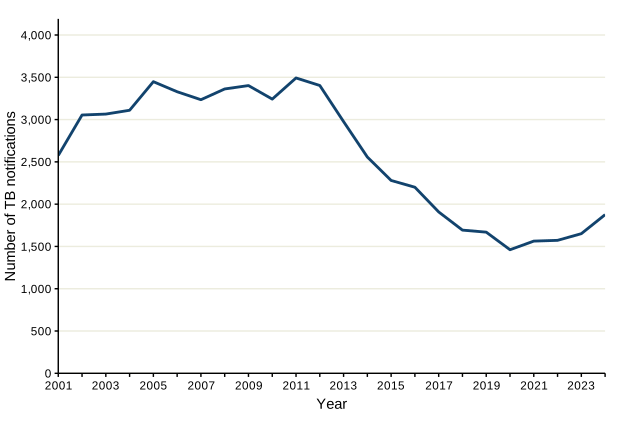
A 14% rise in the number of people with TB was also seen for England from 2023 to 2024, an increased rate of TB from 8.3 to 9.4 per 100,000 population. The rate of TB in London in 2024 was over twice as high as the rate for England and accounted for 34% of the 5,490 cases reported in 2024 in England.
Between 2016 and 2022, the TB notification rates for London were in line to meet the WHO ‘End TB 2035’ goal of a 90% reduction in the incidence of TB (Figure 3). The increase since 2023, however, means London is at risk of not meeting this goal.
Figure 2. TB notification rates per 100,000 population per year, London and England, 2001 to 2024 [note 1]
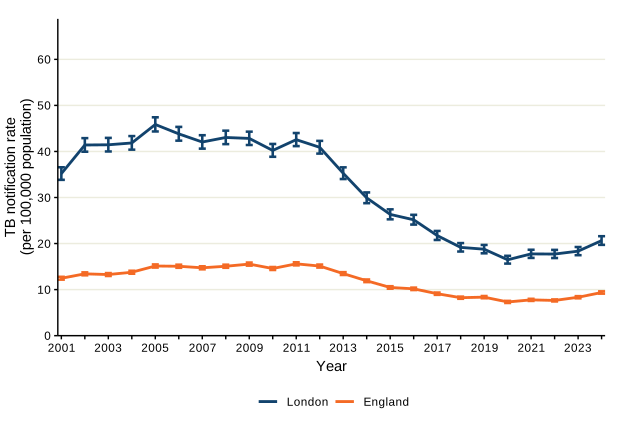
Note 1: error bars represent upper and lower 95% confidence intervals.
Figure 3. Observed TB notification rate compared with required TB notification rates to meet the WHO End TB 2035 goal of 90% reduction in incidence by 2035, London, 2015 to 2024 [note 2] [note 3]
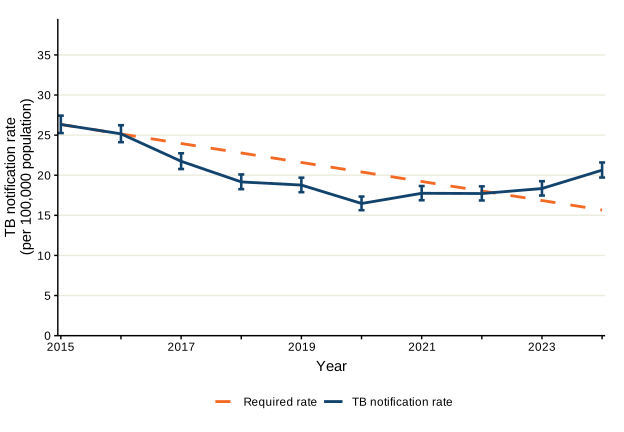
Note 2: error bars represent upper and lower 95% confidence intervals.
Note 3: dashed line represents required TB notification rates to meet the WHO End TB 2035 goal of 90% reduction in incidence by 2035.
Demographic characteristics: where people with TB live in London
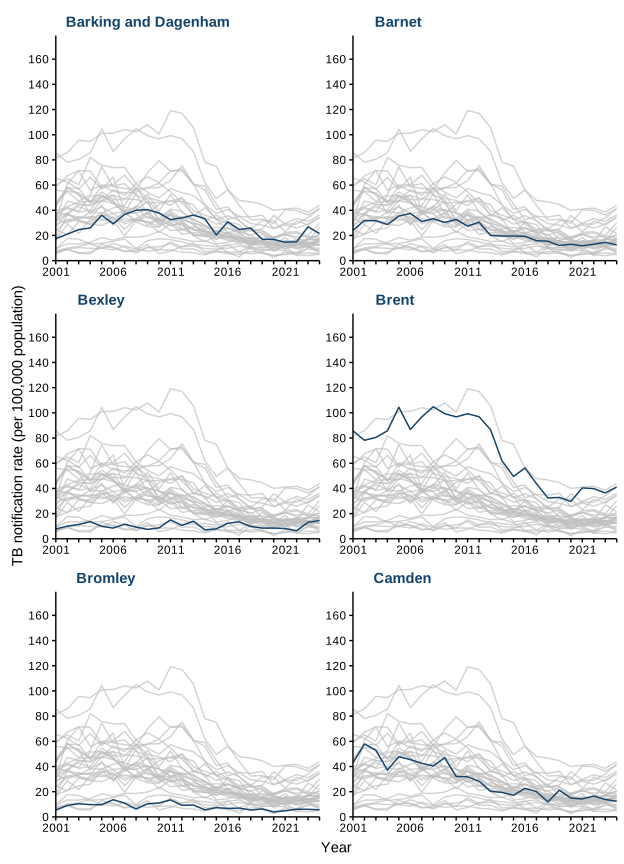
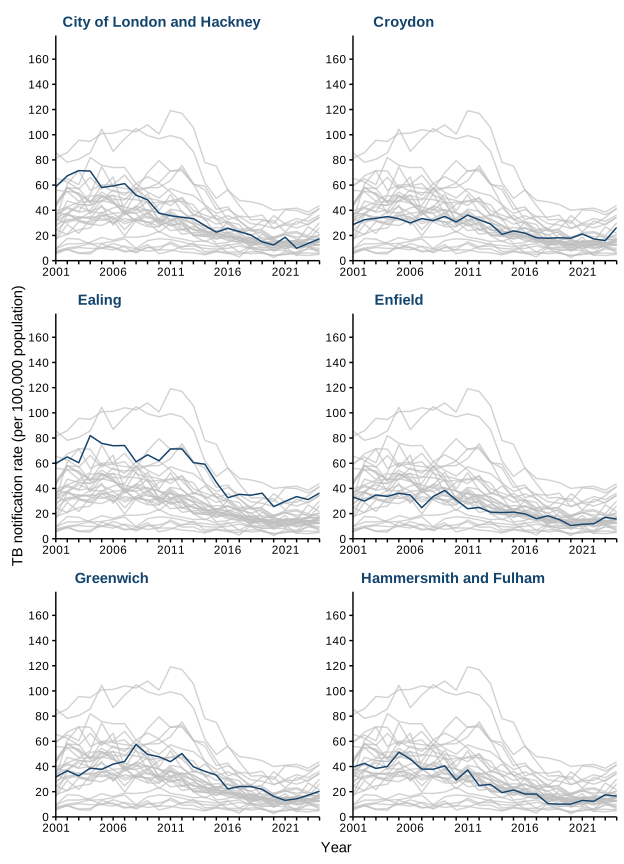
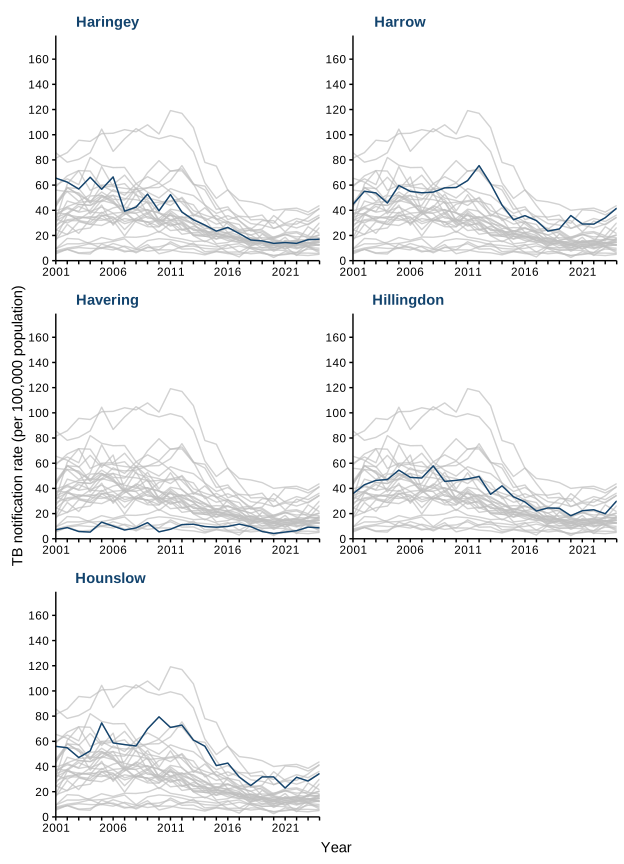
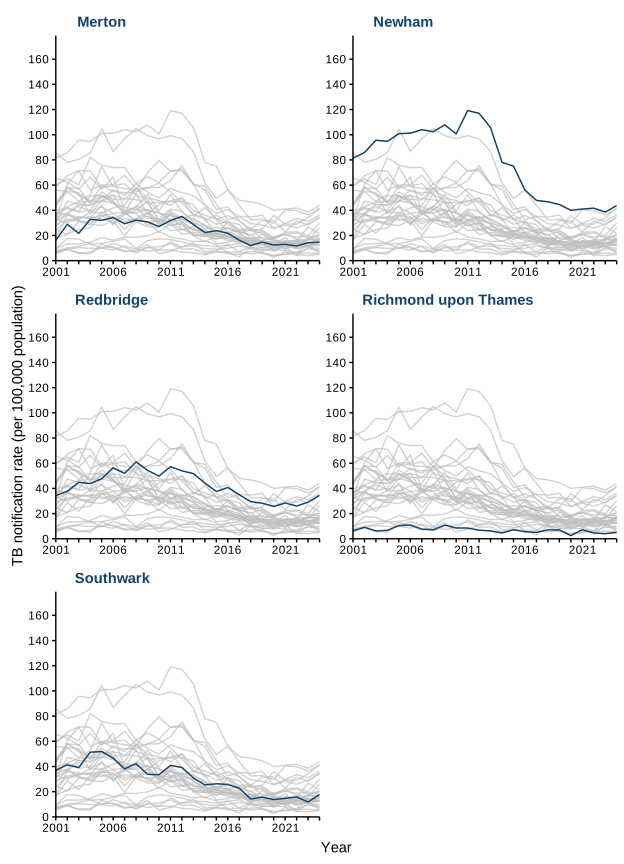
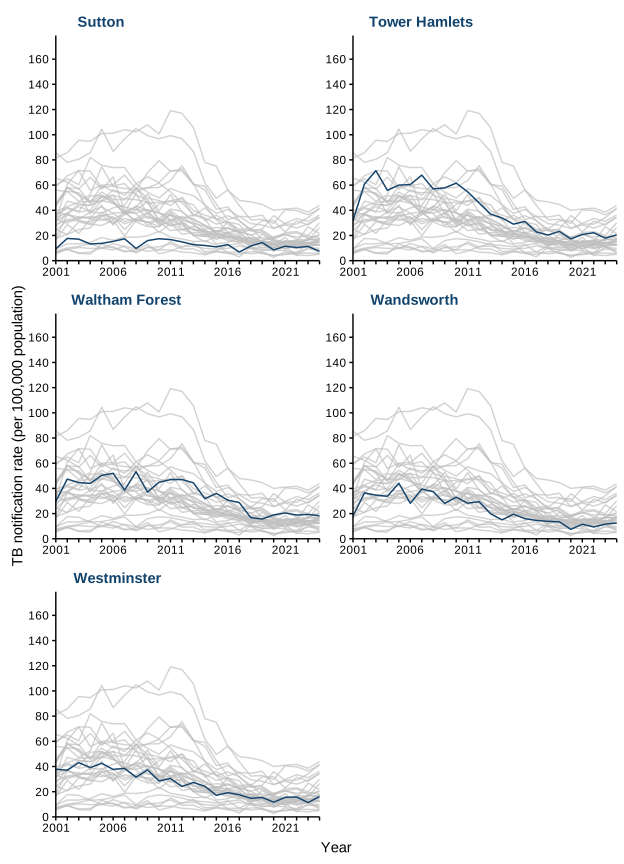
People living in the London Borough of Newham had the highest rate of TB in 2024 (44 per 100,000) followed by Harrow (42 per 100,000), Brent (41 per 100,000), Ealing (36 per 100,000), Redbridge (35 per 100,000), Hounslow (34 per 100,000) and Hillingdon (30 per 100,000) (Figure 4). These 7 boroughs had rates over 30 per 100,000 population. Rates among people living in all these boroughs increased compared to 2023.
Figure 4. TB notification rate per 100,000 population by London borough of residence, 2024 [note 4]
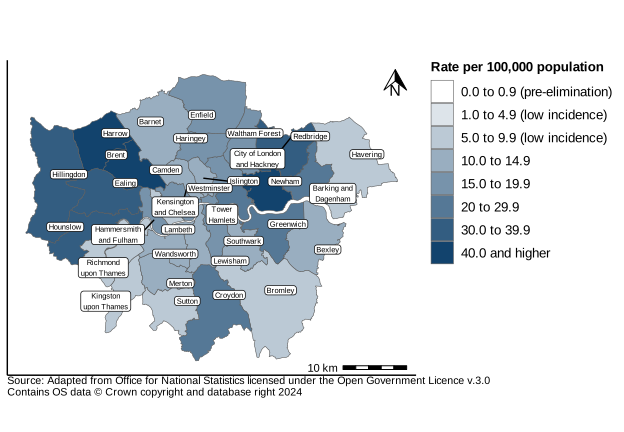
Note 4: City of London and Hackney boroughs have been combined due to data suppression regulations.
The largest increase in TB rates was in Croydon, which saw a 66% increase (16 per 100,000 in 2023 to 26 per 100,000 in 2024). Notable increases were also seen in:
- Hillingdon (20 per 100,000 in 2023, to 30 per 100,000 in 2024)
- Harrow (34 per 100,000 in 2023, to 42 per 100,000 in 2024)
- Hounslow (29 per 100,000 in 2023, to 34 per 100,000 in 2024)
Rates declined in 12 boroughs, with the largest declines in:
- Barking and Dagenham (27 per 100,000 in 2023, to 22 per 100,000 in 2024)
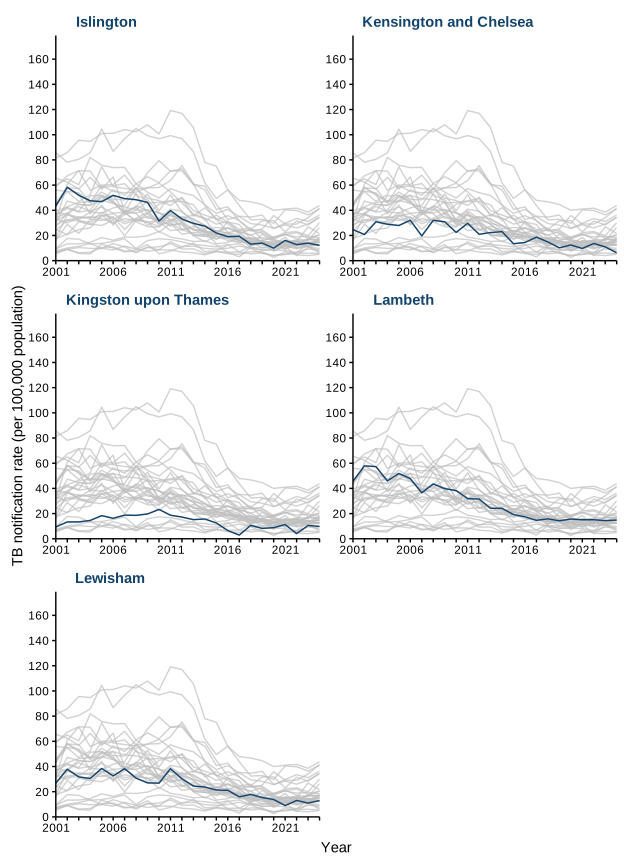
- Kensington and Chelsea (11 per 100,000 in 2023, to 6 per 100,000 in 2024)
- Sutton (11 per 100,000 in 2023, to 8 per 100,000 in 2024)
Year on year changes in low-incidence boroughs should be treated with caution due to small numbers.
Table 1. Number of TB notifications and rate per 100,000 population by London borough of residence, 2024
| London borough | Number of TB notifications | TB notification rate per 100,000 population | Lower 95% CI | Upper 95% CI |
|---|---|---|---|---|
| Newham | 164 | 43.8 | 37.3 | 51.0 |
| Harrow | 113 | 41.7 | 34.4 | 50.2 |
| Brent | 145 | 41.1 | 34.7 | 48.3 |
| Ealing | 140 | 36.3 | 30.5 | 42.8 |
| Redbridge | 111 | 34.6 | 28.4 | 41.6 |
| Hounslow | 103 | 34.4 | 28.1 | 41.7 |
| Hillingdon | 99 | 30.1 | 24.4 | 36.6 |
| Croydon | 108 | 26.4 | 21.6 | 31.9 |
| Barking and Dagenham | 50 | 21.5 | 15.9 | 28.3 |
| Tower Hamlets | 68 | 20.5 | 15.9 | 26.0 |
| Greenwich | 61 | 20.4 | 15.6 | 26.2 |
| Waltham Forest | 51 | 18.2 | 13.6 | 24.0 |
| Southwark | 56 | 17.8 | 13.4 | 23.1 |
| City of London and Hackney | 49 | 17.4 | 12.9 | 23.0 |
| Haringey | 45 | 17.1 | 12.4 | 22.8 |
| Hammersmith and Fulham | 31 | 16.4 | 11.2 | 23.3 |
| Westminster | 34 | 16.2 | 11.2 | 22.6 |
| Enfield | 51 | 15.6 | 11.6 | 20.5 |
| Lambeth | 47 | 14.8 | 10.9 | 19.7 |
| Merton | 32 | 14.6 | 10.0 | 20.7 |
| Bexley | 37 | 14.4 | 10.2 | 19.9 |
| Lewisham | 39 | 12.9 | 9.2 | 17.7 |
| Barnet | 51 | 12.6 | 9.4 | 16.6 |
| Wandsworth | 42 | 12.4 | 9.0 | 16.8 |
| Camden | 27 | 12.4 | 8.2 | 18.1 |
| Islington | 27 | 12.1 | 8.0 | 17.6 |
| Kingston upon Thames | 17 | 9.8 | 5.7 | 15.8 |
| Havering | 24 | 8.7 | 5.6 | 12.9 |
| Sutton | 16 | 7.5 | 4.3 | 12.1 |
| Kensington and Chelsea | 9 | 6.2 | 2.8 | 11.8 |
| Bromley | 19 | 5.7 | 3.4 | 8.8 |
| Richmond upon Thames | 10 | 5.1 | 2.4 | 9.4 |
Demographic characteristics: age and sex of people with TB
In 2024, 62% (1,158) of people with TB in London were male, and the rate was higher among males than for females (Figure 5 and Figure 6). Rates and absolute numbers were highest among people aged 20 to 29 years for both males (340 cases, 46.2 per 100,000) and females (206 cases, 26.7 per 100,000).
Rates in men aged over 20 were above 20 per 100,000 for all age groups, while rates in women were under 20 per 100,000, apart from women aged 20 to 39 years.
There were 19 cases in children under 10 years old. This was the only age group with more females (13 cases, 2.5 per 100,000) than males (6 cases, 1.1 per 100,000).
Figure 5. Number of TB notifications by age and sex, London, 2024 [note 5]
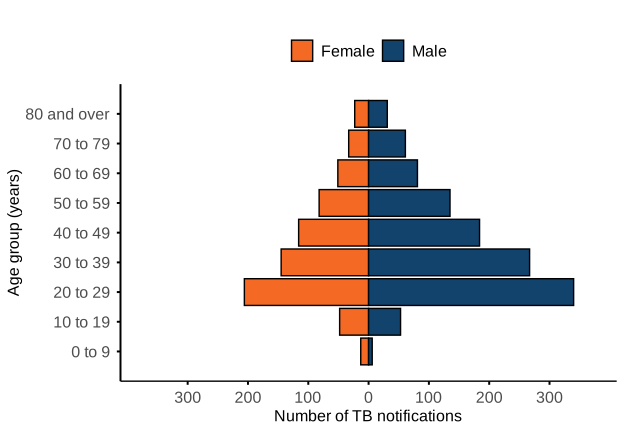
Note 5: 1 case has been excluded from the above figure due to missing age or sex data.
Figure 6. TB notification rate by age and sex, London, 2024 [note 6]
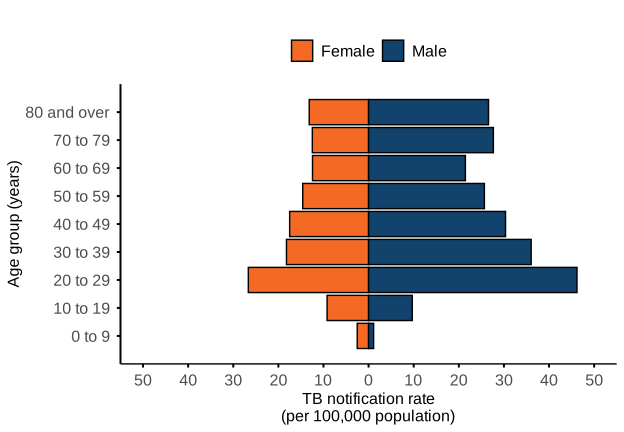
Note 6: one case has been excluded from the above figure due to missing age or sex data.
Demographic characteristics: place of birth and ethnicity of people with TB
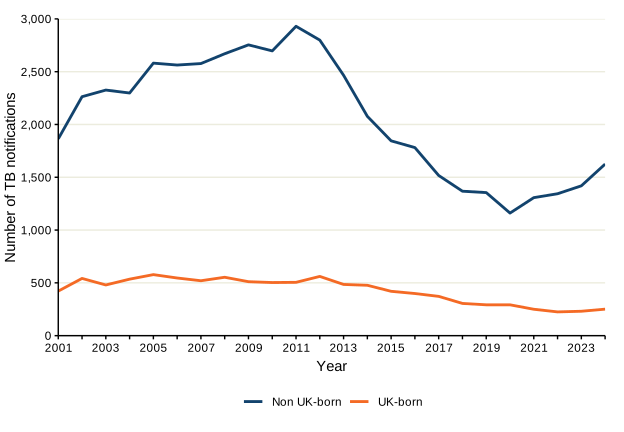
Overall, in 2024, 87% of all people with TB in London were born abroad (1,625 cases). This is higher than the proportion nationally (82%) but similar to London in 2023 (86%) (Figure 7).
The number of people with TB born abroad was over 6 times greater than the number of people with TB born in the UK. Since 2020 there has been an increasing trend in the number of people in London with TB that were born abroad.
The number of people with TB that were born in the UK did also increase by 9% in 2024 (to 251 individuals, from 231 in 2023).
Figure 7. Number of TB notifications in non-UK born and UK born people by place of birth, London, 2001 to 2024
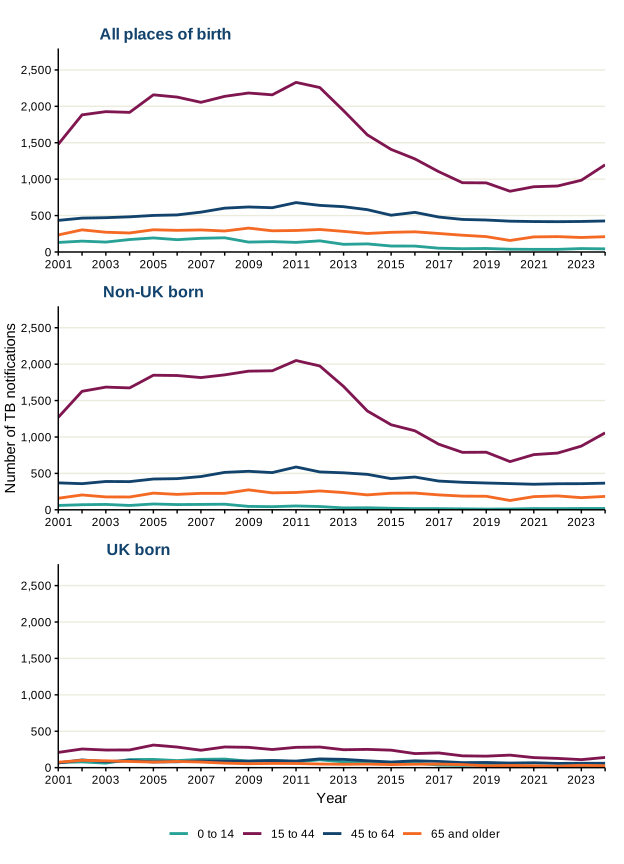
Among people born outside of the UK, the highest number was among people aged 15 to 44 years, accounting for 65% of non-UK born cases. (Figure 8). The number of cases in people born outside the UK aged 15 to 44 years declined from 2011 until 2020, but has increased year-on-year since then. The numbers have remained relatively stable or decreased in the other age groupings.
Figure 8. Number of TB notifications in non-UK born and UK born people by place of birth and age group, London, 2001 to 2024
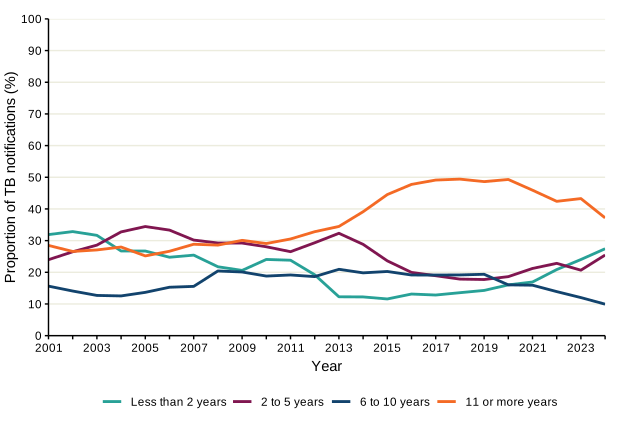
In 2024, information on time between entry to the UK and notification of TB was available for 96% of people born abroad (1,560 out of 1,625). Notably, there was an increasing proportion since 2017 of people with TB born abroad who had entered the UK within the last 2 years, with the highest proportion (27%, 428 out of 1,560) in 2024 since 2003. An increase was also seen in the proportion of people with TB who had entered the UK in the previous 2 to 5 years (Figure 9).
Although the proportion has decreased (from 43% in 2023), among those born abroad, there were still over a third of people notified with TB more than 10 years after they entered the UK (37%, 580 out of 1,560).
Figure 9. Proportion of TB notifications by time since entry for people born outside the UK, London, 2001 to 2024
In 2024, as in previous years, the most common country of birth for people with TB in London was India (38%, 619 out of 1,625), and the median time since entry to the UK was 2 years (IQR 1 to 10 years) (Table 2). For those born in Pakistan, the second most common country of birth outside of the UK (7%), the median time since entry was 12 years (IQR 1 to 23 years).
Table 2. Most common countries of birth for people with TB and time between entry to the UK and TB notification, London, 2024 [note 7] [note 8] [note 9] [note 10] [note 11]
| Country of birth | Number of people notified with TB | Proportion of people notified with TB (%) | Median time since entry to UK in years | IQR of time since entry to UK in years |
|---|---|---|---|---|
| India | 619 | 33.0 | 2.0 | 1.0 to 10.0 |
| United Kingdom | 251 | 13.4 | Not applicable | Not applicable |
| Pakistan | 139 | 7.4 | 12.0 | 1.0 to 22.5 |
| Bangladesh | 82 | 4.4 | 8.5 | 2.0 to 21.8 |
| Somalia | 67 | 3.6 | 6.0 | 1.0 to 20.0 |
| Nigeria | 62 | 3.3 | 15.0 | 1.0 to 24.0 |
| Afghanistan | 56 | 3.0 | 3.0 | 1.0 to 7.0 |
| Romania | 53 | 2.8 | 7.0 | 5.0 to 11.0 |
| Philippines | 50 | 2.7 | 10.5 | 3.0 to 21.8 |
| Eritrea | 39 | 2.1 | 3.0 | 1.8 to 8.5 |
| Other | 458 | 24.4 | 10.0 | 2.0 to 23.0 |
| Total | 1,876 | 100.0 | Not applicable | Not applicable |
Note 7: other includes all countries with less than 39 people notified.
Note 8: place of birth (UK or non-UK) or country of birth is missing for 0 notifications in 2024.
Note 9: lower quartile is the 25th percentile and upper quartile is the 75th percentile, representing the interquartile range (IQR).
Note 10: time between entry to the UK and TB notification is calculated as whole years (only year of entry is reported to the National TB Surveillance (NTBS)).
Note 11: time since entry to the UK was not known for 65 people in 2024.
In the 5 most common countries of birth (outside the UK), there was an increase in people diagnosed with TB in 2024 compared to 2023 (Figure 10).
The greatest proportional increase in 2024 was in those born in India (43%). The greatest overall increase in numbers was also in people with TB born in India, which has been increasing since 2020 and is now at its highest since 2014.
Of those with TB born in India, 35% had entered the UK in the 2 years before diagnosis (Table 3).
Figure 10. Numbers of TB notifications for the most common countries of birth for people with TB born outside the UK, London, 2014 to 2024 [note 12]
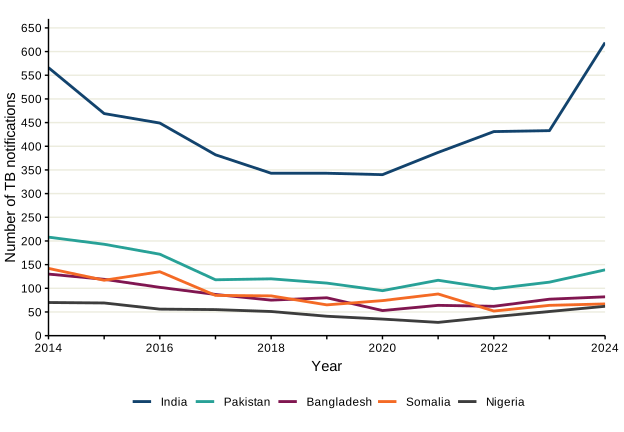
Note 12: figure shows the top 5 countries in 2024.
Table 3. Characteristics of people with TB from the most common (non-UK) countries of birth, London, 2024
| Country of birth | Number of people notified with TB | Mean age (years) | Proportion male (%) | Proportion pulmonary (includes laryngeal and miliary) (%) | Proportion with UK entry less than 2 years (%) | Proportion pulmonary of those in the UK less than 2 years (%) |
|---|---|---|---|---|---|---|
| India | 619 | 36.3 | 61.4 | 43.0 | 35.2 | 44.8 |
| Pakistan | 139 | 42.6 | 74.1 | 40.3 | 28.1 | 42.1 |
| Bangladesh | 82 | 40.7 | 53.7 | 42.7 | 20.5 | 50.0 |
| Somalia | 67 | 36.9 | 62.7 | 44.8 | 29.7 | 36.8 |
| Nigeria | 62 | 48.8 | 48.4 | 40.3 | 30.5 | 55.6 |
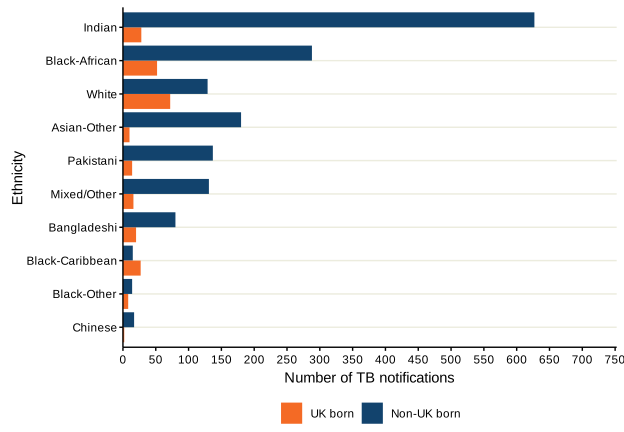
In 2024, the most common ethnic group of people with TB in London overall, and among those born outside the UK, was Indian (Figure 11). Among people born abroad, this was followed by Black-African and Asian-Other as the next most common ethnic groups.
Among people with TB who were born in the UK, White was the most common ethnic group, followed by Black-African and Indian.
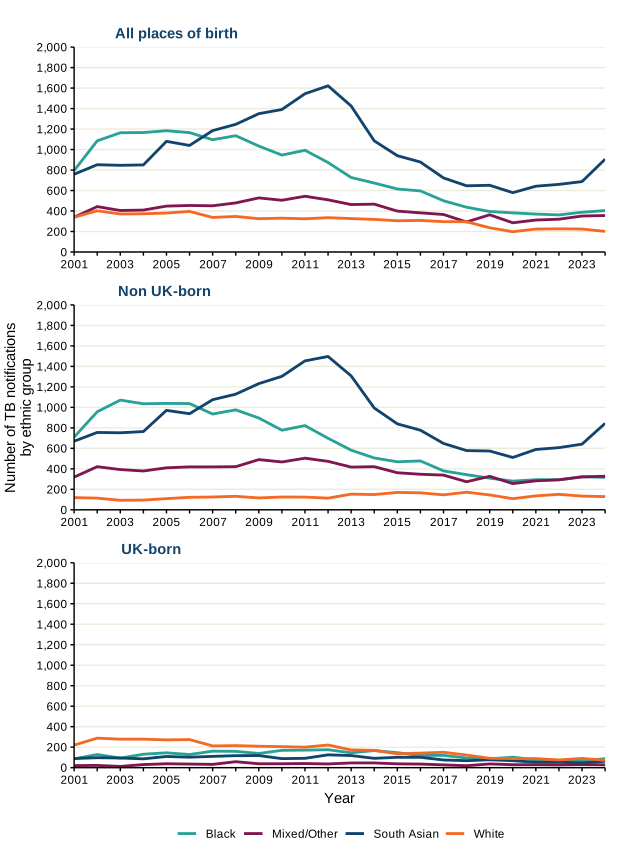
The proportion of people with TB for all places of birth and non-UK born who are South Asian has been increasing since 2020 (Figure 12).
Figure 11. Number of TB notifications in ethnic groups by place of birth (UK and non-UK born), London, 2024 [note 13] [note 14]
Note 13: 9 cases have been excluded from the above figure due to missing ethnicity or place of birth data.
Note 14: figure ordered by total number of notifications within each ethnicity irrespective of place of birth.
Figure 12. Number of TB notifications in ethnic groups by place of birth (UK and non-UK born), London, 2001 to 2024 [note 15] [note 16]
Note 15: 9 cases have been excluded from the above figure due to missing ethnicity or place of birth data.
Note 16: the South Asian ethnicity group comprises people of Indian, Pakistani and Bangladeshi ethnicities.
Clinical characteristics: site of disease, co-morbidities and HIV testing
Just over half (52%) of people notified with TB in 2024 had pulmonary disease (Table 4). The most common sites for extra-pulmonary TB were extra-thoracic lymph nodes (24%) and intra-thoracic lymph nodes (19%) (Table 5).
Table 4. Number of pulmonary TB notifications by site of disease, London, 2024 [note 17] [note 18]
| Site of disease | Number of people notified with TB | Proportion of people notified with TB (%) |
|---|---|---|
| All pulmonary | 978 | 52.1 |
| Pulmonary only | 673 | 35.9 |
| Miliary only | 52 | 2.8 |
| Laryngeal only | 6 | 0.3 |
Note 17: percentages may not add up to 100 as people with TB may have more than one site of disease.
Note 18: ‘pulmonary only’ includes people notified with only pulmonary TB and therefore have not also been notified with miliary, laryngeal or extra-pulmonary TB.
Table 5. Number of extra-pulmonary TB notifications by site of disease, London, 2024 [note 19]
| Site of disease | Number of people notified with TB | Proportion of people notified with TB (%) |
|---|---|---|
| All extra-pulmonary | 1,203 | 64.1 |
| Extra-thoracic lymph nodes | 445 | 23.7 |
| Intra-thoracic lymph nodes | 361 | 19.2 |
| Other extra-pulmonary | 240 | 12.8 |
| Pleural | 184 | 9.8 |
| Gastrointestinal | 115 | 6.1 |
| Bone - spine | 82 | 4.4 |
| Bone - not spine | 39 | 2.1 |
| Central nervous system - meningitis | 37 | 2.0 |
| Central nervous system - other | 26 | 1.4 |
| Cryptic disseminated | 25 | 1.3 |
| Genitourinary | 23 | 1.2 |
Note 19: percentages may not add up to 100 as people with TB may have more than one site of disease.
Data for several comorbidities (diabetes, hepatitis B and C, chronic liver disease, chronic renal disease, and immunosuppression) is routinely collected as part of TB surveillance. Almost 1 in 5 (18%) people with TB had at least one of these comorbidities. The most common was diabetes (11%) (Table 6).
HIV tests were offered or result already known for 99% (1,850 out of 1,867) of cases, similar to previous years (99% in 2023 and 2022).
Table 6. Number and proportion of people with TB with comorbidities, London, 2024 [note 20]
| Comorbidity | Total with data reported | Number of people notified with TB with comorbidities | Proportion of people notified with TB with comorbidities (%) | Number of people notified with TB missing comorbidity data | Proportion of people notified with TB missing comorbidity data (%) |
|---|---|---|---|---|---|
| At least one of the named comorbidities | 1,876 | 338 | 18.0 | Not applicable | Not applicable |
| Chronic liver disease | 1,785 | 27 | 1.5 | 91 | 4.9 |
| Chronic renal disease | 1,799 | 60 | 3.3 | 77 | 4.1 |
| Diabetes | 1,807 | 205 | 11.3 | 69 | 3.7 |
| Hepatitis B | 1,797 | 33 | 1.8 | 79 | 4.2 |
| Hepatitis C | 1,800 | 13 | 0.7 | 76 | 4.1 |
| Immunosuppression | 1,803 | 94 | 5.2 | 73 | 3.9 |
Note 20: people with TB are reported as having at least one of the named comorbidities if any of the 6 comorbidities (current liver disease, chronic renal disease, diabetes, hepatitis B, hepatitis C or immunosuppression) had ‘yes’ recorded. As a result, the denominator is all notifications. This assumes that people for whom no data was recorded for individual comorbidities were a ‘no’ and may result in under-estimation.
Inclusion health characteristics of people with TB
Data for several social risk factors (alcohol misuse, asylum seeker, drug misuse, homelessness, mental health needs and prison) is routinely collected as part of TB surveillance. The proportion of people with TB, aged over 15 years, with at least one social risk factor was 16% in 2024. The prevalence of social risk factors has remained between 16 and 18% since 2018 (Table 7).
Table 7. Number and proportion of people with TB aged 15 years or over reporting at least one social risk factor, London, 2014 to 2024 [note 21]
| Year | Number of people notified with TB with any social risk factor | Proportion of people notified with TB with any social risk factor (%) | Total notifications |
|---|---|---|---|
| 2014 | 242 | 9.9 | 2,446 |
| 2015 | 234 | 10.6 | 2,198 |
| 2016 | 219 | 10.3 | 2,119 |
| 2017 | 216 | 11.7 | 1,853 |
| 2018 | 272 | 16.5 | 1,648 |
| 2019 | 285 | 17.6 | 1,621 |
| 2020 | 245 | 17.2 | 1,423 |
| 2021 | 271 | 17.7 | 1,527 |
| 2022 | 266 | 17.3 | 1,536 |
| 2023 | 289 | 18.0 | 1,604 |
| 2024 | 287 | 15.7 | 1,833 |
Note 21: not all social risk factors were captured before 2021 and this table includes people with no information recorded in the denominator.
The most common social risk factor was current or previous homelessness, experience by 6.6% of people aged over 15 years (Table 8). This was followed by currently seeking asylum (5.5%) and current alcohol misuse (4.4%). More than one social risk factor was recorded for 111 (6%) of individuals with TB.
Table 8. Number and proportion of people with TB aged 15 years or over with individual social risk factors, London, 2024 [note 22] [note 23]
| Social risk factor | Total with data reported | Number of people notified with TB with social risk factors | Proportion of people notified with TB with social risk factors (%) | Number of people notified with TB and missing social risk factor data | Proportion of people notified with TB and missing social risk factor data (%) |
|---|---|---|---|---|---|
| At least one named social risk factor | 1,833 | 287 | 15.7 | Not applicable | Not applicable |
| More than one social risk factor | 1,802 | 111 | 6.2 | 31 | 1.7 |
| Alcohol misuse (current) | 1,761 | 78 | 4.4 | 72 | 3.9 |
| Asylum seeker (current) | 1,772 | 97 | 5.5 | 24 | 1.3 |
| Drug misuse (current or previous) | 1,762 | 60 | 3.4 | 71 | 3.9 |
| Homelessness (current or previous) | 1,786 | 117 | 6.6 | 47 | 2.6 |
| Mental health needs (current) | 1,743 | 55 | 3.2 | 90 | 4.9 |
| Prison (current or previous) | 1,758 | 47 | 2.7 | 75 | 4.1 |
Note 22: people with TB are reported as having ‘at least one named social risk factor’ if any of the 6 social risk factors (current alcohol misuse, current or a history of homelessness, drug misuse, imprisonment, current asylum seeker status and current mental health needs) had ‘yes’ recorded. As a result, the denominator for this metric is all TB notifications. This assumes that people for whom no data was recorded for individual social risk factors were a ‘no’ and may result in under-estimation.
Note 23: the denominator for people with TB reported as having ‘more than one social risk factor’ is the number of people with TB for whom data are recorded for at least 2 out of the 6 social risk factors collected. This differs to the ‘at least one named social risk factor’ metric described above.
In 2024, experience of a social risk factor was more commonly reported by men with TB (21% versus 7%) (Table 9). Experience of social risk factors varied by age group, from 11% of people aged 65 or older to 20% of people aged 45 to 64. The proportion also varied by place of birth, with 23% of UK-born cases of TB reporting a social risk factor compared to 15% of non-UK born cases.
Table 9. Number and proportion of people with TB aged 15 years or over with a social risk factor (SRF) by demographic characteristics, London, 2024 [note 24]
| Demographic characteristics | Number of people with demographic characteristic who have any social risk factor | Total number of people with demographic characteristic | Proportion of people with demographic characteristic who have any social risk factor |
|---|---|---|---|
| Female | 49 | 688 | 7.1 |
| Male | 237 | 1,144 | 20.7 |
| Aged 15 to 44 | 177 | 1,197 | 14.8 |
| Aged 45 to 64 | 86 | 426 | 20.2 |
| Aged 65 or older | 24 | 210 | 11.4 |
| Non-UK-born | 236 | 1,607 | 14.7 |
| UK-born | 51 | 226 | 22.6 |
Note 24: one case has been excluded from the above table due to missing demographic characteristic data.
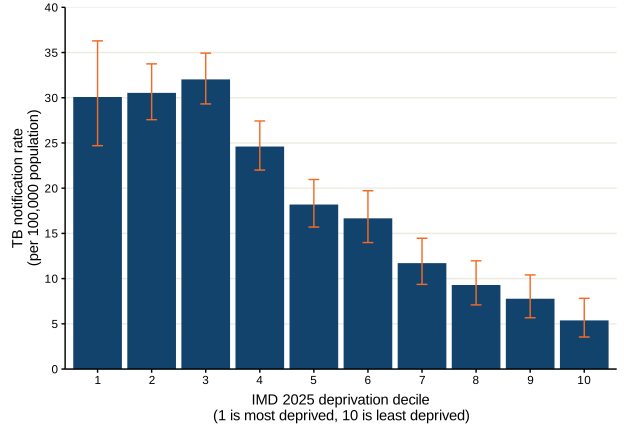
Deprivation data was assessed using the 2025 Index of Multiple Deprivation. In 2024, 71% of all people with TB lived in the 4 most deprived deciles of London (1,331 out of 1,867) (Figure 13). Rates were the highest in decile 3 (32 per 100,000). Excluding deciles 1 and 2, the rate progressively decreased along with decreasing deprivation, reaching 5.4 per 100,000 in the least deprived decile.
Figure 13. TB notification rate by deprivation decile, London, 2024 [note 25] [note 26]
Note 25: error bars represent upper and lower 95% confidence intervals.
Note 26: the Index of Multiple Deprivation (IMD) ranks small areas in England by deprivation using 7 main domains including, but not limited to, income, housing, employment, crime and environment. Each area is scored and ranked nationally from most to least deprived.
TB detection
Delays in starting treatment for TB
Treatment delay is defined as the total time from symptom onset to treatment start. The median time from symptom onset to start of treatment for people with pulmonary TB was 67 days (IQR 38 to 126) (Figure 20). This was shorter for people in London than for England (72 days). This was the same as 2023, and slightly shorter than the median time from 2020 to 2022.
Figure 14. Median treatment delays among people notified with pulmonary TB, London, 2019 to 2024 [note 27] [note 28] [note 29] [note 30]
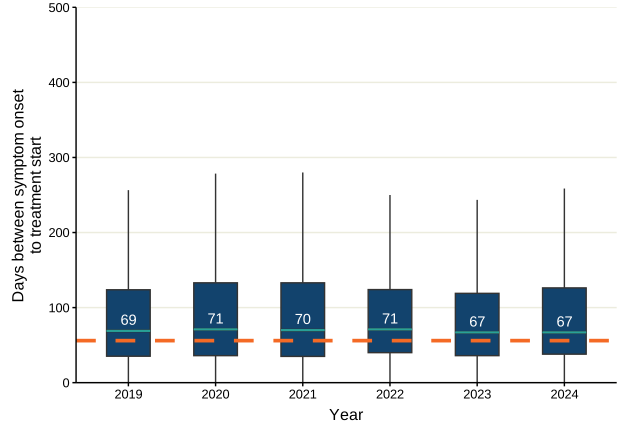
Note 27: dashed line represents the target treatment delay of 56 days by 2027.
Note 28: ends of the whiskers represent the theoretical lower and upper limits for detecting outliers (lower/upper quartile negative/positive 1.5 times the interquartile range). Outliers falling outside of these limits have been removed.
Note 29: delay to treatment is defined by when treatment was started from symptom onset.
Note 30: all people included in this figure are people with pulmonary TB who did not have a postmortem diagnosis and it was known that they had started treatment. It excludes individuals with a delay over 730 days.
The proportion of people notified with pulmonary TB with a treatment delay over 2 months in London in 2024 was 58%, similar to previous years (Figure 21). This was 67% for people with extra-pulmonary TB (654 out of 981).
Figure 15. Proportion of people notified with pulmonary TB with a treatment delay over 2 months, London, 2019 to 2024 [note 31] [note 32] [note 33]
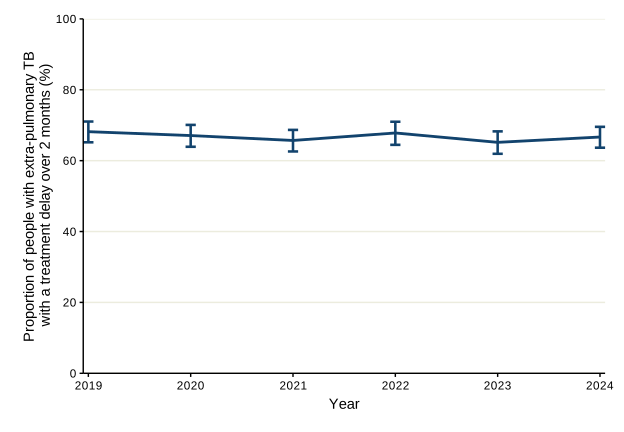
Note 31: error bars represent upper and lower 95% confidence intervals.
Note 32: delay to treatment is defined by when treatment was started from symptom onset.
Note 33: all cases where delay to treatment is greater than 730 days have been removed from this analysis.
In 2024, 31% of people with pulmonary TB experienced a delay of 2 to 4 months, similar to recent years (between 28 and 33% from 2019 to 2023). A delay of over 4 months was observed for 27% of people with pulmonary TB (Table 10).
Table 10. Number and proportion of people notified with pulmonary TB with a treatment delay, time between symptom onset and treatment start, London, 2019 to 2024 [note 34]
| Year | 2 to 4 months delay (number) | 2 to 4 months delay (proportion) | Over 4 months delay (number) | Over 4 months delay (proportion) | Total |
|---|---|---|---|---|---|
| 2019 | 228 | 30.7 | 192 | 25.9 | 751 |
| 2020 | 202 | 29.5 | 191 | 27.9 | 689 |
| 2021 | 191 | 27.6 | 197 | 28.5 | 700 |
| 2022 | 243 | 33.0 | 191 | 25.9 | 744 |
| 2023 | 242 | 32.3 | 179 | 23.9 | 753 |
| 2024 | 253 | 30.7 | 221 | 26.8 | 833 |
Note 34: included in this table are people with pulmonary TB who did not have a postmortem diagnosis and where the time from symptom onset to treatment start was also known. A ‘2 to 4 month delay’ includes people with a delay of 61 to 121 days inclusive. An ‘over 4 month delay’ includes people with a delay between 122 and 730 days inclusive.
Microbiology and drug resistance
In 2024,1,162 people with TB in London had their diagnosis confirmed by culture (62%). This was 75% (729 of 978) among people with pulmonary TB, lower than the 80% target and the lowest proportion since 2018 (Figure 14).
Figure 16. Proportion of people notified with pulmonary TB who were culture confirmed, London, 2018 to 2024 [note 35] [note 36]
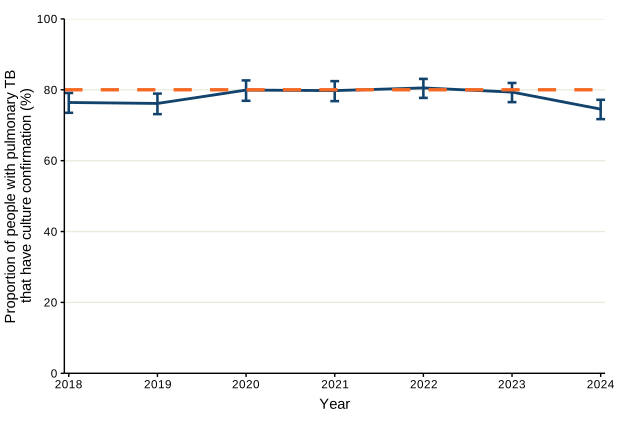
Note 35: dashed line indicates target of 80% culture confirmation.
Note 36: error bars represent upper and lower 95% confidence.
Use of molecular testing, including polymerase chain reaction (PCR), can provide a more rapid diagnosis than culture and reduce delay between symptom onset and start of treatment. The National Institute for Health and Care Excellence (NICE) recommends that respiratory samples should have a PCR in all cases for diagnosis of TB in children. PCR is recommended in adults if any of the following conditions are met: resistance to rifampicin is suspected, the patient has HIV, the result would change management, or a large contact tracing exercise is being planned. For non-respiratory samples, PCR is indicated if it would change management. In England in 2024, PCR testing was recorded for 43% of notifications (2,360 out of 5,490), and of the PCR tests recorded, 80% were positive. Only 35% of children aged under 15 years with pulmonary disease had a PCR test recorded.
In London, data on PCR testing was recorded for 42% (779 out of 1,876) notifications. Overall, in 2024, 57% (442 out of 779) of people with TB who had a PCR result recorded were PCR positive.
Of the 1,162 people with culture-confirmed TB in 2024, 99% (1,151) had first line drug results. 88 people (7.6%) with culture-confirmed TB had initial resistance to at least one first line drug (Figure 15). This was similar to 2023 (7.7%) and has decreased since 2022 (11.2%).
Figure 17. Proportion of people notified with culture-confirmed TB with initial resistance to any first line drug, London, 2018 to 2024 [note 37] [note 38] [note 39]
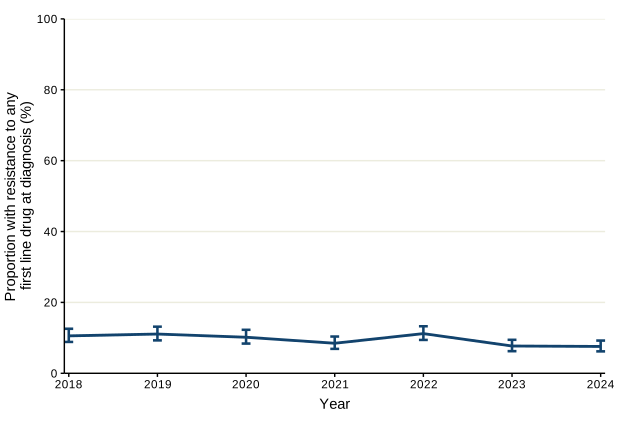
Note 37: error bars represent upper and lower 95% confidence intervals.
Note 38: due to quality control issues, resistance to any first-line drug excludes pyrazinamide for 2023 and 2024.
Note 39: We are not reporting on the proportion with resistance to pyrazinamide (and therefore the category of any first-line agent only includes rifampicin, isoniazid, and ethambutol) in 2023 and 2024 because the laboratory testing was adversely impacted by a problem with quality control in the supply chain for the media used for pDST for this drug. The manufacturer issued a Field Safety Notice in July 2024 stating that there may have been false detection of resistance from June 2023.
Between 2018 and 2024, 6.9% (502 cases) of people with culture-confirmed TB in London had isoniazid resistance without MDR TB. A further 2% (142 cases) had MDR TB, resistance to both isoniazid and rifampicin (Table 11)
Table 11. Number and proportion of people with culture-confirmed TB with initial drug resistance, London, 2018 to 2024
| Initial drug resistance | Number of cases | Percentage of total cultured cases |
|---|---|---|
| Isoniazid resistance without MDR TB | 502 | 6.9 |
| MDR TB | 142 | 2.0 |
| Pre-XDR | 25 | 0.3 |
| XDR | 3 | 0.0 |
Clustering
Individuals are assigned to a whole genome sequencing (WGS) cluster if their isolate is within 12 single nucleotide polymorphisms (SNPs) of an isolate from another person in the database.
Local teams reviewing clusters may use smaller SNP distance thresholds as evidence of recent transmission, when risk assessing and agreeing further investigation.
Of the 1,162 people with culture-confirmed TB in London in 2024, 324 (28%) were less than 12 SNPs from another person with TB in England and so were identified as being part of a cluster (Table 12). The number of people with TB identified as being in a cluster has decreased since 2021 when 36% of people with culture confirmation were in a WGS cluster.
Table 12. Number of people notified, proportion with culture confirmation and proportion of notifications identified in a WGS cluster, London, 2021 to 2024 [note 40] [note 41]
| Year | Total TB notifications | Number of notifications cultured | Proportion of notifications cultured | Number of culture-confirmed notifications identified in a cluster with more than one person | Proportion of culture-confirmed notifications identified in a cluster with more than one person (%) | 95% confidence interval |
|---|---|---|---|---|---|---|
| 2021 | 1,563 | 991 | 63.4 | 357 | 36.0 | 33.1 to 39.1 |
| 2022 | 1,572 | 1,027 | 65.3 | 337 | 32.8 | 30 to 35.7 |
| 2023 | 1,651 | 1,065 | 64.5 | 371 | 34.8 | 32 to 37.7 |
| 2024 | 1,876 | 1,162 | 61.9 | 324 | 27.9 | 25.4 to 30.5 |
| Total | 6,662 | 4,245 | 63.7 | 1,389 | 32.7 | 31.3 to 34.1 |
Note 40: a WGS cluster is defined as 2 or more individuals that have isolates with a less than 12 SNP difference.
Note 41: WGS cluster reporting has changed over time. These changes are likely to have affected the most recent year’s data.
TB in children
In 2024, there were 80 cases of TB notified in children under the age of 18 years old, resident in London (Figure 16). This was a rate of 4.2 per 100,000 of the population (Figure 17). This was a 17% increase from 2022, when the rate was at its lowest (3.6 per 100,000), but a slight decrease from 2023 (4.6 per 100,000). This decrease was only seen in children with TB born in the UK (Figure 18 and Figure 19).
Figure 18. Number of TB notifications in children aged under 18 years, London, 2001 to 2024
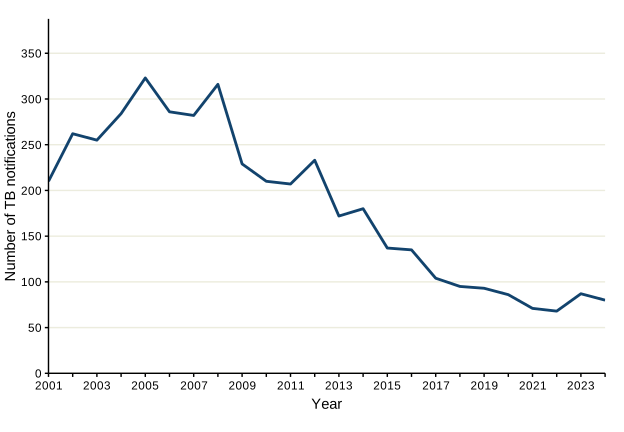
Figure 19. TB notification rate in children aged under 18 years, London, 2001 to 2024 [note 42]
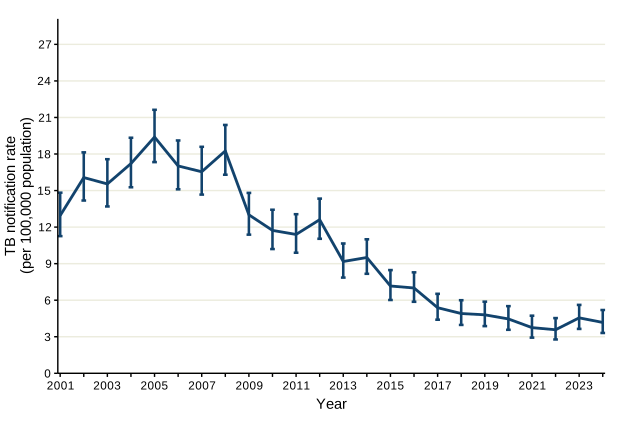
Note 42: error bars represent upper and lower 95% confidence intervals.
Figure 20. Number of TB notifications in UK born children aged under 18 years, London, 2001 to 2024
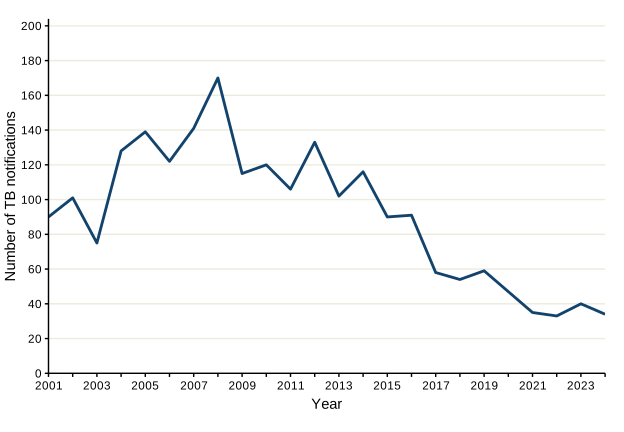
Figure 21. Number of TB notifications in non-UK born children aged under 18 years, London, 2001 to 2024
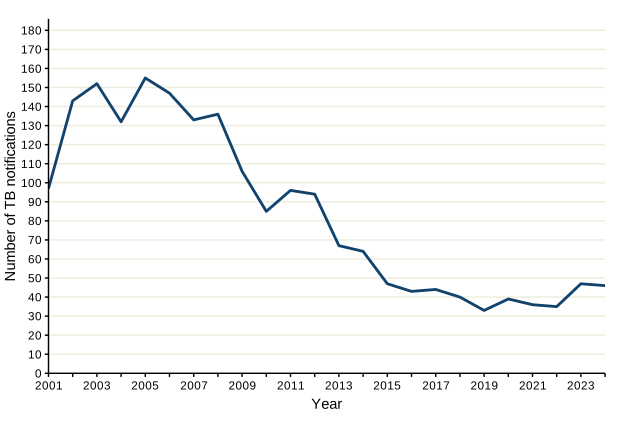
In 2024, 58% of children aged under 18 years with TB in London were born outside the UK (46 cases). For children born outside of the UK, the most common country of birth was India (12.5%) followed by Afghanistan (7.5%).
Nearly half of all children under 18 with TB in London were aged between 15 and 17 years (46%, 37 out of 80) (Table 13). 12 children were younger than 5 years. For children aged under 18 years, 69% (55) had pulmonary TB (with or without other extra-pulmonary disease as well). 10 children (12.5%) had severe TB, defined as cases with CNS, spinal, cryptic or miliary TB; of whom 3 were aged less than 5 years and 7 had received BCG vaccination.
Table 13. Number of TB notifications by site and severity of disease in children aged under 18 years, London, 2024 [note 43]
| Clinical characteristic | Number of notifications in children aged 0 to 4 years | Number of notifications in children aged 5 to 9 years | Number of notifications in children aged 10 to 14 years | Number of notifications in children aged 15 to 17 years | Total |
|---|---|---|---|---|---|
| All disease sites | 12 | 7 | 24 | 37 | 80 |
| Pulmonary | 9 | 5 | 16 | 25 | 55 |
| Extra-pulmonary | 5 | 3 | 14 | 17 | 39 |
| Severe TB | 3 | 1 | 4 | 2 | 10 |
| Lymph nodes only | 2 | 1 | 4 | 8 | 15 |
| Other | 0 | 0 | 2 | 0 | 2 |
Note 43: pulmonary also includes children with or without extra-pulmonary sites. Severe TB is defined as cases with CNS, spinal, cryptic or miliary TB. Lymph nodes only includes intra- and extra-thoracic lymph nodes and no other site of disease including pulmonary or extra-pulmonary TB. Other includes gastrointestinal, genitourinary, or other extra-pulmonary.
TB treatment
Enhanced case management: extra support for people with TB
The Royal College of Nursing TB case management tool Case Management TB Publications, Royal College of Nursing provides standardised recommendations for enhanced case management (ECM) in individuals being treated for TB who have additional clinical or social complexities.
The ECM levels are:
- ECM level 1: people with clinical or social issues which may impact on treatment, for example, children with TB, or those taking antiretrovirals
- ECM level 2: people with complex clinical or social issues which are likely to impact on treatment, for example, complex side effects or single drug resistance, which may necessitate weekly visits
- ECM level 3: people with very complex clinical or social issues which highly impact on treatment, for example, social risk factors or MDR or RR TB which necessitates directly observed therapy (DOT) or virtually observed therapy (VOT)
In 2024, over half (54%) of all people with TB in London received ECM, similar to 2021 to 2023 (Table 14). Almost 1 in 4 people with TB 24% received level 3 ECM, suggesting a high level of support required.
Table 14. Number of people with TB receiving enhanced case management, London, 2022 to 2024 [note 44]
| Year | Total TB notifications | Any ECM (number) | Any ECM (proportion) | Level 1 (number) | Level 1 (proportion) | Level 2 (number) | Level 2 (proportion) | Level 3 (number) | Level 3 (proportion) | Unknown level (number) | Unknown level (proportion) |
|---|---|---|---|---|---|---|---|---|---|---|---|
| 2021 | 1,563 | 798 | 51.1 | 200 | 12.8 | 168 | 10.7 | 306 | 19.6 | 124 | 7.9 |
| 2022 | 1,572 | 810 | 51.5 | 254 | 16.2 | 216 | 13.7 | 336 | 21.4 | 4 | 0.3 |
| 2023 | 1,651 | 922 | 55.8 | 296 | 17.9 | 249 | 15.1 | 374 | 22.7 | 3 | 0.2 |
| 2024 | 1,876 | 1,021 | 54.4 | 300 | 16.0 | 266 | 14.2 | 449 | 23.9 | 6 | 0.3 |
Note 44: total TB notifications includes all people notified with TB regardless of whether they are receiving ECM or not, or if this information is missing.
TB treatment outcomes
Outcomes for people with non-severe and non-MDR/non-RR TB
These outcomes are presented only among people who would usually have standard treatment regimens for TB: this excluded people who were treated for multidrug-resistant (MDR) and rifampicin-resistant (RR) TB, as well as those with severe disease (defined as CNS, spinal, miliary or cryptic disseminated disease among adults, and TB meningitis, miliary or cryptic disseminated among children aged 0 to 14 years), where expected treatment durations are longer. This definition of severe disease may not capture all clinically severe or extensive disease involving other sites of disease.
Among people notified in 2023, 87% (1,261 out of 1,454) of people with non-severe TB treated for non-MDR or non-RR TB had completed treatment by 12 months. This was an increase in the proportion who completed treatment compared to 2022 (85%) but was still slightly below the national treatment target of 90% (Figure 22). For people with one or more social risk factors, 79% had completed treatment at 12 months, the highest proportion since 2019 (Figure 23).
Figure 22. Proportion of people with non-severe TB treated for non-MDR or non-RR TB who completed treatment within 12 months compared with the target of 90%, London, 2019 to 2023 [note 45] [note 46] [note 47]
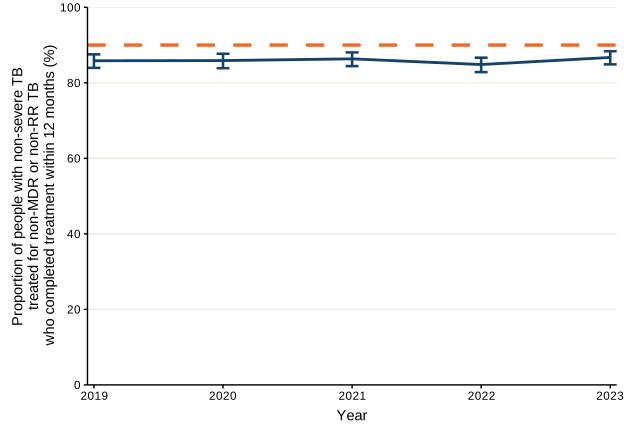
Note 45: dashed line indicates treatment target of 90%.
Note 46: error bars represent upper and lower 95% confidence intervals.
Note 47: non-severe TB is defined as those cases without central nervous system (CNS), spinal, cryptic or miliary disease or people notified with a postmortem diagnosis of TB.
Figure 23. Proportion of people with non-severe TB treated for non-MDR or non-RR TB and with one or more social risk factors who completed treatment within 12 months, London, 2019 to 2023 [note 48] [note 49]
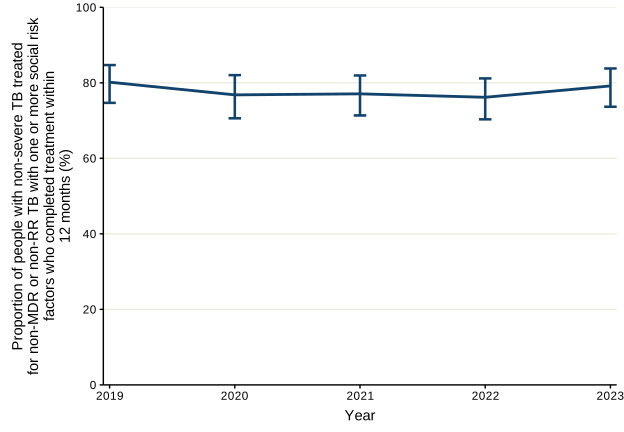
Note 48: error bars represent upper and lower 95% confidence intervals.
Note 49: non-severe TB is defined as those cases without central nervous system (CNS), spinal, cryptic or miliary disease or people notified with a postmortem diagnosis of TB.
The most common reasons for not completing at 12 months were being lost to follow up (3.5%) followed by still being on treatment (3.2%) and death (3.2%). At the last recorded treatment outcome, a further 42 people completed treatment, bringing completion to 90%. An additional 2 people were lost to follow up (3.6%).
The proportion of people who died before completing treatment was 3.2% (46 cases), a decrease from 4.3% in 2022 and the lowest proportion since 2018 (Figure 24) (Table 16, Table 17).
The proportion of people lost to follow up was 3.5% (51 cases), similar to 2022 (3.4%). This has been decreasing year on year since 2017. 46 people (3.2%) were still on treatment, a decrease compared to 2022 (4.5%) and the lowest proportion since 2014. The proportion of people with treatment stopped was 0.8%, similar to 2022.
Table 15. Treatment outcome at 12 months and last recorded outcome for people notified with non-severe TB treated for non-MDR or non-RR TB, London, 2023 [note 50] [note 51]
| Outcome | TB treatment outcome at 12 months (number) | TB treatment outcome at 12 months (proportion) | Last recorded treatment outcome (number) | Last recorded treatment outcome (proportion) |
|---|---|---|---|---|
| Treatment completed | 1,261 | 86.7 | 1,303 | 89.6 |
| Died | 46 | 3.2 | 46 | 3.2 |
| Lost to follow up | 51 | 3.5 | 53 | 3.6 |
| Still on treatment | 46 | 3.2 | 13 | 0.9 |
| Treatment stopped | 11 | 0.8 | 12 | 0.8 |
| Not evaluated | 39 | 2.7 | 27 | 1.9 |
| Total | 1,454 | 100.0 | 1,454 | 100.0 |
Note 50: not evaluated indicates that the treatment outcome was not evaluated, not recorded or is unknown and the final outcome is not still on treatment nor died.
Note 51: non-severe TB is defined as those cases without central nervous system (CNS), spinal, cryptic or miliary disease.
Figure 24. Outcomes of people evaluated who did not complete treatment by 12 months for people with non-severe TB treated for non-MDR or non-RR TB, London, 2014 to 2023 [note 52]
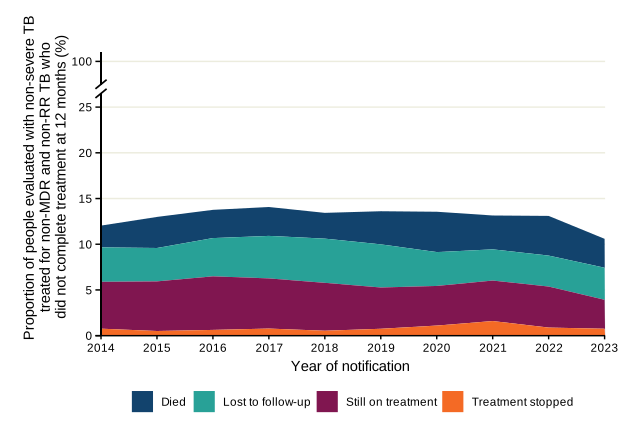
Note 52: non-severe TB is defined as those cases without central nervous system (CNS), spinal, cryptic or miliary disease.
Table 16. TB outcome at 12 months for people with non-severe TB treated for non-MDR or non-RR TB, London, 2014 to 2023 [note 53]
| Year | Treatment completed (number) | Treatment completed with any social risk factor (number) | Died (number) | Lost to follow up (number) | Still on treatment (number) | Treatment stopped (number) | Not evaluated (number) | Total (number) |
|---|---|---|---|---|---|---|---|---|
| 2014 | 1,953 | 169 | 53 | 84 | 114 | 17 | 5 | 2,226 |
| 2015 | 1,706 | 153 | 67 | 72 | 107 | 10 | 9 | 1,971 |
| 2016 | 1,640 | 144 | 59 | 80 | 112 | 12 | 8 | 1,911 |
| 2017 | 1,435 | 140 | 53 | 78 | 92 | 13 | 6 | 1,677 |
| 2018 | 1,277 | 177 | 42 | 72 | 78 | 8 | 12 | 1,489 |
| 2019 | 1,255 | 194 | 53 | 69 | 66 | 11 | 8 | 1,462 |
| 2020 | 1,090 | 159 | 56 | 47 | 55 | 14 | 7 | 1,269 |
| 2021 | 1,189 | 185 | 51 | 47 | 61 | 22 | 7 | 1,377 |
| 2022 | 1,153 | 179 | 59 | 46 | 61 | 12 | 28 | 1,359 |
| 2023 | 1,261 | 194 | 46 | 51 | 46 | 11 | 39 | 1,454 |
Note 53: not evaluated indicates that the treatment outcome was not evaluated, not recorded or is unknown and the final outcome is not ‘still on treatment’ or ‘died’ within the timeframe of 12 months. Non-severe TB is defined as those cases without central nervous system (CNS), spinal, cryptic or miliary disease.
Table 17. Proportions of TB outcomes at 12 months for people with non-severe TB treated for non-MDR or non-RR TB, London, 2014 to 2023 [note 54]
| Year | Treatment completed (proportion) | Treatment completed with any social risk factor (proportion) | Died (proportion) | Lost to follow up (proportion) | Still on treatment (proportion) | Treatment stopped (proportion) | Not evaluated (proportion) |
|---|---|---|---|---|---|---|---|
| 2014 | 87.7 | 7.6 | 2.4 | 3.8 | 5.1 | 0.8 | 0.2 |
| 2015 | 86.6 | 7.8 | 3.4 | 3.7 | 5.4 | 0.5 | 0.5 |
| 2016 | 85.8 | 7.5 | 3.1 | 4.2 | 5.9 | 0.6 | 0.4 |
| 2017 | 85.6 | 8.3 | 3.2 | 4.7 | 5.5 | 0.8 | 0.4 |
| 2018 | 85.8 | 11.9 | 2.8 | 4.8 | 5.2 | 0.5 | 0.8 |
| 2019 | 85.8 | 13.3 | 3.6 | 4.7 | 4.5 | 0.8 | 0.5 |
| 2020 | 85.9 | 12.5 | 4.4 | 3.7 | 4.3 | 1.1 | 0.6 |
| 2021 | 86.3 | 13.4 | 3.7 | 3.4 | 4.4 | 1.6 | 0.5 |
| 2022 | 84.8 | 13.2 | 4.3 | 3.4 | 4.5 | 0.9 | 2.1 |
| 2023 | 86.7 | 13.3 | 3.2 | 3.5 | 3.2 | 0.8 | 2.7 |
Note 54: not evaluated indicates that the treatment outcome was not evaluated, not recorded or is unknown and the final outcome is not ‘still on treatment’ or ‘died’ within the timeframe of 12 months. Non-severe TB is defined as those cases without central nervous system (CNS), spinal, cryptic or miliary disease.
Outcomes for people with severe TB
Severe TB was defined as central nervous system (CNS), spinal, cryptic or miliary disease. For people treated for non-MDR or non-RR TB with severe disease, notified in 2023, 71% (113 cases) had completed treatment at their last recorded outcome (Table 18). The next most common outcome was death (14%, 23 cases) followed by still being on treatment (7%, 11 cases).
Table 18. Last recorded outcome for people treated for non-MDR or non-RR TB with severe disease, London, 2023 [note 55] [note 56]
| Last recorded outcome | Number of TB notifications | Proportion of TB notifications |
|---|---|---|
| Treatment completed | 113 | 70.6 |
| Died | 23 | 14.4 |
| Lost to follow up | 6 | 3.8 |
| Still on treatment | 11 | 6.9 |
| Treatment stopped | 3 | 1.9 |
| Not evaluated | 4 | 2.5 |
| Total | 160 | 100.0 |
Note 55: not evaluated indicates that the treatment outcome was not evaluated, not recorded or is unknown and the final outcome is not still on treatment nor died.
Note 56 severe TB is defined as those cases with central nervous system (CNS), spinal, cryptic or miliary disease.
Outcomes for people with drug-resistant TB
For people with MDR and RR TB, treatment may last longer than 12 months, so outcomes are presented for people notified up to 2022 at 24 months after notification.
In 2022, 22 individuals in London were notified with MDR or rifampicin-resistant TB (excluding those with severe disease). Among these, 77% had completed treatment at 24 months (Table 19).
Table 19. TB outcomes at 24 months for people with non-severe TB treated for MDR or RR (drug-resistant) TB, London, 2014 to 2022 [note 57]
| Year | Treatment completed (number) | Died (number) | Lost to follow up (number) | Still on treatment (number) | Treatment stopped (number) | Not evaluated (number) | Total (number) |
|---|---|---|---|---|---|---|---|
| 2014 | 11 | 1 | 4 | 4 | 1 | 0 | 21 |
| 2015 | 9 | 3 | 2 | 2 | 0 | 1 | 17 |
| 2016 | 10 | 1 | 0 | 3 | 0 | 0 | 14 |
| 2017 | 11 | 2 | 1 | 1 | 0 | 0 | 15 |
| 2018 | 10 | 1 | 1 | 1 | 1 | 0 | 14 |
| 2019 | 18 | 0 | 2 | 0 | 1 | 0 | 21 |
| 2020 | 13 | 2 | 0 | 2 | 0 | 0 | 17 |
| 2021 | 14 | 0 | 2 | 1 | 0 | 0 | 17 |
| 2022 | 17 | 0 | 2 | 0 | 1 | 2 | 22 |
Note 57: not evaluated indicates that the treatment outcome was not evaluated, not recorded or is unknown and the final outcome is not ‘still on treatment’ or ‘died’ within the timeframe of 24 months. Non-severe TB is defined as those cases without central nervous system (CNS), spinal, cryptic or miliary disease.
TB prevention
Contact tracing around people with pulmonary TB
Contact information is presented for people with pulmonary TB, where contact tracing is routinely carried out to identify others who may have been exposed. Larger incidents, such as workplaces or other settings where large numbers of individuals were screened are excluded from this data, which should reflect close contacts of people such as their household and close social or work contacts.
The proportion of people with pulmonary TB with at least 5 contacts has been decreasing year-on-year since 2019 (29%) to 2024 (18%) (Figure 25).
Figure 25. Proportion of people notified with pulmonary TB with at least 5 contacts identified and screened for active and latent TB by year, London, 2019 to 2024 [note 58] [note 59]
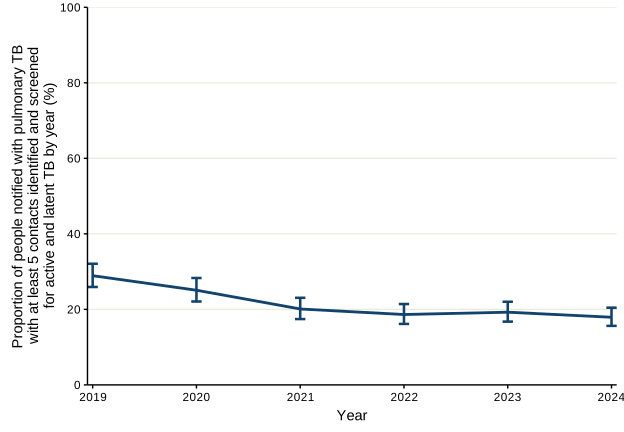
Note 58: error bars represent upper and lower 95% confidence intervals.
Note 59: individuals with more than 65 contacts were excluded as indicative of a large outbreak investigation and therefore not representative of the routine contact tracing.
A total of 3,135 contacts were identified as part of routine close contact screening around 978 people with pulmonary TB (Table 20). Of these, 2,393 (76%) were adults and 742 (24%) were child contacts.
The proportion of all contacts diagnosed with active TB disease was 3%. TB infection (without signs of disease) was found in 20% of contacts; this was more common among children (22%) than adults (19%).
Among those with TB infection, 77% started treatment (91% for children and 72% for adults and 58% completed their treatment. This was slightly higher among close contacts of non-UK born index individuals, 59% (229 out of 386), than among contacts of UK-born index individuals (54% 41 out of 76).
Table 20. Number of contacts identified, screened, screening results and treatment for contacts of people notified with pulmonary TB (index individuals), London, 2024 [note 60] [note 61] [note 62] [note 63]
| Treatment and screening categories | All adult contacts (number) | All adult contacts (proportion) | All child contacts (number) | All child contacts (proportion) | Total contacts (number) | Total contacts (proportion) |
|---|---|---|---|---|---|---|
| Contacts identified | 2,393 | Not applicable | 742 | Not applicable | 3,135 | Not applicable |
| Contacts screened | 1,733 | 72.4 | 577 | 77.8 | 2,310 | 73.7 |
| Contacts with active TB disease | 49 | 2.8 | 13 | 2.3 | 62 | 2.7 |
| Contacts with TB infection | 336 | 19.4 | 126 | 21.8 | 462 | 20 |
| Contacts who started treatment for TB infection | 241 | 71.7 | 115 | 91.3 | 356 | 77.1 |
| Contacts who completed treatment for TB infection | 182 | 54.2 | 88 | 69.8 | 270 | 58.4 |
Note 60: the denominator for the proportion of contacts screened for active TB and latent TB infection (LTBI) is number of contacts identified.
Note 61: the denominator for the proportion of contacts positive for active TB and LTBI is the number of contacts screened.
Note 62: the denominator for the proportion of contacts who started and completed treatment is the number of contacts positive for LTBI.
Note 63: individuals with more than 65 contacts were excluded as indicative of a large outbreak investigation and therefore not representative of the routine contact tracing.
BCG vaccination coverage in London
BCG immunisation is recommended for people at higher risk of exposure to TB, particularly to protect against serious forms of disease in infants. Those eligible are:
- all infants (up to 12 months) with a parent or grandparent born in a country where incidence of TB is over 40 cases per 100,000 population per year
- all infants living in an area of the UK with an incidence above 40 per 100,000 population
The timing of the neonatal BCG immunisation was changed to a 28-day immunisation programme in September 2021. This change was prompted by the addition of screening for severe combined immunodeficiency (SCID) to the routine newborn screening test at 5 days of age. Coverage data for BCG is available from the Cover of vaccination evaluated rapidly (COVER) programme Childhood Vaccination Coverage Statistics, England, 2023 to 2024.
BCG vaccination coverage is assessed at 3 months. Overall coverage for London was 76.5% of the eligible population in 2023 to 2024. This was similar to the coverage for England at 75.5%. This varied by borough, from 56% in Kensington and Chelsea to 89% in both Bexley and Hounslow.
BCG vaccination history among people with TB
Of all London residents notified with TB in 2024, 52% (970 out of 1,876) had received BCG. This proportion was the same for UK-born and non-UK born cases (Table 21).
Of the 12 people aged less than 5 years old with TB, 8 (67%) had a BCG. Of the 4 not vaccinated, 3 were UK born (30% of UK-born cases) and 1 had been born outside the UK.
Table 21. BCG vaccination coverage among people with TB, London, 2024
| Place of birth | Number of vaccinated people with TB under 5 years old | Total number of people with TB under 5 years old | Proportion of vaccinated people with TB under 5 years old | Number of vaccinated people with TB under 15 years old | Total number of people with TB under 15 years old | Proportion of vaccinated people with TB under 15 years old | Number of vaccinated people with TB (all ages) | Total number of people with TB (all ages) | Proportion of vaccinated people with TB (all ages) |
|---|---|---|---|---|---|---|---|---|---|
| Non-UK born | 1 | 2 | 50 | 15 | 18 | 83 | 840 | 1,625 | 52 |
| UK born | 7 | 10 | 70 | 18 | 25 | 72 | 130 | 251 | 52 |
| All cases | 8 | 12 | 67 | 33 | 43 | 77 | 970 | 1,876 | 52 |
Discussion
Since 2021, the TB landscape in England has changed, and TB rates have continued to rise across the country. London remains the region with highest TB incidence, and accounts for 1 in 3 cases of TB in England. Rates increased 13% from 2023 to 2024, and London is no longer on track to meet the WHO End TB 2035 goal of a 90% reduction in incidence.
A growing number of London boroughs have a significant burden of disease, with the number of boroughs with rates over 30 per 100,000 increasing from 4 in 2023 to 7 in 2024. While many other boroughs have low rates, some have seen notable increases which, although small numbers, can be difficult for services to accommodate.
Rates vary across London, but remain highest among men, young adults aged 15 to 44, and those born outside the UK. Nearly 9 in 10 cases occurred in people born outside the UK, with a growing proportion in people who had more recently come to the UK. India remains the most common country of birth among people with TB in London.
In London higher TB rates are found in the more deprived communities, and additionally people with TB frequently have complex medical and social needs and require a high level of support to complete their treatment.
Although treatment completion rates increased among those notified in 2023, they remained below the stretched target of 90% and were even lower in those with social risk factors.
Contact tracing is important for identifying those at highest risk of exposure, finding people with disease earlier and also preventing disease through treating people with infection. The proportion of people with pulmonary TB who had 5 or more contacts identified and screened has been decreasing since 2019.
Increasing TB rates in London and across England are concerning and warrant renewed effort from partners across the capital. While local work is in progress to better describe and understand the reasons for the increase, work must also continue to find, treat and prevent cases of TB occurring in the already known higher risk communities in London. A continued emphasis on early diagnosis and support through treatment must remain a priority for London, and in particular focused work to reduce the inequities associated with TB.
Recommendations
The next 5-year action plan on TB, which will run from 2026 to 2031, is currently being developed. The recommendations below link to the 5 priority areas in TB action plan Tuberculosis (TB): action plan for England, 2021 to 2026.
1. Recovery from COVID-19
UKHSA London teams should continue to monitor TB notifications: reports will be shared with partners quarterly (for timely information) and more in-depth analysis annually, to be reviewed at the London Control Board, Clinical Leadership Group, and network meetings across London.
2. Prevent TB
As noted in the 2023 data report, the increase in TB among recently arrived migrants requires a continued focus. Missed opportunities for both pre-entry and new migrant screening should be identified at local cohort reviews and escalated to both the London TB Control Board and national UKHSA TB team.
Local LTBI programmes should review local epidemiology, alongside their uptake and testing results, to evaluate their efforts, and the contribution to prevention of TB.
London TB service providers should work with local authorities, ICBs and others to identify opportunities to offer appropriate screening for high risk groups (including people experiencing homelessness, those in contact with the criminal justice system and people seeking asylum).
Contact tracing efforts should be prioritised and continue to be monitored through local cohort reviews to improve contact index, as well as in routine TB surveillance reporting (such as the London quarterly report).
3. Detect TB
Improving early detection of TB is a priority for London TBCB. Oversight of, and understanding of reasons for, delays should remain a core part of TB cohort review. Surveillance reports should continue to include indicators on delays, to monitor trends over time.
TB services should try to improve culture confirmation rates for all people with TB (to above 80% for pulmonary) and ensure PCR use for all people with potentially pulmonary/ infectious TB.
4. Control TB disease
Work to improve current TB completion rates, aiming for target of 90% treatment completion rates for TB drug sensitive cases by 2026. This will include specific monitoring of treatment completion among people with social risk factors as a priority group. Oversight will be done by the London TB Control Board.
Ensure effective management of cases of multidrug-resistant (MDR-TB) in consultation with the British Thoracic Society (BTS) MDR-TB Clinical Advice Service (CAS). In London, the MDR TB cohort review should continue to review all MDR cases and provide learning and educational opportunities to TB services.
5. Workforce
London TB services should continue to make use of the various London TB fora including the Workforce group for shared learning and development, as well as multidisciplinary peer support and strengthening relationships across disciplines. Education and training to be delivered to wider workforce to help improve early diagnosis.
Following the publication of the NHS Getting it Right First Time review for TB, all services and ICBs need to continue to work on implementation of the recommendations prioritised across London and within their locality. Primary considerations include ensuring there is sufficient capacity to meet increased demand, and appropriate skill mix within teams to support an increasingly medically and socially complex caseload.
Methods and acknowledgements
Methods
Full details of the data sources and methodologies used in this report, including definitions, are available in:
Acknowledgements
We are grateful to all those who contribute information on people with tuberculosis in London, including nurses, physicians, microbiologists, scientists, outreach and social care and administrative staff. We also acknowledge colleagues at the UKHSA National Mycobacterium Reference Service for information on culture confirmation and drug susceptibility testing. Further thanks are due to the UKHSA National TB Unit for providing the cleaned matched dataset, London Health Protection Teams and the Field Service team for their work supporting TB surveillance.
Appendix. Local authority rate figures
TB notification rate per 100,000 population by upper tier local authority of residence, London, 2001 to 2024