The Timms Review of Personal Independence Payment: interim report
Updated 15 July 2026

© Crown copyright 2026
This publication is licensed under the terms of the Open Government Licence v3.0 except where otherwise stated. To view this licence, visit nationalarchives.gov.uk/doc/open-government-licence/version/3 or write to the Information Policy Team, The National Archives, Kew, London TW9 4DU, or email: psi@nationalarchives.gov.uk.
Where we have identified any third party copyright information you will need to obtain permission from the copyright holders concerned.
This publication is available at https://www.gov.uk/government/publications/timms-review-of-personal-independence-payment-interim-report/the-timms-review-of-personal-independence-payment-interim-report
Foreword from the co-chairs on behalf of the steering group
Disability can impact any one of us at any stage in our lives whether through illness or health conditions, accident or ageing. Almost 1 in 4 people of working age have a disability.[footnote 1]
Disability is shaped by a person’s condition or health. It is also shaped by how well services and systems support people to participate in society. Living with a disability can affect whether someone can take part in work or community life, whether they can live with dignity, independence, and choice, and it can impact the way people travel, communicate, and manage sensory environments or everyday tasks.
Personal Independence Payment (PIP) aims to provide a contribution towards the extra costs of living with a disability or long-term health condition, recognising that while it does not cover costs in full, it plays an important contribution in enabling independent living.
Our evidence so far tells us that while PIP is widely valued as a benefit, it is no longer fit for purpose.
We believe every disabled person should be supported to participate in society, whether that is through work, volunteering, care, creativity, community life, or other meaningful activity. Participation is more than an economic question: it is about belonging and contributing.
That is why this Review matters.
PIP was introduced in 2013 to support disabled people and those with long-term health conditions, to help enable them to live independently. Since then, the world has changed. There have been changes in society, work, technology, public services, and the health of the population. More people are living with disability, long-term conditions, mental health conditions, neurodivergence, and fluctuating conditions, and more people are also claiming PIP, with 4 million people as of April 2026 entitled to the benefit[footnote 2].
Public confidence in how the system operates is essential to PIP today and in the future - it is important that the public can see how investment in PIP enables people to participate, contribute, and live well. We need to examine how PIP can respond to the rising number of people seeking support and whether it adequately reflects the diverse reality and needs of disabled people today. Some people’s conditions are stable, while others change over time, fluctuate, or are less visible or harder to evidence. PIP must be able to respond to and recognise this diversity equitably.
We know this Review begins from a difficult place. We recognise there is a lack of trust in government amongst many disabled people. We also recognise that D/deaf and disabled people and those with long-term conditions face pressures from across wider society, whether that is being the centre of unfair public debate, struggling to access the services they need, or living with uncertainty about what support is available.
If this Review’s findings are to be accepted by disabled people and non-disabled people alike, the Review must be clear about what it has heard, honest about what remains unresolved, and serious about how disabled people’s experience shapes the work. That is why co-production is central to this Review.
Directed by Parliament, the government made a commitment in the Terms of Reference that the Review would be “co-produced with disabled people, along with the organisations that represent them, carers, clinicians, experts, MPs and other stakeholders, so a wide range of views and voices are heard”. It is the first time co-production has been done on this scale by the UK government.
The Terms of Reference sets the scope and parameters of the Review. As a steering group, we bring together deep and varied lived experience, policy knowledge, practical expertise, and different perspectives. Our role is to shape the Review, test the evidence, challenge assumptions, and develop recommendations that are credible, deliverable, and grounded in real lives. From the outset, we have recognised there will be areas of disagreement, evidence that points in different directions, and questions that cannot be answered by data alone. Our task is to face those tensions with care, rigour and openness, listening, learning, and remaining flexible in our approach.
While the steering group brings together a diverse range of voices, it is clear that no single group can represent the full range of experiences and expertise needed to inform the Review. Our co-production methods are therefore designed to reach beyond the steering group, drawing on a wide range of evidence, expertise, and insight to ensure we hear from disabled people across the country.
This Review is informed by a set of core principles, including dignity, rights, independent living, equity, accessibility and participation. These principles are not standalone statements; they form a framework that shapes both how the Review is being carried out and how its findings are developed. In practice, this means placing lived experience at the centre of the work, ensuring that engagement is inclusive and accessible, and taking a considered approach to evidence gathering and decision-making. It also means recognising engagement as a continuous process, creating space for reflection, challenge and learning throughout.
Language matters. The way we talk about disability shapes how we design policy. Being clear about the real-world impact helps ensure that lived experience is properly reflected in how PIP is designed and delivered. That is why the Review is grounded in frameworks and values that respect the human and civil rights of disabled people, including the UN Convention on the Rights of Persons with Disabilities (UNCRPD) and the 12 Pillars of Independent Living, both of which are rooted in the social model of disability.
Disabled people contribute a wide range of skills and strengths to our economy and society, including problem-solving, adaptability, creativity and a depth of insight shaped by lived experience. These capabilities enrich workplaces and strengthen communities. Ensuring disabled people can participate fully is, therefore, not only a matter of fairness, but fundamental to delivering better outcomes for the nation.
Our work as a steering group to date has identified deep-rooted problems in both the design and delivery of PIP. Too many people describe the process as “dehumanising”, and this must be addressed. Processes can feel overly complex, repetitive and difficult to navigate, particularly for people whose needs fluctuate or are less visible. Delays or barriers in accessing support can have significant consequences for people’s ability to manage daily life, remain independent, and stay connected to work, family, and community. For some people, the current design and delivery of PIP itself can create barriers to participation, including in work, physical activity and community life. The scale and consistency of these findings suggest the challenges identified are systemic, rather than individual or case-specific.
We have reflected on the role and purpose of PIP - we agree a clearer emphasis on supporting independent living and participation in society, for example through volunteering, work, and cultural and social activities, would strengthen the aim of PIP. We also recognise that PIP alone will not always be sufficient, and that support and services can play an important role in addressing barriers.
We have agreed as a steering group that the purpose of PIP is to assist D/deaf and disabled people, and people with long-term conditions, to reduce the inequalities they face in participating in everyday life through a contribution towards the extra costs of disability. This includes recognising the practical realities people face in their daily lives, and how those needs can change over time. A fair system should not depend on people’s ability to navigate complex processes or present their circumstances in a particular way.
We will continue to gather evidence from disabled people, experts, and organisations, and test our emerging thinking. We will also continue to communicate our engagement plans through our series of open letters from the co-chairs. We are committed to listening carefully, working transparently, challenging respectfully, and keeping disabled people’s lives at the centre of this Review.
We are taking account of related work, including the Milburn Review, which raises similar questions about how systems can better support participation and address the barriers people face. These questions are being considered alongside the evidence gathered through this Review.
This interim report does not provide recommendations - these will be set out in our final report in the autumn. Instead, it provides an update from the steering group and a public account of our work to date. It outlines how the Review is being conducted, summarises the evidence we have gathered and considered so far, highlights where our thinking is developing, and identifies the areas that require further work before recommendations can be made.
Our message is simple: PIP is not working. It is not working for the people that go through the process, nor for a government committed to supporting disabled people. We are committed to making changes so that PIP can fulfil its purpose for disabled people and those with long-term conditions, both now and into the future. Doing so will require us to be radical in our thinking and bold in our recommendations for reform.
Sharon Brennan
Dr Clenton Farquharson CBE
Rt Hon. Sir Stephen Timms MP
Co-chairs of the Timms Review, on behalf of the steering group
Executive summary
1. This interim report sets out progress on the Timms Review of PIP. It explains how the Review is being co-produced with disabled people and wider stakeholders, what the steering group has heard so far, and how its work will continue over the coming months. This interim report does not make recommendations; it provides transparency on the Review’s approach, early insights, and outlines the next stages of evidence gathering and deliberation that will inform the final report which will make recommendations to the Secretary of State for Work and Pensions in the autumn.
2. PIP is a non-means-tested benefit intended to contribute towards the extra costs of disability and long-term health conditions, and to support independent living. Since its introduction in 2013, the context around PIP has changed substantially: more people are reporting that they are living with disability and long-term conditions and there has been a rise in the number of people applying for PIP. Receipt among working-age people has risen faster than both the population overall, and the disabled population. Within this, there has been faster growth in receipt among women and among young people, and among people reporting mental health or neurodevelopmental conditions as their primary condition. More information can be found in chapter 3 of the DWP evidence pack.
3. In financial year ending (FYE) 2020, total PIP expenditure was around £15 billion (£13 billion for working-age claimants) in 2026 to 2027 prices. As of spring 2026, this spending is forecast by the Department for Work and Pensions (DWP) to increase to over £41 billion (£34 billion for working-age claimants) in FYE 2031[footnote 3]. This has occurred alongside a reduction in expenditure on other working-age welfare benefits, when measured in percentage of GDP terms[footnote 4].
4. Against this backdrop, the Review is assessing whether PIP is fair, accessible, and fit for disabled people, so that it is there to support them to participate in day-to-day life and society, today and into the future. As set out in the Terms of Reference, the Review will need to assess how PIP can be there to support future generations while remaining within the Office for Budget Responsibility’s (OBR) projections for future spending on PIP. The Review will also need to examine whether pressures in the wider system and loss of access to services have impacted the growth in the number of people claiming PIP.
5. Co-production is a key element of the Review. A 12 member steering group, appointed through an open process, jointly leads the Review with the co-chairs: Sharon Brennan; Dr Clenton Farquharson CBE; and Sir Stephen Timms, Minister for Social Security and Disability. The steering group has focused on establishing ways of working and a shared set of co-production principles to support psychological safety, shared power (including how decisions will be made), and rigorous use of evidence. In order to be co-produced, however, the Review must be shaped by more than just the steering group - it must invite meaningful involvement from a diverse range of voices with lived and living experience and expertise.
6. The steering group has agreed 4 themes for the Review to focus on:
- the role and purpose of PIP
- eligibility, fairness and equity in awards
- the experience of claiming PIP
- the changing context and impacts on PIP
7. The steering group’s early thinking is informed by a broad evidence base, including a comprehensive pack of existing research and administrative data compiled by DWP, as well as a review of external research identified by the steering group. Throughout the Review, the steering group will continue to build its evidence base through its engagement activity, including through the responses to the call for evidence.
8. Emerging themes so far are that PIP is widely described as essential to financial stability and independent living, but that understanding of its purpose, and of what independent living means, is not consistently shared. There are concerns about whether the functional assessment and descriptors fully reflect real-life impacts, particularly for fluctuating, multiple, and less visible conditions, as well as about the consistency and transparency of decision-making and the role of supporting evidence. The experience of claiming PIP is often described as stressful, with accessibility adjustments applied inconsistently, contributing to low trust in the process. The steering group is also exploring how wider system pressures (including NHS capacity, social care and housing challenges, labour market changes and cost-of-living pressures) may be contributing to the increased demand for PIP.
9. The steering group is delivering its evidence and engagement programme as set out in the Review’s workplan, including a new representative survey delivered by the National Centre for Social Research (NatCen); an accessible ‘Workshop in a box’ programme open to anyone to deliver, but specifically targeted at Deaf and Disabled People’s Organisations (DDPOs), disability, health and community charities and elected representatives; targeted expert evidence sessions; and later ‘Timms Review: shaping recommendations workshops’ (previously referred to as ‘deliberative events’ - for more information, please see ‘the workplan’ in chapter 7) to test thinking and refine emerging solutions.
10. All insights will be used to strengthen the steering group’s understanding of the problems with PIP, highlight tensions and trade-offs, and develop recommendations that are ambitious, credible, deliverable, and rooted in lived and learned experience. The Review will publish a final report with recommendations to the Secretary of State in the autumn.
Introduction
Background
11. PIP was introduced in 2013, replacing Disability Living Allowance (DLA) for adults as a non-means tested cash benefit – it is available to those in and out of work.
12. PIP was designed to support people with the extra costs of living with a long-term health condition or disability and help them to live more independently. The functional assessment was introduced to consider an individual’s ability to carry out key everyday activities. The activities and descriptors for PIP were developed by DWP through extensive public consultation and with the help of an independent cross-disciplinary panel of experts. The aim was to ensure that priority in the benefit went to those individuals who are least able to carry out everyday activities, with the enhanced rates of the daily living and mobility components going to those individuals assessed to have the highest level of need.
13. The PIP functional assessment was designed to consider and reflect the impact of a broader range of impairment types than DLA. It aimed to take better account of sensory impairments, developmental disorders, learning disabilities, cognitive impairments, and mental health conditions.
14. In August 2010, over 70% of people on DLA received an indefinite award. PIP was designed to be a more dynamic benefit, recognising that people’s conditions change over time and that understanding of how disability affects people also evolves. PIP introduced fixed-term awards, with the aim of ensuring that people continued to receive the correct level of award. Decisions on award durations are based on individual circumstances, following appropriate consideration of all the evidence that has been provided.
15. The purpose of PIP was to offer a contribution to the extra costs of living with a long-term health condition or disability to help people live more independently. The benefit plays a vital role in supporting claimants to cover the costs of aids and equipment that enable independent living, as well as supporting people to get around, for example, by paying for taxis where public transport is inaccessible. It also enables disabled people to access the Motability scheme, an independent scheme which helps with leasing a car, powered wheelchair or scooter using an individual’s qualifying benefit.
16. PIP also plays an important role in passporting to other entitlement - receipt of PIP provides eligibility to some additional amounts and premiums in other DWP benefits, as well as Carer’s Allowance (if the person being cared for is in receipt of the daily living component of PIP). PIP also passports to a wide range of local authority and other government department benefits, schemes and provisions that use entitlement to PIP as proof of being disabled (such as the Blue Badge scheme).
The process for claiming PIP
Eligibility for PIP
17. People may be entitled to PIP if:
- they’re 16 or over
- they have a long-term physical or mental health condition or disability
- they have difficulty doing certain everyday tasks or getting around
- they expect the difficulties to last for at least 12 months from when they started
18. People also usually need to be under State Pension age to make a new PIP claim. If somebody reaches State Pension age while they are in receipt of PIP, they can continue getting it if they continue to meet the entitlement conditions. DLA for children is to help with the extra costs of looking after a child under 16 who has difficulties walking or needs much more looking after than a child of the same age who does not have a disability. Shortly after their 16th birthday, most DLA recipients will receive a letter from DWP inviting them to claim PIP. The child’s DLA payments will stop unless they apply for PIP by the date given in the letter.
Initial contact to claim PIP
19. An individual makes initial contact with DWP to start a PIP claim. Basic personal and non-medical eligibility information is collected by DWP to establish whether the individual can proceed with a PIP claim. This is usually completed by telephone, however, people are also able to submit a paper form called a PIP1. Once they have completed the initial PIP1 claim, the individual then receives the PIP2 ‘How your disability affects you’ questionnaire. This is usually issued as a paper form.
Completion of the PIP2 - ‘How your disability affects you’ questionnaire
20. The PIP2 ‘How your disability affects you’ questionnaire captures detailed information on how an individual’s condition impacts their daily living and mobility needs. Individuals are given one calendar month to return the PIP2. If it is not returned, a reminder is issued, extending the deadline.
21. Individuals are encouraged to send any supporting evidence to DWP with their completed PIP2 form or when they have it available. There are some digital routes being introduced through a phased transformation approach, but these are not yet universally available.
Functional assessment
22. Functional assessments are delivered by external assessment providers, who employ health professionals to undertake the assessment and provide clinical advice to inform DWP case managers on PIP entitlement.
23. The method for an assessment is considered on a case‑by‑case basis. Some claims, where there is sufficient evidence, can be assessed by a paper-based review. Most require the health professional to undertake a functional assessment to determine how the individual’s condition affects their ability to undertake daily living and mobility activities. This is completed by telephone, video or face‑to‑face.
DWP decision making
24. Having considered all the information and evidence of the case, the health professional produces a report for DWP containing information on the individual’s circumstances and recommendations on the assessment criteria to support DWP’s decision on a PIP award.
25. A DWP case manager reviews all the evidence, including the report, the PIP2 form, and any additional evidence provided. They then decide whether the individual is entitled to PIP, at what rate, and for how long. Once DWP have made the decision, the individual is sent a letter to inform them of the outcome.
Mandatory reconsideration and appeals
26. If somebody disagrees with the decision about their PIP award, they can ask for the decision to be looked at again by a different DWP case manager - this is called a ‘mandatory reconsideration’ (MR). This should normally be requested within one month of the decision date and should include the individual’s reason for disagreeing with the decision and any new supporting evidence. Requests can be made by phone or in writing.
27. Once the MR is completed, the individual is issued a further decision letter. The MR can result in the decision being changed or upheld. If the individual is still unhappy with the decision, they can appeal to an independent tribunal. They have one month from the date on their MR notice to appeal.
28. Tribunals are administered by HM Courts and Tribunals Service. The tribunal reviews all the available evidence, including evidence provided during the appeal hearing, and decides what the correct outcome should have been.
Award review and change of circumstances
29. If someone is awarded PIP for a fixed period with a review date, DWP review the award before it ends. This is referred to as an award review. An AR1 form is issued to the individual for completion.
30. Some people with long-term conditions, where the needs arising are unlikely to change and for those with the highest level of support whose needs will not change or may increase, receive an “ongoing” award with a ‘light touch’ review at the 10 year point. In this case, an AR2 form is issued to the claimant for completion.
31. Most individuals of State Pension age also receive an “ongoing” award with a review at the 10 year point. They will also be sent an AR2.
32. If, during the award period, someone’s circumstances change, they can contact DWP by telephone and simple changes, for example, a change of address, will be taken over the phone. More complex change of circumstances, such as changes to medical conditions or the needs arising, require the completion of the AR1 UI form.
33. An award review or change of circumstances results in DWP making a new decision about someone’s entitlement to PIP. As with a new claim, someone who is unhappy with that decision may ask DWP to reconsider it, and if they remain dissatisfied, appeal to an independent tribunal.
Special Rules for end of life
34. Special considerations apply to claimants who are nearing the end of life, known as ‘Special Rules for end of life’ (SREL). The criteria for SREL claims set out in legislation are that the individual ‘is suffering from a progressive disease, and the person’s death in consequence of that disease can reasonably be expected within 12 months’.
35. If somebody states that they are nearing the end of life when applying for PIP, they are not required to complete the PIP2 questionnaire or undergo a functional assessment. Instead, they are advised by the DWP to obtain an SR1 form from their GP, consultant, specialty doctor, hospice doctor or senior specialist nurse, which serves as medical evidence for the PIP claim. The SR1 gives factual information about the claimant’s condition, prognosis/diagnosis, and treatment.
36. Claims under the SREL are fast-tracked, with claims currently (April 2026) processed in an average of 4 days. Individuals are guaranteed the enhanced rate of the daily living component. Entitlement to the mobility component is assessed through a paper-based review, with nearly all applicants under SREL (95%) receiving the enhanced rate. DWP also provides dedicated phone support for people nearing the end of life. Staff handling these calls receive additional training to ensure claims are processed as quickly and sensitively as possible.
Context
37. From 2009 to 2024, disability benefit prevalence (the percentage of the population receiving a disability benefit) has increased for all age groups and sex. Most of the increase in prevalence occurred in the last 5 years of the period, with growth between 2019 and 2024 nearly double that seen over the previous decade.
38. The increases in prevalence have been most marked amongst those aged 16 to 19 and for those aged in their thirties. Prevalence has increased more among women than men. While women are less likely to receive disability benefits in their teens and twenties, the difference between men and women at those ages has narrowed, while from the thirties upwards, the prevalence of receipt among women has increased faster than for men. Chart 2.1[footnote 5] shows prevalence over the past 15 years by age and gender.
Chart 2.1: Disability benefits Prevalence by age and sex, in 2009, 2019 and 2024, England and Wales
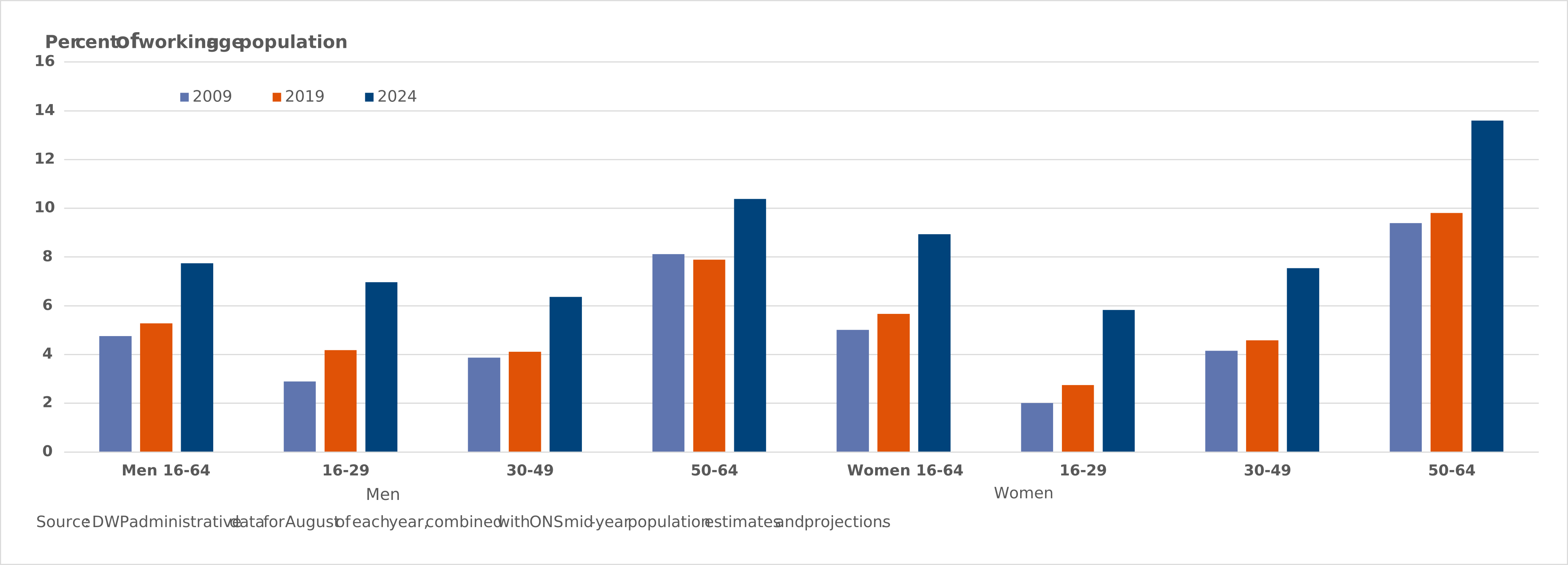
Alternative text: bar chart comparing disability benefit prevalence by age and sex in England and Wales for the years 2009, 2019 and 2024. For men, disability benefit prevalence begins to increase after 30. For women, a similar rise in prevalence is shown with slightly higher volumes. Notable trends include increased disability prevalence in older age groups, especially ages 50 to 64 for both men and women across all years; and the lowest levels of disability prevalence being in the younger age groups (aged 16 to 29) across both men and women.
39. More information can be found in sections 3.18 to 3.28 of the DWP evidence pack.
40. Around three-quarters of PIP claimants report more than one health condition, and a large proportion report several. How conditions are recorded changes over time and conditions in PIP and DLA are recorded differently. However, bearing these points in mind, it appears that the number of people reporting mental health conditions and autism have increased significantly from 2009 to 2025, and particularly since the pandemic. In contrast, the number of people reporting the 2 main musculoskeletal conditions (back pain and arthritis) have increased only slowly. Given the older age profile of the claimants reporting musculoskeletal conditions, that increase is likely driven by an aging society and broader demographic changes. However, demographics do not obviously explain the trends in the mental health and neurodevelopmental conditions. Chart 2.2 shows disability prevalence over the last 15 years by primary reported condition.
Chart 2.2: Disability benefits prevalence by primary reported condition, England and Wales
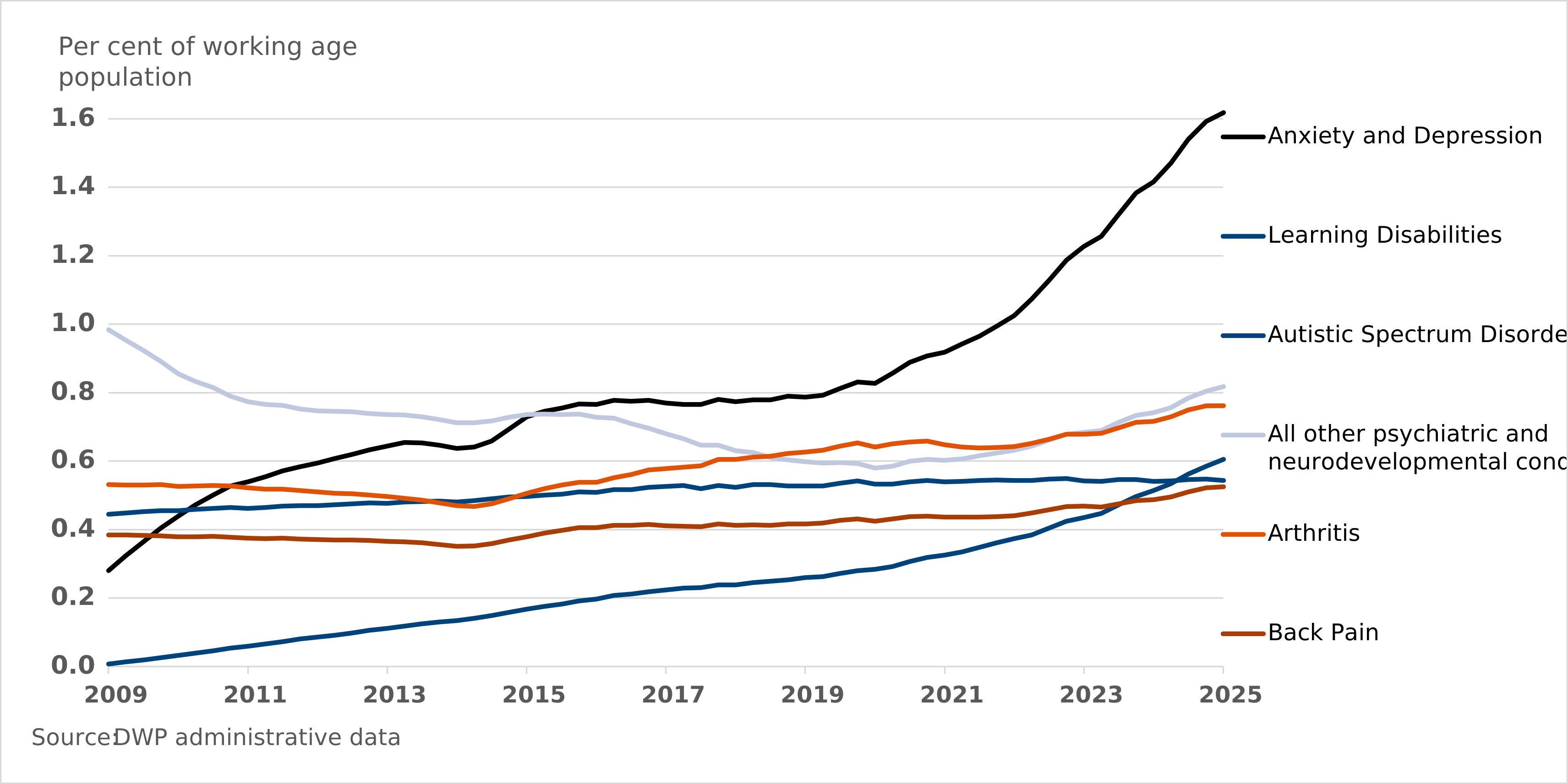
Alternative text: line graph showing percentage of working-age population with different health conditions from 2009 to 2025. Six conditions groups are included in this graph; Anxiety and Depression, Learning Disabilities, Autism Spectrum Disorders, All other psychiatric and neurodevelopmental conditions, Arthritis, and Back Pain. All conditions groups have shown some increase over time with the exception of all other psychiatric and neurodevelopmental conditions group; however, the extent of increase varies across conditions. Anxiety and depression show the most significant increase, rising sharply from 5.9 in 2020 to 8.1 per cent in 2025. The two main musculoskeletal conditions, Back pain and Arthritis, have seen a slower, more steady increase in prevalence over time. Back pain increasing from 0.4 in 2009 to 0.5 per cent in 2025 and Arthritis increasing from 0.5 in 2009 to 0.8 per cent in 2025. In the same period, Learning Disabilities increases from 0.4 to 0.5, Autistic Spectrum Disorders increases from 0.0 to 0.6 and all other psychiatric and neurodevelopmental conditions decreases from 1.0 to 0.8.
41. More information is available in sections 3.29 to 3.33 in the DWP evidence pack.
The Review
42. The Timms Review arose from a parliamentary debate during the passage of the Universal Credit Act in July 2025. It was recognised that planned government changes to PIP eligibility did not have the support of Parliament. The government therefore established a Review to look at PIP more fundamentally.
43. It is important to recognise this starting point, as it underscores the government’s commitment to improving the lives of disabled people and to grounding of the Review in the principles and methods of co-production. This makes it the largest UK government co-produced review of its kind, although there have been examples from devolved government and regional contexts.
44. The steering group of the Review, the vast majority of which are disabled, has agreed to the Terms of Reference (annex A) which includes a strong commitment to co-production with disabled people, the organisations that represent them, carers, clinicians, experts, MPs, and other stakeholders, so a wide range of views and voices are heard. The Terms of Reference set clear parameters for the Review’s scope, focusing on PIP, its assessment and delivery, claimant experience and sustainability. The steering group has agreed that their recommendations should not be limited to that scope and that the Review may comment on wider areas where the evidence shows impacts on the demand for or delivery of PIP, or on independent living. The Terms of Reference also set out a clear timeline and commit the Review to reporting its recommendations by autumn. This interim report forms part of delivering that commitment by providing transparency of work to date ahead of final recommendations.
45. The Terms of Reference state final recommendations must sit within the OBRs projections for future spending on PIP - as of Spring 2026, total spending on PIP is forecast by DWP to increase to over £41 billion (£34 billion working-age spending) in current prices by FYE 2031[footnote 6].
46. The steering group has also agreed that PIP must reflect the reality of the impact of people’s conditions in a changing world so that it can fulfil its purpose in helping people live independent and fulfilling lives grounded in dignity, independence, and choice. The steering group will therefore need to carefully consider how to balance the focus of the Review between rights, fairness, independent living, and sustainability within fixed financial limits.
PIP is not working
47. Over 13 years since its introduction, it is clear from insight from the Review’s call for evidence that some elements of PIP are not operating in practice as intended.
48. Through the call for evidence, the steering group has heard from tens of thousands of people who have taken the time to share their lived experience and make a valuable contribution to this Review. Many disabled people speak powerfully and negatively of the process of applying for PIP, describing it as “dehumanising”, “soul destroying”, and “degrading”. The steering group has heard consistent testimonies of how PIP is valued as a benefit, but at the same time is experienced as being not fit for purpose.
49. Evidence submitted through the call for evidence suggests that, in many cases, the PIP functional assessment does not fully capture the extent or complexity of the impact of certain disabilities and health conditions. The PIP assessment was designed to reflect the impact of a broader range of impairments than its predecessor (DLA) including sensory impairments, developmental disorders, learning disabilities, cognitive impairments, and mental health conditions - the evidence received, however, points to challenges in how the assessment is experienced and applied.
50. The steering group also recognises that PIP acts as a passport for other benefits such as Carer’s Allowance and a range of local authority and other government department benefits, with entitlement to PIP acting as proof of being disabled, for example with the Blue Badge scheme. This means the decision to not award PIP to someone can have a much wider impact on their access to services and the Review will consider if the DWP has this balance right. As set out in the Terms of Reference, the steering group will look at the role the PIP assessment could play in accessing the health element of Universal Credit (UC). Prior to the launch of the Review, the government had committed to removing the Work Capability Assessment (WCA), which is currently used to access this support. The decision to remove the WCA aims to end the categorisation of people into binary groups and labelling them as either ‘can or can’t work’ - this will mean that any extra financial support for health conditions in UC will be based on the impact of disability on daily living, rather than on capacity to work.
51. Since PIP’s introduction, there have also been changes in wider society, access to preventative services, government support offers, and the workplace, particularly since the COVID-19 pandemic. The DWP evidence pack chapter 2 provides more information on this. These changes are accompanied by shifts in the health of the population, including the rising number of disabled people and increasing PIP awards.
52. As of FYE 2025, around 10 million working-age people self-report as disabled which is equivalent to 24% of the working-age population[footnote 7]. This is an increase from less than 17% in FYE 2014. Around 4.5 million working-age people self-report as being ‘limited a lot’ by their disability or health condition[footnote 8]. Chart 2.3[footnote 9] illustrates trends in prevalence of long-term health conditions, disability and disability benefit receipt. The DWP evidence pack chapter 2 provides more information on changes in disability prevalence.
Chart 2.3: Prevalence of long-term health conditions, disability and disability benefit receipt for those who are of working age
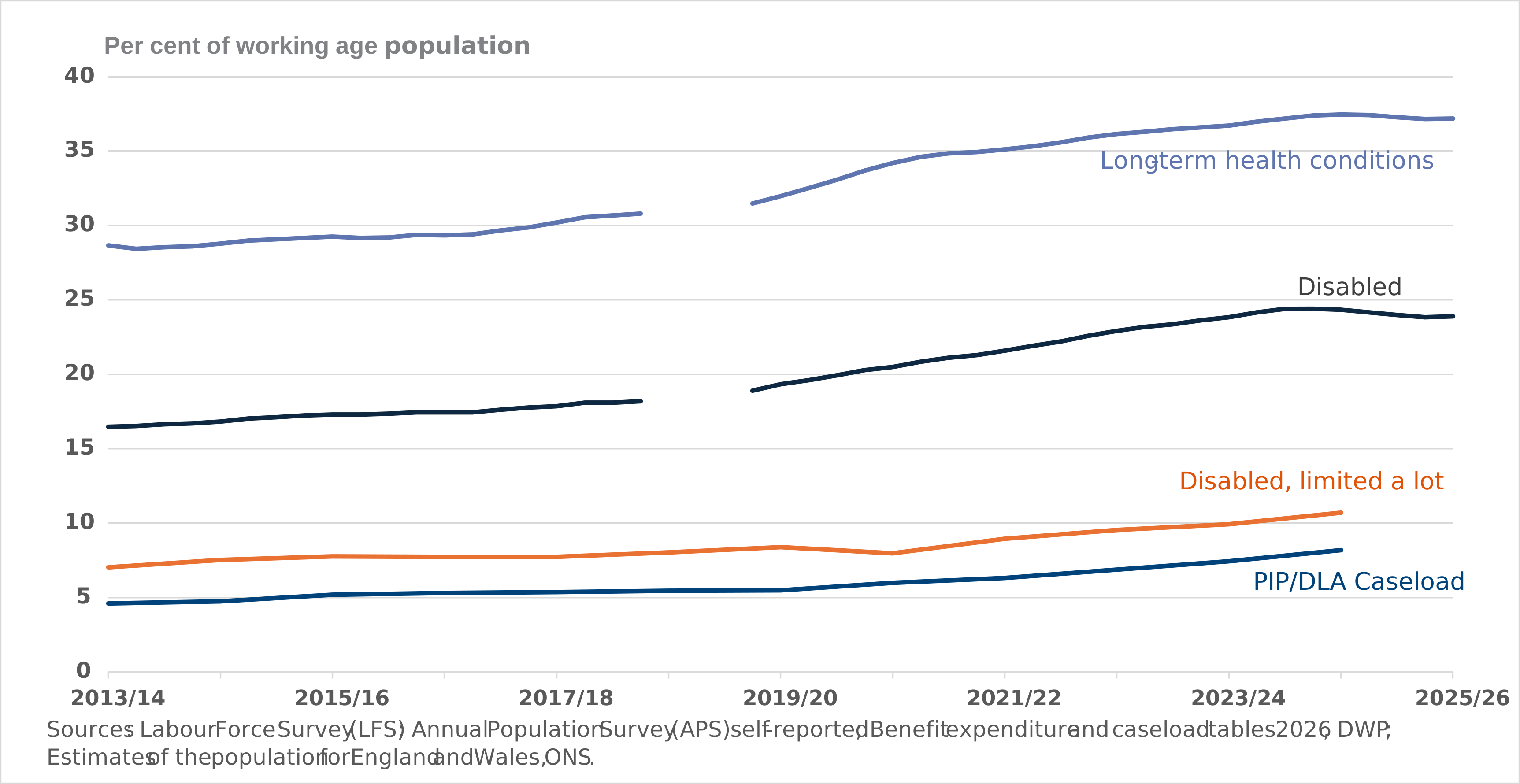
Alternative text: line graph showing the prevalence of long-term health conditions, disability, and disability benefit receipt among the working-age population from the FYE 2014 to FYE 2026. Four lines are present on the chart. One represents people with long-term health conditions (increasing from 29% in 2013 to 2014 to 37% in 2024 to 2025, with a discontinuity in the line between January 2019 and November 2019), one represents people who are disabled (increasing from 16% to 24%, with a discontinuity in the line between January 2019 and November 2019), one represents people who are disabled and are limited a lot by that disability (increasing from 7% to 11%), and the last represents the combined caseload of PIP and DLA claimants (increasing from 5% in 2013 to 2014 to 8% in 2024 to 2025).
Table 2.1: Working age PIP/DLA caseload over financial year ending 2020 to financial year ending 2025
| Working age, England and Wales | 2019/20 | 2020/21 | 2021/22 | 2022/23 | 2023/24 | 2024/25 |
|---|---|---|---|---|---|---|
| PIP/DLA caseload[footnote 10] | 2,020,000 | 2,210,000 | 2,340,000 | 2,570,000 | 2,820,000 | 3,140,000 |
53. Rising rates of disability have been accompanied by an increase in the number of people in receipt of PIP or DLA, with growth accelerating in recent years. In FYE 2025, there were over 3.1 million working-age people in receipt of PIP or DLA, an increase of over 54% since FYE 2020[footnote 11]. DWP forecasts suggest the number in receipt of PIP or DLA may more than double to over 4.4 million people in FYE 2031 when compared to year ending 2020[footnote 12]. The DWP evidence pack sections 3.18 to 3.28 provide more information on trends in working-age disability benefits.
54. These rises have had an impact on the cost of PIP and DLA to the government. In 2026 to 2027 prices, spending on those who are of working age and in receipt of PIP and DLA has increased, in real terms, from £14.4 billion in FYE 2020 to £23.8 billion in FYE 2025[footnote 13]. Looking ahead, spending is forecast by DWP to increase to over £34.5 billion by FYE 2031. The DWP evidence pack sections 3.5 to 3.17 provide more information on trends in working-age disability benefits expenditure.
55. Taking a broader perspective, increasing expenditure on disability benefits in recent years has occurred alongside a reduction in expenditure on other working-age welfare benefits, when measured in percentage of GDP terms.[footnote 14] In addition, some have argued that the reduction in other forms of working-age benefit spending is a driver behind the increasing demand for PIP. The DWP evidence pack sections 4.18 to 4.20 discuss further.
PIP does not operate in a vacuum
56. While the Terms of Reference sets the scope of this Review to PIP, the benefit does not operate in a vacuum. The steering group’s conversations to date, and the evidence it has looked at, suggests that PIP is not doing what it was originally designed to and is often filling the gap that arises between other services or support. People have told the steering group through the call for evidence that it is often used for basic ‘survival’ rather than being dedicated to the extra costs of living which arise from a disability or health condition. The steering group knows that, in reality, households do not see their income as segmented and this also reflects the rising cost of living and static employment rates for disabled people. This shift points to a change in the intended role of PIP, moving away from enabling participation towards meeting basic need, and highlights the importance of the wider system in supporting independent living.
57. Overall, there were 5.5 million disabled people in employment in the UK in 2025 and the disability employment rate was 52.8%, compared to 82.5% for non-disabled people[footnote 15]. This means the disability employment gap was 29.7 percentage points in Q2 2025 and early indications suggest the disability employment gap is widening. PIP is not a work-related benefit - it is available to people both in and out of work, although data shows currently fewer than 1 in 5 claimants of PIP are in employment[footnote 16].
58. Research conducted with recipients of health and disability benefits (a mix of PIP, UC Health and Employment and Support Allowance) found that they generally want to work, though they often face barriers that affect whether they will be able to do so. One in 20 (5%) said they could work right now if the right job or support was available, while over a quarter (27%) thought they might be able to work in the future if their health improved. Of those who felt they could work now or in future, a clear majority were “open to the idea” of paid work (84%).[footnote 17]
59. This research found health and healthcare was the main barrier for these groups. It found 2 in 5 people in receipt of health and disability benefits (41%) were on a waiting list for treatment for their health condition(s), and half (50%) felt their ability to work was dependent on receiving treatment.[footnote 18] The DWP evidence pack sections 8.11 to 8.25 provide more information on the employment status of PIP recipients and the relationship between receipt of PIP and employment.
60. The steering group has heard, from the call for evidence, that disabled people struggle to access vital services such as community mental health services and wider support. For example, securing NHS Continuing Healthcare (CHC) (a package of health and social care intended to support people outside of hospital and often in their own home) has become seemingly more difficult, with almost half (49%) of adult social services directors seeing fewer people qualifying for CHC, despite a recognition that need was getting increasingly complex.[footnote 19]
61. The Review has observed a decline in healthy life expectancy pulling more working-age people into ill health. The DWP evidence pack, chapter 2 provides more information on trends in working-age disability prevalence. Chapter 4 provides information on potential drivers of these trends.
62. This must all be seen within a context where pressures across key parts of the wider system may impact demand for PIP. For a Review that is focused on transparency and understanding the role PIP plays in the lives of disabled people, it is important that it names and recognises that while PIP has seen its budget rising every year, other services that support disabled people and those with long-term conditions have been affected by wider economic pressures including COVID-19, austerity, the cost-of-living and geo-political factors.
63. The Review recognises that a false and damaging narrative of disabled ‘scroungers’ or ‘fraudsters’ has contributed to eroding the inclusiveness of society. For example, in response to the call for evidence, Sport For Confidence said that the “public perception of PIP is often shaped by stigma and misinformation, including the belief that claimants are living comfortably or misusing the system”. This portrayal of disabled people as ‘scroungers’ or, at the other extreme, as ‘superhuman’ fail to account for the very human needs of disabled people. They have the same desires and aspirations to success as everyone else. Importantly, these narratives overlook the powerful contribution of the almost 17 million disabled people in the UK, including the £274 billion annual spending power of disabled households (the purple pound) and their contributions through culture, innovation, work, volunteering, advocacy and civil rights.
64. PIP cannot be everything to everybody so as the Review looks at the role and purpose of PIP, the steering group will have some challenging discussions. However, it recognises that the reliance on PIP has likely increased due to difficulty accessing vital services and support, such as community mental health services, Access to Work, social care and support, accessible housing, and Disabled Facilities Grants.
65. This Review sits within a wider programme of work across government examining the links between health, work, participation, and economic inactivity. The Review will take account of related work underway across the wider health and social care system and other linked benefits and services - this includes the independent commission into adult social care chaired by Baroness Louise Casey; the review into ‘Young People and Work’ chaired by Alan Milburn; the review into ‘Mental health conditions, ADHD and Autism’ chaired by Professor Peter Fonagy; the ‘Keep Britain Working’ review chaired by Sir Charlie Mayfield; and the Independent Disability Advisory Panel being led by Zara Todd. While each review or commission has a distinct focus, they are connected by a shared ambition: to enable people to participate, contribute and thrive.
66. The steering group has agreed to take a blended approach to grounding the Review in established disability frameworks, reflecting and referencing a range of established models in the Review’s work to support the steering group to consider evidence and develop recommendations that are grounded in the principles outlined in the Terms of Reference of the Review. Rather than aligning with any single framework, this approach draws on models including the Social Model of Disability, the UNCRPD and the 12 pillars of independent living.
67. As committed to in the Review’s Terms of Reference, the steering group will report its recommendations to the Secretary of State by autumn 2026. It will ultimately be for the Secretary of State to decide how the Review’s recommendations are taken forward but the steering group intends for them to be bold in nature and bold in recognition of the wider environment in which disabled people in the UK are living.
The approach to co-production
Introduction
68. As directed by Parliament, co-production is fundamental to the Timms Review. Driven by the voice of disabled people, the government committed to co-production with disabled people, organisations that represent them, carers, clinicians, experts, MPs, and other stakeholders. The aim is for disabled people’s lived and living experience and expertise to meaningfully influence the Review’s direction, its interpretation of evidence, its final recommendations, and ultimately the future of government policy. This Review will be the first time that co-production has been done by the UK government at this scale.
69. Co‑production is a central strength of the Review, underpinned by a wide‑ranging and carefully designed programme of engagement. It goes beyond standard consultation, combining multiple approaches to participation, relationship building, evidence gathering, and accessibility. The process of co-production has included steering group discussions, tailored one‑to‑one support, wellbeing arrangements and accessibility measures, complemented by extensive external planned activity such as surveys, ‘Timms Review: shaping recommendations workshops’, stakeholder engagement, Workshops in a box, and a call for evidence. This approach enables the Review to draw on rich and diverse insight while keeping disabled people’s lived experience at its core.
70. Co-production requires building trust through care and transparency and ensuring that key decisions are shaped by meaningful involvement from a diverse range of voices. The following section sets out how the Timms Review has approached co-production and what this has meant in practice.
The co-chairs and steering group
71. Over the summer of 2025, the Minister for Social Security and Disability met with over 50 organisations and experts, with expertise in disability, welfare and co-production, to discuss how the Review could best be co-produced. The Minister tested proposals and invited input on the structure and chairing of the Review; the composition and recruitment of the steering group; external expertise on co-production; and the scope and parameters of the Review.
72. In October 2025, Dr Clenton Farquharson CBE and Sharon Brennan were appointed as co-chairs of the Timms Review, to work alongside the Minister. Together, the co-chairs bring lived and living experience of disability, health, social care, disability benefits and employment, alongside first-hand experience of navigating these systems. The co-chairs were appointed in advance of the steering group to help develop a shared vision for the Review, establish the co-production process, and run the expression of interest campaign to recruit the steering group.
73. To ensure co-production is embedded throughout the Review, a steering group of 12 members was jointly appointed by the co-chairs in January 2026 through fair and open competition. This group forms part of a 15 member, power-sharing steering group leading the Review.
74. The role of the steering group is to lead the co-production process, providing strategic direction, shared decision-making, overall leadership and final recommendations for the Review. The steering group oversees a mix of approaches for engagement and evidence gathering to ensure the Review and their recommendations are informed by both lived and wider experience from a diverse range of people and communities.
75. The co-chairs have the same responsibilities as other group members, plus additional facilitation responsibilities, including co-ordination of steering group meetings, liaison between the steering group, co-production facilitators and secretariat, supporting participation of other group members and holding the relationship with key external stakeholders.
Membership of the steering group
76. The Review received over 340 applications to join the steering group with an impressive breadth of skills and experiences brought by candidates. Members were appointed by the 3 co-chairs after careful consideration against the published criteria, to represent a diverse range of perspectives, lived experience, professional expertise, socio-economic backgrounds, protected characteristics and geographical spread.
77. Together, the steering group members bring experience across areas including welfare policy, research, accessibility, advocacy, co-production, governance, and leadership within DDPOs. Almost all members have lived experience of disability or long-term health conditions, including members with direct experience of working within DDPOs. This group is diverse in terms of various characteristics, including geography, gender, ethnicity, and sexuality.
78. Membership of the steering group is as follows:
- Dr Mark Brookes MBE - the Advocacy Lead for Dimensions UK. He has more than 30 years’ experience in publicly advocating for people with learning disabilities and autism and campaigning against hate crime. Mark works with the Churchill Foundation, the Equality and Human Rights Commission, the NHS Advisory Board, the Crown Prosecution Service, the Home Office, and UK Police forces.
- George Fielding BEM - a disability rights advocate who has worked nationally across many public services, with operational expertise in youth work, social care, and community capacity building. He has previously co-founded two CQC-regulated social care providers whilst initiating and developing three youth-led social movements, working to develop intergenerational best practice in social change. He is non-executive advisor to three community interest companies which specialise in co-production.
- Tara Flood - a long-time disability rights activist who has worked at a local, national and international level. She is currently Head of Co-production at the London Borough of Hammersmith and Fulham. She champions the Social Model of Disability and finding ways to embed the UN Convention on the Rights of Persons with Disabilities, working with residents to drive policy change and the redesign and delivery of services at a local level.
- Dr Mark Fosbrook PLY - a retired Paralympic athlete who brings his own lived experience and constantly draws on knowledge from others through a person-centred, values-led and solution-focused mindset. Currently he is Disability Inclusion Manager at West Midlands Combined Authority leading on making the West Midlands an Exemplary Region for Disabled People through coproduction to improve services, change systems and influence attitudes across jobs, journeys, homes, growth and Health, Social Care and Wellbeing.
- Ben Geiger - a Professor at King’s College London, who brings academic expertise as well as experience in policy development (including from within the Department for Work and Pensions) and co-production. He currently leads the Welfare Experiences project (comparing how it feels to claim benefits in five countries) and previously co-led the major rapid response study of benefits during COVID-19.
- Katrina Gilman - a passionate advocate for disability equality, drawing on lived experience of multiple disabilities and her role as a carer. After 25 years as a member of police staff where she worked closely with disabled members of the community, Katrina now works to break down barriers and champion fairness, accessibility, and opportunity - driving change that empowers disabled people to thrive.
- Jean-André Prager - a Senior Fellow at Policy Exchange and a Director at Flint Global who has an extensive policy background in PIP and broader disability issues. He was previously the Prime Minister’s Special Adviser covering the Department for Work and Pensions from 2018 to 2024.
- Dr Lucy Reynolds - a social entrepreneur, public speaker and disability rights advocate. Founder of We Are All Disabled CIC and Chair of Disability North, she champions an Affirmative approach to disability, using lived experience and academic research to challenge perceptions and drive inclusive cultural change.
- Dr Felix Shi - a disabled academic who brings lived experience alongside comparative insights into disability policy across multiple national contexts. As a former board member of Disability Wales and a current member of the Arfon Access Group, Felix works to connect policymakers with grassroots DDPOs in Wales.
- Dr Dharshana Sridhar - Head of Public Affairs at the Spinal Injuries Association, representing the voices of people with spinal cord injuries nationally. With lived experience as a long-term carer and extensive UK Government and international policy expertise, she works to shape fair social security policy and champion the rights, dignity and independence of disabled people and marginalised communities.
- Phil Stevens - Chief Executive of Disability Action Haringey and Chair of the Board of Trustees of Disability Action in Islington. He is a disabled leader with extensive experience in user-led advocacy, policy, and strategic development, working to advance rights, access, and inclusion for D/deaf and inclusive events for disabled people across London.
- Leila Talmadge - an autistic and dyslexic project manager and designer. As the former Chair of the Board of Trustees at Daytrippers charity, which provided inclusive events for disabled young people in the UK, and former Director of Autistic Knowledge Development in Scotland, she brings expertise in creating inclusive spaces.
79. They lead the Review together with the co-chairs:
- Sharon Brennan - Sharon brings expertise in person-centred approaches to strategic change in the health and care system. Her previous roles include Director of Policy and External Affairs at National Voices; a coalition of health and care charities focused on lived experience and health inequalities and advising the Department for Transport on accessibility as a member of the Disabled Person’s Transport Advisory Committee.
- Dr Clenton Farquharson CBE - Dr Clenton brings more than 25 years’ experience as a national advocate for disability rights, co-production, and social justice. As Associate Director at Think Local Act Personal, a former Trustee of Disability Rights UK, and a board member of the National Development Team for Inclusion (NDTi), Clenton helps to shape innovative strategies that strengthen accessibility, co-production, and inclusion.
- Sir Stephen Timms - Sir Stephen Timms holds the post of Minister of State for Social Security and Disability at the Department for Work and Pensions (DWP). From previous ministerial roles, and as a former Chair of the Work and Pensions Select Committee, Sir Stephen has developed expert knowledge of the issues faced by disabled people.
Defining co-production
80. For the Timms Review, co-production means ensuring disabled people and people with lived experience and expertise are the key drivers for both how the Review works and what it concludes - this involves shaping the Review’s direction, methodology, engagement approach, interpretation and use of evidence, as well as its final recommendations.
81. The Review knows from disabled people, DDPOs and long-standing co-production practice that co-production must involve shared power, with clear and honest information about what can change, what is fixed and how decisions will be made. It should be built on mutual respect and trust, taking practical measures to ensure psychological safety and accessibility so that everyone can fully take part. Co-production should support collective learning, meaning it values both evidence from data and people’s lived and living experience. It should also be based on equity, recognising that different people may need different support to contribute equally. Co-production is not one method. It is a set of values, behaviours and commitments that guide how the steering group works together.
Principles of co-production
82. As part of agreeing their ways of working, the steering group established a set of principles to underpin co-production of the Timms Review and support psychological safety among the group:
- humans first: you’re not here as a label, a role, or a job title. You’re here as a person. That’s how we’ll treat each other every time
- create the conditions to thrive and fix them when they don’t: we’ll design this group so everyone can contribute at their best and when something isn’t working, we’ll name it and change it
- no hierarchy of experience or knowledge: lived and living experience, professional experience and policy experience and knowledge don’t outrank each other. Each tells us something different we need to hear.
- curiosity beats conflict: we will communicate and listen constructively and disagree without being disagreeable. We work from the assumption that people are coming with good intentions and we’ll ask ‘help me understand’ before jumping to ‘you’re wrong’
- open, but not exposed: we’ll be honest and open, but no one is required to share more than they’re comfortable with. Boundaries are respected here
- power named is power reduced: we won’t pretend power doesn’t exist. We’ll acknowledge it, challenge it, and remove barriers that stop people taking part fully
- evidence with breadth, not bias: we’ll use data, lived and living experience and external insight together, not just picking what suits us
- accountability protects legitimacy: we owe it to the people affected by this work to be clear about decisions, progress and why choices are made and to hold each other to that. We will respect the time we spend together by focusing just on Timms Review work and making time for everyone to speak
- reset when needed: we will use these principles to reset the tone and direction of our conversations together if or when we need to
The work of the steering group so far
Ways of working
83. The steering group uses a range of engagement, participation, relationship-building, wellbeing practices and accessibility measures to support their working together. The steering group holds regular monthly in-person meetings (with virtual and hybrid accessibility for members as required). These meetings are held at locations across the UK in recognition that the group lives in many different regions of the country and are the primary space for in-person discussion and decision-making. In between these in-person meetings, the steering group regularly engages online.
84. The first stage of the steering group’s work was to establish its ways of working to help ensure successful co-production - this included agreeing the principles of co-production (see paragraph 82 above), their approach to decision-making; how members want to work and meet together; preferences for receiving evidence and insights from engagement; development of evidence gathering and engagement approaches and what core meetings should prioritise.
85. The steering group has a clear remit and format for how it uses time in and between meetings and co-production activities. These include:
- exploratory sessions: open discussions intended to help members explore key questions and develop their thinking ahead of in-person meetings
- pre-briefs ahead of steering group meetings: to go through the content and plan for the meeting to help members feel prepared
- ad-hoc meetings: these include informative teach-ins, learning and training sessions on topics such as psychological safety, and one-off meetings on specific work strands to provide updates, discuss and share feedback
- fortnightly co-chair updates: co-chairs talk through progress, future planning, and invite updates on key work strand
- working group meetings: sub-groups of five to seven steering group members convened to progress detailed thinking on specific strands of the Review
- reflective practice sessions: facilitated opportunities for group reflection. Sessions create space for steering group members to think reflexively about attitudes, thought patterns, values and assumptions, and to “reflect in action” during the process of the Review
- one-to-ones with the co-production facilitators: Informal conversations where individual members provide feedback on the Review process and discuss accessibility support
- buddy system: an informal system of peer support, offering optional opportunities for discussion between steering group members; for example, to help think through shared materials or to explore wider reflections on the Review
86. The steering group has also agreed that to help ensure the work of the Review reflects views of the majority of the group, key decisions will be voted on – the group agreed on a simple majority quorum of 8.
How the steering group is shaping the Review
87. Once ways of working and principles of co-production had been established, the steering group quickly progressed to shaping the themes the Review should consider. Using the areas outlined in the Terms of Reference as a starting point, the steering group drew on members’ experiences and expertise to agree four themes to focus on. The group also heard evidence from DWP on what it sees as the challenges in the system. The steering group refined the four themes further by identifying topics explored within each theme – these are set out in Annex C.
88. The steering group also determined its evidence-gathering programme for the Review, identifying key gaps in the evidence and in lived and living experience and agreeing how best to fill them. The group recognise no single method of engagement and evidence-gathering will allow them to hear every voice. That is why it agreed to use a mix of approaches, so that people and organisations can contribute in a way that works for them. A varied approach will ensure that the Review is informed by both lived experience and wider evidence.
89. The steering group has formed smaller working groups through which members will continue to shape how key activities are undertaken, from setting initial strategic direction right through to delivery, on specific strands of the engagement and evidence gathering activity. Through this approach, responsibility for delivery of the Review is shared across members of the steering group. Working groups enable sustained attention, expert contribution, and timely progress between full steering group meetings.
90. Each working group consists of up to 7 steering group members. The agreement to form working groups was to maximise the effectiveness of and efficiency of their time together in recognition of the limited days per month each member has working on the Review. Working groups are designed to progress detailed thinking on specific strands and to move forward delivery of work strands as required. Each group has a responsibility to report back to the wider steering group, with the whole steering group then making final decisions on strategic issues. Further details of the groups are provided later in the report.
Wider co-production
91. The Review has been clear from the outset that no single organisation, stakeholder group or engagement process can reflect the full diversity of disabled people’s experiences. For this reason, the steering group does not operate in isolation and is working as part of a wider programme of engagement, designed to ensure that many different voices are not only heard but can meaningfully shape the Review as it progresses.
92. To enable this, the steering group has developed and agreed an extensive programme of evidence and engagement activity. This includes:
- a broad call for evidence with a comprehensive communications strategy to ensure wide reach
- a new quantitative survey, developed with the steering group but independently undertaken by NatCen, to collect information beyond existing data
- an accessible ‘Workshop in a box’ so that organisations can host events in their communities to gather input on the problems with PIP as well as possible solutions
- engagement with experts to ensure vital insights and ideas are captured from across a variety of sectors
- a series of ‘shaping recommendations workshops’ to help test and refine recommendations
93. Further detail about each strand is outlined under ‘the workplan’ in chapter 7.
94. The steering group recognises that not all strands of evidence will be accessible to everyone due to design, time and resource constraints which limit the number of engagement opportunities and the range of accessible formats that can be offered. However, the steering group is holding itself to account to ensure that people from minoritised communities have meaningful ways to shape the Review. As such, the engagement strands combine universal opportunities for input with targeted, in-depth engagement of priority and seldom‑heard groups. The strands, taken together, will ensure the recommendations of the Review are shaped by a range of voices including disabled people and people with long-term health conditions; carers; organisations and charities that support disabled people; clinicians and experts; MPs; think-tanks and academics; and more.
Supporting co-production
95. Co-production works at its best when it is delivered in an inclusive and accessible environment, with the right support.
96. DWP provides support to the Timms Review steering group, acting as both the secretariat and coordination for the Review. This includes managing the administrative and operational requirements necessary for the steering group to function effectively, such as coordinating meetings, arranging IT equipment and specialist software, ensuring accessibility and reasonable adjustments, and administering payments and expenses. DWP is also responsible for overseeing the wider review process, including administering the call for evidence on behalf of the steering group, collecting and analysing responses, and synthesising findings for the steering group to review, although all evidence is always available in its original form for the steering group to engage with. In addition, DWP facilitates engagement between the steering group and a broad range of stakeholders, including other Government departments, related reviews, DDPOs, clinicians and subject matter experts to inform decision-making. DWP further supports the steering group in considering potential recommendations by providing insight on deliverability, identifying risks and constraints, and highlighting where similar approaches have been tried before.
97. To ensure co-production is embedded throughout the Review and shaped by disability-led design, The Public Service Consultants (The PSC), working in partnership with WECIL (West of England Centre for Inclusive Living), were appointed to support and facilitate the delivery of co-production for the Review.
98. The PSC was appointed following a competitive tender process and was selected because of its strong track record in inclusive engagement and co-design, and its experience of working directly with disabled people, DDPOs, and government. The PSC and WECIL partnership is committed to disability accessibility and inclusion at every stage of the process, by developing strategies for meaningful engagement with stakeholders nationally and utilising their skills and experience working with disabled people.
99. The PSC and WECIL are working alongside the co-chairs, the steering group, and DWP to support a co-production approach that is accessible, transparent, and grounded in hearing disabled people’s voices and experience.
Evaluation of co-production
100. Co-production is an iterative process – it requires a commitment to keep under review how co-production is working in practice. From the outset steering group members have been invited to feed in their views on how the co-production process is working and what improvements they think are needed. This includes feedback following steering group meetings, one-to-one check-ins and reflective sessions, so that the Review can improve as it goes along. This has already led to tangible changes to the co-production process, such as shifts in ways of working at the in-person meetings and how time between meetings is used such as the development of working groups. This helps the Review to learn and improve as it progresses.
101. An evaluation working group made up of steering group members is leading on evaluation as a cross-cutting workstream, considering what evaluation is needed for each element of the Review’s activity, covering both the Review’s approach to co-production and the evaluation of wider evidence and engagement activities undertaken by the Review. Importantly, the working group understands the value that good evaluation can bring to the Review, enabling continuous improvement, learning and accountability.
102. With this being the first time co-production has been undertaken by government on this scale, the working group recognises that the process will provide important learning. This learning could inform how co-production between government and disabled people is considered in future work. The steering group is actively considering how this work can leave a robust, sustainable, and impactful legacy beyond the Review process itself.
Emerging themes
Introduction
103. In its first meetings, the steering group discussed the Terms of Reference, as well as its own professional and lived experience of PIP to consider the topics of importance for the group. From these discussions, 4 themes were agreed by the steering group for exploration and to test whether PIP remains fair and fit for the future in meeting the needs of disabled people:
- the role and purpose of PIP
- eligibility, fairness and equity in the award of PIP
- experience of claiming PIP
- changing context and the impact on PIP
Themes
Theme 1 - the role and purpose of PIP
104. The existing purpose of PIP is to provide a contribution to the extra costs faced by disabled people and people with long-term health conditions, to help them live independently. It plays a critical role in providing flexible, non-means-tested support that recognises these extra costs. However, the Review recognises that these costs can vary widely and are also shaped by societal exclusion, geography, and personal circumstances. The current system does not recognise these differences.
105. PIP can be a point of access to wider support, connecting people to a range of other benefits and services provided by the DWP, the wider government, or other organisations. This raises questions about how best to ensure the needs of disabled people are understood and what role the assessment could and should play in unlocking wider support in relation to living standards, independence and participation. Some people on PIP may be scared to work, volunteer or do physical activity as this could be seen as evidence that their functional ability has improved and could trigger an award review or removal of benefit despite it being a non-means tested benefit for people both in and out of work.
106. The call for evidence shows that PIP helps people participate in society – respondents describe using PIP to help maintain relationships, off-set work-related disability costs, undertake exercise, do voluntary work, and take part in arts and cultural activities. However, respondents also describe a fear of participating in such activities due to their experiences of participation being seen as evidence of reduced need.
107. The Review is exploring whether a lack of understanding of the purpose of PIP creates issues, including preventing eligible people from applying for it. The Review’s work is closely connected to how PIP is understood by the public and how disability is viewed across society.
108. The steering group agrees that the purpose of PIP is not widely understood and that there needs to be a shared understanding of what is meant by independence and to live independently. It considers that PIP should be a resource to enable people to overcome barriers that prevent them from living the life they want to lead but it is not clear that PIP in its current form is maximising the opportunities to support people in this aim. The Review is looking to build evidence on this, including through its survey.
109. The steering group is exploring the role of PIP in enabling disabled people and those with long-term conditions to live independently and fully participate in society. It has agreed a working statement that frames the purpose of PIP in terms of reducing inequality and enabling participation: “the purpose of PIP is to assist D/deaf and disabled people and people with long-term conditions to reduce the inequalities they face in participating in everyday life through a contribution towards the extra costs of disability”.
Summary:
- there remains widespread misunderstanding about PIP’s purpose
- people’s needs and extra costs vary significantly, and the current system does not always recognise these differences or offer appropriate support
- it is unclear how effective PIP is in supporting independent living and participation in society for disabled people – though the Review knows that PIP does help with independent living, it is unclear if other forms of support would be more effective
- the public reputation of PIP is low and public support for spending on welfare for disabled people has decreased – this has created anxiety for disabled people
Theme 2 - eligibility, fairness and equity in the award of PIP
110. The Review will consider how the PIP assessment could provide fair access to the right support at the right level. It will look at both the daily living and mobility elements of PIP and the assessment criteria – including activities, descriptors and associated points – to consider whether these effectively capture the impact of long-term health conditions and disability today. This includes considering how it works for a range of disabled people and individuals with multiple and fluctuating conditions.
111. The group is exploring whether the activities and descriptors focus too heavily on what people cannot do, whether the assessment is too subjective, and whether there is a disconnect between what is assessed and the support people need. The group heard from responses to its call for evidence that disabled people find PIP to be unfair and inconsistent. The group also want to understand the impact the assessment process has on people’s health.
112. The Review will also consider whether any other evidence should be considered as part of the assessment for PIP to reflect the impact of living with a long-term health condition or disability, including related to an individual’s personal circumstances and environment. The steering group is also interested in how technology could be used to improve and standardise the evidence gathering process.
113. The steering group is exploring how factors such as poverty, ethnicity and geography interact with disability, and how this is captured in current data, to better understand impacts on extra costs and people’s experiences of the system. It is also considering whether intersectionality has an impact on equity of the award of PIP. The Review is looking to build evidence on intersectionality through different approaches, including a survey synthesis of different quantitative data, and is using a variety of methods to reach less-often engaged groups including a proactive targeted approach of Workshop in a box.
114. The steering group agrees PIP may be filling the gaps between other services and support offers. It is looking at PIP’s interaction with other forms of support, and whether PIP is being used to compensate for gaps in other services offered by DWP or the other Government departments and what this might mean for the future of PIP.
Summary:
- there is concern that the PIP functional assessment does not always fully reflect real world needs, including the needs of people with multiple and fluctuating conditions
- it is not clear whether PIP works equitably for everyone
- there is concern that PIP is filling gaps left in other services
Theme 3 - experience of claiming PIP
115. Trust is a principle running throughout the Review, with the goal to ensure PIP is fair and fit for the future for the people it serves and the wider public. Of those that responded to the steering group’s call for evidence, over 90% described negative experiences of the process of claiming PIP. The steering group intends to examine how the experience of claiming PIP could be improved - from applying through to receiving, or disputing, a decision and subsequent award reviews. This includes exploring aspects such as health professionals’ training, the way in which assessments are delivered as well as award reviews and the appeals process. The steering group will consider what action could be taken to improve the experience, reduce trauma and improve trust in the process.
116. The steering group is considering how lived experience can improve the PIP recipient journey, acknowledging that people have different and sometimes complex starting points and communication needs.
117. The steering group is exploring whether the system may work better for those who feel confident navigating it and advocating for themselves and the impact this may have on equity and inclusion of the process. This includes how advocacy (independent support) has changed including seeking support online or from social media. There is a need to understand who can currently effectively navigate claiming PIP and who may struggle more, and how everyone can be supported to do so.
118. The Review will consider reasonable adjustments, and how they are applied to understand how flexible and responsive the process is to individual needs.
119. The steering group is considering how the DWP communicates with PIP recipients. The Review will also consider the role of AI in making submissions and in assessing claims, as this could impact PIP in the future.
120. The steering group agrees there is a lack of trust in PIP and the process of claiming PIP from both claimant and the wider public and that it is important to understand the impact claiming PIP has on people. The steering group sees a clear need to build trust in PIP and to create more psychological safety in the process. The steering group will continue to gather evidence about people’s experience of claiming PIP.
Summary:
- for some people who need to claim PIP, the application, assessment and decision-making journey feels stressful and complex – it is described as focussing too much on what people cannot do rather than what they can do. This contributes to negative perceptions of PIP as a whole.
- some disabled people have a low level of trust in the PIP assessment
- communications about and during the PIP process need to be improved
Theme 4 - changing context and the impact on PIP
121. This theme looks at the wider context in which PIP sits. Since PIP was first introduced in 2013, much has changed in society. There have been shifting trends in long-term health conditions and disability – the theme considers the reported rise in disability prevalence and what it reflects, as well the impact of greater awareness, understanding, and acceptance of different impairments and conditions. It also considers any impact from changes in the way society treats and supports disabled people.
122. In FYE 2025, there were over 3.1 million working-age people in receipt of PIP or DLA, an increase of over 54% since FYE 2020.[footnote 20] Over this time frame, the number of people in the UK self-reporting to have a disability has increased by 24%[footnote 21].
123. There have been other changes in wider society – whilst some changes may be positive, others may have impacted PIP. The steering group is interested in exploring how broader factors impact the PIP system, such as changes in NHS waiting lists, social care, technology, poverty and the cost of living, the wider benefits system, education, demographics, and the State Pension age. Those responding to the call for evidence suggest a link between these wider pressures and PIP - these may not be things that PIP can solve and would be for other government departments to recognise and consider.
124. There has also been an increase in demand for PIP and as outlined in the Terms of Reference, the Review must consider how PIP can remain sustainable within fixed financial limits.
125. The steering group is interested in the relationship between changes in the workplace and labour market and PIP. These include but are not necessarily limited to the introduction of AI, changes in the flexibility of work, expectations of education and qualifications, changes in ill health retirement and the responsibility and expectations of employers.
126. As mentioned in the Terms of Reference, the government has also outlined plans to remove the WCA, which means that it intends for the PIP assessment to become the single gateway for all health-related and disability benefits placing additional importance on this element of the benefit system. The steering group is exploring how PIP could become a single gateway.
127. The steering group is also exploring how its work could change DWP’s Health Transformation Programme (HTP). HTP is aiming to modernise health and disability benefit services to improve claimant experience, build trust in DWP’s services and decisions, and create a more efficient service. The programme offers a way to deliver any recommendations made by the steering group.
128. The steering group is discussing whether additional expectations may have been put on PIP which would have expanded its role beyond its original design. For the Review, this means considering how PIP can be responsive in the face of future changes in disability and society.
Summary:
- society’s understanding of disability has shifted since PIP was introduced and the benefit has not changed to reflect this context
- there has been an increase in demand for PIP which is faster than the rise in the prevalence of disability in the population
- wider system pressures may play a role in increasing PIP demand, impacting PIP’s ability to remain within fixed financial limits
- future reforms such as the planned removal of the WCA have placed expectations on PIP that were not present when it was designed
Call for evidence findings
Introduction
129. As part of its engagement and evidence-gathering activity, the steering group launched a call for evidence on 19 March 2026 which remained open for 10 weeks, closing on 28 May 2026. The call for evidence received 38,713 responses from a range of people including D/deaf and disabled people and people with long-term health conditions; carers for disabled people; organisations and charities that support disabled people; clinicians and other experts and academics and think-tanks.
130. The steering group is grateful for the time taken by people to respond to the call for evidence to provide careful and considered insight. The steering group recognises the personal nature of much of the evidence received and places great importance on lived experience. The responses will help shape the thinking of the steering group as it develops its recommendations, alongside wider evidence gathering and engagement activity.
131. The call for evidence was based on the themes agreed by the steering group and was intentionally broad in its scope – the steering group was keen to ensure that respondents were able to provide insight and feedback on any of the areas covered in the Terms of Reference for the Review, as well as on the themes identified by the group.
132. The call for evidence was publicised to ensure that it reached a wide audience, including through national and regional media, social media channels including those of steering group members, promotion at Naidex (the UK’s leading event for the disability, accessibility and independent living community), and by encouraging disability organisations to share it widely through their networks.
133. The call for evidence forms only one part of the wider engagement and evidence-gathering activity, but it is an important part – it allowed the steering group to hear insights and evidence from thousands of people who were able to share their views openly and honestly through an anonymous call for evidence.
How responses were analysed
134. Given the large number of responses received, DWP used artificial intelligence (AI) to assist with synthesising the evidence using a human-led approach. The methodology consisted of a carefully designed human-led model, where AI supported scale, consistency, and evidence processing efficiency, while human reviewers retained responsibility for interpretation, contextualisation, and policy judgement.
135. The framework consisted of the following distinct stages:
- stage 1 - standardisation and batching of submissions – this enabled responses to be organised in a consistent structure and processed by AI in manageable batches to improve efficiency and analytical consistency
- stage 2 - thematic extraction and evidential mapping – key themes were identified and mapped directly to responses to provide a clear audit trail
- stage 3 - pattern identification and co-occurrence analysis – this enabled relationships, recurring patterns, and commonly linked themes across submissions to be identified
- stage 4 - quantification, signal structuring and frequency analysis – this allowed themes and issues to be measured, prioritised, and structured based on prevalence, distribution, and evidential weight
- stage 5 - secondary depth analysis and thematic interaction review – this enabled deeper exploration of underlying drivers, tensions, and interactions between themes within the evidence base
- stage 6 - strategic signal versus noise filtering and prioritisation - this stage allowed for insights to be distinguished from “noise”, which in this context refers to unrelated information
136. This staged approach enabled the analysis to move systematically from evidence extraction to insight generation, while preserving the ability for themes to be traced back to individual responses.
137. There were also a number of safeguards put in place within the analytical framework to ensure outputs were robust and represented the evidence received in an accurate and balanced way. Safeguards included a requirement for outputs to be strictly grounded in evidence with no speculation or inference allowed, structured output formats and sensitivity to variation in language and lived experience. Particular care was taken to preserve low-frequency but high-impact themes - these are defined as issues raised by a relatively small number of respondents, but which indicate significant harm, systemic failures or outlier views compared to consensus across the evidence base.
138. The framework recognised that responses varied significantly in tone, structure, communication style and complexity. Submissions based on lived experience, including emotive or non-linear accounts, were treated as analytically equivalent to professionally drafted submissions.
139. Outputs were also subject to structured human review for quality assurance purposes. Human reviewers retained decision-making authority at all stages and intervened where necessary to validate outputs, correct errors, assess thematic consistency, review high-risk or high-impact findings and ensure alignment with the analytical framework.
Summary of findings
140. To support the work of the steering group, early insights from responses received up to that point were provided to them in late April, with a more detailed analysis provided in early June once the call for evidence had closed. All individual responses received were shared with the steering group on a weekly basis along with an overview summary of updated findings, and themes identified – this meant the steering group was able to view all responses in their original form from the outset of the call for evidence. For the purposes of this report, a high-level summary of the findings is outlined below, with a more detailed summary of findings attached in Annex D – these have been broadly categorised under the themes agreed by the steering group. Quotes have been taken from the responses and included in the summary verbatim to help illustrate the themes from the responses received – where quotes are included, they have been chosen because they are deemed to be representative of the evidence received for that particular theme.
141. Key insights across themes:
- between 50% and 58% of respondents express positive views of PIP indicating the benefit itself is valued, however around 50% of responses reference financial inadequacy of PIP
- approximately 40% of responses reference the interaction between PIP and independent living or participation in work and society – many say PIP enables independent living or participation in work and society, whilst some say PIP discourages independent living and participation
- over 90% of responses relating to process were negative, 5% were positive, with the remainder unclear or neutral
- assessment-related issues were referenced in approximately 70% of responses
- approximately 25% to 30% reference appeals and decisions being changed later in the process
- administrative burden is referenced in around 28% of responses
- multiple and interacting health conditions are referenced in around 83% of responses – less-visible, cognitive, neurodivergence, and mental health conditions appear in around 70% of responses
- around 45% of responses reference difficulties capturing fluctuating conditions
Theme 1: role and purpose of PIP
Overview
142. Across different groups of respondents to the call for evidence, PIP is widely described as an essential form of support, playing a central role in enabling independent living, access to services, and participation in daily life.
143. However, this recognition is accompanied by consistent responses that PIP does not fully reflect the scale, variability, and persistence of disability-related costs, particularly where these costs are cumulative or linked to maintaining independence over time.
Analysis of responses to the call for evidence shows that while around half of all responses expressed positive views of PIP as a benefit itself, sentiment towards the process was overwhelmingly negative (over 90% of responses) - this includes the application journey, assessment, decision-making and reassessment.
The remaining responses do not reflect a simple negative view of PIP as a benefit. Instead, they are predominantly mixed, with many people expressing that PIP is essential and valued, while at the same time describing significant concerns about how it is delivered. This highlights a consistent message across responses: the benefit itself is often supported, but the system through which it operates is not.
Key findings
144. Respondents consistently describe PIP as supporting independent living, rather than creating dependence, helping meet the extra costs of disability and enabling people to live with dignity, stay safe, and remain connected to work, essential services, and wider participation in society, including relationships and community life. Without PIP, disabled people report they would be forced to rely heavily on family, informal carers, or state services, or would become housebound or need residential care.
I just want to tell [sic] that PIP is a life changing benefit [sic] its totally changed my life. I had no job before getting PIP, life was very hard for me, I was mentally very disturbed and felt I was a burden on others because I was unable to do many things without help. So PIP helped me to manage my problems to some extent. I got a job and now I am mentally stable because PIP helped me to manage many extra expenses in my life.
An individual responding to the Timms Review call for evidence.
145. Respondents have told us that their needs vary widely and fluctuate over time, so autonomy depends on having flexible funding. PIP allows people to adjust spending in response to changing symptoms, fatigue, pain, or mental health, preserving personal agency and dignity.
146. PIP is also described as enabling choices that non-disabled people or people without a long-term health condition can make routinely, such as deciding when and how to travel, how to manage day-to-day living at home, including tasks such as preparing food, maintaining a safe and suitable living environment, organising routines, or how to engage in social, cultural or community activities. Many respondents state that PIP enables independent living alongside work, not instead of it:
PIP allows people to remain in work by covering the extra costs of disability that employers don’t.
An individual responding to the Timms Review call for evidence.
PIP discourages independent living and participation for some
147. Some respondents note that the system can discourage independent living because the assessment penalises coping strategies, work, or improvements that are interpreted as having reduced need, even when underlying support requirements remain:
You are punished for coping. If you manage to do anything, it is used as evidence that you don’t need support.
An individual responding to the Timms Review call for evidence.
148. Some respondents also note that the PIP assessment can discourage participation in wider society as well as measures to improve health:
People with impairments and disabilities cannot feel like they can’t exercise for fear they will lose their PIP – it’s creating a trap of compounding [sic] reduction in physical health.
An individual responding to the Timms Review call for evidence.
The adequacy of PIP
149. A recurring theme across responses is that PIP does not consistently reflect the true cost of disability, particularly where costs are continuous, variable, and interconnected. These include expenses related to transport, energy usage, assistive equipment and care needs.
Even at the enhanced rate, PIP does not provide a good quality of life. It is a minimal contribution towards the additional costs of disability.
An individual responding to the Timms Review call for evidence.
150. Individuals and organisations frequently describe a mismatch between levels of support which often remain static, and levels of need which are often dynamic.
151. A small proportion of respondents (8%) explicitly frame rising PIP costs as a concern requiring tighter control or reform. Concerns about rising PIP costs were linked to growth in volumes of those claiming PIP, views about eligibility (particularly mental health) and concerns about sustainability of the wider benefits system.
The rising cost of PIP is becoming unsustainable, partly because eligibility is not tightly focused on those with the most significant, unavoidable limitations.
An individual responding to the Timms Review call for evidence.
152. A small number of responses (around 6%) also reference over-generosity of PIP, particularly the Motability scheme:
I don’t believe that people should be able to get BMW or Audi cars that have the full spec of everything even if they do want to put an upfront payment up.
An individual responding to the Timms Review call for evidence.
Interaction between PIP and employment
153. Respondents suggest that the experiences of PIP and employment can vary between individuals.
154. For some respondents, PIP enables engagement with work by offsetting disability-related costs such as specialist equipment, accessible spaces for working from home, support workers and the cost of taxis for commuting to a place of work. For others, employment activity is perceived as affecting entitlement, particularly where it is interpreted as evidence of reduced need.
I was rejected for PIP during the reassessment process. I was told that because of my job and who my employer is, I must be fine. This way of assessment completely ignores the challenges and struggles I face on a daily basis as an autistic and ADHD person
An individual responding to the Timms Review call for evidence.
155. Respondents describe mixed experiences, where work can both support independence and introduce uncertainty into assessment of eligibility.
156. A small number of respondents also see PIP as discouraging employment specifically due to the money it provides removing incentives for paid work:
I have worked with or been friends with a number of people that are on PIP and don’t need to be: in fact, that they are receiving PIP means they have no incentive to find formal work and are able to get work cash in hand and not declare it.
An individual responding to the Timms Review call for evidence.
Theme 2: eligibility, fairness and equity in the aware of PIP
Overview
157. Call for evidence responses relating to eligibility, fairness and equity suggest that there are inconsistencies in individual decisions, as well as wider structural challenges in how eligibility is defined and applied.
158. Across different groups of respondents, there is a consistent view that the current system does not always reliably distinguish between differing levels of need, particularly in cases involving complex, fluctuating, or less visible conditions.
Key findings
Fairness of the PIP criteria
159. Respondents consistently raise concerns about whether the current PIP assessment framework delivers fair, equitable and accurate outcomes. Across the responses, there is a strong consensus that while PIP is recognised as an essential form of support, there is a mismatch between the assessment criteria and the real-life impact of disability. Many responses argue that the descriptors for both daily living and mobility insufficiently account for fluctuating conditions, mental health, neurodivergence, and energy-limiting conditions.
160. Respondents indicate that assessments frequently rely on whether an individual can complete a task at all, rather than whether it can be done safely, repeatedly, to an acceptable standard, and within a reasonable time, as set out within Regulation 4 of The Social Security (Personal Independence Payment) Regulations 2013:
I was told several times during my in-person assessment that it didn’t matter if I would be in pain during an activity, they just needed a yes or no on if I could technically do it.
An individual responding to the Timms Review call for evidence.
161. Respondents report that this can result in the under-recognition of pain, fatigue, and cognitive load, which they describe as limiting equitable access to support for those whose conditions do not present as consistently or visibly disabling.
Limitations of the assessment model in capturing complexity
162. A consistent theme across responses is that the assessment model does not consistently capture conditions that are variable, cumulative or require additional context to understand.
163. Respondents indicate that the use of task-based descriptors within a ‘snapshot’ assessment can lead to situations in which an individual’s ability to perform a task at a single point in time is interpreted as evidence of sustained capability. They describe this as resulting in a misrepresentation of conditions where functional ability fluctuates or depends on specific circumstances, including fatigue, recovery time and environmental factors.
Challenges in recognising less visible and internally experienced conditions
164. Responses consistently highlight a view that less visible disabilities are frequently misunderstood, minimised or disbelieved within the PIP assessment and decision‑making process. Respondents describe individuals being judged primarily on outward appearance, short interactions or isolated observations:
They focus heavily on physical, observable difficulties, whereas many mental health conditions are internal, fluctuating, and not always visible.
An individual responding to the Timms Review call for evidence.
165. As a result, many respondents say that the underlying impact of less visible disabilities is often underestimated – coping strategies are misinterpreted as evidence of capability, while the cumulative toll such as pain and fatigue is ignored.
9 in 10 Cystic Fibrosis health professionals report that assessors do not adequately account for fluctuating health conditions.
Cystic Fibrosis Trust, in response to the Timms Review call for evidence.
Consistency and variability in decision-making
166. Respondents frequently describe the system as both rigid and highly subjective. They report that, while eligibility criteria are defined, their interpretation can vary across assessments, leading to different outcomes in similar cases.
Claiming PIP for physically visible disabilities seems fairly straightforward, anything else is essentially a lottery.
An individual responding to the Timms Review call for evidence.
167. Respondents report that outcomes are not always fair, as descriptors are not applied consistently.
Evidence handling and alignment with clinical understanding
168. Respondents identify the role and use of evidence in decision-making as an area of concern. Respondents repeatedly describe medical and supporting evidence being undervalued, overlooked, or inconsistently applied - decisions rely disproportionately on a single assessment rather than a holistic view of a person’s needs. In many cases, individuals report that assessors lacked specialist knowledge of their condition, particularly in relation to complex, rare, or less visible disabilities.
169. Respondents to the call for evidence also highlight concerns around how medical and specialist evidence is interpreted and weighted. They report that in some cases, clinical evidence is perceived as being secondary to assessment observations, resulting in differences between clinical understanding and decision outcomes. They note this issue is particularly pronounced where specialist expertise is required to interpret the functional impact of a condition.
170. This issue is also reflected in responses from people with multiple conditions, where evidence relating to different conditions may be considered separately rather than as a whole. People describe how this can result in the combined impact of conditions not being fully captured, particularly where physical health, mental health, or cognitive conditions overlap, contributing to differences between clinical understanding and decision outcomes.
171. Respondents say this contributes to inaccuracies and misrepresentation within assessment reports.
Equity in the access to PIP
172. Respondents describe structural inequities in access to PIP, particularly for individuals with limited access to advocacy and support.
173. Respondents frequently describe the process as administratively complex, cognitively burdensome, and insufficiently accessible. They report that securing an appropriate award can depend not only on level of need, but also on an individual’s ability to navigate the system, articulate their condition within rigid frameworks, and persist through potentially lengthy dispute processes.
Outcomes can vary depending on assessor knowledge, the quality of supporting evidence, whether someone has advocacy, and whether they are able to challenge a decision. This means the system can reward confidence, literacy, stamina and support networks rather than need. People with the same functional difficulties may receive different outcomes.
An individual responding to the Timms Review call for evidence.
174. Respondents’ accounts indicate that the process is not experienced equally by all disabled people and people with health conditions. They report that people with learning disabilities experience greater administrative burden, that individuals with chronic fatigue and pain face difficulties in having their medical evidence appropriately weighted, and that those with degenerative conditions report more negative experiences of reassessment.
People describe PIP as something that “breaks” them, rather than a support that enables them to live independently and participate in society. This is particularly acute for neurodivergent and Deaf claimants, for whom communication barriers, sensory overload and inaccessible formats (such as lack of online forms and reliance on telephones) add further layers of distress and exclusion.
An individual responding to the Timms Review call for evidence.
175. Overall, the PIP process is described as working best for those who have stable, visible and predictable conditions, and not so well for those with less visible, complex or fluctuating conditions.
176. Respondents also describe factors other than conditions leading to inequitable outcomes, including language barriers, education and socio-economic status.
Reaching tribunal can take months or years, during which time individuals may experience financial hardship and worsening health. The system pushes the most vulnerable and unwell to give up pursuing their PIP claims, as they cannot cope with the stress.
An individual responding to the Timms Review call for evidence.
Theme 3: experience of claiming PIP
Overview
177. Respondents describe the application, assessment, and evidencing process as requiring sustained effort across multiple stages. They report that this includes completing detailed and lengthy forms, gathering documentation, attending assessments and engaging in follow-up processes. Respondents highlight that these demands are particularly challenging for individuals whose conditions affect cognitive capacity, organisation, or mental resilience, and describe how the process itself can act as a barrier to access, particularly for those with the greatest need.
Analysis of responses to the call for evidence shows that over 90% of responses express negative sentiment in relation to experiences of claiming PIP, describing the process as complex, burdensome, and, in many cases, distressing.
Key findings
PIP application forms
178. Many respondents describe the PIP forms as excessively long, complex and difficult to understand without specialist knowledge – they are especially hard to complete for people with cognitive, mental health, neurodivergent, fatigue‑related or fluctuating conditions. They also report that these requirements are more difficult to meet for individuals with lower levels of literacy or for whom English is not a first language
I think lack of education and English as a second language is a huge barrier to the claims process.
An individual responding to the Timms Review call for evidence.
179. Respondents say they needed external help (such as from family members or charities) to complete forms, with some stating they would have been unable to apply at all without support. The language used in forms is often described as technical, rigid, and not reflective of how people naturally describe their condition:
The application form does not allow for any nuances… I felt due to this I could not expand on my answers. It felt like the only way to be successful would be to lie.
An individual responding to the Timms Review call for evidence.
The PIP process in general
180. Long waiting times are reported throughout the system, including in initial decision-making, reconsideration, and appeal stages. Respondents say that these delays contribute to extended periods of uncertainty and, in some cases, financial instability.
181. Respondents report that, where decisions are disputed, the process can extend significantly, requiring repeated engagement and re-submission of evidence.
182. Respondents report that, for people with multiple, long-term, or energy-limiting conditions, sustaining engagement with the process can be physically and mentally exhausting, and is described as often worsening symptoms:
It is an extremely long‑winded and unnecessarily complex process, which places additional stress on individuals who are already vulnerable.
An individual responding to the Timms Review call for evidence.
183. Respondents report that many disabled people are refused PIP at the initial decision stage and only receive an award following mandatory reconsideration or tribunal. They describe the appeals process as long, complex, and stressful, and note that the need to progress to tribunal shifts additional administrative burden onto claimants.
Accessibility and reasonable adjustments
184. Respondents repeatedly describe the initial application stage as inaccessible due to reliance on telephone contact to start a claim and long, paper‑based application forms. Responses note a lack of digital or alternative formats and rigid deadlines. Several disabled people state they delayed applying for years, abandoned claims entirely, or required others to apply on their behalf.
185. Some disabled people responding to the call for evidence state that adjustments they needed were not proactively offered, and in some cases were explicitly ignored, even when the need was clear – respondents suggest adjustments are treated as optional or exceptional, rather than integral to a fair process:
I asked for extra time and different communication methods but was told they did not have time for reasonable adjustments.
An individual responding to the Timms Review call for evidence.
The PIP assessment
186. The PIP assessment is described as confrontational and interrogative - respondents repeatedly say they felt they were being tested, judged, or “caught out”, rather than listened to or understood:
I felt like I was being cross‑examined, not supported. Every answer I gave felt like it was being used against me.
An individual responding to the Timms Review call for evidence.
187. Overall, assessments are described as “dehumanising”, “soul destroying”, “humiliating”, and “degrading”. Being required to describe intimate details (such as toileting, personal care, mental distress, or trauma) to strangers is described by respondents as degrading especially when claimants feel those details are later misrepresented or dismissed.
The process completely dehumanises the individual and makes them feel like garbage regardless of the outcome.
An individual responding to the Timms Review call for evidence.
The people who are meant to help make it ten times worse and make me feel worthless and a burden in the process.
An individual responding to the Timms Review call for evidence.
188. Disabled people describe feeling reduced to tick‑box answers and narrow descriptors that do not reflect their reality – some say they were penalised for appearing articulate, calm, or composed during assessments, even when this contradicted their day‑to‑day reality.
189. A small number of responses (around 5%), however, describe a positive experience with PIP:
My assessor was very understanding and made me feel at ease during the assessment.
An individual responding to the Timms Review call for evidence.
Reassessment and prolonged instability
190. Respondents report that reassessment is commonly experienced as repeated re-entry into the assessment process, particularly for individuals with long-term or degenerative conditions:
I will always be autistic. The support I need won’t change. Why must we go through this gruelling process every few years?
An individual responding to the Timms Review call for evidence.
191. Respondents frequently question the necessity of reassessment where no meaningful change in condition is expected.
192. Respondents describe reassessment as introducing prolonged uncertainty and disruption, rather than functioning solely as a targeted review mechanism.
Some people do not apply despite being eligible and others do not pursue reconsideration or appeal. This means the system is not only failing in delivery but also restricting access to support in the first place.
Money and Mental Health Policy Institute, in response to the Timms Review call for evidence.
Reduced capacity to engage and potential disengagement
193. Respondents say that the cumulative demands of the process can reduce individuals’ ability to engage effectively. Disabled people describe situations in which they are unable to navigate the system or choose not to challenge decisions due to stress, fatigue, or lack of support.
194. Respondents suggest that this introduces a risk that outcomes are influenced not only by eligibility, but by the capacity to engage with the process. Responses indicate that the process of claiming PIP is experienced as cumulatively demanding and, in some cases, harmful, with repeated engagement cycles reinforcing these effects over time.
Respondents to the call for evidence indicate that outcomes are influenced not only by eligibility, but by the capacity to engage with the system itself, creating a dynamic in which those with the greatest need may face the greatest barriers to access.
Theme 4: changing context
Overview
195. The responses received reflect a changing context in which the PIP system operates, including evolving patterns of disability, increasing complexity in claimant profiles, and growing interaction with other systems and services.
Key Findings
Changes in health
196. One of the most prominent changes reported by respondents is the increase in disability prevalence, particularly in relation to mental health conditions, neurodivergence, and energy-limiting illnesses. Responses frequently link this to both greater recognition and diagnosis of previously under-identified conditions, and to structural drivers, including the long-term health impacts of COVID-19, rising levels of chronic illness and pressures on the NHS.
197. A small number of respondents (2%) suggest that the increased prevalence of mental health conditions, particularly among young people, can be attributed to exaggeration or overdiagnosis.
Too many people claiming for what I would call everyday anxiety problems
An individual responding to the Timms Review call for evidence.
Changes in society
198. Respondents also emphasise the impact of wider economic and societal changes, particularly the cost-of-living crisis. Responses suggest that the financial demands associated with disability have increased significantly since 2013, with higher costs for energy, transport, food, and care. Within this context, PIP is described as absorbing pressures from across the system, yet without corresponding adaptation in its design or value, with many respondents raising concerns about its sustainability and adequacy.
Changes in the labour market
199. Changes in the workplace and labour market also emerge as a key theme:
Following covid, work from home was widespread and improved the quality of life for countless disabled people.
An individual responding to the Timms Review call for evidence.
200. While respondents acknowledge that developments such as remote and flexible work have created new opportunities for some disabled people, some suggest that these changes have not removed structural barriers to employment. Instead, respondents describe a more fragmented and demanding labour market, with increased reliance on digital interaction, sustained concentration and self-management, all of which they say can disadvantage people with certain conditions.
PIP has not kept up with the changing context
201. Respondents highlight that the current PIP eligibility criteria have not kept pace with these wider changes, particularly in relation to how disability is understood. There is broad agreement within responses that modern disability is more likely to involve fluctuating and less visible conditions, yet the assessment model remains focused on binary task-focussed descriptions of need.
Since 2013, there have been significant changes in society, including increased recognition of mental health conditions… increased cost of living and financial pressures. Despite this, PIP has not fully adapted to reflect these changes.
An individual responding to the Timms Review call for evidence.
202. Finally, the responses to the call for evidence underscores that PIP now operates within a broader environment of heightened public and political scrutiny, with some respondents mentioning increased stigma and negative narratives around disability including misuse and fraud within the PIP benefit system. Respondents suggest that the system has become increasingly focused on control and verification rather than support.
What the responses tell us across the system
203. Across different groups of respondents, a consistent message emerges: disabled people’s experiences of the PIP system are shaped by a small number of recurring and interlinked challenges, rather than by individual or isolated issues.
204. The same issues were raised by different groups of respondents to the call for evidence, which suggests the problems are not isolated but reflect wider issues in the system.
205. Notably, approximately 45% of respondents mention the need to reform the PIP process whether that be reforming the PIP assessment, simplifying the process, or having greater consistency in the length of awards.
Messages identified across key interaction points in the system
206. A consistent message identified across responses is that issues experienced at the point of assessment are not always resolved, but instead lead to further and repeated interaction with the PIP system.
207. Disabled people frequently describe how an initial assessment may not fully capture their needs, resulting in a decision that they feel does not reflect their circumstances. This can lead to a need to challenge the decision – the first step is a mandatory reconsideration, where a DWP case manager reviews the original decision. If the individual is not satisfied with the outcome of the mandatory reconsideration, they can appeal to HM Courts and Tribunals Services (HMCTS). In doing so, individuals report that they often enter a process which is lengthy in nature and may require the individual to submit additional evidence.
208. At the same time, respondents describe how repeated engagement with the process, particularly where it involves reassessment, uncertainty, or the need to repeatedly provide evidence, can affect their wellbeing. This includes increased stress, anxiety, and, for some, a reduced ability to continue engaging fully with the process.
Issues that were raised less often, but where the impact on individuals was significant
209. As well as common issues, some less frequently mentioned but highly impactful issues were identified. These include:
- severe psychological distress associated with interacting with the PIP system
- financial hardship where there has been significant delay in getting the right decision, like following a lengthy mandatory reconsideration or appeal process
- underreporting or masking of need in some groups, such as autistic individuals supressing stimming and scripting answers to appear neurotypical
- challenges in coordination between systems required for evidence-gathering and sharing, such as the NHS and the DWP
210. A minority of responses (approximately 10%) raise concerns relating to fraud or misuse. Within this group, 4 in 10 responses express full support for the current system design, indicating that concerns about misuse do not necessarily translate into endorsement of existing processes.
Other evidence we have heard
Introduction
211. It is important to the Review that the steering group’s thinking is informed by evidence from a broad range of sources. To support this, and as a starting point, the steering group was provided with a pack of existing evidence compiled by DWP. The DWP evidence pack, which is included in full at Annex B, combines DWP administrative data, national surveys, commissioned social research, academic and think‑tank analysis, voluntary sector evidence and public attitudes data to provide a rounded evidence base on PIP trends, experiences and impacts. The evidence, whilst extensive, is not intended to serve as a single source of the truth, but as a starting point from which the steering group can identify gaps and areas for further evidence gathering. The steering group is able to challenge the narrative of the DWP evidence pack and has been adding research and analysis from a range of sources to the evidence base of the Review.
Summary of the evidence pack
212. Survey evidence shows self-reported disability among working-age adults has been rising for years, with growth accelerating around the COVID-19 period[footnote 22]. Mental health conditions now make up a larger share of reported disability (rising by 10 percentage points from about 34% in FYE 2014 to nearly 44% a decade later), and reporting of neurodevelopmental conditions such as autism has risen in recent years[footnote 23]. Potential contributors include COVID-19 and the impact on demand for NHS services, population ageing, worsening health for given age/sex, increased recognition of mental health and neurodevelopmental conditions along with changes in some diagnostic criteria, and wider influences that affect whether people identify as disabled, though these factors cannot be cleanly separated.
213. Working-age disability benefit caseloads and spending have increased steadily since the 1970s, with noticeably faster growth in the 2020s that is expected to continue at least for the next few years. In FYE 2025, DWP spent £24 billion on working-age recipients, supporting 2.9 million people on PIP and 160,000 working-age people who are still on DLA[footnote 24]. Spending has risen not only in cash and 2026 to 2027 prices but also relative to the economy and overall government expenditure, and at a rate faster than both the growth in the number of working-age people and the growth in the number of disabled people. This has occurred alongside a reduction in expenditure on other working-age welfare benefits, when measured in percentage of GDP terms. Recent growth reflects both a post-pandemic rise in new claims/awards and fewer people leaving the benefit, partly linked to reduced assessment review capacity; even if new awards fall, low exit rates mean caseload and costs continue to rise.
214. Multiple, overlapping factors are cited as plausible drivers of higher rates of claims since the pandemic: direct and indirect health impacts of COVID-19 (including knock-on effects on physical activity, social connection and anxiety), greater clinical recognition and public awareness of disability, and cost-of-living pressures that increase financial need and signposting to benefits. There is mixed evidence on the impact that NHS capacity and longer waiting lists have had on the aggregate level of health changes, however the OBR has suggested that improvements in NHS waiting lists alone would have a limited impact on economic working-age inactivity and any potential increases in benefit receipt.[footnote 25]
215. Claimant characteristics vary by age, gender, condition and location. Receipt generally increases with age (to over 12% for ages 60 to 64), though 16 to 19 year olds have higher receipt than people in their twenties; women are more likely to receive PIP/DLA from their thirties onward, while men are more likely to receive it under 30[footnote 26]. Primary conditions for claims shift from neurodevelopmental conditions at younger ages (with autism/ADHD dominating among 16 to 19 year olds) to musculoskeletal conditions at older ages, while anxiety/depression as their primary condition peaks for those in their thirties. Geographically, receipt is highest in Wales and the North East, above average in the North West, Yorkshire and the Midlands, and lower in London and much of the South; around one-fifth of working-age PIP claimants are in work, and many also receive UC or Employment and Support Allowance.
216. PIP is seen as vital support for disabled people. Evidence suggests PIP income helps people meet disability-related costs and improves people’s wellbeing and independent living (for example via mobility support). Whilst PIP enables many people to stay in work, for example by paying for adjustments that help people work, 2 impact studies, one conducted by academics and another by the government, indicate that it is likely that PIP receipt also reduces employment overall, although this is at a low level[footnote 27] compared to international examples. Other research demonstrates that some people on PIP are scared to participate, either in physical activities or employment, as this could be seen as evidence that their functional ability has improved.
217. More broadly, disabled people face a wide range of barriers that can impact every aspect of their lives, whether practical, financial, social or emotional. This lack of understanding, often influenced by media narratives, personal experiences, or stories shared by others, can cause significant emotional impact in particular for disabled people, such as shame and fear of judgement. While public support for spending on disability benefits has always been higher than support for other working-age benefit recipients such as unemployed people, there has been a relative decline in support since 2017[footnote 28]. In 2024 public opinion on the process of claiming disability benefits was evenly split, with 29% of respondents feeling it was ‘too easy’, 29% feeling it was ‘too difficult’ and 35% responding that they perceived claiming disability benefits to be ‘neither too easy nor too difficult’.[footnote 29]
218. Sections 6 and 8 of the DWP evidence pack (Annex B) contain some information as a starting point on experiences of claiming PIP and the impact that receiving PIP has on disabled people’s lives.
219. This evidence shows that trust in the PIP assessment is low; there are concerns about consistency, transparency, and whether assessors have the right expertise or awareness of lived experience. It has been reported that people feel they must represent their ‘worst day’ in their PIP applications[footnote 30] and the steering group knows that the period leading up to award reviews can cause feelings of stress and worry.
220. Recipient satisfaction with PIP is lower than for many other DWP services, with key pressure points including the stressful application form and evidence gathering (especially for mental health, neurodevelopmental and fluctuating conditions), the assessment experience, and disappointment or frustration when decisions feel inaccurate. In FYE 2025, satisfaction with PIP was 82% compared to 87% for all DWP benefits [footnote 31].
The wider approach to evidence
221. The evidence picture is always evolving, with new research being brought to the attention of the Review, individual steering group members bringing wider research for the group to consider, existing data being analysed in new ways, and evidence gathering projects being conducted specifically for informing the Review. The Review is committed to taking a wide perspective on relevant evidence. All evidence sources have their uncertainties and gaps, and the Review will acknowledge the limitations of those that are used. Where the picture is unclear, or potentially contradictory, the Review will be clear about those ambiguities.
The workplan
Introduction
222. To progress the work of the Review, the steering group has agreed a workplan which sets out how the steering group will oversee and co‑produce the Review through a structured programme of evidence gathering and engagement. The workplan is a living document subject to continuous development as the Review progresses. Its purpose is to support the steering group to set the strategic direction and ensure the Review delivers the group’s level of ambition.
223. The steering group is responsible for setting the strategic direction of the Review and are supported by the DWP and The PSC on the operational delivery of activities set out in the workplan. WECIL, in partnership with The PSC, are also advising on how to ensure that these activities are accessible and inclusive to disabled people.
224. The following section sets out an overview of the workplan, including how evidence and engagement activity will be taken forward to support the development of recommendations.
Summary of the workplan
225. The workplan is based on the steering group’s agreed ‘ways of working’, critical success factors, the 4 themes identified by the group as areas to focus on, and the steering group’s preferences for methods of evidence gathering and engagement. The workplan sets out how the group will take forward evidence and engagement activity to shape the Review’s understanding of the problems with PIP as well as recommendations and/or solutions for what could be done differently. It also sets out how the steering group will shape the methods and how insights are fed back.
226. The workplan also sets out agreed ways of working to support co‑production between meetings. These include sessions to explore topics of interest, preparatory meetings, learning sessions on specific topics and regular update meetings. Smaller working groups have also been established to progress specific strands of work. The workplan emphasises accessibility, advance sharing of materials, use of live documents and shared ownership of thinking, ensuring how the steering group shapes both the process and the outcomes of the Review.
227. The timelines for the Review are largely fixed by its Terms of Reference - the workplan builds on the timeline to organise steering group activity into 3 key phases:
- phase 1 (spring): exploring evidence
- phase 2 (summer): developing recommendations
- phase 3 (autumn): testing and refining recommendations
228. The plan ensures that evidence flows into steering group meetings in stages, enabling early identification of the problems with PIP, development of solutions and structured testing of emerging recommendations before they are finalised. However, the steering group has access to all evidence at the earliest stage possible to allow for individual interrogation and examination.
The approach to evidence and engagement
229. Evidence gathering and engagement forms the bedrock of the Review process, ensuring that the steering group can develop strong recommendations about the future of PIP. The Review is drawing evidence and insight from a range of sources from the beginning through to the end of the process. This will support the steering group’s work to understand the problems with PIP, as well as test, refine and finalise recommendations.
230. The steering group has been clear that the evidence and engagement strategy must be rooted in existing high-quality qualitative and quantitative data and research from a range of sources and, as appropriate, by new, high-quality research. The Review must have a clear universal offer for involvement that means anybody who wants to contribute (based on their experience or expertise) can do so in a meaningful and accessible way and there must be a clear strategy for targeted, deeper engagement with priority groups, including those who are less-often engaged.
231. To achieve these ambitions and ensure that the overarching approach is credible, robust and founded in the principles of co-production, a mix of sources and methods is crucial. The workplan therefore proposes 6 distinct strands of evidence and engagement activity:
- existing data and research – a review of existing qualitative and quantitative research, including from the disability sector, experts, and government. This aims to ensure the Review is grounded in existing evidence and that the steering group’s understanding of the problems with PIP builds from a broad, high-quality qualitative and quantitative evidence-base. DWP has begun by summarising existing evidence, from a range of sources including external research, that it is aware of for each theme, and delivered this evidence through pre-reading and drop-in sessions – this includes the DWP evidence pack attached at Annex B. Steering group members have been adding further research to the evidence base throughout the Review
- new quantitative survey research – a new representative quantitative survey delivered by NatCen. DWP has a ringfenced budget for research - as of spring 2025 the department has had a call-off contract with NatCen which enables new research to be commissioned efficiently and at pace. NatCen was chosen for this contract because of its extensive social and behavioural research expertise, and it is adept at conducting research with disabled people to deliver to robust standards required in Government. This new survey presents an opportunity to capture a broad and representative range of quantitative insights on areas not covered by existing sources. Once closed, responses will be independently analysed by NatCen and shared back with the steering group
- call for evidence – a broad call for evidence which closed on 28 May 2026, inviting insight and feedback on an open set of questions, shaped around each theme, as well as the Terms of Reference for the Review. The call for evidence presented an open opportunity for anyone to contribute and captured a broad range of qualitative insights. The process was made accessible by ensuring the call for evidence was published in a range of accessible versions including Braille, British Sign Language (BSL), Welsh, large print, Easy Read, audio and web accessible versions. Responses were accepted in a range of formats including via an anonymous online form, by post and by email. There was also a dedicated email address for BSL users to respond by sending their response as a signed video. Responses were analysed by the DWP and shared back with the steering group by theme. Steering group members were also able to access all submissions from the outset of the call for evidence
- a ‘Workshop in a box’ - a set of resources developed by the steering group that people or organisations can use to deliver workshops themselves. This was launched on 8 June 2026 and closes on 17 July 2026 – it presents an important opportunity to capture more in-depth qualitative insights on people’s lived experience of disability and PIP with wide geographical spread, particularly through DDPOs, disability, health and community charities to help reach minoritised communities. To help ensure wide reach and participation into communities that are lesser heard from, up to 50 organisations will be supported with funding to help meet the cost of running accessible workshops. These organisations have been chosen by the steering group and proactively contacted by DWP, and represent a range of different conditions, protected characteristics and geographies.
Insights will be analysed by The PSC and the DWP and shared back with the steering group in a standardised format - evidence sessions with experts – focused sessions with people with lived experience of disability, and/or relevant professional expertise (e.g. specific groups, key stakeholders and Government). This will allow targeted, deeper engagement with individuals on specific areas of focus and expertise. This work will be solution based. Steering group members will provide strategic direction on who they would like to hear from and the DWP will support the organisation of these sessions
- ‘Timms Review: shaping recommendations workshops’ - a mix of in-person and virtual events around the country, later in the process, focused on testing solutions and refining recommendations. The Review expects these to be supported by WECIL’s lived experience facilitators. The events will allow focused engagement on recommendations with diverse groups across a wide geographical spread. Steering group members will decide what they would like to test and insights will be captured by The PSC facilitators of these sessions and shared back with the group. These were previously referred to as ‘deliberative events’. As the steering group has started designing them, they have called the events ‘Shaping Recommendations Workshops’ to provide a clear, warm and accessible name for the people taking part. The purpose and intent of these events has not changed
232.These strands combine universal opportunities for input with targeted, in‑depth engagement of priority and seldom‑heard groups. Each strand sets out what evidence will be gathered, how equity and accessibility limitations will be addressed, and how insights will be shared back with the steering group to inform collective thinking.
Critical success factors
233. To ensure evidence and engagement activity supports the development and refinement of recommendations in a meaningful way, the steering group has agreed the following critical success factors to underpin the strategy:
- reach widely and listen deeply. Engage diverse lived and living experience across all geographies, using partnerships and networks to widen reach and ensure representation - championing “Nothing about us without us”
- promote equity, accessibility and intersectionality. Design inclusive opportunities so that people can contribute in ways that work for them, removing barriers and ensuring less-engaged voices are included
- honour people’s agency. Involve only those who give informed consent, treat contributions with care, and clearly demonstrate how input shapes the Review
- commit to rigour and transparency. Interrogate what is not working, stress-test recommendations, capture lessons learned and keep thinking visible to support the integrity of co-production
- deliver value and feasibility. Ensure that methods are proportionate, cost-effective, practical, sustainable for participants and steering group members, and avoid duplication
234. Together, these act as the “north star” for how evidence is gathered, analysed, shared and used throughout the Review. The evaluation working group will keep the evidence and engagement strategy under review, measuring it against the steering group’s critical success factors.
Working groups
235. As part of its workplan, the steering group agreed to set up working groups to provide a focused space to progress detailed thinking on specific strands of the Review. The working groups enable sustained attention, expert contribution, and timely progress between full steering group meetings. The working groups are made up of 5 to 7 steering group members. They will be chaired by a steering group member and supported by a deputy chair, both nominated by the group. Members nominated themselves to take part in different groups depending on their self-identified skills set. Each member is part of no more than 2 groups each to ensure sufficient focus can be given to each agenda.
236. The working groups are currently set up as follows, with scope to add further working groups as the Review progresses:
Survey working group
Purpose: to develop and refine survey topics for agreement by the steering group and oversee survey delivery by NatCen.
Members: Ben Geiger (chair), Sharon Brennan, Tara Flood, Jean-André Prager, Felix Shi, Dr Mark Fosbrook PLY and Leila Talmadge.
‘Workshop in a box’ working group
Purpose: to design and oversee delivery of the Workshop in a box engagement activity.
Members: Katrina Gilman (chair), Phil Stevens (deputy chair), Sharon Brennan, Sir Stephen Timms, Mark Brookes and Lucy Reynolds.
Engaging with experts working group
Purpose: to design and oversee how the steering group engages with experts across the Review.
Members: Jean-André Prager (chair), Mark Brookes (deputy chair), Sir Stephen Timms, Lucy Reynolds, Phil Stevens and Dharshana Sridhar.
Evaluation working group
Purpose: to design, oversee and analyse findings from evaluation of co-production of the Review, including use of critical success factors.
Members: Dr Mark Fosbrook PLY (co-chair), George Fielding (co-chair), Dr Clenton Farquharson, Ben Geiger, Felix Shi and Dharshana Sridhar.
‘Shaping Recommendations Workshops’ working group
Purpose: to design and oversee delivery from ‘Shaping Recommendations Workshops’.
Members: Tara Flood (co-chair), Leila Talmadge (co-chair), Dr Clenton Farquharson and Katrina Gilman.
237. Working groups will not make final or strategic decisions; their purpose is to progress the thinking on individual issues and report back to the main group for strategic decisions to be made by the group as a whole.
Next steps
238. Over the remaining months, and in line with the timeline set out in the Terms of Reference, the steering group will focus on developing a set of ambitious, evidence-based recommendations that are practical, deliverable, and capable of driving meaningful change. All activity in this phase will be directed towards informing, testing and strengthening these recommendations, with a central priority of ensuring they are firmly grounded in lived and living experience, reflecting the realities of those who interact with PIP.
239. Engagement has been designed to support this aim by securing meaningful input from a wide range of individuals and stakeholders, with a particular emphasis on reaching lesser-engaged groups and individuals from minoritised communities. This approach will ensure that the recommendations reflect the full diversity of experiences and address existing gaps in insight.
240. The primary focus during August and September will be the synthesis of this evidence into a clear and coherent set of co-produced recommendations. This process will bring together lived experience, stakeholder perspectives, expert insight and data to develop proposals that are both impactful and implementable. Co-production will remain central throughout, ensuring that recommendations are shaped with those they affect, rather than for them.
Glossary of terms
| Term | Definition |
|---|---|
| Agency | The ability for an individual to act independently and make their own choices |
| Clinician | A qualified healthcare professional who provides care, diagnosis and treatment to patients. Examples include doctors, nurses, physiotherapists, occupational therapists, pharmacists, paramedics. |
| Co-chairs | Co-chairs are responsible for supporting the co-production process, providing strategic direction, shared decision-making and overall leadership and final recommendations for the Review. Co-chairs also have additional facilitation responsibilities, including co-ordination of meetings, liaison between the steering group, co-production facilitators and secretariat and supporting participation of other group members. |
| Cognitive impairment | A term that refers to problems with a person’s mental processes affecting the ability to think, learn, understand, remember, use judgement and make decisions. |
| Co-production | Co-production is a way of working where people with lived and living experience, practitioners, policymakers, and commissioners share power, purpose and responsibility to shape decisions. |
| D/deaf person | A person who identifies as being deaf with a lowercase d is indicating that they have significant hearing loss. They may have lost their hearing later in life and as such may use English as their first language. A person who identifies as being Deaf with an uppercase D is indicating that they are culturally Deaf and belong to the Deaf community. Most Deaf people are British Sign Language (BSL) users who have been deaf all of their lives. For most Deaf people, English is a second language and as such they may have a limited ability to read, write or speak English. |
| Executive functioning | A set of cognitive processes that enable a person to carry out tasks such as planning, prioritising, solving problems, remembering instructions, controlling emotions and adapting to new situations. |
| Fluctuating condition | A health condition that is associated with variable symptoms and functional effects over time. |
| Functional assessment | An evaluation of how a person’s condition(s) affects their ability to carry out everyday activities. |
| health professional | Their role is to assess the overall functional effects of the claimant’s health condition or impairment on their everyday life over a 12-month period, using the assessment criteria. The health professional does not make the decision but instead provides a report containing recommendations for the DWP case manager to consider. |
| Independent living | Independent living is best understood as being about autonomy, choice and control, rather than the presence or absence of support. It reflects the principle that disabled people should be able to make decisions about their own lives, shape their own outcomes, and live in line with their individual preferences and aspirations. In practice, this will look different for different people. Many disabled people rely on varying forms of support to achieve independence, while others may require little or no formal support but still experience significant barriers to full participation. This understanding recognises the diversity of disabled people’s experiences and emphasises self‑determination as central to achieving meaningful independence. |
| Intersectionality | Understanding that people can face overlapping forms of disadvantage (or privilege) based on multiple characteristics at the same time. |
| Learning disability | A lifelong condition that affects how a person learns, understands and processes information. |
| Less visible conditions | A physical, mental, or neurological health condition or impairment that is not immediately obvious to others. |
| Lived experience | Knowledge and understanding brought by directly living through an event, situation or identity. |
| Masking | A strategy used by some neurodivergent people to suppress or adapt their behaviour to ‘fit in’ with other people. |
| Mental health condition | A health condition that significantly impacts a person’s mood, thinking and behaviour. |
| Multiple conditions | The simultaneous existence of two or more long-term health issues |
| Neurodevelopmental conditions | A medical term which describes a group of conditions originating in childhood that affect brain development and function. Examples include autism, Attention Deficit Hyperactivity Disorder (ADHD), learning disabilities, speech disorders and others. |
| Neurodivergence | A non-medical term which describes when someone’s brain works and processes information in a different way from what is considered “typical”. There is no agreed list of neurodivergent conditions, but usually includes conditions like autism, ADHD, dyslexia, dyspraxia, dyscalculia and others. |
| Non-means tested | Entitlement to the benefit is not dependent on a person’s financial status |
| Physical impairment | A term that refers to limitations on a person’s physical functioning, mobility, dexterity or stamina. |
| Psychological safety | Feeling safe to be yourself, to speak openly without fear of judgement |
| Purple pound | The collective spending power of disabled people and their households. |
| Self determination | The ability or right of a person to make their own choices |
| Sensory impairment | A term that refers to conditions where one or more of the body’s senses do not functional normally i.e. sight, hearing, smell, touch, taste, spatial awareness. |
| Steering group | The role of the steering group is to lead the co-production process, providing strategic direction, shared decision-making, and overall leadership and final recommendations for the Review. The steering group brings together a diverse range of experiences and expertise – the vast majority of the group has lived experience of disability. |
-
Based on the number of people reporting they have a disability, the employment of disabled people 2025 ↩
-
As at 30 April 2026, England and Wales PIP entitlement, Personal Independence Payment: Official Statistics to April 2026 ↩
-
Benefit expenditure and caseload tables 2026 table 4 (ii) ↩
-
Chart covers 16 to 64 year olds in receipt of Disability Living Allowance or Personal Independence Payment. Therefore, it does not capture changes in state pension age over the period. ↩
-
Benefit expenditure and caseload tables 2026, table 4 ii ↩
-
Based on the Labour Force Survey (LFS) estimates in Chart 2.3, which offer a longer time series but subject to a discontinuity in 2018/19. Estimates from The employment of disabled people 2025 - GOV.UK provide a continuous time series up to 2024/25 based on the Annual Population Survey, which confirm the LFS estimates used here (after rounding). Definition from April 2013 onwards: Government Statistical Service (GSS) Harmonised Standard definition of disability, in line with the Equality Act 2010 (EA) core definition.” ↩
-
Physical or mental health condition or illness lasting or expected to last 12 months or more which limits the ability to carry-out day-to-day activities “a lot” ↩
-
Scope and definitions vary between sources and over time. Long-term health conditions and Disabled sourced from the Labour Force Survey while Disabled, limited a lot is sourced from the Annual Population Survey. Estimates of disability and long-term health conditions are not directly comparable before and after 2018/19. Rolling four-quarter averages are used to give a clearer indication of trends, but each individual estimate does not necessarily represent the best estimate for that specific year. The DWP evidence pack, Chapter 2 provides more information on different sources. ↩
-
Figures are in payment cases only and are rounded to nearest 10,000, from Benefit expenditure and caseload tables 2026, table 4ii. ↩
-
Benefit expenditure and caseload tables 2026 - GOV.UK, table 4ii. ↩
-
Benefit expenditure and caseload tables 2026 - GOV.UK, table 4ii. ↩
-
Benefit expenditure and caseload tables 2026 - GOV.UK table 4ii ↩
-
Pathways to Work: Evidence pack: Chapter 2 reforming the structure - GOV.UK ↩
-
Work aspirations and support needs of health and disability customers: Final findings report ↩
-
Work aspirations and support needs of health and disability customers: Final findings report ↩
-
NHS continuing health care: consigned to the too difficult box? ↩
-
Benefit expenditure and caseload tables 2026 - GOV.UK, Table 4ii, cases in payment only ↩
-
The employment of disabled people 2025 - GOV.UK, Table POP001 column D. Based on the Government Statistical Service Harmonised Standard definition of disability, in line with the Equality Act 2010 core definition, which is much broader than the criteria for PIP eligibility. ↩
-
Labour Force Survey; Family Resources Survey; Resolution Foundation ↩
-
Benefit expenditure and caseload tables 2026 - GOV.UK, table 4ii ↩
-
Fiscal risks and sustainability – July 2023 - Office for Budget Responsibility ↩
-
DWP evidence pack, chapter 5 ↩
-
DWP evidence pack section paragraphs 8.10-8.26 ↩
-
BSA 42, Repairing Britain, National Centre for Social Research ↩
-
Experiences of PIP applicants who received zero points at assessment - GOV.UK ↩
-
DWP Customer Experience Survey, Benefit Customers 2024 to 2025 - GOV.UK [figure 1 & figure 5] ↩