Guidance on the management of suspected tetanus cases and the assessment and management of tetanus-prone wounds
Updated 12 August 2026
Applies to England

© Crown copyright 2026
This publication is licensed under the terms of the Open Government Licence v3.0 except where otherwise stated. To view this licence, visit nationalarchives.gov.uk/doc/open-government-licence/version/3 or write to the Information Policy Team, The National Archives, Kew, London TW9 4DU, or email: psi@nationalarchives.gov.uk.
Where we have identified any third party copyright information you will need to obtain permission from the copyright holders concerned.
This publication is available at https://www.gov.uk/government/publications/tetanus-advice-for-health-professionals/guidance-on-the-management-of-suspected-tetanus-cases-and-the-assessment-and-management-of-tetanus-prone-wounds
Changes from previous guidance
Main changes to guidance 2026
Clarification on the use of IVIG for the treatment of clinical tetanus.
Clarification of the approach to risk assessment of a tetanus prone wound; to support categorisation of a wound as tetanus prone wound (type of wound), and the level of contamination and/or presence of devitalised tissue, to assign as low or high-risk.
Clarification of risk assessment for post exposure prophylaxis of neonates with exposure prone wounds, following the introduction of pertussis vaccination in pregnancy.
Results of testing by National Institute for Biological Standards and Control (NIBSC) for anti-tetanus antibodies for updated intravenous immunoglobulin (IVIG) products (for treatment of clinical tetanus) and human normal immunoglobulin (HNIG) products (for management of tetanus-prone wounds) are included. Updated assessment of IVIG and HNIG dosing for the treatment of tetanus and prophylaxis following a tetanus prone wound.
Main changes to guidance 2023
Due to the lack of sensitivity of the assay and ethical guidance – Animal (scientific procedures) Act 1986 – the service for the detection of tetanus neurotoxin in serum has been terminated. Debrided tissue from suspected site of infection should be sent to the Gastrointestinal Bacteria Reference Unit, UK Health Security Agency (UKHSA), Colindale for Clostridium tetani PCR and culture.
Minor update to guidance 2019
Results of testing by National Institute for Biological Standards and Control (NIBSC) for anti-tetanus antibodies for additional intravenous immunoglobulin (IVIG) products (for treatment of clinical tetanus) and human normal immunoglobulin (HNIG) products (for management of tetanus-prone wounds) are included.
Main changes to guidance 2018
These revised guidelines amalgamate previous guidelines on management of clinical tetanus and provide updated advice on laboratory testing and treatment of suspected tetanus cases and management of tetanus-prone wounds.
Emphasis is placed on the clinical diagnosis of suspected tetanus (rather than waiting for the results of laboratory investigations) as the major criterion for initiating treatment and case management.
The guidance emphasises the importance of C. tetani PCR on debrided wound tissue as the primary confirmatory laboratory test for tetanus. However, a negative result is insufficient to exclude clinical tetanus.
Whilst historically serology testing has been a key method to support the investigation of clinically suspected tetanus, a review of recent cases highlighted that some cases of clinical tetanus occurred in the presence of protective levels of anti-tetanus antibodies (>0.1U/ml). Therefore antibody levels above the protective threshold is also not sufficient to rule out clinical tetanus.
Since the publication of interim guidance on use of IVIG, testing of additional IVIG products for the presence of anti-tetanus antibodies has been undertaken by NIBSC and is summarised. Recommendations for IVIG now incorporate results from this additional testing.
Guidance of classification of tetanus-prone wounds has been updated.
Revised guidance on the use of intramuscular tetanus specific immunoglobulin (IMTIg) and HNIG for of the management of tetanus-prone wounds is included in response to ongoing supply shortages. The updated guidance, which has been approved by the UK Joint Committee on Vaccination and Immunisation (JCVI) has been informed by an evidence review of the comparative boosting of a prophylactic dose of TIG with a booster dose of tetanus vaccine.
The scope of this document is to assist in the diagnosis, treatment and clinical management of cases of tetanus and in the management of tetanus-prone wounds. Further detailed information on tetanus vaccine and the national vaccination programme is available in the Green Book (1).
1. Causative organism
Tetanus is caused by a neurotoxin produced by Clostridium tetani, an anaerobic spore-forming Gram positive bacterium. C. tetani can be present in the gastrointestinal tract and faeces of horses and other animals and the spores are widespread in the environment, including soil. Spores can survive hostile conditions for long periods of time and human infection is acquired when C. tetani spores are introduced into the wounds contaminated with soil. However, tetanus may also follow injecting drug use or abdominal surgery. In some cases no exposure is reported and it is assumed that unnoticed minor wounds were the route of entry. The incubation period of the disease is usually between 3 and 21 days, although it may range from one day to several months depending on the character, extent and localisation of the wound (2).
2. National epidemiology
The incidence of tetanus decreased substantially following the introduction of national tetanus immunisation in 1961 (1). On average, over the last 3 decades, there have been less than 10 cases of tetanus per year reported in England and Wales (3). Immunisation provides personal protection only since, as C. tetani is an environmentally acquired organism, there is no herd immunity effect. Between 2001 and 2025, 166 cases of tetanus were reported to UKHSA (formerly Public Health England) through multiple data sources (range 3 to 22 cases per year) (3, 4, 5). The highest incidence has been observed among individuals aged over 64 years old who are at highest risk of being under-immunised, with very few cases of tetanus reported amongst children. Of the cases with information on immunisations status, less than 17% were appropriately immunised for their age. A characteristic of 2 of the recent tetanus cases in older individuals was that they were documented as having received a ‘booster’ dose of a tetanus-toxoid containing vaccine, despite no evidence of primary vaccination.
More recently there has been a trend to more localised rather than generalised tetanus and the over-all case-fatality rate among all reported cases of tetanus in England and Wales reduced from 29% between 1984 and 2000 (6) to 11% in the following 14 years (7) suggesting the severity of illness may be decreased by partial immunity. Between 2015 and 2025 the case fatality rate was estimated to be 27% among cases with completed enhanced surveillance forms and known outcomes. Interpretation of this estimate is limited as surveillance-form completion declined from 96% in 2001-2014 to 60% in 2015-2025. Additionally, case ascertainment may have been affected by disruptions to reporting during the COVID-19 pandemic. Taken together, these factors limit direct comparability with earlier periods.
Of the 21 deaths reported in England and Wales between 2000 and 2025, 2 were cryptogenic with no reported injury.
Between July 2003 and September 2004, the first cluster of cases in people who inject drugs (PWID) in the UK was identified. This included 25 clinically diagnosed cases in young adults, of which 2 patients died (case fatality 8%) (8). Potential sources of C. tetani in PWID include contamination of drugs, adulterants, paraphernalia, and skin. Intramuscular and subcutaneous drug use, in particular, is associated with tetanus infections (9). Following this cluster in 2003 to 2004 only 13 sporadic cases of tetanus were reported in PWID to the end of 2025.
3. Clinical features
The most common presentation of tetanus is generalised tetanus, however, 2 other forms, local and cephalic, are also described (2). Neonatal tetanus is also described but has been eliminated in the UK for decades.
Generalised tetanus is characterised by trismus (lockjaw), tonic contractions and spasms. Tonic contractions and spasms may lead to dysphagia, opisthotonus and a rigid abdomen. In severe cases they may cause respiratory difficulties. Autonomic instability is typical. Consciousness is not affected.
Localised tetanus is rigidity and spasms confined to the area around the site of the infection and may be more common in partially immunised individuals. Localised symptoms can continue for weeks or may develop into generalised tetanus.
Cephalic tetanus is localised tetanus after a head or neck injury, involving primarily the musculature supplied by the cranial nerves.
4. Diagnosis
Tetanus is primarily a clinical diagnosis (6).
Case definitions
A confirmed case is defined as:
A probable case with a positive microbiological result of C. tetani isolated by culture and/or the C tetani neurotoxin gene detected by PCR.
A probable case can be defined as:
In the absence of a more likely diagnosis, an acute illness with muscle spasms or hypertonia, and diagnosis of tetanus by a health care provider.
The key clinical features of generalised tetanus include at least 2 of the following:
- Trismus (painful muscular contractions primarily of the masseter and neck muscles leading to facial spasms).
- Painful muscular contractions of trunk muscles.
- Generalized spasms, frequently position of opisthotonus.
Severity can be graded as below.
Grading of severity
Grade 1 (mild)
Mild to moderate trismus and/or general spasticity, little or no dysphagia, no respiratory embarrassment.
Grade 2 (moderate)
Moderate trismus and general spasticity, some dysphagia and respiratory embarrassment, and fleeting spasms occur.
Grade 3a (severe)
Severe trismus and general spasticity, severe dysphagia and respiratory difficulties, and severe and prolonged spasms (both spontaneous and on stimulation).
Grade 3b (very severe)
As for severe tetanus plus autonomic dysfunction, particularly sympathetic overdrive.
Localised tetanus (see section 3) can present with spasticity symptoms around the site of the wound.
4.1 Laboratory testing to support clinical diagnosis
Laboratory tests are available to support the clinical diagnosis. Although a serum sample should be taken before administering immunoglobulin, treatment of clinical case of tetanus should never be delayed whilst waiting for the laboratory result (see Appendix 1) and case management should proceed based on clinical review including clinical presentation, history of injury and vaccination status.
Samples
- Tissue samples: If there is a wound, debrided tissue or pus may be sent in cooked meat broth ( or anaerobic broth) for PCR and culture isolation of C. tetani. Tissue is the best specimen and debridement has an additional therapeutic benefit which is crucial in the management of tetanus.
- Isolates from wound culture: Suspect clinical isolates of Clostridium should be sent in cooked meat broth.
- Serum: A serum sample may also be collected. This should be taken before immunoglobulin is given. Serum, at least 200uL, will be used for measuring the level of antibodies specific to tetanus neurotoxin.
Wound, pus, debrided tissues and cultures should be sent to the Gastrointestinal Bacteria Reference Unit (GBRU), and serum to the Respiratory and Vaccine Preventable Bacteria Reference Unit (RVPBRU) at:
UK Health Security Agency (UKHSA)
61 Colindale Avenue
London NW9 5EQ
Notify the laboratories when sending samples by telephone: 0208 327 7887.
Testing
Laboratory investigations available to support a diagnosis of tetanus are:
Detection of C. tetani and tetanus neurotoxin gene
In tissue or deep wound specimens using culture and PCR. PCR can also be performed on pure culture isolates to detect the tetanus neurotoxin gene. A negative result does not exclude tetanus, however, currently these tests are the most sensitive available and therefore wound debridement to obtain samples is clinically beneficial.
For advice on testing, contact the GBRU for advice on 020 8327 7887.
Detection of IgG against tetanus toxoid in serum
An antibody level of less than 0.1 IU/mL in serum taken during the acute illness but before administration of any immunoglobulin can support the diagnosis of tetanus. An antibody level of 0.1 IU/mL or above does not, however, exclude the diagnosis of tetanus.
If in doubt regarding interpretation of the result, please contact the RVPBRU for advice on 020 8327 7887.
Point of care (POC) antibody testing kits are not recommended for use in diagnosis of suspected tetanus (see below).
5. Reporting
Tetanus (local and generalised) is a notifiable disease. Doctors have a statutory duty to notify the ‘proper officer’ at their local council or local health protection team (HPT) of suspected cases.
Clinicians are requested to complete a notification form immediately on diagnosis of a suspected case without waiting for laboratory confirmation of a suspected infection. Diagnostic laboratories also have a statutory duty to report identification of Clostridium tetani under the Health Protection (Notification) Regulations 2010 (12).
Enhanced surveillance of tetanus for England is also carried out by the Immunisation and Vaccine Preventable Diseases Division, UKHSA. HPTs are requested to inform the National Surveillance Team of details of the case by completing the enhanced surveillance questionnaire and returning it to diphtheria_tetanus@ukhsa.gov.uk or phe.diphtheria.tetanus@nhs.net
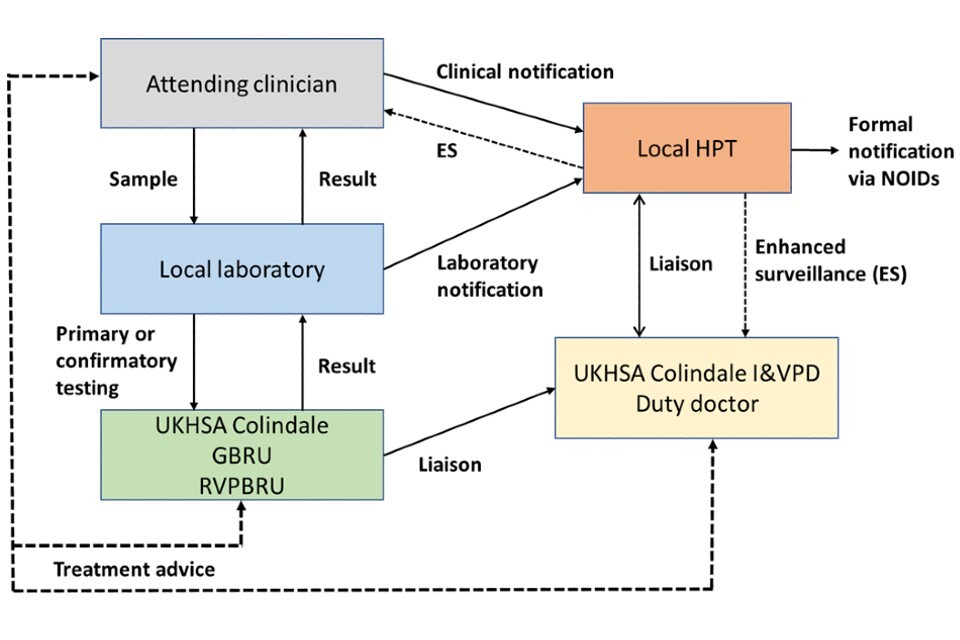
Figure 1 describes data flows between the local NHS laboratory, local HPTs, and UKHSA Colindale for tetanus cases in England.
Figure 1. Case notification flowchart and interaction between departments
Text version of Figure 1
The attending clinician should send samples to the local laboratory for testing and notify the local HPT. The attending clinician will liaise with the UKHSA Colindale GBRU for clinical advice (or if out-of-hours, the UKHSA Colindale duty doctor), if needed.
The local laboratory will receive the samples from the attending clinician and will send the samples to the GBRU and/or the RVPBRU for primary or confirmatory testing. The local laboratory will return the results to the attending clinician and should notify the local HPT via a laboratory notification.
UKHSA Colindale GBRU or RVPBRU will receive the samples for primary or confirmation testing from the local laboratory and will share the result with the local laboratory. They will also liaise with the UKHSA Immunisation and Vaccine Preventable Diseases Division.
The local HPT will receive a clinical notification from the attending clinician and/or receive a laboratory notification from the local laboratory. They will liaise with the UKHSA Immunisation and Vaccine Preventable Diseases Division (in hours) and the duty doctor (out of hours). In addition, the local HPT will conduct enhanced surveillance in conjunction with the attending clinician and the UKHSA Immunisation and Vaccine Preventable Diseases Division.
The UKHSA Immunisation and Vaccine Preventable Diseases Division will liaise with the HPT to complete the enhanced surveillance form.
6. Clinical management
Clinical management of suspected tetanus (including localised tetanus) includes:
- early wound debridement
- antimicrobials, including agents reliably active against anaerobes such as intravenous benzylpenicillin and metronidazole – discuss choice of antibiotics and doses with your local microbiology team
- intravenous Immunoglobulin (IVIG) based on weight (see section 6.1)
- vaccination with tetanus toxoid (see section 7.1)
- further doses of IVIG may be considered but are unlikely to add further protection to previously fully primed individuals 2 weeks following a reinforcing dose of vaccine
- supportive care (benzodiazepines for muscle spasms, treatment of autonomic dysfunction, maintenance of ventilation, nursing in a quiet room)
6.1 Treatment of clinical tetanus with IVIG
Early treatment with IVIG can be lifesaving and its use should be considered based on clinical judgement or diagnosis. An IV tetanus immunoglobulin (TIG) product is no longer available in the UK. In the absence of intravenous TIG, IVIG is the recommended treatment for clinically suspected tetanus. This is based on previous testing of the IVIG product Vigam 5% for anti-tetanus antibodies, which was carried out by NIBSC and showed that Vigam contained reasonable levels of tetanus antibody when measured by ELISA which correlated well with in vivo toxin neutralising test (TNT) anti-toxin assays.
More recently, further IVIG products procured by the NHS have been tested periodically by NIBSC for the presence of anti-tetanus antibodies and therefore potency. Dose adjustments have been made where necessary to ensure that minimum antibody thresholds for treatment and prophylaxis are met. These products include Gammaplex (5%), Privigen 10%, Octagam (5% and 10%), Intratect (5% and 10%), Flebogama (5% and 10%), Panzyga 10%, Gamunex 10%, Kiovig 10% and Gamten 10%. Test results are shown in Appendix 2. Gamten 10% is sourced from UK donors, and the levels of anti-tetanus antibody are lower than in products sourced in the USA and Europe. Higher doses of Gamten 10% are therefore required to ensure sufficient anti-tetanus antibody content.
The recommended dose of anti-tetanus antibodies is based on weight:
- for individuals less than 50kg, 5,000 IU (international units)
- for individuals 50kg and over, 10,000 IU
The volume of human IVIG required to achieve the recommended dose of anti-tetanus antibodies is shown in Table 1.
Table 1. IVIG products for treatment of clinical tetanus
| IVIG products tested for anti-tetanus antibodies | Volume required (in mL) for individuals under 50kg | Volume required (in mL) for individuals 50kg and over |
|---|---|---|
| Octagam 5% | 400mL | 800mL |
| Intratect 10%, Panzyga 10%, Gamunex 10%, Kiovig 10% |
200mL | 400mL |
| Gamten 10% | 350mL | 700mL |
Note: Due to the slight variability between the products and batches, the lowest antibody levels found have been used to calculate the doses of intravenous immunoglobulin required to achieve the recommended dose of anti-tetanus antibodies.
IVIG is not available from UKHSA. Healthcare trusts should contact manufacturers directly for supply (see Appendix 2).
A reinforcing dose of tetanus-containing vaccine should be given as soon as possible after treatment for tetanus is commenced. This may be given whilst the patient remains symptomatic but is stable. IVIG will provide active protection to the patient whilst they are generating their own tetanus antibody response. Further doses of IVIG may be considered, although are unlikely to add further protection to a previously fully primed individual once 2 weeks have elapsed following receipt of the reinforcing dose of vaccine.
For advice regarding clinical management of cases or other queries relating to suspected cases during office hours, contact the UKHSA Colindale duty doctor on 0208 200 4400 and email giclinicaladvice@ukhsa.gov.uk
Out of hours advice on clinical management or other queries should be directed to the UKHSA Colindale duty doctor on 0208 200 4400.
7. Preventative measures
7.1 Primary prevention
Effective protection against tetanus can be achieved through active immunisation with tetanus vaccine, which is a toxoid preparation. A total of 5 doses of vaccine at the appropriate intervals are considered to provide lifelong immunity (1). Single antigen tetanus vaccine (T) and combined tetanus/low dose diphtheria vaccine (Td) have been replaced by the combined tetanus/low dose diphtheria/inactivated polio vaccine (Td/IPV) for adults and adolescents for all routine uses in these age groups (11). Recovery from tetanus may not result in immunity, and vaccination following tetanus is indicated. A full course of tetanus and diphtheria vaccines consists of a minimum 5 doses as follows:
Table 2. Schedule of tetanus and diphtheria vaccination
| Schedule | Children | Adults |
|---|---|---|
| Primary course | 3 doses of vaccine (usually as DTaP/IPV/Hib/HepB) at 2, 3 and 4 months of age | 3 doses of vaccine (as Td/IPV) each one month apart |
| 4th dose | 18 months of age, usually as DTaP/IPV/Hib/HepB | 5 years after primary course (as Td/IPV) |
| 5th dose | At least 3 years after the primary course, usually pre-school entry (as DTaP/IPV) | 10 years after 4th dose (as Td/IPV) |
| 6th dose | Aged 13 to 18 years before leaving school (as Td/IPV) |
For further details see Chapter 30 in UKHSA’s Green Book: Immunisation against Infectious Disease and Vaccination of individuals with uncertain or incomplete immunisation status.
7.1.1 Occupational Health
Tetanus is not transmitted from person to person, so those caring for patients with tetanus are not at risk of acquiring tetanus from the patient. However, like the general population, if they have not received the recommended 5 doses of tetanus-containing vaccine or are unsure about their vaccination status, they should check with their GP practice.
Employees in some occupations may be at increased risk of tetanus-prone wounds (see below) so it is particularly important that occupational health providers check tetanus vaccination status.
7.2 Risk assessment and classification of tetanus-prone wounds
Tetanus-prone wounds are likely to foster anaerobic conditions and consideration should be given to the depth of the wound and degree of tissue damage:
- puncture-type injuries, for example gardening injuries (such as an injury from a rusty nail through a boot)
- wounds containing foreign bodies such as splinters
- compound fractures
- wounds or burns with systemic sepsis
- certain animal bites (bites from domestic pets, such as cats and dogs, are generally puncture injuries)
The level of contamination, and/or presence of devitalised tissue, separates high and low-risk tetanus-prone wounds.
High-risk tetanus-prone wounds include any of the above with one of the following:
- heavy contamination with material likely to contain tetanus spores, for example soil, manure [note 1][note 2]
- wounds or burns that require surgical intervention that is delayed for more than 6 hours [note 3]
- wounds or burns that show extensive devitalised tissue
Low-risk tetanus-prone wounds: tetanus-prone wounds without the above features would be considered low-risk tetanus-prone wounds.
Notes
- Note 1: Individual risk assessment is required, and this list is not exhaustive. For example, a puncture-wound from discarded needle found in a park may be a high-risk tetanus-prone injury, but a needlestick injury in a medical environment is likely a low-risk tetanus-prone injury.
- Note 2: Although smaller bites from domestic pets are generally puncture injuries, animal saliva should not contain tetanus spores unless the animal has been rooting in soil or lives in an agricultural setting.
- Note 3: Wounds or burns where surgical intervention was delayed are high risk, even if the contamination was not initially heavy, as there is opportunity for C. tetani to propagate .
7.3 Management of tetanus prone wounds
Thorough cleaning of all wounds is essential.
Surgical debridement of devitalised tissue in high-risk tetanus–prone wounds is crucial for prevention.
Treat all tetanus-prone wounds with antibiotics (for example metronidazole, benzylpeniciilin or co-amoxiclav) as indicated by clinical severity and on discussion with local microbiology colleagues.
If the wound, burn or injury fulfils the criteria for a high-risk tetanus-prone wound, intramuscular tetanus immunoglobulin (IM-TIG ) should be considered (see Table 4 and section 6). IM-TIG may be recommended to neutralise toxin and provide immediate passive protection. This does not need to be administered in close proximity to the wound.
A reinforcing dose of tetanus-containing vaccine is recommended (see Table 4).
Patients who are severely immunosuppressed may not be adequately protected against tetanus, despite having been fully immunised, and additional booster doses may be required.
Suspected cases of localised tetanus (where there is rigidity and/or spasms around the wound) should be treated as clinical cases as described in section 4 and section 5, and not as a tetanus-prone injury.
Further doses of vaccine should be administered as required to complete the recommended schedule to provide long-term protection.
Table 4. Tetanus immunisation and prophylaxis following injuries
|
Immunisation status |
Immediate treatment: clean wound [note 1] |
Immediate treatment: tetanus prone |
Immediate treatment: high risk tetanus prone |
Later treatment |
|---|---|---|---|---|
|
Those aged 11 years and over, who have received an adequate priming course of tetanus vaccine [note 2] with the last dose within 10 years. Children aged 5 to 10 years who have received priming course and pre-school booster. Children under 5 years who have received an adequate priming course. |
None required |
None required |
None required |
Further doses as required to complete the recommended schedule (to ensure future immunity) |
|
Received adequate priming course of tetanus vaccine [note 2] but last dose more than 10 years ago. Children aged 5 to 10 years who have received an adequate priming course but no preschool booster. Includes UK born after 1961 with history of accepting vaccinations. |
None required |
Immediate reinforcing dose of vaccine |
Immediate reinforcing dose of vaccine One dose of human tetanus immunoglobulin [note 3] in a different site |
Further doses as required to complete the recommended schedule (to ensure future immunity) |
|
Not received adequate priming course of tetanus vaccine [note 2]. Includes uncertain immunisation status and/or born before 1961. |
Immediate reinforcing dose of vaccine |
Immediate reinforcing dose of vaccine One dose of human tetanus immunoglobulin [note 3] in a different site |
Immediate reinforcing dose of vaccine One dose of human tetanus immunoglobulin [note 3] in a different site |
|
|
Neonate under 8 weeks of age born to a mother who received a pertussis-containing vaccine in this pregnancy. > or = 2 weeks prior to delivery [note 4]. |
None required |
Immediate dose of vaccine regardless of age |
Immediate dose of vaccine |
Further doses as per the UK childhood schedule [note 5] |
|
Neonate under 8 weeks of age born to a mother who was not vaccinated with a pertussis-containing vaccine this pregnancy (including if vaccinated post delivery). |
Immediate dose of vaccine regardless of age |
Immediate dose of vaccine. One dose of human tetanus immunoglobulin [note 3] in a different site |
Immediate dose of vaccine. One dose of human tetanus immunoglobulin [note 3] in a different site |
Further doses as per the UK childhood schedule [note 5] |
Notes
Note 1: A clean wound is defined as a wound less than 6 hours old, non-penetrating, with negligible tissue damage.
Note 2: At least 3 doses of tetanus vaccine at appropriate intervals. This will include babies that have not completed their primary schedule. This definition of ‘adequate course’ is for the risk assessment of tetanus-prone wounds only. The full UK schedule ensures at least 5 doses of tetanus containing vaccine at appropriate intervals.
Note 3: There is no shortage of IM-TIG, and every effort should be made to source this directly from the manufacturers. If access to TIG is likely to be significantly delayed, human normal immunoglobulin (HNIG) may be used as an alternative.
Note 4: Clinical trial data (Imap1) comparing anti-pertussis IgG responses prior to primary immunisation in infants born to mothers vaccinated with Boostrix-IPV or Repevax in pregnancy demonstrates babies had protective levels of anti-tetanus toxoid antibodies 2 months after delivery. This suggests there would be no additional benefit of post-exposure IM-TIG in this group following a tetanus-prone wound.
Note 5: A dose of tetanus containing 6-in-1 (DTaP/IPV/HiB/HBV) vaccine given from 6 weeks of age would count as part of the primary schedule.
Patients who are severely immunosuppressed may not be adequately protected against tetanus, despite having been fully immunised, and additional booster doses may be required.
Determination of vaccination status may not be possible at the time of assessment, and therefore a number of POC antibody testing kits have been developed. There is limited information on the clinical benefits of these rapid immunoassays since the published studies are relatively small, with varying results in terms of sensitivity and specificity, and little data with reference to capacity of individuals to respond to antibody boosting. Given the lack of evidence on use in the clinical pathway, POC antibody testing is currently not recommended for use in assessment of tetanus-prone wounds or diagnosis of suspected tetanus by the World Health Organization (WHO) (10).
Determination of vaccination status using vaccination records remains the preferred method.
7.2.1 Post-exposure prophylaxis of tetanus-prone wounds with TIG for intramuscular use (IM-TIG): rationale for guidance on post-exposure management
Supplies of TIG are sourced from a single supplier, and for many years there was a supply shortage. In response, in 2013 an expert working group, convened by Public Health England (PHE), advised the use of HNIG product (Subgam), based on the results of potency testing, as an alternative when TIG could not be sourced by NHS trusts. In July 2018, PHE became aware of a severe shortage of both TIG and Subgam due to manufacturing issues. PHE undertook an urgent review of the comparative boosting of a prophylactic dose of TIG with a booster dose of vaccine and the likely susceptibility of the UK population, in order to prioritise the use of TIG /HNIG for those at genuine risk. Given the serious issues with supply at the time, interim guidance issued in July 2018 was formally approved by the JCVI for ongoing use. Supplies of IM-TIG are now restored, and every effort should be made to source this directly from the manufacturers for the post-exposure prophylaxis of tetanus-prone wounds.
Universal vaccination was introduced into the UK in 1961. In the UK, 5 doses of tetanus-containing vaccine are routinely offered, and this increased to 6 doses from July 2025. The primary series of tetanus-containing vaccine is at 2, 3 and 4 months of age. There is now a tetanus-containing vaccine given at 18 months of age, followed by a school-entry booster, recommended from 3 years, 4 months of age. Although antibody levels decline around 5 years after the primary series in infancy, there is an excellent response to the booster at 3 years, 4 months of age, and antibody levels persist at least until age 14 when the adolescent booster dose also results in rapid and high increase in antibody. A recent WHO review concluded that following the primary series, immunity typically persists for 10 years after the pre-school dose and for at least 20 years after the adolescent booster dose (10).
The rationale for using IM-TIG in at-risk individuals is to sufficiently and rapidly raise antibody levels in exposed individuals who have antibody levels below the protective threshold, and who are not expected to make a sufficiently rapid memory response to vaccination. The median incubation period for tetanus is reported as 7 days but can range from 4 to 21 days, and therefore it is important that active boosting, with vaccination, +/- IM-TIG occurs promptly following an exposure. Peak levels are achieved 4 days after an IM dose. In individuals who receive a vaccine booster after they have completed a full primary course, a measurable increase in antibody titres following a vaccine booster has been observed as early as 4 days, and levels increase substantially from day 7. The antibody levels achieved 5 to 7 days after a reinforcing dose of vaccine likely exceed the estimated antibody boost from a prophylactic dose of IM-TIG in an adult.
The recommended dose if intramuscular TIG is:
- 250 IU for most cases
- 500 IU if more than 24 hours have elapsed or there is risk of heavy contamination or following burns
The dose is the same for both adults and children. IM-TIG is available in 1mL ampoules containing 250 IU. If TIG (for intramuscular use) cannot be sourced, HNIG-administered IM may be given as an alternative.
The volume of HNIG product required to meet minimum levels of anti-tetanus antibodies is kept under periodic review. Based on the original testing in 2011 of Subgam 16%, the volume required to achieve the recommended dose of 250 IU of anti-tetanus antibodies was approximately 5mLs, or one vial of the 750mg Subgam product, administered intramuscularly. Full product testing results are given in Appendix 2.
In 2025, NIBSC undertook testing of the most recent immunoglobulin products procured by the NHS, including Cutaquig (16.5%), Cuvitru (20%) and Xembify (20%). The results indicate a mean potency of 2.71 IU/ml per 1% immunoglobulin (Ig) content, with consistent levels across these products. The dosage recommendations for the management of tetanus-prone wounds using IM-TIG- or HNIG-administered IM are summarised in the Table 5. Note, previously intramuscular and subcutaneous routes of administration were included in immunoglobulin product licences, although current licences indicate the subcutaneous route only. However, UKHSA recommends the intramuscular route.
Table 5. Dose guidelines for management of tetanus-prone wounds using IM-TIG or HNIG for IM use
| Indications | IM-TIG | IM-HNIG (Cutaquig 16.5%; Cuvitru 20%; Xembify 20%) |
|---|---|---|
| For most uses | 250 IU | 6mL |
| If more than 24 hours have elapsed or there is risk of heavy contamination or following burns | 500 IU | 12mL |
NHS trusts should source supplies of IM-TIG and IM-HNIG for management of tetanus-prone wounds directly from the manufacturer.
References
1. UKHSA (2023). ‘Tetanus: the Green Book, Chapter 30’
2. Mandell GL and others. ‘Clostridium tetani’ in ‘Principles and Practice of Infectious Diseases’ Churchill Livingstone 2003
3. UKHSA (2023). ‘Tetanus in England 2022: supplementary data tables. Tetanus cases by age group and year of onset in England and Wales 1984 to 2016 and England 2017 to 2022’
4. PHE (2016). ‘Tetanus in England and Wales: 2015. Health Protection Report: volume 10 number 13’
5. PHE (2017). ‘Tetanus in England: 2016. Health protection report: volume 11 number 13’
6. Rushdy AA and others. ‘Tetanus in England and Wales, 1984 to 2000’ Epidemiology and Infection 2003: volume 130, pages 71 to 77
7. Collins S and others. ‘Current epidemiology of tetanus in England, 2001 to 2014’ Epidemiology and Infection 2016: volume 144
8. Hahné SJM and others. ‘Tetanus in injecting drug users, United Kingdom’ Emerging Infectious Diseases 2006: volume 12, number 4
9. Chin J (editor). ‘Control of communicable diseases manual’ American Public Health Association 2000
10. WHO (2018). ‘The immunological basis for immunization series module 3: Tetanus Update 2018’
11. Department of Health. ‘New vaccinations for the childhood immunization programme’ Chief Medical Officer letters 10 August 2004
12. UKHSA (2010). ‘Notifiable diseases and causative organisms: how to report’
Appendix 1. Algorithm for diagnosis of tetanus

Text version of algorithm for diagnosis of tetanus
1. When there is a clinical suspicion of tetanus (to be considered in injecting drug users (PWID), gardening injuries, animal bites or scratches, incompletely immunised patients), the first action is to consider if there is an appropriate clinical scenario.
2. If there is not an appropriate clinical scenario, then consider alternative diagnoses.
3. If there is an appropriate clinical scenario, then:
- take samples (see section 4.1) – debrided tissue or pus, serum may also be collected (note this should be taken before immunoglobulin is given)
- administer tetanus immunoglobulin or IVIG (see section 5.1)
- vaccination with tetanus toxoid (see section 6.1)
- contact local microbiologist for advice on antimicrobials and debridement
- notify case to HPT (see section 7)
- send debrided tissue, wound or pus and cultures to UKHSA Colindale GBRU and serum samples to RVPBRU for primary or confirmatory testing
4. For testing of serum samples (see section 4.1):
- the tetanus antibody detection results should be available within 24 hours of receipt (if urgent testing) – results may take up to 21 days, and therefore treatment should never be delayed while waiting for laboratory results
- results showing tetanus antibody (IgG) levels below 0.1U/ml support a diagnosis of tetanus – however, levels above this threshold do not exclude tetanus
5. For testing of wound, tissues or pus (see section 4.1):
- the tetanus PCR or culture results should be available within 5 days of receipt
- results showing the detection of C. tetani support a diagnosis of tetanus, but a negative result does not exclude tetanus
Note that laboratory tests are supportive and may need expert opinion for interpretation as detailed in section 5.
Appendix 2. Results from tetanus antitoxin assays for human immunoglobulin
Testing of human immunoglobulin products by the National Institute for Biological Standards and Control (NIBSC) has been undertaken on a periodic basis as new products are procured for use within the NHS. Results are given in the tables below.
Subgam and Viagam were originally tested for levels of tetanus antibodies in 2008 and 2011. In 2016, further testing of Subgam (for subcutaneous or IM use) was undertaken along with 8 IVIG products:
- Vigam 5%
- Gammaplex 5%
- Privigen 10%
- Octagam 10%
- Intratect (5% and 10%)
- Flebogama (5% and 10%)
In 2019, NIBSC carried out testing of 3 further commonly used IVIG products (Octagam 5%, Panzyga 10% and Gamunex 10%) and Subgam, and 2 further HNIG products for SC/IM use (Cuvitru 20% and Gammanorm 16.5%).
The procurement of new immunoglobulin products by the NHS in 2025 prompted further testing of IVIG products:
- Octagam (5%)
- Gamten (10%)
- Panzyga (10%)
- Gamunex (10%)
- Intratect (10%)
- Kiovig (10%)
and HNIG products:
- Cutaquig (16.5%)
- Cuvitru (20%)
- Xembify (20%)
All IVIG products tested were comparable in terms of tetanus potency, except Gamten 10%. Gamten is the only IVIG product sourced from UK donors, whereas the other available products are sourced from donors in the USA and Europe. Adult vaccination programmes that include regular boosters with a tetanus containing vaccine (for example 10 yearly) in some of these countries may account for the higher detected levels of anti-tetanus antibodies in these products. The 5% product has a tetanus potency of approximately 14 IU/mL and the 10% products of approximately 27 IU/mL or 2.7 IU/ml per 1% immunoglobulin content, except Gamten 10% which has a mean potency of 16IU/ml or 1.63IU/ml per 1% Ig content.
Potency levels of the HNIG products in 2025 are slightly lower (2.7 IU/ml per 1% immunoglobulin content) than those seen in 2019, (approximately 3 IU/mL per 1% immunoglobulin content) and when compared to earlier Subgam products (3.5 to 4.0 IU/mL per 1% immunoglobulin content). Recommended doses of currently available products have therefore been adjusted to account for this slight reduction in potency.
Due to the slight variability between the products and batches, the lowest antibody levels found have again been used to calculate the doses of human normal immunoglobulin required to achieve the recommended dose of tetanus antibodies.
Table 6. Results from tetanus antitoxin assays for human immunoglobulin
[z] = not applicable
| Year of test | Product | Manufacturer | Route | Batch number | ELISA IU/mL (95% CI) | TNT assay IU/mL |
|---|---|---|---|---|---|---|
| 2008 | Subgam | BPL | SC/IM | SCBN7647 | 63 | 57 (48-69) |
| 2008 | Subgam | BPL | SC/IM | SCBN7651 | 64 | 57 (48-69) |
| 2011 | Subgam (750mg) | BPL | SC/IM | SCBN8611 | 66.4 | [z] |
| 2011 | Subgam (750mg) | BPL | SC/IM | SCBN8949 | 56.9 | [z] |
| 2011 | Subgam (1500mg) | BPL | SC/IM | SCAN9129 | 60.8 | [z] |
| 2008 | Vigam | BPL | IV | VLAN7724 | 23 | 26 (18-46) |
| 2008 | Vigam | BPL | IV | VLAN7759 | 20 | 18 (15-22) |
| 2008 | Vigam | BPL | IV | VLAN7730 | 23 | 21 (18-26) |
| 2011 | Vigam (5g) | BPL | IV | VLCN9116 | 17.5 | [z] |
| 2011 | Vigam (5g) | BPL | IV | VLCN9117 | 17.9 | [z] |
| 2011 | Vigam (10g) | BPL | IV | VLAN9219 | 15.9 | [z] |
| 2011 | Vigam (10g) | BPL | IV | VLAN9220 | 15.9 | [z] |
| 2016 | Vigam 5% | BPL | IV | VLA15350 VLA15015 VLAN0825 | 15.3 (14.5-16.2) 16.7 (15.8-17.6) 17.6 (16.7-18.6) | 21.0 (17.8-25.4) |
| 2011 | Gammaplex (5g) | BPL | IV | VSCN8627 | 17.8 | [z] |
| 2011 | Gammaplex (5g) | BPL | IV | VSCN9016 | 17.2 | [z] |
| 2011 | Gammaplex (5g) | BPL | IV | VSCN9156 | 19.6 | [z] |
| 2011 | Gammaplex (10g) | BPL | IV | VSAN8599 | 21.6 | [z] |
| 2011 | Gammaplex (10g) | BPL | IV | VSAN9070 | 16.7 | [z] |
| 2011 | Gammaplex (10g) | BPL | IV | VSAN9083 | 17.6 | [z] |
| 2016 | Gammaplex 5% | BPL | IV | VSB15360 VSA15074 VSA15278 | 15.0 (14.2-15.9) 16.6 (15.7-17.6) 14.7 (13.9-15.6) | 19.8 (16.8-24) |
| 2016 | Privigen 10% | CSL | IV | 432900015 | 27.7 (26-29.5) | 32.6 (27.7-39.5) |
| 2016 | Octagam 10% | Octapharma | IV | L609A8541 A436B854E A550B8542 | 30.1 (28.2-32) 34.3 (32.2-36.6) 31.2 (29.5-33) | 39.6 (33.7-47.9) |
| 2016 | Intratect 10% | Biotest | IV | B790035 8 B790035 6 B790016 02 B790155 7 | 24.0 (22.8-25.4) 25.8 (24.5-27.3) 30.7 (28.5-33.2) 28.2 (26.2-30.5) | 27.9 (23.8-33.8) |
| 2016 | Intratect 5% | Biotest | IV | B791275 6 B791405 13 B791615 6 B791415 4 | 15.7 (14.6-16.9) 14.6 (14.0-15.3) 15.4 (14.7-16.1) 14.5 (13.8-15.1) | [z] |
| 2016 | Flebogamma 10% | Grifols | IV | IBGP4JNJP1 IGGP5B6001 IBGN4DIDK1 | 29.3 (27.5-31.2) 32.1 (30.2-34.2) 31.4 (29.5-33.4) | 36.1 (30.7-43.7) |
| 2016 | Flebogamma 5% | Grifols | IV | IBGL5DCDE1 IBGK4EPES1 IBGJ5R4R61 | 14.8 (14.0-15.6) 16.3 (15.5-17.2) 15.6 (14.8-16.4) | [z] |
| 2019 | Octagam 5% | Octapharma | IV | K822A844A K816A844E K82SB8444 | 16.6 (15.4-17.8) 16.9 (16.2-17.6) 16.8 (15.9-17.8) | [z] |
| 2019 | Panzyga 10% | Octapharma | IV | K819A8214 K820A8262 K725B8215 | 27.4 (25.6-29.4) 29.4 (28.2–30.7) 29.0 (27.3-30.8) | [z] |
| 2019 | Gamunex 10% | Grifols | IV | B3GLC00183 B3GKC00263 B3GJB00303 | 29.2 (27.3-31.3) 35.4 (34-36.9) 32.4 (29-36.2) | [z] |
| 2019 | Subgam 16% | BPL | SC/IM | SFA18133 SFA18205 SFC17520 | 43.6 (40.5-47.0) 44.3 (42.3-46.5) 46.2 (43.6-49.1) | [z] |
| 2019 | Gammanorm 16.5% | Octapharma | SC/IM | M824A8608 M811C8609 M824D8603 | 49.8 (46.2-53.6) 49.5 (47.2-51.9) 54.5 (51.4-57.9) | [z] |
| 2019 | Cuvitru 20% | Baxalta (Supplier: Shire) | SC/IM | LE135001BB LE13T028AQ LE13T028AH | 56.5 (52.4-60.9) 62.2 (59.3-65.2) 61.1(57.5-64.9) | [z] |
| 2025 | Octagam 5% | Octapharma | IV | MP18B844 M444A844 MP13A844 MP09A844 MP05A844 |
12.7 13.6 14.9 14.8 12.7 |
[z] |
| 2025 | Gamten 10% | Octapharma | IV | MP04A854 MP05A856 MP11C856 MP11A854 MP12A854 |
15.7 17.5/19 [note] 14.7/15.7 [note] 15.6/20.4 [note] 18.0/17 [note] |
[z] |
| 2025 | Panzyga 10% | Octapharma | IV | LP12B826 LP15B826 LP19A826 LP20A826 LP23A826 |
27.1 25.3 25.5 25.4 26.8 |
[z] |
| 2025 | Gamunex 10% | Grifols | IV | B03K013082 B23K016802 A03J092822 A03J077182 A04J124313 |
30.7 25.8 24.9 25.3 25.9 |
[z] |
| 2025 | Intratect 10% | Biotest | IV | C790174P C790025P C790055P C790065P C790035P |
26.9 24.9 25.8 24.8 25.9 |
[z] |
| 2025 | Kiovig 10% | Baxalta/Takeda | IV | BE12F065 BE12F092 BE12F122 BE12F179 BE12F196 |
26.7 27.7 30.9 28 31.2 |
[z] |
| 2025 | Cutaquig 16.5% | Octapharma | SCIG/IM | MP09A814 KP20A814 KP18A814 KP20B814 K436A814 |
45.2 49.7 48.6 57.7 45.3 |
[z] |
| 2025 | Cuvitru 20% | Baxalta/Takeda | SCIG/IM | BE13F039 BE13F040 BE13F043 BE13F036 BE13F026 |
50.5 47.4 49.1 57.4 39.5 |
[z] |
| 2025 | Xembify 20% | Grifols | SCIG/IM | A03J087543 B03J100663 A03K022903 A03K020213 A03K007043 |
57.7 76 47 45.3 44.9 [note] |
[z] |
Note: repeat testing
Manufacturers’ contact details
| Manufacturer | Phone number |
|---|---|
| Baxalta | 01256 894003 |
| Biotest UK Ltd | 0121 733 3393 |
| BPL (Bio Products Laboratory) | 020 8258 2200 |
| CSL Behring | 01334 447400 |
| Grifols UK Ltd | 0845 2413090 |
| Octapharma | 0161 837 3771 |
Appendix 3. Useful contact details
For advice regarding clinical management of cases or other queries relating to suspected cases during offices hours, call the UKHSA Colindale duty doctor on 0208 200 4400 and email giclinicaladvice@ukhsa.gov.uk
The UKHSA Colindale duty doctor is requested to discuss all suspected cases with the on-call consultant microbiologist if calls are received during working hours. Email giclinicaladvice@ukhsa.gov.uk
Out of hours, contact the UKHSA Colindale duty doctor on 0208 200 4400 for all queries and advice.
For queries related to sending clinical samples and interpretation of toxin testing results:
Gastrointestinal Bacteria Reference Unit (GBRU)
UKHSA
61 Colindale Avenue
London NW9 5EQ
Telephone: 0208 327 7887
Notify the laboratory when sending samples.
For queries regarding interpretation of serology testing, contact the Respiratory and Vaccine Preventable Bacteria Reference Unit (RVPBRU) for advice.
Telephone: 0208 327 7887
Acknowledgements
The authors gratefully acknowledge the expert review and advice received from:
- colleagues in the UKHSA Immunisation and Vaccine Preventable Diseases Division
- Dr Paul Stickings, Silke Schepelmann and colleagues at NIBSC
- Dr Abhishek Katiyar at Royal Free London NHS Foundation Trust
Prepared by
Gayatri Amirthalingam, Gauri Godbole, Corinne Amar, Meera Chand, Norman Fry, Colin Brown, Joanne White, Charlotte Gower, Shennae O’Boyle.
Updated by
Dr Rebecca Cordery, Dr Anna Jeffrey Smith, Gauri Godbole, Vanessa Wong and Stephanie Harris, July 2026