Systems-wide evaluation of homelessness and rough sleeping: A deep dive on criminal justice and homelessness
Published 11 December 2025
Applies to England

© Crown copyright 2025
This publication is licensed under the terms of the Open Government Licence v3.0 except where otherwise stated. To view this licence, visit nationalarchives.gov.uk/doc/open-government-licence/version/3 or write to the Information Policy Team, The National Archives, Kew, London TW9 4DU, or email: psi@nationalarchives.gov.uk.
Where we have identified any third party copyright information you will need to obtain permission from the copyright holders concerned.
This publication is available at https://www.gov.uk/government/publications/systems-wide-evaluation-of-homelessness-and-rough-sleeping/systems-wide-evaluation-of-homelessness-and-rough-sleeping-a-deep-dive-on-criminal-justice-and-homelessness
Foreword
This report has been produced as part of the Systems-wide Evaluation of Homelessness and Rough Sleeping. The aim of this innovative evaluation is to identify opportunities to improve the way that the homelessness and rough sleeping system works to ensure it is delivering the best possible outcomes for those who need to make use of services and value for money for the taxpayer.
This report builds on the first interim report and complements other reports from the evaluation on policy areas that influence homelessness and rough sleeping, including supported housing, social housing allocations, and the asylum system. It focusses on the interaction between the criminal justice system and homelessness, drawing on qualitative and quantitative insights from across England. It identifies structural barriers such as limited housing stock, gaps in provision for women and those on remand, and the importance of early identification of housing needs to prevent homelessness on departure from prison.
A Rapid Evidence Assessment of the links between criminal justice and homelessness, and an evaluation of the Accommodation for Ex-Offenders Programme are also published alongside this report. These outputs provide further insight into the challenges faced by people leaving prison and the effectiveness of interventions designed to support them into stable accommodation.
We would like to thank the Centre for Homelessness Impact and their partners for their expertise and continuing hard work to deliver this ambitious programme of research, local authority staff and other stakeholders who participated in the research, and the analysts at MHCLG and MOJ who provided input to the research materials and reviewed the outputs.
Most importantly, we are hugely grateful to the individuals with lived experience of homelessness who participated for giving us their time and sharing their experiences with the research team.
The findings in this report build on a substantial evidence base published by MHCLG, including the Better Outcomes through Linked Data: Links between Homelessness and Offending report, which informs the new Cross-Government Homelessness and Rough Sleeping Strategy. This evidence base, summarised in the strategy’s Analytical annex, demonstrates MHCLG’s commitment to identifying the causes of and solutions to homelessness and rough sleeping, and to ensuring that policy and practice are grounded in robust analysis.
MHCLG will continue to develop the evidence in this area and work collaboratively to fill remaining gaps. MHCLG’s plans for improving data and evidence on homelessness and rough sleeping are set out in Section 5 of the Analytical annex.
Stephen Aldridge
Director for Analysis and Data & Chief Economist
Ministry of Housing, Communities and Local Government
Executive summary
Background
The criminal justice system in England and Wales includes a range of services, such as the police, courts, probation, and prison. People leaving prison often experience a significant risk of homelessness and rough sleeping due to a range of factors, including the breakdown of personal relationships, limited support networks, and difficulties accessing housing because of certain policies (Bramley et al., 2015; The Welsh Government Expert Review Panel, 2023). YouGov (2016) has also highlighted that the nature of offences or conditions linked to probation can restrict accommodation options, increasing the likelihood of homelessness and rough sleeping.
The government in England has recognised the link between people leaving prison and homelessness. It has allocated funding to programmes aimed at providing accommodation and resettlement support for offenders who are at risk of homelessness. Examples of such initiatives include the Community Accommodation Service programmes and the Accommodation for Ex-Offenders programme. The Accommodation for Ex-Offenders programme launched July 2021 – 2025, funded by MHCLG, aimed to reduce reoffending and homelessness by supporting people leaving prison to access the private rental sector. Under this programme, local authorities and other providers tailor their support to the needs of individuals, offering tenancy assistance, financial incentives, and pre-release training. The funding for AfEO has been consolidated into the Rough Sleeping Prevention and Recovery Grant to simplify funding and allowing local authorities more flexibility for planning and delivery services.
Scope and purpose
RSM UK Consulting LLP and Cordis Bright have been appointed as part of a consortium, led by the Centre for Homelessness Impact, to conduct research focused on the interaction of the criminal justice system and the homelessness and rough sleeping system. The research is guided by four overarching research questions:
- What is known about the interaction between the criminal justice and homelessness and rough sleeping systems?
- To what extent do the criminal justice and homelessness and rough sleeping systems (their policies and programmes) support people who are leaving prison into stable accommodation?
- To what extent has the Accommodation for Ex-Offenders programme delivered as planned and achieved its desired outcomes?
- What learning can be gleaned from the evaluation to improve the effectiveness and support of people leaving prison into stable accommodation?
Research methods
This evaluation employed a mixed methods approach combining qualitative and quantitative techniques. Key methods included:
- a Rapid Evidence Assessment, which synthesised 79 studies from the past decade on the relationship between the criminal justice system and homelessness
- development of a systems map through online research, expert consultations, and workshops with stakeholders, and separately, people with lived experience of homelessness and the criminal justice system
- a quantitative assessment evaluated the key themes in the system map using longitudinal and monitoring data, though limitations in available data were acknowledged
- deep-dive fieldwork across five local areas, involving 30 semi-structured interviews with 63 stakeholders from both the statutory and voluntary sectors
The research had several limitations, shaping how its findings should be understood. The deep dive approach, based on interviews across five local areas, provided rich qualitative insights but could not fully capture the diversity of experiences across England. By engaging multiple stakeholders in each area, the study revealed a broad range of perspectives, but this breadth made it difficult to pinpoint distinct regional differences or directly compare local approaches.
Interpreting the data presented several challenges. Variability in how local authorities defined and recorded homelessness made it difficult to compare findings across areas, as some classified living with friends or family as “other” rather than “homeless”. Secondary data analysis was also constrained by inconsistencies in available timeframes, limiting the ability to track long-term trends. In particular, gaps in pre-pandemic data meant it was not always possible to determine whether observed changes reflected temporary disruptions or broader shifts over time.
Findings
What is known about the interaction between the criminal justice and homelessness and rough sleeping systems?
The primary research identifies several factors that increase the risk of homelessness for individuals involved with the criminal justice system. Key issues include loss of accommodation and rent arrears whilst in prison, compounded by inadequate support systems to maintain housing during imprisonment. Additionally, disruptions in mental health and substance use care may make it difficult to secure stable housing on release, and vice versa.
Housing market conditions also play a crucial role. Interviewees in this research described how current Local Housing Allowance (LHA) rates make access to affordable private rented sector accommodation difficult.[footnote 1] This issue is particularly challenging for those under 35, who are often limited to the shared accommodation rate of LHA creating issues of affordability and restricting people to shared housing which may not be suitable for certain groups or people who have experienced trauma.
Stigma and discrimination further exacerbate the problem with landlords frequently refusing to rent to individuals with a criminal record. Relationship breakdowns and institutionalisation can also contribute to difficulty accessing and maintaining stable housing.
The report also outlines how individual circumstances and demographics can influence the likelihood of experiencing homelessness. Factors such as the type of offence, sentence length, and the availability of support services play a significant role.[footnote 2] For example, people with specific types of offences, such as sex offences, can experience greater challenges in finding accommodation due to safety concerns and stigma. Short sentences often result in a lack of access to support services, making it more difficult for people, particularly those with high support needs, to secure stable housing upon release.
Interviewees in this research described how people on remand also experience challenges. They often have limited access to support services and resettlement planning, increasing their risk of homelessness.
The report highlights the intersectional nature of these challenges, noting that many individuals experience multiple issues simultaneously. Gender also plays a role, with women facing particular challenges related to serving shorter sentences and having experiences of trauma or violence.
To what extent do the criminal justice and homelessness and rough sleeping systems (and their policies and programmes) support people who are leaving prison into stable accommodation?
The report provides an overview of the current support available for people leaving prison to find stable housing and highlights areas of effectiveness, challenges, and gaps in provision. Support for this group is described as a “patchwork”, shaped by mixed funding availability and variation in local authority priorities.
The introduction of Community Accommodation Service Tier 3 (CAS3) accommodation has been effective in providing an 84-night period for individuals leaving prison at risk of homelessness, offering transitional housing and providing a stable base from which residents can access benefits, substance use, and mental health support. Floating support is also provided to assist prison leavers in managing the accommodation and to support move on to settled accommodation. However, local, regional and national interviewees in this research described how the short-term nature of support can defer rather than resolve the risk of homelessness, as challenges in finding suitable settled housing persist.
Resettlement panels and commissioned rehabilitative services (including but not limited to supported accommodation, substance use services and employment support services) are working well in some areas, facilitating collaborative efforts between criminal justice and housing sectors to reduce homelessness risks.[footnote 3]
However, some key challenges exist. Structural barriers, including limited housing stock, affordability issues, and capacity constraints in statutory services, particularly mental health services and adult social care, were identified as major obstacles. Specific groups, such as those with high support needs (relating to mental health needs, substance use, antisocial behaviour patterns and/or social/relationship challenges), individuals on remand, and women, experience additional challenges due to a lack of tailored support. Digital exclusion, delays in accessing benefits, and insufficient partnership working further hinder effective outcomes.
Local and national interviewees in this research described gaps in provision, including a lack of continuity of care for mental health and substance use support post-release, limited options for move-on housing, and a lack of transitional support to prepare individuals for independent living. The ‘medium needs’ group, who may not have a priority need for housing under the homelessness legislation, but who need some support to manage a tenancy, remain underserved, increasing their vulnerability to homelessness.
System complexity and data limitations complicate effective support delivery. Pathways from prison to accommodation are inconsistent, highly variable and therefore inherently complex. Furthermore, data collection and use across services is fragmented, impeding comprehensive analysis and policy development.
To what extent has the Accommodation for Ex-Offenders programme delivered as planned and achieved its desired outcomes?
Seven outcomes and impacts associated with the programme were investigated as part of this evaluation.[footnote 4] It is important to note that local or national targets were not specified for most of the outcomes. The one exception was the targets for the number of tenancies per local authority to be secured during the programme duration. For all other outcomes, it was not possible to conclude whether the reported performance and outcomes were in line with expectations.
Nationally, referrals to the programme increased by about 30% following the expansion of the programme from Phase 1 (2021-2023) to Phase 2 (2023-2024). While the overall national trend showed an increase, some local authorities experienced a decline in referrals. The reasons for this variation were unclear, but it may be linked to local housing market conditions, including the limited availability of affordable housing options in the private rental sector.
In Phase 2 of the programme, 2,562 private rented sector tenancies were secured which was an increase of about 12% from Phase 1. There was large variability across the sampled local authorities but none of them had met their targets for Phase 2. The local authority representatives reflected that the lack of affordable, suitable housing options in the private rented sector was one of the key barriers to meeting their targets for the number of tenancies secured.
Nationally, 65% of individuals supported into tenancies in the private rented sector as part of the programme maintained their accommodation for more than six months as of the end of Q1 FY 2024/25. About 60% of the exits from the programme were reported to be successful graduations (e.g. move-on to independent housing either in the same or other property).
Overall, the outcome-related data revealed that there were increases in referrals and tenancies in Phase 2 compared with Phase 1. While the sampled local authorities did not meet their respective targets for the number of tenancies, they supported about 75% of tenants on average to successfully maintain accommodation. However, it was not possible to compare outcomes against targets (as these were absent) to assess the successful delivery of the programme.
The fieldwork highlighted several positive consequences of the programme, including stronger local and regional partnerships, improved local authority communication, and better collaboration with probation, prisons, and employment support services. This facilitated a deeper understanding of local needs, enabling teams to recognise and provide more effective support to vulnerable groups, improve pathways and address systemic challenges.
In terms of negative consequences, the focus on assisting individuals leaving prison who were below the statutory priority need threshold for housing created tension, as individuals in priority need remained on local authority waiting lists. There were limited referrals for women to the programme, with their higher support needs (including histories of trauma and substance use) often not addressed during shorter prison sentences meaning the offer was not suitable. The programme allowed housing and support to be provided to a wide cohort of people who had left custody within the past 12 months, which goes beyond only those seeking move-on support from CAS3. Consequently, there was limited space and funding available specifically for those from CAS3. Lastly, regional disparities in access to accommodation and a lack of standardisation across local authorities resulted in inconsistent implementation and outcomes.
Policy insights
This research outlines key policy insights informed by the evidence collected to enhance the support and accommodation available to individuals leaving prison. Combining these insights could improve the effectiveness of support for individuals leaving prison and could increase the likelihood that they secure stable accommodation and avoid homelessness.
Policy insights for improving the interaction between the criminal justice and homelessness and rough sleeping systems:
Policy insight 1: Revisions to the Homelessness Code of Guidance could provide clarity and ensure fair and transparent assessments of priority need, reducing the potential for inconsistencies and excessive gatekeeping. Decisions on who is considered vulnerable under the Housing Act 1996 are made locally and based on the local authority’s interpretation of the legislation and guidance, considering the circumstances of each individual. Research findings reported a perception of inconsistency in how local authorities make these decisions and determine priority need status. Revisions to the Homelessness Code of Guidance could provide clarity on factors to consider and help to ensure fair and transparent assessments of priority need, reducing the potential for inconsistencies and excessive gatekeeping. Training for housing and probation teams could help align practices, fostering a shared understanding of the guidance and promoting fair, person-centred support for those at risk of homelessness.
Policy insight 2: Central government should explore ways to address the gap for supporting those on remand. The research identified a significant gap in the system in terms protecting of those on remand against the risk of homelessness, despite not yet being convicted of any crime, this group are currently at a higher level of risk because they do not have access to the case management or offender management support which is available to prison leavers. This can result in release without resettlement planning. Central government should explore ways to address this gap. In addition to case management, support for those on remand should address challenges like maintaining housing and safeguarding personal belongings during their time in prison. This could help bridge the gap in provision, ensuring that people who have not been convicted of a crime receive the necessary stability to rebuild their lives and avoid long-term homelessness.
Policy insight 3: Central government could support more opportunities for data linking by ensuring consistency in outcome definitions and monitoring across prison, probation and homelessness datasets. Central government could support more opportunities for data linking by ensuring consistency in outcome definitions and monitoring across prison, probation and homelessness datasets. The Better Outcomes through Linked Data programme has shown the potential for data linking to generate new insights that could improve the government’s ability to predict and respond to homelessness within this cohort.5
The government could also play a coordinating role in supporting local areas to establish centralised systems and effective data sharing between prisons, probation, and housing services. This was identified as a barrier to supporting individuals upon release. Opportunities to overcome these barriers include establishing a unified data system that integrates data from prisons, probation, and housing services. A review of local data sharing practices could inform the development of clear protocols for the Duty to Refer process, specifying the type and level of detail required for effective support and the appropriate access controls to ensure legal and ethical boundaries are respected
Policy insights for local service provision:
Policy insight 4: Identifying housing and support needs early would be beneficial for sharing good practice and identifying areas for improved partnership working across the system. The research highlighted the importance of identifying housing and support needs early, at the start of an individual’s time in prison. Early identification of housing and support needs would allow sufficient time for developing personalised housing plans and enable timely coordination between services across the system including housing teams, probation services, health services and local authorities. Reviewing the effectiveness and awareness of tools and processes for identifying housing and support needs early would be beneficial for sharing good practice and identifying areas for improved partnership working across the system.
Policy insight 5: ensure efficient collaboration and streamline referral processes across the system, reviewing the effectiveness of local governance structures to identify areas for improvement. This research uncovered some variation in the effectiveness of Duty to Refer processes. To ensure efficient collaboration and streamline referral processes across the system, reviewing the effectiveness of local governance structures to identify areas for improvement and share best practice could be beneficial. Governance structures should include representatives from the prison service, probation, and local health services to support continuity of care, streamline referral processes and ensure clear communication pathways between services and individuals leaving prison. Co-location of staff with specialist knowledge such as welfare benefits and local authority staff who have specialised knowledge of housing processes and legislation should be considered to ensure individuals leaving custody have access to information regarding what support and benefits, they are entitled to.
Policy insight 6: Provide digital and tenancy skills coaching or training for prisoners. Digital exclusion and lack of life skills was identified as a barrier to some people securing stable accommodation upon release from prison. Lack of life skills, that can lead to prison leavers becoming homeless, can include not knowing how to pay bills, missing appointments and being unable to resolve situations like losing keys. Digital exclusion presents a challenge for accessing support, particularly where there are digital access starting points. Incorporating digital and tenancy skills coaching or training for prisoners into support plans developed through early housing needs assessments could reduce these barriers. Tenancy skills could include sessions on budgeting, paying bills, and understanding tenancy agreements.
Policy insight 7: Establish more women-only supported housing designed to address the specific needs of women. Women often face particular challenges including shorter sentences, experiences of trauma and violence and lack of tailored support services. Establishing more women-only supported housing designed to address the specific needs of women leaving prison could improve accommodation outcomes for women. These services should be staffed by professionals trained in trauma-informed care, providing a stable and compassionate environment. Ensuring placements are close to local support networks, where safe, will help women maintain access to vital services such as mental health and addiction support, fostering stability and aiding their reintegration into the community.
This report
This report sets out the evaluation output and findings from the deep dive evaluation of the interactions between the criminal justice system and the homelessness and rough sleeping system.
Two additional technical reports are available to supplement the research findings: Technical Report 1 contains the Rapid Evidence Assessment and Technical Report 2 contains the detail of the evaluation of the Accommodation for Ex-Offenders programme.
Chapter 1: Introduction and methods
Chapter 1 introduces the research and its intended scope, outlining the research questions that the evaluation set out to answer. It provides some context of the interaction between the criminal justice and homelessness and rough sleeping systems, an outline of the main support services that are available within this space and describes the Accommodation for Ex-Offenders programme more fully.
Chapter 1.5 describes the qualitative and quantitative methods used in support of the evaluation, including outlining how the rapid evidence assessment was undertaken, the work undertaken on systems mapping and the quantitative assessment of the systems map. The chapter further outlines the approach taken to the fieldwork and how research output was synthesised and analysed. The chapter concludes with a summary of the limitations of the methodology used in this evaluation.
Chapter 2: Findings and analysis
Chapter 2 uses the output from fieldwork (group interviews, workshops and focus groups with local, regional and national stakeholders and individuals with lived experience) to outline the interaction between the criminal justice system and homelessness and rough sleeping system, focusing on specific groups of people with differing demographics and experiences of the criminal justice system. This includes individuals leaving prison, those on remand, and those with community sentences. It examines how these interactions may influence the likelihood of people experiencing homelessness. The chapter also considers what is working well and what is working less well and includes an examination of the impact of various policies and service gaps.
Chapter 3: Learning and policy insights
Chapter 3 brings together the findings from this research to outline key lessons that could enhance the effectiveness of support for individuals leaving prison in securing stable accommodation. The content in this chapter is organised thematically and includes a consideration of service provision, collaboration, opportunities to improve cost-effectiveness and opportunities for data collection and evidence synthesis. Each thematic area includes a series of recommendations with actionable steps designed to build on these insights.
Annex 1
Annex 1 provides a summary of the differences between the system map (which looks at the interactions between the Criminal Justice System and homelessness and rough sleeping systems) and the available secondary and monitoring data which is currently available. Where possible, this data has been descriptively analysed to present a quantitative assessment of the interactions between these two systems over time, based on available data. Through conducting this descriptive analysis, a number of data challenges were identified and a summary of these has also been included within Annex 1.
The report concludes with a bibliography.
1. Introduction and context
1.1 The aim of the research
RSM UK Consulting LLP and Cordis Bright have been appointed as part of a consortium, led by the Centre for Homelessness Impact, to conduct research focused on the interaction of the criminal justice and the homelessness and rough sleeping systems.
The research examines the relationship between the criminal justice system and homelessness, focusing on how criminal justice system interactions influence the risk of homelessness or rough sleeping. It aims to provide the MHCLG and MoJ with deeper insights into these dynamics and identify effective practices for supporting individuals at risk. Additionally, the evaluation will identify what works well and less well in supporting individuals who have interacted with the criminal justice system and are at risk of homelessness, including an investigation of the strengths and weaknesses of existing approaches, with a particular focus on the Accommodation for Ex-Offenders programme and how it operates in practice.
The research included system mapping work to facilitate discussions with stakeholders on blockages or key challenges to accommodating people leaving prison; areas where the risk of homelessness is increased; and key points for intervention. This map also provided the basis to explore the quantitative data that is available at key points in the criminal justice system to quantify key areas of ‘flow’ of people leaving prison, to support recommendations for corresponding changes to policy, and approaches to data collection and analysis.
1.2 Research questions
To fulfil the aims of the research outlined above, the evaluation was guided by four research questions:
- What is known about the interaction between the criminal justice and homelessness and rough sleeping systems?
- To what extent do the criminal justice and homelessness and rough sleeping systems (their policies and programmes) support people who are leaving prison into stable accommodation?
- To what extent has the Accommodation for Ex-Offenders programme delivered as planned and achieved its desired outcomes?
- What learning can be gleaned from the evaluation to improve the effectiveness and support of people leaving prison into stable accommodation?
1.3 The interaction between the criminal justice system and homelessness in England
The criminal justice system in England and Wales includes a range of services, such as the police, courts, probation, and prison. These services aim to uphold the law, deliver justice, and support rehabilitation. However, interactions with the criminal justice system can create significant barriers to housing stability. Many individuals who encounter the criminal justice system do not receive a custodial sentence but may still face challenges such as the stigma associated with having a criminal record. Evidence shows that a criminal record can limit access to employment and housing opportunities, increasing the risk of homelessness (Homeless Link, 2020; Ministry of Justice, 2023). These barriers often persist regardless of the severity of the offence, highlighting the systemic challenges faced by those with lived experience of the criminal justice system.
People leaving prison can experience a high risk of homelessness and rough sleeping for various reasons. These include the breakdown of previous relationships, a lack of support networks and difficulties accessing housing due to certain policies (Bramley et al., 2015; The Welsh Government Expert Review Panel, 2023). YouGov (2016) described that the nature of crimes committed, or probation requirements, such as where an individual can live, may also limit where people can be accommodated and can delay access to housing. Additionally, Homeless Link (2020) described how many people leaving prison encounter financial struggles and a lack of employment opportunities upon release, which can affect their ability to access housing.
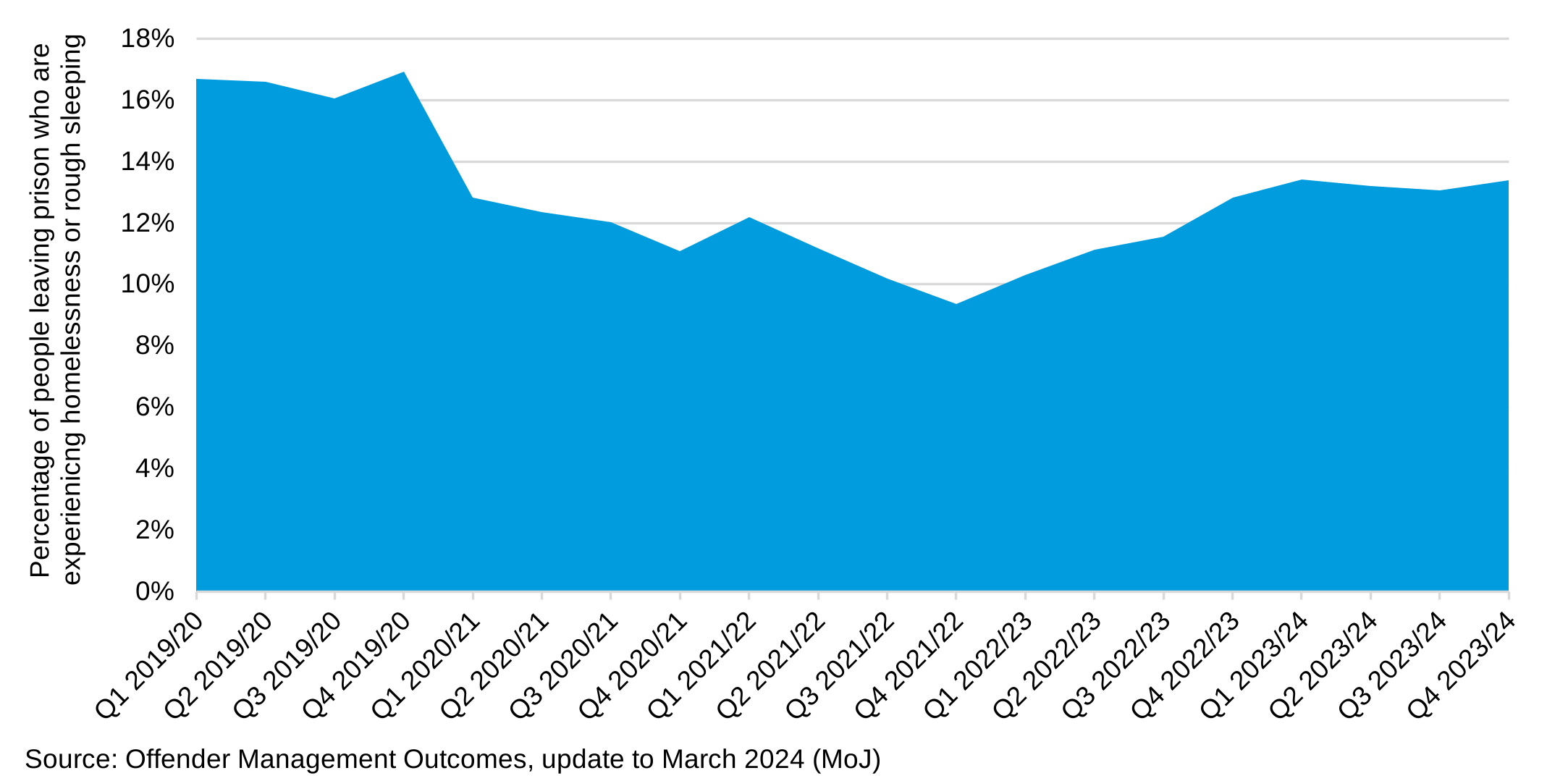
Overall, the proportion of people experiencing homelessness or rough sleeping on release from prison fell between 2019/20 and 2021/22 and then subsequently increasing until 2023/24. Figure 1 below depicts the proportion of people in England leaving prison who experienced homelessness or rough sleeping on release.[footnote 5] While the Offender Accommodation Outcomes publication includes data for England and Wales, the data in the graph is specifically for England.[footnote 6] The figures shows that the proportion of people in this situation declined by 5.9 percentage points from 16.6% in 2019/20 to 10.7% in 2021/22 but then rose by 2.6 percentage points from 10.7% in 2021/22 to 13.3% 2023/24.[footnote 7],[footnote 8] These trends hold broadly consistent across age, gender, ethnicity and region.[footnote 9]
Note: It is possible that COVID-19 and the changes to recording have impacted these figures, however, it is not possible to quantify this impact.
When considering quarterly trends, Figure 1 also shows that there has been an increase of 4.0 percentage points from Q4 2021/22 in the proportion of people leaving prison who were experiencing homelessness or rough sleeping, from 9.4% in Q4 2021/22 to 13.4% in Q4 2023/24.[footnote 10]
Figure 1: Homeless or Rough Sleeping on Release in England: 2019/20 – 2023/24
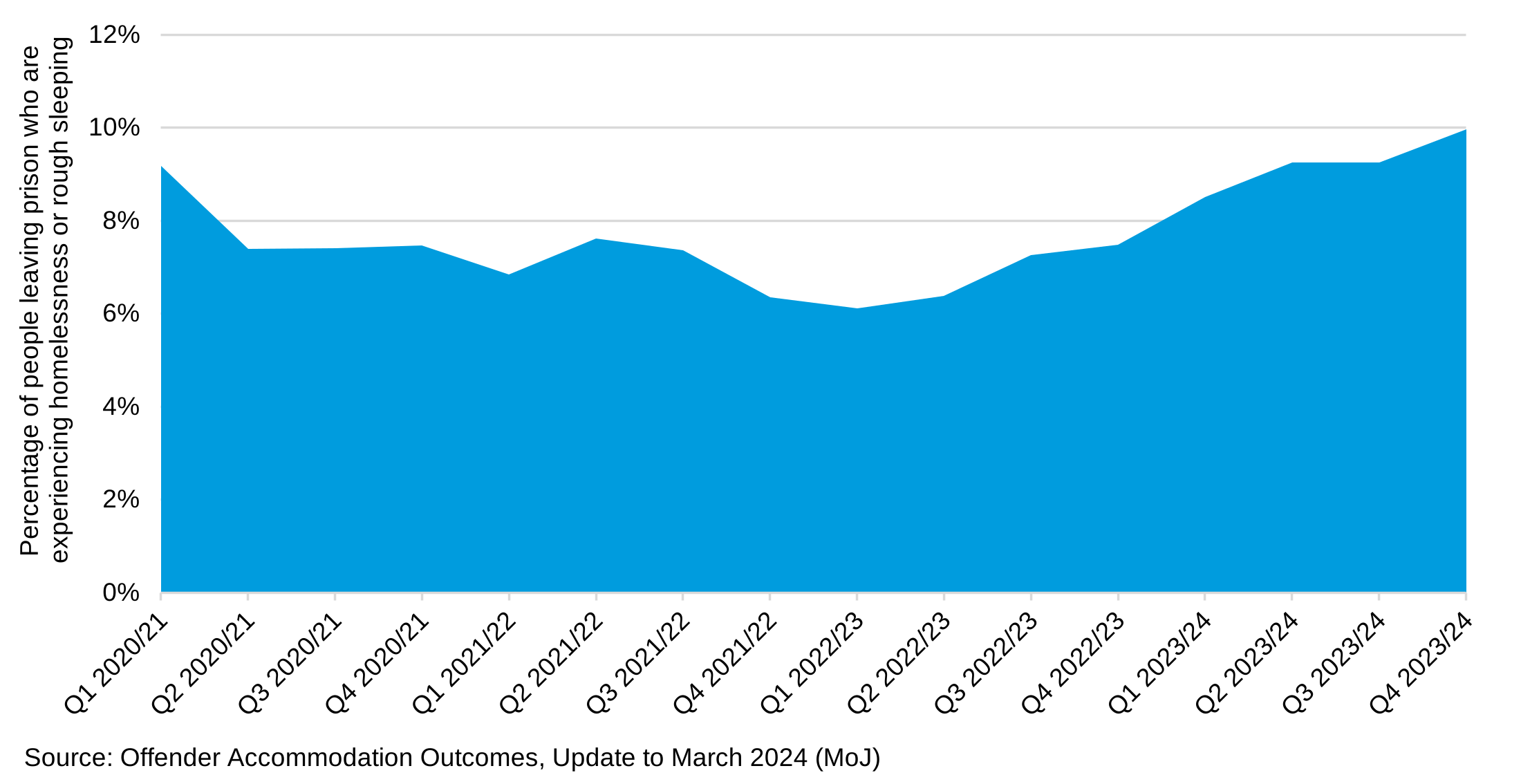
A similar trend can also be seen in accommodation outcomes 3 months post-release, although the proportion of people experiencing homelessness and rough sleeping is lower compared to on release.[footnote 11]
As shown in Figure 2 below, the proportion of people leaving prison and experiencing homelessness or rough sleeping 3 months post-release fell by 3.1 percentage points from 9.2% in Q1 2020/21 to 6.1% in Q1 2022/23 but then rose by 3.9 percentage points to 10.0% in Q4 2023/24.[footnote 12],[footnote 13],[footnote 14] These trends also hold broadly consistent across age, gender, ethnicity and region.[footnote 15]
Figure 2: Homeless or Rough Sleeping 3 Months Post-Release in England: 2020/21 – 2023/24[footnote 16],[footnote 17]
People who engage with the criminal justice system can experience longer periods of homelessness, than those with no criminal record (The Welsh Government Expert Review Panel, 2023). A criminal record can create barriers such as stigma, discrimination, and legal restrictions, delaying their ability to secure settled housing (Homeless Link, 2020). These delays, combined with the cyclical nature of re-offending, with recidivism happening in a pattern, further complicate their reintegration into society (Bashir et al., 2021). Without stable housing or access to critical support services, like mental health care or substance use support, those experiencing homelessness and rough sleeping may struggle to rebuild their lives. As a result, they may re-offend, return to prison, and experience further instability (Ministry of Justice, 2024). This cycle can normalise re-offending and homelessness, making prison seem like a safety net which complicates efforts to break the cycle (Gough and Coghlan, 2022).
Individuals most impacted by both criminal justice and homelessness are those affected by structural factors like poverty, unemployment, and inequality (Bramley & Fitzpatrick, 2017). Substance use is a significant overlapping driver, with people affected by substance use disproportionately experiencing both homelessness and prison sentences (Jones et al., 2021). In London, those who have experienced rough sleeping and imprisonment are more likely to have substance use and alcohol needs (Greater London Authority, 2020).
Mental health issues and trauma, particularly from adverse childhood experiences, also play crucial roles. Untreated mental health conditions can lead to criminal behaviour and difficulty maintaining stable housing (Johnsen & Blenkinsopp, 2024). Research shows that a high percentage of those involved with the criminal justice system, substance use, and homelessness services have experienced childhood trauma (Bramley & Fitzpatrick, 2015; Sundin & Baguley, 2015).
1.4 Current support to address the needs of people leaving prison who are at risk of homelessness
The UK government recognises the relationship between leaving prison and homelessness and has committed to funding programmes to provide accommodation for people leaving prison who are at risk of experiencing homelessness. These include:
The Community Accommodation Service
The Community Accommodation Service (CAS), developed by His Majesty’s Prison and Probation Service (HMPPS) and funded by the MoJ, aims to reduce reoffending by providing structured housing support for people leaving prison in England and Wales. CAS is divided into three tiers.
CAS1 delivered by HMPPS, provides high-risk people leaving prison with 24/7 supervised approved premises. CAS1 is a rebrand of the Approved Premises (Offender Management Act 2007) and long-standing iterations of support for around 40 years. Residents engage in purposeful activities, behaviour modification, and relevant interventions to support rehabilitation and public safety.
CAS2 (renamed in October 2022, previously known as Bail, Accommodation and Support Service) offers accommodation to individuals on bail, home detention curfew, or at risk of recall. It includes a mix of self-contained and shared housing with weekly support visits, as part of a multi-year initiative.
CAS3 (rolled out from July 2021) delivered by HMPPS, provides up to 84 nights of temporary housing for those at risk of homelessness. It aids the resettlement of people leaving prison by offering accommodation, basic support and signposting, as part of a multi-year initiative.
The Accommodation for Ex-Offenders programme
The Accommodation for Ex-Offenders programme, funded by MHCLG between 2021 - 2025, aimed to reduce reoffending and homelessness by supporting people leaving prison in accessing the private rental sector. Launched in July 2021, the programme has progressed through two phases. Phase 1 provided £15.7 million to 87 schemes, while Phase 2, running from April 2023 to March 2025, allocated £26.3 million to 84 schemes across England. The programme supports individuals aged 18 and over who are leaving prison or transitioning from specific accommodations, such as CAS3 and have left prison within the last 12 months. The programme aims to support those who are ‘tenancy ready’.[footnote 18] Local authorities and other providers tailor their support to the needs of individuals, offering tenancy assistance, financial incentives, and pre-release training. Since the conclusion of this evaluation, funding for the Accommodation for Ex-Offenders programme has been consolidated into the Rough Sleeping Prevention and Recovery Grant,
Commissioned Rehabilitation Services
Commissioned Rehabilitative Services (CRS) are a key part of the Ministry of Justice’s probation system, designed to provide specialist support to individuals under probation supervision, including people leaving prison to help break the cycle of reoffending. Delivered by providers from the private and voluntary sectors, CRS addresses critical areas such as accommodation support, personal wellbeing (relationships with family and significant other, social inclusion, emotional wellbeing), finance, benefits, and debt support, dependency and recovery and tailored services for women. The accommodation and women’s services contacts have been extended from Autumn 2024 to include people on remand and those who are sentenced and released on the same day (immediate releases).
CRS accommodation services aim to support the following outcomes:
- obtaining or maintaining existing suitable accommodation
- overcoming barriers to maintain or source suitable accommodation
- helping to prevent homelessness
Since its launch in June 2021, the CRS programme has grown significantly. By July 2022, 131 contracts had been awarded, to 27 key providers with specialist knowledge and expertise with the objective of delivering locally responsive and flexible services, tailored to individual needs, to reduce reoffending and support reintegration into society. This approach maximises opportunities and freedom to collaborate with local partners, including Voluntary, Community and Social Enterprise (VCSE) organisations.
The CRS General Grant Scheme is also available to not-for-profit organisations that have not been directly commissioned to provide rehabilitative services. The grants are available to organisations providing services to improve people’s engagement in, and experience of, probation and other rehabilitative activities. The grant is also aimed to support an individual’s rehabilitation and desistance journey, and to improve HMPPS’ knowledge of which activities work to support people and to encourage rehabilitation and desistance (UK Government, 2022).
In addition, the Regional Outcomes and Innovation Fund can be used by probation regions, to commission third parties to provide activities to support an individual’s rehabilitation and desistance journey, but which are not directly delivering the order of the court. The fund can be used to fund new and innovative ways of working, which can complement and enhance existing CRS services.
Duty to Refer
The Homelessness Reduction Act (2017) mandates local authorities to intervene earlier to prevent homelessness by providing more support to at-risk individuals. It includes a duty to refer for specified public bodies, such as prisons and probation, requiring them to identify and refer homeless individuals to local authorities.[footnote 19] People leaving prison are entitled to support under the homelessness prevention and relief duties set out in the Act, with local authorities working with prisons to assess housing needs and provide support like tenancy training or financial assistance.
A homelessness duty in England is granted to those in priority need, including pregnant women, households with dependent children, domestic abuse victims, vulnerable individuals, young people aged 16-17, and care leavers under 21, as per MHCLG (2022) guidance. Vulnerability due to custodial sentences or similar circumstances can also qualify someone for priority need.
1.5 Summary of evaluation methodology
This evaluation used a mixed-methods approach, combining qualitative and quantitative techniques, including a rapid evidence assessment (REA), system mapping, and fieldwork deep dives in five local areas. Researchers conducted 30 semi-structured group interviews with 63 stakeholders across statutory and voluntary sectors. Data sources included academic studies, grey literature, and government datasets, assessed using AMSTAR and GRADE criteria. Findings were analysed thematically and triangulated, with results shared in workshops with MHCLG and MoJ stakeholders in November 2024.
1.5.1 Rapid Evidence Assessment
The Rapid Evidence Assessment synthesised research examining the relationship between the criminal justice system and homelessness using a targeted search strategy. Studies from the past ten years were prioritised, with some older sources included. UK-based evidence was the focus, supplemented by comparative international studies. The search yielded 79 documents and datasets, critically appraised for quality, with key study information extracted and mapped to provide a comprehensive overview. The full REA is available in the supplementary Technical Report 1.
1.5.2 System Mapping
Insights from the Rapid Evidence Assessment informed the creation of a system map exploring and illustrating the pathways from the criminal justice system into accommodation or homelessness, highlighting critical transition points. The development process included:
- online research to draft the initial map
- cross-referencing with REA findings
- consultation with experts
- stakeholder workshops to refine the map
- lived experience workshop
- integration of findings into the final map
1.5.3 Quantitative Assessment
To better understand the quantitative evidence on the interactions between the criminal justice and homelessness and rough sleeping systems, a quantitative assessment reviewed secondary data to represent interactions within the system map. Criteria for data inclusion included longitudinal availability, national scope, and quality assurance. Where secondary data was unavailable, MoJ and MHCLG provided additional management information.
Differences between the system map and data availability were documented, with further details in Annex 1.
1.5.4 Evaluation of the Accommodation for Ex-Offenders Programme
Fieldwork was conducted in five local areas (Lambeth, Brent, Bromley, Liverpool City, and Sefton), selected in collaboration with MHCLG and MoJ for the diversity of their programme types. Topic guides for group interviews were developed through a co-design method with Centre for Homelessness Impact, MHCLG and MoJ, and covered sections relating to each research question. Researchers conducted 30 group interviews via MS Teams, gathering insights from local authority representatives, probation staff, frontline workers, and lived experience participants. These included:
- four group interviews with regional stakeholders that included insights from nine participants
- six group interviews with national stakeholders that included insights from 13 participants
- 20 group interviews with local stakeholders, including local authority representatives, probation staff, and frontline workers, with four conducted in each of the five local areas, which included insights from 41 participants; and
- one lived experience workshop with five participants.
Findings were analysed thematically to identify key themes.
1.5.5 Synthesis and Analysis
Data from the Rapid Evidence Assessment, the system mapping, quantitative analysis, and interviews were synthesised using a framework-based thematic approach aligned with Braun and Clarke’s principles (2006). Triangulation workshops with MHCLG and MoJ stakeholders validated findings and refined key messages. This ensured robustness and alignment with stakeholder priorities.
1.5.6 Limitations
The Rapid Evidence Assessment focused on recent literature, potentially excluding older foundational research. Similarly, the fieldwork covered a small sample, limiting wider generalisability and is not representative. Secondary data inconsistencies and lack of standardised definitions in Accommodation for Ex-Offenders management information presented additional challenges. Findings reflect the experiences of those engaged in the study and may not be fully transferable to other contexts.
Furthermore, “complex needs” was often used as a term by participants in this research to describe experiences of trauma or violence, substance use and mental health. These experiences were often overlapping, and the broad nature of these discussions made it difficult to isolate specific factors or circumstances contributing to these needs. This study also aims to explore the system as a whole and does not seek to evaluate the effectiveness of MoJ interventions. This means that while the report provides an overview of how the system interacts, including interventions delivered by the MoJ, it does not assess the impact or success of specific interventions.
For full methodological details, see Annex 2.
2. Findings and analysis
2.1 The interaction between the criminal justice and homelessness and rough sleeping systems
This section explores the interaction between the criminal justice and homelessness systems, focusing on individuals leaving prison, those on remand, and those with community sentences. It examines how these interactions may influence their likelihood of experiencing homelessness. Interviews with local, regional and national stakeholders, and workshops with strategic stakeholders, individuals with lived experience, and existing literature have informed the findings described in this chapter.
The research aims to capture a range of perspectives on the interaction between criminal justice and homelessness systems. Within a relatively small qualitative design, acknowledging that the findings are not intended to be statistically generalisable. Descriptions of prevalence using terms like ‘most’, ‘some’, or ‘a few’ relate only to prevalence within the research sample.
2.1.1 How interaction with the criminal justice system influences the likelihood of homelessness and rough sleeping
The findings from interviews with local, regional and national stakeholders in this section explore the nuanced relationship between having been in custody and experiences of homelessness and rough sleeping. The findings below build upon that evidence from the literature but also provide specific practical examples of how interacting with the criminal justice system influences the likelihood of someone experiencing homelessness and rough sleeping.
Loss of accommodation and rent arrears
Interviews with local, regional and national stakeholders highlighted that those who have had custodial sentences or have been on remand may lose their accommodation due to rent arrears or lack of support to sustain tenancies. Both national and local area interviewees shared that if a property has been unoccupied for at least two months some landlords will start a process of repossession proceedings to be able to rent the property out again.
This loss of accommodation was particularly believed to affect those on remand. One regional stakeholder reflected that:
It really feeds into tenancy sustainment because if we can’t sustain them, then they are going to be homeless. The charities that used to help out with debt [or] with rent are few and far between. So, people are losing their accommodation because they can’t get their rent paid because they’ve done more than six months on remand. So, it stops in eight months’ time—[they’re] found not guilty, and they’ve lost everything.
It was reflected that improved communication between Housing Benefit teams and those in custody would support them in maintaining their housing benefit. However, phone calls and relying on the post makes continuity in communication harder, especially where people in custody have literacy issues. If people do build up arrears this can impact on their longer-term ability to secure private rented sector or social housing.
For short-term supported housing, ending the license agreement and reapplying later or contacting the provider closer to release would improve the ability of finding stable housing. Additionally, more funding for tenancy sustainment initiatives could help to prevent people from experiencing homelessness when leaving prison. Furthermore, policy updates to extend the period covered in which Housing Benefit can cover for people while in prison by the local authorities or government would enable tenancy sustainment.
Local, regional and national stakeholders highlighted that rent arrears impacted on people being able to secure and maintain stable housing. One reason for this was the previous tenancy not being terminated by the landlord when they entered prison as landlords were often unaware that they had been sentenced. Those repayments of rent arrears are often deducted from their Universal Credit and can impact their ability to find accommodation due to a reduced income. The use of housing advice services when someone enters prison could identify options for intervening to notify a landlord that they are no longer staying at the property and start the process for securing on-going rent payments if eligible.
Breakdown in continuity of care
Interviews with local, regional and national stakeholders highlighted that a breakdown in continuity of care of mental health and substance use support created challenges for people in securing and maintaining stable accommodation. Interviewees reported that while there is often good access to support services within prisons—such as substance use support—this support often lacks continuity after release.
Local area representatives described the overlap of support services in the community as being “really poor” due to limited capacity and coordination with support within prisons. As a result, individuals may experience significant challenges in maintaining stability and rebuilding their lives post-release. For instance, one interviewee from a local area said that substance use is a significant issue.
Many individuals make great progress and engage effectively while in custody [with substance use and rehab programmes]. However, due to gaps in through-the-gate services in many prisons, priorities often shift on the day of release, leading to challenges in maintaining that progress”.
Gaps in care may lead to individuals reengaging in substance use and being unable to maintain housing.
Additionally, local area representatives reported that even when community-based substance use support services are available, long waiting lists often prevent individuals who are ready and willing to engage from receiving timely help. Local area representatives further emphasised that for people leaving prison who want to access abstinence services, there is a short window of opportunity to provide support before engagement is lost. A tangible example was provided:
We’ve had a lad recently who had issues with alcohol, and he’d started drinking again [after release from prison] …he came and said, “I really need help”. He was phoning the alcohol services because he’d been under them previously…he was begging for help - the services are just not there for the people who have got the problems. But when you go into jail, they do the detox, there’s a drug and alcohol team on tap. He was desperate, he was crying, saying “I really want to stop, I just can’t”. And it was over a month [for] the appointment to see someone.
Whilst local stakeholders described challenges of continuity of care in practice, the Department of Health and Social Care noted that there have been improvements in the continuity of care for people leaving prison with substance use needs. According to data from DHSC, performance in this area has improved by 20 percentage points since April 2022. This progress follows increased investment in community-based treatment through the SR21 funding settlement and has been supported by joint working between treatment services in custody and the community, as well as engagement from local authorities, NHS England commissioners, and His Majesty’s Prison and Probation Service. DHSC representatives noted that these improvements have been achieved despite challenges such as prison overcrowding, early release schemes, and the introduction of SDS 40 in late 2024.
Local stakeholders also highlighted significant challenges faced by individuals with mental health needs upon release from prison, particularly in securing and maintaining stable housing due to a lack of continuity of care. One local interviewee reflected on the difficulty of finding suitable accommodation for this group, noting that:
Trying to find suitable housing for them which will address their mental health needs is incredibly difficult. There’s a real dearth of forensic placements that are commissioned by local authorities or health services or criminal justice services. The majority of the normal supported housing services will not take these clients because they are [perceived to be] too dangerous.
These challenges are compounded by barriers to accessing mental health support, such as counselling, Cognitive Behavioural Therapy and Cognitive Analytic Therapy. Despite the high prevalence of mental health needs in this group, interviewees described how navigating community-based services is particularly difficult, as initial triage or telephone assessments often exclude individuals due to perceived risky behaviours or an inability to satisfy strict eligibility criteria. Even when criteria are met, long waiting lists—often stretching for several months—delay vital support.
National representatives attributed these capacity issues to the closure of community-based mental health services, driven by austerity measures and funding reductions in previous years. As a result, individuals with high support needs are often moved around the system without access to suitable, stable supported accommodation. At the same time, those with lower-level mental health needs often fail to meet the high service thresholds now in place due to increased demand, leaving a cohort of individuals without the mental health support necessary to maintain a tenancy.
While some primary care services offer mental health support, this requires individuals to be registered with a GP, which can be a barrier for those experiencing housing instability or homelessness. The lack of timely, accessible mental health care not only impacts individual well-being and recovery but also contributes to housing instability, making it more difficult for people to successfully transition into settled accommodation.
Local Housing Allowance rates
Most interviews with local area representatives and several regional and national stakeholders described that Local Housing Allowance rates, which are used by local authorities to calculate Housing Benefit for tenants renting from private landlords, were not sufficient to support people to access the private rented sector.[footnote 20] This misalignment left individuals unable to secure suitable accommodation and more susceptible to housing and financial insecurity. This phenomenon described in the fieldwork is supported by quantitative data.
Figure 3 shows that in 2022/23, LHA rates for shared and one-bedroom accommodations were lower than the median weekly rent in all five local areas and nationwide. On average, across the five local areas the shared accommodation rate covered less than half of the median weekly rent, while the one-bedroom rate covered less than 75% of the median weekly rent. This is to be expected given that LHA rates are set at the 30th percentile of rents in the Broad Rental Market Area.[footnote 21] However, the level at which these rates are set can still present a challenge for individuals trying to secure suitable accommodation.
Figure 3: LHA Rates vs Median Weekly Rent – 2022/23[footnote 22]

The difference between LHA rates and market rents was noted as particularly challenging for individuals under the age of 35 who make up a large proportion of the prison population, at the point of release and moving on from Accommodation for Ex-Offenders. Unless an individual is exempt, they are only entitled to the shared accommodation rate which may not meet their needs. One local stakeholder reflected on the implications of LHA rates for those under the age of 35:
In terms of funding that’s available, the under-35 room rate challenge is one of the biggest challenges that we have to getting people into move-on accommodation. For example, if they’ve been in CAS3, they’ve been assessed as being suitable for a sole occupancy property because of the risk they present. And then all of a sudden, because it’s move-on, it is okay for them to start looking at shared houses because that’s kind of their only option.
Furthermore, local, regional and national stakeholders reflected that this can be compounded as some people that are leaving prison are not suitable for shared accommodation either due to the nature of their offence or their mental health. As well as the potential negative influences of other people that are within the shared accommodation or which may make it difficult to maintain housing. Another more specific problem to urban areas is that some supported housing which is treated as exempt is not fit for purpose. This means it often ends up housing a variety of individuals, some with high support needs without appropriate support.
Local, regional and national stakeholders shared that the shortage of local affordable and suitable housing often means that individuals must move into accommodation away from their support networks. This displacement disrupts rehabilitation efforts, such as maintaining regular probation appointments and accessing local services. Such out-of-area placements not only isolate individuals but also increase the risk of reoffending or disengagement from support systems, leading some people to experience homelessness as they are unable to maintain their housing.
Stigma and discrimination
Local, regional and national stakeholders highlighted that stigma created challenges in securing stable accommodation for those who have interacted with the criminal justice system. Participants noted that stigma manifests in various ways, including landlords refusing to rent properties to those with a criminal record due to stereotypes. For instance, one local area interviewee explained:
We’ve had many problems, especially this year, with clients coming out of prison. They’ve spent convictions but are then asked by a housing provider and turned down on that basis.
The stigma of landlord perceptions of those leaving custody therefore reduces the viable options people leaving prison have to secure stable accommodation.
Local stakeholders also shared that some people leaving prison felt that barriers to housing, and rehabilitation, are being placed in the way of people leaving prison despite them having served their time. For instance, local authorities, service providers and potential employers judged them based on their past. They described how that feeling of judgement could undermine their attempts to rebuild their lives through maintaining stable housing and not reoffending. One person with lived experience of the criminal justice system shared their perception of how improving the understanding of criminal justice services could reduce judgement and improve outcomes. They noted that:
There is a lack of understanding among services (including prison, probation and police) of the trauma many [people leaving prison] have experienced and the impact this has on their behaviour. There is a need for more training within these services to increase understanding, humility and compassion, and improve their treatment of people interacting with the criminal justice system.
If someone does disengage due to stigma (or perceived stigma) of services, this may impact their willingness to engage with authorities and could increase the likelihood of people experiencing homelessness.
Relationship breakdown
Interviews with local, regional and national stakeholders highlighted that for those leaving prison, relationship breakdowns created challenges for some individuals in maintaining stable accommodation. For instance, while the stability of family relationships is need assessed as part of offender assessments and can be considered in resettlement planning, it may not be consistently captured for everyone. As a result, the need for alternative accommodation can be missed, and individuals may not be deemed at risk of homelessness despite potential instability in their living arrangements.
Positive social networks, including friends and family, may help reduce the risk of homelessness. However, for people leaving prison the stability of these networks may have been compromised prior to release due to breakdown in relationships during custody. Local stakeholders identified a lack of local connections as a significant challenge in securing and maintaining stable accommodation. In many cases, individuals are disowned by their families, leaving them without a social support network. This lack of connection can lead to feelings of isolation and a sense of not belonging anywhere. It can cause people experiencing homelessness, due to returning to previous behaviours, to not have anywhere else to turn.
Local, regional and national stakeholders reflected that previous joint tenancies were a factor contributing to homelessness, as some individuals may be unable to return to their former accommodation. For instance, someone with a criminal record for domestic abuse may experience barriers to returning to the household due to the breakdown of the relationship, even if it is not explicitly prohibited by their license conditions. They may not be identified as homeless due to being named on an existing tenancy. Their situation may be further complicated by being deemed intentionally homeless and not eligible for support.
Institutionalisation
Interviews with local, regional and national stakeholders shared that some people become institutionalised while in prison which makes it difficult for them to secure and maintain stable housing. Institutionalisation can manifest in the form of social withdrawal and an inability to adjust to life in the community and can impact someone’s ability to adjust to living in the community (Crewe, 2024). For instance, one local area interviewee shared “Where people have been in prison for so long, they can become institutionalised and it’s very difficult for them to cope with general needs, housing and adjust [and] get on with their life.” One practical example highlighted included being unable to use technology such as mobile phone apps, impacting on their ability to apply for housing, and in keeping appointments with support services they might be accessing.
2.1.2 How experiences differ for people in different circumstances
This section outlines how individual circumstances can influence the likelihood that someone may experience homelessness. From interviews with local area representatives, regional and national stakeholders the most cited themes from the research included the impact of short sentences, the impact of specific offences, and challenges with getting the right support from probation and other support services (mental health and substance use). It is important to note the intersectional nature of the themes described below in how different circumstances and impact the experiences of people. As many people will be experiencing more than one of the circumstances described below at any given time and may cross over with another in the descriptions below.
Type of offence
Evidence from interviews with local, regional and national stakeholders highlighted that people with particular types of offences were likely to find it more challenging to find accommodation. This included those who have committed sex offences and have specific license conditions that limit the accommodation options available to them. This can prevent them from accessing accommodation. They may also feel that their safety is at risk if their offence history is known to the public. For instance, one local area interviewee shared that
A big problem is sex offenders who come out of prison and what they’ve done, it’s in the newspapers, people have seen it online. Then wherever they might have got accommodation, it’s got to end for their own safety. They’ve got to [get] quickly moved out or [they] might end up back on the street because they’re scared to go to a certain area, or they have no faith in the system.
MoJ data for 2023/24 on accommodation on release outcomes by offence type broadly supports the interview findings.[footnote 23] People with convictions for sexual offences had the lowest proportion of those leaving prison (by this sentence type) of moves into settled accommodation post-release (33.5%) compared to the average of 45.4%. People with convictions for criminal damage and arson had the second lowest proportion of moves into settled accommodation post-release (36.7%) and are less likely to be accepted into CAS3. These trends for outcomes by offence type can also be broadly seen in the data for the preceding four years.
A few local stakeholders reflected that services were seeing more people who have committed sex offences and that there were local tensions between probation services and local authorities in trying to find suitable placements. This also had the effect of creating backlogs to placements, due to the process of approving addresses (as required by licence conditions) being slow. The delays were reported to result in people experiencing homelessness on release. One local area interviewee gave an example of where “someone owns a home, lives alone, but probation prevents their return, effectively presenting them as homeless. These individuals may own a property, yet they are considered homeless when they can’t return there.”
Interviewees from local stakeholders also highlighted those who had committed arson offences as being difficult to place. This was, in part, due to landlord perceptions of the risks associated with providing accommodation to this cohort and that it could invalidate their insurance. Additionally, it was reflected that landlords were also hesitant to rent a property to someone who has committed a violent crime or anti-social behaviour.
Workshop participants reflected that some licence conditions specify that a person needs to be in accommodation upon release. If they are not in accommodation upon release they can be recalled to prison. One lived experience stakeholder reflected that:
People may not be able to engage with probation as they need to get to shelters by a certain time of day to ensure they can access accommodation and may be recalled due to not engaging with probation.”
Sentence length
Most interviews with local, regional and national stakeholders described that a short sentence of up to 6 months posed a significant challenge to finding suitable accommodation upon release. One local stakeholder shared that:
Where people are sentenced, for three or four months in custody, they then are more likely to lose the accommodation that they [had], and then equally find it harder to be placed.
This often results in people not being able to access support services for a sustained amount of time or at all because they are being released within a short time frame.
Interviews with local, regional and national stakeholders highlighted that if someone has become institutionalised due to the length of time that they have been in prison they are less likely to leave with the skills and capabilities needed for today’s society. One national stakeholder area shared that:
Individuals carry legacy baggage, leading to a risk-averse approach from housing providers. It becomes a cycle, where their institutionalisation moves them further from services and support, resulting in entrenched homelessness.
Some local areas shared that they have case management meetings, attended by local authorities, probation services and wider statutory services such as mental health. These meetings facilitated discussions around complex cases and where they could be placed. Furthermore, it was reflected by local area, regional and national stakeholders that some individuals as a result may also not have a social network in the community exacerbating their vulnerabilities and ability to maintain and find housing.
Some local stakeholders interviewed also cited challenges with older people leaving prison not wanting to move into shared accommodation. This was reflected to be because they felt that they wanted single-person accommodation for the stage of life they were in. Additionally, linked to institutionalisation one local area interviewee shared that:
For older people who were imprisoned in the eighties, nineties, coming out now, it’s a very different world that they would have to experience and then they may be vulnerable, as a result of being incarcerated so long.
This can cause people leaving custody with additional support needs that accommodation that they are eligible for is unable to meet.
People on remand and those serving community sentences
Most local, regional and national stakeholders shared that people on remand have more limited access to support services upon release. For example, they do not have access to case management or offender management support, which can result in them being released without any resettlement planning. Central Government has recognised resettlement as a need, demonstrated by the introduction of both CAS3 and Accommodation for Ex-Offenders to support resettlement needs but those on remand are not eligible.[footnote 24]
For instance, one local stakeholder reflected:
Remand is a big issue because essentially you get no notice of the fact that a person is going to need housing. The CPS probably assumed the person was going to be going into custody, but actually, they [are] found not guilty.
As a result, people leaving prison from remand fall through the cracks of the criminal justice and local authority systems, as services aren’t picking up on their housing needs. However, interviewees did share that there are some opportunities such as, if you are in a couple and one person is able to keep housing benefit going for people while on remand, they are likely to be in custody for less than 52 weeks, but it is not often well-utilised and is time limited.
A few local stakeholders interviewed identified that those on community sentences might experience different housing challenges to those being released from custody. Similar to remand, they are not eligible for any of the additional support that those on custodial sentences can access. However, some workshop participants felt that those who were serving community sentences were potentially at less risk of experiencing homelessness than those serving custodial sentences as community sentences were described as causing less disruption to housing. The two key reasons cited were that there is greater continuity of care around treatment and ongoing access to benefits to help maintain stable housing than for those leaving custody.
Life skills
Some interviewees described how some people leaving prison lacked basic life skills. One local stakeholder shared that:
Some people have the wider issues to do with social skills - whether that’s budget management, even simple things from cooking to managing accommodation […].
Other issues that support services came across included tenants losing keys and not being able to speak to anyone to get a replacement key, and without having the life skills to know how to deal with the circumstance would have no alternative but to rough sleep. Not having these basic life skills also meant that people would miss their appointments for support services, in turn leading to some people becoming disengaged and losing motivation due to having to wait for another appointment to be scheduled.
People who are care experienced
A few local, regional and national stakeholders shared that there was a relationship between the number of care experienced people in the criminal justice system and the number of people experiencing homelessness This was, in part, due to a lack of family support upon release making care experienced people more likely to experience homelessness. Furthermore, they also reflected that the “drop off” in support for a care experienced person impacted their ability to develop life skills. One local area participant reflected that:
If you’re care experienced you’ve got support ‘til you’re 21… We’ve had people in their 40s, but they cannot live by themselves, but they don’t meet the criteria for supported accommodation, and they don’t meet the criteria for adult social care.
This may lead to care-experienced people being less able to maintain housing and integrate into the community due to not having key skills such as budget management.
2.1.3 How experiences differ for people in different demographics
Age
Heavily linked to housing market conditions, LHA rates for shared accommodation were raised by local, regional and national stakeholders are one of the biggest challenges for finding accommodation for those aged under 35. Due to the impact this has on their ability to afford private rented accommodation, some local area interviewees described that some people would rather sleep rough than go into shared accommodation. This is especially challenging for those who have experienced trauma or are care experienced, who would be better suited to self-contained accommodation. However, these findings do not align with data from the Ministry of Justice (2024) which shows that those aged 40-49 were the least likely to be in settled accommodation (42.8%) and the most likely to be experiencing rough sleeping (14.7%) on release from prison, compared to other age groups.[footnote 25],[footnote 26]
Gender
Data from the Ministry of Justice (2024) shows that women leaving prison were more likely to have shorter sentences than men. Over half of women released in 2023/24 had been sentenced to less than 6 months, compared to only 34.7% of men, and only 22.7% of women had been sentenced to two or more years, compared to 38.2% of men.[footnote 27] Interviews with local and regional stakeholders described that women were also described to have higher support needs which participants often linked to experiences of trauma, violence or substance use. Most local, regional and national stakeholders reflected that men and women leaving prison can have different housing needs which can impact on the risk of homelessness. For instance, participants felt it was more challenging for women to secure and maintain stable housing.
Several stakeholders shared that some women experience cycles of short custodial sentences and homelessness due to undertaking crimes of survival such as shoplifting or sex work. One national stakeholder shared that short sentences create a:
Revolving door [for] custody, particularly for women, I think there’s probably enough evidence out there to substantiate that they would be at increased risk of homelessness. They’re not in prison long enough for any meaningful work, or any pre-release assessments. Short-term custody of that nature achieves very little, there’s no opportunity to actually plan for resettlement in a coordinated way.
In addition, some participants felt that women with criminal convictions who experience multiple challenges such as substance use, and poor mental health often had low engagement with support services. It was felt that women with multiple needs are more likely to relinquish and not claim housing benefit, placing them at risk of losing their existing accommodation.
Some local area interviewees described that accommodation options for women with high support needs and trauma are often unsuitable to effectively support their needs. Furthermore, some local area interviewees shared that some women may be unwilling to access shared accommodation with other women or male residents due to experiences of past trauma and abuse, further limiting their housing choices. This could explain why in 2023/24 women leaving prisons were statistically more likely to be experiencing rough sleeping 3 months post-release compared to men, despite there being no gender difference immediately on release (as shown in Figure 4 below).[footnote 28],[footnote 29]
Figure 4 shows that on release from prison, women do not have poorer accommodation outcomes compared to men. However, at 3 months post-release, a higher proportion of women (11.0%) experienced rough sleeping compared to men (7.6%), which indicates that women are statistically more likely to experience homelessness or rough sleeping.[footnote 30] This could suggest that women at risk of homelessness and rough sleeping are less likely to get the required support they need. This could contribute to poorer accommodation outcomes at 3-months post release despite there being no gender difference in accommodation outcomes on release from prison.
Figure 4: Accommodation on Release and 3 Months Post-Release – 2023/24[footnote 31]
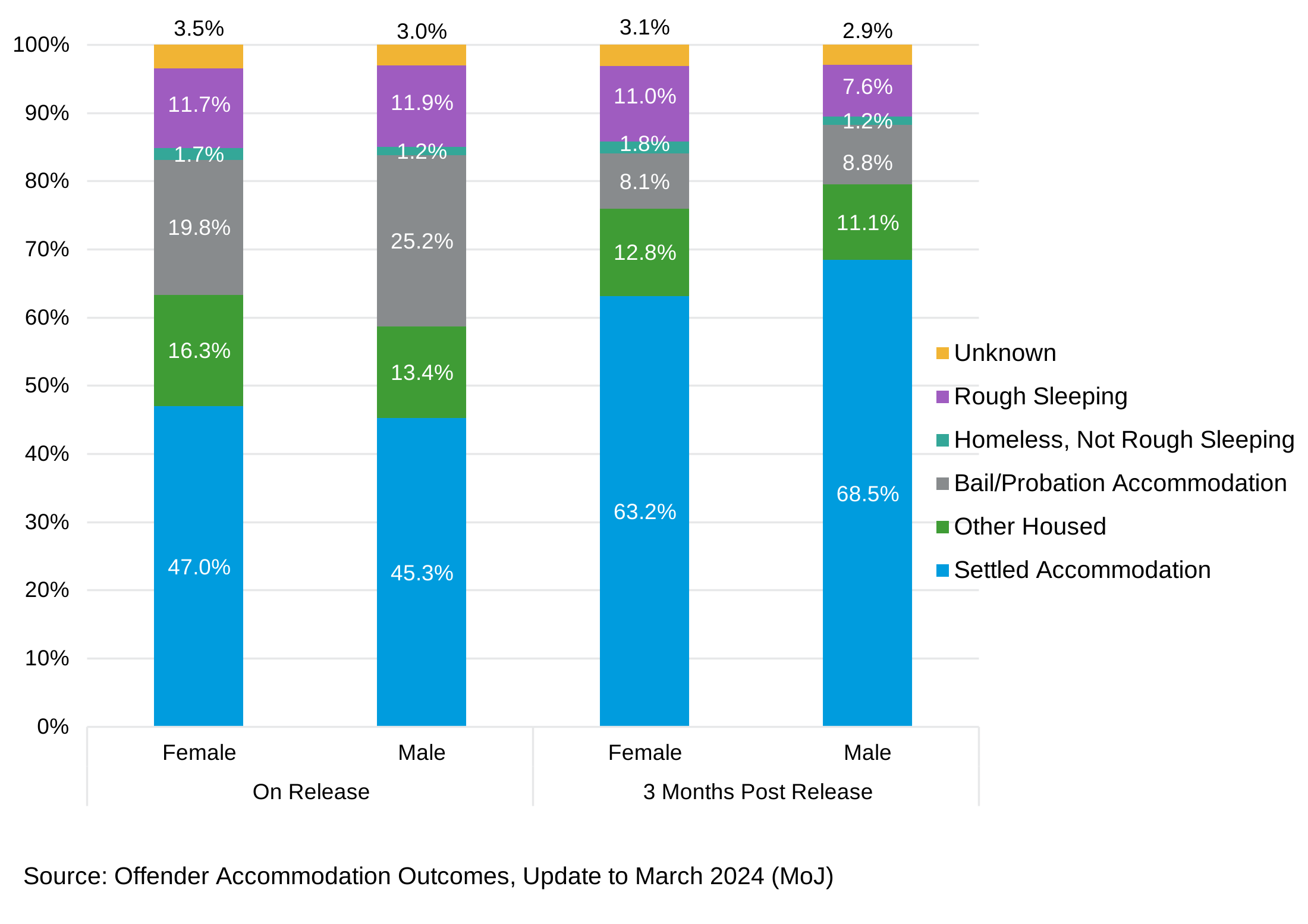
Furthermore, although not exclusive to women, some interviews with local stakeholders shared that multiple prison releases often take place at the same time for women. They described how these multiple releases meant that women are more likely to create a social network between themselves upon release.
One local area interviewee shared that:
Women with substance [use] latch on to each other and then they won’t attend probation. So, they get influenced back into [previous behaviours] whether [that’s] substances or other factors then [they are] in that cycle again and then they just don’t engage with that process.
This can create a cyclical relationship between prison, instability and homelessness.
2.1.4 How interaction with the criminal justice system influences different types of homelessness
This section describes reflections on whether the type of interactions with the criminal justice system influences the type of homelessness someone might experience. Local area representatives and national and regional stakeholders gave mixed responses. Some felt that there was a correlation between the two, however, others noted that it was much more complex and nuanced. For example, one local stakeholder shared their reflections that they:
See people from various stages—people that have been in [prison] for shoplifting to those in for murder. It doesn’t matter what crime they’ve done; if they turn up here [homelessness services], it means the system has failed them in some way. [for example] they may be in housing, and it’s failing because support services aren’t in place. The transition from prison to housing is a challenging one.
This therefore highlights that the ability to find stable housing for anyone who has interacted with the criminal justice system regardless of offence type is challenging.
A few interviewees shared that some people would leave prison and stay with family and friends – a form of hidden homelessness described as ‘sofa surfing’. One local stakeholder reflected that when looking at those who have sofa surfed:
I think about individuals that may have a broader support network that they can rely on, and they can access. So, they are technically homeless, but they are not street homeless […]. Individuals who are more at risk of street homelessness, tend to have a decreased level of support outside of statutory services - family networks are broken down, relationships are broken down, it’s a lot more difficult for those individuals to access that level of support.
As well as being hidden, people in this situation can often exhaust the support available within their networks, meaning that they may not be able to stay at that accommodation any longer. This highlights the differential impact that social networks can have on the type of homelessness someone might experience.
Some local, regional and national stakeholders shared that those who are more likely to end up rough sleeping are those who have high support needs, often due to experiences of trauma, violence and/or substance use. It was also reflected that those who have had short custodial sentences are more at risk of experiencing rough sleeping due to not being able to access support services. For example, one regional stakeholder shared that:
From a rough sleeping perspective, short-term sentences and in-reach are crucial. Statutory bodies often don’t have the time or capacity, so non-statutory services end up doing the work.
2.2 The support in place for people leaving prison to find settled accommodation
2.2.1 Overview of the current support and its effectiveness
Local, regional, and national representatives described the support for people leaving prison to find stable housing as a “patchwork.” They noted that the availability of support is influenced by the amount of funding available and how local authorities choose to allocate resources.
Accommodation for Ex-Offenders programme
The Accommodation for Ex-Offenders programme aimed to support individuals leaving prison in securing and maintaining stable housing in the private rental sector. The programme’s ambition was to provide sustainable accommodation with a tenancy length of at least 12 months. Key outcomes included securing new private rented sector tenancies, reducing reoffending rates, and decreasing instances of rough sleeping. Specific targets were not agreed with local authorities, so it is challenging to say whether the reported data (wherever available) indicated positive or negative outcomes.
The full evaluation report for Accommodation for Ex-Offenders can be found in Technical Report 2.
CAS3 accommodation
CAS3 accommodation was intended to act as an enabler for probation teams and local authorities to work towards securing accommodation for individuals leaving prison, after their release.
Local, regional and national representatives suggested that the introduction of CAS3 accommodation has been “excellent” as it bridges an important gap between individuals leaving prison and entering the community. For example, representatives noted that CAS3 successfully provides an 84 day “buffer” for individuals to make further arrangements to regain their independence. This may include working with DWP to access benefits like universal credit. Whilst DWP has support in place for people leaving prison to access benefits, there is often a lack of awareness and consistency in how this support is used. Therefore, people leaving prison can be guided through this process whilst in CAS3 accommodation, “without the panic of having to pay any rent”.
CAS3 accommodation also provides an opportunity for people leaving prison to access substance use, mental health or other wraparound support which may support them to regain their independence. More practically, time in CAS3 accommodation provides an opportunity for a housing assessment to be conducted. This assessment determines housing needs and enables the identification of suitable, longer term accommodation options once their temporary stay in CAS3 accommodation ends.
However, whilst CAS3 is a national provision of support, national representatives described that it is based within areas where the bulk of the demand exists. For some people leaving prison, CAS3 accommodation may be further away from where they would want to be long-term, or where their support networks exist. This can make it more challenging for people leaving prison to integrate with society during their time in CAS3.
Additionally, it was reported that CAS3 is a short-term solution. Whilst being described as being effective in reducing the immediate risk of homelessness, local, regional and national representatives suggested that it “moves the cliff edge” rather than providing long-term housing stability. Given that CAS3 is only available for 84 days post-release, an individual’s risk of homelessness is again increased if appropriate move-on options are not available following their stay in CAS3.
Interviewees highlighted that sourcing appropriate move-on options poses a challenge due to issues in the wider housing market related to availability and affordability of housing stock. One local representative noted:
They are short-term measures that have been put in place to try to close that gap around the risk of homelessness…so, if you’ve got someone coming out of prison and we place them for 84 nights - well that’s great and they’re not homeless on the day of release. But then they’re homeless 84 nights later, if we still can’t get them placed. I think what we’re finding at the moment is that there is a little bit of a merry go round.
2.2.2 What is working well?
Local representatives reported that they commissioned providers to provide wrapround support services and/or supported accommodation. The providers may also provide signposting to other available support within the local area and in some cases provide links to private rented sector and/or social landlords who are willing to work with people with a history of offending.
Largely, local representatives reported these commissioned services to be invaluable in terms of reducing the risk of homelessness. In some councils it was reported that pathways are in place which allow probation services to refer directly to commissioned supported accommodation providers rather than going through the housing team at the local council. Whilst local authorities retain overall responsibility for finding accommodation for people leaving prison, this approach helps reduce the volume of referrals that housing teams must handle directly. Therefore, easing capacity pressures and streamlining the process of securing housing solutions. However, representatives suggested that the level of demand experienced by local authority housing teams and commissioned providers remains high.
Local, regional and national representatives suggested that resettlement panels, which are in place in multiple deep-dive areas, are effective in reducing the risk of homelessness for people leaving prison.[footnote 32] These panels provide an opportunity for regular meetings between representatives from probation, prisons, the local authority and relevant designated workers and commissioned providers. Panel meetings involve reviewing the housing assessments of individuals who are nearing the end of their prison sentence and ensuring that appropriate accommodation can be sourced. One local representative commented:
We can get everyone to discuss the actions required, the actions completed, and we can jointly manage access to accommodation.
This was highlighted as a specific example of effective collaboration.
2.2.3 What is working less well?
Structural challenges
Local, regional and national representatives reported that the affordability of housing and a lack of available housing stock (social housing and supported accommodation) are key challenges in reducing the risk of homelessness for people leaving prison, who are not considered to be in priority need. One national representative commented that these challenges “cut across everything.” For example, a significant number of people leaving prison are either in receipt of statutory benefits or have very low incomes. It was reported that this limits their ability to purchase homes or access the private rented sector. These challenges are further exacerbated by Local Housing Allowance rates which do not cover rent in many areas.
Therefore, local, regional and national representatives highlighted that individuals are reliant upon social housing or supported accommodation following move-on from statutory accommodation. However, it was also reported that there is a shortage of both social and supported housing across many regions. Representatives emphasised that demand outstrips supply, leaving many individuals waiting on long housing lists or unable to access appropriate accommodation. These challenges contribute to housing instability, longer stays in temporary accommodations, and an increased risk of homelessness for people leaving prison.
Challenges housing individuals with specific probation terms
Furthermore, where social housing or supported housing are available, interviewees described how certain individuals are “challenging to house” due to their individual needs. For example, following release from prison, probation services may recommend that an individual is not housed in an environment where a staff member may be working alone due to the risk posed to the staff member. This would generally be linked to situations when working overnight in supported accommodation settings. One local representative highlighted the repercussions of this probation recommendation being breached:
The [staff member may] end up being assaulted…not only do you have the effect on that member of staff, probably getting PTSD, but you’re going to land in court with health and safety regulations.
Age was highlighted as another key challenge. Interviewees noted that shared housing arrangements often do not suit older individuals leaving prison. At the same time, placing them in individual accommodation can lead to isolation, which is especially problematic if they have health issues requiring closer monitoring. Furthermore, individuals leaving prison who have served sentences for sex-related offences experience restrictions that prevent them from being housed in accommodation where people of the opposite gender reside, or in particular localities. This limits housing options for these groups.
Partnership working
Local, regional and national representatives highlighted that partnership working could be improved across local areas. Local representatives commented; “the links between criminal justice and homelessness services aren’t quite where they need to be.” For example, the partnership working between the housing options service within the local authority and the criminal justice system was recognised as one that could be improved.
It was suggested that housing options staff members no longer being co-located within prisons is a contributing factor as it causes delays in conducting assessments and in responding to referrals under Duty to Refer. This inhibits the ability of local authorities to “get the ball rolling, looking for accommodation whilst someone is still in prison”.
Furthermore, information sharing between the different services is often lacking. A local authority representative provided a specific example of communication breakdown and the impact which it may have on individuals who need support:
So, a gentleman, released from prison earlier this year, I think within 5 days of being released, he was found unresponsive on the streets and sadly died of a drug overdose…. from a homeless agency’s point of view, they didn’t know he was being released, there was no communication. Housing options had been told that he was being released but had been told that his release date was early June. He was released early.
Local representatives suggested that partnership working could be simplified to ensure that individuals leaving prison do not fall through the cracks. It was reported that there is often duplication in meetings, with cases discussed at adult social care meetings, mental health meetings and multi-agency public protection (MAPPA) meetings. One representative commented:
We’re invited to so many meetings to discuss one person, but the relevant agency might not be there, so that meeting is not worth having. It doesn’t get us anywhere because the person that we need or the agency we need in the meeting is not present, so there’s nothing much we can do.
Local representatives suggested that all local areas should have a statutory panel, which meets monthly to discuss cases of people who are leaving prison within 56 days. Interviewees emphasised this would improve the effectiveness of partnership working and ultimately outcomes for people leaving prison. This should be attended by the criminal justice system, housing options, probation staff members, the local authority and commissioned providers. It was suggested that:
Just to keep it simplified…there needs to be one panel that everybody needs to attend.
High demand and service capacity
Local, regional and national representatives referenced that there are typically high numbers of referrals for commissioned providers and probation services, due to the housing needs of individuals leaving prison. In particular, local representatives suggested that commissioned providers often receive a higher number of referrals than they have the capacity to work with. High levels of demand for probation staff members often results in delays in housing assessments taking place, which has knock-on effects throughout the rest of the system. One local representative commented:
They’re doing them [duty to refer referrals] for every person getting out. So, they’ve got to then liaise with the local authority, agree a date and time when the assessment is going to take place, come in, get them on the phone. It just doesn’t seem to happen that often.
Lack of a stitching together of different policies/programmes
Local, regional and national representatives highlighted a lack of cohesiveness between the different policies and programmes for people at risk of homelessness, to support those leaving prison. For example, Changing Futures provides intensive casework for people with multiple disadvantages, while Housing First funds intensive support into housing. Despite their valuable contributions, these programmes do not explicitly collaborate to offer a seamless support system for people leaving prison.
This lack of integration means that while local areas have the option to use programmes such as Changing Futures or Housing First funding to assist individuals leaving prison, there is no overarching national strategy or mandate to ensure such support is consistently provided. Consequently, the effectiveness of these programmes in addressing the needs of people leaving prison can vary significantly depending on local decisions and resources. There is a need to align and integrate such programmes at a national level to ensure that individuals leaving prison have access to holistic support which addresses their needs comprehensively and facilitates a smoother transition back into society.
Challenges accessing the support provided by other government departments
Several barriers were highlighted that prevent government departments from working together effectively to provide support to reduce the risk of homelessness among people leaving prison. For example, local representatives suggested that digital exclusion presents a challenge. The choice-based letting system, other local systems (such as Property Plus in Liverpool) and registration for benefits through DWP have digital starting points. This excludes people leaving prison who have not yet regained digital access or who cannot afford digital access due to low or zero income when leaving prison. Furthermore, people who have served long sentences may be excluded from digital access due to a lack of knowledge. This was described as particularly prevalent amongst older cohorts.
It was reported that local authorities also experience challenges in supporting people leaving prison to access DWP-issued benefits, as they often do not have the relevant identification documents such as passports or other forms of ID. Without these documents, it becomes difficult for them to apply for and receive the benefits they are entitled to. This lack of identification can create significant barriers to accessing financial support, which is crucial for their successful re-entry into the community. This is also required to access housing.[footnote 33] Local representatives reported that they struggle to gather information on the history of people who are leaving prison, this is a growing concern as local authorities are increasingly working with people who have been through the asylum process:
A lot of money that we spend actually does go on things like getting birth certificates, passports and things like that.
Interaction between access to employment opportunities and the benefit system
The interaction between access to employment services and the benefit system was reported to have some negative unintended consequences for individuals with a history of offending. Local, regional and national representatives noted that there are successful schemes within prisons which provide upskilling and connection with employment opportunities upon leaving prison. However, the jobs which people leaving prison access using these schemes are often part-time, irregular shift work or zero-hours contracts. These do not provide enough financial stability for people leaving prison to access the private rented sector or social housing without additional income from Universal Credit.
Local authority representatives highlighted that challenges arise when individuals earn above a certain income threshold, as they risk losing their Universal Credit. This can create significant financial pressures. This situation may discourage some individuals from pursuing employment, as losing Universal Credit could make it difficult to cover accommodation costs.
Lack of dedicated resource for people leaving prison in local authority housing teams
Interviewees suggested that despite the demand for housing from people leaving prison, they represent a small cohort for local authority housing teams. These teams also have to conduct business as usual with a range of other service users. Therefore, it was reported that the approach taken to housing people leaving prison tends to adopt a more universal model. As a result, the specific challenges and support needs this group faces may not be fully addressed. It was suggested that a more tailored approach is required.
Local representatives suggested that having resources within housing teams specifically dedicated to the accommodation of people leaving prison would be beneficial. It would allow the dedicated staff members to build relationships with probation and housing options teams, allowing a mutual understanding of capacity and constraints. Furthermore, local representatives suggested that it would allow the dedicated staff members to build a different set of skills, which are required to work effectively with people leaving prison. In the local areas where dedicated resources are available within housing teams, it was considered to be helpful in improving outcomes for people leaving prison.
Local representatives theorised that this would lead to more effective housing support and reduced re-offending:
There’s this huge link between homelessness and reoffending that everyone knows about. So, if we can break that cycle with the accommodation, then it’s going to save a lot of money through people not going back into prison.
Challenges contacting and maintaining engagement
Accessing computers and the internet is a challenge within prison which prevents effective support. Local representatives also described how telephoning into prisons was a challenge due to security measures and communications restrictions. For example, commissioned providers who may be able to place an individual within supported accommodation and provide wrap-around support are unable to call people in prison to get an understanding of their needs. Local representatives recommended that third sector organisations should be based in prisons or have dedicated access days. This has proven to be effective in the context of Accommodation for Ex-Offenders staff members who are located within prisons in some local areas.
Challenges in contacting people with a history of offending continue when they are released from prison. One local representative provided an example:
At the moment, so many people are offending, then rough sleeping and then get picked up by a rough sleeping service and then eventually, days later because there’s a big backlog, getting some sort of assessment. But then at that point, they’re waiting on a phone call back from housing options, when a person’s [already] on the streets, rather than when it would have been easier to get hold of them in prison.
2.2.4 Reflections on the implementation of Duty to Refer
The Duty to Refer, established in the Homelessness Reduction Act, requires statutory organisations, including prisons and probation, to refer service users who are threatened with homelessness.[footnote 34]
Local authority interviewees observed significant variations in the effectiveness of the Duty to Refer process across different local authority areas. They emphasised that the Duty to Refer only achieves meaningful results when both the referral and provision of support by local authorities are completed in a timely manner. Local authority interviewees also mentioned that meaningful results are only achieved when both parties are willing to share the required information.
Whilst timeliness of referrals was described as key to achieving meaningful results for people leaving prisons, local authority interviewees stated that referrals were often delayed due to capacity constraints within housing options teams. Several interviewees described challenges with information sharing throughout the Duty to Refer process. They pointed out that the information available on NDelius, a system used by probation services for case management, is sometimes inaccurate. For example, if an individual loses their tenancy during imprisonment, their status on NDelius might not update until their release day. This delay prevents local authorities and support services from efficiently addressing the housing needs of these individuals.
Furthermore, some interviewees expressed that local authorities experience difficulties conducting risk assessments using the information provided in the Duty to Refer. They described how this data often lacks details such as health or substance use needs, services the individual may be engaging with or other considerations which may influence risk. However, interviewees also mentioned that local authorities are sometimes unable to access more specific information. For example, critical details about an individual’s offences, particularly when the individual is on remand, may be withheld from housing teams due to disclosure restrictions.
To address these issues, some interviewees suggested that co-locating housing options staff within prisons could significantly improve the efficiency of housing assessments. This approach would eliminate communication barriers, enabling direct interaction and more accurate assessments. In areas where co-location has been implemented, interviewees reported improved effectiveness of the Duty to Refer process. The direct collaboration within prisons resulted in more efficient and coordinated housing support.
2.2.5 Gaps in current provision to support people leaving prison to find settled accommodation
Local, regional and national representatives highlighted that despite excellent pockets of support both inside and outside of the prison setting (including comprehensive wraparound support for those experiencing domestic abuse and the support provided by offender specialists), several gaps in provision exist.
‘Medium needs’ group
Interviewees reported insufficient support available for the ‘medium needs’ group, who were described as those with support needs who don’t meet the threshold for priority need but are not yet ready to maintain a tenancy independently. These individuals often struggle with areas such as mental health conditions, substance abuse, learning disabilities or health conditions, which require ongoing support. This gap limits their access to both temporary accommodation and the Accommodation for Ex-Offenders programme.
Local representatives further noted that some of these individuals experience additional barriers to accessing other forms of local authority housing due to a history of property damage or threatening behaviour toward support workers. This issue was described to be particularly acute amongst individuals who have previously accessed CAS3 properties. These individuals are often ineligible for housing in approved premises as their level of risk is deemed insufficient.
‘High complexity’ cases
Local, regional and national representatives highlighted gaps in support for individuals with high needs such as experiences of trauma, violence and/or substance use. However, it should be noted that despite having high needs, individuals may not necessarily meet the Care Act thresholds. Representatives suggested that commissioned providers are typically unable to support these individuals due to the level of risk which they pose to both staff members and other service users, this may include harmful or disruptive behaviours. It was reported that these individuals are typically unable to access the private rented sector upon leaving prison due to aforementioned affordability challenges and a reluctance to house from landlords.
Furthermore, interviewees identified a lack of clarity within the homelessness legislation regarding the rights of people leaving prison, particularly in how vulnerability is assessed under the Homelessness Reduction Act. Representatives noted that while the legislation applies to anyone deemed vulnerable, decisions on vulnerability are largely discretionary, leading to inconsistencies in how local authorities determine priority need status. They further noted that these discretionary decisions made by local authorities are often difficult to challenge. Representatives suggested that these discretionary decisions disproportionately affect individuals affected by trauma and/or substance use, who may struggle to provide sufficient evidence to meet the vulnerability threshold required for priority need status. This creates significant barriers to securing housing, as under Part 7 of the Housing Act 1996, local authorities are only legally required to provide housing to individuals who have been assessed as being in priority need.
Provision of supported accommodation which specifically meets the needs of women
Interviewees reported that women leaving prison often have needs which require continuity of care and trauma-informed support. Where this is not available, women do not feel “safe or supported.” As a result, national representatives highlighted that CAS3, and other local authority housing (such as temporary accommodation) may not meet the needs of women.
Local, regional and national representatives reported that for many women, being housed with men (as is typically the case with supported accommodation), is not suitable.
One national representative commented:
We know the trauma that a lot of females in the criminal justice system have been through and likely there’s triggers in there…it’s too traumatic for them.
Local, regional and national representatives also indicated that in some areas, commissioned supported accommodation providers do not fully cater specifically to the needs of women. Interviewees described how some women are reliant upon support from specific female charities upon leaving prison. Although the availability of this support is improving, it is still not fully integrated with commissioned services. Local, regional and national representatives acknowledged that moving towards more cohesive support provision is required for women:
We need a different solution for women that live in prison that is more rooted in their local communities, and it is designed specifically for women, rather than a version of a generic system has a bolt-on for women.
Tenancy sustainment for people on remand
Local, regional and national representatives indicated that an individual’s ability to sustain a tenancy is negatively impacted by being held on remand. Being held on remand often means the individual cannot work, leading to a loss of income, which makes it difficult to pay rent or maintain financial responsibilities. Individuals on remand may also experience delays or disruptions in accessing housing-related benefits, such as Universal Credit, which could otherwise help cover their rent. Representatives noted that whilst some commissioned providers or charities can (in some cases) cover rental costs whilst individuals are on remand, the uncertain duration of remand custody can make it difficult for this support to continue.
Transitional support from prison into statutory housing
Local, regional and national representatives reported that individuals leaving prison can feel “overwhelmed” and despite being allocated housing, may choose not to access it. National representatives highlighted that:
People often don’t turn up because they don’t know what they are getting into…they’re nervous about what they’re getting into, particularly if it’s shared accommodation.
However, there is limited support available to equip individuals for this transition. National representatives suggested that more support could be provided before release to manage these challenges. It was suggested that people leaving prison like to know what they are going to in terms of accommodation to reduce any anxiety they may experience, therefore the opportunity to be released on a temporary licence to accommodation may reduce the number of individuals who “don’t turn up.”
Support to enable individuals to live independently
Gaps in support to manage independently are particularly prevalent for individuals accessing move-on accommodation. For example, CAS3 accommodation comes furnished which can create challenges for individuals in building expectations and developing skills to manage independently within the private rented sector and social housing. One national representative provided an example to illustrate:
For CAS3 particularly, we don’t ask people to make any financial contribution to their stay. They don’t have to pay any bills, they don’t have to sort out the water or the council tax […], it’s fully furnished, it’s fully equipped […]. When you step out of that into something that a local authority might provide, which might have much more basic furnishing and might have in place requirements on you to be able to manage it by yourself - for me, there’s a gap in there somewhere in terms of coaching people and mentoring them through the skills that you need and the things that you have to do to maintain a property yourself.
Local representatives suggested that there is a need for increased provision of “lower level, semi-independent living.” It was suggested that this may include support in the form of a caretaker or support worker who visits properties and prevents tenants from feeling isolated by supporting them with “life skills.” Furthermore, individuals who have served long sentences in prison have not been required to manage their finances during that time. Despite this, housing benefits are often paid directly to the tenant which results in financial mismanagement and unsuccessful tenancies.
2.2.6 Mapping pathways for people leaving prison and the route into accommodation
Visualisation of the pathways and complexity of the system
A system map was developed to understand and illustrate the intersection of the criminal justice system and the homelessness and rough sleeping system, with a specific focus on the routes into accommodation, or homelessness, for adults leaving prison in England. The system map and accompanying commentary can be seen at this website.
The system map explored the range of different pathways available, and how this influenced the complexity of the system. Initial research and discussion with stakeholders identified eight primary ‘pathways’ out of prison. These were as follows:
- back home or into settled accommodation (i.e. no accommodation needs)
- Home Office accommodation (if no recourse to public funds due to immigration status)
- local authority provided accommodation (if deemed priority need), followed by private rented sector or social tenancy
- CAS1 accommodation (if high risk offender)
- CAS2 accommodation (e.g. if released on bail or with a home detention curfew)
- CAS3 accommodation (if facing homelessness on release)
- Accommodation for Ex-Offenders programme (where available) helping with private rented sector tenancy
- homeless
- rough sleeping.
However, detailed discussions (and exploration of the system map) showed that these pathways are unclear, variable, and overlapping. They are dependent on the availability of services and accommodation options, which vary by geographical area.
Each phase of consultation added a further set of variables and potential pathways, showing that rather than being complicated (i.e. predictable and following a set structure or pattern), the system of pathways out of prison and into accommodation or homelessness is complex. In other words, it is flexible and variable according to the vagaries of the system, such as subjective interpretations of rules or criteria by the multiple different agencies operating within the system. There are many critical variables that must be considered (e.g. needs of the person; risk to the community; recourse to public funds; ability or interest to sustain a tenancy) that add to the complexity. This increases the chances of system failure, resulting in people leaving prison and experiencing homelessness, and underlines the need for greater consistency in application of rules and criteria by agencies operating within the system.
Quantification of the critical points and pathways in the system map
There was a notable lack of data collected (via secondary datasets and Management Information shared with MHCLG and MoJ) on people’s movements following their prison sentences. The data that did exist was inconsistent, with different data categories used across datasets, which are left open to interpretation by the agencies collecting the data. This variation in data collection means that, for example, it is not possible to compare, like for like, the flows of people out of different accommodation types.
Given these limitations, a full quantitative overlay of the system map was not possible. Instead, a second system map was developed, referred to as the ‘data map’, illustrating the sub-set of variables or pathways for which data is available. The data map can be viewed at this link. This primarily included MHCLG data on the entry routes into the CAS and Accommodation for Ex-Offenders programmes and exit routes into other accommodation types (or homelessness).
Overall, the analysis of the data map showed that fewer people leaving prison are being identified as in need of housing support prior to their release and instead they are having to apply for support post-release. Data on accommodation on release also showed that the proportion of people who are experiencing homelessness or rough sleeping on release from prison remained around 11% between 2020/21 and 2022/23 and the number of people who went into bail/probation accommodation on release increased from 12.8% to 20.8% during the same period.[footnote 35] These figures suggest that these types of accommodation are driving down overall homelessness and rough sleeping figures for those leaving prison.
However, there are a number of system map areas where the data is not collected at all or, where the data is available, does not capture the interaction between criminal justice and homelessness systems, which has made it challenging to provide additional insight or make corresponding policy recommendations.
There are many examples of the data challenges identified through the quantification of the systems map. For example, there are some nodes within the system map that represent unquantifiable contextual influences on an individual’s journey (e.g. ‘Breakdown of relationships’ and ‘Support network available’). Although these nodes cannot be directly quantified, their occurrence might influence the flows into specific services or trigger interactions with other nodes. Also, there is a lack of available recent granular data in relation to people who are leaving prison and are also at risk of becoming homeless. For example, H-CLIC does not show the outcomes for people leaving prison who have been assessed by local authorities under a Duty to Refer pre-release.[footnote 36]
Finally, there are discrepancies in recording referrals and outcomes for MoJ and MHCLG programmes to support people leaving prison. The system map illustrates complex pathways between programmes which support people at risk of homelessness on release from prison, however this level of detail is not available within the programme Management Information (MI).
The full assessment of flows for individuals who leave prison at risk of homelessness and rough sleeping based on the available data for the system map is included in Annex 1.
3. Policy insights and further research
3.1 Policy insights
This chapter brings together the findings from this research to outline key insights that could enhance the effectiveness of support for individuals leaving prison in securing stable accommodation.
3.1.1 Policy insights for improving the interaction between the criminal justice and homelessness and rough sleeping systems:
Clarify and strengthen homelessness guidance
Participants emphasised the need for clearer and more explicit guidance to ensure that individuals leaving prison who may have a priority need are provided with housing. While flexibility in guidance was considered important for applying the law in a person-centred way, participants highlighted that this flexibility could create loopholes.
Some interviewees described how the interpretability of the Homelessness Code of Guidance allowed services to deny support to people leaving prison.[footnote 37] One example centred on challenges with those at risk due to violence (domestic or gang-affiliated). Participants highlighted inconsistent approaches by local authorities, with some insisting individuals present to the local authority they were living in, whilst simultaneously acknowledging that it posed a safety risk. Others required proof of violence before considering a request for assistance under the Housing Act, despite this not always being easy to obtain.
Probation services frequently found themselves navigating conflicting interpretations and spending excessive time and resources defending individuals’ rights. This created tension between probation and housing teams, with staff feeling they had to advocate repeatedly for individuals. In one instance, this escalated to a case now subject to judicial review.
These ambiguities in guidance can result in inconsistent assessments of vulnerability, with some individuals being denied support despite potentially meeting the criteria for priority need. This was perceived as a form of gatekeeping. Participants called for more explicit guidance to close these loopholes, ensuring that people leaving prison are consistently and fairly assessed for priority need.
The research findings indicate that decisions on who is considered vulnerable under the Housing Act 1996 are made locally and based on the local authority’s interpretation of the legislation and guidance, considering the circumstances of each individual. Research findings reported a perception of inconsistency in how local authorities make these decisions and determine priority need status. Revisions to the Homelessness Code of Guidance could provide clarity and ensure fair and transparent assessments of priority need, reducing the potential for inconsistencies and excessive gatekeeping. Training for housing and probation teams could help align practices, fostering a shared understanding of the guidance and promoting fair, person-centred support for those at risk of homelessness.
Explore options for supporting people on remand
People on remand can experience challenges when it comes to maintaining their housing while in prison which can result in them experiencing homelessness. Additionally, belongings left behind in rented properties or storage units are often discarded due to unpaid bills, leaving individuals without their possessions and necessities. Despite these outcomes, people leaving prison from remand are typically excluded from programmes like CAS3 or Accommodation for Ex-Offenders because they have not received a formal sentence. This gap in support leaves people at risk of homelessness, creating instability that can be difficult to recover from.
The research identified a significant gap in the system in terms of protecting those on remand against the risk of homelessness, despite not yet being convicted of any crime, this group are currently at a higher level of risk because they do not have access to the case management or offender management support which is available to prison leavers. This can result in release without resettlement planning. Central government should explore ways to address this gap. In addition to case management, support for those on remand should address challenges like maintaining housing and safeguarding personal belongings during their time in prison. This could help bridge the gap in provision, ensuring that people who have not been convicted of a crime receive the necessary stability to rebuild their lives and avoid long-term homelessness.
Establish centralised systems that support efficient data sharing
The lack of centralised systems and effective data sharing between prisons, probation, and housing services creates barriers to supporting individuals upon release. Interviewees highlighted challenges with the information required or requested through the Duty to Refer process, delaying engagement from local authorities and support services.
Local authority representatives described how they often struggled to conduct thorough risk assessments due to limited information provided through the Duty to Refer. However, probation noted unrealistic expectations about the level of detail that could be shared, particularly regarding offences for individuals on remand who have not been charged. This tension between providing enough detail to enable effective support and respecting legal and ethical boundaries underscores the need for clearer, realistic protocols and a unified approach to data sharing to improve outcomes for individuals leaving prison
The government could play a coordinating role in supporting local areas to establish centralised systems and effective data sharing between prisons, probation, and housing services. Opportunities to overcome these barriers include establishing a unified data system that integrates data from prisons, probation, and housing services. A review of local data sharing practices could inform the development of clear protocols for the Duty to Refer process, specifying the type and level of detail required for effective support and the appropriate access controls to ensure legal and ethical boundaries are respected.
Central government could support more opportunities for data linking by ensuring consistency in outcome definitions and monitoring across prison, probation and homelessness datasets. The Better Outcomes through Linked Data programme has shown the potential for data linking to generate new insights that could improve the government’s ability to predict and respond to homelessness within this cohort.5
3.1.2 Policy insights for local service provision:
Support early identification of housing needs
Participants in this research highlighted how identifying individuals’ needs as soon as they enter prison could improve homelessness outcomes upon release. Assessing housing requirements alongside other needs, such as health, employment, and social support, enables services to develop tailored plans early in the prison sentence. When housing needs are identified promptly, probation services, housing teams, health services, and local authorities can start coordinating support well in advance. This approach has the potential to streamline referrals and assessments, making it more likely that individuals secure accommodation and avoid homelessness upon release. Representatives from MoJ described the Basic Custody Screening Tool, which sets out to achieve this, as in practice. However, this was not referenced by participants in this research. Reviewing the effectiveness and awareness of tools and processes for identifying housing and support needs early would be beneficial for sharing good practice and identifying areas for improved partnership working across the system.
Streamline processes, joint working and co-location of services
Participants highlighted that streamlined processes, joint working, and co-location of services can improve efficiency and reduce costs while enhancing outcomes for individuals leaving prison. Co-locating of services, where feasible, was described as particularly effective, as it fosters better communication and quicker decision-making. Participants noted that these approaches not only improve outcomes but also allow resources to be used more effectively, reducing unnecessary gatekeeping and delays while delivering cost savings in the longer term. By enabling services to share relevant information, it minimises the need for individuals to repeatedly provide the same details, saving time and resources.
Participants highlighted the benefits of having dedicated local authority staff focused on supporting individuals leaving prison who are at risk of homelessness. In areas where such roles were in place, interviewees described this as successful particularly when these staff members co-located in prisons. Their presence allowed for early identification of housing needs and better coordination with probation teams. These staff members were most effective when they possessed specialised knowledge of housing processes and legislation, enabling them to bridge the knowledge gaps between probation and housing services.
This research uncovered some variation in the effectiveness of Duty to Refer processes. To ensure efficient collaboration and streamline referral processes across the system, reviewing the effectiveness of local governance structures to identify areas for improvement and share best practice could be beneficial. Governance structures should include representatives from the prison service, probation, and local health services to support continuity of care, streamline referral processes and ensure clear communication pathways between services and individuals leaving prison. Co-location of staff with specialist knowledge such as welfare benefits and local authority staff who have specialised knowledge of housing processes and legislation should be considered to ensure individuals leaving custody have access to information regarding what support and benefits, they are entitled to.
Encourage the development of skills to maintain a tenancy
Developing skills to maintain a tenancy was highlighted by participants as important. They suggested that gaining an understanding of housing needs early can provide an opportunity to address some potential barriers to maintaining stable accommodation. For example, prisons could introduce coaching or training to help individuals develop the skills required to sustain a tenancy, such as budgeting, paying bills, and understanding tenancy agreements. Embedding these activities early into the prison sentence could help people transition more smoothly into settled accommodation and reduce anxiety upon release.
Digital exclusion and lack of life skills was identified as a barrier to some people securing stable accommodation upon release from prison. Lack of life skills can include not knowing how to pay bills, missing appointments, unable to resolve situations like losing keys can lead to prison leavers becoming homeless. Digital exclusion presents a challenge for accessing support, particularly where there are digital access starting points. Incorporating digital and tenancy skills coaching or training for prisoners into support plans developed through early housing needs assessments could reduce these barriers. Tenancy skills could include sessions on budgeting, paying bills, and understanding tenancy agreements.
Provide suitable housing for women leaving prison
Women leaving prison with a housing need often have vulnerabilities that are related to trauma and violence. Providing suitable housing tailored to their needs is crucial to support their reintegration into society. Participants in this research highlighted significant shortcomings in current provision, particularly where temporary accommodation fails to meet the specific needs of women. Many women are placed far from their local area, which disconnects them from vital support networks, including mental health services and drug and alcohol support. This lack of stability can undermine their ability to rebuild their lives.
Women often face particular challenges including shorter sentences, experiences of trauma and violence and lack of tailored support services. More women-only supported housing designed to address the specific needs of women leaving prison, should be established. These services should be staffed by professionals trained in trauma-informed care, providing a stable and compassionate environment. Ensuring placements are close to local support networks, where safe, will help women maintain access to vital services such as mental health and addiction support, fostering stability and aiding their reintegration into the community.
3.1.3 Areas for further research:
Explore the cost-effectiveness of the active maintenance of tenancies while people are in prison
Interviewees felt that maintaining tenancies for people in prison, particularly those on remand or serving short sentences, could be a more cost-effective approach than addressing homelessness upon their release. Participants highlighted that the loss of a tenancy often leads to significant challenges, including the need to secure new accommodation and replace belongings, which can incur substantial costs for both individuals and support services. By covering rent during a prison sentence, individuals could return to their homes upon release, ensuring stability and continuity. Some participants acknowledged that Universal Credit can be used to cover housing for up to six months, however, this was often underutilised.
More work would be required to gauge landlord opinion and also define boundaries of time for which rent would be covered to ensure cost-effectiveness. Nevertheless, this approach may prevent homelessness, reduce reliance on crisis housing services, and alleviate the financial and logistical pressures associated with finding new housing solutions.
Evidence examples of prevention activities for people at risk of interacting with the criminal justice system
Early intervention and prevention can offer a cost-effective approach to addressing housing instability, particularly for younger people and those leaving the care system. Whilst this was related to homelessness more generally, it was also acknowledged that many of those leaving prison with a housing need often have high support needs. Therefore, by identifying and supporting individuals at risk before their needs escalate, services can reduce reliance on expensive crisis interventions, such as housing in crises or long-term support for entrenched homelessness.
Participants of this research emphasised the importance of targeted support to break intergenerational cycles of disadvantage, tackling root causes early and improving outcomes over the long term.
Explore the scale and spread of models that have shown promise
Participants highlighted the importance of exploring and expanding models that have demonstrated success in supporting individuals leaving prison to secure stable accommodation. Resettlement panels in London were cited as effective examples of system-wide collaboration, enabling coordinated efforts across services to address housing needs. By examining the impact of these approaches and considering their wider implementation, there is potential to replicate successful practices and enhance outcomes on a broader scale. Additionally, given the tenancy sustainment rates and positive outcomes through Accommodation for Ex-Offenders, there could be a benefit in exploring the potential to expand to those with higher needs and/or a wider range of accommodation.
3.2 Conclusions
What is known about the interaction between the criminal justice and homelessness and rough sleeping systems?
The report describes several factors that influence the likelihood of homelessness for individuals interacting with the criminal justice system. Key issues include the loss of accommodation and rent arrears, exacerbated by a lack of support systems to help maintain housing during imprisonment. Additionally, a breakdown in continuity of care for mental health and substance use support creates further challenges in securing stable accommodation.
Housing market conditions significantly impact these individuals, with Local Housing Allowance rates often failing to match private rental sector prices. This discrepancy is particularly problematic for those under 35, who are frequently limited to shared housing, which may not be suitable for certain groups or individuals with trauma which are notable in those who have interacted with the justice system. Stigma and discrimination also play a role, as landlords often refuse to rent to individuals with a criminal record. Relationship breakdowns and institutionalisation further complicate access to and maintenance of stable housing.
The report highlights the importance of tenancy sustainment initiatives and improved support systems to prevent homelessness among individuals leaving prison. It also highlights how individual circumstances and demographics, such as the type of offence, sentence length, and availability of support services, influence the likelihood of experiencing homelessness. For instance, individuals with specific offences, like sex offences, experience greater challenges in finding accommodation due to safety concerns and stigma. Short sentences often result in limited access to support services, making it harder for those with high support needs due to experiences of trauma, violence and/or substance use to secure stable housing upon release.
People on remand experience challenges due to limited access to support services and resettlement planning, which increases their risk of homelessness. The report emphasises the intersectional nature of these challenges, noting that many individuals experience multiple issues simultaneously. For example, younger individuals struggle with LHA rates, while older individuals may experience difficulties due to institutionalisation. Gender also plays a role, with women encountering unique challenges related to shorter sentences and often having high support needs.
To what extent do the criminal justice and homelessness and rough sleeping systems (their policies and programmes) support people leaving prison into stable accommodation?
The findings highlight that while there are valuable programmes and collaborative efforts in place to support individuals leaving prison, significant challenges and gaps persist, undermining efforts to achieve long-term housing stability and prevent homelessness. Current provisions, such as CAS3 accommodation, offer an essential short-term solution, providing immediate shelter and access to support services. However, the temporary nature of this provision often postpones rather than resolves housing insecurity, leaving individuals vulnerable to homelessness once their stay ends. Gaps in the system are highlighted on the system map, which illustrates that people who do not have a housing plan on exit from CAS accommodation; are not deemed priority need; do not have an available support network; and/ or experience relationship breakdowns are at particular risk of homelessness following prison release.
Structural barriers, including the limited availability and affordability of housing, exacerbate the challenges this population can experience. Certain groups, such as those with high support needs but who are not deemed to have a priority need for housing, individuals on remand, and women, encounter additional hurdles due to a lack of tailored and trauma-informed support. Issues around digital inclusion, delayed benefits access, and inconsistent collaboration between criminal justice and housing services further compound these difficulties.
Gaps in continuity in mental health and substance use care post-release in some cases and the absence of sufficient move-on housing or transitional support hinder individuals from rebuilding their lives. Additionally, inconsistencies in pathways and fragmented data collection reflect broader systemic challenges that limit the ability to provide comprehensive, effective support.
Addressing these issues requires a holistic, coordinated approach that prioritises both immediate and long-term solutions. Enhancing collaboration between agencies, tailoring support to meet diverse needs, and strengthening data integration is essential to breaking the cycle of homelessness and reoffending. Only through such measures can meaningful progress be made in supporting individuals leaving prison to achieve stable and independent living.
To what extent has the Accommodation for Ex-Offenders programme delivered as planned and achieved its desired outcomes
The Accommodation for Ex-Offenders programme aimed to support individuals leaving prison in securing and maintaining stable housing in the private rental sector. The programme’s ambition was to provide sustainable accommodation with a tenancy length of at least 12 months. Key outcomes included creating new private rented sector tenancies, reducing reoffending rates, and decreasing instances of rough sleeping. Specific targets were not agreed with local authorities, so it is challenging to say whether the following data indicates positive or negative outcomes.
The programme saw a 30% increase in referrals nationally from Phase 1 to Phase 2, though regional variations existed. New tenancies were secured with varying success, and tenancy sustainment rates were positive, with 65% maintaining their tenancies for over six months. Successful exits from the programme were high and said to contribute to reduced reoffending rates. The programme was also used to support community rehabilitation efforts through mediation, mentorship, and personalisation budgets.
However, the programme experienced challenges, including regional disparities, limited support for higher-need individuals, and gender differences in accessing support. Enablers of success included dedicated local authority staff, tenancy sustainment support, realistic housing expectations, and strategic collaboration among stakeholders. Barriers included the availability and affordability of suitable housing, competition for properties, delays in tenancy preparation, and discrimination from landlords.
The detailed evaluation output is contained in Technical Report 2 which sits alongside this report.
What learning can be gleaned from the evaluation to improve the effectiveness and support of people leaving prison into stable accommodation?
The research emphasises the importance of early identification of housing needs for individuals when they enter prison, which can significantly improve homelessness outcomes upon release. By assessing housing requirements alongside health, employment, and social support needs early in the prison sentence, services can develop tailored plans and coordinate support well in advance. This proactive approach can streamline referrals and assessments, increasing the likelihood of securing stable accommodation.
Developing tenancy skills and having dedicated local authority workers in prisons can be beneficial. With specialised knowledge of housing processes and legislation, these workers can bridge gaps between probation and housing services, ensuring efficient navigation of housing pathways.
Clearer legislation and guidance are needed to prevent gatekeeping and ensure consistent support. Special consideration should be given to women and people on remand, who experience unique challenges. For example, women with high support needs often require a trauma-informed approach to services with individual supported accommodation options. Collaboration between probation, prison services, local authorities, and statutory services is essential for accelerated access to benefits and continuity of care. Whilst there are some examples of successful working (for example, through resettlement panels), learning should be shared across areas to encourage and empower teams to reflect on their current processes and enable more streamlined partnership working.
Cost-effective opportunities include maintaining tenancies during imprisonment for people on remand or with short-term sentences, early intervention, and prevention. Streamlined processes, joint working, and co-location of housing services in prison can improve efficiency and outcomes. Exploring and expanding successful models and optimising data collection can further enhance support for individuals leaving prison, ensuring they secure stable accommodation and avoid homelessness. Opportunities for improving data collection identified through the development of the data map include strengthening H-CLIC data to include pseudonymised person-level outcomes for people (which would be aggregated for publicly available data) and improving and standardising referral and outcomes data for MoJ and MHCLG programmes supporting people leaving prison.
Annex 1: Quantitative overview findings from the systems map
The system map represents the intersection of the criminal justice system and the housing and rough sleeping system and, more specifically, the routes into accommodation or homelessness for adults leaving prison in England. If full quantification were possible, the system map could be used to quantify key areas of ‘flow’ of people and identify blockages or points for intervention.
A1.1 Comparing the system map to available data
Due to the complexity of the system map, many nodes on the map cannot be easily quantified. Data is available for only a limited number of these nodes and/or the flow between these nodes nationally. To illustrate where the complex system map and available data differ in terms of pathway complexity, a data map has been created, to focus on the flows which can be captured through secondary and monitoring data. The alignment and differences between the system and the data map are discussed below.[footnote 38]
Unquantifiable contextual influences on an individual’s journey through the system: There are a number of nodes within the system map that represent the individual aspects of a person’s journey through the system, such as ‘Breakdown of relationships’ and ‘Support network available’. These nodes are included as they can be key influences on the pathways impacting an individual’s journey at the intersection of homelessness and criminal justice. For example, a breakdown of relationships can lead an individual to either experiencing rough sleeping or to referring themselves to the local council homelessness team for assessment. Although these nodes cannot be directly quantified, their occurrence might increase the inflow into specific services or trigger interactions with other nodes.
Lack of available data to track a person’s journey on release from prison: There are a number of gaps for the exit points from prison where the data map does not align with the complex systems map due to lack of available data that specifically relates to those people leaving prison who are also at risk of becoming homeless (i.e. normally all people leaving prison are grouped together). Below are two examples of where this has limited the extent to which data has been able to be included within the quantitative overlay analysis.
Within H-CLIC, there is no available data to show the outcomes for people who have been assessed by local authorities under a Duty to Refer pre-release or accepted for Prevention or Relief Duty post-release. While the support needs of those owed a prevention or relief duty are reported, this is not broken down by the previous accommodation of the household owed a duty, and therefore, there is no available data for the support needs of people who were homeless on release.
While the system map indicates experiencing rough sleeping increases the risk of reoffending for individuals, there is no available data to separate out those at risk of homelessness from other people who have left prison in terms of reoffending rates. This lack of breakdown for those at risk of homelessness and rough sleeping can be a limitation across the majority of prison-related statistics (with the exception of accommodation outcomes).
Discrepancies in recording referrals and outcomes for MoJ and MHCLG programmes to support people leaving prison: The system map illustrates complex pathways between the MoJ (CAS1-3) and MHCLG (Accommodation for Ex-Offenders) programmes which support people at risk of homelessness on release from prison. However, this level of detail is not available within the shared programme Management Information (MI). Based on the MI data received, it has not been possible to replicate the transfers between programmes (i.e. from CAS1 to CAS2) as identified in the system map. In terms of housing outcomes, the outcomes within the data map are generally broader than those in the system map (i.e. do not differentiate between homelessness and rough sleeping) due to a lack of granularity within the data shared – particularly for CAS1 and CAS2 outcomes.[footnote 39]
A summary of the data discrepancies identified between the programme MI and the systems map has been included in Table A.1 below.
Table A.1: Data discrepancies between the programme MI and the systems map
| Programme | Data discrepancies |
|---|---|
| CAS1 | There is some CAS1 data that shows types of referrals into the programme, including Release on License; Post Sentence; Supervision (ORA Only); Community Order; Bail; HDC; and Other. There is very limited MI data for outcomes from the programme (aggregated to positive, neutral and negative). There is no MI data to illustrate how individuals move from CAS1 to CAS2 or CAS3, or whether they are being recalled or reoffending while in CAS1. |
| CAS2 | There is some CAS2 MI data that illustrates how individuals are referred into the programme (e.g. Home Detention Curfew, Bailees etc.), but this does not cover the pathways from CAS1 to CAS2. There is limited data to illustrate outcomes such as move-on from CAS2 to CAS3 as this is recorded under ‘Neutral outcome’ in the MI data which is an aggregated indicator for various outcomes. There is limited data to illustrate outflow from CAS2 to Settled Accommodation as this is recorded under ‘Successful Move-on’ outcome in the MI data which is an aggregated indicator. |
| CAS3 | While MI data on referrals cannot be disaggregated, a more granular summary of outcomes has been provided. For outcomes, while it can be identified whether a person have moved onto Settled Accommodation, has been recalled or is now homeless or rough sleeping (among other outcomes), it is not possible to see interactions with other programmes (e.g. move-on to Accommodation for Ex-Offenders) and the nuance of some nodes in the system map have been aggregated into broader outcome categories (e.g. friends and family sofa surfing is not referenced). |
| Accommodation for Ex-Offenders | MI data on referrals were disaggregated by ‘History and previous accommodation’. However, this can lead to double counting in terms of flows within the systems map. From referral data, it can also be seen who was referred both pre- and post-release. For outcomes following Accommodation for Ex-Offenders, while some are aligned to the systems map (e.g. Settled accommodation, loss of tenancy) others do not easily overlay what is detailed in the system map. For example: rough sleeping is not included with the MI data and living with friends and family (both settled and sofa surfing) are not clearly identifiable. |
A1.2 Data limitations within monitoring and secondary data
In addition, there were also a number of data limitations identified based on the data which has been collated. A summary of these limitations have been included below:
Challenges with consistency of outcome definitions: The CAS1 and CAS2 MI data does not include data on the accommodation situation of those who moved on from the programme but does include data on whether move-ons were positive/successful, negative/unsuccessful or neutral. However, there are some inconsistencies in how outcomes are coded across the two. For example: Failed to arrive is considered a negative outcome for CAS1 but a neutral outcome for CAS2, as shown in Table A.2 below which details examples of what the categories mean for each programme.
Table A.2: Categorisation of outcomes for CAS1 and CAS2
| Outcome | CAS1 | CAS2 |
|---|---|---|
| Positive / Successful | Release on Temporary Licence completing or planned move into rented housing | Settled accommodation or returned / sentenced to custody if a bailee |
| Neutral | Transfer to another Approved Premises or Hospital | Breached leaving service, tenancy terminated – Service User (SU) failed to arrive, created in error, death, move on to CAS3 |
| Negative / Unsuccessful | Absconded or failed to arrive | Not settled accommodation or blank |
Within the Accommodation for Ex-Offenders MI data, there is no standardised definition of “homeless” provided within the guidance provided to Local Authorities. It is up to interpretation of local authorities which cases they record under this category. The qualitative explanations in the data suggest that some areas tend to record moving in with friends or family as “other” rather than “homeless”, limiting the comparability of data between areas.
Challenges with data granularity: The MI data collected for CAS1-3 and Accommodation for Ex-Offenders programmes generally lacks granularity, as the categories are often too broad, making it difficult to track how individuals move through different programmes.[footnote 40] Examples of these issues include:
- for CAS1-2 outcomes are aggregated into three broad categories and for CAS3 referrals are summarised as an aggregate number per month
- there is no data available on people flowing between the four programmes as referral data does not provide this level of detail. Therefore, it is not possible to see if people are progressing through the system or having multiple referrals to different accommodation programmes
- for the Accommodation for Ex-Offenders monitoring data, it is unclear whether ‘history and previous accommodation’ represent the individual’s last known accommodation before being referred to the programme and, as such, it is not possible to establish the flows between previous accommodation and referral type for this programme
Accommodation at release from custody data (MoJ) has the following categories: Settled Accommodation, Other Housed, BaiI/Probation Accommodation, Homeless Not Rough Sleeping, Rough Sleeping and Unknown. These accommodation outcome categories lack consistent granularity, and some are ambiguous. For example, ‘Other Housed’ is defined as transient or temporary accommodation that does not provide a long-term solution to housing need. This data also does not delineate between types of release from custody (e.g. released following recall to custody or following committal to custody for breach of post sentence supervision).
Linkages between secondary and monitoring datasets: individuals included in the monitoring data for the four programmes will also be included in the national data on people leaving prison and housing outcomes and, therefore, they will be represented twice in the below analysis. Due to the use of aggregation for MI and secondary datasets, data cannot be linked, limiting the ability to track individuals across the systems and gain a comprehensive understanding of their experiences. Collecting person-level data would enable more precise identification of individuals at the intersection of the criminal justice system and the housing and rough sleeping system, allowing for a deeper understanding of their unique pathways and needs.
For the MI data for CAS1-3 and Accommodation for Ex-Offenders programmes, it is currently also challenging to use the datasets together as the Accommodation for Ex-Offenders programme records data for individuals that come into contact with the programme within 12 months of being released from custody, whereas eligibility for the other programmes is not based on time since release.
A1.3 Analysis of data by area of the map
Data has been analysed at a national level and includes secondary data (e.g. H-CLIC and Offender Management Statistics) and programme MI data for the Accommodation for Ex-Offenders scheme from MHCLG. For each dataset, the latest available data has been collated and analysed over time, to identify any trends or patterns in the data.
Note: While data for the CAS1-3 programmes has been provided for the purposes of this research, the detailed analysis of this data has been excluded from this report, due to the sensitive nature of this data.
Figure A.1 below presents the available data to identify flows for those who leave prison at risk of homelessness and rough sleeping.
Figure A.1 Releases from determinate and indeterminate sentences 2018/19 – 2023/24
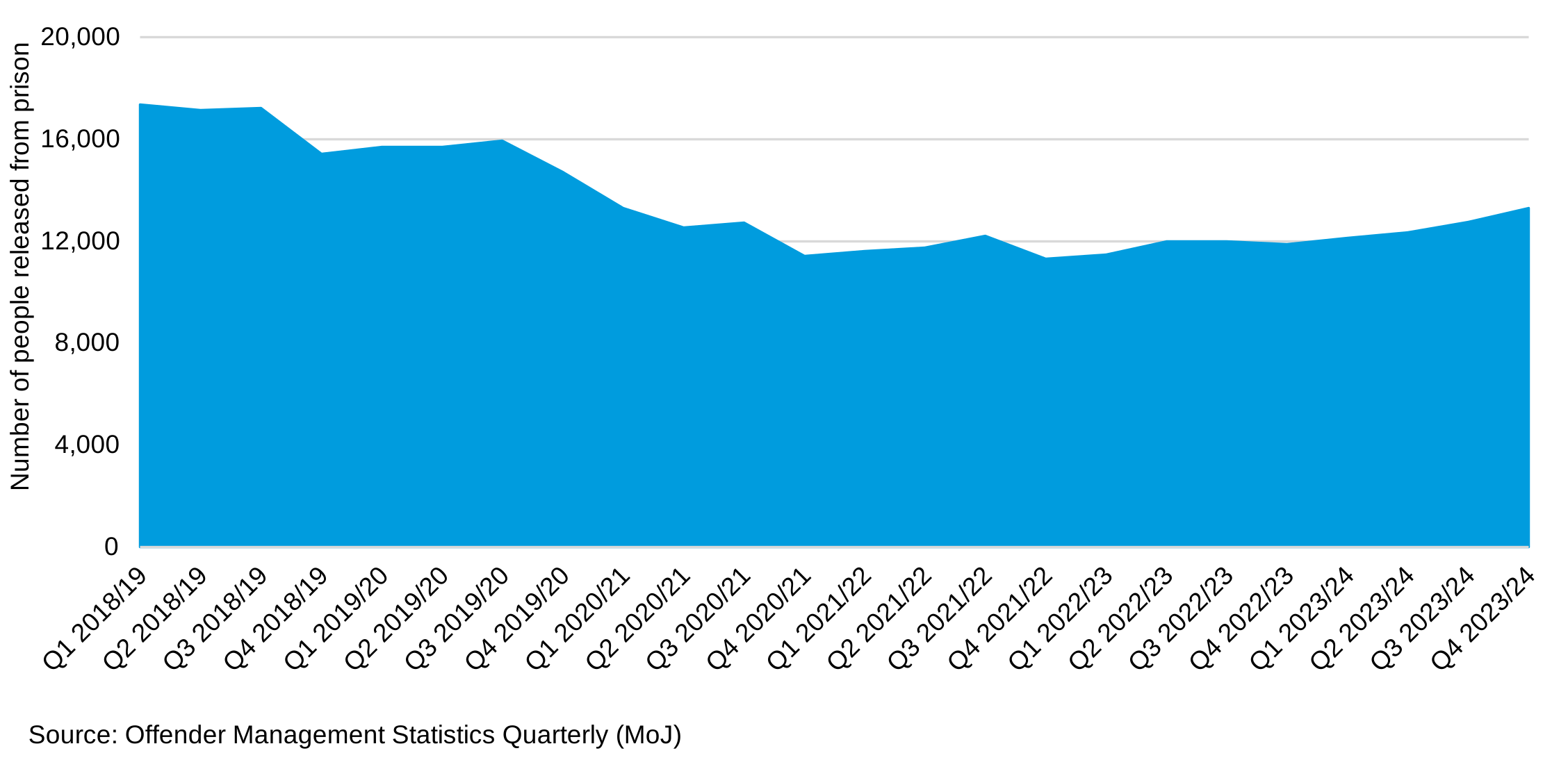
To understand the flows of people from prison into homelessness and rough sleeping, it is important to look at the number of people being released from prison. The above graph shows that the number of people released from prison fell by 30.1% from 2018/19 to 2021/22 (from 67,153 annual releases to 46,919) and then rose slightly by 7.7% to 2023/24 (to 50,536 annual releases). The magnitude releases will have a direct impact on the overall number of people leaving prison at risk of homelessness and rough sleeping.
Figure A.2: Accommodation on Release (top) and 3 Months Post-Release (bottom): 2020/21 – 2023/24
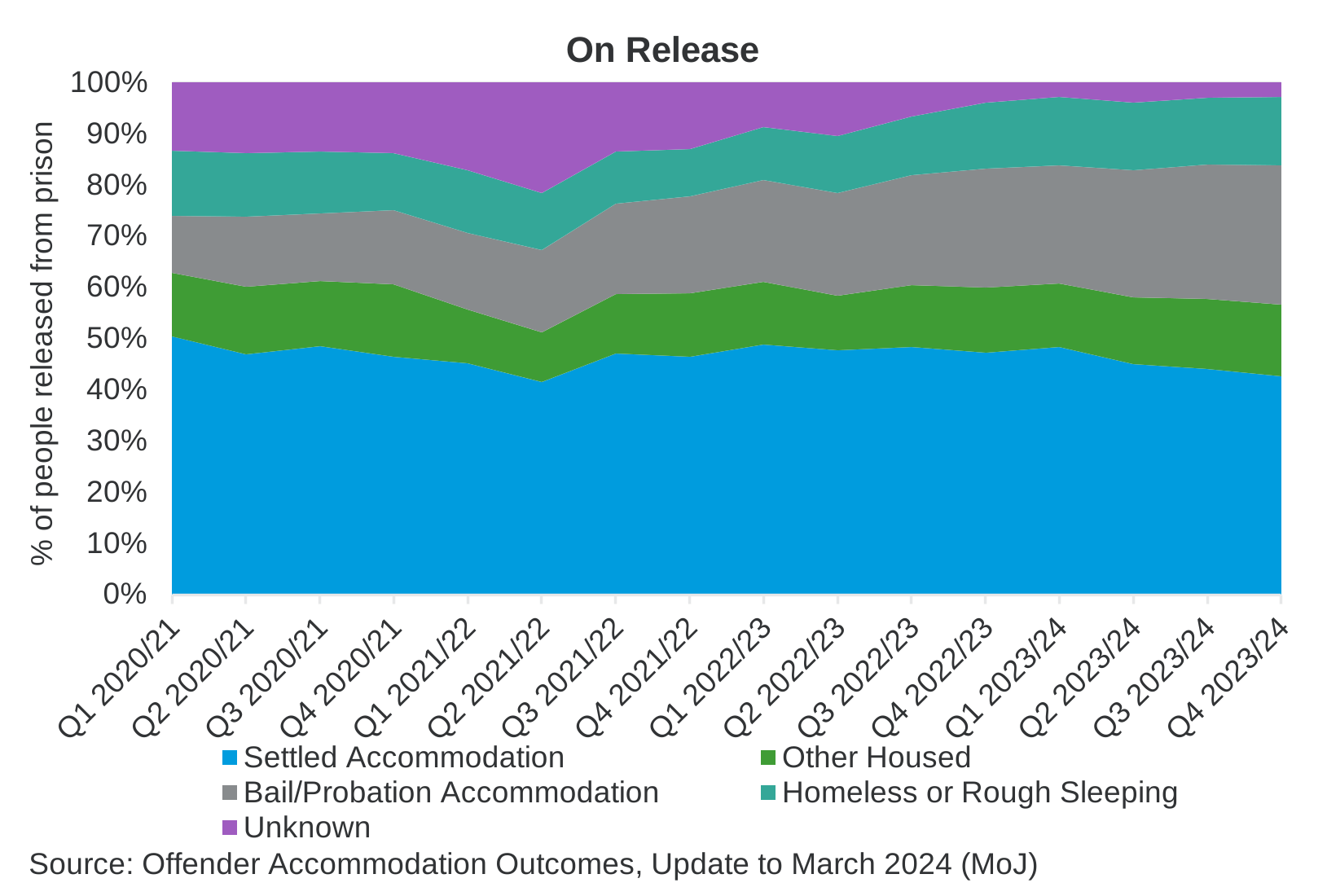
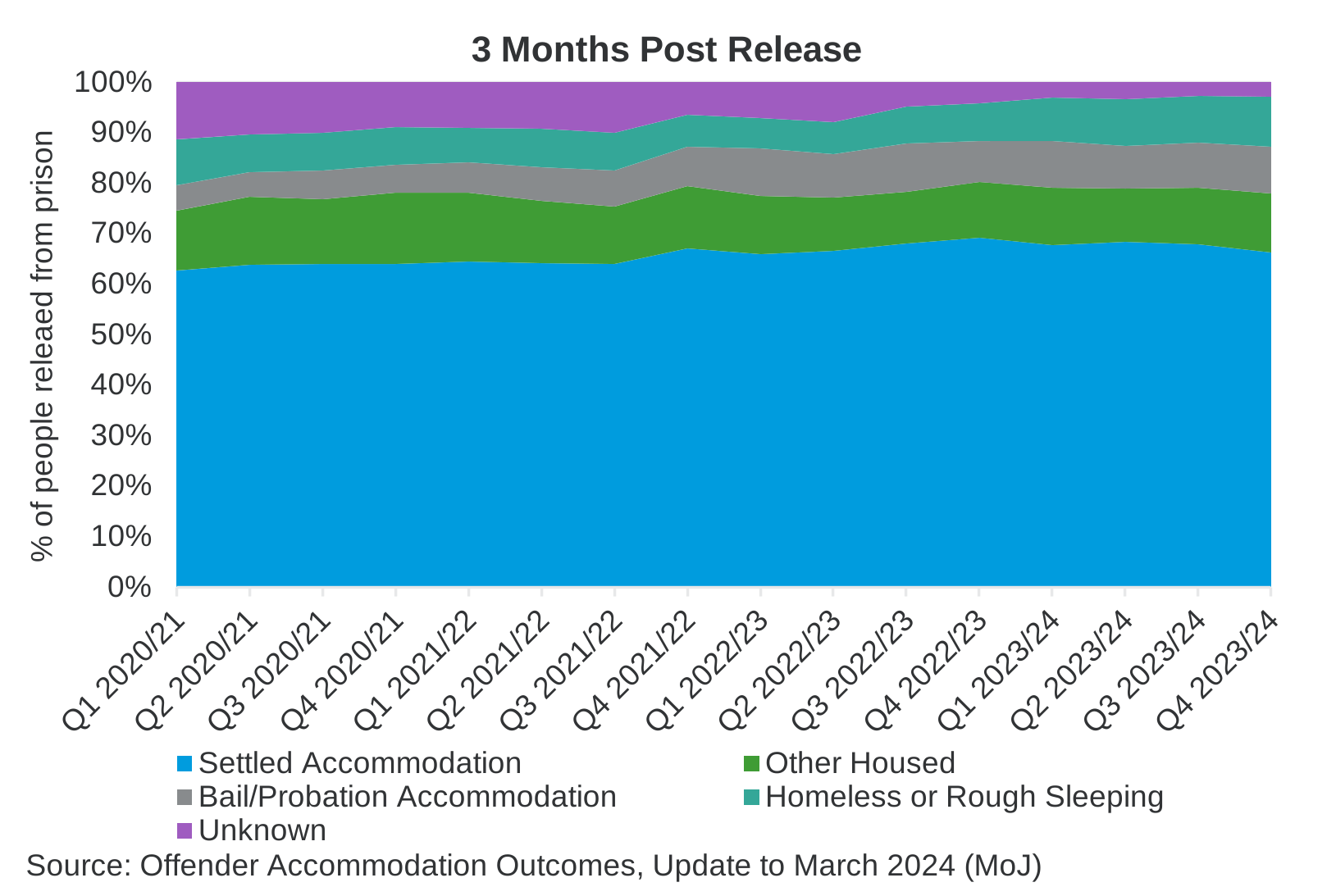
This data in Figure A.2 suggests that while a large proportion of people leaving prison (both on release and 3 months post-release) are moving into settled accommodation or other housing, a growing proportion of people leaving prison are becoming homeless or rough sleeping, particularly at some point shortly after they have been released. Between 2021/22 and 2023/24, the proportion of people leaving prison who were homeless or rough sleeping increased by 2.6 percentage points from 10.7 % in 2021/22 to 13.3% in 2023/24.[footnote 41] There was a similar increase 3 months post-release, with the proportion of people experiencing homelessness or rough sleeping 3 months post-release increasing by 2.3 percentage points from 7.0% in 2021/22 to 9.3% in 2023/24.[footnote 42] It should be noted that due to a change in the way that accommodation statuses were recorded, there has been a significant reduction in the number of unknown accommodation outcomes since September 2022, which could partly be driving the increase in the number of prison leavers being recorded as rough sleeping on release.
The Duty to Refer, established in the Homelessness Reduction Act, requires specified authorities to refer service users who are threatened with homelessness.[footnote 43] As Figure A.3 shows below, the number of households referred under the Duty to Refer from an Adult Secure Estate (prison) peaked during the COVID-19 pandemic and then fell significantly to 2023/24. The proportion of households referred from prison also follows a similar trend from 2020/21 onwards. This suggests fewer people leaving prison are being identified as being threatened with homelessness. The decline in the number of people leaving prison during this time could explain this reduction.[footnote 44]
Figure A.3: Households Referred under the Duty to Refer from an Adult Secure Estate (prison) 2019/20 – 2023/24
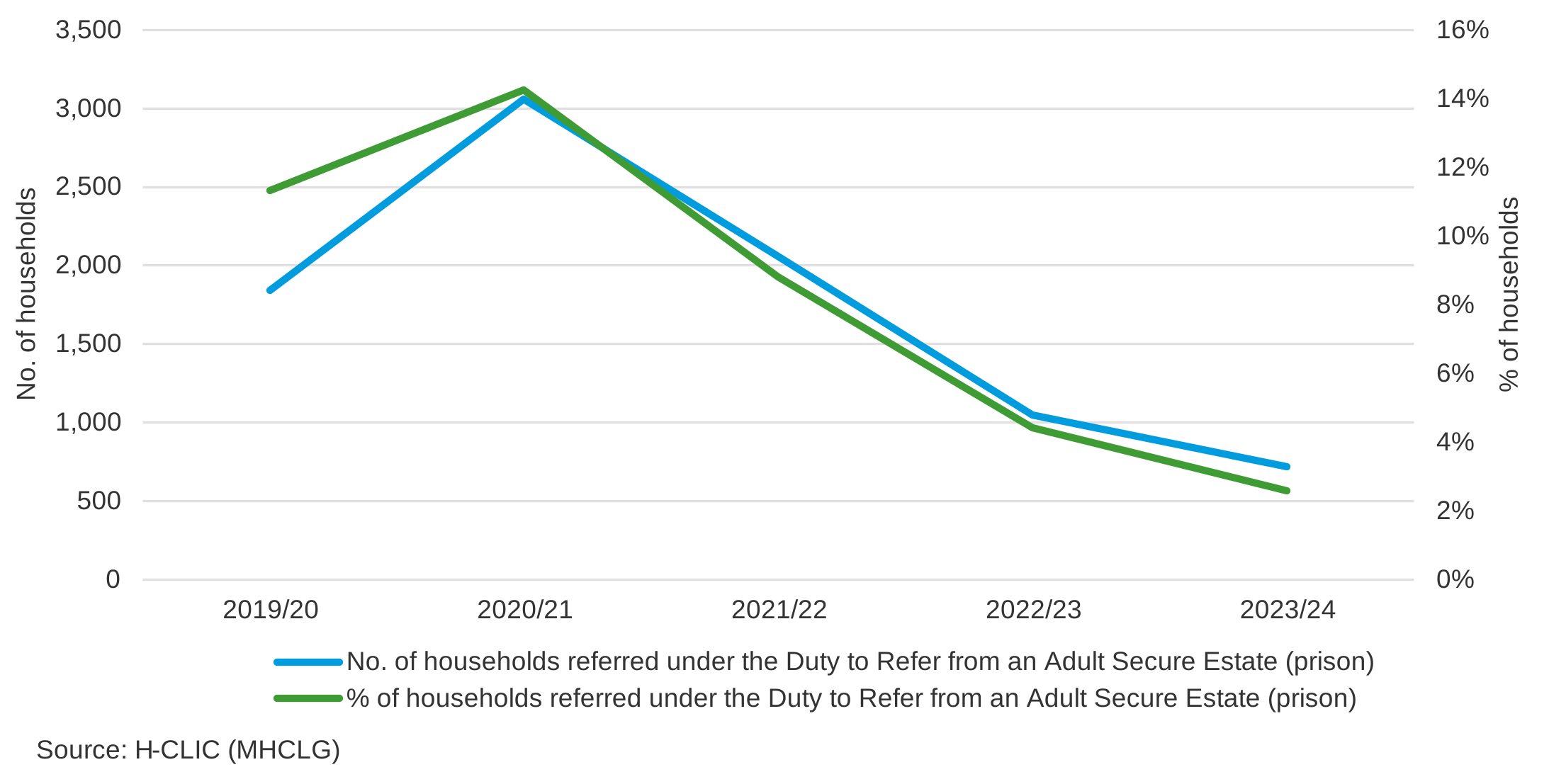
However, prevention and relief duty data does not show this same trend as Duty to Refer as Figure A.4 below demonstrates. The prevention duty, established in the Homelessness Reduction Act, requires housing authorities to work with people who are threatened with homelessness within 56 days to help prevent them from becoming homeless.[footnote 45] The relief duty requires housing authorities to help people who are homeless to secure accommodation.[footnote 46]
The number of households owed a duty (prevention and relief) on departure from custody has increased between 2018/19 and 2023/24.[footnote 47] This is broadly consistent with the proportion of households who were experiencing homelessness on departure from custody when they applied. This suggests a greater number of people leaving prison require prevention or relief duties on leaving custody (post-release), despite falling numbers for those leaving prison and Duty to Refer.
Figure A.4: Households owed a prevention or relief duty who were homeless on departure from custody when they applied 2018/19 – 2023/24
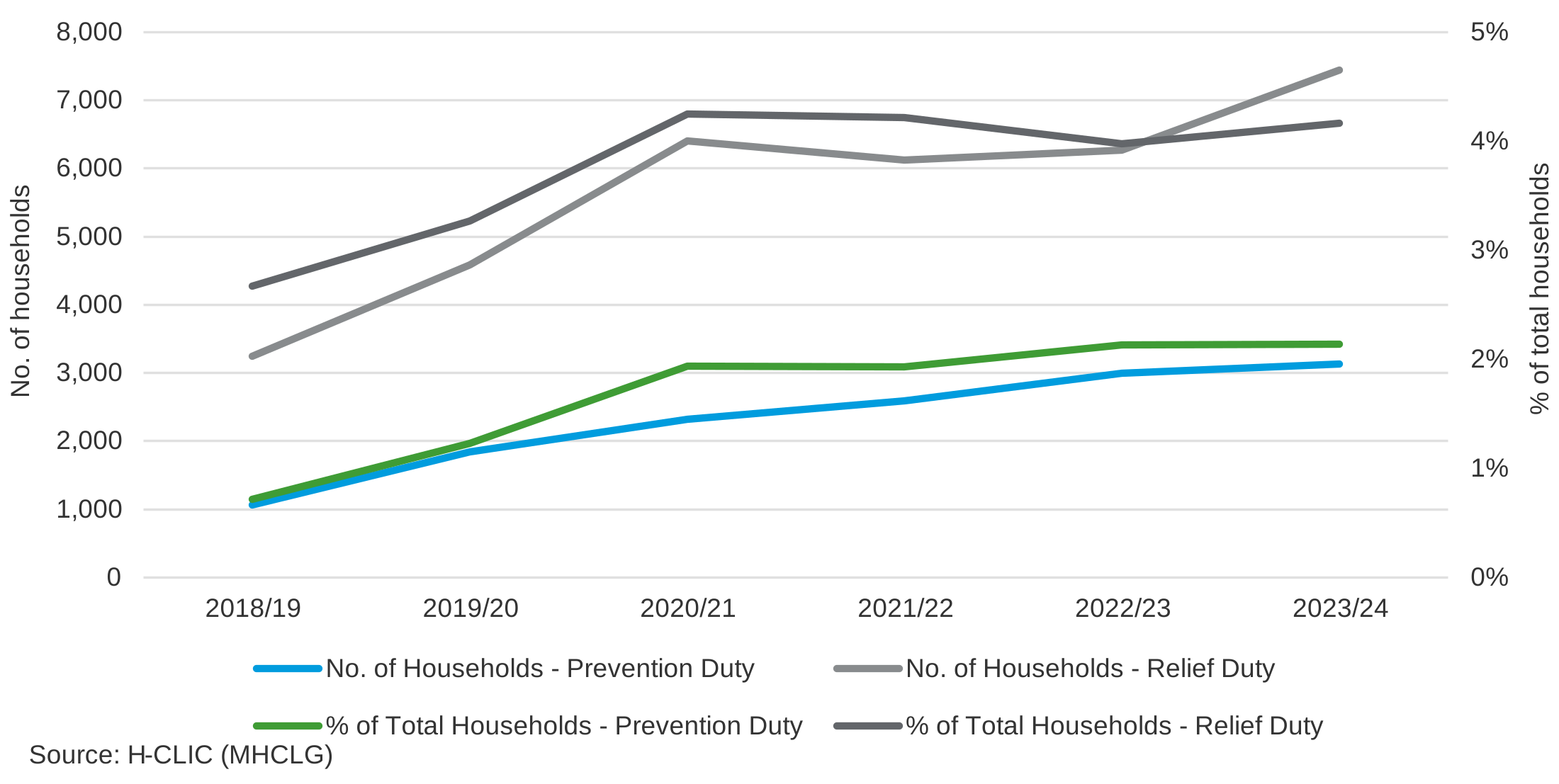
The Accommodation for Ex-Offenders scheme, launched in 2021, provides funding to local authorities to support people who have a history of offending who are at risk of homelessness but are not considered in priority need in accessing stable accommodation.[footnote 48]
In terms of inflows into the programme, as Figure A.5 shows, the number of referrals and the number of new individuals in private rented sector tenancies in Phase 2 increased from Q1 2023/24 to Q1 2024/25. The largest increase in new private rented sector tenancies came in Q1 2024/25 (25.9%). There were consistently more referrals than new individuals in private rented sector tenancies, and even when unsuitable referrals were removed, there were more than four times as many referrals as new individuals in private rented sector tenancies. It is not clear from the data where the excess suitable referrals who do not receive support from the programme would flow within the system.
The majority of referrals were made post-release (61.7%). Again, suggesting that individuals in need of support are not being identified prior to their release. When exploring who makes the referral, almost three quarters (72.2%) of referrals are coming from probation (this could either be pre or post release).
Figure A.5: Accommodation for Ex-Offenders Phase 2 Referrals and New Individuals in private rented sector Tenancies Q1 2023/24 – Q1 2024/25
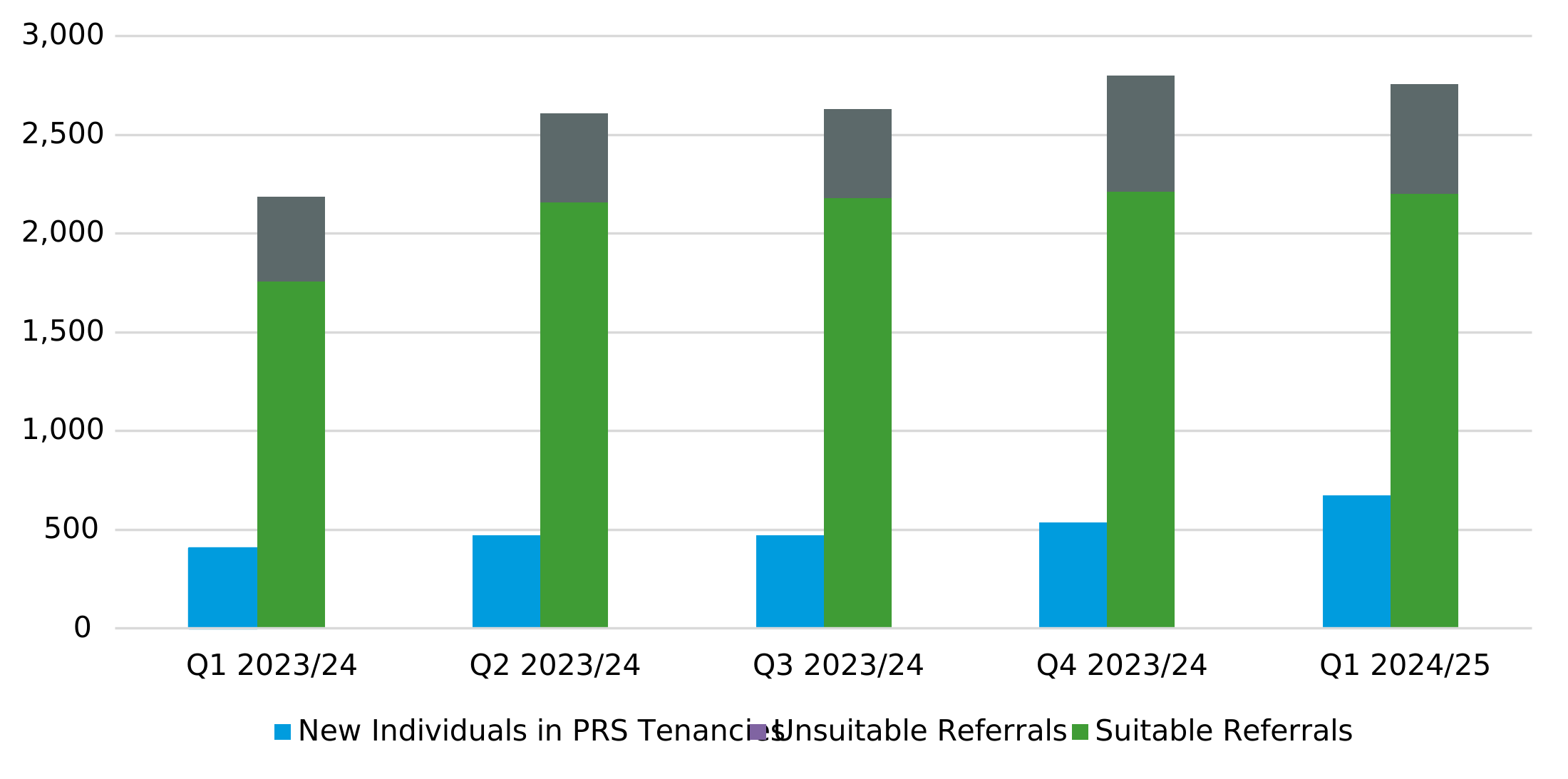
In terms of outflows from programme, Figure A.6 shows that across the first four quarters of data for Phase 2, there was a 26.2% decline in the number of programme exits due to sustained tenancies or other positive reasons, although the proportion of total exits that were positive remained around 70-80%. However, the number of exits due to sustained tenancies or other positive reasons more than doubled in Q1 2024/25, and the proportion also increased to 83.9%. These figures suggest that the programme is having a positive impact on the system in terms of reducing the number of people homeless and rough sleeping following release from prison.
Figure A.6: Accommodation for Ex-Offenders Phase 2 Those in Sustained Tenancies and Other Positive Exits Q1 2023/24 – Q1 2024/25
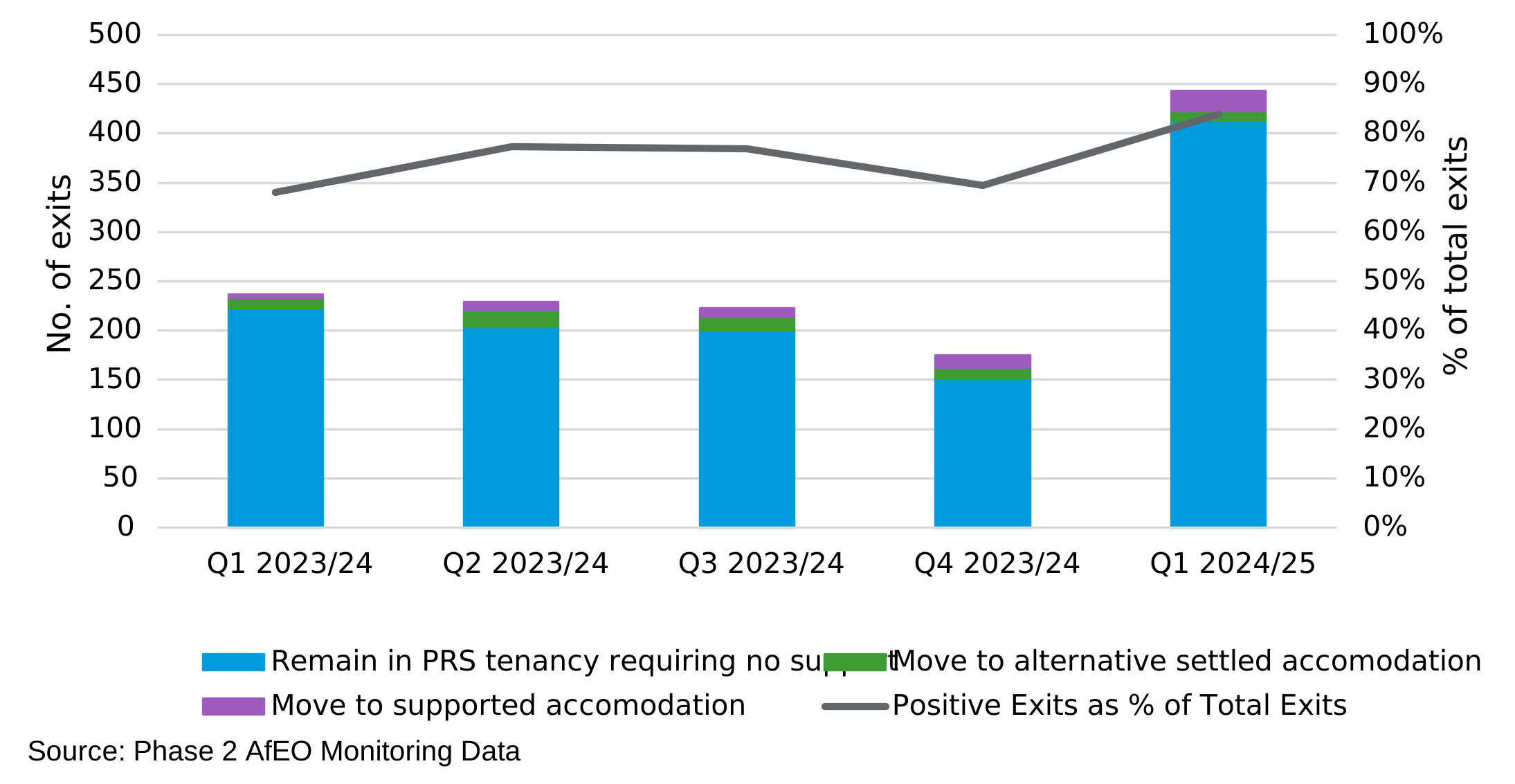
As Figure A.7 shows, after an initial spike in Q1 2023/24, the number of negative exits fell in Q2 2023/24 before slowly increasing again up until Q1 2024/25. However, the proportion of exits that were negative was lowest in Q1 2024/25 at below 20%. The most common reason for a negative exit from the programme was return to prison (44.2% of negative exits), followed by other reasons (21.9%).
Figure A.7: Accommodation for Ex-Offenders Phase 2 Negative Exits Q1 2023/24 – Q1 2024/25
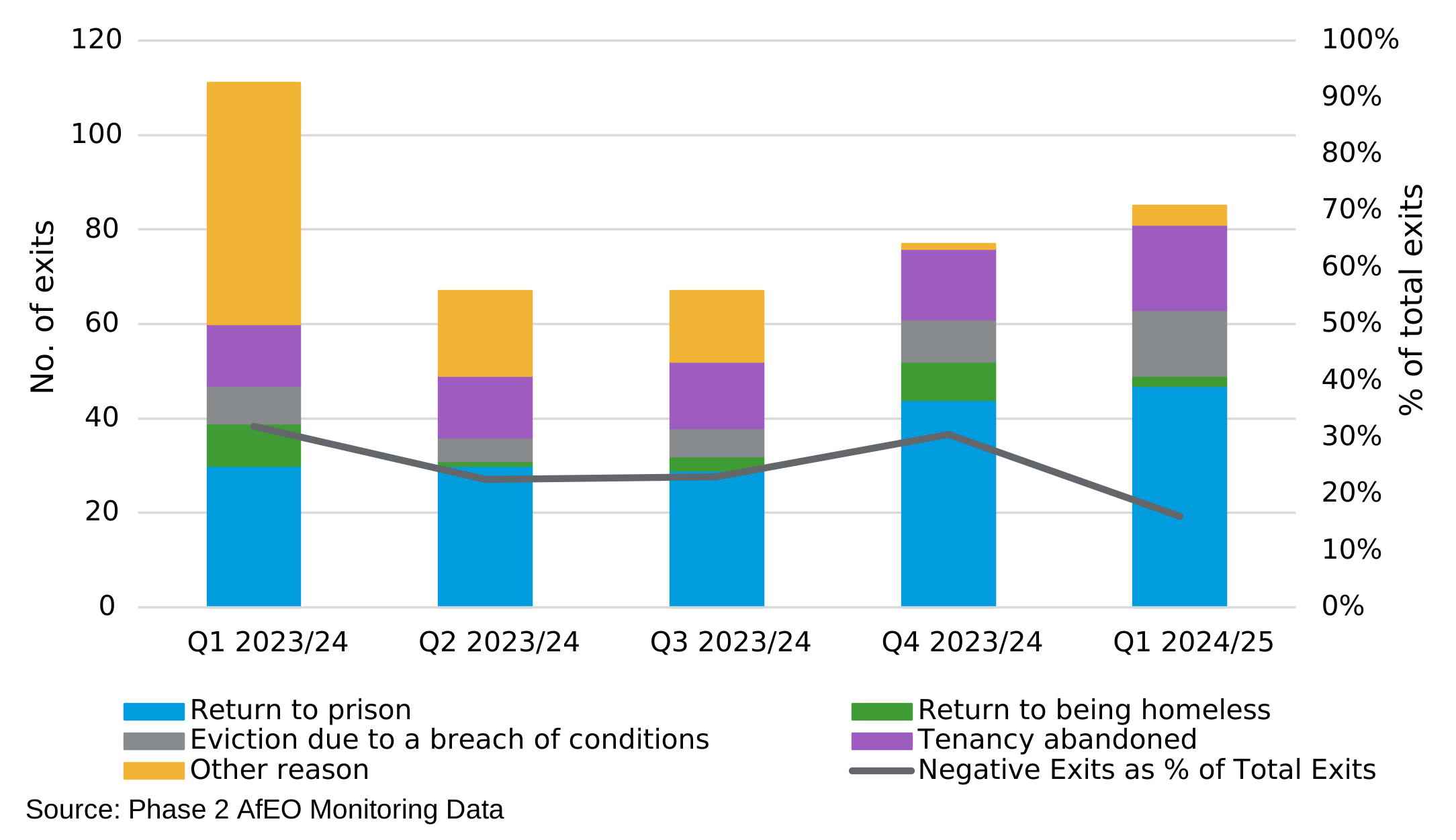
Annex 2: Research methods
The evaluation used a mixed methods approach that combined qualitative and quantitative techniques, including a rapid evidence assessment, system mapping, and fieldwork deep dives in five local areas. As part of the fieldwork, researchers conducted 30 semi-structured group interviews with 63 stakeholders, including local, regional, and national stakeholders across the statutory and voluntary sectors. Data sources included academic studies, grey literature, and government datasets, critically appraised for robustness using established quality measures (the AMSTAR checklist and GRADE criteria). Findings from these research streams were analysed using thematic analysis and triangulated to provide the findings presented in the report. The research findings were shared in the form of triangulation workshops with MHCLG and MoJ stakeholders in November 2024.
A2.1 Rapid Evidence Assessment
The rapid evidence assessment (REA) employed a desktop-based approach to synthesise research examining the relationship between the criminal justice system and homelessness. A purposive search strategy was adopted, targeting studies and reports published within the last ten years and written in English. While the primary focus was on recent evidence, older sources were included where they offered valuable insights. Priority was given to UK-based evidence, alongside comparative studies involving the UK and other nations. Searches were conducted using databases such as JSTOR and Google Scholar, and grey literature sources, including programme and policy evaluations. Papers recommended by MHCLG and expert advisers were also incorporated.
It is acknowledged that additional relevant literature may exist but was not included due to time constraints and limitations of the search strategy. In some cases, sources such as blog posts or editorials were excluded following a critical appraisal of their robustness.
A2.1.1 Search results and quality assessment
The search yielded a total of 79 documents and datasets which were reviewed and included in the rapid evidence assessment. To ensure the reliability of included studies, each was critically appraised using established quality measures, the AMSTAR checklist and GRADE criteria.[footnote 49],[footnote 50] These assessments evaluated the extent to which methodologies were robust, evidence was free from bias, and findings were supported by rigorous research approaches.
A2.1.2 Data extraction
Key information was systematically extracted from each study, including the title, author, publication date, country, study type, methodology, evidence base, findings, strengths, limitations, and quality appraisal results. The extracted data were then mapped to provide a comprehensive overview of the evidence base. Findings were synthesised in alignment with the research questions to deliver clear, actionable insights.
This structured and transparent approach ensured the findings of the rapid evidence assessment are both credible and relevant, providing a solid foundation for further research and decision-making.
The full Rapid Evidence Assessment is available in Technical Report 1.
A2.2 Development of the system map
Insights from the REA informed the creation of a system map exploring the ‘pathways’ that an adult might take from interacting with the criminal justice system into various types of accommodation or into homelessness, when available services or offerings do not reach them or they are prevented from accessing these. The system map and accompanying commentary can be seen at this website.
The system map shows the critical points (or nodes) in a person’s pathway through the criminal justice system and homelessness and rough sleeping system, and the main housing or homelessness outcomes. This includes the main accommodation programmes provided by MoJ (CAS1-3, and Accommodation for Ex-Offending). Lines on the system map between nodes show the paths that people may take at each stage. In some cases, these are labelled to also show potential risks, e.g. rough sleeping increases the risk of re-offending. To include potential pre-prison interventions, the map also includes pathways from offending (or re-offending) through to arrest, conviction and sentencing.
The process for developing the map included the following stages:
- Online research to produce a high-level, first draft of the map;
- Cross-reference with the rapid evidence assessment to explore additional key issues and pathways;
- Online consultation with experts in the interaction between the criminal justice system and homelessness.
- Second draft of the map based on consultation;
- In-person system mapping workshop. Stakeholders with extensive experience of the criminal justice system and homelessness were invited to a) refine and improve the system map and b) use it to explore blockages, challenges and opportunities in the system;
- Virtual workshop with people with lived experience of the criminal justice system and homelessness to explore blockages, challenges and opportunities in the system;
- Third draft of the system map incorporating workshop findings; and
- Using the map to frame the exploration of available quantitative data (detailed in Section 2.3 below).
A2.3 Quantitative assessment of the system map
To better understand the quantitative evidence on the interactions between the criminal justice and homelessness and rough sleeping systems, a quantitative assessment of the system map was undertaken. Available data on the criminal justice system and homelessness interactions, including a range of publicly available secondary data, was reviewed to determine its appropriateness to quantitatively represent the different criminal justice system map nodes (critical points in the map).
The criteria alongside the rationale for each criteria used to determine whether data was analysed within the quantitative assessment has been included below:
Table A3: Summary of quantitative assessment criteria and rationale
| Criteria | Rationale |
|---|---|
| At least two years of longitudinal data available | To ensure that there was sufficient data to identify any changes in trends within the analysis. |
| Data is population-based | To reduce the likelihood of the data being skewed by sample sizes or any potential bias which has been introduced by samples (e.g. based on sentence type, length of sentence, demographic etc.) |
| Data is of sufficient data quality | Examples of how data quality were assessed included limited levels of missing data and that data collection processes were clearly identifiable. |
| This is to reduce the risk that the analysis within the quantitative assessment could be skewed based on poor quality data. | |
| Data is available at a national level | To ensure that the same population is being considered within the data being analysed. It also reduces the risk of inflating regional / local trends which could skew the analysis. |
Where secondary data was not available, MoJ and MHCLG teams provided additional Management Information for specific programmes (e.g. Accommodation for Ex-Offenders, CAS 1-3) to present system map flows where possible. There were a number of data challenges identified that restricted the overlay of quantitative data. As a result, a summary of the differences between the system map and the available data and the data challenges have been included within the quantitative assessment.
The technical annex of this quantitative assessment has been included in Annex 1.
A2.4 Deep dive evaluation of the Accommodation for Ex-Offenders programme
The evaluation incorporated fieldwork across five local areas:
- Lambeth
- Brent
- Bromley
- Liverpool City
- Sefton
These areas were selected in collaboration with MHCLG and MoJ to represent local areas with a range of programme types and combinations, including the CAS3 and Accommodation for Ex-Offenders schemes. One area, Liverpool City, did not receive formal funding from MHCLG for the Accommodation for Ex-Offenders programme. The selection allowed for an exploration across a mix of local needs, contexts and delivery structures, while considering the resources and time required for local engagement in the research process.
Topic guides for group interviews were developed through a co-design method with Centre for Homelessness Impact, MHCLG and MoJ, and covered sections relating to each research question. The topic guides were also tailored to stakeholder groups and ensured comprehensive coverage of criminal justice system, Accommodation for Ex-Offenders, and homelessness themes. Qualitative data collection involved 30 semi-structured group interviews conducted via MS Teams, lasting up to 90 minutes. In total, these group interviews collected insights from 63 people. These included:
- four group interviews with regional stakeholders that included insights from nine participants
- six group interviews with national stakeholders that included insights from 13 participants
- 20 group interviews with local stakeholders, including local authority representatives, probation staff, and frontline workers, with four conducted in each of the five local areas, which included insights from 41 participants
- one lived experience workshop with five participants.
Transcriptions were created using the automated MS Teams service.
A2.5 Synthesis and Analysis
Researchers collected and analysed findings descriptively from the rapid evidence assessment, quantitative assessment of the criminal justice system, and qualitative interviews. Findings were mapped and collated using deductive thematic analysis which identified key themes and patterns across the sources. This process was guided by employing a framework-based approach aligned with Braun and Clarke’s principles (2006). Triangulation workshops and round tables were conducted with representatives from MHCLG and MoJ to validate findings, explore different perspectives, and refine key messages.
These collaborative sessions were integral to ensuring that the analysis was robust, actionable, and aligned with stakeholder priorities. By combining these methods, the research team developed a nuanced understanding of the complex interactions between the criminal justice and homelessness systems, and the effectiveness of related interventions. This structured approach ensured the findings were both credible and grounded in the evidence collected.
A2.6 Limitations
The REA synthesised a wide range of literature. However, it focused on documents published within the past ten years, with some exceptions for earlier studies offering valuable insights. This timeframe may have excluded potentially relevant older evidence, particularly if foundational research was conducted before this period. Additionally, the REA relied heavily on UK-based literature, limiting the scope for international comparisons except where explicitly discussed.
Similarly, the deep dive approach, while rich in qualitative detail, relied on interviews with stakeholders from across five selected local areas. Although these areas were chosen to provide diversity in delivery structures and programme types, the small sample cannot fully capture the experiences across England and is not representative.
Furthermore, this study aims to explore the system as a whole and does not seek to evaluate the effectiveness of Ministry of Justice delivered interventions. This means that while the report provides a comprehensive overview of how the system interacts, including interventions delivered by the Ministry of Justice, it does not assess the impact or success of specific interventions.
Another limitation of this research is that it cannot provide viewpoints and perspectives specific to each regional area because multiple stakeholders were interviewed within each area. By engaging with a variety of local stakeholders the research was able to gather diverse insights based on their different roles and experiences. Whilst this approach provided a broad view of the interactions between the criminal justice and homelessness systems, but it also introduced variability, making it difficult to capture a singular perspective for each area. This means the research cannot compare differences between areas and approaches. However, this provided the research with a level of depth and richness in experiences that would otherwise not have been captured.
“Complex needs” was often used as a term by participants in this research to describe experiences of trauma or violence, substance use and mental health. These experiences were often overlapping, and the broad nature of these discussions made it difficult to isolate specific factors or circumstances contributing to these needs. Where possible, the findings in this report are specific to the support needs and experiences of people but acknowledge that this was not always possible.
The analysis and synthesis stages combined findings using a framework-based thematic analysis, which enabled triangulation across data sources.[footnote 51] However, data interpretations are influenced by the perspectives of participants and researchers. While efforts were made to mitigate bias through triangulation workshops, the findings reflect the contexts and experiences of those engaged in the evaluation. Given the importance of context on influencing individual experiences, findings may not be fully generalisable to other settings or populations.
Secondary data analysis was conducted using consistently available public data and, therefore, there were different time periods available across datasets which meant it was not always possible to present data from prior to the COVID-19 pandemic as a baseline. Therefore, it was not always possible to understand whether any changes were due to figures returning to pre-pandemic levels or there were other influences.
Within the Accommodation for Ex-Offenders programme management information, there is no standardised definition of “homeless” provided within the guidance provided to local authorities. It is up to the interpretation of local authorities which cases they record under this category. The qualitative explanations in the data suggest that some areas tend to record moving in with friends or family as “other” rather than “homeless”, limiting the comparability of data between areas.
Finally, the evaluation was designed to assess the workings of the Accommodation for Ex-Offenders programme and similar initiatives. However, the focus on the specific local areas meant some geographical contexts may not have been fully represented. As such, the insights should be understood as indicative, with transferability requiring careful consideration of contextual similarities.
Bibliography
- Anders, J. and Dorsett, R., (2017). HMP Peterborough Social Impact Bond: Cohort 2 and final cohort impact evaluation.
- Bashir, M., Moloney, D., & others. (2021). Homelessness and predictors of criminal reoffending: A retrospective study. Wellcome Open Research.
- Berman, G., (2013). Care leavers and their over-representation in the prison population. Innovation Unit.
- Bowpitt, G. (2020). Choosing to be homeless? Persistent rough sleeping and the perverse incentives of social policy in England. Housing, Care and Support, 23(3/4), 135-147.
- Bozinka, M. (2021). Preventing homelessness amongst former prisoners in England and Wales
- Bramley, G. and Fitzpatrick, S. (2015). Hard Edges: Mapping Severe and Multiple Disadvantage. London: Lankelly Chase Foundation.
- Bramley, G. and Fitzpatrick, S., (2017). Homelessness in the UK: who is most at risk?
- Braun, V. and Clarke, V., (2006). Using thematic analysis in psychology. Qualitative research in psychology, 3(2), pp.77-101.
- Centrepoint. (2023). Escaping the trap: A report on youth homelessness and crime. (Accessed: 28 August 2024).
- Clinks. (2024). Special Interest Group on Accommodation 2023-24 – Report 1.
- CommunityNI. (2023). Probation Approved Accommodation (Ex-Offenders Housing Support).
- Crewe,B. ‘Sedative Coping’, Contextual Maturity and Institutionalization Among Prisoners Serving Life Sentences in England and Wales, The British Journal of Criminology, Volume 64, Issue 5, September 2024, Pages 1080–1097.
- Department for Levelling up, Housing, and Communities. (2023). Accommodation for Ex-Offenders scheme: local authority funding allocations between July 2021 and March 2025.
- Department for Levelling up, Housing, and Communities. (2023). Accommodation for Ex-Offenders scheme: local authority funding allocations between July 2021 and March 2025.
- Department for Levelling up, Housing, and Communities. (2023). Evaluation of Phase 1 of the Accommodation for Ex-Offenders Programme
- Department for Levelling up, Housing, Communities. (2021). Accommodation for Ex-Offender scheme: Local authority funding allocations.
- Disley, E. and Rubin, J. (2014). Phase 2 report from the Payment by Results Social Impact Bond Pilot at HMP Peterborough. RAND Europe.
- Dominguez, M. & Kirchmaier, T., (2024). Cost of living research and crime in London.
- England, E., et al. (2022). A Typology of Multiple Exclusion Homelessness
- Fazel, S., & Seewald, K. (2017). Severe mental illness in 33,588 prisoners worldwide: Systematic review and meta-regression analysis.
- Gaitán-Rossi, P., Guadarrama, C. (2021). ‘A systematic literature review of the mechanisms linking crime and poverty’ in Convergencia Revista de Ciencias Sociales, 28: 1-25.
- Gough, D. and Coghlan, M., (2022). Understanding Reoffending: Push factors and Preventative Responses.
- GOV.UK. (2017). Homelessness Reduction Act 2017.
- Greevy, H., et al. (2023). £50m Reducing Reoffending Package Process Evaluation.
- Greater London Authority. (2024). Combined Homelessness and Information Network (CHAIN) Reports.
- Her Majesty’s Inspectorate of Probation. (2023). The evidence base: Youth offending services and family relationships. (Accessed: 28 August 2024).
- HM Inspectorate of Probation. (2020). Accommodation and support for adult offenders in the community and on release from prison in England.
- HM Inspectorate of Probation. (2023). A thematic inspection of Offender Management in Custody.
- HM Prison and Probation service. (2021). Regional Reducing Reoffending Plans.
- HM Prisons and Probations. (2023). Community Accommodation Service – Tier 2 (CAS 2) Stakeholder User Guidance.
- HM Prisons and Probations. (2023). Community Accommodation Service Tier 3 (CAS3).
- Homeless Link (2020) Written evidence submitted by Homeless Link. London: Homeless Link.
- House of Commons Justice Committee (2021). The Future of Legal Aid: Report of the Justice Committee.
- Howard League for Penal Reform. (2022). [APPG on women’s health and well-being: Final report(https://howardleague.org/wp-content/uploads/2022/04/APPG-womens-health-and-well-being-FINAL.pdf). (Accessed: 28 August 2024).
- James, S., Pape, M., Crowe, M., (2024). Housing Exploratory Research Summary.
- Johnsen, S. and Blenkinsopp, J., (2024). Hard Edges: The reality for women affected by severe and multiple disadvantage.
- Jones, C. M., Compton, W. M., Mustaquim, D., & Volkow, N. D., (2021). Prevalence and correlates of substance use disorders among U.S. adults in prison.
- Kerr, J., Kersting, F. and Reid, S. (2023). Offender Accommodation Pilot.
- Local Government Association. (2023). The relationship between family violence and youth offending.
- Lymperopoulou, K. (2024). Ethnic Inequalities in the Criminal Justice System: Evidence from the Crown Court in England and Wales. British Journal of Criminology.
- MacInnes, D., et al. (2020). Restarting a prisoner’s life onto a supportive path leading to RESETtlement in the community.
- Madoc-Jones, I. (2023). Imaginary Homelessness Prevention with Prison Leavers in Wales.
- Matteo Tiratelli, Ben Bradford, Julia Yesberg, The Political Economy of Crime: Did Universal Credit Increase Crime Rates?, The British Journal of Criminology, Volume 63, Issue 3, May 2023, Pages 570–587.
- Maycock, M., McGuckin, K., & Morrison, K. (2020). ‘We are “free range” prison officers’, the experiences of Scottish Prison Service throughcare support officers working in custody and the community. Probation Journal, 67(4), 358-374.
- McAra, L.,& McVie, S., Understanding youth violence: The mediating effects of gender, poverty and vulnerability, Journal of Criminal Justice (2016).
- McMillan, T. M., Aslam, H., Crowe, E., Seddon, E., & Barry, S. J. E. (2021). Associations between significant head injury and persisting disability and violent crime in women in prison in Scotland, UK: A cross-sectional study. The Lancet Psychiatry, 8(6), 512–520.
- Ministry of Housing, Communities, and Local Government (MHCLG). (2023). Rough sleeping snapshot in England: autumn 2022, technical report.
- Ministry of Justice. (2014). Reducing Reoffending Strategy.
- Ministry of Justice. (2022). Offender management statistics: Prison receptions 2021.
- Ministry of Justice. (2022). Proven reoffending statistics: October 2022.
- Ministry of Justice. (2024). Accommodation at Release from Custody, XLSX spreadsheet. (Accessed: 4 September 2024).
- Ministry of Justice. (2024). Community Performance: Annual Update to March 2024.
- Ministry of Justice. (2024). The impact of being sentenced with a community sentence treatment requirement (CSTR) on proven reoffending.
- Ministry of Justice. (2018). Prisons to deliver trailblazing £6m rough sleeping initiative.
- Ministry of Justice. (2019). Scheme giving ex-offenders a settled place to live up and running.
- Ministry of Justice. (2023). £50m Reducing Reoffending Package Process Evaluation.
- Ministry of Justice. (2023). £50m Reducing Reoffending Package Process Evaluation.
- Ministry of Justice. (2023). Community Accommodation Service – Tier 2 (CAS – 2) Policy Framework.
- Ministry of Justice. (2024). Prison Education and Accredited Programmes Statistics, April 2023 to March 2024.
- Ministry of Justice. (2023). Offender Accommodation Pilot.
- Nacro. (2022). Nacro Community Accommodation Service (CAS2) England.
- National Audit Office (2023) ‘Improving Resettlement Support for Prison Leavers to Reduce Reoffending’.
- Nordin, M., Almen, D. (2017). ‘Long-term unemployment and violent crime’, Empirical Economics, 52: 1-29.
- Offenders’ Learning and Skills Service (OLASS). (2015). Research findings on functional illiteracy among prisoners.
- Office for Health Improvement and Disparities. (2024). Adult substance misuse treatment statistics 2022 to 2023: report.
- Office for National Statistics (ONS). (2021). Population of the UK by country of birth and nationality: individual country data.
- Office for National Statistics (ONS). (2022). The education and social care background of young people who interact with the criminal justice system.
- Parliamentary Committees. (2021). Reducing Reoffending: The Role of Accommodation.
- Prison Reform Trust. (2017). There’s a reason we’re in trouble: Domestic abuse as a driver to women’s offending.
- Quilgars, D., Jones, A., Bevan, M., Bowles, R., & Pleace, N., (2012). Supporting short-term prisoners leaving HMP Leeds: Evaluation of the Shelter Prisoners Advocacy Release Team.
- Russell Webster. (2021). The STAR Accommodation Project Evaluation.
- Scottish Government. (2015). Housing and Reoffending: Supporting People Who Serve Short-Term Sentences to Secure and Sustain Stable Accommodation on Liberation.
- Shaw, J. (2017). Critical Time Intervention for Severely Mentally Ill Prisoners (CrISP): A Randomised Controlled Trial.
- Shelter Cymru. (2017). Prison link Cymru.
- Sosenko, F., Bramley, G., and Johnsen, S. (2020). ‘Gendered patterns of severe and multiple disadvantage in England’.
- Sturge, G., (2024). UK Prison Population Statistics. House of Commons Library.
- Sundin, E.C. and Baguley, T., (2015). Prevalence of childhood abuse among people who are homeless in Western countries: a systematic review and meta-analysis. Social Psychiatry and Psychiatric Epidemiology, 50(2), pp.183–194.
- The Health Foundation, (2024). Inequalities in likelihood of living in high-crime neighbourhoods.
- Third Sector Advisory Group. (2024). RR3 Special Interest Group on Accommodation 2023-24: Report 3.
- UK Government. (2023). Alcohol and Drug Treatment in Secure Settings 2022 to 2023: Report 2.
- UK Government. (2021). Review of Drugs: Phase One Report – Summary.
- UK Government. (2022). Commissioned Rehabilitative Services - General Grant Scheme.
- UK Parliament. (2022). The role of commissioning in probation services: Ninth report of session 2021-22. House of Commons Justice Committee.
- Welsh Government. (2018). Evaluation of Homelessness Services to Adults in the Secure Estate. Cardiff: Welsh Government.
- Welsh Government (2023) ‘Expert Review Panel on Homelessness Briefing for Meeting 8: Criminal Justice and Homelessness’
- Wu, Y., Lu, Y., & Chen, M., (2011). Income Inequality, Unemployment, and Crime: Empirical Evidence from China. Journal of Economic Development, 36(2), pp. 45-64.
- YouGov (2016) Survey Results, Fieldwork 26 June–14 December. London: YouGov.
-
The Local Housing Allowance provides housing benefit for private tenants. The rate of LHA is based on the number of people occupying the property as their home. ↩
-
Where national data is available on accommodation outcomes, it broadly aligns with the findings from interviews on type of offence and sentence length. ↩
-
A resettlement panel typically refers to a group or committee established by probation teams, local councils or housing providers to oversee and coordinate the resettlement process for individuals or families experiencing homelessness. These panels play a key role in ensuring that people are matched with suitable housing. ↩
-
Including referrals into the programme, private rented sector tenancies secured for people leaving prison, sustainment of tenancies, successful exits from tenancies supported by the programme, reduction in homelessness and rough sleeping among people leaving prison, lower levels of reoffending and higher levels of rehabilitation after serving custodial sentences. ↩
-
Homelessness and rough sleeping categories have been combined in the graph due to changes in the definitions of these categories in January 2022 that make it not possible to do direct comparisons over time for the individual categories. ↩
-
Includes cases where region was unknown. ↩
-
It should be noted that the number of cases in scope increased by 19.1% between 2021/22 and 2023/24. Cases in scope are releases from custody including following recall, committal to custody for breach of post sentence supervision and at sentence, or post sentence, supervision expiry. ↩
-
It should be noted that due to a change in the way that accommodation statuses were recorded, there has been a significant reduction in the number of unknown accommodation outcomes since September 2022, which could partly be driving the increase in the number of prison leavers being recorded as rough sleeping on release. ↩
-
For data on age, gender and ethnicity breakdown, trends have been identified from data for both England and Wales due to data aggregation. ↩
-
Quarterly trends have been investigated to allow for a greater number of data points to be incorporated in the analysis ↩
-
It should be noted that the cohort of individuals is not the same for the on release figures as for the 3 months post release figures due to the inclusion criteria (e.g. those recalled to prison within 3 months would not be included in the 3 months post release figures) ↩
-
Homelessness and rough sleeping categories have been combined in the graph due to changes in the definitions of these categories in January 2022 that make it not possible to do direct comparisons over time for the individual categories. ↩
-
It should be noted that the number of cases in scope increased by 25.2% from Q1 2022/23 to Q4 2023/24. Cases in scope include releases from custody including following recall, committal to custody for breach of post sentence supervision and at sentence, or post sentence, supervision expiry. This might explain some of the variation within the data, however the impact of this cannot be quantified. ↩
-
It should be noted that due to a change in the way that accommodation statuses were recorded, there has been a significant reduction in the number of unknown accommodation outcomes since September 2022, which could partly be driving the increase in the number of prison leavers being recorded as rough sleeping 3 months post release. ↩
-
For data on age, gender and ethnicity breakdown, trends have been identified from data for both England and Wales due to data aggregation. ↩
-
Data on accommodation 3 months post release is only available from 2020/21. ↩
-
The MoJ publishes this data and, therefore, adheres to the CJS data standards. ↩
-
This term refers to eligibility criteria of the Accommodation for Ex-Offenders programme outlined in the prospectus, whereby people are assessed as ready to take on an Assured Shorthold Tenancy. ↩
-
Local Housing Allowances rates and broad rental market areas. ↩
-
Those LAs marked with a * span multiple Broad Rental Market Areas, meaning there are different rates depending on which part of the local area you are looking for accommodation. The graph includes the highest and lowest rates that an individual could receive in these areas. ↩
-
Offender accommodation outcomes, update to March 2024. ↩
-
Please note that people on remand may be eligible for the Accommodation for Ex-Offenders programme if they have had a custodial sentence within the time limit of 12 months. These people, however, would not be eligible for CAS3 because they are not under license supervision and so would not have any support. However, people in these circumstances were not described by participants in this primary research. ↩
-
Offender Accommodation Outcomes, Update to March 2024. ↩
-
The data on accommodation outcomes by age group is for both England and Wales due to data aggregation. ↩
-
Offender Management Statistics Quarterly. ↩
-
Offender Accommodation Outcomes, Update to March 2024. ↩
-
Statistical significance has been based on chi-square tests generating a p-value of less than 0.05 to estimate the 95% confidence level. ↩
-
Statistical significance has been based on chi-square tests generating a p-value of less than 0.05 to estimate the 95% confidence level. ↩
-
Data on gender is for both England and Wales due to data aggregation. ↩
-
Collaborative groups that work to support individuals who are experiencing homelessness or are at risk of becoming homeless. These panels typically include representatives from local authorities, housing providers, social services, and other relevant organisations. Main functions include but are not limited to assessment and planning, coordination of support services and monitoring and support of individuals’ journey through the system. ↩
-
There is ongoing work with DWP who are enabling access to identification, but this was not mentioned by participants of this research. ↩
-
Offender accommodation outcomes, update to March 2024. ↩
-
While there is some HCLIC data available in terms of outcomes of those leaving custody and receiving prevention and relief duties, there is a significant time lag on this data being available. ↩
-
Criminal justice system map link: Routes into accommodation or homelessness for adults leaving prison, by Cordis Bright. Available data for the criminal justice system map: Criminal Justice System and Homelessness, available data. ↩
-
More detailed data is collected that could potentially overcome these limitations, however, this was not shared as part of the analysis. ↩
-
More detailed data is collected that could potentially overcome these limitations, however, this was not shared as part of the analysis. ↩
-
Homelessness and rough sleeping categories have been combined in the graph due to changes in the definitions of these categories in January 2022 that make it not possible to do direct comparisons over time for the individual categories. ↩
-
It should be noted that the cohort of individuals is not the same for the on release figures as for the 3 months post-release figures due to the inclusion criteria (e.g. those recalled to prison within 3 months would not be included in the 3 months post-release figures). ↩
-
Homelessness code of guidance for local authorities - Chapter 12: Duty in cases of threatened homelessness (the prevention duty). ↩
-
Homelessness code of guidance for local authorities - Chapter 13: Relief duty. ↩
-
Based on a common definition of custody, this would include people held pre-trial and released and, therefore, were not released from prison. ↩
-
Data is available from June 2022, however, due to issues with data quality for the Phase 1 data (discrepancies between bi-monthly and cumulative reporting), the following analysis only includes data from Phase 2. ↩
-
The AMSTAR checklist is a tool for evaluating the methodological quality of systematic reviews by assessing factors such as protocol registration, literature search, and risk of bias. It categorises reviews into quality levels to determine their reliability and trustworthiness. ↩
-
The GRADE criteria provide a framework for assessing the certainty of evidence and the strength of recommendations in clinical guidelines, focusing on aspects such as risk of bias, consistency, and precision. It classifies evidence as high to very low quality and recommendations as strong or weak, based on the balance of benefits and risks. ↩
-
The framework analysed participant responses to research questions. This allowed thematic coding of responses to be completed across all participant groups to find similarities, differences and create comparison. The framework included the full verbatim response from each participant when asked each question. Trained researchers then grouped these responses per theme. ↩