Process evaluation of Combating Drugs Partnerships
Published 20 May 2026
Applies to England

© Crown copyright 2026
This publication is licensed under the terms of the Open Government Licence v3.0 except where otherwise stated. To view this licence, visit nationalarchives.gov.uk/doc/open-government-licence/version/3 or write to the Information Policy Team, The National Archives, Kew, London TW9 4DU, or email: psi@nationalarchives.gov.uk.
Where we have identified any third party copyright information you will need to obtain permission from the copyright holders concerned.
This publication is available at https://www.gov.uk/government/publications/process-evaluation-of-combating-drugs-partnerships/process-evaluation-of-combating-drugs-partnerships
Authors
Verian authors Priya Menon, Holly Captainino, Helen Taylor, Phoebe Penfold, in partnership with the Centre for the Evaluation of Complexity Across the Nexus (CECAN), the Institute for Criminal Policy Research at Birkbeck University of London (ICPR), the National Centre for Social Research (NatCen).
Acknowledgements
Verian is a world-leading independent research, evidence, evaluation and communications agency, providing services to government and the public realm. Verian was commissioned by the Joint Combating Drugs Unit (JCDU) as the lead evaluation organisation for the process evaluation of Combating Drugs Partnerships (CDPs) in England and worked with consortium partners to prepare this report.
Our thanks go to our consortium partners, Ben Shaw and Stuart Astill (CECAN), Professor Mike Hough and Dr Bina Bhardwa at the Institute for Crime & Justice Policy Research (ICPR), Lana McNaboe, Rob Wray and Yoli Oswald (NatCen) and Fred Merttens (independent consultant working on behalf of Verian) for their collaboration and continued support with subject matter expertise, guidance and advice throughout the design, fieldwork and analysis stages of the evaluation.
We are also grateful to the JCDU for their regular guidance and feedback: in particular Dr Rachel Thorley‑Joyce, Caoimhe Kelly, Dr Tanya Powell, and Richard Chidwick. Additionally, we also thank colleagues across government for their input and expertise.
Our thanks also go to the anonymous peer reviewers who provided us with comments during the reporting stage and, finally to all the stakeholders and service users who gave their time generously to the evaluation process.
Executive summary
In 2021, Dame Carol Black’s Independent Review of Drugs set out more than 30 recommendations to address drug harms in the UK. It called for significant investment in the drug treatment and recovery system. The review was the basis for the UK national drug strategy, From harm to hope: A 10-year drugs plan to cut crime and save lives. The strategy focuses on a ‘whole system approach’ to break drug supply chains, reduce the demand for drugs, and deliver a world-class treatment and recovery system. Following Dame Carol Black’s review, the government also established the Joint Combating Drugs Unit (JCDU). The JCDU brings together multiple government departments with the explicit aim of supporting the implementation of the national drug strategy. The drug strategy was published under the Johnson Conservative government (2019-2022) in 2021.
Combating Drugs Partnerships (CDPs), overseen by the JCDU, are multi-agency forums that aim to co-ordinate delivery of the national drug strategy at a local level. They seek to “provide a single setting for understanding and addressing shared challenges related to drug-related harm, based on local context and need”, as described in the drugs strategy guidance for local delivery partners. At the time of writing, in July 2025, there were 103 CDPs, with coverage across the whole of England. CDP operations often take the form of regular meetings, and formal and informal communication, between staff from different member organisations to discuss the implementation of the strategy. These member organisations span different sectors, scopes and responsibilities. They typically include local authorities, the criminal justice system (for example, police and probation), organisations or charities responsible for delivering support and treatment services, and other delivery partners, such as Jobcentre Plus, housing services within the local authority, and the National Health Service (NHS).
Verian has partnered with the National Centre for Social Research (NatCen) and the Centre for Evaluating Complexity Across the Nexus (CECAN) to evaluate the CDPs’ application of the whole system approach to tackling drugs within England. The key evaluation questions are:
- what approaches are CDPs taking to deliver the national drug strategy?
- how is multi-agency working being undertaken in each CDP at the strategic and/or operational level?
- how are CDPs delivering effective monitoring against the National Combating Drugs Outcomes Framework (NCDOF)?
- what are the enablers and challenges faced by CDPs, and how have they been overcome?
To explore these evaluation questions, Verian, NatCen and CECAN conducted the following research activities:
- an evidence review of published literature
- an exploratory survey of all CDPs
- qualitative interviews with stakeholders from 12 different CDPs across different roles and levels of seniority, and interviews with people who use support services in 8 of the 12 CDP areas selected for deep dive research as part of the evaluation (a total of 125 interviews)
- participatory systems mapping workshops with CDP partners in 5 deep-dive areas
CDP approaches and ways of working
The evaluation found that the CDPs assessed varied significantly in their strategic priorities, structures, relationships with other CDPs, governance and leadership setup, the extent of partnership formalisation, the use of subgroups/working groups, and the use of the NCDOF. The NCDOF is the single mechanism used by central and local government to monitor progress towards delivery of the national drug strategy. It was found that 30% of CDPs prioritised increasing engagement in treatment, and a similar proportion (30%) prioritised reducing drug-related deaths. In comparison, only 6% prioritised reducing drug supply and 11% focused on drug-related crime. This highlights a strong emphasis on public health over enforcement in local delivery.
It is important to note that local authorities—core members of all CDPs—receive ring-fenced, drug-specific funding from the Office for Health Improvement and Disparities (OHID), explicitly designated for improving drug and alcohol treatment and recovery systems in addition to the funding available in the public health grant for drug treatment. This targeted funding stream is intended to ensure that local authorities are resourced to deliver public health treatment interventions.
By comparison, funding provided to police force areas is embedded within broader allocations and does not specify or earmark resources for drug-related enforcement activity. As such, police funding is not dedicated to drugs and may be used across a range of priorities. These differences in funding structures are likely to influence how CDPs set their priorities, with OHID’s dedicated investment driving a stronger focus on treatment and recovery.
The approaches taken by the CDPs were influenced by central government guidance from the JCDU and OHID, as well as the extent to which they had pre-existing partnerships and structures to draw on, local characteristics (such as population demographics, geography, size and presence of prisons), and the results of needs assessments.
Barriers and enablers
The most challenging barrier for CDP working was that there was no dedicated funding for CDP activities (partners were expected to facilitate CDP activities using existing budgets), which led to difficulties in engaging particular partners (such as the NHS and Police and Crime Commissioners (PCCs)). Having strong pre-existing relationships and structures was the most important factor in mitigating this challenge. It facilitated partner engagement and information sharing and reduced the requirement for additional formalisation measures (such as setting up new data-sharing agreements). Similarly, where the CDP was led by a senior responsible officer (SRO) with strong existing networks and a proactive leadership approach, this supported CDP functioning by driving visibility and senior-level buy-in.
Having member organisations represented consistently by the same individual or individuals helped other CDP members to identify ‘key contacts’ for particular subjects or queries. Ensuring that these members were senior enough to take decisions, also, expedited action following CDP meetings. Where grants and additional funding streams were accessible, CDPs reported that this increased partner engagement and facilitated multi-agency working and initiatives.
A critical challenge for some CDPs was sharing data between member organisations, which led to gaps in evidence and information. In turn, it caused difficulties in ensuring strategic alignment between partners and structures. In some cases, this was overcome by formalising partnerships through setting up data-sharing agreements or having dedicated staff with a data-sharing role. However, these agreements were challenging to set up. Challenges included the absence of local data collection systems, the variety of processes for sharing data between members, and differing approaches to reporting and monitoring data. In some cases, formalisation might not have been a suitable strategy, particularly for those with partnership arrangements that were already strong and/or efficient.
CDP stakeholders found it particularly difficult to find ways of working to address less visible harms. Examples of such harms included drug use within particular communities that experience interconnected and additional forms of stigma and discrimination, or people indirectly affected by drug use (such as families of people who use drugs). However, more generally, engaging lived experience representatives was seen as helpful in understanding the perspectives of those requiring support and accessing services, and enabled teams to design and implement measures in a way that addressed needs.
External barriers to the whole systems approach must also be acknowledged. For example, limitations and a lack of capacity in wider parts of the system, such as mental housing and housing, were a challenge for CDPs.
CDP outcomes
This evaluation identified some emerging outcomes of CDP working. Overall, CDP stakeholders were enthusiastic about CDPs and believed that the joined-up approach had a positive impact on meeting local needs and contributing towards delivery of the national drug strategy. This included an improvement in the relationships between CDP members, and an increase in multi-agency working initiatives and joint service delivery. Many CDP stakeholders believed that CDP functioning was also beginning to drive positive effects for people who use these services. Examples of this included identifying individuals at risk, identifying gaps in treatment to develop and plan future provision, and improved partnership working between local services. This enabled CDPs to identify individual cases that required discussion or collaboration, and in turn offer more appropriate treatment and support options. More than two-thirds (70%) of CDPs reported improved collaboration in identifying individuals at risk, and a similar proportion (62%) stated that it helped deliver new treatment opportunities through joint working. 97% of CDP representatives (that responded to the survey) believed that the creation of CDPs had led to improvements in partnership working.
However, CDPs did not have any distinct service delivery mechanisms or dedicated funding streams. As such, without conducting an impact evaluation it is difficult to ascertain the extent to which outcomes can be attributed specifically to CDP working. Outcomes were also not consistently reported across CDPs, with a few CDP stakeholders suggesting that CDPs were functioning as reporting forums, rather than driving joint working.
Conclusions and recommendations
As a result of these findings, the following are recommendations for central government:
- seek to provide dedicated funding for the operation of CDPs
- provide forums for CDPs to share best practice and ask questions, particularly on how to set up working groups, incorporate lived experience perspectives, establish the nature and scope of the Senior Responsible Officer (SRO) role(s), establish and use data sharing agreements and map complex referral pathways or data systems
- provide customisable templates for formalisation tools, such as data sharing agreements
- regularly collect and monitor data from CDPs to increase accountability and identify areas for continuous improvement
- explore the feasibility of conducting an impact evaluation
- develop mechanisms to enable CDPs to manage delivery of both national and local priorities; (this includes supporting them to make decisions about adapting national policies to meet local need)
For CDPs, the following are key factors to consider in day-to-day functioning and delivery:
- reflect on the formalisation of partnerships (including data sharing agreements and terms of reference)
- reflect on leadership structure including support roles
- clarify membership and representation to ensure each organisation has a named lead and involves a wide range of stakeholders, including lived experience representatives, housing, health services (for example, GPs, mental health services)
- build awareness around the CDP and its activities across local public services and the community
- facilitate joint training and shared learning across partners
- identify areas for further collaboration within CDPs including co-location of services
1. Programme and evaluation background
1.1 Programme design and guidance
In 2019, Dame Carol Black was commissioned by the Home Office and the Department of Health and Social Care to carry out an Independent Review of Drugs, to inform future strategy towards tackling drug use and drug-related harm in the UK. Background information on the workforce and system context for the review is available from Health Education England. Part one of the review, published in February 2020, provided a detailed analysis of the challenges posed by drug supply and demand. Part 2, published in July 2021, focused on recommendations for the government regarding drug treatment, recovery and prevention.
In response to the review, in 2021 the Johnson Conservative Government (the government at the time) published a 10-year drug strategy titled ‘From harm to hope: a 10‑year drugs plan to cut crime and save lives’. This was backed by funding of over £3 billion for the period from 2022 to 2025. The strategy was underpinned by the review’s recommendation to adopt a long-term approach delivered by the whole of the government. In addition, the government launched a new Joint Combating Drugs Unit (JCDU) in July 2021, as set out in the Government response to the independent review of drugs by Dame Carol Black. This aims to drive and support all work to combat drug use and harms across government. The JCDU has published guidance on delivering the national drug strategy for local delivery partners.
This evaluation focused on the whole system approach element of the national drug strategy. The strategy’s whole system approach aims to co-ordinate how the government, local authorities and other key stakeholders work together and share responsibility to address the 3 strategic priorities. These priorities are: to break drug supply chains; deliver a world-class treatment and recovery system; and achieve a shift in the demand for drugs. As part of the strategy, a NCDOF was developed, to act as a single framework both central and local governments could use to monitor progress towards their commitments. Within this, 6 outcomes were identified to demonstrate successful delivery of the strategy:
- reduced drug-related crime
- reduced drug-related death and harms
- reduced drug use
- reduced drug supply
- increased engagement in treatment
- improved recovery outcomes
To implement the national drug strategy, with its whole system approach, local Combating Drugs Partnerships (CDPs) were set up. These are multi-agency forums that aim to co-ordinate action and oversight of the strategy and “provide a single setting for understanding and addressing shared challenges related to drug-related harm, based on the local context and need”. As part of this, a key focus is developing both existing and new partnerships across each CDP.
The guidance provided by JCDU on the structure of CDPs indicates that each CDP should be led by a named senior responsible officer (SRO), whose role involves reporting to central government, chairing the partnership and holding the key CDP partners to account (see the Leadership roles section of the guidance). It was expected that the SROs would also hold an existing senior role, such as Police and Crime Commissioner (PCC), Director of Public Health, elected mayor, or local authority chief executive.
In addition, the guidance recommends that CDPs include the following roles, to support the SRO:
- partnership lead (to oversee delivery or local programmes and co-ordinating partnerships)
- public involvement lead (to ensure the voices of both members and the public is heard, such as those with lived/living experience, as well as wider stakeholders, such as family members)
- data and digital lead (to lead on data-related activities, such as data protection, outcomes measurement and information governance)
The guidance outlines the need for appropriate representation within the CDP to reflect a range of stakeholder perspectives, such as elected members; local authority officials; the NHS; Jobcentre Plus; substance misuse treatment providers; police; PCC; the Probation Service; individuals affected by drug-related harm; and the secure estate. The guidance also expects that CDPs will engage with local schools, higher and further education providers, housing associations, youth justice services, community organisations, the coroner’s offices, fire and rescue authorities as well as the Office for Health Improvement and Disparities (OHID) regional teams.
One clear focus for CDPs is involving individuals with lived experience of drug-related harm, including people who have used or still use drugs, and those affected through family members, local residents, and businesses. These individuals could engage through lived experience recovery organisations (LEROs) where they exist.
To ensure effective working, CDPs are guided to abide by a set of foundational principles: shared responsibility; person-centred support; genuine co-production; equality of access and quality; joint planning; co-ordinated delivery; local visibility; flexibility; and a long-term strategic view.
In addition to their structure, and relevant priorities, the guidance also sets out the responsibilities of CDPs and key activities they should lead on:
- a joint local needs assessment (to understand the baseline of local need and current partnerships, activities and performance)
- agreement of a local drug strategy plan (which reflects the national priorities as well as priorities identified in a local area, including the integration of work to tackle alcohol-related harms where appropriate)
- regularly reviewing progress (reflecting on local delivery, and any current issues/priorities)
- development of terms of reference, including clarity on decision-making powers and responsibilities and how partners should contribute
CDPs are also directed to oversee progress towards the outcomes, with the SRO having overarching responsibility for local delivery of the national drug strategy. The JCDU guidance for CDPs outlines that CDPs should be “visible and accountable for their actions, both to local residents and central government”. To this end, CDPs are also recommended to publish their local needs assessments, plans and high-level reporting (see the Reporting and Oversight section of the guidance). Central government is expected to contribute to this by monitoring local delivery, and by facilitating an open discussion with any CDPs who are not performing as desired, according to the headline metrics.
CDPs and their members do not receive specific funding from central government for the purpose of the partnership; members are expected to ensure effective CDP functioning within existing funding streams.
OHID works with local authorities on their annual treatment and recovery plans and provides improvement support to the system. It also ensures continued investment from the public health grant, which is a condition of the additional Supplementary Substance Misuse Treatment and Recovery Grant (SSMTRG, 2022 to 2025, subsequently replaced by the Drug and Alcohol Treatment and Recovery Improvement Grant from 2025 to 2026). For that reason, regional OHID representatives are invited to attend CDP meetings to support delivery and system and service improvement.
1.2 Evaluation objectives
Verian partnered with the National Centre for Social Research (NatCen) and the Centre for Evaluating Complexity Across the Nexus (CECAN) to conduct a process evaluation of the Combating Drugs Partnerships (CDPs) in England, including their implementation of a whole system approach to delivery
The evaluation explores how CDPs have implemented the localised whole system approach under the national drug strategy. This assessment focuses on the processes, structures and systems that underpin delivery, including how partnerships have been established, how they are operating, how funding is being used, and what is working for local delivery, along with areas for improvement. The evaluation does not assess individual interventions but rather aims to generate learning to inform future delivery and strategic development at both local and national levels.
In particular, the evaluation was designed to answer 4 key questions that were co-produced and agreed with the JCDU in early 2024. Within these 4 key questions, a number of sub-questions were also agreed, as outlined below in Table 1.
Table 1: Summary of evaluation questions
| Key question | Sub-questions |
|---|---|
| What approaches are CDPs taking to deliver the drug strategy? | What does the application of the strategy look like in each area, based on its size and other characteristics? |
| How does the drug strategy interact with other strategies and partnership structures? | |
| How does the whole systems approach adopted by the CDPs build on structures and delivery prior to the strategy? | |
| How is funding being distributed and how does it interact with funding streams for other programmes? | |
| How effective is the join-up between national and regional systems in supporting CDPs at delivering the drug strategy, including multi-agency working? | |
| How is multi-agency working being undertaken in each CDP at the strategic and/or operational level? | What is the approach adopted by CDPs to engaging with the different agencies involved? |
| To what extent are CDPs providing services that cover a full range of needs, including mental health support, housing and employment? | |
| To what extent are CDPs delivering enforcement, treatment, recovery and prevention activities through inter-agency work? | |
| How do the CDPs and their local governance structures ensure appropriate co-ordination and oversight of wider drug-related activity? | |
| How are CDPs embedding the new structures and cross-system ways of working and ensuring they can be sustained in the long term? | |
| How are CDPs delivering effective monitoring against the NCDOF? | How are CDPs prioritising and turning the NCDOF into locally measurable outcomes, and how is this shaping local structures and activities? |
| How are CDPs measuring and monitoring relevant data to assess local outcomes against those in the NCDOF? | |
| What are the enablers and challenges faced by CDPs, and how have they been overcome? | How can delivery be improved at a local, national or regional level to maximise the collective impact on the outcomes set out in the strategy? |
1.3 Evaluation methodology
To answer the key evaluation questions, Verian conducted a process evaluation utilising the following methodologies:
- an evidence review of more than 18 pieces of published academic and grey literature focused on lessons learned from multi-agency working and local partnerships in England, Wales and internationally
- initial orientation case studies in 4 CDP areas, including in-depth interviews with a mix of senior stakeholders, lived experience leads and frontline staff
- an exploratory survey of 79 CDPs, completed by the SRO or an equivalent strategic stakeholder within the CDP, with a response rate of 74.5%. 66 cases were utilised for analysis, and all 106 CDPs were invited to participate[footnote 1].
- deep-dive case studies into 12 different CDPs, including a document review and in-depth interviews with SROs, senior and strategic stakeholders, working group and lived experience leads, frontline staff, and people who use services (a total of 125 interviews); these CDPs were selected based on:
- drug-related crime trends – a mix of areas with significant trends, moderate trends and negligible trends in the selected indicators;[footnote 2] data sources used for this analysis included police recorded crime and outcomes data; anti-social behaviour incidents; and crime and outcomes data
- numbers in treatment (opiates and non-opiates)
- pathways to treatment – areas representing a mix of pathways (self/family, criminal justice, health services, substance misuse services)
- a mix of areas that delivered Project ADDER and those that did not
- a mix of urban and rural CDPs
- a mix of CDPs that were PCC-led and local authority-led
- participatory systems mapping workshops with 5 of the CDPs that participated in deep-dive case studies (these were facilitated stakeholder workshops, aimed at co-developing a visual model of a system, based on qualitative discussions)
Nine qualitative interviews were conducted with central government stakeholders from a variety of departments. These included the Department for Work and Pensions (DWP), the Home Office, HM Prison and Probation Service (HMPPS) and the Department of Health and Social Care (DHSC). These interviews were designed to understand views on cross-departmental working and also to collect feedback on the JCDU. The findings from these interviews have been provided to the JCDU for use internally.
1.4 Notes for interpretation
This report aims to provide an overall picture of the findings in relation to the CDPs within the scope of this evaluation. Where possible, we provide short case study examples from specific CDPs to demonstrate a specific finding or insight. However, in some cases we redact the name of the CDP in order to preserve participant confidentiality and anonymity. We include an appendix summarising area-specific analyses where possible.
This report utilises both quantitative data (based on an exploratory survey of CDPs) and qualitative data (based on interviews and workshops with CDPs). Quantitative findings are typically represented in percentage (%) format. It is important to note that quantitative findings have not been weighted to be representative of all CDPs. Given that the survey received a relatively high response rate, confidence intervals are not provided.
There is a degree of sample bias[footnote 3] present in that the CDPs selected for the qualitative research, and the individuals who participated, were those with greater capacity to engage in the evaluation. As such, they are likely to be overrepresented in comparison to those that did not have that capacity. A shortlist of CDPs was drawn up, ensuring representation across different parameters. These parameters included: rural or urban classification; size of CDP; a mix of regions in England; a mix of CDPs led by a public health lead and those led by the PCC; areas that had implemented similar programmes such as Project ADDER or Changing Futures and those that had not; drug-related crime levels; and number of people in treatment.
There is also a degree of sample bias in relation to the interviews with people who use services, given that we worked with frontline workers to identify relevant individuals for interview. This may mean that individuals with positive experiences or closer connections with frontline staff are more represented within this report than others, as well as those who have the capacity to engage with research. Furthermore, given the subject matter, it is likely that there has been a degree of participant bias,[footnote 4] given that participants may not have wanted to disclose certain experiences or opinions. A trauma-informed approach to interviewing was applied to reduce this bias but it is not possible to completely eliminate it. These biases should be considered when interpreting reported findings.
In some cases – particularly interviews with people who use services, frontline staff , or those who are less involved within the CDP – it is not straightforward to attribute particular insights to the CDP. For example, participants who use services were not expected to be aware of the CDP, and therefore broader questions were asked to explore whether they had noticed any change in the services they received over the last few years. Some of these insights might be directly related to the CDP, while others might not. It is important to consider this when interpreting insights about CDP outcomes captured in this report.
2. CDP approaches and ways of working
This chapter outlines the different approaches and ways of working employed by CDPs.
CDPs varied significantly across the following: their strategic priorities; existing structures and relationships with other CDPs; governance and leadership setup; extent of partnership formalisation; use of subgroups/working groups; and the use of the NCDOF.
Table 2: Overview of the spectrum of approaches to CDP setup and CDP delivery
| CDP formation | CDP not established as a separate entity; CDP initiatives absorbed by existing partnerships, boards and structures. |
| CDP established as a separate entity, and drawing on, or reporting to, (or being reported to by) existing partnerships, boards and structures. | |
| CDP established separately to any existing partnerships/boards and structures (Tended to be in cases where there were no existing partnerships, boards or structures). | |
| CDP priorities | Equal focus on public health and enforcement. |
| Public health focus. | |
| Enforcement focus. | |
| Leadership | Single SRO. |
| Single SRO with secondary support. | |
| Multiple SROs with different remits. | |
| Formalisation | High degree of granular formalisation – for example, establishment of terms of reference, subcontracts and data-sharing agreements at working group level, partner level and CDP level that are refreshed regularly. |
| Medium degree of formalisation – establishment of some agreements but tends to be at CDP level or on an ad hoc basis; for example, a joint data-sharing agreement between selected partners refreshed occasionally. | |
| Low degree of formalisation – for example, no or few agreements established as a CDP activity, or some terms of reference established but no updates planned. | |
| Use of NCDOF | NCDOF used as the primary basis for needs assessments and outcome/performance monitoring, supplemented with a few additional dimensions or metrics. The NCDOF may also be used to determine the priorities, role and objectives of working groups or specific partners. There is also a high degree of awareness of the NCDOF and how it is being used. |
| Needs assessments and approach to outcome monitoring are somewhat designed to align with the NCDOF but are substantially supplemented with additional dimensions or metrics. The NCDOF tends to be used at a CDP level (rather than at a working group level), although some key leaders of working groups are aware of its usage. | |
| The NCDOF may have been considered in relation to needs assessments and outcome monitoring, but its application has been relatively light. Awareness of the NCDOF and how it has been used tends to be low or absent, including among senior or strategic stakeholders. | |
| Subgroups and working groups | Large number of subgroups or working groups (10+). |
| Small number of subgroups or working groups (one to 10). | |
| No subgroups or working groups. | |
| Working with other CDPs | Formally joined with another CDP. |
| Developed close working relationships with other relevant or geographically close CDP(s). | |
| Limited collaboration with other CDPs. |
For further details on what influenced CDP set up, refer to Section 3. For more details on the extent to which these different approaches were enablers of or barriers to partnership working, refer to Section 5 and Section 6.
2.1 CDP formation
The survey and case study analysis found that CDPs generally tended to be set up as an extension of existing local partnership groups or boards, such as Harm Reduction Partnerships, Serious Harms Boards, Health and Wellbeing Boards and High Harms Committees. In these cases, CDP responsibilities and initiatives were either absorbed into these existing partnerships or boards. In some cases, there was an extension of this structure and CDPs were set up as a separate entity but operated as a sub-set of these existing partnerships or boards. In this case, they drew on and reported to these partnerships. In other cases, CDPs did not have any appropriate existing partnership or boards to build on, and established structures from scratch. For further details, refer to Section 3.2.
2.2 CDP membership
The survey established that CDP membership typically included the following stakeholders (in line with guidance issued by central government):
- local authority officials (including representatives from public health, education, housing services)
- HM Prison & Probation Service (HMPPS)
- Police
- PCCs
- community drug and alcohol treatment service providers
- Jobcentre Plus
- voluntary sector
- elected members
- OHID
The main CDP meetings were attended by representatives from most of the main organisations listed above: local authorities (100% attendance across CDPs), the police (98%), the Probation Service (95%) and the NHS (95%). Subgroup meetings were most commonly attended by community substance misuse treatment providers (77%), the Probation Service (71%), local authority officials (70%) and the police (68%). The secure estate had the least involvement, with 70% of CDPs in the survey indicating that they were involved in this capacity at the time of the fieldwork. The main reason for non-engagement from these partners was staff resource and capacity. Several CDPs indicated plans to include them in the future.
Many CDPs also involved lived experience representatives, to integrate the perspective of those with lived experience of drug and/or alcohol dependency. The survey found that representative groups (35%) were the most likely group to attend the main meetings, while subgroup meetings were most frequently attended by representative groups (36%), people who use drugs (29%) and friends/families (24%). This contrasts to local businesses, residents and the general public, who were not involved across most CDPs. Where lived experience organisations were effectively engaged, CDP members highlighted that this supported the CDPs to improve service delivery and referral pathways.
Representatives at CDP meetings varied in their level of seniority within their respective organisations or bodies, ranging from strategic to frontline staff. For example, the police representative in the York CDP was at Police Superintendent level because it was felt to be beneficial to have someone with a closer connection to activities on the ground. However, individuals representing members at the CDP level tended to be more senior than those at working group or subgroup level. In some CDPs it was reported that it was important for CDP working to have representatives that were senior enough to ‘make decisions’ in partner organisation (for further detail, see Section 4.)
“We just felt that superintendent level, who is living and breathing drugs and alcohol every day was more important.”
Strategic stakeholder
In some cases, member organisations were consistently represented by the same one to 3 individuals and contacts. This helped to establish and to develop inter-organisation relationships. In other cases, representatives changed regularly due to the need for specific expertise, or due to organisation size (and thus their resource availability) or staff turnover. Most CDPs reported that having the same representatives at meetings was useful. However, in some areas, main meetings were themed on relevant topics and in these areas, representatives changed often from meeting to meeting depending on the prioritised theme.
The systems mapping workshops highlighted the importance of organisations having a succession plan in place for when CDP representatives moved roles as when these plans were not in place, it had created challenges for some CDPs.
CDPs also tended to involve existing local partnerships. In the survey, 59% of respondents reported involving domestic abuse partnerships, while over 40% involved Health and Wellbeing Boards and Violence Reduction Units. In most cases, wider stakeholder groups, such as local businesses and the local community, were not involved in CDPs. In some CDPs, education stakeholders were involved, while in others, engagement with these stakeholders was at an early stage.
The survey established that organisations for children and young people did not, at the time of the survey, seem to form part of the CDP membership, despite 25% of CDPs highlighting that supporting children and young people was one of their key priorities. This was also reflected in interviews and systems mapping workshops, where stakeholders felt that children and young people were not prioritised.
OHID also worked with most CDPs. The survey findings highlighted that while OHID representatives tended not to attend main CDP meetings, they either participated in subgroup meetings or were kept informed about CDP activities.
While it was reported that engagement with partner organisations of CDPs was largely positive, particular member organisations were reported to be more difficult to engage. This was seen to be a barrier to CDP functioning. Conversely, strong pre-existing relationships, clearly defined ways of working, and regular representation of organisations from the same individuals were said to have enabled effective CDP functioning. For further details refer to Section 4.2 and Section 5.1.
2.3 CDP leaders
CDPs were led by an SRO, who tended to be the Director of Public Health from the local authority. A small proportion of CDPs (likely 10% or less based on survey results) were led by the PCC, or by Police and Community Safety Leads. CDPs indicated that having an SRO that was able to leverage existing networks and relationships in the area, and that adopted a collaborative leadership style, enabled CDPs to function effectively. For further details refer to Section 5.2.
In some CDPs (such as in Derby, York and Bedfordshire), the SRO was supported by a second role. For example, the Bristol CDP had 2 co-SROs: one from the police and the other from public health. In some cases, this second role – a chair, partnership lead or portfolio lead – had a more operational focus on day-to-day CDP functioning and served as a first point of contact for CDP members.
2.4 Using subgroups or working groups
The majority of CDPs established subgroups or working groups to focus on specific initiatives or to address specific local drug-related challenges. The number and size of these groups differed significantly, ranging from one or 2 to 30. The evaluation was not able to identify the ideal number of groups, as this tended to be defined by local context and needs. Each group tended to have an appointed leader or chair who was the key point of contact for the SRO and broader CDP.
CDPs had varied approaches to defining the scope and functioning of these groups. In some CDPs, working groups were tightly defined in terms of scope, roles, members and staff contacts. In Derby, for example, each partner identified their key priorities within the NCDOF, and this then formed the basis for their role within the CDP. In a few CDPs, stakeholders reported they were involved in the CDP in a specific capacity but were not aware of being part of a working group specifically. A small number of CDPs also chose not to develop working groups, as captured in the case study below.
CDPs also differed in how flexible they were in their use of groups. Typically, CDPs that were based on existing partnerships or boards were less likely to change the number, scope and membership of groups, while those that were not established from existing groups/partnerships tended to regularly add or otherwise adapt groups. For example, one CDP reported that street drinking was highlighted as a local challenge in a CDP meeting, which prompted the creation of a working group to address it. These working groups were often reported to be beneficial, enabling CDPs to take a dynamic approach and respond to feedback or make changes to address emerging local challenges.
CASE STUDY – Using working groups
In the Lancashire CDP, a range of subgroups were established: a Lived Experience Group, a Prevention Group, a Ketamine Group, a Police and Criminal Justice Group, a Drug-Related Death Panel, a Commissioning Subgroup, a Dual Diagnosis Group, a Mental Health Group and an Adult Social Care Group. Groups met quarterly and produced summary reports to highlight their activities.
Specific factors driving these groups’ operations included the following:
- Police and Criminal Justice Group: Lancashire has a high number of prisons (5), thus representation and engagement from prison governors, probation, and police was important
- Lived Experience Group: lived experience representatives were prioritised and shared the reality of their challenges in CDP meetings
- Ketamine Group: ketamine was a key emerging issue for the area; the CDP helped link services that could drive better understanding of the impact and signs of ketamine use, and effective communication around it
-
Prevention Group: prevention is an area where it was felt that partnerships and co-working could have an impact; the Prevention Group was established with its own terms of reference and key partners were involved, including those representing young people; this group has helped with the following:
- information sharing: connecting toxicology data, ambulance service data, and community intelligence with treatment providers, the police and other key stakeholders; this has enabled targeted prevention campaigns, training of workers to understand signs of use and impact and supporting the police to target disruption work
- securing buy-in from schools to work with young people at risk of exclusion; the group is also looking at developing training on drugs for school governors and broader collaboration with schools
In another CDP, there were no subgroups or working groups because they felt relevant work in the focus areas was already taking place across existing forums and networks. Instead, various stakeholders attended the CDP meetings. These stakeholders came from the voluntary sector, the PCC, a number of local authorities, housing providers, the NHS, DWP, HMPPS, and treatment centres. A worker from the Violence Reduction Unit of the local police force also attended, as did an academic from a local university. Other partners attended less regularly, depending on the topic on the meeting agenda. There were currently no lived experience representatives who attended this CDP’s meetings.
While representatives from schools and colleges were not reported to be part of these meetings, frontline staff in this CDP noted regular engagement with these stakeholders.
2.5 Using the National Combating Drugs Outcomes Framework
CDPs engaged with the NCDOF primarily in 2 ways:
- as a strategic tool to help define CDP priorities
- to monitor outcomes
Some CDPs did not use the NCDOF at all (or offered limited information on its use).
These approaches to engaging (or not) with the NCDOF are described below.
The majority of CDPs used the NCDOF as a strategic tool to help define CDP priorities and shape working groups. Of all outcomes in the NCDOF, ‘increasing engagement in treatment’ and ‘reducing drug-related deaths’ were highlighted by a large number of CDPs as key. Thirty per cent of CDPs in the survey reported that each outcome was a priority. This contrasts with ‘reducing drug supply’ (6%) and ‘drug-related crime’ (11%), which were found to be priorities for a smaller number of CDPs.[footnote 5]
In some CDPs, the NCDOF was central to devising metrics for monitoring outcomes. Some also reported aligning meeting agendas, performance monitoring, data packages and progress updates with the framework. In addition to the NCDOF outcomes, CDPs defined priorities specific to local drug-related challenges. Some stakeholders felt that focusing solely on NCDOF outcomes would limit the ability to report any change because they are associated with long-standing socio-economic challenges.
In a small number of CDPs, there was limited information on how they were using the NCDOF and in a few CDPs some stakeholders highlighted they were not using it as yet. This suggests that the NCDOF was not used as a monitoring tool or to shape priorities in these areas. One stakeholder highlighted that they had not effectively engaged partners around national reporting and that local-level buy-in of the outcomes in the NCDOF needed to improve.
Relatedly, the approach to reporting data differed across the member organisations of some CDPs, and in some cases there were no pre-existing systems for collecting the required data. This caused challenges for CDPs in regard to integrating information, and aligning the recommendations and actions of different members, subgroups, and external structures. For further details, refer to Section 5.4.
CASE STUDY – Using the NCDOF in Greater Manchester and Bristol
In Greater Manchester a plan was produced every year which set out the priorities and the work programme for the year ahead. This plan was based on the NCDOF, supplemented with some local outcomes that the CDP was particularly interested in – for example, people with housing or homelessness issues, and employment.
In Bristol the NCDOF, along with the needs assessment, played a key role in shaping the CDP’s transformation programme. Here, a ‘highlight report’ was submitted by each subgroup to the transformation programme office one week before the CDP meeting. The transformation programme lead then summarised performance data under each workstream, rated red, amber or green. For example, it reported the numbers in treatment, the drug-related death rate, and the number of children and young people receiving early engagement services. It also indicated whether there had been a positive or negative change in performance. Planned action to address any red-rated areas was also reported, in addition to outlining key achievements, risks and mitigations.
2.6 CDP priorities
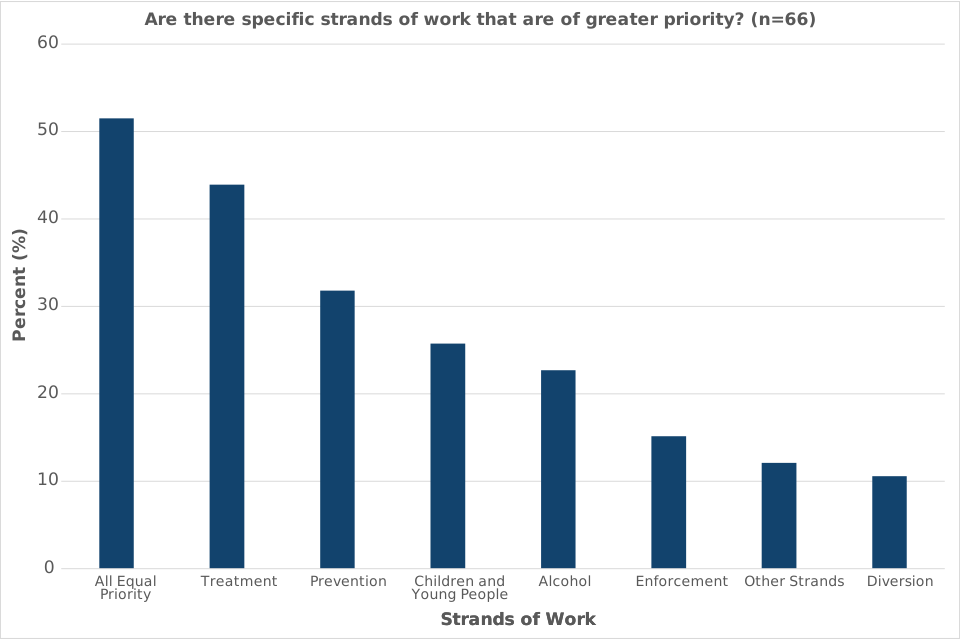
Just over half of CDPs in the survey (52%) felt that prevention, treatment, diversion, alcohol, enforcement and children and young people were of equal priority. However, 44% of those who responded to the survey highlighted that improving treatment was a priority and 32% identified prevention as a priority. Notably, enforcement (15%) and diversion (11%) were selected by fewer CDPs as a priority. This was despite drug and alcohol-related crimes being highlighted as a local challenge across many CDPs. See Figure 1 for more information.
Figure 1: CDP priorities
Notes:
- Percentages will not add up to 100% as CDPs could select multiple strands of work.
Some stakeholders reported that enforcement was a lower priority for their CDP because it would ‘happen anyway’, or because it would be funded regardless of the CDP’s involvement. Some also felt this was the case because they believed enforcement agencies did not see CDP work as a priority. Enforcement was more likely to be viewed as a priority in those cases where specific concerns around county lines or organised crime groups existed.
CASE STUDY – Differing priorities in Northumbria and Bristol
Northumbria’s diverse geographical footprint,[footnote 6] covering urban, rural and coastal areas, influenced the structure and priorities of the CDP. Urban centres faced challenges like homelessness and county lines activity, while rural areas struggled with accessibility to services. The CDP, thus, operated as a multi-agency partnership working across 6 local authorities, bringing together key stakeholders such as public health, the police, the PCC, and representatives from the NHS, housing providers, HMPPS, and the voluntary sector.
Post-COVID, shifts in drug use, including increased prevalence of synthetic opioids and dark web drug purchases, had exposed gaps in current strategies, which still focused largely on traditional opioid treatment. Facing local issues around anti-social behaviour and adulterated vapes, the CDP collaborated with the police to build awareness of these problems in schools. The CDP also prioritised analysis of data on local drugs trends, drug-related deaths and trends related to deprivation to inform their strategy and operations.
In Bristol, the CDP’s use of the NCDOF to develop the transformation programme, alongside the conditions of SSMTRG funding, led to an emphasis on treatment-focused outcomes. Thus, any criminal justice work that took place under this focused on areas such as continuity of care, rather than enforcement activities like days of action.
Around a third of CDPs had a specific focus on prevention, including initiatives for children and young people where this was identified as a local need. Prevention was seen by these CDPs as an area where multi-agency working and joined-up delivery could have a notable impact in responding holistically to emerging needs.
CASE STUDY – Prevention as a priority – Lancashire
The Lancashire CDP had a specific prevention subgroup, reflecting Lancashire’s prioritisation of prevention, as they saw this as an area where partnerships and co-working could have an impact.
In particular, the prevention subgroup focused on liaising with school governors to influence a ‘top-down’ approach to working with young people at risk of exclusion. The initiative aimed to prevent exposure to exploitation when young people are out of school. This was facilitated by having 2 Education Partnership Officers as members. These individuals facilitated engagement with school governors. The prevention subgroup was also looking at developing training for school governors around drugs and starting a pilot with a school to explore what works in supporting schools.
“We thought if we get to the governors, then we’ve got that top-down approach in schools where if the governors want it to happen, it’s more likely to happen – and plus they can influence the policies.”
Senior Stakeholder
The prevention subgroup also shared information and developed training opportunities to ensure the relevant workforce was educated on drug-related issues, including ketamine use and contaminants.
Although a third of CDPs had a specific focus on prevention, the scale of activities and the degree of focus on prevention varied by area. In some cases, it was felt to be a lower priority than treatment initiatives. Despite guidance that the SSMTRG funding could be used for harm reduction activities if CDPs felt that this was a priority in their area, some CDPs felt that OHID’s funding conditions encouraged a focus on treatment and recovery initiatives over broader prevention ambitions. The CDPs in Derby and Torbay noted restrictions relating to funding being ‘ring-fenced’ for treatment and recovery activities, compared to prevention.
“When we were spec’ing out what goes into our supplementary grant it was clear from OHID that this was about treatment rather than prevention. We had some ideas to have preventative roles … that was the steer we got quite strongly, so we haven’t actually geared it hugely to prevention, more expanding the service into areas where the crimes are hard to reach or to increase capacity.”
Strategic stakeholder
Treatment activities were also considered to be easier to track, monitor and demonstrate success on, compared to prevention. This made it challenging to justify funding for prevention activities. For example, evidencing the impact of a communication campaign delivered in schools on future drug use is extremely difficult. Additionally, respondents also highlighted that the NCDOF was more treatment-focused, with no outcomes related to prevention.
It was suggested that preventative initiatives that do receive funding may also be at the greatest risk of closure when funding is decreased. One frontline stakeholder (who was part of a young people substance use and sexual health group) felt that although their current approach to young people support was an example of best practice, there were concerns about this being affected if funding was decreased.
2.7 Formalising partnerships and ways of working
Most CDPs formalised partnerships and ways of working through data-sharing agreements, terms of reference, and performance or outcome frameworks. The majority (55%) of CDPs strongly agreed that their partnership “had clear and robust governance arrangements”. In some cases, such formalisation of partnerships was thought to have improved engagement among CDP members and overcome challenges with data sharing (for further details refer to Section 3.2 and Section 4.3).
However, the degree of formalisation varied, and it was not always considered necessary, particularly among CDPs that had pre-existing partnerships, agreements and structures. In some cases, data-sharing agreements were sometimes developed between individual organisations based on need, as it was found to be challenging to put in place a single overarching agreement for all partners and activities.
Some examples of the agreements between CDP partners are captured below:
- in Hammersmith and Fulham, the CDP reported signing information-sharing agreements for each organisation within the CDP, which enabled clear data-sharing processes
- in Bristol, terms of reference for the CDP were set to outline membership, structures, roles and responsibilities; separate terms of reference were also agreed for each working group to guide their aims, principles and governance
- in Bexley, the CDP did not have a data-sharing agreement, as many partners are from teams from within the local authority who can share data internally without formal agreements
- in Lancashire, both the main CDP and the prevention working group had set up their own terms of reference to set out expectations and responsibilities, after agreeing scope and membership; the data-sharing agreements varied based on need as they were not able to get one overarching agreement for all the partners and different activities
CASE STUDY – Data sharing and terms of reference in Lancashire and another CDP
In one area, the CDP had terms of reference in place, which covered membership (both core and additional partners), governance structures and the roles and responsibilities of members. Working groups had terms of reference to guide work, covering stated aims, principles and outlines of governance. The general approach was that there was alignment across strategic and operational groups and a feedback loop where groups supported and worked towards the aims of the CDP and the national drug strategy. The partnership led the monitoring, collection and assessment of data, and provided updates every 8 weeks.
The absence of a dedicated data lead led to some gaps in data collection and data sharing from the National Drug Treatment Monitoring Systems (NDTMS) and in partnership understanding, specifically on drug-related crime and the impact of enforcement. However, there was progress in developing new processes with the police to facilitate access to data via analysts supporting the crime data network in another area. There were some specific issues on disaggregating drug-related crime and enforcement data due to the wider footprint of the police’s remit across other areas.
In Lancashire, the CDP had clear terms of reference and met regularly. It recognised the importance of data sharing but identified that this could be a key challenge, so it sought to find ways to address this early on.
“You can’t do it towards the end of the project. You’ve got to look at data sharing almost before you think of the idea. You know, an idea or a programme. So it’s got to be top of the list.”
Strategic Stakeholder
The CDP aimed to be pragmatic and systematically worked with their partners to develop a series of data-sharing agreements. These were identified where needed by different working groups and partnership clusters, depending on the area of interest, and were led individually by the relevant partners.
“We’ve got a series of different information-sharing agreements depending on who’s been leading on the work, they’ve been the people who’ve pushed it forward. For example, in terms of dual diagnosis and our multidisciplinary team panels that meet locally, it was LSCFT [the mental health trust] who led on getting those information-sharing agreements out with all our substance use providers, and again in Lancashire and also in the 2 Unitaries.”
Strategic Stakeholder
While the CDP did not have an information sharing lead, a senior staff member provided strategic leadership to emphasise the importance of the work and encourage a solutions-oriented approach. This helped them overcome any emerging challenges if partners had concerns about sharing data.
“It’s about talking it through really and finding out where the blocks are and…there’s almost always a workaround.”
Strategic Stakeholder
Key enabling factors in this process in Lancashire included the following:
- the CDP supported this process by providing examples and templates – as a large council, Lancashire County Council also had access to a range of data-sharing experts who could provide advice and guidance
- ensuring partners were clear on different legislation and safeguarding needs and how these impacted data sharing
- ensuring partners maintained a clear shared vision and understanding of the purpose and benefits of data sharing
- making sure informed consent was clear in the assessment process
- the fact that some agreements were already in place (particularly between the criminal justice system and treatment services)
- the NHS’s Data Access Request Service (DARS) work, which had been a key enabler, by encouraging hospitals to be involved in data sharing
In addition, strong partnerships and guidance from Liverpool John Moores University, who hold the case management system for drug-related deaths, ensured they were able to overcome any challenges in accessing this data.
2.8 Collaborating with other CDPs
The evaluation findings indicate that CDPs tended to collaborate with other CDPs that were geographically close to them, similar in scope and priorities, or where there were pre-existing structural relationships (see Section 3.3) Collaboration aimed to ensure CDPs were taking a holistic response to drug-related issues, either through formal or informal structures. The survey results suggest that more than a third (35%) of CDPs were working with other CDPs in some way. As such, fostering inter-CDP networks (as recommended in Section 7.2) could be a valuable strategy.
In some cases, CDPs formally combined or merged with other CDPs, based on overlap of resources, funding, scope and priorities.
However, collaboration typically included information-sharing and setting up joint drug alert systems. For example, stakeholders in one CDP highlighted exchanging information with other CDPs to understand better how specific roles were working and to draw inputs from them.
Collaborating CDPs also pooled resources to overcome local challenges. Examples cited included shared hospital provision and shared custody suite facilities.
“We share custody suite provision and hospital provision with 2 other boroughs. We have developed a tri-borough approach to custody-based arrest referral and hospital-based provision, which has improved coverage in both custody suites and hospital wards, whilst reducing cost to each individual borough.”
SRO (qualitative survey response)
2.9 Co-ordinating and communicating with CDP members
CDPs typically convened their members in ‘main’ meetings to ensure oversight, share progress, raise concerns and co-ordinate strategy. Subgroups and working groups tended to have separate meetings focusing on progress on their specific responsibilities or scope.
The frequency of meetings differed by CDP, depending on the local context. For example, the Hull CDP scheduled formal meetings every 2 months (in addition to regular working group meetings), while in Barnsley stakeholders were engaged in quarterly CDP meetings, in addition to the quarterly assurance provided to the Safer Barnsley Partnership Board. For many CDPs, meeting length and/or frequency declined over time as meetings became more efficient and focused. For example, in Torbay the CDP previously met every 8 weeks, but it later moved to quarterly meetings.
CASE STUDY – Meetings – Bexley, Northumbria and Bedfordshire
Bexley: Organised quarterly meetings, with a structured agenda and work plan to track progress. There were 3 subgroups: one on children and young people (including schools, and children’s social care representatives); one on mental health and substance misuse (including representatives in the mental health trust and stakeholders in the area of co-occurring mental health and drugs); and one on criminal justice (involving wider police colleagues, and probation and community safety teams).
Northumbria: Held quarterly in-person and online meetings with structured agendas, including updates from the local drug information system and insights into drug quantities and composition. Meetings also involved presentations on key topics such as drug testing at festivals.
Bedfordshire: Established a ‘Drug strategy Strategic Coordinating Group’ chaired by the CDP SRO, with detailed discussions on progress, risks and matters requiring escalation. Information from this meeting was then communicated to other members of the CDP by the CDP co-ordinator for detailed discussion and action.
2.10 Pooling and influencing funding
CDPs were not provided with dedicated funding, and their work was expected to be carried out using existing funding and resources, in addition to current roles and responsibilities. This was consistently reported as the most significant barrier to CDPs’ functioning. This is outlined in more detail in Section 4.1.
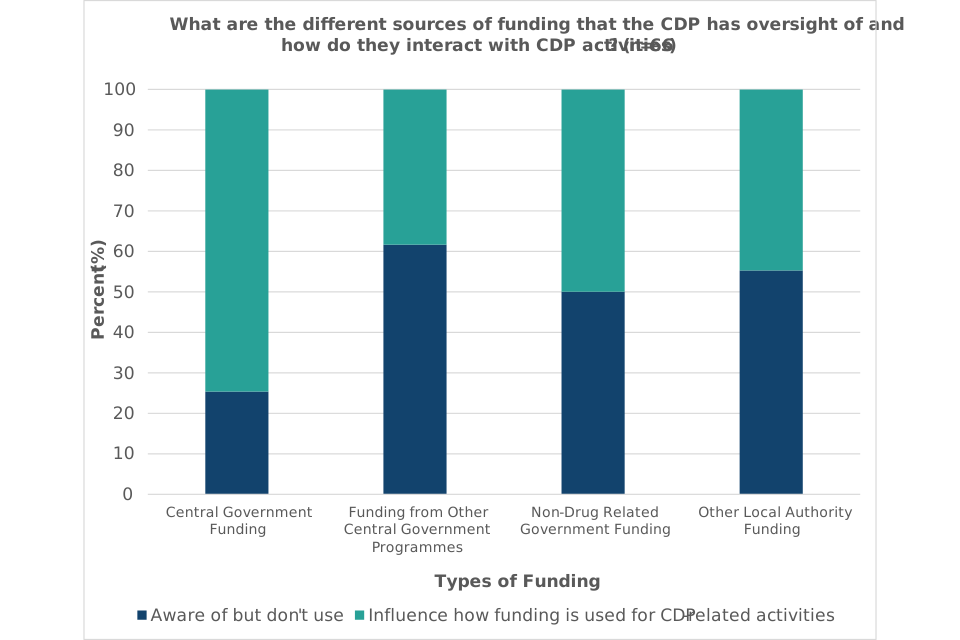
However, a key role of CDPs was to identify existing funding streams available within the local area and to influence their use to ensure that they were being utilised effectively to address local needs. Stakeholders who were interviewed reported that accessing different sources of funding was central to effective CDP operations. 75% of CDPs surveyed felt they had influence over how central government grant funding was used locally, such as the SSMTRG. More than a third (38%) reported having an influence over how funding from specific programmes, such as Project ADDER and Changing Futures, was used. For example, in Staffordshire discussions were held to ensure grant spending reflected the CDP’s priorities.
Moreover, while 50% of CDPs said they were aware of – but did not use – non-drug-related government funding, 50% highlighted it as a source of funding they had influence over for their work.
Figure 2: Sources of funding
3. Influences on CDP setup and structure
This chapter outlines the key factors that influenced the approach, ways of working, structures and setup chosen by CDPs. These keys factors were as follows:
- central government guidance, including guidance from the JCDU, OHID and the NCDOF, which particularly influenced how CDPs sought to measure outcomes and set their priorities; we recommend that the JCDU clarifies the extent to which prevention is a priority at a central government level and works with CDPs to address the challenges they face in evidencing the effects of prevention-related outcomes
- whether there were pre-existing partnerships and structures, such as drug and alcohol boards, which influenced governance arrangements, as well as the level of partnership formalisation
- local contextual factors, including demographics, geography and size, which influenced the establishment of local priorities, the extent of collaboration with other CDPs, and the level of access CDPs had to funding streams
- needs assessments, which informed local priorities, the selection of CDP members, and the use of working groups
3.1 Central government guidance
The majority of CDPs that responded to the survey found the support and guidance received from the central government either somewhat helpful (67%) or very helpful (32%), and this was reflected in the qualitative interviews.
Figure 3: Guidance documents
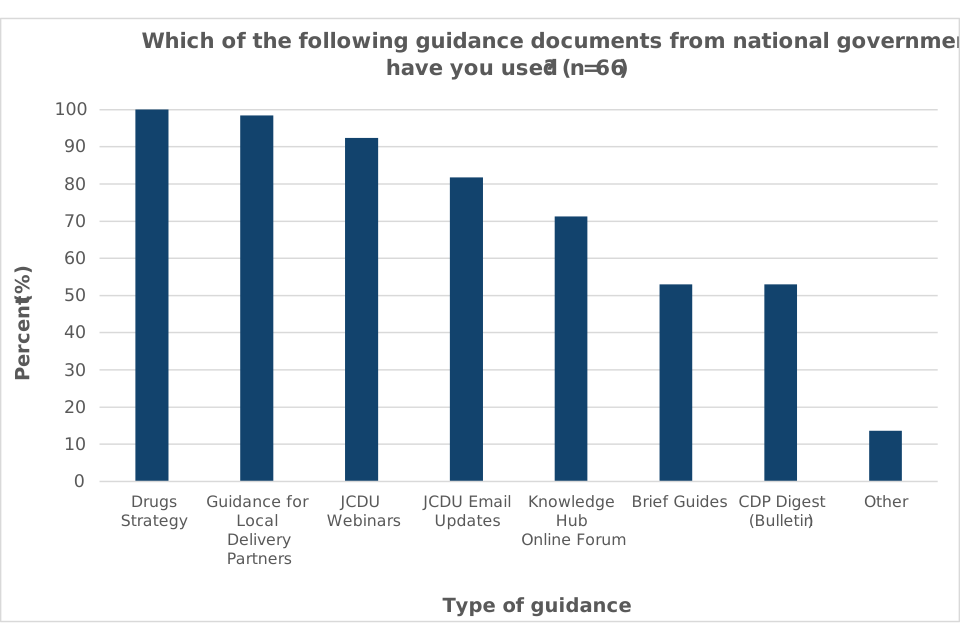
The most common forms of guidance accessed by CDPs were the guidance for local delivery partners (98%) and JCDU webinars (92%). In addition, 53% of respondents reported using brief guides and CDP digests.
There was positive feedback on the wider support received by CDPs. For example, stakeholders in Torbay noted that JCDU support with outcomes and dashboards helped them focus on how activities aligned with the local delivery plan. Similarly, stakeholders in Bexley highlighted OHID guidance and support provided through regular meetings, updates and workshops, which they said contributed to strategic development and operational planning.
3.2 Existing partnerships and structures
The formation of CDPs, as covered in Section 2.1, largely depended on the extent to which the local area had existing partnerships, alliances and boards related to drug and alcohol use and harms. Whether CDPs were incorporated into existing boards or partnerships, operated as a sub-set of these partnerships or were set up as independent entities, depended on the nature and scope of the existing partnerships.
Examples to illustrate these different approaches are captured below:
- in Barnsley, the Harm Reduction Partnership was adapted to form the CDP
- in Greater Manchester an operating Drug and Alcohol Transformation Board had been in place for a number of years before the publication of the national drug strategy; this essentially took on CDP responsibilities and initiatives
- the Bedfordshire, and Cambridgeshire and Peterborough, CDPs were built on existing structures, such as the Serious Harms Board, the Health and Wellbeing Board and the High Harms Committee
- in Torbay the CDP was set up as an independent drugs and alcohol partnership known as the Torbay Drugs and Alcohol Partnership (TDAP) – a strategic decision was made by partners at the outset to include alcohol and remove the terminology of ‘combating’
- the Lancashire CDP was built on the existing Lancashire Drug and Alcohol Partnership (LDAP) – the LDAP had established strong partnerships, but the incorporation of CDP initiatives gave them a renewed focus
- in Bexley, the CDP oversaw and provided governance for key panels, such as the Drug and Alcohol-Related Deaths Panel – discussions were ongoing at the time of the research around whether the CDP should sit under the Community Safety Partnership Board or other boards
- in North Lincolnshire, it was necessary to develop a new CDP structure as there were no existing official structures or partnerships to build from; however, the CDP, led by the local authority’s Public Health Department, worked closely with a neighbouring CDP on key initiatives and projects
Where CDPs were able to capitalise on existing structures and partnerships, stakeholders felt it was a significant enabler for effective functioning, relationships and joint working. In these cases, there may also have been less of a need for formalisation of partnerships, either because formal arrangements were already in place, or because effective informal arrangements were already established. For further details refer to Section 5.1.
3.3 Local contextual factors and needs assessments
It was found that, in line with guidance issued by the JCDU, membership of CDPs was determined based on the objectives, priorities and contexts of the local area. For example, Lancashire covers a wide geography, made of urban and rural areas, which meant that it was critical to engage with multiple district councils. There are also multiple prisons within the geographic area, and so the CDP had a particular focus on improving pathways and information sharing between prison and probation services.
CDPs that were geographically close to each other, those with pre-existing relationships, or those with overlapping scope were more likely to have formal processes in place for collaboration.
CDPs also believed that local context, size and circumstances affected the extent to which funding was available to them, and in turn the way in which the CDP was set up. For example, in one CDP it was suggested that due to an affluent demographic and transitory groups (students), the health needs of the area were less acute and therefore less funding was available for them to access and influence. Similarly, another CDP believed that being a small urban area (rather than a large metropolitan area) may have meant that funders saw needs there as less acute, resulting in a lower funding allocation.
Almost all of the CDPs surveyed (96%) reported that conducting needs assessments was a core activity, as recommended by the JCDU. The needs assessments that were identified differed significantly by area, but assessments tended to identify high levels of drug- and alcohol-related deaths, drug- and alcohol-related crime, and difficulties identifying those not currently in treatment pathways.
Findings from needs assessments fed into the structure, setup, membership, working groups, priorities and processes of the CDPs. For example, in Bexley, a specific need was identified to build relationships between mental health and drug use services, and also to ensure that housing staff would be able to engage, given high rates of homelessness. Strong partnerships with external hospital partners were also needed as there was no hospital in the area, whereas substance misuse can cause significant pressures on A&E and other healthcare services. In TDAP, a partnership joint strategic assessment was developed with input from core members, to shape key priorities and the delivery plan. This assessment highlighted the need to achieve a shift in the demand for drugs. This led to a focus on engaging stakeholders in education and schools, services for young people aged 0 to 19, and the community.
As outlined in this section, CDPs varied in size, geography, priorities and current issues. There is no ‘ideal’ size or makeup for a CDP; instead, this should be decided in relation to the relevant needs and wider context of the area. For example, as outlined in Section 2.6, CDPs such as those in Northumbria and Lancashire, had specific approaches to structure, such as having working groups or multi-agency approaches to reflect the needs of each area.
4. Barriers and challenges
CDP Stakeholders outlined a series of barriers and challenges that they experienced in applying the whole system approach at a local level. These were primarily the following:
- a lack of dedicated funding for CDP activities, which made it challenging for individual staff to manage workloads and was a significant barrier to partner engagement in CDP or subgroup meetings. This particularly impacted on partners that were already under significant resource pressures or with significant competing priorities, such as the NHS and police. We recommend that the JCDU provide funding dedicated to CDP operations and engage with the NHS at a central level to define their role in CDPs.
- CDPs in some cases also experienced significant challenges in sharing data with each other, which in turn led to sizeable gaps in evidence and information. In some cases, formalisation and setting up data-sharing agreements helped CDPs overcome this. However, these agreements were also challenging to set up, given an absence of local data collection systems, the variety of processes for sharing data between members, and differing approaches to reporting and monitoring data. We recommend that CDPs reflect on their specific requirement for formalisation. We also recommend that the JCDU provides forums for sharing best practice and templates to support CDPs to implement this, where appropriate.
- some CDPs reported challenges in ensuring strategic alignment with other local structures and setting up referral pathways between partners. These challenges were related to the fact that CDPs were often managing a large variety of different complex processes for referral and information sharing within the local area.
CDP stakeholders found it particularly difficult to address less visible harms. Examples included the use of drugs within particular communities that experience interconnected and additional forms of stigma and discrimination, or people indirectly affected by drug use (such as families of people who use drugs).
4.1 Funding and resources
The lack of specific CDP-related funding – especially in the face of multiple organisation-level priorities and lack of resource – was highlighted across the different research workstreams as a significant barrier to effective CDP functioning. It meant that CDPs did not have dedicated resources and stakeholders were carrying out CDP activities over and above their regular jobs. Effective CDP working requires multiple meetings at both the CDP and working group levels. This adds a burden on organisations that already face intense workloads. This hindered CDPs’ ability to engage, even when there was enthusiasm and buy-in for the whole system approach.
Where funding was available, it was often not provided for extended periods of time, or was ring-fenced for certain groups, interventions or activities and therefore could not be used flexibly. The systems mapping highlighted that there was a tension between the need for proper system-level development, which requires longer-term strategic activity and joint exploration over time, and the reality of short-term, uncertain funding. Relationships and capacity take time to develop but can be lost quickly due to a break in funding or even just a lack of certainty of future funding.
4.2 Lack of partner engagement
In survey responses, CDPs pointed to the challenge of partner engagement and getting partners to consistently attend meetings. Qualitative interviews confirmed this, revealing that specific partner organisations found it challenging to engage in key activities, including CDP meetings. This was primarily due to “stretched resources and capacity across public sector organisations”. It led to gaps in the data held by CDPs, and to co-ordination difficulties, since partners who did not attend meetings could not share their perspectives, insights and data. For example, NHS/health-based partners (such as ambulance services and A&E), schools, mental health services and HMPPS were less engaged in CDPs’ work because of existing pressure on these services.
While the survey highlighted that NHS representatives attended the main CDP meetings in most areas, a few stakeholders felt that they did not play a key role. They felt that the NHS acted as a strong partner when their role was very clearly defined but where it was not, it was very hard to pin down their responsibilities.
“Having some greater direction around the role of the NHS within this would just help so much.”
SRO (qualitative survey response)
Additionally, some CDPs also noted that attendees at key meetings were not senior enough within their member organisation to enable decision-making.
CASE STUDY – Difficulties with engagement in one CDP
In one CDP, it was noted that it was a challenge to effectively engage partners in reporting against the national drug strategy. This highlights a delivery model that perhaps lacks a clear and efficient mechanism for information sharing and collaborative reporting.
Despite its potential, the CDPs approach had not resulted in substantial benefits to the area at the time of the evaluation, suggesting a need for significant restructuring and revitalisation to achieve its intended goals.
“I can’t think of anything that has directly come out of [the CDP] that we wouldn’t have been already doing or would have done anyway… To be honest, I feel like it’s probably a bit of a waste of everybody’s time.”
Senior Stakeholder
While participants felt that the CDP had helped to bring down silos, bringing about more connections and involvement between agencies, it did not have a significant impact on specific issues facing some services. Moreover, although the CDP helped with partnership working across 2 local authorities, some strategic stakeholders felt it had, and that the whole system approach was inefficient at delivering multiple programmes simultaneously.
CASE STUDY – Challenges in engaging partner organisations in 2 CDPs
One CDP faced challenges with engaging certain partner organisations. For example, while representatives from the Integrated Care Board attended the CDP meetings, it had been challenging to facilitate as work with the CDP was not seen as a priority area for them. They also did not provide the CDP with NHS data to inform the development of needs assessments. A participant noted that there was “attendance but … not really the full engagement”. Moreover, the participant outlined that while they shared information with NHS colleagues, this did not amount to partnership working; they simply updated the NHS on what the CDP was doing. They stated it “doesn’t generate more engagement than that”. It was noted that the push for engagement created a lot of extra effort that they would like to be spending on the CDP strategy. Overall, there was a sense that the national drug strategy was not pushed as a priority for the NHS by relevant central government organisations and therefore is not featuring as an NHS workstream.
The CDP also faced challenges engaging the PCC office. It was felt that police are reluctant to go beyond their regular workload/business as usual. For example, the police were reluctant to go beyond administering naloxone, did not attend meetings, or sent junior staff who didn’t have decision-making powers.
In another CDP, challenges were reported around resourcing, the capacity of leadership and onboarding a co-ordinator role. It was felt that public health teams were best placed to carry the additional workload because they get more funding. While multi-agency working was seen as a benefit for networking, for some individuals it had reportedly increased their workload and sometimes differences in opinions across partners slowed the progress of initiatives being rolled out.
4.3 Data sharing
CDPs were responsible for reviewing, developing and sharing local data, some of which may only have been held at the local level and not nationally. An evidence review that aimed to understand the barriers to partnership working in England and Wales highlighted that sharing information between partners locally was challenging due to confidentiality concerns. It found that this was a significant barrier to partnership working.
CDPs, too, highlighted difficulties in data sharing across organisations, which led to critical evidence gaps. For example, in one CDP, in the absence of a data-sharing agreement, not all partners had access to important statistics, creating a knowledge gap. Other CDPs noted difficulties accessing data. For example, in Greater Manchester, stakeholders highlighted the challenges in linking data on people on probation and people experiencing rough sleeping to substances they were using. Similarly, stakeholders in Cambridgeshire and Peterborough reported being unable to access data around diversions from the criminal justice system to treatment services.
One CDP noted that the absence of a dedicated data and digital lead (a specific role advised in the JCDU guidance for local partners) had led to some gaps in data collection and data sharing from NDTMS. which had limited partnership understanding specifically on drug-related crime and the impact of enforcement. Despite this, there was some progress on developing new processes with the police to improve data and information sharing. In other cases, particularly in CDPs that are led by a PCC, CDPs have faced issues in accessing public health data driven by the limited connection to OHID (for further information see Section 5.2).
In another CDP, data-sharing arrangements only allowed for sharing within certain teams, limiting its effectiveness. For example, data could not be shared with other teams outside the CDP or with the public to demonstrate successes. Additionally, some CDPs found it was challenging to identify where data-sharing agreements and terms were required and where they were not.
Difficulties in data sharing were related to the complexity of data-sharing agreements and processes, both in content but also in identifying where they were required. Some partners were also reluctant to share data that was confidential or that could have implications for safeguarding. For example, stakeholders reported that in some cases it was complicated to work out the processes required for information sharing and referrals from, say, ambulance services to treatment services.
Restrictions on sharing data have also been frustrating for stakeholders, as this hinders their ability to develop targeted interventions and advocate effectively for resources within their own agency.
“We have the evidence that suggests that we do need some intervention, but without being able to use the data, we’re go around in circles.”
Strategic stakeholder
In the survey, CDPs highlighted a need for additional guidance from central government on how data sharing could be done more effectively. This emphasises the need for more detailed support, guidance and examples of best practice (within drugs policy and other policy areas) in the future.
4.4 Measurement, monitoring and reporting
Stakeholders reported that the approach to reporting differed across member organisations, as did the time and frequency. This made the integration and interpretation of information challenging.
Some stakeholders highlighted the absence of systems at the local level to measure data critical to identifying and addressing drug-related challenges and understanding impact. For example, in many local areas, there is no dataset that can be used to identify individual heroin users. Similarly, Jobcentre Plus is not set up to identify the number of people who are inactive on account of drug use.
4.5 Strategic alignment
In cases with multiple partners, delivery plans or strategies, creating alignment was highlighted as an issue. For example, one CDP stakeholder reported having a regional thematic delivery group in their area for drugs and county lines, with representatives from all police forces in the region. However, recommendations and actions communicated from this group were sometimes not aligned with the CDP’s drug strategy plan. In another CDP, stakeholders highlighted a lack of awareness on how they interlinked and fed into each other, and their role in the CDP.
Some stakeholders highlighted, both in interviews and in the systems mapping workshops, that designing effective prevention initiatives could be challenging, as they needed to adapt rapidly in an aligned manner to constantly changing trends. For example, many were grappling with an increase in the prevalence of synthetic opioids, (namely nitazenes) and the use of contaminated vapes among young people was also cited as a challenge Northumbria, Torbay and Bexley particularly highlighted adulterated vapes as an issue. Some CDPs took preventative action, such as in Northumbria, where a collaboration with the police was developed to drive awareness in schools. Similarly, in Bedfordshire, prevention work included campaigns on adulterated vapes, while in Torbay, they tested and confiscated vapes from 23 schools.
4.6 Addressing less visible harms
An additional barrier identified in an evidence review of partnership working in England and Wales was ensuring access for groups such as those who do not speak English or who face other financial or clinical obstacles, and addressing the stigma associated with receiving treatment.
This was echoed by a stakeholder in one CDP, who felt that more collaborative work was needed to introduce policies for less visible harms – for example, how drug and alcohol use affects children and wider families and their safeguarding needs. Another stakeholder highlighted that drug and alcohol dependency was a challenge in minority ethnic groups, but they were unsure if enough was being done to reach out to these communities.
These potential barriers for CDPs highlight the opportunity for additional guidance on engaging different communities. This also points to the need to address stigma associated with treatment at a national level, in addition to locally relevant activities.
4.7 System-level barriers
In addition to the operational and structural challenges faced by CDPs locally, the evaluation identified a number of systemic barriers outside the direct control of CDPs that impact on their ability to deliver a whole system approach. While not framed as recommendations for CDPs themselves, the following points highlight critical dependencies and missed opportunities across the wider system.
- limited influence over access to social housing – A lack of access to stable housing was said to have a key influence on the treatment journey of those facing drug-related challenges. In one area, it was reported that many individuals needed to rent through the private rented sector, which is expensive, as they were unable to apply for housing through the housing register. In another case, an individual had been waiting for 28 years for social housing. Thus, it is critical to ensure social housing agencies are involved in the CDP and appropriate partnership working approaches are introduced between, for example, treatment services and housing agencies.
- limited access to criminal justice system specialist support within treatment services – One CDP noted that embedding a criminal justice team within treatment services meant that people accessing treatment benefitted from specialist, holistic support. The CDP recommended that a criminal justice system service should be embedded in all CDPs to offer specialist support that people involved in the criminal justice system need to help them engage in treatment and recovery.
5. Key enablers and mitigation strategies
A number of key enabling factors to effective CDP working were identified, as well as a number of strategies taken to mitigate barriers and challenges. Key enablers and mitigators included the following:
- having strong pre-existing relationships or structures, which facilitated partner engagement and information sharing, and reduced the requirement for additional formalisation measures (such as setting up new data-sharing agreements)
- having each member organisation be represented consistently by the same individual or a few individuals, which helped other members know who key contacts were. Ensuring that these members were senior enough to make decisions also expedited action following CDP meetings. We recommend CDPs reflect on member representatives to ensure they are suitable for the purposes of different meetings and clarify to all partners who key contacts are.
- SROs with strong existing networks, both with members and also within local politics, also supported CDP function by driving visibility and building strong partnerships. An enthusiastic leadership style was also important for effectively bringing partners together effectively.
- where grants and additional funding streams were accessible, CDPs reported that this increased partner engagement and facilitated multi-agency working and initiatives
- in many cases, formalisation made it easier for partners to share information with each other and increased the efficiency of the CDP over time, such as being more selective and structured with meeting frequency and agendas. However, this may not be a suitable mitigation strategy in all CDPs, particularly those with partnership arrangements that are already strong and/or efficient.
5.1 Strong pre-existing relationships or structures
In some cases, CDP members had strong relationships in place before the CDP, enabling operations to be set up quickly. For example, CDPs with smaller geographical coverage, such as those in North Lincolnshire and York, reported that this meant there were pre-existing close relationships between local organisations. The Isle of Wight stakeholders also highlighted in the survey that being an island with clear geographical boundaries and a static workforce made developing close working relationships easier than in large, disparate areas. This was reiterated in the survey responses, where having established relationships between organisations was highlighted as an enabler of effective CDP working.
Where CDPs had existing partnership structures in place, stakeholders believed they sped up the set up and operations of the CDP. These existing structures acted as strong enablers of engagement and buy-in across partner organisations. In some cases, pre-existing data-sharing agreements enabled smooth data sharing from the outset.
Many pre-existing structures and networks resulted from other programmes, such as Project ADDER. For example, the Strategy Delivery Group in Bristol, which had received Project ADDER funding prior to the CDP being established, had set up data-sharing agreements between partner organisations. This meant there was no need for new agreements for the CDP.
Where these strong relationships did not pre-exist, it was found that having the same individuals representing each member organisation was useful. This helped to establish key contacts for each organisation, to clarify their role and scope, and to build productive partnerships and relationships with these individuals on a continued basis.
Qualitative interviews revealed that involvement from senior stakeholders drove increased engagement and collaboration across partners. Stakeholders in one case study area reported strengthened relationships due to regular meetings between the public health lead and the lead police inspector. In another, the criminal justice lead drove an improvement in the pathways between criminal justice system and treatment.
5.2 Leaders with strong networks and a productive leadership style
Leadership was found to play a key role in CDPs, especially in driving their visibility within the area and in the engagement of partners. This ultimately influenced delivery through the CDP. Some stakeholders felt that having an SRO from public health was a key enabler as they tended to have broader contacts and relationships in the area and so were better able to drive buy-in and alignment across organisations at both the national and local level. These senior stakeholders also drove political buy-in, which was important for CDP operations. For example, one SRO who was a deputy mayor had a strong network due to their wider role in the area and wrote letters to ministers to highlight the risks in funding.
Our findings indicate that in some cases, a PCC-led CDP was more likely to face issues in data access, driven by the limited connection with OHID. One CDP in the case study exercise felt that they had made limited delivery progress, due to challenges in accessing public health data and communication with OHID, due to the CDP being PCC-led.
Some stakeholders also emphasised the importance of leadership style, noting that leaders who were enthusiastic and able to bring people together were more likely to build stronger partnerships and raise the profile of the CDP. Others pointed out that having a secondary ‘chair’ or SRO-support role enabled the SRO to focus on driving strategy, rather than on key administrative or logistical functions.
CASE STUDY – Strong leadership in Greater Manchester, Lancashire and North Lincolnshire
In Greater Manchester, the deputy mayor was co-chair of the CDP, along with one of the directors of public health. They brought strength and visibility to the leadership roles. This succeeded in securing engagement from a broad range of partners on a continued basis.
In Lancashire, some stakeholders reported that strong partner engagement was driven by the SRO and their strong and proactive leadership. This was evidenced through factors such as ensuring clarity around responsibilities, priorities and opportunities. Moreover, the SRO drove collaboration with other neighbouring CDPs on joint events and built wider relationships and networks. It was felt that the SRO also successfully involved lived experience representation and enabled productive (rather than ‘tokenistic’) collaboration.
In North Lincolnshire, participants discussed some key leaders whose positivity, enthusiasm and leadership style benefitted the relevant partners and helped engagement with the CDP. Without these ‘personalities’ heading departments, it was felt that partner engagement might not have been as strong.
5.3 Access to funding
Stakeholders who were interviewed reported that accessing different sources of funding was central to effective CDP operations. One participant outlined that accessing grant funding had been instrumental in enabling the CDP’s achievements. Some stakeholders also fed back that receiving funding from OHID, such as the SSMTR grant, encouraged participation in the CDP.
5.4 Formalisation
To address the lack of dedicated resource for CDP functioning, and to improve partner engagement, some CDPs took a more formal approach to partnership working. Data-sharing agreements enabled smooth sharing of information, helping to address key evidence gaps at the CDP level.
The CDP in Bristol undertook a system transformation programme to strengthen its response to substance use and drug-related harm, following ministerial scrutiny of performance against key measures. This initiative, which was linked to substantial funding allocations, was viewed by stakeholders as instrumental in fostering sustained partner engagement. Across various CDPs, structured approaches to meetings—defining their timing, format, and purpose—were adopted to enhance coordination. In some cases, performance was directly tied to funding to address capacity challenges. Bristol’s experience exemplifies how targeted improvement efforts, supported by conditional funding, can drive enhanced oversight and improved local outcomes
In other cases, formalisation was not required, typically where relationships between CDP members were already strong and pre-dated the CDP’s formation. In a few cases, additional formalisation might have become a barrier where partnership working was already effective, as it could have introduced additional administrative work or added unnecessary pressure on the relationship.
The systems mapping work highlighted the complex context of CDPs operations and that successful operation is likely to require certain generic system elements to be in place. These include strategic direction and resource allocation, intelligence gathering and trend analysis, inter-agency co-ordination, partnership development and accountability, and prevention, treatment and harm reduction operations. The level to which these were developed in the CDPs depended on the local context and the role each CDP considered necessary to take on, given that context. Additional guidance might be useful in this area to prevent each CDP ‘re-inventing the wheel’ in relation to structures and governance.
5.5 Other potential enablers and mitigations
An evidence review identified specific working practices that are commonly associated with the effective delivery of multi-agency partnerships. These factors were implemented to varying degrees across multiple CDPs, as reported in qualitative interviews and the survey. Clear accountability and governance arrangements, clarity in roles and responsibilities, and supportive and strong senior management (SROs and other key leads) were commonly reported in the evaluation.
Key practices identified by the evaluation included the following:
- a shared physical location (for inter-agency teams)
- use of shared protocols (for example, processes and points of action)
- joint training across partners (for example, training police on using naloxone, or training provided by those with lived experience)
- named persons and contacts, particularly for new strategies or groups
- performance and reference tools
- consolidating existing practices
- clear communication between partners, using joint language and taking place at regular intervals
- supportive and strong senior management
- goal clarity, target setting and a shared purpose
- clear accountability and governance arrangements
- clarity in roles and responsibilities
- mutual trust, respect and understanding
6. Emerging outcomes
This evaluation focused on understanding the way in which CDPs implemented the whole system approach, but, where possible, emerging outcomes of CDP working have also been explored. Exploring the possibility of a further impact evaluation is recommended in order to understand these outcomes in greater depth.
In general, stakeholders who were interviewed were enthusiastic about the CDPs and believed that the joined-up approach had a positive impact on meeting local needs and contributing towards the national drug strategy. This included an improvement in the relationships between CDP members, and an increase in multi-agency working initiatives and joint service delivery. The CDP approach, many felt, had enabled a greater voice for those with experience of using drugs through lived experience representation at CDPs. Many stakeholders also believed that CDP functioning was also beginning to have perceived positive effects for people who use services.
However, in order to understand the extent to which CDPs were beginning to see positive outcomes, it is important to consider the following:
- CDPs did not have any distinct service delivery mechanisms or dedicated funding streams; as such, it was difficult to ascertain the extent to which the outcomes set out in this section can be attributed specifically to CDP working; a separate impact evaluation is required to explore this further
- the outcomes for people who use services outlined here are anecdotal and not based on quantitative evidence; broader evidence of partnership working also indicates that the effects of these kinds of activities will take time to realise at this level and are likely to only be achieved in the longer term
- not all areas reported realising the benefits of CDP working; at least one CDP, which was newly established, reported that it had not driven joint working as yet and instead was functioning, at the time of fieldwork, as a reporting forum
- CDPs were at varying stages of delivery – while some had been in place for a while and were beginning to report some outcomes, others were still in flux or were stabilising; thus, these are early outcomes and are likely to evolve in the future
We recommend that the JCDU explore commissioning a theory-based impact evaluation to better understand CDP outcomes and impacts in the longer term.
6.1 Shared vision and priorities across CDP members
Stakeholders reported that the national drug strategy and the CDP approach brought organisations together around a shared vision to combat drug-related challenges. Around three-quarters (75%) of CDPs surveyed felt all organisations in their CDP had a shared priority around delivery of the national drug strategy.
For example, in Bexley, stakeholders reported improved communication and collaboration across different agencies as a result of the CDP. Partners had a greater awareness of the national drug strategy and a deeper understanding of the importance of a multi-agency approach to substance misuse. This contributed to substance misuse becoming more of a priority within local strategic planning, ensuring it was acknowledged as a key factor in public health, criminal justice, and social care.
Stakeholders felt that CDPs helped foster existing partnerships and relationships between organisations, resulting in clear partnership structures, regular formal meetings and communication between partners. The survey revealed that most CDPs also felt positive about the systems/processes they had in place to drive partnership working, with a majority (55%) strongly agreeing that they had clear and robust governance arrangements. In general, survey respondents felt that the CDPs had improved partnership work, with 68% responding that they contributed to some improvements and 29% responding that partnership work had improved ‘significantly’. In the case study research, some members interviewed felt that that CDP formation had enabled new partnerships to be developed, and that this would not have been possible without the support of the CDP.
“I feel there’s a broader understanding, the conversations are frequent, they are open, there’s that mutual understanding of each other’s perspectives and objectives, and it feels really collaborative. The CDP gives us a forum into which each of the partners come and it’s refined how effectively we’re working together.”
Strategic stakeholder
CASE STUDY – Improving partnership working in Torbay Drugs and Alcohol Partnership
Stakeholders in the TDAP reported that the CDP had helped facilitate difficult conversations to identify challenges to effective delivery, had established a culture of trust between partners, and helped reduce ‘defensiveness’ when discussing complex issues. This led to some key outcomes:
TDAP pushed through the integration of the HALO treatment services IT system in custody suites. Previously, there were several information governance blocks at the service manager level, but TDAP allowed for a more strategic approach at the local authority level, which enabled the decision on the IT system. “It wouldn’t have happened, it’s my fear because I just didn’t have the power to be able to achieve that, even though I work for that trust, it needed some more senior intervention and so things like that I think are really valuable.” Senior Stakeholder
Shared learning on drug-related deaths. TDAP also facilitated learning across a wider range of partners. TDAP meetings across partners facilitated information sharing – for example, on escalation processes for adverse reactions – and directly fed into strategic outcomes. A bereavement pilot was also implemented, enabling police officers to direct families to a dedicated support charity, with the aim of reducing stigma and supporting loved ones around drug-related deaths. This enhanced relationship building with families also allows for greater understanding and feedback from families on their lived experience.
Rapid drug testing. The police drug expert witness was linked to the University of Bath. This enabled intelligence-based quick testing for synthetic opioids. Partners worked together on the ground to facilitate sample-taking from drug users and used learning to inform delivery and provide more tailored support and preventative education.
By raising the profile of combating drugs activities and formalising partnerships, it was felt that CDPs increased the accountability, monitoring and oversight of the roles, responsibilities and activities of partner organisations. This accountability, combined with greater communication and collaboration, was in turn thought to have enabled and improved joint service delivery and multi-agency working.
6.2 Increased multi-agency working
Stakeholders generally reported that the formation of CDPs had improved and increased multi-agency working, including the following:
- reviewing the design, resourcing or approach of existing interventions and referral pathways: using the CDP’s network of local partners, funds and resources supported members to jointly design and implement interventions relevant to local needs (for example, refining referral pathways including after test on arrest or hospital admission); more than 4 in 5 (86%) of CDPs reported that driving joined-up design and delivery was a key activity
- pooling resources: for example, a tri-borough approach to custody-based arrest referral and hospital-based provision, or optimising resources across partners on specific interventions; just under half of CDPs (47%) reported making joint resourcing decisions
- joint commissioning of services or interventions: 40% of CDPs (2 out of 5) reported that joint commissioning was a key activity; this may include discussing the scope of additional staffing roles and improving the process for commissioning of healthcare providers
- sharing data and intelligence to fill evidence gaps: for example, A&E sharing information on geographical areas with high rates of overdoses and near misses and notifying members about emerging drug trends
- developing and conducting joint training: for example, treatment delivery organisations distributing naloxone to police officers and providing training on it
- building a common approach to practices: this included sharing good practice guidelines or training on trauma-informed approaches and complex safeguarding
Across CDPs, multi-agency working was initially driven by conducting joint prioritisation and planning, to ensure that different partners were aligned on key objectives for the area. CDPs then set up communication channels, practices, co-location and meetings for the purposes of collaboration.
CASE STUDY – Multi-agency working – Torbay and Northumbria
In Torbay, TDAP built on previous joint working and partnerships to continue a shared trauma-informed approach to tacking drug and alcohol issues locally. Many existing strategic meetings and partnership ways of working fed into the CDP, with the most significant change being a focus on more deep-dive reviews and best practice learnings.
TDAP also enabled a review of outcome metrics and key thematic issues across a wider local systems footprint. It brought together different stakeholders, with working groups feeding into shared outcomes for the local area.
It was felt that commissioners took away ideas, potential activities and pieces of work from TDAP meetings to develop commissioning proposals that partners could feed into and comment on to help drive change. Specifically, TDAP was said to have a strong influence on the direction of SSMTRG funding, particularly on resources to achieve the outcomes of the drug strategy.
In Northumbria, inter-agency working was evident in regard to data and intelligence. Analysts’ involvement in the CDP encouraged inter-agency working and information sharing, with the creation of a dedicated communication channel to bring together analysts and the police. Additionally, a needs assessment was co-produced across the 6 local authorities. Analysts developed quarterly infographics that tracked progress against key outcomes and were presented at CDP meetings.
6.3 Increased representation of those with lived experience
Stakeholders felt that the CDP approach had enabled people who use drugs to be heard through lived experience representation at CDPs. Qualitative interviews found evidence of multiple approaches being taken by CDPs to engage people who use services, including breakfast clubs and conversation cafes. This was critical for designing and implementing measures to counteract stigma and respond better to the complex needs of people who use services. Stakeholders felt this would not have occurred without CDPs.
CASE STUDY – Engaging with people with lived experience in Bristol
In Bristol, each CDP meeting started with hearing from a lived experience ‘voice’. This was either individuals with lived experience sharing their personal experiences or lived experience representatives focusing on a specific theme of interest, such as experiences of housing and homelessness, or access to healthcare.
This helped build a greater understanding of unmet need among people who use drugs and drove required action. For example, in one CDP meeting the lived experience lead reported that people who used substances struggled to access dental care. This prompted relevant members of the CDP to offer information on how and where they could access dental care. The lived experience representatives then disseminated this information among the network.
6.4 Effective joint service delivery
Greater and more effective multi-agency working brought about a focus on joined-up service delivery. This was reflected in the survey results, with about 75% of respondents agreeing that CDPs enabled joined-up service design and delivery. More than 50% of survey respondents agreed that specific initiatives would not have happened without the creation of the CDPs and 55% agreed that the CDPs contributed to engagement with, and experience of, drug-related services.
Figure 4: CDP reflections
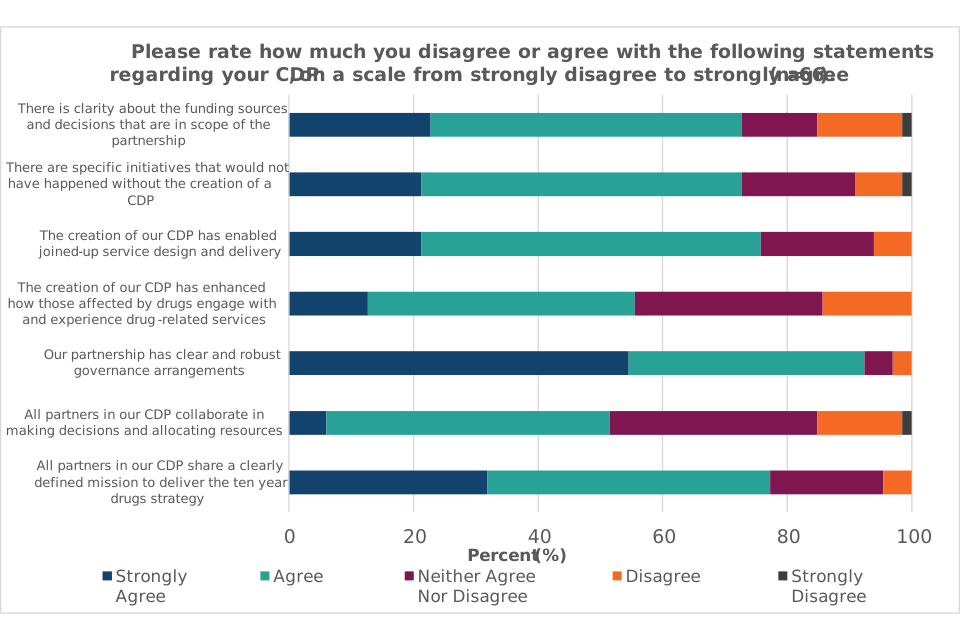
In one CDP, information sharing and multi-agency working identified cathinones (for more information, see FRANK) as an emerging local risk, which was conveyed to the police and local partners. This resulted in the local police carrying naloxone and receiving training on its use from other partners. Similarly, in Lancashire, the CDP established a specific pathway for ketamine use, and joint work with substance use providers meant more people were engaging in treatment. In Northumbria, the CDP collaborated with the police to drive awareness of vapes adulterated with cannabinoids in schools and conducted training on the use of naloxone.
Other examples of effective joint service delivery included:
- ensuring continuity of care upon release from prison for people with a substance use disorder and other services, such as housing or mental health
- jointly designed communication campaigns between treatment and enforcement stakeholders to prevent drug use and other harms
- bringing mental health services together with drug and alcohol treatment providers to support dual diagnosis by establishing referral pathways, reducing waiting times and relaxing entry conditions
- establishing and refining referral pathways into treatment, including after test on arrest or hospital admission
- improving efficiency through cross-agency sharing of information – for example, A&E or ambulance services identifying geographical areas with high rates of overdoses and near misses and notifying members about emerging drug trends
- developing peer and lived experience support initiatives
However, not all CDPs felt that multi-agency working had improved service delivery and had led to duplication of efforts, as outlined below.
CASE STUDY – Multi-agency working in one CDP
In one area, the CDP was seen as a valuable networking platform, bringing together professionals from various agencies and providing a structured environment for collaboration. It was felt that it had enabled individuals to reach out to a broader network of professionals they might not otherwise have contacted, in addition to an increased awareness of information and initiatives managed by other agencies.
However, the CDP did not produce significant changes in how services were delivered or in the implementation of new initiatives. Instead, the emphasis was on sharing information and networking. Some felt that the work facilitated by the CDP duplicated existing efforts. For example, the DWP already worked with agencies to address drug-related barriers to employment. Stakeholders from this CDP also expressed frustration with restrictions on sharing data to support the development of targeted interventions.
6.5 Developing prevention initiatives
Prevention was reported to be a key focus by some CDPs (with 32% seeing it as a key strand of their work), despite the fact that it is difficult to measure the impact of these types of interventions on drug use and/or drug harms, and despite the fact that CDPs generally felt that prevention was not a central government priority (for further details see Section 2.5). Below is an overview of key prevention initiatives related to multi-agency working facilitated by CDPs.
CASE STUDY – Overview of prevention initiatives in multiple CDPs
Bedfordshire: The CDP conducted prevention work at both strategic and operational levels. A strategic lead was appointed and was conducting analysis to map current prevention activities and to review this against local prevention need to identify gaps. In addition, the prevention working group lead updated the strategic plan for prevention across Bedfordshire by looking at where there were gaps in delivery. At the operational level, prevention work included campaigns on specific types of drugs in schools and contaminated vapes.
Hammersmith and Fulham: A member of the public health team worked with children and young people on smoking and vaping. The team was also involved in a mix of secondary prevention activities, such as immunisation activity with people who use drugs, and advice to help people stop smoking. The SRO also outlined that public health had been working closely with children’s services on 3 family hubs and the next phase of family centres being rolled out, with drug and alcohol workers going into the centres.
York: The Harm Reduction Officer on the CDP had a strategic role that involved advocating for a focus on prevention-related activities internally within local policing. They were responsible for identifying people with substance use disorders (such as incidents of non-fatal overdose) and referring them to treatment services. The CDP also confirmed the need for a subgroup on CYP, that is more operationally focussed, rather than strategic.
Data sharing and access to data had improved over the preceding years. This was particularly due to work conducted by Liverpool John Moores University’s Public Health Institute (the Greater Manchester Drug and Alcohol-Related Deaths Surveillance System), to understand drug-related deaths. A director of a voluntary community and social enterprise (VCSE) organisation (lived experience lead) felt that data provided by the Public Health Institute enabled them to both better understand drug-related deaths and review cases collectively with those within the partnership. It also enabled them to discuss collective approaches to prevention in the future.
6.6 Individuals who use treatment services
6.6.1 CDP Perspective
At the time of this evaluation, stakeholders reported that multi-agency working and joint service delivery driven by CDPs were beginning to result in benefits for people who use services. Over half of stakeholders who responded to the survey reported that CDPs had enabled collaboration on identifying people at risk (68%) and the identification and delivery of new treatment opportunities (62%).
Some stakeholders also reported collecting data on certain metrics from the NCDOF that indicated positive changes in outcomes for people who use services.
For example, in Greater Manchester, an Integrated Offender Management meeting was created to discuss individual cases, identify gaps in their support, and develop a plan for addressing these gaps, with the intention of supporting their treatment journey and preventing re-offending. In Lancashire, frontline workers reported that increased partnership working helped improve the overall offer, made their experience of navigating it more straightforward, and increased awareness/trust between services. This was starting to lead to improved outcomes due to an increased sense of trust and engagement from drug users.
“In Lancashire now, because we’re encouraged to really join up working with all these different agencies, it benefits [the person using the service] because [they] can see all these people together. [They] know exactly who does what, and it’s not confusing. Trust is a huge barrier that we face [particularly with] women because they may have been in prison or they’ve had really, really bad experiences and traumas. So, to build up that initial trust and show that [your case worker] and your probation officer work really well together, you can trust us both, we’re both doing this for you… Trust is kind of one of the main improvements that I see and then obviously engagement follows that.”
Frontline Stakeholder
6.6.2 Perspective of those that have used drug treatment services
To gain a holistic view of the CDP approach, the evaluation interviewed people who have used treatment services within the selected areas. It must be noted that it was assumed that most people who use services would have limited/no awareness of CDPs and their initiatives. The aim of the interviews was therefore to identify their experience of the support services available to them, with a view to drawing out their experience on the join-up between the services and whether they had seen any changes in this.
Feedback from participants was mixed, with some positive views on the treatment and support received and some gaps highlighted. Often, these gaps were area-specific or service-specific.
While people who use services are able to provide a wider range of perspectives, it is also important to highlight that identifying and reaching this audience group for research purposes could be challenging.
6.7 Partnership working between local services
People reported the benefits of having multiple services co-located on a single site. They felt this increased their comfort levels and that they were able to access different services, such as peer support, mentoring, advice, treatment and employment support.
Some participants outlined positive communication between services. They reported that various teams often shared case information directly between themselves, meaning they didn’t have to relay information about themselves multiple times. Similarly, in one CDP area, feedback indicated that data and appropriate health information was shared effectively between partners such as probation, treatment services and GPs.
The benefit of signposting to relevant community and support groups or co-ordinators was discussed by some participants. Some people received information on organisations that could help their recovery, evidencing join-up between service providers and community support groups.
The integration of healthcare workers in drug and alcohol services was reported to be useful. Where a GP was integrated into service hubs, it was felt that this enabled the GP to understand the situation and the individual better.
Some participants discussed their positive experiences around continuity of care, including being referred and receiving care quickly after release from prison, which they felt was key to recovery. This is indicative of the join-up between community treatment services and prison and probation services.
Some participants noted less positive experiences that demonstrated difficulties in partnership working. For example, one participant highlighted a 2-month wait before they saw a treatment and recovery case worker, following release from prison.
6.8 Wider local issues influencing experiences for people accessing services
Participants outlined that housing support was not always sufficient to help each individual. In one area, it was evident that, while a treatment service may put an individual in touch with housing, this may not be sufficient to help overcome any barriers to housing.
“[The drug and alcohol treatment service] signed me off when I was 6 months sober, but I was told by my doctor that I’d been signed off by them, they didn’t have the decency to tell me themselves. I was referred to a housing association, but they pretty much told me I didn’t have a chance of getting anything as a single man. No landlord would take me because I’m on benefits. So, there was no help for me with housing. I didn’t find it a positive experience at all.”
Voice of lived experience
When discussing resourcing and capacity in one area, views around support to help individuals to access multiple services were largely negative. Participants said that issues with high keyworker caseloads meant they were unable to receive help. Additionally, if they were referred to another service, the other service was also under-resourced, meaning that individuals did not hear back regarding booking an appointment and often had to chase this themselves. It was also noted that the high turnover of key workers was a challenge, meaning that people had to re-tell their story to each new keyworker.
CASE STUDY: Co-ordinated and lived experience-led support
One participant, ‘Mark’, accessed a community treatment service for 10 months after being released from prison and was in recovery from using drugs. Mark had prior experience of the criminal justice system and had been in and out of prison 42 times. Prior to entering prison on the most recent occasion, Mark lived in a different area. This area, he felt, lacked services to facilitate recovery and had too many personal triggers, such as acquaintances who were involved in crime and drugs.
Mark outlined that the main difference in his experience was the co-ordination of support, which was now managed by one support worker. After being released from prison recently, Mark was collected at the gates of the prison by a support worker from a service provider and was taken to secure and safe accommodation in an area away from his old hometown. A co-ordinator from the service arranged a variety of support, including therapy and counselling support, which aided his recovery.
“I was collected from the prison and went straight into [treatment service], after [being picked up] I went into therapy. … They break you down and help to build you back up … they help you get the skills to help yourself.”
‘Mark’
The counsellors at the treatment service had co-ordinated other support, such as organising a bus pass and directing Mark to food banks. Mark noted that foodbanks in particular were beneficial.
“They don’t have to steal to feed themselves”
‘Mark’
Mark believed this co-ordinated approach aided his recovery and prevented him from becoming involved in crime. Mark went on to complete a personal training course and at the time of the evaluation was setting up his own personal training business.
CASE STUDY: Rapid referral and community-based recovery
Another participant, ‘Tom’, was given a rapid referral to a community support by a doctor at a hospital. He said that if the referral had not been this quick he would have continued using drugs straight away on his release.
“I was lucky enough to come out the hospital on the Wednesday, had my assessment Thursday, and they gave me the spot in the rehab on the Thursday.”
‘Tom’
Tom was referred to a community-based recovery charity as a condition of his tenancy agreement with the recovery centre and started attending groups there. He found the support particularly beneficial as it was led by staff with lived experience. He felt the staff and volunteers really believed in him and he was aware they had come through addiction as well.
“I feel that everyone I’ve worked with only want the best for the person they’re supporting. I feel like that’s massive because you want to feel appreciated. As soon as you feel like someone’s not helping you, you drop back and you get worse.”
‘Tom’
Tom had been in recovery for over a year at the time of the evaluation and had received ongoing support from the charity to connect him to mental health services. He volunteered at the charity himself to support others on their journeys.
7. Learnings and recommendations
7.1 Recommendations for central government
7.1.1 CDP funding
Despite expectations that CDPs participate in partnership activities using existing funding streams, the absence of dedicated CDP funding was identified as a key barrier. It limits the resources and time that organisations are able to allocate to CDP working. Addressing this is key to effective delivery going forward.
CDPs also reported that the funding that is available via other streams is also typically unstable or involves only a short-term commitment, which makes long-term strategic planning challenging. Addressing this would also support CDPs to function and embed whole system working in the long term.
7.1.2 Sharing best practice and supporting CDPs
There is significant appetite among CDPs to learn from each other about best practices. It is recommended that the JCDU facilitates sessions and platforms with CDPs and, where necessary, central government stakeholders, for the purposes of learning about best practices. It is essential that these sessions focus on the exchange of learning and provide a safe space to ask questions.
In particular, there is a need to share best practices around effective partnership establishment and working. This includes recommendations on how to set up working groups, incorporating lived experience, establishing the nature and scope of the SRO role(s), establishing and using data-sharing agreements, and how to map complex referral pathways or data systems. This guidance should include practical examples and take into account of a mix of different contexts.
Another way CDPs could be supported is to provide customisable templates for formalising partnership working and structuring operations, such as data-sharing agreements, tools for assessing system maturity and information systems. This will support CDPs to set up formal arrangements were appropriate and avoid or mitigate challenges with data sharing and other elements of CDP working.
7.1.3 Performance monitoring
Collecting monitoring data regularly from CDPs may help drive increased accountability and identify areas for continuous improvement. It is important that this monitoring is consistent across CDPs and with the NCDOF. It should also allow for additional metrics and optional reporting to account for different CDP priorities and contexts. It may be useful to review existing JCDU approaches to performance monitoring to identify key gaps and overlaps.
The JCDU could consider using a maturity model for CDP development that includes:
- information sharing and co-ordination capabilities
- strategic planning and implementation
- partnership development and governance
- resource allocation and accountability mechanisms
7.1.4 Consider further evaluation to establish the drivers of impact
An impact evaluation should be carried out to explore the outcomes and impacts of the whole system approach to tackling drugs at the local level. A theory-based approach, using contribution analysis and incorporating mixed-methods data, is recommended in order to be able to establish the drivers of impact.
7.1.5 Develop co-ordination and learning mechanisms between CDPs
In systems mapping workshops, CDPs discussed the interactions and disconnect between national and local priorities. CDPs highlighted the need to be able to make decisions that respond to local priorities, and the need for support from national government to enable this. For central government stakeholders, this highlights the need for some flexibility in terms of targeted outcomes and the need for reporting systems to enable the integration of local priorities that are likely to vary across CDPs.
7.2 Recommendations for CDPs
7.2.1 Reflect on the formalisation of partnerships (including data-sharing agreements and terms of reference)
In some CDPs, setting up formal structures, terms of reference and agreements enabled effective partnership working, particularly around data sharing. While this approach may not be appropriate in all contexts, it is an option CDPs should consider. Some CDPs may want to consider implementing structured approaches to strategic planning across partner organisations.
Re-launching the CDP (terms of reference, member communication) has been shown to rejuvenate the partnership and bring a renewed focus to CDP activities. It is also an opportunity for members to review and re-assess the CDP priorities, in line with evolving local area needs, share learnings gained so far, and agree on any changes to approach that may be appropriate.
7.2.2 Reflect on leadership structure
Some CDPs pointed out that having a secondary ‘chair’ or SRO-support role enabled the SRO to focus on driving strategy, rather than administrative or logistical functions. The evaluation also highlights the benefits of ensuring that the SRO and leadership team have strong connections with both public health networks and local political stakeholders. In some cases, it is helpful for the SRO to be the leader of the local public health team though this may not be the best option for all areas.
7.2.3 Reflect on CDP membership and representation from different organisations
The evaluation found that involvement from a wide range of stakeholders is useful. In particular, it helps to involve lived experience representatives (including LEROs and community organisations) and representatives from services that individuals struggle to access, such as housing services and mental health services. This can help with signposting, co-ordination between services, and problem solving.
7.2.4 Identifying a nominated lead for CDP member organisations and/or workstream lead
Having a nominated lead for each partner organisation or subgroup is likely to facilitate accountability, both at the organisational and CDP level. While this may exist, and those in working groups may be aware of the lead through meeting attendance, it is essential that this information is recorded (in writing/visually) and circulated regularly. This will remind existing members and will inform new staff joining the team. It should be transparent and accessible to all members who ‘key contacts’ are on certain subjects or queries.
7.2.5 Build awareness around the CDP and its activities
Building increased visibility for the CDP and its activities can serve to drive increased awareness across different groups and greater clarity around CDP roles and responsibilities. Additionally, increased visibility can enthuse potential partners, helping to bring together a stronger mix of partner organisations.
7.2.6 Facilitate activities to collaborate across partner organisations
This includes joint training, co-location of services, and integrating teams in other services (such as integrating criminal justice system teams in treatment). The activities that are useful to drive collaboration will differ by area but an example that CDPs may wish to consider is running joint training for staff across multiple partner organisations.
CDPs may also wish to consider what levers they have to facilitate staff integration between services, for example healthcare and criminal justice partners in treatment services. Where partners have been integrated into other services, this has enabled better understanding of the individuals accessing services and partners have provided specialist support.
Where possible, CDPs should look at where they can co-locate services. Co-location was seen to be beneficial when implemented. It drove relationship development and increased understanding and collaboration across initiatives.
Annex A - Glossary of key terms
A&E: Accident and emergency
Cathinones: The chemical, cathinone, is a naturally occurring stimulant drug found in the khat plant. It has several commonly used alternative names, such as Monkey Dust. For more information on this, see Honest information about drugs (FRANK)
CDPs: Combating Drugs Partnerships. These are multi-agency forums that aim to co-ordinate action and oversight of the national drug strategy at a local level.
CECAN: Centre for Evaluating Complexity Across the Nexus.
Changing Futures: A 5-year government programme, announced in 2020 and rolled out in July 2021, aiming to improve outcomes for adults experiencing multiple disadvantages. These can include combinations of homelessness, substance misuse, mental health issues, domestic abuse and contact with the criminal justice system. The programme was rolled out in 15 local areas.
Criminal justice system: This refers to “the collection of agencies including, but not limited to, the police, the courts, the Ministry of Justice and the Home Office which are involved in the detection and prevention of crime, the prosecution of people accused of committing crimes, the conviction and sentencing of those found guilty, and the imprisonment and rehabilitation of ex-offenders”. For more information on the criminal justice system and for other definitions relating to criminal justice, see Criminal Justice Dictionary - Criminal Justice Alliance.
Data Access Request Service (DARS): This is a gateway to accessing NHS health and social care data.
DHSC: Department of Health and Social Care.
DWP: Department for Work and Pensions.
HMPPS: His Majesty’s Prison and Probation Services.
IPS: Individual Placement and Support. This is an employment support approach that was originally developed for people experiencing difficulties with mental health and addiction. The service “offers intensive, individually tailored support to help people to choose and find the right job, with ongoing support for the employer and employee to help ensure the person keeps their job”. For more information on IPS, see What is IPS? - Individual Placement Support (IPS Grow)
JCDU: Joint Combating Drugs Unit. A cross-government unit responsible for driving, co-ordinating and overseeing delivery of interventions to tackle drugs across government. It is made up of civil servants who are seconded from key government departments.
LERO: Lived Experience Recovery Organisation. A LERO is an organisation led by people with lived experience of drug and alcohol recovery. LEROs deliver a range of harm reduction interventions, peer support and recovery support services. They can help people to access and engage in treatment and other support services.
Naloxone: Naloxone is the emergency antidote for overdoses caused by heroin and other opiates or opioids (such as methadone, morphine and fentanyl).
NatCen: National Centre for Social Research
NDTMS: National Drug Treatment Monitoring Systems
NHS: National Health Service.
Nitazenes: A diverse group of synthetic opioids. Examples include isotonitazene, metonitazene and protonitazene. For more information on synthetic opioids, see Honest information about drugs (FRANK)
NCDOF: National Combating Drugs Outcomes Framework. As part of the national drug strategy, the NOF was developed to act as a single framework that central and local governments can both use to monitor progress towards their commitments.
OHID: Office for Health Improvement and Disparities, part of the Department of Health and Social Care.
PCC: Police and Crime Commissioner. An elected representative in areas of England and Wales who ensures that local police meet the needs of the community. For more information on this, see Police and crime commissioners - GOV.UK
Project ADDER (Addiction, Diversion, Disruption, Enforcement and Recovery): A project that promotes an intensive whole of system approach to tackling drug use and its consequences. Funding from Project ADDER was given to 13 areas across England and Wales between Autumn 2020 and March 2025. Funding was used to implement interventions across treatment and recovery, enforcement, and diversion. The overall aim was to reduce the prevalence of drug use, drug-related offending, and drug-related deaths.
People who use services: Refers to individuals who are beneficiaries of, or who are in receipt of, drug-related treatment activity or service.
SRO: Senior responsible officer. An individual who leads the CDP. Their role involves reporting to central government, chairing the partnership and holding the CDP key partners to account. SROs have usually previously held a senior role, such as a PCC, a Director of Public Health, or a similar role.
SSMTRG: Supplementary Substance Misuse Treatment and Recovery Grant. An additional funding source. Please note that in April 2025 (after the completion of the evaluation fieldwork), the SSMTRG was absorbed into the new Drug and Alcohol Treatment and Recovery Improvement Grant (DATRIG), along with other funding sources that were previously used to support drug and alcohol treatment and recovery.
Synthetic opioids: Man-made drugs that mimic the effects of natural opioids, such as opium or heroin, but that can be much more toxic. For more information on this, see Honest information about drugs (FRANK)
The secure estate: Refers to any secure facilities, including prisons, youth detention centres or approved detention premises in the UK.
Whole system approach: This involves responding to a complex issue by working across multiple stakeholders and ways of working, to deliver a single system response. A whole system approach aims to bring about sustainable, long-term change.
Annex B - Technical methodology and research approach
Initial Orientation Case Studies
These case studies aimed to develop a preliminary understanding of Combating Drugs Partnerships’ (CDP) experiences of implementing the national drug strategy and exploring any early outcomes. Learnings from these initial case studies were also used to inform development of research materials for the survey and initial qualitative Deep Dives.
Case study areas were selected by JCDU based willingness of CDPs to engage in the research and stage of development of the CDPs that is, those that had already developed CDP structures and membership.
Each case study involved 3 to 5 qualitative interviews with Senior Stakeholders, such as Senior Responsible Officers (SROs), and Frontline Staff.
Evidence review
The focus of the review was on primary evidence regarding multi-agency partnerships in England and Wales addressing different policy areas (research question 1) and on multi-agency partnerships combatting illicit drug use outside of England and Wales (research question 2). The eligibility criteria were therefore chosen to guarantee the search was efficient and relevant to the areas of interest. Clearly defining the scope of the review also ensured search returns were focused, consistent and feasible to review given the project timescales. For studies to be eligible for inclusion in the review, they needed to adhere to the following eligibility criteria:
Table B1: Inclusion/exclusion criteria for research question 1
| Language | Published in English language only. |
| Country | Focus will be on evidence from England and Wales only. |
| Year | 2010 onwards to ensure the search returned a sufficient number of papers whilst retaining relevancy. |
| Access | Full texts of documents should be accessible to the research team. |
| Evidence type | Evidence will primarily be from either grey literature or peer-reviewed journal articles. Due to time constraints, books and monographs will not be included. Newspaper articles, blogs, and/or datasets without accompanying narrative or reports will not be included. |
| Methodology | Primary research (qualitative and quantitative) and reviews (rapid evidence assessments, systematic reviews and meta-analyses) will be included. |
Table B2: Inclusion/exclusion criteria for research question 2
| Language | Published in English language only. |
| Country | Focus will be on evidence from international contexts only, outside of England and Wales. |
| Year | 2019 onwards. |
| Access | Full texts of documents should be accessible to the research team. |
| Evidence type | Evidence will primarily be from either grey literature or peer-reviewed journal articles. Due to time constraints, books and monographs will not be included. Newspaper articles, blogs, and/or datasets without accompanying narrative or reports will not be included. |
| Methodology | Primary research (qualitative and quantitative) and reviews (rapid evidence assessments, systematic reviews and meta-analyses) will be included. |
After search results were deduplicated, a total of 460 papers were identified for research question 1 and 295 papers for research question 2. Each of these papers were screened at title and abstract level, following which 60 were taken forward to full text screening and 20 grey literature sources were found. After full text screening, 9 academic papers and one grey literature source was included in the review for research question 1 and 10 academic papers and 3 grey literature sources were included in the review for research question 2.
Table B3: Academic literature
| Author/s | Year | Publication type/methods |
|---|---|---|
| Andrews, R., Downe, J. and Guarneros-Meza, V. | 2014 | Mixed methods: multivariate statistics and qualitative interactions with LSPs. |
| Braye, S., Orr, David. and Preston-Shoot, M. | 2012 | Qualitative: evidence review, qualitative workshops with stakeholders, document review, qualitative interviews with stakeholders and a review of data from safeguarding programmes. |
| Burton, W. and Martin, A. | 2020 | |
| Clark, K.J., Vechinski, J., Molfenter, T. and Taxman, F.S. | 2023 | Quantitative – secondary analysis. |
| Cooper, M., Evans, Y. and Pybis, J. | 2016 | |
| Crawford, A. and L’Hoiry, X. | 2017 | |
| Croteau, M. and Dufour, S. | 2020 | Qualitative interviews. |
| Davies, P.A. and Biddle, P. | 2018 | Mixed methods. |
| Driscoll, J., Hutchinson, A., Lorek, A., Stride, C. and Kiss, K. | 2022 | Mixed methods. |
| Fifield, L. and Blake, S. | 2011 | Mixed methods: a review of case studies, qualitative focus groups and electronic questionnaires completed by social workers. |
| Jones, C., Duea, S., Griggs, K., Johnstone, Jr. and Kingsey, D. | 2021 | Quantitative online survey. |
| Kawasaki, S., Dunham, E., Mills, S. and Kunkel, E. | 2021 | Discussion paper. |
| Leach, J. and Hall, J. | 2011 | Mixed methods. |
| O’Malley, D., Chiang, D.F., Siedlik, E.A., Ragon, K., Dutcher, M. and Templeton, O. | 2021 | Quantitative using data from the TIES Individualised Family Service Plan (IFSP) goal attainment scale. |
| Sundari, J., Klein, S., McCluskey, S., Woolnough, P. and Diack, L. | 2019 | |
| Wakeman, S.E., Rigotti, N.A., Chang, Y., Herman, G.E., Erwin, A., Regan, S. and Metlay, J.P. | 2019 | Retrospective cohort study. |
| Whiteside, L.K., Huynhb, L., Morsec, S., Hall, J., Meurer, W., Banta-Green, C.J., Scheuer, Hannah., Cunningham, R., McGovern, M. and Zatzick, D.F. | 2022 | Mixed-methods pilot pragmatic clinical trial. |
| Yatsco, A.J., Garza, R, D., Champagne-Langabeer, T. and Langabeer, J.R. | 2020 | Quantitative. |
CDP Exploratory Survey
The survey was intended to provide insight into what multi-agency working looks like in practice and an overview of how each CDP was operating.
In particular, the survey explored:
- which organisations were included within the CDP, and the extent of their involvement in main and subgroup meetings
- whether CDPs engaged with any wider groups or partnerships and the approach to public involvement
- the scope of the CDP, including activities, challenges and priorities
- CDP funding sources
- Initial reflections on enablers and barriers to effective working
- The perceived effect and outcomes of the CDP
- They type of guidance received from central government and perceptions of this guidance
All 106 CDPs[footnote 7] were invited to complete the survey online, distributed by the JCDU to SROs and representatives from 79 CDPs provided a response. Due to the quality of responses, only 66 of these cases were used for analysis purposes. The survey was carried out across May and June 2024. The survey included both open questions (that allow for broader qualitative responses) and closed questions (that are limited to specific answer options). Participation in the survey was not incentivised.
Central Government Interviews
The in-depth interviews conducted with central government stakeholders were designed to provide insight on the role of national processes and structures in enabling the delivery of the strategy, and whether the whole systems approach delivers better outcomes.
In doing so, these interviews explored the application of strategy at a national level, the way in which funding was being distributed, how effectively national and regional systems have been in supporting CDP delivery, and how delivery overall could be improved to maximise collective impact.
In total, 9 in-depth interviews were conducted with Central Government Stakeholders between September and November 2024 and lasting one hour each. Five interviews were conducted with members of DHSC, 2 were conducted with HMPPS, and one interview each was conducted with the Home Office and DWP. These interviews were not incentivised and were conducted online via Teams.
Deep-Dive Case Studies
The deep-dive case studies were designed to get an in-depth perspective of CDP operations, including barriers and challenges faced, key learning and recommendations for optimising delivery, mapping CDP partner organisations, and experiences of the whole system approach.
Twelve CDPs were selected by the JCDU for deep-dive analysis, based on the following criteria – rural – urban, a mix of regions across England, a mix of PCC and Public Health-led CDPs, numbers in treatment and drug-related crime data. The CDPs selected were Bedfordshire, Bexley, Bristol, Cambridge & Peterborough, Derby, Greater Manchester, Hammersmith & Fulham, Lancashire, North Lincolnshire, Northumbria, Torbay and York.
The deep-dives were conducted using a phased approach, as outlined below:
Table B4: Overview of deep‑dive case study phases
| Wave | Dates | Area |
|---|---|---|
| Wave 1 | June to September 2024 | Bedfordshire Cambridge & Peterborough Hammersmith & Fulham York |
| Wave 2 | October 2024 to March 2025 | Derby Greater Manchester Lancashire Northumbria |
| Wave 3 | January to March 2025 | Bexley Bristol North Lincolnshire Torbay |
Each deep-dive case study comprised of semi-structured in-depth interviews with a range of participant groups and included a review of relevant documentation such as their delivery plans and Terms of Reference.
Within each deep-dive case study, Verian aimed to meet certain quotas by participant group which are outlined below. In some areas, certain quotas were under- or over- achieved to reflect the specific set up of the CDP or based on the availability and capacity to participate in the evaluation.
Table B5: Participant quotas and interviews achieved in deep‑dive case studies
| Participant type | Quota (individuals per area) | Maximum quota (total) | Interviews achieved |
|---|---|---|---|
| Strategic stakeholders (for example, SROs or partnership leads) | 3–4 | 48 | 19 |
| Senior stakeholders (for example CDP members or working group leads) | 2–3 | 36 | 32 |
| Lived experience leads | 1–2 | 24 | 12 |
| Frontline staff (for example key workers in treatment delivery organisations) | 6–8 (paired/individual interviews) | 96 | 43 |
| People who use services (defined as individuals who were currently using a drug treatment or support service, or had done so within the last 2 years.) | 3–4 | 48 | 19 |
In-depth interviews with strategic stakeholders explored:
- the participants role and responsibilities in relation to the CDP
- the structures, agreements and processes of the CDP and it’s working groups
- the CDPs key priorities and objectives and how these were established
- key activities conducted by the CDP, including engaging partners, the public and other target audiences
- enablers and challenges for effective CDP working, including what has been working well and what has not been working well
- key changes, outcomes and impacts occurring as a result of the CDP
- feedback on the role of central government
In-depth interviews with frontline staff explored:
- the participant’s role and responsibilities within the relevant organisation
- awareness and perceptions of the national drug strategy and the whole systems approach
- awareness and perceptions of the CDP and the individuals’ role within it
- what CDP activities they think are going well and not going well
- key changes, outcomes and impacts occurring as a result of the CDP
In-depth interviews with people who use services explored:
- current treatment and support services that are being received
- awareness of contact or collaboration between different services, organisations or sectors, and whether this has or would make a difference to them
- feedback on the quality of support received and how this could have been better
The vast majority of interviews were conducted online and lasted between 45 minutes and an hour, although some interviews were conducted in-person (those conducted in person were largely with people who use services and frontline staff interviews.) In some cases, paired interviews (with 2 to 3 participants) or focus groups (with 4 to 8 participants) were conducted instead to fit the needs, requirements and availability of the participants. The only participant group provided with an incentive were participants who use services, who were given a £20 supermarket voucher.
Participatory Systems Mapping
Within 5 of the areas selected for deep-dives, participatory systems mapping was also conducted to explore the factors affecting the delivery of CDPs’ objectives.
Participatory systems mapping (PSM) is a facilitated stakeholder process used to develop a qualitative visual model of a system. The systems maps produced by the process capture the factors affecting the behaviour of the system and their causal relationships. It is an accessible way of engaging stakeholders on complex challenges. It supports discussion with, and between, participants and builds a shared understanding of system challenges, gaps in knowledge and potential solutions.
The systems mapping exercise sought to understand the outcomes of interest to the specific CDP (in addition to those of the NCDOF), the factors affecting these outcomes and the relationship to CDP activities and interventions.
The systems mapping for this evaluation was led by CECAN Ltd. For each of the 5 areas where mapping was conducted, an in-person workshop was held, typically with 15 to 20 CDP representatives and lasting 2.5 to 3.5 hours. Each in person workshop (except Derbyshire) was followed by an online session lasting an one to 1.5 hours as group, small group or calls with individuals. In the follow up session the map, digitised from the first session, and insights from the mapping process were discussed. As well as the workshop session, available documentation about the CDP was used to develop the maps.
While the systems mapping was used as an evaluation method for the project, it is to be noted that the CDP representatives that attended the workshop found them very useful. Comments on their value included that they created space for face-to-face interaction and relationship building and that they allowed a strategic conversation about CDP priorities. Both of these were cited by a number of CDP representative as hard to fit in the day-to-day focus on operational matters.
Overall, CECAN conducted 5 participatory system mapping processes, as outlined below.
Table B6: Participatory systems mapping workshops by area
| Area | Number of workshops | Number of individuals | Overview of key members attending workshops |
|---|---|---|---|
| Hammersmith & Fulham | 1 + 2 | 11–14 in 1st workshop, 2 in follow up, and an additional feedback session to full CDP meeting scheduled in April 2025 | Public health, community safety unit, rough sleeping, mental health, drug support organisations |
| City of York | 2 | 13, 9 | Public health, drug and alcohol services, mental health services, youth justice services, police, children’s services, peer support groups, housing and adult social care |
| Bedfordshire | 2 | 15, 8 | Public health, ICB, PCC office, police, probation prisons, OHID, drug and alcohol service commissioning, substance abuse support services, violence and exploitation reduction unit |
| Derby/Derbyshire | 1 | 12 | Public health, ICB, police, elected officials (city and county level), children’s services, probation |
| Northumbria | 1 + 2 | 17 (including 2 JCDU observers), 2 and 1 in follow up calls | Public health and commissioning, police, PCC, drug and alcohol support and services, prisons |
Annex C - Participatory systems mapping in the deep dive case studies
Findings and conclusions from participatory systems mapping
The PSM process revealed the inherent complexity for CDPs of addressing the objectives found in the National Combating Drugs Outcomes Framework, alongside addressing their related local priorities. Drug supply, use and harm are driven by diverse socio-economic, cultural, and geographic factors, some with roots in issues reaching back in time across society and within individual lives. The response to these challenges requires long-term, co-ordinated action to address multiple factors in different locations over acute and chronic timescales, cutting across the boundaries of institutions that have responsibility for them. It may take considerable time for the benefits of this joint systems-based working to be seen in change on the ground. During this time existing services that respond to issues related to drug, supply, use and harm will need to continue at current levels.
The CDPs we observed built their systems maps primarily from a delivery-focused perspective, reflecting their way of thinking about the broader system.
Each CDP area demonstrates distinct characteristics while sharing some common challenges. In Hammersmith and Fulham, management of acute support to long-standing drug users is a key focus, while York emphasises alcohol-related issues, Bedfordshire grapples with geographical diversity across its CDP area, Derby and Derbyshire were concerned with overcoming silos and enhancing strategic focus on prevention and the Northumbria centred on protecting the vulnerable and again the importance of alcohol. These local contexts significantly influence how each CDP sees itself and operates.
This focus on immediate delivery appears to stem from 2 main barriers, the first of which was mentioned by all CDPs and many participants and the second of which emerges from an understanding of the maps with systems theory:
1. Funding
- level of funding – the pressures on local authority funding and need to set legal budgets under severe resource constraints and high demand for services
- uncertainty of funding - CDP funding is essential, and its short-term nature creates significant challenges in planning services and retaining the expert workforce to deliver then; there is an evident tension between the need for proper system-level development, which requires longer-term strategic activity and joint exploration, and the reality of short-term, uncertain funding
- funding contingency – where funding is available is can often be tied to national priorities and not align with local needs
2. Integration challenges
The place of strategic and system-level activity is not always intuitive for CDPs, and even when recognized, integrating this with complex delivery systems remains unclear. While there is nothing excessively complicated about building action for a CDP around a systems model, it requires a good amount of consideration and collaboration to develop a clear plan for how organisations interact and work with one another and the channels of communication between them.
Insights from the Viable System Model
The analysis of the maps used concepts from the Viable System Model (VSM) – a framework developed to understand the requirements for complex social system to function effectively. Analysing the 5 mappings under the VSM headings reveals common patterns indicating a possible generic CDP model suited to challenges of the complex operational setting of CDPs.
A generic VSM map for CDPs and drug strategy would likely include: System 5 (Strategic Direction and Resource Allocation), System 4 (Intelligence Gathering and Trend Analysis), System 3 (Inter-agency Coordination), System 2 (Partnership Development and Accountability), and System 1 (Prevention, Treatment, and Harm Reduction Operations). This structure would maintain the core VSM principles while allowing for local adaptation.
Concluding comments from PSM
The systems mapping has focused on mapping systems within CDPs. However, a significant part of the conversations in workshops was about the role and relationship of CDPs to national policy and the interaction and disconnects between national and local priorities. CDPs need to be able to make the decisions that respond to local priorities and higher levels of government needs to provide enabling frameworks so this can be done. As well as CDPs planning, delivering, monitoring, managing and adapting locally the CDPs as a whole need to have higher level systems in place to manage and enable two-way learning and adaptation to create a whole systems approach to drugs policy.
In spite of the limitations of CDP resources and powers this work has revealed CDPs to be adding value to their local areas. They represent a developing whole system approach with the potential to be built on but one which is underdeveloped in terms of governance and control elements. The scale of challenges CDPs are responding points to the need for a more ambitious model and the conceptual and practical frameworks used in the work may be relevant to any future guidance provided to CDPs from the JCDU.
-
The number of CDPs has changed over time. At the time that CDPs were invited to participate in the survey, there were 107 CDPs. ↩
-
) The indicators used were burglary, possession of controlled drugs (cannabis), possession of controlled drugs (excluding cannabis), robbery, trafficking in controlled drugs, vehicle offence, other drug offences, other theft offences, and anti-social behaviour incidents. ↩
-
Sample bias in qualitative research refers to having a skewed sample which may not accurately represent the target population. This limits the extent to the which the data can be generalised. For example, in this case, those with greater capacity to participate in the research may have been more likely to participate in the case study. ↩
-
Participant bias in qualitative research refers to a participant’s motivations or perceptions of the research leading to biased data. For example, in this case, participants with positive experiences of the intervention may have been more inclined to participate. ↩
-
While reducing drug supply and drug-related crime were seen to be a priority under the NCDOF for a smaller number of CDPs, this was at odds with how CDPs reported local challenges. For example, despite these being lower priorities, drug-related crime was highlighted as a key local challenge by many CDPs. ↩
-
In this context, a geographical footprint refers to the physical characteristics of the region/area of land within which the CDP exists, which influences how the CDP operates. ↩
-
Please note, at the time of survey rollout, there were 106 CDPs, however, there are currently 103 CDPs after some CDPs decided to merge. ↩