UK Chief Medical Officers' physical activity guidelines
Updated 10 July 2026

© Crown copyright 2026
This publication is licensed under the terms of the Open Government Licence v3.0 except where otherwise stated. To view this licence, visit nationalarchives.gov.uk/doc/open-government-licence/version/3 or write to the Information Policy Team, The National Archives, Kew, London TW9 4DU, or email: psi@nationalarchives.gov.uk.
Where we have identified any third party copyright information you will need to obtain permission from the copyright holders concerned.
This publication is available at https://www.gov.uk/government/publications/physical-activity-guidelines-uk-chief-medical-officers-report/uk-chief-medical-officers-physical-activity-guidelines
Foreword by the Chief Medical Officers
If physical activity were a drug, we would refer to it as a miracle cure, due to the great many illnesses it can prevent and treat. Since the first Chief Medical Officers’ guidelines on physical activity the evidence that it has a very positive impact on physical and mental health has got even stronger, for women and men and across all ages.
The health benefits of physical activity are significant when we go from no activity to even some activity. Health gains then rapidly build to the point when we are doing around 150 minutes a week. After this, benefits still increase but often at a slower rate. For this reason we recommend that adults aim for at least 150 minutes a week, but importantly if you do no physical activity do some, and if you do some do a bit more. In addition, reducing the amount of waking time we spend sitting or lying down - particularly for prolonged periods - provides further health benefits, even for those who are otherwise active.
New research has also clarified that the benefits of physical activity far outweigh the risks, even for most people living with long term conditions, and that those who are least active have the most to gain from increasing their physical activity. Additionally, the evidence base continues to be strengthened on the health benefits of physical activity across age groups and other demographics, particularly for women, where the evidence base was previously less strong.
While many of us intend to increase activity levels, lasting change is most likely when activity is enjoyable, or useful, or part of everyday routines. Walking, cycling, wheeling, all forms of sport, dancing and running are all valuable ways to be active. There is clear evidence that even small increments such as taking the stairs rather than the lift, or walking to the shops can make a surprisingly large difference to our long term health and wellbeing if they become part of normal life. For this reason the UK Chief Medical Officers are very strongly in favour of creating the conditions for everyone, no matter your age, where you live and wider circumstances, to lead active lives. This includes making active travel an easier choice. Meaningful movement is different for everyone - finding ways of sustaining physical activity that is suitable for you is what is important.
Alongside general physical activity we all must maintain our strength and balance. Activities and exercises which maintain and build muscle strength and improve our balance are essential throughout our lives, and to ensure we maintain independence in older age. However, those who have recently been inactive (for example due to an operation) or are taking GLP-1 (glucagon-like-peptide-1) agonist drugs especially need to ensure they do activities to maintain muscle strength.
Alongside these general guidelines we have produced specific advice for groups including children (0 to 5 and 5 to 16 years), pregnancy and postpartum, older people and disabled adults and disabled children and disabled young people.
The remarkable physical and mental health benefits of activity are available to all of us. Making sure we all regularly undertake physical activity we enjoy or is useful, maintaining strength and balance and making it easy for others to do so, is one of the best things we can do as individuals and for health of all of society.
Professor Isabel Oliver
Chief Medical Officer for Wales
Professor Sir Michael McBride
Chief Medical Officer for Northern Ireland
Professor Sir Gregor Smith
Chief Medical Officer for Scotland
Professor Sir Chris Whitty
Chief Medical Officer for England
Executive summary
This report presents an update to the 2019 physical activity guidelines issued by the 4 Chief Medical Officers of Wales, Northern Ireland, Scotland and England. The UK Chief Medical Officers draw upon global evidence to present guidelines for different age groups, covering the volume, duration, frequency and type of physical activity required across the life course to achieve health benefits.
The evidence to support the health benefits of regular physical activity for all groups has become increasingly compelling. In children and young people, regular physical activity is associated with improved learning and attainment, better mental health and cardiovascular fitness, also contributing to healthy weight status. In adults, there is strong evidence to demonstrate the protective effect on physical activity on a range of many chronic conditions including coronary heart disease, obesity and type 2 diabetes, mental health problems and social isolation. Regular physical activity can deliver cost savings for the health and care system and has wider social benefits for individuals and communities. These include increased productivity in the workplace, and active travel can reduce congestion and reduce air pollution.
Our understanding of the relationship between physical activity and health has grown. In general, the more time spent being physically active, the greater the health benefits.
However, we now know that even relatively small increases in physical activity in those who are not active can contribute to significantly improved health and quality of life. This improvement increases steadily but substantially up to the recommended amount of physical activity, and more slowly beyond it. As such, although we recommend that all individuals work towards achieving these guidelines, they are not absolute thresholds and we recognise the benefits that can be achieved at levels both above and below 150 minutes per week.
This guideline emphasises the importance of regular activity for people of all ages, and presents guidance on being active during pregnancy and after giving birth, and for disabled adults.
This report underlines the importance of all age groups participating in a range of different activities. This includes recognising the importance of muscle strengthening activities. In childhood, strengthening activities help to develop muscle strength and build healthy bones, while in adults and older adults they help to maintain strength and delay the natural decline in muscle mass and bone density which occurs from around 50 years of age. The guidelines reinforce the importance of these types of activities for all age groups and highlight the additional benefit of balance and flexibility exercises for older adults.
The report also highlights the risks of inactivity and sedentary behaviour for health. There have been notable developments in the evidence base for the health effects of sedentary time in adults, with research suggesting sitting time is associated with all-cause and cardiovascular mortality, and cancer risk and survivorship. Similar effects are seen in children where sedentary behaviour is associated with lower cardiovascular fitness and obesity. In all groups, the relationships of sedentary behaviour and health occur independently of moderate to vigorous physical activity for some health outcomes. Prolonged sitting is harmful, even in people who achieve the recommended levels of moderate to vigorous physical activity. Despite this, the evidence does not currently support including a specific time limit or minimum threshold of sedentary time within these guidelines.
The guidelines allow flexibility for how and when children and young people can achieve the recommended levels of physical activity across the week. The recommendation is that an average number of 60 daily minutes be achieved across the week, rather than a minimum daily threshold.
How to use the guidance
The guidelines follow a life course approach with a separate chapter for the age groups covered in the report:
- under-5s
- children and young people (5 to 18 years)
- adults (19 to 64 years)
- older adults (65 and over)
Each chapter includes an introduction, sets out the guidelines for that age group, summarises the evidence to support the guidelines and outlines any changes made since 2011.
The guidelines can be used by health professionals, policy makers and others working to promote physical activity, sport, exercise and active travel. The guidelines are designed to aid health professionals and others to provide individuals and communities with information on the type and amount of physical activity that they should undertake to improve their health.
Summary of guidelines by age group
Under-5s
Infants (less than 1 year) should be physically active several times every day in a variety of ways, including interactive floor-based activity, such as crawling.
For infants not yet mobile, this includes at least 30 minutes of ‘tummy time’ spread throughout the day while awake (and other movements such as reaching and grasping, pushing and pulling themselves independently or rolling over) - more is better.
Note: tummy time may be unfamiliar to babies at first, but can be increased gradually, starting from a minute or 2 at a time, as the baby becomes used to it. Babies should not sleep on their tummies.
Toddlers (1 to 2 years) should spend at least 180 minutes (3 hours) per day in a variety of physical activities at any intensity, including active and outdoor play, spread throughout the day - more is better.
Pre-schoolers (3 to 4 years) should spend at least 180 minutes (3 hours) per day in a variety of physical activities spread throughout the day, including active and outdoor play. More is better - the 180 minutes should include at least 60 minutes of moderate-to-vigorous intensity physical activity.
Children and young people (5 to 18 years)
Children and young people should engage in moderate-to-vigorous intensity physical activity for an average of at least 60 minutes per day across the week. This can include all forms of activity such as physical education, active travel, after-school activities, play and sports.
Children and young people should engage in a variety of types and intensities of physical activity across the week to develop movement skills, muscular fitness and bone strength.
Children and young people should aim to minimise the amount of time spent being sedentary and when physically possible should break up long periods of not moving with at least light physical activity.
Adults (19 to 64 years)
For good physical and mental health, adults should aim to be physically active every day. Any activity is better than none and more is better still.
Adults should do activities to develop or maintain strength in the major muscle groups. This could include resistance exercises. Muscle strengthening activities should be done on at least 2 days a week, but any strengthening activity is better than none.
Each week, adults should accumulate at least 150 minutes (2 and a half hours) of moderate intensity activity (such as brisk walking or cycling), or 75 minutes of vigorous intensity activity (such as running), or even shorter durations of very vigorous intensity activity (such as sprinting or stair climbing), or a combination of moderate, vigorous and very vigorous intensity activity.
Adults should aim to minimise the amount of time spent being sedentary and when physically possible should break up long periods of inactivity with at least light physical activity.
Older adults (65 years and over)
Older adults should participate in daily physical activity to gain health benefits, including maintenance of good physical and mental health, wellbeing and social functioning. Some physical activity is better than none. Even light activity brings some health benefits compared to being sedentary, while more daily physical activity provides greater health and social benefits.
Older adults should maintain or improve their physical function by undertaking activities aimed at improving or maintaining muscle strength, balance and flexibility on at least 2 days a week. These could be combined with sessions involving moderate aerobic activity or could be additional sessions aimed specifically at these components of fitness.
Each week older adults should aim to accumulate 150 minutes (2 and a half hours) of moderate intensity aerobic activity, building up gradually from current levels. Those who are already regularly active can achieve these benefits through 75 minutes of vigorous intensity activity, or a combination of moderate and vigorous activity, to achieve greater benefits. Incorporating weight-bearing activities has an impact through the body and helps to maintain bone health.
Older adults should break up prolonged periods of being sedentary with light activity when physically possible, or at least with standing, as this has distinct health benefits for older people.
Despite the widely reported benefits of physical activity, most adults and many children across the UK are insufficiently active to meet the full set of recommendations. We want this report to act as a catalyst for a change in our attitudes to physical activity.
These guidelines present a UK-wide consensus on the amount and type of physical activity that is needed to benefit health across the life course. The guidelines have been updated using the best available evidence and reflect what we know now about the relationship between physical activity and health. The guidelines apply across the population, irrespective of gender, age or socioeconomic status. We know there are clear health inequalities in relation to physical inactivity and therefore interventions to promote physical activity must consider this.
We want as many people as possible to make use of these guidelines to work towards and achieve the recommended activity levels. With that in mind, we have developed updated infographics accompanying this report to help bring the guidelines to life and make them easy for everyone to use. We hope these guidelines help all individuals to become more active. The good news is that even small changes can make a big difference over time. As we say in these guidelines: some is good, more is better.
Introduction
Aim of the guidelines
This report is a UK-wide document presenting the UK Chief Medical Officers’ physical activity guidelines for different groups, covering the volume, duration, frequency and type of physical activity required across the life course to achieve general health benefits. The guidelines present thresholds for the achievement of optimal health benefits at the recommended levels of physical activity in terms of strength, moderate and vigorous physical activity and balance activities.
Who these guidelines are for
The main intended audience for this report is professionals, practitioners and policymakers from a wide range of organisations concerned with formulating and implementing policies and programmes that promote physical activity, sport, exercise and active travel to achieve health gains. These groups will want to adapt the messages and recommendations in this report to suit the specific needs and interests of those they are working with and the context they are working in.
Principles
Physical activity for good health and wellbeing
Regular physical activity provides a range of physical and mental health benefits. These include:
- reducing the risk of disease
- managing existing conditions
- developing and maintaining physical and mental function
The UK Chief Medical Officers’ guidelines emphasise the benefits of activity for everyone, at all life stages, and that doing any is better than doing none. They provide recommendations on the frequency, intensity, duration and types of physical activity at different life stages, from early to later years. Benefits are accrued over time, but it is never too late to gain health benefits from taking up physical activity.
Figure 1: evidence-based health benefits of physical activity across ages (see references 1, 116 and 122)
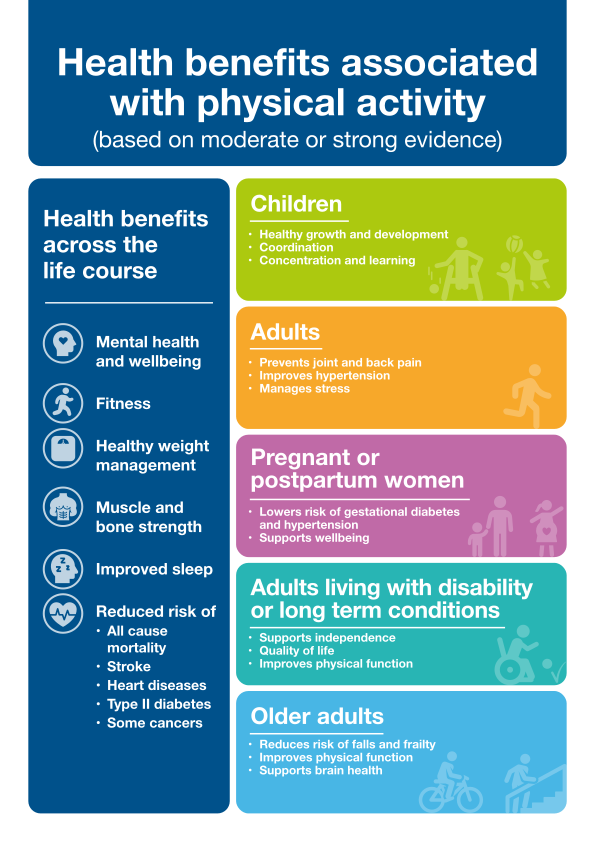
Figure 1 shows a diagram of the evidence-based health benefits of physical activity for everyone, including:
- mental health and wellbeing
- fitness
- healthy weight management
- muscle and bone strength
- improved sleep
- reduced risk of mortality and disease
It also shows specific benefits by life stage. These include:
- healthy growth and development, and benefits for concentration and learning for children, including disabled children and young people
- preventing joint and back pain, and managing stress in adults
- lowering the risk of gestational diabetes and hypertension for pregnant women
- supporting independence and physical function for adults living with long-term conditions or disability
- supporting brain health and reducing frailty and falls in older adults
Icons alongside the text depict diverse figures engaged in activity.
Some is good, more is better
Although we recommend that all individuals work towards achieving these guidelines, there are no absolute thresholds. Benefits are achieved at levels both below and above the guidelines.
In general, the more time spent being physically active, the greater the health benefits. However, the gains are especially significant for those currently doing the lowest levels of activity (fewer than 30 minutes per week), as the improvements in health per additional minute of physical activity will be proportionately greater.
Figure 2: dose response curve of physical activity and health benefits (see reference 116)
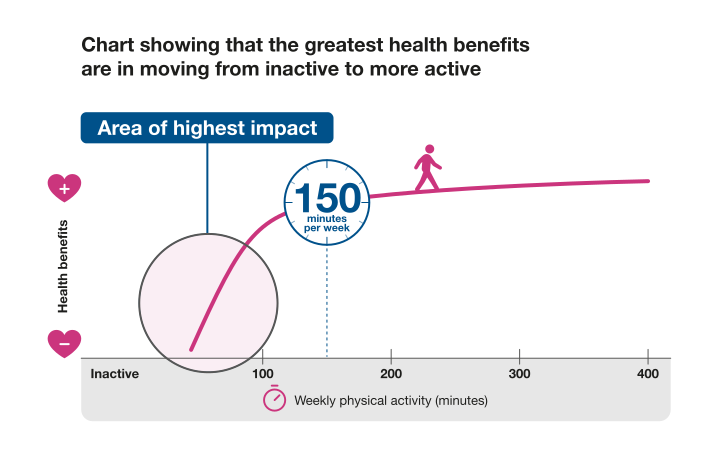
Figure 2 shows a graph illustrating the relationship between health benefits and time spent in moderate to vigorous activity. It shows a steep increase in health benefits between inactive and up to around 150 minutes of moderate to vigorous physical activity, after which the health benefits continue to increase but more slowly.
There is no minimum amount of physical activity required to achieve some health benefits. Specific targets below the recommended levels - such as aiming to do at least 10 minutes at a time - can be effective as a behavioural goal for people starting from low levels of activity (see reference 3) (including disabled adults and those with long-term conditions) and as a step on the journey towards meeting the recommended levels set out in the UK Chief Medical Officers’ guidelines. Small bouts (including fewer than 10 minutes) accumulated over the day and week will also provide benefits (see reference 4).
It is recommended that people are active every day. Spreading activity across the day or week can help make the guidelines achievable within daily living, for example, walking, wheeling or cycling for daily travel is often the easiest way to get physically active.
Health benefits of different types of physical activity
Physical activity is defined as any bodily movement produced by skeletal muscles that requires energy expenditure. It takes many forms, occurs in many settings and has many purposes (for example daily activity, travel, active recreation and sport).
Health-enhancing physical activity includes multiple types of activity:
- cardiovascular
- muscle and bone strengthening
- balance training
Cardiovascular activity
Cardiovascular activity, sometimes called aerobic activity, increases breathing rate and makes the heart and muscles work harder. It can be of low, moderate or vigorous intensity and is relative to an individual’s fitness. Therefore, what could be light intensity for a young person (who is very fit and active) could be moderate or vigorous intensity for an older adult or a younger individual who is inactive and unfit.
Although activity of any intensity provides health benefits, greater intensity provides more benefit for the same amount of time. The 150 minutes refers to moderate to vigorous intensity, but there is evidence that the same benefits can be achieved with light physical activity at higher volumes (see reference 119) and that this may provide a more achievable route in for people who are starting from a lower level of activity.
Moderate and vigorous activity can be differentiated by the ‘talk test’: being able to talk but not sing indicates moderate intensity activity, while having difficulty talking without pausing is a sign of vigorous activity.
Muscle and bone strengthening and balance training activities
Muscle strength, bone health and the ability to balance underpin physical function, particularly later in life. Each attribute contributes independently to overall health and functional ability and in combination they provide lifelong benefits.
Muscle and bone strength play a critical role in ensuring good muscular and skeletal health and in maintaining physical function. When undertaking muscle strengthening activities, it is important to work all the major muscle groups. Bone strengthening involves moderate and high impact activities to stimulate bone growth and repair.
Strengthening activities are important throughout life for different reasons:
- to develop strength and build healthy bones during childhood and young adulthood
- to maintain strength in adulthood
- to delay the natural decline in muscle mass and bone density which occurs from around 50 years of age, maintaining function in later life
Balance training involves a combination of movements that challenge balance and reduce the likelihood of falling (see reference 114).
Different activities have different effects on muscle and bone strength and balance, so including a variety of activities is recommended.
Figure 3: physical activity for muscle and bone strength across the life course (see references 7 and 8)
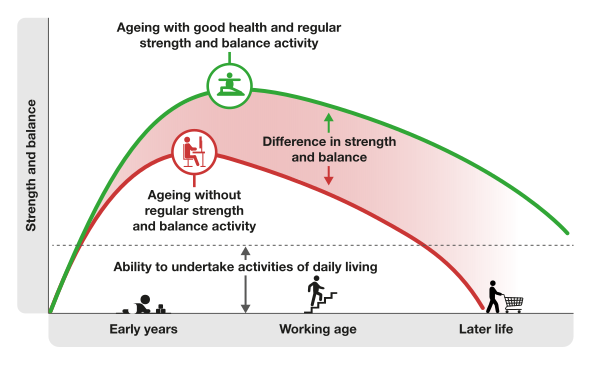
Figure 3 shows a graph indicating how strength and balance (on the y axis) change over the life course (on the x axis). A capability threshold denotes the level needed for healthy, independent life and mobility.
The lower line on the graph shows a steep increase in strength and balance from early years of age, peaking in working age and declining to below the capability threshold in later life.
A second line shows the expected trajectory with regular strength and balance activities. This line peaks higher and later, resulting in a higher level of capability and a longer duration above the capability line. This denotes a longer and healthier older age.
Inactivity and sedentary behaviour
Inactive and sedentary behaviours are those which involve being in a sitting, reclining or lying posture during waking hours, undertaking little movement or activity and using little energy above what is used at rest (see reference 9). Examples of sedentary behaviours include sitting in a chair while using a screen or reading, or a child sitting in a car seat or buggy. They do not include being active while in a sitting or reclining posture, for example, wheeling, chair exercises or seated gym work.
Periods of inactivity or sedentary behaviour are an independent risk factor for poor health outcomes and should be minimised when possible. Extended periods should be broken up by at least light physical activity. The term ‘when possible’ is emphasised because certain groups of people who depend daily on a wheelchair unavoidably sit for long periods of time.
The relationship between sedentary behaviour and some health outcomes varies by the amount of moderate to vigorous physical activity also undertaken. Currently there is insufficient evidence to make specific recommendations on threshold levels of activity that would mitigate the negative impacts of sedentary time.
Physical activity and weight
Diet is the important factor in weight management. Physical activity plays a supporting role in maintaining a healthy weight and improving our physical health whatever our weight.
Evidence shows that, irrespective of any change in weight, people who are overweight or living with obesity will reduce their risk of cardiovascular disease (CVD) and improve their health by being physically active. Physical activity can also support weight loss efforts or support the prevention of weight regain after weight loss.
A new development is the wider use of GLP-1 agonist weight management drugs. When taking these both fat and muscle decrease. These weight management drugs are currently only licensed to be used in conjunction with physical activity and other behavioural changes (see reference 131). Although evidence is still emerging, physical activity including muscle strengthening activity is likely to be of particular importance for maintaining muscle mass and preventing weight regain in those taking, or who have recently taken, GLP-1 agonist drugs.
Risks of physical activity
Fear of injury or exacerbating a health issue can be a barrier to undertaking activity, especially for those who are not regularly active, are disabled, have a health condition, are pregnant, or are older or frail. Evidence shows, however, that risk of serious adverse events from physical activity is very low and the health benefits accrued from such activity outweigh the risks (see reference 115). This evidence also extends now to disabled adults, with the available evidence suggesting there are no major risks of engaging in physical activity when it is performed for an appropriate duration and at an appropriate level of intensity for the individual.
Musculoskeletal injury is more common during activities which involve impact and is inversely associated with total volume of physical activity, but the relative contribution of frequency, intensity and duration are unknown. Adverse cardiac events are rare and are inversely associated with volume of regularly performed vigorous activity. Some impairment groups who use a wheelchair and who participate in upper extremity activity or overhead sports are at risk of rotator cuff tears. Therefore, although greater exercise intensity also brings greater levels of cardiorespiratory fitness, it also carries a greater risk of injury, especially in individuals who are unaccustomed to exercise.
However, there is little evidence to suggest that physical activity is unsafe for anyone when performed at an intensity and in a manner appropriate to an individual’s current activity level, health status and physical function (see reference 115). Starting at low durations and intensities and building up over time as the body adjusts, is the safest way to progress from inactivity to meeting the guidelines. The health benefits of activity far outweigh the risks of being active.
Gender and ethnicity
There is limited evidence on whether the effects of physical activity differ by ethnicity or gender. At this stage there is no reason to vary the guidelines according to gender. Similarly, data on physical activity and ethnicity is limited and does not suggest that the relationship between physical activity and health varies by ethnicity. Therefore, there is no reason to vary the guidelines according to ethnicity.
Disability
There is growing evidence on the volume, duration, frequency and type of physical activity required to achieve general health benefits for disabled adults. The evidence is, however, largely based on studies involving people with physical impairments (mostly spinal cord injury) or intellectual impairments. In comparison, the evidence base for people with sensory impairments is limited. Nevertheless, at present there is no reason to vary the adult guidelines according to impairment type.
In 2022, research and co-development work with disabled children and disabled young people, their families, schools and disability organisations enabled the development of specific guidelines on physical activity for disabled children and young people (see reference 132).
Wider benefits of being active
Physical activity not only promotes good health. It also contributes to a range of wider social benefits for individuals and communities.
The relevance and importance of the wider benefits of physical activity for individuals vary according to life stage and various other factors but include:
- improved learning and attainment
- managing stress
- self-efficacy
- improved sleep
- the development of social skills and better social interaction
In addition to the health benefits, increasing physical activity across a population also has social, environmental and economic benefits for communities and wider society. These come primarily from physical activities undertaken in a community setting, such as walking, cycling, active recreation, sport and play.
Under-5s guidelines
Introduction
The under-5s age group encompasses a very wide range of developmental stages and physical capabilities. These new guidelines for the under-5s follow the approach taken in the 2011 guidelines of considering 3 distinct developmental stages and age groups:
- infants (less than 1 year)
- toddlers (1 to 2 years)
- pre-schoolers (3 to 4 years)
The evidence-base on physical activity in the under-5s has expanded substantially since the development of the previous set of guidelines (see reference 12). There is now a large body of evidence that the amount of physical activity in the under-5 period influences a wide range of both short-term and long-term health and developmental outcomes (see references 13 and 14). For example, low levels of physical activity have been recognised as a contributor to increasing rates of child obesity in this age group (see references 15 and 16). It has become very clear that higher levels of physical activity are better for health, and lower levels worse, and that there are benefits to increasing levels of physical activity from any baseline level (see references 13 and 14).
The evidence-base used to develop guidelines for the under-5s has largely been restricted to studies of apparently healthy, typically developing individuals. However, individuals with a medical condition or disability are also likely to benefit from higher levels of physical activity. The same may be said of disabled children but the current evidence is limited to support any specific guidelines for this group.
Despite concern over levels of physical activity in the under-5s, in both boys and girls the average level of physical activity reaches a lifetime peak around the age of school-entry (5 years old) and declines thereafter (17 to 19 years old). Achieving higher levels of physical activity in the early years should therefore help maintain higher levels later in childhood and adolescence (see references 13, 14, 20 and 21).
Physical activity guidelines for under-5s
Infants (less than 1 year)
Infants should be physically active several times every day in a variety of ways, including interactive floor-based activity, for example, crawling.
For infants not yet mobile, this includes at least 30 minutes of tummy time spread throughout the day while awake (and other movements such as reaching and grasping, pushing and pulling themselves independently, or rolling over) - more is better.
Note: tummy time may be unfamiliar to babies at first, but can be increased gradually, starting from a minute or two at a time, as the baby becomes used to it. Babies should not sleep on their tummies.
Toddlers (1 to 2 years)
Toddlers should spend at least 180 minutes (3 hours) per day in a variety of physical activities at any intensity, including active and outdoor play, spread throughout the day - more is better.
Pre-schoolers (3 to 4 years)
Pre-schoolers should spend at least 180 minutes (3 hours) per day in a variety of physical activities spread throughout the day, including active and outdoor play. More is better - the 180 minutes should include at least 60 minutes of moderate to vigorous physical activity.
Summary of scientific support for the guidelines
The last decade has seen an expansion in the evidence base on the health and developmental impact of variation in time spent in physical activity in the under-5s. While still lacking evidence regarding disabled children, new evidence shows the importance of time spent in physical activity of any intensity (for infants, toddlers and pre-schoolers), time spent in moderate to vigorous physical activity (for pre-schoolers) and time spent in various specific types of physical activity (for infants, toddlers and pre-schoolers). As a result, these new guidelines for the under-5s reflect these different exposures.
Recommendations that were for 2019 include time spent in physical activity (tummy time) in infants, in moderate to vigorous physical activity in pre-schoolers, and new specific guidance on time spent in physical activity and outdoor play in pre-schoolers. These conclusions were based on evidence on the following health and developmental outcomes:
- adiposity
- motor development
- psychosocial health (for example, wellbeing, quality of life)
- cognitive development
- cardiovascular and musculoskeletal fitness
- skeletal health
- cardiometabolic health and harms
The evidence-base on the health and developmental impact of time spent in physical activity in the under-5s was reviewed systematically and appraised critically using the grading of recommendations, assessment, development and evaluation (GRADE) methodological approach in 2016 to 2018 (see reference 22). Full details of the methods are available in the supplementary information published alongside these guidelines.
Children and young people guidelines
Introduction
The physical activity guidelines for children and young people are relevant to those aged from 5 to 18 years. Physical activity is associated with better physiological, psychological and psychosocial health among children and young people (see references 23 and 24). Global and UK-specific evidence has shown that boys are more active than girls at all ages and that physical activity levels decline through childhood into adolescence (see references 17, 25 and 26). There is also some evidence to suggest that physical activity levels track from childhood into adulthood (see reference 27). As such, ensuring that all children are as active as possible throughout childhood is important for current and future population health.
In recent years, there has been increasing awareness of the impact that inactivity and sedentary behaviour may have on health. As set out in the introduction, sedentary behaviour is not simply the absence of moderate or vigorous physical activity. It includes behaviours such as watching television, reading, working with a computer, sitting while playing video games or travelling in a motor vehicle. The most common measures of sedentary time used in the literature are self-reported time spent sitting, screen time and the total duration of device-based measures of sedentary time (accelerometer and/or inclinometer). For young people, evidence suggests that higher levels of sedentary behaviour are weakly associated with greater levels of obesity and lower physical fitness.
It is important to note that this chapter does not include specific recommendations for disabled children and disabled young people. Specific guidelines have been developed for this group, see Physical activity guidelines: disabled children and disabled young people.
Physical activity guidelines for children and young people
Children and young people should engage in moderate to vigorous physical activity for an average of at least 60 minutes per day across the week. This can include all forms of activity such as physical education, active travel, after-school activities, play and sports.
Children and young people should engage in a variety of types and intensities of physical activity across the week to develop movement skills, muscular fitness and bone strength.
Children and young people should aim to minimise the amount of time spent being sedentary and when physically possible should break up long periods of not moving with at least light physical activity.
Summary of scientific support for the guidelines
The recommendations are based on the best available current evidence and are intended to provide guidance for children and young people, parents and health professionals, but it is important to recognise that the benefits of physical activity operate on a continuum.
For children and young people who are inactive, any increase in physical activity or any reduction in sedentary time is likely to provide health benefits and should be encouraged.
To develop these guidelines, the expert panel reviewed scientific evidence published from 2010 to 2018. The purpose of this review was to identify any new evidence justifying a change to the previous guidelines from 2011. Where insufficient additional evidence was available, the 2011 guideline was retained. The searches primarily focused on review-level evidence for longitudinal cohort studies examining the relationship between physical activity and health outcomes. Systematic reviews and meta-analyses were also examined, along with randomised controlled trials, to identify what types and volume of physical activity were used in effectiveness studies. Full details of the methods are available in the supplementary information.
The 3 revised recommendations presented below are a refinement of the previous Chief Medical Officers’ guidelines from 2011 (see reference 12). The evidence leading to the updated recommendations is outlined below.
Children and young people should engage in moderate to vigorous physical activity for an average of at least 60 minutes per day across the week
The review of evidence indicated that it would be helpful to change this guideline to an average of at least 60 minutes of moderate to vigorous physical activity per day. This was because the current evidence base does not support a specific minimum daily threshold of 60 minutes of moderate to vigorous physical activity for health benefits. Current studies have broadly used an average of 60 minutes per day to assess the benefits of physical activity on health outcomes. The expert panel was unable to assess whether a 60-minute minimum daily threshold is required for health benefits.
Recommending an average number of daily minutes more closely reflects the evidence and as such this is the new recommendation.
Children and young people should engage in a variety of types and intensities of physical activity across the week to develop movement skills, muscular fitness and bone strength
The review of the evidence found broad support for the health benefits of vigorous intensity physical activity and activities that would strengthen bone being undertaken by children and young people but found no strong evidence for specific numbers or durations of bouts of moderate-to-vigorous or vigorous intensity physical activity per day.
A recent analysis of nearly 30,000 children suggests that time spent in physical activity with increasing intensity was favourably associated with risk markers of future adult disease in youth, irrespective of bout duration (see reference 28). Furthermore, a recent paper has shown that children rarely accumulate physical activity in long bouts, and that the total time in moderate to vigorous physical activity, rather than time spent in specific bouts, was important for health outcomes (see references 28 and 29).
The evidence reviews identified moderate quality evidence that physical activity in children and young people is positively associated with increased proficiency in motor and/or movement skills (sometimes referred to as a component of physical literacy), and that this relationship is reciprocal (see reference 30). Moreover, exposure to different types of activities is implicated in higher perceptions of competence, which are also associated with higher physical activity levels (see reference 31).
Physical education is likely to play an important role in the development of movement skills and supporting the promotion of high-quality physical education provision is therefore important for the development of children’s skills and confidence to be physically active. Nevertheless, there is insufficient evidence to specify the intensity or amount of activity required to accrue such benefits, nor for specifying movements that contribute to fitness improvements.
The current evidence, does, however, suggest that developing a broader, more diverse range of movement skills, providing variety in the types of physical activity that children and young people engage in, is likely to be beneficial, although more high-quality evidence in this area is required (see references 30 and 32). The evidence therefore supports a guideline advocating a range of different types and intensities of physical activity across the week in order to develop movement skills, muscular fitness and bone strength.
Children and young people should aim to minimise the amount of time spent being sedentary and when physically possible should break up long periods of not moving with at least light physical activity
In relation to sedentary time, the review of the evidence base highlighted that there is little evidence to suggest modification of the previous guidelines, other than adding a statement recommending that young people reduce periods of inactivity and replace these with a variety of activities, including light as well as moderate to vigorous physical activity. This clarification has therefore been made to the wording of the previous guidelines.
Types of physical activity for children and young people
As described above, an important finding from the evidence review is the benefits for children and young people of engaging in different forms of physical activity across the week. Children and young people should engage in a range of activities to improve their skills such as jumping, running and catching, as well as building the confidence to be active.
There is therefore no single way in which children and young people should be active - the focus should be on identifying activities that they find enjoyable and on creating opportunities to be active. Equally, children and young people should aim to limit sedentary time and replace this with light intensity physical activity wherever possible.
Adults guidelines
Introduction
This chapter presents revised physical activity guidelines for adults from 19 to 64 years of age. It also covers the guidelines and accompanying infographics developed for disabled adults (see references 4 and 33) and for pregnant (see reference 10) and postpartum women within this age group.
Regular physical activity is associated with decreased mortality and lower morbidity from several non-communicable diseases (see reference 116). Adults who are physically active report more positive mental and physical health (see reference 125). Since the last revision of the physical activity guidelines in 2019, the scientific evidence on the relationships between physical activity and health has continued to accumulate, including evidence on the volume, duration and frequency of physical activity for substantial health benefits for disabled adults.
Current evidence suggests that the 150 minutes of moderate to vigorous physical activity can be accumulated in bouts of any length (see reference 125), and/or achieved in one or 2 sessions per week while still leading to health benefits. In addition, it suggests that while aiming for this goal health benefits will also be derived from lower volumes, intensities and frequencies of activity (see reference 116), particularly for individuals with low levels of physical fitness and for disabled adults.
The evidence continues to suggest that at least twice a week, all adults should undertake activities which increase or maintain muscle strength (resistance training). The activities chosen should use all major muscle groups, including upper and lower body. This can include activities such as using bodyweight, free weights, resistance machines or elastic bands, as well as activities of daily living such as stair climbing, wheeling your wheelchair and lifting and carrying children.
The evidence reviewed suggests that greater than 150 minutes of physical activity along with dietary restriction may be required for weight loss. Given the interdependency of energy intake and expenditure, it is not possible to specify how much of an increase in physical activity is likely to result in weight loss. The evidence continues to support the role of physical activity in maintaining weight following weight loss, as well as the health benefits of physical activity in overweight and obese individuals, even in the absence of weight loss.
Physical activity guidelines for adults
For good physical and mental health, adults should aim to be physically active every day. Any activity is better than none - and more is better still.
Adults should do activities to develop or maintain strength in the major muscle groups. This could include resistance exercises. Muscle strengthening activities should be done at least 2 days a week, but any strengthening activity is better than none.
Each week, adults should aim to accumulate at least 150 minutes (2 and a half hours) of moderate intensity activity (such as brisk walking or cycling), or 75 minutes of vigorous intensity activity (such as running), or even shorter durations of very vigorous intensity activity (such as sprinting or stair climbing), or a combination of moderate, vigorous and very vigorous intensity activity.
Adults should aim to minimise the amount of time spent being sedentary and when physically possible should break up long periods of inactivity with at least light physical activity.
Summary of scientific support for the guidelines
The original guidelines were published in 2011. These were updated in 2019 by an expert panel, who reviewed scientific evidence published from 2010 to 2018. Full details of the 2019 update are available in the supplementary information.
A further update to the evidence supporting the adult guidelines was undertaken in 2026. This drew from the review of evidence published by the Australian government, informing their physical activity guidelines (published in 2026) and a supplementary literature search aiming to identify relevant research published since the Australian review. An additional literature search was performed to identify research referring to light physical activity, or lower (below guideline) levels of physical activity, in order to better describe the potential health gains for less active populations. These reviews have allowed for updates to the supporting evidence for the existing guidelines, without changing the overall guidance.
For good physical and mental health, adults should aim to be physically active every day - any activity is better than none and more is better still
The scientific evidence is clear that the benefits of physical activity on health are measurable, even at low levels. At a population level, replacing even small amounts of sedentary time with moderate or vigorous physical activity could have a measurable impact on mortality (see reference 118).
Although research supports the recommendation for 150 minutes per week as optimal, it is clear that lower volumes (less than 150 minutes per week) (see reference 116), lower intensities (such as light physical activity) (see reference 117) and lower frequencies (one or 2 sessions per week) (see reference 119) of physical activity still confer health benefits, including for all-cause mortality, cardiovascular and cancer outcomes (see reference 116). For this reason, ‘any activity is better than none, and more is better still’ should be emphasised, particularly for people who are starting from a low level of physical activity.
The greatest health benefits come from progressing from being inactive to being fairly active, even if this is below the 150 minute threshold of the guidelines (see references 116 and 118). The evidence reviewed suggests that even light intensity physical activity is associated with reduced risk of cardiovascular mortality (see reference 117). Incorporating some light activity may be a more achievable goal for many and evidence suggests that the health benefits of light physical activity can match those associated with moderate physical activity if done for a longer duration (see reference 117). This is of particular relevance for people who face barriers achieving moderate or vigorous physical activity.
Research is clear that the benefits of physical activity outweigh the risks and that perceptions that activity is not safe for people with long term conditions or disability should be challenged (see reference 115). Indeed, these groups of people potentially have the most to gain from incorporating physical activity into their lives. It is recognised that threshold recommendations (such as 150 minutes of moderate to vigorous physical activity per week) may appear as a barrier and discourage some from seeking to become more active.
Adults should also do activities to develop or maintain strength in the major muscle groups - muscle strengthening activities should be done at least 2 days a week, but any strengthening activity is better than none
Due to the specific benefits of strength and resistance activities for health, the regular inclusion of these should be considered as important as achieving 150 minutes of moderate or vigorous physical activity per week. As with physical activity more generally, some is better than none, and more is better still (see reference 121).
There are positive impacts of muscle strengthening activities in reducing mortality (see reference 121). These are strongest in combination with regular aerobic activities (see reference 133). There are also benefits of strength and resistance-based activity in supporting physical function (see reference 122).
Available evidence supports recommending that muscle strengthening activities using all main muscle groups be carried out 1 to 2 times per week. A recent systematic review (see reference 121) and meta-analysis (see reference 133) indicated measurable benefits for health from over 30 and up to 120 minutes of muscle strengthening activities per week, but there is insufficient evidence to specify a recommended duration.
Research has shown that strength training in middle age has a beneficial effect on postural balance (see reference 124) and is therefore particularly important for adults at the upper end of the 19 to 64 age range.
GLP-1 agonist weight management drugs are currently only licensed to be used in conjunction with physical activity and other behavioural changes (see reference 131) and although this is a developing field, strengthening activities are likely to be of particular importance for maintaining muscle mass.
Each week, adults should accumulate at least 150 minutes (2 and a half hours) of moderate intensity activity, or 75 minutes of vigorous intensity activity, or even shorter durations of very vigorous intensity activity, or a combination of moderate, vigorous and very vigorous intensity activity
Evidence shows that every increase in physical activity up to a level equivalent to approximately 150 minutes per week of moderate to vigorous physical activity, is associated with health benefits. After this point, the associated benefits continue to increase, but more slowly (see reference 116). This has informed the 150 minute threshold that has been widely adopted internationally. Furthermore, 150 minutes of moderate intensity activity per week is likely to be achievable for many people, when environments are accessible and inclusive.
These 150 minutes can be accumulated in bouts of any length, and/or achieved in one or 2 sessions per week, while still retaining the beneficial effects (see reference 125).
Increases in the volume of physical activity bring additional reductions in risk. For example, for hypertension the evidence suggests that 150 minutes of physical activity reduces the risk of hypertension by 6%, with further reductions for every additional 150 minutes (see reference 43). For type 2 diabetes, dose-response analysis indicates that risk reduction can be achieved below 150 minutes of moderate to vigorous physical activity per week, but that greater benefits can be achieved by being more active (see reference 44). For CVD, recent evidence suggests that achieving the current guidelines is associated with reduced risk (see reference 116). Intensity of activity can also be associated with health outcomes.
Evidence shows that incorporating vigorous activity in any amount is associated with a reduced risk of premature death, and that the risk reduces further with higher volumes of vigorous activity (see reference 126).
Adults should aim to minimise the amount of time spent being sedentary and when physically possible should break up long periods of inactivity with at least light physical activity
The evidence base for associations between sedentary behaviour, all-cause mortality and cardiovascular events has expanded (see references 28 and 129). Meta-analytical data from 34 studies, including over one million unique individuals (see reference 50), concluded that for adults, above 6 to 8 hours per day of total sitting time and 3 to 4 hours per day of TV viewing time are associated with greater risk of all-cause and CVD mortality.
Although at present the evidence does not support a specific time limit or threshold of sedentary time, a recent review estimated an increase in the risk of cardiovascular events of 5% associated with each additional hour per day of sedentary time (see reference 128).
Some evidence suggests that the association between sedentary time and risk to health is reduced by physical activity (see reference 129), supporting the recommendation that periods of inactivity should be balanced with at least light physical activity wherever possible.
Physical activity for disabled adults
A rapid evidence review was carried out of the evidence base on physical activity for general health benefits for disabled adults in 2018 (see reference 4). It found that, with respect to safety, no evidence exists that suggests appropriate physical activity is a risk for disabled adults. It concluded that any myths about physical activity being inherently harmful for disabled people should be dispelled.
Physical activity during pregnancy and during postpartum
Evidence-based recommendations for physical activity, and pregnancy and physical activity and postpartum have also been produced. These followed standard methods examining pooled analyses, meta-analyses and systematic reviews from prospective and randomised controlled trails, and qualitative research on experiences of physical activity of health professionals and women (see reference 10). Based on these, the infographics accompanying this document have been co-produced and tested with health professionals and women.
The benefits of physical activity during pregnancy identified by the review were:
- reduction in hypertensive disorders
- improved cardiorespiratory fitness
- lower gestational weight gain
- reduction in risk of gestational diabetes
The benefits of physical activity in the postpartum period (up to one year) were identified as:
- a reduction in depression
- improved emotional wellbeing
- improved physical conditioning
- reduction in postpartum weight gain and a faster return to pre-pregnancy weight
Physical activity can safely be recommended to women during and after pregnancy and had no negative impact on breastfeeding postpartum. Physical activity choices should reflect activity levels pre-pregnancy and should include strength training. Vigorous activity is not recommended for previously inactive women. After the 6 to 8 week postnatal check, and depending on how the woman feels, more intense activities can gradually resume, that is, building up intensity from moderate to vigorous over a minimum period of at least 3 months.
Older adults guidelines
Introduction
Regular physical activity contributes to the important determinants of healthy ageing:
- good physical and mental function
- opportunities for social interaction
- a sense of control over, and responsibility for, one’s own health and wellbeing
- managing or coping with disease symptoms and functional limitations (see references 51 and 52)
There is now also emerging evidence that increasing physical activity contributes to improving social functioning and reducing loneliness and social isolation.
Although age alone does not determine physical condition or capacity, older age (65 years and over) is associated with a greater risk and prevalence of many health conditions including coronary heart disease, stroke, type 2 diabetes, cancer and obesity, as well as depression and dementia. Older adults are also at greater risk of falling, often resulting in the avoidance of activity, and consequent fractures and impairments.
There is strong evidence that physical activity contributes to increased physical function, reduced impairment, independent living, and improved quality of life in both healthy and frail older adults. Physical activity in later life can help treat and offset the symptoms of a range of chronic conditions (for example, depression, CVD, Parkinson’s disease). Since the first UK physical activity guidelines specifically for older people were published in 2011, new evidence has strengthened and reinforced the main elements of those.
However, some changes have been made to the previous guidelines to take account of new evidence. Given the lower levels of physical activity among the population of older adults (see references 53 and 54), small increases in the volume of daily physical activity can produce important health and functional benefits. Growing evidence supports the importance of light intensity activity to health (see references 55 and 56), a message that is particularly important to communicate to those who are currently inactive and/or frailer. These revised guidelines for older adults therefore give greater emphasis to regular light activity. This can be a means of breaking up prolonged periods of sedentary time and of building up gradually to the recommended weekly amount of moderate to vigorous physical activity. The previous recommendation that moderate intensity activity should be in bouts of 10 minutes or more is no longer considered necessary and has therefore been removed.
The value to older adults of activities which improve strength, balance and flexibility cannot be overstated and therefore receive greater prominence in these revised guidelines.
These components of fitness help maintain physical function, reduce the risk of falls and help people feel more confident and able to meet the moderate to vigorous physical activity guidelines. It is now emphasised that activities to improve strength, balance and flexibility can be incorporated into sessions that also involve moderate to vigorous physical activity, rather than necessarily being in addition to them.
Physical activity guidelines for older adults (65 years and over)
Older adults should participate in daily physical activity to gain health benefits, including maintenance of good physical and mental health, wellbeing and social functioning. Some physical activity is better than none - even light activity brings some health benefits compared to being sedentary, while more daily physical activity provides greater health and social benefits.
Older adults should maintain or improve their physical function by undertaking activities aimed at improving or maintaining muscle strength, balance and flexibility on at least 2 days a week. These could be combined with sessions involving moderate aerobic activity or could be additional sessions aimed specifically at these components of fitness.
Each week older adults should aim to accumulate at least 150 minutes of moderate intensity aerobic activity, building up gradually from current levels. Those who are already regularly active can achieve these benefits through 75 minutes of vigorous intensity activity, or a combination of moderate and vigorous activity, to achieve greater benefits. Weight-bearing activities which create an impact through the body help to maintain bone health.
Older adults should break up prolonged periods of being sedentary with light activity when physically possible, or at least with standing, as this has distinct health benefits for older people.
Summary of scientific support for the guidelines
To develop these guidelines, the expert panel reviewed scientific evidence published from 2010 to 2018. The purpose of this review was to identify any new evidence justifying a change to the previous guidelines from 2011. Where insufficient additional evidence was available, the 2011 guideline was retained. Full details of the methods are available in the supplementary information.
Physical activity plays a changing role in the lives of older adults, as for some it becomes more about the maintenance of independence and the management of symptoms of disease, rather than primary disease prevention. There is enough knowledge of the benefits associated with physical activity in older adults to categorically state that they outweigh the risks. In older adults with frailty, moderate-to-severe dementia or a history of vertebral fractures or regular falls, it might be more appropriate for any new exercises to be initially supervised by a trained professional, to ensure efficacy and safe techniques to avoid injury.
Older adults should participate in daily physical activity to gain health benefits. Some physical activity is better than none - even light activity brings some health benefits compared to being sedentary
The use of wearable devices to objectively measure the physical activity of older individuals during the activities of daily life, in addition to structured activity programmes, has provided a growing evidence base that supports the health benefits of light-intensity physical activity, independently of those provided by moderate to vigorous physical activity (see references 57, 58, 59 and 60). Light activity is associated with a range of health benefits, including lower risk of obesity, CVD, cancer and all-cause mortality (see reference 61), improved markers of lipid and glucose metabolism (see reference 56) and reductions in unplanned hospital admissions and future prescriptions for health conditions (see reference 62). Although still extremely limited in number, studies show a link between inactivity and loneliness and social isolation, and that increasing physical activity can reduce loneliness and social isolation, as well as improving social functioning (see references 63 and 64).
Older adults should break up prolonged periods of being sedentary with light activity when physically possible, or at least with standing, as this has distinct health benefits for older people
Prolonged sedentary behaviour is associated with many poor health and functional outcomes in older adults (see reference 65). There is emerging evidence that for inactive older adults, replacing sedentary behaviour with light-intensity activity is likely to produce some health benefits. Specifically, for individuals who perform no or little moderate to vigorous physical activity, replacing sedentary or inactive behaviours with light-intensity activity (such as walking at 2 miles per hour, dusting or polishing furniture, or easy gardening) reduces the risk of all-cause mortality, CVD incidence and mortality and type 2 diabetes (see reference 57). In those transitioning to frailty and who find light activity difficult, there is emerging evidence that short periods of standing repeated hourly provides some benefits to physical function (see reference 66).
These revised guidelines therefore highlight the potential of light-intensity activity to benefit the health of older adults and that increasing the volume of light-intensity movement in daily routines can bring important health benefits at a population level. This is particularly valuable for those older adults unable to perform moderate-intensity activity. Other evidence supports the benefits of being active throughout the day, such as better maintenance of bone health with higher volumes of light intensity activity spread throughout the day (see reference 67).
Older adults should maintain or improve their physical function by undertaking activities aimed at improving or maintaining muscle strength, balance and flexibility on at least 2 days a week
A loss of muscle strength in advancing age is the primary limiting factor for functional independence (see reference 68). Physical function has a linear relationship with mortality and those with poor physical function have a higher risk of all-cause mortality, even from mid-life (see reference 69). Multi-component strength and balance activities, including flexibility, are vital and/or crucial to improving physical function (see reference 70). Poor balance also predicts a higher rate of cognitive decline, as well as higher all-cause mortality (see reference 71). Good balance and mobility are essential to the successful performance of most activities of daily living, as well as the ability or confidence to take part in recreational activity.
Evidence-based strength and balance exercise programmes reduce falls rate and risk (see reference 72) are cost-effective (see reference 73), increase confidence and can increase habitual moderate physical activity towards meeting the guidelines (see reference 74). They can be group or home-based, and strength and balance activities can be embedded within everyday activities.
Each week older adults should aim to accumulate at least 150 minutes (2 and a half hours) of moderate intensity aerobic activity, building up gradually from current levels
The evidence that at least 150 minutes of moderate intensity activity per week contributes significantly to the prevention of chronic disease has strengthened (see reference 1). In addition, the risk of progression of disabilities affecting the basic activities of daily living is almost halved in those who undertake regular moderate intensity physical activity, compared to those who do not (see reference 75). Bone mineral density is greater in those who meet the moderate to vigorous physical activity guidelines (see reference 67). There is strong support for the role of physical activity in reducing the risk of cognitive impairment and dementia (see reference 76) and bouts of 30 minutes of moderate activity per day almost halve the odds of experiencing depression (see reference 77).
Alternative ways of recording exercise, such as using pedometers or step counters, may be helpful to some older adults in tracking progress towards the moderate to vigorous physical activity guidelines.
Evidence suggests that 30 minutes of daily moderate to vigorous physical activity accumulated in addition to habitual daily activities in healthy older adults is equivalent to taking approximately 7,000 to 10,000 steps per day (see references 78, 79 and 80). This evidence suggests 4,500 to 5,500 steps a day for improved health-related quality of life, above 7,000 steps a day for better immune function and 8,000 to 10,000 steps a day for an effect on metabolic syndrome and maintenance of weight (see reference 81).
For those who are already regularly active, a combination of moderate and vigorous aerobic activity brings greater benefit (see reference 1). Seventy-five minutes of vigorous aerobic activity spread across the week can produce comparable benefits to 150 minutes of moderate intensity activity (see reference 1). High intensity interval training is one approach to accumulating vigorous intensity physical activity, but there is currently very limited evidence on its benefits and harms among older populations.
Emerging evidence from cross-sectional and prospective studies indicates that bouts of any length of moderate to vigorous physical activity contribute to the health benefits associated with accumulated volume of physical activity (see references 1, 55 and 59). The previous recommendation of a minimum bout length of 10 minutes is therefore no longer necessary for the optimal health message. This seems particularly relevant to older adults, given the sporadic nature of accumulated activity in this population.
Types of physical activities for this group
Older adults are more likely to have already been diagnosed with disease and also experience different life events from middle-age adults, such as retirement, helping with grandchildren and the increased likelihood of becoming a carer. These circumstances bring a new set of challenges in terms of physical activity participation and may temporarily stop people’s ability to be active. Nevertheless, a few strategies can help to re-engage in physical activity and build activity levels up gradually. For those who are limited by disease or impairment, there is value in even small increases in activity, which can also help to slow or prevent further decline. This section provides examples of how a combination of different activities addressing the different components of the guidelines can be tailored to the range of circumstances encountered in older age, from those who are already active, to those who are losing function but are otherwise healthy, to those who are frail (see references 78, 79 and 80).
Active older adults
Active older adults are those who are already active through daily walking, an active job, and/or who engage in regular recreational or sporting activity. For many, this may just involve aerobic activity such as brisk walking, whereas significant additional benefits can be achieved from incorporating activities to improve strength, balance and flexibility.
Undertaking a programme of activity at least twice per week that includes resistance activities (lifting weights, using resistance bands or other equipment to provide resistance), some impact activities (running, jumping, skipping) and balance activities (standing on one leg, backwards walking, activities that involve 3-dimensional movement) would provide these benefits (see reference 8). A mix of sporting activities, Tai Chi, dance and aqua-aerobics, for example, would contribute to both the aerobic and the strength and balance guidelines.
In transition
Older people in transition describes people whose function is declining due to low levels of activity and too much sedentary time, who may have lost muscle strength and/or be overweight but otherwise remain reasonably healthy. ‘Walk and rest for a minute’ may be a useful strategy for adults in this age group to manage fatigue, particularly while building up gradually towards the guideline level for moderate-intensity activity. The inclusion of strength and balance activities may be particularly useful to increase confidence and stability. Sit-to-stands, stair climbing, and home-based strength and balance exercises can all contribute to stability. They can also build the confidence to move safely on to activities that improve aerobic activity, such as brisk walking and exercise classes to improve strength and balance.
Older adults with frailty
Frailer older adults are those who are identified as being frail or have very low physical or cognitive function, perhaps because of chronic disease such as arthritis, dementia or advanced old age itself. Any increase in the volume and frequency of light activities and any reduction in sedentary behaviour, is a place to start and contributes towards health. For this group, more strenuous activities are less likely to be feasible. A programme of activities could focus instead on reducing sedentary behaviour and engaging in regular sit-to-stand exercise and short walks, stair climbing (see reference 82), embedding strength and balance activities into everyday life tasks (see reference 72) and increasing the duration of walking, rather than concentrating on intensity.
Conclusion
These revised UK Chief Medical Officers’ physical activity guidelines reflect the latest scientific evidence on the health benefits of physical activity. They set out a recommended frequency, intensity, duration and volume of aerobic, muscle strengthening and balance activities needed to achieve and maintain good health, informed by evidence across the life course and important life stages. Evidence shows that physical activity is associated with reduced disease risk, improved mental health and better maintenance of physical and cognitive function, helping people to live longer, healthier and more independent lives.
This joint report from the 4 Chief Medical Officers of Wales, Northern Ireland, Scotland and England provides evidence for use across the UK. It provides the opportunity to communicate consistent messages, based on the same underpinning evidence, through the professional networks and public communications of each Chief Medical Officer in their respective country.
Effective tools to support health professionals, as well as the wide range of practitioners who play a vital role in enabling people to be physical active, are essential if these guidelines are to make a difference in practice. The infographics accompanying this document have been refreshed with that purpose in mind. They are available as separate files in a range of formats and are intended for widespread dissemination and use. Future work will also include ongoing reviews of these guidelines in the light of new evidence. The next update is anticipated to be undertaken in collaboration with the World Health Organization and published in 2030.
Glossary
Balance
Balance activities are those activities that involve the maintenance of the body balance while stationary or moving.
Bone health
Bone health includes bone quality that refers to the capacity of bones to withstand a wide range of loading without breaking. Bone health also includes bone mineral content, structure, geometry and strength.
Disability
Disability refers to people who have long-term physical (such as spinal cord injury), sensory (for example, visual impairment), cognitive (for example, learning difficulties), and/or mental impairments (for example, depression) which in interaction with various barriers may hinder their full and effective participation in society on an equal basis with others. Rather than focusing on just one impairment, the UK Chief Medical Officers’ guidelines considered a range of impairments. See United Nations Convention on the Rights of Persons with Disabilities.
Epidemiological studies
The study and analysis of the distribution, patterns and determinants of health and disease conditions in defined populations.
Impact activities
High impact activities are those activities or sports that put stress on weight bearing joints such as the knee, hip or ankle.
HIIT
High intensity interval training (HIIT) is very vigorous physical activities performed in short bursts interspersed with breaks.
Meta-analyses
A statistical analysis that combines the results of multiple epidemiological studies.
METs
Metabolic equivalent of task (MET) is the objective measure of the ratio of the rate at which a person expends energy, relative to the mass of that person, while performing some specific physical activity compared to the energy expended while sedentary.
MPA
Moderate physical activity is an activity that requires a moderate amount of effort and noticeably accelerates heart and breathing rate.
MVPA
Moderate-to-vigorous physical activity (MVPA) refers to activities that can be done at different intensities like cycling. They can be differentiated by the ‘talk test’: being able to talk but not sing indicates moderate intensity activity, while having difficulty talking without pausing is a sign of vigorous activity.
Non-communicable diseases
A disease that is not transmissible directly from one person to another.
Postpartum
Postpartum refers to a period of time after the end of pregnancy. The postpartum period is commonly defined as up to 6 weeks following the end of pregnancy, with the late postpartum period from 6 weeks up to one year after the end of pregnancy. For the Chief Medical Officers’ guidelines postpartum includes up to one year post delivery.
Sedentary behaviour
Inactive and sedentary behaviours are those involving being in a sitting, reclining or lying posture during waking hours, undertaking little movement and/or activity and using little energy above what is used at rest.
Systematic review
A technique that uses systematic methods to collect secondary data, critically appraise studies and synthesise findings.
Tummy time
Tummy time is giving babies small amounts of time lying on their fronts while they are awake, so that they can get used to being in this position, build upper body strength and explore the different ways they can move their head, limbs and neck.
VPA
Vigorous physical activity is an activity that requires a large amount of effort and causes rapid breathing and a substantial increase in heart rate.
References
- 2018 Physical Activity Guidelines Advisory Committee (2018). ‘Physical Activity Guidelines Advisory Committee Scientific Report’. Washington, DC: US Department of Health and Human Services
- Department of Health, Physical Activity, Health Improvement and Prevention (2004). ‘At least five a week: Evidence on the impact of physical activity and its relationship to health. A report from the Chief Medical Officer’. London: Department of Health
- Caspersen CJ, Powell KE and Christenson GM (1985). ‘Physical activity, exercise, and physical fitness: definitions and distinctions for health-related research’, Public Health Reports
- Public Health England (2018). ‘Physical activity for general health benefits in disabled adults: Summary of a rapid evidence review for the UK Chief Medical Officers’ update of the physical activity guidelines’. London: Public Health England
- Ainsworth BE, Haskell WL, Herrmann, SD Meckes, N Bassett, DR Jr Tudor-Locke, C and others (2011). ‘2011 Compendium of Physical Activities: a second update of codes and MET values’, Medicine and Science in Sports and Exercise
- Batacan RB Jr, Duncan MJ, Dalbo VJ, Tucker PS and Fenning AS (2017). ‘Effects of high-intensity interval training on cardiometabolic health: a systematic review and meta-analysis of intervention studies’, British Journal of Sports Medicine
- Skelton DA and Mavroedi A (2018). ‘How do muscle and bone strengthening and balance activities (MBSBA) vary across the life course, and are there particular ages where MBSBA are most important?’, Journal of Frailty, Sarcopenia and Falls
- Public Health England (2018). ‘Muscle and bone strengthening and balance activities for general health benefits in adults and older adults: summary of a rapid evidence review for the UK Chief Medical Officers’ update of physical activity guidelines’. London: Public Health England
- Tremblay MS, Aubert, S Barnes, JD Saunders, TJ Carson, V Latimer-Cheung, AE and others (2017). ‘Sedentary Behavior Research Network (SBRN) - Terminology Consensus Project process and outcome’, International Journal of Behavioral Nutrition and Physical Activity
- Smith R, Reid H, Matthews A, Calderwood C, Knight M, Foster C and others (2018). ‘Infographic: physical activity for pregnant women’, British Journal of Sports Medicine
- Sport England (2017). ‘Review of evidence of the outcomes for sport and physical activity: a rapid evidence review’. London: Sport England
- Department of Health, Physical Activity, Health Improvement and Protection (2011). ‘Start active, stay active: a report on physical activity from the four home countries’ Chief Medical Officers’. London: Department of Health
- Carson V, Lee EY, Hewitt L, Jennings C, Hunter S, Kuzik N and others (2017). ‘Systematic review of the relationships between physical activity and health indicators in the early years (0 to 4 years)’, BMC Public Health
- World Health Organization (2019). ‘Guidelines on physical activity, sedentary behaviour and sleep for children under 5 years of age’. Geneva: World Health Organization
- World Health Organization (2016). ‘Commission on Ending Childhood Obesity (ECHO)’. Geneva: World Health Organization
- World Health Organization (2017). ‘Report of the Commission on Ending Childhood Obesity. Implementation plan: executive summary’. Geneva: World Health Organization
- Cooper AR, Goodman A, Page AS, Sherar LB, Esliger DW, van Sluijs EM and others (2015). ‘Objectively measured physical activity and sedentary time in youth: the International Children’s Accelerometry Database (ICAD)’, International Journal of Behavioral Nutrition and Physical Activity
- Farooq MA, Parkinson KN, Adamson AJ, Pearce MS, Reilly JK, Hughes AR and others (2018). ‘Timing of the decline in physical activity in childhood and adolescence: Gateshead Millennium Cohort Study’, British Journal of Sports Medicine
- Kwon S, Janz, KF, Letuchy EM, Burns TL and Levy SM (2015). ‘Developmental trajectories of physical activity, sports, and television viewing during childhood to young adulthood: Iowa Bone Development Study’, JAMA Pediatrics
- Hallal PC, Andersen LB, Bull FC, Guthold R, Haskell W, Ekelund U and others (2012). ‘Global physical activity levels: surveillance progress, pitfalls, and prospects’, The Lancet
- Aubert S, Barnes JD, Abdeta C, Abi Nader P, Adeniyi AF, Aguilar-Farias N and others (2018). ‘Global Matrix 3.0 Physical Activity Report Card grades for children and youth: results and analysis from 49 countries’, Journal of Physical Activity and Health
- BMJ Best Practice (2011). ‘What is GRADE?’, British Medical Journal
- Poitras VJ, Carson V, Chaput JP, Saunders TJ, Connor Gorber S, Kho ME and Tremblay MS (2016). ‘Canadian 24-Hour Movement Guidelines for Children and Youth: an integration of physical activity, sedentary behaviour, and sleep. Guideline development report’. Ottawa, Canadian Science Publishing
- Strong W.B, Malina RM, Blimkie CJ, Daniels SR, Dishman RK, Gutin B and others (2005). ‘Evidence based physical activity for school-age youth’, The Journal of Pediatrics
- Jago R, Solomon-Moore E, Macdonald-Wallis C, Sebire SJ, Thompson JL and Lawlor DA (2017). ‘Change in children’s physical activity and sedentary time between Year 1 and Year 4 of primary school in the B-PROACT1V cohort’, International Journal of Behavioral Nutrition and Physical Activity
- Farooq MA, Parkinson K.N, Adamson A.J, Pearce, MS, Reilly J.K, Hughes AR and others (2017). ‘Timing of the decline in physical activity in childhood and adolescence: Gateshead Millennium Cohort Study’, British Journal of Sports Medicine
- Telama R, Yang X, Leskinen E, Kankaanpää A, Hirvensalo M, Tammelin T and others (2014). ‘Tracking of physical activity from early childhood through youth into adulthood’, Medicine and Science in Sports and Exercise
- Tarp J, Child A, White T, Westgate K, Bugge A, Grøntved A and others (2018). ‘Physical activity intensity, bout-duration, and cardiometabolic risk markers in children and adolescents’, International Journal of Obesity.
- Chinapaw M, Klakk H, Møller NC, Andersen LB, Altenburg T and Wedderkopp N (2018). ‘Total volume versus bouts: prospective relationship of physical activity and sedentary time with cardiometabolic risk in children’, International Journal of Obesity
- Barnett LM, Lai SK, Veldman SLC, Hardy LL, Cliff DP, Morgan PJ and others (2016). ‘Correlates of gross motor competence in children and adolescents: a systematic review and meta-analysis’, Sports Medicine
- Sebire SJ, Jago R, Fox KR, Edwards MJ and Thompson JL (2013). ‘Testing a self-determination theory model of children’s physical activity motivation: a cross-sectional study’, International Journal of Behavioral Nutrition and Physical Activity
- Lima RA, Pfeiffer K, Larsen LR, Bugge A, Møller NC, Andersen LB and others (2017). ‘Physical activity and motor competence present a positive reciprocal longitudinal relationship across childhood and early adolescence’, Journal of Physical Activity and Health
- Smith B, Kirby N, Skinner B, Wightman L, Lucas R and Foster C (2019). ‘Infographic. Physical activity for disabled adults’, British Journal of Sports Medicine
- Warburton DE, Charlesworth S, Ivey A, Nettlefold L and Bredin SS (2010). ‘A systematic review of the evidence for Canada’s Physical Activity Guidelines for Adults’, International Journal of Behavioral Nutrition and Physical Activity
- Murphy MH, Lahart I, Carlin A and Murtagh E (2019). ‘The effects of continuous compared to accumulated exercise on health: a meta-analytic review’, Sports Medicine
- Füzéki E, Engeroff T and Banzer W (2017). ‘Health benefits of light-intensity physical activity: a systematic review of accelerometer data of the National Health and Nutrition Examination Survey (NHANES)’, Sports Medicine
- Thompson PD, Crouse SF, Goodpaster B, Kelley D, Moyna N and Pescatello L (2001). ‘The acute versus the chronic response to exercise’, Medicine and Science in Sports and Exercise
- Whyte JJ and Laughlin MH (2010). ‘The effects of acute and chronic exercise on the vasculature’, Acta Physiologica
- Katsanos CS (2006). ‘Prescribing aerobic exercise for the regulation of postprandial lipid metabolism: current research and recommendations’, Sports Medicine
- Casonatto J, Goessler KF, Cornelissen VA, Cardoso JR and Polito MD (2016). ‘The blood pressure-lowering effect of a single bout of resistance exercise: a systematic review and meta-analysis of randomised controlled trials’, European Journal of Preventive Cardiology
- Ensari I, Greenlee TA, Motl RW and Petruzzello SJ (2015). ‘Meta-analysis of acute exercise effects on state anxiety: an update of randomized controlled trials over the past 25 years’, Depression and Anxiety
- Ludyga S, Gerber M, Brand S, Holsboer-Trachsler E and Puhse U (2016). ‘Acute effects of moderate aerobic exercise on specific aspects of executive function in different age and fitness groups: a meta-analysis’, Psychophysiology
- Liu X, Zhang D, Liu Y, Sun X, Han C, Wang B and others (2017). ‘Dose-response association between physical activity and incident hypertension: a systematic review and meta-analysis of cohort studies’, Hypertension
- Smith AD, Crippa A, Woodcock J. and Brage S. (2016). ‘Physical activity and incident type 2 diabetes mellitus: a systematic review and dose-response meta-analysis of prospective cohort studies’, Diabetologia
- Brenner DR, Shaw E, Yannitsos DH, Warkentin MT, Brockton NT, McGregor SE and others (2018). ‘The association between recreational physical activity, sedentary time, and colorectal polyps in a population screened for colorectal cancer’, Cancer Epidemiology
- Ma P, Yao Y, Sun W, Dai S and Zhou C (2017). ‘Daily sedentary time and its association with risk for colorectal cancer in adults: a dose-response meta-analysis of prospective cohort studies’, Medicine
- Eaglehouse YL, Koh WP, Wang RW, Jin AZ, Yuan JM and Butler LM (2017). ‘Physical activity, sedentary time, and risk of colorectal cancer: the Singapore Chinese Health Study’, European Journal of Cancer Prevention
- Fassier P, Zelek L, Partula V, Srour B, Bachmann P, Touillaud M and others (2016). ‘Variations of physical activity and sedentary behavior between before and after cancer diagnosis: results from the prospective population-based NutriNet-Santé cohort’, Medicine
- Van Roekel EH, Winkler EA, Bours MJ, Lynch BM, Willems PJ, Meijer K and others (2016). ‘Associations of sedentary time and patterns of sedentary time accumulation with health-related quality of life in colorectal cancer survivors’, Preventive Medicine Reports
- Patterson R, McNamara E, Tainio M, de Sa TH, Smith AD, Sharp SJ and others (2018). ‘Sedentary behaviour and risk of all-cause, cardiovascular and cancer mortality, and incident type 2 diabetes: a systematic review and dose-response meta-analysis’, European Journal of Epidemiology
- World Health Organization (1998). ‘The role of physical activity in healthy ageing’. Geneva: World Health Organization
- World Health Organization (2015). World report on ageing and health. Geneva: World Health Organization
- Strain T, Fitzsimons C, Foster C, Mutrie N, Townsend N and Kelly P (2016). ‘Age-related comparisons by sex in the domains of aerobic physical activity for adults in Scotland’, Preventive Medicine Reports
- Strain T, Fitzsimons C, Kelly P and Mutrie N (2016). ‘The forgotten guidelines: cross-sectional analysis of participation in muscle strengthening and balance and co-ordination activities by adults and older adults in Scotland’, BMC Public Health
- LaMonte MJ, Lewis CE, Buchner DM, Evenson KR, Rillamas-Sun E, Di CZ and others (2017). ‘Both light intensity and moderate-to-vigorous physical activity measured by accelerometry are favorably associated with cardiometabolic risk factors in older women: the Objective Physical Activity and Cardiovascular Health (OPACH) Study’, Journal of the American Heart Association
- Füzéki E, Engeroff T and Banzer W (2017). ‘Health benefits of light-intensity physical activity: a systematic review of accelerometer data of the National Health and Nutrition Examination Survey (NHANES)’, Sports Medicine
- Hupin D, Roche F, Gremeaux V, Chatard JC, Oriol M, Gaspoz JM and others (2015). ‘Even a low-dose of moderate-to-vigorous physical activity reduces mortality by 22% in adults aged more than or equal to 60 years: a systematic review and meta-analysis’, British Journal of Sports Medicine
- Fox KR, Ku PW, Hillsdon M, Davis MG, Simmonds BAJ, Thompson JL and others (2015). ‘Objectively assessed physical activity and lower limb function and prospective associations with mortality and newly diagnosed disease in UK older adults: an OPAL four-year follow-up study’, Age and Ageing
- Jefferis BJ, Parsons TJ, Sartini C, Ash S, Lennon LT, Papacosta O and others (2018). ‘Objectively measured physical activity, sedentary behaviour and all-cause mortality in older men: does volume of activity matter more than pattern of accumulation?’, British Journal of Sports Medicine.
- Chastin SFM, De Craemer M, De Cocker K, Powell L, Van Cauwenberg J, Dall P and others (2019). ‘How does light-intensity physical activity associate with adult cardiometabolic health and mortality? Systematic review with meta-analysis of experimental and observational studies’, British Journal of Sports Medicine
- LaMonte MJ, Buchner DM, Rillamas-Sun E, Di C, Evenson KR, Bellettiere J and others (2018). ‘Accelerometer-measured physical activity and mortality in women aged 63 to 99’, Journal of the American Geriatrics Society
- Simmonds B, Fox K, Davis M, Ku PW, Gray S, Hillsdon M and others (2014). ‘Objectively assessed physical activity and subsequent health service use of UK adults aged 70 and over: a four to five year follow up study’, PLoS One
- Robins LM, Jansons P and Haines T (2016). ‘The impact of physical activity interventions on social isolation among community-dwelling older adults: a systematic review’, Research and Reviews: Journal of Nursing and Health Sciences
- Shvedko A, Whittaker AC, Thompson JL and Greig CA (2018). ‘Physical activity interventions for treatment of social isolation, loneliness or low social support in older adults: a systematic review and meta-analysis of randomised controlled trials’, Psychology of Sport and Exercise
- Copeland JL, Ashe MC, Biddle SJ, Brown WJ, Buman MP, Chastin S and others (2017). ‘Sedentary time in older adults: a critical review of measurement, associations with health, and interventions’, British Journal of Sports Medicine
- Harvey JA, Chastin SFM and Skelton DA (2018). ‘Breaking sedentary behaviour has the potential to increase/maintain function in frail older adults’, Journal of Frailty, Sarcopenia and Falls
- Onambele-Pearson G, Wullems J, Doody C, Ryan D, Morse C and Degens H (2019). ‘Influence of habitual physical behavior—sleeping, sedentarism, physical activity - on bone health in community-dwelling older people’, Frontiers in Physiology
- Dinan-Young S and Skelton DA (2018). ‘Physical activity instruction of older adults’, in Rose DJ (editor) Physical activity instruction of older adults, 2nd edition. Champaign, IL: Human Kinetics
- Keevil VL, Luben R, Hayat S, Sayer AA, Wareham NJ and Khaw KT (2018). ‘Physical capability predicts mortality in late mid-life as well as in old age: findings from a large British cohort study’, Archives of Gerontology and Geriatrics
- Jadczak AD, Makwana N, Luscombe-Marsh N, Visvanathan R and Schultz TJ (2018). ‘Effectiveness of exercise interventions on physical function in community-dwelling frail older people: an umbrella review of systematic reviews’, JBI Database of Systematic Reviews and Implementation Reports
- Cooper R, Kuh D, Hardy R, Mortality Review Group, FALCon and HALCyon Study Teams (2010). ‘Objectively measured physical capability levels and mortality: systematic review and meta-analysis’, British Medical Journal
- Sherrington C, Michaleff ZA, Fairhall N, Paul SS, Tiedemann A, Whitney J and others (2017). ‘Exercise to prevent falls in older adults: an updated systematic review and meta-analysis’, British Journal of Sports Medicine
- Public Health England and National Falls Prevention Co-ordination Group (2017). Falls and fractures consensus statement: supporting commissioning for prevention. London: Public Health England
- Iliffe S, Kendrick D, Morris R, Masud T, Gage H, Skelton D and others (2014). ‘Multicentre cluster randomised trial comparing a community group exercise programme and home-based exercise with usual care for people aged 65 years and over in primary care’, Health Technology Assessment
- Tak E, Kuiper R, Chorus A and Hopman-Rock M (2013). ‘Prevention of onset and progression of basic ADL disability by physical activity in community-dwelling older adults: a meta-analysis’, Ageing Research Reviews
- Loprinzi PD, Edwards MK, Crush E, Ikuta T, Del Arco A and others (2018). ‘Dose-response association between physical activity and cognitive function in a national sample of older adults’, American Journal of Health Promotion
- Catalan-Matamoros D, Gomez-Conesa A, Stubbs B and Vancampfort D (2016). ‘Exercise improves depressive symptoms in older adults: an umbrella review of systematic reviews and meta-analyses’, Psychiatry Research
- British Heart Foundation National Centre for Physical Activity and Health (2012). Interpreting the UK physical activity guidelines for older adults (65+): guidance for those who work with older adults described as actives. London, British Heart Foundation
- British Heart Foundation National Centre for Physical Activity and Health (2012). Older adults in transition: interpreting the UK physical activity guidelines for older adults (65+). London, British Heart Foundation
- British Heart Foundation National Centre for Physical Activity and Health (2012). Interpreting the UK physical activity guidelines for older adults (65+): guidance for those who work with frailer, older people. London, British Heart Foundation
- Tudor-Locke C, Craig CL, Aoyagi Y, Bell RC, Croteau KA, De Bourdeaudhuij I and others (2011). ‘How many steps/day are enough? For older adults and special populations’, International Journal of Behavioral Nutrition and Physical Activity
- Donath L, Faude O, Roth R and Zahner L (2014). ‘Effects of stair-climbing on balance, gait, strength, resting heart rate, and submaximal endurance in healthy seniors’, Scandinavian Journal of Medicine and Science in Sports
- Tremblay MS, Chaput JP, Adamo KB, Aubert S, Barnes JD, Choquette L and others (2017). ‘Canadian 24-Hour Movement Guidelines for the Early Years (0 to 4 years): an integration of physical activity, sedentary behaviour, and sleep’, BMC Public Health
- Okely AD, Ghersi D, Hesketh KD, Santos R, Loughran SP, Cliff DP and others (2017). ‘A collaborative approach to adopting/adapting guidelines: the Australian 24-Hour Movement Guidelines for the early years (birth to 5 years): an integration of physical activity, sedentary behavior, and sleep’, BMC Public Health
- Okely AD, Tremblay MS, Reilly JJ, Draper CE and Bull F (2018). ‘Physical activity, sedentary behaviour, and sleep: movement behaviours in early life’, The Lancet Child & Adolescent Health
- Schünemann HJ, Wiercioch W, Brożek J, Etxeandia-Ikobaltzeta, Mustafa RA, Manja V and others (2017). ‘GRADE Evidence to Decision (EtD) frameworks for adoption, adaptation, and de novo development of trustworthy recommendations: GRADE-ADOLOPMENT’, Journal of Clinical Epidemiology
- Brouwers MC, Kerkvliet K, Spithoff K and AGREE Next Steps Consortium (2016). ‘The AGREE Reporting Checklist: a tool to improve reporting of clinical practice guidelines’
- Schünemann HJ, Wiercioch W, Brożek J, Etxeandia-Ikobaltzeta I, Mustafa RA, Manja V and others (2017). ‘GRADE Evidence to Decision (EtD) frameworks for adoption, adaptation, and de novo development of trustworthy recommendations: GRADE-ADOLOPMENT’, Journal of Clinical Epidemiology
- Okely AD, Salmon J, Vella SA, Cliff D, Timperio A, Tremblay M and others (2012). ‘A systematic review to update the Australian physical activity guidelines for children and young people’. Canberra: Australian Government Department of Health
- Health Council of the Netherlands (2017). ‘Physical Activity Guidelines 2017’. The Hague: Health Council of the Netherlands
- Bachl N, Bauer R, Dorner TE, Gäbler C, Gollner E, Halbwachs C, Lercher P, Miko H, Ring-Dimitriou S, Samitz G, Schober PH, Stein KV, Titze S and Windhaber J (2010). Österreichische Empfehlungen für gesundheitswirksame Bewegung’. Vienna: Arbeitsgruppe Körperliche Aktivität/Bewegung/Sport der Österreichischen Gesellschaft für Public Health
- The Flemish Expert Group (2017). Flemish Health Recommendations for Physical Activity and Sedentary Behaviour’. Brussels: Flemish Institute for Healthy Living
- Pedersen BK and Andersen B (2011). ‘Physical Activity: Handbook on Prevention and Treatment’. Copenhagen: National Board of Health
- Pfeifer K, Banzer W, Ferrari N, Füzéki E, Geidl W, Graf C, Hartung V, Klamroth S, Völker K, Vogt L, Rütten A, Abu-Omar K, Burlacu I, Gediga G, Messing S and Ungerer-Röhrich, U. (2016). ‘National Recommendations for Physical Activity and Physical Activity Promotion’. Erlangen: Federal Ministry of Health
- Musumeci G. (2016). ‘Physical activity for health: an overview and an update of the physical activity guidelines of the Italian Ministry of Health’, Journal of Functional Morphology and Kinesiology
- Owe K, Ekelund U and Ariansen I (2014). ‘Physical Activity Public Health Report’. Oslo: Norwegian Institute of Public Health
- Ministry of Health, Social Services and Equality (2015). ‘Physical Activity for Health and Sedentary Reduction: Recommendations for the Population’. Strategy of Health Promotion and Prevention in the SNS. Madrid: Ministry of Health, Social Services and Equality
- Federal Office of Sport (FOSPO), Federal Office of Public Health (FOPH), Health Promotion Switzerland, (BFU) - Swiss Council for Accident Prevention and Swiss Accident Insurance Fund (SUVA) (2013). ‘Health-Enhancing Physical Activity: Core Document for Switzerland’. Magglingen
- Ministry of Health (2012, revised 2015). ‘Food and Nutrition Guidelines for Healthy Children and Young People (Aged 2 to 18 years): A Background Paper’. Wellington: Ministry of Health
- Al-Khudairy L, Loveman E, Colquitt JL, Mead E, Johnson RE, Fraser H and others (2017). ‘Diet, physical activity and behavioural interventions for the treatment of overweight or obese adolescents aged 12 to 17 years’, Cochrane Database of Systematic Reviews, 2017
- Braaksma P, Stuive I, Garst RME, Wesselink CF, van der Sluis CK, Dekker R and others (2018). ‘Characteristics of physical activity interventions and effects on cardiorespiratory fitness in children aged 6 to 12 years: a systematic review’, Journal of Science and Medicine in Sport
- Catala-Lopez F, Hutton B, Nunez-Beltran A, Page MJ, Ridao M, Macias Saint-Gerons, D and others (2017). ‘The pharmacological and non-pharmacological treatment of attention deficit hyperactivity disorder in children and adolescents: a systematic review with network meta-analyses of randomised trials’, PLoS One
- Cattuzzo MT, Dos Santos Henrique R, Re AH, de Oliveira IS, Melo BM, de Sousa Moura M and others (2016). ‘Motor competence and health-related physical fitness in youth: a systematic review’, Journal of Science and Medicine in Sport
- Dennison M, Sisson SB and Morris A. (2016). ‘Obesogenic behaviours and depressive symptoms in children: a narrative literature review’, Obesity Reviews
- Donnelly JE, Hillman CH, Castelli D, Etnier JL, Lee S, Tomporowski P and others (2016). ‘Physical activity, fitness, cognitive function, and academic achievement in children: a systematic review’, Medicine and Science in Sports and Exercise
- Lozano-Berges G, Matute-Llorente A, Gonzalez-Aguero A, Gomez-Bruton A, Gomez-Cabello A, Vicente-Rodriguez G and others (2018). ‘Soccer helps build strong bones during growth: a systematic review and meta-analysis’, European Journal of Pediatrics
- Marques A, Santos DA, Hillman CH and Sardinha LB (2017). ‘How does academic achievement relate to cardiorespiratory fitness, self-reported physical activity and objectively reported physical activity: a systematic review in children and adolescents aged 6 to 18 years’, British Journal of Sports Medicine
- Martin R and Murtagh EM (2017). ‘Effect of active lessons on physical activity, academic, and health outcomes: a systematic review’, Research Quarterly for Exercise and Sport.
- Ng QX, Ho CYX, Chan HW, Yong BZJ and Yeo WS (2017). ‘Managing childhood and adolescent attention-deficit/hyperactivity disorder (ADHD) with exercise: a systematic review’, Complementary Therapies in Medicine
- Santana CCA, Azevedo LB, Cattuzzo MT, Hill JO, Andrade LP and Prado WL (2017). ‘Physical fitness and academic performance in youth: a systematic review’, Scandinavian Journal of Medicine and Science in Sports
- Saunders TJ, Gray CE, Poitras VJ, Chaput JP, Janssen I, Katzmarzyk PT and others (2016). ‘Combinations of physical activity, sedentary behaviour and sleep: relationships with health indicators in school-aged children and youth’, Applied Physiology, Nutrition and Metabolism
- Sibley KM, Beauchamp MK, Van Ooteghem K, Paterson M and Wittmeier, K.D. (2017). ‘Components of standing postural control evaluated in pediatric balance measures: a scoping review’, Archives of Physical Medicine and Rehabilitation
- Strain T, Milton K, Dall P, Standage M and Mutrie N (2019). ‘How are we measuring physical activity and sedentary behaviour in the four home nations of the UK? A narrative review of current surveillance measures and future directions’, British Journal of Sports Medicine
- Royal National Osteoporosis Society (2018). ‘Strong, steady and straight: an expert consensus statement on physical activity and exercise for osteoporosis’. Bath: Royal National Osteoporosis Society
- Reid H, Ridout AJ, Tomaz SA, Kelly P, Jones N and Physical Activity Risk Consensus Group (2022). ‘Benefits outweigh the risks: a consensus statement on the risks of physical activity for people living with long-term conditions’, British Journal of Sports Medicine
- Garcia L, Pearce M, Abbas A and others (2023). ‘Non-occupational physical activity and risk of cardiovascular disease, cancer and mortality outcomes: a dose-response meta-analysis of large prospective studies’, British Journal of Sports Medicine
- Qiu S, Cai X, Jia L, Sun Z, Wu T, Wendt J and others (2021). ‘Does objectively measured light-intensity physical activity reduce the risk of cardiovascular mortality? A meta-analysis’, European Heart Journal - Quality of Care and Clinical Outcomes
- Ekelund U, Tarp J, Ding D, Sanchez-Lastra MA, Dalene KE, Anderssen SA and others (2026). ‘Deaths potentially averted by small changes in physical activity and sedentary time: an individual participant data meta-analysis of prospective cohort studies’, The Lancet
- Kany S, Al-Alusi MA, Rämö JT, Pirruccello JP, Churchill TW, Lubitz SA and others (2024). ‘Associations of weekend warrior physical activity with incident disease and cardiometabolic health’, Circulation
- Hamaya R, Evenson KR, Lieberman D and others (2025). ‘Association between frequency of meeting daily step thresholds and all-cause mortality and cardiovascular disease in older women’, British Journal of Sports Medicine
- Momma H, Kawakami R, Honda T and others (2022). ‘Muscle-strengthening activities are associated with lower risk and mortality in major non-communicable diseases: a systematic review and meta-analysis of cohort studies’, British Journal of Sports Medicine
- Australian Government (2026). ‘Australian 24-Hour Movement Guidelines for Adults (18 to 64 years) and Older Adults (65+ years)’, Commonwealth of Australia
- El-Kotob R, Ponzano M, Chaput JP, Janssen I, Kho ME, Poitras VJ and others (2020). ‘Resistance training and health in adults: an overview of systematic reviews’, Applied Physiology, Nutrition, and Metabolism
- Adams M, Gordt-Oesterwind K, Bongartz M and others (2023). ‘Effects of physical activity interventions on strength, balance and falls in middle-aged adults: a systematic review and meta-analysis’, Sports Medicine - Open
- Kim YS, Shin YH, Oh M, Jeon JY and Lee DH (2025). ‘Association of weekend warrior physical activity pattern with health outcomes: a systematic review and meta-analysis’, Public Health
- Wang D, Wu L, Yan L, Yang H, Huang X, Wang Z and others (2025). ‘Associations of the volume and proportion of vigorous-intensity physical activity with all-cause, cardiovascular, and cancer mortality: a systematic review and meta-analysis’, PeerJ
- Rahmati M, Lee H, Lee H, Park J, Vithran DTA, Li Y and others (2025). ‘Associations between exercise training, physical activity, sedentary behaviour and mortality: an umbrella review of meta-analyses’, Journal of Cachexia, Sarcopenia and Muscle
- Onagbiye S, Guddemi A, Baruwa OJ, Alberti F, Odone A, Ricci H and others (2024). ‘Association of sedentary time with risk of cardiovascular diseases and cardiovascular mortality: a systematic review and meta-analysis of prospective cohort studies’, Preventive Medicine
- Shivgulam M, Liu H, MacDonald E, Courish M, Huerta-Domínguez A, Theou O and others (2026). ‘Sedentary time and television viewing time are associated with an increased risk for all-cause mortality: a systematic review of systematic reviews’, Preventive Medicine
- Gao Y, Li Q, Yang L and others (2024). ‘Causal association between sedentary behaviors and health outcomes: a systematic review and meta-analysis of Mendelian randomization studies’, Sports Medicine
- National Institute for Health and Care Excellence (NICE) (2025). ‘A guide for prescribing medicines to manage overweight and obesity’. National Institute for Health and Care Excellence
- Smith B, Rigby B, Netherway J, Wang, W, Dodd-Reynolds C, Oliver E and others (2022). ‘Physical activity for general health in disabled children and disabled young people: summary of a rapid evidence review for the UK Chief Medical Officers’ update of the physical activity guidelines’. London: Department of Health and Social Care
- Zhang Y, Lee DH, Rezende LFM and others (2026). ‘Long-term resistance training with all-cause and cause-specific mortality: assessing dose-response and joint associations with aerobic physical activity’, British Journal of Sports Medicine