Patterns of education, social care and youth offending: Sequencing of education and social care factors
Published 14 May 2026

© Crown copyright 2026
This publication is licensed under the terms of the Open Government Licence v3.0 except where otherwise stated. To view this licence, visit nationalarchives.gov.uk/doc/open-government-licence/version/3 or write to the Information Policy Team, The National Archives, Kew, London TW9 4DU, or email: psi@nationalarchives.gov.uk.
Where we have identified any third party copyright information you will need to obtain permission from the copyright holders concerned.
This publication is available at https://www.gov.uk/government/publications/patterns-of-education-social-care-and-youth-offending/patterns-of-education-social-care-and-youth-offending-sequencing-of-education-and-social-care-factors
1. Key Findings
As set out in the ‘Education and social care background descriptive statistics’ report, knife offences tend to occur later in adolescence than other offence types. This provides important context when interpreting the sequencing of education and social care factors relative to first offences.
| Persistent absence almost always predates offending among those who go on to be cautioned or sentenced | Almost all (97%) of children cautioned or sentenced for any offence who had ever been recorded as persistently absent had their first record of persistent absence in any term prior to their first offence. A similar pattern was observed across offence groups. |
| A child’s first suspension tended to occur before any offending but permanent exclusions less so | Among children who had been suspended or permanently excluded, and cautioned or sentenced for any offence, 85% experienced their first suspension and 59% received their first permanent exclusion in any term before their first offence. A similar pattern was observed across offence groups. |
| High proportions of the offending groups were first recorded as having an Education Health and Care (EHC) plan prior to their first offence | Of children who had an EHC plan and were cautioned or sentenced for any offence, three quarters (75%) were first recorded as having an EHC plan in any term prior to their first offence. This was higher among specific offence groups: 94% for knife, 89% for VAWG and 77% for ASB and acquisitive offences. |
| Children were more commonly recorded as children in need (CIN) before their first offence than recorded as having a child protection plan (CPP), except for knife offences | Among children who were identified as CIN and cautioned or sentenced for any offence, a greater proportion were first recorded as CIN (77%) in any term before their first offence than were recorded as having a CPP (64%). This was reflected across all offence types except knife offences, where a broadly similar proportion of children were recorded as CIN (81%) or on a CPP (87%) in any term before their first offence. |
| Similar proportions of the offending groups were first recorded as children looked after (CLA) before their first offence | Around half (53%) of children cautioned or sentenced for any offence who were CLA were first recorded as CLA in any term before their first offence. This was broadly similar across specific sub-groups. |
| Education and social care risk factors more commonly predated offending for knife offences than for the other offence groups | For several of the education and social care risk factors, a higher proportion of children cautioned or sentenced for a knife offence had their first record of education and social care risk factors in any term before their first offence compared with those in other offence groups. |
2. Introduction
This report has been produced by the Ministry of Justice (MoJ) Data First programme, funded by Administrative Data Research UK (ADR UK). It forms part of a suite of reports which present new insights into the education and social care background of children and young people in England who had been cautioned or sentenced for an offence, with a focus on knife offences, anti-social behaviour (ASB) and acquisitive offences, and violence against women and girls (VAWG) offences. These offences are key areas of focus within the Government’s Safer Streets mission. [footnote 1][footnote 2] The offence groups are defined in the separately published Technical Guide, with offence codes provided in Annex A.
The analysis explores the sequencing of education and social care factors in relation to a child’s first offence or their first knife, ASB and acquisitive or VAWG offence between the ages of 10 and 18. The education and children’s social care factors included are:
- School absences
- Suspensions and permanent exclusions
- Special Educational Needs (SEN)
- Children known to social care
Young people who committed their first offence after age 18 are not included within this analysis, as it focuses on sequencing of factors for children only.
Examining the timing of these factors provides an improved understanding of experiences more commonly preceding and following children’s offences, helping to inform better identification and targeting of earlier points of intervention. The analysis does not imply there is a causal link between these education and social care factors and offending.
Further information on the cohorts used in this report can be found in section “Defining the study population” in the “Education and social care background descriptive statistics” report. The analysis for this report only includes children who committed an offence when they were aged 10 to 18 for which they were cautioned or sentenced.[footnote 3] The separately published Technical Guide contains more details on the data share and offending group definitions that this analysis is based on. The data and variables used in the analysis for this paper are presented in the accompanying tables, with the source table referenced in this paper, where relevant.
3. Methodology
This analysis uses linked administrative MoJ and Department for Education (DfE) data, linking data from the Police National Computer (PNC) and the National Pupil Database (NPD).
It focusses on cohorts of children who finished key stage 2 (KS2) and who were aged 10 at the start of one of the academic years from 2008/09 through to 2013/14. As a result, the cohort has key stage 4 (KS4) academic years of 2013/14, 2014/15, 2015/16, 2016/17, 2017/18 or 2018/19. The cohort only includes children who were cautioned or sentenced for an offence committed between the ages of 10 and 18 years old. It comprises approximately 117,000 pupils.
This analysis explores the sequencing of education and social care factors in relation to children’s first offence or first knife, ASB and acquisitive or VAWG offence. The first (earliest recorded) date on which the offence was committed was used to identify the date of the first offence or first knife, ASB and acquisitive or VAWG offence. This may be different from the date on which the child was convicted of, or cautioned for, the offence.
Term dates vary by academic year and local authority, so when determining whether an offence occurs during the same term as an education or social care factor, term boundaries are used.
This report presents descriptive statistics only. It looks at overall patterns of sequencing of education and social care factors amongst children who had been cautioned or sentenced for knife, ASB and acquisitive, and VAWG offences, without making causal claims or conducting inferential statistical testing.
Further information on the methodology, offending group definitions and term boundaries used is provided in the Technical Guide.
4. Key points on the analysis: limitations and caveats
There are several points that should be considered when interpreting the findings in this report:
-
Children who had been cautioned or sentenced for a knife offence, ASB and acquisitive offence or VAWG offence represent a small group of young people. The results should not be assumed to be representative of all children and young people who have been cautioned or sentenced for any offence or children and young people more generally.
-
The analysis considers children cautioned or sentenced for any offence and, separately, for knife, ASB and acquisitive, and VAWG offences. These offence specific groups are analysed independently and are treated as subsets of the overall offending group. As individuals may fall into more than one offence category, findings across groups are not additive.
-
These are descriptive statistics only. The findings do not imply a causal link between the educational or children’s social care factors and being cautioned or sentenced for an offence.
-
The education variables included in this paper have been analysed independently of each other. It is therefore important to note that potential interrelationships between these variables, as well as other factors not captured in the data, have not been accounted for.
-
This analysis will not be directly comparable with other published government statistics. Unless otherwise specified, when exploring the sequencing of education and social care factors, the analysis considers all periods within the data available. This methodology may differ from that of other published statistics where, for example, only the previous six years are considered. For this reason, figures discussed here may appear higher than those available in other publications.
-
School term dates vary by academic year and local authority, so standardised term boundaries are used to estimate whether education and social care factors occurred in any term before, any term after or in the same term as a child’s first offence. For ‘any term before’ or ‘any term after’, terms are only included where data is available. The use of standard term boundaries means this analysis does not account for offences occurring during school holidays. For example, if a child is cautioned or sentenced for an offence during the summer holiday this will be treated as having occurred within the summer term. Further information on the term boundaries used is provided in the Technical Guide.
-
This analysis also assumes that education and social care factors take place within a school term. However, some factors (for example, children’s social care referrals) may take place when a child is no longer attending school.
5. Findings
5.1 Persistent absence
A child is defined as persistently absent if they have missed 10% or more of the sessions they could have attended in an academic school term.[footnote 4] Persistent absence unauthorised other (PAUO) represents a subset of persistent absence where the absence reason is ‘unauthorised other’ (used as a proxy for truancy).[footnote 5]
This analysis explores whether a child’s first record of persistent absence or PAUO occurred in any term before, any term after, or in the same term as their first knife, ASB and acquisitive or VAWG offence and compares this to children cautioned or sentenced for any offence.
Figure 1: The first term a child was recorded as being persistently absent, relative to the timing of their first offence or first knife, ASB and acquisitive or violence against women and girls offence, for all pupils matched to KS4 academic years 2013/14 to 2018/19 (Source: Table 2.1.1)[footnote 6]
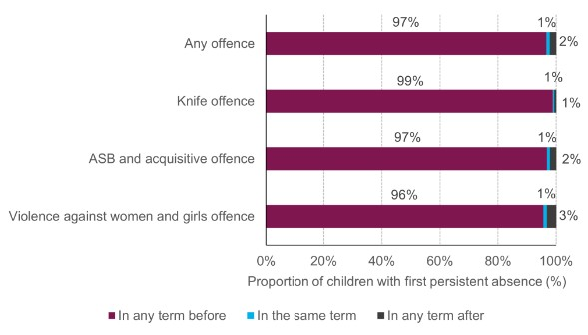
Almost all children who had ever been persistently absent and were cautioned or sentenced for an offence were first recorded as persistently absent in any term prior to their first offence (97%). This was broadly consistent across the offence sub-groups: 99% for knife, 97% for ASB and acquisitive, and 96% for VAWG offences.
Figure 2: The first term a child was recorded as PAUO, relative to the timing of their first offence or first knife, ASB and acquisitive or violence against women and girls offence, for all pupils matched to KS4 academic years 2013/14 to 2018/19 (Source: Table 2.1.1)[footnote 7]
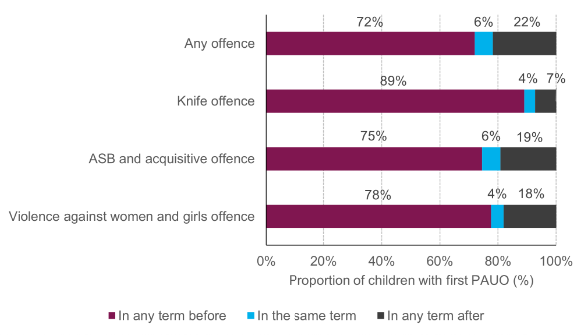
Among children ever identified as PAUO who were cautioned or sentenced for any offence, 72% were first recorded as persistently absent in any term prior to their first offence. This proportion was higher for specific offence groups (89% for knife offences, 78% for VAWG offences and 75% for ASB and acquisitive offences), but consistently lower than the proportion recorded as persistently absent for any reason in a term before their first offence.
A higher proportion of children cautioned or sentenced for a knife offence are first recorded as PAUO in any term before their first knife offence, when compared with the other offence groups. This could be because children cautioned or sentenced for a knife offence are typically older when they commit their first offence than those cautioned or sentenced for ASB and acquisitive or VAWG offences. Therefore, there will be more time before their first offence for them to be recorded as PAUO.
These findings suggest a child’s first record of PAUO was more likely to occur in the same term as or in any term after their first offence, compared with their first record of persistent absence for any reason, whereby almost all children had their first persistent absence before their first offence.
5.2 Suspensions and permanent exclusions
A suspension is where a pupil has been temporarily removed from school,[footnote 8] whilst a permanent exclusion is when a pupil is no longer allowed to attend a school.[footnote 9]
Number of suspensions and permanent exclusions
This analysis examines the number of suspensions and permanent exclusions received by children who had been cautioned or sentenced for any offence or knife, ASB and acquisitive, or VAWG offences.
Figure 3: The proportion of children cautioned or sentenced for any offence or knife, ASB and acquisitive or violence against women and girls offences by number of suspensions received, for all pupils matched to KS4 academic years 2013/14 to 2018/19 (Source: 2.6.1)[footnote 10][footnote 11]
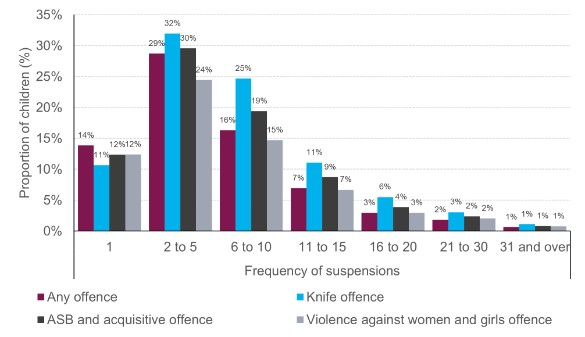
Of all children cautioned or sentenced for any offence, 14% received just one suspension. This was slightly lower across the offence groups. Just over one in ten children cautioned or sentenced for knife, ASB and acquisitive or VAWG offences received only one suspension (11%, 12% and 12% respectively).
Over half (57%) of children cautioned or sentenced for a knife offence received between two and ten suspensions, compared with smaller proportions among children cautioned or sentenced for ASB and acquisitive offences (49%) or VAWG offences (39%).
A higher proportion of children cautioned or sentenced for a knife offence received between 11 and 20 suspensions (17%) compared with children cautioned or sentenced for ASB and acquisitive offences (13%) or VAWG offences (10%).
Figure 4: The proportion of children cautioned or sentenced for any offence or knife, ASB and acquisitive, or violence against women and girls offences by number of permanent exclusions received, for all pupils matched to KS4 academic years 2013/14 to 2018/19 (Source 2.6.1)[footnote 12][footnote 13]
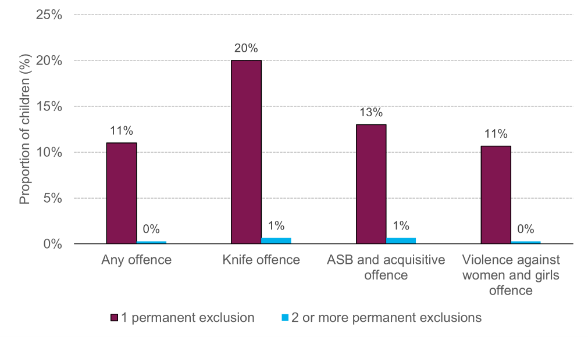
Among children who had been cautioned or sentenced for any offence, 11% received a permanent exclusion. A higher proportion of children cautioned or sentenced for knife offences (20%) had received one permanent exclusion. The other offending sub-groups had a similar proportion to the overall offending cohort (13% for VAWG offences and 11% for ASB and acquisitive offences).
Permanent exclusions are rare events, and it is extremely uncommon for a child to be excluded more than once. Among children who had been cautioned or sentenced for any offence or a knife, ASB and acquisitive, or VAWG offence, only 1% of children received more than one permanent exclusion.
Timing of first suspension and permanent exclusion
This analysis examines whether a child’s first record of receiving a suspension or permanent exclusion occurred in any term before, any term after, or in the same term as their first knife, ASB and acquisitive or VAWG offence and compares this to children cautioned or sentenced for any offence.
Figure 5: The first term a child received a suspension relative to their first offence or first knife, ASB and acquisitive or violence against women and girls offence, for all pupils matched to KS4 academic years 2013/14 to 2018/19 (Source: Table 2.2.1)[footnote 14]
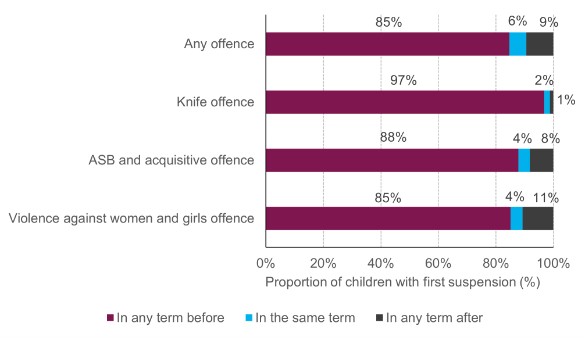
Among children who had received a suspension and were cautioned or sentenced for any offence, 85% experienced their first suspension in any term prior to their first offence.
Almost all (97%) children cautioned or sentenced for a knife offence who had a suspension received their first suspension before their first knife offence. This was lower across ASB and acquisitive (88%), and VAWG (85%) offences.
The proportion of suspensions that were in the same term as the first offence was relatively low across all offence groups: 6% for any offence, 2% for knife, 4% for ASB and acquisitive, and 4% for VAWG offences.
Figure 6: The first term a child received a permanent exclusion relative to their first offence or first knife, ASB and acquisitive or violence against women and girls offence, for all pupils matched to KS4 academic years 2013/14 to 2018/19 (Source: 2.3.1)[footnote 15]
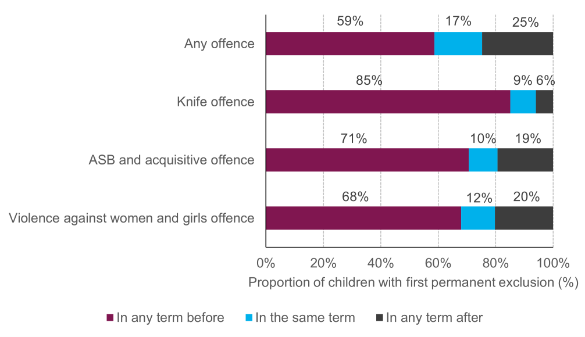
Among children who received a permanent exclusion and had been cautioned or sentenced for any offence, 59% received their first permanent exclusion before their first offence. This was higher across offence groups: 85% for knife offences, 71% for ASB and acquisitive offences, and 68% for VAWG offences.
Around one in ten pupils who were permanently excluded and cautioned or sentenced for a knife, ASB and acquisitive or VAWG offence, received their first permanent exclusion in the same term as their first offence (9%, 10% and 12% respectively). This proportion is higher for the any offence group (17%).
A quarter of pupils who were permanently excluded and cautioned or sentenced for any offence received their first permanent exclusion in any term after their first offence. This proportion was lower across the offence groups: 6% for knife, 19% for ASB and acquisitive, and 20% for VAWG offences.
Across all offence groups, where children experienced suspension or permanent exclusion, first suspensions more often occurred in a term before a child’s first offence than was the case for first permanent exclusions. In contrast, first permanent exclusions more often took place in the same term, or in a term after, a child’s first offence than first suspensions.
Timing of closest suspension and permanent exclusion
This analysis explores whether a child’s closest suspension or permanent exclusion relative to the timing of their first offence occurred in any term before, any term after, or in the same term as their first knife, ASB and acquisitive or VAWG offence and compares this to children cautioned or sentenced for any offence.
Figure 7: The term a child received their closest suspension relative to their first offence or first knife, ASB and acquisitive or violence against women and girls offence, for all pupils matched to KS4 academic years 2013/14 to 2018/19 (Source: Table 2.4.1)[footnote 16]
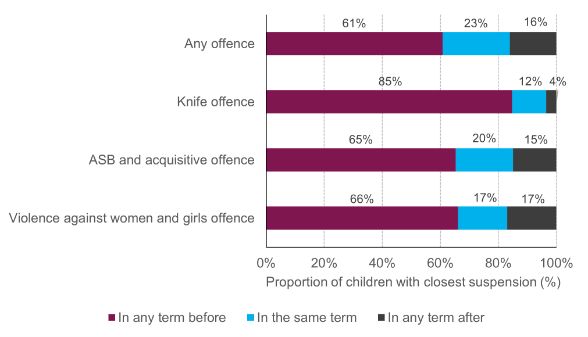
For children who were cautioned or sentenced for any offence and received a suspension, almost a quarter (23%) received their closest suspension in the same term as their first offence. This was lower amongst children cautioned or sentenced for knife (12%), VAWG (17%), and ASB and acquisitive (20%) offences where children were more likely to have received their closest suspension in a term before.
A greater proportion of children cautioned or sentenced for a knife offence received their closest suspension in any term before their first knife offence (85%), compared with children cautioned or sentenced for any offence (61%), ASB and acquisitive (65%), and VAWG offences (66%). This finding could relate to the age of children when committing their first knife offence. First knife offences were on average committed later and peaked between the ages of 16 and 17 years. Children may therefore no longer be attending school when they commit their first knife offence so we might expect to see their closest suspension occur beforehand.
Figure 8: The term a child received their closest permanent exclusion relative to their first offence or first knife, ASB and acquisitive or violence against women and girls offence, for all pupils matched to KS4 academic years 2013/14 to 2018/19 (Source: Table 2.5.1)[footnote 17]
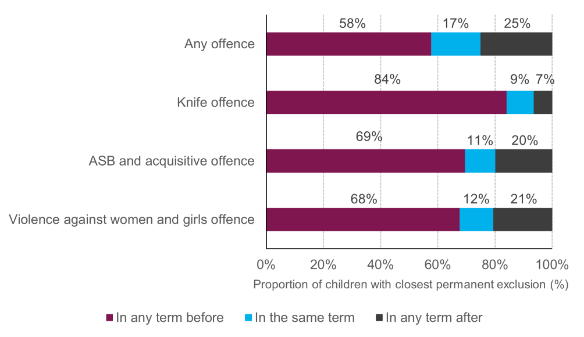
It is uncommon for a child to be permanently excluded more than once so there is little variation in the time between a child’s first and their closest permanent exclusion relative to their first offence; this is because a child’s first permanent exclusion is also likely to be their closest.
Accordingly, across all offence groups, the timing of children’s closest exclusion relative to their first offence (Figure 8) broadly mirrors the timing of their first exclusion relative to their first offence (Figure 6).
Where children were suspended or permanently excluded, irrespective of offence group a higher proportion experienced their closest suspension in the same term as their first offence compared with their closest permanent exclusion. At the same time, these findings indicate that a child’s closest suspension was often not their first suspension, as first suspensions more commonly occurred in a term before their first offence.
5.3 Special Educational Needs (SEN)
A child has Special Educational Needs (SEN)[footnote 18] if they have a learning difficulty or disability which calls for special educational provision to be made for them.[footnote 19]
Most children with SEN will have their needs met by their education setting with no additional funding from the local authority (‘SEN support’)[footnote 20], whilst others may undergo a formal assessment resulting in an Education, Health and Care plan (EHC)[footnote 21] if they are assessed as having a complex need that requires additional provision. This analysis covers children who have identified SEN, and some children will have unidentified needs and therefore relevant support will not have been put in place.
This analysis examines whether a child’s first record of receiving SEN support or having an EHC plan occurred in any term before, any term after or in the same term as their first knife, ASB and acquisitive or VAWG offence and compares this to children cautioned or sentenced for any offence.
Figure 9: The first term a child had SEN support, relative to the timing of their first offence or first knife, ASB and acquisitive or violence against women and girls offence, for all pupils matched to KS4 academic years 2013/14 to 2018/19 (Source: 2.7.1)[footnote 22][footnote 23]
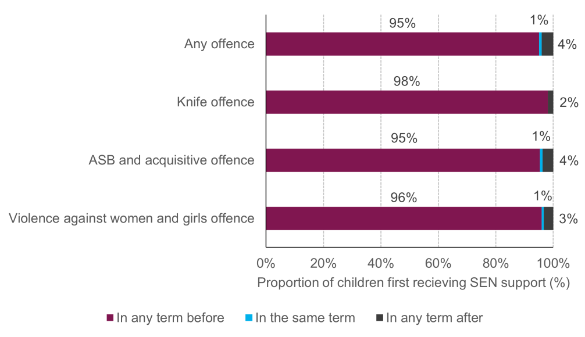
Most children who received SEN support and were cautioned or sentenced for an offence were first recorded as receiving SEN support in any term before their first offence (ranging from 95% for any offence to 98% for knife offences).
Figure 10: The first term a child had an EHC plan, relative to the timing of their first offence or first knife, ASB and acquisitive or violence against women and girls offence, for all pupils matched to KS4 academic years 2013/14 to 2018/19 (Source: 2.7.1)[footnote 24][footnote 25]
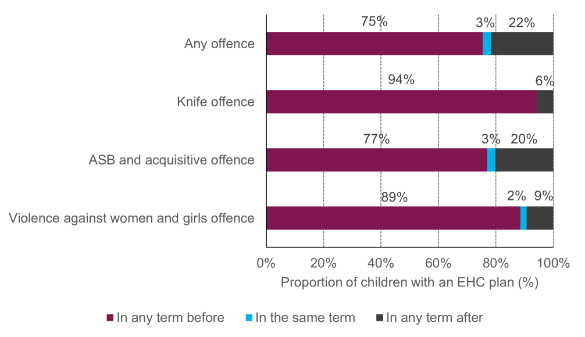
Of the children who had an EHC plan and were cautioned or sentenced for any offence, three quarters (75%) were first recorded as having an EHC plan in any term prior to their first offence. This was higher amongst those cautioned or sentenced for a knife or VAWG offence (94% and 89% respectively).
For all offence groups, where children received SEN support or had an EHC plan, SEN support was more commonly received in a term before their first offence compared with EHC plans. Still, among children cautioned or sentenced for knife or VAWG offences, a high proportion of children received an EHC plan in any term before their first offence.
5.4 Children known to social care
This section explores the sequencing of social care factors for children who had a record in the children in need (CIN) or children looked after (CLA) episodes data.[footnote 26]
This analysis examines whether a child’s first record of being CIN, on a child protection plan (CPP), and/or being CLA, occurred in any term before, any term after or in the same term as their first knife, ASB and acquisitive or VAWG offence and compares this to children cautioned or sentenced for any offence.
To maximise coverage of the CIN data[footnote 27], analysis of children known to social care is based on children matched to the KS4 academic year 2018/19. Figures by academic year can be found in the accompanying tables (Table 2.8.2).
Further information on the coverage of the CIN and CLA data and definitions used for CIN, CPP and CLA are provided in the Technical Guide.
Children in need (CIN) and children on a child protection plan (CPP)
CIN refers to children who are designated under a number of different social care classifications: children on a child in need plan; children on a child protection plan; and children who are looked after. As such, CLA figures are included in the figures for CIN. Since the CIN and CLA data cover different time periods, and CIN includes CLA for some of the same period, comparisons of CIN to CLA should be made with caution.
Figure 11: The first term a child was recorded as being CIN relative to the timing of their first offence or first knife, ASB and acquisitive or violence against women and girls offence, for all pupils matched to KS4 academic year 2018/19 (Source: 2.8.1)[footnote 28]
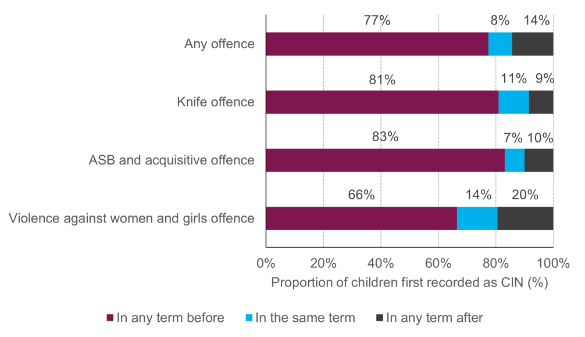
More than three-quarters of children (77%) who were identified as being CIN and cautioned or sentenced for an offence were first recorded as being CIN in any term before their first offence. This was highest for ASB and acquisitive offences (83%), followed by knife offences (81%) and two-thirds for VAWG offences.
Figure 12: The first term a child was recorded as having a CPP relative to the timing of their first offence or first knife, ASB and acquisitive or violence against women and girls offence, for all pupils matched to KS4 academic year 2018/19 (Source: 2.8.1)[footnote 29][footnote 30]
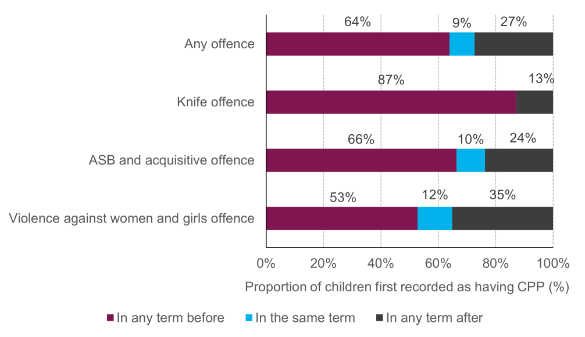
Of the children who had a CPP and were cautioned or sentenced for any offence, 64% were first recorded as having a CPP in any term before their first offence. This was lower for VAWG offences (53%), but higher for ASB and acquisitive (66%), and knife (87%) offences.
Proportionally more children cautioned or sentenced for a knife offence were first recorded as having a CPP in a term before their first offence than other offence groups. Knife offences were on average committed later than ASB and acquisitive or VAWG offences. This may account for why we see more children recorded as having a CPP in a term before their first knife offence than in the other groups.
A greater proportion of children were first recorded as CIN in a term before their first offence than were recorded as having a CPP across most offence types. An exception to this was knife offences, where we see a broadly similar proportion of children having a record of CIN or a CPP in a term before their first offence.
Children who are looked after (CLA)
The introduction of the Legal Aid, Sentencing and Punishment of Offenders Act 2012 (LASPO) meant that, from December 2012, children up to the age of 18 who are remanded to youth detention accommodation as a result of being charged with or convicted of any offence will be ‘looked after’ by the designated local authority.[footnote 31] Therefore, caution should be taken when considering the findings related to CLA and offending, as the child may have become CLA due to the offending.
Figure 13: The first term a child was recorded as being CLA relative to the timing of their first offence or first knife, ASB and acquisitive or violence against women and girls offence, for all pupils matched to KS4 academic year 2018/19 (Source: 2.8.1)[footnote 32]
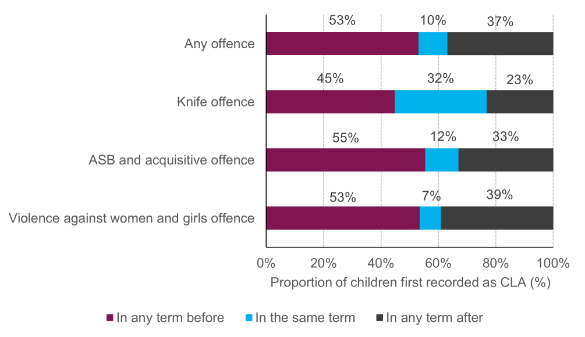
Among all offence groups except knife offences, just over half of children who were CLA and cautioned or sentenced for an offence were recorded as being looked after in any term before their first offence (53% of any offence, 55% for ASB and acquisitive offences, and 53% for VAWG offences). This was lower (45%) for children cautioned or sentenced for a knife offence.
Almost a third (32%) of children cautioned or sentenced for a knife offence and CLA were first recorded as being looked after in the same term as their first knife offence. This proportion was lower across other offence groups (7% for VAWG offences to 12% for ASB and acquisitive offences).
Children cautioned or sentenced for any offence, ASB and acquisitive, or VAWG offences were more commonly first identified as CLA before their first offence. Conversely, children cautioned or sentenced for a knife offence were more frequently first identified as CLA in the same term as, or in any term after their first knife offence. This difference is largely accounted for by the higher proportion of children in the knife offence group who were first identified as CLA in the same term as their first offence.
6. Contact details and feedback
These statistics have been produced by Ministry of Justice: Data First - GOV.UK
Any enquiries and feedback on these statistics can be sent to Ministry of Justice at datafirst@justice.gov.uk
6.1 Media contacts
Press enquiries should be directed to the Ministry of Justice press office: 020 3334 3536
-
Freedom from violence and abuse: a cross-government strategy - GOV.UK ↩
-
The “Education and social care background descriptive statistics” report contains information on children and young people aged 10 to 21 years. ↩
-
For more information on the definition of pupil absences see Pupil absence statistics: methodology: methodology - Explore education statistics - GOV.UK. This was changed from 15% to 10% in September 2015. ↩
-
The definition of persistent absence includes all possible reasons for absence, including children whose absence was unauthorised, but the school was still provided with a reason for that absence (for example, an unagreed family holiday). The analysis has included this additional metric of absence (PAUO), as a way of differentiating those whose absence was not authorised and were unable to provide a valid reason for that absence, from those not attending school for any reason. ↩
-
Note that figures have been rounded to the nearest whole number and as such total figures may sum to more than 100%. ↩
-
Note that figures have been rounded to the nearest whole number and as such total figures may sum to more than 100%. ↩
-
Prior to 2019/20, suspensions were referred to as fixed term exclusions. ↩
-
Note, suspensions data can include lunchtime suspensions and lunchtime suspensions have been included in this analysis. Please see full definition here:Pupil exclusion statistics: methodology: methodology - Explore education statistics - GOV.UK ↩
-
This figure includes any instance of a child being suspended from school, irrespective of whether it occurred before or after their first offence or first knife, ASB and acquisitive, or VAWG offence. ↩
-
Note that figures have been rounded to the nearest whole number and as such total figures may sum to more than 100%. ↩
-
This figure includes any instance of a child being permanently excluded from school, irrespective of whether it occurred before or after their first offence or first knife, ASB and acquisitive, or VAWG offence. ↩
-
Note that figures have been rounded to the nearest whole number and as such total figures may sum to more than 100%. ↩
-
Note that figures have been rounded to the nearest whole number and as such total figures may sum to more than 100%. ↩
-
Note that figures have been rounded to the nearest whole number and as such total figures may sum to more than 100%. ↩
-
Note that figures have been rounded to the nearest whole number and as such total figures may sum to more than 100%. ↩
-
Note that figures have been rounded to the nearest whole number and as such total figures may sum to more than 100%. ↩
-
The Children and Families Act 2014 and the SEND Code of Practice (2015) covers children and young people with Special Educational Needs and Disabilities (SEND). A child or young person has SEN if they have a learning difficulty or disability which calls for special educational provision to be made for them. Children and young people have a disability if they have a physical or mental impairment which has a long-term and substantial adverse effect on their ability to carry out normal day-to-day activities. Children and young people with a disability do not necessarily have SEN, or vice-versa, but there is a significant overlap between disabled children and young people and those with SEN. Data collected and published by Department for Education only records children and young people identified with SEN. ↩
-
Prior to 2014, this category was School Action or School Action Plus. The term ‘SEN Support’ describes the actions taken to support children in mainstream settings who have been identified as having Special Educational Needs (SEN), but who do not have an Education, Health and Care plan (EHC plan). These children receive support and provision from resources already available within the school. Should a child require additional resources that the existing schools SEN support system does not include, then they can apply for a more detailed EHC plan, which outlines the educational, health and social needs of the individual and the specific provisions in place to support them. ↩
-
From 2014 Education, Health and Care plans were introduced. Under previous legislation pupils could be eligible for Statements of SEN. The period for local authorities to transfer children and young people with Statements of SEN to EHC plans started in September 2014 and ended on 31 March 2018. For the purposes of this analysis, ‘EHC plan’ will be used to describe both Statements of SEN and EHC plans unless stated otherwise in the particular context. ↩
-
Some figures have been suppressed to prevent the disclosure of personal information. Where this occurs, percentages are calculated using non-suppressed counts only to prevent recalculation. This may affect comparability with other figures, so results for knife offences should be interpreted with caution. ↩
-
Note that figures have been rounded to the nearest whole number and as such total figures may sum to more than 100%. ↩
-
Some figures have been suppressed to prevent the disclosure of personal information. Where this occurs, percentages are calculated using non-suppressed counts only to prevent recalculation. This may affect comparability with other figures, so results for knife offences should be interpreted with caution. ↩
-
Note that figures have been rounded to the nearest whole number and as such total figures may sum to more than 100%. ↩
-
Using this measure, the analysis takes no account of how long the children were in need, or in care. ↩
-
Full CIN data is available from 2012/13. ↩
-
Note that figures have been rounded to the nearest whole number and as such total figures may sum to less than or more than 100%. ↩
-
Some figures have been suppressed to prevent the disclosure of personal information. Where this occurs, percentages are calculated using non-suppressed counts only to prevent recalculation. This may affect comparability with other figures, so results for knife offences should be interpreted with caution. ↩
-
Note that figures have been rounded to the nearest whole number and as such total figures may sum to more than 100%. ↩
-
Please see here for more information:Children looked after return: guide to submitting data - GOV.UK ↩
-
Note that figures have been rounded to the nearest whole number and as such total figures may sum to less than 100%. ↩